


Abstract
Biosecurity in laboratory animal facilities supporting agricultural research is often viewed as a means of preventing the introduction, transmission, or release of infectious agents. These functions remain essential in facilities housing livestock, poultry, aquaculture species, and laboratory animal models used to investigate agricultural priorities. Such research supports the development and evaluation of veterinary medicines, diagnostic methods, feed and nutrition strategies, and interventions intended to improve animal health, food safety, and the management of agricultural environments. Biosecurity failures can therefore affect research animals and personnel, compromise experimental validity, and create pathways by which infectious agents or contaminated materials could reach other animal populations or the surrounding environment. Effective biosecurity requires a broader, system-based perspective. Laboratory animal facilities are complex operational environments in which animals, personnel, biological materials, equipment, facilities, infrastructure, information, and research activities are interdependent. Failure in one area can have consequences for animal health and welfare, worker safety, physical security, facility operations, and research quality and integrity. This manuscript presents an integrated framework for biosecurity in laboratory animal facilities that support agricultural research and distinguishes biosecurity from related concepts, including biosafety and biocontainment. The framework is organized into five interrelated domains: (1) biocontainment, (2) animal health, (3) worker safety (biosafety), (4) physical security, and (5) research quality and integrity. Across these domains, biosecurity involves identifying vulnerabilities, assessing risks and potential consequences, implementing risk-based controls, monitoring their effectiveness, and responding appropriately when controls fail. Examples involving poultry and livestock research illustrate how the framework can be applied to animal procurement and quarantine, personnel and equipment movement, disease surveillance, waste and environmental management, and protection of research resources. This system-based approach integrates biosecurity into facility design and operations; animal procurement and movement; personnel practices; equipment management; animal health surveillance; emergency preparedness; training; incident response; and program oversight. It helps protect research animals and personnel, preserve valuable biological resources, minimize operational disruptions, and reduce preventable sources of experimental variability.
1. Introduction
Laboratory animal facilities have traditionally managed biological risks through veterinary preventive medicine, biosafety, occupational health, facility design, and effective research oversight. These functions are distinct and often managed by separate individuals or organizational units, each with specific responsibilities and expertise. This division of responsibilities is essential to ensure that risk management is informed by the knowledge and skills of relevant subject matter experts. However, organizational separation can also create vulnerabilities, including information silos, communication gaps, and lapses in coordination that may undermine the effectiveness of the overall risk management process.
The contemporary laboratory animal facility is a complex operational environment in which animals may arrive from multiple commercial vendors, academic institutions, or other external sources; move among rooms, suites, and buildings; undergo procedures involving biological agents or other research hazards; and interact with shared equipment, other animal colonies, and personnel working across diverse roles and environments [1,2,3]. Individuals with access to animals may include animal care technicians, veterinarians, investigators, research staff, students, maintenance personnel, contractors, and visitors. The continuous movement of various species and ages of animals, supplies, equipment, biological samples, waste, and information throughout the facility introduces additional management challenges. Furthermore, critical building systems, including heating, ventilation, and air conditioning (HVAC), water, electrical power, access control, alarms, communications, and information systems, must be maintained to support appropriate environmental conditions, operational continuity, and effective risk management.
Under these circumstances, biosecurity cannot be reduced to a single barrier, procedure, or responsible department. Rather, it requires a comprehensive, integrated approach consistent with the broader biological risk management framework outlined in the World Health Organization’s (WHO) 2024 publication, Laboratory Biosecurity Guidance [4]. The WHO defines laboratory biosecurity in terms of preventing the loss, theft, misuse, diversion, unauthorized access, and intentional or unintentional release of biological materials, associated technology, and relevant information throughout their life cycle. The guidance emphasizes consequence-driven risk assessment, institutional responsibility, attention to detail, emerging threats, information security, and preparedness for disruptive events.
Several of these same concepts are reflected in The Guide for the Care and Use of Laboratory Animals, 8th edition, which identifies disease prevention as an essential component of comprehensive veterinary care and biosecurity programs [5] (p. 109). The Guide defines animal biosecurity more specifically as the measures used to identify, contain, prevent, and eradicate infections that may cause disease, alter physiologic or behavioral responses, or otherwise compromise the suitability of laboratory animals for research. It also recognizes that preventive medicine contributes to research quality by maintaining healthy animals and minimizing non-protocol sources of variation.
Collectively, these widely accepted references establish biosecurity as a core component of laboratory animal facility management [6,7]. For the purposes of this review, the actions and institutional responsibilities associated with laboratory animal facility biosecurity are organized into five interconnected domains: (1) preventing the introduction, transmission, and escape of biological hazards; (2) protecting laboratory animal health and welfare; (3) protecting research personnel from occupational hazards; (4) safeguarding animals, biological materials, facilities, and operations from unauthorized access, loss, alteration, or misuse; and (5) preserving the quality, integrity, reproducibility, and interpretability of research data and results [6,7,8,9]. These objectives are not mutually exclusive, and a single biosecurity lapse can have consequences across multiple domains. For example, the introduction of an infectious agent into a naïve animal colony may result in animal illness or mortality, personnel exposure, research disruptions, and the need for euthanasia or depopulation. It may also compromise irreplaceable breeding lines and introduce uncontrolled experimental variation that negatively affects research outcomes [9,10,11]. Similarly, a physical-security breach involving an animal, sample, biological agent, or restricted area can compromise containment, animal welfare, personnel safety, institutional operations, and research continuity [7,8,12].
These considerations are particularly relevant to agricultural research, including studies involving livestock, poultry, aquaculture species, and other animals of agricultural importance, as well as laboratory animal models used to investigate agricultural priorities such as infectious diseases, food safety, nutrition, reproduction, and animal health. The introduction or transmission of infectious agents, disruption of breeding programs, or loss of valuable genetic resources can affect animal health and welfare, research continuity, data integrity, and broader agricultural objectives. An integrated, risk-based biosecurity framework can help institutions identify vulnerabilities, coordinate responsibilities across functional areas, and implement proportionate measures to protect animal populations, personnel, research resources, and operational continuity. These measures are intended to protect laboratory animals from infectious diseases and their causative agents, prevent the transmission of these diseases to facility personnel and others, and minimize the risk of introducing infectious agents into the agricultural animal populations targeted by research.
Laboratory animal biosecurity has direct relevance to the agricultural sector because research facilities may house the target species themselves or use established animal models as surrogates to investigate problems affecting food-animal production. Examples include studies of infectious diseases in cattle, swine, poultry, and farmed fish; evaluation of vaccines, antimicrobials, antiparasitic drugs, and other veterinary medicines; development of diagnostic tests; and studies focused on nutrition, reproduction, and animal welfare. Research may also evaluate interventions applied to animals or their environments, such as water and housing sanitation, manure management, vector control, and other measures intended to reduce pathogen exposure. These activities connect laboratory biosecurity with animal agriculture, veterinary product development, food safety, and environmental management. Accordingly, the framework described here is intended not only for conventional laboratory animal facilities but also for research and diagnostic settings in which agricultural species, their products and biological materials, or laboratory models relevant to agricultural health are handled [2,3,13].
To make this cross-sector application explicit, the framework considers the movement of agricultural species and materials between farms, suppliers, research facilities, diagnostic laboratories, and other destinations. Biosecurity planning in these settings must account for the health status and source of animals, the potential consequences of introducing or releasing an infectious agent, the protection of personnel, and the possibility that research activities or contaminated waste could affect other animal populations or the environment. The same principles apply when laboratory rodents or other models are used to investigate diseases, treatments, or biological processes relevant to livestock and poultry: unintended infection or environmental variation can undermine the validity of findings intended to inform agricultural practice.
The purpose of this manuscript is to describe a practical, integrated framework for incorporating essential biosecurity into routine laboratory animal facility management and operations in support of agricultural research. It presents a narrative, practice-oriented review of the literature, regulatory requirements, and authoritative guidance relevant to laboratory animal facility biosecurity and program management. Principal information sources included peer-reviewed journal articles and scholarly books addressing laboratory animal medicine, animal agriculture, biosafety, and biosecurity. Authoritative national and international guidance include the Guide for the Care and Use of Laboratory Animals, World Health Organization guidance, World Organisation for Animal Health standards, the Biosafety in Microbiological and Biomedical Laboratories, and FELASA-AALAS recommendations, and relevant regulatory and policy documents. The cited publications and guidance span approximately 1995-2026, with foundational sources retained where they remain relevant and more recent guidance incorporated where available. This review did not follow PRISMA guidelines for systematically searching the relevant literature. The objective was to develop practical guidelines for assessing and implementing biosecurity measures for laboratory animals used in agricultural research programs. Sources cited throughout this manuscript were selected based on their relevance, credibility, and contribution to the topic, with emphasis on peer-reviewed publications in leading scientific journals by recognized subject-matter experts, technical reports, and government regulations. The conceptual frameworks and recommendations were developed through synthesis of these sources and integration of the authors’ professional experience in veterinary medicine, animal research oversight, biosafety, biosecurity, and institutional program assessment. This approach was intended to integrate published evidence and established guidance with practical considerations for implementing effective biosecurity programs.
2. Biosecurity as a System-Based Biological Risk Management Function
Biosafety, biocontainment, and biosecurity in laboratory animal facilities are closely related but distinct concepts. Biosafety focuses on preventing unintentional exposure to biological hazards of workers and others, while biocontainment refers to the combination of practices, safety equipment, and facility features used to control biological hazards and prevent their accidental release [14,15]. Biosecurity has long been used in animal agriculture to describe husbandry and management practices designed to minimize the risk of introducing, establishing, and spreading diseases, infections, and infestations, as well as exposing animals to other harmful elements [13]. More recently, the term has expanded to encompass measures intended to prevent the loss, theft, misuse, unauthorized access, diversion, or intentional or inadvertent release of biological materials and related information [4,6,16].
Although these distinctions help clarify roles and responsibilities, they should not result in operational silos that compromise the effectiveness of biological risk management. The inter-relationship of biosafety, biosecurity, animal health, and occupational health requires coordinated institutional oversight and consistent implementation of controls [7,14]. For example, a locked animal room may provide an important physical-security barrier but do little to prevent pathogen transmission if personnel move between rooms without following approved traffic patterns, using appropriate personal protective equipment (PPE), practicing effective sanitation, or applying validated equipment-decontamination procedures [14,17]. Similarly, technically appropriate containment systems may be undermined by inadequate access controls that permit unauthorized individuals to enter restricted areas [8,12].
The overarching objective should be to establish a coordinated, system-based biological risk management program in which containment, security, occupational health, animal health, veterinary care, and facility operations function as interconnected and mutually reinforcing components [4,7,14,15].
The five-domain approach presented in this manuscript is intended as an integrated management framework for identifying, assessing, and coordinating the risks associated with laboratory anima facility operations. It does not formally redefine laboratory biosecurity or replace existing biosafety, biosecurity, biocontainment, occupational health, animal health, or institutional risk management frameworks. Instead, it brings these complementary functions together within a practical structure that recognizes their interdependence and the potential consequences of gaps in coordination. The five domains provide an organizational approach for evaluating how decisions and controls in one area may affect the others, supporting more comprehensive risk assessment, institutional oversight, and continuous improvement.
- Risk-based management
The required level of biosecurity control depends on the nature of the hazards encountered in a research environment and associated risks. The WHO emphasizes consequence-driven risk assessment as a central component of biological risk management [4], helping institutions prioritize resources to address significant vulnerabilities rather than imposing administrative requirements that may increase burden without improving risk mitigation. Risk-based controls should consider animal species, age, sex, strain, physiologic state, health status, genetic background, and colony size; research activities and locations; potential consequences of biosecurity failures; facility design; and vulnerabilities associated with the movement of personnel, animals, equipment, materials, and information [4,13,15]. This approach involves identifying assets to be protected, potential hazards and threats, and pathways of exposure or access; evaluating existing vulnerabilities and controls; assessing potential risks; and identifying, implementing, and evaluating appropriate mitigation measures. The potential consequences of control failures and the need for additional or revised measures should also be considered [4,15]. Ongoing monitoring is essential to verify control effectiveness, maintain preparedness, and identify circumstances that warrant reassessment [4,14,15].
- System approach
A laboratory animal facility is an interconnected system of animals, personnel, biological materials, equipment, facilities, information, and research activities in which changes to one component may affect risks in others. This perspective is consistent with contemporary biorisk management approaches that emphasize risk assessment and coordinated controls rather than reliance on prescriptive lists of requirements [4,14,15]. For example, introducing animals from an external source has implications for animal health, facility management, research quality, and occupational health [17,18]. Similarly, moving equipment between rooms, such as cage-changing stations, anesthesia systems, transport carts, surgical instruments, or imaging devices, may introduce opportunities for transmitting infectious agents, allergens, contaminants, or biological materials [14,17].
Consider a research facility evaluating a vaccine in broiler chickens. Although the study may be designed around a defined vaccine outcome, its biosecurity depends on coordinated decisions across all five domains. Before arrival, the source flock, health history, transport arrangements, and diagnostic information guide animal-health decisions and the need for quarantine or additional testing. Those same decisions influence biocontainment measures, including separation from other poultry or animal populations, room assignment, traffic flow, and procedures for receiving and handling birds. If an infectious agent is used as part of the study, the agent-specific risk assessment also informs containment, work practices, waste handling, and emergency procedures.
These controls are interdependent rather than sequential or independent. For example, an unexpected increase in morbidity may prompt veterinary investigation and diagnostic testing (animal health), temporary movement restrictions and enhanced separation (biocontainment), review of potential staff exposures and appropriate medical follow-up (worker safety), restricted access to the affected room and accountability for samples or biological materials (physical security), and an assessment of whether the event or resulting treatment changes affect study endpoints or data interpretation (research integrity). The investigation may also identify a need to revise staff training, cleaning procedures, animal-source criteria, or the study design. Conversely, a change in staffing, room use, equipment, or animal source may require reassessment across several domains before the change is implemented.
This example is intended to demonstrate how the framework can be applied, not to prescribe a universal set of controls. The specific measures required will depend on the species and source of animals, the vaccine and any challenge agent used, the study objectives, facility design, applicable regulatory requirements, and the potential consequences of an incident. The practical value of the framework lies in requiring the research team and institutional stakeholders to consider how a decision in one domain affects the others and to establish clear communication and shared responsibility at those interfaces.
In agricultural research, the same system perspective is important when animals or equipment move between a research unit and farm environments. For example, a study involving poultry or swine may require controls for animal-source verification, transport vehicles, personnel movement, reusable equipment, feed and water, and the handling of litter or manure. A failure involving a shared vehicle or inadequately cleaned equipment could connect otherwise separate animal groups, or a failure in waste handling could extend the consequences beyond the animal room. Where studies evaluate environmental interventions, including sanitation or vector-control measures, the assessment should also consider chemical handling, environmental release, and effects on non-target organisms as appropriate to the study.
This system-based perspective also aligns with the institutional animal care and use program, which integrates veterinary care, animal husbandry, personnel management, occupational health and safety, oversight body (e.g., (Institutional Animal Care and Use Committee or IACUC in the U.S.), and facility design and management [5] (p. 13), [14,15].
- Preventing introduction
Biosecurity interventions often begin before any animals or biological materials enter the facility. Animal procurement should therefore be considered an integral component of the biosecurity program rather than a purely administrative transaction. The Guide identifies quarantine, stabilization, and separation by species, source, and health status as key elements of preventive medicine and animal biosecurity [5] (pp. 109–112), [18]. Procurement decisions should consider animal source and health status; supplier qualifications and reliability; the availability and interpretation of health-monitoring data; transportation conditions and chain of custody; and quarantine, acclimation, or stabilization requirements [10,18]. Additional factors include separation by source, species, health status, or intended use; diagnostic testing if indicated; procedures for addressing unexpected health findings or incomplete documentation; and communication between investigators, veterinary staff, procurement personnel, and facility management prior to shipment [5] (pp. 106, 109–112), [18].
Similar principles apply to biological materials. Receiving procedures should define authorized personnel, requirements for package and material identification and documentation, approved storage locations, necessary approvals, and conditions for introducing materials into animal areas [4,14]. Procedures should also accommodate routine deliveries, urgent shipments, after-hours receipt, and unusual materials to ensure consistent handling without relying on impromptu decision-making [4,15].
- Preventing transmission
When biological or chemical hazards are present, facility operations should minimize opportunities for their unintended transfer between animals, rooms, and other areas. Contaminated fomites and equipment can serve as important routes of transfer. Shared imaging systems, surgical instruments, anesthesia equipment, cage-changing equipment, transport carts, cleaning supplies, maintenance tools, and other mobile items may transfer biological agents or chemical contaminants between areas, including those intended to remain separated [14,17]. Other potential vehicles or sources of cross-contamination include cages, racks, transport containers, bedding, feed, water, enrichment materials, biological samples, waste, carcasses, aerosols, contaminated surfaces, and pests. Policies should clearly specify when equipment and supplies may be shared or must be dedicated, the circumstances and methods for cleaning and decontamination, applicable validation procedures, documentation procedures, and responsibility for ensuring that required procedures are completed before items are reused or transferred between areas [14,15].
Personnel movement warrants particular attention because individuals may move rapidly between rooms, species, health-status groups, and research activities. Appropriate work sequencing, room-specific attire, PPE, hand hygiene, equipment management, and task-specific procedures can reduce the risk of mechanically transferring agents between animal populations [14,17,18].
- Preventing containment breaches
Containment is not limited to the room in which an animal is housed, as animals, personnel, equipment, samples, and waste move throughout and beyond the facility. Effective containment therefore requires procedures for animal and biological material transport; waste collection, treatment, and disposal; carcass handling; and cleaning, disinfection, and decontamination. It also requires consideration of equipment movement for maintenance or repair; facility access and egress, including emergency exits; ventilation and air pressure differential relationships; plumbing and drainage; construction and renovation; contractor and service personnel access; and emergency response and evacuation [1,2,14].
Containment must also be maintained during abnormal conditions and facility disruptions. The Biosafety in Microbiological and Biomedical Laboratories, 6th edition emphasizes integrating work practices, safety equipment, and facility design according to the risks posed by the agent and activity [19] (pp. 24–31). Accordingly, emergency plans should address the potential effects of power or HVAC failures, flooding, fire, severe weather, construction, equipment malfunctions, and other disruptions on containment, and identify measures to mitigate resulting risks [4,14,15,19] (pp. 174–175).
3. Biosecurity and Animal Health
In laboratory animal programs, biosecurity is integral to preventive medicine. The goal is to prevent disease-causing agents from entering animal populations, limit their spread if introduced, detect problems early, and minimize impacts on animal welfare and research [20,21,22]. An effective program may include animal-source qualification; quarantine, acclimation, and stabilization protocols; health surveillance and diagnostic testing; environmental monitoring; risk- and species-dependent sentinel or soiled-bedding programs, where appropriate; vaccination when scientifically and clinically indicated; integrated pest management; sanitation and disinfection; colony management; and defined response to suspected or confirmed disease [20,21,22]. Clear processes for reporting clinical observations, unexpected mortality, diagnostic findings, and research concerns are also essential [21,22]. The Guide emphasizes that preventive medicine enhances research value by maintaining healthy animal populations and minimizing disease- and infection-related sources of non-protocol variation [5] (p. 109), [20,23].
- Protecting animals from unintended biological exposures
Laboratory animals may vary in susceptibility to infectious disease based on genetic background, age, microbiologic and immunologic status, experimental manipulation, housing density, physiologic condition, and environmental factors [20,23]. An agent that causes minimal clinical disease in one population may have substantial effects in another [23,24]. Biosecurity therefore protects not only animal health and welfare but also research integrity, as subclinical infections and unintended biological exposures can alter immune function, metabolism, behavior, physiology, reproduction, tumor development, and responses to experimental interventions, potentially confounding study outcomes [20,21,23]. Health-monitoring programs should be designed to detect both clinical disease and inapparent infections with potential scientific significance [20,21]. The key consideration is not simply whether an agent causes visible illness, but whether it may affect animal welfare, research validity, personnel safety, or colony management [20,22,23].
- Biosecurity failures and animal welfare
Although biosecurity is primarily regarded as a facility management or biosafety function, lapses can also have direct and serious consequences on veterinary care and the responsible stewardship of research animals [21,22]. Colony outbreaks and other failures can create significant animal-welfare challenges when preventable diseases result in morbidity, mortality, pain, distress, treatment, extended monitoring, reproductive loss, or euthanasia [22,23,24]. This is especially frustrating when the initiating failure involves procedural deviations, inadequate equipment decontamination, ineffective movement controls, construction-related contamination, or deficiencies in facility management [20,21].
Consider a research facility evaluating a vaccine, antimicrobial, or other veterinary intervention intended to improve health in broiler chickens or young cattle. Before animals arrive, the institution would assess the source flock or herd, available health records, transport arrangements, and the need for quarantine or diagnostic testing. During the study, animal-room assignments, work sequencing, dedicated or appropriately decontaminated equipment, PPE, and personnel access would be selected according to the pathogens under investigation and the health status of the animals. Surveillance would include timely reporting of clinical signs, unexpected mortality, and relevant diagnostic findings. Plans for litter, bedding, manure, carcasses, wastewater, and other potentially contaminated materials would address treatment and disposal before these materials leave controlled areas. These measures protect study animals and staff while reducing the risk that infectious agents or contaminated materials are transferred to other research groups, nearby animal populations, or the environment. The same assessment would consider the integrity and security of vaccine stocks, isolates, samples, and study data. This example is illustrative rather than a prescribed protocol. The specific controls would depend on the species, agent, study design, facility, applicable requirements, and consequences of a failure [2,3,13].
4. Biosecurity and Worker Safety
Protecting animals and personnel often relies on shared controls, including quarantine, health surveillance, appropriate containment, sanitation, PPE, training, controlled movement, and exposure-response procedures [7,25,26]. Occupational health should be integrated with facility biosecurity rather than managed as a separate function [7,25]. Risk assessments should consider potential exposure to zoonotic pathogens, infectious research agents, allergens, animal bites and scratches, sharps, contaminated surfaces and equipment, aerosols, and animal waste [25,27,28,29] (Table 1). They should also address chemical hazards associated with cleaning, disinfection, anesthesia, and research procedures, as well as ergonomic and physical hazards related to animal care and containment practices [25,27,30].
Table 1.
Biosecurity risk assessment framework. A practical biosecurity risk assessment framework for research involving laboratory animals can be organized around seven basic questions.
- Personnel practices
Personnel should receive training tailored to their roles and associated risks [25,26]. Training should explain not only required procedures but also their purpose, how they reduce risk, and how to respond when standard procedures cannot be followed [7,26]. Competency-based training is particularly important for activities with direct biosecurity implications, including animal-room entry and exit, PPE use, cage handling and changing, equipment cleaning and decontamination, waste handling, animal transport, spill response, sharps safety, response to unexpected illness or mortality, and reporting of incidents, exposures, and near misses [25,26]. Training records and completed online modules document participation but do not necessarily demonstrate proficiency. For higher-risk activities, practical competency assessments, periodic observation, corrective coaching, and retraining provide stronger assurance that procedures are performed correctly [25,26].
- Personnel movement
Personnel movement is a key component of facility biosecurity, as individuals can serve as mechanical vectors for infectious agents and inadvertently transfer allergens, contaminants, or biological materials between rooms or animal populations [7,25]. Biosecurity programs should define authorized access to specific areas, work sequences among colonies or health-status groups, requirements for dedicated clothing and room-specific PPE, hand hygiene, and movement restrictions based on animal health status [25,26]. They should also address movement between species, barrier units, containment areas, and conventional or specific-pathogen-free colonies, as well as access by maintenance personnel, contractors, and visitors and procedures for unexpected entry into restricted areas [7,25]. Traffic patterns should be practical and consistently implemented, with procedures designed to minimize unnecessary complexity and supported by appropriate facility design, adequate supplies, supervision, and leadership expectations [7,25].
- Occupational health response
Biosecurity planning should also address responses to exposures or suspected exposures, injuries, bites, scratches, spills, and other incidents [25,26]. Personnel should understand how to report an event, whom to contact, what immediate first aid is appropriate, where to obtain medical evaluation, and what information to provide to employees, emergency response team members, and healthcare providers [25]. Procedures should also ensure access to relevant information about animals, biological agents, research procedures, and potential exposures; define required follow-up; and establish how corrective actions will be evaluated and communicated to institutional management and affected personnel [25,27]. Effective incident response requires coordination among animal facility staff, occupational health, biosafety, veterinary care, environmental health and safety, and emergency management [7,25,31,32].
5. Biosecurity and Physical Security
Physical security is an integral component of laboratory biosecurity in animal facilities [6,8,12]. Planning should address who is authorized to enter; what they can access, introduce, remove, or modify; how access is approved and documented; how unauthorized activity is detected; and how the institution will respond to failures of access control [8,33]. The Guide identifies security and access control as important considerations in laboratory animal facility design and operation [5] (p. 151). Security measures should be site-specific and proportionate to the animals, biological materials, research activities, institutional context, and potential consequences of unauthorized access or loss [6,12].
- Access control
Access controls should differentiate between general facility entry and access to restricted rooms, colonies, agents, records, equipment, or materials [8,33]. Depending on the risk profile, measures may include key or electronic access systems; restricted-area signage; visitor logs; escort requirements; surveillance and alarm systems; periodic access reviews and recertification; and defined procedures for granting, modifying, suspending, and terminating access [5] (pp. 151–152), [8,12]. Additional provisions should address after-hours entry, lost keys or compromised credentials, and access system failures [8]. Effective access control depends on clear procedures and timely communication. Delays in revoking access following staff departures, completion of research, or changes in responsibilities can create unnecessary risks [12,33]. On the other hand, overly restrictive or impractical requirements can also encourage workarounds that can undermine security safeguards [12,34].
- Animal and biological-material security
Inventory accountability, personnel procedures, information security, and incident response are equally important components of an overall security program. Certain animal colonies represent significant scientific, financial, and institutional investments. Genetically modified animals, unique breeding lines, nonhuman primates, specialized disease models, immunocompromised colonies, and animals used in high-consequence research may require enhanced security measures [8,34]. Similar considerations apply to biological materials, specimens, tissues, cell lines, pathogens, genetically modified materials, and irreplaceable research samples [6,33]. Inventory and identification system support security, animal welfare, research continuity, and scientific integrity by ensuring accountability for the location, movement, use, and disposition of animals and materials [6,33].
- Emergency security
Security planning should address disruptions to normal operations, including power or electronic access system failures, fire alarms and evacuations, severe weather, flooding, civil disturbances, construction or renovation, building-system failures, communication outages, and periods of reduced staffing or restricted institutional access [33,35]. The WHO’s 2024 guidance identifies natural disasters, conflict, and civil unrest as potential threats to biological security [4]. In animal facilities, emergency plans should address not only the safety of occupants and facility security but also continuity of animal care, maintenance of containment, protection of critical colonies, access to essential supplies, and timely communication with responsible personnel [34,35,36].
6. Biosecurity and Research Quality and Integrity
An often-overlooked consequence of inadequate biosecurity is the negative impact on research quality. Laboratory animals are complex biological systems whose physiologic state is influenced by infectious status, microbiome composition, genetics, environment, housing, husbandry, stress, diet, and numerous other factors [9,23,37]. Disease, inapparent infection, or unintended changes in biologic status can introduce uncontrolled variation and confound experimental results [20,23,24]. The Guide explicitly links preventive medicine and biosecurity to research value, emphasizing that maintaining healthy animals and minimizing non-protocol sources of variation contribute to research quality [5] (p. 109).
- Experimental variability
Research outcomes may be influenced by a range of environmental and operational factors, including exposure to chemicals, biological agents, and other potentially confounding substances (e.g., test articles, pharmaceutical compounds), as well as stress associated with handling, housing, husbandry, and experimental procedures. Increasing evidence demonstrates relationships among infectious agents, microbiome composition, phenotype, and reproducibility [23,24,38]. Microbiome variation, for example, can influence experimental phenotypes and contribute to differences among studies conducted at different facilities or using animals from different sources [37,38]. However, greater standardization is not always preferable. Depending on the research question, biological variation may be necessary to improve generalizability [37,39]. Relevant biological variables should therefore be identified, characterized, documented, and appropriately managed [9,40]. Biosecurity supports research rigor by reducing the risk of unintended biological variation and documenting the biological conditions under which studies are conducted. Its purpose is not to guarantee reproducibility by eliminating all variation, but to distinguish intentional experimental variation from unrecognized and uncontrolled sources [37,41].
- Loss of research resources
Biosecurity failures can result in the loss of breeding colonies, experimental animals, samples, or biological materials; interruption or delay of research; additional animal use; increased operational costs; and loss of valuable or irreplaceable research resources [23,24]. Depending on the nature and extent of the incident, these disruptions may also delay publications, grant deliverables, and product-development milestones and may require investigators to reassess the validity and interpretation of previously collected data. The consequences can extend well beyond the immediate disease event or security breach. In some cases, the loss of unique genetic lines, long-term longitudinal cohorts, or specialized animal models may be irreversible.
- Research integrity
Biosecurity also requires effective information management. Records should document animal health status and movement; biological-material transfers; source and receipt dates; exposures, incidents and near misses; corrective actions; relevant decontamination and maintenance activities; environmental and facility conditions; and access to restricted areas or materials [9,20,40]. Accurate, comprehensive records support disease investigations, regulatory reviews, incident response, research interpretation, and scientific transparency [9,20]. They may also help identify whether unexpected research outcomes are associated with animal health, environmental, procedural, or other biological factors [23,41].
7. Integrating Biosecurity into Facility Management
An effective biosecurity program requires clear accountability and coordination among institutional functions, including the attending veterinarian, animal facility managers and staff, occupational health, the IACUC, Institutional Biosafety Committee (IBC), environmental health and safety, physical security, facilities and engineering, investigators, and institutional leadership [7,25]. Each entity should understand its specific responsibilities, authority, and limitations; when consultation is necessary; and how concerns are communicated and escalated [5] (pp. 13–15, 23–25), [25].
- Written policies and procedures
Written protocols should address activities with significant biosecurity implications, including animal procurement, quarantine and stabilization, animal and personnel movement, equipment transfer, cleaning and disinfection, waste management, biological-material transfer, visitor and contractor access, incident reporting, emergency response, facility access and termination, maintenance and construction, and responses to animal-health concerns [25,26]. Generally, procedures should provide sufficient detail to support consistent implementation while allowing flexibility for risk-based decisions [7,25]. Overly general policies may provide inadequate guidance, while excessively rigid requirements may be impractical or contribute to noncompliance under unusual circumstances.
- Training and competency
Training should involve more than the completion of required courses to ensure personnel understand the hazards associated with their work; the controls intended to mitigate those risks; the rationale for those controls; how to respond when controls fail or cannot be followed; and when and how to report incidents, deviations, or near misses [25,26,30]. For higher-risk activities, demonstrated competency provides greater assurance than attendance records alone [25,26]. Ongoing observation, feedback, and periodic reassessment can be effective tools for identifying practical barriers that may not be apparent from written procedures or training records [25,26].
- Monitoring and surveillance
A biosecurity program should include mechanisms to assess whether controls are functioning as intended and achieving their objectives [25,27]. Relevant indicators should be selected based on the program’s risk profile, objectives, and available resources and may include animal-health trends; unexpected morbidity or mortality; diagnostic findings; contamination events; personnel exposures; access violations; equipment failures; procedural deviations; incident reports and near misses; corrective action completion and effectiveness; training and competency outcomes; and audit findings [20,24,25]. Trend analysis can reveal recurring vulnerabilities that may not be evident from individual events. For example, repeated failures to disinfect shared equipment may reflect inadequate training, unclear accountability, impractical workflows, insufficient equipment, poorly located supplies, or design deficiencies rather than isolated personnel noncompliance [7,25].
- Auditing and continuous improvement
Routine facility inspections and program reviews can identify vulnerabilities before they lead to significant incidents [5] (pp. 24–25), [25]. Audits should assess not only whether policies are in place, but also verify they are understood, practical, consistently implemented, adequately resourced, monitored, and effective [25,27]. Near misses warrant particular attention because events that cause no immediate harm may still reveal significant vulnerabilities. Examples include a cart entering the wrong corridor, a temporarily unsecured room, a missed PPE change, an undocumented equipment transfer, or an unexpected animal-health finding. Such events can provide valuable insight into weaknesses in the overall system. Risk assessments should be reviewed whenever changes may affect research hazards, biosecurity, biocontainment, animal health, personnel safety, or research integrity [25,27]. These changes may involve animal species, strains, or health status; research agents or procedures; animal sources; facility design or construction; equipment; personnel or staffing patterns; movement of animals, materials, or equipment; health-monitoring programs; emergency plans; or institutional operations and access controls [5] (pp. 18–19), [25].
- Program congruency
An effective biosecurity program depends on careful coordination among various institutional functions and units [7,25]. This concept is frequently referred to as program congruency and involves the alignment of policies, responsibilities, risk assessments, and operational practices across institutional functions. For example, a research project involving an infectious agent in laboratory animals requires the attending veterinarian’s oversight of animal health and welfare, the biosafety officer’s recommendations for containment, occupational health’s guidance on employee exposure monitoring, the IBC’s assessment of biological risks, the IACUC’s review of the proposed use of animals, facilities personnel’s management of building systems and maintenance, and security’s control of access and physical protection. Each role is essential; however, significant vulnerabilities may arise at the interfaces between functions [5] (pp. 13–24, 105–123, 153–156), [25].
Processes should be clearly defined for decisions such as whether incoming animals require quarantine or additional testing; how changes in animal sources are assessed; when disease events warrant research interruption; how potential occupational exposures are evaluated; who authorizes the movement of contaminated equipment; how physical-security implications are addressed; when incidents require notification of oversight bodies, institutional leadership, funding agencies, or regulators; and who ensures corrective actions are completed and evaluated for effectiveness [5] (pp. 17–20, 24–25, 109–113, 151–152), [25,26]. Clearly defined responsibilities and communication pathways help prevent critical tasks from being overlooked between organizational functions [25].
- Fostering a biosecurity culture
A mature biosecurity program requires more than written policies and technical controls. Its success depends on an organizational culture in which biosecurity is recognized as a shared priority and responsibility [7,25]. The WHO similarly identifies institutional governance, personnel competency, risk-based management, and organizational culture as essential components of effective biological risk management [4,15]. Table 2 presents a framework for integrating biosecurity into facility planning and renovation, incident investigations, IACUC or IBC reviews, protocol development, routine inspections, emergency planning, and institutional program assessments.
Table 2.
Assessing biosecurity effectiveness in laboratory animal facilities. A useful approach for assessing biosecurity effectiveness in laboratory animal facilities is to evaluate the five domains simultaneously. Identified risks should be prioritized according to their likelihood and potential consequences, considering existing controls and the extent to which those controls reduce risk. Following implementation, control effectiveness should be evaluated through appropriate monitoring, verification, incident reporting, and periodic program review. The following framework provides a structure for organizing these assessments and identifying opportunities for improvement.
- Integrating biosecurity into facility management
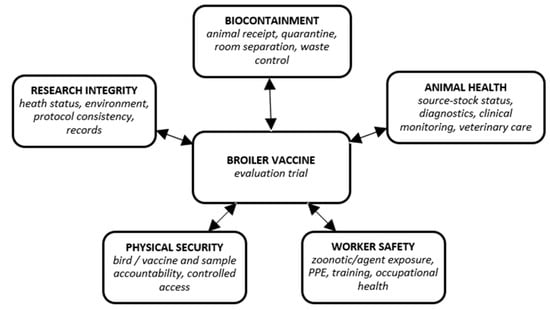
The five-domain framework can also guide facilities in prioritizing identified vulnerabilities and evaluating the effectiveness of implemented controls. For example, in the broiler vaccine evaluation trial illustrated in Figure 1, the introduction of an infectious agent from an inadequately characterized source flock could have consequences for animal health, personnel safety, containment, and research validity. A facility might prioritize this vulnerability based on the likelihood of exposure and the potential severity of its consequences, considering existing controls and any remaining gaps. Measures could include supplier qualification, review of flock health records, diagnostic testing, quarantine, and separation from other poultry populations. The effectiveness of these controls could subsequently be evaluated through verification of source documentation, quarantine compliance, diagnostic results, animal-health surveillance, incident and near-miss reporting, and periodic review of procedures and corrective actions. If monitoring identifies unexpected health findings or repeated procedural deviations, the facility should reassess the original risk evaluation and modify controls as necessary. This process illustrates how risk prioritization, control implementation, and effectiveness assessment should operate as a continuous cycle rather than as separate activities.
Figure 1.
Conceptual illustration of the interrelationships among five biosecurity domains in an illustrative broiler vaccine evaluation trial. The arrows indicate that each domain can influence, and be influenced by, the others; they do not represent a prescribed sequence of actions.
Reporting systems should promote learning and prevention rather than blame. A punitive culture may discourage early reporting and limit opportunities to identify and address procedural weaknesses before serious incidents occur. Personnel should be empowered to freely report unexpected animal-health findings, contamination concerns, procedural deviations, equipment failures, access concerns, exposures, near misses, and any other barriers to compliance. Accountability remains essential, particularly if there are concerns that critical controls will be intentionally or repeatedly disregarded. Leadership plays a critical role in fostering this culture. Written policies have limited impact if workers perceive that production demands, timelines, convenience, or cost consistently have precedence over animal health, personnel safety, containment, and research integrity. However, when leaders consistently reinforce these priorities as integral to operational success, biosecurity becomes embedded in everyday decision-making [4,7,15,25].
8. Discussion
Biosecurity in laboratory animal facilities is a multidimensional management responsibility that extends beyond containment laboratories. Biological risks associated with animal research are closely linked to animal health, personnel safety, physical security, facility operations, and scientific validity [1,6,25]. The Guide provides a foundation for this integrated approach by linking biosecurity and preventive medicine with animal well-being and research value [5] (p. 109). However, significant vulnerabilities may arise at the interfaces among institutional functions. Even when veterinary care, biosafety, occupational health, and physical security programs are individually effective, inadequate coordination in the management of incoming animals, personnel movement, shared equipment, and incident reporting can leave critical risks unaddressed [25,26,27]. Contemporary biorisk management guidance emphasizes consequence-driven risk assessment, effective institutional governance, and a culture of continual improvement [4,15]. This perspective complements conventional containment practices by recognizing each specialized function as part of a larger integrated system. Institutional leaders should therefore assess not only individual program performance but also the effectiveness of communication, coordination, and accountability among functions [1,25].
An effective biosecurity program should reduce the likelihood of biological hazards entering the facility; limit their transmission; protect personnel; prevent unauthorized access or loss; preserve valuable animal and biological resources; and minimize unintended biological variation that could compromise research [6,8,20]. Achieving these objectives requires risk-based controls that are proportionate to the potential consequences of failure and practical enough to be consistently followed [25,27]. Biosecurity is also integral to research integrity. Laboratory animals are complex biological systems whose health status, microbiome, genetics, environment, and husbandry can influence experimental outcomes [23,24,37]. Preventing disease and identifying relevant biological variables are therefore essential to both animal care and scientific rigor [9,20,40].
The agricultural relevance of this framework extends beyond preventing disease in research colonies. Research involving livestock, poultry, and aquaculture can inform the development and evaluation of vaccines, veterinary medicines, diagnostics, nutrition strategies, and interventions directed at animal housing or the surrounding environment. Biosecurity protects the validity of this work by helping ensure that animal health status, exposure history, and environmental conditions are understood and appropriately controlled. It also helps prevent research-associated hazards from being transferred between facilities, production settings, and animal populations. For example, a poultry vaccine study or a cattle disease-treatment trial requires coordinated decisions about animal sourcing, quarantine, health monitoring, personnel and equipment traffic, sample security, and the management of litter, manure, or other potentially contaminated waste. These are not separate from the five domains described in this manuscript. Rather, they are practical applications of the same integrated framework in agricultural research settings [2,3,13,20].
Although the guidelines presented provide a framework for integrating biosecurity into laboratory animal facility management and operations, their practicality and applicability should be validated across a range of facility types before widespread adoption is recommended. Implementation of the proposed framework will necessarily vary among institutions and research environments. The resources available to support biosecurity activities, applicable national and local regulatory requirements, animal species and associated biological risks, and the size and complexity of the facility will influence how individual measures are selected and implemented. For example, a large multispecies research facility may require more extensive coordination, specialized infrastructure, and formal oversight mechanisms than a smaller facility with a limited number of species and research activities. Accordingly, the five-domain framework is intended to provide a flexible structure for identifying and managing relevant risks rather than a prescriptive set of measures to be applied uniformly. Institutions should adapt its application to their operational context while maintaining appropriate attention to all five domains.
Laboratory animal facilities vary considerably in size, research activities, operational complexity, available resources, and levels of biosecurity risk. Further assessment and validation in diverse settings would help determine the feasibility of implementation, identify potential limitations, and support appropriate adaptation to facility-specific needs. This type of validation would also help ensure that the guidelines remain sufficiently flexible to accommodate varying operational requirements while maintaining effective, risk-based biosecurity practices.
These guidelines are intended to provide a basic framework for establishing biosecurity measures for laboratory animals in agricultural research facilities, with the flexibility to adapt them to the specific requirements and conditions of individual facilities. However, the guidelines have limitations because not all available global research studies were considered. Therefore, they should be regarded as a baseline framework that users and researchers can further evaluate, adapt, and improve to meet their scientific needs and emerging evidence.
9. Conclusions
Biosecurity is a foundational component of laboratory animal facility management, extending beyond the prevention of infectious disease introduction, transmission, or release. An effective biosecurity program identifies vulnerabilities before they result in incidents and supports a coordinated response when controls fail. Integrating biosecurity into daily operations helps institutions protect animals and personnel, preserve valuable research resources, minimize preventable disruptions, and maintain the quality, reliability, and integrity of the scientific process.
Biosecurity should be embedded in routine laboratory animal program management rather than treated as a separate compliance function. A comprehensive program integrates five interconnected domains that include biocontainment, animal health, worker safety, physical security, and research quality and integrity. These domains are supported by risk assessment, appropriate engineering and administrative controls, personnel training, health surveillance, access management, emergency preparedness, incident reporting, and continuous program improvement. The attending veterinarian, facility manager, biosafety and occupational health professionals, IACUC, IBC, security personnel, investigators, facilities staff, and institutional leadership each have important roles. Clearly defined responsibilities and effective communication among these stakeholders are essential.
For agricultural research, these principles apply to facilities housing livestock, poultry, aquaculture species, and laboratory models used to address agricultural health and production priorities. By protecting research animals, personnel, biological materials, and the environments in which research is conducted, an integrated biosecurity program supports the reliable development and evaluation of veterinary medicines, vaccines, diagnostics, and interventions focused on animals or the environment. Applying the framework in a risk-based manner can help maintain the connection between sound laboratory practice and the health, welfare, and sustainability objectives of the agricultural sector.
Author Contributions
S.B.H. and M.S. contributed equally to the conceptualization; formal analysis; writing—original draft preparation; and writing—review and editing of this manuscript. All authors have read and agreed to the published version of the manuscript.
Funding
This research received no external funding.
Institutional Review Board Statement
Not applicable.
Informed Consent Statement
Not applicable.
Data Availability Statement
The data presented in this study were derived from previously published literature and other publicly available resources, which are cited in this manuscript and listed in the References section. These sources are accessible through their respective publishers, repositories, or publicly available websites. No new or original datasets were generated or deposited in a separate repository.
Conflicts of Interest
The authors declare no conflicts of interest.
Abbreviations
The following abbreviations are used in this manuscript:
| HVAC | Heating, Ventilation, and Air Conditioning |
| IACUC | Institutional Animal Care and Use Committee |
| IBC | Institutional Biosafety Committee |
| PPE | Personal Protective Equipment |
| WHO | World Health Organization |
References
- Copps, J. Issues related to the use of animals in biocontainment research facilities. ILAR J. 2005, 46, 34–43. [Google Scholar] [CrossRef] [Scilit] [PubMed][Green Version]
- Barbeito, M.S.; Abraham, G.; Best, M.; Cairns, P.; Langevin, P.; Sterritt, W.G.; Barr, D.; Meulepas, W.; Sanchez-Vizcaino, J.M.; Saraza, M.; et al. Recommended biocontainment features for research and diagnostic facilities where animal pathogens are used. Rev. Sci. Tech. 1995, 14, 880–887. [Google Scholar] [CrossRef] [Scilit] [PubMed]
- Harper, S.B.; Bayne, K.; Anderson, K.E. High-containment agriculture animal research: An AAALAC International perspective. ILAR J. 2020, 61, 10–17. [Google Scholar] [CrossRef] [Scilit] [PubMed]
- World Health Organization. Laboratory Biosecurity Guidance; World Health Organization: Geneva, Switzerland, 2024. Available online: https://www.who.int/publications/i/item/9789240095113 (accessed on 6 October 2026).
- National Research Council. Guide for the Care and Use of Laboratory Animals, 8th ed.; National Academies Press: Washington, DC, USA, 2011. [Google Scholar] [CrossRef] [Scilit] [PubMed]
- Richmond, J.Y.; Nesby-O’Dell, S. Biosecurity for animal facilities and associated laboratories. Lab Anim. 2003, 32, 32–35. [Google Scholar] [CrossRef] [Scilit] [PubMed]
- McCormick-Ell, J.; Connell, N. Laboratory safety, biosecurity, and responsible animal use. ILAR J. 2019, 60, 24–33. [Google Scholar] [CrossRef] [Scilit] [PubMed]
- Banks, R.E. Security options for the laboratory animal facility. Lab Anim. 2003, 32, 37–40. [Google Scholar] [CrossRef] [Scilit] [PubMed]
- Smith, A.J. Guidelines for planning and conducting high-quality research and testing on animals. Lab. Anim. Res. 2020, 36, 21. [Google Scholar] [CrossRef] [Scilit] [PubMed]
- Besch-Williford, C.L.; Henderson, K.S.; Livingston, R.S.; Shek, W.R. Microbiological quality control for laboratory rodents. In Laboratory Animal Medicine, 4th ed.; Fox, J.G., Hankenson, F.C., Metcalf Pate, K.A., Pritchett-Corning, K.R., Suckow, M.A., Eds.; Academic Press: London, UK, 2026; pp. 497–552. [Google Scholar] [CrossRef] [Scilit]
- Silverman, J.; Macy, J.; Preisig, P.A. The role of the IACUC in ensuring research reproducibility. Lab Anim. 2017, 46, 129–135. [Google Scholar] [CrossRef] [Scilit] [PubMed]
- Mortell, N. Seven layers of security to help protect biomedical research facilities. Lab Anim. 2010, 39, 118–123. [Google Scholar] [CrossRef] [Scilit] [PubMed]
- World Organisation for Animal Health (WOAH). Terrestrial Animal Health Code Glossary. Available online: https://www.woah.org/fileadmin/Home/eng/Health_standards/tahc/2018/en_glossaire.htm (accessed on 30 September 2026).
- Carpenter, C.B. Safety considerations for working with animal models involving human health hazards. Anim. Model. Exp. Med. 2018, 1, 91–99. [Google Scholar] [CrossRef] [Scilit] [PubMed]
- World Health Organization. Laboratory Biosafety Manual, 4th ed.; World Health Organization: Geneva, Switzerland, 2020. Available online: https://www.who.int/publications/i/item/9789240011311 (accessed on 30 September 2026).
- Zelicoff, A.P. Laboratory biosecurity in the United States: Evolution and regulation. In Ensuring National Biosecurity: Institutional Biosafety Committees, 1st ed.; Baskin, C.R., Zelicoff, A.P., Eds.; Academic Press: San Diego, CA, USA, 2016; pp. 1–22. [Google Scholar] [CrossRef] [Scilit]
- Colby, L.A.; Zitzow, L. Applied institutional approaches for the evaluation and management of zoonoses in contemporary laboratory animal research facilities. ILAR J. 2018, 59, 134–143. [Google Scholar] [CrossRef] [Scilit] [PubMed]
- Mocho, J.-P.; Collymore, C.; Farmer, S.C.; Leguay, E.; Murray, K.N.; Pereira, N. FELASA-AALAS Recommendations for biosecurity in an aquatic facility, including prevention of zoonosis, introduction of new fish colonies, and quarantine. Comp. Med. 2022, 72, 149–168. [Google Scholar] [CrossRef] [Scilit] [PubMed]
- Centers for Disease Control and Prevention (CDC); National Institutes of Health (NIH). Biosafety in Microbiological and Biomedical Laboratories, 6th ed.; U.S. Department of Health and Human Services: Washington, DC, USA, 2020. Available online: https://www.cdc.gov/labs/bmbl/index.html (accessed on 30 September 2026).
- Mähler, M.; Berard, M.; Feinstein, R.; Gallagher, A.; Illgen-Wilcke, B.; Pritchett-Corning, K.; Raspa, M. FELASA recommendations for the health monitoring of mouse, rat, hamster, guinea pig and rabbit colonies in breeding and experimental units. Lab. Anim. 2014, 48, 178–192. [Google Scholar] [CrossRef] [Scilit] [PubMed]
- Fahey, J.R.; Olekszak, H. An overview of typical infections of research mice: Health monitoring and prevention of infection. Curr. Protoc. Mouse Biol. 2015, 5, 235–245. [Google Scholar] [CrossRef] [Scilit] [PubMed]
- Voipio, H.M.; Baneux, P.; de Segura, I.A.; Hau, J.; Wolfensohn, S. Guidelines for the veterinary care of laboratory animals: Report of the FELASA/ECLAM/ESLAV Joint Working Group on Veterinary Care. Lab. Anim. 2008, 42, 1–11. [Google Scholar] [CrossRef] [Scilit] [PubMed]
- Baker, D.G. Natural pathogens of laboratory mice, rats, and rabbits and their effects on research. Clin. Microbiol. Rev. 1998, 11, 231–266. [Google Scholar] [CrossRef] [Scilit] [PubMed]
- Besselsen, D.G.; Franklin, C.L.; Livingston, R.S.; Riley, L.K. Lurking in the shadows: Emerging rodent infectious diseases. ILAR J. 2008, 49, 277–290. [Google Scholar] [CrossRef] [Scilit] [PubMed]
- Fontes, B. Institutional responsibilities in contamination control for research animals and in occupational health and safety for animal handlers. ILAR J. 2008, 49, 326–337. [Google Scholar] [CrossRef] [Scilit] [PubMed][Green Version]
- Pritt, S.; Hankenson, F.C.; Wagner, T.; Tate, M. The basics of animal biosafety and biocontainment training. Lab Anim. 2007, 36, 31–38. [Google Scholar] [CrossRef] [Scilit] [PubMed]
- Clayton, A.M.; Hayes, J.; Lathrop, G.W.; Powell, N. Development of an occupational risk assessment tool for laboratory animal facilities. Appl. Biosaf. 2019, 24, 72–82. [Google Scholar] [CrossRef] [Scilit] [PubMed]
- Public Health Agency of Canada; Canadian Food Inspection Agency. Canadian Biosafety Guideline: Local Risk Assessment; Government of Canada: Ottawa, ON, Canada, 2018. Available online: https://www.canada.ca/en/public-health/services/canadian-biosafety-standards-guidelines/guidance/canadian-biosafety-guidelines/document.html (accessed on 30 September 2026).
- Astuto-Gribble, L.M.; Caskey, S.A. Laboratory Biosafety and Biosecurity Risk Assessment Technical Guidance Document; Sandia National Laboratories, International Biological Threat Reduction Program, in collaboration with the International Federation of Biosafety Associations: Albuquerque, NM, USA, 2014; Available online: https://www.biosecuritycentral.org/resource/training-materials/biorisk-assessment-technical-guidance/ (accessed on 6 October 2026).
- Patlovich, S.J.; Emery, R.J.; King, K.G.; Becker, Z.B.; Kairis, R.B.; Robinson, M.A.; Harrison, J.M.; Delclos, G.; Perkison, W.B. An innovative approach for health and safety training and occupational health program annual enrollment for laboratory animal care and use personnel. Lab. Anim. 2025, 59, 113–119. [Google Scholar] [CrossRef] [Scilit] [PubMed]
- National Research Council. Occupational Health and Safety in the Care and Use of Research Animals; National Academies Press: Washington, DC, USA, 1997; pp. 15–25, 57–77. Available online: https://www.nationalacademies.org/publications/4988 (accessed on 30 September 2026).
- National Research Council. Occupational Health and Safety in the Care and Use of Nonhuman Primates; National Academies Press: Washington, DC, USA, 2003; pp. 9–15, 68–82, 94–119, 120–146. Available online: https://www.nationalacademies.org/publications/10713 (accessed on 30 September 2026).
- Richmond, J.Y.; Nesby-O’Dell, S.L. Laboratory security and emergency response guidance for laboratories working with select agents. MMWR Recomm. Rep. 2002, 51, 1–8. Available online: https://www.cdc.gov/mmwr/preview/mmwrhtml/rr5119a1.htm (accessed on 30 September 2026). [PubMed]
- Sancenito, J.J.; Mortell, N.; Stephens, M.; Weichbrod, R.H. Special security considerations for protecting programs that use animals. In Management of Animal Care and Use Programs in Research, Education, and Testing, 2nd ed.; Weichbrod, R.H., Thompson, G.A.H., Norton, J.N., Eds.; CRC Press: Boca Raton, FL, USA, 2018; pp. 431–457. [Google Scholar] [CrossRef] [Scilit] [PubMed]
- Mortell, N.; Nicholls, S. Practical considerations for disaster preparedness and continuity management in research facilities. Lab Anim. 2013, 42, F18–F24. [Google Scholar] [CrossRef] [Scilit] [PubMed]
- Harper, S.B. Disaster planning for agricultural research programs. J. Am. Vet. Med. Assoc. 2020, 257, 1249–1258. [Google Scholar] [CrossRef] [Scilit] [PubMed]
- Richter, S.H.; Garner, J.P.; Würbel, H. Environmental standardization: Cure or cause of poor reproducibility? Nat. Methods 2009, 6, 257–261. [Google Scholar] [CrossRef] [Scilit] [PubMed]
- Witjes, V.M.; Boleij, A.; Halffman, W. Reducing versus embracing variation as strategies for reproducibility: The microbiome of laboratory mice. Animals 2020, 10, 2415. [Google Scholar] [CrossRef] [Scilit] [PubMed]
- Voelkl, B.; Vogt, L.; Sena, E.S.; Würbel, H. Reproducibility of animal research in light of biological variation. Nat. Rev. Neurosci. 2018, 19, 712–719. Available online: https://scispace.com/pdf/reproducibility-of-animal-research-in-light-of-biological-312yqdzs7s.pdf (accessed on 30 September 2026).
- Percie du Sert, N.; Hurst, V.; Ahluwalia, A.; Alam, S.; Avey, M.T.; Baker, M.; Browne, W.J.; Clark, A.; Cuthill, I.C.; Dirnagl, U.; et al. The ARRIVE guidelines 2.0: Updated guidelines for reporting animal research. PLoS Biol. 2020, 18, e3000410. [Google Scholar] [CrossRef] [Scilit] [PubMed]
- Hankenson, F.C. The elephant in the room: Recognition and documentation of personnel practices that confound reproducibility. J. Am. Assoc. Lab. Anim. Sci. 2024, 63, 232–237. [Google Scholar] [CrossRef] [Scilit] [PubMed]

Disclaimer/Publisher’s Note: The statements, opinions and data contained in all publications are solely those of the individual author(s) and contributor(s) and not of MDPI and/or the editor(s). MDPI and/or the editor(s) disclaim responsibility for any injury to people or property resulting from any ideas, methods, instructions or products referred to in the content. |
© 2026 by the authors. Licensee MDPI, Basel, Switzerland. This article is an open access article distributed under the terms and conditions of the Creative Commons Attribution (CC BY) license.