


Abstract
This study evaluated the effect of harvest interval on minituber production and characterized plant growth in four potato cultivars grown aeroponically during the autumn–winter season in a plastic greenhouse under a moderate continental climate. The cultivars Agria, Désirée, Dragačevski Mesečar, and Festival were evaluated at two harvest intervals (10-day and 20-day). All four cultivars developed successfully and produced minitubers throughout the autumn–winter season, with high survival rates following acclimatization. Cultivars differed significantly in plant survival, growth characteristics, productivity, tuber size distribution, and aerial tuber formation. Festival achieved the highest minituber productivity, whereas Désirée produced the highest number of tubers per plant. The 10-day harvest interval increased the number of harvested minitubers by 17.7% compared with the 20-day interval (p = 0.023), primarily due to an increase in the number of tubers in the smaller diameter categories. However, harvest interval did not significantly affect total tuber yield (p = 0.918) or the number of tubers >25 mm (p = 0.824), whereas cultivar significantly affected both traits (p < 0.001 for both). Taken together, these results support the feasibility of an additional autumn–winter production cycle for pre-basic seed potato multiplication using greenhouse-based aeroponics under moderate continental climate conditions.
1. Introduction
Potato (Solanum tuberosum L.) is the fourth most important staple food crop globally, following maize, wheat, and rice [1]. Potatoes provide significant nutritional benefits and serve as an important source of essential nutrients in the human diet [2]. However, due to its vegetative mode of propagation, potato plants are prone to the accumulation and transmission of pathogens through infected tubers. When infected tubers are used as planting material, pathogens can be transferred to the next generation, leading to the development of diseased plants and gradual decline in crop performance. Reduced productivity is primarily associated with the use of low-quality seed tubers resulting from repeated field propagation and pathogen accumulation [3,4,5]. Various diseases caused by viruses, fungi, and bacteria, including potato virus Y (PVY), potato leaf curl virus (PLRV), potato virus X (PVX), Phytophthora infestans (late blight), Rhizoctonia solani (black scurf and stem canker), and Ralstonia solanacearum (bacterial wilt) can reduce yield by 30–40% [6]. Therefore, the production and use of healthy, pathogen-free seed tubers are of utmost importance.
To overcome the challenges associated with pathogen accumulation and the maintenance of healthy seed material, in vitro propagation techniques based on the culture of plant cells, tissues, and organs are widely applied in potato seed production. These techniques provide pathogen-free starting material and enable rapid multiplication through micropropagation. Currently, micropropagation is widely used for the production of initial planting material (microplants), which represents the starting point for the subsequent production of pre-basic seed potatoes (minitubers) [7,8]. Following in vitro multiplication, microplants are commonly transferred to insect-proof greenhouses, where minitubers are produced in substrate-based systems as part of conventional seed potato production [9,10]. However, the number of minitubers produced per plant is relatively low, typically ranging from 3 to 10 [11,12]. Due to the limited multiplication rate of minitubers in substrate-based production systems, three to five field propagation generations are required to obtain sufficient quantities of seed potatoes, with each additional propagation cycle increasing the risk of pathogen infection.
Aeroponic systems represent an alternative approach for seed potato production compared with conventional substrate-based methods and hydroponics [13,14]. Due to their advantages, including higher minituber production rates, improved control over pathogen-free production, and the possibility of sequential harvesting of minitubers, aeroponic technologies are increasingly adopted for pre-basic seed potato production. In aeroponic cultivation, potato plants are grown without soil, with the root system suspended in a dark chamber and periodically supplied with nutrient solution in the form of a fine mist [15,16]. This controlled root environment enables efficient nutrient uptake and supports prolonged vegetative growth and tuber formation compared with conventional systems [17,18]. Aeroponic systems have demonstrated the potential to produce 30 to more than 100 minitubers per plant depending on cultivar and growing conditions, which is considerably higher than the number typically obtained in conventional production systems [9,15,19]. Multiple harvesting of minitubers is an important advantage of aeroponic production, as tubers can be collected when they reach the desired size while allowing continued tuber formation. The frequency of harvesting depends on cultivar characteristics, tuber growth rate, and environmental conditions, with reported harvest intervals ranging from 3 to 20 days [14,20,21]. Environmental conditions, including temperature and seasonal changes in photoperiod and light quality, strongly influence potato growth and tuberization. Therefore, understanding the response of different potato cultivars to specific environmental conditions and production strategies is essential for optimizing minituber production in aeroponic systems. In moderate continental climates, aeroponic systems operated under greenhouse conditions may provide an opportunity to extend the production period of high-quality pre-basic seed potatoes beyond the traditional spring–summer season. Although previous studies have investigated the effects of harvest frequency on potato minituber production in aeroponic systems, information on the response of different cultivars to harvest intervals under autumn–winter greenhouse conditions remains limited. In particular, the effects of shorter and longer harvest intervals on cumulative minituber production, tuber size distribution, and plant growth characteristics during the autumn–winter season in moderate continental climates have not been sufficiently characterized. This knowledge is important for developing harvest strategies that optimize both minituber number and the production of planting material of appropriate size.
Therefore, the objective of this study was to compare the effects of 10-day and 20-day harvest intervals on minituber productivity and size distribution in four potato cultivars (Agria, Désirée, Dragačevski Mesečar, and Festival) cultivated aeroponically during the autumn–winter season in a plastic greenhouse in Belgrade, Serbia. In addition, plant survivability, vegetative growth characteristics, correlations among growth traits, and aerial tuber formation were evaluated to characterize cultivar-specific performance under these cultivation conditions.
2. Materials and Methods
2.1. Plant Material and In Vitro Cultivation
In vitro cultures of four S. tuberosum L. cultivars differing in maturity: Agria (late), Désirée (medium-late), Dragačevski Mesečar (early), and Festival (late to very late), were used in the experiment. Cultures were established from virus-free tuber sprouts as previously described by Momčilović et al. [22]. Surface-sterilized potato sprouts were transferred to a basal medium (BM) comprising Murashige and Skoog salt mixture [23], Linsmaier and Skoog vitamins [24], 3% sucrose, 0.7% agar, 100 mg L−1 myo-inositol, and supplemented with 0.5 mg L−1 6-benzylaminopurine (BAP; Sigma Aldrich, St. Louis, MO, USA). The resulting shoots were transferred to BM without BAP, grown in a climate-controlled room (22 °C, 16 h photoperiod, light flux 90 µmol m−2 s−1), and regularly subcultured every 30 days by single-node stem cuttings.
2.2. Preparation of Plants for Aeroponic Cultivation
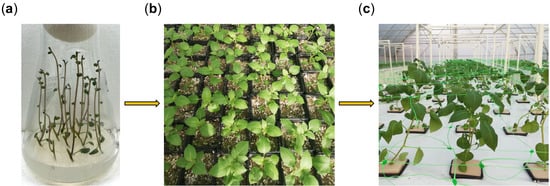
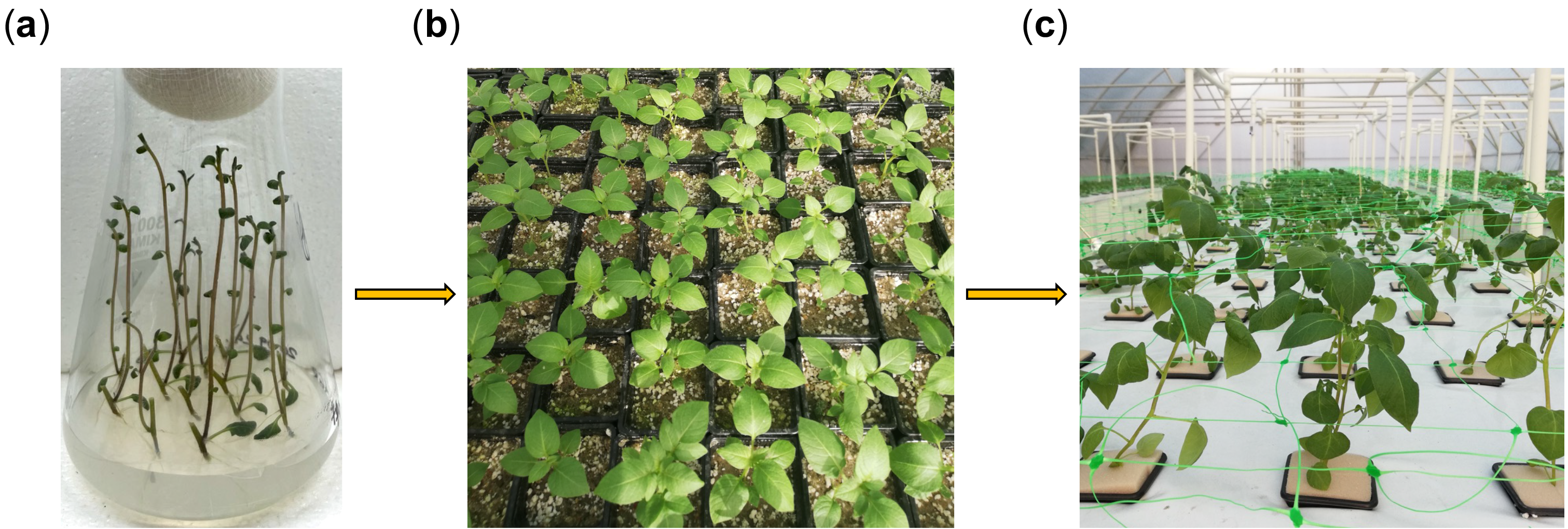
Three-week-old in vitro plants were planted in a sand-perlite substrate (4:1) and regularly watered with a nutrient solution for 21 days of acclimation in the insect-proof greenhouse (Figure 1). During the first 7 days of acclimation, the plants were additionally foliar-sprayed with water. Acclimated plants were transplanted into aeroponic modules on 09 October 2024. The roots of the plants were thoroughly washed with water, the stem parts 5 cm above the roots were placed in the holders, and the holders were positioned in the module.
Figure 1.
Preparation of potato plants for aeroponic cultivation. (a) In vitro-grown plantlets; (b) acclimated plants after 12 days in the insect-proof plastic greenhouse; (c) representative potato plants grown in the aeroponic system 24 days after transplanting.
2.3. Cultivation in Aeroponic System
The experiment was conducted at the AerPotato aeroponic facility, Institute for Biological Research “Siniša Stanković,” Belgrade, Serbia (44°48′ N, 20°27′ E, 96.1 m altitude) during the period 09 October 2024–29 January 2025. The facility comprises an aeroponic system with three modules placed in an insect-proof, plastic greenhouse with screened ventilation openings. The greenhouse was additionally heated using inverter air-conditioning units (Midea Group, Foshan, China) when necessary to prevent the temperature from falling below 10 °C.
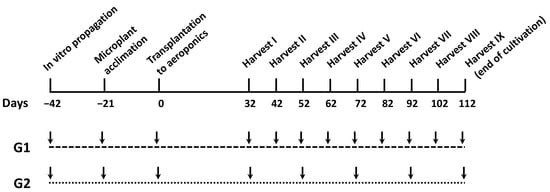
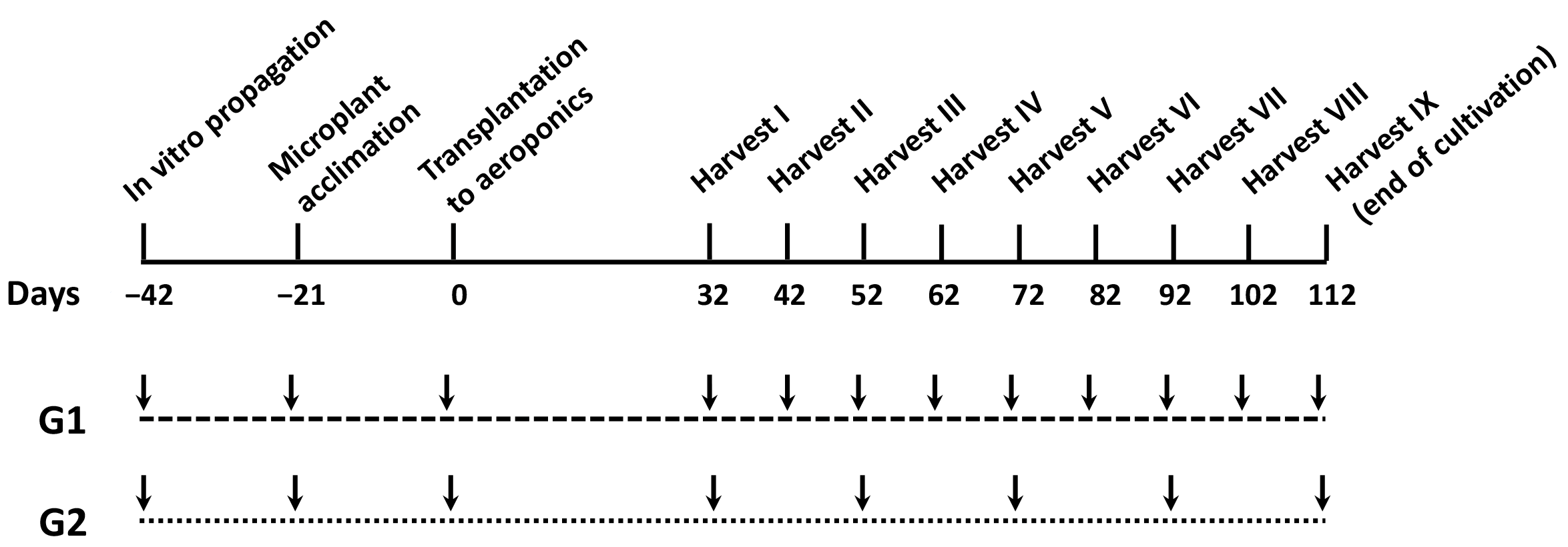
The aeroponic system operated according to the following fertigation regime. During the first 14 days after transplanting (DAT), plants received a 0.075% (w/v) solution of FitoFert Kristal Start (Fertico, Serbia), a water-soluble fertilizer containing 10% total nitrogen (N; 8% ammoniacal and 2% nitrate nitrogen), 45% P2O5, and 10% K2O, supplemented with the micronutrients Fe, Mn, Zn, Cu, B, and Mo. From 15 DAT until the end of the cultivation period, plants received a nutrient solution containing 0.05% (w/v) FitoFert Kristal Start and 0.05% (w/v) FitoFert Kristal (Fertico, Serbia). FitoFert Kristal contained 20% N (10.2% urea, 4.0% ammoniacal, and 5.8% nitrate nitrogen), 20% P2O5, and 20% K2O, as well as B (0.03%), Cu (0.01%), Fe (0.03%), Mn (0.03%), Zn (0.03%), and Mo (0.01%). The micronutrients were supplied in chelated forms. The nutrient solution was replenished regularly every 2 days. The MS5ARP Controller (Mikrorem, Čačak, Serbia) regulated the fogger’s cyclic dispersion of nutrient solution, increasing application frequency from 4 to 12 cycles hour−1 as module temperature rose from 10 to 30 °C. The application duration was 20 s. The initial planting density was identical for all four cultivars and both harvest-interval treatments, with 24 plants m−2 in each experimental replicate. The experiment investigated the effects of two factors: potato cultivar, with four levels (Agria, Désirée, Dragačevski Mesečar, and Festival), and harvest interval, with two levels (10 and 20 days). For each cultivar, six plots containing 30 plants each were designated for harvesting, with three plots assigned to each harvest interval. All treatment combinations were grown under similar greenhouse temperature conditions and received the same nutrient solution. After the first harvest at 32 DAT, the minitubers of all cultivars were collected at 10- or 20-day intervals, depending on the experimental group (G1 or G2, Figure 2). Harvests were labeled I–IX considering a 10-day harvest interval (Figure 2).
Figure 2.
Timeline of the activities before and during the aeroponic cultivation of the potato cultivars. G1 and G2 represent the 10-day and 20-day harvest-interval treatments, respectively.
Tubers with an intermediate diameter (i.e., the longest dimension perpendicular to the major axis) of ≥2 cm were selected for picking at each harvest, except at the final harvest, when all tubers were collected. Unlike regular harvests, the final harvest was conducted without a minimum tuber size threshold because it coincided with the termination of the cultivation cycle. At this stage, all remaining minitubers were collected, regardless of their diameter, to ensure that total production and the final size distribution were fully accounted for. The number of collected minitubers was counted, while the mass and diameter of individual tubers were measured at the end of each harvest interval. Individual tuber mass was used to calculate tuber yield m−2 for each harvest. During regular harvests, minitubers with an intermediate diameter of at least 20 mm were removed from the plants, whereas smaller attached minitubers were left in place to continue growing until they reached the harvest criterion or until the final harvest. Minitubers that became detached and fell to the bottom of the aeroponic modules were collected at each harvest regardless of their size. The total number of harvested minitubers was defined as the cumulative number of minitubers collected over all harvest events, including the final harvest. In contrast, the number of developing minitubers per plant recorded during growth assessments represented the minitubers present on the plants at the respective observation time and was not equivalent to cumulative harvested minituber production. For the assessment of tuber size distribution, data from all harvests were pooled, and the number of tubers m−2 was calculated for three intermediate diameter categories: <15 mm, 15–25 mm (inclusive), and >25 mm. Plant survival was monitored repeatedly throughout the cultivation period using the same initial population of transplanted plants. At each assessment, the percentage of surviving plants was calculated as the number of living plants divided by the initial number of plants transplanted into the corresponding experimental plot, multiplied by 100. Plants showing complete loss of viability were classified as non-surviving. The same experimental plots were monitored throughout the study, and dead plants were not replaced. In addition, morpho-anatomical parameters (main stem length, main stem leaf number, root length, and number of tubers) of 30 plants were measured at 14-day intervals for each cultivar × harvest interval combination.
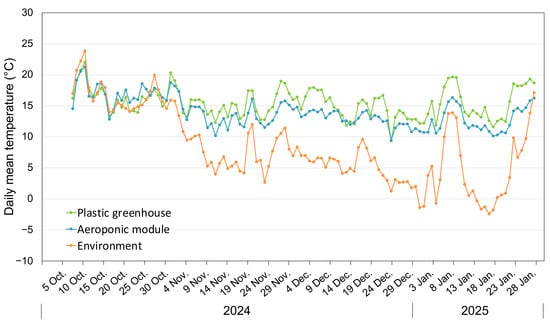
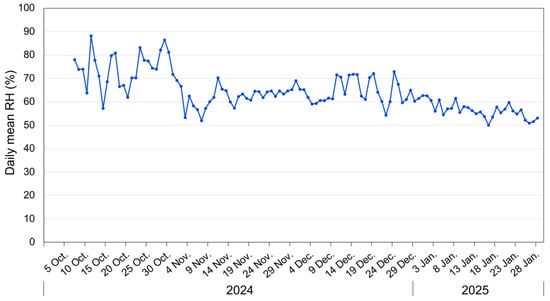
The temperatures in the modules (plant root zone), plastic greenhouse (haulm and leaves zone), and environment, as well as relative humidity (RH) in the plastic greenhouse, were recorded during the experiment. The mean daily temperatures and RH are presented in Figure 3 and Figure 4, respectively.
Figure 3.
Mean daily air temperature (°C) in the external environment and plastic greenhouse, and mean daily temperature (°C) inside the aeroponic modules during the cultivation period (9 October 2024–29 January 2025).
Figure 4.
Mean daily relative humidity (%) in the plastic greenhouse during the cultivation period (9 October 2024–29 January 2025).
2.4. Statistical Analysis
All statistical analyses were performed using IBM SPSS Statistics, version 26.0 (IBM Corporation, Armonk, NY, USA). Data visualization was carried out using Microsoft Excel for Mac, version 16.79.2 (Microsoft Corporation, Redmond, WA, USA) and RAWGraphs, version 2.0.1 (web-based data visualization tool). Figures were further refined using graphic editing software.
Plant growth parameters (main stem length, main stem leaf number, root length, and number of tubers) and plant survival were analyzed using linear mixed models (LMMs) to account for repeated observations over time and variability among experimental units. Cultivar, time, and their interaction (cultivar × time) were included as fixed effects. Individual plants were included as random intercepts for plant growth traits, while plots within aeroponic modules were included as random intercepts for survival analysis. This approach accounted for differences among plants or plots and the repeated-measures design. Because some plants wilted during the experiment, resulting in missing observations at later time points, LMMs were used to accommodate the unbalanced longitudinal data. No additional residual covariance structure for repeated measures was specified. Aerial tuber formation (expressed as the percentage of plants producing aerial tubers) was analyzed using a linear model with cultivar as a fixed factor. The total number of tubers m−2, tuber yield m−2, and tuber size distribution (<15 mm, 15–25 mm, and >25 mm) were analyzed using two-way analysis of variance (ANOVA). Cultivar and harvest interval were included as fixed factors, along with their interaction (cultivar × harvest interval). Prior to ANOVA, the assumptions of homogeneity of variances and normality of residuals were assessed using Levene’s test and visual inspection of residual distributions, respectively. Pearson correlation analysis was performed to assess the relationships among the evaluated plant growth parameters. Correlations were evaluated using a two-tailed test, with p < 0.05 considered statistically significant. When significant interaction effects were detected, pairwise comparisons were performed using estimated marginal means (EMMs). Results are presented as EMMs ± standard error (SE), and statistical significance was set at p < 0.05.
3. Results
3.1. Cultivation of Potato Cultivars and Duration of Their Vegetative Growth Period Under Aeroponic Conditions
Four potato cultivars (Agria, Désirée, Dragačevski Mesečar, and Festival) were cultivated under aeroponic conditions using in vitro-grown plants. Following a 21-day acclimation period in an insect-proof plastic greenhouse, the plants were transferred to aeroponic modules to continue vegetative growth and initiate minituber production. The first harvest was conducted at 32 DAT for all cultivars, and minitubers with a diameter ≥2 cm were collected and evaluated.
The duration of the plant vegetation cycle was estimated from temporal changes in plant survival, which reflected the progression of the growth cycle and subsequent decline in above-ground plant viability. Analysis of this parameter revealed significant effects of cultivar, time, and the cultivar × time interaction (Table 1).
Table 1.
Type III tests of fixed effects for plant survival (%) in potato cultivars.
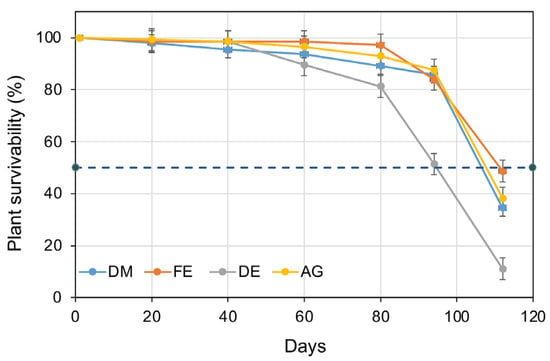
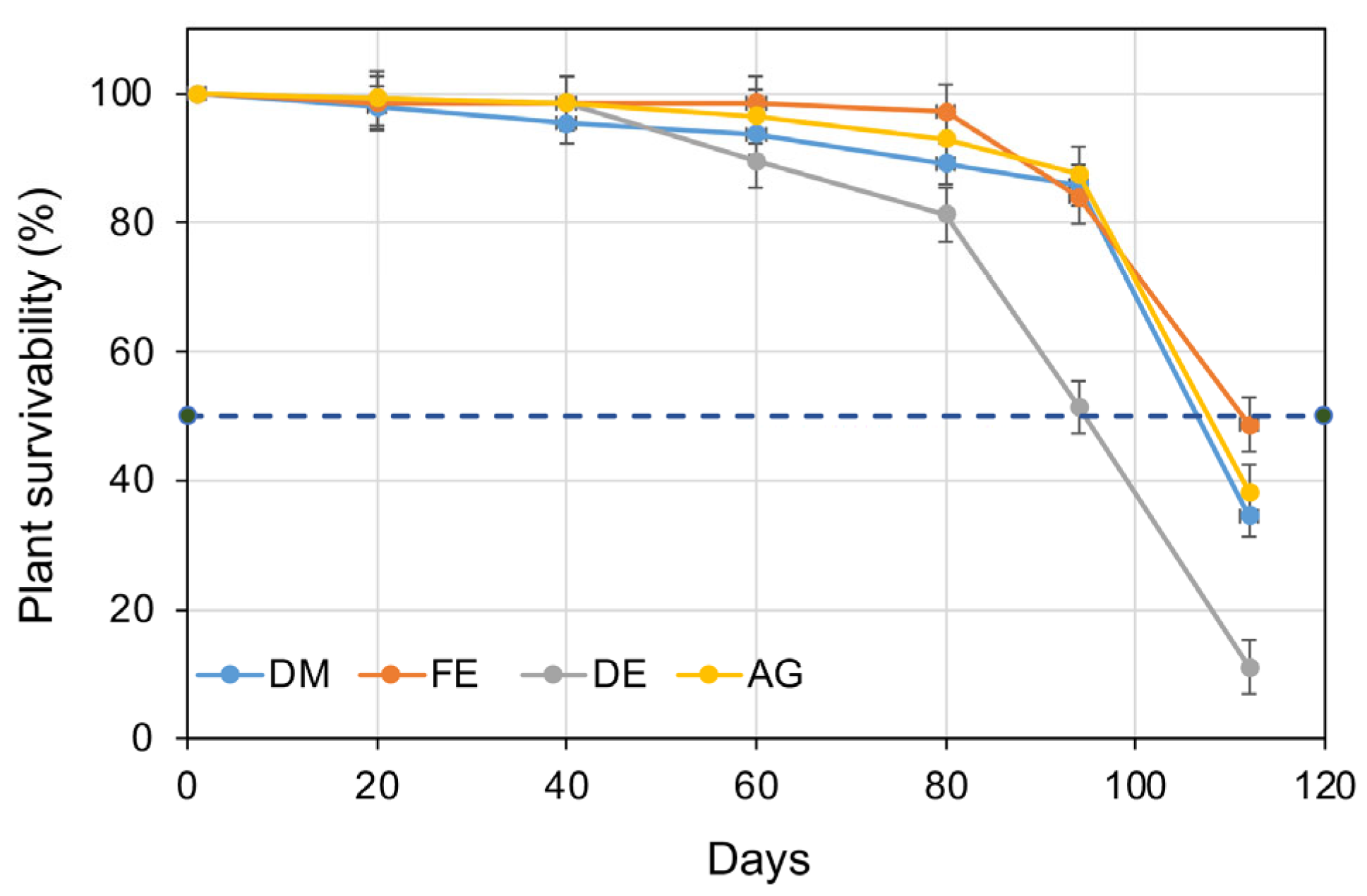
Percentage survivability remained high and stable across cultivars during the early growth period (0–40 days; >90%), but declined significantly after 60 days (Figure 5).
Figure 5.
Plant survivability over time in the studied potato cultivars. The dashed horizontal line indicates the 50% survivability threshold. AG—Agria; DE—Désirée; FE—Festival; DM—Dragačevski Mesečar.
Festival maintained the highest percentage survivability throughout the experiment, whereas the steepest decline was observed in Désirée. Accordingly, this cultivar reached the 50% survivability threshold earliest (approximately 95 DAT), while Festival exhibited the longest vegetation cycle, reaching this threshold at approximately 111 DAT. Dragačevski Mesečar and Agria exhibited intermediate values, reaching the 50% survivability threshold at approximately 107 and 108 DAT, respectively.
3.2. Growth Traits and Correlation Analysis in Aeroponically Grown Potato Cultivars
The growth parameters measured in four potato cultivars included main stem length, number of leaves on the main stem, root length, and number of minitubers formed per plant. Measurements were taken at successive 2-week intervals. Growth parameters were analyzed to determine which parameter was most strongly associated with minituber production in the aeroponic system regardless of harvest interval. Correlation analysis was then performed to quantify the relationships among the measured parameters.
3.2.1. Growth Traits of Potato Cultivars During the Aeroponic Cultivation
All measured growth parameters were significantly affected by cultivar, time, and the cultivar × time interaction (Table 2).
Table 2.
Type III tests of fixed effects for plant growth parameters in potato cultivars.
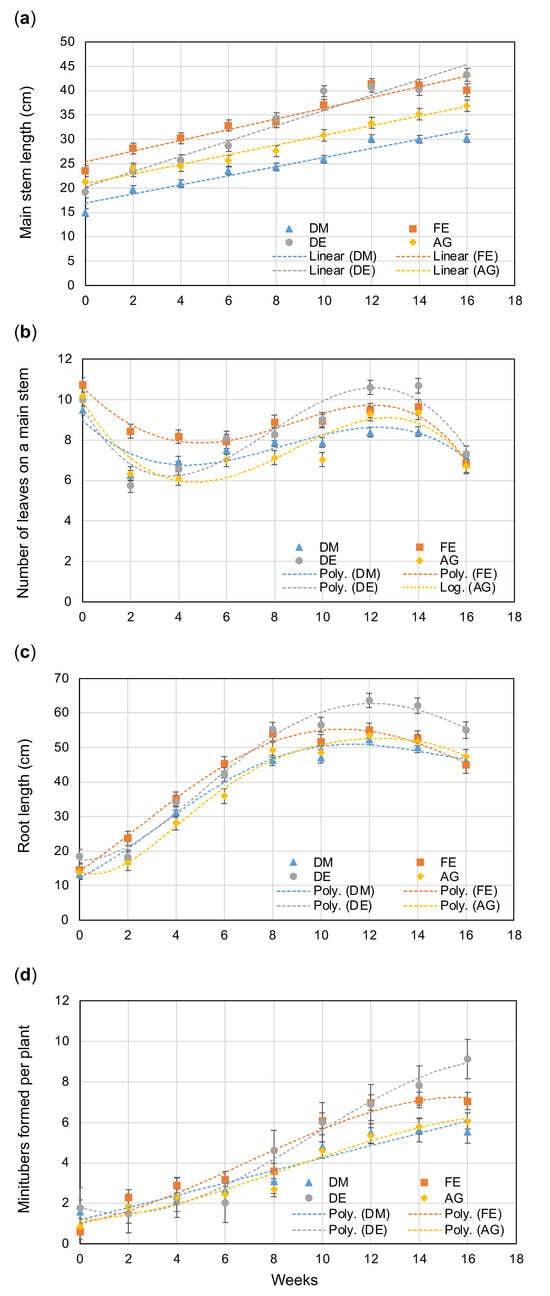
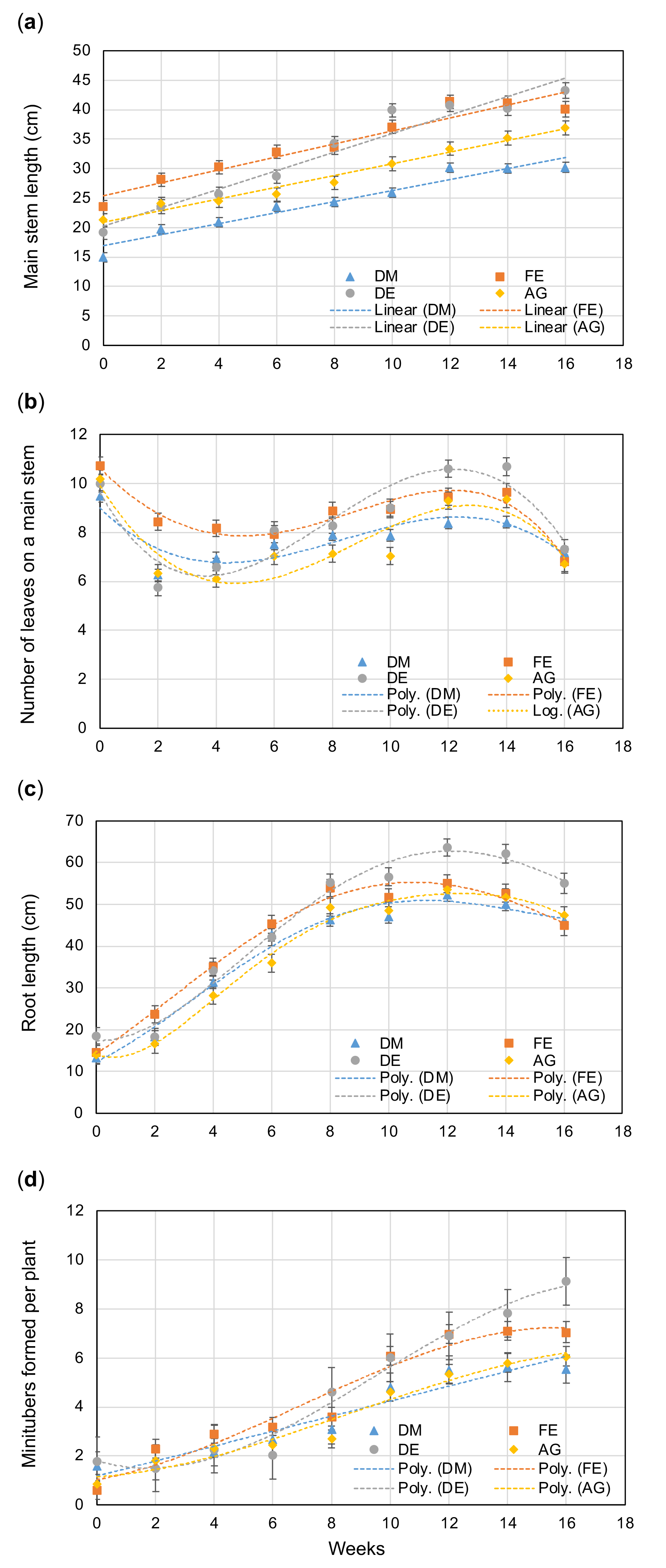
At the first measurement, main stem length per plant was lowest in Dragačevski Mesečar (14.97 cm) and highest in Festival (23.48 cm) (Figure 6a). Stem length increased progressively in all cultivars throughout the experimental period. Désirée exhibited the greatest overall increase in plant height (from 19.13 cm at the beginning to 43.23 cm at the end of the experiment), indicating more pronounced growth compared to the other cultivars. Festival also exhibited rapid initial growth, but this was followed by a slow-down in the later stages. Agria was characterized by moderate and continuous growth throughout the entire period, whereas Dragačevski Mesečar remained shorter than the other cultivars throughout the study, while showing a relatively consistent increase in height over time.
Figure 6.
Growth dynamics of the studied potato cultivars in an aeroponic system. Changes in (a) main stem length (cm), (b) number of leaves per plant, (c) root length (cm), and (d) number of minitubers per plant were monitored over time. AG—Agria, DE—Désirée, FE—Festival, DM—Dragačevski Mesečar.
Initially, the number of leaves on the main stem was lowest in Dragačevski Mesečar (4.48) and highest in Festival (6.73) (Figure 6b). Leaf number increased in all cultivars during the experimental period, reaching peak values between weeks 12 and 14. The greatest increase in leaf number was observed in Désirée, rising from 6.00 at the beginning of the experiment to a maximum of 10.70 leaves at week 14, which was the highest value among the evaluated cultivars. Festival maintained the highest leaf number during the early stages of the experiment but increased only slightly thereafter. In contrast, Agria showed relatively little change during the first 10 weeks, followed by a marked increase, whereas Dragačevski Mesečar exhibited a gradual increase throughout the experiment. At the final assessment, leaf number declined in all cultivars due to the onset of plant senescence and leaf abscission.
Désirée showed the greatest overall increase in root length, rising from 18.38 cm at the beginning of the experiment to a peak of 63.62 cm at week 12 (Figure 6c). Festival also exhibited strong early growth, reaching high values in the middle of the experiment, whereas Agria showed a steady increase until the middle of the experiment followed by stabilization. In contrast, Dragačevski Mesečar exhibited a more gradual and consistent growth pattern.
At the first measurement, Désirée had the highest number of minitubers per plant (1.80), whereas Festival had the lowest value (0.60) (Figure 6d). The number of minitubers per plant increased throughout the experiment in all cultivars, although the rate of increase differed. Festival showed the fastest early increase, whereas Désirée exhibited the greatest increase after week 6 and produced the highest final value (9.13 minitubers per plant). Agria and Dragačevski Mesečar increased more gradually, reaching 6.07 and 5.55 minitubers per plant, respectively.
3.2.2. Correlation Analysis
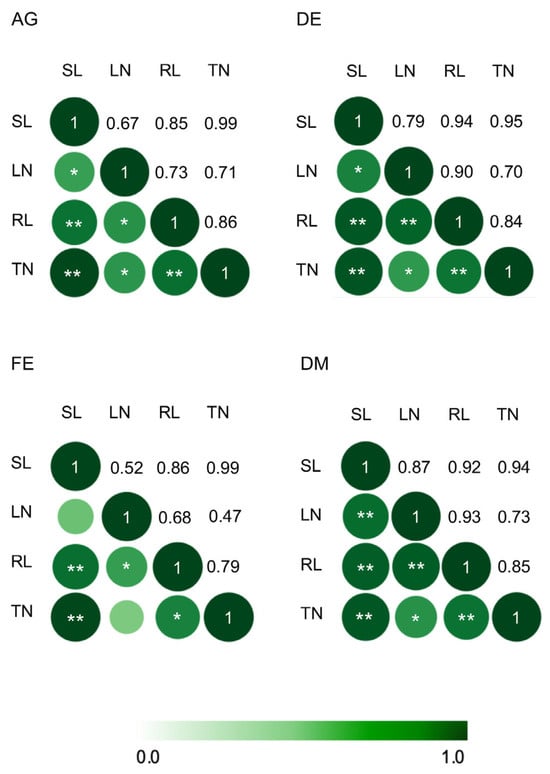
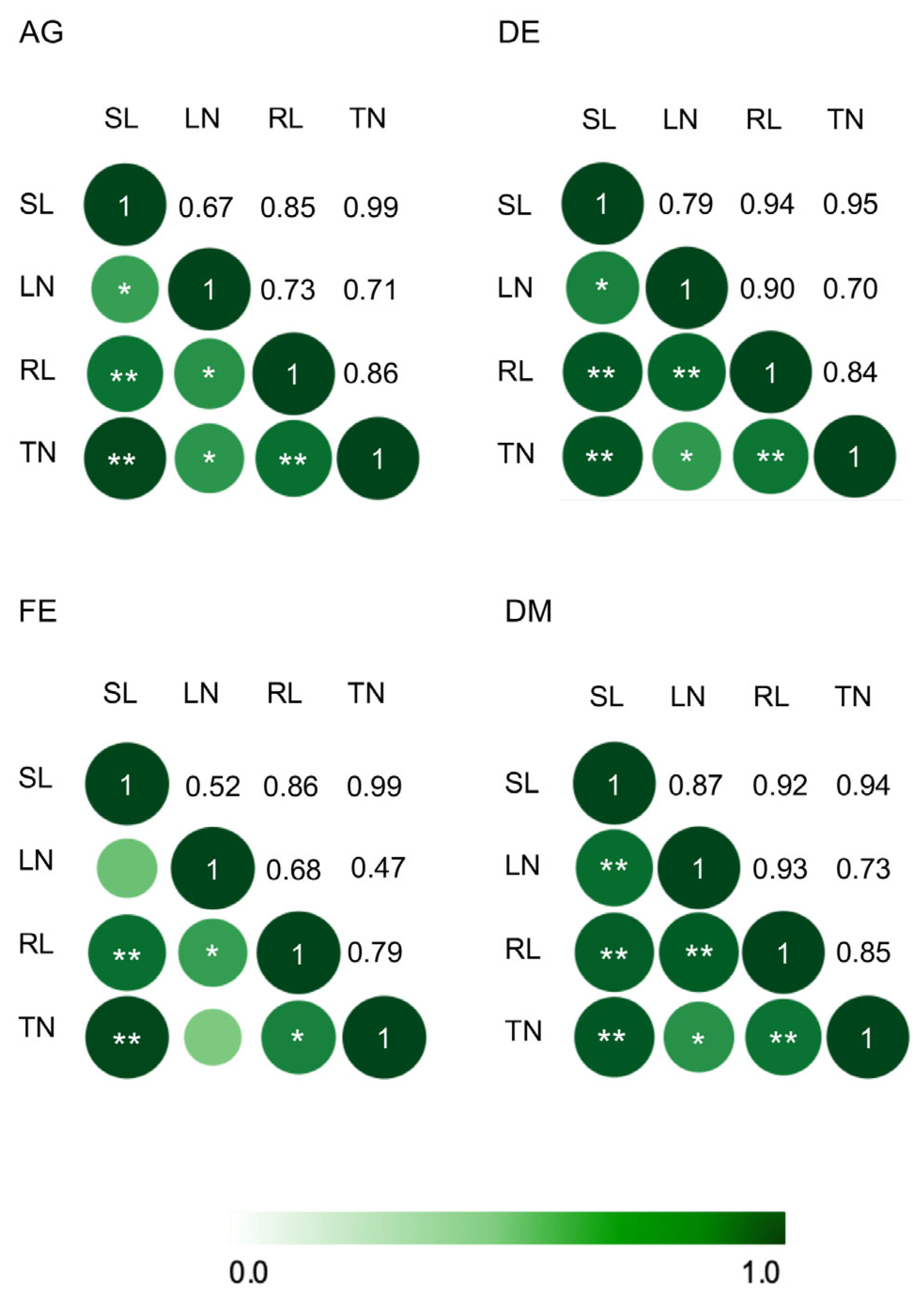
Correlation analysis revealed strong positive relationships among the evaluated parameters for each of the four potato cultivars (Figure 7).
Figure 7.
Correlation matrix of evaluated plant parameters in the aeroponic system. The intensity of the green color and the size of the circles correspond to the strength of the correlation coefficients. Asterisks indicate statistically significant correlations: p < 0.05 (*), p < 0.01 (**), based on a two-tailed test. AG—Agria, DE—Désirée, FE—Festival, DM—Dragačevski Mesečar; SL—main stem length, LN—leaf number, RL—root length, TN—minituber number.
Among the evaluated parameters, main stem length (SL) showed a consistently very strong and significant positive correlation with the number of minitubers per plant (TN) in all cultivars (r = 0.94–0.99). Root length (RL) also exhibited strong to very strong significant positive correlations with TN (r = 0.79–0.86), whereas the number of leaves on the main stem (LN) exhibited moderate to strong positive correlations with TN (r = 0.47–0.73), with statistically significant correlations observed in three cultivars, while the correlation was not significant in Festival.
The strength of these relationships varied among cultivars. Dragačevski Mesečar exhibited the strongest overall correlation pattern, with all relationships classified as strong to very strong positive correlations (r = 0.73–0.94). Agria and Désirée also showed predominantly strong to very strong positive correlations, whereas Festival showed greater variability, with correlations ranging from moderate to very strong.
3.3. Effects of Harvest Interval on Tuber Production and Size Distribution in Aeroponically Grown Potato Cultivars
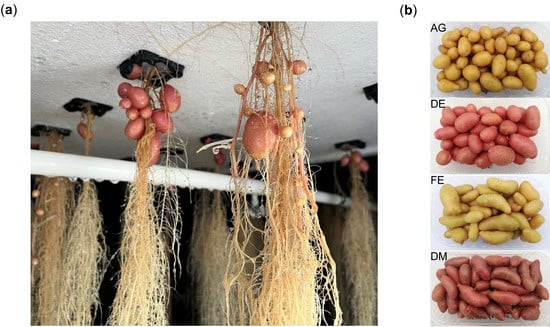
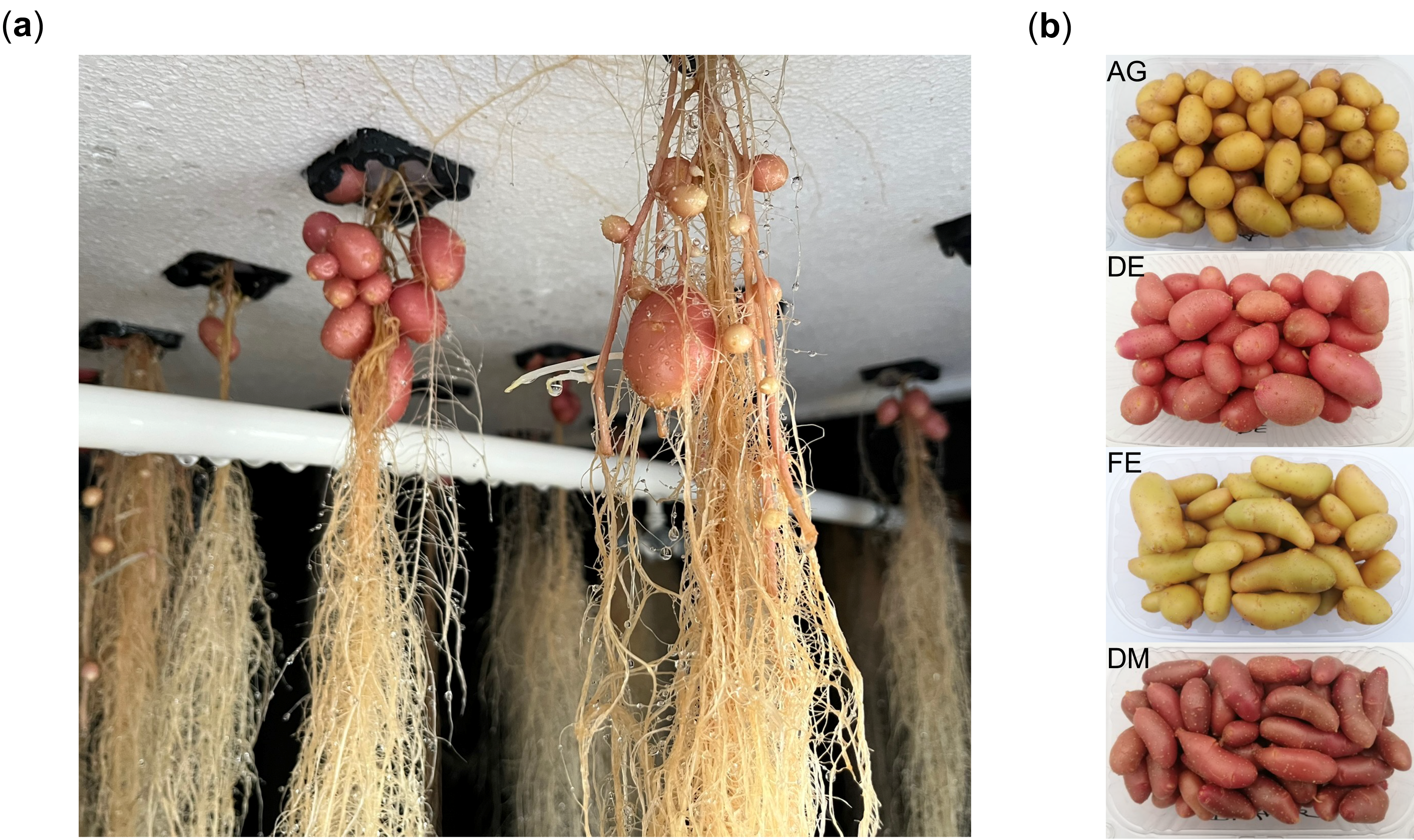
Representative images of minitubers produced in the aeroponic system are presented in Figure 8, illustrating the variation in tuber size and morphology among the evaluated potato cultivars. The number of tubers m−2 and tuber yield m−2 were evaluated in four potato cultivars under two harvest intervals (10 and 20 days). Additionally, the number of tubers m−2 was assessed within three tuber diameter categories, defined according to their practical production value: tubers > 25 mm were considered suitable for direct field planting, those 15–25 mm for greenhouse production, and tubers < 15 mm as having limited practical value.
Figure 8.
Aeroponic production of potato minitubers. (a) Root systems with developing minitubers; (b) harvested minitubers of the studied cultivars. AG—Agria, DE—Désirée, FE—Festival, DM—Dragačevski Mesečar.
The number of tubers m−2 differed significantly among cultivars and between harvest intervals, whereas the cultivar × harvest interval interaction was not significant (Table 3).
Table 3.
Type III tests of fixed effects for total tuber number m−2 in potato cultivars under different harvest intervals.
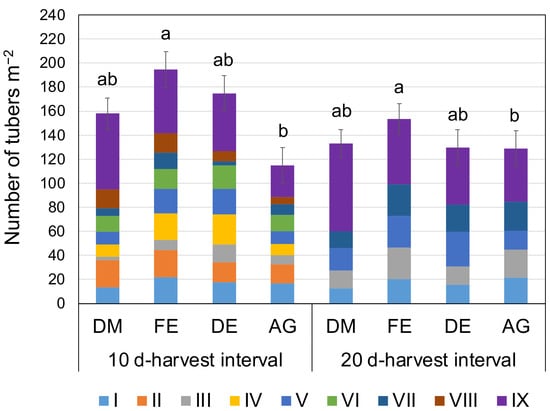
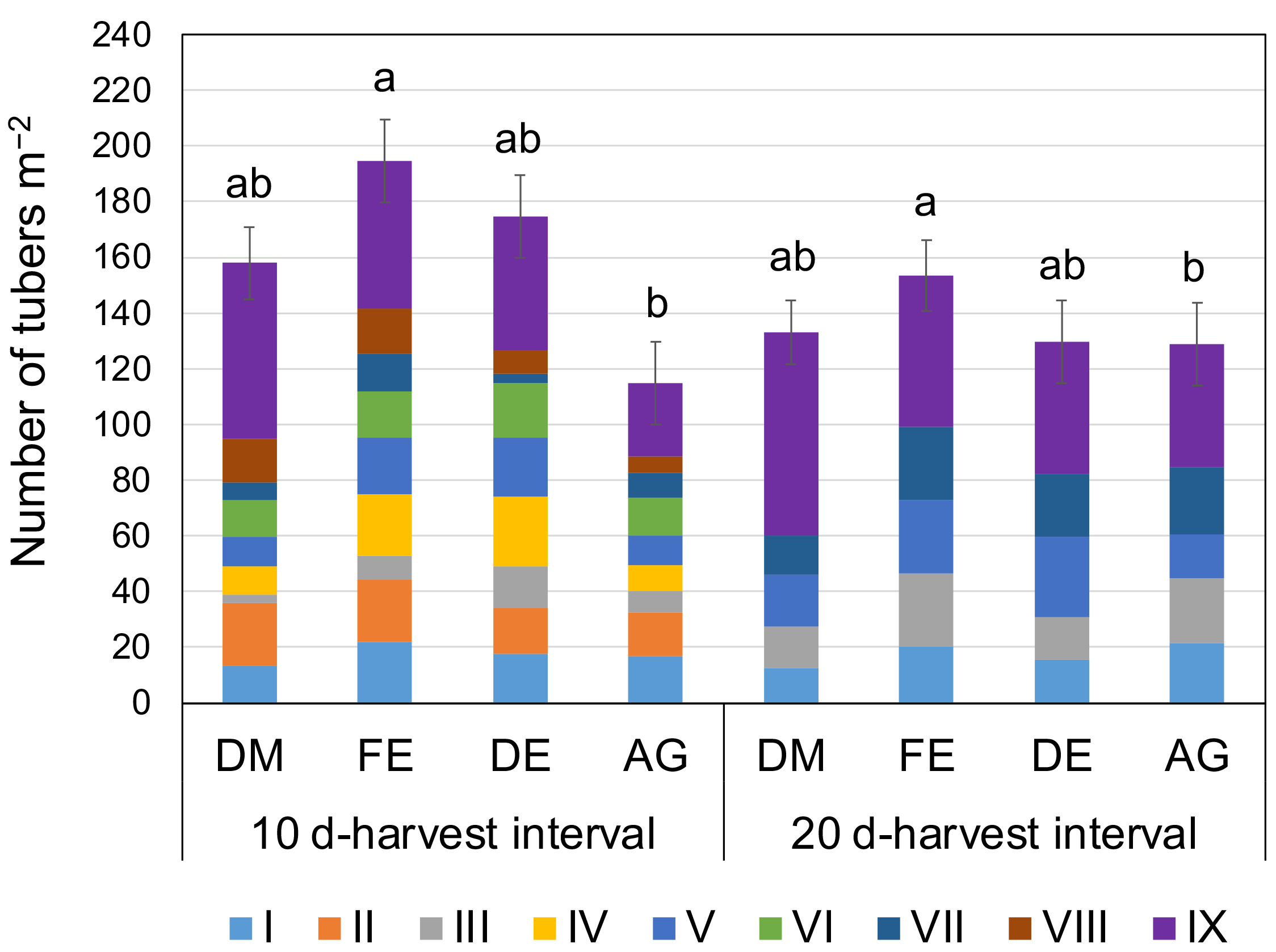
Festival produced the highest number of tubers m−2, whereas Agria produced the lowest (Figure 9). A significant difference was observed only between these two cultivars. In addition, the 10-day harvest interval resulted in a significantly higher total number of tubers m−2 compared with the 20-day interval. The highest number of tubers m−2 was recorded at the final harvest, when all remaining tubers were collected. The particularly high number of minitubers recorded at the final harvest should be interpreted in relation to the non-selective harvesting procedure, during which all remaining tubers were collected regardless of size.
Figure 9.
Number of tubers m−2 in the studied potato cultivars under different harvest intervals. Harvests are labeled I–IX. Different lowercase letters indicate significant differences between cultivars based on Bonferroni-adjusted pairwise comparisons (p < 0.05). AG—Agria, DE—Désirée, FE—Festival, DM—Dragačevski Mesečar.
Tuber yield m−2 differed significantly among cultivars, whereas no significant differences were observed between harvest intervals or for the cultivar × harvest interval interaction (Table 4).
Table 4.
Type III tests of fixed effects for tuber yield m−2 in potato cultivars under different harvest intervals.
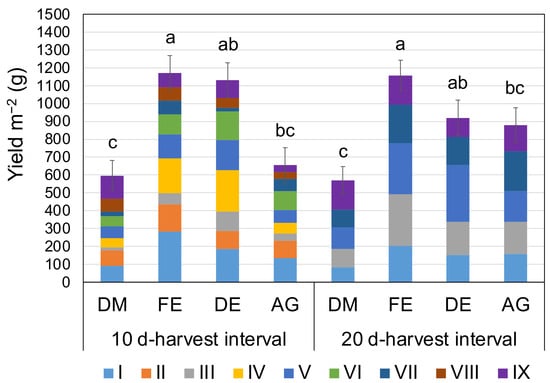
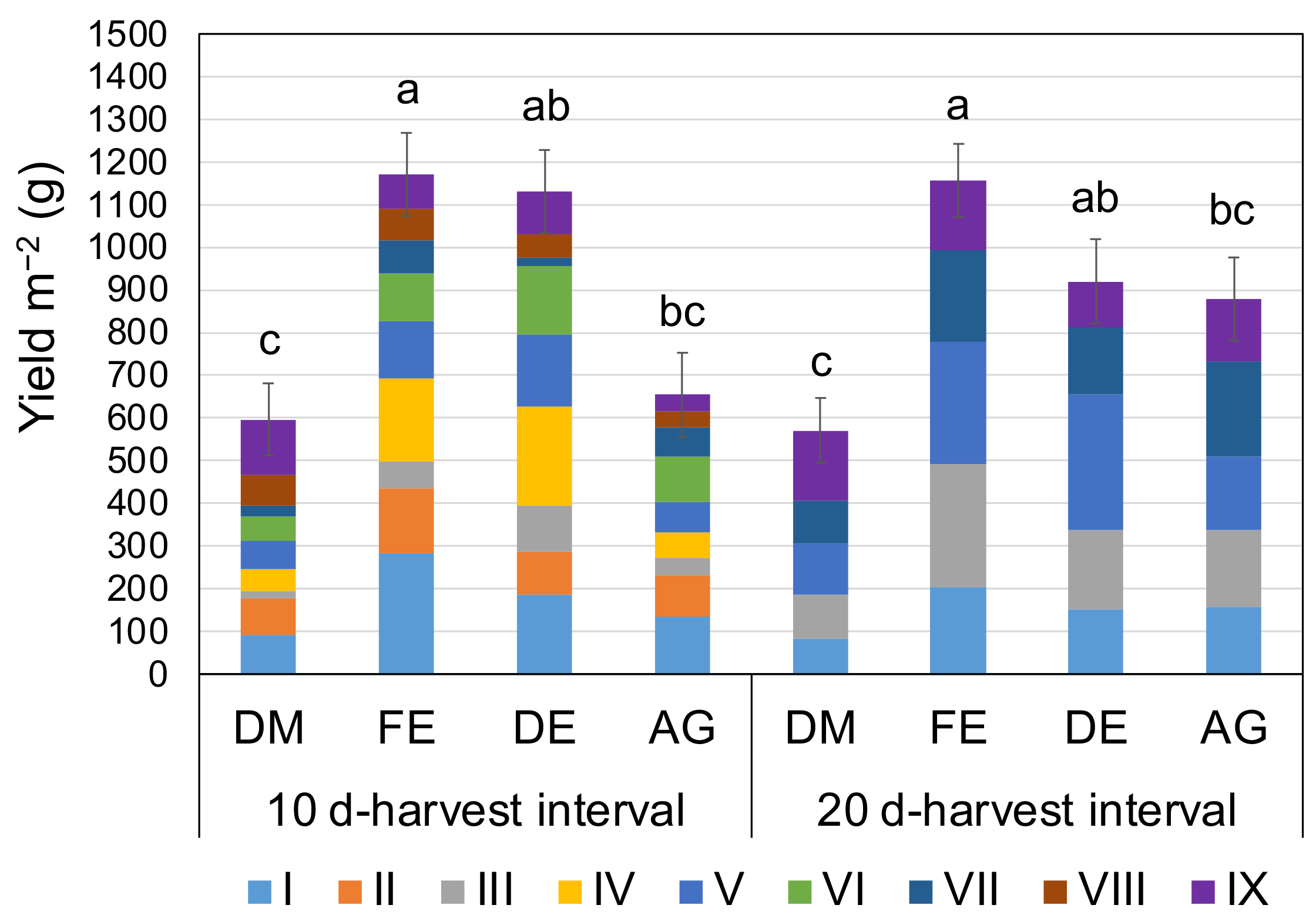
Festival exhibited the highest tuber yield, whereas Dragačevski Mesečar had the lowest (Figure 10). Significant differences were detected between Festival and Agria, Festival and Dragačevski Mesečar, and Désirée and Dragačevski Mesečar.
Figure 10.
Tuber yield m−2 in the studied potato cultivars under different harvest intervals. Harvests are labeled I–IX. Different lowercase letters indicate significant differences between cultivars based on Bonferroni-adjusted pairwise comparisons (p < 0.05). AG—Agria, DE—Désirée, FE—Festival, DM—Dragačevski Mesečar.
The effects of cultivar and harvest interval on the number of tubers m−2 varied among tuber size categories (Table 5).
Table 5.
Type III tests of fixed effects for distribution of tuber number m−2 across size categories in potato cultivars under different harvest intervals.
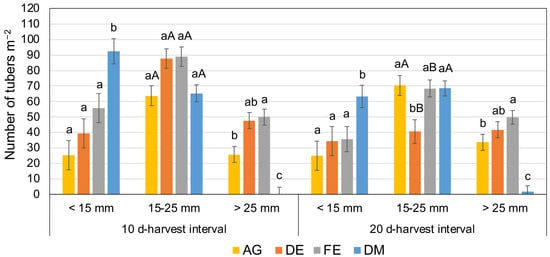
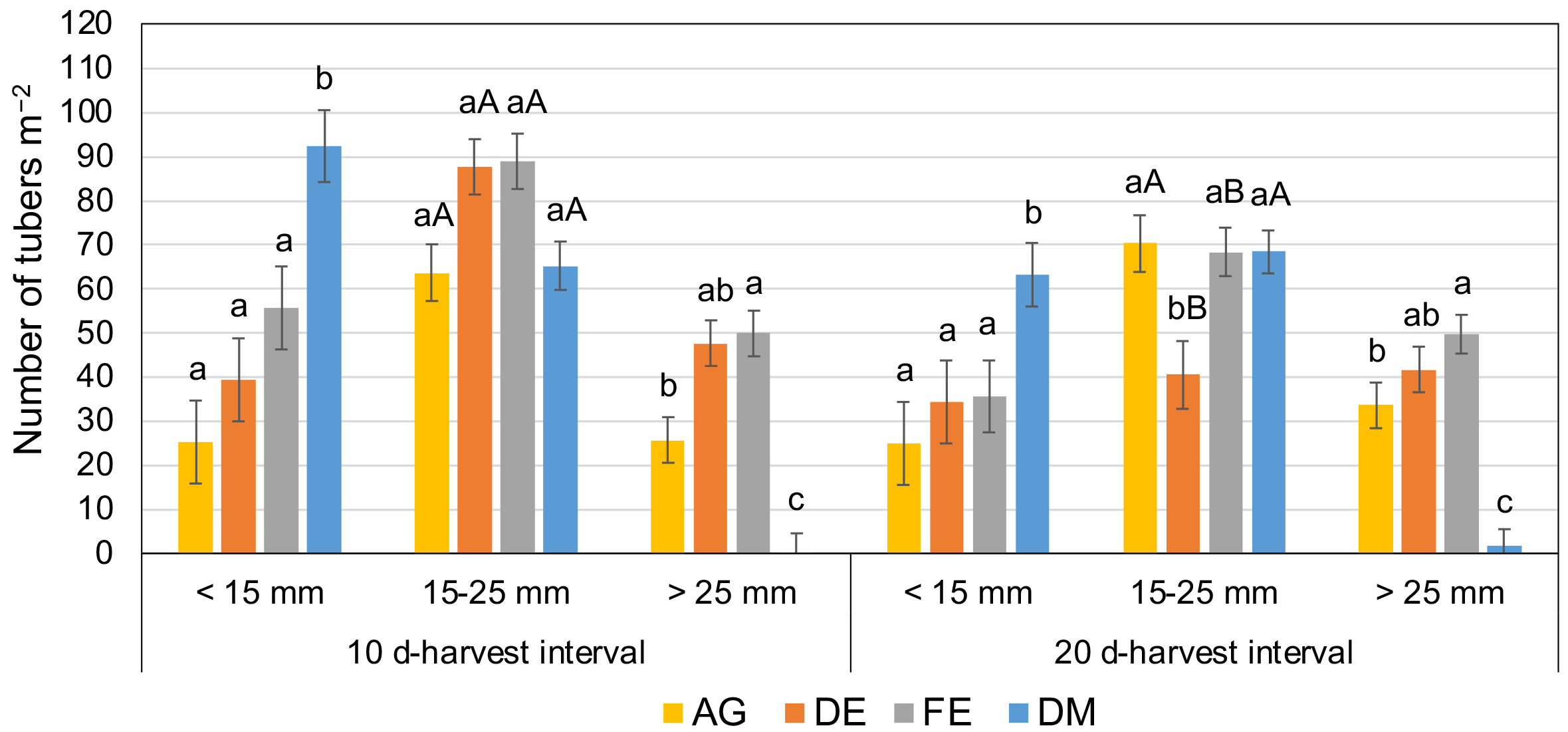
The number of small tubers with intermediate diameters of <15 mm m−2 was significantly affected by cultivar and harvest interval (Table 5). Dragačevski Mesečar, a fingerling-type cultivar characterized by elongated tubers, produced significantly more small tubers than the other cultivars, whereas Agria, Désirée, and Festival did not differ (Figure 11). Additionally, a higher number of small tubers was recorded at the 10-day harvest interval.
Figure 11.
Number of tubers m−2 across size categories in the studied potato cultivars under different harvest intervals. Different lowercase letters indicate significant differences among cultivars within the indicated harvest interval and size category. Different uppercase letters indicate significant differences between harvest intervals within the same cultivar and size category, where applicable. Pairwise comparisons were performed using Bonferroni adjustment (p < 0.05). AG—Agria, DE—Désirée, FE—Festival, DM—Dragačevski Mesečar.
The number of medium tubers with intermediate diameters of 15–25 mm m−2 was significantly affected by harvest interval and the cultivar × harvest interval interaction, whereas cultivar had no significant effect (Table 5). At the 10-day harvest interval, no significant differences among cultivars were observed. At the 20-day harvest interval, however, Agria, Dragačevski Mesečar, and Festival produced significantly more medium tubers than Désirée (Figure 11). Within cultivars, Désirée and Festival produced significantly more medium tubers at the 10-day than at the 20-day harvest interval, whereas no significant differences between harvest intervals were observed for Agria and Dragačevski Mesečar.
The number of large tubers with intermediate diameters of >25 mm m−2 was only affected by cultivar (Table 5). Festival produced the highest number of large tubers, whereas the fewest were recorded in Dragačevski Mesečar, which differed significantly from all other cultivars (Figure 11). Agria showed intermediate values, while Désirée produced a similar number of large tubers to Festival and Agria. The lower number of large tubers in Dragačevski Mesečar may be related to its elongated tuber shape, characteristic of this fingerling-type cultivar, which may have resulted in a greater proportion of tubers falling into the smaller diameter categories.
3.4. Aerial Tuber Formation in Aeroponically Grown Potato Cultivars
Aerial tuber formation was observed in a proportion of plants in all four cultivars. Cultivar had a significant effect on the percentage of plants producing aerial tubers (Table 6).
Table 6.
Type III tests of fixed effects for aerial tuber formation (%) in potato cultivars.
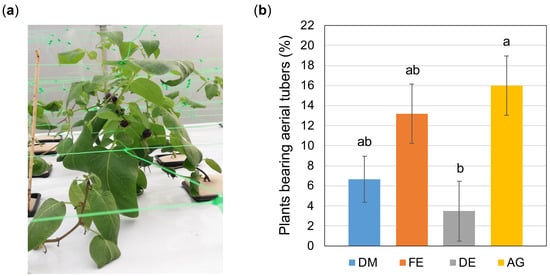
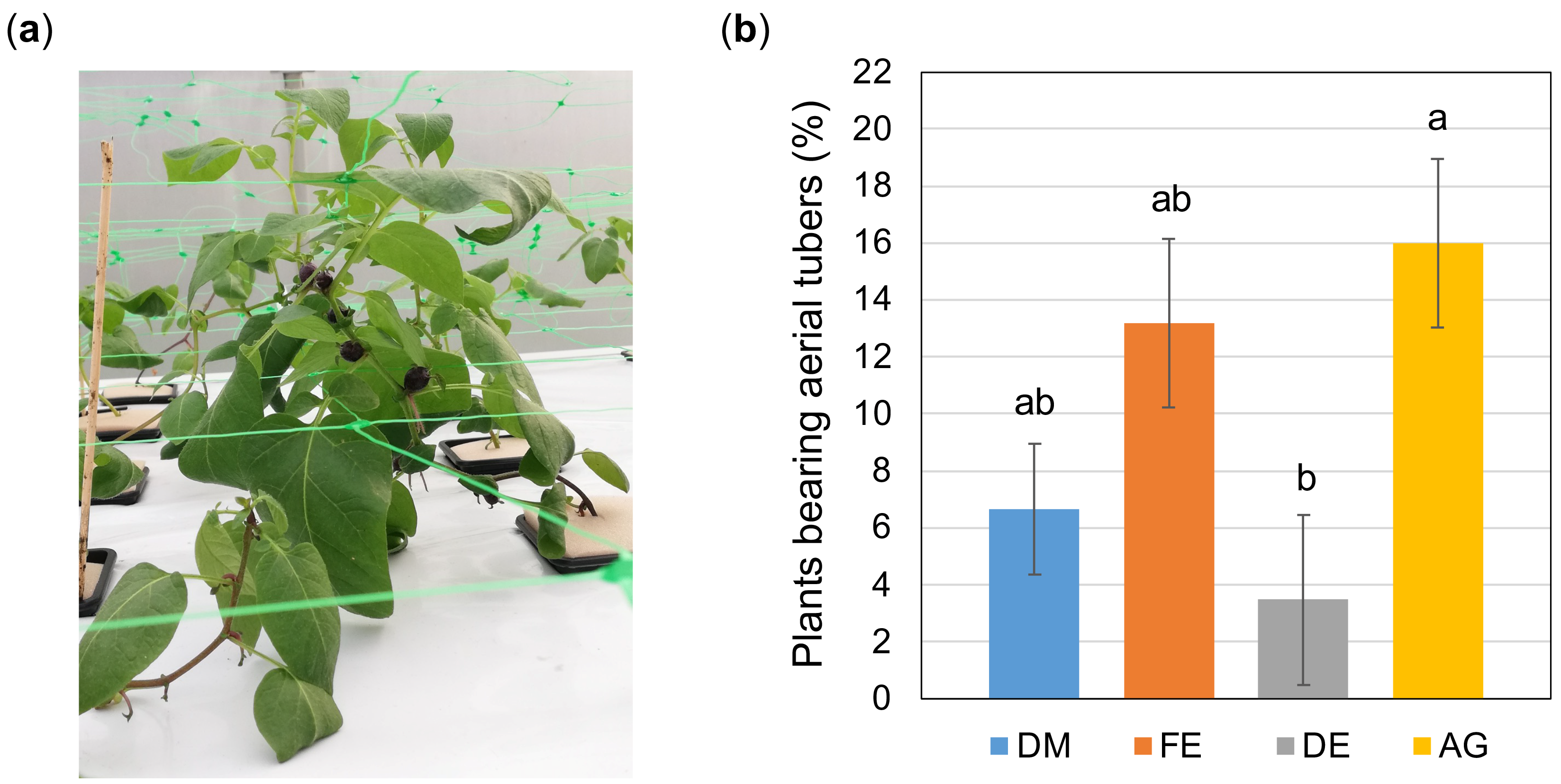
Agria exhibited a significantly higher percentage of plants producing aerial tubers than Désirée (15.97% vs. 3.47%, respectively), representing an approximately 4.6-fold difference (Figure 12). In contrast, no other significant differences were observed among the remaining cultivar pairs.
Figure 12.
Aerial tuber formation in the studied potato cultivars. (a) Representative aerial tubers developing on potato plants grown in the aeroponic system; (b) the percentage of plants bearing aerial tubers in the studied cultivars. Different letters indicate significant differences among cultivars based on Bonferroni-adjusted pairwise comparisons (p < 0.05). AG—Agria, DE—Désirée, FE—Festival, DM—Dragačevski Mesečar.
4. Discussion
Aeroponic production of pre-basic seed potato minitubers during the autumn–winter season under moderate continental climate conditions presents specific challenges, particularly in maintaining suitable environmental conditions for plant growth and tuber development. Greenhouse-based cultivation offers the possibility of mitigating some of these limitations, although its effectiveness depends on environmental control, cultivar response, and crop management practices.
The environmental conditions within the greenhouse, particularly temperature, contributed to the successful aeroponic production of potato seed minitubers during the autumn–winter cultivation period. In regions with a moderate continental climate, low winter temperatures represent a major limitation for potato cultivation. Although greenhouse conditions remain influenced by external climate, they can reduce exposure to extreme temperature fluctuations and provide more favorable conditions for potato growth. During the study period, external temperatures below 0 °C were recorded only during two short periods in January, whereas mean daily temperatures inside the greenhouse, which was additionally heated when necessary, remained approximately between 10 and 20 °C for most of the cultivation period. For commercial potato cultivars, optimal growth generally occurs at mean daily temperatures of 14–22 °C [25], whereas tuber growth is strongly restricted at temperatures below 10 °C [26]. In the present study, greenhouse temperature conditions supported vegetative growth and tuber formation throughout the autumn–winter cultivation cycle. These results indicate that greenhouse-based aeroponic cultivation can extend the production season and enable successful potato seed minituber production under moderate continental climate conditions.
Plant survival following transfer of acclimatized in vitro plants to aeroponic systems is one of the key factors affecting successful minituber production. Successful transition from in vitro growth to the aeroponic system depends on the ability of plantlets to adapt to ex vitro conditions before transfer. Buckseth et al. [27] demonstrated that both the hardening method and cultivar significantly influence plant survival and subsequent performance under aeroponic conditions, highlighting the importance of an appropriate acclimatization phase before transfer to aeroponic systems. In our study, in vitro-grown plants of all four cultivars showed 100% survival after a 21-day acclimatization period in a sand–perlite substrate, followed by high survival rates of approximately 95% during the 40-day cultivation period in the aeroponic system. Differences among cultivars in plant survival became more distinct during the later stages of cultivation. Similar to previous findings by Buckseth et al. [27], cultivar performance under aeroponic conditions did not fully correspond to maturity classification established under field conditions. In particular, Désirée, although classified as a mid-late cultivar, completed its growth cycle earliest among the tested cultivars under aeroponic conditions. This observation highlights the potential limitations of conventional maturity classifications for predicting cultivar performance in aeroponic systems during the autumn–winter season.
Beyond differences in plant survival, the tested cultivars showed considerable variability in growth parameters over time. Désirée exhibited greater main stem and root growth, as well as higher numbers of leaves and tubers per plant, whereas Agria and Dragačevski Mesečar showed lower values for these parameters. Such differences among potato cultivars in growth characteristics under aeroponic conditions have also been reported in previous studies [18,28,29,30]. Variation in growth characteristics may also be observed among studies evaluating the same cultivar. For example, Agria developed a shorter main stem in the present study than was reported by Tierno et al. [18], which may be related to differences in the cultivation period and environmental conditions, particularly temperature and light availability during the autumn–winter cycle. However, despite this difference, the main stem heights recorded for all tested cultivars were within the range reported for potato cultivars grown in aeroponic systems under greenhouse conditions [14,28], suggesting that the autumn–winter cultivation period under a moderate continental climate allowed adequate vegetative growth of potato plants.
Harvest interval is among the important factors influencing minituber production in aeroponic systems. Frequent harvesting allows nondestructive removal of the dominant large tubers, which promotes initiation of new tubers as well as further development of existing ones, which can be harvested afterwards [31]. Shorter harvest intervals have previously been associated with increased minituber production in aeroponic systems, although the magnitude of this effect may depend on plant density [20]. Farran and Mingo-Castel [20] demonstrated that, at a planting density of 60 plants m−2, a 7-day harvest interval enhanced minituber productivity compared with 10- and 14-day intervals, while this was not the case at a higher planting density of 100 plants m−2. Under the lower planting density used in the present study, a 10-day harvest interval increased the number of harvested minitubers without increasing total tuber yield m−2. Furthermore, the absence of a significant interaction between cultivar and harvest interval for either tuber number or tuber yield m−2 indicates that the effect of harvest interval did not significantly differ among the tested cultivars. The practical importance of harvest interval, however, depends not only on the total number of minitubers produced but also on their size distribution. Onaran and Çalışkan [32] showed that larger minitubers outperformed smaller ones in subsequent field production, highlighting the importance of producing adequately sized planting material. In the present study, the effect of harvest interval was mainly observed in the smaller size categories, with the 10-day harvest interval increasing the number of tubers <15 mm and 15–25 mm, whereas the number of tubers >25 mm was not significantly affected. From a practical perspective, minitubers larger than 25 mm are more suitable for direct field planting, whereas those measuring 15–25 mm may be used for further greenhouse multiplication. Tubers smaller than 15 mm have more limited practical value under the production criteria considered in this study. Therefore, the choice of harvest interval should depend on the intended use and desired size distribution of the planting material rather than solely on maximizing minituber number.
Direct comparison of minituber productivity among studies should be interpreted with caution because differences in harvest interval, harvest procedure, harvest criteria, and environmental conditions can contribute to variation in the reported results. For example, Broćić et al. [11] reported the number of minitubers m−2 for Agria and Désirée that differed from those obtained in the present study, despite using the same plant density. In their study, minitubers were harvested four times at intervals of 12–19 days without a size criterion, whereas in the present study, tubers with an intermediate diameter of ≥ 2 cm were harvested at 10- or 20-day intervals, with all remaining tubers collected at the final harvest. These differences in harvest procedure and interval may partly explain the difference in the number of harvested minitubers between the two studies. In addition, environmental conditions also differed between the studies and may have contributed to the observed differences in minituber productivity. Other aeroponic studies have likewise applied different harvest criteria. Ritter et al. [17] harvested all tubers larger than 15–20 mm in length, whereas Čížek and Komárková [19] harvested tubers weighing more than 1 g (approximately 10–30 mm in size). Wang et al. [33] used a minimum tuber weight of >3 g for regular harvests, while tubers >0.5 g were included in the final harvest. Such differences in harvest criteria further complicate direct comparison of minituber productivity among studies. In addition to the differences observed among studies, significant differences in minituber productivity were observed among the tested cultivars. Although Désirée produced the highest number of tubers per plant, it did not achieve the highest tuber number or tuber yield m−2. Instead, Festival showed the highest overall minituber productivity and also produced the highest number of large tubers (>25 mm) m−2. The lower cumulative minituber productivity of Désirée compared with Festival may be associated with its earlier decline in plant survival under the experimental conditions. A shorter period of sustained plant viability could have limited the duration of minituber production; however, this relationship remains hypothetical, as the physiological mechanisms underlying the cultivar differences were not directly investigated. The relationship between vegetative growth and productivity was further supported by correlation analysis. Across cultivars, root length and main stem length showed consistently strong positive correlations with tuber number, whereas the association between leaf number and tuber production was genotype-dependent. These findings indicate that vigorous root and stem development are closely associated with minituber productivity and may represent useful indicators of productivity in aeroponic seed potato production.
Besides differences in minituber productivity, the tested cultivars also differed in their tendency to form aerial tubers under aeroponic conditions. Aerial tuber formation is influenced by a complex interaction of environmental and genetic factors, with relative humidity and light regime playing important roles in their development, alongside photoperiod, temperature, tuberization-related genes, epigenetic mechanisms, phytohormones, and carbohydrate availability [34,35]. Axillary meristems can develop into either branches or stolons, and under favorable environmental conditions, stolons subsequently undergo tuberization.
From a practical perspective, cultivar-specific differences in aerial tuber formation may be relevant to the management of aeroponic seed potato production. The occurrence of aerial tubers indicates that tuber development is not always restricted to the root-zone compartment and may require additional attention during crop monitoring and harvest operations. Depending on their location, size, and quality, aerial tubers may also need to be handled separately from those produced within the aeroponic modules. Karim et al. [36] suggested that aerial tubers may have potential applications in seed potato production. However, their study also demonstrated significant compositional differences between aerial and subterranean tubers, including higher concentrations of glycoalkaloids, chlorophyll, and chlorogenic acid, and lower starch concentrations in aerial tubers. Furthermore, Percival [37] reported that aerial tubers are typically non-dormant at harvest and exhibit apical dominance, characteristics that may limit their suitability for seed potato multiplication. These findings suggest that aerial tubers should not automatically be regarded as equivalent to conventionally formed minitubers. In aeroponic seed production, their separate collection and assessment could facilitate quality control and help determine whether they can be included in the usable seed fraction. However, the contribution of aerial tubers to total usable seed production and their subsequent planting performance were not evaluated in this study and should be investigated in future research.
In the present study, Agria exhibited a significantly higher percentage of plants producing aerial tubers than Désirée, whereas no significant differences were observed among the other cultivar pairs. This observation is consistent with the findings of Dianawati et al. [38], who reported significant differences in aerial tuber formation between potato cultivars. Notably, aerial tuber formation was considerably more pronounced during the autumn–winter cultivation period, whereas its occurrence was negligible when the same cultivars were grown under spring–summer conditions (unpublished results). These findings suggest that the occurrence of aerial tubers may be particularly associated with the autumn–winter cultivation period under aeroponic greenhouse conditions. Together with the observed differences in productivity and growth characteristics, these results further emphasize the importance of cultivar selection for efficient aeroponic seed potato production under autumn–winter greenhouse conditions.
Taken together, the results indicate that autumn–winter greenhouse-based aeroponic cultivation could provide an additional production cycle for pre-basic seed potato minitubers under moderate continental climate conditions. Minitubers obtained during this period could potentially be used for subsequent spring planting, depending on their physiological condition and seed production requirements. However, the commercial viability of this approach remains to be established, as the present study did not evaluate production costs, energy consumption, storage requirements, or economic returns.
5. Conclusions
These findings demonstrate the potential of greenhouse-based aeroponic cultivation for autumn–winter production of pre-basic seed potato minitubers under moderate continental climate conditions. However, the results are based on four potato cultivars evaluated at a single greenhouse location during one autumn–winter growing season. Therefore, the applicability of these findings to other cultivars, growing seasons, and environmental conditions requires further validation. Future research should evaluate the consistency of harvest-interval responses across different production environments and assess the physiological quality and subsequent field performance of minitubers obtained under alternative harvest strategies.
Significant differences among cultivars were observed in plant survival, vegetative growth, minituber productivity, tuber size distribution, and aerial tuber formation, emphasizing the importance of cultivar selection for efficient aeroponic production. Désirée exhibited the highest number of developing minitubers per plant, whereas Festival achieved higher cumulative productivity per unit area. These differences may be partly associated with cultivar-specific growth duration, although the underlying mechanisms require further investigation.
The 10-day harvest interval increased the number of harvested minitubers, mainly by increasing the number of tubers in the smaller size categories, whereas total tuber yield and the number of planting-size tubers (>25 mm) were primarily determined by cultivar characteristics rather than harvest interval. These findings indicate that harvest strategies should be optimized according to the intended use of the produced minitubers, considering the need to balance total productivity with the production of adequately sized planting material.
Overall, autumn–winter aeroponic production in a greenhouse represents a promising approach for increasing the efficiency of pre-basic seed potato production in regions with a moderate continental climate. Further optimization of cultivar selection, greenhouse environmental conditions, and harvest intervals could help improve minituber yield and size distribution.
Author Contributions
Conceptualization, I.M.; methodology, D.P., J.R., J.O., J.S. and I.M.; formal analysis, D.P.; investigation, D.P., J.R., J.O., J.S. and I.M.; resources, I.M.; data curation, D.P. and I.M.; writing—original draft preparation, D.P., J.R., J.O., J.S. and I.M.; writing—review and editing, D.P., J.R., J.O., J.S. and I.M.; visualization, D.P.; supervision, I.M.; project administration, I.M.; funding acquisition, I.M. All authors have read and agreed to the published version of the manuscript.
Funding
This research was supported by the Science Fund of the Republic of Serbia Grant No. 7589, project acronym AerPotato, and by the Ministry of Science, Technological Development and Innovation of the Republic of Serbia (Contract No. 451-03-33/2026-03/200007).
Institutional Review Board Statement
Not applicable.
Data Availability Statement
The raw data supporting the conclusions of this article will be made available by the authors on request.
Acknowledgments
This paper is dedicated to the memory of Zoran Broćić, our colleague and friend, whose vision inspired us to start aeroponic research. The results presented in this manuscript are in line with Sustainable Development Goal 2 (Food Security and Improved Nutrition) of the United Nations 2030 Agenda. The authors thank Bogdan Dugalić for assistance with plant measurements and data entry. During the preparation of this manuscript, the authors used ChatGPT (GPT-6, OpenAI) for language editing, grammar checking, and improving the clarity and readability of the text. The authors have reviewed and edited the output and take full responsibility for the content of this publication.
Conflicts of Interest
The authors declare no conflicts of interest. The funders had no role in the design of the study; in the collection, analyses, or interpretation of data; in the writing of the manuscript; or in the decision to publish the results.
Abbreviations
The following abbreviations are used in this manuscript:
| AG | Agria |
| ANOVA | Analysis of variance |
| BAP | 6-Benzylaminopurine |
| BM | Basal medium |
| DAT | Days after transplanting |
| DE | Désirée |
| DM | Dragačevski Mesečar |
| EMMs | Estimated marginal means |
| FE | Festival |
| LMM | Linear mixed model |
| LN | Leaf number |
| RL | Root length |
| RH | Relative humidity |
| SE | Standard error |
| SL | Main stem length |
| TN | Minituber number |
References
- Food and Agriculture Organization of the United Nations (FAO). AGROVOC Supports the International Day of Potato. 2026. Available online: https://www.fao.org/agrovoc/news/agrovoc-supports-international-day-potato (accessed on 24 August 2026).
- Yin, Z.; Wu, M.; Dai, L.; Zhang, H. A comparative study on total anthocyanin content, composition of anthocyanidin, total phenolic content and antioxidant activity of pigmented potato peel and flesh. Food Sci. Technol. Res. 2016, 22, 219–226. [Google Scholar] [CrossRef] [Scilit]
- Hameed, A.; Iqbal, Z.; Asad, S.; Mansoor, S. Detection of multiple potato viruses in the field suggests synergistic interactions among potato viruses in Pakistan. Plant Pathol. J. 2014, 30, 407–415. [Google Scholar] [CrossRef] [Scilit]
- Della Bartola, M.; Byrne, S.; Mullins, E. Characterization of potato virus Y isolates and assessment of nanopore sequencing to detect and genotype potato viruses. Viruses 2020, 12, 478. [Google Scholar] [CrossRef] [Scilit]
- Schumpp, O.; Bréchon, A.; Brodard, J.; Dupuis, B.; Farinelli, L.; Frei, P.; Otten, P.; Pellet, D. Large-scale RT-qPCR diagnostics for seed potato certification. Potato Res. 2021, 64, 553–569. [Google Scholar] [CrossRef] [Scilit]
- Kolychikhina, M.S.; Beloshapkina, O.O.; Phiri, C. Change in potato productivity under the impact of viral diseases. IOP Conf. Ser. Earth Environ. Sci. 2021, 663, 012035. [Google Scholar] [CrossRef] [Scilit]
- Boubaker, H.; Saadaoui, W.; Dasgan, H.Y.; Tarchoun, N.; Gruda, N.S. Enhancing seed potato production from in vitro plantlets and microtubers through biofertilizer application: Investigating effects on plant growth, tuber yield, size, and quality. Agronomy 2023, 13, 2541. [Google Scholar] [CrossRef] [Scilit]
- Cioloca, M.; Tican, A.; Popa, M. Evaluation of virus-free potato minitubers derived from “in vitro” meristem cultures for high-quality seed potato production. Rom. J. Hortic. 2024, 5, 15–22. [Google Scholar] [CrossRef] [Scilit]
- Rykaczewska, K. The potato minituber production from microtubers in aeroponic culture. Plant Soil Environ. 2016, 62, 210–214. [Google Scholar] [CrossRef] [Scilit]
- Hasrak, S.; Zarghami, R. Comparison of minituber production in designed aeroponic system and soil cultivation. Acta Physiol. Plant. 2023, 45, 57. [Google Scholar] [CrossRef] [Scilit]
- Broćić, Z.; Milinković, M.; Momčilović, I.; Poštić, D.; Oljača, J.; Veljković, B.; Milošević, D. Production of potato mini-tubers in the aeroponic growing system. J. Process. Energy Agric. 2018, 22, 49–52. [Google Scholar] [CrossRef] [Scilit]
- Broćić, Z.; Milinković, M.; Momčilović, I.; Oljača, J.; Veljković, B.; Milošević, D.; Poštić, D. Comparison of aeroponics and conventional production system of virus-free potato mini tubers in Serbia. Agro-Knowl. J. 2019, 20, 95–105. [Google Scholar] [CrossRef] [Scilit]
- Mateus-Rodriguez, J.F.; De Haan, S.; Rodríguez-Delfín, A. Genotype by environment effects on potato mini-tuber seed production in an aeroponics system. Agronomy 2014, 4, 514–528. [Google Scholar] [CrossRef] [Scilit]
- Balena, L.; Malanchuk, J.P.; Tamanini Junior, C.; Ribas, E.L.; Eschemback, V.; Kawakami, J. Growth, yield and dormancy of aeroponically produced potato minitubers as a function of planting density and harvesting date. Hortic. Bras. 2021, 39, 161–168. [Google Scholar] [CrossRef] [Scilit]
- Broćić, Z.; Oljača, J.; Pantelić, D.; Rudić, J.; Momčilović, I. Potato aeroponics: Effects of cultivar and plant origin on minituber production. Horticulturae 2022, 8, 915. [Google Scholar] [CrossRef] [Scilit]
- da Silva Filho, J.B.; Fontes, P.C.R.; Cecon, P.R.; Ferreira, J.F.; McGiffen, M.E.; Montgomery, J.F. Yield of potato minitubers under aeroponics, optimized for nozzle type and spray direction. HortScience 2020, 55, 14–22. [Google Scholar] [CrossRef] [Scilit]
- Ritter, E.; Angulo, B.; Riga, P.; Herrán, C.; Relloso, J.; San Jose, M. Comparison of hydroponic and aeroponic cultivation systems for the production of potato minitubers. Potato Res. 2001, 44, 127–135. [Google Scholar] [CrossRef] [Scilit]
- Tierno, R.; Carrasco, A.; Ritter, E.; Ruiz de Galarreta, J.I. Differential growth response and minituber production of three potato cultivars under aeroponics and greenhouse bed culture. Am. J. Potato Res. 2014, 91, 346–353. [Google Scholar] [CrossRef] [Scilit]
- Čížek, M.; Komárková, Z. Comparison of aeroponics and conventional system of production of potato mini-tubers in the conditions of the Czech Republic. Plant Soil Environ. 2022, 68, 366–374. [Google Scholar] [CrossRef] [Scilit]
- Farran, I.; Mingo-Castel, A.M. Potato minituber production using aeroponics: Effects of plant density and harvesting intervals. Am. J. Potato Res. 2006, 83, 47–53. [Google Scholar] [CrossRef] [Scilit]
- Mbiyu, M.W.; Muthoni, J.; Kabira, J.; Elmar, G.; Muchira, C.; Pwaipwai, P.; Onditi, J. Use of aeroponics technique for potato (Solanum tuberosum) minitubers production in Kenya. J. Hortic. For. 2012, 4, 172–177. [Google Scholar] [CrossRef]
- Momčilović, I.; Pantelić, D.; Hfidan, M.; Savić, J.; Vinterhalter, D. Improved procedure for detection of superoxide dismutase isoforms in potato, Solanum tuberosum L. Acta Physiol. Plant. 2014, 36, 2059–2066. [Google Scholar] [CrossRef] [Scilit]
- Murashige, T.; Skoog, F. A revised medium for rapid growth and bio assays with tobacco tissue cultures. Physiol. Plant. 1962, 15, 473–497. [Google Scholar] [CrossRef] [Scilit]
- Linsmaier, E.M.; Skoog, F. Organic growth factor requirements of tobacco tissue cultures. Physiol. Plant. 1965, 18, 100–127. [Google Scholar] [CrossRef] [Scilit]
- Van Dam, J.; Kooman, P.L.; Struik, P.C. Effects of temperature and photoperiod on early growth and final number of tubers in potato (Solanum tuberosum L.). Potato Res. 1996, 39, 51–62. [Google Scholar] [CrossRef] [Scilit]
- Chen, B.C.; Wu, X.J.; Guo, H.C.; Xiao, J.P. Effects of appropriate low-temperature treatment on the yield and quality of pigmented potato (Solanum tuberosum L.) tubers. BMC Plant Biol. 2024, 24, 274. [Google Scholar] [CrossRef] [Scilit]
- Buckseth, T.; Singh, R.K.; Tiwari, J.K.; Sharma, S.; Gautam, A.; Sharma, A.K.; Sadawarti, M.J.; Kumar, M. Influence of micro-plant hardening methods on aeroponic potato mini-tuber production. Potato Res. 2022, 65, 335–348. [Google Scholar] [CrossRef] [Scilit]
- Calori, A.H.; Factor, T.L.; Feltran, J.C.; Watanabe, E.Y.; Moraes, C.C.; Purquerio, L.F.V. Electrical conductivity of the nutrient solution and plant density in aeroponic production of seed potato under tropical conditions (winter/spring). Bragantia 2017, 76, 23–32. [Google Scholar] [CrossRef] [Scilit]
- Masengesho, J.; Nshimiyimana, J.C.; Senkesha, N.; Sallah, P.Y.K. Performance of Irish potato varieties under aeroponics conditions. Rwanda J. 2012, 28, 84–94. [Google Scholar] [CrossRef] [Scilit]
- Sharma, A.K.; Buckseth, T.; Singh, R.K. Effect of planting periods on production potential of potato (Solanum tuberosum) varieties under aeroponics. Indian J. Agric. Sci. 2023, 93, 274–278. [Google Scholar] [CrossRef] [Scilit]
- Lommen, W.J.M.; Struik, P.C. Production of potato minitubers by repeated harvesting: Plant productivity and initiation, growth and resorption of tubers. Neth. J. Agric. Sci. 1992, 40, 341–358. [Google Scholar] [CrossRef] [Scilit]
- Onaran, A.; Çalışkan, M.E. Optimization and economic perspective of planting density and minituber size in potato seed production. Am. J. Potato Res. 2023, 100, 169–183. [Google Scholar] [CrossRef] [Scilit]
- Wang, C.C.; Wang, X.Y.; Wang, K.X.; Hu, J.J.; Tang, M.X.; He, W.; Vander Zaag, P. Manipulating aeroponically grown potatoes with gibberellins and calcium nitrate. Am. J. Potato Res. 2018, 95, 351–361. [Google Scholar] [CrossRef] [Scilit]
- Bhogale, S.; Mahajan, A.S.; Natarajan, B.; Rajabhoj, M.; Thulasiram, H.V.; Banerjee, A.K. MicroRNA156: A potential graft-transmissible microRNA that modulates plant architecture and tuberization in Solanum tuberosum ssp. andigena. Plant Physiol. 2014, 164, 1011–1027. [Google Scholar] [CrossRef] [Scilit]
- Kondhare, K.R.; Kumar, A.; Patil, N.S.; Malankar, N.N.; Saha, K.; Banerjee, A.K. Development of aerial and belowground tubers in potato is governed by photoperiod and epigenetic mechanism. Plant Physiol. 2021, 187, 1071–1086. [Google Scholar] [CrossRef] [Scilit]
- Karim, M.S.; Percival, G.C.; Dixon, G.R. Comparative composition of aerial and subterranean potato tubers (Solanum tuberosum L). J. Sci. Food Agric. 1997, 75, 251–257. [Google Scholar] [CrossRef] [Scilit]
- Percival, G.C. Factors Influencing Accumulation of Potato Glycoalkaloids and Their Potential Manipulation in Tuber Pathogen Bio-Control. Ph.D. Thesis, University of Strathclyde/SAC Auchincruive, Strathclyde, Scotland, 1993. [Google Scholar]
- Dianawati, M.; Hamdani, K.K.; Sulastrini, I.; Susanto, B.; Nurawan, A.; Cartika, I.; Rahardjo, I.B.; Haryati, Y.; Amisnaipa, A.; Hanudin, H.; et al. Multiple versus single harvest comparison for two potato cultivars with an aeroponic system in Indonesia. Chil. J. Agric. Res. 2025, 85, 920–931. [Google Scholar] [CrossRef] [Scilit]

Disclaimer/Publisher’s Note: The statements, opinions and data contained in all publications are solely those of the individual author(s) and contributor(s) and not of MDPI and/or the editor(s). MDPI and/or the editor(s) disclaim responsibility for any injury to people or property resulting from any ideas, methods, instructions or products referred to in the content. |
© 2026 by the authors. Licensee MDPI, Basel, Switzerland. This article is an open access article distributed under the terms and conditions of the Creative Commons Attribution (CC BY) license.