


Abstract
Postharvest discoloration is one of the primary factors limiting the quality, shelf life, and marketability of lettuce. Although substantial progress has been made in understanding the physiological and biochemical basis of lettuce discoloration, inconsistent terminology, subjective assessment methods, and fragmented investigation of contributing factors have limited comparisons among studies and slowed progress towards elucidating the mechanisms regulating development of this physiological disorder. This review synthesizes current knowledge of lettuce discoloration by integrating disorder classification, physiological and biochemical mechanisms, genetic regulation, preharvest and postharvest factors that influence the shelf life, objective phenotyping approaches, and mitigation strategies. While gas-induced disorders are discussed to provide a comprehensive perspective, particular emphasis is placed on wound-induced oxidative discoloration and the growing body of evidence suggesting that browning and pinking may represent related but distinct oxidative phenotypes, although their physiological relationship remains unresolved. Inconsistencies in terminology and phenotype classification across the literature are also highlighted, and suggestions are provided to improve clarity and consistency in reporting. Recent advances in digital imaging and hyperspectral sensing, coupled with machine learning and molecular biology, provide new opportunities to objectively characterize discoloration phenotypes and improve understanding of the physiological, biochemical, and genetic mechanisms underlying discoloration development. Integrating these technologies with physiological, biochemical, and genetic research will be essential for improving mechanistic understanding and developing more effective strategies to predict, mitigate, and breed for reduced postharvest discoloration in lettuce and in other fresh produce.
1. Introduction
Lettuce (Lactuca sativa L.) is the most widely consumed leafy vegetable worldwide and represents one of the most economically important horticultural crops due to its nutritional value, convenience, and year-round availability. However, its highly perishable nature presents significant challenges throughout harvesting, processing, storage, distribution, and retail. Postharvest handling and mechanical injury, particularly during fresh-cut processing, can accelerate physiological deterioration, resulting in quality losses associated with discoloration, moisture loss, texture deterioration, off-flavor development, and microbial spoilage [1,2,3]. Among these quality defects, postharvest discoloration remains one of the principal causes of reduced marketability, retailer and consumer rejection, and economic losses throughout the fresh-cut supply chain [2,4].
Although discoloration is often discussed as a single postharvest disorder, it encompasses several physiologically distinct disorders that differ in their causes, symptoms, and underlying mechanisms. Gas-induced disorders, including brown stain and russet spotting, develop primarily in response to ethylene exposure and unfavorable storage atmospheres. Rusty brown discoloration represents a separate physiological disorder of unclear etiology, while oxidative discoloration results from wound-induced activation of phenolic metabolism during harvest, processing, and other operations that induce mechanical injuries [2,5,6]. Within oxidative discoloration, browning and pinking have traditionally been considered variations of the same physiological process, yet increasing evidence suggests that these discolorations may differ in their visual phenotype, biochemical processes, genetic regulation, and responses to environmental and postharvest factors [7,8,9]. However, the strength of evidence differs among these levels, and their precise physiological relationship remains unresolved. Determining whether these discolorations represent biologically distinct responses or alternative manifestations of a shared oxidative process has important implications for interpreting experimental results, identifying candidate genes, developing objective phenotyping methods, and designing targeted postharvest management strategies. At the same time, inconsistent terminology and variable experimental methodologies have complicated comparisons among studies and hindered the development of a unified understanding of lettuce discoloration.
Over the past several decades, substantial progress has been made in characterizing the physiology, biochemistry, genetics, and environmental regulation of lettuce discoloration. Research has identified candidate genes, key metabolic pathways, and postharvest factors associated with discoloration development while also leading to numerous physical and chemical mitigation strategies. Nevertheless, many studies continue to evaluate discoloration using subjective visual assessments and broad classifications that fail to distinguish among individual discoloration phenotypes. Recent advances in digital imaging, spectral sensing, machine learning, and molecular biology provide opportunities to integrate objective phenotyping with physiological and genetic investigations, allowing discoloration to be studied with greater precision than previously possible.
This review synthesizes current knowledge of lettuce discoloration by integrating terminology, symptom classification, physiological and biochemical mechanisms, genetic regulation, preharvest and postharvest factors that influence discolorations, objective phenotyping approaches, and current mitigation strategies. Particular emphasis is placed on distinguishing gas-induced and oxidative disorders, evaluating the evidence supporting browning and pinking may represent related by distinct oxidative phenotypes, and highlighting inconsistencies in terminology and phenotype classification across the literature. Ultimately, this review identifies greater consistency in terminology and objective phenotype classification as important areas for future research, alongside greater integration of physiological, biochemical, and genetic research in postharvest biology.
2. Types of Postharvest Discoloration in Lettuce
Postharvest discoloration represents a range of physiological disorders that negatively impact visual quality, marketability, and shelf life of lettuce. Although these disorders do not compromise food safety, even minor visual defects substantially reduce consumer acceptance and frequently result in product rejection. Broadly, lettuce discoloration can be categorized into three major categories: (i.) gas-induced physiological disorders, (ii.) rusty brown discoloration, and (iii.) oxidative discoloration. Gas-induced discoloration is caused by imbalances in atmospheric gases and exposure to ethylene, rusty brown discoloration has an unclear etiology, and oxidative discoloration is associated with phenolic metabolism and oxidative reactions that are often initiated by wounding or tissue senescence. These categories are distinguished by their etiology, symptom development, and management strategies (Figure 1).
Figure 1.
Classification of the major postharvest discoloration disorders affecting lettuce. Created in BioRender. Haynes, B. (2026) https://BioRender.com/s1ub1rd (accessed on [6 October 2026]).
2.1. Gas-Induced Physiological Disorders
Gas-induced physiological disorders develop primarily during storage and transport as a result of exposure to elevated carbon dioxide concentrations or exogenous ethylene. Lettuce can tolerate relatively low oxygen (O2) concentrations (around 0.5–2%), although excessively low O2 concentrations (<0.5%) may result in anaerobic metabolism and associated quality deterioration rather than a distinct discoloration disorder [5]. Unlike oxidative discoloration, these disorders are not initiated by mechanical injury but instead reflect altered cellular metabolism caused by atmospheric stress. Brown stain and russet spotting represent the two principal gas-induced physiological disorders described in lettuce and are distinguished by their environmental triggers, anatomical distribution, and symptom progression.
2.1.1. Brown Stain
Brown stain is induced by prolonged exposure to elevated carbon dioxide (CO2) levels, generally exceeding 5%, during storage or transport [10]. While brown stain can affect all lettuce, symptoms are most noticeable on crisphead and romaine types. Symptoms typically appear as sunken brown lesions on epidermal tissue surrounding the basal midrib, with lesions enlarging and coalescing as storage progresses (Figure 1). Since severe symptoms significantly reduce visual quality and shipping value, brown stain is recognized as an important physiological disorder in commercial lettuce production [11].
2.1.2. Russet Spotting
Russet spotting in lettuce is an ethylene-induced disorder that can develop following exposure to ethylene concentrations as low as 0.1 ppm [12]. Though lettuce is not an active ethylene producer, it can still be exposed to ethylene from other sources like propane forklift emissions, transportation and storage with mixed loads, particularly proximity to ethylene-releasing fruits [13]. Symptoms consist of numerous small yellow to reddish-brown lesions concentrated along veins and midribs (Figure 1). U.S. Department of Agriculture Grade Standards for Lettuce are stricter for russet spotting than for brown stain, with any presence of russet spotting capable of rejection during shipment [11].
2.2. Rusty Brown Discoloration
Rusty brown discoloration (formerly known as rusty rib) is a comparatively uncommon but economically severe disorder observed in specific lettuce cultivars mainly grown in California and Arizona. Unlike brown stain and russet spotting, the etiology of this disorder remains unclear, though it is believed to initiate preharvest and progress during postharvest storage. Symptoms appear as diffuse rust-brown pigmentation along veins, midribs, or entire leaf surfaces [14,15] (Figure 1), and are consistently classified as serious damage under commercial grading standards [11].
Anatomical studies of these three physiological disorders demonstrate clear differences in discoloration location, lesion size, and symptom progressions. A study by Ilker et al. [16] evaluated crisphead lettuce under simulated conditions and reported that brown stain lesions were confined to epidermal tissue and were darker in color and extended across a larger surface area. In contrast, russet spotting lesions were typically smaller, well-defined, and highly localized, occurring within epidermal, mesophyll, or vascular layers. Although these two disorders can visually resemble one another, examination of inner heart leaves can aid in differentiation, as brown stain is often associated with reddish-brown margins or completely discolored inner leaves [15]. Rusty brown discoloration exhibits a more distinct anatomical progression, beginning in the epidermis as a mosaic-like browning pattern and advancing into mesophyll tissue at later stages [16]. Additionally, spatial patterns of symptom development differ, with rusty brown discoloration commonly observed on the adaxial (upper/inner) surface of leaves and brown stain initially developing on the abaxial (lower/outer) surface [16].
2.3. Oxidative Enzymatic Discoloration
Oxidative discoloration develops primarily in response to mechanical injury and senescence, which stimulates phenolic metabolism and subsequent oxidative reactions in lettuce tissue. Unlike gas-induced disorders, oxidative discoloration is closely associated with harvesting, cutting, processing, and other forms of tissue damage. Browning and pinking represent the two major oxidative discoloration phenotypes reported in lettuce, although their physiological relationship has not been fully resolved.
2.3.1. Browning
Browning represents a major category of oxidative discoloration and is characterized by the development of yellow-bronze to dark brown pigmentation on wounded or senescing tissues (Figure 1). Symptoms are frequently observed along cut edges, damaged leaf lamina, and other injured tissues, making browning a persistent quality defect in fresh-cut, minimally processed, and whole-head lettuce [12,15]. The severity and extent of browning can vary depending on lettuce type, cultivar, tissue age, handling practices, and storage conditions. Under USDA grading standards, browning contributes to overall quality deterioration and may be classified as damage or serious damage depending on the number of leaves affected and the extent and visibility of affected tissue [11].
2.3.2. Pinking
Pinking is another prominent oxidative discoloration disorder affecting lettuce, characterized by the appearance of light pink to rust pigmentation along leaf midribs (pink rib) and on cut surfaces, including butt (cut) ends and leaf margins (pinking) [12,15,17] (Figure 1). Although pinking is most noticeable in romaine and crisphead lettuce, it has been reported across multiple lettuce types and related chicory crops, including endive and escarole [18]. Similar to browning, pinking is commonly associated with mechanical injury and postharvest senescence. As symptom development can greatly affect visual quality, moderate to severe pinking is considered a commercially important grading defect [11].
Both browning and pinking occur in similar tissue regions and are commonly associated with similar stress conditions. While symptoms may be present in the field, these disorders usually develop within 24–48 h after harvest during processing, storage, transport, or retail. The specific cause of each response has not yet been identified, but several pre- and postharvest factors influence their incidence and severity [12]. Although oxidative browning and pinking share several visual and environmental similarities, whether they represent distinct physiological disorders remains unresolved. The following sections synthesize current physiological, biochemical, and genetic evidence to evaluate whether these disorders represent a common oxidative response or distinct oxidative phenotypes.
3. Biochemical and Physiological Basis of Postharvest Lettuce Discoloration
Although gas-induced disorders, rusty brown discoloration, and oxidative disorders contribute to postharvest discoloration in lettuce, research efforts over the last few decades have focused primarily on oxidative discoloration as its underlying mechanisms remain less understood. The physiological basis of gas-induced disorders has been relatively well established, with brown stain primarily associated with carbon dioxide and russet spotting induced by ethylene exposure. In contrast, the basis for rusty brown discoloration remains less clear, though research has pointed towards additional pathological and physiological factors.
3.1. Brown Stain (CO2 Injury)
Brown stain in lettuce results from prolonged exposure to elevated CO2 concentrations during storage, which disrupt normal cellular metabolism and membrane function. Early controlled-atmosphere studies demonstrated that symptom development increases with increasing CO2 concentrations (2.5–10%) and is often intensified following transfer from refrigerated storage to ambient conditions [10,19,20]. Although oxygen concentration can also influence symptom severity, the relative importance of oxygen appears to differ among lettuce types, with crisphead lettuce generally exhibiting greater sensitivity than butterhead lettuce [21].
3.2. Russet Spotting
Unlike brown stain, russet spotting is an ethylene-mediated physiological disorder in lettuce. Exposure to ethylene rapidly stimulates the phenylpropanoid metabolism, resulting in increased phenylalanine ammonia-lyase (PAL) activity, accumulation of phenolic compounds, and subsequent lesion development [22,23]. Symptom development is strongly influenced by postharvest conditions, with storage at 0 °C greatly suppressing russet spotting compared to lettuce stored at 5 °C under ethylene exposure [23]. Tissue maturity also affects susceptibility. Younger lettuce tissues are less responsive to ethylene, while mature tissues develop progressively greater symptom severity that closely parallels increased PAL activity [24]. In contrast, polyphenol oxidase (PPO) activity appears relatively unaffected by tissue age or ethylene exposure [24], suggesting that enhanced phenolic biosynthesis rather than changes in PPO is more closely associated with symptom development.
3.3. Rusty Brown Discoloration
The physiological basis of rusty brown discoloration remains considerably less understood than that of brown stain or russet spotting. Early studies associated symptom development with lettuce mosaic virus infection, as symptoms developed almost exclusively in infected plants during a two-week storage period at 1 °C [25]. Unlike other disorders, symptom development is also not promoted by elevated storage temperatures and instead occurs most readily under optimal cold storage conditions of 0–5 °C [14,15]. Additional research is needed to clarify the physiological mechanisms underlying this disorder.
3.4. Oxidative Discoloration
Unlike gas-induced disorders, which arise primarily from unfavorable storage atmospheres, oxidative discoloration is initiated by endogenous wound responses triggered during harvesting, processing, and postharvest handling. Mechanical injury activates a coordinated defense response that stimulates phenolic biosynthesis, oxidative metabolism, and pigment formation, ultimately producing the brown and pink discoloration characteristic of wounded lettuce tissue. Although the general biochemical framework underlying oxidative discoloration has been well established, the mechanisms determining why injured tissue develops either brown or pink pigmentation remain unresolved.
Mechanical injury rapidly activates the phenylpropanoid pathway, the principal metabolic pathway responsible for synthesizing phenolic compounds involved in structural reinforcement, pathogen defense, and wound healing. Phenylalanine ammonia-lyase (PAL), the first committed and rate-limiting step of this pathway, converts L-phenylalanine into trans-cinnamic acid and directs carbon toward the production of hydroxycinnamic acid derivatives and other secondary metabolites [2,26]. As a result, PAL activity increases within hours after wounding and is accompanied by continued accumulation of chlorogenic acid, caffeic acid, chicoric acid, and related phenolic compounds during storage [6,22,27,28,29]. This wound-induced phenolic biosynthesis provides the substrate pool required for subsequent oxidation and pigment formation.
Under normal physiological conditions, phenolic compounds are compartmentalized within the vacuole and spatially separated from oxidative enzymes located in other cellular compartments preventing premature oxidation [3]. Once lettuce tissues are disrupted, this compartmentalization is lost allowing phenolic substrates to come into contact with oxidative enzymes, initiating the biochemical reactions responsible for discoloration. Among the oxidative enzymes, polyphenol oxidase (PPO) is considered the primary catalyst of enzymatic discoloration in lettuce, oxidizing o-diphenolic substrates such as chlorogenic acid and caffeic acid into highly reactive o-quinones [2,26]. These quinones further undergo a complex series of reactions with amino acids, proteins, antioxidants, and other phenolic compounds to generate the colored polymers responsible for visible browning and pinking [2,26]. Peroxidase (POD) has also been implicated in phenolic oxidation under certain physiological conditions, although its contribution appears considerably less consistent than that of PPO.
Although this biochemical pathway is well established, the factors governing discoloration severity and phenotype remain less clear. Early studies consistently associated increased PAL activity with accelerated browning development and proposed PAL as a potential indicator of discoloration susceptibility and postharvest shelf life [5,6,22,30]. However, later investigations demonstrated that variation in browning among lettuce genotypes could not be directly explained by the activities of PAL, PPO, or POD, nor by differences in total phenolic content, individual phenolic compounds, or ascorbic acid concentrations [4,26,29,31,32]. These findings indicate that neither oxidative enzyme activity nor phenolic accumulation alone adequately predicts discoloration susceptibility. Recent evidence further suggests that other metabolic processes, including cellular energy metabolism, may contribute to postharvest discoloration in lettuce [33]. This uncertainty has contributed to an ongoing debate regarding the relationship between browning and pinking. Generally, these disorders have been considered manifestations of the same wound-induced oxidative process, with differences in coloration mainly attributed to variation in phenolic substrate composition, oxidation state, and pigment polymerization [26,34]. This interpretation is supported by observations that pink pigmentation may precede darker brown discoloration during storage, suggesting that browning represents a later stage of pigment development [35]. However, observations across the literature remain inconsistent. While some studies describe a transition from pink to brown pigmentation during storage, others report pinking as the predominant discoloration phenotype at the end of storage under differing production environments [26,34,35]. More recently, several physiological, biochemical, and genetic studies have challenged the notion that browning and pinking are simply sequential stages of the same disorder, instead suggesting that they represent related but partially distinct physiological responses regulated through overlapping mechanisms [7,8,9,36].
One explanation for these contrasting observations is that the composition of the phenolic substrate pool, rather than the overall concentration, may be more important in determining discoloration phenotype. Lettuce contains numerous hydroxycinnamic acid derivatives, including chlorogenic acid, caffeic acid, chicoric acid, and isochlorogenic acid, with chlorogenic acid generally representing the predominant phenolic compound [26,28,37]. Among these compounds, chlorogenic acid has been associated primarily with brown pigment formation, while caffeic acid has been proposed as a key precursor of pink pigmentation [2]. Supporting this hypothesis, Mai and Glomb [31] demonstrated that oxidation of caffeic acid generates benzacridine pigments exhibiting characteristic pink-red coloration, and oxidation of chlorogenic acid predominantly produces brown polymers. Likewise, Teng et al. [29] proposed that caffeic acid-derived o-quinones serve as important intermediates in pink pigment formation, while chlorogenic acid-derived quinones contribute largely to browning. Together, these findings suggest that the development of pink vs. brown pigmentation may depend partly on the relative composition of phenolic substrates and the subsequent reactions of their oxidative products rather than simply on total phenolic concentration or overall oxidative enzyme activity.
Anthocyanins are also known to contribute to red and pink pigmentation in many plant tissues and have therefore been proposed as contributors to the pink coloration observed in wounded lettuce tissues. In red-pigmented lettuce, Ferreres et al. [37] identified cyanidin 3-malonylglucoside as the primary anthocyanin pigment, with concentrations differing among white, green, and red tissues. Although anthocyanin concentrations were highest in red tissue, wounding also induced an increase in cyanidin 3-malonylglucoside in the predominantly white midrib tissue during cold storage [37]. However, this increase occurred alongside brown discoloration, while anthocyanin concentrations decreased during storage in both green and red tissues [37]. Therefore, although anthocyanins contribute to red pigmentation in lettuce and may respond to wounding, their specific involvement in postharvest oxidative pinking remains unclear. Direct evidence linking anthocyanins to the characteristic pink pigmentation observed during postharvest oxidative discoloration is currently lacking.
More broadly, the proposed relationships between specific substrates and the development of pink or brown discoloration have not been consistently validated under in vivo conditions. For example, variation in individual phenolic compounds and total phenolic concentrations does not consistently correspond with differences in discoloration severity among lettuce genotypes [4,26,38]. In addition, Saltveit [2] proposed that chlorogenic acid may influence pigment development not only as a substrate for brown polymer formation but also as an antioxidant capable of reducing caffeic acid-derived quinones, thereby altering the balance between pink and brown pigment production.
Collectively, these findings suggest that oxidative discoloration is governed by coordinated interactions among wound-induced phenolic biosynthesis, substrate composition, oxidative enzyme activity, antioxidant capacity, and downstream pigment chemistry rather than by the abundance or activity of any single biochemical component. Consequently, although the biochemical pathway responsible for oxidative discoloration is largely understood, the mechanisms determining whether wounded lettuce ultimately develops brown or pink pigmentation remains one of the key unresolved questions in postharvest lettuce physiology.
4. Genetic and Molecular Basis of Postharvest Lettuce Discoloration
4.1. Genetic Variation in Discoloration Susceptibility
Gas-induced postharvest disorders in lettuce have been less extensively studied from a genetic perspective, though clear genotype-dependent differences in susceptibility have been reported, particularly in crisphead lettuce. Ethylene-induced russet spotting, for example, developed readily in cultivars such as Salinas and Winter Haven but remained minimal in Calmar, corresponding with cultivar-specific induction of phenylalanine ammonia-lyase (PAL) activity [22,24]. Genetic variation has also been reported for brown stain, with Calmar consistently identified among the most susceptible cultivars and Climax among the least susceptible [39,40]. In contrast, rusty brown discoloration has historically been associated almost exclusively with Climax, an older crisphead cultivar released in 1958 [15,25,40].
These older studies demonstrate that gas-induced disorders are not governed solely by postharvest atmospheric conditions but are strongly influenced by genotype-dependent physiological responses. However, unlike oxidative discoloration, the genetic architecture underlying these disorders remains poorly characterized, with little integration of modern genomic, transcriptomic, or functional genetic approaches. In contrast, oxidative discoloration traits in lettuce exhibit substantial phenotypic variability across genotypes, environments, and production systems. Significant differences in both browning and pinking have been reported among butterhead, crisphead, leaf, Latin, and romaine cultivars under diverse field and controlled-environment conditions [9,26,29,41,42].
Among these studies, Peng et al. [42] evaluated stem and rib browning across 12 romaine accessions and found that genetically related cultivars frequently exhibited similar discoloration responses. Lettuce cultivars Darkland, Parris Island Cos, Green Towers, and Hearts Delight clustered genetically and exhibited low browning, while King Henry and Tall Guzmaine developed severe browning [42]. Genotypic variation in pinking has similarly been reported both across and within lettuce horticultural types, with romaine accessions generally exhibiting greater pinking severity than crisphead, butterhead, leaf, and Latin types [41]. Notably, Tall Guzmaine and King Henry, identified above as high-browning cultivars, also exhibited high pinking severity, while Hialeah, Holbrook, and Okeechobee (romaine), H1098 (crisphead), Palmetto (butterhead), Cordoba and Galactic (leaf), and accession 45060 (Latin) exhibited lower pinking severity [41]. Despite this broad genetic variation, no lettuce genotype has been identified that exhibits complete resistance to both browning and pinking, emphasizing the quantitative and complex nature of these traits.
4.2. Genetic Relationship Between Oxidative Pinking and Browning
Although browning and pinking arise through a common wound-induced oxidative pathway, accumulating evidence suggests that they represent related, yet genetically distinguishable, physiological responses rather than different manifestations of a single disorder. Across diverse germplasm, browning and pinking generally exhibit weak or negative correlations, indicating that resistance to one form of oxidative discoloration does not reliably predict resistance to the other [7,8,29]. Individual genotypes frequently display high susceptibility to one phenotype while remaining relatively resistant to the other, suggesting that these traits are under largely independent genetic control.
Phenotypic observations further support this interpretation. Both Atkinson et al. [7] and Cantos et al. [26] reported that browning predominated during the early stages of storage, while pink discoloration became increasingly apparent later, suggesting temporal shifts in phenolic metabolism and pigment formation. However, Hunter et al. [8] strengthened the genetic evidence by identifying a significant negative correlation between browning and pinking within a recombinant inbred line (RIL) population, concluding that the two discoloration phenotypes are likely regulated through overlapping but partially independent genetic mechanisms rather than representing a simple linear progression from one to the other.
4.3. Heritability, Quantitative Trait Loci, and Genome-Wide Association Studies
High heritability estimates further demonstrate the strong genetic basis of oxidative discoloration in lettuce. Broad-sense heritability values of 0.92 for rib discoloration and 0.90 for stem discoloration have been reported across years and environments, together with a strong correlation (r = 0.89) between these traits, indicating that genetic factors account for much of the observed phenotypic variation [42,43]. Genetic mapping studies further demonstrate that postharvest discoloration is a heritable trait controlled by multiple loci. The ‘Saladin × Iceberg’ Recombinant Inbred Line mapping population in particular, has emerged as a central genetic resource for deciphering genetic controls of oxidative discoloration in lettuce. Initial quantitative trait loci (QTL) analyses identified loci associated with browning, pinking, and overall discoloration distributed across linkage groups 4, 7, and 9, with individual loci explaining between 11 and 23% of the phenotypic variation [44]. Subsequent development of higher-density genetic maps substantially refined these regions and identified additional QTLs associated with browning, pinking, and total discoloration, increasing the proportion of explained phenotypic variation to 33–35% [8].
Candidate genes identified within these genomic regions include enzymes involved in phenylpropanoid, flavonoid, terpene, and alkaloid metabolism, together with genes associated with oxidative stress, membrane transport, water movement, and wound responses [8]. More specifically, Hunter et al. [8] identified candidate genes associated with phenylpropanoid metabolism, including PAL, C4H, 4CL, HCT, C3H, and COMT, providing a direct genetic connection between mapped discoloration loci and the pathway responsible for wound-induced phenolic biosynthesis. Candidate genes associated with downstream phenolic and flavonoid metabolism were also identified, including CCR, CAD, and DIR in regions associated with browning and CHS, CHI, F3H, FLS, DFR, and ANS in regions associated with pinking [8]. These findings suggest that genetic differences in discoloration phenotype may involve variation at multiple steps of phenolic biosynthesis and downstream secondary metabolism rather than regulation by a single component. The principal candidate genes and regulatory pathways implicated in postharvest oxidative discoloration are summarized in Table 1.
Table 1.
Candidate genes and regulatory pathways associated with postharvest oxidative discoloration in lettuce.
Building upon these findings, Lu [9] further prioritized candidate genes exhibiting consistent differential expression between high- and low-pinking genotypes and identified promising loci on chromosomes 1, 3, 5, and 7. These regions were further narrowed to candidate genes associated with phenylpropanoid and flavonoid metabolism, oxidative stress, membrane function, and transcriptional regulation, providing potential molecular targets underlying differences in pinking susceptibility. Importantly, these regions appeared largely distinct from loci associated with broader shelf-life traits, suggesting that pinking represents a genetically separable component of postharvest quality. More recently, Lu [9] also extended candidate-gene validation through polymorphism screening, expression analysis, guide RNA design, and CRISPR/Cas9 vector construction, although functional validation of edited lines was not reported.
Complementing biparental mapping approaches, genome-wide association studies (GWAS) across diverse lettuce accessions have further confirmed the genetic basis of discoloration. Analysis of 376 diverse lettuce accessions identified six genomic regions associated with postharvest discoloration that are largely co-localized with previously identified QTL from the ‘Saladin × Iceberg’ population, providing independent validation of the genetic architecture underlying oxidative discoloration [43]. Specifically, Peng et al. [43] identified six loci (qDis1.1, qDis4.1, qDis6.1, qDis8.1, qDis8.2, and qDis9.1) across chromosomes 1, 4, 6, 8, and 9. Candidate genes within these regions included oxidoreductases and transcription factors, while qDis6.1 and qDis8.1 overlapped previously reported expression QTL associated with PPO and PAL activity, respectively.
Collectively, QTL mapping, GWAS, and candidate-gene analyses consistently demonstrate that postharvest discoloration is a polygenic trait rather than controlled by a single major gene. The partial overlap among loci associated with browning, pinking, and overall discoloration further supports the hypothesis that these phenotypes share common upstream processes while diverging through downstream genetic regulation. However, how these candidate genes interact within broader regulatory networks to influence discoloration phenotype remains poorly understood.
4.4. Transcriptomics and Molecular Regulation
Although confirmed functional validation remains limited, transcriptomic studies have begun to clarify broader regulatory networks connected with discoloration and shelf life in lettuce. For example, differentially expressed genes related to senescence, jasmonate biosynthesis and signaling, chlorophyll binding, and cell wall modification were previously identified across romaine genotypes with varying shelf-life characteristics [48]. Similarly, delayed surface browning in fresh-cut asparagus lettuce has been associated with reduced expression of ethylene biosynthesis genes, downregulation of phospholipase-related genes, and activation of calcium signaling, MAPK signaling, jasmonic acid biosynthesis, flavonoid biosynthesis, and phenylpropanoid-related pathways [47]. Although these are not specifically related to oxidative browning and pinking, it supports the broader connection that oxidative discoloration and postharvest shelf life are regulated through several networks involving ethylene, wound and defense signaling, and secondary metabolism.
Taken together, current evidence supports oxidative discoloration as a genetically complex trait influenced by multiple loci and regulatory pathways. The evidence distinguishing browning and pinking varies among phenotypic, genetic, and biochemical levels. The two responses are phenotypically distinguishable by their coloration [8,12,15,17], while molecular work indicate differences in their regulation and mapped loci [7,8,9,44]. However, evidence for completely distinct biochemical mechanism remains less conclusive, as pinking and browning appear to share upstream stress responses and phenylpropanoid metabolism [8,26,36]. Alternative explanations therefore remain possible, indicating that these phenotypes represent different points along a discoloration continuum or tissue-specific responses. While progress has been made in identifying QTL and candidate genes associated with each response, the field still lacks definitive gene validation linking specific loci to causal changes in pinking or browning phenotypes. Future research integrating temporal color trajectories, kinetics of key enzymes, metabolite markers, and independent QTL or candidate-gene functional validation could help distinguish among these possibilities and clarify the relationship.
5. Preharvest and Harvest Factors Contributing to Discoloration
Preharvest and harvest conditions play a critical role in determining the susceptibility of lettuce to postharvest discoloration. While biochemical and genetic controls establish the inherent predisposition for discoloration among cultivars, preharvest conditions introduce underlying stresses that can exacerbate the incidence and severity of postharvest discoloration disorders in lettuce tissue. Factors such as maturity stage at harvest, climate and production area, and harvesting procedures can influence lettuce shelf life and lead to the development of physiological disorders if not properly managed [34].
5.1. Developmental Factors
Lettuce maturity and firmness at harvest are important in determining postharvest performance, especially in head types. More broadly, maturity at harvest and harvesting practices can influence the postharvest composition and quality of horticultural crops [49]. In lettuce, more mature and firmer heads tend to have higher susceptibility to discoloration and physiological injury. Rusty brown discoloration has been strongly correlated with head firmness [15,25], affecting 36% of lettuce heads classified as firm compared to only 9% of lettuce heads deemed soft [14]. Similarly, more compact and denser crisphead lettuce heads have been associated with greater CO2 production during storage, increasing the risk of brown stain development [39]. Overmature heads have also been associated with greater pinking incidence in minimally processed fresh-cut crisphead lettuce compared to mature or younger tissues [34], suggesting that tissue developmental stage further influences wound-induced discoloration responses. Despite discoloration differences in terms of head maturity, it has been reported that immature, mature, and overmature heads have similar levels of phenolic compounds [50].
Leaf position within the head may also influence discoloration responses due to differences in tissue physiology, leaf age, and prior exposure to stress. Lettuce heads develop in a rosette pattern in which outer leaves develop first, making them physiologically older and more exposed to environmental conditions compared to inner leaves. As a result, it has been widely assumed that outer leaves have higher phenolic content and exhibit greater discoloration potential. Consistent with this theory, a study evaluating the effects of nitric oxide on wound-induced browning in fresh-cut butterhead and crisphead lettuce purposefully removed all outer leaves before processing the lettuce [51]. This assumption is partially supported by leaf spatial and age studies in lettuce, where the outermost leaves in butterhead lettuce were significantly higher in total phenolics, chlorophyll content, and antioxidant activity compared to middle and inner leaves [52]. Outer leaves also exhibited the highest browning potential; however, differences were not statistically significant among several middle and inner leaf layers, except for the innermost leaves. Similarly, recent work from the University of Florida postharvest program (unpublished) found no significant differences in discoloration susceptibility among outer, middle, and inner leaves of romaine lettuce under controlled shelf-life conditions. While leaf position and age may influence phenolic accumulation and enzyme activity, their effects on discoloration are inconsistent.
5.2. Environmental Factors
Geographic regions and seasonal conditions also play a significant role in influencing lettuce susceptibility to postharvest discoloration. Lettuce produced in the coastal valleys of California has historically been more susceptible to postharvest disorders compared to lettuce grown in the desert or semi-arid Mediterranean regions of Arizona and California [12], though the underlying causes of this variation remain unclear. Between 1972 and 1984, rusty brown discoloration and brown stain occurred with similar overall frequency in lettuce shipments, but with different seasonality distributions as 95% of rusty brown cases occurred during winter and spring months, while 95% brown stain cases were observed in late spring to summer [14]. These seasonal patterns suggest that specific field environments and certain production years may predispose lettuce to different physiological disorders rather than a uniform physiological response across environments.
Temperature is frequently regarded as one of the most influential environmental factors affecting lettuce quality and postharvest behavior. Lettuce is considered a cool-season crop as it is typically produced during the winter months and performs well under daytime temperatures of 15–28 °C and nighttime temperatures of 3–12 °C [53]. Exposure to elevated temperatures during lettuce development has been associated with several physiological disorders, including tipburn, premature bolting, and oxidative discoloration that can reduce postharvest quality and marketability. Beyond visual symptoms, heat stress can also alter lettuce morphology, photosynthesis activity, membrane stability, reactive oxygen species (ROS) accumulation, and antioxidant activity [53], all of which may indirectly influence postharvest quality and discoloration susceptibility. Jenni [54] demonstrated that short periods of high temperatures (35 °C) throughout the growing season were sufficient to induce rib discoloration in crisphead lettuce, with the greatest sensitivity occurring two weeks after heading (two weeks before harvest). In contrast, night temperatures had little effect on discoloration [54], suggesting that lettuce susceptibility may heavily depend more on specific developmental stages and exposure to heat stress rather than average temperature alone.
Additional work by Tudela et al. [55] evaluating multiple cultivars of crisphead and romaine lettuce across four production regions during a 26-month period, identified growing season temperature as the strongest environmental predictor of fresh-cut lettuce quality. Higher seasonal temperatures were consistently associated with greater cut-edge browning and lower hue angle color values during storage, indicating a shift from green to yellow-brown. The authors further reported that growing season temperatures explained more of the variation in postharvest quality than the growing cycle length [55], highlighting the importance of environmental conditions experienced throughout crop development rather than solely right before or at harvest.
5.3. Agronomic Management and Harvest Practices
Cultural growing practices further contribute to variability in postharvest discoloration disorders. Factors such as irrigation and water management, fertilization, transplanting and harvest time, and overall crop management can alter plant physiological status before harvest.
Water management practices may influence discoloration susceptibility by altering plant water status and physiological stress responses. Both water deficits and excessive irrigation can affect postharvest quality, although the responses depend on lettuce type, irrigation timing and system, and the severity of the stress. Moderate water stress applied during crop development has been associated with reduced browning in several horticultural crops, including lettuce. Specific work by Monaghan et al. [32] found that pinking was unaffected by drip or overhead irrigation systems, and that withholding irrigation for two to three weeks in the middle or the end of growth period for lettuce significantly reduced pinking, but at the expense of head weight. Similarly, reduced cut-edge browning has been observed in fresh-cut romaine lettuce grown under a slight water deficit, whereas excessive irrigation has been associated with increased PPO activity, accelerated browning development, and higher respiration rates [56,57].
Nutrient management has also been investigated as a factor affecting postharvest discoloration. Although studies evaluating nitrogen fertilization in crisphead lettuce have generally reported no significant differences in pinking under different fertilizer regimes [34,58], nitrogen availability can influence the biochemical pathways associated with tissue browning. Mampholo et al. [59] reported that preharvest nitrogen application altered PAL, PPO, and POD activities as well as the concentrations of chlorogenic, caffeic, and caftaric acids in green and red leafy lettuce during storage. These biochemical changes were associated with differences in tissue browning, with cultivar-specific responses observed across different nitrogen application rates. Preharvest calcium applications through foliar sprays have also been associated with reduced postharvest browning, lower PPO levels, and extended shelf life, while the effects of various K:N ratios on discoloration have generally been small and inconsistent [60]. These findings suggest that nutrient management may indirectly influence discoloration susceptibility through changes in phenolic metabolism and oxidative enzyme activity, even when visible symptoms are not consistently observed.
Harvest timing and procedures can also affect lettuce discoloration. Forney and Austin [61] reported that afternoon harvests (2:00 PM) significantly reduced brown stain incidence in crisphead lettuce compared to morning harvests of lettuce (7:00 AM). Similarly, lettuce harvested later in the day resulted in longer shelf life and increased cell wall extensibility [62]. Transplanting time has also been identified as a factor with later transplanting dates leading to reduced pinking severity compared to earlier dates [34]. These results suggest that diurnal changes in carbohydrate status and plant metabolism at harvest may influence how tissues respond to postharvest storage atmospheres.
5.4. Controlled Environment Production
For lettuce grown in controlled environment agriculture (CEA) conditions, preharvest lighting has emerged as another factor influencing postharvest discoloration susceptibility. For lettuce grown in commercial greenhouse, vertical indoor farming, or CEA systems, supplemental lighting is often provided when natural sunlight is insufficient. In romaine lettuce, plants grown under higher supplemental light intensities (558–1044 µmol m−2 s−1) have consistently developed greater midrib pinking during refrigerated storage than plants grown under lower light (≤338 µmol m−2 s−1) [63,64]. The increase in pink pigment was also accompanied by higher concentrations of phenolic acids and other components associated with the phenylpropanoid pathways. Light intensity also influenced soluble solids content in lettuce. However, responses were strongly genotype dependent, with pinking-susceptible cultivars exhibiting greater discoloration severity under high light conditions compared to low-pinking cultivars [63].
Despite the diversity of preharvest factors investigated, the strength and consistency of evidence varies considerably among several factors. Developmental stage and elevated growing temperatures have been more consistently associated with discoloration, although responses remain genotype- and disorder-dependent. In contrast, the effects of leaf position, irrigation, and nutrient management remain less consistent, with evidence for harvest timing and preharvest light conditions even more limited. These findings suggest that environmental and horticultural factors interact with genotype to influence the incidence and severity of discoloration.
6. Postharvest Factors Contributing to Discoloration
6.1. Mechanical Injury and Processing
Mechanical injury is one of the primary factors initiating physiological deterioration and oxidative discoloration in lettuce following harvest. Since lettuce undergoes multiple harvesting, handling, transport, and processing operations before reaching consumers, some degree of tissue damage is largely unavoidable. Additionally, the rapid growth of the fresh-cut produce industry has further increased the importance of understanding wound responses, as repeated cutting and handling expose large areas of damaged tissue. Although fresh-cut processing generally maintains the nutritional quality of lettuce, preserving appearance, texture, and overall visual quality remains one of the greatest challenges for the postharvest industry.
During commercial production, lettuce is subjected to various mechanical injuries including coring, cutting, tearing, crushing, and bruising [65]. These injuries disrupt cellular integrity, accelerate water loss, respiration, and ethylene production, and initiate wound-induced physiological responses including phenolic biosynthesis, oxidative enzyme activity, and tissue discoloration. While mechanical damage cannot be entirely eliminated, its severity can be reduced through careful handling, the use of sharp cutting tools, proper container loading, rapid precooling, and minimizing unnecessary handling during harvest and processing [11,65,66].
Different forms of mechanical injury may elicit distinct physiological responses depending on the severity, location, and duration of tissue damage. Coring is a common commercial practice in head lettuce in which the core (the large stem base) is removed in the field, reducing transport weight and processing waste [67,68]. However, coring also creates a large open wound that exposes vascular tissue, accelerating water loss, respiration, ethylene production, phenolic accumulation, and oxidative discoloration while increasing susceptibility to microbial contamination [68,69,70]. Studies comparing different cutting methods indicate that the extent of cellular disruption strongly influences postharvest quality. Hand-torn lettuce exhibited lower respiration rates and slower deterioration than knife-cut tissue, suggesting that tearing along natural planes of cell separation causes less cellular damage than blade incision [71]. Likewise, Lee and Kader [49] reported that hand-torn lettuce retained greater ascorbic acid concentrations than either knife-cut or machine-shredded tissue. Similarly, increasing cutting intensity altered postharvest quality in rocket leaves despite relatively small effects on respiration and ethylene production [72], indicating that the physiological consequences of wounding extend beyond simple measurements of respiratory activity.
Mechanical injury has also been associated with activation of programmed cell death, a regulated cellular process involving reactive oxygen species, calcium signaling, ethylene signaling, chlorophyll degradation, and senescence [73]. Premature or excessive activation of these pathways may accelerate tissue deterioration and discoloration following harvest. Likewise, crushing and bruising injuries disrupt cellular organization without necessarily removing tissue and may initiate wound responses similar to those observed following cutting.
Despite some research on wound physiology, comparative studies evaluating multiple forms of mechanical injury remain limited. Most investigations have examined individual injury types independently, making it difficult to determine how different wounds vary in their physiological and biochemical consequences. A more integrated understanding of how coring, cutting, tearing, crushing, and bruising influence postharvest metabolism will be essential for identifying the most damaging forms of mechanical injury and developing harvesting and processing practices that minimize discoloration while maintaining lettuce quality.
6.2. Storage Environment
Following harvest, the handling and storage environments strongly influence the rate at which wound-induced physiological processes progress. Continued exposure to elevated ambient temperatures accelerates respiration, ethylene sensitivity, water loss, phenolic metabolism, and tissue senescence, thereby increasing susceptibility to oxidative discoloration. Minimizing the time from harvest to rapid cooling (precooling) followed by continuous refrigeration during storage and handling slow these processes and preserve quality [49,74,75]. Likewise, maintaining high relative humidity minimizes water loss and wilting, preserving tissue integrity during storage. While appropriate temperature and humidity form the foundation of postharvest quality management, additional strategies including modified atmosphere packaging, controlled atmospheres, and other postharvest treatments have been developed to further suppress discoloration and extend shelf life.
7. Digital Imaging, Spectral Sensing, and Machine Learning
7.1. Limitations of Traditional Color Assessment
A major barrier to advancing research on postharvest lettuce discoloration is the lack of standardized methods for describing and evaluating oxidative discoloration phenotypes. Throughout the literature, browning and pinking have been described using numerous overlapping or interchangeable terms, often reflecting symptom location (e.g., midrib, leaf edge or margin, or butt end) rather than a clearly defined phenotype (Figure 2). In addition, broader terms such as discoloration are frequently used without specifying the color or phenotype being evaluated. Consequently, it is often unclear whether discoloration refers specifically to browning, includes both browning and pinking, or encompasses other color changes. Similar uncertainty occurs when studies report browning without indicating whether pinking was absent, observed but grouped within the same assessment, or simply not evaluated separately. This ambiguity makes it difficult to determine which phenotypes were actually observed and whether studies using similar terminology are evaluating comparable responses. Inconsistent terminology limits comparisons across studies and complicates efforts to distinguish the factors associated with the development of individual oxidative discoloration phenotypes.
Figure 2.
Terminology and anatomical locations used to describe postharvest oxidative discoloration in lettuce. Created in BioRender. Haynes, B. (2026) https://BioRender.com/ooimcji (accessed on [6 October 2026]).
To improve clarity and facilitate comparisons across studies, greater consistency in terminology used to describe lettuce discoloration is needed. Postharvest discoloration may serve as the broadest term when referring collectively to discoloration disorders, including both gas-induced disorders and oxidative discoloration. Within oxidative discoloration, terminology should primarily reflect the visual phenotype rather than its anatomical location, with pinking and browning used as the preferred terms for pink/red and brown phenotypes, respectively. Terms historically used to describe similar symptoms, such as pink rib, should be associated with the corresponding phenotype rather than treated as distinct forms of discoloration based solely on location. Anatomical location remains important but should be reported separately as a characteristic of the symptom (e.g., midrib, cut edge, leaf margin, or butt end). When pinking and browning are evaluated collectively or cannot be reliably distinguished from one another, or when the specific phenotype is unknown, oxidative discoloration may serve as the broader term. Greater consistency in this approach could reduce ambiguity across studies while preserving anatomical location as an important characteristic of symptom development. These suggestions are intended to improve clarity and consistency in reporting rather than establish a standardized classification system that may be explored in future work.
These challenges are compounded by continued reliance on subjective visual assessment. Most postharvest studies evaluate discoloration using hedonic rating scales in which severity and phenotype are determined by human observation rather than standardized quantitative measurements [8,41,76,77]. Although these scoring systems remain practical and widely adopted, classification is inherently influenced by evaluator perception, lighting conditions, image quality, and experimental context. Furthermore, browning and pinking frequently occur on the same tissue, display overlapping color gradients, and may change throughout storage, making visual discrimination particularly challenging.
Some studies have incorporated greater differentiation among oxidative discoloration phenotypes in their visual assessments. Hilton et al. [34] was among the first to distinguish browning and pinking using separate severity rating scales, representing an important step toward more standardized evaluation. However, this approach still did not capture the full spectrum of oxidative discoloration phenotypes, particularly intermediate yellow-tan tissues, and the continuum of pink, red, and brown pigmentation commonly observed during storage.
These limitations have driven increasing interest in objective phenotyping technologies. Digital imaging, computer vision, machine learning, and spectral sensing provide quantitative measurements that can be standardized across experiments, reducing subjectivity while improving reproducibility. Beyond replacing subjective visual scoring, these technologies offer opportunities to distinguish closely related discoloration phenotypes, monitor discoloration progression, detect physiological changes before visible symptoms develop, and integrate phenotyping with biochemical and genetic investigations. Collectively, they represent a fundamental shift from subjective quality assessment toward quantitative characterization of postharvest lettuce discoloration.
7.2. Digital Imaging and Computer Vision
The increasing demand for objective, rapid, and non-destructive quality assessment has driven widespread adoption of digital imaging and computer vision technologies throughout horticultural research and in commercial postharvest systems. Unlike traditional visual assessments, which rely on subjective human interpretation, digital imaging converts visual characteristics into quantitative measurements that can be standardized across experiments and production systems [78]. Standard red-green-blue (RGB) imaging systems capture information related to color, texture, morphology, and other surface characteristics, allowing subtle visual changes to be quantified with greater precision than conventional rating scales. Beyond RGB values, CIELAB and hue-based color spaces such as HSV provide complimentary information on lightness and other chromatic shifts [78,79].
Applications of digital imaging in lettuce have evolved considerably over the past two decades. Early studies demonstrated that image-derived color measurements accurately quantified browning and closely reflected storage duration and sensory quality [79]. More recent work has expanded these approaches beyond simple color assessment by incorporating image-processing techniques, hue, saturation, and lightness analyses, reflectance reconstruction, and automated feature extraction to characterize tissue deterioration and postharvest quality with greater sensitivity [80,81]. Reliable comparisons, however, require standardized image acquisition, including consistent lighting, background color, camera settings, white balance, and color calibration [78]. These advances illustrate that relatively inexpensive RGB imaging systems can provide substantially more physiological information than visual observations alone.
Computer vision has further enhanced the utility of digital imaging by automating image segmentation, feature extraction, and classification, thereby reducing observer bias and improving analytical throughput. Automated image analysis has successfully differentiated lettuce accessions according to browning susceptibility while maintaining strong agreement with sensory evaluations [82], and similar machine learning-based approaches have achieved classification accuracies comparable to human evaluators when assessing freshness in leafy vegetables from smartphone-acquired images [83]. Taken together, these advances demonstrate that digital imaging has evolved from a simple documentation tool into a quantitative phenotyping platform capable of objectively characterizing postharvest quality traits and providing standardized measurements for physiological, biochemical, and genetic studies.
7.3. Spectral Sensing Technologies and Data Analytics
Although RGB imaging effectively quantifies visible discoloration symptoms, spectral sensing technologies provide additional insight on the physiological and biochemical changes that may precede visual symptom development. Visible spectroscopy, near-infrared spectroscopy, multispectral imaging, and hyperspectral imaging have become increasingly important non-destructive tools for evaluating horticultural crop quality because they capture information beyond the visible spectrum [78,84]. Among these approaches, hyperspectral imaging has received particular attention because it acquires hundreds of contiguous wavelength bands, generating detailed spectral signatures that can be correlated to pigment composition, moisture status, tissue chemistry, and physiological condition [78,84,85].
Applications in lettuce demonstrate the potential of spectral sensing for detecting quality changes before they become visually apparent. Hyperspectral imaging has successfully distinguished healthy lettuce tissue from discolored tissue and has identified wavelength regions associated with discoloration development [86]. Similarly, multispectral imaging has been used to differentiate fresh from deteriorated lettuce while simultaneously predicting internal quality attributes from external spectral characteristics [80]. These studies highlight the ability of spectral sensing technologies to bridge visual symptom development with underlying physiological changes.
The main challenge with spectral sensing lies not in the data acquisition stage but in interpreting the large volumes of highly correlated spectral information generated by these systems. Hyperspectral datasets contain hundreds of highly correlated variables that traditionally require extensive preprocessing, wavelength selection, dimensionality reduction, and feature extraction prior to model development [81]. As a result, integration with machine learning and deep learning algorithms has become increasingly important for extracting biologically meaningful information from these complex datasets. Unlike conventional statistical approaches, deep learning models can automatically identify informative spectral features directly from raw reflectance data [81,87,88]. The reliability of machine-learning models also depends on dataset size, consistency of phenotype annotation, and validation methods, especially when models are intended to compare across different cultivars, experimental batches, or imaging conditions [81]. Recent studies illustrate the broad potential of combining spectral sensing with artificial intelligence for lettuce quality evaluation. Combinations of spectral sensing and machine learning have accurately estimated nutrient composition [89,90], moisture content [91] and plant stress responses [92] while detecting foreign contaminants [93] and spoilage or microbiological quality in ready-to-eat leafy vegetables [94].
7.4. Additional Imaging and Monitoring Techniques
Beyond conventional imaging and spectral sensing, several emerging technologies may further improve objective evaluation of postharvest quality and discoloration in lettuce. Chlorophyll fluorescence imaging has shown considerable potential for detecting physiological stress, tissue senescence, and quality deterioration before visible symptoms develop [95,96]. Because fluorescence measurements are closely associated with photosynthetic performance and cellular integrity, they may provide sensitive indicators of physiological disruption that precede oxidative discoloration. Although fluorescence imaging has not been widely applied to lettuce discoloration, its ability to detect early stress responses makes it a promising tool for future investigations.
Advances in environmental sensing and predictive modeling further illustrate the shift from reactive quality assessment toward proactive quality management. Environmental sensors integrated with predictive models have been used to estimate lettuce shelf life throughout storage and transportation, while kinetic models incorporating microbial, nutritional, color, and textural changes have successfully predicted quality deterioration in ready-to-eat leafy vegetables [97,98]. These approaches demonstrate how continuous environmental monitoring can be combined with predictive analytics to estimate product quality before visible deterioration occurs.
Although applications specifically targeting oxidative discoloration remain limited, advances in digital imaging, computer vision, spectral sensing, and predictive modeling collectively represent a fundamental shift toward objective, quantitative phenotyping of postharvest quality. To date, these technologies have largely focused on distinguishing healthy from deteriorated tissues rather than differentiating oxidative discoloration phenotypes or predicting browning and pinking development. Integrating objective phenotyping with biochemical, physiological, and genetic investigations represents an important next step for the field, with the potential to identify early biomarkers of discoloration susceptibility in breeding programs while improving prediction and management of postharvest discoloration.
8. Consumer Perception and Sensory Quality of Discolored Lettuce
Sensory quality is a key determinant of consumer acceptance and marketability for both whole-head and fresh-cut lettuce. Although discoloration is widely recognized as one of the primary factors limiting shelf life, few studies have evaluated its direct influence on sensory perception. Rather, previous research has focused on broad overall quality assessments using trained sensory panels or sensory analyses. In this review, discoloration is discussed alongside other sensory attributes, rather than as an independent sensory factor.
Across studies, trained sensory panels consistently identify visual appearance as one of the earliest and most influential determinants of lettuce quality during storage. Commonly evaluated attributes include leaf cut-edge browning, leaf surface browning, midrib browning, translucency, green color retention, aroma and off-odors, texture, flavor, and overall acceptability [71,99,100]. These evaluations consistently demonstrate that discoloration develops concurrently with declines in overall sensory quality, although appearance often becomes unacceptable before substantial differences in other sensory attributes are detected. This relationship is also supported by instrumental analyses. By combining sensory panels with instrumental color, texture, and GC-MS volatile analyses, Lonchamp et al. [101] reported that changes in sensory quality closely followed changes in volatile composition during a 14-day storage period in butterhead lettuce. Specifically, dimethylethylphenol and pentanoic acid ester were associated with freshness, while cis-3-dodecene and β-elemene were indicators of deterioration [101].
While visual quality has been evaluated extensively, comparatively few studies have incorporated flavor into postharvest sensory assessments. Among those studies that have, flavor has typically been assessed within the context of postharvest preservation treatments rather than discoloration itself. For example, a trained sensory panel evaluating ready-to-eat lettuce following different washing treatments found that warm, chlorinated water improved appearance and texture of lettuce after an 11-day storage period [102]. However, panelists also detected chlorinaceous off-odors and flavor changes in the treated lettuce compared with the control, indicating that postharvest chemical treatments have the potential to alter multiple sensory attributes. An additional study used a panel of food professionals assess appearance, texture, flavor, and aftertaste following combined ε-polylysine and UV-C treatments. The combined treatment maintained favorable flavor and aftertaste during storage while also reducing PPO activity, microbial populations, and discoloration [103].
Although sensory evaluation has become an important tool for assessing lettuce shelf life and quality, existing studies have primarily characterized overall product quality or the effectiveness of postharvest treatments rather than the sensory consequences of discoloration itself. Therefore, a fundamental question remains: can consumers actually perceive a sensory difference between discolored and non-discolored lettuce? To date, sensory studies on lettuce have utilized fully visible samples. Therefore, it is unclear whether consumers reject discolored lettuce because it possesses undesirable flavor characteristics or because negative visual cues create a “halo effect”, where appearance dominates perceptions of flavor, freshness, and overall quality. While the majority of the molecular and biochemical evidence points to oxidative browning and pinking as distinct phenotypes, no studies have directly compared whether these two phenotypes produce similar sensory profiles. Likewise, no publicly available work has intentionally masked visual cues to determine whether consumers can differentiate between pink or brown lettuce from non-discolored lettuce based on taste alone. Future sensory studies could address this gap by comparing brown, pink, and non-discolored lettuce under both visible and masked-light conditions. As discoloration phenotypes may also differ in other physical characteristics such as firmness or texture, individual sensory attributes should be evaluated separately to determine whether differences among phenotypes extend beyond visual appearance. Trained panels could characterize differences in flavor, aroma, and texture, while untrained consumer panels could evaluate overall acceptability and rejection thresholds. Additional instrumental measurements could be employed to supplement sensory evaluations and help distinguish between visual and nonvisual attributes influencing overall perception. Addressing these knowledge gaps would improve understanding of consumer acceptance thresholds, clarify whether discoloration represents merely a cosmetic defect or a true sensory defect, and provide stronger scientific basis for postharvest management and breeding strategies aimed at reducing lettuce discoloration.
9. Current Strategies for Mitigating Postharvest Lettuce Discoloration
Postharvest discoloration arises from complex interactions among preharvest conditions, mechanical injury, storage environment, physiology, biochemistry, and genetics. Effective mitigation therefore requires approaches that target multiple stages of discoloration development. Physical and chemical postharvest treatments have consequently been investigated to delay discoloration and extend lettuce shelf life (Figure 3).
Figure 3.
Overview of the factors, mechanisms, and management strategies associated with postharvest oxidative discoloration in lettuce. Created in BioRender. Haynes, B. (2026) https://BioRender.com/2o140qe (accessed on [6 October 2026]).
9.1. Physical Treatments
Rapid cooling (precooling) following harvest or processing is essential for removing field heat and establishing appropriate storage temperatures. Vacuum cooling is the preferred initial cooling method after harvest for whole lettuce because the rapid evaporation of free water applied to the tissue surfaces allows heat to be removed efficiently [104]. Hydrocooling is another method that utilizes sanitized, cold water to rapidly remove field heat for leafy lettuce types. It is also effective for maintaining cold temperature of fresh-cut lettuce during handling operations. However, hydrocooling is generally avoided in head lettuce because water retained within the compact heads can promote decay [104].
9.1.1. Temperature and Relative Humidity Management
Temperature and relative humidity management form the foundation of postharvest lettuce preservation, influencing nearly every physiological process associated with discoloration. Freshly harvested lettuce is highly perishable under ambient conditions due to moderate respiration and high transpiration rates, requiring prompt cooling and maintenance of an uninterrupted cold chain to minimize physiological deterioration, moisture loss, and quality loss throughout storage and distribution. Commercial recommendations advise storage at 0–1 °C with 95–100% relative humidity [1,49]. In addition to slowing senescence, refrigeration suppresses ethylene-induced russet spotting, reduces wound-induced phenolic metabolism, and delays oxidative discoloration relative to storage at elevated temperatures [23,24]. However, refrigeration alone cannot completely prevent discoloration because wound-induced metabolic activity continues even under optimal storage conditions. Instead, temperature management provides the foundation upon which complementary technologies, including modified atmosphere packaging, heat shock treatments, and chemical interventions, further enhance postharvest quality.
9.1.2. Heat Shock Treatment
Heat shock is one of the most extensively studied, non-chemical approaches for reducing postharvest discoloration in lettuce. Across horticultural commodities, brief exposure to elevated temperatures has been reported to delay ripening and senescence, reduce decay, alleviate chilling injury, control pests, and extend storage life [105,106,107,108,109]. In lettuce, however, heat shock has been investigated primarily for its ability to suppress wound-induced phenolic metabolism and delay oxidative discoloration.
Brief thermal treatments, typically ranging from 30 to 180 s at 45 to 50 °C, suppress PAL activity, limit phenolic accumulation, and reduce both browning and pinking following tissue injury [110,111,112,113,114]. These responses have been observed in both crisphead and romaine lettuce, with reductions in midrib, leaf edge, and cut-surface discoloration during subsequent refrigerated storage. However, treatment efficacy is highly dependent on temperature and exposure duration, as excessive heating (>50–55 °C) accelerates respiration, reduces ascorbic acid content, promotes tissue softening, and ultimately induces heat injury [111,112,114]. Although most investigations have focused on fresh-cut lettuce, the technology has also proven effective for whole-head applications. Saltveit and Qin [67] demonstrated that localized heat treatment of freshly cored lettuce for only 5–15 s substantially reduced wound-induced phenolic accumulation and browning for up to six days without compromising tissue quality. The effectiveness of heat shock therefore depends on achieving sufficient suppression of wound responses without inducing heat injury.
9.1.3. Atmospheric Management and Storage
Manipulating the atmosphere surrounding fresh-cut lettuce provides another means of slowing physiological deterioration during storage. Modified atmosphere packaging (MAP) is widely used to passively extend the postharvest life of fresh-cut lettuce and other crops, whereas controlled atmosphere (CA) storage actively regulates the gaseous environment surrounding fresh fruit and vegetable crops requiring longer storage periods, such as apple and cabbage. Reducing oxygen availability while moderately increasing carbon dioxide slows respiration, delays senescence and suppresses wound-induced metabolism and decay pathogen growth, thus extending visual quality during storage [2,5,74,115,116]. Low O2 concentrations can reduce cut-surface browning in fresh-cut lettuce, with effective O2 levels reported to be between 0.5 and 2% [104]. However, O2 concentrations below this lower threshold can promote anaerobic metabolism and the development of fermentative off-odors and off-flavors [104]. Successful MAP management therefore depends on balancing the lettuce respiration rate with package gas exchange under recommended refrigerated conditions. Atmospheres containing approximately 1–3% O2 and 5–10% CO2 have been reported to delay chlorophyll degradation, suppress enzymatic discoloration, and extend shelf life [74,116]. However, atmospheres outside this optimal range can induce anaerobic metabolism, resulting in fermentative off-odors, tissue injury, and reduced marketability [115,117]; therefore, film permeability and package design must be carefully matched to product respiration throughout storage to maintain an appropriate internal atmosphere. Carbon monoxide (CO) has also been investigated as a component of CA storage. Although CO reduced respiration and helped maintain visual quality in crisphead lettuce, its effects were dependent on atmospheric composition, with certain combinations of CO and elevated CO2 increasing brown stain development [118]. Beyond conventional atmosphere regulation, packaging technologies have also evolved beyond passive atmosphere regulation. Polyethylene films incorporating nano-ZnO particles and antifogging technologies reduce condensation, suppress microbial growth, and improve the visual quality of fresh-cut lettuce throughout storage [119]. Modern packaging therefore functions not only to regulate the internal atmosphere but also to preserve product quality and improve microbial safety.
9.1.4. Washing and Sanitation Treatments
Postharvest washing is a fundamental component of commercial lettuce processing, serving to remove soil and debris while reducing microbial contamination before storage or further processing. Since lettuce possesses a large surface area, overlapping leaves, and frequent contact with soil during production, it is particularly susceptible to microbial contamination. Although washing systems were originally developed to improve food safety, increasing evidence indicates that washing conditions also influence the physiological processes responsible for postharvest discoloration.
Among the various washing parameters, water temperature has consistently been identified as the primary factor influencing discoloration development. Warm-water washing (approximately 47–50 °C) for short exposure times suppresses PAL activity, limits phenolic accumulation, and delays browning while maintaining or improving microbial reduction compared with conventional cold-water washing [120,121,122]. In contrast, the addition of chlorine provides comparatively little benefit for discoloration control, indicating that the physiological effects of heat, rather than sanitizer chemistry, are primarily responsible for suppressing wound-induced phenolic metabolism [121].
Warm-water washing has also been proven to be more effective when integrated with other postharvest technologies. Combining heat treatments with modified atmosphere packaging and low-dose γ-irradiation further reduced phenolic accumulation and browning while maintaining texture and sensory quality, although excessive irradiation increased electrolyte leakage and tissue injury [123]. Alternative sanitizing systems have likewise been investigated as replacements for conventional chlorinated water. Ozonated water effectively reduces microbial populations but, when applied alone, stimulates PAL activity and accelerates browning; however, these negative effects are mitigated when ozone is combined with warm-water washing [124]. Similarly, slightly acidic electrolyzed water (SAEW), particularly when combined with the natural antimicrobial peptide nisin, reduced browning, phenolic accumulation, and PAL, PPO, and POD activities more effectively than conventional sodium hypochlorite washes [125]. Despite these advances, commercial lettuce processing continues to rely predominantly on cold-water washing [102].
9.1.5. Light Treatments
Lastly, light irradiation has emerged as a promising non-chemical approach for preserving postharvest lettuce quality while reducing discoloration. Treatment responses, however, depend strongly on light wavelength, intensity, and exposure duration, with both beneficial and detrimental effects reported under different storage conditions.
Visible light treatments influence multiple physiological processes associated with postharvest quality, although optimal lighting conditions remain uncertain. Continuous illumination has been reported to suppress browning compared with dark storage but may also accelerate transpiration, increase water loss, and reduce overall visual quality [126]. However, contrasting results were reported by Steensma et al. [127] who used transcriptomic and metabolomic analyses to further characterize the molecular and metabolic responses of fresh-cut, non-heading crisp lettuce stored under light and dark conditions. After seven days of storage, lettuce stored in light exhibited both oxidative browning and russet spotting, mainly on midrib tissues, while discoloration remained minimal for lettuce stored under dark conditions [127]. Intermittent, moderate-intensity light better preserves photosynthetic capacity while reducing browning, respiration, and weight loss, while prolonged or high-intensity illumination can induce physiological stress [126]. Additionally, high-intensity visible light has also been reported to maintain antioxidant capacity and suppress PPO and POD activity relative to low-light storage, illustrating that treatment responses remain dependent on the light regime and storage conditions [128].
Among light-based treatments, ultraviolet-C (UV-C; 200–280 nm) irradiation has received considerable attention because of its combined antimicrobial and physiological benefits without leaving chemical residues. Low-dose UV-C delays senescence and maintains the visual quality of fresh-cut lettuce, although treatment efficacy varies with cultivar and irradiation dose [99,129]. UV-C also delayed green fading and tissue browning in fresh-cut stem lettuce while reducing chlorophyll degradation and maintaining ascorbic acid content [130]. The reduction in browning was attributed primarily to suppression of PAL activity, as PPO and POD activities were largely unaffected. Combining UV-C with ε-polylysine and vacuum packaging further improves discoloration, suppresses PPO activity, delays chlorophyll degradation, and maintains sensory quality throughout storage [103].
9.2. Chemical Treatments
9.2.1. Naturally Derived Compounds
Naturally derived compounds have become a major focus of postharvest research in recent years as alternatives to conventional chemical preservatives. Many exhibit multiple physiological activities, allowing a single treatment to regulate oxidative stress, antioxidant metabolism, cell membrane stability, and phenylpropanoid metabolism simultaneously. Among the compounds evaluated in lettuce, melatonin has emerged as one of the most promising naturally derived treatments. Although its mode of action remains incompletely understood, postharvest melatonin reduces wound-induced pinking and tissue browning while maintaining overall lettuce quality. Studies have demonstrated reduced pinking and browning, delayed chlorophyll degradation, greater retention of phenolic compounds and antioxidant capacity, lower POD activity, and improved visual quality during storage [4,131]. Interestingly, melatonin does not consistently alter PAL, PPO, or chlorogenic acid accumulation, suggesting that its protective effects likely arise through broader regulation of oxidative stress and cellular homeostasis rather than direct inhibition of the phenylpropanoid pathway [4].
A growing number of plant-derived compounds have demonstrated similar physiological effects through overlapping mechanisms. Sesamol and menthol both delayed enzymatic browning in fresh-cut stem lettuce by suppressing PAL, PPO, and POD activities while simultaneously enhancing antioxidant capacity, reducing ROS accumulation, preserving membrane integrity, and limiting lipid peroxidation [132,133]. Likewise, essential oil-based treatments have shown considerable promise because they combine antioxidant and antimicrobial properties with the ability to modulate postharvest metabolism. Clove essential oil and its principal component, eugenol, inhibited PAL, PPO, and POD activities while delaying tissue browning in fresh-cut romaine lettuce [134], with similar effects reported for pine needle-derived phytoncide essential oil applied to lettuce [135], and peppermint oil reduced respiration, ethylene production, oxidative stress, chlorophyll degradation, microbial growth, and phenylpropanoid metabolism in fresh-cut head lettuce [136].
Despite these encouraging results, the efficacy of natural compounds remains highly compound-dependent. While melatonin consistently suppresses discoloration in lettuce, other naturally derived compounds have produced variable or limited responses. For example, L-cysteine and naringenin demonstrated anti-browning activity in several horticultural commodities but showed mixed results in lettuce under comparable experimental conditions [4,45,137]. The variable responses reported among these compounds indicate that antioxidant capacity alone is insufficient to predict anti-browning efficacy, emphasizing the importance of the physiological targets regulated by each treatment.
9.2.2. Conventional and Synthetic Chemicals
Alongside naturally derived compounds, a variety of conventional chemical treatments have also been investigated for suppressing postharvest discoloration by targeting ethylene signaling, phenolic metabolism, and oxidative stress. Several chemical treatments suppress wound-induced browning by limiting phenolic biosynthesis or inhibiting oxidative reactions. Immersion or spray application of organic acids, including citric and acetic acid, has been long-employed to reduce discoloration by acidifying wounded tissues and restricting PPO activity; ethanol reduces PAL expression and activity, limits phenolic and quinone accumulation, and simultaneously suppresses microbial growth [28,138,139]. These multiple modes of action make ethanol one of the few conventional treatments capable of improving both visual quality and microbial safety. More recently, sodium dehydroacetate was reported to delay discoloration in fresh-cut lettuce while maintaining chlorophyll and cellular energy status, suggesting that regulation of energy metabolism may be an additional mechanism for controlling postharvest discoloration [33].
Fumigation treatments have also demonstrated efficacy in controlling postharvest discoloration. 1-methylcyclopropene (1-MCP) has been the most extensively studied because of its ability to block ethylene perception in plant tissues at extremely low concentrations, often below 1 ppm. Despite producing relatively little endogenous ethylene, lettuce is highly sensitive to exogenous ethylene exposure, and numerous studies have demonstrated that treatment with gaseous 1-MCP reduces ethylene-induced physiological disorders, suppresses phenolic accumulation, delays senescence, and extends postharvest shelf life [46,140,141,142,143,144].
Nitric oxide (NO) represents another alternative approach to discoloration control by targeting oxidative stress rather than directly suppressing phenolic metabolism. Short-term NO fumigation reduced hydrogen peroxide accumulation at wound sites, delayed senescence, extended the shelf life of fresh-cut lettuce, and suppressed cut-edge browning, highlighting the importance of reactive oxygen species in wound-induced discoloration [51]. The diversity of these approaches underscores that effective discoloration control extends beyond a single biochemical pathway.
9.2.3. Edible Coatings and Coating-Based Delivery Systems
Unlike immersion or fumigation treatments, edible coatings provide continuous protection throughout storage by forming a semipermeable barrier that modifies gas exchange, reduces moisture loss, and slows respiration while also serving as a delivery system for antioxidants and other bioactive compounds [145]. These combined effects help delay senescence, maintain tissue integrity, and suppress the physiological processes associated with discoloration. Most coating systems developed for lettuce are based on carbohydrate or polysaccharide matrices that reduce moisture loss while modifying gas exchange and carrying antioxidant compounds. Sodium carboxymethyl cellulose (CMC) coatings supplemented with ascorbic acid and L-cysteine reduced browning in fresh-cut asparagus lettuce more effectively than either treatment alone by suppressing PPO and POD activities, limiting chlorophyll degradation, reducing reactive oxygen species accumulation, and maintaining antioxidant enzyme activity [45]. Chitosan- and alginate-based coatings in various lettuce types have consistently delayed discoloration while reducing moisture loss, preserving texture, and limiting microbial growth during refrigerated storage [145,146,147].
Recent work has expanded edible coatings into multifunctional delivery systems capable of incorporating natural antimicrobials and antioxidants. Incorporation of peppermint essential oil into gelatin-alginate coatings further improved quality retention by reducing respiration, ethylene production, oxidative stress, chlorophyll degradation, microbial growth, and phenylpropanoid metabolism, thus demonstrating that coating matrices can provide sustained delivery of bioactive compounds while simultaneously modifying the storage environment [136]. Continued refinement of coating formulations and incorporation of functional bioactive compounds may further improve their commercial applicability to lettuce while reducing dependence on conventional preservatives.
Despite the large number of treatments reported to reduce postharvest lettuce discoloration, their practicality varies considerably. Proper temperature management and maintenance of recommended atmospheric conditions remain the most established approaches for commercial lettuce handling, while heat treatments, light-based technologies, natural compounds, chemical treatments, and edible coatings have generally been evaluated under various experimental conditions. Treatment efficacy also depends on factors such as lettuce type, processing method (whole versus fresh-cut), applied treatment concentration, and storage conditions. Therefore, treatments that are effective experimentally should not necessarily be considered commercially applicable without further validation under commercial handling conditions.
10. Conclusions and Future Directions
Postharvest discoloration remains one of the most economically important physiological disorders limiting the quality, shelf life, and marketability of lettuce. As discussed throughout this review, lettuce discoloration encompasses multiple physiologically distinct disorders rather than a single phenomenon. Gas-induced disorders, including brown stain and russet spotting develop primarily in response to unfavorable storage atmospheres and ethylene exposure. Rusty brown discoloration represents a separate physiological disorder whose etiology remains unclear and may involve both physiological and pathological factors. In contrast, oxidative discoloration arises following wounding and other abiotic or biotic stresses through activation of the phenylpropanoid pathway and subsequent oxidation of phenolic compounds. Although the physiological basis of these disorders differs, each ultimately contributes to postharvest losses and reduced consumer acceptance. Research over the past several decades has substantially advanced our understanding of lettuce discoloration. The environmental triggers and management strategies for gas-induced disorders are now relatively well established, while studies of oxidative discoloration have identified important roles for phenolic metabolism, oxidative enzymes, candidate genes, and preharvest and postharvest factors influencing browning and pinking development. Rather than identifying a single dominant mechanism, however, the available evidence indicates that oxidative discoloration is governed by complex interactions among genotype, production practices, storage environment, and wound-induced physiological responses. Growing evidence suggests that browning and pinking may represent related but distinct oxidative phenotypes; however, their precise relationship remains unresolved.
One of the greatest obstacles to further research progress is the lack of consistent terminology across the literature. For example, terminology describing oxidative discoloration remains inconsistent despite increasing evidence that browning and pinking represent distinct phenotypes with potentially different physiological, biochemical, and genetic regulation. To address this inconsistency, this review provides suggestions for improving the clarity and consistency in reporting oxidative discoloration phenotypes, including describing phenotypes primarily by color and appearance and following with terms describing symptom location when necessary. Likewise, subjective visual rating scales continue to dominate discoloration assessments, limiting comparisons among studies and hindering the development of standardized prediction models and breeding strategies. Further research is needed to develop and validate terminology and objective classification criteria to help standardize research across different lettuce cultivars and experimental conditions.
Advances in digital imaging, hyperspectral sensing, machine learning, and predictive modeling now provide opportunities to replace subjective evaluations with objective, quantitative phenotyping. Integrating these technologies with physiological, biochemical, genetic, and molecular investigations will improve characterization of discoloration phenotypes, facilitate identification of candidate genes and biomarkers, and strengthen the development of predictive models capable of supporting both breeding and postharvest management.
Ultimately, this review supports a shift from viewing oxidative discoloration as a single disorder to that of a phenotype-based framework that recognizes browning and pinking as related, yet potentially distinct, physiological responses to stress. Establishing standardized terminology, objective phenotyping methods, and multidisciplinary research approaches will be essential for resolving the mechanisms governing discoloration development and translating that knowledge into more effective prediction, breeding, and mitigation strategies for lettuce destined for whole and fresh-cut lettuce markets.
Author Contributions
Conceptualization, B.H., S.A.S. and G.S.-M.; writing—original draft preparation, B.H.; writing—review and editing, B.H., T.L., S.A.S., G.S.-M., J.K. and C.S.; visualization, B.H.; supervision, T.L. and S.A.S.; project administration, T.L. and S.A.S.; funding acquisition, T.L., S.A.S. and G.S.-M. All authors have read and agreed to the published version of the manuscript.
Funding
The work upon which this publication is based was funded in part through a subrecipient grant awarded by the U.S. Dept. of Agriculture Specialty Crops Research Initiative through a block grant from the Florida Department of Agriculture and Consumer Services (Grant #33154). The contents do not necessarily reflect the views or policies of the USDA nor does mention of trade names, commercial productions, services, or organizations imply endorsement by the U.S. Government. Partial funding is also acknowledged for the Graduate Research Assistantship for B. Haynes by the University of Florida Horticultural Sciences Department.
Institutional Review Board Statement
Not applicable.
Data Availability Statement
No new data were created or analyzed in this study. Data sharing is not applicable to this article.
Conflicts of Interest
The authors declare no conflicts of interest.
References
- Cantwell, M.I.; Suslow, T.V. Postharvest handling systems: Fresh-cut fruits and vegetables. In Postharvest Technology of Horticultural Crops, 3rd ed.; Kader, A.A., Ed.; University of California, Agriculture and Natural Resources: Oakland, CA, USA, 2002; pp. 445–463. [Google Scholar]
- Saltveit, M. Pinking of Lettuce. Postharvest Biol. Technol. 2018, 145, 41–52. [Google Scholar] [CrossRef] [Scilit]
- Toivonen, P.M.A.; Brummell, D.A. Biochemical bases of appearance and texture changes in fresh-cut fruit and vegetables. Postharvest Biol. Technol. 2008, 48, 1–14. [Google Scholar] [CrossRef] [Scilit]
- Belisle, C.E.; Sargent, S.A.; Sandoya, G.V.; Brecht, J.K.; Dai, R.; Askey, B.; Lei, Z.; Lin, M.; Kim, J. Melatonin Reduces Pink Rib Discoloration in Wounded Lettuce Midribs. Postharvest Biol. Technol. 2023, 199, 112307. [Google Scholar] [CrossRef] [Scilit]
- Ke, D.; Saltveit, M.E. Regulation of russet spotting, phenolic metabolism, and IAA oxidase by low oxygen in iceberg lettuce. J. Am. Soc. Hortic. Sci. 1989, 114, 638–642. [Google Scholar] [CrossRef] [Scilit]
- Ke, D.; Saltveit, M.E. Wound-induced ethylene production, phenylalanine ammonia lyase activity and russet spotting in iceberg lettuce. Physiol. Plant. 1989, 76, 412–418. [Google Scholar] [CrossRef]
- Atkinson, L.D.; Hilton, H.W.; Pink, D.A.C. A Study of Variation in the Tendency for Postharvest Discoloration in a Lettuce (Lactuca sativa) Diversity Set. Int. J. Food Sci. Technol. 2013, 48, 801–807. [Google Scholar] [CrossRef] [Scilit]
- Hunter, P.J.; Chadwick, M.; Graceson, A.; Hambidge, A.; Hand, P.; Heath, J.; Lignou, S.; Oruna-Concha, M.J.; Pink, D.; Rada, B.; et al. Elucidation of the Biochemical Pathways Involved in Two Distinct Cut-Surface Discolouration Phenotypes of Lettuce. Postharvest Biol. Technol. 2022, 183, 111753. [Google Scholar] [CrossRef] [Scilit]
- Lu, Y. Association Genetics Exploration in Lactuca sativa Pinking Discolouration Which Is Independent of Browning. Ph.D. Thesis, University of Warwick, Coventry, UK, 2023. [Google Scholar]
- Stewart, J.K.; Uota, M. Carbon Dioxide Injury and Market Quality of Lettuce Held in Controlled Atmospheres. J. Am. Soc. Hortic. Sci. 1971, 96, 27–31. [Google Scholar] [CrossRef] [Scilit]
- United States Department of Agriculture. United States Standards for Grades of Lettuce; Agricultural Marketing Service: Washington, DC, USA, 2016. Available online: https://www.ams.usda.gov/sites/default/files/media/Lettuce_Inspection_Instructions%5B1%5D.pdf (accessed on 1 August 2026).
- Moline, H.E.; Lipton, W.J. Market Diseases of Beets, Chicory, Endive, Escarole, Globe Artichokes, Lettuce, Rhubarb, Spinach, and Sweetpotatoes; Agriculture Handbook No. 155; U.S. Department of Agriculture: Washington, DC, USA, 1987; p. 86. Available online: https://www.govinfo.gov/content/pkg/GOVPUB-A-PURL-gpo19897/pdf/GOVPUB-A-PURL-gpo19897.pdf (accessed on 1 August 2026).
- Morris, L.L.; Kader, A.A.; Klaustermeyer, J.A.; Cheyney, C.C. Avoiding ethylene concentrations in harvested lettuce. Calif. Agric. 1978, 32, 14–15. Available online: https://calag.ucanr.edu/download_pdf.cfm?article=ca.v032n06p14 (accessed on 1 August 2026).
- Ceponis, M.J.; Porter, F.M.; Kaufman, J. Rusty-brown discoloration, a serious market disorder of western winter head lettuce. HortScience 1970, 5, 219–220. [Google Scholar] [CrossRef] [Scilit]
- Lipton, W.J.; Stewart, J.K.; Whitaker, T.W. An Illustrated Guide to the Identification of Some Market Disorders of Head Lettuce; Marketing Research Report No. 950; U.S. Department of Agriculture, Agricultural Research Service: Washington, DC, USA, 1972. Available online: https://ageconsearch.umn.edu/record/313258/files/mrr950.pdf (accessed on 1 August 2026). [CrossRef] [Scilit]
- Ilker, Y.; Kader, A.A.; Ilker, R.; Morris, L.L. Anatomy of Lettuce Tissue Affected by Three Physiological Disorders. J. Am. Soc. Hortic. Sci. 1977, 102, 426–428. [Google Scholar] [CrossRef] [Scilit]
- Sharples, G.C. Biochemical studies of rib discoloration and pink rib of lettuce. Vegetable Report; University of Arizona Repository: Tucson, AZ, USA, 1965; pp. 15–19. [Google Scholar]
- Lu, H. Evaluation of Lettuce Cultivars for Production on Muck Soils in Southern Florida. EDIS 2013, 10. [Google Scholar] [CrossRef] [Scilit]
- Brecht, P.E.; Kader, A.A.; Morris, L.L. The Effect of Composition of the Atmosphere and Duration of Exposure on Brown Stain of Lettuce. J. Am. Soc. Hortic. Sci. 1973, 98, 536–538. [Google Scholar] [CrossRef] [Scilit]
- Brecht, P.; Morris, L.; Cheyney, C.; Janecke, D. Brown Stain Susceptibility of Selected Lettuce Cultivars Under Controlled Atmospheres and Temperatures. J. Am. Soc. Hortic. Sci. 1973, 98, 261–264. [Google Scholar] [CrossRef] [Scilit]
- Varoquaux, P.; Mazollier, J.; Albagnac, G. The Influence of Raw Material Characteristics on the Storage Life of Fresh-Cut Butterhead Lettuce. Postharvest Biol. Technol. 1996, 9, 127–139. [Google Scholar] [CrossRef] [Scilit]
- Hyodo, H.; Kuroda, H.; Yang, S.F. Induction of Phenylalanine Ammonia-Lyase and Increase in Phenolics in Lettuce Leaves in Relation to the Development of Russet Spotting Caused by Ethylene. Plant Physiol. 1978, 62, 31–35. [Google Scholar] [CrossRef] [Scilit] [PubMed]
- Ritenour, M.A.; Ahrens, M.J.; Saltveit, M.E. Effects of Temperature on Ethylene-Induced Phenylalanine Ammonia Lyase Activity and Russet Spotting in Harvested Iceberg Lettuce. J. Am. Soc. Hortic. Sci. 1995, 120, 84–87. [Google Scholar] [CrossRef] [Scilit]
- Ke, D. Regulation of Phenolic Metabolism in the Development of Russet Spotting and Brown Stain in Iceberg Lettuce. Ph.D. Thesis, University of California, Davis, Davis, CA, USA, 1988. [Google Scholar]
- Tomás-Barberán, F.A.; Espín, J.C. Phenolic Compounds and Related Enzymes as Determinants of Quality in Fruits and Vegetables. J. Sci. Food Agric. 2001, 81, 853–876. [Google Scholar] [CrossRef] [Scilit]
- Cantos, E.; Espín, J.C.; Tomás-Barberán, F.A. Effect of Wounding on Phenolic Enzymes in Six Minimally Processed Lettuce Cultivars upon Storage. J. Agric. Food Chem. 2001, 49, 322–330. [Google Scholar] [CrossRef] [Scilit] [PubMed]
- Cantos, E.; Tudela, J.A.; Gil, M.I.; Espín, J.C. Phenolic Compounds and Related Enzymes Are Not Rate-Limiting in Browning Development of Fresh-Cut Potatoes. J. Agric. Food Chem. 2002, 50, 3015–3023. [Google Scholar] [CrossRef] [Scilit] [PubMed]
- Teng, Z.; Luo, Y.; Bornhorst, E.R.; Zhou, B.; Simko, I.; Trouth, F. Identification of Romaine Lettuce (Lactuca sativa Var. Longifolia) Cultivars with Reduced Browning Discoloration for Fresh-Cut Processing. Postharvest Biol. Technol. 2019, 156, 110931. [Google Scholar] [CrossRef] [Scilit]
- Couture, R.; Cantwell, M.I.; Ke, D.; Saltveit, M.E. Physiological Attributes Related to Quality Attributes and Storage Life of Minimally Processed Lettuce. HortScience 1993, 28, 723–725. [Google Scholar] [CrossRef] [Scilit]
- Mai, F.; Glomb, M.A. Isolation of Phenolic Compounds from Iceberg Lettuce and Impact on Enzymatic Browning. J. Agric. Food Chem. 2013, 61, 2868–2874. [Google Scholar] [CrossRef] [Scilit] [PubMed]
- Mai, F.; Glomb, M.A. Lettucenin Sesquiterpenes Contribute Significantly to the Browning of Lettuce. J. Agric. Food Chem. 2014, 62, 4747–4753. [Google Scholar] [CrossRef] [Scilit] [PubMed]
- Monaghan, J.M.; Vickers, L.H.; Grove, I.G.; Beacham, A.M. Deficit Irrigation Reduces Postharvest Rib Pinking in Wholehead Iceberg Lettuce, but at the Expense of Head Fresh Weight. J. Sci. Food Agric. 2017, 97, 1524–1528. [Google Scholar] [CrossRef] [Scilit] [PubMed]
- Feng, T.; Cheng, H.; Li, Y.; Du, H.; Zuo, X.; Shen, Y.; Wang, J.; Zhang, W.; Cai, Z.; Zhu, L. Sodium Dehydroacetate Alleviates Surface Discoloration in Fresh-Cut Lettuce by Regulating Energy Metabolism. J. Sci. Food Agric. 2026, 106, 6100–6109. [Google Scholar] [CrossRef] [Scilit] [PubMed]
- Hilton, H.W.; Clifford, S.C.; Wurr, D.C.E.; Burton, K.S. The Influence of Agronomic Factors on the Visual Quality of Field-Grown, Minimally-Processed Lettuce. J. Hortic. Sci. Biotechnol. 2009, 84, 193–198. [Google Scholar] [CrossRef] [Scilit]
- Lewis, D. The Development Procedure for the Extraction and Assay of Polyphenol Oxidase in Iceberg Lettuce. Master’s Thesis, Proctor Department of Food Science, University of Leeds, Leeds, UK, 2001. [Google Scholar]
- Hunter, P.J.; Atkinson, L.D.; Vickers, L.; Lignou, S.; Oruna-Concha, M.J.; Pink, D.; Hand, P.; Barker, G.; Wagstaff, C.; Monaghan, J.M. Oxidative Discolouration in Whole-Head and Cut Lettuce: Biochemical and Environmental Influences on a Complex Phenotype and Potential Breeding Strategies to Improve Shelf-Life. Euphytica 2017, 213, 180. [Google Scholar] [CrossRef] [Scilit] [PubMed]
- Ferreres, F.; Gil, M.I.; Castañer, M.; Tomás-Barberán, F.A. Phenolic Metabolites in Red Pigmented Lettuce (Lactuca sativa). Changes with Minimal Processing and Cold Storage. J. Agric. Food Chem. 1997, 45, 4249–4254. [Google Scholar] [CrossRef] [Scilit]
- Castañer, M.; Gil, M.I.; Artes, F.; Tomas-Barberan, F.A. Inhibition of Browning of Harvested Head Lettuce. J. Food Sci. 1996, 61, 314–316. [Google Scholar] [CrossRef] [Scilit]
- Brecht, P.E.; Kader, A.A.; Morris, L.L. Influence of Postharvest Temperature on Brown Stain of Lettuce. J. Am. Soc. Hortic. Sci. 1973, 98, 399–402. [Google Scholar] [CrossRef] [Scilit]
- Morris, L.L.; Cuppett, D.M.; Kite, B.R. Lettuce Disorders; University of California, Agricultural Sciences Publications: Oakland, CA, USA, 1974; Available online: https://postharvest.ucdavis.edu/publication/postharvest-handling-lettuce (accessed on 1 August 2026).
- Belisle, C.E.; Sandoya, G.V.; Sargent, S.A.; Kreutz, G.F. Lettuce Germplasm in Humid Subtropical Environments Tolerant to Postharvest Development of Pink Rib Disorder. J. Am. Soc. Hortic. Sci. 2023, 148, 179–189. [Google Scholar] [CrossRef] [Scilit]
- Peng, H.; Luo, Y.; Teng, Z.; Zhou, B.; Bornhorst, E.R.; Fonseca, J.M.; Simko, I. Phenotypic Characterization and Inheritance of Enzymatic Browning on Cut Surfaces of Stems and Leaf Ribs of Romaine Lettuce. Postharvest Biol. Technol. 2021, 181, 111653. [Google Scholar] [CrossRef] [Scilit]
- Peng, H.; Luo, Y.; Teng, Z.; Zhou, B.; Pearlstein, D.; Wang, D.; Turner, E.; Nou, X.; Wang, T.T.Y.; Tao, Y.; et al. Genome-Wide Association Mapping Reveals Loci for Enzymatic Discoloration on Cut Lettuce. Postharvest Biol. Technol. 2024, 207, 112577. [Google Scholar] [CrossRef] [Scilit]
- Atkinson, L.D.; McHale, L.K.; Truco, M.J.; Hilton, H.W.; Lynn, J.; Schut, J.W.; Michelmore, R.W.; Hand, P.; Pink, D.A.C. An Intra-Specific Linkage Map of Lettuce (Lactuca sativa) and Genetic Analysis of Postharvest Discolouration Traits. Theor. Appl. Genet. 2013, 126, 2737–2752. [Google Scholar] [CrossRef] [Scilit] [PubMed]
- Yu, R.; Song, H.; Chen, Y.; Shi, N.; Shen, H.; Shi, P.; Shu, H.; Kong, X.; Yu, L.; Luo, H. Incorporation of Ascorbic Acid and L-Cysteine in Sodium Carboxymethyl Cellulose Coating Delays Color Deterioration and Extends the Shelf-Life of Fresh-Cut Asparagus Lettuce (Lactuca sativa Var. Angustata). Postharvest Biol. Technol. 2023, 204, 112419. [Google Scholar] [CrossRef] [Scilit]
- Marquez, K.L.D.; Castillo-Israel, K.A.T.; Serrano, E.P.; Gandia, J.B.L.; Absulio, W.L. Responses of ready-to-eat salad vegetable mixes prepared with different lettuce varieties to 1-methylcyclopropene (1-MCP) post-cutting treatment. Int. Food Res. J. 2018, 25, 1616–1624. [Google Scholar]
- Song, H.; Wang, Y.; Chen, Y.; Wang, W.; Zhao, G.; Yu, L.; Guo, Y.; Kong, X.; Luo, H. Transcriptomic Analysis of the Mechanisms Underlying Delayed Quality Deterioration in Fresh-Cut Asparagus Lettuce Using Ascorbic Acid and L-Cysteine in a Sodium Carboxymethyl Cellulose Coating. J. Food Biochem. 2025, 2025, 8824424. [Google Scholar] [CrossRef] [Scilit]
- Chase, K.; Belisle, C.; Ahlawat, Y.; Yu, F.; Sargent, S.; Sandoya, G.; Begcy, K.; Liu, T. Examining Preharvest Genetic and Morphological Factors Contributing to Lettuce (Lactuca sativa L.) Shelf-Life. Sci. Rep. 2024, 14, 6618. [Google Scholar] [CrossRef] [Scilit] [PubMed]
- Lee, S.K.; Kader, A.A. Preharvest and postharvest factors influencing vitamin C content of horticultural crops. Postharvest Biol. Technol. 2000, 20, 207–220. [Google Scholar] [CrossRef] [Scilit]
- Wurr, D.; Parr, A.; Feuerhelm, S.; Kennedy, S.; Pennings, H.; Oost, E.; Cornai, I.; Harriman, M.; Tucker, A. Improving the Quality and Shelf-Life of Cut Salad Products; Final Report for Project No. HLO142; Department for Environment, Food and Rural Affairs: London, UK, 2003. [Google Scholar]
- Iakimova, E.T.; Woltering, E.J. Nitric Oxide Prevents Wound-Induced Browning and Delays Senescence through Inhibition of Hydrogen Peroxide Accumulation in Fresh-Cut Lettuce. Innov. Food Sci. Emerg. Technol. 2015, 30, 157–169. [Google Scholar] [CrossRef] [Scilit]
- Viacava, G.E.; Gonzalez-Aguilar, G.; Roura, S.I. Determination of Phytochemicals and Antioxidant Activity in Butterhead Lettuce Related to Leaf Age and Position: Determination of Phytochemicals and Antioxidant. J. Food Biochem. 2014, 38, 352–362. [Google Scholar] [CrossRef] [Scilit]
- Aloryi, K.D.; Mather, H.; Sandoya, G.V.; Begcy, K. Impact of High Temperatures, Considerations and Possible Solutions for Sustainable Lettuce Production. Agronomy 2026, 16, 327. [Google Scholar] [CrossRef] [Scilit]
- Jenni, S. Rib Discoloration: A Physiological Disorder Induced by Heat Stress in Crisphead Lettuce. HortScience 2005, 40, 2031–2035. [Google Scholar] [CrossRef] [Scilit]
- Tudela, J.A.; Hernández, N.; Pérez-Vicente, A.; Gil, M.I. Growing Season Climates Affect Quality of Fresh-Cut Lettuce. Postharvest Biol. Technol. 2017, 123, 60–68. [Google Scholar] [CrossRef] [Scilit]
- Luna, M.C.; Tudela, J.A.; Martínez-Sánchez, A.; Allende, A.; Marín, A.; Gil, M.I. Long-term deficit and excess of irrigation influences quality and browning-related enzymes and phenolic metabolism of fresh-cut iceberg lettuce (Lactuca sativa L.). Postharvest Biol. Technol. 2012, 73, 37–45. [Google Scholar] [CrossRef] [Scilit]
- Luna, M.C.; Tudela, J.A.; Martínez-Sánchez, A.; Allende, A.; Gil, M.I. Optimizing Water Management to Control Respiration Rate and Reduce Browning and Microbial Load of Fresh-Cut Romaine Lettuce. Postharvest Biol. Technol. 2013, 80, 9–17. [Google Scholar] [CrossRef] [Scilit]
- Hartz, T.K.; Breschini, S. Determining nitrogen requirements of lettuce through presidedress soil nitrate testing (PSNT). HortScience 2000, 35, 452. [Google Scholar] [CrossRef] [Scilit]
- Mampholo, B.M.; Maboko, M.; Soundy, P.; Sivakumar, D. Postharvest Responses of Hydroponically Grown Lettuce Varieties to Nitrogen Application Rate. J. Integr. Agric. 2019, 18, 2272–2283. [Google Scholar] [CrossRef] [Scilit]
- Elkeleny, S.; Saleh, M.A.; Atala, S.A. Effect of Foliar Spraying with Different Sources of Calcium on Browning, Quality and Storability of Lettuce Crop. Alex. Sci. Exch. J. 2024, 45, 775–793. [Google Scholar] [CrossRef] [Scilit]
- Forney, C.F.; Austin, R.K. Time of day at harvest influences carbohydrate concentration in crisphead lettuce and its sensitivity to high CO2 levels after harvest. J. Am. Soc. Hortic. Sci. 1988, 113, 581–583. [Google Scholar] [CrossRef] [Scilit]
- Clarkson, G.J.J.; Rothwell, S.D.; Taylor, G. End of day harvest extends shelf life. HortScience 2005, 40, 1431–1435. [Google Scholar] [CrossRef] [Scilit]
- Yahya, M.H.; Chadwick, M.J.; Wagstaff, C. The Effect of Supplementary LED Illumination of Romaine Lettuce on Midribs Pinking after Harvest. J. Hortic. Sci. Biotechnol. 2026, 101, 185–200. [Google Scholar] [CrossRef] [Scilit]
- Yahya, M.H.; Chadwick, M.; Wagstaff, C. Supplementary Light Intensity and Harvest Date Affect Midrib Oxidative Pinking and Related Metabolites in Two Romaine Lettuce Cultivars with Contrasting Discolouration Sensitivities. Horticulturae 2026, 12, 57. [Google Scholar] [CrossRef] [Scilit]
- Birrell, S.; Hughes, J.; Cai, J.Y.; Iida, F. A Field-tested Robotic Harvesting System for Iceberg Lettuce. J. Field Robot. 2020, 37, 225–245. [Google Scholar] [CrossRef] [Scilit] [PubMed]
- Bolin, H.R.; Stafford, A.E.; King, A.D.; Huxsoll, C.C. Factors Affecting the Storage Stability of Shredded Lettuce. J. Food Sci. 1977, 42, 1319–1321. [Google Scholar] [CrossRef] [Scilit]
- Saltveit, M.E.; Qin, L. Heating the Ends of Leaves Cut during Coring of Whole Heads of Lettuce Reduces Subsequent Phenolic Accumulation and Tissue Browning. Postharvest Biol. Technol. 2008, 47, 255–259. [Google Scholar] [CrossRef] [Scilit]
- Taormina, P.J.; Beuchat, L.R.; Erickson, M.C.; Ma, L.; Zhang, G.; Doyle, M.P. Transfer of Escherichia coli O157:H7 to Iceberg Lettuce via Simulated Field Coring. J. Food Prot. 2009, 72, 465–472. [Google Scholar] [CrossRef] [Scilit] [PubMed]
- Kumar, G.D.; Zhu, L.; Siemens, M.C.; Nolte, K.; Brassill, N.; Rios, D.V.; Galvez, R.; Fonseca, J.M.; Ravishankar, S. Modified Coring Tool Designs Reduce Iceberg Lettuce Cross-Contamination. J. Food Prot. 2019, 82, 454–462. [Google Scholar] [CrossRef] [Scilit] [PubMed]
- Yang, Y.; Luo, Y.; Millner, P.; Turner, E.; Feng, H. Assessment of Escherichia coli O157:H7 Transference from Soil to Iceberg Lettuce via a Contaminated Field Coring Harvesting Knife. Int. J. Food Microbiol. 2012, 153, 345–350. [Google Scholar] [CrossRef] [Scilit] [PubMed]
- Martínez, I.; Ares, G.; Lema, P. Influence of Cut and Packaging Film on Sensory Quality of Fresh-Cut Butterhead Lettuce (Lactuca sativa L. cv Wang). J. Food Qual. 2008, 31, 48–66. [Google Scholar] [CrossRef] [Scilit]
- Koukounaras, A.; Siomos, A.S.; Sfakiotakis, E. Effects of Degree of Cutting and Storage on Atmosphere Composition, Metabolic Activity and Quality of Rocket Leaves under Modified Atmospheric Packaging. J. Food Qual. 2010, 33, 303–316. [Google Scholar] [CrossRef] [Scilit]
- Iakimova, E.T.; Woltering, E.J. The Wound Response in Fresh-Cut Lettuce Involves Programmed Cell Death Events. Protoplasma 2018, 255, 1225–1238. [Google Scholar] [CrossRef] [Scilit] [PubMed]
- Kim, J.G.; Luo, Y.; Saftner, R.A.; Gross, K.C. Delayed Modified Atmosphere Packaging of Fresh-Cut Romaine Lettuce: Effects on Quality Maintenance and Shelf-Life. J. Am. Soc. Hortic. Sci. 2005, 130, 116–123. [Google Scholar] [CrossRef] [Scilit]
- Choi, I.-L.; Lee, J.-H.; Choi, D.-H.; Wang, L.-X.; Kang, H.-M. Evaluation of the storage characteristics in maintaining the overall quality of whole and fresh-cut romaine lettuce during MA storage. Horticulturae 2021, 7, 461. [Google Scholar] [CrossRef] [Scilit]
- Cantwell, M. Postharvest Physiological Disorders: Pinking in Romaine Hearts; California Leafy Greens Research Program: Salinas, CA, USA, 2016; Available online: http://calgreens.org/wp-content/uploads/2016/06/Pinking-in-Romaine-Hearts-Cantwell.pdf (accessed on 1 August 2026).
- Kader, A.A.; Lipton, W.J.; Morris, L.L. Systems for Scoring Quality of Harvested Lettuce1. HortScience 1973, 8, 408–409. [Google Scholar] [CrossRef] [Scilit]
- Abebe, A.M.; Kim, Y.; Kim, J.; Kim, S.L.; Baek, J. Image-Based High-Throughput Phenotyping in Horticultural Crops. Plants 2023, 12, 2061. [Google Scholar] [CrossRef] [Scilit] [PubMed]
- Zhou, T.; Harrison, A.D.; McKellar, R.; Young, J.C.; Odumeru, J.; Piyasena, P.; Lu, X.; Mercer, D.G.; Karr, S. Determination of Acceptability and Shelf Life of Ready-to-Use Lettuce by Digital Image Analysis. Food Res. Int. 2004, 37, 875–881. [Google Scholar] [CrossRef] [Scilit]
- Tsukahara, A.; Kameoka, S.; Ito, R.; Hashimoto, A.; Kameoka, T. Evaluation of Freshness of Lettuce Using Multi-Spectroscopic Sensing and Machine Learning. J. Appl. Bot. Food Qual. 2020, 93, 136–148. [Google Scholar] [CrossRef]
- Yang, B.; Xu, Y. Applications of Deep-Learning Approaches in Horticultural Research: A Review. Hortic. Res. 2021, 8, 123. [Google Scholar] [CrossRef] [Scilit] [PubMed]
- Bornhorst, E.R.; Luo, Y.; Park, E.; Zhou, B.; Turner, E.R.; Teng, Z.; Trouth, F.; Simko, I.; Fonseca, J.M. In Search of Optimum Fresh-Cut Raw Material: Using Computer Vision Systems as a Sensory Screening Tool for Browning-Resistant Romaine Lettuce Accessions. Horticulturae 2024, 10, 731. [Google Scholar] [CrossRef] [Scilit]
- Koyama, K.; Tanaka, M.; Cho, B.-H.; Yoshikawa, Y.; Koseki, S. Predicting Sensory Evaluation of Spinach Freshness Using Machine Learning Model and Digital Images. PLoS ONE 2021, 16, e0248769. [Google Scholar] [CrossRef] [Scilit] [PubMed]
- Zhu, D.; Huang, Y.; Zhang, Y.; Yi, W.; Tian, Y.; Zhu, Y.; Cao, Y.; Wu, L. Smart Horticulture Era: Advances in Hyperspectral Imaging for Intelligent Non-Destructive Quality Assessment of Fruits and Vegetables. Hortic. Plant J. 2026; in press. [CrossRef] [Scilit]
- Panda, D.; Mohanty, S.; Das, S.; Senapaty, J.; Sahoo, D.B.; Mishra, B.; Baig, M.J.; Behera, L. From spectrum to yield: Advances in crop photosynthesis with hyperspectral imaging. Photosynthetica 2025, 63, 196–233. [Google Scholar] [CrossRef] [Scilit] [PubMed]
- Mo, C.; Kim, G.; Lim, J.; Kim, M.; Cho, H.; Cho, B.-K. Detection of Lettuce Discoloration Using Hyperspectral Reflectance Imaging. Sensors 2015, 15, 29511–29534. [Google Scholar] [CrossRef] [Scilit] [PubMed]
- Rehman, T.U.; Ma, D.; Wang, L.; Zhang, L.; Jin, J. Predictive spectral analysis using an end-to-end deep model from hyperspectral images for high-throughput plant phenotyping. Comput. Electron. Agric. 2020, 177, 105713. [Google Scholar] [CrossRef] [Scilit]
- Yu, S.; Fan, J.; Lu, X.; Wen, W.; Shao, S.; Guo, X.; Zhao, C. Hyperspectral Technique Combined with Deep Learning Algorithm for Prediction of Phenotyping Traits in Lettuce. Front. Plant Sci. 2022, 13, 927832. [Google Scholar] [CrossRef] [Scilit] [PubMed]
- Eshkabilov, S.; Lee, A.; Sun, X.; Lee, C.W.; Simsek, H. Hyperspectral Imaging Techniques for Rapid Detection of Nutrient Content of Hydroponically Grown Lettuce Cultivars. Comput. Electron. Agric. 2021, 181, 105968. [Google Scholar] [CrossRef] [Scilit]
- Zhou, X.; Sun, J.; Tian, Y.; Lu, B.; Hang, Y.; Chen, Q. Hyperspectral technique combined with deep learning algorithm for detection of compound heavy metals in lettuce. Food Chem. 2020, 321, 126503. [Google Scholar] [CrossRef] [Scilit] [PubMed]
- Zhou, X.; Sun, J.; Mao, H.; Wu, X.; Zhang, X.; Yang, N. Visualization research of moisture content in leaf lettuce leaves based on WT-PLSR and hyperspectral imaging technology. J. Food Process. Eng. 2018, 41, e12647. [Google Scholar] [CrossRef] [Scilit]
- Osco, L.P.; Ramos, A.P.M.; Moriya, É.A.S.; Bavaresco, L.G.; de Lima, B.C.; Estrabis, N.; Pereira, D.R.; Creste, J.E.; Júnior, J.M.; Gonçalves, W.N.; et al. Modeling Hyperspectral Response of Water-Stress Induced Lettuce Plants Using Artificial Neural Networks. Remote Sen. 2019, 11, 2797. [Google Scholar] [CrossRef] [Scilit]
- Mo, C.; Kim, G.; Kim, M.S.; Lim, J.; Lee, S.H.; Lee, H.-S.; Cho, B.-K. Discrimination methods for biological contaminants in fresh-cut lettuce based on VNIR and NIR hyperspectral imaging. Infrared Phys. Technol. 2017, 85, 1–12. [Google Scholar] [CrossRef] [Scilit]
- Manthou, E.; Karnavas, A.; Fengou, L.-C.; Bakali, A.; Lianou, A.; Tsakanikas, P.; Nychas, G.-J.E. Spectroscopy and Imaging Technologies Coupled with Machine Learning for the Assessment of the Microbiological Spoilage Associated to Ready-to-Eat Leafy Vegetables. Int. J. Food Microbiol. 2022, 361, 109458. [Google Scholar] [CrossRef] [Scilit] [PubMed]
- Pliakoni, E.D.; Huber, D.J.; Sargent, S.A.; Brecht, J.K. Using Chlorophyll Fluorescence as an Indicator of Brown Stain (CO2 Injury) in Romaine Lettuce. Acta Hortic. 2016, 1120, 151–156. [Google Scholar] [CrossRef] [Scilit]
- Simko, I. Lettuce Breeding, Genetics, and Physiology; California Leafy Greens Research Program Report; U.S. Department of Agriculture, Agricultural Research Service: Salinas, CA, USA, 2023.
- Torres-Sánchez, R.; Martínez-Zafra, M.T.; Castillejo, N.; Guillamón-Frutos, A.; Artés-Hernández, F. Real-Time Monitoring System for Shelf-Life Estimation of Fruit and Vegetables. Sensors 2020, 20, 1860. [Google Scholar] [CrossRef] [Scilit] [PubMed]
- Tsironi, T.; Dermesonlouoglou, E.; Giannoglou, M.; Gogou, E.; Katsaros, G.; Taoukis, P. Shelf-Life Prediction Models for Ready-to-Eat Fresh Cut Salads: Testing in Real Cold Chain. Int. J. Food Microbiol. 2017, 240, 131–140. [Google Scholar] [CrossRef] [Scilit] [PubMed]
- Allende, A.; Aguayo, E.; Artés, F. Microbial and Sensory Quality of Commercial Fresh Processed Red Lettuce throughout the Production Chain and Shelf Life. Int. J. Food Microbiol. 2004, 91, 109–117. [Google Scholar] [CrossRef] [Scilit] [PubMed]
- Park, E.; Luo, Y.; Bornhorst, E.R.; Simko, I.; Trouth, F.; Fonseca, J.M. Leveraging Observations of Untrained Panelists to Screen for Quality of Fresh-Cut Romaine Lettuce. Horticulturae 2024, 10, 830. [Google Scholar] [CrossRef] [Scilit]
- Lonchamp, J.; Barry-Ryan, C.; Devereux, M. Identification of Volatile Quality Markers of Ready-to-Use Lettuce and Cabbage. Food Res. Int. 2009, 42, 1077–1086. [Google Scholar] [CrossRef] [Scilit]
- Delaquis, P.J.; Stewart, S.; Cliff, M.; Toivonen, P.M.; Moyls, A.L. Sensory Quality of Ready-to-Eat Lettuce Washed in Warm, Chlorinated Water. J. Food Qual. 2000, 23, 553–563. [Google Scholar] [CrossRef] [Scilit]
- Xin, Z.; Qianqian, L.; Cong, H.; Qingmin, C.; Wenxiao, J.; Maorun, F. Combined Treatment of Ɛ-Polylysine and UV-C Inhibited Aerobic Bacteria Growth, and Maintained the Color, Texture, Flavor of Vacuum-Packed Fresh-Cut Lettuce Slices. Postharvest Biol. Technol. 2024, 218, 113156. [Google Scholar] [CrossRef] [Scilit]
- Gross, K.C.; Wang, C.Y.; Saltveit, M. (Eds.) The Commercial Storage of Fruits, Vegetables, and Florist and Nursery Stocks; Agriculture Handbook No. 66; U.S. Department of Agriculture, Agricultural Research Service: Washington, DC, USA, 2016.
- Civello, P.M.; Martínez, G.A.; Chaves, A.R.; Añón, M.C. Heat Treatments Delay Ripening and Postharvest Decay of Strawberry Fruit. J. Agric. Food Chem. 1997, 45, 4589–4594. [Google Scholar] [CrossRef] [Scilit]
- Ferguson, I.B.; Ben-Yehoshua, S.; Mitcham, E.J.; McDonald, R.E.; Lurie, S. Postharvest Heat Treatments: Introduction and Workshop Summary. Postharvest Biol. Technol. 2000, 21, 1–6. [Google Scholar] [CrossRef] [Scilit]
- Jiang, Y.; Yin, H.; Wang, D.; Zhong, Y.; Deng, Y. Combination of Chitosan Coating and Heat Shock Treatments to Maintain Postharvest Quality and Alleviate Cracking of Akebia Trifoliate Fruit during Cold Storage. Food Chem. 2022, 394, 133330. [Google Scholar] [CrossRef] [Scilit] [PubMed]
- Lurie, S. Postharvest Heat Treatments. Postharvest Biol. Technol. 1998, 14, 257–269. [Google Scholar] [CrossRef] [Scilit]
- Neven, L.G. Physiological Responses of Insects to Heat. Postharvest Biol. Technol. 2000, 21, 103–111. [Google Scholar] [CrossRef] [Scilit]
- Loaiza-Velarde, J.G.; Tomás-Barberán, F.A.; Saltveit, M.E. Effect of intensity and duration of heat-shock treatments on wound-induced phenolic metabolism in iceberg lettuce. J. Am. Soc. Hortic. Sci. 1997, 122, 873–877. [Google Scholar] [CrossRef] [Scilit]
- Loaiza-Velarde, J.G.; Saltveit, M.E. Heat Shocks Applied Either before or after Wounding Reduce Browning of Lettuce Leaf Tissue. J. Am. Soc. Hortic. Sci. 2001, 126, 227–234. [Google Scholar] [CrossRef] [Scilit]
- Moreira, M.D.R.; Ponce, A.G.; Del Valle, C.E.; Pereyra, L.; Roura, S.I. Mild Heat Shocks to Extend the Shelf Life of Minimally Processed Lettuce. J. Appl. Hortic. 2008, 10, 87–92. [Google Scholar] [CrossRef] [Scilit]
- Murata, M.; Tanaka, E.; Minoura, E.; Homma, S. Quality of Cut Lettuce Treated by Heat Shock: Prevention of Enzymatic Browning, Repression of Phenylalanine Ammonia-Lyase Activity, and Improvement on Sensory Evaluation during Storage. Biosci. Biotechnol. Biochem. 2004, 68, 501–507. [Google Scholar] [CrossRef] [Scilit] [PubMed]
- Paillart, M.J.M.; Otma, E.C.; Woltering, E.J. Effect of Mild Heat-Shock Treatments on Pink Discoloration and Physiological Parameters in Fresh-Cut Iceberg Lettuce. LWT Food Sci. Technol. 2017, 85, 456–459. [Google Scholar] [CrossRef] [Scilit]
- Hamza, F.; Castaigne, F.; Willemot, C.; Doyon, G.; Makhlouf, J. Storage of Minimally Processed Romaine Lettuce under Controlled Atmosphere. J. Food Qual. 1996, 19, 177–188. [Google Scholar] [CrossRef] [Scilit]
- Tudela, J.A.; Hernández, N.; Pérez-Vicente, A.; Gil, M.I. Comprehensive Evaluation of Different Storage Conditions for the Varietal Screening of Lettuce for Fresh-Cut Performance. Postharvest Biol. Technol. 2016, 120, 36–44. [Google Scholar] [CrossRef] [Scilit]
- Saltveit, M.E. Anaerobic Exposure before or after Wounding Reduces the Production of Wound-Induced Phenolic Compounds in Fresh-Cut Lettuce. Postharvest Biol. Technol. 2018, 135, 77–82. [Google Scholar] [CrossRef] [Scilit]
- Kader, A.A.; Brecht, P.E.; Woodruff, R.; Morris, L.L. Influence of Carbon Monoxide, Carbon Dioxide, and Oxygen Levels on Brown Stain, Respiration Rate, and Visual Quality of Lettuce. J. Am. Soc. Hortic. Sci. 1973, 98, 485–488. [Google Scholar] [CrossRef] [Scilit]
- Zhu, K.; Wang, H.; Chen, C.; Xie, J. Development of Polyethylene Antifogging and Antibacterial Packaging Films for Lettuce Preservation. LWT 2023, 181, 114772. [Google Scholar] [CrossRef] [Scilit]
- Baur, S.; Klaiber, R.; Wei, H.; Hammes, W.P.; Carle, R. Effect of Temperature and Chlorination of Pre-Washing Water on Shelf-Life and Physiological Properties of Ready-to-Use Iceberg Lettuce. Innov. Food Sci. Emerg. Technol. 2005, 6, 171–182. [Google Scholar] [CrossRef] [Scilit]
- Fukumoto, L.R.; Toivonen, P.M.A.; Delaquis, P.J. Effect of Wash Water Temperature and Chlorination on Phenolic Metabolism and Browning of Stored Iceberg Lettuce Photosynthetic and Vascular Tissues. J. Agric. Food Chem. 2002, 50, 4503–4511. [Google Scholar] [CrossRef] [Scilit] [PubMed]
- Li, Y.; Brackett, R.E.; Shewfelt, R.L.; Beuchat, L.R. Changes in appearance and natural microflora on iceberg lettuce treated in warm, chlorinated water and then stored at refrigeration temperature. Food Microbiol. 2001, 18, 299–308. [Google Scholar] [CrossRef] [Scilit]
- Fan, X.; Toivonen, P.M.A.; Rajkowski, K.T.; Sokorai, K.J.B. Warm Water Treatment in Combination with Modified Atmosphere Packaging Reduces Undesirable Effects of Irradiation on the Quality of Fresh-Cut Iceberg Lettuce. J. Agric. Food Chem. 2003, 51, 1231–1236. [Google Scholar] [CrossRef] [Scilit] [PubMed]
- Koseki, S.; Isobe, S. Effect of Ozonated Water Treatment on Microbial Control and on Browning of Iceberg Lettuce (Lactuca sativa L.). J. Food Prot. 2006, 69, 154–160. [Google Scholar] [CrossRef] [Scilit] [PubMed]
- Lin, L.; Lin, Y.; Chen, B.; Li, X.; Zhu, L.; Huang, Z.; Liu, Y.; He, Z.; Lin, X. A Combination Treatment of Slightly Acidic Electrolyzed Water (SAEW) and Nisin to Alleviate Browning Development of Fresh-Cut Lettuce. Postharvest Biol. Technol. 2025, 222, 113402. [Google Scholar] [CrossRef] [Scilit]
- Charles, F.; Nilprapruck, P.; Roux, D.; Sallanon, H. Visible Light as a New Tool to Maintain Fresh-Cut Lettuce Post-Harvest Quality. Postharvest Biol. Technol. 2018, 135, 51–56. [Google Scholar] [CrossRef] [Scilit]
- Steensma, P.; Widjaja, F.; Rajaraman, S.; Annala, L.; Klami, A.; Salojärvi, J.; Lehtonen, M.; Mikkonen, K.S.; Kangasjärvi, S. Distinct Post-Harvest Deterioration Pathways Caused by Light vs. Dark Storage of Fresh-Cut Lettuce Packed in Modified Atmosphere. Postharvest Biol. Technol. 2025, 229, 113687. [Google Scholar] [CrossRef] [Scilit]
- Zhan, L.; Li, Y.; Hu, J.; Pang, L.; Fan, H. Browning Inhibition and Quality Preservation of Fresh-Cut Romaine Lettuce Exposed to High Intensity Light. Innov. Food Sci. Emerg. Technol. 2012, 14, 70–76. [Google Scholar] [CrossRef] [Scilit]
- Koukounaras, A.; Siomos, A.S.; Gerasopoulos, D.; Karamanoli, K. Genotype, Ultraviolet Irradiation, and Harvesting Time Interaction Effects on Secondary Metabolites of Whole Lettuce and Browning of Fresh-Cut Product. J. Hortic. Sci. Biotechnol. 2016, 91, 491–496. [Google Scholar] [CrossRef] [Scilit]
- Han, C.; Zhen, W.; Chen, Q.; Fu, M. UV-C Irradiation Inhibits Surface Discoloration and Delays Quality Degradation of Fresh-Cut Stem Lettuce. LWT 2021, 147, 111533. [Google Scholar] [CrossRef] [Scilit]
- Gurjar, P.S.; Singh, S.R.; Verma, A.K.; Mishra, M. Post-Harvest Melatonin Application Reduced Browning in Minimally Processed Lettuce (Lactuca sativa L.) during Low Temperature Storage. J. Hortic. Sci. 2023, 18, 195–200. [Google Scholar] [CrossRef] [Scilit]
- Meng, Z.; Feng, Y.; Wang, Y.; Ye, Q.; Hui, H.; Wang, Q.; Liu, T. Sesamol Inhibits the Browning of Fresh-Cut Stem Lettuce by Regulating Phenolic Metabolism and Enhancing the Antioxidant Capacity. Postharvest Biol. Technol. 2026, 231, 113874. [Google Scholar] [CrossRef] [Scilit]
- Meng, Z.; Liu, T.; Ye, Q.; Wang, Y.; Hui, H.; Wang, Q.; Feng, Y. Postharvest Menthol Application for Browning Inhibition and Quality Maintenance in Fresh-Cut Stem Lettuce. Food Control 2026, 179, 111605. [Google Scholar] [CrossRef] [Scilit]
- Chen, X.; Ren, L.; Li, M.; Qian, J.; Fan, J.; Du, B. Effects of Clove Essential Oil and Eugenol on Quality and Browning Control of Fresh-Cut Lettuce. Food Chem. 2017, 214, 432–439. [Google Scholar] [CrossRef] [Scilit] [PubMed]
- Kim, D.-H.; Kim, H.-B.; Chung, H.-S.; Moon, K.-D. Browning Control of Fresh-Cut Lettuce by Phytoncide Treatment. Food Chem. 2014, 159, 188–192. [Google Scholar] [CrossRef] [Scilit] [PubMed]
- Ye, X.; Jiang, X.; Yuan, S.; Xu, X.; Xu, X.; Zuo, J.; Jiang, A.; Yue, X.; Wang, Q. Two-Percent Peppermint Essential Oil Applied to Fresh-Box Packaging Delays Browning and Maintains the Quality of Fresh-Cut Lettuce (Lactuca sativa L.). Postharvest Biol. Technol. 2026, 234, 114064. [Google Scholar] [CrossRef] [Scilit]
- Pace, B.; Capotorto, I.; Ventura, M.; Cefola, M. Evaluation of L-Cysteine as Anti-Browning Agent in Fresh-Cut Lettuce Processing: L-Cysteine Preserves Fresh-Cut Lettuce Quality. J. Food Process. Preserv. 2015, 39, 985–993. [Google Scholar] [CrossRef] [Scilit]
- Huang, S.-J.; Lin, S.-Y.; Wang, T.-T.; Hsu, F.-C. Combining Acetic Acid and Ethanol as an Anti-Browning Treatment for Lettuce Butt Discoloration through Repression of the Activity and Expression of Phenylalanine Ammonia Lyase. Postharvest Biol. Technol. 2020, 164, 111151. [Google Scholar] [CrossRef] [Scilit]
- Yan, S.; Yang, T.; Luo, Y. The Mechanism of Ethanol Treatment on Inhibiting Lettuce Enzymatic Browning and Microbial Growth. LWT Food Sci. Technol. 2015, 63, 383–390. [Google Scholar] [CrossRef] [Scilit]
- Fan, X.; Mattheis, J.P. Reduction of Ethylene-Induced Physiological Disorders of Carrots and Iceberg Lettuce by 1-Methylcyclopropene. HortScience 2000, 35, 1312–1314. [Google Scholar] [CrossRef] [Scilit]
- Manleitner, S.R.; Noga, G.; Cameron, A.C. Influence of 1-MCP on Russet Spotting in Lettuce Midribs. Acta Hortic. 2001, 553, 321–322. [Google Scholar] [CrossRef] [Scilit]
- Saltveit, M.E. Effect of 1-Methylcyclopropene on Phenylpropanoid Metabolism, the Accumulation of Phenolic Compounds, and Browning of Whole and Fresh-Cut ‘Iceberg’ Lettuce. Postharvest Biol. Technol. 2004, 34, 75–80. [Google Scholar] [CrossRef] [Scilit]
- Tay, S.L.; Perera, C.O. Effect of 1-Methylcyclopropene Treatment and Edible Coatings on the Quality of Minimally Processed Lettuce. J. Food Sci. 2004, 69, fct131–fct135. [Google Scholar] [CrossRef] [Scilit]
- Tian, W.; Lv, Y.; Cao, J.; Jiang, W. Retention of iceberg lettuce quality by low temperature storage and postharvest application of 1-methylcyclopropene or gibberellic acid. J. Food Sci. Technol. 2014, 51, 943–949. [Google Scholar] [CrossRef] [Scilit] [PubMed]
- Del Nobile, M.A.; Conte, A.; Cannarsi, M.; Sinigaglia, M. Use of Biodegradable Films for Prolonging the Shelf Life of Minimally Processed Lettuce. J. Food Eng. 2008, 85, 317–325. [Google Scholar] [CrossRef] [Scilit]
- Li, Y.; Sun, X.; Min, T.; Zhu, Z.; Wen, Y. Preparation of Antifogging and Enhanced Antimicrobial Biopolymer Coating and Its Applications in Lettuce Preservation. LWT 2020, 133, 109941. [Google Scholar] [CrossRef] [Scilit]
- Li, L.; Yi, P.; Li, C.; Xin, M.; Sun, J.; He, X.; Sheng, J.; Zhou, Z.; Zheng, F.; Li, J.; et al. Influence of Polysaccharide-based Edible Coatings on Enzymatic Browning and Oxidative Senescence of Fresh-cut Lettuce. Food Sci. Nutr. 2021, 9, 888–899. [Google Scholar] [CrossRef] [Scilit] [PubMed]
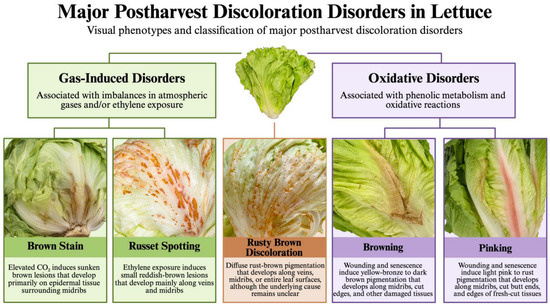
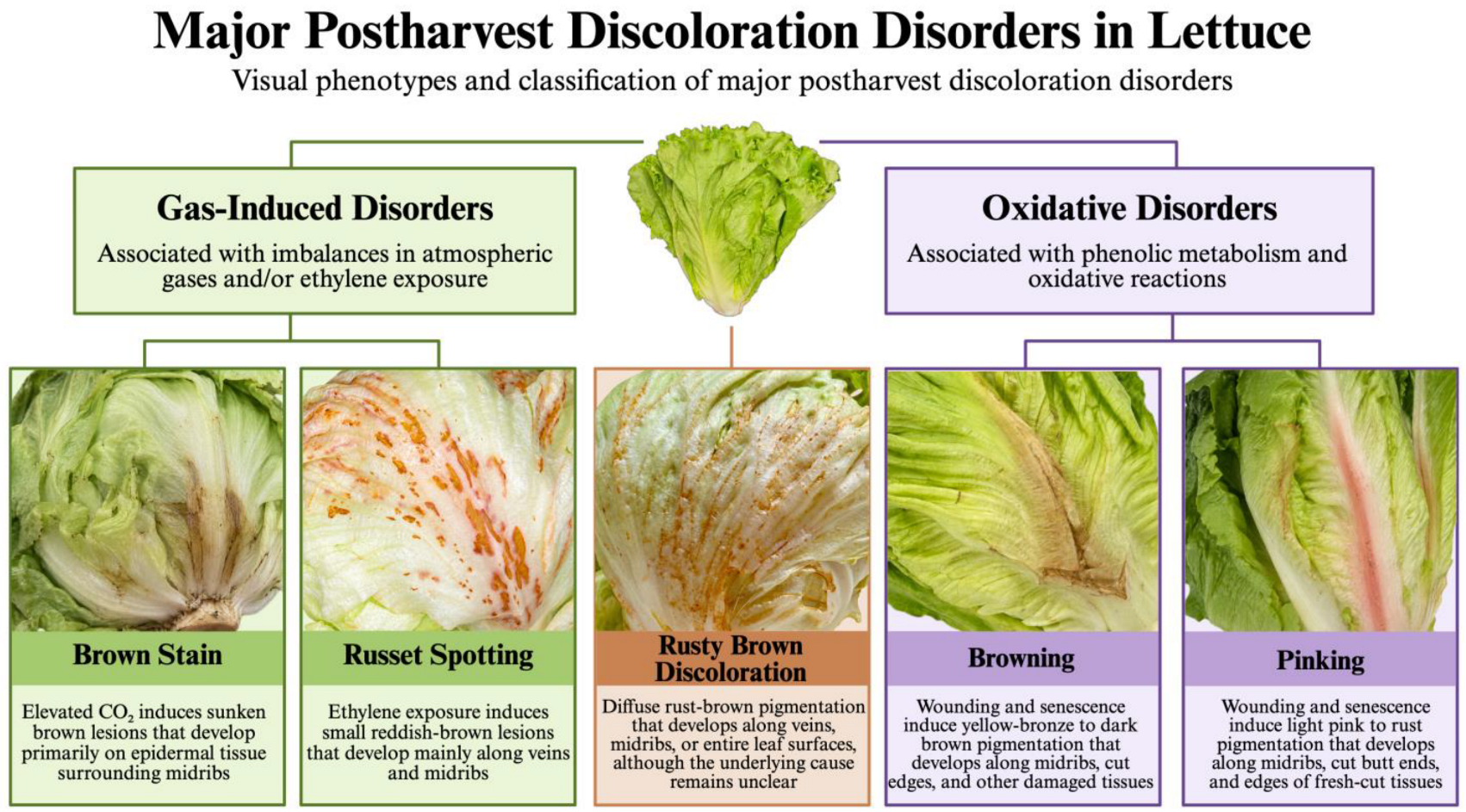
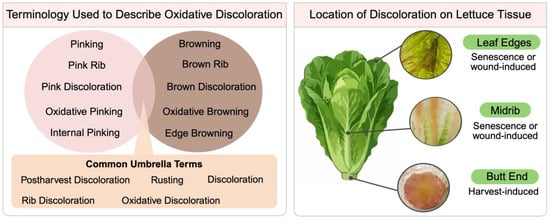
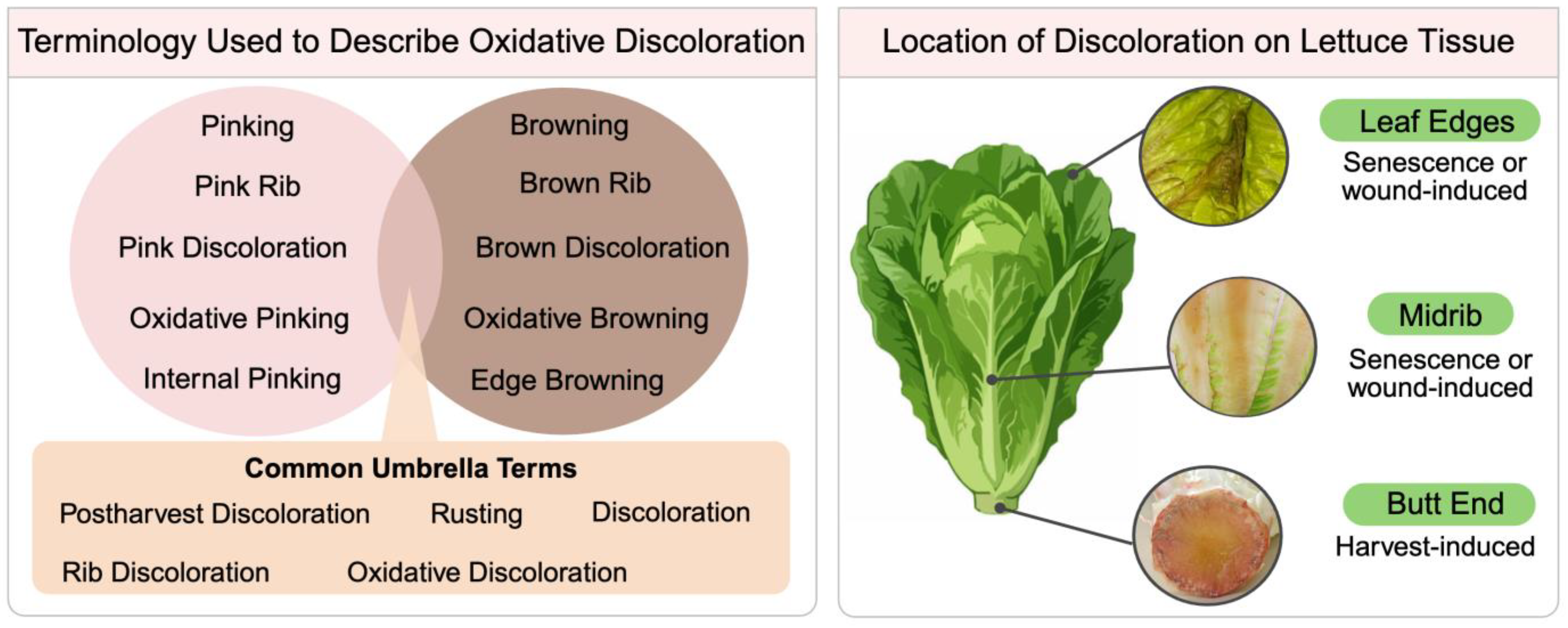
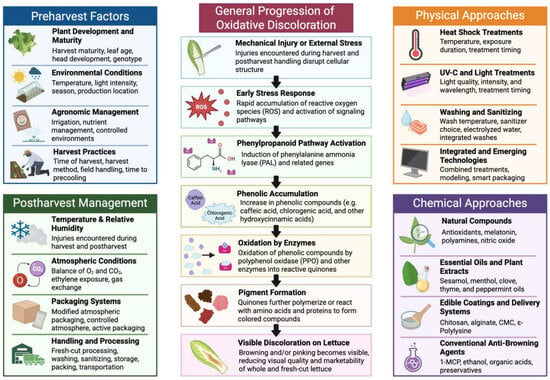
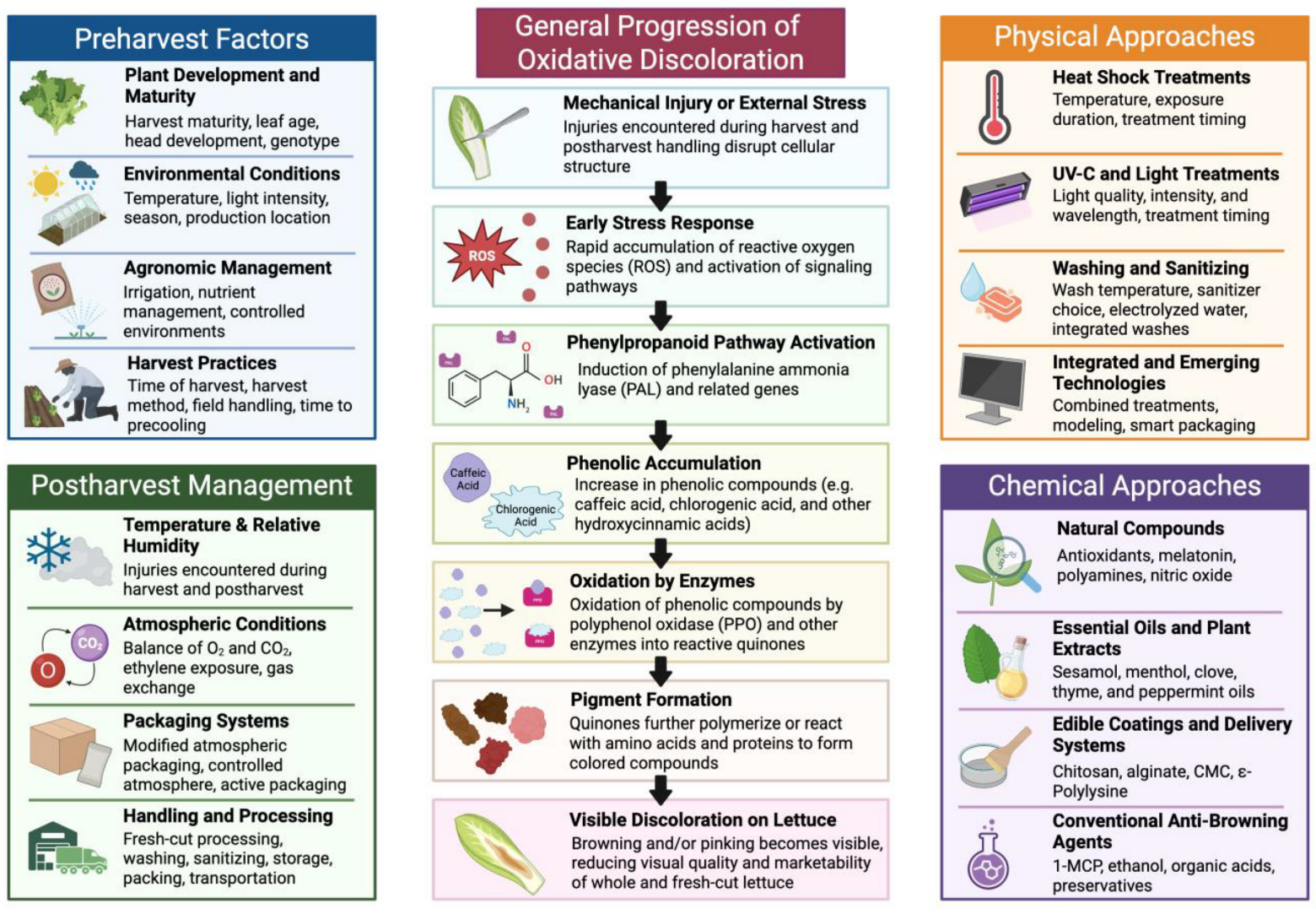

Disclaimer/Publisher’s Note: The statements, opinions and data contained in all publications are solely those of the individual author(s) and contributor(s) and not of MDPI and/or the editor(s). MDPI and/or the editor(s) disclaim responsibility for any injury to people or property resulting from any ideas, methods, instructions or products referred to in the content. |
© 2026 by the authors. Licensee MDPI, Basel, Switzerland. This article is an open access article distributed under the terms and conditions of the Creative Commons Attribution (CC BY) license.