


Abstract
The adoption of innovative irrigation technologies is strategic for improving water efficiency and strengthening the resilience of agricultural systems amid growing environmental, climatic, and economic pressures. This study examines the factors associated with the adoption of irrigation innovations among 201 FADN fruit and vegetable farms in Basilicata, Calabria, Campania, and Apulia, using a binary logistic regression model including structural, attitudinal, economic, and environmental variables. The results show that innovation orientation and perceived shortage of qualified staff are the factors most strongly associated with adoption. The former supports the relevance of behavioral and attitudinal factors in technological investment decisions; the latter may reflect the substitution of scarce specialized labor with technology, although reverse causality cannot be ruled out. Perceived high water costs are also significantly associated with a greater propensity for adoption. Larger farms (over 14 hectares) show a higher likelihood of adoption, despite perceiving financial constraints more acutely. Environmental concern and perceived water scarcity show only marginally significant positive associations (p < 0.10), while organic status and perceived lack of financial support show no significant association, nor do the socio-demographic control variables. Overall, irrigation innovation adoption is associated with individual, structural, economic, and organizational factors, offering insights into policies promoting efficient irrigation in similar Mediterranean farming contexts.
1. Introduction
Water scarcity is among the most pressing challenges for global agriculture [1,2]. Climate variability, growing competition among agricultural, civil, and industrial water uses, and more frequent droughts are placing increasing pressure on water resources, with particularly marked effects in Mediterranean regions, where irrigated agriculture is central to productivity and food security [3,4,5].
Agriculture in Southern Italy—especially the fruit and vegetable sector—is strongly exposed to these pressures due to its heavy reliance on irrigation. More efficient water management is therefore strategically important for farm competitiveness, production stability, and the environmental sustainability of rural areas [4,6,7,8].
Efficient irrigation technologies—drip irrigation, sensor-based smart systems, irrigation automation, fertigation, and water- and energy-saving solutions—represent a key adaptation strategy, capable of improving water use efficiency, reducing costs, and strengthening resilience to climate variability [9,10,11,12,13,14,15]. Accordingly, promoting these innovations is a priority in European and national agricultural policy [16,17,18].
Despite their documented benefits, adoption of these technologies remains limited and uneven. Availability alone does not ensure adoption: farms’ propensity to innovate depends on their ability to sustain investment, acquire skills, access advisory services, and reorganize production—factors well documented in the innovation adoption literature [19,20,21,22,23]. For irrigation technologies specifically, the scale of investment required makes adoption highly dependent on local agro-climatic conditions and on farms’ capacity to integrate innovation and assess expected benefits under uncertainty [4,23,24].
While structural and economic determinants of adoption are well studied, research increasingly considers behavioral dimensions—innovation orientation, openness to change, and perception of environmental and economic challenges—as influential factors. A recent meta-analysis of international studies [25] shows that evidence jointly analyzing behavioral, structural, organizational, and economic determinants remains limited, especially for Mediterranean systems, as most literature treats these determinants separately. An integrated approach is thus needed to clarify the relative contribution of innovation orientation, environmental perceptions, farm structure, and perceived constraints to adoption—particularly in Southern Italy, where climatic pressures intersect with structural constraints such as farm fragmentation, perceived high water costs, and limited access to services [4,12]. Farm-level data combining structural, economic, and perceptual information can help fill this gap.
This study analyzes the factors associated with irrigation innovation adoption among fruit and vegetable farms in four Southern Italian regions (Basilicata, Calabria, Campania, and Apulia). In these inland areas—marked by fragmentation, limited services, and high climate exposure—such data reveal how these pressures shape concrete innovation choices relevant to territorial development [26]. Understanding how structural, economic, environmental, and behavioral factors are jointly associated with adoption is essential both for farm strategy and for rural policy design.
A binary logistic regression model is estimated to assess the associations of farmers’ attitudes, farm structure, economic/organizational constraints, and environmental perceptions with the probability of adopting irrigation innovations. The study addresses:
- RQ1. Which behavioral, structural, and economic factors are associated with irrigation innovation adoption among fruit and vegetable farms in Southern Italy?
- RQ2. To what extent do innovation orientation and environmental perceptions contribute to adoption relative to structural and economic factors?
- RQ3. Do perceived constraints—high water costs, shortage of qualified staff, limited financial support—act as barriers or drivers of adoption?
The study contributes by integrating behavioral and structural perspectives within a single empirical framework, offering policy-relevant insights that can inform the design of strategies for efficient irrigation technologies in comparable Mediterranean farming contexts.
2. Conceptual Background
2.1. Theoretical Framework: Adoption of Agricultural Innovations
The theory of diffusion of innovations [27]—rooted in agriculture since the early studies on hybrid seed corn diffusion [28]—describes adoption as a sequential process (knowledge, persuasion, decision, implementation, confirmation), shaped by an innovation’s relative advantage, compatibility, complexity, trialability, and observability.
In agriculture, this process is complicated by three factors. First, investments are often irreversible or entail high conversion costs (irrigation systems, machinery, and land arrangements); the theory of irreversible investment under uncertainty [29] shows how this burden the “decision” stage. Second, adoption requires technical skills not always available on-farm, making persuasion and implementation dependent on access to extension and technical assistance services, whose role in linking research and farmers is well documented [30]. Third, the process unfolds amid strong climatic, market, and institutional uncertainty, which destabilizes the “confirmation” stage relative to the original linear model—consistent with the literature on the dynamic nature of adoption, including trial phases, partial adoption, and dis-adoption following climatic or economic shocks [31].
This framework is complemented by the economic model of Feder et al. [19], which systematized the literature on agricultural innovation adoption in developing countries, identifying four recurring determinant dimensions: entrepreneur characteristics (behavioral and socio-demographic), farm structural characteristics, economic and institutional conditions, and perception of benefits/risks. For irrigation technologies, adoption depends on farmers’ future expectations and production needs, but also on institutions, external information, climatic and local conditions, and interaction with other farmers [9]; determinants remain strongly context-dependent (cultural, territorial, institutional), though a relatively consistent set of factors recurs across geographical areas [32]. These innovations also pursue multiple, partly competing objectives—productivity, water savings, cost containment, environmental sustainability—making the Feder et al. [19] framework particularly suitable for jointly testing behavioral, structural, economic, and perceptual determinants (RQ1). The following sections operationalize these four dimensions into research hypotheses and, where the literature does not support a directional expectation, into control variables.
2.2. Behavioral Determinants: Innovation Orientation and Environmental Perceptions
A first group of determinants concerns the entrepreneur’s individual attitudes (RQ2). Innovation orientation reflects a personal predisposition toward change and experimentation, translating into greater risk taking, active information-seeking, and greater readiness to invest in new technologies. Recent studies confirm its role in adoption: among Italian cereal farms, those with a stronger entrepreneurial identity showed a higher probability of adopting sustainable practices and participating in innovation-oriented contractual schemes [33]. Similarly, entrepreneurial orientation modeled as a multidimensional construct—innovativeness, proactiveness, risk taking—helps explain observed heterogeneity in sustainable practice adoption [34]. This trait is especially relevant for irrigation technologies, which require consolidated managerial capability and a long-term outlook: consistently, innovativeness and risk taking were found to be positively associated with the intention to adopt new agricultural technologies [35]. It is thus hypothesized that:
H1.
A greater innovation orientation increases the likelihood of adopting irrigation innovations.
This dimension is complemented by the entrepreneur’s environmental sensitivity, since irrigation innovation adoption yields not only economic benefits but also more sustainable water management. Awareness of environmental consequences positively influences both subjective norms and attitudes toward adoption [36], while public support is particularly effective in promoting adoption among farmers with less consolidated pro-environmental intentions [37]. This link between behavioral determinants and precision irrigation adoption is further confirmed in a European context, where the pace of adoption—despite clear water efficiency and sustainability benefits—proved substantially conditioned by such behavioral factors [38]. Based on this evidence, it is hypothesized that:
H2.
Greater environmental sensitivity increases the likelihood of adopting irrigation innovations.
Closely related is the perception of water scarcity: farmers who experience an unprecedented increase in restrictions on their water rights convert, on average, 11% more acreage to more efficient irrigation technologies [39], confirming that it is the subjective perception of scarcity—rather than objective scarcity—that drives innovative behavior. This central role of perception is further confirmed in different agricultural contexts: in Burkina Faso, where farmers’ subjective perceptions of water scarcity proved consistent with the objective conditions of restricted irrigation access and concretely guided their adaptation strategies [40]; and in India, where water scarcity perceptions were shown to emerge from an intricate interaction between memory, past experience, and future expectations, mediated by normative and socio-demographic factors, and to shape individual adaptive behavior [41]. Therefore, it is hypothesized that:
H3.
A greater perception of water resource scarcity increases the likelihood of adopting irrigation innovations.
2.3. Economic, Institutional, and Organizational Constraints
Investment decisions in irrigation technologies are strongly conditioned by the economic and institutional conditions in which the farm operates, which have been described in the literature both as barriers and as facilitating factors for adoption (RQ3). A first key factor is the cost of water: rising water prices can shift the economic viability of irrigation investments, encouraging the adoption of more water- and energy-efficient systems. This is consistent with the evidence on perceived water scarcity [39]. This relationship finds empirical confirmation: an increase in water price, as a policy tool, significantly reduces irrigation water demand and promotes the adoption of conservation technologies [42,43], steering farmers toward high-efficiency solutions [44]. In light of these considerations, it is hypothesized that:
H4.
The perception of high-water costs increases the likelihood of adopting irrigation innovations.
A second relevant factor is the availability of public financial support: access to capital and credit has proven significant in explaining irrigation adoption, particularly the adoption of modern irrigation [45,46]. The positive effect of public support is confirmed in the literature [37], as is the role of regulatory instruments such as technology subsidies, public promotion, and penalties in incentivizing adoption [47]. Limited availability of incentives, finally, reduces farms’ capacity to bear initial costs, as confirmed by a survey that found strong willingness to adopt water-saving technologies in the presence of financial assistance [48]. It is therefore hypothesized that:
H5.
Limited availability of financial support reduces the likelihood of adopting irrigation innovations.
A third factor is the scarcity of skilled personnel. The cost and limited availability of labor directly constrain the efficient use of water resources [49], while the limited capacity to manage and maintain systems such as drip irrigation constitutes a further barrier to adoption [50]. Nevertheless, human capital scarcity can act as a stimulus for the adoption of more automated, digitalized, and labor-saving technologies. This dynamic is grounded in the theory of induced innovation [51], according to which the relative scarcity of a production factor incentivizes the development and diffusion of technologies capable of substituting for it with comparatively more abundant factors; this mechanism finds empirical support in contexts of agricultural mechanization [52]. The labor constraint thus assumes a dual nature, acting not only as a barrier but also as a driving factor in organizational innovation processes. Based on these premises, the following hypothesis is formulated:
H6.
The scarcity of skilled personnel favors the adoption of irrigation innovations as an organizational response to labor market constraints.
2.4. Structural Determinants
The structural characteristics of the farm represent one of the most well-established strands in the literature on the adoption of agricultural innovations (RQ1). Among these, farm size plays a role of primary importance: larger farms have access to more substantial financial resources, benefit from economies of scale, and are better able to absorb the initial costs associated with the adoption of innovative technologies, spreading fixed investments over a larger production area; conversely, smaller farms face more pronounced obstacles in accessing credit [9,19]. This evidence is further corroborated by a meta-analysis on the adoption of agricultural technologies in developing countries, whose results indicate that the significant effects observed even for theoretically scale-neutral technologies can be attributed to the presence of fixed costs which, in the absence of adequate access to credit, hinder adoption by smaller farms—particularly when the technologies in question require complementary investments, as in the case of irrigation [53,54,55]. Based on this evidence, it is therefore hypothesized that:
H7.
Farm size is positively associated with the adoption of irrigation innovations.
The organic production method, oriented toward sustainability and efficient resource use, proves consistent with the adoption of innovative irrigation technologies: a review confirms that organic practices concretely contribute to water optimization in arid and semi-arid regions [56]. The comprehensive rethinking of production processes required by conversion to organic farming also fosters greater openness toward other innovations, including irrigation-related ones [57,58,59]. Finally, in the absence of synthetic inputs, water management becomes even more critical for limiting crop water stress and preventing fungal diseases. Appropriate water management strategies and advanced irrigation technologies allow water to be applied precisely and reduce the risk of pathogen spread, making irrigation a key agronomic practice in organic farming [60]. Organic farms may therefore be more inclined than conventional ones to invest in precision irrigation technologies. It is therefore hypothesized that:
H8.
Organic farms show a greater likelihood of adopting irrigation innovations.
2.5. Socio-Demographic Characteristics
Finally, the entrepreneur’s socio-demographic characteristics remain among the most studied variables in the literature, despite showing an overall uncertain effect: they can influence adoption either positively or negatively depending on the context [61], or have no significant effect at all [47]. Gender shows equally contrasting results in the literature on water conservation technologies, with studies reporting both negative and positive correlations with being male, indicating barriers specific to women farmers linked to the institutional and territorial context [9]. Education also shows an ambivalent effect: positive in some cases, where greater awareness and knowledge favor the adoption of micro-irrigation technologies [61], and null in others [62]. This heterogeneity is further confirmed at the aggregate level by a review on climate-smart agriculture, according to which age, gender, education, and risk perception exert a mixed influence on the adoption of innovative practices [63]. Given the inconclusive evidence, no directional hypothesis is formulated for these variables. Instead, the entrepreneur’s socio-demographic characteristics (age and gender) are included in the logistic model as control variables, in order to account for individual heterogeneity and to isolate the effects of the variables of interest.
3. Materials and Methods
3.1. Data Collection
Data were collected between November and December 2025 from 201 Italian fruit and vegetable farms. This sector was selected due to the strategic role of water in production processes and its higher water requirements compared with other agricultural production systems [64].
The farms were identified using the database of the Farm Accountancy Data Network (FADN), the European Union’s official system for collecting farm-level economic and structural information and a key reference for analyzing the economic and managerial characteristics of farms across Member States. The network’s sampling design also aims to ensure adequate representation of the main production systems and different territorial contexts [65].
Data were collected through face-to-face interviews conducted by specifically trained FADN enumerators. Farms were selected from among those already included in the FADN panel in the four regions considered, through non-probabilistic convenience sampling based on the accessibility of farms to enumerators and farmers’ availability and willingness to participate during the data collection period. No additional stratification or random selection procedure was applied beyond the existing FADN sampling framework.
Farms were interviewed through a structured questionnaire designed to collect the information required for the research in a standardized manner. As a non-probabilistic sampling method, convenience sampling does not guarantee the statistical representativeness of the sample with respect to the population of fruit and vegetable farms in the four regions considered; this selection procedure may have introduced selection bias—for instance, toward farms more accessible to enumerators or more responsive to research participation—and therefore the results should be interpreted as evidence from the surveyed farms rather than as representative estimates for Southern Italian or Mediterranean agriculture as a whole.
Table 1 reports the main characteristics of the sample, which is distributed across Basilicata (24.88%), Calabria (24.88%), Campania (24.88%), and Apulia (25.37%). Farmers are predominantly male (78.61%), while women account for 21.39%; moreover, 89.05% are over 40 years old, confirming the aging trend of the agricultural population.
Table 1.
Socio-demographic and farm characteristics of the sample (n = 201).
In terms of utilized agricultural area (UAA), 34.33% of farms have a UAA ≤ 6 ha, 32.34% have a UAA between 6 ha and 14 ha, and 33.33%have a UAA > 14 ha.
3.2. Questionnaire Structure
The questionnaire was developed to identify the main factors influencing the adoption of irrigation innovations and was divided into two sections.
The first section assessed the diffusion of technological innovations and the main challenges related to water resource management for irrigation purposes. Information was collected on the introduction of farm-level innovations over the previous three years, considering both the actual adoption of new technologies and the factors that may hinder their implementation. Respondents were asked whether their farm had adopted innovations during the period considered and to identify the main barriers to innovation, including limited financial support and a shortage of qualified personnel.
The section also examined changes in irrigation systems and practices over the previous three years, focusing on solutions aimed at improving water use efficiency: drip irrigation systems, sensor-based smart irrigation technologies, system efficiency improvements aimed at reducing water and energy consumption, and fertigation techniques. In addition to these technology-specific items, farmers were asked a general question—“Has the farm introduced any irrigation innovations in the last three years?”—which constitutes the dependent variable used in the logit model. This item captures irrigation-related innovation exclusively and does not extend to broader forms of farm innovation; the individual technologies were instead recorded separately for descriptive purposes.
Finally, farmers’ main perceived challenges in managing water resources were assessed, with particular attention to the high cost of water for irrigation. All items were measured using dichotomous variables (0 = No; 1 = Yes) to capture the presence or absence of the characteristics considered.
The second section assessed the theoretical constructs related to farmers’ attitudes and perceptions toward the adoption of irrigation innovations. These constructs were measured through 16 items associated with three latent variables: innovation orientation (IO), water scarcity concern (WSC), and environmental concern (EC). Measurement was performed using five-point Likert scales, ranging from 1 (“strongly disagree”) to 5 (“strongly agree”), to assess respondents’ degree of agreement with the proposed statements. The definitions of the items and their descriptive statistics are reported in Table 2.
Table 2.
Descriptive statistics of variables.
The eight items composing the environmental concern (EC) construct capture farmers’ general pro-environmental attitudes and beliefs, rather than attitudes specifically worded around irrigation or agricultural water management. The domain-specific perception of water scarcity is instead captured by the separate WSC construct. EC is therefore intended to test farmers’ broader environmental sensitivity, which is conceptually and empirically distinct from—though expected to be complementary to—their specific concern about WSC; consistent with this, the pairwise correlation between the two composite indices in the present data is weak and not statistically significant (r = −0.059; p > 0.10).
The complete list of questionnaire items and the coding scheme applied to all variables used in the analysis are reported in Supplementary Materials (Table S1).
As the general question and the technology-specific items were asked separately, the two measures do not fully overlap: 64 farms answered “Yes” to the general question, whereas 77 reported at least one of the four specific technologies. The binary model is based on the general question, while the count of technology-specific items is used in the supplementary ordered logit.
3.3. Methods
3.3.1. Measurement of Variables and Scale Validation
The three latent constructs were measured using composite indicators, calculated as the arithmetic mean of the items comprising each scale: innovation orientation as the mean of 5 items, water scarcity concern as the mean of 3 items, and environmental concern as the mean of 8 items. For all constructs, higher values indicate higher levels of the characteristic being measured. The internal consistency of the scales was assessed using Cronbach’s α coefficient [66], complemented by corrected item–total (item–rest) correlations to assess the contribution of each individual item to its respective scale, while the factorial structure and unidimensionality of the constructs were examined through exploratory factor analysis (EFA), using the principal factor method and extracting a single factor for each construct. The suitability of the data for factor analysis was assessed using the Kaiser–Meyer–Olkin (KMO) index. All analyses were conducted using Stata 19 (StataCorp LLC, College Station, TX, USA).
3.3.2. Logit Regression
To identify the factors associated with the adoption of irrigation innovations, a logistic regression analysis was conducted, as the dependent variable is dichotomous, distinguishing between farms that had introduced irrigation innovations during the previous three years and those that had not. The logit model estimates the probability of adoption as a function of both dichotomous and continuous explanatory variables:
where P(X) is the probability of adoption, α is the intercept, βi is the regression coefficient associated with the i-th independent variable, and Exp(βi) is the odds ratio, expressing the change in the relative odds of adoption associated with a one-unit increase in the corresponding explanatory variable. To obtain inference robust to possible misspecification of the variance structure, Huber–White robust standard errors were computed and reported alongside the coefficient estimates.
Logit P(X) = α + Σi=1k βiX
The dependent variable is a dichotomous indicator of irrigation innovation adoption during the previous three years, based on farmers’ response to the question “Has the farm introduced any irrigation innovations in the last three years?”. Responses were coded as 1 if the farm reported having introduced at least one irrigation innovation during the previous three years, and 0 otherwise, consistent with the coding scheme applied to all dichotomous items in the questionnaire.
The independent variables include theoretical constructs, perceived barriers, and farm characteristics, together with socio-demographic control variables. Specifically, the model includes innovation orientation (IO), water scarcity concern (WSC), and environmental concern (EC).
The perceived barriers considered include high water costs for irrigation, limited financial support, and a shortage of qualified staff. The model also includes organic farming status and farm size (UAA) as structural characteristics. The gender (1 = female; 0 = otherwise) and age of the farm manager (1 = >40 years; 0 = otherwise) are included as control variables, in order to account for individual heterogeneity and to isolate the associations of the theoretical constructs, perceived barriers and structural characteristics with the probability of adopting irrigation innovations.
Farm size (UAA) was entered in the main model as an ordinal variable (1 = ≤6 ha; 2 = >6 ha and ≤14 ha; 3 = >14 ha), consistent with a parsimonious specification given the sample size and the number of predictors already included. This specification assumes a comparable effect of moving between adjacent size categories. To assess the validity of this assumption, an additional model specification using UAA as a set of dummy variables (with the smallest class as the reference) was estimated as a robustness check.
4. Results and Discussion
4.1. Adoption of Irrigation Innovations
Farmers could report the adoption of more than one irrigation innovation, as the four technology-specific items—drip irrigation system, smart irrigation systems (sensors), fertigation systems, and water- and energy-saving irrigation systems—were assessed independently of one another, rather than as mutually exclusive categories.
Figure 1 shows a clear prevalence of farms that did not adopt any irrigation innovations, accounting for approximately 62% of the sample (n = 124). Among the remaining farms, 15.4% (n = 31) adopted one innovation, 9.5% (n = 19) two, 8.0% (n = 16) three, and 5.5% (n = 11) four. Thus, the proportion of farms decreases as the number of adopted innovations increases, highlighting the limited diffusion of multiple innovation adoption and marked heterogeneity in farmers’ propensity to invest in irrigation technologies.
Figure 1.
Number of innovations adopted by farms.
Figure 2 shows the distribution of the main irrigation innovations adopted among these four technology categories. Water- and energy-saving irrigation systems are the most widely adopted (n = 54), followed by drip irrigation systems (n = 49) and fertigation systems (n = 38). Smart irrigation systems based on sensors are the least adopted (n = 20 farms). Overall, farmers tend to prioritize technologies aimed at directly improving irrigation efficiency and resource conservation, while sensor-based digital solutions remain relatively limited.
Figure 2.
Types of innovations adopted by farms.
4.2. Measurement of Variables and Scale Validation Results
The results show good reliability for innovation orientation (α = 0.833) and environmental concern (α = 0.803), while water scarcity concern presents acceptable reliability (α = 0.649), consistent with the limited number of items. The KMO values are 0.768, 0.622, and 0.828, respectively, indicating adequate sampling suitability for factor analysis. Factor loadings range from 0.564 to 0.799 for innovation orientation, 0.504–0.674 for water scarcity concern, and 0.438–0.695 for environmental concern, confirming the unidimensionality of the three scales and supporting the use of composite indicators in subsequent empirical analyses.
Corrected item–total (item–rest) correlations further support the internal coherence of all three scales: values ranged from 0.519 to 0.727 for innovation orientation, from 0.410 to 0.548 for water scarcity concern, and from 0.386 to 0.624 for environmental concern, all comfortably above the conventional 0.30 threshold. For the water scarcity concern scale, removing any single item would not have improved reliability (α if item dropped: 0.577, 0.425, and 0.649 for WSC.1, WSC.2, and WSC.3, respectively), confirming that its modest, though acceptable, Cronbach’s α reflects the limited number of items (three) rather than item incoherence (Table 3).
Table 3.
Exploratory factor analysis, item–rest correlations, and reliability statistics of latent constructs.
4.3. The Logit Model Results
Table 4 and Table 5 report the results of the logit model, whose overall significance is confirmed by the Wald test (Wald χ2 (10) = 35.39; p < 0.001). The model shows good explanatory power (McFadden pseudo-R2 = 0.393) and discriminatory ability (ROC-AUC = 0.897); the information criteria (AIC = 174.707; BIC = 211.044) further support the adequacy of the model specification.
Table 4.
Logit model results.
Table 5.
Marginal effects results.
The model also shows good predictive performance, with 83.58% of observations correctly classified, a sensitivity of 67.19%, and a specificity of 91.24%, indicating greater accuracy in identifying non-adopting farms. The positive predictive value (78.18%) and negative predictive value (85.62%) further confirm the model’s overall good classification performance.
The multicollinearity analysis (Table A1) reveals no critical issues: all VIF values are close to 1 and well below the commonly used threshold of 5 [67], with a mean VIF of 1.08, while tolerance values (1/VIF) are high. These results indicate the absence of relevant multicollinearity and support the stability and reliability of the estimated coefficients.
4.3.1. Innovation Orientation and Environmental Perceptions
The strong and highly significant association of innovation orientation with adoption (β = 2.134; OR = 8.453; p < 0.001) supports hypothesis H1 and is consistent with the behavioral perspective adopted in this study. The corresponding marginal effect (dy/dx = 0.260; p < 0.001) shows that farms more inclined toward experimentation and risk-taking exhibit a substantially higher probability of adopting irrigation innovations, consistent with Rogers’s [27] conceptualization of the individual-level “innovation decision process” as primarily associated with attitudes toward change rather than with resource availability alone. This evidence aligns with the strand of the technology adoption literature emphasizing its behavioral dimension [19,20], and finds further confirmation in studies on water-saving technologies, where innovation attitude consistently emerges as one of the strongest predictors of adoption intention [36].
Environmental concern (β = 0.706; OR = 2.026; p < 0.10) and perceived water scarcity (β = 0.591; OR = 1.805; p < 0.10) are both positively associated with adoption. However, since both associations are significant only at the 10% level, they only partially support H2 and H3, with smaller marginal effects than innovation orientation (dy/dx = 0.086; p < 0.10 and dy/dx = 0.072; p < 0.10, respectively). This pattern is consistent with the literature suggesting that pro-environmental attitudes and risk perception act as complementary rather than primary drivers of adoption: public support for water-saving irrigation technologies has proven particularly effective precisely among farmers with weaker pro-environmental intentions [37], indicating that attitudinal variables interact with structural and economic conditions rather than substituting for them. Similarly, perceived—rather than objective—water availability has been shown to be a significant driver of conservation investment in other contexts as well [39], suggesting that subjective risk assessment may play a role in adoption decisions, although in the present sample this association is only marginally significant.
It is worth noting, however, that perceived water scarcity captures farmers’ subjective risk assessment and does not necessarily correspond to the actual water-saving potential associated with adoption: evidence from crop water footprint studies shows that realized improvements in water use efficiency depend on additional factors—such as crop type and irrigation management practices—beyond farmers’ perceptions and adoption decisions alone [68]. This suggests that the behavioral factors identified here should be interpreted as determinants of the adoption decision rather than as direct indicators of the resulting water management outcomes.
Overall, these results address RQ2: innovation orientation emerges as the behavioral factor most strongly associated with adoption, clearly outweighing environmental and water scarcity perceptions in explanatory strength, whose associations with adoption are only marginally significant (p < 0.10) and less stable across robustness checks. It should be noted, however, that in the absence of controls for factors such as access to credit or advisory services, part of this effect may reflect broader differences in farmers’ economic or institutional circumstances rather than attitudinal disposition alone.
4.3.2. Perceived Constraints: Barriers or Facilitating Factors?
The results provide a nuanced and partly counterintuitive answer to RQ3. Rather than uniformly discouraging adoption, two of the three perceived constraints considered—high water costs and shortage of qualified staff—are significantly and positively associated with irrigation innovation adoption, suggesting a pattern of positive association rather than a “barrier” pattern, while the third—limited availability of financial support— shows no significant association; H5 is therefore not supported. Given the cross-sectional nature of the data, however, this pattern should be interpreted as consistent with a technology push mechanism rather than as direct evidence of it: reverse causality cannot be ruled out, since farms that have already adopted more sophisticated irrigation technologies may, for that very reason, more acutely perceive a shortage of the specialized skills those technologies require, or monitor water costs more closely.
Shortage of qualified staff emerges as one of the strongest predictors in the model (β = 2.529; OR = 12.541; p < 0.001), with marginal effects confirming its relevance (dy/dx = 0.309; p < 0.001). This result is consistent with the “induced innovation” perspective [69] and with recent evidence showing that labor shortages significantly increase the likelihood that farmers adopt labor-saving technologies [70], as well as with the mechanism whereby irrigation technologies equipped with automated components, sensors, or decision support tools can substitute for scarce specialized labor, reducing the operational burden associated with manual water management. This evidence is further consistent with findings from other agricultural contexts, where frictions in factor markets—particularly the labor market—have proven capable not only of constraining but also of reshaping farmers’ technological choices [49]. This association is consistent with innovation performing a substitutive function relative to specialized human capital, positioning the perceived shortage of qualified staff as a plausible “technology push” factor [23,70,71]. An alternative explanation is that adoption itself raises skill requirements: sensor-based, automated, and fertigation systems demand technical competencies that traditional irrigation does not. Farms that have already adopted such technologies may therefore report a shortage of qualified staff not because it drove adoption, but because adoption created a new need for specialized skills. Given the unusually large magnitude of this coefficient, and since the item captures a perceived, post hoc obstacle rather than an ex-ante labor market condition external to the farm’s technology choices, we consider this reverse-causality mechanism at least as plausible as, and arguably more likely than, the technology push interpretation. As the cross-sectional design cannot disentangle the two mechanisms, longitudinal research is needed. Accordingly, the substitutive role of irrigation innovation vis-à-vis specialized human capital (H6) should be read as one plausible interpretation among others rather than the most parsimonious one.
Taken together, the strength and direction of this association are consistent with H6, though the causal interpretation warrants caution.
The perception of high water costs is likewise positively associated with adoption (β = 1.385; OR = 3.997; p < 0.05), with marginal effects confirming this relationship (dy/dx = 0.169; p < 0.05), supporting H4 and being consistent with the interpretation that economic pressure on the water resource is associated with a higher propensity to adopt rather than acting as a deterrent, in line with theoretical expectations linking rising input costs to the higher relative profitability of resource-saving technologies [9].
As discussed above, however, such adoption should not be equated with proportional gains in water use efficiency, which also depend on crop choice, management practices, and local agro-climatic conditions.
As with the labor shortage result, the possibility of reverse causality—e.g., farms with efficient irrigation systems being more attentive to and better informed about water costs—cannot be excluded given the cross-sectional design.
By contrast, the non-significant association of limited financial support (β = 0.021; OR = 1.021; p > 0.10) does not support H5, as confirmed by the marginal effects (dy/dx = 0.002; p > 0.10). This result should not be interpreted as evidence that financial incentives are irrelevant to irrigation innovation in general—a substantial body of literature documents a positive role for access to credit and subsidies [37,45,46]—but rather suggests that, in this sample, the effect of perceived financial constraints may be absorbed or conditioned by the stronger influence of innovation orientation and farm size, indicating that the effectiveness of economic incentives may depend on the presence of other favorable conditions—a stronger innovation orientation, adequate organizational capacity, and a clear perception of the economic and managerial benefits arising from new technologies.
Overall, the answer to RQ3 is that, in this sample, perceived constraints are predominantly and positively associated with adoption rather than acting as barriers, with the partial exception of financial support, whose role appears secondary once behavioral and structural factors are accounted for. For labor shortages and water costs, this pattern is consistent with a technology push mechanism, although reverse causality offers an equally plausible explanation. Given the cross-sectional design of the study, these findings should be interpreted as associations rather than as evidence of a causal mechanism.
4.3.3. Structural Factors and Control Variables
Farm size (UAA) is positively associated with adoption (β = 0.915; OR = 2.497; p < 0.001), supporting H7, with marginal effects corroborating this relationship (dy/dx = 0.111; p < 0.001). These results are consistent with what is already well established in the international literature on irrigation technology adoption [19,72,73] and suggest that a minimum scale may be necessary for the fixed costs of irrigation innovation to become economically justifiable, in line with the economies-of-scale mechanism whereby larger farms can spread fixed investment costs over a larger cultivated area [9]. This is compounded by greater financial capacity, which facilitates coverage of the initial costs of innovative irrigation technologies, making such investments more economically advantageous.
By contrast, organic farm status (H8) shows no significant association with adoption, and neither do the socio-demographic control variables. Organic farm status shows no statistically significant relationship with irrigation innovation adoption (β = 0.414; OR = 1.513; p > 0.10), as confirmed by the marginal effects (dy/dx = 0.050; p > 0.10). Although organic farms are generally associated with greater attention to environmental sustainability and efficient resource management, this orientation—embedded in the production method—does not automatically translate into greater technological investment, consistent with the broader observation that the structural and attitudinal dimensions of sustainability do not always coincide [37].
As for the control variables, neither gender (β = −0.716; OR = 0.488; p > 0.10) nor the farm manager’s age (β = 0.334; OR = 1.397; p > 0.10) is significantly associated with adoption, as confirmed by the marginal effects (gender: dy/dx = −0.087; p > 0.10; age: dy/dx = 0.041; p > 0.10).
It should be noted that the limited variability in these variables within the sample—women account for only 21.4% of respondents, and farmers aged ≤ 40 account for only 11%—reduces the statistical power available to detect gender- or age-related effects, and the non-significant results should therefore be interpreted with this constraint in mind rather than as definitive evidence of irrelevance.
This lack of significance mirrors the mixed evidence already reported in the literature, where the effects of socio-demographic characteristics on irrigation adoption are often inconsistent across contexts [61]; this does not imply, however, that age and gender are inherently irrelevant, but rather that, in the sample analyzed and holding other variables constant, their explanatory contribution is not strong enough to be significantly associated with adoption.
In response to RQ1, the results indicate that, among the structural, economic, and behavioral factors considered, and controlling for socio-demographic characteristics, adoption is jointly and most strongly explained by innovation orientation, staff shortages, water costs, and farm size, while environmental concern and perceived water scarcity show only marginally significant associations (p < 0.10), organic status shows no appreciable association, and the socio-demographic control variables are not significant.
4.3.4. Robustness Checks
To assess the stability of the estimated associations, four additional robustness checks were performed.
First, the model was re-estimated using Firth’s penalized logistic regression to address potential small-sample bias [74] (Table A2). All coefficients retained their sign, and all significant predictors retained their significance except water scarcity concern, which became borderline (p > 0.10), with only minor attenuation in odds ratio magnitude for the strongest predictors. This supports the reliability of the main results, while further underlining the fragility of the association for water scarcity concern.
Second, a leave-one-region-out analysis was conducted, re-estimating the model four times while successively excluding one region (Table A3). Innovation orientation, shortage of qualified staff, and UAA remained significant across all four specifications, confirming the robustness of these predictors. Environmental concern and water scarcity concern, by contrast, showed less consistent significance depending on the region excluded, suggesting that these associations should be interpreted with greater caution.
Third, to assess the model’s out-of-sample predictive performance and address the risk of overfitting given the sample size relative to the number of predictors, a 10-fold cross-validation of the model’s discriminative ability was performed. The cross-validated AUC (0.850; 95% CI: 0.791–0.908) was only modestly lower than the apparent in-sample AUC (0.897), indicating limited overfitting and confirming that the model retains strong discriminative performance beyond the estimation sample.
Fourth, to test the assumption of a linear relationship between farm size and adoption implicit in the ordinal specification of UAA used in the main model, the model was re-estimated replacing the ordinal UAA variable with two dummy variables (UAA class 2, >6 and ≤14 ha; and UAA class 3, >14 ha), using UAA class 1 (≤6 ha) as the reference category (Table S2). The coefficient for UAA class 3 remained large and highly significant (β = 1.820; OR = 6.171; p < 0.001), while the coefficient for UAA class 2 was smaller in magnitude and not statistically significant (β = 0.860; OR = 2.363; p > 0.10). Overall model fit was virtually unchanged (log-likelihood: −76.354 vs. −76.348; McFadden pseudo-R2 = 0.393 in both; LR test p ≈ 0.91), and the dummy coefficients closely match those implied by the ordinal specification (≈0.92 and ≈1.83), supporting the assumption of comparable effects between adjacent size classes. The non-significance of UAA class 2 likely reflects its smaller distance from the reference category and limited statistical power, while the largest and most robust difference emerges between the smallest and largest farms.
4.3.5. Intensity and Type of Adoption
The binary dependent variable used in the main model captures whether a farm adopted at least one irrigation innovation, but does not distinguish between farms adopting a single, simple technology and those adopting multiple, more sophisticated ones. To assess whether the main results are robust to this simplification, two supplementary analyses were conducted.
First, an ordered logistic regression was estimated using the number of innovations adopted as the dependent variable (Table S3), with the same set of covariates as the main model. The approximate likelihood ratio test of the proportional odds assumption did not reject the null hypothesis of parallel lines across response categories (χ2 (29) = 38.91; p > 0.10), supporting the appropriateness of the ordered logit specification. The results show that innovation orientation (OR = 2.542; p < 0.001), high water costs (OR = 5.320; p < 0.001), and farm size (OR = 1.924; p < 0.05) remain strongly and significantly associated with adoption intensity, consistent with the main model. By contrast, the shortage of qualified staff, the strongest predictor in the binary model (OR = 12.541), was only marginally significant when the outcome is measured as adoption intensity (OR = 1.759; p < 0.10).
Among the control variables, gender, non-significant in the main binary model, was significantly associated with adoption intensity (OR = 0.431; p < 0.05), with female farm managers showing lower intensity. Given the small share of women in the sample (21.4%) and the absence of a directional hypothesis, this result should be regarded as exploratory.
Second, four separate logistic regression models were estimated using each specific technology (drip irrigation, sensor-based smart irrigation, water- and energy-saving systems, and fertigation) as the dependent variable (Table S4). Innovation orientation, high water costs, and farm size remained significant predictors across most or all of the four technology-specific models, confirming the robustness of these associations. The shortage of qualified staff, however, was not significantly associated with the adoption of any single technology when considered individually (p > 0.10 in all four models), although it showed a positive coefficient throughout. Some technology-specific associations diverge from the main model—notably a negative association between water scarcity concern and drip irrigation (OR = 0.441; p < 0.05), and lower fertigation adoption among female-managed farms (OR = 0.109; p < 0.05), consistent with the lower adoption intensity observed in the ordered model—and should be regarded as exploratory given the small number of adopters per technology.
Overall, the supplementary analyses show that the strong association of staff shortage with adoption observed in the binary model essentially concerns the decision to innovate—the transition from non-adoption to the adoption of at least one technology—rather than the choice of a specific technology or broader, multi-technology adoption. In other words, this factor appears to operate at the extensive margin (whether to innovate) rather than at the intensive margin (how much and what to adopt). Innovation orientation, water costs, and farm size, by contrast, are associated with both margins: they relate not only to the decision to adopt but also, to a considerable extent, to adoption intensity.
4.4. Farm Size and Financial Constraints
Table 6 reports pairwise comparisons across UAA classes, obtained using pwmean with Tukey adjustment for multiple comparisons, for irrigation innovation adoption and the perception of limited financial support. Since both variables are dichotomous, the reported differences represent differences in the proportions of farms across the different UAA classes.
Table 6.
Tukey-adjusted pairwise comparisons across farm size classes (UAA) for irrigation innovation adoption and perceived financial constraints.
Regarding irrigation innovation adoption, farms with UAA >14 ha show a significantly higher proportion of adopters than both farms with UAA ≤6 ha and those with UAA >6 and ≤14 ha, with differences of 0.260 and 0.216, respectively, corresponding to approximately 26 and 22 percentage points. No significant difference is observed between farms with UAA ≤6 ha and those with UAA >6 and ≤14 ha (0.044; p > 0.05). Thus, the main adoption gap occurs between larger farms and the two smaller size classes, a pattern consistent with the economies-of-scale mechanism whereby larger farms can spread the fixed costs of irrigation investment over a greater cultivated area [9] and with the broader international evidence linking farm size to irrigation technology adoption [19,75,76,77].
Note that these are unadjusted differences in proportions; once other covariates are controlled for, the multivariate robustness check (Section 4.3.4) indicates comparable effects between adjacent size classes on the log-odds scale.
Regarding the perception of limited financial support, a significant difference emerges between farms with UAA >14 ha and those with UAA ≤6 ha (0.203; p < 0.05), indicating a higher proportion of farms perceiving this constraint in the largest size class. No significant differences are observed between farms with UAA >6 and ≤14 ha and those with UAA ≤6 ha (0.111; p > 0.05), or between farms with UAA >14 ha and those with UAA >6 and ≤14 ha (0.092; p > 0.05). This heightened sensitivity to financial constraints among larger farms is plausibly linked to the greater capital intensity of the investments they undertake and is consistent with the literature emphasizing the role of access to credit and subsidies in shaping technology investment decisions [37,45].
Overall, the pairwise comparisons show that farm size significantly differentiates irrigation innovation adoption, with higher adoption among farms with UAA >14 ha. The greater perception of financial constraints among larger farms compared with smaller farms may instead reflect the higher capital requirements associated with technological investments. These findings further support the role of farm size both in adoption propensity and in the economic conditions accompanying the innovation process.
4.5. Policy Implications
In light of the results, policies aimed at promoting irrigation innovation should focus less on the mere availability of technologies and more on the conditions that make their adoption feasible at the farm level. Our findings point to behavioral, organizational, and structural conditions—captured by innovation orientation, staff shortages, and farm size—as the factors most closely associated with adoption, while perceived financial constraints show no significant association; this does not imply that financial support is irrelevant in general [37,45,46], but suggests that its effectiveness may depend on the presence of these other conditions. Public action could therefore combine technical advisory services, skills development, and instruments tailored to farm size, consistent with the broader rationale for public intervention where market forces alone may not ensure equitable diffusion of efficient irrigation technologies, given high investment costs and the collective dimension of the associated environmental benefits [3,19].
The relevance of innovation orientation indicates that willingness to experiment with new technologies may act as a driver of change, not merely a function of resource availability [78]. This suggests that policy should also strengthen farmers’ cognitive and organizational capacities—through advisory services, demonstration farms, field trials, and peer-to-peer learning [23,24,68]—rather than relying on investment subsidies alone; strengthening Agricultural Knowledge and Innovation Systems (AKIS) and territorial networks linking farmers, advisors, and researchers may support this process, though these specific instruments were not directly tested here.
The strong association between staff shortage and adoption suggests a plausible policy implication: investment in vocational and technical training for farm labor, targeted at the operational skills required by automated, digital, and labor-saving irrigation technologies (smart systems, fertigation, sensors, and decision support tools). Such training could ease the human capital constraint associated with adoption in our model; however, the cross-sectional design does not allow us to rule out that this constraint is itself partly a consequence of prior adoption—a possibility that future longitudinal research, potentially informed by the roll-out of such training programs, could help clarify. Moreover, since this association operates mainly at the extensive margin, training may be most relevant for supporting farms’ first step into irrigation innovation. Without accompanying technical assistance and continuous training, innovation risks remaining concentrated among already more structured farms.
The robust association between farm size and adoption similarly translates into a direct policy implication: financial support instruments should be differentiated by UAA, rather than applying uniform funding schemes. Although larger farms more frequently perceive financial constraints—likely reflecting the greater capital intensity of their investments—smaller farms adopt significantly less, suggesting that the barriers they face may lie in the economic viability of irrigation investment at small scale rather than in perceived access to funding. Calibrating support rates, investment thresholds, and administrative procedures to farm size—for instance, through higher support rates or collective investment schemes for smaller farms [37,45]—could help make such investments viable for smaller farms, directly addressing the structural gap identified in our data.
Finally, the association between high water costs and adoption suggests that irrigation innovation should be framed as an economic resilience strategy, not only an environmental one. However, since technology adoption alone does not guarantee proportional water savings, such policies should be paired with monitoring tools tracking actual water use outcomes and embedded within broader water governance frameworks (on-farm audits, irrigation consortium tools, territorial water reuse strategies [1,3,68,79] to ensure that technical efficiency gains translate into real reductions in water use.
5. Limitations and Future Research
This study presents several limitations. The sample is relatively small and concentrated in four regions of Southern Italy, limiting the generalizability of the findings to other Italian regions and Mediterranean agricultural systems with different institutional, climatic, and socio-economic conditions. Importantly, the non-probabilistic nature of the sampling design does not invalidate the associations identified in the analysis, but it does mean that the results should be read as evidence drawn from the surveyed farms rather than as statistically representative of Southern Italian or Mediterranean agriculture. Moreover, the use of convenience sampling may have introduced selection bias. Future studies should therefore rely on larger and probability-based samples to strengthen external validity.
The cross-sectional design allows the identification of associations but not causal effects; therefore, the direction of causality between innovation orientation, staff shortages, water costs, and adoption cannot be established with certainty. Longitudinal data would allow the analysis of temporal dynamics and provide stronger causal evidence. A related concern is common method bias: both the perceived constraints and the adoption-relevant attitudes were collected from the same respondent through the same instrument, which may inflate the observed associations beyond their true magnitude. While this is a general limitation of single-source survey data, it is particularly relevant for the interpretation of the positive associations reported for staff shortages and water costs, where reverse causality—adoption increasing the perceived need for skilled labor or attention to water costs—represents a plausible alternative explanation that the present cross-sectional design cannot rule out.
Relatedly, the relatively large odds ratio estimated for the shortage of qualified staff, combined with the moderate size of the adopting subsample, suggests that this coefficient should be interpreted with some caution; although the low VIF values indicate no multicollinearity concerns, future studies with larger samples would help confirm the stability of this estimate.
A related methodological limitation concerns the specification of farm size (UAA) in the main model. UAA was entered as an ordinal variable across three categories, which implicitly assumes a comparable effect of moving between adjacent size classes. A robustness check using dummy variables (Section 4.3.4) supported this assumption, with virtually identical model fit and coefficients closely matching those implied by the ordinal specification. However, the coarse three-class grouping may mask more nuanced size effects, and the non-significance of the intermediate class in the dummy specification—together with the unadjusted differences in Table 6—indicates that the most robust difference lies between the smallest and largest farms. Future studies could use UAA as a continuous variable or finer size classes to better characterize this relationship.
Some variables, particularly innovation orientation, environmental concern, and perceived water scarcity, are based on self-reported perceptions and may be subject to social desirability, recall bias, and differences in the interpretation of questionnaire items. Although the use of multi-item scales and reliability and factor analyses support their validity, future research could complement these measures with objective indicators such as water consumption, irrigation costs, energy use, training, access to technical assistance, and documented investments. Consistent with this concern, Firth’s penalized logistic regression and a leave-one-region-out check showed that innovation orientation, shortage of qualified staff, and UAA were robust predictors of adoption, while environmental concern and water scarcity concern showed marginal and less stable significance—with the association for water scarcity concern even reversing sign when one region (Campania) was excluded. High water costs were largely robust but lost significance in one of the four regional exclusions. These results suggest that the perceptual variables, in particular, should be interpreted with caution and warrant further investigation with larger and more geographically diverse samples.
The dependent variable captures only whether farms adopted at least one innovation during the previous three years. Although appropriate for the logit model, this measure does not account for the intensity, complexity, or economic relevance of adoption, treating single simple technologies and multiple sophisticated innovations equivalently. Future studies could further employ multinomial, ordinal, or count data models to distinguish different levels and types of adoption. A supplementary ordered logit analysis and a set of technology-specific models partly address this limitation and show that the association between staff shortage and adoption is considerably weaker when adoption intensity or technology type is considered, whereas innovation orientation, water costs, and farm size remain robust across specifications.
Finally, the model does not include other potentially relevant determinants, such as profitability, access to credit, prior participation in subsidy schemes, agricultural extension or advisory services, farmers’ education and technical knowledge, water source, crop composition, existing irrigation infrastructure, and objective measures of water availability or scarcity. While not all of these variables were collected in the survey, their absence represents a potential source of omitted-variable bias, and the estimated coefficients should therefore be interpreted with this constraint in mind. This concern is particularly relevant for the behavioral constructs included in the model: innovation orientation, environmental concern, and perceived water scarcity may partly reflect differences in farmers’ underlying economic or institutional circumstances—for instance, better access to credit or advisory services may be associated with both a stronger innovation orientation and a higher probability of adoption—rather than purely individual attitudinal traits. To the extent that such omitted factors are correlated with both the included behavioral variables and the probability of adoption, the estimated effects of innovation orientation and other perceptual constructs may be partly confounded and should be interpreted as associations net of the observed control variables rather than as isolated behavioral effects.
6. Conclusions
The aim of this study was to identify the factors associated with irrigation innovation adoption among fruit and vegetable farms in Southern Italy. Given the cross-sectional design of the survey, the findings should be interpreted as associations within the surveyed sample rather than as evidence of causal relationships.
The findings suggest that adoption is best explained through an integrated framework combining behavioral, structural, organizational, and economic perspectives.
Innovation orientation and labor shortages emerge as the strongest correlates of adoption, and perceived high water costs are also positively associated with adoption; the latter two associations are consistent with a technology push interpretation, although reverse causality—adoption itself increasing the perceived need for skilled labor or attention to water costs—cannot be ruled out, and the possible influence of unobserved economic and institutional factors on these associations should be kept in mind. Farm size is positively associated with adoption, consistent with the economies-of-scale mechanism and greater investment capacity typically observed in larger farms, while environmental sensitivity and awareness of water scarcity show only marginally significant (p < 0.10) and less stable positive associations, providing only partial support for the corresponding hypotheses.
By contrast, organic farm status and perceived financial support do not significantly explain adoption behavior once these broader determinants are accounted for, and the socio-demographic control variables (gender and age) are likewise not significant.
These results contribute to a more nuanced understanding of irrigation innovation adoption by showing that technological uptake is not associated with a single category of factors, but with the joint presence of farmers’ innovation orientation, structural conditions, organizational constraints, and economic pressures. In particular, the findings highlight the relevance of farmers’ propensity to innovate, farm size, high water costs, and the shortage of qualified labor as key dimensions associated with adoption decisions in irrigated fruit and vegetable systems.
The shortage of qualified staff, in particular, may partly reflect not only a labor market constraint, but also the organizational pressure associated with farms’ investment in technologies aimed at maintaining productivity and operational efficiency—an association observed mainly in the decision to adopt at least one innovation rather than in adoption intensity. This reinforces the view that irrigation innovation should be understood not only as a technological investment, but also as a possible organizational adaptation to labor, economic, and environmental pressures.
The study emphasizes the need to interpret irrigation innovation as a multidimensional process embedded in farm-level capabilities and resource constraints.
While the findings are drawn from a convenience sample of 201 farms in four Southern Italian regions and cannot be extended as representative of Mediterranean agriculture more broadly, they offer indicative evidence relevant to the broader socio-economic context in which these farms operate.
From this perspective, the analysis offers an empirical basis for future research on how different types of farms respond to technological opportunities and external pressures, and on how innovation pathways may vary according to structural and territorial conditions.
Supplementary Materials
The following supporting information can be downloaded at: https://www.mdpi.com/article/10.3390/agriculture16192172/s1, Table S1: Questionnaire items and coding scheme for the variables used in the analysis; Table S2: Comparison of odds ratios (OR), robust standard errors (SE), and p-values between the main logistic regression model (UAA entered as an ordinal variable) and an alternative specification in which UAA is entered as dummy variables (UAA class 1, ≤6 ha, as reference category); Table S3: Ordered logistic regression on the number of innovations adopted; Table S4: Logistic regression models by specific irrigation technology: odds ratios (p-values in parentheses).
Author Contributions
Conceptualization, M.H. and M.A.D.; methodology, M.H.; software, M.H.; validation, A.C., A.T. and R.P.; formal analysis, M.H.; investigation, M.A.D.; data curation, M.H.; writing—original draft preparation, M.H. and M.A.D.; writing—review and editing, M.H. and M.A.D.; visualization, M.H.; project administration, M.A.D.; funding acquisition, M.A.D. All authors have read and agreed to the published version of the manuscript.
Funding
This research was funded by Basilicata Region n. 2223/2025 “Approfondimenti ed analisi conoscitive per la sostenibilità del sistema agricolo e i risultati del CSR Basilicata”.
Institutional Review Board Statement
Ethical review and approval were waived for this study, as it did not involve clinical, biomedical, or invasive procedures. Data were collected through direct questionnaires administered to farmers participating in the Farm Accountancy Data Network (FADN). Participation was voluntary, and all respondents were informed about the purpose of the study prior to data collection. Data were collected and processed in anonymized form, ensuring that no individual farmer could be identified, in compliance with current data protection regulations (EU Regulation 2016/679, GDPR).
Data Availability Statement
The data presented in this study are available on request from the corresponding author due to privacy.
Conflicts of Interest
The authors declare no conflicts of interest.
Appendix A
Table A1.
Variance Inflation Factors (VIFs).
Table A2.
Comparison of odds ratios (OR), 95% confidence intervals, and p-values between the standard logistic regression model and the Firth penalized logistic regression model for irrigation innovation adoption.
Table A3.
Odds ratios from the logistic regression model re-estimated while successively excluding one region at a time.
References
- Hamam, M.; Pergamo, R.; Manganiello, V.; Ferrigno, M. Agricultural wastewater reuse as a circular economy model: Future scenarios considering Reg. (EU) 2020/741. Water 2024, 16, 3638. [Google Scholar] [CrossRef] [Scilit]
- Kanaoujiya, R.; Roy, O.S.; Jaiswal, A.; Singh, S.K.; Al Tawaha, A.R.M.; Srivastava, S.; Thangadurai, D.; Karnwal, A.; Nesterova, N.; Singh, A.; et al. Agricultural water scarcity: An emerging threat to global water security. In Sustainable Agriculture Under Drought Stress; Academic Press: Cambridge, MA, USA, 2025; pp. 15–22. [Google Scholar] [CrossRef] [Scilit]
- OECD. Water Use and Irrigation in Agriculture: Trends and Drivers of Agri-Environmental Performance in OECD Countries; OECD: Paris, France, 2019. [Google Scholar]
- Claro, A.M.; Fonseca, A.; Fraga, H.; Santos, J.A. Future agricultural water availability in Mediterranean Countries under climate change: A systematic review. Water 2024, 16, 2484. [Google Scholar] [CrossRef] [Scilit]
- Eekhout, J.P.C.; Nunes, J.P.; Tramblay, Y.; de Vente, J. Severe impacts on water resources projected for the mediterranean basin. WIREs Water 2025, 12, e70012. [Google Scholar] [CrossRef] [Scilit]
- Perelli, C.; Branca, G.; Corbari, C.; Mancini, M. Physical and economic water productivity in agriculture between traditional and water-saving irrigation systems: A case study in Southern Italy. Sustainability 2024, 16, 4971. [Google Scholar] [CrossRef] [Scilit]
- Zadmirzaei, M.; Romano, S.; Cozzi, M.; Coppola, A.; Grassi, G.; Amirteimoori, A.; Viccaro, M. Are Italian Farms Achieving Water-Use Efficiency in Agriculture? Meta-Frontier DEA Analysis of Efficiency Gaps and Farm-Level Disparities. J. Clean. Prod. 2026, 556, 148203. [Google Scholar] [CrossRef] [Scilit]
- FAO. WASAG—The Global Framework on Water Scarcity in Agriculture; Food and Agriculture Organization of the United Nations: Rome, Italy, 2026; Available online: https://www.fao.org/wasag/en/ (accessed on 4 October 2026).
- Pronti, A.; Auci, S.; Berbel, J. Water conservation and saving technologies for irrigation. A structured literature review of econometric studies on the determinants of adoption. Agric. Water Manag. 2024, 299, 108838. [Google Scholar] [CrossRef] [Scilit]
- Pereira, D.; Leitao, J.C.C.; Gaspar, P.D.; Fael, C.; Falorca, I.; Khairy, W.; Wahid, N.; El Yousfi, H.; Bouazzama, B.; Siering, J.; et al. Exploring irrigation and water supply technologies for smallholder farmers in the Mediterranean region. Sustainability 2023, 15, 6875. [Google Scholar] [CrossRef] [Scilit]
- Lakhiar, I.A.; Yan, H.; Zhang, C.; Wang, G.; He, B.; Hao, B.; Han, Y.; Wang, B.; Bao, R.; Syed, T.N.; et al. A review of precision irrigation water-saving technology under changing climate for enhancing water use efficiency, crop yield, and environmental footprints. Agriculture 2024, 14, 1141. [Google Scholar] [CrossRef] [Scilit]
- Toscano, P.; Borra-Serrano, I.; Peña, J.M.; Aberkani, K.; Lahlali, R.; Ploteau, B.; Tisseyre, B.; Sousa, J.J.; Morais, R.; de Castro, A.I.; et al. Smart irrigation in Mediterranean countries: Adoption and policy challenges. In Precision Agriculture ‘25; Wageningen Academic: Wageningen, The Netherlands, 2025; pp. 1143–1150. [Google Scholar]
- Jaiswal, N.; Kumar, T.V.; Shukla, C. Smart drip irrigation systems using IoT: A review of architectures, machine learning models, and emerging trends. Discov. Agric. 2025, 3, 253. [Google Scholar] [CrossRef] [Scilit]
- Meriç, M.K. Implementation of a wireless sensor network for irrigation management in drip irrigation systems. Sci. Rep. 2025, 15, 14157. [Google Scholar] [CrossRef] [Scilit] [PubMed]
- Aishwarya; Kumar, A.; Kumar, P. Sensors-based irrigation for increasing crop and water productivity. In Modern Technology for Sustainable Agriculture; Springer Nature: Cham, Switzerland, 2025; pp. 101–113. [Google Scholar] [CrossRef] [Scilit]
- Singh, V.K. Adapting agriculture: The case of European policy frameworks for climate resilience. Environ. Manag. 2025, 75, 1615–1627. [Google Scholar] [CrossRef] [Scilit] [PubMed]
- Manzoni, A.; Hamam, M.; Pastorelli, G.; Servadei, L.; Chiappini, S.; Pesce, A.; Tarangioli, S.; Pergamo, R. The EU Nature Restoration Law (NRL) and the Common Agricultural Policy (CAP): State of the art and future challenges for Italian water resources. Land 2025, 14, 987. [Google Scholar] [CrossRef] [Scilit]
- Yin, W.; Yang, X.; Liu, W. Sustainable management and regulation of agricultural water resources in the context of global climate change. Sustainability 2025, 17, 2760. [Google Scholar] [CrossRef] [Scilit]
- Feder, G.; Just, R.E.; Zilberman, D. Adoption of agricultural innovations in developing countries: A survey. Econ. Dev. Cult. Change 1985, 33, 255–298. [Google Scholar] [CrossRef] [Scilit]
- Sunding, D.; Zilberman, D. The agricultural innovation process: Research and technology adoption in a changing agricultural sector. In Handbook of Agricultural Economics; Gardner, B.L., Rausser, G.C., Eds.; Elsevier: Amsterdam, The Netherlands, 2001; Volume 1, pp. 207–261. [Google Scholar] [CrossRef] [Scilit]
- Marra, M.; Pannell, D.J.; Abadi Ghadim, A. The economics of risk, uncertainty and learning in the adoption of new agricultural technologies: Where are we on the learning curve? Agric. Syst. 2003, 75, 215–234. [Google Scholar] [CrossRef] [Scilit]
- Chavas, J.-P.; Nauges, C. Uncertainty, learning, and technology adoption in agriculture. Appl. Econ. Perspect. Policy 2020, 42, 42–53. [Google Scholar] [CrossRef] [Scilit]
- Genius, M.; Koundouri, P.; Nauges, C.; Tzouvelekas, V. Information transmission in irrigation technology adoption and diffusion: Social learning, extension services and spatial effects. Am. J. Agric. Econ. 2014, 96, 328–344. [Google Scholar] [CrossRef] [Scilit]
- Pino, G.; Toma, P.; Rizzo, C.; Miglietta, P.P.; Peluso, A.M.; Guido, G. Determinants of farmers’ intention to adopt water saving measures: Evidence from Italy. Sustainability 2017, 9, 77. [Google Scholar]
- Chatzimichael, K.; Daskalaki, C.; Emvalomatis, G.; Tsagris, M.; Tzouvelekas, V. Factors shaping innovative behavior: A meta-analysis of technology adoption studies in agriculture. Can. J. Agric. Econ. 2023, 73, 75–103. [Google Scholar] [CrossRef] [Scilit]
- D’Oronzio, M.A.; De Vivo, C.; Ricciardi, D. Intervenire nelle aree interne in un’ottica di sostenibilità: Il caso Basilicata. In Sostenibilità e Innovazione delle Filiere Agricole nelle Aree Interne. Scenari, Politiche e Strategie; Storti, D., Provenzano, V., Arzeni, A., Rota, F.S., Eds.; FrancoAngeli: Milano, Italy, 2020. [Google Scholar]
- Rogers, E.M. Diffusion of Innovations, 5th ed.; Free Press: New York, NY, USA, 2003. [Google Scholar]
- Ryan, B.; Gross, N.C. The diffusion of hybrid seed corn in two Iowa communities. Rural Sociol. 1943, 8, 15–24. [Google Scholar]
- Dixit, A.K.; Pindyck, R.S. Investment Under Uncertainty; Princeton University Press: Princeton, NJ, USA, 1994. [Google Scholar]
- Eastwood, C.; Klerkx, L.; Nettle, R. Dynamics and distribution of public and private research and extension roles for technological innovation and diffusion: Case studies of the implementation and adaptation of precision farming technologies. J. Rural Stud. 2017, 49, 1–12. [Google Scholar] [CrossRef] [Scilit]
- Doss, C.R. Analyzing technology adoption using microstudies: Limitations, challenges, and opportunities for improvement. Agric. Econ. 2006, 34, 207–219. [Google Scholar] [CrossRef] [Scilit]
- Pathak, R.; Magliocca, N.R. Assessing the representativeness of irrigation adoption studies: A meta-study of global research. Agriculture 2022, 12, 2105. [Google Scholar] [CrossRef] [Scilit]
- Rossi, E.S.; Materia, V.C.; Caracciolo, F.; Blasi, E.; Pascucci, S. Farmers in the transition toward sustainability: What is the role of their entrepreneurial identity? Front Sustain. Food Syst. 2023, 7, 1196824. [Google Scholar] [CrossRef] [Scilit]
- van Luijn, D.; Materia, V.V.; Dolfsma, W.W. Entrepreneurial identity and behavioural heterogeneity in sustainable agricultural practices adoption in the Philippines. J. Rural Stud. 2026, 123, 104065. [Google Scholar] [CrossRef] [Scilit]
- Senyange, B.; Wesana, J.; Kirungi, D.; Gellynck, X.; Van Huylenbroeck, G.; Atimango, A.O.; De Steur, H. Understanding entrepreneurial influences on the adoption of tissue culture plants: An application of the technology acceptance model. J. Agric. Educ. Ext. 2026, 1–25. [Google Scholar] [CrossRef] [Scilit]
- Wang, J.; Liu, L.; Zhao, K.; Wen, Q. Farmers’ adoption intentions of water-saving agriculture under the risks of frequent irrigation-induced landslides. Clim. Risk Manag. 2023, 39, 100484. [Google Scholar] [CrossRef] [Scilit]
- Zhang, J.; Song, J. The impact of government support and farmers’ pro-environmental intention on water-saving irrigation techniques adoption: Evidence using propensity score matching. Water Policy 2024, 26, 154–169. [Google Scholar] [CrossRef] [Scilit]
- Kakkavou, K.; Gemtou, M.; Fountas, S. Drivers and barriers to the adoption of precision irrigation technologies in olive and cotton farming—Lessons from Messenia and Thessaly regions in Greece. Smart Agric. Technol. 2024, 7, 100401. [Google Scholar] [CrossRef] [Scilit]
- Blumberg, J.; Goemans, C.; Manning, D. Producer Beliefs and Conservation: The Impact of Perceived Water Scarcity on Irrigation Technology Adoption; NBER Working Paper No. 30080; National Bureau of Economic Research: Cambridge, MA, USA, 2022. [Google Scholar] [CrossRef] [Scilit]
- Johnson, J.M.; Becker, M.; Dossou-Yovo, E.R.; Saito, K. Farmers’ perception and management of water scarcity in irrigated rice-based systems in dry climatic zones of West Africa. Agron. Sustain. Dev. 2023, 43, 32. [Google Scholar] [CrossRef] [Scilit]
- Singh, C.; Osbahr, H.; Dorward, P. The implications of rural perceptions of water scarcity on differential adaptation behaviour in Rajasthan, India. Reg. Environ. Change 2018, 18, 2417–2432. [Google Scholar] [CrossRef] [Scilit]
- Caswell, M.; Zilberman, D. The choices of irrigation technologies in California. Am. J. Agric. Econ. 1985, 67, 224–234. [Google Scholar] [CrossRef] [Scilit]
- Peterson, J.M.; Ding, Y. Economic adjustments to groundwater depletion in the high plains: Do water-saving irrigation systems save water? Am. J. Agric. Econ. 2005, 87, 147–159. [Google Scholar] [CrossRef] [Scilit]
- Zhang, F.; Ju, W.; Shen, S.; Wang, S.; Yu, G.; Han, S. How recent climate change influences water use efficiency in East Asia. Theor. Appl. Climatol. 2014, 116, 359–370. [Google Scholar] [CrossRef] [Scilit]
- Salazar, C.; Rand, J. Production risk and adoption of irrigation technology: Evidence from small-scale farmers in Chile. Lat. Am. Econ. Rev. 2016, 25, 2. [Google Scholar] [CrossRef] [Scilit]
- He, X.-F.; Cao, H.; Li, F.-M. Econometric analysis of the determinants of adoption of rainwater harvesting and supplementary irrigation technology (RHSIT) in the semiarid Loess Plateau of China. Agric. Water Manag. 2007, 89, 243–250. [Google Scholar] [CrossRef] [Scilit]
- Wang, Y.; Wang, Z.; Zhao, M.; Li, B. The influence of technology perceptions on farmers’ water-saving irrigation technology adoption behavior in the North China Plain. Water Policy 2024, 26, 170–188. [Google Scholar] [CrossRef] [Scilit]
- Athelly, A.; Guzmán, S.M.; Yu, Z.; Watson, J.A. Bridging the gap between water-saving technologies and adoption in vegetable farming: Insights from Florida, USA. Front. Agron. 2025, 7, 1622260. [Google Scholar] [CrossRef] [Scilit]
- Jones, M.; Kondylis, F.; Loeser, J.; Magruder, J. Factor market failures and the adoption of irrigation in Rwanda. Am. Econ. Rev. 2022, 112, 2316–2352. [Google Scholar] [CrossRef] [Scilit]
- Alam, M.F.; McClain, M.; Sikka, A.; Pande, S. Subsidies alone are not enough to increase adoption of agricultural water management interventions. Front. Water 2024, 6, 1444423. [Google Scholar] [CrossRef] [Scilit]
- Hayami, Y.; Ruttan, V.W. Induced Innovation and Agricultural Development; Center for Economic Research, Department of Economics, University of Minnesota: Minneapolis, MN, USA, 1971. [Google Scholar]
- Acemoglu, D. When does labor scarcity encourage innovation? J. Polit. Econ. 2010, 118, 1037–1078. [Google Scholar] [CrossRef] [Scilit]
- Ruzzante, S.; Labarta, R.; Bilton, A. Adoption of agricultural technology in the developing world: A meta-analysis of the empirical literature. World Dev. 2021, 146, 105599. [Google Scholar] [CrossRef] [Scilit]
- Pergamo, R.; Folino, L.A.; Ferrigno, M.; Furini, M.; Hamam, M.; Manganiello, V.; Manzoni, A.; Pesce, A.; Rocchi, B. The contribution of national irrigation investment planning to sustainable water resource management in the Po River district. Econ. Agro-Aliment. 2025, 27, 11–35. [Google Scholar] [CrossRef] [Scilit]
- Furini, M.; Manganiello, V.; Pergamo, R.; Addimanda, O.; Battaglia, V.; Manzoni, A.; Galeotti, S.; Hamam, M.; Ferrigno, M. Irrigation reuse of urban treated wastewater: A qualitative analysis to support crop production in Campania. Econ. Agro-Aliment. 2025, 27, 1–544. [Google Scholar] [CrossRef] [Scilit]
- Sharma, S.; Yost, M.A.; Reeve, J.R. Roles of organic agriculture for water optimization in arid and semi-arid regions. Sustainability 2025, 17, 5452. [Google Scholar] [CrossRef] [Scilit]
- Rizzo, G.; Migliore, G.; Schifani, G.; Vecchio, R. Key factors influencing farmers’ adoption of sustainable innovations: A systematic literature review and research agenda. Org. Agric. 2024, 14, 57–84. [Google Scholar] [CrossRef] [Scilit]
- Xia, M.; Xiang, P.; Mei, G.; Liu, Z. Drivers for the adoption of organic farming: Evidence from an analysis of Chinese farmers. Agriculture 2023, 13, 2268. [Google Scholar] [CrossRef] [Scilit]
- Shemshad, M.; Klimek-Kopyra, A.; Kopyra, M.; Szpunar-Krok, E. Behavioral factors influencing agro-ecological strategy adoption: A UTAUT-based analysis of organic farmers in Małopolska, Poland. Agriculture 2026, 16, 477. [Google Scholar] [CrossRef] [Scilit]
- Vishwakarma, P.K.; Chander, S.; Nimbolkar, P.K. Efficient water management tactics for mitigating fruit crop diseases. Appl. Fruit Sci. 2024, 66, 771–779. [Google Scholar] [CrossRef] [Scilit]
- Mohan, G.; Perarapu, L.N.; Chapagain, S.K.; Reddy, A.A.; Melts, I.; Mishra, R.; Avtar, R.; Fukushi, K. Assessing determinants, challenges and perceptions to adopting water-saving technologies among agricultural households in semi-arid states of India. Curr. Res. Environ. Sustain. 2024, 7, 100255. [Google Scholar] [CrossRef] [Scilit]
- Pandeya, S.; Gyawali, B.R.; Upadhaya, S. Factors influencing precision agriculture technology adoption among small-scale farmers in Kentucky and their implications for policy and practice. Agriculture 2025, 15, 177. [Google Scholar] [CrossRef] [Scilit]
- Ma, W.; Rahut, D.B. Climate-smart agriculture: Adoption, impacts, and implications for sustainable development. Mitig. Adapt. Strateg. Glob. Change 2024, 29, 44. [Google Scholar] [CrossRef] [Scilit]
- Kaldate, R.; Singh, S.K.; Guleria, G.; Soni, A.; Naikwad, D.; Kumar, N.; Meshram, S.; Rana, M. Current approaches in horticultural crops to mitigate the effect of drought stress. In Stress Tolerance in Horticultural Crops; Elsevier: Amsterdam, The Netherlands, 2021; pp. 213–240. [Google Scholar] [CrossRef] [Scilit]
- European Commission. Farm Accountancy Data Network (FADN)—Methodology and Database; Directorate-General for Agriculture and Rural Development: Brussels, Belgium, 2022; Available online: https://agridata.ec.europa.eu/extensions/FarmEconomyFocus/FADNDatabase.html (accessed on 4 October 2026).
- Cronbach, L.J. Coefficient alpha and the internal structure of tests. Psychometrika 1951, 16, 297–334. [Google Scholar] [CrossRef] [Scilit]
- Alauddin, M.; Nghiem, H.S. Do instructional attributes pose multicollinearity problems? An empirical exploration. Econ. Anal. Policy 2010, 40, 351–361. [Google Scholar] [CrossRef] [Scilit]
- Mizyed, A.; Mogheir, Y.; Hamada, M.S. Factors affecting the crop’s water footprint to optimize the water use efficiency in the Gaza Strip, Palestine. J. Water Clim. Change 2025, 16, 1443–1458. [Google Scholar] [CrossRef] [Scilit]
- Hayami, Y.; Ruttan, V.W. The Green Revolution: Inducement and Distribution. Pak. Dev. Rev. 1984, 23, 37–63. Available online: http://www.jstor.org/stable/41258648 (accessed on 4 October 2026). [CrossRef] [Scilit]
- Win, M.T.; Rutledge, Z.; Maredia, M.K. Labor shortages and farmer adaptation strategies. Appl. Econ. Perspect. Policy 2025, 47, 896–913. [Google Scholar] [CrossRef] [Scilit]
- Vecchio, Y.; Agnusdei, G.P.; Miglietta, P.P.; Capitanio, F. Adoption of precision farming tools: The case of Italian farmers. Int. J. Environ. Res. Public Health 2020, 17, 869. [Google Scholar] [CrossRef] [Scilit] [PubMed]
- Tassinari, A.; Coppola, A. An analysis of farmers’ propensity to use reclaimed wastewater in agriculture. Sustainability 2025, 17, 10118. [Google Scholar] [CrossRef] [Scilit]
- Gautam, T.K.; Paudel, K.P.; Guidry, K.M. Determinants of irrigation technology adoption and acreage allocation in crop production in Louisiana, USA. Water 2024, 16, 392. [Google Scholar] [CrossRef] [Scilit]
- Firth, D. Bias reduction of maximum likelihood estimates. Biometrika 1993, 80, 27–38. [Google Scholar] [CrossRef] [Scilit]
- Guo, Y.; Zhang, K.; Jia, X. A multilevel analysis of farmers’ adoption of water-saving irrigation technology: Evidence from the North China Plain. SAGE Open 2025, 15, 21582440251316100. [Google Scholar] [CrossRef] [Scilit]
- Cristiano, S.; Proietti, P. Evaluating the effects of interactive innovations at farm level: The potential of FADN. J. Agric. Educ. Ext. 2019, 25, 103–116. [Google Scholar] [CrossRef] [Scilit]
- Marongiu, S.; Bimbati, B.; Santangelo, M. Use and users of FADN data in Italy. Econ. Agro-Aliment. 2021, 23, 1–21. [Google Scholar] [CrossRef] [Scilit]
- D’Oronzio, M.A.; Sica, C. Innovation in Basilicata agriculture: From tradition to digital. Econ. Agro-Aliment. 2021, 23, 1–18. [Google Scholar] [CrossRef] [Scilit]
- Climate-ADAPT. Improvement of Irrigation Efficiency; European Climate Adaptation Platform: Copenhagen, Denmark, 2016. [Google Scholar]
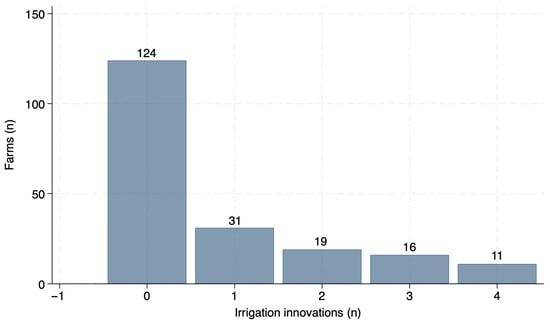
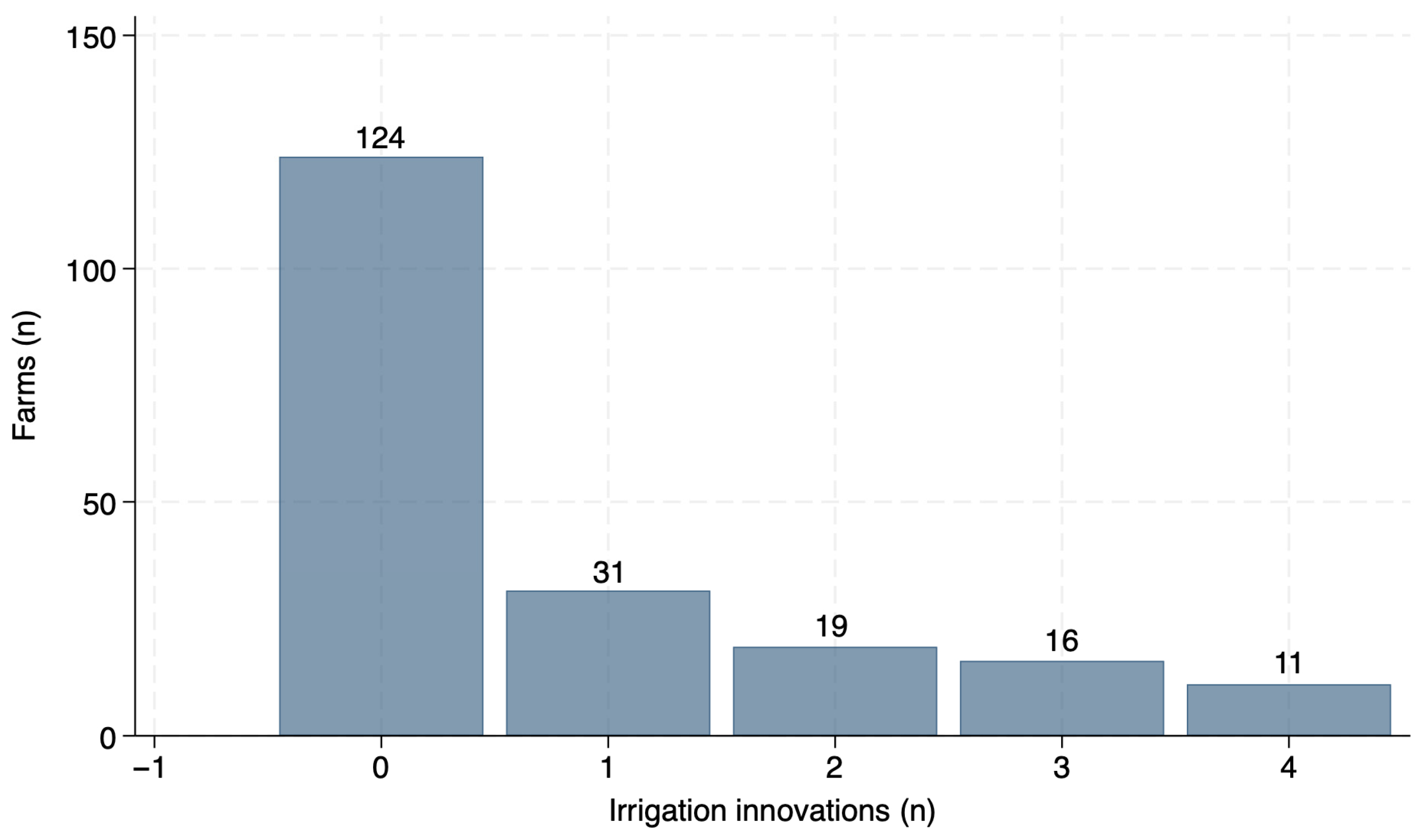
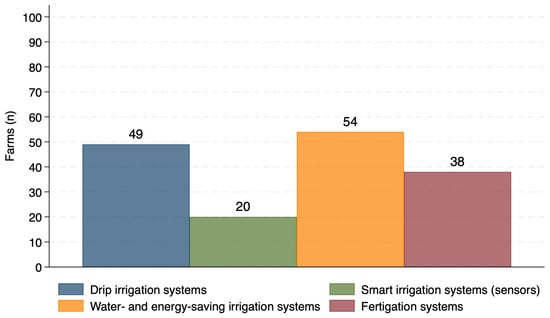
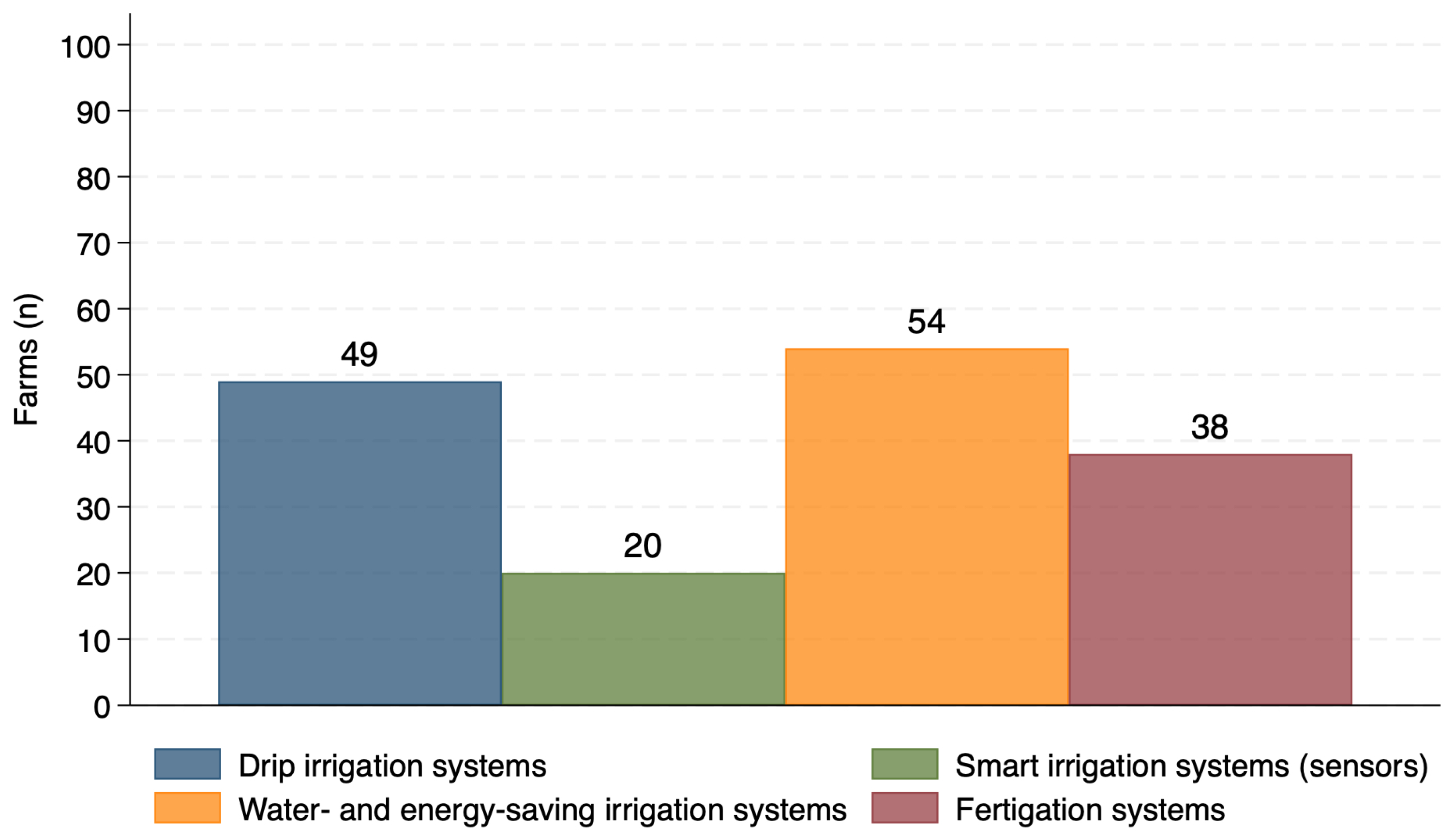

Disclaimer/Publisher’s Note: The statements, opinions and data contained in all publications are solely those of the individual author(s) and contributor(s) and not of MDPI and/or the editor(s). MDPI and/or the editor(s) disclaim responsibility for any injury to people or property resulting from any ideas, methods, instructions or products referred to in the content. |
© 2026 by the authors. Licensee MDPI, Basel, Switzerland. This article is an open access article distributed under the terms and conditions of the Creative Commons Attribution (CC BY) license.