


Abstract
The beginning of the Holocene is the period during which cultural and environmental transformations contributed to the emergence of Neolithic Agricultural societies. Climate amelioration and shifts in biophysical systems prompted new responses to changing ecological conditions, enabling the development of regionally diverse subsistence systems that ultimately led to the permanent adoption of agriculture. This literature review examines the role of Holocene monsoonal variability and climate change in shaping Southeast Asia (SEA) before the widespread adoption of cereal farming. This review addresses three questions: the Holocene saw extensive warming and climatic amelioration. What impact did that have on indigenous Pleistocene hunter-gatherer populations? What kinds of agricultural systems were practised in SEA before the introduction and spread of cereal-based farming? What implications did this have on the cultural and social organisation of Neolithic communities in these areas? This review synthesised 46papers in relation to Holocene monsoonal variability across Asia, alongside archaeological and vegecultural studies. The findings underscore a significant gap in understanding alternative plant-based systems in the region. While discussions of early agriculture in East and Southeast Asia often emphasise cereal-based systems, such as rice and millet, vegeculture offers an alternative form of cultivation, representing the complex relationship humans share with plants during the early Holocene. Thus, this review examines Holocene monsoonal dynamics and their role in shaping early domestication processes across East and Southeast Asia. Drawing on archaeological evidence from prehistoric and Neolithic Vietnam, this paper argues that root and tree-crop resources formed a central component of early plant-based subsistence and may represent an alternative pathway in the development of agricultural pathways in Southeast Asia.
1. Introduction
Several theories about the origins of agricultural systems stem from the idea that climate amelioration during the early Holocene created favourable wet conditions that enabled humans to modify their subsistence strategies [1]. The fundamental shifts in biophysical systems prompted new responses from early humans, creating stable conditions through increased productivity [1,2]. Competing views suggest that agriculture emerged from early conditions that gradually enhanced humans’ ability to exploit the environment [1], including technologies for collecting, processing, and storing food. However, Reed [3] proposed that agriculture is better understood as an invention, rather than an inevitable outcome that could have occurred following climate stabilisation. This argument is supported by evidence that numerous cultures arrived at similar solutions across the world independently of one another. Furthermore, if agriculture were to arise through the action of ubiquitous forces, it would assume that all human societies progressed through the same stages of development leading to domestication. Similarly, Clift & d’Alpoim Guedes [1] believe that different farming strategies throughout Asia have been influenced by variations in the intensity of monsoons, revealing how early humans have developed solutions to deal with climate fluctuations.
Some of the earliest and longest-lasting farming societies developed across East Asia, becoming established within the major river valleys of China. These regions became significant centres of cereal-based agriculture, with foxtail and broomcorn millet cultivated in Yellow River Valley and rice in the Yangtze River Valley. Over time, these practices gradually spread southward from China, and eventually migrated into Mainland and Island Southeast Asia, Taiwan, the Philippine archipelago, and the wider Pacific [4]. The southward expansion triggered complex socio-ecological interactions with indigenous Hoabinhian hunter-gatherers, rather than total replacement of populations that had occupied the tropics of SEA. Within this boundary, Southeast Asian populations did not aggressively adopt an established model of agriculture, but rather, they adapted this within their own system that was better suited to their monsoonal environments.
As such, archaeological findings of early Neolithic populations in Southeast Asia challenge the assumption that subsistence strategies were centred on cereal cultivation and instead suggest alternative pathways of food production. What kinds of agricultural systems were practised in SEA before the introduction and spread of cereal-based farming? How were these facilitated by monsoonal variability and climate change? And what effects did this have on the cultural and social organisation of Neolithic communities in these areas?
To better understand vegeculture as a form of subsistence in Southeast Asia, this review considers the range of alternative plant-use and food-production strategies applied by indigenous hunter-gatherers that were better suited to their particular environments. These strategies ranged from the gathering and exploitation of plants, the deliberate management and cultivation of crops, and the domestication and vegetative propagation of tuber crops for consumption. Plant exploitation refers to the use of naturally occurring plant resources, such as wild plants and tree crops; gathering refers to their collection, whilst management is the deliberate manipulation of enhancing, protecting and maintaining useful plant resources without disrupting ecological processes [5]. Cultivation involves planting and growing crops, such as root crops and vegetables, whereas domestication refers to a longer-term system of adapting wild plants for human use [6]. Vegeculture refers to a subsistence system that is based on the management or cultivation of vegetatively propagated plants, including root, tuber, and tree crops [7]. These distinctions are necessary to address because archaeological evidence for plant use may not directly demonstrate cultivation, domestication, or an established system of vegeculture.
The primary goal of this review was to investigate traditional systems of root and tree-crop exploitation, management, and possible cultivation and their significance in understanding the early pathways of agricultural development in Southeast Asia in response to monsoonal variability and climate change. Additionally, this review evaluates modern food systems to explore how traditional practices may mitigate contemporary climate change. A structured literature search was conducted between March and September 2026 across electronic databases, including Google Scholar, the University of Sydney Library, Western Sydney Library, JSTOR, ProQuest, ScienceDirect, and ResearchGate.
This strategy used a combination of the following keywords: “Holocene” OR “Vegeculture” OR “Cereal-based Agriculture” OR “Climate” OR “Alternative Pathways” OR “Domestication” OR “Rice” OR “Millet” OR “Neolithic” OR “Southeast Asia.” To be eligible for inclusion, sources had to meet the following criteria: (1) peer-reviewed journal articles and book chapters; (2) a distinct focus on vegeculture, tuber tree crop management, or comparative cereal agriculture; and (3) a focus on Holocene environmental and cultural processes. All articles were recorded in EndNote 21 to prevent duplication. Titles and abstracts were screened against the inclusion criteria to validate all selected data through full-text evaluation. The initial database search yielded an initial 41 articles, and an additional 5 articles were identified through backward citation searching, resulting in a total of 46 sources. The quality of the sources was based on peer-review status, methodological transparency, and relevance to the questions explored within this review. This also included the availability of archaeological and paleoclimatic evidence and their strengths and limitations. Geographically, this review qualitatively assesses the impacts of Holocene climates on early societies in Southeast Asia, with a specific focus on South Vietnam. This addresses a critical gap in the current literature, which predominantly centres on broader mainland SEA, Papua New Guinea and China, allowing for a more localised interpretation of food-production systems adapted to changing environmental conditions.
2. The Holocene, Climate Variation, and the Origins of Agricultural Systems
2.1. Holocene Climate Systems and Monsoon Dynamics
The Holocene climate trajectory of SEA reflects substantial spatial and temporal variability in monsoonal behaviour, rather than a linear, uniform response, differing from the classical East Asian monsoonal framework and instead functioning as a highly complex system. The transition from the Last Glacial Maximum (LGM) into the Holocene initiated a profound restructuring of the global climate system. The LGM was marked by colder, hyper-arid conditions that suppressed global monsoonal circulation. Post-glacial warming then prompted climate amelioration across the tropical belt [8]. This amelioration was characterised by rising regional temperatures and precipitation, reversing the environmental constraints of the last glacial period [9]. The LGM also saw global cooling and the advance of continental ice sheets, which extended between 26,500–20,000 cal BP [10]. The expansion of the ice sheets altered the position and strength of monsoonal flow, disrupting circulation patterns and contributing to a weaker monsoon. The Asian Summer Monsoon, comprising the Indian Summer Monsoon (ISM) and the East Asian Summer Monsoon (EASM), is the largest component of the global monsoon system. For the terrestrial landscapes of Mainland Southeast Asia (MSEA), the ISM is the primary hydroclimatic expression of the Indian Ocean Monsoon (IOM) and interacts directly with the western edge of the EASM. These systems shape the environmental parameters of Holocene agricultural evolution in this region. The strength of this monsoonal system is coupled with Northern Hemisphere solar insolation, high-latitude glaciation, and North Atlantic sea surface temperature across the North Atlantic [1]. Seasonal land–sea thermal contrasts drive monsoons in this region. Intense summer heating over Eurasia creates a powerful continental low-pressure cell that draws moisture and onshore winds from the Indian and Pacific Oceans. Conversely, during winter, a high-pressure system develops over Siberia [11], forcing cold, dry winds, accompanied by aeolian dust, into Asia. During the Holocene Climate Optimum (HCO), dating between 9500–5000 years ago, many regions across SEA experienced warm and humid conditions associated with enhanced summer monsoonal activity [12]. The warmth experienced during the HCO was associated with orbitally-forced insolation changes in the precession band, which was said to be influenced by internal feedback mechanisms [13]. Furthermore, higher humidity and seasonal rainfall resulted in a rapid expansion of dense tropical forests across MSEA, which fuelled post-glacial flooding of the Sunda Shelf [13].
Following this, during the mid-to-late Holocene, this period of climate amelioration abruptly came to an end. Between approximately 5000 and 4000 years BP, a severe weakening of the monsoon system triggered regional destabilisation and megadroughts across MSEA, often linked to shifts in the Pacific Walker Circulation and El Niño-Southern Oscillation (ENSO) cycles [14]. That said, these remain speculative teleconnections, and these shifts are highly correlated with the termination of the African Humid Period and the rapid desertification of the “Green Sahara” [14]. The loss of North African vegetation triggered a massive global atmospheric teleconnection, and for MSEA this meant a sudden and erratic disruption to otherwise predictable seasonal rainfall [14]. Lush landscapes that supported mobile foraging populations were disrupted, and this sequence of environmental collapse served as a catalyst for a transition towards highly organised agricultural systems to ensure food security. Griffiths et al. (2020) state that it is particularly important to investigate Southeast Asian monsoonal variability during this time because of its overlap with the “missing millennia” in interior MSEA, marked by a 2000-year gap in archaeological evidence from 6000–4000 years ago [14]. However, whilst orbital trends and hemispheric teleconnections, including the Green Sahara collapse, provide a framework for regional climate variability, they still require proxy analysis to move beyond speculation. Holocene climate amelioration would have altered the ecological conditions in which hunter-gatherers operated. Archaeological evidence does not point to a singular climatic trigger in agricultural transformation. Rather, populations would have responded by adapting their subsistence strategies that reflect local environmental conditions.
2.2. Paleoclimate Proxies as Evidence of Monsoonal Variability in Southeast Asia
Whilst it is recognised that global changes have influenced variations in the intensity and spatial distribution of Asian monsoon precipitation, the mechanisms driving variability are not yet well understood [15]. Mainland Southeast Asia is largely devoid of long paleoclimate records [16] during the Holocene, which are essential for revealing the drivers of monsoon variation [15]. Developing regional records is therefore essential to understanding Southeast Asia’s relationship with the Indian and East Asian sub-monsoons within the Asian Summer Monsoon [13]. Consequently, the proxy discrepancies across the region should not necessarily be interpreted as inconsistencies in the paleoclimate record, but may instead reflect the spatial and seasonal complexity of MSEA’s monsoonal dynamics [13]. As such, multiproxy records are necessary to distinguish changes in regional circulation, local hydroclimate, and environmental responses [17].
Oxygen isotopes are used to infer precipitation; however, the timing of peak local precipitation is spatially variable. This is important to note, as in regions like Central Vietnam, the timing and amount of local precipitation vary from other parts of MSEA. Because of this, oxygen isotopes fail to capture local hydroclimate in many locations [17]. Speleothems from Central Vietnam are used to reconstruct and provide evidence for hydroclimate variability during the Holocene. Wolf et al. [17] used a combination of proxies, which include δ18O, Carbon isotopes (δ13C) and Mg/Ca, to discern regional monsoon circulation from local hydroclimatic responses. Results indicate that seasonal insolation is the main driver of δ18O across SEA, with δ18O becoming more negative during periods of insolation is increased. However, δ18O reflects changes in regional moisture sources and atmospheric circulation and should therefore not be interpreted as a direct measure of local rainfall amount [17]. Furthermore, a study by Patterson et al. [18] in Central Vietnam has analysed a Holocene stalagmite record from Thien Duong Cave, dating from 8000–2000 years ago, which identified a pronounced dry period during the mid-late Holocene. This event was associated with an El Niño-like state, characterised by increased dust forcing during the termination of the Green Sahara, and similar dry conditions have been identified in both summer and autumn monsoon records across Mainland Southeast Asia. A separate stalagmite record from Hao Huong Cave covering the late Pleistocene (45,000–4000 years ago), analysing calcium isotopes (δ44Ca), records that Vietnamese rainfall was 50–60% lower during the LGM, compared to modern conditions, with reduced rainfall associated with a weaker SEA autumn monsoon. As Central Vietnam receives a large proportion of its annual precipitation during the autumn monsoon, its regional rainfall system is influenced by the Truong Son Mountains, which limits summer rainfall, and enhances autumn precipitation [18]. This makes the Hao Huong Cave well-positioned to record SEA autumn monsoon variability, as most of MSEA receives summer rainfall. As such, whilst these records demonstrate the usefulness of paleoclimatic proxies for analysing SEA hydroclimate, their interpretation depends on climate and environmental processes.
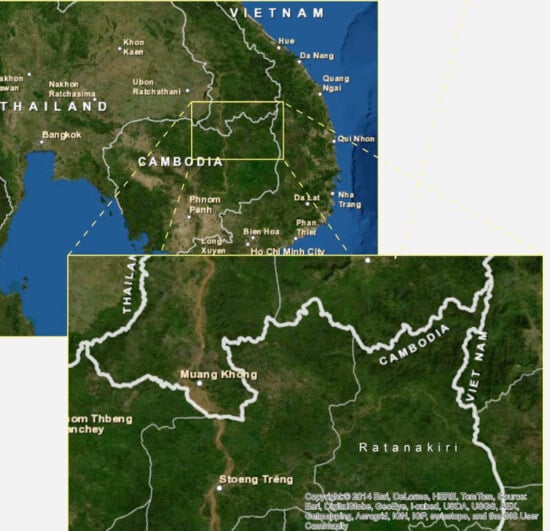
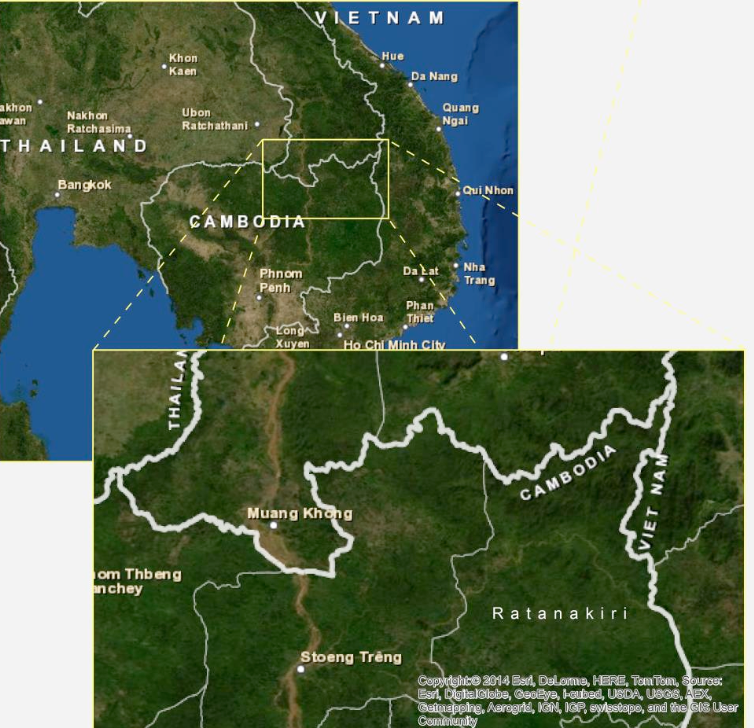
Similarly, in northeast Cambodia, in the province of Ratanakiri, stable isotope records from Lake Yeak Kara (Figure 1), derived from a 13 m-long sediment core, were analysed to explore rainfall dynamics in this region. Authigenic calcium carbonates preserved within the sediment archive reflect changes in the isotopic composition of lake water, influenced by precipitation, evaporation, and lake hydrological processes. Radiocarbon dating produced an age model showing that sediments at the bottom of the core date to roughly 9100 BP. As stable isotope ratios of surface waters provide insight into physical, chemical, and biological dynamics, the stable isotopes of oxygen (δ18O) and hydrogen (δ2H) within the carbonate provide evidence for past precipitation-evaporation dynamics experienced in this region, reflecting regional climate [13]. Changes in isotopic signatures (δ18O and δ2H) of Lake Yeak Kara’s surface waters weakened with depth, indicating that changes in isotopic composition of its surface waters were modified by the addition of rainfall in wet periods and by evaporative fractionation in dry periods [13]. The δ18O record from this sediment core reveals a change from a strong to a weak summer monsoon following the end of the Holocene Optimum, occurring at 5800 cal BP. This was linked to decreasing Northern Hemisphere summer insolation, which was evident in other records of the paleoclimate of the Asian monsoon. Furthermore, within this record, dry periods of high climatic variability were observed from 7200–6900 cal. BP and 4600–4300 cal. BP, which are linked to ENSO intensification in the mid-Holocene [13]. These data demonstrate that lakes in SEA are sensitive to changes in hydrological systems and that their δ18O and δ2H ratios reflect climate variability. As such, the proxies reviewed in this section demonstrate the spatial and seasonal variability of the Holocene hydroclimate in SEA.
Figure 1.
Location of Lake Yeak Kara, in Ratanakiri Province, Cambodia [13].
3. The Development and Spread of Cereal-Based Agriculture in Asia
3.1. The Origins of Cereal-Based Agriculture in East Asia
3.1.1. Millet
Cereal-based agriculture in East Asia developed in response to favourable early Holocene climate conditions, providing a solid economic foundation for cultural development and social organisation within this region [19]. Ancient China is widely recognised as having two primary centres of independent crop domestication, including millet in the north and rice in the south [20]. The exploitation and low-level cultivation of millet predate the Holocene, as evidenced by two terminal Pleistocene sites on the loess plateau in Shanxi Province. Residue evidence and tool use-wear analyses from the Shizitan site (12,700 to 11,600 BP) reveal starch granules from broomcorn (Panicum miliaceum) and foxtail (Setaria italica) [21], indicating pre-agricultural plant use. Furthermore, before the domestication of these millet species within this region, the development of ceramic vessels suitable for boiling suggests early methods for the preparation of these hard seeds for consumption [21].
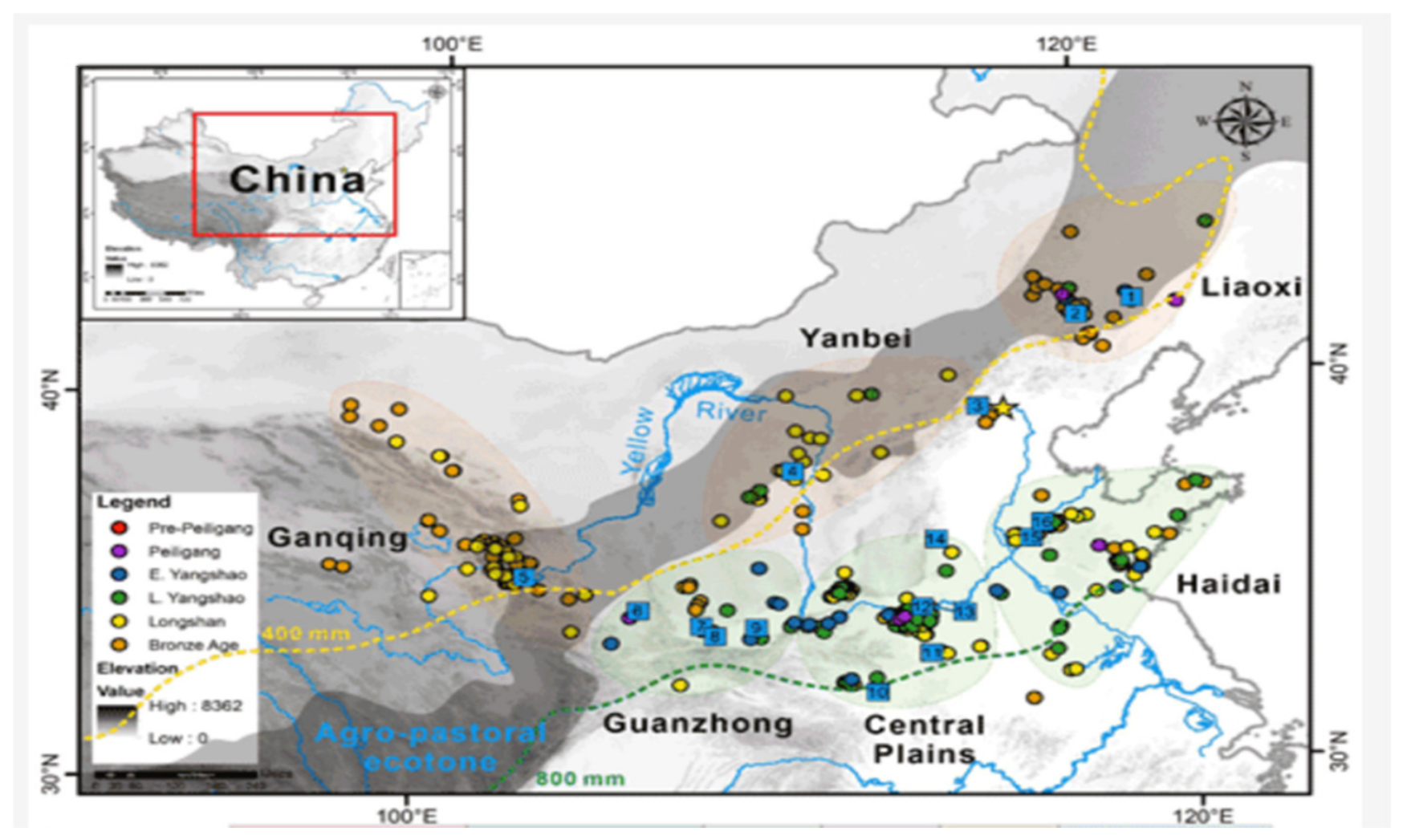
During the Holocene in Northern China, broomcorn millet and foxtail millet were domesticated along the Yellow River Valley between 6500 and 5000 BCE [22]. The period coincided with the transition from the Palaeolithic foraging systems to the sedentary Neolithic lifestyle. However, archaeological evidence from 11,000 to 8500 Cal. BP remains fragmented in key rainfed agricultural regions [23]. During the Yangshao culture (Figure 2), communities continued to practice broad-spectrum foraging and fishing, which may have given rise to the gradual incorporation of millet [24].
Figure 2.
Spatial distribution of archaeological sites associated with millet during the Neolithic in northern China, including sites attributed to the Early and Late Yangshao cultures along the Yellow River Valley [24].
This suggests that early subsistence strategies were not entirely reliant on cereal systems and further indicates that millet cultivation developed alongside existing practices and therefore represents one pathway in which Holocene populations adapted to environmental changes. By approximately 7000 cal BP, rainfed millet agriculture became more established, supporting the emergence of systemic agricultural societies [23].
3.1.2. Rice
Archaeological evidence suggests that rice agriculture originated in the Yangtze River basin of southern China during the Holocene. Phytolith evidence from cave sites such as Xianrendong and Diatonghuan, dating back 16,000 years BP, suggests early exploitation of wild rice [25]. Rice cultivation developed as sedentary communities began to manage shallow freshwater wetland margins to encourage the growth of perennial wild rice (Oryza rufipogon sensu stricto) [26]. This reflects the gradual transition from foraging to cultivation during this period.
By approximately 6000 years ago, in the middle and lower Yangtze region, domesticated rice had become established as the dietary staple for Neolithic societies, contributing to the emergence of social complexity and population growth [21]. Rice cultivation emerged alongside broad-spectrum subsistence strategies, including the foraging and collection of tree nuts, foxnuts, and water chestnuts, as well as the exploitation of aquatic resources in shallow wetlands. Gradually, rice displaced nuts as a dietary staple over a period of 2000 to 3000 years. During this period, rice developed domestication traits (e.g., mutations to prevent early seed shattering), allowing it to adapt to cultivation and harvest [21]. This further indicates that rice was incorporated into existing subsistence systems. Rice then slowly spread southwards or westwards, reaching northern Yunnan near the Pearl River Delta by ca. 2600. As such, the establishment of rice agriculture dispersed into southern China and mainland Southeast Asia by 4000 years ago, alongside foxtail millet, contributing to shifts in subsistence strategies within these regions.
3.2. Cereal-Based Agriculture in Southeast Asia
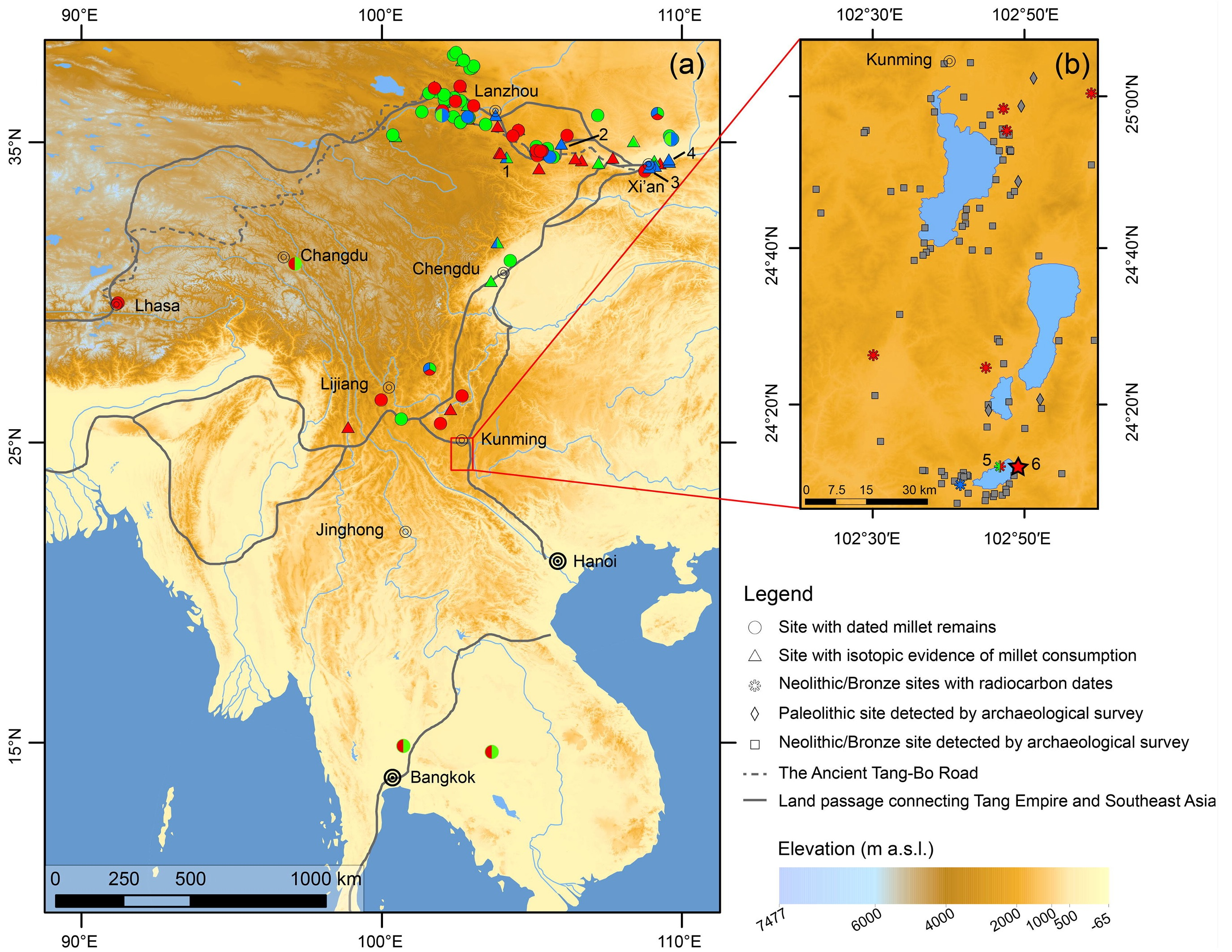
Mainland Southeast Asia is regarded as a recipient region of agricultural migration, as evidenced by cereal farming traditions of millets and rice [20]. Archaeological, linguistic, and genetic evidence suggest that the southward migration of Neolithic East Asians is associated with the expansion of millet and rice farming from East Asia to parts of Southeast Asia (Figure 3). Archaeological evidence [27] further suggests that the broad dispersal of millet and rice originated from provinces in southern China, Sichuan and Yunnan, and into SEA ca. 4500 BP.
Figure 3.
(a) Archaeological sites in China along major pathways, including The Ancient Tang-Bo Road and the land passage connecting the Tang Empire and Southeast Asia; (b) Focus on the Tonghai region of central Yunnan where early Neolithic and Bronze Age settlements have been identified [27]. Blue markers represent archaeological sites dating from 8000–5000 years BP, green markets represent sites dating from 5000–4000 years BP, and red markets represent sites dating from 4000–2000 B years BP.
The introduction of cereals into Southeast Asia was slow, uneven, and did not immediately replace existing systems. At Khok Phnom Di inThailand, palaeoecological records indicate increased levels of burning, grass pollen, weeds associated with disturbed or potentially cultivated rice fields during the fifth millenium BCE; however, these data do not provide direct evidence for rice cultivation [28]. Thus, earlier interpretations regard the evidence for rice exploitation as circumstantial in the absence of directly associated rice macrofossils [28]. During Khok Phanom Di’s occupation, dating from c. 2000 to 1400 BCE, subsistence was strongly associated with maritime resources, including shellfish and molluscs. By approximately 1800–1700 BCE, environmental conditions became more favourable for freshwater resources, as archaeological evidence of such as tools and rice remains associated with harvest, suggests that rice had reached the site by or after the eighteenth-century BCE.
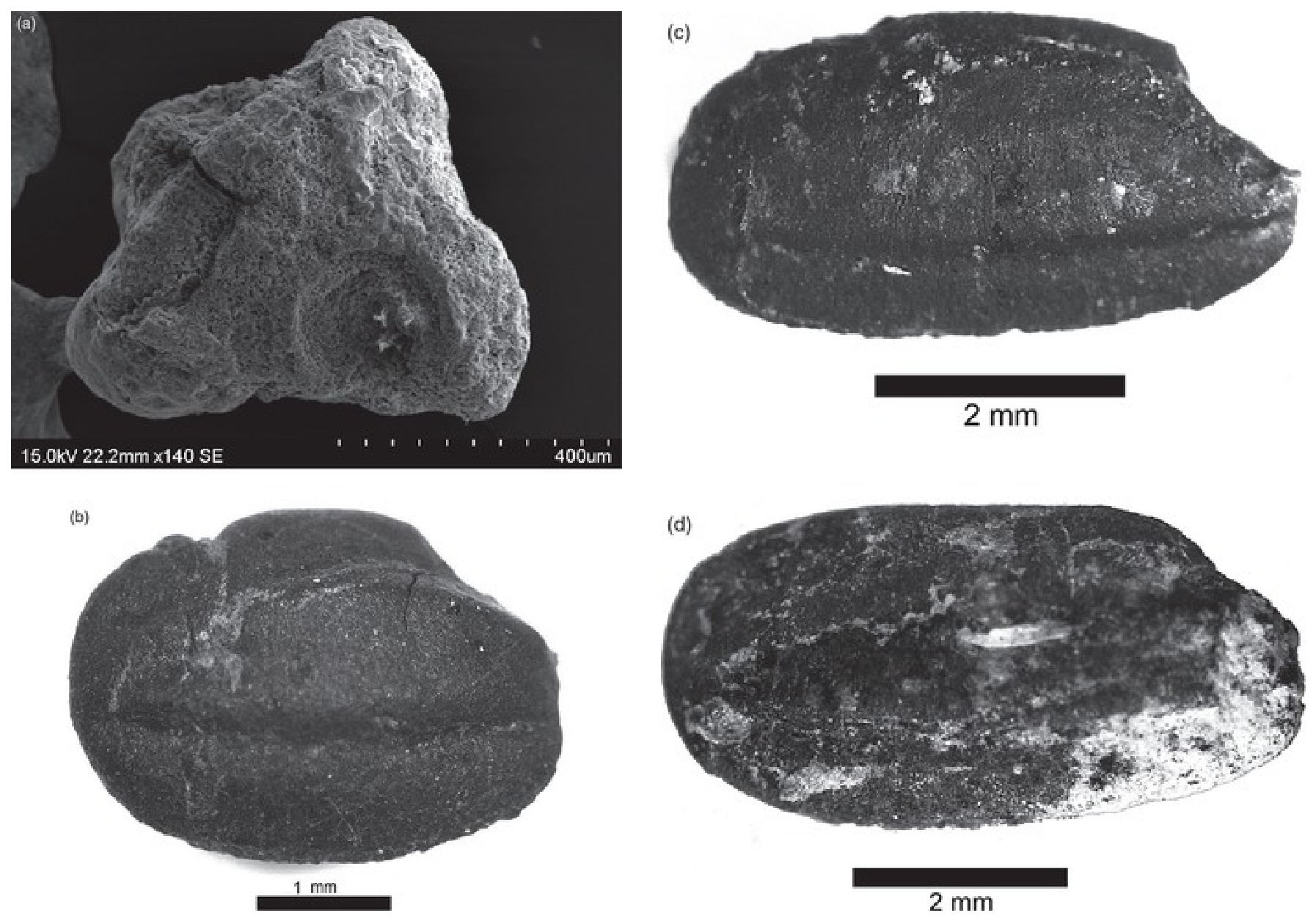
Furthermore, archaeological investigations at three Neolithic sites in the Khao Wang Prachan Valley of central Thailand-Non-Pa Wai, Nil Kham Maeng, and Nor Mak La- reveal extremely low evidence for rice relative to millet. A total of 3294 carbonised seeds across the sites were recovered, of which lower than 50 were rice grains [28] (Figure 4). The majority of the samples, however, were foxtail millet. The scarcity of rice samples therefore suggests that rice was a relatively minor dietary component of the archaeobotanical assemblage played a minimal role in local subsistence.
Figure 4.
Rice remains from Neolithic sites in Thailand [28]; (a) domesticated rice spikelet base from Khao Sam Kaeo dating from 383–203 BCE; (b) rice caryopsis from Khao Sam Kaeo dating from 359–57 BCE; (c) rice caryopsis from Ban Non-Wat site with a radiocarbon date of 441–203 BCE; (d) rice caryopsis from Phu Khao Thong dating to 36 BCE to 125 CE.
An investigation by Barton [28] of the Phung Nguyen Complex in northern Vietnam, dating from approximately 2500 to 1500 BCE, found no direct evidence for the cultivation of rice and millet at the examined sites, despite their location near freshwater streams and elevated terrain along the Red River. However, a micro-botanical study by Wang et al. [26] provides evidence for the early cultivation of rice and foxtail millet at Trang Kenh, associated with the Phung Nguyen complex, along the Red River Delta, dating to approximately 4000 years BP. Trang Kenh represents a significant early farming society in northern Vietnam with strong cultural connections with southern China.
Comparatively, many indigenous hunter-gatherer groups in Ha Long Bay that coexisted with the Phung Nguyen Complex exploited a range of plant resources, including taro (Colocasia esculenta), yams (Dioscorea), palms (Arecaceae), and other plants. Wang et al. [26] identified small quantities of foxtail millet and rice grains in Ha Long, suggesting a plant-based subsistence in these communities where limited cereal remains reflect a consumption mode independent of cereal-based agriculture. The micro-botanical evidence from Ha Long, as well as the archaeological evidence from Thailand, highlights that adoption of cereal-based agriculture was not uniform across SEA. Rice and millet formed a minor component of the archaeological assemblages within several sites, whilst hunter-gatherer communities continued to exploit maritime resources and plant resources.
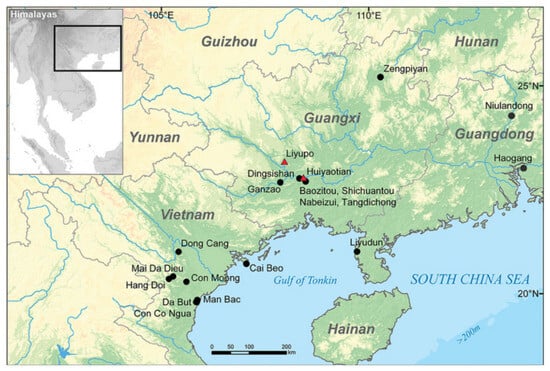
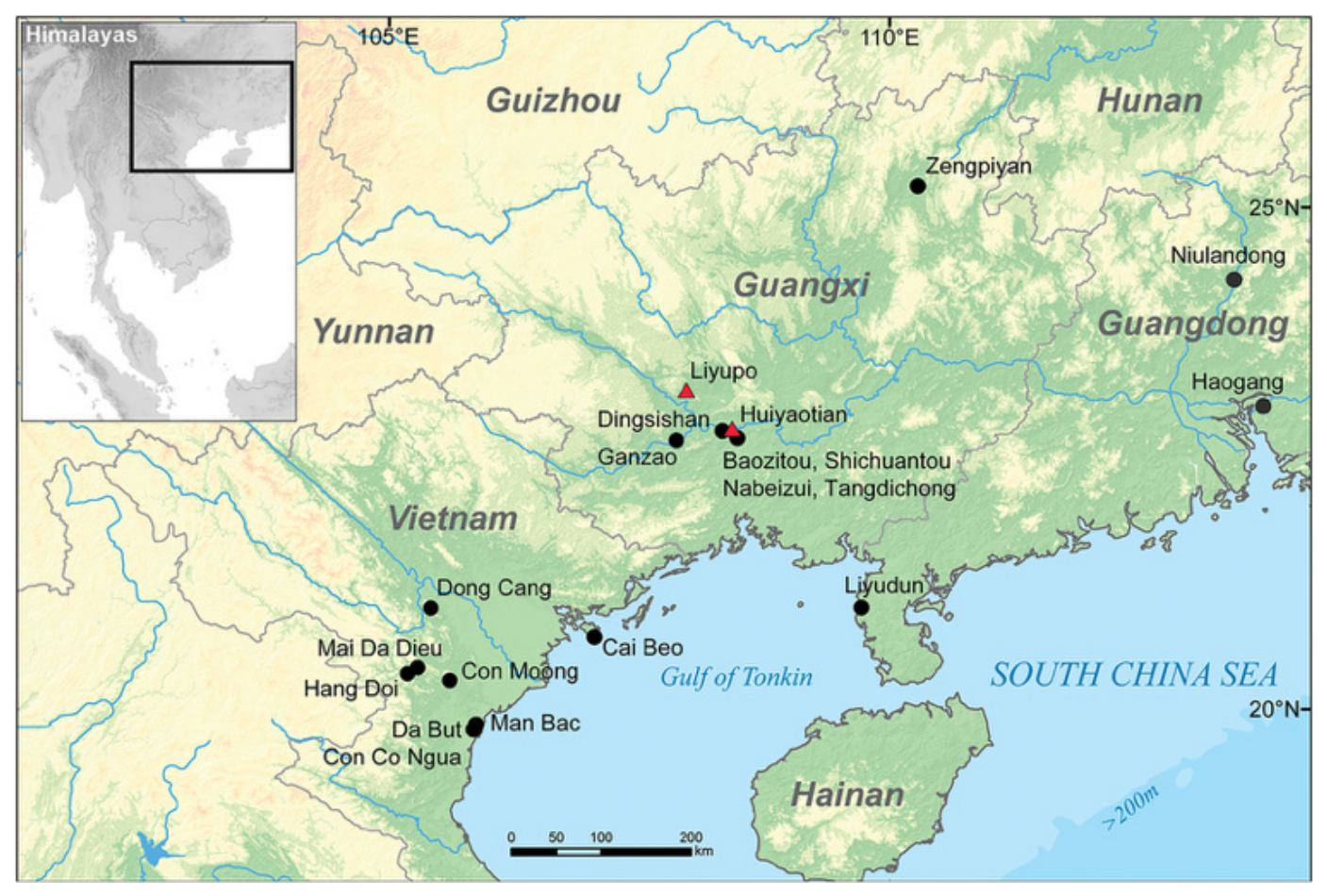
Moreover, Wang et al. [29] examined the subsistence techniques of the Dingsishan culture and their success in supporting dense populations and settlements through a pre-agricultural context from 10,000 BP in southern China. Rapid population growth led to the formation of large shell midden sites along the Yongjiang River in southern Guangxi and thus required archaeological and isotopic analyses of findings from Huiaotion and Liyuoi (Figure 5) to understand food production that supported population growth. The study of archaeological discoveries from Guangxi (and northern Vietnam) indicates exploitation of palms, seeds, and tubers since the early Holocene, which may have contributed to local diets [29]. The prevalence of carious lesions in the dentition of human skeletons from Dingsishan suggests an increased consumption of carbohydrate-rich plants during the Early Holocene, indicating the exploitation of indigenous plant resources, including taro, yam, and palms in southern China.
Figure 5.
Locations of Huiyaotian and Liyupo, as indicated by the red triangles, and other sites mentioned in the text [29].
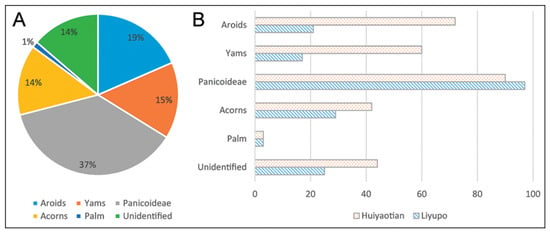
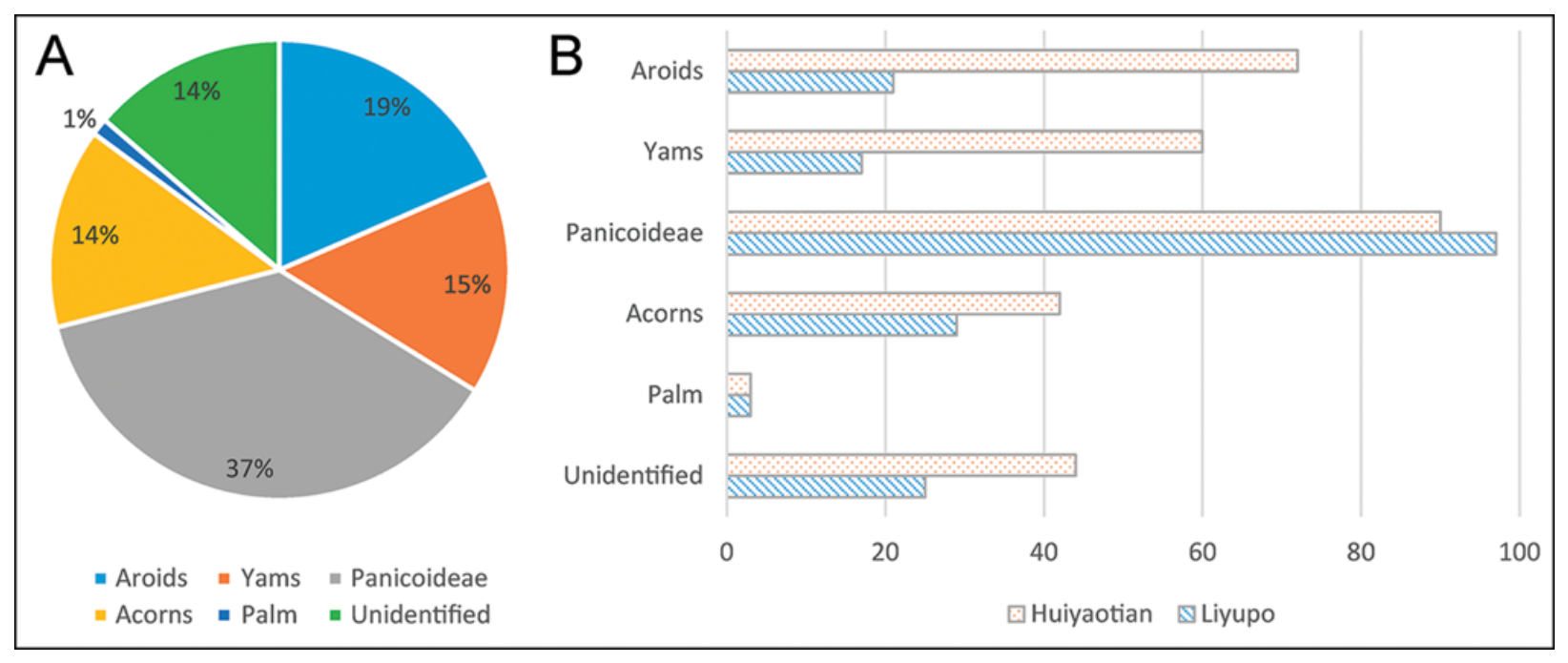
Microanalysis of artefacts and dental calculus focused on the recovery of starch grains. 503 starch grains were recovered from all samples, and 434 of the identified remains were classified into six types (as seen in Figure 6). Plant assemblages from Huiyaotian and Liyupo, as well as those from North Vietnam, reveal an early Holocene economy that was characterised by the exploitation of indigenous tubers, nuts, and palms, and wild panicoid grasses. However, there was no evidence for domesticated cereals like rice and millet [29].
Figure 6.
(A) Plant species identified at Huiyaotian and Liyupo indicated by Total Percentage Breakdown of starch grains; (B) bar chart comparing and tracking the numerical frequency of starchy remains at Liyupo and Huiyaotian [29].
These archaeological findings challenge the assumptions that the spread of agriculture is predominantly defined by the adoption of rice and millet in SEA. Although cereal was available in certain regions and was subsequently incorporated into subsistence economies, agricultural development was not characterised by cereal, as evidenced by its limited representation at several sites across Asia during the Holocene. These findings instead suggest that Southeast Asian communities maintained and developed ecologically responsive subsistence systems that were better suited to the nature of tropical environments, independent of cereal cultivation. One such system is vegeculture, a Holocene tradition of tuber cultivation that has been documented in the tropical environments of SEA.
4. Early Vegeculture Systems in Vietnam: Root and Tree-Crop Management
4.1. Defining Vegeculture Within an Archaeological and Environmental Context
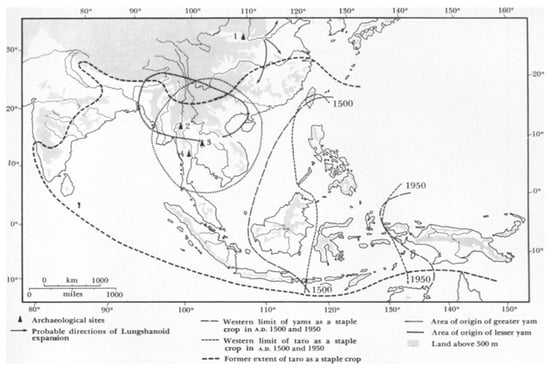
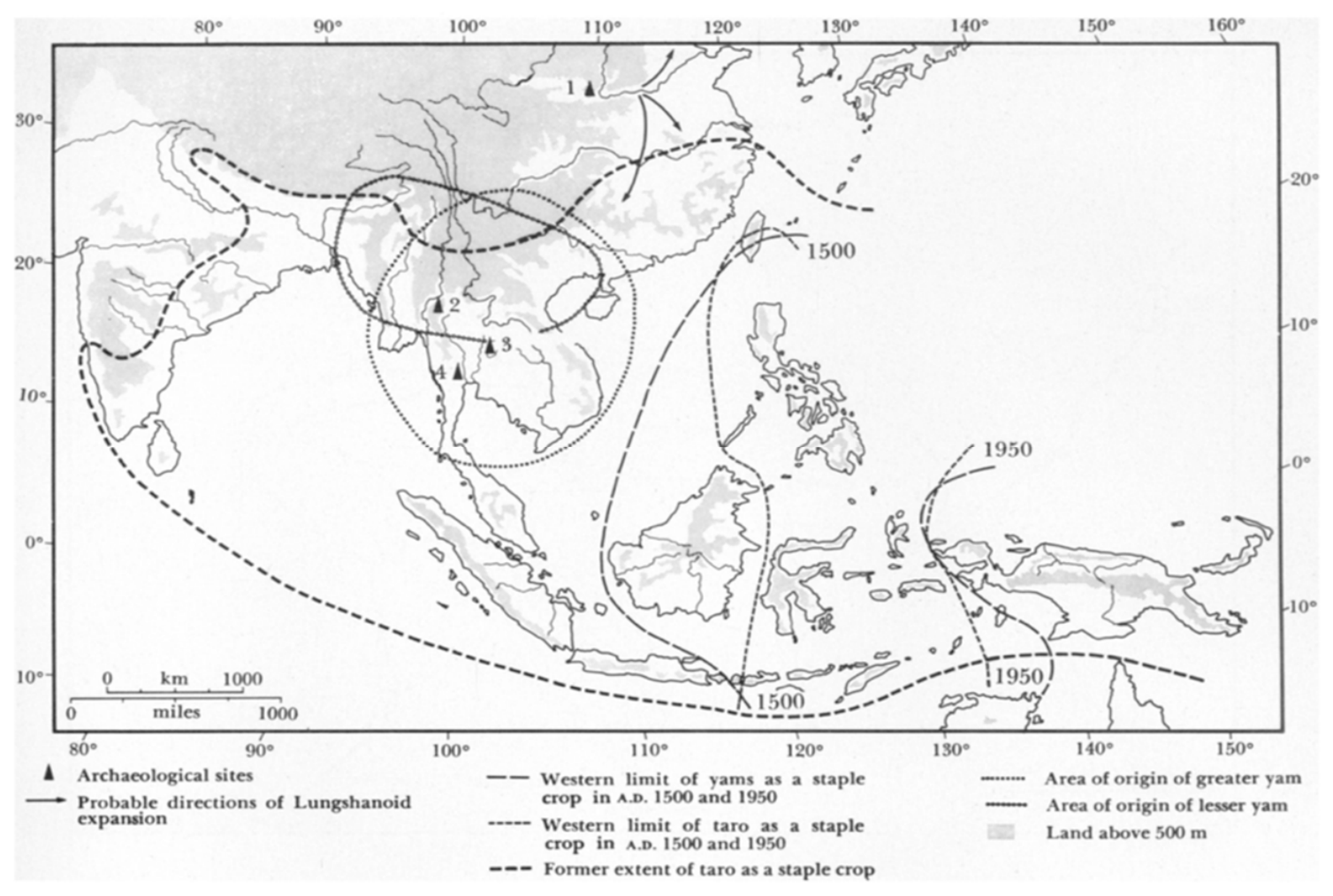
Vegeculture is established as an indigenous mode of cultivation in the humid tropical lowlands of SEA (Figure 7) [30]. There are notable differences in the planting patterns of vegetative and cereal-based systems. However, vegecultural plots are floristically, structurally, and functionally more complex systems, featuring higher plant diversity, more elaborate plant stratification, and a closely-knit canopy of vegetation [30]. In such wet tropical regions, growing rice is challenging, and yields are typically very poor, possibly suggesting that rice, or other similar cereal-based systems, were not viable in these regions, forcing populations to rely on fallback foods like yams and sago [7]. To understand alternative pathways in SEA, there must be a clear distinction between the different forms of human interactions with plants. When interpreting archaeological evidence, this review distinguishes between plant exploitation, gathering, management, cultivation, domestication, and vegeculture. Crucially, archaeological evidence for the presence and/or consumption of tuber and root crops does not inherently mean that they were cultivated, domesticated, or were part of an established vegecultural system.
Figure 7.
Tropical South and East Asia showing the limits of taro and yams as staple crops and areas of origin of the greater yams and the regions in which they were the staple crop [30].
Plant exploitation, within an archaeological context, refers to the use of naturally occurring plant resources for food and other purposes without deliberate alteration of their reproduction [31]. Gathering refers to the collection or harvesting of naturally occurring resources, whilst plant management refers to the various ways human societies have intentionally altered, tended to, protected, or encouraged the growth and productivity of plants and surrounding environments [31]. Cultivation is the deliberate sowing, planting, and tending of plants and reflects the intentional selection and interaction of plant production beyond exploitation and management. Domestication represents the longer-term process in which human societies selected and managed wild plant populations, leading to genetic and physical changes that made plants dependent on humans for survival [32].
Vegeculture is the cultivation of vegetatively propagated plants, including root, tuber, shoots, stems, and tree crops, rather than through seeds. This involves the removal of a part of the parent plant and setting it into the ground. Planting a portion of the plant body involves asexual propagation to perpetuate a genetic clone that is selected based on desirable phenotypic traits [33]. Crops associated with vegecultural cultivation include staple foods such as true yams, taro, bananas, and palms. However, the presence of vegetatively propagated plants during the Holocene in Neolithic Southeast Asia does not, within itself, demonstrate a system of vegeculture. To be archaeologically classified as vegeculture, there must be some form of evidence of human intervention that these plants were deliberately managed, cultivated, or propagated as part of a broader subsistence system [7].
These distinctions are essential to providing a framework for evaluating the archaeological evidence discussed in this review. Plant remains, starch grains, phytoliths, or food-processing tools may demonstrate plant use and consumption, but they do not necessarily point towards established management or a cultivation system. This review cautiously uses terms such as plant exploitation, use, or possible management to analyse the evidence discussed, rather than assuming established vegeculture.
4.2. Hoabinhian Plant Exploitation and Subsistence
Although vegeculture is increasingly recognised across multiple disciplines, there remains a significant gap in understanding how old these practices are and how they developed in Southeast Asia. Vegeculture can be traced back to pre-Neolithic (or Palaeolithic) hunter-gatherers called the Hoabinhian, dating to 18,000 years ago. In Vietnam’s prehistoric history, the Hoabinhian culture marks a transitional phase from the Pleistocene to the Holocene, from the Palaeolithic to the Neolithic, and from hunter-gatherer groups to early farming [34]. Originating in northern Vietnam and southern China, Hoabinhian populations dispersed throughout Mainland Southeast Asia [35]. Hoabinhian sites offer important insights into long-term plant exploitation practices that may have provided ecological and cultural contexts for understanding later forms of plant management and cultivation. Excavations at Spirit Caves in Thailand indicate that early forager communities intentionally managed and harvested various tree and vine crops, including betel, legumes, and almonds [35]. Similar evidence has been found at sites including Banyan Valley Cave in Thailand and Tham Pha Chan Cave in Laos. Bellwood [36] argued that hunter-gatherer groups, such as the Hoabinhian, may have protected and planted wild tubers or fruit trees in simple ways that did not involve systematic cultivation. Similarly, Wiradnyana [37] suggested that food was gathered by planting vegetables and legumes around their living areas. However, there is no direct archaeological evidence of vegecultural systems during this period [34]. Botanical remains associated with vegetatively propagated plants are fragmented and poorly preserved, whilst roots and tubers rarely produce phytoliths, making their reconstruction and identification extremely difficult. Although some researchers propose that Hoabinhian populations may have practiced forms of plant management, current evidence primarily supports the hunting, gathering, and exploitation of plants [34]. As such, the available evidence for Hoabinhian subsistence demonstrates forms of familiarity with tropical forest ecologies and their use of plant resources, but it does not equate to a direct transition from plant exploitation to later vegecultural systems [34]. Instead, long-term engagement with tropical plant resources may provide an ecological and cultural context in which later Neolithic communities developed diverse subsistence strategies. This requires further archaeological evidence, as this possible relationship currently remains a hypothesis, rather than a demonstrated continuity.
4.3. Conceptual Clarification: Neolithic and Vegecultural Systems in Southeast Asia
While often referring to the shift from hunter-gatherer to settled agricultural societies, the Neolithic more broadly describes cultural groups characterised by pottery, increased sedentism, tool use, and diverse subsistence strategies. In Southeast Asia, especially before the introduction of rice and millet to the region, Neolithic economies varied and cannot be defined solely by cereal farming systems. When examining plant-based subsistence systems in SEA, such as in Vietnam, understanding this distinction is crucial for recognising how multiple ecological strategies for resource gathering coexist. Although rice and millet were gradually introduced through migration from East Asia, they did not immediately replace existing plant management and exploitation systems. Instead of discarding their traditional subsistence economies, indigenous populations across Vietnam preserved knowledge of local tuber and tree-crop species [29]. In this context, vegeculture is not separate from traditional Neolithic agriculture but instead reflects an existing subsistence mode that developed before and alongside cereal farming. Recognising this distinction provides a more regionally appropriate interpretation of Neolithic Vietnam and the development of subsistence practices in line with local ecological conditions.
4.4. Vegeculture and Neolithic Communities in Vietnam
Archaeobotanical investigations at Cai Beo, a coastal settlement in Ha Long Bay in Northern Vietnam, provide important evidence for the use and processing of vegetatively propagated plants during the Neolithic. Microfossil plant residues recovered from stone tools include starch remains associated with taro, yams, palms, and bananas (Musaceae) [29]. Researchers identified 2364 starch grains from 22 stone tools, such as scrapers and pointed tools from this site. These findings demonstrate that a range of tubers, roots, and tree crops contributed to early plant subsistence. However, the presence of these remains does not automatically demonstrate deliberate cultivation, propagation or an established vegecultural system. Rather, Cai Beo provides evidence for the possibility of plant management or cultivation associated with intensive plant use, with the specific degree of human intervention not yet certain. Evidence for the processing of vegetatively propagated crops is poorly preserved in archaeological records, so despite the limitation in the degree of human intervention, this evidence is significant as an important indication of plant-based subsistence.
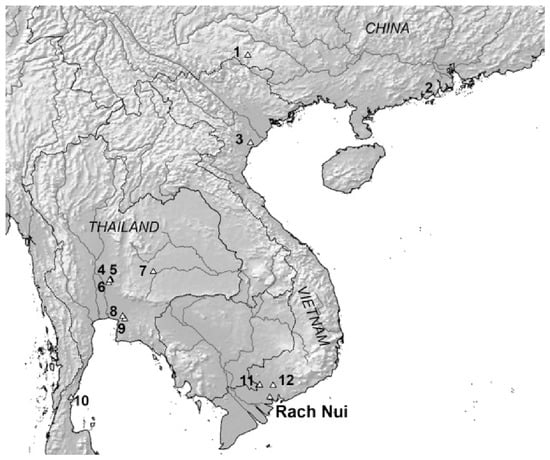
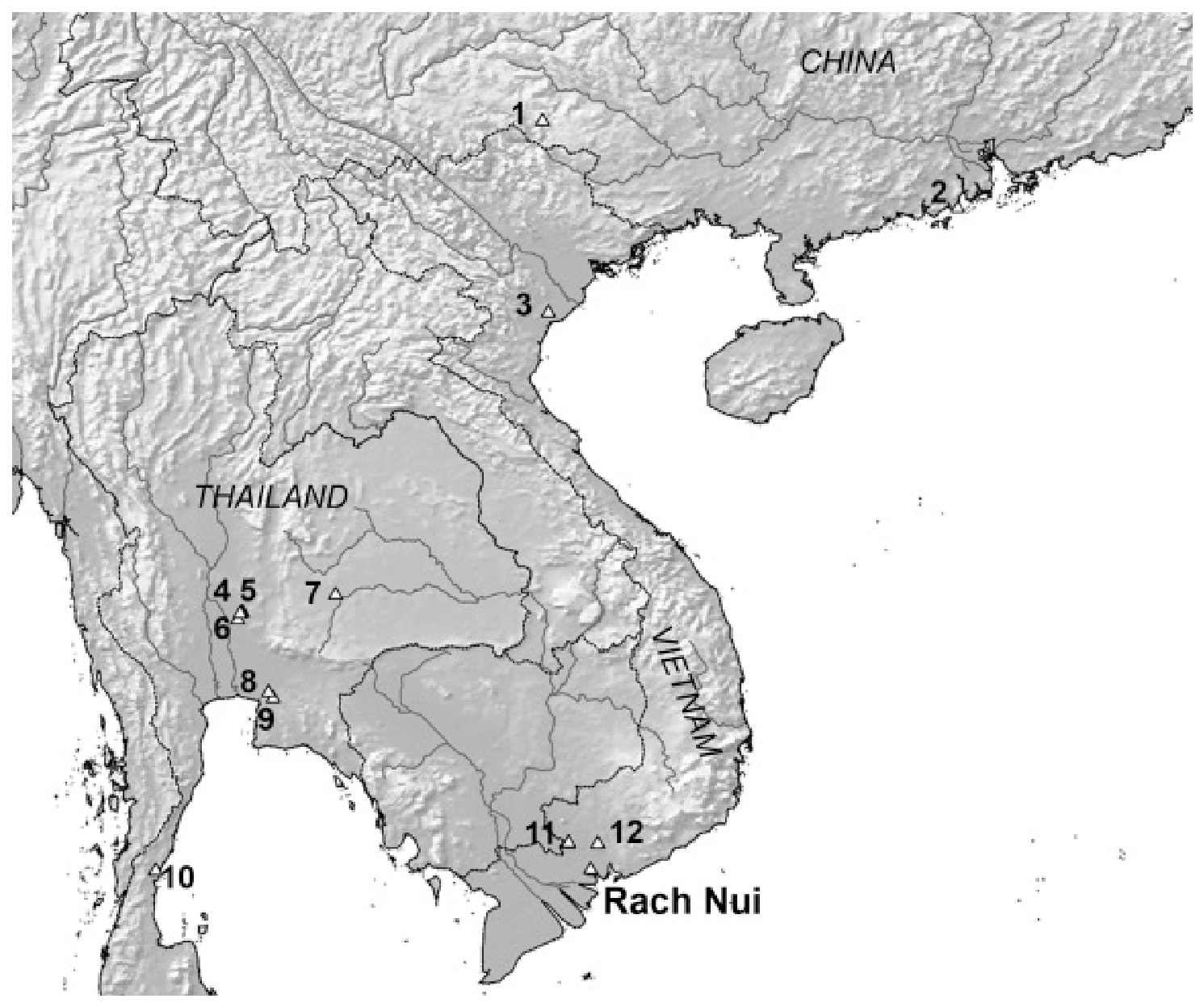
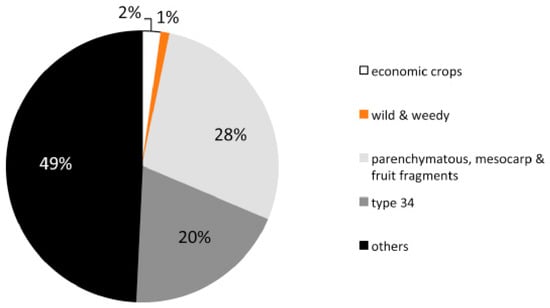
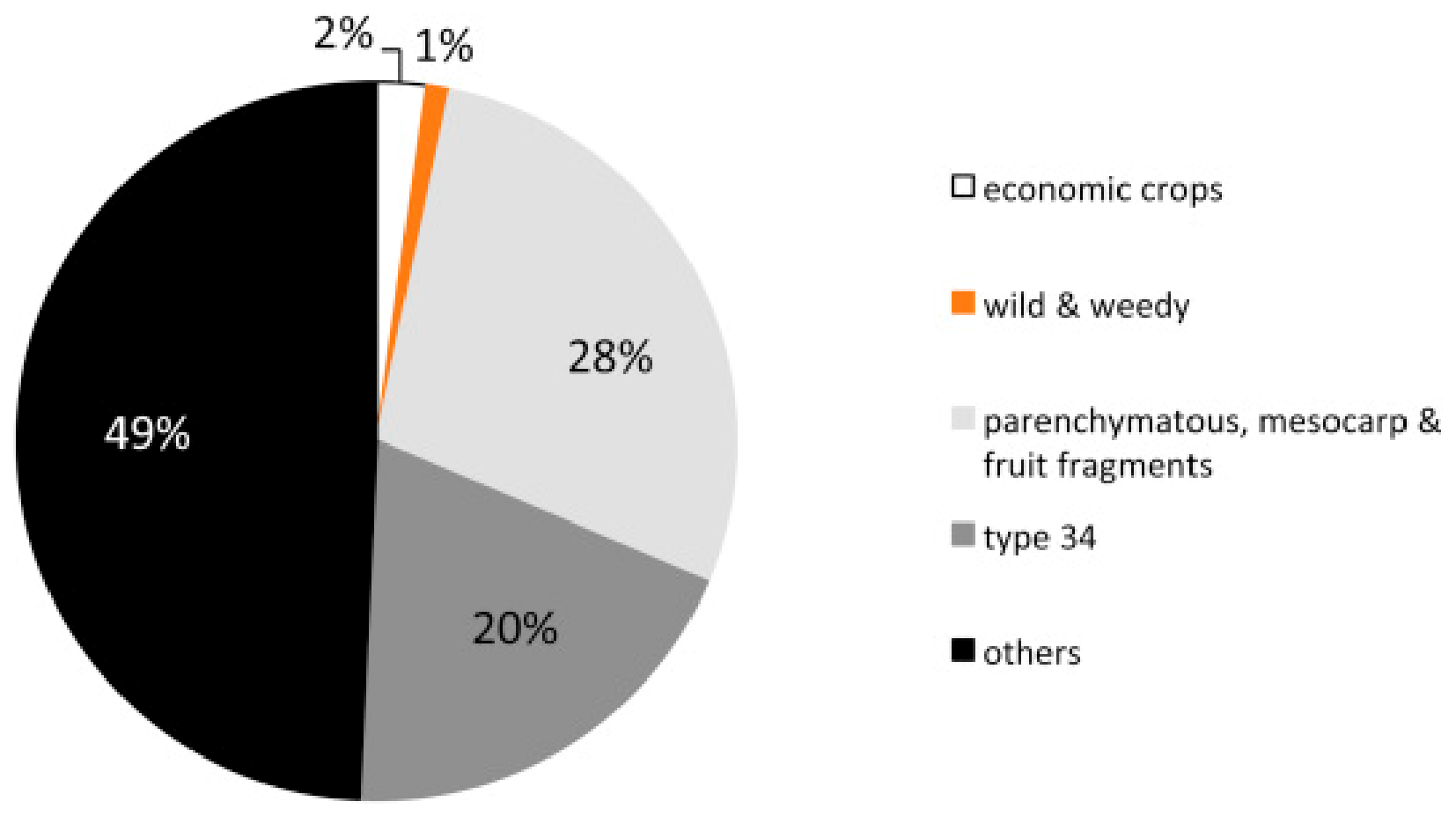
Similarly, archaeobotanical evidence at Rach Nui in southern Vietnam (Figure 8) offers insights into non-cereal plant use during the Neolithic, between 3390 and 3850 cal. BP. Located at the convergence of three rivers within a tidal swamp habitat of mangrove wetland forests, the site represents a niche ecological setting, significant for understanding community-environment interactions with aquatic, wetland, and terrestrial resources [38]. The management and exploitation of resources in mangrove forests would have supplied sufficient food, though cereal farming was unlikely due to increased saline conditions [38]. Plant remains recovered from Rach Nui include parenchymatous, mesocarp, and fruit fragments, which make up 28% (Figure 9) of the total plant remains [38]. These remains provide evidence for the use of vegetative and fruit resources and their consumption as a subsistence economy within this site. Furthermore, Oxenham et al. [39] suggested that tubers and fruits, alongside reptiles and fish obtained from mangrove environments, form important components of subsistence for this community.
Figure 8.
Location of Rach Nui in Long An Province, southern Vietnam [26].
Figure 9.
Breakdown of plant remains into major groups: parenchyma and mesocarp include fruit fragments [26].
However, the presence of these plants does not demonstrate that they were cultivated, domesticated, or propagated as part of an established vegecultural system. This evidence is better interpreted as a resource that communities substantially relied on rather than a definitive agricultural structure centred on vegeculture. Rach Nui, thus, remains an important site for understanding alternative pathways of food production in Neolithic SEA because it demonstrates the relationship communities shared with humid and wetland environments in exploiting plants and obtaining aquatic and animal resources.
4.5. Vegeculture and Social Organisation in Neolithic Vietnam
Archaeological evidence from Neolithic Vietnam indicates that communities interacted with diverse plant resources, such as tuberous roots, multi-stemmed palms, and tree crops within productive tropical and wetland environments. At sites such as Cai Beo and Rach Nui, the use of these plant resources occurred alongside the exploitation of other resources. Although these findings do not exactly demonstrate established vegecultural systems, they indicate that subsistence was not necessarily dependent on cereal cultivation and instead suggest detailed knowledge of local resources within their ecological setting. Such diversified subsistence strategies may have influenced activities associated with resource collection, processing, and landscape use. However, the social implications of these plant-use strategies are difficult to establish archaeologically. Researchers such as Denham & Barton [33] further suggest that the continued use of vegeculture plants represents a rational economic strategy in response to the instability and potential failure of cereal crops. Furthermore, they suggest that the social and material contexts of vegecultural practices may have functioned as a form of resistance against the widespread adoption of cereal and seed-based systems. Management or cultivation of vegetatively propagated plants potentially requires the transmission of knowledge surrounding plant habitats, seasonal availability, and methods of harvest. These practices, maintained over generations, could have contributed to organisation and relationships between communities and the surrounding environment [7]. Whilst this could offer a possible framework for how vegeculture may have contributed to social organisation, it cannot be directly demonstrated through archaeological evidence currently available in Neolithic Vietnam.
Comparative ethnographic evidence from other tropical societies provides a basis for understanding the complex relationships between plants, landscapes, and social identities within Neolithic communities in SEA. Papua New Guinea (PNG), for example, practices of vegetative propagation have been used to promote our understanding of kinship and ancestry among the Kawelka at Kuk, who articulate their kinship with reference to vegetative propagation [28]. The relationship between roots, shoots, and plant reproduction is used to express relationships between generations and lineages [28]. Principal landowners are referred to as “ground-root-men,” and are the people who “hold onto the ground bone.” In this context, the root binds the people to the ground, much like plants. New generations, lineages, and subclans emerge from the original clan (the root) through time, much like the emergence of stems, shoots, and cuttings [28]. Similarly, in Borneo, the Penan people (a Hunter-Gatherer group) maintain a chain of social linkages throughout the rainforest and places of group memory and identity. Family groups and individuals maintain generational rights of access to locations that have burials and palm groves marked with ancestral names. Such plants reference people, as well as their places of human occupation, birth and death, and important specific locations in the landscape inhabited by ancestors [28]. These examples demonstrate that under particular social and cultural circumstances, plant management can extend beyond subsistence and become associated with ancestry, lineages, social relationships and identities.
Although these examples cannot be directly applied to Neolithic Vietnam, they do demonstrate the relationship between vegeculture and the structural organisation of propagated plants, ancestry, land, and social identity and provide a framework for interpreting these systems in SEA. The archaeological and comparative evidence highlights the potential relationship between social organisation and plant management in Southeast Asian tropical societies. However, whether such relationships existed in Neolithic communities in Vietnam remains unsolved and requires further investigation.
5. The Relevance of Vegeculture in Southeast Asia Today
The archaeological evidence reviewed in this paper demonstrates that communities across SEA interacted with diverse plant resources within humid, tropical, and wetland environments. Although the available evidence is insufficient to establish that prehistoric communities practised fully developed vegecultural systems, the use and possible management of vegetatively propagated plants by these populations provides historical context for understanding alternative plant-based systems within this region. Understanding the historical relevance of vegeculture in SEA provides a contemporary framework for agricultural research, offering insights into ancient plant management as a mitigative strategy against climate change. However, these modern applications should be considered separately or independently from the archaeological evidence and should not be interpreted as direct evidence for their function and effectiveness through a prehistoric lens. Thus, this section offers a speculative interpretation of prehistoric evidence, outlining a theoretical system utilised for contemporary opportunities to support sustainability within food systems.
5.1. Food Security and Nutrition
Food security and malnutrition remain significant challenges across SEA, particularly where food systems are vulnerable to environmental and economic pressures. In Southeast Asia today, malnutrition caused by deficiencies in the food system threatens human health and development. Reducing vegetable losses in SEA is part of a necessary effort to enhance the safe production of affordable vegetables with minimal environmental impact [40] to further strengthen food security. Traditionally cultivated root and tuber crops such as taro and yam are fundamental to strengthening regional food security [26]. These crops have long been consumed in SEA as reliable food sources and are also documented archaeologically as resources used by prehistoric communities. Contemporary research has highlighted taro and other root and tuber crops as significant to dietary diversity and food security. Taro has been recognised as a nutritionally valuable crop and identified as an important crop necessary for addressing malnutrition and starvation in SEA [41]. Recent studies suggest that root and tree-crop species are extremely likely to contribute to food security and poverty reduction under changing climatic conditions [42]. This research indicates that crops associated with alternative plant-based subsistence systems may have contemporary value through food stability where conventional cereal-based systems are vulnerable to environmental changes [42]. Whilst the continued cultivation of vegecultural root crops offers an opportunity to strengthen dietary diversity and food security by drawing on traditional agricultural practices suited to tropical environments, the relevance of these crops does not demonstrate that prehistoric communities cultivated them in the same way as modern-day communities. Instead, archaeological records provide evidence that tubers, fruits, and other root crops were incorporated into past subsistence; contemporary research provides independent evidence for potential nutritional value.
5.2. Climate Resilience and Sustainability
Vegecultural systems offer important advantages under climatic stress, particularly because cereal-based systems are sensitive to temperature changes. Cereal yield and grain quality may be impaired by environmental factors associated with climate change, such as elevated CO2 concentration, elevated temperature and drought stress [43]. Rice production is extremely vulnerable to high temperatures, which lower grain quality [44]. Temperatures above 30 °C during the flowering and reproductive stages damage rice flowers and reduce yield by up to 1.8% per day of extreme heat [45].With extreme weather events increasing in SEA, climatic shocks have the potential to destabilise food security. Root and tuber crops may provide opportunities for diversification, acting as key components of agri-food systems in SEA, particularly around coastal areas, where agricultural production is exposed to climatic hazards [42]. Following extreme weather events, such as typhoons and monsoons, that damage paddy fields and reduce yields, alternative crops can provide additional food security, acting as a substitute for sensitive cereals, and contributing to the recovery of agricultural production [42]. Furthermore, contemporary studies have associated diversified plant production and vegetative practices with approaches to sustainable agriculture through integration of indigenous knowledge. By mimicking natural ecosystems and integrating diverse nutrients, species and local villages [46], vegeculture can enhance food production performance with minimal intervention. Systems like this may reduce the dependency on vulnerable crops and instead increase the diversity of food sources. Root and tuber crops such as potato, sweet potato, and cassava are already important food crops in developing countries and may therefore have a role in strategies for sustainable intensification.
The contemporary relevance of vegeculture should be understood as a potential source of agricultural diversification and as an effort to develop sustainability within food systems, rather than a direct solution to changing climate conditions. Archaeological records do not establish whether prehistoric plant-management systems may have possessed the same benefits as contemporary agricultural systems. Nonetheless, evidence for long-term human use of tuber root and tree crops provides a historical perspective on how alternative food production may inform efforts to develop sustainable answers to changing climate conditions.
6. Limitations, Knowledge Gaps, and Methodological Challenges
Geologists have found it challenging to trace prehistoric monsoonal shifts and have had to rely on different proxies in various ocean basins. Clift & d’Alpoim Guedes [1] acknowledge that data derived from the geological past face methodological challenges in reconstruction due to uncertainties that are difficult to predict, including the direction and speed of wind systems. This poses problems for estimating monsoonal intensities and their gradual effects on human populations and their responses to changing ecological conditions. Similarly, the reconstruction of vegecultural systems of prehistoric Southeast Asia presents methodological challenges due to the poor preservation of roots, tubers, bananas, and palms within humid, tropical environments. Vegetatively propagated crops leave limited archaeobotanical traces, unlike seeds and cereals, which makes their identification difficult (as evidenced by Rach Nui in Vietnam).
As a result, cereal-based agriculture has been more widely analysed across the Holocene, continuing to define the Neolithic through the lens of rice and millet agriculture. Vegecultural systems remain comparatively underrepresented and are often subjected to less research due to the application of cereal-centred models from East Asia onto Southeast Asian systems. This creates limitations when interpreting regions that are supported by ecological conditions that sustain subsistence economies beyond those based on cereals. Current understandings of vegeculture are thus reliant on indirect and correlative evidence, which may produce incorrect data. Comprehensive understanding of vegecultural systems is thus important in answering questions that surround the cultural and social development of Pre-Neolithic and Neolithic communities in Vietnam and broader Southeast Asia during the Holocene.
7. Conclusions
The transition from the Pleistocene to the Holocene was a period of significant ecological and climate change that reshaped human subsistence strategies across Asia, prompting new behavioural responses and creating stable conditions through increased productivity [1,2]. Across Mainland and Island Southeast Asia, agricultural practices varied, reflecting the ecological diversity of tropical environments and their unique responses to Holocene climate conditions. Archaeological findings of early Neolithic populations in Southeast Asia challenge the assumption that subsistence strategies were centred entirely on cereal cultivation, suggesting instead alternative pathways of food production. Whilst cereal-based agriculture has long been positioned as the dominant driver of Neolithic transformation, this paper has demonstrated that alternative modes of production also contributed to the development of prehistoric societies within Southeast Asia.
Rather than indicating a direct continuity between Hoabinhian plant exploitation and later Neolithic vegeculture, evidence suggests that long-term familiarity with local tuber and tree-crop resources may have provided an ecological and cultural context for later diversification of plant-based subsistence strategies. However, the ability to reconstruct the extent and organisation of vegeculture is limited due to poor preservation of roots, tubers, and other vegetatively propagated plants.
Consequently, while evidence from sites such as Cai Beo and Rach Nui demonstrates the use and consumption of tubers and fruit resources, it does not by itself establish the deliberate cultivation, domestication, or full development of a formalised vegecultural system. Rather, the archaeological record is better interpreted as evidence for the possible management or localised cultivation of diverse, non-cereal plants, instead of definitive proof of a uniformly established vegecultural system across Neolithic Vietnam. Further research on the development of vegecultural practices is essential to determining the continuity of early plant exploitation and their management and cultivation, as current findings present compelling interpretations rather than an established structural model.
Therefore, this review argues that subsistence in Southeast Asia involved diverse agricultural pathways well beyond a rigid cereal-based framework. Archaeological evidence from Vietnam supports the prominent consumption of root-and-tree crops within prehistoric contexts, whilst addressing the limitations that prevent their full reconstruction. Rather than presenting vegeculture as a singular, foundational model of subsistence for all Neolithic communities, the recognition of this system provides a more ecologically grounded understanding of diverse human adaptations during the Holocene.
Author Contributions
Conceptualisation, A.E.-N. and A.B.; investigation, A.E.-N.; writing—original draft preparation, A.E.-N.; writing—review and editing, A.E.-N., A.B. and D.K.Y.T.; supervision, A.B. and D.K.Y.T. All authors have read and agreed to the published version of the manuscript.
Funding
This review received no external funding.
Data Availability Statement
No new data were created or analysed in this study. Data sharing is not applicable to this article.
Acknowledgments
The authors acknowledge that during the preparation of this manuscript, author A.E.-N. used Microsoft 365 Copilot for the purposes of grammatical clarity and structure for editing. The authors have reviewed and edited the output and take full responsibility for the content of this publication.
Conflicts of Interest
Coauthor D.K.Y.T is an editor of Agriculture. This author did not participate in the editorial assessment, peer-review process, or decision-making concerning this manuscript.
Abbreviations
The following abbreviations are used in this manuscript:
| BCE | Before Common Era |
| BP | Before Present |
| Cal BP | Calibrated Years Before Present |
| EAM | East Asian Monsoon |
| EASM | East Asian Summer Monsoon |
| HCO | Holocene Climate Optimum |
| IAM | Indian Asian Monsoon |
| IOM | Indian Ocean Monsoon |
| LGM | Last Glacial Maximum |
| MSEA | Mainland Southeast Asia |
| PNG | Papua New Guinea |
| SEA | Southeast Asia |
References
- Clift, P.D.; d’Alpoim Guedes, J. Monsoon Rains, Great Rivers and the Development of Farming Civilisations in Asia; Cambridge University Press: Cambridge, UK, 2021. [Google Scholar]
- Dow, G.K.; Reed, C.G.; Olewiler, N. Climate Reversals and the Transition to Agriculture. J. Econ. Growth 2009, 14, 27–53. [Google Scholar] [CrossRef] [Scilit][Green Version]
- Reed, C.A. Origins of Agriculture: Discussion and Some Conclusions. In Origins of Agriculture; Reed, C.A., Ed.; Mouton Publishers: The Hague, The Netherlands, 1978; pp. 879–954. [Google Scholar]
- Higham, C.F.W. The Neolithic of Mainland Southeast Asia. In The Oxford Handbook of Early Southeast Asia; Higham, C.F.W., Kim, N.C., Eds.; Oxford University Press: Oxford, UK, 2022; pp. 360–375. [Google Scholar]
- Denham, T. Domesticatory Relationships in the New Guinea Highlands. In Ten Thousand Years of Cultivation at Kuk Swamp in the Highlands of Papua New Guinea; Golson, J., Denham, T., Hughes, P., Swadling, P., Muke, J., Eds.; ANU Press: Canberra, Australia, 2017; Volume 1, pp. 39–49. [Google Scholar]
- Hebelstrup, K.H.; Azariadis, A.; Cordes, A.; Henriksen, P.S.; Brinch-Pedersen, H. Prehistoric Plant Exploitation and Domestication: An Inspiration for the Science of De Novo Domestication in Present Times. Plants 2023, 12, 2310. [Google Scholar] [CrossRef] [Scilit] [PubMed]
- Barton, H.; Denham, T. Vegecultures and the Social–Biological Transformations of Plants and People. Quat. Int. 2018, 489, 17–25. [Google Scholar] [CrossRef] [Scilit]
- Clark, P.U.; Shakun, J.D.; Baker, P.A.; Bartlein, P.J.; Brewer, S.; Brook, E.; Carlson, A.E.; Cheng, H.; Kaufman, D.S.; Liu, Z.; et al. Global Climate Evolution During the Last Deglaciation. Proc. Natl. Acad. Sci. USA 2012, 109, E1134–E1142. [Google Scholar] [CrossRef] [Scilit] [PubMed]
- Chabangborn, A.; Wohlfarth, B. Climate Over Mainland Southeast Asia 10.5–5 ka. J. Quat. Sci. 2014, 29, 445–454. [Google Scholar] [CrossRef] [Scilit]
- Jirapinyakul, A.; Sukaudom, D.; Charoenpong, C.; Sompongchaikul, P.; Punwong, P.; Yamoah, K.A. Hydroclimate Variability in the Mainland Southeast Asia During the Last Glacial Maximum. Open Quat. 2025, 11, 9. [Google Scholar] [CrossRef] [Scilit]
- Clift, P.D.; Plumb, R.A. The Asian Monsoon: Causes, History and Effects; Cambridge University Press: Cambridge, UK, 2008. [Google Scholar]
- Vaiglova, P.; Ávila, J.N.; Buckley, H.; Galipaud, J.C.; Green, D.R.; Halcrow, S.; James, H.F.; Kinaston, R.; Oxenham, M.; Paz, V.; et al. Past Rainfall Patterns in Southeast Asia Revealed by Microanalysis of δ18O Values in Human Teeth. J. Archaeol. Sci. 2024, 162, 105922. [Google Scholar] [CrossRef] [Scilit]
- Sharma, R.R. Precipitating Change: Holocene Climate Change in the Asian Monsoon Based on Sediment Archives from Tropical Lakes; University of Sydney: Sydney, Australia, 2014. [Google Scholar]
- Griffiths, M.L.; Johnson, K.R.; Pausata, F.S.R.; White, J.C.; Henderson, G.M.; Wood, C.T.; Yang, H.; Ersek, V.; Conrad, C.; Sekhon, N. End of Green Sahara Amplified Mid- to Late Holocene Megadroughts in Mainland Southeast Asia. Nat. Commun. 2020, 11, 4204. [Google Scholar] [CrossRef] [Scilit] [PubMed]
- Wu, Y.; Warken, S.; Frank, N.; Mielke, A.; Chen, C.-J.; Li, J.-Y.; Li, T.-Y. Northern Hemisphere Summer Insolation and Ice Volume Driven Variations in Hydrological Environment in Southwest China. Geophys. Res. Lett. 2023, 50, e2023GL105664. [Google Scholar] [CrossRef] [Scilit]
- Patterson, E.W.; Johnson, K.R.; Griffiths, M.L.; Kinsley, C.W.; McGee, D.; Du, X.; Pico, T.; Wolf, A.; Ersek, V.; Mortlock, R.A.; et al. Glacial changes in Sea Level Modulated Millennial-Scale Variability of Southeast Asian Autumn Monsoon Rainfall. Proc. Natl. Acad. Sci. USA 2023, 120, e2219489120. [Google Scholar] [CrossRef] [Scilit] [PubMed]
- Wolf, A.; Ersek, V.; Braun, T.; French, A.D.; McGee, D.; Bernasconi, S.M.; Skiba, V.; Griffiths, M.L.; Johnson, K.R.; Fohlmeister, J.; et al. Deciphering Local and Regional Hydroclimate Resolves Contradicting Evidence on the Asian Monsoon Evolution. Nat. Commun. 2023, 14, 5697. [Google Scholar] [CrossRef] [Scilit] [PubMed]
- Patterson, E.W.; Akhtar, A.A.; Griffiths, M.L.; McGee, D.; Đỗ-Trọng, Q.; Wolf, A.; Higgins, J.A.; Gili, S.; Trần, M.X.; Nguyễn, H.Q.; et al. Quantifying changes in Central Vietnam Rainfall Amount Since the Late Pleistocene. Earth Planet. Sci. Lett. 2026, 674, 119758. [Google Scholar] [CrossRef] [Scilit]
- Tao, D.; Zhang, R.; Xu, J.; Zheng, L.; Zhang, G.; Zhang, G. Understanding the Nature of Early Agriculture in the Central Plains of China (ca. 2600BC–221BC): Non-Urban Settlement Perspective through Archaeobotanical and Stable Isotope Analysis. J. Archaeol. Sci. Rep. 2023, 51, 104162. [Google Scholar] [CrossRef] [Scilit]
- Fuller, D.Q.; Cobo Castillo, C.; Jenny, M.; Sidwell, P. The Origins and Spread of Cereal Agriculture in Mainland Southeast Asia. In The Origins and Spread of Cereal Agriculture in Mainland Southeast Asia; Sidwell, P., Jenny, M., Eds.; De Gruyter Mouton: Berlin, Germany, 2021; pp. 45–59. [Google Scholar]
- Liu, L.; Ma, S.; Cui, J. Identification of Starch Granules Using a Two-Step Identification Method. J. Archaeol. Sci. 2014, 4, 78–92. [Google Scholar] [CrossRef] [Scilit]
- Fuller, D.Q. Pathways to Asian Civilizations: Tracing the Origins and Spread of Rice and Rice Cultures. Rice 2011, 4, 78–92. [Google Scholar] [CrossRef] [Scilit]
- Qiu, Z.; Zhuang, L.; Rao, H.; Yang, Z.; Liu, W.; Wang, G. Ecological Environment of Early-Mid Holocene Millet Cultivation in Northern China: Insights from the Xinglong Site. Quat. Sci. Rev. 2025, 356, 109295. [Google Scholar] [CrossRef] [Scilit]
- He, K.; Lu, H.; Zhang, J.; Wang, C. Holocene Spatiotemporal Millet Agricultural Patterns in Northern China: A Dataset of Archaeobotanical Macroremains. Earth Syst. Sci. Data 2022, 14, 4777–4791. [Google Scholar] [CrossRef] [Scilit]
- Yasuda, Y. Origins of Pottery and Agriculture in East Asia. Orig. Pottery Agric. East Asia 2002, 119–142. [Google Scholar]
- Wang, W.; Nguyen, K.D.; Le, H.D.; Zhao, C.; Carson, M.T.; Yang, X.; Hung, H.-C. Rice and Millet Cultivated in Ha Long Bay of Northern Vietnam 4000 years ago. Front. Plant Sci. 2022, 13, 976138. [Google Scholar] [CrossRef] [Scilit] [PubMed]
- Ma, M.; Lu, M.; Sun, R.; Zhu, Z.; Fuller, D.Q.; Guo, J.; He, G.; Yang, X.; Tan, L.; Lu, Y.; et al. Forager-Farmer Transition at the Crossroads of East and Southeast Asia 4900 years ago. Sci. Bull. 2024, 69, 103–113. [Google Scholar] [CrossRef] [Scilit] [PubMed]
- Barton, H.; Barker, G.; Goucher, C. Early Agriculture in Southeast Asia and the Pacific; Cambridge University Press: Cambridge, UK, 2015. [Google Scholar]
- Wang, W.; Li, Z.; Zhao, C.; Carson, M.T.; Matsumura, H.; Zhang, C.; Hung, H.-c. Early Holocene exploitation of taro and yam among southern East Asian hunter-gatherers. Antiquity 2024, 98, 597–615. [Google Scholar] [CrossRef] [Scilit]
- Harris, D.R. The Origins of Agriculture in the Tropics: Ecological Analysis Affords New Insights into Agricultural Origins and Suggests a Fresh Evaluation of the Limited Archaeological Evidence. Am. Sci. 1972, 60, 180–193. [Google Scholar]
- Denham, T.P.; Haberle, S.G.; Lentfer, C.; Fullagar, R.; Field, J.; Therin, M.; Porch, N.; Winsborough, B. Origins of Agriculture at Kuk Swamp in the Highlands of New Guinea. Science 2003, 301, 189–193. [Google Scholar] [CrossRef] [Scilit] [PubMed]
- Gremillion, K.; Smith, C. Plant Domestication and Cultivation in Archaeology. In Encyclopedia of Global Archaeology; Smith, C., Ed.; Springer: Cham, Switzerland, 2020; pp. 8653–8662. [Google Scholar]
- Denham, T.; Barton, H. Vegeculture: General Principles. In Encyclopedia of Global Archaeology; Smith, C., Ed.; Springer: New York, NY, USA, 2014; pp. 7608–7611. [Google Scholar]
- Nguyễn Khắc, S. Hoabinh Culture in Vietnam after Nearly A Century of Discovery. Vietnam Soc. Sci. Rev. 2021, 2, 26–42. [Google Scholar]
- Ji, X.; Kuman, K.; Clarke, R.J.; Forestier, H.; Li, Y.; Ma, J.; Qiu, K.; Li, H.; Wu, Y. The oldest Hoabinhian technocomplex in Asia (43.5 ka) at Xiaodong Rockshelter, Yunnan Province, Southwest China. Quat. Int. 2016, 400, 166–174. [Google Scholar] [CrossRef] [Scilit]
- Bellwood, P.S. Prehistory of the Indo-Malaysian Archipelago; University of Hawai’i Press: Honolulu, HI, USA, 1997. [Google Scholar]
- Wiradnyana, K. Hoabinhian and Austronesia: The Root of Diversity in the Western Part of Indonesia. Eur. Sci. J. 2016, 12, 131. [Google Scholar] [CrossRef] [Scilit]
- Castillo, C.C.; Fuller, D.Q.; Piper, P.J.; Bellwood, P.; Oxenham, M. Hunter-Gatherer Specialization in the Late Neolithic of Southern Vietnam—The Case of Rach Nui. Quat. Int. 2018, 489, 63–79. [Google Scholar] [CrossRef] [Scilit]
- Oxenham, M.F.; Piper, P.J.; Bellwood, P.; Bui, C.H.; Nguyen, K.T.K.; Nguyen, Q.M.; Campos, F.; Castillo, C.; Wood, R.; Sarjeant, C.; et al. Emergence and Diversification of the Neolithic in Southern Vietnam: Insights from Coastal Rach Nui. J. Isl. Coast. Archaeol. 2015, 10, 309–338. [Google Scholar] [CrossRef] [Scilit]
- Hunt, C.O.; Rabett, R.J. Holocene landscape intervention and plant food production strategies in island and mainland Southeast Asia. J. Archaeol. Sci. 2014, 51, 22–33. [Google Scholar] [CrossRef] [Scilit]
- Tan, Y.; Zheng, F.-J.; Lin, B.; Chen, J.; Verma, K.K.; Chen, G.-L. From Starch to Bioactives: Emerging Trends in Taro (Colocasia esculenta L.) Research on Composition, Functionality, Health Benefits, and Sustainable Food Potential. Front. Nutr. 2025, 12, 1640156. [Google Scholar] [CrossRef] [Scilit] [PubMed]
- Gatto, M.; Naziri, D.; San Pedro, J.; Béné, C. Crop Resistance and Household Resilience—The Case of Cassava and Sweetpotato During Super-Typhoon Ompong in the Philippines. Int. J. Disaster Risk Reduct. 2021, 62, 102392. [Google Scholar] [CrossRef] [Scilit]
- Sinda Ben, M.; Soba, D.; Zhou, B.; Loladze, I.; Morales, F.; Aranjuelo, I. Climate Change, Crop Yields, and Grain Quality of C3 Cereals: A Meta-Analysis of [CO2], Temperature, and Drought Effects. Plants 2021, 10, 1052. [Google Scholar] [CrossRef] [Scilit] [PubMed]
- Tang, L.; Wu, A.; Li, S.; Tuerdimaimaiti, M.; Zhang, G. Impacts of Climate Change on Rice Grain: A Literature Review on What Is Happening, and How Should We Proceed? Foods 2023, 12, 536. [Google Scholar] [CrossRef] [Scilit] [PubMed]
- Jian, Y.; Wang, X.; Jägermeyr, J.; Ciais, P.; Müller, C.; Zscheischler, J.; Li, T.; Cheng, K.; Hou, P.; Huang, J.; et al. Vulnerability to high temperature shapes global warming impacts on rice yield. Sci. Adv. 2026, 12, eaed9226. [Google Scholar]
- Morel, K.; Léger, F.; Ferguson, R. Permaculture. In Reference Module in Earth Systems and Environmental Sciences; Elsevier: Amsterdam, The Netherlands, 2018. [Google Scholar]
Disclaimer/Publisher’s Note: The statements, opinions and data contained in all publications are solely those of the individual author(s) and contributor(s) and not of MDPI and/or the editor(s). MDPI and/or the editor(s) disclaim responsibility for any injury to people or property resulting from any ideas, methods, instructions or products referred to in the content. |
© 2026 by the authors. Licensee MDPI, Basel, Switzerland. This article is an open access article distributed under the terms and conditions of the Creative Commons Attribution (CC BY) license.