


Featured Application
This study provides a descriptive overview of the formulation and thermal processing of plant-based salami- and frankfurter-type sausage products. The results demonstrate compositional and physicochemical variability associated with differences in ingredient composition and applied thermal processing conditions. The analyzed formulations exhibited lipid profiles rich in polyunsaturated fatty acids, with no detectable trans fatty acids. Furthermore, consumer survey findings identified key barriers to market adoption, providing applied insights relevant to the industrial production and commercialization of plant-based meat alternatives.
Abstract
Plant-based meat alternatives (PBMAs) are receiving increasing attention as potential substitutes for conventional meat products. This study presents a descriptive evaluation of the functional, physicochemical, and consumer-related characteristics of PBMAs, with particular emphasis on ingredient composition and thermal processing conditions. A total of 100 plant-based salami- and frankfurter-type sausage formulations were produced and subjected to three heat treatment durations (90, 150, and 210 min) at 92 °C. The samples were analyzed for proximate composition, fatty acid profile, water activity, and pH. Protein content ranged from 3.50% to 23.1%, with higher values observed in formulations containing multiple protein sources, while fiber content reached a maximum of 7.9% in selected formulations. Increasing thermal processing duration was associated with reduced moisture content, decreasing from approximately 45% (90 min) to 25% (210 min). Fatty acid analysis revealed lipid profiles dominated by polyunsaturated fatty acids, particularly linoleic acid (55–61%), with no detectable trans fatty acids. Consumer perceptions were assessed using a structured questionnaire (n = 200) conducted across five cities, indicating moderate awareness of PBMAs (52%) and limited willingness to replace conventional meat products (20%). Price and product availability were identified as the primary barriers to adoption. Overall, these findings provide a descriptive overview of compositional and physicochemical variability across a heterogeneous set of plant-based meat formulations while contextualizing technological characteristics within a consumer acceptance framework.
1. Introduction
Plant-based meat alternatives (PBMAs) are gaining increasing attention as substitutes for conventional meat products [1,2]. The production of protein-rich foods is expected to increase substantially in response to global population growth and rising affluence in the coming decades [3]. Animal-derived foods are traditionally valued as “complete” protein sources due to their balanced amino acid profiles [4]; however, excessive meat consumption has been associated with adverse health outcomes, prompting consumers to seek nutritionally balanced alternatives. PBMAs offer several potential nutritional advantages, including lower saturated fat content, the absence of cholesterol, and higher levels of dietary fiber and selected micronutrients [5,6]. These characteristics have been associated with improved weight management and a reduced risk of diet-related chronic diseases. In addition to nutritional considerations, environmental and ethical concerns have further contributed to the growing interest in PBMAs [7,8]. From an environmental perspective, animal-based food production, particularly meat, is associated with substantial water and land use, greenhouse gas emissions, and high energy consumption [9]. PBMAs are derived from plant-based ingredients and are designed to replicate the sensory and nutritional characteristics of meat products [10,11]. They represent a potentially sustainable source of protein capable of approximating the taste, texture, color, and nutritional profile of conventional meat products [12]. Although many plant proteins are classified as “incomplete” due to limitations in essential amino acid composition [4,13], combinations of proteins from diverse plant sources can provide adequate amino acid intake within calorie-sufficient diets [14]. One of the primary technological challenges in PBMA development is achieving protein contents and protein-related functional properties comparable to those of animal-based meats [15]. This challenge can be addressed through the careful selection and combination of high-protein ingredients such as soy, legumes (e.g., chickpeas, lentils, peas), grain proteins (e.g., wheat gluten), and functional additives [16,17,18,19,20]. Additional components, including starches, fibers, and hydrocolloids, are commonly incorporated to improve water-holding capacity, texture, and product yield [21]. Soy proteins are widely used in the form of flours, isolates, or concentrates, while ingredients such as psyllium husk, tofu, tempeh, and pea protein contribute to structural integrity and nutritional value [12,22,23,24,25]. However, protein content alone does not determine overall product quality. By combining different ingredients, a balanced profile of fats, carbohydrates, dietary fiber, and salt can be achieved, allowing PBMAs to approximate the nutritional composition of conventional meat products. Processing conditions, particularly thermal treatment and storage, play a critical role in shaping the physicochemical properties, structural stability, and consumer acceptance of PBMAs. Therefore, the objective of this study was to characterize the physicochemical, functional, and compositional properties of industrially produced plant-based meat alternatives subjected to different thermal processing durations. In addition, consumer perceptions were assessed to contextualize technological findings within a market acceptance framework, providing complementary insight into both product performance and consumer readiness for plant-based meat alternatives under industrial production conditions.
2. Materials and Methods
A total of 100 plant-based meat samples representing unique formulations were produced between May and June 2024, comprising 70 salami-type products and 30 frankfurter-type sausages. Each formulation was prepared in 5 kg batches using professional-grade equipment at the largest meat-processing facility in Kosovo. The production process followed standardized procedures, including mixing (25 cycles at 2500 min−1 per ingredient addition), casing selection (internal diameters of 22, 42, 60, and 90 mm), thermal processing (92 °C for three different durations: 90, 150, or 210 min) followed by cooling (60–35 °C) and refrigerated storage (0–4 °C). The plant-based meat alternatives analyzed in this study included salami-type products and frankfurter-type sausages prepared using multiple formulations that differed in ingredient composition. All formulations, regardless of final product format, underwent identical production steps, including mixing, stuffing, cooking, and cooling. Thermal processing using the three defined treatment durations was applied across both product categories. The only distinction between the two product formats was the casing type, which determined the final product geometry. Selected additives and functional ingredients were incorporated into the formulations. Wheat gluten was used as a structuring agent, psyllium husk as a water-binding fiber, starches as fillers and binders, emulsifiers to enhance matrix stability, soy-based ingredients as primary protein sources, and various seasonings for flavor development. All ingredients were weighed using an electronic scale (Scout Ohaus, SKX2202, ±0.01 g). Each formulation was produced and analyzed once due to industrial-scale production constraints. The resulting dataset is therefore interpreted as an exploratory, descriptive survey rather than a replicated experimental design.
2.1. Thermal Processing
In this study, 100 plant-based salami- and frankfurter-type sausages samples were subjected to thermal treatment in a steam oven to descriptively evaluate processing duration related variability in product characteristics. Thermal processing was conducted at 92 °C for 90, 150, and 210 min. All thermal treatments were performed under cold-start conditions, meaning that samples were placed in the oven prior to heating initiation; consequently, the reported processing time included both the heating-up and holding phases. Of the total samples, 80 were treated for 210 min, 10 for 150 min, and 10 for 90 min at the same temperature. The selected processing durations were intended to represent short, intermediate, and extended heating conditions applied during industrial-scale production of plant-based meat alternatives with heterogeneous formulations and product sizes. These durations were chosen to capture progressive thermal effects related to protein denaturation, starch gelatinization, and structural stabilization of plant-based matrices, processes known to influence structural development during heating [1,9]. The applied processing times were not intended to identify optimal conditions but rather to describe processing-related variability under standardized temperature conditions. Although shorter processing times were more frequently applied to products with smaller casing diameter, no strict diameter specific allocation was imposed, and formulations across all casing sizes were processed under each of the three heating durations. Thermal processing times were selected with consideration of casing diameter related heat transfer behavior, without imposing diameter specific constraints. Following thermal treatment, samples were initially cooled under ambient processing conditions until their internal temperature reached approximately 60 °C, after which a controlled cooling step was applied to reduce the temperature to 35–40 °C in accordance with HACCP guidelines. All samples were subsequently transferred to refrigerated storage (0–4 °C) until further analysis. During routine industrial-scale production, the extended thermal processing duration of 210 min was found to provide more consistent structural stability and handling properties across heterogeneous formulations and casing sizes. Consequently, this duration was applied to a large proportion of formulations, while shorter processing times (90 and 150 min) were included as reference conditions to represent reduced thermal exposure and to capture descriptive variability rather than to define optimized processing parameters.
2.2. Questionnaire
To assess consumer preferences toward plant-based meat alternatives, a structured questionnaire consisting of 16 questions was developed. The survey included 200 participants from five major cities in Kosovo: Prishtina, Prizren, Gjakova, Peja, and Gjilan—with 40 respondents randomly selected from each city to ensure balanced regional representation. Data were collected through face-to-face interviews conducted in July 2024, and participation was voluntary. The questionnaire component was designed to provide contextual insight into consumer awareness, perceptions, and acceptance of plant-based meat alternatives at the market level. It was not intended to establish direct analytical correlations between consumer responses and specific physicochemical or compositional parameters of individual formulations. Instead, the survey findings are interpreted as complementary applied data, supporting the technological characterization of the products by situating compositional attributes within a broader consumer acceptance framework.
2.3. Physicochemical Analysis
All samples were subjected to physicochemical analyses. Proximate composition, including moisture, protein, fat, fiber, ash, and total carbohydrates, was determined in accordance with standard AOAC methods (2019). Moisture content was measured by oven drying at 105 °C to constant weight, while ash content was determined by incineration at 550 °C. Protein content was quantified using the Kjeldahl method (N × 6.25), and fat content was measured by Soxhlet extraction using petroleum ether as the extraction solvent. Fiber content was quantified following sequential acid and alkali digestion, followed by incineration. Total carbohydrate content was calculated by difference (100 − [moisture + protein + fat + fiber + ash]). Salt (NaCl) content was determined using the Mohr titration method. Briefly, samples were dissolved in distilled water, and chloride ions were titrated with silver nitrate (AgNO3), using potassium chromate as an indicator. NaCl content was calculated based on the measured chloride concentration. The energy value of the samples was calculated using the Atwater conversion factors based on the measured macronutrient composition, and values were expressed in kilocalories (kcal).
2.4. Fatty Acid Composition Analysis
In this study, fat was extracted from the samples and subsequently converted into fatty acid methyl esters using the established AOAC official methods 996.06 (1993). The free fatty acid (FFA) profile was analyzed using gas chromatography-mass-spectrometry (GC/FID) system, specifically the Agilent Technologies 7890 GC System (CN 11251075, Agilent Technologies, Inc., Santa Clara, CA, USA). The gas chromatograph was equipped with a flame ionization detector, engineered by Agilent Technologies, and operated at 200 °C to accurately quantify the fatty acids. To separate the fatty acid methyl esters, a DB-23 column measuring 60 m in length, 0.25 mm in internal diameter, and with a stationary phase thickness of 0.25 μm was used. The temperature program started at 165 °C and was maintained for 15 min before gradually increasing to 200 °C over 47 min to optimize the separation of fatty acid components. Hydrogen served as the carrier gas, kept at a pressure of 34 kPa, with a flow rate of 1 mL/min to ensure efficient transport through the system. Throughout the analysis, the system’s temperature remained at 200 °C, with a precise hydrogen-to-dry air flow ratio of 1:50. The airflow rates were carefully controlled, with dry air at 350 mL/min and hydrogen at 35 mL/min. To enhance analytical accuracy and reliability of the FFA measurements, each sample was analyzed in duplicate for fatty acid composition, ensuring consistency and reproducibility of the measurements.
2.5. aw and pH
Water activity (aw) of the samples was determined using a Novasina LabMaster-aw neo instrument (Novasina AG, Lachen, Switzerland) in accordance with ISO 18787 [26], employing a resistive electrolytic sensor. pH was measured using a calibrated digital pH meter (Hanna Instruments, HI981036). Both parameters were measured after thermal processing and subsequent cooling, prior to refrigerated storage.
2.6. Statistical Analysis
Experimental data are presented as mean and ± standard deviation (SD). Owing to the strongly unbalanced distribution of thermal processing times (210 min: n = 80; 150 min: n = 10; 90 min = 10), inferential statistical analysis was restricted to moisture content, which was the only parameter systematically associated with processing duration across the dataset. Differences in moisture content among thermal processing times were evaluated using a one-way analysis of variance (ANOVA), with statistical significance set at p < 0.05. All statistical analyses were performed using Microsoft Excel *Microsoft Corporation, Redmond, WA, USA). Questionnaire data were analyzed using descriptive statistics and are presented as frequencies and percentages. Given the heterogeneity of formulations and the absence of biological or technical replication, no correlation or association analyses were conducted between compositional parameters and consumer responses. All other compositional and physicochemical parameters are therefore reported descriptively, without inferential comparison.
3. Results
Results are presented as descriptive ranges and summary values for salami-type products and frankfurter-type sausages. Although individual formulations differed in ingredient composition, all products were manufactured using identical production procedures and subjected to thermal treatment at 92 °C for three defined processing durations (90, 150, or 210 min). These thermal treatments were applied across both product formats; therefore, the observed variability reflects differences in formulation composition and thermal processing duration rather than differences in processing protocols between product types.
Each formulation was analyzed once; consequently, the reported results represent formulation diversity and processing-related variability rather than reproducible effects at the individual formulation level. Accordingly, the results are presented descriptively, and no inferential statistical comparisons or causal interpretations are intended.
3.1. Protein Content
Protein content across the analyzed samples ranged from 3.50% to 23.12%, with a mean value of 6.66%. The highest protein content was observed in Sample 25 (23.12%), which was formulated using a combination of tempeh, soy-based ingredients, wheat gluten (seitan), and pea protein. Samples exhibiting protein contents above 10% consistently incorporated multiple concentrated protein sources, including tofu, seitan, soy flour, and composite vegan protein ingredients. Sample 2 exhibited a comparatively higher energy value, which was associated with its carbohydrate composition rather than protein concentration alone. Table 1 presents selected samples with the highest protein contents, included for illustrative purposes to highlight formulation characteristics. The minimum and maximum values (%) of protein and other nutritional components across all samples are summarized in Table 2.
Table 1.
Top Protein Samples and Their Energy Values.
Table 2.
Summary of Nutritional and Physicochemical Ranges.
3.2. Fat and Energy Content
Fat content across the analyzed samples ranged from 0.33% to 9.48%, with a mean value of 2.90%. The highest fat content was observed in Sample 25. Formulations containing tofu, soy-based ingredients, and added vegetable oils (e.g., sunflower, olive, and coconut) were generally associated with higher fat and energy values. Across all samples, the mean energy value was 142 kcal per 100 g, with a range from 93 kcal to 265 kcal per 100 g.
3.3. Carbohydrates and Fiber
Carbohydrate content across the analyzed samples ranged from 11.85% to 28.49%, with a mean value of 18.70%. Formulations with higher carbohydrate levels generally included starch-based ingredients (e.g., potato, corn, rice), legumes, and vegetables. Fiber content ranged from 3.76% to 7.93%, with the highest values observed in formulations rich in lentils, chickpeas, husk fibers, and leafy vegetables. The mean fiber content was 6.33%, contributing to the functional and nutritional characteristics of the products.
3.4. Salt and Moisture
Salt content across the analyzed samples ranged from 1.00% to 4.85%, with the majority of formulations exhibiting values between 1.5% and 2.5%. Moisture content ranged from 23% to 44%, with a mean value of 31.5%. Variability in moisture levels was associated with the inclusion of water and hydrating ingredients such as almond milk and soy milk. Across many formulations, moisture content exhibited an inverse relationship with protein density. This pattern is relevant for the descriptive characterization of product texture and consistency, although no causal interpretation is implied.
3.5. Water Activity and pH
Water activity (aw) values across the analyzed samples ranged from 0.68 to 1.00, with a mean of 0.81 ± 0.09, indicating variability among the formulations, while pH values ranged from 5.3 to 7.1, with a mean of 6.2 ± 0.4.
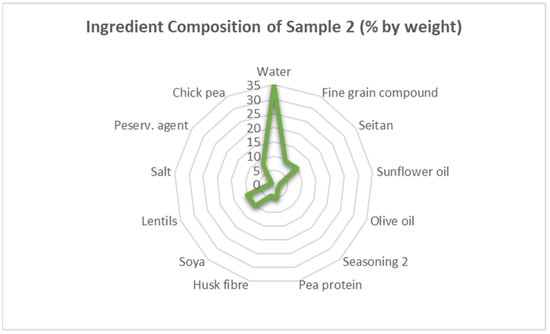
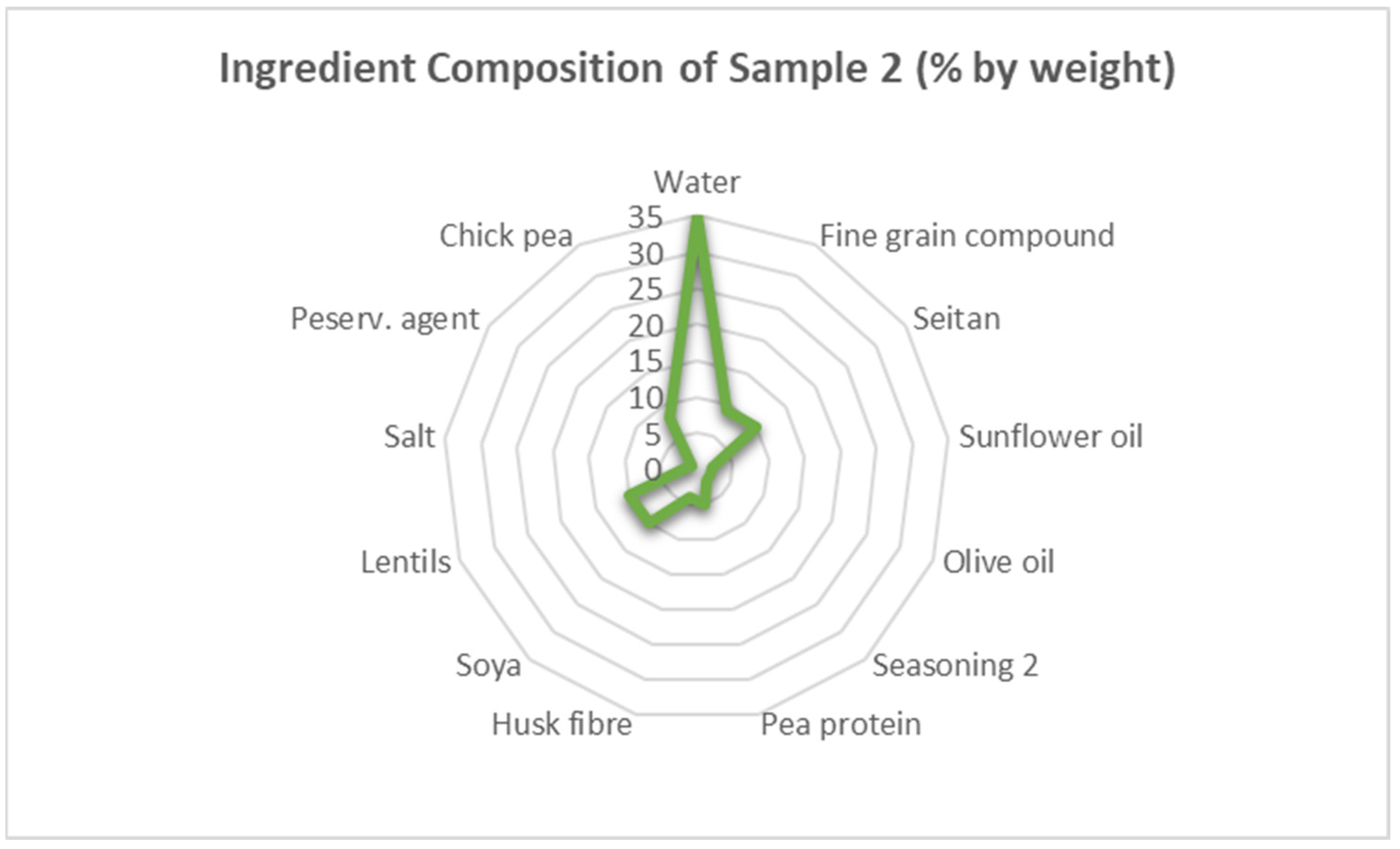
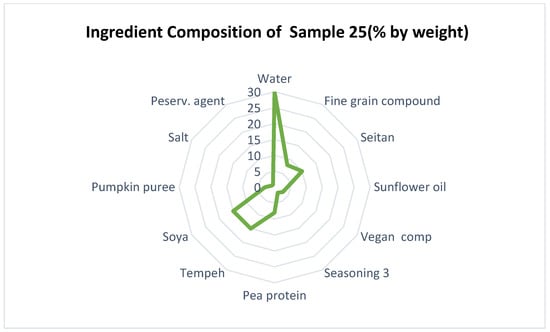
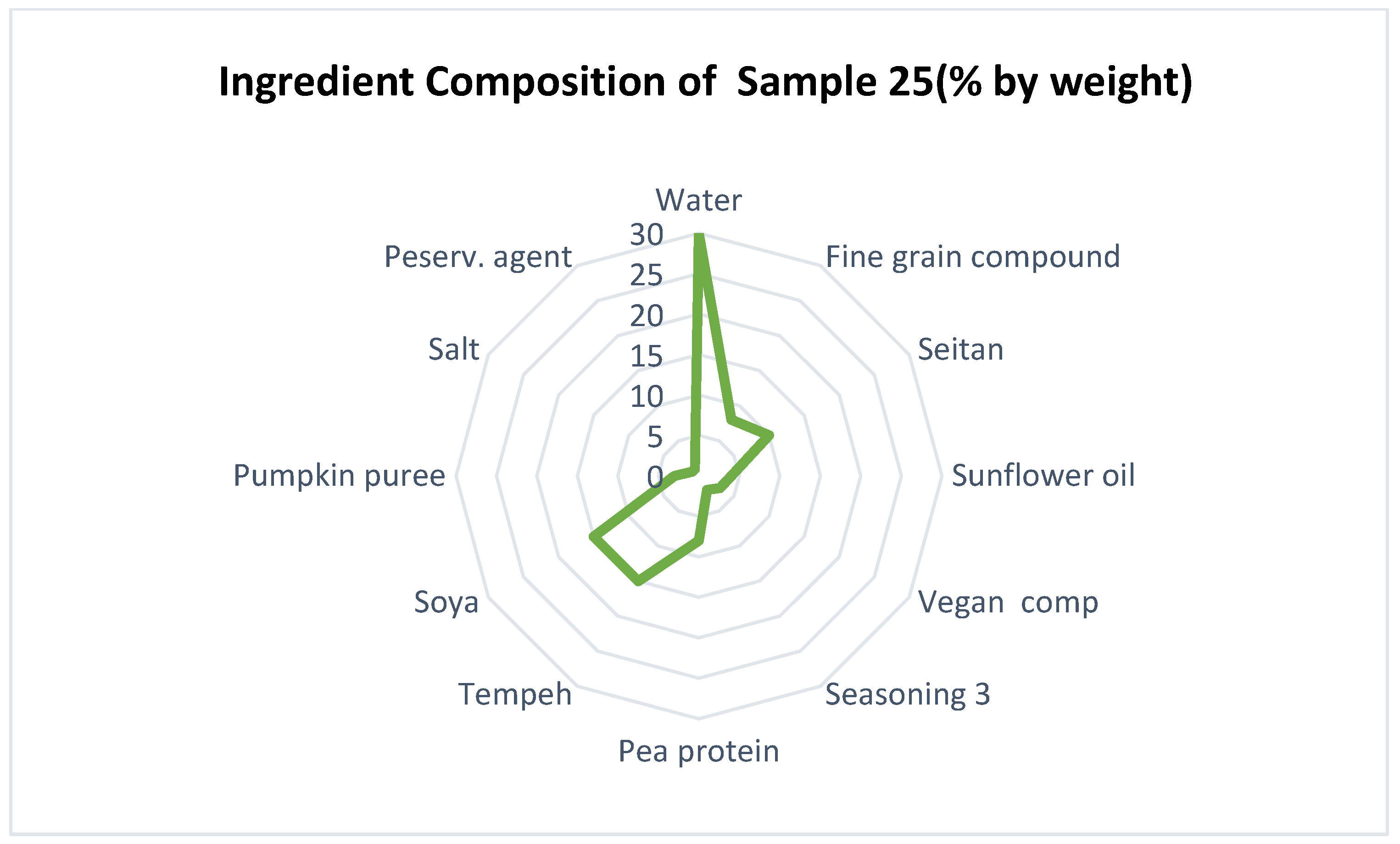
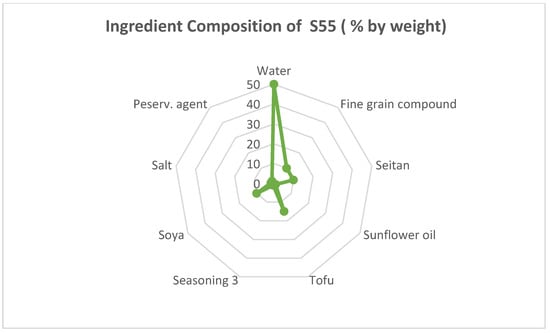
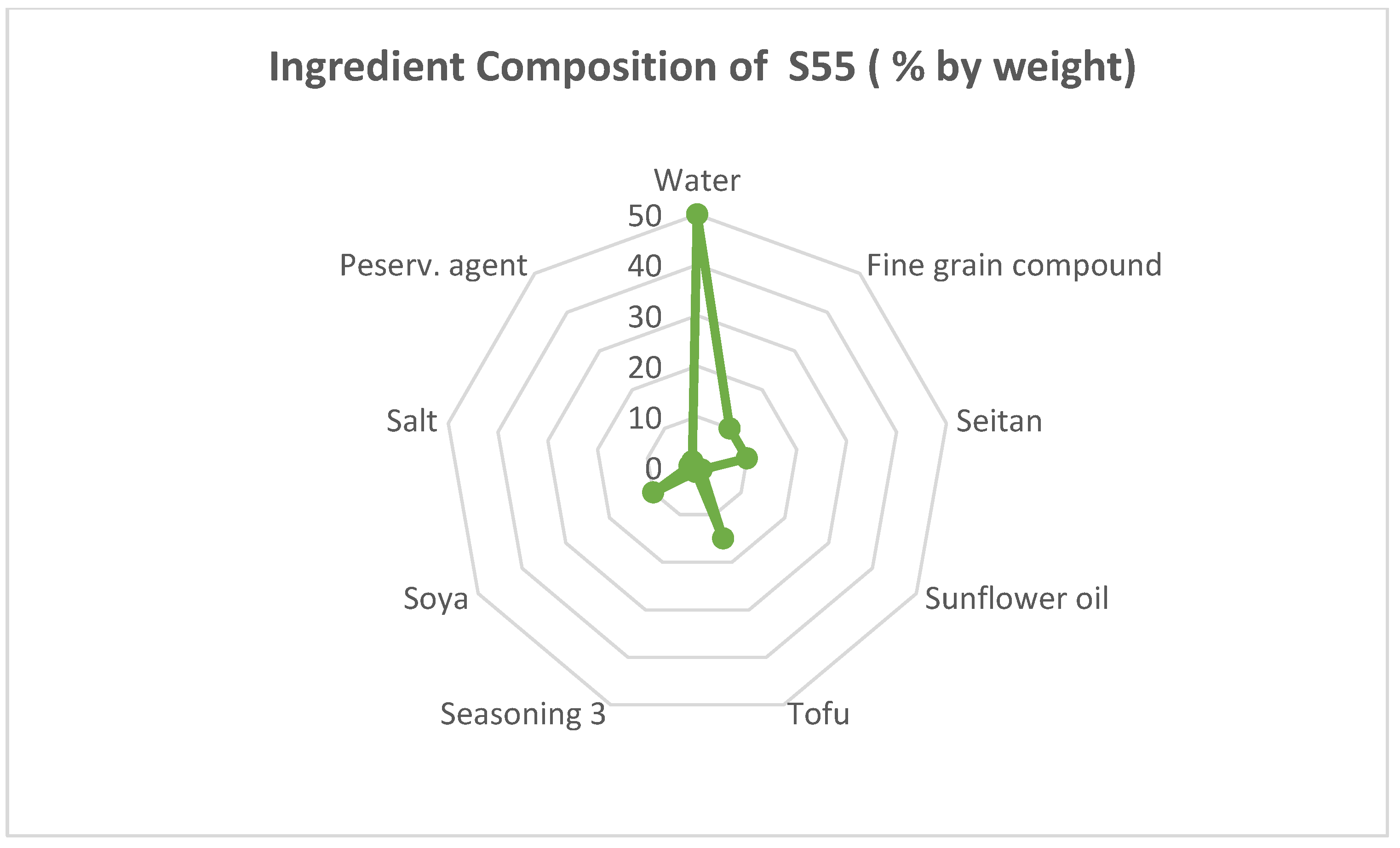
To illustrate relationships between ingredient composition and nutritional characteristics, the formulations of Samples 2, 25 and 55 are presented in Figure 1, Figure 2 and Figure 3. These figures depict the relative proportion of protein-rich ingredients within each formulation and demonstrate the inclusion of multiple concentrated protein sources in samples exhibiting higher protein and fat contents. Sample 25 displays the highest density of protein containing ingredients, whereas Sample 55 achieves an elevated protein level using a smaller number of ingredients and a moderate moisture content. Samples 2, 25, and 55 were selected for detailed presentation because they fall within the upper range of protein contents observed across the dataset. These examples are provided for illustrative purposes only, to demonstrate formulation approaches associated with higher protein levels. They are not intended to be representative of the complete set of 100 formulations, nor to imply causal or predictive relationships between specific ingredient combinations and nutritional outcomes.
Figure 1.
Ingredient composition of Sample 2 (19.80% protein). Note: This figure is provided as an illustrative example of formulation composition, for a formulation with higher protein content. Percentages are expressed on a weight basis; total composition equals 100% (rounding differences may occur).
Figure 2.
Ingredient composition of Sample 25 (23.12% protein). Note: This figure is provided as an illustrative example of formulation composition, for a formulation with higher protein content. Percentages are expressed on a weight basis; total composition equals 100% (rounding differences may occur).
Figure 3.
Ingredient composition of Sample 55 (13.60% protein). Note: This figure is provided as an illustrative example of formulation composition. Percentages are expressed on a weight basis; total composition equals 100% (rounding differences may occur).
3.6. Fatty Acid Profile Analysis
Fatty acid composition was analyzed across all 100 plant-based salami and alternative sausage samples. The results revealed substantial variation in the proportions of saturated fatty acids (SFA), monounsaturated fatty acids (MUFA), and polyunsaturated fatty acids (PUFA), reflecting differences in ingredient selection, oil sources, and formulation strategies, (Table 3).
Table 3.
Summary of Fatty Acid Group Ranges Across 100 Samples.
Most samples were rich in PUFA, with linoleic acid consistently dominant, followed by oleic acid. MUFA levels remained relatively stable, while SFA exhibited greater variability, largely influenced by the presence of coconut, palm, or other saturated fat sources.
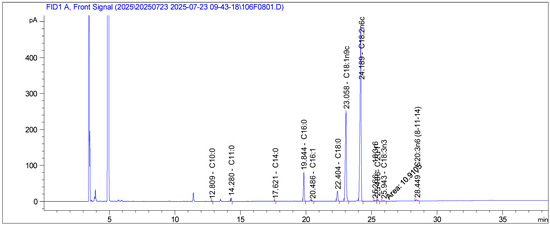
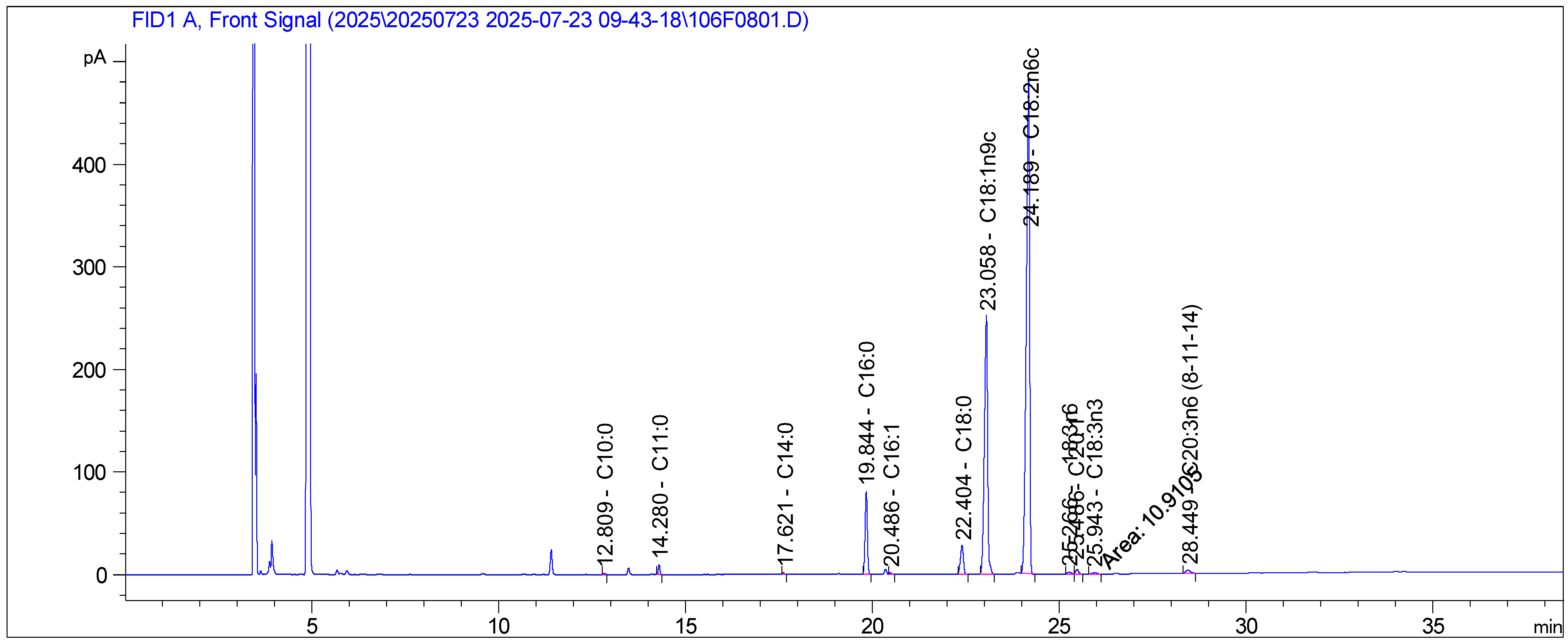
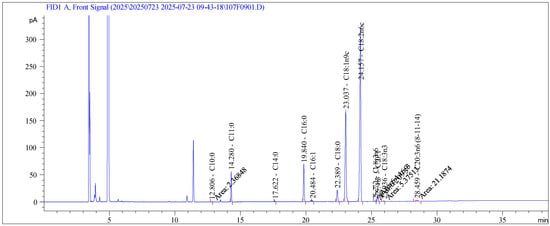
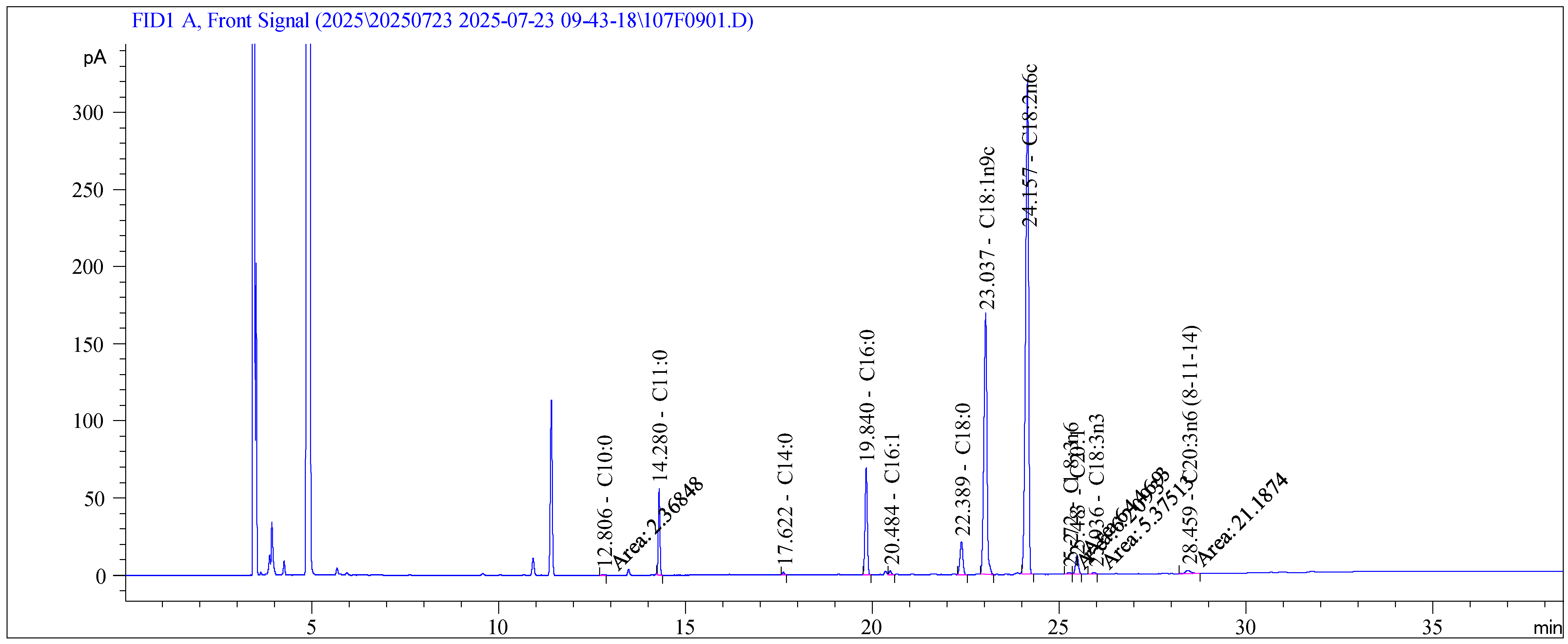
The fatty acid composition of two representative samples (Table 4) was selected to illustrate the variability observed among the 100 analyzed samples. Both samples were rich in polyunsaturated fatty acids (PUFA), with linoleic acid (C18:2n6c) being the predominant component (61% in sample 12 and 55.5% in sample 56), followed by oleic acid (C18:1n9c) (27.9% and 26.7%). Sample 12 contained a lower proportion of saturated fatty acids (SFA, 9.8%) compared to sample 56 (15.3%), mainly due to differences in palmitic acid (C16:0: 6.1% and 7.6%). No trans fatty acids were detected in either sample. These two samples were selected because they represent contrasting profiles within the dataset, one characterized by higher PUFA and lower SFA, and the other with comparatively higher SFA, providing a clear example of the range of variation. The corresponding chromatograms of linoleic acid, oleic acid, and palmitic acid are presented in Figure 4 and Figure 5, confirming retention times and peak intensities consistent with their quantified proportions. These chromatographic profiles validate the compositional data and highlight the dominance of unsaturated fatty acids in both samples.
Table 4.
Fatty Acid Composition of Sample 12 and Sample 56.
Figure 4.
Chromatogram of major fatty acids in Sample 12.
Figure 5.
Chromatogram of major fatty acids in Sample 56.
3.7. Thermal Processing Related Variability
When products were processed at a constant temperature (92 °C) using different thermal treatments durations, distinct moisture ranges were observed. Samples subjected to 90 min of thermal processing exhibited moisture contents ranging from 40–45%. Samples processed for 150 min showed slightly lower moisture levels, ranging from 35–40%, whereas those treated for 210 min exhibited the lowest moisture contents, ranging from 25–35%. These differences in moisture content are relevant for the descriptive characterization of product consistency under the applied processing conditions. The mean moisture content decreased with increasing processing duration, from 43.1 ± 1.4 at 90 min to 28.7 ± 3.3 at 210 min as shown in Table 5. This trend reflects processing time related variability under the applied conditions rather than optimized technological effects or performance outcomes.
Table 5.
Moisture range of different thermal processing.
3.8. Statistical Analysis
Moisture content differed significantly among thermal processing times (p < 0.001), with samples treated for 210 min exhibiting lower moisture levels compared with those treated for 90 and 150 min. Inferential statistical analysis was restricted to moisture content due to the unbalanced distribution of samples across processing durations and the descriptive nature of the study design. All other processing related observations are presented descriptively and should not be interpreted as generalized processing effects.
3.9. Questionnaire Results
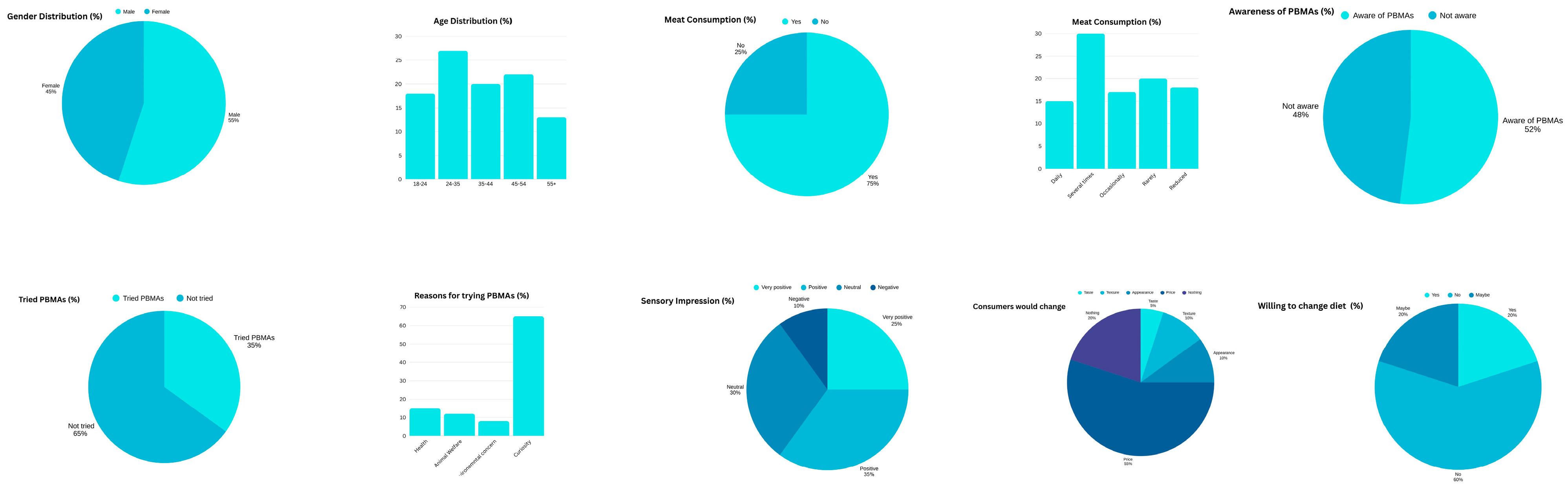
Independent of the compositional analyses, a structured consumer questionnaire was administered in July 2024, to assess habits, awareness, and attitudes toward plant-based meat alternatives (PBMAs). The survey included 200 participants and comprised five sections: demographic characteristics, meat consumption habits, familiarity with PBMAs, motivations for selecting PBMAs, and sensory impressions following the tasting of a PBMA sample. The participant group consisted of 55% males and 45% females. The largest age category was 24–35 years (27%), followed by other adult age groups, indicating a relatively young and demographically diverse sample. Most respondents reported regular meat consumption (75%), while 25% identified as non-meat consumers. Approximately 30% reported consuming meat several times per week, and 55% indicated a reduction in meat intake in recent years, reporting occasional or rare consumption. Awareness of PBMAs was moderate, with 52% of respondents indicating prior familiarity with these products. However, only 35% had previously consumed PBMAs, primarily out of curiosity (65%). Among respondents who had not tried PBMAs, high product price and limited market availability were identified as the principal barriers. Soy and pea-based products were the most commonly recognized PBMA categories, whereas lentil and chickpea-based alternatives were less frequently identified. Sensory evaluation was conducted by randomly assigning each participant a single PBMA sample for tasting. Overall feedback was generally positive, with approximately 70% of respondents reporting a positive or very positive impression of the evaluated products. When asked to identify factors limiting broader adoption, price was cited most frequently (55%), followed by texture (10%), appearance (10%), and taste (5%), while 20% of respondents reported no specific limitation. Despite favorable sensory perceptions, only 20% of participants indicated a willingness to permanently replace conventional meat products with PBMAs. This finding suggests that, although initial consumer acceptance is encouraging, long-term adoption remains limited and appears to be influenced primarily by economic considerations and established dietary habits. These results are summarized in Figure 6, which presents consumer awareness, sensory perceptions, and openness to adopting PBMAs.
Figure 6.
Percentage (%) distribution of responses to awareness, prior consumption, sensory impression, and willingness to adopt PBMAs.
4. Discussion
This study provides an exploratory, descriptive overview of formulation and processing related variability in the quality characteristics and consumer perceptions of plant-based meat alternatives. Ingredient selection and thermal processing conditions were associated with variability in product composition and physicochemical properties [27]. In the present study, formulations differed among samples, whereas salami type products and frankfurter-type sausages were manufactured using identical processing procedures. Consequently, product format was not treated as an experimental factor, and the results are interpreted descriptively as reflecting formulation and processing time related variability rather than format specific effects. Across the analyzed formulations, the primary protein sources included soy, tempeh, pea protein, and tofu [28]. Thermal treatment at a constant temperature (92 °C) for different durations (90, 150, and 210 min) was associated with variability in physicochemical characteristics and protein related structural attributes of the products. These processing durations represent increasing thermal exposure and were selected to enable descriptive comparison of compositional and structural variability under standardized temperature conditions rather than to define optimized cooking parameters. The applied heating times accounted for the use of a cold-start steam oven, whereby samples were introduced prior to heating initiation and the reported processing times therefore included both the heating-up and holding phases. Previous studies have shown that pea globulins denature at approximately 90 °C, quinoa proteins between 90 °C and 120 °C, and soy and pea proteins undergo unfolding over a broader temperature range from approximately 65 °C to 100 °C [29,30,31]. Heating at elevated temperatures promotes protein denaturation and aggregation, contributing to network formation in protein-rich matrices [32]. Protein functionality related to structuring behavior is influenced by denaturation and gelling characteristics, which vary among plant protein sources [33]. In addition, starch gelatinization represents a key mechanism influencing structure and moisture behavior in plant-based meat alternatives [34]. Heating above the gelatinization temperature promotes more complete gelatinization, thereby improving the structural integrity [33,35]. Based on these considerations, a larger proportion of samples (n = 80) was processed for 210 min, as extended heating was observed during routine industrial-scale production to provide more consistent structural stability and handling properties across heterogeneous formulations and casing sizes. These observations also indicate that casing diameter is an important factor when considering thermal processing duration. Nevertheless, prolonged heating and subsequent cooling may influence water retention through moisture loss and potential retrogradation effects, depending on formulation composition. In the present study, increasing thermal processing duration was associated with a progressive decrease in moisture content. Samples treated for 90 min exhibited moisture contents of approximately 40–45%, those treated for 150 min ranged 35–40%, and those treated for 210 min ranged from 25–35%. Across all formulations, protein content ranged from 3.5% to 23.1% (Table 2). The upper end of this range is consistent with values reported for soy- and pea-based meat analogues [36], reported protein levels of 15–24% in soy and wheat gluten formulations, while [16] observed values between 18–26% depending on ingredient composition. Sample 25 (23.1%) fell within the upper range of these reports and was characterized by a formulation containing pea protein and tempeh. This was followed by sample 2 (19.8%), which included a combination of lentils and chickpeas. In contrast, formulations with higher water content and tofu, such as Sample 55 (13.6%), exhibited lower protein levels, consistent with observations reported by from [24]. In addition to protein, fat and fiber contents varied across formulations. Sample 55 exhibited a higher fat content (9.48%), primarily associated with the inclusion of sunflower oil as the main lipid source. Fiber content also varied across samples [37], with Sample 2 reaching 7.9%, exceeding values reported by [22] who observed fiber values between 3–6% in psyllium-enriched plant-based sausages. The fatty acid profiles of the analyzed samples were dominated by polyunsaturated fatty acids (55–61%), particularly linoleic acid, consistent with previous reports describing PUFA-rich lipid compositions in plant-based foods [12]. No trans fatty acids were detected, reflecting the plant-based lipid sources used in the formulations. The high linoleic acid content can be attributed primarily to the inclusion of sunflower oil and sunflower seed-based vegan cheese, reflecting the role of ingredient selection in fatty acid composition. While questionnaire responses were not analytically correlated with specific physicochemical parameters, the consumer dataset provides applied context for interpreting the technological findings of this study. For example, products characterized by favorable lipid profiles, absence of trans fatty acids, and moderate protein levels correspond to nutritional attributed frequently associated with positive health perception among consumers. Similarly, moisture and structural variability linked to thermal processing duration may influence texture perception, which was identified as a secondary adoption barrier among respondents. These observations are interpreted descriptively and do not imply causal relationships but highlight the relevance of compositional and processing characteristics within a broader consumer acceptance framework. Consumer responses were evaluated independently of compositional analyses and are interpreted as indicators rather than being linked to specific formulation attributes. Consumer evaluation indicated generally positive sensory perceptions of the tested plant-based meat alternatives, with the majority of participants expressing a favorable impression. Nevertheless, willingness to permanently replace meat remained limited, reflecting the persistence of established dietary habits. Price emerged as the dominant barrier to adoption, outweighing sensory-related concerns such as texture, appearance, and taste. These findings suggest that, although initial sensory acceptance of PBMAs is encouraging, economic considerations and entrenched consumption patterns remain key determinants of long-term adoption. The questionnaire results provide an initial consumer baseline for Kosovo as an emerging, low-familiarity PBMA market. In contrast to many previous studies that focus on a limited number of formulations, the present work offers a large-scale descriptive mapping of compositional and physicochemical variability across 100 plant-based meat alternative formulations produced at industrial scale. This approach enables characterization of realistic formulation diversity and processing outcomes. While the observed ranges of protein, fat, and fatty acid composition are consistent with values reported for soy and legume-based meat analogues [16,36] the consistently high proportion of polyunsaturated fatty acids and the absence of trans fatty acids across all formulations demonstrate that PUFA-rich lipid profiles can be maintained under industrial-scale processing conditions. Rather than proposing optimized formulations, this study provides a reference framework for understanding compositional ranges, moisture behavior, and consumer perceptions in heterogeneous plant-based meat systems, without implying causal relationships between formulation characteristics and consumer acceptance.
5. Conclusions
This study presents an exploratory, descriptive overview of the compositional, physicochemical, and consumer-related characteristics of plant-based meat alternatives produced under industrial-scale conditions. Across 100 heterogeneous salami type and frankfurter type formulations, substantial variability was observed in nutritional composition and physicochemical properties, reflecting differences in ingredient selection and thermal processing duration. Thermal processing at a constant temperature (92 °C) for different durations was primarily associated with moisture related variability, with longer processing times corresponding to lower moisture contents. Owing to the unbalanced design and the absence of formulation replication, inferential statistical analysis was restricted to moisture content, while all other results are reported descriptively. The analyzed products exhibited lipid profiles dominated by polyunsaturated fatty acids, with no detectable trans fatty acids, and protein contents varied widely depending on formulation composition. In contrast to most previous studies that focus on a limited number of controlled formulations, the present work provides a large-scale, industrially grounded descriptive mapping of compositional and physicochemical variability across a diverse set of plant-based meat alternatives. Several limitations related to the experimental design should be acknowledged. The absence of biological replication for individual formulations precludes estimation of within-sample variability and limits of inferential statistical analyses. Accordingly, the findings are interpreted descriptively and contextualized through comparison with existing literature rather than statistical inference or causal interpretation. Protein content was determined using the Kjeldahl method with a universal nitrogen-to-protein conversion factor (N × 6.25). Given the diversity of plant protein sources incorporated into the formulations, this approach may introduce uncertainty in absolute protein values; therefore, the reported protein contents should be interpreted as comparative estimates rather than precise absolute measurements. The consumer questionnaire was designed to provide contextual insights into awareness, perceptions, and acceptance of plant-based meat alternatives rather than formulation-specific evaluation. Consumer survey results, evaluated independently of compositional analyses, indicated generally positive sensory perceptions but limited willingness to replace conventional meat products, with price identified as the main barrier to adoption. Certain limitations related to questionnaire structure, such as combination of consumption frequency and behavioral change within individual survey items, were acknowledged and considered during interpretation. Overall, these findings should be interpreted as descriptive observations derived from a heterogeneous dataset rather than optimized or causal relationships. The study provides a reference framework for understanding compositional ranges, moisture behavior, and consumer perceptions in industrially produced plant-based meat alternatives, while highlighting the need for future controlled and replicated studies [38]. By combining compositional and physicochemical characterization with consumer perception analysis, this work provides an applied framework for evaluating both technological feasibility and market readiness of plant-based meat alternatives produced under industrial-scale conditions.
Author Contributions
Conceptualization, Z.H.-M. and E.G.; methodology, E.G. and A.H.; software, E.G.; validation, Z.H.-M. and A.H.; formal analysis, E.G.; investigation, Z.H.-M. and E.G.; resources, E.G.; data curation, E.G. and Z.H.-M.; writing—original draft preparation, E.G.; writing—review and editing, Z.H.-M. and A.H.; visualization; E.G. and Z.H.-M. supervision, Z.H.-M. and A.H. All authors have read and agreed to the published version of the manuscript.
Funding
This research received no external funding.
Institutional Review Board Statement
Not applicable.
Informed Consent Statement
Not applicable.
Data Availability Statement
The original contributions presented in this study are included in the article. Further inquiries can be directed to the corresponding author.
Acknowledgments
The authors would like to acknowledge the University of Prishtina and “Ss. Cyril and Methodius” University of Skopje for conducting specific analyses, Koral Corporation for their assistance in the production process, RAPS GmbH for supplying additives and providing formulation guidance, as well as other companies that supported this work by providing various additives.
Conflicts of Interest
The authors declare no conflicts of interest.
Abbreviations
The following abbreviations are used in this manuscript:
| PBMA | Plant-Based Meat Alternatives |
| aw | Water activity |
| SFA | Saturated Fatty Acids |
| MUFA | Monounsaturated Fatty Acids |
| PUFA | Polyunsaturated Fatty Acids |
References
- Choudhury, D.; Singh, S.; Seah, J.; Yeo, H.; Tan, L. Commercialization of plant-based meat alternatives. Trends Food Sci. Technol. 2020, 105, 233–249. [Google Scholar] [CrossRef] [Scilit]
- Rogers, H. Plant-based food supply chains: Recognizing market opportunities and challenges. Trends Food Sci. Technol. 2024, 132, 100440. [Google Scholar] [CrossRef] [Scilit]
- Dekkers, B.L.; Boom, R.M.; van der Goot, A.J. Structuring processes for meat analogues. Trends Food Sci. Technol. 2018, 81, 25–36. [Google Scholar] [CrossRef] [Scilit]
- Draper, J.; Revilla, M.K.F.; Titchenal, A.; Caacbay, N.A.; Calabrese, A.; Chun, C.N.; Gibby, C.; Hara, S.; Langfelder, G.; Yang, Y.-Y. Proteins, diet, and personal choices. In Human Nutrition: 2020 Edition; University of Hawaii at Manoa: Honolulu, HI, USA, 2020. [Google Scholar]
- Messina, M. Perspective: Plant-based meat alternatives can help facilitate and maintain a lower animal to plant protein intake ratio. Nutrients 2023, 15, 435. [Google Scholar] [CrossRef] [Scilit] [PubMed]
- Sarathy, P.; Kumar, R. Plant-based protein: A multi-nutritional sustainable alternative. Food Res. Int. 2025, 160, 111725. [Google Scholar]
- Lindberg, L.; McCann, M.; Smyth, S. Are plant-based meat alternatives the stepping stone to healthier and more sustainable diets? Proc. Nutr. Soc. 2023, 82, 1–12. [Google Scholar] [CrossRef] [Scilit]
- Jung, M.; Lee, S. Advancements in sustainable plant-based alternatives: Challenges and opportunities. Trends Food Sci. Technol. 2024, 132, 10–20. [Google Scholar]
- Steinfeld, H.; Gerber, P.; Wassenaar, T.D.; Castel, V.; de Haan, C. Livestock’s Long Shadow: Environmental Issues and Options; FAO: Rome, Italy, 2006.
- Joshi, K.; Kumar, S. Meat analogues: Plant-based alternatives to meat products—A review. Crit. Rev. Food Sci. Nutr. 2015, 56, 1241–1249. [Google Scholar] [CrossRef] [Scilit]
- Navarré, A.; Pérez, J. Beyond meat substitution: A multifaceted review of plant-based meat alternatives. Foods 2024, 14, 2312. [Google Scholar] [CrossRef] [Scilit]
- Ooms, N.; Jansens, K.J.A.; Pareyt, B.; Reyniers, S.; Brijs, K.; Delcour, J.A. Ingredient interactions in plant-based meat analogues. In Ingredients in Meat Products: Properties, Functionality and Applications; Tarté, R., Ed.; Springer: New York, NY, USA, 2018; pp. 419–442. [Google Scholar]
- Berrazaga, I.; Micard, V.; Gueugneau, M.; Walrand, S. The role of the anabolic properties of plant versus animal-based protein sources in supporting muscle mass maintenance: A critical review. Nutrients 2019, 11, 1825. [Google Scholar] [CrossRef] [Scilit]
- Gardner, E. Vegetarianism and vegan diets. In Manual of Dietetic Practice, 5th ed.; Gandy, J., Ed.; John Wiley & Sons: Chichester, UK, 2014; pp. 129–140. [Google Scholar]
- Flory, J.; Xiao, R.; Li, Y.; Dogan, H.; Talavera, M.; Alavi, S. Understanding protein functionality and its impact on quality of plant-based meat analogues. Foods 2023, 12, 3232. [Google Scholar] [CrossRef] [Scilit]
- Benković, M.; Tušek, J.A.; Cvetnić, S.T.; Jurina, T.; Valinger, D.; Kljusurić, J.G. An overview of ingredients used for plant-based meat analogue production and their influence on structural and textural properties of the final product. Food Technol. Biotechnol. 2023, 61, 921. [Google Scholar] [CrossRef] [Scilit]
- Shen, Y.; Hong, S.; Li, Y. Pea protein composition, functionality, modification, and food applications: A review. Food Hydrocoll. 2022, 131, 107741. [Google Scholar] [CrossRef] [Scilit]
- Khan, T.N.; Meldrum, A.; Croser, J.S. Pea: Overview; Elsevier: Melbourne, Australia, 2016; Volume 1, pp. 324–333. [Google Scholar]
- Joehnke, S.; Jeske, S.; Ispiryan, L.; Zannini, E.; Arendt, K.; Bez, J.; Sørensen, J.C.; Petersen, I.L. Nutritional and anti-nutritional properties of lentil (Lens culinaris) protein isolates prepared by pilot-scale processing. Food Chem. 2019, 289, 102–111. [Google Scholar] [CrossRef] [Scilit] [PubMed]
- Wu, D.T.; Zhang, L. A comprehensive review of pea (Pisum sativum L.) protein and its health-promoting effects. Nutrients 2023, 15, 1223. [Google Scholar]
- Bühler, J.; Schlangen, M.; Möller, A.; Bruins, M. Starch in plant-based meat replacers: A new approach to using endogenous starch from cereals and legumes. Starch 2021, 73, e2100257. [Google Scholar] [CrossRef] [Scilit]
- Noguerol, A.; Larrea, V.; Pagán, M. The effect of psyllium (Plantago ovata Forsk) fibers on the mechanical and physicochemical characteristics of plant-based sausages. LWT—Food Sci. Technol. 2022, 153, 112473. [Google Scholar]
- Shanthakumar, P.; Klepacka, J.; Bains, A.; Chawla, P.; Dhull, S.; Najda, A. The current situation of pea protein and its application in the food industry. Molecules 2022, 27, 5354. [Google Scholar] [CrossRef] [Scilit]
- Manzanillo, R.; Isidro, R. Utilization of tofu in nutritional and sensory improvement of plant-based nuggets. J. Food Innov. Sustain. 2025, 2, 55–56. [Google Scholar] [CrossRef]
- Qin, P.; Wang, T.; Lou, T. Soy protein-based foods: Health benefits and product development. Food Sci. Hum. Wellness 2022, 11, 515–528. [Google Scholar]
- ISO 18787:2017; Determination of Water Activity. International Organization for Standardization: Geneva, Switzerland, 2017.
- Aghababei, F.; McClements, D.; Pignitter, M.; Hadidi, M. A comprehensive review of processing, functionality, and potential applications of lentil proteins in the food industry. CIS—Chem. Innov. Sustain. 2024, 1, 103280. [Google Scholar] [CrossRef] [Scilit]
- Shrestha, S.; Giri, S. Lentil and mungbean protein isolates: Processing, functional properties, and applications. Food Res. Int. 2023, 162, 112123. [Google Scholar] [CrossRef] [Scilit]
- Mession, J.; Sok, N.; Assifaoui, A.; Saurel, R. Thermal denaturation of pea globulins (Pisum sativum L.): Molecular interactions leading to heat-induced protein aggregation. Food Chem. 2013, 139, 587–594. [Google Scholar] [CrossRef] [Scilit] [PubMed]
- Bulgaru, V.; Sensoy, I.; Netreba, N.; Gurev, A.; Altanlas, U.; Paiu, S.; Dragancea, V.; Mosanu, A. Qualitative and antioxidant evaluation of high-moisture plant-based meat analogs obtained by extrusion. Foods 2025, 14, 2939. [Google Scholar] [CrossRef] [Scilit] [PubMed]
- Bainy, E.; Corredig, M.; Poysa, V.; Woodrow, L.; Tash, S. Assessment of the effects of soy protein isolates with different protein compositions on gluten thermosetting gelation. Food Hydrocoll. 2010, 24, 168–175. [Google Scholar] [CrossRef] [Scilit]
- Jang, J.; Lee, Y.; Kim, H. Advancements in plant-based meat analogs enhancing texture, flavor, and nutritional profiles. Nat. Food 2024, 5, 50. [Google Scholar]
- Ma, P.; Hou, W.; Chen, H.; Wu, C.; Sun, F.; Wang, D. Heat-Induced Structural and Functional Changes of Plant Proteins: Implications for Food structure and processing. Coatings 2023, 13, 1899. [Google Scholar] [CrossRef] [Scilit]
- Chakraborty, I.; Pooja, N.; Mal, S.S.; Paul, U.C.; Rahman, M.H.; Mazumder, N. An insight into the gelatinization properties influencing the modified starches used in food industry: A review. Food Bioprocess Technol. 2022, 15, 1195–1223. [Google Scholar] [CrossRef] [Scilit]
- Yang, T.; Wang, P.; Zhou, Q.; Wang, X.; Cai, J.; Jiang, D. Investigation on the molecular and physicochemical changes of protein and starch of wheat flour during heating. Food Chem. 2021, 343, 1419. [Google Scholar] [CrossRef] [Scilit]
- Ahmad, M.; Qureshi, S.; Akbar, M.; Siddiqui, S.; Gani, A.; Mushtaq, M.; Hassan, I.; Shull, S. Plant-based meat alternatives: Compositional analyses, current development and challenges. Food Rev. Int. 2022, 38, 1235–1256. [Google Scholar] [CrossRef] [Scilit]
- Keskin, O. Versatile functions of raw and modified lentils in food applications. Compr. Rev. Food Sci. Food Saf. 2024, 23, e70000. [Google Scholar] [CrossRef] [Scilit]
- Patil, D.; Kaur, S. A review on sustainable non-thermal approaches for pea protein processing. Food Res. Int. 2025, 160, 111725. [Google Scholar] [CrossRef] [Scilit]

Disclaimer/Publisher’s Note: The statements, opinions and data contained in all publications are solely those of the individual author(s) and contributor(s) and not of MDPI and/or the editor(s). MDPI and/or the editor(s) disclaim responsibility for any injury to people or property resulting from any ideas, methods, instructions or products referred to in the content. |
© 2026 by the authors. Licensee MDPI, Basel, Switzerland. This article is an open access article distributed under the terms and conditions of the Creative Commons Attribution (CC BY) license.