


Simple Summary
Local chicken breeds in Southwest China are highly valued for their remarkable ability to survive variable ecological environments and resist diseases, yet the genes responsible for these traits remain largely unknown. In this study, we analyzed DNA from four southwestern local chicken breeds and compared them with wild red junglefowl and other Chinese breeds. We discovered a number of genes that have been changed through domestication, many of which are candidate genes potentially involved in metabolism, behavior, growth, reproduction, and immunity. Thirty-four of these genes showed especially strong and unique changes in the southwestern breeds. Some of these genes have been reported to be associated with immune responses, while others are candidate genes potentially linked to environmental adaptation. One gene, called ALX1, which influences beak shape, was found in all comparisons, suggesting that changes in how chickens eat may have been important during domestication. These findings provide genetic evidence that may help explain why southwestern local chickens are so well adapted to their environments and provide breeders with valuable information to help preserve these unique genetic resources and improve chicken farming for the future.
Abstract
Southwestern local chicken breeds in China have long been recognized for their strong adaptability and disease resistance, shaped by unique selective pressures during domestication. In this study, we combined Fst and π ratio analyses to detect selection signatures from RAD-seq data of four southwestern local breeds, Red Junglefowl, and 17 other Chinese local breeds. We identified 460 candidate genes under strong selection potentially associated with domestication, affecting behaviors, physiology, reproduction, immunity, and adaptability. Importantly, 34 genes showed strong and unique selection signals when comparing southwestern breeds with other local breeds. Among these, CCR6, CD40LG, and CSF3R represent candidate genes that have been previously associated with immune processes, while MAPK10, FGFR4, and STAT3 represent candidate genes potentially related to disease resistance. Furthermore, HTR1B, HSPB9, and RYR2 represent candidate genes potentially associated with environmental adaptability. Notably, ALX1, the only gene detected across all comparison groups, may reflect morphological adaptation related to feeding efficiency. Our findings provide valuable insights into the genetic basis of unique adaptations in southwestern local chicken breeds and highlight potential targets for breeding and conservation.
1. Introduction
China has a long history of chicken domestication. In the oracle-bone inscriptions of the Yin and Shang dynasties, there were already hieroglyphs of chicken, which shows that domestic chicken was already a part of people’s lives at that time. Chicken provides important meat and egg resources for human beings, and it contains essential amino acids and proteins, which plays an indispensable role in maintaining the balance of human diet. Scientific research has revealed that the origin of domestic chickens is diverse, mainly dating back to South Asia, Southeast Asia and Southern China. The latest genomic study further indicates that the domestic chicken’s most likely direct ancestor is the G. g. spadiceus, which is distributed in southwest China, northern Thailand, and Myanmar [1]. This discovery highlights the significant role of China in the domestication and breed formation of chickens. Long-term processes of natural and artificial selection have given rise to a rich diversity of phenotypes and genotypes in local chicken breeds, providing valuable genetic resources for modern chicken breeding. Currently, many new breeds are developed based on the selection and improvement of these outstanding local breeds. However, the lack of genomic information on local chickens has been a major factor limiting modern breeding efforts. Deeply exploring and utilizing these genetic resources is of great significance for promoting the sustainable development and innovation of the poultry industry.
Against this backdrop, identifying selection signals associated with phenotypes plays a crucial role in explaining intra-species diversity. With the advancement of sequencing and gene analysis technologies, various statistical tests have been validated for their ability to detect signs of selection. Methods such as Fst based on population differentiation and π ratio based on heterozygosity have been widely used to identify genomic regions that may have been subject to selection. High-throughput sequencing technology has also facilitated the mining of functional genes, enabling a deeper understanding of the gene networks that control complex traits.
Chickens in the southwestern region, due to geographical isolation, as well as differences in feeding management and environmental conditions across various regions, have evolved distinct traits related to immune adaptability and resistance to coarse feed. In particular, small-bodied local breeds such as the Tibetan chicken, Chahua chicken, Daweishan Mini chicken, and middle-bodied Piao chicken, which are close to the Red Junglefowl, are important subjects for multi-omics research. These local breeds not only possess unique genetic features but also serve as valuable resources in the study of chicken genetic diversity due to their adaptation to diverse environmental conditions. The Tibetan chicken, in particular, has attracted considerable attention for its remarkable adaptability to high-altitude hypoxic environments [2,3]. Chahua chicken, Daweishan Mini chicken, and Piao chicken are also gradually gaining the attention of researchers due to their unique genetic characteristics.
This study employed Restriction-site Associated DNA sequencing (RAD-seq) to genotype and identify SNPs in 21 local chicken breeds in China. Using a combined approach of Fst and π ratio, we detected selection signals in local chicken breeds from the southwestern region, and screened for functional genes that have been under strong selection during long-term domestication and selection processes. This work aims to enhance our understanding of the evolutionary and genetic foundations of these southwestern local chicken breeds and to provide a scientific basis from a genetic perspective for their use as valuable breeding materials for local chicken breeds in the region.
2. Materials and Methods
2.1. Sample and Source
Considering the phenotypic characteristics and geographical distribution, blood samples were collected from 21 local chicken breeds, among which 4 are from the southwestern region, including Tibetan Chicken, Piao Chicken, Chahua Chicken, and Daweishan Mini Chicken; the others include Langya Chicken, Xiaoshan Chicken, Luyuan Chicken, Beijing You Chicken, Dongxiang Blue-shell Egg Chicken, Wenchang Chicken, Bian Chicken, Langshan Chicken, Baier Yellow Chicken, Xianju Chicken, Anyi Grey Chicken, Gushi Chicken, Dagu Chicken, Huiyang Bearded Chicken, Wenshang Luhua Chicken, Jinhu Black-Bone Chicken, and Tianjin Monkey Chicken.
Samples from pure breed populations were collected from the National Local Chicken Gene Bank in Jiangsu, China, with the exception of the Tianjin Monkey Chicken, which was sampled from the Institute of Animal Husbandry and Veterinary Medicine of Tianjin Academy of Agricultural Sciences. Genomic DNA was extracted from the blood samples using the standard phe-nol-chloroform method. The quality and concentration of the DNA were assessed using a fluorescence spectrophotometer and gel electrophoresis. The sequences for Red Jungle-fowl were sourced from the NCBI database.
2.2. Sequencing and Quality Control
The ddRAD library construction method was used to create pair-end libraries (300~500 bp), and double enzyme digestion RAD-seq was performed using EcoRI (G^AATTC) and NlaIII (Hin1IIXATG^). The prepared libraries were sequenced to identify genome-wide SNP markers. Sequencing data were aligned to the chicken reference genome (GRCg6a) using BWA MEM 0.7.15. Quality control criteria that included (1) removing markers with Minor Allele Frequency (MAF) less than 0.05; (2) removing markers with a genotype call rate below 70% across all samples; and (3) removing markers with a genotype call rate below 90% within any individual breed.
2.3. Data Analysis
Based on the geographical distribution and historical formation of the breeds, the Neighbor-Joining (NJ) method was used to construct a genetic phylogenetic tree (Plink v1.9 and the bionj function of R v4.3.1). To determine genome-wide selective sweeps related to domestication and selection, the fixation index (Fst) values and π ratio were calculated for the defined group pairs (vcftools v0.1.16). The Fst values were plotted in 100 kb genomic bins with a 10 kb step. Then, the nucleotide diversity (pi) was estimated for the same bins. For each contrast, π ratio was calculated as π_reference/π_XNC, where reference denotes RJF or the corresponding domestic group (A–E). A positive log2 (π ratio) value indicates reduced nucleotide diversity in the XNC group relative to RJF, consistent with the expected signature of positive selection. Windows that simultaneously possess the top 5% of Fst and log2 (π ratio) values are considered to be putative selective sweeps under the specified outliers. Windows with positive signals are annotated using Bedtools to obtain candidate genes. These genes are then uploaded to online tools (http://bioinfo.org/kobas/ (accessed on 3 September 2026))for KEGG enrichment analysis to further explore the functions of the candidate genes.
3. Results
3.1. Phylogenetic Analysis of Local Chicken Breeds in Southwest China
The samples selected for the study took into account the characteristic characteristics and environmental conditions. After RAD-seq and quality control, 365K SNP sites were obtained.
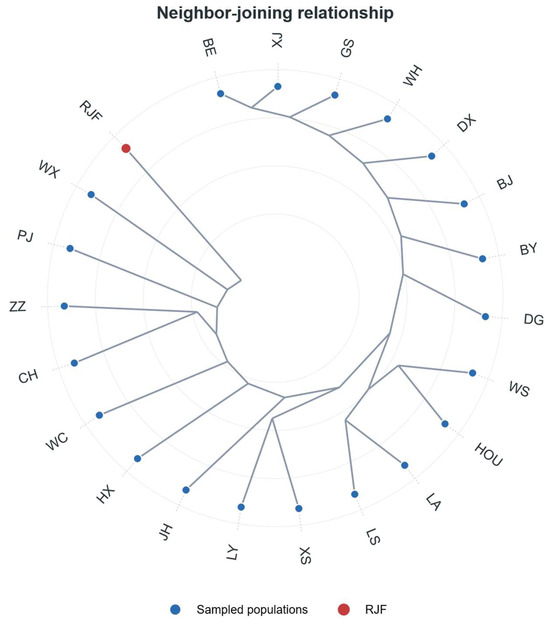
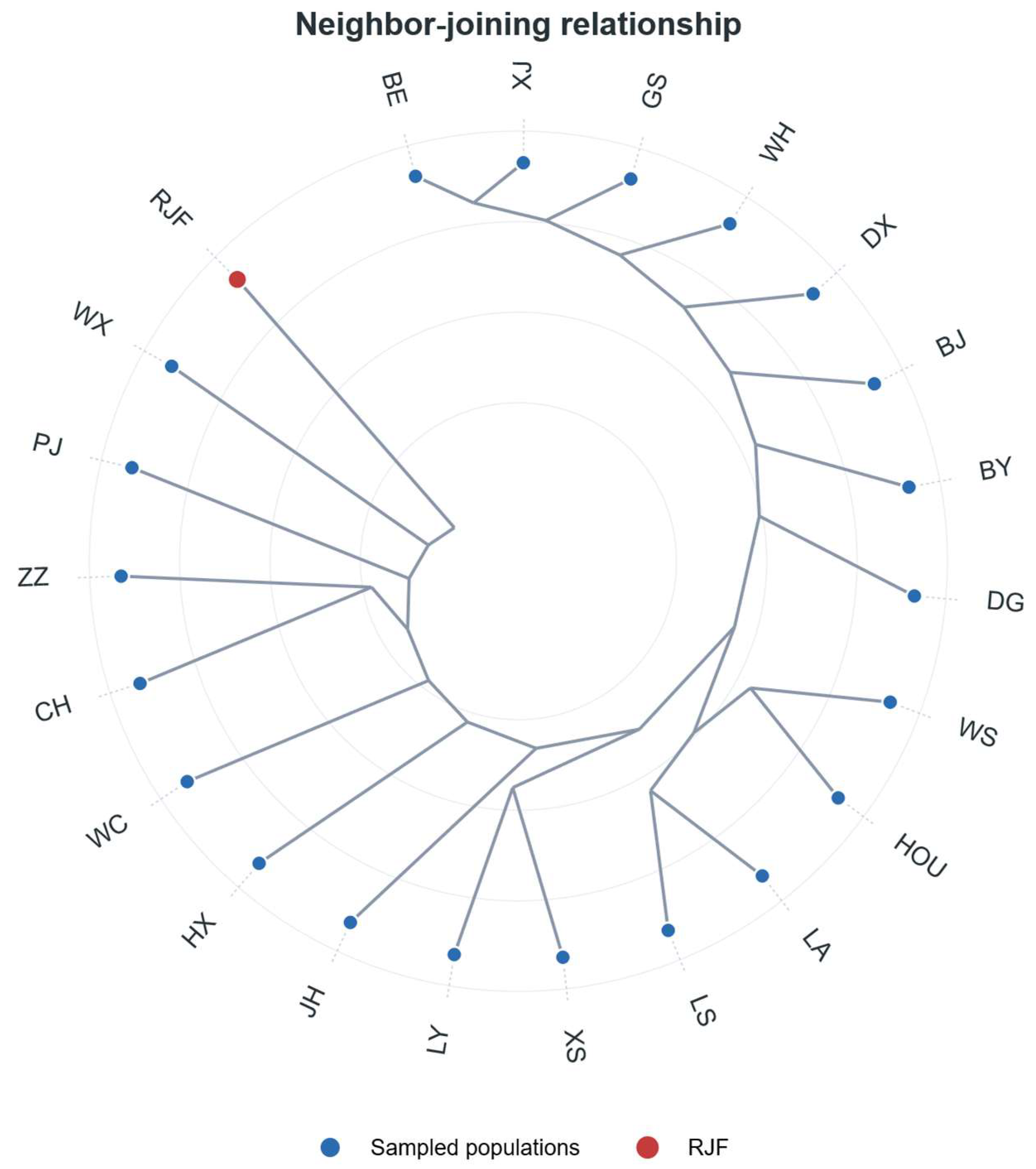
Based on SNP markers for phylogenetic analysis (Figure 1). The Red Junglefowl (RJF) is considered the ancestor of local chicken breeds and serves as the root of the evolutionary tree. Local chicken breeds are divided into six major groups according to their branch distribution (Table 1). The first group includes four breeds from the southwestern region: Daweishan Mini Chicken, Tibetan Chicken, Chahua Chicken, and Piao Chicken (XNC); the second group consists of Wenchang Chicken and Huiyang Bearded Chicken (Group A); the third group includes Tianjin Monkey Chicken, Wenshang Luhua Chicken, Langya Chicken, and Langshan Chicken (Group B); the fourth group includes Bian Chicken, Dagu Chicken, Beijing You Chicken, Anyi Grey Chicken, Dongxiang Blue-shell Egg Chicken, Gushi Chicken, Xianju Chicken, and Baier Yellow Chicken (Group C); the fifth category includes Luyuan Chicken and Xiaoshan Chicken (Group D); and the sixth group is the relatively independent Jinhu Black-Bone Chicken (Group E).
Figure 1.
Phylogenetic tree based on NJ.
Table 1.
Breed and Grouping Information.
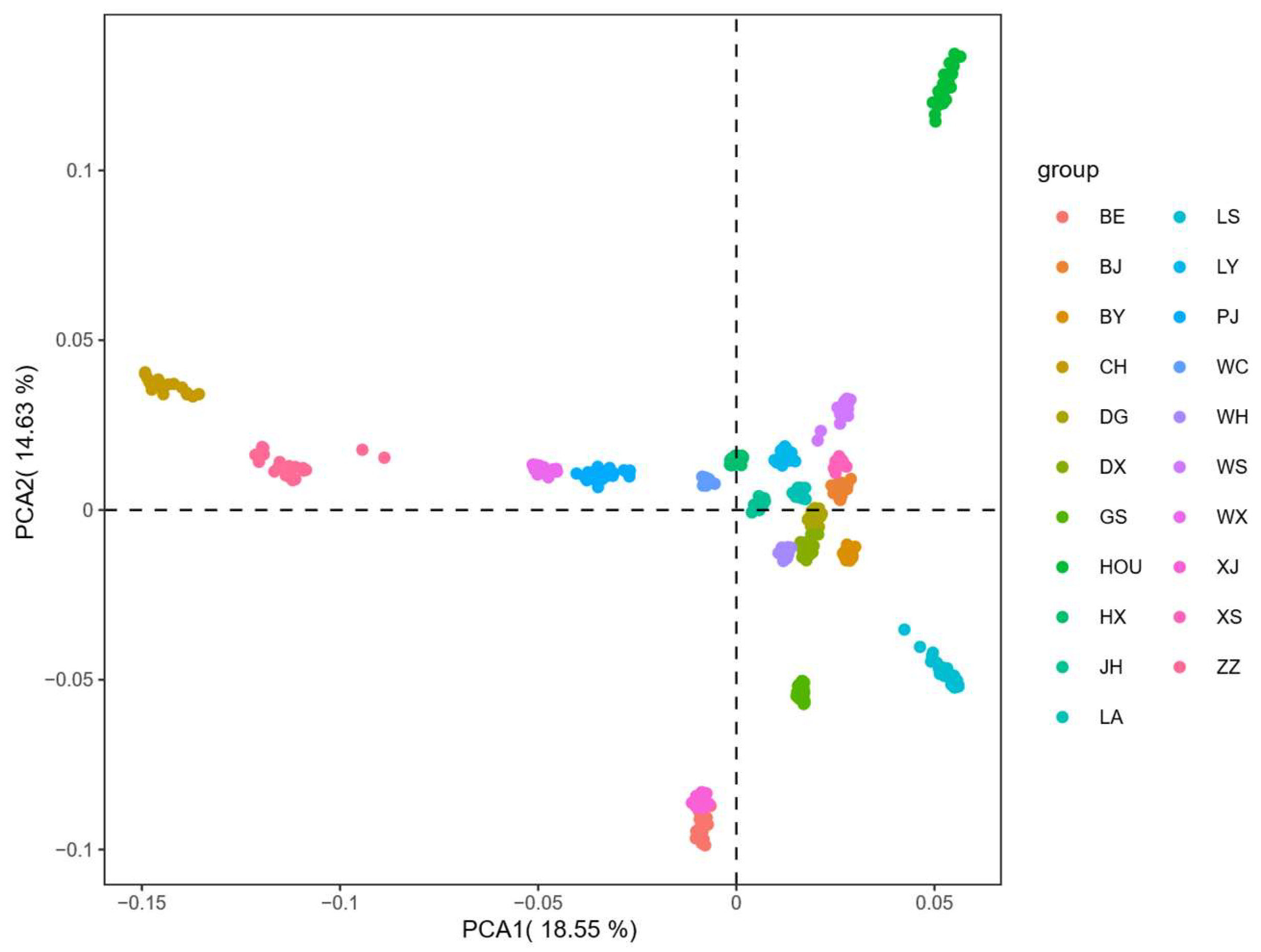
To further validate the grouping of the four southwestern breeds as a single analytical population, we performed PCA based on RAD-seq SNP data from all 21 breeds. The PCA plot (Figure A1) showed that individuals from the four XNC breeds (Tibetan, Piao, Chahua, and Daweishan Mini chickens) clustered together in the same region of the plot, with genetic distances among them being smaller than those separating them from other breed groups, supporting their treatment as a unified population in subsequent analyses.
3.2. Selection Signals in Comparison to the Red Junglefowl
We used Fst and π ratio to identify genomic regions in Southwest local chicken breeds that may have been targets of positive selection. Merge the SNPs within the XNC group, calculate the Fst value of the XNC vs. RJF group, and calculate πRJF/πXN.
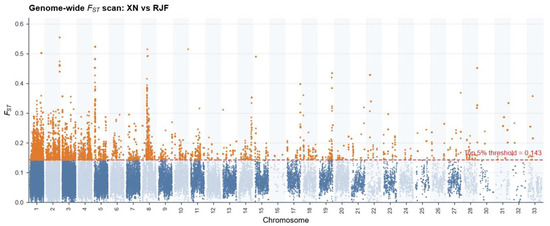
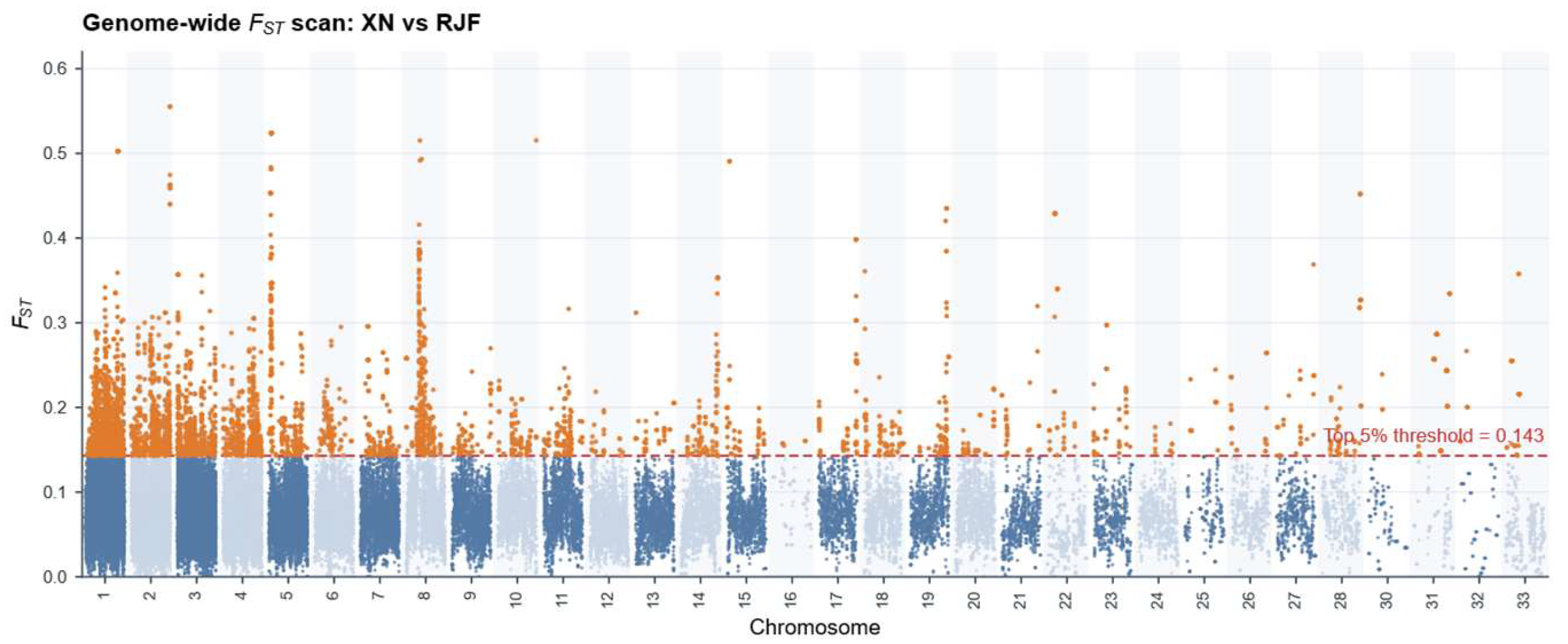
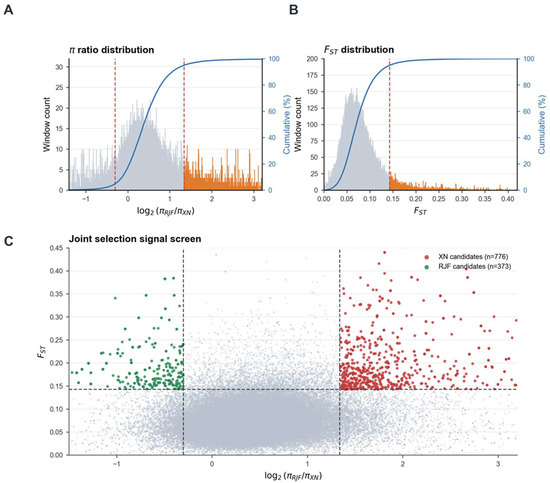
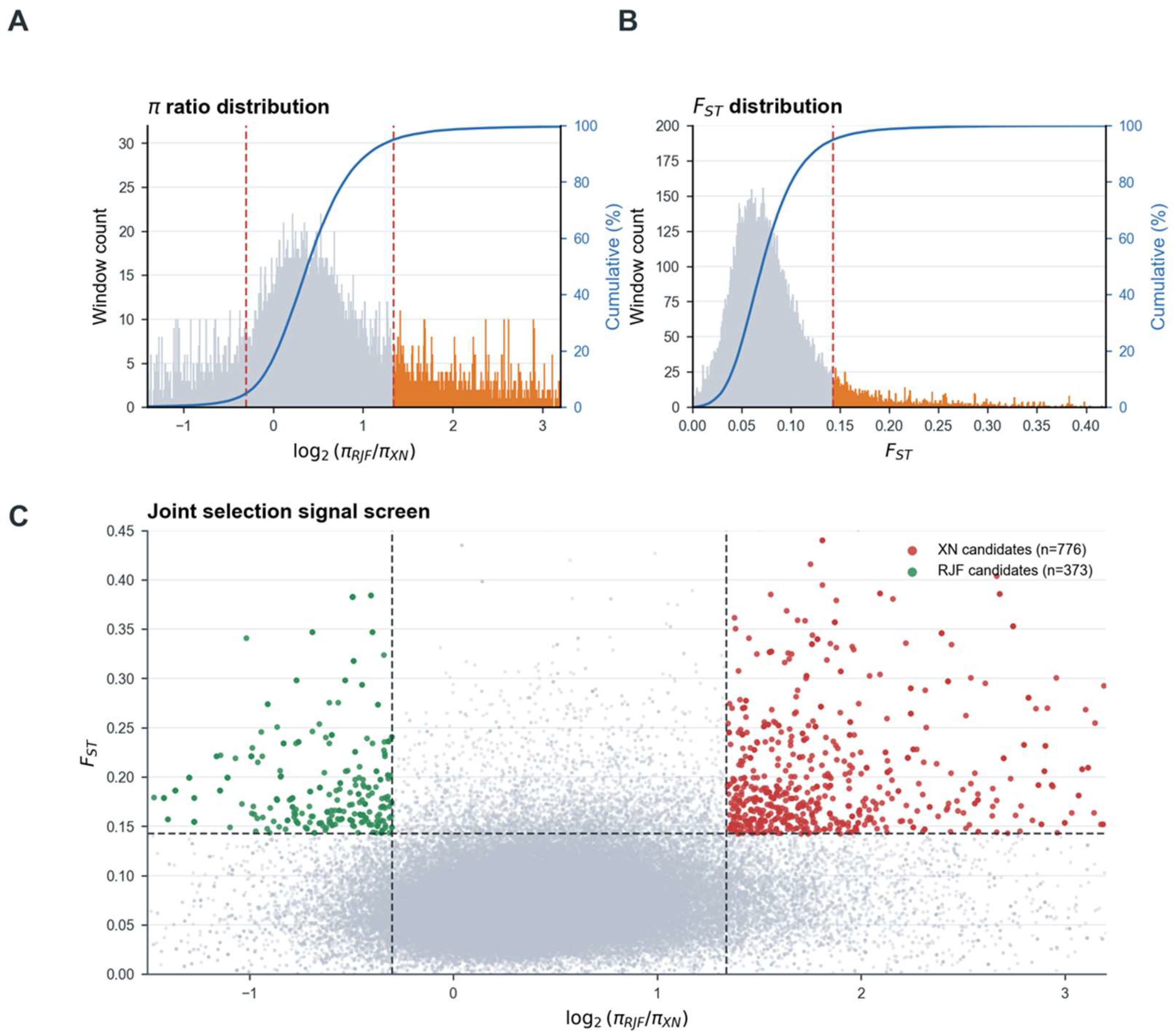
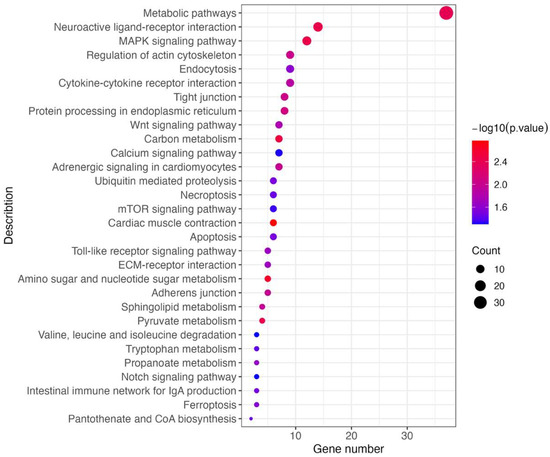
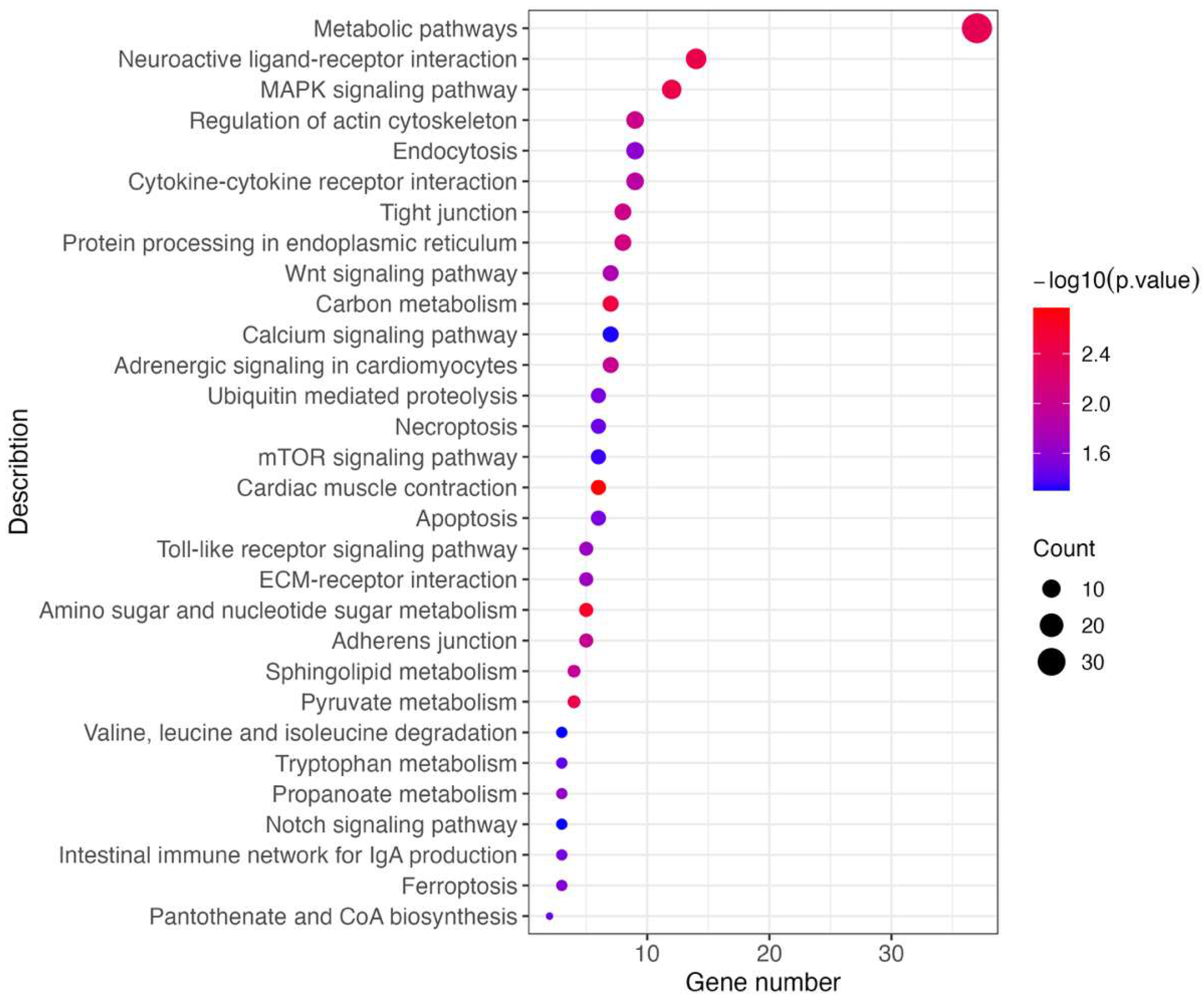
Fst reflects the population differentiation of Southwest local chicken breeds (Figure 2), with regions above the top 5% level (Fst > 0.143) showing elevated population differentiation signals. Based on selection signals, we identified 772 windows as candidate regions using thresholds of Fst > 0.143 and log2 (π ratio) > 1.88. And a total of 460 genes were annotated within these regions (Figure 3). These genes were considered candidate genes located in genomic regions showing selection signatures. The 460 candidate genes were collectively enriched in 30 KEGG pathways (p < 0.05), which are associated with physiological structures, metabolism, behavior, reproduction, and immunity (Figure 4).
Figure 2.
Distribution of Fst calculated using 100 kb windows with a 10 kb sliding window showing the genes identified and selected in the XNC (WX, ZZ, CH, PJ) group’s genome as compared with RJF. Labeled genes have extreme Fst values (top 5% level) in the XNC candidate genes.
Figure 3.
Frequency distributions of π ratio (log2 transformed) (A) and Fst (B). In panels (A,B), orange marks indicate windows that exceed both candidate thresholds and contain annotated genes. (C) Selective sweep mapping between XNC and RJF. The top 5% outlier windows are marked in green and red, both indicating elevated selection signals.
Figure 4.
The KEGG pathway of the 460 gene under selections in XNC vs. RJF (p < 0.05).
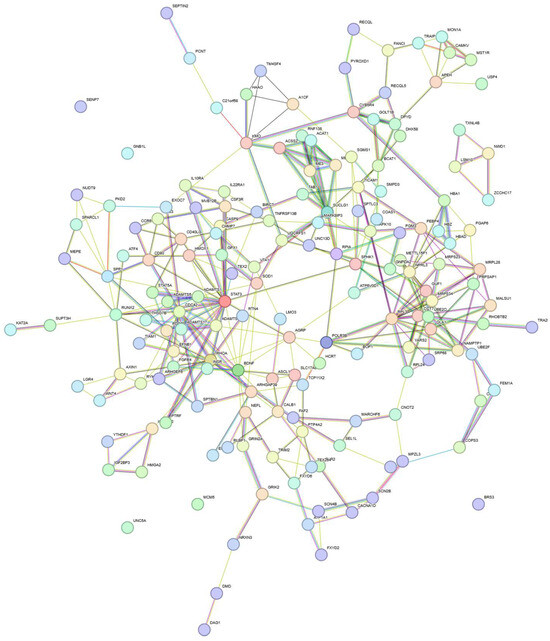
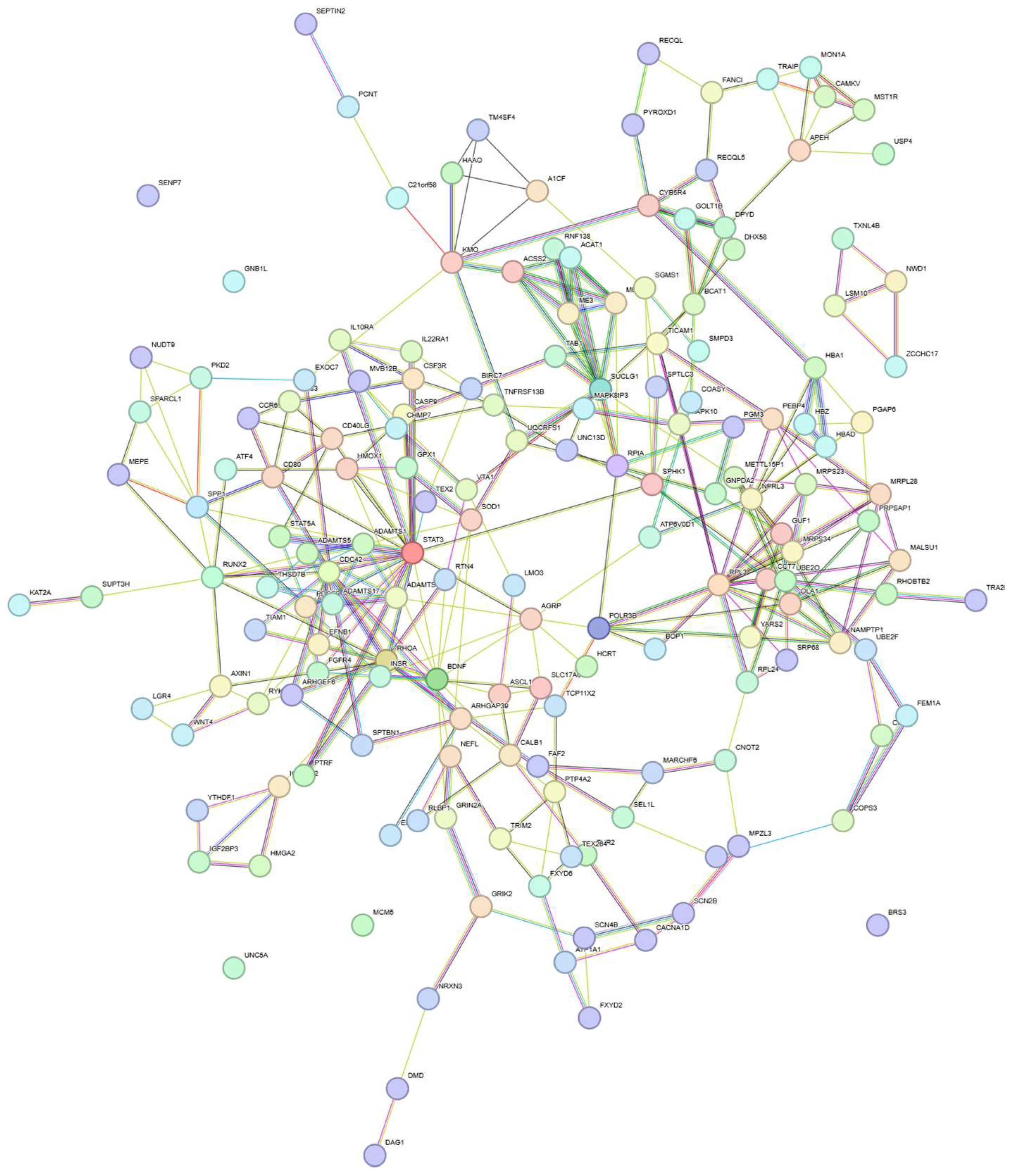
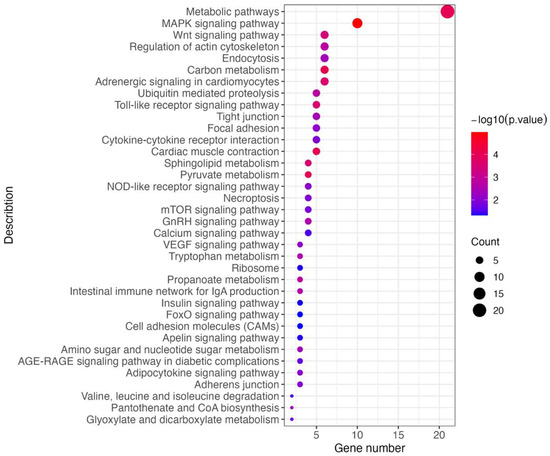
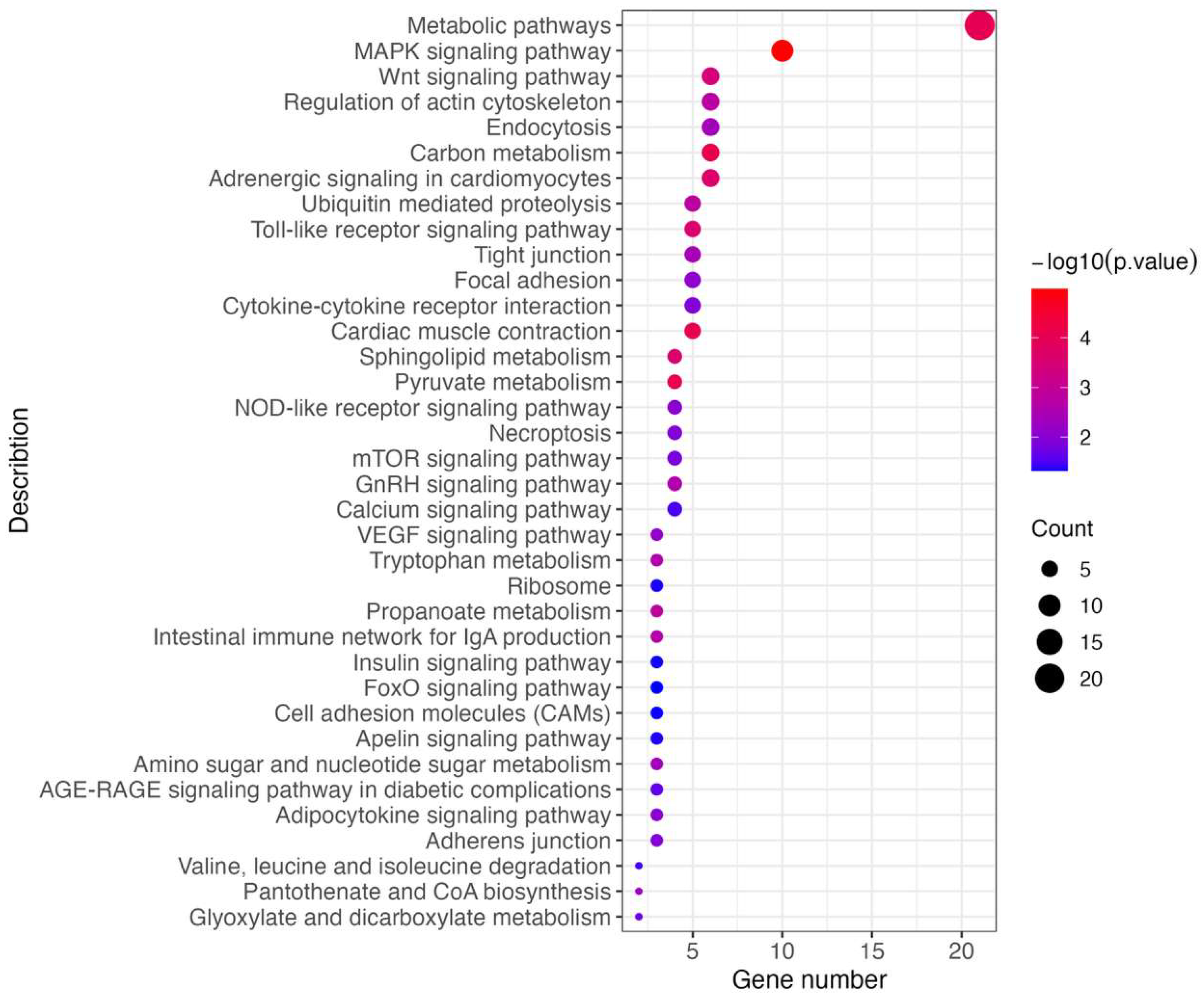
A protein-protein interaction (PPI) network for the 460 functional genes was constructed using the STRING database (https://string-db.org/), which subsequently identified 167 core genes (Figure 5). The results of the KEGG pathway enrichment analysis are presented in Figure 6. The 167 genes were mapped to 36 KEGG pathways (p < 0.05).
Figure 5.
Protein-protein interaction network of the 167 core genes based on the STRING database.
Figure 6.
The KEGG pathway of the 167 core gene under selection in XNC vs. RJF (p < 0.05).
3.3. Formatting of Mathematical Components
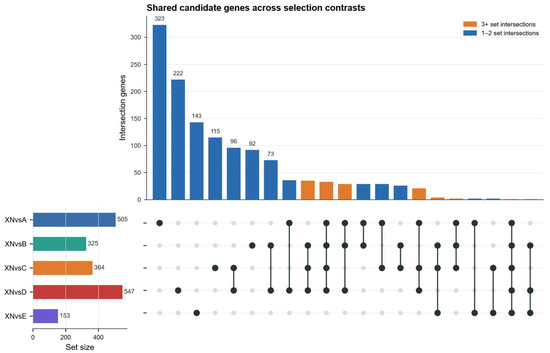
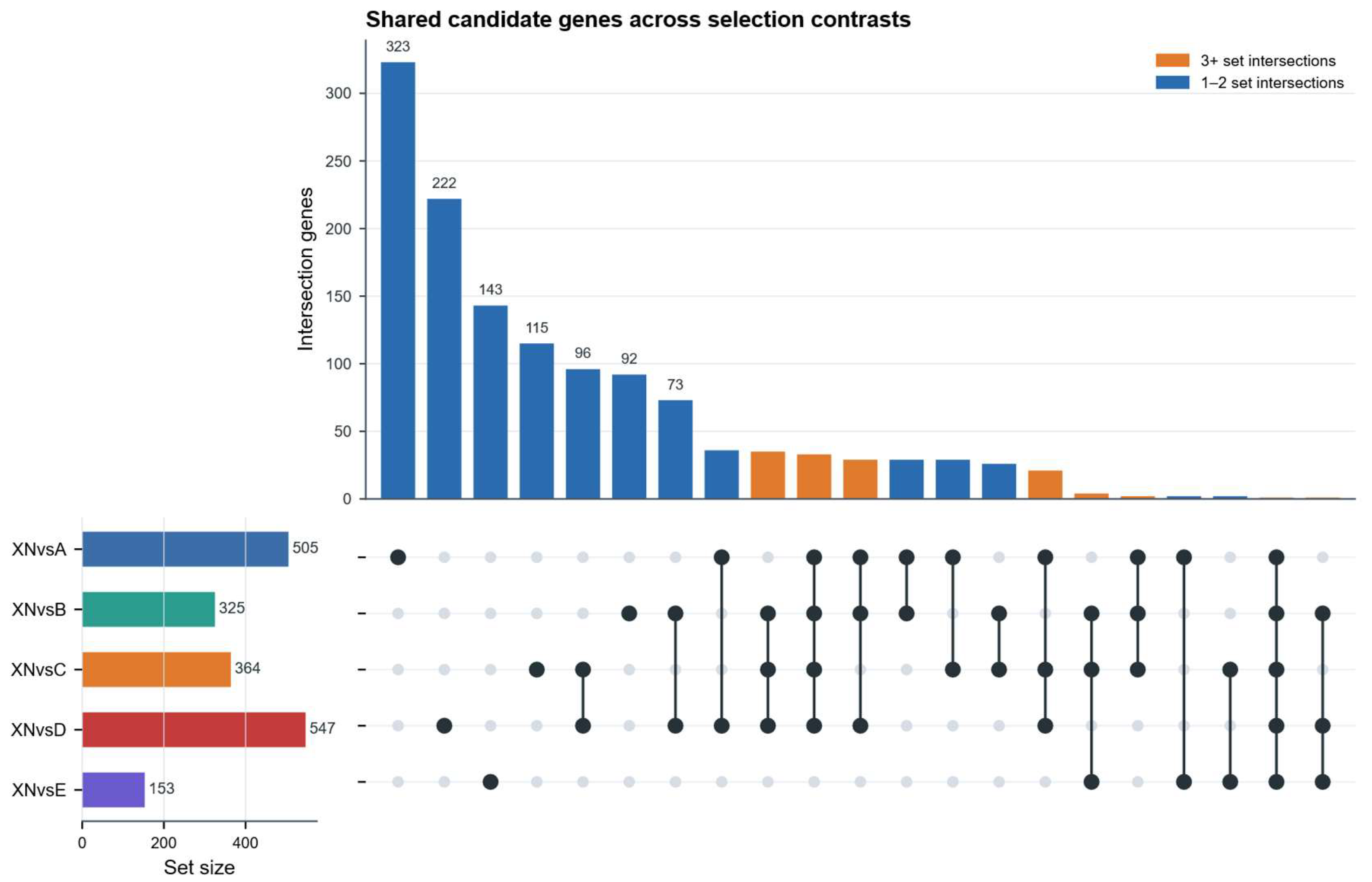
Local chicken breeds from different geographical regions exhibit distinct genetic variants and genomic features, reflecting a combination of environmental adaptation, founder effects, genetic drift, and artificial selection during domestication. By conducting combined selection signal detection using Fst and π ratio between XNC and groups A, B, C, D, and E, with the top 5% considered as candidate genes, we identified 505 (XNC vs. A), 325 (XNC vs. B), 364 (XNC vs. C), 547 (XNC vs. D), and 154 (XNC vs. E) candidate genes, respectively. Figure 7 displays the intersections of candidate genes from the Southwestern local chicken populations across different comparison groups. Applying the stringent criterion that a selected gene must be identified in at least four comparative groups, we screened 34 candidate genes showing strong selection signals for these populations (Table 2). Among these, only a single gene, ALX1, was detected across all comparison groups. The remaining 33 genes were predominantly concentrated in the comparisons between the XNC group and groups A, B, C, and D.
Figure 7.
Intersection of candidate genes in different groups of XNC.
Table 2.
34 Functional genes with elevated selection signal from XNC.
4. Discussion
In this study, we employed RAD-seq to genotype 21 Chinese local chicken breeds and applied a combined Fst and π ratio approach to detect selection signatures associated with domestication and local adaptation. By comparing four southwestern breeds with Red Junglefowl and other indigenous populations, we identified 460 candidate genes that may have been targets of selection during domestication and 34 putatively selected genes showing consistent signals across multiple comparative groups. These candidate genes are enriched in pathways related to metabolism, behavior, growth, reproduction, immunity, and environmental adaptation, providing valuable genomic insights into the adaptive evolution of southwestern local chickens.
Nevertheless, several limitations should be considered when interpreting these findings. The candidate genes reported here were annotated from genomic windows showing selection signatures, and as RAD-seq captures SNP markers distributed across the genome—many in non-coding regions and potentially in linkage disequilibrium with causal variants—functional assays and fine-mapping are required to confirm their roles. In addition, sample sizes were uneven across breeds (RJF: n = 10; Huiyang Bearded: n = 20; others: n = 30). While the top 5% outlier approach based on relative rankings rather than absolute values partially mitigates this concern, results should still be interpreted with caution. Additionally, pooling the four southwestern breeds into a single XNC group may dilute breed-specific signals.
With these considerations in mind, we next discuss the candidate genes and pathways identified in this study.
4.1. Genes and Pathways Associated with Domestication
Metabolism is a complex process. During the domestication from wild chickens to local chicken breeds, changes in food types and feeding habits can lead to metabolic adaptations in poultry. In KEGG enrichment analysis, most pathways are associated with metabolism. For instance, the Metabolic pathways encompass a broad range of metabolic reactions, potentially involved in the activation and transformation of energy substrates in chickens. The Amino sugar and nucleotide sugar metabolism pathway is linked to the digestion and absorption of starch and proteins, which is crucial for adapting to high-energy, high-protein, and high-starch diets. Additionally, the Carbon metabolism pathway plays a key role in energy metabolism and is significantly enriched in chicken liver, directly related to the regulation of carbohydrate metabolism efficiency from dietary sources [34]. The enrichment of these metabolic pathways suggests that genes involved in carbohydrate and energy metabolism may have been targets of selection during the domestication of southwestern local chicken breeds, potentially reflecting adaptation to diverse feed resources and feeding practices.
Affinity of animals toward humans is a primary prerequisite for domestication. The development of the nervous system has been demonstrated to play a crucial role in the domestication process of dogs [35]. In this study, several behavior-related KEGG pathways were significantly enriched (p < 0.05). For example, Neuroactive ligand-receptor interaction pathway is associated with the regulation of behavioral patterns and stress responses [36], while Adrenergic signaling in cardiomyocytes pathway may indirectly influence behavioral adaptation in chickens by modulating cardiac contraction and stress reactivity [37]. After domestication, chickens exhibited reduced vigilance in predator avoidance and startle responses, becoming more docile. This study identified several genes under strong selection pressure related to behavioral adaptation, such as AXIN1 and IL1RAPL1. Fear responses are linked to differential gene expression in the brain, and AXIN1 may serve as a molecular regulator of fear responses in poultry [38]. Additionally, IL1RAPL1 has been implicated in neural development in Luxi gamecocks [39]. Knockout of IL1RAPL1 in mice leads to reduced spine density, affecting not only learning but also behavioral flexibility, locomotor activity, and anxiety-like behaviors [40]. While this function has not been directly validated in chickens, the observed selection signal in IL1RAPL1 suggests a potentially conserved role in neural development that warrants further investigation in poultry.
Compared to red junglefowl, domesticated chickens exhibit significantly reduced flight capacity, accompanied by various physiological and structural adaptations resulting from domestication. Red junglefowl possess a smooth sternal surface with a more curved and serrated keel (carina sterni), along with a higher proportion of pectoralis superficialis and profundus muscles (relative to body weight), which facilitate flight. In contrast, domestication has led to a reduction in keel curvature, decreased serration, the appearance of pneumatic foramina and depressions on the sternal surface, and a lower ratio of pectoral muscles [41,42]. These modifications collectively diminish flight capability in domestic chickens. In this study, the Regulation of actin cytoskeleton pathway was significantly enriched. This pathway plays a pivotal role in cellular morphology maintenance and motility [43] and may also regulate sternal development during chicken domestication. Among the candidate genes showing selection signals identified, FGFR1 and BMP3 are likely involved in adaptive skeletal modifications in local chicken breeds. Specifically, FGFR1 has been shown to modulate bone mass via the Wnt/β-catenin signaling pathway in mouse osteocytes [44], suggesting a potential role in skeletal development that may also apply to chickens. Meanwhile, BMP3 expression in the chick perichondrium regulates chondrocyte proliferation [45], supporting its candidacy as a gene involved in skeletal modification during chicken domestication.
The significant enrichment of KEGG pathways such as MAPK signaling pathway, Notch signaling pathway, TGF-beta signaling pathway, etc. showed the changes in growth and development of chickens during domestication. Compared to red junglefowl, domesticated chickens typically exhibit faster muscle growth, increased meat yield, and distinct muscle fiber characteristics. In this study, several genes under strong selection pressure were identified as being associated with muscle development and growth, such as IGFBP2, ACAT1, IGFBP3, VGLL2, NELL1, SMPD3, GNB1L, PDGFB, HK3, and MEF2A. Notably, IGFBP2, an introgressed allele from gray junglefowl [46], functions as an inhibitor of skeletal muscle development in domestic chickens. ACAT1 has been reported to negatively regulate growth rate in chickens [47], while IGFBP3 [48], VGLL2 [49], NELL1 [50] and SMPD3 [50] have been suggested to promote muscle development. Additionally, GNB1L [51], PDGFB [52], HK3 [53], and MEF2A [54] have been implicated in growth regulation in chickens. Furthermore, PRKAG3 contains a SNP that significantly influences muscle fiber density [55], highlighting the genetic complexity underlying diverse muscle phenotypes during domestication.
Domestication is a human-driven process in which preferences for meat quality traits, including fat deposition, have been shaped through artificial selection. In this study, several enriched KEGG pathways were identified as classical pathways associated with fat deposition, including Fatty acid degradation, Insulin signaling pathway, and Adipocytokine signaling pathway. Concurrently, we identified several candidate genes potentially responsible for adaptive changes in fat deposition, such as ITGB2, MGAT3, SPHK1, BCAT1, and COL6A1. The ITGB2 gene is strongly associated with the differentiation of abdominal adipocytes [56]. MGAT3 has been reported to regulate the adipogenic differentiation of chicken abdominal pre-adipocytes [57]. SPHK1 is pivotal in fatty acid deposition [58]. BCAT1 is implicated in the regulation of muscle lipid synthesis metabolism [59]. Furthermore, elevated methylation in the promoter region of COL6A1 could account for the notable variations in chicken meat quality observed across different egg-laying periods [60].
Comparative analysis with the Red junglefowl revealed enrichment of reproduction-related pathways including GnRH signaling pathway, Steroid hormone biosynthesis, Progesterone-mediated oocyte maturation, and Wnt signaling pathway. Several candidate genes under strong selection signals were identified, including WNT4, PDE1C, NEDD4, FANCI, HSD17B1, KIF18, SPP1, SLCO1A2 and MITF. The Wnt signaling pathway plays crucial roles in ovarian and follicular development, where WNT4 participates in chicken follicle selection and development by upregulating follicle-stimulating hormone receptor expression [61]. PDE1C is expressed in oviduct ciliated and secretory cells, regulating oviductal fluid flow [62] and potentially affecting sperm storage duration [63]. Both NEDD4 [64] and FANCI [65,66] have been reported to be associated with reproductive function in mammalian studies, suggesting potential roles that warrant investigation in chickens. HSD17B1 is essential for regulating estradiol levels [67], follicular maturation, and egg production [68]. Furthermore, KIF18 is involved in reproductive processes [1] and associated with laying performance in Tibetan chickens [50]. SPP1 influences eggshell quality [26], while SLCO1A2 [69] and MITF [70] genes participate in eggshell color regulation.
Collectively, these identified pathways and genes provide valuable insights into the adaptive changes during the domestication of chickens, represented by the Southwestern local breeds, particularly in metabolism, behavior, growth, skeletal structure, reproduction, and fat deposition.
4.2. Genes and Pathways Associated with Immunity
Immunity encompasses both general disease resistance and pathogen-specific immunity, whereas adaptability represents a broader concept involving an organism’s integrated response to diverse environmental stresses, including both specific and nonspecific defense mechanisms against pathogens. This generalized disease resistance and adaptive capacity are critical for survival in dynamic environments. In poultry production, immune function and adaptability directly influence survival rates and growth performance, thereby determining farming profitability. Consequently, identifying key genes related to immunity and environmental adaptation in poultry breeds that thrive in specialized ecological conditions is critically important for advancing genetic improvement programs in the poultry industry.
Human breeding practices have significantly influenced the immune system of chickens. Over the course of domestication, chickens have been continuously exposed to diverse pathogens in human-managed environments. This process enhances disease resistance and leads to diversification of immune system functions in chickens. KEGG enrichment analysis identified multiple pathways associated with general disease resistance in Southwest local chicken breeds, including Cytokine-cytokine receptor interaction, Toll-like receptor signaling pathway, Endocytosis, Apoptosis, Intestinal immune network for IgA production, Necroptosis, Neomycin, kanamycin and gentamicin biosynthesis, NOD-like receptor signaling pathway, Phagosome, RIG-I-like receptor signaling pathway and C-type lectin receptor signaling pathway. A number of genes are involved in diverse immune regulatory mechanisms, such as STAT4, CCR6, CD40LG, TNFRSF13B, CSF3R, FPOLG, DAD1, TICAM1 and IFNL3. STAT4 participates in TH1 cell differentiation and regulates immune cell development and function through cytokine interactions [71]. CCR6 has been reported to control the transport of dendritic cells [72], while CD40LG enhances T cell immune responses [73]. TNFRSF13B is significantly enriched in the intestinal immune network of the IgA production signaling pathway [74]. The CSF3R gene is linked to macrophage function and innate immunity [75]. CD80 is expressed in chicken splenic lymphocytes and participates in avian mucosal immunity [76]. FPOLG is essential for in mitochondria DNA maintenance and influences immune responses to mitochondrial diseases [77]. Additionally, DAD1 [78], TICAM1 [79,80] and IFNL3 [81] are key innate immunity factors, with the function of IFNL3 also being reported in Indian Sahiwal cattle [82].
Several pathways associated with host-pathogen interactions were significantly enriched, including Herpes simplex virus 1 infection, Influenza A, and Salmonella infection pathways. Additionally, we identified multiple candidate genes showing selection signals associated with pathogen resistance. FGFR4 has been implicated in the molecular regulation of host responses to Avian Leukosis Virus Subgroup J [83]. The expression of MAPK10 in the cecal tissue of chickens correlates with Eimeria infection [84], and STAT1 [85] has been reported to be associated with Salmonella resistance in ducks [86]. ATF4 and CDC42 are involved in Newcastle disease virus infection, particularly in B cell differentiation [87,88]. TAB1 activation in response to infectious bronchitis virus infection enhances pro-inflammatory factors IL-1β and TNF-α through the NF-κB signaling pathway [89]. XPO1 mediates the export of viral proteins related to respiratory syncytial and influenza viruses [90] and influences IBV replication through protein interactions [91].
Through selective sweep analysis of Southwest local chicken breeds and other indigenous chicken populations, we identified 34 candidate genes showing positive selection signals with important biological functions. Among these, NOTCH2 has been demonstrated to regulate B-cell development in mammalian models [16,92] and plays a critical role in immune responses. SRSF1 is involved in the late development and maturation of thymic T cells [18], thus supporting normal immune system function. The FKBP4 gene encodes FKBP52 protein, which negatively regulates glucocorticoid production [13]. FOXP4 promotes human tumorigenesis and progression by destabilizing protein structures and altering protein-phase interactions [14]. ITFG2 modulates B-cell differentiation while negatively regulating mTORC1 signaling transduction; it also protects the heart from ischemic injury by regulating mitochondrial function through interaction with ATP5B [15]. PLPP6 regulates inflammatory responses in humans, being expressed in neutrophils and lung dendritic cells. It modulates cellular cholesterol content and macrophage pinocytosis, playing a key regulatory role in the pathological mechanisms of allergen-induced pulmonary inflammation in mice [17].
Collectively, these candidate genes offer insights into the genetic basis of immunity in southwestern local chickens. While some have been directly studied in chickens and support their involvement in avian immunity, others are inferred from mammalian models and await functional validation. Nonetheless, the selection signals observed in these candidate genes highlight their potential importance in the immune adaptation of southwestern local chicken breeds and warrant further investigation.
4.3. Genes Associated with Environmental Adaptation
The complex and variable geographical environment and climatic conditions in Southwest China have driven the evolution of adaptive mechanisms in local chicken breeds. Our study identified HTR1B, LGR4, HCRT, RYR2, INSR, and HSPB9 as potential key genes involved in adaptation to temperature fluctuations. HTR1B [93,94], LGR4 [95], and HSPB9 [96,97] have been implicated in thermal adaptation across various species, including freshwater leeches, chickens, goats, and cattle. The HSPB9 may confer cellular protection against heat stress through elevated expression [98]. In contrast, HCRT [99], INSR [100], and RYR2 [101,102] exhibit significant expression changes in cold environments, potentially linking their expression variations to metabolic regulation and energy balance, which are crucial for adapting to low temperatures. Additionally, SLC9A5 has been shown to mediate adaptation to extreme alkaline environments in Amur ide fish [103]. These findings suggest that these candidate genes may have played a role in the environmental adaptation of local chickens. However, it should be noted that some of these genes, including HSPB9 and HTR1B, are widely expressed genes that have been implicated in stress responses across multiple species. Their detection in our selection scan does not necessarily establish them as the causal drivers of environmental adaptation, as they may be linked to unsequenced functional variants through linkage disequilibrium. Functional validation is required to confirm their specific roles in chicken adaptation.
4.4. ALX1 and Morphological Adaptation
Our study identified ALX1 as a particularly strong selection signal in Southwest local chicken breeds. Research has demonstrated that ALX1 is closely associated with beak morphology diversification in passerine birds, enabling expanded food resource utilization [32]. In their natural habitat, red junglefowl rely on slender, pointed beaks for multiple survival functions: capturing insects from narrow crevices, foraging efficiency, preening feathers for courtship and parasite removal, as well as defensive combat. While Southwest local chickens, having adapted to semi-wild environments, show no significant selection pressure on ALX1 compared to red junglefowl, they exhibit strong selection signals relative to other domesticated breeds. This suggests selection on ALX1 may be linked to adaptations in feeding ecology and behavior during domestication. Previous studies have documented substantial morphological divergence between domesticated chickens and their wild ancestor, the red junglefowl, including disproportionate beak growth during development [104]. It has been speculated that such morphological changes may reflect adaptations in feeding ecology, though this hypothesis has not been systematically tested across breeds. Direct morphometric evidence linking ALX1 variation to beak morphology in chickens is lacking in the present study, and targeted functional assays are needed to validate its role. Notably, ALX1 mutations are known to cause frontonasal dysplasia in humans [31,105] and play crucial roles in vertebrate neural crest cell differentiation, highlighting its evolutionary conservation across vertebrates. Given this conserved role, further investigation into ALX1 regulatory mechanisms in poultry not only advances our understanding of avian evolutionary adaptations but also provide insights relevant to human developmental biology.
5. Conclusions
This study identified a suite of candidate genes showing strong selective signatures in southwestern Chinese local chickens, providing genomic evidence for their adaptive evolution. Functional enrichment analysis highlighted key pathways related to metabolism, behavior, growth, and immunity, with candidate genes potentially underpinning these traits. Notably, genes associated with beak morphology and immune adaptation were among the putatively selected candidates. Collectively, these findings deepen our understanding of the genetic architecture driving local adaptability and disease resistance in these indigenous populations. Moreover, the identified genomic regions and candidate genes represent valuable resources for marker-assisted selection and conservation strategies, potentially facilitating the sustainable utilization of southwestern chicken germplasm resources in future breeding programs.
Author Contributions
Conceptualization, M.W. and M.Z.; methodology, W.H.; software, M.W.; validation, C.Z.; formal analysis, M.W. and M.Z.; investigation, M.W. and M.Z.; resources, W.H.; data curation, M.W.; writing—original draft preparation, M.W. and M.Z.; writing—review and editing, W.H. and C.Z.; visualization, M.W.; supervision, W.H.; project administration, W.H.; funding acquisition, W.H. All authors have read and agreed to the published version of the manuscript.
Funding
This research was funded by National Key Research and Development Program of China (Grant No. 2021YFD1200803), Ningxia Hui Autonomous Region Key Research and Development Program (Grant No. 2026BBF02018), Frontier Technologies R&D Program of Jiangsu (Grant No. BF2025306) and Natural Science Foundation of Jiangsu Province (Grant No. BK20241980).
Institutional Review Board Statement
This study has been reviewed and issued an ethical exemption document by the Laboratory Animal Welfare and Animal Experimentation Ethics Review Committee of the Jiangsu Institute of Poultry Science.
Informed Consent Statement
Not applicable.
Data Availability Statement
The original contributions presented in this study are included in the article. Further inquiries can be directed to the corresponding author.
Acknowledgments
The authors sincerely thank the farm staff and the technicians at the Jiangsu Institute of Poultry Science for their invaluable assistance with animal management, sample collection, and data recording throughout the trial. Their dedicated efforts and professional expertise were essential to the successful completion of this field study.
Conflicts of Interest
The authors declare no conflict of interest.
Abbreviations
The following abbreviations are used in this manuscript:
| Fst | Fixation index |
| KEGG | Kyoto encyclopedia of genes and genomes |
| NJ | Neighbor-Joining |
| RADseq | Restriction site-associated DNA sequencing |
| RJF | Red Junglefowl |
| π(pi) | Nucleotide diversity |
Appendix A
Figure A1.
Principal component analysis (PCA) plot of 21 Chinese local chicken breeds based on RAD-seq SNP data.
References
- Wang, M.-S.; Peng, M.-S.; Jiang, Y.; Frantz, L.A.F.; Li, M.; Zhang, J.-J.; Wang, S.; Peters, J.; Otecko, N.O.; Suwannapoom, C.; et al. 863 Genomes Reveal the Origin and Domestication of Chicken. Cell Res. 2020, 30, 693–701. [Google Scholar] [CrossRef] [Scilit]
- Zhong, H.-A.; Kong, X.-Y.; Zhang, Y.-W.; Su, Y.-K.; Zhang, B.; Zhu, L.; Chen, H.; Gou, X.; Zhang, H. Microevolutionary Mechanism of High-Altitude Adaptation in Tibetan Chicken Populations from an Elevation Gradient. Evol. Appl. 2022, 15, 2100–2112. [Google Scholar] [CrossRef] [Scilit]
- Wang, M.-S.; Li, Y.; Peng, M.-S.; Zhong, L.; Wang, Z.-J.; Li, Q.-Y.; Tu, X.-L.; Dong, Y.; Zhu, C.-L.; Wang, L.; et al. Genomic Analyses Reveal Potential Independent Adaptation to High Altitude in Tibetan Chickens. Mol. Biol. Evol. 2015, 32, 1880–1889. [Google Scholar] [CrossRef] [Scilit]
- Li, X.; Shi, X.; Mesalam, N.M.; Liu, L.; Chen, Z.; Yang, B. Mechanism of Lysoforte in Improving Jejuna Morphology and Health in Broiler Chickens. Front. Vet. Sci. 2022, 9, 946148. [Google Scholar] [CrossRef] [Scilit]
- Wang, J.; Chen, H.; Zhang, Y.; Jiang, S.; Zeng, X.; Shen, H. Comprehensive Analysis of Differentially Expressed CircRNAs in the Ovaries of Low- and High-Fertility Sheep. Animals 2023, 13, 236. [Google Scholar] [CrossRef] [Scilit]
- Rodrigues, J.L.; Braga, L.G.; Watanabe, R.N.; Schenkel, F.S.; Berry, D.P.; Buzanskas, M.E.; Munari, D.P. Genetic Diversity and Selection Signatures in Sheep Breeds. J. Appl. Genet. 2025, 66, 675–687. [Google Scholar] [CrossRef] [Scilit]
- Chang, X.; Wang, B.; Zhang, H.; Qiu, K.; Wu, S. The Change of Albumen Quality during the Laying Cycle and Its Potential Physiological and Molecular Basis of Laying Hens. Poult. Sci. 2024, 103, 104004. [Google Scholar] [CrossRef] [Scilit]
- Zhang, M.; Lu, L.; Li, Y.; Wu, Q.; Liu, Y.; Liu, H.; Tang, H.; Lin, R.; Chen, H.; Zeng, T.; et al. Identification of SNPs and INDELS Associated with Duck Egg Quality Traits through a Genome-Wide Association Analysis. Poult. Sci. 2024, 103, 104459. [Google Scholar] [CrossRef] [Scilit]
- Ouyang, Q.; Hu, S.; Chen, Q.; Xin, S.; He, Z.; Hu, J.; Hu, B.; He, H.; Liu, H.; Li, L.; et al. Role of SNPs Located in the Exon 9 of ATAPA1 Gene on Goose Egg Production. Poult. Sci. 2023, 102, 102488. [Google Scholar] [CrossRef] [Scilit]
- Barrionuevo, F.J.; Burgos, M.; Scherer, G.; Jiménez, R. Genes Promoting and Disturbing Testis Development. Histol. Histopathol. 2012, 27, 1361–1383. [Google Scholar] [CrossRef] [Scilit]
- Liu, B.; Yan, J.; Li, J.; Xia, W. The Role of BDNF, YBX1, CENPF, ZSCAN4, TEAD4, GLIS1 and USF1 in the Activation of the Embryonic Genome in Bovine Embryos. Int. J. Mol. Sci. 2023, 24, 16019. [Google Scholar] [CrossRef] [Scilit]
- Chai, R.; Xiao, C.; Yang, Z.; Du, W.; Lv, K.; Zhang, J.; Yang, X. Identification of Genes Associated with Sperm Storage Capacity in Hens at Different Times after Insemination by RNA-Seq and Ribo-Seq. BMC Genom. 2024, 25, 554. [Google Scholar] [CrossRef] [Scilit]
- Park, J.; Kim, M.; Na, G.; Jeon, I.; Kwon, Y.; Kim, J.; Youn, H.; Koo, Y. Glucocorticoids Modulate NF-kappaB-Dependent Gene Expression by up-Regulating FKBP51 Expression in Newcastle Disease Virus-Infected Chickens. Mol. Cell Endocrinol. 2007, 278, 7–17. [Google Scholar] [CrossRef] [Scilit]
- Kamal, M.M.; Teeya, S.T.; Rahman, M.M.; Talukder, M.E.K.; Sarmin, S.; Wani, T.A.; Hasan, M.M. Prediction and Assessment of Deleterious and Disease Causing Nonsynonymous Single Nucleotide Polymorphisms (nsSNPs) in Human FOXP4 Gene: An in—Silico Study. Heliyon 2024, 10, e32791. [Google Scholar] [CrossRef] [Scilit]
- Bi, F.-F.; Cao, M.; Pan, Q.-M.; Jing, Z.-H.; Lv, L.-F.; Liu, F.; Tian, H.; Yu, T.; Li, T.-Y.; Li, X.-L.; et al. ITFG2, an Immune-Modulatory Protein, Targets ATP 5b to Maintain Mitochondrial Function in Myocardial Infarction. Biochem. Pharmacol. 2024, 226, 116338. [Google Scholar] [CrossRef] [Scilit]
- Xu, T.; Zhang, T.; Xu, C.; Yang, F.; Zhang, W.; Huang, C. NotcH2 Signaling Governs Activated B Cells to Form Memory B Cells. Cell Rep. 2024, 43, 114454. [Google Scholar] [CrossRef] [Scilit]
- Brüggemann, T.R.; Carlo, T.; Krishnamoorthy, N.; Duvall, M.G.; Abdulnour, R.-E.E.; Nijmeh, J.; Peh, H.Y.; Filippakis, H.; Croze, R.H.; Goh, B.; et al. Mouse Phospholipid Phosphatase 6 Regulates Dendritic Cell Cholesterol, Macropinocytosis, and Allergen Sensitization. iScience 2022, 25, 105185. [Google Scholar] [CrossRef] [Scilit]
- Qi, Z.; Wang, F.; Yu, G.; Wang, D.; Yao, Y.; You, M.; Liu, J.; Liu, J.; Sun, Z.; Ji, C.; et al. SRSF1 Serves as a Critical Posttranscriptional Regulator at the Late Stage of Thymocyte Development. Sci. Adv. 2021, 7, eabf0753. [Google Scholar] [CrossRef] [Scilit]
- Epting, D.; Devane, J.; Mertes, R.; Kayser, S.; Helmstädter, M.; Metzger, P.; Boerries, M.; Bergmann, C.; Ott, E. Tulp3 Deficiency Results in Ciliopathy Phenotypes during Zebrafish Embryogenesis. Sci. Rep. 2025, 15, 32435. [Google Scholar] [CrossRef] [Scilit]
- Pan, H.; Liu, Z.; Ma, J.; Li, Y.; Zhao, Y.; Zhou, X.; Xiang, Y.; Wang, Y.; Zhou, X.; He, R.; et al. Genome-Wide Association Study Using Whole-Genome Sequencing Identifies Risk Loci for Parkinson’s Disease in Chinese Population. NPJ Park. Dis. 2023, 9, 22. [Google Scholar] [CrossRef] [Scilit]
- Li, Y.; Yuan, P.; Fan, S.; Zhai, B.; Jin, W.; Li, D.; Li, H.; Sun, G.; Han, R.; Liu, X.; et al. Weighted Gene Co-Expression Network Indicates That the DYNLL2 Is an Important Regulator of Chicken Breast Muscle Development and Is Regulated by miR-148a-3p. BMC Genom. 2022, 23, 258. [Google Scholar] [CrossRef] [Scilit]
- Bian, C.; Luo, Y.; Li, J.; Cheng, H.; He, F.; Duan, H.; Ahmed, Z.; Lei, C.; Yi, K. Inference of Genetic Diversity, Population Structure, and Selection Signatures in Xiangxi White Buffalo of China through Whole-Genome Resequencing. Genes 2024, 15, 1450. [Google Scholar] [CrossRef] [Scilit]
- Hou, H.; Wang, X.; Yang, C.; Cai, X.; Lv, W.; Tu, Y.; Bao, A.; Wu, Q.; Zhao, W.; Yao, J.; et al. Comparative Genome and Transcriptome Integration Studies Reveal the Mechanism of Pectoral Muscle Development and Function in Pigeons. Front. Genet. 2021, 12, 735795. [Google Scholar] [CrossRef] [Scilit]
- Hou, L.; Xu, J.; Jiao, Y.; Li, H.; Pan, Z.; Duan, J.; Gu, T.; Hu, C.; Wang, C. MiR-27b Promotes Muscle Development by Inhibiting MDFI Expression. Cell. Physiol. Biochem. 2018, 46, 2271–2283. [Google Scholar] [CrossRef] [Scilit]
- Jurca, A.D.; Petchesi, C.D.; Jurca, S.; Severin, E.; Jurca, A.A.; Jurca, C.M. Clinical Challenges in Diagnosing Primordial Dwarfism: Insights from a MOPD II Case Study. Medicina 2024, 60, 1906. [Google Scholar] [CrossRef] [Scilit]
- Gholami, M.; Erbe, M.; Gärke, C.; Preisinger, R.; Weigend, A.; Weigend, S.; Simianer, H. Population Genomic Analyses Based on 1 Million SNPs in Commercial Egg Layers. PLoS ONE 2014, 9, e94509. [Google Scholar] [CrossRef] [Scilit]
- Jewett, C.E.; Soh, A.W.J.; Lin, C.H.; Lu, Q.; Lencer, E.; Westlake, C.J.; Pearson, C.G.; Prekeris, R. RAB19 Directs Cortical Remodeling and Membrane Growth for Primary Ciliogenesis. Dev. Cell 2021, 56, 325–340.e8. [Google Scholar] [CrossRef] [Scilit]
- Das, S.; Gupta, V.; Bjorge, J.; Shi, X.; Gong, W.; Garry, M.G.; Garry, D.J. ETV2 and VEZF1 Interaction and Regulation of the Hematoendothelial Lineage during Embryogenesis. Front. Cell Dev. Biol. 2023, 11, 1109648. [Google Scholar] [CrossRef] [Scilit]
- Symonds, J.D.; Park, K.L.; Mignot, C.; Macleod, S.; Armstrong, M.; Ashrafian, H.; Bernard, G.; Brown, K.; Brunklaus, A.; Callaghan, M.; et al. POLR3B Is Associated with a Developmental and Epileptic Encephalopathy with Myoclonic-Atonic Seizures and Ataxia. Epilepsia 2024, 65, 3303–3323. [Google Scholar] [CrossRef] [Scilit]
- Lee, K.A.V.; Aboobakar, I.F.; Jain, A.; Tesdahl, C.D.; Jin, K.; Oke, I.; Whitman, M.C. Genome-Wide and Rare Variant Association Studies of Amblyopia in the All of Us Research Program. Ophthalmology 2025, 132, 758–766. [Google Scholar] [CrossRef] [Scilit]
- Nguyen, T.T.; Mitchell, J.M.; Kiel, M.D.; Kenny, C.P.; Li, H.; Jones, K.L.; Cornell, R.A.; Williams, T.J.; Nichols, J.T.; Van Otterloo, E. TFAP2 Paralogs Regulate Midfacial Development in Part through a Conserved ALX Genetic Pathway. Development 2024, 151, dev202095. [Google Scholar] [CrossRef] [Scilit]
- Lamichhaney, S.; Berglund, J.; Almén, M.S.; Maqbool, K.; Grabherr, M.; Martinez-Barrio, A.; Promerová, M.; Rubin, C.-J.; Wang, C.; Zamani, N.; et al. Evolution of Darwin’s Finches and Their Beaks Revealed by Genome Sequencing. Nature 2015, 518, 371–375. [Google Scholar] [CrossRef] [Scilit]
- Hossain, M.N.; Gao, Y.; Hatfield, M.J.; de Avila, J.M.; McClure, M.C.; Du, M. Cold Exposure Impacts DNA Methylation Patterns in Cattle Sperm. Front. Genet. 2024, 15, 1346150. [Google Scholar] [CrossRef] [Scilit]
- Kumar, H.; Choo, H.; Iskender, A.U.; Srikanth, K.; Kim, H.; Zhunushov, A.T.; Jang, G.W.; Lim, Y.; Song, K.-D.; Park, J.-E. RNA Seq Analyses of Chicken Reveals Biological Pathways Involved in Acclimation into Different Geographical Locations. Sci. Rep. 2020, 10, 19288. [Google Scholar] [CrossRef] [Scilit]
- Axelsson, E.; Ratnakumar, A.; Arendt, M.-L.; Maqbool, K.; Webster, M.T.; Perloski, M.; Liberg, O.; Arnemo, J.M.; Hedhammar, A.; Lindblad-Toh, K. The Genomic Signature of Dog Domestication Reveals Adaptation to a Starch-Rich Diet. Nature 2013, 495, 360–364. [Google Scholar] [CrossRef] [Scilit]
- Wan, Y.; Ma, R.; Qi, R.; Jiang, D.; Guan, H.; Liu, W.; Li, J.; Li, Y.; Zhan, K. Effects of Cage Size on the Natural Behavior, Serum Parameters, Production Performance and Hypothalamic mRNA Expression Profiles of Laying Hens. Poult. Sci. 2025, 104, 104647. [Google Scholar] [CrossRef] [Scilit]
- Ito, D.W.; Hannigan, K.I.; Ghosh, D.; Xu, B.; Del Villar, S.G.; Xiang, Y.K.; Dickson, E.J.; Navedo, M.F.; Dixon, R.E. B-Adrenergic-Mediated Dynamic Augmentation of Sarcolemmal CaV 1.2 Clustering and Co-Operativity in Ventricular Myocytes. J. Physiol. 2019, 597, 2139–2162. [Google Scholar] [CrossRef] [Scilit]
- Jöngren, M.; Westander, J.; Nätt, D.; Jensen, P. Brain Gene Expression in Relation to Fearfulness in Female Red Junglefowl (Gallus gallus). Genes Brain Behav. 2010, 9, 751–758. [Google Scholar] [CrossRef] [Scilit]
- Zhou, J.; Chang, Y.; Li, J.; Bao, H.; Wu, C. Integrating Whole-Genome Resequencing and RNA Sequencing Data Reveals Selective Sweeps and Differentially Expressed Genes Related to Nervous System Changes in Luxi Gamecocks. Genes 2023, 14, 584. [Google Scholar] [CrossRef] [Scilit]
- Yasumura, M.; Yoshida, T.; Yamazaki, M.; Abe, M.; Natsume, R.; Kanno, K.; Uemura, T.; Takao, K.; Sakimura, K.; Kikusui, T.; et al. IL1RAPL1 Knockout Mice Show Spine Density Decrease, Learning Deficiency, Hyperactivity and Reduced Anxiety-like Behaviours. Sci. Rep. 2014, 4, 6613. [Google Scholar] [CrossRef] [Scilit]
- Herrera-Castillo, C.M.; Geiger, M.; Núñez-León, D.; Nagashima, H.; Gebhardt-Henrich, S.; Toscano, M.; Sanchez-Villagra, M.R. Skeletal Variation in Bird Domestication: Limb Proportions and Sternum in Chicken, with Comparisons to Mallard Ducks and Muscovy Ducks. PeerJ 2022, 10, e13229. [Google Scholar] [CrossRef] [Scilit]
- Endo, H.; Tsunekawa, N.; Kudo, K.; Oshida, T.; Motokawa, M.; Sonoe, M.; Wanghongsa, S.; Tirawattanawanich, C.; Phimphachanhvongsod, V.; Sasaki, T.; et al. Comparative Morphological Study of Skeletal Muscle Weight among the Red Jungle Fowl (Gallus gallus) and Various Fowl Breeds (Gallus domesticus). J. Exp. Zool. B Mol. Dev. Evol. 2022, 338, 542–551. [Google Scholar] [CrossRef] [Scilit]
- Lee, S.H.; Dominguez, R. Regulation of Actin Cytoskeleton Dynamics in Cells. Mol. Cells 2010, 29, 311–325. [Google Scholar] [CrossRef] [Scilit]
- Tang, Y.; Yang, P.; Jin, M.; Huang, S.; Chen, H.; Chen, L.; Yang, J.; Su, N. Fgfr1 Deficiency in Osteocytes Leads to Increased Bone Mass by Enhancing Wnt/β-Catenin Signaling. Bone 2023, 174, 116817. [Google Scholar] [CrossRef] [Scilit]
- Gamer, L.W.; Ho, V.; Cox, K.; Rosen, V. Expression and Function of BMP3 during Chick Limb Development. Dev. Dyn. 2008, 237, 1691–1698. [Google Scholar] [CrossRef] [Scilit]
- Zhao, X.; Wen, J.; Zhang, X.; Zhang, J.; Zhu, T.; Wang, H.; Yang, W.; Cao, G.; Xiong, W.; Liu, Y.; et al. Significant Genomic Introgression from Grey Junglefowl (Gallus sonneratii) to Domestic Chickens (Gallus gallus domesticus). J. Anim. Sci. Biotechnol. 2024, 15, 45. [Google Scholar] [CrossRef] [Scilit]
- Liu, L.; Cui, H.; Fu, R.; Zheng, M.; Liu, R.; Zhao, G.; Wen, J. The Regulation of IMF Deposition in Pectoralis Major of Fast- and Slow- Growing Chickens at Hatching. J. Anim. Sci. Biotechnol. 2017, 8, 77. [Google Scholar] [CrossRef] [Scilit]
- Guo, Y.; Zhang, K.; Geng, W.; Chen, B.; Wang, D.; Wang, Z.; Tian, W.; Li, H.; Zhang, Y.; Jiang, R.; et al. Evolutionary Analysis and Functional Characterization Reveal the Role of the Insulin-like Growth Factor System in a Diversified Selection of Chickens (Gallus gallus). Poult. Sci. 2023, 102, 102411. [Google Scholar] [CrossRef] [Scilit]
- Hou, D.; Qin, P.; Niu, X.; Li, T.; Chen, B.; Wei, C.; Jing, Z.; Han, R.; Li, H.; Liu, X.; et al. Genome-Wide Identification Evolution and Expression of Vestigial-like Gene Family in Chicken. Anim. Biotechnol. 2022, 33, 1602–1612. [Google Scholar] [CrossRef] [Scilit]
- Feng, J.; Zhu, W.; Shi, H.; Peng, D.; Zang, L.; Wang, Y.; ZhaXi, L.; BaiMa, J.; Amevor, F.K.; Wang, X.; et al. Analysis of the Selection Signal of the Tibetan Black Chicken Genome Based on Whole-Genome Sequencing. Genes 2023, 14, 1672. [Google Scholar] [CrossRef] [Scilit]
- Ren, T.; Yang, Y.; Lin, W.; Li, W.; Xian, M.; Fu, R.; Zhang, Z.; Mo, G.; Luo, W.; Zhang, X. A 31-Bp Indel in the 5’ UTR Region of GNB1L Is Significantly Associated with Chicken Body Weight and Carcass Traits. BMC Genet. 2020, 21, 91. [Google Scholar] [CrossRef] [Scilit]
- Huang, H.; Liu, L.; Li, C.; Liang, Z.; Huang, Z.; Wang, Q.; Li, S.; Zhao, Z. Fat Mass- and Obesity-Associated (FTO) Gene Promoted Myoblast Differentiation through the Focal Adhesion Pathway in Chicken. 3 Biotech 2020, 10, 403. [Google Scholar] [CrossRef] [Scilit]
- Lougheed, S.C.; Rosser, B.W. A Survey of Tissue-Specific Isozyme Expressions during Chicken Ontogeny. Biochem. Genet. 1987, 25, 275–286. [Google Scholar] [CrossRef] [Scilit]
- Wang, X.; Zhang, J.; Su, J.; Huang, T.; Lian, L.; Nie, Q.; Zhang, X.; Li, J.; Wang, Y. Genome-Wide Mapping of the Binding Sites of Myocyte Enhancer Factor 2A in Chicken Primary Myoblasts. Poult. Sci. 2024, 103, 104097. [Google Scholar] [CrossRef] [Scilit]
- Chen, S.; An, J.; Lian, L.; Qu, L.; Zheng, J.; Xu, G.; Yang, N. Polymorphisms in AKT3, FIGF, PRKAG3, and TGF-β Genes Are Associated with Myofiber Characteristics in Chickens. Poult. Sci. 2013, 92, 325–330. [Google Scholar] [CrossRef] [Scilit]
- Ma, X.; Sun, J.; Zhu, S.; Du, Z.; Li, D.; Li, W.; Li, Z.; Tian, Y.; Kang, X.; Sun, G. MiRNAs and mRNAs Analysis during Abdominal Preadipocyte Differentiation in Chickens. Animals 2020, 10, 468. [Google Scholar] [CrossRef] [Scilit]
- Tian, W.; Zhang, B.; Zhong, H.; Nie, R.; Ling, Y.; Zhang, H.; Wu, C. Dynamic Expression and Regulatory Network of Circular RNA for Abdominal Preadipocytes Differentiation in Chicken (Gallus gallus). Front. Cell Dev. Biol. 2021, 9, 761638. [Google Scholar] [CrossRef] [Scilit]
- Zhang, J.; Zhuang, H.; Cao, J.; Geng, A.; Wang, H.; Chu, Q.; Yan, Z.; Zhang, X.; Zhang, Y.; Liu, H. Breast Meat Fatty Acid Profiling and Proteomic Analysis of Beijing-You Chicken during the Laying Period. Front Vet. Sci. 2022, 9, 908862. [Google Scholar] [CrossRef] [Scilit]
- Zhang, T.; Yu, B.; Cai, Z.; Jiang, Q.; Fu, X.; Zhao, W.; Wang, H.; Gu, Y.; Zhang, J. Regulatory Role of N6-Methyladenosine in Intramuscular Fat Deposition in Chicken. Poult. Sci. 2023, 102, 102972. [Google Scholar] [CrossRef] [Scilit]
- Zhang, M.; Yan, F.-B.; Li, F.; Jiang, K.-R.; Li, D.-H.; Han, R.-L.; Li, Z.-J.; Jiang, R.-R.; Liu, X.-J.; Kang, X.-T.; et al. Genome-Wide DNA Methylation Profiles Reveal Novel Candidate Genes Associated with Meat Quality at Different Age Stages in Hens. Sci. Rep. 2017, 7, 45564. [Google Scholar] [CrossRef] [Scilit]
- Zhong, C.; Wang, Y.; Liu, C.; Jiang, Y.; Kang, L. A Novel Single-Nucleotide Polymorphism in WNT4 Promoter Affects Its Transcription and Response to FSH in Chicken Follicles. Genes 2022, 13, 1774. [Google Scholar] [CrossRef] [Scilit]
- Yoshimoto, Y.; Nishie, T.; Ito, S.; Kobayashi, Y.; Yamamoto, Y.; Okuda, K.; Kimura, K. Adrenomedullin Regulates the Speed of Oviductal Fluid Flow in Cattle. Mol. Reprod. Dev. 2017, 84, 712–718. [Google Scholar] [CrossRef] [Scilit]
- Yang, L.; Zheng, X.; Mo, C.; Li, S.; Liu, Z.; Yang, G.; Zhao, Q.; Li, S.; Mou, C. Transcriptome Analysis and Identification of Genes Associated with Chicken Sperm Storage Duration. Poult. Sci. 2020, 99, 1199–1208. [Google Scholar] [CrossRef] [Scilit]
- Chu, J.; Ma, Y.; Song, H.; Zhao, Q.; Wei, X.; Yan, Y.; Fan, S.; Zhou, B.; Li, S.; Mou, C. The Genomic Characteristics Affect Phenotypic Diversity from the Perspective of Genetic Improvement of Economic Traits. iScience 2023, 26, 106426. [Google Scholar] [CrossRef] [Scilit]
- Xu, L.; Xu, W.; Li, D.; Yu, X.; Gao, F.; Qin, Y.; Yang, Y.; Zhao, S. FANCI Plays an Essential Role in Spermatogenesis and Regulates Meiotic Histone Methylation. Cell Death Dis. 2021, 12, 780. [Google Scholar] [CrossRef] [Scilit]
- Cao, L.; He, X.; Ren, J.; Wen, C.; Guo, T.; Yang, F.; Qin, Y.; Chen, Z.-J.; Zhao, S.; Yang, Y. Novel Compound Heterozygous Variants in FANCI Cause Premature Ovarian Insufficiency. Hum. Genet. 2024, 143, 357–369. [Google Scholar] [CrossRef] [Scilit]
- Poutanen, M.; Isomaa, V.; Peltoketo, H.; Vihko, R. Role of 17 Beta-Hydroxysteroid Dehydrogenase Type 1 in Endocrine and Intracrine Estradiol Biosynthesis. J. Steroid Biochem. Mol. Biol. 1995, 55, 525–532. [Google Scholar] [CrossRef] [Scilit]
- Sun, X.; Chen, X.; Zhao, J.; Ma, C.; Yan, C.; Liswaniso, S.; Xu, R.; Qin, N. Transcriptome Comparative Analysis of Ovarian Follicles Reveals the Key Genes and Signaling Pathways Implicated in Hen Egg Production. BMC Genom. 2021, 22, 899. [Google Scholar] [CrossRef] [Scilit]
- Zheng, C.; Li, Z.; Yang, N.; Ning, Z. Quantitative Expression of Candidate Genes Affecting Eggshell Color. Anim. Sci. J. 2014, 85, 506–510. [Google Scholar] [CrossRef] [Scilit]
- Perini, F.; Cendron, F.; Lasagna, E.; Cassandro, M.; Penasa, M. Genomic Insights into Shank and Eggshell Color in Italian Local Chickens. Poult. Sci. 2024, 103, 103677. [Google Scholar] [CrossRef] [Scilit]
- Alakhras, N.S.; Zhang, W.; Barros, N.; Sharma, A.; Ropa, J.; Priya, R.; Yang, X.F.; Kaplan, M.H. An IL-23-STAT4 Pathway Is Required for the Proinflammatory Function of Classical Dendritic Cells during CNS Inflammation. Proc. Natl. Acad. Sci. USA 2024, 121, e2400153121. [Google Scholar] [CrossRef] [Scilit]
- Wu, Z.; Hu, T.; Kaiser, P. Chicken CCR6 and CCR7 Are Markers for Immature and Mature Dendritic Cells Respectively. Dev. Comp. Immunol. 2011, 35, 563–567. [Google Scholar] [CrossRef] [Scilit]
- Dai, M.; Zhao, L.; Li, Z.; Li, X.; You, B.; Zhu, S.; Liao, M. The Transcriptional Differences of Avian CD4+CD8+ Double-Positive T Cells and CD8+ T Cells from Peripheral Blood of ALV-J Infected Chickens Revealed by Smart-Seq2. Front. Cell. Infect. Microbiol. 2021, 11, 747094. [Google Scholar] [CrossRef] [Scilit]
- Guo, Y.; Su, A.; Tian, H.; Zhai, M.; Li, W.; Tian, Y.; Li, K.; Sun, G.; Jiang, R.; Han, R.; et al. Transcriptomic Analysis of Spleen Revealed Mechanism of Dexamethasone-Induced Immune Suppression in Chicks. Genes 2020, 11, 513. [Google Scholar] [CrossRef] [Scilit]
- Borowska, D.; Sives, S.; Vervelde, L.; Sutton, K.M. Chicken CSF2 and IL-4-, and CSF2-Dependent Bone Marrow Cultures Differentiate into Macrophages over Time. Front. Immunol. 2022, 13, 1064084. [Google Scholar] [CrossRef] [Scilit]
- Guo, X.; Hu, J.; Yin, G.; Cai, Y.; Gao, Z.; Liu, Y.; Zhong, M.; Wang, R.; Feng, X. The Immunomodulatory Function of Assembled Composite Nanopolypeptide Containing Bursal-Derived BP7 (CNPB7) in Promoting the Mucosal Immune Response within Poultry Immunization. Vaccines 2024, 12, 834. [Google Scholar] [CrossRef] [Scilit]
- Mabry, C.J.; Weindel, C.G.; Stranahan, L.W.; Martinez, E.L.; VanPortfliet, J.J.; West, A.P.; Patrick, K.L.; Watson, R.O. Necrosis drives susceptibility to Mycobacterium tuberculosis in PolgD257A mutator mice. bioRxiv 2024. [Google Scholar] [CrossRef] [Scilit]
- Zhou, H.; Liu, W.; Lamont, S.J. Genetic Variation among Chicken Lines and Mammalian Species in Specific Genes. Poult. Sci. 2001, 80, 284–288. [Google Scholar] [CrossRef] [Scilit]
- Oshiumi, H.; Matsumoto, M.; Funami, K.; Akazawa, T.; Seya, T. TICAM-1, an Adaptor Molecule That Participates in Toll-like Receptor 3-Mediated Interferon-Beta Induction. Nat. Immunol. 2003, 4, 161–167. [Google Scholar] [CrossRef] [Scilit]
- Lu, Z.; Sun, F. Downregulated TICAM1 Is a Prognostic Biomarker and Associated with Immune Tolerance of Wilms Tumor Patients. BMC Med. Genom. 2022, 15, 174. [Google Scholar] [CrossRef] [Scilit]
- Manivasagam, S.; Klein, R.S. Type III Interferons: Emerging Roles in Autoimmunity. Front. Immunol. 2021, 12, 764062. [Google Scholar] [CrossRef] [Scilit]
- Rajawat, D.; Ghildiyal, K.; Sonejita Nayak, S.; Sharma, A.; Parida, S.; Kumar, S.; Ghosh, A.K.; Singh, U.; Sivalingam, J.; Bhushan, B.; et al. Genome-Wide Mining of Diversity and Evolutionary Signatures Revealed Selective Hotspots in Indian Sahiwal Cattle. Gene 2024, 901, 148178. [Google Scholar] [CrossRef] [Scilit]
- Li, H.; Chen, Y. Whole-Genome Resequencing to Explore Genome-wide Single Nucleotide Polymorphisms and Genes Associated with Avian Leukosis Virus Subgroup J Infection in Chicken. 3 Biotech 2023, 13, 417. [Google Scholar] [CrossRef] [Scilit]
- Wang, X.; Zou, W.; Yu, H.; Lin, Y.; Dai, G.; Zhang, T.; Zhang, G.; Xie, K.; Wang, J.; Shi, H. RNA Sequencing Analysis of Chicken Cecum Tissues Following Eimeria Tenella Infection in Vivo. Genes 2019, 10, 420. [Google Scholar] [CrossRef] [Scilit]
- Zenke, K.; Muroi, M.; Tanamoto, K.-I. IRF1 Supports DNA Binding of STAT1 by Promoting Its Phosphorylation. Immunol. Cell Biol. 2018, 96, 1095–1103. [Google Scholar] [CrossRef] [Scilit]
- Song, L.; Wu, J.; Weng, K.; Yao, F.; Vongsangnak, W.; Zhu, G.; Chen, G.; Zhang, Y.; Xu, Q. The Salmonella Effector Hcp Modulates Infection Response, and Affects Salmonella Adhesion and Egg Contamination Incidences in Ducks. Front. Cell. Infect. Microbiol. 2022, 12, 948237. [Google Scholar] [CrossRef] [Scilit]
- Burbage, M.; Keppler, S.J.; Gasparrini, F.; Martínez-Martín, N.; Gaya, M.; Feest, C.; Domart, M.-C.; Brakebusch, C.; Collinson, L.; Bruckbauer, A.; et al. Cdc42 Is a Key Regulator of B Cell Differentiation and Is Required for Antiviral Humoral Immunity. J. Exp. Med. 2015, 212, 53–72. [Google Scholar] [CrossRef] [Scilit]
- Pandarangga, P.; Doan, P.T.K.; Tearle, R.; Low, W.Y.; Ren, Y.; Nguyen, H.T.H.; Dharmayanti, N.I.; Hemmatzadeh, F. MRNA Profiling and Transcriptomics Analysis of Chickens Received Newcastle Disease Virus Genotype II and Genotype VII Vaccines. Pathogens 2024, 13, 638. [Google Scholar] [CrossRef] [Scilit]
- Zhang, W.; Chen, Y.; Yang, F.; Zhang, H.; Su, T.; Wang, J.; Zhang, Y.; Song, X. Antiviral Effect of Palmatine against Infectious Bronchitis Virus through Regulation of NF-κB/IRF7/JAK-STAT Signalling Pathway and Apoptosis. Br. Poult. Sci. 2024, 65, 119–128. [Google Scholar] [CrossRef] [Scilit]
- Pickens, J.A.; Tripp, R.A. Verdinexor Targeting of CRM1 Is a Promising Therapeutic Approach against RSV and Influenza Viruses. Viruses 2018, 10, 48. [Google Scholar] [CrossRef] [Scilit]
- Zhao, Y.; Liang, R.; Cheng, J.; Zhao, J.; Xue, J.; Zhang, G. Attenuated Viral Replication of Avian Infectious Bronchitis Virus with a Novel 82-Nucleotide Deletion in the 5a Gene Indicates a Critical Role for 5a in Virus-Host Interactions. Microbiol. Spectr. 2022, 10, e0140522. [Google Scholar] [CrossRef] [Scilit]
- Tamizhmani, P.; Balamurugan, B.; Thirunavukarasu, K.; Shanmugam, V.; Subramaniam, S.; Velusamy, T. Delineating Notch1 and NotcH2: Receptor-Specific Significance and Therapeutic Importance of Pinpoint Targeting Strategies for Hematological Malignancies. Eur. J. Haematol. 2024, 114, 213–230. [Google Scholar] [CrossRef] [Scilit]
- Wang, S.; Zheng, X.; Wang, Q.; Wang, A.; Wang, H.; Fu, H.; Kaunda, M.; Xiong, L.; Liu, B. Comparative Proteomic Analysis Reveals the Response Mechanism of Freshwater Leech (Whitmania Pigra) under Heat-Stress Challenge. Comp. Biochem. Physiol. Part D Genom. Proteom. 2025, 54, 101406. [Google Scholar] [CrossRef] [Scilit]
- Yadollah, B.; Zahra Roudbari, A.B. Broiler Heart Muscle Monoaminergic Receptors Alteration in Response to Chronic Heat Stress: Based on Transcription Analysis. Arch. Razi Inst. 2023, 78, 1594–1602. [Google Scholar] [CrossRef] [Scilit]
- Bai, H.; Zhao, N.; Li, X.; Ding, Y.; Guo, Q.; Chen, G.; Chang, G. Whole-Genome Resequencing Identifies Candidate Genes Associated with Heat Adaptation in Chickens. Poult. Sci. 2024, 103, 104139. [Google Scholar] [CrossRef] [Scilit]
- Makina, S.O.; Muchadeyi, F.C.; van Marle-Köster, E.; Taylor, J.F.; Makgahlela, M.L.; Maiwashe, A. Genome-Wide Scan for Selection Signatures in Six Cattle Breeds in South Africa. Genet. Sel. Evol. 2015, 47, 92. [Google Scholar] [CrossRef] [Scilit]
- Zhang, C.; Asadollahpour Nanaei, H.; Jafarpour Negari, N.; Amiri Roudbar, M.; Amiri Ghanatsaman, Z.; Niyazbekova, Z.; Yang, X. Genomic Analysis Uncovers Novel Candidate Genes Related to Adaptation to Tropical Climates and Milk Production Traits in Native Goats. BMC Genom. 2024, 25, 477. [Google Scholar] [CrossRef] [Scilit]
- Xu, Y.J.; Hu, M.L.; Zhou, L.H.; Wang, Q.; Zhang, X.Q.; Luo, Q.B. Effect of HSPB9 on Apoptosis of DF-1 Cells. BioMed Env. Sci. 2019, 32, 107–120. [Google Scholar] [CrossRef] [Scilit]
- Chen, X.Y.; Li, R.; Wang, M.; Geng, Z.Y. Identification of Differentially Expressed Genes in Hypothalamus of Chicken during Cold Stress. Mol. Biol. Rep. 2014, 41, 2243–2248. [Google Scholar] [CrossRef] [Scilit]
- Zhang, L.; Li, H.; Zhao, X.; Wu, Y.; Li, J.; Yao, Y.; Yao, Y.; Wang, L. Whole Genome Resequencing Reveals the Adaptability of Native Chickens to Drought, Tropical and Frigid Environments in Xinjiang. Poult. Sci. 2024, 103, 103947. [Google Scholar] [CrossRef] [Scilit]
- Fedorova, E.S.; Dementieva, N.V.; Shcherbakov, Y.S.; Stanishevskaya, O.I. Identification of Key Candidate Genes in Runs of Homozygosity of the Genome of Two Chicken Breeds, Associated with Cold Adaptation. Biology 2022, 11, 547. [Google Scholar] [CrossRef] [Scilit]
- Tan, X.; Liu, L.; Dong, J.; Huang, M.; Zhang, J.; Li, Q.; Wang, H.; Bai, L.; Cui, M.; Zhou, Z.; et al. Genome-Wide Detections for Runs of Homozygosity and Selective Signatures Reveal Novel Candidate Genes under Domestication in Chickens. BMC Genom. 2024, 25, 485. [Google Scholar] [CrossRef] [Scilit]
- Yang, J.; Zhou, Z.; Pu, F.; Zhou, T.; Xu, P. The Genome-Wide Identification and Adaptive Evolution of Slc9 Genes in Leuciscus Waleckii under Extremely Alkaline Conditions. Gene 2022, 840, 146769. [Google Scholar] [CrossRef] [Scilit]
- Núñez-León, D.; Cordero, G.A.; Schlindwein, X.; Jensen, P.; Stoeckli, E.; Sánchez-Villagra, M.R.; Werneburg, I. Shifts in Growth, but Not Differentiation, Foreshadow the Formation of Exaggerated Forms under Chicken Do-mestication. Proc. Biol. Sci. 2021, 288, 20210392. [Google Scholar] [CrossRef] [Scilit]
- Iwaya, C.; Yu, S.; Iwata, J. Genes Related to Frontonasal Malformations Are Regulated by miR-338-5p, miR-653-5p, and miR-374-5p in O9-1 Cells. J. Dev. Biol. 2024, 12, 19. [Google Scholar] [CrossRef] [Scilit]

Disclaimer/Publisher’s Note: The statements, opinions and data contained in all publications are solely those of the individual author(s) and contributor(s) and not of MDPI and/or the editor(s). MDPI and/or the editor(s) disclaim responsibility for any injury to people or property resulting from any ideas, methods, instructions or products referred to in the content. |
© 2026 by the authors. Licensee MDPI, Basel, Switzerland. This article is an open access article distributed under the terms and conditions of the Creative Commons Attribution (CC BY) license.