


Abstract
In this study, by using four different silicon sources obtained from Konya, Turkey, and its surroundings and employing the sol–gel method, we aim to synthesize silica-based aerogel, characterize it, and improve the use of the innovative building material as a thermal insulator in architectural applications. In this direction, silica aerogel production was carried out using four different starting materials (commercial casting sand, waste casting sand, radiolarite, and quartz) and five different pH values (2–4–6–8–9) by the sol–gel method. The produced silica aerogels were subjected to a surface modification process with Trimethylchlorosilane (TMCS), a modification chemical, and then superhydrophobic silica aerogel powder was obtained. In terms of characterization of the obtained final silica aerogels, XRF, XRD, ICP-OES, density study, FT-IR, BET, FESEM, and contact angle studies were performed. In terms of application of the architectural building material, plasterboard experimental samples were produced using low reinforcement rates (0 wt%, 0.5 wt%, 1 wt%, 2 wt%, and 5 wt%) of silica aerogel. To determine the mechanical and physical properties of the produced silica-aerogel-reinforced plasterboard samples, three-point bend (flexural) strength, compressive strength, thermal conductivity, and water absorption tests were applied. After surface modification, the lowest density value was 0.340 g/cm3, the highest surface area was 311.161 m2/g, and the lowest thermal conductivity coefficient was 0.29 W/mK in silica aerogel material containing radiolarite. In addition to high reinforcement contents in the literature, when it comes to silica aerogel low-reinforcement material and mechanical properties, it can be stated that increasing reinforcement contents negatively affects the mechanical behavior of the material after a certain value.
1. Introduction
In architecture and interior design in application, priority should be given to building materials that require minimal energy for production, are environmentally sustainable, and pose no risk to human health. When thoroughly examined, plasterboard building materials with these properties are found to be among the natural, eco-friendly materials suitable for building biology due to their inorganic structures [1]. Plasterboards, which are among conventional building materials and for which gypsum powder is used as a raw material in their production, are building materials that are often used on the interior places and exterior facades of architectural structures [2]. Plasterboards serve as coating materials on interior and exterior wall surfaces, suspended ceilings, non-load-bearing partition walls, beams, and columns [3,4]. Also, they have easy application and short installation time [5].
As technology has rapidly evolved since the beginning of the 21st century, the significance of materials and production methods in architecture has grown, leading to the creation of new and advanced materials [6,7,8]. Progress in materials science has enhanced traditional building materials by altering their physical, chemical, and mechanical properties, and has also resulted in the development of new materials with superior features [9,10,11,12]. The integration of materials science and technology enables the improvement of materials aligned with architectural and interior architectural requirements [9,13,14], adding a novel dimension to technological building materials in architecture [12]. Throughout this evolution, material choice remains crucial at every stage, from initial design to completion [13]. Moreover, technological advancements have spurred interdisciplinary research in architecture, with increased focus on analyzing material availability and composition [9]. Concurrently, concerns about global warming, rapid depletion of natural resources, and energy sources emphasize the need for more efficient energy use, highlighting the importance of heat retention in buildings [15]. Architectural structures account for 42% of total energy consumption [16], making it essential to adopt measures that enhance energy efficiency through better thermal insulation [17]. Thermal insulation applications in buildings impose an additional burden and an additional cost on buildings, and they also lead to a need for additional labor and additional time for insulation applications [18]. While such insulation increases costs, labor, and construction time, it underscores the need to improve thermal properties of building materials [19]. Using new-generation materials with high thermal insulation capabilities offers a cost-effective alternative to traditional insulation methods, supporting energy savings [10,20]. Consequently, implementing innovative materials that enhance energy efficiency and insulation levels in architectural structures is increasingly important [15].
Silica aerogels have been used in many different fields since they were first produced by Steven S. Kistler in California in 1930 [21,22,23,24]. Recent advances in production methods have enabled the development of high-porosity, low-density silica aerogels with superior insulation and energy efficiency. This is particularly true in the case of the sol–gel method [21,25,26,27]. Silica aerogels are given a superhydrophobic character by lowering their surface energy as a result of surface modification applications carried out during the synthesis stage [28,29]. In recent years, in studies on superhydrophobic silica aerogels, these materials have seen a significant increase thanks to their improved surface properties and versatile application potential. Rejeb et al. [30] synthesized novel, flexible, and hydrophobic molecularly bridged silica aerogel using a single-stage and environmentally friendly approach. They detected that the contact angle of the prepared silica aerogel samples reached up to 146.5°. In their study, Halim et al. [31] propose a novel method for synthesizing hydrophobic silica aerogel using sodium silicate obtained from rice husk, an inexpensive precursor, and a small amount of chemical reagents. The most effective result of the applied hydrophobization process was obtained at a concentration of 5% TMCS, under which the largest surface area was measured at 664 m2/g, lowest thermal conductivity at 0.038 W/mK, and highest contact angle at θ = 140°. In the study by Shan et al. [32], silica aerogels with hydrophobic and thermal insulation properties were synthesized using water glass via the supercritical drying method. The obtained silica aerogels were found to be hydrophobic, mesoporous (pore volume exceeding 4.0 cm3·g−1), had a specific surface area exceeding 950 m2·g−1, and a thermal conductivity value lower than 0.020 W·m−1·K−1. In their study, Liu et al. [33] developed a hydrophobic silica aerogel with a high specific surface area and large pore volume for thermal insulation applications under humid and high-temperature conditions. The study investigated the effect of MTES/TEOS ratio on the chemical structure, hydrophobicity, and pore structure. According to the findings, the silica aerogel sample with an MTES/TEOS molar ratio of 1.4 (MT1.4) showed the highest water contact angle of 134°, in addition to a specific surface area of 1052 m2/g and a pore volume of 3.17 cm3/g. Silica aerogel materials have low thermal conductivity coefficients and significantly increase thermal insulation capacity of the building materials to which they are added [10]. Given these characteristics, the use of silica aerogels in architectural applications is considered an innovative and high-performance solution compared to traditional insulation systems [34]. Additionally, silica aerogels use has positive effects on factors such as lightness of the structure, energy efficiency, thermal comfort, mechanical strength, protection against mold and moisture, waterproofing, and fire resistance. All these properties add a new dimension to the next generation of high-performance building materials created by combining innovative and traditional materials [12].
When the majority of studies in the literature are examined, aerogel material is generally produced from pure chemicals. Therefore, aerogel production from waste materials is rarely encountered. In addition, it can be seen that silica-aerogel-based building materials are produced at high additive rates. There is very little data on the production of building materials with silica aerogel additives at low additive rates. It can be seen that the final product is obtained by combining silica aerogel with materials such as plaster and cement previously produced for insulation purposes. However, the production of high silica aerogel in plasterboard-reinforced materials has not been encountered. The aim of this study is to synthesize silica aerogels by the sol–gel method using pure silica sources such as commercial foundry sand, quartz, radiolarite and waste foundry sand with high silica content. Silica aerogel materials were produced by using different pH values during synthesis. In characterization studies, the effects of production parameters on density and hydrophobicity were examined. Another aim of this study is to investigate the usability of the synthesized optimum density silica aerogel materials as architectural building materials at low additive rates. Thus, physical properties (thermal conductivity coefficient, water absorption analysis) and mechanical properties (flexural and compressive strength) of the silica-aerogel-reinforced gypsum board samples were analyzed.
2. Experimental
2.1. Materials
For experimental studies, 4 different silica sources were supplied from Konya Province and its surroundings. These silica sources were commercial casting sand (CCS) (it was obtained from MRT casting by Eti Aluminum Inc. (Konya, Turkey)), waste casting sand (WCS) (product of Eti Aluminum Inc.), silicon-containing radiolarite stone (R) (obtained from Beyşehir district of Konya), and silicon-containing quartz stone (Q) (obtained from Güneysınır district of Konya). The chemical materials used in the synthesis of silica aerogel by the sol–gel method were supplied from different companies: Ethanol (C2H5OH, purity 96%) was purchased from Kimetsan (Ankara, Turkey), sodium hydroxide (NaOH, purity 99%) from Labor Teknik (Istanbul, Turkey), hydrochloric acid (HCl, purity 37%), n-hexane (C6H14, purity ≥ 99%), and tetraethylorthosilicate (SiC8H20O4, purity 99%) from Merck (Darmstadt, Germany), and trimethylchlorosilane (C3H9ClSi, purity ≥ 99%) from Sigma Aldrich (St. Louis, MO, USA).
Gypsum produced by ABS Gypsum Inc. (Istanbul, Turkey) in accordance with TS EN 13279-1 standard [35] was used for the production of plasterboard samples in experimental studies. Elemental composition (XRF) of the used gypsum material is given in Table 1.
Table 1.
XRF analysis of plaster powder (CaSO42H2O) (%).
2.2. Silica Aerogel Production by the Sol–Gel Method
Sodium silicate solution prepared utilizing commercial casting sand (CCS), waste casting sand (WCS), radiolarite (R), and quartz (Q) was used to synthesize silica aerogel by the sol–gel method. The effect of pH on the production mechanism of silica aerogels was investigated. To determine the effect of pH on silica aerogel production, five different pH values, 2, 4, 6, 8, and 9, were tested. The pH value at which the silica aerogel sample with the lowest density was synthesized was considered the optimum pH value for production. We varied the pH values during silica aerogel synthesis. Because we synthesized silica aerogel from different starting materials, we investigated which pH production parameters were suitable for producing high-performance silica aerogel. Parameters considered in the production of silica aerogel from four different starting materials by the sol–gel method are given in Table 2. Hydrophilic silica aerogel material was obtained in accordance with the given parameters. The sol–gel method used in silica aerogel synthesis is a suitable method for producing high-quality silica aerogel from pure silica sources with high SiO2 content, as well as from waste starting materials with particularly low SiO2 con-tent. In this respect, the sol–gel method is even efficient for producing silica aerogel from waste materials with low SiO2 content.
Table 2.
Parameters used in the production of silica aerogel from commercial casting sand (CCS), waste casting sand (WCS), radiolarite (R), quartz (Q).
2.3. Superhydrophobic Silica Aerogel Production
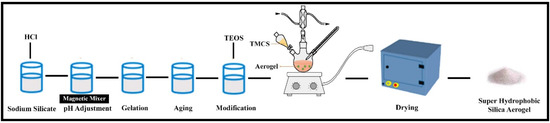
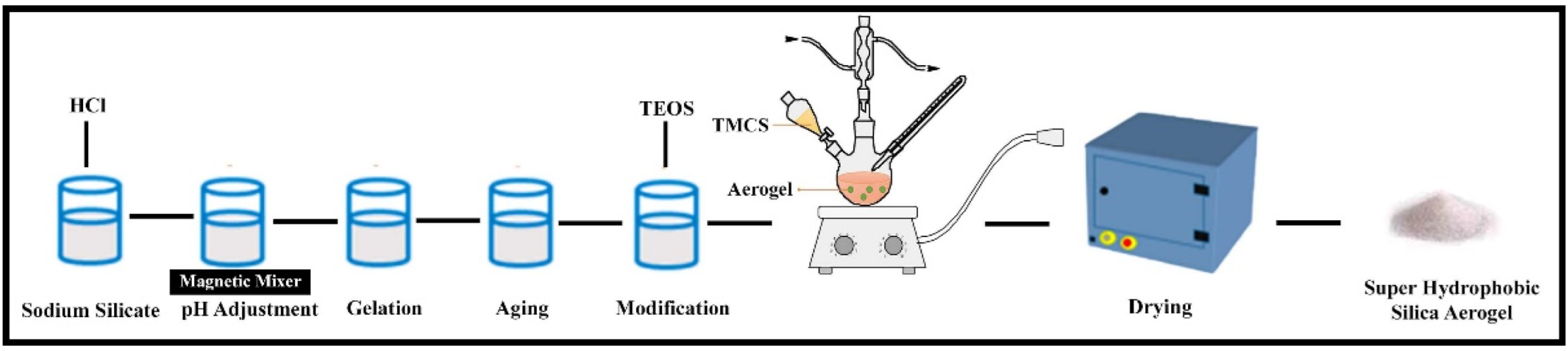
In order to give the hydrophilic silica aerogel a superhydrophobic property, the optimum pH value and ideal production parameters were determined. Hydrophilic silica aerogel powders synthesized from different starting materials by using optimum parameters were subjected to the ethanol aging process for 1 day, then surface modification was performed with 70% TEOS/Ethanol to strengthen the bonding structure in the silica aerogel (Figure 1). Subsequently, solutions with a volume ratio of TMCS/n-hexane (1/10) were prepared to impart a superhydrophobic property to the silica aerogel powders, and the samples were left to stand for 1 day. After washing the samples with hexane, they were left to dry at 50 °C for 24 h. Following the drying process, the synthesis of superhydrophobic silica aerogel powders was completed. This experimental process was applied to all silica aerogels obtained from sol–gel reactions.
Figure 1.
Synthesis scheme of superhydrophobic silica aerogel.
In characterization studies of the experimental samples, the contact angles of the experimental samples were measured to determine whether the silica aerogel experimental samples produced from different starting materials (CCS, WCS, R, Q) exhibited superhydrophobic properties after the surface modification process conducted with TMCS (chlorotrimethylsilane). In addition, to determine the phases and transformations of the silica aerogel experimental samples synthesized as a result of the modification, analysis was performed on the GNR Explorer brand XRD device (GNR Analytical Instruments Group, Novara, Italy). Measurements were made using the Thermo Scientific—Nicolet IS20 model Fourier Conversion Infrared (FT-IR) device (Thermo Fisher Scientific, Waltham, MA, USA) in order to determine the functional bond structure properties of the synthesized silica aerogel products after modification. To be able to determine the physical properties of the experimental samples, Brunauer–Emmett–Teller (BET) surface area measurements of silica aerogel powder particles were calculated using Micromeritics NOVA4200e adsorption device (Micromeritics Instrument Corporation, Norcross, GA, USA). The surface morphology and microstructure of the experimental samples in the form of silica aerogel powder were examined using ZEISS GeminiSEM 500 Field Emission Scanning Electron Microscope (FE-SEM) (ZEISS, Oberkochen, Germany). Within the scope of experimental studies, FT-IR analysis was performed in order to determine the bond structure of silica aerogel material synthesized from different starting materials (CCS, WCS, R, and Q). In addition, to determine the effect of different pH values on density values of silica aerogel material, density measurements of silica aerogel material (mass/volume ratios) were performed. When reviewing the limited studies in the literature, the densities of silica aerogels can be calculated by measuring mass/volume ratios of the samples [36]. The pH value at which the sample with the lowest density was synthesized was determined as the optimum pH value for the production of silica aerogel material.
2.4. Mix Proportions
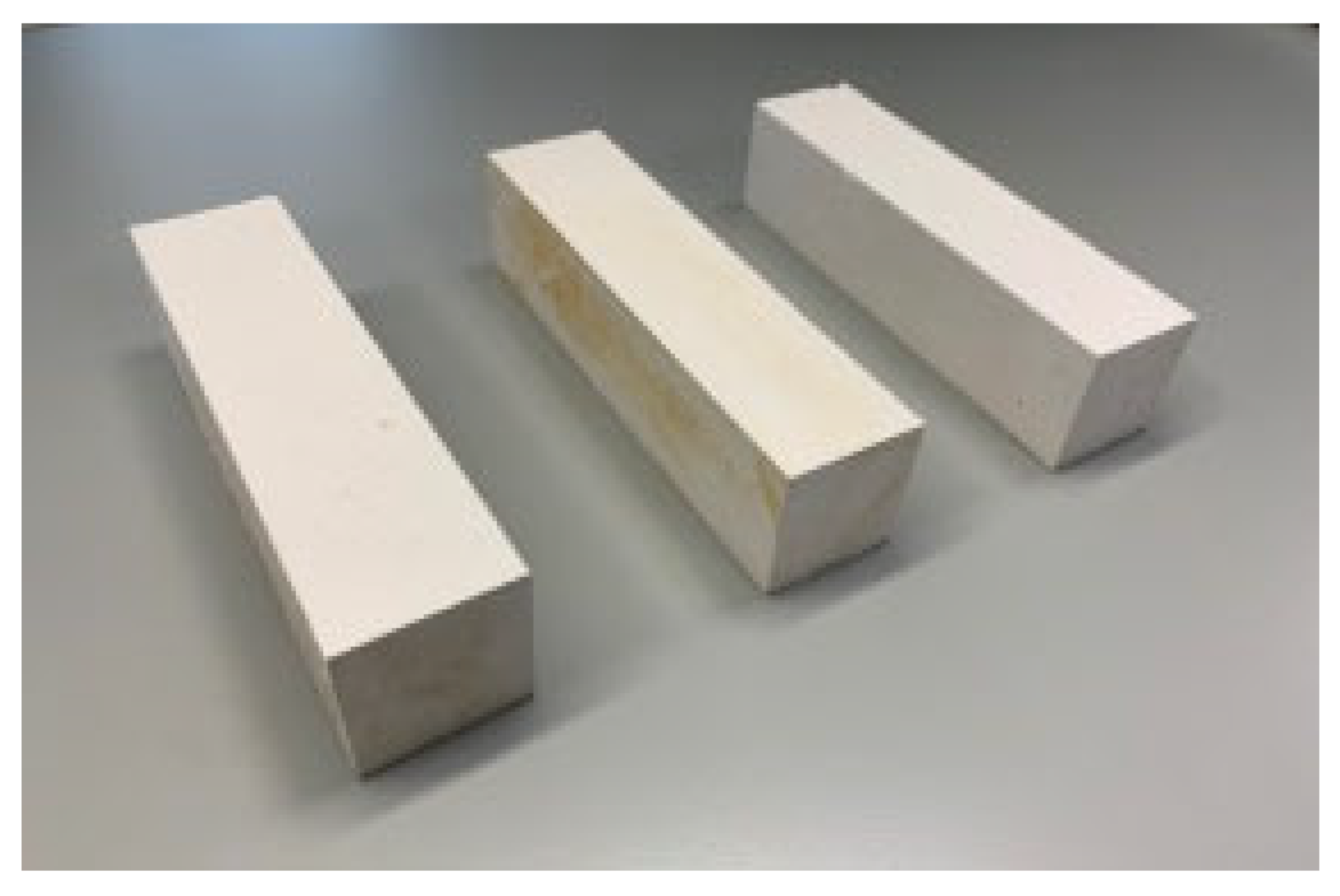
In order to determine mechanical properties (three-point bending strength, compressive strength) and physical properties (thermal conductivity coefficient, water absorption) of superhydrophobic silica-aerogel-reinforced plaster samples, silica aerogel powders produced from four different starting materials, commercial foundry sand (CCS), waste foundry sand (WCS), radiolarite (R), and quartz (Q), were added to plaster mixtures at 5 different reinforcement ratios (0%, 0.5%, 1%, 2%, and 5% by mass) to produce 20 different plasterboard test specimens. Superhydrophobic silica aerogel powders were used in the production of gypsum samples, especially at low reinforcement rates. The prepared mixture was poured into molds using a mixing speed of 4 revolutions per minute. Additionally, due to the plasterboard’s rapid setting effect, no external molding pressure was applied. Three plaster board test specimens were prepared from each mixture, resulting in a total of 60 gypsum board specimens being cast. The prepared prismatic gypsum board test specimens, measuring 40 × 40 × 160 mm, were subjected to a 28-day curing period.
2.5. Production of Superhydrophobic Silica-Aerogel-Reinforced Plasterboard Samples
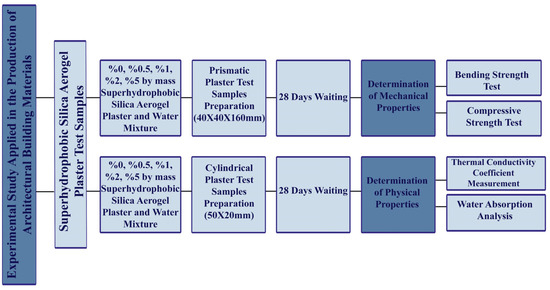
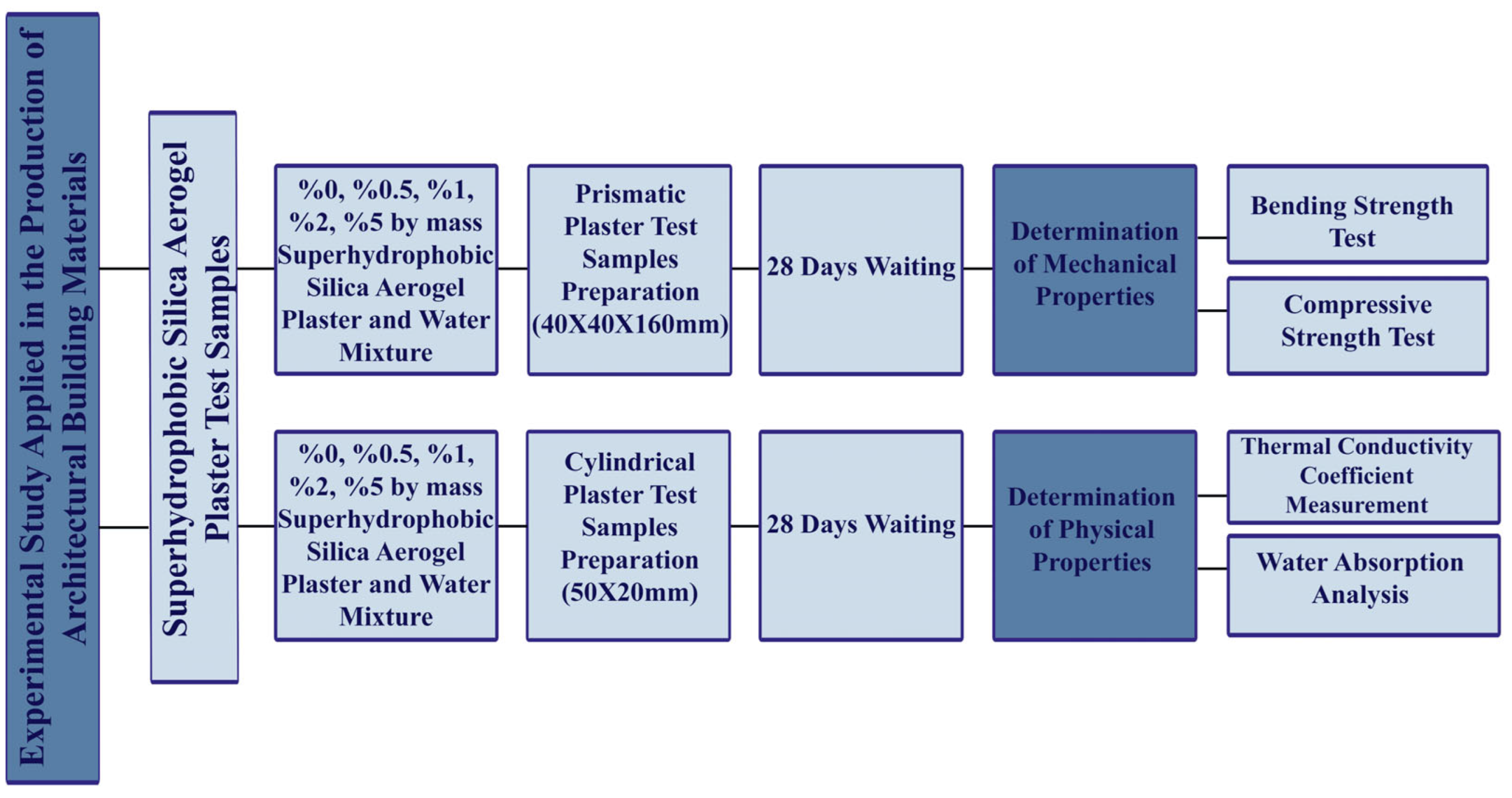
Production of plasterboard test samples was carried out in accordance with TS EN 520 + A1 standards [37]. In Figure 2, a flow diagram of experimental studies performed for the determination of mechanical properties and physical properties is shown.
Figure 2.
Experimental studies flow chart.
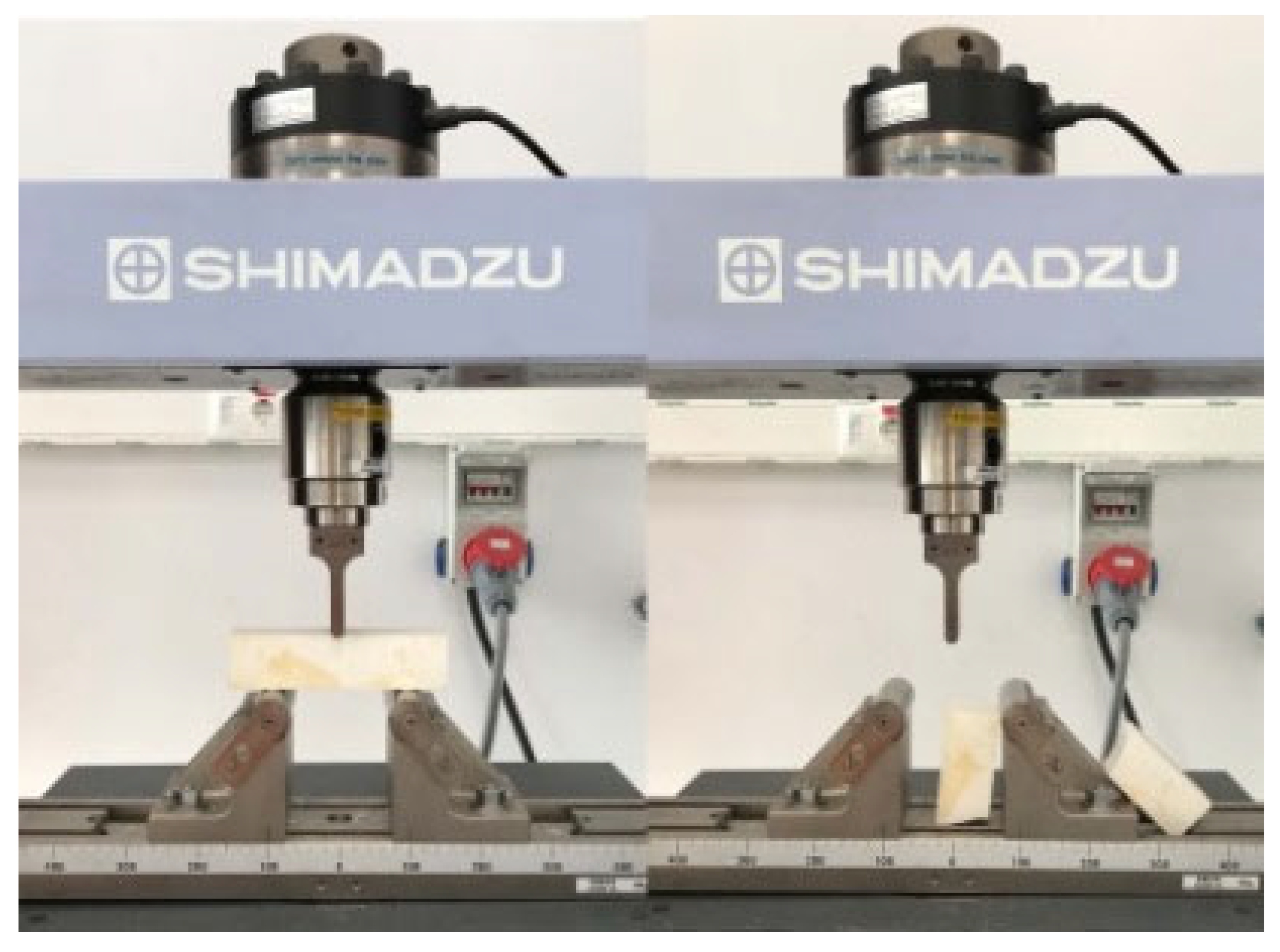
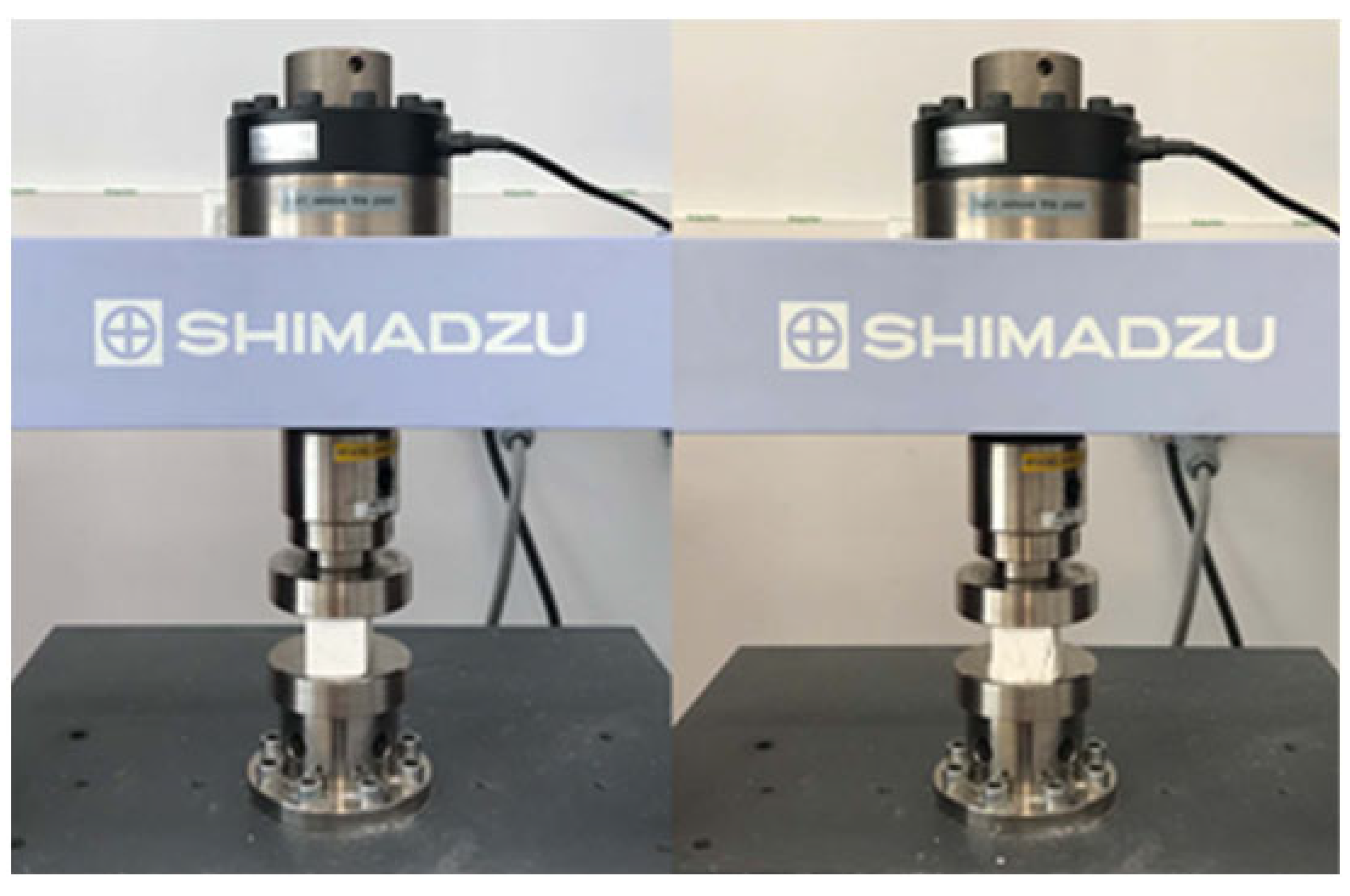
In order to determine the mechanical properties of the prepared prismatic plasterboard samples, the bend (flexural) strength test was first applied in accordance with the principles of TS EN 1015-11 standard [38] (Table 3). The bend strength test was performed on dimensions of 40 × 40 × 160 mm of a total of 60 plasterboard samples at a loading speed of 50 ± 10 N/s and in a way that the mid-span value was 100 mm during loading. The compressive strength test was performed on prismatic plasterboard sample pieces, which had been divided into two after the bend strength test and had a surface area of 40 × 40 mm (Table 3). The pressure load applied in the experiment was set to 2400 ± 100 N/s.
Table 3.
Prismatic plasterboard test samples.
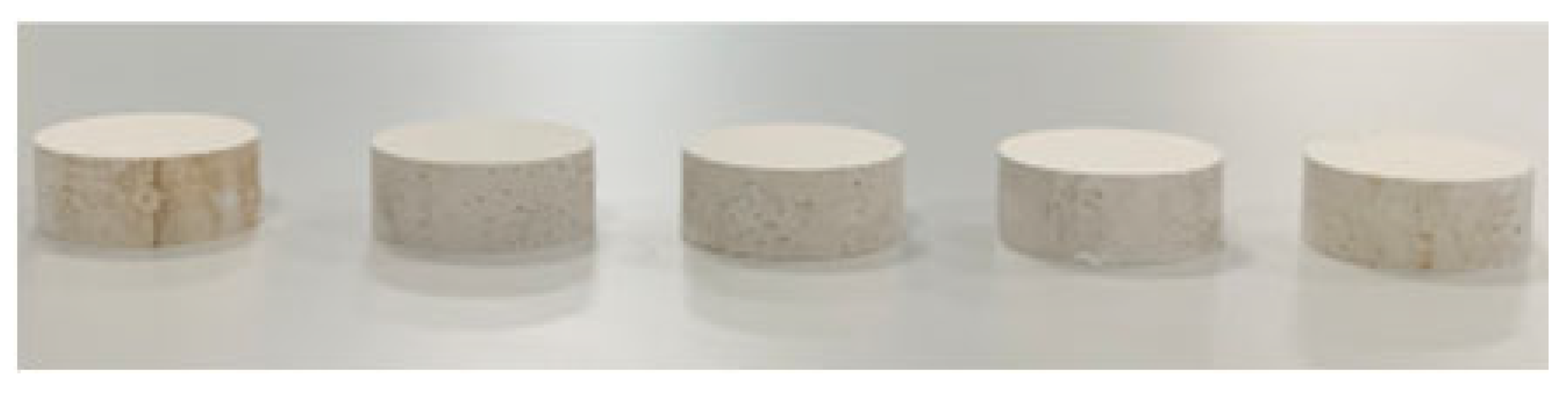
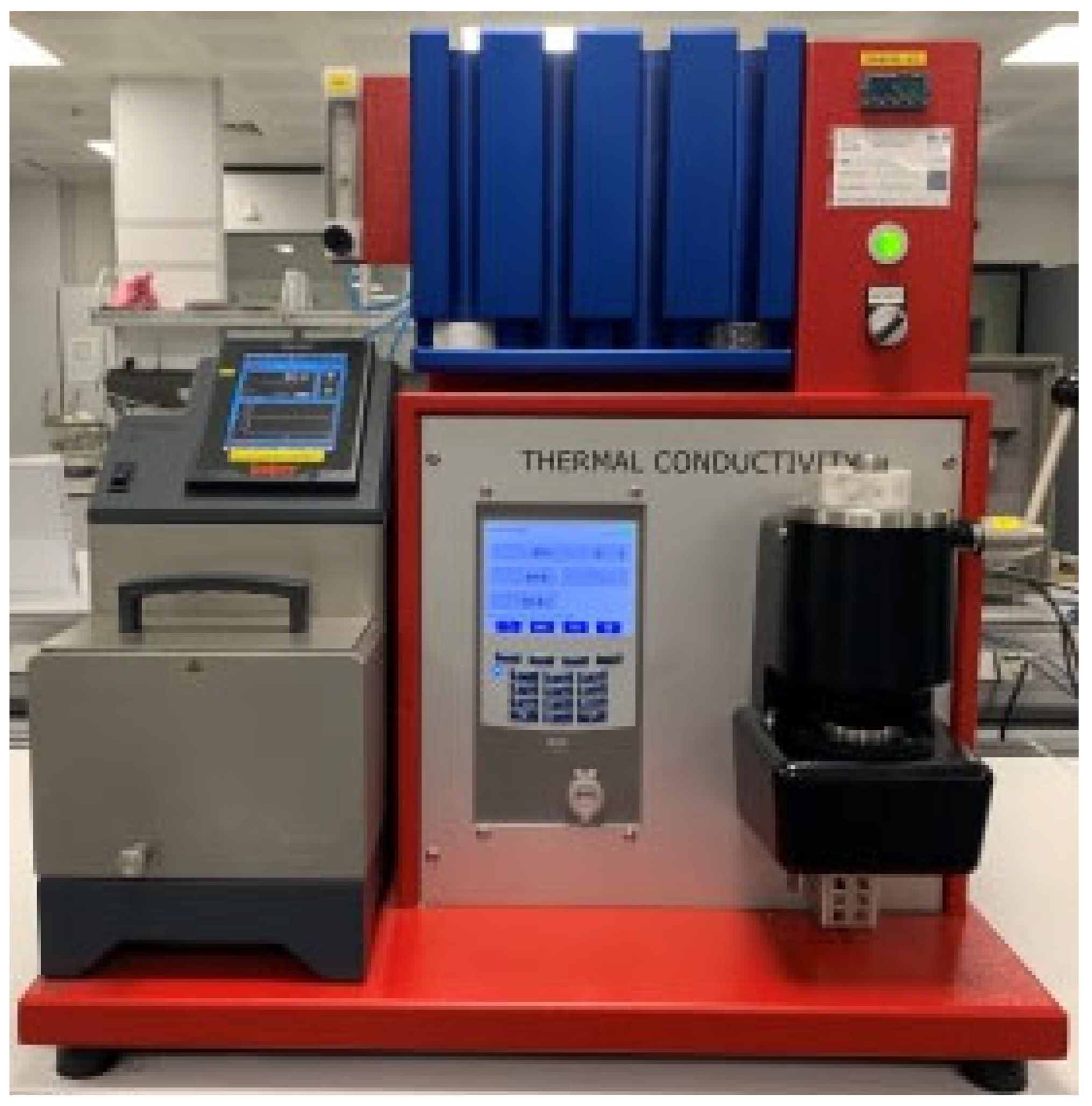
For determination of physical properties (thermal conductivity and water absorption), gypsum experimental samples were produced using cylindrical molds with a diameter of 50 mm and a height of 20 mm. After the produced cylindrical gypsum test samples were kept for 28 days, a thermal conductivity test was performed first to determine their physical properties (Table 4). Thermal conductivity coefficient was measured in W/mK with RDC-143 Thermal Conductivity device (R&D Carbon, Granges, Switzerland). After the thermal conductivity measurement processes of the experimental samples were completed, they were used for the water absorption rate experiment. First, dry mass weighing of superhydrophobic silica-aerogel-reinforced gypsum experimental samples was performed. In the next stage, the experimental samples were kept in a container filled with water for 2 h. After this process, their wet masses were weighed (Table 4). The total water absorption rate of the experimental samples was found by calculating the ratio of the difference between the wet mass and the dry mass.
Table 4.
Cylindrical plaster test specimens.
3. Results and Discussion
3.1. Characterization of Different Silica Sources
XRF and XRD analyses were performed to determine chemical components and structural properties of CCS, WCS, R, and Q used as different starting sources. When XRF analysis results are examined (Table 5), it is seen that SiO2 structure was included as the main component. As seen in Table 5, silicon content was determined at a rate of 97.80% in CCS, 70.40% in WCS, 94.50% in R, and 99.80% in Q. The WCS used in the study contains a lower percentage of SiO2 than other starting materials. This value can be stated as low because it is waste casting sand. In addition, recycling waste materials is important for this study and material. When studies in the literature are examined, it is seen that most of such natural materials have SiO2 chemical components at a minimum of 80% [39,40,41,42].
Table 5.
XRF analysis for CCS, WCS, R, Q (%).
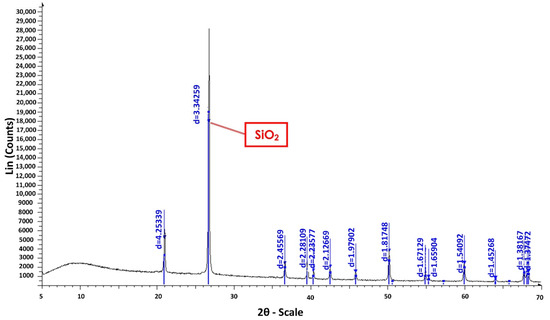
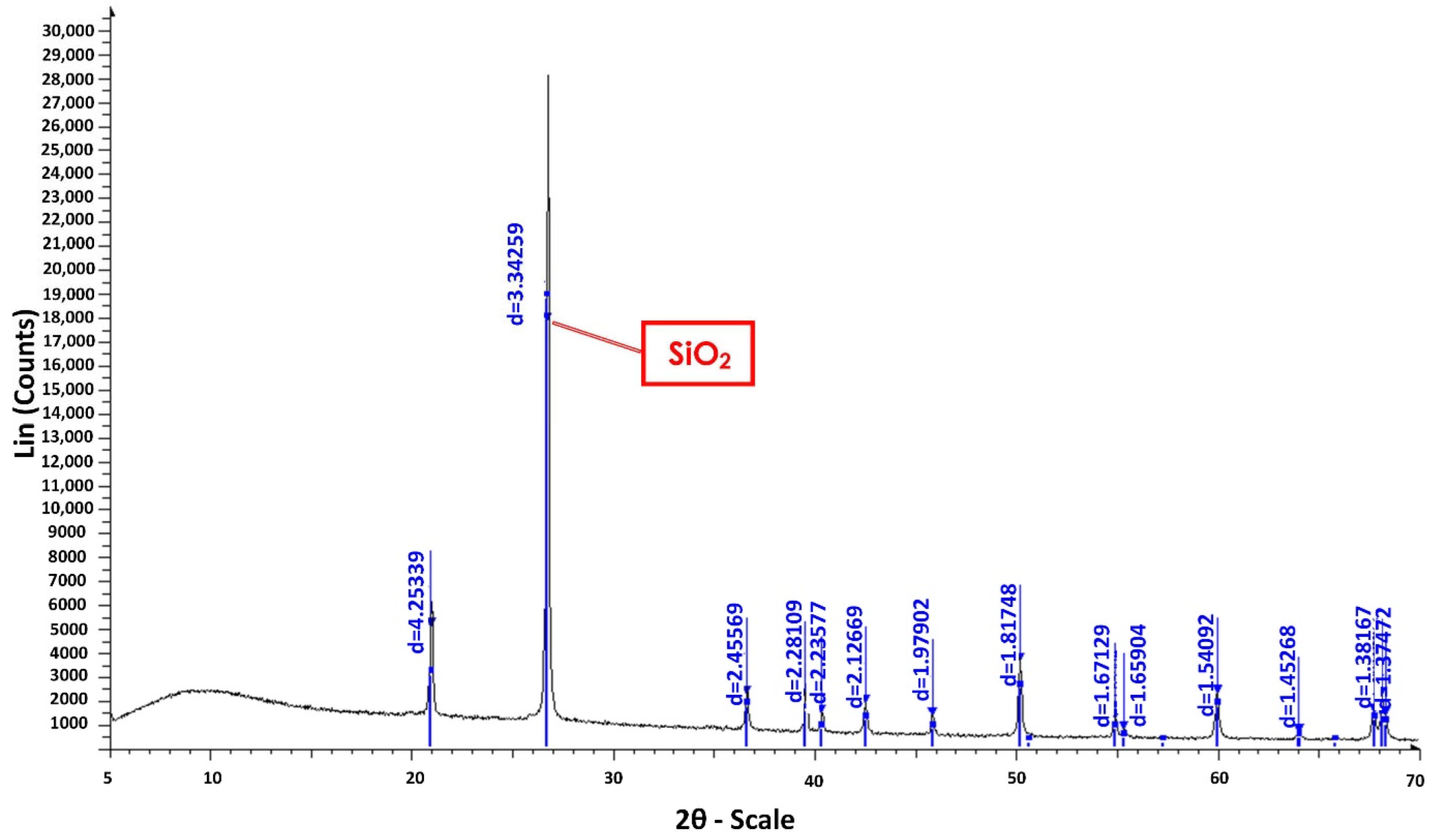
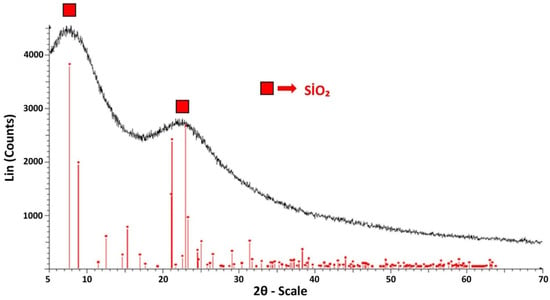
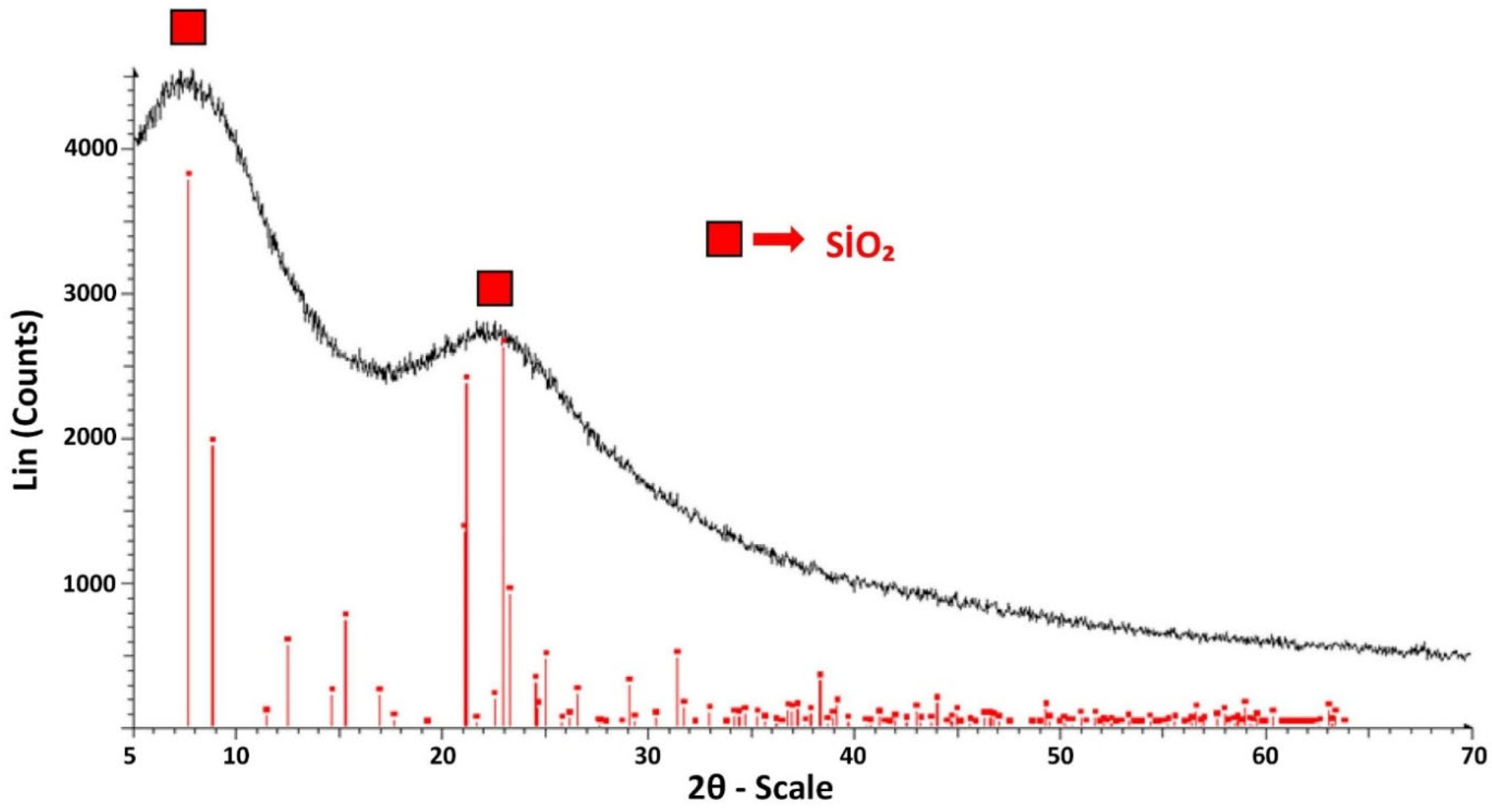
The results for different starting resources were obtained from XRD analysis carried out at diffraction angles ranging from 2θ = 50° to 70°. When XRD analysis was performed on all starting materials (CCS, WCS, R, Q), SiO2 was identified as the main peak structure in all analyses. For illustrative purposes and as an example for the others, the XRD analysis result for R material is given in Figure 3. When the XRD analysis results given in Figure 3 were examined, it was found that the highest/main peak intensity that appeared in the experimental samples defined the SiO2 structure. In a study on the enrichment of low-quality quartz sand, Aydın et al. (2021) state that the content of quartz sand should be approximately 86% because it has raw material nature, and that it was approximately 2θ = 27° distance as the main peak intensity in this material [43]. It was found that the SiO2 peak intensity obtained in experimental studies occurred at similar distances (2θ). In terms of these results, SiO2 structure was determined as silicon dioxide (SiO2, PDF no: 00-046-1045) in CCS. By similar logic, it was found that in WCS, it took place in the structure as silicon dioxide (SiO2, PDF no: 01-070-7344) as well as iron oxide (Fe2O3, PDF no: 00-040-1139). As a result of XRD analysis, R starting source determined it to be silicon dioxide (SiO2, PDF no: 00-046-1045). Finally, it was determined that it took place as silicon dioxide (SiO2, PDF no: 00-046-1045) in the Q starting source. In a study in which silica aerogel synthesis was performed from casting sand and waste casting sand, as a result of XRD analysis, it was found that the main peak intensity of the casting sand starting material was approximately 2θ = 29.39°, and there were CaCO3-induced peaks in the structure [44].
Figure 3.
XRD diffractogram of Radiolarite (R).
3.2. Characterization of Silica Aerogel Samples
Because the chemical components of the starting materials vary, sol–gel procedures were performed at different pH values to determine the optimal pH for each compound. All other parameters were kept constant; the pH value was scanned over 2, 4, 6, 8, and 9. As reported, the lower the aerogel density, the higher its insulating properties. Therefore, density analysis was performed after each synthesis. The synthesized samples were named as CCS-pH-X, WCS-pH-X, R-pH-X, and Q-pH-X. Here, X represents the pH value. It was determined and is presented in Table 6 that the lowest density values for silica aerogel powder synthesized from CCS, WCS, R, and Q were 0.590 g/cm3 at pH 8, 0.390 g/cm3 at pH 8, 0.340 g/cm3 at pH 6 cm3, and 0.500 g/cm3 at pH 6.
Table 6.
Density measurements of synthesized samples.
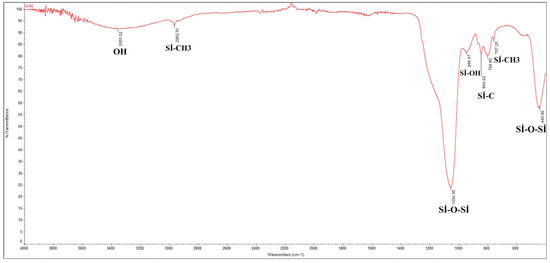
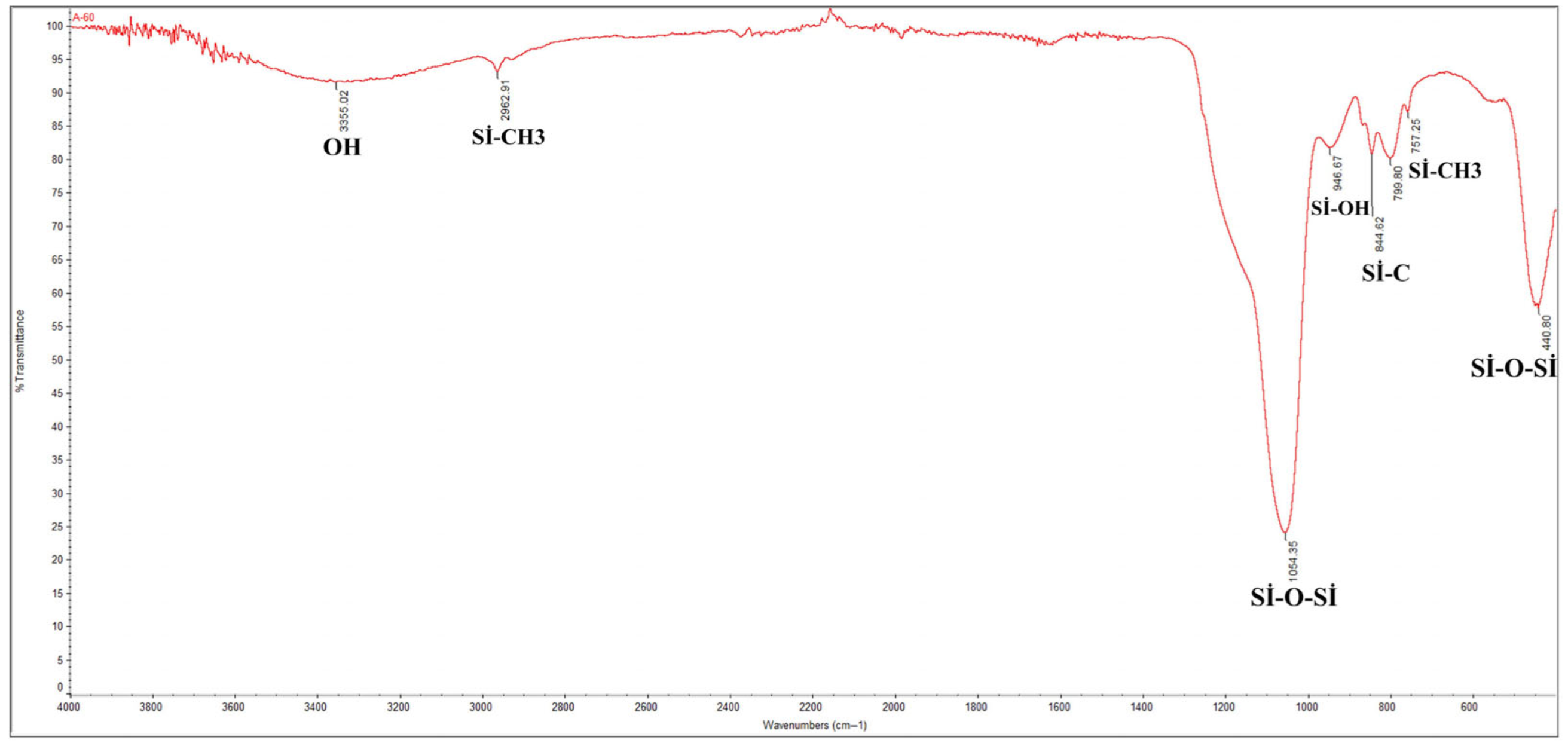
FT-IR analysis results of silica aerogel powder materials produced by surface modification with TMCS using optimum pH values are shown in Table 7. When the results of FT-IR analysis of silica aerogel powder materials performed in the 4000–400 cm−1 range were examined, it is observed that there are O-H absorption bands in the approximately 3400 cm−1 and 1600 cm−1 regions, which are attributable to physisorbed moisture/water. In addition, it was also observed that there were Si-O-Si vibration bands in the 1054–1058 cm−1 and 440–448 cm−1 wavelength, and Si-OH vibration bands in the 945–946 cm−1 wavelength. Si-CH3 group peak vibrations were detected at 2960–2962 cm−1 wavelength; Si-C absorption bands were observed at 800–850 cm−1 and 750–790 cm−1 wavelengths after chemical bonding of TMCS. FT-IR analysis of the superhydrophobic radiolarite (R) silica aerogel sample is given in Figure 4 [45,46,47]. Regarding the surface of the synthesized material, the more apolar (nonpolar) the surface is, the more it repels water. The used CH3 structure in the Silane content (Chlorine Cl on one side, Methyl CH3 on the other side) contained in the TMCS material content that has the formula (CH3)3SiCl is known as a nonpolar group. Its interaction with water is weak. Therefore, it has a water-repellent property because it does not interact with water [48,49]. This shows that the synthesized silica aerogel powder material has a property that does not like water; that is, it is superhydrophobic. In addition, weak Si-OH absorption peaks were observed at 940 cm−1 [50,51].
Table 7.
FT-IR spectrum values of superhydrophobic silica aerogel samples obtained from CCS, WCS, R, Q, with optimum pH.
Figure 4.
FT-IR analysis of a sample of superhydrophobic radiolarite (R) silica aerogel with optimum pH.
XRD analysis result of superhydrophobic silica aerogel powder materials produced with optimum parameters is shown in Figure 5. XRD analysis results revealed that the produced silica aerogel materials were in an amorphous structure. In accordance with the literature, it was determined that the silicon peak in the amorphous structure was located at 2θ = 27°. In addition, it was determined that it was not involved in any phase of a different impurity or contamination [52,53,54]. In synthesis studies, it was confirmed by contact angle measurements that the silica aerogel powder materials produced with optimum pH values by using different starting materials (CCS, WCS, R and Q) had superhydrophobic properties. The contact angle of silica aerogel materials synthesized and modified from CCS, WCS, R, and Q starting materials was calculated using the LB-ADSA plug-in of the ImageJ® image analysis tool (ImageJ 1.54, National Institutes of Health, Bethesda, MD, USA, 2023). The contact angle values of the silica aerogel materials were measured as 162° for CCS, 160° for WCS, 159° for R, and 159° for Q. When the contact angle measurement results given in Table 8 were examined, it was observed that the contact angle measurement results of the silica aerogel material synthesized and modified with CCS, WCS, R, and Q starting materials were all greater than 150°. These obtained values show that the silica aerogel sample surfaces produced from CCS, WCS, R, and Q starting materials have superhydrophobic properties since they provide two conditions required for superhydrophobicity (the first condition is that the contact angle of the surface is greater than 150°, the second condition is that water flows away from the surfaces with a slope less than 10 degrees). Based on the fact that the water on the surface of the experimental samples flows away from the surface, it can be said that, in terms of the superhydrophobicity model, our surface is in line with the Cassie–Baxter model, and superhydrophobicity was achieved at an ideal degree.
Figure 5.
XRD diffractogram of a superhydrophobic radiolarite (R) silica aerogel sample with optimum pH value.
Table 8.
Contact angle measurement of superhydrophobic silica aerogel samples.
In addition, in order to show the degrees of superhydrophobicity of the experimental samples, the dynamic contact angle was measured instead of the static contact angle, and the contact angle images are shown in Table 8. The dynamic contact angle is determined by measuring the flow of dripping water from the face by tilting the surface a small amount [55,56,57,58]. In the literature, contact angle values obtained after surface modification with TMCS have been reported as 152.8° and 155°, respectively [49,59]. In another study, the synthesis of superhydrophobic silica aerogel with a contact angle of 160° after surface modification was performed by the drying method and solvent replacement process using a sodium silicate precursor under ambient pressure [60]. Based on the results of these studies, it can be interpreted that this situation confirms that the synthesized silica aerogel materials have a superhydrophobic structure.
The results of the BET surface area analysis of the superhydrophobic silica aerogel samples produced as a result of optimum pH values are shown in Table 9. When the results were examined, it was seen that the highest BET surface area value (311.161 m2/g) was obtained from superhydrophobic silica aerogel material synthesized with radiolarite (R). BET surface areas of the superhydrophobic silica aerogel materials synthesized with other starting materials (CCS-WCS-Q) were 213.379 m2/g, 194.930 m2/g, and 290.904 m2/g, respectively. In the literature, it has been generally stated that silica aerogel materials have low density and high surface area [61]. In accordance with the literature, in this study, it was determined that the experimental samples had low-density values after surface modification, and the BET surface areas were high, especially in the silica aerogel material synthesized with radiolarite material. In a similar study, hydrophobic silica aerogels were synthesized from sand by the sol–gel method [62]. The BET surface area value of the synthesized silica aerogel samples was measured as 281.73 m2/g. In another study, as part of recycling of waste materials, silica aerogel samples with a specific surface area value of 273 m2/g were obtained by synthesizing silica aerogel from rice husk ash [63]. Moreover, in a study with similar content, the synthesis of silica aerogel from rice husk ash was performed using the sol–gel method and drying under atmospheric pressure, and the BET surface area of the synthesized samples was measured as 315 m2/g [64]. As a result, it is seen that both the density and the high surface area values obtained in this study are in parallel with studies in the literature.
Table 9.
Influence of reaction parameters on key features of synthesized superhydrophobic silica aerogel samples.
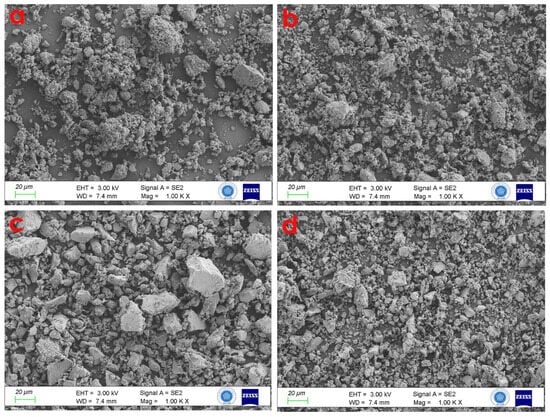
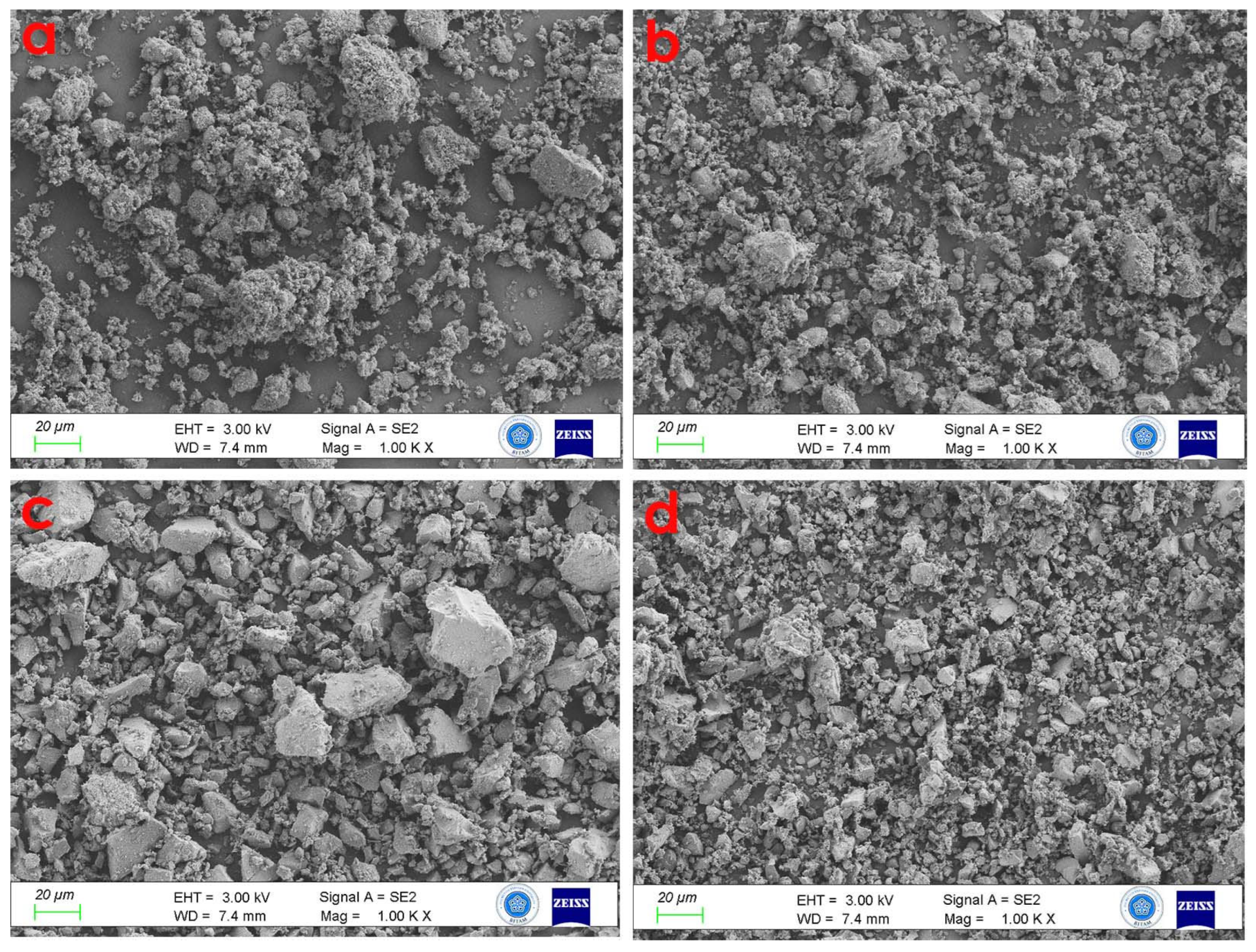
SEM microstructure images used to evaluate the shape and morphology of superhydrophobic silica aerogel powder material are shown in Figure 6. When the SEM microstructure image is examined, it can be seen that almost all of the powder materials are mostly involved in irregular shape and morphology. Analyzing SEM images of silica aerogel powders synthesized using CCS and WCS reveals that the particles are mostly smaller and finer in size. In some regions, clustering of powders, enlargements due to small particle sizes, or the presence of larger particles were observed. Overall, the powders exhibit irregular and complex shapes in terms of their form and morphology. Additionally, at high magnification, considering the SEM image (20 µm), it appears that the majority of powders are below 10 µm in size. This reduction in particle size and shape may indicate the presence of coarse particles in some regions, likely due to surface area effects. When examining the SEM images of aerogel powders synthesized from radiolarite (R) and quartz (Q) starting materials (Figure 6c,d), it is observed that these powders are relatively coarser compared to those synthesized from waste and commercial casting sands. This is especially noticeable in the radiolarite-based silica aerogel powder. In this sense, when the SEM image of the silica aerogel material, which has radiolarite content, obtained at high magnification, was examined, in terms of the SEM measurement scale (20 µm), it was observed that almost a single aerogel powder particle was about 20 µm in size. When it was examined in terms of powder shape and morphology, it was found that these silica aerogel powder materials had polygonal and sharp angular powder shapes and morphology.
Figure 6.
SEM images of superhydrophobic silica aerogel samples obtained from (a) CCS, (b) WCS, (c) R and (d) Q.
Compared to the shape and morphology of aerogel powder material synthesized with commercial and waste cast sand content (Figure 6a,b), it was determined that irregular and complex shape formations, as well as sharper angular and polygonal formations, predominate in silica aerogel material with quartz and radiolarite content. It is thought that the difference arising from the shape and morphological point of view is caused by the production conditions, contents, and shapes of the starting powder materials in particular. Studies in the literature have revealed that there may be changes in aerogel powder shapes and morphologies depending on different starting materials (treatment sludge, feldspar, fly ash, etc.) and process parameters (TEOS, etc.) [62,65].
3.3. Test Results of Superhydrophobic Silica-Aerogel-Reinforced Plasterboard Samples
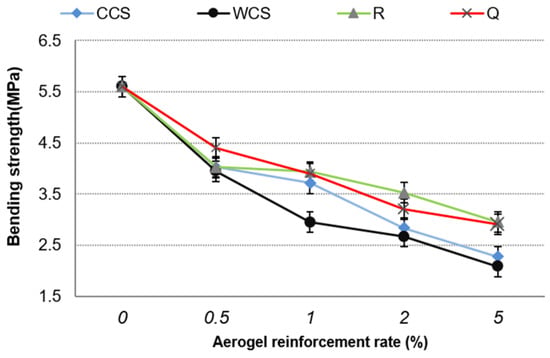
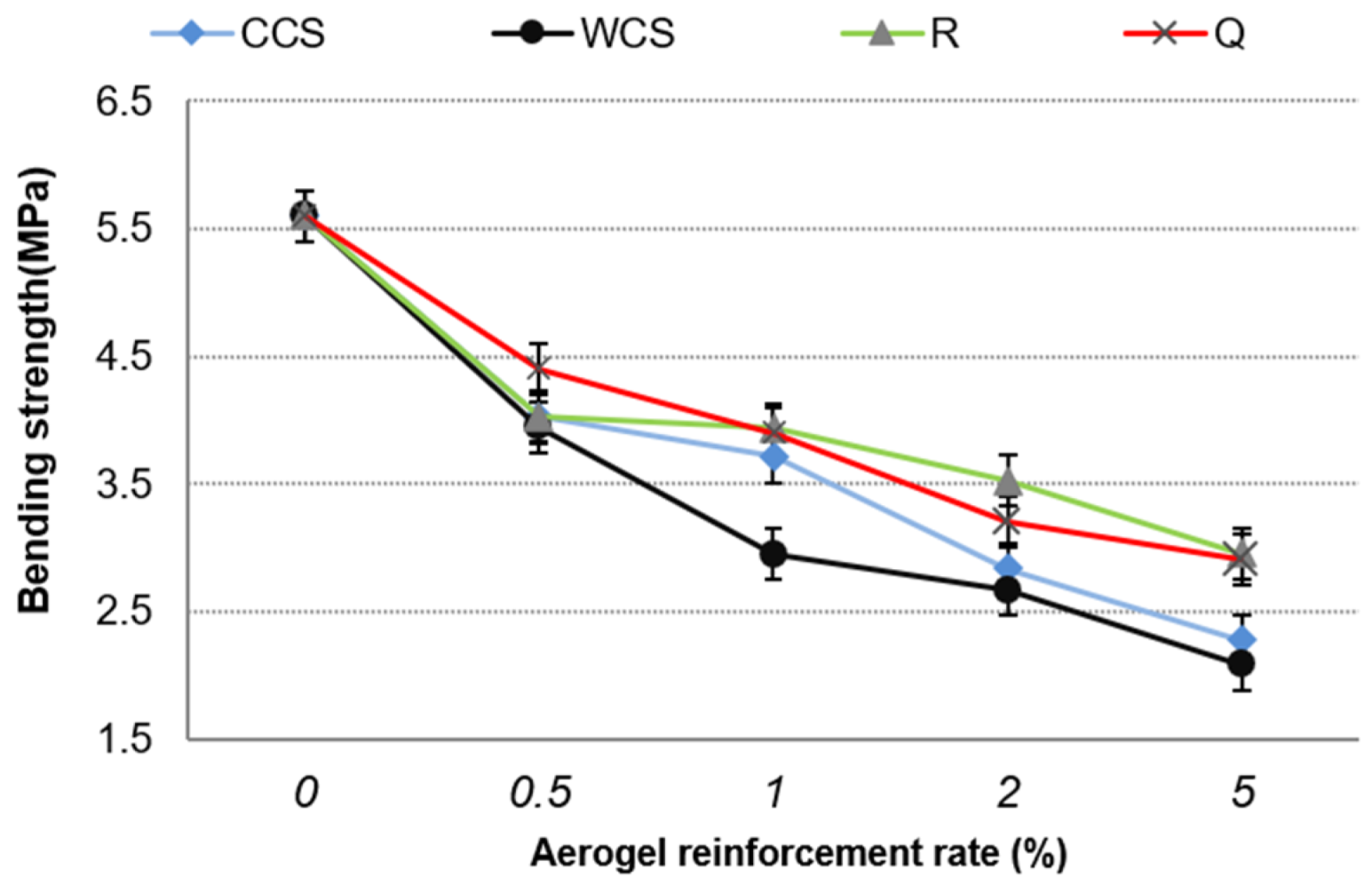
In experimental studies, superhydrophobic silica aerogel material synthesized by the sol–gel method using different initial silica sources was examined in terms of architectural applications and determination of mechanical properties. When the three-point bend strength values obtained from the experimental samples prepared by adding different reinforcement rates (0%, 0.5%, 1%, 2%, 5%) to synthesized superhydrophobic silica aerogel material (Figure 7) were examined, it was found that, compared to the plasterboard sample prepared without reinforcement content (R1-WCS1-CCS1-Q1), there was a decrease in strength values in all experimental samples depending on the increase in silica aerogel content. The highest strength value (5.6 MPa) was measured in the plasterboard sample prepared without reinforcement. However, in plasterboard experimental samples prepared with increased silica aerogel content (R, WCS, CCS, and Q), the three-point bend strength values showed a tendency to decrease, and the lowest three-point bend strength values were found to be 2.95 MPa, 2.08 MPa, 2.27 MPa, and 2.9 MPa, respectively (Figure 7). In a study on mechanical and microstructure properties of cement-based materials prepared with silica aerogel content, it is similarly stated that a decrease in three-point bend strength values occurred due to an increase in the content of reinforced silica aerogel. In addition, it is stated that low reinforcement content can provide advantages in terms of both mechanical and physical properties [66]. Compared to non-reinforced experimental samples, it can be stated that the increase in the amount of silica aerogel reinforced in plasterboard production is an important factor, and the reason for the decrease in strength values of other experimental samples. In addition, regarding the shape and morphology of aerogel material powder, it can be stated that the amount of pores increases in gypsum board samples as the amount of aerogel increases. Based on this, it can be considered that, depending on the production conditions and parameters of the silica aerogel material synthesized and used as a reinforcement, a decrease is observed in the three-point bend strength values of the materials. Thus, the preferability of the aerogel additive with relatively lower reinforcement ratios may be in question in material and architectural applications.
Figure 7.
Bending strength result graph of plasterboard test samples produced from commercial casting sand (CCS), waste casting sand (WCS), radiolarite (R), and quartz (Q).
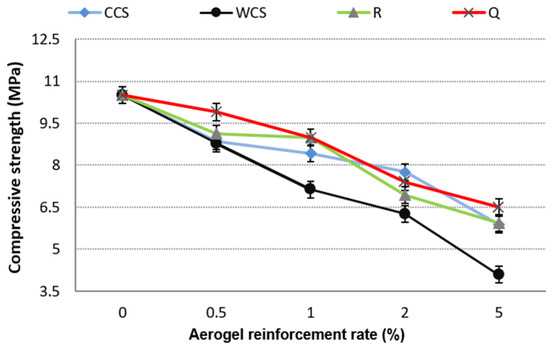
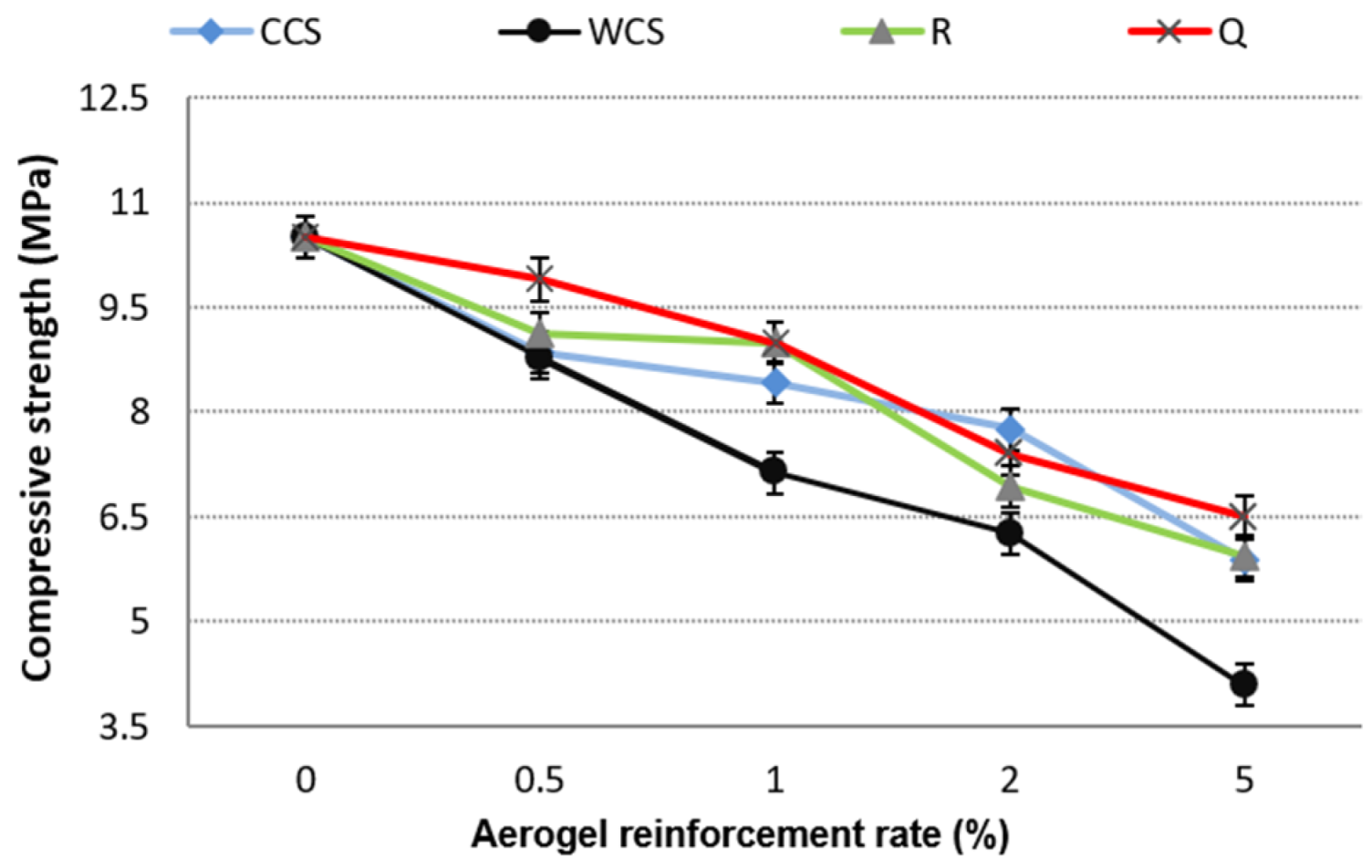
Results of the compressive strength test applied to plasterboard samples prepared with different superhydrophobic silica aerogel reinforcements are shown in Figure 8. It was observed that, compared to the experimental sample prepared without silica aerogel content, a decrease in compressive strength values occurred as a result of the 28-day waiting period of plasterboard samples produced with different aerogel reinforcement content (Figure 8). When compressive strength values of the experimental samples were examined, it was seen that the highest compressive strength value (10.5 MPa) was measured in the experimental sample without silica aerogel content. In addition, while the compressive strength values exhibited a decrease due to the increased silica aerogel content (R, WCS, CCS, and Q), the lowest compressive strength values were obtained as 5.93 MPa, 4.09 MPa, 5.87 MPa, and 6.5 MPa respectively.
Figure 8.
Compressive strength result graph of plasterboard test samples produced from commercial casting sand (CCS), waste casting sand (WCS), radiolarite (R), and quartz (Q).
In similar studies using a silica aerogel additive, it has been emphasized that increasing silica aerogel reinforcement creates a tendency for the material to decrease in values of material mechanical properties, while it has also been stated that it has a positive effect on mechanical and thermal material performance after use, with its low content of silica arogel [67,68].
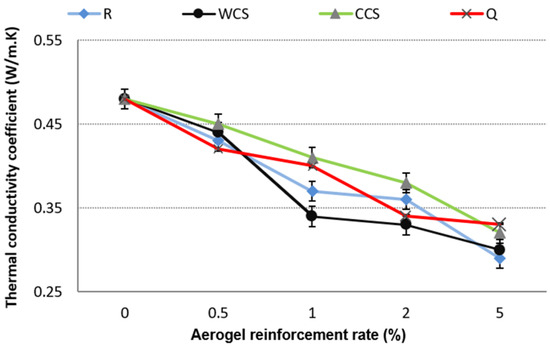
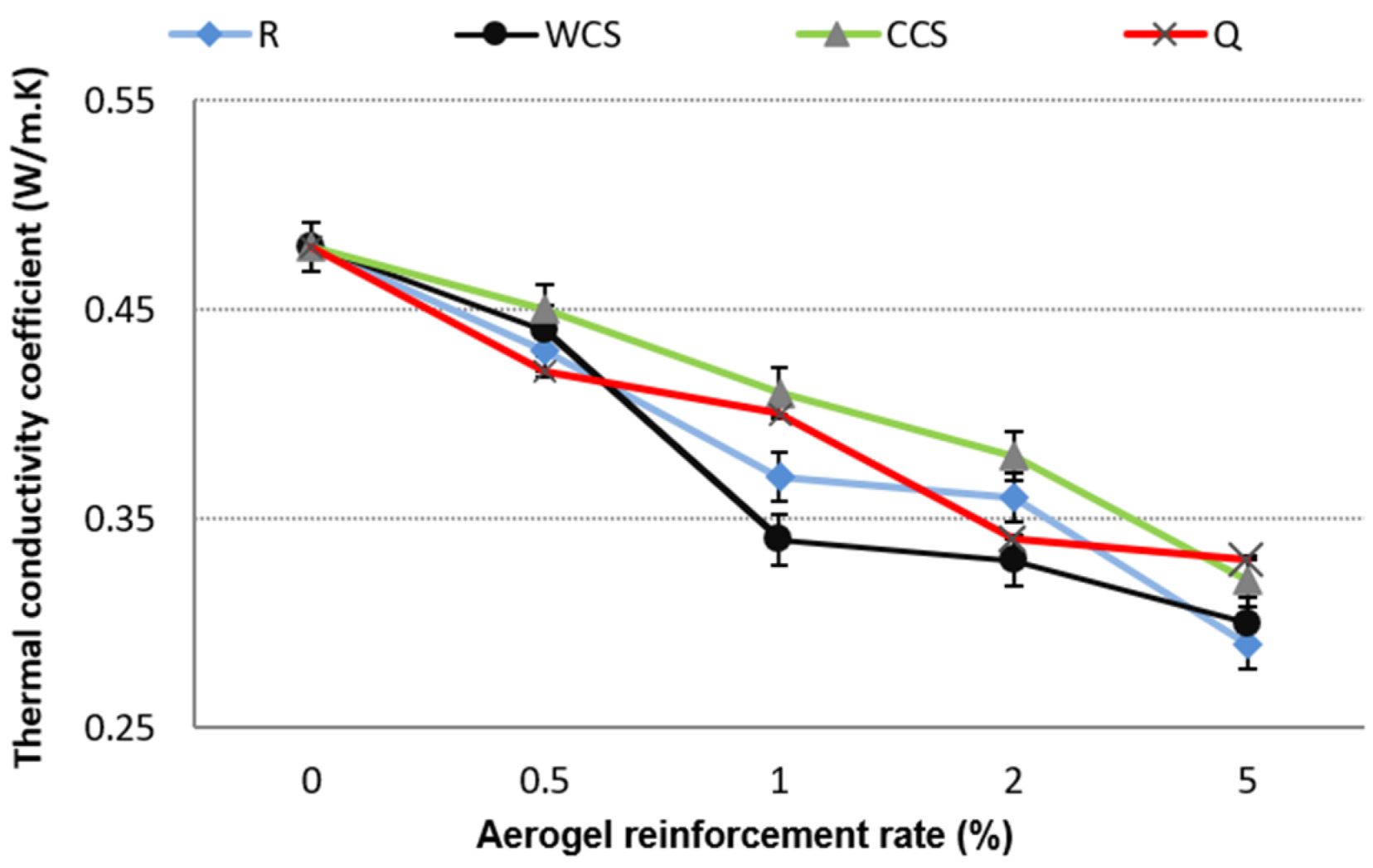
Although compressive strength experiments were applied to samples produced under the same experimental parameters and a similar waiting time (28 days), a decrease in compressive strength values occurred only due to different silica aerogel contents. This situation has revealed that the effect of increased silica aerogel content is similar in compressive strength results as well as in three-point flexural strength results. When the results obtained under similar conditions and parameters are evaluated and the decreasing values are considered, it can be stated that the silica aerogel’s pore structures and distributions exhibited in the plasterboard structure are an important factor in the occurrence of these results. Increasing the silica aerogel content causes an increase in the total porosity within the gypsum matrix. This leads to a decrease in the load-bearing cross-sectional area of the overall structure and weakens the silica aerogel–gypsum interface bond. Considering that porosity increases and the load-bearing gypsum matrix volume decreases with increasing silica aerogel content, this situation may cause a decrease in mechanical properties. Furthermore, it can be stated that while the elastic modulus of silica aerogel is very low, the gypsum matrix is more rigid. In this regard, the agglomeration tendency and elastic modulus mismatch of silica aerogel can be interpreted as increasing stress concentrations, leading to a significant decrease in compressive and flexural strength. The characterization of the superhydrophobic silica aerogel material synthesized from different starting materials using the sol–gel method shows that, within the scope of architectural materials and applications, physical properties beyond mechanical properties mostly come to the fore. In this context, thermal conductivity and water absorption analyses were carried out. Thermal conductivity coefficient results of experimental samples produced with non-reinforced and low amounts of different silica aerogel contents by using different starting material sources (R, WCS, CCS, and Q) are shown in Figure 9. Studies of the literature have revealed that such architectural building materials generally exhibit a thermal conductivity coefficient of 0–1 W/mK [69]. When the thermal conductivity coefficients obtained in all experimental samples were examined (Figure 9), it was found that this coefficient was measured in the range of approximately 0.29–0.48 W/mK, and this result was consistent with literature studies. In their study, Buratti and colleagues found that, in the production of silica-aerogel-reinforced plasters with different reinforcement ratios, the thermal conductivity coefficient values of the materials decreased due to increasing reinforcement ratios. They state that the gypsum sample without aerogel had a thermal conductivity coefficient of 0.50 W/mK [69]. Similarly, in the present study, the thermal conductivity coefficient value of the plasterboard material prepared without the addition of silica aerogel was measured as 0.48 W/mK (Figure 9).
Figure 9.
Thermal conductivity coefficient result graph of plasterboard test samples produced from commercial casting sand (CCS), waste casting sand (WCS), radiolarite (R), and quartz (Q).
The results given in Figure 9 show that there was a clear decrease in thermal conductivity coefficient values due to the increased reinforcing silica aerogel content, as a result of the use of different starting material sources. As the silica aerogel reinforcement content increased, the thermal conductivity coefficient value decreased in all produced experimental samples, and the lowest thermal conductivity coefficient value was found to be 0.29 W/mK. This value was revealed in the sample produced with the highest content of reinforced silica aerogel synthesized from the radiolarite source. In addition, when the obtained density results were taken into account, it was found that silica aerogel material synthesized with radiolarite material had the lowest density value. The fact that the thermal conductivity coefficient decreased in all experimental samples produced with increased silica aerogel contents compared to the pure material reveals the effectiveness and efficiency of using silica aerogel material. As it is known, silica aerogel particles exhibit superior thermal insulation properties. Based on the results obtained (Figure 9), it can be said that the increased silica aerogel contents have a positive contribution to the experimental samples and will provide an advantage in thermal conductivity performance of the material, especially in terms of architectural application. In a study conducted by Gao et al., it was found that the increase in aerogel reinforcement led to a decrease in the thermal conductivity coefficient of the material in terms of prepared experimental samples [27]. In another study, aerogel synthesis, characterization, and thermal insulation plaster production from sand by ultrasound-assisted sol–gel method were performed [70]. When the thermal conductivity measurement of silica-aerogel-reinforced insulation plasters at low reinforcement ratios was examined, it was found that the thermal conductivity coefficient value of the experimental samples decreased as the aerogel reinforcement content increased. It was stated that the aerogel-reinforced (with a ratio of 10%) sample had an improved insulation property of 26.05% compared to the non-reinforced sample [62].
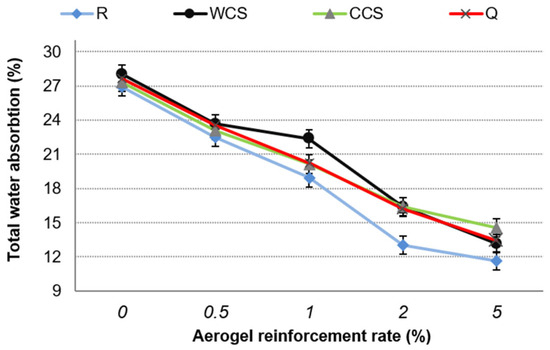
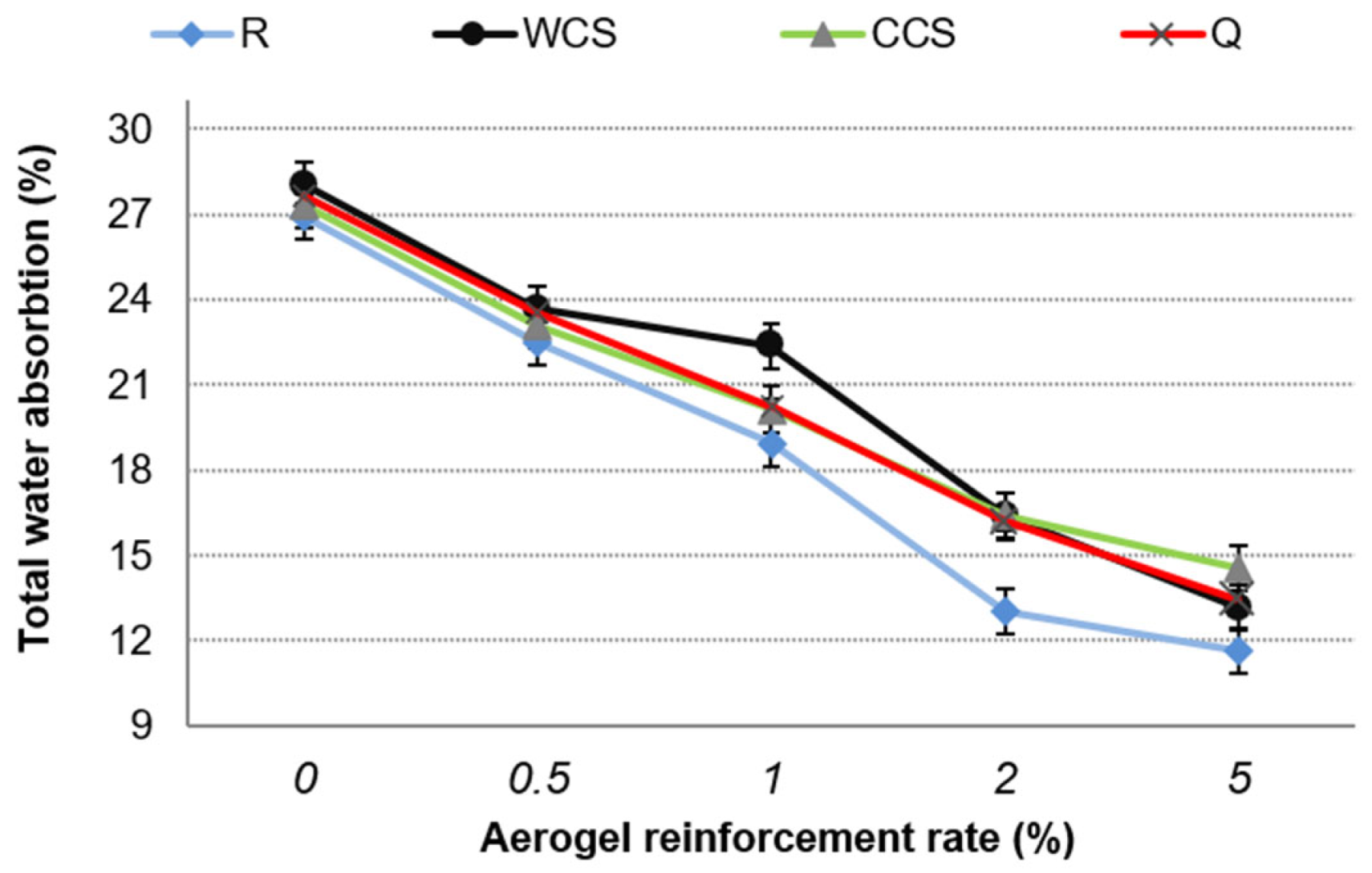
The water absorption analysis results of experimental samples produced without reinforcement and with different superhydrophobic silica aerogel contents in low quantities by using different starting material sources (R, WCS, CCS, and Q) are shown in (Figure 10). Compared to the experimental sample produced without silica aerogel content, it was observed that there was a decrease in water absorption values as a result of the 28-day waiting period of plasterboard samples produced with different silica aerogel reinforcement content (Figure 10). The total water absorption percentages of the plasterboard experimental samples (R, WCS, CCS, and Q), which did not have silica aerogel content at the beginning, were determined as 26.94%, 28.05%, 27.33%, and 27.67%, respectively. However, it was found that, compared to the experimental samples without silica aerogel content, there was a decrease in total water absorption percentages in the produced experimental samples due to the increased silica aerogel content, especially in the experimental samples with the highest silica aerogel content (11.63%, 13.19%, 14.54%, and 13.45%). In the literature review, experimental results containing water absorption analysis results of products with silica aerogel reinforcement were not encountered. However, in their study on the production of diatomite-based gypsum-reinforced lightweight construction elements, Gökçe and Akçaözoğlu state that water absorption rates of the samples decreased as the amount of gypsum in the mixture they prepared increased [70].
Figure 10.
Total water absorption analysis result graph of plasterboard test samples produced from commercial casting sand (CCS), waste casting sand (WCS), radiolarite (R), and quartz (Q).
It can be seen that, in the superhydrophobic silica aerogel used within the scope of this study, there is a decrease in total water absorption percentage values depending on the increasing amount of silica aerogel. Based on the results of other gypsum-based studies, it can be assumed that the materials used as reinforcement contribute positively to the total water absorption percentage values. In particular, in this study, it was determined that the synthesized silica aerogel material exhibited superhydrophobic properties. Therefore, it can be stated that the inclusion of this material with water repelling properties in the gypsum experimental sample has been effective in reducing the total water absorption percentage values obtained. In this case, considering the effects of water and moisture as an environmental effect on material behavior, the use of superhydrophobic silica aerogels in architectural material applications constitutes an advantage.
4. Conclusions
In this study, conventional plasterboard and silica aerogel, an innovative material, were combined into a single structure to produce a new generation of silica-aerogel-based plasterboard. This lightweight material offers superior thermal performance and is superhydrophobic, repelling water and moisture. The results are summarized below.
XRD analysis of silica aerogel synthesized from different starting materials showed that the highest main peak intensity was at SiO2, which is amorphous, at a 2θ angle of 27°. FT-IR analysis revealed vibrations corresponding to O-H, Si-O-Si, and C-H bonds within the range of 4000–400 cm−1. Surface modification resulted in samples with low density, and silica aerogels containing radiolarite exhibited the highest surface area (311.161 m2/g). All silica aerogel samples had contact angles greater than 150°, classifying them as superhydrophobic. FE-SEM microstructure images indicate that silica aerogel powders have irregular, complex shapes and particles smaller than 10 µm. The three-point bend strength of plasterboards with varying silica aerogel contents (0%, 0.5%, 1%, 2%, and 5%) de-creased as the reinforcement ratio increased. Additionally, the thermal conductivity coefficient decreased across all samples with higher silica aerogel reinforcement, with the lowest measured thermal conductivity coefficient value being 0.29 W/mK. Water absorption percentage also significantly declined. In particular, different waste materials can be used in silica aerogel synthesis studies to transform them into useful and high-performance inputs with economic value through recycling. This can guide not only the production of silica aerogels with similar compositions, but also commercial studies and applications. Overall, this new generation of plasterboard and architectural building materials, reinforced with low amounts of superhydrophobic silica aerogel, shows promise as a highly efficient and cost-effective product.
Author Contributions
Conceptualization, T.A.D., K.C. and H.G.; methodology, T.A.D.; formal analysis, T.A.D. and H.G.; investigation, T.A.D., K.C. and H.G.; resources, T.A.D., K.C. and H.G.; data curation, T.A.D. and H.G.; writing—original draft preparation, T.A.D. and H.G.; writing—review and editing, T.A.D., K.C. and H.G.; visualization, T.A.D.; supervision, T.A.D. All authors have read and agreed to the published version of the manuscript.
Funding
This research received no external funding.
Data Availability Statement
The original contributions presented in this study are included in the article. Further inquiries can be directed to the corresponding author.
Acknowledgments
This study is derived from the doctoral thesis titled “Synthesizing Silica Aerogel by Sol–Gel Method and Developing the Performance of Architectural Building Material” completed at KTO Karatay University Graduate Institute, Department of Architecture.
Conflicts of Interest
The authors declare no conflicts of interest.
Abbreviations
The following abbreviations are used in this manuscript:
| CCS | Commercial Casting Sand |
| WCS | Waste Casting Sand |
| R | Radiolarite stone |
| Q | Quartz Stone |
References
- Morsali, S.; Rakhshanbabanari, K.; Osmani, M.; Cavalaro, S.; Gutai, M.; Castro-Díaz, M.; Parker, B.; Sparkes, J.; Needham, P.; Newport, S.; et al. Life Cycle Assessment of Plasterboard Production: A UK Case Study. Sustainability 2024, 16, 3564. [Google Scholar] [CrossRef] [Scilit]
- Papailiopoulou, N.; Grigoropoulou, H.; Founti, M. Techno-Economic Impact Assessment of Recycled Gypsum Usage in Plasterboard Manufacturing. J. Remanuf. 2019, 9, 141–167. [Google Scholar] [CrossRef] [Scilit]
- Çelik, M.H.; Orhan, M.; Uğurlu, A.H. Bölme Duvar Amaçlı Alçı Panellerin Bazı Özelliklerinin Deneysel Olarak Belirlenmesi. Politek. Derg. 2005, 8, 301–309. [Google Scholar]
- Gürdal, E. Bir Yapı Malzemesi Olarak Alçı. Restorasyon Konserv. Çalışmaları Derg. 2010, 4, 37–43. [Google Scholar]
- Şansal, T.; Üce, S. Duvarda Yüksek Teknolojik Çözümler. İstanb. Sabahattin Zaim Üniv. Fen Bilim. Enst. Derg. 2019, 1, 15–20. [Google Scholar]
- Alparslan, G. Aerojelin Çimentoda Kullanımı. Sürdürülebilir Mühendis. Uygulamaları Ve Teknol. Gelişmeler Derg. 2021, 4, 53–58. [Google Scholar] [CrossRef] [Scilit]
- Arı, A.C. Nanoteknolojik Yöntemle Üretilen Yapı Malzemelerinin İnşaat Sektöründe Kullanımının İncelenmesi. Uluborlu Mesl. Bilim. Derg. 2022, 5, 14–27. [Google Scholar]
- Yıldız, B.; Seçkin, N.P. Mimaride Malzemelerin Algısal Farklılıklarının Değerlendirilmesi. İstanb. Sabahattin Zaim Üniv. Fen Bilim. Enst. Derg. 2019, 1, 6–14. [Google Scholar]
- Atik, İ.; Bilgin, M.B. Mimarlıkta Nanoteknolojinin Yeri. Kent Akad. 2018, 11, 232–242. [Google Scholar]
- Baetens, R.; Jelle, B.P.; Gustavsen, A. Aerogel Insulation for Building Applications: A State-of-the-Art Review. Energy Build. 2011, 43, 761–769. [Google Scholar] [CrossRef] [Scilit]
- Farahmandjou, M.; Khalili, P. Study of Nano SiO2/TiO2 Superhydrophobic Self-Cleaning Surface Produced by Sol-Gel. Aust. J. Basic Appl. Sci. 2013, 7, 462–465. [Google Scholar]
- Çüçen, A.; Altuncı, Y.T. Nanoteknolojik Yapı Malzemelerinin Mimaride Kullanım Olanaklarının Araştırılması. Tek. Bilim. Derg. 2022, 12, 17–23. [Google Scholar] [CrossRef] [Scilit]
- Çakmak, A. Yapı Malzemesinin Tarihsel Gelişimi ve Mimarlığa Etkileri. ATA Plan. Ve Tasarım Derg. 2021, 5, 41–54. [Google Scholar]
- Bechthold, M.; Weaver, J.C. Materials Science and Architecture. Nat. Rev. Mater. 2017, 2, 17082. [Google Scholar] [CrossRef] [Scilit]
- Arslan, M.A.; Aktaş, M. İnşaat Sektöründe Kullanılan Yalıtım Malzemelerinin Isı ve Ses Yalıtımı Açısından Değerlendirilmesi. Politek. Derg. 2018, 21, 299–320. [Google Scholar]
- Del Curto, D.; Cinieri, V. Aerogel-Based Plasters and Energy Efficiency of Historic Buildings. Literature Review and Guidelines for Manufacturing Specimens Destined for Thermal Tests. Sustainability 2020, 12, 9457. [Google Scholar] [CrossRef] [Scilit]
- Riffat, S.B.; Qiu, G. A Review of State-of-the-Art Aerogel Applications in Buildings. Int. J. Low-Carbon Technol. 2013, 8, 1–6. [Google Scholar] [CrossRef] [Scilit]
- Özer, N.; Özgünler, S.A. Yapılarda Yaygın Kullanılan Isı Yalıtım Malzemelerinin Performans Özelliklerinin Duvar Kesitleri Üzerinde Değerlendirilmesi. Uludag Univ. J. Eng. Fac. 2019, 24, 25–48. [Google Scholar]
- Luo, Y.; Jiang, Y.; Feng, J.; Feng, J. Synthesis of White Cement Bonded Porous Fumed Silica-Based Composite for Thermal Insulation with Low Thermal Conductivity via a Facile Cast-in-Place Approach. Constr. Build. Mater. 2019, 206, 620–629. [Google Scholar] [CrossRef] [Scilit]
- Jelle, B.P. Traditional, State-of-the-Art and Future Thermal Building Insulation Materials and Solutions–Properties, Requirements and Possibilities. Energy Build. 2011, 43, 2549–2563. [Google Scholar] [CrossRef] [Scilit]
- Gurav, J.L.; Jung, I.-K.; Park, H.-H.; Kang, E.S.; Nadargi, D.Y. Silica Aerogel: Synthesis and Applications. J. Nanomater. 2010, 2010, 409310. [Google Scholar] [CrossRef] [Scilit]
- Hrubesh, L.W. Aerogel Applications. J. Non-Cryst. Solids 1998, 225, 335–342. [Google Scholar] [CrossRef] [Scilit]
- Mazrouei-Sebdani, Z.; Begum, H.; Schoenwald, S.; Horoshenkov, K.V.; Malfait, W.J. A Review on Silica Aerogel-Based Materials for Acoustic Applications. J. Non-Cryst. Solids 2021, 562, 120770. [Google Scholar] [CrossRef] [Scilit]
- Szczepaniak, R.; Komorek, A.; Przybyłek, P.; Krzyżak, A.; Roskowicz, M.; Godzimirski, J.; Pinkiewicz, E.; Jaszczak, W.; Kosicka, E. Research into Mechanical Properties of an Ablative Composite on a Polymer Matrix Base with Aerogel Particles. Compos. Struct. 2022, 280, 114855. [Google Scholar] [CrossRef] [Scilit]
- Dorcheh, A.S.; Abbasi, M.H. Silica Aerogel; Synthesis, Properties and Characterization. J. Mater. Process. Technol. 2008, 199, 10–26. [Google Scholar] [CrossRef] [Scilit]
- Gomes, M.G.; Flores-Colen, I.; Da Silva, F.; Pedroso, M. Thermal Conductivity Measurement of Thermal Insulating Mortars with EPS and Silica Aerogel by Steady-State and Transient Methods. Constr. Build. Mater. 2018, 172, 696–705. [Google Scholar] [CrossRef] [Scilit]
- Gao, T.; Jelle, B.P.; Gustavsen, A.; Jacobsen, S. Aerogel-Incorporated Concrete: An Experimental Study. Constr. Build. Mater. 2014, 52, 130–136. [Google Scholar] [CrossRef] [Scilit]
- Alptekin, H.; Arkan, E.; Özbek, C.; Can, M.; Farzaneh, A.; Sütçü, M.; Okur, S.; Cobley, A.J. Water Affinity Guided Tunable Superhydrophobicity and Optimized Wettability of Selected Natural Minerals. J. Coat. Technol. Res. 2019, 16, 199–211. [Google Scholar] [CrossRef] [Scilit]
- Anderson, A.M.; Carroll, M.K. Hydrophobic Silica Aerogels: Review of Synthesis, Properties and Applications. In Aerogels Handbook; Aegerter, M.A., Leventis, N., Koebel, M.M., Eds.; Springer: New York, NY, USA, 2011; pp. 47–77. ISBN 978-1-4419-7477-8. [Google Scholar]
- Ben Rejeb, Z.; Abidli, A.; Zaoui, A.; Fashandi, M.; Selka, A.; Naguib, H.E.; Park, C.B. One-Pot Synthesis of Rationally-Designed Flexible, Robust, and Hydrophobic Ambient-Dried Molecularly-Bridged Silica Aerogels with Efficient and Versatile Oil/Water Separation Applications. Adv. Compos. Hybrid. Mater. 2024, 7, 188. [Google Scholar] [CrossRef] [Scilit]
- Halim, Z.A.A.; Awang, N.; Ahmad, N.; Yajid, M.A.M. Effects of Silane Concentration on Hydrophobic Conversion of Rice Husk-Derived Silica Aerogels Prepared by Supercritical Drying. Biomass Convers. Biorefin. 2024, 14, 15811–15821. [Google Scholar] [CrossRef] [Scilit]
- Shan, J.; Shan, Y.; Zou, C.; Hong, Y.; Liu, J.; Guo, X. Cost-Effective Preparation of Hydrophobic and Thermal-Insulating Silica Aerogels. Nanomaterials 2024, 14, 119. [Google Scholar] [CrossRef] [Scilit]
- Liu, Q.; Kong, Y.; Shen, X. Regulating the Hydrophobicity and Pore Structure of Silica Aerogel for Thermal Insulation under Humid and High Temperature Conditions. J. Porous Mater. 2025, 32, 171–180. [Google Scholar] [CrossRef] [Scilit]
- Caps, R.; Fricke, J. Aerogels for Thermal Insulation. In Sol-Gel Technologies for Glass Producers and Users; Aegerter, M.A., Mennig, M., Eds.; Springer: Boston, MA, USA, 2004; pp. 349–353. ISBN 978-1-4419-5455-8. [Google Scholar]
- TS EN 13279-1; Gypsum Binders and Gypsum Plasters—Part 1. Turkish Standard Institute: Ankara, Türkiye, 2009.
- Sarawade, P.B.; Kim, J.-K.; Hilonga, A.; Kim, H.T. Production of Low-Density Sodium Silicate-Based Hydrophobic Silica Aerogel Beads by a Novel Fast Gelation Process and Ambient Pressure Drying Process. Solid State Sci. 2010, 12, 911–918. [Google Scholar] [CrossRef] [Scilit]
- TS EN 520 + A1; Gypsum Plasterboards—Definitions, Requirements and Test Methods. Turkish Standard Institute: Ankara, Türkiye, 2010.
- TS EN 1015-11; Methods of Test for Mortar for Masonry—Part 11: Determination of Flexural and Compressive Strength of Hardened Mortar. Turkish Standard Institution: Ankara, Türkiye, 2000.
- Muliawan, A.; Jumardi, R.; Fernando, R.; Lutfi, M. Comparison Analysis of Kanaan Sand, Loktunggul Sand, and Sambera Sand Using the Methods of XRD and XRF. J. Phys. Conf. Ser. 2019, 1277, 012040. [Google Scholar] [CrossRef] [Scilit]
- Kantarçeken, Y.; Çizmecioğlu, Z. Smoky (Dumanlı) KUuvars Mneralinin Gemolojik Özellikleri. İstanb. Ticaret Üniv. Fen Bilim. Derg. 2021, 20, 285–296. [Google Scholar]
- Yaghoubi, E.; Arulrajah, A.; Yaghoubi, M.; Horpibulsuk, S. Shear Strength Properties and Stress–Strain Behavior of Waste Foundry Sand. Constr. Build. Mater. 2020, 249, 118761. [Google Scholar] [CrossRef] [Scilit]
- Alonso-Santurde, R.; Andrés, A.; Viguri, J.R.; Raimondo, M.; Guarini, G.; Zanelli, C.; Dondi, M. Technological Behaviour and Recycling Potential of Spent Foundry Sands in Clay Bricks. J. Environ. Manag. 2011, 92, 994–1002. [Google Scholar] [CrossRef] [Scilit] [PubMed]
- Aydın, Ş.B.; Oğuz, C.; Gül, A. Düşük Kalite Kuvars Kumlarının Flotasyon ve Oksalik Asit Liçi Ile Zenginleştirilmesi. Bilimsel Madencilik Derg. 2021, 60, 7–20. [Google Scholar] [CrossRef] [Scilit]
- Çimen, A.E.; Toplan, N. Döküm Kumu ve Atık Döküm Kumundan Silika Esaslı Aerojel Toz Eldesi. Met. Dünyası Derg. 2020, 329, 50–56. [Google Scholar]
- Sarawade, P.B.; Kim, J.-K.; Park, J.-K.; Kim, H.-K. Influence of Solvent Exchange on the Physical Properties of Sodium Silicate Based Aerogel Prepared at Ambient Pressure. Aerosol Air Qual. Res. 2006, 6, 93–105. [Google Scholar] [CrossRef] [Scilit]
- Li, J.; Cao, J.; Huo, L.; He, X. One-Step Synthesis of Hydrophobic Silica Aerogel via in Situ Surface Modification. Mater. Lett. 2012, 87, 146–149. [Google Scholar] [CrossRef] [Scilit]
- Yang, X.; Wu, Z.; Chen, H.; Du, Q.; Yu, L.; Zhang, R.; Zhou, Y. A Facile Preparation of Ambient Pressure–Dried Hydrophilic Silica Aerogels and Their Application in Aqueous Dye Removal. Front. Mater. 2020, 7, 152. [Google Scholar] [CrossRef] [Scilit]
- Crick, C.R.; Parkin, I.P. Preparation and Characterisation of Super-Hydrophobic Surfaces. Chem. A Eur. J. 2010, 16, 3568–3588. [Google Scholar] [CrossRef] [Scilit]
- Mahadik, D.B.; Rao, A.V.; Rao, A.P.; Wagh, P.B.; Ingale, S.V.; Gupta, S.C. Effect of Concentration of Trimethylchlorosilane (TMCS) and Hexamethyldisilazane (HMDZ) Silylating Agents on Surface Free Energy of Silica Aerogels. J. Colloid Interface Sci. 2011, 356, 298–302. [Google Scholar] [CrossRef] [Scilit] [PubMed]
- Al-Oweini, R.; El-Rassy, H. Synthesis and Characterization by FTIR Spectroscopy of Silica Aerogels Prepared Using Several Si(OR)4 and R″ Si(OR′)3 Precursors. J. Mol. Struct. 2009, 919, 140–145. [Google Scholar] [CrossRef] [Scilit]
- Hilonga, A.; Kim, J.-K.; Sarawade, P.B.; Kim, H.T. Low-Density TEOS-Based Silica Aerogels Prepared at Ambient Pressure Using Isopropanol as the Preparative Solvent. J. Alloys Compd. 2009, 487, 744–750. [Google Scholar] [CrossRef] [Scilit]
- Lu, J.; Wang, J.; Hassan, K.T.; Talmantaite, A.; Xiao, Z.; Hunt, M.R.; Šiller, L. Morphology Control of Nickel Nanoparticles Prepared in Situ within Silica Aerogels Produced by Novel Ambient Pressure Drying. Sci. Rep. 2020, 10, 11743. [Google Scholar] [CrossRef] [Scilit]
- Sharafudeen, R.; Al-Hashim, J.M.; Al-Harbi, M.O.; Al-Ajwad, A.I.; Al-Waheed, A.A. Preparation and Characterization of Precipitated Silica Using Sodium Silicate Prepared from Saudi Arabian Desert Sand. Silicon 2017, 9, 917–922. [Google Scholar] [CrossRef] [Scilit]
- Chen, K.; Bao, Z.; Du, A.; Zhu, X.; Wu, G.; Shen, J.; Zhou, B. Synthesis of Resorcinol–Formaldehyde/Silica Composite Aerogels and Their Low-Temperature Conversion to Mesoporous Silicon Carbide. Microporous Mesoporous Mater. 2012, 149, 16–24. [Google Scholar] [CrossRef] [Scilit]
- Maynes, D.; Johnson, M.; Webb, B.W. Free-Surface Liquid Jet Impingement on Rib Patterned Superhydrophobic Surfaces. Phys. Fluids 2011, 23, 052104. [Google Scholar] [CrossRef] [Scilit]
- Prince, J.F.; Maynes, D.; Crockett, J. On Jet Impingement and Thin Film Breakup on a Horizontal Superhydrophobic Surface. Phys. Fluids 2015, 27, 112108. [Google Scholar] [CrossRef] [Scilit]
- Kibar, A. An Investigation of Droplet Bubble and Liquid Jet Dynamics on Superhydrophobic and Hydrophobic Surfaces. Pamukkale Univ. J. Eng. Sci. 2016, 22, 613–619. [Google Scholar] [CrossRef] [Scilit]
- Kibar, A. Experimental and Numerical Investigations of the Impingement of an Oblique Liquid Jet onto a Superhydrophobic Surface: Energy Transformation. Fluid Dyn. Res. 2015, 48, 015501. [Google Scholar] [CrossRef] [Scilit]
- Nguyen, T.H.; Mai, N.T.; Reddy, V.R.M.; Jung, J.H.; Truong, N.T.N. Synthesis of Silica Aerogel Particles and Its Application to Thermal Insulation Paint. Korean J. Chem. Eng. 2020, 37, 1803–1809. [Google Scholar] [CrossRef] [Scilit]
- Parvathy Rao, A.; Venkateswara Rao, A.; Pajonk, G.M.; Shewale, P.M. Effect of Solvent Exchanging Process on the Preparation of the Hydrophobic Silica Aerogels by Ambient Pressure Drying Method Using Sodium Silicate Precursor. J. Mater. Sci. 2007, 42, 8418–8425. [Google Scholar] [CrossRef] [Scilit]
- Bhagat, S.D.; Kim, Y.-H.; Suh, K.-H.; Ahn, Y.-S.; Yeo, J.-G.; Han, J.-H. Superhydrophobic Silica Aerogel Powders with Simultaneous Surface Modification, Solvent Exchange and Sodium Ion Removal from Hydrogels. Microporous Mesoporous Mater. 2008, 112, 504–509. [Google Scholar] [CrossRef] [Scilit]
- Mermer, N.K.; Pişkin, S. Synthesis of Aerogel Usage of Sand by Ultrasonically Assisted Sol-Gel Method, Characterization and Thermal Insulation Plaster Application. J. Fac. Eng. Archit. Gazi Univ. 2019, 34, 1253–1263. [Google Scholar] [CrossRef] [Scilit]
- Nayak, J.P.; Bera, J. Preparation of Silica Aerogel by Ambient Pressure Drying Process Using Rice Husk Ash as Raw Material. Trans. Indian Ceram. Soc. 2009, 68, 91–94. [Google Scholar] [CrossRef] [Scilit]
- Tadjarodi, A.; Haghverdi, M.; Mohammadi, V. Preparation and Characterization of Nano-Porous Silica Aerogel from Rice Husk Ash by Drying at Atmospheric Pressure. Mater. Res. Bull. 2012, 47, 2584–2589. [Google Scholar] [CrossRef] [Scilit]
- Liu, Z.; Zang, C.; Zhang, S.; Zhang, Y.; Yuan, Z.; Li, H.; Jiang, J. Atmospheric Drying Preparation and Microstructure Characterization of Fly Ash Aerogel Thermal Insulation Material with Superhydrophobic. Constr. Build. Mater. 2021, 303, 124425. [Google Scholar] [CrossRef] [Scilit]
- Bostancı, L. Silika Aerojel Katkılı Hibrit Silis Dumanı Harçlarının Mekanik, Por Yapısı, Termal İletkenlik ve Mikro Yapı Özellikleri. Dicle Üniv. Mühendis. Fak. Mühendis. Derg. 2021, 12, 147–163. [Google Scholar]
- Abbas, N.; Khalid, H.R.; Ban, G.; Kim, H.T.; Lee, H.-K. Silica Aerogel Derived from Rice Husk: An Aggregate Replacer for Lightweight and Thermally Insulating Cement-Based Composites. Constr. Build. Mater. 2019, 195, 312–322. [Google Scholar] [CrossRef] [Scilit]
- Strzałkowski, J.; Garbalińska, H. Thermal and Strength Properties of Lightweight Concretes with the Addition of Aerogel Particles. Adv. Cem. Res. 2016, 28, 567–575. [Google Scholar] [CrossRef] [Scilit]
- Buratti, C.; Moretti, E.; Belloni, E.; Agosti, F. Development of Innovative Aerogel Based Plasters: Preliminary Thermal and Acoustic Performance Evaluation. Sustainability 2014, 6, 5839–5852. [Google Scholar] [CrossRef] [Scilit]
- Gökçe, M.V.; Akçaözoğlu, S. Alçı Katkısının Diyatomit Esaslı Hafif Yapı Elemanının Mekanik Özelliklerine Etkisi. Niğde Ömer Halisdemir Üniv. Mühendis. Bilim. Derg. 2017, 6, 283–289. [Google Scholar] [CrossRef] [Scilit]





Disclaimer/Publisher’s Note: The statements, opinions and data contained in all publications are solely those of the individual author(s) and contributor(s) and not of MDPI and/or the editor(s). MDPI and/or the editor(s) disclaim responsibility for any injury to people or property resulting from any ideas, methods, instructions or products referred to in the content. |
© 2026 by the authors. Licensee MDPI, Basel, Switzerland. This article is an open access article distributed under the terms and conditions of the Creative Commons Attribution (CC BY) license.