


Abstract
The brittle characteristics of fiber-reinforced concrete make it difficult to capture the time-varying properties during its flexural failure. This study employed high-speed imaging to investigate the effects of polypropylene fiber, polyvinyl alcohol fiber (PVA), and basalt fiber on the fracture behavior of concrete. The influence mechanisms of fibers on concrete fracture performance were thoroughly revealed by analyzing failure time, crack growth rate, fracture development process, and flexural strength. The results show that fibers significantly extend the time to flexural failure in concrete. At a fiber volume fraction (FVF) of 0.3%, the fracture times of PVA-reinforced concrete and basalt fiber-reinforced concrete increased by 23% and 17%, respectively, compared to plain concrete. Their average crack growth rates were 27.0 m/s and 28.6 m/s, respectively, which are lower than the 33.3 m/s observed in plain concrete. In the initial frame capturing crack initiation, the average crack growth rate was 35.7 m/s for fiber-reinforced concrete and 31.5 m/s for plain concrete. By the second frame, these rates increased to 67.8 m/s and 63.1 m/s, respectively. The cracking process in both plain and fiber-reinforced concrete specimens exhibited a “fast-to-slow” pattern. At approximately 1.5 ms, the crack shown in the second frame had propagated to about two-thirds of the specimen height. Compared to plain concrete, the flexural strengths of polypropylene fiber-reinforced concrete increased by 39.2%, 22.9%, and 26.2%; basalt fiber-reinforced concrete increased by 10.0%, 0.2%, and 9.3%; and PVA-reinforced concrete increased by 9.0%, 7.0%, and 10.6% at FVFs of 0.1%, 0.2%, and 0.3%, respectively.
1. Introduction
Fibers can enhance the mechanical properties of concrete [1,2]. Compared to plain concrete, fiber-reinforced concrete enhances both toughness and crack resistance by altering the failure mechanism of concrete at the micro-level. Alireza et al. [3] found that steel fibers and polypropylene fibers can improve the strain capacity and ductility of concrete specimens; Liu et al. [4] evaluated the effect of hybridizing macro basalt fibers with various micro-fibers, including polypropylene, polyvinyl alcohol, micro basalt fibers, and steel fibers, on the flexural performance of concrete. Micro-fibers are used to bridge micro-cracks, thereby increasing the first-crack strength, while macro fibers hinder the propagation of macro-cracks, thus improving flexural toughness and post-cracking performance. However, the brittle nature of flexural failures in fiber-reinforced concrete makes it challenging to capture time-varying characteristics. High-speed cameras, with their ability to capture a significant amount of precise spatial and temporal data in a short exposure time, offer advantages such as high accuracy, rapid speed, and extensive information capture [5,6]. Consequently, high-speed camera technology can be utilized to investigate the failure characteristics of fiber-reinforced concrete (FRC), aiding in the optimization of concrete formulations to enhance crack resistance and durability.
Currently, high-speed imaging has been widely employed in concrete research globally to investigate its properties. Mena-Alonso et al. [7] showed a new low-cost technology for measuring crack propagation in fiber-reinforced concrete based on a stereo pair of cameras and LED light spots. Wu et al. [8] employed a split Hopkinson pressure bar with a high-speed camera system for researching the dynamic characteristics of RC with straw fibers. Xiong et al. [9] captured the damage development of recycled polyamide sand concrete during dynamic tests by high-speed camera. Wang et al. [10] conducted impact compression tests on carbon fiber bar-reinforced concrete after high-temperature exposure, using a high-speed camera to observe the crack propagation in the specimens. Aljagoub et al. [11] assessed the practicality of using a consumer-grade camera for concrete delamination detection, comparing it to a research-grade camera. Ojala et al. [12] developed a machine learning framework for estimating the slump class of concrete in the mixer using a stereovision camera.
Previous research on this topic mostly focused on the crack propagation of fiber-reinforced concrete [7,13,14], the dynamic characteristics of RC with straw fibers [8], the damage of recycled concrete [9,15], fiber-bar reinforced concrete [10,16], concrete delamination [11,17], machine-learning framework for concrete [12,18,19]. Current research primarily focuses on post-cracking damage, crack propagation, and changes in the macroscopic properties of concrete, while studies on the qualitative observation of crack behavior at the very moment of concrete cracking remain relatively scarce. Accurately capturing crack evolution at the instant of concrete cracking can reveal the failure mechanism, thereby providing a foundation for guiding material design and performance optimization.
Therefore, this study employs high-speed camera observation methods to evaluate the effects of three types of fibers—polypropylene fiber, polyvinyl alcohol fiber, and basalt fiber—on crack propagation behavior in concrete at the moment of fracture. A series of four-point bending comparative experiments were conducted to assess the flexural strength, time to failure, crack growth rates, and overall fracture development process in fiber-reinforced concrete compared to plain concrete. High-speed imaging techniques were used to capture the dynamic fracture process, with a particular focus on crack evolution behavior at the instant of cracking in fiber-reinforced concrete. This provides critical insights into the underlying mechanisms by which fibers influence concrete performance.
2. Materials and Testing Program
2.1. Materials
The materials utilized in the production of fiber-reinforced concrete mixtures consist of early-strength Portland cement with a strength grade of 42.5, Class II fly ash, fine aggregate with a fineness modulus of 3.0, coarse aggregate consisting of continuously graded granite gravel with a size range of 5 to 20 mm, water-reducing agent, water, and fibers.
The experiment incorporates short-cut fibers, specifically three types: polypropylene fiber (PP Fiber), polyvinyl alcohol fiber (PVA), and basalt fiber (BF). Each type of fiber possesses unique properties that contribute to the overall performance of the concrete. Polypropylene fibers are well-known for their ability to improve ductility and reduce plastic shrinkage cracking, while polyvinyl alcohol fibers are recognized for their high tensile strength and modulus, making them effective at enhancing the toughness of concrete. Basalt fibers, with their superior tensile strength and thermal resistance, offer additional benefits for specific applications in civil engineering. The detailed properties of these fibers are outlined in Table 1. The diameter range (35–48 μm) for polypropylene fibers reflects the manufacturer’s product specification. In contrast, the diameters provided for PVA and basalt fibers are typical nominal (average) values as per their respective technical data.
Table 1.
Properties of fiber.
The three types of fibers selected for this study possess distinct elastic moduli and tensile strengths. Based on the fundamental mechanical principles of fiber-reinforced composites, we propose the following theoretical expectations: High-modulus fibers can provide stronger bridging stress during crack opening, effectively limiting the crack tip opening displacement, thereby significantly prolonging the stable crack propagation phase, i.e., increasing fracture time and reducing the average crack growth rate. In contrast, low-modulus fibers offer lower bridging stress under the same strain and exhibit weaker restraint on the crack tip. The core toughening mechanism of fibers lies in their “bridging” effect. The tensile strength of fibers far exceeds that of the concrete matrix, allowing fibers to continue carrying loads after matrix cracking. For all fiber types, their toughening effects are expected to enhance with increasing fiber volume fraction.
2.2. Mix Design and Preparation
The concrete used in this study had a strength grade of C55, based on the mix proportions employed in an actual bridge engineering project. The mix design was carried out in accordance with GB/T 50080-2016 [20] and referenced mix proportions from other literature [21]. The concrete mix ratio is presented in Table 2. Prismatic concrete specimens measuring 100 mm × 100 mm × 400 mm were employed for the flexural tests. A total of 11 groups of specimens were prepared, including plain concrete (PC), polypropylene fiber-reinforced concrete (PFRC), polyvinyl alcohol fiber-reinforced concrete (PVA FRC), and basalt fiber-reinforced concrete (BFRC). Each group comprised 3 specimens. To prevent fiber balling and ensure the workability of concrete, the dosage was selected with reference to the empirically recommended ranges for the application of synthetic fibers in concrete. The fiber volume fractions (FVFs) of the specimens were 0.1%, 0.2%, and 0.3%, as presented in Table 3.
Table 2.
Mix proportion of concrete.
Table 3.
Fiber volume fraction of specimens.
The prism specimens for the flexural tests were cast according to the specified concrete mix ratio and corresponding fiber volume fraction, and subsequently placed in a standard curing room for maintenance. The mixing method and feeding order for the fiber concrete are as follows. First, combine the coarse aggregate, fine aggregate, and fiber, mixing thoroughly. Next, add the cement and fly ash, mixing until fully incorporated. Finally, add the water and admixture, then perform a wet mix to achieve a homogeneous concrete mixture.
2.3. Test Methods
A MTS microcomputer controlled electronic universal testing machine was used in the test, the model is CMT5504, and the maximum test force is 50 kN. The flexural test was conducted in accordance with ASTM C1609/C1609M [22], utilizing a four-point bending configuration under displacement control mode with a loading rate of 0.3 mm/min. The test process was recorded using a Qianlilang 5F04C series high-speed camera (Zhongke Junda Vision Technology Co., Ltd., Hefei, China) at a frame rate of 1345 frames per second to capture the failure moment of the flexural test. The high-speed camera had a resolution of 1280 × 1024, was positioned one meter away from the mid-span of the specimen, and was equipped with two high-power LED lights for auxiliary illumination at a certain angle to the specimen. The specimens were removed from the standard curing room, air-dried naturally, and the positions of the stress points were marked before being installed on the bearing platform of the press. The high-speed camera and supplementary lighting equipment were set up, ensuring the camera lens was aligned horizontally with the specimen. Parameters for the high-speed camera were adjusted, the capture window was set, and the focal length was optimized. To accurately capture the entire process of crack initiation and propagation and ensure the reliability of time measurement, the universal testing machine and the high-speed camera were synchronized via an external hardware trigger signal. The high-speed camera operated in pre-trigger mode, initiating recording before loading began to ensure no loss of initial events and continuing until the specimen completely lost its load-bearing capacity. Crack identification and localization were performed using a method primarily based on manual visual interpretation, supplemented by image processing software for calibration.
3. Experimental Results and Discussion
3.1. The Time of Flexural Failure and Fracture
3.1.1. The Time of Flexural Failure
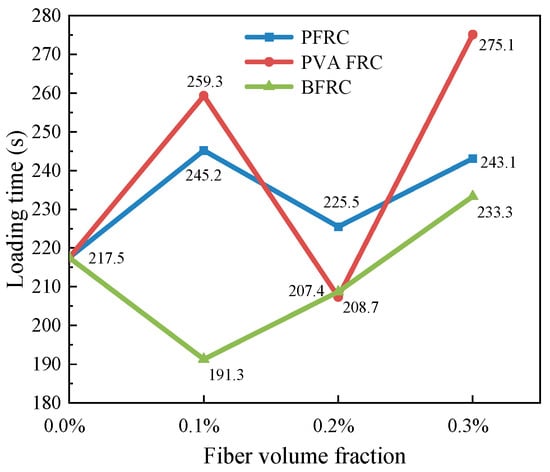
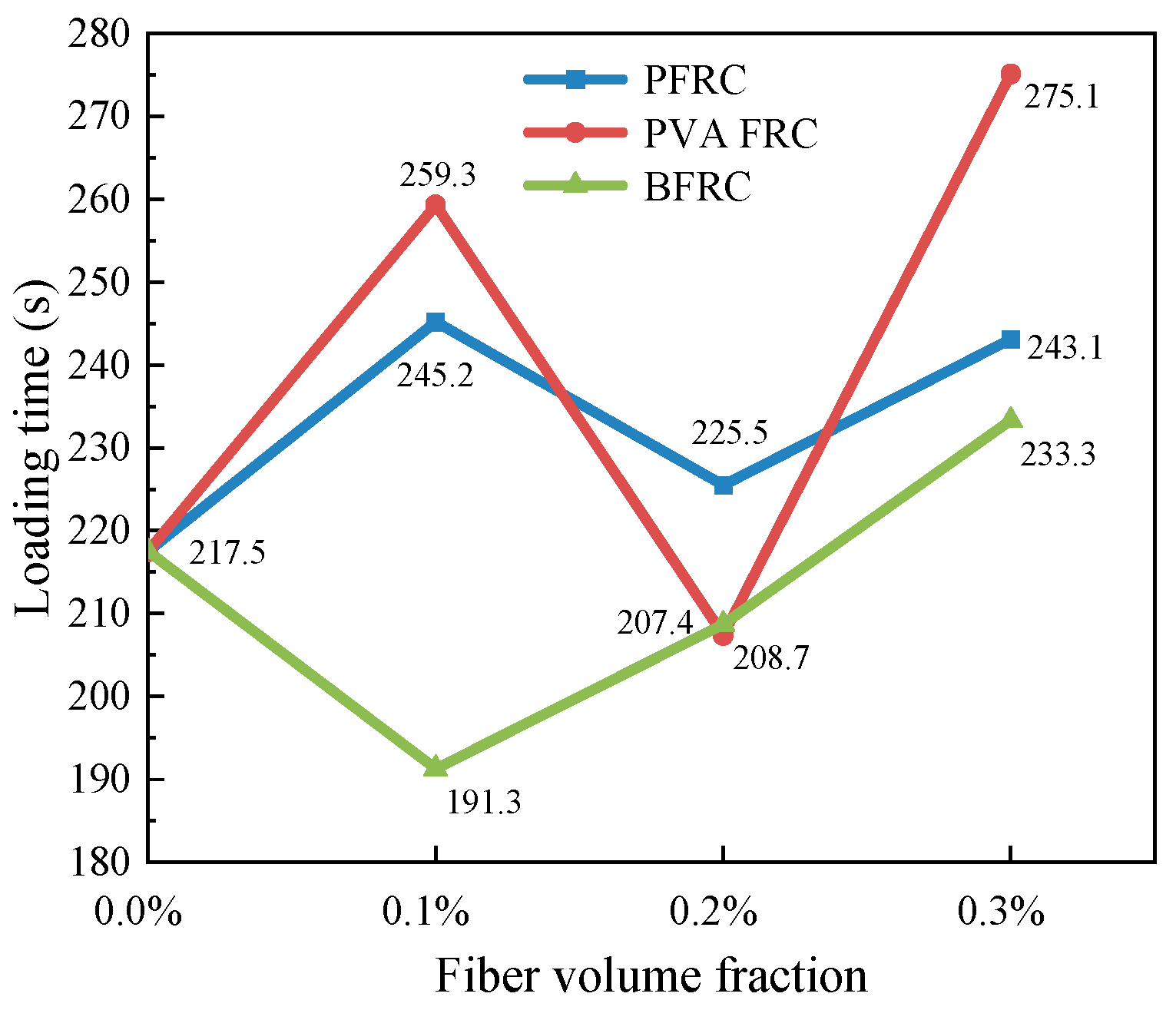
The total time from loading to failure for fiber-reinforced concrete and plain concrete specimens is illustrated in Figure 1. It is evident that fibers extend the total loading time to flexural failure in concrete, attributed to the significantly higher tensile strength of the fibers compared to that of the concrete. This is because the fibers enhance the toughness of the concrete, which refers to its ability to maintain a certain level of resistance during plastic deformation. The 0.1% BFRC specimen exhibits a shorter total loading time compared to the plain concrete specimen. This may be attributed to the initial contact of the universal testing machine indenter during loading and the random dispersion effect of BF fibers. Randomly dispersed basalt fibers may introduce harmful pores within the concrete matrix, thereby weakening the load-bearing capacity of the specimen [23,24]. However, the overall trend still indicates that loading time increases with higher fiber volume fractions. When the fiber volume fraction reaches 0.3%, the total loading time is significantly longer than that of the plain concrete specimen.
Figure 1.
The total loading time.
The total loading time is longest for PVA-reinforced concrete, followed by polypropylene fiber-reinforced concrete, while basalt fiber-reinforced concrete has the shortest loading time. Among various types of fiber-reinforced concrete, polyvinyl alcohol fiber-reinforced concrete exhibits the longest total loading time, followed by polypropylene fiber-reinforced concrete, while basalt fiber-reinforced concrete has the shortest loading time. This phenomenon may arise from the difference in elastic modulus between the fibers and the concrete matrix. Fibers with an elastic modulus similar to that of concrete can maintain good strain compatibility with the matrix, thereby achieving a longer loading time. Conversely, fibers with a substantial disparity in elastic modulus are prone to stiffness mismatch, which shortens the overall loading process. As the fiber volume fraction increases, fluctuations in total loading time are observed, which may be attributed to the randomness of fiber distribution. However, fluctuations in total loading time are observed as the fiber volume fraction increases, which may be related to the randomness of fiber distribution.
3.1.2. Fracture Time
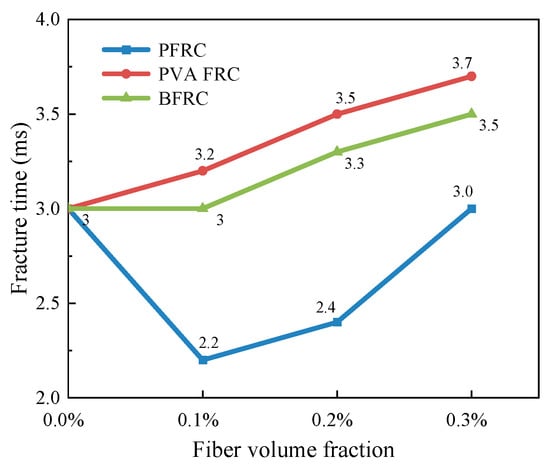
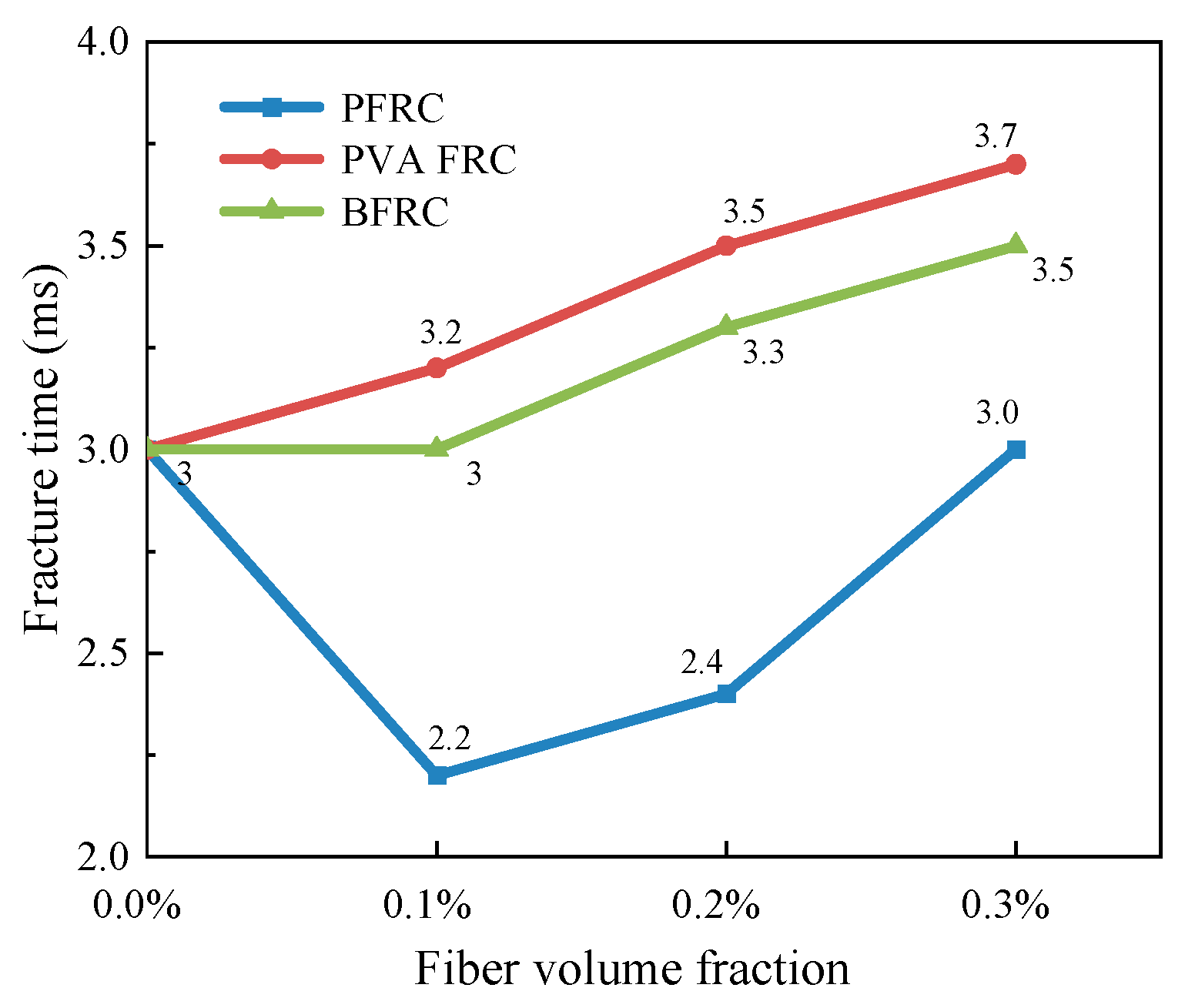
In this study, the key time parameter “fracture time” is defined as the time interval from the moment when the first macro-crack becomes visible on the specimen surface to the instant when the crack fully propagates through the entire height of the specimen. Crack identification adopts a “dual-operator independent interpretation and cross-validation” method: first, two operators independently review the video at both original and reduced speeds to determine the frame where the crack first clearly appears; then, cross-validation is performed to minimize subjective errors. The frame rate of the high-speed camera is 1345 frames per second, meaning each frame corresponds to 0.74 ms. Therefore, the fracture time is calculated based on the number of frames captured. Due to the one-frame uncertainty inherent to the high-speed camera frame rate, there is an error of ±0.74 ms in the fracture time calculation. The fracture times of the concrete specimens are shown in Figure 2.
Figure 2.
Fracture time of concrete specimens.
Compared to plain concrete, polypropylene fiber-reinforced concrete shows a reduced fracture time, while both polyvinyl alcohol and basalt fiber-reinforced concrete exhibit increased fracture times. At a fiber volume fraction of 0.3%, the fracture times of PVA and basalt fiber-reinforced concrete are extended by 23% (3.7 ms) and 17% (3.5 ms), respectively. This difference primarily stems from the relative relationship between the elastic modulus of the fibers and that of the concrete matrix. This difference primarily stems from the relative relationship between the elastic modulus of the fibers and that of the concrete matrix [25]. The elastic modulus of polypropylene fibers (approximately 3.8 GPa) is lower than that of ordinary concrete (approximately 30 GPa), making them more prone to significant deformation under load and making a limited contribution to inhibiting the propagation of macroscopic cracks [26]. In contrast, the elastic moduli of both polyvinyl alcohol fibers (approximately 40 GPa) and basalt fibers (approximately 93 GPa) are significantly higher than that of the concrete matrix. During the cracking process, these high-modulus fibers can more effectively bridge cracks and restrict the opening displacement at the crack tip due to their high stiffness, thereby significantly delaying the onset of unstable fracture [25,27]. This mechanism ultimately extends the fracture time of the concrete.
For polypropylene fiber-reinforced concrete with fiber volume fractions of 0.2% and 0.3%, the fracture times are extended by 9% and 36%, respectively, compared to the 0.1% fiber volume fraction. Similarly, for polyvinyl alcohol fiber-reinforced concrete, the fracture times for 0.2% and 0.3% fiber volume fractions are extended by 9% and 16%, respectively, compared to the 0.1% fiber volume fraction. The overall trend indicates that with an increase in fiber volume fraction, the fracture time of fiber-reinforced concrete shows a systematic extension. This phenomenon can be reasonably explained by the fiber bridging theory [28]. The single-filament tensile strengths of polypropylene fibers (~276 MPa), polyvinyl alcohol fibers (~1600 MPa), and basalt fibers (~4150 MPa) are all significantly higher than that of the concrete matrix (typically 2–5 MPa). When concrete cracks and microcracks form, the fibers bridging the cracks do not rupture immediately. Instead, they continue to transfer loads through the fiber–matrix interfacial bond (i.e., the bridging effect), thereby delaying the failure process. According to micromechanical models, the number of effective fibers that contribute to bridging at the crack section is proportional to the fiber volume fraction [28]. Consequently, as the fiber volume fraction increases, the number of fibers participating in bridging rises, leading to an enhancement in the energy dissipated (i.e., toughness) during the fracture process of the composite material [29]. Macroscopically, this is manifested as an extension in the time required for failure.
3.2. Crack Growth Rate
3.2.1. Average Crack Growth Rate
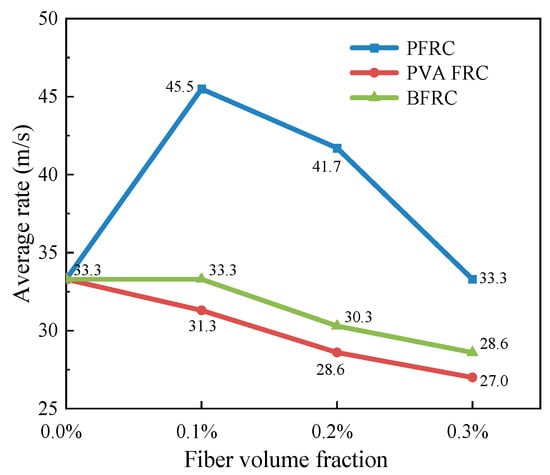
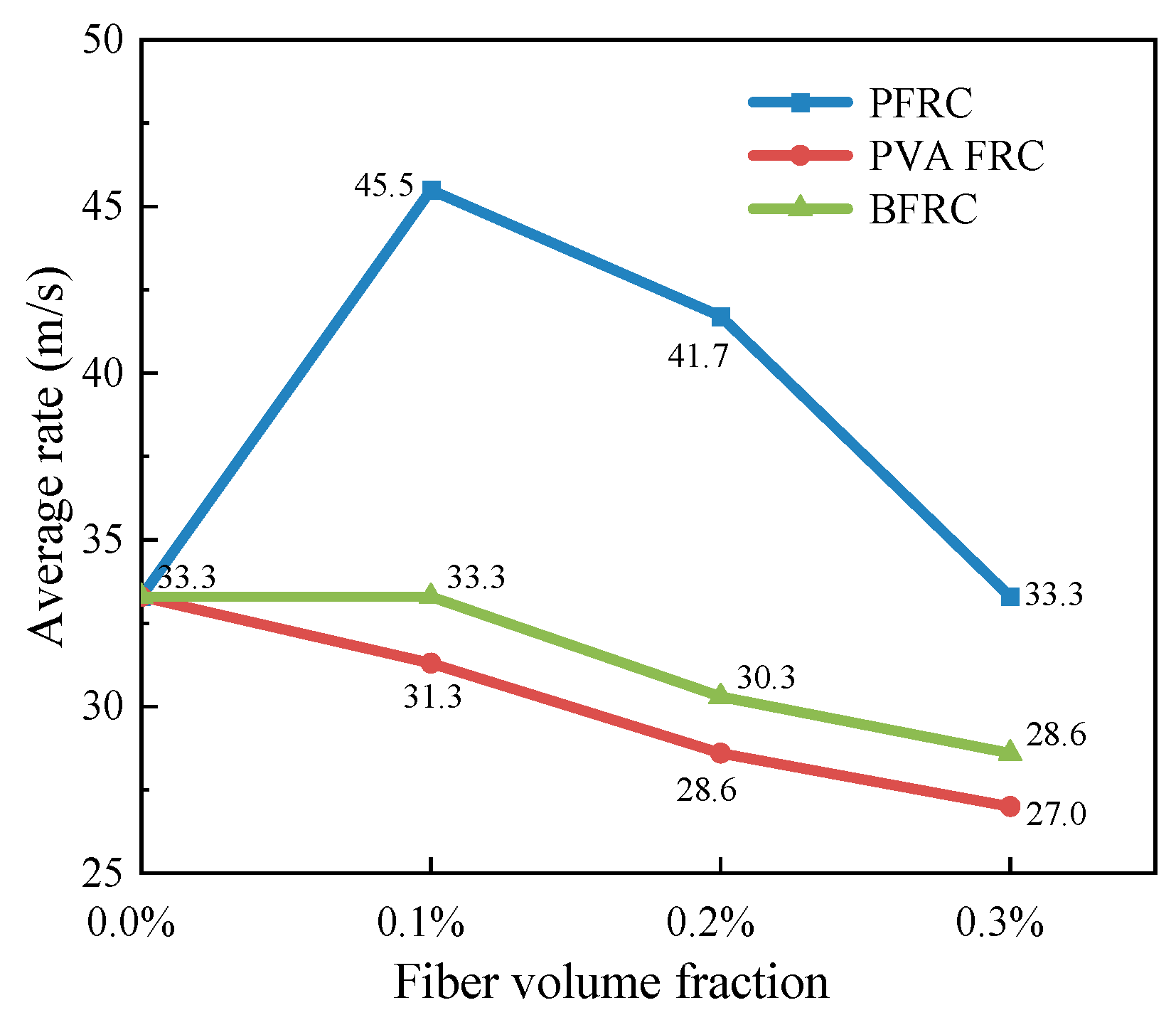
During the flexural test, the lower part of the specimen is subjected to tension, and the cracks occur in the lower part firstly when the specimen is broken. As the cracks mainly propagate vertically upwards until they penetrate, the crack growth distance is approximately taken as 100 mm of the specimen’s cross-sectional height. Additionally, based on the crack fracture time of concrete specimens, the average rate of crack propagation can be calculated, as shown in Figure 3. In the calculations, we employed a simplifying assumption regarding the crack growth path: the crack extension distance between consecutive frames was approximated as the vertical projection displacement of the crack tip, converted using the pixel scale corresponding to the specimen height (100 mm). Since this calculation method simplifies the tortuous crack path into a linear projection, the resulting rate values likely underestimate the true physical crack length and instantaneous velocity along the actual tortuous path. However, the primary objective of this study is the comparative analysis among different fiber-reinforced concrete types, rather than determining the absolute crack propagation rate. Therefore, the analysis was conducted based on the aforementioned assumption.
Figure 3.
Average rate of crack growth.
It can be seen that the average crack growth rate of fiber-reinforced concrete is approximately between 27 to 45 m/s. The PVA and basalt fiber-reinforced concrete demonstrated average crack growth rates of 27.0 m/s and 28.6 m/s, respectively, which are lower than the 33.3 m/s observed in plain concrete. The crack growth rate of polypropylene fiber-reinforced concrete is higher than that of plain concrete, while the rates for polyvinyl alcohol fiber and basalt fiber-reinforced concrete are lower than that of plain concrete. This is attributed to the lower elastic modulus of polypropylene fibers compared to ordinary concrete, while the elastic moduli of basalt fibers and polyvinyl alcohol fibers are significantly higher than that of concrete. As the fiber volume ratio increases, the average crack growth rate in fiber-reinforced concrete decreases, generally showing a linear negative correlation. This is because the flexural strength of fiber-reinforced concrete is much greater than that of plain concrete.
3.2.2. Change in Crack Growth Rate
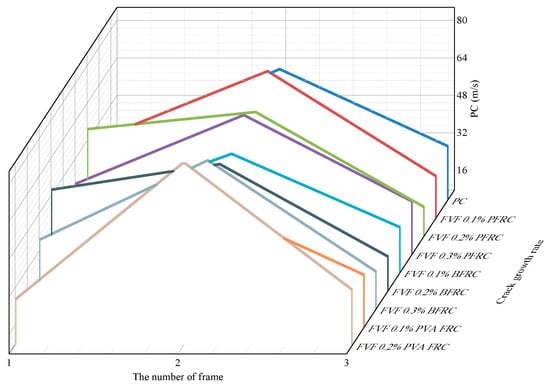
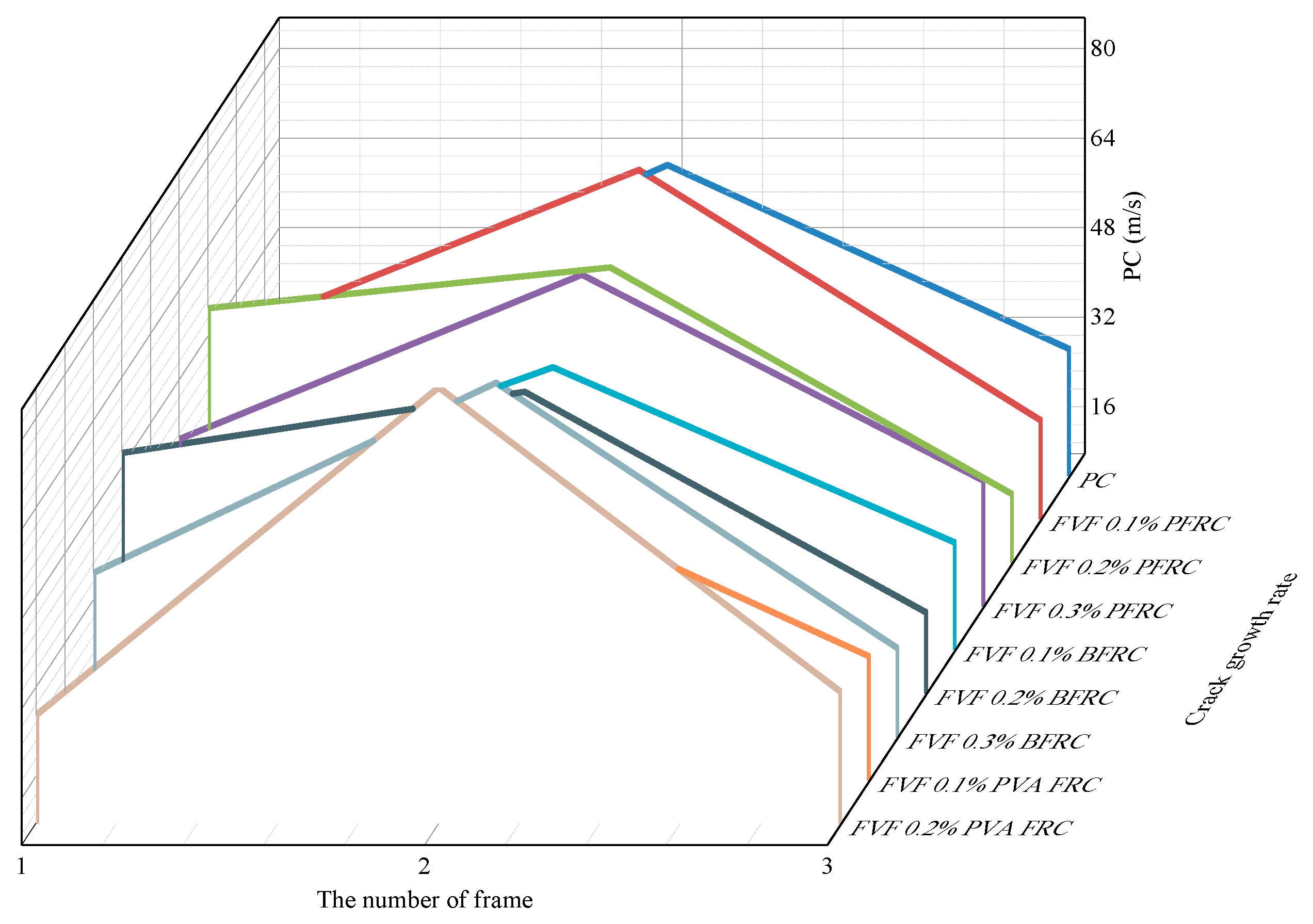
The crack extension length in pixels for each frame is determined by calculating the pixel difference in crack tip positions between the current frame and the previous frame. Based on the pixel scale corresponding to the specimen height of 100 mm, this pixel displacement is converted into the actual extension length (in millimeters). Dividing this length by the inter-frame time interval (0.74 ms) yields the apparent crack growth rate during that interval, as shown in Figure 4. The first frame corresponds to the moment when the crack is initially identified on the specimen surface.
Figure 4.
Change in crack growth rate.
The observational data indicate that the maximum crack growth rate of fiber-reinforced concrete is on a similar order of magnitude to that of plain concrete, showing no significant difference. Specifically, during the first frame interval, the average growth rates for fiber-reinforced concrete and plain concrete were 35.7 m/s and 31.5 m/s, respectively. In the second frame interval, the average for all fiber-reinforced concrete specimens was 67.8 m/s (with polypropylene fiber-reinforced concrete and basalt fiber-reinforced concrete both at 65.7 m/s, and polyvinyl alcohol fiber-reinforced concrete at 74.1 m/s), while plain concrete was 63.1 m/s. In the third frame interval, the rates were 25.9 m/s and 30.1 m/s, respectively. This phenomenon may be related to the reinforcement mechanism of fibers: the incorporation of fibers typically enhances the flexural strength of concrete, leading to crack initiation at higher load levels. The elastic strain energy released upon crack initiation may be greater, which could partially explain the trend of higher instantaneous growth rates observed in fiber-reinforced concrete specimens during certain stages (e.g., the second frame).
3.3. Fracture Progression
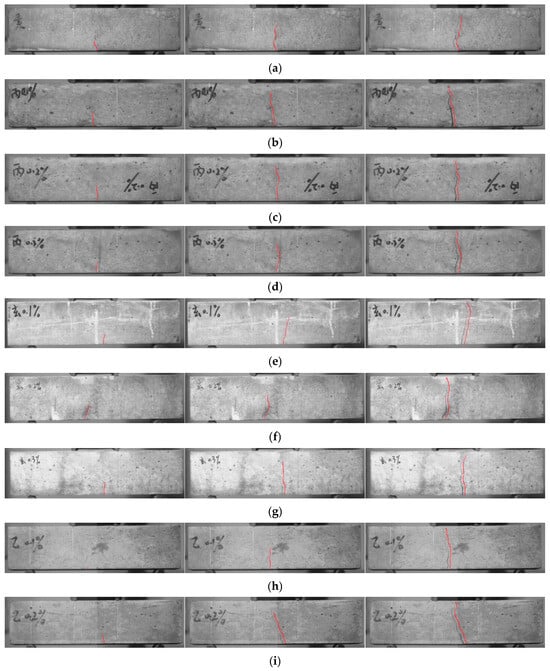
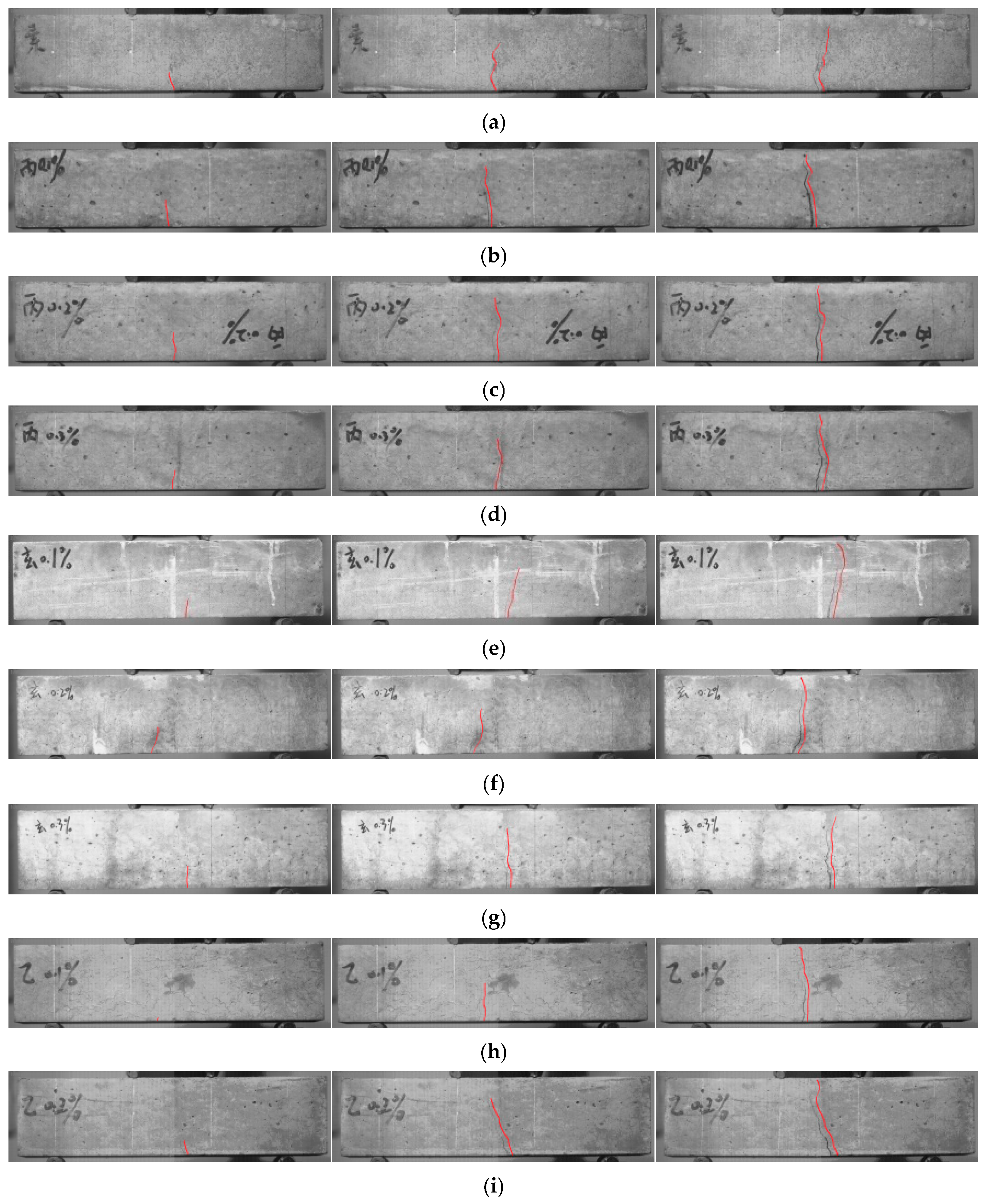
Figure 5 shows high-speed camera frames capturing the fracture process of plain concrete and fiber-reinforced concrete specimens. To highlight the cracks more clearly, red lines were drawn along the cracks. In chronological order, the three frames after cracking are presented, with a total duration of approximately 3 ms. The cracking process of both plain concrete and fiber-reinforced concrete specimens exhibits a fast-to-slow pattern. At around 1.5 ms, the crack in the second frame has propagated to about two-thirds of the specimen’s height.
Figure 5.
Fracture of concrete specimens; (a) plain concrete, PP fiber-reinforced concrete with FVF (b) 0.1% and (c) 0.2% and (d) 0.3%, BFs-reinforced concrete with FVF (e) 0.1% and (f) 0.2% and (g) 0.3%, PVA-reinforced concrete with FVF (h) 0.1% and (i) 0.2%.
The incorporation of fibers can inhibit crack propagation in concrete while also influencing the macroscopic crack path. According to the fiber spacing theory, randomly distributed fibers create a heterogeneous stress field within the concrete matrix. When an advancing crack tip approaches a fiber, the local stress intensity factor may change, potentially causing the crack to deflect around the fiber or propagate along the fiber–matrix interface. This results in a more tortuous macroscopic crack path. As can be seen from Figure 5, for both plain concrete and polypropylene fiber-reinforced concrete specimens, the crack location is at the centerline of the pure bending section. For basalt fiber-reinforced concrete and polyvinyl alcohol fiber-reinforced concrete specimens, the crack location is within the pure bending section, but there is a slight deviation to the left or right. This is because the elastic modulus of these two types of fibers is greater than that of concrete, and the fibers are randomly distributed.
Due to the influence of fibers, aggregates, and other factors, the crack paths show some curvature but generally propagate vertically upward. Fiber-reinforced concrete with a higher fiber volume fraction exhibits more tortuous crack development compared to those with a lower fiber volume fraction.
3.4. Flexural Strength and Failure Deflection
3.4.1. Flexural Strength
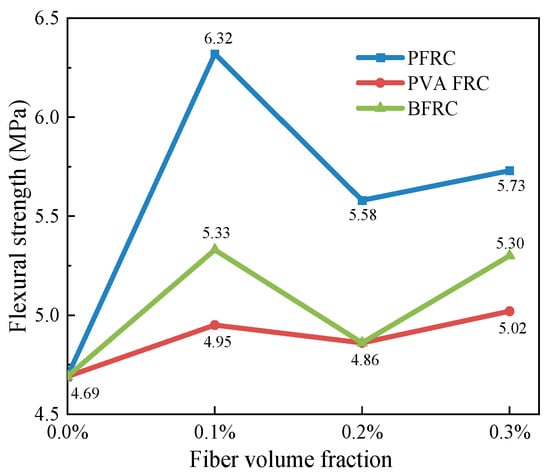
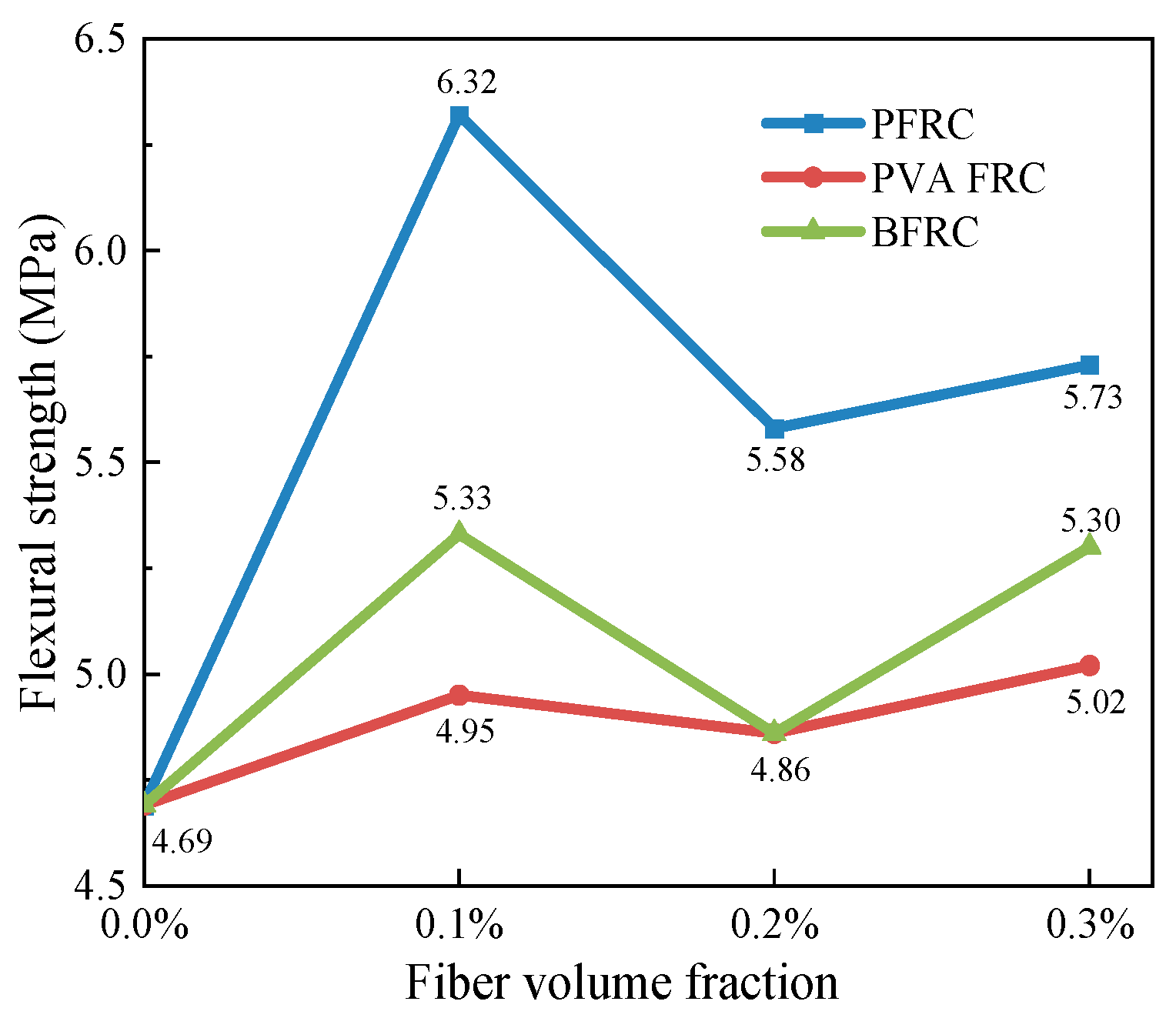
The flexural strength refers to the maximum stress value of a concrete specimen when subjected to a bending load, which measures the material’s ability to resist bending failure. The formula for calculating flexural strength is , where is the width of the concrete specimen’s cross-section (mm); is the height of the concrete specimen’s cross-section (mm); is the failure load of the concrete specimen (N); and is the span between the supports of the concrete specimen (mm). Based on experimental data, the calculated flexural strength is shown in Figure 6.
Figure 6.
Flexural strength of fiber-reinforced concrete.
As shown in Figure 6, compared to the flexural strength of plain concrete at 4.69 MPa, the flexural strengths of polypropylene fiber concrete specimens with fiber volume fractions of 0.1%, 0.2%, and 0.3% increased by 39.2%, 22.9%, and 26.2%, respectively. The flexural strengths of basalt fiber concrete with fiber volume fractions of 0.1%, 0.2%, and 0.3% increased by 10.0%, 0.2%, and 9.3%, respectively. For polyvinyl alcohol fiber concrete with fiber volume fractions of 0.1%, 0.2%, and 0.3%, the flexural strengths increased by 9.0%, 7.0%, and 10.6%, respectively. The results indicate that fibers can improve the flexural capacity of concrete, with polypropylene fiber concrete showing the best enhancement.
As the fiber volume fraction increases, the flexural strengths of the three types of fiber concrete specimens exhibit an initial increase, followed by a slight decrease, and then another increase. When the fiber volume fraction is low (0% to 0.1%), the fibers can effectively exert a “bridging” effect, delaying crack propagation. As the number of fibers increases, the number of fibers bridging the crack per unit area also rises, leading to a steady improvement in overall flexural strength and toughness. At this stage, the enhancing effect of the fibers dominates absolutely. When the fiber dosage reaches 0.2%, there may be a tendency for uneven dispersion or local agglomeration of fibers during mixing, which could introduce initial defects or stress concentration points in the concrete matrix. These potential negative factors may counteract the reinforcing effect of the fibers, leading to the observed slight decrease in flexural strength. When the fiber dosage is further increased to 0.3%, although dispersion issues may still persist, the bridging stress field formed by the large number of fibers (including the uniformly dispersed portion) becomes dominant, driving the recovery of flexural strength to an upward trend. Since this study did not conduct direct quantitative characterization of the spatial distribution of fibers (e.g., through image analysis or CT scanning) to verify the degree of agglomeration, the above explanation is an inference based on observed phenomena and the principles of composite materials. The highest flexural capacity was observed at a fiber volume fraction of 0.1%, where the flexural strengths of polypropylene, basalt, and polyvinyl alcohol fiber concrete improved to 1.35 times, 1.14 times, and 1.06 times, respectively.
3.4.2. Failure Deflection
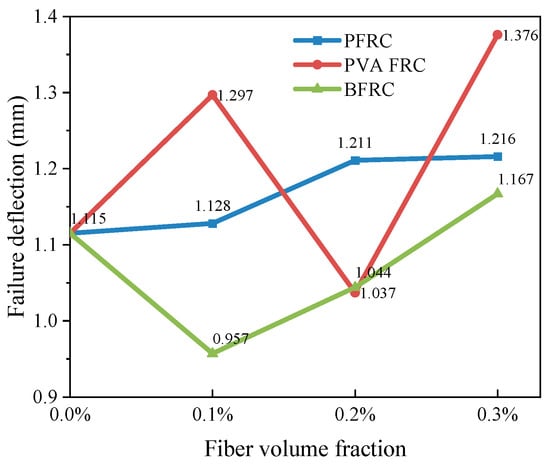
Figure 7 shows the failure deflection of fiber-reinforced concrete, which is the maximum deflection value reached when the concrete specimen fails under load. This parameter is measured according to the ASTM C1609/C1609M [22] standard method and serves as a key indicator for evaluating the deformation capacity of fiber-reinforced concrete under bending loads. At a fiber volume fraction of 0.1%, the failure deflections of polyvinyl alcohol fiber concrete, polypropylene fiber concrete, and basalt fiber concrete are 1.16, 1.01, and 0.86 times that of plain concrete. The potential reasons for the reduced fracture deflection in the 0.1% basalt fiber-reinforced concrete specimens are as follows: Basalt fibers are characterized by high elastic modulus and high brittleness. At a low dosage (0.1%), the number of fibers is limited. Due to the significant stiffness mismatch between the fibers and the cement matrix, as well as potential interfacial weak zones or fiber end effects that may occur during actual mixing, these factors can lead to a slightly earlier onset of the failure process, thereby resulting in reduced deflection. When the fiber volume fraction is 0.3%, these multipliers are 1.23, 1.09, and 1.05, respectively. This data clearly demonstrates that the incorporation of fibers effectively enhances the flexural toughness of concrete, allowing it to withstand greater deformation before failure.
Figure 7.
Deflection of fiber-reinforced concrete.
As the fiber volume fraction increases, the failure deflection of polyvinyl alcohol fiber, polypropylene fiber, and basalt fiber concrete specimens shows a tendency to increase. As the fiber volume fraction increases from 0.1% to 0.3%, the failure deflections of polyvinyl alcohol fiber concrete, polypropylene fiber concrete, and basalt fiber concrete increase by 1.06, 1.08, and 1.22, respectively. After the concrete matrix cracks, fibers spanning the cracks continuously transfer stress through their bond with the matrix. This process not only prevents the rapid propagation of cracks but also dissipates significant energy through fiber pull-out or rupture. According to micromechanical principles, as the fiber volume fraction increases, the number of effective fibers participating in bridging increases linearly. This enables the composite material to absorb more strain energy before failure through the development of more extensive microcracks and longer fiber pull-out processes. Macroscopically, this energy dissipation mechanism is directly manifested as a systematic increase in the deformation deflection of the specimen.
4. Conclusions
This study investigates the fracture behavior of fiber-reinforced concrete incorporating polypropylene, polyvinyl alcohol, and basalt fibers. A series of flexural tests were conducted to evaluate the time to failure, crack formation, and deflection of the concrete mixtures.
1. The relationship between fiber type and failure time: The incorporation of fibers significantly extends the time taken for concrete to reach flexural failure. High-modulus fibers, due to their high stiffness, can more effectively bridge cracks and restrict the opening displacement at the crack tip, thereby prolonging the fracture time of concrete. Compared to plain concrete, the fracture time of polyvinyl alcohol fiber-reinforced concrete and basalt fiber-reinforced concrete is extended by 23% and 17%, respectively, at a fiber volume fraction of 0.3%.
2. Trends in crack growth rate: Compared to the average crack growth rate of plain concrete, high-modulus fiber-reinforced concrete, represented by PVA and BF, exhibits a lower average crack growth rate, whereas low-modulus fiber-reinforced concrete, represented by PP fibers, demonstrates a higher average crack growth rate. As the fiber volume ratio increases, the average crack growth rate of fiber-reinforced concrete shows a decreasing trend.
3. Characteristics of the fracture process: The cracking process of both plain concrete and fiber-reinforced concrete specimens exhibits a fast-to-slow pattern. At around 1.5 ms, the crack in the second frame has propagated to about two-thirds of the specimen’s height. For basalt and polyvinyl alcohol fiber-reinforced concrete, the crack location is within the pure bending section, but there is a slight deviation to the left or right. Fiber-reinforced concrete with a higher fiber volume fraction exhibits more tortuous crack development compared to those with a lower fiber content.
4. Improvements in flexural strength and failure deflection: All three types of fibers can enhance the flexural strength of concrete to varying degrees. With the increase in fiber volume fraction, the flexural strength of the three types of fiber-reinforced concrete specimens shows a trend of initial increase, followed by a slight decrease, and then another increase. At a fiber volume fraction of 0.1%, the maximum flexural strengths of polypropylene, basalt, and polyvinyl alcohol fiber-reinforced concrete are improved to 1.35 times, 1.14 times, and 1.06 times that of plain concrete, respectively, while the failure deflections are 1.16 times, 1.01 times, and 0.86 times that of plain concrete. The failure deflection increases with higher fiber volume fractions, demonstrating better ductility.
5. Shortcomings and prospects: This study focused solely on three common types of fibers—polypropylene, polyvinyl alcohol, and basalt fibers. Due to experimental constraints, the results may contain certain random errors, and the crack propagation calculations were simplified. Future research could expand variables such as fiber types (e.g., carbon fibers, steel fibers, hybrid fibers), fiber geometric characteristics (length, diameter, shape), and concrete matrix strength grades. This would allow for a systematic description of the dynamic crack evolution patterns in fiber-reinforced concrete fractures, providing more precise guidance for the design of fiber-reinforced concrete materials.
Author Contributions
Conceptualization, T.W.; software, D.W.; validation, D.W.; formal analysis, X.W.; investigation, X.W. and Y.Z.; resources, W.W.; data curation, Y.Q.; writing—original draft preparation, X.W., T.W. and Y.Z.; writing—review and editing, Y.Q.; visualization, Y.Z.; supervision, W.W.; project administration, Y.Q., W.W. and D.W.; funding acquisition, Y.Q. and W.W. All authors have read and agreed to the published version of the manuscript.
Funding
This research was funded by Guangxi Science and Technology Major Program (Guike AA23062034). Guangxi Science and Technology Program (Guike LT2504240008). Natural Science Foundation of Chongqing (CSTB2023NSCQ-LZX0086).
Data Availability Statement
Data will be made available on request.
Conflicts of Interest
Author Xianzhang Wang was employed by the company Guangxi Pinglu Canal Construction Co., Ltd. The remaining authors declare that the research was conducted in the absence of any commercial or financial relationships that could be construed as a potential conflict of interest.
References
- Mohamed, O.; Zuaiter, H. Fresh Properties, Strength, and Durability of Fiber-Reinforced Geopolymer and Conventional Concrete: A Review. Polymers 2024, 16, 141. [Google Scholar] [CrossRef] [Scilit] [PubMed]
- Ma, J.Y.; Yuan, H.Y.; Zhang, J.H.; Zhang, P.J. Enhancing concrete performance: A comprehensive review of hybrid fiber reinforced concrete. Structures 2024, 64, 106560. [Google Scholar] [CrossRef] [Scilit]
- Babaali, A.; Hadianfard, M.A.; Jahangiri, M. The influences of type, length, and volumetric fraction of fibers on the direct shear strength of the fiber-reinforced concretes. Constr. Build. Mater. 2024, 428, 136375. [Google Scholar] [CrossRef] [Scilit]
- Liu, X.; Wang, X.; Chen, Z.; Jiang, K. Synergistic effect of hybrid micro- and macro- fibers on the flexural properties of concrete. Constr. Build. Mater. 2025, 462, 139901. [Google Scholar] [CrossRef] [Scilit]
- Esaker, M.; Thermou, G.E.; Neves, L. Behaviour of Textile Reinforced Concrete panels under high-velocity impact loading. Constr. Build. Mater. 2024, 445, 137806. [Google Scholar] [CrossRef] [Scilit]
- Matthes, J.; Hock, J.; Waibel, P.; Scherrmann, A.; Gehrmann, H.J.; Keller, H.B. A high-speed camera based approach for the on-line analysis of particles in multi-fuel burner flames. Exp. Therm. Fluid Sci. 2016, 73, 10–17. [Google Scholar] [CrossRef] [Scilit]
- Mena-Alonso, A.; Latorre-Carmona, P.; González, D.C.; Díez-Pastor, J.F.; Rodríguez, J.J.; Mínguez, J.; Vicente, M.A. A cost-effective stereo camera-based system for measuring crack propagation in fibre-reinforced concrete. Arch. Civ. Mech. Eng. 2023, 23, 192. [Google Scholar] [CrossRef] [Scilit]
- Wu, B.B.; Yang, L.P.; Mei, Y.; Sun, Y.H.; Shen, J. Dynamic tensile properties of straw fiber reinforced rubber concrete. J. Build. Eng. 2024, 96, 110455. [Google Scholar] [CrossRef] [Scilit]
- Xiong, B.B.; Lai, D.D.; Ferrara, L.; Demartino, C. High-strain rate compressive and tensile behavior of concrete with substituted Polyamide sand. Constr. Build. Mater. 2024, 432, 136235. [Google Scholar] [CrossRef] [Scilit]
- Wang, H.; Lv, N.; Lu, Z.Y.; Wang, H.B.; Zong, Q. Experimental study on mechanical properties and breakage of high temperature carbon fiber-bar reinforced concrete under impact load. Sci. Rep. 2024, 14, 20566. [Google Scholar] [CrossRef] [Scilit]
- Aljagoub, D.; Na, R.; Cheng, C.S.; Shen, Z.G. Performance Evaluation of Uncooled UAV Infrared Camera in Detecting Concrete Delamination. Infrastructures 2022, 7, 163. [Google Scholar] [CrossRef] [Scilit]
- Ojala, T.; Punkki, J. Estimating the workability of concrete with a stereovision camera during mixing. Sensors 2024, 24, 4472. [Google Scholar] [CrossRef] [Scilit] [PubMed]
- Xie, L.; Sun, X.J.; Yu, Z.P.; Lian, H.H. Study on the tensile properties of basalt fiber reinforced concrete under impact: Experimental and theoretical analysis. Arch. Civ. Mech. Eng. 2024, 24, 99. [Google Scholar] [CrossRef] [Scilit]
- Htet, P.; Chen, W.S.; Hao, H.; Li, Z.X.; Shaikh, F. Hybrid fibre reinforced recycled aggregate concrete: Dynamic mechanical properties and durability. Constr. Build. Mater. 2024, 415, 135044. [Google Scholar] [CrossRef] [Scilit]
- Kortmann, J.; Minar, S. Contribution of Carbon Concrete Construction to the Circular and Resource Economy. Buildings 2023, 13, 2851. [Google Scholar] [CrossRef] [Scilit]
- Saleh, Z.; Sheikh, M.N.; Remennikov, A.; Basu, A. Damage assessment of GFRP bar reinforced ultra-high-strength concrete beams under overloading impact conditions. Eng. Struct. 2020, 213, 110581. [Google Scholar] [CrossRef] [Scilit]
- Karpf, A.; Selig, M.; Alchaar, A.; Iskander, M. Detection of cracks in concrete using near-IR fluorescence imaging. Sci. Rep. 2023, 13, 18880. [Google Scholar] [CrossRef] [Scilit]
- Yang, B.; Gao, B.L.; Han, Y.L.; Zhang, B.H. Semantic segmentation-based framework for concrete pouring progress monitoring by using multiple surveillance cameras. Dev. Built Environ. 2023, 16, 100283. [Google Scholar] [CrossRef] [Scilit]
- Wu, Y.J.; Li, S.Q.; Zhang, J.E.; Li, Y.C.; Li, Y.; Zhang, Y.Q. Dual attention transformer network for pixel-level concrete crack segmentation considering camera placement. Autom. Constr. 2024, 157, 105166. [Google Scholar] [CrossRef] [Scilit]
- GB/T 50080-2016; Standard for Test Method of Performance on Ordinary Fresh Concrete. China Architecture and Building Press: Beijing, China, 2017.
- Babatunde, O.; Adewumi, B.; William, B. Early-age and long-term strength development of high-performance concrete with SAP. Constr. Build. Mater. 2021, 267, 121798. [Google Scholar]
- ASTM C1609/C1609M; Standard Test Method for Flexural Performance of Fiber-Reinforced Concrete (Using Beam with Third-Point Loading). ASTM International: West Conshohocken, PA, USA, 2022.
- Sun, Z.; Li, Y.; Su, L.; Niu, D.; Luo, D.; He, W.; Xie, S. Investigation of electrical resistivity for fiber-reinforced coral aggregate concrete. Constr. Build. Mater. 2024, 414, 135011. [Google Scholar] [CrossRef] [Scilit]
- Sun, Z.; Li, Y.; Han, T.; Su, L.; Zhu, X.; He, J.; Xie, S.; Shi, Y. Performance evaluation of hybrid fiber-reinforced concrete based on electrical resistivity: Experimental and data-driven method. Constr. Build. Mater. 2024, 446, 137992. [Google Scholar] [CrossRef] [Scilit]
- Banthia, N.; Sappakittipakorn, M. Toughness enhancement in steel fiber reinforced concrete through fiber hybridization. Cem. Concr. Res. 2007, 37, 1366. [Google Scholar] [CrossRef] [Scilit]
- Wei, X.; Qin, Z.; Wang, S.; Ma, S. Experimental study on dynamic impact mechanical properties and fracture resistance mechanism of polypropylene fiber reinforced concrete. J. Build. Eng. 2025, 112, 113654. [Google Scholar] [CrossRef] [Scilit]
- Zhang, H.; Liu, T.; Cui, Y.; Wang, W.; Qing, C. Experimental study on the performance of basalt fiber combined with cement-based material solidified shield waste mud under the coupled effects of acid corrosion and dry-wet cycles. Constr. Build. Mater. 2025, 463, 140110. [Google Scholar] [CrossRef] [Scilit]
- Naaman, A.; Reinhardt, H.W. Proposed classification of HPFRC composites based on their tensile response. Mater. Struct. 2006, 39, 547. [Google Scholar] [CrossRef] [Scilit]
- Soranakom, C.; Mobasher, B. Correlation of tensile and flexural responses of strain softening and strain hardening cement composites. Cem. Concr. Compos. 2008, 30, 465. [Google Scholar] [CrossRef] [Scilit]

Disclaimer/Publisher’s Note: The statements, opinions and data contained in all publications are solely those of the individual author(s) and contributor(s) and not of MDPI and/or the editor(s). MDPI and/or the editor(s) disclaim responsibility for any injury to people or property resulting from any ideas, methods, instructions or products referred to in the content. |
© 2026 by the authors. Licensee MDPI, Basel, Switzerland. This article is an open access article distributed under the terms and conditions of the Creative Commons Attribution (CC BY) license.