Next Issue
Volume 16, September
Previous Issue
Volume 16, July


J. Pers. Med., Volume 16, Issue 8 (August 2026) – 44 articles

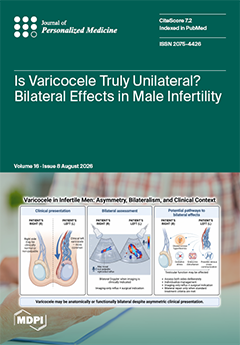
Cover Story (view full-size image): Varicocele usually presents as a left-sided clinical finding, yet its effects may extend beyond the clinically affected side. This narrative review examines evidence that varicocele is better understood as an asymmetric disorder that can involve both testes anatomically or functionally. When imaging is clinically indicated, bilateral Doppler assessment may reveal contralateral reflux missed on palpation, while shared hyperthermia, oxidative stress, endocrine disturbance, and venous cross-communication may contribute to bilateral dysfunction. The clinical message is nuanced: clinicians must assess both sides deliberately and individualize management. Bilateral palpable disease may warrant bilateral repair in appropriately selected infertile men, but imaging-only right-sided reflux is not, by itself, an indication for surgery. View this paper
  • Issues are regarded as officially published after their release is announced to the table of contents alert mailing list.
  • You may sign up for e-mail alerts to receive table of contents of newly released issues.
  • PDF is the official format for papers published in both, html and pdf forms. To view the papers in pdf format, click on the "PDF Full-text" link, and use the free Adobe Reader to open them.
Order results
Result details
Section
Select all
Export citation of selected articles as:
20 pages, 355 KB  
Review
Contemporary Challenges and Strategies for Diagnosing and Managing in Type 2 Myocardial Infarction: A Narrative Review
by Julia Kościanek, Natalia Zabawa, Anna Stanaszek, Michał Maślanka, Hubert Mączka, Martyna Pniaczek, Aleksandra Bołoz, Jadwiga Nessler, Jarosław Zalewski and Konrad Stępień
J. Pers. Med. 2026, 16(8), 438; https://doi.org/10.3390/jpm16080438 - 21 Aug 2026
Viewed by 501
Abstract
Type 2 myocardial infarction (T2MI) occurs secondary to an imbalance between myocardial oxygen supply and demand, with systemic conditions serving as the primary precipitating factors. T2MI predominantly affects older adults and is frequently accompanied by multiple chronic comorbidities. Therefore, it often has an [...] Read more.
Type 2 myocardial infarction (T2MI) occurs secondary to an imbalance between myocardial oxygen supply and demand, with systemic conditions serving as the primary precipitating factors. T2MI predominantly affects older adults and is frequently accompanied by multiple chronic comorbidities. Therefore, it often has an atypical clinical course and remains a significant diagnostic and therapeutic challenge, particularly given the lack of standardized clinical guidelines. Furthermore, the diagnosis of T2MI in women is especially challenging due to sex-related differences in biomarker kinetics and atypical symptom presentation. The aim of this review is to summarize current knowledge on T2MI, discuss modern diagnostic tools, and analyze sex-related differences in this context in order to identify future directions for the development of therapeutic guidelines. The review emphasizes the need for a multimodal approach, integrating biomarkers, individualized clinical decision-making and advanced cardiac imaging, as differentiation between T2MI and T1MI remains a significant challenge. Therefore, both non-invasive and invasive diagnostic strategies may be required to accurately identify patients with T2MI. Although routine coronary angiography in T2MI is not clearly supported by current evidence, it may be useful as a decisive tool for reclassification, particularly when the clinical presentation is ambiguous. Full article
(This article belongs to the Special Issue New Perspectives and Current Challenges in Myocardial Infarction)
Show Figures

Graphical abstract

12 pages, 967 KB  
Article
Clinical Outcomes Associated with GLP-1 Receptor Agonist Exposure in Non-Diabetic Patients with Chronic Pancreatitis: A Retrospective Cohort Study
by Arkadeep Dhali, Jyotirmoy Biswas, Fayaz Khan, Dushyant Singh Dahiya and Saikat Mandal
J. Pers. Med. 2026, 16(8), 437; https://doi.org/10.3390/jpm16080437 - 20 Aug 2026
Viewed by 349
Abstract
Background: GLP-1 receptor agonists (GLP-1 RAs) are increasingly used for obesity and metabolic disease, but their use in people with chronic pancreatitis is not a chronic pancreatitis-directed indication and direct evidence is limited. We described recorded outcomes among non-diabetic adults carrying a [...] Read more.
Background: GLP-1 receptor agonists (GLP-1 RAs) are increasingly used for obesity and metabolic disease, but their use in people with chronic pancreatitis is not a chronic pancreatitis-directed indication and direct evidence is limited. We described recorded outcomes among non-diabetic adults carrying a chronic pancreatitis diagnosis who did or did not have recorded GLP-1 RA exposure. Methods: We performed a retrospective propensity score-matched cohort study using the TriNetX Collaborative Network. Chronic pancreatitis was identified from a recorded diagnosis; supporting imaging, histological, functional, or specialist-confirmation criteria were unavailable. The exposed cohort included patients receiving dulaglutide, semaglutide, or tirzepatide (n = 1441 before matching), and the comparator cohort included patients without recorded GLP-1 RA exposure (n = 142,047 before matching). One-to-one propensity score matching generated 1422 patients in each cohort. Outcomes were assessed from 1 to 1095 days after the index date using risk comparisons and time-to-event analyses. Results: Mean follow-up after matching was 458.8 days in the exposed cohort and 664.4 days in the comparator cohort. Recurrent acute pancreatitis was recorded in 19/799 (2.4%) versus 76/704 (10.8%) patients (HR 0.247, 95% CI 0.149–0.409), pancreatic cancer in 10/1373 (0.7%) versus 40/1345 (3.0%) (HR 0.255, 95% CI 0.128–0.511), and all-cause mortality in 21/1419 (1.5%) versus 157/1416 (11.1%) (HR 0.167, 95% CI 0.105–0.263). A similar direction was observed across several coded outcomes. Vitamin D deficiency showed a higher hazard (HR 1.556, 95% CI 1.129–2.145), although its risk comparison was not significant. Conclusions: These estimates describe outcomes in a selected treatment-exposed phenotype of chronic pancreatitis. The findings are hypothesis-generating and should not guide prescribing decisions. Further prospective studies are required to confirm this hypothesis. Full article
(This article belongs to the Section Personalized Preventive Medicine)
Show Figures

Figure 1

16 pages, 2595 KB  
Systematic Review
Disease Characteristics and Management of Intrabiliary Colorectal Liver Metastasis: An Updated Systematic Review
by Panagiotis Dorovinis, Konstantinos Kossenas, Anna Paspala, Dimitrios Papaconstantinou, Myrto D. Keramida, Dimitrios K. Vlachos, Dionysios Prevezanos, Stylianos Kykalos, Nikolaos Machairas and Georgios C. Sotiropoulos
J. Pers. Med. 2026, 16(8), 436; https://doi.org/10.3390/jpm16080436 - 20 Aug 2026
Viewed by 212
Abstract
Background/Objectives: Liver metastasis develops in approximately 50% of patients with colorectal cancer. Invasion of the biliary tract from colorectal liver metastasis (CRLM) is rarely reported. Preoperative diagnosis remains elusive, prohibiting optimal surgical management. The objective of this systematic review was to summarize [...] Read more.
Background/Objectives: Liver metastasis develops in approximately 50% of patients with colorectal cancer. Invasion of the biliary tract from colorectal liver metastasis (CRLM) is rarely reported. Preoperative diagnosis remains elusive, prohibiting optimal surgical management. The objective of this systematic review was to summarize the clinical, radiological, pathological, and treatment characteristics of ibCRLM and describe the reported outcomes. Methods: A systematic literature search of the Medline, Embase, Web of Science, CENTRAL, and CINAHL databases was undertaken for studies reporting clinical outcomes of patients with ibCRLM, up to May 2026. An individual patient data analysis approach was utilized. Results: Thirty-eight case reports and 10 case-series, incorporating 228 patients with biliary involvement from CRLM, were identified. Mean age was 62.4 ± 10.9 years, with a male-to-female ratio of 3.2:1. The majority of metastatic lesions were metachronous in 71.1% and solitary in 59.1% of patients. Surgical treatment was implemented in 89.2% of patients. Major hepatectomy was the most common procedure, being performed in 46.2% of patients, followed by minor hepatectomy in 38.7% and pancreatoduodenectomy in 4.3%. After a median follow-up of 52.5 months (range 2–164 months), the survival rate was 60.5%. Non-survivors were found to have significantly more synchronous CRLM (50% versus 0, p = 0.008), while a single patient did not receive any curative-intent treatment and died 20 days following CRLM presentation. Conclusions: IbCRLM is a distinct clinicopathological presentation of CRLM with characteristic radiological and pathological features. The available evidence suggests that selected patients may achieve favorable long-term outcomes following complete surgical resection, although these findings should be interpreted with caution given the limitations of the available literature. Full article
Show Figures

Figure 1

12 pages, 2378 KB  
Article
Total En Bloc Spondylectomy in Modern Spine Oncology: Selection-Relevant Survival Signals and Treatment Burden in a Single-Center Cohort
by Celine Carmen Akta, Maximilian Muellner, Kai-Uwe Lewandrowski, Lukas Schönnagel, Anika Mueller, Michael Putzier, Matthias Pumberger and Thilo Khakzad
J. Pers. Med. 2026, 16(8), 435; https://doi.org/10.3390/jpm16080435 - 18 Aug 2026
Viewed by 288
Abstract
Background/Objectives: Total en bloc spondylectomy (TES) remains one of the most invasive and selectively used procedures in spine oncology. Its role has become more selective in the modern era of stereotactic body radiotherapy, separation surgery, targeted systemic therapy, immunotherapy, and multidisciplinary cancer [...] Read more.
Background/Objectives: Total en bloc spondylectomy (TES) remains one of the most invasive and selectively used procedures in spine oncology. Its role has become more selective in the modern era of stereotactic body radiotherapy, separation surgery, targeted systemic therapy, immunotherapy, and multidisciplinary cancer care. This study evaluated long-term survival, imaging-defined systemic disease burden, operative morbidity, patient-reported outcomes, and frailty-related variables after TES in a rare single-center cohort, with the goal of identifying selection-relevant survival and treatment-burden signals rather than developing a validated decision algorithm. Methods: We performed a retrospective single-center cohort study of consecutive adults who underwent TES for spinal tumors between 2011 and 2022. Of the 36 screened patients, 30 had sufficient clinical and survival data for analysis; patients without reliable survival or last-contact data were not included. Contrast-enhanced CT and PET-CT were reviewed for extraspinal metastases, lymphadenopathy, pleural effusion, and soft-tissue extension. Survival was analyzed using Kaplan–Meier methods, log-rank testing, and exploratory univariate Cox regression. Patient-reported outcomes included the Oswestry Disability Index (ODI) and SF-36 when available; frailty was summarized with the modified frailty index-5 (mFI-5) when component data were present. Results: The cohort included 13 men and 17 women with a mean age of 54.8 ± 15.2 years. At final follow-up, 18 patients had died, and 12 were alive. Five-year overall survival was approximately 76% in the full cohort. Extraspinal metastases were present in 72.2% of deceased patients compared with 8.3% of survivors and showed the clearest exploratory association with increased mortality (HR 3.46, 95% CI 1.23–9.78; p = 0.019). Metastatic disease demonstrated inferior survival compared with primary bone or soft-tissue tumors. Perioperative blood loss and transfusion burden were substantial but were not associated with survival in univariate analysis. ODI and SF-36 data were available only in small subsets and were therefore interpreted as descriptive signals of treatment burden. Conclusions: TES remains relevant in modern spine oncology, but only as an increasingly selective intervention. In this rare cohort, systemic disease burden, particularly extraspinal metastases, was the clearest selection-relevant survival signal, while blood loss, transfusion requirements, complications, and limited patient-reported outcomes illustrated substantial treatment burden. These findings do not establish a validated selection algorithm but support a contemporary decision threshold that integrates tumor biology, systemic disease status, anticipated margins, physiologic reserve, operative morbidity, and patient goals. Full article
Show Figures

Graphical abstract

11 pages, 880 KB  
Article
Intraoperative Volume Decay Measured Through Mechanical Ventilation as a Predictor of Prolonged Postoperative Air Leak After Uniportal Video-Assisted Thoracic Surgery Lung Resection
by Michele Salati, Alberto Roncon, Gian Marco Guiducci, Michela Tiberi, Mara Romito, Anna Chiara Nanto, Francesco Xiumè, Rosanna Coltrinari, Stefano Falcetta, Paolo Gentili, Abele Donati and Majed Refai
J. Pers. Med. 2026, 16(8), 434; https://doi.org/10.3390/jpm16080434 - 17 Aug 2026
Viewed by 257
Abstract
Background/Objectives: Prolonged postoperative air leak (PAL) remains one of the most common complications after lung resection, significantly affecting postoperative recovery and healthcare utilization. While several preoperative risk factors have been identified, reliable intraoperative predictors are still lacking. This study aimed to evaluate [...] Read more.
Background/Objectives: Prolonged postoperative air leak (PAL) remains one of the most common complications after lung resection, significantly affecting postoperative recovery and healthcare utilization. While several preoperative risk factors have been identified, reliable intraoperative predictors are still lacking. This study aimed to evaluate whether intraoperative ventilator-derived parameters—volume decay (Vol-Decay) and pressure decay (Pres-Decay)—are associated with the development of PAL following uniportal video-assisted thoracic surgery (VATS) lung resection. Methods: We conducted a single-center study including 277 consecutive patients undergoing uniportal VATS lung resection for neoplastic disease between May 2023 and April 2024. At the end of the surgical procedure, intraoperative Vol-Decay and Pres-Decay were measured using the mechanical ventilator under standardized conditions. PAL was defined as an air leak persisting for more than 5 days within 30 days after surgery. Univariate and multivariate analyses were performed to identify independent predictors of PAL, and the optimal Vol-Decay cut-off was determined using Youden’s index. Results: PAL occurred in 18 patients (6.5%). At univariate analysis, higher smoking exposure, lower FEV1, lower FEV1/FVC ratio, and higher Vol-Decay were significantly associated with PAL. At multivariable analysis, only FEV1 (p = 0.013) and Vol-Decay (p = 0.038) remained independent predictors. The optimal Vol-Decay cut-off was 22 mL (AUC 0.64), with high specificity (0.94) but low sensitivity (0.34). Patients with Vol-Decay > 22 mL showed a significantly higher incidence of PAL compared to those with lower values (27.3% vs. 4.7%). Conclusions: Intraoperative Vol-Decay represents a simple, objective, and reproducible parameter associated with the development of prolonged air leak after uniportal VATS lung resection. Its measurement may enable real-time risk stratification and support personalized intraoperative decision-making, potentially guiding targeted corrective strategies. Further prospective multicenter studies are warranted to validate these findings and confirm their clinical applicability. Full article
(This article belongs to the Special Issue Personalized Cardiothoracic Surgery: Treatment and Management)
Show Figures

Figure 1

15 pages, 1131 KB  
Article
Imeglimin-Associated Temporal Changes in γ-Glutamyl Transferase and Total Cholesterol: A Post Hoc Exploratory Analysis of the INFINITY Study
by Takeshi Osonoi, Shinichiro Shirabe, Miyoko Saito, Mitsuru Hosoya, Satako Douguchi, Kensuke Ofuchi and Makoto Katoh
J. Pers. Med. 2026, 16(8), 433; https://doi.org/10.3390/jpm16080433 - 17 Aug 2026
Viewed by 299
Abstract
Background: Imeglimin is a novel oral antidiabetic agent that improves mitochondrial function and glucose metabolism in patients with type 2 diabetes mellitus (T2DM). Its effects on liver enzymes remain unclear. We investigated the effects of imeglimin on hepatic biomarkers, particularly γ-glutamyl transpeptidase (γ-GTP), [...] Read more.
Background: Imeglimin is a novel oral antidiabetic agent that improves mitochondrial function and glucose metabolism in patients with type 2 diabetes mellitus (T2DM). Its effects on liver enzymes remain unclear. We investigated the effects of imeglimin on hepatic biomarkers, particularly γ-glutamyl transpeptidase (γ-GTP), and the reversibility of these changes after treatment discontinuation. Methods: This post hoc analysis of the prospective INFINITY Study included 25 patients with T2DM who completed 6 months of imeglimin treatment followed by a 3-month withdrawal period. Clinical parameters were averaged within predefined 3-month study phases. Changes during treatment and after discontinuation were analyzed. Results: Imeglimin significantly improved glycemic control. The geometric mean γ-GTP decreased from 36.2 (27.1–48.4) U/L during the Baseline Phase to 31.1 (23.5–41.1) U/L during the Late Treatment Phase (p < 0.05). Aspartate aminotransferase (AST) and alanine aminotransferase (ALT) also showed downward trends, although these changes were not statistically significant. During the Withdrawal Phase, γ-GTP returned to 35.6 (26.4–48.5) U/L (p < 0.05 vs. Late Treatment Phase). Patients with baseline γ-GTP >50 U/L showed larger but non-significant changes. Changes during treatment and after discontinuation were inversely correlated (r = −0.480, p = 0.015). Only total cholesterol correlated with γ-GTP during both treatment (r = 0.554, p = 0.005) and withdrawal (r = 0.450, p = 0.024). Conclusions: γ-GTP levels showed a significant decrease during imeglimin treatment and increased during the post-treatment observation period in patients with T2DM. Exploratory analyses identified an association between changes in γ-GTP and total cholesterol; however, these findings should be interpreted cautiously and require confirmation in prospective studies with prespecified endpoints. Full article
(This article belongs to the Section Personalized Therapy in Clinical Medicine)
Show Figures

Figure 1

14 pages, 1286 KB  
Article
Clinical Findings Related to Temporomandibular Disorders in Schoolchildren Aged 4–16 Years: A Multicenter Cross-Sectional Study
by Andrea Coello Hidalgo, Ana Alvear Miquilena, Domenica Yepez Zamora, Diego Quiguango Farias, Luis Chauca Bajaña, Maria Rodriguez Tates and Byron Velasquez Ron
J. Pers. Med. 2026, 16(8), 432; https://doi.org/10.3390/jpm16080432 - 15 Aug 2026
Viewed by 268
Abstract
Background: Temporomandibular disorders (TMD) comprise a heterogeneous group of musculoskeletal conditions that may manifest during childhood and adolescence. However, standardized information regarding TMD-related clinical findings in pediatric populations remains limited because of methodological heterogeneity and the inconsistent application of validated diagnostic protocols. [...] Read more.
Background: Temporomandibular disorders (TMD) comprise a heterogeneous group of musculoskeletal conditions that may manifest during childhood and adolescence. However, standardized information regarding TMD-related clinical findings in pediatric populations remains limited because of methodological heterogeneity and the inconsistent application of validated diagnostic protocols. Objective: The aim of this study was to characterize clinical findings related to temporomandibular disorders in schoolchildren and to explore their potential contribution to individualized assessment strategies within the framework of personalized pediatric oral healthcare. Methods: A multicenter cross-sectional study was conducted in 1052 schoolchildren recruited from participating educational institutions. All participants underwent a standardized clinical examination that included assessment of masticatory muscle tenderness, temporomandibular joint tenderness, joint sounds, pain intensity, and perceived stress using an adapted pediatric DC/TMD protocol. Categorical variables were summarized as frequencies, percentages, and 95% confidence intervals (95% CIs). Associations between categorical variables were evaluated using Pearson’s chi-square test, and multivariable logistic regression was performed to identify factors independently associated with pain. Results: Pain during clinical examination was identified in 111 participants (10.6%; 95% CI: 8.8–12.6%), whereas temporomandibular joint sounds and myofascial pain were detected in 1.4% and 0.3% of participants, respectively. Most pain was classified as mild, and the masseter muscle was the most frequently affected anatomical site. Increasing age and female sex were independently associated with pain. Compared with children aged 4–6 years, participants aged 10–12 years (adjusted OR = 9.61; 95% CI: 2.22–41.51) and 13–16 years (adjusted OR = 35.49; 95% CI: 8.59–146.61) showed significantly greater odds of pain. Female participants also demonstrated higher odds of pain than males (adjusted OR = 7.49; 95% CI: 3.68–15.21; all p < 0.05). Conclusions: Clinically detectable TMD-related findings were generally uncommon among schoolchildren aged 4–16 years and were predominantly mild and muscular. Increasing age and female sex were independently associated with pain, emphasizing the importance of demographic factors in the early clinical expression of TMD. Standardized pediatric clinical examination protocols may facilitate early identification of TMD-related findings and support preventive strategies during childhood and adolescence. These findings support the implementation of individualized clinical assessment strategies for early identification of children at risk of temporomandibular disorders, contributing to personalized preventive and therapeutic approaches in pediatric oral healthcare. Full article
(This article belongs to the Section Personalized Preventive Medicine)
Show Figures

Figure 1

11 pages, 267 KB  
Article
Hand-Sewn Gastrojejunal Anastomosis in Laparoscopic Roux-en-Y Gastric Bypass: A Comparison of Absorbable Monofilament Versus Non-Absorbable Multifilament Sutures and Their Impact on the Symptomatic Anastomotic Stricture Rate
by Hugo A. Sanchez, Guillermo Ponce de Leon-Ballesteros and Miguel F. Herrera
J. Pers. Med. 2026, 16(8), 431; https://doi.org/10.3390/jpm16080431 - 15 Aug 2026
Viewed by 250
Abstract
Introduction: Gastrojejunal anastomosis (GJA) stricture is an important complication after laparoscopic Roux-en-Y gastric bypass (LRYGB). The impact of suture material on stricture rate when performing a hand-sewn GJA is not well established. Methods: This is a retrospective analysis of a prospectively [...] Read more.
Introduction: Gastrojejunal anastomosis (GJA) stricture is an important complication after laparoscopic Roux-en-Y gastric bypass (LRYGB). The impact of suture material on stricture rate when performing a hand-sewn GJA is not well established. Methods: This is a retrospective analysis of a prospectively maintained database that includes 882 patients who underwent primary or revisional LRYGB with a minimum 12-month follow-up. We compared two consecutive groups of patients who underwent hand-sewn gastrojejunal anastomosis: group 1 (n = 426), utilizing a multifilament non-absorbable/absorbable suture combination (silk/Vicryl®), whereas group 2 (n = 456) received an absorbable monofilament suture (Monocryl®). The primary outcome was the incidence of symptomatic GJA stricture, defined as an inability to pass a 10 mm gastroscope associated with dysphagia, vomiting, or food intolerance. Results: The symptomatic stricture rate was significantly lower in group 2 (0.7% vs. 6.8%; p < 0.001). On multivariate analysis, the use of monofilament sutures was a stronger protective factor (OR 0.09; 95% CI 0.03–0.30; p < 0.001), whereas revisional surgery was associated with an increased risk of symptomatic stricture (OR 2.61; 95% CI 1.05–6.50; p = 0.03). Type 2 diabetes mellitus and gender were not independent predictors. One-year weight loss was similar between patients who developed symptomatic strictures (and required dilations) and those who did not (p > 0.05). Conclusion: The use of absorbable monofilament sutures for hand-sewn GJA in LRYGB reduces the risk of symptomatic stricture without compromising weight loss outcomes. These findings support a personalized suture strategy, especially in high-risk patients undergoing revisional surgery. Full article
(This article belongs to the Special Issue Personalized Management of Abdominal Surgery and Complications)
Show Figures

Graphical abstract

20 pages, 9866 KB  
Review
Aortitis as a High-Risk Vascular Syndrome: Integrating Phenotype-Driven Diagnosis, Multidisciplinary Assessment, and Personalised Management
by Georgios P. Georghiou, Klitia Socratous, Sotiris Kyriakou, Konstantinos Lampropoulos, Panos Georghiou, Amalia Georgiou, Marilina Neokleous, Iakovos Ttofi, Nikolas Iosif and Filippos Triposkiadis
J. Pers. Med. 2026, 16(8), 430; https://doi.org/10.3390/jpm16080430 - 14 Aug 2026
Viewed by 394
Abstract
Aortitis—inflammation of the aortic wall—presents at the interface of vasculitis, infection, structural aortic disease, and cardiovascular risk. It may occur in giant cell arteritis (GCA), Takayasu arteritis, immunoglobulin G4 (IgG4)-related disease, drug-induced injury, infection, or as an isolated finding after aortic surgery. Modern [...] Read more.
Aortitis—inflammation of the aortic wall—presents at the interface of vasculitis, infection, structural aortic disease, and cardiovascular risk. It may occur in giant cell arteritis (GCA), Takayasu arteritis, immunoglobulin G4 (IgG4)-related disease, drug-induced injury, infection, or as an isolated finding after aortic surgery. Modern imaging detects aortic inflammation more frequently, but the main challenge is classification rather than detection: determining whether disease is infectious or immune-mediated, active or dominated by fixed structural damage, systemic or isolated, and whether the dominant threat is aneurysm, dissection, undertreated infection, or avoidable immunosuppression. This review considers aortitis as a high-risk vascular syndrome requiring aetiology-first classification rather than descriptive labelling. Before escalating immunosuppression, infection must be actively excluded and inflammatory activity distinguished from fixed vascular damage. Treatment should be individualised according to phenotype, age, vascular territory, comorbidity, and toxicity risk, with surveillance continuing even after symptoms and inflammatory markers improve. Optimal care depends on multidisciplinary assessment integrating rheumatology, infectious diseases, vascular surgery, radiology, and cardiology expertise. Progress will require standardised imaging definitions, registries linking inflammatory control with structural vascular outcomes, and validation of artificial intelligence (AI) tools before clinical adoption. Full article
Show Figures

Graphical abstract

13 pages, 646 KB  
Article
Residual Inflammatory Potential in Patients with Treated Non-Definite and Definite Familial Hypercholesterolaemia: A Clinical Study
by Patrycja Brzóska-Ritter, Piotr Żarczyński and Maciej Haberka
J. Pers. Med. 2026, 16(8), 429; https://doi.org/10.3390/jpm16080429 - 14 Aug 2026
Viewed by 253
Abstract
Background: Familial hypercholesterolemia (FH) is associated with accelerated atherosclerosis and an increased risk of cardiovascular disease. Aims: To evaluate circulating biomarkers of inflammation and atherosclerosis in patients with clinically suspected FH stratified according to the Dutch Lipid Clinic Network (DLCN) criteria. Methods: This [...] Read more.
Background: Familial hypercholesterolemia (FH) is associated with accelerated atherosclerosis and an increased risk of cardiovascular disease. Aims: To evaluate circulating biomarkers of inflammation and atherosclerosis in patients with clinically suspected FH stratified according to the Dutch Lipid Clinic Network (DLCN) criteria. Methods: This cross-sectional study included 80 patients (mean age, 53.4 [13.2] years; 58% women) receiving maximally tolerated lipid-lowering therapy (statins ± ezetimibe). Serum concentrations of lipoprotein-associated phospholipase A2 (Lp-PLA2), tumor necrosis factor-α (TNF-α), apolipoprotein B (ApoB), oxidized low-density lipoprotein (oxLDL), and monocyte chemoattractant protein-1 (MCP-1) were measured. Participants were classified as definite FH (DLCN score > 8; n = 45) or non-definite FH (DLCN score ≤ 8; n = 35). Biomarker concentrations were analyzed according to the above subgroups and sex. Results: Patients with definite FH had significantly higher serum Lp-PLA2 concentrations (62.2 [33.8] vs. 46.5 [19.9] ng/mL; p = 0.03) and TNF-α concentrations (6.94 [4.53] vs. 4.51 [2.93] pg/mL; p = 0.02) compared to non-definite FH, whereas ApoB, oxLDL, and MCP-1 concentrations did not differ significantly between the subgroups. Women had significantly higher TNF-α concentrations compared to men (6.57 [4.74] vs. 4.60 [2.20] pg/mL; p = 0.04) with no differences among other cytokines. Conclusions: Patients with definite FH exhibited persistently higher circulating Lp-PLA2 and TNF-α concentrations despite maximally tolerated lipid-lowering therapy, suggesting ongoing activation of specific inflammatory pathways. These findings support further investigation of Lp-PLA2 and TNF-α as candidate biomarkers for cardiovascular risk assessment in FH. Full article
(This article belongs to the Section Disease Biomarkers)
Show Figures

Graphical abstract

24 pages, 1581 KB  
Review
Chronotherapy in Oncology: Aligning Cancer Treatment with Biological Time
by Andrej Belančić, Marin Golčić, Almir Fajkić, Vlatka Bračić, Marko Skelin, Antonio Markotić, Ivan Ćavar, Dragan Trivanović and Ivana Mikolašević
J. Pers. Med. 2026, 16(8), 428; https://doi.org/10.3390/jpm16080428 - 14 Aug 2026
Viewed by 436
Abstract
Circadian rhythms regulate key biological processes central to cancer biology, including cell cycle control, DNA repair, metabolism, immune function, and drug pharmacokinetics. Experimental models consistently demonstrate marked time-of-day differences in the efficacy and toxicity of chemotherapy, targeted agents, and immunotherapies. Clinical studies of [...] Read more.
Circadian rhythms regulate key biological processes central to cancer biology, including cell cycle control, DNA repair, metabolism, immune function, and drug pharmacokinetics. Experimental models consistently demonstrate marked time-of-day differences in the efficacy and toxicity of chemotherapy, targeted agents, and immunotherapies. Clinical studies of chronomodulated chemotherapy—particularly with fluoropyrimidines, platinum compounds, and anthracyclines—show reproducible reductions in treatment-related toxicity, while effects on survival outcomes remain variable and often sex dependent. Emerging clinical evidence also suggests that timing of immune checkpoint inhibitor administration may influence progression-free and overall survival across several tumor types. However, translation into routine oncology practice has been limited by interindividual variability in circadian phase, tumor-specific disruption of clock function, lack of validated biomarkers, and logistical constraints of time-specific drug delivery. Advances in circadian phenotyping, wearable monitoring, and adaptive dosing technologies now offer feasible pathways toward individualized, biology-driven treatment timing. This narrative review critically evaluates mechanistic, preclinical, and clinical evidence for chronotherapy across oncological treatment modalities and examines challenges and opportunities for its integration into precision cancer care. Full article
(This article belongs to the Section Precision Oncology)
Show Figures

Figure 1

15 pages, 1903 KB  
Article
Prediction of Three-Dimensional Soft Tissue Changes Following Mandibular PEEK Implantation (Proof of Concept)
by Tom L. Zwijnenberg, Rutger H. Schepers, Johan Jansma and Haye H. Glas
J. Pers. Med. 2026, 16(8), 427; https://doi.org/10.3390/jpm16080427 - 13 Aug 2026
Viewed by 350
Abstract
Background/Objectives: Polyetheretherketone (PEEK) implants are increasingly being used for mandibular reconstruction and augmentation, yet predicting the resulting facial soft tissue changes remains challenging. Accurate pre-operative prediction of soft tissue deformation is essential for surgical planning and patient counselling. To the best of [...] Read more.
Background/Objectives: Polyetheretherketone (PEEK) implants are increasingly being used for mandibular reconstruction and augmentation, yet predicting the resulting facial soft tissue changes remains challenging. Accurate pre-operative prediction of soft tissue deformation is essential for surgical planning and patient counselling. To the best of our knowledge, this study presents the first application of a computational model for predicting three-dimensional facial soft tissue deformation induced by PEEK implants. Methods: Four patient cases with pre-operative and post-operative cone-beam computed tomography scans were analysed. A mass tensor model was employed to predict soft tissue changes based on the pre-operative soft tissue shape, mandibular anatomy, and the designed PEEK implant. Model accuracy was quantified by comparing predicted outcomes to post-operative scans using landmark-based analysis of chin and jaw positions, as well as surface distance mapping, with a mean error below 2 mm adopted as the criterion for clinically acceptable accuracy. Results: Landmark-based analysis revealed a mean absolute error of 0.9 ± 0.8 mm between the predicted and actual positions. The mean surface distances were 1.3 mm for the jaw–chin region and 1.0 mm for the entire facial region. Conclusions: These results demonstrate the potential of a computational approach for real-time prediction of facial soft tissue changes following PEEK implant placement, achieving clinically relevant accuracy at the cohort level, with a tendency towards under-prediction and one case exceeding the threshold. Full article
(This article belongs to the Special Issue Precision Medicine in Dentistry and Oral Surgery)
Show Figures

Figure 1

25 pages, 3303 KB  
Article
Large-Scale Data Analysis of Post-Traumatic Stress Disorder (PTSD) Through GWAS Fine-Mapping and Systems Biology
by Alireza Sharafshah, Colin Hanna, Kai-Uwe Lewandrowski, Mark S. Gold, Brian Fuehrlein, Panayotis K. Thanos, Igor Elman, Eliot L. Gardner, Jag Khalsa, David Baron, Abdalla Bowirrat, Albert Pinhasov, Edward J. Modestino, Rossano Kepler Alvim Fiorelli, Sergio L. Schmidt, Morgan P. Lorio, Keerthy Sunder, Lyle Fried, Michael Slifer, Frank Fornari, Shaurya Mahajan, Yatharth Mahajan, Marco Lindenau, Álvaro Dowling, Rafaela Dowling, João Paulo Bergamaschi, Kyriaki Z. Thanos, Paul R. Carney and Kenneth Blumadd Show full author list remove Hide full author list
J. Pers. Med. 2026, 16(8), 426; https://doi.org/10.3390/jpm16080426 - 12 Aug 2026
Viewed by 369
Abstract
Background/Objectives: Post-Traumatic Stress Disorder (PTSD) is a complex psychiatric condition with a strong polygenic and stress-related biological basis. Although Genome-Wide Association Studies (GWAS) have acknowledged abundant risk variants, translating these findings into biologically meaningful candidates remains challenging. This study introduces an integrative [...] Read more.
Background/Objectives: Post-Traumatic Stress Disorder (PTSD) is a complex psychiatric condition with a strong polygenic and stress-related biological basis. Although Genome-Wide Association Studies (GWAS) have acknowledged abundant risk variants, translating these findings into biologically meaningful candidates remains challenging. This study introduces an integrative computational approach from raw file preparation by python-coded application into downstream in-depth silico analyses designed to systematically refine GWAS signals for PTSD using fine-mapping, linkage disequilibrium (LD), and haplotype analyses. Methods: GWAS source file for PTSD was obtained from the GWAS Catalog (EFO_0001358) and analyzed using a custom Python pipeline integrating data harmonization, genome-wide visualization, LD estimation via 1000 Genomes reference panels, approximate Bayesian fine-mapping, and Haploview-inspired haplotype inference. SNPs were filtered based on statistical significance, LD structure, and posterior inclusion probability. Downstream systems’ biology analyses included protein–protein interaction modeling and pharmacogenomics (PGx) annotations. Results: From the primary GWAS dataset, 100 top-ranked SNPs were selected, leading to the identification of 58 significant loci. LD and haplotype analyses refined these signals to 93 candidate SNPs (66 genes). Following the exclusion of non-protein-coding genes, 45 genes remained, and network-based prioritization generated a final list of 20 biologically connected and pharmacogenetically relevant genes associated with PTSD. Conclusions: This integrative approach provided a robust and reproducible framework for GWAS fine-mapping and variant prioritization, effectively reducing large-scale GWAS outputs to biologically interpretable PTSD risk loci and genes. Full article
(This article belongs to the Section Omics/Informatics)
Show Figures

Figure 1

19 pages, 1302 KB  
Article
LC-MS/MS Profiling of Blood Serum Reveals Disease-Enriched Peptides in Metabolic Syndrome
by Alma Nurtazina, Valeriia Koss, Ivan Voitsekhovskiy, Maxat Toishimanov, Daulet Dautov, Kairat Karibayev, Victoria Shender and Georgij Arapidi
J. Pers. Med. 2026, 16(8), 425; https://doi.org/10.3390/jpm16080425 - 11 Aug 2026
Viewed by 491
Abstract
Background: Metabolic syndrome (MetS) is a heterogeneous cardiometabolic group of conditions in which early disturbances of glucose homeostasis are not always adequately captured by routine clinical tests. Methods: In this pilot study, liquid chromatography–tandem mass spectrometry (LC-MS/MS)-based blood serum peptidomics was applied to [...] Read more.
Background: Metabolic syndrome (MetS) is a heterogeneous cardiometabolic group of conditions in which early disturbances of glucose homeostasis are not always adequately captured by routine clinical tests. Methods: In this pilot study, liquid chromatography–tandem mass spectrometry (LC-MS/MS)-based blood serum peptidomics was applied to identify circulating peptide signatures associated with MetS and progressive glycemic impairment. Serum samples from healthy donors and patients with MetS, including subgroups with normoglycemia, prediabetes, and diabetes mellitus, were subjected to peptide enrichment by ultrafiltration and solid-phase extraction prior to LC-MS/MS analysis. Results: Overall, 6754 unique peptides derived from 1820 precursor proteins were identified, and 32 peptides were significantly overrepresented in patients with MetS relative to healthy donors. Eight precursor proteins and five identified peptides showed significant positive correlations with glycemic stage, likely indicating progressive remodeling of the circulating serum peptidome during disease progression. A separate analysis of patients with prediabetes revealed additional candidate markers associated with early metabolic alterations. Moreover, multivariate logistic regression identified a four-peptide panel with good discriminatory performance for differentiating healthy donors from patients with MetS, yielding a leave-one-out cross-validated area under the curve of 0.91. Conclusions: Collectively, these findings indicate that serum peptidome profiling can reveal biologically and clinically relevant possible candidate biomarkers associated with MetS and early dysglycemia. Full article
(This article belongs to the Section Disease Biomarkers)
Show Figures

Figure 1

17 pages, 261 KB  
Review
Pharmacogenomics and Opioid Efficacy in Sickle Cell Disease: Is the Field Ready for Precision Prescribing?
by Cheedy Jaja, Daniel M. Sop, Andrew Campbell and Wally R. Smith
J. Pers. Med. 2026, 16(8), 424; https://doi.org/10.3390/jpm16080424 - 11 Aug 2026
Viewed by 339
Abstract
Pain is a leading cause of morbidity and healthcare utilization in sickle cell disease (SCD), and opioids remain central to treating vaso-occlusive and chronic pain. Yet opioid response varies widely, raising the question of whether pharmacogenetic testing should inform opioid prescribing. Our review [...] Read more.
Pain is a leading cause of morbidity and healthcare utilization in sickle cell disease (SCD), and opioids remain central to treating vaso-occlusive and chronic pain. Yet opioid response varies widely, raising the question of whether pharmacogenetic testing should inform opioid prescribing. Our review examined the PubMed literature on pharmacogenomics and opioid efficacy in SCD. We focus on CYP2D6 as the clearest current pharmacogenetic signal for codeine and tramadol, and assess SCD-specific implementation studies, preemptive testing, and African pharmacoequity. The current evidence supports targeted CYP2D6-informed prescribing in selected contexts rather than universal testing for all opioids, while highlighting the need to integrate genotype with pain phenotype, drug–drug interactions, liver function, and clinically grounded implementation studies, and better characterize African and African-ancestry pharmacogene variation. Full article
(This article belongs to the Section Pharmacogenetics)
38 pages, 8764 KB  
Article
An Optimized and Explainable Machine Learning Framework for Diabetes Prediction Using Marine Predators Algorithm and SHAP
by Alifa Nasrin, Muhammad Bin Asif, Ramasamy Naidu, Afzal Haq Asif, Muhammad Shahzad Chohan, Gausal Azam Khan, Md Arifuzzaman, Akm Azad and Muhammad Ali Martuza
J. Pers. Med. 2026, 16(8), 423; https://doi.org/10.3390/jpm16080423 - 10 Aug 2026
Viewed by 362
Abstract
Background: Diabetes mellitus affects over 500 million people worldwide, yet many machine learning prediction models remain difficult to interpret, limiting their clinical applicability. This study proposes an explainable machine learning framework integrating the Marine Predators Algorithm (MPA) for hyperparameter optimization with SHAP-based explainability [...] Read more.
Background: Diabetes mellitus affects over 500 million people worldwide, yet many machine learning prediction models remain difficult to interpret, limiting their clinical applicability. This study proposes an explainable machine learning framework integrating the Marine Predators Algorithm (MPA) for hyperparameter optimization with SHAP-based explainability to diabetes prediction. Methods: Logistic Regression (LR), Random Forest (RF), and MPA-optimized XGBoost were evaluated using a publicly available Kaggle diabetes dataset of approximately 100,000 records. Statistical significance was assessed using Wilcoxon signed-rank tests with Bonferroni correction for fold-wise cross-validation results, while McNemar’s and DeLong’s tests were employed for paired comparison of independent test-set predictions and ROC-AUC values, respectively. Performance was assessed using accuracy, precision, recall, F1-score, specificity, ROC-AUC, and Brier score. SHAP was used to provide global and local model explanations. Results: The MPA-optimized XGBoost model achieved the highest performance, with 96.72% accuracy, 97.70% precision, 95.70% recall, 96.71% F1-score, and 99.56% ROC-AUC, significantly outperforming LR and RF (p < 0.001). The model demonstrated good calibration with a Brier score of 0.0262. SHAP analysis identified HbA1c level, blood glucose level, and age as the most influential predictors, while interaction analysis indicated a synergistic relationship between HbA1c and blood glucose. Conclusions: The proposed framework demonstrated strong predictive performance and interpretable model behavior on the publicly available diabetes dataset used in this study. These findings indicate the potential of MPA-based optimization combined with SHAP explainability for supporting transparent machine learning research in diabetes prediction. However, additional external validation using independent clinical datasets is required before considering the framework for clinical decision support or real-world deployment. Full article
Show Figures

Figure 1

20 pages, 789 KB  
Review
Interrelationship Between Sarcopenia, Frailty and Cardiovascular Disease—The Crucial Role of Obesity in Hypothesis Generation—A Narrative Review
by Alan Sinclair, Ffion James, Aswani Muraleedharan and Ahmed Abdelhafiz
J. Pers. Med. 2026, 16(8), 422; https://doi.org/10.3390/jpm16080422 - 7 Aug 2026
Viewed by 391
Abstract
Introduction: Sarcopenia and frailty are emerging independent risk factors for cardiovascular disease. Sarcopenia represents a decline in function associated with reduced muscle mass. Frailty, defined as a phenotype or the multiple stress model, is associated with weakness and a decline in organ [...] Read more.
Introduction: Sarcopenia and frailty are emerging independent risk factors for cardiovascular disease. Sarcopenia represents a decline in function associated with reduced muscle mass. Frailty, defined as a phenotype or the multiple stress model, is associated with weakness and a decline in organ reserve with vulnerability to disease. Frailty and sarcopenia may overlap and have shared clinical risk factors including age and malnutrition. Methods: We performed a literature review of published studies on frailty and sarcopenia with respect to cardiovascular risk factors and body composition. Results: Studies demonstrated that obese sarcopenic or obese frail subjects had a higher prevalence of cardiovascular risk factors such as hypertension, diabetes mellitus, dyslipidaemia, smoking and sedentary lifestyle, which was highly associated with cardiovascular disease. On the other hand, anorexic malnourished frail participants with unintentional weight loss or sarcopenic subjects without obesity had a low prevalence of cardiovascular risk factors, which was less associated with cardiovascular disease. Conclusions: Obesity appears to play a crucial role in mediating the cardiovascular risk of both sarcopenic and frail patients. Full article
Show Figures

Graphical abstract

12 pages, 603 KB  
Article
Factors Associated with Secondary Pulmonary Hypertension Among Hospitalized Females: An Artificial Neural Network Analysis of a National US Cohort
by Adil Sarvar Mohammed, Sai Priyanka Mellacheruvu, Zainab Gandhi, Sai Prasanna Lekkala, Suvidha Manne, Umera Yasmeen, Iramunisa Begum, Rupak Desai, Shrinivas Kambali, Lakshmi Sai Meghana Kodali, Shiny Teja Kolli, Shaylika Chauhan and Shweta Kambali
J. Pers. Med. 2026, 16(8), 421; https://doi.org/10.3390/jpm16080421 - 7 Aug 2026
Viewed by 371
Abstract
Background: Non-group 1 pulmonary hypertension, also known as secondary pulmonary hypertension (SPH), is predominantly observed among females. However, there is a significant lack of data concerning factors associated with hospitalization among patients diagnosed with SPH. This study aims to provide clinicians with [...] Read more.
Background: Non-group 1 pulmonary hypertension, also known as secondary pulmonary hypertension (SPH), is predominantly observed among females. However, there is a significant lack of data concerning factors associated with hospitalization among patients diagnosed with SPH. This study aims to provide clinicians with vital insights for the identification of high-risk groups and for the more effective management of contributory risk factors within the female population affected by SPH. Methods: Using the 2019 National Inpatient Sample, we identified female admissions with SPH (n = 648,190), accounting for 3.8% of the total 17,236,228 female admissions. An Artificial Neural Network (ANN) analysis was conducted to evaluate predictive factors. We randomly allocated 3,319,543 patients into training and testing datasets at a ratio of 70:30, comprising 2,323,696 (70%) for training and 995,847 (30%) for testing, to calibrate and validate the performance of the ANN algorithm. Model performance was assessed by comparing misclassification rates between training and testing sets and by the area under the receiver operating characteristic curve (AUC); only internal validation was performed. Results: Females hospitalized with SPH were generally of older age, with a median of 75 years compared to 58 years, and more frequently identified as White (67.7% versus 65.5%) or Black (20.5% versus 15.5%) relative to those without SPH. They also demonstrated a higher prevalence of most atherosclerotic cardiovascular disease (ASCVD) risk factors or their equivalents, including complicated hypertension (50.6% versus 17.8%), diabetes with chronic complications (30.6% versus 13.7%), and hyperlipidemia (50.8% versus 29.2%), as well as other comorbidities such as COPD (43.4% versus 20.2%) and CKD (43.3% versus 14.0%), and exhibited increased all-cause mortality (4.5% versus 1.8%) (p < 0.001). Our ANN model achieved an AUC of 0.823, indicating good predictive capability. The rates of incorrect predictions were comparable in both the testing and training cohorts, at 3.8% each. The factors most strongly associated with a coded SPH diagnosis included age at admission, complicated hypertension, chronic kidney disease, chronic obstructive pulmonary disease, uncomplicated hypertension, prior VTE, race, arthropathies, and AIDS. Conclusions: Our ANN model identified demographic and comorbidity factors associated with a coded SPH diagnosis among hospitalized females, with good discrimination (AUC = 0.823). Because the model classifies the presence of an existing diagnosis rather than predicting future hospitalization, and was validated only internally, external and prospective validation is required before clinical application. Once validated, these factors could support individualized, sex-specific risk stratification for high-risk female populations, consistent with the goals of personalized medicine. Full article
(This article belongs to the Section Personalized Preventive Medicine)
Show Figures

Figure 1

12 pages, 896 KB  
Article
Active Surveillance for Low- and Favourable Intermediate-Risk Prostate Cancer: A Single-Centre Cohort Study on Discontinuation Rates and Quality-of-Life Outcomes
by Ioannis Mykoniatis, Athanasios Papatzelos, Damianos Damon Dejan Nikolaou Nikolovski, Asterios Symeonidis, Christos Roidos, Chrysovalantis Toutziaris, Ioannis Vakalopoulos and Petros Sountoulides
J. Pers. Med. 2026, 16(8), 420; https://doi.org/10.3390/jpm16080420 - 7 Aug 2026
Viewed by 506
Abstract
Background: Active surveillance (AS) represents a cornerstone of personalized medicine in uro-oncology, offering an individualized management strategy for low- and selected favourable intermediate-risk prostate cancer that aligns treatment intensity with patient-specific risk profiles; however, real-world adherence data from southern European academic centres [...] Read more.
Background: Active surveillance (AS) represents a cornerstone of personalized medicine in uro-oncology, offering an individualized management strategy for low- and selected favourable intermediate-risk prostate cancer that aligns treatment intensity with patient-specific risk profiles; however, real-world adherence data from southern European academic centres remain scarce. This study aimed to evaluate AS discontinuation rates, reasons for transition to active treatment, and quality of life (QoL) in a single-centre Greek university hospital cohort. Methods: This is an observational retropective cohort study of patients enrolled in an AS protocol at the First Department of Urology, Aristotle University of Thessaloniki, between October 2016 and July 2022. Treatment-free survival (TFS) was estimated using Kaplan–Meier analysis. Associations between AS discontinuation and age at diagnosis, PSA level, and Charlson Comorbidity Index (CCI) were explored using univariable and multivariable Cox proportional hazards regression. QoL, erectile function, and anxiety were assessed cross-sectionally in patients remaining on AS using SF-12, IIEF-6, STAI-6, and MAX-PC. Results: Thirty-six patients were included (32 low-risk; 4 favourable intermediate-risk), with a median age of 69.5 years, median PSA of 6.92 ng/mL, and median CCI of 3. After a median follow-up of 24 months (IQR 21–45), 19 patients (52.8%) transitioned to active treatment; the median time to treatment was 21 months (IQR 17–34). Among the 10 patients with a known reason for discontinuation, 6 (31.6% of all discontinued) showed histopathological or clinical disease progression, 3 (15.8%) had a PSA increase alone, and 1 (5.3%) transitioned due to urinary symptoms; the reason was unknown in 9 cases (47.4%). In exploratory Cox regression, PSA ≥ 7.0 ng/mL was the only factor with complete documented output significantly associated with transition to active treatment (univariable HR 3.70, 95% CI 1.35–10.1, p = 0.011; multivariable HR 3.93, 95% CI 1.42–10.9, p = 0.008). Cross-sectional QoL assessment in 10 patients remaining on AS demonstrated median scores above established population norms for SF-12 and below clinical anxiety thresholds on STAI-6 and MAX-PC. Conclusions: In this single-centre cohort, AS discontinuation occurred early and at a rate higher than that of established international programmes, consistent with the institution’s initial AS experience. Higher PSA at diagnosis was the only factor with complete analytical documentation to be significantly associated with earlier transition. Full article
(This article belongs to the Special Issue Novel Diagnostic and Therapeutic Approaches to Urologic Oncology)
Show Figures

Figure 1

14 pages, 609 KB  
Review
Metabolism, Morphology and Function of the Anterior Abdominal Wall Musculature in Ventral Hernias and After Repair: A Narrative Review and Research Agenda
by Sergey Yu. Muraviev, Zakhar A. Akulov, Maria A. Sukhanova, Miroslava O. Pilipenko, Evgeniy A. Tarabrin, Zelimkhan G. M. Berikkhanov, Milena Yu. Ivanova, Andrey M. Nikolaev, Vadim S. Razumovsky, Vladislav S. Rakintsev, Aleksey G. Kotelnikov, Sara Nourmahal and Alexey L. Shestakov
J. Pers. Med. 2026, 16(8), 419; https://doi.org/10.3390/jpm16080419 - 6 Aug 2026
Viewed by 347
Abstract
Objectives: To assess whether muscle morphology and metabolism can inform personalised care in ventral hernias and to define which parts of a proposed postoperative remodelling model are supported by direct evidence. Methods: We conducted a structured narrative review of PubMed/MEDLINE, Scopus and Web [...] Read more.
Objectives: To assess whether muscle morphology and metabolism can inform personalised care in ventral hernias and to define which parts of a proposed postoperative remodelling model are supported by direct evidence. Methods: We conducted a structured narrative review of PubMed/MEDLINE, Scopus and Web of Science from 1 January 2010 through 30 April 2026. Two authors selected 38 publications. Evidence was classified as direct when generated in ventral or incisional hernia cohorts and indirect when drawn from inguinal hernia, transplantation, geriatric, oncological, animal or general muscle studies. No quantitative synthesis was undertaken. Results: Direct studies document lateral muscle displacement, impaired abdominal wall function, inconsistent associations between low muscle mass and clinical outcomes, and CT-derived increases in muscle cross-sectional areas after transversus abdominis release (TAR). The evidence for anterior abdominal wall myosteatosis, biomarker-guided care and the three proposed remodelling trajectories remains largely indirect. In a 37-patient TAR series, the median rectus abdominis cross-sectional area increased by 16.1% (IQR 11.4–27.0%); muscle function and metabolic recovery were not measured. Conclusions: Routine CT can yield muscle area, attenuation and intermuscular adipose tissue measures without further imaging. No anterior abdominal wall-specific thresholds or biomarker cut-offs have been validated, so these measures should not determine current treatment in isolation. Prospective studies should test whether combined imaging, functional and clinical phenotyping improves the selection of prehabilitation and follow-up. Full article
(This article belongs to the Section Personalized Medical Care)
Show Figures

Figure 1

15 pages, 857 KB  
Review
Repigmentation Competence in Vitiligo: Integrating Immune, Regulatory, Regenerative, and Microenvironmental Axes
by Maria Efenesia Baffa, Roberto Maglie, Stefano Colabrese, Carlo Pipitò, Vincenzina Rubino, Sasha Visinoni, Lucrezia Cerchiai, Marzia Caproni and Emiliano Antiga
J. Pers. Med. 2026, 16(8), 418; https://doi.org/10.3390/jpm16080418 - 6 Aug 2026
Viewed by 394
Abstract
Vitiligo is an autoimmune depigmenting disorder characterized by marked heterogeneity in therapeutic response, both between patients and among lesions within the same individual. While current therapies primarily target interferon-γ (IFN-γ)-driven inflammation, clinical outcomes remain variable and frequently incomplete, suggesting that additional lesion-specific biological [...] Read more.
Vitiligo is an autoimmune depigmenting disorder characterized by marked heterogeneity in therapeutic response, both between patients and among lesions within the same individual. While current therapies primarily target interferon-γ (IFN-γ)-driven inflammation, clinical outcomes remain variable and frequently incomplete, suggesting that additional lesion-specific biological factors contribute to repigmentation potential. In this narrative review, we propose the concept of repigmentation competence to describe the capacity of an individual lesion to achieve clinically meaningful repigmentation under therapy. We hypothesize that this competence emerges from the interaction of four interconnected biological axes: (i) cytokine network and immune memory, (ii) local immune regulation, (iii) regenerative capacity, and (iv) microenvironmental permissiveness. A targeted search of PubMed/MEDLINE and ClinicalTrials.gov up to March 2026 was conducted to identify translational studies, mechanistic models, and clinical trials relevant to these pathways. Evidence was synthesized thematically with emphasis on cytokine-mediated mechanisms and their interaction with regenerative and tissue-context processes. The IFN-γ/CXCL9/CXCL10 axis and tissue-resident memory T cells (TRM) represent the most clinically validated drivers of disease persistence, as demonstrated by the therapeutic efficacy of JAK inhibitors, although immune suppression alone often fails to achieve complete or durable repigmentation. In contrast, regulatory pathways involving PD-1/PD-L1 signaling, regulatory T cells (Tregs), IL-10, TGF-β, and IL-2–based strategies remain biologically compelling but only partially translated into effective therapies. Regenerative capacity has also emerged as an important determinant of treatment response, with growing evidence supporting the role of melanocyte stem cell niches, follicular regeneration, and Wnt/β-catenin signaling. Accordingly, regenerative approaches such as non-cultured epidermal cell suspension (NCES) are increasingly being integrated into combination therapeutic strategies. The lesional microenvironment remains the least therapeutically developed axis despite growing experimental evidence supporting its importance in melanocyte survival and migration. Collectively, these observations suggest that the variable efficacy of current therapies may reflect different combinations of lesion-specific biological constraints. The emerging benefit of combination strategies may therefore derive not simply from additive effects, but from the simultaneous engagement of multiple axes involved in repigmentation competence. Our review supports a shift from a predominantly drug-centered model toward a lesion-oriented framework integrating immune, regenerative, regulatory, and microenvironmental determinants of response. Full article
(This article belongs to the Special Issue Personalized Medicine in Dermatology: Current Status and Challenges)
Show Figures

Figure 1

26 pages, 1390 KB  
Review
Is Varicocele Truly Unilateral? Contralateral Involvement and Bilateral Testicular Effects in Male Infertility: A Narrative Review
by Aris Kaltsas, Andreas Koumenis, Evangelos N. Symeonidis, Fotios Dimitriadis and Nikolaos Sofikitis
J. Pers. Med. 2026, 16(8), 417; https://doi.org/10.3390/jpm16080417 - 4 Aug 2026
Viewed by 2250
Abstract
Background/Objectives: Varicocele is usually clinically left-sided, but imaging and mechanistic studies suggest that contralateral venous reflux or bilateral testicular effects may be more common than physical examination indicates. This narrative review critically examines whether varicocele-associated infertility is better conceptualized as an asymmetric disorder [...] Read more.
Background/Objectives: Varicocele is usually clinically left-sided, but imaging and mechanistic studies suggest that contralateral venous reflux or bilateral testicular effects may be more common than physical examination indicates. This narrative review critically examines whether varicocele-associated infertility is better conceptualized as an asymmetric disorder with potential bilateral anatomical or functional involvement and considers the implications for diagnosis and treatment. Methods: PubMed/MEDLINE and Scopus were searched from inception to 21 June 2026 for studies on varicocele laterality, bilateral and subclinical disease, color Doppler ultrasonography, venography, and unilateral versus bilateral repair. Reference lists and contemporary clinical guidelines were also reviewed. Because the included studies differed substantially in patient selection, age, operator technique, diagnostic criteria, and reference standards, reported bilateral rates were not interpreted as head-to-head estimates of diagnostic sensitivity or as pooled prevalence estimates. Results: Physical examination identifies predominantly left-sided clinical disease. Bilateral involvement is reported more frequently when both sides are assessed using Doppler ultrasonography or venography, but estimates vary widely across referral-enriched and highly selected cohorts. Human and experimental evidence supports several mechanisms by which a clinically unilateral lesion may have bilateral functional effects, including shared scrotal hyperthermia, oxidative stress, endocrine disturbance, and venous cross-communication. Bilateral repair is consistent with standard treatment criteria when both varicoceles are clinically palpable. In men with a clinical left varicocele and non-palpable right-sided reflux, comparative evidence is mixed, and current guidelines do not support routine treatment of imaging-only disease. Conclusions: Varicocele is best viewed as an asymmetric disorder that may be anatomically or functionally bilateral in selected men, rather than as a universally bilateral disease. Deliberate bilateral clinical assessment and standardized bilateral ultrasonography when imaging is clinically indicated may improve phenotyping and operative planning. However, contralateral imaging abnormalities should not automatically be converted into a surgical indication. Full article
Show Figures

Graphical abstract

15 pages, 2875 KB  
Review
Therapeutic Target Mapping to Advance Drug Repurposing for Cardiovascular Disease: A Perspective from an Explanted Heart Biobank
by Coco Ng, Gurpreet K. Singhera, Ea Chung Chang, Amrit Samra, Katherine A. Adolphs, Evan H. Phillips, Jamil Bashir, Zachary Laksman, Honglin Luo, Gordon A. Francis, Chi Lai and Ying Wang
J. Pers. Med. 2026, 16(8), 416; https://doi.org/10.3390/jpm16080416 - 3 Aug 2026
Viewed by 619
Abstract
Background: Although cardiovascular disease (CVD) significantly impacts the quality of life of millions of patients worldwide, the high costs of developing new drugs and conducting clinical trials for CVD hinder therapeutic development in this field. Repurposing approved drugs, of which the safety has [...] Read more.
Background: Although cardiovascular disease (CVD) significantly impacts the quality of life of millions of patients worldwide, the high costs of developing new drugs and conducting clinical trials for CVD hinder therapeutic development in this field. Repurposing approved drugs, of which the safety has already been tested can significantly reduce the time and cost required for treating CVD. From the perspective of pharmacology, repurposed drugs are selected to specifically target CVD patients carrying the matching drug targets, enabling tailored, personalized intervention. In the context of drug repurposing, therapeutic target mapping is a process used to assess the enrichment of molecules that can be affected by a drug in order to produce a therapeutic effect. Methods: This narrative review summarizes the workflows and challenges of performing therapeutic target mapping to assess the potential of repurposing existing drugs for treating CVD. We also share our perspective of how retrospective studies of human specimens can contribute to therapeutic target mapping based on experience from the Bruce McManus Cardiovascular Biobank (BMCB), a large explanted heart biobank located in Vancouver, Canada. The literature we discuss was identified by non-systematic searches of PubMed, using search terms “human-derived specimens”, “drug repurposing”, and “cardiovascular disease”. We reviewed articles from 2012 to 2026 and prioritized studies conducted after 2019 to discuss recent advances in the field. Conclusions: Human specimens of high molecular quality are needed for evaluating the enrichment of drug targets in CVD. Therapeutic target mapping in diseased cardiovascular tissue requires integrated expertise from medical, translational, and applied sciences to identify suitable human specimens for molecular phenotyping, and to design hypothesis-driven approaches to validate the drugs suggested for repurposing. Full article
(This article belongs to the Special Issue Personalized Medicine and Surgery in Cardiovascular Disorders)
Show Figures

Figure 1

31 pages, 1692 KB  
Article
Multimodal Correlates of Longitudinal Functional Decline in Behavioral Variant Frontotemporal Dementia (bvFTD)
by Electra Chatzidimitriou, Georgios Ntritsos, Eleni Poptsi, Emmanouil Tsardoulias, Andreas L. Symeonidis, Magda Tsolaki, Panos Charalambous, Chrissa Sioka, Eleni Aretouli, Ioannis Iakovou, Katherine P. Rankin, Panagiotis Ioannidis and Despina Moraitou
J. Pers. Med. 2026, 16(8), 415; https://doi.org/10.3390/jpm16080415 - 3 Aug 2026
Viewed by 559
Abstract
Background and Objectives: Functional decline is a major determinant of disability, caregiver burden, and loss of independence in behavioral variant frontotemporal dementia (bvFTD). Although bvFTD is characterized by early and rapidly progressive deterioration in everyday functioning, the multimodal contributors associated with longitudinal functional [...] Read more.
Background and Objectives: Functional decline is a major determinant of disability, caregiver burden, and loss of independence in behavioral variant frontotemporal dementia (bvFTD). Although bvFTD is characterized by early and rapidly progressive deterioration in everyday functioning, the multimodal contributors associated with longitudinal functional change remain insufficiently understood. The present study aimed to identify the strongest cognitive, behavioral, personality, and neuroimaging correlates of longitudinal functional deterioration in bvFTD using an integrated multimodal framework over a 12-month follow-up period. Methods: Twenty-seven patients diagnosed with bvFTD were recruited from the 2nd Neurology Clinic of the “AHEPA” University Hospital in Thessaloniki, Greece, and underwent comprehensive face-to-face neuropsychological assessment for the evaluation of a wide range of cognitive domains, alongside caregiver-based evaluations of behavioral disturbances, personality changes, and functional abilities, at baseline, 6 months, and 12 months. Brain perfusion single-photon emission computed tomography (SPECT) was acquired only at baseline, with regional cerebral blood flow (rCBF) quantified using a Brodmann area (BA)-based approach. Functional status was assessed using the Disability Assessment for Dementia (DAD) as the primary outcome, while the Frontotemporal Dementia Rating Scale (FRS) served as a secondary measure. Repeated-measures analysis of variance (ANOVA) was used to characterize longitudinal changes across cognitive, behavioral, personality, and functional domains, while linear mixed-effects (LME) models were applied to identify longitudinal correlates of functional decline and sources of inter-individual variability in functional outcomes. Results: Significant progressive decline in functional abilities was observed over the 1-year follow-up period, consistent with an aggressive and rapidly deteriorating clinical course in bvFTD. Reductions in functional performance were evident across both basic and instrumental activities of daily living, with deterioration being more pronounced in instrumental activities. Based on the final LME model, greater apathy-related (negative) behavioral symptoms, global cognitive impairment, attentional and processing speed deficits, and impaired inhibitory control were independently associated with poorer longitudinal functional outcomes (p < 0.001). At the neuroimaging level, reduced baseline perfusion in the right BA 24 within the anterior cingulate cortex was also significantly associated with greater loss of functional independence over time (p < 0.001). Conclusions: Longitudinal functional decline in bvFTD reflects the combined disruption of behavioral regulation, global cognition, executive control, and frontal–cingulate network integrity. The findings provide a preliminary foundation for future research investigating factors associated with accelerated functional decline. Further validation in larger, multicenter longitudinal cohorts is needed to determine the prognostic relevance of these factors and their potential applicability to patient stratification and individualized care planning. Full article
(This article belongs to the Special Issue Personalized Diagnosis and Treatment for Neurological Diseases)
Show Figures

Figure 1

17 pages, 1501 KB  
Article
Integration of Clinical, Cytokine, and Ultrasound Data Using Machine Learning Reveals a Multidimensional Inflammatory Signature in Polymyalgia Rheumatica
by Christian D’Elia, Edda Russo, Giada Santagata, Riccardo Terenzi, Francesca Li Gobbi, Emanuele Antonio Maria Cassarà, Elisa Cioffi, Valentina Grossi, Francesca Romano, Barbara Lari, Maria Infantino, Mariangela Manfredi, Serena Guiducci and Maurizio Benucci
J. Pers. Med. 2026, 16(8), 414; https://doi.org/10.3390/jpm16080414 - 2 Aug 2026
Viewed by 319
Abstract
Background: Polymyalgia rheumatica (PMR) is a clinically heterogeneous inflammatory disorder in which conventional acute-phase reactants may inadequately reflect the complexity and biological variability of disease activity. Precision medicine approaches integrating multidimensional clinical and laboratory data may offer a more comprehensive characterization of [...] Read more.
Background: Polymyalgia rheumatica (PMR) is a clinically heterogeneous inflammatory disorder in which conventional acute-phase reactants may inadequately reflect the complexity and biological variability of disease activity. Precision medicine approaches integrating multidimensional clinical and laboratory data may offer a more comprehensive characterization of inflammatory phenotypes. This study investigated whether the combined assessment of cytokine profiles, routine laboratory biomarkers, ultrasound findings, and clinical variables could improve disease activity stratification in PMR. Methods: A total of 103 consecutive patients with PMR were retrospectively analyzed. Disease activity was assessed using the PMR Activity Score (PMR-AS) and, for exploratory purposes, dichotomized according to the cohort median (≥11 vs. <11). Group differences were evaluated using non-parametric statistical methods. The multidimensional structure of the dataset was explored through Spearman correlation analysis, principal component analysis (PCA), and unsupervised clustering. Predictive models, including logistic regression, random forest, and gradient boosting, were developed to evaluate the potential contribution of integrated analytical approaches to patient stratification. Results: The study cohort included 103 patients (63.1% female), with a median age of 76 years (IQR 71–81); 57 patients (55.3%) presented PMR-AS ≥11. Patients with higher disease activity exhibited significantly increased levels of CRP, fibrinogen, platelet count, IL-6, serum amyloid A (SAA), and myeloid-related protein (MRP), together with a higher prevalence of joint effusion and Power Doppler positivity. Among the evaluated biomarkers, SAA demonstrated the strongest correlation with disease activity (Spearman ρ = 0.878; p < 0.001). Multivariate predictive modeling showed high discriminative performance, with random forest achieving the highest cross-validated AUC (0.934), whereas gradient boosting demonstrated the best overall accuracy (0.883). Unsupervised clustering analysis identified a subgroup characterized by a more pronounced inflammatory signature associated with higher PMR-AS values. Conclusions: These findings support the concept that disease activity in PMR may be more effectively represented through an integrated multidimensional inflammatory profile rather than isolated biomarkers. The combined evaluation of routine laboratory parameters, cytokines, and imaging features may contribute to more refined patient stratification within a precision medicine framework. Although exploratory, these results highlight the potential value of advanced data integration strategies for supporting biologically informed disease characterization in PMR, while underscoring the need for external validation before translation into clinical practice. Full article
Show Figures

Figure 1

28 pages, 1033 KB  
Review
Personalized Prevention of Osteoradionecrosis of the Jaws: From Clinical Risk Profiling and Site-Specific Dosimetry to Artificial Intelligence and Individualized Treatment-Effect Estimation
by Luigi Angelo Vaira, Hareem Qadeer, Fabio Maglitto, Giuseppe Consorti, Giulio Cirignaco, Giovanni Salzano and Giacomo De Riu
J. Pers. Med. 2026, 16(8), 413; https://doi.org/10.3390/jpm16080413 - 1 Aug 2026
Viewed by 356
Abstract
Background/Objectives: Osteoradionecrosis of the jaws remains a severe late complication of head and neck radiotherapy. Current preventive strategies are still frequently based on population-level dose thresholds and broadly standardized dental-clearance protocols, despite substantial heterogeneity in individual risk. This comprehensive review aimed to [...] Read more.
Background/Objectives: Osteoradionecrosis of the jaws remains a severe late complication of head and neck radiotherapy. Current preventive strategies are still frequently based on population-level dose thresholds and broadly standardized dental-clearance protocols, despite substantial heterogeneity in individual risk. This comprehensive review aimed to integrate established preventive guidance with emerging tooth-level, spatial-dosimetric, prognostic, and causal approaches within an integrative conceptual framework for personalized osteoradionecrosis prevention. Methods: Structured searches of five databases were completed on 30 May 2026. Evidence sources were selected and mapped across six a priori thematic domains, with the selection process summarized in a simplified flow diagram and an evidence map. Priority was given to guidelines, systematic reviews, large cohorts, externally validated prediction models, and clinically actionable studies. Results: Osteoradionecrosis risk is determined by interactions among tumor site, surgical anatomy, mandibular dose distribution, dental and periodontal disease, smoking, diabetes, nutritional status, biological susceptibility, and expected survival. Tooth extraction is not uniformly protective, and its potential benefit depends on tooth prognosis, local radiation dose, oncological urgency, and patient-level vulnerability. Dose–volume parameters and site-specific mapping provide more clinically relevant information than prescribed dose alone. Contemporary normal tissue complication probability and machine-learning models increasingly support individualized risk estimation, although calibration, external validation, data quality, and workflow integration remain limiting. Competing-risk and causal-inference approaches may further distinguish baseline risk from the expected benefit of specific preventive interventions. Conclusions: The evidence reviewed can be organized within an integrative conceptual framework combining tooth-level prognosis, spatial dosimetry, systemic susceptibility, competing mortality, and intervention burden. This framework synthesizes and reorganizes existing evidence; it is not a validated clinical model and requires prospective validation and clinical-impact evaluation before routine implementation. Until then, available prediction models should support, rather than replace, multidisciplinary clinical judgement. Full article
Show Figures

Figure 1

23 pages, 5590 KB  
Article
Clinical Outcomes of an Individualized Multimodal Chronic Wound Management Protocol Using Type I Collagen–Hyaluronic Acid Pads: Retrospective Observational Study
by Cristina Stanescu, Catalina Teodora Pintilie, Roxana Elena Bogdan Goroftei, Madalina Nicoleta Matei, Iulia Chiscop, Monica Boev, Florina Popa and Camelia Tamas
J. Pers. Med. 2026, 16(8), 412; https://doi.org/10.3390/jpm16080412 - 31 Jul 2026
Viewed by 396
Abstract
Background: Chronic wounds pose a persistent therapeutic challenge. Type I collagen and hyaluronic acid (HA) support tissue repair, but real-world evidence for describing their combined use in padformulations is limited. This study provides a real-world description of clinical outcomes observed within a [...] Read more.
Background: Chronic wounds pose a persistent therapeutic challenge. Type I collagen and hyaluronic acid (HA) support tissue repair, but real-world evidence for describing their combined use in padformulations is limited. This study provides a real-world description of clinical outcomes observed within a tailored management, including Type I Collagen–Hyaluronic Acid pads (HCHA), on healing trajectories across diverse chronic wound etiologies. Methods: This retrospective observational analysis included 64 patients treated between 2017 and 2024 for chronic wounds, including burns (n = 32) and trophic ulcers of various etiologies (n = 32). Clinical data, including wound characteristics, daily healing rate (DHR), and procedural pain assessed using repeated VAS measurements, were extracted from medical records. Results: The daily healing rate (DHR) ranged from 3.22% in neglected burn wounds to 2.03% in non-burn chronic wounds. Percent area reduction (PAR) analysis at 7, 14, and 30 days showed greater wound area reduction in burn wounds (20%, 36%, and 62%) compared with non-burn wounds (13%, 25%, and 45%). Procedural pain decreased in both cohorts, with burn injuries presenting higher baseline VAS scores but following a similar downward trajectory over time (p < 0.001), converging to comparably low levels by day 30. Overall, the findings describe the outcomes observed within an individualized, multimodal wound care approach, which incorporates HCHA pads tailored to wound-specific characteristics. Conclusions: In this retrospective observational study, patients treated with HCHA pads as part of individualized multimodal wound care exhibited progressive granulation, favorable wound-healing trajectories, and lower procedural pain levels. Further controlled studies are warranted to validate these results and refine the patient selection criteria. Full article
(This article belongs to the Section Personalized Therapy in Clinical Medicine)
Show Figures

Graphical abstract

18 pages, 587 KB  
Article
Factors Facilitating Adoption of Pharmacogenetic Testing by Prescribers of Antidepressants in Four US Health Systems: A Multi-Site Cross-Sectional PGx Implementation Science Study
by Alice B. Popejoy, Deborah Cragun, Megan C. Roberts, Lisa M. Bendz, Sarah Gonzales, Susanne B. Haga, R. Ryanne Wu, Natasha J. Petry, Laura B. Ramsey, Ryley Uber, Kaniz Momin and Nina R. Sperber
J. Pers. Med. 2026, 16(8), 411; https://doi.org/10.3390/jpm16080411 - 30 Jul 2026
Viewed by 407
Abstract
Background: Pharmacogenetic (PGx) testing could identify actionable drug–gene interactions, reducing the risks of inappropriate prescribing of certain medications in some patients. An area of growing public health concern is rising global rates of depression and antidepressant use over the last two decades. [...] Read more.
Background: Pharmacogenetic (PGx) testing could identify actionable drug–gene interactions, reducing the risks of inappropriate prescribing of certain medications in some patients. An area of growing public health concern is rising global rates of depression and antidepressant use over the last two decades. Prior research has elucidated perspectives of healthcare providers who prescribe antidepressants regarding the clinical utility of genetic information, including PGx testing, but there is a gap in understanding how individual perspectives and systemic contextual factors may combine to influence PGx testing adoption. Objective: The objective of this study was to elucidate combinations of individual and contextual conditions associated with willingness to adopt PGx testing for Cytochrome P450 Subfamily IID, Polypeptide 6 (CYP2D6) and Subfamily IIC, Polypeptide 19 (CYP2C19) among antidepressant prescribers. Methods: We conducted a cross-sectional, mixed-methods study using structured questionnaires and semi-structured interviews with healthcare providers who prescribe antidepressants within their scope of practice across four healthcare systems in the United States. We collected data on implementation science concepts from the Theoretical Domains Framework, the Consolidated Framework for Implementation Research (CFIR), and the Implementation Outcomes Framework. Coincidence analysis (CNA), a case-based, Boolean logic-based method that identifies minimally sufficient combinations of conditions that lead to a particular outcome, was used to identify combinations of conditions for PGx test adoption among antidepressant prescribers. Interviews were also conducted with 10 patients who received pharmacogenetic testing within these healthcare systems to contextualize findings with patient perspectives. Results: Prescribers adopted PGx testing when they believed it would be beneficial to patients and were not deterred by cost-related concerns; the combination of these conditions led to PGx adoption in the most highly supported CNA model. Patient perspectives were also consistent with the selected model, with data suggesting they may have greater willingness to tolerate costs when they perceived or experienced benefits from testing. Conclusions: Insights from this study may be used by health system administrators and public health policymakers to inform future PGx implementation strategies that enhance uptake and awareness of existing evidence for clinical benefits of PGx testing and mitigate cost-related barriers to adoption. Full article
(This article belongs to the Special Issue New Trends and Challenges in Pharmacogenomics Research)
Show Figures

Figure 1

15 pages, 938 KB  
Article
Impact of Spread Through Air Spaces on Outcomes After Uniportal VATS Resection for Lung Adenocarcinoma: A Propensity Score–Matched Analysis
by Michele Salati, Anna Chiara Nanto, Mara Romito, Alberto Roncon, Michela Tiberi, Gian Marco Guiducci, Francesco Xiumè, Francesca Barbisan, Gaia Goteri and Majed Refai
J. Pers. Med. 2026, 16(8), 410; https://doi.org/10.3390/jpm16080410 - 30 Jul 2026
Viewed by 266
Abstract
Background: Tumor Spread Through Air Spaces (STAS) is a histopathological pattern of invasion associated with aggressive behavior in lung adenocarcinoma. Its prognostic impact and implications for surgical strategy remain controversial. This study evaluated the impact of STAS on survival and recurrence outcomes [...] Read more.
Background: Tumor Spread Through Air Spaces (STAS) is a histopathological pattern of invasion associated with aggressive behavior in lung adenocarcinoma. Its prognostic impact and implications for surgical strategy remain controversial. This study evaluated the impact of STAS on survival and recurrence outcomes in patients undergoing uniportal video-assisted thoracoscopic surgery (U-VATS) for lung adenocarcinoma. Methods: We retrospectively analyzed consecutive patients with histologically confirmed lung adenocarcinoma who underwent U-VATS resection between January 2020 and January 2023 at a single tertiary referral center. Propensity score matching (1:1) was performed to reduce selection bias between STAS-positive and STAS-negative patients. Overall survival (OS) and recurrence-free survival (RFS) were analyzed using Kaplan–Meier estimates and log-rank tests. Multivariable Cox proportional hazards regression models were used to identify independent predictors of survival. Subgroup analyses were performed according to the type of resection. Results: Among 365 included patients, 111 (30.4%) were STAS-positive. After propensity score matching, 222 patients were analyzed (111 STAS-positive and 111 STAS-negative). STAS-positive patients showed a higher overall recurrence rate compared with STAS-negative patients (36.9% vs. 27.9%, p = 0.15), with a significantly increased rate of local parenchymal recurrence (18.9% vs. 9.0%, p = 0.03). No significant differences in OS or RFS were observed between matched groups. Multivariable Cox regression analysis confirmed that STAS was not independently associated with OS (HR 0.88, 95% CI 0.50–1.53, p = 0.643). In STAS-positive patients, sublobar resection was associated with significantly worse survival outcomes compared with lobectomy and emerged as an independent predictor of mortality (HR 2.61, 95% CI 1.14–5.97, p = 0.02). Conclusions: STAS was associated with an increased risk of local recurrence but was not independently associated with overall survival after U-VATS resection for lung adenocarcinoma. However, in STAS-positive patients, sublobar resection was independently associated with worse survival outcomes, suggesting that surgical extent plays a critical role in this subgroup. These findings support consideration of a personalized surgical approach in patients with STAS-positive lung adenocarcinoma. Full article
Show Figures

Figure 1

13 pages, 548 KB  
Article
Inflammation Course and Skeletal Muscle Wasting Correlation During the First Week in ICU: A New Approach for Personalised Feeding of Critically Ill Patients?
by Gilberto Gremese, Matteo Comuzzi, Matteo Danielis, Tommaso Piani, Daniele Guerino Biasucci, Giuseppe Cuttone, Ciro Fittipaldi, Francesca Lucchese, Luigi Vetrugno and Cristian Deana
J. Pers. Med. 2026, 16(8), 409; https://doi.org/10.3390/jpm16080409 - 30 Jul 2026
Viewed by 457
Abstract
Background: Critically ill patients undergo rapid and clinically significant skeletal muscle loss during the first week of ICU admission, driven by a complex interplay of systemic inflammation, neuroendocrine dysregulation, and accelerated protein catabolism. While CRP is an established marker of the inflammatory [...] Read more.
Background: Critically ill patients undergo rapid and clinically significant skeletal muscle loss during the first week of ICU admission, driven by a complex interplay of systemic inflammation, neuroendocrine dysregulation, and accelerated protein catabolism. While CRP is an established marker of the inflammatory response, its temporal relationship with early muscle wasting—specifically whether the initial inflammatory peak or its subsequent persistence most strongly determines muscle loss—remains poorly characterised. This study investigated the serial dynamics of inflammatory biomarkers and their correlation with skeletal muscle changes during the first seven ICU days. Methods: This is a post hoc analysis of the NUTRITI prospective observational cohort, conducted at a single academic ICU in Udine, Italy (Ethics Committee approval: CEUR-2019-Os-17). Sixty-six adult critically ill patients with an anticipated ICU stay exceeding 72 h and requiring artificial nutritional support were included; patients on renal replacement therapy or with contraindications to bioelectrical impedance analysis (BIA) were excluded. Body composition—skeletal muscle mass (MM, kg) and phase angle (PA°)—was assessed by single-frequency BIA (50 kHz) on Day 1 and Day 7. The primary outcome was ΔMM%, the percentage change in muscle mass between admission and Day 7, calculated as ΔMM% = [(MMd − MMa)/MMa] × 100. Daily inflammatory biomarkers—CRP (mg/L), total WBC (×103/mm3), and lymphocyte count (×103/mm3)—were collected throughout. Spearman rank correlations between ΔMM% and serial biomarkers were computed for each day. Given the large number of tests (42 total), Bonferroni false discovery rate corrections were applied. Results: The cohort had a median age of 68.5 years (IQR 61–77.8), was predominantly male (71.2%), with median APACHE II 21.5 and SOFA 7. Median muscle mass declined significantly from 34.3 kg (IQR 29.9–39.5) at Day 1 to 30.6 kg (IQR 26.5–34.9) at Day 7 (p < 0.001), corresponding to a median MM% of −8.45% (IQR −14.2% to −1.52%). Phase angle also declined significantly (4.9° to 4.5°; p < 0.01). CRP showed no significant correlation with ΔMM% at Days 1 or 2, but a negative correlation emerged at Day 3 (ρ = −0.297; p = 0.020) and peaked at Day 4 (ρ = −0.355; p = 0.006), attenuating thereafter. CRP at Days 5 and 6 correlated with phase angle changes (p = 0.017 and p = 0.022, respectively). WBC showed no significant correlations at any time point. Day-7 lymphocyte count was nominally correlated with ΔMM% (ρ = −0.314; p = 0.040). Neither APACHE II nor SOFA at admission correlated with ΔMM%. No test survived correction for multiple comparisons. Conclusions: The kinetics of CRP—rather than its initial intensity—seem to be associated with early skeletal muscle catabolism in critically ill patients, with a temporally specific signal emerging at Days 3–4 of ICU admission. Although these findings are exploratory and did not survive multiple testing correction, their biological plausibility—grounded in the known kinetics of ubiquitin-proteasome activation and NF-κB signalling—and their alignment with the emerging concept of inflammation-guided nutritional timing both support their value as a hypothesis-generating observation. Serial CRP monitoring may represent a pragmatic candidate biomarker to identify the optimal window for nutritional escalation, pending prospective validation in adequately powered trials. Full article

(This article belongs to the Section Personalized Medical Care)
Show Figures

Graphical abstract

Previous Issue
Back to TopTop