


Abstract
Drought stress is one of the most critical abiotic stresses restricting global crop production, and sorghum plays an important role in arid and semi-arid areas due to its inherent drought tolerance compared to many other cereals. However, significant variation in drought tolerance exists among different sorghum genotypes, which provides an opportunity to dissect the underlying mechanisms. In this study, a drought-tolerant sorghum line (LNR-6) and a drought-sensitive line (LR-2381) were used for comparative analysis. Plants were grown under two water regimes: well-watered conditions (CK, soil water content maintained at 40%) and drought stress (soil water content reduced to 24%). Integrated transcriptomic and non-targeted metabolomic analyses were conducted to investigate the physiological and molecular mechanisms underlying sorghum drought tolerance. Phenotypic analysis showed that drought stress significantly reduced plant height and chlorophyll content in the drought-sensitive genotype, whereas the drought-tolerant genotype showed only minor changes. Transcriptome analysis identified several enriched functional categories of differentially expressed genes between the two genotypes under drought stress. Among them, genes associated with limonene and pinene degradation, photosynthesis, and photosynthesis-antenna proteins were significantly enriched and may be involved in drought-response regulation. Metabolomic analysis revealed significant accumulation of flavonoids and phenylpropanoids under drought conditions. KEGG pathway enrichment further indicated that flavone and flavonol biosynthesis, flavonoid biosynthesis, and phenylpropanoid biosynthesis were the most significantly enriched metabolic pathways. Overall, these findings enhance our understanding of the coordinated transcriptional and metabolic responses underlying drought tolerance in sorghum.
1. Introduction
Against the backdrop of intensifying global climate change and increasingly severe water scarcity, drought stress has emerged as one of the pivotal abiotic stress factors constraining agricultural development [1,2,3]. Statistics reveal that over one-third of the world’s terrestrial area is threatened by drought, while semi-arid regions in China account for nearly half of the nation’s total land area. Drought-induced yield losses in grain crops are becoming increasingly severe [4]. Sorghum [Sorghum bicolor (L.) Moench], a highly drought-tolerant C4 crop, has emerged as a crucial food, feed, and bioenergy source in arid and semi-arid regions, attributable to its extensive root system, high water-use efficiency, and unique physiological adaptations [5,6]. Research on its drought resistance is therefore of considerable strategic importance for ensuring global food security [7,8,9].
Sorghum’s drought tolerance arises from a complex interplay of physiological, biochemical mechanisms, and genetic regulatory networks [6,7,10,11,12]. At the physiological level, sorghum maintains cellular water balance and membrane stability through multiple adaptive strategies: regulating stomatal aperture to minimize water loss, accumulating osmoprotectants such as proline and betaine to counteract osmotic stress, and enhancing antioxidant enzyme activity (e.g., superoxide dismutase [SOD] and peroxidase [POD]) to mitigate oxidative damage [13,14,15]. Under drought stress, stomatal conductance in sorghum leaves decreases significantly, while proline content increases severalfold, effectively alleviating osmotic stress [15,16,17]. At the morphological level, sorghum roots exhibit a “deep and extensive” distribution pattern, with traits such as total root length and root-to-crown ratio exhibiting positive correlations with drought tolerance [18,19]. Some cultivars develop roots that penetrate over 3 m into the soil, enabling access to deep-seated moisture reserves [18,20,21,22,23].
In recent years, rapid advances in molecular biology techniques have propelled drought resistance research in sorghum from phenotypic observation to molecular regulatory mechanisms [24,25]. Through transcriptomics, epigenomics, and metabolomics technologies, scholars worldwide have revealed multi-level regulatory mechanisms in sorghum’s response to drought stress [26,27,28]. A team from Three Gorges University reported that under drought stress, histone marks such as H3K9ac and H3K4me3 accumulate in the promoter regions of Class A PP2C genes in sorghum seedlings. These epigenetic modifications regulate gene expression, enhancing drought resistance [29]. Additionally, several studies have identified multiple QTL loci associated with root development and osmotic regulation through genome-wide association studies (GWAS), providing key targets for drought-tolerant gene discovery [30,31,32,33,34,35,36,37].
However, despite these advances, several critical limitations remain. Most existing studies focus on single-omics analyses, lacking integrated investigations that connect transcriptional regulation with metabolic responses. Meanwhile, the mechanistic connections between key metabolic pathways and drought-responsive gene networks remain unclear, and comparative studies involving genotypes with contrasting drought tolerance are still limited, thereby constraining the systematic elucidation of mechanisms underlying drought tolerance differences. Therefore, leveraging genotypes with well-characterized contrasting drought responses represents an effective strategy for dissecting the mechanisms of drought resistance.
In this study, a drought-tolerant sorghum line and a drought-sensitive line were selected as experimental materials. These two genotypes exhibit significant differences in growth performance and physiological responses under drought stress, making them ideal for comparative analysis. By integrating transcriptomic, physiological, and metabolomic approaches [26,38,39], this study systematically elucidates the physiological and molecular mechanisms underlying drought resistance in sorghum, identifies key genes regulating drought-responsive metabolism, and characterizes the core metabolic pathways associated with drought resistance. This study aims to uncover the regulatory network of drought resistance in sorghum, thereby providing a theoretical basis for the breeding of drought-tolerant sorghum varieties and the development of drought-resilient cultivation strategies.
2. Materials and Methods
2.1. Experimental Site and Overview
The experiment was conducted from May to September 2025 in a mobile rainout shelter facility located at the Agricultural Research Center of the Liaoning Academy of Agricultural Sciences (Shenyang, China; 38.47° N, 120.28° E). During the trial period, the average temperature was 24.7 °C (day/night temperatures: 27.2 °C/20.5 °C), the average relative humidity was 38.6%, and the average daily sunshine duration was 8.3 h. A pot experiment was conducted using seeds from the drought-tolerant sorghum restorer line LNR-6 and the drought-sensitive sorghum restorer line LR-2381. Seeds were sown in cylindrical pots (22 cm diameter × 36 cm depth) containing 8.0 kg of sieved, air-dried loam soil. The soil had the following nutrient composition: 0.124% total nitrogen, 0.149% total phosphorus, 2.014% total potassium, 70 mg kg−1 available nitrogen, 15.8 mg kg−1 available phosphorus, and 129 mg kg−1 available potassium, with a pH of 6.9.
2.2. Drought Treatment
The drought-tolerant variety LNR-6 (hereafter referred to as DT) and the drought-sensitive variety LR-2381 (hereafter referred to as DS) were sown for the experiment. Specifically, three pots each of LNR-6 and LR-2381 were subjected to normal watering (control check, CK), while another three pots of each variety were exposed to drought stress conditions, resulting in a total of 12 pots with three replicates per treatment. Thirty seeds were evenly sown in each pot, and seedlings were thinned to 20 per pot at the three-leaf stage. Soil moisture was maintained at 40% of field capacity (normal levels) until the seedlings reached the six-leaf stage. At this point, drought stress was induced by reducing the soil water holding capacity to 60% of the CK level (24%).
Field capacity was determined using the cutting ring method: soil samples were collected with a cutting ring, placed in a flat-bottomed container, saturated with water, and then drained in the shade until no gravitational water seeped out. Field capacity was subsequently calculated based on the weight of the soil. Soil moisture was monitored three times daily using a soil moisture meter and adjusted as necessary to maintain target levels. Seven days after initiating the treatments, leaf samples were collected for RNA extraction, followed by transcriptome sequencing and non-targeted metabolomic analyses to investigate the responses of the two sorghum varieties to drought stress.
2.3. Measurement of Plant Morphological Parameters, Plant Height, and Relative Chlorophyll Content
Morphological measurements were conducted seven days after drought treatment. Plant height and relative chlorophyll content were recorded for representative plants per treatment.
Detailed measurement protocols were as follows: For plant height, measurements were taken when sorghum reached the stable growth stage. A measuring tape was placed vertically at the stem base, extending to the uppermost naturally growing point of the plant, with recordings to the nearest centimeter. Five representative plants were assessed per treatment. For relative chlorophyll content, the uppermost fully expanded leaf was selected. The leaf mid-section (avoiding the midrib) was clamped with the SPAD-502 portable chlorophyll meter (Konica Minolta, Tokyo, Japan), and SPAD values were recorded. Three measurements were taken per leaf and averaged. Ten representative plants were assessed per treatment.
2.4. Total RNA Extraction and Sequencing
Total RNA was extracted using the RNAprep Plant Total RNA Kit (TianGen, Beijing, China) and its quality was assessed by gel electrophoresis. Subsequently, total RNA was reverse-transcribed into cDNA using the QuantScript RT Kit (TianGen, Beijing, China). Twelve mRNA libraries (6 groups, 3 biological replicates per group) were constructed using the Illumina Hi-Throughput VAHTS® mRNA-seq v2 Library Preparation Kit (Vazyme Biotech, Nanjing, China). Library quality was assessed using an Agilent 2100 Bioanalyzer (Agilent Technologies, Santa Clara, CA, USA) and qRT-PCR. Finally, all libraries were sequenced on an Illumina HiSeq 4000 platform (Illumina, San Diego, CA, USA) in a paired-end 2 × 150 bp mode to obtain sequencing data.
2.5. mRNA Sequence Data Processing
The sequencing data underwent quality control filtering using FastQC (version 0.11.5) with default parameters to eliminate low-quality reads and adapter sequences. Clean reads were then aligned to the reference sorghum genome. Cufflinks (version 2.2.1) was employed to calculate fragments per kilobase of transcript per million mapped reads (FPKM) values for each sample, which were then utilized for principal component analysis (PCA) and Pearson correlation analysis. Differentially expressed genes (DEGs) were identified using DESeq2 (version 1.24.0) based on the criteria of padj < 0.05 (p-value adjusted for negative binomial distribution) and |log2(Fold Change, FC)| > 0. Genes with log2FC > 0 and log2FC < 0 were classified as upregulated and downregulated DEGs, respectively. Hierarchical clustering was performed on the DEG expression profiles using pheatmap (version 1.0.10). DEGs were enriched into modules related to the phenotype, followed by Gene Ontology (GO) and KEGG pathway enrichment analyses. Significant GO biological processes (BP) and KEGG pathways were identified at p < 0.05.
2.6. Non-Targeted Liquid Chromatography–Mass Spectrometry
The experiment employed an Accucore HILIC column (Thermo Fisher Scientific, Waltham, MA, USA). The column temperature was maintained at 40 °C, with an injection volume of 5 µL. The mobile phase flow rate was 0.3 mL/min, composed of Solvent A (containing 0.1% formic acid, 95% acetonitrile, and 10 mM ammonium acetate) and Solvent B (containing 0.1% formic acid, 50% acetonitrile, and 10 mM ammonium acetate). The gradient was held at 98% for the final 2 min (18–20 min), with a 5-min interval set for instrument equilibration. All samples were analyzed using a Q Exactive (QE) HF-X mass spectrometer detector (Thermo Fisher Scientific) in both positive and negative ion modes (spray voltage 3.2 kV), with MS/MS data-dependent scanning (mass range 100–1500 m/z). Electrospray ionization source parameters were set as follows: drying gas temperature 320 °C, sheath gas flow 35 arb, auxiliary gas flow 10 arb, with a scan interval of 5 μs.
2.7. Data Statistical Analysis
All experiments included three biological replicates. One-way analysis of variance (ANOVA) was conducted to assess differences in gene expression levels and metabolite abundances among treatments, followed by Tukey’s honestly significant difference (HSD) test for pairwise comparisons (p < 0.05). For integrated analysis, Pearson correlation coefficients were calculated between the top 100 DEGs and top 50 differentially accumulated metabolites (DAMs), with corresponding p-values. Subsequently, KEGG enrichment analysis was performed on functionally correlated gene–metabolite pairs to elucidate underlying biological pathways.
3. Results
3.1. Impact of Drought Stress on Plant Growth and Physiology
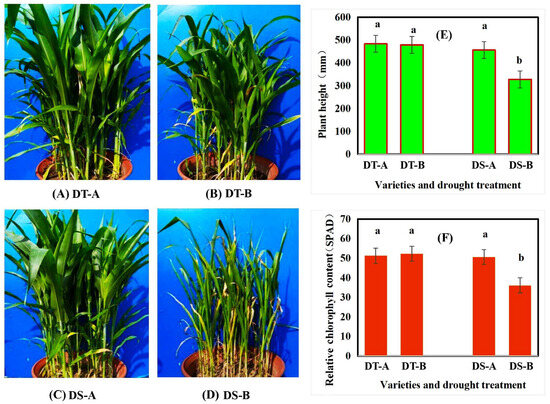
DT and DS sorghum varieties exhibited significant differences in visual phenotypes under drought stress (B) compared to non-drought stress treatments. Under well-watered conditions (Figure 1A,C), minimal differences existed between the two genotypes. However, under drought stress treatment the DT genotype showed only slight growth inhibition, whereas the DS genotype exhibited significant growth reduction and leaf chlorosis (Figure 1B,D) These phenotypic differences were particularly evident in plant height and relative chlorophyll content (SPAD values): no significant difference was detected between DT-A and DT-B, whereas a significant decrease was observed in DS-B compared with DS-A (Figure 1E,F).
Figure 1.
Phenotypic comparison of DT and DS sorghum varieties under non-drought and drought stress treatments. (A–D) Plant morphology. (E) Plant height. (F) Relative chlorophyll content. Note: DT-A: represents drought-tolerant variety under non-drought treatment; DT-B: represents drought-tolerant variety under drought treatment; DS-A: represents drought-sensitive variety under non-drought treatment; DS-B: represents drought-sensitive variety under drought treatment. Different letters above bars indicate significant differences at p < 0.05 level.
3.2. Multi-Omics Data Quality Assessment and Correlation Analysis
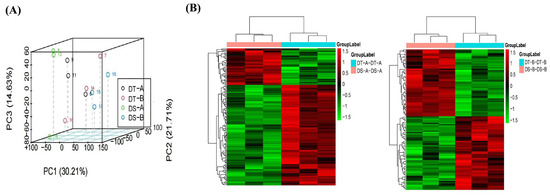
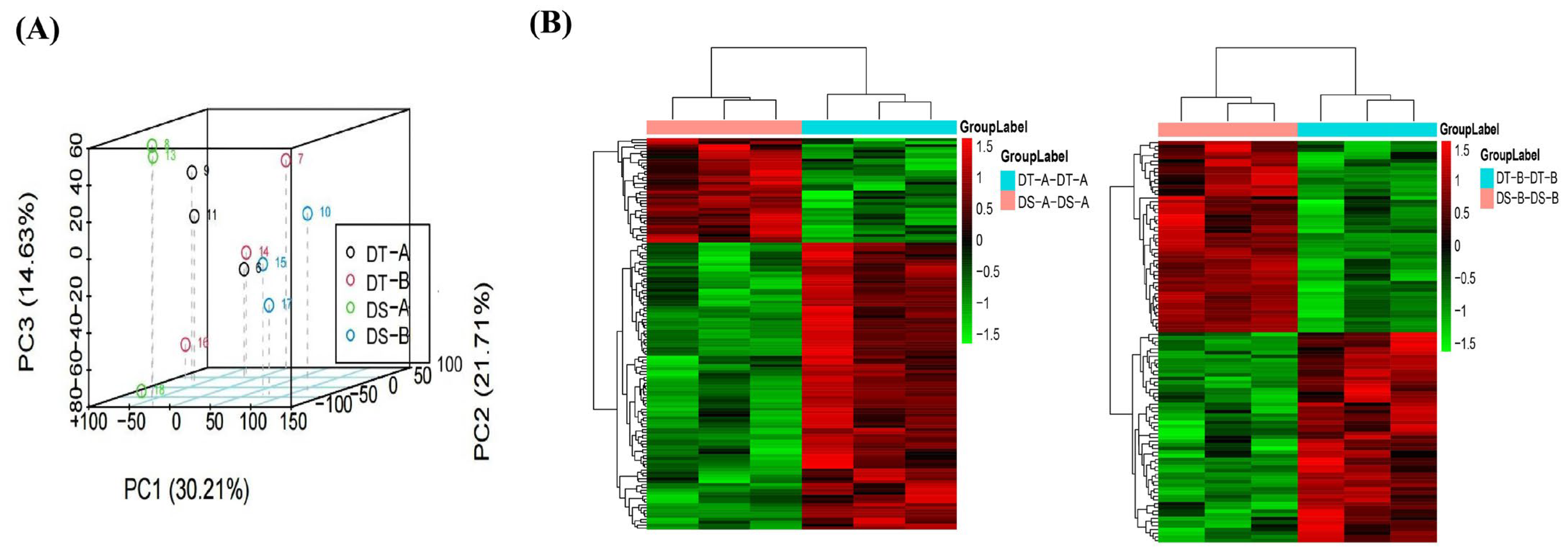
Quality control assessment of metabolomic data from 12 samples (including DT and DS varieties under drought and non-drought treatments, each with 3 replicates) revealed uniform distribution across treatments, with high repeatability and even distribution among biological replicates. Principal component analysis showed clear clustering of samples according to their respective groups (Figure 2A), while hierarchical clustering analysis confirmed consistent patterns between genotype comparisons (Figure 2B).
Figure 2.
Quality assessment of metabolomic data from DT and DS sorghum varieties. (A) PCA of metabolite profiles. (B) Hierarchical clustering heatmaps of differential metabolites: DT-A vs. DS-A (left), DT-B vs. DS-B (right).
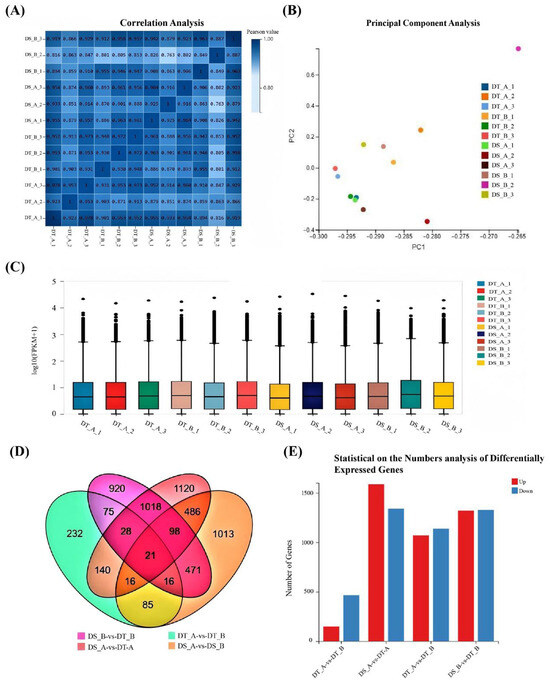
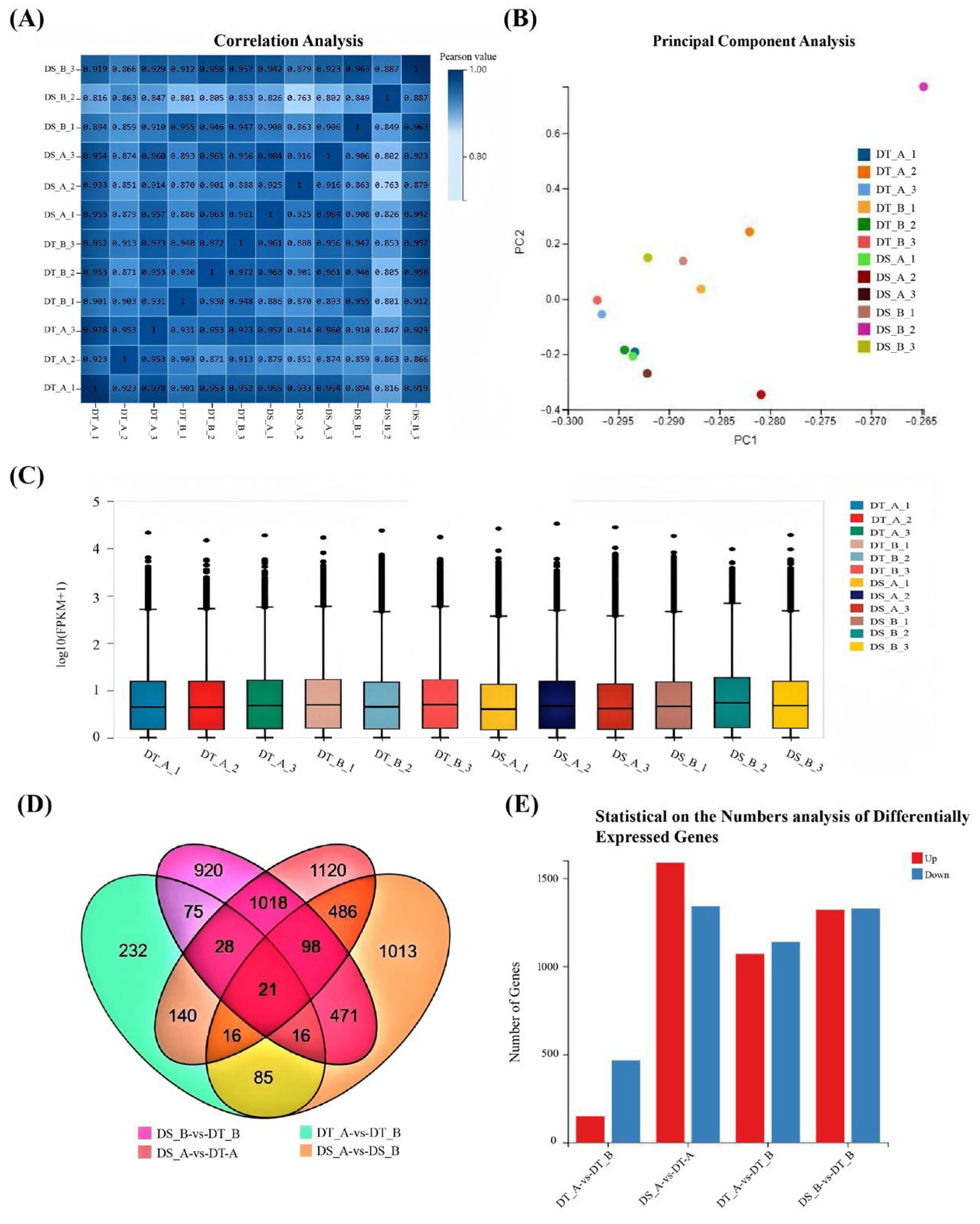
For transcriptomic data, high correlation coefficients were observed among biological replicates, confirming data stability (Figure 3A). PCA plot shows that different groups are represented by different colors, and the samples exhibit a certain clustering trend in the principal component space (Figure 3B). Box plot analysis demonstrated comparable distribution characteristics across samples, with median and quartile values within expected ranges (Figure 3C). The Venn diagram illustrated the overlap of differentially expressed genes among comparison groups (Figure 3D), while Figure 3E showed the distribution of upregulated and downregulated genes, providing a solid foundation for downstream functional analysis.
Figure 3.
Gene expression analysis of DT and DS sorghum varieties under non-drought stress and drought stress treatments (A). Heatmap of gene correlations among samples (B). Principal component analysis of genes among samples (C). Gene expression analysis among samples (D). Venn diagram of differentially expressed genes among samples (E). Number of differentially expressed genes among samples. Note: DT-A: Drought-tolerant variety under non-drought treatment; DT-B: Drought-tolerant variety under drought treatment; DS-A: Drought-sensitive variety under non-drought treatment; DS-B: Drought-sensitive variety under drought treatment.
3.3. Gene Ontology Analysis
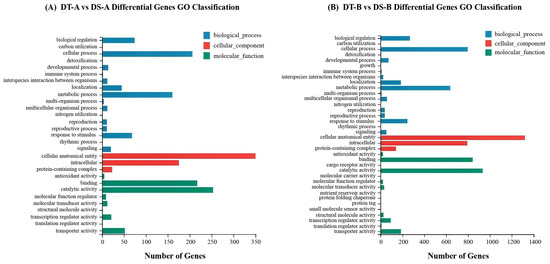
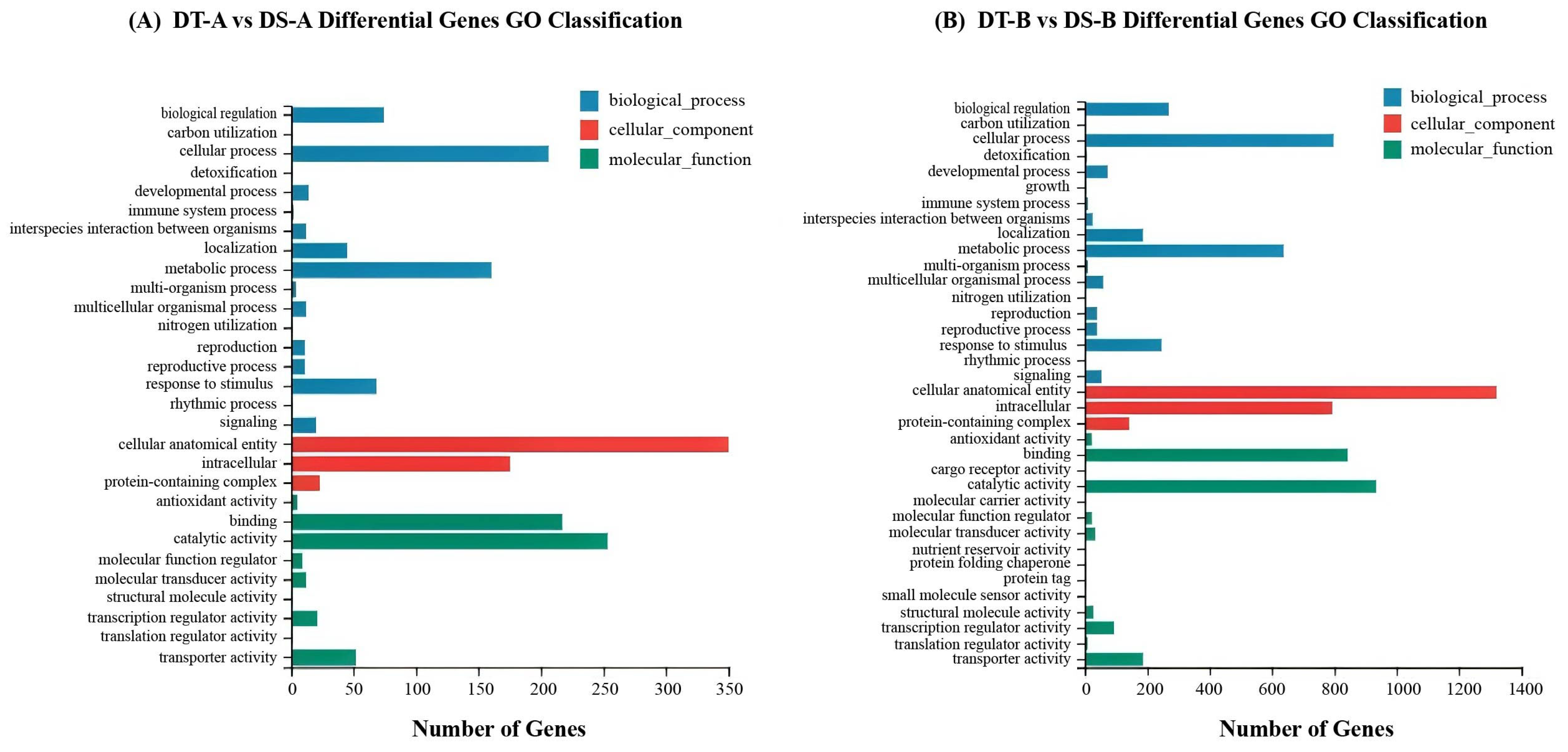
Figure 4 shows that DT and DS sorghum varieties exhibit differences in the number of genes expressed across biological process, cellular component, and molecular function categories under both non-drought stress and drought stress treatments. Under well-watered conditions (Figure 4A), 9 molecular function categories were enriched in DT-A vs. DS-A comparison, with binding and catalytic activity representing the predominant classes. In contrast, under drought stress (Figure 4B), 15 molecular function categories were enriched in DT-B vs. DS-B comparison, representing an increase of 6 categories compared with well-watered conditions. Notably, cellular anatomical entity and intracellular components showed the most substantial enrichment under both conditions, with markedly higher gene numbers under drought stress. Furthermore, structural molecular activity, a category detected under both conditions, exhibited increased gene numbers under drought stress. These findings suggest that genes associated with cellular component organization and catalytic functions may serve as key regulators of sorghum drought tolerance.
Figure 4.
Gene expression GO classification analysis of DT and DS sorghum varieties under non-drought stress (A) and drought stress (B) treatments.
3.4. KEGG Pathways Analysis
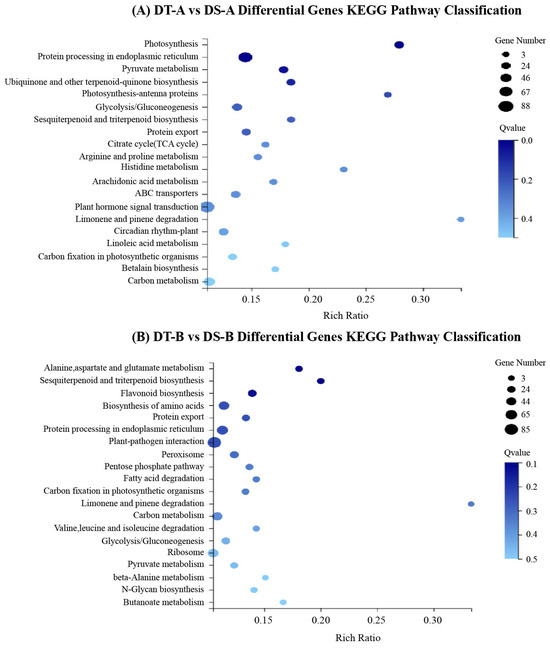
KEGG pathway enrichment analysis revealed distinct metabolic signatures between genotypes under well-watered and drought stress conditions. Under well-watered conditions (Figure 5A), amino acid metabolism and terpenoid biosynthesis pathways predominated, with limonene and pinene degradation showing high enrichment ratio but limited gene support. Under drought stress (Figure 5B), photosynthesis-related pathways emerged as the most enriched (rich ratio > 0.25), while limonene and pinene degradation maintained its distinct pattern. These coordinated transcriptional changes suggest involvement of photosynthesis and volatile organic compound metabolism in drought adaptation, pending functional validation.
Figure 5.
KEGG pathway classification analysis of DT and DS sorghum varieties under non-drought stress (A) and drought stress (B) treatments.
3.5. Physiological and Metabolic Parameters of Non-Target Genes
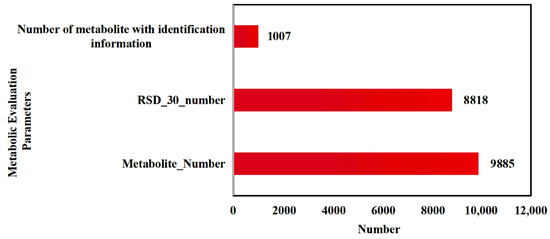
To elucidate the physiological and metabolic mechanisms underlying sorghum drought tolerance, we investigated non-target gene responses in two distinct drought-tolerant genotypes. Under the pos mode, a total of 9885 metabolites were detected across four treatments for both genotypes under drought and normal watering conditions, with RSD_30_number8.1818 (Figure 6). Additionally, 1007 metabolites with identification information were detected, comprising 135 in DT-A:DS-A and 109 in DT-B:DS-B. Under drought stress, 26 more metabolites were identified compared to normal watering conditions. The total number of differential metabolites showing upregulation and downregulation across different groups is summarized (Table 1).
Figure 6.
Metabolic evaluation parameters of DT and DS sorghum varieties under non-drought stress and drought stress treatments. Note a: The number of compounds (RSD_30_number): The number of compounds with CV of relative peak area ≤30% in QC samples. Note b: RSD_Ratio: The ratio of the number of compounds with a coefficient of variation (CV) of relative peak area ≤30% in QC samples to the total number of detected compounds. If ratio ≥ 60%, the data quality is qualified.
Table 1.
Different Metabolite List.
3.6. Metabolites Quantification
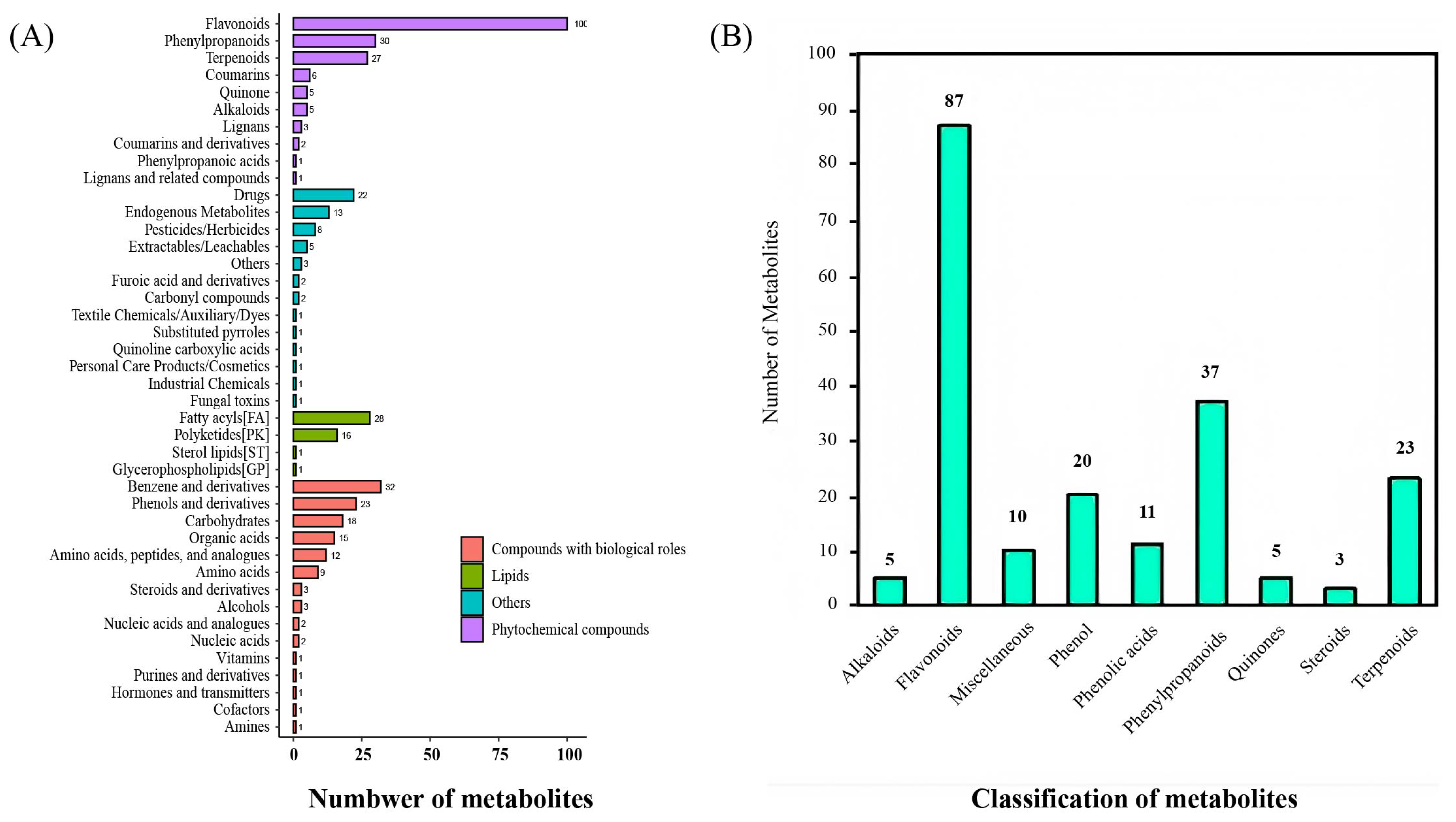
To investigate metabolite profiles under contrasting water regimes, we compared DT and DS genotypes under well-watered and drought stress conditions. The results showed that under these two conditions, significant differences existed between the two genotypes in terms of metabolites and metabolic pathways (Figure 7).
Figure 7.
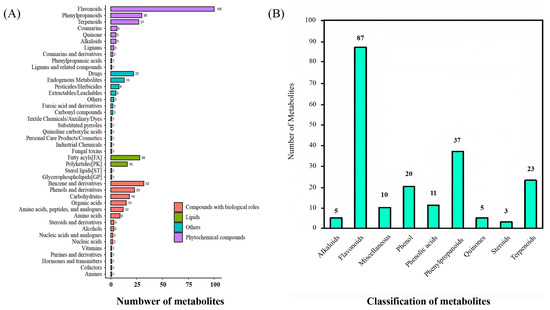
Metabolite classification in DT and DS sorghum varieties under non-drought stress and drought stress treatments. (A) Metabolite classification bar chart; (B) Functional annotation of key metabolites.
Specifically, under well-watered conditions (DT-A vs. DS-A), the detected metabolites could be mainly classified into four categories: compounds with biological roles, lipids, other types of compounds, and phytochemicals.
Further analysis of metabolite contents revealed that among all the metabolites, 14 compounds had relatively high abundances. These compounds specifically included flavonoids, phenylpropanoids, terpenoids, drug-like substances, endogenous metabolites, pesticides, extractables, fatty acyls (FA), polyketides (PK), benzene and derivatives, phends and derivatives, carbohydrates organic acids, amino acids and peptides analogs. Notably, among these 14 compounds with high abundances, flavonoids had the highest content, which was more than three times that of benzene and its derivatives and significantly higher than that of other types of metabolites (Figure 7A).
In addition to differences in content, metabolic frequency also exhibited certain characteristics. Flavonoids ranked first with a high frequency of 87 occurrences, followed by phenylpropanoids with 37 occurrences. This suggests that flavonoid and phenylpropanoid metabolism may be involved in drought response. These compounds may play roles in plant adaptation to drought environments.
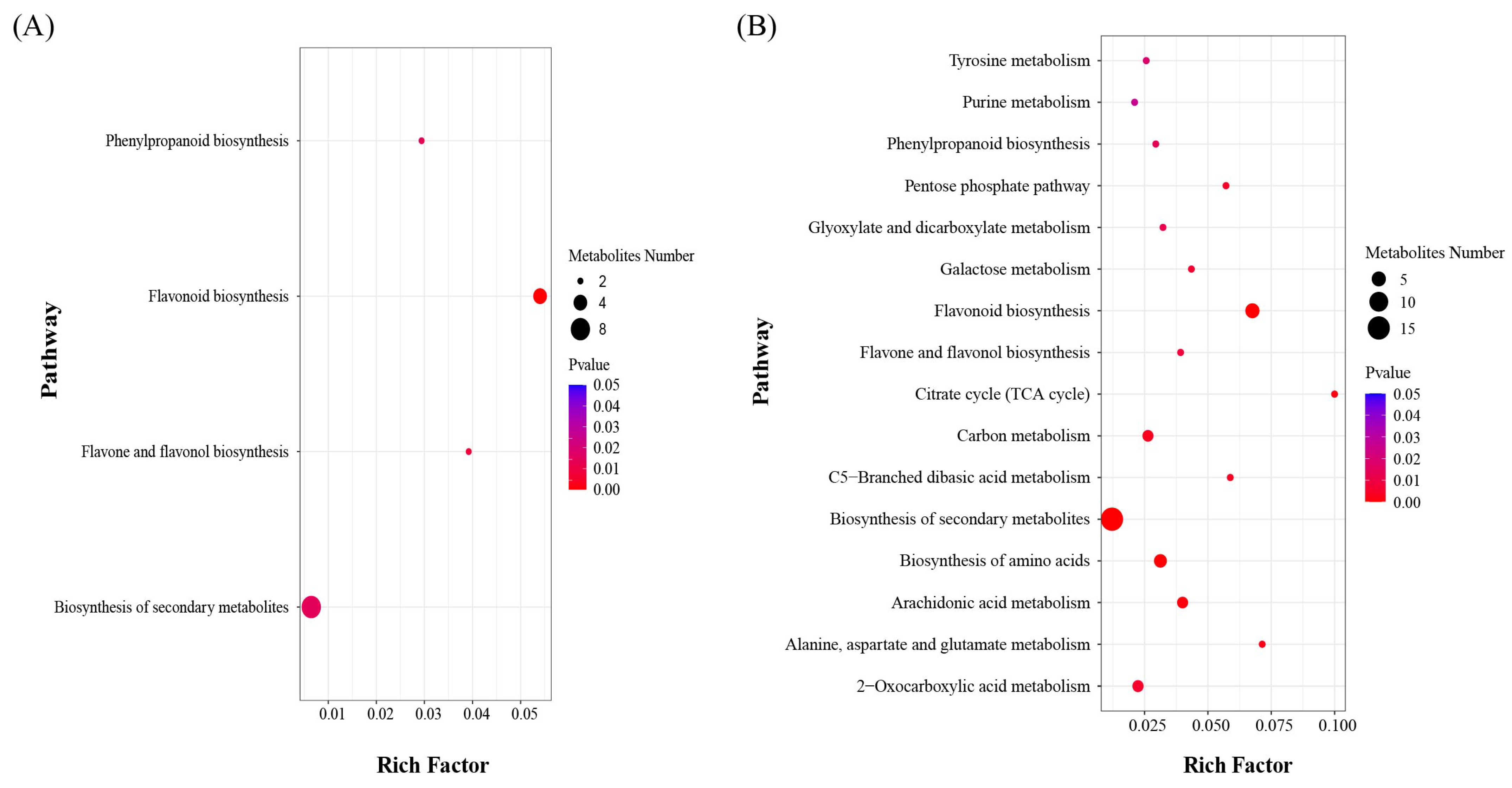
3.7. KEGG Analysis of Metabolic Pathways
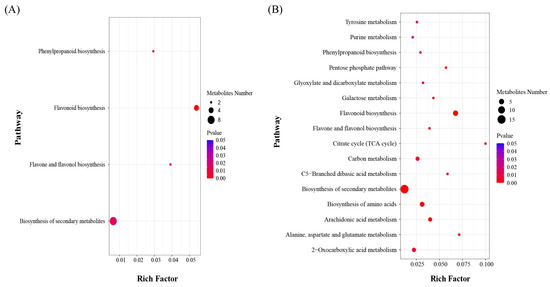
Under drought stress, the two sorghum genotypes exhibited marked differences in metabolic pathways. Under normal water supply conditions, only four metabolic pathways—biosynthesis of secondary metabolites, flavonoid biosynthesis, phenylpropanoid biosynthesis, and flavone and flavonol biosynthesis—showed significant differences (Figure 8A). In contrast, 12 additional pathways exhibited significant enrichment specifically under drought stress (Figure 8B), including tyrosine metabolism, 2−Oxocarboxylic acid metabolism, alanine, aspartate and glutamate metabolism, arachidonic acid metabolism, biosynthesis of amino acids, biosynthesis of secondary metabolites, C5-branched dibasic acid metabolism, carbon metabolism, citrate cycle (TCA cycle), flavone and flavonol biosynthesis, flavonoid biosynthesis, galactose metabolism, glyoxylate and dicarboxylate metabolism, pentose phosphate pathway, phenylpropanoid biosynthesis, and purine metabolism. Annotations for the enrichment results of some key metabolic pathways are shown in Table 2. Additionally, four newly enriched pathways under drought stress—Biosynthesis of amino acids, Arachidonic acid metabolism, 2−Oxocarboxylic acid metabolism, and Carbon metabolism—exhibited higher Metabolic number values. The TCA cycle showed the highest rich factor at 1.0. Among all enriched pathways, flavone and flavonol biosynthesis, flavonoid biosynthesis, phenylpropanoid biosynthesis, and biosynthesis of secondary metabolites showed the most pronounced alterations, suggesting their central involvement in metabolic regulation during sorghum drought stress response.
Figure 8.
Metabolite fractionation of DT and DS sorghum varieties under non-drought stress (A) and drought stress (B) treatments. Note: (A) DT-A vs. DS-A, (B) DT-B vs. DS-B.
Table 2.
Annotation of metabolic pathway.
4. Discussion and Conclusions
4.1. Discussion on the Research of Sorghum Drought Resistance Mechanism
This study systematically compared transcriptomic and metabolomic responses between drought-tolerant (LNR-6) and drought-sensitive (LR-2381) sorghum genotypes, revealing coordinated regulation at both gene expression and metabolic levels. Importantly, the phenotypic stability observed in LNR-6 provides direct physiological evidence that the identified molecular responses are not merely stress-induced changes but are functionally associated with drought adaptation. This strengthens the causal linkage between molecular regulation and phenotypic resilience.
At the transcriptomic level, pathways including limonene and pinene degradation, photosynthesis, and photosynthesis-antenna proteins were significantly enriched. The enrichment of photosynthesis-related pathways is highly consistent with the observed maintenance of chlorophyll content in LNR-6, suggesting that drought tolerance is closely associated with the ability to sustain photosynthetic apparatus stability under water deficit. Specifically, maintaining antenna protein function likely prevents photoinhibition and ensures efficient light energy utilization under stress conditions.
The active expression of limonene and pinene degradation genes likely regulates volatile organic compound (VOC) metabolism. Yet, a broad statement like this is inadequate. VOC metabolism is gaining growing recognition as a vital part of plant stress signaling. An upregulated trend in limonene and pinene degradation pathways likely signals a change in terpenoid flux. This flux shift has multiple impacts: it precisely regulates stomatal opening/closing to balance gas exchange and water loss; actively participates in oxidative stress signal transmission, helping plants sense and respond to oxidative damage promptly; and effectively enhances cell membrane stability, maintaining intracellular homeostasis. These findings provide a deeper, more persuasive mechanistic insight into the link between terpenoid metabolism and plant drought resistance. They also guide future in-depth drought resistance research, laying a solid theoretical groundwork with significant reference value.
Furthermore, the simultaneous enrichment of metabolic pathways including flavonoids and phenylpropanoids suggests that transcriptional regulation is tightly coupled with downstream metabolite accumulation, indicating a coordinated multi-omics regulatory network rather than isolated pathway responses.
4.2. Analysis of Gene Expression Differences and Novel Insights
The results are consistent with previous studies highlighting the importance of photosynthesis-related genes in drought tolerance. However, compared with previous transcriptomic studies [24,39], this study uniquely identified the involvement of limonene and pinene degradation pathways, suggesting that drought response mechanisms may extend beyond classical pathways to include secondary metabolism reprogramming.
This discrepancy may arise from differences in genetic background, but more importantly, it may reflect differences in experimental design, particularly the moderate drought intensity, which may preferentially activate metabolic adjustment pathways rather than severe stress-response pathways. This implies that sorghum drought tolerance is not governed by a single universal mechanism but rather by stress-intensity-dependent regulatory strategies. The identification of terpenoid-related pathways suggests a previously underappreciated role of volatile metabolism in sorghum drought adaptation, providing new candidate targets for functional validation and breeding [40,41].
4.3. Metabolic Regulation in Sorghum: The Drought-Resistance Secrets of Flavonoid and Phenylpropanoid Pathways
The metabolomic analysis revealed substantial accumulation of flavonoids and phenylpropanoids under drought stress, with flavonoid biosynthesis, flavone and flavonol biosynthesis, and phenylpropanoid biosynthesis emerging as the most significantly enriched metabolic pathways. These findings align with and extend previous reports of secondary metabolite involvement in plant drought responses [42,43,44], demonstrating that these pathways represent conserved yet critical components of sorghum drought adaptation.
The prominence of flavonoid metabolism, evidenced by 87 differentially accumulated metabolites—more than threefold higher than other compound classes—suggests multifunctional roles in stress mitigation. Flavonoids function as potent antioxidants, scavenging reactive oxygen species (ROS) that accumulate during drought-induced oxidative stress [45]. The coordinated upregulation of both flavonoid biosynthesis genes and their metabolic products indicates transcriptional control of this protective response, distinguishing the drought-tolerant genotype’s proactive adaptation strategy from the reactive damage responses observed in the sensitive genotype.
The phenylpropanoid pathway, which provides precursors for flavonoid synthesis and generates lignin monomers, showed 37 differential metabolites and significant pathway enrichment. This pathway’s activation likely serves dual functions: (1) enhancing antioxidant capacity through the accumulation of phenolic compounds with free radical scavenging activity, and (2) modifying cell wall composition to reduce mechanical stress-induced damage and limit water loss through apoplastic barriers. The integration of these metabolic changes with the observed upregulation of photosynthesis-related genes suggests a coordinated strategy wherein energy production is maintained while protective metabolites are synthesized to mitigate oxidative damage.
4.4. Prospects for Achievements in Sorghum Drought Resistance Research
The findings of this study not only enrich theoretical understanding of sorghum’s drought resistance mechanisms but also provide important references for breeding drought-tolerant sorghum varieties. Future research should further investigate the specific mechanisms of these key genes and metabolic pathways, as well as their interactive networks. Concurrently, integrating technologies such as gene editing to introduce these key genes into drought-sensitive sorghum varieties holds promise for developing new sorghum cultivars with enhanced drought tolerance, thereby providing robust support for ensuring food security in arid and semi-arid regions.
4.5. Conclusions
This study investigated the transcriptomic and metabolomic responses of drought-tolerant (LNR-6) and drought-sensitive (LR-2381) sorghum genotypes under drought stress. The results demonstrated that the drought-tolerant genotype maintained relatively stable growth and chlorophyll content, whereas the sensitive genotype exhibited significant growth inhibition and physiological decline. Integrated multi-omics analysis revealed that drought stress was associated with coordinated changes in gene expression and metabolite accumulation, particularly involving photosynthesis-related pathways, secondary metabolism, and terpenoid-related processes. Notably, flavonoid and phenylpropanoid biosynthesis pathways were consistently enriched and showed increased metabolite accumulation under drought conditions, suggesting their involvement in stress response. In addition, the enrichment of limonene and pinene degradation pathways indicates a potential role of terpenoid metabolism in drought adaptation. However, these associations are primarily based on enrichment and correlation analyses, and their direct functional roles require further experimental validation. Overall, this study provides a comprehensive multi-omics perspective on sorghum drought responses and identifies candidate pathways that may contribute to drought tolerance, offering a theoretical basis for future functional studies and the development of drought-resilient sorghum varieties.
Author Contributions
Conceptualization, F.Z.; methodology, F.Z., L.Y. and Z.Z.; software, Z.Z., K.Z. (Kuangye Zhang) and B.C.; validation, Z.Z. and K.Z. (Kuangye Zhang); formal analysis, J.W. and B.C.; investigation, J.W., Y.D.,H.W. and Y.W.; resources, Y.W.; data curation, J.W. and K.Z. (Kuangye Zhang); writing—original draft preparation, F.Z.; writing—review and editing, F.Z., L.Y., Y.D., H.W. and K.Z. (Kai Zhu); visualization, L.Y., Z.Z. and B.C.; supervision, K.Z. (Kai Zhu) and F.L.; project administration, F.Z.; funding acquisition, F.Z. and F.L. All authors have read and agreed to the published version of the manuscript.
Funding
National Millet and Sorghum Industrial Technology System Sorghum Cultivation Position (CARS-06-14.5-A22); Liaoning Provincial Germplasm Innovation Project for Grain Storage Technology (2023JH1/10200001); National Modern Agricultural Industrial Technology System Liaoning Innovation Team Development; Liaoning Academy of Agricultural Sciences Agricultural Green High-Quality Development (2025HQ1307); Liaoning Academy of Agricultural Sciences Basic Research Program (2026JC4002).
Data Availability Statement
The original contributions presented in this study are included in the article. Further inquiries can be directed to the corresponding authors.
Conflicts of Interest
The authors declare no conflicts of interest.
References
- Abebaw, S.E. A Global Review of the Impacts of Climate Change and Variability on Agricultural Productivity and Farmers’ Adaptation Strategies. Food Sci. Nutr. 2025, 13, e70260. [Google Scholar] [CrossRef] [Scilit] [PubMed]
- Kraklow, V.A.; Paff, K.; Comeau, D.; Solander, K.; Pitts, T.R.; Price, S.F.; Xu, C. Impact of drought on global food security by 2050. Nat. Commun. 2025, 17, 1099. [Google Scholar] [CrossRef] [Scilit] [PubMed]
- Xiao, K.; Zhou, X.; Gui, H.; Tian, Y.; Chen, X.; Li, Y.; Matomela, N.; Xin, Q. Drought and Extreme Heat Reduce Wheat and Maize Production in the United States by Lowering Both Crop Yields and Harvestable Fraction. Earth’s Future 2025, 13, e2024EF005557. [Google Scholar] [CrossRef] [Scilit]
- Jia, Q.; Li, M.; Dou, X. Climate Change Affects Crop Production Potential in Semi-Arid Regions: A Case Study in Dingxi, Northwest China, in Recent 30 Years. Sustainability 2022, 14, 3578. [Google Scholar] [CrossRef] [Scilit]
- Fontanet-Manzaneque, J.B.; Hernández, D.M.; Giordano, A.; Caño-Delgado, A.I. Sorghum as a monocot model for drought research. Front. Plant Sci. 2025, 16, 1665967. [Google Scholar] [CrossRef] [Scilit]
- Abreha, K.B.; Enyew, M.; Carlsson, A.S.; Vetukuri, R.R.; Feyissa, T.; Motlhaodi, T.; Ng’uni, D.; Geleta, M. Sorghum in dryland: Morphological, physiological, and molecular responses of sorghum under drought stress. Planta 2021, 255, 20. [Google Scholar] [CrossRef] [Scilit]
- Gidi, M. Sorghum as a Model Crop for Drought Stress Tolerance. Adv. Biosci. Bioeng. 2023, 11, 54–65. [Google Scholar] [CrossRef] [Scilit]
- Mwamahonje, A.; Mdindikasi, Z.; McHau, D.; Mwenda, E.; Sanga, D.; Garcia-Oliveira, A.L.; Ojiewo, C.O. Advances in Sorghum Improvement for Climate Resilience in the Global Arid and Semi-Arid Tropics: A Review. Agronomy 2024, 14, 3025. [Google Scholar] [CrossRef] [Scilit]
- Mwamahonje, A.; Eleblu, J.S.; Ofori, K.; Deshpande, S.; Feyissa, T.; Tongoona, P. Drought Tolerance and Application of Marker-Assisted Selection in Sorghum. Biology 2021, 10, 1249. [Google Scholar] [CrossRef] [Scilit]
- Tu, M.; Du, C.; Yu, B.; Wang, G.; Deng, Y.; Wang, Y.; Chen, M.; Chang, J.; Yang, G.; He, G.; et al. Current advances in the molecular regulation of abiotic stress tolerance in sorghum via transcriptomic, proteomic, and metabolomic approaches. Front. Plant Sci. 2023, 14, 1147328. [Google Scholar] [CrossRef] [Scilit]
- Hossain, M.S.; Islam, M.N.; Rahman, M.M.; Mostofa, M.G.; Khan, M.A.R. Sorghum: A prospective crop for climatic vulnerability, food and nutritional security. J. Agric. Food Res. 2022, 8, 100300. [Google Scholar] [CrossRef] [Scilit]
- Zheng, H.; Dang, Y.; Diao, X.; Sui, N. Molecular mechanisms of stress resistance in sorghum: Implications for crop improvement strategies. J. Integr. Agric. 2024, 23, 741–768. [Google Scholar] [CrossRef] [Scilit]
- Alzahrani, Y.; Abdulbaki, A.S.; Alsamadany, H. Genotypic variability in stress responses of Sorghum bicolor under drought and salinity conditions. Front. Genet. 2025, 15, 1502900. [Google Scholar] [CrossRef] [Scilit]
- Li, H.; Li, Y.; Ke, Q.; Kwak, S.S.; Zhang, S.; Deng, X. Physiological and Differential Proteomic Analyses of Imitation Drought Stress Response in Sorghum bicolor Root at the Seedling Stage. Int. J. Mol. Sci. 2020, 21, 9174. [Google Scholar] [CrossRef] [Scilit]
- Wang, Z.; Wei, Y.; Zhao, Y.; Wang, Y.; Zou, F.; Huang, S.; Yang, X.; Xu, Z.; Hu, H. Physiological and transcriptional evaluation of sweet sorghum seedlings in response to single and combined drought and salinity stress. S. Afr. J. Bot. 2022, 146, 459–471. [Google Scholar] [CrossRef] [Scilit]
- Frantová, N.; Rábek, M.; Porčová, L.; Jovanović, I.; Širůček, P.; Lukas, V.; Hájek, J.; Elzner, P.; Holková, L.; Smutná, P.; et al. Monitoring Drought Tolerance Mechanisms of Sorghum and Maize Under Unevenly Distributed Precipitation. Int. J. Plant Prod. 2024, 18, 49–67. [Google Scholar] [CrossRef] [Scilit]
- Goche, T.; Shargie, N.G.; Cummins, I.; Brown, A.P.; Chivasa, S.; Ngara, R. Comparative physiological and root proteome analyses of two sorghum varieties responding to water limitation. Sci. Rep. 2020, 10, 11835. [Google Scholar] [CrossRef] [Scilit]
- Djanaguiraman, M.; Gowsiga, S.; Govindaraj, M.; Habyarimana, E.; Senthil, A.; Thavaprakaash, N.; Jeyakumar, P.; Kokilavani, J.; Chellammal, C. Impact of root architecture and transpiration rate on drought tolerance in stay-green sorghum. Crop Sci. 2024, 64, 2612–2629. [Google Scholar] [CrossRef] [Scilit]
- Demissie, H.S.; Mindaye, T.T.; Teklu, D.N.; Kebede, F.G. Root system architecture analysis of sorghum genotypes and its effect on drought adaptation. Rhizosphere 2023, 27, 100772. [Google Scholar] [CrossRef] [Scilit]
- Zhang, Y.; Wu, X.; Wang, X.; Dai, M.; Peng, Y. Crop root system architecture in drought response. J. Genet. Genom. 2025, 52, 4–13. [Google Scholar] [CrossRef] [Scilit]
- Kalra, A.; Goel, S.; Elias, A.A. Understanding role of roots in plant response to drought: Way forward to climate-resilient crops. Plant Genome 2024, 17, e20395. [Google Scholar] [CrossRef] [Scilit]
- Guo, C.; Zhu, L.; Sun, H.; Han, Q.; Wang, S.; Zhu, J.; Zhang, Y.; Zhang, K.; Bai, Z.; Li, A.; et al. Evaluation of drought-tolerant varieties based on root system architecture in cotton (Gossypium hirsutum L.). BMC Plant Biol. 2024, 24, 127. [Google Scholar] [CrossRef] [Scilit]
- Chen, X.; Wu, Q.; Gao, Y.; Zhang, J.; Wang, Y.; Zhang, R.; Zhou, Y.; Xiao, M.; Xu, W.; Huang, R. The Role of Deep Roots in Sorghum Yield Production under Drought Conditions. Agronomy 2020, 10, 611. [Google Scholar] [CrossRef] [Scilit]
- Abdel-Ghany, S.E.; Ullah, F.; Ben-Hur, A.; Reddy, A.S.N. Transcriptome Analysis of Drought-Resistant and Drought-Sensitive Sorghum (Sorghum bicolor) Genotypes in Response to PEG-Induced Drought Stress. Int. J. Mol. Sci. 2020, 21, 772. [Google Scholar] [CrossRef] [Scilit] [PubMed]
- Ngara, R.; Goche, T.; Swanevelder, D.Z.H.; Chivasa, S. Sorghum’s Whole-Plant Transcriptome and Proteome Responses to Drought Stress: A Review. Life 2021, 11, 704. [Google Scholar] [CrossRef] [Scilit]
- Yue, L.; Wang, H.; Shan, Q.; Kuerban, Z.; Mao, H.; Yu, M. Metabolomic and transcriptomic analyses of drought resistance mechanisms in sorghum varieties. PeerJ 2025, 13, e19596. [Google Scholar] [CrossRef] [Scilit] [PubMed]
- Varoquaux, N.; Cole, B.; Gao, C.; Pierroz, G.; Baker, C.R.; Patel, D.; Madera, M.; Jeffers, T.; Hollingsworth, J.; Sievert, J.; et al. Transcriptomic analysis of field-droughted sorghum from seedling to maturity reveals biotic and metabolic responses. Proc. Natl. Acad. Sci. USA 2019, 116, 27124–27132. [Google Scholar] [CrossRef] [Scilit]
- Johnson, S.M.; Lim, F.-L.; Finkler, A.; Fromm, H.; Slabas, A.R.; Knight, M.R. Transcriptomic analysis of Sorghum bicolor responding to combined heat and drought stress. BMC Genom. 2014, 15, 456. [Google Scholar] [CrossRef] [Scilit] [PubMed]
- Hu, Y.; He, C.; Gong, X.; Xu, H.; Chen, X.; Shen, Y.; Zeng, G.; Qin, X.; Deng, Z.; He, Z.; et al. Epigenomic studies in sorghum reveal differential enrichment of multiple histone marks at clade A PP2C genes in response to drought. New Crops 2025, 2, 100059. [Google Scholar] [CrossRef] [Scilit]
- Zhang, Z.; Qu, Y.; Ma, F.; Lv, Q.; Zhu, X.; Guo, G.; Li, M.; Yang, W.; Que, B.; Zhang, Y.; et al. Integrating high-throughput phenotyping and genome-wide association studies for enhanced drought resistance and yield prediction in wheat. New Phytol. 2024, 243, 1758–1775. [Google Scholar] [CrossRef] [Scilit]
- Yang, G.; Pan, Y.; Pan, W.; Song, Q.; Zhang, R.; Tong, W.; Cui, L.; Ji, W.; Song, W.; Song, B.; et al. Combined GWAS and eGWAS reveals the genetic basis underlying drought tolerance in emmer wheat (Triticum turgidum L.). New Phytol. 2024, 242, 2115–2131. [Google Scholar] [CrossRef] [Scilit]
- Wei, H.; Wang, X.; Wang, K.; Tang, X.; Zhang, N.; Si, H. Transcription factors as molecular switches regulating plant responses to drought stress. Physiol. Plant. 2024, 176, e14366. [Google Scholar] [CrossRef] [Scilit] [PubMed]
- Kim, J.-S.; Kidokoro, S.; Yamaguchi-Shinozaki, K.; Shinozaki, K. Regulatory networks in plant responses to drought and cold stress. Plant Physiol. 2024, 195, 170–189. [Google Scholar] [CrossRef] [Scilit] [PubMed]
- Tsehaye, Y.; Menamo, T.M.; Abay, F.; Tadesse, T.; Bantte, K. Multi-locus genome-wide association study for grain yield and drought tolerance indices in sorghum accessions. Plant Genome 2024, 17, e20505. [Google Scholar] [CrossRef] [Scilit] [PubMed]
- Faye, J.M.; Akata, E.A.; Sine, B.; Diatta, C.; Cisse, N.; Fonceka, D.; Morris, G.P. Quantitative and population genomics suggest a broad role of stay-green loci in the drought adaptation of sorghum. Plant Genome 2022, 15, e20176. [Google Scholar] [CrossRef] [Scilit]
- Maina, F.; Harou, A.; Hamidou, F.; Morris, G.P. Genome-wide association studies identify putative pleiotropic locus mediating drought tolerance in sorghum. Plant Direct 2022, 6, e413. [Google Scholar] [CrossRef] [Scilit]
- Ramalingam, A.P.; Mohanavel, W.; Kambale, R.; Rajagopalan, V.R.; Marla, S.R.; Prasad, P.V.V.; Muthurajan, R.; Perumal, R. Pilot-scale genome-wide association mapping in diverse sorghum germplasms identified novel genetic loci linked to major agronomic, root and stomatal traits. Sci. Rep. 2023, 13, 21917. [Google Scholar] [CrossRef] [Scilit]
- Baker, C.R.; Patel-Tupper, D.; Cole, B.J.; Ching, L.G.; Dautermann, O.; Kelikian, A.C.; Allison, C.; Pedraza, J.; Sievert, J.; Bilbao, A.; et al. Metabolomic, photoprotective, and photosynthetic acclimatory responses to post-flowering drought in sorghum. Plant Direct 2023, 7, e545. [Google Scholar] [CrossRef] [Scilit]
- Fracasso, A.; Trindade, L.M.; Amaducci, S. Drought stress tolerance strategies revealed by RNA-Seq in two sorghum genotypes with contrasting WUE. BMC Plant Biol. 2016, 16, 115. [Google Scholar] [CrossRef] [Scilit]
- Li, Q.; Wang, J.; Liu, Q.; Zhang, J.; Zhu, X.; Hua, Y.; Zhou, T.; Yan, S. Revealing critical mechanisms in determining sorghum resistance to drought and salt using mRNA, small RNA and degradome sequencing. BMC Plant Biol. 2024, 24, 547. [Google Scholar] [CrossRef] [Scilit]
- Fracasso, A.; Magnanini, E.; Marocco, A.; Amaducci, S. Real-Time Determination of Photosynthesis, Transpiration, Water-Use Efficiency and Gene Expression of Two Sorghum bicolor (Moench) Genotypes Subjected to Dry-Down. Front. Plant Sci. 2017, 8, 932. [Google Scholar] [CrossRef] [Scilit]
- Ortiz, D.; Salas-Fernandez, M.G. Dissecting the genetic control of natural variation in sorghum photosynthetic response to drought stress. J. Exp. Bot. 2021, 73, 3251–3267. [Google Scholar] [CrossRef] [Scilit]
- Grover, S.; Shinde, S.; Puri, H.; Palmer, N.; Sarath, G.; Sattler, S.E.; Louis, J. Dynamic regulation of phenylpropanoid pathway metabolites in modulating sorghum defense against fall armyworm. Front. Plant Sci. 2022, 13, 1019266. [Google Scholar] [CrossRef] [Scilit]
- Namata, M.J.; Xu, J.; Habyarimana, E.; Palakolanu, S.R.; Wang, L.; Li, J. Genome editing in maize and sorghum: A comprehensive review of CRISPR/Cas9 and emerging technologies. Plant Genome 2025, 18, e70038. [Google Scholar] [CrossRef] [Scilit]
- Li, B.; Fan, R.; Sun, G.; Sun, T.; Fan, Y.; Bai, S.; Guo, S.; Huang, S.; Liu, J.; Zhang, H.; et al. Flavonoids improve drought tolerance of maize seedlings by regulating the homeostasis of reactive oxygen species. Plant Soil. 2021, 461, 389–405. [Google Scholar] [CrossRef] [Scilit]

Disclaimer/Publisher’s Note: The statements, opinions and data contained in all publications are solely those of the individual author(s) and contributor(s) and not of MDPI and/or the editor(s). MDPI and/or the editor(s) disclaim responsibility for any injury to people or property resulting from any ideas, methods, instructions or products referred to in the content. |
© 2026 by the authors. Licensee MDPI, Basel, Switzerland. This article is an open access article distributed under the terms and conditions of the Creative Commons Attribution (CC BY) license.