



Next Issue
Volume 18, March
Previous Issue
Volume 18, January


Toxins, Volume 18, Issue 2 (February 2026) – 57 articles
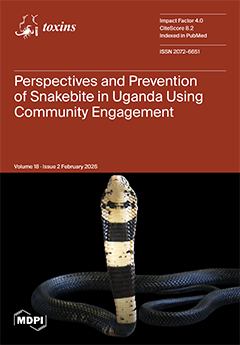
Cover Story (view full-size image): We used a community engagement approach to understand knowledge, attitudes, and practices of people in rural southwest Uganda in relation to snakes and snakebite. We also show that a participatory workshop aimed at improving snakebite prevention measures was associated with attitudes and behaviours that should reduce bites. Understanding the local context of snakebite envenoming is crucial to developing effective mitigation strategies, and we found that a great deal of knowledge for preventing snakebites (and cultural benefits of snakes) already exists within communities. This allows a focus on facilitating the understanding of effective strategies without being didactic, such that communities can take ownership and responsibility for behaviours that promote human–snake coexistence.  View this paper
  • Issues are regarded as officially published after their release is announced to the table of contents alert mailing list.
  • You may sign up for e-mail alerts to receive table of contents of newly released issues.
  • PDF is the official format for papers published in both, html and pdf forms. To view the papers in pdf format, click on the "PDF Full-text" link, and use the free Adobe Reader to open them.
Order results
Result details
Section
Select all
Export citation of selected articles as:
19 pages, 307 KB  
Article
From Muscular Hypertonus to Equilibrium: A Conceptual Framework for Aesthetic Neuromodulation Based on the Index of Muscular Equilibrium (IME)
by Andrea Felice Armenti
Toxins 2026, 18(2), 115; https://doi.org/10.3390/toxins18020115 - 23 Feb 2026
Cited by 1 | Viewed by 901
Abstract
Facial neuromodulation with botulinum toxin has traditionally been approached from the perspective of wrinkle correction. However, facial expressions primarily arise from coordinated muscular interactions that convey both positive and negative emotional valence. A conceptual framework focused on muscular equilibrium rather than wrinkle severity [...] Read more.
Facial neuromodulation with botulinum toxin has traditionally been approached from the perspective of wrinkle correction. However, facial expressions primarily arise from coordinated muscular interactions that convey both positive and negative emotional valence. A conceptual framework focused on muscular equilibrium rather than wrinkle severity may therefore offer a more comprehensive, reproducible, and clinically meaningful approach. In this article, we propose the Index of Muscular Equilibrium (IME) Framework, a conceptual model for aesthetic neuromodulation that integrates functional muscle mapping, validated severity scales, and a composite IME score to support personalized treatment planning and outcome assessment. The framework is derived from a narrative review of PubMed-indexed literature on facial muscle activity, emotional expression, and validated clinical assessment tools. It combines a Valence Map to classify positive- and negative-valence muscle groups, a standardized evaluation of static and dynamic hypertonus, a conceptual Plan Score to guide selective neuromodulation, and a feedback-based longitudinal workflow (the IME Loop). Together, these components enable structured assessment of muscular imbalance, integration of established wrinkle severity scales, and translation into individualized, function-oriented treatment strategies, with intended benefits including improved objectivity, reproducibility, and patient communication. By reframing treatment success from the duration of muscle blockade to the duration of expressive harmony, the IME Framework introduces testable constructs for future validation and offers a functional perspective on facial neuromodulation aligned with contemporary affective science. Full article
(This article belongs to the Special Issue Study on Botulinum Toxin in Facial Diseases and Aesthetics)
Show Figures

Figure 1

15 pages, 1434 KB  
Article
New Insights into the Bioenergetic and Immunomodulatory Properties of Phospholipases A2 from Bothrops diporus Venom
by Daniela J. Sasovsky, Ana K. Oliveira, Dilza Trevisan Silva, Gonzalo A. Ojeda, Cristopher Almarza, Bruno Lomonte, Jay W. Fox, Félix A. Urra and Soledad Bustillo
Toxins 2026, 18(2), 114; https://doi.org/10.3390/toxins18020114 - 23 Feb 2026
Viewed by 909
Abstract
Phospholipases A2 (PLA2s) are key mediators of the cytotoxic and inflammatory activities of snake venoms. While PLA2 isoforms from Bothrops diporus venom have been characterized and shown to possess antimetastatic and antiangiogenic properties, their impact on mitochondrial bioenergetics and [...] Read more.
Phospholipases A2 (PLA2s) are key mediators of the cytotoxic and inflammatory activities of snake venoms. While PLA2 isoforms from Bothrops diporus venom have been characterized and shown to possess antimetastatic and antiangiogenic properties, their impact on mitochondrial bioenergetics and immune modulation has not yet been investigated. In this study, we examined the bioenergetic and immunomodulatory effects of B. diporus PLA2s using integrated biochemical, metabolic, and multiplex cytokine analyses. In MDA-MB-231 breast cancer cells, pooled PLA2s induced a dose-dependent decrease in MTT-reducing activity, increased mitochondrial ROS, caused Δψm hyperpolarization, and decreased NADH autofluorescence, collectively indicating sustained mitochondrial stress. Real-time impedance measurements further revealed a marked inhibition of cell proliferation. In human PBMCs, pooled PLA2s elicited a dynamic cytokine program, inducing early cytotoxic (Granzyme B) and chemotactic (CCL2, CCL3, CCL4) mediators, followed by late pro-inflammatory and regulatory factors such as IL-6, TNF-β, IL-10 and IL-15. Analysis of a single purified PLA2 isoform (Fraction 6) confirmed activation of the canonical IL-6/TNF-α/IL-1β axis but uniquely induced IL-10 and CCL20, revealing isoform-specific immunomodulatory properties. Altogether, these findings provide the first integrated characterization of mitochondrial and immune perturbations induced by B. diporus PLA2s, expanding their recognized biological scope and underscoring their potential as molecular templates for novel pharmacological strategies targeting mitochondrial vulnerabilities or modulating the tumor immune microenvironment. Full article
(This article belongs to the Special Issue Venoms and Drugs)
Show Figures

Figure 1

17 pages, 834 KB  
Article
Role of Serum IL-33 in Bothrops Snakebite Victims: Linking Inflammation and Endothelial Dysfunction
by Nicole Coelho Lopes, Ranieri Sales de Souza Santos, Gdayllon Cavalcante Meneses, Leticia Machado de Araújo, Bruna Viana Barroso Martins, Katarina Maria dos Reis Araújo, Marina Coelho Feitosa, Yury Pifano Varela, Fathima Shihana, Sandra Mara Brasileiro Mota, Geraldo Bezerra da Silva Junior, Elizabeth De Francesco Daher, Polianna Lemos Moura Moreira Albuquerque and Alice Maria Costa Martins
Toxins 2026, 18(2), 113; https://doi.org/10.3390/toxins18020113 - 23 Feb 2026
Viewed by 789
Abstract
Bothrops snakebites pose a significant public health challenge in low- and middle-income regions, often resulting in inflammation, coagulopathy, and renal complications even after antivenom therapy. This study investigated the role of interleukin-33 (IL-33) and endothelial biomarkers in patients with Bothrops envenoming to better [...] Read more.
Bothrops snakebites pose a significant public health challenge in low- and middle-income regions, often resulting in inflammation, coagulopathy, and renal complications even after antivenom therapy. This study investigated the role of interleukin-33 (IL-33) and endothelial biomarkers in patients with Bothrops envenoming to better understand the mechanisms associated with bleeding and kidney dysfunction. In a prospective cohort of 31 patients from Northeast Brazil, serum levels of IL-33, von Willebrand factor A2 (vWF-A2), angiopoietin-1, angiopoietin-2, syndecan-1, and VCAM-1 were measured at admission and at 10 and 20 h after antivenom administration. Fourteen patients (45%) presented with bleeding at baseline. Traditional clinical and laboratory parameters did not differ between the bleeding and non-bleeding groups on admission; however, IL-33 levels were significantly higher in patients with bleeding. Elevated IL-33 on admission correlated positively with vWF-A2 and estimated glomerular filtration rate, and negatively with angiopoietin-1, suggesting links between inflammation, endothelial dysfunction, and early renal involvement. IL-33 showed a good performance in bleeding patients (AUC = 0.739; IC 95% 0.562–0.917). These findings identified the link between IL-33, early hemorrhage, endothelial dysfunction, and renal involvement in acute Bothrops envenoming. After antivenom therapy, IL-33 levels presented dynamic changes in all patients and require further studies. Full article
Show Figures

Figure 1

47 pages, 3965 KB  
Review
Uremic Toxin-Driven Vascular Calcification in Chronic Kidney Disease: Molecular Pathways and Integrated Phenotypes
by Rodolfo Fernando Rivera, Maria Teresa Sciarrone Alibrandi, Nadia Edvige Foligno, Lorenza Magagnoli, Paola Ciceri and Mario Cozzolino
Toxins 2026, 18(2), 112; https://doi.org/10.3390/toxins18020112 - 21 Feb 2026
Viewed by 1247
Abstract
Background: Vascular calcification (VC) affects up to 90% of patients with end-stage renal disease and increases cardiovascular mortality 3- to 5-fold. Once considered passive mineral deposition, VC is now recognized as an active, toxin-driven process orchestrating vascular smooth muscle cell transdifferentiation, endothelial dysfunction, [...] Read more.
Background: Vascular calcification (VC) affects up to 90% of patients with end-stage renal disease and increases cardiovascular mortality 3- to 5-fold. Once considered passive mineral deposition, VC is now recognized as an active, toxin-driven process orchestrating vascular smooth muscle cell transdifferentiation, endothelial dysfunction, and matrix remodeling. However, current uremic toxin classifications remain biochemically oriented, providing limited clinical guidance for risk stratification and therapeutic selection. Methods: This comprehensive review reframes uremic toxin-driven VC through an integrated phenotypic lens, synthesizing molecular mechanisms, clinical biomarkers, and therapeutic targets into a unified translational framework. Results: We propose five mechanistic-clinical phenotypes representing distinct biological trajectories of vascular injury. These include (1) inflammatory-oxidative (dominated by indoxyl sulfate, p-cresyl sulfate, NLRP3 inflammasome activation), (2) mineral-metabolic (hyperphosphatemia, FGF23 excess, Klotho deficiency), (3) epigenetic-senescent (histone modifications, microRNA dysregulation, cellular senescence), (4) endocrine cross-talk (vitamin D, PTH, gut-derived metabolites), and (5) integrated toxic continuum (convergence of multiple pathways in advanced disease). A comprehensive biomarker panel spanning inflammatory markers, mineral metabolism parameters, epigenetic indicators, and endocrine-gut metabolites enables phenotypic stratification and therapeutic monitoring. Emerging therapies—including tissue-nonspecific alkaline phosphatase inhibition, ectonucleotide pyrophosphatase/phosphodiesterase 1 enzyme replacement, vitamin K2 activation, senolytic agents, and SNF472 crystal-growth blockade—are mapped to their optimal phenotypic contexts. Conclusions: This phenotype-oriented paradigm transforms VC from an inevitable complication into a targetable and potentially reversible manifestation of uremic toxicity, establishing a translational foundation for precision-based vascular medicine in chronic kidney disease. The framework enables biomarker-guided patient stratification, rational therapeutic selection, and phenotype-enriched clinical trial design. Full article
(This article belongs to the Special Issue The Role of Uremic Toxins in Comorbidities of Chronic Kidney Disease)
Show Figures

Figure 1

20 pages, 4021 KB  
Article
Clostridioides difficile Immunity During Pregnancy and Passive Antibody Transfer to Neonates from Cord Blood and Breast Milk
by Alban Le Monnier, Claire de Curraize, Valérie Seffer, Michel R. Popoff, Pierre Panel, Anne Collignon and Marie-Lise Gougeon
Toxins 2026, 18(2), 111; https://doi.org/10.3390/toxins18020111 - 20 Feb 2026
Viewed by 979
Abstract
Passive transplacental immunity is crucial for neonatal protection from infections. Following Clostridioides difficile (C. difficile) infection, infants do not develop disease, although C. difficile colonization is highly prevalent in infants. This work aimed to characterize humoral immunity specific to C. difficile [...] Read more.
Passive transplacental immunity is crucial for neonatal protection from infections. Following Clostridioides difficile (C. difficile) infection, infants do not develop disease, although C. difficile colonization is highly prevalent in infants. This work aimed to characterize humoral immunity specific to C. difficile toxins TcdA and TcdB and to surface proteins FliD and Cwp84, well-known colonizing factors, in pregnant women and their neonates. Anti-C. difficile antibodies were measured in maternal serum, cord blood, and breast milk from 58 healthy pregnant women and their newborns, enrolled in a prospective study, using a quantitative ELISA. Anti-C. difficile antibodies were also measured in pregnant women with C. difficile infection (CDI) in a retrospective peripartum case series. We found a high seroprevalence of IgG specific to the four antigens in healthy pregnant women, regardless of colonization by C. difficile. However, pregnant women exhibited lower concentrations of TcdA-specific IgG antibodies compared to age-matched non-pregnant women. A strong positive correlation between maternal and cord blood IgG specific to TcdA, TcdB, FliD, and Cwp84 was observed, suggesting a transplacental transfer of C. difficile-specific IgG antibodies to neonates. In breast milk, a high seroprevalence of IgA specific to the two toxins was detected, and positive correlations between maternal serum and breast milk antibody levels highlight a preferential transfer of TcdB-specific IgG and Cwp84-specific IgG to breast milk, providing the infant with a protective barrier against C. difficile. Lastly, since pregnant women are at increased risk for C. difficile infection (CDI), we characterized the specific antibody response in a retrospective peripartum case series. Sera from peripartum women with CDI exhibited similar median concentrations of TcdA, TcdB, FliD, and Cwp84 IgM and IgG to those of healthy pregnant women. Moreover, except for one case, antibody concentrations remained stable during the longitudinal evolution of C. difficile response before and after diagnosis of CDI, without any booster effect. Altogether, these data are consistent with antibody-mediated maternal protection of neonates from C. difficile-associated disease. Larger studies exploring immune factors involved in protection from C. difficile-associated disease during pregnancy are needed. Full article
Show Figures

Figure 1

19 pages, 5342 KB  
Article
Discovery of Two Novel Scorpion Venom Peptides Activating TRPML2 to Impair ZIKV Internalization
by Zhiqiang Xia, Xuhua Yang, Dangui He, Jiayuan Chang, Lixia Xie, Qian Liu, Jiahuan Jin, Bing Li, Alexandre K. Tashima, Hang Fai Kwok and Zhijian Cao
Toxins 2026, 18(2), 110; https://doi.org/10.3390/toxins18020110 - 20 Feb 2026
Viewed by 856
Abstract
The endo-lysosomal channel TRPML2 regulates key processes like membrane trafficking and autophagy, which are hijacked by many RNA viruses during endocytic entry. However, the development of TRPML2-targeted therapeutics has been hindered by a notable lack of high-affinity and selective peptide-based activators. Scorpion venom [...] Read more.
The endo-lysosomal channel TRPML2 regulates key processes like membrane trafficking and autophagy, which are hijacked by many RNA viruses during endocytic entry. However, the development of TRPML2-targeted therapeutics has been hindered by a notable lack of high-affinity and selective peptide-based activators. Scorpion venom peptides, honed by evolution for exceptional specificity toward diverse membrane ion channels, represent a promising, underexplored natural library for discovering novel pharmacological probes and drug leads. Here, we screened and identified seven candidate peptides interacting with TRPML2 using co-immunoprecipitation combined with liquid chromatography-tandem mass spectrometry (LC-MS/MS) analysis of the Mesobuthus martensii venom. Based on molecular docking analysis, the top four candidates—MMTX, BmP05, BmTX1, and BmKK12—were selected for chemical synthesis, oxidatively cyclized to form their native disulfide-bridged conformations, and subsequently purified and characterized by analytical HPLC and MS. Calcium imaging confirmed that two of the four oxidized peptides, BmP05 and BmKK12, exhibited superior potency in inducing a sharp increase in Ca2+ influx. Crucially, BmP05 and BmKK12 demonstrated potent, concentration-dependent inhibition of Zika virus (ZIKV) replication at the RNA level at non-cytotoxic concentrations, whereas the weaker activators MMTX and BmTX1 did not. The current study first reports animal venom-derived peptides that function as specific TRPML2 agonists with concomitant antiviral activity. Together, our findings provide not only new molecular probes for dissecting TRPML2 biology but also a pioneering strategy for developing host-directed, broad-spectrum therapeutics against viruses dependent on endo-lysosomal entry. Full article
Show Figures

Figure 1

15 pages, 977 KB  
Article
Efficacy and Safety of IncobotulinumtoxinA for the Treatment of Blepharospasm: A Multicenter, Phase 3 Study in Japan
by Toshiaki Goseki, Yoshihito Mochizuki, Akiko Masuda, Motohiro Kiyosawa, Ryosuke Miyamoto, Masato Wakakura, Akiko Yamagami, Yohei Mukai, Akihiro Shinkai, Mutsumi Iijima, Kousuke Baba, Hideki Chuman, Masahiro Hashizuka, Shohei Tateishi and Akiko Kimura
Toxins 2026, 18(2), 109; https://doi.org/10.3390/toxins18020109 - 20 Feb 2026
Viewed by 1310
Abstract
This open-label, uncontrolled, single-arm, multicenter, phase 3 study evaluated the efficacy and safety of incobotulinumtoxinA in Japanese patients with blepharospasm. Eligible patients received incobotulinumtoxinA injections at fixed doses (50, 75, or 100 units [U] for those who had previously received botulinum toxin treatment; [...] Read more.
This open-label, uncontrolled, single-arm, multicenter, phase 3 study evaluated the efficacy and safety of incobotulinumtoxinA in Japanese patients with blepharospasm. Eligible patients received incobotulinumtoxinA injections at fixed doses (50, 75, or 100 units [U] for those who had previously received botulinum toxin treatment; 50 U for treatment-naïve patients), followed by flexible doses up to 100 U for 48 weeks, with at least 6-week intervals. In total, 29 Japanese patients were enrolled (26 [89.7%] women, mean age 64.6 years, mean baseline Jankovic Rating Scale [JRS] severity score 3.24). The primary endpoint, the least squares mean of change in JRS severity scores from baseline to 6 weeks after the first injection, was −2.08 (95% confidence interval: −2.49, −1.66), meeting the prespecified efficacy criteria. The secondary endpoint results (JRS severity, frequency, and total scores for 48 weeks; Blepharospasm Disability Index; Patient Evaluation of Global Response; and fast blinking test) supported the efficacy of repeated incobotulinumtoxinA injections. Adverse events (AEs) occurred in 19 (65.5%) patients, with eyelid ptosis being the most common treatment-related AE (4 [13.8%] patients). No severe or serious AEs were reported. IncobotulinumtoxinA demonstrated sustained efficacy in Japanese patients with blepharospasm, without new safety concerns. (Japan Registry of Clinical Trials identifier, jRCT2031230711) Full article
(This article belongs to the Section Bacterial Toxins)
Show Figures

Figure 1

18 pages, 2032 KB  
Article
Inter- and Intraspecific Venom Variation in the Reclusive Rear-Fanged Black-Striped Snakes (Coniophanes)
by John Henry Fowler, Ramses Alejandro Rosales-García, Rhett M. Rautsaw, Michael P. Hogan, Erich P. Hofmann, Andrew J. Mason, Ramon Nagesan, Miguel Borja, Luis Herrera, Gamaliel Castañeda-Gaytan, Alison R. Davis Rabosky, Darin R. Rokyta and Christopher L. Parkinson
Toxins 2026, 18(2), 108; https://doi.org/10.3390/toxins18020108 - 20 Feb 2026
Viewed by 1772
Abstract
Our current understanding of snake venom is highly biased towards species known to be medically significant in human envenomations. This vastly under-represents the true evolutionary and ecological breadth of snake venom, with gaps spanning entire clades and unique lifestyles. As a result, many [...] Read more.
Our current understanding of snake venom is highly biased towards species known to be medically significant in human envenomations. This vastly under-represents the true evolutionary and ecological breadth of snake venom, with gaps spanning entire clades and unique lifestyles. As a result, many genera of rear-fanged snakes lack well-understood venom profiles despite these taxa composing around 65% of known extant snake species. Methodological challenges associated with venom extraction have long been a key reason responsible for the lack of venom research on this group. Modern advancements in venomics technologies have allowed researchers to overcome many of these challenges and investigate the venom components of understudied genera. The genus Coniophanes (black-striped snakes) presents an ideal system for investigating venom and the venom delivery system in a rear-fanged venomous species with well-documented accounts of human envenomations. We sequenced and annotated de novo transcriptomes of the Duvernoy’s gland (DVG) for seven individuals across four species of Coniophanes (Dipsadidae) and confirmed toxin expression in representative venom proteomes. We assessed interspecific venom variation within this genus and further examined intraspecific venom variation within C. imperialis. We found that toxins account for 38.8% to 66% of the total DVG transcriptomes and that 18 toxin families are represented in this genus, with prominent expression of cystine-rich secretory proteins (CRiSPs) in three species and snake venom metalloproteinases (SVMPs) in all four species. In addition, we used diffusible iodine-based contrast-enhanced computed tomography (diceCT) to better understand the venom delivery system for C. fissidens, a widespread species within this genus, showcasing enlarged, grooved, rear fangs in close proximity to a prominent DVG. We provide the first ever characterization of the venom profiles of Coniophanes, highlight venom variation between and within species, and outline the venom delivery system of this understudied genus. Full article
(This article belongs to the Special Issue Snake Venom Genes Expression, Evolution and Variation)
Show Figures

Figure 1

21 pages, 20263 KB  
Article
ENN A1 and B1 In Vitro Toxicological Effects on 2D and 3D Organ-on-Chip HepaRG Liver Cells
by France Coulet, Monika Coton, Elena Refet-Mollof, Emmanuel Coton, Thomas Gervais and Nolwenn Hymery
Toxins 2026, 18(2), 107; https://doi.org/10.3390/toxins18020107 - 20 Feb 2026
Viewed by 851
Abstract
Enniatins (ENNs) are emerging Fusarium mycotoxins detected in food and feed. Despite their widespread occurrence, their toxicity remains poorly understood; thus, advanced in vitro systems that can mimic human physiology are of interest. We evaluated the cytotoxic and genotoxic effects of ENN A1 [...] Read more.
Enniatins (ENNs) are emerging Fusarium mycotoxins detected in food and feed. Despite their widespread occurrence, their toxicity remains poorly understood; thus, advanced in vitro systems that can mimic human physiology are of interest. We evaluated the cytotoxic and genotoxic effects of ENN A1 and ENN B1 exposure on differentiated (DIFF) and undifferentiated (UND) HepaRG liver cells cultured as 2D monolayers and 3D spheroids. Cytotoxicity, assessed by ATP-based luminescence, revealed a time-dependent decrease in inhibitory concentration 50 (IC50) values between 24 h and 48 h across all models. In DIFF HepaRG cells, ENN A1 IC50 values in 3D spheroids decreased from 14.4–18.2 µM at 24 h to 2.2–3.0 µM at 48 h, reaching values comparable to those measured in 2D DIFF cells at 48 h (2.2–2.6 µM), while no IC50 could be determined in 2D at 24 h. For ENN B1, a pronounced time-dependent toxicity was observed, with IC50 values in 3D DIFF spheroids decreasing from 4.1–6.6 µM at 24 h to 1.3–1.6 µM at 48 h, remaining lower than those measured in 2D DIFF cells at 48 h (2.4–3.0 µM). ENN A1 primarily induced apoptotic responses, whereas both ENN A1 and B1 were associated with necrotic responses, and ENN B1 induced a transient and limited autophagic signal, suggesting a minor role for autophagy. To further characterize cellular responses to ENN exposure, spheroids cultured in microfluidic chips were sectioned, and proliferation (Ki67), DNA damage (γH2AX), and apoptosis (cleaved caspase-3) was assessed. Immunostaining revealed no proliferative response, whereas significant DNA damage was detected, particularly in DIFF spheroids. At low, sub-cytotoxic concentrations (~5 µM, 24 h), ENN A1 induced significant DNA damage, as shown by increased γH2AX levels, while cytotoxic effects were only observed at higher concentrations (IC50 ~ 18 µM, 24 h), supporting a potential genotoxic effect independent of cytotoxicity. Despite the structural similarities between ENN A1 and ENN B1, our results highlighted distinct cell death pathways between the two analogues. Both ENNs were detected throughout spheroids without evidence of peripheral restriction, although a homogeneous functional test could not be conclusively demonstrated. Overall, the 3D HepaRG spheroid model proved to be a more physiologically relevant system, offering differential sensitivity, as well as enhanced mechanistic insight, compared to 2D cultures. Full article
(This article belongs to the Special Issue Mycotoxins—Biomonitoring and Exposure)
Show Figures

Graphical abstract

21 pages, 3236 KB  
Article
Establishing the Kenya National Antivenom Quality Control Laboratory: Preclinical Efficacy Results of Four Antivenoms Against Venoms from the “Big Five” Snake Species in Kenya
by Valentine Musabyimana, John M. Kagira, Jacob Lubuya, Caroline W. Ngugi, Brian M. Musau, Wathuto Ogopotse, Geoffrey Maranga, Dennis Kotti, Pamela M. Khasandi, Ezekiel Adino, Brent C. Thomas, Cassandra M. Modahl, Peter G. Mwethera, Robert A. Harrison, Nicholas R. Casewell and George O. Oluoch
Toxins 2026, 18(2), 106; https://doi.org/10.3390/toxins18020106 - 19 Feb 2026
Viewed by 1523
Abstract
Antivenom administration is currently the only therapy for snakebite envenoming. However, in sub-Saharan Africa, inadequate quality control systems have led to deficits in the availability, accessibility, efficacy and safety of regionally available antivenoms, which, in turn, hinder snakebite treatment and management in the [...] Read more.
Antivenom administration is currently the only therapy for snakebite envenoming. However, in sub-Saharan Africa, inadequate quality control systems have led to deficits in the availability, accessibility, efficacy and safety of regionally available antivenoms, which, in turn, hinder snakebite treatment and management in the region. To address this impediment to snakebite treatment in Kenya, this study aimed to assess the preclinical neutralising potencies of four different antivenoms previously or currently available in Kenya (SAIMR polyvalent, AFRIVEN, PANAF-PremiumTM and InoserpTM) against key snakes of medical importance in the region, towards establishing a national antivenom quality control laboratory. Venoms were extracted from the Kenyan “big five” medically important snake species: Naja ashei, Naja pallida, Naja nigricollis, Dendroaspis polylepis and Bitis arietans, and their lethal potencies were determined using a murine median lethal dose (LD50) assay. In vitro immunological assays (ELISAs and immunoblotting) and an established preclinical murine in vivo neutralisation assay (median effective dose [ED50]) were used to assess the immunoglobulin-binding and venom-neutralising efficacies of the test antivenoms. In vitro assays revealed high venom-binding titres of SAIMR polyvalent, AFRIVEN and PANAF-PremiumTM, and reactivity to a wide range of venom proteins across the different snake venoms. Contrastingly, InoserpTM antivenom had low binding titres and poor reactivity to the snake venom proteins. These findings were aligned with the in vivo results, where SAIMR polyvalent, AFRIVEN and PANAF-PremiumTM showed potent venom-neutralising efficacies against all the tested snake venoms, while InoserpTM had low potency and failed to neutralise the lethal effects of N. ashei, N. pallida and D. polylepis venoms at the manufacture-claimed doses. Based on these robust preclinical results, we conclude that SAIMR polyvalent, AFRIVEN and PANAF-PremiumTM antivenoms offer considerable potential for the treatment of envenoming by diverse medically important snakes in Kenya. The observed deficiencies with the InoserpTM product highlight the importance of (i) robust, independent preclinical antivenom efficacy testing and (ii) the value of establishing a quality control laboratory to inform local regulatory and procurement decision making. Full article
(This article belongs to the Special Issue Venoms and Drugs)
Show Figures

Figure 1

30 pages, 1440 KB  
Review
Climate-Driven Aflatoxin M1 Risks in Serbia: Implications for Integrated Food Safety Management Along the Dairy Chain
by Dragan R. Milićević, Božidar Udovički, Ana Šuša, Andreja Rajković and Jelka Pleadin
Toxins 2026, 18(2), 105; https://doi.org/10.3390/toxins18020105 - 19 Feb 2026
Viewed by 697
Abstract
Aflatoxin M1 (AFM1) is a carcinogenic milk contaminant and a persistent food safety concern in Serbia, especially under changing climate conditions that exacerbate contamination risks. This review synthesizes national research conducted between 2012 and 2024, covering more than thirty thousand analyzed [...] Read more.
Aflatoxin M1 (AFM1) is a carcinogenic milk contaminant and a persistent food safety concern in Serbia, especially under changing climate conditions that exacerbate contamination risks. This review synthesizes national research conducted between 2012 and 2024, covering more than thirty thousand analyzed milk and dairy samples, to evaluate AFM1 contamination, public health risks, and the need for structured risk ranking and prioritization frameworks recommended by the Food and Agriculture Organization (FAO) and the European Food Safety Authority (EFSA). A systematic analysis of Serbian studies explored AFM1 occurrence, dietary exposure, and health risk estimates across population groups. The evidence reveals persistent AFM1 contamination with pronounced seasonal peaks during drought years and winter months, frequently exceeding the EU maximum limit of 0.05 µg/kg. Recent multi-year studies confirm that climate-driven AFB1 contamination in maize and compound feed remains a significant and recurring source of AFM1 in milk, highlighting the necessity of structured risk prioritization frameworks. Exposure assessments highlight children and students as the most vulnerable groups, displaying the highest estimated daily intake. Although current margin of exposure (MOE) values remain within acceptable limits, the persistence of contamination underscores a need for proactive risk management. Adoption of FAO and EFSA risk-ranking methodologies would enhance monitoring efficiency, protect high-risk populations, and support alignment with EU standards. Implementing structured risk prioritization is crucial for strengthening Serbia’s food safety governance, guiding policy decisions, and reducing the health burden of AFM1 in the dairy sector. Full article
(This article belongs to the Special Issue Mycotoxins in Food Safety: Challenges and Biocontrol Strategies)
Show Figures

Figure 1

19 pages, 3640 KB  
Article
Chronic Kidney Disease-Associated Defect in Humoral Immune Response Is Driven by Inflammation
by Maxime Espi, Xavier Charmetant, Floriane Fusil, Cyrille Mathieu, Marie Legras, Caroline Pelletier, Griet Glorieux, Christophe Soulage, Laetitia Koppe and Olivier Thaunat
Toxins 2026, 18(2), 104; https://doi.org/10.3390/toxins18020104 - 19 Feb 2026
Viewed by 767
Abstract
Advanced chronic kidney disease (CKD) is associated with impaired humoral immunity, contributing to increased infection-related mortality and suboptimal vaccine responses, as notably observed during the COVID-19 pandemic. CKD is also marked by the accumulation of uremic toxins, but whether they directly influence T [...] Read more.
Advanced chronic kidney disease (CKD) is associated with impaired humoral immunity, contributing to increased infection-related mortality and suboptimal vaccine responses, as notably observed during the COVID-19 pandemic. CKD is also marked by the accumulation of uremic toxins, but whether they directly influence T and B cell functionality remains unclear. In this translational study, we integrated clinical and biological data from 106 CKD patients with mechanistic insights from in vitro and in vivo murine models to identify the mechanisms underlying CKD-associated defects in humoral responses against T cell-dependent antigens. Contrary to our initial hypothesis, indoxyl sulfate—despite its known ability to activate Aryl hydrocarbon Receptor signaling in monocytes—did not directly impair T–B cell cooperation in coculture assays. Similarly, plasma levels of ten major uremic toxins showed no correlations with vaccine-induced antibody titers in patients. Instead, systemic inflammation emerged as the primary driver of defective humoral immunity. Murine models further confirmed that inflammation, rather than uremia alone, induces lymphopenia, disrupts lymphoid architecture, and ultimately impairs antibody production. These findings indicate that CKD-associated inflammation, rather than a direct effect of uremic toxins on adaptive immune effectors, underlies humoral immune dysfunction in CKD. Targeting inflammation may, therefore, offer a promising strategy to improve vaccine efficacy and reduce infection-related complications in this vulnerable population. Full article
Show Figures

Figure 1

21 pages, 5453 KB  
Article
Cell-Penetrating Botulinum Neurotoxin Type A Proteins Alleviate Skeletal Muscle Hypertrophy with Associated Alterations of Mitochondrial Homeostasis
by Lu Li, Xuan Wei, Liling Jiang, Zhen Gao and Jia Liu
Toxins 2026, 18(2), 103; https://doi.org/10.3390/toxins18020103 - 19 Feb 2026
Viewed by 900
Abstract
Skeletal muscle is the largest metabolic demanding organ in human body. Alterations of skeletal muscle in shape and size significantly affect its biological functions. Botulinum neurotoxin type A1 (BoNT/A1) has been successfully used in clinics to treat masseter, trapezius and gastrocnemius hypertrophy. Here, [...] Read more.
Skeletal muscle is the largest metabolic demanding organ in human body. Alterations of skeletal muscle in shape and size significantly affect its biological functions. Botulinum neurotoxin type A1 (BoNT/A1) has been successfully used in clinics to treat masseter, trapezius and gastrocnemius hypertrophy. Here, we used a healthy rat-based skeletal muscle hypertrophy model to evaluate the muscle-reducing activity of recombinant BoNT/A1 (rBoNT/A1) with genetically fused cell-penetrating peptides (CPPs), which was previously reported to increase the cellular uptake of BoNT/A1. Analyses of treated muscle sections using hematoxylin–eosin and immunofluorescence staining showed that both wild-type rBoNT/A1 without modification (WT-rBoNT/A1) and rBoNT/A1 with CPP fusion (CPP-rBoNT/A1) could induce myocomma atrophy and altered gastrocnemius muscle fiber proportions as a result of denervation and reinnervation. Importantly, rBoNT/A1 with the fusion of a specific CPP, zinc finger protein (ZFP), resulted in the highest degree of muscle atrophy and greatest increase in the ratio of type I muscle fibers over type II fibers. An examination of gastrocnemius muscle cells at the subcellular levels using TEM staining revealed swelled mitochondria and diminished mitochondrial crista upon rBoNT/A1 administration. Transcriptomic RNA sequencing (RNA-Seq) analysis followed by RT-qPCR validation showed that rBoNT/A1 treatment also caused changes in mitochondrial biogenesis and mitophagy. Collectively, our results demonstrated that rBoNT/A1 proteins could alleviate skeletal muscle hypertrophy, with associated alterations of mitochondrial homeostasis. Full article
(This article belongs to the Special Issue The Evolving Role of Botulinum Toxin in Clinical Therapeutics)
Show Figures

Figure 1

21 pages, 5339 KB  
Article
Purified Zearalenone at the Regulatory Limit Exhibits No Overt Toxicity in Broilers
by Ying Liu, Wanjun Zhang, Qiaomin Duan, Sunlin Luo, Wenjun He, Wei Nie, Wenjun Yang and Yiqiang Chen
Toxins 2026, 18(2), 102; https://doi.org/10.3390/toxins18020102 - 18 Feb 2026
Viewed by 554
Abstract
Zearalenone (ZEA) is a prevalent non-steroidal estrogenic mycotoxin in feed and feedstuffs. This study investigated the effects of graded dietary purified ZEA standard (0, 0.2, 0.5, 1, 2, and 4 mg/kg) on growth performance, blood biochemistry, oxidative stress, immune response, intestinal morphology, histopathology, [...] Read more.
Zearalenone (ZEA) is a prevalent non-steroidal estrogenic mycotoxin in feed and feedstuffs. This study investigated the effects of graded dietary purified ZEA standard (0, 0.2, 0.5, 1, 2, and 4 mg/kg) on growth performance, blood biochemistry, oxidative stress, immune response, intestinal morphology, histopathology, and gut microbiota in broilers. The use of purified ZEA standard eliminates confounding effects from co-occurring contaminants and the reduced nutritional quality of naturally contaminated feed, allowing an accurate assessment of ZEA-specific effects. A total of 216 one-day-old Arbor Acres male broilers were randomly allocated into six treatment groups, each with six replicates of six birds, for a 42-day trial. At the regulatory limit (0.5 mg/kg) and below, no overt toxic effects were observed on growth performance, hematology, or serum biochemistry. Although alterations in oxidative stress markers, specifically decreased liver superoxide dismutase (SOD) activity and reduced ileal glutathione peroxidase (GSH-Px) activity, and in immune markers, including increased interleukin-2 (IL-2) levels in the jejunum and ileum and decreased ileal interleukin-10 (IL-10) levels, were observed at 0.2–0.5 mg/kg, these changes did not cause tissue damage or functional impairment. Toxicological alterations emerged only at higher doses (1–4 mg/kg), comprising impaired jejunal morphology and moderate lung secretory cell metaplasia. The highest dose (4 mg/kg) further induced severe renal tubular degeneration and necrosis, accompanied by significant disruption of the jejunal microbiota. In conclusion, these findings indicate that purified ZEA at the regulatory limit exhibits no overt toxicity in broilers, although higher contamination levels pose clear risks to intestinal, pulmonary, and renal health. Full article
Show Figures

Figure 1

17 pages, 1786 KB  
Article
Genome-Guided Identification of an OTA-Degrading Amidohydrolase AMH2102 from Acinetobacter kookii AK4 with Enhanced Soluble Expression in Escherichia coli
by Zehui Niu, Shengyue Bai, Yuyun Xiao, Jingran Lai, Yuxin Jin, Zitong Zhao, Yan Yang, Shujuan Cun and Zhihong Liang
Toxins 2026, 18(2), 101; https://doi.org/10.3390/toxins18020101 - 16 Feb 2026
Viewed by 706
Abstract
Ochratoxin A (OTA) is a globally distributed mycotoxin that poses serious threats to food safety and human health due to its nephrotoxic, hepatotoxic, and carcinogenic properties. Previous enzymatic detoxification strategies for OTA have been constrained by low degradation efficiency or poor soluble expression [...] Read more.
Ochratoxin A (OTA) is a globally distributed mycotoxin that poses serious threats to food safety and human health due to its nephrotoxic, hepatotoxic, and carcinogenic properties. Previous enzymatic detoxification strategies for OTA have been constrained by low degradation efficiency or poor soluble expression of highly active enzymes. In this study, a bacterial strain with strong OTA-degrading activity was isolated and identified as Acinetobacter kookii AK4, which degraded 95.44% of 1 μg/mL OTA within 6 h. The predominant OTA-degrading activity was derived from intracellular enzymes. Through genome mining and experimental validation, gene2102 was identified as encoding an amidohydrolase. The enzyme was designated AMH2102 and was heterologously expressed in Escherichia coli. Codon optimization combined with fusion of an N-terminal SUMO tag increased the soluble expression of AMH2102 by 14.81-fold, enabling complete (100%) OTA degradation within 3 min. Overall, this study achieved the identification of an efficient OTA-degrading strain and enzyme and explored strategies for improving enzyme expression, yielding effective outcomes that provide useful references for future studies on strain mining and enzyme engineering. Full article
Show Figures

Figure 1

13 pages, 266 KB  
Article
The Relationship Between the Gross Motor Function Classification System, Functional Mobility Scale, Observational Gait Scale, and the Amsterdam Gait Classification in Children with Cerebral Palsy During Long-Term Treatment with Botulinum Toxin Injections and Combined Integrated, Intensive Rehabilitation
by Weronika Pyrzanowska, Magdalena Chrościńska-Krawczyk, Nigar Dursun and Marcin Bonikowski
Toxins 2026, 18(2), 100; https://doi.org/10.3390/toxins18020100 - 15 Feb 2026
Viewed by 836
Abstract
Patients with cerebral palsy (CP) experience complex gait disorders that change with age, leading to reduced activity and social participation. This study aimed to analyse how gait patterns developed over five years and to examine the relationships between the Observational Gait Scale (OGS), [...] Read more.
Patients with cerebral palsy (CP) experience complex gait disorders that change with age, leading to reduced activity and social participation. This study aimed to analyse how gait patterns developed over five years and to examine the relationships between the Observational Gait Scale (OGS), Amsterdam Gait Classification (AGC), Gross Motor Function Classification System (GMFCS), and the Functional Mobility Scale (FMS) at 5 and 50 m (FMS 5/50) during treatment. This retrospective, single-centre observational study involved annual assessments over a five-year period, which were analysed. Patients underwent a rehabilitation programme including physiotherapy, orthotics, multilevel botulinum toxin type A injections (BoNT-A), and serial casting. Data regarding BoNT-A treatment, casting, physiotherapy, orthoses, GMFCS levels, and FMS 5/50 scores were obtained from medical records. OGS and AGC were evaluated through two-plane clinical video recordings conducted in the same gait laboratory for all children. A cohort of 200 pediatric subjects (120 boys and 80 girls) diagnosed with bilateral cerebral palsy, predominantly classified as GMFCS II (48%) and III (36%), was analyzed. The average initial age was 32.23 months (±6.96), and GMFCS levels improved in 33. 5% of children and worsened in 2% (p < 0.001). Improvements were observed in 50% of children with GMFCS III and 40% with GMFCS IV levels. FMS 5 and 50 improved by 54% and 52%, respectively. OGS scores showed improvement in 74% and 76% of patients, respectively, while deterioration was observed in 5% and 7% for the right and left lower limbs, respectively. Most changes in OGS scores ranged from 1 to 4 points. A negative correlation was found between OGS and GMFCS (p < 0.001), and a positive correlation was found between OGS scores and FMS 5 and FMS 50 (p < 0.001). Additionally, significant relationships were identified between AGC and GMFCS, as well as FMS at 5 and 50 m. Complex gait disorders identified by the AGC are associated with higher GMFCS E&R scores and lower FMS scores. During the five-year follow-up, relationships were observed among GMFCS, FMS, OGS, and AGC. Our findings indicate that integrated treatment has a positive effect on functional mobility and gait patterns in patients with CP. Full article
(This article belongs to the Section Bacterial Toxins)
9 pages, 403 KB  
Communication
Cross-Induction of Anti-Complexing Antibodies in Patients Treated with Botulinum Toxin Formulations Containing Complexing Proteins
by Yuttana Srinoulprasert, Surachet Sirisuthivoranunt, Chattip Sripatumtong, Tunsuda Tansit, Pornsuk Yamlexnoi, Onjira Meethong and Rungsima Wanitphakdeedecha
Toxins 2026, 18(2), 99; https://doi.org/10.3390/toxins18020099 - 14 Feb 2026
Viewed by 844
Abstract
Botulinum toxin type A (BoNT/A) formulations differ in their content of non-toxic accessory proteins, also known as complexing proteins (CPs), which may influence immunogenicity. Some BoNT/A products share structurally similar CPs, potentially leading to antibody cross-reactivity among formulations. This prospective study investigated whether [...] Read more.
Botulinum toxin type A (BoNT/A) formulations differ in their content of non-toxic accessory proteins, also known as complexing proteins (CPs), which may influence immunogenicity. Some BoNT/A products share structurally similar CPs, potentially leading to antibody cross-reactivity among formulations. This prospective study investigated whether patients treated with different BoNT/A products develop cross-reactive anti-CP antibody responses. One hundred participants were allocated into five treatment groups, each receiving a single BoNT/A formulation: incobotulinumtoxinA (IncoA), onabotulinumtoxinA (OnaA), abobotulinumtoxinA (AboA), letibotulinumtoxinA (LetiA), or prabotulinumtoxinA (PraboA). Each participant received 50 units or equivalent dosing. Serum samples were collected 180 days post-injection, and anti-CP antibodies were quantified using an absorption ELISA and compared with a toxin-naïve control group. IncoA did not induce significant anti-CP antibody responses. In contrast, higher antibody levels were observed in the OnaA, LetiA, and PraboA groups against multiple CPs, suggesting structural similarity and cross-reactivity. AboA primarily induced antibodies directed against its own CPs and those of PraboA. These findings demonstrate that CP-containing formulations can induce cross-reactive antibody responses, whereas CP-free incobotulinumtoxinA exhibits minimal immunogenicity. This study highlights the importance of CP composition in guiding clinical product selection, particularly in patients requiring repeated BoNT/A administration. Full article
(This article belongs to the Special Issue Antibodies for Innovative Studies of Bacterial Toxins)
Show Figures

Figure 1

16 pages, 2021 KB  
Article
Indole-3-Acetic Acid as a Putative Selective AhR Modulator Counteracts Skatole-Induced Dual-Hit Toxicity in Colorectal Cancer Cells
by Chihiro Takei and Hidehisa Shimizu
Toxins 2026, 18(2), 98; https://doi.org/10.3390/toxins18020098 - 14 Feb 2026
Viewed by 897
Abstract
The rising incidence of colorectal cancer (CRC) in modernized societies is linked to diet-induced dysbiosis, characterized by a critical metabolic divergence: the depletion of protective indole-3-acetic acid (IAA) concurrent with the accumulation of toxic skatole (3-methylindole). However, the molecular mechanisms by which high [...] Read more.
The rising incidence of colorectal cancer (CRC) in modernized societies is linked to diet-induced dysbiosis, characterized by a critical metabolic divergence: the depletion of protective indole-3-acetic acid (IAA) concurrent with the accumulation of toxic skatole (3-methylindole). However, the molecular mechanisms by which high concentrations of skatole drive malignancy—and whether IAA can counteract this toxicity—remain elusive. Here, we demonstrate that physiologically relevant concentrations of skatole (500 µM) significantly promote the proliferation of HCT-116 CRC cells through a “dual-hit” mechanism involving both aryl hydrocarbon receptor (AhR)-dependent genomic activity and AhR-independent activation of the ERK MAPK pathway. Notably, co-treatment with IAA (250 µM) effectively abrogated skatole-induced proliferation, restoring cell growth to baseline levels while sparing upstream MAPK phosphorylation. Mechanistic analysis indicates that IAA acts not merely as a competitor, but as a functional antagonist. Specifically, our findings suggest that IAA functions as a putative selective AhR modulator (SAhRM) that qualitatively reprograms AhR signaling. This modulation uncouples upstream MAPK phosphorylation from downstream cell cycle progression, effectively impeding the proliferative program even in the presence of skatole-induced stress. Furthermore, we propose a theoretical model of counter-balancing metabolic activation, hypothesizing that the oxidative environment associated with skatole metabolism may trigger the bioactivation of IAA into highly active anti-tumor derivatives. These findings suggest that restoring the gut IAA/skatole balance—either by targeting the bacterial enzyme indoleacetate decarboxylase (IAD) or via dietary resistant starch—may offer a promising precision nutrition strategy for CRC prevention. Full article
(This article belongs to the Section Uremic Toxins)
Show Figures

Figure 1

5 pages, 200 KB  
Editorial
Editorial: Introduction to the Toxins Special Edition Honoring Dr. John D. Groopman for His Contributions to the Field of Aflatoxin Carcinogenesis Research
by David L. Eaton
Toxins 2026, 18(2), 97; https://doi.org/10.3390/toxins18020097 - 14 Feb 2026
Viewed by 400
Abstract
It is with both excitement and sorrow that I now write this brief introduction and overview to this Special Edition of Toxins [...] Full article
11 pages, 1135 KB  
Article
Skin Irritation-Associated Dinoflagellate Vulcanodinium rugosum Isolated from Cienfuegos Bay, Cuba: Toxin Profile and Cell Growth Characterization Under Laboratory Conditions
by Angel R. Moreira-Gonzalez, Catarina Churro, Vera Marques, Lisbet Díaz-Asencio, Donaida Chamero Lago and Pedro Reis Costa
Toxins 2026, 18(2), 96; https://doi.org/10.3390/toxins18020096 - 14 Feb 2026
Viewed by 1546
Abstract
Blooms of the marine dinoflagellate Vulcanodinium rugosum have been associated with skin lesion outbreaks in Cuba and elsewhere. In this study, cell growth and toxin production were investigated under laboratory-controlled conditions in two strains isolated from Cienfuegos Bay, Cuba. Strains were cultured with [...] Read more.
Blooms of the marine dinoflagellate Vulcanodinium rugosum have been associated with skin lesion outbreaks in Cuba and elsewhere. In this study, cell growth and toxin production were investigated under laboratory-controlled conditions in two strains isolated from Cienfuegos Bay, Cuba. Strains were cultured with and without a mechanical agitation and toxins were analyzed at two stages of the culture growth (exponential and stationary). Although blooms in Cienfuegos Bay occur in a semi-enclosed system characterized by calm waters with no agitation, the results of this study suggest that V. rugosum cells may also exhibit growth capacity under agitated conditions, or in open waters, comparable to that observed in systems with low hydrodynamic energy. Higher toxin levels, as determined by liquid chromatography with mass spectrometry (LC-MS/MS), were detected after exponential growth. Portimine-A and pinnatoxin-F (PnTX-F) were the dominant toxins (up to 1.75 and 1.0 pg·cell−1, respectively). PnTX-E, -D and Portimine-B were also detected at minor concentrations. This study contributes the first data necessary for a proper interpretation of monitoring programs aiming to assess the impact of V. rugosum blooms, particularly when used alongside forecasting models. Full article
(This article belongs to the Special Issue Unveiling the Toxic Effects of Harmful Algal Blooms: 2nd Edition)
Show Figures

Figure 1

15 pages, 12164 KB  
Article
Ligand Screening for Enzyme Immobilization Enables Efficient Removal of Aflatoxin B1 in Continuous Flow System
by Yujie Peng, Shenglong Mu and Jun Ge
Toxins 2026, 18(2), 95; https://doi.org/10.3390/toxins18020095 - 12 Feb 2026
Viewed by 606
Abstract
Aflatoxin B1 (AFB1) contamination is a significant issue for the safety of edible oils. Biodegradation of mycotoxins represents a green and efficient approach. However, enzymes exhibit low catalytic activity and stability under harsh conditions, leading to rapid deactivation in edible oils. Zeolitic imidazolate [...] Read more.
Aflatoxin B1 (AFB1) contamination is a significant issue for the safety of edible oils. Biodegradation of mycotoxins represents a green and efficient approach. However, enzymes exhibit low catalytic activity and stability under harsh conditions, leading to rapid deactivation in edible oils. Zeolitic imidazolate frameworks (ZIFs) possess high specific surface areas, tunable pore sizes, and excellent thermal stability. Immobilizing enzymes on ZIFs can address the problem of enzyme inactivation during application. Although the stability of the enzyme can be enhanced after immobilization, the overall enzymatic activity remains limited. To overcome the issues of low catalytic activity and poor cycling stability associated with enzymes immobilized on ZIF-8 using 2-methylimidazole (2-mIM) as the ligand, this study optimized the ZIF structure through a ligand screening strategy. Both encapsulation efficiency and cycling stability were enhanced. This research found that the activity of Lac@ZIFs(IM), which uses imidazole (IM) as the ligand, was 2.16 times that of Lac@ZIF-8. The degradation efficiency of AFB1 reached 93% within 4 h in edible oil using Lac@ZIFs(IM) as the catalyst, which was 21-fold higher than that of free laccase. Lac@ZIFs(IM) exhibited excellent activity in the continuous flow system. After 20 h of continuous reaction, the activity of Lac@ZIFs(IM) was 6.6 times that of Lac@ZIF-8. This study provides a novel approach for the efficient enzymatic degradation of mycotoxins. Full article
(This article belongs to the Special Issue Advances in Detection and Removal of Mycotoxins in Food)
Show Figures

Figure 1

16 pages, 280 KB  
Article
Good Clinical Practices for the Management of Post-Stroke Spasticity with BoNT-A: A Delphi-Based Approach from the Italian Expert Group
by Alessio Baricich, Carmelo Chisari, Paolo De Blasiis, Marzia Millevolte, Alessandro Picelli, Andrea Santamato, Patrizia Maria Caglioni and Franco Molteni
Toxins 2026, 18(2), 94; https://doi.org/10.3390/toxins18020094 - 11 Feb 2026
Viewed by 968
Abstract
Background: Post-stroke spasticity (PSS) is a common complication in stroke survivors, significantly impairing functional recovery and quality of life. Despite its prevalence, Italy lacks national guidelines or structured good clinical practice documents, resulting in heterogeneous clinical management. Methods: An Italian Delphi study was [...] Read more.
Background: Post-stroke spasticity (PSS) is a common complication in stroke survivors, significantly impairing functional recovery and quality of life. Despite its prevalence, Italy lacks national guidelines or structured good clinical practice documents, resulting in heterogeneous clinical management. Methods: An Italian Delphi study was conducted to establish expert-based recommendations for PSS management. A panel of 93 rehabilitation medicine specialists and neurologists, each with over 5 years of experience in PSS management with botulinum toxin A (BoNT-A), participated in two rounds of voting on 47 statements drafted and approved by seven Key Opinion Leaders (KOLs), recognized for their national and international expertise. Consensus was defined as ≥75% of respondents answering ‘strongly agree’ or ‘somewhat agree’. Results: In Round 1, consensus was reached for 90% of statements; five items did not achieve the threshold. After revision and a second round, consensus was achieved for all items, including consideration of lesion site in clinical management and the role of adjuvant post-injection interventions. The panel’s heterogeneity ensured broad representativeness. Conclusion: This Delphi study provides the first structured Italian expert recommendations for PSS management. Full consensus was reached in all 47 statements and in the Symptoms domain, particularly regarding pain, stiffness and heaviness, which highlights the importance of a structured framework to support consistent, individualized care. By standardizing patient assessment, treatment planning, and follow-up strategies, these findings provide a practical reference for clinicians. Full article
(This article belongs to the Special Issue Botulinum Toxin: Advancing Treatments for Spasticity)
26 pages, 19826 KB  
Article
Detection of Mycotoxins in Fallow Deer Milk and Feces: Evidence of Climate-Driven Contamination in a Comparative Study of Two Weather-Divergent Years in Hungary
by István Lakatos, Patrik Plank, Arnold Tóth, Zsófia Molnár, Gabriella Skoda, Szilamér Ferenczi, Farkas Sükösd, György Nagyéri, László Szemethy and Zsuzsanna Szőke
Toxins 2026, 18(2), 93; https://doi.org/10.3390/toxins18020093 - 11 Feb 2026
Viewed by 1157
Abstract
Extreme weather impacts the ecological niches of fungi, altering mycotoxin risks in wildlife. We analyzed mycotoxin carry-over into European fallow deer (Dama dama) milk across seasons and assessed how drought influences the shift from Fusarium to Aspergillus mycotoxins and affects physiological [...] Read more.
Extreme weather impacts the ecological niches of fungi, altering mycotoxin risks in wildlife. We analyzed mycotoxin carry-over into European fallow deer (Dama dama) milk across seasons and assessed how drought influences the shift from Fusarium to Aspergillus mycotoxins and affects physiological resilience. Samples were collected during 2021/2022 and a drought-stricken 2022/2023 from South Transdanubia and Northeastern Hungary. Aflatoxin B1/M1 (AFB1/AFM1), Fumonisin B1 (FB1), Deoxynivalenol (DON), Zearalenone (ZEN), and Body Condition Scores (BCS) were measured to evaluate the impact of exposure on health status. The severe drought significantly altered the mycotoxin profile: ZEN levels declined significantly (from a median of 0.28 to 0.00 ng/mL), consistent with the moisture requirements of Fusarium graminearum, whereas DON concentrations increased. Concurrently, AFM1 persisted, exhibiting increased variance and extreme outliers in the maize-dominated South Transdanubian region. Distinct pharmacokinetic patterns were observed, and positive correlations were observed between milk and feces for lipophilic toxins, validating milk as a possible biomarker. Hydrophilic DON showed no correlation despite its accumulation. Emergence of “Poor” BCS group carrying loads supports “condition-dependent foraging” hypothesis, as stressed individuals are forced to consume contaminated resources, exacerbating oxidative stress and metabolic deficits. Full article
(This article belongs to the Section Mycotoxins)
Show Figures

Graphical abstract

28 pages, 1112 KB  
Article
Microcystin-LR Drives Early NAFLD Pathogenesis via Hepatic Cholesterol Accumulation: Dysregulation of Ldlr and Abcg1 Expression Uncoupled from Srebp2
by Hideaki Kawahara, Yoshihito Koto, Yuuka Hitsuda, Koichi Kurata, Keisuke Yoshikiyo, Ayumi Hashiguchi, Hideaki Maseda, Kunihiro Okano, Norio Sugiura, Kazuya Shimizu and Hidehisa Shimizu
Toxins 2026, 18(2), 92; https://doi.org/10.3390/toxins18020092 - 11 Feb 2026
Cited by 1 | Viewed by 826
Abstract
Chronic exposure to the cyanotoxin microcystin-LR is an emerging environmental driver of non-alcoholic fatty liver disease (NAFLD); however, the initiating molecular events at sub-lethal, environmentally relevant concentrations remain elusive. Current safety guidelines focus primarily on acute injury, potentially overlooking silent metabolic disruption. The [...] Read more.
Chronic exposure to the cyanotoxin microcystin-LR is an emerging environmental driver of non-alcoholic fatty liver disease (NAFLD); however, the initiating molecular events at sub-lethal, environmentally relevant concentrations remain elusive. Current safety guidelines focus primarily on acute injury, potentially overlooking silent metabolic disruption. The present study investigates the early metabolic toxicity of chronic low-dose microcystin-LR (10 µg/L) in a 7-week rat model, specifically focusing on pre-symptomatic perturbations in lipid homeostasis. By integrating biochemical profiling with multivariate systems toxicology (LASSO and PLS-DA), we identified a specific phenotype of “Silent Hepatic Total Cholesterol Accumulation” (T-CHOL +16%, p = 0.01) occurring in the absence of systemic dyslipidemia or overt liver injury. Mechanistic analysis revealed a specific dual failure of cholesterol homeostasis, characterized by the paradoxical upregulation of the influx transporter Ldlr (LASSO coef +0.661) and the suppression of the efflux transporter Abcg1 (PLS1 loading −0.358). Crucially, Ldlr upregulation occurred despite the concomitant transcriptional downregulation of Srebp2 (Spearman ρ = −0.585), indicating a regulatory uncoupling mechanism. We propose that microcystin-LR-induced protein phosphatase 2A (PP2A) inhibition likely drives this uncoupling via a post-transcriptional override—possibly involving ERK/RSK-mediated Ldlr mRNA stabilization. Concurrently, this inhibition appears to block LXR-mediated Abcg1 expression through sustained AMPK hyperactivation resulting from the loss of dephosphorylation. These findings indicate liver-specific cholesterol accumulation as the critical first step of environmental NAFLD pathogenesis, suggesting that current WHO guidelines (1 µg/L) may require re-evaluation regarding metabolic safety. We propose the hepatic Ldlr/Abcg1 ratio as a potential early biomarker for revised risk assessment. Full article
Show Figures

Figure 1

16 pages, 3411 KB  
Article
Biotransformation Is an Effective Mechanism for Modulating the Biological Toxicity of Nodularin (NODR)
by Chunyu Fu, Mengchen Li, Qiannan Shi, Yixue Xu and Wansong Zong
Toxins 2026, 18(2), 91; https://doi.org/10.3390/toxins18020091 - 11 Feb 2026
Viewed by 551
Abstract
The biotransformation of nodularin (NOD) is one of the critical strategies for regulating their biological toxicity. To investigate the effects and mechanisms of the biotransformation pathway, this study synthesized six biotransformation products of nodulein-R (NODR-BTPs) and evaluated their inhibitory effects on protein phosphatase [...] Read more.
The biotransformation of nodularin (NOD) is one of the critical strategies for regulating their biological toxicity. To investigate the effects and mechanisms of the biotransformation pathway, this study synthesized six biotransformation products of nodulein-R (NODR-BTPs) and evaluated their inhibitory effects on protein phosphatase 1 (PP1) through protein phosphatase inhibition assays. The inhibitory effects of NODR-BTPs diminished as the molecular weight and polarity of the introduced biological thiols increased, indicating that biotransformation is an efficient mechanism for modulating the biological toxicity of NODR. Through ligand replacement and molecular docking techniques, the potential regulatory mechanisms underlying the primary interaction processes between NODR-BTPs and PP1 were further elucidated. The introduced biological thiols improved the hydrogen bonding for Glu275 ← “Mdhb5”and enhanced the electropositive–electronegative interactions between “Mdhb5” and PP1. This resulted in an increase in the positive accessible surface area, negative accessible surface area, and polar surface area at the interface of “Mdhb5” and PP1. The biothiol moiety subsequently enhanced hydrogen bonds for Arg96 → MeAsp1 and Arg96 → Glu4, thereby affecting the binding of these key interaction sites to PP1. This further diminished interactions between conserved amino acids in PP1 and Mn2+ ions, including the ionic bond for Asp92-Mn12+ and metal bonds for Asp64-Mn12+ and His66-Mn12+, leading to increased exposure of Mn2+ ions. The regulatory mechanisms facilitated the restoration of PP1 catalytic activity. Full article
Show Figures

Graphical abstract

35 pages, 1336 KB  
Review
Aflatoxins and Human Health: Global Exposure, Disease Burden, and One Health Strategies
by Jill Koshiol, Amit Yadav, John D. Groopman and Usha Dutta
Toxins 2026, 18(2), 90; https://doi.org/10.3390/toxins18020090 - 10 Feb 2026
Viewed by 2507
Abstract
Mycotoxin contamination represents a major public health and economic burden worldwide. Aflatoxins, particularly aflatoxin B1, are the most detrimental for human health. In this review, we discuss the sources of exposure and geographic distribution. The prevalence of aflatoxin–albumin/lysine adduct detection in [...] Read more.
Mycotoxin contamination represents a major public health and economic burden worldwide. Aflatoxins, particularly aflatoxin B1, are the most detrimental for human health. In this review, we discuss the sources of exposure and geographic distribution. The prevalence of aflatoxin–albumin/lysine adduct detection in humans varies dramatically across the world, from 0% reported in two European studies to up to 100% reported in studies from parts of Africa and Asia. We also summarize the disease outcomes that aflatoxins are associated with in humans. We focus particularly on cancer outcomes, which aflatoxins can cause through mutagenic DNA adducts, oxidative stress, mitochondrial dysfunction, immune effects, and epigenetic changes. Synergy with hepatitis B virus and potentially with other mycotoxins can also increase risk. Minimization of aflatoxin exposure requires an integrative approach, beginning at the farm level and continuing through pre-harvest, post-harvest, storage, and the consumer level. New developments in technology, such as electrochemical biosensors and artificial intelligence algorithms, are being piloted and could help improve detection and decontamination efforts. Further, new tests for aflatoxin exposure in humans (e.g., blood spot assays) could assist biomonitoring efforts. Despite regulatory standards in most countries for the maximum allowable level of aflatoxins in food products and animal feed, exposure remains high in many parts of the world and might be increasing even in countries with historically low exposure. Integration of these tools in a One Health framework is essential to reduce the current and future burden of aflatoxin-related disease. Full article
(This article belongs to the Special Issue Biomonitoring and Human Exposure on Mycotoxins: One Health)
Show Figures

Figure 1

18 pages, 2570 KB  
Article
Functional Divergence and Toxin Coupling of Cyanobacterial Blooms Across the Lake–River Continuum: Insights from the Lake Taihu Watershed
by Xiang Wan, Yucong Li, Qingju Xue, Guoxiang Wang and Liqiang Xie
Toxins 2026, 18(2), 89; https://doi.org/10.3390/toxins18020089 - 9 Feb 2026
Viewed by 592
Abstract
While harmful cyanobacterial blooms (HCBs) are extensively characterized in eutrophic lakes, the ecological dynamics of connected river networks remain oversimplified, obscuring the mechanisms of community assembly and toxin distribution across the lake–river interface. This study investigated the spatial heterogeneity of HCBs and microcystins [...] Read more.
While harmful cyanobacterial blooms (HCBs) are extensively characterized in eutrophic lakes, the ecological dynamics of connected river networks remain oversimplified, obscuring the mechanisms of community assembly and toxin distribution across the lake–river interface. This study investigated the spatial heterogeneity of HCBs and microcystins (MCs) in the Lake Taihu watershed, revealing a complex functional divergence between lotic and lentic ecosystems. The rivers functioned as primary nutrient sources, with Total Nitrogen (3.35 ± 1.52 mg·L−1) and Total Phosphorus (0.21 ± 0.22 mg·L−1) concentrations being 1.7-fold and 1.8-fold higher, respectively, than those in the lake during peak periods. Conversely, the lake acted as a biological sink, supporting a peak cyanobacterial density (3.32 × 10⁷ cells·L−1) nearly 1.5 times that of the river network. Phytoplankton community analysis revealed distinct ecological niches: while the lentic lake environment was almost exclusively dominated by colonial Microcystis (>90% relative abundance), the lotic river networks harbored a diverse assemblage with significant contributions from filamentous Oscillatoria and Dolichospermum. Correspondingly, intracellular MC (IMC) in the lake (up to 14.5 μg·L−1) significantly exceeded riverine levels (generally <1.0 μg·L−1). Despite these compositional differences, toxin dynamics exhibited strong bidirectional coupling (r > 0.75, p < 0.01), suggesting a spillover effect where the lake determines the watershed’s toxin burden during rivers outflow period. Redundancy Analysis (RDA) further elucidated that limnetic blooms were primarily regulated by water temperature and pH, whereas riverine communities were strictly constrained by hydrodynamic flow. Consequently, the health risk assessment revealed a highly heterogeneous landscape where, beyond the northern lake bays, specific semi-lentic river segments emerged as cryptic hotspots. These findings demonstrate that while nutrients fuel the system, hydrodynamic conditions act as the ultimate ecological filter determining the spatiotemporal distribution of cyanobacterial risks, necessitating an integrated approach to monitoring the entire lake–river continuum. Full article
Show Figures

Figure 1

2 pages, 161 KB  
Editorial
Are We Heading into a Dead End, or Are We Treading Water?
by Wolfgang H. Jost
Toxins 2026, 18(2), 88; https://doi.org/10.3390/toxins18020088 - 9 Feb 2026
Viewed by 445
Abstract
The introduction of botulinum neurotoxin (BoNT) to our therapeutic strategies has been an incredible success story [...] Full article
(This article belongs to the Special Issue Botulinum Toxins: Past Successes and New Goals)
14 pages, 595 KB  
Article
Limited Potential of Polystyrene Microplastic as a Vector of Microcystin-LR in Diluted Lysate of Microcystis aeruginosa Strain MASH01-A05 in Laboratory Freshwater and Brackish Water Conditions
by Sadia Sharmin, Siobhan J. Peters, Anne Colville, James N. Hitchcock, David J. Booth, David P. Bishop and Simon M. Mitrovic
Toxins 2026, 18(2), 87; https://doi.org/10.3390/toxins18020087 - 9 Feb 2026
Viewed by 759
Abstract
Microplastics (MPs) and microcystins (MCs) frequently occur together in eutrophic environments. However, their interaction in aquatic systems is poorly understood. This study aimed to examine how MP particle size and salinity influence the adsorption behaviour of the cyanotoxin MC-LR onto polystyrene MPs (PS-MPs). [...] Read more.
Microplastics (MPs) and microcystins (MCs) frequently occur together in eutrophic environments. However, their interaction in aquatic systems is poorly understood. This study aimed to examine how MP particle size and salinity influence the adsorption behaviour of the cyanotoxin MC-LR onto polystyrene MPs (PS-MPs). Two particle size groups (180–500 µm and 700–1000 µm diameter) were mixed with a microcystin-LR (MC-LR) producing Microcystis aeruginosa lysate in either freshwater (salinity ≤ 0.05 g L−1) or brackish water (salinity 16.00 g L−1) and incubated at 25 °C in an orbital shaker for 48 h. MC-LR bound to PS-MPs was extracted and measured using triple quadrupole LC-MS/MS. The MC-LR adsorption rate exhibited a degree of oscillation throughout time, with peak adsorption observed for the smaller-sized PS-MPs at 1.60% in freshwater after 4 h and 4.60% in brackish water after 6 h. For the larger particle size of PS-MPs, peak adsorption occurred after 4 h, reaching 0.1% in freshwater and 1.3% in brackish water. This study provides evidence that PS-MPs have limited potential as vectors of MC-LR in eutrophic freshwater and brackish environments. Full article
Show Figures

Graphical abstract

21 pages, 4075 KB  
Systematic Review
Effects of Hemodiafiltration Versus Hemodialysis on Uremic Toxins, Inflammatory Markers, Anemia, and Nutritional Parameters: A Systematic Review and Meta-Analysis
by Wannasit Wathanavasin, Solos Jaturapisanukul, Preeyaporn Janwetchasil, Charat Thongprayoon, Wisit Cheungpasitporn and Tibor Fülöp
Toxins 2026, 18(2), 86; https://doi.org/10.3390/toxins18020086 - 6 Feb 2026
Viewed by 1498
Abstract
Hemodiafiltration (HDF) is increasingly used because of its enhanced theoretical clearance of diverse uremic toxins, particularly middle molecules and inflammatory cytokines, relative to conventional hemodialysis (HD), yet evidence on its biochemical benefits remains conflicting. Therefore, this meta-analysis was performed to evaluate the effects [...] Read more.
Hemodiafiltration (HDF) is increasingly used because of its enhanced theoretical clearance of diverse uremic toxins, particularly middle molecules and inflammatory cytokines, relative to conventional hemodialysis (HD), yet evidence on its biochemical benefits remains conflicting. Therefore, this meta-analysis was performed to evaluate the effects of HDF versus HD on uremic toxins, inflammation, anemia, and nutritional parameters. A systematic literature search was conducted using PubMed, Scopus, and the Cochrane Central Register of Controlled Trials to identify relevant studies. Only randomized controlled trials (RCTs) were included. Random-effects meta-analyses were performed to evaluate changes in the prespecified outcomes. Twenty-four RCTs involving 6072 dialysis patients were included. Compared with conventional HD, HDF was associated with significant reductions in serum phosphorus (weighted mean difference [WMD] −0.28 mg/dL; 95% CI −0.44 to −0.12) and β2-microglobulin (WMD −4.84 mg/dL; 95% CI −6.13 to −3.54). HDF also significantly reduced serum urea and C-reactive protein (CRP) levels, along with weekly erythropoietin requirements. Serum albumin levels were slightly but significantly lower in the HDF group than in the conventional HD group (WMD –0.06 g/dL; 95% CI −0.10 to −0.01); however, the clinical significance of such a difference remains uncertain. Higher convective volumes were identified as a key determinant of greater reductions in β2-microglobulin and CRP. Compared with conventional HD, HDF demonstrated superior reductions in several surrogate endpoints, including serum phosphorus, urea, β2-microglobulin, CRP, and weekly erythropoietin requirements. Reduced need for phosphate binders and anemia management may lower treatment-related costs. Full article
Show Figures

Figure 1

Previous Issue
Next Issue
Back to TopTop
