Mycotoxins in Food Safety: Challenges and Biocontrol Strategies

A special issue of Toxins (ISSN 2072-6651). This special issue belongs to the section "Mycotoxins".

Deadline for manuscript submissions: 30 September 2026 | Viewed by 6294

Special Issue Editors


E-Mail Website
Guest Editor
Instituto de Investigación en Micología y Micotoxicología (IMICO), Consejo Nacional de Investigaciones Científicas y Técnicas (CONICET)-Universidad Nacional de Río Cuarto (UNRC), Ruta Nacional 36 Km 601, Río Cuarto 5800, Argentina
Interests: Fusarium; plant pathogen fungi; mycotoxins; biocontrol; Aspergillus; toxigenic fungi; aflatoxins; cereals; peanuts

E-Mail Website
Guest Editor
Instituto de Investigación en Micología y Micotoxicología (IMICO), Consejo Nacional de Investigaciones Científicas y Técnicas (CONICET)-Universidad Nacional de Río Cuarto (UNRC), Ruta Nacional 36 Km 601, Río Cuarto 5800, Argentina
Interests: biocontrol; Aspergillus; cereals; peanuts; fungal enzymes

Special Issue Information

Dear Colleagues,

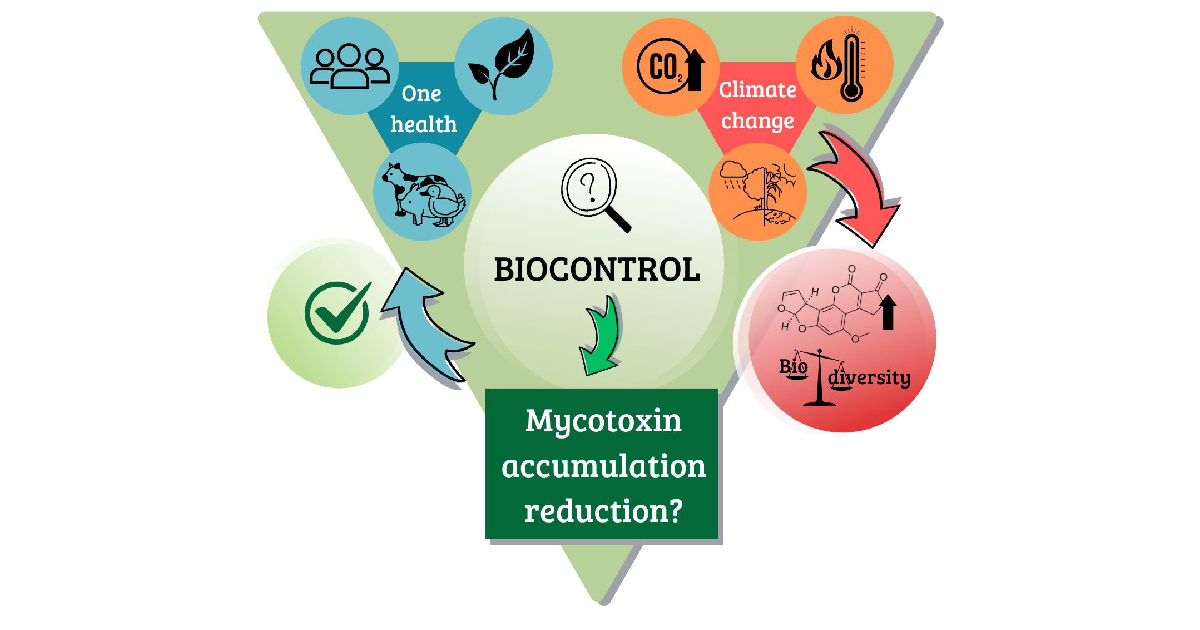
Mycotoxin contamination in food and feed chains is of global concern due to the economic impact of this secondary fungal metabolite for human and animal health and due to losses in the domestic and international markets. Mycotoxin accumulation needs to be approached considering the concept of One Health under a scenario of climate change. The strategies and tools used to minimize the risk are urgently needed. In recent years, progress has been performed in the development and use of biological control agents (BCAs) for the prevention of pathogens and toxigenic fungi in different crops, both at the pre- and postharvest stages. Different mechanisms of action have been proposed, including direct antagonism between the BCA and the fungal pathogen, competitive occupation via the niche exclusion of the pathogen, or incorporating metabolite production, hyper parasitism, or volatile compound production. The objective of this Special Issue is to bring together research focusing on reducing plant disease symptoms, minimizing impacts on yield reduction or the loss of food quality in the context of food security, and more sustainable systems that rely less on chemical control measures as inputs. With regard to the state of the art of tools based on biocontrol to minimize the impacts of mycotoxins considering climate change, the One Health concept will be addressed. 

Prof. Dr. Sofía Noemí Chulze
Dr. María Silvina Alaniz Zanon
Guest Editors

Manuscript Submission Information

Manuscripts should be submitted online at www.mdpi.com by registering and logging in to this website. Once you are registered, click here to go to the submission form. Manuscripts can be submitted until the deadline. All submissions that pass pre-check are peer-reviewed. Accepted papers will be published continuously in the journal (as soon as accepted) and will be listed together on the special issue website. Research articles, review articles as well as short communications are invited. For planned papers, a title and short abstract (about 250 words) can be sent to the Editorial Office for assessment.

Submitted manuscripts should not have been published previously, nor be under consideration for publication elsewhere (except conference proceedings papers). All manuscripts are thoroughly refereed through a double-blind peer-review process. A guide for authors and other relevant information for submission of manuscripts is available on the Instructions for Authors page. Toxins is an international peer-reviewed open access monthly journal published by MDPI.

Please visit the Instructions for Authors page before submitting a manuscript. The Article Processing Charge (APC) for publication in this open access journal is 2700 CHF (Swiss Francs). Submitted papers should be well formatted and use good English. Authors may use MDPI's English editing service prior to publication or during author revisions.

Keywords

  • biocontrol
  • climate change
  • One Health
  • mycotoxins
  • toxigenic fungi
  • changes in biodiversity
  • risk maps of mycotoxin accumulation

Benefits of Publishing in a Special Issue

  • Ease of navigation: Grouping papers by topic helps scholars navigate broad scope journals more efficiently.
  • Greater discoverability: Special Issues support the reach and impact of scientific research. Articles in Special Issues are more discoverable and cited more frequently.
  • Expansion of research network: Special Issues facilitate connections among authors, fostering scientific collaborations.
  • External promotion: Articles in Special Issues are often promoted through the journal's social media, increasing their visibility.
  • Reprint: MDPI Books provides the opportunity to republish successful Special Issues in book format, both online and in print.

Further information on MDPI's Special Issue policies can be found here.

Published Papers (5 papers)

Order results
Result details
Select all
Export citation of selected articles as:

Research

Jump to: Review

16 pages, 2458 KB  
Article
Reducing Aflatoxin Accumulation in Maize: Development and Performance of a Novel Biological Input
by Paloma Rhein, Marianela Bossa, María del Pilar Monge, Diego Giovanini, César Alfredo Barbero, Sofía Noemí Chulze, María Laura Chiotta and María Silvina Alaniz-Zanon
Toxins 2026, 18(1), 49; https://doi.org/10.3390/toxins18010049 - 17 Jan 2026
Viewed by 690
Abstract
Aflatoxin contamination of maize by Aspergillus section Flavi constitutes a major health and economic concern. While biological control using non-toxigenic strains has proven effective, the increasing global food demand underscores the need for alternative carrier materials to replace seeds and grains. The aims [...] Read more.
Aflatoxin contamination of maize by Aspergillus section Flavi constitutes a major health and economic concern. While biological control using non-toxigenic strains has proven effective, the increasing global food demand underscores the need for alternative carrier materials to replace seeds and grains. The aims of the present study were (1) to develop an innovative macroporous starch polymer in which the biocontrol agent can grow and be transported to fields where the bioformulate is applied, and (2) to evaluate the effectiveness of this new formulate in reducing AF contamination in maize kernels in field trials, in comparison with the traditional formulate based on long-grain rice as a substrate. Several methods and different starch sources were tested, and the formulation consisting of 10% maize starch, 0.5% citric acid, 3% sucrose, 0.3% urea, and distilled water was the most effective. Furthermore, this bioformulate demonstrated a performance comparable to that of the traditional long-grain rice-based formulation, reducing AF accumulation by up to 81% in maize kernels under field conditions. The implementation of this macroporous starch polymer-based formulation, in combination with the biological control agent A. flavus AFCHG2, would not only reduce aflatoxin contamination in maize kernels but also minimise the use of food-grade seeds and grains for industrial purposes, thereby preserving their availability for human and animal nutrition. Consequently, this development could enhance the availability of these substrates for food and feed use, thereby contributing to improved safety and food security. Full article
(This article belongs to the Special Issue Mycotoxins in Food Safety: Challenges and Biocontrol Strategies)
Show Figures

Figure 1

15 pages, 678 KB  
Article
Detection of Penicillium-Toxins in Nuts Commercialized in Italy Through LC-MS/MS Analyses
by Fabio Buonsenso, Giovanna Roberta Meloni and Davide Spadaro
Toxins 2026, 18(1), 12; https://doi.org/10.3390/toxins18010012 - 24 Dec 2025
Viewed by 901
Abstract
The consumption of nuts is widespread globally and constitutes a significant component of the human diet due to its nutritional value. However, the presence of mycotoxins in food products, including nuts, is a global public health concern. Mycotoxins are toxic metabolites produced by [...] Read more.
The consumption of nuts is widespread globally and constitutes a significant component of the human diet due to its nutritional value. However, the presence of mycotoxins in food products, including nuts, is a global public health concern. Mycotoxins are toxic metabolites produced by contaminating fungi such as Aspergillus spp. and Penicillium spp., which can contaminate crops during growth, harvesting, storage, or transport. The aim of this study was to conduct monitoring for the presence of mycotoxins in nuts already on the market. Specifically, secondary metabolites produced by Penicillium spp., including ochratoxin A, patulin, citrinin, cyclopiazonic acid, citreoviridin, griseofulvin, meleagrin, mycophenolic acid, penitrem A, roquefortine C, penicillins G and V, sulochrin, andrastin A, asterriquinone, chaetoglobosin A, cyclopenin, cyclopenol, and viridicatin, were investigated. Commercial products were purchased from various retail outlets in different formats, origins, and cultivation methods to assess potential influences of these factors on mycotoxin presence. Regarding Penicillium-toxins, 37% of the samples showed the presence of at least one of them, and 9% showed the simultaneous presence of two or more Penicillium-toxins. Peanuts had the highest incidence of Penicillium-toxin contamination, with at least one metabolite detected in 60% of the analyzed samples. The most common secondary metabolite among the samples was patulin (14%), while the secondary metabolite with the highest concentration was viridicatin in a walnut sample (151.40 ± 64.30 µg/kg). Besides Penicillium-toxins, aflatoxins were also analyzed with another validated LC-MS/MS method, but they were not detected in any sample. Although most Penicillium-toxins, and in particular patulin in nuts, are not currently regulated in the international legislation, they exert toxic effects on humans and animals, and their occurrence can represent a food safety risk. Full article
(This article belongs to the Special Issue Mycotoxins in Food Safety: Challenges and Biocontrol Strategies)
Show Figures

Figure 1

27 pages, 4319 KB  
Article
In Vitro Screening of the Antifungal and Antimycotoxin Effects of a Stilbenoids-Riche Grapevine Cane Extract on Fusarium graminearum, Aspergillus flavus and Penicillium expansum
by Dorian Aznar, Alexandre Colas de la Noue, Luc P. R. Bidel, Caroline Cayzac, Charlie Poss, Eloïse Ciordia, Andréa Cozette, Angélique Fontana, Fanny Rolet and Caroline Strub
Toxins 2025, 17(9), 454; https://doi.org/10.3390/toxins17090454 - 9 Sep 2025
Viewed by 1298
Abstract
Grapevine cane, an abundant viticultural by-product, contains high levels of stilbenoids and therefore holds promise as a natural antifugal and antimycotoxigenic agent. Produced by a microwave-assisted hydro-ethanolic extraction process, the grapevine cane extract (GCE) was tested for its activity against three mycotoxigenic fungi [...] Read more.
Grapevine cane, an abundant viticultural by-product, contains high levels of stilbenoids and therefore holds promise as a natural antifugal and antimycotoxigenic agent. Produced by a microwave-assisted hydro-ethanolic extraction process, the grapevine cane extract (GCE) was tested for its activity against three mycotoxigenic fungi F. graminearum, A. flavus, and P. expansum. Dose-response assays were performed, based on radial growth and inhibition of specific mycotoxin production. For all fungi, growth inhibition IC50 values clustered between 1.0 and 5.0 g/L, while for specific toxin production, IC50 were lower (≈0.5 g/L) except for patulin, which increased in a dose-dependent manner in the presence of the extract. Specific experiments were designed to highlight the effect of the extracts at various stages of the fungal life cycle (e.g., spore germination, early mycelium, and established colonies). F. graminearum spores’ germination was strongly inhibited (5.0 to 15 g/L), while for other fungi, germination was only delayed. Interestingly, antifungal and especially antimycotoxigenic effects were shown to be persistent after exposure. Full article
(This article belongs to the Special Issue Mycotoxins in Food Safety: Challenges and Biocontrol Strategies)
Show Figures

Figure 1

14 pages, 696 KB  
Article
Modeling Temperature Requirements for Growth and Toxin Production of Alternaria spp. Associated with Tomato
by Irene Salotti, Paola Giorni, Chiara Dall’Asta and Paola Battilani
Toxins 2025, 17(8), 361; https://doi.org/10.3390/toxins17080361 - 23 Jul 2025
Cited by 3 | Viewed by 1648
Abstract
Concerns about mycotoxin contamination by Alternaria spp. in tomato-based products emphasize the need for understanding the effect of the environment on their production. In the current study, we focused on three species frequently associated with tomato (A. alternata, A. solani, [...] Read more.
Concerns about mycotoxin contamination by Alternaria spp. in tomato-based products emphasize the need for understanding the effect of the environment on their production. In the current study, we focused on three species frequently associated with tomato (A. alternata, A. solani, and A. tenuissima) by evaluating the effects of different temperatures (5 to 40 °C) and substrata (PDA and V8) on mycelial growth and the production of mycotoxins (alternariol, alternariol monomethyl ether, and tenuazonic acid). Both biological processes were supported between 5 and 35 °C, with optimal temperatures between 20 and 30 °C, depending on the species. Temperature and its interaction with species significantly (p < 0.05) affected both processes. However, the species factor alone was not significant (p > 0.05), indicating that environmental conditions affect Alternaria spp. growth and mycotoxin production more than the species itself does. Mathematical equations were developed to describe the effect of temperature on mycelial growth, as well as on the production of AOH, AME, and TeA, for each Alternaria species. High concordance (CCC ≥ 0.807) between observed and predicted data and low levels of residual error (RMSE ≤ 0.147) indicated the high goodness of fit of the developed equations, which may be used for the development of models to predict Alternaria contamination both in field and during post-harvest storage. Full article
(This article belongs to the Special Issue Mycotoxins in Food Safety: Challenges and Biocontrol Strategies)
Show Figures

Figure 1

Review

Jump to: Research

30 pages, 1440 KB  
Review
Climate-Driven Aflatoxin M1 Risks in Serbia: Implications for Integrated Food Safety Management Along the Dairy Chain
by Dragan R. Milićević, Božidar Udovički, Ana Šuša, Andreja Rajković and Jelka Pleadin
Toxins 2026, 18(2), 105; https://doi.org/10.3390/toxins18020105 - 19 Feb 2026
Viewed by 672
Abstract
Aflatoxin M1 (AFM1) is a carcinogenic milk contaminant and a persistent food safety concern in Serbia, especially under changing climate conditions that exacerbate contamination risks. This review synthesizes national research conducted between 2012 and 2024, covering more than thirty thousand analyzed [...] Read more.
Aflatoxin M1 (AFM1) is a carcinogenic milk contaminant and a persistent food safety concern in Serbia, especially under changing climate conditions that exacerbate contamination risks. This review synthesizes national research conducted between 2012 and 2024, covering more than thirty thousand analyzed milk and dairy samples, to evaluate AFM1 contamination, public health risks, and the need for structured risk ranking and prioritization frameworks recommended by the Food and Agriculture Organization (FAO) and the European Food Safety Authority (EFSA). A systematic analysis of Serbian studies explored AFM1 occurrence, dietary exposure, and health risk estimates across population groups. The evidence reveals persistent AFM1 contamination with pronounced seasonal peaks during drought years and winter months, frequently exceeding the EU maximum limit of 0.05 µg/kg. Recent multi-year studies confirm that climate-driven AFB1 contamination in maize and compound feed remains a significant and recurring source of AFM1 in milk, highlighting the necessity of structured risk prioritization frameworks. Exposure assessments highlight children and students as the most vulnerable groups, displaying the highest estimated daily intake. Although current margin of exposure (MOE) values remain within acceptable limits, the persistence of contamination underscores a need for proactive risk management. Adoption of FAO and EFSA risk-ranking methodologies would enhance monitoring efficiency, protect high-risk populations, and support alignment with EU standards. Implementing structured risk prioritization is crucial for strengthening Serbia’s food safety governance, guiding policy decisions, and reducing the health burden of AFM1 in the dairy sector. Full article
(This article belongs to the Special Issue Mycotoxins in Food Safety: Challenges and Biocontrol Strategies)
Show Figures

Figure 1

Back to TopTop