




Next Issue
Volume 18, September-1
Previous Issue
Volume 18, August-1
 
 
nutrients-logo

Journal Browser

Journal Browser

Nutrients, Volume 18, Issue 16 (August-2 2026) – 162 articles
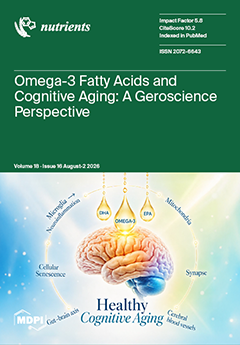
Cover Story (view full-size image): Omega-3 fatty acids, particularly DHA and EPA, may influence several biological processes involved in brain aging. By integrating perspectives from nutritional neuroscience and geroscience, this review highlights their potential effects on neuroinflammation, synaptic plasticity, mitochondrial function, oxidative stress, cerebrovascular health, and the gut–brain axis. Although clinical trial findings remain heterogeneous, omega-3 fatty acids may be particularly promising in individuals with low baseline omega-3 status, mild cognitive impairment, or increased biological vulnerability. View this paper
  • Issues are regarded as officially published after their release is announced to the table of contents alert mailing list.
  • You may sign up for e-mail alerts to receive table of contents of newly released issues.
  • PDF is the official format for papers published in both, html and pdf forms. To view the papers in pdf format, click on the "PDF Full-text" link, and use the free Adobe Reader to open them.
Order results
Result details
Section
Select all
Export citation of selected articles as:
21 pages, 5738 KB  
Article
Cistanche tubulosa (Schrenk) Wight Extract Ameliorates Learning and Spatial Memory Abilities in High-Altitude Hypobaric Hypoxia Rats
by Huanhuan Wang, Qiqi Zeng, Weiwen Jing, Xiaojuan Mou, Wenyan Zhao, Dongliang Zhu, Xiaowei Bao and Wenxin Zheng
Nutrients 2026, 18(16), 2744; https://doi.org/10.3390/nu18162744 - 21 Aug 2026
Viewed by 457
Abstract
Background: High-altitude hypobaric hypoxia (HH) is a major environmental stressor that impairs cognitive function, yet effective and widely available therapeutics remain limited. Although Rhodiola rosea has shown neuroprotective effects, its resource scarcity restricts large-scale application. Cistanche tubulosa (Schrenk) Wight, a traditional Chinese functional [...] Read more.
Background: High-altitude hypobaric hypoxia (HH) is a major environmental stressor that impairs cognitive function, yet effective and widely available therapeutics remain limited. Although Rhodiola rosea has shown neuroprotective effects, its resource scarcity restricts large-scale application. Cistanche tubulosa (Schrenk) Wight, a traditional Chinese functional food, has been increasingly used in health supplements due to its anti-fatigue, anti-dementia, and memory-enhancing properties, suggesting potential benefits against hypoxia-induced cognitive impairment. Objective: This study aimed to investigate the effects of C. tubulosa ethanol extract (CTE) on hippocampal tissue and gut microbiota upon chronic HH exposure using SPF male Sprague–Dawley (SD) rats. Methods: A total of 60 male SD rats were randomly assigned to six experimental groups (n = 10 per group): normoxic control, untreated HH model, positive control (R. rosea), and low-, medium-, high-dose CTE treatment groups. Behavioral tests (Morris water maze), hippocampal histopathology, serum and hippocampal oxidative stress markers (SOD, GSH-Px, MDA), expression of PI3K/Akt/mTOR-HIF-1α signaling pathway proteins (by immunohistochemistry), and gut microbiota composition (by 16S rRNA sequencing) were evaluated. Results: The results demonstrated that CTE significantly improved cognitive function, enhanced SOD and GSH activities, and reduced MDA levels in both hippocampus and serum. CTE also modulated the expression of PI3K/Akt/mTOR-HIF-1α pathway proteins in the hippocampus. Furthermore, CTE altered gut microbial diversity and abundance, increasing the proportion of beneficial bacteria, which may further influence hippocampal function via the gut–brain axis. Conclusion: These findings provide scientific evidence for the application of C. tubulosa as a potential health supplement for high-altitude adaptation and lay a foundation for subsequent research. Full article
Show Figures

Graphical abstract

16 pages, 666 KB  
Article
Bias Characterization of Resting Energy Expenditure Prediction Equations in Japanese Subjects: A Pilot Exploratory Study
by Hitomi Matsuura, Kanako Deguchi and Katsumi Iizuka
Nutrients 2026, 18(16), 2743; https://doi.org/10.3390/nu18162743 - 21 Aug 2026
Viewed by 271
Abstract
Background: Accurate estimation of energy requirements is essential for appropriate nutritional therapy. Resting energy expenditure (REE) predictive equations are derived from specific populations and may therefore contain systematic individual-level biases when applied in different clinical settings. In this pilot exploratory study, we compared [...] Read more.
Background: Accurate estimation of energy requirements is essential for appropriate nutritional therapy. Resting energy expenditure (REE) predictive equations are derived from specific populations and may therefore contain systematic individual-level biases when applied in different clinical settings. In this pilot exploratory study, we compared REE measured by portable indirect calorimetry with estimates obtained using multiple predictive methods in Japanese adults and characterized their association, absolute agreement, and error structure. Methods: Thirty-six university staff members and students were enrolled. The association and absolute agreement between REE measured by portable indirect calorimetry and estimates obtained using four predictive methods (Harris–Benedict, DRIs, Cunningham, and Ganpule) were evaluated using Spearman’s rank correlation coefficients, ICC(2,1), and Bland–Altman analyses. For equations demonstrating significant proportional bias, multivariate linear regression analyses were additionally performed using residual estimation error, calculated as (predicted REE-measured REE)/measured REE × 100, as the dependent variable. Results: Participants included 16 men and 20 women, with a mean age of 28.9 ± 10.3 years and BMI of 22.1 ± 3.1 kg/m2. Spearman’s rho ranged from 0.750 to 0.800, and ICC(2,1) estimates ranged from 0.736 to 0.766. Mean biases (predicted minus measured REE) were 50.7 kcal/day (95% CI, −20.1 to 121.4) for Harris–Benedict, −73.1 kcal/day (95% CI, −148.8 to 2.6) for DRIs, −94.7 kcal/day (95% CI, −161.7 to −27.8) for Cunningham, and −90.6 kcal/day (95% CI, −161.1 to −20.2) for Ganpule. The corresponding proportions of predictions within ±10% of measured REE were 41.7% (95% CI, 27.1–57.8%), 50.0% (95% CI, 34.5–65.5%), 55.6% (95% CI, 39.6–70.5%), and 52.8% (95% CI, 37.0–68.0%), respectively. Multivariate analyses suggested greater underestimation in females and a shift toward overestimation with higher BMI. Conclusions: Despite moderate-to-strong rank associations with measured REE, Bland–Altman analysis revealed proportional bias in three of the four predictive methods that was not apparent from the correlation coefficients alone. Exploratory analyses suggested that sex and BMI should be considered when interpreting the direction of prediction error. Because the precision of the limits of agreement was restricted by the small sample size, larger studies are needed to estimate individual-level agreement more precisely and to examine these error patterns in older adults and individuals with acute or chronic diseases. Full article
(This article belongs to the Section Nutrition Methodology & Assessment)
Show Figures

Figure 1

23 pages, 3812 KB  
Article
Low Time-Weighted Parathyroid Hormone Is Associated with Malnutrition-Inflammation and Functional Dependence in Maintenance Hemodialysis
by Nomy Levin Iaina, Alexandra Petkutsa, Nayaf Habashi and Evgenia Gurevich
Nutrients 2026, 18(16), 2742; https://doi.org/10.3390/nu18162742 - 21 Aug 2026
Viewed by 291
Abstract
Background/Objectives: Low parathyroid hormone (PTH) levels in maintenance hemodialysis may reflect malnutrition, inflammation, reduced functional reserve, or low bone turnover rather than optimal CKD-MBD control. We evaluated associations of longitudinal PTH burden with nutritional-inflammatory and functional-dependence profiles, hospitalization, and mortality. Methods: [...] Read more.
Background/Objectives: Low parathyroid hormone (PTH) levels in maintenance hemodialysis may reflect malnutrition, inflammation, reduced functional reserve, or low bone turnover rather than optimal CKD-MBD control. We evaluated associations of longitudinal PTH burden with nutritional-inflammatory and functional-dependence profiles, hospitalization, and mortality. Methods: This retrospective cohort included 188 adults receiving maintenance hemodialysis. Serial PTH measurements were summarized using time-weighted mean PTH. Associations with nutritional-inflammatory biomarkers, functional-dependence measures, and hospitalization were assessed using regression models. Mortality was primarily evaluated using a joint longitudinal–survival model linking repeated log2-transformed PTH measurements with time to death and adjusting for age, sex, dialysis vintage, and dialysis access. A 6-month landmark analysis was performed as a complementary sensitivity analysis. Results: Median time-weighted mean PTH was 292 pg/mL. Lower longitudinal PTH burden was associated with lower albumin, cholesterol, and transferrin and higher C-reactive protein and ferritin. Higher PTH was associated with lower odds of worse mobility and dependence in dressing, bathing, toileting, and continence after adjustment. Hospitalization was not significantly associated with PTH. During follow-up, 62 patients died. In the joint model, each twofold higher estimated current PTH level was associated with a lower observed mortality hazard (adjusted hazard ratio [HR] 0.58, 95% confidence interval [CI] 0.46–0.73; p < 0.001). The 6-month landmark analysis included 159 patients and 44 subsequent deaths. Each twofold higher PTH level was associated with lower subsequent mortality hazard (HR 0.69, 95% CI 0.51–0.95; p = 0.021), while PTH < 150 pg/mL was associated with higher mortality than PTH 300–600 pg/mL (HR 2.84, 95% CI 1.22–6.63). Conclusions: Low time-weighted PTH was associated with adverse nutritional-inflammatory and functional profiles, and lower estimated current PTH with higher mortality. Findings were consistent in the 6-month landmark analysis, do not establish causality, and support interpreting PTH in the broader clinical context. Full article
Show Figures

Figure 1

16 pages, 4094 KB  
Article
Independent Associations of Food Insecurity and Neighborhood Deprivation: Independent Associations with Incident Metabolic Dysfunction–Associated Steatotic Liver Disease in a Diverse U.S. Cohort
by Yong Eun, Marie S. Thearle, Joon Hee Kim, Rhonda K. Trousdale and Joan Culpepper-Morgan
Nutrients 2026, 18(16), 2741; https://doi.org/10.3390/nu18162741 - 21 Aug 2026
Viewed by 419
Abstract
Background/Objectives: Social determinants of health are implicated in metabolic dysfunction–associated steatotic liver disease (MASLD), yet longitudinal evidence on incident disease is scarce, and whether individual- and community-level determinants act independently remains unclear. The objective of this study was to examine whether individual food [...] Read more.
Background/Objectives: Social determinants of health are implicated in metabolic dysfunction–associated steatotic liver disease (MASLD), yet longitudinal evidence on incident disease is scarce, and whether individual- and community-level determinants act independently remains unclear. The objective of this study was to examine whether individual food insecurity and neighborhood deprivation are independently associated with incident MASLD. Methods: In this retrospective cohort of 40,693 U.S. adults without baseline MASLD in the diverse NIH All of Us Research Program, food insecurity (two-item Hunger Vital Sign) and neighborhood deprivation (validated five-domain composite) were co-primary exposures, with incident MASLD ascertained from validated diagnostic codes. Proportional hazards models were adjusted for demographic, socioeconomic, and metabolic factors, including obesity. Results: Over 116,220 person-years, 1240 (3.0%) participants developed MASLD. Both associations remained significant after adjustment for demographic, socioeconomic, and major metabolic risk factors, including obesity (food insecurity adjusted hazard ratio [aHR] 1.32, 95% CI 1.13–1.53; neighborhood deprivation aHR 1.20, 95% CI 1.05–1.37). Unadjusted cumulative incidence was highest among participants with both exposures and lowest among those with neither. Findings were consistent across sensitivity analyses; the food-insecurity association remained when neighborhood disadvantage was specified with a census-based index. Conclusions: Food insecurity and neighborhood deprivation were independently associated with higher incidence of MASLD. Nutrition-focused, equity-oriented interventions warrant evaluation to reduce MASLD burden and advance health equity. Full article
Show Figures

Figure 1

31 pages, 1865 KB  
Article
Topical Magnesium Orotate Lipogel in Kidney Transplant Recipients with Persistent Hypomagnesemia: Formulation Development and Pilot Clinical Study
by Corina Moisa, Florin Bănică, Ioana Adela Rațiu, Octavia Gligor, Laura Grațiela Vicaș, Cristian Adrian Rațiu, Mădălin Florin Ganea, Csaba Nagy, Anamaria Ratiu, Edy Hagi Islai and Mariana Ganea
Nutrients 2026, 18(16), 2740; https://doi.org/10.3390/nu18162740 - 21 Aug 2026
Viewed by 488
Abstract
Background: In solid-organ transplant recipients, hypomagnesemia is a frequent and persistent complication, predominantly related to long-term use of calcineurin inhibitors. Oral magnesium supplementation is often ineffective due to poor adherence, gastrointestinal adverse effects, and high treatment costs. Objectives: This pilot study [...] Read more.
Background: In solid-organ transplant recipients, hypomagnesemia is a frequent and persistent complication, predominantly related to long-term use of calcineurin inhibitors. Oral magnesium supplementation is often ineffective due to poor adherence, gastrointestinal adverse effects, and high treatment costs. Objectives: This pilot study aimed to (i) develop a topical magnesium formulation for use in renal transplant recipients with persistent hypomagnesemia; (ii) evaluate the influence of formulation excipients on magnesium release from pharmaceutical preparations; and (iii) preliminarily assess the clinical outcomes, functional parameters, patient satisfaction, and tolerability associated with topical magnesium lipogel use in renal transplant recipients with persistent hypomagnesemia. Materials and Methods: Three lipogel formulations containing magnesium orotate, citrate, or sulfate were prepared and characterized in terms of organoleptic properties, pH, colloidal stability, and rheological behavior. In vitro magnesium release was evaluated using Franz diffusion cells. The formulation demonstrating the most favorable release profile, magnesium orotate lipogel, was administered twice daily for two months to 21 renal transplant recipients with persistent hypomagnesemia who had shown inadequate response, intolerance, or non-adherence to oral magnesium supplementation. Laboratory parameters were assessed at baseline and after treatment. Patient satisfaction was evaluated using the Lübeck questionnaire, while physical activity and exercise capacity were assessed using the International Physical Activity Questionnaire (IPAQ) and metabolic equivalent task (MET) calculations. Results: Franz cell studies demonstrated superior magnesium release from the magnesium orotate lipogel compared with the other formulations. After two months, serum magnesium levels were higher than baseline (1.554 ± 0.124 vs. 1.448 ± 0.111 mg/dL, p < 0.001), although they remained below the normal reference range. No significant changes were observed in eGFR or hsCRP. Moderate-intensity physical activity increased significantly (310.475 ± 92.505 vs. 279.286 ± 89.907 MET-min/week, p < 0.001), while vigorous-intensity activity did not change significantly. No relevant adverse effects were reported. Patient satisfaction was high across all evaluated domains, including practicability (86.6%), efficacy (96.4%), tolerability (97.1%), and trust in medical professionals (97.6%). Conclusions: In this pilot study, topical magnesium orotate lipogel was well tolerated and accepted by renal transplant recipients with persistent hypomagnesemia. Serum magnesium levels and moderate physical activity improved over the two-month observation period, although magnesium levels remained below the normal range. These preliminary findings warrant confirmation in larger, randomized, placebo-controlled studies. Full article
(This article belongs to the Special Issue Magnesium in Aging, Health and Diseases)
Show Figures

Figure 1

21 pages, 3251 KB  
Article
Impact of N-PEP-12 Supplementation on Attentional Performance and Mental Wellbeing in Healthy Adults with Subjective Cognitive Complaints: A Randomized, Placebo-Controlled Trial
by Diana Chira, Nicoleta Jemna, Olivia Verișezan-Roșu, Ana-Maria Buruiană, Ștefan Strilciuc, Vlad-Florin Chelaru, Simona Pârvu and Dafin Fior Mureșanu
Nutrients 2026, 18(16), 2739; https://doi.org/10.3390/nu18162739 - 21 Aug 2026
Viewed by 986
Abstract
Background: Subjective cognitive complaints (SCCs) are common in middle-aged and older adults and may reflect early cognitive changes, alongside alterations in stress, mood, sleep, and quality of life. N-PEP-12 is a peptide-based nutritional supplement with potential neuroprotective effects, but evidence of its [...] Read more.
Background: Subjective cognitive complaints (SCCs) are common in middle-aged and older adults and may reflect early cognitive changes, alongside alterations in stress, mood, sleep, and quality of life. N-PEP-12 is a peptide-based nutritional supplement with potential neuroprotective effects, but evidence of its benefits in healthy adults with SCCs remains limited. Objective: To evaluate the effects of N-PEP-12 supplementation on attention, cognitive function, and mental wellbeing in healthy middle-aged and older adults with SCCs. Methods: In this prospective, randomized, double-blind, placebo-controlled trial, 276 participants aged 50–75 years with SCCs and no clinically significant cognitive impairment were randomized to placebo, N-PEP-12 45 mg, or N-PEP-12 90 mg. Assessments were performed at baseline and after 30, 90, and 180 days. Primary outcomes included Test of Attentional Performance measures. Secondary outcomes included WAIS-IV Digit Span Forward and Backward, perceived stress, mood, sleep quality, and EQ-5D-5L visual analog scale. Results: Across the three primary attention outcomes analyzed jointly in a multivariate repeated-measures model, there was a significant group-by-visit interaction (p = 0.003) and a significant effect of visit (p < 0.001), without a significant main effect of treatment arm (p = 0.133), indicating a time-dependent treatment effect. This result was obtained in a sensitivity analysis population in which missing values were imputed under assumptions least favorable to the active arms. In exploratory endpoint-specific comparisons at 90 days, both N-PEP-12 groups showed greater improvements than placebo in alertness, attention omissions and memory omissions, and Digit Span Forward and Backward scores also improved. In a subsequent uncontrolled extension phase, in which all participants received active treatment, participants initially assigned to placebo showed comparable improvements after switching to N-PEP-12 90 mg. These observations are exploratory. Adverse events were infrequent and similarly distributed across groups. Conclusions: N-PEP-12 supplementation was associated with improvements in attention, working memory, and mental wellbeing in healthy middle-aged and older adults with subjective cognitive complaints. These findings support further investigation of N-PEP-12 as a nutritional intervention for early subjective cognitive changes associated with aging. Full article
Show Figures

Figure 1

25 pages, 1652 KB  
Article
Effects of a Prolonged-Release Protein Substitute on 24-h Phenylalanine and Tyrosine Profiles in Phenylketonuria: A Randomized Crossover Study
by Valentina Rovelli, Graziella Cefalo, Alice Re Dionigi, Annalisa Finizii, Sabrina Paci, Juri Zuvadelli and Giuseppe Banderali
Nutrients 2026, 18(16), 2738; https://doi.org/10.3390/nu18162738 - 21 Aug 2026
Viewed by 795
Abstract
Background/Objectives: Achieving optimal metabolic control in phenylketonuria (PKU) remains challenging, particularly in adolescents and adults. Conventional free amino acid–based protein substitutes are absorbed rapidly, whereas prolonged-release formulations are designed to provide a more gradual amino acid release profile. Whether this translates into more [...] Read more.
Background/Objectives: Achieving optimal metabolic control in phenylketonuria (PKU) remains challenging, particularly in adolescents and adults. Conventional free amino acid–based protein substitutes are absorbed rapidly, whereas prolonged-release formulations are designed to provide a more gradual amino acid release profile. Whether this translates into more favorable 24 h Phe and Tyr profiles and improved short-term biochemical parameters of metabolic control remains uncertain. This study evaluated whether a prolonged-release amino acid–based protein substitute (PR-AA) could improve 24 h metabolic control compared with standard protein substitutes. Methods: This randomized, controlled, open-label crossover study included adolescents and adults with PKU aged ≥16 years. Participants received either conventional protein substitutes (standard of care; SC) or PR-AA three times daily for two consecutive days, followed by crossover to the alternate treatment. Blood spot samples were collected at five time points over 24 h on the second day of each treatment period. The primary outcome was the 24 h blood Phe profile. Secondary outcomes included blood Tyr, Phe/Tyr ratio, and exploratory assessment of branched-chain amino acids (BCAAs). Results: Twenty-one patients were enrolled, of whom 16 were included in the intention-to-treat analysis and 12 in the per-protocol analysis. PR-AA treatment resulted in significantly lower mean blood Phe levels over 24 h compared with SC (522 ± 194 vs. 561 ± 165 µmol/L; p = 0.0009), corresponding to a reduction of approximately 6–7%. The effect was consistently observed throughout the 24-h assessment period, particularly during the early morning, and became detectable after only two days of treatment. PR-AA was also associated with significantly higher blood Tyr levels (approximately +18–20%; p < 0.05) and a lower Phe/Tyr ratio (approximately −20%; p < 0.001) compared with SC. Exploratory analyses demonstrated modestly lower and more stable BCAA profiles with PR-AA. No significant carryover effects or treatment-related safety concerns were observed. Conclusions: Short-term treatment with a prolonged-release protein substitute was associated with modest but consistent improvements in short-term biochemical parameters of metabolic control in adolescents and adults with PKU, including lower blood Phe and higher Tyr levels, resulting in a reduced Phe/Tyr ratio. These findings suggest that optimizing amino acid delivery kinetics may represent a promising strategy to improve short-term metabolic control in PKU. Given the preliminary nature of these findings and the limited number of participants who completed the study protocol, larger studies with longer follow-up, including direct clinical and neurocognitive outcomes and formal variability metrics, are needed to determine the clinical relevance of these biochemical effects. Full article
(This article belongs to the Special Issue Dietary Practices and Dietary Treatment in Phenylketonuria)
Show Figures

Figure 1

11 pages, 234 KB  
Article
Racial and Ethnic Differences in Dietary Intake and Metabolic Profiles Among Adults with Heart Failure, Type 2 Diabetes, and Overweight or Obesity: A Secondary Analysis of the Pro-HEART Trial
by Lorraine S. Evangelista, Angelina P. Nguyen, Jennifer Kawi, Rebecca Meraz, Kelly L. Wierenga, Alona D. Angosta, Michele A. Hamilton and Gregg C. Fonarow
Nutrients 2026, 18(16), 2737; https://doi.org/10.3390/nu18162737 - 21 Aug 2026
Viewed by 419
Abstract
Background: Racial and ethnic disparities in heart failure (HF) outcomes are well documented, but little is known about dietary intake and metabolic profiles among individuals with chronic HF and overweight or obesity. This exploratory secondary analysis of baseline data from the Pro-HEART randomized [...] Read more.
Background: Racial and ethnic disparities in heart failure (HF) outcomes are well documented, but little is known about dietary intake and metabolic profiles among individuals with chronic HF and overweight or obesity. This exploratory secondary analysis of baseline data from the Pro-HEART randomized trial compared dietary intake and laboratory biomarkers across racial and ethnic groups. Methods: This secondary analysis used baseline data from the Pro-HEART randomized clinical trial (ClinicalTrials.gov identifier: NCT01423266). Baseline data from 92 adults with chronic HF, type 2 diabetes mellitus (DM), and overweight or obesity were analyzed. Participants self-identified as White (n = 49), Asian/Other (n = 17), Hispanic (n = 14), or Black (n = 12). Dietary intake was assessed using 3-day food records, which were analyzed with the Nutrition Data System for Research. Selected biomarkers included lipid measures, fasting glucose, hemoglobin A1c, albumin, total protein, and creatinine. Group differences were evaluated using one-way analysis of variance and chi-square or Fisher’s exact tests, as appropriate. Because multiple outcomes were examined without a prespecified primary endpoint, p-values were not adjusted for multiplicity and are reported as descriptive. Results: Participants had a mean age of 58.5 ± 9.7 years, were predominantly male (69.6%), married (64.0%), and had New York Heart Association Class II HF (75.0%). Mean age differed across groups (omnibus p = 0.046); no pairwise contrast remained significant after Bonferroni adjustment. No statistically significant between-group differences were identified in the available data for body mass index, waist circumference, left ventricular ejection fraction, dietary intake, or laboratory biomarkers (all p > 0.05); however, the small subgroup sizes and substantial missing dietary data limited the precision of these comparisons. Conclusions: In this exploratory cohort of adults with chronic HF, type 2 DM, and overweight or obesity, no statistically significant racial or ethnic differences were identified in the dietary and laboratory measures examined. However, the small subgroup sizes and substantial missing dietary data limit the precision of these findings, and smaller or clinically meaningful differences cannot be excluded. Larger studies with more complete dietary data are needed to better characterize potential racial and ethnic differences in nutrition and metabolic health in this population. Full article
(This article belongs to the Special Issue Featured Articles on Nutrition and Obesity Management (3rd Edition))
29 pages, 1425 KB  
Review
From Routine Supplementation to Targeted Repletion: Vitamin D Deficiency in UVB-Constrained, Pollution-Exposed, and Ageing Populations—Musculoskeletal and Extra-Skeletal Perspectives
by Yonghyun Yoon, Jihyo Hwang, Jungyoun Kim, Ki-Tae Kim, Chan-Mo Yang, Rowook Park, Jaehyun Shim, Jonghyeok Lee, Seungbeom Kim, Youngmo Kim and King Hei Stanley Lam
Nutrients 2026, 18(16), 2736; https://doi.org/10.3390/nu18162736 - 21 Aug 2026
Viewed by 691
Abstract
Background/Objectives: Vitamin D deficiency remains common in UVB-constrained, pollution-exposed, sedentary, and ageing populations, yet recent guidelines discourage routine screening and empiric high-dose supplementation in generally healthy adults. This review clarifies the clinical distinction between untargeted population supplementation and monitored repletion of documented deficiency [...] Read more.
Background/Objectives: Vitamin D deficiency remains common in UVB-constrained, pollution-exposed, sedentary, and ageing populations, yet recent guidelines discourage routine screening and empiric high-dose supplementation in generally healthy adults. This review clarifies the clinical distinction between untargeted population supplementation and monitored repletion of documented deficiency in high-risk individuals. Methods: We conducted a focused narrative review of PubMed/MEDLINE, Scopus, Web of Science, and the Cochrane Library. The focused evidence search supporting the narrative synthesis was completed in June 2026. References published subsequently were included during manuscript preparation only when relevant for contextual purposes and were not incorporated retrospectively into the evidence-selection process underlying the review’s clinical conclusions. Evidence was interpreted according to baseline and achieved 25-hydroxyvitamin D [25(OH)D], dosing schedule, route, body composition, endpoint, and population risk. No formal risk-of-bias assessment, certainty grading, or systematic meta-analytic synthesis was performed. Key Findings: The strongest rationale for vitamin D repletion remains musculoskeletal, particularly for osteomalacia, muscle function, osteoporosis care, and fracture-related vulnerability in deficient or high-risk patients. Management should separate generally healthy adults from patients with an indication for testing or treatment. Historical and regional expert frameworks describe time-limited higher-dose repletion for documented deficiency, but these regimens should not be interpreted as a current universal Endocrine Society treatment standard. Short-term trials using moderate cumulative oral doses suggest broadly comparable biochemical repletion with daily, weekly, or monthly schedules; equivalence has not been established for long-term clinical outcomes, frail populations, or large intermittent doses. Extra-skeletal associations remain less trial-supported. Conclusions: Vitamin D deficiency should be managed using clinically indicated assessment, explicit repletion and maintenance regimens, and selective biochemical reassessment. Targets above conventional skeletal adequacy thresholds remain investigational and should not be applied as universal treatment goals. Full article
Show Figures

Figure 1

15 pages, 3162 KB  
Article
A Chewing Gum Containing Heyndrickxia coagulans SNZ1969® and Volatile Sulphur Compounds: An Exploratory Secondary Analysis of a Double-Blind Randomized Controlled Trial
by Silvia Cirio, Giacomo Mantegazza, Claudia Salerno, Simone Guglielmetti, Aesha Allam, Guglielmo Campus and Maria Grazia Cagetti
Nutrients 2026, 18(16), 2735; https://doi.org/10.3390/nu18162735 - 21 Aug 2026
Viewed by 361
Abstract
Background: Chewing gum may reduce oral malodor through salivary stimulation and may also serve as a carrier for oral probiotics. Evidence on Heyndrickxia coagulans in this setting is lacking. Methods: This exploratory secondary analysis used data from a randomized, blinded, placebo-controlled [...] Read more.
Background: Chewing gum may reduce oral malodor through salivary stimulation and may also serve as a carrier for oral probiotics. Evidence on Heyndrickxia coagulans in this setting is lacking. Methods: This exploratory secondary analysis used data from a randomized, blinded, placebo-controlled study in which 52 healthy adults were assigned to a sugar-free gum with H. coagulans SNZ1969® or to a matched placebo gum for four weeks. Hydrogen sulphide (H2S) and methyl mercaptan (CH3SH) were measured by OralChroma™ at baseline (T0), during intervention (T1–T2), and one week after gum discontinuation (T3). Dental plaque 16S rRNA profiles from the parent trial were re-analysed in relation to VSC values. Results: Forty-four participants completed follow-up. H2S and CH3SH concentrations did not differ between probiotic and placebo groups at any visit, and changes from baseline were also similar between arms. In the probiotic group, H2S was lower than baseline at T2 (p = 0.008) and T3 (p = 0.031), but this within-arm decrease was not greater than the change seen with placebo. Taxon-level analyses suggested nominal associations with taxa plausibly linked to sulphur metabolism, mainly for H2S, but no association survived false-discovery-rate correction. Conclusions: The probiotic gum did not show a statistically significant additional effect on VSC concentrations compared with the placebo gum. The within-arm H2S decrease and microbiome signals are exploratory and require confirmation in trials designed for participants with clinically established halitosis. Full article
(This article belongs to the Section Prebiotics, Probiotics and Postbiotics)
Show Figures

Figure 1

15 pages, 577 KB  
Article
Beneficial Effects of Purified Cytoplasm of Pollen Associated with Vitamin D and Vitamin K2 on Menopausal Symptoms and Bone Health
by Anna Capozzi, Anna Fagotti, Davide Sacco, Anna Pasi, Rossella Mellino and Stefano Lello
Nutrients 2026, 18(16), 2734; https://doi.org/10.3390/nu18162734 - 21 Aug 2026
Viewed by 561
Abstract
Background: The menopausal transition may be accompanied by several disabling symptoms which impair quality of life. Many women cannot proceed with and/or refuse hormonal replacement therapy (HRT) and, thus, they rely on non-hormonal remedies to manage climacteric syndrome. Methods: This was a retrospective [...] Read more.
Background: The menopausal transition may be accompanied by several disabling symptoms which impair quality of life. Many women cannot proceed with and/or refuse hormonal replacement therapy (HRT) and, thus, they rely on non-hormonal remedies to manage climacteric syndrome. Methods: This was a retrospective study analyzing the impact of a combination of Purified Cytoplasm of Pollen (PCP) with vitamin D (vitD) and vitamin K2 (vitK2) on menopausal symptoms and bone parameters in a sample of symptomatic women (Group A, n = 22) compared to controls (Group B, n = 23). Results: We found that blood levels of vitD (25OHD) significantly increased within Group A (p = 0.0004) whereas no significance was reached within Group B (p > 0.05) after a three-month therapy. Compared with the baseline, serum C-terminal telopeptide of type I collagen (CTX) turned out to be significantly reduced within Group A (p = 0.0415) but not within Group B (p > 0.05). Comparing Group A and Group B, the values of CTX significantly differed after treatment (p = 0.0458). In comparison to the baseline, significant differences emerged within Group A for physical, psychosocial, and vasomotor domains of Menopause-Specific Quality of Life (MenQol) (p < 0.05) whereas no significant difference was found for the sexual domain (p > 0.05). Comparing Group A and Group B, significant differences were observed for all MenQol domains (p < 0.05), except for the sexual domain (p > 0.05) after therapy. Conclusions: Based on our findings, the combination of PCP, vitD, and vitK2 could be used for managing vasomotor and mood disturbances associated with menopause, whilst also offering the added benefit of maintaining bone health. Full article
Show Figures

Figure 1

14 pages, 760 KB  
Article
Prevalence of Sarcopenia and Its Association with Nutrition Risk in Community-Dwelling Older Adults with Subjective Cognitive Impairment or Living in Retirement Homes
by Raksha Aravind and Heather H. Keller
Nutrients 2026, 18(16), 2733; https://doi.org/10.3390/nu18162733 - 21 Aug 2026
Viewed by 389
Abstract
Background: Sarcopenia is an age-related condition characterized by declines in muscle strength and muscle mass associated with adverse health outcomes in older adults. Nutrition risk may contribute to sarcopenia development; however, its relationship with sarcopenia among community-dwelling older adults, especially those living in [...] Read more.
Background: Sarcopenia is an age-related condition characterized by declines in muscle strength and muscle mass associated with adverse health outcomes in older adults. Nutrition risk may contribute to sarcopenia development; however, its relationship with sarcopenia among community-dwelling older adults, especially those living in retirement homes or with subjective cognitive impairment, remains unclear. This study aimed to determine the prevalence of sarcopenia and its indicators using the EWGSOP2 criteria in community-dwelling older adults with cognitive impairment and those living in retirement homes and examine associations between nutrition risk and probable sarcopenia. Methods: A secondary analysis of cross-sectional data from 326 adults aged ≥55 years was conducted. Sarcopenia was assessed using the EWGSOP2 Find–Assess–Confirm–Severity framework and nutrition risk was measured using SCREEN-14 and the Nutrition Risk Rating Score (NRRS). Results: Overall, 37.0% of participants were at risk for sarcopenia, and 26.9%, 5.5%, and 4.3% were classified with probable, confirmed, and severe sarcopenia, respectively. Retirement home residents were more likely to meet criteria for sarcopenia risk, low grip strength, and slow gait speed (all p < 0.001) than those with subjective cognitive impairment living in the community. In adjusted analyses, walker use and higher NRRS were associated with probable sarcopenia, whereas SCREEN-14 scores were not. Conclusions: These findings suggest that sarcopenia risk is common in these populations but confirmed sarcopenia is low using the EWGSOP2 framework. Nutrition risk as assessed by a dietitian using a comprehensive assessment is associated with probable sarcopenia. Full article
Show Figures

Figure 1

34 pages, 1398 KB  
Review
The Role of Anti-Inflammatory Nutrition in Metabolic Syndrome and Cardiometabolic Diseases
by Cristina-Sorina Cătană, Monica Mihaela Marta, Denisa Popa and Eleonora Dronca
Nutrients 2026, 18(16), 2732; https://doi.org/10.3390/nu18162732 - 21 Aug 2026
Viewed by 545
Abstract
Background: Metabolic syndrome is closely linked to chronic systemic inflammation and intestinal dysbiosis. Anti-inflammatory nutrition is an approach based on the interaction between dietary intake, chronic low-grade inflammation, and the pathophysiological mechanisms of metabolic syndrome and cardiometabolic diseases. This narrative review evaluates [...] Read more.
Background: Metabolic syndrome is closely linked to chronic systemic inflammation and intestinal dysbiosis. Anti-inflammatory nutrition is an approach based on the interaction between dietary intake, chronic low-grade inflammation, and the pathophysiological mechanisms of metabolic syndrome and cardiometabolic diseases. This narrative review evaluates the impact of plant-based dietary models, including vegan and modified Mediterranean variants, on key metabolic and inflammatory parameters. Methods: Literature data published in PubMed, Science Direct, Scopus, and Google Scholar between 2017 and 2026 were used to evaluate the relation between diet, inflammation, and cardiometabolic diseases. We focused on multiple biomarkers, including inflammatory, metabolic, and oxidative-stress indicators measured by standardized laboratory methods to estimate the overall relationship between diet and chronic inflammation. Results: Dietary indices such as eADI-17 allow quantification of the inflammatory potential of anti-inflammatory nutrition and correlate with biomarkers such as hsCRP, IL-6, and soluble TNF receptors. Conclusions: Integrated nutritional strategies that combine plant-based models, temporal control of meals, and microbiota-directed interventions provide efficient support by improving endothelial dysfunction, the thrombotic profile, and chronic inflammation. Full article
(This article belongs to the Special Issue Nutritional Biomarkers: Implication for Health)
Show Figures

Figure 1

15 pages, 3661 KB  
Review
Immunomodulatory and Immunonutritional Effects of a Standardized Extract of Cultured Lentinula edodes Mycelia in Cancer: From Prevention to Perioperative Microenvironment Stabilization
by Richi Nakatake, Tetsuya Okuyama, Shigeki Adachi, Toru Matsu-ura, Hiroaki Kitade and Mikio Nishizawa
Nutrients 2026, 18(16), 2731; https://doi.org/10.3390/nu18162731 - 21 Aug 2026
Viewed by 436
Abstract
A standardized extract of cultured Lentinula edodes mycelia (ECLM), commercially known as AHCC®, shows anti-inflammatory, immunomodulatory, and organ-protective properties. Experimental studies have indicated that ECLM modulates innate and adaptive immunity, including natural killer (NK) cell activity, antigen-presenting cell function, T-cell responses, [...] Read more.
A standardized extract of cultured Lentinula edodes mycelia (ECLM), commercially known as AHCC®, shows anti-inflammatory, immunomodulatory, and organ-protective properties. Experimental studies have indicated that ECLM modulates innate and adaptive immunity, including natural killer (NK) cell activity, antigen-presenting cell function, T-cell responses, and cytokine balance. These effects are particularly relevant in oncology because surgical stress and ischemia–reperfusion injury (IRI) generate a transient perioperative environment characterized by immune suppression, inflammation, and conditions favorable for metastatic progression. Recent animal studies have demonstrated the protective effects of ECLM in intestinal and hepatic IRI models, providing a potential mechanistic rationale for improving the perioperative host microenvironment. Clinical studies on hepatocellular carcinoma, pancreatic cancer, and gynecological malignancies suggest that ECLM may offer potential benefits in immune preservation, nutritional support, symptom management, and recurrence prevention, although most studies are small and hypothesis-generating. Emerging evidence from patient-derived xenograft and spontaneous carcinogenesis models further suggests that ECLM may influence tumor biology beyond host immune activation, although the underlying mechanisms require elucidation. This review summarizes the mechanistic, preclinical, translational, and clinical evidence supporting the use of ECLM as a candidate for perioperative immunonutritional strategies. We propose the hypothesis that ECLM may function as a perioperative microenvironmental stabilizer that integrates immune preservation and intestinal barrier protection. Full article
(This article belongs to the Section Nutritional Immunology)
Show Figures

Figure 1

34 pages, 599 KB  
Article
Online Food Purchase Frequency Across Generations: Associations with Healthy Eating, Environmental Concern, and Economic Decision Indicators
by Robert Wolny, Marcin Awdziej, Magdalena Jaciow, Ilona Lipowska, Marcin Lipowski and Jolanta Tkaczyk
Nutrients 2026, 18(16), 2730; https://doi.org/10.3390/nu18162730 - 20 Aug 2026
Viewed by 325
Abstract
Background/Objectives: Online food purchasing may be associated with health-related, environmental, economic, and technological factors. However, limited evidence exists on whether these factors are associated with online food purchase frequency in similar ways across generational groups. This study examined whether self-reported healthy eating, environmental [...] Read more.
Background/Objectives: Online food purchasing may be associated with health-related, environmental, economic, and technological factors. However, limited evidence exists on whether these factors are associated with online food purchase frequency in similar ways across generational groups. This study examined whether self-reported healthy eating, environmental concern, and economic decision indicators were associated with online food purchase frequency among Polish consumers who had previously purchased food online and whether these associations differed across birth-cohort groups. Methods: Data were collected in Poland in 2025 in a cross-sectional study using Computer-Assisted Web Interviewing. The analytical sample comprised 669 respondents who declared having purchased food online. Online food purchasing was measured both as a binary distinction between frequent and occasional purchasing and as an eight-category ordinal frequency variable. Pearson’s chi-square tests, Mann–Whitney U tests, binary logistic regression, and ordinal logistic regression were applied. Moderation was assessed through predictor-by-generation interaction terms. The Benjamini–Hochberg procedure was used to control the false discovery rate, and seven economic decision-making indicators were additionally examined in mutually adjusted multivariable models. Ordinal models were interpreted as sensitivity analyses because the proportional-odds assumption was not fully satisfied. Results: Healthy eating was not directly associated with online food purchasing frequency and did not interact significantly with generation. Environmental concern showed a significant interaction with generation in both binary and ordinal models. It was associated with more frequent online food purchasing among Baby Boomers but with less frequent purchasing among Generation Z. In separate models, price comparison and careful product choice were associated with more frequent online purchasing. Saving orientation also showed an exploratory interaction with opposite directions across generational groups: it was associated with more frequent purchasing in Generation X and less frequent purchasing in Generation Z. However, these economic decision indicators did not remain robust after correction for multiple testing and simultaneous adjustment. Conclusions: Online food purchasing frequency was not uniformly associated with health, environmental, or economic tendencies across generations. In this cross-sectional sample, generation moderated the association between environmental concern and online food purchase frequency, although this pattern should not be interpreted as evidence of a distinct causal cohort effect. The findings suggest that similar declared tendencies may be associated with different patterns of online food purchase frequency across generational groups. Full article
Show Figures

Figure 1

26 pages, 5122 KB  
Review
Panax ginseng C.A. Mey. as Multi-Target Regulators of Vascular Homeostasis: Pharmacological Mechanisms and Therapeutic Perspectives
by Yudan Wang, Haiyan Hao, Rui Tan, Zhe Shi and Qinhui Tuo
Nutrients 2026, 18(16), 2729; https://doi.org/10.3390/nu18162729 - 20 Aug 2026
Viewed by 373
Abstract
Cardiovascular and cerebrovascular diseases (CVDs) are closely associated with disturbances in vascular homeostasis, including endothelial dysfunction, abnormal vascular remodeling, inflammation, oxidative stress, thrombosis, barrier disruption, and dysregulated angiogenesis. Ginsenosides, the major bioactive saponins of Panax ginseng C.A. Mey., have been reported to modulate [...] Read more.
Cardiovascular and cerebrovascular diseases (CVDs) are closely associated with disturbances in vascular homeostasis, including endothelial dysfunction, abnormal vascular remodeling, inflammation, oxidative stress, thrombosis, barrier disruption, and dysregulated angiogenesis. Ginsenosides, the major bioactive saponins of Panax ginseng C.A. Mey., have been reported to modulate several of these processes. This review integrates structural, pharmacokinetic, bioinformatic, and experimental evidence to evaluate the vascular actions of representative ginsenosides. Preclinical studies indicate partially overlapping effects on endothelial integrity, vascular tone, permeability, inflammatory and oxidative responses, hemostasis, remodeling, and angiogenesis. Structural differences and biotransformation may contribute to variation in exposure and pharmacological profiles. However, most evidence derives from isolated compounds tested in heterogeneous cell and animal models, direct comparisons or combination studies are limited, and several in vitro concentrations exceed plasma levels reported after oral ginseng administration. The proposed multi-target network should therefore be regarded as hypothesis-generating rather than evidence of coordinated restoration of vascular homeostasis. Future studies should emphasize exposure-relevant experimental designs, comparative assessment of individual ginsenosides and defined combinations, and pharmacokinetic–target engagement relationships. Full article
(This article belongs to the Section Nutritional Epidemiology)
Show Figures

Figure 1

14 pages, 1555 KB  
Article
Early Discharge of Very Preterm Infants with Home Nasogastric Tube Feeding Is Not Associated with Increased Parental HADS Anxiety or Depression Scores
by Rahel Schuler, Lea Woitschitzky, Burkhard Brosig, Beate Priewasser, Edda Hofstätter, Harald Ehrhardt and Walter A. Mihatsch
Nutrients 2026, 18(16), 2728; https://doi.org/10.3390/nu18162728 - 20 Aug 2026
Viewed by 320
Abstract
Background: Early discharge with home nasogastric (NGT) feeding has been associated with favorable infant outcomes and high parental satisfaction. However, its impact on parental mental health has been insufficiently studied. We aimed to evaluate symptoms of anxiety and depression in mothers and fathers [...] Read more.
Background: Early discharge with home nasogastric (NGT) feeding has been associated with favorable infant outcomes and high parental satisfaction. However, its impact on parental mental health has been insufficiently studied. We aimed to evaluate symptoms of anxiety and depression in mothers and fathers of very preterm infants discharged with or without NGT feeding. Methods: This prospective cohort study was conducted at a German tertiary perinatal center between October 2020 and May 2024. A total of 238 preterm infants with a birth weight ≤ 1500 g and/or a postmenstrual age (PMA) ≤ 32 weeks were included; 131 were discharged with full oral feeding and 107 with NGT feeding. Symptoms of anxiety and depression were assessed in mothers and fathers using the Hospital Anxiety and Depression Scale (HADS-D) at discharge and at three months corrected age (CA). A total of 201 parent–infant dyads were included. HADS-D assessments were completed by 155 mothers and 135 fathers at discharge and by 121 mothers and 119 fathers at three months CA. Results: At discharge, depression and anxiety scores did not differ between parents of infants discharged with and without NGT feeding. At three months CA, mothers of infants discharged on full oral feeding had higher depression and anxiety scores than mothers of infants discharged with NGT feeding (4.95 ± 3.62 vs. 3.18 ± 2.89; p ≤ 0.01 and 6.42 ± 3.85 vs. 4.79 ± 3.72; p = 0.04), and clinically significant depression scores (≥8) were more frequent (23.53% vs. 10.45%; p = 0.04). Similarly, fathers in the non-tube-feeding group had higher depression scores at 3 months CA (4.78 ± 3.74 vs. 3.48 ± 2.72; p = 0.04), with a trend towards a greater proportion showing clinically significant depression scores (24.14% vs. 13.11%; p = 0.12. Conclusions: Early discharge of very preterm infants with home NGT feeding was not associated with increased parental psychological distress at discharge and at 3 months CA. Across the outcomes, parental distress tended to be lower at 3 months CA with NGT feeding at discharge. However, as no NGT × time interaction was statistically significant after correction for multiple testing, these group differences should be interpreted as exploratory in nature. Full article
(This article belongs to the Section Clinical Nutrition)
Show Figures

Figure 1

15 pages, 264 KB  
Article
Social Media and out of Home Food Selection and Health Promoting Choices: A Generational Perspective in Poland
by Andrzej Soroka, Agnieszka Godlewska and Anna Katarzyna Mazurek-Kusiak
Nutrients 2026, 18(16), 2727; https://doi.org/10.3390/nu18162727 - 20 Aug 2026
Viewed by 369
Abstract
Objective: This study investigates the relationship between social media use and consumer purchase intentions or out-of-home food choices in the Polish gastronomic market, focusing specifically on variations across generations. Methodology: Data were collected between May and July 2024 through a diagnostic survey using [...] Read more.
Objective: This study investigates the relationship between social media use and consumer purchase intentions or out-of-home food choices in the Polish gastronomic market, focusing specifically on variations across generations. Methodology: Data were collected between May and July 2024 through a diagnostic survey using the Computer-Assisted Web Interviewing (CAWI) technique (N = 1099). Respondents were recruited via a non-probability quota sampling approach based on strict demographic inclusion criteria. To test the research hypotheses regarding generational variations in market behaviour, a multivariate discriminant function analysis was performed using Statistica 13.1 PL. A preliminary pilot study (N = 30) confirmed the initial questionnaire readability and overall consistency (Cronbach’s alpha = 0.87), while subscales were treated independently during the main analysis. Results: Multivariate models were found to be highly significant, revealing clear differences between age groups. The youngest cohort (aged 18–35) relies heavily on Instagram and TikTok, showing distinct patterns regarding visual triggers such as “instagrammable” aesthetics, digital validation, and menu uniqueness alongside weight loss claims. Conversely, seniors (aged 61 and older) lean unexpectedly towards X. This older segment displays pragmatic, utility-driven motives, searching for detailed textual data about ingredients and the health-promoting properties of food. General product quality and calorie control were identified as universal factors that do not vary by generation. Conclusions and Managerial Implications: The digital transformation of the Polish restaurant industry does not follow a single path. Social media is closely linked to modern customer journeys, with physical dining spots frequently serving as spaces for socialisation. Consequently, restaurant operators should move away from mass communication and adopt a selective omnichannel strategy, where message formats shift from visual appeal to factual, nutrition-oriented text that is tailored to the digital literacy and dietary needs of each generation. Full article
(This article belongs to the Special Issue The Impact of the Food Environment on Diet and Health)
22 pages, 1646 KB  
Article
Use of Mood- and Stress-Relief Dietary Supplements and Over-the-Counter Medications in Relation to Physician Trust, Hypothetical Help-Seeking Preferences, and Communication-Related Attitudes: A Cross-Sectional Survey
by Aleksandra Brzozowska, Jakub Grabowski and Maciej Brosz
Nutrients 2026, 18(16), 2726; https://doi.org/10.3390/nu18162726 - 20 Aug 2026
Viewed by 412
Abstract
Background/Objectives: Dietary supplements (DSs) and over-the-counter (OTC) medications for mood improvement and stress relief are widely used, but little is known about how their use relates to coping preferences, trust in physicians, and communication with doctors. This exploratory cross-sectional study compared users and [...] Read more.
Background/Objectives: Dietary supplements (DSs) and over-the-counter (OTC) medications for mood improvement and stress relief are widely used, but little is known about how their use relates to coping preferences, trust in physicians, and communication with doctors. This exploratory cross-sectional study compared users and non-users of such products in Poland. Methods: Data were collected between October 2024 and May 2025 and included 798 adults recruited through a mixed-mode convenience sampling strategy (636 online and 162 in person). Participants were classified as current users (CUs; n = 184), past users (PUs; n = 297), or never-users (NUs; n = 317). The outcomes included hypothetical future coping strategies (under an assumption of unlimited resources), trust in physicians using an author-translated adaptation of the Trust in Doctors in General (T-DiG) scale and three-category communication-related attitudes. Multivariable models were adjusted for age, gender, education, medical or health science background, and recruitment mode. Results: Overall, 60.3% of respondents reported current or past use. Compared with NUs, both CUs and PUs had higher adjusted odds of selecting future DS/OTC use (CUs: aOR = 5.60, 95% CI 3.44–9.14, p < 0.001; PUs: aOR = 2.44, 95% CI 1.52–3.93, p < 0.001). PUs also had higher adjusted odds of selecting psychotherapy (aOR = 1.50, 95% CI 1.04–2.17, p = 0.031; overall p = 0.018). Product-use status was associated with selected items of T-DiG: communication competency (overall p = 0.031) and global trust (overall p < 0.001). Compared with NUs, CUs had lower adjusted scores on both subscales (aMD = −0.19, 95% CI −0.33 to −0.04, p = 0.010 and aMD = −0.40, 95% CI −0.59 to −0.21, p < 0.001, respectively). Overall product-group effects were also observed for the first two communication items: CUs had lower relative risk ratios than NUs for discussing product-related doubts first with their physician (RRR = 0.52, 95% CI 0.35–0.78, p = 0.001) and for feeling free to raise such doubts (RRR = 0.57, 95% CI 0.36–0.92, p = 0.022). Conclusions: Product-use status showed selective associations with hypothetical coping preferences, physician trust, and communication-related attitudes rather than a uniform pattern of reluctance to seek professional support. Current use was most strongly associated with lower trust and less favorable product-related communication attitudes. Given the cross-sectional design and hypothetical nature of the coping outcomes, these findings do not establish causality, temporal ordering, or actual healthcare-seeking behavior. Full article
(This article belongs to the Section Clinical Nutrition)
Show Figures

Figure 1

19 pages, 287 KB  
Article
Nutritional Status, Dietary Intake and Immunosuppressive Therapy in Kidney Transplant Recipients: Differences Between Early and Late Post-Transplant Period—A Cross-Sectional Pilot Study
by Aleksandra Anna Kajdas, Dorota Szostak-Węgierek, Krzysztof Krasuski, Dorota Miszewska-Szyszkowska and Magdalena Durlik
Nutrients 2026, 18(16), 2725; https://doi.org/10.3390/nu18162725 - 20 Aug 2026
Viewed by 592
Abstract
Background/Objectives: Kidney transplantation is associated with profound metabolic and nutritional changes, particularly across different post-transplant periods. This study aimed to evaluate differences in nutritional status, dietary intake, and immunosuppressive therapy between recipients in the early and late post-transplant period. Materials and Methods: This [...] Read more.
Background/Objectives: Kidney transplantation is associated with profound metabolic and nutritional changes, particularly across different post-transplant periods. This study aimed to evaluate differences in nutritional status, dietary intake, and immunosuppressive therapy between recipients in the early and late post-transplant period. Materials and Methods: This cross-sectional pilot study presents an analysis of baseline data obtained from a prospective cohort of 38 kidney transplant recipients divided into early (≤1 year post-transplantation; n = 15) and late (>1 year post-transplantation; n = 23) post-transplant groups. Nutritional status was assessed using anthropometric and laboratory measurements, bioelectrical impedance analysis (BIA), and Nutritional Risk Screening 2002 (NRS-2002). Dietary intake was assessed using the Food Frequency Questionnaire-6 (FFQ-6) and a 3-day dietary record. Information regarding immunosuppressive therapy was obtained from medical records and verified at routine clinic visits. Results: The groups did not differ significantly with respect to sociodemographic characteristics, comorbidities, anthropometric measurements, body composition, and nutritional risk. No significant differences were observed in body weight, body mass index (BMI), body composition parameters, or most laboratory measurements. Early post-transplant recipients exhibited significantly higher non-high-density lipoprotein (non-HDL) cholesterol concentrations (153.3 ± 37.5 vs. 111.1 ± 50.8 mg/dL; p = 0.040), higher tacrolimus trough concentrations (11.2 ± 5.2 vs. 4.6 ± 1.1 ng/mL; p = 0.0001), and lower serum magnesium concentrations (1.64 ± 0.13 vs. 1.94 ± 0.15 mg/dL; p = 0.009) than late post-transplant recipients. No statistically significant differences were observed for most assessed dietary habits, except for the more frequent addition of sugar to beverages among the early post-transplant group (p = 0.048). Qualitative assessment of 3-day dietary records showed a tendency toward more regular meals and greater dietary variety among early post-transplant recipients. This group also received significantly higher tacrolimus trough concentrations and higher prednisone-equivalent and mycophenolate doses than recipients in the late post-transplant period. Conclusions: In this pilot study, the observed differences between early and late post-transplant recipients concerned primarily immunosuppressive exposure and selected metabolic parameters, while no statistically significant differences were identified for most measures of nutritional status or dietary intake. Given the small sample size and the exploratory nature of the study, these findings should be considered preliminary and hypothesis-generating rather than confirmatory. Larger, adequately powered prospective studies are needed to validate these observations and further evaluate nutritional and metabolic changes across the post-transplant course. Full article
15 pages, 275 KB  
Article
Linking Food Insecurity and Coping Strategies to Children’s Dietary Intake in Urban Areas in Surabaya, Indonesia
by Emyr Reisha Isaura, Aprilia Kusumawardhani, Annis Catur Adi, Charles Frans, Gloriana Seran, Sherly Vantono, Laili Rahmawati, Andianto Indrawan Tjiptohardjo, Maria Natalia Indawati, Taufiqurrahman Taufiqurrahman, Roselynne Anggraini, Yuyun Erlina Susanti and Romyun Alvy Khoiriyah
Nutrients 2026, 18(16), 2724; https://doi.org/10.3390/nu18162724 - 20 Aug 2026
Viewed by 398
Abstract
Background: Food insecurity continues to pose a significant public health challenge in urban low-income communities, where limited resources and unstable food systems may negatively relate to children’s nutrition. Although prior studies have linked food insecurity with inadequate dietary intake, the role of coping [...] Read more.
Background: Food insecurity continues to pose a significant public health challenge in urban low-income communities, where limited resources and unstable food systems may negatively relate to children’s nutrition. Although prior studies have linked food insecurity with inadequate dietary intake, the role of coping strategies in this relationship remains insufficiently understood. This study investigated the associations between household food insecurity, coping strategies, and children’s dietary intake in densely populated urban areas of Surabaya, Indonesia. Methods: A cross-sectional study was conducted among 55 mother–child pairs in Simolawang and Bulak Banteng from September 2025 to February 2026. We used the Household Food Insecurity Access Scale (HFIAS) and the Short Food Literacy Questionnaire (SFLQ), and coping behaviors were assessed using the Reduced Coping Strategy Index (r-CSI). Children’s dietary intake was obtained through a Semi-Quantitative Food Frequency Questionnaire (SQ-FFQ). Pearson correlation and multivariate regression analyses were applied to examine relationships among variables. Results: Most households were classified as food secure (61.82%), although varying degrees of food insecurity were observed. Household food insecurity was not significantly associated with children’s energy or macronutrient intake. In contrast, coping strategy scores were positively associated with household food insecurity (β = 0.26–0.27), indicating greater use of coping strategies among households experiencing greater food insecurity. Conclusions: Food insecurity was linked to increased coping behaviors but not directly to children’s macronutrient intake. Coping mechanisms may help sustain short-term intake but do not guarantee adequate nutrition. Interventions should address both food access and dietary quality in urban poor settings. Full article
37 pages, 2966 KB  
Review
Sphingolipid Metabolism in Obesity: Bidirectional Regulation and Comparative Perspectives on Plant Sphingolipids
by Mingrui Li, Yunlong Yao, Tianxing Li, Tianqi Cai, Fufangyu Zhao, Yini Fang, Yi Zheng, Chenyu Fei, Can Yang, Wenlong Sun, Mingyan Shao, Lingru Li and Yanfei Zheng
Nutrients 2026, 18(16), 2723; https://doi.org/10.3390/nu18162723 - 20 Aug 2026
Viewed by 472
Abstract
Sphingolipids, a class of lipids, are widely present in the cell membranes of all eukaryotic and some prokaryotic organisms. These lipids play crucial roles in the formation of the lipid bilayer and are categorised into several groups, including sphingomyelins, ceramides, sphingosine-1-phosphate, and glycosphingolipids. [...] Read more.
Sphingolipids, a class of lipids, are widely present in the cell membranes of all eukaryotic and some prokaryotic organisms. These lipids play crucial roles in the formation of the lipid bilayer and are categorised into several groups, including sphingomyelins, ceramides, sphingosine-1-phosphate, and glycosphingolipids. In addition to their structural significance, sphingolipids also show bioactivity, regulating various signalling pathways involved in cell growth, differentiation, ageing, and apoptosis, and are closely associated with several chronic diseases, including obesity and type 2 diabetes mellitus. Notably, dysregulated sphingolipid metabolism contributes to obesity-related metabolic dysfunction through altered lipid accumulation, insulin signalling, organelle stress, and inflammation. This review summarises the various mechanisms and recent research advances related to sphingolipids and their association with obesity. It further examines how the metabolic effects of ceramides vary according to their acyl-chain length, enzyme of origin, tissue distribution, and metabolic context, as well as how adipose depot, sex, age, and metabolic phenotype influence the sphingolipid response to obesity. It further considers plant-derived sphingolipids as a compositionally distinct exogenous input to host sphingolipid pools, comparing their structural and enzymatic features with those of mammalian sphingolipids. Pharmacological, dietary, and lifestyle approaches that modify sphingolipid metabolism are also considered. Accordingly, the review summarises our current knowledge regarding the dietary occurrence, intestinal handling, and metabolic effects of sphingolipids and identifies the evidence gaps that currently limit conclusions regarding their relevance to obesity. Full article
(This article belongs to the Section Nutrition and Metabolism)
Show Figures

Graphical abstract

7 pages, 190 KB  
Perspective
Dietary Intake as an Undermeasured Potential Mediator: The Ethical Case for Complete and Transparent Dietary Reporting in GLP-1 Receptor Agonist Trials
by Jessica N. Strosahl, Thomas R. Ziegler and Rani H. Singh
Nutrients 2026, 18(16), 2722; https://doi.org/10.3390/nu18162722 - 20 Aug 2026
Viewed by 397
Abstract
Glucagon-like peptide-1 receptor agonists (GLP-1RAs) are transforming obesity management, yet landmark trials often incompletely measure and report a central mediator of response: dietary intake. Because GLP-1RAs promote weight loss primarily by suppressing appetite and reducing energy consumption, capturing changes in dietary intake is [...] Read more.
Glucagon-like peptide-1 receptor agonists (GLP-1RAs) are transforming obesity management, yet landmark trials often incompletely measure and report a central mediator of response: dietary intake. Because GLP-1RAs promote weight loss primarily by suppressing appetite and reducing energy consumption, capturing changes in dietary intake is essential to interpreting efficacy, safety, and translation into clinical care. This perspective argues that failure to measure and report comprehensive dietary intake raises concerns under four core bioethical principles. It undermines autonomy by limiting evidence for shared decision-making across the treatment continuum. It challenges non-maleficence because inadequate energy, protein, and micronutrient intake may contribute to lean mass loss and nutrient deficiencies, particularly in vulnerable populations. It weakens beneficence because failing to report a measurable mediator diminishes the scientific value of research requiring substantial investment and participant burden. It raises justice concerns because the equitable distribution of assessment burden and access to resulting nutritional care cannot be evaluated without transparent reporting. To meet the ethical and scientific obligations of clinical research, future trials should preregister dietary intake as a key secondary or safety endpoint. Investigators should report total energy, macronutrient, and micronutrient distribution at baseline and serial follow-up alongside dietary assessment methods, food composition databases, and assessor training. Journal editors, funders, and regulatory bodies should support development of consensus-based, nutrition-specific reporting recommendations aligned with CONSORT principles and encourage preregistration of dietary trial endpoints. Registered dietitian nutritionists should be prospectively integrated into GLP-1RA trial teams from design through data interpretation. Advancing the standard of obesity care requires that the research community look beyond the scale and ground clinical translation in the nutritional context in which pharmacotherapy operates. Full article
(This article belongs to the Section Nutrition Methodology & Assessment)
21 pages, 4248 KB  
Review
Beyond Bacteria: The Emerging Role of the Gut Virome and Mycobiome in Celiac Disease
by Aurelio Seidita, Mirco Pistone, Federica Latteri, Francesca Di Stefano, Pasquale Mansueto, Sonia Giardina, Gabriele Spagnuolo, Alessandro Termini, Salvatore Maestri, Alessandra Giuliano, Salvatore Accomando, Carola Buscemi, Francesca Mandreucci and Antonio Carroccio
Nutrients 2026, 18(16), 2721; https://doi.org/10.3390/nu18162721 - 20 Aug 2026
Viewed by 554
Abstract
Background/Objectives: Celiac disease (CeD) is a complex autoimmune enteropathy triggered by gluten intake in genetically predisposed individuals. While the bacterial microbiome has been extensively studied in CeD, the role of the gut virome and mycobiome is less well defined. Emerging evidence suggests that [...] Read more.
Background/Objectives: Celiac disease (CeD) is a complex autoimmune enteropathy triggered by gluten intake in genetically predisposed individuals. While the bacterial microbiome has been extensively studied in CeD, the role of the gut virome and mycobiome is less well defined. Emerging evidence suggests that viruses and fungi may influence mucosal immunity, intestinal permeability and gluten tolerance, acting as potential environmental cofactors in the onset of this disease. Methods: A narrative review of the literature was conducted to summarize current knowledge of the composition, development and function of the gut virome and mycobiome and to explore their potential involvement in CeD pathogenesis. Results: The gut virome shows high interindividual variability and dynamic maturation early in life. Multiple studies have associated early enterovirus or parechovirus infections with an increased risk of celiac autoimmunity, supporting a virus–gluten “double hit” model. Viral dysbiosis in CeD has been reported to include an enrichment of human polyomavirus 2 (JC polyomavirus) and of specific enterobacterial phages. The mycobiome, although less abundant, also displays disease-associated alterations: cross-sectional mycobiome studies have reported higher relative abundance of Saccharomyces, Candida, and Tricholomataceae and lower relative abundance of Pichia and Pneumocystis taxa in children with CeD. Conclusions: Current evidence, although preliminary, supports associations between selected viral exposures and CeD-related immune alterations, whereas current phageome and mycobiome findings mainly describe cross-sectional compositional differences. These data do not establish temporal direction or causality, and further longitudinal and mechanistic investigations are required before preventive or therapeutic implications can be considered. Full article
Show Figures

Figure 1

17 pages, 516 KB  
Article
Development and Preliminary Validation of a Multidimensional Questionnaire on Nutrition Knowledge, Food Composition Knowledge, and Dietary Habits in Medical Students
by Ana Presa-Carrera, Eva Luyufeng Yáñez-Izquierdo, Carlos Enrique Adán-Failde and Juan Manuel Vázquez-Lago
Nutrients 2026, 18(16), 2720; https://doi.org/10.3390/nu18162720 - 20 Aug 2026
Viewed by 393
Abstract
Background/Objectives: Nutrition is an important component of disease prevention and clinical care, yet nutrition training in medical education is often limited and may not adequately prepare future physicians for dietary counselling. Valid assessment tools are therefore needed to identify specific educational gaps [...] Read more.
Background/Objectives: Nutrition is an important component of disease prevention and clinical care, yet nutrition training in medical education is often limited and may not adequately prepare future physicians for dietary counselling. Valid assessment tools are therefore needed to identify specific educational gaps and guide curriculum improvement. Unlike general nutrition knowledge instruments, the present questionnaire was specifically developed for medical students and integrates factual nutrition knowledge, applied food composition knowledge, and dietary habits within a multidimensional assessment framework. This study aimed to develop and preliminarily validate a multidimensional questionnaire assessing nutrition knowledge, food composition knowledge, and dietary habits in medical students. Methods: A cross-sectional psychometric validation study with a mixed-methods approach was conducted at the University of Santiago de Compostela, Spain. The instrument was developed by the research team using the revised General Nutrition Knowledge Questionnaire by Kliemann et al. as a conceptual reference and was subsequently adapted to the educational context and expected baseline knowledge of medical students. Face validity was examined through student focus groups, and content validity was established by an expert panel. The initial questionnaire included 61 analyzable items across three domains. Internal consistency was evaluated using Cronbach’s alpha, construct validity by exploratory factor analysis with Promax rotation, and sensitivity analysis was performed to refine the scale. Results: A total of 150 medical students from all six academic years participated (mean age 21.26 years). The initial instrument showed high overall internal consistency with a Cronbach’s alpha = 0.824. After excluding 15 low-performing items, the final 46-item version demonstrated improved reliability (alpha = 0.849). Domain-specific reliability was moderate for general nutrition knowledge (alpha = 0.632) and acceptable for food composition knowledge (alpha = 0.751) and dietary habits (alpha = 0.776). The revised structure produced interpretable components with potential utility for educational diagnosis. Conclusions: The refined questionnaire showed preliminary psychometric validity as a multidimensional assessment tool for medical students. Its potential value lies in providing a framework for future assessment of nutrition-related educational needs rather than in directly producing curricular or behavioral change. Independent multicenter and cross-cultural validation is required before broader use can be recommended. Full article
Show Figures

Figure 1

33 pages, 1373 KB  
Review
Dietary Aluminium Exposure and Human Health: Sources, Bioavailability, Toxicokinetics, and Health Risk Assessment
by Łukasz Kogut, Czesław Puchalski, Julia Jastrzębska and Grzegorz Zaguła
Nutrients 2026, 18(16), 2719; https://doi.org/10.3390/nu18162719 - 20 Aug 2026
Viewed by 541
Abstract
Background/Objectives: Aluminium is a widespread environmental element and food contaminant to which the general population is continuously exposed, primarily through diet and drinking water. Although gastrointestinal absorption is generally low, bioavailability varies according to chemical form, food matrix, and interactions with dietary [...] Read more.
Background/Objectives: Aluminium is a widespread environmental element and food contaminant to which the general population is continuously exposed, primarily through diet and drinking water. Although gastrointestinal absorption is generally low, bioavailability varies according to chemical form, food matrix, and interactions with dietary components. Prolonged exposure can nevertheless result in gradual tissue accumulation. This review summarises current evidence on dietary aluminium exposure, factors influencing its bioavailability, toxicokinetics, biological effects, gut microbiota interactions, and population-level health risk. Methods: A comprehensive narrative literature review was conducted using publications retrieved from PubMed/MEDLINE, Scopus, Web of Science, and Google Scholar. Original research articles, review papers, and reports issued by international organisations were critically evaluated with particular emphasis on dietary sources, drinking water, food additives, food contact materials, gastrointestinal absorption, toxicokinetics, biological mechanisms, gut microbiota, and health risk assessment. Results: Food represents the principal source of aluminium exposure in the general population, while drinking water usually contributes a smaller but continuous fraction of total oral intake. Dietary exposure varies substantially between populations and is influenced by food composition, processing practices, the use of aluminium-containing additives, and migration from food contact materials. Aluminium bioavailability is modified by chemical speciation and dietary constituents, including citrate, phosphates, silicates, phytates, polyphenols, and essential minerals. Despite limited absorption, prolonged exposure can lead to gradual aluminium accumulation, particularly in bone tissue and the central nervous system. Proposed biological mechanisms include oxidative stress, mitochondrial dysfunction, disruption of mineral homeostasis, and inflammatory signalling. Emerging evidence also indicates that aluminium may alter the gut microbiota, impair intestinal barrier integrity, and influence the gut–brain axis. Population exposure assessments show considerable regional variation, with some groups approaching or exceeding established tolerable weekly intake values. Conclusions: Dietary aluminium exposure represents a relevant issue in nutritional toxicology and food safety. Although current evidence does not establish that typical dietary exposure directly causes chronic disease, long-term exposure, differences in bioavailability, and the possibility of elevated intake in selected population groups justify continued monitoring and further prospective human studies. Future research should integrate dietary intake, aluminium speciation, nutritional status, biomarkers of internal exposure, and long-term health outcomes to improve risk assessment and support effective exposure-reduction strategies. Full article
(This article belongs to the Section Micronutrients and Human Health)
Show Figures

Figure 1

20 pages, 416 KB  
Article
Perceived Credibility of Social Media Narratives About GLP-1 Receptor Agonists and Acceptance of Integrated Obesity Care: Implications for Nutrition and Lifestyle Support
by Tomasz Żurawski and Anna Bartosiewicz
Nutrients 2026, 18(16), 2718; https://doi.org/10.3390/nu18162718 - 20 Aug 2026
Viewed by 478
Abstract
Background/Objectives: GLP-1 receptor agonists are an established component of obesity treatment that should complement nutritional and lifestyle interventions. Social media narratives may shape public understanding and acceptance of these therapies. This study examined whether exposure to GLP-1-related narratives and their perceived credibility were [...] Read more.
Background/Objectives: GLP-1 receptor agonists are an established component of obesity treatment that should complement nutritional and lifestyle interventions. Social media narratives may shape public understanding and acceptance of these therapies. This study examined whether exposure to GLP-1-related narratives and their perceived credibility were associated with perceptions of obesity pharmacotherapy. Methods: An anonymous cross-sectional online survey was conducted among Polish-speaking adults aged ≥ 18 years who used social media at least weekly and reported exposure to GLP-1-related content within the preceding 3 months. Five exploratory composite scores assessed narrative exposure, perceived credibility, perceptions of communication, attitudes toward obesity pharmacotherapy, and GLP-1 treatment evaluation. Associations were examined using univariable and multivariable linear regression. Results: The final sample comprised 279 participants (84.6% women; mean age, 38.14 ± 8.58 years). In adjusted models, greater perceived narrative credibility was associated with less favorable GLP-1 treatment evaluations (B = −0.311, 95% CI: −0.359 to −0.263; p < 0.001) and greater endorsement of negative pharmacotherapy-related statements (B = 0.401, 95% CI: 0.350 to 0.453; p < 0.001). Greater narrative exposure was associated with more favorable GLP-1 treatment evaluations (B = 0.072, 95% CI: 0.026 to 0.118; p = 0.002) and more negative perceptions of social media communication (B = 0.235, 95% CI: 0.161 to 0.309; p < 0.001). Conclusions: Greater perceived credibility of GLP-1-related narratives was associated with less favorable perceptions of obesity pharmacotherapy, but the cross-sectional design precludes conclusions about direction or causality. The findings highlight the importance of evidence-based communication that supports critical evaluation of treatment-related claims and presents pharmacotherapy, nutrition, and lifestyle support as complementary components of comprehensive obesity care. Full article
(This article belongs to the Special Issue GLP-1 Receptor Agonists and Nutrition)
Show Figures

Figure 1

15 pages, 294 KB  
Article
Maternal Parenting Strategies and Daughters’ Perceived Weight Teasing as Predictors of Restrictive Eating Behaviors
by Norma Olvera, Molly R. Matthews-Ewald, Tamal J. Roy, Rhonda Scherer, Weihua Fan and Consuelo Arbona
Nutrients 2026, 18(16), 2717; https://doi.org/10.3390/nu18162717 - 20 Aug 2026
Viewed by 459
Abstract
Background/Objective: Restrictive eating behaviors during early adolescence may increase the risk of disordered eating, yet little is known about modifiable family and social factors influencing these behaviors. This study investigated associations between maternal parenting strategies, weight teasing, and restrictive eating behaviors among [...] Read more.
Background/Objective: Restrictive eating behaviors during early adolescence may increase the risk of disordered eating, yet little is known about modifiable family and social factors influencing these behaviors. This study investigated associations between maternal parenting strategies, weight teasing, and restrictive eating behaviors among 168 Hispanic mother–daughter dyads. Methods: Mothers and daughters independently completed surveys assessing demographic and acculturation characteristics, and their height and weight were objectively measured. Mothers also completed the parenting strategies measures, while daughters completed the weight teasing and restrictive eating behaviors measures. Results: Descriptive analyses indicated that 66.1% of mothers and 98.9% of daughters were classified in either the overweight or obese categories. Hierarchical multiple regression analyses showed that greater use of maternal limit-setting strategies was associated with lower levels of restrictive eating behaviors in daughters (β = −0.213, p = 0.017), whereas more frequently perceived weight teasing was associated with greater restrictive eating behaviors (β = 0.404, p < 0.001). The final model was statistically significant, F(8, 126) = 5.139, p < 0.001, explaining 19.8% of the variance in daughters’ restrictive eating behaviors. Conclusions: These findings suggest that interventions that strengthen supportive parenting strategies and reduce weight stigma may help prevent restrictive eating behavior in this population. Full article
(This article belongs to the Section Nutrition in Women)
23 pages, 1618 KB  
Review
Dietary Tryptophan Allocation in Depression: Serotonin–Kynurenine Balance, Microbial Indole Pathways, and Inflammatory Phenotypes
by Bernard Kordas
Nutrients 2026, 18(16), 2716; https://doi.org/10.3390/nu18162716 - 20 Aug 2026
Viewed by 466
Abstract
Depression is defined by clinical symptoms, but its biology varies considerably among patients. In this review, dietary tryptophan allocation describes the routes taken by tryptophan after intestinal absorption. Some is incorporated into proteins. Some enters serotonin and melatonin synthesis or the kynurenine pathway, [...] Read more.
Depression is defined by clinical symptoms, but its biology varies considerably among patients. In this review, dietary tryptophan allocation describes the routes taken by tryptophan after intestinal absorption. Some is incorporated into proteins. Some enters serotonin and melatonin synthesis or the kynurenine pathway, while gut bacteria convert another fraction into indole compounds. Brain availability also depends on the circulating free pool and competition with other large neutral amino acids. This term does not imply a new biochemical pathway. It allows these known processes to be considered in relation to inflammation, metabolism, the gut microbiota, medication use, and current disease state. Recent meta-analyses indicate that peripheral tryptophan is lower in depression. They do not show a consistent increase in the kynurenine-to-tryptophan ratio, and findings from cerebrospinal fluid vary between studies. Human multiomics studies have associated microbial and metabolite profiles with cognition and response to treatment, although the evidence remains largely correlational. Changes in kynurenine, 3-hydroxykynurenine, and quinolinic acid are more apparent in inflammatory subgroups than in unselected samples. Modern evidence for L-tryptophan monotherapy is sparse. Trials of 5-hydroxytryptophan and interventions directed at the gut microbiota have also produced mixed results. Studies should characterize participants and sampling conditions more carefully. Diet and competition among amino acids need to be recorded. Albumin concentration, medication exposure, and disease state also affect interpretation. Considering these variables together may improve biomarker analyses and support trials in more biologically homogeneous groups. Dietary tryptophan allocation is proposed for these research purposes, not for clinical diagnosis or routine supplementation. Full article
Show Figures

Figure 1

18 pages, 7254 KB  
Article
Systematic Hydration Rounds Versus a Socially Assistive Robot to Promote Fluid Intake in Institutionalized Older Adults: A Quasi-Experimental Study
by Cristina Vallès-Carvajal, Laia Selva-Pareja, Olga Masot, Maria Falcón-Villaitodo, Carla Camí and Teresa Botigué
Nutrients 2026, 18(16), 2715; https://doi.org/10.3390/nu18162715 - 20 Aug 2026
Viewed by 343
Abstract
Background: Several strategies have been proposed to promote hydration among institutionalized older adults, including systematic hydration rounds and, more recently, the use of Socially Assistive Robots (SAR). However, their implementation in nursing homes remains limited. Objective: To compare changes in fluid intake over [...] Read more.
Background: Several strategies have been proposed to promote hydration among institutionalized older adults, including systematic hydration rounds and, more recently, the use of Socially Assistive Robots (SAR). However, their implementation in nursing homes remains limited. Objective: To compare changes in fluid intake over a one-month period among residents exposed to two hydration-promotion strategies and to identify baseline characteristics associated with fluid intake. Methods: A quasi-experimental study was conducted in a nursing home. Residents were assigned to either a systematic hydration rounds intervention with manual recording or a SAR-supported multicomponent educational intervention including reminders, positive reinforcement, and digital intake monitoring. Fluid intake was monitored for one month and analyzed using adjusted mixed-effects linear regression models. Results: Residents in the systematic hydration rounds group showed higher fluid intake throughout follow-up. In the longitudinal analysis, assignment to the SAR-supported group was independently associated with lower fluid intake during follow-up (β = −354.24 mL/day; p < 0.001), after adjustment for baseline fluid intake and functional dependence. No significant differences were observed in intake trajectories between strategies. Dysphagia was independently associated with lower fluid intake, whereas diabetes was associated with higher fluid intake. Conclusions: Residents assigned to the systematic hydration rounds group showed higher fluid intake during follow-up. Dysphagia was associated with lower fluid intake, highlighting the need to adapt hydration-promotion strategies to residents’ swallowing-related needs. Although the SAR-supported intervention was not associated with higher fluid intake, the findings suggest that technological tools for hydration promotion and monitoring require adequate integration into routine clinical practice. Full article
(This article belongs to the Section Geriatric Nutrition)
Show Figures

Figure 1

Previous Issue
Back to TopTop
