


Abstract
Milk and dairy foods are naturally rich sources of a wide range of nutrients, and when consumed according to recommended intakes, contribute essential nutrients across all stages of the life cycle. Seminal studies recommendations with respect to intake of saturated fat have been consistent and clear: limit total fat intake to 30% or less of total dietary energy, with a specific recommendation for intake of saturated fat to less than 10% of total dietary energy. However, recent work has re-opened the debate on intake of saturated fat in particular, with suggestions that recommended intakes be considered not at a total fat intake within the diet, but at a food-specific level. A large body of evidence exists examining the impact of dairy consumption on markers of metabolic health, both at a total-dairy-intake level and also at a food-item level, with mixed findings to date. However the evidence suggests that the impact of saturated fat intake on health differs both across food groups and even between foods within the same food group such as dairy. The range of nutrients and bioactive components in milk and dairy foods are found in different levels and are housed within very different food structures. The interaction of the overall food structure and the nutrients describes the concept of the ‘food matrix effect’ which has been well-documented for dairy foods. Studies show that nutrients from different dairy food sources can have different effects on health and for this reason, they should be considered individually rather than grouped as a single food category in epidemiological research. This narrative review examines the current evidence, mainly from randomised controlled trials and meta-analyses, with respect to dairy, milk, yoghurt and cheese on aspects of metabolic health, and summarises some of the potential mechanisms for these findings.
1. Contribution of Dairy to a Balanced Diet
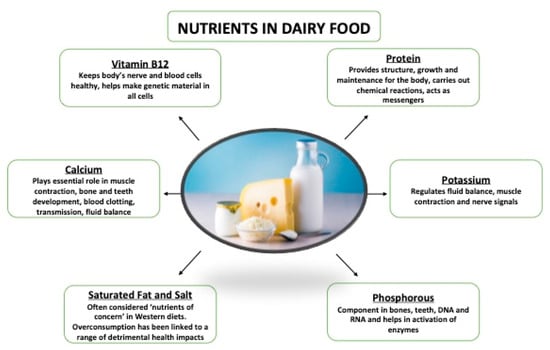
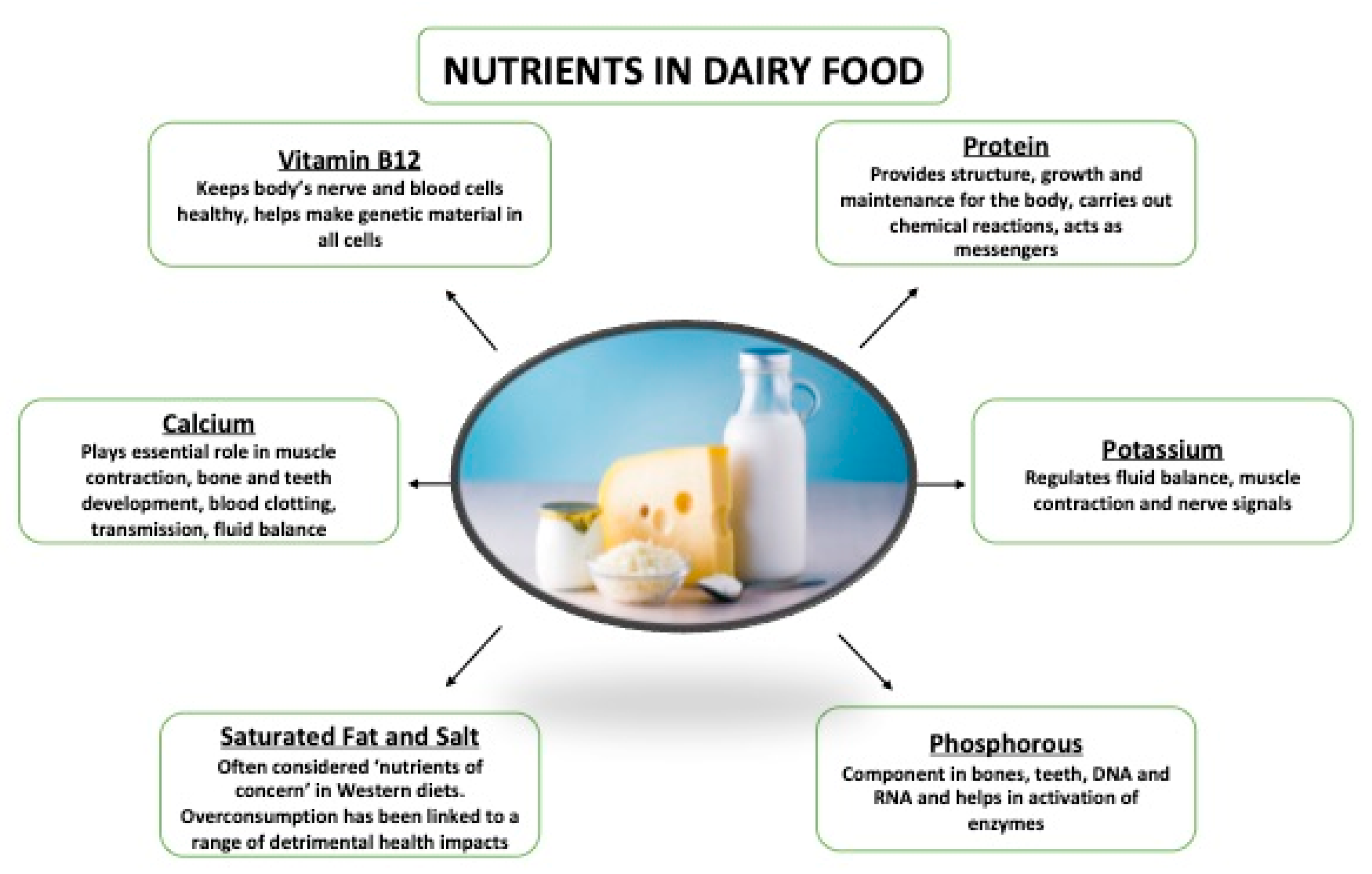
Milk and dairy foods are naturally rich sources of a wide range of nutrients such as proteins, fats, oligosaccharides and micronutrients including vitamins A, D, E and K and Ca, Mg, P and Zn [1], Figure 1. Milk proteins are of high biological value, not only because they contain essential amino acids but also because of their high digestibility and bioavailability. Approximately 80% of milk protein is casein and the remaining 20% is serum, or whey protein for cow’s milk [2]. Fat, mainly in the form of triacylglycerols (98%), is present in milk as globules which are surrounded by a membrane (or milk fat globule membrane (MFGM)). This component of milk fat has been suggested to elicit favourable lipid and low-density lipoprotein (LDL) cholesterol response to dairy consumption [3], and will be discussed later. With respect to micronutrients, milk is considered a major source of calcium in the diet [4]. As well as being a rich source of this nutrient, the bioavailability of calcium from dairy sources has also been shown to be higher compared to other dietary sources [5,6]. Furthermore, modelling of dietary intake data has indicated that, without consuming dairy products, less than half of the dietary calcium requirements would be met [7]. The authors of that study also noted that nutrients from dairy foods are difficult to replace and modelled removal and replacement with available alternatives, which resulted in lower amounts of several nutrients including protein, phosphorus, riboflavin, zinc and vitamin B12 [7]. While there is some concern that avoidance of dairy may have implications for some nutrients, this does not suggest that adequate nutrient intake from a low-dairy or dairy-free diet is unattainable, but rather indicates that dairy can significantly contribute towards a healthy diet.
Figure 1.
Nutrient content and associated health benefits of dairy consumption.
When consumed according to recommended intakes of national guidelines, milk and dairy products contribute essential nutrients across all stages of the life cycle [1]. For example, milk and dairy products are an important part of a young child’s diet as they are a good source of energy and protein and contain a wide range of vitamins and minerals, especially calcium, that young children need for healthy bones and teeth [8]. In Europe, it is reported that milk contributes proportionally more to the diets of young children than to adults [9,10]. Data from cross-sectional studies [11] and intervention studies [12] have reported the positive effect of milk consumption in childhood and adolescence on bone mineral content and bone mineral density. In addition, some research studies have indicated that the consumption of milk and milk products during adolescence is associated with neutral or reduced risk of adiposity [13,14]. During pregnancy, dairy products can be an important means of providing adequate calcium and other key nutrients in the diet [15]. Evidence from prospective cohort studies suggests that moderate milk consumption compared to none or low intakes during pregnancy is positively associated with foetal growth and infant birth weight in healthy, Western populations [16]. Finally, several studies point to the benefits of milk and dairy products in diets of the elderly and highlight that, in combination with physical activity, milk and dairy products can improve muscle mass and function resulting in a lower risk of sarcopenia and vertebral fractures [16], although another recent review of the area did not find strong evidence for a benefit of milk on muscle health in older adults [17].
Current consumption patterns of dairy are in a period of considerable change, with reported decreases in dairy consumption in countries who have traditionally consumed large quantities, potentially due to increased intake of ‘dairy-free’ alternative products [18] and reported increases in some global regions, where dairy has not been commonly consumed [19]. These changes are reported to be due to several factors, but are predominantly driven by consumer perception of the health effects of dairy consumption and the environmental impact of dairy production [20]. Particular nutrients of concern, when considering intake of dairy, are sodium and fat. Whilst dairy has been shown to contribute beneficially to the diet, dairy foods also contribute significantly to sodium and saturated fat intakes (Figure 1). High dietary salt intake is a prominent factor for the development of hypertension, a strong risk factor for cardiovascular disease [21,22]. In the US and UK, dairy products are significant contributors to dietary salt intakes, providing approximately 11% and 8% of overall intakes, respectively [23,24]. Dietary efforts to reduce hypertension include the well-established DASH diet (Dietary Approaches to Stop Hypertension), where low-fat dairy products are important characteristics [25]. In relation to dairy fat, the 2011–2014 National Health and Nutrition Examination Survey (NHANES) demonstrated that dairy foods contributed 26% of saturated fat and 14.2% of total fat to the diets of US adults [26].
Similarly, Feeney et al. observed that, within the Irish diet, dairy foods contributed 12.8% of total fat to the diet, and 19.8% of the saturated fat [27]. For this reason, many healthy eating guidelines recommend 3–5 portions of dairy daily, with consumption of “low/reduced-fat dairy” when possible [28,29]. However, research investigating the importance of the food source of saturated fatty acids (SFA) suggests that although SFAs from meat and processed-meat are associated with detrimental health effects [30], SFA intake from dairy sources may be associated with either neutral [31] or beneficial effects on cardiovascular health markers [32,33]. Further, the individual dairy sources may have different impacts. Much work in this area is underway, which is summarised below.
2. Dairy Fat and the Link to Health
Since the seminal Seven Countries Study and other subsequent studies [34,35], recommendations with respect to intake of saturated fat have been consistent and clear: limit total fat intake to 30% or less of total dietary energy, with a specific recommendation for intake of saturated fat to less than 10% of total dietary energy [36,37,38]. However, recent work has re-opened the debate on intake of saturated fat in particular [39]. In a large review and meta-analysis, de Souza et al. examined associations between intake of total fat, saturated fat and trans-unsaturated fat with all-cause mortality and differing morbidities. The authors concluded that, contrary to previous evidence, saturated fat intake was not associated with all-cause mortality, cardiovascular disease (CVD) mortality, total coronary heart disease (CHD), ischemic stroke or type 2 diabetes [39]. Drouin-Chartier et al. in 2016 also examined the impact of dairy consumption and dairy fat on cardiometabolic disease risk factors, and also reported that the purported detrimental effects of SFAs on cardiometabolic health may in fact be nullified when they are consumed as part of complex food matrices such as those in cheese and other dairy foods [40]. Similarly, Alexander et al. (2016) completed a meta-analysis of prospective studies and the intake of dairy products and CVD risk. These authors more cautiously concluded that although for some individual dairy products risk estimates below 1.0 were observed, additional data are needed to more comprehensively examine potential dose–response patterns [41].
2.1. Dietary Guidelines—Nutrient-Based vs. Food-Based
Despite these more recent findings, the most recent review of published literature by the UK Scientific Advisory Committee on Nutrition (SACN) concluded that there is a significant body of evidence demonstrating a relationship between intake of saturated fats and CVD and CHD events, but not CVD and CHD mortality [28], and noted that, irrespective of the lack of evidence for an effect on mortality, non-fatal CVD and CHD events have a serious adverse impact on health and quality of life, and that existing public health recommendations for saturated fat to be <10% of total dietary energy intake were still valid [42]. This mirrors recommendations in other countries and regions of the world [36,37,38]. However, some criticisms on the continued support for such recommendations note that such policies are based on evidence from total dietary saturated fat intake, and may have not considered the source of fat, whereby the food source, or matrix may in fact have a differing influence on metabolism and subsequently, health [43]. In addition, different food sources contain different types and amounts of SFA, and the continued promotion of an overall <10% of total dietary energy recommendation may be perceived to overlook this [43]. Further, by focusing on SFA content alone, foods that are nutrient-dense but also high in SFA may be excluded from the diet and inadvertently result in a reduced intake of important micronutrients [43]. For this reason, many are advocating for food-based guidelines rather than nutrient-based advice. As such, evidence may need to be considered at a food-item level within the dairy food group, rather than together. In light of a reported shift in recent dairy consumption [19], where instances of decreased dairy consumption may be potentially explained by an increase in dairy-free alternatives due to the perceived impact of dairy on health [18], it is important to consider some of the recent evidence at both a total-dairy level and for individual dairy products cheese, milk and yoghurt, and then further discuss potential mechanisms influencing the metabolic response to consumption.
2.2. Total Dairy vs. Specific Products
Dehghan et al. (2018) specifically examined the associations between total dairy and specific types of dairy products with mortality and major cardiovascular disease. Dietary intakes of dairy products for 136,384 individuals were recorded using country-specific validated food frequency questionnaires and associations with mortality or major cardiovascular events were examined [44]. The authors reported that a higher intake of total dairy (>2 servings per day compared with no intake) was associated with a lower risk of the composite of mortality or major cardiovascular events, total mortality, non-cardiovascular mortality, cardiovascular mortality, major cardiovascular disease and stroke. No significant association with myocardial infarction was observed. Higher intake (>1 serving vs. no intake) of milk and yoghurt was associated with lower risk of the composite outcome, whereas cheese intake was not. Butter intake was low and was not significantly associated with clinical outcomes. The authors concluded that dairy consumption was associated with lower risk of mortality and major cardiovascular disease events in a diverse multinational cohort [44].
Fontecha and colleagues [45] specifically examined evidence regarding the influence of dairy product consumption on the risk of major cardiovascular-related outcomes and how various doses of different dairy products affected such responses. In this overview of 12 meta-analyses involving randomised controlled trials (RCTs), as well as the updated meta-analyses of RCTs, increasing consumption of dairy products did not result in significant changes of known risk biomarkers such as systolic and diastolic blood pressure and total cholesterol and LDL cholesterol. They concluded that consumption of total dairy products (either regular or low-fat content), did not adversely affect the risk of CVD [45].
Considering total dairy consumption initially, characteristics of fifteen published RCTs that studied the effects of overall dairy consumption on markers of metabolic health and CVD risk on variable age groups are included in Table 1. RCTs included in the table were either parallel or crossover trials and the participants’ ages ranged from 20 to 75 years. Duration of interventions varied widely from 4 to 8 weeks in some to 12 to 24 weeks in the others, with a washout period included in some of the trials. Most of the interventions were based on consumption of different dairy products such as milk, cheese or butter. Zemel et al. (2010) compared the effects of consumption of soy-based smoothie to a dairy-based smoothie and observed suppressed inflammatory and stress markers for the latter [46]. Groups that consumed a low-fat or non-fat dairy diet showed decreased levels of total cholesterol (TC) and low-density cholesterol (LDL) as compared to the diet containing conventional levels of fat. Most recently, Vasilopoulou et al. (2020) examined the impact of modified dairy fat consumption, through the provision of products with modified monounsaturated fatty acid (MUFA) content in adults at moderate CVD risk—the RESET study (controlled REplacement of SaturatEd fat in dairy on Total cholesterol). The authors concluded that consumption of a high-fat diet containing modified dairy products with reduced saturated fatty acids, and enriched monounsaturated fatty acids showed beneficial effects on fasting LDL cholesterol and endothelial function compared with conventional dairy products [47]. Finally, although not an intervention study, Drouin-Chartier (2019), recently examined dairy intake and risk of diabetes, and reported positive impacts for yoghurt and reduced-fat milk, but a negative association for cheese [48].
Table 1.
Randomised controlled trials (RCT) demonstrating an effect of overall dairy consumption on markers of metabolic health and cardiovascular disease (CVD) risk.
2.3. Cheese
Focusing specifically on cheese, several published RCTs have demonstrated a beneficial effect of cheese consumption on markers of metabolic health and CVD risk, summarised in Table 2. Brassard et al. (2017) compared the impact of consuming equal amounts of SFAs from cheese and butter on cardiometabolic risk factors [61]. In this multicentre, crossover, randomised controlled trial, participants were assigned to a randomised sequence of five isoenergetic diets of 4-week duration (separated by 4-week washout periods). The diets were rich in SFAs from either cheese or butter, or a monounsaturated fatty acid (MUFA)–rich diet, a polyunsaturated fatty acid (PUFA)–rich diet and a low-fat, high-carbohydrate diet. The authors reported that serum HDL-cholesterol concentrations were similar after the cheese and butter diets but were significantly higher in comparison to response after the carbohydrate diet. Comparing cheese and butter, LDL-cholesterol concentrations after the cheese diet were lower than after the butter diet but were higher than after all of the other diets. Some variation in response was noted. Work conducted by this research group previously has both supported and added to the existing evidence [32]. A 6-week randomised parallel intervention involving 164 volunteers who received ~40 g of dairy fat/d, in 1 of 4 treatments: 120 g full-fat Irish cheddar cheese (group A), 120 g reduced-fat Irish cheddar cheese + butter (21 g) (group B); butter (49 g), calcium caseinate powder (30 g) and Ca supplement (CaCO3) (500 mg) (group C) or 120 g full-fat Irish cheddar cheese, for 6 weeks following completion of a 6-week “run-in” period, where this group excluded all dietary cheese before commencing the intervention (group D). This study found that a stepwise-matrix effect was observed between the groups for total cholesterol (TC) (P = 0.033) and LDL cholesterol (P = 0.026), with significantly lower post-intervention TC and LDL cholesterol when all of the fat was contained within the cheese matrix (Group A), compared with Group C when it was not. These findings suggest that dairy fat, when eaten in the form of cheese, appears to differently affect blood lipids compared with the same constituents eaten in different matrices, with significantly lower total cholesterol observed when all nutrients are consumed within a cheese matrix. This ‘dairy matrix’ concept, whereby the nutrients within a dairy food interact with the overall structure providing different health effects, is becoming increasingly studied, [62], and is discussed further in Section 3, below.
Table 2.
Randomised controlled trials (RCT) demonstrating an effect of cheese consumption on markers of metabolic health and CVD risk.
Other groups have also looked at postprandial response to cheese consumption, as the postprandial response to lipid consumption is considered an independent indicator of CVD risk [75]. Drouin-Chartier (2017) reported minor differences in postcirculating TAG concentrations, in a postprandial RCT where participants ingested 33 g fat from a firm cheese (young cheddar), a soft cream cheese (cream cheese) or butter (control) incorporated into standardised macronutrient-matched meals. They conclude that the study demonstrates that the cheese matrix modulates the impact of dairy fat on postprandial lipemia in healthy subjects [75].
Hansson et al. 2019, examining postprandial response to sour cream, whipped cream, cheese and butter, noted that sour cream resulted in a larger postprandial triacylglycerol (TAG) area under the curve (AUC), compared to whipped cream, butter and cheese (P = 0.05). Intake of sour cream also induced a larger HDL cholesterol AUC compared to cheese. Intake of cheese induced a 124% larger insulin AUC compared to butter. Hansson et al. concluded that high-fat meals containing similar amount of fat from different dairy products induce different postprandial effects on serum TAGs, HDL cholesterol and insulin in healthy adults [76].
2.4. Milk
Characteristics of seven RCTs that studied the effects of milk consumption on markers of metabolic health and CVD risk are described in Table 3 [77,78,79,80,81,82,83]. RCTs included in the table were either parallel or crossover trials and the participants’ ages ranged from 20–85 years. Duration of interventions ranged from 4 to 16 weeks with a washout period included in some of the studies. Gardner et al. (2007) compared the effects of soy-based drinks to dairy milk consumption on metabolic health markers, and found that LDL was significantly lower after consuming soy milk compared to dairy milk, but no significant differences between groups were observed for HDL, triacylglycerols, insulin or glucose [77]. In 2016, Lee et al. examined the impact of milk consumption (400 mL per day) compared to habitual intake on markers of metabolic health, and found no significant differences in body mass index, blood pressure or lipid profile [78]. Hidaka et al. compared intakes of full-fat vs. non-fat milk intakes and showed lower plasma triglyceride and phospholipid levels in the no-fat group [79].
Table 3.
Randomised controlled trials (RCT) demonstrating an effect of milk consumption on markers of metabolic health and cardiovascular disease (CVD) risk.
2.5. Yoghurt
Table 4 presents a summary of RCTs that specifically studied the effects of yoghurt consumption on markers of metabolic health and CVD risk. Most of these studies focused specifically on the microbial content of yoghurts, where consumption of probiotic yoghurt or modified-bacterial-strain-containing yoghurts or comparisons between commonly available varieties of yoghurts such as non-fat yoghurt, natural yoghurt and heated yoghurt were examined. In general, when compared to participants on a controlled diet (diet with zero consumption of fermented products), the participants who consumed probiotic or conventional yoghurt showed significant decrease in TC and LDL cholesterol [84,85,86,87,88,89,90,91,92].
Table 4.
Randomised controlled trials (RCT) demonstrating an effect of yoghurt consumption on markers of metabolic health and CVD risk.
3. The ‘Dairy Matrix’
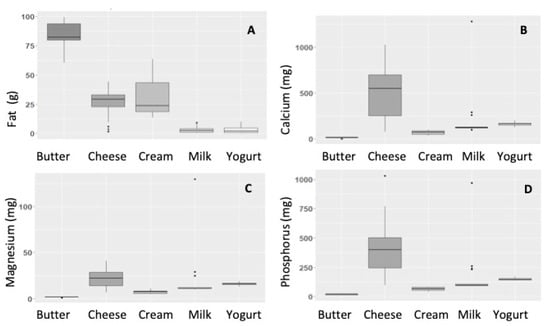
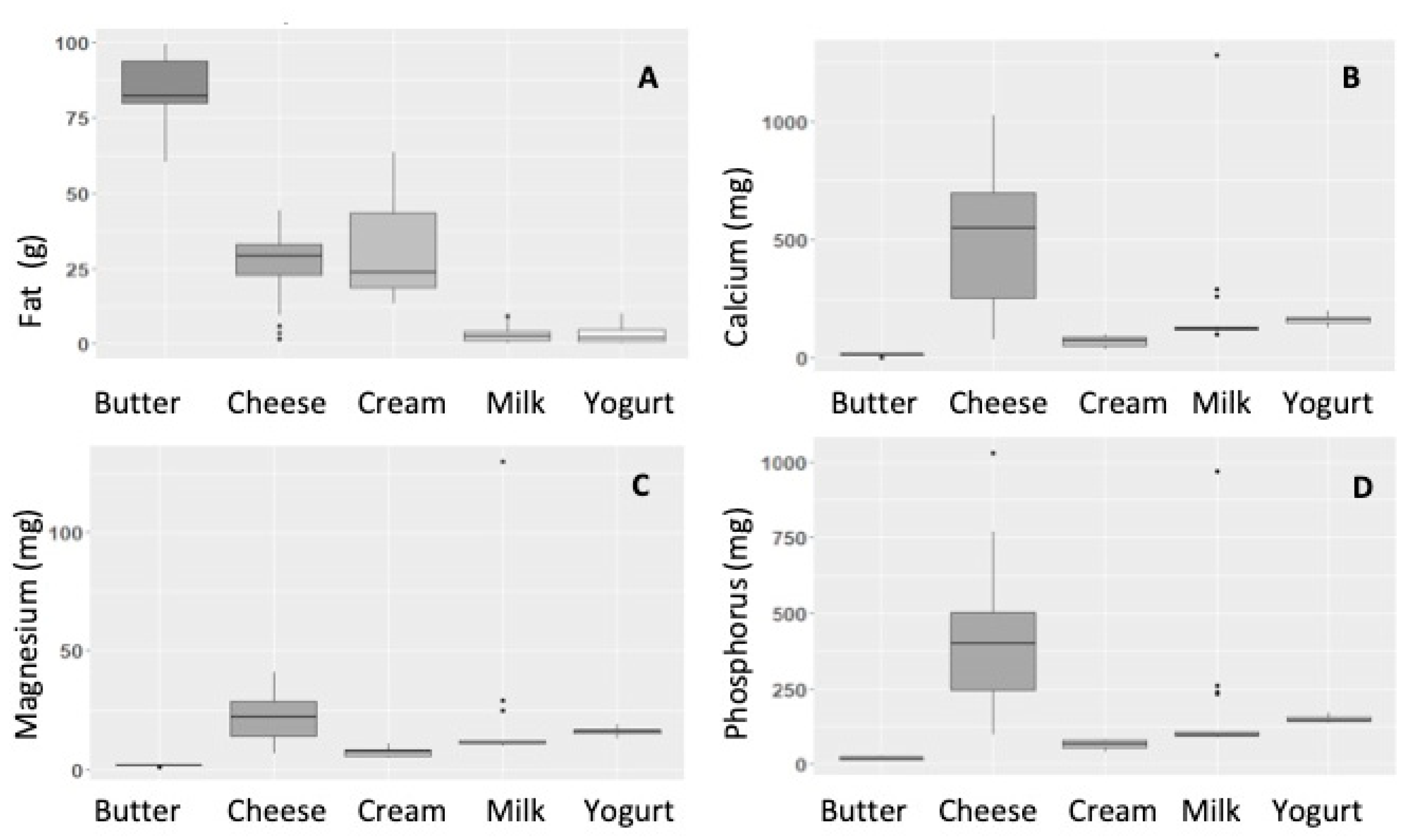
While dairy products are often considered together as a food category in nutritional epidemiology, they vary considerably in terms of their content and structure and how these interact with other food components, which describes the ‘dairy matrix’ concept [93]. Values from the Composition of Foods Integrated Dataset (CoFID) were used to compare nutrient composition across the range of commonly available dairy products (summarised in Figure 2). While they represent a wide range of products, only plain, unflavoured versions with no added sugar were included in this analysis. Figure 1 demonstrates how nutrient composition across the range of products varies greatly, as does their overall matrix or structure, depending on the product type. For example, whole milk contains 3.6% fat in a liquid oil-in-water emulsion with lactose and protein (both casein and whey) while cheeses mainly consist of casein proteins and fat, in a solid matrix, with only trace levels of lactose and whey [62]. Butter is an emulsion of water-in oil, and contains mostly fat and water, with no protein or carbohydrate, while (liquid) cream is also a water-in-oil emulsion, and contains low levels of protein (approx. 2%) [62] and lactose (approx. 3%) (in 35%-fat cream). The various processing steps that different products undergo from raw milk to final foodstuff impact the level of the different nutrients and the overall macro and microstructure of these foods. The nature of these differences may result in the different health outcomes associated with their consumption.
Figure 2.
Boxplot showing average fat and mineral content in dairy products per 100 g. Values from the Composition of Foods Integrated Dataset (CoFID). Only plain, unflavoured products with no added sugar were included in this analysis. Nutrients shown are: (A) total fat (g), (B) calcium (mg), (C) magnesium (mg) and (D) phosphorus (mg), calculated from n = 4 butter, n = 43 cheese, n = 8 cream, n = 20 milk and n = 4 yoghurt samples.
Cheese in particular is associated with lower levels of blood cholesterol than other dairy products and especially when compared to butter (see Table 2 for an overview of studies in this area). Cheese structures contain aggregated casein micelles [94] which may impact the ability of lipases to break down the fat contained within the matrix, compared to the same fat contained within other food matrices (e.g., milk and butter). The structure of cheese, including the degree of hardness and cohesiveness, can result in it being more physically resistant to digestion than other matrices [94] which affects the degree to which the fat can be digested and absorbed. There may be additional effects from the calcium contained within this matrix, reacting with the fatty acids to form insoluble calcium soaps [95], as well as the separate textural effects from calcium that increase the cohesiveness [94] which may result in enhanced digestive resistance. This mechanism also appears to be supported by a higher faecal fat excretion following cheese consumption compared to other sources, in postprandial studies [67] although is not fully confirmed [68]. In addition to the calcium content of cheese, the phosphorus content is also implicated in the reduction of fat digestibility, by affecting the ability of cheese constituents to form insoluble soaps during digestion (calcium phosphate). This is thought to further increase fat excretion via the adsorption of bile acids to the surface, and has been implicated in the reduction of LDL-c [62,95]. Both phosphorus and calcium are particularly concentrated in cheese compared to other dairy products [96].
Cheese is a fermented dairy product, and the fermentation process may also be one of the contributors to the cardiometabolic protective nature of cheese via a number of mechanisms. Lactic acid bacteria found in fermented dairy products can result in platelet-activating factor (PAF)-inhibitory lipid production [97,98]. Further, as cheeses ripen and age, shorter peptides are produced and in some cases there is a release of latent bioactives, as some of these peptides have specific bioactivity that is not apparent in the intact ‘parent’ protein [99,100]. In cheeses, antihypertensive peptides are produced during fermentation, including V-P-P and I-P-P, which are tripeptides that exert their effects via inhibition of the angiotension converting enzyme (ACE) pathway [101,102]. Some cheeses have also been found to have bioactivity related to glycaemic control [103], which may also contribute to the cardio-metabolic benefits from cheese consumption. The starter culture used in the cheesemaking process can have an additional impact on the inherent bioactivity produced during fermentation [104,105]. Finally, the form in which fat is contained in cheese compared to butter may also result in some of the differences observed between these two products. The polar lipids found in dairy products in general appear to have anti-inflammatory properties compared to other oxidised dietary lipids [106,107,108] and they are mostly contained in a bioactive envelope surrounding the fat, known as the milk fat globule membrane (MFGM) [109]. Cheese contains particularly high levels of polar sphingolipids that are not present in the same levels in butter, since the membrane is disrupted during the churning process [62,110]. Studies suggest that polar lipids can impact blood lipid levels in the acute postprandial period, with lower lipaema (and insulin) observed following a liquid meal of palm fat when an MGFM-rich dairy fraction was added, compared to the same meal without this addition [111].
With research strongly suggestive of postprandial hyperlipidema as an independent risk factor for CVD [112], this could be a further explanation for the growing list of studies showing a protective effect of cheese consumption on CVD risk [32,60,61,68,72,113,114,115] despite the relatively high SFA content.
4. Conclusions/Future Directions
This paper summarises and discusses the evidence that examines the link between dairy intake and CVD risk. Whilst the evidence is mixed for some dairy foods (milk), it is more consistent for others (cheese/yoghurt), and supports the concept that the source of saturated fat intake has an important impact on cardiometabolic response to consumption. This is not a new concept, but whilst this evidence is growing, more research is needed before any significant change in public health recommendations are implemented.
While the link between dairy foods and metabolic health has been well-studied, research gaps still remain, and must be considered in future work. Many of the RCTs completed are short-term studies with single products, and there is a need to consider combinations of foods in a dietary pattern, considered by only a few studies to date [116,117]. The manner of the food consumption also needs to be considered, as dairy is often consumed in many forms (heated, melted) and as part of meals or recipes or in sweetened beverages. In addition, the amount of dairy product given in many of the randomised controlled trial studies to date are largely outside of recommended portion size intakes, as such, caution is required in interpreting and generalising findings.
Looking to the future, to date many of the studies have focused on traditional markers of cardiometabolic risk, particularly circulating lipid levels, which may not show subtle changes between products and/or further elucidate the cause/mechanisms for difference in response following consumption of specific foods. It has been suggested that the use of such traditional markers alone may limit the ability to predict health outcomes from the fat in dairy products, since many other components in dairy may have impact on CVD risk [118]. For this reason, more recent studies are also examining novel biomarkers that include vascular function (arterial stiffness, flow-mediated vasodilation (FMD) [47] and LDL-c particle size distribution [119]. It is important that we more fully understand the mechanisms underlying the variance in response to consumption, and the use of such novel markers will help develop this knowledge.
In conclusion, dairy foods are diverse in their structure and their nutrient content, resulting in differing biological responses and associated health outcomes. Thus, continuing to treat them as a single food category in food-based healthy eating guidelines may obscure the individual effects of these foods. As diets transition, there is an urgent need to understand the impact of different dairy foods, their preparation methods and how they are consumed, within the overall patterns of dietary intake in different cultural groups.
Author Contributions
Conceptualization, C.M.T., E.R.G. and E.L.F.; investigation, writing—original draft preparation, writing—review and editing, C.M.T., N.B., A.O., E.R.G. and E.L.F.; supervision, project administration, and funding acquisition, E.R.G. and E.L.F. All authors have read and agreed to the published version of the manuscript.
Funding
This research was supported by the Food for Health Ireland project, funded by Enterprise Ireland, grant number TC20180025.
Conflicts of Interest
E.R.G. and E.L.F. have previously received travel expenses and speaking honoraria from the National Dairy Council. E.R.G. and E.L.F. have received research funding through the Food for Health Ireland project, funded by Enterprise Ireland, grant number TC20180025. The other authors are currently, or have been in the past, employed on the Food for Health Ireland project, funded by Enterprise Ireland, grant number TC20180025. The funders had no role in the design of the study; in the collection, analyses or interpretation of data; in the writing of the manuscript or in the decision to publish the results.
References
- Haug, A.; Høstmark, A.T.; Harstad, O.M. Bovine milk in human nutrition—A review. Lipids Health Dis. 2007, 6, 25. [Google Scholar] [CrossRef] [Scilit] [PubMed]
- Marangoni, F.; Pellegrino, L.; Verduci, E.; Ghiselli, A.; Bernabei, R.; Calvani, R.; Cetin, I.; Giampietro, M.; Perticone, F.; Piretta, L. Cow’s milk consumption and health: A health professional’s guide. J. Am. Coll. Nutr. 2019, 38, 197–208. [Google Scholar] [CrossRef] [Scilit] [PubMed]
- Rosqvist, F.; Smedman, A.; Lindmark-Månsson, H.; Paulsson, M.; Petrus, P.; Straniero, S.; Rudling, M.; Dahlman, I.; Risérus, U. Potential role of milk fat globule membrane in modulating plasma lipoproteins, gene expression, and cholesterol metabolism in humans: A randomized study. Am. J. Clin. Nutr. 2015, 102, 20–30. [Google Scholar] [CrossRef] [Scilit] [PubMed]
- Institute of Medicine Committee to Review Dietary Reference Intakes for Calcium and Vitamin D. The National Academies Collection: Reports funded by National Institutes of Health. In Dietary Reference Intakes for Calcium and Vitamin D; Ross, A.C., Taylor, C.L., Yaktine, A.L., Del Valle, H.B., Eds.; National Academies Press: Washington, DC, USA, 2011. [Google Scholar]
- Gueguen, L.; Pointillart, A. The bioavailability of dietary calcium. J. Am. Coll. Nutr. 2000, 19, 119S–136S. [Google Scholar] [CrossRef] [Scilit]
- Zhao, Y.; Martin, B.R.; Weaver, C.M. Calcium bioavailability of calcium carbonate fortified soymilk is equivalent to cow’s milk in young women. J. Nutr. 2005, 135, 2379–2382. [Google Scholar] [CrossRef] [Scilit] [PubMed]
- Fulgoni, V.L., III; Keast, D.R.; Auestad, N.; Quann, E.E. Nutrients from dairy foods are difficult to replace in diets of Americans: Food pattern modeling and an analyses of the National Health and Nutrition Examination Survey. Nutr. Res. 2011, 31, 759–765. [Google Scholar] [CrossRef] [Scilit] [PubMed]
- Dror, D.K.; Allen, L.H. Dairy product intake in children and adolescents in developed countries: Trends, nutritional contribution, and a review of association with health outcomes. Nutr. Rev. 2014, 72, 68–81. [Google Scholar] [CrossRef] [Scilit]
- Vissers, P.A.; Streppel, M.T.; Feskens, E.J.; de Groot, L.C. Contribution of dairy products to micronutrient intake in The Netherlands. J. Am. Coll. Nutr. 2011, 30, 415S–421S. [Google Scholar] [CrossRef] [Scilit]
- Coudray, B. Contribution of dairy products to micronutrient intake in France. J. Am. Coll. Nutr. 2011, 30, 410S–414S. [Google Scholar] [CrossRef] [Scilit]
- Kalkwarf, H.J.; Khoury, J.C.; Lanphear, B.P. Milk intake during childhood and adolescence, adult bone density, and osteoporotic fractures in US women. Am. J. Clin. Nutr. 2003, 77, 257–265. [Google Scholar] [CrossRef] [Scilit]
- Ma, D.F.; Zheng, W.; Ding, M.; Zhang, Y.M.; Wang, P.Y. Milk intake increases bone mineral content through inhibiting bone resorption: Meta-analysis of randomized controlled trials. e-SPEN J. 2013, 8, E1–E7. [Google Scholar] [CrossRef] [Scilit]
- Dror, D.K. Dairy consumption and pre-school, school-age and adolescent obesity in developed countries: A systematic review and meta-analysis. Obes. Rev. 2014, 15, 516–527. [Google Scholar] [CrossRef] [Scilit] [PubMed]
- Spence, L.A.; Cifelli, C.J.; Miller, G.D. The Role of Dairy Products in Healthy Weight and Body Composition in Children and Adolescents. Curr. Nutr. Food. Sci. 2011, 7, 40–49. [Google Scholar] [CrossRef] [Scilit] [PubMed]
- Brantsæter, A.L.; Olafsdottir, A.S.; Forsum, E.; Olsen, S.F.; Thorsdottir, I. Does milk and dairy consumption during pregnancy influence fetal growth and infant birthweight? A systematic literature review. Food Nutr. Res. 2012, 56. [Google Scholar] [CrossRef] [Scilit] [PubMed]
- Geiker, N.R.W.; Mølgaard, C.; Iuliano, S.; Rizzoli, R.; Manios, Y.; van Loon, L.J.C.; Lecerf, J.M.; Moschonis, G.; Reginster, J.Y.; Givens, I.; et al. Impact of whole dairy matrix on musculoskeletal health and aging–current knowledge and research gaps. Osteoporos. Int. 2020, 31, 601–615. [Google Scholar] [CrossRef] [Scilit] [PubMed]
- Granic, A.; Hurst, C.; Dismore, L.; Aspray, T.; Stevenson, E.; Witham, M.D.; Sayer, A.A.; Robinson, S. Milk for Skeletal Muscle Health and Sarcopenia in Older Adults: A Narrative Review. Clin. Interv. Aging 2020, 15, 695–714. [Google Scholar] [CrossRef] [Scilit] [PubMed]
- Thorning, T.K.; Raben, A.; Tholstrup, T.; Soedamah-Muthu, S.S.; Givens, I.; Astrup, A. Milk and dairy products: Good or bad for human health? An assessment of the totality of scientific evidence. J. Food Nutr. Res. 2016, 60, 32527. [Google Scholar] [CrossRef] [Scilit]
- Food and Agricultural Organization of the United Nations. Dairy Development in Asia. Available online: http://www.fao:3/i0588e/I0588E02.htm (accessed on 24 September 2020).
- Cifelli, C.J.; Houchins, J.A.; Demmer, E.; Fulgoni, V.L. Increasing Plant Based Foods or Dairy Foods Differentially Affects Nutrient Intakes: Dietary Scenarios Using NHANES. Nutrients 2016, 8, 422. [Google Scholar] [CrossRef] [Scilit]
- Weinberger, M.H. Salt Sensitivity of Blood Pressure in Humans. Hypertension 1996, 27, 481–490. [Google Scholar] [CrossRef] [Scilit]
- Strazzullo, P.; D’Elia, L.; Kandala, N.-B.; Cappuccio, F.P. Salt intake, stroke, and cardiovascular disease: Meta-analysis of prospective studies. BMJ 2009, 339, b4567. [Google Scholar] [CrossRef] [Scilit]
- Ni Mhurchu, C.; Capelin, C.; Dunford, E.K.; Webster, J.L.; Neal, B.C.; Jebb, S.A. Sodium content of processed foods in the United Kingdom: Analysis of 44,000 foods purchased by 21,000 households. Am. J. Clin. Nutr. 2010, 93, 594–600. [Google Scholar] [CrossRef] [Scilit] [PubMed]
- Anderson, C.A.; Appel, L.J.; Okuda, N.; Brown, I.J.; Chan, Q.; Zhao, L.; Ueshima, H.; Kesteloot, H.; Miura, K.; Curb, J.D.; et al. Dietary sources of sodium in China, Japan, the United Kingdom, and the United States, women and men aged 40 to 59 years: The INTERMAP study. J. Am. Diet. Assoc. 2010, 110, 736–745. [Google Scholar] [CrossRef] [Scilit]
- Sacks, F.M.; Svetkey, L.P.; Vollmer, W.M.; Appel, L.J.; Bray, G.A.; Harsha, D.; Obarzanek, E.; Conlin, P.R.; Miller, E.R.; Simons-Morton, D.G.; et al. Effects on Blood Pressure of Reduced Dietary Sodium and the Dietary Approaches to Stop Hypertension (DASH) Diet. N. Engl. J. Med. 2001, 344, 3–10. [Google Scholar] [CrossRef] [Scilit] [PubMed]
- Huth, P.J.; Fulgoni, V.L.; Keast, D.R.; Park, K.; Auestad, N. Major food sources of calories, added sugars, and saturated fat and their contribution to essential nutrient intakes in the U.S. diet: Data from the National Health and Nutrition Examination Survey (2003–2006). Nutr. J. 2013, 8. [Google Scholar] [CrossRef] [Scilit] [PubMed]
- Feeney, E.L.; Nugent, A.P.; Mc Nulty, B.; Walton, J.; Flynn, A.; Gibney, E.R. An overview of the contribution of dairy and cheese intakes to nutrient intakes in the Irish diet: Results from the National Adult Nutrition Survey. Br. J. Nutr. 2016, 115, 709–717. [Google Scholar] [CrossRef] [Scilit]
- Scientific Advisory Committee on Nutrition. Saturated Fats and Health. Available online: https://assets.publishing.service.gov.uk/government/uploads/system/uploads/attachment_data/file/814995/SACN_report_on_saturated_fat_and_health.pdf (accessed on 24 September 2020).
- Department of Health, Ireland. Your Guide to Healthy Eating Using the Food Pyramid. 2016. Available online: https://www.hse.ie/eng/about/who/healthwellbeing/our-priority-programmes/heal/food-pyramid-images/food-pyramid-simple-version.pdf (accessed on 24 September 2020).
- De Oliveira, M.C.O.; Mozaffarian, D.; Kromhout, D.; Bertoni, A.G.; Sibley, C.T.; Jacobs, D.R., Jr.; Nettleton, J.A. Dietary intake of saturated fat by food source and incident cardiovascular disease: The Multi-Ethnic Study of Atherosclerosis. Am. J. Clin. Nutr. 2012, 96, 397–404. [Google Scholar] [CrossRef] [Scilit]
- O’Sullivan, T.A.; Hafekost, K.; Mitrou, F.; Lawrence, D. Food sources of saturated fat and the association with mortality: A meta-analysis. Am. J. Public Health 2013, 103, e31–e42. [Google Scholar] [CrossRef] [Scilit]
- Feeney, E.L.; Barron, R.; Dible, V.; Hamilton, Z.; Power, Y.; Tanner, L.; Flynn, C.; Bouchier, P.; Beresford, T.; Noronha, N. Dairy matrix effects: Response to consumption of dairy fat differs when eaten within the cheese matrix—A randomized controlled trial. Am. J. Clin. Nutr. 2018, 108, 667–674. [Google Scholar] [CrossRef] [Scilit]
- Chen, M.; Pan, A.; Malik, V.S.; Hu, F.B. Effects of dairy intake on body weight and fat: A meta-analysis of randomized controlled trials. Am. J. Clin. Nutr. 2012, 96, 735–747. [Google Scholar] [CrossRef] [Scilit]
- Menotti, A.; Keys, A.; Aravanis, C.; Blackburn, H.; Dontas, A.; Fidanza, F.; Karvonen, M.J.; Kromhout, D.; Nedeljkovic, S.; Nissinen, A.; et al. Seven Countries Study. First 20-Year Mortality Data in 12 Cohorts of Six Countries. Ann. Med. 1989, 21, 175–179. [Google Scholar] [CrossRef] [Scilit]
- Kromhout, D.; Bloemberg, B.; Feskens, E.; Menotti, A.; Nissinen, A.; Seven Countries Study Group. Saturated fat, vitamin C and smoking predict long-term population all-cause mortality rates in the Seven Countries Study. Int. J. Epidemiol. 2000, 29, 260–265. [Google Scholar] [CrossRef] [Scilit] [PubMed]
- Jacobson, T.A.; Maki, K.C.; Orringer, C.E.; Jones, P.H.; Kris-Etherton, P.; Sikand, G.; La Forge, R.; Daniels, S.R.; Wilson, D.P.; Morris, P.B. National Lipid Association recommendations for patient-centered management of dyslipidemia: Part 2. J. Clin. Lipidol. 2015, 9. [Google Scholar] [CrossRef] [Scilit] [PubMed]
- Eckel, R.H.; Jakicic, J.M.; Ard, J.D.; de Jesus, J.M.; Miller, N.H.; Hubbard, V.S.; Lee, I.-M.; Lichtenstein, A.H.; Loria, C.M.; Millen, B.E. 2013 AHA/ACC guideline on lifestyle management to reduce cardiovascular risk: A report of the American College of Cardiology/American Heart Association Task Force on Practice Guidelines. J. Am. Coll. Cardiol. 2014, 63, 2960–2984. [Google Scholar] [CrossRef] [Scilit] [PubMed]
- USDA. Scientific Report of the 2015 Dietary Guidelines Advisory Committee: Advisory Report to the Secretary of Health and Human Services and the Secretary of Agriculture. Available online: https://health.gov/sites/default/files/2019-09/Scientific-Report-of-the-2015-Dietary-Guidelines-Advisory-Committee.pdf (accessed on 24 September 2020).
- De Souza, R.J.; Mente, A.; Maroleanu, A.; Cozma, A.I.; Ha, V.; Kishibe, T.; Uleryk, E.; Budylowski, P.; Schünemann, H.; Beyene, J. Intake of saturated and trans unsaturated fatty acids and risk of all cause mortality, cardiovascular disease, and type 2 diabetes: Systematic review and meta-analysis of observational studies. BMJ 2015, 351, h3978. [Google Scholar] [CrossRef] [Scilit] [PubMed]
- Drouin-Chartier, J.-P.; Brassard, D.; Tessier-Grenier, M.; Côté, J.A.; Labonté, M.-È.; Desroches, S.; Couture, P.; Lamarche, B. Systematic review of the association between dairy product consumption and risk of cardiovascular-related clinical outcomes. Adv. Nutr. 2016, 7, 1026–1040. [Google Scholar] [CrossRef] [Scilit] [PubMed]
- Alexander, D.D.; Bylsma, L.C.; Vargas, A.J.; Cohen, S.S.; Doucette, A.; Mohamed, M.; Irvin, S.R.; Miller, P.E.; Watson, H.; Fryzek, J.P. Dairy consumption and CVD: A systematic review and meta-analysis. Br. J. Nutr. 2016, 115, 737–750. [Google Scholar] [CrossRef] [Scilit]
- Antoni, R.; Griffin, B. Draft reports from the UK’s Scientific Advisory Committee on Nutrition and World Health Organization concur in endorsing the dietary guideline to restrict intake of saturated fat. Nutr. Bull. 2018, 43, 206–211. [Google Scholar] [CrossRef] [Scilit]
- Astrup, A.; Bertram, H.C.; Bonjour, J.-P.; De Groot, L.C.; de Oliveira Otto, M.C.; Feeney, E.L.; Garg, M.L.; Givens, I.; Kok, F.J.; Krauss, R.M. WHO draft guidelines on dietary saturated and trans fatty acids: Time for a new approach? BMJ 2019, 366, l4137. [Google Scholar] [CrossRef] [Scilit]
- Dehghan, M.; Mente, A.; Rangarajan, S.; Sheridan, P.; Mohan, V.; Iqbal, R.; Gupta, R.; Lear, S.; Wentzel-Viljoen, E.; Avezum, A.; et al. Association of dairy intake with cardiovascular disease and mortality in 21 countries from five continents (PURE): A prospective cohort study. Lancet 2018, 392, 2288–2297. [Google Scholar] [CrossRef] [Scilit]
- Fontecha, J.; Calvo, M.V.; Juarez, M.; Gil, A.; Martínez-Vizcaino, V. Milk and dairy product consumption and cardiovascular diseases: An overview of systematic reviews and meta-analyses. Adv. Nutr. 2019, 10, S164–S189. [Google Scholar] [CrossRef] [Scilit]
- Zemel, M.B.; Sun, X.; Sobhani, T.; Wilson, B. Effects of dairy compared with soy on oxidative and inflammatory stress in overweight and obese subjects. Am. J. Clin. Nutr. 2010, 91, 16–22. [Google Scholar] [CrossRef] [Scilit] [PubMed]
- Vasilopoulou, D.; Markey, O.; Kliem, K.E.; Fagan, C.C.; Grandison, A.S.; Humphries, D.J.; Todd, S.; Jackson, K.G.; Givens, D.I.; Lovegrove, J.A. Reformulation initiative for partial replacement of saturated with unsaturated fats in dairy foods attenuates the increase in LDL cholesterol and improves flow-mediated dilatation compared with conventional dairy: The randomized, controlled REplacement of SaturatEd fat in dairy on Total cholesterol (RESET) study. Am. J. Clin. Nutr. 2020, 111, 739–748. [Google Scholar] [CrossRef] [Scilit] [PubMed]
- Drouin-Chartier, J.-P.; Li, Y.; Ardisson Korat, A.V.; Ding, M.; Lamarche, B.; Manson, J.E.; Rimm, E.B.; Willett, W.C.; Hu, F.B. Changes in dairy product consumption and risk of type 2 diabetes: Results from 3 large prospective cohorts of US men and women. Am. J. Clin. Nutr. 2019, 110, 1201–1212. [Google Scholar] [CrossRef] [Scilit] [PubMed]
- Markey, O.; Vasilopoulou, D.; Kliem, K.E.; Koulman, A.; Fagan, C.C.; Summerhill, K.; Wang, L.Y.; Grandison, A.S.; Humphries, D.J.; Todd, S. Plasma phospholipid fatty acid profile confirms compliance to a novel saturated fat-reduced, monounsaturated fat-enriched dairy product intervention in adults at moderate cardiovascular risk: A randomized controlled trial. Nutr. J. 2017, 16, 33. [Google Scholar] [CrossRef] [Scilit] [PubMed]
- Benatar, J.R.; Jones, E.; White, H.; Stewart, R.A. A randomized trial evaluating the effects of change in dairy food consumption on cardio-metabolic risk factors. Eur. J. Prev. Cardiol. 2014, 21, 1376–1386. [Google Scholar] [CrossRef] [Scilit]
- Nestel, P.J.; Mellett, N.; Pally, S.; Wong, G.; Barlow, C.K.; Croft, K.; Mori, T.A.; Meikle, P.J. Effects of low-fat or full-fat fermented and non-fermented dairy foods on selected cardiovascular biomarkers in overweight adults. Br. J. Nutr. 2013, 110, 2242–2249. [Google Scholar] [CrossRef] [Scilit]
- Crichton, G.E.; Howe, P.R.; Buckley, J.D.; Coates, A.M.; Murphy, K.J. Dairy consumption and cardiometabolic health: Outcomes of a 12-month crossover trial. Nutr. Metab. 2012, 9, 19. [Google Scholar] [CrossRef] [Scilit]
- Palacios, C.; Bertrán, J.J.; Ríos, R.E.; Soltero, S. No effects of low and high consumption of dairy products and calcium supplements on body composition and serum lipids in Puerto Rican obese adults. Nutrition 2011, 27, 520–525. [Google Scholar] [CrossRef] [Scilit]
- Stancliffe, R.A.; Thorpe, T.; Zemel, M.B. Dairy attentuates oxidative and inflammatory stress in metabolic syndrome. Am. J. Clin. Nutr. 2011, 94, 422–430. [Google Scholar] [CrossRef] [Scilit]
- Van Meijl, L.E.; Mensink, R.P. Effects of low-fat dairy consumption on markers of low-grade systemic inflammation and endothelial function in overweight and obese subjects: An intervention study. Br. J. Nutr. 2010, 104, 1523–1527. [Google Scholar] [CrossRef] [Scilit]
- Wennersberg, M.H.; Smedman, A.; Turpeinen, A.M.; Retterstøl, K.; Tengblad, S.; Lipre, E.; Aro, A.; Mutanen, P.; Seljeflot, I.; Basu, S. Dairy products and metabolic effects in overweight men and women: Results from a 6-mo intervention study. Am. J. Clin. Nutr. 2009, 90, 960–968. [Google Scholar] [CrossRef] [Scilit] [PubMed]
- Van Meijl, L.E.; Mensink, R.P. Low-fat dairy consumption reduces systolic blood pressure, but does not improve other metabolic risk parameters in overweight and obese subjects. Nutr. Metab. Cardiovasc. Dis. 2010, 21, 355–361. [Google Scholar] [CrossRef] [Scilit]
- Tricon, S.; Burdge, G.C.; Jones, E.L.; Russell, J.J.; El-Khazen, S.; Moretti, E.; Hall, W.L.; Gerry, A.B.; Leake, D.S.; Grimble, R.F. Effects of dairy products naturally enriched with cis-9, trans-11 conjugated linoleic acid on the blood lipid profile in healthy middle-aged men. Am. J. Clin. Nutr. 2006, 83, 744–753. [Google Scholar] [CrossRef] [Scilit] [PubMed]
- Zemel, M.B.; Richards, J.; Milstead, A.; Campbell, P. Effects of calcium and dairy on body composition and weight loss in African-American adults. Obes. Res. 2005, 13, 1218–1225. [Google Scholar] [CrossRef] [Scilit] [PubMed]
- Tholstrup, T.; Høy, C.-E.; Andersen, L.N.; Christensen, R.D.; Sandström, B. Does fat in milk, butter and cheese affect blood lipids and cholesterol differently? J. Am. Coll. Nutr. 2004, 23, 169–176. [Google Scholar] [CrossRef] [Scilit] [PubMed]
- Brassard, D.; Tessier-Grenier, M.; Allaire, J.; Rajendiran, E.; She, Y.; Ramprasath, V.; Gigleux, I.; Talbot, D.; Levy, E.; Tremblay, A. Comparison of the impact of SFAs from cheese and butter on cardiometabolic risk factors: A randomized controlled trial. Am. J. Clin. Nutr. 2017, 105, 800–809. [Google Scholar] [CrossRef] [Scilit]
- Thorning, T.K.; Bertram, H.C.; Bonjour, J.-P.; De Groot, L.; Dupont, D.; Feeney, E.; Ipsen, R.; Lecerf, J.M.; Mackie, A.; McKinley, M.C. Whole dairy matrix or single nutrients in assessment of health effects: Current evidence and knowledge gaps. Am. J. Clin. Nutr. 2017, 105, 1033–1045. [Google Scholar] [CrossRef] [Scilit]
- Limongi, F.; Noale, M.; Marseglia, A.; Gesmundo, A.; Mele, M.; Banni, S.; Crepaldi, G.; Maggi, S. Impact of cheese rich in Conjugated Linoleic Acid on low density lipoproteins cholesterol: Dietary Intervention in Older People (CLADIS Study). J. Food. Nutr. Res. 2018, 6, 1–7. [Google Scholar] [CrossRef] [Scilit]
- Raziani, F.; Tholstrup, T.; Kristensen, M.D.; Svanegaard, M.L.; Ritz, C.; Astrup, A.; Raben, A. High intake of regular-fat cheese compared with reduced-fat cheese does not affect LDL cholesterol or risk markers of the metabolic syndrome: A randomized controlled trial. Am. J. Clin. Nutr. 2016, 104, 973–981. [Google Scholar] [CrossRef] [Scilit]
- Thorning, T.K.; Raziani, F.; Bendsen, N.T.; Astrup, A.; Tholstrup, T.; Raben, A. Diets with high-fat cheese, high-fat meat, or carbohydrate on cardiovascular risk markers in overweight postmenopausal women: A randomized crossover trial. Am. J. Clin. Nutr. 2015, 102, 573–581. [Google Scholar] [CrossRef] [Scilit]
- Nilsen, R.; Høstmark, A.T.; Haug, A.; Skeie, S. Effect of a high intake of cheese on cholesterol and metabolic syndrome: Results of a randomized trial. Food. Nutr. Res. 2015, 59, 27651. [Google Scholar] [CrossRef] [Scilit] [PubMed]
- Soerensen, K.V.; Thorning, T.K.; Astrup, A.; Kristensen, M.; Lorenzen, J.K. Effect of dairy calcium from cheese and milk on fecal fat excretion, blood lipids, and appetite in young men. Am. J. Clin. Nutr. 2014, 99, 984–991. [Google Scholar] [CrossRef] [Scilit] [PubMed]
- Hjerpsted, J.; Leedo, E.; Tholstrup, T. Cheese intake in large amounts lowers LDL-cholesterol concentrations compared with butter intake of equal fat content. Am. J. Clin. Nutr. 2011, 94, 1479–1484. [Google Scholar] [CrossRef] [Scilit]
- Intorre, F.; Foddai, M.S.; Azzini, E.; Martin, B.; Montel, M.-C.; Catasta, G.; Toti, E.; Finotti, E.; Palomba, L.; Venneria, E. Differential effect of cheese fatty acid composition on blood lipid profile and redox status in normolipidemic volunteers: A pilot study. Int. J. Food. Sci. Nutr. 2011, 62, 660–669. [Google Scholar] [CrossRef] [Scilit] [PubMed]
- Pintus, S.; Murru, E.; Carta, G.; Cordeddu, L.; Batetta, B.; Accossu, S.; Pistis, D.; Uda, S.; Ghiani, M.E.; Mele, M. Sheep cheese naturally enriched in α-linolenic, conjugated linoleic and vaccenic acids improves the lipid profile and reduces anandamide in the plasma of hypercholesterolaemic subjects. Br. J. Nutr. 2013, 109, 1453–1462. [Google Scholar] [CrossRef] [Scilit]
- Sofi, F.; Buccioni, A.; Cesari, F.; Gori, A.M.; Minieri, S.; Mannini, L.; Casini, A.; Gensini, G.F.; Abbate, R.; Antongiovanni, M. Effects of a dairy product (pecorino cheese) naturally rich in cis-9, trans-11 conjugated linoleic acid on lipid, inflammatory and haemorheological variables: A dietary intervention study. Nutr. Metab. Cardiovasc. Dis. 2010, 20, 117–124. [Google Scholar] [CrossRef] [Scilit]
- Nestel, P.; Chronopulos, A.; Cehun, M. Dairy fat in cheese raises LDL cholesterol less than that in butter in mildly hypercholesterolaemic subjects. Eur. J. Clin. Nutr. 2005, 59, 1059–1063. [Google Scholar] [CrossRef] [Scilit]
- Biong, A.S.; Müller, H.; Seljeflot, I.; Veierød, M.B.; Pedersen, J.I. A comparison of the effects of cheese and butter on serum lipids, haemostatic variables and homocysteine. Br. J. Nutr. 2004, 92, 791–797. [Google Scholar] [CrossRef] [Scilit]
- Karvonen, H.; Tapola, N.; Uusitupa, M.; Sarkkinen, E. The effect of vegetable oil-based cheese on serum total and lipoprotein lipids. Eur. J. Clin. Nutr. 2002, 56, 1094–1101. [Google Scholar] [CrossRef] [Scilit]
- Drouin-Chartier, J.-P.; Tremblay, A.J.; Maltais-Giguère, J.; Charest, A.; Guinot, L.; Rioux, L.-E.; Labrie, S.; Britten, M.; Lamarche, B.; Turgeon, S.L.; et al. Differential impact of the cheese matrix on the postprandial lipid response: A randomized, crossover, controlled trial. Am. J. Clin. Nutr. 2017, 106, 1358–1365. [Google Scholar] [CrossRef] [Scilit]
- Hansson, P.; Holven, K.B.; Øyri, L.K.; Brekke, H.K.; Biong, A.S.; Gjevestad, G.O.; Raza, G.S.; Herzig, K.-H.; Thoresen, M.; Ulven, S.M. Meals with similar fat content from different dairy products induce different postprandial triglyceride responses in healthy adults: A randomized controlled cross-over trial. J. Nutr. 2019, 149, 422–431. [Google Scholar] [CrossRef] [Scilit] [PubMed]
- Gardner, C.D.; Messina, M.; Kiazand, A.; Morris, J.L.; Franke, A.A. Effect of Two Types of Soy Milk and Dairy Milk on Plasma Lipids in Hypercholesterolemic Adults: A Randomized Trial. J. Am. Coll. Nutr. 2007, 26, 669–677. [Google Scholar] [CrossRef] [Scilit] [PubMed]
- Lee, Y.J.; Seo, J.A.; Yoon, T.; Seo, I.; Lee, J.H.; Im, D.; Lee, J.H.; Bahn, K.-N.; Ham, H.S.; Jeong, S.A.; et al. Effects of low-fat milk consumption on metabolic and atherogenic biomarkers in Korean adults with the metabolic syndrome: A randomised controlled trial. J. Hum. Nutr Diet. 2016, 29, 477–486. [Google Scholar] [CrossRef] [Scilit]
- Hidaka, H.; Takiwaki, M.; Yamashita, M.; Kawasaki, K.; Sugano, M.; Honda, T. Consumption of nonfat milk results in a less atherogenic lipoprotein profile: A pilot study. Ann. Nutr. Metab. 2012, 61, 111–116. [Google Scholar] [CrossRef] [Scilit]
- Rosado, J.L.; Garcia, O.P.; Ronquillo, D.; Hervert-Hernández, D.; Caamaño, M.D.C.; Martínez, G.; Gutiérrez, J.; García, S. Intake of milk with added micronutrients increases the effectiveness of an energy-restricted diet to reduce body weight: A randomized controlled clinical trial in Mexican women. J. Am. Diet. Assoc. 2011, 111, 1507–1516. [Google Scholar] [CrossRef] [Scilit] [PubMed]
- Venkatramanan, S.; Joseph, S.V.; Chouinard, P.Y.; Jacques, H.; Farnworth, E.R.; Jones, P.J. Milk enriched with conjugated linoleic acid fails to alter blood lipids or body composition in moderately overweight, borderline hyperlipidemic individuals. J. Am. Coll. Nutr. 2010, 29, 152–159. [Google Scholar] [CrossRef] [Scilit]
- Faghih, S.H.; Abadi, A.R.; Hedayati, M.; Kimiagar, S.M. Comparison of the effects of cows’ milk, fortified soy milk, and calcium supplement on weight and fat loss in premenopausal overweight and obese women. Nutr. Metab. Cardiovasc. Dis. 2009, 21, 499–503. [Google Scholar] [CrossRef] [Scilit] [PubMed]
- Barr, S.I.; McCarron, D.A.; Heaney, R.P.; Dawson-Hughes, B.; Berga, S.L.; Stern, J.S.; Oparil, S. Effects of increased consumption of fluid milk on energy and nutrient intake, body weight, and cardiovascular risk factors in healthy older adults. J. Am. Diet. Assoc. 2000, 100, 810–817. [Google Scholar] [CrossRef] [Scilit]
- El Khoury, D.; Brown, P.; Smith, G.; Berengut, S.; Panahi, S.; Kubant, R.; Anderson, G.H. Increasing the protein to carbohydrate ratio in yogurts consumed as a snack reduces post-consumption glycemia independent of insulin. Clin. Nutr. 2014, 33, 29–38. [Google Scholar] [CrossRef] [Scilit] [PubMed]
- Shab-Bidar, S.; Neyestani, T.R.; Djazayery, A.; Eshraghian, M.-R.; Houshiarrad, A.; Gharavi, A.; Kalayi, A.; Shariatzadeh, N.; Zahedirad, M.; Khalaji, N.; et al. Regular consumption of vitamin D-fortified yogurt drink (Doogh) improved endothelial biomarkers in subjects with type 2 diabetes: A randomized double-blind clinical trial. BMC Med. 2011, 9, 125. [Google Scholar] [CrossRef] [Scilit]
- Sadrzadeh-Yeganeh, H.; Elmadfa, I.; Djazayery, A.; Jalali, M.; Heshmat, R.; Chamary, M. The effects of probiotic and conventional yoghurt on lipid profile in women. Br. J. Nutr. 2010, 103, 1778–1783. [Google Scholar] [CrossRef] [Scilit] [PubMed]
- Ejtahed, H.; Mohtadi-Nia, J.; Homayouni-Rad, A.; Niafar, M.; Asghari-Jafarabadi, M.; Mofid, V.; Akbarian-Moghari, A. Effect of probiotic yogurt containing Lactobacillus acidophilus and Bifidobacterium lactis on lipid profile in individuals with type 2 diabetes mellitus. J. Dairy Sci. 2011, 94, 3288–3294. [Google Scholar] [CrossRef] [Scilit] [PubMed]
- Ataie-Jafari, A.; Larijani, B.; Majd, H.A.; Tahbaz, F. Cholesterol-lowering effect of probiotic yogurt in comparison with ordinary yogurt in mildly to moderately hypercholesterolemic subjects. Ann. Nutr. Metab. 2009, 54, 22–27. [Google Scholar] [CrossRef] [Scilit] [PubMed]
- Kiessling, G.; Schneider, J.; Jahreis, G. Long-term consumption of fermented dairy products over 6 months increases HDL cholesterol. Eur. J. Clin. Nutr. 2002, 56, 843–849. [Google Scholar] [CrossRef] [Scilit]
- Rizkalla, S.W.; Luo, J.; Kabir, M.; Chevalier, A.; Pacher, N.; Slama, G. Chronic consumption of fresh but not heated yogurt improves breath-hydrogen status and short-chain fatty acid profiles: A controlled study in healthy men with or without lactose maldigestion. Am. J. Clin. Nutr. 2000, 72, 1474–1479. [Google Scholar] [CrossRef] [Scilit]
- Agerholm-Larsen, L.; Raben, A.; Haulrik, N.; Hansen, A.; Manders, M.; Astrup, A. Effect of 8 week intake of probiotic milk products on risk factors for cardiovascular diseases. Eur. J. Clin. Nutr. 2000, 54, 288–297. [Google Scholar] [CrossRef] [Scilit]
- Anderson, J.W.; Gilliland, S.E. Effect of fermented milk (yogurt) containing Lactobacillus acidophilus L1 on serum cholesterol in hypercholesterolemic humans. J. Am. Coll. Nutr. 1999, 18, 43–50. [Google Scholar] [CrossRef] [Scilit]
- Feeney, E.L.; McKinley, M.C. The dairy food matrix: What it is and what it does. In Milk and Dairy Foods: Their Functionality in Human Health and Disease; Academic Press: Cambridge, MA, USA, 2020; pp. 205–225. [Google Scholar] [CrossRef] [Scilit]
- Ayala-Bribiesca, E.; Lussier, M.; Chabot, D.; Turgeon, S.L.; Britten, M. Effect of calcium enrichment of Cheddar cheese on its structure, in vitro digestion and lipid bioaccessibility. Int. Dairy J. 2016, 53, 1–9. [Google Scholar] [CrossRef] [Scilit]
- Lorenzen, J.K.; Nielsen, S.; Holst, J.J.; Tetens, I.; Rehfeld, J.F.; Astrup, A. Effect of dairy calcium or supplementary calcium intake on postprandial fat metabolism, appetite, and subsequent energy intake. Am. J. Clin. Nutr. 2007, 85, 678–687. [Google Scholar] [CrossRef] [Scilit]
- Ditscheid, B.; Keller, S.; Jahreis, G. Cholesterol metabolism is affected by calcium phosphate supplementation in humans. J. Nutr. 2005, 135, 1678–1682. [Google Scholar] [CrossRef] [Scilit]
- Antonopoulou, S.; Semidalas, C.E.; Koussissis, S.; Demopoulos, C.A. Platelet-activating factor (PAF) antagonists in foods: A study of lipids with PAF or anti-PAF-like activity in cow’s milk and yogurt. J. Agric. Food Chem. 1996, 44, 3047–3051. [Google Scholar] [CrossRef] [Scilit]
- Poutzalis, S.; Anastasiadou, A.; Nasopoulou, C.; Megalemou, K.; Sioriki, E.; Zabetakis, I. Evaluation of the in vitro anti-atherogenic activities of goat milk and goat dairy products. Dairy Sci. Technol. 2016, 96, 317–327. [Google Scholar] [CrossRef] [Scilit]
- Meisel, H. Bioactive peptides from milk proteins: A perspective for consumers and producers. Aust. J. Dairy Technol. 2001, 56, 83. [Google Scholar]
- Gobbetti, M.; Stepaniak, L.; De Angelis, M.; Corsetti, A.; Di Cagno, R. Latent bioactive peptides in milk proteins: Proteolytic activation and significance in dairy processing. Crit. Rev. Food Sci. Nutr. 2002, 42, 223–239. [Google Scholar] [CrossRef] [Scilit] [PubMed]
- FitzGerald, R.J.; Meisel, H. Milk protein-derived peptide inhibitors of angiotensin-I-converting enzyme. Br. J. Nutr. 2000, 84, 33–37. [Google Scholar] [CrossRef] [Scilit] [PubMed]
- Hirota, T.; Ohki, K.; Kawagishi, R.; Kajimoto, Y.; Mizuno, S.; Nakamura, Y.; Kitakaze, M. Casein hydrolysate containing the Antihypertensive Tripeptides Val-Pro-Pro and Ile-Pro-Pro improves vascular endothelial function independent of Blood Pressure–Lowering Effects: Contribution of the inhibitory action of Angiotensin-Converting enzyme. Hypertens. Res. 2007, 30, 489–496. [Google Scholar] [CrossRef] [Scilit]
- Uenishi, H.; Kabuki, T.; Seto, Y.; Serizawa, A.; Nakajima, H. Isolation and identification of casein-derived dipeptidyl-peptidase 4 (DPP-4)-inhibitory peptide LPQNIPPL from gouda-type cheese and its effect on plasma glucose in rats. Int. Dairy J. 2012, 22, 24–30. [Google Scholar] [CrossRef] [Scilit]
- Gupta, A.; Mann, B.; Kumar, R.; Sangwan, R.B. ACE-inhibitory activity of cheddar cheeses made with adjunct cultures at different stages of ripening. Adv. Dairy. Res. 2013, 1. [Google Scholar] [CrossRef]
- Gómez-Ruiz, J.Á.; Ramos, M.; Recio, I. Angiotensin-converting enzyme-inhibitory peptides in Manchego cheeses manufactured with different starter cultures. Int. Dairy J. 2002, 12, 697–706. [Google Scholar] [CrossRef] [Scilit]
- Lordan, R.; Zabetakis, I. Invited review: The anti-inflammatory properties of dairy lipids. J. Dairy Sci. 2017, 100, 4197–4212. [Google Scholar] [CrossRef] [Scilit]
- Norris, G.H.; Milard, M.; Michalski, M.-C.; Blesso, C.N. Protective properties of milk sphingomyelin against dysfunctional lipid metabolism, gut dysbiosis, and inflammation. J. Nutr. Biochem. 2019, 73, 108224. [Google Scholar] [CrossRef] [Scilit]
- Millar, C.L.; Jiang, C.; Norris, G.H.; Garcia, C.; Seibel, S.; Anto, L.; Lee, J.-Y.; Blesso, C.N. Cow’s milk polar lipids reduce atherogenic lipoprotein cholesterol, modulate gut microbiota and attenuate atherosclerosis development in LDL-receptor knockout mice fed a Western-type diet. J. Nutr. Biochem. 2020, 79, 108351. [Google Scholar] [CrossRef] [Scilit] [PubMed]
- Singh, H. The milk fat globule membrane—A biophysical system for food applications. Curr. Opin. Colloid Interface Sci. 2006, 11, 154–163. [Google Scholar] [CrossRef] [Scilit]
- Vanderghem, C.; Bodson, P.; Danthine, S.; Paquot, M.; Deroanne, C.; Blecker, C. Milk fat globule membrane and buttermilks: From composition to valorization. Biotechnol. Agron. Soc. Environ. 2010, 14, 485–500. [Google Scholar]
- Demmer, E.; Van Loan, M.D.; Rivera, N.; Rogers, T.S.; Gertz, E.R.; German, J.B.; Smilowitz, J.T.; Zivkovic, A.M. Addition of a dairy fraction rich in milk fat globule membrane to a high-saturated fat meal reduces the postprandial insulinaemic and inflammatory response in overweight and obese adults. J. Nutr. Sci. 2016, 5. [Google Scholar] [CrossRef] [Scilit] [PubMed]
- Burdge, G.C.; Calder, P.C. Plasma cytokine response during the postprandial period: A potential causal process in vascular disease? Br. J. Nutr. 2005, 93, 3–9. [Google Scholar] [CrossRef] [Scilit] [PubMed]
- De Goede, J.; Geleijnse, J.M.; Ding, E.L.; Soedamah-Muthu, S.S. Effect of cheese consumption on blood lipids: A systematic review and meta-analysis of randomized controlled trials. Nutr. Rev. 2015, 73, 259–275. [Google Scholar] [CrossRef] [Scilit]
- Hjerpsted, J.B. Cheese and Cardiovascular Health: Evidence from Observational, Intervention and Explorative Studies; University of Copenhagen: Copenhagen, Denmark, 2013. [Google Scholar]
- Hjerpsted, J.; Tholstrup, T. Cheese and cardiovascular disease risk: A review of the evidence and discussion of possible mechanisms. Crit. Rev. Food. Sci. Nutr. 2016, 56, 1389–1403. [Google Scholar] [CrossRef] [Scilit]
- Feeney, E.L.; O’Sullivan, A.; Nugent, A.P.; McNulty, B.; Walton, J.; Flynn, A.; Gibney, E.R. Patterns of dairy food intake, body composition and markers of metabolic health in Ireland: Results from the National Adult Nutrition Survey. Nutr. Diabetes 2017, 7, e243. [Google Scholar] [CrossRef] [Scilit]
- Rebholz, C.M.; Appel, L.J. Health effects of dietary patterns: Critically important but vastly understudied. Am. J. Clin. Nutr. 2018, 108, 207–208. [Google Scholar] [CrossRef] [Scilit]
- Markey, O.; Vasilopoulou, D.; Givens, D.I.; Lovegrove, J.A. Dairy and cardiovascular health: Friend or foe? Nutr. Bull. 2014, 39, 161–171. [Google Scholar] [CrossRef] [Scilit] [PubMed]
- Raziani, F.; Ebrahimi, P.; Engelsen, S.B.; Astrup, A.; Raben, A.; Tholstrup, T. Consumption of regular-fat vs reduced-fat cheese reveals gender-specific changes in LDL particle size—A randomized controlled trial. Nutr. Metab. 2018, 15, 61. [Google Scholar] [CrossRef] [Scilit] [PubMed]

© 2020 by the authors. Licensee MDPI, Basel, Switzerland. This article is an open access article distributed under the terms and conditions of the Creative Commons Attribution (CC BY) license (http://creativecommons.org/licenses/by/4.0/).