


Abstract
While many consumers regard meat as an important part of the diet, thanks to its complete protein and nutrient content and its sensory qualities, others choose to forego it for various reasons and replace it with plant-based meat alternatives (PBMAs). The aim of this review is to synthesise the current state of knowledge on PBMAs, particularly with regard to their impact on health and the environment and their ability to meet consumer nutritional and sensory expectations. This holistic overview also aims to identify critical interdisciplinary research gaps often overlooked in segmented reviews. The literature used in the study was identified by a search of PubMed, Web of Science, Google Scholar and Scopus databases using defined keywords. Given the growth in population and demand for meat, PBMAs can make a significant contribution to sustainable food production, provided that they can meet three key criteria: appearance, nutritional value and consumer safety. However, while PBMAs can represent a valuable source of essential amino acids, their overall nutritional value varies with regard to product type and protein source; furthermore, relatively little is known of the effect of the additives and production methods on consumer health. Plant-based meat alternatives can effectively support human health and environmental sustainability, but further research is needed on their safety and quality.
1. Introduction
Meat is regarded as one of the most important components of the human diet. While it is a valuable source of complete protein and nutrients, it is also valued for its taste, smell and texture. Nevertheless, many choose to eliminate meat from their diet and replace it with alternative sources of protein. One of the most popular reasons for favouring plant-based protein is to address concerns related to lifestyle diseases [1,2]. Indeed, consuming fatty meat has been associated with overweight and obesity and thus a greater risk of diabetes (type 2) and cancer. Beef, pork, poultry (particularly duck and goose), horse meat and mutton also contain saturated fatty acids (SFAs), which have been implicated in various conditions, such as cardiovascular disease and colon cancer; the sale of such meat has also been associated with zoonotic infections [2,3,4]. Furthermore, the environmental effects of livestock farming may also dissuade consumers from meat consumption. Large-scale animal production entails considerable greenhouse gas (GHG) emissions and water consumption; in addition, the conversion of land to animal feed production also results in considerable loss of biodiversity. Others may choose a plant-based diet due to ethical considerations and concern regarding animal welfare and livestock treatment [2,5,6,7].
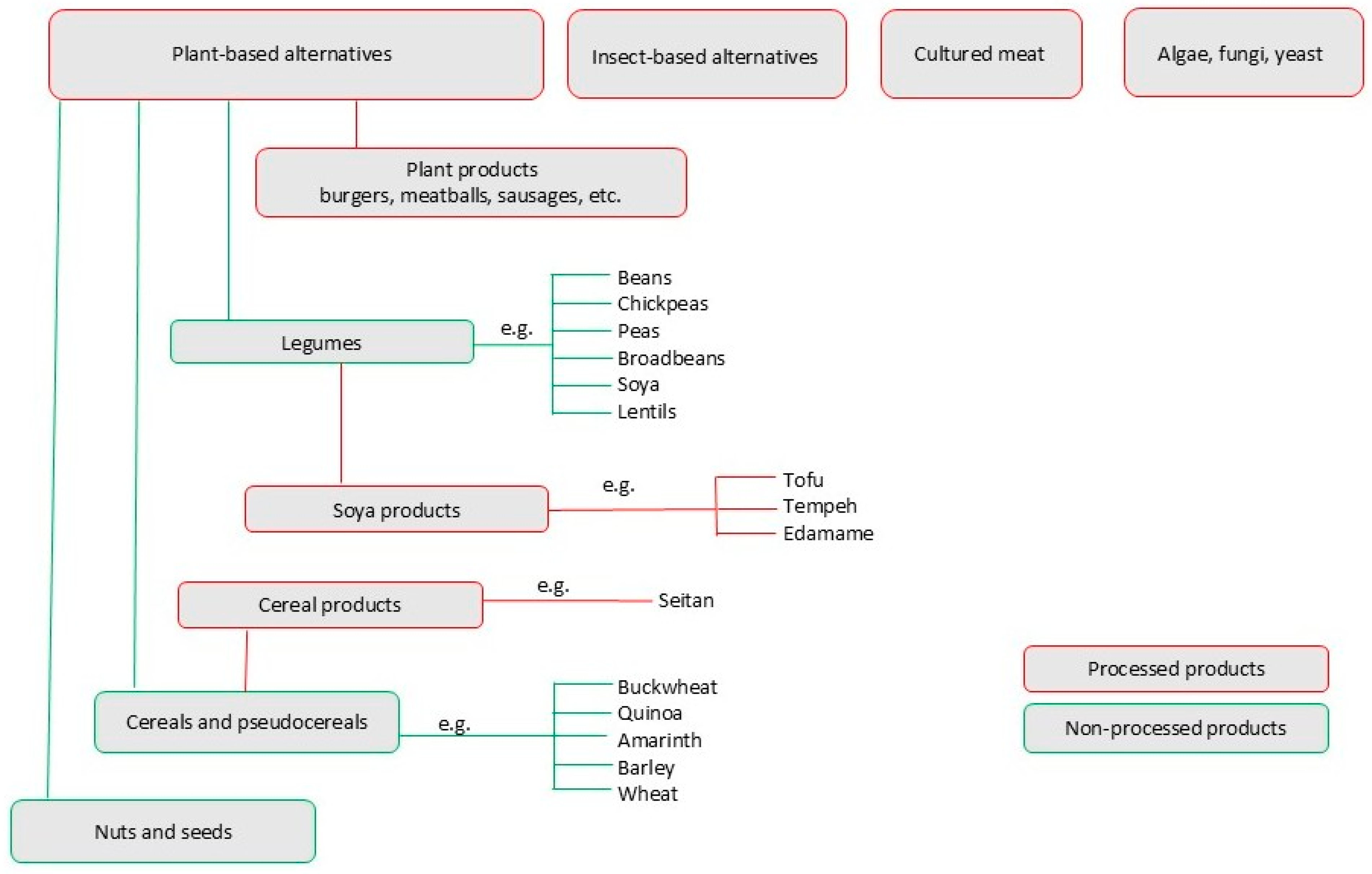
Consumers who decide to eliminate meat can benefit from a more balanced diet, with meat protein being replaced with alternative sources of protein such as beans or seaweed, or by insects, or by including plant-based meat alternatives (PBMAs) in the diet [8]. A more comprehensive list of commercially available meat alternatives is given in a report for the Organisation for Economic Co-operation and Development (OECD) [9]. The report divides the products into four categories: PBMAs, insects, cultured meat and microorganisms. Plant-based meat alternatives (PBMAs) include processed and unprocessed products. The processed PBMAs include traditional types, such as tofu and tempeh, and newer-generation ones such as nuggets and plant-based sausages, while the unprocessed products include nuts and vegetables. The insects can be used as both edible insects or as insect powder or flour. Cultured, or in vitro, meat is produced in laboratory conditions from animal cells; however, due to its novelty, cultured meat still lacks clearly defined production methods, is less readily available to consumers, and has few producers [2,10,11,12]. Finally, protein derived from microorganisms includes fungi, algae and seaweed, which can also be used as meat alternatives (Figure 1).
Figure 1.
Alternatives to meat and protein sources, based on Frezal et al. [9].
In the face of growing consumer concerns regarding the effects of meat and its production on human health and the environment, the food market includes increasing numbers of more sustainable plant-based meat substitutes [13,14]. Among these, the most widespread and easily accessible meat substitutes available to consumers are PBMAs [15], which will serve as the focus of the present article.
Meat substitutes can be defined as products that resemble meat in appearance or structure but will differ in their nutrient content [16,17]. Plant-based meat alternatives, also known as meat analogues, are plant products that can imitate the taste, smell, texture and appearance of meat thanks to advances in food technology. However, it should be noted that their nutritional value does not always fully correspond to that of animal meat; some products are enriched to partially reproduce the content of protein, essential amino acids and micronutrients such as iron and vitamin B12. Such products are referred to as inter alia plant-based meat, vegetarian meat, meat substitute, imitation meat, and synthetic meat [16,17,18,19].
Plant-based meat substitutes have long been available on the food market, with these being known as “first-generation” PBMAs or PBMA 1.0 products [19,20,21]. Initially, their role was to replace traditional meat by replicating its appearance, texture, taste and nutritional value, rather than serving as a protein alternative [2,20]. The first-generation PBMAs include soya protein-based products such as tofu, tempeh and edamame beans. While they represent common alternatives to animal protein, these products cannot replace the structure, taste or smell of meat [17,20,22].
In turn, “second-generation” PBMAs or PBMA 2.0 products are based on textured vegetable protein (TVP). These typically undergo various forms of processing to better resemble meat [19,20,21,22] (Figure 1). Indeed, PBMAs that are designed to imitate the appearance and taste of meat are often highly processed; they can also be based on a range of plant proteins, with the most common being legume proteins such as soybeans or cereals [19,23,24,25].
It should be noted that, in addition to PBMAs, which undergo various degrees of processing to resemble meat [26], a considerable range of unprocessed or minimally processed plant-based products are also available to the consumer. Cereals, legumes, vegetables, fruits, nuts and seeds also constitute good sources of protein and can be used to supplement the diet [27] (Figure 1).
Recent years have seen a growth in the demand for PBMAs [5], which has been accompanied by a proportional increase in the range of meat-like products on the market [28]. Ideally, these products should be sustainable and inexpensive and contain all the necessary minerals and proteins present in meat [29]. Despite this, the adoption of a plant-based diet remains not universally popular, which may be due to a reluctance to give up meat or a lack of knowledge about plant-based substitutes. Consumers may also be distrustful of new solutions, approach them with caution, or have concerns about their impact on health. Nevertheless, to address widespread concerns regarding the effect of meat consumption on consumer health and the state of the environment, there is a clear need for meat alternatives, such as plant-based protein substitutes, that can be used to reduce the share of animal products in the diet [30,31].
The aim of the work is to present the current state of knowledge regarding the topic of PBMAs and its influence on consumer health and the environment. The study also evaluates the extent to which PBMA consumption may satisfy the need for nutritional elements, including protein, in the consumer and fulfil their expectations regarding meat alternatives.
2. Materials and Methods
2.1. Study Design
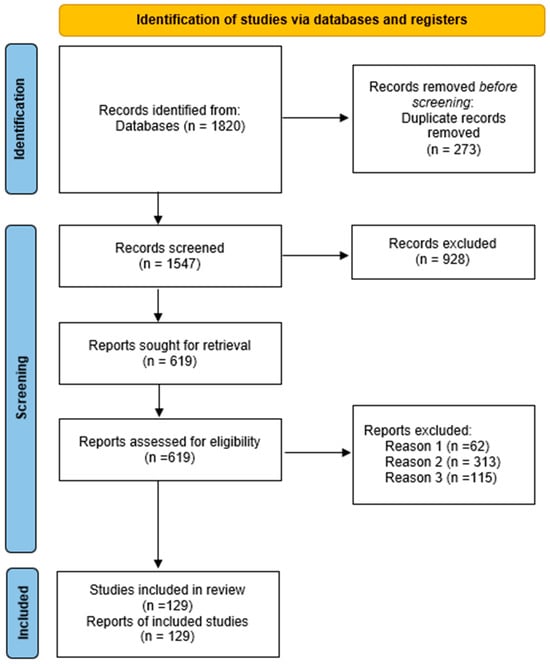
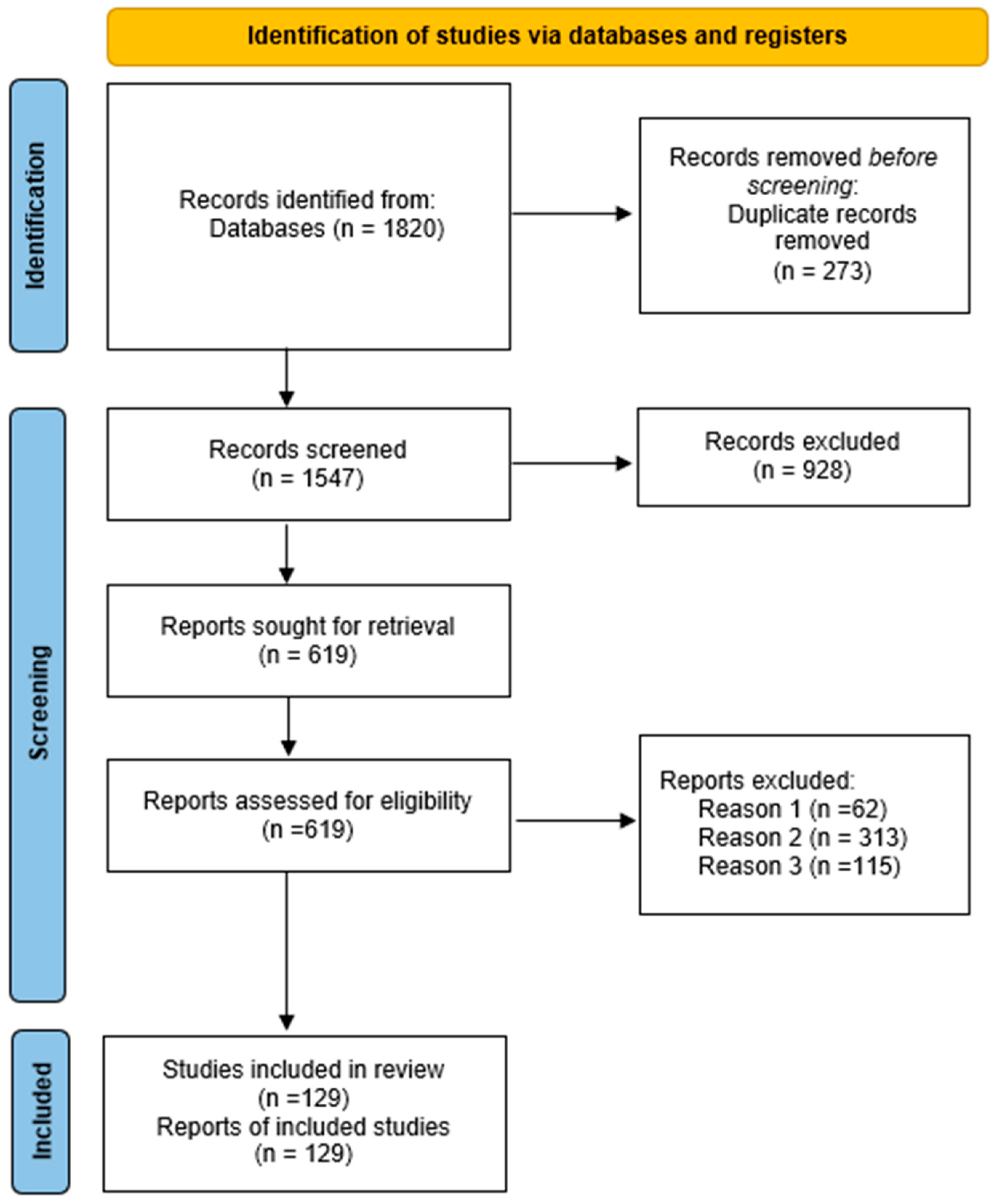
The study was carried out as a systematic literature review in accordance with PRISMA 2020 (Preferred Reporting Items for Systematic Reviews and Meta-Analyses) guidelines [32]. The review process itself was based on a structured methodological framework for systematic reviews according to Grant and Booth [33] and Torraco [34]. It comprises (1) identification of the literature, (2) screening, (3) eligibility assessment, (4) quality evaluation and (5) synthesis of results. This framework ensures the transparent and repeatable selection, evaluation and analysis of relevant publications (Figure 2).
Figure 2.
The process by which publications were identified and selected for the literature review.
2.2. Search Strategy
Systematic searches were performed of PubMed, Web of Science, Scopus and Google Scholar databases based on the following combinations of keywords: plant-based meat alternatives, PBMAs, plant proteins, meat substitutes, sustainability, greenhouse gas emissions, environmental impact, food technology, plant-based diet, climate change, cultivated meat, protein sources, nutritional value, and consumer acceptance. The final corpus for review included scientific articles, experimental studies, reviews, reports from international organisations (FAO, OECD, WHO, IPCC) and book publications.
2.3. Inclusion Criteria
The following inclusion criteria were adopted:
- –
- Publications concerning plant-based meat alternatives (PBMAs) or other substitutes for animal products;
- –
- Work containing data on nutritional value, production technology, chemical composition or the impact of PBMAs on health;
- –
- Including research findings on the environmental impact of PBMA production (greenhouse gas emissions, water, energy and land use);
- –
- Work including comparative studies between plant-based and animal-based products.
- –
- Reputable scientific journals and reports from international institutions were preferred.
2.4. Exclusion Criteria
The following publications were excluded:
- –
- Those with an inappropriate topic or scope, e.g., articles partially related to plant proteins but not concerning PBMAs or meat alternatives;
- –
- Those lacking original data—e.g., reviews without new results or meta-analyses;
- –
- Those without full access to abstracts—some articles were either unavailable or required a subscription, and therefore could not be evaluated;
- –
- Those with low methodological quality or which were irrelevant to the purpose of the review, e.g., articles with poor methodology or very limited substantive value regarding the topic.
2.5. Study Selection
The initial search across all databases returned 1820 results. A multi-stage selection process was then carried out to identify the most relevant publications. In the first stage, duplicates were removed, resulting in the exclusion of 273 publications. The remaining 1547 publications were then evaluated to confirm their agreement with the topic of the study, viz. PBMAs and their related technological, health, environmental and socio-economic aspects. Following an evaluation of the titles and abstracts, 928 articles that did not fit the topic were rejected. Despite the broad set of search terms, many identified publications were only marginally related to PBMAs or plant proteins in general and did not make any reference to production technology, nutritional value, health impact, or environmental impact. As such, a relatively high number of articles were excluded at this stage, which is typical for systematic reviews covering broad keyword combinations. The review was thus narrowed down to 619 publications; these were further verified for full-text availability and quality assessment, resulting in the exclusion of 62 articles. The remaining 557 publications were subjected to a substantive and qualitative assessment based on the content of quantitative data, scientific value and relevance to the research topic, based on which 428 publications were excluded. Thus, 129 publications were left for detailed analysis, which formed the basis of this study (Table 1).
Table 1.
The selection process for the publications included in this review of plant-based meat alternatives (PBMAs).
2.6. Data Analysis
The included publications cover the years 2000–2024. Of these, nearly 58% were published in 2020–2024, 35% in 2010–2019 and 7% in 2000–2009.
The selected publications were subjected to detailed content analysis and grouped into five main thematic areas: characteristics of PBMAs (definition, product types, raw material composition, protein sources); health impact (nutritional value, allergens, safety of consumption); environmental impact of PBMA production compared to conventional meat (greenhouse gas emissions, water and energy consumption, crop area); production technologies (extrusion, electrospinning, protein structuring); and economic and social aspects (production costs, consumer acceptance, market trends, barriers to implementation). This fivefold grouping not only enables a clear synthetic presentation of the current state of knowledge but, critically, facilitates the effective identification of novel research gaps by providing a complex, integrated assessment of the technological, health, environmental, and socio-economic aspects of PBMAs.
3. The Effect of Animal Husbandry on the Environment
Current livestock farming approaches are less environmentally sustainable than crop production and place a greater burden on the natural environment, particularly with regard to water consumption and greenhouse gas production [2,22,35,36]. In addition, the deforestation associated with the expansion of agriculture is a significant driver of climate change and forest loss [36].
A considerable proportion of the earth’s land mass (30%) is currently used for livestock production, comprising approximately 70% of all agricultural land [37]. Within this, 33% is for feed and 26% for grazing. However, other estimates suggest that only 50% of agricultural land, or 20% of total land area, is used for animal production [38]. These discrepancies likely stem from variations in data updates and research methodologies, warranting careful interpretation.
Population growth and the increasing production of animal-based foods are also increasing the demand for water and putting pressure on freshwater resources: agriculture, the largest anthropogenic consumer of water, is highly dependent on water for crop irrigation, livestock farming and aquaculture [39]. According to an FAO report [40], agricultural activities account for 69% of global freshwater demand, with as much as 41% of this value being used for the production of livestock feed, corresponding to 4 387 km3 of water each year [41].
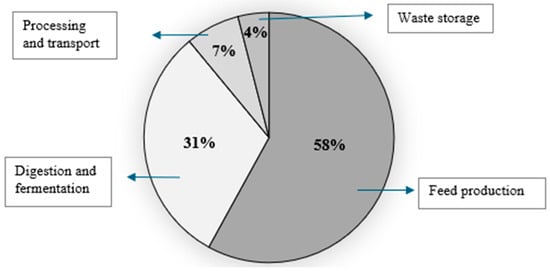
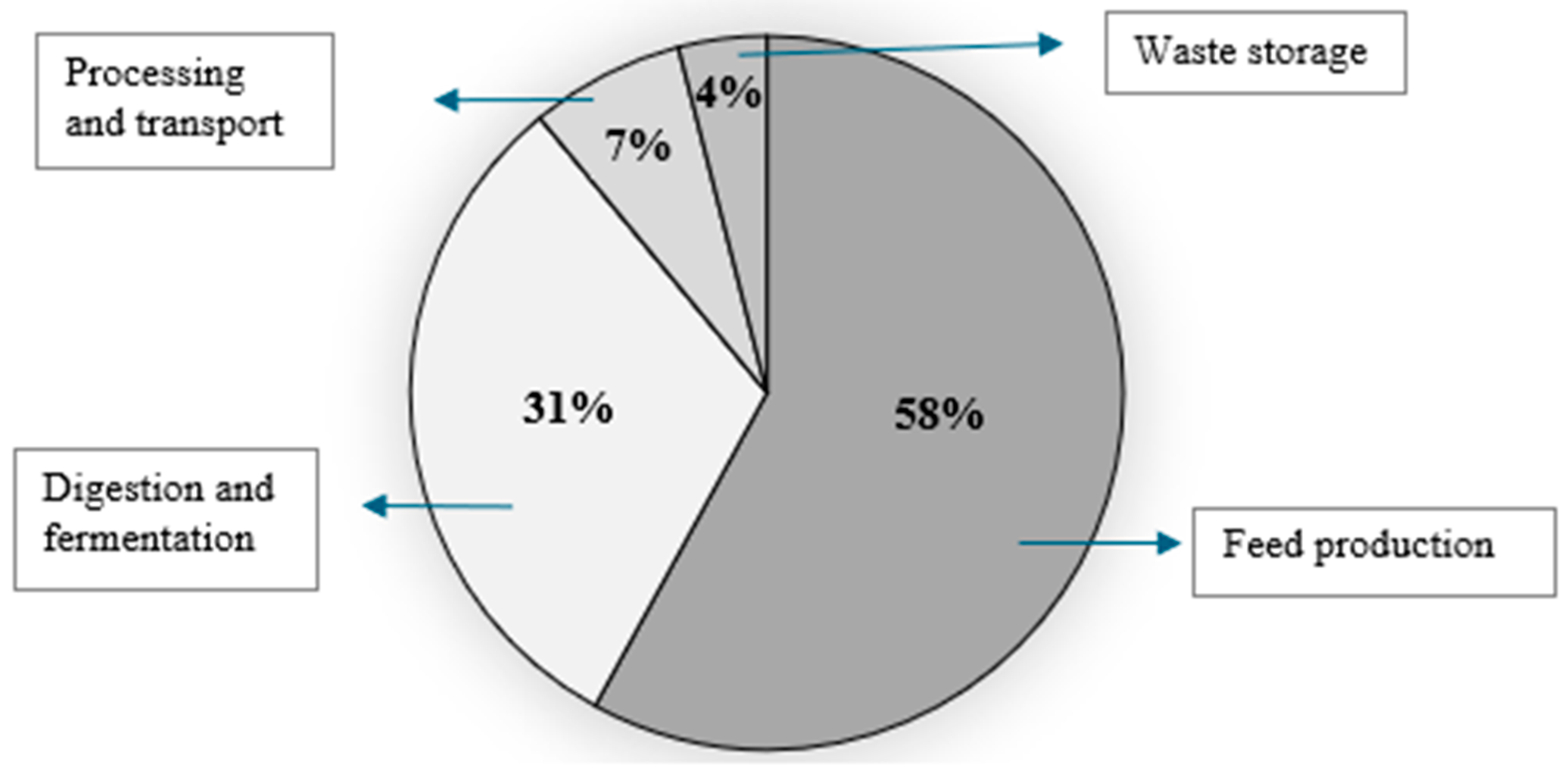
Alongside fossil fuel production and industry, agriculture is a major contributor to climate change through its emission of anthropogenic greenhouse gases (GHGs). According to the FAO [40], the most commonly cited greenhouse gases associated with human activity are carbon dioxide (CO2), methane (CH4) and nitrous oxide (N2O). Methane emissions are particularly driven by fossil fuel use, intestinal fermentation and ruminant digestion, and nitrous oxide by the storage and management of livestock manure. The high global GHG emissions associated with animal husbandry are attributed to feed production and the associated change in land use; GHG production is further exacerbated by fossil fuel use during the transport and processing of animal products [40] (Figure 3).
Figure 3.
Contribution of individual GHG emissions in animal husbandry, based on FAO [40].
Animal husbandry accounts for 14.5% of global emissions, with two-thirds of this comprising methane emissions generated by cattle during rumen fermentation [40,42]; however, Twine [43] proposes adjusting this share to 16.5%. Food production accounts for 26% of global GHG emissions, of which animal-based foods represent 57% and plant-based foods represent 29%; more specifically, the highest GHG emissions are associated with beef production, followed by rice cultivation, and then pork, poultry, mutton and dairy products [44,45].
The emission of different types of greenhouse gas, with different warming potentials, can be quantified in carbon dioxide equivalents (CO2eq), and it has been proposed that more accurate GHG data can be obtained when calculated per kilogram of product produced [44]. The most intensive source of GHG is beef production, where the production of 1 kg of beef entails the emission of 99.48 kg of carbon dioxide equivalent (CO2eq). In turn, lamb and mutton production results in the emission of 39.72 kg CO2eq, pork (12.31 kg) and poultry (9.87 kg). By comparison, the production of 1 kg of rice, corn or wheat and rye results in the respective emission of 4.45 kg CO2eq, 1.7 kg CO2eq and 1.57 kg CO2eq.
These findings correspond with those of Smetana et al. [46], who report that the production of beef cutlets contributes to higher GHG emissions and acidification of the aquatic environment compared to soya or pea protein-based cutlets. Similar results were obtained by Saerens et al. [47], who found that meat burger patties have a greater impact on the environment than plant-based patties.
Hence, given the considerable environmental impact of meat and animal-based food production, particularly with regard to GHG emissions, water demand and agricultural land use, there is considerable interest in reducing animal production and meat consumption.
4. Meat Consumption and PBMAs
Recent years have seen a steady increase in the global consumption of meat products [6,48,49,50], with a smaller market share taken by alternative proteins [51]. In 2020, global meat consumption amounted to 325 million tonnes, an average of 33.7 kg per person; by 2030, due to continued population growth, urbanisation and economic development, as well as increased prosperity and improved living standards, this value is expected to increase by 14% [49]. In response to this growing demand for meat and meat products, farming practices are becoming less sustainable, with greater productivity coming at the expense of increased environmental impact and worse animal and consumer welfare. Furthermore, global consumption of poultry, pork, beef and mutton is predicted to increase by 15%, 11%, 10% and 15%, respectively, with poultry meat accounting for 41% of the protein consumed from meat products [52], and global consumption of ruminant meat is expected to increase by 88% and dairy products by 67% between 2010 and 2050 [53].
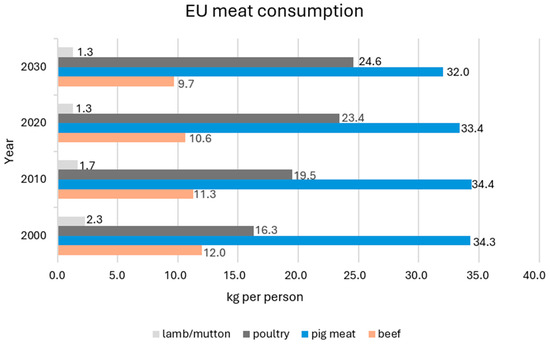
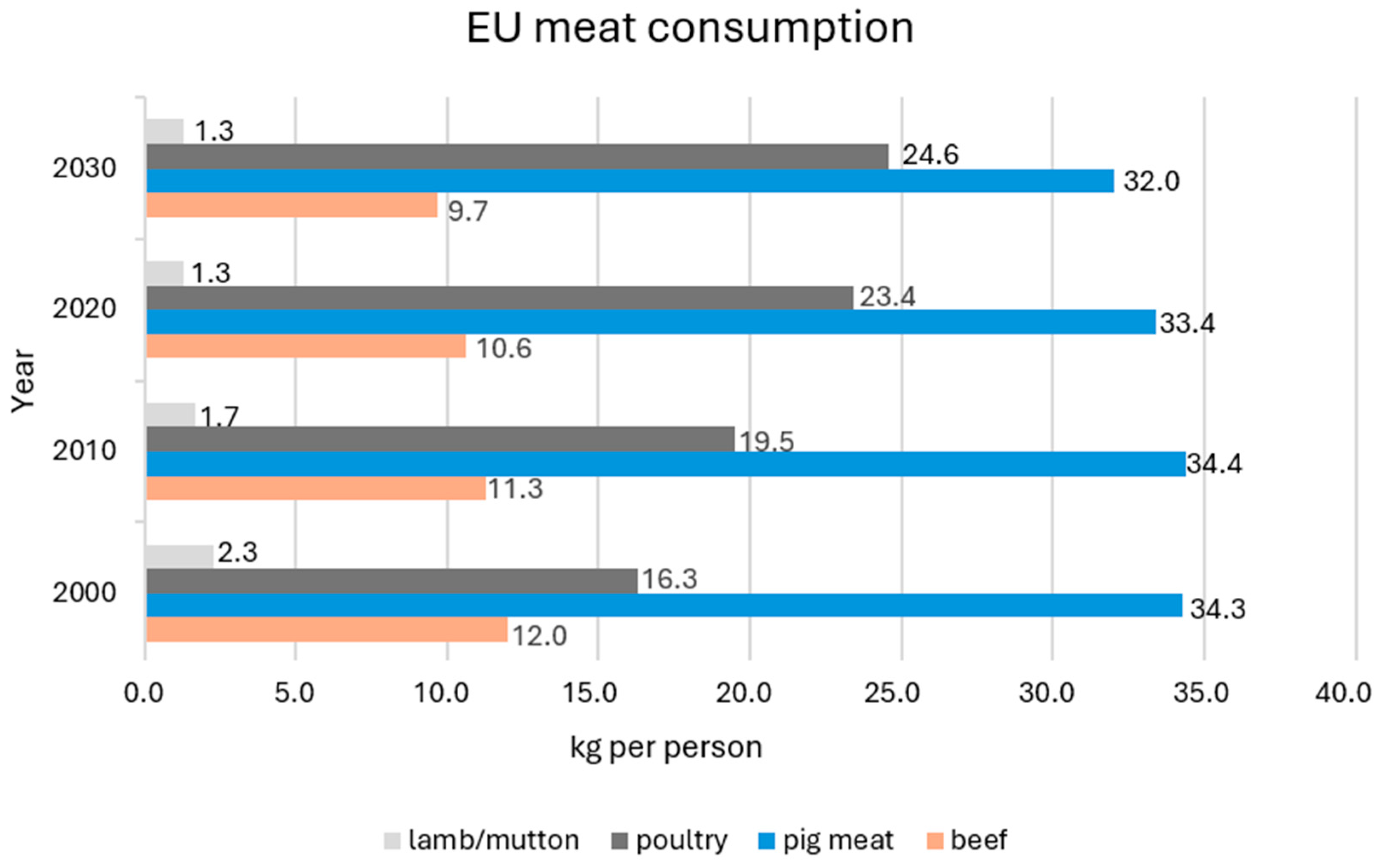
In contrast, meat consumption in EU countries is predicted to slightly decrease from 68.7 kg per person in 2019 to 67.6 kg in 2030, primarily driven by reductions in beef and pork. As illustrated in Figure 4, poultry consumption, however, is expected to continue rising, maintaining levels similar to other regions [54].
Figure 4.
Meat consumption trends in EU countries, based on EC 2020 [54].
United Nations estimates predict the global population will reach 8.5 billion by 2030, 9.7 billion by 2050 and 10.4 billion by 2080, remaining at this level until 2100 [55]. This rapid population growth, together with greater prosperity, is also increasing demand for meat [56]; this in turn places increasing pressure on animal production and forces the development of alternative technologies, such as meat analogues and in vitro meat.
While remaining at a modest level compared to meat, the market for PBMAs has been growing rapidly in recent years. In 2018, its value ranged from USD 4.6 to 10 billion globally [6,57], and in 2021, it was estimated at USD 5–16 billion depending on the source [9,58,59,60]. During the same period, the European PBMA market was estimated at EUR 1.5 billion [61], with estimates of USD 2.6 billion in Western Europe and USD 192 million in Eastern Europe [9,62]. Forecasts indicate continued rapid growth: the global market could reach USD 85 billion by 2030, representing an almost 20-fold increase compared to 2018 [6].
However, the replacement of animal production by plant cultivation may be hampered by the growing demand for meat and animal products, fuelled by population growth. For the sake of comparison, the meat products market in 2023 was valued at nearly USD 1.7 trillion, and it is expected to reach USD 2.6 trillion by 2033 [9]. Currently, the meat for analogues accounts for only 1–2% of the red meat market [63].
5. The Effect of Quality and Mode of Nutrition on Health
In addition to environmental concerns and ethical issues regarding the mistreatment of livestock [2,17,64], meat consumption is also associated with health concerns regarding lifestyle disease. Plant-based alternatives are regarded as more beneficial for health as they are generally low in saturated fatty acids, rich in essential amino acids and free of cholesterol [65].
Many consumers enjoy the taste of meat and would like to remain on a meat-based diet for its nutritional value [66,67]. However, consumer interest in plant-based alternatives caution is growing; this can be attributed in part to concerns regarding high levels of meat consumption and the expanding range of available meat substitutes. There is a growing belief that plant-based sausages, meatballs, burgers and dairy products made from legumes, vegetables and cereals offer greater health benefits, have less impact on the environment, and are more in line with animal welfare [68].
Therefore, a wide selection of plant-based diets has become available for consumers who would like to eliminate meat from their diet or reduce its consumption. Those who choose to follow a plant-based diet can be classified as vegans, i.e., those who do not consume any animal products at all; lacto-vegetarians, who allow milk and dairy products in their diet; and pesco-vegetarians, who allow fish. Flexitarians, on the other hand, occasionally consume meat and animal products [17,27,66].
While a diet based on PBMAs has been associated with a lower risk of chronic disease [69], there are concerns that a diet based exclusively on plant protein may lack essential nutrients, primarily calcium, iron and vitamin B12 [70]. Indeed, despite being a source of cholesterol and saturated fatty acids, frying, grilling and smoking meat produce harmful substances, such as polycyclic aromatic hydrocarbons or heterocyclic aromatic amines [71]. Meat is also an important source of nutritional elements. Meat is a source of complete protein, minerals and essential vitamins, mainly B vitamins, but also vitamins A, D and K2 [72,73,74]. Meat is also a valuable source of calcium, magnesium, zinc and iron, whose deficiencies can result in anaemia, in the case of Fe, or impaired protein synthesis, in the case of Zn [75,76]. In addition, meat contains a number of bioactive ingredients, including taurine, creatine and carnosine, together with conjugated linoleic acid, carnitine, choline, ubiquinone and glutathione [73]. Hence, there are concerns that while PBMAs resemble animal products, they may lack the nutritional value of meat; in addition, they can have lower protein content and are often highly processed [77,78].
5.1. Protein and Amino Acids in Diets Based on Meat and PBMAs
Protein is a key nutrient in food. It is essential for the proper functioning of the body, where it serves as the building block of tissues, enzymes, hormones and antibodies. Proteins themselves consist of various endogenous amino acids, i.e., those synthesised in the body in sufficient quantities, and exogenous acids, which must be taken in with food.
Animal products typically contain “complete proteins”, i.e., ones that include all essential amino acids. These constitute the primary source of protein in a meat-based diet. Plant-based diets, however, run the risk of deficiency for certain essential amino acids, particularly lysine, methionine and tryptophan, which may reduce the nutritional value of the entire menu. In addition, the protein in PBMAs is often less digestible and its amino acid components less bioavailable. However, both issues have been addressed to varying extents by new processing technologies [17,79,80,81]. Although a plant-based diet can provide most of the nutrients needed for a healthy balanced diet, it is crucial that various protein sources are combined appropriately to supplement missing amino acids and maintain a complete protein profile [69,70,82].
Comparative studies have found plant-based burgers to have similar or slightly lower protein content than meat-based burgers, albeit with some variation depending on the type of product and protein source [83,84,85,86] (Table 2).
Table 2.
Comparison of protein, fat, cholesterol and carbohydrate content in meat products and plant-based meat alternatives (PBMAs).
Cutroneo et al. [83] compared the nutritional values of PBMAs (steaks, burgers, meatballs and cutlets) given on the packaging with those of their meat counterparts. The highest protein content was noted in plant-based cold cuts. Among the plant-based products, only the burgers and meatballs demonstrated significantly lower (p < 0.05) protein content than their meat counterparts. Similarly, a Spanish study by Costa-Catala et al. [84] found plant-based burgers to have significantly lower protein content than meat burgers (p < 0.05), while the plant-based sausages had higher (p < 0.05) or comparable protein content, depending on the source; no differences in protein content were found between plant-based and meat-based meatballs (Table 2).
Ložnjak Švarc et al. [87] identified varying protein contents between individual meat analogues depending on the product type and protein source, which ranged from chicken egg protein to plant protein: pea, soy, wheat and a combination of soya and pea protein. The lowest protein content was found in chicken egg-based cold cuts (Table 2).
Interestingly, while some essential amino acids, such as lysine, methionine, threonine and valine, may be present in lower amounts in plant products, some others, such as leucine, are actually more plentiful than in animal products [86,87]. Studies by Ložnjak Švarc et al. [87] and De Marchi et al. [86] found the lysine content in burgers and cold cuts made from plant protein to be lower than in the same products of animal origin; however, they also report higher levels of methionine, threonine and valine in cold cuts made from chicken protein compared to those based on legume protein. In addition, cold cuts made from wheat protein were found to contain higher levels of all essential amino acids, except lysine, compared to those made from chicken egg protein or other PBMAs made from legume protein (Table 3).
Table 3.
A comparison of the essential amino acid (EAA) content (mg/100 g of raw product) and selected minerals (mg/kg of raw product) in meat products and plant-based meat alternatives (PBMAs).
While PBMAs can be a valuable source of essential amino acids, their nutritional value depends on the type of product and protein source (Table 2 and Table 3). As such, to maintain a complete amino acid profile in a plant-based diet, it is important for the consumer to diversify the composition of PBMAs or supplement them with other plant products that are rich in the appropriate amino acids.
5.2. Macroelements and Microelements in Diets Based on Meat and PBMAs
The macro- and micronutrient content in PBMAs varies according to the type of product and protein source. Yeo et al. [5] report that most PBMAs contained higher amounts of certain minerals (Ca, Cu, Fe, Mg, Mn, K, Na, Zn) than their meat counterparts, i.e., fish, beef, pork and chicken. They attribute this to the enrichment of PBMAs and the type of plant protein used in their production; even so, they note that some minerals, especially iron and zinc, may demonstrate lower bioavailability in a plant-based diet [5,88].
Micro- and macronutrient content can also vary significantly within the same group of PBMAs depending on the protein source. Products based on pea, soybean, and wheat protein have been found to be richer in inter alia Ca, Fe, Mg, Mn, P, K and Na than their chicken egg protein counterparts [87]. Some PBMAs also appear to be better sources of Fe than meat, especially in meat-like products derived from peas and soybeans, and to have a higher Fe content than products based on chicken egg protein. Plant-based burgers have been found to have twice the Fe content of meat burgers but lower Zn content (Table 2) [86]. It has, however, been noted that studies of iron content should also include its bioavailability and not just its content [86]. Therefore, given the considerable variability in PBMA mineral content, conscious product selection and dietary diversification are needed for the consumer to achieve a complete mineral profile [83,84].
5.3. Fatty Acids in Diets Based on Meat and PBMAs
Another key component of a healthy diet is its fatty acid content: animal products are sources of saturated fatty acids (SFAs), while plants and fish are sources of unsaturated fatty acids (UFAs) such as monounsaturated fatty acids (MUFAs) and polyunsaturated fatty acids (PUFAs). Certain essential UFAs, viz. omega-6 and omega-3 fatty acids, are synthesised exclusively by plants, and these play a particularly important role in nutrition [89].
De Marchi et al. [86] found plant-based and meat burgers to have similar levels of SFAs, with higher levels of PUFAs in the plant-based burgers. Plant-based burgers also had four times the omega-6 content of meat burgers and lower cholesterol content (3.98 mg/100 g vs. 50.60 mg/100 g).
Similarly, an analysis of plant-based and chicken nuggets by Kumar et al. [35] found plant-based minced meat to have lower cholesterol and higher PUFA content than beef; the authors note that consumers expect plant-based substitutes to help reduce their intake of SFAs and cholesterol compared to meat. Cutroneo et al. [83] identified significantly lower levels of total fat, saturated acids, total carbohydrates, sugars, fibre and salt in plant-based steaks than various other analysed PBMA products (burgers, meatballs and cutlets). Interestingly, no differences in total fat, saturated acid, sugar, fibre or protein content were observed between the other PBMAs (p > 0.05), and all studied meat products apart from white meat had a higher saturated fatty acid content than their plant-based analogues.
Costa-Catala et al. [84] also report higher mean total fat and saturated fat levels in meat-based burgers (12.6 g total fat and 5.1 g saturated fat/100 g) than in plant-based burgers (8.4 g total fat and 1.9 g saturated fat/100 g). They also note significantly lower saturated fat content in plant-based meatballs compared to their meat analogues (p < 0.05), but no significant differences in total fat content (Table 2).
In conclusion, while PBMAs generally offer a healthier fatty acid profile with lower saturated fats and cholesterol, their overall nutritional value, like other plant-based products, still necessitates technological improvements for nutrient bioavailability and conscious dietary planning by consumers, reinforcing that PBMAs are not always direct nutritional equivalents to meat [90,91,92]. However, as noted previously, PBMAs cannot be treated as adequate substitutes for meat [83,84]. Plant-based alternatives exhibit different protein and nutrient contents according to the type of product and protein source, as well as their ingredients. Furthermore, meat analogues often demonstrated considerable variation in their nutrient content, even similar products, further complicating any comparison with conventional products.
6. PBMAs—Ingredients and Their Technological Function
Meat substitutes consist primarily of water (50–80%), textured vegetable protein (10–25%) and non-textured protein (4–20%), fats (0–15%), various flavour enhancers (3–10%), colourings (0–5%) and binding agents (1–15%) [16]. These ingredients and the technological production techniques are needed to confer the taste and texture of meat on the PBMA and to reproduce the nutritional profile (Table 4).
Table 4.
Ingredients and technological additives in the production of plant-based meat alternatives (PBMAs).
One important source of plant protein for meat analogues is legumes, with the most commonly used species being soybeans, lentils, chickpeas, peas, beans and broad beans. However, cereal protein from wheat, corn and rice is also often used [5,6,35,99,100]. Currently, the global food market comprises a wide range of PBMAs, including plant-based burgers, meatballs, sausages, cold cuts, nuggets, chicken pieces and minced meat [15,21,83,84,101,102].
Legumes are an important part of the diet, partly due to their high protein and fibre content, but also because they represent a plentiful source of essential amino acids, including arginine, lysine, glutamic acid, leucine and aspartic acid [103]. Among these, chickpeas are particularly useful in PBMA production as they are a rich source of protein and have hypoallergenic properties and high solubility [104]; similarly, lentils also have high levels of protein, together with carbohydrates and lipids [105]. Pea protein, on the other hand, is characterised by reduced digestibility and an incomplete amino acid profile [21].
However, the most commonly used raw material for the production of PBMAs is soybean. Soya protein contains a complete set of essential amino acids and, thanks to its inherent gelling properties, can be engineered to form fibrous structures that mimic meat’s texture and mouthfeel. It has the ability to retain water, absorb and emulsify fat, and form gels [21,106,107]. As a result, soya protein can be found in the production of popular meat substitutes such as tofu, tempeh and edamame, as well as plant-based sausages, nuggets and chicken breasts [63,97] (Table 4).
Soya-based products have high nutritional value: they are rich in protein, essential amino acids, fibre and omega-3 fatty acids, as well as various minerals such as potassium, magnesium, zinc, manganese, selenium, copper, calcium, phosphorus and iron. In addition, soya concentrate contains 70% pure protein [35,63,98,108,109,110], and tofu is free of cholesterol [111]. It is also possible to adjust both the nutritional value and technological properties of soya products by varying the form of soya protein in production, viz. isolate, concentrate and texturate [35,112] (Table 4).
Nevertheless, soybeans can evoke negative emotions and controversy among consumers regarding their allergenic potential and the fact that some are genetically modified. In addition, large-scale soybean cultivation requires an optimal climate and affects the local biodiversity [17,113,114].
In the case of cereals, protein is most commonly obtained from wheat, rice, oats and barley; however, these species are characterised by an inferior protein content compared to legume seeds [93,102]. Among the cereal proteins used in PBMA production, gluten is a popular choice due to its properties, including its viscosity and elasticity, i.e., viscoelasticity. Otherwise, the taste and fibrous texture of meat can be achieved by combining gluten with textured vegetable protein (TVP) and other ingredients [21,71]. A popular grain-based meat substitute made from wheat gluten is seitan, which is used to produce vegan sausages, burgers and minced meat substitutes [94] and is regarded as a good substitute for meat burgers, sausages and nuggets. While it offers easy processing, versatility in preparing various dishes and a relatively low price compared to other analogues [63], gluten is a common allergen and is not suitable for people suffering from gluten intolerance (Table 4).
Another common group of ingredients in PBMAs is the lipids [6], which are used together with protein as binding agents. Oil or fat is added to achieve the desired meat-like consistency and texture and to improve the taste. The most common ingredients are vegetable oils such as rapeseed, soybean, palm, coconut or sunflower oil [16,71] (Table 4).
Finally, spices, herbs and flavourings are added to confer a meat flavour and improve the overall taste, and artificial and natural colourings to improve the appearance [21,95]: lecithin or beetroot extract are often added to give the colour of red meat, while titanium dioxide is used to imitate chicken meat. Polyphenols and ascorbic acid are also added as preservatives and to ensure the stability of the colourings [96] (Table 4).
7. The Safety of PBMAs
Traditional soy products such as tofu and tempeh have long been consumed as meat alternatives in Asian countries and are considered safe and nutritious; however, their taste, aroma and appearance do not meet Western consumer expectations [20,115], which has led to the development of modern PBMAs. PBMAs are believed to offer certain environmental and health benefits over meat consumption. Indeed, PBMAs are a source of plant protein, fibre, vitamins and minerals and typically contain no cholesterol and less saturated fat than meat. Despite this, many contain anti-nutrients which reduce the bioavailability of iron and zinc, as well as certain technological additives. Their nutritional value is also strongly influenced by the degree of processing during production: PBMAs are created through a multi-stage process and are thus regarded as ultra-processed foods. Such multi-stage processing may further affect nutrient stability and mineral bioavailability and raise consumer concerns about potential negative health consequences; furthermore, PBMAs may contain allergens, microorganisms or chemical contaminants and various compounds resulting from the production process, and the long-term health effects of regular consumption remain unclear (Table 5).
Table 5.
The advantages and limitations of PBMAs in terms of nutritional value, sensory properties, safety, and sustainability.
Also, the high use of flavourings and colourings during production, aimed at improving consumer acceptance, can raise doubts about the “naturalness” and safety of the product. Indeed, ultra-processed products and genetically modified organisms (GMOs) are often met with scepticism by consumers (Table 5). Furthermore, while modern production techniques can also effectively bestow the texture and fibrous structure of meat on PBMAs, some processing steps may also impair the stability of the texture or flavour (Table 5).
PBMAs give consumers the opportunity to reduce their meat consumption, and their production can lower demand for meat and animal husbandry, leading to lower greenhouse gas emissions and reduced environmental pressure. However, the large-scale soybean cultivation needed for PBMAs can reduce biodiversity, and the environmental effects depend on the source of the raw material and the choice of production method (Table 5).
7.1. Safety Aspects of PBMAs Regarding Health
PBMA production is a complex process requiring the use of inter alia polysaccharides, oils, spices, emulsifiers, gelling agents and colourants, which are added to improve taste, texture and overall appearance [71]. However, this high degree of processing raises questions about food safety, as PBMAs may contain various allergens, antinutrients, chemical contaminants or even pathogenic microorganisms [116].
When present in small amounts, the antinutrients (phytates, oxalates, tannins, lectins, trypsin inhibitors) and phytochemicals (polyphenols, flavonoids, carotenoids) present in grains, legumes, nuts, and some fruits and vegetables can have beneficial health effects. Phytochemicals are, for example, an important component of PBMAs thanks to their antioxidant properties and have been found to reduce the risk of cancer and cardiovascular disease [117]. However, when present in excess in raw products, these substances reduce nutrient absorption and can cause inter alia nausea, bloating, and headaches [118]. The presence of phytates and polyphenols has been found to reduce the bioavailability of iron and zinc in a PBMA-based diet [119]. However, such substances can be neutralised or removed by various methods during processing, such as heat treatment, enzymatic treatment, autoclaving or extrusion [120,121].
Although PBMAs are free of cholesterol and typically contain less saturated fat than meat, and there is no evidence that PBMAs pose a direct health risk, they cannot automatically be credited with all the health benefits associated with plant-based diets [122] (Table 5). Little is known about their potential effects on health following consumption [116], and few long-term studies have assessed the impact of additives and processing on consumer health. As such, there is a need for further research and monitoring in this area [15,123].
7.2. Technological Aspects of PBMA Safety
The development of attractive plant-based meat substitutes requires technologies that are able to create products that replicate the taste and texture of meat [22]. Indeed, this may be why traditional products such as tofu and tempeh have not been widely accepted in Western countries [20,115] (Table 5). Therefore, there has been considerable interest in developing new technologies that can replicate meat. The most commonly used methods include high-moisture extrusion cooking, electrospinning, shear cell technology and freeze structuring, which enable the creation of a fibrous structure resembling meat and improve the organoleptic properties of the product [124,125,126]. However, such multi-stage processing can affect the stability of nutrients and the bioavailability of minerals, raising questions about food safety (Table 5).
Numerous technological additives such as polysaccharides, vegetable oils, spices, emulsifiers, gelling agents and colourants are used to impart the flavour and texture of meat [71]. Leghaemoglobin, or beetroot extract, is used to impart a red colour, while polyphenols and ascorbic acid act as colour stabilisers and preservatives [95,96]. Although these additives play an important role in creating meat-like characteristics, their long-term impact on consumer health remains unclear [116,122] (Table 5).
Due to the numerous steps involved in their production and the use of high numbers of additives, PBMAs are classified as ultra-processed foods in the NOVA system [127,128]. High levels of processing can reduce the nutritional value of a product, even though the result may be sensory appealing and more environmentally sustainable than meat [15,116,122,129] (Table 5). For this reason, the challenge for the food industry is to develop new technological solutions that preserve the sensory characteristics of meat while reducing the use of additives and processing steps to ensure food safety [21,107].
8. Conclusions
In the face of a growing population and continuing high demand for meat, PBMAs can provide significant support by enabling sustainable food production.
The effectiveness of plant-based meat alternatives (PBMAs) depends on their nutritional composition, degree of processing, choice of production technology and consumer awareness. Producers should strive to select appropriate raw materials, limit the number of technological additives, and improve protein quality and mineral bioavailability; also, by encouraging proper diet composition, it is possible to both ensure the safety of PBMAs and include them in a diet that fulfils protein and micronutrient requirements. Replacing animal-based products with plant-based alternatives can contribute to reducing greenhouse gas emissions and water consumption and easing pressure on agricultural land. Potential nutritional limitations and safety concerns resulting from high processing levels can be mitigated through further technological optimisation and long-term research. By developing PBMAs that combine acceptable taste and appearance with high nutritional value and environmental benefits, producers can not only support the development of sustainable food systems but also contribute to ensuring consumer health and environmental protection (Table 6).
Table 6.
Main advantages and limitations of plant-based meat substitutes (PBMAs).
PBMAs can contribute to a healthy and more sustainable diet, provided that they are of adequate nutritional quality and are minimally processed. However, they can exert a positive impact on the environment only when they actually replace animal products, rather than merely acting as diet supplements. Hence, to fully realise the real health and environmental benefits of using plant-based meat substitutes, there remains a need for the continued development of production technology and informed consumer decisions.
A key advantage of this paper is that it employs a systematic approach to the analysis. However, it has some limitations. Firstly, the corpus only included selected databases and publications that were available in full text form. In addition, the included studies demonstrated considerable heterogeneity with regard to their methodology, nutritional assessment, and environmental impact metrics; as such, it was not possible to make direct comparisons or draw clear conclusions. Furthermore, the literature still lacks long-term clinical trials evaluating the effects of regular consumption of highly processed PBMAs.
A holistic approach based on nutritional quality, environmental impact, production technologies, and consumer behaviour should be taken when evaluating alternative protein sources. Such analyses should also distinguish between minimally and highly processed products, as they differ in both nutritional value and ecological impact. It is also recommended that producers should aim to improve protein quality, increase the bioavailability of micronutrients and limit excessive product processing, while legislators should introduce transparent labelling standards. The consumer should also incorporate PBMAs as part of a planned, balanced diet, rather than treating them simply as “healthy options”.
There remains a need for further research, including long-term clinical trials, aimed at assessing the health impact of regular PBMA consumption; furthermore, to ensure comparable results between studies and greater reliability, they should be based on standardised environmental impact assessments. Future refinements in production technology methods should focus on improving nutritional value while reducing the degree of processing. Finally, consumer behaviour analyses should be performed to determine whether PBMAs actually contribute to reduced meat consumption and support more sustainable dietary patterns.
Author Contributions
Conceptualisation, M.B., R.P., A.T.-M., E.K. and B.P.; Data curation, R.P., M.B., E.K., B.P. and J.U.; Supervision, B.P., A.T.-M., E.K. and J.U.; Visualisation, R.P., J.U., M.B. and E.K.; Writing—Original Draft Preparation, M.B., R.P., B.P., A.T.-M. and E.K.; Writing—Review and Editing, B.P., A.T.-M., E.K., R.P. and M.B. All authors have read and agreed to the published version of the manuscript.
Funding
This research received no external funding.
Institutional Review Board Statement
Not applicable.
Informed Consent Statement
Not applicable.
Data Availability Statement
The original contributions presented in this study are included in the article. Further enquiries can be directed to the corresponding author.
Conflicts of Interest
The authors declare no conflicts of interest.
References
- Ekmekcioglu, C.; Wallner, P.; Kundi, M.; Weisz, U.; Haas, W.; Hutter, H.P. Red meat, diseases, and healthy alternatives: A critical review. Crit. Rev. Food Sci. Nutr. 2018, 58, 247–261. [Google Scholar] [CrossRef] [Scilit] [PubMed]
- Nezlek, J.B.; Forestell, C.A. Meat substitutes: Current status, potential benefits, and remaining challenges. Curr. Opin. Food Sci. 2022, 47, 100890. [Google Scholar] [CrossRef] [Scilit]
- Anand, S.S.; Hawkes, C.; De Souza, R.J.; Mente, A.; Dehghan, M.; Nugent, R.; Zulyniak, M.A.; Weis, T.; Bernstein, A.M.; Krauss, R.M.; et al. Food consumption and its impact on cardiovascular disease: Importance of solutions focused on the globalized food system. A report from the workshop convened by the World Heart Federation. J. Am. Coll. Cardiol. 2015, 66, 1590–1614. [Google Scholar] [CrossRef] [Scilit]
- Hu, F.B.; Otis, B.O.; McCarthy, G. Can plant-based meat alternatives be part of a healthy and sustainable diet? JAMA 2019, 322, 1547–1548. [Google Scholar] [CrossRef] [Scilit] [PubMed]
- Yeo, M.T.Y.; Bi, X.; Jeyakumar, H.C. Are plant-based meat analogues richer in minerals than their meat counterparts? Food Humanit. 2023, 1, 670–674. [Google Scholar] [CrossRef] [Scilit]
- Singh, M.; Trivedi, N.; Enamala, M.K.; Kuppam, C.; Parikh, P.; Nikolova, M.P.; Chavali, M. Plant-based meat analogue (PBMA) as a sustainable food: A concise review. Eur. Food Res. Technol. 2021, 247, 2499–2526. [Google Scholar] [CrossRef] [Scilit]
- van Vliet, S.; Kronberg, S.L.; Provenza, F.D. Health-promoting phytonutrients are higher in grass-fed meat and milk. Front. Sustain. Food Syst. 2021, 4, 555426. [Google Scholar] [CrossRef] [Scilit]
- Onwezen, M.C.; Bouwman, E.P.; Reinders, M.J.; Dagevos, H. A systematic review on consumer acceptance of alternative proteins: Pulses, algae, insects, plant-based meat alternatives, and cultured meat. Appetite 2021, 159, 105058. [Google Scholar] [CrossRef] [Scilit]
- Frezal, C.; Nenert, C.; Gay, H. Meat protein alternatives: Opportunities and challenges for food systems’ transformation. In OECD Food, Agriculture and Fisheries Papers; No. 182; OECD Publishing: Paris, France, 2022. [Google Scholar] [CrossRef]
- Hong, T.K.; Shin, D.-M.; Choi, J.; Do, J.T.; Han, S.G. Current Issues and Technical Advances in Cultured Meat Production: A Review. Food Sci. Anim. Resour. 2021, 41, 355–372. [Google Scholar] [CrossRef] [Scilit]
- Van der Weele, C.; Feindt, P.; Van der Goot, A.J.; Van Mierlo, B.; Van Boekel, M. Meat alternatives: An integrative comparison. Trends Food Sci. Technol. 2019, 88, 505–512. [Google Scholar] [CrossRef] [Scilit]
- Hartmann, C.; Siegrist, M. Consumer perception and behaviour regarding sustainable protein consumption: A systematic review. Trends Food Sci. Technol. 2017, 61, 11–25. [Google Scholar] [CrossRef] [Scilit]
- Aschemann-Witzel, J.; Gantriis, R.F.; Fraga, P.; Perez-Cueto, F.J.A. Plant-based food and protein trend from a business perspective: Markets, consumers, and the challenges and opportunities in the future. Crit. Rev. Food Sci. Nutr. 2021, 61, 3119–3128. [Google Scholar] [CrossRef] [Scilit]
- Roos, E.; Bajželj, B.; Smith, P.; Patel, M.; Little, D.; Garnett, T. Protein futures for Western Europe: Potential land use and climate impacts in 2050. Reg. Envir. Change 2017, 17, 367–377. [Google Scholar] [CrossRef] [Scilit]
- Shireen, A.; Wright, A.J. The meat of the matter: Plant-based meat analogue versus traditional meat product nutritional quality. Food Sci. Hum. Well. 2024, 13, 3110–3125. [Google Scholar] [CrossRef] [Scilit]
- Ahmad, M.; Qureshi, S.; Akbar, M.H.; Siddiqui, S.A.; Gani, A.; Mushtaq, M.; Hassan, I.; Dhull, S.B. Plant-based meat alternatives: Compositional analysis, current development and challenges. Appl. Food Res. 2022, 2, 100154. [Google Scholar] [CrossRef] [Scilit]
- Andreani, G.; Sogari, G.; Marti, A.; Froldi, F.; Dagevos, H.; Martini, D. Plant-Based Meat Alternatives: Technological, Nutritional, Environmental, Market, and Social Challenges and Opportunities. Nutrients 2023, 15, 452. [Google Scholar] [CrossRef] [Scilit]
- Ismail, I.; Hwang, Y.H.; Joo, S.T. Meat analog as future food: A review. J. Anim. Sci. Technol. 2020, 62, 111–120. [Google Scholar] [CrossRef] [Scilit]
- Jang, J.; Lee, D.W. Advancements in plant based meat analogs enhancing sensory and nutritional attributes. npj Sci. Food 2024, 8, 50. [Google Scholar] [CrossRef] [Scilit] [PubMed]
- He, J.; Evans, N.M.; Liu, H.; Shao, S. A review of research on plant-based meat alternatives: Driving forces, history, manufacturing, and consumer attitudes. Compr. Rev. Food Sci. Food Saf. 2020, 19, 2639–2656. [Google Scholar] [CrossRef] [Scilit]
- Vila-Clarà, G.; Vila-Martí, A.; Vergés-Canet, L.; Torres-Moreno, M. Exploring the Role and Functionality of Ingredients in Plant-Based Meat Analogue Burgers: A Comprehensive Review. Foods 2024, 13, 1258. [Google Scholar] [CrossRef] [Scilit]
- Jahn, S.; Furchheim, P.; Strässner, A.M. Plant-Based Meat Alternatives: Motivational Adoption Barriers and Solutions. Sustainability 2021, 13, 13271. [Google Scholar] [CrossRef] [Scilit]
- Kaur, L.; Lamsar, H.; López, I.F.; Filippi, M.; Ong Shu Min, D.; Ah-Sing, K.; Singh, J. Physico-Chemical Characteristics and In Vitro Gastro-Small Intestinal Digestion of New Zealand Ryegrass Proteins. Foods 2021, 10, 331. [Google Scholar] [CrossRef] [Scilit] [PubMed]
- Zeng, Y.; Chen, E.; Zhang, X.; Li, D.; Wang, Q.; Sun, Y. Nutritional value and physicochemical characteristics of alternative protein for meat and dairy—A review. Foods 2022, 11, 3326. [Google Scholar] [CrossRef] [Scilit] [PubMed]
- Qin, P.; Wang, T.; Luo, Y. A review on plant-based proteins from soybean: Health benefits and soy product development. J. Agric. Food Res. 2022, 7, 100265. [Google Scholar] [CrossRef] [Scilit]
- Bryant, C.J. Plant-based animal product alternatives are healthier and more environmentally sustainable than animal products. Future Foods 2022, 6, 100174. [Google Scholar] [CrossRef] [Scilit]
- Fehér, A.; Gazdecki, M.; Véha, M.; Szakály, M.; Szakály, Z. A Comprehensive Review of the Benefits of and the Barriers to the Switch to a Plant-Based Diet. Sustainability 2020, 12, 4136. [Google Scholar] [CrossRef] [Scilit]
- Van Huis, A. Edible insects contribting to food security? Agric. Food Secur. 2015, 4, 20. [Google Scholar] [CrossRef] [Scilit]
- Johnston, J.L.; Fanzo, J.C.; Cogill, B. Understanding sustainable diets: A descriptive analysis of the determinants and processes that influence diets and their impact on Health, Food Security, and Environmental Sustainability. Adv. Nutr. 2014, 5, 418–429. [Google Scholar] [CrossRef] [Scilit]
- Godfray, H.C.J.; Aveyard, P.; Garnett, T.; Hall, J.W.; Key, T.J.; Lorimer, J.; Pierrehumbert, R.T.; Scarborough, P.; Springmann, M.; Jebb, S.A. Meat consumption, health, and the environment. Science 2018, 361, eaam5324. [Google Scholar] [CrossRef] [Scilit]
- Graça, J.; Godinho, C.A.; Truninger, M. Reducing meat consumption and following plant-based diets: Current evidence and future directions to inform integrated transitions. Trends Food Sci. Technol. 2019, 91, 380–390. [Google Scholar] [CrossRef] [Scilit]
- Page, M.J.; McKenzie, J.E.; Bossuyt, P.M.; Boutron, I.; Hoffmann, T.C.; Mulrow, C.D.; Shamseer, L.; Tetzlaff, J.M.; Akl, E.A.; Brennan, S.E.; et al. The PRISMA 2020 statement: An updated guideline for reporting systematic reviews. BMJ 2021, 372, n71. [Google Scholar] [CrossRef] [Scilit] [PubMed]
- Grant, M.J.; Booth, A. A typology of reviews: An analysis of 14 review types and associated methodologies. Health Inf. Libr. J. 2009, 26, 91–108. [Google Scholar] [CrossRef] [Scilit]
- Torraco, R.J. Writing Integrative Literature Reviews: Guidelines and Examples. Hum. Resour. Dev. Rev. 2005, 4, 356–367. [Google Scholar] [CrossRef] [Scilit]
- Kumar, P.; Chatli, M.K.; Mehta, N.; Singh, P.; Malav, O.P.; Verma, A.K. Meat analogues: Health promising sustainable meat substitutes. Crit. Rev. Food Sci. Nutr. 2017, 57, 923–932. [Google Scholar] [CrossRef] [Scilit]
- Machovina, B.; Feeley, K.J.; Ripple, W.J. Biodiversity conservation: The key is reducing meat consumption. Sci. Total Environ. 2015, 536, 419–431. [Google Scholar] [CrossRef] [Scilit]
- Steinfeld, H.; Gerber, P.; Wassenaar, T.D.; Castel, V.; Rosales, M.; De Haan, C. Livestock’s Long Shadow: Environmental Issues and Options; Food and Agriculture Organization of the United Nations (FAO): Rome, Italy, 2006. [Google Scholar]
- FEFAC The European Feed Manufacturers’ Federation. A Few Facts About Livestock and Land Use. Available online: https://fefac.eu/newsroom/news/a-few-facts-about-livestock-and-land-use/?utm_source=chatgpt.com (accessed on 12 November 2025).
- Heinke, J.; Müller, C.; Lannerstad, M.; Gerten, D.; Lucht, W. Freshwater resources under success and failure of the Paris climate agreement. Earth Sys. Dyn. 2019, 10, 205–217. [Google Scholar] [CrossRef] [Scilit]
- FAO. Livestock Solutions for Climate Change; Food and Agriculture Organization of the United Nations: Rome, Italy, 2017; Available online: https://openknowledge.fao.org/handle/20.500.14283/i8098en (accessed on 12 November 2025).
- Heinke, J.; Lannerstad, M.; Gerten, D.; Havlík, P.; Herrero, M.; Notenbaert, A.M.O.; Hoff, H.; Müller, C. Water use in global livestock production—Opportunities and constraints for increasing water productivity. Water Resour. Res. 2020, 56, e2019WR026995. [Google Scholar] [CrossRef] [Scilit]
- Gerber, P.J.; Steinfeld, H.; Henderson, B.; Mottet, A.; Opio, C.; Dijkman, J.; Falcucci, A.; Tempio, G. Tackling Climate Change Through Livestock—A Global Assessment of Emissions and Mitigation Opportunities; Food and Agriculture Organization of the United Nations (FAO): Rome, Italy, 2013. [Google Scholar]
- Twine, R. Emissions from Animal Agriculture—16.5% Is the New Minimum Figure. Sustainability 2021, 13, 6276. [Google Scholar] [CrossRef] [Scilit]
- Poore, J.; Nemecek, T. Reducing food’s environmental impacts through producers and consumers. Science 2018, 360, 987–992. [Google Scholar] [CrossRef] [Scilit]
- Xu, X.; Sharma, P.; Shu, S.; Lin, T.-S.; Ciais, P.; Tubiello, F.N.; Smith, P.; Campbell, N.; Jain, A.K. Global greenhouse gas emissions from animal-based foods are twice those of plant-based foods. Nat. Food 2021, 2, 724–732. [Google Scholar] [CrossRef] [Scilit] [PubMed]
- Smetana, S.; Profeta, A.; Voigt, R.; Kircher, C.; Heinz, V. Meat substitution in burgers: Nutritional scoring, sensorial testing, and Life Cycle Assessment. Future Foods 2021, 4, 100042. [Google Scholar] [CrossRef] [Scilit]
- Saerens, W.; Smetana, S.; Van Campenhout, L.; Lammers, V.; Heinz, V. Life cycle assessment of burger patties produced with extruded meat substitutes. J. Clean. Prod. 2021, 306, 127177. [Google Scholar] [CrossRef] [Scilit]
- Sui, Z.; Raubenheimer, D.; Rangan, A. Exploratory analysis of meal composition in Australia: Meat and accompanying foods. Public Health Nutr. 2017, 20, 2157–2165. [Google Scholar] [CrossRef] [Scilit]
- OECD/FAO. Agricultural Outlook 2021–2030; OECD Publishing: Paris, France, 2021. [Google Scholar] [CrossRef] [Scilit]
- Blaustein-Rejito, D.; Smith, A. We’re on track to set a new record for global meat consumption. MIT Technol. Rev. 2021. Available online: https://www.technologyreview.com/2021/04/26/1023636/sustainable-meat-livestock-production-climate-change/ (accessed on 12 November 2025).
- Gravely, E.; Fraser, E. Transitions on the shopping floor: Investigating the role of Canadian supermarkets in alternative protein consumption. Appetite 2018, 130, 146–156. [Google Scholar] [CrossRef] [Scilit] [PubMed]
- OECD/FAO. Agricultural Outlook 2023–2032; OECD Publishing: Paris, France, 2023. [Google Scholar] [CrossRef] [Scilit]
- Searchinger, T.; Waite, R.; Hanson, C.; Ranganathan, J.; Dumas, P.; Matthews, E.; Klirs, C. Creating a Sustainable Food Future: A Menu of Solutions to Feed Nearly 10 Bilion People by 2050; Synthesis Report; World Resources Institute: Washington, DC, USA, 2018. [Google Scholar]
- EC European Commission. EU Agricultural Outlook for Markets, Income and Environment, 2020–2030; European Commission, DG Agriculture and Rural Development: Brussels, Belgium, 2020. [Google Scholar]
- United Nations Department of Economic and Social Affairs; Population Division. World Population Prospects 2022: Summary of Results; UN DESA/POP/2022/TR/NO. 3; United Nations: New York, NY, USA, 2022. [Google Scholar]
- Khan, N.; Ray, R.L.; Kassem, H.S.; Hussain, S.; Zhang, S.; Khayyam, M.; Ihtisham, M.; Asongu, S.A. Potential Role of Technology Innovation in Transformation of Sustainable Food Systems: A Review. Agriculture 2021, 11, 984. [Google Scholar] [CrossRef] [Scilit]
- Watson, J. Reports and Data, Plant-based Meat Market to Reach USD 30.92 Billion By 2026 Reports and Data. 2019. Available online: https://www.globenewswire.com/news-release/2019/10/14/1929284/0/en/Plant-based-Meat-Market-To-Reach-USD-30-92-Billion-By-2026-Reports-And-Data.html/ (accessed on 12 November 2025).
- Grand View Research. GVR Report Cover Plant-based Meat Market Size, Share & Trends Report. 2022. Available online: https://www.grandviewresearch.com/industry-analysis/plant-based-meatmarket (accessed on 12 November 2025).
- Polaris Market Research. Plant-Based Meat Market Share, Size, Trends, Industry Analysis Report. 2022. Available online: https://www.polarismarketresearch.com (accessed on 12 November 2025).
- Business Wire. Global Plant-based Meat Market Report 2021: Market to Reach $35 Billion by 2027. Available online: https://www.businesswire.com/news/home/20210329005550/en/Global-Plantbased-Meat-Market-Report-2021-Market-to-Reach-35-Billion-by-2027---Soy-Segment-is-Projected-to-Account-for-15.9-Billion---ResearchAndMarkets.com (accessed on 12 November 2025).
- Southey, F. Plant-based, Vegan, or Vegetarian?: Consumers Reveal Attitudes to Diet Descriptions. 2019. Available online: https://www.foodnavigator.com/Article/2019/10/25/Plant-based-vegan-or-vegetarian-Consumers-reveal-attitudes-to-diet-descriptions/ (accessed on 12 November 2025).
- Good Food Institute. Plant-Based Meat Sales up 19% to Record €2.3 Billion in Western EUROPE, Report Shows. 2022. Available online: https://gfieurope.org/blog/plant-based-meat-sales-up-19-to-record-e2-3-billion-in-western-europe-report-shows/ (accessed on 12 November 2025).
- Bakhsh, A.; Lee, S.J.; Lee, E.Y.; Hwang, Y.H.; Joo, S.T. Traditional plant-based meat alternatives, current, and future perspective: A review. J. Agric. Life Sci. 2021, 55, 1–10. [Google Scholar] [CrossRef] [Scilit]
- Post, M.J. Cultured meat from stem cells: Challenges and prospects. Meat Sci. 2012, 92, 297–301. [Google Scholar] [CrossRef] [Scilit]
- Guo, Z.; Teng, F.; Huang, Z.; Lv, B.; Lv, X.; Babich, O.; Yu, W.; Li, Y.; Wang, Z.; Jiang, L. Effects of material characteristics on the structural characteristics and flavor substances retention of meat analogs. Food Hydrocoll. 2020, 105, 105752. [Google Scholar] [CrossRef] [Scilit]
- Dagevos, H. Finding flexitarians: Current studies on meat eaters and meat reducers. Trends Food Sci. Technol. 2021, 114, 530–539. [Google Scholar] [CrossRef] [Scilit]
- Marinova, D.; Bogueva, D. Planetary health and reduction in meat consumption. Sustain. Earth 2019, 2, 3. [Google Scholar] [CrossRef] [Scilit]
- Siddiqui, S.A.; Alvi, T.; Sameen, A.; Khan, S.; Blinov, A.V.; Nagdalian, A.A.; Mehdizadeh, M.; Adli, D.N.; Onwezen, M. Consumer Acceptance of Alternative Proteins: A Systematic Review of Current Alternative Protein Sources and Interventions Adapted to Increase Their Acceptability. Sustainability 2022, 14, 15370. [Google Scholar] [CrossRef] [Scilit]
- Liu, R.H. Health-Promoting Components of Fruits and Vegetables in the Diet. Adv. Nutr. 2013, 4, 384–392. [Google Scholar] [CrossRef] [Scilit] [PubMed]
- Hunt, J.R. Moving toward a plant-based diet: Are iron and zinc at risk? Nutr. Rev. 2002, 60, 127–134. [Google Scholar] [CrossRef] [Scilit]
- Kyriakopoulou, K.; Keppler, J.K.; van der Goot, A.J. Functionality of Ingredients and Additives in Plant-Based Meat Analogues. Foods 2021, 10, 600. [Google Scholar] [CrossRef] [Scilit] [PubMed]
- de Castro Cardoso Pereira, P.M.; dos Reis Baltazar Vicente, A.F. Meat Nutritional Composition and Nutritive Role in the Human Diet. Meat Sci. 2013, 93, 586–592. [Google Scholar] [CrossRef] [Scilit]
- Leroy, F.; Cofnas, N. Should dietary guidelines recommend low red meat intake? Crit. Rev. Food Sci. Nutr. 2020, 60, 2763–2772. [Google Scholar] [CrossRef] [Scilit] [PubMed]
- Luong, R.H.; Winham, D.M.; Shelley, M.C.; Glick, A.A. Plant-Based Meat Alternatives Predicted by Theory of Planned Behavior Among Midwest Undergraduates. Foods 2024, 13, 3801. [Google Scholar] [CrossRef] [Scilit]
- Chasapis, C.T.; Ntoupa, P.A.; Spiliopoulou, C.A.; Stefanidou, M.E. Recent aspects of the effects of zinc on human health. Arch. Toxicol. 2020, 94, 1443–1460. [Google Scholar] [CrossRef] [Scilit]
- Piskin, E.; Cianciosi, D.; Gulec, S.; Tomas, M.; Capanoglu, E. Iron absorption: Factors, limitations, and improvement methods. ACS Omega 2022, 7, 20441–20456. [Google Scholar] [CrossRef] [Scilit]
- Santo, R.E.; Kim, B.F.; Goldman, S.E.; Dutkiewicz, J.; Biehl, E.M.B.; Bloem, M.W.; Neff, R.A.; Nachman, K.E. Considering Plant-Based Meat Substitutes and Cell-Based Meats: A Public Health and Food Systems Perspective (Review). Front. Sustain. Food Syst. 2020, 4, 134. [Google Scholar] [CrossRef] [Scilit]
- van Vliet, S.; Kronberg, S.L.; Provenza, F.D. Plant-Based Meats, Human Health, and Climate Change. Front. Sustain. Food Syst. 2020, 4, 128. [Google Scholar] [CrossRef] [Scilit]
- Gawęcki, J. Żywienie Człowieka, Podstawy Nauki o Żywieniu; Wydawnictwo Naukowe PWN: Warsaw, Poland, 2017. [Google Scholar]
- Gertig, H.; Przysławski, J. Bromatologia, Zarys Nauki o Żywności i Żywieniu; Wydawnictwo lekarskie PZWL: Warsaw, Poland, 2006. [Google Scholar]
- Keller, J.S. Podstawy Fizjologii Żywienia Człowieka; Wydawnictwo SGGW: Warsaw, Poland, 2000. [Google Scholar]
- Anitha, S.; Govindaraj, M.; Kane-Potaka, J. Balanced amino acid and higher micronutrients in millets complements legumes for improved human dietary nutrition. J. Cereal Sci. 2020, 97, 74–84. [Google Scholar] [CrossRef] [Scilit]
- Cutroneo, S.; Angelino, D.; Tedeschi, T.; Pellegrini, N.; Martini, D.; SINU Young Working Group. Nutritional Quality of Meat Analogues: Results from the Food Labelling of Italian Products (FLIP) Project. Front. Nutr. 2022, 9, 852831. [Google Scholar] [CrossRef] [Scilit]
- Costa-Catala, J.; Toro-Funes, N.; Comas-Basté, O.; Hernández-Macias, S.; Sánchez-Pérez, S.; Latorre-Moratalla, M.L.; Veciana-Nogués, M.T.; Castell-Garralda, V.; Vidal-Carou, M.C. Comparative Assessment of the Nutritional Profile of Meat Products and Their Plant-Based Analogues. Nutrients 2023, 15, 2807. [Google Scholar] [CrossRef] [Scilit]
- McClements, D.J. Future foods: Is it possible to design a healthier and more sustainable food supply? Nutr. Bull. 2020, 45, 341–354. [Google Scholar] [CrossRef] [Scilit]
- De Marchi, M.; Costa, A.; Pozza, M.; Goi, A.; Manuelian, C.L. Detailed characterization of plant-based burgers. Sci. Rep. 2021, 11, 2049. [Google Scholar] [CrossRef] [Scilit] [PubMed]
- Ložnjak Švarc, P.; Jensen, M.B.; Langwagen, M.; Poulsen, A.; Trolle, E.; Jakobsen, J. Nutrient content in plant-based protein products intended for food composition databases. J. Food Compos. Anal. 2022, 106, 104332. [Google Scholar] [CrossRef] [Scilit]
- Hunt, J.R. Bioavailability of Iron, Zinc, and Other Trace Minerals from Vegetarian Diets. Am. J. Clin. Nutr. 2003, 78, 633–639. [Google Scholar] [CrossRef] [Scilit] [PubMed]
- Siri-Tarino, P.W.; Sun, Q.; Hu, F.B.; Krauss, R.M. Saturated fatty acids and risk of coronary heart disease: Modulation by replacement nutrients. Curr. Atheroscler. Rep. 2010, 12, 384–390. [Google Scholar] [CrossRef] [Scilit]
- Kemper, J.A.; White, S.K. Young adults’ experiences with flexitarianism: The 4Cs. Appetite 2021, 160, 105073. [Google Scholar] [CrossRef] [Scilit]
- American Dietetic Association; Dietitians of Canada. Position of the American Dietetic Association and Dietitians of Canada: Vegetarian diets. J. Am. Diet Assoc. 2003, 103, 748–765. [Google Scholar] [CrossRef] [Scilit]
- Tso, R.; Forde, C.G. Unintended Consequences: Nutritional Impact and Potential Pitfalls of Switching from Animal- to Plant-Based Foods. Nutrients 2021, 13, 2527. [Google Scholar] [CrossRef] [Scilit] [PubMed]
- Shewry, P.R. Wheat. J. Exp. Bot. 2009, 60, 1537–1553. [Google Scholar] [CrossRef] [Scilit] [PubMed]
- Hoffman, M.; Jędrzejczyk, H. Nowe analogi mięsa. Postępy Tech. Przetwórstwa Spożywczego 2010, 1, 82–88. [Google Scholar]
- Xuejie, L.; Jian, L. The Flavor of Plant-Based Meat Analogues. Cereal Foods World 2020, 65, 40. [Google Scholar] [CrossRef] [Scilit]
- Schreuders, F.K.G.; Dekkers, B.L.; Bodnár, I.; Erni, P.; Boom, R.M.; van der Goot, A.J. Comparing structuring potential of pea and soy protein with gluten for meat analogue preparation. J. Food Eng. 2019, 261, 32–39. [Google Scholar] [CrossRef] [Scilit]
- He, F.J.; Chen, J.Q. Consumption of soybean, soy foods, soy isoflavones and breast cancer incidence: Differences between Chinese women and women in Western countries and possible mechanisms. Food Sci. Hum. Well. 2013, 2, 146–161. [Google Scholar] [CrossRef] [Scilit]
- Pal, M.; Devrani, M.; Ayele, Y. Tofu: A popular food with high nutritional and health benefits. Food Beverages Process. 2019, 5, 54–55. [Google Scholar]
- Osen, R.; Schweiggert-Weisz, U. High-moisture extrusion: Meat analogues. In Reference Module in Food Science; Elsevier: Amsterdam, The Netherlands, 2016. [Google Scholar] [CrossRef] [Scilit]
- Curtain, F.; Grafenauer, S. Plant-based meat substitutes in the flexitarian age: An audit of products on supermarket shelves. Nutrients 2019, 11, 2603. [Google Scholar] [CrossRef] [Scilit]
- Pielak, M. Vegan Products—Market Characteristics and Development Prospects. Eng. Sci. Technol. 2023, 39, 104–116. [Google Scholar] [CrossRef] [Scilit]
- Ishaq, A.; Irfan, S.; Sameen, A.; Khalid, N. Plant-based meat analogs: A review with reference to formulation and gastrointestinal fate. Curr. Res. Food Sci. 2022, 5, 973–983. [Google Scholar] [CrossRef] [Scilit] [PubMed]
- Bakhsh, A.; Lee, S.J.; Lee, E.Y.; Sabikun, N.; Hwang, Y.H.; Joo, S.T. A Novel Approach for Tuning the Physicochemical, Textural, and Sensory Characteristics of Plant-Based Meat Analogs with Different Levels of Methylcellulose Concentration. Foods 2021, 10, 560. [Google Scholar] [CrossRef] [Scilit] [PubMed]
- Boukid, F. Chickpea (Cicer arietinum L.) protein as a prospective plant-based ingredient: A review. Int. J. Food Sci. Technol. 2021, 56, 5435–5444. [Google Scholar] [CrossRef] [Scilit]
- Kaale, L.D.; Siddiq, M.; Hooper, S. Lentil (Lens culinaris Medik) as nutrient-rich and versatile food legume: A review. Legum. Sci. 2022, 5, e169. [Google Scholar] [CrossRef] [Scilit]
- Kudełka, W.; Kowalska, M.; Popis, M. Quality of soybean products in terms of essential amino acids composition. Molecules 2021, 26, 5071. [Google Scholar] [CrossRef] [Scilit]
- Kołodziejczak, K.; Onopiuk, A.; Szpicer, A.; Poltorak, A. Meat Analogues in the Perspective of Recent Scientific Research: A Review. Foods 2022, 11, 105. [Google Scholar] [CrossRef] [Scilit]
- Geerts, M.E.J.; Dekkers, B.L.; van der Padt, A.; van der Goot, A.J. Aqueous fractionation processes of soy protein for fibrous structure formation. Innov. Food Sci. Emerg. Technol. 2018, 45, 313–319. [Google Scholar] [CrossRef] [Scilit]
- Yao, G.; Liu, K.S.; Hsieh, F. A new method for characterizing fibre formation in meat analogues during high-moisture extrusion. J. Food Sci. 2006, 69, 303–307. [Google Scholar] [CrossRef] [Scilit]
- Zhang, T.; Dou, W.; Zhang, X.; Zhao, Y.; Zhang, Y.; Jiang, L.; Sui, X. The Development History and Recent Updates on Soy Protein-Based Meat Alternatives. Trends Food Sci. Technol. 2021, 109, 702–710. [Google Scholar] [CrossRef] [Scilit]
- Stanojević, S.P.; Barać, M.B.; Pešić, M.B.; Milovanović, M.M.; Vučelić-Radović, B.V. Protein composition in tofu of corrected quality. Acta Period. Technol. 2010, 41, 77–86. [Google Scholar] [CrossRef] [Scilit]
- Malav, O.P.; Talukder, S.; Gokulakrishnan, P.; Chand, S. Meat analogue: A review. Crit. Rev. Food Sci. Nutr. 2015, 55, 1241–1245. [Google Scholar] [CrossRef] [Scilit] [PubMed]
- Tu, V.P.; Husson, F.; Sutan, A.; Ha, D.T.; Valentin, D. For me the taste of soy is not a barrier to its consumption. And how about you? Appetite 2012, 58, 914–921. [Google Scholar] [CrossRef] [Scilit]
- Bawa, A.S.; Anilakumar, K.R. Genetically modified foods: Safety, risks and public concerns-a review. J. Food Sci. Technol. 2013, 50, 1035–1046. [Google Scholar] [CrossRef] [Scilit] [PubMed]
- Hoek, A.C.; Luning, P.A.; Weijzen, P.; Engels, W.; Kok, F.J.; De Graaf, K. Replacement of meat by meat substitutes. A survey on person- and product-related factors in consumer acceptance. Appetite 2011, 56, 662–673. [Google Scholar] [CrossRef] [Scilit]
- Bogueva, D.; McClements, D.J. Safety and Nutritional Risks Associated with Plant-Based Meat Alternatives. Sustainability 2023, 15, 14336. [Google Scholar] [CrossRef] [Scilit]
- El Sadig, R.; Wu, J. Are novel plant-based meat alternatives the healthier choice? Food Res. Int. 2024, 183, 114184. [Google Scholar] [CrossRef] [Scilit] [PubMed]
- Popova, A.; Mihaylova, D. Antinutrients in Plant-based Foods: A Review. Open Biotechnol. J. 2019, 13, 68–76. [Google Scholar] [CrossRef] [Scilit]
- Flint, M.; Bowles, S.; Lynn, A.; Paxman, J.R. Novel plant-based meat alternatives: Future opportunities and health considerations. Proc. Nutr. Soc. 2023, 82, 370–385. [Google Scholar] [CrossRef] [Scilit]
- Rousseau, S.; Kyomugasho, C.; Celus, M.; Hendrickx, M.E.G.; Grauwet, T. Barriers impairing mineral bioaccessibility and bioavailability in plant-based foods and the perspectives for food processing. Crit. Rev. Food Sci. Nutr. 2020, 60, 826–843. [Google Scholar] [CrossRef] [Scilit]
- Muzquiz, M.; Hill, G.D.; Cuadrado, C.; Pedrosa, M.M.; Burbano, C. Recent Advances of Research in Antinutritional Factors in Legume Seeds and Oilseeds, Proceedings of the Fourth International Workshop on Antinutritional Factors in Legume Seeds and Oilseeds; Muzquiz, M., Hill, G.D., Cuadrado, C., Pedrosa, M.M., Burbano, C., Eds.; Wageningen Academic: Toledo, Spain, 2004. [Google Scholar] [CrossRef] [Scilit]
- Xie, Y.; Cai, L.; Zhou, G.; Li, C. Comparison of nutritional profile between plant-based meat analogues and real meat: A review focusing on ingredients, nutrient contents, bioavailability, and health impacts. Food Res. Int. 2024, 187, 114460. [Google Scholar] [CrossRef] [Scilit]
- Alfieri, F.; Rivero-Pino, F.; Zakidou, P.; Fernandez-Dumont, A.; Roldán-Torres, R. 4.04-Processes for Obtaining Plant-Based Dairy and Meat Substitutes. In Sustainable Food Science—A Comprehensive Approach; Elsevier: Amsterdam, The Netherlands, 2023; pp. 75–99. [Google Scholar] [CrossRef] [Scilit]
- Baune, M.C.; Terjung, N.; Tülbek, M.Ç.; Boukid, F. Textured vegetable proteins (TVP): Future foods standing on their merits as meat alternatives. Future Foods 2022, 6, 100181. [Google Scholar] [CrossRef] [Scilit]
- Dekkers, B.L.; Boom, R.M.; van der Goot, A.J. Structuring processes for meat analogues. Trends Food Sci. Technol. 2018, 81, 25–36. [Google Scholar] [CrossRef] [Scilit]
- Lima, M.; Costa, R.; Rodrigues, I.; Lameiras, J.; Botelho, G. A Narrative Review of Alternative Protein Sources: Highlights on Meat, Fish, Egg and Dairy Analogues. Foods 2022, 11, 2053. [Google Scholar] [CrossRef] [Scilit] [PubMed]
- Moubarac, J.C.; Parra, D.C.; Cannon, G.; Monteiro, C.A. Food Classification Systems Based on Food Processing: Significance and Implications for Policies and Actions: A Systematic Literature Review and Assessment. Curr. Obes. Rep. 2014, 3, 256–272. [Google Scholar] [CrossRef] [Scilit]
- Monteiro, C.A.; Cannon, G.; Lawrence, M.; Costa Louzada, M.L.; Pereira Machado, P. Ultra-Processed Foods, Diet Quality, and Health Using the NOVA Classification System; Food and Agriculture Organization of the United Nations (FAO): Rome, Italy, 2019. [Google Scholar]
- McClements, D.J. Ultraprocessed plant-based foods: Designing the next generation of healthy and sustainable alternatives to animal-based foods. Compr. Rev. Food Sci. Food Saf. 2023, 22, 3531–3559. [Google Scholar] [CrossRef] [Scilit] [PubMed]

Disclaimer/Publisher’s Note: The statements, opinions and data contained in all publications are solely those of the individual author(s) and contributor(s) and not of MDPI and/or the editor(s). MDPI and/or the editor(s) disclaim responsibility for any injury to people or property resulting from any ideas, methods, instructions or products referred to in the content. |
© 2026 by the authors. Licensee MDPI, Basel, Switzerland. This article is an open access article distributed under the terms and conditions of the Creative Commons Attribution (CC BY) license.