


Abstract
Reducing the environmental impact of road transport requires pavements that contribute to lower fuel consumption of vehicles and greenhouse gas emissions throughout their life cycle. Rolling resistance plays a key role in this context, while warm mix asphalt (WMA) technologies offer additional benefits by reducing energy use and emissions during production and construction. This study investigates the combined influence of aggregate type and aggregate gradation on the rolling resistance and functional performance of WMA wearing course mixtures. Ten laboratory-produced mixtures were designed, including dense-graded asphalt concrete (AC 11 VS) and stone mastic asphalt (SMA 8 S) with granite or dolomite aggregates, produced at reduced temperatures using a chemical WMA additive and polymer-modified bitumen PMB 45/80-65. Rolling resistance was evaluated using a laboratory energy loss method with two different tyres, along with assessments of volumetric properties, moisture resistance, surface macrotexture, and resistance to scuffing. The results indicate that aggregate gradation is the primary factor governing rolling resistance, and dense-graded mixtures exhibit lower energy loss due to their smoother surface texture. The aggregate type showed a secondary but consistent effect, with granite mixtures generally demonstrating slightly lower rolling resistance and improved resistance to surface degradation. In general, the findings confirm that WMA technologies can be effectively integrated into low-rolling-resistance asphalt mixtures, achieving reduced rolling resistance without compromising durability and thus supporting energy-efficient and sustainable pavement solutions.
1. Introduction
The climate goals of Europe demand substantial reductions in greenhouse gas emissions, with carbon neutrality targeted by 2050 [1]. At the European Union level, most major sectors have already achieved measurable emission reductions relative to 1990, while the transport sector continues to lag behind [2]. This imbalance places increasing pressure on the road infrastructure to contribute more actively to climate mitigation efforts. As a result, pavement engineering has expanded beyond its traditional focus on structural performance to include strategies that aim to reduce environmental impact, such as minimizing rolling resistance. Lower rolling resistance reduces energy losses at the tyre–pavement interface, which directly decreases vehicle fuel consumption and, consequently, greenhouse gas (GHG) emissions during the use phase of road infrastructure
Rolling resistance is defined as the mechanical energy loss per distance travelled by a tire rolling on a pavement surface, resulting from viscoelastic hysteresis in the tire rubber, deformation of the pavement structure, and energy dissipation in the vehicle suspension system due to road unevenness [3,4,5]. These losses arise from non-elastic deformations during tire–pavement contact, influenced by factors such as surface texture, roughness, and stiffness [6,7,8].
In practical terms, smoother asphalt pavements with lower rolling resistance can lead to a substantial reduction in fuel consumption and GHG emissions. For example, Sandberg [9] reported that pavements with smoother texture have about 11% lower fuel consumption than rougher surfaces when texture wavelengths ranged between 0.6 and 3.5 m. When considering the network level, even relatively small reductions in rolling resistance can produce notable cumulative benefits. In Denmark, it has been estimated that resurfacing the entire 4000 km network of state roads with low-rolling-resistance asphalt mixtures could annually save roughly 64 million liters of fuel and reduce CO2 emissions by around 160,000 tons [10].
Despite this potential, current asphalt pavements are rarely optimized for rolling resistance, prioritizing durability and safety instead and thereby creating a gap between sustainability goals and practice. Conventional hot-mix asphalt mixtures often have substantial macrotexture to ensure skid resistance, along with relatively high stiffness to resist deformation and fatigue. Although these features are essential for long-term performance, they are also associated with higher rolling resistance compared to mixtures optimized for it [5,6]. Therefore, the main challenge lies in developing asphalt mixtures that significantly reduce rolling resistance without compromising the mechanical and functional properties necessary for safe and durable performance.
Recent studies have begun to address this challenge, although important limitations remain. In Denmark, special stone mastic asphalt (SMA) mixtures (labelled SMA 6 COOEE+ and SMA 8 COOEE+) were developed to reduce rolling resistance while providing a surface texture that complied with safety requirements [10,11,12]. The key design strategy involved optimizing aggregate gradation, particularly by reducing the proportion of medium-sized particles, resulting in a finer surface texture and a measurably lower rolling resistance. However, observations from test sections revealed that these initial benefits were not fully stable over time. After approximately three years in service, an increase in macrotexture was recorded. Microscopic analyses indicated extensive micro-cracking within the relatively softer aggregates used in the mixtures, leading to aggregate fragmentation under compaction and traffic loading. This process progressively roughened the pavement surface and diminished the initial resistance advantage to rolling. In response, subsequent test sections incorporated harder aggregates, highlighting the decisive role of aggregate mechanical properties in maintaining low rolling resistance over time. More recent studies have also shown that the durability of low-rolling-resistance pavements can be improved by using polymer-modified binders, which help limit texture evolution and enhance rutting resistance [13].
Similar initiatives in other countries have led to comparable conclusions. In the Netherlands, researchers developed an optimized thin surface course to reduce rolling resistance [14]. Based on the observed performance, it was recommended that specifications for new asphalt surfaces include a maximum Mean Profile Depth of 1.2 mm and a smaller nominal maximum aggregate size (<11 mm) to achieve low rolling resistance. Meanwhile, in the United Kingdom, a test section of a newly designed “10 mm SuperCurve” SMA mixture showed approximately 6% reduction in the rolling resistance coefficient compared with the conventional reference mixture (14 mm SuperHitex) [15]. Taken together, these findings underscore the need to consider aggregate type and gradation in combination, rather than in isolation, when designing asphalt mixtures for sustained reductions in rolling resistance, with particular emphasis on smaller nominal maximum aggregate sizes and carefully controlled surface texture depth.
While many studies on low-rolling-resistance asphalt mixtures have traditionally focused on hot-mix asphalt, warm mix asphalt (WMA) technologies are crucial for achieving broader sustainability goals by reducing GHG emissions not only during pavement service but also throughout the production and compaction phases. WMA technologies allow asphalt mixtures to be produced at temperatures approximately 20–40 °C lower than those required for conventional hot-mix asphalt, leading to reduced energy consumption and lower GHG emissions during both manufacturing and laying processes [16,17,18,19,20]. The primary mechanism behind these reductions is the decreased fuel demand associated with the heating of aggregate and the mixing of the asphalt mixture itself. For example, a 25 °C reduction in mixing temperature has been reported to decrease energy consumption by approximately 17–23% during raw material heating, 11–37% during mixing, and 15–47% during compaction when compared with conventional hot-mix asphalt mixtures [21]. These energy savings are directly associated with lower emissions of GHG and other airborne pollutants, including CO2, NOx, and volatile organic compounds (VOCs) during asphalt mixture production and paving operations [20,22]. Depending on factors such as fuel type, plant configuration, and target production temperature, the overall energy savings achieved through WMA technologies may range from approximately 20% to as much as 75% [23,24,25]. This makes WMA a key technology for reducing the environmental footprint of road construction. Despite the advantages of WMA, it is still not universally adopted in practice. Its wider implementation may be limited by factors such as additional material costs associated with WMA additives, the need for plant-specific adjustments, and uncertainties regarding long-term field performance under different climatic and traffic conditions, which can affect stakeholder confidence and specification acceptance.
Therefore, integrating WMA technologies into low-rolling-resistance pavement design offers a promising pathway toward enhanced environmental performance as it enables reductions in both embodied energy consumption during material production and compaction and operational energy consumption during the pavement use phase. This integrated approach is consistent with broader sustainability objectives that seek to minimize environmental impact throughout the life cycle of road infrastructure [5,19,20,26].
Previous studies on low-rolling-resistance pavements have predominantly focused on mixture optimization in conventional hot-mix asphalt, demonstrating that rolling resistance is primarily governed by surface texture, aggregate gradation, and mixture stiffness [5,6,7,8]. In contrast, studies on WMA have mainly addressed its environmental benefits and basic mechanical performance, confirming that reduced production temperatures can be achieved without compromising volumetric properties, water sensitivity, and durability, rather than rolling resistance-related functional behaviour [16,17,18,19,20]. To date, systematic investigations explicitly integrating WMA technologies into low-rolling-resistance pavement design are largely lacking. In particular, the combined influence of aggregate type and aggregate gradation on the rolling resistance performance of WMA mixtures has not been comprehensively studied, despite their known importance in controlling surface texture and long-term functional behaviour.
This study aims to address this knowledge gap by systematically investigating the influence of aggregate type and gradation on the rolling resistance characteristics of WMA mixtures. By jointly evaluating rolling resistance and key functional properties, this study contributes to the development of more sustainable and energy-efficient pavement solutions for wearing courses.
2. Materials and Methods
2.1. Materials
For the experimental programme, asphalt composites were prepared from crushed granite and dolomite covering four gradation ranges (0–2, 2–5, 5–8, and 8–11 mm). The binder used in all cases was PMB 45/80-65 polymer-modified bitumen. Warm mix production was ensured by adding Iterlow T, while Adhesin functioned as an adhesion improver in each formulation. In mixtures of the SMA type, cellulose fibres were incorporated to stabilise the mastic and reduce draindown during handling and compaction. The relevant physical and mechanical characteristics of the aggregates and binder materials are compiled in Table 1 and Table 2. The aggregate properties shown in Table 1 represent the specification limits defined by the applicable standards, used to confirm the compliance of the aggregates with normative requirements.
Table 1.
Physical and mechanical properties of aggregates.
Table 2.
Physical and mechanical properties of bitumen.
2.2. Design and Production of Asphalt Mixture
A total of ten asphalt compositions were developed with nominal maximum aggregate sizes of 8 mm and 11 mm. The experimental programme included four AC 11 VS mixtures prepared using either granite or dolomite aggregates and six SMA 8 S mixtures produced with the same two aggregate types. The mixture codes used in this study are defined as follows. SMA denotes stone mastic asphalt, while the number 8 indicates the nominal maximum aggregate size (mm). The letter S refers to mixtures designed for heavy traffic loading. The letter g denotes mixtures produced with granite aggregate, while the letter d denotes dolomite aggregate. The subscript number (e.g., _1, _2, _3) represents the variant number within the same mixture type, corresponding to different aggregate gradations.
For asphalt concrete mixtures, AC denotes asphalt concrete, while the number 11 indicates the nominal maximum aggregate size (mm). The designation VS refers to a dense-graded asphalt concrete mixture intended for wearing course applications under heavy traffic loading. The letter g denotes mixtures produced with granite aggregate, while the letter d indicates the use of dolomite aggregate. The subscript number (e.g., _1, _2) represents the variant number within the same mixture type, corresponding to different aggregate gradations.
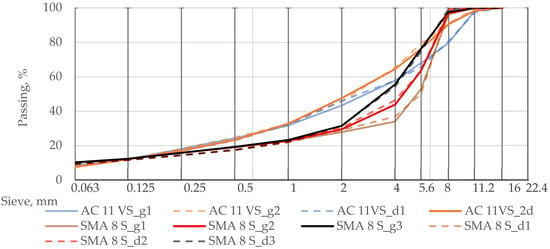
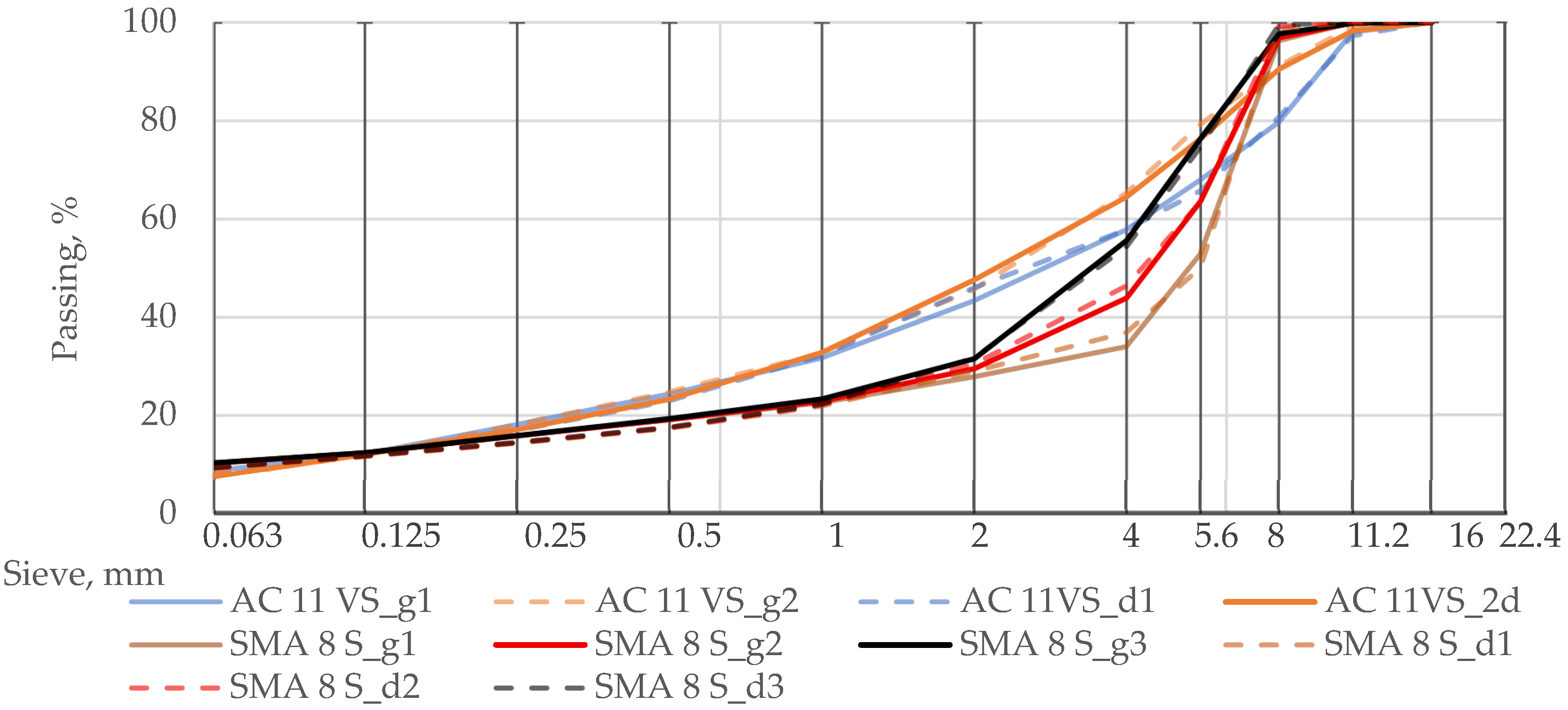
The proportions of all ten asphalt mixtures, including both AC and SMA variants, are summarised in Table 3. Gradation curves for each composition are presented in Table 3 and Figure 1. The SMA 8 S mixtures incorporated three coarse aggregate fractions, whereas the AC 11 VS mixtures were formulated using two. The most pronounced differences in particle size distribution occur at the 4 mm, 5.6 mm, and 8 mm sieve sizes, which are critical for surface texture characteristics. Mixtures produced with dolomite were adjusted to replicate the gradation pattern established for the corresponding granite-based compositions. The optimal bitumen content for each asphalt mixture was determined by initial tests: At first, 3 different bitumen contents were chosen for each mixture according to the literature analysis and experience, and after that, water sensitivity tests were performed. The optimum bitumen percentages were determined from ITSR test data and established at 6.0% for AC 11 VS and 7.1% for SMA 8 S.
Table 3.
Mix proportions of the investigated asphalt compositions.
Figure 1.
Asphalt mixture gradations.
All mixtures were manufactured in a laboratory environment using a calibrated mixing device to ensure controlled production conditions. Warm mix asphalt specimens were prepared at a mixing temperature of 125 °C, which is lower than the conventional production temperature of 175 °C.
2.3. Test Methods
Three specimens were prepared and tested for each asphalt mixture.
2.3.1. Bulk Density and Air Voids Content
The air voids in SMA mixtures were calculated based on the maximum theoretical density (EN 12697-5, volumetric method) and the bulk density determined in accordance with EN 12697-6. Specimens for bulk density measurements were compacted using a Marshall hammer manufactured by infraTest Prüftechnik GmbH (Brackenheim, Germany), applying 50 blows to each face of the sample (EN 12697-30).
2.3.2. Water Sensitivity
Moisture susceptibility was evaluated in accordance with EN 12697-12 (Method A), while the indirect tensile strength procedure followed the requirements of EN 12697-23. For each asphalt composition, six Marshall-compacted specimens were prepared using 35 blows per face, as prescribed in EN 12697-30. Specimen dimensions (height and diameter) were verified in line with EN 12697-29.
The compacted samples were subsequently separated into two subsets. One subset was stored at laboratory conditions and conditioned at +25 °C for a minimum of two hours prior to testing. The second subset was immersed in water at +40 °C for 72 h. After conditioning, all specimens were tested in indirect tension using a loading rate of 50 ± 2 mm/min until failure. Moisture sensitivity was expressed as the ratio between the tensile strength of conditioned (wet) and unconditioned (dry) specimens (ITSR), presented as a percentage.
2.3.3. Rolling Resistance (Energy Loss Test)
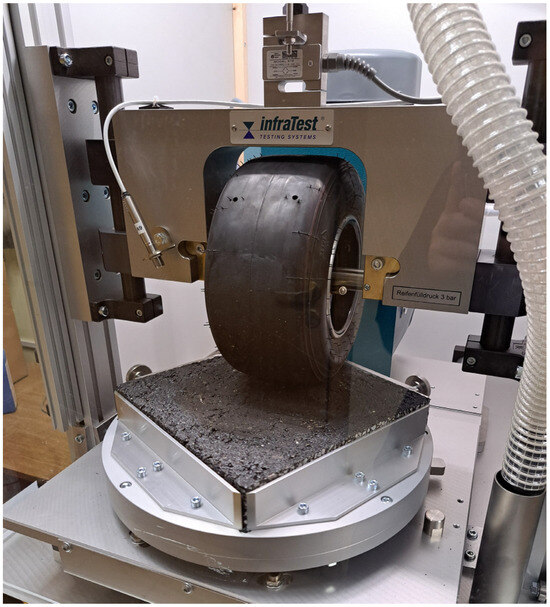
The assessment of rolling resistance was carried out using a wheel drop-impact procedure with an applied load, designed by researchers at the Technical University of Gdańsk [27]. A suitable test wheel was equipped with an adjustable mass and suspended at a defined height above a fixed pavement specimen. Upon release, the wheel was allowed to repeatedly impact and rebound from the pavement surface. A laser sensor continuously recorded the vertical movement of the wheel axis relative to its static position. The decay in bounce amplitude was analyzed to determine energy losses within the system. Test parameters such as wheel mass, drop height, and specimen rigidity were set to simulate real-world dynamic tire deflections. The area between the upper and lower envelope curves of the oscillation trajectory was used as a quantitative measure of rolling resistance.
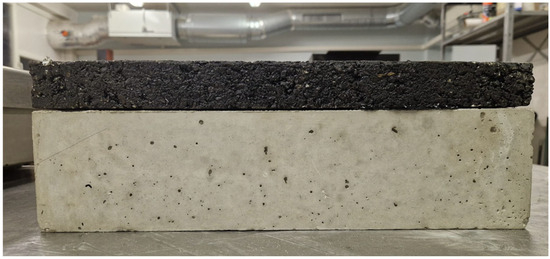
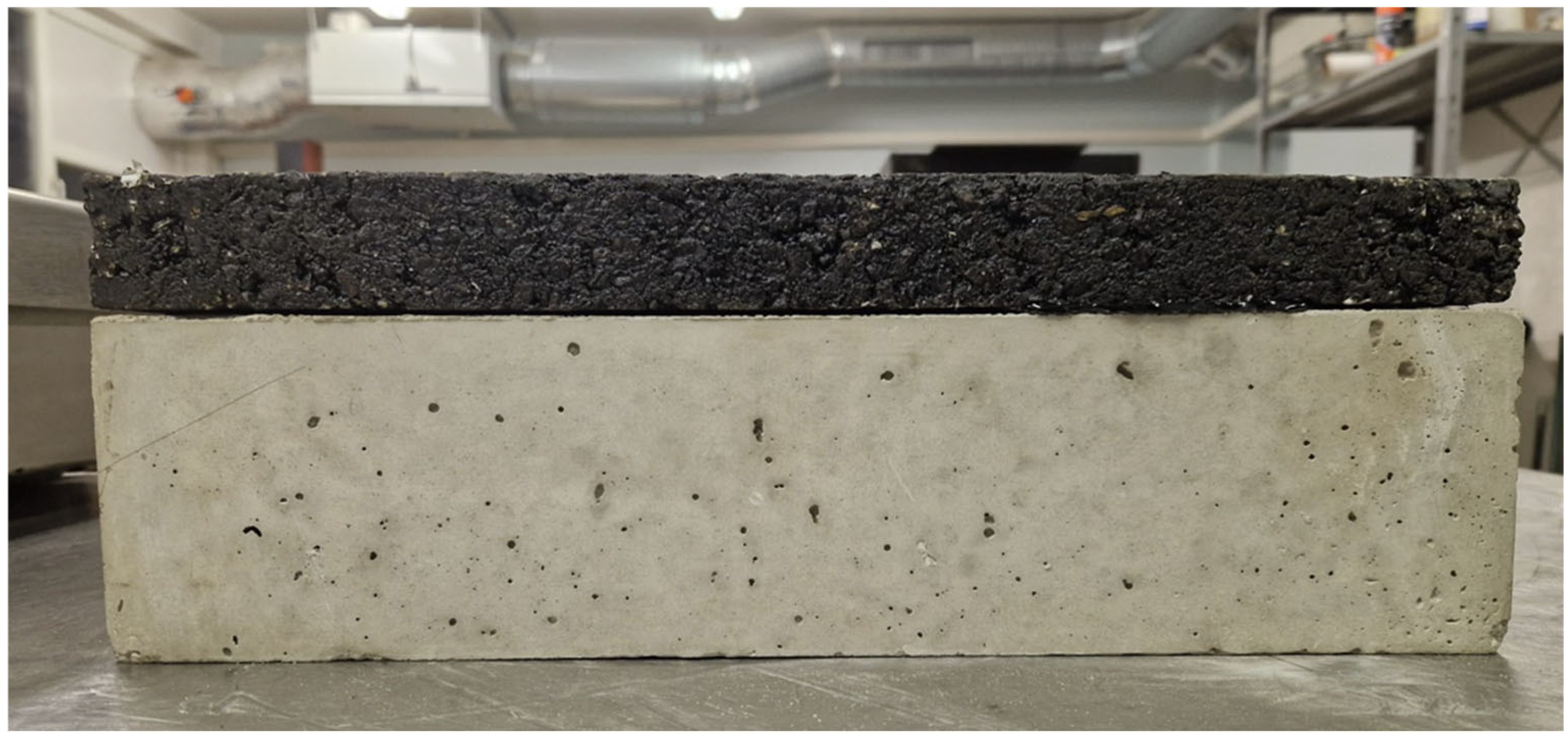
Preparation of specimens for the rolling resistance evaluation was carried out in two sequential steps (Figure 2). Initially, asphalt slabs measuring 40 × 260 × 410 mm were compacted with a slab compactor in accordance with EN 12697-33. Once cooled, the slabs were bonded to a previously prepared concrete base plate using bitumen as an adhesive layer.
Figure 2.
Specimen prepared for rolling resistance (energy loss) test.
2.3.4. Resistance to Scuffing
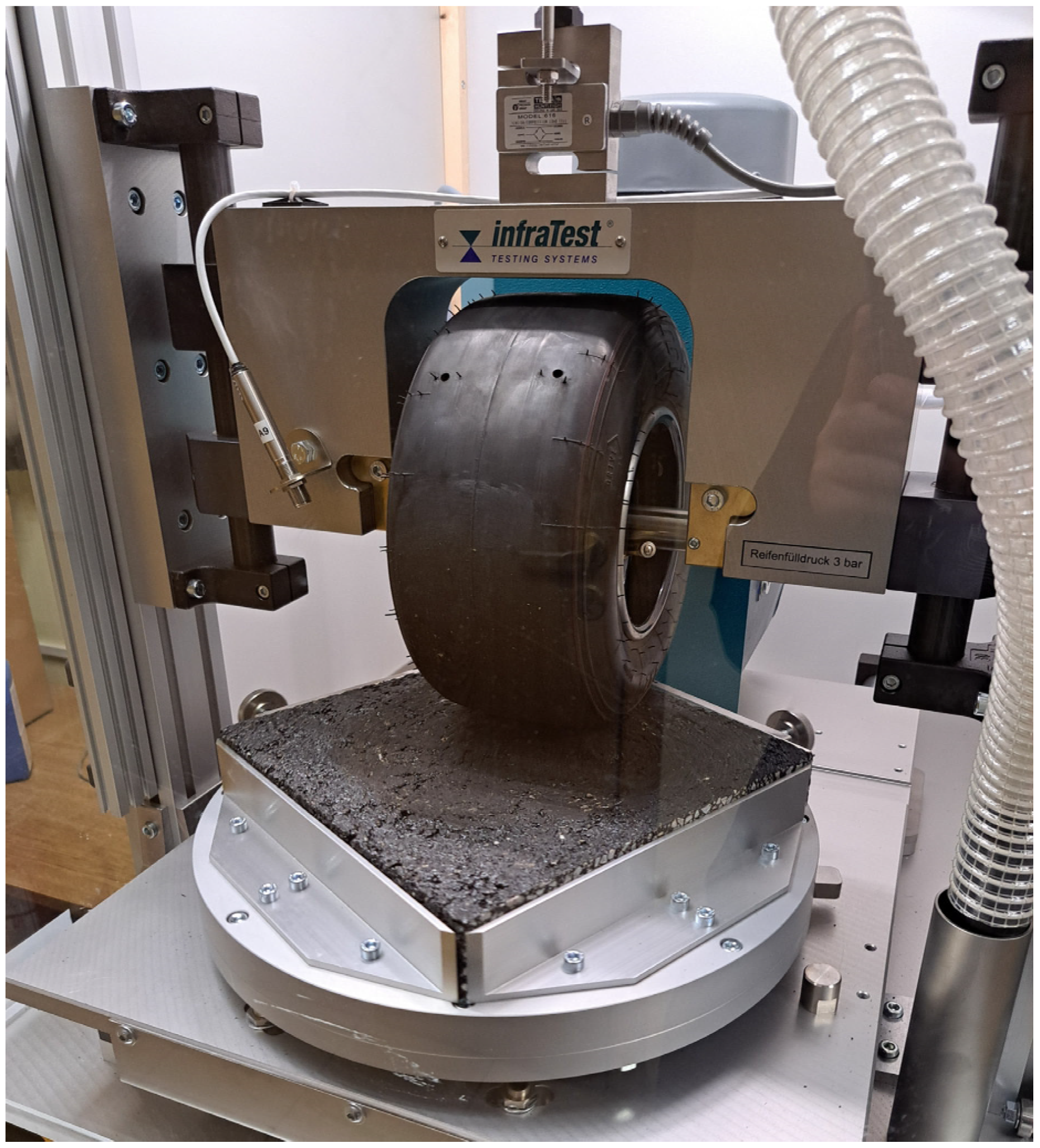
The resistance to ravelling of the asphalt mixtures was evaluated according to EN 12697-50, Part B, using laboratory-compacted slabs prepared according to EN 12697-33. For each mixture, a 260 × 260 mm asphalt slab was compacted using a slab compactor manufactured by infraTest Pruftechnik GmbH, conditioned at 40 ± 1 °C, weighed, and fixed in the test device (Figure 3).
Figure 3.
Resistance to scuffing test.
The test was performed using a dedicated apparatus with a rubber tyre applying a vertical load of 1000 ± 10 N. During the testing, the slab was subjected to a combined rotational and horizontal forward–backward motion to simulate traffic-induced surface wear. The detached asphalt particles were collected using a vacuum system, and the mass loss of the specimen was determined after 10, 20, 30, 40, and 50 loading cycles.
Resistance to ravelling was expressed as the percentage mass loss relative to the initial mass of the specimen, with the lower mass loss indicating higher resistance to surface degradation.
3. Results and Discussion
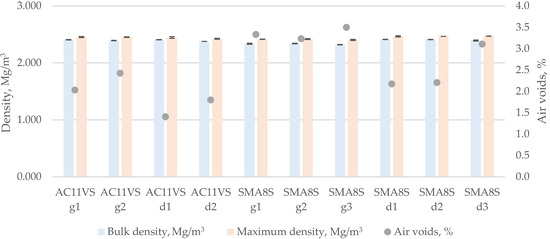
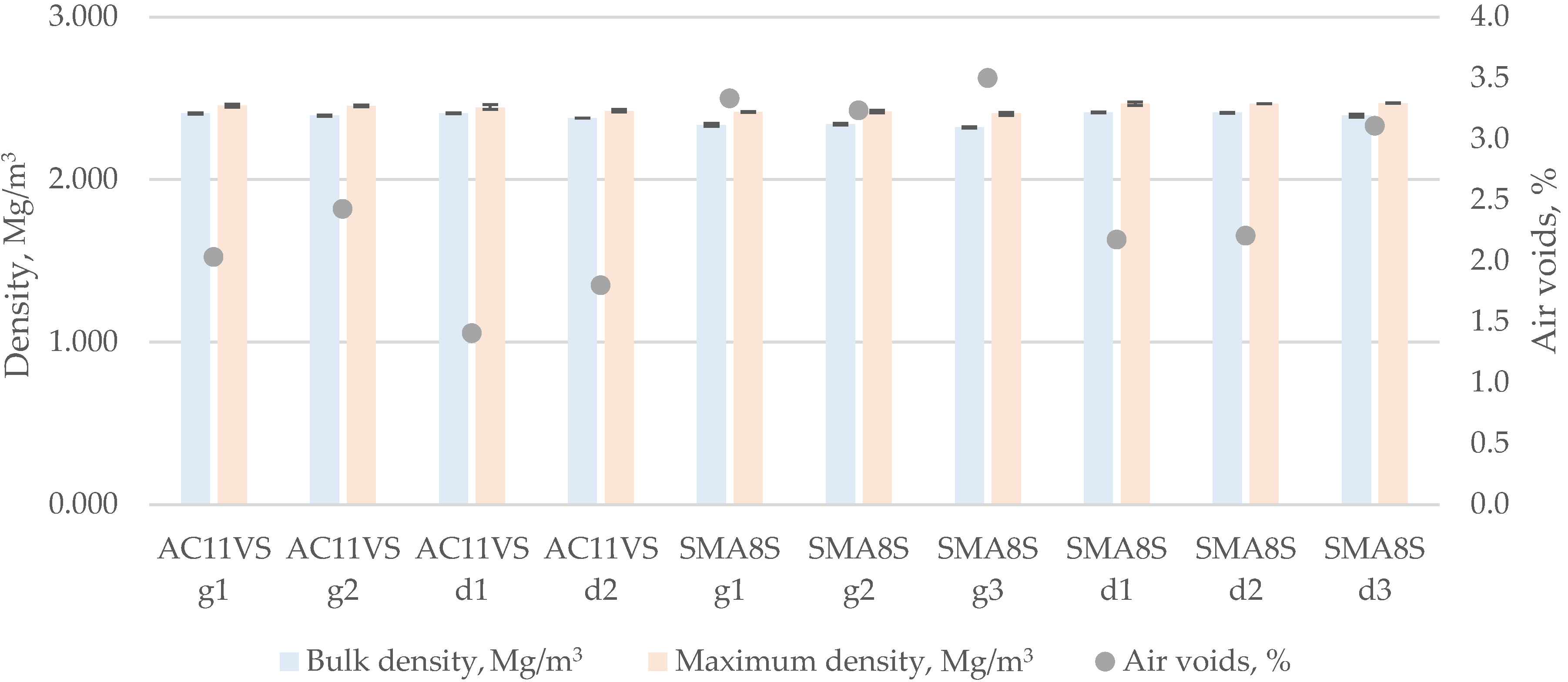
The volumetric characteristics of the WMA mixtures, including bulk density, maximum theoretical density, and air void percentage, are summarised in Figure 4. The results indicate clear differences between dense-graded asphalt concrete (AC) and stone mastic asphalt (SMA) mixtures, which are primarily related to aggregate gradation and the structure of the mixture.
Figure 4.
Density and air void content.
The bulk density of the AC mixtures ranged from 2.378 to 2.406 Mg/m3, while the maximum density varied from 2.422 to 2.456 Mg/m3. These relatively high-density values reflect the continuous aggregate gradation and efficient aggregate packing typical of dense-graded asphalt mixtures. Comparable density levels for AC wearing course mixtures have been reported in previous studies and are considered indicative of good compactability and durable pavement performance [28].
In contrast, the SMA mixtures exhibited lower bulk density values, ranging from 2.321 to 2.412 Mg/m3, while maximum density values ranged from 2.406 to 2.470 Mg/m3. The observed behaviour is linked to the structural concept of gap-graded mixtures, where a coarse aggregate skeleton governs load transfer, combined with relatively high binder and filler proportions and the use of stabilising fibres. Similar volumetric characteristics of SMA mixtures have been reported in earlier investigations, confirming that a lower density is inherent in the SMA design rather than an indication of inadequate compaction [29].
The air void content of the tested mixtures ranged from 1.4% to 3.5%. AC mixtures generally exhibited lower air voids, with values between 1.4% and 2.4%, indicating high compaction efficiency and a dense internal structure. These air void levels are within the range commonly reported for dense-graded wearing course mixtures and are considered favourable for long-term performance stability [28].
Mixtures produced with granite aggregate generally exhibited slightly lower bulk density and higher air void content compared to mixtures containing dolomite. This behaviour can be associated with the higher hardness and angularity of granite aggregates, which may hinder rearrangement during compaction and result in a less dense packing structure under the applied laboratory compaction conditions. In contrast, mixtures incorporating dolomite aggregate showed higher bulk density and lower air void content, indicating more efficient compaction. This can be attributed to the relatively smoother surface texture and lower angularity of dolomite aggregates, which facilitate particle rearrangement during compaction. Nevertheless, all air void content values remained within acceptable ranges for wearing course applications.
Overall, the results demonstrate that WMA technology did not adversely affect the volumetric properties. The density and air void values obtained in this study are consistent with those reported in the literature for conventional asphalt mixtures, indicating that the reduced production temperatures did not compromise the quality of the compaction or homogeneity of the mixture.
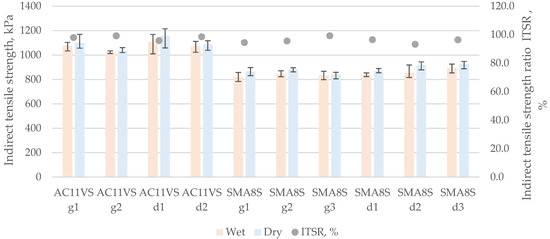
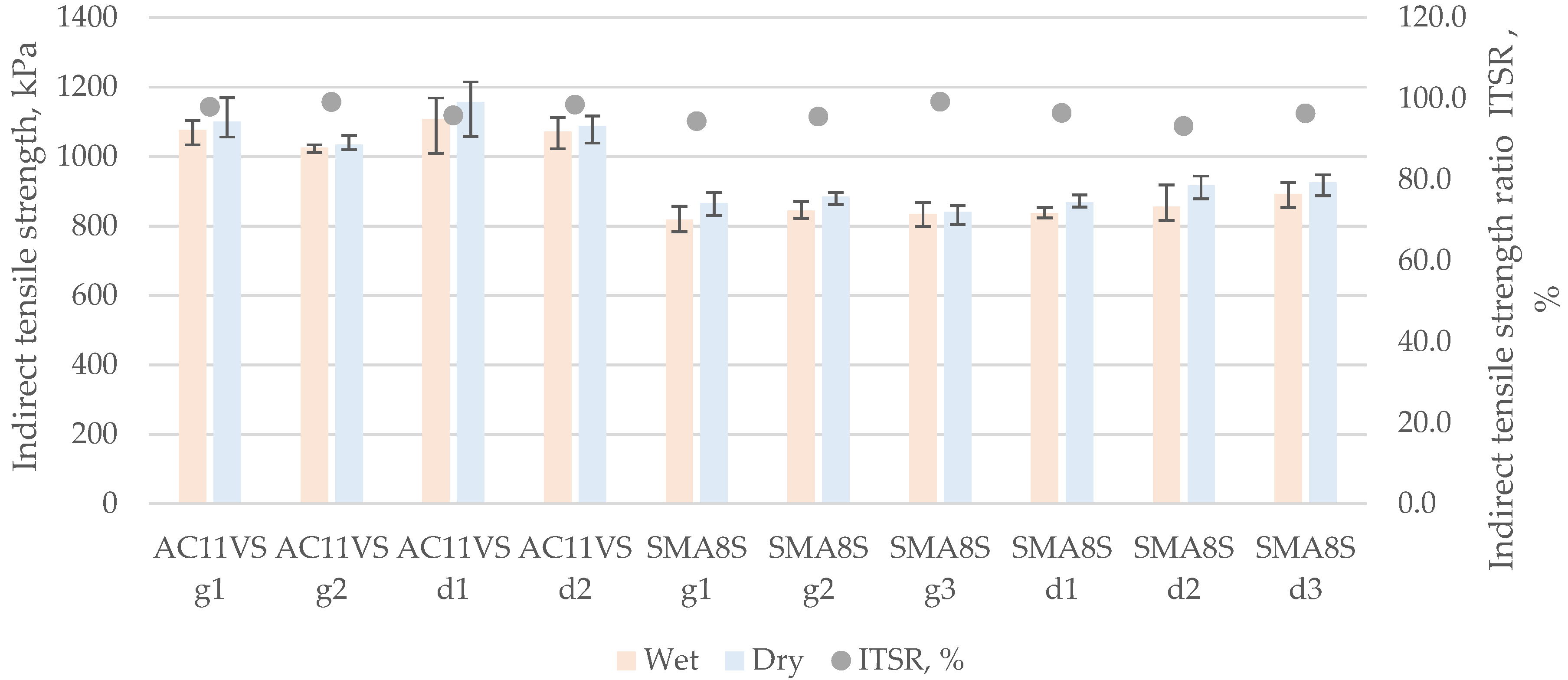
Figure 5 summarises the moisture susceptibility results, including the indirect tensile strength measured under dry and conditioned states, together with the calculated indirect tensile strength ratio (ITSR) for all evaluated WMA mixtures.
Figure 5.
Water sensitivity.
The ITS values of AC mixtures were higher compared to those of SMA mixtures in both dry and wet conditions. The dry ITS values for the AC mixtures ranged from 1035 to 1157 kPa, while the wet ITS values ranged from 1026 to 1109 kPa. These results indicate good cohesion and strong aggregate–binder interaction, which can be attributed to the dense aggregate structure and lower air void content of AC mixtures.
The SMA mixtures exhibited lower ITS values, with dry ITS ranging from 841 to 927 kPa and wet ITS from 819 to 893 kPa. The lower tensile strength of SMA mixtures is consistent with their higher binder content, gap-graded structure, and higher air void content. Similar tendencies for SMA mixtures have been reported in previous studies and are considered characteristic of this type of mixture rather than a performance deficiency [29].
The ITSR values for all tested mixtures exceeded the minimum requirement of 90% specified for wearing course asphalt mixtures. ITSR values ranged from 93.2% to 99.2%. AC mixtures demonstrated the highest ITSR values, typically between 95.8% and 99.2%, indicating excellent resistance to moisture-induced damage. SMA mixtures exhibited slightly lower ITSR values, ranging from 93.2% to 99.2%, yet all remained above the specification threshold.
With respect to water sensitivity, the aggregate type was found to influence the ITSR results, although the observed differences were moderate. Mixtures incorporating granite aggregate generally exhibited slightly higher ITSR values compared to the corresponding mixtures produced with dolomite. This tendency can be associated with the higher mechanical strength and lower susceptibility of granite aggregates to moisture-induced damage, which may contribute to improved aggregate–binder adhesion under wet conditions. In contrast, mixtures containing dolomite aggregate showed lower ITSR values, which can be related to the carbonate nature of dolomite and its higher sensitivity to moisture at the aggregate–binder interface.
Overall, the results of water sensitivity indicate that all tested WMA mixtures exhibit adequate resistance to moisture-induced damage and are suitable for wearing course applications, with ITSR values exceeding the minimum requirement of 90% [29,30].
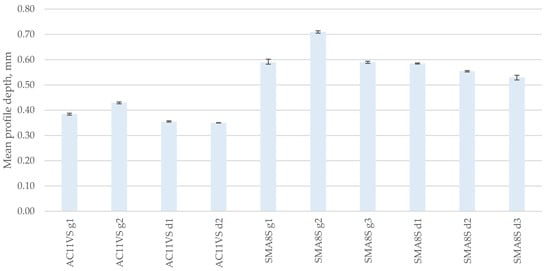
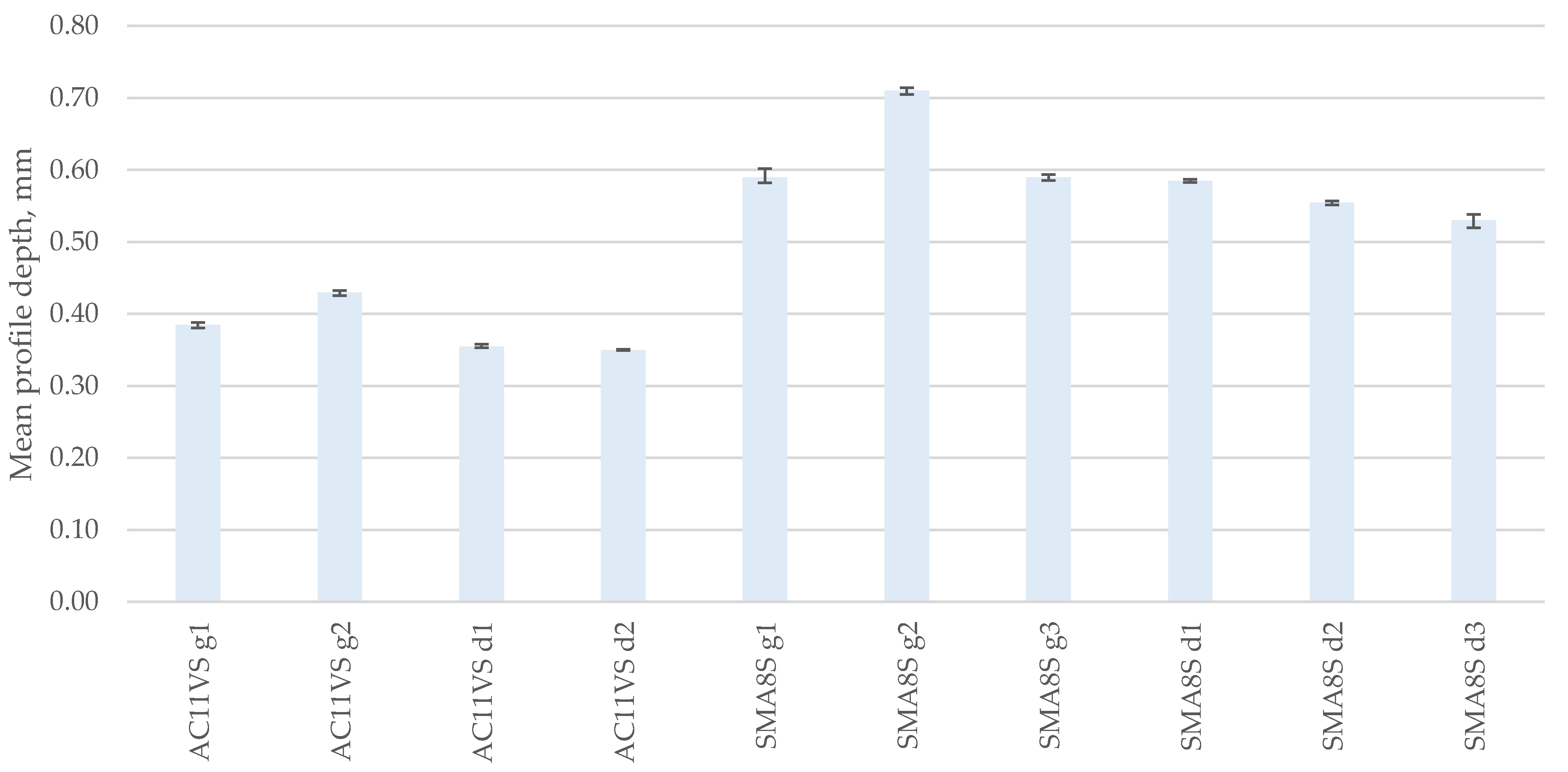
Figure 6 presents the macrotexture results of the tested WMA mixtures, expressed as the mean depth of the texture. The results indicate a clear influence of aggregate gradation and mixture type on surface macrotexture.
Figure 6.
Mean profile depth.
The AC mixtures exhibited lower macrotexture values, ranging from 0.35 to 0.43 mm, reflecting their dense-graded aggregate structure and smoother surface profile. Such macrotexture levels are typical for dense-graded wearing course mixtures and are associated with a reduced surface roughness and lower tyre excitation. Similar macrotexture ranges for AC mixtures have been reported in previous studies investigating the surface characteristics of dense-graded asphalt pavements [5,31].
In contrast, the SMA mixtures demonstrated significantly higher macrotexture values ranging from 0.53 to 0.71 mm. The higher macrotexture observed for SMA mixtures can be attributed to their gap-graded aggregate structure and the higher proportion of coarse aggregate on the surface, which leads to a more pronounced surface relief. Comparable macrotexture values for SMA mixtures have been reported in the literature and are considered characteristic of this type of mixture [29,31].
The results confirm that aggregate gradation is the dominant factor governing surface macrotexture, while the use of WMA technology did not introduce noticeable deviations from macrotexture levels typically reported for conventional asphalt mixtures. All measured macrotexture values fall within the range commonly associated with wearing course applications, indicating that the tested mixtures provide an adequate balance between surface texture and functional performance.
The macrotexture results expressed as mean profile depth (MPD) indicate that the type of aggregate had a secondary influence on surface texture, compared to the dominant effect of aggregate gradation. Mixtures containing granite aggregate generally exhibited slightly higher MPD values than corresponding dolomite mixtures, which may be related to the higher hardness and angularity of granite aggregates. In contrast, dolomite-based mixtures tended to show slightly lower MPD values, possibly due to their smoother surface characteristics.
Nevertheless, the MPD values of all mixtures remained within the typical ranges for asphalt mixtures designed as a wearing course, confirming that the aggregate type influenced the magnitude of macrotexture without compromising functional performance.
Table 4 presents the results of rolling resistance obtained from laboratory testing, expressed as the coefficient of energy loss, measured using two different tyres: a Michelin Primacy 4 (205/55 R16) passenger car tyre and a standard reference test tyre (SRTT) manufactured also by Michelin.
Table 4.
Rolling resistance results expressed as the coefficient of energy loss for two tyres (Michelin Primacy 4 and SRTT).
Using the Michelin Primacy 4 tyre, the average rolling resistance coefficients of the tested asphalt mixtures ranged from 0.00603 to 0.00634. Dense-graded AC mixtures generally exhibited lower rolling resistance values compared to the SMA mixtures. This tendency is consistent with findings reported in previous studies, where smoother surface texture and denser aggregate packing were identified as key factors that contribute to reduced rolling resistance [5,31].
The results obtained with the SRTT tyre showed similar trends, with average rolling resistance coefficients ranging from 0.00610 to 0.00635. Although slightly higher absolute values were observed compared to the Michelin tyre, the relative ranking of the asphalt mixtures remained unchanged. Previous investigations have reported that tyre characteristics influence the absolute magnitude of rolling resistance, while pavement-related trends remain consistent between different types of tyre [5,27].
The slightly higher rolling resistance values observed for SMA mixtures can be related to their higher macrotexture and more pronounced surface relief. Several authors have shown that increased macrotexture leads to increased energy dissipation at the tyre–road interface due to increased tyre deformation and hysteresis losses [5,31]. The results of the present study support these observations, as mixtures with higher macrotexture values exhibited moderately higher rolling resistance coefficients.
The results of rolling resistance indicate that the aggregate type had a minor but observable influence on the coefficient of energy loss. The mixtures produced with granite aggregate generally exhibited slightly lower rolling resistance values compared to the corresponding dolomite mixtures with a similar gradation. This tendency may be associated with the more stable surface texture and slightly higher macrotexture uniformity of granite-based mixtures.
In contrast, dolomite-based mixtures tended to show slightly higher rolling resistance, which can be related to differences in aggregate surface characteristics and microtexture. However, the influence of the aggregate type was less pronounced than the effect of the aggregate gradation, and the relative ranking of the mixtures remained consistent for both aggregate types.
Although the absolute differences between the average rolling resistance coefficients were numerically small (on the order of 10−4), this magnitude is typical for asphalt wearing courses and low-rolling-resistance pavements reported in the literature [27,32]. From a statistical perspective, the low standard deviations indicate a good repeatability of the test method, and differences exceeding experimental variability, particularly when consistently observed for both types of tyres, can be considered meaningful for comparative evaluation. From a practical perspective, previous field studies have shown that rolling resistance differences of similar magnitude can be relevant, as rolling resistance contributes directly to vehicle fuel consumption and CO2 emissions; even minor reductions, when applied over large road networks and long service periods, can result in measurable cumulative energy and emission savings [11].
Overall, the results confirm that WMA mixtures, when properly designed in terms of aggregate gradation, can achieve rolling resistance performance comparable to that reported in the literature for conventional asphalt mixtures while maintaining satisfactory functional properties.
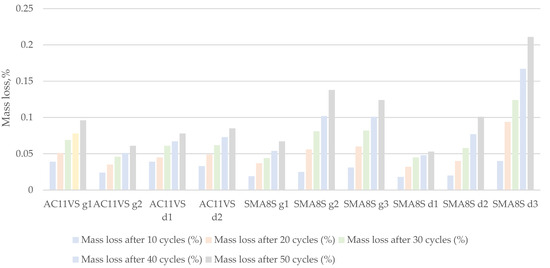
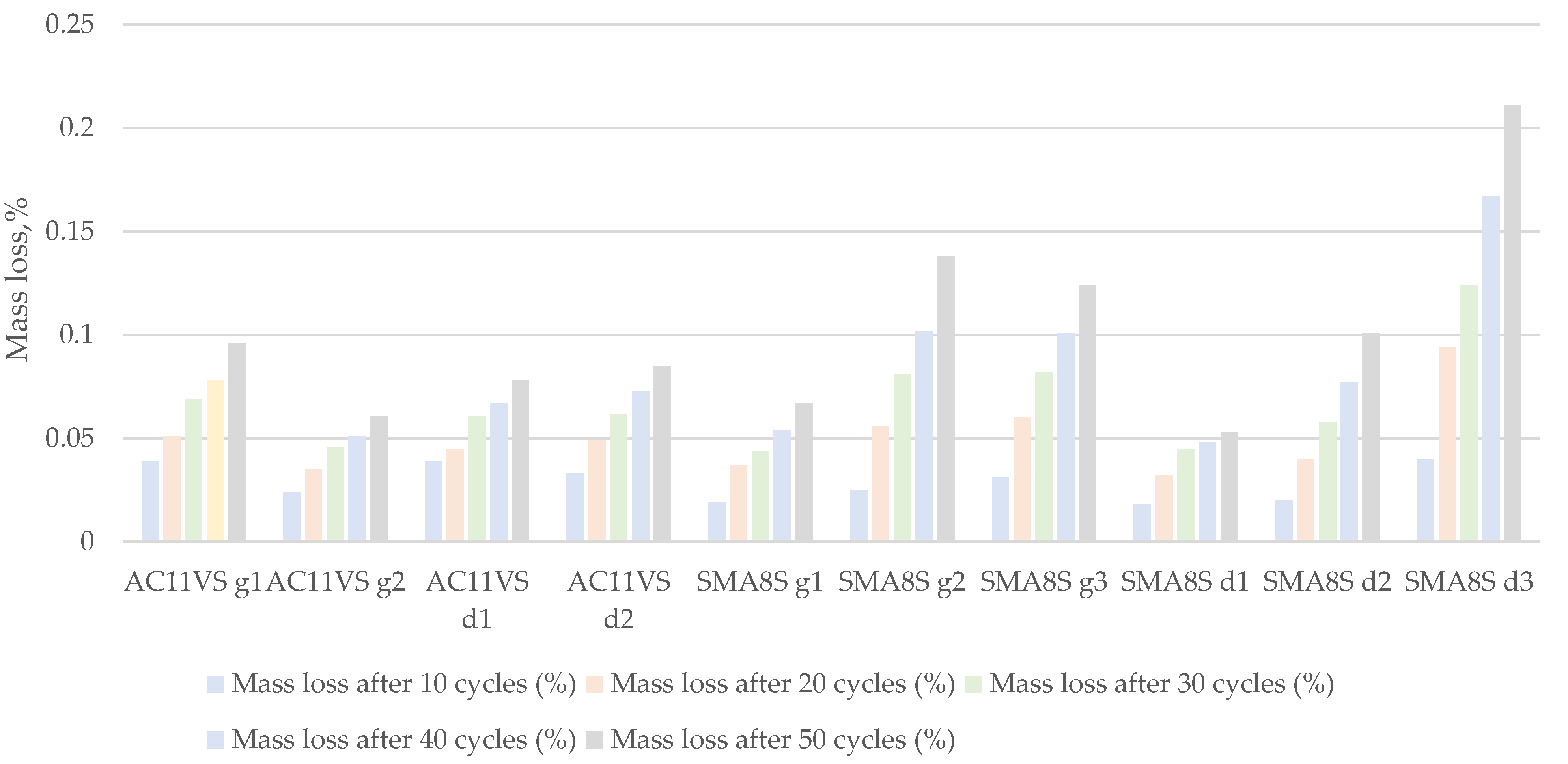
Figure 7 presents the results of the resistance to scuffing, expressed as cumulative mass loss (%) after successive loading cycles. For all tested mixtures, cumulative mass loss increased progressively with the number of loading cycles, indicating gradual surface degradation without abrupt failure.
Figure 7.
Resistance to scuffing.
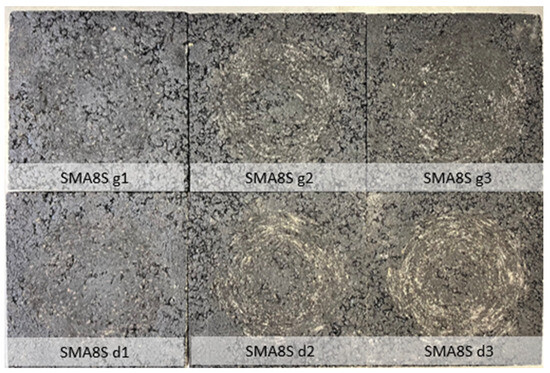
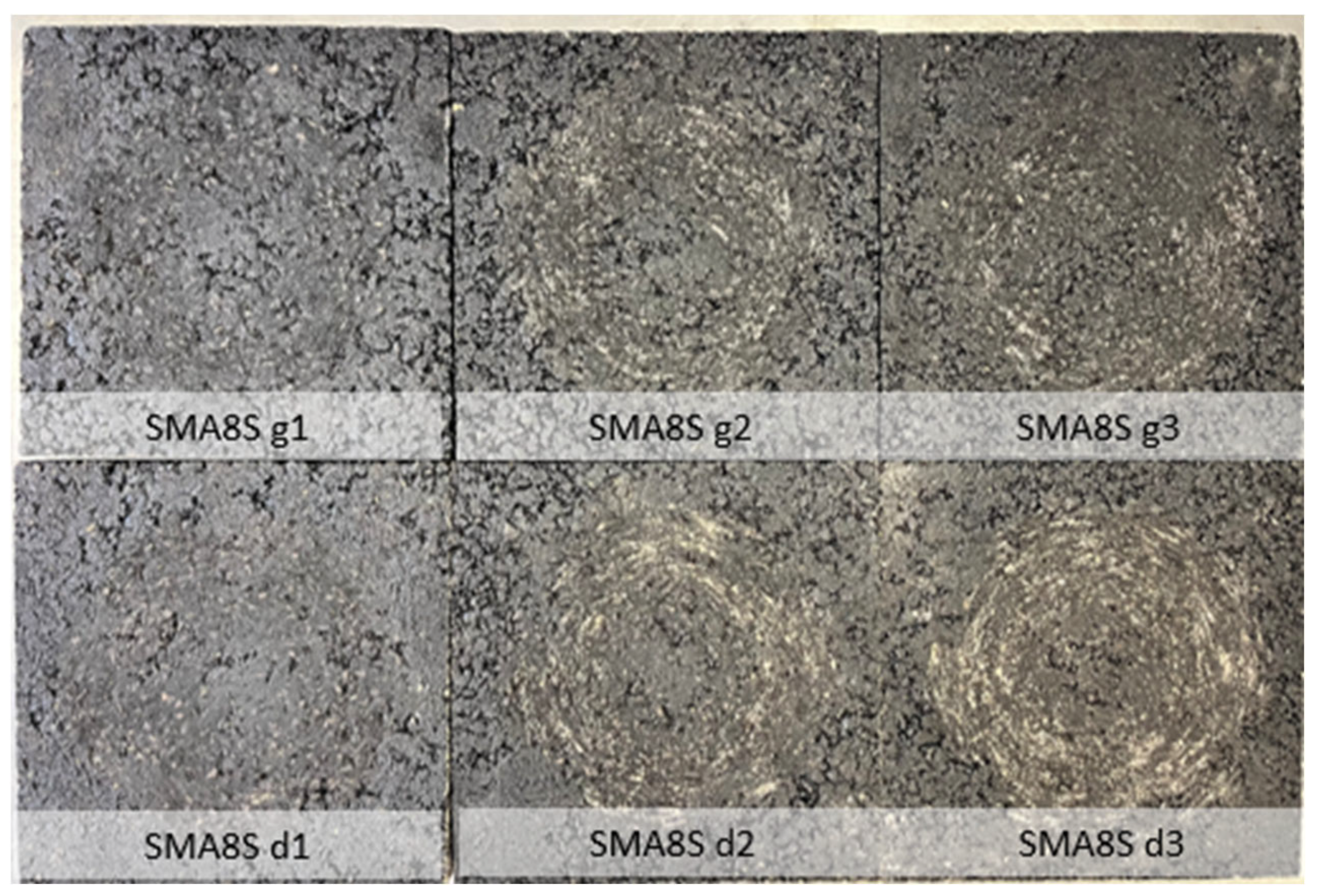
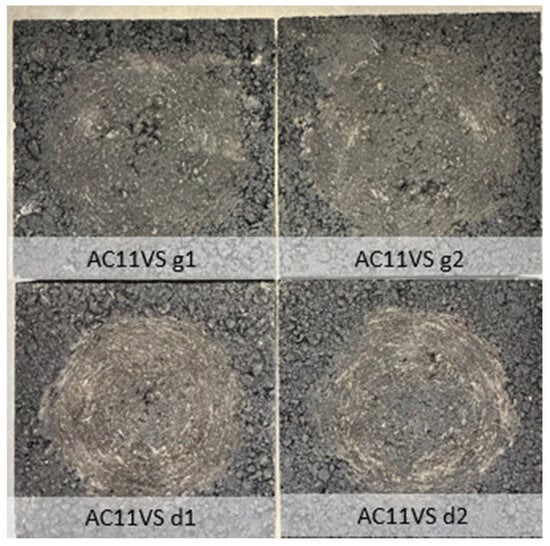
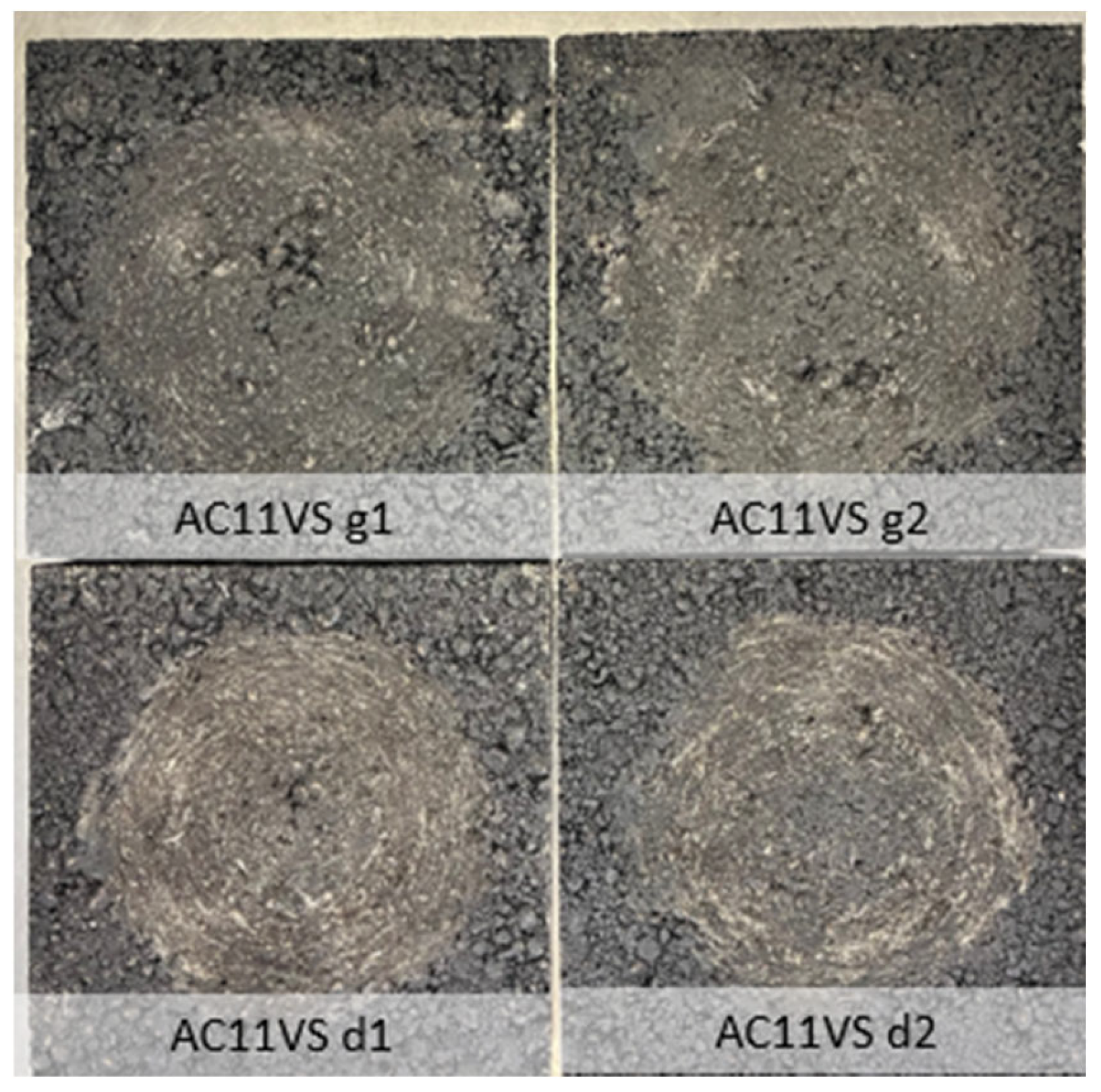
In terms of mixture type, the results indicate that dense-graded AC mixtures generally exhibited equal or lower cumulative mass loss compared to SMA mixtures after 50 loading cycles. The cumulative mass loss of AC mixtures ranged from 0.061% to 0.096% for granite aggregate and from 0.078% to 0.085% for dolomite aggregate. In comparison, SMA mixtures showed a wider range of mass loss values, ranging from 0.067% to 0.138% for granite aggregate and from 0.053% to 0.211% for dolomite aggregate. The surface condition of the tested specimens after the scuffing test is presented in Figure 8 (SMA 8 S) and Figure 9 (AC 11 VS).
Figure 8.
SMA 8 S specimens after resistance to scuffing testing.
Figure 9.
AC11VS specimens after resistance to scuffing testing.
The type of aggregate had a noticeable influence on scuffing resistance for both types of mixtures. Granite-based mixtures generally exhibited lower cumulative mass loss and more stable degradation trends compared to the corresponding dolomite-based mixtures. In contrast, dolomite mixtures showed a steeper increase in mass loss with an increasing number of loading cycles, particularly for SMA mixtures, suggesting a higher susceptibility to surface abrasion under repeated shear loading.
The influence of the number of loading cycles was evident for all mixtures, as cumulative mass loss increased monotonically from 10 to 50 cycles. However, the rate of increase differed between the mixture and aggregate types. AC mixtures exhibited a more gradual increase in mass loss, while some SMA mixtures, especially those containing dolomite aggregate, showed accelerated degradation at higher cycle numbers.
Overall, the results of the scuffing resistance demonstrate that the gradation of the mixture and the type of aggregate jointly influence the surface durability. In contrast to prevailing findings in the literature, the present results suggest that dense-graded AC mixtures may achieve scuffing resistance equal to or exceeding that of SMA mixtures, especially when granite aggregates are incorporated. All tested mixtures exhibited low cumulative mass loss values, confirming their suitability for wearing course applications under the investigated laboratory conditions.
4. Conclusions
This investigation focused on the impact of mineral aggregate selection (granite versus dolomite) and particle size distribution on the rolling resistance behaviour and functional properties of WMA compositions, namely AC 11 VS and SMA 8 S. The principal conclusions derived from the experimental programme are summarised below:
- All tested WMA mixtures achieved satisfactory volumetric properties. The AC mixtures exhibited higher bulk density values (2.378–2.406 Mg/m3) and reduced air void content (1.4–2.4%) compared to SMA mixtures, which showed lower bulk density (2.321–2.412 Mg/m3) and increased air void levels (2.2–3.5%), consistent with their gap-graded internal structure and elevated binder proportion. Aggregate type influenced compaction behaviour: mixtures containing dolomite generally showed slightly higher density and lower air voids than corresponding granite mixtures, although all values remained within acceptable ranges for wearing course applications.
- All mixtures demonstrated adequate resistance to moisture-induced damage, with ITSR values exceeding the minimum requirement of 90%. ITSR values ranged from 93.2% to 99.2%, with AC mixtures generally exhibiting higher values than SMA mixtures. Granite-based mixtures tended to show slightly higher ITSR values compared to dolomite-based mixtures; however, the observed differences were moderate, and all mixtures met the requirements for water sensitivity.
- Surface macrotexture, expressed as mean profile depth (MPD), was primarily governed by aggregate gradation. The SMA mixtures exhibited higher MPD values (0.53–0.71 mm) than the AC mixtures (0.35–0.43 mm). The aggregate type had a secondary influence, as granite mixtures generally showed slightly higher MPD values than dolomite mixtures. Nevertheless, all measured macrotexture values were within the ranges typical for an asphalt wearing course.
- All evaluated mixtures exhibited low rolling resistance, with energy loss coefficients varying between 0.00603 and 0.00635 depending on the mixture composition and tire type, while the influence of aggregate type was present but relatively minor. Dense-graded AC mixtures generally exhibited lower rolling resistance values than SMA mixtures, which is consistent with their smoother surface texture. The type of aggregate had a minor but observable influence: Granite-based mixtures tended to show slightly lower rolling resistance than the corresponding dolomite-based mixtures, while aggregate gradation remained the dominant factor controlling rolling resistance performance. Similar trends were observed for both tested tyres, confirming a consistent mixture ranking.
- The resistance to scuffing (ravelling) was influenced by the type of mixture, the type of aggregate, and the number of loading cycles. Dense-graded AC mixtures generally exhibited equal or lower cumulative mass loss than SMA mixtures after 50 loading cycles. The cumulative mass loss of AC mixtures ranged from 0.061% to 0.096%, while SMA mixtures showed a wider range of values (0.053% to 0.211%), depending on aggregate type and gradation. Granite-based mixtures generally exhibited lower mass loss than dolomite-based mixtures for both AC and SMA types. For all mixtures, cumulative mass loss increased progressively with increasing number of cycles; however, SMA mixtures showed a more pronounced increase in mass loss compared to AC mixtures, indicating higher sensitivity to repeated shear loading under the applied laboratory conditions.
Overall, the results demonstrate that aggregate gradation is the dominant factor influencing the functional performance of WMA mixtures, particularly surface macrotexture and rolling resistance, while aggregate type plays an important supporting role. The differences between granite and dolomite aggregates were secondary compared to those induced by the gradation and structure of the mixture, although the type of aggregate influenced the compaction, the resistance to moisture, the rolling resistance, and the resistance to surface wear.
The application of WMA technology enabled reduced production temperatures without compromising volumetric properties, moisture resistance, rolling resistance, or resistance to scuffing, confirming the suitability of WMA for low-rolling-resistance pavement design.
In conclusion, properly designed WMA mixtures can achieve low rolling resistance while maintaining adequate durability and surface performance. The combined optimization of aggregate gradation and aggregate type provides an effective approach for developing energy-efficient wearing course pavements.
Although both types of aggregate met the relevant requirements, mixtures incorporating granite aggregate generally exhibited more favourable overall behaviour, including slightly lower rolling resistance, more stable resistance to scuffing, and marginally improved moisture resistance. Therefore, granite aggregate may be considered a preferred option where functional performance and long-term durability of the surface are critical.
Further investigation is recommended to verify field performance and assess the long-term behaviour of low-rolling-resistance mixtures manufactured with WMA under real operating and climatic conditions.
Author Contributions
Conceptualization, J.Š. and O.Š.; methodology, J.Š. and O.Š.; formal analysis, R.M. and R.K.; writing—original draft preparation, R.M. and R.K.; writing—review and editing, J.Š. and O.Š.; visualization, R.K.; supervision, J.Š.; project administration, J.Š.; funding acquisition, J.Š. All authors have read and agreed to the published version of this manuscript.
Funding
This research was conducted as part of the execution of Project “Mission-driven Implementation of Science and Innovation Programmes” (No. 02-002-P-0001), funded by the Economic Revitalization and Resilience Enhancement Plan “New Generation Lithuania”.
Data Availability Statement
Data will be made available upon request.
Conflicts of Interest
The authors declare no conflicts of interest.
References
- European Union. Regulation (EU) 2021/1119 of the European Parliament and of the Council of 30 June 2021 establishing the framework for achieving climate neutrality and amending Regulations (EC) No 401/2009 and (EU) 2018/1999 (‘European Climate Law’). Off. J. Eur. Union 2021, 243, 64. [Google Scholar]
- European Commision. Climate Change—Driving Forces. 2025. Available online: https://ec.europa.eu/eurostat/statistics-explained/index.php?title=Climate_change_-_driving_forces#General_overview (accessed on 27 December 2025).
- Ydrefors, L.; Hjort, M.; Kharrazi, S.; Jerrelind, J.; Trigell, A.S. Rolling resistance and its relation to operating conditions: A literature review. Proc. Inst. Mech. Eng. Part D: J. Automob. Eng. 2021, 235, 2931–2948. [Google Scholar] [CrossRef] [Scilit]
- Levesque, W.; Bégin-Drolet, A.; Lépine, J. Effects of Pavement Characteristics on Rolling Resistance of Heavy Vehicles: A Literature Review. Transp. Res. Rec. J. Transp. Res. Board 2023, 2677, 296–309. [Google Scholar] [CrossRef] [Scilit]
- Sun, Z.; Premarathna, W.; Anupam, K.; Kasbergen, C.; Erkens, S.M. A state-of-the-art review on rolling resistance of asphalt pavements and its environmental impact. Constr. Build. Mater. 2025, 411, 133589. [Google Scholar] [CrossRef] [Scilit]
- Sandberg, U.; Bergiers, A.; Ejsmont, J.A.; Goubert, L.; Zöller, M. Rolling Resistance—Basic Information and State-of-the-Art on Measurement methods. In Models for Rolling Resistance in Road Infrastructure Asset Management Systems; Sandberg, U., Ed.; MIRIAM Report: St. Catharines, ON, Canada, 2011; p. 114. [Google Scholar]
- Andersen, L.G.; Larsen, J.K.; Fraser, E.S.; Schmidt, B.; Dyre, J.C. Rolling Resistance Measurement and Model Development. J. Transp. Eng. 2015, 141, 04014075. [Google Scholar] [CrossRef] [Scilit]
- Kim, R.E.; Kang, S.; Spencer, B.F.; Al-Qadi, I.L.; Ozer, H. Impact of Pavement Roughness and Deflection on Fuel Consumption Using Energy Dissipation. J. Eng. Mech. 2019, 145, 04019080. [Google Scholar] [CrossRef] [Scilit]
- Sandberg, U. Road macro- and megatexture influence on fuel consumption. In ASTM Special Technical Publication; American Society for Testing and Materials; American Society for Testing and Materials: West Conshohocken, PA, USA, 1990; pp. 460–479. [Google Scholar]
- Pettinari, M.; Lund-Jensen, B.B.; Schmidt, B. Low rolling resistance pavements in Denmark. In Proceedings of the 6th Eurasphalt & Eurobitume Congress. Czech Technical University in Prague, Prague, Czech Republic, 1–3 June 2016. [Google Scholar]
- Pettinari, M.; Schmidt, B. Development and Implementation of Low Rolling Resistance Pavement in Denmark. Asf. Paviment. VII 2017, 7, 43–49. [Google Scholar]
- Espinoza-Luque, A.F.; Al-Qadi, I.L.; Ozer, H.; Pettinari, M. Laboratory Characterization of Low–Rolling Resistance Danish Stone-Matrix Asphalt. J. Transp. Eng. Part B Pavements 2019, 145, 04018060. [Google Scholar] [CrossRef] [Scilit]
- Pettinari, M.; Al-Qadi, I.L.; Ozer, H.; Nielsen, E. Optimised durable pavement rolling resistance. Road Mater. Pavement Des. 2023, 24, 279–289. [Google Scholar] [CrossRef] [Scilit]
- Mookhoek, S.D.; Kanten-Roos Wvan Bijleveld, F. Making Roads Resistance Energy Efficient by Reducing Rolling. 2017. Available online: https://publications.tno.nl/publication/34625205/XXZkbH/mookhoek-2017-making.pdf (accessed on 13 February 2026).
- Scottish Road Research Board. The Effect of Rolling Resistance on Carbon Emissions. 2024. Available online: https://www.transport.gov.scot/media/ekjkyety/effect-of-road-rolling-resistance-on-carbon-emissions.pdf (accessed on 13 February 2026).
- Silva, H.M.R.D.; Oliveira, J.R.M.; Ferreira, C.I.G.; Pereira, P.A.A. Assessment of the Performance of Warm Mix Asphalts in Road Pavements. Int. J. Pavement Res. Technol. 2010, 3, 119–127. Available online: https://repositorium.uminho.pt/server/api/core/bitstreams/f1e16334-4c80-4598-be5d-3604eeba3c5e/content (accessed on 12 January 2026).
- Rubio, M.C.; Martínez, G.; Baena, L.; Moreno, F. Warm mix asphalt: An overview. J. Clean. Prod. 2012, 24, 76–84. [Google Scholar] [CrossRef] [Scilit]
- Vaitkus, A.; Čygas, D.; Laurinavičius, A.; Vorobjovas, V.; Perveneckas, Z. Influence of warm mix asphalt technology on asphalt physical and mechanical properties. Constr. Build. Mater. 2016, 112, 800–806. [Google Scholar] [CrossRef] [Scilit]
- Cheraghian, G.; Falchetto, A.C.; You, Z.; Chen, S.; Kim, Y.S.; Westerhoff, J.; Moon, K.H.; Wistuba, M.P. Warm mix asphalt technology: An up to date review. J. Clean. Prod. 2020, 268, 122128. [Google Scholar] [CrossRef] [Scilit]
- Ferrotti, G.; Mancinelli, E.; Passerini, G.; Canestrari, F. Comparison of energy and environmental performance between warm and hot mix asphalt concrete production: A case study. Constr. Build. Mater. 2024, 418, 135453. [Google Scholar] [CrossRef] [Scilit]
- Li, K.; Yan, X.; Pu, J.; Wang, Y.; Chen, Y.; Fang, K.; Hu, J.; Yang, Y. Quantitative evaluation on the energy saving and emission reduction characteristics of warm mix asphalt mixtures. Constr. Build. Mater. 2023, 407, 133465. [Google Scholar] [CrossRef] [Scilit]
- Martin, H.; Kerstin, Z.; Joachim, M. Reduced emissions of warm mix asphalt during construction. Road Mater. Pavement Des. 2019, 20, S568–S577. [Google Scholar] [CrossRef] [Scilit]
- Blankendaal, T.; Schuur, P.; Voordijk, H. Reducing the environmental impact of concrete and asphalt: A scenario approach. J. Clean. Prod. 2014, 66, 27–36. [Google Scholar] [CrossRef] [Scilit]
- Rodríguez-Alloza, A.M.; Malik, A.; Lenzen, M.; Gallego, J. Hybrid input e output life cycle assessment of warm mix asphalt mixtures. J. Clean. Prod. 2015, 90, 171–182. [Google Scholar] [CrossRef] [Scilit]
- Milad, A.; Babalghaith, A.M.; Al-Sabaeei, A.M.; Dulaimi, A.; Ali, A.; Reddy, S.S.; Bilema, M.; Yusoff, N.I.M. A Comparative Review of Hot and Warm Mix Asphalt Technologies from Environmental and Economic Perspectives: Towards a Sustainable Asphalt Pavement. Int. J. Environ. Res. Public Heal. 2022, 19, 14863. [Google Scholar] [CrossRef] [Scilit]
- Tafazzoli, M. Incorporating Sustainable Practices in Asphalt Industry. In Asphalt and Asphalt Mixtures; IntechOpen: Rijeka, Croatia, 2019. [Google Scholar]
- Ejsmont, J.; Owczarzak, W. Engineering method of tire rolling resistance evaluation. Measurement 2019, 145, 144–149. [Google Scholar] [CrossRef] [Scilit]
- Pasandín, A.; Pérez, I. Laboratory evaluation of hot-mix asphalt containing construction and demolition waste. Constr. Build. Mater. 2013, 43, 497–505. [Google Scholar] [CrossRef] [Scilit]
- Škulteckė, J.; Vaitkus, A.; Šernas, O. Laboratory investigation on the use of wood waste fibres in SMA mixtures. Constr. Build. Mater. 2023, 400, 132727. [Google Scholar] [CrossRef] [Scilit]
- Yousefi, A.; Behnood, A.; Nowruzi, A.; Haghshenas, H. Performance evaluation of asphalt mixtures containing warm mix asphalt (WMA) additives and reclaimed asphalt pavement (RAP). Constr. Build. Mater. 2021, 268, 121200. [Google Scholar] [CrossRef] [Scilit]
- Sohaney, R.C.; Otto Rasmussen, R. Pavement Texture Evaluation and Relationships to Rolling Resistance at MnROAD; Minnesota Department of Transportation: St. Paul, MN, USA, 2013. [Google Scholar]
- Owczarzak, W. Optimization of oscillatory method parameters for accurate estimation of rolling resistance. Measurement 2025, 256, 118271. [Google Scholar] [CrossRef] [Scilit]

Disclaimer/Publisher’s Note: The statements, opinions and data contained in all publications are solely those of the individual author(s) and contributor(s) and not of MDPI and/or the editor(s). MDPI and/or the editor(s) disclaim responsibility for any injury to people or property resulting from any ideas, methods, instructions or products referred to in the content. |
© 2026 by the authors. Licensee MDPI, Basel, Switzerland. This article is an open access article distributed under the terms and conditions of the Creative Commons Attribution (CC BY) license.