


Abstract
Despite growing evidence linking cultural participation to subjective well-being, existing research has largely focused on individual-level participation, local communities, or single-event case studies, leaving the role of festival density insufficiently explored at the national level. This study addresses this gap by examining the relationship between festival density, operationalized as the number of festivals per population (NFP), and national well-being through a cross-country comparative framework. The analysis integrates data from 121 countries and 7859 festivals obtained from the Vibrate platform with national well-being indicators from the World Happiness Report (2025). Using Pearson correlation analysis and supplementary regression-based robustness checks, the study identifies a moderate positive association between festival density and national well-being. However, the strength of this relationship varies across geographical and contextual settings, and weakens when broader socioeconomic factors are taken into account. The findings further indicate that cultural attributes, particularly festival genre, are more strongly associated with well-being outcomes than structural characteristics such as festival size. Religious festivals exhibit the strongest observed correlation, although this result should be interpreted cautiously due to the limited number of observations within this category. The study contributes to the literature by conceptualizing festival density as a macro-level indicator of cultural opportunity structures and by providing one of the first systematic cross-country analyses of its relationship with national well-being. The findings advance current knowledge by suggesting that the cultural characteristics of festival ecosystems may be more relevant to well-being than their scale alone, while also highlighting the importance of broader socioeconomic conditions in shaping national well-being outcomes. The findings also contribute to the sustainability literature by highlighting the role of cultural ecosystems as components of social sustainability. By fostering opportunities for social interaction, collective identity, and cultural participation, festival environments may support sustainable well-being and strengthen the social and cultural dimensions of sustainable development.
1. Introduction
Nowadays, cultural engagement is increasingly recognized as a central component of national well-being and festival density, operationalized as the number of festivals per population (NFP), is understood as a socio-cultural mechanism that is associated with social capital, reinforces collective identity, and contributes to individual subjective well-being. Festivals function as distinctive temporal and spatial settings in which communities articulate shared values and celebrate their cultural heritage, thereby supporting social cohesion and resilience at the national level.
From a sustainability perspective, cultural participation is increasingly recognized as a component of social sustainability because it contributes to social cohesion, community resilience, collective identity, and quality of life. Consequently, understanding how cultural infrastructures such as festival ecosystems relate to well-being may provide insights into the broader social and cultural dimensions of sustainable development.
The paper is developed on three complementary theoretical perspectives. Research on cultural participation and subjective well-being indicates that involvement in collective cultural activities is associated with higher life satisfaction, emotional fulfillment, and social connectedness by strengthening social capital and community cohesion [1,2,3]. Environmental psychology provides further insight by highlighting how the social and spatial characteristics of festival environments shape participant experiences, particularly through the distinction between human crowding and spatial crowding. Also, social identity theory adds an additional layer of explanation, suggesting that dense festival environments may be experienced positively when participants perceive a shared group identity, transforming physical proximity into reassurance, belonging, and collective energy rather than discomfort.
Together, these three perspectives provide a multilevel framework for understanding the potential relationship between festival density and national well-being. The cultural participation perspective explains how engagement with cultural activities may contribute to subjective well-being through social interaction, meaning-making, and community involvement. Environmental psychology highlights the importance of festival settings as restorative and emotionally stimulating environments that facilitate positive experiences. Social identity theory complements these approaches by explaining how collective participation can strengthen social belonging, shared identity, and social cohesion. By integrating sociocultural, environmental, and psychological mechanisms, this framework supports the conceptualization of festival density as a macro-level indicator of cultural opportunity structures that may be associated with national well-being.
Within this conceptual framework, festival density is a macro-level indicator of cultural engagement, being measured as the number of festivals relative to population size, which is a distinct contribution of the paper. Existing research has explored festival participation at the individual level, within local communities or through case-specific cultural analyses more than as a density-based, cross-country comparable indicator that captures the visibility and intensity of national festival ecosystems. From this perspective, festival density should be viewed as a proxy for the broader cultural opportunity structure through which populations may access collective experiences with potential well-being implications.
Despite the expanding literature on cultural participation and well-being, several gaps have been discovered. Much of the existing work relies on single-country or case-study designs, limiting the potential for systematic cross-country comparison. Moreover, the role of festival density as a contextual determinant has not been sufficiently theorized or empirically researched at the national level. While cultural attributes are acknowledged as relevant, the specific moderating role of festival genre in shaping the festival density–well-being relationship remains underexplored.
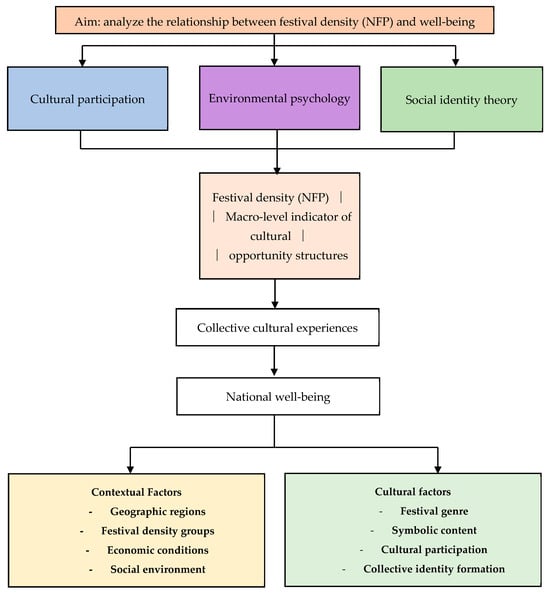
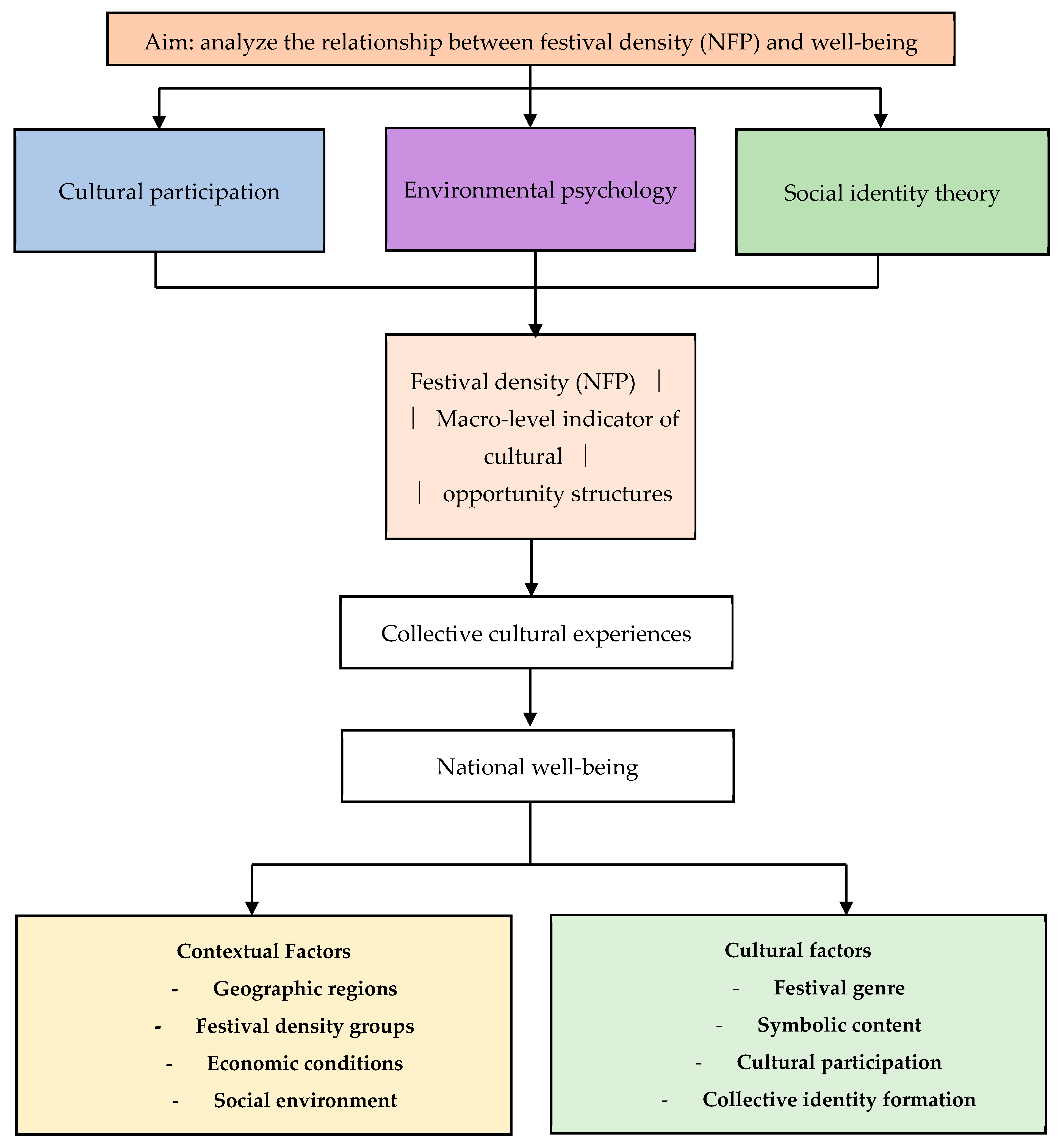
Addressing these gaps is essential for developing a more comprehensive understanding of how cultural participation contributes to well-being across diverse societal contexts. To synthesize the theoretical logic of the research, Figure 1 presents the conceptual framework linking festival density to national well-being, distinguishing between the overall association between festival density and well-being, contextual variation across high-density and heterogeneous environments, and the moderating influence of festival characteristics, particularly cultural attributes, also outlining the analytical focus of the study, including the measurement of festival density across countries, the calculation of its correlation with well-being, and the comparison between festival genres.
Figure 1.
Conceptual framework linking festival density and national well-being. Source: Authors’ own data.
Thus, the research addresses three interrelated research questions: analyzing whether festival density is associated with national well-being levels, how this relationship varies across contextual conditions, and whether cultural attributes exert a stronger influence than structural characteristics. Accordingly, the paper tests the association between festival density and well-being across countries, explores its contextual variability and evaluates the relative contribution of cultural versus structural festival characteristics.
2. Theoretical Framework and Hypothesis Development
2.1. Cultural Participation and Wellbeing
Over the past several decades, well-being has become a central lens through which societal progress is assessed, extending beyond economic performance to include subjective and relational dimensions. Subjective well-being (SWB), typically expressed through life satisfaction, positive affect, and a sense of meaning, is increasingly associated with various forms of social and cultural participation. Longitudinal studies show that cultural consumption, ranging from museum visits to concert attendance, constitutes a significant determinant of both psychological health and long-term survival [4,5]. Similarly, engagement in enjoyable leisure activities is positively correlated with improved physical and mental health, acting as a buffer against stress [6]. At an aggregated level, such individual behaviors contribute to broader societal outcomes, as international evidence highlights cultural engagement as a key driver of life satisfaction and eudaimonic fulfillment across diverse contexts [7], as well as an important component of national well-being frameworks [8].
While macro-level investigations filter these dynamics through national indices, their foundational mechanics rely heavily on verified individual outcomes. Granular evidence from attendee-level studies confirms that live music and cultural events trigger immediate positive psychological shifts. For instance, [9] demonstrated that individual festival attendance fosters specific dimensions of well-being, including positive aging, social connectedness, and emotional engagement through shared music experiences. Similarly, [10] provided individual-level evidence showing that the socio-cultural benefits generated during festivals directly enhance residents’ personal life satisfaction and subjective well-being, creating a psychological foundation that scales up to the aggregate national trends observed in our cross-country framework. Within this broader context, cultural participation through festivals represents a distinct and particularly impactful form of engagement. Festivals foster both bonding and bridging social capital by facilitating social interaction and reinforcing collective identities [11,12]. For example, local community festivals often strengthen bonding social capital among residents, whereas large multicultural festivals may facilitate bridging social capital by bringing together participants from different social, ethnic, or cultural backgrounds. These events create environments in which participants experience shared emotional and symbolic practices, contributing to enhanced feelings of belonging and psychological flourishing [9]. Through intense and often ritualized interactions, festivals strengthen social connectedness, which remains a key predictor of long-term emotional well-being [10,13]. Beyond these conceptual perspectives, empirical research further clarifies the mechanisms linking festival participation to well-being. Informal social ties play a critical role in facilitating participation, which in turn is associated with higher levels of subjective well-being [1]. Moreover, festival participation has been shown to mediate the relationship between social capital and well-being, emphasizing the importance of collective cultural engagement as a pathway through which social resources are transformed into individual outcomes [2]. At the community level, festivals contribute to social cohesion, place attachment, and perceived collective benefits, all of which are positively associated with well-being. In more specific contexts, such as spiritual festivals, sustained increases in well-being have been observed, particularly among highly involved participants [3].
Importantly, despite these well-documented positive effects, festivals are not inherently inclusive spaces. As collective experiential environments, they often generate what has been described as “collective effervescence” [14], reinforcing shared values and social bonds. Yet, the same socio-spatial dynamics that enable belonging may also reproduce broader power imbalances. In certain contexts, festivals can generate exclusion or symbolic discomfort for individuals who do not identify with dominant cultural narratives or group identities [15]. This ambivalence highlights the need to critically examine the benefits of cultural participation and its potential limitations in fostering inclusive well-being.
2.2. Festivals as Socio-Cultural Mechanisms
At both the community and national levels, festivals function as critical mechanisms of social integration, acting as a form of social infrastructure that facilitates collective interaction and reinforces interpersonal relationships [16]. By celebrating local heritage and shared narratives, they strengthen community pride and contribute to the development of a resilient sense of place [17]. Moreover, festivals create contexts in which diverse social groups can interact, reducing social distance and fostering mutual understanding. Through the institutionalization of collective celebration, they also act as catalysts for civic engagement and participatory culture [18]. Participation in such events is closely associated with trust in informal social networks, which in turn supports a wide range of well-being outcomes [2].
Festivals also play a central role in shaping and reaffirming collective identity by providing structured environments for cultural expression. Through shared rituals and symbolic performances, participants articulate common values and reinforce their sense of belonging, contributing to community-wide solidarity [19]. This repeated enactment of cultural narratives enables the ongoing negotiation of group boundaries and the strengthening of internal social cohesion [20]. As such, festivals contribute to the formation of cohesive and resilient communities capable of maintaining social stability and cultural continuity in the face of external pressures [19,20,21]. From the perspective of the experience economy, festivals represent complex cultural environments that extend beyond traditional service delivery to generate emotional, symbolic, and social value. By engaging participants across the four realms of experience, aesthetic, educational, escapist, and entertainment, festivals create immersive and memorable events [22]. This value is co-created through active participation and social interaction, transforming the event into a source of both personal and collective meaning [21,23]. Consequently, festivals function as strategic vehicles within the experience economy, leveraging cultural authenticity to stimulate emotional engagement and foster long-term loyalty in a competitive global market [24,25]. These experiential dynamics, characterized by high engagement, emotional intensity, and social interaction, further reinforce their contribution to individual and collective well-being.
2.3. Festival Density asa Macro-Level Indicator
In the context of this paper, festival density is conceptualized as a macro-level socio-cultural indicator reflecting the structural intensity of cultural activity within a given society. Rather than capturing individual participation directly, it reflects the availability and concentration of collective cultural events relative to population size, thus serving as a proxy for the broader cultural environment in which individuals are embedded [26]. For instance, regional heritage festivals frequently reinforce local identity through traditional music, food, and rituals, while national commemorative festivals may strengthen broader collective narratives and social cohesion. As such, festival density can be interpreted as an indicator of social vitality, community dynamism, and the infrastructural capacity to support cultural engagement [11,16]. Methodologically, the indicator is operationalized as the number of festival events per capita, allowing for cross-country comparability in assessing the distribution and intensity of cultural opportunities [26]. This approach enables the analysis of how structural exposure to cultural events may shape social and psychological outcomes at the population level.
The relevance of festival density lies in its role as a contextual factor linking cultural infrastructure to broader societal outcomes. Existing research suggests that festival participation mediates the relationship between social capital and subjective well-being [2], while higher levels of cultural provision are associated with more inclusive and participatory social environments [21]. This implies that festival density may reflect structural conditions associated with access to collective cultural experiences, which in turn may be related to patterns of cultural participation and national well-being [10,21].
2.4. Determinants of the Festival Density—Well-Being Relationship
2.4.1. Contextual Factors
The relationship between festival density and well-being is shaped by contextual and experiential conditions, particularly by how density is perceived and experienced within festival environments. High-density settings in cultural events are often associated with increased social vibrancy and what has been described as “collective effervescence”, where shared emotional energy enhances both individual and collective well-being [27,28]. Events such as Glastonbury (UK) or Tomorrowland (Belgium) illustrate how high-density festival environments may generate strong feelings of collective identity and emotional synchrony among participants. Within the experience economy framework, such environments stimulate active co-creation among participants, transforming physical co-presence into a source of emotional engagement and symbolic value [22,23]. When aligned with cultural relevance, this social vibrancy can enhance life satisfaction by reinforcing social bonds and providing temporary psychological detachment from routine [10,25]. This suggest that the effects of density are not unidirectional. Environmental psychology distinguishes between human density and perceived crowding, highlighting that while the former may enhance social stimulation, the latter can generate stress, discomfort, and reduced perceived control [29]. This distinction suggests that the impact of festival density depends on the number of participants, and on how spatial and social conditions are organized and perceived. This means that density operates as a relational and experiential construct, where positive outcomes emerge when social interaction is facilitated without generating excessive spatial constraints [23,25].
Social identity processes further shape these dynamics by influencing how individuals interpret high-density environments. When participants share a common group identity, dense settings are more likely to be perceived as cohesive and meaningful rather than intrusive, thereby reinforcing the positive relationship between participation and well-being [30,31]. This mechanism is consistent with social identity theory, which suggests that shared identity reduces crowding-related stress and enhances collective emotional experiences [27,30]. As shown in studies on cultural and regional festivals, this sense of belonging supports emotional engagement and strengthens community resilience [13,19,20,21].
Additionally, festival environments may also generate restorative and meaning-enhancing effects. Collective experiences can produce heightened states of emotional synchrony associated with increased meaning in life [32], while festivals may function as temporary restorative settings that support attention recovery and psychological well-being [33]. Nevertheless, the magnitude and direction of these effects vary across cultural contexts and individual characteristics, indicating that the relationship between festival density and well-being is contingent upon broader socio-cultural conditions [34].
2.4.2. Cultural Factors
Cultural attributes, particularly festival genre, play a central role in shaping participant experiences and their associated well-being outcomes. Genre-specific festivals create emotionally resonant environments that facilitate connection, catharsis, and social interaction, enabling participants to engage deeply with shared symbolic meanings [33]. The core festival offering, defined by its artistic and cultural program, constitutes the primary driver of participant satisfaction and emotional well-being [23]. For example, religious festivals often emphasize shared beliefs and communal rituals, whereas jazz, folk, or heritage festivals may foster cultural continuity and the intergenerational transmission of traditions. Within the framework of the experience economy, the aesthetic and entertainment dimensions of festivals are primarily determined by cultural content rather than physical scale, indicating that the psychological impact of participation is rooted in symbolic and experiential value [22,25]. In contrast, structural attributes such as festival size and attendee capacity are more closely associated with economic performance and operational efficiency than with the subjective quality of the experience [35]. This distinction highlights that while large-scale events may increase accessibility and economic reach, it is the cultural depth and authenticity of the artistic program that drive emotional engagement and sustained well-being outcomes [19,21].
Cultural attributes further contribute to the creation of immersive and restorative environments. Empirical evidence from culturally embedded festivals, such as the Qinhuai Lantern Festival, demonstrates how symbolic richness can foster attention restoration, fascination, and emotional engagement [34]. Overall, the analysis shows that cultural characteristics, mainly genre and symbolic content, play a more significant role than structural features in shaping the psychological benefits of festival participation [36,37].
2.5. Hypothesis Development
Building on the theoretical foundations outlined above, this research develops an integrated analytical framework linking cultural participation, festival dynamics, and national well-being. While prior research has established the positive contribution of cultural engagement to subjective well-being (SWB), important gaps remain regarding how this relationship operates across countries and under varying contextual and cultural conditions [5,7]. Existing studies are predominantly based on localized or regional analyses, often overlooking macro-level structural conditions that shape access to cultural experiences [20,21]. Moreover, although the experience economy framework highlights the emotional and symbolic value of cultural events, the role of festival density as a macro-level socio-cultural mechanism and the heterogeneity of festival genres remain underexplored [22,23]. This study addresses these gaps by adopting a cross-country perspective and conceptualizing festival density as an indicator of cultural infrastructure. The underlying logic (presented also in Table 1) is that higher festival density is likely to reflect a greater availability of collective cultural experiences, which facilitate social interaction, emotional synchrony, and symbolic belonging. These mechanisms are associated with higher levels of well-being through pathways such as strengthened informal ties, community attachment, collective effervescence, and restorative experiences [1,2,32,33]. Accordingly, the research investigates the extent to which festival density is associated with national well-being levels (R1: To what extent is festival density associated with national well-being levels?), aiming to measure and test this relationship across countries (O1: To measure and test the statistical relationship between festival density and well-being across countries). In line with this objective, it is expected that festival density is positively associated with national well-being levels (H1).
Table 1.
Research questions, objectives, and hypotheses.
Yet, this relationship is not expected to be uniform. Its strength depends on the contextual conditions under which participation occurs. Drawing on environmental psychology, a distinction can be made between human density, which may enhance social vibrancy, and perceived crowding, which may generate discomfort [29]. Social identity theory further suggests that shared group identity can transform high-density environments into positive collective experiences. These arguments raise the question of how the relationship between festival density and well-being varies across different contexts (R2: How does the relationship between festival density and well-being vary across different contexts?), particularly in relation to country subsets and geographical conditions (O2: To examine the variability of the festival density–well-being relationship across country subsets and geographical contexts). In this regard, it is proposed that the strength of the relationship between festival density and well-being is context dependent, being stronger in high festival density environments and weaker or non-significant in more heterogeneous samples (H2).
Currently the qualitative nature of festival experiences is shaped by cultural attributes. Festival genre and program content determine the extent to which participation generates emotionally resonant and meaningful experiences. While structural attributes such as festival size are more closely associated with economic performance, cultural attributes are more strongly linked to emotional engagement, satisfaction, and well-being outcomes [36,37]. Genre-specific festivals facilitate connection, catharsis, and symbolic meaning, while culturally embedded events provide immersive and restorative experiences [33]. This leads to the question of whether festival characteristics influence the relationship between festival density and well-being (R3: Do festival characteristics influence the relationship between festival density and well-being?), with the objective of assessing the relative impact of cultural versus structural attributes (O3: To assess the relative impact of cultural attributes (e.g., genre, program) versus structural attributes (e.g., size) on the festival density–well-being relationship). Accordingly, it is hypothesized that the cultural attributes of festivals (e.g., genre and program) exert a stronger moderating effect on the festival density–well-being relationship than structural attributes (e.g., festival size) (H3). Taken together, this framework suggests that festival density operates as a macro-level indicator of cultural participation, whose relationship with well-being is shaped by both contextual conditions and cultural meaning.
3. Methodology
3.1. Research Design
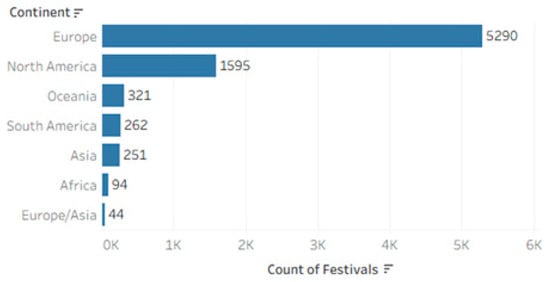
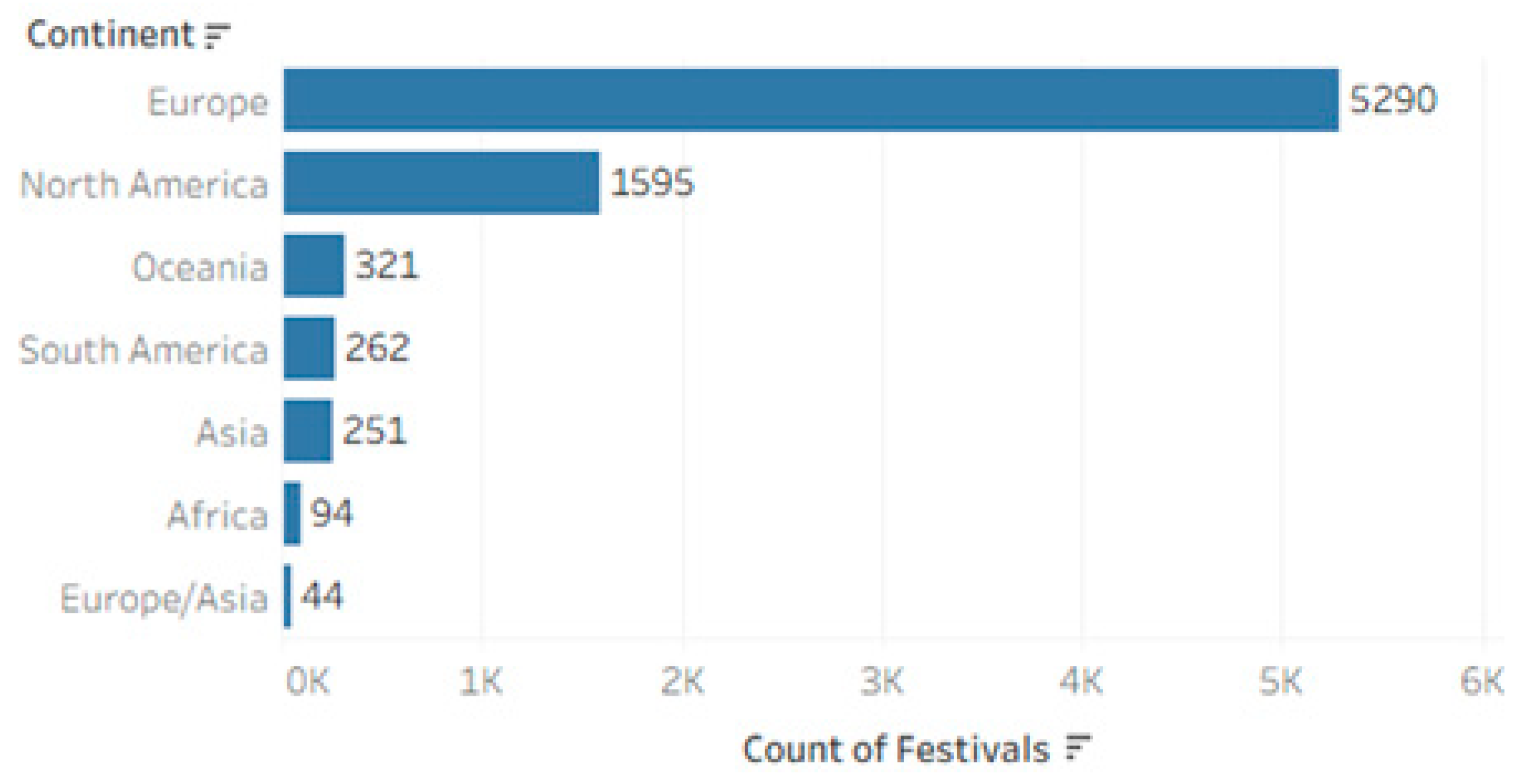
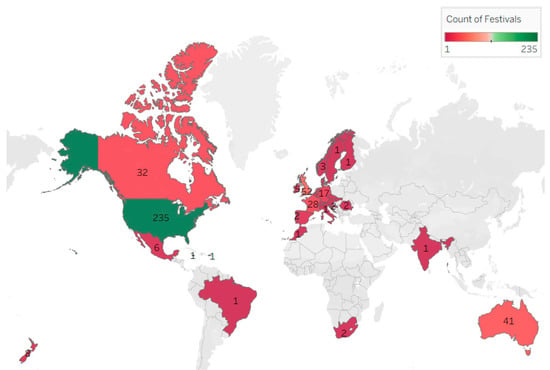
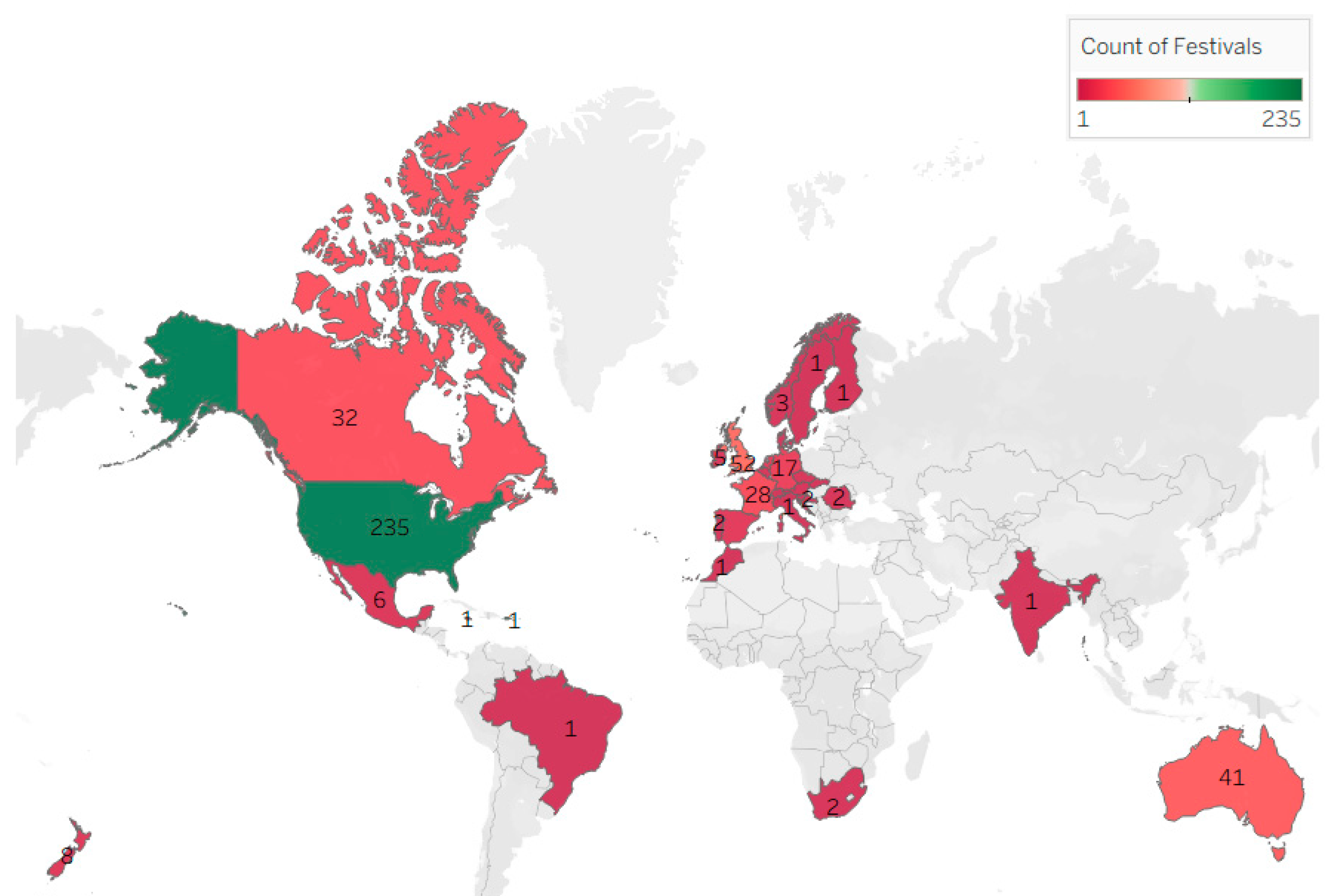
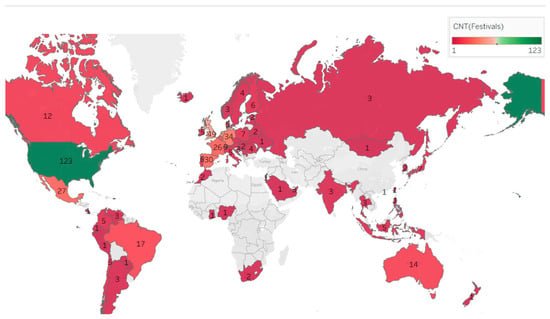
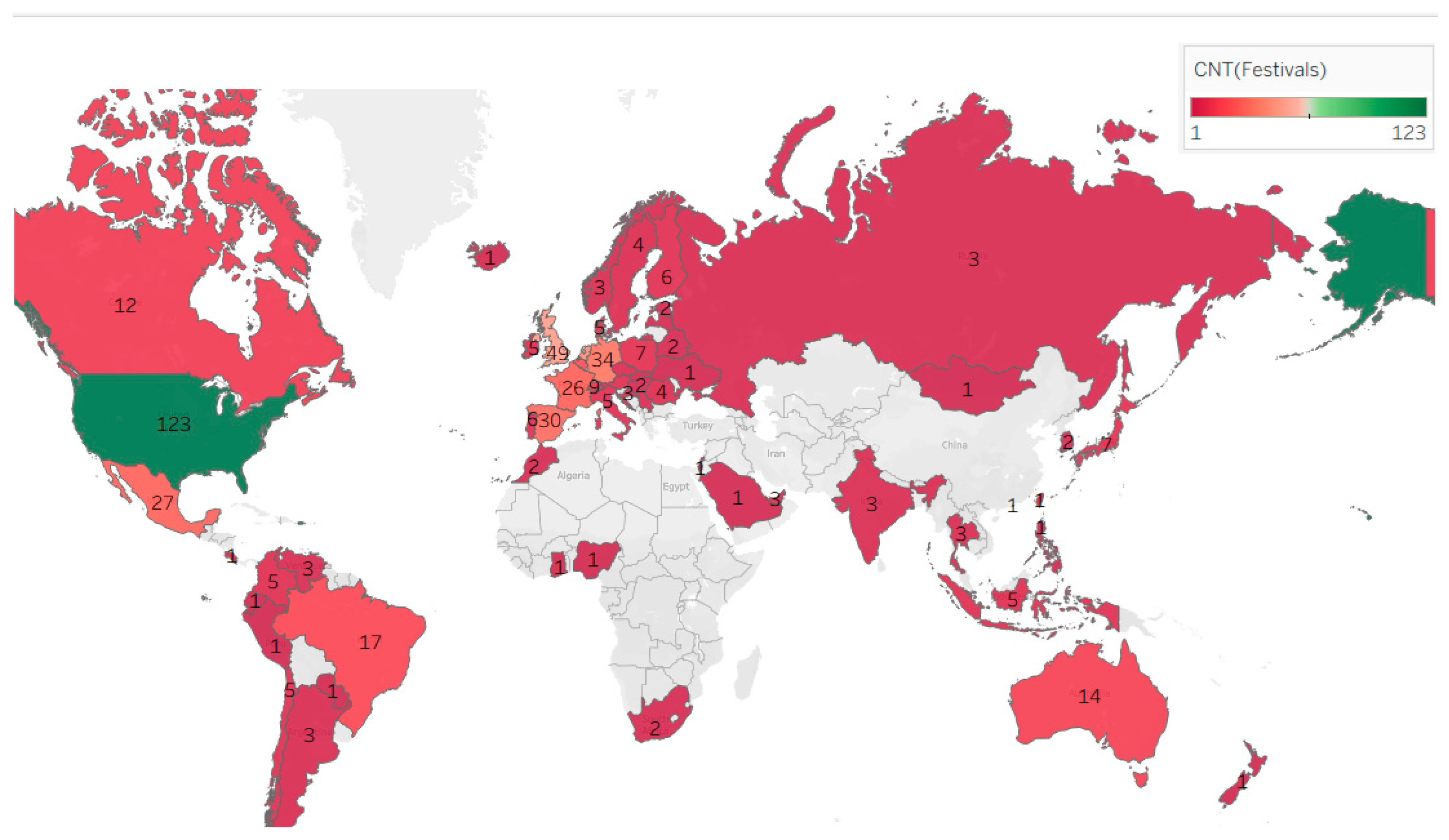
This paper employed a comparative cross-country research design to investigate the relationship between festival density and national well-being. For the purposes of this study, festival density is operationalized as the number of festivals per population (NFP), calculated as the number of festivals per million inhabitants. The analysis relies on secondary data and uses a correlational approach to assess both the overall association between festival density and well-being and the extent to which this relationship varies across contextual and cultural conditions. The research design incorporates multiple levels of analysis. Festival density was defined to assess the spatial distribution and accessibility of cultural events, calculated as the number of festivals relative to the total population (typically expressed per million inhabitants) [26]. This ratio serves as a key indicator of regional cultural vitality and the degree of institutional support for the creative economy while a high density of festivals often signals a robust social infrastructure and high levels of civic engagement; it also reflects strategic efforts in cultural tourism and place-branding [26]. The general association between festival density and well-being across all countries was then assessed and included in the dataset. Contextual variation was also determined by comparing correlations across groups of countries characterized by different levels of festival density, and geographical variation was explored by analyzing results across continents (Figure 2). Finally, it investigated cultural and structural differentiation by comparing correlations across festival genres and festival size categories.
Figure 2.
Distribution of festivals across continents. Source: Authors’ own data.
This multi-level analytical strategy provides a more nuanced understanding of how festival participation relates to well-being, moving beyond aggregate patterns and highlighting the importance of contextual and cultural variation.
3.2. Data and Sample
The analysis draws on a cross-country dataset that integrates indicators of national well-being, festival activity, and key demographic and macroeconomic characteristics. National well-being data were sourced from the World Happiness Report 2025 [8] using the three-year average life evaluation score for 2024, which offers a standardized and internationally comparable measure of subjective well-being. Festival-related information was obtained from the Vibrate platform [38], which provides structured global data on music festivals, including their location, genre, and attendance size. The dataset comprised 7859 festivals, covering a broad spectrum of cultural contexts and event types. Festival size was classified into five attendance-based categories (small (0–5 K), medium (5–15 K), big (15–30 K), huge (30–80 K), and mega (80 K+)), allowing for research into structural characteristics. Population figures used to construct the festival density indicator were compiled from several international statistical sources, including the World Bank (2025), the United Nations World Population Prospects (2024), and World Population Review (2025), ensuring consistency and comparability across countries. Additional macro-level indicators such as GDP, life expectancy, and unemployment were retrieved from international databases including the World Bank (2025) and Trading Economics (2025), and were used to validate the contextual robustness of the dataset.
The final dataset included 121 countries and integrated festival, demographic, and well-being indicators across multiple continents, enabling a comparative analysis across diverse socio-cultural environments. The dataset is cross-sectional and reflects the most recent data available at the time of analysis.
3.3. Variables and Operationalization
The dependent variable in this study is national well-being, operationalized through aggregate indicators of subjective well-being at the country level. These indicators capture overall life satisfaction and perceived quality of life, aligning with the broader conceptualization of subjective well-being (SWB). The main independent variable is festival density, conceptualized as a macro-level indicator of cultural engagement. Festival density is calculated as the number of festivals relative to population size:
Festival density = Number of festivals/Population (in millions)
This measure enables cross-country comparability by standardizing festival activity relative to population size. In this way, festival density reflects the intensity and accessibility of national festival ecosystems rather than individual participation behavior. To assess variation in the festival density–well-being relationship, the analysis incorporated three categories of moderating dimensions: contextual dimension: country subsets defined by festival density (e.g., top festival density countries), capturing differences in social intensity and cultural availability; geographical dimension: continental groupings (e.g., Europe, Africa, South America), allowing for the determination of regional variation; and cultural and structural dimensions: festival genre (e.g., religious, reggae, country, Middle Eastern), representing cultural attributes, and festival size, representing structural characteristics.
The study employed Pearson correlation analysis to assess the strength and direction of the relationship between NFP and national well-being. Correlation coefficients were interpreted using standard thresholds: 0.1–0.3, meaning a weak correlation, 0.4–0.6, meaning a moderate correlation and 0.7–0.9, meaning a strong correlation. The analysis was conducted across four complementary levels: global, contextual, geographical, and cultural.
The Pearson correlation between NFP and well-being was calculated for all countries in the dataset. This provided an overall assessment of the relationship and constituted the primary test of H1.
To explore contextual variation, correlations were computed for subsets of countries ranked by festival density (NFP), including both countries with the highest NFP values and smaller subsets representing high-density festival environments. This step allowed the study to determine whether the strength of the relationship varies according to the intensity of national festival ecosystems.
Correlation analysis was performed across continental groupings to identify regional variation in the NFP–well-being relationship. Due to limited sample sizes, some regions were excluded from interpretation where statistical robustness could not be ensured.
To assess the influence of festival characteristics, correlations were calculated by festival genres to explore cultural differentiation, and stratified according to size categories to evaluate structural effects.
This component of the analysis tests whether cultural and structural attributes differentially shape the association between NFP and well-being. In addition, an exploratory clustering analysis was conducted to identify patterns in festival lineups.
4. Results
4.1. NFP and National Well-Being
The correlation between well-being and NFP across all countries was 0.4786, indicating a moderate positive association. This result provides initial empirical support for H1, and the information are shown in Table 2.
Table 2.
The top 25 countries descending by festival density. Source: Authors’ own data.
4.2. Contextual Variation
The correlation varied substantially across country subsets. Among the top 25 countries ranked by festival density, the correlation was 0.3758, indicating a weaker association. This means that for the top 8 countries, the relationship becomes considerably stronger, suggesting that high-density festival environments may indicate a stronger association in certain festival-rich contexts. Continental analysis further showed moderate correlations in South America, Europe, and Africa, while Oceania could not be reliably assessed due to the limited number of observations (Table 3).
Table 3.
Correlation of the top 25 countries ranked by festival density. Source: Authors’ own data.
Interestingly, the correlation between festival density and well-being dropped substantially within North America (r = 0.3590) and Asia (r = 0.1576). This regional divergence may reflect differences in how collective cultural participation and well-being are expressed across societies. One possible explanation is that many forms of community celebration in Asian contexts are embedded in local traditions, religious practices, or informal cultural activities that may not be fully captured by global festival databases. Another possible explanation relates to data coverage. Platforms such as Vibrate primarily track formalized and publicly visible festivals and may provide a more comprehensive coverage of commercial music festivals than of grassroots or community-based cultural events. Consequently, the weaker correlations observed in these regions should be interpreted cautiously and may partly reflect differences in festival reporting and database coverage instead of underlying cultural participation alone.
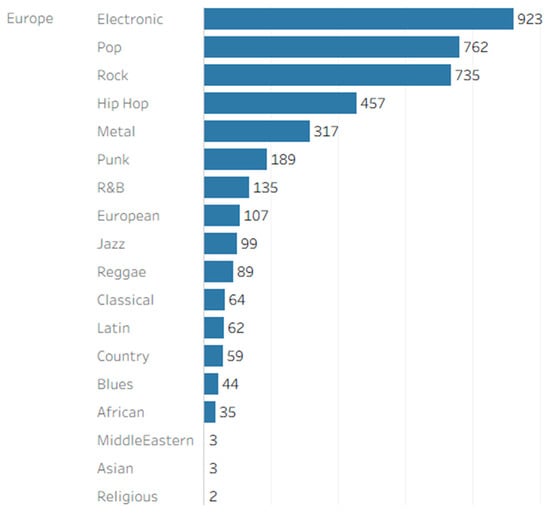
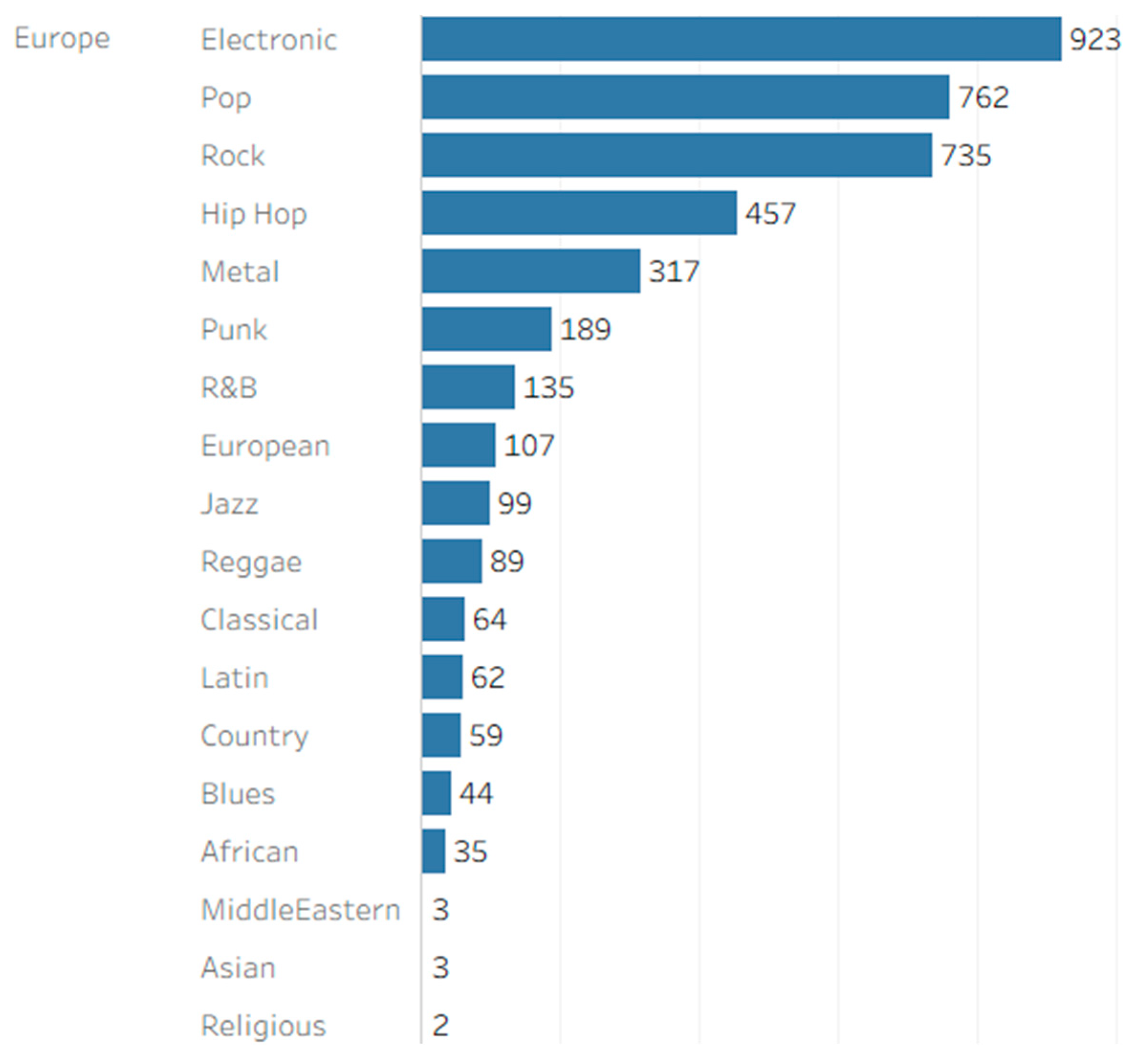
These patterns should be interpreted in relation to the broader distribution of festival activity across world regions, as seen in Figure 3. Figure 3 illustrates the geographical distribution of festival activity across European countries, providing additional context for the regional differences observed in the correlation analysis.
Figure 3.
Distribution of festivals across European countries.
4.3. Cultural Variation
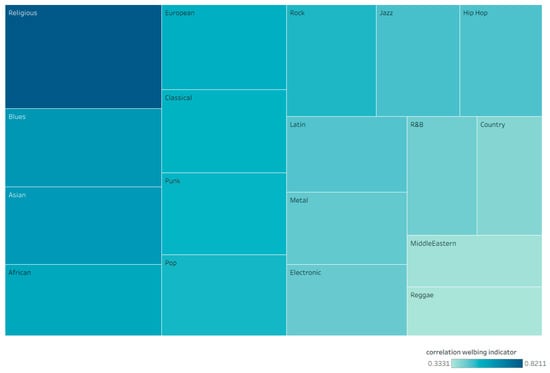
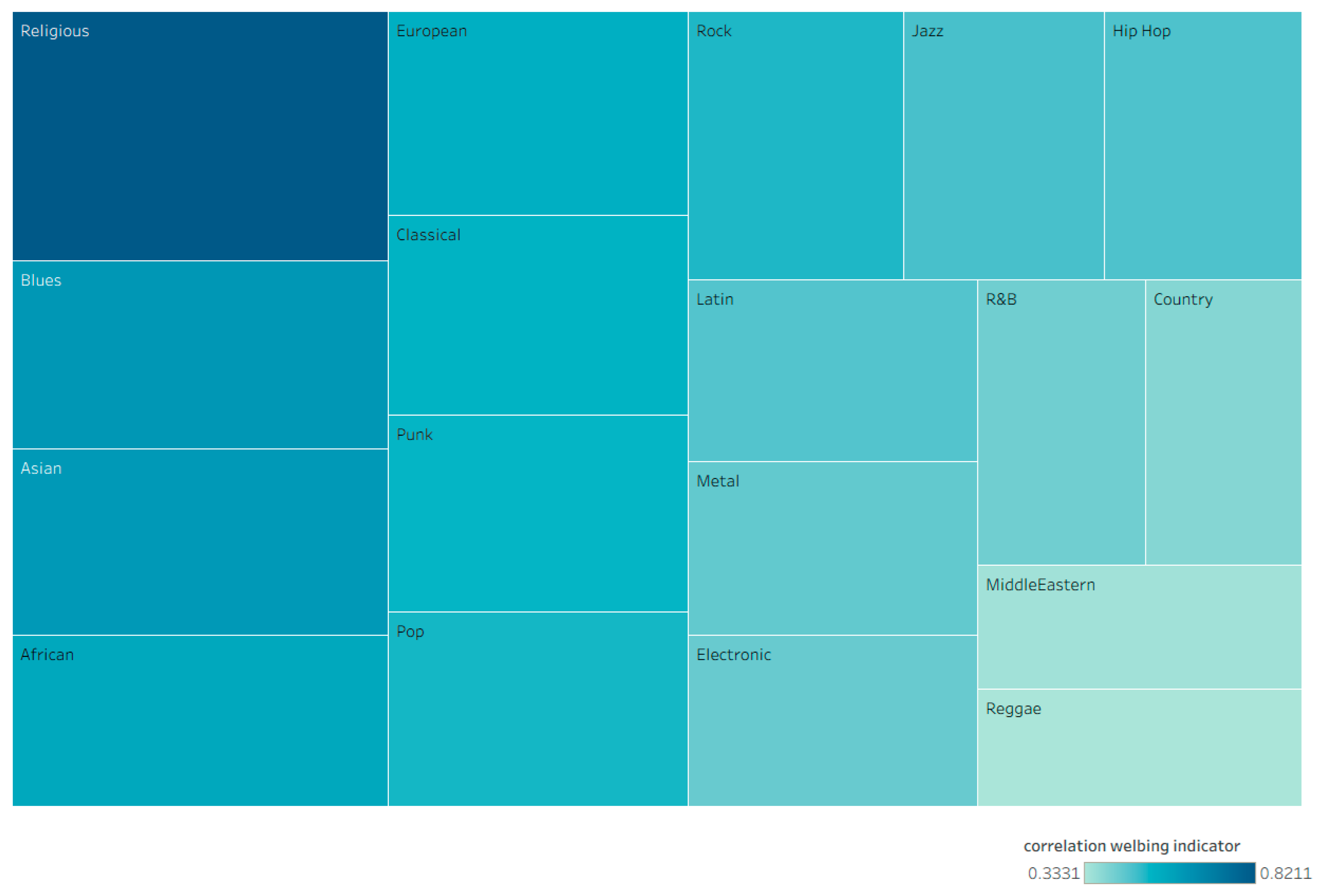
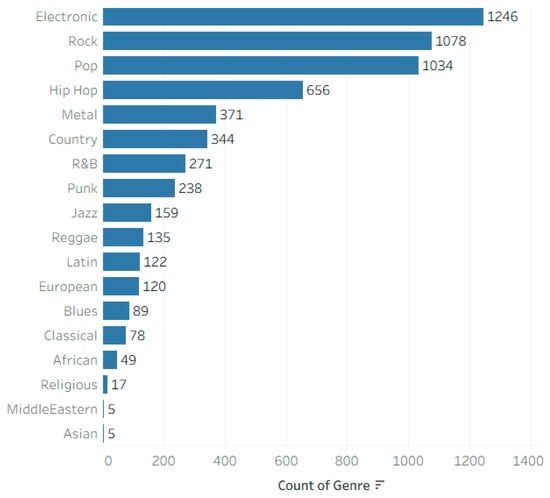
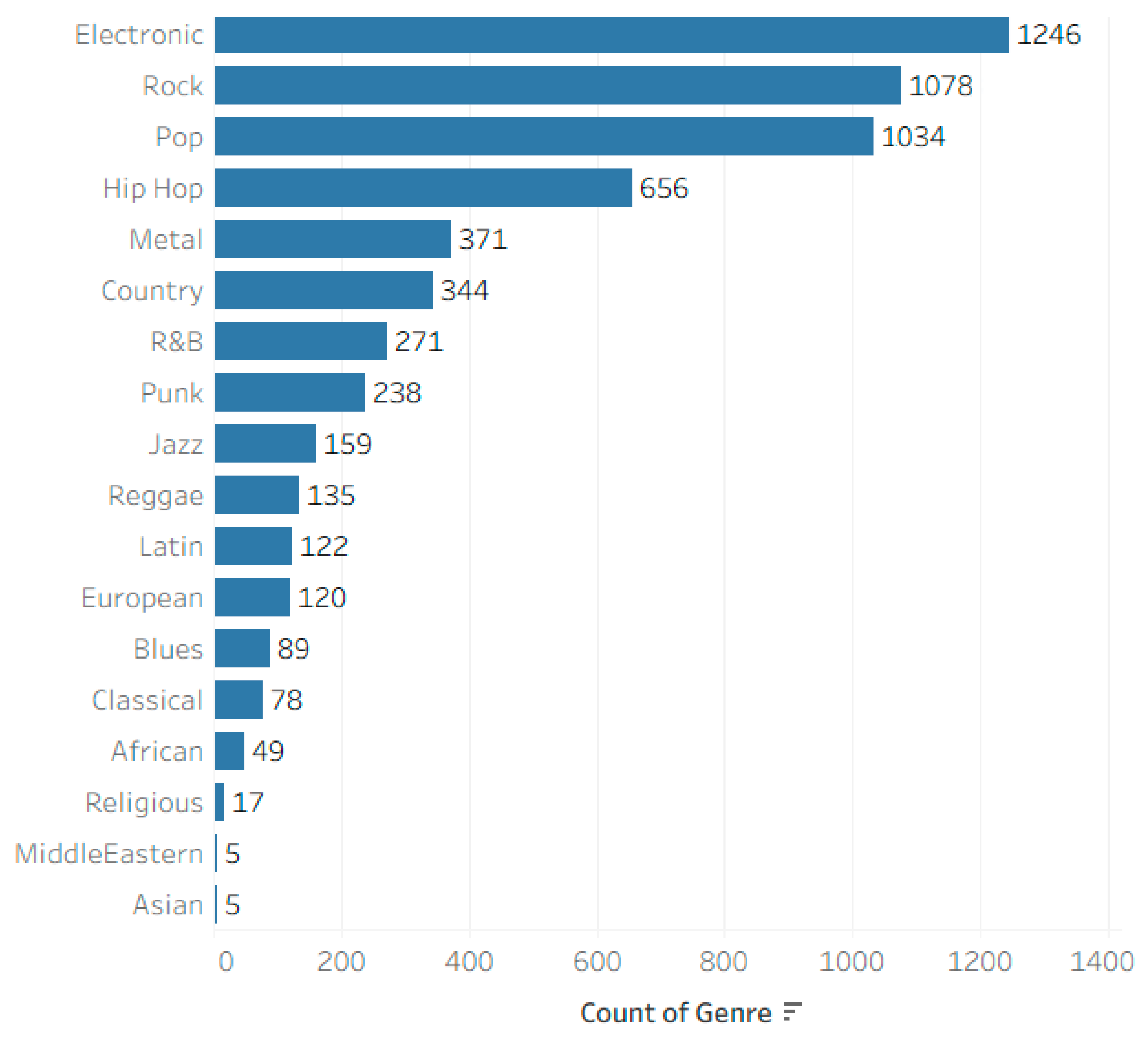
Genre-based analysis indicates that religious festivals exhibited a strong correlation with well-being (0.8211), whereas most other genres displayed moderate associations. In contrast, reggae, Middle Eastern, and country festivals did not follow this pattern. The results suggest the argument that cultural attributes shape the qualitative depth of the festival density–well-being relationship, as seen in Table 4 and Figure 4 and Figure 5.
Table 4.
The qualitative depth of the festival density–well-being relationship. Source: Authors’ own data.
Figure 4.
Density of festivals by genre. Source: Authors’ own data.
Figure 5.
Number of religious festivals. Source: Authors’ own data.
Figure 4 presents the distribution of festival density across different music genres included in the dataset.
Figure 5 visualizes the relationship between festival density and well-being for religious festivals, the genre displaying the strongest observed correlation.
Most festival genres showed moderate positive correlations with well-being (r = 0.4188–0.6173). However, the deviations observed for reggae, Middle Eastern, and country genres suggest that not all cultural forms contribute equally to well-being outcomes, as seen in Figure 6. Figure 6 compares the strength of the festival density–well-being relationship across festival genres.
Figure 6.
Number of reggae, Middle Eastern, and country festivals. Source: Authors’ own data.
These results should also be interpreted in relation to the distribution of festival genres within the dataset.
Figure 7 presents the distribution of festivals by genre, highlighting the relative size of each category within the dataset.
Figure 7.
Distribution of festivals by genre. Source: Authors’ own data.
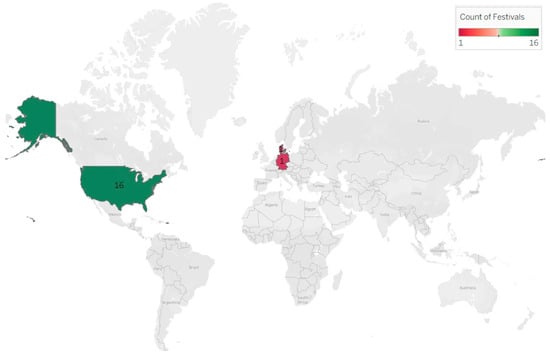
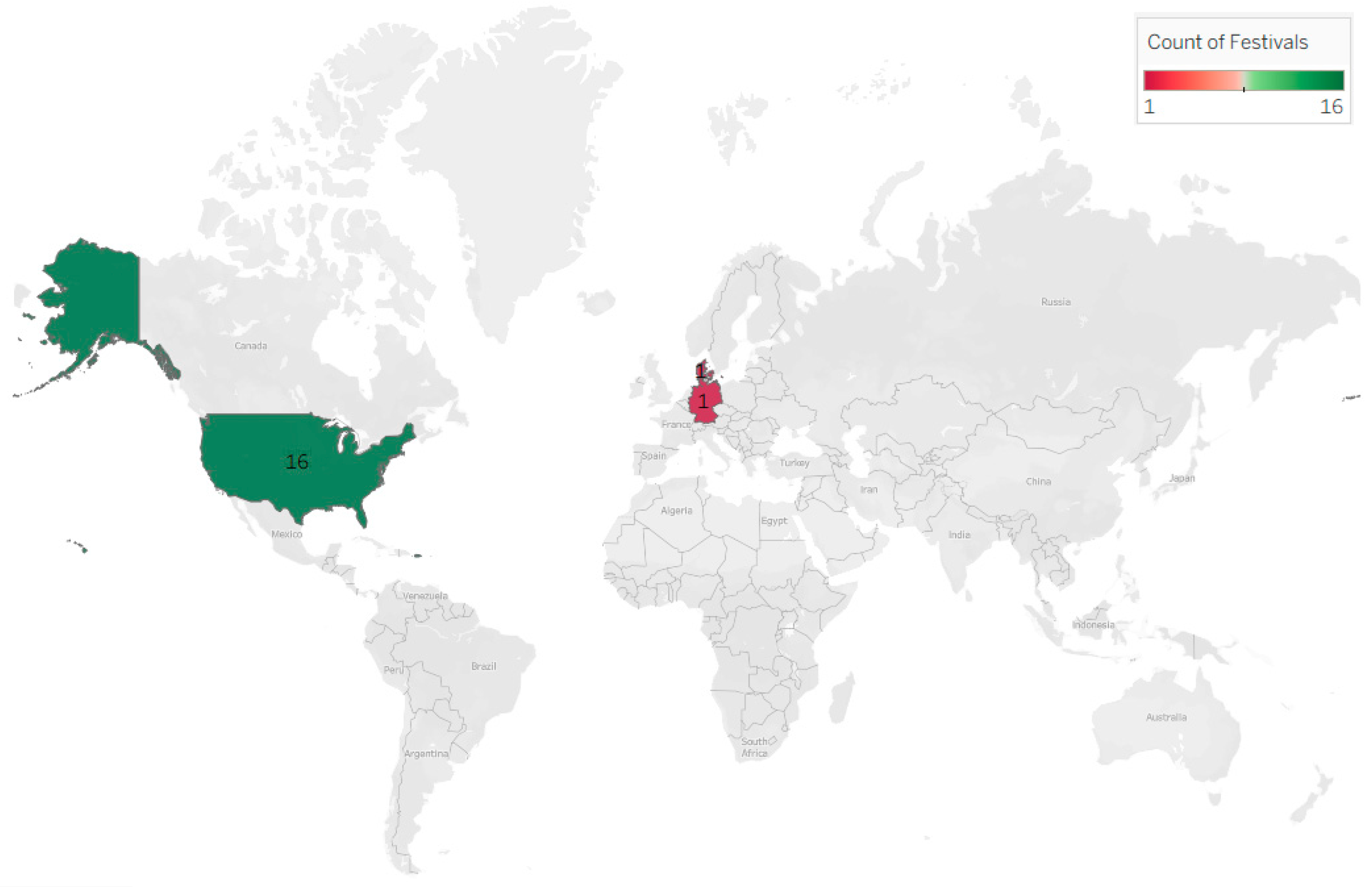
A striking finding in our genre-based analysis is the high correlation observed for religious festivals (r = 0.8211). While this aligns with the literature suggesting that spiritual engagement may be associated with restorative experiences, social cohesion, and existential meaning, this result should be interpreted with considerable caution. As shown in Figure 7, religious festivals accounted for only a very small proportion of the dataset (n = 17) relative to the total sample of 7859 events. Consequently, the observed correlation may be influenced by small-sample effects and dataset composition. It may also reflect specific country contexts in which religious festivals are embedded within stable institutional, social, or cultural frameworks that are themselves associated with higher national well-being levels. Therefore, the finding should be viewed as exploratory more than conclusive and would benefit from validation using larger and more balanced samples of religious festivals.
The prominence of music festivals throughout the analysis reflects the composition of the Vibrate database, and not necessarily a deliberate focus of the study. As illustrated in Figure 7, music-related genres constituted the majority of festival records included in the dataset, resulting in greater representation in both descriptive and comparative analyses. The study nevertheless incorporates a range of additional festival categories, including religious, folk, heritage, and multidisciplinary events. Therefore, the observed emphasis on music festivals should be interpreted as a characteristic of the available data and not an intentional restriction of the research design.
4.4. Structural Variation
The results do not reveal meaningful differences in the correlation between festival density and well-being across festival size categories. This suggests that structural scale plays a limited role in shaping well-being outcomes, and that cultural characteristics appear to be more strongly associated with well-being outcomes than structural size categories, as seen in Table 5.
Table 5.
The correlation between festival density and well-being across festival size categories. Source: Authors’ own data.
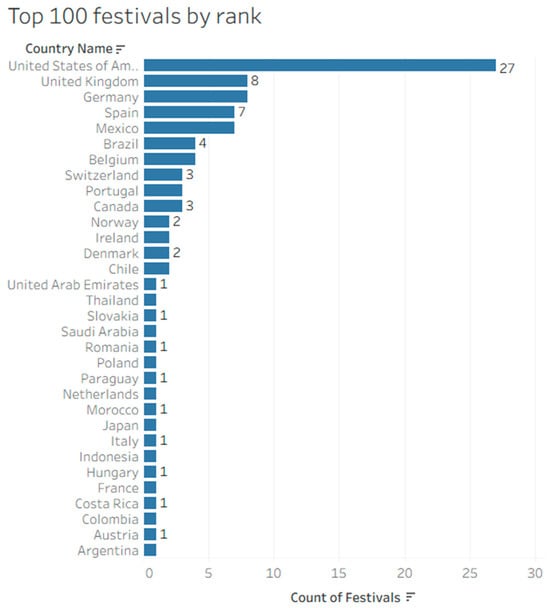
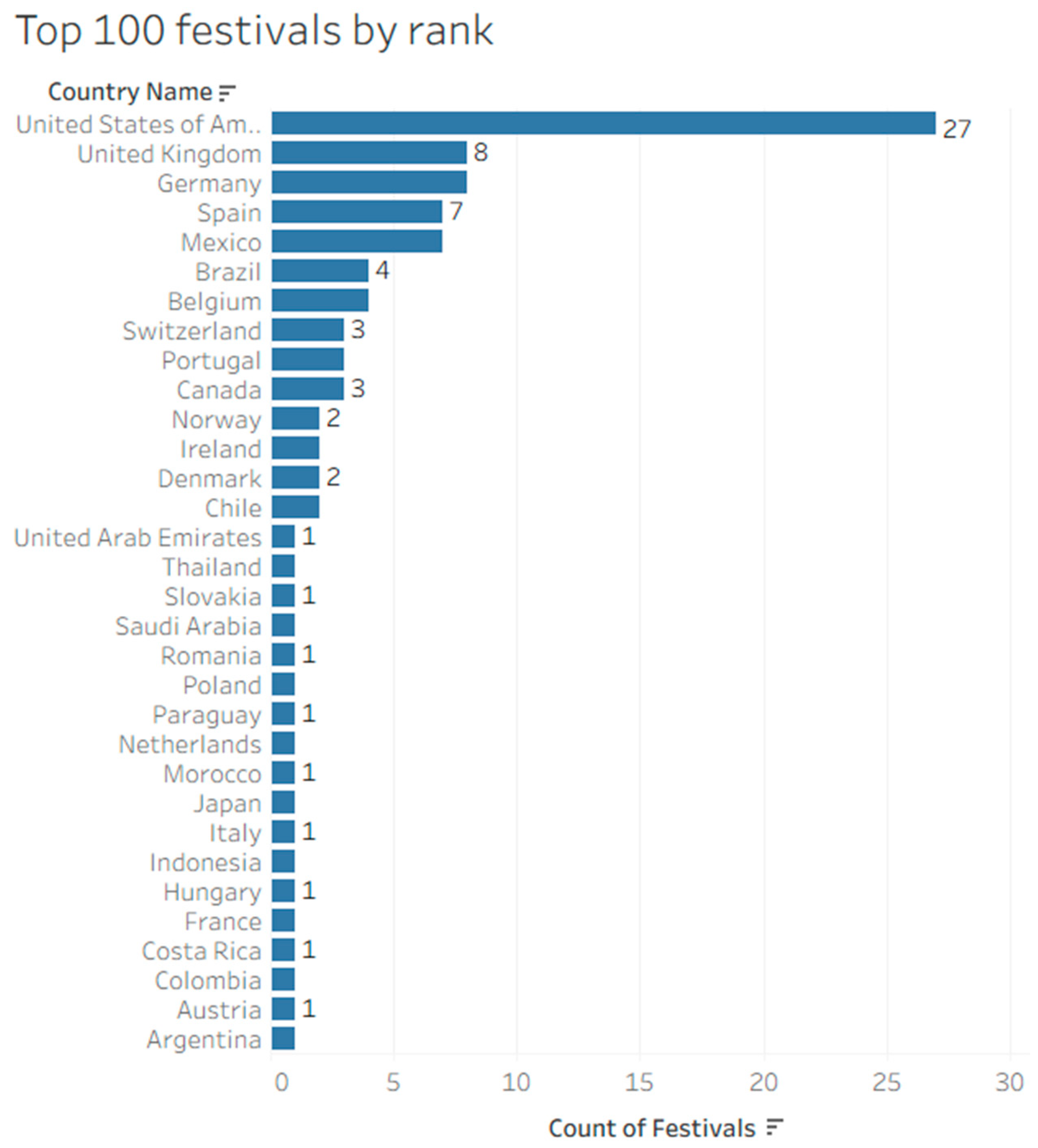
To further determine the structure of the global festival ecosystem, the researchers analyzed the top 100 festivals identified based on ranking criteria. Their distribution showed a pronounced geographical concentration, with a substantial share located in the USA. This pattern indicates that high visibility festivals tend to emerge within mature cultural markets characterized by established infrastructure, strong audience bases, and well-developed creative industries, as seen in Figure 8, which shows the geographical distribution of the top 100 ranked festivals worldwide.
Figure 8.
The top 100 festivals by rank (geographical distribution/list). Source: Authors’ own data.
Taken together, the results suggest a hierarchical pattern in the relationship between festival density and national well-being. At the aggregate level, a moderate positive association was observed between NFP and well-being. However, the strength of this relationship varied across contexts and cultural settings. Cultural factors, particularly festival genre, appeared to explain more variation than structural characteristics such as festival size. The strongest correlations emerged within specific cultural forms, whereas structural scale exhibited limited explanatory value. These findings suggest that the cultural meaning embedded within festival ecosystems may be more relevant than event magnitude alone, although the robustness analysis indicates that broader socioeconomic conditions remain important explanatory factors.
4.5. Robustness Check: Multiple Regression Analysis
To assess whether the observed association between festival density and national well-being could be explained by broader socioeconomic conditions, an additional multiple regression analysis was conducted (Table 6).
Table 6.
Multiple regression analysis predicting national well-being. Source: Authors’ own calculations.
National well-being was regressed on festival density while controlling for GDP per capita, life expectancy at birth, and unemployment rate. Observations with missing values were excluded, resulting in a final sample of 87 countries.
The overall model demonstrated satisfactory explanatory power, accounting for 52.3% of the variance in national well-being (R2 = 0.523; Adjusted R2 = 0.500). The model was statistically significant as a whole (F = 22.47, p < 0.001), indicating that the selected predictors jointly explained a substantial proportion of cross-country variation in well-being.
Among the predictors, life expectancy at birth emerged as the strongest determinant of national well-being (β = 0.076, p < 0.001), suggesting that countries with higher life expectancy tend to report higher levels of well-being. GDP per capita also showed a significant positive association with well-being (β = 0.000011, p = 0.005), confirming the importance of economic prosperity in explaining differences in national happiness levels.
In contrast, unemployment rate did not emerge as a significant predictor (p = 0.549). Similarly, festival density was not statistically significant once the socioeconomic control variables were introduced into the model (β = 0.000262, p = 0.493).
These findings suggest that part of the positive bivariate association observed between festival density and national well-being may reflect broader socioeconomic conditions that influence both cultural infrastructure and subjective well-being. Consequently, the relationship identified in the correlation analysis should be interpreted as associative rather than causal. Future research should incorporate additional contextual variables, including social capital, educational attainment, urbanization, and cultural participation measures, to further clarify the mechanisms linking festival ecosystems and well-being.
5. Discussion
5.1. Foundational Discussions
The results suggest that festival density functions as a meaningful macro-level indicator of cultural engagement associated with national well-being. The results show a moderate positive association. However, this relationship varies across contexts and festival characteristics. The overall moderate positive relationship confirms that festival ecosystems may contribute to broader well-being outcomes, extending insights from individual-level studies to the national scale. Also, the results demonstrate that this association is not uniform. Context plays a decisive role. Stronger correlations within high-density subsets may indicate that festival-rich environments are associated with conditions conducive to collective experiences, social interaction, and emotional synchrony. This pattern aligns with theoretical perspectives from environmental psychology and social identity theory, which posit that dense social settings enhance well-being when experienced as vibrant and identity-affirming rather than stressful. The results also underscore the importance of cultural differentiation. Genre appears to exert a stronger influence than size, reinforcing the argument that well-being is through the symbolic and experiential content they provide. Religious festivals, in particular, show stronger associations with well-being, suggesting that meaning-rich and identity-affirming cultural forms may be associated with stronger well-being-related outcomes than structurally large but culturally less resonant events. The spatial distribution of festivals further reveals an uneven cultural concentration across regions, which may shape the observed relationships, as seen in Figure 9, illustrating the geographical concentration of large and mega festivals across world regions.
Figure 9.
Geographical distribution of large and mega festivals. Source: Authors’ own data.
From an environmental psychology perspective, the findings suggest that festival ecosystems may function as culturally embedded experiential environments. Previous research has shown that restorative settings, liminal experiences, and emotionally engaging collective activities can contribute to positive psychological states. The stronger associations observed for certain festival genres may therefore reflect differences in the experiential qualities of festival environments. In this sense, festival density may be interpreted as a proxy for the availability of opportunities to access such culturally meaningful environments.
The results can also be interpreted through the lens of social identity theory. Festivals create opportunities for collective participation, shared rituals, and symbolic interaction, all of which may strengthen feelings of belonging and social identification. Genres characterized by stronger communal or symbolic dimensions, such as religious festivals, may be particularly effective in reinforcing shared identities and social cohesion. Although the present study does not directly measure identity processes, the observed patterns are consistent with theoretical expectations derived from social identity research.
While our findings demonstrate a robust cross-country link between festival density and national well-being, we must emphasize that these patterned associations do not imply strict causal trajectories, and happier, more socially cohesive countries with robust institutional support may inherently foster thriving creative ecosystems, thereby yielding a higher density of cultural events. Future research should employ longitudinal panel data or instrumental variable frameworks to isolate true exogenous shifts in cultural infrastructure and definitively map the directional path between festival density and subjective well-being.
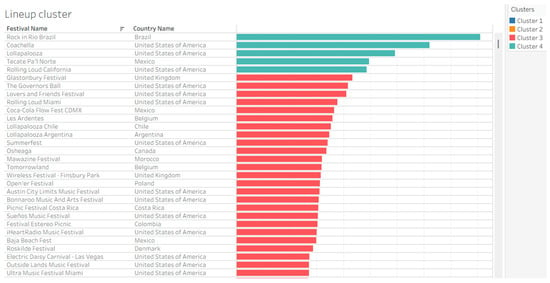
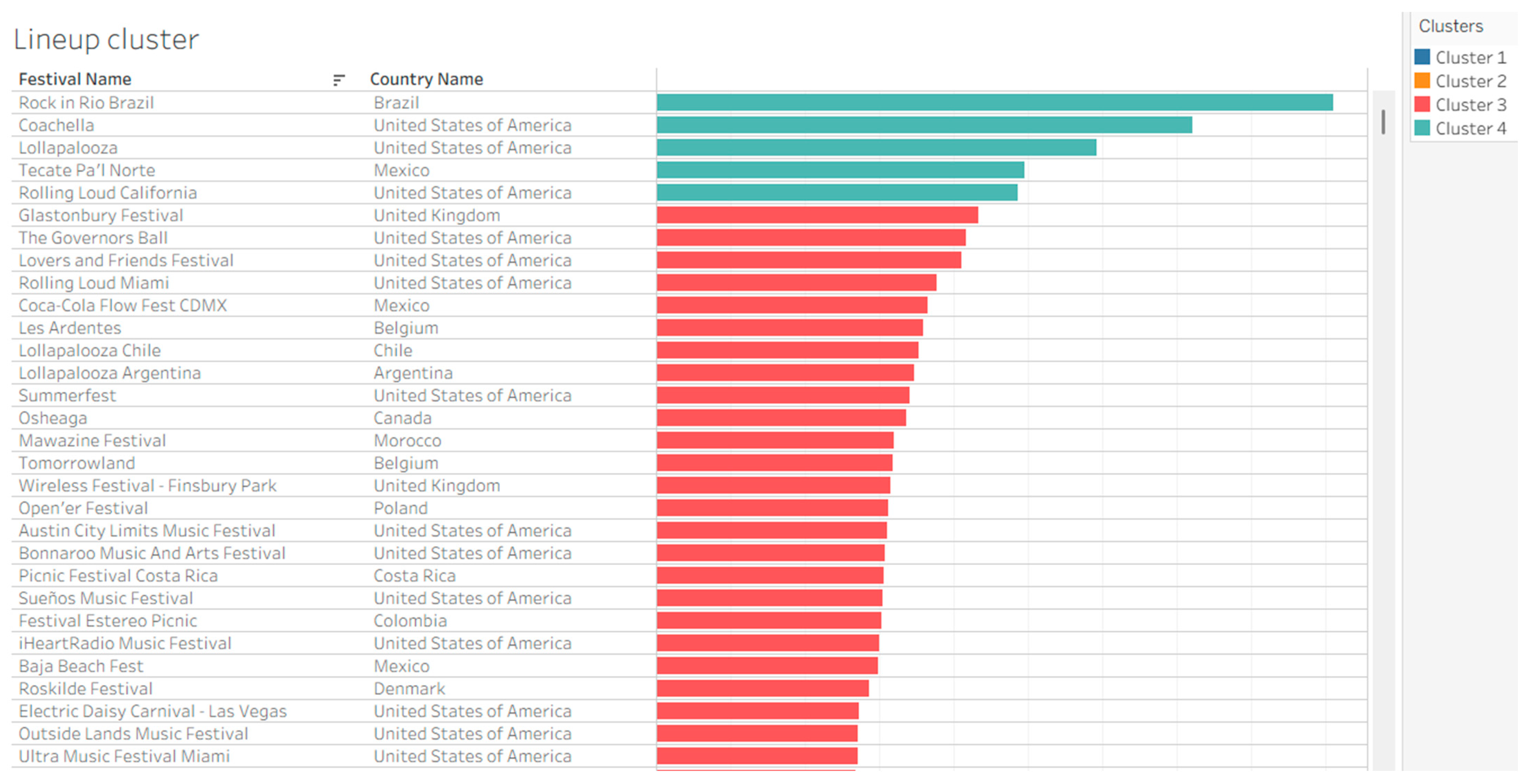
A clustering analysis of festival lineups identified four distinct clusters, reflecting different patterns of artistic composition and audience orientation. The first cluster included five festivals, three of which are located in the United States, indicating a concentration of highly similar lineup structures within a specific geographical context. These clusters offer additional insight into the cultural configuration of festival ecosystems, complementing the genre-based analysis by capturing more nuanced similarities in programming, as seen in Figure 10, presenting the results of the clustering analysis that identified four distinct festival lineup profiles.
Figure 10.
Festival clusters based on lineup characteristics. Source: Authors’ own data.
From a theoretical standpoint, the paper advances the literature in three key ways. First, it introduces a macro-level perspective on cultural participation by operationalizing festival density as a density-based national indicator. Second, it incorporates contextual density into the analysis of cultural participation and well-being, extending insights from environmental psychology to cross-country comparison. Third, it distinguishes between contextual and cultural moderators, showing that cultural attributes such as genre and program may be more influential than structural scale in shaping well-being outcomes. Methodologically, the research demonstrates the value of a comparative analytical framework that integrates cross-country correlations, subset analysis, and cultural differentiation. Practically, the analysis suggests that policymakers and urban planners should look beyond sheer event volume or economic scale and commercially oriented mega-events; support could also be directed toward localized, culturally distinctive, and community-based festivals. For example, municipal grant schemes may encourage the preservation of regional music traditions, local cultural celebrations, and grassroots community festivals. Such initiatives may strengthen local identity, foster social interaction, and contribute to culturally meaningful forms of participation that, according to our findings, are more strongly associated with well-being than festival size alone.
These findings may also be interpreted through the lens of sustainability. Festivals represent elements of local cultural ecosystems that can contribute to social sustainability by strengthening social cohesion, reinforcing collective identity, and supporting community resilience, and the results suggest that culturally meaningful forms of participation may play a complementary role in promoting sustainable well-being alongside traditional economic and institutional determinants of quality of life.
5.2. Limitations
The proposed framework should be interpreted with caution. First, the study does not claim a deterministic causal relationship between festival density and well-being. The study did not measure individual festival attendance or individual well-being outcomes, and thus the findings should not be interpreted as evidence of individual-level effects. Reverse causality remains plausible, insofar as countries with higher levels of well-being may also possess stronger cultural ecosystems, and consequently, higher festival density. Second, festival density is an aggregate proxy and cannot fully capture the intensity, quality, or inclusiveness of actual participation. Third, the relationship between NFP and well-being may be shaped by omitted structural variables such as economic development, public cultural policy, social inequality, or broader value systems. Finally, although the distinction between contextual and cultural moderation is analytically useful, these dimensions may interact in practice. For these reasons, the findings should be interpreted as evidence of patterned associations and plausible mechanisms rather than definitive proof of a single causal pathway.
In addition to structural reverse causality, behavioral selection mechanisms may also influence the observed associations. Individuals with higher baseline subjective well-being and positive affect are generally more inclined to engage in social and cultural activities. At the societal level, countries characterized by higher levels of well-being may also be more likely to support, sustain, and demand vibrant cultural ecosystems. Consequently, higher national well-being may contribute to the development and visibility of festival-rich environments, reinforcing the potential bidirectionality of the festival–well-being relationship.
The present study is subject to the risk of ecological fallacy due to its cross-country research design. As the analysis relies on aggregated national-level indicators, the findings should not be interpreted as evidence that the observed country-level relationships necessarily apply to individual citizens or festival attendees. A high national festival density does not imply that every individual experiences enhanced subjective wellbeing. The macro-level indicators employed in this study are intended to capture the broader cultural opportunity structure and environmental vitality of a society more than individual psychological outcomes.
An important limitation of the present dataset is the stronger representation of music-oriented festivals relative to other cultural formats. Although the analysis includes several non-music genres, cultural events such as film festivals, theater festivals, literary festivals, visual arts festivals, gastronomic festivals, and other multidisciplinary cultural gatherings are comparatively less visible within the database. Future research should examine these festival types separately, as they may generate distinct forms of cultural participation, social interaction, and well-being outcomes.
Future research should incorporate additional contextual and institutional variables, including social capital, educational attainment, urbanization, tourism development, and individual-level participation measures, in order to better disentangle the mechanisms linking festival ecosystems and national well-being.
6. Conclusions
The primary contribution of this study lies in demonstrating how festival density can be examined as a macro-level indicator of cultural opportunity structures across countries. By combining cross-country comparison with contextual and genre-based analyses, the study extends existing festival research beyond individual events and local case studies, providing a broader perspective on the relationship between cultural ecosystems and national well-being. This study researches the relationship between national festival participation and national well-being through a cross-country, density-based perspective. The findings show that NFP is positively associated with well-being, although the strength of this relationship varies across contextual and cultural conditions. High-density environments appear to reinforce the association, while cultural attributes, particularly genre, exert a stronger influence than structural characteristics such as festival size. By introducing NFP as a macro-level indicator of cultural engagement, the study contributes to a more comprehensive understanding of how collective cultural experiences may shape societal well-being.
Taken together, the findings suggest that festival density is associated with national well-being, but that this relationship is complex, context-dependent, and shaped by broader socioeconomic conditions. The results indicate that the cultural characteristics of festival ecosystems may be more strongly associated with well-being than structural scale alone, although these patterns should be interpreted cautiously given the limitations of cross-sectional and aggregate-level data. The study highlights festival density as a potentially useful macro-level indicator of cultural opportunity structures and provides a foundation for future research incorporating longitudinal designs, individual-level measures, and broader contextual variables.
Author Contributions
Conceptualization, R.C.L. and D.A.L.-T.; methodology, R.C.L.; software, R.C.L.; validation, R.C.L. and D.A.L.-T.; formal analysis, R.C.L. and D.A.L.-T.; investigation, R.C.L. and D.A.L.-T.; resources, R.C.L.; data curation, R.C.L.; writing—original draft preparation, R.C.L. and D.A.L.-T.; writing—review and editing, R.C.L. and D.A.L.-T.; visualization, D.A.L.-T.; supervision, R.C.L.; project administration, D.A.L.-T. All authors have read and agreed to the published version of the manuscript.
Funding
This research received no external funding.
Institutional Review Board Statement
This study relied exclusively on secondary, aggregated, and publicly available data sources. No human participants, personal data, or identifiable information were involved in the research process. Therefore, ethical review and formal approval were not required.
Informed Consent Statement
Not applicable.
Data Availability Statement
The original contributions presented in this study are included in the article. Further inquiries can be directed to the corresponding author.
Acknowledgments
During manuscript preparation, the authors used ChatGPT 5.5 (Open AI) to support language editing, translation, literature review organization, and the refinement and rewording of hypotheses, discussions and limitations. The tool was used to improve clarity, readability, and consistency of the manuscript. All conceptual development, literature selection, theoretical framing, methodological decisions, data collection, statistical analyses, interpretation of results, and scientific conclusions were performed, verified, and approved by the authors. The authors take full responsibility for the content and integrity of the manuscript. Declaration of generative AI and AI-assisted technologies in the manuscript preparation process. During the preparation of this manuscript, the authors used ChatGPT (OpenAI) to support language refinement and improve clarity. All content was critically reviewed and revised by the authors, who take full responsibility for the final version of the manuscript.
Conflicts of Interest
The authors declare no conflict of interest.
References
- Ahn, Y. Do informal social ties and local festival participation relate to subjective wellbeing? Int. J. Environ. Res. Public Health 2020, 18, 16. [Google Scholar] [CrossRef] [Scilit] [PubMed]
- Ahn, Y.; Kang, E.M.; Kiatkawsin, K.; Zielinski, S. Relationships between community festival participation, social capital, and subjective well-being in a cross-cultural context. Healthcare 2023, 11, 2361. [Google Scholar] [CrossRef] [Scilit] [PubMed]
- Mellor, D.; Hapidzal, F.M.; Teh, K.; Ganesan, R.; Yeow, J.; Abdul Latif, R.; Cummins, R.A. Strong spiritual en-gagement and subjective well-being. J. Spiritual. Ment. Health 2012, 14, 209–225. [Google Scholar] [CrossRef] [Scilit]
- Konlaan, B.B.; Bygren, L.O.; Johansson, S.E. Visiting the cinema, concerts, museums or art exhibitions as determinant of survival. Scand. J. Public Health 2000, 28, 174–178. [Google Scholar] [CrossRef] [Scilit]
- Cuypers, K.; Krokstad, S.; Holmen, T.L.; Knudtsen, M.S.; Bygren, L.O.; Holmen, J. Patterns of receptive and creative cultural activities and their association with perceived health, anxiety, depression and satisfaction with life among adults: The HUNT study, Norway. J. Epidemiol. Community Health 2012, 66, 698–703. [Google Scholar] [PubMed]
- Pressman, S.D.; Matthews, K.A.; Cohen, S.; Martire, L.M.; Scheier, M.; Baum, A.; Schulz, R. Association of enjoyable leisure activities with wellbeing. Psychosom. Med. 2009, 71, 725–732. [Google Scholar] [CrossRef] [Scilit] [PubMed]
- Wheatley, D.; Bickerton, C. Subjective well-being and engagement in arts. J. Cult. Econ. 2017, 41, 23–45. [Google Scholar] [CrossRef] [Scilit]
- Helliwell, J.F.; Layard, R.; Sachs, J.D.; De Neve, J.-E. World Happiness Report 2025; Sustainable Development Solutions Network: New York, NY, USA, 2025; Available online: https://www.worldhappiness.report (accessed on 2 April 2026).
- Ballantyne, J.; Packer, J.; Ballantyne, R. Designing and managing music festival experiences to enhance attendee well-being and driven social outcomes. Int. J. Event Festiv. Manag. 2014, 5, 253–269. [Google Scholar] [CrossRef] [Scilit]
- Yolal, M.; Gursoy, D.; Uysal, M.; Kim, H.L.; Karacaoğlu, S. Impacts of festivals and events on residents’ well-being. Ann. Tour. Res. 2016, 61, 1–18. [Google Scholar] [CrossRef] [Scilit]
- Wilks, L. Bridging and bonding. J. Policy Res. Tour. Leis. Events 2011, 3, 281–297. [Google Scholar] [CrossRef] [Scilit]
- Derrett, R. Festivals and regional destinations: How festivals demonstrate a sense of community and place. Rural. Soc. 2003, 13, 35–53. [Google Scholar] [CrossRef] [Scilit]
- Laing, J.; Mair, J.; Duffy, M. Community events and social justice in urban growth areas. J. Policy Res. Tour. Leis. Events 2015, 7, 282–298. [Google Scholar] [CrossRef] [Scilit]
- Jaimangal-Jones, D.; Pritchard, A.; Morgan, N. Going the distance: Locating journey, liminality and rites of passage in dance music experiences. Leis. Stud. 2010, 29, 253–268. [Google Scholar] [CrossRef] [Scilit]
- Clarke, A.; Jepson, A. Power and hegemony within a community festival. Int. J. Event Festiv. Manag. 2011, 2, 7–19. [Google Scholar] [CrossRef] [Scilit]
- Gotham, K.F. Theorizing urban spectacles. City 2005, 9, 225–246. [Google Scholar] [CrossRef] [Scilit]
- Wood, E.H.; Thomas, R. Measuring cultural values. Tour. Econ. 2006, 12, 137–145. [Google Scholar] [CrossRef] [Scilit]
- Rao, V. Celebrations as social investments. J. Dev. Stud. 2001, 38, 71–97. [Google Scholar] [CrossRef]
- Richards, G. Cultural Tourism: Global and Local Perspectives; Routledge: New York, NY, USA, 2007. [Google Scholar]
- De Bres, K.; Davis, J. Celebrating group and place identity: A case study of a new regional festival. Tour. Geogr. 2001, 3, 326–337. [Google Scholar] [CrossRef] [Scilit]
- Ziakas, V. Planning World-Class Events; Routledge: New York, NY, USA, 2014. [Google Scholar]
- Pine, B.J.; Gilmore, J.H. Welcome to the experience economy. Harv. Bus. Rev. 1998, 76, 97–105. [Google Scholar] [PubMed]
- Morgan, M. What makes a good festival? Event Manag. 2008, 12, 81–93. [Google Scholar] [CrossRef] [Scilit]
- Manthiou, A.; Lee, S.; Tang, L.R.; Bosselman, L. The experience economy approach to festival marketing: Vivid memory and loyalty. J. Serv. Mark. 2014, 28, 22–35. [Google Scholar] [CrossRef] [Scilit]
- Mehmetoglu, M.; Engen, M. Pine and Gilmore’s concept of experience economy and its dimensions. J. Qual. Assur. Hosp. Tour. 2011, 12, 237–255. [Google Scholar] [CrossRef] [Scilit]
- Quinn, B. Arts Festivals and the City. Urban Stud. 2005, 42, 927–943. [Google Scholar] [CrossRef] [Scilit]
- Olaveson, T. Collective effervescence and communitas: Processual models of ritual and society in Emile Durkheim and Victor Turner. Dialect. Anthropol. 2001, 26, 89–124. [Google Scholar] [CrossRef] [Scilit]
- Gabrielsson, A.; Lindström Wik, S. Strong experiences related to music: A descriptive system. Music. Sci. 2003, 7, 157–217. [Google Scholar] [CrossRef] [Scilit]
- Stokols, D. On the distinction between density and crowding. Psychol. Rev. 1972, 79, 275–277. [Google Scholar] [CrossRef] [Scilit] [PubMed]
- Neville, F. The experience of collective participation. Contemp. Soc. Sci. 2011, 6, 377–396. [Google Scholar] [CrossRef] [Scilit]
- Drury, J. The psychology of crowd behavior. Annu. Rev. Psychol. 2026, 77, 339–364. [Google Scholar] [CrossRef] [Scilit] [PubMed]
- Koefler, N.; Naidu, E.; Gabriel, S.; Schneider, V.; Pascuzzi, G.S.; Paravati, E. Let the music play: Live music fosters collective effervescence and leads to lasting positive outcomes. Personal. Soc. Psychol. Bull. 2024, 52, 546–558. [Google Scholar] [CrossRef] [Scilit] [PubMed]
- Dai, X.; Tang, S. Folk festivals as restorative environments based on attention restoration theory—The roles of liminal experience and timing. Psychol. Res. Behav. Manag. 2023, 16, 1827–1844. [Google Scholar] [CrossRef] [Scilit] [PubMed]
- Li, R.; Hu, H.-L.; Tso, S.H.; Yu, I.Y.; Yang, M.X. Promoting well-being sustainability through voluntary association participation. Sustain. Dev. 2025, 34, 1088–1101. [Google Scholar] [CrossRef] [Scilit]
- Crompton, J.L.; McKay, S.L. Motives of visitors attending festival events. Ann. Tour. Res. 1997, 24, 425–439. [Google Scholar] [CrossRef] [Scilit]
- Li, Z.; Cui, M. Exploring the determinants of cultural reinvolvement intentions among festival tourists: Insights from fsQCA. Int. J. Event Festiv. Manag. 2026, 17, 65–90. [Google Scholar] [CrossRef] [Scilit]
- Zheng, W.; Zhao-xiang, B.; Long, C. Nighttime leisure and subjective well-being. Leis. Sci. 2025, 17, 65–90. [Google Scholar] [CrossRef] [Scilit]
- Vibrate. Global Music Festival Database. 2025. Available online: https://www.viberate.com (accessed on 15 February 2025).

Disclaimer/Publisher’s Note: The statements, opinions and data contained in all publications are solely those of the individual author(s) and contributor(s) and not of MDPI and/or the editor(s). MDPI and/or the editor(s) disclaim responsibility for any injury to people or property resulting from any ideas, methods, instructions or products referred to in the content. |
© 2026 by the authors. Licensee MDPI, Basel, Switzerland. This article is an open access article distributed under the terms and conditions of the Creative Commons Attribution (CC BY) license.