


Abstract
Water stress is a major challenge that limits the growth, development, and yield of maize (Zea mays L.) worldwide, especially under climate change, particularly abiotic stresses. This review presents a comprehensive bibliometric and literature-based analysis of research on maize’s response to drought and water scarcity from 1975 to 2025, using VOS viewer1.6.20 software, facilitating the detection of co-authorship networks, thematic groupings, and patterns of keyword co-occurrence within the selected publications. Data from the Web of Science were examined to assess publication trends, keyword networks, and international collaborations. A literature search was conducted by combining the keywords ((“maize”) OR (“corn”) AND (“drought”) OR (“water stress”) AND (“yield”)). Relevant studies were retrieved from the Web of Science (WoS) database using this search string. The Mann–Kendall test revealed a significant positive trend (p = 0.001) in publications on water scarcity (R2 = 0.8526), with 396 relevant studies identified globally, regardless of language. The analysis of publication trends demonstrated a statistically significant increase in the volume of publications over the examined period, featuring major contributions from Kenya, Switzerland, Mexico, China, and the United States. The most influential publication focuses on a biotic stressor that significantly reduces maize grain yield. These results emphasise the need for integrated strategies that combine genetic improvement and sustainable irrigation to mitigate the impacts of water stress. This comprehensive analysis provides a foundation for guiding future research and policy development to improve maize resilience against the effects of water stress under changing climatic conditions.
1. Introduction
Maize (Zea mays L.) is a major cereal crop worldwide, serving as a staple for human consumption and animal feed [1,2] (p. 1). By the year 2050, it is anticipated that the global demand for maize will increase by 70–100% to accommodate the needs of a population projected to reach 9.8 billion. Nevertheless, the current levels of fodder maize production are inadequate to satisfy this escalating demand. During the 2022/2023 production year, global fodder maize output experienced a decline of 5.25%, amounting to approximately 1157.95 million tons. This reduction was primarily attributed to severe drought and heat conditions in the United States, which is currently the largest producer of maize. Similar declines in production were also observed in the European Union and Ukraine, underscoring the sector’s susceptibility to climate change [3] (p. 2).
Its growth, physiological processes, and grain yield are profoundly influenced by water availability, especially during key developmental stages such as seedling establishment, vegetative growth, flowering (tasseling and silking), and grain filling [4] (p. 2). Water stress during the vegetative growth stage can severely inhibit plant growth and reduce leaf area, thereby decreasing yield [4] (p. 1). Plants respond to drought through various physiological, structural, and biochemical changes, including alterations in water content and allocation among roots, stems, leaves, and fruits, which are critical for maintaining internal water balance [2,4,5,6] (p. 2). Water deficit stress (WDS) from pre-flowering through late grain-filling stages severely impacts maize phenotype, reproductive processes, and seed set. Consequently, yields in wet-season and rain-fed regions are declining due to recurrent natural WDS [2] (p. 1).
Water is essential not only as a vital component of crops but also as the medium for most biological processes [5] (p. 2). The root is the primary organ for nutrient uptake and water absorption [5,7,8] (p. 2), the stem serves as the main transport system supporting other organs [5,9,10] (p. 2), and leaves perform photosynthesis and transpiration to draw water and nutrients [5,11,12] (p. 1, p. 2). Understanding how water is distributed among these organs under stress conditions is crucial for developing effective water management and breeding strategies to enhance corn resilience.
Global warming has increased the frequency of droughts and related extreme weather events, such as drought and waterlogging, which, along with anthropogenic factors like groundwater over-exploitation and aquifer disturbance, exacerbate water stress in farmland [13,14] (p. 62, p. 3). Water stress negatively affects crop growth, yield, and quality, and can alter leaf spectral properties [15,16] (p. 2, p. 1). These challenges underscore the need to synthesise existing research on how water stress impacts corn production across diverse environments and management practices.
Plants have evolved multiple strategies to cope with drought, including stomatal regulation to reduce water loss, osmotic adjustment to maintain cellular hydration, antioxidant defences to counter oxidative stress, and modifications in root structure and hormonal signalling to enhance water uptake and stress resistance [17,18,19,20,21] (p. 2). These physiological responses are regulated at the molecular level via stress-induced gene expression, epigenetic modifications, and complex signalling pathways [22,23,24] (p. 2). Advances such as marker-assisted selection, genome-wide association studies, and CRISPR-based genome editing have enabled the development of drought-resistant corn varieties with improved water-use efficiency [25,26] (p. 2). Epigenetic regulation and transgenic approaches also offer promising avenues for enhancing stress memory and long-term resilience. Beyond genetics, agronomic innovations play a critical role in mitigating drought stress [27,28,29] (p. 2).
Given the extensive and varied research on corn water stress from molecular physiology to agronomic management, there is a need for an integrative bibliometric approach to map research trends and identify knowledge gaps. Bibliometric analysis uses statistical and visualisation tools to quantitatively and qualitatively evaluate research outputs based on titles, abstracts, keywords, author affiliations, collaboration networks, and trends [30,31] (p. 2). This study employs bibliometric methods to explore future research directions on the effects of water stress on maize production.
This bibliographic review aims to address gaps in the literature regarding the impact of water stress and drought on maize yield by synthesising recent findings on how water deficits affect maize growth, physiology, and yield. The specific objectives are to: (1) evaluate the overall impact of water stress and drought on corn grain yield; (2) analyse the influence of various water management and drought mitigation practices on corn yield; and (3) investigate the interaction effects between drought conditions and chemical and organic fertilisers on corn grain yield.
2. Materials and Methods
This review utilised Web of Science (WoS) for its established reputation, authority, and extensive coverage of approximately 34,000 peer-reviewed journals worldwide [32] (p. 3). WoS serves as a significant source of peer-reviewed articles and offers a straightforward, user-friendly interface, facilitating bibliographic literature reviews and data visualisation through tools like VOS viewer1.6.20 software [33] (pp. 1, 4).
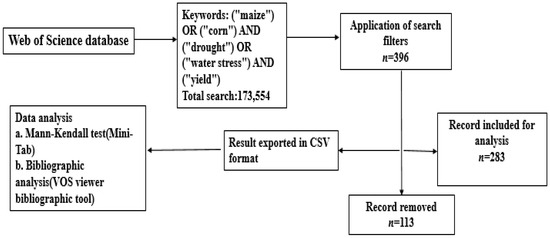
The review process was carried out in several steps (Figure 1). Initially, the authors performed a broad search of the WoS database for scientific literature related to maize research under drought or water stress conditions. The search string used was: ((“maize”) OR (“corn”) AND (“drought”) OR (“water stress”) AND (“yield”)). When searched by topic (title, abstract, and keywords), this query returned 173,554 documents, which were too many to manage. Therefore, the search was limited to only the title field, reducing the results to 70,703 documents. Additional filtering by publisher (Springer Nature) narrowed the count to 9438 documents, and further refinement by WoS categories (Agronomy) yielded 2831 documents. Restricted by WoS categories and open access resulted in 396 documents (https://www.webofscience.com/wos/woscc/summary/d2827e24-9397-48da-9676-a4d11bf9e236-017cc026e0/relevance/1 (accessed on Sunday 28 September 2025)). The search was conducted on 15 October 2025, ensuring that the most recent publications within 50 years indexed in WoS up to that date were included. A total of 396 articles were retrieved, each containing at least one of the keywords in the search strategy; therefore, all were included in the bibliometric analysis to achieve objective one. For objectives 2–4, the inclusion and exclusion strategy involved reviewing the articles to answer the following questions:
Figure 1.
Document inclusion and exclusion criteria.
- Did the study report any impact of drought stress on maize yield?
- (a)
- Yes (Yes, the study reported a significant effect of water scarcity on maize yield)
- Did the study report any impact of fertiliser on maize yield?
- (a)
- Yes (Yes, the study reported a significant effect of chemical and organic fertilisers on maize yield)
- Did the study report a biotic stress on maize yield?
- (a)
- Yes (Yes, the study reported a significant effect of abiotic factors and climatic change on maize production)
Inclusion and exclusion criteria:
Subsequently, the authors manually screened these documents based on specific inclusion and exclusion criteria. Studies were included if they contributed to maize research areas such as maize yield (both quality and quantity), molecular breeding, water stress, and drought tolerance. Papers focusing on maize diseases and disease management were excluded (113 documents). This selection process yielded 283 papers, published between 1975 and 2025. Similarly, the restriction to English language and open-access publications may introduce a degree of publication bias. Nevertheless, WoS was chosen for its high-quality indexing, citation linkage, and standardised metadata suitable for bibliographic analysis.
Data extraction and analysis:
The metadata for the 396 selected articles was exported from the Web of Science database in CSV format. However, for the narrative synthesis and in-depth discussion, we selected the most relevant, high-impact, and representative 75 articles that directly addressed our research questions regarding water stress impacts on maize growth, physiology, and yield. Publication counts and relevant bibliometric data were transferred to Microsoft Excel to examine publication trends using Excel’s analytic functions. Bibliometric analyses were conducted using the VOS viewer1.6.20 software [34] (pp. 523–536). The principal units of bibliometric evaluation included co-authorship (by organisation and countries), co-occurrence (of author keywords and all keywords), and citation analysis (by authors and documents). The bibliometric indicators were visualised using VOS viewer network mapping functions, enabling the identification of co-authorship networks, thematic clusters, and keyword co-occurrence relationships among the selected publications.
3. Results
3.1. Publication Trends in MWSDY Research
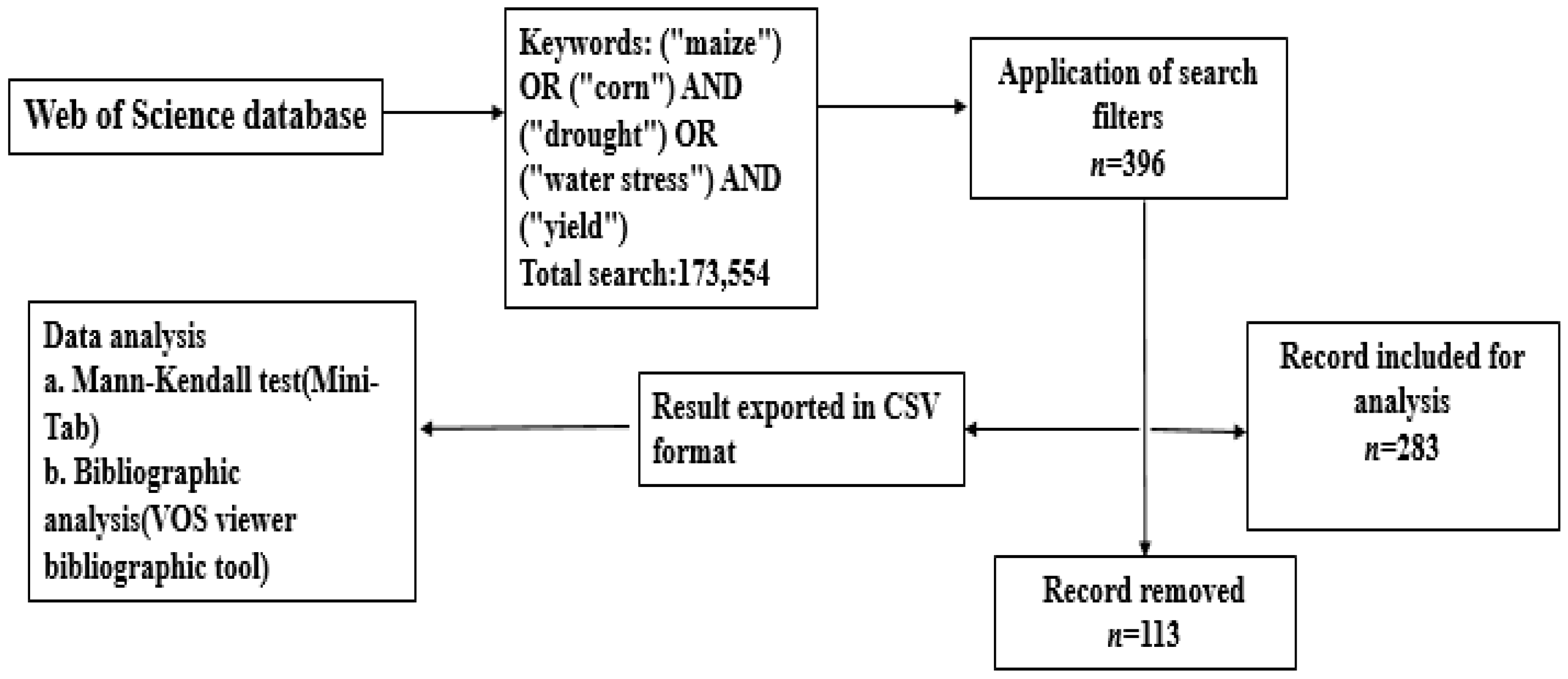
The bibliographic review encompasses 396 publications released from 1975 to 2025. Analysing publication trends using Mann–Kendall analysis revealed a notable positive trend (p < 0.001), with a model fit of 85.3%. Advancement of scientific documents based on literature search on maize, water stress, drought, yield and yield component (MWSDY) was noticed. In the nineteenth century, 5% of documents were published. From 2000 to 2014, 30.5% of documents were published. Later, the progress was 5763 (3.4%) documents in 2015, 6067 (6.07%) in 2016, 6454 (6.45%) in 2017, 7063 (7.06%) in 2018, 7896 (7.9%) in 2019, 8867 (8.9%) in 2020, 9536 (9.6%) in 2021, and 9730 (9.7%) in 2022. From 2015 to 2022, there was a notable rise from 3.4% to 9.7%. This increase followed an exponential pattern, as evidenced by a high R2 value of 0.9, indicating a strong model fit for the scientific papers published on MWSDY topics (Figure 2). On the other hand, only a slight decrease was realised in the number of documents in 2023 and 2024 (8.98 to 9.49%), respectively.
Figure 2.
Trend of publication on MWSDY from 1975 to 2025. MWSDY: Maize, water stress, drought and yield.
The slight decrease in publication numbers observed for 2023 and 2024 (8.98% and 9.49% of total publications, respectively) requires careful interpretation and likely reflects multiple factors rather than declining research interest:
- Scientific databases typically experience a 6–12 month delay in complete indexing of recently published articles. Since our search was conducted in [28 September 2025], many 2024 publications may not yet be fully indexed in the databases searched, artificially lowering the apparent publication count [35] (p. 36).
- The COVID-19 pandemic (2020–2022) created significant disruptions in research activities, laboratory work, and peer review processes. Studies initiated during or after this period may still be working through the publication pipeline, with results appearing in subsequent years [36] (p. 1).
It is important to note that this trend does not indicate waning scientific interest in maize drought tolerance. Rather, the field may be transitioning from descriptive studies toward more integrative, systems-level approaches that combine multiple stresses and technologies, which will become more apparent in publications from 2025 onward.
The increase in research publications reflects a rapid scientific response to understand and mitigate the impacts of water stress on maize production, including its effects on plant growth, physiology, and yield. By 2050, the global population is expected to reach 9 billion, driving an 85% increase in food demand [37] (p. 2). The 2021 UN Food Systems Summit emphasised the urgent need to address environmental challenges, including averting climate change threats to the capacity of agrarian systems for sustainable food production. In response to that call, robust research on cropping systems, soil factors, climate change, and major food crops was carried out. Figure 1. shows document inclusion and exclusion criteria.
3.2. Increasing the Publication Rate of MWSDY Scientific Articles
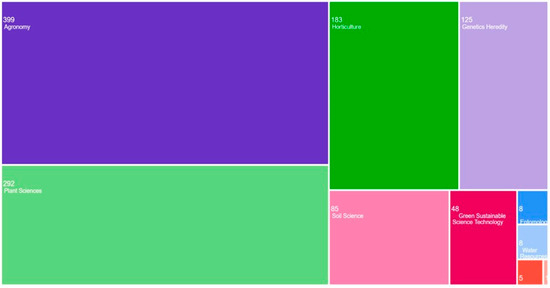
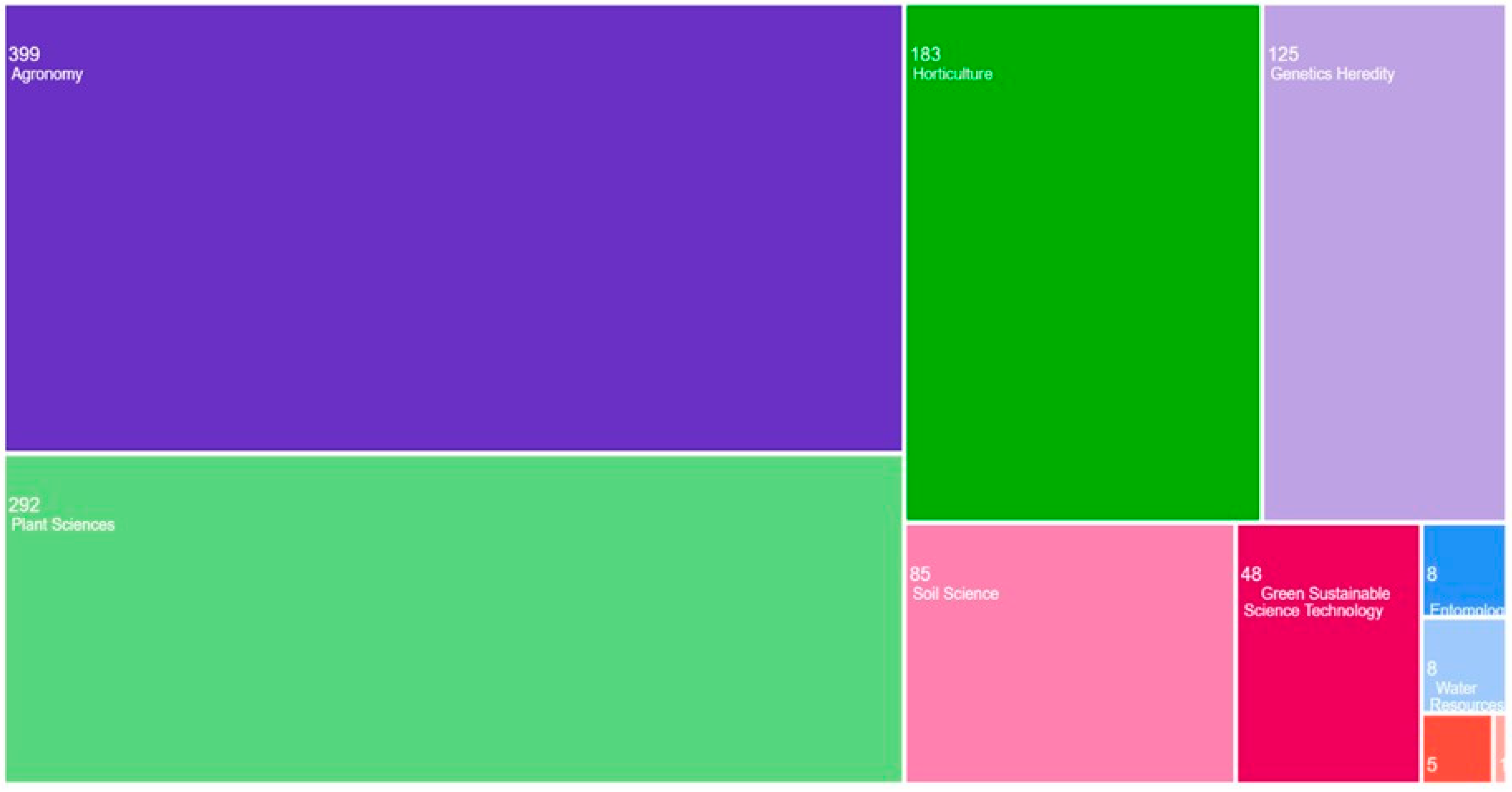
Based on WoS data, MWSDY-related publications from 1975 to 2025 have garnered substantial academic attention. Document types and their respective quantities and proportions include: research articles (n = 350, 88.4%), review articles (n = 23, 5.8%), conference proceedings (n = 3, 0.8%), and book chapters (n = 2, 0.5%). The classification of document types in Web of Science is non-exclusive. Consequently, a single publication may be indexed under multiple document types, resulting in overlapping counts when these document types are aggregated. As demonstrated in Figure 2, the annual publication rate remained relatively low and stable, below 10 publications per year from 1988 to 2009. However, from 2008 onward, the field exhibited a marked increase, reaching a peak post-2014. The highest yearly output was recorded in 2022 with 43 publications, followed by 35 in 2023 and 38 in 2024. The apparent decline to 27 publications in 2025 is likely attributable to partial-year data capture. The tree map visualisation in Figure 3 indicates that research outputs were predominantly concentrated within the WoS categories of Agronomy (399), Plant Sciences (292), Horticulture (183), Soil Science (85), and Green and Sustainable Science and Technology (48). This upward trajectory in publication volume, alongside a broadening disciplinary scope, reflects an intensifying scientific endeavour aimed at addressing key challenges in maize production to improve crop yield and sustainability. Publications function as an essential medium for distributing valuable knowledge among organisations, institutions, individuals, and industries [34,38,39] (p. 4). They contribute significantly to enhancing the productivity, effectiveness, and competitive standing of academic outputs produced by universities and institutions [34,40] (p. 4). The growth and dissemination of publications, as well as knowledge exchange among scholars, leaders, and the broader community, depend on strong social connections and active interactions [34,41] (p. 4).
Figure 3.
Tree map of the article published in MWSDY from 1975 to 2025.
3.3. Geographic Distribution and Scientific Collaboration
Table 1 presents the leading 20 countries in MWSDY scientific publications. China occupies the foremost position with 76 publications, constituting 19.2% of the total 396 documents. Germany ranks second with 63 publications, accounting for 15.9% of the overall research output, while the USA is third with 60 publications, representing 15.2% of the total MWSDY papers. Collectively, these three nations contribute over 49% of the total academic output in this domain. Countries with relatively higher total link strength include Kenya (89) and Mexico (76) (Table 1). During the analysed period, most African countries produced fewer than 24 publications, except Kenya, which contributed 47 documents, indicating a need for increased research output from the continent. However, this observation may not be definitive, as studies from many African nations might be published in journals not indexed by the WoS. Nevertheless, existing evidence of collaborative research, as previously noted, underscores Africa’s lag in maize research and production, resulting in lower yields. Researchers at numerous African institutions encounter significant challenges in accessing international scientific journals and databases, which impede their ability to remain current with the latest literature and to submit their work to high-impact journals. Additionally, many researchers lack adequate training in scientific writing, data analysis, and the peer-review process, thereby reducing the likelihood of their work being accepted for publication [42] (p. 10).
Table 1.
The top 20 papers and co-authoring countries on MWSDY based on the. WoS literature search between 1975 and 2025.
A total of 51 countries have published at least one document concerning the MWSDY topics. Of these, two countries have each produced over 60 documents, six countries have published between 30 and 60 documents, 12 countries have contributed between 10 and 23 documents, and 31 countries have published between one and eight documents.
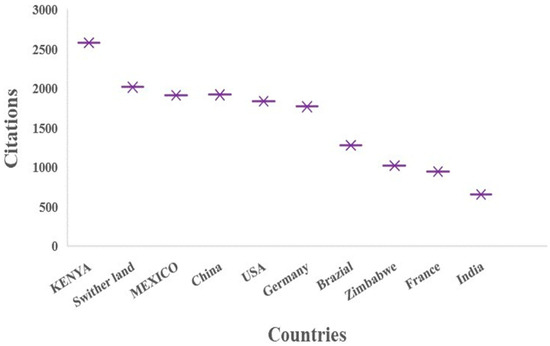
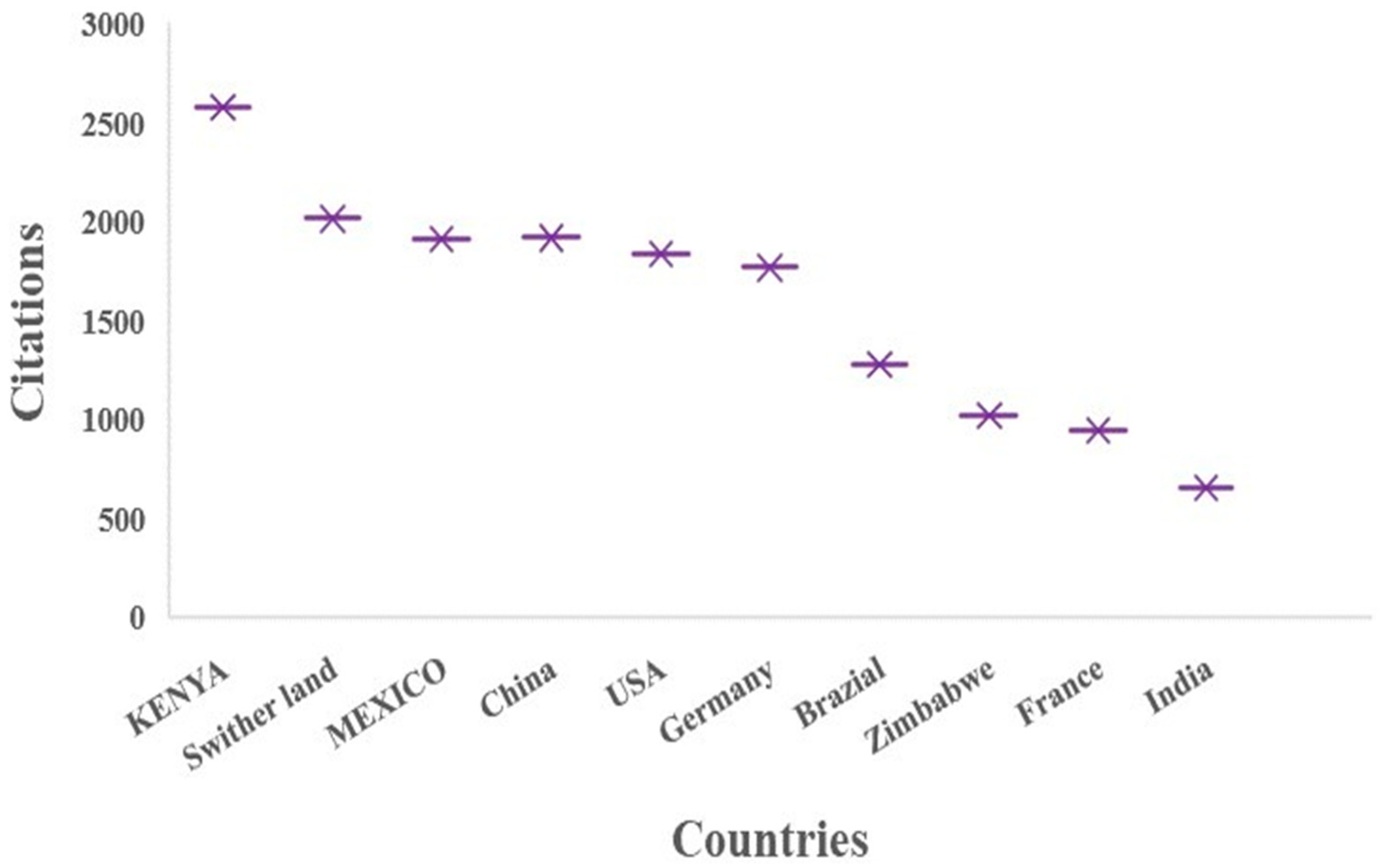
Among the top 10 most-cited countries, Kenya ranks highest with 2573 citations, followed by Switzerland with 2,011 citations. Mexico, China, and the United States occupy the next three positions in the top five, each contributing between approximately 1000 and 2011 citations (Figure 4). These citation metrics emphasise the global nature of scientific collaboration in this field, highlighting Kenya and Switzerland as prominent contributors to research impact.
Figure 4.
The top 10 cited countries based on the WoS literature search MWSDY between 1975 and 2025.
The observed increase in publications and co-authorship (Figure 5 and Figure 6) concerning the effects of water stress and drought on maize suggests that these countries are engaging in more advanced research efforts aimed at enhancing food production to meet the demands of a growing population [43] (p. 3).
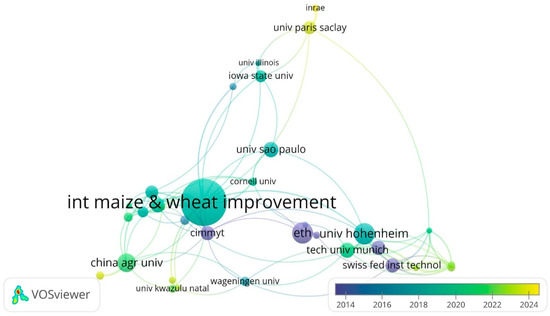
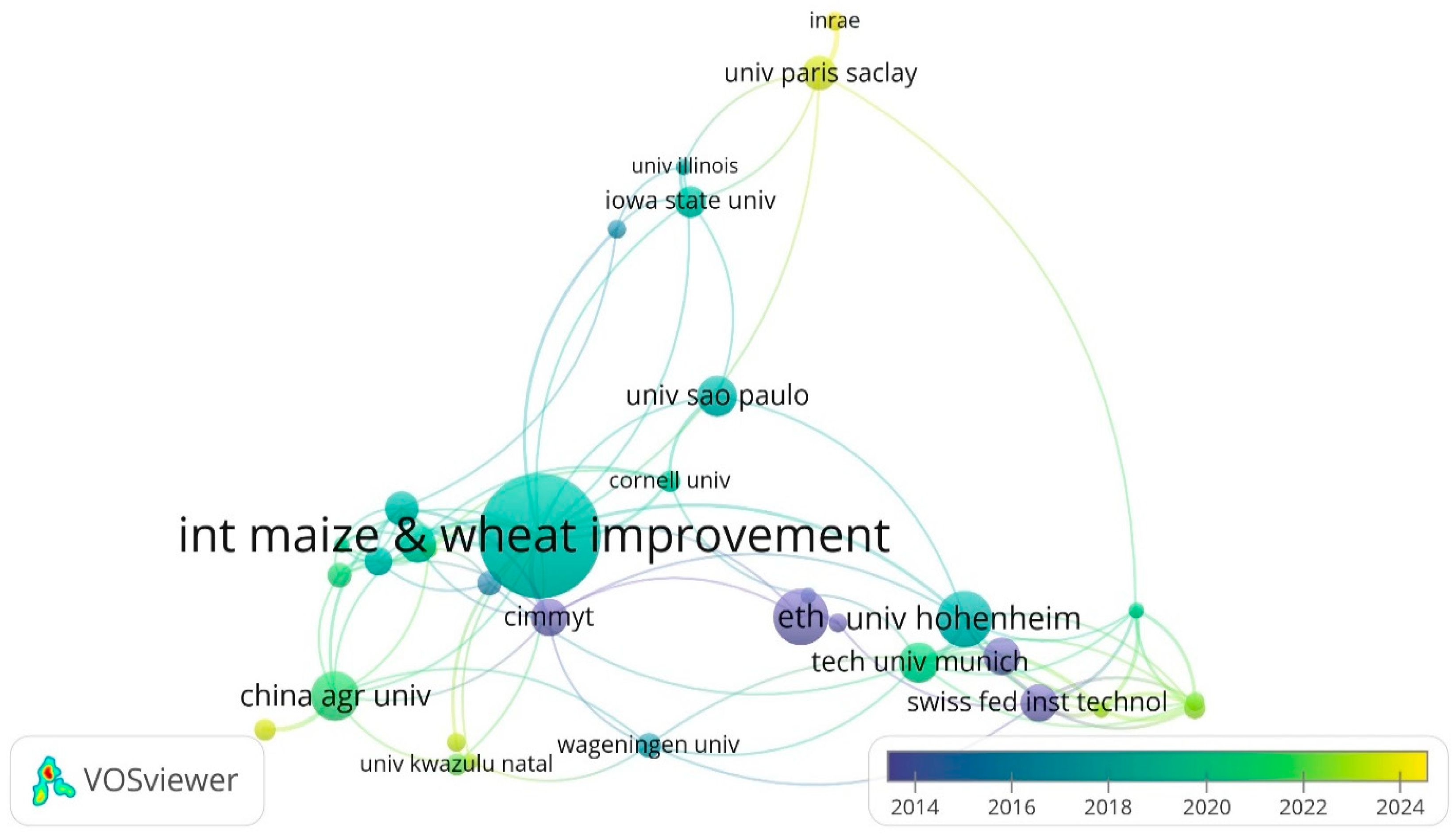
Figure 5.
Co-authorship organisations based on WoS literature search MWSDY between 1975 and 2025.
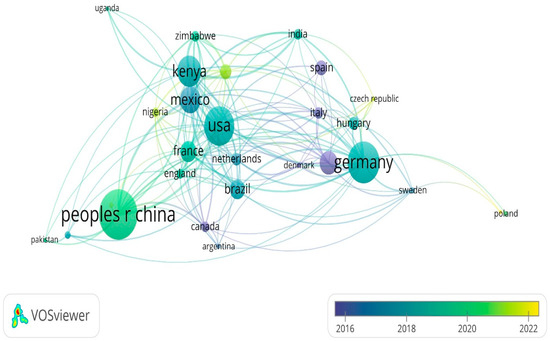
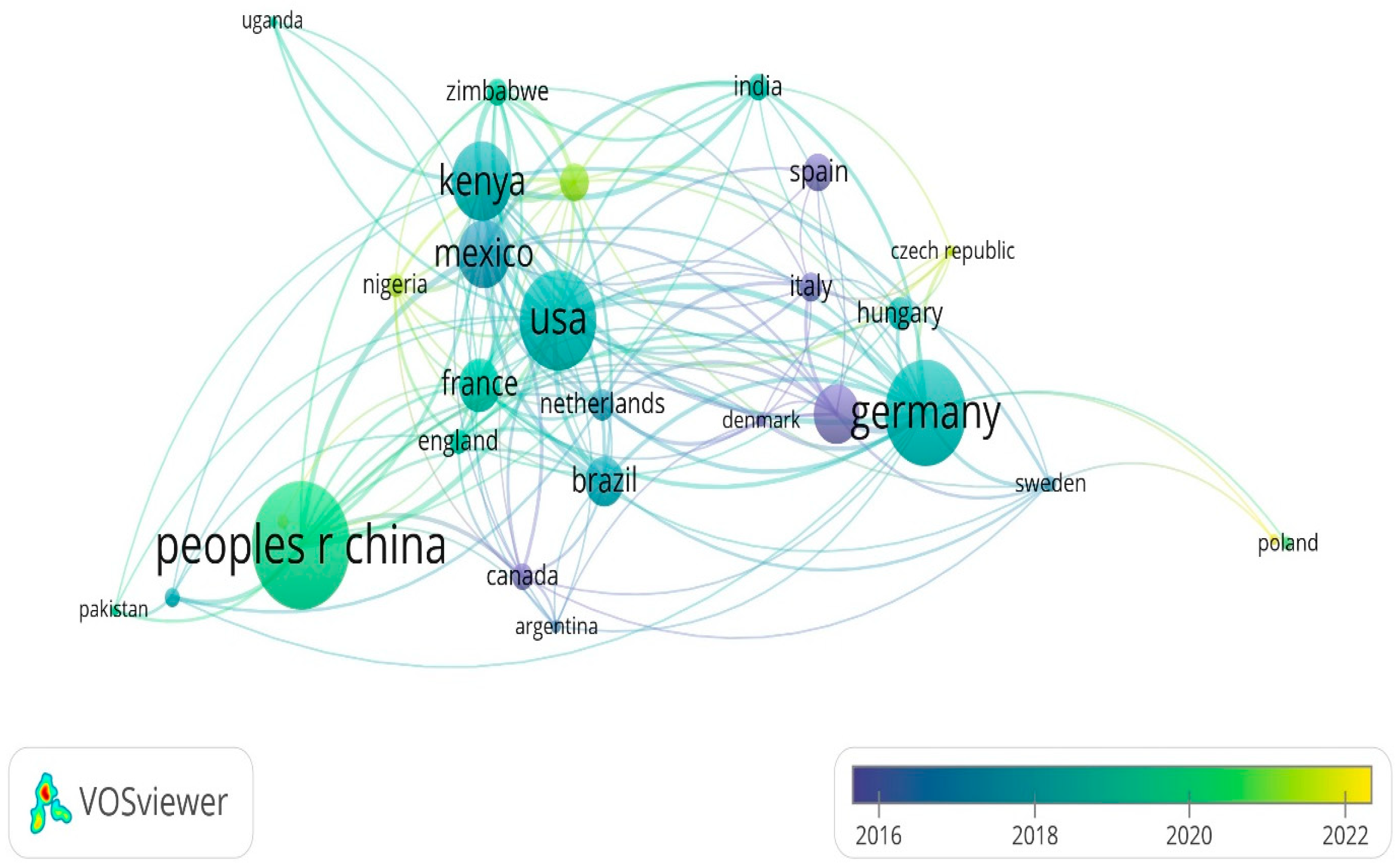
Figure 6.
Co-authorship countries based on WoS literature search MWSDY between 1975 and 2025.
Figure 5 presents the VOS viewer overlay visualisation depicting the global institutional collaboration network in international maize and wheat improvement research from 2014 to 2024. The network exhibits a pronounced centralisation around the International Maize and Wheat Improvement Centre (CIMMYT), which functions as the primary hub, characterised by the largest node size and highest link strengths. This centrality underscores CIMMYT’s pivotal role in coordinating and disseminating research activities on a global scale. Significant collaborative linkages are observed between CIMMYT and leading academic institutions, notably Cornell University and the University of São Paulo, which serve as secondary hubs facilitating connectivity across North America, Latin America, Europe, and Africa. European institutions, including ETH Zurich, University of Hohenheim, Technical University of Munich, and the Swiss Federal Institute of Technology, form a densely interconnected cluster, reflecting sustained collaboration in advanced breeding, genetics, and agronomic research domains. Research institutions have significantly advanced sustainable development through comprehensive research and development, collaborations and partnerships, projects, consultations, interactions, and publications [44] (p. 5).
Figure 6 illustrates a highly interconnected global collaboration network in maize and wheat research, where a few countries serve as major hubs. The USA and Germany stand out as dominant hubs, evidenced by their large node sizes and numerous connections spanning all regions. China also holds a central role, linking extensively with both developed and developing countries, reflecting its increasing involvement in this research area. A dense mid-tier network includes countries such as Kenya, Mexico, India, Brazil, and several European nations (e.g., France, the Netherlands, Italy, and Spain), highlighting ongoing bilateral and multilateral partnerships. The overlay’s colour gradient from purple to yellow indicates that collaborations involving European countries for example, Germany, Denmark, Hungary and North American partners emerged earlier (2016–2018), while connections with countries like India, Spain, and Poland are more recent (2020–2022), demonstrating the network’s temporal expansion and diversification, with newer collaborations increasingly involving emerging economies and Eastern European countries.
3.4. Keyword Co-Occurrence and Research Themes
The comprehensive network analysis of keywords associated with MWSDY, maize, yield, growth, and soil revealed occurrence frequencies of 104, 42, 36, and 21, respectively, underscoring these as the predominant terms (Table 2). Within the subset of author-provided keywords, maize (101), drought stress (11), yield (10), and rhizosphere (10) exhibited the highest occurrence frequencies (Table 3). Maize, yield and drought stress are central themes in both all keywords and author keyword analyses. Yield and maize dominate both in frequency and link strength, indicating their key role in MWSDY research. Author keywords include more specific biological and environmental terms, such as “rhizosphere,” “phosphorus,” and “hybrid,” indicating detailed research focus areas. The total link strength values indicate how strongly these keywords are connected with others in the network, reflecting their centrality in the research field.
Table 2.
Total link strength and co-occurrences analysis of all keywords on MWSDY between 1975 and 2025.
Table 3.
Total link strength and co-occurrences analysis of author keywords on MWSDY between 1975 and 2025.
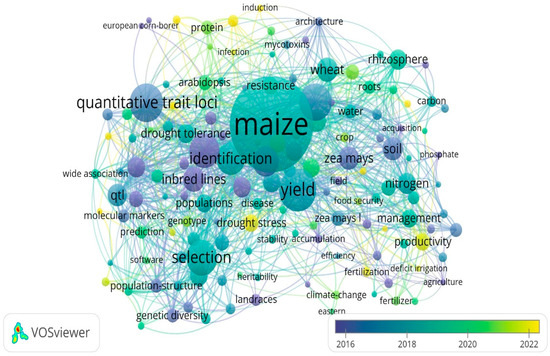
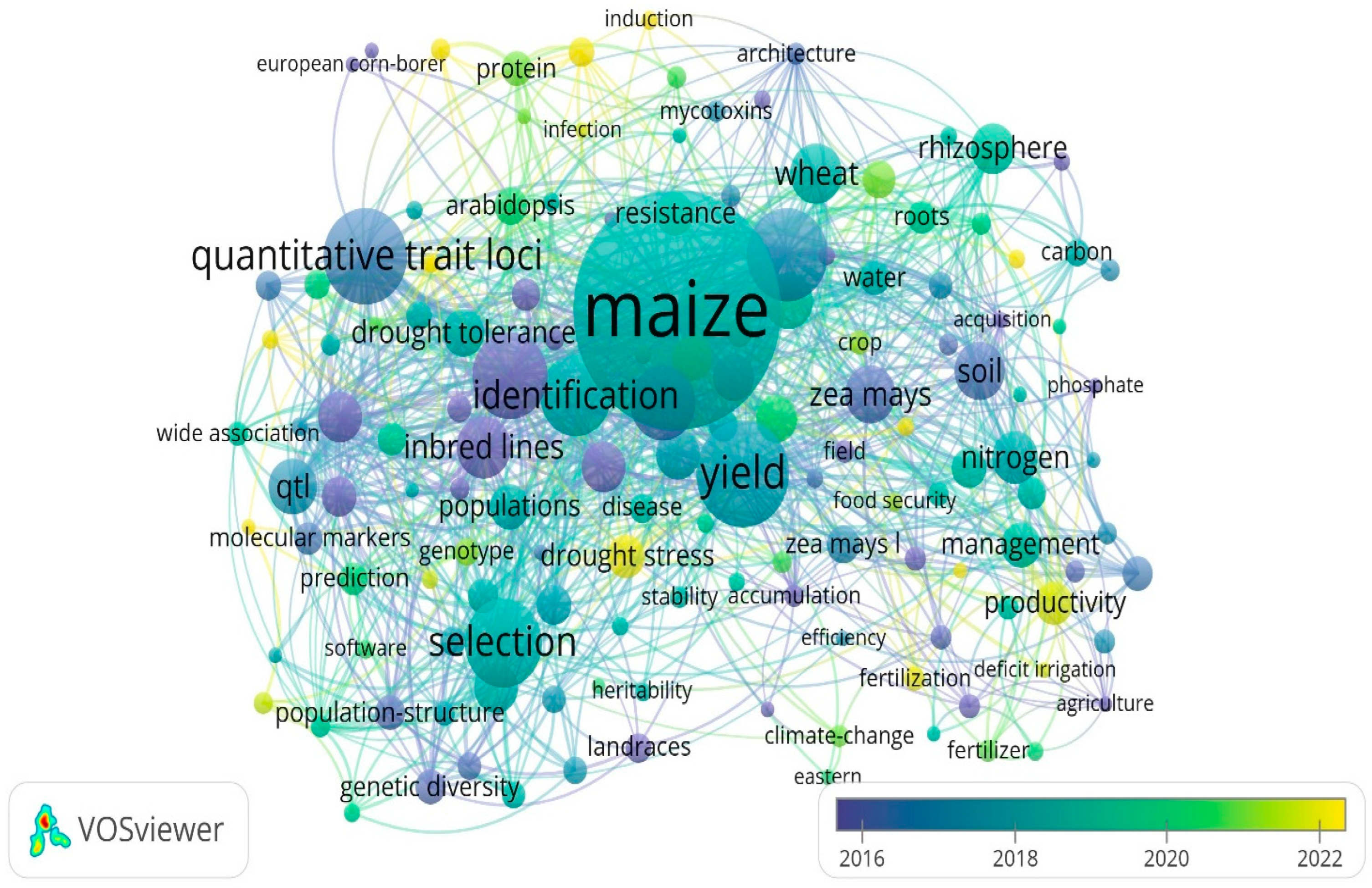
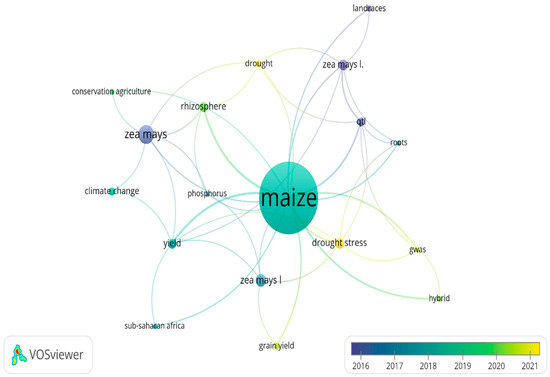
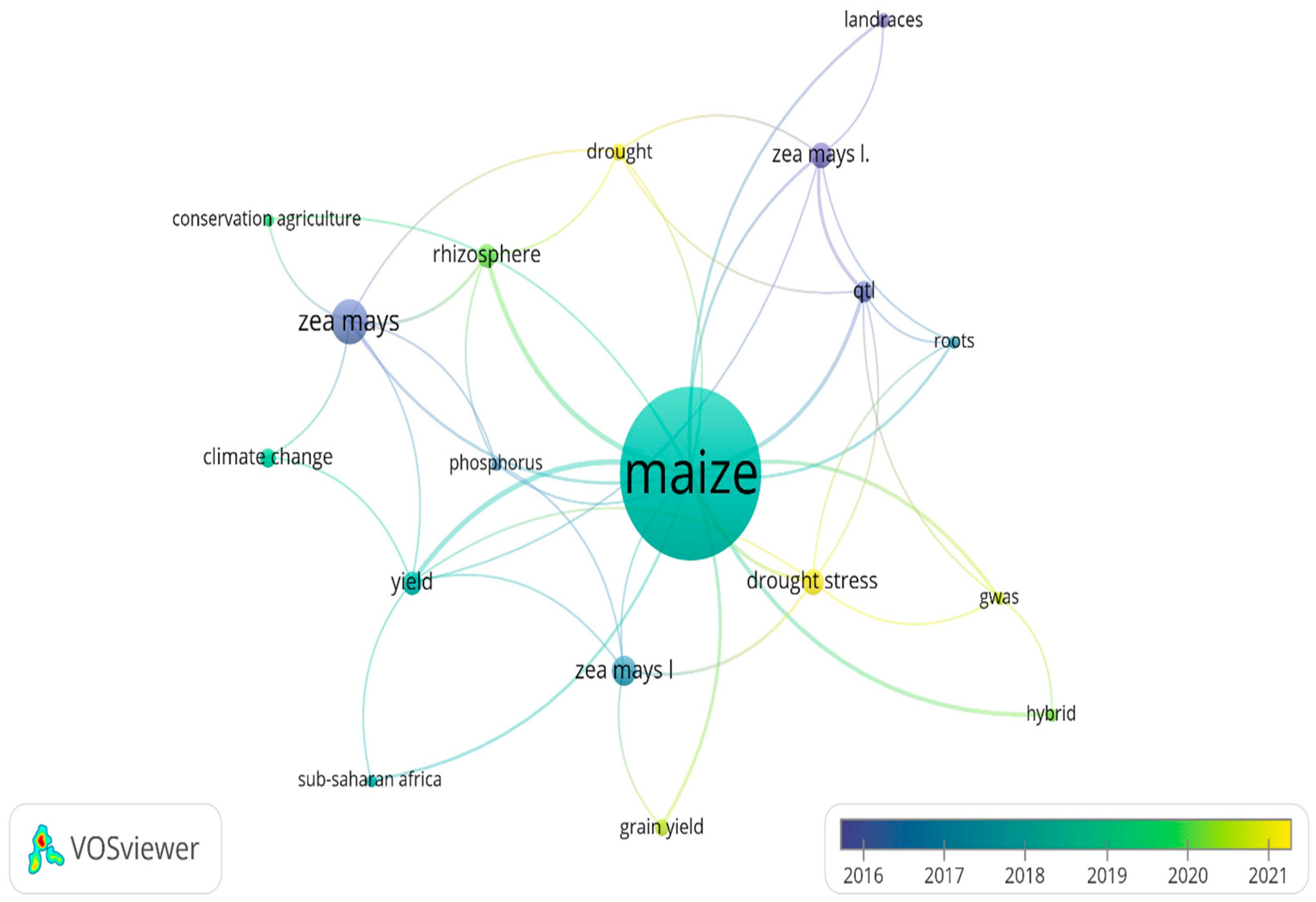
Notably, “maize grain yield” demonstrated the greatest occurrence and total link strength, signifying a central research emphasis on optimising maize production. Temporal clustering based on publication years, visualised through distinct colour codes, revealed evolving research trends (Figure 7). The purple cluster (1975–2018) is characterised by frequent co-occurrence of author keywords such as grain yield, tropical maize, genetic diversity, soil, inbred lines, molecular markers, irrigation, variability, photolysis, accumulation, landraces, and environment. The green cluster (2019–2021) reflects an increased co-occurrence of terms including crop maize, nitrogen, management, fertiliser, use efficiency, rhizosphere, plant, diseases, and heat stress. Additionally, this period marks a notable increase in keywords such as maize, climate change, hybrid, rhizosphere, yield, and conservation agriculture. The most recent yellowish cluster (2022–2025) indicates a pronounced co-occurrence of keywords related to impact, fertilisation, productivity, deficit irrigation, drought stress, expression, and induction (Figure 7). Correspondingly, Figure 8 illustrates that from 2022 to 2025, the yellowish cluster exhibits intensified co-occurrence of terms such as grain yield and drought stress, reflecting a contemporary research focus on maize performance under stress conditions
Figure 7.
The network illustrating the co-occurrence of all keywords on MWSDY between 1975 and 2025.
Figure 8.
The network illustrating the co-occurrence of author keywords on MWSDY between 1975 and 2025.
Maize yield, a crucial global food crop, is primarily constrained by drought conditions [45] (p. 3). Gaining insight into maize’s adaptability under drought conditions is essential for supporting its growth, development, and yield, thereby contributing to food security in the face of climate change [5] (p. 2). This reflects the importance of water in supporting plant and crop life activities, consistent with agricultural science understanding [46,47,48] (p. 1, p. 82 and p. 1). Water stress significantly impacts yield components, leading to overall reductions in crop yield. During critical growth stages such as anthesis, water deficit reduces pollination efficacy, resulting in fewer grains per spike and lower grain yield [49] (p. 1). Additionally, water stress impairs key physiological processes, including photosynthesis, growth rate, and carbohydrate translocation to grains, which negatively affects grain size and weight [50] (p. 67). Water stress disrupts plant water relations by lowering the leaf’s relative water content, water potential, and turgor pressure, thereby impairing plant growth and metabolic activities essential for yield component development, such as leaf area, seed number, seed weight, and final yield [51] (p. 268). In crops like cotton, water deficit similarly diminishes yield through negative effects on vegetative growth, photosynthesis, and reproductive processes, including flower formation, seed set, and boll development, with reported yield losses of up to 50% under severe drought [52] (pp. 17–19). Both male and female reproductive organs are sensitive to water stress during meiosis, underscoring drought’s complex physiological effects on reproductive success [49] (p. 2). While management strategies such as optimising irrigation schedules and selecting drought-tolerant genotypes can alleviate yield reductions, they do not fully prevent the detrimental impacts of water stress on yield components [53] (p. 43).
In conclusion, water stress reduces yield components primarily by disrupting reproductive development, thereby lowering grain or seed number, weight, and size. These effects stem from physiological disturbances in water relations, photosynthesis, and carbohydrate partitioning, culminating in decreased grain and overall crop yield across multiple plant species under drought conditions [54] (pp. 1–2).
3.5. Most Cited Publications and Influential Journals
Table 4 outlines the ten most cited articles in the field of maize production from the WoS database. The article by Faroog [55] (pp. 461–481) ranks first with 547 (WoS) and 647 (ADB) citations in all databases, highlighting the critical importance of abiotic stress tolerance in maize productivity. Following this, the study by [56] (pp. 657–673) holds the second position, with 354 (WoS) and 407 total citations. Both these articles were published in “Agronomy for Sustainable Development,” a journal that frequently appears as a key platform for impactful maize research. Additionally, journals like “Theoretical and Applied Genetics” and “Plant and Soil” have gained prominence, as evidenced by influential papers such as Messmer [57] (pp. 913–930) with 236 citations and Chivenge [58] (pp. 1–30) with 220 citations. This trend suggests that open access publishing is playing an increasingly vital role in enhancing the visibility and citation impact of research in this field. The citation patterns indicate that research on abiotic stress tolerance, sustainable agronomic practices, and advanced breeding technologies constitutes the most influential and enduring areas within maize science. These areas collectively inform current strategies aimed at enhancing maize productivity and resilience on a global scale.
Table 4.
Top 10 cited articles on MWSDY between 1975 and 2025.
Water scarcity is a critical constraint affecting maize yield across the world [65,66,67,68] (p. 1, p. 2, p. 401, p. 3). Financial setbacks in maize cultivation caused by water shortage are considerable; therefore, developing drought-resistant maize varieties is one of the key challenges faced by maize breeders today [66] (p. 2). Furthermore, maize demands a substantial amount of water to reach its optimal yield potential [67,68] (p. 2 and pp. 158–166). One study reported water needs between 740 and 900 mm, while more recent research suggests that maize water requirements fall within the range of 500 to 800 mm [66,69] (p. 2). More precisely, insufficient soil moisture restricts maize’s metabolic processes, lowers its biomass and leaf surface area, and diminishes its photosynthetic capacity by decreasing leaf chlorophyll levels, ultimately resulting in a decline in maize yield [70] (p. 849).
Under drought conditions, such as light drought (LD) and moderate drought (MD), the water content in key maize organs, including roots, stems, leaves, and fruits, declines relative to well-watered control (CS) plants, reflecting adaptive water allocation strategies within the plant [5] (pp. 1–13). Specifically, roots and stems often maintain or temporarily increase their water content distribution ratio (WCDR) to support vital functions and enhance drought survival, while leaves and fruits generally exhibit marked reductions, indicating a prioritisation of water supply toward organs essential for water uptake and transport [71] (41–42).
Biomass allocation shifts markedly under drought stress, with a significant increase in root biomass to improve water absorption capacity, accompanied by reductions in leaf and stem biomass, thereby increasing the root-to-shoot ratio [72] (pp. 2589–2590). Such changes slow aboveground growth relative to root development, which can adversely affect overall maize development and yield potential [73] (pp. 1–2).
The reduction in water transport efficiency from roots to fruits under drought exacerbates fruit dehydration, despite roots increasing their water uptake capacity as a compensatory mechanism [74] (883). This physiological adaptation is crucial for maize survival; however, it compromises the growth and productivity of distal organs such as fruits during periods of water scarcity [74] (1336). Understanding these dynamic responses is fundamental to breeding drought-tolerant maize varieties and to optimising crop management to maintain yield stability under variable water availability [75] (345).
4. Future Research Directions and Gaps in Maize Drought Tolerance Research
Current trends in crop research focus on the challenges in future climates and the non-sustainable ecological footprints of food production systems, i.e., breeding climate-adapted varieties as well as identifying the links between microbial communities, crop and ecosystem services. Likewise, harnessing the diversity of plant growth-promoting microorganisms to simultaneously maximise agricultural yields and ecosystem services. For this reason, engineering strategies for contemporary crop plant microbiomes based on the harsh, wild and traditional agricultural practices have been recommended [76]. Soil microbiome has been applied to ameliorate biotic stress situations since the beginning of the last century. That the microbiome can enhance plant drought tolerance was discovered in 1999 [77]. This was a change in paradigm in plant microbiome interaction research, which has been continuously applied for crop plant drought tolerance enhancement since then. Despite advancements in maize genomics and phenotyping, significant gaps persist in drought tolerance research, impeding the development of resilient cultivars in the face of increasing climate variability. Key challenges include the limited integration of genotype × environment × management interactions, insufficient study of traits such as root architecture and microbiome dynamics, vulnerabilities specific to growth stages beyond the vegetative phase, and a bias towards commercial systems over smallholder systems. Emerging needs also encompass post-stress recovery, quantitative stress metrics, molecular breeding for yield under drought conditions, and strategies for addressing compounded stresses, such as heat-drought combinations. The following priority directions outline targeted opportunities to address these gaps and advance sustainable maize productivity.
- Integrate Genotype × Environment × Management interactions, linking genetic variation with field management practices.
- Focus on underrepresented areas such as root system architecture, crucial for water acquisition.
- Exploring the potential of seed inoculation with microbial consortia to mitigate drought stress in maize plants under field conditions
- Expand research beyond vegetative stages to include reproductive stage stress.
- Investigate post-stress recovery mechanisms, which are less studied compared to immediate stress responses.
- Shift focus toward smallholder farming contexts, addressing the current bias toward large-scale commercial systems.
- Develop comprehensive adaptation strategies leveraging coordinated growth responses like increased root biomass and altered water distribution.
- Utilise quantitative metrics such as the water stress degree for precise drought impact assessment.
- Incorporate molecular and breeding innovations to enhance drought tolerance and yield simultaneously.
- Address compounded climate change effects, particularly combined heat and drought stresses, to formulate effective management strategies for sustainable maize productivity.
5. Conclusions
This review synthesises extensive research on maize production under water stress conditions. The bibliometric analysis reveals a significant upward trend in publications, reflecting growing efforts to understand and mitigate drought effects through multidisciplinary approaches spanning molecular genetics, physiological mechanisms, and agronomic practices. Key findings demonstrate that water stress disrupts essential physiological processes, alters biomass and water allocation among plant organs, and significantly reduces yield components such as kernel number and weight. The global collaboration network underscores the importance of international partnerships, with leading contributions from countries like China, Germany, and the USA, and pivotal roles played by institutions such as CIMMYT. This integrative analysis provides a comprehensive foundation for guiding future research priorities and policy development aimed at improving maize resilience under increasingly frequent and severe water scarcity conditions, ultimately supporting sustainable food production in a changing climate.
Author Contributions
M.M.A.O.: conducted the literature search, performed data analysis, and drafted the initial manuscript. R.K.: investigation, writing—review and editing. R.A.: writing—review and editing. A.T.: writing—review and editing. I.Á.: writing—review and editing, and T.R.: conceptualisation, supervision, writing—review and editing; M.M.A.O. was responsible for conceptualisation and methodology development. All authors have read and agreed to the published version of the manuscript.
Funding
Open access funding provided by the University of Debrecen. Project no. TKP2021-NKTA-32 has been implemented with the support provided by the Ministry of Culture and Innovation of Hungary from the National Research, Development and Innovation Fund, financed under the TKP2021-NKTA funding scheme and supported by the EKOP-24-4 University Research Scholarship Programme of the Ministry for Culture and Innovation from the source of the National Research, Development and Innovation Fund.
Data Availability Statement
No new data were created or analysed in this study. Data sharing does not apply to this article.
Acknowledgments
We sincerely acknowledge the contributions of the Institute of Land Use, Engineering, and Precision Farming Technology, Debrecen, Hungary, for their valuable support. We are also grateful to the Institute for Agricultural Research and Educational Farm (IAREF), the Farm and Regional Research Institutes of Debrecen (RID), and the Experimental Station of Latokep, University of Debrecen.
Conflicts of Interest
The authors declare that they have no conflicts of interest.
References
- Salifu, M. Effects of Water Deficit on the Growth and Yield Formation of Maize (Zea mays L.). Acta Agrar. Debreceniensis 2017, 72, 143–148. [Google Scholar] [CrossRef] [Scilit]
- Sah, R.P.; Chakraborty, M.; Prasad, K.; Pandit, M.; Tudu, V.K.; Chakravarty, M.K.; Narayan, S.C.; Rana, M.; Moharana, D. Impact of Water Deficit Stress in Maize: Phenology and Yield Components. Sci. Rep. 2020, 10, 2944. [Google Scholar] [CrossRef] [Scilit]
- Plaiklang, S.; Meengoen, P.; Montre, W.; Puttinaovarat, S. Precision Mapping of Fodder Maize Cultivation in Peri-Urban Areas Using Machine Learning and Google Earth Engine. AgriEngineering 2025, 7, 302. [Google Scholar] [CrossRef] [Scilit]
- Song, L.; Jin, J.; He, J. Effects of Severe Water Stress on Maize Growth Processes in the Field. Sustainability 2019, 11, 5086. [Google Scholar] [CrossRef] [Scilit]
- Yan, S.; Weng, B.; Jing, L.; Bi, W. Effects of Drought Stress on Water Content and Biomass Distribution in Summer Maize (Zea mays L.). Front. Plant Sci. 2023, 14, 1118131. [Google Scholar] [CrossRef] [Scilit] [PubMed]
- Prince, S.; Anower, M.R.; Motes, C.M.; Hernandez, T.D.; Liao, F.; Putman, L.; Mattson, R.; Seethepalli, A.; Shah, K.; Komp, M.; et al. Intraspecific Variation for Leaf Physiological and Root Morphological Adaptation to Drought Stress in Alfalfa (Medicago sativa L.). Front. Plant Sci. 2022, 13, 795011. [Google Scholar] [CrossRef] [Scilit]
- Mubeen, M.; Ali, B.; Hussain, S.; Bano, A.; Ali, B. Effect of Plant Growth Promoting Bacteria and Drought on Spring Maize (Zea mays L.). Pak. J. Bot. 2021, 53, 731–739. [Google Scholar] [CrossRef] [Scilit]
- Luo, Y.-Z.; Li, G.; Yan, G.; Liu, H.; Turner, N.C. Morphological Features and Biomass Partitioning of Lucerne Plants (Medicago sativa L.) Subjected to Water Stress. Agronomy 2020, 10, 322. [Google Scholar] [CrossRef] [Scilit]
- Grzesiak, M.T.; Ostrowska, A.; Hura, K.; Rut, G.; Janowiak, F.; Rzepka, A.; Hura, T.; Grzesiak, S. Interspecific Differences in Root Architecture among Maize and Triticale Genotypes Grown under Drought, Waterlogging and Soil Compaction. Acta Physiol. Plant 2014, 36, 3249–3261. [Google Scholar] [CrossRef] [Scilit]
- Yan, S.; Weng, B.; Jing, L.; Bi, W. Effects of Drought and Rehydration on Root Growth of Summer Maize. Water Sav. Irrig. 2022, 91, 75–81. [Google Scholar]
- Shang, Q.; Zhang, D.; Li, R.; Wang, K.; Cheng, Z.; Zhou, Z.; Hao, Z.; Pan, J.; Li, X.; Shi, L. Mapping Quantitative Trait Loci Associated with Stem-Related Traits in Maize (Zea mays L.). Plant Mol. Biol. 2020, 104, 583–595. [Google Scholar] [CrossRef] [Scilit]
- Zhang, Y.; Wang, J.; Du, J.; Zhao, Y.; Lu, X.; Wen, W.; Gu, S.; Fan, J.; Wang, C.; Wu, S.; et al. Dissecting the Phenotypic Components and Genetic Architecture of Maize Stem Vascular Bundles Using High-Throughput Phenotypic Analysis. Plant Biotechnol. J. 2021, 19, 35–50. [Google Scholar] [CrossRef] [Scilit] [PubMed]
- Liu, L.; Hao, L.; Zhang, Y.; Zhou, H.; Ma, B.; Cheng, Y.; Tian, Y.; Chang, Z.; Zheng, Y. The CO2 Fertilization Effect on Leaf Photosynthesis of Maize (Zea mays L.) Depends on Growth Temperatures with Changes in Leaf Anatomy and Soluble Sugars. Front. Plant Sci. 2022, 13, 890928. [Google Scholar] [CrossRef] [Scilit] [PubMed]
- Suryanarayanan, T.S.; Ayesha, M.S.; Shaanker, R.U. Leaf Photosynthesis: Do Endophytes Have a Say? Trends Plant Sci. 2022, 27, 968–970. [Google Scholar] [CrossRef] [Scilit] [PubMed]
- Solh, M.; van Ginkel, M. Drought Preparedness and Drought Mitigation in the Developing World׳s Drylands. Weather. Clim. Extrem. 2014, 3, 62–66. [Google Scholar] [CrossRef] [Scilit]
- Kovacs, K.F.; Durand-Morat, A. The Influence of Lateral Flows in an Aquifer on the Agricultural Value of Groundwater. Nat. Resour. Model. 2020, 33, e12266. [Google Scholar] [CrossRef] [Scilit]
- Seleiman, M.F.; Al-Suhaibani, N.; Ali, N.; Akmal, M.; Alotaibi, M.; Refay, Y.; Dindaroglu, T.; Abdul-Wajid, H.H.; Battaglia, M.L. Drought Stress Impacts on Plants and Different Approaches to Alleviate Its Adverse Effects. Plants 2021, 10, 259. [Google Scholar] [CrossRef] [Scilit]
- Špundová, M.; Kučerová, Z.; Nožková, V.; Opatíková, M.; Procházková, L.; Klimeš, P.; Nauš, J. What to Choose for Estimating Leaf Water Status—Spectral Reflectance or In Vivo Chlorophyll Fluorescence? Plant Phenomics 2024, 6, 0243. [Google Scholar] [CrossRef] [Scilit]
- Wu, J.; Wang, J.; Hui, W.; Zhao, F.; Wang, P.; Su, C.; Gong, W. Physiology of Plant Responses to Water Stress and Related Genes: A Review. Forests 2022, 13, 324. [Google Scholar] [CrossRef] [Scilit]
- Franco-Navarro, J.D.; Padilla, Y.G.; Álvarez, S.; Calatayud, Á.; Colmenero-Flores, J.M.; Gómez-Bellot, M.J.; Hernández, J.A.; Martínez-Alcalá, I.; Penella, C.; Pérez-Pérez, J.G.; et al. Advancements in Water-Saving Strategies and Crop Adaptation to Drought: A Comprehensive Review. Physiol. Plant 2025, 177, e70332. [Google Scholar] [CrossRef] [Scilit]
- Kalra, A.; Goel, S.; Elias, A.A. Understanding Role of Roots in Plant Response to Drought: Way Forward to Climate-Resilient Crops. Plant Genome 2024, 17, e20395. [Google Scholar] [CrossRef] [Scilit]
- Shoaib, M.; Banerjee, B.P.; Hayden, M.; Kant, S. Roots’ Drought Adaptive Traits in Crop Improvement. Plants 2022, 11, 2256. [Google Scholar] [CrossRef] [Scilit]
- Zhou, Y.; Wang, C.; Tang, Q.; Wang, J.; Li, M.-H. Morphological Responses of Root Hairs to Changes in Soil and Climate Depend on Plant Life Form. Front. For. Glob. Change 2024, 7, 1324405. [Google Scholar] [CrossRef] [Scilit]
- Parmar, N.; Singh, K.H.; Sharma, D.; Singh, L.; Kumar, P.; Nanjundan, J.; Khan, Y.J.; Chauhan, D.K.; Thakur, A.K. Genetic Engineering Strategies for Biotic and Abiotic Stress Tolerance and Quality Enhancement in Horticultural Crops: A Comprehensive Review. 3 Biotech 2017, 7, 239. [Google Scholar] [CrossRef] [Scilit]
- Sakuma, Y.; Liu, Q.; Dubouzet, J.G.; Abe, H.; Shinozaki, K.; Yamaguchi-Shinozaki, K. DNA-Binding Specificity of the ERF/AP2 Domain of Arabidopsis DREBs, Transcription Factors Involved in Dehydration- and Cold-Inducible Gene Expression. Biochem. Biophys. Res. Commun. 2002, 290, 998–1009. [Google Scholar] [CrossRef] [Scilit] [PubMed]
- Umezawa, T.; Fujita, M.; Fujita, Y.; Yamaguchi-Shinozaki, K.; Shinozaki, K. Engineering Drought Tolerance in Plants: Discovering and Tailoring Genes to Unlock the Future. Curr. Opin. Biotechnol. 2006, 17, 113–122. [Google Scholar] [CrossRef] [Scilit] [PubMed]
- Patel, J.; Mishra, A. Plant Aquaporins Alleviate Drought Tolerance in Plants by Modulating Cellular Biochemistry, Root-Architecture, and Photosynthesis. Physiol. Plant 2021, 172, 1030–1044. [Google Scholar] [CrossRef] [Scilit]
- Pellegrineschi, A.; Reynolds, M.; Pacheco, M.; Brito, R.M.; Almeraya, R.; Yamaguchi-Shinozaki, K.; Hoisington, D. Stress-Induced Expression in Wheat of the Arabidopsis Thaliana DREB1A Gene Delays Water Stress Symptoms under Greenhouse Conditions. Genome 2004, 47, 493–500. [Google Scholar] [CrossRef] [Scilit] [PubMed]
- Ruiz-Lozano, J.M.; Porcel, R.; Azcón, C.; Aroca, R. Regulation by Arbuscular Mycorrhizae of the Integrated Physiological Response to Salinity in Plants: New Challenges in Physiological and Molecular Studies. J. Exp. Bot. 2012, 63, 4033–4044. [Google Scholar] [CrossRef] [Scilit]
- Shankar, K.; Moorthi, M. Smart Farming: An IOT-Enabled Precision Agriculture System for Soil Prediction. In Proceedings of the Emerging Trends in Expert Applications and Security; Rathore, V.S., Piuri, V., Babo, R., Tiwari, V., Eds.; Springer Nature: Singapore, 2024; pp. 23–34. [Google Scholar]
- Vallejo-Gómez, D.; Osorio, M.; Hincapié, C.A. Smart Irrigation Systems in Agriculture: A Systematic Review. Agronomy 2023, 13, 342. [Google Scholar] [CrossRef] [Scilit]
- Mohammed, E.A.H.; Kovács, B.; Kuunya, R.; Mustafa, E.O.A.; Abbo, A.S.H.; Pál, K. Antibiotic Resistance in Aquaculture: Challenges, Trends Analysis, and Alternative Approaches. Antibiotics 2025, 14, 598. [Google Scholar] [CrossRef] [Scilit]
- Raan, T. Advances in Bibliometric Analysis: Research Performance Assessment and Science Mapping. Bibliometr. Use Abus. Rev. Res. Perform. 2014, 87, 17–28. [Google Scholar]
- Ssemugenze, B.; Ocwa, A.; Bojtor, C.; Illés, Á.; Esimu, J.; Nagy, J. Impact of Research on Maize Production Challenges in Hungary. Heliyon 2024, 10, e26099. [Google Scholar] [CrossRef] [Scilit]
- Moed, H.F. (Ed.) Synopsis. In Citation Analysis in Research Evaluation; Springer Netherlands: Dordrecht, The Netherlands, 2005; pp. 35–68. ISBN 978-1-4020-3714-6. [Google Scholar]
- Raynaud, M.; Goutaudier, V.; Louis, K.; Al-Awadhi, S.; Dubourg, Q.; Truchot, A.; Brousse, R.; Saleh, N.; Giarraputo, A.; Debiais, C.; et al. Impact of the COVID-19 Pandemic on Publication Dynamics and Non-COVID-19 Research Production. BMC Med. Res. Methodol. 2021, 21, 255. [Google Scholar] [CrossRef] [Scilit]
- Duque-Acevedo, M.; Belmonte-Ureña, L.J.; Yakovleva, N.; Camacho-Ferre, F. Analysis of the Circular Economic Production Models and Their Approach in Agriculture and Agricultural Waste Biomass Management. Int. J. Environ. Res. Public Health 2020, 17, 9549. [Google Scholar] [CrossRef] [Scilit] [PubMed]
- van Eck, N.J.; Waltman, L. Software Survey: VOSviewer, a Computer Program for Bibliometric Mapping. Scientometrics 2010, 84, 523–538. [Google Scholar] [CrossRef] [Scilit]
- Ocwa, A.; Harsanyi, E.; Széles, A.; Holb, I.J.; Szabó, S.; Rátonyi, T.; Mohammed, S. A Bibliographic Review of Climate Change and Fertilization as the Main Drivers of Maize Yield: Implications for Food Security. Agric. Food Secur. 2023, 12, 14. [Google Scholar] [CrossRef] [Scilit]
- Alwaheeb, M.; Abdulrab, M.; Salem Al-Mamary, Y.H.; Mutahar, Y. Organizational Commitment And Academics’ Knowledge Sharing: A Review And Directions For Future Research. Int. J. Sci. Technol. Res. 2020, 9, 3084–3091. [Google Scholar]
- Kim, B.H.; Bang, H. When Do We Share Our Knowledge to Others? J. Logist. Inform. Serv. Sci. 2021, 8, 51–66. [Google Scholar] [CrossRef] [Scilit]
- Akosile, A.; Olatokun, W. Factors Influencing Knowledge Sharing among Academics in Bowen University, Nigeria. J. Librariansh. Inf. Sci. 2020, 52, 410–427. [Google Scholar] [CrossRef] [Scilit]
- Phung, V.D.; Hawryszkiewycz, I.; Chandran, D.; Ha, B.M. Promoting Knowledge Sharing Amongst Academics: A Case Study from Vietnam. J. Info. Know. Mgmt. 2019, 18, 1950032. [Google Scholar] [CrossRef] [Scilit]
- Jombo, S.; Elbasit, M.A.M.A.; Zhang, C.; Gumbo, A.D. Opportunities and Challenges for Monitoring Maize Production in Sub-Saharan Africa: A Comprehensive Bibliometric Analysis of Remote Sensing Applications. Sci. Afr. 2025, 30, e03027. [Google Scholar] [CrossRef] [Scilit]
- Daryanto, S.; Wang, L.; Jacinthe, P.-A. Global Synthesis of Drought Effects on Maize and Wheat Production. PLoS ONE 2016, 11, e0156362. [Google Scholar] [CrossRef] [Scilit]
- Wei, J.; Yang, H.; Cao, H.; Tan, T. Using Polyaspartic Acid Hydro-Gel as Water Retaining Agent and Its Effect on Plants under Drought Stress. Saudi J. Biol. Sci. 2016, 23, 654–659. [Google Scholar] [CrossRef] [Scilit]
- David, O.A.; Osonubi, O.; Ajiboye, A.A.; Ajewole, T.O. Agronomic Components of Drought Stressed Wheat Plants under Different Soil Properties. Vegetos Int. J. Plant Res. 2018, 31, 82–91. [Google Scholar] [CrossRef] [Scilit]
- Yang, C.; Zhang, J.; Zhang, G.; Lu, J.; Ren, T.; Cong, R.; Lu, Z.; Zhang, Y.; Liao, S.; Li, X. Potassium Deficiency Limits Water Deficit Tolerance of Rice by Reducing Leaf Water Potential and Stomatal Area. Agric. Water Manag. 2022, 271, 107744. [Google Scholar] [CrossRef] [Scilit]
- Kim, K.-H.; Lee, B.-M. Effects of Climate Change and Drought Tolerance on Maize Growth. Plants 2023, 12, 3548. [Google Scholar] [CrossRef] [Scilit] [PubMed]
- Poudel, R. Effects of Drought Stress on Growth and Yield Parameters of Zea mays—A Comprehensive Review. Agr. Manag. Dvp. Ntn 2023, 1, 72–75. [Google Scholar] [CrossRef] [Scilit]
- Anjum, S.A.; Ashraf, U.; Zohaib, A.; Tanveer, M.; Naeem, M.; Ali, I.; Tabassum, T.; Nazir, U. Growth and Developmental Responses of Crop Plants under Drought Stress: A Review. Zemdirb. Agric. 2017, 104, 267–276. [Google Scholar] [CrossRef] [Scilit]
- Alishah, O.; Ahmadikhah, A. The Effects of Drought Stress on Improved Cotton Varieties in Golesatn Province of Iran. Int. J. Plant Prod. 2009, 3, 1735–6814. [Google Scholar]
- Kamara, A.Y.; Menkir, A.; Badu-Apraku, B.; Ibikunle, O. The Influence of Drought Stress on Growth, Yield and Yield Components of Selected Maize Genotypes. J. Agric. Sci. 2003, 141, 43–50. [Google Scholar] [CrossRef] [Scilit]
- Qiao, M.; Hong, C.; Jiao, Y.; Hou, S.; Gao, H. Impacts of Drought on Photosynthesis in Major Food Crops and the Related Mechanisms of Plant Responses to Drought. Plants 2024, 13, 1808. [Google Scholar] [CrossRef] [Scilit]
- Farooq, M.; Hussain, M.; Wakeel, A.; Siddique, K.H.M. Salt Stress in Maize: Effects, Resistance Mechanisms, and Management. A Review. Agron. Sustain. Dev. 2015, 35, 461–481. [Google Scholar] [CrossRef] [Scilit]
- Rusinamhodzi, L.; Corbeels, M.; van Wijk, M.T.; Rufino, M.C.; Nyamangara, J.; Giller, K.E. A Meta-Analysis of Long-Term Effects of Conservation Agriculture on Maize Grain Yield under Rain-Fed Conditions. Agron. Sustain. Dev. 2011, 31, 657–673. [Google Scholar] [CrossRef] [Scilit]
- Messmer, R.; Fracheboud, Y.; Bänziger, M.; Vargas, M.; Stamp, P.; Ribaut, J.-M. Drought Stress and Tropical Maize: QTL-by-Environment Interactions and Stability of QTLs across Environments for Yield Components and Secondary Traits. Theor. Appl. Genet. 2009, 119, 913–930. [Google Scholar] [CrossRef] [Scilit] [PubMed]
- Chivenge, P.; Vanlauwe, B.; Six, J. Does the Combined Application of Organic and Mineral Nutrient Sources Influence Maize Productivity? A Meta-Analysis. Plant Soil. 2011, 342, 1–30. [Google Scholar] [CrossRef] [Scilit]
- Van Inghelandt, D.; Melchinger, A.E.; Lebreton, C.; Stich, B. Population Structure and Genetic Diversity in a Commercial Maize Breeding Program Assessed with SSR and SNP Markers. Theor. Appl. Genet. 2010, 120, 1289–1299. [Google Scholar] [CrossRef] [Scilit]
- Albrecht, T.; Wimmer, V.; Auinger, H.-J.; Erbe, M.; Knaak, C.; Ouzunova, M.; Simianer, H.; Schön, C.-C. Genome-Based Prediction of Testcross Values in Maize. Theor. Appl. Genet. 2011, 123, 339–350. [Google Scholar] [CrossRef] [Scilit]
- Hund, A.; Ruta, N.; Liedgens, M. Rooting Depth and Water Use Efficiency of Tropical Maize Inbred Lines, Differing in Drought Tolerance. Plant Soil 2009, 318, 311–325. [Google Scholar] [CrossRef] [Scilit]
- Chaikam, V.; Molenaar, W.; Melchinger, A.E.; Boddupalli, P.M. Doubled Haploid Technology for Line Development in Maize: Technical Advances and Prospects. Theor. Appl. Genet. 2019, 132, 3227–3243. [Google Scholar] [CrossRef] [Scilit]
- Prasanna, B.M.; Cairns, J.E.; Zaidi, P.H.; Beyene, Y.; Makumbi, D.; Gowda, M.; Magorokosho, C.; Zaman-Allah, M.; Olsen, M.; Das, A.; et al. Beat the Stress: Breeding for Climate Resilience in Maize for the Tropical Rainfed Environments. Theor. Appl. Genet. 2021, 134, 1729–1752. [Google Scholar] [CrossRef] [Scilit] [PubMed]
- Andorf, C.; Beavis, W.D.; Hufford, M.; Smith, S.; Suza, W.P.; Wang, K.; Woodhouse, M.; Yu, J.; Lübberstedt, T. Technological Advances in Maize Breeding: Past, Present and Future. Theor. Appl. Genet. 2019, 132, 817–849. [Google Scholar] [CrossRef] [Scilit]
- Laskari, M.; Menexes, G.; Kalfas, I.; Gatzolis, I.; Dordas, C. Water Stress Effects on the Morphological, Physiological Characteristics of Maize (Zea mays L.), and on Environmental Cost. Agronomy 2022, 12, 2386. [Google Scholar] [CrossRef] [Scilit]
- Tramblay, Y.; Koutroulis, A.; Samaniego, L.; Vicente-Serrano, S.M.; Volaire, F.; Boone, A.; Le Page, M.; Llasat, M.C.; Albergel, C.; Burak, S.; et al. Challenges for Drought Assessment in the Mediterranean Region under Future Climate Scenarios. Earth-Sci. Rev. 2020, 210, 103348. [Google Scholar] [CrossRef] [Scilit]
- Bodner, G.; Nakhforoosh, A.; Kaul, H.-P. Management of Crop Water under Drought: A Review. Agron. Sustain. Dev. 2015, 35, 401–442. [Google Scholar] [CrossRef] [Scilit]
- del Pozo, A.; Brunel-Saldias, N.; Engler, A.; Ortega-Farias, S.; Acevedo-Opazo, C.; Lobos, G.A.; Jara-Rojas, R.; Molina-Montenegro, M.A. Climate Change Impacts and Adaptation Strategies of Agriculture in Mediterranean-Climate Regions (MCRs). Sustainability 2019, 11, 2769. [Google Scholar] [CrossRef] [Scilit]
- Howell, T.; Evett, S.; Tolk, J.; Copeland, K.S.; Colaizzi, P.; Gowda, P. Evapotranspiration of Corn and Forage Sorghum for Silage. In World Environmental and Water Resources Congress 2008: Ahupua’A; ASCE: Reston, VA, USA, 2008. [Google Scholar] [CrossRef] [Scilit]
- Liu, J.; Guo, Y.Y.; Bai, Y.W.; Camberato, J.J.; Xue, J.Q.; Zhang, R.H. Effects of Drought Stress on the Photosynthesis in Maize. Russ. J. Plant Physiol. 2018, 65, 849–856. [Google Scholar] [CrossRef] [Scilit]
- Liu, H.-S.; Li, F.-M.; Xu, H. Deficiency of Water Can Enhance Root Respiration Rate of Drought-Sensitive but Not Drought-Tolerant Spring Wheat. Agric. Water Manag. 2004, 64, 41–48. [Google Scholar] [CrossRef] [Scilit]
- Zhou, G.; Zhou, X.; Nie, Y.; Bai, S.H.; Zhou, L.; Shao, J.; Cheng, W.; Wang, J.; Hu, F.; Fu, Y. Drought-Induced Changes in Root Biomass Largely Result from Altered Root Morphological Traits: Evidence from a Synthesis of Global Field Trials. Plant Cell Env. 2018, 41, 2589–2599. [Google Scholar] [CrossRef] [Scilit]
- Osmolovskaya, N.; Shumilina, J.; Kim, A.; Didio, A.; Grishina, T.; Bilova, T.; Keltsieva, O.A.; Zhukov, V.; Tikhonovich, I.; Tarakhovskaya, E.; et al. Methodology of Drought Stress Research: Experimental Setup and Physiological Characterization. Int. J. Mol. Sci. 2018, 19, 4089. [Google Scholar] [CrossRef] [Scilit]
- Verbraeken, L.; Wuyts, N.; Mertens, S.; Cannoot, B.; Maleux, K.; Demuynck, K.; De Block, J.; Merchie, J.; Dhondt, S.; Bonaventure, G.; et al. Drought Affects the Rate and Duration of Organ Growth but Not Inter-Organ Growth Coordination. Plant Physiol. 2021, 186, 1336–1353. [Google Scholar] [CrossRef] [Scilit] [PubMed]
- Cairns, J.E.; Hellin, J.; Sonder, K.; Araus, J.L.; MacRobert, J.F.; Thierfelder, C.; Prasanna, B.M. Adapting Maize Production to Climate Change in Sub-Saharan Africa. Food Sec. 2013, 5, 345–360. [Google Scholar] [CrossRef] [Scilit]
- Timmusk, S.; Pall, T.; Raz, S.; Fetsiukh, A.; Nevo, E. The Potential for Plant Growth-Promoting Bacteria to Impact Crop Productivity in Future Agricultural Systems Is Linked to Understanding the Principles of Microbial Ecology. Front. Microbiol. 2023, 14, 1141862. [Google Scholar] [CrossRef] [Scilit] [PubMed]
- Timmusk, S.; Wagner, E.G. The Plant-Growth-Promoting Rhizobacterium Paenibacillus Polymyxa Induces Changes in Arabidopsis Thaliana Gene Expression: A Possible Connection between Biotic and Abiotic Stress Responses. Mol. Plant Microbe Interact. 1999, 12, 951–959. [Google Scholar] [CrossRef] [Scilit] [PubMed]

Disclaimer/Publisher’s Note: The statements, opinions and data contained in all publications are solely those of the individual author(s) and contributor(s) and not of MDPI and/or the editor(s). MDPI and/or the editor(s) disclaim responsibility for any injury to people or property resulting from any ideas, methods, instructions or products referred to in the content. |
© 2026 by the authors. Licensee MDPI, Basel, Switzerland. This article is an open access article distributed under the terms and conditions of the Creative Commons Attribution (CC BY) license.