




Next Issue
Volume 18, August
Previous Issue
Volume 18, April


Pediatr. Rep., Volume 18, Issue 3 (June 2026) – 22 articles
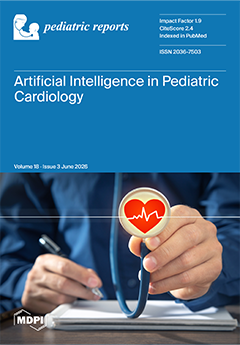
Cover Story (view full-size image): Artificial intelligence (AI) is rapidly transforming pediatric cardiology by improving diagnostic accuracy, risk stratification and clinical decision-making. This review aims to provide a comprehensive overview of current AI applications in congenital heart disease, including cardiac auscultation, electrocardiography, echocardiography, cardiac magnetic resonance, computed tomography and virtual reality. The article also discusses key challenges to clinical implementation, such as data interpretability, ethical considerations and regulatory aspects, while highlighting future perspectives for integrating AI into routine pediatric cardiovascular care. AI has the potential to enhance, rather than replace, clinical expertise and improve outcomes for children with heart disease. View this paper
  • Issues are regarded as officially published after their release is announced to the table of contents alert mailing list.
  • You may sign up for e-mail alerts to receive table of contents of newly released issues.
  • PDF is the official format for papers published in both, html and pdf forms. To view the papers in pdf format, click on the "PDF Full-text" link, and use the free Adobe Reader to open them.
Order results
Result details
Section
Select all
Export citation of selected articles as:
7 pages, 214 KB  
Commentary
When Platelet Stimulation Becomes Marrow Stress: Rethinking Thrombopoietin Receptor Agonist Intensification in Pediatric Immune Thrombocytopenia
by Maurizio Aricò
Pediatr. Rep. 2026, 18(3), 82; https://doi.org/10.3390/pediatric18030082 - 17 Jun 2026
Viewed by 283
Abstract
Thrombopoietin receptor agonists (TPO-RAs) have become central second-line treatments for children with persistent or chronic immune thrombocytopenia (ITP). Their efficacy has encouraged broad use, but difficult-to-treat patients who respond suboptimally may be exposed to repeated agent switching, prolonged treatment, or doses exceeding approved [...] Read more.
Thrombopoietin receptor agonists (TPO-RAs) have become central second-line treatments for children with persistent or chronic immune thrombocytopenia (ITP). Their efficacy has encouraged broad use, but difficult-to-treat patients who respond suboptimally may be exposed to repeated agent switching, prolonged treatment, or doses exceeding approved limits. This commentary uses a focused narrative approach to address whether the risk of treatment-associated marrow fibrosis should be interpreted primarily as a consequence of treatment duration or as a risk marker linked to supraphysiological treatment intensity in non-responders. A recent Haematologica report by Ma and colleagues identified clinically significant bone marrow myelofibrosis in a highly selected cohort of children with chronic ITP undergoing marrow re-evaluation after suboptimal response or loss of efficacy during TPO-RA therapy. The most relevant message is not simply that fibrosis can occur, but that it was independently associated with treatment intensification, particularly overdose and frequent switching. The biological plausibility of this association is supported by the known capacity of sustained megakaryocytic stimulation to promote local pro-fibrotic signaling and reticulin deposition. This commentary places this safety concern in the context of pediatric ITP epidemiology, current regulatory indications, expert approaches to refractory disease, and practical surveillance considerations. TPO-RAs should not be viewed as routine treatment for newly diagnosed pediatric ITP; their principal role remains in selected children with persistent or chronic disease who require second-line therapy. Failure to respond at the maximum approved dose should prompt diagnostic and therapeutic reassessment rather than automatic treatment escalation. The emerging lesson is that response-adapted therapy must also be risk-adapted therapy. Full article
13 pages, 490 KB  
Article
Effects of White Noise on Academic Skills in Children with ADHD and Specific Learning Disorders: New Perspectives for Personalised Rehabilitation and Educational Intervention
by Elena Cavalieri, Emilia Cascio, Giada Iannone, Loredana Angelini, Giovanni Battista Dell’Isola, Claudio Maura, Raimondo Stefano Maria Torcisi, Elisa Macchione, Simona Lucibello, Alberto Verrotti and Federico Vigevano
Pediatr. Rep. 2026, 18(3), 81; https://doi.org/10.3390/pediatric18030081 - 11 Jun 2026
Viewed by 377
Abstract
Background/Objectives. This study examined whether exposure to white noise improves reading and writing performance in children with Specific Learning Disorder (SLD), with and without comorbid Attention-Deficit/Hyperactivity Disorder (ADHD). Methods. Thirty children aged 8–13 years (mean age = 9.4) with SLD, 12 of whom [...] Read more.
Background/Objectives. This study examined whether exposure to white noise improves reading and writing performance in children with Specific Learning Disorder (SLD), with and without comorbid Attention-Deficit/Hyperactivity Disorder (ADHD). Methods. Thirty children aged 8–13 years (mean age = 9.4) with SLD, 12 of whom also had ADHD, were recruited from the Centro di Riabilitazione San Raffaele Pisana (Rome). Each child completed two standardized reading and writing assessments, four weeks apart, under two auditory conditions (with vs. without white noise) in randomized order. The primary outcomes were reading speed and accuracy, while the secondary outcome was writing accuracy. Results. Among the 26 completers, white noise significantly improved nonword reading speed and accuracy, showed a trend toward improved passage-reading accuracy, and reduced accuracy in nonword writing. Benefits were different in children with SLD + ADHD compared to those with SLD only. Conclusions. These findings indicate task-specific effects of white noise and suggest potential applications for targeted educational interventions. Full article
Show Figures

Figure 1

27 pages, 663 KB  
Systematic Review
Blended and Technology-Enhanced Education in Pediatric Emergency Nursing: A Systematic Review
by Rita Nocerino, Giorgia Cerase, Emma Montella and Albina Simeoli
Pediatr. Rep. 2026, 18(3), 80; https://doi.org/10.3390/pediatric18030080 - 11 Jun 2026
Viewed by 269
Abstract
Background: Pediatric emergencies are high-risk clinical situations requiring timely, accurate, and coordinated interventions. Nurses play a pivotal role in early recognition and management of acute pediatric conditions; however, the rarity and complexity of these events often limit clinical exposure and preparedness. Continuous professional [...] Read more.
Background: Pediatric emergencies are high-risk clinical situations requiring timely, accurate, and coordinated interventions. Nurses play a pivotal role in early recognition and management of acute pediatric conditions; however, the rarity and complexity of these events often limit clinical exposure and preparedness. Continuous professional education is therefore essential to ensure patient safety and high-quality care. Objective: This systematic review aimed to synthesize evidence on innovative continuing education strategies for nurses involved in pediatric emergency care, with a primary focus on studies evaluating educational effectiveness and a secondary contextual focus on studies describing training needs, perceived barriers, preparedness, and implementation conditions. Methods: The review was conducted according to PRISMA guidelines. The protocol was registered in PROSPERO (ID CRD420251120993). A comprehensive search of PubMed, CINAHL Complete, Scopus, and the Cochrane Library identified studies published between 2015 and August 2025. Primary intervention studies were used to assess educational effectiveness, whereas descriptive, observational, qualitative, and review-based evidence was retained as contextual evidence. Methodological quality was assessed using Joanna Briggs Institute (JBI) tools. Results: Forty-nine studies met the inclusion criteria, including randomized controlled trials, quasi-experimental studies, observational and cohort studies, and integrative or narrative reviews. Educational interventions mainly involved simulation-based training, blended learning, telesimulation, digital education, and structured training programs. Intervention studies suggested improvements in knowledge, technical skills, self-efficacy, and team performance, while contextual studies highlighted training needs, perceived barriers, preparedness, and implementation challenges. However, the evidence was limited by methodological heterogeneity, frequent reliance on self-reported outcomes, and limited long-term follow-up. Conclusions: Simulation-based, blended, and telesimulation-based educational strategies may be associated with short-term improvements in nurses’ preparedness and educational outcomes in pediatric emergency care. However, conclusions regarding effectiveness should be interpreted cautiously because of methodological heterogeneity, reliance on subjective outcomes, and limited evidence on long-term clinical and patient-safety outcomes. Full article
Show Figures

Figure 1

16 pages, 895 KB  
Case Report
A Century of Post-Traumatic Appendicitis: A Comprehensive Review with an Illustrative Case
by Mattia Pasquinucci, Irene Marangoni, Veronica Battistella, Maria E. Pinto, Alessandra Pasinato, Fabio S. Chiarenza and Davide Meneghesso
Pediatr. Rep. 2026, 18(3), 79; https://doi.org/10.3390/pediatric18030079 - 10 Jun 2026
Viewed by 330
Abstract
Background and Clinical Significance: Acute appendicitis following blunt abdominal trauma is a rare and historically debated clinical entity. We present a century-spanning descriptive review of 106 cases of post-traumatic appendicitis, embedded with an illustrative pediatric case initially managed conservatively. Methods: A comprehensive literature [...] Read more.
Background and Clinical Significance: Acute appendicitis following blunt abdominal trauma is a rare and historically debated clinical entity. We present a century-spanning descriptive review of 106 cases of post-traumatic appendicitis, embedded with an illustrative pediatric case initially managed conservatively. Methods: A comprehensive literature review was conducted following PRISMA guidelines across PubMed/MEDLINE, Web of Science, and Google Scholar, encompassing a 100-year period (1925–2025). Clinical variables, trauma mechanisms, and outcomes were extracted and statistically analyzed by age cohort (Pediatric ≤ 18 vs. Adult > 18) and historical medical era. Results: A total of 106 cases were analyzed. High-energy trauma predominated in adults compared to the pediatric cohort (48.8% vs. 18.5%, p = 0.001). The overall complication rate was exceptionally high (66.0%), with no significant difference between pediatric and adult cohorts (61.5% vs. 73.2%, p = 0.293). An epoch-based analysis revealed a significant drop in perforation rates from the historical era (1925–1980) to the modern era (2001–2025) (51.7% to 27.0%, p = 0.033) due to improved diagnostic timelines. Crucially, purely mechanical injuries such as complete appendiceal auto-amputation remained a constant signature of blunt trauma across the century (11.5% overall rate). Conclusions: Our synthesis of historical cases suggests that post-traumatic appendicitis might be a relevant clinical entity where trauma mechanics appear to play a significant role in injury severity, irrespective of patient age. While conservative management could be feasible and safe in the acute setting of uncomplicated cases, we hypothesize that the initial kinetic impact might cause subtle structural changes or alter local appendiceal dynamics, potentially predisposing the organ to recurrent inflammation, warranting close follow-up or elective surgery. Full article
Show Figures

Figure 1

13 pages, 634 KB  
Article
A Coordinated Adhesion-Molecule Activation Profile in Pediatric Sepsis: A Prospective Cohort Study from Vietnam
by Bui Thanh Liem, Chu Van Thien, Nguyen Trong Nghia, Le Anh Phong, Ngo Nhu Dinh, Nguyen Huy Luan and Phung Nguyen The Nguyen
Pediatr. Rep. 2026, 18(3), 78; https://doi.org/10.3390/pediatric18030078 - 9 Jun 2026
Viewed by 310
Abstract
Background/Objectives: Pediatric sepsis is increasingly recognized as a syndrome involving immune–vascular dysregulation. However, most pediatric biomarker studies focus on individual molecules rather than coordinated patterns of leukocyte–endothelial activation. This study aimed to evaluate whether children diagnosed with sepsis within 48 h of admission [...] Read more.
Background/Objectives: Pediatric sepsis is increasingly recognized as a syndrome involving immune–vascular dysregulation. However, most pediatric biomarker studies focus on individual molecules rather than coordinated patterns of leukocyte–endothelial activation. This study aimed to evaluate whether children diagnosed with sepsis within 48 h of admission showed a coordinated soluble adhesion-molecule activation profile measured at enrollment. Methods: This prospective cohort study included 144 children aged 1–60 months with suspected infection enrolled at Dong Nai Children’s Hospital, Vietnam, from May 2021 to October 2022. Blood samples were collected at enrollment. Sepsis was classified according to the 2005 International Pediatric Sepsis Consensus Conference (IPSCC) criteria within 48 h of admission. Twelve soluble adhesion molecules were measured using a multiplex immunoassay. A composite adhesion activation score was derived by log2 transformation, z-score standardization, and averaging across the 12 markers. Principal component analysis (PCA) was used as an exploratory method to summarize the shared variation across the adhesion-molecule panel. C-reactive protein (CRP) was included as a routinely available inflammatory comparator. Results: Among 144 children, 32 (22.2%) were diagnosed with sepsis within 48 h of admission. Individual marker discrimination was strongest for L-selectin (area under the receiver operating characteristic curve [AUC] 0.883), followed by soluble vascular cell adhesion molecule-1 (sVCAM-1; AUC 0.855), intercellular adhesion molecule-3 (ICAM-3; AUC 0.838), P-selectin glycoprotein ligand-1 (PSGL-1; AUC 0.836), E-selectin (AUC 0.819), and intercellular adhesion molecule-2 (ICAM-2; AUC 0.819). CRP also differed between children with and without sepsis but had a lower AUC than the leading adhesion molecules in descriptive ROC analyses. The composite adhesion activation score was strongly associated with sepsis (odds ratio 7.95 per 1-standard deviation increase; 95% confidence interval 3.44–18.40; p < 0.001) and showed good discrimination (AUC 0.855; 95% confidence interval 0.776–0.931). The first principal component explained 70.0% of biomarker variance, consistent with coordinated elevation of correlated adhesion molecules. Conclusions: In this prospective Vietnamese pediatric cohort, children diagnosed with sepsis within 48 h of admission showed coordinated elevation of soluble adhesion molecules measured at enrollment. These findings support the biological relevance of leukocyte–endothelial activation in pediatric sepsis. However, the adhesion-molecule activation profile should be considered exploratory and hypothesis-generating, requiring external validation and further evaluation against simplified, clinically feasible biomarker approaches. Full article
Show Figures

Figure 1

22 pages, 3120 KB  
Systematic Review
Efficacy and Safety of Umifenovir (Arbidol) in Children with Influenza-like Illnesses: A Systematic Review and Meta-Analysis
by Vilya Bulgakova, Artem Poromov, Irina Leneva and Natalia Pshenichnaya
Pediatr. Rep. 2026, 18(3), 77; https://doi.org/10.3390/pediatric18030077 - 9 Jun 2026
Viewed by 573
Abstract
Background: Pediatric influenza-like illness (ILI) represents a major global health burden. However, international treatment guidelines lack robust evidence specific to children. Umifenovir (Arbidol) is a broad-spectrum antiviral approved for pediatric use in several countries, but clinical data are fragmented and regionally limited. Methods: [...] Read more.
Background: Pediatric influenza-like illness (ILI) represents a major global health burden. However, international treatment guidelines lack robust evidence specific to children. Umifenovir (Arbidol) is a broad-spectrum antiviral approved for pediatric use in several countries, but clinical data are fragmented and regionally limited. Methods: A comprehensive search of PubMed, Russian (RSCI, national archives, regulatory documents), and Chinese (CNKI) databases was conducted for pediatric randomized controlled trials (RCTs) and non-randomized trials comparing umifenovir to symptomatic therapy (ST) or oseltamivir. Risk of bias was assessed using the RoB 2 tool for RCTs, and ROBINS-I for non-RCTs. Outcomes included the duration of fever and other symptoms, prophylactic efficacy, and adverse events. Random-effects models were used (Hartung–Knapp–Sidik–Jonkman approach). The review was not registered. Results: We included 16 therapeutic and eight prophylactic trials enrolling approximately 4700 and 2000 children, respectively. Compared with ST, umifenovir reduced the duration of fever (MD −1.41 days, 95% CI: −1.78 to −1.05), cough (−1.15 days, 95% CI: −1.50 to −0.79), and hospitalization. The complication risk decreased (RR 0.34, 95% CI: 0.23–0.51). For prophylaxis, umifenovir reduced the risk of ILI (RR 0.68, 95% CI: 0.54–0.87) and laboratory-confirmed influenza (RR 0.41, 95% CI: 0.29–0.59). Adverse events were generally mild and did not differ significantly from ST or oseltamivir (RR 0.78, 95% CI: 0.51–1.20). Conclusions: Umifenovir may reduce symptom duration, complications, and infection risk in pediatric ILI, with a favorable safety profile. However, the overall certainty of evidence is limited by the age of the studies, geographic restriction, and methodological quality. Full article
(This article belongs to the Special Issue Infectious Diseases in Children and Adolescents)
Show Figures

Figure 1

7 pages, 5671 KB  
Case Report
Neonatal Presentation of 49,XXXXY (Fraccaro) Syndrome with Ventriculomegaly: Expanding the Early Neuroimaging Phenotype
by Gonca Vardar, Giray Girgin, Emel Kabakoglu Unsur and Gulcan Seymen
Pediatr. Rep. 2026, 18(3), 76; https://doi.org/10.3390/pediatric18030076 - 3 Jun 2026
Viewed by 562
Abstract
49,XXXXY syndrome (Fraccaro syndrome) is a rare sex chromosome pentasomy, historically considered a severe variant within the Klinefelter spectrum. It is characterized by intellectual disability, craniofacial dysmorphism, skeletal anomalies, hypogonadism, and congenital cardiac defects. Although neuroimaging abnormalities have increasingly been recognized in 49,XXXXY [...] Read more.
49,XXXXY syndrome (Fraccaro syndrome) is a rare sex chromosome pentasomy, historically considered a severe variant within the Klinefelter spectrum. It is characterized by intellectual disability, craniofacial dysmorphism, skeletal anomalies, hypogonadism, and congenital cardiac defects. Although neuroimaging abnormalities have increasingly been recognized in 49,XXXXY syndrome, neonatal diagnosis prompted primarily by ventriculomegaly remains rare. We report a neonate with prenatally detected ventriculomegaly in whom postnatal evaluation revealed cleft palate, congenital cardiac defects, bilateral cryptorchidism, and auditory dysfunction. Cranial ultrasonography and brain magnetic resonance imaging demonstrated bilateral ventriculomegaly with colpocephaly and a cavum vergae variant. Cytogenetic analysis confirmed the presence of a 49,XXXXY karyotype. This case highlights ventriculomegaly as a potential early diagnostic clue in 49,XXXXY syndrome and underscores the importance of chromosomal analysis in neonates presenting with structural brain abnormalities associated with multisystem anomalies. Early recognition is important for timely multidisciplinary surveillance and long-term endocrine follow-up. Full article
Show Figures

Figure 1

14 pages, 856 KB  
Article
Epidemiological and Clinical Characteristics of Bronchiolitis and the Impact of RSV Infection: A Five-Year Study in a Tertiary Pediatric Center in Central Romania
by Alexandra-Antonela Obaciu, Veronica Purdel, Laura Bleotu, Vlad Monescu, Mariana-Alexandra Grecu, Ioana Arbanas and Oana Falup-Pecurariu
Pediatr. Rep. 2026, 18(3), 75; https://doi.org/10.3390/pediatric18030075 - 2 Jun 2026
Viewed by 350
Abstract
Background: Bronchiolitis, due to respiratory syncytial virus, is the most common cause of hospitalization and lower respiratory tract infections in infants and toddlers across the globe. Data on RSV epidemiology in Romania are limited and are mainly derived from national surveillance systems. Understanding [...] Read more.
Background: Bronchiolitis, due to respiratory syncytial virus, is the most common cause of hospitalization and lower respiratory tract infections in infants and toddlers across the globe. Data on RSV epidemiology in Romania are limited and are mainly derived from national surveillance systems. Understanding regional trends in RSV bronchiolitis, its etiology, and its severity is important while assessing the potential impacts of future prevention measures. Methods: We conducted a retrospective cohort study including infants hospitalized with bronchiolitis between 2019 and 2023 in a tertiary pediatric center in Central Romania. Demographic, clinical, and treatment data were analyzed. Comparative analyses between RSV-positive and RSV-negative cases were performed among patients tested for RSV. Disease severity was assessed using oxygen saturation at admission and length of hospital stay. Results: A total of 2967 bronchiolitis hospitalizations were identified during the study period. After exclusion of 167 cases due to hospitalization <24 h or incomplete medical records, 2800 patients were included in the final analysis. The number of admissions decreased in 2020 (n = 301) compared to 2019 (n = 638), followed by an increase in 2021 (n = 463) and a peak in 2022 (n = 745), with a slight decrease in 2023 (n = 653). Among tested patients, RSV positivity increased from 14.4% in 2019 to 37.7% in 2022, then decreased to 27.4% in 2023. RSV-positive cases were more frequent in younger age groups, particularly those under 6 months of age. Compared to RSV-negative cases, RSV-positive bronchiolitis was associated with lower oxygen saturation at admission, and a longer hospital stay (<0.001), indicating a more severe clinical course. Treatment differences were also observed, with higher use of corticosteroids in RSV-positive patients (p < 0.002), while antibiotic use was similar between groups (p = 0.149). Conclusions: RSV infection was associated with a more severe clinical course in our cohort and continues to play a central role in the burden of disease. The variability observed in treatment practices also suggests that further efforts are needed to better align clinical management with current evidence-based recommendations. Full article
Show Figures

Figure 1

19 pages, 649 KB  
Review
Self-Limited Focal Epilepsies in Childhood: How Many and How to Treat
by Piero Pavone, Francesca Scrofani, Chiara Caruso, Enrico Parano, Agata Polizzi, Raffaele Falsaperla, Antonio Corsello, Giovanni Battista Dell’Isola and Xena Giada Pappalardo
Pediatr. Rep. 2026, 18(3), 74; https://doi.org/10.3390/pediatric18030074 - 1 Jun 2026
Viewed by 524
Abstract
Self-limited focal epilepsies in childhood (SELFEs), formerly referred to as “benign epilepsies in childhood”, constitute a heterogeneous group of epileptic conditions with onset predominantly in the neonatal, infantile, and childhood periods. A defining feature of these syndromes is that seizures arise without underlying [...] Read more.
Self-limited focal epilepsies in childhood (SELFEs), formerly referred to as “benign epilepsies in childhood”, constitute a heterogeneous group of epileptic conditions with onset predominantly in the neonatal, infantile, and childhood periods. A defining feature of these syndromes is that seizures arise without underlying structural, metabolic, or other demonstrable cerebral pathology, and the overall clinical trajectory is expected to be favorable, with seizures resolving spontaneously over time. Current nosological frameworks divide SELFEs into two broad categories according to age at onset: (a) neonatal and infantile forms, encompassing self-limited familial and non-familial neonatal, neonatal-infantile, and infantile epilepsies, genetic epilepsy with febrile seizures plus (GEFS+), and myoclonic epilepsy of infancy (MEI); and (b) childhood-onset forms, including self-limited epilepsy with centrotemporal spikes (SeLECTS), self-limited epilepsy with autonomic seizures (SeLEAS), childhood occipital visual epilepsy (COVE), and photosensitive occipital lobe epilepsy (POLE). Despite their historically “benign” label, there is no general agreement to include GEFS + and MEI among the group of SELFEs as both these conditions have been not classified as focal epilepsy in general. Accumulating evidence shows that a subset of affected children subsequently develop additional seizure types, cognitive deterioration, and behavioral or neuropsychiatric difficulties—outcomes that the word “benign” does not adequately communicate. Advances in molecular genetics have identified pathogenic variants affecting ion channels, synaptic transmission, and neuronal excitability, reshaping current understanding of disease mechanisms and phenotypic variability across these syndromes. This review highlights clinically relevant challenges in the diagnosis and management of SELFEs, critically examines emerging genotype–phenotype correlations, and provides evidence-based recommendations for antiseizure medication initiation and withdrawal tailored to individual syndrome characteristics and risk profiles. Full article
Show Figures

Figure 1

13 pages, 250 KB  
Article
Mental Wellness and Adherence Self-Efficacy Among Adolescents Living with HIV in the Cape Town Metropole: A Cross-Sectional Survey
by Yolanda Mayman, Charné Petinger and Brian van Wyk
Pediatr. Rep. 2026, 18(3), 73; https://doi.org/10.3390/pediatric18030073 - 29 May 2026
Viewed by 240
Abstract
Background/Objectives: Adolescents living with HIV (ALHIV) face compounded health and psychosocial challenges while managing lifelong antiretroviral therapy (ART). Mental health difficulties among ALHIV are strongly associated with suboptimal adherence and disengagement from care. While mental illness is well documented, limited empirical evidence exists [...] Read more.
Background/Objectives: Adolescents living with HIV (ALHIV) face compounded health and psychosocial challenges while managing lifelong antiretroviral therapy (ART). Mental health difficulties among ALHIV are strongly associated with suboptimal adherence and disengagement from care. While mental illness is well documented, limited empirical evidence exists on the influence of positive mental wellness on adherence self-efficacy among ALHIV. This study assessed mental wellness among ALHIV and identified key psychosocial predictors of adherence self-efficacy in public healthcare facilities in Cape Town, South Africa. Methods: A cross-sectional survey was conducted among ALHIV (N = 251) aged 10–19 years who were receiving ART at public healthcare facilities across the Cape Town metropole. Participants completed an electronic questionnaire that assessed ten mental wellness domains and adherence self-efficacy. Descriptive statistics were calculated to summarise participant characteristics and mental wellness scores, while Pearson correlations and multiple linear regression were done to identify associations and independent predictors of adherence self-efficacy using SPSS v29. Results: Most participants were aged 15–19 years (76.9%) and diagnosed with HIV at birth (68.9%). Mental wellness scores were high across all domains (M = 3.14–3.71). Hope (M = 3.71), spirituality (M = 3.58), and purpose in life (M = 3.52) were the highest-rated domains. All mental wellness domains were positively correlated with adherence self-efficacy (p < 0.001), with the strongest associations being purpose in life (r = 0.66), self-acceptance (r = 0.66) and resilience (r = 0.66). Hope (p < 0.001), resilience (p = 0.001), purpose in life (p = 0.03) and self-acceptance (p = 0.012) emerged as significant independent predictors. Conclusions: Positive mental wellness and adolescent-centred psychosocial support in routine HIV care may strengthen adherence self-efficacy and support adolescents’ confidence in managing treatment. Full article
6 pages, 714 KB  
Case Report
A Case of Autosomal Dominant Alport Syndrome Diagnosed Just Before Discontinuation of Follow-Up
by Yasuyo Kashiwagi, Hironobu Okuno, Takahito Moriyama, Natsuko Inagaki and Gaku Yamanaka
Pediatr. Rep. 2026, 18(3), 72; https://doi.org/10.3390/pediatric18030072 - 25 May 2026
Viewed by 258
Abstract
Persistent microscopic hematuria in children is often considered benign, yet recent evidence shows that a substantial proportion of affected individuals have underlying glomerular disease, particularly collagen IV-related nephropathies. We report a case of autosomal dominant Alport syndrome (ADAS) diagnosed just before discontinuation of [...] Read more.
Persistent microscopic hematuria in children is often considered benign, yet recent evidence shows that a substantial proportion of affected individuals have underlying glomerular disease, particularly collagen IV-related nephropathies. We report a case of autosomal dominant Alport syndrome (ADAS) diagnosed just before discontinuation of long-term follow-up in a young woman initially presumed to have benign familial hematuria. The proband had persistent microscopic hematuria from early childhood, with normal renal function and no extrarenal manifestations. Her mother also had microscopic hematuria without kidney impairment, and the absence of accessible family history reinforced the assumption of benign familial hematuria. At age 42, the mother developed sensorineural hearing loss, and around the same time, the family learned that the maternal grandfather was undergoing dialysis for end-stage renal disease of unknown etiology. These findings prompted genetic testing, which identified a heterozygous pathogenic COL4A4 frameshift variant (c.2317_2318del; p.Arg773GlyfsTer14) in both the mother and the proband, confirming ADAS. This case illustrates the phenotypic variability of ADAS within a single family and highlights the limitations of relying solely on clinical features or incomplete family history. In contemporary practice, persistent glomerular hematuria warrants long-term follow-up and a low threshold for molecular testing of COL4A3-COL4A5, even in the absence of overt clinical signs. Earlier genetic evaluation would likely have enabled a timelier diagnosis in this case. This report underscores the importance of reassessing presumed benign hematuria and integrating genetic testing into the diagnostic approach for children and young adults with persistent microscopic hematuria. Full article
Show Figures

Figure 1

12 pages, 2088 KB  
Article
Healthcare Utilization and Economic Burden of Pediatric Lower Respiratory Tract Infections Across Five Tertiary Hospitals in Saudi Arabia
by Nawaf M. Almuqati, Mohammed Y. Al-Hindi, Hibah A. Moussa, Sama H. Alzahrani, Manar A. Almuntashri, Mansour A. Al-Qurashi, Mawyah O. Barayyan and Shaykhah M. Bin-Sifran
Pediatr. Rep. 2026, 18(3), 71; https://doi.org/10.3390/pediatric18030071 - 25 May 2026
Viewed by 597
Abstract
Objectives: We aimed to describe the healthcare utilization and economic burden of lower respiratory tract infections (LRTIs) among children aged 1–24 months across five tertiary hospitals in Saudi Arabia. Methods: This multicenter retrospective cohort study included 14,320 children diagnosed with LRTIs between August [...] Read more.
Objectives: We aimed to describe the healthcare utilization and economic burden of lower respiratory tract infections (LRTIs) among children aged 1–24 months across five tertiary hospitals in Saudi Arabia. Methods: This multicenter retrospective cohort study included 14,320 children diagnosed with LRTIs between August 2021 and July 2025. Data were extracted from the electronic medical records of the Ministry of National Guard Health Affairs. Demographics were analyzed using a patient-level dataset, whereas healthcare utilization and costs were evaluated at the episode level. Data were analyzed using descriptive and inferential statistics and multivariable logistic regression. Results: A total of 14,320 children contributed 22,895 LRTI-related episodes during the study period. Nearly half of the cohort (49.4%) were aged 1–6 months, and bronchiolitis was the predominant diagnosis (84.6%), followed by pneumonia (15.1%). Overall, 34.4% of patients required hospitalization, while 7.1% required ICU admission. LRTIs accounted for 21.0% of all pediatric ward admissions across participating hospitals. Total direct healthcare costs reached USD 23.0 million. Although ICU admissions represented only 7.1% of episodes, they accounted for 45.1% of total healthcare expenditures. In multivariable analysis, pneumonia was independently associated with higher odds of ICU admission compared with bronchiolitis (aOR 2.91, 95% CI 2.43–3.48; p < 0.001). Significant seasonal variation in LRTI episodes was observed, with higher episode volumes during winter months (p = 0.004). Conclusions: Pediatric LRTIs impose substantial clinical and financial burdens, particularly among younger infants, marked by disproportionate ICU-related costs. Full article
Show Figures

Figure 1

19 pages, 520 KB  
Review
Artificial Intelligence in Pediatric Cardiology: Present Applications and Future Directions
by Bianca Ada Magnanini, Irene Raso, Sara Santacesaria, Gaia Dell’Acqua and Savina Mannarino
Pediatr. Rep. 2026, 18(3), 70; https://doi.org/10.3390/pediatric18030070 - 25 May 2026
Viewed by 656
Abstract
Artificial intelligence (AI) is rapidly transforming cardiovascular medicine, with growing applications in pediatric cardiology. AI techniques, particularly machine learning and deep learning, enable the analysis of complex and heterogeneous data, supporting diagnosis, risk stratification, and clinical decision-making. This paper provides an overview of [...] Read more.
Artificial intelligence (AI) is rapidly transforming cardiovascular medicine, with growing applications in pediatric cardiology. AI techniques, particularly machine learning and deep learning, enable the analysis of complex and heterogeneous data, supporting diagnosis, risk stratification, and clinical decision-making. This paper provides an overview of current AI applications in this field, discusses existing challenges, and explores future perspectives. In pediatric cardiology, AI has shown promising results across multiple domains. In electrocardiography, AI algorithms improve diagnostic accuracy and enable early detection of cardiac conditions, even in asymptomatic patients, while facilitating telecardiology-based care pathways. In cardiac auscultation, AI-assisted digital stethoscopes enhance the distinction between innocent and pathological murmurs, supporting primary care physicians and optimizing referral to pediatric cardiologic centers. Multimodality imaging represents one of the most advanced areas of AI applications. In echocardiography, magnetic resonance and computed tomography, AI improves image acquisition, view classification, and automated quantification, contributing to more standardized and reproducible assessments. Additionally, emerging technologies such as virtual reality, integrated with AI, offer innovative tools for education, surgical planning, and patient-specific modelling. Despite these advances, several limitations remain, including limited availability of large pediatric datasets, challenges in model generalizability and issues related to interpretability and integration into clinical workflows. In conclusion, AI represents a powerful complementary tool in pediatric cardiology, with the potential to improve diagnostic accuracy, optimize healthcare resources and support the transition toward precision medicine. Full article
Show Figures

Figure 1

13 pages, 760 KB  
Article
Modified Tal (M-Tal) Score as a Predictor of Outcomes in Infants with Bronchiolitis: A Prospective Study
by Ipshita Magh, Rashmi Ranjan Das, Ritwick Mohapatra, Swarupa Panda and Nirmal Kumar Mohakud
Pediatr. Rep. 2026, 18(3), 69; https://doi.org/10.3390/pediatric18030069 - 17 May 2026
Viewed by 1254
Abstract
Background/Objectives: Bronchiolitis is the leading cause of hospitalization among infants, and early prediction of disease severity and clinical outcomes remains challenging. The Modified Tal (M-Tal) score is a clinical tool used to assess severity; however, its utility in predicting outcomes requires further validation. [...] Read more.
Background/Objectives: Bronchiolitis is the leading cause of hospitalization among infants, and early prediction of disease severity and clinical outcomes remains challenging. The Modified Tal (M-Tal) score is a clinical tool used to assess severity; however, its utility in predicting outcomes requires further validation. Methods: This prospective study was conducted over a 2-year period at a tertiary care teaching hospital. Infants aged 1–12 months diagnosed with moderate-to-severe bronchiolitis were enrolled. Demographic, clinical, management, and outcome data were recorded. Results: A total of 120 infants were included (mean age 7.7 months; 61.7% males). Moderate bronchiolitis accounted for 81.7% of cases. The mean duration of illness at admission was 4.1 days. Severe bronchiolitis was associated with significantly longer duration of oxygen therapy (p = 0.034) and hospital stay (p = 0.028). Each one-point increase in M-Tal score was associated with an increase of 0.69 days in hospital stay (p = 0.012), 9.8 h in oxygen requirement (p < 0.01), and 0.32 days in PICU stay (p = 0.04). Conclusions: The M-Tal score at admission is a useful predictor of clinical outcomes in infants with moderate-to-severe bronchiolitis. Higher scores are associated with increased need for respiratory support and prolonged hospitalization, supporting its role in early risk stratification and management planning. Full article
(This article belongs to the Special Issue Infectious Diseases in Children and Adolescents)
Show Figures

Graphical abstract

9 pages, 758 KB  
Article
Sleep Difficulties, Sleep Duration, and Sleeping Place in Early Childhood: A Longitudinal Study on Stability and Inter-Relations from 1 to 5 Years
by Tanja Poulain, Juliane Ludwig, Nico Grafe, Andreas Merkenschlager and Wieland Kiess
Pediatr. Rep. 2026, 18(3), 68; https://doi.org/10.3390/pediatric18030068 - 14 May 2026
Viewed by 465
Abstract
Background/Objectives: This longitudinal study examined the association between sleep duration, sleep difficulties, and sleeping place at one year (t1) and corresponding characteristics at 4/5 years of age (t2). Methods: Data were collected from 2018 to 2021 (t1) and from 2021 to 2024 (t2) [...] Read more.
Background/Objectives: This longitudinal study examined the association between sleep duration, sleep difficulties, and sleeping place at one year (t1) and corresponding characteristics at 4/5 years of age (t2). Methods: Data were collected from 2018 to 2021 (t1) and from 2021 to 2024 (t2) in the LIFE Child cohort study conducted in Leipzig, Germany. Parents completed the Brief Infant Sleep Questionnaire at t1 and the Child Sleep Habits Questionnaire at t2. Associations between sleep characteristics at t1 and t2 were estimated using linear and logistic regression models. All associations were adjusted for child sex, age at t2, and maternal education. Results: The analyses showed significant associations between shorter sleep durations, later sleep onset times, more frequent nightly awakenings and bed sharing and room sharing at t1 and more sleep difficulties at t2. A shorter sleep duration at t2 was predicted by shorter sleep and more parent-perceived sleep difficulties at t1. Bed sharing and room sharing at t1 were significantly associated with a lower probability of sleeping alone at t2. Conclusions: These results indicate that sleep duration, sleep difficulties, and sleeping places are already stable in early childhood. Full article
(This article belongs to the Section Pediatric Psychology)
Show Figures

Figure 1

15 pages, 389 KB  
Article
Predictors of Length of Hospital Stay Among Under-Five Children with Clinical Pneumonia at a Rural Tertiary Hospital Setting in South Africa
by Sanelisiwe Rosemary Mkhize, Olufunmilayo Olukemi Akapo, Siyonela Mlonyeni and Mirabel Kah-Keh Nanjoh
Pediatr. Rep. 2026, 18(3), 67; https://doi.org/10.3390/pediatric18030067 - 13 May 2026
Viewed by 813
Abstract
Background: Pneumonia of viral and polymicrobial origin predominates the pathological profile of clinical childhood pneumonia, with high admissions rates in recent times. Identifying factors associated with prolonged hospital stay may aid in developing risk reduction strategies for improved admission outcomes. Methods: A facility-based [...] Read more.
Background: Pneumonia of viral and polymicrobial origin predominates the pathological profile of clinical childhood pneumonia, with high admissions rates in recent times. Identifying factors associated with prolonged hospital stay may aid in developing risk reduction strategies for improved admission outcomes. Methods: A facility-based historical cross-sectional study was conducted with a random selection of 186 medical records from January 2020 to December 2024 of children aged 0 to 5 with clinical pneumonia at a tertiary Hospital in Mthatha. Results: Over the five-year study period, clinical pneumonia accounted for 10.4% (95% CI: 9.8–11.1%, n = 950/9098) of the total under-five admissions. The median age was 108.5 (interquartile range (IQR) = 48.0–345.5) days, mainly comprising males (51.1%) and infants (65.2%), with viral (91.6%) and mild (88.0%) forms of pneumonia. The median length of hospital stay was 5 (IQR = 3.3–8) days, and 91 (49.5%) of the children had a prolonged hospital stay. In modified Poisson regression, infants [(relative risk (RR) = 2.7, 95% confidence interval (CI): 1.6–4.3), p < 0.001]; neonates (RR = 2.3, 95% CI: 1.2–4.6, p = 0.013); bacterial pneumonia (RR = 1.7, 95% CI: 1.2–2.6, p = 0.007); being hypoxic (RR = 2.2, 95% CI: 1.3–3.6, p = 0.003); absence of other respiratory tract infections (RR = 1.6, 95% CI: 1.2–2.1, p = 0.003), incomplete vaccination (RR = 1.5, 95% CI: 1.0–2.2, p = 0.038), non-usage of herbal medications (RR = 1.7, 95% CI: 1.3–2.2, p < 0.001), difficult breathing (RR = 1.7, 95% CI: 1.1–2.6, p = 0.028), current breastfeeding (RR = 0.6, 95% CI: 0.4–1.0, p = 0.048), other morbidities (RR = 0.7, 95% CI: 0.5–0.9, p = 0.002) were associated with prolonged length of hospital stay. Conclusion: Stratification of under-five children at admission according to age, type of pneumonia, vaccination status, and presence of other morbidities are needed to enhance monitoring and timely medical interventions. Full article
Show Figures

Figure 1

12 pages, 450 KB  
Review
Acquired Platelet Dysfunction with Eosinophilia: A Narrative Review
by Anselm Chi-Wai Lee
Pediatr. Rep. 2026, 18(3), 66; https://doi.org/10.3390/pediatric18030066 - 7 May 2026
Viewed by 820
Abstract
Background. Acquired platelet dysfunction with eosinophilia (APDE) is a transient bleeding disorder initially thought to occur exclusively in Southeast Asia. There are no uniformly agreed diagnostic criteria, and its full clinical features have not been defined. Methods. A literature search was [...] Read more.
Background. Acquired platelet dysfunction with eosinophilia (APDE) is a transient bleeding disorder initially thought to occur exclusively in Southeast Asia. There are no uniformly agreed diagnostic criteria, and its full clinical features have not been defined. Methods. A literature search was conducted through MEDLINE, EMBASE, and Google Scholar for publications on APDE in order to explore patient demography, epidemiology, diagnostic criteria, and laboratory findings of the disease. Results. Ten retrospective, observational studies, five case series, and 21 case reports were identified with a total of 431 patients. Diagnostic criteria varied, with a two-tier approach for the diagnosis of impaired platelet function. In recent years, cases of APDE have been reported extensively outside of the Malay peninsula. Male patients (243/390, 62.3%) predominated. Their ages ranged from 11 months to 30 years, with only 40 (9.3%) subjects aged 18 years or older. Eosinophilia was absent in 10 to 33% of subjects in a few observational studies. Thrombocytopenia was present in 42 (9.7%) subjects. Parasitic infestation was less common in the new millennium. Spontaneous recovery within six months was the trend, and serious complications were extremely rare. Conclusions. APDE is no longer restricted to Southeast Asia. A uniform set of diagnostic criteria is needed. Clinician awareness followed by reliable but easily available laboratory tests is essential to confirm diagnosis. It is proposed that rapid diagnosis can be accomplished by screening the blood smear for grey platelets by a trained examiner followed by confirmatory platelet aggregometry. National or international collaboration and prospective studies are required to delineate the core and variable clinical and laboratory features of APDE. Full article
Show Figures

Figure 1

7 pages, 829 KB  
Case Report
Severe Macular Commotio Retinae Following a Fall from a Horse in a Pediatric Patient
by Bogumiła Wójcik-Niklewska, Zofia Oliwa, Karina Dzięcioł and Adrian Smędowski
Pediatr. Rep. 2026, 18(3), 65; https://doi.org/10.3390/pediatric18030065 - 2 May 2026
Viewed by 1108
Abstract
Background and Clinical Significance: Blunt ocular trauma is a significant but often underestimated cause of visual impairment, particularly among adolescents involved in high-risk activities such as horseback riding. While most equestrian injuries affect the head and extremities, ocular trauma, especially commotio retinae, can [...] Read more.
Background and Clinical Significance: Blunt ocular trauma is a significant but often underestimated cause of visual impairment, particularly among adolescents involved in high-risk activities such as horseback riding. While most equestrian injuries affect the head and extremities, ocular trauma, especially commotio retinae, can result in severe visual complications. Case Presentation: We report the case of a 15-year-old girl who sustained blunt ocular trauma to the left eye following a fall from a horse and presented with decreased visual acuity. Multimodal imaging revealed outer retinal abnormalities on spectral-domain optical coherence tomography (OCT), including ellipsoid zone irregularities. Early-phase fluorescein angiography showed central hypofluorescence in the foveal region with surrounding mild mottled hyperfluorescence, without clear vascular abnormalities. Fundus photography demonstrated subtle macular changes. Visual acuity improved significantly following treatment, with partial resolution of macular changes, although mild outer retinal irregularities persisted on follow-up imaging. Conclusions: These findings underscore the importance of early ophthalmic evaluation and advanced retinal imaging in blunt ocular trauma. Given the high risk of visual injury during equestrian activities, especially in pediatric and adolescent populations, preventive strategies such as mandatory helmet use and rider education are essential. Implementation of standardized follow-up protocols is also recommended to monitor long-term retinal changes in patients with traumatic maculopathy. Full article
Show Figures

Figure 1

17 pages, 1900 KB  
Article
Mind the Gap: Exploring Parental Intentions, Actual Engagement, and Associated Outcomes in Tailored Digital Parent Training
by Or Brandes, Chen R. Saar, Orly Sapir-Budnero and Amit Baumel
Pediatr. Rep. 2026, 18(3), 64; https://doi.org/10.3390/pediatric18030064 - 1 May 2026
Viewed by 598
Abstract
Background/Objectives: Digital parent training (DPT) programs offer scalable solutions for childhood disruptive behaviors but face significant engagement challenges. Although content tailoring may enhance outcomes, its clinical impact remains under-examined. This study aimed to (a) describe the correspondence between program recommendations, parental choices and [...] Read more.
Background/Objectives: Digital parent training (DPT) programs offer scalable solutions for childhood disruptive behaviors but face significant engagement challenges. Although content tailoring may enhance outcomes, its clinical impact remains under-examined. This study aimed to (a) describe the correspondence between program recommendations, parental choices and engagement, and (b) examine how initial decisions are associated with subsequent engagement and therapeutic outcomes. Methods: A secondary analysis of three randomized trials included 151 parents of children (ages 3–7) with disruptive behaviors. Participants were classified as ‘Recommendation-Adherent’ (n = 63) or ‘Beyond-Recommendation’ (n = 88) based on whether initial content selections matched or exceeded program recommendations. Clinical outcomes (child behavior, parenting styles) and objective usage metrics were assessed at baseline and post intervention. Results: Many parents chose to expand the intervention scope beyond clinical recommendations (e.g., 91.5% selected the non-recommended Emotion Regulation module). However, this proactive initial intention did not increase objective engagement; groups did not differ significantly in total usage time, login days, or module completion rates. Although both groups showed comparable improvements in child behavior, intending to adhere to the recommended pathway was associated with significantly greater reductions in permissive parenting (laxness; p = 0.029) after adjusting for baseline differences. Conclusions: The findings highlight a discrepancy between parents’ intent to expand intervention scope and their actual engagement capacity. While the decision to adhere to a tailored pathway was associated with specific improvements in permissive parenting, the observational nature of the study precludes causal claims. Nevertheless, the results suggest that guided tailoring may serve as a protective function against choice overload. Aligning program demands with the practical realities of parental effort could help families focus finite energy on essential clinical targets. Full article
(This article belongs to the Section Pediatric Psychology)
Show Figures

Figure 1

9 pages, 1491 KB  
Brief Report
Point-of-Care Ultrasound Detects Rapid Muscle Loss in Pediatric ECMO Patients—A Secondary Analysis Paper
by Mohammad Sabobeh, Elizabeth Seewer, William Hunt Stafford, Nicolas Chiriboga, Thomas Spentzas, Shyam Popat, Alyssa Clark, David B. Kantor, Hitesh S. Sandhu and Saad Ghafoor
Pediatr. Rep. 2026, 18(3), 63; https://doi.org/10.3390/pediatric18030063 - 1 May 2026
Viewed by 463
Abstract
Background: Critically ill children requiring extracorporeal membrane oxygenation (ECMO) support are at high risk of immobility, deconditioning, and muscle loss. There is a lack of screening and diagnostic tools to quantify muscle loss in this population. Objective: This study aims to evaluate the [...] Read more.
Background: Critically ill children requiring extracorporeal membrane oxygenation (ECMO) support are at high risk of immobility, deconditioning, and muscle loss. There is a lack of screening and diagnostic tools to quantify muscle loss in this population. Objective: This study aims to evaluate the use of bedside ultrasound as a practical and effective method for detecting muscle loss in this high-risk group. Materials and Methods: This is a secondary analysis of a prospective observational clinical study conducted between January 2024 and January 2025 that used ultrasound to describe muscle loss in critically ill children aged 2 to 18 years. Results: The primary study enrolled 35 patients, five of whom required ECMO support. All patients who required ECMO showed significant muscle loss (>10%) in the quadriceps femoris, as measured by muscle thickness and cross-sectional area, compared with baseline measurements obtained before ECMO cannulation. Conclusions: Point-of-care muscle ultrasound could be a reliable, cost-effective tool for assessing muscle loss in pediatric patients on ECMO. Full article
Show Figures

Figure 1

10 pages, 215 KB  
Article
Fractional Exhaled Nitric Oxide in Children with Non-Cystic Fibrosis Bronchiectasis: Associations with Etiology, Lung Function, and CT Extent
by Taner Adiguzel and Bulent Karadag
Pediatr. Rep. 2026, 18(3), 62; https://doi.org/10.3390/pediatric18030062 - 1 May 2026
Viewed by 398
Abstract
Background/Objectives: Childhood non-cystic fibrosis (non-CF) bronchiectasis is clinically heterogeneous. We aimed to describe fractional exhaled nitric oxide (FeNO) levels in affected children and examine associations with etiology, spirometry, and CT-defined disease extent. Methods: This single-center prospective observational study included 100 clinically stable children [...] Read more.
Background/Objectives: Childhood non-cystic fibrosis (non-CF) bronchiectasis is clinically heterogeneous. We aimed to describe fractional exhaled nitric oxide (FeNO) levels in affected children and examine associations with etiology, spirometry, and CT-defined disease extent. Methods: This single-center prospective observational study included 100 clinically stable children aged 6–18 years with CT-confirmed non-CF bronchiectasis evaluated between September 2014 and December 2015. FeNO was measured before spirometry using an online single-breath electrochemical technique. Chest CT was reviewed at the lobar level, with the lingula counted separately, and disease extent was summarized by the number of involved lobar regions. Associations were assessed using Spearman correlation and non-parametric tests. Results: Mean age was 14.9 ± 2.0 years, 55% were male, and mean FeNO was 20.9 ± 14.0 ppb. FeNO correlated positively with FEV1 (% predicted), FVC (% predicted), and FEF25–75 (% predicted) (all p < 0.01). FeNO was higher in males and adolescents than in females and younger children, respectively. FeNO did not differ by CT-defined lobar extent. It was lower in primary ciliary dyskinesia than in asthma overlap. Overall, 82% of the cohort received an ICS-containing maintenance regimen and household tobacco smoke exposure was present in 58%. Conclusions: FeNO was associated with selected functional indices and etiologic subgroups, but not with CT-defined structural extent, suggesting a greater role in clinical phenotyping than in reflecting radiologic burden. Rather than reflecting overall disease severity, FeNO may be more relevant as a marker of T2-leaning airway inflammatory phenotype in selected children with non-CF bronchiectasis. These findings should be interpreted as exploratory and hypothesis-generating, particularly for etiologic subgroup comparisons and for FeNO interpretation in the setting of treatment and environmental confounding. Full article
19 pages, 956 KB  
Article
Evaluation of Parental Knowledge and Practices in Pediatric Fever Management Among Iranian Families: A Cross-Sectional Study
by Tarlan Soumei, Sara Hamideh Kerdar, David D. Martin, Parviz Rafiezadeh and Ekkehart Jenetzky
Pediatr. Rep. 2026, 18(3), 61; https://doi.org/10.3390/pediatric18030061 - 22 Apr 2026
Viewed by 674
Abstract
Background/Objectives: Fever is a common concern among parents, often leading to heightened anxiety and misconceptions about its management. While fever phobia has been extensively studied in Western countries, data from the Middle East—particularly Iran—remain limited. Understanding parental knowledge and anxiety in this [...] Read more.
Background/Objectives: Fever is a common concern among parents, often leading to heightened anxiety and misconceptions about its management. While fever phobia has been extensively studied in Western countries, data from the Middle East—particularly Iran—remain limited. Understanding parental knowledge and anxiety in this cultural context is essential for developing targeted educational interventions. This study aims to assess parental knowledge, behavior, and anxiety regarding fever in children and to identify factors associated with higher levels of anxiety among Iranian parents, thereby contributing culturally specific evidence to the international literature on pediatric fever management. Methods: A cross-sectional study was conducted involving 552 parents from Tehran, Iran, recruited through convenience sampling. Data were collected using self-administered questionnaires assessing demographic characteristics, knowledge about fever, treatment practices, and anxiety levels using a 10-point Likert scale. Principal component analysis (PCA) was performed to examine the underlying factors influencing parents’ decisions to reduce fever. Univariate and multivariate linear regression analyses on standardized z-values were conducted to determine the predictors of fever-related anxiety. Results: Results showed that 67.4% of parents experienced anxiety when managing their child’s fever, with 65.6% perceiving fever as harmful. Fear of febrile seizures (77.4%) and brain damage were significant concerns motivating parents to reduce fever. Female parental sex (β = 0.336, p = 0.004) and the perception of fever as harmful (β = 0.058, p < 0.001) were the strongest predictors of fever-related anxiety. The PCA identified two key factors influencing fever management behavior: well-being protection and medical risk prevention. Parents commonly treated fever using combinations with either Paracetamol or Ibuprofen (47.6%). Conclusions: Parental anxiety about fever in Iran is largely driven by misconceptions, especially regarding febrile seizures and brain damage. Culturally tailored education and clear communication from healthcare providers are essential to reduce these fears, improve fever management, and decrease unnecessary antipyretic use. Full article
Show Figures

Figure 1

Previous Issue
Next Issue
Back to TopTop
