


Abstract
Raw-milk and raw dairy products remain a high-sensitivity One Health interface because they bypass a major microbial control step and may carry viable foodborne pathogens, bacteria exhibiting antimicrobial resistance (AMR), and AMR genes from dairy animals, farm environments, milking equipment, handlers, storage systems, and informal or direct-sale chains. This narrative review synthesizes verified scientific evidence on raw milk as a potential vehicle pathway for resistant foodborne pathogens, clinically relevant opportunistic bacteria, indicator organisms, and AMR determinants, and evaluates AMR-related emerging public health risks through a One Health perspective. The review integrates evidence from outbreak investigations, raw milk and raw dairy surveillance, culture-based antimicrobial susceptibility testing, polymerase chain reaction (PCR), whole-genome sequencing (WGS), metagenomics, metaproteomics, risk assessment, and the consumer-risk literature. The synthesis shows that raw-milk-associated AMR evidence should be interpreted by inference level rather than by a single organism or global prevalence estimate. Public health concern becomes stronger when detection or occurrence is supported by viable recovery, plausible consumer exposure, transmission linkage, infection or colonization evidence, source-attribution data, or quantified burden estimates. Evidence is strongest for exposure pathways involving Campylobacter, extended-spectrum beta-lactamase (ESBL)-producing Enterobacterales, methicillin-resistant Staphylococcus aureus (MRSA), Salmonella, Listeria, Enterococcus, Yersinia, and raw-milk resistomes, although causal strength differs across organism groups and study designs. The review distinguishes detection or occurrence, viable recovery, potential exposure, transmission, infection or colonization, source attribution, and attributable AMR burden. One Health control requires mastitis prevention, prudent antimicrobial use, milking hygiene, environmental monitoring, pasteurization or equivalent exposure barriers, WGS-supported outbreak investigation, integrated surveillance, and targeted risk communication.
1. Introduction
Raw milk occupies a distinctive position in veterinary public health because it is an animal-derived food matrix consumed without the heat treatment that normally interrupts microbial transmission from the dairy production environment to the consumer. Its safety cannot be evaluated only as a question of product hygiene; it also reflects udder health, mastitis epidemiology, antimicrobial use in dairy herds, fecal and environmental contamination, milking equipment, storage conditions, food-chain governance, and consumer behavior. Antimicrobial resistance (AMR) adds a further layer of concern because food-producing animal systems can contribute to the ecology of resistant bacteria and antimicrobial resistance genes (ARGs) before they reach clinical settings. The global AMR burden provides the public health context: 4.71 million deaths associated with bacterial AMR and 1.14 million attributable deaths were estimated for 2021 [1]. These estimates do not quantify the contribution of raw milk and should not be read as evidence that raw milk is a dominant AMR source; rather, they establish the scale of the wider AMR problem against which specific, preventable foodborne exposure pathways must be appraised.
Raw milk is considered a vehicle only in a qualified foodborne-epidemiological sense, as an unheated food matrix and farm-to-consumer pathway through which viable hazards or transferable resistance determinants may reach exposed consumers when contamination, survival, and handling conditions align; detection of organisms or ARGs alone is not interpreted as proof of transmission, infection, source attribution, or burden. Microorganisms may enter milk through intramammary infection, subclinical mastitis, fecal contamination, teat skin, bedding, farm water, milking machines, storage vessels, animal handlers, retail conditions, and domestic handling [2,3]. When pasteurization is absent, these inputs may persist to the point of consumption, and delayed cooling or raw dairy processing may further influence survival and exposure. The risk question therefore concerns continuity across the unheated dairy chain: whether resistant organisms or transferable resistance determinants introduced during production, handling, storage, or raw dairy processing can remain biologically relevant by the time raw-milk or raw dairy products are consumed.
Outbreak and risk-assessment studies demonstrate why this pathway has public health importance. During 1993–2006, 73 of 121 United States (US) dairy-associated outbreaks with known pasteurization status involved nonpasteurized products, and 13% of outbreak patients were hospitalized [4]. For 2009–2014, 87 dairy-related outbreaks caused 750 laboratory-confirmed illnesses and 215 hospitalizations; unpasteurized products accounted for 96% of modeled illnesses while being consumed by a small minority of consumers, yielding estimated incidence-rate ratios of 838.8 for illness and 45.1 for hospitalization compared with pasteurized products [5]. These data do not show that all raw-milk outbreaks are AMR-driven, but they establish raw dairy consumption as a disproportionate exposure route into which AMR hazards may be introduced.
The persistence of raw-milk outbreaks across regulatory and market settings also indicates that the problem extends beyond end-product testing. Earlier clinical and public health synthesis identified unpasteurized milk as a continuing health threat, while later US outbreak analyses and a Canada–US systematic review of dairy outbreaks showed that raw and inadequately controlled dairy products remain recurrent exposure routes despite the dominance of pasteurized products in the overall dairy market [6,7,8]. For AMR, this distinction is critical: detecting a resistant organism in milk is not equivalent to proving human disease, yet repeated exposure to viable resistant pathogens, clinically relevant opportunistic organisms, or transferable ARGs can create risks that require integrated animal, food, environmental, and clinical interpretation; resistant indicator organisms should be treated as reservoir signals requiring follow-up, not automatically as pathogens.
The raw-milk AMR pathway is generated across connected compartments. Antimicrobial use and mastitis therapy may influence selection pressure in dairy animals; feces, manure, water, bedding, soil, and biofilms may sustain or redistribute resistant bacteria and ARGs; milking and handling can transfer organisms into bulk-tank milk or raw dairy products; consumer preference for unpasteurized products removes a major exposure barrier; and clinical surveillance often captures only the final, symptomatic portion of the pathway. This cross-compartment framing is used to evaluate how selection, contamination, persistence, amplification, exposure, disease severity, and surveillance response interact, rather than simply to list the sectors involved.
Current evidence remains fragmented by organism, resistance determinant, geography, sampling frame, laboratory method, product type, and level of inference. Culture-based prevalence, antimicrobial susceptibility testing (AST), polymerase chain reaction (PCR), whole-genome sequencing (WGS), metagenomics, outbreak investigation, and risk assessment each answer different questions. A critical synthesis must therefore compare these evidence levels without treating all positive findings as equivalent indicators of public health risk, while also evaluating the qualitative strength of evidence across Escherichia coli (E. coli), Salmonella, Campylobacter, Staphylococcus aureus (S. aureus), Enterococcus, Listeria, Yersinia, and the broader raw-milk resistome.
The aim of this narrative review is to critically synthesize scientific evidence on raw milk as a potential vehicle pathway for resistant foodborne pathogens, opportunistic or indicator bacteria, and ARGs, and to evaluate the emerging public health risks and One Health control points that arise across dairy production, raw dairy processing, environmental interfaces, consumer exposure, and surveillance systems.
The specific objectives are to: define the biological and technological conditions under which raw milk supports an AMR exposure pathway; compare organism-specific evidence for resistant bacteria, indicator organisms, reservoir organisms, and ARGs in raw milk, raw dairy products, and dairy-chain interfaces; distinguish detection, viability, resistance phenotype, gene mobility, outbreak linkage, and attributable burden as separate levels of inference; identify drivers across dairy animals, farm environments, food chains, consumers, and surveillance systems; and define evidence-based mitigation and research priorities without overstating causality.
Figure 1 presents the conceptual pathway used in this review to connect dairy-farm resistance ecology, raw milk as an exposure vehicle, and emerging public health risk. The figure is intended as a framework for interpreting the subsequent evidence, not as a substitute for organism-specific or surveillance data.
Figure 1.
One Health pathway for raw-milk-associated antimicrobial resistance risk.
2. Materials and Methods
2.1. Review Design and Objective
This manuscript was designed as a narrative review with structured literature searching and critical evidence synthesis. It was not designed or reported as a systematic review, scoping review, meta-analysis, or formal evidence map.
The review question was: how does raw milk serve as a potential vehicle pathway for resistant foodborne pathogens, opportunistic or indicator bacteria, and AMR determinants, and what emerging public health risks and One Health control points are supported by the available evidence?
2.2. Information Sources and Search Date
Literature searches and source verification were conducted through PubMed/MEDLINE, PubMed Central, publisher article records, digital object identifier (DOI) resolver/Crossref-linked records, and open journal pages. The final search and verification date was 2 June 2026.
2.3. Search Strategy
The search strategy combined full terms with standard database acronyms for multidrug resistance (MDR), extended-spectrum beta-lactamase (ESBL), methicillin-resistant Staphylococcus aureus (MRSA), vancomycin-resistant enterococci (VRE), Shiga toxin-producing Escherichia coli (STEC), and WGS.
The core search block was: (‘raw milk’ OR ‘unpasteurized milk’ OR ‘unpasteurised milk’ OR ‘raw dairy’ OR ‘raw milk cheese’ OR ‘bulk tank milk’ OR ‘bovine milk’) AND (‘antimicrobial resistance’ OR ‘antibiotic resistance’ OR AMR OR MDR OR resistome OR ‘resistance genes’ OR ESBL OR MRSA OR VRE OR mcr OR integron OR plasmid) AND (dairy OR bovine OR cattle OR mastitis OR ‘udder health’ OR Escherichia coli OR STEC OR Salmonella OR Campylobacter OR Staphylococcus aureus OR Listeria monocytogenes OR Enterococcus OR Yersinia OR Klebsiella pneumoniae) AND (‘One Health’ OR ‘public health’ OR ‘food safety’ OR surveillance OR WGS OR metagenomics).
Targeted searches used pathogen- and pathway-specific strings: ‘bulk tank milk antimicrobial resistance’, ‘dairy cattle raw milk ESBL Escherichia coli Klebsiella’, ‘raw milk MRSA Staphylococcus aureus mecA mastitis’, ‘raw milk Salmonella antimicrobial resistance blaCMY’, ‘raw milk Campylobacter fluoroquinolone resistant outbreak’, ‘raw milk Listeria monocytogenes antimicrobial resistance’, ‘raw milk vancomycin resistant Enterococcus’, ‘raw milk Yersinia antimicrobial resistance’, and ‘raw milk resistome antimicrobial resistance genes’.
2.4. Eligibility Criteria
Eligible sources were DOI-bearing peer-reviewed articles, official scientific opinions with DOIs, outbreak investigations, surveillance studies, primary microbiological studies, genomic or metagenomic studies, risk-assessment studies, and reviews used for background or citation tracing. No geographic restriction was applied.
Sources were retained when they addressed raw milk, raw dairy products, raw-milk cheeses, bulk-tank milk, dairy-farm milk filters, raw-milk-associated outbreaks, or directly relevant dairy-chain interfaces. Studies centered only on pasteurized milk, unrelated dairy foods, non-dairy foods, or non-dairy AMR ecology were excluded unless they clarified a mechanism directly relevant to raw-milk exposure, raw dairy processing, or One Health AMR interpretation.
2.5. Source Selection
Each retained source was checked for DOI presence, title consistency, author–year metadata, journal information, and relevance to the review question. Sources without a confirmed DOI were not included in the reference list. When multiple sources addressed the same point, primary studies, outbreak reports, risk-assessment papers, and genomic studies were prioritized over broader narrative background sources.
2.6. Data Extraction
For each retained source, extracted information included author and year, country or region, host species, dairy matrix, sample size, sampling unit, study design, laboratory method, AST, pathogen, opportunistic organism, indicator organism, AMR phenotype, ARGs or mobile genetic elements (MGEs), virulence markers, genomic method where available, PCR or quantitative PCR (qPCR) evidence where reported, numerical findings, major interpretive limitations, and methodological quality indicators.
2.7. Evidence Synthesis and Appraisal
Evidence was synthesized thematically by vehicle pathway, organism group, AMR determinant, public health risk, One Health driver, surveillance implication, and mitigation point. Studies were compared by matrix, geography, sample size, analytical method, resistance phenotype or genotype, genomic resolution, outbreak linkage, methodological indicators, and strength of inference.
Terminology was matched to the level of inference supported by each source. Detection or occurrence referred to culture-positive or molecular findings without demonstrated consumer linkage; viable recovery referred to culture-confirmed resistant organisms; potential consumer exposure referred to findings in milk or raw dairy matrices plausibly reaching consumers; transmission referred to epidemiological, traceback, or genomic linkage along the dairy chain; infection or colonization referred to documented host outcomes; source attribution referred to linked reservoir-vehicle-case evidence; and population-level burden referred to quantitative estimates of attributable disease. ARG detection or isolate recovery alone was therefore not interpreted as transmission, infection, colonization, source attribution, or attributable burden unless additional linkage evidence was available.
Numerical findings were not pooled due to heterogeneity across raw-milk samples, bulk-tank milk filters, raw-milk cheeses, outbreak datasets, qPCR panels, shotgun metagenomes, antimicrobial panels, interpretive breakpoints, countries, and product types. Evidence was therefore organized by the inference level supported by each study.
2.8. Quality Appraisal and Risk-of-Bias Limitations
This narrative review did not apply a formal study-level quality score or risk-of-bias tool. Because the evidence base included heterogeneous study types, including outbreak investigations, cross-sectional prevalence surveys, culture-based microbiological studies, whole-genome sequencing (WGS) studies, metagenomic analyses, risk assessments, and narrative or mechanistic reviews, methodological quality was evaluated qualitatively during synthesis using predefined criteria appropriate to the inference being drawn. These criteria included appropriateness of study design, clarity of sampling frame, milk or dairy-product matrix, sampling unit, denominator and sample size, recovery of viable organisms, antimicrobial susceptibility testing method and interpretive criteria, taxonomic or species confirmation, molecular or genomic resolution, host assignment of antimicrobial resistance genes (ARGs) and mobile genetic-element context where available, outbreak or traceback linkage, exposure, colonization, infection or source-attribution evidence, consistency across independent studies, and transparency of reporting and limitations. Accordingly, outbreak investigations with epidemiological linkage, viable isolate recovery, antimicrobial susceptibility testing and genomic characterization were interpreted as supporting stronger conclusions than small cross-sectional surveys, prevalence-only studies, or deoxyribonucleic acid (DNA)-based ARG detection without host assignment or viability evidence. These judgments were qualitative and did not represent a formal risk-of-bias score.
Evidence strength was expressed as Strong, Moderate, Limited, or mixed/conditional according to the criteria satisfied and the level of inference supported. Strong evidence required convergent support from direct exposure or outbreak/traceback evidence, recovery of viable organisms, resistance phenotype data, and preferably genomic linkage or source-attribution evidence. Moderate evidence required repeated or methodologically complementary findings for viable organisms, resistance phenotypes, ARGs, typing data, or exposure-pathway signals, but without complete outbreak linkage, source attribution, or burden quantification. Limited evidence was assigned where findings were sparse; geographically narrow; based on small isolate numbers, detection-only or ARG-only results, uncertain host assignment, incomplete antimicrobial susceptibility testing or breakpoint reporting; or had an absence of exposure, infection, colonization, or source-attribution linkage. Mixed or conditional categories were used when occurrence or potential exposure evidence was stronger than evidence for transmission, infection, source attribution, or population-level burden.
The evidence-to-inference levels used to organize the review are summarized in Table 1.
Table 1.
Evidence-to-inference framework for raw-milk-associated antimicrobial resistance risk.
3. Raw-Milk Vehicle Pathways: Contamination, Persistence, Amplification, and ARG Transfer
The vehicle interpretation is strongest when raw milk receives organisms from animals and farm environments; preserves viable foodborne pathogens, opportunistic or indicator bacteria, or ARG-bearing bacteria; permits amplification during temperature abuse; and delivers exposure directly to consumers or indirectly through raw dairy products. In this model, an organism- or determinant-positive sample is not only a product-quality signal; it is a possible endpoint of intramammary infection, fecal contamination, biofilm release, environmental input, handling, storage, or processing failure.
3.1. Microbial Ecology and Contamination Routes
Raw milk is a dynamic microbial ecosystem rather than a sterile substrate that becomes contaminated at a single point. The raw-milk microbiota includes organisms from the teat apex, udder, feed, water, air, soil, milking equipment, handlers, and storage environments [2]. Traditional raw-milk cheeses add further complexity because native microbiota contribute to sensory qualities, fermentation ecology, and microbial competition, while also creating conditions in which pathogens may survive if process controls fail [9,10].
The central mechanism is that the same farm system can generate multiple microbial inputs. Fecal contamination may introduce Enterobacterales, Salmonella, Campylobacter, and ARG-carrying commensals; mastitis may introduce Staphylococcus aureus and other udder-associated organisms; biofilms may create persistent niches; and human handling may introduce human-associated staphylococci or other contaminants [3,11].
Public health relevance becomes more direct when this multi-source farm ecology is converted into an unheated consumer exposure route that contains viable resistant organisms or transferable resistance determinants. In that setting, animal health management, environmental hygiene, equipment sanitation, worker contact, storage conditions, and consumer behavior are not separate topics but sequential determinants of whether resistant organisms remain a laboratory finding or become a plausible risk in human exposure.
Prevalence data from raw milk cannot be interpreted as source attribution unless milk is sampled together with feces, udder health status, water, equipment, handlers, and storage conditions. A positive milk sample may reflect intramammary shedding, fecal contamination, biofilm release, handler contamination, or post-milking amplification. The defensible conclusion is therefore that raw milk integrates microbial signals from multiple compartments, supporting vehicle-pathway interpretation and sentinel use rather than serving as a simple proxy for one contamination source.
3.2. Resistome Evidence and MGEs
Metagenomic evidence has shifted raw-milk AMR science from organism detection to ecosystem analysis. Retail raw milk has been reported to contain substantially more ARGs than pasteurized milk, and room-temperature incubation enriched bacterial abundance and ARG content; conjugation assays documented transfer of blaCMY-2 from raw-milk-borne E. coli [12]. In another metagenomic study of raw milk for human consumption, sequencing produced 17,773,004 and 8,425,326 paired-end reads from two samples, but 96.41% and 97.01% of cleaned reads were bovine-host aligned, illustrating both the feasibility and the technical difficulty of milk resistome analysis [13].
The milk production environment also creates technical sampling questions. Whole-metagenome sequencing of bulk-tank milk and in-line filters found that filter samples were more informative for AMR gene detection than milk aliquots; approximately 130,000 host-filtered reads were associated with the MEGARes AMR database across filter datasets and one milk dataset, while several milk aliquots produced no AMR gene-associated hits above threshold [14]. A later shotgun metagenomic study of bulk-tank milk filters identified Moraxellaceae and Enterobacteriaceae as important carriers of AMR genes, with Enterobacter, Acinetobacter, Escherichia, and Pseudomonas among genera harboring most detected determinants [15].
Targeted ARG screening also adds quantitative resolution. In 50 cow and goat raw-milk samples from five farms in Kerala, India, PCR screening of metagenomic DNA for 15 AMR genes detected blaTEM in 24% of samples, gyrA in 22%, blaZ in 12%, blaSHV in 8%, and mcr9 in 12% [16]. High-throughput qPCR and 16S ribosomal ribonucleic acid (16S rRNA) sequencing work on 16 bulk-tank raw-milk samples from four farms in northwest Xinjiang detected 31 resistance alleles, with ARG abundance up to 3.70 × 10⁵ copies/g; variance partitioning attributed ARG distribution mainly to combined physicochemical properties and MGEs (33.5%), physicochemical parameters and microbial communities (31.8%), and independent physicochemical effects (20.7%) [17]. Raw-milk-to-cheese metagenomics further shows that ARG profiles can change during production and consumption stages rather than simply persist unchanged from the starting milk [18].
Resistome data provide mechanistic depth by identifying resistance determinants, potential carriers, and mobile-element contexts within raw-milk systems. Their interpretation is strongest when the analytical signal can be linked to bacterial hosts, viable isolates, plasmid or phage localization, conjugation evidence, or storage-condition experiments. DNA-based ARG detection may otherwise include dead cells, low-abundance taxa, or genes whose hosts are unknown, while the high bovine DNA fraction in milk can also produce methodological false negatives.
3.3. Storage Temperature, Pooling, Filters, and the Hidden Denominator Problem
Raw milk is frequently studied as if the sample itself were the exposure unit, but the real exposure unit may be a pooled bulk tank, a farm-gate vessel, an in-line milk filter, a retail bottle, a household container, or a raw-milk cheese made from multiple batches. This distinction matters because pooling can dilute low-level contamination or spread one contaminated animal’s output across a larger consumer volume, while filters can concentrate farm-level microbial signals better than aliquots [14].
Storage conditions can also shift the exposure profile. Liu et al. [12] reported that room-temperature incubation of retail raw milk increased bacterial abundance and ARG content, showing that post-milking handling can transform a low-level contamination event into a higher-exposure scenario. In raw-milk cheese, microbial succession and ripening may reduce some hazards but can also preserve or reshape ARG profiles, so the food matrix should be treated as an evolving ecosystem rather than a passive container [9,18].
The denominator of risk changes with the sampling matrix. A positive in-line filter is a concentrated farm-level signal, a positive bulk-tank sample represents pooled production, a positive retail bottle is closer to consumer exposure, and detection before ripening is not equivalent to detection at consumption. Without matrix-specific interpretation, prevalence percentages can create false comparability across studies that actually measure different points of the farm-to-consumer pathway.
4. Resistant Foodborne Pathogens, Indicator Organisms, and Resistance Reservoirs Documented in Raw-Milk Systems
Organism-specific evidence is organized by the biological role each organism plays in the raw-milk AMR pathway. For each organism group, interpretation is calibrated to the evidence level available, from detection or occurrence and viable recovery to potential exposure, transmission, infection or colonization, source attribution, and population-level burden.
4.1. Escherichia coli, STEC, and ESBL/AmpC Enterobacterales: Distinct Public Health Questions in Raw Milk
These categories address different public health questions: commensal or indicator Escherichia coli (E. coli) reflects fecal contamination and resistance-reservoir potential; Shiga toxin-producing E. coli (STEC) is relevant primarily as a virulence-defined pathotype; ESBL and AmpC describe resistance mechanisms within Enterobacterales; and Klebsiella pneumoniae (K. pneumoniae) represents a distinct opportunistic Enterobacterales species when recovered from raw-milk systems.
As an indicator and reservoir organism, E. coli connects milk hygiene, fecal contamination, and transferable ARG ecology. In a 100-sample bovine raw-milk study from northwest Iran, E. coli was isolated from 78% of samples; isolates showed resistance to penicillin (88.46%), cefalexin (82.05%), and amoxicillin (70.51%), and blaTEM and blaSHV were detected in 50.0% and 6.4% of E. coli isolates, respectively [19]. Raw-milk cheese data from Romania show that E. coli contamination can overlap with virulence genes and MDR [20], while raw-milk isolates from northern China were characterized for AST, virulence genes, and phylogroups, supporting the view that dairy E. coli cannot be reduced to a simple hygiene indicator when resistance and pathogenicity markers are present [21,22].
STEC evidence answers a different question because it concerns virulence-defined exposure rather than generic E. coli occurrence. In Turkey, E. coli O157:H7 isolates from cattle and sheep milk showed virulence and AMR profiles consistent with raw milk as a potential STEC exposure matrix [23]. An epidemiological study in India detected enterohemorrhagic E. coli in 8.8% of 125 individual raw-milk samples and traced potential sources across dung, udder swabs, water, soil, utensils, and milker hand washes, showing why source attribution requires matched sampling across animals, milk, farm environments, equipment, and handlers [24].
Evidence from Bulgaria also supports raw milk as a potential STEC exposure matrix. Koev et al. [25] detected virulence-associated genes in bulk-tank raw-milk samples collected from dairy farms with previous evidence of STEC shedding in cattle. Following selective enrichment and multiplex PCR screening, stx1, stx2, eaeA, and H7-associated markers were identified in a subset of samples, confirming STEC-related genetic determinants in the raw-milk chain.
ESBL and AmpC findings should be interpreted as resistance-mechanism evidence within Enterobacterales. Raw bulk cow milk from dairy cooperatives in Ethiopia contained ESBL-producing E. coli and K. pneumoniae, with limited carbapenemase evidence [21]. This does not make ESBL or AmpC a pathogen category; instead, it identifies resistance mechanisms that can occur in different Enterobacterales species and may affect treatment relevance if viable organisms reach consumers or clinical reservoirs.
Genomic studies add a mechanistic layer by linking resistance phenotypes to plasmids, transposons, and seasonal or strain-level patterns. In Gujarat, India, 56 isolates were recovered from 50 cattle raw-milk samples, 26 were identified as E. coli, and 10 extensively drug-resistant isolates were selected for WGS. Phenotypic resistance was highest to ampicillin (96.15%) and cefepime (92.30%), while plasmid-mediated ARGs including blaTEM-1, sul2, dfrA14, aph(6)-Id, aph(3”)-Ib, and tet(B), plus transposons Tn2 and Tn10, linked resistance with MGEs [26]. A later 2026 Gujarat study collected 150 pooled bovine raw-milk samples across summer, monsoon, and winter; 95 E. coli isolates were confirmed, 30 resistant strains underwent WGS, Amoxyclav resistance reached 72–78%, imipenem resistance reached 62–67%, and blaCTX-M-15, dfrA14, sul2, and qnrS1 were detected across seasons [27].
Work on diarrheagenic E. coli pathotypes from raw milk and unpasteurized buttermilk in southwest Iran further supports the need to separate pathotype detection from generic E. coli counts [28]. A Romanian raw cow milk study and a 2025 Ethiopian systematic review and meta-analysis add recent evidence that pathogenic bacteria and AMR signals in raw milk and milk products remain geographically widespread, although sampling design and antimicrobial panels differ substantially [29,30].
The numerical differences reported across these studies should therefore be interpreted primarily as differences in public health question, study design, and analytical resolution, not as direct evidence of true epidemiological contrasts between countries. Individual-milk sampling is more sensitive to cow-level shedding and mastitis-associated contamination, whereas bulk-tank milk dilutes individual signals but better represents farm-level exposure; raw cheeses and fermented raw-milk products add processing, ripening, and storage effects that are absent from fresh raw milk. Comparability is further limited by differences in AST protocols, antimicrobial panels, breakpoint interpretation, selective enrichment, PCR targets, and WGS depth, and whether target species, pathotypes, resistance mechanisms, or selected resistant isolates are analyzed. Consequently, prevalence values for E. coli, STEC, ESBL/AmpC Enterobacterales, or K. pneumoniae should be compared only within the methodological context that generated them.
4.2. Staphylococcus aureus, Enterotoxigenic Potential, and MRSA
Staphylococcus aureus links mastitis, raw-milk contamination, food poisoning, human carriage, and AMR. In a large US bulk-tank milk study, S. aureus was cultured from 46.6% of 365 samples and 62.4% of 189 herds; WGS of 124 isolates found mecA in only one isolate (0.8%) but enterotoxin genes in 52 isolates (41.9%) and a predominance of clonal complex 97 (CC97) (47.6%) [11]. This shows that high S. aureus prevalence does not automatically mean high MRSA prevalence, but toxin gene carriage remains food-safety relevant.
Study design explains why these values should be treated as non-equivalent estimates rather than as direct geographic contrasts. A Ugandan study sampled bulk-can milk and sour milk in pastoral communities and reported S. aureus from 30/148 bulk-can milk samples and 11/91 sour-milk samples; mecA was detected in 23/41 recovered isolates (56.1%), tetracycline resistance in 73.2%, and at least one enterotoxin gene in 90.2% [31]. Evidence from Kenya and Tanzania adds further concern about MDR S. aureus and MRSA in pastoral or small-scale raw-milk systems, but these findings should be interpreted within their sampling frames, milk matrices, laboratory protocols, and isolate-selection criteria [32,33].
Molecular MRSA studies add another layer. Iranian raw-milk MRSA isolates have been assessed for staphylococcal cassette chromosome mec (SCCmec) profiles, virulence determinants, and phenotypic resistance, indicating that raw-milk surveillance should capture both mecA-mediated methicillin resistance and the virulence background of isolates [34]. Chinese raw-milk S. aureus studies similarly show that AST and molecular characterization are needed together, because resistance phenotype alone does not explain toxin carriage, lineage, or dissemination potential [35].
The interpretation is two-dimensional: enterotoxin-positive S. aureus chiefly raises intoxication concern, whereas MRSA-positive raw milk links udder health, human carriage, occupational exposure, and potential resistant infection.
Taken together, the S. aureus/MRSA studies do not provide a harmonized basis for ranking countries by prevalence. The US bulk-tank study combined pooled herd-level sampling with WGS of a subset of isolates, and the Ugandan work used bulk-can and sour-milk matrices and reported mecA among recovered isolates. These designs estimate different epidemiological quantities: pooled herd contamination, product-level occurrence, isolate-level resistance, and lineage or virulence profiles. Large bulk-tank surveys may dilute cow-level or quarter-level shedding, while pastoral, smallholder, or informal systems introduce different contact patterns, mastitis-control practices, antimicrobial access conditions, and raw-milk handling chains. Comparability is further affected by whether studies type all S. aureus isolates, only phenotypically resistant isolates, only mecA-positive isolates, or selected MDR strains. SCCmec characterization, clonal-complex assignment, virulence-gene screening, and WGS therefore strengthen interpretation of transmission potential and lineage structure, but the observed MRSA variation should be read primarily as a method- and system-conditioned signal rather than as a simple country-level prevalence contrast.
4.3. Salmonella spp. and Resistant Dairy-Associated Serotypes
Salmonella remains important because dairy-associated isolates can be clinically severe and resistant. In a US study of 176 Salmonella isolates from bulk-tank milk and milk filters, 30 isolates (17.0%) showed resistance to at least one antimicrobial and 20 isolates (11.4%) showed a blaCMY-positive multidrug-resistant AmpC beta-lactamase (MDR-AmpC) phenotype; resistant serotypes included Newport, Dublin, Typhimurium, Kentucky, Anatum, and Infantis [36].
Recent studies from lower-resource dairy chains show how contamination can extend across milk-related sources. In Ghana, Salmonella enterica was recovered from 14.8% of 250 samples from raw milk and related sources; raw milk had the highest incidence at 38.0% (19/50), and the multiple antibiotic resistance index ranged from 0.11 to 0.77 [37]. In Iran, Salmonella from raw milk and traditional dairy products showed resistance patterns including beta-lactam resistance and tetracycline resistance [19,38].
The contrast between Obaidat and Stringer [36] and Adzitey et al. [37] is methodologically important. The US study was isolate-centered and emphasized resistance phenotype, MDR-AmpC status, serotype, and milk-filter/bulk-tank sources, which makes it strong for AMR characterization. The Ghanaian study was sample-centered across milk and related sources, which makes it more informative for contamination distribution in a dairy value chain. These designs answer different epidemiological questions and should not be treated as directly comparable prevalence estimates. Isolate-based studies estimate resistance, serotype distribution, and clinically relevant AMR phenotypes among recovered Salmonella strains, whereas sample-based studies estimate Salmonella detection across defined milk-related matrices and therefore better describe contamination distribution in a dairy value chain.
For Salmonella, interpretive weight is greatest when a raw-milk matrix is linked to disease-associated serotype and clinically relevant resistance, particularly cephalosporin resistance or MDR-AmpC phenotypes.
4.4. Campylobacter jejuni as Proof-of-Pathway Evidence
Campylobacter provides some of the strongest AMR-specific raw-milk evidence because outbreak investigations can link exposure, disease, and resistance phenotype. In a Colorado herdshare outbreak, 12 confirmed and five probable Campylobacter jejuni (C. jejuni) cases were associated with raw-milk consumption, and all five tested isolates were resistant to ciprofloxacin, nalidixic acid, and tetracycline [39].
Farm-level longitudinal work adds nuance: STEC and C. jejuni may be present in dairy-farm systems without being consistently detected in raw milk at the point of sampling, showing that carriage, shedding, milk contamination, and consumer exposure are related but not identical events [40]. Recent ruminant WGS and survival work from Italy included 79 raw milk samples, 33 dairy products, and 385 C. jejuni and Campylobacter coli (C. coli) isolates from cattle and sheep sources, including 54 C. jejuni strains from milk; fewer than 10% of isolates were MDR, but survival testing showed matrix- and temperature-dependent persistence of C. jejuni in dairy substrates [41].
A 2026 One Health Outlook study in Gondar, Ethiopia, adds direct raw cow milk data: 194 raw-milk samples and 196 beef carcass swabs were collected; C. jejuni prevalence was 19.6% in cow milk and 21.9% in beef, and 44.4% of total isolates showed MDR across tetracycline, polymyxin B, and erythromycin classes [42]. This strengthens the point that Campylobacter risk in raw-milk chains must be interpreted together with food-chain hygiene, antimicrobial-use context, and species-specific exposure routes.
Together, outbreak and survival evidence make Campylobacter the clearest proof-of-pathway organism in this section: raw-milk exposure, illness, viable pathogen recovery, and resistance phenotype can align, although single outbreaks cannot quantify routine population risk.
4.5. Listeria monocytogenes and High-Risk Consumers
Listeria monocytogenes (L. monocytogenes) differs from Enterobacterales and Campylobacter because the dominant public health concern is severe disease in vulnerable populations, persistence in dairy environments, and post-processing contamination. In raw milk, equipment, and dairy-worker samples, L. monocytogenes has been molecularly characterized with AMR patterns, linking product, equipment, and worker interfaces [43]. In the Iranian 100-sample study, L. monocytogenes was detected in 47% of raw-milk samples and isolates showed high phenotypic resistance to penicillin, cefalexin, and amoxicillin, although the tested beta-lactam resistance genes were not detected [19].
Raw-milk cheese studies add process-level context. Experimental and review evidence indicates that Listeria and STEC can survive certain raw-milk cheese-making conditions, and 60-day aging alone should not be treated as a universal safety guarantee [10,44].
Raw camel milk evidence published in 2026 refines the Listeria interpretation. In Iran, 225 raw camel milk samples yielded Listeria spp. in 28.0% (63/225; 95% confidence interval (CI), 22.4–34.4) and L. monocytogenes in 1.8% (4/225; 95% CI, 0.5–4.5); high resistance rates among Listeria spp. were reported for tetracycline (82.5%), nalidixic acid (76.1%), and streptomycin (61.9%), while all L. monocytogenes isolates remained susceptible to ampicillin, gentamicin, and trimethoprim-sulfamethoxazole [45].
Listeria links product ecology to environmental persistence more directly than many raw-milk hazards. The study by Tahoun et al. [43] connects raw milk, milking equipment, and dairy workers, while raw cheese studies show that processing conditions do not uniformly eliminate Listeria or STEC. The strongest public health inference therefore comes from the convergence of environmental persistence, raw dairy processing, documented species-level recovery, and vulnerable-consumer exposure, rather than from AMR prevalence alone.
Listeria AMR claims require caution: species-level recovery of L. monocytogenes from raw milk is often low, leaving small isolate numbers, unstable resistance percentages, and limited cross-study AMR comparability. Genus-level Listeria spp. findings should not be merged with species-level L. monocytogenes data without considering denominator, species composition, milk matrix, antimicrobial panel, and treatment relevance; severe-disease risk remains important even when AMR is not the primary driver.
4.6. Enterococcus spp., VRE Signals, and Commensal Reservoirs
Enterococci occupy a different evidentiary niche from Salmonella or Campylobacter. They are often commensals and environmental survivors, but they are also clinically important opportunists and reservoirs of transferable resistance determinants. In Egypt, 100 retail raw cow milk samples yielded VRE from 24 samples; 22 isolates were classified as vancomycin-resistant and two as intermediate, with reported co-resistance to vancomycin, teicoplanin, and linezolid in 83.3% of isolates and detection of vanB, tet(M), tet(L), and erm(B) in subsets of isolates [46].
Enterococcus evidence is best interpreted as reservoir/sentinel evidence: resistant enterococci in raw milk may indicate antimicrobial selection, fecal or environmental inputs, persistence, and possible gene-reservoir function; this signal does not by itself demonstrate milk-attributable enterococcal disease.
Culture-positive VRE and resistome data answer complementary questions: viable isolates support product-chain surveillance, whereas DNA-based ARG signals map potential reservoirs when host assignment remains uncertain [14,15,46].
4.7. Yersinia and Less Frequently Prioritized Raw-Milk Hazards
Yersinia enterocolitica (Y. enterocolitica) and related Yersinia species are less frequently foregrounded than E. coli, Salmonella, Campylobacter, S. aureus, and Listeria, but they are relevant because some strains can grow at refrigeration temperatures and have been detected or characterized in raw-milk systems. In Sardinia, 738 bulk-tank samples from sheep and goat raw milk yielded Y. enterocolitica in 24/507 (4.8%) sheep milk and 24/231 (10.4%) goat milk samples; isolates carried ystB in 87.5% and inv in 83.3%, and five AMR profiles were reported, including resistance involving beta-lactams and cephalosporins [47].
The broader lesson from Yersinia is mechanism-specific rather than prevalence-driven: small-ruminant raw milk can carry psychrotrophic organisms with virulence markers and resistance profiles; thus, cold-chain conditions, host species, milk type, and surveillance scope affect AMR interpretation.
4.8. Comparative Synthesis of Organism-Specific Evidence
Across organism groups, biology and study design define the evidentiary gradient. Outbreak-linked Campylobacter evidence provides the strongest pathway inference; culture- and WGS-supported data for E. coli/STEC, ESBL/AmpC Enterobacterales (including K. pneumoniae where documented), S. aureus/MRSA, and Salmonella support organism-, pathotype-, and mechanism-specific surveillance; L. monocytogenes carries high severity but often limited isolate numbers for AMR comparison; Enterococcus is mainly sentinel/reservoir evidence; and Yersinia adds cold-chain ecological relevance. Prevalence values should be compared only when denominators, sampling units, matrices, AST panels, breakpoints, and molecular resolution are compatible; detection-only or DNA-based ARG evidence remains useful but supports weaker causal and burden-level inference when host assignment, mobility, or consumer exposure is unresolved.
The organism-specific evidence is synthesized in Table 2, which separates qualitative evidence-strength interpretation, raw-milk matrix and pathway evidence, emerging public health relevance, One Health interface, and surveillance priority for each major organism group.
Table 2.
Organism-specific One Health matrix for raw-milk-associated antimicrobial resistance.
5. Emerging Public Health Risks: Exposure, Outbreak Evidence, and Interpretive Uncertainty
Several frequently cited numerical findings are best read as study-level signals rather than direct geographic contrasts. For example, the US bulk-tank milk study reported Staphylococcus aureus by sample and herd denominators and assessed mecA among sequenced isolates; the Ugandan study sampled bulk-can milk and sour milk from pastoral communities and reported mecA among recovered Staphylococcus aureus isolates [11,31]. Likewise, the Iranian bovine raw-milk study, the Ethiopian cooperative bulk-milk study, the US Salmonella isolate study, and the Ghanaian milk-and-related-sources study used different matrices, denominators, target organisms, and downstream selection rules [19,21,36,37]. These values therefore cannot be interpreted as a ranking of countries or production systems without harmonized sampling, laboratory, and isolate-selection protocols.
Table 3 summarizes the methodological context needed to interpret selected prevalence and resistance percentages cited in this review. It shows how differences in sample matrix, sampling unit, denominator, product level, isolation and identification workflow, AST method and interpretive criteria, molecular confirmation, and isolate-selection rules affect whether quantitative findings can be compared across studies. The table is intended to contextualize selected high-impact examples rather than to re-rank countries, production systems, or organisms by prevalence.
Table 3.
Methodological comparability factors affecting cross-study interpretation of prevalence and resistance percentages in raw-milk AMR studies.
Historical bulk-tank surveillance adds a useful baseline. Large raw-milk surveys in Ontario, Pennsylvania, and Sweden showed that major foodborne pathogens can be detected in bulk-tank milk, but detection frequency varies by pathogen, region, season, herd practices, and analytical method [48,49,50,51]. These studies are not all AMR-centered, but they define the raw-milk microbiological pathway upon which AMR interpretation is layered.
Recent functional and genomic work expands the comparison from ‘which organism is present’ to ‘what resistance functions are present’. Functional metagenomics has identified dairy products and dairy-processing environments as reservoirs of antibiotic-resistance determinants, raw cow milk metaproteomics has detected expressed AMR-associated proteins, and 2025 bulk-tank raw-milk work used bacterial diversity and resistance profiling to identify signals relevant to exposure and potential gene transfer in dairy ecosystems [52,53,54]. These studies push the field toward functional surveillance rather than endpoint-only pathogen counting.
Outbreak and burden estimates remain important because they define the clinical and population context in which raw dairy exposure occurs, even when the outbreak isolates were not characterized for resistance. Their contribution to AMR interpretation depends on whether exposure histories can be connected to culture-based susceptibility data, resistance-gene evidence, WGS, metagenomics, or outbreak investigations in which resistance was measured.
Within the broader foodborne AMR landscape, raw milk should therefore be interpreted as a narrower but highly controllable exposure pathway rather than as a quantified major contributor to the human AMR burden. A recent foodborne AMR synthesis concluded that the human health impact attributable to food remains difficult to quantify because properly designed source-attribution studies are scarce [55], and AMR source-attribution and risk-assessment frameworks emphasize that comparing reservoirs requires harmonized occurrence, exposure, subtyping, transmission, and outcome data [56].
Commodity-specific evidence further indicates that major foodborne AMR reservoirs are not uniform: in a European meta-analysis of ESBL-producing Escherichia coli and Salmonella in animal-origin foods, chicken meat had the highest pooled prevalence of ESBL-producing E. coli (40%), whereas pork, seafood, and milk were lower (5%, 2%, and 2%, respectively), and ESBL-producing Salmonella was reported only in poultry meat and pork [57]. Fresh produce also constitutes a distinct exposure route because raw or minimally processed fruits and vegetables may acquire resistant foodborne pathogens through irrigation water, soil amendments, handling, and retail contamination; a 2010–2023 meta-analysis estimated Salmonella prevalence in retail fresh fruits and vegetables at 2.90%, with a 95% CI of 1.80–4.30, and identified AMR among recovered isolates [58]. Marine bivalves and seafood represent another non-dairy route in which filter-feeding biology and environmental contamination can concentrate resistant bacteria from aquatic systems [59]. Against this background, raw milk is best understood not as the dominant foodborne AMR pathway, but as a direct animal-to-consumer route whose importance is amplified by the absence of pasteurization, potential consumption by vulnerable groups, direct-sale or informal distribution, and feasibility of control through dairy hygiene, stewardship, and surveillance.
The central synthesis is not that a single global prevalence exists. The stronger inference is that raw milk can integrate resistant bacteria and ARGs from multiple sources and preserve them along an exposure pathway. Risk concern strengthens when viable foodborne pathogens, clinically relevant opportunistic bacteria, mobile resistance determinants, recurrent indicator signals, poor storage, direct sale, vulnerable consumers, and weak surveillance coincide.
6. One Health Drivers: From Dairy Herd Management to Public Health Exposure
The potential for raw-milk-associated AMR exposure is shaped by interacting drivers: mastitis epidemiology, antimicrobial use for udder and systemic disease, herd health status, fecal contamination, teat preparation, milking-machine hygiene, bulk-tank management, equipment biofilms, water quality, manure handling, storage temperature, direct-sale practices, consumer trust, and regulation. Dairy food safety therefore depends on how animal-level decisions, farm environments, food-chain practices, and consumer behavior jointly influence downstream exposure [3,60].
This framing is scientifically useful only if it connects mechanisms rather than listing sectors. In dairy systems, antimicrobial use can select resistant bacteria in animals; manure and water can move bacteria or ARGs through farm environments; milking equipment and handlers can introduce or redistribute organisms; raw-milk distribution can bypass a heat-kill step; and consumers may intentionally choose raw products despite warnings. The evidence pathway is therefore sequential and networked: selection, contamination, persistence, amplification, distribution, potential exposure, transmission or colonization where demonstrated; infection where documented; source attribution where linked data are available; and surveillance response.
Dairy-farm AMR ecology is especially shaped by mastitis control. Mastitis treatment and prevention are legitimate animal-health priorities, but they create stewardship questions about diagnosis, antimicrobial choice, intramammary therapy, systemic therapy, dry-cow therapy, treatment duration, records, withdrawal periods, selective treatment, culling, milking order, bedding hygiene, and herd-level prevention. Dairy antimicrobial use does not automatically contaminate milk with resistant bacteria or priority pathogens; it becomes a public health concern when selection pressure, contamination routes, and consumption of unpasteurized milk converge.
Governance and supervision also affect consumer-facing risk. Raw milk sold through informal markets, farm-gate channels, herdshares, vending machines, or traditional raw-milk cheeses differs in traceability, producer testing, cooling, labeling, inspection, and outbreak response. Consumer behavior remains relevant, but it should be interpreted as the final exposure layer of a farm-to-fork system that begins with herd management and milk hygiene.
Legal and market structures modify the same biological hazard. Where regulation permits direct sale, safety depends on producer testing, storage, labeling, traceability, veterinary inspection, and consumer compliance; where sale is informal, risk management may depend more on herd-level biosecurity, community trust, and household practices. This explains why outbreak evidence from the US, consumer perception evidence from Europe, and contamination studies from Africa or Asia should be compared but not treated as interchangeable [4,5,21,61]. A 2026 Indian dairy value-chain study of 256 milk samples from Assam and Haryana further shows that AMR can be widespread in dairy chains while farm-level risk-factor signals remain difficult to isolate, underscoring the complexity of attribution in real production systems [62].
Risk management fails when raw-milk AMR is treated only as consumer behavior or only as laboratory contamination. Outbreak and risk-assessment data show the downstream consequence of exposure, while farm and value-chain studies show that attribution is generated upstream through mastitis, antimicrobial use, hygiene, water, manure, equipment, storage, and direct-sale structures. The 2026 Indian value-chain data are especially instructive: AMR can be widespread even when individual farm-level risk factors are difficult to isolate. This argues for system-level controls rather than single-variable explanations.
7. One Health Surveillance and Mitigation Priorities
Pasteurization remains the most direct exposure barrier because it reduces viable bacterial hazards, but it does not modify the upstream ecology in which resistant bacteria and resistance determinants are selected, maintained, or transferred before milk reaches the consumer. Effective control therefore begins earlier in the dairy system, through mastitis prevention, prudent antimicrobial use, treatment records, withdrawal compliance, selective dry-cow approaches where appropriate, udder hygiene, milking-machine maintenance, equipment sanitation, rapid cooling, water quality control, manure management, biofilm control, herd health planning, and auditing of raw-milk distribution systems [5,63,64]. In this context, raw-milk risk management depends on accountable farm-to-consumer control, not only on end-product testing or voluntary hygiene advice.
Integrated AMR surveillance should follow the dairy production unit and the exposure chain: lactating cows, clinical and subclinical mastitis cases, feces, bedding, bulk-tank milk, in-line filters, milking equipment, farm water, manure, raw dairy products, workers, and, when outbreaks occur, human clinical isolates. Comparability across jurisdictions depends on standardized protocols for sample matrices, sampling frequency, metadata capture, AST panels, interpretive breakpoints, resistance-gene reporting, isolate selection for WGS, and criteria for linking food, animal, environmental, and clinical isolates. WGS can connect isolates across compartments when sampling is designed correctly, while metagenomics can profile the broader resistome and mobile-gene potential [11,14].
This surveillance architecture can be organized into four linked layers. First, routine farm-level sentinel sampling should combine bulk-tank milk, in-line filters, udder health records, antimicrobial-use records, mastitis pathogen profiles, and water or equipment swabs. Second, product-level surveillance should distinguish raw milk sold for drinking from raw milk entering cheese production because exposure dose, microbial competition, ripening, and consumer population differ. Third, laboratory surveillance should pair culture and AST with WGS for priority isolates and metagenomics for selected high-risk systems. Fourth, public health surveillance should connect clinical isolates and exposure histories to food-chain isolates during outbreak investigations. These layers become operational only when data-sharing routes link veterinarians, dairy producers, diagnostic laboratories, food-safety authorities, public health agencies, and clinicians, because disconnected datasets cannot support source attribution, targeted enforcement, or timely risk communication.
Figure 2 translates this surveillance logic into an integrated One Health framework in which the analytical value depends on linking animal, product, environmental, worker, and clinical data rather than interpreting raw milk results as an isolated endpoint.
Figure 2.
Integrated One Health surveillance framework.
Mitigation should be ranked by the strength of the control point and by the level at which responsibility is assigned. Mastitis prevention and milking hygiene reduce pathogen entry; antimicrobial stewardship reduces selection pressure; rapid cooling reduces pre-consumption amplification; pasteurization prevents viable exposure; WGS supports source attribution; and consumer warnings improve informed choice but depend on trust and risk perception. At the herd level, stewardship requires more than restricted antimicrobial access; it depends on antimicrobial-use records, mastitis treatment protocols, diagnostic testing, treatment review, selective dry-cow decision-making where appropriate, and feedback from resistance surveillance. For high-risk groups, risk communication should be direct: raw milk and raw-milk cheeses are not equivalent to pasteurized products, especially when pregnancy, infancy, older age, immunosuppression, or chronic illness increases susceptibility.
A surveillance system that only tests final milk misses upstream reservoirs; a system that only monitors antimicrobial sales misses milk-chain exposure; and a system that only waits for clinical outbreaks misses silent circulation in herds and farm environments. Effective One Health governance therefore requires culture, AST, WGS, metagenomics, herd metadata, antimicrobial-use records, consumer-exposure data, intersectoral reporting routes, and evidence-based policy triggers within the same decision framework. Policy triggers may include intensified farm investigation after repeated detection of priority resistant pathogens or reservoir organisms, targeted audits of raw-milk distribution, mandatory corrective actions for hygiene or cooling failures, and harmonized public health messaging for consumers and vulnerable groups. Such regulation remains proportionate when it distinguishes isolated detection from recurrent, viable, or genomically linked hazards that require coordinated intervention.
The decision matrix below translates the surveillance and mitigation synthesis into practical One Health decision points, measurements, and actions across the raw-milk exposure chain. Table 4 presents a One Health decision matrix linking major AMR exposure pathways with relevant measurements and corresponding surveillance and control actions.
Table 4.
One Health decision matrix for surveillance and control.
8. Research Gaps and Future Agenda
The literature needs fewer isolated prevalence studies and more integrated farm-to-consumer designs. Priority gaps include matched herd-to-product-to-human sampling, longitudinal bulk-tank and filter surveillance, storage experiments under realistic farm-gate conditions, AMR-aware quantitative microbial risk assessment, standardized antimicrobial panels, consistent breakpoints, plasmid and phage characterization, low- and middle-income country surveillance, and comparison of legal raw-milk distribution systems.
Mechanistic studies should address whether ARGs in raw milk are located in viable pathogens, opportunistic or indicator bacteria, commensals, plasmids, phages, or dead-cell DNA. Epidemiological studies should test how mastitis status, somatic cell count, antimicrobial treatment history, bedding, water, milking-machine sanitation, cooling time, and herd size influence AMR detection in bulk-tank milk and filters. Policy studies should examine whether producer certification, warning labels, point-of-sale communication, or restrictions change behavior among consumers with high trust in direct producers.
The next generation of studies should be designed around attribution. A strong attribution design would sample cows, mastitis cases, feces, bedding, water, milking units, filters, bulk tanks, bottled raw milk, raw-milk cheeses, workers, and clinical cases in the same geography, then combine culture, AST, WGS, plasmid analysis, metagenomics, antimicrobial-use records, and herd health data. Such designs are expensive, but without them the field will continue to infer pathways from disconnected prevalence snapshots.
Quantitative microbial risk assessment also needs AMR-aware inputs. Current raw dairy risk estimates are powerful for illness and hospitalization, but AMR-specific models would require pathogen concentration at farm and product level, resistance phenotype, dose–response, survival during storage or ripening, consumption frequency, vulnerable-consumer exposure, treatment failure probability, and attributable outcome severity. The absence of these linked parameters explains why raw-milk AMR-related exposure is scientifically plausible and documented, yet not fully quantified as an attributable public health burden fraction.
The evidence supports raw milk as a plausible and documented AMR exposure route, but it does not yet quantify the fraction of human AMR infections attributable to raw milk. This is not a weakness that can be solved by adding more disconnected prevalence studies. The missing link is a matched attribution design connecting herd reservoirs, antimicrobial-use records, milk and filter samples, retail exposure, clinical isolates, WGS relatedness, and outcome severity. Strong pathway plausibility and outbreak evidence justify prevention now; attributable-burden quantification is the next research frontier.
9. Conclusions
This narrative review concludes that raw milk can be interpreted as a vehicle pathway for resistant foodborne pathogens, opportunistic or indicator bacteria, and resistance determinants when farm-level selection pressure, udder or fecal contamination, equipment biofilms, pooling, delayed cooling, raw dairy processing, and direct consumption converge. The risk is not uniform across all raw-milk products or production systems; it depends on whether resistant organisms or mobile resistance determinants remain viable or transferable at the point of consumer exposure.
The most defensible interpretation is pathway-based rather than prevalence-based. Raw-milk-associated AMR concern should therefore be interpreted along connected evidence levels: the selection of resistant bacteria in dairy systems, the contamination of milk or milk-contact environments, persistence or amplification before consumption, the potential exposure of susceptible consumers, transmission or source-attribution linkage where available, and the still-limited evidence for attributable population burden. This explains why detection of resistance genes alone is not equivalent to human disease, while outbreak-linked resistant pathogens, clinically relevant resistant organisms, and matched source-attribution designs provide stronger public health evidence. The strongest current inference comes from outbreak-linked Campylobacter evidence and multi-method evidence for resistant Enterobacterales, MRSA, and Salmonella, whereas Listeria, Enterococcus, Yersinia, and resistome-only findings require more cautious interpretation because isolate numbers, host assignment, viability, or attributable-disease linkage are often limited.
From a One Health perspective, control should target both the entry of hazards into milk and exposure of consumers. Mastitis prevention, prudent antimicrobial use, milking hygiene, equipment sanitation, cooling, pasteurization or equivalent exposure barriers, traceability, genomic surveillance, environmental monitoring, and risk communication are complementary rather than interchangeable interventions. What is known is that raw milk can provide a preventable animal-to-consumer exposure route for AMR hazards; what remains uncertain is the fraction of human AMR infections attributable to raw milk under defined production, distribution, regulatory, and consumer-behavior conditions. Over the next five years, research should move from isolated prevalence estimates toward matched attribution studies, standardized surveillance protocols, AMR-aware risk assessment, and policy evaluations that test which controls measurably reduce exposure.
Funding
This research received no external funding.
Institutional Review Board Statement
Not applicable.
Informed Consent Statement
Not applicable.
Data Availability Statement
No new data were created or analyzed in this study. Data sharing is not applicable to this article.
Conflicts of Interest
The author declares no conflicts of interest.
References
- GBD 2021 Antimicrobial Resistance Collaborators. Global burden of bacterial antimicrobial resistance 1990–2021: A systematic analysis with forecasts to 2050. Lancet 2024, 404, 1199–1226. [Google Scholar] [CrossRef] [Scilit] [PubMed]
- Quigley, L.; O’Sullivan, O.; Stanton, C.; Beresford, T.P.; Ross, R.P.; Fitzgerald, G.F.; Cotter, P.D. The complex microbiota of raw milk. FEMS Microbiol. Rev. 2013, 37, 664–698. [Google Scholar] [CrossRef] [Scilit] [PubMed]
- Garcia, S.N.; Osburn, B.I.; Cullor, J.S. A one health perspective on dairy production and dairy food safety. One Health 2019, 7, 100086. [Google Scholar] [CrossRef] [Scilit] [PubMed]
- Langer, A.J.; Ayers, T.; Grass, J.; Lynch, M.; Angulo, F.J.; Mahon, B.E. Nonpasteurized dairy products, disease outbreaks, and state laws—United States, 1993–2006. Emerg. Infect. Dis. 2012, 18, 385–391. [Google Scholar] [CrossRef] [Scilit] [PubMed]
- Costard, S.; Espejo, L.; Groenendaal, H.; Zagmutt, F.J. Outbreak-related disease burden associated with consumption of unpasteurized cow’s milk and cheese, United States, 2009–2014. Emerg. Infect. Dis. 2017, 23, 957–964. [Google Scholar] [CrossRef] [Scilit] [PubMed]
- LeJeune, J.T.; Rajala-Schultz, P.J. Unpasteurized milk: A continued public health threat. Clin. Infect. Dis. 2009, 48, 93–100. [Google Scholar] [CrossRef] [Scilit] [PubMed]
- Mungai, E.A.; Behravesh, C.B.; Gould, L.H. Increased outbreaks associated with nonpasteurized milk, United States, 2007–2012. Emerg. Infect. Dis. 2015, 21, 119–122. [Google Scholar] [CrossRef] [Scilit] [PubMed]
- Sebastianski, M.; Bridger, N.A.; Featherstone, R.M.; Robinson, J.L.; Moghadasian, M.H. Disease outbreaks linked to pasteurized and unpasteurized dairy products in Canada and the United States: A systematic review. Can. J. Public Health 2022, 113, 569–578. [Google Scholar] [CrossRef] [Scilit] [PubMed]
- Montel, M.C.; Buchin, S.; Mallet, A.; Delbes-Paus, C.; Vuitton, D.A.; Desmasures, N.; Berthier, F. Traditional cheeses: Rich and diverse microbiota with associated benefits. Int. J. Food Microbiol. 2014, 177, 136–154. [Google Scholar] [CrossRef] [Scilit] [PubMed]
- Verraes, C.; Vlaemynck, G.; Van Weyenberg, S.; De Zutter, L.; Daube, G.; Sindic, M.; Uyttendaele, M.; Herman, L. A review of the microbiological hazards of dairy products made from raw milk. Int. Dairy J. 2015, 50, 32–44. [Google Scholar] [CrossRef] [Scilit]
- Patel, K.; Godden, S.M.; Royster, E.E.; Crooker, B.A.; Johnson, T.J.; Smith, E.A.; Sreevatsan, S. Prevalence, antibiotic resistance, virulence and genetic diversity of Staphylococcus aureus isolated from bulk tank milk samples of U.S. dairy herds. BMC Genom. 2021, 22, 367. [Google Scholar] [CrossRef] [Scilit] [PubMed]
- Liu, J.; Zhu, Y.; Jay-Russell, M.; Lemay, D.G.; Mills, D.A. Reservoirs of antimicrobial resistance genes in retail raw milk. Microbiome 2020, 8, 99. [Google Scholar] [CrossRef] [Scilit] [PubMed]
- Toth, A.G.; Csabai, I.; Kriko, E.; Tozser, D.; Maroti, G.; Patai, A.V.; Makrai, L.; Szita, G.; Solymosi, N. Antimicrobial resistance genes in raw milk for human consumption. Sci. Rep. 2020, 10, 7464. [Google Scholar] [CrossRef] [Scilit] [PubMed]
- Rubiola, S.; Chiesa, F.; Dalmasso, A.; Di Ciccio, P.; Civera, T. Detection of antimicrobial resistance genes in the milk production environment: Impact of host DNA and sequencing depth. Front. Microbiol. 2020, 11, 1983. [Google Scholar] [CrossRef] [Scilit] [PubMed]
- Rubiola, S.; Macori, G.; Romano, A.; Rantsiou, K.; Civera, T.; Decastelli, L. Shotgun metagenomic sequencing of bulk tank milk filters reveals the role of Moraxellaceae and Enterobacteriaceae as carriers of antimicrobial resistance genes. Food Res. Int. 2022, 158, 111579. [Google Scholar] [CrossRef] [Scilit] [PubMed]
- Shajahan, I.F.; Jain, R.; Arya, A.K.; Kumar, S. Targeted antimicrobial resistance gene screening of cow and goat raw milk. Foodborne Pathog. Dis. 2025, 23, 494–496. [Google Scholar] [CrossRef] [Scilit] [PubMed]
- Zhao, Y.; Niu, Y.; Zhao, M.; Huang, W.; Qin, Y. Prevalence of antibiotic resistance genes and its association with microbiota in raw milk of northwest Xinjiang. Front. Microbiol. 2025, 16, 1595051. [Google Scholar] [CrossRef] [Scilit] [PubMed]
- Kerek, A.; Nemeth, V.; Szabo, A.; Papp, M.; Banyai, K.; Kardos, G.; Kaszab, E.; Bali, K.; Nagy, Z.; Suth, M.; et al. Monitoring changes in the antimicrobial-resistance gene set (ARG) of raw milk and dairy products in a cattle farm, from production to consumption. Vet. Sci. 2024, 11, 265. [Google Scholar] [CrossRef] [Scilit] [PubMed]
- Hassani, S.; Moosavy, M.H.; Gharajalar, S.N.; Khatibi, S.A.; Hajibemani, A.; Barabadi, Z. High prevalence of antibiotic resistance in pathogenic foodborne bacteria isolated from bovine milk. Sci. Rep. 2022, 12, 3878. [Google Scholar] [CrossRef] [Scilit] [PubMed]
- Imre, K.; Ban-Cucerzan, A.; Herman, V.; Sallam, K.I.; Cristina, R.T.; Abd-Elghany, S.M.; Morar, D.; Popa, S.A.; Imre, M.; Morar, A. Occurrence, pathogenic potential and antimicrobial resistance of Escherichia coli isolated from raw milk cheese commercialized in Banat Region, Romania. Antibiotics 2022, 11, 721. [Google Scholar] [CrossRef] [Scilit] [PubMed]
- Genet, C.; Enbiale, W.; Rommerskirchen, A.; Abubeker, R.; Tafere, W.; Gebre-Eyesus, T.; Getie, M.; Tsega, A.; Acham, M.; Melese, A.; et al. Prevalence of extended spectrum beta-lactamase and carbapenemase-producing Escherichia coli and Klebsiella pneumoniae in raw bulk cow milk from dairy cooperatives, Northwest Amhara, Ethiopia. PLoS ONE 2025, 20, e0336987. [Google Scholar] [CrossRef] [Scilit] [PubMed]
- Liu, H.; Meng, L.; Dong, L.; Zhao, S.; Lan, X.; Wang, J.; Zheng, N.; Wang, J. Antimicrobial susceptibility, virulence genes, and phylogenetic groups of Escherichia coli isolated from raw milk in northern China. Front. Microbiol. 2021, 12, 730656. [Google Scholar] [CrossRef] [Scilit] [PubMed]
- Can, H.Y.; Elmalı, M.; Karagöz, A. Molecular typing and antimicrobial susceptibility of Escherichia coli O157:H7 strains isolated from cattle and sheep milk. Korean J. Food Sci. Anim. Resour. 2017, 37, 175–182. [Google Scholar] [CrossRef] [Scilit] [PubMed]
- Vanitha, H.D.; Sethulekshmi, C.; Latha, C. An epidemiological investigation on occurrence of enterohemorrhagic Escherichia coli in raw milk. Vet. World 2018, 11, 1164–1170. [Google Scholar] [CrossRef] [Scilit] [PubMed]
- Koev, K.; Zhelev, G.; Marutsov, P.; Gospodinova, K.; Petrov, V.; Stoyanchev, T. Molecular screening and characterization of Shiga toxin-producing Escherichia coli by multiplex PCR assays for stx1, stx2, eaeA, H7 in raw milk. Kafkas Univ. Vet. Fac. J. 2019, 25, 271–275. [Google Scholar] [CrossRef] [Scilit]
- Mangroliya, K.; Padiya, J.; Nimavat, V.R.; Patel, P.; Pagrut, H.; Patel, J.; Becha, B.B.; Brahmbhatt, M.N.; Sreevatsan, S. Genomic insights into virulence and antimicrobial resistance traits of E. coli isolates from raw milk in Gujarat, India. Sci. Rep. 2025, 15, 9655. [Google Scholar] [CrossRef] [Scilit] [PubMed]
- Mangroliya, D.; Adhyaru, H.; Kabariya, J.; Ramani, V. The link between antimicrobial resistance and seasonal change: Prevalence of ARGs, stress resilience, virulence and plasmids in raw milk Escherichia coli of Gujarat, India. Microb. Pathog. 2026, 214, 108413. [Google Scholar] [CrossRef] [Scilit] [PubMed]
- Zarei Ahmady, A.; Aliyan Aliabadi, R.; Amin, M.; Ameri, A.; Abbasi Montazeri, E. Occurrence of diarrheagenic Escherichia coli pathotypes from raw milk and unpasteurized buttermilk by culture and multiplex polymerase chain reaction in southwest Iran. Mol. Biol. Rep. 2023, 50, 3661–3667. [Google Scholar] [CrossRef] [Scilit] [PubMed]
- Drugea, R.I.; Siteavu, M.I.; Pitoiu, E.; Delcaru, C.; Sarbu, E.M.; Postolache, C.; Baraitareanu, S. Prevalence and antibiotic resistance of Escherichia coli isolated from raw cow’s milk. Microorganisms 2025, 13, 209. [Google Scholar] [CrossRef] [Scilit] [PubMed]
- Belayneh, S.B.; Luak, C.K.; Bamboro, S.A. Pathogenic bacteria in raw milk and milk products in Ethiopia: A decade review of prevalence, contributing factors, and antimicrobial resistance. A systematic review and meta-analysis. SAGE Open Med. 2025, 13, 20503121251353356. [Google Scholar] [CrossRef] [Scilit] [PubMed]
- Asiimwe, B.B.; Baldan, R.; Trovato, A.; Cirillo, D.M. Prevalence and molecular characteristics of Staphylococcus aureus, including methicillin resistant strains, isolated from bulk can milk and raw milk products in pastoral communities of South-West Uganda. BMC Infect. Dis. 2017, 17, 422. [Google Scholar] [CrossRef] [Scilit] [PubMed]
- Omwenga, I.; Aboge, G.O.; Mitema, E.S.; Obiero, G.; Ngaywa, C.; Ngwili, N.; Wamwere, G.; Wainaina, M.; Bett, B. Antimicrobial usage and detection of multidrug-resistant Staphylococcus aureus, including methicillin-resistant strains in raw milk of livestock from Northern Kenya. Microb. Drug Resist. 2021, 27, 843–854. [Google Scholar] [CrossRef] [Scilit] [PubMed]
- Ngassa, D.R.; Lakati, A.S.; Mirambo, M.M. Prevalence and antibiogram of Staphylococcus aureus isolates in bovine raw milk from small-scale farmers in Magu district, Mwanza, Tanzania. BMC Vet. Res. 2026, 22, 97. [Google Scholar] [CrossRef] [Scilit] [PubMed]
- Rahi, A.; Kazemeini, H.; Jafariaskari, S.; Seif, A.; Hosseini, S.; Safarpoor Dehkordi, F. Genotypic and phenotypic-based assessment of antibiotic resistance and profile of staphylococcal cassette chromosome mec in the methicillin-resistant Staphylococcus aureus recovered from raw milk. Infect. Drug Resist. 2020, 13, 273–283. [Google Scholar] [CrossRef] [Scilit] [PubMed]
- Liu, H.; Dong, L.; Zhao, Y.; Meng, L.; Wang, J.; Wang, C.; Zheng, N. Antimicrobial susceptibility, and molecular characterization of Staphylococcus aureus isolated from different raw milk samples in China. Front. Microbiol. 2022, 13, 840670. [Google Scholar] [CrossRef] [Scilit] [PubMed]
- Obaidat, M.M.; Stringer, A.P. Antimicrobial resistance of Salmonella enterica isolates from bulk tank milk and milk filters in the United States. J. Food Prot. 2013, 76, 18–25. [Google Scholar] [CrossRef] [Scilit] [PubMed]
- Adzitey, F.; Tibile, B.A.; Addy, F.; Adu-Bonsu, G.; Amagloh, A.S.A.; Noyoro, E.J.; Tsigbey, V.E. Occurrence, antimicrobial susceptibility and genomic characterization of Salmonella enterica isolated from milk and related sources. Cogent Food Agric. 2025, 11, 2486330. [Google Scholar] [CrossRef] [Scilit]
- Barzegar-Bafrouei, R.; Hajimohammadi, B.; Zandi, H.; Eslami, G.; Fallahzadeh, H. Frequency and antibiotic resistance pattern of Salmonella spp. isolated from traditional dairies and raw milks collected in Yazd province, Iran. Iran. J. Microbiol. 2024, 16, 755–762. [Google Scholar] [CrossRef] [Scilit] [PubMed]
- Burakoff, A.; Brown, K.; Knutsen, J.; Hopewell, C.; Rowe, S.; Bennett, C.; Cronquist, A. Outbreak of fluoroquinolone-resistant Campylobacter jejuni infections associated with raw milk consumption from a herdshare dairy—Colorado, 2016. MMWR Morb. Mortal. Wkly. Rep. 2018, 67, 146–148. [Google Scholar] [CrossRef] [Scilit] [PubMed]
- Jaakkonen, A.; Castro, H.; Hallanvuo, S.; Ranta, J.; Rossi, M.; Isidro, J.; Lindstrom, M.; Hakkinen, M. Longitudinal study of Shiga toxin-producing Escherichia coli and Campylobacter jejuni on Finnish dairy farms and in raw milk. Appl. Environ. Microbiol. 2019, 85, e02910-18. [Google Scholar] [CrossRef] [Scilit] [PubMed]
- Marotta, F.; Di Romualdo, R.; Di Domenico, E.; Villani, C.; Di Giulio, E.; Janowicz, A.; Di Timoteo, F.; Giorgini, G.; Matteucci, G.; Castelli, P.; et al. Genomic insights and survival dynamics of Campylobacter from ruminants in UHT milk, raw milk and dairy products. Front. Microbiol. 2026, 17, 1791201. [Google Scholar] [CrossRef] [Scilit] [PubMed]
- Nigatu, S.; Dejene, B.; Adugna, B.; Belete, H.; Ibrahim, S.M.; Abdelhamid, A.G.; Yousef, A.E.; Gashaw, A.B.; Araya, M. Prevalence and antimicrobial resistance patterns of Campylobacter jejuni isolated from beef and bovine milk in Gondar town, Amhara region, Ethiopia. One Health Outlook 2026, 8, 24. [Google Scholar] [CrossRef] [Scilit] [PubMed]
- Tahoun, A.B.M.B.; Abou Elez, R.M.M.; Abdelfatah, E.N.; Elsohaby, I.; El-Gedawy, A.A.; Elmoslemany, A.M. Listeria monocytogenes in raw milk, milking equipment and dairy workers: Molecular characterization and antimicrobial resistance patterns. J. Glob. Antimicrob. Resist. 2017, 10, 264–270. [Google Scholar] [CrossRef] [Scilit] [PubMed]
- Cosciani-Cunico, E.; Dalzini, E.; Ducoli, S.; D’Amico, S.; Bertasi, B. Behaviour of Listeria monocytogenes and Escherichia coli O157:H7 during the cheese making of traditional raw-milk cheeses from Italian Alps. Ital. J. Food Saf. 2015, 4, 4585. [Google Scholar] [CrossRef] [Scilit] [PubMed]
- Kaninezhad Moghadam, A.; Rahimi, H.; Kafshdouzan, K.; Staji, H. Prevalence and antimicrobial resistance of Listeria spp. and Listeria monocytogenes in raw camel milk from different regions of Iran. Food Control 2026, 188, 112276. [Google Scholar] [CrossRef] [Scilit]
- Hammad, A.M.; Aly, S.S.; Hassan, H.A.; Abbas, N.H.; Eltahan, A.; Khalifa, E.; Shimamoto, T. Occurrence, phenotypic and molecular characteristics of vancomycin-resistant enterococci isolated from retail raw milk in Egypt. Foodborne Pathog. Dis. 2022, 19, 192–198. [Google Scholar] [CrossRef] [Scilit] [PubMed]
- Piras, F.; Spanu, C.; Sanna, R.; Siddi, G.; Mocci, A.M.; Demontis, M.; Meloni, M.P.; Spanu, V.; De Santis, E.P.L.; Scarano, C. Detection, virulence genes and antimicrobial resistance of Yersinia enterocolitica in sheep and goat raw milk. Int. Dairy J. 2021, 117, 105011. [Google Scholar] [CrossRef] [Scilit]
- Steele, M.L.; McNab, W.B.; Poppe, C.; Griffiths, M.W.; Chen, S.; Degrandis, S.A.; Fruhner, L.C.; Larkin, C.A.; Lynch, J.A.; Odumeru, J.A. Survey of Ontario bulk tank raw milk for food-borne pathogens. J. Food Prot. 1997, 60, 1341–1346. [Google Scholar] [CrossRef] [Scilit] [PubMed]
- Jayarao, B.M.; Henning, D.R. Prevalence of foodborne pathogens in bulk tank milk. J. Dairy Sci. 2001, 84, 2157–2162. [Google Scholar] [CrossRef] [Scilit] [PubMed]
- Ruusunen, M.; Salonen, M.; Pulkkinen, H.; Huuskonen, M.; Hellstrom, S.; Revez, J.; Hanninen, M.L.; Fredriksson-Ahomaa, M.; Lindstrom, M. Pathogenic bacteria in Finnish bulk tank milk. Foodborne Pathog. Dis. 2013, 10, 99–106. [Google Scholar] [CrossRef] [Scilit] [PubMed]
- Artursson, K.; Schelin, J.; Thisted Lambertz, S.; Hansson, I.; Olsson Engvall, E. Foodborne pathogens in unpasteurized milk in Sweden. Int. J. Food Microbiol. 2018, 284, 120–127. [Google Scholar] [CrossRef] [Scilit] [PubMed]
- Alexa, E.A.; Walsh, C.J.; Coughlan, L.M.; Awad, A.; Simon, C.A.; Ruiz, L.; Crispie, F.; Cotter, P.D.; Alvarez-Ordonez, A. Dairy products and dairy-processing environments as a reservoir of antibiotic resistance and quorum-quenching determinants as revealed through functional metagenomics. mSystems 2020, 5, e00723-19. [Google Scholar] [CrossRef] [Scilit] [PubMed]
- Piras, C.; Greco, V.; Gugliandolo, E.; Soggiu, A.; Tilocca, B.; Bonizzi, L.; Zecconi, A.; Cramer, R.; Britti, D.; Urbani, A.; et al. Raw cow milk bacterial consortium as bioindicator of circulating anti-microbial resistance (AMR). Animals 2020, 10, 2378. [Google Scholar] [CrossRef] [Scilit] [PubMed]
- Qi, L.; Yi, Q.; Han, L.; Yang, Z. Evaluating bacterial diversity in bulk tank raw milk and the potential spread of antibiotic resistance profiles. Front. Vet. Sci. 2025, 12, 1649876. [Google Scholar] [CrossRef] [Scilit] [PubMed]
- Choy, S.K.; Neumann, E.M.; Romero-Barrios, P.; Tamber, S. Contribution of food to the human health burden of antimicrobial resistance. Foodborne Pathog. Dis. 2024, 21, 71–82. [Google Scholar] [CrossRef] [Scilit] [PubMed]
- Pires, S.M.; Duarte, A.S.; Hald, T. Source attribution and risk assessment of antimicrobial resistance. Microbiol. Spectr. 2018, 6, ARBA-0027-2017. [Google Scholar] [CrossRef] [Scilit] [PubMed]
- Damianos, A.; Tsitsos, A.; Economou, V.; Gioula, G.; Haidich, A.-B. Systematic review and meta-analysis of the occurrence of ESBL-producing Escherichia coli and Salmonella spp. in foods of animal origin in Europe. Food Control 2025, 171, 111127. [Google Scholar] [CrossRef] [Scilit]
- Ma, J.; Dai, J.; Cao, C.; Su, L.; Cao, M.; He, Y.; Li, M.; Zhang, Z.; Chen, J.; Cui, S.; et al. Prevalence, serotype, antimicrobial susceptibility, contamination factors, and control methods of Salmonella spp. in retail fresh fruits and vegetables: A systematic review and meta-analysis. Compr. Rev. Food Sci. Food Saf. 2024, 23, e13407. [Google Scholar] [CrossRef] [Scilit] [PubMed]
- Albini, E.; Orso, M.; Cozzolino, F.; Sacchini, L.; Leoni, F.; Magistrali, C.F. A systematic review and meta-analysis on antimicrobial resistance in marine bivalves. Front. Microbiol. 2022, 13, 1040568. [Google Scholar] [CrossRef] [Scilit] [PubMed]
- Kapoor, S.; Goel, A.D.; Jain, V. Milk-borne diseases through the lens of One Health. Front. Microbiol. 2023, 14, 1041051. [Google Scholar] [CrossRef] [Scilit] [PubMed]
- Belluco, S.; Pinto, A.; Mascarello, G.; Crovato, S.; Mancin, M.; Boscolo Anzoletti, A.; Losasso, C. Understanding European consumers’ perception of food safety risks: A multicountry analysis of raw milk and raw milk-based cheeses. Food Sci. Nutr. 2025, 13, e70409. [Google Scholar] [CrossRef] [Scilit] [PubMed]
- Dey, T.K.; Sharma, G.; Lundkvist, A.; Grace, D.; Shome, B.R.; Deka, R.P.; Shome, R.; Bandyopadhyay, S.; Goyal, N.K.; Lindahl, J.F. Antimicrobial resistance in India’s dairy value chain: An investigation of risk factors in Haryana and Assam, India. One Health 2026, 22, 101391. [Google Scholar] [CrossRef] [Scilit] [PubMed]
- EFSA BIOHAZ Panel. Scientific Opinion on the public health risks related to the consumption of raw drinking milk. EFSA J. 2015, 13, 3940. [Google Scholar] [CrossRef] [Scilit]
- Claeys, W.L.; Cardoen, S.; Daube, G.; De Block, J.; Dewettinck, K.; Dierick, K.; De Zutter, L.; Huyghebaert, A.; Imberechts, H.; Thiange, P.; et al. Raw or heated cow milk consumption: Review of risks and benefits. Food Control 2013, 31, 251–262. [Google Scholar] [CrossRef] [Scilit]
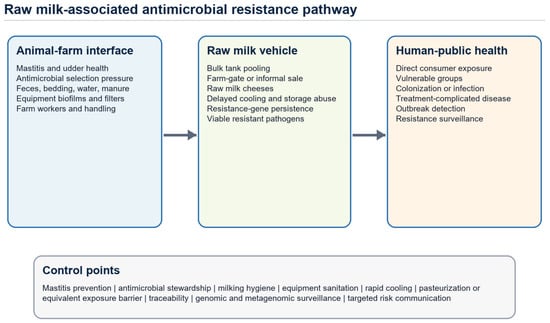
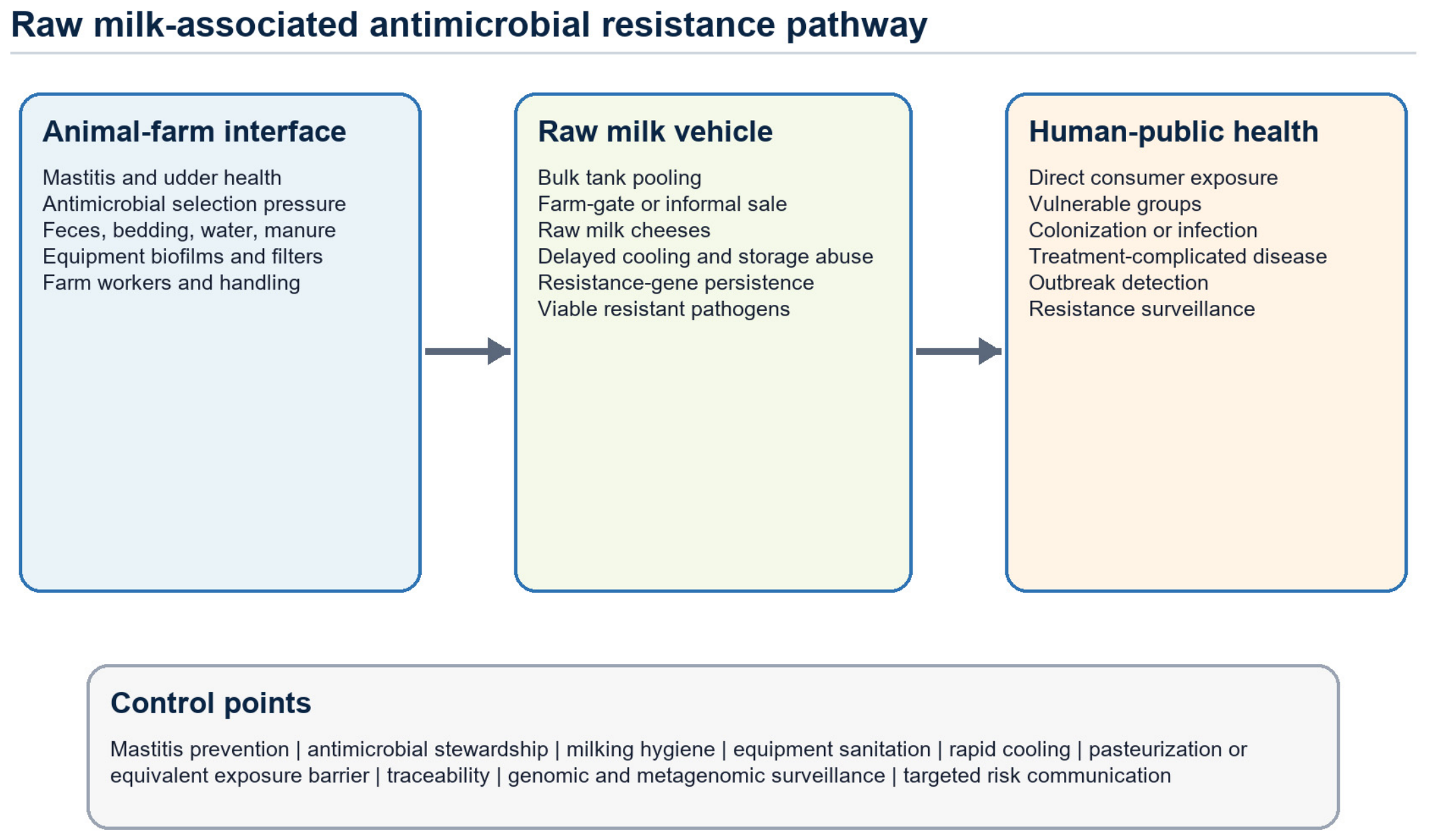
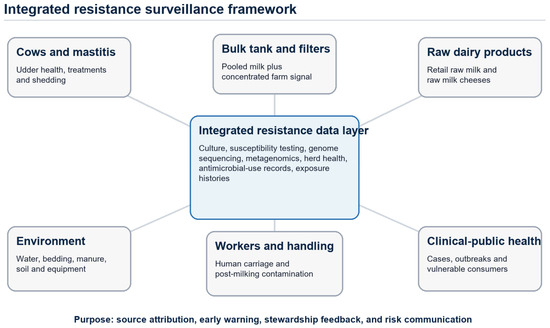
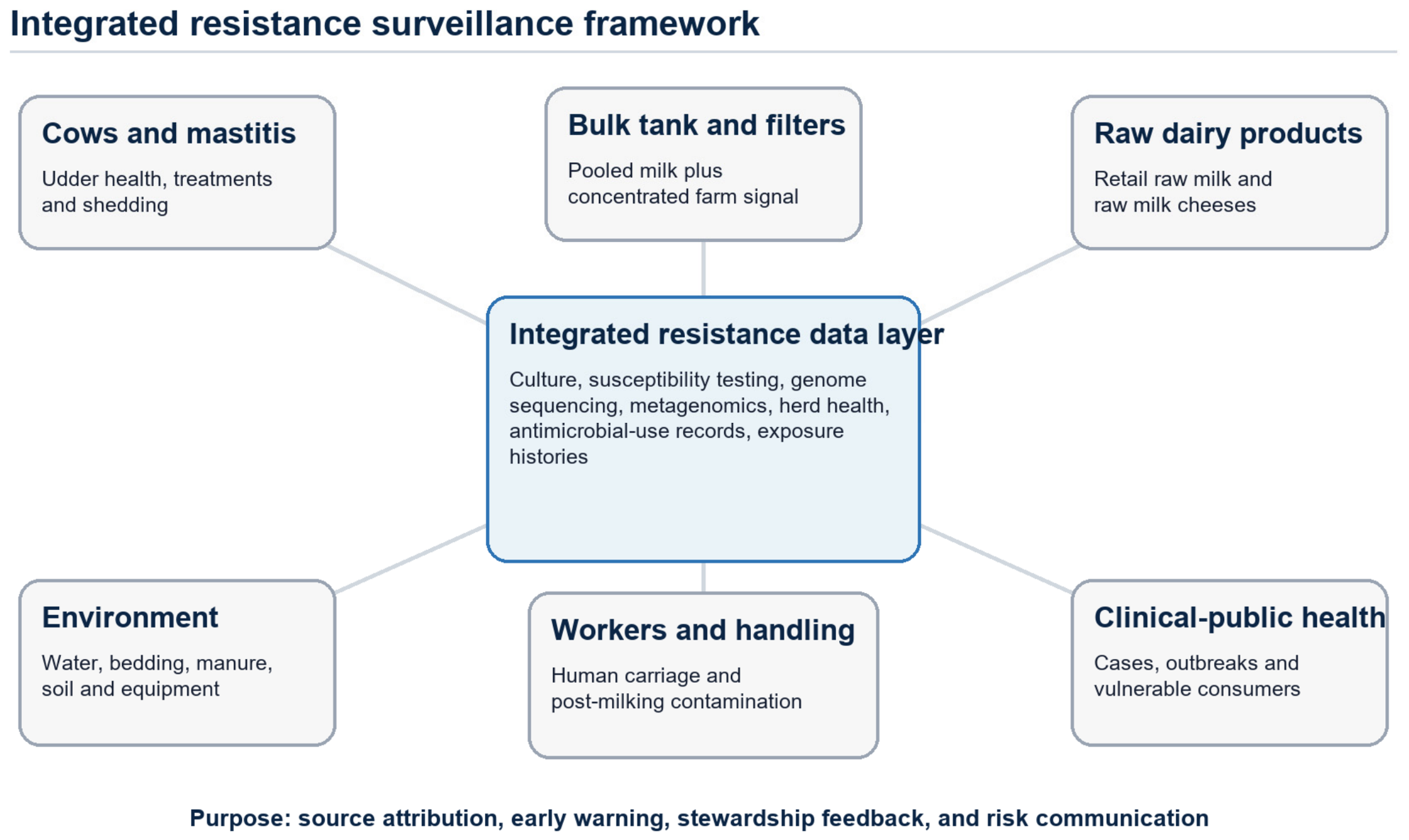

Disclaimer/Publisher’s Note: The statements, opinions and data contained in all publications are solely those of the individual author(s) and contributor(s) and not of MDPI and/or the editor(s). MDPI and/or the editor(s) disclaim responsibility for any injury to people or property resulting from any ideas, methods, instructions or products referred to in the content. |
© 2026 by the author. Licensee MDPI, Basel, Switzerland. This article is an open access article distributed under the terms and conditions of the Creative Commons Attribution (CC BY) license.