


Abstract
Tropical rocky outcrops are considered biological islands with high endemism and challenging environmental conditions. Ant gardens (AGs) represent a sophisticated ant–plant mutualism that may facilitate plant establishment in these restrictive habitats. This study conducted a comprehensive floristic inventory of Morro de Calzada (MdC), a tropical rocky outcrop in the Peruvian Andean–Amazonian piedmont, and evaluated the relationship between plant composition and the presence of AGs across six sampling units (912–1413 m a.s.l.). A total of 310 vascular plant species (77 families, 180 genera) were recorded. Melastomataceae (37 spp.), Moraceae (18 spp.), and Rubiaceae (18 spp.) were the most diverse families. Species richness decreased with elevation, with sampling unit 2 (951–1050 m a.s.l.) showing the highest richness (170 spp.) and sampling unit 6 the lowest (52 spp.). AGs were concentrated in the sampling unit SU4, which hosted the highest phorophyte richness (12 spp.) and number of gardens (22); this diversity was possibly driven by canopy and host-tree structure. The ant Azteca trailii tococae was the primary builder, showing strong associations with Meriania aff. microflora and Ficus citrifolia. Epiphyte composition was dominated by Anthurium gracile, with Epiphyllum phyllanthus as a notable xerophytic element. AG dimensions correlated positively with host-tree DBH and height. High floristic turnover among sampling units (Jaccard dissimilarity 0.78–0.94) contrasted with structural homogeneity of gardens, indicating ecological plasticity of Azteca trailii. The study highlights the role of AGs as ecosystem engineers in rocky outcrops and emphasizes the conservation value of MdC, which harbors endemic and threatened species. Sampling unit SU4 emerges as a functional hotspot for ant–plant mutualisms.
1. Introduction
Rocky outcrops are geological formations characterized by the exposure of bedrock that rises above the surrounding surface, resulting from differential erosion processes that occur over geological time scales [1,2]. These formations are distributed across a wide range of latitudes and climatic zones, where they act as “biological islands” within the landscape, especially in mountainous regions. Due to their high level of endemism and their crucial role as refuges for threatened species, they are considered critical habitats for conservation [3,4,5].
Ecologically, these systems represent environments subject to intense selective pressure, characterized by shallow substrates, limited nutrient availability, and severe water constraints [6,7]. However, such conditions make rocky outcrops ideal settings for studying adaptive mechanisms and evolutionary processes [8,9]. In this context, the establishment and persistence of plants often depend on complex biotic interactions capable of mitigating the physical and chemical limitations of the habitat [10].
In particular, symbiotic interactions play a decisive role in the organization and stability of plant communities on rocky outcrops, where severe environmental filtering limits the establishment of many species [2,11]. Cooperation between organisms not only reduces the impact of abiotic stress but also increases the capture, retention, and redistribution of resources at the microscale through nutrient recycling processes [12,13,14,15]. Within this context, plant–microorganism associations, such as mycorrhizae, optimize nutrient uptake from nutrient-poor substrates and maximize drought tolerance [16,17], while plant–animal interactions influence key processes such as seed dispersal, germination, and establishment in highly restrictive microhabitats [18,19,20]. These relationships not only create more favorable microenvironments but also modulate community structure and dynamics, contributing to ecological stability and resilience under extreme conditions [21,22].
Among the most characteristic mutualistic interactions in tropical ecosystems are ant gardens (AGs), complex three-dimensional structures built and maintained by tree-dwelling ants [23]. These structures result from mutualistic associations in which the nest architecture is formed through the accumulation of organic matter, mineral particles, and roots of epiphytic plants, primarily from the genera Epidendrum, Philodendron, Codonanthopsis, Peperomia, and Anthurium, among others [24,25,26,27,28,29]. The most frequently reported builder species belong to the genera Azteca, Camponotus, and Crematogaster [30,31,32,33,34]. In this plant–ant mutualistic relationship, plants provide structural support and root anchorage, while ants disperse seeds, regulate substrate pH, and enrich the matrix with nutrients derived from organic waste, thereby promoting plant growth in limiting environments [24,35,36].
Over the past years, research on ant gardens has seen a significant increase due to their recognized importance in the dynamics and functionality of tropical ecosystems [29,32,37,38,39,40]. These structures frequently develop in environments subject to anthropogenic disturbances, such as deforestation, habitat fragmentation, and canopy opening [29,30,41,42]. Due to their sensitivity to variations in resource availability and forest structure, ant gardens have been proposed as functional indicators of ecological disturbance [26,28,37].
In the San Martín region of Peru, el Morro de Calzada (MdC) is a unique tropical rock outcrop system located in the Andean–Amazonian Piedmont. Its geomorphological configuration generates a marked environmental gradient characterized by shallow soil depth, low water retention, high exposure to solar radiation, and limited nutrient availability, factors that act as ecological filters on the composition and structure of the vegetation. However, despite its ecological and biogeographic importance, knowledge regarding the system’s floristic diversity, and particularly regarding the specificity and functioning of mutualistic interactions associated with ant gardens, remains limited.
This study aimed to conduct a comprehensive floristic survey of Morro de Calzada, evaluating the relationship between plant composition and the presence of ant gardens, with the goal of providing empirical evidence to help understand the role of these interactions in the ecological organization and functioning of this unique tropical rock outcrop.
2. Materials and Methods
2.1. Study Area
El Morro de Calzada (MdC) is located in the Alto Mayo Valley, Moyobamba Province, San Martín Region, Perú (6°1′32.02′′ S, 77°2′35.55′′ W) (Figure 1). This system consists of a rocky outcrop of tropical origin embedded within the valley’s landscape, covering an area of approximately 1247.6 ha, where a mosaic of primary and secondary forests in various stages of succession coexists [43]. Due to its geomorphological prominence and ecological significance, it is locally recognized as the “guardian of the Alto Mayo” (Figure 2).
Figure 1.
Location of Morro de Calzada in the San Martín Department and the location of the plots along the altitudinal gradient.
Figure 2.
(A) View of Morro de Calzada, “Guardian of Alto Mayo,” from the basal area. (B) Vegetation corresponding to the lower sampling unit (SU1). (C) View of the summit of Morro de Calzada (SU6). (D) Intermediate sampling unit (SU4) with an emergent canopy dominated by palm trees. (E) Panoramic view of the Calzada district from the top of the hill. All images were obtained through manual flights using a DJI Mavic 3 drone.
The geomorphological configuration of the system creates a marked altitudinal gradient ranging from 912 m above sea level to 1413 m above sea level, resulting in high environmental and microclimatic heterogeneity. In this context, factors such as shallow soil depth, limited water-holding capacity, high exposure to solar radiation, and reduced nutrient availability act as ecological filters that shape the structure and composition of the vegetation [44,45].
The forest’s physiognomy is characterized by trees reaching up to 20 m in height that form a partially open canopy, a condition that favors the presence of ant gardens. This configuration reflects a set of functional adaptations to the restrictive environmental conditions typical of this tropical system.
The climate of the area has an average annual temperature of 22.8 °C, with lows of 10.1 °C and highs approaching 30 °C. Average annual precipitation is approximately 1512 mm, with monthly rainfall below 100 mm between May and August [46]. The rainfall pattern is highly seasonal, with a rainy season that begins in October and lasts through March, reaching its peak between February and March.
2.2. Sampling Method
Fieldwork was carried out between August 2025 and March 2026, a period selected with the aim of maximizing the recording of plant species in their reproductive stages (flowering and fruiting). To assess variation in plant diversity along the elevational gradient, six altitudinal sampling bands were established between 912 and 1413 m a.s.l. These bands are treated throughout as sampling units distributed along a continuous, multifactorial gradient (elevation, slope aspect, and canopy structure) rather than as discrete ecological entities; plots within each band were not all located on the same slope aspect (Figure 1).
In each sampling unit, four 10 × 50 m (500 m2) plots were delineated, distributed strategically based on accessibility and slope conditions. A total of 24 plots were evaluated, covering a cumulative area of 1.2 ha. Sampling followed the method proposed by Gentry [47], incorporating subsequent modifications tailored to heterogeneous tropical ecosystems [48,49].
All trees, shrubs, and palms with a diameter at breast height (DBH) of ≥1 cm and a height greater than 1 m were recorded along the plots. In addition, systematic surveys and continuous observations were conducted outside the sampling units to record herbaceous species and lianas, thereby expanding the coverage of the floristic inventory of Morro de Calzada throughout the study period.
For phorophytes that hosted ant gardens (AGs), a standardized protocol based on Quinteros et al. [29] was applied. This protocol included photographing the phorophyte and associated epiphytes, as well as measuring the host’s dasometric variables. Additionally, the dimensions of the AGs were quantified, considering length, width, and height above the ground. Finally, samples of the associated ants were collected for subsequent taxonomic identification. Botanical nomenclature was standardized using the W3-Tropicos platform.
The conservation status of the recorded species was determined in accordance with the Red List criteria and the official classification of Peru’s threatened flora (Supreme Decree No. 043–2006–AG).
The ants associated with the AGs were identified at the Department of Entomology of the Natural History Museum at National University of San Marcos, using specialized taxonomic keys. Finally, the specimens were deposited at the Laboratory of Tropical Ecology and Data Analysis at National University of San Marcos.
2.3. Data Analysis
Statistical analyses and visualizations were performed in RStudio using R version 4.3.0 [50]. The methods employed comprised three levels of complexity. At the descriptive statistics level, absolute and relative frequencies (abundance, richness, and dominance), as well as measures of central tendency and dispersion, were evaluated. These results were represented using bar charts, boxplots, and lollipop plots. Ecological diversity indices, including Shannon (H′) and Simpson (1 − D), were calculated through vectorized operations in R. In addition, the Jaccard dissimilarity index (1 − J) was applied for pairwise comparisons of floristic composition based on presence/absence matrices. Association analyses were conducted using Spearman’s rank correlation to evaluate relationships between continuous structural variables (DBH, host height, and ant-garden dimensions), as well as to test the covariation of mutualism density against structural arboreal metrics (absolute tree abundance and Shannon diversity) across sampling units, evaluated with the cor.test() function. Hierarchical clustering using the UPGMA method (Unweighted Pair Group Method with Arithmetic Mean) [51] was implemented on Jaccard dissimilarity matrices to identify similarity patterns among sampling units. Tripartite mutualistic interaction frequencies (ant–phorophyte–epiphyte) were quantified and modeled as alluvial flow diagrams. The main R packages used were vegan version 2.6-4 [52] for dissimilarity indices and community matrices; ggplot2 v3.4.4 [53] for core visualizations; pheatmap v1.0.12 [54] for heatmaps; dendextend v1.17.1 [55] for dendrogram extraction and structural integration with distance matricess; dplyr v1.1.4 [56] for data manipulation and taxonomic standardization; readxl v1.4.3 for data ingestion [57]; ggcorrplot v0.1.4 [58] for correlation matrices; ggalluvial v0.12.5 [59] for tripartite network visualization; and patchwork v1.2.0 [60] for multi-panel figure assembly.
3. Results
3.1. Floristic Inventory
A total of 310 species were recorded, comprising 33 orders, 77 families, and 180 genera. Dicotyledons accounted for 86.6% of the taxa, with 269 species grouped into 64 families and 151 genera; monocotyledons accounted for 11.9%, with 37 species distributed across 9 families and 25 genera; and the remaining 1.3% corresponded to pteridophytes (Pteridophyta), with 4 species, 4 families, and 4 genera.
Melastomataceae was the most diverse family, with 37 recorded species. It was followed by Moraceae and Rubiaceae, both with 18 species. Fabaceae recorded 15 species, followed by Asteraceae with 14, Clusiaceae with 12, and finally Lauraceae and Euphorbiaceae, with 10 species each, making them some of the most representative families (Appendix A). Figure 3 and Figure 4 illustrate some of the species recorded in the study area.
Figure 3.
Selected species from Morro de Calzada. (A). Sobralia violacea Linden ex Lindl. (B). Miconia prasina (Sw.) DC; (C). Lycoseris trinervis (D. Don) S.F. Blake; (D). Hebeclinium macrophyllum (L.) DC.; (E). Palicourea guianensis Aubl.; (F). Bellucia pentamera Naudin; (G). Miconia tococa Michelang.; (H). Tithonia rotundifolia (Mill.) S.F. Blake.
Figure 4.
Selected species from Morro de Calzada. (A). Pitcairnia paniculata (Ruiz & Pav.) Ruiz & Pav. (B). Byrsonima spicata (Cav.) DC.; (C). Desmoscelis villosa (Aubl.) Naudin; (D). Passiflora vitifolia Kunth; (E). Caryocar glabrum (Aubl.) Pers.; (F). Costus guanaiensis Rusby; (G). Sabicea cana Hook. f.; (H). Palicourea tomentosa (Aubl.) Borhidi.
At the genus level, Miconia stood out as the most diverse genus, with 28 species, followed by Ficus and Clusia, both with eight species.
Regarding growth form, 49.52% of the species corresponded to trees, 21.86% to shrubs, and 18.33% to herbs, of which 6.75% were epiphytes. Vines represented 6.43%, whereas palms accounted for 0.64% of the total.
Thirteen families were present across all evaluated sampling unit: Araceae, Arecaceae, Asteraceae, Cactaceae, Clusiaceae, Cyatheaceae, Cyperaceae, Fabaceae, Gesneriaceae, Melastomataceae, Orchidaceae, Rubiaceae, and Urticaceae. Similarly, the genera Anthurium, Clusia, Codonanthopsis, Cyperus, Desmoscelis, Epidendrum, Epiphyllum, Graffenrieda, Miconia, and Wettinia were recorded across all sampling units.
A gradual decrease in species number was observed with increasing elevation in Morro de Calzada (Figure 5). Sampling unit 1 (<950 m a.s.l.) recorded 42 species, whereas Sampling unit 2 (951–1050 m a.s.l.) showed the highest richness, with 52 species. Subsequently, Sampling units 3 and 4 recorded 27 and 30 species, respectively, while richness declined to 23 and 21 species in Sampling units 5 and 6.
Figure 5.
(A) Species abundance by sampling unit. (B) Species richness by sampling unit. (C) Species domain by sampling unit.
3.2. Variation in Vegetation Structure Among Sampling Bands
Three ecological indicators were compared across six sampling units (SU1–SU6): abundance, richness, and dominance. Sampling unit SU2 showed the highest abundance and species richness, suggesting high diversity and a large number of individuals. In contrast, SU5 and SU6 showed low richness values, indicating a lower variety of species (Figure 5). Regarding dominance, SU4 and SU3 exhibited the highest values, indicating that a few species accounted for a large proportion of individuals within these sampling units. Conversely, SU2 showed the lowest dominance, reflecting greater evenness in species distribution. Overall, the results indicate that plant abundance, richness, and dominance vary considerably among sampling bands. Because these bands combine differences in elevation, slope aspect, and canopy openness (Figure 1), this variation should be interpreted as heterogeneity along the sampled gradient rather than as evidence of discrete, internally homogeneous ecological units; ordination-based confirmation was beyond the scope of the present dataset and is identified as a priority for future analyses.
Figure 6 displays the ecological diversity indices across the gradient. The Shannon (H′) and Simpson (1 − D) indices showed the highest values in SU2, reflecting greater diversity and evenness in the distribution of individuals. In contrast, SU4 and SU6 showed the lowest values, indicating less diverse communities subjected to greater dominance by select species. Overall, these results suggest that ecological diversity varies markedly among sampling units, partitioning the environment into balanced zones and restricted floristic assemblages.
Figure 6.
Diversity indices across the six study sampling units: (A) Shannon (H′) and (B) Simpson (1 − D).
The heat map (Figure 7) shows how species richness varies among botanical families across the six sampling units. The marginal classification trees display hierarchical clustering, grouping sampling units based on their shared floristic profiles and aggregating botanical families that exhibit similar distribution patterns across the sampling units. Families such as Melastomataceae, Moraceae, Lauraceae, and Clusiaceae showed the highest richness values, represented by more intense shades, indicating their dominant role in the floristic composition. In contrast, families such as Cannabaceae, Caryocaraceae, and Clethraceae showed low values, represented by lighter shades, indicating lower representation. The distribution was not homogeneous: some sampling units concentrated greater diversity within certain families, whereas others showed reduced or no presence. Overall, the heat map makes it possible to identify patterns of richness, concentration and dispersion, highlighting which families were more diverse and in which sampling unit they were most strongly represented. This provides key information for understanding the structure and heterogeneity of the plant community.
Figure 7.
Number of recorded species distribution by botanical families across the six sampling units.
Jaccard dissimilarity analysis evaluated the degree of difference in species composition among the six sampling units (SU1–SU6) (Figure 8). Pairwise values were uniformly high, ranging from 0.78 to 0.94, indicating that the sampling unit shared few species and exhibited markedly differentiated floristic communities. The highest dissimilarity was observed between SU2 and SU4/SU6 (0.94), whereas the lowest values were recorded between SU5 and SU6 (0.78), indicating a closer floristic affinity at higher elevations. The UPGMA hierarchical clustering (Figure 8B) structurally confirms these relationships, segregating the sampling unit into distinct compositional clades where SU5 and SU6 form a terminal node, while SU2 remains highly divergent. Overall, the matrix and resulting dendrogram reflect pronounced spatial turnover and structural diversity within the system.
Figure 8.
Floristic turnover among sampling units. (A) Pairwise Jaccard dissimilarity matrix. (B) UPGMA hierarchical clustering dendrogram illustrating structural similarities in species composition.
3.3. Threatened Flora and Conservation Status
Of the 310 taxa recorded in the study area, the vast majority corresponded to species confirmed as native (307), whereas three taxa were of non-native origin. Regarding conservation status according to the IUCN Red List and the Peruvian Supreme Decree (DS), 198 taxa were categorized globally as Least Concern (LC), indicating a flora that is predominantly stable in terms of international threat status. However, 104 taxa lacked assessment in at least one of the two reference systems consulted, representing a significant knowledge gap regarding the conservation status of the local flora. One taxon, Monstera dubia (Araceae), was classified as Data Deficient (DD) by the IUCN, highlighting the need for additional population studies for this group.
A relevant subset of the inventory included taxa with some recognized level of threat at the global or national scale. According to the IUCN, Myrcia egensis (Myrtaceae) is listed as Endangered (EN), whereas Myrcia bracteata (Myrtaceae) and Justicia comata (Acanthaceae) are categorized as Vulnerable (VU). Under the Peruvian DS framework, additional taxa were also classified as VU: Cosmibuena grandiflora (Rubiaceae), Couratari guianensis (Lecythidaceae), Desmodium subsericeum (Fabaceae), and Epiphyllum phyllanthus (Cactaceae). The Near Threatened (NT) category included Wettinia maynensis (Arecaceae), Xylopia nitida (Annonaceae), and Baccharis genistelloides (Asteraceae), the latter recorded exclusively under the DS system. Additionally, three taxa were confirmed as endemic to Peru: Miconia manserichensis (Melastomataceae), Myrsine youngii (Primulaceae), and Sterculia peruviana (Malvaceae). This highlights the biogeographic value of the study area and the importance of its conservation in the face of anthropogenic pressures.
3.4. Phorophyte and Ant Gardens
The results showed marked heterogeneity among the six sampling units. The sampling unit designated SU4 concentrated the highest richness of phorophyte species (12) and the highest number of ant gardens (22) (Figure 9). A positive association between phorophyte richness and ant-garden number is suggested by this plot-level pattern and is examined quantitatively below; we note that SU4 plots also correspond to a distinct slope aspect and denser canopy relative to other sampling units, which may co-vary with this result. In contrast, SU3 showed minimum values for both variables, reflecting low diversity and limited construction activity. Sampling units SU1, SU2, SU5, and SU6 exhibited intermediate values, with some correspondence between phorophyte richness and the number of ant gardens. Overall, the data indicate a close spatial association between phorophyte richness and the proliferation of ant gardens, highlighting sampling unit SU4 as a sector with high mutualistic activity within the studied gradient. Figure 10 illustrates some ant gardens recorded in the study area.
Figure 9.
(A) Host plant richness and (B) distribution of ant gardens across ecological sampling units.
Figure 10.
(A–C) Typical ant gardens found in Morro de Calzada.
To quantitatively assess the drivers of mutualism density at the sampling unit level, ant garden frequency was tested against structural arboreal metrics (Figure 11). Spearman correlation analysis revealed a positive, albeit statistically non-significant, trend between total arboreal abundance and the number of ant gardens (ρ = 0.676, p = 0.14). Conversely, overall arboreal diversity (Shannon H′) showed a complete lack of correlation with nest density (ρ = −0.058, p = 0.913).
Figure 11.
Covariation between structural arboreal metrics and mutualism density across sampling units. (A) Arboreal abundance (total individuals) vs. number of ant gardens. (B) Arboreal diversity (Shannon H′) vs. number of ant gardens.
Most ant gardens were associated with Azteca trailii tococae, particularly on host plants such as Meriania aff. microflora (8 ant gardens) and Ficus citrifolia (5 ant gardens). In contrast, Camponotus cuneidorsus was recorded in only one ant garden associated with Aspidosperma excelsum, reflecting a much more restricted distribution. Sampling unit SU4 recorded the highest epiphyte richness (16 species), followed by SU1 with 7 species and sampling unit SU5 and SU6 with 6 species each, respectively (Figure 12A). SU3 showed the lowest diversity, with only 2 species. This pattern reveals marked vertical heterogeneity in the distribution of epiphytes. In addition, some species, such as Anthurium gracile, reached 9 records, indicating their dominant role in ant gardens. Others, such as Epiphyllum phyllanthus and Epidendrum sp., occurred with intermediate frequencies, whereas most species were recorded only once (Figure 12B).
Figure 12.
(A) Epiphyte richness and (B) frequency across ecological sampling unit.
Figure 13 shows marked variability in the dimensions of ant gardens and in the characteristics of phorophytes across the six sampling units. The length and width of ant gardens showed notable differences, with some sampling units displaying extreme values and greater dispersion. Similarly, diameter at breast height (DBH) and host plant height reflected structural contrasts, highlighting sampling units with more robust trees compared with others characterized by smaller individuals. The presence of outliers indicates heterogeneity in local conditions.
Figure 13.
Structural variation of ant gardens and host trees across ecological sampling units: (A) Ant garden length (cm); (B) Ant garden width (cm); (C) Host tree diameter at breast height (DBH, cm); (D) Host tree height (m).
Linear regression models (Figure 14) evaluated the allometric structural variation of ant gardens and host trees across ecological sampling units: (A) Ant garden length (cm); (B) Ant garden width (cm); (C) Host tree diameter at breast height (DBH, cm); (D) Host tree height (m). tric scaling between ant garden dimensions and the structural traits of phorophytes. The models revealed a direct positive fit between ant garden width and length, indicating proportional structural growth. Furthermore, predictive modeling confirmed positive trends between mutualistic nest development and host architecture. Specifically, ant garden length scaled positively with phorophyte DBH, while the insertion height of the ant gardens scaled with total phorophyte height. The corresponding coefficients of determination (R2) confirm that more robust host metrics act as reliable predictors for the developmental capacity and vertical placement of mature ant gardens.
Figure 14.
Scaling relationships between ant garden and host-tree dimensions, displaying linear fits and coefficient of determination (R2) values: (A) Ant garden width vs. length; (B) Host DBH vs. Ant garden length; (C) Tree height vs. Ant garden height.
Azteca trailii tococae (Figure 15) showed strong associations with the genera Miconia (9) and Meriania (8), as well as moderate associations with Ficus and Desmoscelis. In contrast, Camponotus cuneidorsus showed few or no associations, being limited to very one occasional record.
Figure 15.
Ants species: (A,B) Camponotus cuneidorsus Emery, 1920 and (C,D) Azteca trailii tococae Forel, 1904.
Jaccard dissimilarity analysis for phorophytes (Figure 16) showed high pairwise values among most sampling units, ranging from 0.80 to 1.00, indicating marked spatial turnover in host species composition. Sampling unit SU4 showed moderate dissimilarity with SU2 and SU5, with values of 0.87 and 0.86, respectively. In contrast, SU1, SU3, and SU6 exhibited values approximating 1.00 when compared with other sampling units, reflecting highly differentiated species compositions. The parallel UPGMA clustering (Figure 15B) hierarchically structures these dissimilarities, visually segregating the host communities and confirming the high turnover rate across the gradient. Overall, these results indicate that host distribution varied significantly among sampling units, reinforcing ecological heterogeneity and highlighting the importance of considering spatial stratification in the analysis of ant garden diversity.
Figure 16.
Host species turnover across ecological sampling units. (A) Pairwise Jaccard dissimilarity matrix. (B) UPGMA hierarchical clustering dendrogram of host species composition.
The tripartite network analysis illustrated the structural assembly of the mutualistic associations among ant species, phorophyte hosts, and epiphytes (Figure 17). Azteca trailii tococae operated as the dominant central node, forming associations with multiple host trees, most frequently Meriania aff. microflora, Ficus citrifolia, and species within the genus Miconia. These primary phorophytes subsequently hosted diverse epiphytic assemblages. Within the epiphyte level, Anthurium gracile and Epiphyllum phyllanthus registered the highest interaction frequencies across the network, connecting with multiple host species. In contrast, the network flow for Camponotus cuneidorsus was highly restricted.
Figure 17.
Tripartite mutualistic network showing interactions among ant species, phorophyte hosts, and epiphytes.
4. Discussion
4.1. Floristic Composition and Elevational Gradients
Species richness did not decline monotonically along the elevational gradient: it peaked at 170 species in the SU2 before declining to 52 species in SU6. This non-monotonic pattern is broadly consistent with elevational environmental filtering documented in other tropical gradients, although in the present dataset elevation co-varies with slope aspect and canopy openness across sampling units, so the relative contribution of each factor cannot be isolated with the current design. These filters include progressive temperature reductions, heightened wind exposure, and severe edaphic constraints characteristic of higher elevations [44,45,61]. The reduced taxonomic richness observed in the SU1 sampling unit relative to SU2 may reflect localized anthropogenic edge effects and habitat fragmentation reported elsewhere for similar systems [41], although this study did not directly quantify disturbance history or fragmentation at SU1, and this explanation should be treated as a hypothesis rather than an established cause. Despite these altitudinal and anthropogenic pressures, the persistence of a resilient, generalist floristic backbone, principally comprising Araceae, Orchidaceae, and robust Melastomataceae, acts as a stabilizing matrix across the entire gradient, exhibiting the high environmental tolerance necessary to persist across fluctuating abiotic zones [6].
The atypical dominance of Asteraceae within this system diverges sharply from standard closed-canopy tropical forest models, reflecting the specific geomorphological constraints of the rocky outcrop. This dominance is facilitated by high incident irradiance, extreme canopy openness, and characteristically shallow substrates [62]. Within this extreme abiotic context, the localized presence of Baccharis genistelloides in the sampling unit (SU5, SU6) represents the establishment of an extra-local high-Andean element substantially outside its standard altitudinal and latitudinal range [63,64]. The severe environmental filters at the summit generate functionally analogous ecotones that mimic higher-elevation puna transitions. This environmental severity effectively suppresses the establishment of typical lowland mesophytic competitors, thereby enabling stress-tolerant taxa, which are otherwise competitively excluded in dense, closed-canopy forests, to successfully colonize the outcrop [9,44].
Operating under these distinct geomorphological and climatic dynamics, the Morro de Calzada system functions as a critical biological refuge. It harbors highly restricted endemic flora, including Miconia manserichensis, Myrsine youngii, and Sterculia peruviana, alongside multiple globally threatened taxa [2]. However, the high proportion of Data Deficient (DD) and unassessed taxa cataloged in the inventory underscores significant, ongoing knowledge gaps regarding the conservation viability of this isolated flora. Ultimately, this pronounced floristic heterogeneity and the resulting structural complexity establish the foundational environmental matrix. Ultimately, this pronounced floristic heterogeneity and the resulting structural complexity establish the environmental matrix that determines the spatial availability of suitable habitats, defines the structural constraints, and governs the distribution of specialized mutualistic niches among sampling units, thereby conditioning the establishment of ant-garden symbioses [26,30].
4.2. Spatial Stratification, Phorophyte Selection, and Allometric Scaling of Ant Gardens
The concentration of ant–plant mutualisms in the plots grouped as SU4, characterized by peak phorophyte richness (12 species) and ant-garden density (22 nests), identifies this portion of the sampled gradient as the sector with the greatest recorded ant-garden activity in the Morro de Calzada system. We refrain from labeling SU4 an ‘ecological core’ or ‘altitudinal belt’ given that its plots differ from other sampling units in slope aspect and canopy openness in addition to elevation (Figure 1); disentangling these co-varying factors will require plot-level ordination analyses. This distribution is driven by microenvironmental convergence, where stable atmospheric humidity and a partially open canopy maximize the light penetration essential for epiphyte establishment [30]. The proliferation of ant gardens relies strictly on arboreal structural heterogeneity and the availability of medium-to-large robust trees, triggering a facilitation cascade where tree diversity dictates the volumetric colonization space available for keystone ants [29,65]. Consequently, SU4 functions as a critical refuge patch within the restrictive rocky outcrop landscape, mitigating severe abiotic stress and enabling the assembly of complex symbiotic networks [6,7].
The correlation analyses suggest that forest structural attributes are more influential than taxonomic diversity in determining ant-garden occurrence. Although the positive association between arboreal abundance and ant-garden density was not statistically significant, the relatively high correlation coefficient (ρ = 0.676) indicates a biologically meaningful trend that may have been constrained by the low number of sampling units. By contrast, the absence of any relationship between Shannon diversity and nest density indicates that increasing floristic diversity alone does not necessarily increase the availability of suitable nesting sites. Instead, ant-garden establishment appears to depend primarily on structural characteristics of the forest, including the abundance of mature trees capable of providing stable branch architecture and appropriate microclimatic conditions for colony persistence. This interpretation is consistent with previous studies demonstrating that arboreal ants preferentially establish gardens where host architecture and canopy structure maximize nest stability and epiphyte development, regardless of overall plant diversity [26,29,30,42]. Therefore, structural complexity, rather than species diversity per se, appears to be the principal driver of mutualistic nest distribution in the Morro de Calzada rocky outcrop.
Within this optimal sampling unit, host selection patterns show deviation from gross allometric availability. The disproportionate occurrence of ant gardens on Meriania aff. microflora and Ficus citrifolia relative to their floristic abundance suggests potential preferential colonization, but the mechanisms driving this pattern remain uncertain. Potential mechanisms could include microenvironmental and biochemical factors or specific functional traits in these hosts, though direct evidence of founding queen behavior or assessment processes was not collected in this study [66,67].
Among the host trees colonized by Azteca trailii tococae, several belonged to Melastomataceae and possessed architectural characteristics previously associated with ant gardens, including horizontal branching and the presence of foliar domatia [42,68]. Although these traits have been proposed in previous studies as potentially favoring nest establishment, the present study did not directly evaluate whether they influenced host selection by founding queens. Therefore, the observed associations should be interpreted as consistent with published ecological hypotheses rather than as evidence of an active selection mechanism. Comparative analyses between colonized and non-colonized host trees would be required to test this hypothesis. Likewise, trophobiotic interactions involving scale insects and the resulting nutrient dynamics have been documented in Azteca ant gardens [66], but these processes were not quantified in the present study and thus remain plausible explanations rather than direct inferences from our dataset.
Previous studies have described mature ant gardens as localized ecosystem engineers capable of enhancing nutrient accumulation and moisture retention [35,69]. This volumetric expansion demands strict biomechanical interdependence, necessitating proportional increases in epiphyte alpha diversity to provide complex root networks that function as biological rebar, stabilizing the masticated plant-fiber carton against precipitation [28,70]. Ant garden length was positively correlated with host diameter at breast height (DBH) (Figure 13B), indicating that larger host trees tended to support larger ant gardens. This pattern is consistent with the hypothesis that larger trees provide greater structural space for garden establishment and development [29,42]. Direct measurements of mechanical stress on garden-bearing branches, comparative analysis of branch failure rates, or experiments manipulating branch diameter would be needed to test whether ant gardens actively maximize anchorage interface. Furthermore, the vertical positioning of gardens correlates strongly with total tree height, reflecting a selective placement strategy that optimizes insolation for cultivated epiphytes while mitigating nest inundation risks [30,71]. Ant gardens exhibited an isometric relationship between nest length and width (Figure 13A), indicating proportional growth during development. This pattern is consistent with previous descriptions of ant garden architecture [26,72]. Nevertheless, because colony construction behavior and temporal nest development were not evaluated, the present data do not allow us to determine whether this proportionality results from active architectural regulation by workers or from structural constraints associated with host architecture.
The altitudinal gradient imposes severe host species turnover, evidenced by high Jaccard dissimilarity indices (0.80–1.00) for phorophyte assemblages across sampling units. Despite this continuous taxonomic turnover, Azteca trailii tococae demonstrates marked ecological plasticity, maintaining a structurally conserved nest architecture across 17 distinct tree genera [26,30]. This broad niche adaptability confers a significant competitive advantage and contrasts sharply with Camponotus cuneidorsus, which is restricted to a single host (Aspidosperma excelsum). This restricted occurrence may reflect greater host specificity, competitive interactions, or other ecological factors; however, the present study does not allow these alternative explanations to be distinguished [37,73].
Finally, the statistical uniformity in the structural dimensions of established gardens across all sampling units refutes environmentally deterministic growth models. This dimensional uniformity reveals a fundamental dissociation between the environmental filters governing initial nest establishment, such as the availability of suitable phorophytes and epiphytic propagules, and the variables dictating subsequent developmental scaling [26,44]. Internal demographic and structural scaling occurs independently of external host taxonomy or sampling unit specific environmental constraints, confirming that once a colony surpasses the initial establishment threshold, volumetric development is intrinsically and resiliently regulated by the mutualistic components themselves [29].
4.3. Assembly Mechanisms of the Epiphytic Community
The absolute dominance of Anthurium gracile within the Morro de Calzada system establishes this species as the critical structural foundation of the epiphytic assemblage. Its complex, interlaced root networks act as indispensable biological rebar, providing the mechanical integrity required to stabilize the masticated plant-fiber carton matrix against structural degradation [26,29]. The obligate dependence of the nest architecture upon these epiphytic root structures imposes a profound evolutionary bottleneck, demanding precise, anti-gravitational seed dispersal to ensure targeted arboreal germination directly within the nutrient-enriched nest walls [36]. Previous studies have shown that seed dispersal in ant gardens can be mediated by volatile organic compounds that attract ants, based on behavioral assays and chemical analyses [24,36,74]. In the present study, we documented the composition and abundance of epiphytic species associated with ant gardens but did not evaluate the chemical cues or behavioral mechanisms involved in seed dispersal. Therefore, whether similar chemically mediated interactions occur in the Morro de Calzada system remains to be investigated.
Previous studies have suggested that variation in semiochemical signals among myrmecophytic plant species may contribute to maintaining epiphytic diversity within ant gardens by influencing ant-mediated seed selection [36,74]. Differences in the chemical composition of these volatile compounds have been proposed to elicit species-specific retrieval responses, potentially promoting the establishment of multiple epiphytic taxa rather than dominance by a single species [36,74]. Although the present study did not evaluate the chemical basis of seed selection, the diverse epiphytic assemblages observed in Morro de Calzada are consistent with this ecological framework. However, direct evaluation of chemically mediated seed selection in this system will require behavioral assays and chemical analyses. Concurrently, the regular integration of Epidendrum orchids into the ant garden matrix introduces a secondary assembly pathway driven by passive anemochory. Despite the stochastic nature of wind dispersal, the subsequent successful germination of these microscopic, wind-borne seeds is strongly driven by specific physiological and chemical affinities with the carton matrix, corroborating patterns of sub-dominant orchid establishment observed in other Neotropical myrmecophytic systems [25,32,75].
The relatively frequent occurrence of Epiphyllum phyllanthus within ant gardens is noteworthy because epiphytic Cactaceae are rarely reported in typical lowland ant gardens [26,30]. This pattern may be associated with the environmental conditions characteristic of rocky outcrops, including high irradiance and seasonal water limitation [6]. However, because microclimatic conditions and functional plant traits were not evaluated directly, the adaptive significance of this association remains speculative. The incorporation of E. phyllanthus suggests the extensive ecological plasticity of the mutualism, expanding the known physiological and taxonomic limits of ant gardens to encompass stress-tolerant elements capable of persisting under extreme abiotic constraints [28].
Beyond these dominant and highly adapted taxa, the epiphytic community exhibits a high proportion of singletons, indicating significant compositional heterogeneity and spatial distance-decay turnover among individual gardens [65]. Such variation could reflect several non-exclusive processes, including differences in propagule availability, local environmental heterogeneity, or stochastic dispersal events [76]. Because these processes were not evaluated directly, the present study cannot distinguish among these alternative explanations. Consequently, the overarching dynamics of the epiphytic community are simultaneously shaped by the deterministic, chemically mediated selection exerted by ants and the stochastic spatial realities of wind and vertebrate dispersal. Ultimately, the survival of the established flora, particularly the obligate mesophytic epiphytes, relies entirely on the engineered physicochemical properties of the nest. The persistence of mesophytic epiphytes within ant gardens under the relatively harsh conditions of the rocky outcrop suggests that the carton matrix may provide favorable microenvironmental conditions for plant establishment [26,77]. Although previous studies have proposed that ant garden substrates contribute to moisture retention, the present study did not quantify the physicochemical properties of the carton matrix.
4.4. Ecosystem Engineering and Conservation Implications
Ant gardens amplify their functional importance as ecosystem engineers within the edaphically impoverished and hydrologically restrictive confines of tropical rocky outcrops [6,69]. To compensate for severe abiotic constraints, establishing colonies actively execute physicochemical modifications of the local microenvironment. These structural modifications include the stabilization of substrate pH, the enhancement of critical moisture retention capacities, and the localized sequestration of limiting macronutrients, particularly nitrogen, phosphorus, and organic carbon [26,35]. In this severe geomorphological context, the engineered carton matrix functions as an indispensable physiological buffer; without this micro-engineered substrate, specialized epiphytic flora would rapidly undergo hydraulic cavitation and lethal desiccation [77].
Beyond abiotic micro-regulation, mutualism exerts definitive biotic control over the surrounding community structure. Worker ants enforce top-down regulation on local trophic webs through aggressive territorial patrolling, which significantly reduces foliar herbivory on the structural flora, thereby maximizing the photosynthetic efficiency and survival rates of the cultivated epiphytes [26,78]. Concurrently, the physical architecture of the mature nest facilitates secondary biodiversity. The complex, three-dimensional structures generate localized phytotelmata and structurally stable microhabitats that sustain distinct macroinvertebrate microcosms, inherently augmenting the overall alpha diversity of the canopy ecosystem [79].
The stringent structural and microclimatic requirements of these mutualistic networks render them acutely sensitive to anthropogenic canopy disruption, particularly within the structurally dependent and highly diverse SU4. Deforestation and encroaching habitat fragmentation disproportionately degrade the basal and intermediate elevational zones by intensifying localized edge effects. These edge effects disrupt the stable atmospheric humidity and incident light regimes required for successful nest establishment and epiphyte germination [30,41]. Because their proliferation relies strictly on interconnected structural and environmental variables, ant garden density, spatial distribution, and localized epiphyte alpha diversity serve collectively as highly accurate functional indicators of overarching forest integrity and ecological connectivity [26,28,37].
Finally, projected climate change scenarios for the tropical Andes, characterized by temperature escalations and drastically altered precipitation regimes, threaten the phenological and spatial synchrony of these intricate systems. Rapid climatic shifts risk uncoupling the altitudinal distributions of keystone ants, structurally suitable phorophytes, and chemically specialized epiphytes, leading to the potential collapse of localized mutualistic networks [28,38]. Consequently, the preservation of continuous altitudinal corridors is mandatory to maintain the contiguous environmental gradients required to sustain the mutualistic continuum against upward climatic displacement. Morro de Calzada operates as an irreplaceable biogeographic node, harboring functionally specialized symbiotic assemblages alongside globally threatened and endemic flora, thereby necessitating immediate, targeted conservation protocols to protect its structural and functional integrity from compounded anthropogenic and climatic pressures.
4.5. Methodological Limitations
Several methodological limitations must be acknowledged when interpreting the findings of this study. The establishment of sampling plots based on accessibility and slope conditions introduces an inherent non-random sampling bias. This approach may disproportionately sample specific microhabitats, potentially underrepresenting certain host-tree species or ant-garden associations located in the steeper, less accessible sectors of the rocky outcrop. Additionally, the study relies on a relatively small sample size of ant gardens, which restricts the statistical power of the analyses and increases uncertainty in generalizing the results. Consequently, the observed spatial patterns, structural covariations, and specific mutualistic associations should be interpreted cautiously as localized phenomena. While this study provides critical baseline data for the isolated Morro de Calzada system, it remains uncertain to what extent these patterns represent broader regional ant-garden dynamics across the Neotropics. Future research employing randomized, larger-scale spatial sampling designs is necessary to validate these ecological trends at a macroecological scale.
5. Conclusions
This study confirms Morro de Calzada as a biological refuge structured by altitudinal and edaphic filters. The plant community exhibits declining species richness with elevation, high spatial turnover, and atypical dominance of stress-tolerant taxa, highlighting the value of its threatened Andean–Amazonian flora.
The SU4 sampling unit functioned as the sector with the greatest recorded concentration of ant–plant mutualisms in this study, coinciding with high structural heterogeneity of host trees; whether this reflects elevation, slope aspect, canopy structure, or a combination of these factors remains to be tested with ordination methods on plot-level data.
Azteca trailii tococae showed stronger associations with specific phorophyte genera (particularly Meriania aff. microflora and Ficus citrifolia) than expected from their relative floristic abundance, suggesting preferential host selection, although the mechanisms driving this pattern remain uncertain. Behavioral assays or comparative analysis of colonized versus non-colonized hosts would be required to test whether founding queens actively discriminate among host species.
Structural analysis revealed a dissociation between nest establishment and developmental scaling. While colonization is limited by altitudinal filters, mature nest dimensions show positive correlations with host DBH and total height, and exhibit isometric growth across all sampling units. These patterns suggest that once colonies surpass the initial establishment threshold, nest expansion may follow predictable scaling rules, although whether this reflects active architectural regulation by workers or passive structural constraints remains to be determined through direct observation of colony construction behavior.
The epiphytic assemblage, dominated by Anthurium gracile with subordinate contributions from xerophytic taxa such as Epiphyllum phyllanthus, shows patterns consistent with a hypothesis that the ant-constructed carton matrix provides favorable microenvironmental conditions (moisture retention, nutrient enrichment) for obligate mesophytic epiphytes. Direct measurements of carton physicochemistry and controlled comparisons of epiphyte performance inside and outside nest matrices are needed to test this inference.
Ant gardens are associated with modifications of the local microenvironment, including altered substrate pH, enhanced moisture retention, and localized nutrient sequestration. These characteristics plausibly enhance plant establishment on restrictive rocky outcrops, and the persistence of mesophytic epiphytes within ant gardens under harsh outcrop conditions suggests ecological importance. However, direct measures of ecosystem functioning including nutrient dynamics, herbivory rates, and secondary biodiversity within mature nests would be required to substantiate their role as ecosystem engineers. System resilience appears to depend on synchronized interactions between ant behaviors, host architectures, and adapted epiphytes, highlighting these mutualisms as potentially precise functional indicators of forest integrity and emphasizing the need to conserve continuous altitudinal corridors. Future research should evaluate these mechanistic hypotheses directly.
Author Contributions
Y.Q.-G., J.M.-B. and D.G.-T. conceived and designed the study. A.S.-I. and J.M.-B. coordinated the field work. Y.Q.-G., S.O.-C., J.M.-B. and A.S.-I. carried out the field work, including counting and collecting the materials. B.P.-T. and A.S.-I. carried out the georeferencing of the plots and produced the maps used in the fieldwork and in the manuscript. J.C.d.l.C., G.A.-I., E.d.P.Q.Q. and Y.Q.-G. participated in the taxonomic determination. F.C.G., Y.Q.-G., O.L.S.D. and D.G.-T. prepared the database and performed the statistical analyses. F.C.G., J.M.-B. and E.J.-P. interpreted the results and wrote the first draft of the manuscript. Y.Q.-G., O.L.S.D., B.P.-T., A.S.-I., E.J.-P. and J.M.-B. participated in writing, revising, and editing the manuscript. All authors have read and agreed to the published version of the manuscript.
Funding
This research was supported by the Universidad Nacional Mayor de San Marcos through the PCONFIGI Project entitled “Simbiosis flora-fauna en ecosistemas amazónicos: El caso del mutualismo entre hormigas y la flora para la recuperación de los bosques nativos” Project Code No. B25140761 (RR No. 005446-2025-R/UNMSM).
Data Availability Statement
Data used in this study can be requested to the following authors via email: yquinterosg@unmsm.edu.pe, jehoshua.macedo@unmsm.edu.pe.
Conflicts of Interest
The authors declare no conflicts of interest.
Appendix A. List of Reported Species in el Morro de Calzada
| Family | Species | Growth Habit | Ant Garden Association | Origin | UICN/DS |
| Acanthaceae | Aphelandra aurantiaca Lindl. | Herb | - | Native | - |
| Acanthaceae | Justicia comata (L.) Lam. | Herb | - | Native | VU/- |
| Acanthaceae | Justicia pectoralis Jacq. | Herb | - | Native | - |
| Alzateaceae | Alzatea verticillata Ruiz & Pav. | Tree | - | Native | LC/- |
| Anacardiaceae | Tapirira guianensis Aubl. | Tree | - | Native | LC/- |
| Anacardiaceae | Tapirira obtusa (Benth.) J.D. Mitch. | Tree | - | Native | LC/- |
| Annonaceae | Guatteria megalophylla Diels | Tree | - | Native | - |
| Annonaceae | Guatteria scytophylla Diels | Tree | - | Native | - |
| Annonaceae | Guatteria punctata (Aubl.) R. A. Howard | Tree | - | Native | LC/- |
| Annonaceae | Xylopia benthamii R.E. Fr. | Tree | - | Native | LC/- |
| Annonaceae | Xylopia nitida Dunal | Tree | - | Native | NT/- |
| Apocynaceae | Aspidosperma excelsum Benth. | Tree | AG Phorophyte | Native | LC/- |
| Apocynaceae | Mandevilla scabra (Hoffm. ex Roem. & Schult.) K. Schum. | Vine | - | Native | - |
| Araceae | Anthurium ernestii Engl. | Epiphyte | - | Native | - |
| Araceae | Anthurium gracile (Rudge) Lindl. | Epiphyte | AG epiphyte | Native | - |
| Araceae | Anthurium scandens (Aubl.) Engl. | Epiphyte | AG epiphyte | Native | - |
| Araceae | Monstera dubia (Kunth) Engl. & K. Krause | Epiphyte | - | Native | DD/- |
| Araceae | Philodendron asplundii Croat & M.L. Soares | Epiphyte | AG epiphyte | Native | LC/- |
| Araceae | Philodendron deflexum Poepp. ex Schott | Epiphyte | AG epiphyte | Native | - |
| Araceae | Philodendron ernestii Engl. | Epiphyte | AG epiphyte | Native | - |
| Araceae | Philodendron hederaceum (Jacq.) Schott | Epiphyte | - | Native | - |
| Araceae | Philodendron lechlerianum Schott | Epiphyte | - | Native | - |
| Araceae | Syngonium podophyllum Schott | Vine | - | Native | LC/- |
| Araliaceae | Didymopanax morototoni (Aubl.) Decne. & Planch. | Tree | - | Native | - |
| Araliaceae | Sciodaphyllum pentandrum (Pav.) Poir. | Tree | - | Native | LC/- |
| Arecaceae | Aiphanes deltoidea Burret | Palm | - | Native | - |
| Arecaceae | Wettinia maynensis | Palm | AG Phorophyte | Native | NT/- |
| Asteraceae | Ayapana elata R.M. King & H. Rob. | Herb | - | Native | - |
| Asteraceae | Baccharis genistelloides (Lam.) Pers. | Herb | - | Native | /NT |
| Asteraceae | Chaptalia nutans (L.) Pol. | Herb | - | Native | - |
| Asteraceae | Chromolaena odorata (L.) R.M. King & H. Rob. | Shrub | - | Native | - |
| Asteraceae | Cyrtocymura scorpioides (Lam.) H. Rob. | Herb | - | Native | - |
| Asteraceae | Elephantopus mollis Kunth | Herb | - | Native | LC/- |
| Asteraceae | Emilia sonchifolia (L.) DC. | Herb | - | Non-native | LC/- |
| Asteraceae | Hebeclinium macrophyllum (L.) DC. | Herb | - | Native | LC/- |
| Asteraceae | Lepidaploa canescens (Kunth) H. Rob. | Shrub | - | Native | - |
| Asteraceae | Mikania psilostachya DC. | Vine | - | Native | LC/- |
| Asteraceae | Mikania banisteriae DC. | Vine | - | Native | LC/- |
| Asteraceae | Mikania cordifolia (L. f.) Willd. | Vine | - | Native | LC/- |
| Asteraceae | Mikania guaco Bonpl. | Vine | - | Native | LC/- |
| Asteraceae | Vernonanthura patens (Kunth) H. Rob. | Shrub | - | Native | LC/- |
| Basellaceae | Anredera baselloides (Kunth) Baill. | Herb | - | Native | - |
| Begoniaceae | Begonia glabra Auble. | Epiphyte | AG epiphyte | Native | - |
| Begoniaceae | Begonia humilis Aiton | Herb | - | Native | - |
| Bignoniaceae | Jacaranda copaia (Aubl.) D. Don | Tree | - | Native | LC/- |
| Bignoniaceae | Jacaranda copaia subsp. spectabilis (Mart. ex DC.) A.H. Gentry | Tree | - | Native | - |
| Bignoniaceae | Jacaranda glabra (DC.) Bureau & K. Schum. | Tree | - | Native | - |
| Bromeliaceae | Aechmea longifolia (Rudge) L.B. Sm. & M.A. Spencer | Epiphyte | AG epiphyte | Native | - |
| Bromeliaceae | Guzmania brasiliensis Ule | Herb | - | Native | LC/- |
| Bromeliaceae | Pitcairnia paniculata | Epiphyte | - | Native | LC/- |
| Bromeliaceae | Racinaea parviflora (Ruiz & Pav.) M.A. Spencer & L.B. Sm. | Herb | - | Native | - |
| Burseraceae | Dacryodes peruviana (Loes.) H.J. Lam | Tree | AG Phorophyte | Native | - |
| Burseraceae | Protium glabrescens Swart | Tree | - | Native | - |
| Burseraceae | Trattinnickia aspera (Standl.) Swart | Tree | - | Native | LC/- |
| Cactaceae | Epiphyllum phyllanthus (L.) Haw. | Epiphyte | AG epiphyte | Native | -/VU |
| Cannabaceae | Celtis iguanaea (Jacq.) Sarg. | Tree | - | Native | LC/- |
| Cannabaceae | Celtis schippii Standl. | Tree | - | Native | LC/- |
| Cannabaceae | Trema micranthum (L.) Blume | Tree | - | Native | LC/- |
| Caricaceae | Jacaratia digitata (Poepp. & Endl.) Solms | Tree | - | Native | - |
| Caricaceae | Jacaratia spinosa (Aubl.) A.DC. | Tree | - | Native | LC/- |
| Caryocaraceae | Caryocar glabrum (Aubl.) Pers. | Tree | - | Native | LC/- |
| Caryophyllaceae | Drymaria cordata (L.) Willd. ex Schult. | Herb | - | Native | - |
| Celastraceae | Cheiloclinium cognatum (Miers) A.C. Sm. | Tree | - | Native | LC/- |
| Celastraceae | Peritassa huanucana (Loes.) A. C. Sm. | Vine | - | Native | - |
| Celastraceae | Tontelea corymbosa (Huber) A.C. Sm. | Vine | - | Native | LC/- |
| Chloranthaceae | Hedyosmum racemosum (Ruiz & Pav.) G. Don | Tree | - | Native | LC/- |
| Chrysobalanaceae | Hirtella racemosa Lam. | Shrub | - | Native | LC/- |
| Clethraceae | Clethra castaneifolia Meisn. | Tree | - | Native | LC/- |
| Clethraceae | Clethra fimbriata Kunth | Tree | - | Native | LC/- |
| Clusiaceae | Arawakia weddelliana (Planch. & Triana) L. Marinho | Tree | - | Native | LC/- |
| Clusiaceae | Clusia haughtii Cuatrec. | Tree | - | Native | LC/- |
| Clusiaceae | Clusia loranthacea Planch. & Triana | Tree | - | Native | LC/- |
| Clusiaceae | Clusia minor L. | Tree | - | Native | LC/- |
| Clusiaceae | Clusia loretensis Engl. | Tree | AG Phorophyte, AG epiphyte | Native | LC/- |
| Clusiaceae | Clusia ducuoides Engl. | Shrub | - | Native | LC/- |
| Clusiaceae | Clusia hammeliana Pipoly | Shrub | - | Native | - |
| Clusiaceae | Clusia octandra (Poepp.) Pipoly | Tree | - | Native | - |
| Clusiaceae | Clusia trochiformis Vesque | Tree | AG epiphyte | Native | - |
| Clusiaceae | Garcinia gardneriana (Planch. & Triana) Zappi | Tree | - | Native | LC/- |
| Clusiaceae | Garcinia madruno (Kunth) Hammel | Tree | - | Native | LC/- |
| Clusiaceae | Symphonia globulifera L. f. | Tree | - | Native | LC/- |
| Commelinaceae | Commelina fasciculata Ruiz & Pav. | Herb | - | Native | LC/- |
| Commelinaceae | Floscopa elegans Huber | Herb | - | Native | LC/- |
| Cordiaceae | Cordia alliodora (Ruiz & Pav.) Oken | Tree | - | Native | - |
| Cordiaceae | Cordia nodosa Lam. | Tree | - | Native | LC/- |
| Costaceae | Costus guanaiensis Rusby | Herb | - | Native | LC/- |
| Costaceae | Costus lasius Loes. | Herb | - | Native | LC/- |
| Cucurbitaceae | Cayaponia glandulosa (Poepp. & Endl.) Cogn. | Vine | - | Native | - |
| Cyatheaceae | Cyathea sp. | Herb | - | Native | - |
| Cyperaceae | Cyperus laxus Lam. | Herb | - | Native | LC/- |
| Cyperaceae | Cyperus miliifolius Poepp. & Kunth | Herb | - | Native | LC/- |
| Dryopteridaceae | Polybotrya fractiserialis (Baker) J. Sm. | Herb | - | Native | LC/- |
| Ebenaceae | Diospyros capreifolia Mart. ex Hiern | Tree | - | Native | - |
| Erythroxylaceae | Erythroxylum citrifolium A. St.-Hil. | Tree | AG Phorophyte | Native | LC/- |
| Erythroxylaceae | Erythroxylum fimbriatum Peyr. | Shrub | - | Native | LC/- |
| Erythroxylaceae | Erythroxylum ulei O.E. Schulz | Shrub | - | Native | LC/- |
| Erythroxylaceae | Erythroxylum shatona J.F. Macbr. | Tree | - | Native | - |
| Euphorbiaceae | Acalypha diversifolia Jacq. | Shrub | - | Native | LC/- |
| Euphorbiaceae | Alchornea acutifolia Müll. Arg. | Tree | - | Native | LC/- |
| Euphorbiaceae | Alchornea triplinervia (Spreng.) Müll. Arg. | Tree | - | Native | LC/- |
| Euphorbiaceae | Alchornea glandulosa Poepp. | Shrub | - | Native | LC/- |
| Euphorbiaceae | Croton schiedeanus Schltdl. | Tree | - | Native | LC/- |
| Euphorbiaceae | Glycydendron amazonicum Ducke | Tree | - | Native | LC/- |
| Euphorbiaceae | Maprounea guianensis Aubl. | Tree | - | Native | LC/- |
| Euphorbiaceae | Micrandra siphonioides var. minor (Benth.) Müll. Arg. | Tree | - | Native | - |
| Euphorbiaceae | Pseudosenefeldera inclinata (Müll.Arg.) Esser | Tree | - | Native | - |
| Euphorbiaceae | Tetrorchidium macrophyllum Müll. Arg. | Tree | - | Native | LC/- |
| Euphorbiaceae | Tetrorchidium rubrivenium Poepp. | Tree | - | Native | LC/- |
| Fabaceae | Crudia glaberrima (Steud.) J.F. Macbr. | Tree | - | Native | LC/- |
| Fabaceae | Dalbergia frutescens (Vell.) Britton | Vine | - | Native | LC/- |
| Fabaceae | Desmodium uncinatum (Jacq.) DC. | Herb | - | Native | LC/- |
| Fabaceae | Desmodium subsericeum Malme | Herb | - | Native | LC/VU |
| Fabaceae | Inga capitata Desv. | Tree | - | Native | LC/- |
| Fabaceae | Inga thibaudiana DC. | Tree | - | Native | - |
| Fabaceae | Inga acreana Harms | Tree | AG epiphyte | Native | LC/- |
| Fabaceae | Inga edulis Mart. | Tree | - | Native | LC/- |
| Fabaceae | Machaerium cuspidatum Kuhlm. & Hoehne | Tree | - | Native | - |
| Fabaceae | Machaerium floribundum var. hypargyreum (Harms) Rudd | Vine | - | Native | LC/- |
| Fabaceae | Macrolobium ischnocalyx Harms | Tree | - | Native | - |
| Fabaceae | Pterocarpus amazonum (Mart. ex Benth.) Amshoff | Tree | AG epiphyte | Native | - |
| Fabaceae | Tachigali peruviana (Dwyer) Zarucchi & Herend. | Shrub | - | Native | LC/- |
| Fabaceae | Tachigali guianensis (Benth.) Zarucchi & Herend. | Tree | - | Native | LC/- |
| Fabaceae | Zygia latifolia (L.) Fawc. & Rendle | Shrub | - | Native | LC/- |
| Gesneriaceae | Codonanthopsis crassifolia (H. Focke) C.V. Morton | Epiphyte | AG epiphyte | Native | LC/- |
| Gesneriaceae | Drymonia doratostyla (Leeuwenb.) Wiehler | Herb | AG epiphyte | Native | LC/- |
| Gleicheniaceae | Sticherus bifidus (Willd.) Ching | Herb | AG epiphyte | Native | - |
| Humiriaceae | Humiria balsamifera Aubl. | Tree | - | Native | LC/- |
| Humiriaceae | Sacoglottis guianensis Benth. | Tree | - | Native | LC/- |
| Hydrangeaceae | Hydrangea preslii Briq.Cf. | Shrub | - | Native | LC/- |
| Hypericaceae | Vismia baccifera (L.) Triana & Planch. | Tree | - | Native | LC/- |
| Hypericaceae | Vismia macrophylla Kunth | Shrub | - | Native | LC/- |
| Hypericaceae | Vismia tomentosa Ruiz & Pav. | Tree | - | Native | LC/- |
| Hypericaceae | Vismia rusbyi Ewan | Shrub | - | Native | LC/- |
| Hypericaceae | Vismia gracilis Hieron. | Shrub | - | Native | LC/- |
| Lauraceae | Aniba muca (Ruíz & Pav.) Mez | Tree | - | Native | LC/- |
| Lauraceae | Aniba panurensis (Meisn.) Mez | Tree | - | Native | LC/- |
| Lauraceae | Endlicheria bracteata Mez | Tree | AG Phorophyte | Native | - |
| Lauraceae | Endlicheria szyszylowiczii Mez | Tree | - | Native | - |
| Lauraceae | Licaria armeniaca (Nees) Kosterm. | Tree | - | Native | - |
| Lauraceae | Licaria triandra (Sw.) Kosterm. | Tree | - | Native | LC/- |
| Lauraceae | Nectandra brittonii Mez | Tree | - | Native | - |
| Lauraceae | Nectandra matthewsii Meisn. | Tree | - | Native | - |
| Lauraceae | Ocotea aciphylla (Nees & Mart.) Mez | Tree | AG Phorophyte | Native | - |
| Lauraceae | Ocotea bofo Kunth. | Tree | - | Native | - |
| Lauraceae | Ocotea splendens (Meisn.) Baill. | Tree | - | Native | - |
| Lecythidaceae | Couratari guianensis Aubl. | Tree | - | Native | LC/VU |
| Lecythidaceae | Eschweilera andina (Rusby) J.F. Macbr. | Tree | - | Native | LC/- |
| Lepidobotryaceae | Ruptiliocarpon caracolito Hammel & N. Zamora | Tree | - | Native | - |
| Malpighiaceae | Byrsonima chrysophylla Kunth | Tree | - | Native | - |
| Malpighiaceae | Byrsonima spicata (Cav.) DC. | Tree | AG Phorophyte | Native | LC/- |
| Malvaceae | Mollia gracilis Spruce ex Benth. | Tree | - | Native | - |
| Malvaceae | Quararibea wittii K. Schum. & Ulbr. | Tree | - | Native | - |
| Malvaceae | Sterculia peruviana (D.R. Simpson) E.L. Taylor ex Brako & Zarucchi | Tree | - | Endemic | - |
| Malvaceae | Theobroma bicolor Bonpl. | Tree | - | Native | - |
| Marantaceae | Ischnosiphon arouma (Aubl.) Körn. | Herb | - | Native | LC/- |
| Marcgraviaceae | Marcgraviastrum mixtum (Triana & Planch.) Bedell | Vine | AG epiphyte | Native | - |
| Melastomataceae | Adelobotrys adscendens (Sw.) Triana | Vine | - | Native | - |
| Melastomataceae | Adelobotrys microcarpus Schulman | Vine | - | Native | - |
| Melastomataceae | Bellucia pentamera Naudin | Tree | - | Native | LC/- |
| Melastomataceae | Centronia laurifolia D. Don | Tree | - | Native | LC/- |
| Melastomataceae | Desmoscelis villosa (Aubl.) Naudin | Herb | AG Phorophyte | Native | - |
| Melastomataceae | Graffenrieda miconioides Naudin | Tree | AG Phorophyte | Native | LC/- |
| Melastomataceae | Graffenrieda limbata Triana | Tree | - | Native | LC/- |
| Melastomataceae | Meriania aff.microflora Rob. Fern., R. Goldenb. & Michelang. | Shrub | AG Phorophyte | Native | - |
| Melastomataceae | Miconia glaucescens Triana | Tree | - | Native | LC/- |
| Melastomataceae | Miconia sp. | Tree | - | Native | - |
| Melastomataceae | Miconia sulcicaulis (Poepp. ex Naudin) Ocampo & Almeda | Tree | - | Native | - |
| Melastomataceae | Miconia affinis DC. | Shrub | AG Phorophyte | Native | LC/- |
| Melastomataceae | Miconia bullifera (Mart. & Schrank ex DC.) Michelang. | Shrub | AG Phorophyte | Native | LC/- |
| Melastomataceae | Miconia caquetana (Sprague) Michelang. | Shrub | AG Phorophyte | Native | LC/- |
| Melastomataceae | Miconia eriocalyx Cogn. | Shrub | - | Native | LC/- |
| Melastomataceae | Miconia gonoptera (Gleason) Michelang. | Shrub | - | Native | - |
| Melastomataceae | Miconia klugii Gleason | Shrub | - | Native | - |
| Melastomataceae | Miconia lasiocalyx Cogn. | Shrub | - | Native | LC/- |
| Melastomataceae | Miconia lourteigiana Wurdack | Shrub | - | Native | LC/- |
| Melastomataceae | Miconia manserichensis (Wurdack) Michelang. | Shrub | - | Endemic | LC/- |
| Melastomataceae | Miconia membranacea Triana | Shrub | - | Native | LC/- |
| Melastomataceae | Miconia neosecunda Ocampo & Almeda | Shrub | - | Native | - |
| Melastomataceae | Miconia nervosa (Sm.) Triana | Shrub | - | Native | LC/- |
| Melastomataceae | Miconia prasina (Sw.) DC. | Shrub | - | Native | - |
| Melastomataceae | Miconia pterocaulon Triana | Shrub | - | Native | LC/- |
| Melastomataceae | Miconia puberula Cogn. | Shrub | - | Native | - |
| Melastomataceae | Miconia stenoptera (Gleason) Michelang. | Shrub | - | Native | - |
| Melastomataceae | Miconia theaezans (Bonpl.) Cogn | Shrub | - | Native | LC/- |
| Melastomataceae | Miconia tococa Michelang. | Shrub | AG Phorophyte | Native | LC/- |
| Melastomataceae | Miconia tococoronata Michelang. | Shrub | AG Phorophyte | Native | LC/- |
| Melastomataceae | Miconia stenostachya DC. | Shrub | - | Native | LC/- |
| Melastomataceae | Miconia lamprophylla Triana | Shrub | - | Native | LC/- |
| Melastomataceae | Miconia livida Triana | Shrub | AG Phorophyte | Native | - |
| Melastomataceae | Miconia splendens (Sw.) Griseb. | Shrub | - | Native | - |
| Melastomataceae | Miconia subandicola Wurdack | Shrub | - | Native | - |
| Melastomataceae | Pleroma ochypetalum (Ruiz & Pav.) D.Don | Shrub | - | Native | LC/- |
| Melastomataceae | Tibouchina longifolia (Vahl) Baill. | Shrub | - | Native | - |
| Meliaceae | Guarea guidonia (L.) Sleumer | Tree | - | Native | LC/- |
| Menispermaceae | Abuta grandifolia (Mart.) Sandwith | Vine | - | Native | LC/- |
| Menispermaceae | Chondrodendron tomentosum Ruíz & Pav. | Vine | - | Native | LC/- |
| Moraceae | Brosimum guianense (Aubl.) Huber | Tree | - | Native | - |
| Moraceae | Brosimum alicatrum Sw. | Tree | - | Native | LC/- |
| Moraceae | Brosimum rubescens Taub. | Tree | - | Native | LC/- |
| Moraceae | Ficus americana Aubl. | Tree | - | Native | LC/- |
| Moraceae | Ficus insipida Willd. | Tree | - | Native | LC/- |
| Moraceae | Ficus maxima Mill. | Tree | - | Native | LC/- |
| Moraceae | Ficus obtusifolia Kunth | Tree | - | Native | LC/- |
| Moraceae | Ficus pertusa L. f. | Tree | - | Native | LC/- |
| Moraceae | Ficus trigona L.f. | Tree | AG Phorophyte | Native | - |
| Moraceae | Ficus velutina Humb. & Bonpl. ex Willd. | Tree | - | Native | LC/- |
| Moraceae | Ficus citrifolia Mill. | Tree | AG Phorophyte | Native | LC/- |
| Moraceae | Helicostylis tomentosa (Poepp. & Endl.) Rusby | Tree | - | Native | LC/- |
| Moraceae | Helicostylis scabra (J. F. Macbr.) C. C. Berg | Tree | - | Native | LC/- |
| Moraceae | Naucleopsis oblongifolia (Kuhlm.) Carauta | Tree | - | Native | LC/- |
| Moraceae | Pseudolmedia laevigata Trécul | Tree | - | Native | LC/- |
| Moraceae | Pseudolmedia rigida (Klotzsch & H. Karst.) Cuatrec. | Tree | - | Native | LC/- |
| Moraceae | Trophis caucana (Pittier) C.C. Berg | Tree | - | Native | LC/- |
| Moraceae | Trophis racemosa (L.) Urb. | Tree | - | Native | LC/- |
| Myristicaceae | Otoba parvifolia (Markgr.) A.H. Gentry | Tree | - | Native | - |
| Myristicaceae | Virola pavonis (A. DC.) A.C. Sm. | Tree | - | Native | LC/- |
| Myristicaceae | Virola sebifera Aubl. | Tree | AG Phorophyte | Native | LC/- |
| Myrtaceae | Eugenia muricata DC. | Tree | - | Native | LC/- |
| Myrtaceae | Myrcia bracteata (Rich.) DC. | Tree | - | Native | VU/- |
| Myrtaceae | Myrcia egensis (O. Berg) McVaugh | Tree | - | Native | EN/- |
| Myrtaceae | Myrcia paivae O. Berg | Tree | - | Native | LC/- |
| Myrtaceae | Myrcia splendens (Sw.) DC. | Shrub | - | Native | LC/- |
| Myrtaceae | Psidium acutangulum DC. | Tree | - | Native | LC/- |
| Myrtaceae | Securidaca divaricata Nees & Mart. | Vine | AG Phorophyte | Native | LC/- |
| Nyctaginaceae | Neea macrophylla Poepp. & Endl. | Tree | - | Native | LC/- |
| Nyctaginaceae | Neea divaricata Poepp. & Endl. | Shrub | - | Native | - |
| Ochnaceae | Cespedesia spathulata (Ruiz & Pav.) Planch. | Tree | - | Native | LC/- |
| Ochnaceae | Ouratea iquitosensis J.F. Macbr. | Tree | - | Native | - |
| Onagraceae | Ludwigia latifolia (Benth.) H. Hara | Herb | - | Native | LC/- |
| Onagraceae | Ludwigia decurrens Walter | Herb | - | Native | LC/- |
| Orchidaceae | Epidendrum macrocarpum Rich. | Epiphyte | AG epiphyte | Native | - |
| Orchidaceae | Epidendrum sp. | Epiphyte | AG epiphyte | Native | LC/- |
| Orchidaceae | Epidendrum ibaguense Kunth | Herb | - | Native | LC/- |
| Orchidaceae | Epidendrum smaragdinum Lindl. | Herb | AG epiphyte | Native | LC/- |
| Orchidaceae | Lycomormium squalidum (Poepp. & Endl.) Rchb. f. | Epiphyte | - | Native | - |
| Orchidaceae | Maxillaria alticola C.Schweinf. | Epiphyte | - | Native | LC/- |
| Orchidaceae | Pleurothallis velaticaulis Rchb. f. | Epiphyte | - | Native | LC/- |
| Orchidaceae | Sobralia violaceae Linden ex Lindl. | Herb | - | Native | - |
| Passifloraceae | Passiflora vitifolia Kunth | Vine | - | Native | - |
| Phyllanthaceae | Hieronyma alchorneoides Allemão | Tree | - | Native | LC/- |
| Phyllanthaceae | Hieronyma oblonga (Tul.) Müll. Arg. | Tree | AG Phorophyte | Native | LC/- |
| Phyllanthaceae | Margaritaria nobilis L.f. | Shrub | - | Native | LC/- |
| Piperaceae | Peperomia alata Ruiz & Pav. | Epiphyte | - | Native | - |
| Piperaceae | Peperomia macrostachyos (Vahl) A. Dietr. | Epiphyte | AG epiphyte | Native | LC/- |
| Piperaceae | Piper aduncum L. | Shrub | - | Native | - |
| Piperaceae | Piper cf. recreoense Trel. | Shrub | - | Native | - |
| Piperaceae | Piper inaequale C. DC. | Shrub | - | Native | LC/- |
| Piperaceae | Piper riojanum Trel. | Shrub | - | Native | LC/- |
| Poaceae | Melinis minutiflora P.Beauv. | Herb | - | Non-native | LC/- |
| Poaceae | Olyra latifolia L. | Herb | - | Native | - |
| Poaceae | Panicum dichotomiflorum Michx. | Herb | - | Non-native | - |
| Poaceae | Polypogon elongatus Kunth | Herb | - | Native | LC/- |
| Poaceae | Urochloa fusca (Sw.) B. F. Hansen & Wunderlin | Herb | - | Native | LC/- |
| Poaceae | Urochloa brizantha (Hochst. ex A. Rich.) R.D. Webster | Herb | - | Native | LC/- |
| Primulaceae | Cybianthus aff.pastensis (Mez) G. Agostini | Shrub | - | Native | - |
| Primulaceae | Cybianthus spicatus (Kunth) G. Agostini | Shrub | - | Native | - |
| Primulaceae | Myrsine coriacea (Sw.) R. Br. ex Roem. & Schult. | Tree | - | Native | LC/- |
| Primulaceae | Myrsine oligophylla Zahlbr. | Shrub | - | Native | LC/- |
| Primulaceae | Myrsine youngii Pipol | Tree | - | Endemic | LC/- |
| Primulaceae | Stylogyne bracteolata (Lundell) Pipoly | Shrub | - | Native | LC/- |
| Primulaceae | Stylogyne serpentina Mez | Shrub | - | Native | LC/- |
| Proteaceae | Roupala montana Aubl. | Tree | - | Native | LC/- |
| Pteridaceae | Pteris quadriaurita Retz. | Herb | - | Native | LC/- |
| Rosaceae | Prunus debilis Koehne | Shrub | - | Native | LC/- |
| Rubiaceae | Coccocypselum condalia Pers. | Herb | - | Native | LC/- |
| Rubiaceae | Cosmibuena grandiflora (Ruiz & Pav.) Rusby | Tree | - | Native | LC/VU |
| Rubiaceae | Faramea glandulosa Poepp. & Endl. | Shrub | - | Native | LC/- |
| Rubiaceae | Faramea tamberlikiana Müll. Arg. | Shrub | - | Native | LC/- |
| Rubiaceae | Ferdinandusa chlorantha (Wedd.) Standl. | Tree | AG Phorophyte | Native | LC/- |
| Rubiaceae | Genipa americana L. | Tree | - | Native | LC/- |
| Rubiaceae | Kutchubaea sericantha Standl. | Tree | - | Native | LC/- |
| Rubiaceae | Ladenbergia amazonensis Ducke | Tree | AG Phorophyte | Native | LC/- |
| Rubiaceae | Ladenbergia discolor K. Schum. | Tree | - | Native | LC/- |
| Rubiaceae | Ladenbergia graciliflora K. Schum. | Tree | AG Phorophyte | Native | - |
| Rubiaceae | Ladenbergia oblongifolia (Humb. ex Mutis) L. Andersson | Tree | - | Native | LC/- |
| Rubiaceae | Ladenbergia macrocarpa (Vahl) Klotzsch | Tree | - | Native | LC/- |
| Rubiaceae | Malanea boliviana Standl. | Vine | - | Native | LC/- |
| Rubiaceae | Mitracarpus frigidus (Willd. ex Roem. & Schult.) K. Schum. | Herb | - | Native | LC/- |
| Rubiaceae | Palicourea tomentosa (Aubl.) Borhidi | Shrub | - | Native | - |
| Rubiaceae | Psychotria carthagenensis Jacq. | Shrub | - | Native | LC/- |
| Rubiaceae | Sabicea cana Hook. f. | Vine | - | Native | - |
| Rubiaceae | Spermacoce capitata Ruiz & Pav. | Herb | - | Native | - |
| Rutaceae | Esenbeckia grandiflora Mart. var. Grandiflora | Tree | - | Native | LC/- |
| Salicaceae | Banara nitida Spruce ex Benth | Tree | - | Native | LC/- |
| Salicaceae | Banara guianensis Aubl. | Shrub | - | Native | LC/- |
| Salicaceae | Casearia decandra Jacq. | Tree | - | Native | LC/- |
| Salicaceae | Casearia arborea (Rich.) Urb. | Shrub | - | Native | LC/- |
| Sapindaceae | Talisia carinata Radlk. | Tree | - | Native | LC/- |
| Sapindaceae | Talisia cerasina (Benth.) Radlk. | Tree | - | Native | - |
| Sapotaceae | Chrysophyllum argenteum Jacq. | Tree | - | Native | LC/- |
| Sapotaceae | Chrysophyllum ovale Rusby | Tree | - | Native | LC/- |
| Sapotaceae | Chrysophyllum prieurii(A.DC.) Aubrév. | Tree | - | Native | LC/- |
| Sapotaceae | Micropholis guyanensis (A. DC.) Pierre | Tree | - | Native | LC/- |
| Sapotaceae | Micropholis gnaphaloclados (Mart.) Pierre | Shrub | - | Native | - |
| Sapotaceae | Pouteria bangii (Rusby) T.D. Penn. | Tree | - | Native | LC/- |
| Sapotaceae | Pouteria vernicosa T.D. Penn. | Tree | - | Native | LC/- |
| Simaroubaceae | Simarouba amara Aubl. | Tree | - | Native | - |
| Siparunaceae | Siparuna cervicornis Perkins | Shrub | - | Native | LC/- |
| Solanaceae | Solanum riparium Pers. | Shrub | - | Native | - |
| Solanaceae | Solanum lepidotum Dunal | Shrub | - | Native | - |
| Solanaceae | Solanum appressum K.E. Roe | Herb | - | Native | LC/- |
| Solanaceae | Solanum schlechtendalianum Walp. | Herb | - | Native | LC/- |
| Symplocaceae | Symplocos arechea L’Hér. | Tree | - | Native | LC/- |
| Urticaceae | Cecropia ficifolia Warb. ex Snethl. | Tree | - | Native | LC/- |
| Urticaceae | Cecropia montana Warb. ex Snethl. | Tree | - | Native | - |
| Urticaceae | Pourouma bicolor Mart. | Tree | - | Native | LC/- |
| Urticaceae | Pourouma cecropiifolia Mart. | Tree | - | Native | LC/- |
| Violaceae | Leonia glycycarpa Ruiz & Pav. | Tree | - | Native | - |
| Violaceae | Rinorea lindeniana (Tul.) Kuntze | Shrub | - | Native | LC/- |
| Vochysiaceae | Qualea tessmannii Mildbr. | Tree | - | Native | LC/- |
References
- Twidale, C.R. Granite Landforms; Elsevier: Amsterdam, The Netherlands, 2012. [Google Scholar]
- Fitzsimons, J.A.; Michael, D.R. Rocky outcrops: A hard road in the conservation of critical habitats. Biol. Conserv. 2017, 211, 36–44. [Google Scholar] [CrossRef] [Scilit]
- Wardle, P. Vegetation of New Zealand; Cambridge University Press: Cambridge, UK, 1991. [Google Scholar]
- Wiser, S.K.; Buxton, R.P. Montane outcrop vegetation of Banks Peninsula, South Island, New Zealand. N. Z. J. Ecol. 2009, 33, 164–176. [Google Scholar]
- Esgario, C.P.; Fontana, A.P.; Silva, A.G. A flora vascular sobre rocha no Alto Misterioso, uma área prioritária para a conservação da Mata Atlântica no Espírito Santo, Sudeste do Brasil. Nat. Online 2009, 7, 80–91. [Google Scholar]
- Porembski, S.; Barthlott, W. Inselbergs: Biotic Diversity of Isolated Rock Outcrops in Tropical and Temperate Regions; Springer Science & Business Media: Berlin/Heidelberg, Germany, 2000. [Google Scholar]
- Oliveira, R.S.; Abrahão, A.; Pereira, C.G. Ecophysiology of Campos Rupestres plants. In Ecology and Conservation of Mountaintop Grasslands in Brazil; Springer: Cham, Switzerland, 2016; pp. 227–272. [Google Scholar] [CrossRef] [Scilit] [PubMed]
- Cantero, J.J.; Mulko, J.; Zeballos, S.R.; Acosta, M.A.; Salgado, P.G.; Sfragulla, J.A.; Bonalumi, A.A.; Cabido, M. Vegetation and flora of marble outcrops and their nearby matrices in mountains of central Argentina. Rock chemistry also matters. Flora 2021, 274, 151746. [Google Scholar] [CrossRef] [Scilit]
- Hopper, S.D. OCBIL theory: Towards an integrated understanding of the evolution, ecology and conservation of biodiversity on old, climatically buffered, infertile landscapes. Plant Soil 2009, 322, 49–86. [Google Scholar] [CrossRef] [Scilit]
- Vicente, R.E.; Silva, I.V.; Izzo, T.J. Jardins de formigas: Qual o estado do conhecimento sobre essas interações mutualísticas entre formigas e plantas? Bol. Mus. Para. Emílio Goeldi Ciênc. Nat. 2020, 15, 55–63. [Google Scholar] [CrossRef] [Scilit]
- Wu, Y.M.; Shen, X.L.; Tong, L.; Lei, F.W.; Xia, X.F.; Mu, X.Y.; Zhang, Z.X. Reproductive biology of an endangered lithophytic shrub and implications for its conservation. BMC Plant Biol. 2022, 22, 80. [Google Scholar] [CrossRef] [Scilit] [PubMed]
- Bronstein, J.L. Our current understanding of mutualism. Q. Rev. Biol. 1994, 69, 31–51. [Google Scholar] [CrossRef] [Scilit] [PubMed]
- Bertness, M.D.; Callaway, R. Positive interactions in communities. Trends Ecol. Evol. 1994, 9, 191–193. [Google Scholar] [CrossRef] [Scilit] [PubMed]
- Callaway, R.M. Positive Interactions and Interdependence in Plant Communities; Springer: Dordrecht, The Netherlands, 2007. [Google Scholar] [CrossRef] [Scilit]
- He, Q.; Bertness, M.D.; Altieri, A.H. Global shifts towards positive species interactions with increasing environmental stress. Ecol. Lett. 2013, 16, 695–706. [Google Scholar] [CrossRef] [Scilit] [PubMed]
- Smith, S.E.; Read, D.J. Mycorrhizal Symbiosis, 3rd ed.; Academic Press: London, UK, 2008. [Google Scholar] [CrossRef] [Scilit]
- van der Heijden, M.G.A.; Martin, F.M.; Selosse, M.A.; Sanders, I.R. Mycorrhizal ecology and evolution: The past, the present, and the future. New Phytol. 2015, 205, 1406–1423. [Google Scholar] [CrossRef] [Scilit] [PubMed]
- Davidson, D.W.; McKey, D. The evolutionary ecology of symbiotic ant-plant relationships. J. Hymenopt. Res. 1993, 2, 13–83. [Google Scholar]
- Christian, C.E. Consequences of a biological invasion reveal the importance of mutualism for plant communities. Nature 2001, 413, 635–639. [Google Scholar] [CrossRef] [Scilit] [PubMed]
- Rico-Gray, V.; Oliveira, P.S. The Ecology and Evolution of Ant-Plant Interactions; University of Chicago Press: Chicago, IL, USA, 2007. [Google Scholar] [CrossRef] [Scilit]
- Stachowicz, J.J. Mutualism, facilitation, and the structure of ecological communities. BioScience 2001, 51, 235–246. [Google Scholar] [CrossRef] [Scilit]
- Bascompte, J.; Jordano, P. Plant-animal mutualistic networks: The architecture of biodiversity. Annu. Rev. Ecol. Evol. Syst. 2007, 38, 567–593. [Google Scholar] [CrossRef] [Scilit]
- Dejean, A.; Corbara, B.; Fernández, F.; Delabie, J.H.C. Mosaicos de hormigas arbóreas en bosques y plantaciones tropicales. In Introducción a las Hormigas de la Región Neotropical; Fernández, F., Ed.; Instituto de Investigación de Recursos Biológicos Alexander von Humboldt: Bogotá, Colombia, 2003; p. 149. [Google Scholar]
- Marini-Filho, O. Distribution, composition, and dispersal of ant gardens and tending ants in three kinds of central Amazonian habitats. Trop. Zool. 1999, 12, 289–296. [Google Scholar] [CrossRef] [Scilit]
- Orivel, J.; Dejean, A. Selection of epiphyte seeds by ant-garden ants. Écoscience 1999, 6, 51–55. [Google Scholar] [CrossRef] [Scilit]
- Orivel, J.; Leroy, C. The diversity and ecology of ant gardens (Hymenoptera: Formicidae; Spermatophyta: Angiospermae). Myrmecol. News 2011, 14, 73–85. [Google Scholar]
- Dejean, A.; Corbara, C.; Orivel, J.; Snelling, R.; Delabie, J.; Belin-Depoux, M. The importance of ant gardens in the pioneer vegetal formations of French Guiana (Hymenoptera: Formicidae). Sociobiology 2000, 35, 425–439. [Google Scholar]
- Morales-Linares, J.; Corona-López, A.; Toledo-Hernández, V.; Flores-Palacios, A. Ant-gardens: A specialized ant-epiphyte mutualism capable of facing the effects of climate change. Biodivers. Conserv. 2021, 30, 1165–1187. [Google Scholar] [CrossRef] [Scilit]
- Quinteros-Gómez, Y.; Macedo-Bedoya, J.; Salinas-Inga, A.; Anlas-Rosado, F.; Santos-Linares, V.; Alarcon-Iman, G.; Gómez-Ticerán, D.; Angeles-Alvarez, F.; Olórtegui-Chamolí, S.; Solis-Sarmiento, J.; et al. Ant-Plant Mutualism in Mauritia flexuosa Palm Peat Swamp Forests: A Study of Host and Epiphyte Diversity in Ant Gardens. Insects 2024, 15, 1011. [Google Scholar] [CrossRef] [Scilit] [PubMed]
- Davidson, D.W. Ecological Studies of Neotropical Ant Gardens. Ecology 1988, 69, 1138–1152. [Google Scholar] [CrossRef] [Scilit]
- Vega, M.S.; Ceroni, A.; Reynel, C. Observaciones ecológicas y taxonomía del género Codonanthe (Mart.) Hanst. (Gesneriaceae) en la cuenca del Río los Amigos, Madre de Dios-Perú. Ecol. Apl. 2006, 5, 37–43. [Google Scholar] [CrossRef] [Scilit]
- Quinteros-Gómez, Y.M.; Macedo-Bedoya, J. Primer reporte de jardines de hormigas en renacales de Piedemonte Andino-Amazónico en Perú. Lilloa 2024, 61, 149–158. [Google Scholar] [CrossRef] [Scilit] [PubMed]
- Vicente, R.; Leal, L. The diversity and ecology of ant gardens in the Brazilian rainforest: A comprehensive review of a complex ant–plant mutualism. In Brazilian Myrmecology: Exploring the World’s Richest Ant Fauna; Editora Científica Digital: São Paulo, Brazil, 2025. [Google Scholar] [CrossRef] [Scilit]
- Kraker, F.; Wagner, H. Evolutionary arms race in ant-ant mimicry: Camponotus lateralis lags behind in mimicking color patterns and sizes of regional Crematogaster models. Sci. Rep. 2025, 15, 41076. [Google Scholar] [CrossRef] [Scilit] [PubMed]
- Blüthgen, N.; Schmit-Neuerburg, V.; Engwald, S.; Barthlott, W. Ants as epiphyte gardeners: Comparing the nutrient quality of ant and termite canopy substrates in a Venezuelan lowland rain forest. J. Trop. Ecol. 2001, 17, 887–894. [Google Scholar] [CrossRef] [Scilit]
- Youngsteadt, E.; Alvarez Baca, J.; Osborne, J.; Schal, C. Species-Specific Seed Dispersal in an Obligate Ant-Plant Mutualism. PLoS ONE 2009, 4, e4335. [Google Scholar] [CrossRef] [Scilit] [PubMed]
- Barrera-Bello, Á.M.; Torres-González, A.M. Basic ecology of ant gardens in a dry-premontane transitional forest. Rev. Biol. Trop. 2022, 70, 526–540. [Google Scholar] [CrossRef] [Scilit]
- Dejean, A.; Petitclerc, F.; Compin, A.; Azémar, F.; Talaga, S.; Corbara, B. Climate change impact on Amazonian ant gardens. Basic Appl. Ecol. 2022, 62, 61–69. [Google Scholar] [CrossRef] [Scilit]
- Menezes, R.Q.; Delabie, J.H.C.; Mariano, C.S.F.; de Azevedo Koch, E.B. Observations on the natural history of the ant-garden, Azteca paraensis bondari Borgmeier, 1937 (Formicidae, Dolichoderinae). Int. J. Trop. Insect Sci. 2026, 46, 1733–1741. [Google Scholar] [CrossRef] [Scilit]
- Vicente, R.E.; Camargo, A.L.G.; Lima, K.D.A.; Manjate, N.B.; Vendruscolo, S.J.; Souza, T.B. Preliminary experimental insights into parabiotic ant gardens as functional hubs in amazonian forest gaps. Rev. Biodivers. 2026, 25, 2–15. [Google Scholar] [CrossRef]
- Bruna, E.M.; Vasconcelos, H.L. Resilient networks of ant-plant mutualists in Amazonian forest fragments. PLoS ONE 2013, 8, e40803. [Google Scholar] [CrossRef] [Scilit] [PubMed]
- Morales-Linares, J.; García-Franco, J.G.; Flores-Palacios, A.; Valenzuela-González, J.E.; Mata-Rosas, M.; Díaz-Castelazo, C. Vascular epiphytes and host trees of ant-gardens in an anthropic landscape in southeastern Mexico. Naturwissenschaften 2016, 103, 96. [Google Scholar] [CrossRef] [Scilit] [PubMed]
- Vilca Arévalo, A.S. Cobertura Boscosa Perdida y Recuperada, Mediante el Uso de Imágenes Satelitales en la ZoCRE Morro de Calzada, Periodo 2001–2023. Bachelor’s Thesis, Universidad Nacional de San Martín, Tarapoto, Peru, 2024. Available online: https://repositorio.unsm.edu.pe/gestion/items/ddc4f2c8-1dfc-4158-ae4e-d0f0f53ee4b6 (accessed on 15 May 2026).
- Kraft, N.J.B.; Adler, P.B.; Godoy, O.; James, E.C.; Fuller, S.; Levine, J.M. Community assembly, coexistence and the environmental filtering metaphor. Funct. Ecol. 2015, 29, 592–599. [Google Scholar] [CrossRef] [Scilit]
- Cadotte, M.W.; Tucker, C.M. Should environmental filtering be abandoned? Trends Ecol. Evol. 2017, 32, 429–437. [Google Scholar] [CrossRef] [Scilit] [PubMed]
- Climate-Data.org. Climate: Moyobamba. 2017. Available online: https://es.climate-data.org/ (accessed on 2 April 2026).
- Gentry, A.H. Patterns of Neotropical Plant Species Diversity. In Evolutionary Biology; Springer: Berlin/Heidelberg, Germany, 1982; Volume 15, pp. 1–84. [Google Scholar] [CrossRef] [Scilit]
- Mendoza-Cifuentes, H. Estructura y riqueza florística del bosque seco tropical en la región Caribe y el Valle del río Magdalena, Colombia. Caldasia 1999, 21, 70–94. [Google Scholar]
- Von Humboldt, A. Caracterización de la Biodiversidad en Áreas Prioritarias de la Vertiente Oriental de la Cordillera Oriental; Instituto de Investigación de Recursos Biológicos Colciencias: Bogota, Colombia, 1999. [Google Scholar]
- R Core Team. R: A Language and Environment for Statistical Computing; R Foundation for Statistical Computing: Vienna, Austria, 2026; Available online: http://www.R-project.org (accessed on 2 May 2026).
- Sneath, P.H.A.; Sokal, R.R. Numerical Taxonomy: The Principles and Practice of Numerical Classification; W.H. Freeman: San Francisco, CA, USA, 1973. [Google Scholar]
- Oksanen, F.; Blanchet, F.G.; Friendly, M.; Kindt, R.; Legendre, P.; McGlinn, D.; Minchin, P.; O’Hara, R.; Simpson, G.; Solymos, P. vegan: Community Ecology Package, R Package Version 2.4-4; Helsinki, Finland, 2024. Available online: https://cran.r-project.org/package=vegan (accessed on 15 May 2026).
- Wickham, H. ggplot2: Elegant Graphics for Data Analysis; Springer: New York, NY, USA, 2016. [Google Scholar]
- Kolde, R. pheatmap: Pretty Heatmaps. R Package Version 1.0.12. 2019. Available online: https://CRAN.R-project.org/package=pheatmap (accessed on 2 June 2026).
- Galili, T. dendextend: An R package for visualizing, adjusting and comparing trees of hierarchical clustering. Bioinformatics 2015, 31, 3718–3720. [Google Scholar] [CrossRef] [Scilit] [PubMed]
- Wickham, H.; François, R.; Henry, L.; Müller, K.; Vaughan, D. dplyr: A Grammar of Data Manipulation, R Package Version 1.1.4; CRAN, 2023. Available online: https://cran.r-project.org/web/packages/dplyr/index.html (accessed on 15 May 2026).
- Wickham, H.; Bryan, J. readxl: Read Excel Files, R Package Version 1.4.3; CRAN, 2023. Available online: https://cran.r-project.org/web/packages/readxl/index.html (accessed on 15 May 2026).
- Kassambara, A. ggcorrplot: Visualization of a Correlation Matrix Using ‘ggplot2’. R Package Version 0.1.4. 2023. Available online: https://CRAN.R-project.org/package=ggcorrplot (accessed on 1 May 2026).
- Brunson, J.C. ggalluvial: Layered Grammar for Alluvial Plots. J. Open Source Softw. 2020, 5, 2017. [Google Scholar] [CrossRef] [Scilit] [PubMed]
- Pedersen, T.L. patchwork: The Composer of Plots, R Package Version 1.2.0; CRAN, 2024. Available online: https://patchwork.data-imaginist.com/ (accessed on 1 May 2026).
- Gentry, A.H. Changes in plant community diversity and floristic composition on environmental and geographical gradients. Ann. Mo. Bot. Gard. 1988, 75, 1–34. [Google Scholar] [CrossRef] [Scilit]
- Avellaneda-Cadena, C.; Betancur, J. Las plantas vasculares de los afloramientos rocosos de Suesca, Cordillera Oriental Colombiana. Actual. Biol. 2007, 29, 23–34. [Google Scholar] [CrossRef] [Scilit]
- Arroyo, M.T.K.; Cavieres, L.A. High-Elevation Andean Ecosystems. In Encyclopedia of Biodiversity, 2nd ed.; Levin, S.A., Ed.; Academic Press: Waltham, MA, USA, 2013; Volume 4, pp. 44–60. [Google Scholar] [CrossRef] [Scilit]
- POWO. Plants of the World Online; Royal Botanic Gardens, Kew. 2024. Available online: https://powo.science.kew.org (accessed on 14 May 2026).
- Paolucci, L.N.; Solar, R.R.C.; Leal, L.C. Proximity shapes similarity in epiphytic composition of Neotropical ant gardens. J. Trop. Ecol. 2016, 32, 325–329. [Google Scholar] [CrossRef] [Scilit]
- Dejean, A.; Rossi, V.; Azémar, F.; Compin, A.; Petitclerc, F.; Talaga, S.; Corbara, B. Host-tree selection by the ant garden-initiating arboreal ponerine Neoponera goeldii. Ecology 2023, 104, e3843. [Google Scholar] [CrossRef] [Scilit] [PubMed]
- Wagner, K.; Mendieta-Leiva, G.; Zotz, G. Host specificity in vascular epiphytes: A review of methodology, empirical evidence and potential mechanisms. AoB Plants 2015, 7, plu092. [Google Scholar] [CrossRef] [Scilit] [PubMed]
- Michelangeli, F.A. Tococa (Melastomataceae). Flora Neotrop. 2005, 98, 1–114. [Google Scholar]
- Jones, C.G.; Lawton, J.H.; Shachak, M. Organisms as ecosystem engineers. Oikos 1994, 69, 373–386. [Google Scholar] [CrossRef] [Scilit]
- Corbara, B. Ant gardens. In Encyclopedia of Social Insects; Starr, C.K., Ed.; Springer: Cham, Switzerland, 2020; pp. 1–4. [Google Scholar] [CrossRef] [Scilit]
- Morales-Linares, J.; García-Franco, J.G.; Flores-Palacios, A.; Valenzuela-González, J.E.; Mata-Rosas, M.; Díaz-Castelazo, C. Spatial structure of ant-gardens: Vertical distribution on host trees and succession/segregation of associated vascular epiphytes. J. Veg. Sci. 2017, 28, 1036–1046. [Google Scholar] [CrossRef] [Scilit]
- Longino, J.T. Ants provide substrate for epiphytes. Selbyana 1986, 9, 100–103. [Google Scholar]
- Longino, J.T. A taxonomic review of the genus Azteca (Hymenoptera: Formicidae) in Costa Rica and a global revision of the aurita group. Zootaxa 2007, 1491, 1–63. [Google Scholar] [CrossRef] [Scilit]
- Youngsteadt, E.; Nojima, S.; Häberlein, C.; Schulz, S.; Schal, C. Seed odor mediates an obligate ant-plant mutualism in Amazonian rainforests. Proc. Natl. Acad. Sci. USA 2008, 105, 4571–4575. [Google Scholar] [CrossRef] [Scilit] [PubMed]
- Benzing, D.H. Vascular Epiphytes; Cambridge University Press: Cambridge, UK, 1990. [Google Scholar]
- Burns, K.C.; Zotz, G. A hierarchical framework for investigating epiphyte assemblages: Networks, meta-communities, and scale. Ecology 2010, 91, 377–385. [Google Scholar] [CrossRef] [Scilit] [PubMed]
- Schmit-Neuerburg, V.; Blüthgen, N. Ant-garden epiphytes are protected against drought in a Venezuelan lowland rain forest. Ecotropica 2007, 13, 93–100. [Google Scholar]
- Heil, M.; McKey, D. Protective ant-plant interactions as model systems in ecological and evolutionary research. Annu. Rev. Ecol. Evol. Syst. 2003, 34, 425–453. [Google Scholar] [CrossRef] [Scilit]
- Richardson, B.A. The bromeliad microcosm and the assessment of faunal diversity in a Neotropical forest. Biotropica 1999, 31, 321–336. [Google Scholar] [CrossRef] [Scilit]
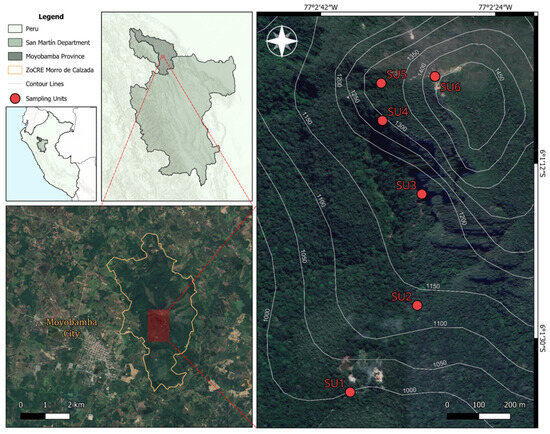
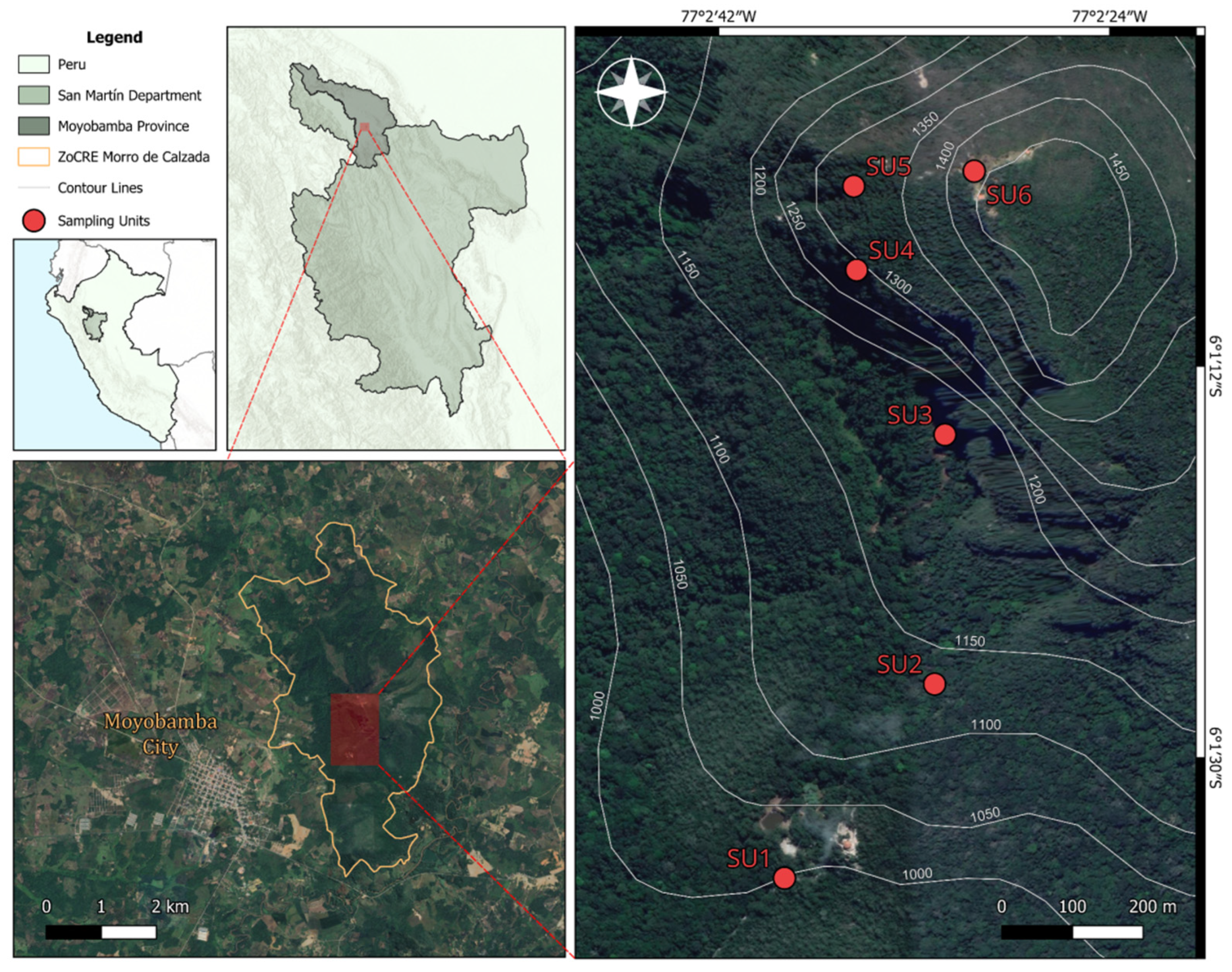
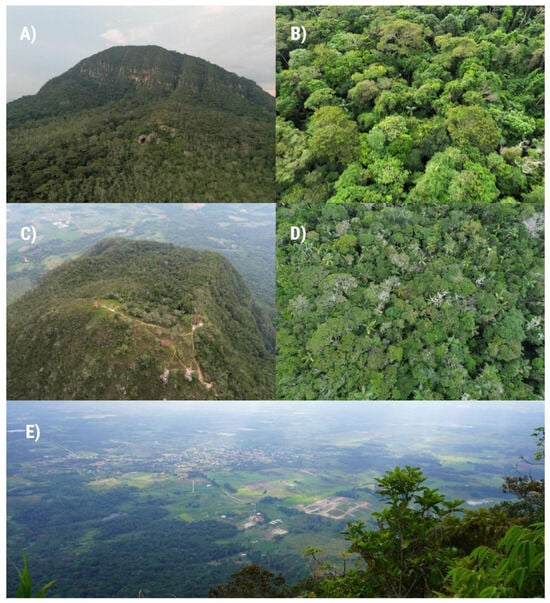
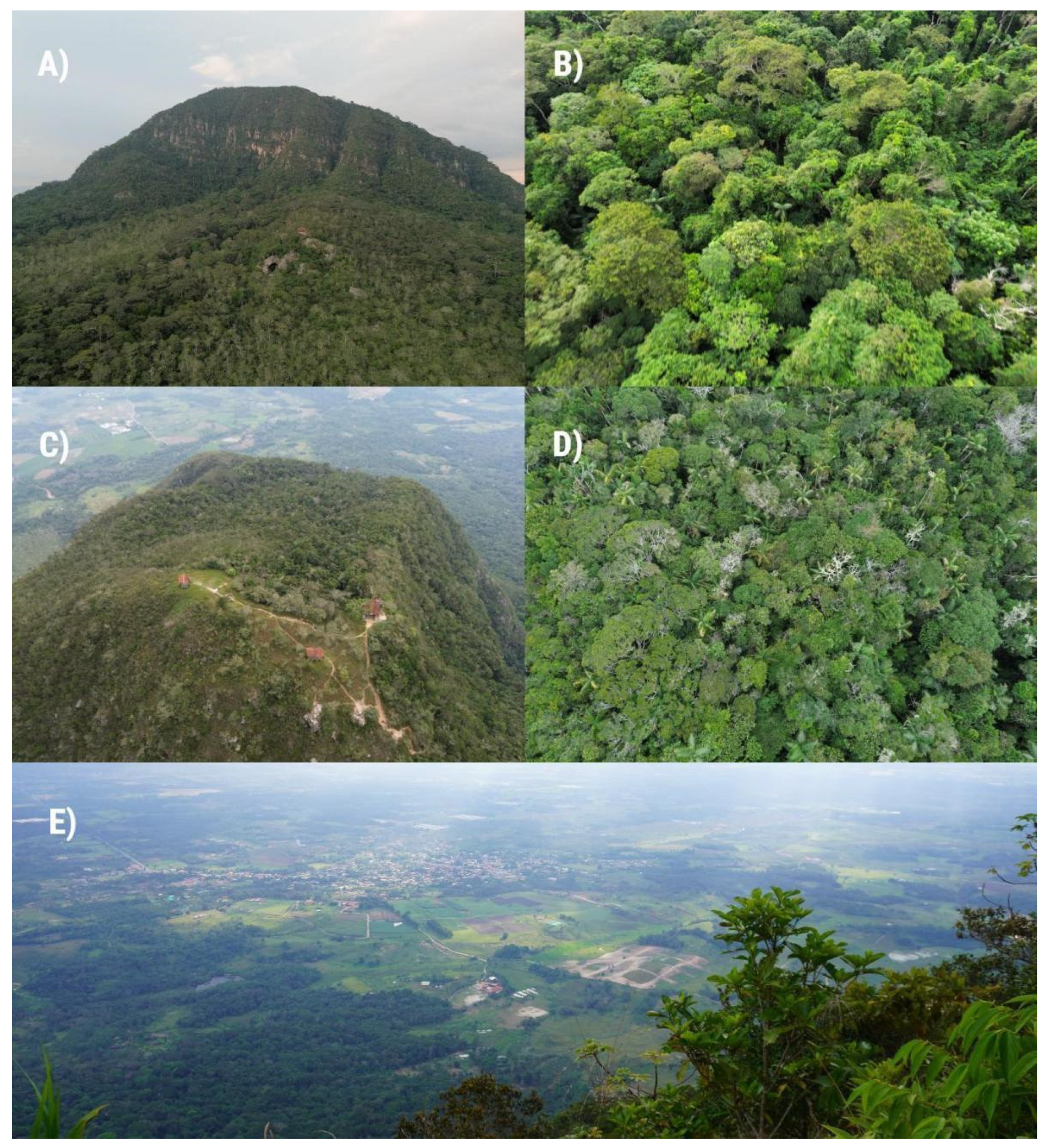
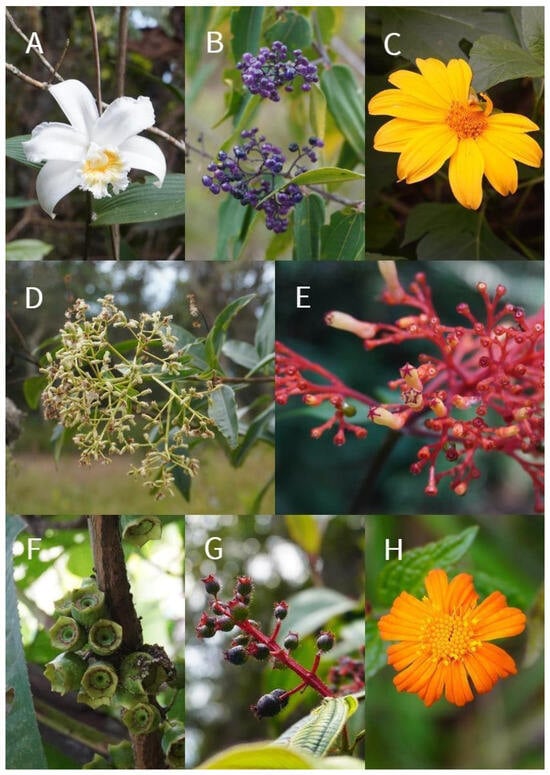
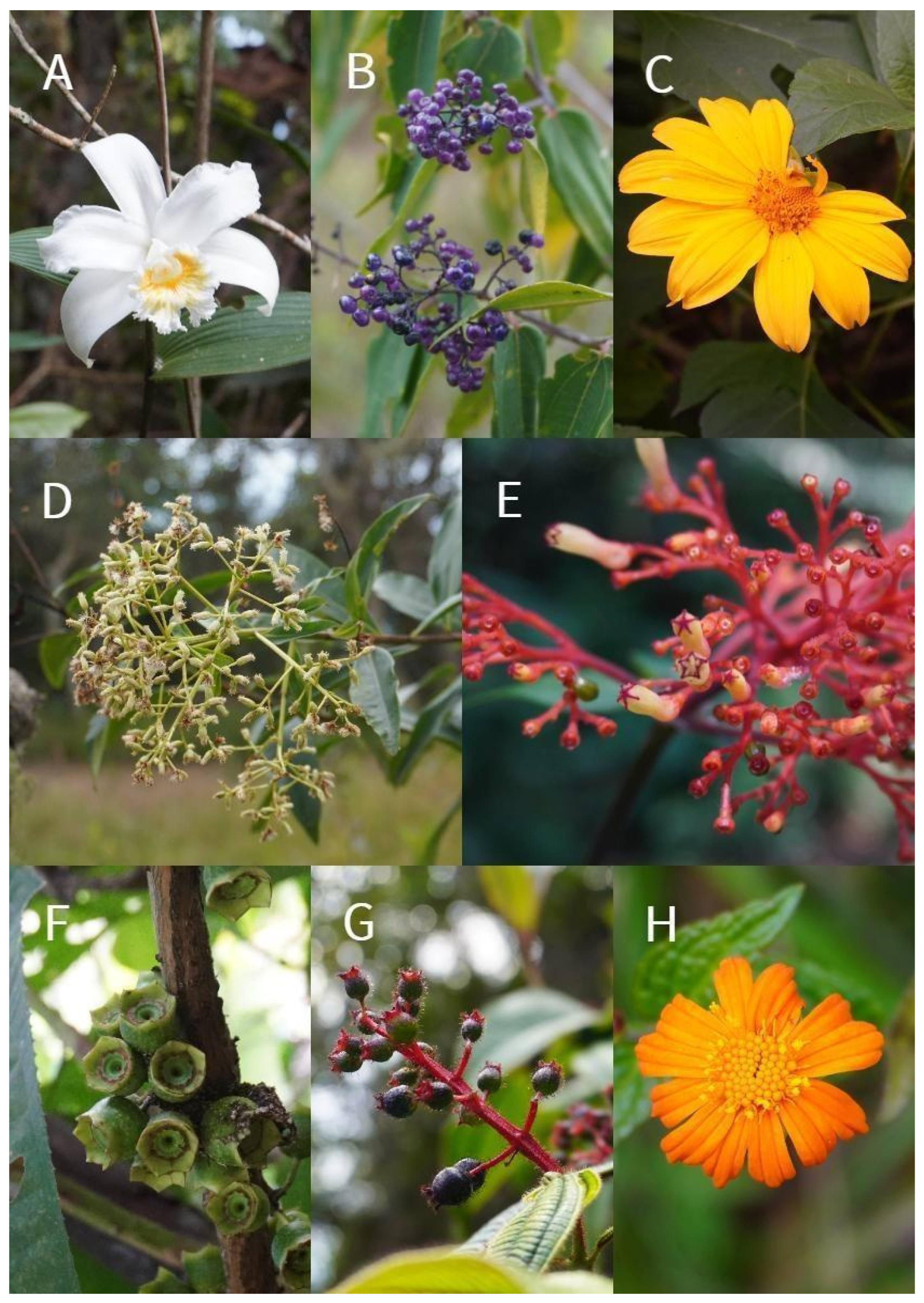
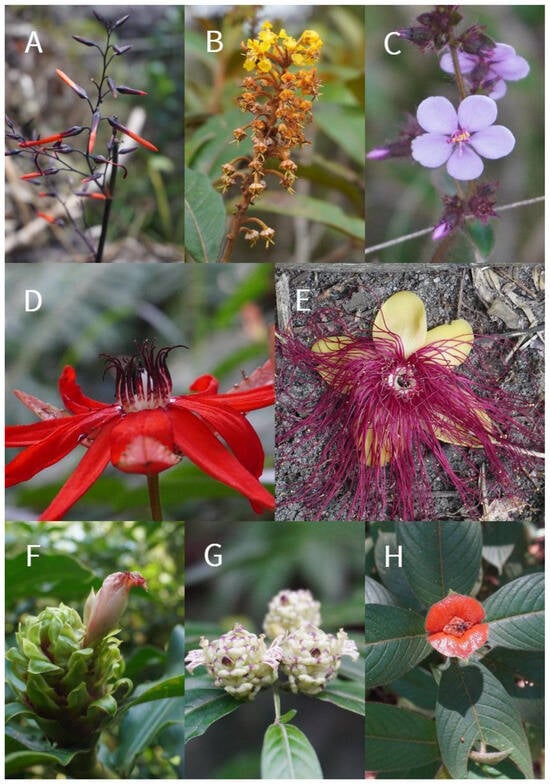
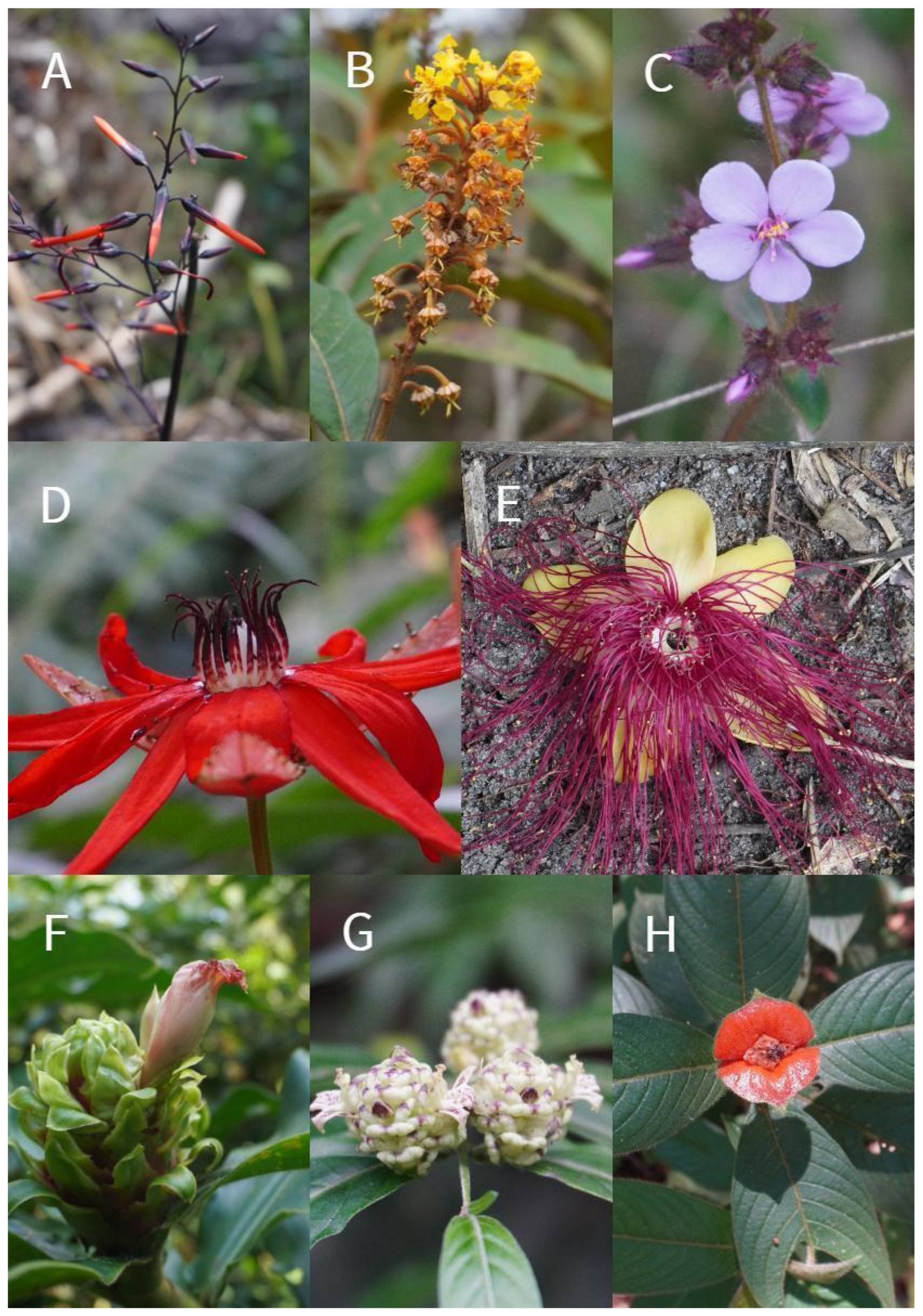
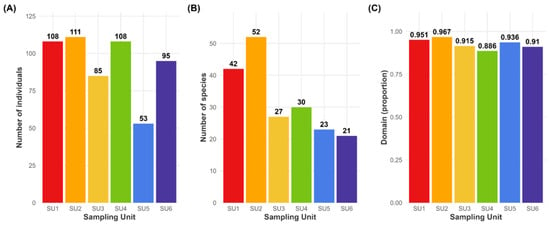
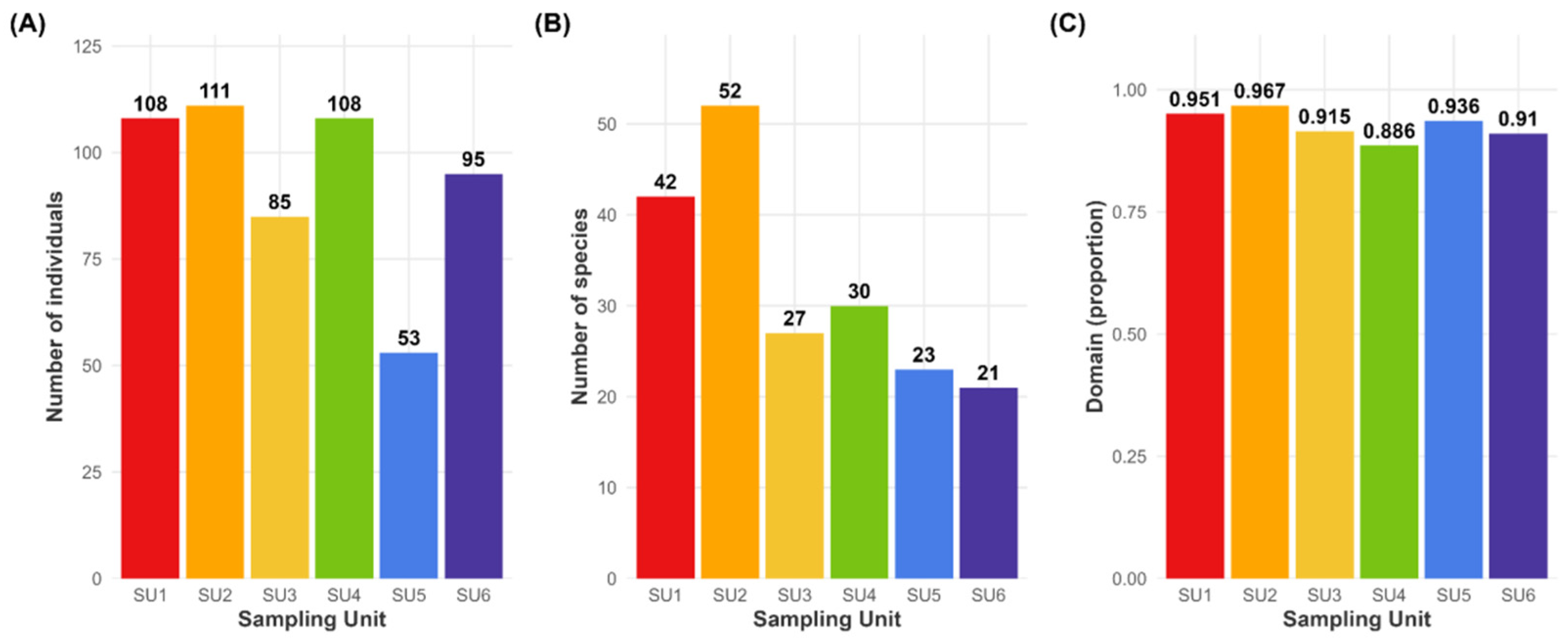
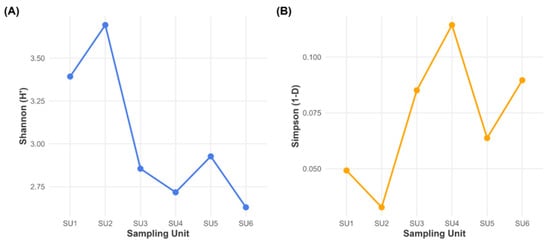
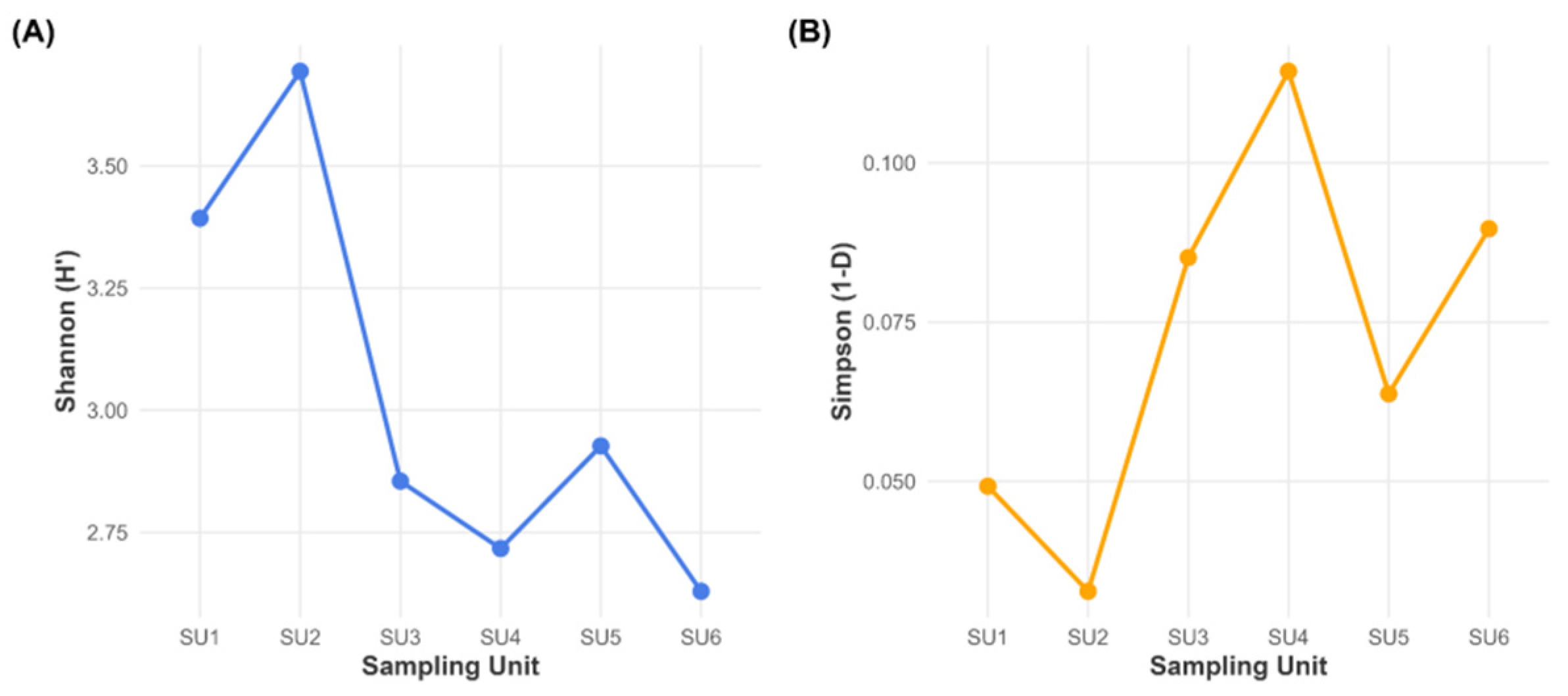
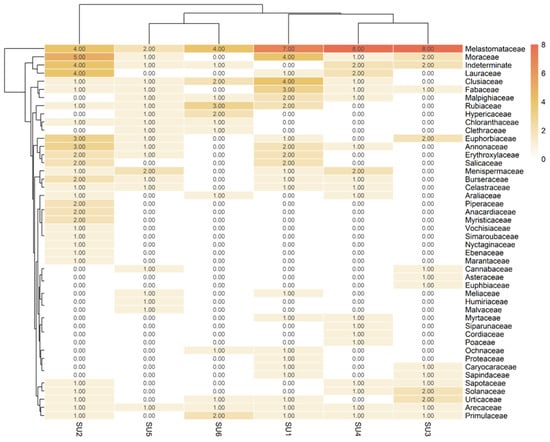
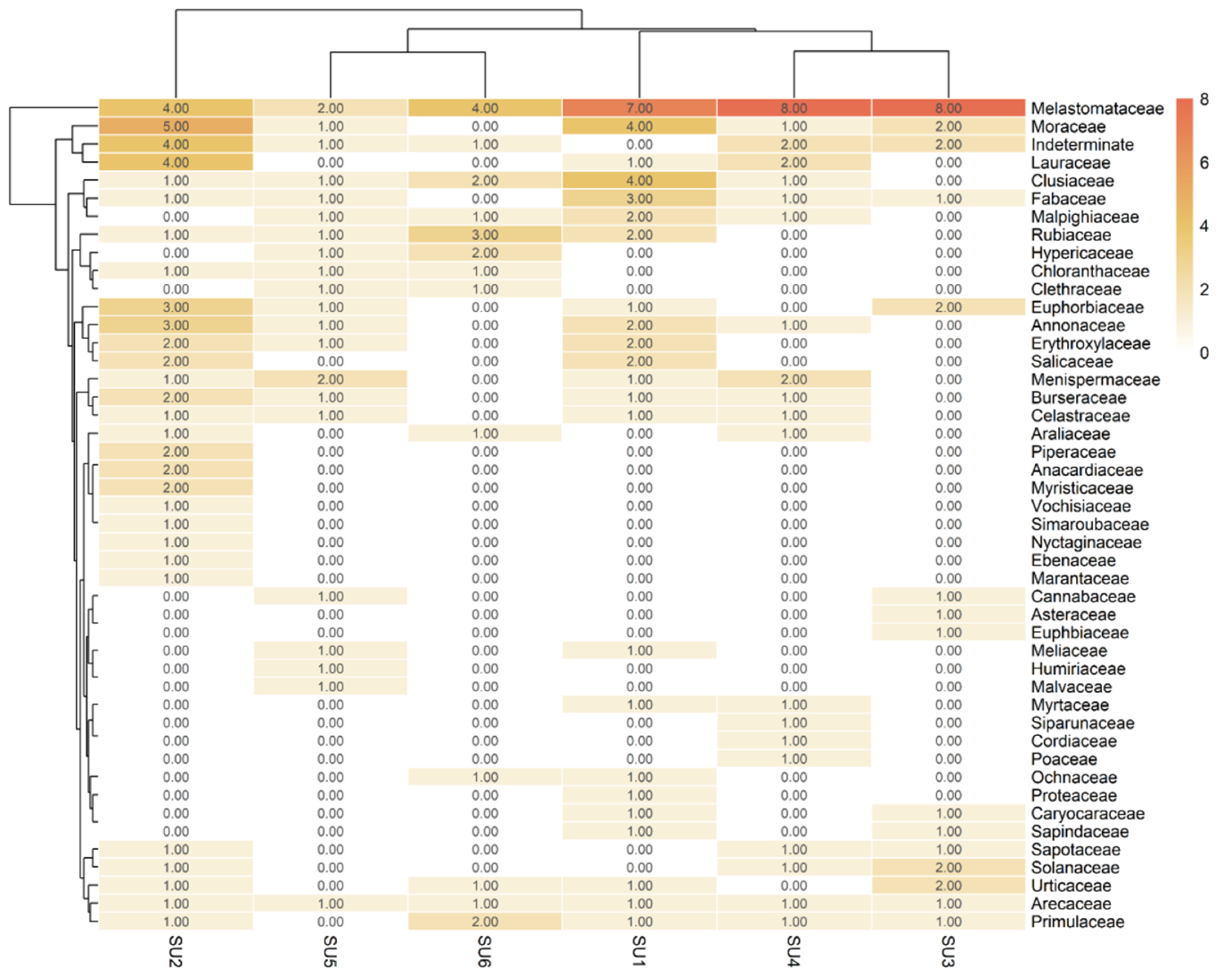
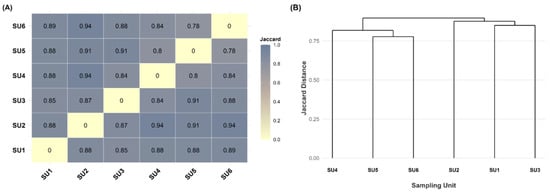
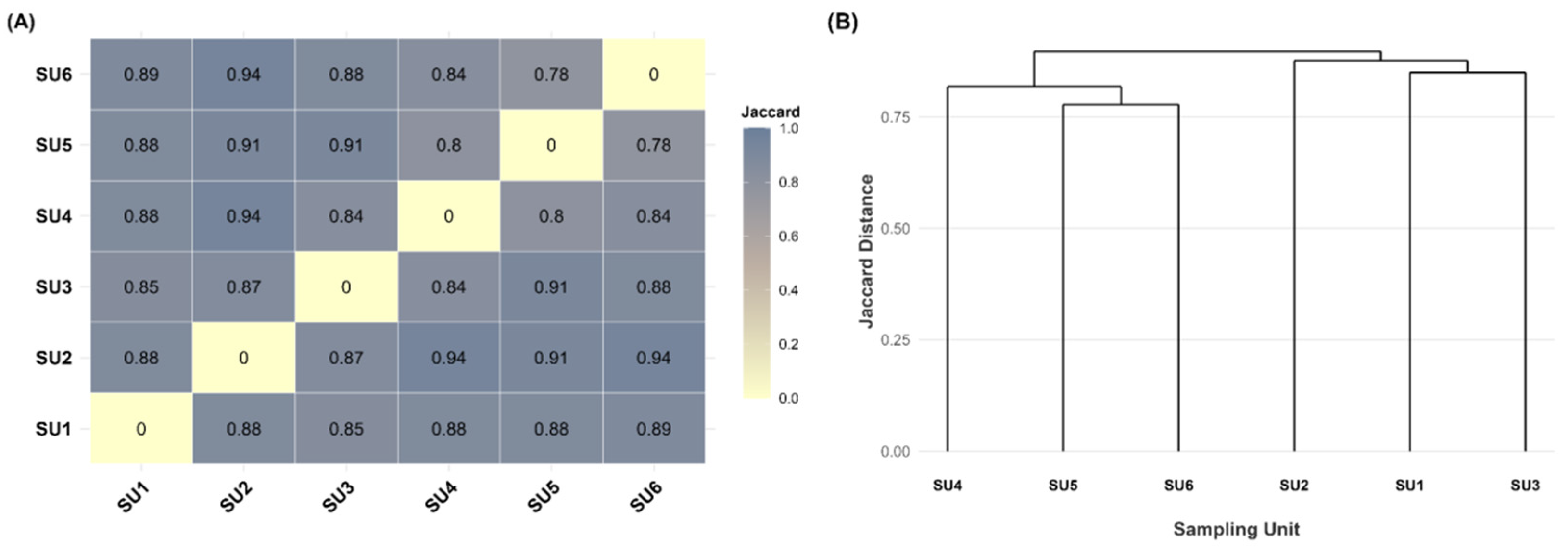
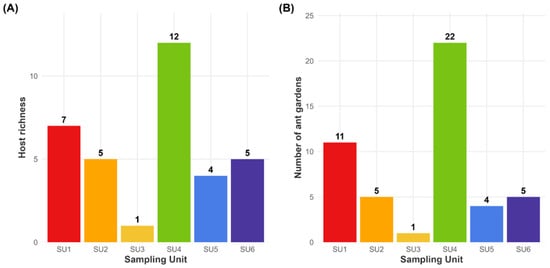
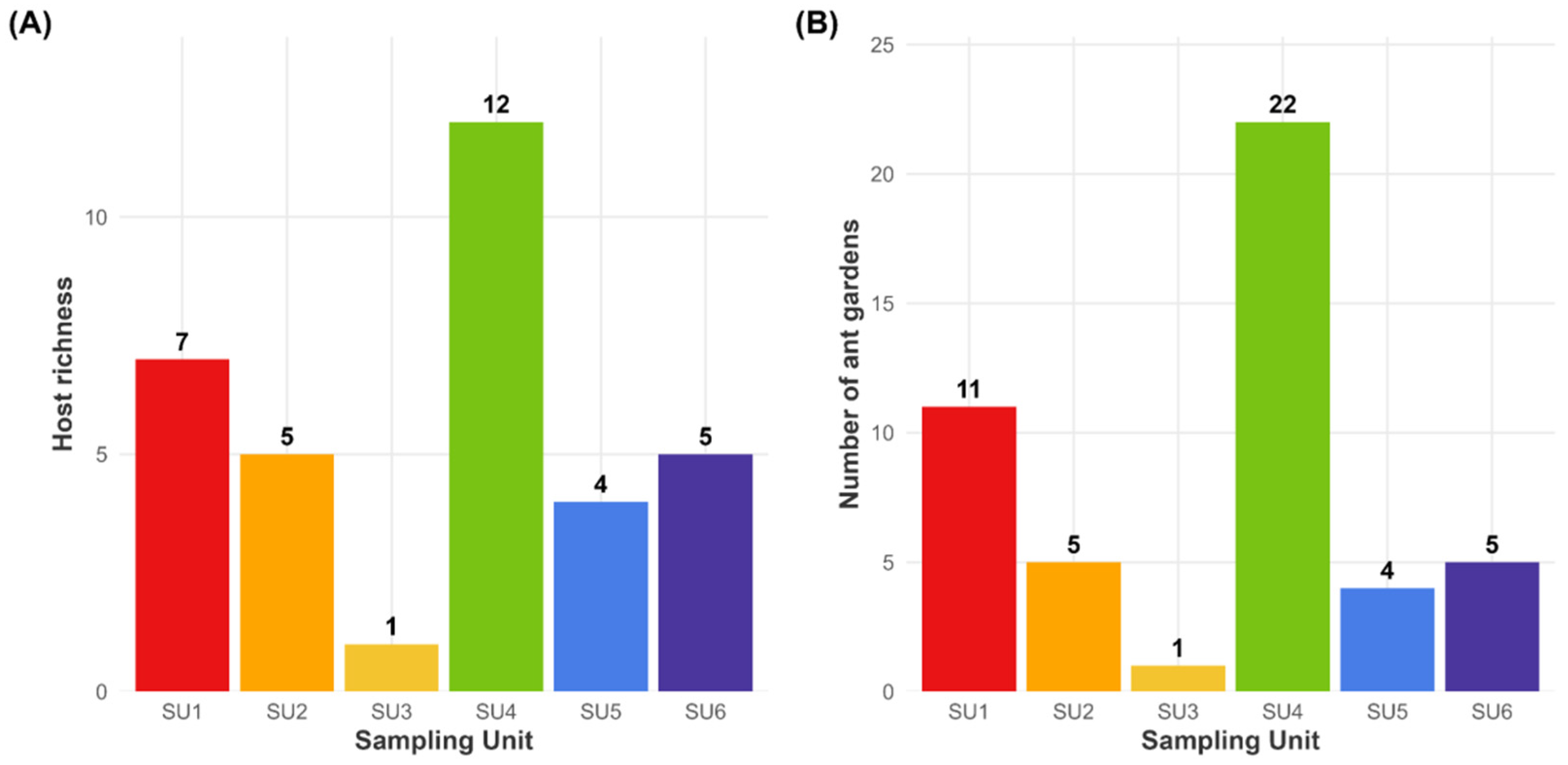
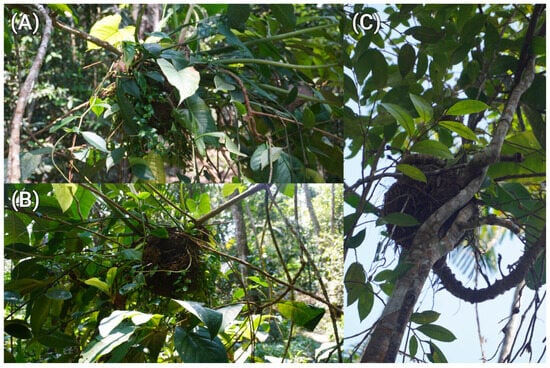
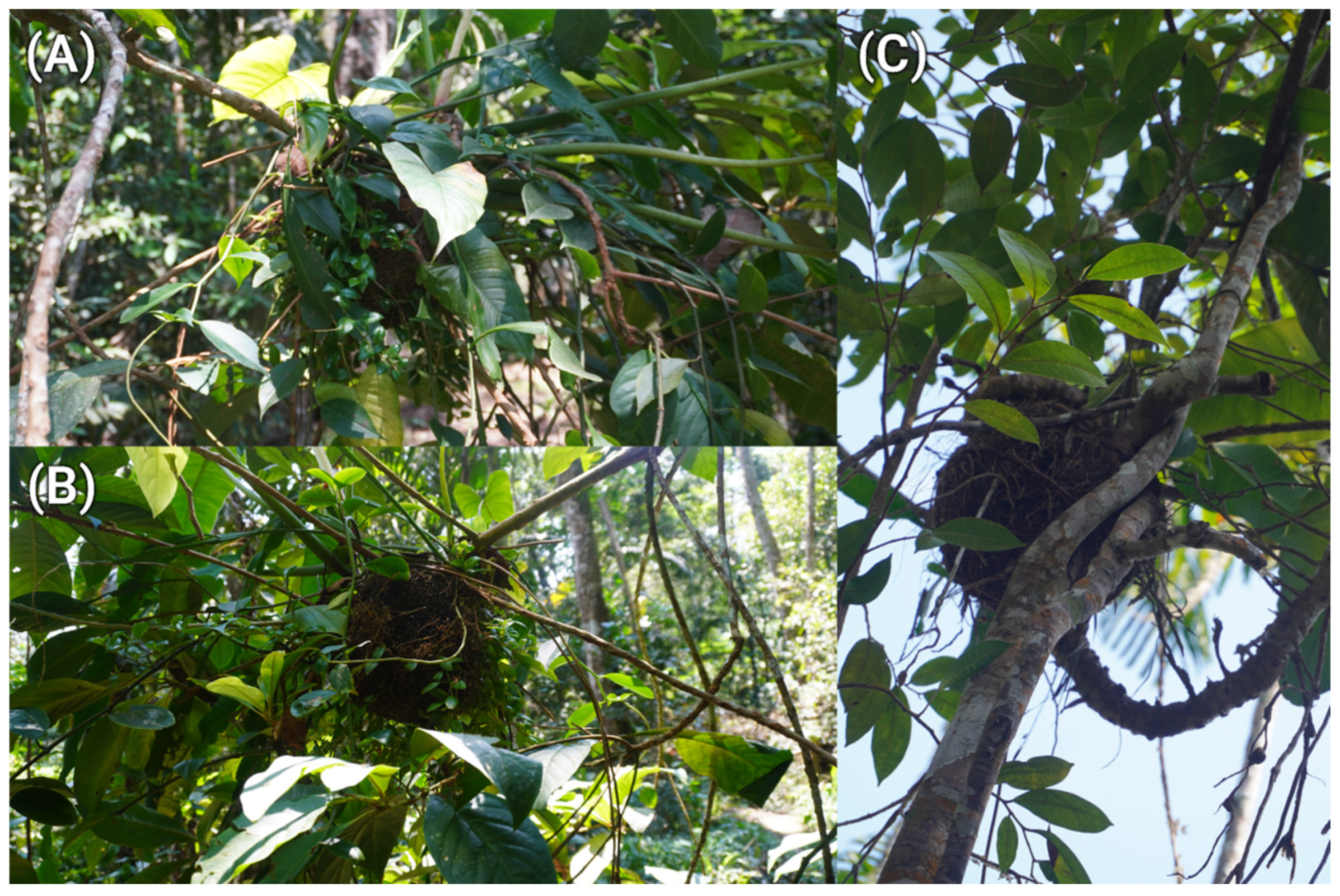
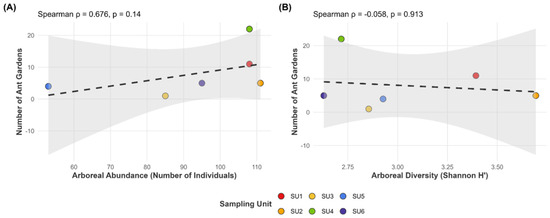
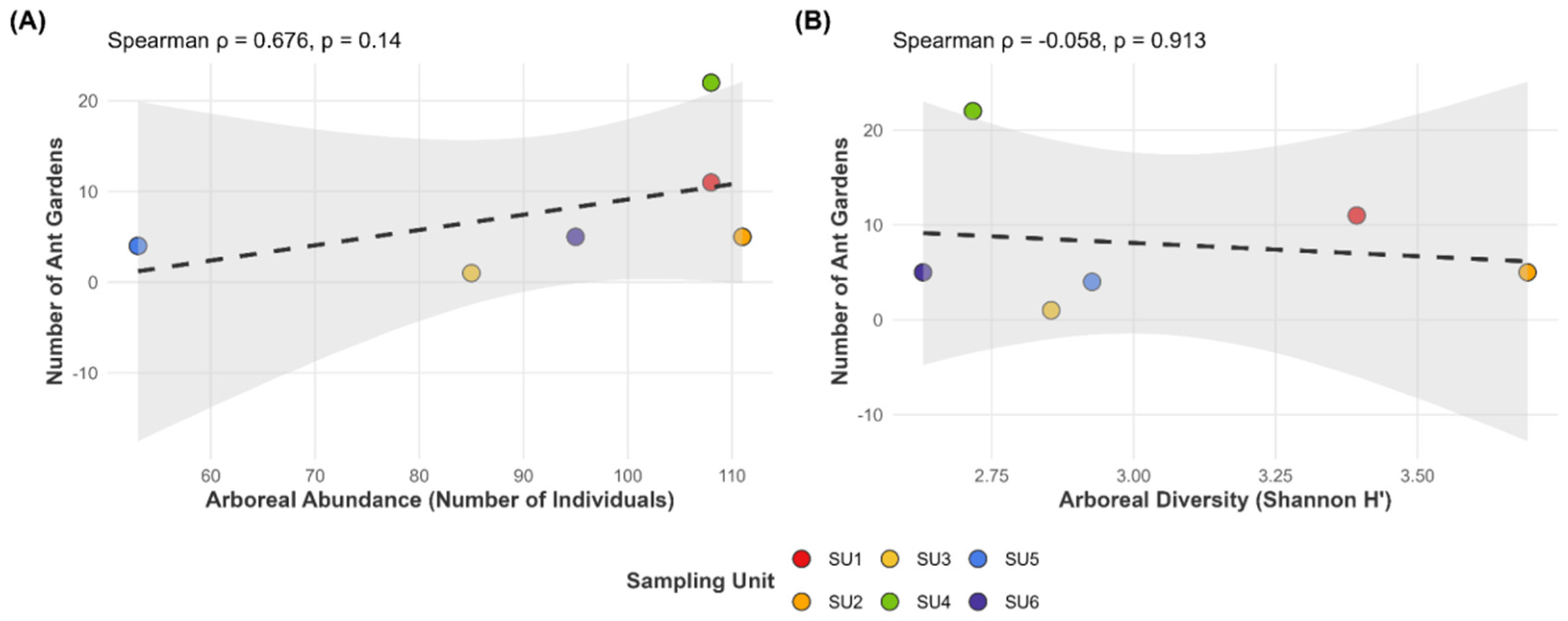
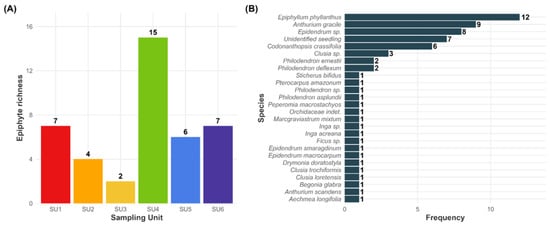
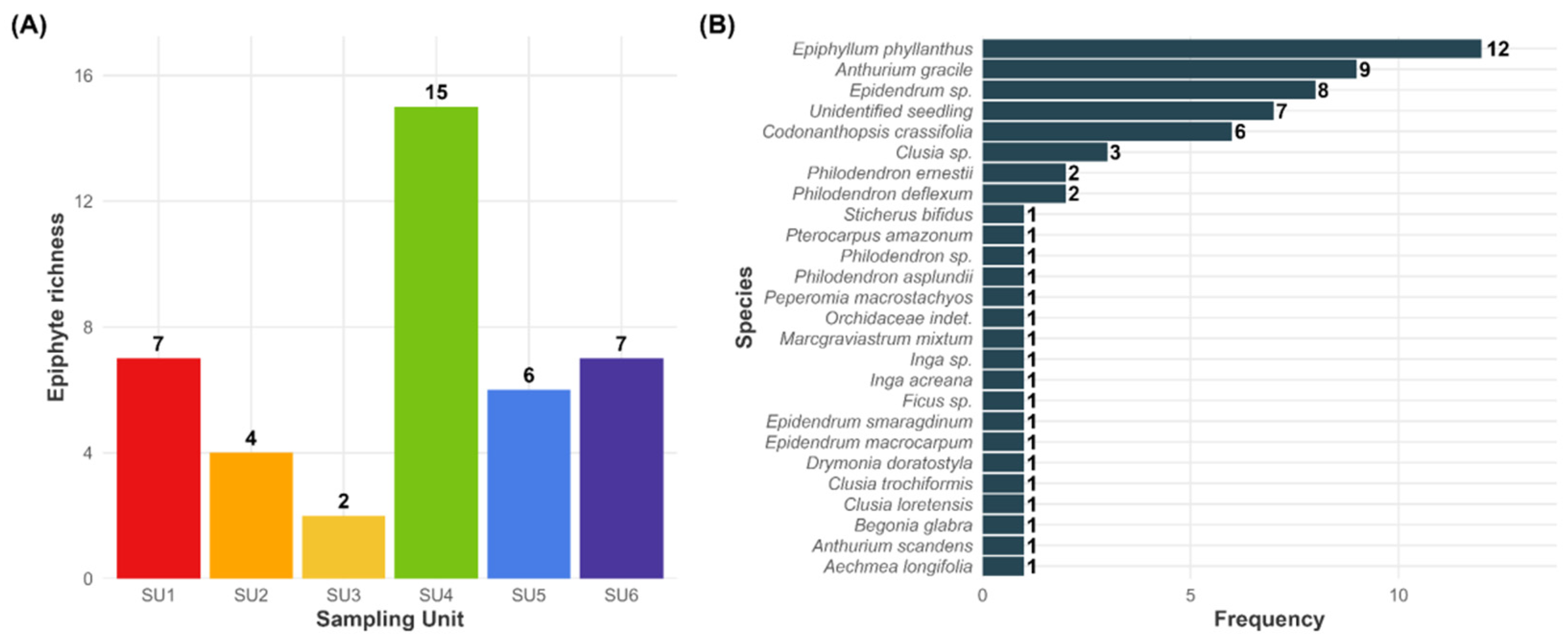
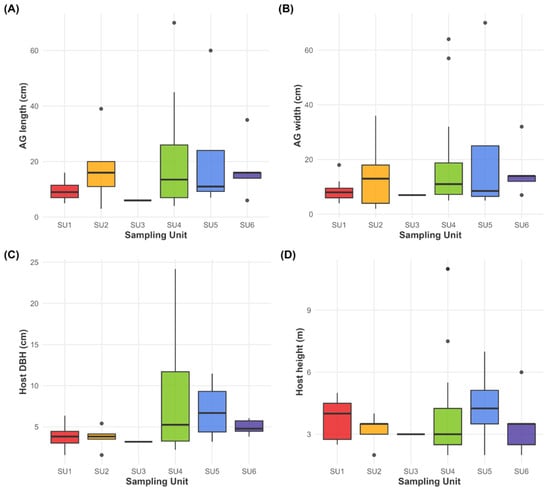
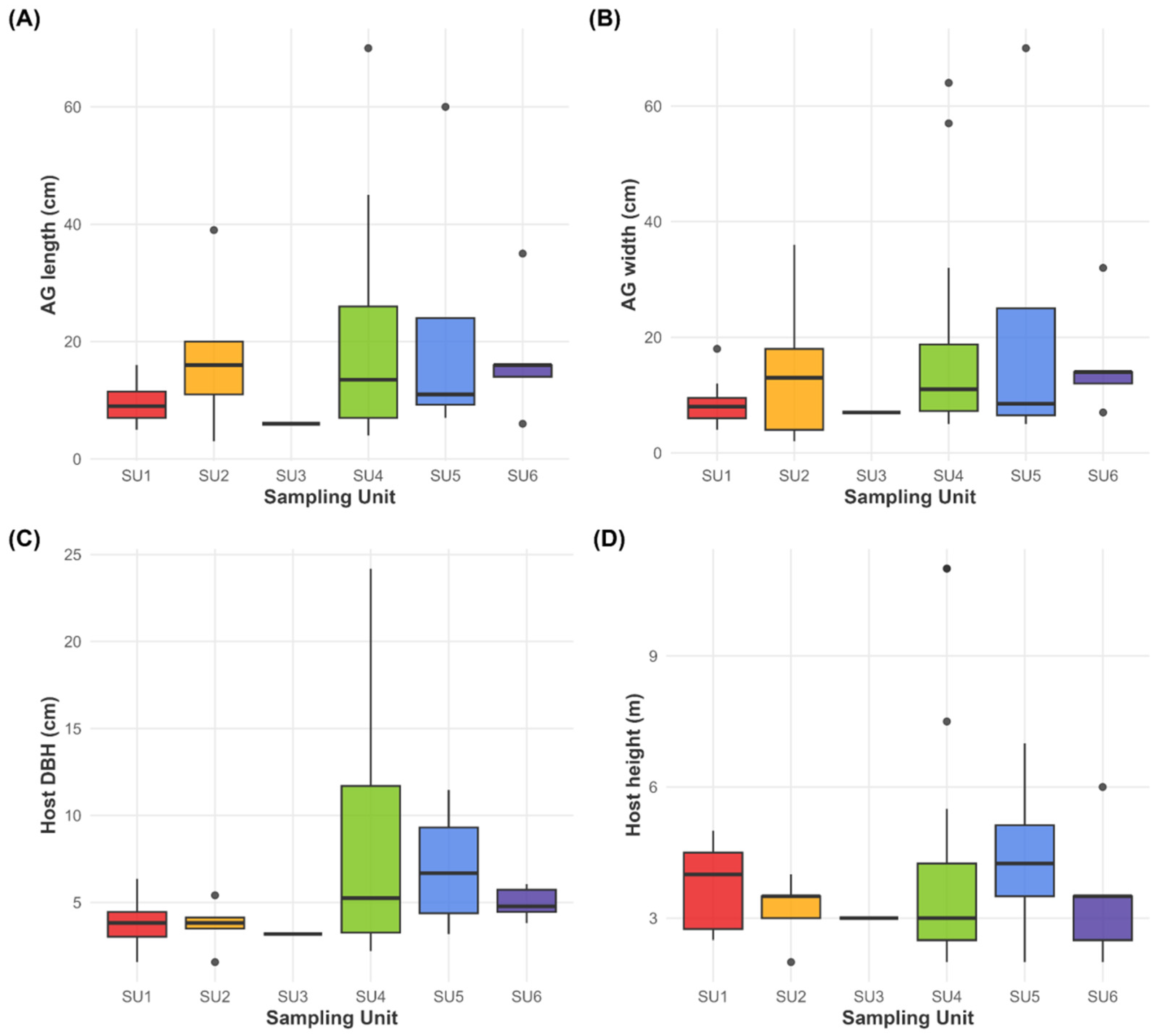
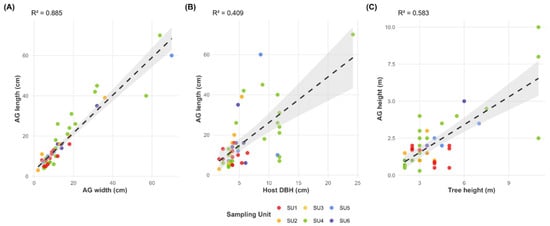
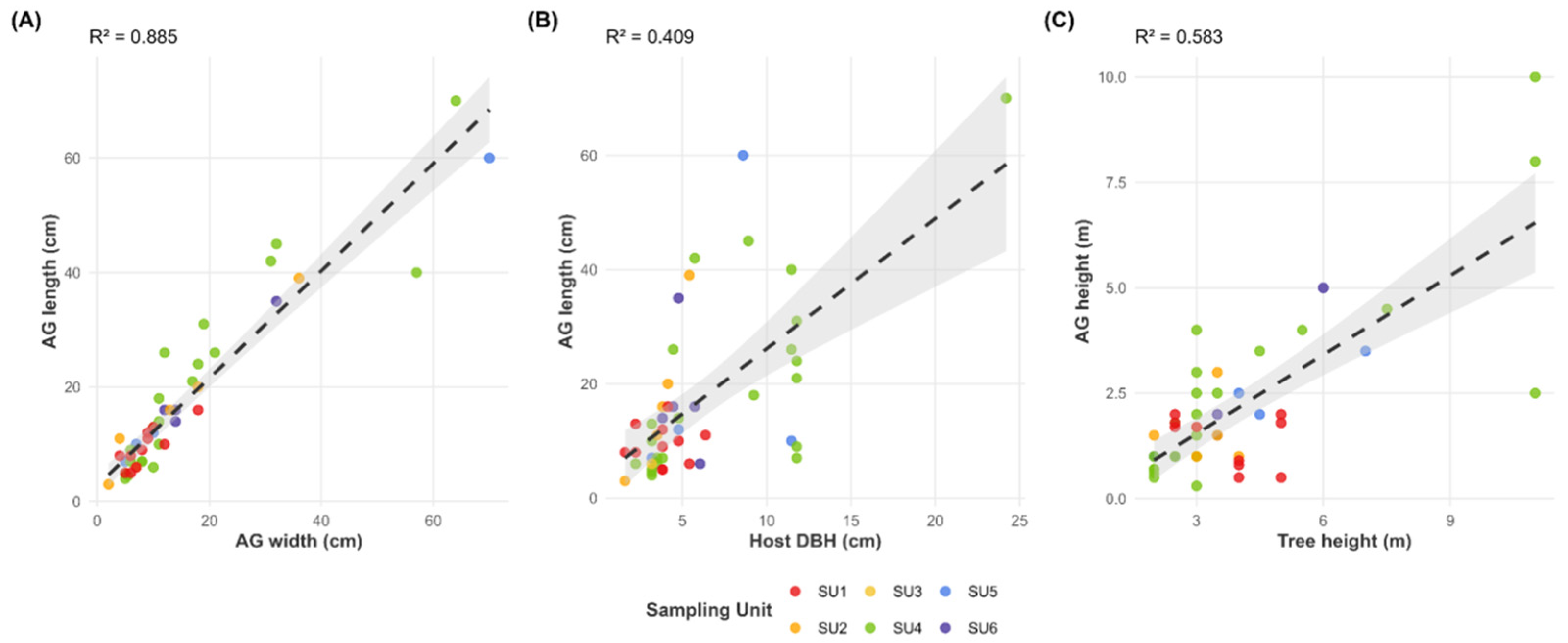
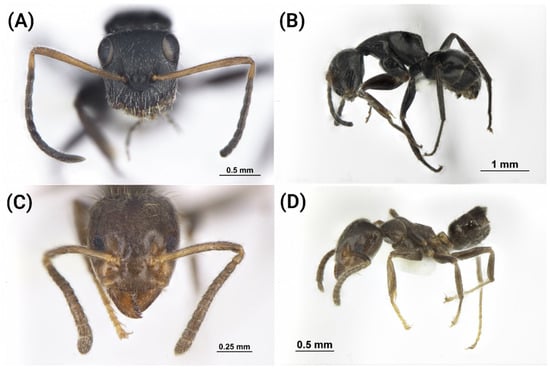
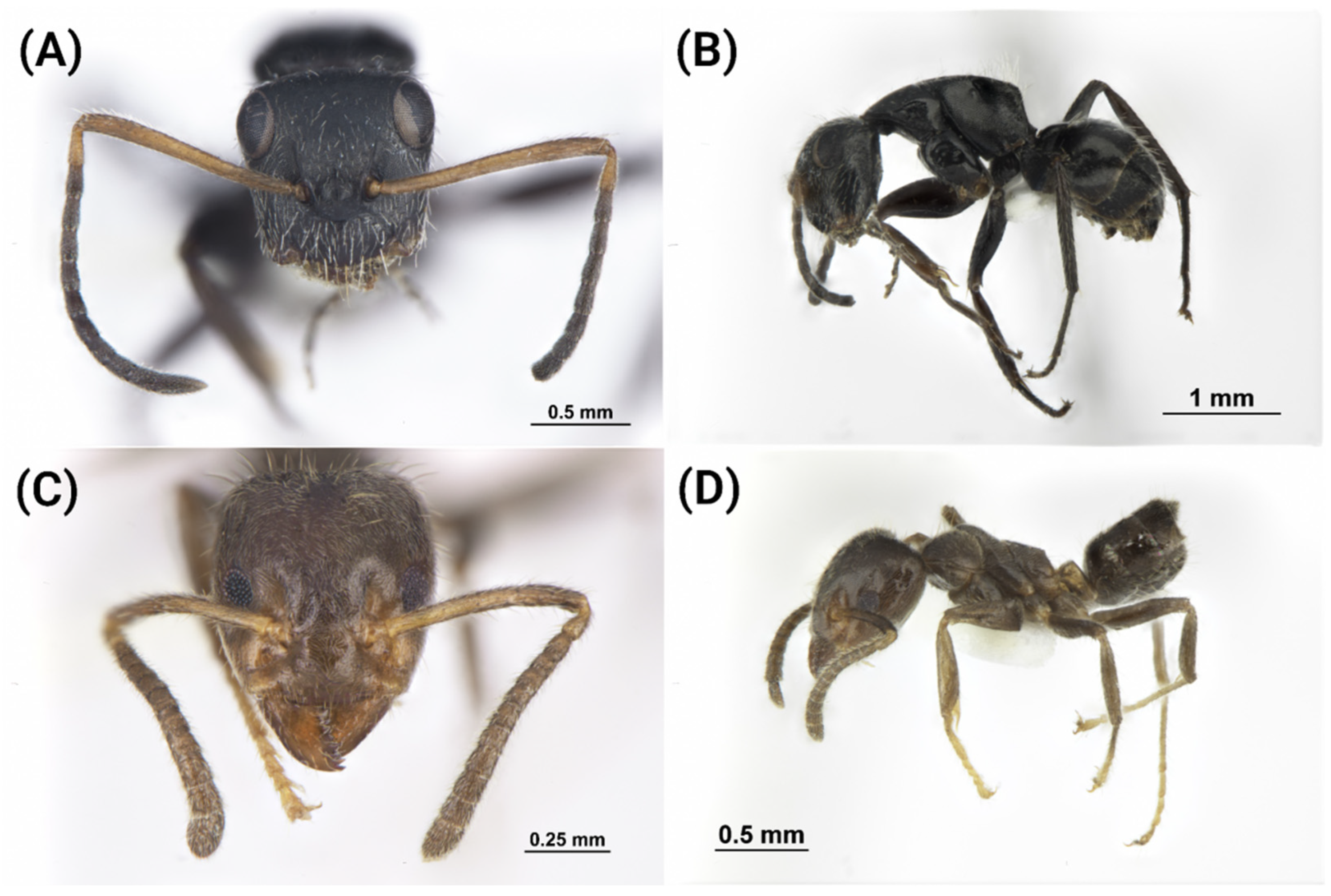
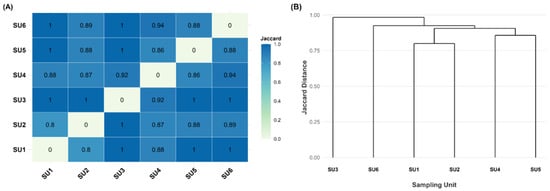
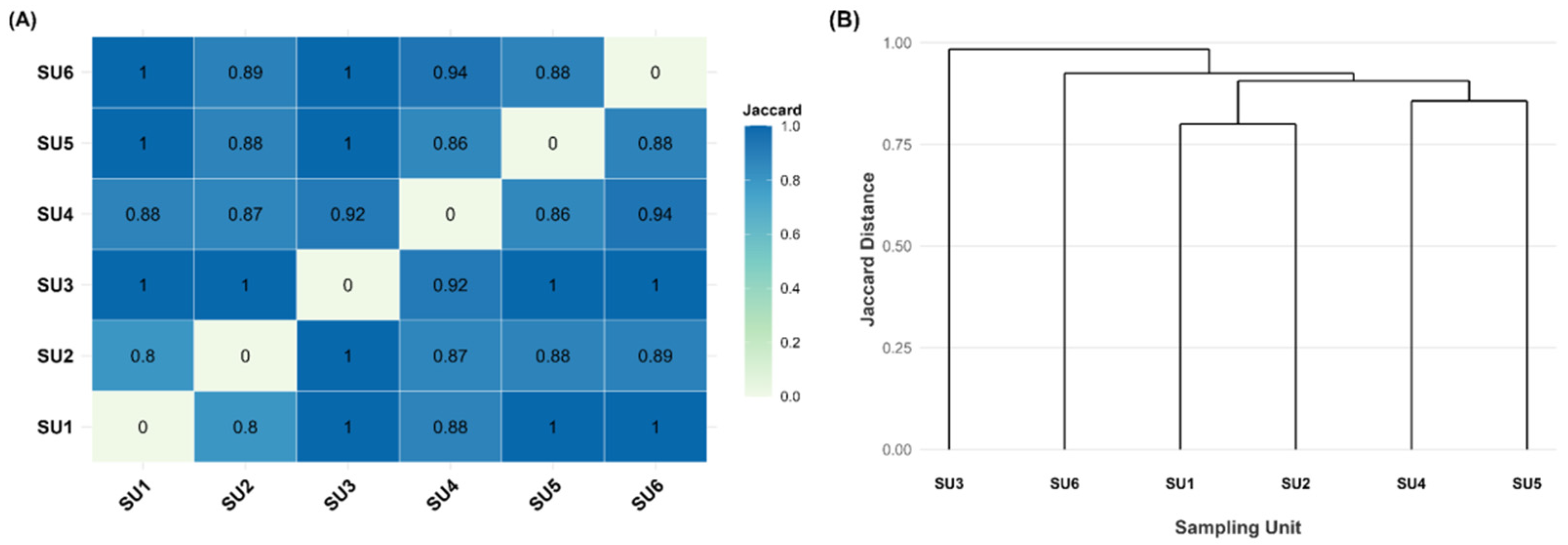
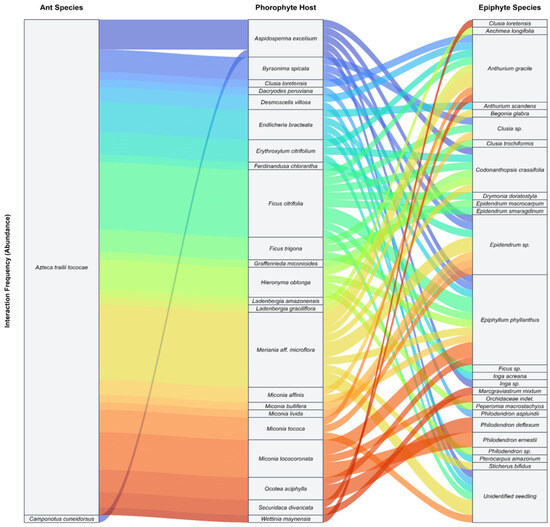
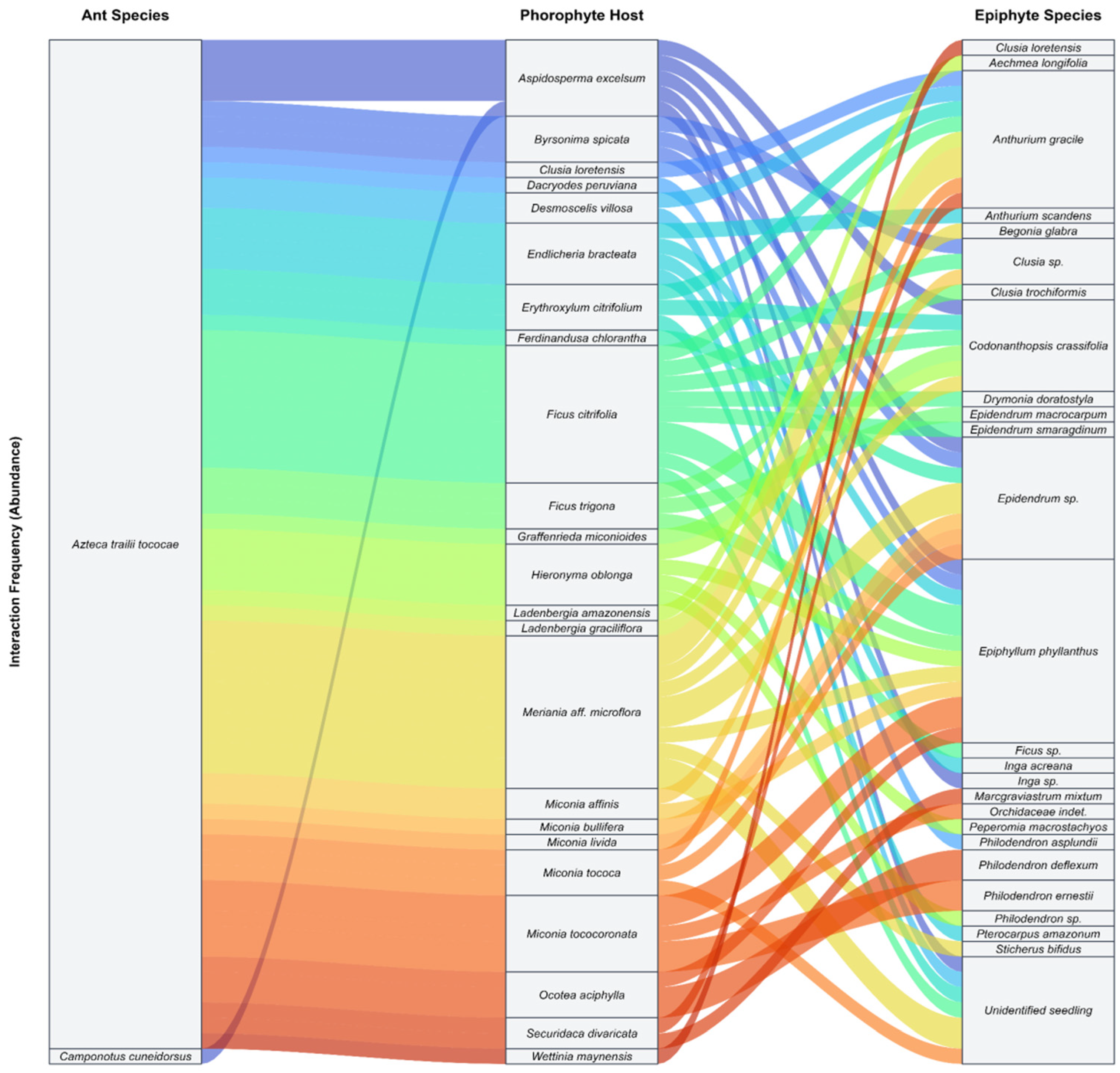
Disclaimer/Publisher’s Note: The statements, opinions and data contained in all publications are solely those of the individual author(s) and contributor(s) and not of MDPI and/or the editor(s). MDPI and/or the editor(s) disclaim responsibility for any injury to people or property resulting from any ideas, methods, instructions or products referred to in the content. |
© 2026 by the authors. Licensee MDPI, Basel, Switzerland. This article is an open access article distributed under the terms and conditions of the Creative Commons Attribution (CC BY) license.