


Abstract
Hydrothermal carbonization (HTC) of wet biomass faces a fundamental tradeoff between higher heating value (HHV) and energy recovery (ER), where conditions that enhance carbon densification often reduce solid-phase energy retention. This study investigates whether co-biomass selection combined with citric acid (CA) catalysis can overcome this tradeoff in HTC of water hyacinth (WH), an invasive aquatic feedstock. WH was co-processed with wheat straw (WS), rice husk (RH), and chicken manure (CM) at 240–270 °C, with CA-assisted experiments performed at 240 °C. Individual feedstock HTC confirmed the HHV–ER tradeoff, and co-HTC without catalysis failed to resolve it. CA addition improved carbon densification but reduced ER when applied to WH alone. The WH–CM–CA system uniquely achieved a concurrent HHV of 21.3 MJ kg−1 and ER of 95.8%, with synergistic effects of 50.0% and 29.7%, respectively. FTIR and elemental analysis indicated that Maillard-type condensation between WH-derived sugars and CM-derived amino acids drove preferential solid-phase carbon retention. These findings demonstrate that resolving the HHV–ER tradeoff requires coupling CA catalysis with biochemical complementarity between carbohydrate-rich and protein-rich feedstocks. This approach provides a practical route for hydrochar production with high energy density and recovery for waste-to-energy applications, supporting circular and low-carbon valorization of invasive aquatic biomass and livestock waste streams.
1. Introduction
Achieving global renewable energy targets requires efficient valorization of non-conventional biomass resources, including high-moisture feedstocks poorly suited to conventional thermochemical conversion [1,2]. Hydrothermal carbonization (HTC) enables direct processing of wet biomass into energy-dense solid fuels without energy-intensive pre-drying, offering a practical pathway for bioenergy production from wet biomass [3]. However, HTC performance is constrained by a fundamental tradeoff between higher heating value (HHV) and energy recovery (ER), where conditions that improve carbon densification typically promote devolatilization and carbon transfer to liquid and gaseous phases, reducing the fraction of input energy retained in the solid product [4,5]. For example, HTC of wheat straw increased HHV by 1.60 times, although less than 60% of the input energy was retained in the hydrochar [4]. Meanwhile, fruit-derived feedstocks showed comparable HHV improvement with limited ER [5]. Within the transition toward circular and low-carbon energy systems, HTC provides a pathway for converting wet organic waste into energy-dense solid fuels while enabling downstream resource recovery. Resolving this HHV–ER tradeoff is therefore critical for maximizing the energy efficiency of HTC systems.
Water hyacinth (Eichhornia crassipes) represents a globally abundant and largely untapped wet biomass resource. Its rapid growth, high moisture content exceeding 90%, and invasive spread across tropical and subtropical waterways make it well-suited for HTC, yet its low lignin content and modest inherent HHV limit direct energy valorization [6,7]. Previous HTC studies on water hyacinth have demonstrated improvements in hydrochar fuel quality under varying temperatures and residence times, but they have focused primarily on single-feedstock processing [8,9,10]. Systematic strategies to simultaneously improve fuel quality and energy retention have not been established for this feedstock, despite their importance for practical bioenergy applications.
Two strategies have been explored for improving HTC energy performance: co-hydrothermal carbonization (co-HTC) and acid-assisted HTC. Co-HTC exploits biochemical interactions between feedstocks to modify reaction pathways and product distribution, with reported improvements in hydrochar properties across diverse feedstock combinations [11,12]. However, energy synergy from co-HTC remains inconsistent, as HHV improvements are frequently accompanied by neutral or negative effects on ER, suggesting that feedstock blending alone cannot redirect sufficient carbon toward solid-phase retention [13]. Acid-assisted HTC has also been investigated as a complementary strategy for enhancing hydrochar quality. Among organic acid catalysts, citric acid is particularly attractive as a non-toxic, biodegradable, food-grade acid that avoids the corrosion and neutralization burdens of mineral acids [14,15]. Its multiple carboxyl groups promote hydrolysis, dehydration, and secondary polymerization, thereby facilitating carbon densification under mild HTC conditions [16,17]. However, acid-promoted solubilization of reactive intermediates can reduce solid-phase carbon retention, lowering ER when intermediates are not stabilized in the solid phase [18]. Therefore, neither strategy alone consistently resolves the HHV–ER tradeoff.
Despite extensive studies on HTC of water hyacinth, it remains unclear whether organic acid catalysis can interact with co-feedstock biochemistry to enhance solid-phase carbon retention. This study addresses this gap by evaluating citric acid-assisted co-HTC of water hyacinth with three biochemically distinct co-feedstocks, namely, wheat straw (lignocellulosic), rice husk (mineral-rich), and chicken manure (protein-rich), at 240–270 °C. The objective is to identify feedstock combinations that enable simultaneous improvement of HHV and ER and to elucidate the biochemical mechanisms governing this response, including nitrogen-transformation pathways. To our knowledge, this is the first systematic evaluation of acid-catalyzed co-HTC across biochemically distinct co-feedstock classes for an aquatic invasive biomass.
2. Materials and Methods
2.1. Biomass Preparation
The water hyacinth (WH) used in this study was harvested from Saitama Prefecture, Japan. After harvesting, the biomass was crushed and mechanically pressed to separate the liquid and solid fractions. The solid fraction was then dried at 75 °C for 48 h in an oven (NDO-600ND, EYELA, Tokyo, Japan) to ensure stable and consistent samples for experimental analysis. Other biomass sources included wheat straw (WS), rice husk (RH), and chicken manure (CM), which were collected from local suppliers and farms. All biomass samples were sieved to obtain a particle size of <2.0 mm and dried at 95 °C for 24 h prior to use. Anhydrous citric acid (CA; Wako Co., Osaka, Japan) was used as the acid catalyst in this study.
2.2. Hydrothermal Carbonization
HTC experiments were conducted in a 100 mL stainless-steel autoclave. The reactor was heated at a rate of 5 °C min−1 to target temperatures of 240 °C or 270 °C, which were maintained for 4 h using an electric furnace (FT-001, FULL-TECH, Osaka, Japan). A residence time of 4 h was selected based on prior HTC studies of water hyacinth demonstrating that this duration promotes advanced carbonization relative to shorter reaction times [10,19]. Each experiment used 4 g of feedstock mixed with 60 mL of distilled water. For individual biomass experiments, samples were denoted by feedstock and temperature (e.g., WH_240, WS_270). For co-HTC experiments, WH and co-biomass were blended at a 1:1 ratio (w/w) and denoted accordingly (e.g., WH-WS_240, WH-CM_270). For CA-assisted HTC, WH alone or co-biomass mixtures were combined with CA at a mass ratio of 3:1 (WH:CA; w/w) or 2:1:1 (WH:co-biomass:CA; w/w), maintaining WH as the primary feedstock within a fixed total feedstock mass of 4 g, at 240 °C (e.g., WH-CA_240, WH-WS-CA_240). CA addition was evaluated at 240 °C to target mild conditions where carbon retention is favored and secondary reactions are less severe. All experiments were performed in triplicate (n = 3). For each replicate, two parallel runs were conducted: one for bulk product characterization and one for product distribution analysis.
For bulk characterization, the entire slurry was dried at 95 °C after cooling. The HTC product yield was calculated using Equation (1), representing the total mass of solid residue recovered after drying without phase separation:
HTC product yield (wt%) = weight of final product/weight of raw feedstock × 100
For product distribution analysis, the cooled slurry was extracted with 80 mL of dichloromethane (DCM; Wako Co., Osaka, Japan) and stirred for 2 h, followed by vacuum filtration using Whatman No. 1 filter paper (Whatman, Maidstone, UK). The solid residue was washed with deionized water, dried at 95 °C, and designated as hydrochar. The liquid phase was transferred to a separatory funnel and further extracted with an additional 30 mL of DCM. Phase separation yielded an aqueous fraction containing water-soluble compounds and a DCM-soluble biooil fraction. Bio-oil was recovered by evaporating DCM at room temperature. Hydrochar yield (HY), bio-oil yield (BY), and dissolved aqueous solid (DAS) yield were calculated using Equations (2), (3), and (4), respectively:
HY (wt%) = weight of hydrochar product/weight of biomass × 100%
BY (wt%) = weight of biooil product/weight of biomass × 100%
DAS (wt%) = HTC product yield − HY − BY
2.3. Characterization of Feedstock and Hydrochar
2.3.1. Composition Analysis
Proximate analysis, including ash content, volatile matter (VM), and fixed carbon content (FC; wt% dry basis), was conducted using a thermogravimetric analyzer (Q600, TA Instruments, New Castle, DE, USA) following ASTM D7582. The fuel ratio (FR) was calculated as the ratio of FC to VM using Equation (5) [20]:
FR = FC/VM
Elemental composition (C, H, and N; wt% dry basis) was determined using an elemental analyzer (2400 SERIES II, PerkinElmer, Waltham, MA, USA). The oxygen content was calculated by difference using Equation (6):
Oxygen content (wt%) = 100% − C% − H% − N% − Ash%
Biomass composition (hemicellulose, cellulose, and lignin) was analyzed using the van Soest method [21], based on neutral detergent fiber (NDF), acid detergent fiber (ADF), and acid detergent lignin (ADL) measurements using an digestion system (ANKOM200, ANKOM Technology, Macedon, NY, USA). The protein content was estimated by multiplying nitrogen content by a factor of 6.25, while the lipid content was determined using Soxhlet extraction [22,23].
Functional group analysis of selected hydrochars was conducted using Fourier-transform infrared (FTIR) spectroscopy (FTIR-8400S, Shimadzu, Kyoto, Japan) over the wavenumber range 4000–400 cm−1.
2.3.2. Thermal Analysis
The higher heating values (HHV) of the feedstock and hydrochar were determined using an oxygen bomb calorimeter (Model 6050, Parr Instrument Company, Moline, IL, USA), in accordance with ASTM D5865.
Energy densification (ED) and energy recovery (ER) were calculated using Equations (7) and (8), respectively:
Energy densification (ED) = HHV of HTC product/HHV of biomass
Energy recovery (ER; wt%) = Yield of HTC product × ED
The synergistic effect during co-HTC was evaluated to assess interactions among WH, co-biomass, and CA for hydrochar yield, bio-oil yield, HTC product yield, HHV, and ER, as expressed by Equation (9):
Synergistic effect (%) = [(experimental values of each parameter) − (calculated values of each parameter)]/(calculated values of each parameter) × 100%
Calculated values represent the mass-weighted sum of individual feedstock properties. Synergistic effect measures deviation from additivity.
2.4. Statistical Analyses
Statistical analyses were performed using Statistica 6.1 (StatSoft, Inc., Tulsa, OK, USA). Treatment effects were evaluated using one-way analysis of variance (ANOVA), followed by Tukey’s honestly significant difference (HSD) test for multiple comparisons. Statistical significance was determined at p < 0.05.
3. Results
3.1. Biomass, Proximate, and Elemental Chemical Compositions of Biomass Feedstocks
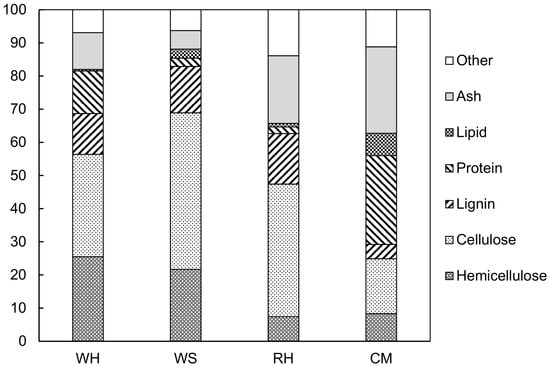
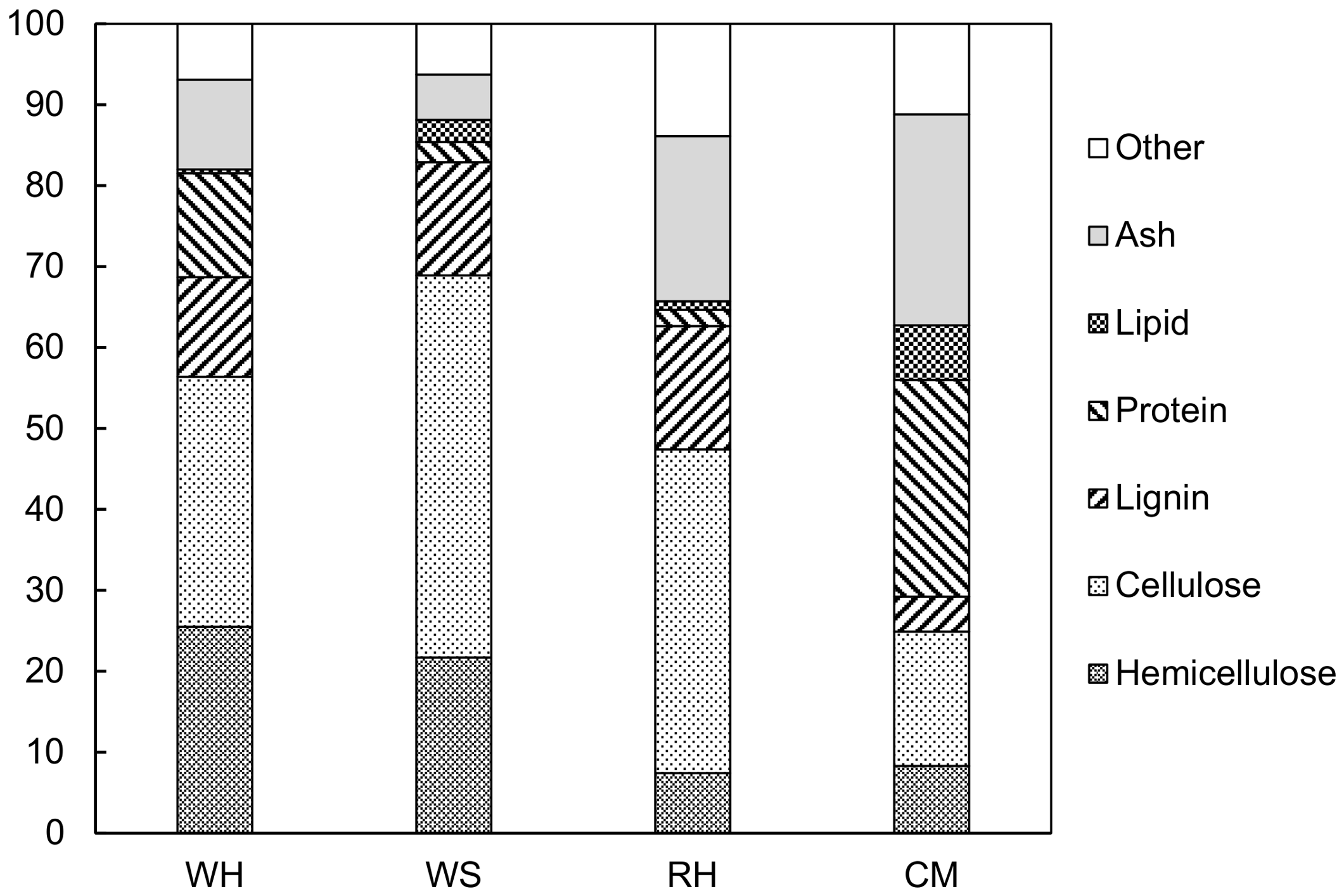
The four biomass feedstocks displayed markedly different compositions (Figure 1; Table 1). WH exhibited a mixed lignocellulosic–protein composition, comprising cellulose (31%), hemicellulose (25%), lignin (13%), and protein (13%), alongside the highest VM (83.3%), low FC (5.53%), and moderate ash content (11.1%). WS and RH were dominated by lignocellulosic components, with cellulose contents of 47% and 40%, respectively. WS had a relatively high FC (17.3%) and low ash content (5.55%), while RH was characterized by an elevated ash content (20.4%). CM was distinctly protein- and lipid-rich (27% and 7%, respectively), with the highest ash content (26.1%), reflecting its high inorganic fraction.
Figure 1.
Biomass composition in water hyacinth (WH), wheat straw (WS), rice husk (RH), and chicken manure (CM).
Table 1.
Proximate, elemental analysis, and higher heating value of different biomass.
3.2. HTC of Individual and Co-HTC Product Distribution and Solid Properties
For WH, FC increased to 26.0% at 240 °C but declined to 19.2% at 270 °C, while the ash content rose from 14.7% to 20.1% (Table 2). HTC product yield decreased from 68.8% to 59.4% with increasing temperature. For WS, FC declined from 39.5% to 36.4% alongside a yield decrease (62.1% to 57.1%), while the ash content remained relatively low (5.55%). RH exhibited contrasting solid property behavior: FC remained nearly stable (~26.8%) and yield remained stable (~68%) across temperatures, although the ash content increased at 20.4%. CM behaved distinctly differently, with the fixed carbon content declining sharply from 7.73% to 4.09% and yield decreasing from 77.8% to 69.2%, reflecting its protein- and lipid-rich composition.
Table 2.
Proximate analysis, elemental composition, and fuel properties of co-biomass under various hydrothermal carbonization conditions.
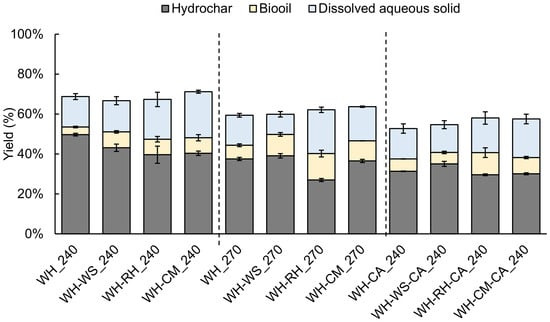
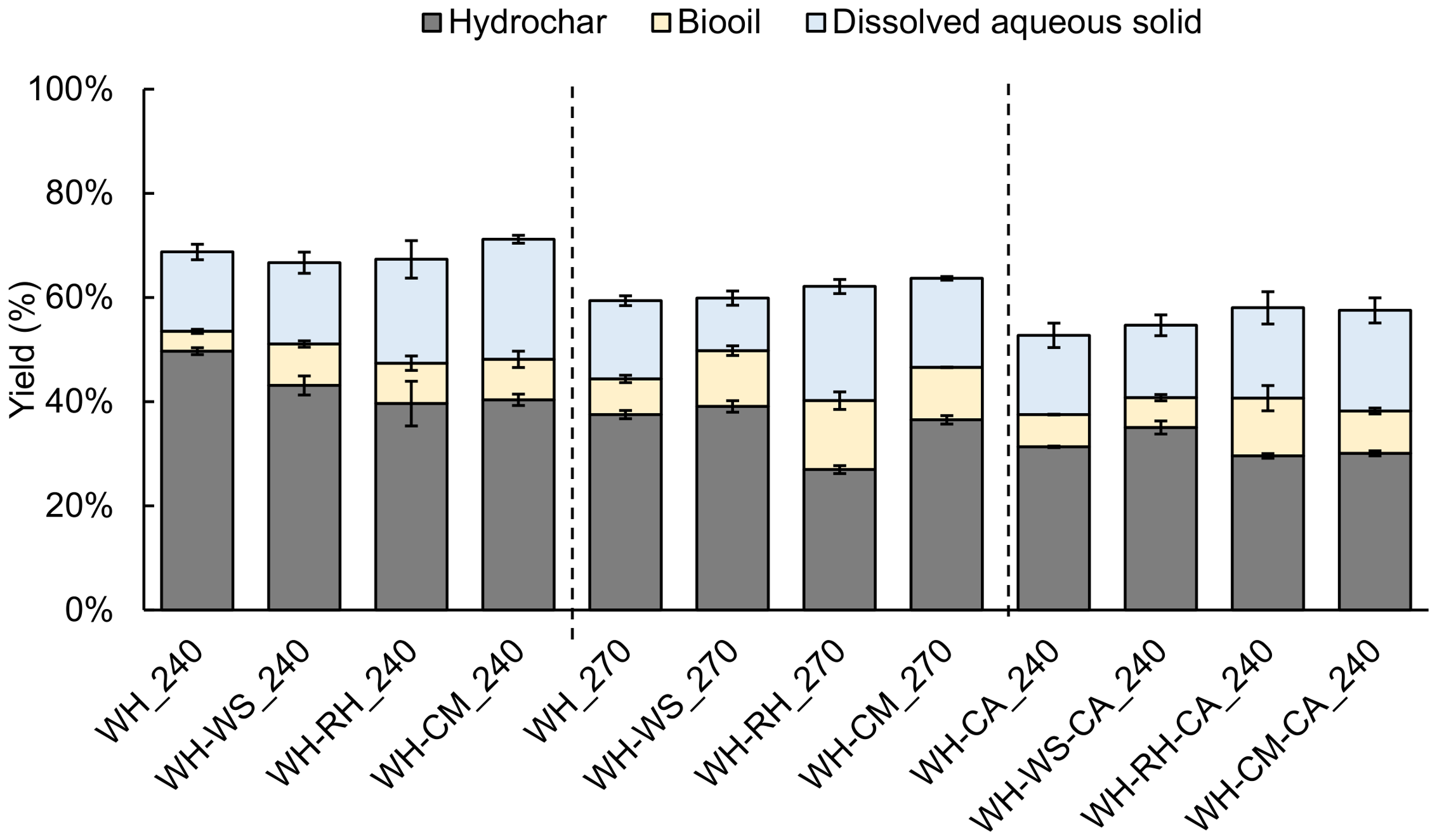
Co-processing WH with secondary biomass substantially altered the product distribution and solid properties, with the effects dependent on feedstock pairing and temperature (Figure 2; Table 2). At 240 °C, WH alone yielded 49.7% HY and 3.8% BY. Co-biomass addition reduced HY to 39.6–43.1% while increasing BY to 7.8–8.0%, indicating enhanced carbon redistribution toward the liquid phase. At 270 °C, for WH alone, HY declined to 37.5% and BY rose to 6.9%; among co-biomass systems, HY ranged from 27.0% to 39.1%, while BY reached 10.1–13.2%, confirming intensified liquid-phase carbon transfer at higher temperatures.
Figure 2.
Product distribution including hydrochar (HY), bio-oil (BY), and dissolved aqueous solid (DAS) across various HTC process condition. WH: water hyacinth, WH-WS: a combination of water hyacinth and wheat straw, WH-RH: a combination of water hyacinth and rice husk, WH-CM: a combination of water hyacinth and chicken manure, and CA: addition of citric acid.
Despite lower solid yields, co-HTC improved solid product quality. At 240 °C, WH–WS yielded the highest FC (26.7%) and C content (51.1%), followed by WH–RH (FC 23.9%; C 45.7%) and WH–CM (FC 14.9%; C 40.5%). The ash content was notably elevated in WH–RH (26.0%) and WH–CM (21.2%) relative to WH–WS (11.3%), reflecting the high inorganic fractions of RH and CM. At 270 °C, VM decreased and FC increased across all blends, with WH–WS reaching an FC of 27.6% and a C content of 54.8%, while WH–CM showed a lower FC (21.1%) and a slight decrease in C content (40.9%).
3.3. Citric Acid Enhancement of Co-HTC on Product Distribution and Solid Properties
CA addition at 240 °C further modified the product distribution in co-HTC systems. For WH alone with CA, HY decreased to 31.4%, with a BY of 6.2% (Figure 2). In CA-assisted co-HTC systems, WH–RH–CA achieved the highest BY (11.1%), suggesting that RH’s composition particularly promoted organic transfer to the liquid phase under acidic conditions.
CA addition markedly enhanced carbon retention and fuel properties in the solid phase. WH–WS–CA achieved the highest fixed carbon (30.9%) and lowest ash content (9.2%) among all co-HTC conditions, while the C content across CA-assisted blends ranged from 48.4% to 51.3%. The N content was highest in WH–CM–CA (2.55%) and lowest in WH–WS–CA (1.47%).
3.4. Fuel Properties and Energy Recovery
Individual feedstock fuel performance varied substantially with temperature and feedstock type (Table 2). For WH, HHV improved modestly from 18.8 to 19.6 MJ kg−1 with increasing temperature, while ER declined from 86.6% to 78.3%. For WS, HHV increased from 24.1 to 25.4 MJ kg−1 despite a decline in ER (85.3% to 76.4%). RH exhibited an improved HHV (14.6 to 17.3 MJ kg−1), with notably stable fixed carbon content and yield, while ER increased from 77.5% to 82.7%. CM displayed the poorest performance, with HHV decreasing slightly from 12.0 to 11.7 MJ kg−1 and ER declining from 84.1% to 79.9%.
Co-HTC blends substantially improved fuel quality relative to individual feedstocks. At 240 °C, WH–WS, WH–RH, and WH–CM yielded HHV values of 20.4, 18.0, and 15.8 MJ kg−1 with corresponding ED values of 1.26, 1.22, and 1.22, respectively (Table 2). Energy recoveries were 83.9%, 82.0%, and 86.6%, respectively. Increasing the temperature to 270 °C improved HHV for WH–WS (22.6 MJ kg−1; ED 1.40) and WH–RH (19.1 MJ kg−1; ED 1.29) while maintaining ER at 83.6% and 80.3%, respectively. By contrast, WH–CM at 270 °C showed marked declines in HHV (14.5 MJ kg−1; ED 1.12) and ER (71.2%), confirming that higher temperatures were detrimental for CM-containing blends.
CA addition at 240 °C provided the most substantial improvements in fuel properties. For WH–CA, HHV reached 20.3 MJ kg−1 with an ED of 1.47 and an ER of 77.7%. In co-HTC systems, WH–WS–CA (HHV 21.9 MJ kg−1; ED 1.52; ER 83.3%) and WH–RH–CA (HHV 18.7 MJ kg−1; ED 1.37; ER 79.5%) demonstrated improvements over CA-free conditions. Notably, WH–CM–CA achieved an HHV of 21.3 MJ kg−1 and an ER of 95.8%, representing the optimal combination of HHV and ER among all conditions tested.
4. Discussion
4.1. Hydrothermal Carbonization Behavior of Individual Biomass Feedstocks
WH comprised 31% cellulose, 25% hemicellulose, 13% lignin, and 13% protein, consistent with previously reported ranges [19,24]. Its elevated N content (2.1%) reflected its nutrient-rich aquatic origin. Its high VM (83.3%) and low FC (5.53%) indicated a labile structure prone to rapid thermal decomposition.
Increasing the temperature from 240 to 270 °C reduced HY and ER from 68.8% to 59.4% and from 86.6% to 78.3%, respectively, while HHV improved from 18.8 to 19.6 MJ kg−1, indicating that the HHV gain did not fully compensate for carbon loss to the liquid and gas phases (Table 2) [19,25]. Similar temperature-dependent behavior has been reported in HTC of water hyacinth and other wet biomass systems [25,26].
WS exhibited the highest HHV among all feedstocks (24.1–25.4 MJ kg−1), with relatively stable ER (76.4–85.3%) across temperatures, consistent with its high cellulose and low ash content. Its lignocellulosic composition contributes to favorable fuel properties, making it a suitable reference feedstock for co-HTC comparison.
RH exhibited contrasting behavior. Increasing the temperature simultaneously improved HHV (14.6–17.3 MJ kg−1) and ER (77.5–82.7%), while the yield remained stable (~68%). RH’s mineral-rich composition stabilized the carbon in the solid hydrochar phase, preventing degradation and thereby improving HHV and ER despite the stable yield [27,28].
CM exhibited the poorest energy performance, with HHV declining slightly (12.0 to 11.7 MJ kg−1) and ER decreasing from 84.1% to 79.9%. The protein and lipid fractions were thermally labile, rapidly solubilizing nitrogen-containing compounds into the aqueous phase while the high ash content diluted the carbon-enriched solid product [29,30]. These results confirmed that CM alone is unsuitable for energy valorization via HTC.
4.2. Effect of Hydrothermal Carbonization of Co-Biomass with Different Biomass Type
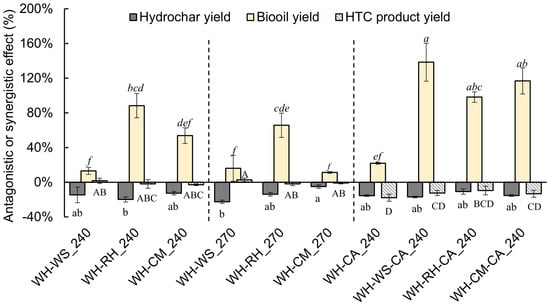
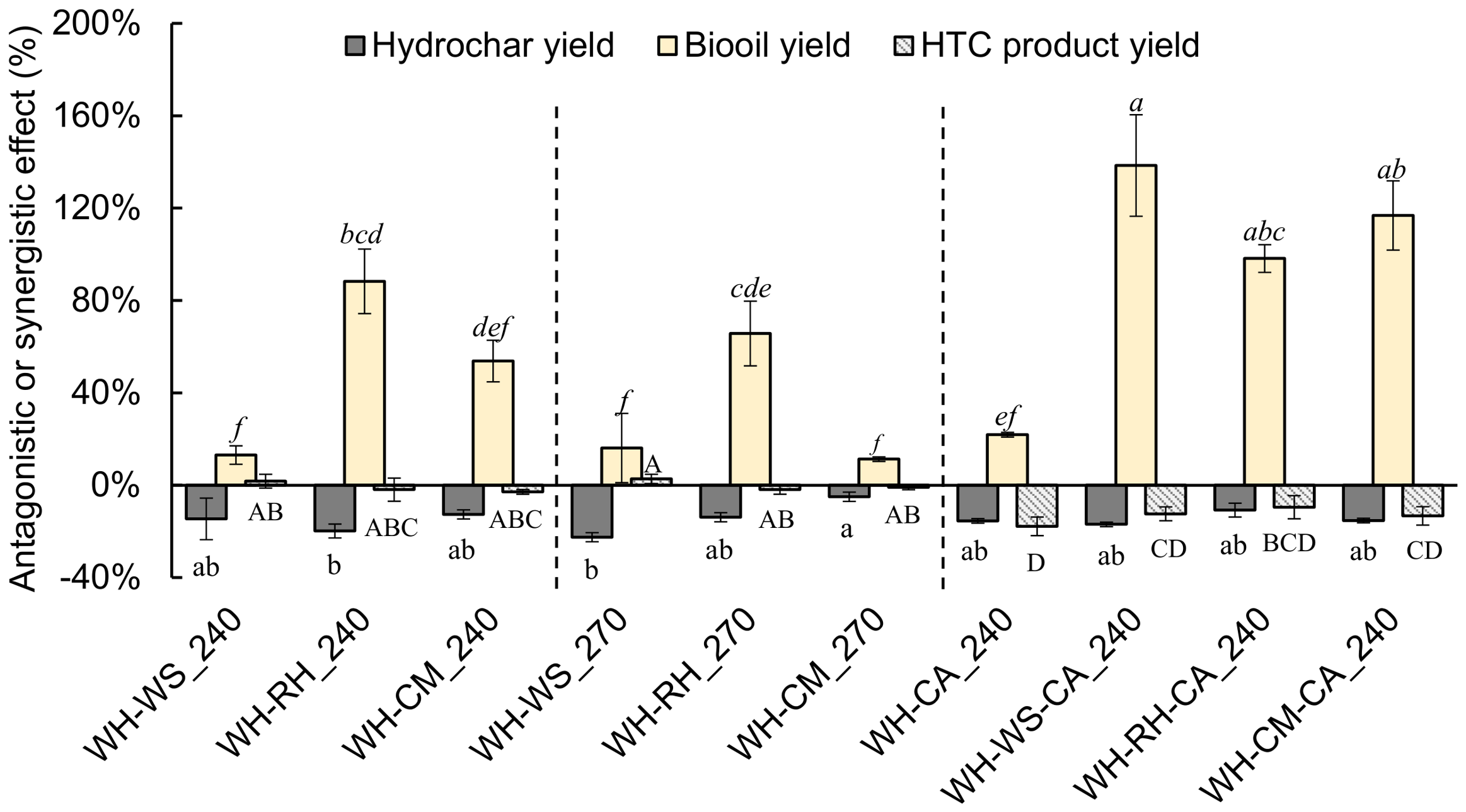
Co-HTC reduced HY by 12.6–19.8% across all blends at 240 °C while generating positive synergistic effects in bio-oil formation, reflecting intensified hydrolysis and volatilization of labile cellulose and hemicellulose fractions [13], as shown in Figure 3. The total product yield remained stable (±3.0%), confirming that co-processing primarily redistributed carbon among product phases without altering the overall mass balance.
Figure 3.
Synergistic effects of co-biomass on hydrochar, bio-oil, and HTC product yield. WH-WS: a combination of water hyacinth and wheat straw, WH-RH: a combination of water hyacinth and rice husk, WH-CM: a combination of water hyacinth and chicken manure, and CA: addition of citric acid. Same letters in lowercase, uppercase, and italics for each yield denote non-significant differences among samples, respectively (p < 0.05, Tukey HSD).
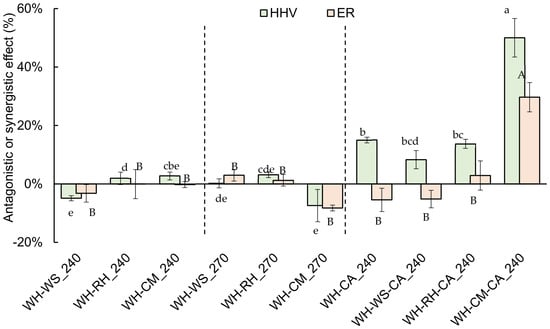
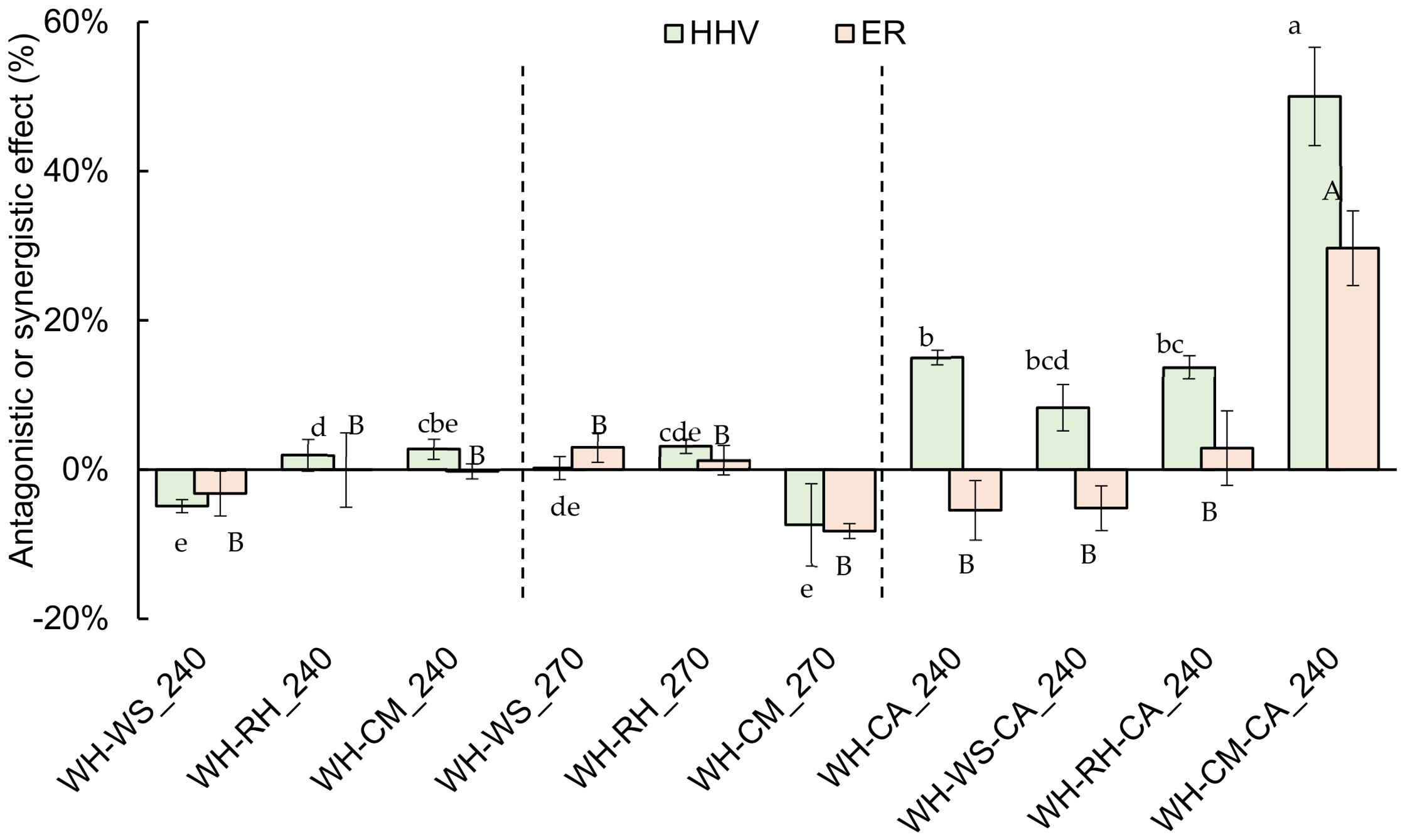
However, this redistribution did not translate into meaningful energy synergy. HHV and ER synergistic effects were minimal or negative across all blends at 240 °C (Figure 4). At 240 °C, WH–WS, WH–RH, and WH–CM showed negligible or modestly positive HHV synergistic effects and near-neutral ER synergistic effects, indicating carbon redistribution without meaningful solid-phase retention gain. At 270 °C, WH–CM became distinctly antagonistic, as excessive nitrogen devolatilization and ash dilution outweighed any beneficial protein–carbohydrate interaction, establishing 240 °C as the upper thermal window for protein-containing blends.
Figure 4.
Synergistic effects of co-biomass hydrothermal carbonization on HHV and ER. WH-WS: a combination of water hyacinth and wheat straw, WH-RH: a combination of water hyacinth and rice husk, WH-CM: a combination of water hyacinth and chicken manure, and CA: addition of citric acid. Same letters in lowercase and uppercase for each parameter denote non-significant differences among samples, respectively (p < 0.05, Tukey HSD).
These results confirmed that co-HTC alone cannot overcome the HHV–ER tradeoff. Limited energy synergy has similarly been reported in swine manure–corn stalk and sewage sludge–food waste systems [31,32]. However, co-HTC of swine and chicken manure achieved HHV and ER synergistic effects of 16.7% and 30.0% at optimized mixing ratios, indicating that feedstock interactions can enhance energy performance under specific compositional conditions [33].
4.3. Effect of Citric Acid on Hydrothermal Carbonization of Co-Biomass
The addition of CA to WH alone decreased HY by 15.4% and total product yield by 17.8%, while BY increased by 21.9%, indicating intensified hydrolysis and carbon transfer to the liquid phase (Figure 3). Despite improved ED, ER declined, suggesting that catalytic intermediate generation without a biochemically complementary co-feedstock resulted in net liquid-phase carbon losses rather than solid-phase retention (Figure 4). Similar reductions in ER, despite improved HHV, have been reported in comparable acid-assisted HTC systems [14,34].
In co-biomass systems, CA addition intensified synergistic effects on product distribution across all blends, while energy synergies differed depending on the feedstock pairing (Figure 3 and Figure 4). WH–WS–CA showed minor HHV synergistic effects (+8.3%) with negative ER synergistic effects (−5.2%), consistent with limited stabilization of lignocellulosic intermediates in the solid phase [35]. WH–RH–CA showed moderate increases in both HHV (+13.8%) and ER (+2.9%), indicating partial stabilization of reactive intermediates. WH–CM–CA exhibited the strongest response, with HHV and ER synergistic effects of 50.0% and 29.7%, respectively, representing the only system in which fuel quality and energy recovery improved concurrently. He et al. [18] reported a comparable HHV increase of 32% for CA-assisted co-HTC of food waste digestate with yard waste, but with substantial carbon loss and reduced ER, reflecting the HHV–ER trade-off. By contrast, Mahata et al. [36] reported simultaneous improvements in energy retention and fuel quality in co-HTC of sewage sludge with lignocellulosic biomass, highlighting the role of feedstock interactions.
CA promoted secondary polymerization of reactive intermediates on the hydrochar surface, enhancing carbon densification across all systems [16]. In WH–WS, these catalytic effects generated reactive intermediates that lacked stabilizing components for solid-phase retention, resulting in continued liquid-phase losses despite CA addition. In the WH–CM system, CA may have additionally facilitated Maillard-type condensation by acting on complementary substrate pools. Acidic hydrolysis of WH generated reducing sugars from cellulose and hemicellulose, while protein degradation in CM supplied amino acids [14,36]. These compounds can undergo Maillard-type reactions under HTC conditions, forming nitrogen-containing heterocyclic structures (e.g., pyrrolic and pyridinic compounds) that preferentially accumulate in the solid phase [37,38]. This enhanced solid-phase retention provides a plausible mechanistic basis for the concurrent improvement in HHV and ER observed in WH–CM–CA.
4.4. Elemental Transformation and Reaction Pathways
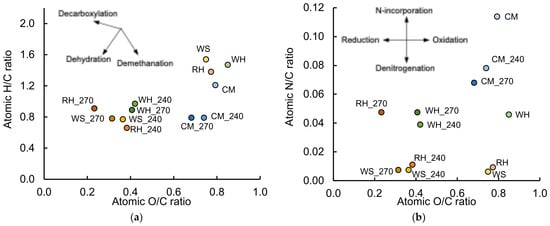
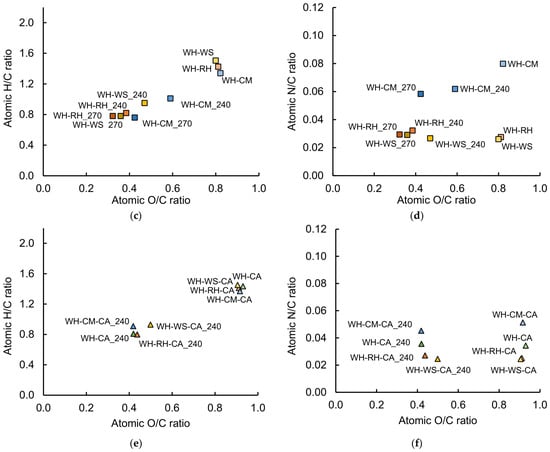
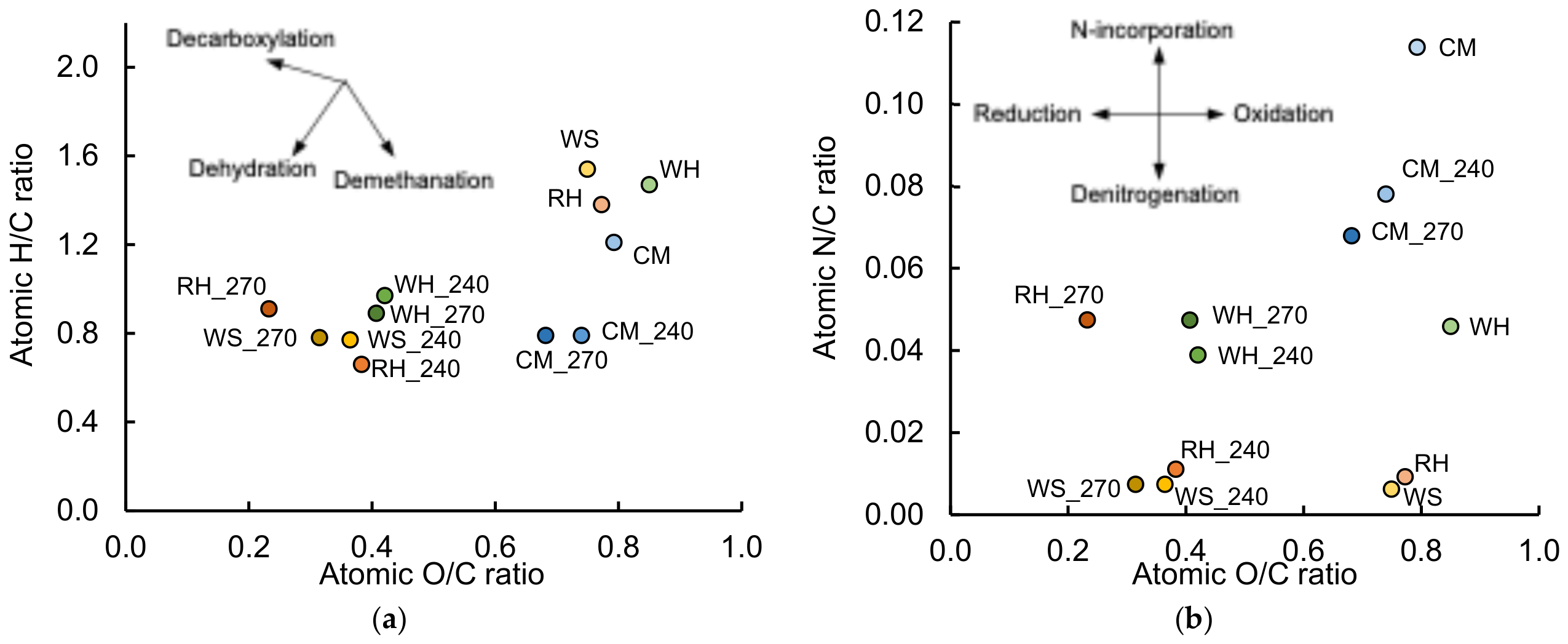
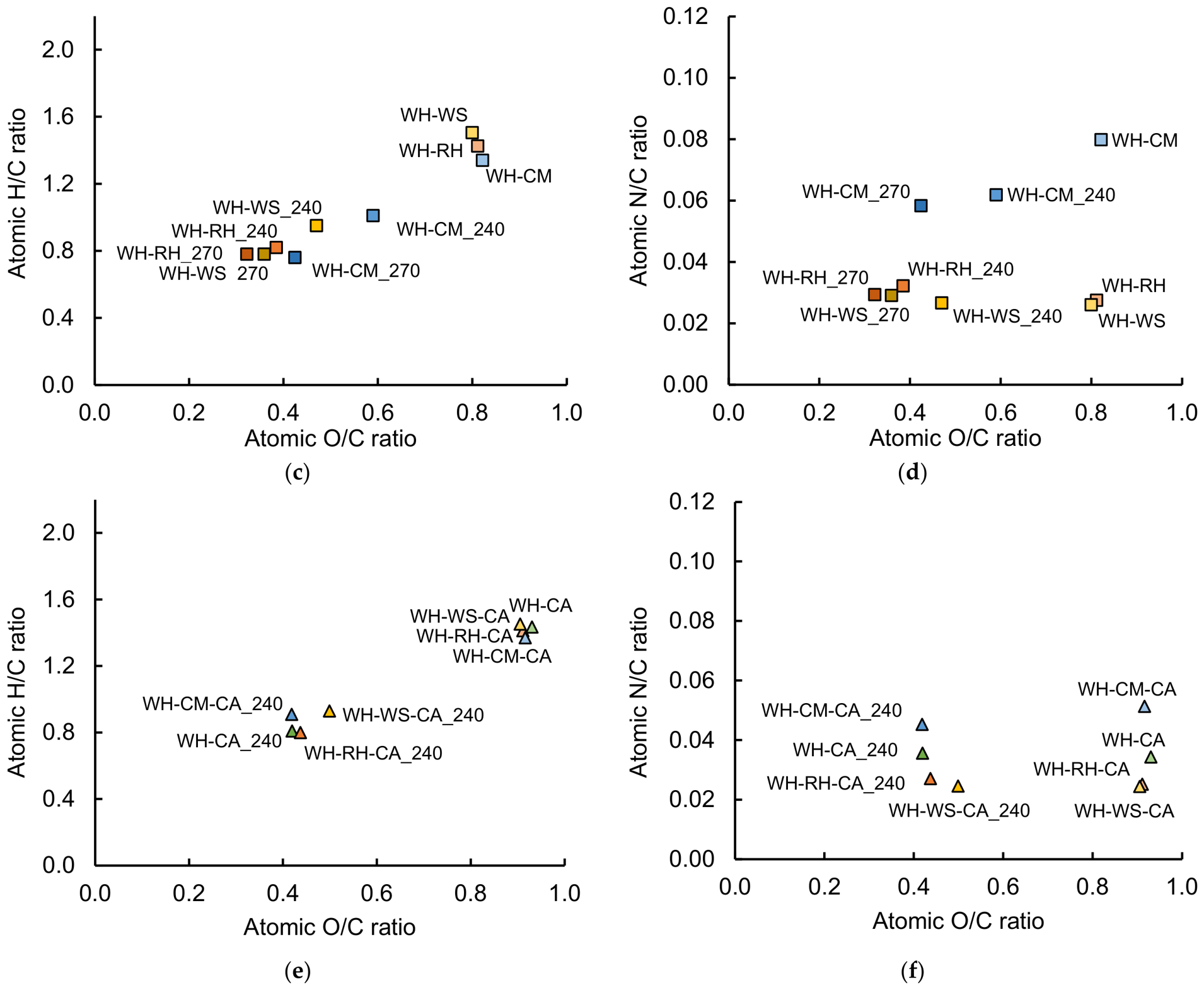
Elemental analysis via Van Krevelen diagrams revealed contrasting elemental transformation patterns among CA-assisted systems, with H/C and O/C ratios reflecting carbon densification and deoxygenation (Figure 5a,c,e) and N/C ratios tracking nitrogen redistribution during HTC (Figure 5b,d,f). All CA-assisted blends showed effective deoxygenation (O/C ratios 0.42–0.50), indicating carbon densification under acidic conditions across all feedstock combinations [39]. However, N/C ratios diverged distinctly (Table S1). WH–CM–CA exhibited the highest N/C ratio (0.05) and N content (2.55%), compared to WH–CA (0.04), WH–WS–CA (0.03), and WH–RH–CA (0.02). This selective nitrogen enrichment, unique to the protein-rich CM system, supported condensation between CM-derived amino compounds and carbohydrate intermediates, forming nitrogen-containing heterocyclic structures in the hydrochar [37]. The formation of nitrogen-containing aromatic structures in the WH–CM–CA hydrochar indicated that Maillard-type condensation likely promoted solid-phase carbon retention, contributing to the simultaneous enhancement of HHV and ER in this system (Figure S1).
Figure 5.
Van Krevelen diagrams showing H/C vs. O/C (a,c,e) and N/C vs. O/C (b,d,f) atomic ratios of feedstock and hydrochars from individual biomass (a,b), co-biomass (c,d), and CA-enhanced HTC (e,f) at 240 and 270 °C. Atomic ratios for feedstock blends (WH-WS, WH-RH, WH-CM, WH-CA, WH-WS-CA, WH-RH-CA, and WH-CM-CA) calculated as mass-weighted averages of individual feedstock compositions at their respective mixing ratios, serving as pre-HTC reference points for comparison with hydrochar products.
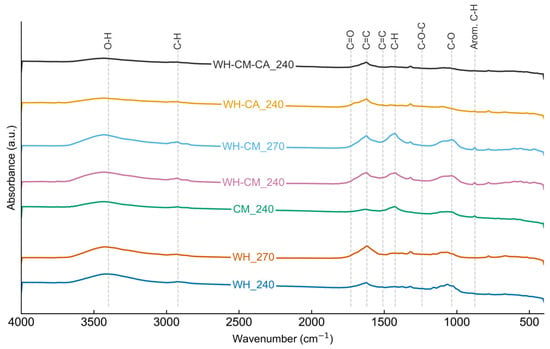
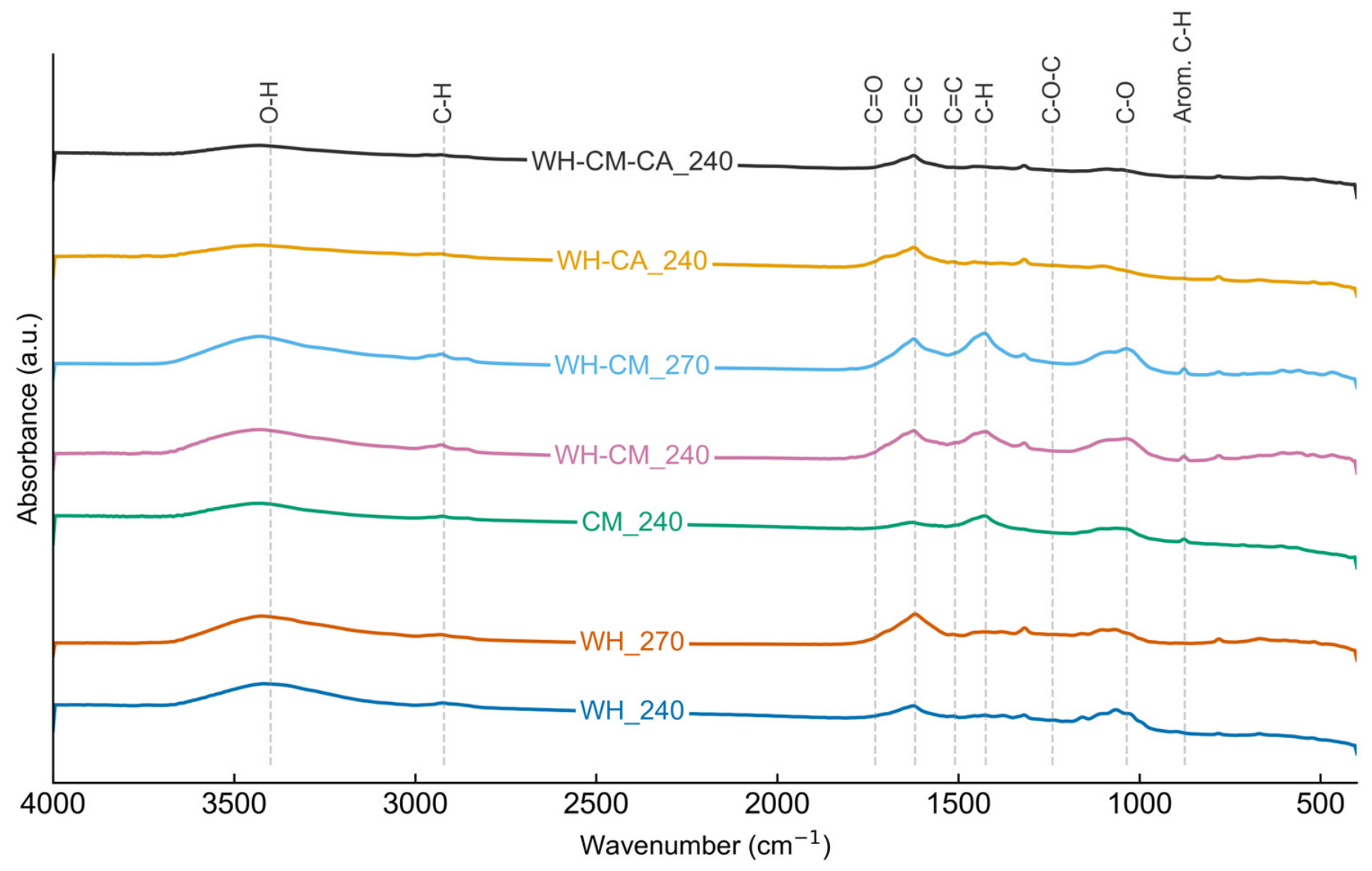
FTIR spectroscopy provided complementary structural evidence (Figure 6). FTIR analysis was conducted only for WH-, CM-, and CA-containing hydrochars, as these systems exhibited the most pronounced structural transformations associated with the observed energy performance trends. CA addition reduced the C–O band (1035 cm−1) for WH–CA-240, indicating enhanced cellulose degradation under acidic conditions [15]. For WH–CM–CA-240, the C=O band (1730 cm−1) increased while the aliphatic C–H band (1425 cm−1) decreased relative to those for WH–CM-240, suggesting that enhanced dehydration and condensation led to increased aromatic character, consistent with intensified aromatic C–H bending at 875 cm−1. Temperature effects were feedstock-dependent. For WH alone, broad reductions in O–H, aliphatic C–H, and C–O bands from 240 to 270 °C were consistent with progressive carbon densification and improved HHV [40]. By contrast, WH–CM showed negligible spectral changes between 240 and 270 °C, indicating limited additional structural transformation in this blend within the tested temperature window [41]. Broadening at 1510–1620 cm−1 for WH–CM–CA-240 suggested increased aromatic network formation, consistent with Maillard-type condensation between CM-derived amino compounds and carbohydrate intermediates [42]. While FTIR evidence supported this pathway, future studies employing XPS or solid-state 13C NMR would provide direct mechanistic confirmation.
Figure 6.
FTIR absorbance spectra of selected hydrochars from WH, CM, and CA-assisted HTC experiments at 240 and 270 °C. Spectra are normalized to the aromatic C=C band at 1620 cm−1 and offset vertically for clarity. Dashed lines indicate bands at 3400 (O–H), 2921 (C–H), 1730 (C=O), 1620 and 1510 (aromatic C=C), 1425 (C–H), 1240 (C–O–C), 1035 (C–O), and 875 cm−1 (aromatic C–H).
4.5. Comparison of WH-Based and Reported Co-HTC Systems
Table 3 compares WH-based systems against reported co-HTC and CA-assisted systems. Co-HTC without catalysis showed limited energy synergy across most systems [11,43], consistent with the WH–WS results in this study (HHV 3.18%, ER 2.43%). CA-assisted systems exhibited substantially improved HHV but inconsistently achieved concurrent ER improvement: food waste digestate–yard waste with CA achieved strong synergistic effects but moderate absolute ER (50.0%) [18], while pomelo peel and straw with CA achieved higher absolute HHV without consistently demonstrating concurrent ER improvement [16,44].
Table 3.
Comparison of HHV, energy recovery, and synergistic effects of WH-based and reported biomass blends under HTC conditions.
Among all systems, WH–CM–CA at 240 °C achieved the highest absolute ER (95.8%) and competitive HHV (21.3 MJ kg−1), with HHV and ER synergistic effects of 50.0% and 29.7%, respectively, under mild conditions. To our knowledge, this is among the first studies to systematically evaluate acid-catalyzed co-HTC of water hyacinth across biochemically distinct co-feedstock classes. Given WH’s global abundance as an invasive aquatic biomass, these findings suggest a practical valorization pathway that simultaneously addresses biomass waste and maximizes ER. Future studies should investigate alternative protein-rich feedstocks, organic acid recovery, and process energy balance at the pilot scale and spectroscopic confirmation of the proposed nitrogen-retention pathway. Sulfur quantification should also be considered, particularly for CM-containing systems, given its potential influence on hydrochar fuel quality and emission behavior [45].
5. Conclusions
This study demonstrates that the HHV–ER tradeoff in HTC of water hyacinth cannot be resolved by temperature intensification, co-biomass blending, or CA catalysis applied in isolation. Each strategy improved individual performance parameters but introduced compensating losses. Co-HTC enhanced bio-oil formation without generating consistent energy synergy, while CA catalysis improved carbon densification at the cost of solid-phase energy retention when applied without a biochemically complementary co-feedstock. The WH–CM–CA system (water hyacinth, chicken manure, and citric acid) uniquely overcame this tradeoff, achieving concurrent HHV of 21.3 MJ kg−1 and ER of 95.8% under mild conditions (240 °C, 4 h), with synergistic effects of 50.0% and 29.7%, respectively. Elemental and spectroscopic evidence indicated that Maillard-type condensation between WH-derived reducing sugars and CM-derived amino acids drove preferential nitrogen-rich carbon accumulation in the solid phase, a pathway activated only when CA catalysis and protein-rich co-feedstocks were combined. These findings establish a clear design principle: overcoming the HHV–ER tradeoff in wet biomass HTC requires pairing CA catalysis with biochemical complementarity between carbohydrate-rich and protein-rich feedstocks. This strategy offers a practical pathway for wet biomass valorization, demonstrating that high-moisture invasive feedstocks can be converted into solid fuels, combining high energy density and near-complete energy recovery under mild hydrothermal conditions. Beyond energy performance, the enhanced nitrogen retention observed in WH–CM–CA hydrochar suggests a route for coupling solid fuel production with nutrient management in HTC of mixed wet wastes. Future work should explore optimal mass ratios among WH, co-feedstock, and CA, as well as alternative protein-rich co-feedstocks suitable for larger scale and lower operational cost.
Supplementary Materials
The following supporting information can be downloaded at: https://www.mdpi.com/article/10.3390/en19112541/s1, Table S1: Atomic ratios of H/C, O/C, and N/C for biomass and derived hydrochar under various hydrothermal carbonization conditions; Figure S1: Proposed reaction pathways during hydrothermal carbonization of biomass components. Refs. [38,46,47,48,49,50,51] are cited in supplementary materials.
Author Contributions
Conceptualization, T.W. and S.S.; Data curation, T.W.; Formal analysis, T.W.; Funding acquisition, T.W. and S.S.; Investigation, T.W., Y.K., D.F., and M.L.; Methodology, T.W. and S.S.; Project administration, S.S.; Resources, T.W. and S.S.; Supervision, S.S.; Visualization, T.W.; Writing—original draft preparation, T.W.; Writing—review and editing, Y.K., M.L., D.F., P.B., M.F., S.A., and S.S. All authors have read and agreed to the published version of the manuscript.
Funding
This study was partially supported by the Japan Science and Technology Agency (JST) and Japan International Cooperation Agency (JICA) through the Science and Technology Research Partnership for Sustainable Development (SATREPS), under the project Eco-Engineering for Agricultural Revitalization toward Improvement of Human Nutrition (EARTH): Water Hyacinth to Energy and Agricultural Crops (grant number JPMJSA2005), and by the Sasakawa Scientific Research Grant (grant number 2024–6024) from the Japan Science Society.
Data Availability Statement
The data supporting the findings of this study are available from the corresponding author upon reasonable request.
Acknowledgments
We gratefully acknowledge Gyoda City, Saitama Prefecture, Japan, for donating the water hyacinth used in this study.
Conflicts of Interest
Author Masaaki Fujiwara was employed by the company Kurita Water Industries Ltd. The remaining authors declare that the research was conducted in the absence of any commercial or financial relationships that could be construed as a potential conflict of interest.
Abbreviations
The following abbreviations are used in this manuscript:
| HTC | Hydrothermal carbonization |
| Co-HTC | Co-hydrothermal carbonization |
| WH | Water hyacinth |
| WS | Wheat straw |
| RH | Rice husk |
| CM | Chicken manure |
| CA | Citric acid |
| HHV | Higher heating value |
| ER | Energy recovery |
| FC | Fixed carbon |
| VM | Volatile matter |
| H/C | Hydrogen-to-carbon ratio |
| O/C | Oxygen-to-carbon ratio |
| N/C | Nitrogen-to-carbon ratio |
| ANOVA | Analysis of variance |
References
- Liu, Q.; Chmely, S.C.; Abdoulmoumine, N. Biomass Treatment Strategies for Thermochemical Conversion. Energy Fuels 2017, 31, 3525–3536. [Google Scholar] [CrossRef] [Scilit]
- Okolie, J.A.; Epelle, E.I.; Tabat, M.E.; Orivri, U.; Amenaghawon, A.N.; Okoye, P.U.; Gunes, B. Waste Biomass Valorization for the Production of Biofuels and Value-Added Products: A Comprehensive Review of Thermochemical, Biological and Integrated Processes. Process Saf. Environ. Prot. 2022, 159, 323–344. [Google Scholar] [CrossRef] [Scilit]
- Sharma, R.; Jasrotia, K.; Singh, N.; Ghosh, P.; Srivastava, S.; Sharma, N.R.; Singh, J.; Kanwar, R.; Kumar, A. A Comprehensive Review on Hydrothermal Carbonization of Biomass and Its Applications. Chem. Afr. 2020, 3, 1–19. [Google Scholar] [CrossRef] [Scilit]
- Pavkov, I.; Radojčin, M.; Stamenković, Z.; Bikić, S.; Tomić, M.; Bukurov, M.; Despotović, B. Hydrothermal Carbonization of Agricultural Biomass: Characterization of Hydrochar for Energy Production. Solid Fuel Chem. 2022, 56, 225–235. [Google Scholar] [CrossRef] [Scilit]
- Zhang, B.; Heidari, M.; Regmi, B.; Salaudeen, S.; Arku, P.; Thimmannagari, M.; Dutta, A. Hydrothermal Carbonization of Fruit Wastes: A Promising Technique for Generating Hydrochar. Energies 2018, 11, 2022. [Google Scholar] [CrossRef] [Scilit]
- Harun, I.; Pushiri, H.; Amirul-Aiman, A.J.; Zulkeflee, Z. Invasive Water Hyacinth: Ecology, Impacts and Prospects for the Rural Economy. Plants 2021, 10, 1613. [Google Scholar] [CrossRef] [Scilit]
- Gaurav, G.K.; Mehmood, T.; Cheng, L.; Klemeš, J.J.; Shrivastava, D.K. Water Hyacinth as a Biomass: A Review. J. Clean. Prod. 2020, 277, 122214. [Google Scholar] [CrossRef] [Scilit]
- Román, S.; Ledesma, B.; Álvarez, A.; Coronella, C.; Qaramaleki, S.V. Suitability of Hydrothermal Carbonization to Convert Water Hyacinth to Added-Value Products. Renew. Energy 2020, 146, 1649–1658. [Google Scholar] [CrossRef] [Scilit]
- Amir, F.; Kalam, M.A.; Cheng, Y.-S.; Hasan Johir, M.A.; Silitonga, A.S.; Putra, N.; Indra Mahlia, T.M. Optimisation and Characterisation of Water Hyacinth-Based Biochar and Bio-Oils Produced by Thermochemical Processes for Sustainable Biocatalyst and Biofuel Production. Energy Convers. Manag. 2026, 348, 120735. [Google Scholar] [CrossRef] [Scilit]
- Wutisirirattanachai, T.; Legesse, S.A.; Sato, S. Hydrothermal Carbonization of Compressed Water Hyacinth: Effects of Operation Parameters on Energy Conversion and Characterization of Products. Bull. Plankton Eco-Eng. Res. 2022, 2, 44–55. [Google Scholar]
- He, C.; Zhang, Z.; Ge, C.; Liu, W.; Tang, Y.; Zhuang, X.; Qiu, R. Synergistic Effect of Hydrothermal Co-Carbonization of Sewage Sludge with Fruit and Agricultural Wastes on Hydrochar Fuel Quality and Combustion Behavior. Waste Manag. 2019, 100, 171–181. [Google Scholar] [CrossRef] [Scilit]
- Zhao, J.; Liu, C.; Hou, T.; Lei, Z.; Yuan, T.; Shimizu, K.; Zhang, Z. Conversion of Biomass Waste to Solid Fuel via Hydrothermal Co-Carbonization of Distillers Grains and Sewage Sludge. Bioresour. Technol. 2022, 345, 126545. [Google Scholar] [CrossRef] [Scilit] [PubMed]
- Bardhan, M.; Novera, T.M.; Tabassum, M.; Islam, A.; Islam, A.; Hameed, B.H. Co-Hydrothermal Carbonization of Different Feedstocks to Hydrochar as Potential Energy for the Future World: A Review. J. Clean. Prod. 2021, 298, 126734. [Google Scholar] [CrossRef] [Scilit]
- Volpe, M.; Luz, F.C.; Saha, N.; Reza, M.T.; Mosonik, M.C.; Volpe, R.; Messineo, A. Enhancement of Energy and Combustion Properties of Hydrochar via Citric Acid Catalysed Secondary Char Production. Biomass Convers. Biorefinery 2023, 13, 10527–10538. [Google Scholar] [CrossRef] [Scilit]
- Cui, H.-M.; Liu, Y.; Bian, J.; Li, M.-F. Catalytic Hydrothermal Carbonization of Corn and Rice Straws with Citric Acid: Implications for Charcoal Production and Combustion Performance. Ind. Crops Prod. 2024, 219, 119162. [Google Scholar] [CrossRef] [Scilit]
- Pan, Y.; Wang, Q.; Wang, X.; Bai, J.; Wu, S.; Zhou, H.; Wu, D.; Zhang, S. Optimization of Process Parameters and Evaluation of Fuel Properties of Agricultural Waste-Derived Hydrochar Catalyzed by Citric Acid Based on Response Surface Methodology. J. Anal. Appl. Pyrolysis 2026, 193, 107368. [Google Scholar] [CrossRef] [Scilit]
- Wei, Y.; Fakudze, S.; Yang, S.; Zhang, Y.; Xue, T.; Han, J.; Chen, J. Synergistic Citric Acid-Surfactant Catalyzed Hydrothermal Liquefaction of Pomelo Peel for Production of Hydrocarbon-Rich Bio-Oil. Sci. Total Environ. 2023, 857, 159235. [Google Scholar] [CrossRef] [Scilit]
- He, M.; Zhu, X.; Dutta, S.; Khanal, S.K.; Lee, K.T.; Masek, O.; Tsang, D.C.W. Catalytic Co-Hydrothermal Carbonization of Food Waste Digestate and Yard Waste for Energy Application and Nutrient Recovery. Bioresour. Technol. 2022, 344, 126395. [Google Scholar] [CrossRef] [Scilit]
- Gao, Y.; Wang, X.; Wang, J.; Li, X.; Cheng, J.; Yang, H.; Chen, H. Effect of Residence Time on Chemical and Structural Properties of Hydrochar Obtained by Hydrothermal Carbonization of Water Hyacinth. Energy 2013, 58, 376–383. [Google Scholar] [CrossRef] [Scilit]
- Koprivica, M.; Petrović, J.; Ercegović, M.; Simić, M.; Milojković, J.; Šoštarić, T.; Dimitrijević, J. Improvement of Combustible Characteristics of Paulownia Leaves via Hydrothermal Carbonization. Biomass Convers. Biorefinery 2024, 14, 3975–3985. [Google Scholar] [CrossRef] [Scilit]
- Van Soest, P.J.; Robertson, J.B.; Lewis, B.A. Methods for Dietary Fiber, Neutral Detergent Fiber, and Nonstarch Polysaccharides in Relation to Animal Nutrition. J. Dairy Sci. 1991, 74, 3583–3597. [Google Scholar] [CrossRef] [Scilit] [PubMed]
- Charrondiere, U.; Chevassus-Agnes, S.; Marroni, S.; Burlingame, B. Impact of Different Macronutrient Definitions and Energy Conversion Factors on Energy Supply Estimations. J. Food Compos. Anal. 2004, 17, 339–360. [Google Scholar] [CrossRef] [Scilit]
- Wang, L.; Weller, C.L. Recent Advances in Extraction of Nutraceuticals from Plants. Trends Food Sci. Technol. 2006, 17, 300–312. [Google Scholar] [CrossRef] [Scilit]
- Mako, A.A.; Akinwande, V.O.; Abiola-Olagunju, O.I.; Babayemi, O.J.; Akinsoyinu, A.O. Variations in Chemical Nutrients and Mineral Concentrations of Water Hyacinth (Eichhornia Crassipes Mart. Solms- Labauch). Niger. J. Anim. Prod. 2021, 39, 199–205. [Google Scholar] [CrossRef] [Scilit]
- Nallasivam, J.; Eboibi, B.E.; Isdepsky, A.; Lavanya, M.; Bhaskar, S.; Chinnasamy, S. Hydrothermal Liquefaction of Water Hyacinth (Eichhornia Crassipes): Influence of Reaction Temperature on Product Yield, Carbon and Energy Recovery, and Hydrocarbon Species Distribution in Biocrude. Biomass Convers. Biorefinery 2022, 12, 3827–3841. [Google Scholar] [CrossRef] [Scilit]
- Zhang, C.; Ma, X.; Chen, X.; Tian, Y.; Zhou, Y.; Lu, X.; Huang, T. Conversion of Water Hyacinth to Value-Added Fuel via Hydrothermal Carbonization. Energy 2020, 197, 117193. [Google Scholar] [CrossRef] [Scilit]
- Abe, H.; Nakayasu, Y.; Haga, K.; Watanabe, M. Progress on Separation and Hydrothermal Carbonization of Rice Husk Toward Environmental Applications. Glob. Chall. 2023, 7, 2300112. [Google Scholar] [CrossRef] [Scilit] [PubMed]
- Vallejo, F.; Yánez-Sevilla, D.; Díaz-Robles, L.A.; Cubillos, F.; Espinoza-Pérez, A.; Espinoza-Pérez, L.; Pino-Cortés, E.; Cereceda-Balic, F. Insights into Hydrothermal Treatment of Biomass Blends: Assessing Energy Yield and Ash Content for Biofuel Enhancement. PLoS ONE 2024, 19, e0304054. [Google Scholar] [CrossRef] [Scilit]
- Belete, Y.Z.; Mau, V.; Yahav Spitzer, R.; Posmanik, R.; Jassby, D.; Iddya, A.; Kassem, N.; Tester, J.W.; Gross, A. Hydrothermal Carbonization of Anaerobic Digestate and Manure from a Dairy Farm on Energy Recovery and the Fate of Nutrients. Bioresour. Technol. 2021, 333, 125164. [Google Scholar] [CrossRef] [Scilit]
- Qaramaleki, S.V.; Villamil, J.A.; Mohedano, A.F.; Coronella, C.J. Factors Affecting Solubilization of Phosphorus and Nitrogen through Hydrothermal Carbonization of Animal Manure. ACS Sustain. Chem. Eng. 2020, 8, 12462–12470. [Google Scholar] [CrossRef] [Scilit]
- Lang, Q.; Zhang, B.; Liu, Z.; Chen, Z.; Xia, Y.; Li, D.; Ma, J.; Gai, C. Co-Hydrothermal Carbonization of Corn Stalk and Swine Manure: Combustion Behavior of Hydrochar by Thermogravimetric Analysis. Bioresour. Technol. 2019, 271, 75–83. [Google Scholar] [CrossRef] [Scilit] [PubMed]
- Zheng, C.; Ma, X.; Yao, Z.; Chen, X. The Properties and Combustion Behaviors of Hydrochars Derived from Co-Hydrothermal Carbonization of Sewage Sludge and Food Waste. Bioresour. Technol. 2019, 285, 121347. [Google Scholar] [CrossRef] [Scilit]
- Li, Q.; Zhang, S.; Gholizadeh, M.; Hu, X.; Yuan, X.; Sarkar, B.; Vithanage, M.; Mašek, O.; Ok, Y.S. Co-Hydrothermal Carbonization of Swine and Chicken Manure: Influence of Cross-Interaction on Hydrochar and Liquid Characteristics. Sci. Total Environ. 2021, 786, 147381. [Google Scholar] [CrossRef] [Scilit]
- Ameen, M.; Zamri, N.M.; May, S.T.; Azizan, M.T.; Aqsha, A.; Sabzoi, N.; Sher, F. Effect of Acid Catalysts on Hydrothermal Carbonization of Malaysian Oil Palm Residues (Leaves, Fronds, and Shells) for Hydrochar Production. Biomass Convers. Biorefinery 2022, 12, 103–114. [Google Scholar] [CrossRef] [Scilit]
- El Ouadrhiri, F.; Abdu Musad Saleh, E.; Husain, K.; Adachi, A.; Hmamou, A.; Hassan, I.; Mostafa Moharam, M.; Lahkimi, A. Acid Assisted-Hydrothermal Carbonization of Solid Waste from Essential Oils Industry: Optimization Using I-Optimal Experimental Design and Removal Dye Application. Arab. J. Chem. 2023, 16, 104872. [Google Scholar] [CrossRef] [Scilit]
- Mahata, S.; Majee, P.; Periyavaram, S.R.; Srivastava, S.; Matli, C. Optimization of Energy Recovery through the Catalytic Co-Hydrothermal Carbonization of Sewage Sludge and Lignocellulose Biomass. Biomass Convers. Biorefinery 2025, 15, 31559–31574. [Google Scholar] [CrossRef] [Scilit]
- Liu, Z.; Zhao, L.; Yao, Z.; Jia, J.; Wang, Z.; Liu, Z. Behaviors and Interactions during Hydrothermal Carbonization of Protein, Cellulose and Lignin. Chem. Eng. J. 2023, 476, 146373. [Google Scholar] [CrossRef] [Scilit]
- Wang, R.; Lin, Z.; Meng, S.; Liu, S.; Zhao, Z.; Wang, C.; Yin, Q. Effect of Lignocellulosic Components on the Hydrothermal Carbonization Reaction Pathway and Product Properties of Protein. Energy 2022, 259, 125063. [Google Scholar] [CrossRef] [Scilit]
- Akiya, N.; Savage, P.E. Roles of Water for Chemical Reactions in High-Temperature Water. Chem. Rev. 2002, 102, 2725–2750. [Google Scholar] [CrossRef] [Scilit]
- Chen, C.; Liang, W.; Fan, F.; Wang, C. The Effect of Temperature on the Properties of Hydrochars Obtained by Hydrothermal Carbonization of Waste Camellia Oleifera Shells. ACS Omega 2021, 6, 16546–16552. [Google Scholar] [CrossRef] [Scilit]
- Hejna, M.; Świechowski, K.; Rasaq, W.A.; Białowiec, A. Study on the Effect of Hydrothermal Carbonization Parameters on Fuel Properties of Chicken Manure Hydrochar. Materials 2022, 15, 5564. [Google Scholar] [CrossRef] [Scilit]
- Peterson, A.A.; Lachance, R.P.; Tester, J.W. Kinetic Evidence of the Maillard Reaction in Hydrothermal Biomass Processing: Glucose−Glycine Interactions in High-Temperature, High-Pressure Water. Ind. Eng. Chem. Res. 2010, 49, 2107–2117. [Google Scholar] [CrossRef] [Scilit]
- Zhang, C.; Ma, X.; Zheng, C.; Huang, T.; Lu, X.; Tian, Y. Co-Hydrothermal Carbonization of Water Hyacinth and Sewage Sludge: Effects of Aqueous Phase Recirculation on the Characteristics of Hydrochar. Energy Fuels 2020, 34, 14147–14158. [Google Scholar] [CrossRef] [Scilit]
- Ma, R.; Fakudze, S.; Liu, S.; Wei, Y.; Chen, J.; Han, J.; Wang, C.; Wang, J. Surfactants/Citric Acid Catalyzed Hydrothermal Carbonization of Pomelo Peel for Solid Fuels: Conversion Mechanism and Combustion Performance. Fuel 2023, 342, 127762. [Google Scholar] [CrossRef] [Scilit]
- Petrovic, J.; Mihajlovic, M.; Petrovic, M.; Kojic, M.; Koprivica, M.; Sostaric, T.; Filipovic-Petrovic, L. Fuel Potential and Properties of Grape Pomace Hydrochar. Acta Period. Technol. 2019, 50, 204–209. [Google Scholar] [CrossRef] [Scilit]
- Akhtar, J.; Amin, N.A.S. A Review on Process Conditions for Optimum Bio-Oil Yield in Hydrothermal Liquefaction of Biomass. Renew. Sustain. Energy Rev. 2011, 15, 1615–1624. [Google Scholar] [CrossRef] [Scilit]
- Basar, I.A.; Liu, H.; Carrere, H.; Trably, E.; Eskicioglu, C. A Review on Key Design and Operational Parameters to Optimize and Develop Hydrothermal Liquefaction of Biomass for Biorefinery Applications. Green Chem. 2021, 23, 1404–1446. [Google Scholar] [CrossRef] [Scilit]
- Cavali, M.; Libardi Junior, N.; de Sena, J.D.; Woiciechowski, A.L.; Soccol, C.R.; Belli Filho, P.; Bayard, R.; Benbelkacem, H.; de Castilhos Junior, A.B. A Review on Hydrothermal Carbonization of Potential Biomass Wastes, Characterization and Environmental Applications of Hydrochar, and Biorefinery Perspectives of the Process. Sci. Total Environ. 2023, 857, 159627. [Google Scholar] [CrossRef] [Scilit] [PubMed]
- Lachos-Perez, D.; César Torres-Mayanga, P.; Abaide, E.R.; Zabot, G.L.; De Castilhos, F. Hydrothermal Carbonization and Liquefaction: Differences, Progress, Challenges, and Opportunities. Bioresour. Technol. 2022, 343, 126084. [Google Scholar] [CrossRef] [Scilit]
- Leng, S.; Leng, L.; Chen, L.; Chen, J.; Chen, J.; Zhou, W. The Effect of Aqueous Phase Recirculation on Hydrothermal Liquefaction/Carbonization of Biomass: A Review. Bioresour. Technol. 2020, 318, 124081. [Google Scholar] [CrossRef] [Scilit]
- Wang, Q.; Wu, S.; Cui, D.; Pan, S.; Xu, F.; Xu, F.; Wang, Z.; Li, G. Co-Hydrothermal Carbonization of Corn Stover and Food Waste: Characterization of Hydrochar, Synergistic Effects, and Combustion Characteristic Analysis. J. Environ. Chem. Eng. 2022, 10, 108716. [Google Scholar] [CrossRef] [Scilit]

Disclaimer/Publisher’s Note: The statements, opinions and data contained in all publications are solely those of the individual author(s) and contributor(s) and not of MDPI and/or the editor(s). MDPI and/or the editor(s) disclaim responsibility for any injury to people or property resulting from any ideas, methods, instructions or products referred to in the content. |
© 2026 by the authors. Licensee MDPI, Basel, Switzerland. This article is an open access article distributed under the terms and conditions of the Creative Commons Attribution (CC BY) license.