


Abstract
Unlike B2C service failures, where firms respond to their own failures within a dyadic firm–customer relationship, C2C platform complaints often originate from third-party sellers. In such triadic platform–seller–consumer interactions, AI customer service agents become front-end governance interfaces through which consumers judge platform fairness, rule enforcement, and institutional reliability. This study examines anthropomorphic AI as a task-contingent governance cue in C2C platform complaint handling. Across two scenario-based experiments, we test how AI role framing, anthropomorphism, and complaint severity jointly shape consumer evaluations. Study 1 shows that high anthropomorphism increases service recovery satisfaction when AI is framed as a relational representative, but not when framed as a rule-based arbitrator. Study 2 reveals significant three-way interactions among complaint severity, role framing, and anthropomorphism for satisfaction, platform trust, and continuance intention. Under low severity, high anthropomorphism benefits both roles; under high severity, its benefit remains mainly for the relational representative and weakens for the rule-based arbitrator. Mechanism analyses show that social presence explains responses under low severity, whereas both social presence and procedural justice shape evaluations under high severity. Together, these findings identify governance-task fit as a key condition for the value of anthropomorphic AI in platform complaint handling, showing when human-like AI builds trust and when it may undermine governance credibility.
1. Introduction
In C2C and platform-mediated digital transaction ecosystems, customer complaints arising from failures by third-party sellers, service providers, or individual operators have become a common platform governance scenario. For example, when consumers encounter product quality problems, fulfillment failures, delivery errors, delayed after-sales support, or insufficient seller responsiveness on C2C platforms such as eBay, Airbnb, Taobao, and Meituan, platforms often need to intervene through online customer service systems, especially AI customer service agents, to support early-stage communication, information collection, and dispute coordination [1,2,3]. At first glance, this may appear to be a routine use of digital customer service in complaint handling. However, in C2C settings, the relational structure in which AI customer service agents operate differs substantially from that of traditional B2C service failures.
Traditional B2C service failures typically occur between a firm and its customers, and service recovery is usually understood as the firm’s response to a failure for which it is directly responsible. In C2C platform complaints, by contrast, the immediate source of the service failure is often not the platform itself, but a third-party seller or individual service provider operating on the platform. Platform AI is therefore not merely a service agent responding on behalf of a firm to its own failure. Rather, within the triadic relationship among the platform, the seller, and the customer, it functions as a front-end interface through which the platform intervenes in another party’s failure, coordinates responsibility attribution, and communicates handling rules. Prior research on online marketplaces and platform trust has shown that consumer trust in platform transactions depends not only on the trading partner, but also on whether the platform can provide institutional assurance through rules, monitoring, and dispute-handling mechanisms [1,4].
For this reason, every interaction between users and platform AI is not only an experiential evaluation of a customer service interface. It may also become an important basis on which consumers judge whether the platform is fair, reliable, and capable of resolving disputes. In other words, in C2C complaint handling, AI customer service agents are no longer merely service touchpoints. They become a diagnostic window through which consumers interpret the platform’s stance toward rule enforcement and its capacity to manage disputes. Against this platform governance context, this study examines how consumers interpret the anthropomorphic design of platform AI across different complaint-handling tasks, and how such interpretations further shape their evaluations of recovery outcomes and platform trustworthiness.
Existing work on AI service and anthropomorphism has largely developed along two lines. One stream compares AI and human service providers in terms of efficiency, competence, and affective responses. Another examines how varying degrees of anthropomorphism shape social presence, perceived warmth, trust, and usage intention [5,6,7,8,9,10]. Together, these studies have clarified how users respond to AI service interfaces. Yet much of this work assumes a relatively straightforward firm–customer dyad, in which AI responds to, recommends, explains, or supports recovery from problems attributable to the firm itself [11,12]. Even when service failures are considered, AI is often treated as an extension of the firm’s service touchpoint, with attention directed mainly to interaction style, emotional expression, usage intention, or relational recovery [7,8,9]. In this view, anthropomorphism is commonly understood as a relational resource that can narrow human–machine distance and improve the service experience.
C2C platform complaint handling complicates this assumption. Service failures in such settings often originate with third-party sellers rather than the platform itself. The platform is therefore not simply apologizing for a failure for which it is directly responsible; it occupies an intermediary position between seller and customer, setting rules, coordinating evidence, and making or communicating final decisions [2,13,14,15]. Prior P2P/C2C research has shown that these transaction environments involve multiple actors, dispersed responsibility, and strong reliance on institutional arrangements. Users’ evaluations of the platform therefore extend beyond their experience with a single service touchpoint and involve broader judgments about platform rules, fairness, and accountability [2,3,16,17].
Platform AI in this context performs a governance function as well as an interactional one. Consumers evaluate not only whether the AI customer service agent is friendly or responsive, but also whether the platform appears to be handling the dispute fairly, reliably, and appropriately. The evaluative focus thus extends from the functional qualities of the AI tool to what the interface implies about the platform’s institutional capability. Platform trust research has long emphasized that trust in online transactions depends not only on technological reliability, but also on institutional assurance provided by rules, monitoring, and dispute-handling mechanisms [1,4,18]. AI service research, however, has rarely conceptualized platform AI as a governance interface or asked which design cues are compatible with the governance functions performed through that interface.
We contend that the key issue is not whether anthropomorphism is effective in general, but when consumers treat it as a diagnostically useful cue. From a cue diagnosticity perspective, cues shape judgment not because they carry fixed meanings, but because consumers use them in a given context to answer particular inferential questions. Different tasks can therefore change how consumers assign meaning and weight to the same cue [19]. In complaint handling, these diagnostic needs are not static. They shift with the nature of the problem and the level of perceived risk. As uncertainty and potential loss increase, consumers are more likely to move away from intuitive, affective, and heuristic cues and to seek cues that better support responsibility judgments and outcome predictions [20,21].
In low-severity complaints, consumers may be dissatisfied, but the problem can still be understood as a limited service lapse. Their immediate concern is whether they are being acknowledged, understood, and helped through the process. Warmth, approachability, and social presence conveyed by anthropomorphism can therefore have relatively high diagnostic value [9,22]. As complaint severity increases, the evaluative focus changes. Consumers begin to face more salient losses and fairness concerns, and their judgments become less centered on relational reassurance and more focused on whether the platform appears fair, reliable, and rule-based in its handling of the dispute. Service recovery research has consistently shown that as failure severity increases, consumers place greater weight on procedures, fairness, and responsibility attribution, making emotional reassurance alone insufficient to sustain favorable responses [23,24,25,26].
In such settings, strongly human-like warmth cues may no longer be advantageous. This concern is especially relevant when AI is framed as a rule-based arbitrator role rather than a relational representative role: anthropomorphism may weaken perceptions of neutrality, formality, and institutional credibility. Related work on algorithm aversion and the boundary conditions of anthropomorphism also suggests that consumers’ preferences for AI are task-dependent. When tasks involve subjective judgment, moral evaluation, or high-risk adjudication, preferences for human-like versus machine-like qualities are not simply linear; anthropomorphism may instead raise concerns about competence, objectivity, or safety [27,28]. The same anthropomorphic cue therefore does not carry a stable meaning across complaint-handling tasks. It is reinterpreted according to the inferential question consumers are trying to answer.
Building on this logic, we propose that AI anthropomorphism in C2C platform complaint handling is not a universally beneficial means of enhancing user experience, but a task-contingent governance cue. Its effect depends on whether AI role framing and complaint severity jointly reshape consumers’ diagnostic needs for interface cues. In low-severity complaints, consumers are more likely to interpret AI through a relational-repair orientation, allowing high anthropomorphism to operate positively through social presence. In high-severity complaints, consumers are more likely to shift toward a governance-evaluation orientation, making procedural justice a key basis for judging whether a rule-based arbitrator role is trustworthy. We therefore do not treat anthropomorphism as a generally “good” design feature. Instead, we define it as a governance cue that becomes beneficial only under specific role–task fit. This view speaks both to platform governance and institutional trust research, which suggests that dispute handling can serve as a display of institutional capability, and to boundary-condition research on anthropomorphism, which cautions that more human-like design is not always better [1,19,25,27].
To test this proposition, we conducted two sequential experiments. Study 1 provides an initial test of the interaction between AI role framing and the level of anthropomorphism in a C2C complaint scenario calibrated at moderate severity. The results show that anthropomorphism is not uniformly beneficial: it increases recovery satisfaction under a relational representative role, but does not produce comparable gains under a rule-based arbitrator role. Study 2 further introduces complaint severity and reveals a significant severity × role × anthropomorphism interaction for satisfaction, platform trust, and continuance intention. Specifically, in low-severity complaints, high anthropomorphism benefits both roles. In high-severity complaints, this general benefit disappears; high anthropomorphism continues to support the relational representative role, but no longer benefits the rule-based arbitrator role. Further mechanism analyses show that, under low severity, anthropomorphism works mainly through social presence. Under high severity, role–anthropomorphism fit operates through both social presence and procedural justice, supporting our explanation based on a shift in cue diagnosticity.
This study makes three main contributions. The primary contribution is to develop and articulate a governance-interface perspective on AI customer service in C2C platform complaint handling. Prior AI service research has largely treated AI as a service touchpoint that supports interaction quality, efficiency, social presence, or recovery experience. Prior platform governance research, in turn, has emphasized institutional arrangements such as rules, monitoring, dispute-handling systems, and trust-assurance mechanisms. What remains underdeveloped is the theoretical link between these two levels: how consumers infer the platform’s ability to govern disputes from the front-end AI interface through which complaint handling is enacted. By conceptualizing platform AI as a governance interface, this study shows that AI-mediated complaint handling is not only an interpersonal or service-recovery interaction, but also a site where consumers evaluate how the platform interprets rules, enforces decisions, and maintains procedural credibility [1,2,4].
Second, this study extends anthropomorphism theory by showing that the value of human-like AI cues is contingent on governance-task fit. Existing research often examines whether anthropomorphism improves user experience by increasing warmth, social presence, trust, or perceived humanness [6,8,27]. Our findings suggest a more conditional account: anthropomorphic cues do not carry a fixed positive or negative meaning, but acquire value according to whether their social meaning fits the role that AI is expected to perform. In relational-repair tasks, anthropomorphism can support emotional acknowledgment and social presence. In rule-based governance tasks, especially under more severe complaints, the same cues may become less useful because consumers place greater weight on neutrality, formality, and procedural reliability.
Third, this study contributes to cue diagnosticity and service recovery research by explaining how complaint severity reorganizes the diagnostic value of AI interface cues. Rather than treating social presence and procedural justice as independent predictors of service evaluation, we theorize and show that they represent two evaluative pathways whose relative importance changes with complaint severity. Under low severity, consumers rely more strongly on relational-repair cues, allowing anthropomorphism to operate through social presence. Under high severity, consumers shift toward governance evaluation, making procedural justice more central to their assessment of platform AI. This dual-path framework clarifies how AI-mediated complaint handling moves from experiential service recovery to institutional governance evaluation as complaint severity increases.
2. Theoretical Background and Hypotheses
2.1. Platform Complaint Handling as a Governance Interface
Most research on AI customer service assumes a relatively clear firm–customer dyad. In such settings, AI is typically understood as a front-end extension of the firm’s service system, designed to provide information, respond to inquiries, support recommendations, or help recover from service failures caused by the firm itself. Within this framework, consumers evaluate AI mainly in terms of interaction efficiency, perceived warmth, perceived competence, and ease of use. AI is treated as a service execution tool rather than an object of institutional judgment [7,29,30].
C2C platform complaint handling differs from this standard setting. Unlike traditional B2C service recovery, failure events in C2C platforms often originate with third-party sellers rather than the platform itself. The platform is not the directly responsible party, yet it must intervene through institutional mechanisms to manage conflict, coordinate responsibility, and restore transactional order. Prior platform research has shown that in peer-to-peer or consumer-to-consumer transaction structures, platforms are often expected to assume responsibilities that go beyond market matching. They are expected to maintain transactional order and institutional credibility by acting as rule setters, evidence receivers, conflict coordinators, and, in some cases, final decision makers [1,2,3,16,17,31]. Once AI is deployed in complaint handling, its role therefore extends beyond interaction and into governance.
We define C2C platform complaint handling as a governance interface. By this term, we do not mean an ordinary after-sales touchpoint, but a front-end point of contact through which users observe and infer the platform’s capacity to govern disputes. At this point of contact, consumers are not evaluating only whether the AI is easy to use. They are also assessing whether the platform appears to be handling the dispute fairly, reliably, and appropriately. Research on institutional trust has shown that trust in online transactions arises not only from technological functionality, but also from the rules, monitoring systems, and dispute resolution mechanisms provided by platforms [1,4,18]. In P2P/C2C settings, these institutional sources are especially important because transacting parties do not naturally share stable organizational boundaries or responsibility frameworks. Platforms must therefore use visible governance arrangements to compensate for high uncertainty and low prior trust [17,32,33]. When users interact with complaint-handling AI, their judgments may extend from functional perceptions of the tool to inferences about the platform’s reliability in enforcing rules and handling disputes. To avoid conceptual ambiguity, we use these related terms at different conceptual levels throughout this study. Platform AI refers to AI customer service agents deployed by C2C platforms in complaint handling. Governance interface refers to the theoretical function of such AI as a front-end point through which consumers infer platform fairness, rule enforcement, and institutional reliability. Relational representative role and rule-based arbitrator role refer to the two role framings experimentally manipulated in this study.
This distinction separates the present study from traditional AI service research. We do not treat platform AI simply as a service agent, but as a governance interface that responds to users while also showing how the platform interprets rules, coordinates responsibility, and implements procedures. In C2C platform complaint contexts, the meaning of interface cues can no longer be understood only in terms of whether they improve user experience. These cues must also be interpreted within the broader framework of platform governance and institutional signaling. Consumers may respond sensitively to the style, tone, appearance, and identity labels of platform AI not simply because these cues shape aesthetic appeal or perceived approachability, but because in a dispute-resolution context, they become visible signals of how the platform approaches rule enforcement and dispute handling [1,2,4].
2.2. The Default Relational Value of Anthropomorphic Cues
In general service and human–computer interaction research, anthropomorphism has long been treated as an important design cue that can narrow human–machine distance and foster positive user responses. Following the CASA tradition, when technological systems display human-like appearance, names, language styles, or emotional expressions, users are more likely to automatically apply social interaction scripts and respond to the system as a social actor [5,6]. Subsequent research has further shown that anthropomorphism can increase social presence, perceived warmth, perceived closeness, and interaction satisfaction, thereby improving overall evaluations of AI service [7,8,9,34,35,36].
This effect does not arise simply because anthropomorphic design is more visually appealing or entertaining. Rather, anthropomorphism conveys a relational signal: users are more likely to feel that there is a social other behind the interface who understands them, responds to them, and cares about their situation. In routine service contexts, this relational signal is often beneficial. Whether in consultation, recommendation, emotional companionship, or relatively low-stakes after-sales interactions, consumers tend to welcome warmer forms of response because they reduce interactional distance and strengthen positive affective reactions toward the platform or service provider [8,9,35,37,38].
The positive effect of anthropomorphism, however, is not unconditional. A growing body of research suggests that anthropomorphism does not always increase acceptance in a stable way; its effect is strongly task-dependent. When AI is deployed in tasks that emphasize objectivity, neutrality, procedurality, or professional judgment, the warmth cues activated by anthropomorphism do not necessarily translate into perceptions of trustworthiness or appropriateness. They may instead create role mismatch [27,39,40,41,42,43]. Anthropomorphism should therefore not be understood as a one-directional positive variable. It is better viewed as an interface signal that consumers interpret, and this interpretation depends heavily on the question users are trying to answer in a given moment.
This point is central to the present study. If platform AI performs only a general interactional function, the relational value of anthropomorphism may remain broadly effective. Once AI enters complaint governance, however, this default advantage requires reconsideration. In such settings, users are not facing an ordinary conversational partner, but an interface agent that may be understood as a rule enforcer, evidence coordinator, or even institutional decision maker. The warmth, approachability, and sociality conveyed by anthropomorphism may still be interpreted as supportive resources in some tasks. In others, the same cues may be reinterpreted as signals that weaken formality, neutrality, and institutional authority. The default relational value of anthropomorphism is therefore no longer a constant that can be assumed in governance contexts. It becomes a conditional effect that must be evaluated in relation to the specific task role being performed [27,41,43].
2.3. Cue Diagnosticity in Platform Complaint Handling
To explain why the same anthropomorphic cue may produce different outcomes across complaint contexts, this study adopts a cue diagnosticity perspective. Cue diagnosticity theory suggests that when consumers face multiple judgment cues, they do not use all available information equally. Instead, they dynamically assign weight to cues according to which one best helps them answer the key question at hand [19]. The value of a cue is therefore not fixed. It depends on the nature of the judgment task and the decision maker’s current cognitive needs. Research on risk processing and heuristic–systematic information processing similarly shows that when the nature of a problem, the severity of its consequences, and the level of uncertainty change, individuals also change how they rely on different cues [20,44,45].
This logic applies directly to platform complaint handling. For consumers, a complaint is not a single psychological event, but a situated process in which the focus of judgment can be reorganized as the problem becomes more serious. In low-severity complaints, users may be dissatisfied, but their losses are usually limited, and the problem is more likely to be experienced as a service lapse than as a major infringement of rights or interests. In this situation, the primary question is often not whether the platform is sufficiently fair, but whether the platform has noticed the problem, whether someone is helping move the process forward, and whether the user is being taken seriously. Cues that convey warmth and social responsiveness therefore have high diagnostic value. Anthropomorphism is effective here not because it is inherently better, but because it helps answer the question that is most salient to users at that moment: whether they are understood, responded to, and reassured [6,9,22,25,37].
As complaint severity increases, the situation changes. High-severity complaints typically involve more salient losses, stronger uncertainty, and greater sensitivity to responsibility [46,47]. Consumers are no longer facing only an unpleasant interaction, but a governance issue that may involve loss allocation, rule application, and outcome legitimacy. Research on risk and information processing suggests that, in high-consequence contexts, individuals tend to rely less on affective heuristic cues and pay more attention to “harder” cues related to accuracy, competence, objectivity, and procedural reliability [20,21,44]. Service recovery research has likewise shown that failure severity substantially changes how consumers respond. As consequences become more serious, users are not only more dissatisfied; they also become more concerned with responsibility attribution, fairness judgments, and procedural evaluation [23,24,26,48]. In platform complaint handling, this means that consumers’ central question shifts from whether someone cares about them to whether the platform can handle the problem fairly, reliably, and in accordance with rules. When this shift occurs, procedural and institutional cues gain diagnostic value, while the relative value of social and warmth-related cues decreases.
The same anthropomorphic cue may therefore take on different meanings across complaint-handling tasks. For a role oriented toward relational repair, it may continue to be interpreted as evidence that the user is understood. For a role oriented toward rule-based governance, especially under high severity, the same cue may weaken the institutional impression of neutrality, formality, and reliability. The issue is not simply that high severity reduces the advantage of anthropomorphism. Rather, high severity changes how consumers interpret anthropomorphism. This is what we refer to as a shift in cue diagnosticity: as complaint severity increases, consumers’ use of platform AI interface cues gradually shifts from a relational-repair orientation toward a governance-evaluation orientation [19,21,24].
Procedural justice, in this framework, is not merely a conventional recovery evaluation variable. It does not appear passively as a static outcome, but functions as a core dimension through which consumers make immediate inferences about the platform’s institutional capability at the governance interface. When users encounter platform AI as a governance interface, perceived procedural justice means more than feeling that the process is fair. At a deeper level, it indicates that the platform, through this interface, has demonstrated a sufficiently reliable capacity for governance. In this sense, procedural justice and social presence are not simply two familiar variables placed side by side. They represent two distinct judgment pathways: procedural justice corresponds to a governance-evaluation orientation, whereas social presence corresponds to a relational-repair orientation. Their relative weight across complaint contexts determines whether anthropomorphism is interpreted as an asset or a liability [25,26,49].
2.4. Hypothesis Development
2.4.1. AI Role Framing and the Conditional Value of Anthropomorphic Cues
If platform AI functions as a governance interface, users first need to understand what the AI is doing on behalf of the platform, rather than simply whether it appears human-like. AI role framing therefore shapes how consumers interpret the same set of interface cues. This study distinguishes between two core roles. The first is a relational representative role, oriented toward relational repair and emphasizing understanding, apology, coordination, and emotional recovery. The second is a rule-based arbitrator role, oriented toward rule-based governance and emphasizing verification, process monitoring, neutrality, and procedural implementation.
For a relational representative role, anthropomorphism is compatible with the task being performed. The core function of this role is not to make an immediate institutional judgment, but to help consumers feel that their problem has been heard, their emotions have been acknowledged, and the platform is willing to support them in moving the issue toward resolution. In this role context, the warmth, approachability, and social presence conveyed by anthropomorphism reinforce rather than distract from the task meaning of the interface. Prior research shows that when AI responds in more human-like ways, users often experience greater social presence, perceived understanding, and emotional acknowledgment, which in turn leads to more favorable evaluations of the service interaction [7,8,9,35,36,37]. In this case, anthropomorphism is not merely an enhancement of appearance, but a functional cue aligned with the goal of relational repair.
For a rule-based arbitrator role, the value of anthropomorphism is less straightforward. The core signals required by this role are rule orientation, formality, neutrality, and institutional reliability. Consumers accept its involvement not because it resembles an agent capable of offering comfort, but because it appears to be an institutional executor capable of handling the issue in accordance with rules. When the task frame emphasizes adjudication and rule enforcement, strong sociality and warmth may become less diagnostic of the role’s core function. They may even lead consumers to question whether the interface is applying rules impartially or steering their judgment through affective cues. Related research has shown that in tasks that place greater emphasis on professional judgment, objectivity, or risk control, anthropomorphism is not a stable asset; human-like features may sometimes create perceived misfit or reduce credibility [27,39,42,43]. Thus, the same anthropomorphic cues that support relational repair may provide weaker value when AI is framed as a rule-based arbitrator.
Based on this reasoning, we propose:
H1.
The effect of AI anthropomorphism on complaint-handling outcomes depends on AI role framing.
H1a.
Under a relational representative role, high anthropomorphism will increase service recovery satisfaction, platform trust, and continuance intention.
H1b.
Under a rule-based arbitrator role, the positive effect of anthropomorphism will be attenuated.
2.4.2. Complaint Severity as a Boundary Condition
Although H1 suggests that the effect of anthropomorphism is role-dependent, this effect should not be equally strong across all complaint contexts. Complaint severity provides a critical boundary condition because it alters the relative diagnosticity of relational versus institutional cues in consumers’ evaluations. In relatively mild complaints, consumers may still prioritize responsiveness, reassurance, and relational repair. In more serious complaints, however, they are more likely to focus on responsibility allocation, fairness, and the platform’s ability to handle the dispute according to rules.
In low-severity complaints, users face a relatively limited experiential loss. They are therefore more likely to understand platform AI as a relational touchpoint that helps move communication forward and ease dissatisfaction, rather than as an institutional decision maker in a strict sense. Under these conditions, whether AI is framed as a relational representative role or a rule-based arbitrator role, the warmth and social presence generated by anthropomorphism are more likely to be perceived as added value. Prior service recovery research suggests that, in relatively mild failure situations, consumers remain sensitive to being responded to, understood, and offered relational repair signals, while placing less stringent demands on procedural and institutional cues [22,23,25]. Accordingly, the positive effect of high anthropomorphism should be more general across roles when complaint severity is low.
In high-severity complaints, users face more than a poor experience. They encounter more salient harm to their rights or interests and stronger fairness concerns. Their expectations for platform AI therefore shift from general responsiveness to stronger governance requirements: they expect the platform to demonstrate an objective, formal, reliable, and rule-based capacity to handle the problem. Research on complaint severity has repeatedly shown that as perceived loss and risk increase, consumers are more likely to reorganize their evaluative standards around responsibility allocation, fairness judgments, and outcome legitimacy [21,24,26,48]. For the relational representative role, anthropomorphism may still function positively as a cue for emotional repair. For the rule-based arbitrator role, however, anthropomorphism is no longer a general asset, because consumers need procedural reliability more than social warmth. Thus, as complaint severity increases, the benefit of anthropomorphism should remain more evident when AI is positioned as a relational representative, while becoming weaker or disappearing when AI is positioned as a rule-based arbitrator.
Accordingly, we propose:
H2.
Complaint severity further moderates the interaction between AI role framing and anthropomorphism.
H2a.
In low-severity complaints, high anthropomorphism will positively benefit both AI roles.
H2b.
In high-severity complaints, the advantage of high anthropomorphism will remain mainly under the relational representative role, but will be substantially weakened or disappear under the rule-based arbitrator role.
2.4.3. Dual Mechanisms: Social Presence and Procedural Justice
At the mechanism level, this study distinguishes between two psychological mechanisms and the evaluative orientations behind them. Social presence corresponds to a relational-repair orientation and captures whether consumers feel responded to, understood, and emotionally supported. Procedural justice corresponds to a governance-evaluation orientation and captures whether consumers perceive the platform’s handling process as rule-based, neutral, and credible. These two mechanisms allow us to explain why anthropomorphism may be helpful in one role context but less useful, or even mismatched, in another.
Anthropomorphism is effective in many service contexts partly because it increases social presence. When AI displays human-like appearance, names, and forms of expression, users are more likely to feel understood, responded to, and cared for. They may then interpret the interaction as a relational contact that carries social support. Prior research has consistently shown that anthropomorphism can improve users’ subjective responses to AI service by increasing social presence and perceived warmth [5,7,9,35]. For a relational representative role, this feeling is part of the role’s core task value. Social presence should therefore serve as the main affective pathway through which anthropomorphism produces positive effects.
In complaint governance contexts, social presence alone is unlikely to support consumers’ overall evaluations of the platform, especially under high severity. Consumers become more concerned with whether the platform follows clear rules, whether the process is transparent, whether the evidence is objective, and whether decisions are impartial. These judgments together form perceived procedural justice. Here, procedural justice is not treated merely as a conventional indicator of recovery-process satisfaction. It is a cognitive pathway through which consumers infer the platform’s institutional capability from the AI governance interface. Prior research has shown that, in service recovery and trust repair, procedural justice significantly shapes consumers’ overall evaluations of the handling process, platform capability, and subsequent relationship [25,26,49]. For a rule-based arbitrator role, whether the role is perceived as appropriate depends largely on whether it maintains a sufficient impression of procedural justice, and this impression is especially important in high-severity complaints.
The relative importance of these two mechanisms should therefore vary with complaint severity. Greater severity not only intensifies negative responses, but also changes the evaluative standards on which consumers rely, shifting them from a relational-repair orientation toward a governance-evaluation orientation [19,21,23,24]. In lower-severity complaints, anthropomorphism is expected to operate mainly through social presence because consumers remain receptive to relational support. As severity increases, procedural justice should become more diagnostic because consumers increasingly evaluate whether the platform can handle the dispute fairly and according to rules. Thus, social presence and procedural justice serve as the respective affective and cognitive pathways through which role framing and severity shape the effect of anthropomorphism.
Accordingly, we propose:
H3.
Social presence mediates the positive effect of anthropomorphism on complaint-handling outcomes, and this mediation is stronger under the relational representative role.
H4.
Procedural justice mediates the relative advantage of the rule-based arbitrator role in high-severity complaints.
Based on the mechanisms reviewed above, this study develops the conceptual model shown in Figure 1.
Figure 1.
Hypothetical conceptual model.
3. Study 1: The Conditional Effect of Anthropomorphic Cues in Platform Complaint Handling
3.1. Purpose of Study 1
Study 1 provides an initial test of the interaction between AI role framing in C2C platforms (relational representative role vs. rule-based arbitrator role) and the level of anthropomorphism in shaping complaint-handling outcomes, corresponding to H1. Specifically, this study focuses on a typical service failure caused by a third-party seller in a C2C platform context and examines whether high anthropomorphic cues consistently function as a positive interface resource in a routine-level dispute. The scenario centers on a dispute caused by a seller-side product quality problem, while excluding other types of disputes such as transaction fraud, delivery errors, and poor service attitude. This setting was designed to remove the platform’s direct responsibility, identify the seller as the source of the dispute, and position the platform as a third-party handling body.
3.2. Experimental Design and Participants of Study 1
This study employed a 2 (AI role: relational representative role vs. rule-based arbitrator role) × 2 (level of anthropomorphism: high vs. low) between-subjects experimental design. Participants were recruited through a professional online data collection platform, such as Credamo. To ensure adequate statistical power, we conducted an a priori power analysis using G*Power 3.1.9.7, which indicated a required minimum sample size of 128 participants. The experiment ultimately collected 140 valid responses, with 35 participants in each experimental condition, meeting and exceeding the basic requirement for statistical power.
3.3. Procedure and Stimuli Development
The experiment used a scenario-based method. Participants were asked to imagine the following after-sales dispute. They had ordered a frequently purchased braised pork rice set through an online food delivery platform. The order arrived on time and the external packaging was intact. After opening the package, however, they found that the braised pork consisted almost entirely of fatty meat, with very little lean meat. This quality was inconsistent with both the seller’s past product quality and the product images displayed on the platform, reducing the core value of the meal and causing dissatisfaction. Participants then attempted to contact the seller through the platform and uploaded comparison photos, but the seller remained offline and did not respond within 15 min. The platform’s AI customer service agent then automatically intervened.
This scenario was calibrated through a pretest to ensure that participants perceived the dispute as moderate in severity, rather than as either a trivial matter or an extremely serious problem. This calibration served two purposes. First, the scenario needed to be sufficiently serious to elicit dissatisfaction and a motivation to complain, thereby avoiding a floor effect. Second, it needed to avoid excessive emotional polarization that might lead participants to neglect systematic processing of AI interface cues, thereby avoiding a ceiling effect.
After reading the service failure scenario, participants were randomly assigned to one of four AI customer service intervention conditions.
- AI role manipulation.
AI role was manipulated through the framing of the response script. The scripts were developed by drawing on AI customer service literature [50,51] and platform complaint-handling policies, and were tailored to represent the two theoretically derived task frames in this study. In the relational representative role condition, the AI’s response emphasized empathy, apology, and relational coordination. For example, the AI stated, “We fully understand how you feel… and sincerely apologize to you on behalf of the seller.” In the rule-based arbitrator role condition, the AI’s response emphasized rule citation, procedural implementation, and neutral monitoring. For example, the AI stated, “In accordance with the Platform Transaction Dispute Handling Rules… an official verification procedure has been initiated.” This design allowed the AI role manipulation to capture whether consumers interpreted the platform AI primarily as a relational interface representing concern and coordination or as a procedural interface enforcing rules and verification.
- Anthropomorphism manipulation.
The anthropomorphism manipulation was designed as a holistic cue bundle rather than as isolated single-cue manipulations. Theoretically, anthropomorphism involves perceiving humanlike qualities or mind in nonhuman agents [52,53]. In the present platform-interface context, we therefore operationalized anthropomorphism through the combined presentation of visual identity, naming, and communication style. This decision was consistent with the purpose of the study, which was to examine how consumers respond to realistic AI interface presentations in platform complaint handling. Practically, in actual platform interfaces, anthropomorphism is typically conveyed through a combination of visual identity, naming, and communication style rather than through one isolated cue. Accordingly, in the high-anthropomorphism condition, the AI was presented with a photo-style female avatar, a personal name, “Customer Service Consultant Lin Ke,” and a more conversational response style, creating a stronger sense of individual presence and perceived aliveness. In the low-anthropomorphism condition, the AI was presented through a text-based “system message” icon and label, together with a more system-oriented response style, highlighting the mechanical and non-personified features of a machine system. The stimulus materials are shown in Figure 2.
Figure 2.
Experimental stimuli for Study 1. Note. Conditions: (A) Low anthropomorphism × rule-based arbitrator role; (B) Low anthropomorphism × relational representative role; (C) High anthropomorphism × rule-based arbitrator role; (D) High anthropomorphism × relational representative role. The stimulus materials were validated in a separate pretest sample (N = 60) before the main experiment.
- Stimulus validation pretest.
Before the main experiment, we conducted a separate pretest with 60 participants who did not participate in the main study. The pretest used the same stimulus materials as those shown in Figure 2 and evaluated the effectiveness of the anthropomorphism manipulation, the AI role manipulation, and the perceived politeness of the response scripts. All items were measured on 7-point Likert scales. For the anthropomorphism manipulation, participants in the high-anthropomorphism condition perceived the avatar as significantly more anthropomorphic than those in the low-anthropomorphism condition, M_low anthropomorphism = 2.61 versus M_high anthropomorphism = 5.17, t(58) = −7.93, p < 0.001. The composite anthropomorphism measure, which reflected the combined perception of avatar, name, and language style, also differed significantly between the low- and high-anthropomorphism conditions, M_low anthropomorphism = 3.63 versus M_high anthropomorphism = 4.88, t(58) = −3.24, p = 0.002. For the AI role manipulation, participants in the rule-based arbitrator condition perceived the AI as significantly more consistent with an arbitrator role than those in the relational representative condition, M_rule-based arbitrator role = 5.99 versus M_relational representative role = 3.69, t(58) = 6.73, p < 0.001. In addition, perceived politeness did not differ between the rule-based arbitrator and relational representative conditions, M_rule-based arbitrator role = 5.86 versus M_relational representative role = 5.88, t(58) = −0.13, p = 0.900. These pretest results confirmed that the role and anthropomorphism manipulations were distinguishable as intended, while perceived politeness was held constant across role conditions. Thus, the stimulus materials shown in Figure 2 were validated in a separate pretest sample before being used in the main experiment.
3.4. Measures of Study 1
The key dependent variables in Study 1 were service recovery satisfaction, platform trust, and continuance intention. All scales were adapted from established literature and measured on 7-point Likert scales (1 = strongly disagree, 7 = strongly agree). Service recovery satisfaction was measured using three items adapted from Boo et al. [54] (Cronbach’s α = 0.953). Platform trust was measured using three items adapted from Wei and Lin [55] (Cronbach’s α = 0.939). Continuance intention was measured using three items adapted from Bhattacherjee [56] (Cronbach’s α = 0.897). The questionnaire also included manipulation-check items for perceived AI role (1 = rule-based arbitrator role, 7 = relational representative role), perceived anthropomorphism, and perceived scenario severity. All Cronbach’s α values exceeded the conventional 0.70 threshold, indicating adequate to excellent internal consistency.
3.5. Results of Study 1
3.5.1. Manipulation Checks of Study 1
The manipulation check for scenario severity showed that participants generally perceived the scenario as moderately severe (M = 4.81), consistent with the intended experimental design. An independent-samples t-test for perceived AI role indicated that participants in the relational representative role condition scored significantly higher than those in the rule-based arbitrator role condition (M_relational representative role = 5.21 vs. M_rule-based arbitrator role = 3.19; t(138) = −6.28, p < 0.001), indicating successful role manipulation.
The manipulation check for anthropomorphism showed that participants in the high-anthropomorphism condition scored higher than those in the low-anthropomorphism condition on the composite measure of “human-like rather than machine-like” and perceived aliveness (M_high anthropomorphism = 4.23 vs. M_low anthropomorphism = 3.64; t(138) = −1.96, p = 0.050, Cohen’s d = 0.33). The effect size indicates a small-to-moderate difference according to conventional benchmarks [57]. Although the main-study manipulation check reached only the conventional threshold of statistical significance, its direction was consistent with the intended manipulation and with the separate pretest evidence reported above.
To further verify the manipulation’s robustness, we conducted an additional analysis controlling for demographic covariates (gender, education level, age group, and C2C platform usage frequency). An analysis of covariance (ANCOVA) with these covariates revealed that the anthropomorphism manipulation remained significant (F(1, 134) = 4.65, p = 0.034), confirming that the borderline p-value in the raw t-test was not attributable to demographic heterogeneity. These converging results, significant manipulation check with covariates, meaningful effect size, and the successful separate pretest collectively support the validity of the anthropomorphism manipulation.
3.5.2. Main Analysis of Study 1
To test H1, we conducted a series of two-way ANOVAs with AI role and level of anthropomorphism as the independent variables. The detailed results are summarized in Table 1, with partial η2 reported for all main and interaction effects.
Table 1.
Descriptive Statistics and Summary of Two-Way ANOVA Results in Study 1.
For service recovery satisfaction, the overall model was significant (F(3, 136) = 5.41, p = 0.002). More importantly, the interaction between AI role and level of anthropomorphism was significant, F(1, 136) = 4.81, p = 0.030. Follow-up simple-effects analyses revealed distinct patterns across AI roles. When AI served in a relational representative role, high anthropomorphism produced significantly higher satisfaction than low anthropomorphism, M_high anthropomorphism = 4.70 versus M_low anthropomorphism = 3.94, p = 0.036. When AI served in a rule-based arbitrator role, high anthropomorphism did not improve satisfaction, M_high anthropomorphism = 4.98 versus M_low anthropomorphism = 5.33, p = 0.328. These simple-effects p-values are also reported in the note for Table 1 for easier cross-referencing.
For platform trust and continuance intention, the interactions between AI role and anthropomorphism did not reach conventional levels of statistical significance, trust: F(1, 136) = 2.25, p = 0.136; continuance intention: F(1, 136) = 0.84, p = 0.362. The descriptive patterns were directionally consistent with the interaction observed for service recovery satisfaction. Under the rule-based arbitrator role, low anthropomorphism produced numerically higher platform trust than high anthropomorphism, M_low anthropomorphism = 5.39 versus M_high anthropomorphism = 5.17, and numerically higher continuance intention, M_low anthropomorphism = 5.15 versus M_high anthropomorphism = 5.04. However, because these interactions were not statistically significant, they should be interpreted as descriptive patterns rather than confirmatory evidence.
Overall, Study 1 provided initial evidence that the effect of anthropomorphic AI cues depends on the role assigned to AI in complaint handling. The clearest evidence emerged for service recovery satisfaction: anthropomorphism improved satisfaction when AI was framed as a relational representative, but this benefit did not emerge when AI was framed as a rule-based arbitrator. The results for platform trust and continuance intention were directionally aligned with this pattern but statistically non-significant.
3.6. Discussion of Study 1
The results of Study 1 provide preliminary empirical support for the central argument of this study: in C2C platform complaint-handling contexts, anthropomorphism is not a universally beneficial design feature. The findings support H1 most clearly for service recovery satisfaction by showing that the effectiveness of anthropomorphic cues depends on the role framing assigned to AI.
This pattern is particularly evident for the core outcome of service recovery satisfaction. When AI was framed as a relational representative providing emotional support, the social warmth conveyed by high anthropomorphism translated into higher service recovery satisfaction. When AI was framed as a rule-based arbitrator performing rule-enforcement functions, however, high anthropomorphism did not improve satisfaction and instead showed a downward descriptive pattern, M_high anthropomorphism = 4.98 versus M_low anthropomorphism = 5.33. This contrast suggests that, when AI performs institutional tasks involving rule-based adjudication and fairness maintenance, making the AI more human-like may not necessarily enhance users’ evaluations.
For platform trust and continuance intention, the role × anthropomorphism interactions were directionally consistent with the satisfaction pattern but did not reach statistical significance. Therefore, these outcomes should be interpreted as descriptive and exploratory in Study 1 rather than as confirmatory evidence. Taken together, Study 1 offers initial evidence for the role-contingent nature of anthropomorphic AI cues and provides the basis for introducing complaint severity as a boundary condition in Study 2.
4. Study 2: Complaint Severity as Boundary Condition
4.1. Purpose of Study 2
Study 2 had two main purposes. First, it introduced complaint severity as a key boundary condition to extend and test the main-effect model proposed in H2. Second, it examined the underlying mechanisms that explain when anthropomorphism works and when it becomes less effective by testing the dual-path mechanism of social presence as an affective pathway and procedural justice as a cognitive pathway, corresponding to H3 and H4. By examining whether consumers shift from affective cues to governance-related cues as severity increases, Study 2 provides process-consistent evidence for when anthropomorphism is effective and when it is not.
Similar to Study 1, this study focused on a C2C complaint context in which seller responsibility was clear and the platform intervened as a third-party handling body. This setting was used to avoid interference from additional responsibility-attribution factors and to focus consumers’ responses to platform AI on whether it was appropriate as an institutional handler.
4.2. Method of Study 2
4.2.1. Experimental Design and Participants
This study employed a 2 (AI role: rule-based arbitrator role vs. relational representative role) × 2 (level of anthropomorphism: high vs. low) × 2 (complaint severity: low vs. high) fully randomized between-subjects design. After the raw data were collected, responses from participants who failed the attention check or manipulation checks were excluded. The final sample consisted of 298 valid observations, with cell sizes ranging from 33 to 44 across the eight experimental conditions. This sample size was substantially larger than the minimum requirement estimated a priori using G*Power 3.1.9.7 (N = 199), providing adequate statistical power for testing the three-way interaction and subsequent mechanism analyses.
4.2.2. Procedure and Stimuli
The scenario involved a quality-related complaint about fresh agricultural products—imported mangoes—purchased on a C2C platform.
Complaint severity manipulation. In the low-severity condition, the mangoes had only dark spots on the peel, which affected appearance but did not affect consumption. In the high-severity condition, some mangoes were soft and rotten, leaking juice and contaminating adjacent fruit, which substantially reduced the usable quantity. This manipulation was designed to preserve scenario realism while avoiding extremely anger-inducing incidents, such as food poisoning, that could disrupt participants’ cognitive processing of the AI interface.
AI role and anthropomorphism manipulations. These manipulations followed the same procedures as in Study 1. The relational representative role emphasized empathy and negotiation, including an apology on behalf of the seller. The rule-based arbitrator role emphasized rules and procedures, including the initiation of an official verification procedure. In the high-anthropomorphism condition, the AI displayed a female photo avatar and a personal name, “Customer Service Consultant Lin Ke.” In the low-anthropomorphism condition, the AI displayed only a system icon and text label, “System Message.”
After entering the survey, participants first read the scenario description and were randomly assigned to one of the eight experimental conditions. They then viewed the corresponding AI customer service response interface and completed manipulation checks for severity, role, and anthropomorphism. Next, they completed measures of social presence, procedural justice, satisfaction, platform trust, and continuance intention. Finally, demographic information was collected.
4.2.3. Measures of Study 2
The dependent variables were the same as in Study 1. Satisfaction, platform trust, and continuance intention were measured using the same scales as in Study 1. Satisfaction showed high internal consistency, Cronbach’s α = 0.924. Platform trust also showed high internal consistency, Cronbach’s α = 0.916. Continuance intention showed high internal consistency, Cronbach’s α = 0.916.
For the dual-path mechanism, social presence was measured using four items adapted from Kreijns et al. [58] (Cronbach’s α = 0.928). Perceived procedural justice was measured using four items adapted from Colquitt’s service recovery justice scale [59] (Cronbach’s α = 0.888). All measures used 7-point Likert scales and all Cronbach’s α values exceeded the conventional 0.70 threshold, indicating adequate to excellent internal consistency across all measures.
4.3. Results of Study 2
4.3.1. Manipulation Checks of Study 2
Independent-samples t-tests confirmed the effectiveness of all manipulations. For complaint severity, participants in the high-severity condition reported significantly higher perceived severity than those in the low-severity condition (M_high severity = 5.08 vs. M_low severity = 3.39; t(296) = −13.82, p < 0.001). For perceived AI role, participants in the relational representative role condition scored significantly more toward relational support than those in the rule-based arbitrator role condition (M_relational representative role = 5.00 vs. M_rule-based arbitrator role = 2.82; t(296) = −9.96, p < 0.001). For perceived anthropomorphism, participants in the high-anthropomorphism condition scored significantly higher than those in the low-anthropomorphism condition on the composite measure of anthropomorphism-related indicators (M_high anthropomorphism = 5.16 vs. M_low anthropomorphism = 4.05; t(296) = −7.77, p < 0.001).
4.3.2. Three-Way Interaction: How Complaint Severity Changes the Value of Anthropomorphism
To examine whether complaint severity further moderated the relationship between AI role and anthropomorphism, we conducted separate 2 × 2 × 2 ANOVAs with satisfaction, platform trust, and continuance intention as dependent variables. Table 2 reports the complete ANOVA results, including partial η2 for all main effects, two-way interactions, and three-way interactions.
Table 2.
Summary of Three-Way ANOVA Results of Study 2.
The results showed significant three-way interactions for all three key dependent variables. For service recovery satisfaction, the complaint severity × anthropomorphism × AI role interaction was significant, F(1, 290) = 4.24, p = 0.040. For platform trust, the three-way interaction was also significant, F(1, 290) = 4.39, p = 0.037. For continuance intention, the three-way interaction was significant as well, F(1, 290) = 5.97, p = 0.015. The consistency of the three-way interaction pattern across service recovery satisfaction, platform trust, and continuance intention supports the proposed severity-contingent account.
It is worth noting that the main effect of complaint severity was significant for service recovery satisfaction, F(1, 290) = 3.95, p = 0.048, and continuance intention, F(1, 290) = 5.08, p = 0.025, but not for platform trust, F(1, 290) = 1.92, p = 0.167. This pattern suggests that platform trust may be less sensitive to complaint severity as a simple main effect. Unlike satisfaction, which reflects evaluation of the immediate complaint-handling episode, platform trust reflects a broader institutional judgment about the platform’s reliability and governance capability. Therefore, trust may depend less on severity alone and more on whether the platform’s AI interface cues fit the task frame under a given severity condition. This interpretation is consistent with the significant three-way interaction for platform trust, indicating that complaint severity changed how consumers used anthropomorphism and AI role cues rather than merely shifting trust upward or downward as a main effect.
These findings indicate that complaint severity is not merely an additional contextual factor. Instead, it changes the meaning and function of anthropomorphic cues across different AI task frames. In low-severity complaints, anthropomorphic cues can operate as relational resources that enhance consumers’ evaluations of AI-mediated complaint handling. In high-severity complaints, however, the value of anthropomorphic cues becomes more conditional on whether they fit the role assigned to AI. This pattern supports the central argument that anthropomorphic AI should be understood as a task-contingent governance cue rather than a universally beneficial service-design feature.
4.3.3. Simple Effects Analysis
A closer inspection of the condition means provides a clearer view of this pattern. The interaction patterns are shown in Figure 3a–c.
Figure 3.
(a) Three-way interaction effect on service recovery satisfaction. (b) Three-way interaction effect on platform trust. (c) Three-way interaction effect on continuance intention. * p < 0.05, ** p < 0.01, *** p < 0.001.
Under low severity, high anthropomorphism was associated with more favorable evaluations across both AI roles. Taking satisfaction as an example, satisfaction under the rule-based arbitrator role increased from 5.17 in the low-anthropomorphism condition to 5.75 in the high-anthropomorphism condition. Under the relational representative role, satisfaction increased from 4.80 to 5.31. Platform trust and continuance intention showed the same directional pattern: regardless of whether AI was interpreted as a rule-based arbitrator role or a relational representative role, high anthropomorphism led to more favorable evaluations. This result suggests that, in relatively mild complaints, consumers still tend to view platform AI as a relational touchpoint that can buffer negative emotions, provide support, and improve the interaction experience. Under these conditions, anthropomorphism retains a relatively stable positive value.
Under high severity, this general benefit changed markedly. For the relational representative role, high anthropomorphism continued to produce clear improvements: satisfaction increased from 4.19 to 5.02, platform trust from 4.35 to 5.54, and continuance intention from 3.83 to 5.12. Thus, when AI was framed as an actor that supports, understands, and coordinates with users, anthropomorphism still performed a relational-repair function even when the problem became more severe.
For the rule-based arbitrator role, however, high anthropomorphism no longer produced a benefit and even showed slight declines on some outcomes. For satisfaction, the rule-based arbitrator role decreased from 5.48 under low anthropomorphism to 5.11 under high anthropomorphism in the high-severity condition. Platform trust and continuance intention also remained stable or declined slightly. In a high-severity, rule-based governance context, anthropomorphism was therefore no longer generally interpreted as better. Its warmth-related qualities did not continue to provide added value for an institutional role.
This pattern is consistent with the theoretical expectation of this study. As complaint severity increases, consumers’ evaluative focus shifts from whether they feel understood to whether the platform appears fair, reliable, and capable of handling the issue according to rules. Anthropomorphism therefore remains a fitting cue for the relational representative role, but no longer provides a stable advantage for the rule-based arbitrator role.
4.3.4. Process-Consistent Evidence: The Dual Pathways of Social Presence and Procedural Justice
To further examine the mechanisms underlying the three-way interaction described above, corresponding to H3 and H4, we split the sample by complaint severity and tested the dual-path effects of social presence and procedural justice in parallel using observed-variable path models estimated in SEM. All mediation models were estimated with maximum likelihood estimation and 5000 bootstrap replications. The resulting observed-variable path models had zero degrees of freedom and were therefore just-identified (saturated) [60]. Consequently, global fit indices did not provide an informative test of model fit for these models. Mediation was therefore evaluated using the estimated path coefficients, direct effects, total indirect effects, and path-specific indirect effects, with bootstrap confidence intervals used for inference [61].
- 1.
- Low Severity: Anthropomorphism Operates Mainly Through Social Presence
Under low severity, anthropomorphism significantly increased social presence but did not exert a stable effect on procedural justice. Figure 4 reports the mechanism path diagram under low severity, using satisfaction as the representative outcome. As shown in the satisfaction model, anthropomorphism significantly and positively predicted social presence (b = 0.904, SE = 0.261, p = 0.001, 95% CI [0.393, 1.416]), but its direct effect on procedural justice was not significant (b = 0.213, SE = 0.181, p = 0.240, 95% CI [–0.142, 0.567]). Both social presence and procedural justice significantly and positively predicted satisfaction (b = 0.463, SE = 0.131, p < 0.001, 95% CI [0.206, 0.720]; b = 0.554, SE = 0.156, p < 0.001, 95% CI [0.249, 0.860], respectively). The direct effect of anthropomorphism on satisfaction was not significant (b = 0.044, SE = 0.168, p = 0.792, 95% CI [–0.286, 0.375]), indicating that the effect of anthropomorphism on satisfaction was transmitted entirely through the mediation pathways (i.e., indirect-only mediation). The total indirect effect of anthropomorphism on satisfaction was significant (b = 0.537, SE = 0.220, p = 0.015, 95% CI [0.105, 0.968]). Decomposing this total indirect effect revealed that the social-presence pathway accounted for the majority of the effect (b = 0.419, SE = 0.165, p = 0.011, 95% CI [0.096, 0.742], 78.0% of the total indirect effect), whereas the procedural-justice pathway was not significant (b = 0.118, SE = 0.106, p = 0.268, 95% CI [–0.091, 0.326], 22.0% of the total indirect effect).
Figure 4.
Dual-path mediation results under low complaint severity. Note. The figure presents the low-severity mediation model in which anthropomorphism predicts service recovery satisfaction through social presence and procedural justice. Path coefficients are unstandardized. The total indirect effect was significant, b = 0.537, SE = 0.220, 95% CI [0.105, 0.968], whereas the direct effect was not significant, b = 0.044, SE = 0.168, 95% CI [−0.286, 0.375]. Detailed total and path-specific indirect effects are reported in Table 3. * p < 0.05, *** p < 0.001.
The same pattern also appeared for platform trust and continuance intention. Detailed results are reported in Table 3. As shown in the table, under low severity, the positive effect of anthropomorphism on social presence was stable, and both social presence and procedural justice significantly predicted platform trust and continuance intention. For platform trust, the direct effect of anthropomorphism was not significant (b = 0.043, SE = 0.163, p = 0.793, 95% CI [–0.277, 0.363]), the total indirect effect was significant (b = 0.523, SE = 0.214, p = 0.015, 95% CI [0.103, 0.943]), and the social-presence pathway again carried the dominant share (b = 0.413, SE = 0.166, p = 0.013, 95% CI [0.088, 0.737], 79.0% of the total indirect effect), whereas the procedural-justice pathway was not significant (b = 0.110, SE = 0.099, p = 0.268, 95% CI [–0.085, 0.304], 21.0%). For continuance intention, the direct effect of anthropomorphism was marginally significant (b = 0.292, SE = 0.155, p = 0.061, 95% CI [–0.013, 0.596]), the total indirect effect was significant (b = 0.636, SE = 0.218, p = 0.004, 95% CI [0.208, 1.064]), and the social-presence pathway remained the primary conduit (b = 0.553, SE = 0.179, p = 0.002, 95% CI [0.202, 0.905], 86.9% of the total indirect effect), whereas the procedural-justice pathway was not significant (b = 0.083, SE = 0.076, p = 0.272, 95% CI [–0.065, 0.231], 13.1%). Because the direct effect for continuance intention was marginally significant, we describe the mediation pattern for this outcome as primarily indirect rather than exclusively indirect. These results indicate that, under low complaint severity, anthropomorphism operated mainly through social presence.
Table 3.
Mediation Results Under Low Complaint Severity.
- 2.
- High Severity: The Role × Anthropomorphism Interaction Enters Both Mechanism Pathways
Under high complaint severity, the mechanism structure became more conditional. First, for the social presence pathway, the role × anthropomorphism interaction significantly predicted social presence. Figure 5 presents the mechanism path diagram under high severity, using satisfaction as the representative outcome. As shown in the figure, the interaction term had a significant positive effect on social presence (b = 0.866, SE = 0.395, p = 0.029, 95% CI [0.091, 1.640]). This indicates that, in high-severity complaints, the warmth and perceived understanding enhanced by anthropomorphism did not occur universally. Instead, they depended more conditionally on whether AI was understood as a relational representative role.
Figure 5.
Dual-path mediation results under high complaint severity. Note. The figure presents the high-severity mediation model in which the role × anthropomorphism interaction predicts service recovery satisfaction through social presence and procedural justice. Path coefficients are unstandardized. The total indirect effect was significant, b = 0.882, SE = 0.337, 95% CI [0.223, 1.542], whereas the direct effect was not significant, b = 0.317, SE = 0.287, 95% CI [−0.245, 0.880]. Detailed total and path-specific indirect effects are reported in Table 4. * p < 0.05, ** p < 0.01, *** p < 0.001.
Second, for the procedural justice pathway, the role × anthropomorphism interaction also significantly predicted procedural justice (b = 0.882, SE = 0.343, p = 0.010, 95% CI [0.210, 1.554]). This means that, in high-severity complaints, consumers’ perceptions of rule orientation and fairness were also shaped by the fit between AI role and anthropomorphism. More specifically, procedural justice was not generated automatically by a rule-based arbitrator script alone. It depended on whether the role was supported by interface cues that maintained an impression of institutional neutrality and rule-based credibility.
Turning to the outcome variable, and again using satisfaction as an example, both social presence (b = 0.635, SE = 0.117, p < 0.001, 95% CI [0.405, 0.865]) and procedural justice (b = 0.376, SE = 0.135, p = 0.005, 95% CI [0.112, 0.641]) significantly and positively predicted satisfaction. The direct effect of the role × anthropomorphism interaction on satisfaction was not significant (b = 0.317, SE = 0.287, p = 0.269, 95% CI [–0.245, 0.880]), indicating that the effect of the interaction on satisfaction was transmitted entirely through the mediation pathways (indirect-only mediation). The total indirect effect of the interaction on satisfaction was significant (b = 0.882, SE = 0.337, p = 0.009, 95% CI [0.223, 1.542]). Decomposing this total indirect effect revealed that both pathways contributed meaningfully: the social-presence pathway accounted for 62.4% of the total indirect effect (b = 0.550, SE = 0.268, p = 0.040, 95% CI [0.025, 1.075]), and the procedural-justice pathway accounted for 37.6% (b = 0.332, SE = 0.171, p = 0.052, 95% CI [–0.003, 0.667]). Although the procedural-justice pathway was marginally significant for satisfaction, the two pathways together produced a robust combined indirect effect.
This pattern was replicated for platform trust and continuance intention. Detailed results are reported in Table 4. For platform trust, both social presence and procedural justice significantly and positively predicted trust, and the direct effect of the interaction on trust was not significant (b = 0.346, SE = 0.231, p = 0.135, 95% CI [–0.107, 0.800]). The total indirect effect of the interaction on trust was significant (b = 0.829, SE = 0.307, p = 0.007, 95% CI [0.226, 1.431]). Both specific indirect pathways were significant: the social-presence pathway (b = 0.400, SE = 0.198, p = 0.044, 95% CI [0.011, 0.789], 48.3% of the total indirect effect) and the procedural-justice pathway (b = 0.429, SE = 0.182, p = 0.018, 95% CI [0.073, 0.785], 51.7%). For continuance intention, both social presence and procedural justice were significant positive predictors, the direct effect of the interaction was not significant (b = 0.365, SE = 0.317, p = 0.249, 95% CI [–0.256, 0.987]), and the total indirect effect was significant (b = 0.831, SE = 0.319, p = 0.009, 95% CI [0.206, 1.457]). Both specific pathways were again significant: the social-presence pathway (b = 0.542, SE = 0.266, p = 0.041, 95% CI [0.021, 1.064], 65.2% of the total indirect effect) and the procedural-justice pathway (b = 0.289, SE = 0.145, p = 0.047, 95% CI [0.004, 0.574], 34.8%).
Table 4.
Mediation Results Under High Complaint Severity.
Overall, the mechanism evidence under high severity suggests that consumers did not simply switch from an affective pathway to a cognitive pathway. Instead, they entered a dual-path evaluation mode in which procedural justice carried greater weight, while social presence continued to play a supporting role. The key point is not that social cues became completely ineffective, but that their value was no longer general. Their effect depended on whether they matched the task frame assigned to AI.
4.4. Discussion of Study 2
Study 2 extends the role-contingent effect observed in Study 1 into a more complete boundary-condition model. The results show that complaint severity does not simply amplify or weaken the overall effect of anthropomorphism. Rather, it systematically changes the meaning of anthropomorphic cues under different AI role frames.
In low-severity complaints, high anthropomorphism benefited both the rule-based arbitrator role and the relational representative role. This suggests that, before a complaint escalates into a strong concern about rights, losses, or fairness, platform AI is still largely interpreted as a relational service touchpoint that helps users feel responded to, cared for, and reassured. Under these conditions, the social value of anthropomorphism is broadly applicable.
In high-severity complaints, the value of anthropomorphism was no longer general. It continued to support the relational representative role, but no longer benefited the rule-based arbitrator role and even showed weakening trends in several indicators. When consumers become more concerned with whether the platform can handle the problem fairly, objectively, and reliably, anthropomorphism is no longer an inherently advantageous interface cue. It retains positive value when it fits a relational representative role oriented toward support, reassurance, and coordination. When paired with an institutional role oriented toward adjudication, monitoring, and rule-based handling, its warmth-related features may weaken the expression of institutional neutrality.
The pattern of main effects also provides useful nuance. Complaint severity significantly affected satisfaction and continuance intention but did not significantly affect platform trust as a simple main effect. This suggests that trust in the platform may be less responsive to severity alone because it reflects a broader institutional evaluation rather than only an immediate reaction to the complaint episode. More importantly, the significant three-way interaction for platform trust shows that severity still matters: it changes how consumers interpret the fit between AI role framing and anthropomorphic interface cues. Thus, severity functions less as a direct driver of platform trust and more as a boundary condition that changes the diagnostic value of interface cues.
The mechanism analyses further support this interpretation. Under low severity, anthropomorphism operated mainly through social presence. Under high severity, the role × anthropomorphism interaction entered both the social presence and procedural justice pathways, suggesting that consumers reinterpreted platform AI according to different psychological standards. Study 2 therefore not only verifies the moderating role of complaint severity but also provides process-level support for the proposed shift in cue diagnosticity.
5. General Discussion
5.1. Core Findings
This study examined the fit between AI customer service interface cues and governance tasks in C2C platform service failure contexts. Across two sequential experiments, the findings show that, in platform complaint handling, AI anthropomorphism is not a universally beneficial experiential resource. Rather, it functions as a highly task-contingent governance cue. Its effectiveness is jointly constrained by AI role framing, namely the relational representative role versus the rule-based arbitrator role, and complaint severity.
In low-severity complaints, anthropomorphic cues showed a generally positive effect, improving service recovery satisfaction, platform trust, and continuance intention under both roles through the social presence pathway. In high-severity complaints, however, consumers’ diagnostic needs for interface cues shifted. Under these conditions, high anthropomorphism continued to benefit the relational representative role, which emphasized relational repair. For the rule-based arbitrator role, which was responsible for rule enforcement, high anthropomorphism not only lost its beneficial effect but also significantly weakened consumers’ perceptions of procedural justice, leading to a substantial decline in complaint-handling satisfaction. This pattern shows that, when consumers face platform disputes of different severity levels, their evaluative standards dynamically shift from a relational-repair orientation, supported by an affective pathway, toward a procedural-justice orientation, supported by a cognitive pathway.
These findings also complement Crolic et al. [28], who showed that chatbot anthropomorphism can backfire when customers enter chatbot-led service interactions in an angry emotional state [28]. Their research demonstrates that anthropomorphic chatbots may reduce customer satisfaction, firm evaluations, and subsequent purchase intentions by inflating customers’ preinteraction expectations of chatbot efficacy and increasing the likelihood of expectancy violations. The present study is consistent with this broader caution against treating anthropomorphism as uniformly beneficial in negative service contexts. At the same time, our findings extend this insight from the emotional state of angry customers to the governance structure of C2C platform complaint handling. Specifically, we show that the weakened value of anthropomorphism under more serious complaints depends not only on negative affect or heightened expectations, but also on whether anthropomorphic cues fit the institutional role assigned to AI. In high-severity complaints, anthropomorphism continued to support a relational representative role but no longer provided a stable advantage for a rule-based arbitrator role. Thus, our results suggest that the boundary condition of anthropomorphism in complaint handling is not only affective, as highlighted by Crolic et al. [28], but also role- and governance-contingent.
5.2. Theoretical Contributions
This study makes three main theoretical contributions. The central contribution is to develop and articulate a governance-interface perspective on AI customer service in C2C platform complaint handling. Existing AI service research has generated important insights into how consumers respond to AI service agents as interactive touchpoints, focusing on issues such as efficiency, warmth, social presence, trust, and user satisfaction [7,29,30]. Platform governance research, by contrast, has emphasized institutional mechanisms such as rules, monitoring, reputation systems, dispute-handling procedures, and trust assurance [1,2,4,17,18,31]. However, these two streams have rarely been connected at the level of the front-end AI interface. Prior studies have not sufficiently explained how consumers use an AI service encounter to infer whether the platform is fair, reliable, and capable of governing disputes that originate from third-party sellers. The present study addresses this gap by showing that platform AI in C2C complaint handling is not merely a service agent or communication tool. Instead, it serves as the front-end channel through which consumers assess how the platform applies rules, enforces decisions, and maintains procedural credibility. This perspective changes the interpretation of AI-mediated complaint handling: consumers are not only evaluating whether the AI interaction feels pleasant or efficient, but also whether the platform appears capable of governing a triadic dispute fairly and credibly.
The second contribution is to extend anthropomorphism theory by identifying role- and severity-contingent boundary conditions for the value of human-like AI cues. Prior research has shown that anthropomorphism can increase perceived warmth, social presence, trust, and acceptance, while other studies have identified negative effects such as discomfort, inflated expectations, intrusiveness, or algorithm aversion under certain conditions [27,39,40,42,43,62,63]. The present findings suggest that, in platform complaint handling, the central issue is not simply whether anthropomorphism is high or low, but whether the social meaning of anthropomorphic cues fits the governance role assigned to AI. When AI is framed as a relational representative, anthropomorphism is compatible with the task of emotional acknowledgment, reassurance, and relational repair. When AI is framed as a rule-based arbitrator, especially in high-severity complaints, consumers require stronger signals of neutrality, rule orientation, and procedural reliability. Under these conditions, human-like warmth no longer provides a stable advantage and may weaken the perceived fit between the interface and its adjudicative function. Without a role–task fit lens, it would be difficult to explain why the same anthropomorphic cues improve evaluations in a relational representative role but lose their advantage in a rule-based arbitrator role under high complaint severity. This finding therefore extends anthropomorphism theory from a general human-likeness perspective to a role–task fit perspective in governance-intensive service settings.
The third contribution is to refine cue diagnosticity theory in the context of AI-mediated service recovery. Cue diagnosticity research suggests that consumers rely on cues according to their perceived usefulness for a given judgment [19,20,21,44]. Service recovery research has also emphasized the importance of emotional response, fairness perception, and trust repair [25,26,49]. What the present study adds is a dynamic account of how the diagnostic value of AI interface cues changes as complaint severity increases. Under low severity, consumers remain relatively receptive to relational-repair cues, and anthropomorphism operates mainly through social presence. Under high severity, consumers’ evaluative focus shifts toward whether the platform can handle the dispute fairly, objectively, and according to rules; procedural justice therefore becomes more central. By integrating social presence and procedural justice into a dual-path framework, this study shows how AI interface cues are reinterpreted as the complaint context shifts from routine service recovery to high-stakes governance evaluation. This contribution helps explain why the same anthropomorphic cue can be beneficial in one complaint-handling task but less effective in another.
Taken together, these contributions position platform AI not simply as a more or less human-like service agent, but as a front-end signal of how the platform governs disputes. The theoretical insight that emerges from the findings is that anthropomorphic AI should be evaluated through governance-task fit: its value depends on whether human-like cues help consumers answer the particular inferential question made salient by the complaint context. This perspective clarifies why anthropomorphism can support relational repair in low-severity or support-oriented tasks, while losing its advantage when consumers seek procedural neutrality and credible rule enforcement in high-severity governance tasks.
5.3. Practical Implications
This study offers actionable guidance for how digital platforms can deploy AI contextually and build dynamic trust in platform governance in practice. The central managerial implication is that platforms should not make anthropomorphism a default interface style. Instead, they should treat anthropomorphic AI as a stage-specific and task-contingent design resource whose value depends on complaint severity, AI role framing, and the current function of the complaint-handling process.
Principle 1: Move beyond blind anthropomorphism and adopt strategic de-anthropomorphization. Platform managers should recognize that giving AI a human-like appearance and tone is not a universal solution for improving user experience. When designing arbitration-oriented touchpoints that involve responsibility allocation, refunds, violation judgments, evidence review, or seller–consumer dispute adjudication, platforms should deliberately preserve a machine-like quality in the AI interface. Using default system icons and standardized, emotionally neutral, rule-based language may better strengthen consumers’ perceptions of machine-like neutrality, thereby increasing trust in platform neutrality and procedural justice. In practice, this means that platforms should avoid using highly human-like avatars, overly warm self-introductions, or emotionally expressive language when the AI is performing formal governance tasks such as verifying evidence, applying refund rules, judging seller responsibility, or communicating rule-based decisions.
Principle 2: Develop adaptive interface deployment based on dynamic complaint severity. Platforms should adopt differentiated interface deployment strategies according to the severity of the dispute and the current stage of the conversation. At the initial intake stage, AI systems can first classify complaint severity using observable indicators such as claimed financial loss, product safety risk, evidence complexity, repeated seller misconduct, refund amount, and whether the complaint involves fraud or violation of platform rules. For low-severity routine complaints, such as slightly delayed delivery or minor packaging damage, the system can deploy a high-anthropomorphism relational representative role. In this stage, human-like visual cues, a warmer conversational tone, apology, reassurance, and coordination-oriented language can help reduce negative emotions and increase perceived social presence.
For high-severity complaints, such as serious product-quality problems, large refund disputes, suspected fraud, or repeated seller violations, the system should switch to a low-anthropomorphism rule-based arbitrator role. In this stage, the interface should emphasize procedural clarity, evidence submission, rule explanation, decision criteria, and processing timelines. A more neutral AI identity, standardized wording, and visibly rule-based process cues can help signal that the platform is handling the dispute formally and impartially. Because this principle is derived from scenario-based experiments involving food delivery and fresh product-quality complaints, platforms should apply it cautiously in other C2C settings, such as accommodation sharing, second-hand marketplaces, financial platforms, or high-value transactions. In these contexts, the optimal balance between relational warmth and institutional formality may depend on the specific risk structure and dispute type.
Principle 3: Adopt staged interface transitions from relational reassurance to rule-based adjudication. In complex real-world complaint cycles, platforms can design a hybrid response flow. At the initial access stage, when users first express dissatisfaction, a high-anthropomorphism interface can provide social presence and emotional buffering. Once the process moves into evidence review and final responsibility determination, the system interface should shift visibly. Visual de-anthropomorphization, such as removing the customer service avatar and switching to a platform compliance notice, can strengthen the perceived authority and fairness of the adjudication process. A practical implementation would involve three interface stages. First, the platform may use a relational representative interface to acknowledge the complaint, express understanding, and collect basic information. Second, once the complaint is classified as high severity or involves responsibility allocation, the system should transition to a procedural interface that displays rules, required evidence, review steps, and expected processing time. Third, when a final decision is issued, the interface should communicate the decision in formal, neutral, and rule-referenced language, while offering a clear appeal or human-review channel for users who dispute the outcome. This staged design allows platforms to preserve the emotional benefits of anthropomorphism at the beginning of complaint handling while preventing human-like warmth from weakening perceptions of neutrality during formal adjudication.
5.4. Limitations and Future Research
This study has several limitations that also suggest directions for future research. First, anthropomorphism was manipulated through a cue bundle consisting of avatar, naming, and response wording. Although this approach is consistent with the holistic logic of mind perception, future research could use eye-tracking or text-mining techniques to disentangle whether visual attributes, such as facial features, or cognitive attributes, such as the conversational style of the perceived agent, are more responsible for weakening perceived algorithmic objectivity.
Second, both studies relied on scenario-based experiments with single complaint scenarios. Study 1 used a food delivery complaint, and Study 2 used a fresh agricultural product-quality complaint. These scenarios were selected because they are common, realistic, and suitable for isolating seller-responsible service failures in C2C platform complaint handling. This design helped improve internal validity by holding the complaint source, platform responsibility structure, and AI intervention format relatively constant. However, the same design choice also limits external validity. The findings may not generalize equally to other complaint types, such as service-attitude complaints, fraud disputes, delivery disputes, privacy-related disputes, or intangible and experiential service failures. In such contexts, consumers may rely on different diagnostic cues when evaluating platform AI. For example, fraud complaints may heighten demands for formal verification and rule enforcement, whereas service-attitude complaints may make emotional acknowledgment and relational repair more salient.
Third, the present research focused on relatively familiar and low-to-moderate value consumer complaint contexts. Future studies should examine whether the proposed role-contingent effect of anthropomorphic AI generalizes to other C2C or platform-mediated settings, such as Airbnb-style accommodation platforms, second-hand marketplaces, peer-to-peer service platforms, financial platforms, or high-value transactions. These settings may involve different levels of perceived risk, responsibility ambiguity, regulatory expectation, and interpersonal involvement. As a result, the relative value of relational representative cues versus rule-based arbitrator cues may vary across platform categories and transaction stakes.
Fourth, neither study was preregistered. Although the hypotheses were developed based on prior theory and the experimental designs were specified before data analysis, the absence of preregistration should be acknowledged as a limitation. This is particularly relevant for the interpretation of simple-effects comparisons and follow-up analyses, some of which were used to clarify the patterns underlying the interaction effects. Future preregistered studies would further strengthen the evidential value of the proposed boundary conditions and mediation pathways.
Finally, consumers’ trust in platform AI as a governance interface may be shaped by cultural factors such as power distance or baseline institutional trust. Future cross-cultural empirical research would help clarify how AI governance interfaces operate across different digital market environments.
Author Contributions
Conceptualization, C.S. and X.M.; methodology, C.S. and X.M.; software, C.S. and X.L.; validation, C.S., X.L. and X.M.; formal analysis, C.S. and X.L.; investigation, C.S.; resources, X.M.; data curation, C.S.; writing—original draft preparation, C.S. and X.L.; writing—review and editing, X.M.; visualization, X.L.; supervision, X.M.; project administration, X.M.; funding acquisition, C.S. and X.M. All authors have read and agreed to the published version of the manuscript.
Funding
This research received no external funding.
Institutional Review Board Statement
This study was conducted in accordance with the Declaration of Helsinki and approved by Ningbo University (protocol code: NBU-2024-252; date of approval: 1 July 2024).
Informed Consent Statement
Informed consent was obtained from all subjects involved in the study.
Data Availability Statement
The raw data supporting the conclusions of this article will be made available by the authors on request.
Conflicts of Interest
The authors declare no conflicts of interest.
References
- Pavlou, P.A.; Gefen, D. Building Effective Online Marketplaces with Institution-Based Trust. Inf. Syst. Res. 2004, 15, 37–59. [Google Scholar] [CrossRef] [Scilit]
- Moon, H.; Wei, W.; Miao, L. Complaints and Resolutions in a Peer-to-Peer Business Model. Int. J. Hosp. Manag. 2019, 81, 239–248. [Google Scholar] [CrossRef] [Scilit]
- OECD. The Role of Online Marketplaces in Protecting and Empowering Consumers: Country and Business Survey Findings; OECD Digital Economy Papers; OECD Publishing: Paris, France, 2022; Volume 329. [Google Scholar]
- McKnight, D.H.; Choudhury, V.; Kacmar, C. Developing and Validating Trust Measures for E-Commerce: An Integrative Typology. Inf. Syst. Res. 2002, 13, 334–359. [Google Scholar] [CrossRef] [Scilit]
- Nass, C.; Moon, Y. Machines and Mindlessness: Social Responses to Computers. J. Soc. Issues 2000, 56, 81–103. [Google Scholar] [CrossRef] [Scilit]
- Epley, N.; Waytz, A.; Cacioppo, J.T. On Seeing Human: A Three-Factor Theory of Anthropomorphism. Psychol. Rev. 2007, 114, 864–886. [Google Scholar] [CrossRef] [Scilit] [PubMed]
- Adam, M.; Wessel, M.; Benlian, A. AI-Based Chatbots in Customer Service and Their Effects on User Compliance. Electron. Mark. 2021, 31, 427–445. [Google Scholar] [CrossRef] [Scilit]
- Janson, A. How to Leverage Anthropomorphism for Chatbot Service Interfaces: The Interplay of Communication Style and Personification. Comput. Hum. Behav. 2023, 149, 107954. [Google Scholar] [CrossRef] [Scilit]
- Konya-Baumbach, E.; Biller, M.; Von Janda, S. Someone out There? A Study on the Social Presence of Anthropomorphized Chatbots. Comput. Hum. Behav. 2023, 139, 107513. [Google Scholar] [CrossRef] [Scilit]
- Glikson, E.; Woolley, A.W. Human Trust in Artificial Intelligence: Review of Empirical Research. ANNALS 2020, 14, 627–660. [Google Scholar] [CrossRef] [Scilit]
- Huang, M.-H.; Rust, R.T. Artificial Intelligence in Service. J. Serv. Res. 2018, 21, 155–172. [Google Scholar] [CrossRef] [Scilit]
- Wirtz, J.; Patterson, P.G.; Kunz, W.H.; Gruber, T.; Lu, V.N.; Paluch, S.; Martins, A. Brave New World: Service Robots in the Frontline. JOSM 2018, 29, 907–931. [Google Scholar] [CrossRef] [Scilit]
- Islam, H.A.; Farrell, M.; Nair, A.; Zhang, J. Understanding Transaction Platform Governance and Conflicts: A Configuration Approach. Technol. Forecast. Soc. Change 2023, 189, 122382. [Google Scholar] [CrossRef] [Scilit]
- Lu, B.; Yi, X. Institutional Trust and Repurchase Intention in the Sharing Economy: The Moderating Roles of Information Privacy Concerns and Security Concerns. J. Retail. Consum. Serv. 2023, 73, 103327. [Google Scholar] [CrossRef] [Scilit]
- Lu, P.; Zhou, L.; Fan, X. Platform Governance and Sociological Participation. J. Chin. Sociol. 2023, 10, 3. [Google Scholar] [CrossRef] [Scilit] [PubMed]
- Peltier, J.W.; Dahl, A.J.; Swan, E.L. Digital Information Flows across a B2C/C2C Continuum and Technological Innovations in Service Ecosystems: A Service-Dominant Logic Perspective. J. Bus. Res. 2020, 121, 724–734. [Google Scholar] [CrossRef] [Scilit]
- Moriuchi, E.; Takahashi, I. The Role of Perceived Value, Trust and Engagement in the C2C Online Secondary Marketplace. J. Bus. Res. 2022, 148, 76–88. [Google Scholar] [CrossRef] [Scilit]
- Pavlou, P.A. Consumer Acceptance of Electronic Commerce: Integrating Trust and Risk with the Technology Acceptance Model. Int. J. Electron. Commer. 2003, 7, 101–134. [Google Scholar] [CrossRef] [Scilit]
- Purohit, D.; Srivastava, J. Effect of Manufacturer Reputation, Retailer Reputation, and Product Warranty on Consumer Judgments of Product Quality: A Cue Diagnosticity Framework. J. Consum. Psychol. 2001, 10, 123–134. [Google Scholar] [CrossRef] [Scilit] [PubMed]
- Trumbo, C.W. Heuristic-Systematic Information Processing and Risk Judgment. Risk Anal. 1999, 19, 391–400. [Google Scholar] [CrossRef] [Scilit]
- Slovic, P.; Peters, E.; Finucane, M.L.; MacGregor, D.G. Affect, Risk, and Decision Making. Health Psychol. 2005, 24, S35–S40. [Google Scholar] [CrossRef] [Scilit] [PubMed]
- Wei, J.; Wang, Z.; Hou, Z.; Meng, Y. The Influence of Empathy and Consumer Forgiveness on the Service Recovery Effect of Online Shopping. Front. Psychol. 2022, 13, 842207. [Google Scholar] [CrossRef] [Scilit] [PubMed]
- Hess, R.L., Jr.; Ganesan, S.; Klein, N.M. Service Failure and Recovery: The Impact of Relationship Factors on Customer Satisfaction. J. Acad. Mark. Sci. 2003, 31, 127–145. [Google Scholar] [CrossRef] [Scilit]
- Hess, R.L. The Impact of Firm Reputation and Failure Severity on Customers’ Responses to Service Failures. J. Serv. Mark. 2008, 22, 385–398. [Google Scholar] [CrossRef] [Scilit]
- Choi, B.; Choi, B.-J. The Effects of Perceived Service Recovery Justice on Customer Affection, Loyalty, and Word-of-Mouth. Eur. J. Mark. 2014, 48, 108–131. [Google Scholar] [CrossRef] [Scilit]
- Ali, F.; El-Manstrly, D.; Abbasi, G.A. Would You Forgive Me? From Perceived Justice and Complaint Handling to Customer Forgiveness and Brand Credibility-Symmetrical and Asymmetrical Perspectives. J. Bus. Res. 2023, 166, 114138. [Google Scholar] [CrossRef] [Scilit]
- Castelo, N.; Bos, M.W.; Lehmann, D.R. Task-Dependent Algorithm Aversion. J. Mark. Res. 2019, 56, 809–825. [Google Scholar] [CrossRef] [Scilit]
- Crolic, C.; Thomaz, F.; Hadi, R.; Stephen, A.T. Blame the Bot: Anthropomorphism and Anger in Customer–Chatbot Interactions. J. Mark. 2022, 86, 132–148. [Google Scholar] [CrossRef] [Scilit]
- Hsu, C.-L.; Lin, J.C.-C. Understanding the User Satisfaction and Loyalty of Customer Service Chatbots. J. Retail. Consum. Serv. 2023, 71, 103211. [Google Scholar] [CrossRef] [Scilit]
- Cai, N.; Gao, S.; Yan, J. How the Communication Style of Chatbots Influences Consumers’ Satisfaction, Trust, and Engagement in the Context of Service Failure. Humanit. Soc. Sci. Commun. 2024, 11, 687. [Google Scholar] [CrossRef] [Scilit]
- Liu, Y.; Wan, Y. Consumer Satisfaction with the Online Dispute Resolution on a Second-Hand Goods-Trading Platform. Sustainability 2023, 15, 3182. [Google Scholar] [CrossRef] [Scilit]
- Galeotti, A.; Moraga-González, J.L. Platform Intermediation in a Market for Differentiated Products. Eur. Econ. Rev. 2009, 53, 417–428. [Google Scholar] [CrossRef] [Scilit]
- Zheng, H.; Xu, B.; Lin, Z. Seller’s Creditworthiness in the Online Service Market: A Study from the Control Perspective. Decis. Support. Syst. 2019, 127, 113118. [Google Scholar] [CrossRef] [Scilit]
- Alabed, A.; Javornik, A.; Gregory-Smith, D. AI Anthropomorphism and Its Effect on Users’ Self-Congruence and Self–AI Integration: A Theoretical Framework and Research Agenda. Technol. Forecast. Soc. Change 2022, 182, 121786. [Google Scholar] [CrossRef] [Scilit]
- Fu, J.; Mouakket, S.; Sun, Y. The Role of Chatbots’ Human-like Characteristics in Online Shopping. Electron. Commer. Res. Appl. 2023, 61, 101304. [Google Scholar] [CrossRef] [Scilit]
- Zhang, J.; Chen, Q.; Lu, J.; Wang, X.; Liu, L.; Feng, Y. Emotional Expression by Artificial Intelligence Chatbots to Improve Customer Satisfaction: Underlying Mechanism and Boundary Conditions. Tour. Manag. 2024, 100, 104835. [Google Scholar] [CrossRef] [Scilit]
- Zhang, J.; Lu, J.; Wang, X.; Liu, L.; Feng, Y. Emotional Expressions of Care and Concern by Customer Service Chatbots: Improved Customer Attitudes despite Perceived Inauthenticity. Decis. Support Syst. 2024, 186, 114314. [Google Scholar] [CrossRef] [Scilit]
- Wang, C.; Ni, L.; Yuan, B.; Tang, M. Exploring the Effect of AI Warm Response on Consumer Reuse Intention in Service Failure. Comput. Hum. Behav. 2025, 166, 108606. [Google Scholar] [CrossRef] [Scilit]
- Li, X.; Kim, S.; Chan, K.W.; McGill, A.L. Detrimental Effects of Anthropomorphism on the Perceived Physical Safety of Artificial Agents in Dangerous Situations. Int. J. Res. Mark. 2023, 40, 841–864. [Google Scholar] [CrossRef] [Scilit]
- Watson, J.; Valsesia, F.; Segal, S. Assessing AI Receptivity through a Persuasion Knowledge Lens. Curr. Opin. Psychol. 2024, 58, 101834. [Google Scholar] [CrossRef] [Scilit] [PubMed]
- Reuter, M.; Kirchhoff, B.M.; Franke, T.; Radüntz, T.; Peifer, C. To Trust or Not to Trust a Human(-like) AI—A Scoping Review and Conjoint Analyses on Factors Influencing Anthropomorphism and Trust. Z. Arb. Wiss. 2025, 79, 402–432. [Google Scholar] [CrossRef] [Scilit]
- Merdin-Uygur, E.; Ozturkcan, S. From Cafés to Clinics: Consumer Attitudes toward Human-like and Machine-like Service Robot Failures. Int. J. Hosp. Manag. 2025, 131, 104319. [Google Scholar] [CrossRef] [Scilit]
- So, K.K.F.; Kim, H.; Liu, S.Q.; Fang, X.; Wirtz, J. Service Robots: The Dynamic Effects of Anthropomorphism and Functional Perceptions on Consumers’ Responses. Eur. J. Mark. 2024, 58, 1–32. [Google Scholar] [CrossRef] [Scilit]
- Griffin, R.J.; Dunwoody, S.; Neuwirth, K. Proposed Model of the Relationship of Risk Information Seeking and Processing to the Development of Preventive Behaviors. Environ. Res. 1999, 80, S230–S245. [Google Scholar] [CrossRef] [Scilit] [PubMed]
- Tversky, A.; Kahneman, D. Judgment under Uncertainty: Heuristics and Biases: Biases in Judgments Reveal Some Heuristics of Thinking under Uncertainty. Science 1974, 185, 1124–1131. [Google Scholar] [CrossRef] [Scilit] [PubMed]
- Laufer, D.; Gillespie, K.; McBride, B.; Gonzalez, S. The Role of Severity in Consumer Attributions of Blame: Defensive Attributions in Product-Harm Crises in Mexico. J. Int. Consum. Mark. 2005, 17, 33–50. [Google Scholar] [CrossRef] [Scilit]
- Sarkar Sengupta, A.; Balaji, M.S.; Krishnan, B.C. How Customers Cope with Service Failure? A Study of Brand Reputation and Customer Satisfaction. J. Bus. Res. 2015, 68, 665–674. [Google Scholar] [CrossRef] [Scilit]
- McQuilken, L. The Influence of Failure Severity and Employee Effort on Service Recovery in a Service Guarantee Context. Australas. Mark. J. 2010, 18, 214–221. [Google Scholar] [CrossRef] [Scilit]
- Xie, Y.; Peng, S. How to Repair Customer Trust after Negative Publicity: The Roles of Competence, Integrity, Benevolence, and Forgiveness. Psychol. Mark. 2009, 26, 572–589. [Google Scholar] [CrossRef] [Scilit]
- Belanche, D.; Casaló, L.V.; Flavián, C.; Schepers, J. Service Robot Implementation: A Theoretical Framework and Research Agenda. Serv. Ind. J. 2020, 40, 203–225. [Google Scholar] [CrossRef] [Scilit]
- Xu, A.; Liu, Z.; Guo, Y.; Sinha, V.; Akkiraju, R. A New Chatbot for Customer Service on Social Media. In Proceedings of the 2017 CHI Conference on Human Factors in Computing Systems, Denver, CO, USA, 2 May 2017; ACM: New York, NY, USA, 2017; pp. 3506–3510. [Google Scholar]
- Gray, H.M.; Gray, K.; Wegner, D.M. Dimensions of Mind Perception. Science 2007, 315, 619. [Google Scholar] [CrossRef] [Scilit] [PubMed]
- Waytz, A.; Epley, N.; Cacioppo, J.T. Social Cognition Unbound: Insights Into Anthropomorphism and Dehumanization. Curr. Dir. Psychol. Sci. 2010, 19, 58–62. [Google Scholar] [CrossRef] [Scilit] [PubMed]
- Boo, H.C.; Mattila, A.S.; Tan, C.Y. Effectiveness of Recovery Actions on Deviant Customer Behavior—The Moderating Role of Gender. Int. J. Hosp. Manag. 2013, 35, 180–192. [Google Scholar] [CrossRef] [Scilit]
- Wei, J.; Lin, X. Research on the Influence of Compensation Methods and Customer Sentiment on Service Recovery Effect. Total Qual. Manag. Bus. Excell. 2022, 33, 489–508. [Google Scholar] [CrossRef] [Scilit]
- Bhattacherjee, A. Understanding Information Systems Continuance: An Expectation-Confirmation Model. MIS Q. 2001, 25, 351. [Google Scholar] [CrossRef] [Scilit]
- Cohen, J. Statistical Power Analysis for the Behavioral Sciences, 2nd ed.; Reprint; Psychology Press: New York, NY, USA, 2009; ISBN 978-0-8058-0283-2. [Google Scholar]
- Kreijns, K.; Xu, K.; Weidlich, J. Social Presence: Conceptualization and Measurement. Educ. Psychol. Rev. 2022, 34, 139–170. [Google Scholar] [CrossRef] [Scilit] [PubMed]
- Colquitt, J.A. On the Dimensionality of Organizational Justice: A Construct Validation of a Measure. J. Appl. Psychol. 2001, 86, 386–400. [Google Scholar] [CrossRef] [Scilit] [PubMed]
- Iacobucci, D. Structural Equations Modeling: Fit Indices, Sample Size, and Advanced Topics. J. Consum. Psychol. 2010, 20, 90–98. [Google Scholar] [CrossRef] [Scilit]
- Hayes, A.F. Introduction to Mediation, Moderation, and Conditional Process Analysis: A Regression-Based Approach, 2nd ed.; Methodology in the Social Sciences; The Guilford Press: New York, NY, USA; London, UK, 2018; ISBN 978-1-4625-3465-4. [Google Scholar]
- Stein, J.-P.; Ohler, P. Venturing into the Uncanny Valley of Mind—The Influence of Mind Attribution on the Acceptance of Human-like Characters in a Virtual Reality Setting. Cognition 2017, 160, 43–50. [Google Scholar] [CrossRef] [Scilit] [PubMed]
- Otterbacher, J.; Talias, M. S/He’s Too Warm/Agentic!: The Influence of Gender on Uncanny Reactions to Robots. In Proceedings of the 2017 ACM/IEEE International Conference on Human-Robot Interaction, Vienna, Austria, 6 March 2017; ACM: New York, NY, USA; pp. 214–223.
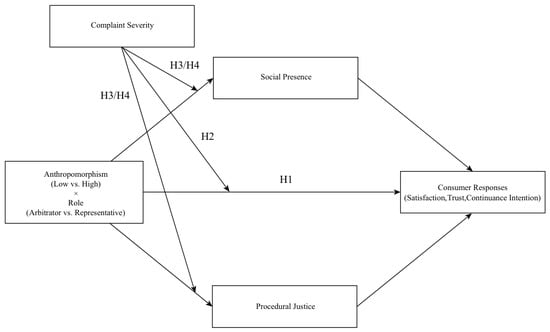
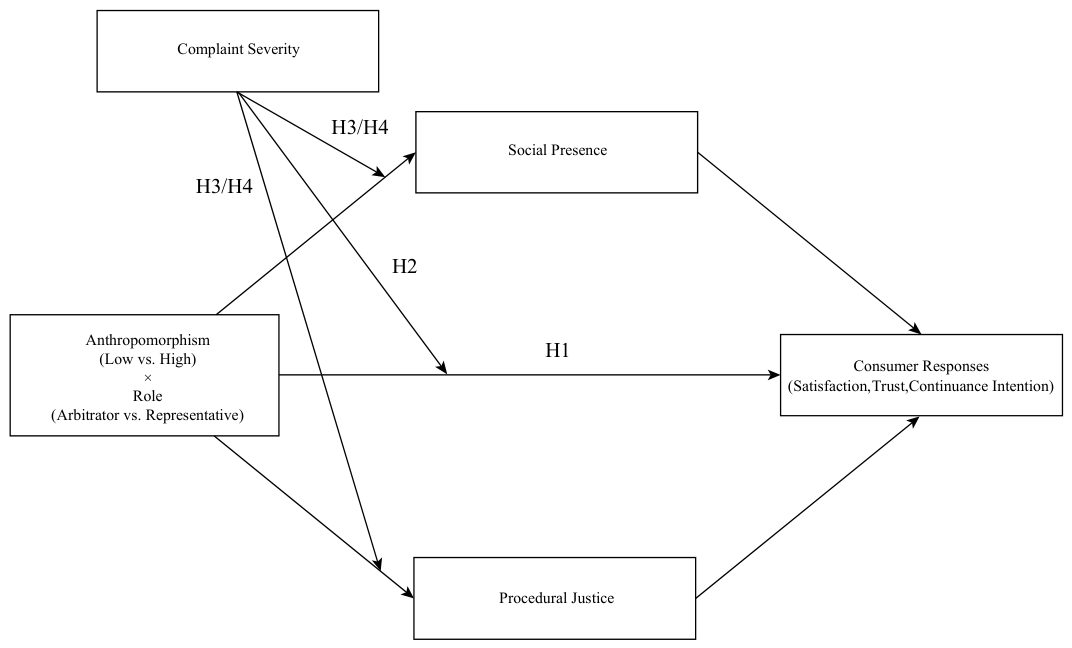
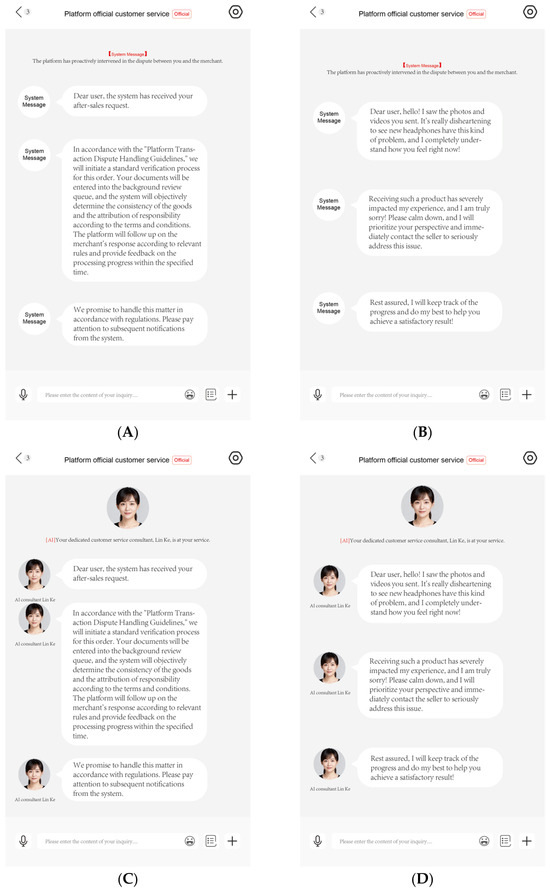
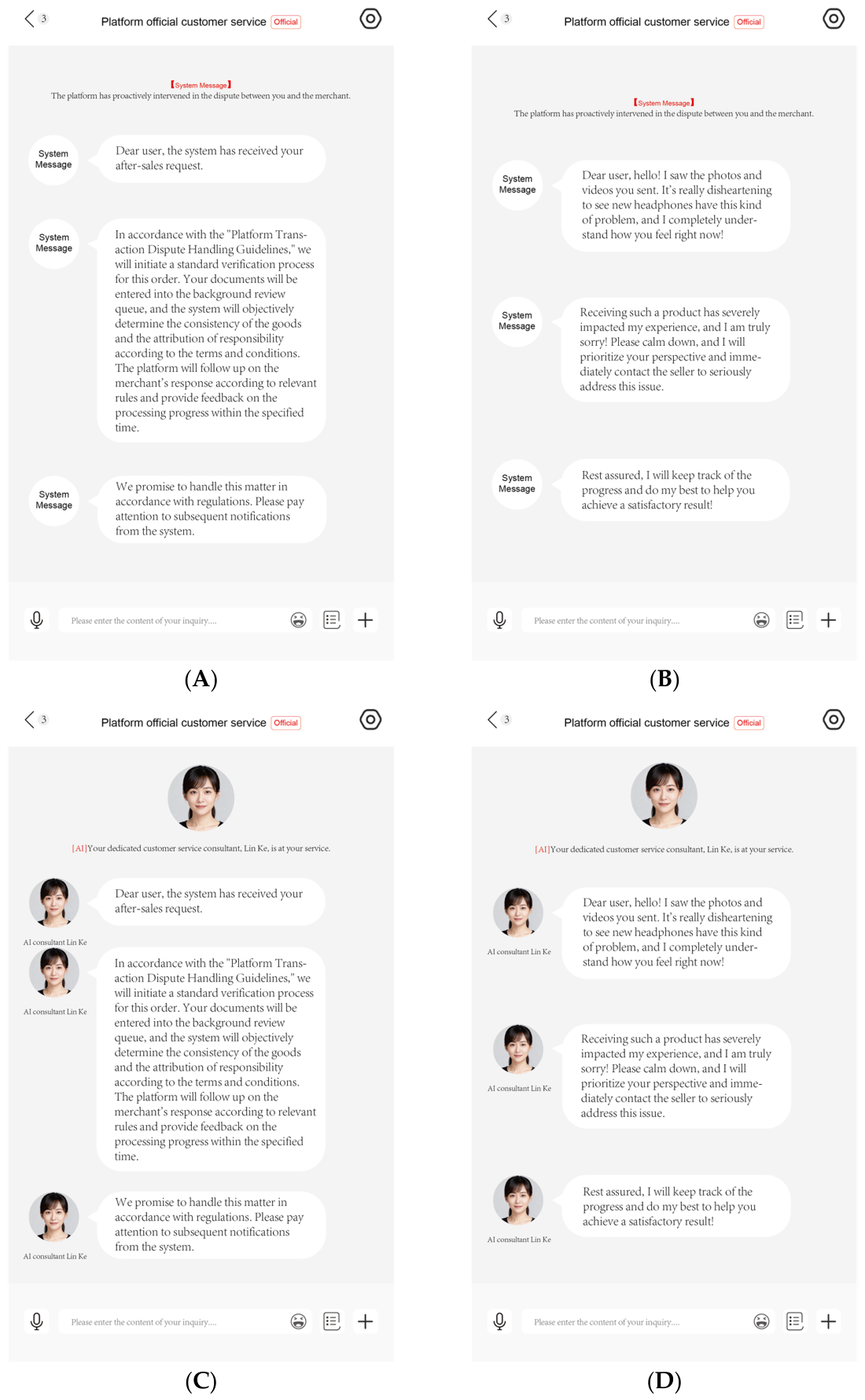
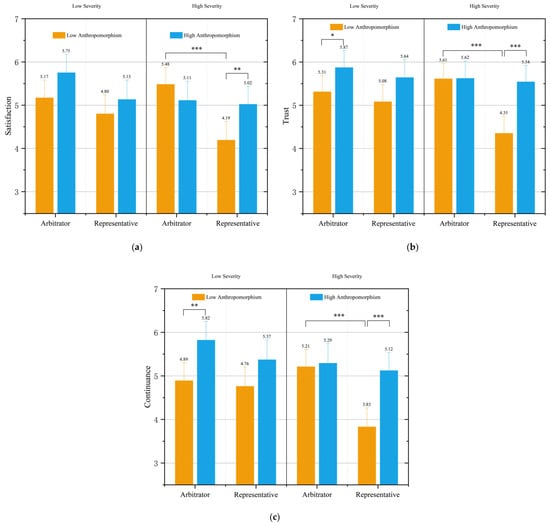
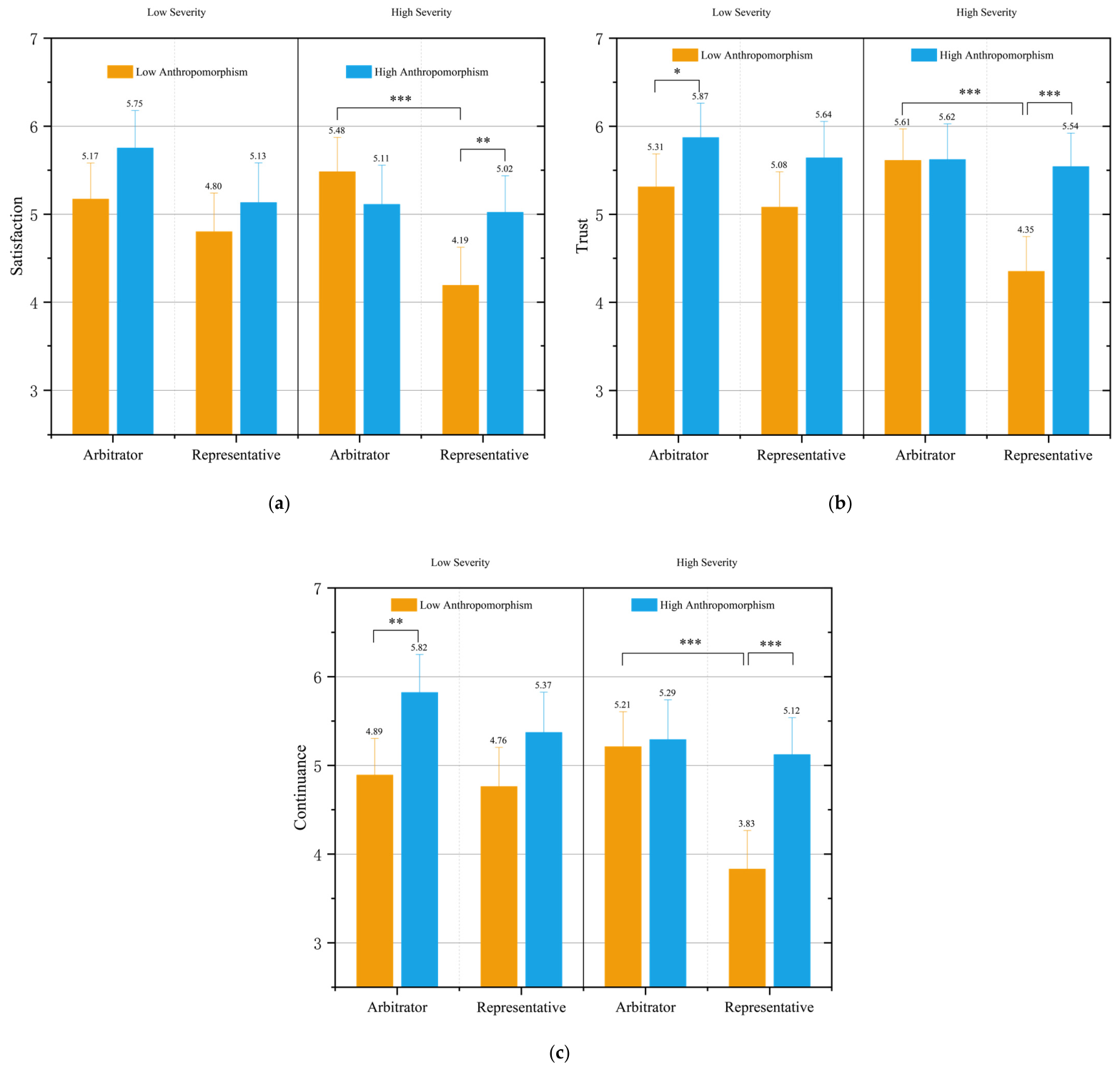
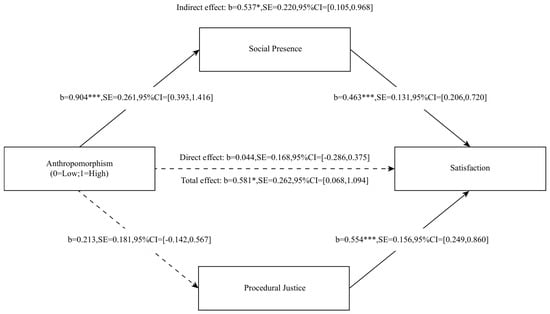
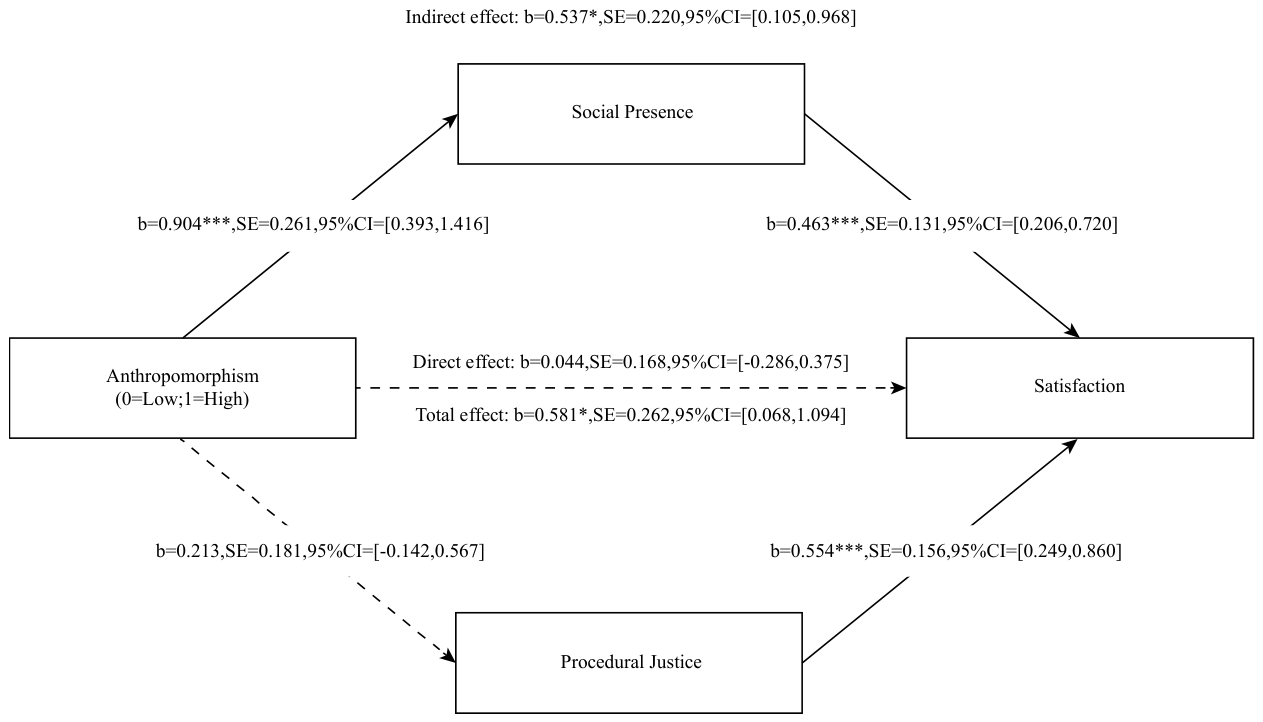
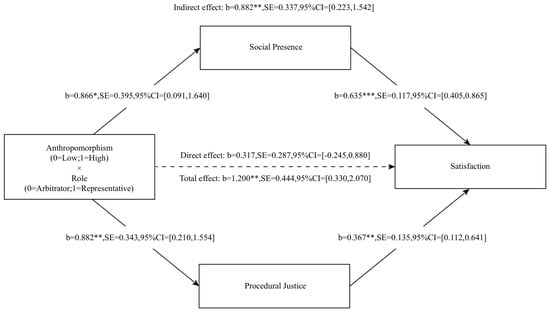
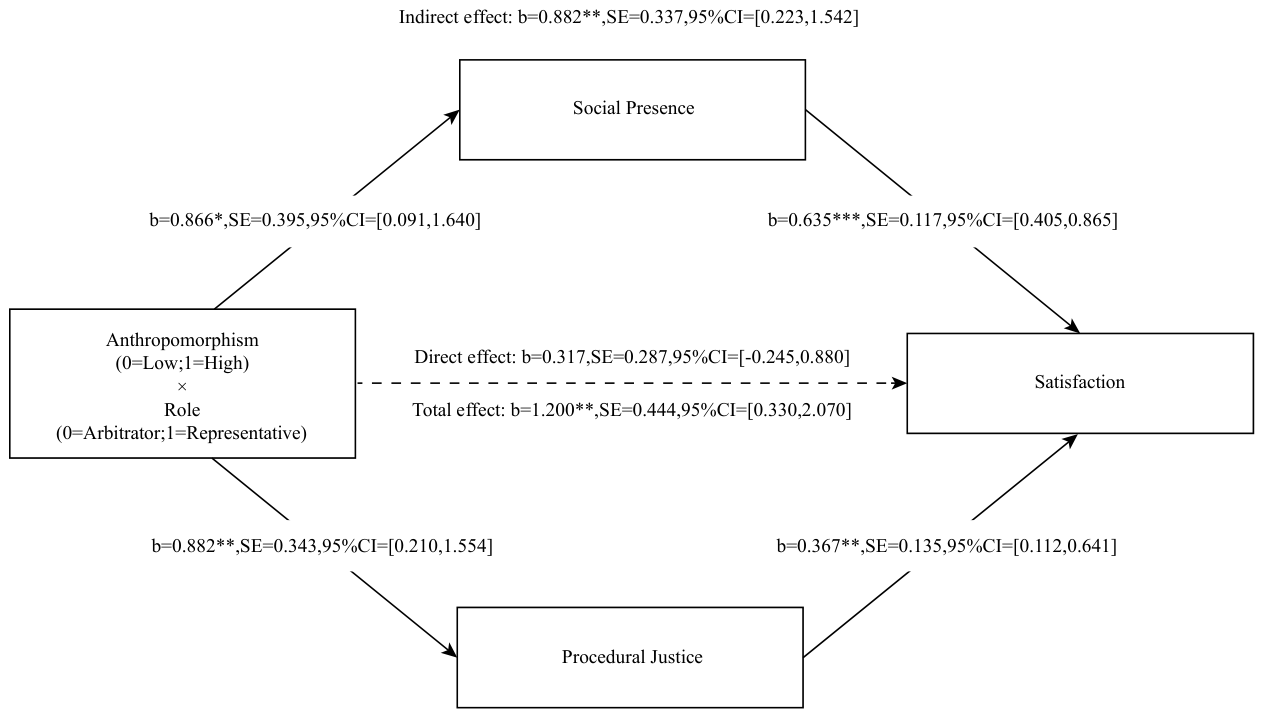

Disclaimer/Publisher’s Note: The statements, opinions and data contained in all publications are solely those of the individual author(s) and contributor(s) and not of MDPI and/or the editor(s). MDPI and/or the editor(s) disclaim responsibility for any injury to people or property resulting from any ideas, methods, instructions or products referred to in the content. |
© 2026 by the authors. Licensee MDPI, Basel, Switzerland. This article is an open access article distributed under the terms and conditions of the Creative Commons Attribution (CC BY) license.