
Advances in Pathogenic Fungi: Mechanisms, Diagnostics, Therapies
Topic Information
Dear Colleagues,
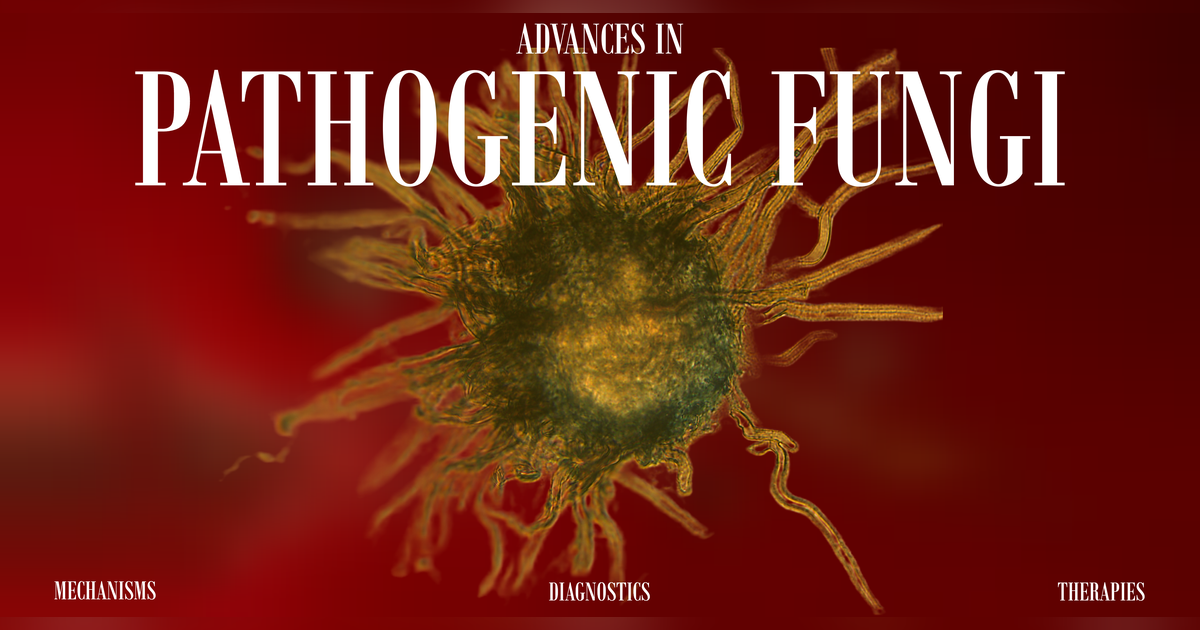
Pathogenic fungi inhabit the threshold between the seen and the unseen, where ancient forms of life encounter the fragile order of the human host. Once regarded as peripheral adversaries, they now emerge as agents of formidable clinical consequence, strengthened by ecological change, therapeutic pressure, and the growing vulnerability of modern populations. This Topic gathers studies that illuminate the manifold strategies by which fungi adhere, invade, evade immunity, and endure; that refine the instruments through which their presence may be recognised with greater speed and certainty; and that seek new remedies where established therapies falter. From molecular mechanisms and host–pathogen dialogue to innovative diagnostics, antifungal resistance, and emerging therapeutic strategies, these contributions trace a field in vigorous transformation. We welcome original research, reviews, and perspectives capable of uniting biological insight with clinical innovation. Their common purpose is both scientific and humane: to render the hidden visible, the obscure intelligible, and the resistant once again amenable to cure.
Dr. Terenzio Cosio
Dr. Roberta Gaziano
Topic Editors
Keywords
- fungal pathogenesis
- host–fungus interactions
- fungal diagnostics
- antifungal resistance
- emerging fungal pathogens
- virulence mechanisms
- molecular mycology
- immune evasion
- antifungal drug discovery
- novel antifungal therapies
Participating Journals


506 Articles
Launched in 2011
1.8Impact Factor
2.9CiteScore
24 DaysSubmission to First Decision
11 DaysAcceptance to Publication
Q3Highest JCR Category Ranking

116,711 Articles
Launched in 2000
5.6Impact Factor
10.0CiteScore
18 DaysSubmission to First Decision
3 DaysAcceptance to Publication
Q1Highest JCR Category Ranking

7,067 Articles
Launched in 2015
4.3Impact Factor
8.7CiteScore
18 DaysSubmission to First Decision
3 DaysAcceptance to Publication
Q1Highest JCR Category Ranking

1,095 Articles
Launched in 2010
2.5Impact Factor
3.5CiteScore
19 DaysSubmission to First Decision
3 DaysAcceptance to Publication
Q3Highest JCR Category Ranking

19,546 Articles
Launched in 2013
4.7Impact Factor
8.2CiteScore
16 DaysSubmission to First Decision
3 DaysAcceptance to Publication
Q2Highest JCR Category Ranking

10,120 Articles
Launched in 2012
3.8Impact Factor
6.7CiteScore
13 DaysSubmission to First Decision
3 DaysAcceptance to Publication
Q2Highest JCR Category Ranking

Preprints.org is a multidisciplinary platform offering a preprint service designed to facilitate the early sharing of your research. It supports and empowers your research journey from the very beginning.
MDPI Topics is collaborating with Preprints.org and has established a direct connection between MDPI journals and the platform. Authors are encouraged to take advantage of this opportunity by posting their preprints at Preprints.org prior to publication:
i. Share your research immediately: disseminate your ideas prior to publication and establish priority for your work.
ii. Safeguard your intellectual contribution: Protect your ideas with a time-stamped preprint that serves as proof of your research timeline.
iii. Boost visibility and impact: Increase the reach and influence of your research by making it accessible to a global audience.
iv. Gain early feedback: Receive valuable input and insights from peers before submitting to a journal.
v. Ensure broad indexing: Web of Science (Preprint Citation Index), Google Scholar, Crossref, SHARE, PrePubMed, Scilit and Europe PMC.