You are currently viewing a new version of our website. To view the old version click .

Scientia Pharmaceutica

Scientia Pharmaceutica is an international, peer-reviewed, open access journal related to the pharmaceutical sciences, published quarterly online. 
It is the official journal of the Austrian Pharmaceutical Society (ÖPhG). Society members receive discounts on the article processing charges.
Quartile Ranking JCR - Q3 (Pharmacology and Pharmacy)

All Articles (1,576)

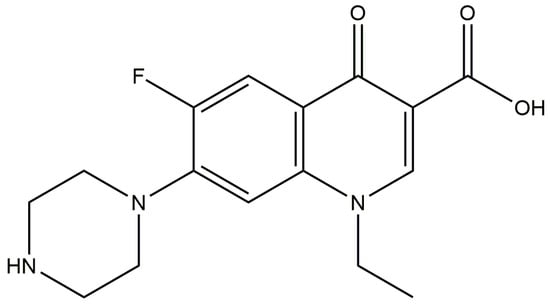
The main goal of this study was to develop methods for quality control of naftifine hydrochloride in solution and cream forms, focusing on “Quantitative Determination” and “Related Impurities.” New, precise, accurate, and environmentally friendly high performance liquid chromatography (HPLC) methods were developed for the determination of naftifine hydrochloride and its impurities. “Quantitative determination” was performed using a diode array detector at 254 nm with an isocratic mobile phase (1.154 g of ammonium acetate R dissolved in 300 mL of water R, followed by the addition of 0.2 mL of glacial acetic acid R, mixed well) and methanol (30:70). The chromatographic columns Gemini C18 and Luna C18 were used. “Related impurities” were separated at 270 nm using a gradient mobile phase consisting of 10 M sodium octanesulfonate, 0.4 g/L disodium hydrogen phosphate anhydrous solution (pH 6.5), acetonitrile, and the Synergi Hydro-RP chromatographic column. The developed method, validated according to ICH guidelines, showed run times of 55 min for impurity analysis and 6 min for active ingredient determination. The methods were successfully applied to the quality control of the solution and cream.

31 December 2025
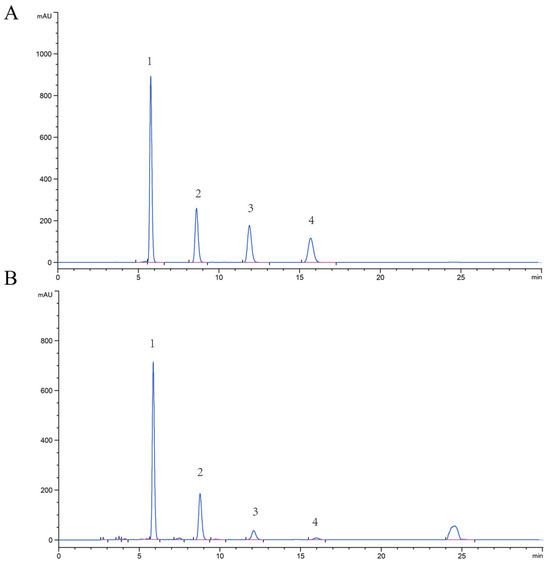
Chromatogram of reference solution obtained using gradient elution with phosphate-sulfonate buffer (pH 6.5) and acetonitrile, at a flow rate of 1.0 mL/min and column temperature of 40 °C, on a Synergi Hydro RP column (250 × 4.6 mm, 4 µm), used for the determination of related impurities in naftifine hydrochloride.

Evolution, Validation and Current Challenges in Bioanalytical Methods for Praziquantel: From Fluorometry to LC–MS/MS

  • Edwin Y. Valladares Chávez,
  • Luis A. Moreno-Rocha and
  • Lucia Ortega Cabello
  • + 2 authors

The accurate determination and quantification of praziquantel are essential for optimizing its therapeutic effectiveness in treating schistosomiasis and neurocysticercosis, two significantly neglected tropical diseases. Its challenging physicochemical profile, extensive metabolism, and stereochemical complexity requires robust analytical methods for reliable quantification in clinical, veterinary, and pharmaceutical samples. This review provides a comprehensive and critical evaluation of analytical strategies used for PZQ determination, spanning fluorometric and radiometric assays, HPLC–UV, LC–MS, LC–MS/MS, and enantioselective chromatographic approaches. Particular emphasis is placed on the evolution toward highly sensitive LC–MS/MS methods and their alignment with contemporary regulatory expectations, including ICH M10 requirements. These advancements have significantly improved sensitivity, specificity, and reproducibility, which are crucial for pharmacokinetic, pharmacodynamic, and bioequivalence studies. Enantioselective methods for distinguishing PZQ enantiomers and metabolites are discussed. The aim of these innovations is to increase praziquantel bioavailability, improve patient adherence, and support its continued use in mass drug administration programs. Finally, the review highlights implementation challenges in resource-limited settings and proposes analytical models to expand global bioanalytical capacity. Together, these insights provide a structured foundation for selecting and developing high-quality, regulatory-compliant analytical methods for PZQ.

31 December 2025
Enantiomeric chemical structures of PZQ: (a) (−)-R-PZQ, generally regarded as pharmacologically inactive; (b) (+)-S-PZQ, the therapeutically active enantiomer responsible for the antiparasitic activity against Schistosoma and Taenia species. Drawn with ChemDraw 23.1.1 (PerkinElmer Informatics).

Nanotechnology for Metformin Release Systems: Nanostructures, Biopolymer Carriers, and Techniques—A Review

  • Eneida Azaret Montaño-Grijalva,
  • Francisco Rodríguez-Félix and
  • José Agustín Tapia-Hernández
  • + 8 authors

Currently, there are various approaches to the treatment of diabetes. Regarding type 2 diabetes (T2D), treatment focuses on blood glucose control. When changes in lifestyle do not achieve this glycemic control, the option is to start therapy with antidiabetic drugs such as metformin. However, long-term metformin use causes disturbances that may affect treatment approaches. This review examines recent advances in nanotechnology that have developed new forms of drug administration that can improve the efficacy of the treatment, where nanomaterials, nanostructures, and nanoparticle design are involved, so that they provide controlled and gradual release. The use of biopolymers (as drug delivery systems) has ensured biocompatibility, biodegradability, and low toxicity. There are several methods for obtaining a drug delivery system, including electrospinning, electrospraying, nanoprecipitation, etc. These systems improve drug delivery and can be used orally, transdermally, or intravenously, among means of administration. This review describes the new forms of the administration of metformin in the treatment of T2D, based on the encapsulation of metformin in polymeric matrices such as proteins, polysaccharides, and lipids, among others.

24 December 2025

Metformin chemical structure.

Hyaluronidase and its modified analogs are clinically significant enzyme-based pharmaceuticals used to treat fibrosis, increase tissue permeability, and improve drug diffusion. While pharmacopeial quality control methods are well defined, scientific literature provides limited information about the physicochemical evaluation of such enzyme pharmaceuticals, necessitating a more holistic analytical approach. Commercial pharmaceuticals of hyaluronidase and its modified analog were analyzed using a combination of dynamic light scattering, infrared spectroscopy, and detection of intrinsic radiothermal emission (RTE). Dimensional characteristics were studied using a Zetasizer Nano ZSP (ZetasizerNano ZSP, Malvern Instruments, Malvern, UK) confirmed theoretical diameters of 5–8 nm, consistent with experimental values (6–8 nm). Fourier-Transform infrared spectroscopy (FTIR) (Agilent Cary 630, Agilent Technologies, Santa Clara, CA, USA) revealed characteristic transmission bands for the modified enzyme at 1464, 1448, 1326, 1158, and 1010 cm−1, confirming structural modification. RTE measurements using a TES-92 detector (TES Electrical Electronic Corp., Taipei, Taiwan) demonstrated a correlation between emission intensity and shelf life: 12.8 ± 0.8 µW/m2 for proper shelf-life samples, 8.3 ± 0.8 µW/m2 for six-month-expired, and 5.1 ± 1.0 µW/m2 for one-year-expired pharmaceuticals. The study offers a promising supplementary tool for pharmaceutical quality control of hyaluronidase-based drugs.

22 December 2025

Structural and molecular formula of hyaluronic acid.

News & Conferences

Issues

Open for Submission

Editor's Choice

Reprints of Collections

Antitumor Activity of Natural Products and Related Compounds
Reprint

Antitumor Activity of Natural Products and Related Compounds

Editors: Barbara De Filippis, Alessandra Ammazzalorso, Marialuigia Fantacuzzi

Get Alerted

Add your email address to receive forthcoming issues of this journal.

XFacebookLinkedIn
Sci. Pharm. - ISSN 2218-0532