

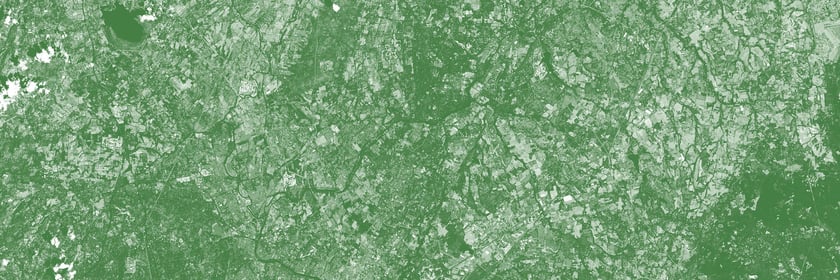
Integration of Multispectral, LiDAR, and Artificial Intelligence Approaches for Characterizing Wetland Dynamics and Ecological Status
This special issue belongs to the section "Ecological Remote Sensing".
Special Issue Information
Dear Colleagues,
Wetlands are ecosystems that host high biodiversity and play essential roles as regulators of the hydrological cycle, carbon sinks, and natural water purifiers. Anthropogenic and natural pressures put wetlands at risk by decreasing their flooded surface, water depth, water bodies connectivity, or water quality. These highly variable ecosystems typically have difficult accessibility. Remote sensing techniques are essential for assessing their state at adequate spatial and temporal resolution.
Multispectral satellite imagery from sensors such as Sentinel-1, Sentinel-2, and Landsat-9, among others, enables the evaluation and monitoring of water extent using water indices or by applying machine learning and deep learning classification techniques. In shallow water bodies, spectral variability reflects changes in turbidity, chlorophyll concentration, or water depth, which complicates their analysis and highlights the need for new remote sensing approaches to better detect ecological alterations. Multispectral data also allows the analysis of spatial and temporal variations in aquatic and riparian vegetation, providing indicators of ecological integrity in wetlands. Moreover, the use of satellite imagery allows for the assessment of wetland health through water quality parameters such as chlorophyll-a concentration, suspended solids, or colored dissolved organic matter (yellow substances), which can be estimated using regression models based on multispectral information.
In addition, bathymetric LiDAR provides three-dimensional data that enables precise analysis of bottom morphology and the transition between terrestrial and aquatic environments. Its availability supports the monitoring of water volume and hydromorphological dynamics, which is valuable for studying issues such as sediment accumulation in wetlands and adjacent areas.
The integration of multispectral imagery, LiDAR data, and artificial intelligence models offers great potential for achieving a comprehensive understanding of wetland status and dynamics, serving as a key tool for their sustainable management and the conservation of these vulnerable ecosystems.
Prof. Dr. Javier Estornell
Prof. Dr. Maria-Teresa Sebastia-Frasquet
Guest Editors
Manuscript Submission Information
Manuscripts should be submitted online at www.mdpi.com by registering and logging in to this website. Once you are registered, click here to go to the submission form. Manuscripts can be submitted until the deadline. All submissions that pass pre-check are peer-reviewed. Accepted papers will be published continuously in the journal (as soon as accepted) and will be listed together on the Special Issue website. Research articles, review articles as well as short communications are invited. For planned papers, a title and short abstract (about 250 words) can be sent to the Editorial Office for assessment.
Submitted manuscripts should not have been published previously, nor be under consideration for publication elsewhere (except conference proceedings papers). All manuscripts are thoroughly refereed through a single-anonymized peer-review process. A guide for authors and other relevant information for submission of manuscripts is available on the Instructions for Authors page. Remote Sensing is an international peer-reviewed open access semimonthly journal published by MDPI.
Please visit the Instructions for Authors page before submitting a manuscript. The Article Processing Charge (APC) for publication in this open access journal is 2700 CHF (Swiss Francs). Submitted papers should be well formatted and use good English. Authors may use MDPI's English editing service prior to publication or during author revisions.
Keywords
- bathymetric LiDAR
- machine learning
- deep learning
- classification
- wetland
- water quality
- chlorophyll-a
- suspended solids
Benefits of Publishing in a Special Issue
- Ease of navigation: Grouping papers by topic helps scholars navigate broad scope journals more efficiently.
- Greater discoverability: Special Issues support the reach and impact of scientific research. Articles in Special Issues are more discoverable and cited more frequently.
- Expansion of research network: Special Issues facilitate connections among authors, fostering scientific collaborations.
- External promotion: Articles in Special Issues are often promoted through the journal's social media, increasing their visibility.
- Reprint: MDPI Books provides the opportunity to republish successful Special Issues in book format, both online and in print.
Published Papers


Remote Sens. - ISSN 2072-4292