




Nanomaterials 2026, 16(19), 1223; https://doi.org/10.3390/nano16191223 (registering DOI) - 28 Sep 2026
Abstract
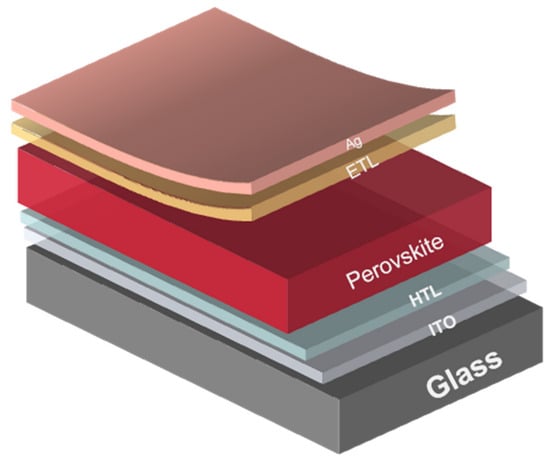
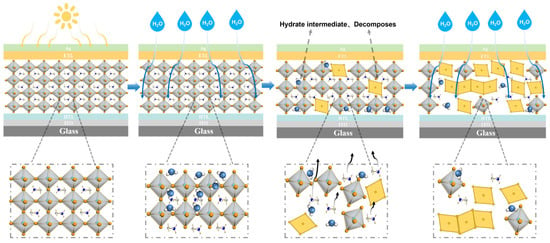
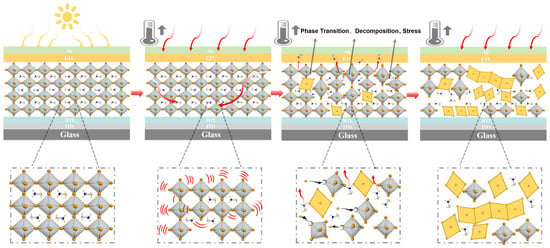
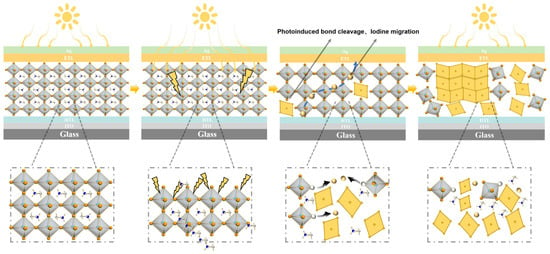
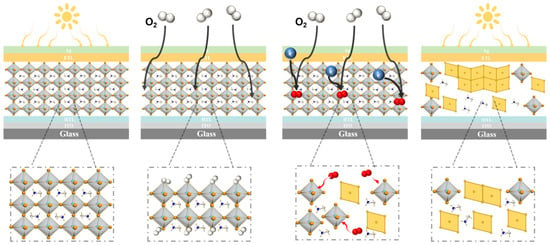
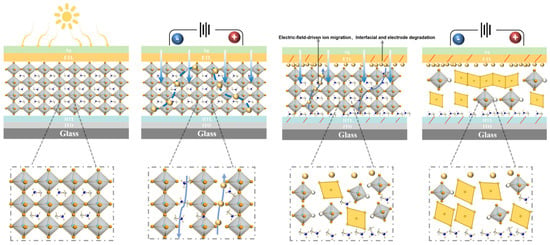
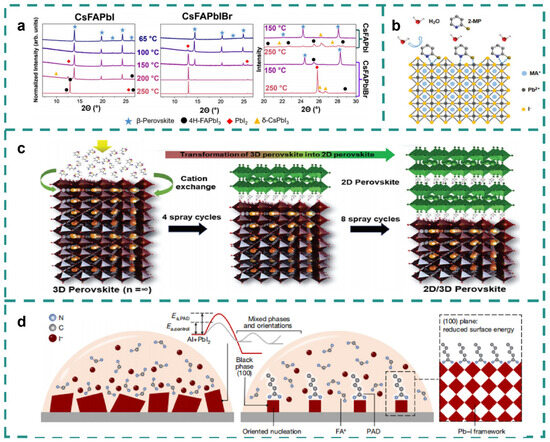
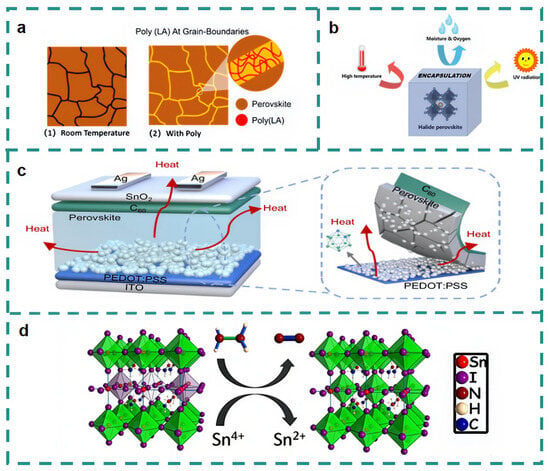
Inverted small-area perovskite solar cells fabricated in the laboratory have achieved a power conversion efficiency of 28%. Nevertheless, stability remains the key bottleneck. This review systematically analyses external stressors moisture, heat, light, oxygen, electric field, intrinsic ion migration and interfacial defects, alongside stabilization
[...] Read more.
Inverted small-area perovskite solar cells fabricated in the laboratory have achieved a power conversion efficiency of 28%. Nevertheless, stability remains the key bottleneck. This review systematically analyses external stressors moisture, heat, light, oxygen, electric field, intrinsic ion migration and interfacial defects, alongside stabilization strategies including composition, passivation, 2D/3D heterojunctions, facets engineering, and encapsulation. Synergistic stressors produce nonlinear degradation; effective strategies must tackle multiple pathways simultaneously without impairing charge transport.
Full article
(This article belongs to the Special Issue Perovskite Nanomaterials for Solar Cells and Optoelectronic Devices)
►
Show Figures
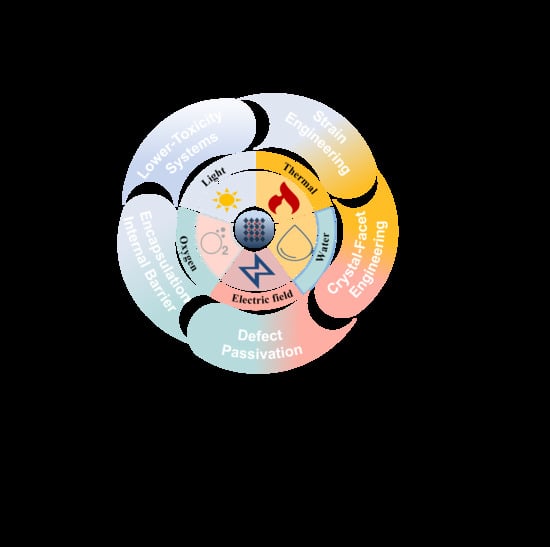
Graphical abstract