



Skip to Content

Nanomaterials

Nanomaterials is an international, interdisciplinary, peer-reviewed, open access journal published semimonthly online by MDPI, and that publishes reviews, regular research papers, communications, and short notes that are relevant to any field of study that involves nanomaterials with respect to their science and applications. The Spanish Carbon Group (GEC) and The Chinese Society of Micro-Nano Technology (CSMNT) are affiliated with Nanomaterials and their members receive discounts on the article processing charges.
  • Open Access— free for readers, with article processing charges (APC) paid by authors or their institutions.
  • High Visibility: indexed within Scopus, SCIE (Web of Science), PubMed, PMC, CAPlus / SciFinder, Inspec, and other databases.
  • Journal Rank: JCR - Q2 (Physics, Applied) / CiteScore - Q1 (General Chemical Engineering )
  • Rapid Publication: manuscripts are peer-reviewed and a first decision is provided to authors approximately 12.5 days after submission; acceptance to publication is undertaken in 2.7 days (median values for papers published in this journal in the first half of 2026).
  • Recognition of Reviewers: Reviewers whose reports are timely and of high quality receive an APC discount voucher for a future publication in an MDPI journal. Become a reviewer.
  • Companion journals for Nanomaterials include: Nanomanufacturing and Applied Nano.

Get Alerted

Add your email address to receive forthcoming issues of this journal.

All Articles (22,666)

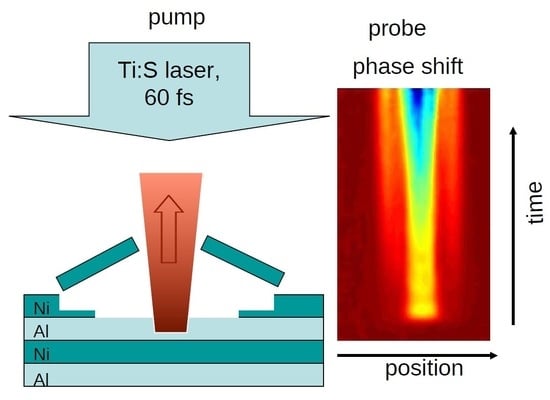
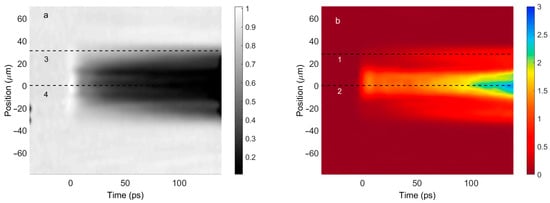
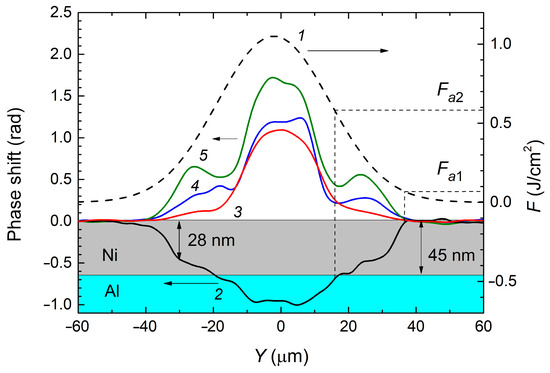
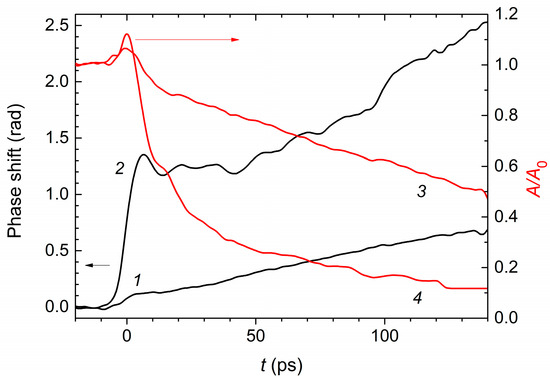
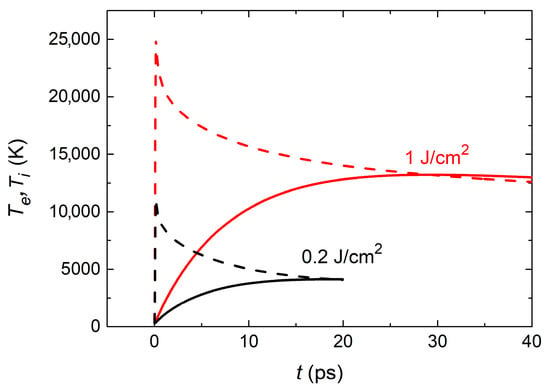
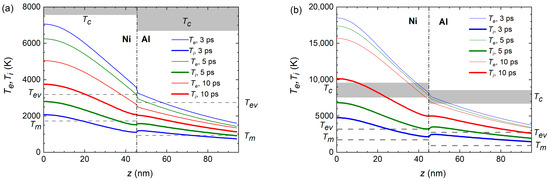
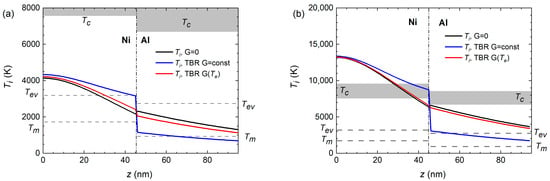
In recent decades, high-precision processing with ultrashort laser pulses has been progressively applied in highly efficient surface modification technologies for new multilayer nanomaterials widely used in industry. In this work, the ultrafast dynamics of layer-by-layer ablation of a multilayer Ni/Al thin-film at the initial stage (0–120 ps) after irradiation with a single 60 fs Gaussian-shaped femtosecond laser pulse, together with the morphology of the modified surface, were investigated using single-shot spatiotemporal resolved interferometry. Partial removal of the 46 nm thick upper Ni layer took place in the spallation mode with an expansion velocity of several hundred meters per second. The lower spallation threshold observed relative to bulk Ni is attributed to interference of rarefaction waves, reflected from the layer boundaries. A jet-like strong ejection of material during the complete removal of the upper nickel layer in the phase explosion mode was accompanied by an explosive expansion of the underlying overheated molten aluminum. The experimental study was supported by calculations of the spatiotemporal behavior of temperature in thin-film layers. The obtained results may help in studying the ablation mechanism of multilayer thin-films, as well as in developing simulation methods and laser processing technologies.

Nanomaterials

16 September 2026

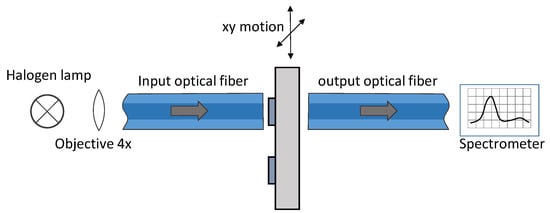
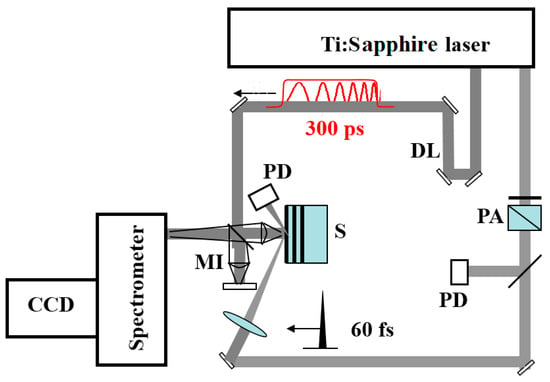
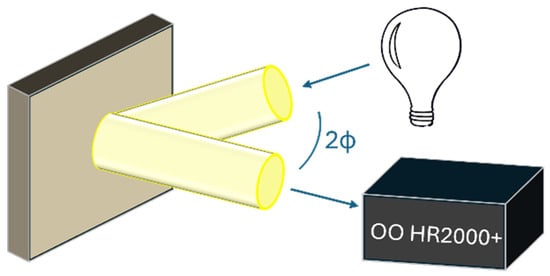
The experimental setup: DL—optical delay line; PA—polarizing attenuator; PD—photo detector; S—sample; MI—Michelson interferometer.
  • Correction
  • Open Access

In the original publication [...]

Nanomaterials

16 September 2026

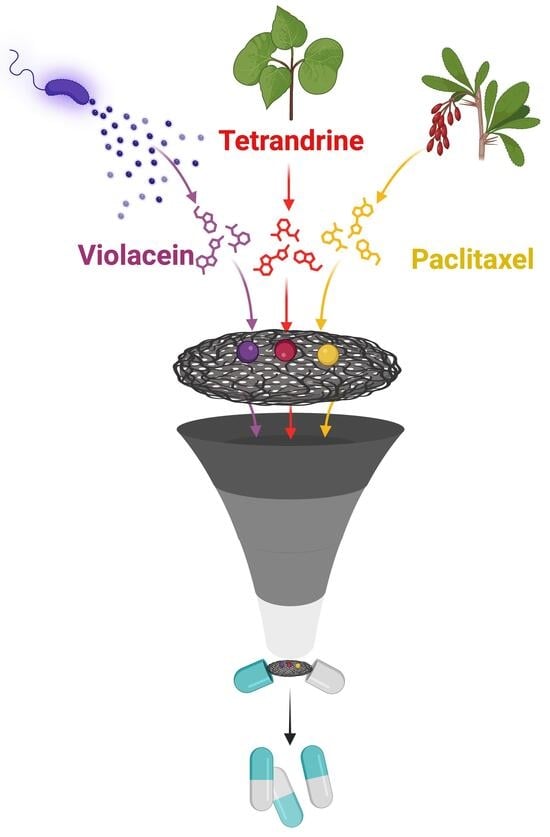
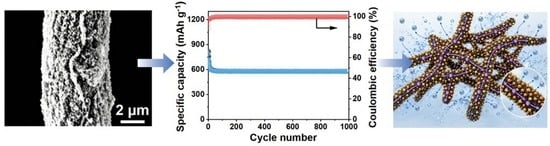
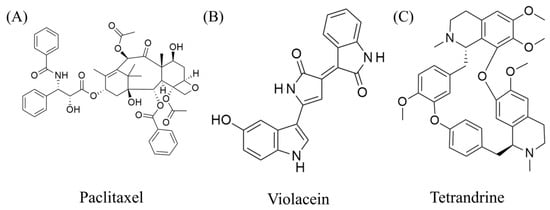
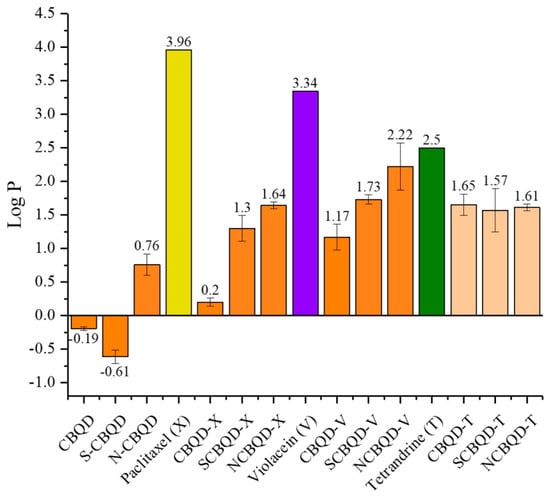
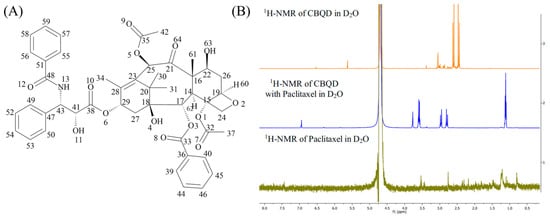
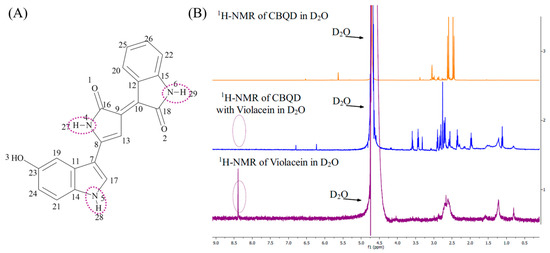
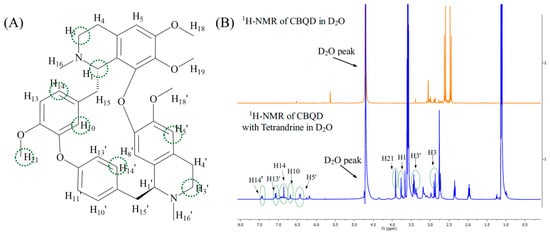
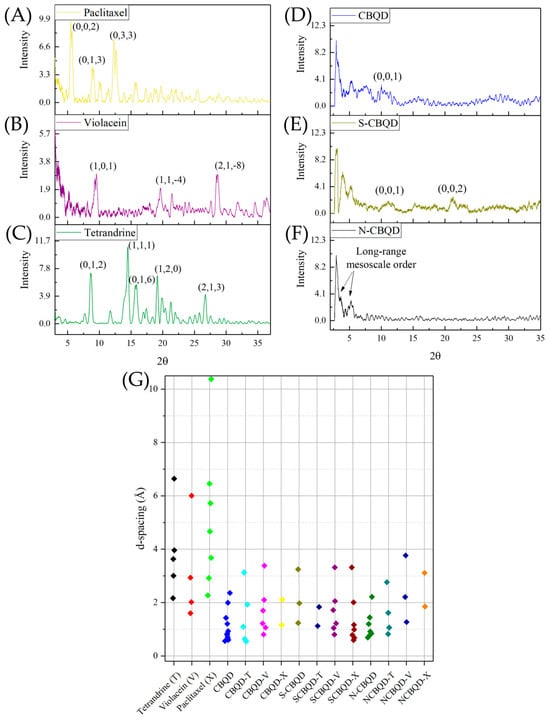
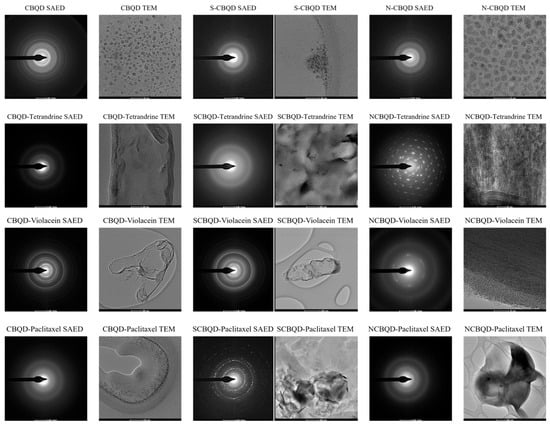
Carbon-based quantum dots and their nitrogen- and sulfur-doped derivatives were used as platforms to improve the aqueous solubility for Paclitaxel, Violacein and Tetrandrine, drugs with known high partition coefficients (Log P). Paclitaxel, Violacein and Tetrandrine showed a significant reduction in their partition coefficient values by coupling with the carbon-based quantum dots. Paclitaxel’s partition coefficient value decreased from 3.96 to 0.2, Violacein’s from 3.34 to 1.17, and Tetrandrine’s from 2.5 to 1.57, thus demonstrating a significant reduction in their hydrophobicity without being encapsulated. The efficiency of each type of carbon-based quantum dot in lowering each drug’s Log P varied and this behavior was correlated with the nature of the surface interaction between each drug and each of the carbon-based quantum dots.

Nanomaterials

16 September 2026

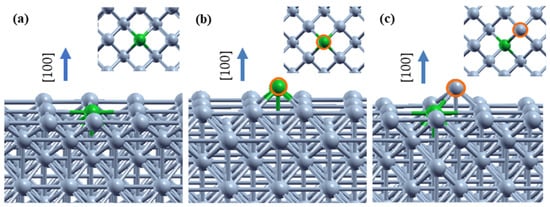
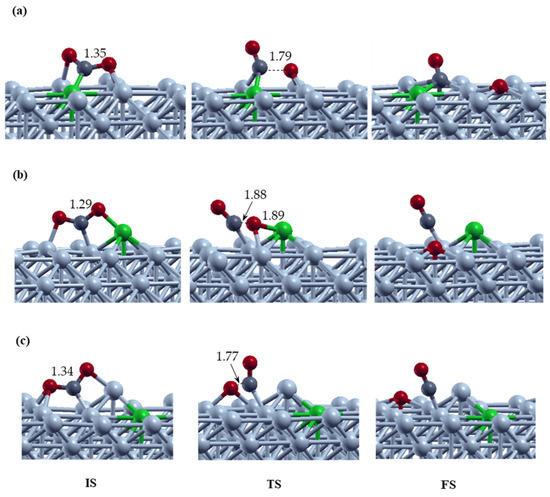
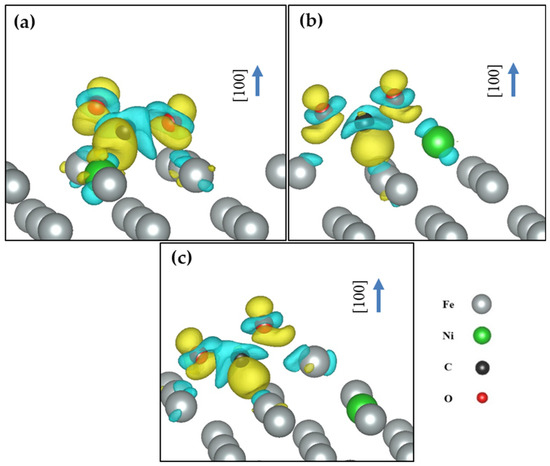
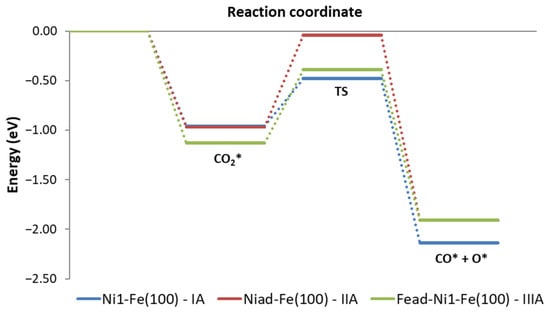
In this work, we investigate the activation of CO2 on bimetallic Ni–Fe catalysts, using Fe as the base metal and Ni as a dopant at low concentrations. Our aim is to evaluate how the presence of Ni, either as a substitutional atom or as an adatom, influences CO2 activation and facilitates subsequent C–O bond breaking. The catalytic surfaces were modeled using Fe(100) slabs, and the effect of Ni was examined in three configurations: (I) substitution of one Fe atom by Ni in the first layer, (II) Ni as an adatom, and (III) Fe as an adatom on the Ni-substituted Fe surface. In all cases, the optimized geometries lead to CO2 activation. The corresponding energy profiles for C–O bond dissociation were obtained and compared with those on pure Fe(100) (Eact = 0.84 eV). Among the three systems, the configuration with substitution of Fe by Ni in the first layer exhibits the lowest activation barrier for C–O bond breaking, just 0.48 eV—a substantial reduction of 0.36 eV relative to pristine Fe(100). Only the Niad-Fe(100) surface yields a higher barrier (0.93 eV). These results are rationalized by extracting the spin splitting from the spin-resolved LDOS of the metal d-band centers, revealing that the superior performance of Ni1-Fe(100) arises from a more efficient local spin reorganization during bond dissociation.

Nanomaterials

16 September 2026

Highly Accessed Articles

News & Conferences

Latest Issues

Open for Submission

Journal Sections

Advanced Nanomaterials for Water Remediation (2nd Edition)
Reprint

Advanced Nanomaterials for Water Remediation (2nd Edition)

Editors: Pedro Manuel Martins, Noelia González-Ballesteros
XFacebookLinkedIn
Nanomaterials - ISSN 2079-4991