
You are currently viewing a new version of our website. To view the old version click .

Metals

Metals is an international, peer-reviewed, open access journal published monthly online by MDPI.
The Spanish Materials Society (SOCIEMAT) is affiliated with Metals and their members receive discounts on the article processing charges.
Quartile Ranking JCR - Q2 (Metallurgy and Metallurgical Engineering)

All Articles (14,498)

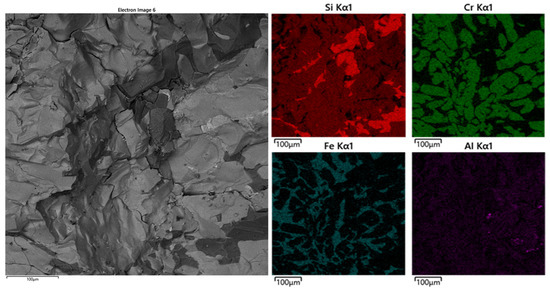
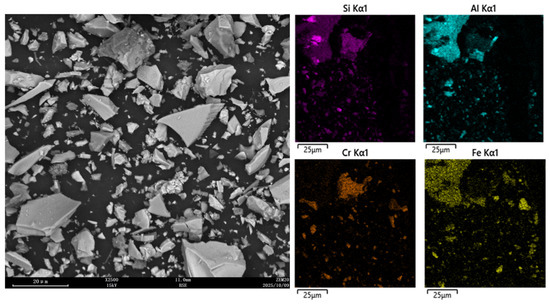
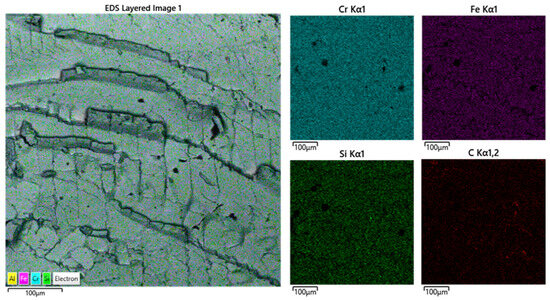
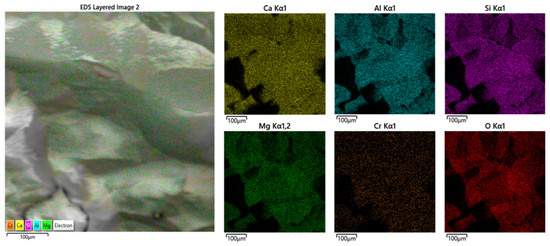
Hot stamping dies fabricated from Mo–W hot-work steels are exposed to severe thermo-mechanical fatigue (TMF), high-temperature oxidation, and complex tribological loading, which collectively accelerate die degradation and reduce production stability. Although individual failure modes have been reported, an integrated understanding linking microstructural evolution, interfacial reactions, and wear mechanisms remains limited. A failed Mo–W hot-work steel die removed from an industrial B-pillar hot stamping line was examined using Rockwell hardness mapping, optical microscopy, scanning electron microscopy (SEM), energy-dispersive X-ray spectroscopy (EDS), and X-ray diffraction (XRD) with Williamson–Hall (W–H) microstrain analysis. Surface (0–2 mm) and subsurface (~8 mm) regions of 10 × 10 × 10 mm samples were compared. Pits, cracks, reaction layers, and debris were quantified from calibrated SEM images. A 17% hardness reduction from surface (46.2 HRC) to subsurface (37.6 HRC) revealed pronounced TMF-induced softening. W–H analysis indicated microstrain of ~0.0021 and crystallite sizes of 50–80 nm in the surface region, reflecting high dislocation density. SEM/EDS showed pit diameters of 150–600 μm, reaction-layer thicknesses of 15–40 μm, and crack lengths of 40–150 μm. Fe–O oxides, Fe–Al intermetallics, and FeSiAl4 reaction phases were identified as major constituents of brittle surface layers and debris. Wear morphology confirmed a mixed mode of adhesive galling and oxide-assisted abrasive plowing.
30 December 2025

(a) Photograph of the actual industrial hot stamping die manufactured from Mo–W alloyed hot-work steel and used for forming automotive B-pillar components after long-term mass-production service. (b) Representative sample block (10 mm × 10 mm × 10 mm) extracted by wire-EDM from a severely worn region exhibiting pits, adhered layers, and cracks. (c) Schematic illustration of the sectioning orientation of the extracted block, indicating the analyzed surface (0–2 mm) and subsurface (>8 mm) regions.
  • Feature Paper
  • Article
  • Open Access

The CoCrFeNiMn High-Entropy Alloy (HEA) with 0, 0.5 and 1.0 at.% Carbon (C) addition has been evaluated by mechanical and corrosion testing, including tensile, wear and corrosion resistance testings. The result shows that the medium of 0.5 at.% C addition into HEA brings higher tensile toughness with 27,213.6 MPa%, less wear damage (0.37 mm3) and superior thermodynamic stability (0.73 VSCE), compared with that of the other two compositions. The tensile fracture observation points out that the high C addition embrittles the HEA with poorer toughness and wear resistance with content increasing to 1.0 at.%. The HEA material with 0.5 at.% C addition has high corrosion potential and the lowest corrosion current density, indicating that the appropriate C-alloying plays a significant role in determining the corrosion properties of HEA. The current study shall provide meaningful instruction for high-performance C-alloyed HEA development.

30 December 2025

Joining technologies play a decisive role in the sustainability, circularity, and end-of-life performance of metal structures. Despite the increasing emphasis on low-impact manufacturing and Extended Producer Responsibility (EPR), the connection between joining methods and producers’ environmental obligations remains underexplored. This review provides a comprehensive assessment of conventional and emerging techniques, including fusion welding, solid-state welding, mechanical fastening, adhesive bonding, and hybrid and AM-assisted processes, examining how each technology influences material efficiency, durability, repairability, disassembly, and recyclability. Particular attention is devoted to the effects of joint characteristics on life-cycle impacts, waste generation, and the technical and economic feasibility of high-quality material recovery, using recent LCA evidence and industrial case studies from automotive, shipbuilding, aerospace, and consumer products. Building on this analysis, the review proposes qualitative checklists and semi-quantitative scoring schemes to compare joining options under EPR-relevant criteria and to identify best- and worst-case design scenarios. Finally, promising research directions are outlined, including reversible and debond-on-demand solutions, low-energy solid-state routes, joining strategies for multi-material yet recyclable structures, and the integration of digital twins and LCA-informed design tools, offering a roadmap for metal structures that align technical performance with EPR-driven end-of-life management.

30 December 2025

In aerospace manufacturing, laser welding of TC4/TA18 dissimilar titanium alloys in bottom-locking configurations is essential for lightweight design, yet the residual stress behavior of such joints remains insufficiently understood. This study systematically examines the influence of laser power on residual stress distribution in laser-welded TC4/TA18 bottom-locking tubular joints. Welded specimens were fabricated at three distinct laser power levels (600 W, 800 W, and 1000 W). Experimental characterization included macroscopic morphology analysis and residual stress measurement using the blind-hole drilling method, among other techniques. Concurrently, a three-dimensional thermo-elastic-plastic finite element model was established based on ABAQUS 2022 to simulate the transient temperature field and stress–strain field during the welding process. The results indicate that due to the differences in thermophysical properties between the two titanium alloys and the wall thickness effect, both the temperature field and residual stress distribution of the TC4/TA18 dissimilar titanium alloy bottom-locking joints exhibit significant asymmetry. Laser power exerts a selective influence on the residual stress field: within the parameter range of this study, increasing laser power can significantly reduce the peak hoop stress of TA18 thin-walled tubes and TC4 thick-walled tubes, as well as the peak axial stress of TC4 thick-walled tubes, while remarkably increasing the peak axial stress of TA18 thin-walled tubes. The numerical simulation results are in good agreement with the experimental data, verifying that the established finite element model is an effective tool for predicting welding outcomes.

30 December 2025

News & Conferences

Issues

Open for Submission

Editor's Choice

Reprints of Collections

Electric Arc Furnace Steelmaking
Reprint

Electric Arc Furnace Steelmaking

Editors: Thomas Echterhof, Ville-Valtteri Visuri

Get Alerted

Add your email address to receive forthcoming issues of this journal.

XFacebookLinkedIn
Metals - ISSN 2075-4701