You are currently viewing a new version of our website. To view the old version click .

Buildings

Buildings is an international, peer-reviewed, open access journal on building science, building engineering and architecture published semimonthly online by MDPI.
The International Council for Research and Innovation in Building and Construction (CIB) is affiliated with Buildings and its members receive discounts on the article processing charges.
Quartile Ranking JCR - Q2 (Construction and Building Technology | Engineering, Civil)

All Articles (16,057)

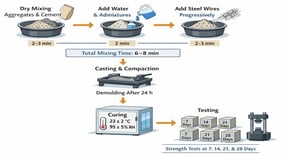
To address the impact-induced damage to concrete pile foundations of transmission structures caused by nearby blasting vibrations, this study investigates the dynamic splitting tensile behavior of an environmentally friendly lightweight rubberized concrete—Rubber-Toughened Ceramsite Concrete (RTCC)—under impact loading. Quasi-static tests show that the static splitting tensile strength increases first and then decreases with increasing rubber content, reaching a maximum value of 2.01 MPa at a 20% replacement ratio. Drop-weight impact tests indicate that RTCC20 exhibits the highest peak impact force (42.48 kN) and maximum absorbed energy (43.23 J) within the medium strain-rate range. Split Hopkinson Pressure Bar (SHPB) tests further demonstrate that RTCC20 shows the highest strain-rate sensitivity. Overall, RTCC with 20% rubber content provides the best comprehensive performance, achieving a favorable balance between strength and toughness across the entire strain-rate range. These findings offer experimental support for applying RTCC to blast-vibration-resistant transmission structure foundations.

8 January 2026

Schematic diagram of the Flat Brazilian Disc.

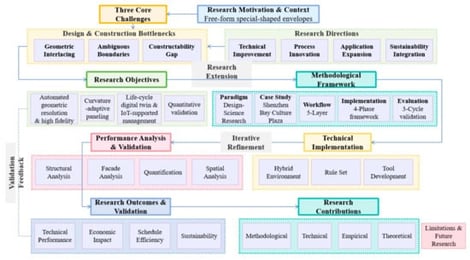
The early stages of structural design increasingly make use of computational tools that support rapid exploration, performance-informed decision-making, and closer interaction between design and engineering. This systematic mapping study examines how Algorithm-Aided Design (AAD) and the Finite Element Method (FEM) are applied and combined in conceptual design workflows. Based on a structured search across three academic databases and a coding scheme applied to 87 publications, the literature is mapped according to algorithmic strategies, FEM applications, element types, disciplinary domains, and levels of integration. The results show that algorithmic and predictive approaches are reported with increasing frequency after 2020, alongside growing use of surrogate models and optimisation routines. Linear-elastic analyses and shell- or beam-based models are frequently reported, particularly in civil engineering contexts, while nonlinear, dynamic, and solid-element analyses appear more prominently in mechanical domains. More tightly coupled AAD–FEM workflows become increasingly visible after 2021, reflecting a growing interest in real-time or near-real-time simulation feedback during early design exploration. At the same time, the literature highlights persistent challenges related to computational cost, fragmented toolchains, limited interoperability, and the relatively limited use of multiscale or advanced material models in conceptual design. Taken together, the findings suggest that continued progress toward more integrated AAD–FEM workflows is closely tied to advances in computational efficiency, improved data exchange and interoperability, and the development of more accessible design–analysis environments across disciplinary boundaries.

8 January 2026

Impact of Ground Improvement on Soil Dynamic Properties and Design Spectrum

  • Zeynep Kayışoğlu,
  • Sami Oğuzhan Akbaş and
  • İlker Kalkan

Turkey is located on an active seismic belt, making the accurate determination of soil properties and earthquake effects essential for safe and reliable structural design. This study investigates the influence of ground improvement on the dynamic behavior of the soil at the construction site of the 950-bed Aydın City Hospital. Evaluations were carried out in terms of the dominant period, local site class and spectral characteristics to assess the effectiveness of the improvement applications. For this purpose, field tests conducted before the improvement were repeated afterward and the obtained data were compared. Local site classes were determined for both unimproved and improved soil conditions based on the relevant seismic code provisions. Furthermore, using site-specific data, nonlinear time-history analyses were performed and site-specific response spectra were obtained for 11 earthquake records at DD-1 and DD-2 seismic hazard levels (return periods of 475 and 2475 years). These spectra were then compared with the corresponding design spectra. The analyses revealed that ground improvement significantly affects not only the bearing capacity and liquefaction potential but also the dynamic behavior, dominant period and local site class of the soil.

8 January 2026

Although metaverse model houses have recently emerged as an interactive alternative to traditional housing marketing tools, empirical research addressing users’ experiences within these environments remains limited. This study aimed to examine how three dimensions of user experience (UX)—operational, sensory, and exploratory—affect user satisfaction and behavioral intentions in metaverse model houses. A total of 83 participants explored a metaverse model house using a tablet PC and completed a questionnaire. Multiple linear regression analysis revealed that exploratory experience significantly influenced user satisfaction, while sensory experience was positively associated with all behavioral intentions, including the intention to revisit, recommend, reside, and purchase. These findings advance our understanding of UX in virtual housing environments and highlight the importance of immersive and exploratory elements in designing effective metaverse model houses. The results offer practical implications for improving digital housing marketing strategies and guiding the future development of metaverse-based architectural platforms.

8 January 2026

News & Conferences

Issues

Open for Submission

Editor's Choice

Get Alerted

Add your email address to receive forthcoming issues of this journal.

XFacebookLinkedIn
Buildings - ISSN 2075-5309