

AI-Driven Automation of Construction Cost Estimation: Integrating BIM with Large Language Models



Abstract
1. Introduction
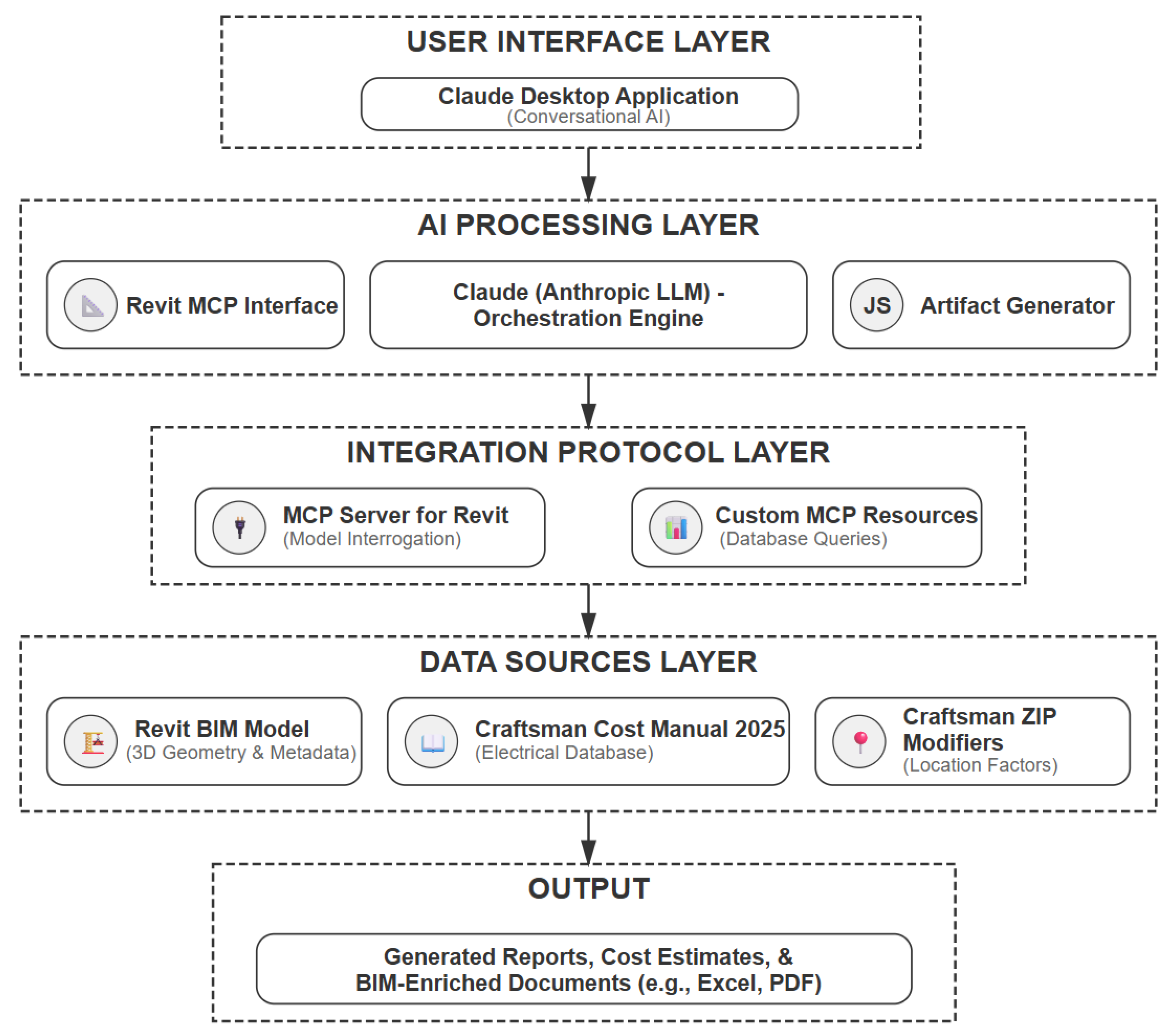
- Framework Development: Design a scalable four-layer architecture using the MCP to enable LLMs to communicate directly with BIM platforms such as Autodesk Revit and industry cost databases.
- Practical Demonstration: Implement and demonstrate an end-to-end electrical cost estimation case study to prove the practical feasibility of the proposed framework.
- Performance Validation: Quantitatively validate the system’s performance by measuring accuracy (cost variance from manual estimates) and efficiency (time reduction) against manual professional processes, establishing precise performance benchmarks.
- Methodology Documentation: Document the entire workflow as a reproducible methodology, providing the industry with a workable adoption blueprint and concrete evidence for AI-BIM automation.
2. Literature Review
2.1. BIM-Based Quantity Take-Off and Cost Estimation
2.2. Artificial Intelligence in Construction Cost Estimation
2.2.1. Limitations of Conventional AI Approaches
2.2.2. The Advantage of Large Language Models
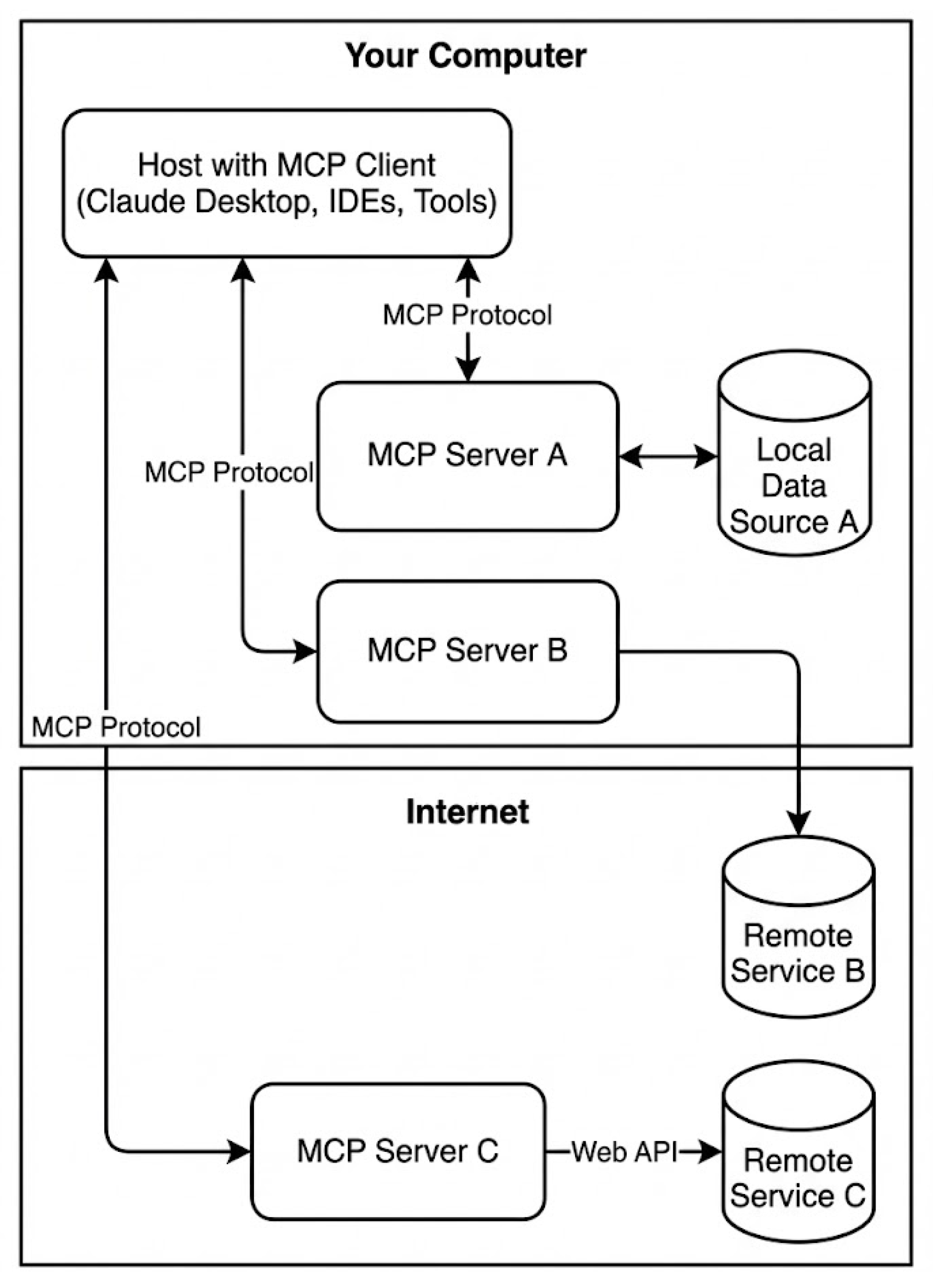
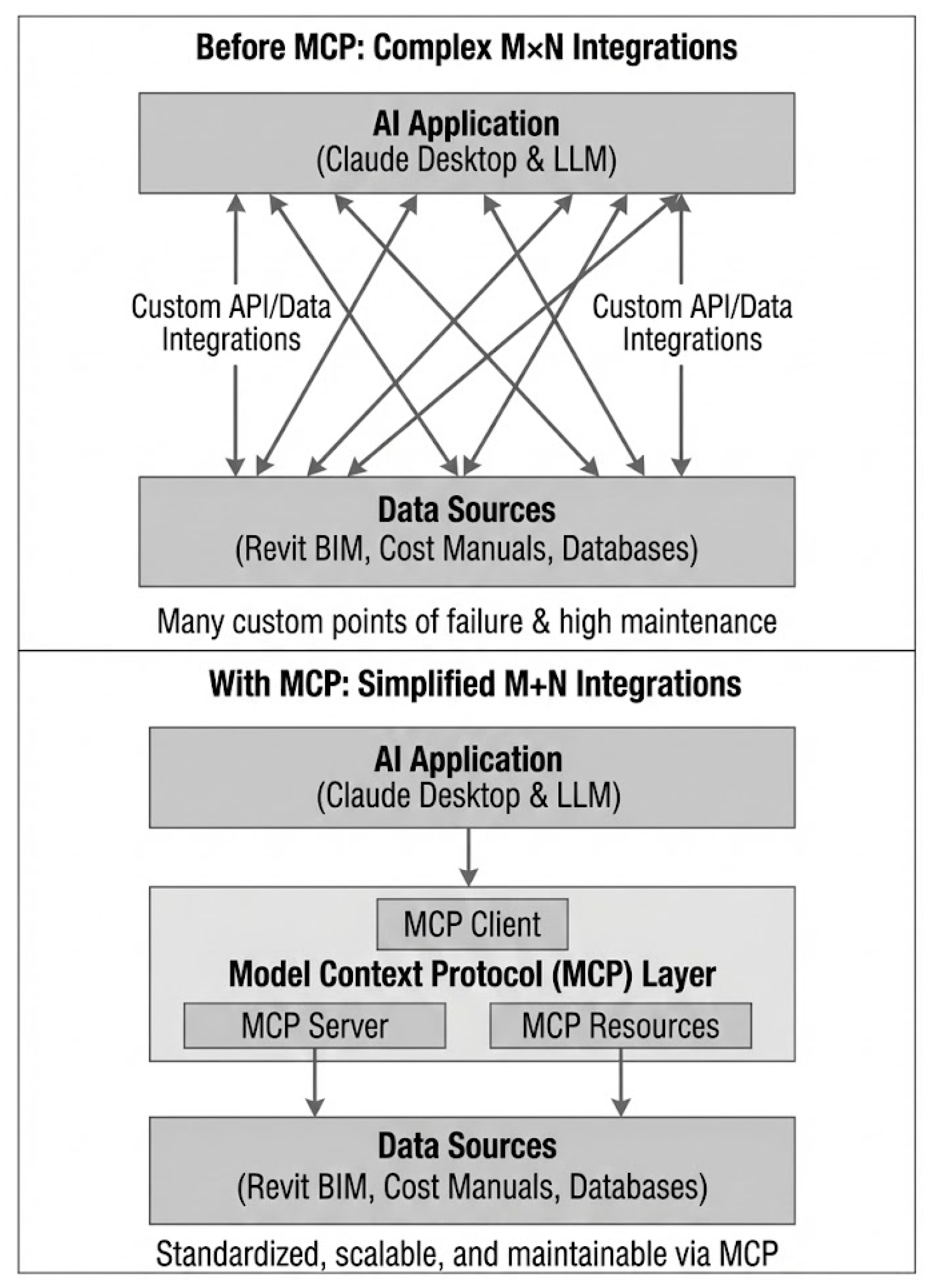
2.3. Model Context Protocol and Integration Frameworks
2.4. Synthesis and Identified Research Gaps
3. Methodology
3.1. System Architecture
- (1)
- The User Interface Layer provides access through the Claude Desktop application, allowing practitioners to initiate workflows via natural language commands without requiring programming skills.
- (2)
- The AI Processing Layer utilizes Claude 3.5 Sonnet (July 2025 release) as the central orchestration engine. The model configuration employs the following inference parameters:
- Temperature: 0.3 (efficient output for reproducible calculations);
- Top-p: 1.0 (no nucleus sampling restriction);
- Max tokens: 64,000 (sufficient for comprehensive report generation);
- Tool-calling: Native Claude tool use with structured JSON schema validation.
- (3)
- The Integration Protocol Layer implements the MCP, creating a standardized communication bridge between the AI and external tools. A custom MCP server was developed for Autodesk Revit, exposing the tool endpoints shown in Table 1:
- Database Considerations:
- Local-only MCP connections (no remote access);
- Read-only Revit model access (no write operations);
- No persistent storage of cost data outside session.
- (4)
- Finally, the Data Sources Layer encompasses the three core inputs: the Autodesk Revit BIM model containing the electrical design, the Craftsman National Building Cost Manual 2025 database with unit costs for over 13,000 electrical items, and the Craftsman ZIP Area Modifiers 2025 database for location-based cost adjustments. The Craftsman 2025 instructions provided industry-standard cost data, with project-specific parameters set to 01003 (Amherst, MA), 10% indirect cost, and 10% profit margin. These inputs created a realistic automated workflow testbed. Table 2 provides a summarization of the data sources in the case study.
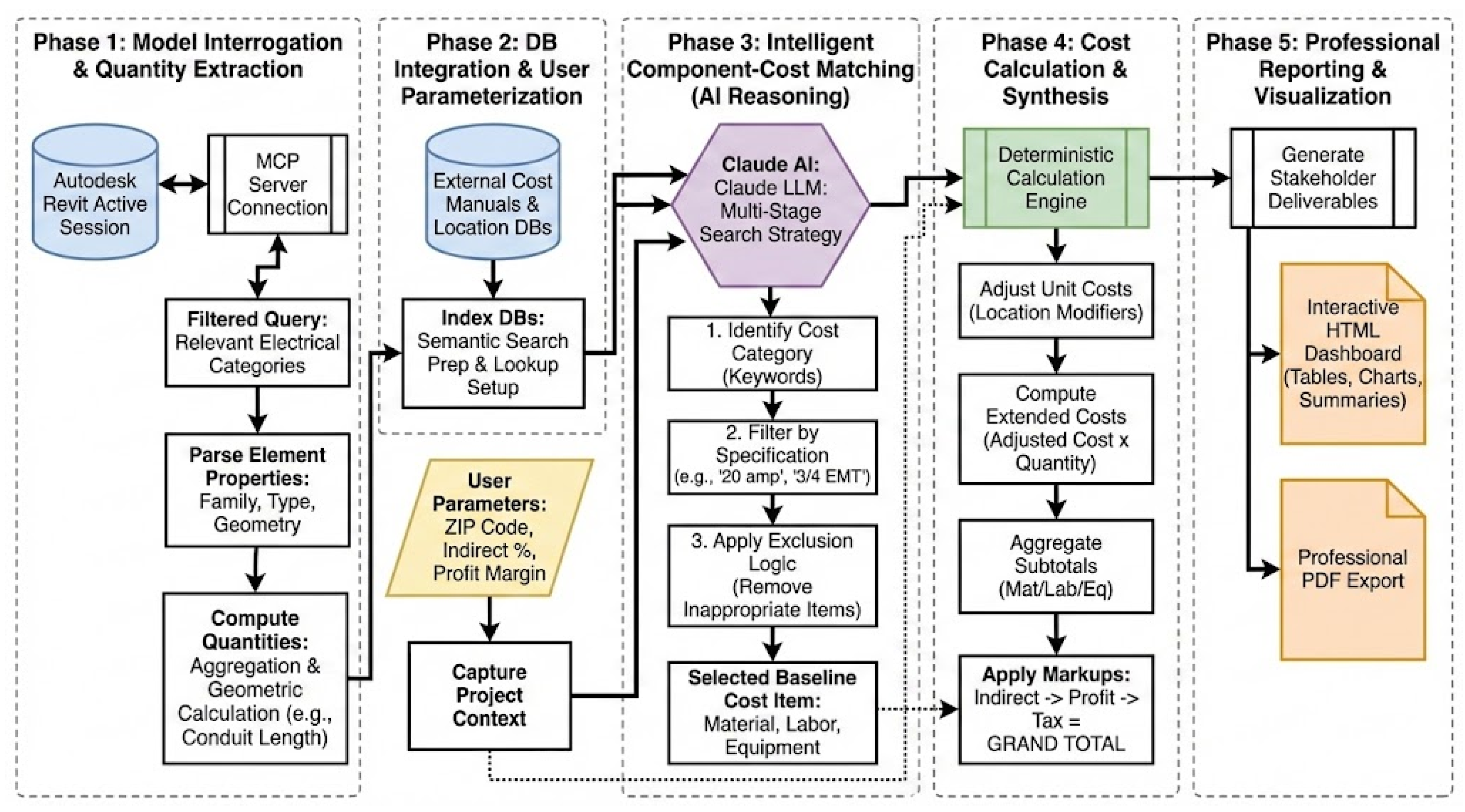
3.2. Automated Workflow Process
3.2.1. Phase 1: Model Interrogation and Quantity Extraction
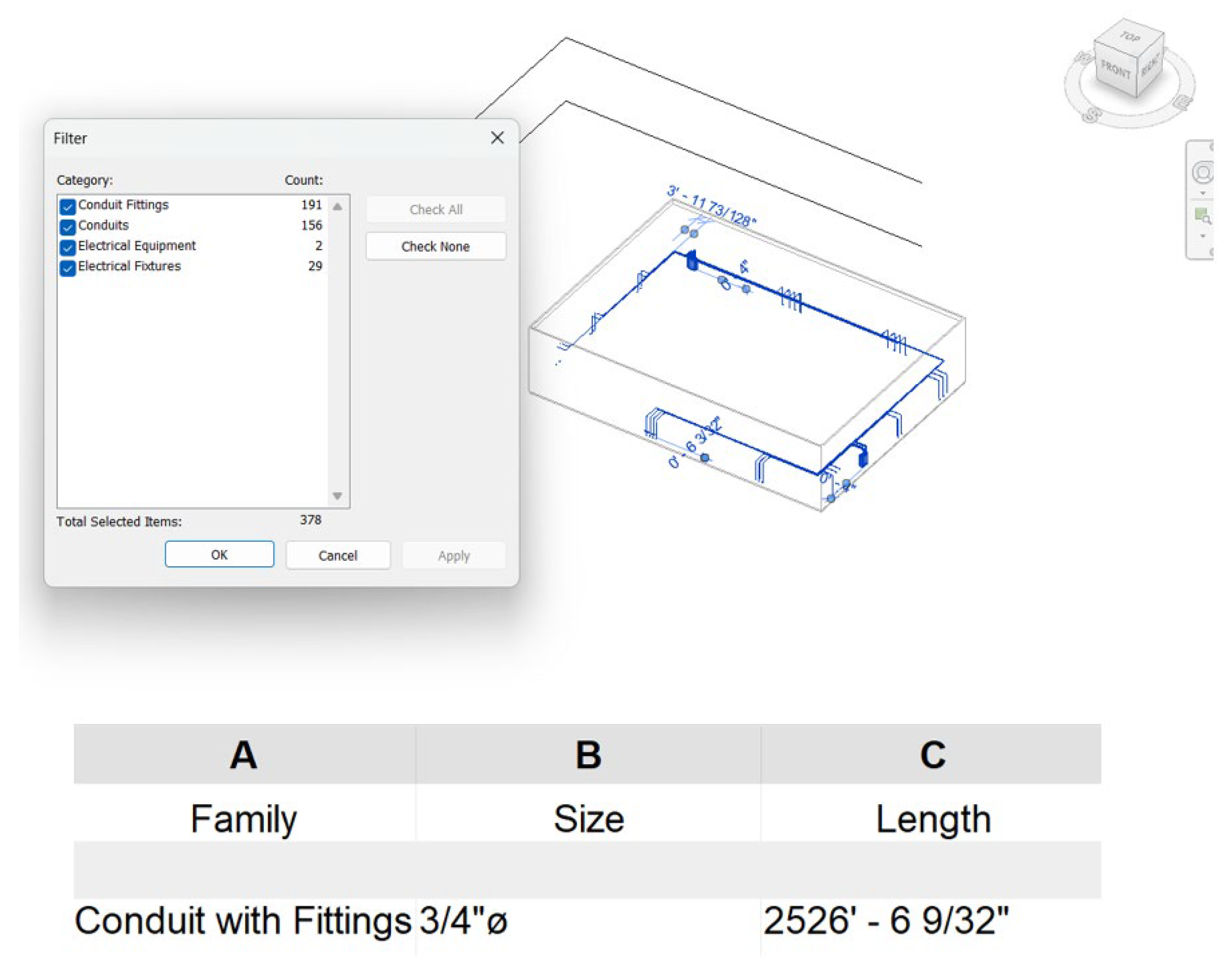
- Family Name Match: Elements must belong to recognized families (e.g., “Duplex Receptacle” family).
- Type Parameter Verification: Amperage and configuration parameters must match expected values (e.g., “20A” and “Duplex”).
- Category Exclusion: Elements in ambiguous categories (e.g., “Electrical Fixtures” containing both receptacles and junction boxes) are filtered by family name before counting.
- Receptacle count: Automated = 30, Revit Schedule = 29;
- Conduit length: Automated = 2450 LF, Revit Schedule = 2526.5 LF (discrepancy: 3.0%, attributed to segment aggregation differences);
- Panel count: Automated = 2, Revit Schedule = 2 (exact match).
3.2.2. Phase 2: Database Integration and User Parameterization
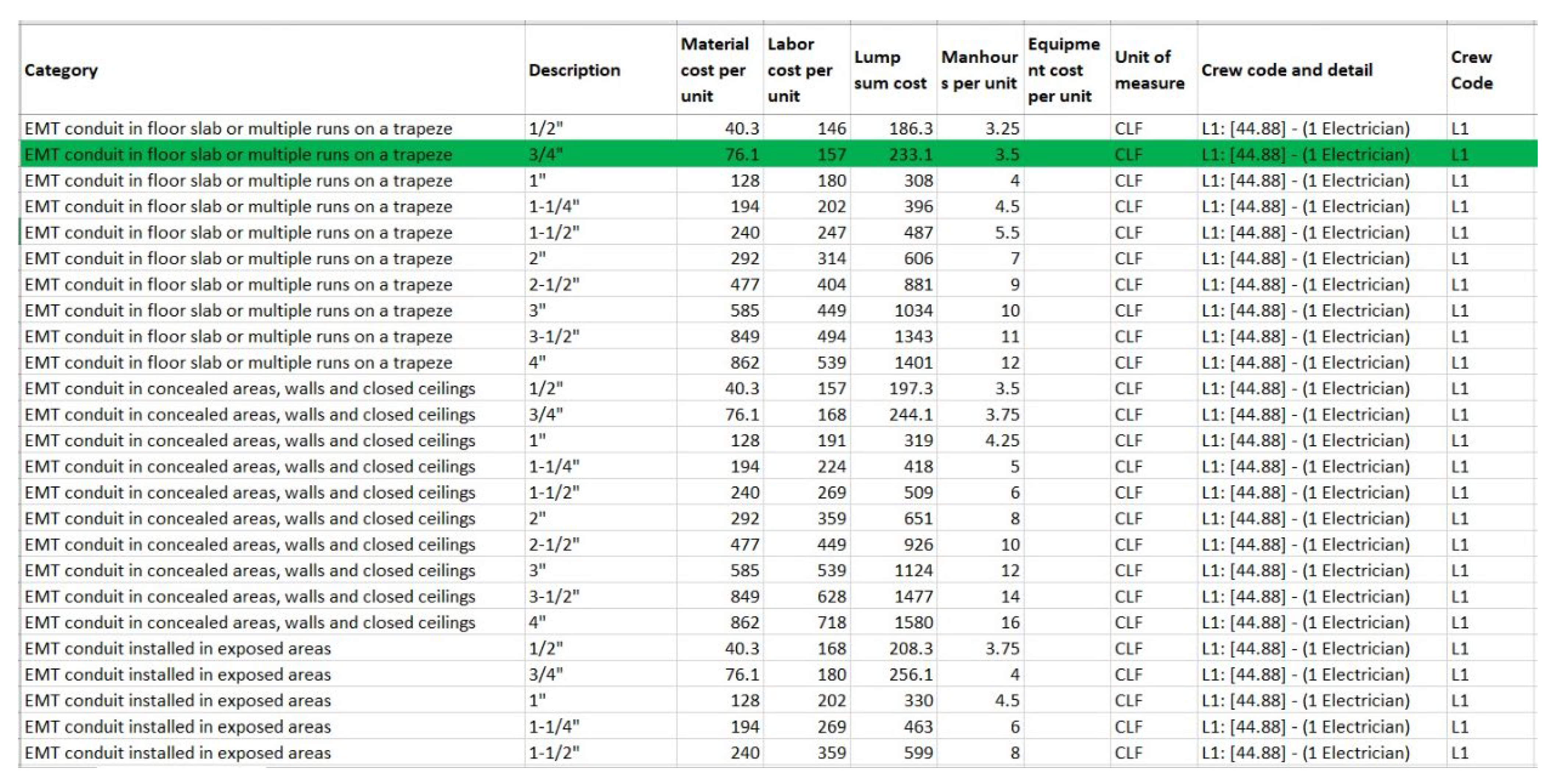
3.2.3. Phase 3: Intelligent Component–Cost Matching
- Candidate Retrieval: A keyword-based search identifies potential cost items from the relevant database category.
- Ranking/Scoring: Each candidate is scored using a composite metric:where is the semantic similarity (e.g., cosine similarity of embedding vectors) between the component description, , and the database entry, ; is the proportion of exact specification matches (e.g., size, amperage, and voltage); and weights and prioritize semantic understanding while ensuring technical accuracy. Candidates scoring below a threshold are discarded.
- Tie-Breaking and Conflict Resolution: If multiple candidates exceed the threshold, the item with the highest sub-score is selected. If scores remain tied, the item with the lower unit cost (yielding a conservative estimate) is chosen.
- Controlled Fallback: If no candidate meets the threshold, e.g., due to missing specifications in the BIM model or the absence of a compatible database entry, the component is flagged for manual review. A generic placeholder item (e.g., “Electrical Component, Unspecified”) is assigned with a unit cost marked as “TBD,” allowing the workflow to proceed while ensuring transparency.
3.2.4. Phase 4: Cost Calculation and Synthesis
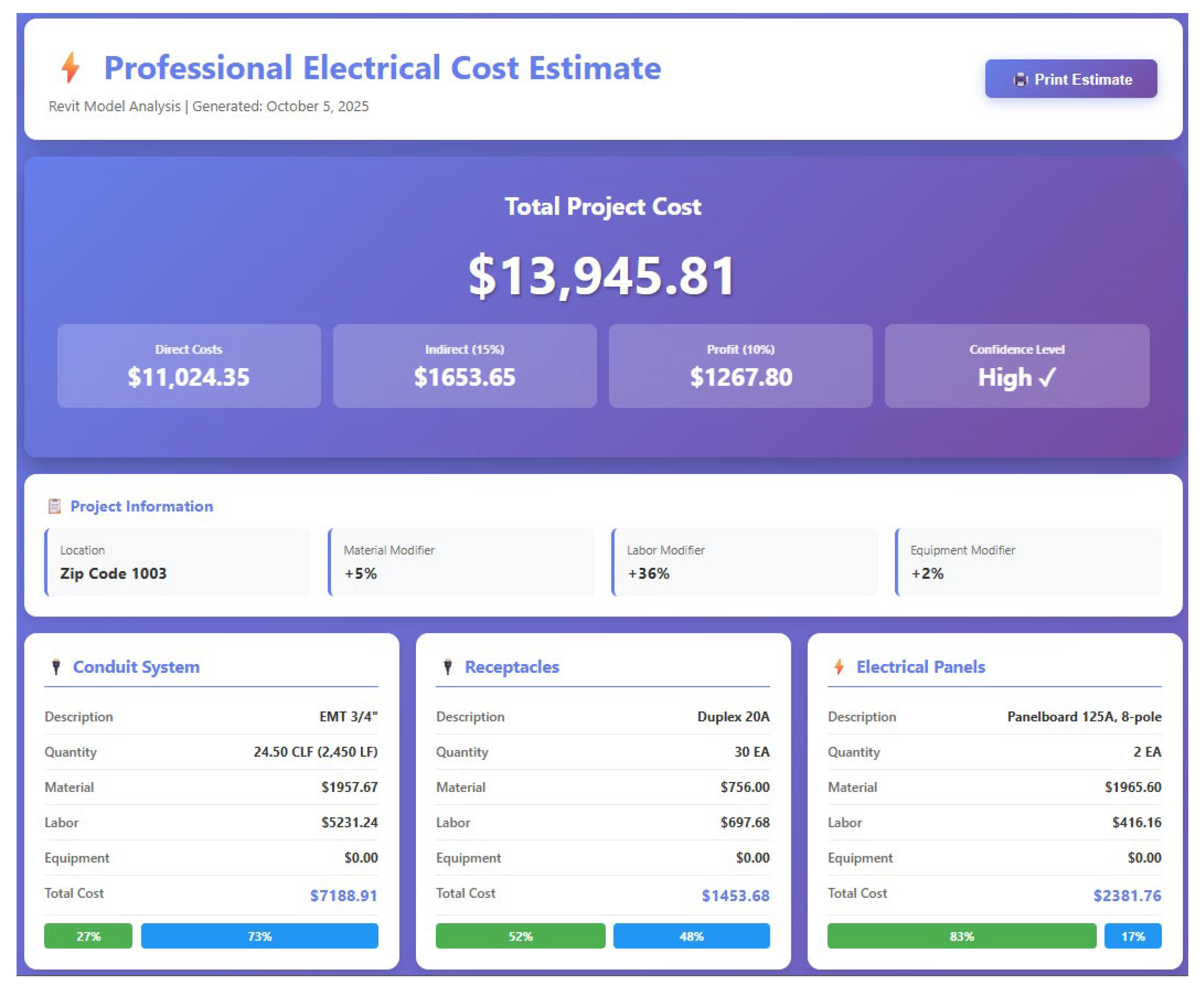
3.2.5. Phase 5: Professional Reporting and Visualization
3.3. Performance Measurement Protocol
- Hardware Configuration: Intel Core i7-12700K (12 cores, 3.6 GHz base), 32GB DDR5 RAM, NVMe SSD storage, Windows 11 Pro.
- Software Environment: Autodesk Revit 2024, Claude Desktop Application (Claude 3.5 Sonnet, October 2024 release).
- Measurement Protocol: Five consecutive runs were executed after initial warm-up (database pre-loaded into memory). Time was measured from user command initiation to complete HTML report generation, including (a) MCP server initialization, (b) Revit model interrogation, (c) cost database parsing, (d) component matching, (e) calculations, and (f) report generation.
- Results: Mean execution time: 42.3 s (SD = 3.7 s, n = 5), range: 38.1–47.2 s.
- Estimator Profile: Professional cost estimator with 8+ years of commercial electrical estimation experience.
- Method: Standard industry practice using Revit Schedules for QTO, manual lookup in Craftsman 2025 database, spreadsheet-based calculations with location modifiers, and formatted report preparation.
- Inputs/Assumptions: Identical to automated system (same BIM model, cost database edition, ZIP code 01003, 15% indirect costs, 10% profit margin, 0% sales tax).
- Timing: Three independent manual estimates were completed, with times recorded: 2.5, 3.0, and 3.5 h (mean: 3.0 h).
4. Case Study
4.1. Case Study Context and Model Description
4.2. Execution of the Automated Workflow
4.2.1. Phase 1: Quantity Extraction
4.2.2. Phase 2: Database Integration
4.2.3. Phase 3: Component Matching
4.2.4. Phase 4: Cost Calculations
4.2.5. Phase 5: Visualization Generation
5. Results and Discussion
5.1. Quantity Extraction Accuracy Assessment
- Direct total costs: USD 11,205.02, comprising the following:
- Material: USD 4739.72 (42.3% of direct costs);
- Labor: USD 6465.31 (57.7% of direct costs);
- Equipment: USD 0.00 (0.0% of direct costs);
- Indirect costs (15%): USD 1680.78;
- Profit (10% on subtotal with indirect): USD 1120.52;
- Sales tax (0%): USD 0.00;
- Grand total: USD 14,006.28.
5.2. Confidence Intervals and Professional Accuracy Standards
- Component-level variance expectations with corrected quantities:
- Overall variance: ±8% USD 14,006.28× 0.08 = USD 1120.50);
- Estimated range: USD 12,885.78 to USD 15,126.78.
- This range encompasses typical detailed estimate uncertainty.
- Overall variance: ±6% (USD 14,006.28× 0.06 = USD 840.38);
- Estimated range: USD 13,165.90 to USD 14,846.66.
- This is a more conservative range for bid-level accuracy.
5.3. Database Search and Matching Accuracy Assessment
5.4. Discussion
5.5. Comparative Analysis with the Existing Literature
6. Conclusions
Author Contributions
Funding
Data Availability Statement
Conflicts of Interest
Appendix A. System Configuration and Prompt Templates
System Instruction Template
References
- Song, H.; Gang, Y.; Li, H.; Tian, Z.; Annan, J. Digital Twin Enhanced BIM to Shape Full Life Cycle Digital Transformation for Bridge Engineering. Autom. Constr. 2023, 147, 104736. [Google Scholar] [CrossRef] [Scilit]
- Pregnolato, M.; Gunner, S.; Voyagaki, E.; De Risi, R.; Carhart, N.; Gavriel, G.; Tully, P.; Tryfonas, T.; Macdonald, J.; Taylor, C. Towards Civil Engineering 4.0: Concept, Workflow and Application of Digital Twins for Existing Infrastructure. Autom. Constr. 2022, 141, 104421. [Google Scholar] [CrossRef] [Scilit]
- Pishdad, P.; Onungwa, I.O. Analysis of 5D BIM for Cost Estimation, Cost Control, and Payments. J. Inf. Technol. Constr. 2024, 29, 525–548. [Google Scholar] [CrossRef] [Scilit]
- Biagini, C.; Bongini, A. BIM and Data Integration: A Workflow for the Implementation of Digital Twins. In Beyond Digital Representation: Advanced Experiences in AR and AI for Cultural Heritage and Innovative Design; Giordano, A., Russo, M., Spallone, R., Eds.; Springer Nature: Cham, Switzerland, 2024; pp. 821–835. [Google Scholar]
- Gao, S.; Gu, Z.; Xiong, X.; Wang, C. Influence Mechanism of Rock Compressive Mechanical Properties Under Freeze-Thaw Cycles: Insights from Machine Learning. Big Data Cogn. Comput. 2025, 9, 323. [Google Scholar] [CrossRef] [Scilit]
- Alathamneh, S.; Collins, W.; Azhar, S. BIM-Based Quantity Takeoff: Current State and Future Opportunities. Autom. Constr. 2024, 165, 105549. [Google Scholar] [CrossRef] [Scilit]
- Christopher, R. Digital Fab-to-Field: Regenerative BIM for 2D Panelized Construction. In Proceedings of the Construction Research Congress 2024, Des Moines, IA, USA, 20–23 March 2024; American Society of Civil Engineers: Reston, VA, USA, 2024; pp. 1039–1047. [Google Scholar]
- Hou, X.; Zhao, Y.; Wang, S.; Wang, H. Model Context Protocol (MCP): Landscape, Security Threats, and Future Research Directions. arXiv 2025, arXiv:2503.23278. [Google Scholar] [CrossRef] [Scilit]
- Ayyagari, V. Model Context Protocol for Agentic AI: Enabling Contextual Interoperability Across Systems. Int. J. Comput. Exp. Sci. Eng. 2025, 11, 6072–6082. [Google Scholar] [CrossRef] [Scilit]
- Martin, H.; James, J.; Chadee, A. Exploring Large Language Model AI Tools in Construction Project Risk Assessment: Chat GPT Limitations in Risk Identification, Mitigation Strategies, and User Experience. J. Constr. Eng. Manag. 2025, 151, 04025119. [Google Scholar] [CrossRef] [Scilit]
- Safaa-Eldin, A.M.; Tantawy, M.; Abdelalim, A.M. Cost Management of Construction Projects Using BIM Technology. Cost Manag. 2024. [Google Scholar] [CrossRef]
- Bridge-Nduwimana, C.B.; El Harrauss, S.E.; El Ouaazizi, A.; Benyakhlef, M. A Tabular Data Imputation Technique Using Transformer and Convolutional Neural Networks. Big Data Cogn. Comput. 2025, 9, 321. [Google Scholar] [CrossRef] [Scilit]
- Ehtesham, A.; Singh, A.; Gupta, G.K.; Kumar, S. A survey of agent interoperability protocols: Model Context Protocol (MCP), Agent Communication Protocol (ACP), Agent-to-Agent Protocol (A2A), and Agent Network Protocol (ANP). arXiv 2025, arXiv:2505.02279. [Google Scholar]
- Monteiro, A.; Martins, J. A Survey on Modeling Guidelines for Quantity Takeoff-Oriented BIM-Based Design. Autom. Constr. 2013, 35, 238–253. [Google Scholar] [CrossRef] [Scilit]
- Lee, S.K.; Kim, K.R.; Yu, J.H. BIM and Ontology-Based Approach for Building Cost Estimation. Autom. Constr. 2014, 41, 96–105. [Google Scholar] [CrossRef] [Scilit]
- Ma, Z.; Liu, Z. BIM-Based Intelligent Acquisition of Construction Information for Cost Estimation of Building Projects. Procedia Eng. 2014, 85, 358–367. [Google Scholar] [CrossRef] [Scilit]
- Babatunde, S.O.; Perera, S.; Ekundayo, D.; Adeleye, T.E. An Investigation into BIM-Based Detailed Cost Estimating and Drivers to the Adoption of BIM in Quantity Surveying Practices. J. Financ. Manag. Prop. Constr. 2019, 25, 61–81. [Google Scholar] [CrossRef] [Scilit]
- Gbadamosi, A.Q.; Mahamadu, A.M.; Oyedele, L.O.; Akinade, O.O.; Manu, P.; Mahdjoubi, L.; Aigbavboa, C. Offsite Construction: Developing a BIM-Based Optimizer for Assembly. J. Clean. Prod. 2019, 215, 1180–1190. [Google Scholar] [CrossRef] [Scilit]
- Lin, Y.-C.; Chang, J.-X.; Su, Y.-C. Developing Construction Defect Management System Using BIM Technology in Quality Inspection. J. Civ. Eng. Manag. 2016, 22, 903–914. [Google Scholar] [CrossRef] [Scilit]
- Akhanova, G.; Ashmawi, A.; Ko, C.H.; Nguyen, P. Enhancing Construction Safety Training Using Artificial Intelligence: Existing Applications and Future Directions. Saf. Reliab. 2025. [Google Scholar] [CrossRef] [Scilit]
- Banihashemi, S.; Khalili, S.; Sheikhkhoshkar, M.; Fazeli, A. Machine Learning-Integrated 5D BIM Informatics: Building Materials Costs Data Classification and Prototype Development. Innov. Infrastruct. Solut. 2022, 7, 215. [Google Scholar] [CrossRef] [Scilit]
- Tayefeh Hashemi, S.; Ebadati, O.M.; Kaur, H. Cost Estimation and Prediction in Construction Projects: A Systematic Review on Machine Learning Techniques. SN Appl. Sci. 2020, 2, 1703. [Google Scholar] [CrossRef] [Scilit]
- Arage, S.S.; Dharwadkar, N.V. Cost Estimation of Civil Construction Projects Using Machine Learning Paradigm. In Proceedings of the 2017 International Conference on I-SMAC (IoT in Social, Mobile, Analytics and Cloud) (I-SMAC), Palladam, India, 10–11 February 2017; IEEE: Piscataway, NJ, USA, 2017; pp. 594–599. [Google Scholar]
- Mansurova, A.; Mansurova, A.; Nugumanova, A. QA-RAG: Exploring LLM Reliance on External Knowledge. Big Data Cogn. Comput. 2024, 8, 115. [Google Scholar] [CrossRef] [Scilit]
- Gamil, Y.; Abdullah, M.A.; Abd Rahman, I.; Asad, M.M. Internet of Things in Construction Industry Revolution 4.0: Recent Trends and Challenges in the Malaysian Context. J. Eng. Des. Technol. 2020, 18, 1091–1102. [Google Scholar] [CrossRef] [Scilit]
- Yin, M.; Tang, L.; Webster, C.; Xu, S.; Li, X.; Ying, H. An Ontology-Aided, Natural Language-Based Approach for Multi-Constraint BIM Model Querying. J. Build. Eng. 2023, 76, 107066. [Google Scholar]
- Elmousalami, H.H. Artificial Intelligence and Parametric Construction Cost Estimate Modeling: State-of-the-Art Review. J. Constr. Eng. Manag. 2020, 146, 03119008. [Google Scholar] [CrossRef] [Scilit]
- Wang, R.; Asghari, V.; Cheung, C.M.; Hsu, S.C.; Lee, C.J. Assessing Effects of Economic Factors on Construction Cost Estimation Using Deep Neural Networks. Autom. Constr. 2022, 134, 104080. [Google Scholar] [CrossRef] [Scilit]
- Zhai, H.; Ma, J. Study on Forecasting Method of Power Engineering Cost Based on BIM and DynGCN. PLoS ONE 2025, 20, e0322202. [Google Scholar] [CrossRef] [Scilit]
- Addepalli, A.; Schoppik, E.; Cooke, J.; Blacutt, K.; Khanuja, M.; van der Smagt, N. Unlocking the Power of Model Context Protocol (MCP) on AWS. Available online: https://aws.amazon.com/blogs/machine-learning/unlocking-the-power-of-model-context-protocol-mcp-on-aws/ (accessed on 1 December 2025).
- Kocakaya, M.N.; Celik, Y.; Giran, O.; Turkakin, O.H. BIM Cost Management: ROI on BIM Implemented Projects in the Construction Industry. SETSCI Conf. Proc. 2025, 23, 119–125. [Google Scholar]
- Zeng, N.; Han, L.; Liu, Y.; Yuan, J.; Li, Q. Design Science Research (DSR) in Construction: Theoretical Conceptualization of Practice and Practical Realization of Theory. Autom. Constr. 2025, 176, 106298. [Google Scholar] [CrossRef] [Scilit]
- Sherif, A.; Jinkook, L.; Chuck, E. Automated Cost Analysis of Concept Design BIM Models. In Proceedings of the 14th International Conference on Computer-Aided Architectural Design Futures (CAAD Futures 2011), Liège, Belgium, 4–8 July 2011. [Google Scholar]
- Alazawy, S.F.M.; Aldhamad, S.H.R.; Salih, B.M.M.; Al Zwainy, F.M.S. An Efficient Novel Model for Multi-Story Building Construction Quantity Estimation Using Coupled MATLAB-Revit Software. Eng. Technol. Appl. Sci. Res. 2024, 14, 17717–17724. [Google Scholar] [CrossRef] [Scilit]
- Attia, A.R. The Impact of Integrating Artificial Intelligence and Building Information Modeling (BIM) Systems on the Development of Construction Methodologies. J. Umm Al-Qura Univ. Eng. Archit. 2025, 16, 1537–1554. [Google Scholar] [CrossRef] [Scilit]
- Song, F.; Sun, Y.; Yuan, G. Autonomous Identification of Bridge Concrete Cracks Using Unmanned Aircraft Images and Improved Lightweight Deep Convolutional Networks. Struct. Control Health Monit. 2024, 2024, 7857012. [Google Scholar] [CrossRef] [Scilit]



| Tool Name | Function | Input Parameters | Output |
|---|---|---|---|
| get_current_view_info | Retrieves active view metadata | None | View name, type, scale |
| get_current_view_elements | Extracts elements by category | modelCategoryList[] | Element array with properties |
| AI_element_filter | Advanced element filtering | filterCategory, includeInstances | Filtered element set |
| get_selected_elements | Retrieves user-selected elements | ElementsList[] | Selected element details |
| Data Source | Description | Key Metrics/Content |
|---|---|---|
| Revit Model | Commercial store electrical system | 187 elements across receptacles, conduits, panels |
| Cost Database | Craftsman National Building Cost Manual 2025 (Electrical) | 13,395 items; Material, Labor, Equipment Costs |
| Location Modifier DB | Craftsman ZIP Area Modifiers 2025 | 40,777 ZIP codes; Material, Labor, Equipment Factors |
| Project Parameters | User-defined inputs | ZIP: 01003; Indirect: 15%; Profit: 10% |
| Step | Pseudocode | Description |
|---|---|---|
| Database Integration and Modifier Retrieval Algorithm | ||
| 1 | LOAD electrical_db FROM “Electrical 2025.xlsx” | Initialize connection to cost database |
| 2 | PARSE electrical_db.SHEET[“CostbookExport”] TO json_data | Extract structured cost data |
| 3 | LOAD zip_db FROM “Craftsman Zip Area Modifiers 2025.xlsx” | Initialize connection to location database |
| 4 | PARSE zip_db.SHEET[“2025CraftsmanZipBasedAreaM”] TO zip_data | Extract location adjustment factors |
| 5 | FIND zip_record IN zip_data WHERE zip_record[“ZIP_CODE”] = project_zip | Locate project-specific modifiers |
| 6 | mat_multiplier = 1 + (zip_record[“Material_factor”]/100) | Calculate material adjustment |
| 7 | lab_multiplier = 1 + (zip_record[“Labor_factor”]/100) | Calculate labor adjustment |
| 8 | eqp_multiplier = 1 + (zip_record[“Equipment_factor”]/100) | Calculate equipment adjustment |
| 9 | RETURN json_data, mat_multiplier, lab_multiplier, eqp_multiplier | Output data and multipliers |
| Component–Cost Matching Algorithm | ||
| 1 | FOR EACH component IN extracted_bim_elements | Iterate through all BIM components |
| 2 | category = IDENTIFY_CATEGORY(component) | Determine component classification |
| 3 | specifications = EXTRACT_SPECS(component) | Extract technical specifications |
| 4 | keyword_list = GENERATE_KEYWORDS(category, specifications) | Create search keywords |
| 5 | candidates = FILTER cost_data BY keyword_list | Find potential matches |
| 6 | filtered = APPLY_EXCLUSIONS(candidates, [“underfloor”, “special”]) | Remove inappropriate items |
| 7 | best_match = SELECT_BEST_FIT(filtered, specifications) | Choose optimal cost item |
| 8 | STORE_MATCH(component, best_match) | Record component–cost pairing |
| 9 | END FOR | Complete matching process |
| Cost Calculation Algorithm | ||
| 1 | direct_cost_total = 0 | Initialize accumulator |
| 2 | FOR EACH matched_component IN component_list | Process each matched item |
| 3 | base_mat_cost = matched_component[“Material_Cost”] | Retrieve base material cost |
| 4 | base_lab_cost = matched_component[“Labor_Cost”] | Retrieve base labor cost |
| 5 | base_eqp_cost = matched_component[“Equipment_Cost”] | Retrieve base equipment cost |
| 6 | adj_mat = base_mat_cost × material_multiplier | Apply location adjustment |
| 7 | adj_lab = base_lab_cost × labor_multiplier | Apply location adjustment |
| 8 | adj_eqp = base_eqp_cost × equipment_multiplier | Apply location adjustment |
| 9 | unit_cost = adj_mat + adj_lab + adj_eqp | Calculate adjusted unit cost |
| 10 | extended_cost = unit_cost × quantity | Multiply by component quantity |
| 11 | direct_cost_total += extended_cost | Accumulated to direct total |
| 12 | END FOR | Complete cost calculation |
| Aspect | Current Literature/Practice | Advancement in This Study |
|---|---|---|
| Integration Method | Relies on custom, one-off solutions (APIs, plugins) that are hard to scale. | Introduces standardized protocol MCP as a universal adapter, solving the “M × N” integration problem. |
| Automation Scope | Mostly semi-automated, focusing only on quantity take-off. | Achieves full end-to-end automation from BIM interrogation to final report in <45 s. |
| AI Application | Focuses on predictive models or theoretical LLM frameworks. | Empirically validates an LLM for domain-specific reasoning, with 100% accuracy in cost matching. |
| Solution Replicability | Often presents proof-of-concept or proprietary tools without a clear adoption path. | Provides a detailed, replicable blueprint (architecture, algorithms, validation protocol). |
| Performance Validation | Lacks comprehensive quantitative benchmarks against manual standards. | Delivers rigorous metrics: 98.6% time reduction and accuracy within professional confidence intervals (±8%). |
| Study | Approach | Automation Level | Time Efficiency | Accuracy Metric |
|---|---|---|---|---|
| This Study | MCP + LLM | Full end-to-end | 98.6% reduction | −5.1% variance |
| Alazawy et al. (2024) [34] | SVM-BIM | QTO only | Not reported | 0.41–1.48% variance |
| Wang et al. (2022) [28] | DNN | Cost prediction | N/A | MAPE varies by model |
| Banihashemi et al. (2022) [21] | ML + 5D BIM | Classification + QTO | Significant | Project-dependent |
| Elmousalami (2020) [27] | Various ML | Prediction only | N/A | 7–15% MAPE |
| Traditional BIM QTO | Manual matching | QTO only | Baseline | Professional standard |
Disclaimer/Publisher’s Note: The statements, opinions and data contained in all publications are solely those of the individual author(s) and contributor(s) and not of MDPI and/or the editor(s). MDPI and/or the editor(s) disclaim responsibility for any injury to people or property resulting from any ideas, methods, instructions or products referred to in the content. |
© 2026 by the authors. Licensee MDPI, Basel, Switzerland. This article is an open access article distributed under the terms and conditions of the Creative Commons Attribution (CC BY) license.
Share and Cite
Abdelsalam, M.; Ashmawi, A.; Nguyen, P.H.D. AI-Driven Automation of Construction Cost Estimation: Integrating BIM with Large Language Models. Buildings 2026, 16, 485. https://doi.org/10.3390/buildings16030485
Abdelsalam M, Ashmawi A, Nguyen PHD. AI-Driven Automation of Construction Cost Estimation: Integrating BIM with Large Language Models. Buildings. 2026; 16(3):485. https://doi.org/10.3390/buildings16030485
Chicago/Turabian StyleAbdelsalam, Mohamed, Amr Ashmawi, and Phuong H. D. Nguyen. 2026. "AI-Driven Automation of Construction Cost Estimation: Integrating BIM with Large Language Models" Buildings 16, no. 3: 485. https://doi.org/10.3390/buildings16030485
APA StyleAbdelsalam, M., Ashmawi, A., & Nguyen, P. H. D. (2026). AI-Driven Automation of Construction Cost Estimation: Integrating BIM with Large Language Models. Buildings, 16(3), 485. https://doi.org/10.3390/buildings16030485