Skip to Content

Biomolecules

Biomolecules is an international, peer-reviewed, open access journal on structures and functions of bioactive and biogenic substances, molecular mechanisms with biological and medical implications as well as biomaterials and their applications, published monthly online by MDPI.

Indexed in PubMed | Quartile Ranking JCR - Q1 (Biochemistry and Molecular Biology)

Get Alerted

Add your email address to receive forthcoming issues of this journal.

All Articles (12,696)

Synthesized more than 60 years ago, vinpocetine—the active ingredient of Cavinton®, with over five decades of clinical use—has remained the subject of extensive investigation, particularly during the past 15 years. During this time, a large body of experimental preclinical evidence has accumulated demonstrating its neuroprotective potential and complex mechanisms of action in cerebral ischemia–hypoxia. Comprehensive in vitro studies and animal experiments have significantly elucidated the molecular basis of vinpocetine and the signaling pathways through which it prevents or mitigates ischemic injury. In this review, we summarize earlier and more recent experimental results that highlight the multifaceted nature of vinpocetine’s neuroprotective actions, which include inhibition of phosphodiesterase type 1, blockade of voltage-dependent NaV1.8 channels, reduction of oxidative stress, and suppression of neuroinflammatory processes triggered by cerebral ischemia–hypoxia. Taken together, it can be hypothesized that, under in vivo conditions, vinpocetine’s individual actions are additive or synergistic, thereby contributing in a combined manner to recovery from cerebral ischemic insult.

17 March 2026

Structure of vinpocetine ([(3α,16α)-eburnamenine-14-carboxylic acid ethyl ester]) (Mw: 350.5).

Epilepsy is a neurological disorder characterized by a long-lasting predisposition to recurrently generate unprovoked seizures. Epilepsy affects over 70 million people worldwide, with approximately one-third suffering from pharmacoresistant seizures. Currently, the clinical antiseizure drugs lack efficacy in preventing epileptogenesis. Adenosine, as an endogenous anticonvulsant, inhibits the development of epilepsy via interaction with the molecular epileptogenic network on several levels: (i) Activation of A1 receptor inhibits glutamate release via presynaptic inhibition, and hyperpolarizes the synaptic potentials in postsynaptic neurons. (ii) The A2A receptor on astrocytes interacts with astroglial glutamate transporter GLT-1, controlling glial glutamate homeostasis. (iii) Activation of the A3 receptor inhibits GABA transporter type 1-mediated GABA uptake. (iv) Adenosine kinase (ADK) is highlighted as a pathological hallmark of epilepsy, with its distinct isoforms driving different mechanisms. The cytoplasmic short isoform (ADK-S) in astrocytes controls extracellular adenosine and receptor-mediated pathways, whereas the nuclear long isoform (ADK-L) in astrocytes and specific neurons regulates epigenetic mechanisms without relying on adenosine receptors. Collectively, this review clarifies the adenosine system’s critical regulatory role in the epileptogenic network, highlights adenosine receptors and ADK isoforms as promising therapeutic targets for epilepsy, and provides a theoretical basis for developing novel disease-modifying therapies for pharmacoresistant epilepsy while laying a foundation for subsequent preclinical and clinical translation.

17 March 2026

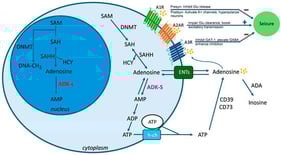
The role of adenosine in epilepsy: subcellular regulation and mechanisms in epilepsy. Adenosine is localized in extracellular, cytoplasmic, and nuclear compartments. (i) Extracellular adenosine is maintained by ATP degradation via ectonucleotidases (CD39/CD73), ADA catabolism, and equilibrative nucleoside transporters (ENTs). Extracellular adenosine mainly activates adenosine receptors (ARs: A1Rs/A2ARs/A3Rs), modulating neuronal excitability. (ii) Cytoplasmic adenosine arises from transmethylation reactions and is regulated by ADK-S, with metabolism by ADA and ENTs playing key roles; ATP is released from astrocytes via hemichannels (h-ch), a critical source of extracellular adenosine. Cytoplasmic adenosine regulates transmethylation by DNMT (DNA methylation), influencing neurotransmitter balance. (iii) Nuclear adenosine, generated by transmethylation, is controlled by ADK-L. Nuclear adenosine controls epigenetic mechanisms via DNMT, potentially affecting gene expression in epilepsy. This compartmentalized regulation highlights adenosine’s dual role in both suppressing seizures (via A1Rs activation) and contributing to neuroplasticity (via epigenetic modulation).

Attachment Theory: Novel Clinical and Molecular Insights

  • Zoë A. MacDowell Kaswan,
  • Lauryn Giuliano and
  • Arie Kaffman

Early-life adversity (ELA) disrupts brain development and is linked to poor health outcomes across species, including humans and rodents. A growing body of work suggests that impaired attachment to a caregiver—arising from erratic, neglectful, or abusive parenting—mediates a substantial portion of ELA’s long-term effects. Despite the conceptual and clinical appeal of this idea, the neural mechanisms by which ELA disrupts attachment and how altered attachment in turn produces diverse psychiatric and medical sequelae remain incompletely understood. In this review, we synthesize recent randomized controlled trials showing that strengthening caregiver–child attachment can ameliorate a broad range of ELA-related outcomes. We also highlight key animal studies that illuminate the biology of attachment and outline critical priorities for future research.

17 March 2026

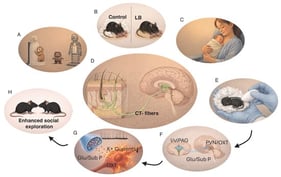
Early-life activation of CT fibers induces sustained oxytocin release and enhanced social exploration later in life. (A) Schematic representation of Harlow’s experiments showing that infant macaques preferentially cling to a cloth surrogate rather than a wire surrogate when confronted with a novel threat. (B) Rodent pups raised under limited bedding (LB) conditions, characterized by the absence of nesting material (white fluffy material), display avoidant-like attachment behavior toward an anesthetized dam. (C) Skin-to-skin contact provided by kangaroo care enhances attachment and improves a broad range of health-related outcomes. (D) Comfort touch is mediated by C-tactile (CT) fibers. (E–H) Stroking mouse pups at velocities that optimally activate CT fibers (E) induces neuronal activation in the lateral/ventrolateral periaqueductal gray (l/vlPAG). Activation of l/vlPAG neurons triggers the release of glutamate and substance P onto oxytocin-producing neurons in the paraventricular nucleus (PVN), resulting in reduced transient K+ currents and increased spontaneous firing of oxytocin-positive neurons (F,G). These electrophysiological changes persist into later life and are associated with enhanced social exploration (H). CTL = control, OXT = oxytocin, Glu/Sub = Glutamate and Substance P. down arrow = reduction.

Acceleration and Light-Induced Changes in Cytosolic cAMP Concentration in Euglena gracilis

  • Peter Rolf Richter,
  • Jenny Graf and
  • Michael Lebert
  • + 6 authors

The second messenger cyclic AMP (cAMP) is very likely involved in phototactic as well as gravitactic behavior of the unicellular flagellate Euglena gracilis. A slight but significant increase in cAMP was observed when cells encountered sub-threshold acceleration (0.16 × g) force after microgravity [µg]. No differences in cAMP levels were found between cells on a clinostat and 1x-controls. This observation is consistent with the ones of earlier studies. Illumination of cells resulted in a significant increase in cellular cAMP levels. After RNAi-mediated knockdown or CRISPR-Cas9 knockout of the photoactivated adenylyl cyclases PACα and/or PACβ in the photoreceptor, light-induced changes in cAMP levels were no longer observed. In parallel, phototactic behavior was abolished, supporting the essential role of photoactivated adenylyl cyclases in phototaxis. Cells spin around their length axis during locomotion (1–2 Hz). In order to generate a signal in the light direction, the cells should be capable of synthesizing and degrading cAMP within 0.5–1 s. The rapid fixation of cells upon transition from dark to light or light to dark revealed that detectable changes in cAMP-levels (increase or decrease) occur within a 100–200 ms time window, which is sufficiently fast to account for the proposed theoretical kinetics of cAMP oscillations.

17 March 2026

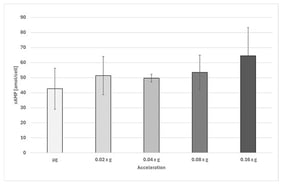
Intracellular cAMP concentration (amol/cell) in Euglena gracilis at different sub-1 g accelerations determined during a sounding rocket experiment on MAXUS 9. Number of biological replicates, µg: n = 14; all other groups, n = 5. The error bars show the standard deviation. Only the difference between µg and 0.16 × g is significant (p < 0.05).

News & Conferences

Volumes

Latest Issues

Open for Submission

Editor's Choice

Reprints of Collections

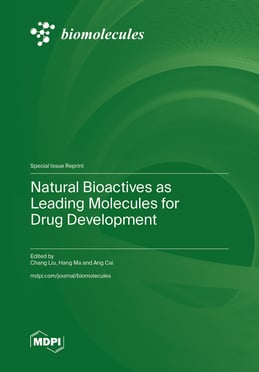
Natural Bioactives as Leading Molecules for Drug Development
Reprint

Natural Bioactives as Leading Molecules for Drug Development

Editors: Chang Liu, Hang Ma, Ang Cai
Biomolecules and Materials Based Approaches in Biomedical Field
Reprint

Biomolecules and Materials Based Approaches in Biomedical Field

2nd Edition
Editors: Sabrina Morelli, Antonella Piscioneri, Chien-Chung Chen, Loredana De Bartolo
XFacebookLinkedIn
Biomolecules - ISSN 2218-273X