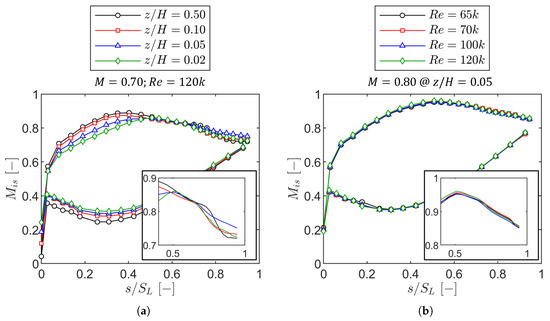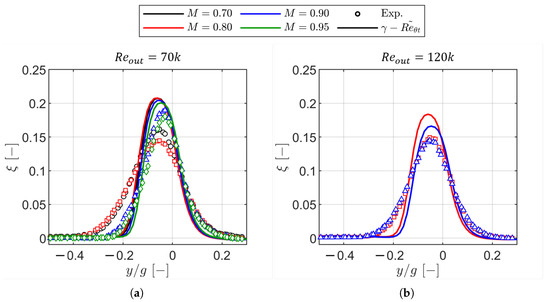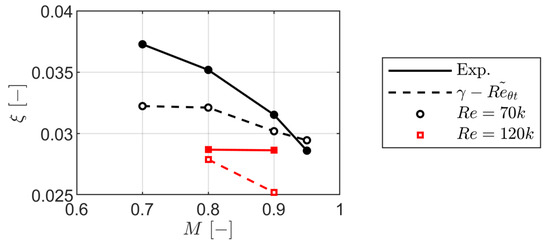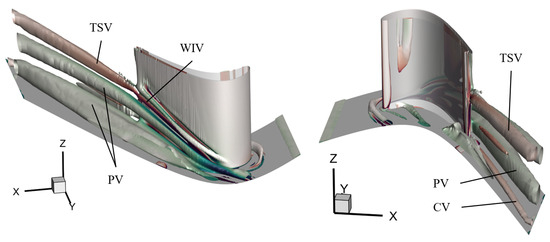

Journal Description
International Journal of Turbomachinery, Propulsion and Power
(IJTPP) is an international, peer-reviewed, open access journal on turbomachinery, propulsion and power, published quarterly online. It is the official journal of the EUROTURBO European Turbomachinery Society. Society members receive discounts on the article processing charges.
- Open Access— free for readers, with article processing charges (APC) paid by authors or their institutions.
- High Visibility: indexed within Scopus, ESCI (Web of Science), Inspec, Ei Compendex, and other databases.
- Journal Rank: JCR - Q2 (Engineering, Aerospace)
- Rapid Publication: manuscripts are peer-reviewed and a first decision is provided to authors approximately 24.8 days after submission; acceptance to publication is undertaken in 31.6 days (median values for papers published in this journal in the second half of 2025).
- Recognition of Reviewers: reviewers who provide timely, thorough peer-review reports receive vouchers entitling them to a discount on the APC of their next publication in any MDPI journal, in appreciation of the work done.
Impact Factor:
1.8 (2024);
5-Year Impact Factor:
1.7 (2024)
Latest Articles
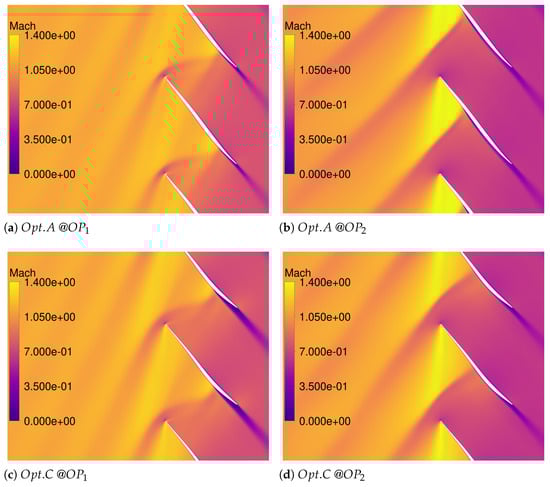
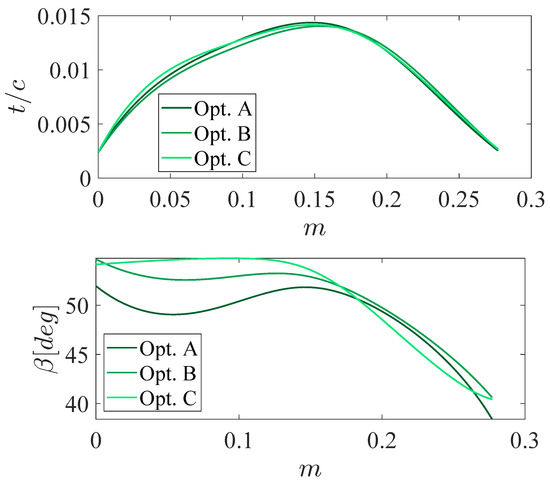
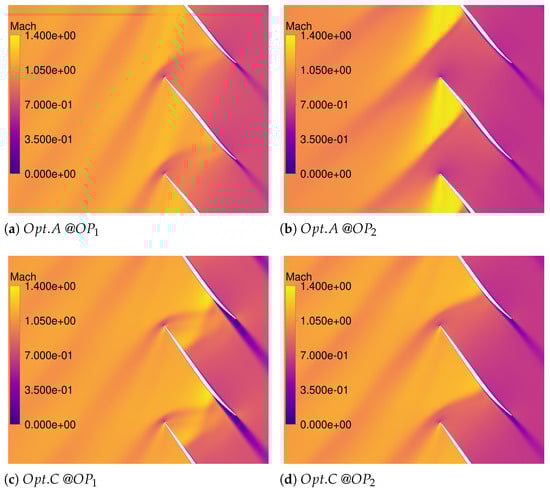
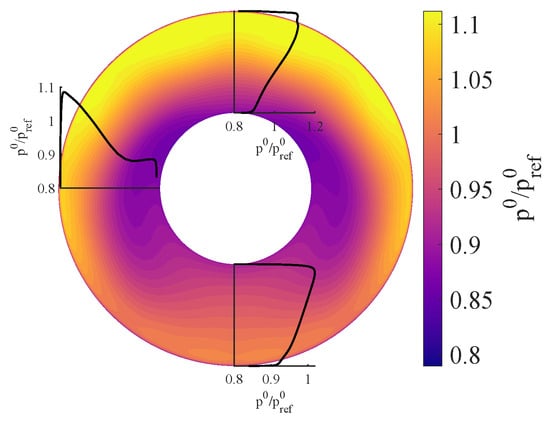
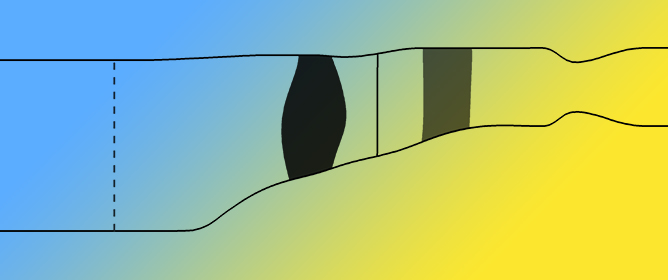
Optimising Blade Profiles to Extend the Operating Range in BLI Fan Application
Int. J. Turbomach. Propuls. Power 2026, 11(2), 18; https://doi.org/10.3390/ijtpp11020018 - 6 Apr 2026
Abstract
►
Show Figures
Boundary Layer Ingestion propulsors operate in an adverse aerodynamic environment with high levels of distortion. With the purpose of extending the operating range of transonic fan rotors for BLI applications, in this paper we present an optimisation study focused on blade profiles design
[...] Read more.
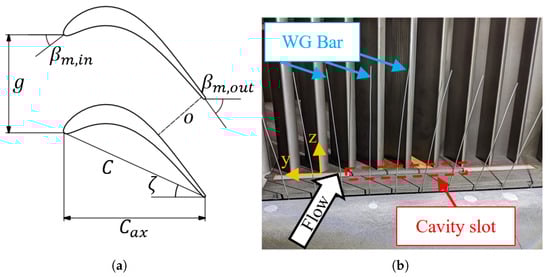
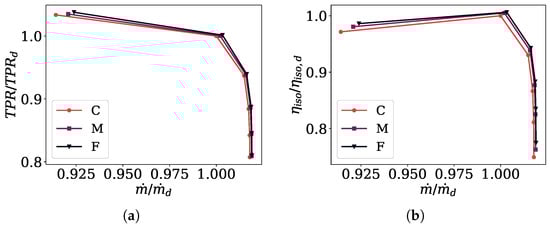
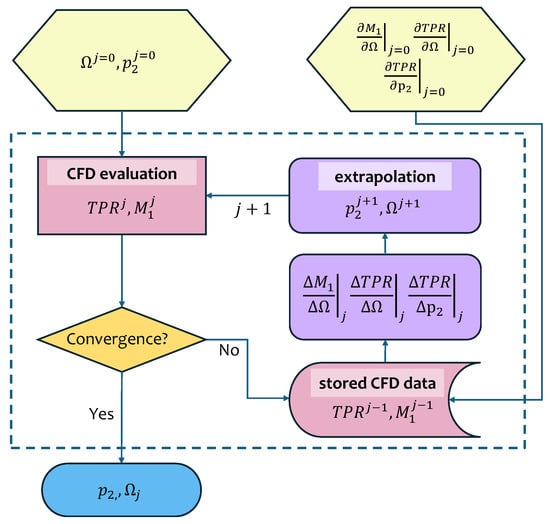
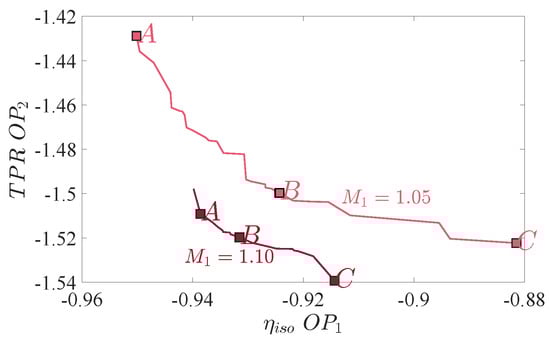
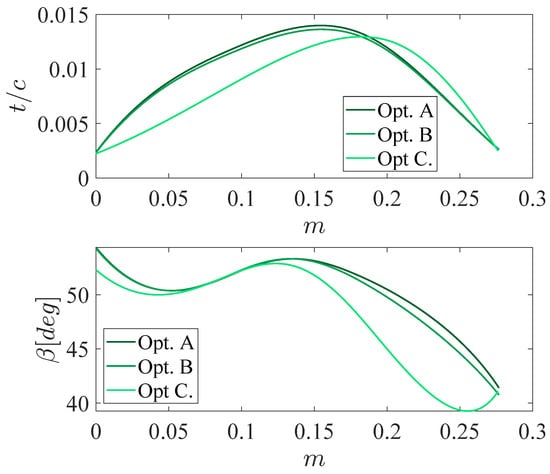
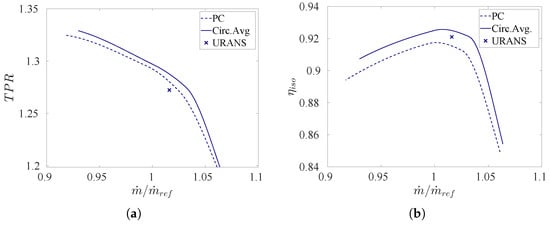
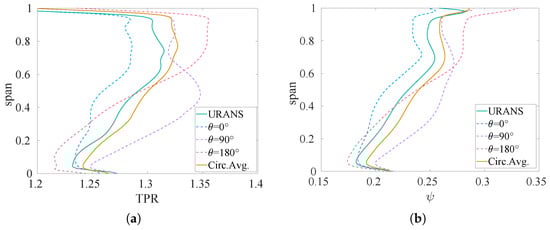
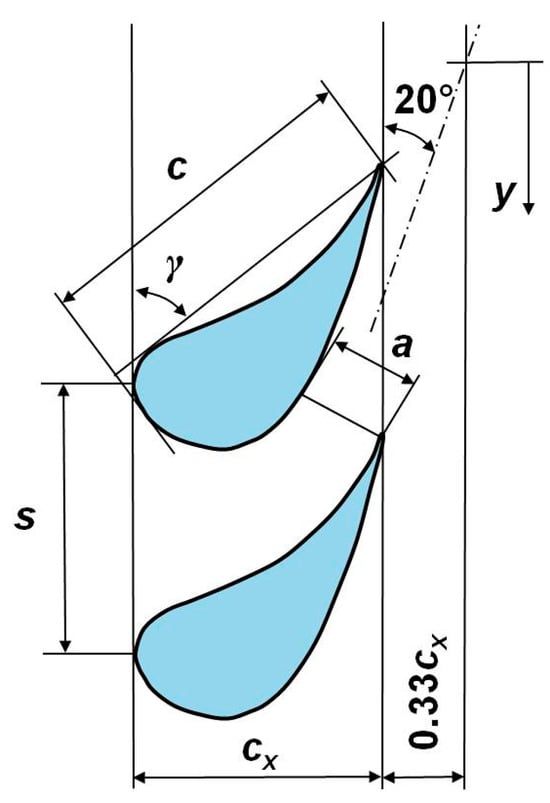
Boundary Layer Ingestion propulsors operate in an adverse aerodynamic environment with high levels of distortion. With the purpose of extending the operating range of transonic fan rotors for BLI applications, in this paper we present an optimisation study focused on blade profiles design under different working conditions. Quasi-2D blade sections are optimised using a genetic algorithm and numerical simulations, by varying the camberline and thickness distribution. A method to efficiently achieve a combination of total pressure ratio at a given relative inlet Mach number is devised. The isentropic efficiency is optimised at the design point, concurrently with the stall total pressure ratio at a lower inlet Mach number, in a multi-objective fashion. Pareto-optimal profiles exhibit a moderate leading edge concavity for high efficiency and a straighter fore part with increased trailing edge deflection for higher compression at stall. Optimised airfoils are used in a preliminary three-dimensional evaluation with a realistic BLI inflow, in which the unsteady full-annulus analysis corroborates the approach of the sectional optimisation, also showing the possibility of estimating the integral performance of the machine with a simplified approach based on a single-passage simulation with a circumferential-averaged inflow distribution.
Full article
Open AccessArticle
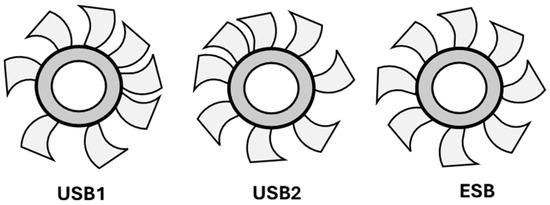
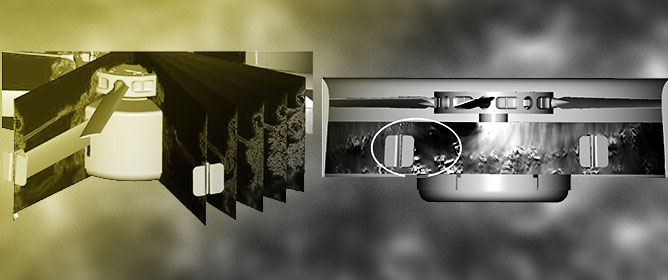
Aeroacoustic Prediction and Optimization of Unevenly Spaced Blades in Axial Fans
by
Samir Assaf, Thibaut Gras and Jacques Ferhat
Int. J. Turbomach. Propuls. Power 2026, 11(2), 17; https://doi.org/10.3390/ijtpp11020017 - 4 Apr 2026
Abstract
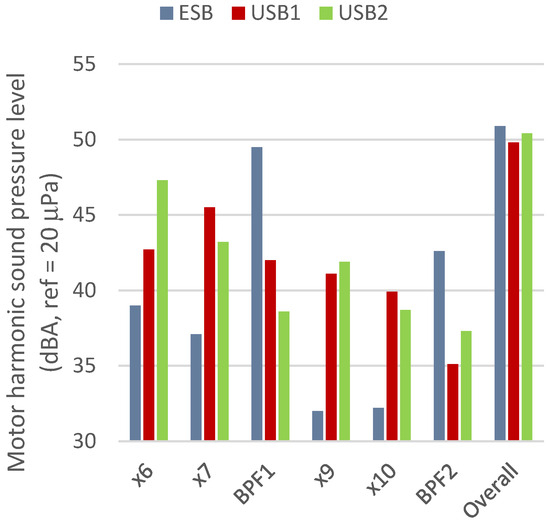
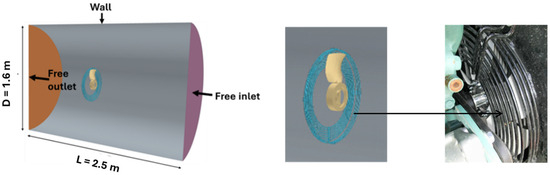
A common solution for reducing the tonal noise annoyance caused by fans is to change the circumferential blade spacing from even to uneven. However, this technique requires predictive tools to simulate and assess their acoustic performance at a lower cost compared to experimental
[...] Read more.
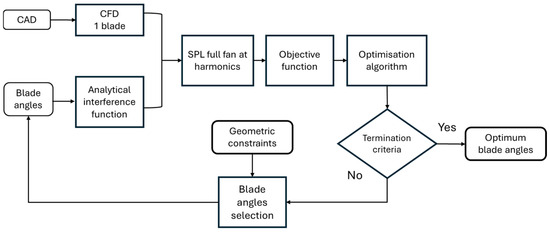
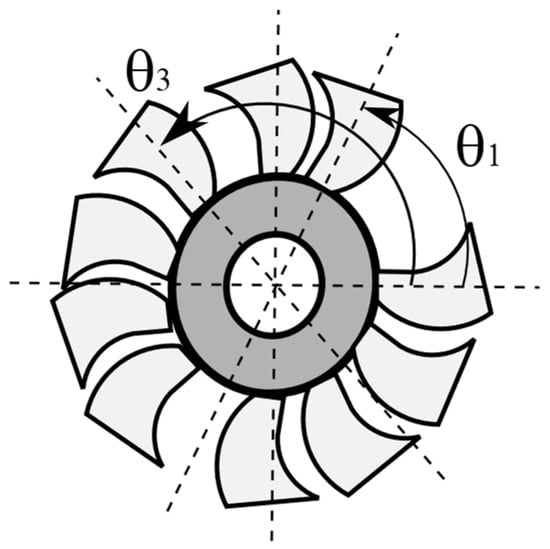
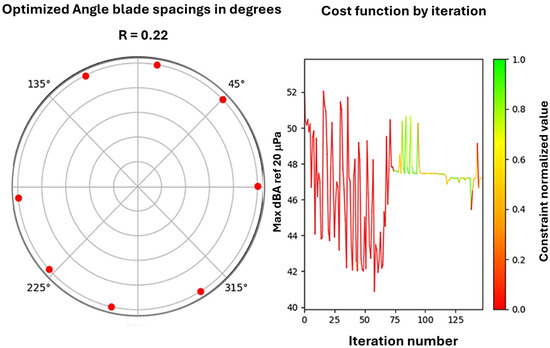
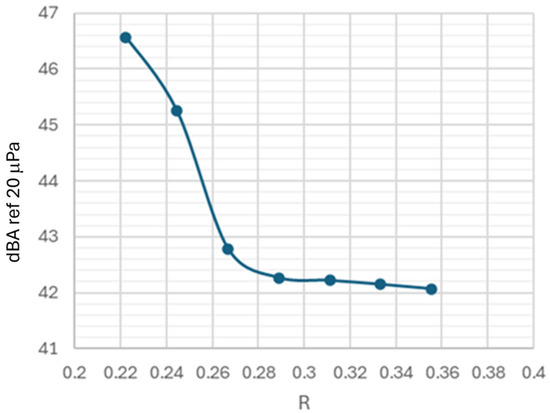
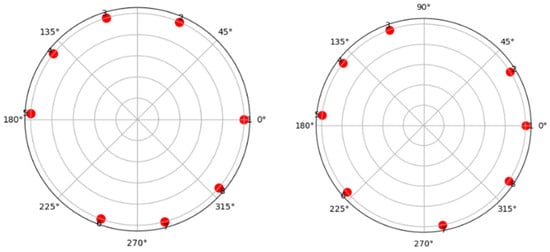
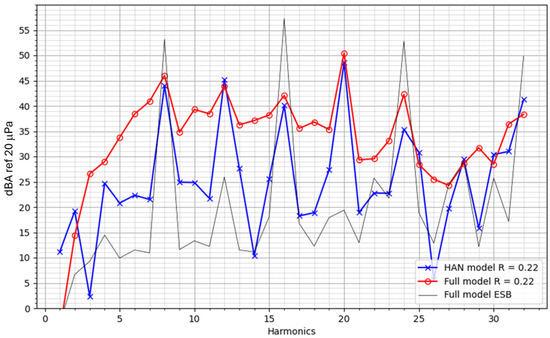
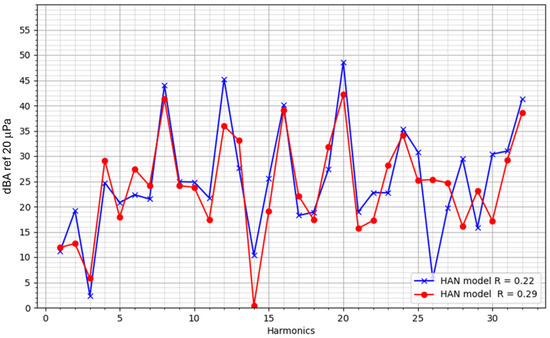
A common solution for reducing the tonal noise annoyance caused by fans is to change the circumferential blade spacing from even to uneven. However, this technique requires predictive tools to simulate and assess their acoustic performance at a lower cost compared to experimental tests, which remain very costly. In this study, a hybrid analytic/numeric (HAN) approach for predicting the tonal noise of fans is proposed. It is based on the acoustic interference law, which is applied to the sound pressure generated by each blade, and Computational Aeroacoustics (CAA). This model allows for the analytical construction of a fan’s acoustic pressure spectrum from the numerically computed response of a single blade, significantly reducing computation time. An optimization procedure is then implemented to minimize the prominence of tonal noise peaks, where the decision variables are the blades’ angular positions and the constraints are rotor balance and the minimum angular distance between adjacent blades. The results show that the developed method may help designers reduce tonal noise annoyance by optimizing blade spacing.
Full article
(This article belongs to the Special Issue Advances in Industrial Fan Technologies)
►▼
Show Figures

Figure 1
Open AccessArticle
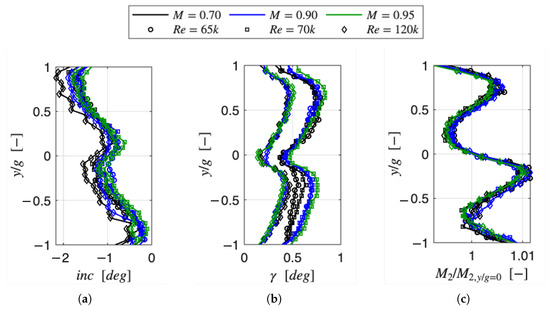
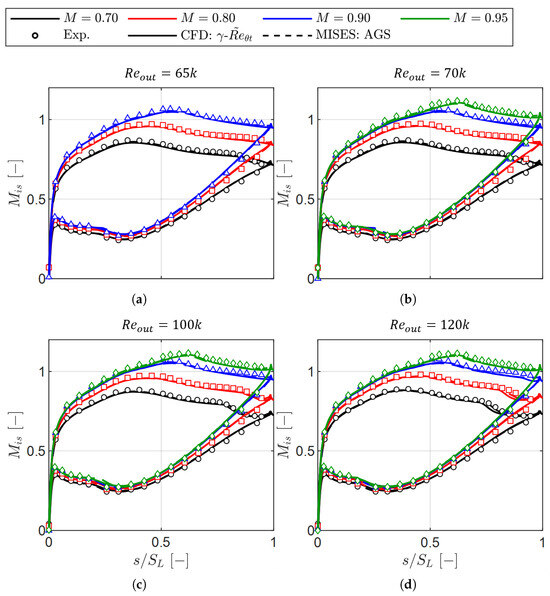
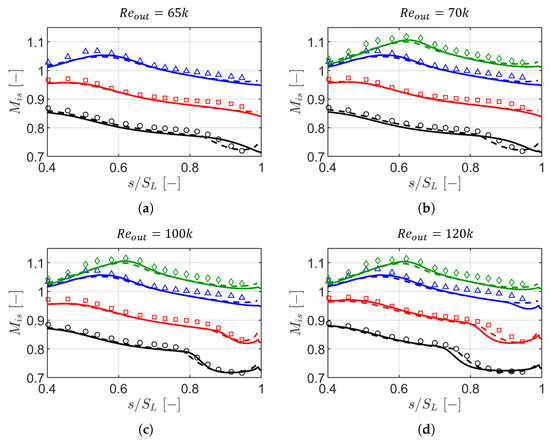
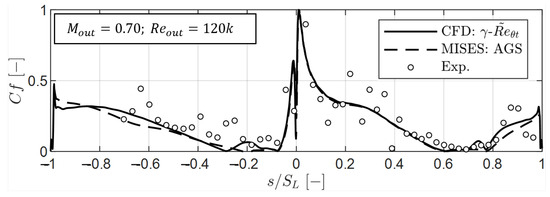
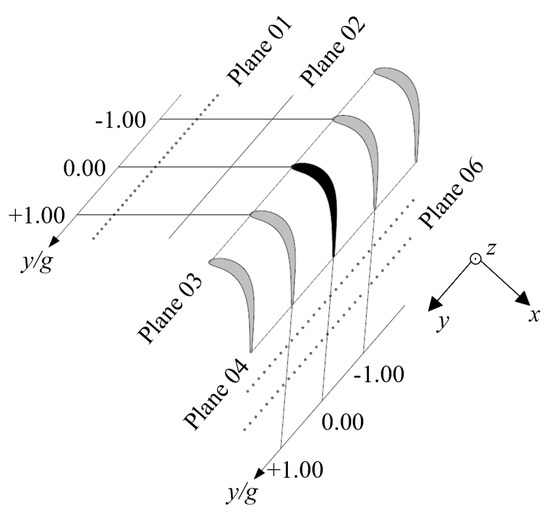
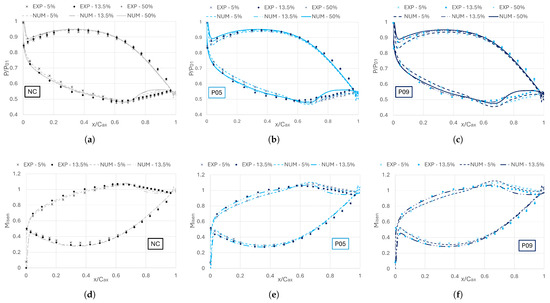
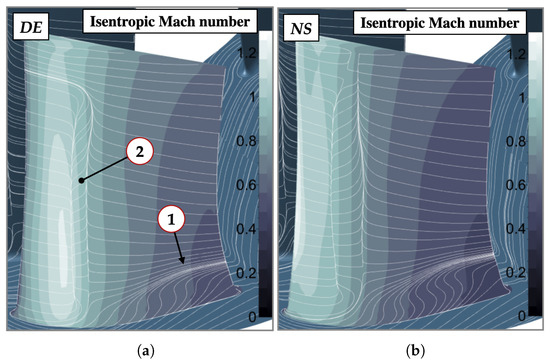
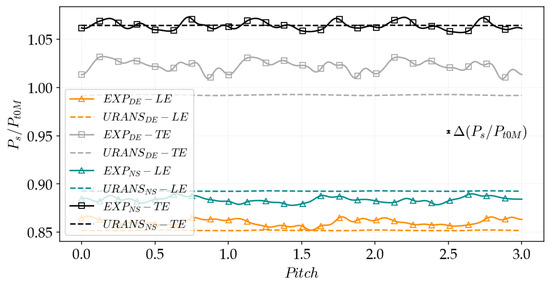
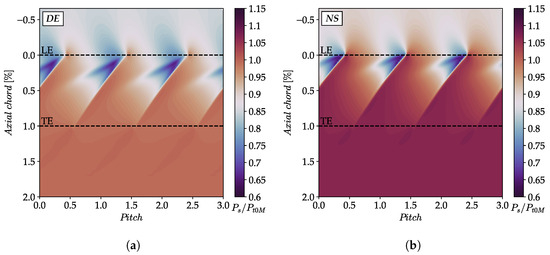
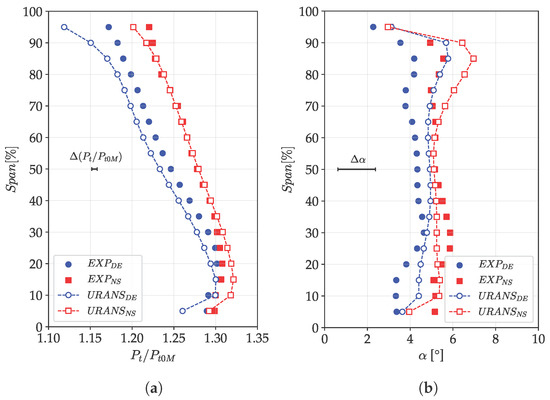
Experimental Investigation of Shock Boundary/Layer Interaction on a Fan Profile Under Various Inlet Conditions
by
Ahmed H. Hanfy, Piotr Kaczynski, Piotr Doerffer and Pawel Flaszynski
Int. J. Turbomach. Propuls. Power 2026, 11(2), 16; https://doi.org/10.3390/ijtpp11020016 - 3 Apr 2026
Abstract
►▼
Show Figures
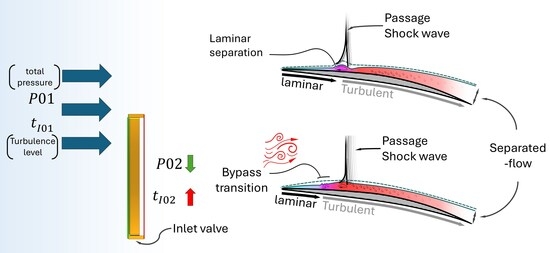
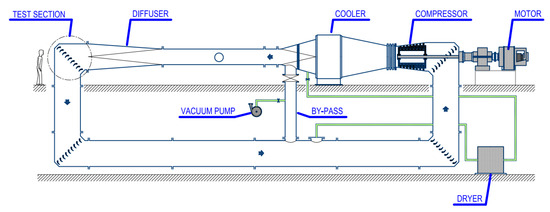
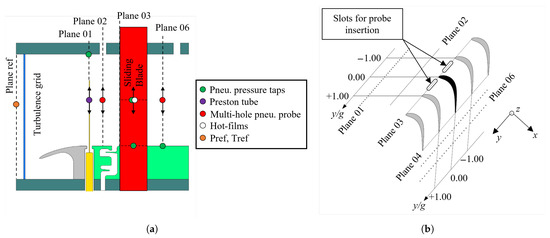
Transonic compressors encounter significant challenges from shock formations due to high-speed supersonic blade tips, particularly at high altitudes where lower Reynolds numbers result in laminar boundary layer separation and increased mixing losses. Understanding shock wave–boundary layer interaction (SBLI) is essential for improving compressor
[...] Read more.
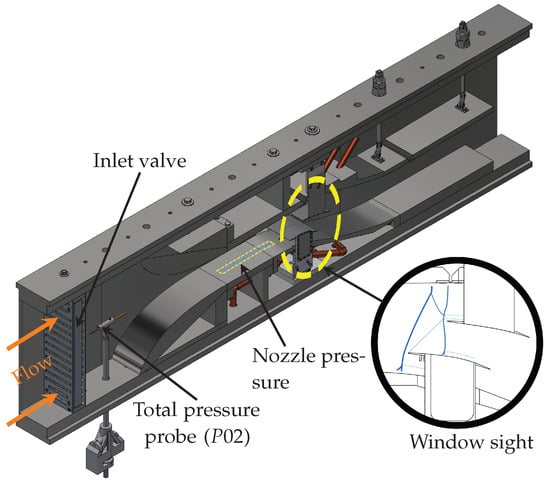
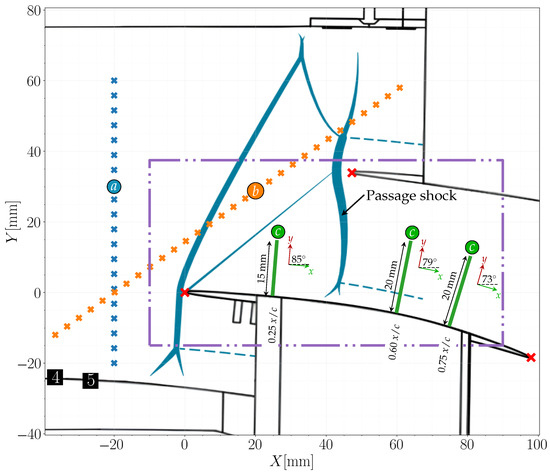
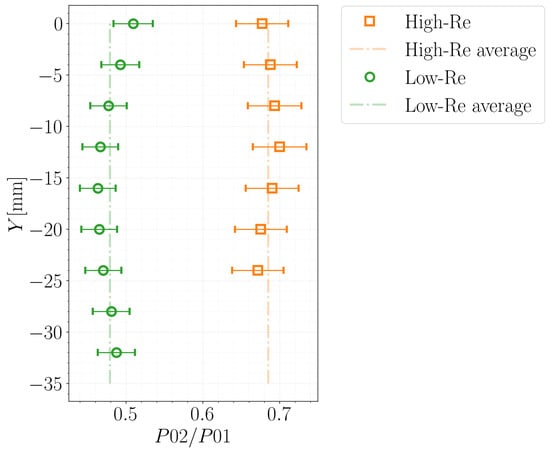
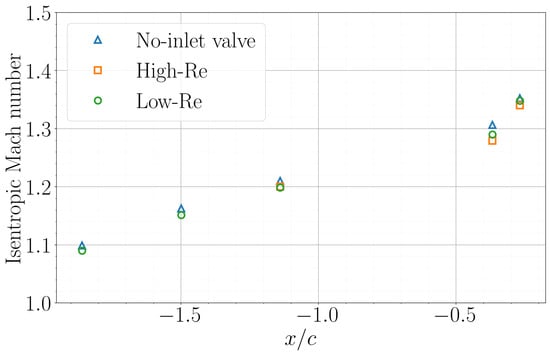
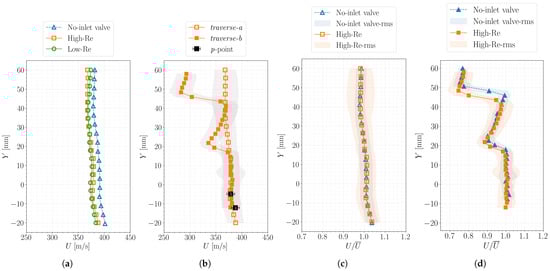
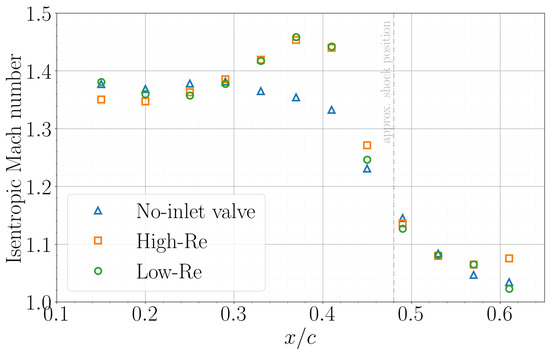
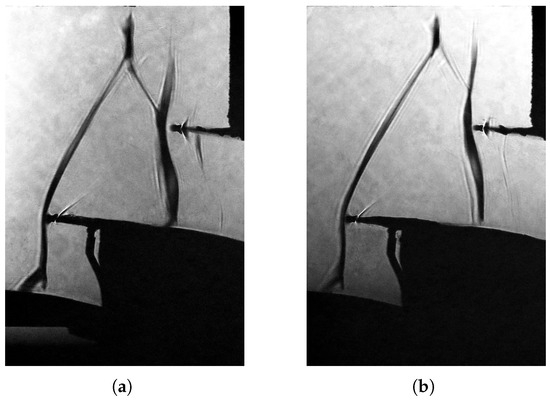
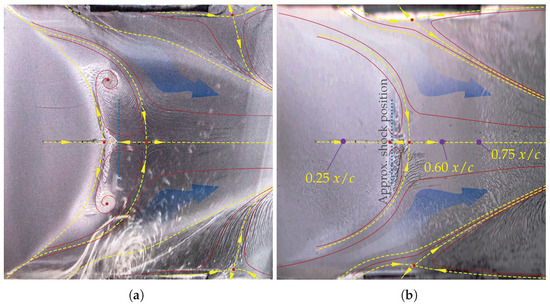
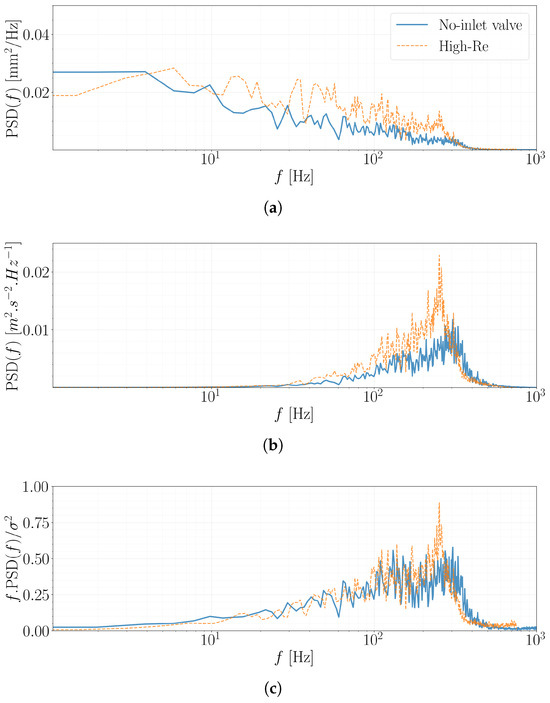
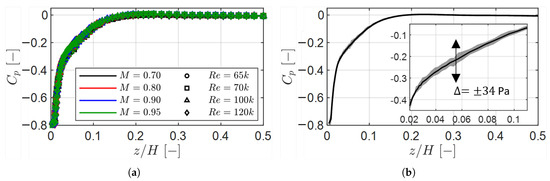
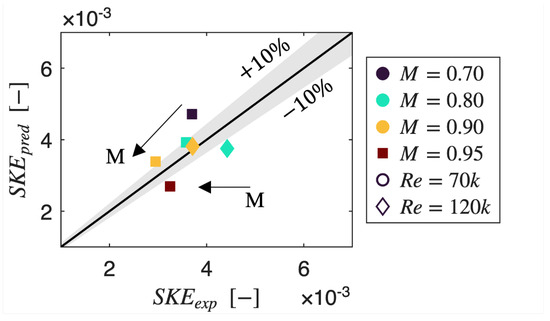
Transonic compressors encounter significant challenges from shock formations due to high-speed supersonic blade tips, particularly at high altitudes where lower Reynolds numbers result in laminar boundary layer separation and increased mixing losses. Understanding shock wave–boundary layer interaction (SBLI) is essential for improving compressor performance. This study examines SBLI under varying Reynolds numbers, simulating higher altitude conditions in a transonic blow-down wind tunnel. Using an inlet valve setup to control inflow total pressure and Reynolds numbers, this study also reveals an increase in turbulence. The findings indicate that laminar-to-turbulent transition occurs upstream of the shock wave, resulting in interaction with a turbulent boundary layer, even at lower Reynolds numbers.
Full article

Graphical abstract
Open AccessArticle
Numerical Investigation of Scaling Effects on the Performance Characteristics of Large-Scale Axial-Flow Fans
by
Tristan Oliver Le Roux, Chris Meyer and Sybrand Johannes van der Spuy
Int. J. Turbomach. Propuls. Power 2026, 11(1), 15; https://doi.org/10.3390/ijtpp11010015 - 3 Mar 2026
Abstract
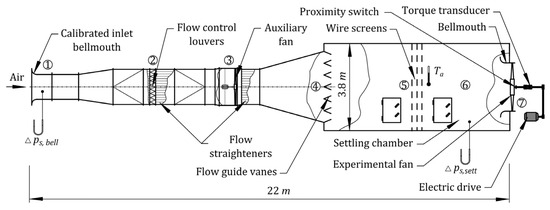
Large-diameter axial-flow fans are predominantly used for cooling purposes, such as in air-cooled heat exchangers. Since it is difficult to experimentally test large-scale fans in the controlled environments provided by fan test facilities, smaller scaled-down versions of the fans are tested instead. Scaling
[...] Read more.
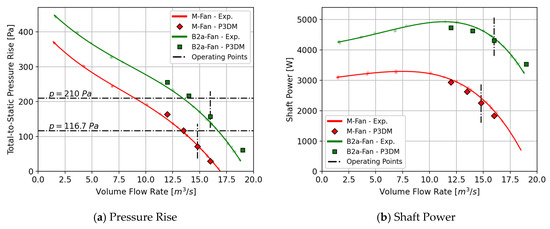
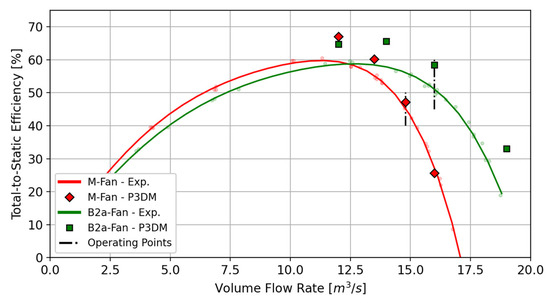
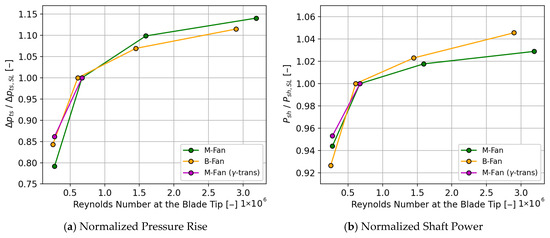
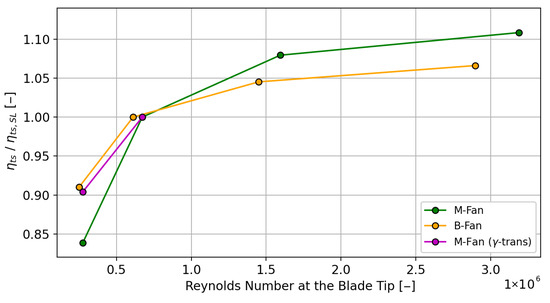
Large-diameter axial-flow fans are predominantly used for cooling purposes, such as in air-cooled heat exchangers. Since it is difficult to experimentally test large-scale fans in the controlled environments provided by fan test facilities, smaller scaled-down versions of the fans are tested instead. Scaling laws, also called affinity laws, are then used to determine the performance characteristics of the large-scale fan. The size difference between the two scaled fans means that it is not possible to match their Reynolds numbers when testing with the same test fluid. A comparison is conducted using experimental results and four numerical models for two different fans, which are scaled to different fan sizes: 0.63 m, 1.542 m, 3.658 m and 7.315 m, to determine the effect of Reynolds number on the performance characteristics of an axial-flow fan. The numerical geometries are based on the M- and B2a-fans, and are tested in the A-type experimental setup fan test facility at Stellenbosch University, which is used to obtain the experimental results. It was found that the numerical approach discussed within this paper, namely a Reynolds-Averaged Navier–Stokes (RANS) approach, can predict the performance of multiple fan sizes without relying on turbomachinery or blade-specific empirical correlations. This approach accelerates the evaluation of fan performance while enabling the parameterization of fan configurations.
Full article
(This article belongs to the Special Issue Advances in Industrial Fan Technologies)
►▼
Show Figures

Figure 1
Open AccessFeature PaperArticle
Off-Design Aerodynamics of the SPLEEN C1 Cascade
by
Gustavo Lopes, Loris Simonassi, Antonino Federico Maria Torre, Marios Patinios and Sergio Lavagnoli
Int. J. Turbomach. Propuls. Power 2026, 11(1), 14; https://doi.org/10.3390/ijtpp11010014 - 2 Mar 2026
Abstract
►▼
Show Figures
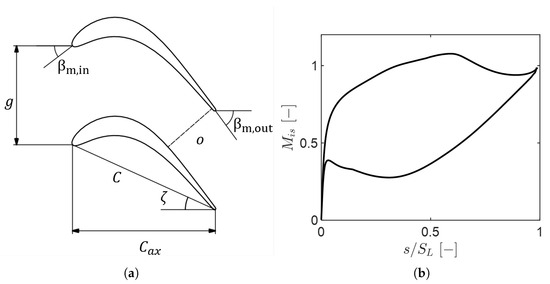
High-speed, low-pressure turbines in geared turbofans operate at transonic exit Mach numbers and low Reynolds numbers. Engine-relevant data remain scarce. The SPLEEN C1 linear cascade was investigated at and under
[...] Read more.
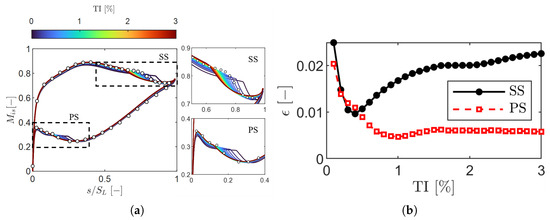
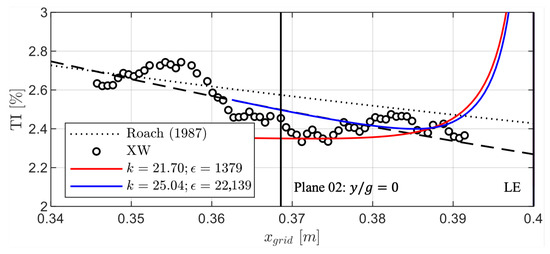
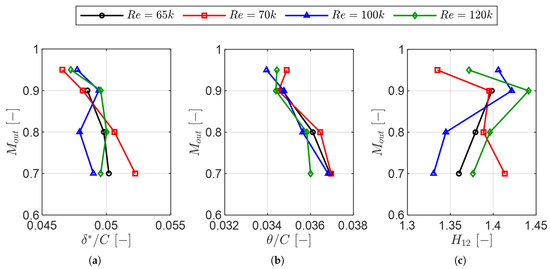
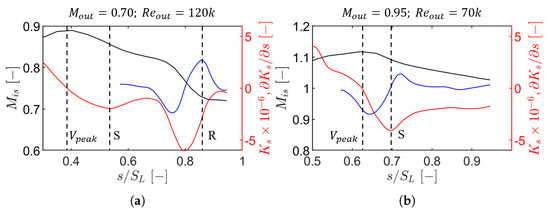
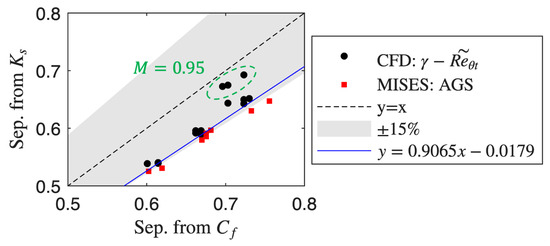
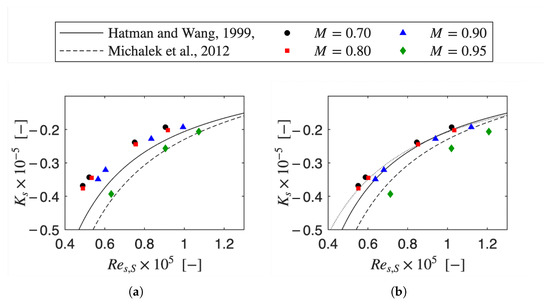
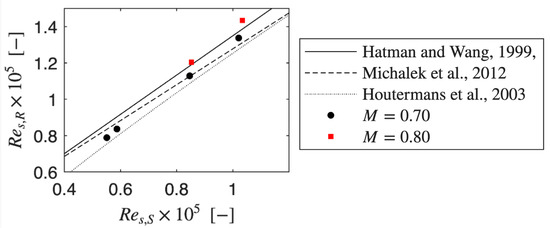
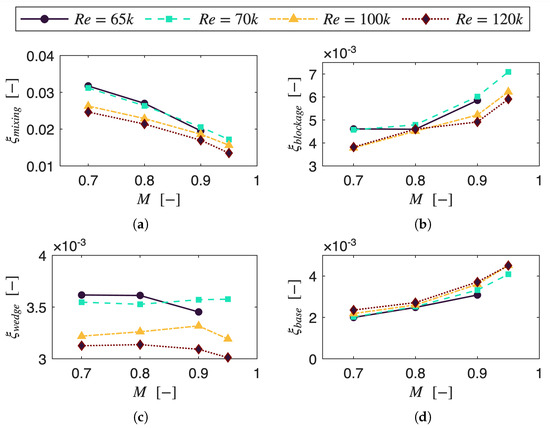
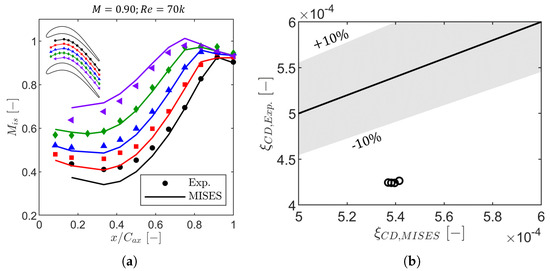
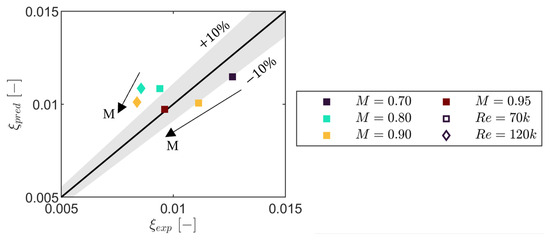
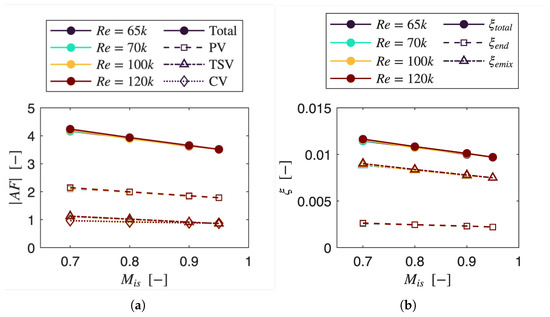
High-speed, low-pressure turbines in geared turbofans operate at transonic exit Mach numbers and low Reynolds numbers. Engine-relevant data remain scarce. The SPLEEN C1 linear cascade was investigated at and under steady inlet flow. Experiments were combined with 2D RANS and MISES, including transition modeling and inlet-turbulence decay calibrated to measurements. Results are consistent with conventional LPT behavior: loss decreased with increasing Mach and Reynolds numbers, except when shocks interacted with the blade boundary layer ( ). Profile loss dropped by from to at , as well as by at when open separation is suppressed. Secondary loss decreased by up to at and showed weak sensitivity to the Reynolds number. A coupled loss model predicted profile loss with a root-mean square error of 4.7%. Secondary-loss modeling reproduced global trends: separating endwall dissipation from mixing kept errors within for most cases, but accuracy degraded near the shock–boundary layer interaction case and at the highest Reynolds number. Mixing dominated endwall loss (∼75%), with the passage vortex contributing ∼50% (±10%) of the mixing component.
Full article

Figure 1
Open AccessFeature PaperArticle
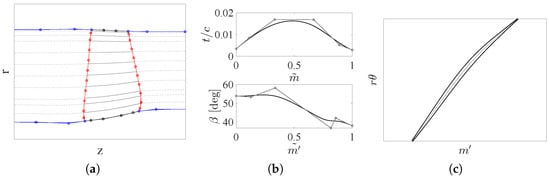
Two-Dimensional Flow in a Linear Cascade of Throttling Nozzles for an Adaptive Turbine Stage
by
Reinhard Willinger, Khoiri Rozi and Mohammad Reza Kariman
Int. J. Turbomach. Propuls. Power 2026, 11(1), 13; https://doi.org/10.3390/ijtpp11010013 - 2 Mar 2026
Abstract
►▼
Show Figures
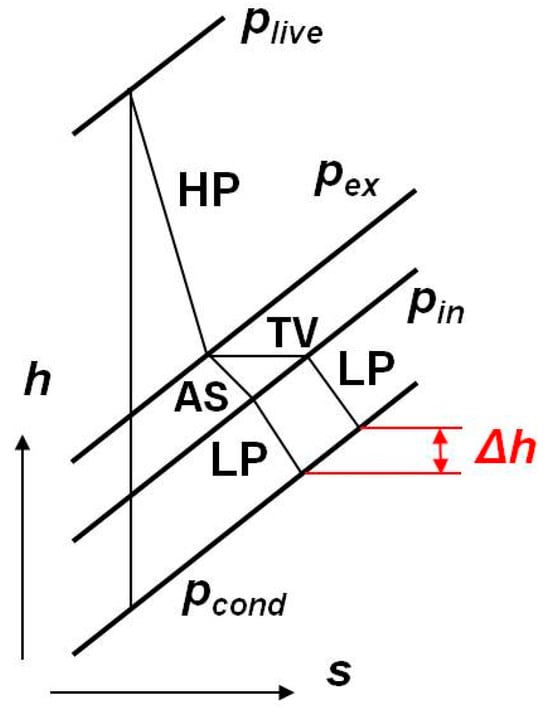
Steam turbines with controlled extraction require a flow control device to keep extraction pressure constant when the extraction mass flow rate is changed. An attractive option is an adaptive turbine stage with throttling nozzles. Flow measurements with a throttling nozzle are performed in
[...] Read more.
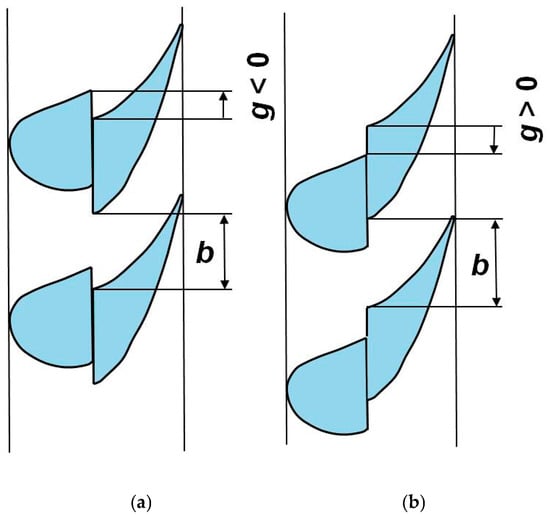
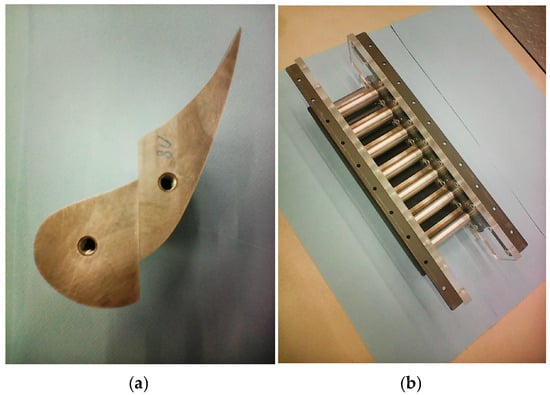
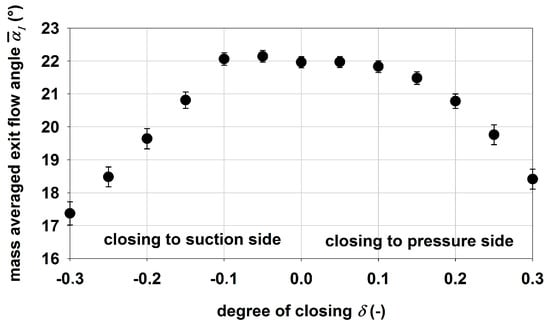
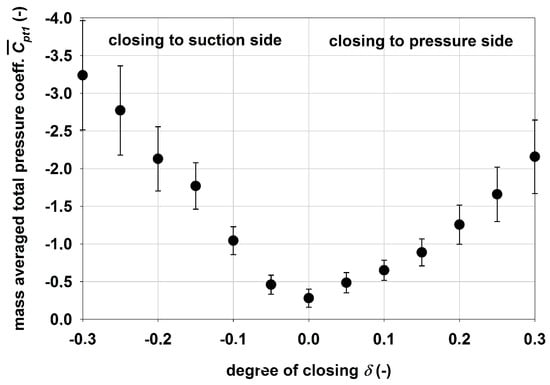
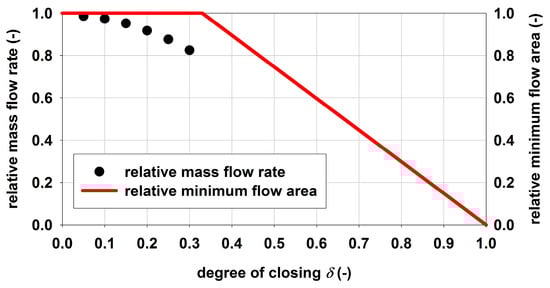
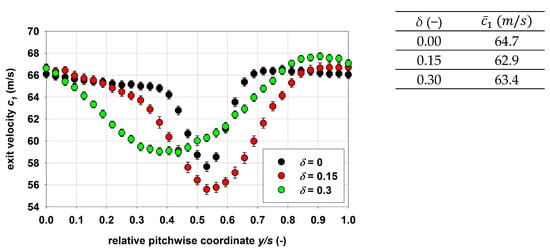
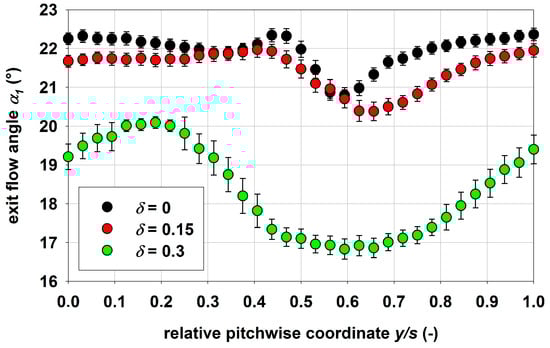
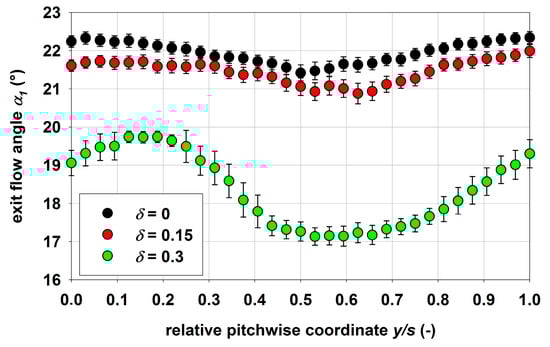
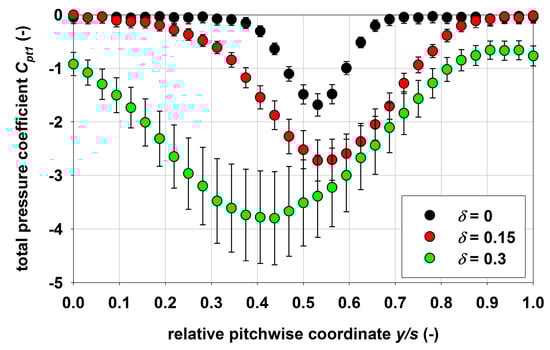
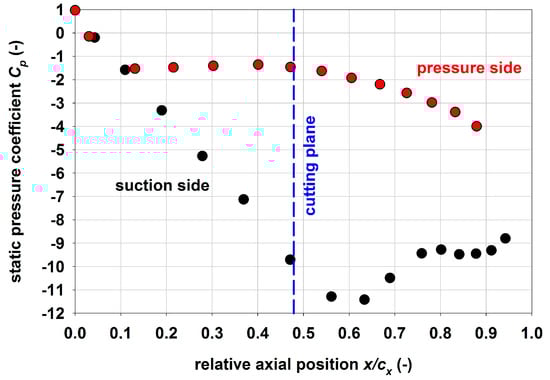
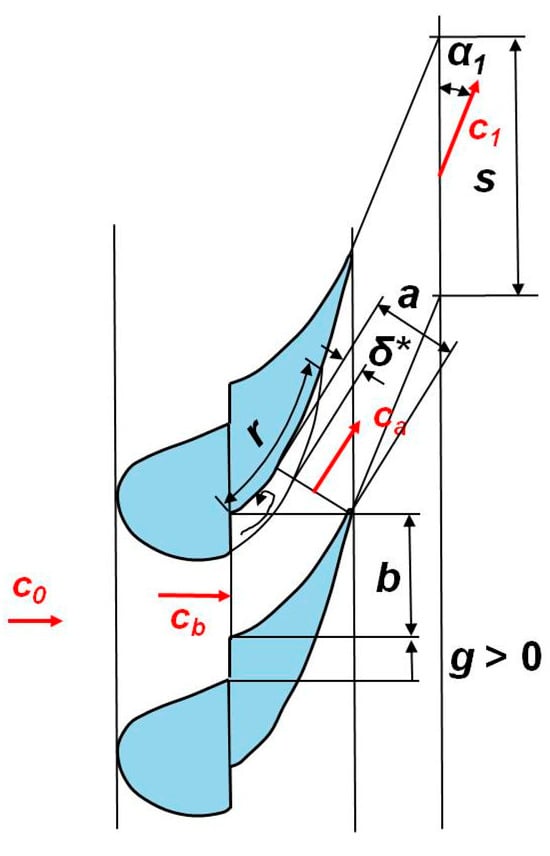
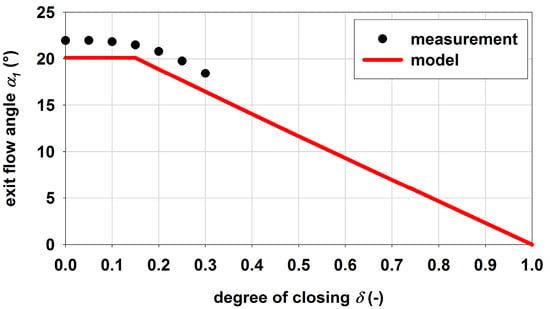
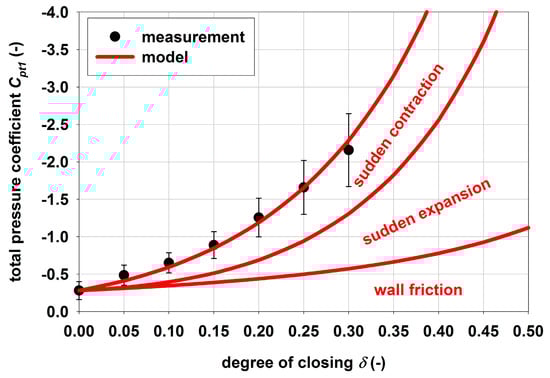
Steam turbines with controlled extraction require a flow control device to keep extraction pressure constant when the extraction mass flow rate is changed. An attractive option is an adaptive turbine stage with throttling nozzles. Flow measurements with a throttling nozzle are performed in a cascade wind tunnel. A linear cascade with seven blades is operated at an inlet flow angle of 90° and an exit Reynolds number of about 4 × 10⁵. Since the maximum exit Mach number is about 0.2, flow is essentially incompressible. A three-hole pressure probe is traversed at half span over one blade pitch 0.33 axial chord lengths downstream of the cascade. Degree of closing is gradually changed from zero (fully open) to 0.3 (partially closed). Two principal options, closing to the suction side as well as closing to the pressure side, are investigated. Local flow quantities as well as pitchwise mass averaged quantities are extracted from the measurement data. The major outcomes are as follows: If the throttling nozzle is closed, depth and width of the blade wake increase. With increasing degree of closing, pitchwise mass averaged flow angle decreases and total pressure losses increase. Concerning total pressure losses, closing to the pressure side is the preferred option. A semi-empirical flow model is presented to explain the influence of degree of closing on exit flow angle and total pressure loss.
Full article

Figure 1
Open AccessArticle
The Influence of Hub Purge Flow Rate on Forced Response in a Low-Pressure Turbine
by
Alexander Trafford, Sina Stapelfeldt, Gustavo Lopes and Sergio Lavagnoli
Int. J. Turbomach. Propuls. Power 2026, 11(1), 12; https://doi.org/10.3390/ijtpp11010012 - 2 Mar 2026
Abstract
►▼
Show Figures
We present the results of a computational investigation into the influence of hub purge flow mass flow rate on the forcing amplitudes generated on a low-pressure turbine (LPT) rotor cascade by the upstream stator vane passing (SVP). Forcing of this kind is a
[...] Read more.
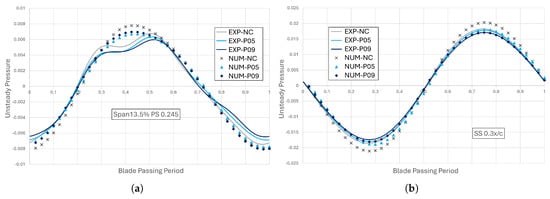
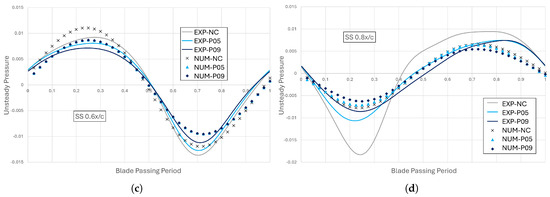
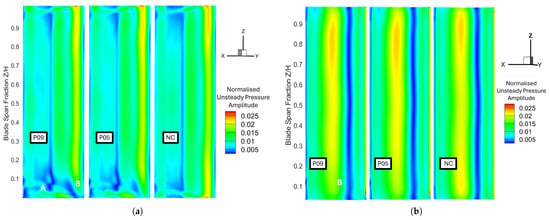
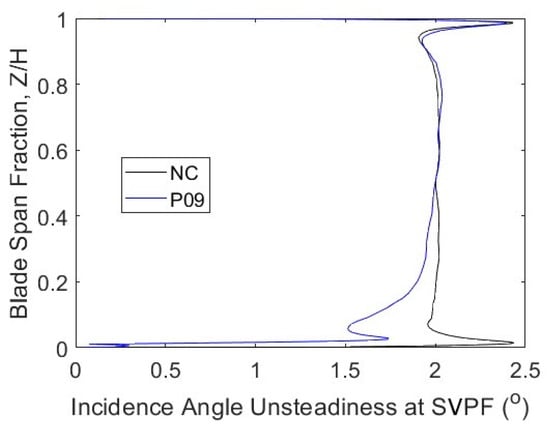
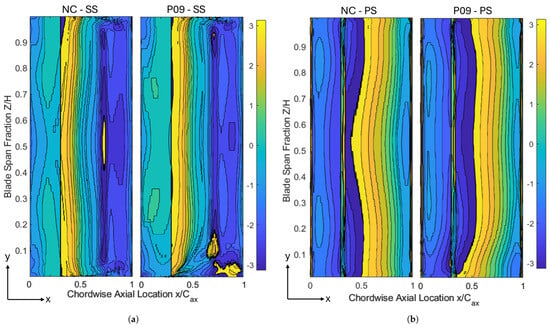
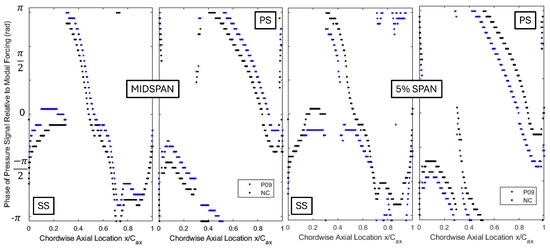
We present the results of a computational investigation into the influence of hub purge flow mass flow rate on the forcing amplitudes generated on a low-pressure turbine (LPT) rotor cascade by the upstream stator vane passing (SVP). Forcing of this kind is a major driver of high cycle fatigue (HCF) in turbines; however, the influence of hub purge flow, which is mandatory to seal cavities between stationary and rotating rows in turbines and to protect working components from excessively high temperatures, is minimally understood. This study was carried out via time-accurate unsteady aeroelastic simulations of the SPLEEN turbine cascade and is validated against the extensive database of test results obtained for this geometry at the Von Karman Institute for Fluid Dynamics. The effect of purge mass flow rates of and of the main passage flow are evaluated through measurement of the blade’s unsteady pressure and modal force at the SVP and compared to the nominal ‘no purge’ case. The introduction of purge flow was shown to reduce the amplitude of the unsteady pressure signal on the blade surface at the hub. However, a change in the phase of the unsteady pressure on certain portions of the blade could still bring about an increase in modal force for certain modes.
Full article

Figure 1
Open AccessArticle
Topology Optimization for Internal Cooling of Gas Turbine Guide Vanes—A Conjugate Heat Transfer Study
by
Hossein Nadali Najafabadi, Sadegh Fattahi, Jonas Lundgren and Carl-Johan Thore
Int. J. Turbomach. Propuls. Power 2026, 11(1), 11; https://doi.org/10.3390/ijtpp11010011 - 13 Feb 2026
Abstract
►▼
Show Figures
This study explores the feasibility and validity of using topology optimization (TO) to design the internal cooling of an airfoil-like geometry approximating a turbine guide vane. A conjugate heat transfer approach where the fluid flow physics are coupled with a convection–diffusion model for
[...] Read more.
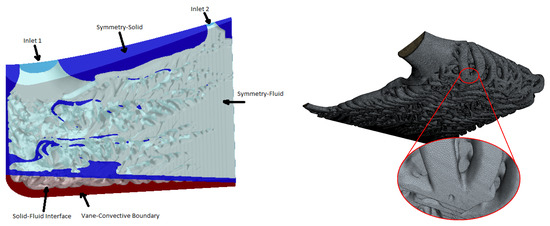
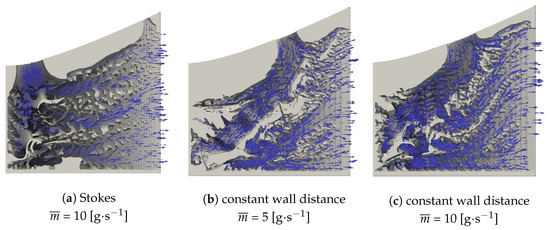
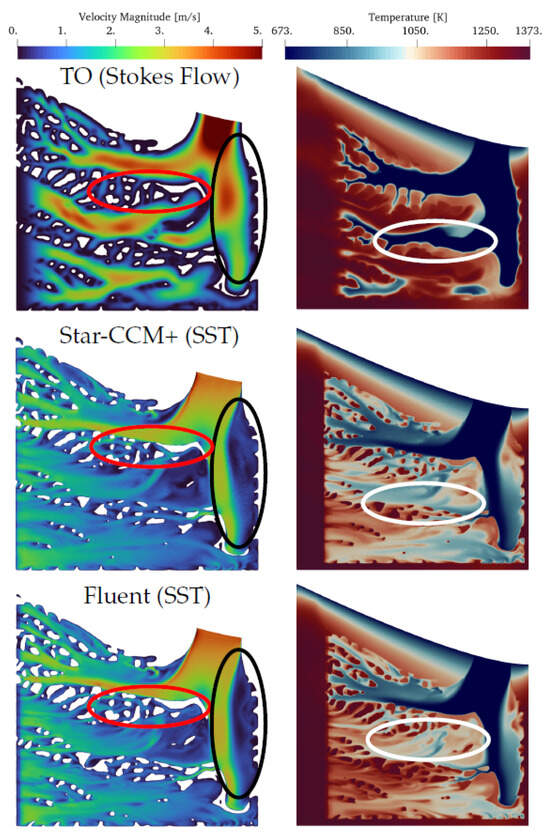
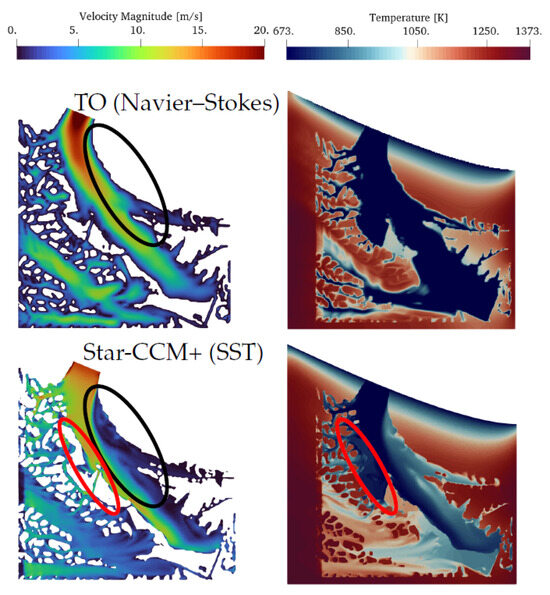
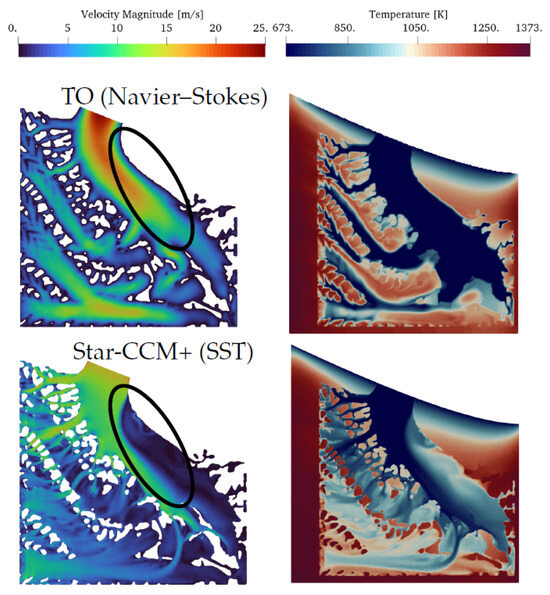
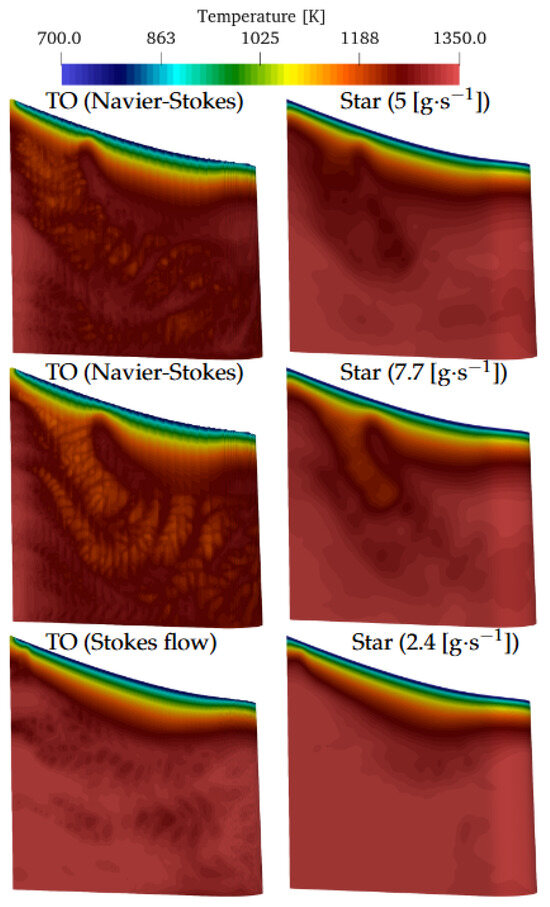
This study explores the feasibility and validity of using topology optimization (TO) to design the internal cooling of an airfoil-like geometry approximating a turbine guide vane. A conjugate heat transfer approach where the fluid flow physics are coupled with a convection–diffusion model for heat transfer is used in the TO. The objective is to minimize the maximum temperature on the outer surface of the vane with a constraint on the mass flow of the internal coolant. Two different flow models are investigated for the TO process: the Stokes model and the Reynolds-Averaged Navier–Stokes (RANS) equations with a simple zero-equation turbulence model. Velocity and temperature fields in topology-optimized designs are then compared to conventional conjugate heat transfer analyses performed on post-processed designs with body-fitted meshes and those using the shear stress transport (SST) RANS turbulence model. Designs obtained with the Stokes model exhibit different flow trajectories and mixing, while the use of RANS equations improves predictions but introduces uncertainties due to turbulence modeling limitations, particularly in the presence of flow separation. Thus, considering these limitations, the findings suggest that a simple flow model, such as Stokes in TO, with a comparatively low computational cost, can yield useful design concepts. However, the simplifications in the governing equations and their impact on physics should be considered carefully, and further aerothermal validation is required. Thus, the study findings, along with advances in robust meshing, enhance the practicality of topology optimization for industrial applications.
Full article

Figure 1
Open AccessFeature PaperArticle
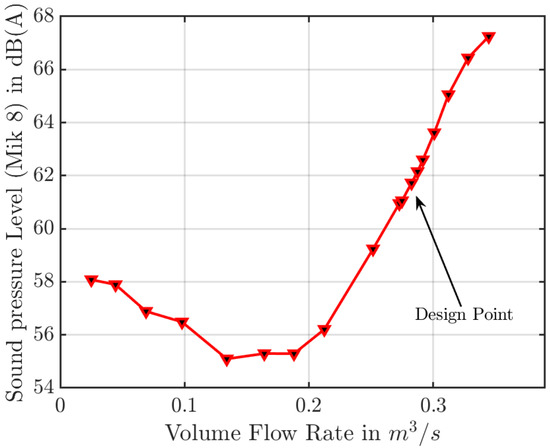
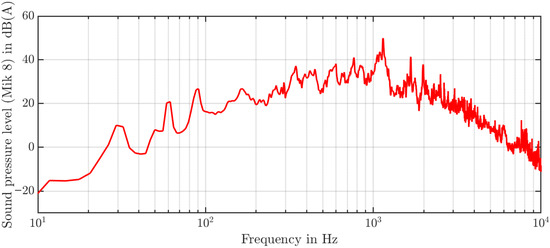
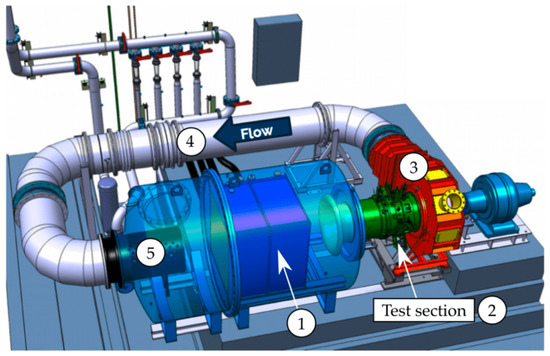
An Overview of the Benchmark Case for the Aeroacoustics and Structural Acoustics of an Enclosed Centrifugal Fan
by
Felix Czwielong, Patrick Heidegger, Manuel Lauber, Christoph Heigl, Andreas Wurzinger, Marco Fritzsche, Stefan Schoder, Manfred Kaltenbacher and Stefan Becker
Int. J. Turbomach. Propuls. Power 2026, 11(1), 10; https://doi.org/10.3390/ijtpp11010010 - 3 Feb 2026
Abstract
As part of a joint research project between the Institute of Fluid Mechanics (LSTM) and the Institute of Fundamentals and Theory of Electrical Engineering (IGTE), an international benchmark case for fluid–structure–acoustic interaction was developed. The research focused on an enclosed centrifugal fan, and
[...] Read more.
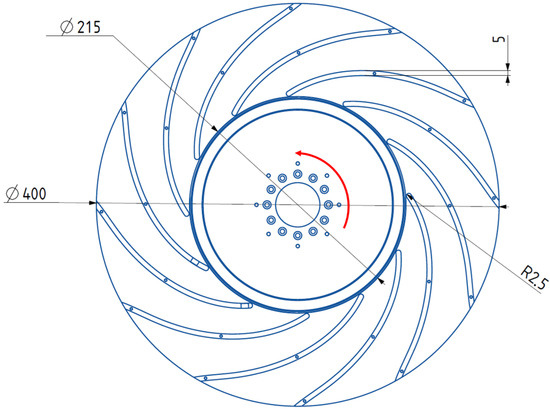
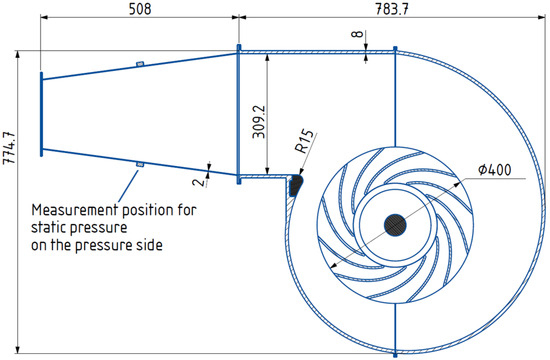
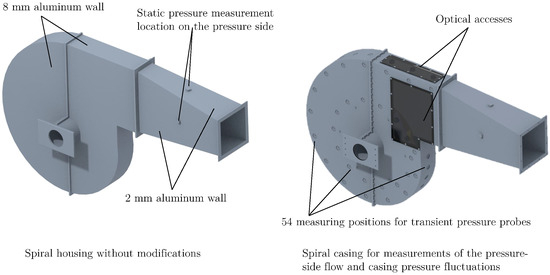
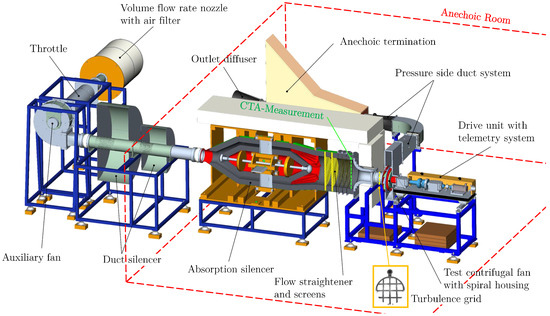
As part of a joint research project between the Institute of Fluid Mechanics (LSTM) and the Institute of Fundamentals and Theory of Electrical Engineering (IGTE), an international benchmark case for fluid–structure–acoustic interaction was developed. The research focused on an enclosed centrifugal fan, and its aerodynamic, aeroacoustic and structure–acoustic properties were characterised through experimental measurements. This paper provides an overview of the centrifugal fan, its enclosure and the test rig used for the experimental investigations. Rather than interpreting the results, the focus is on presenting the benchmark case and providing an overview of the available data. The entire benchmark dataset is listed and freely accessible via the Zenodo European platform in the EAA benchmark data collection.
Full article
(This article belongs to the Special Issue Advances in Industrial Fan Technologies)
►▼
Show Figures

Figure 1
Open AccessArticle
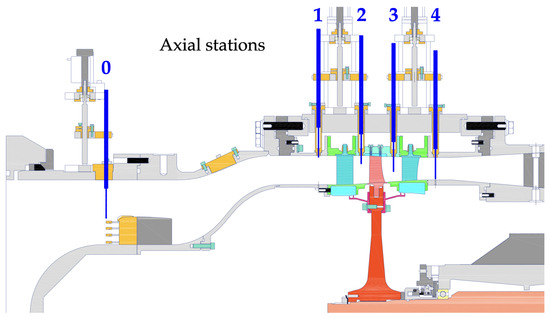
Experimental and Numerical Characterization of the Stable Operating Range of a Highly Loaded Axial Compressor Stage
by
Riccardo Toracchio, Koen Hillewaert and Fabrizio Fontaneto
Int. J. Turbomach. Propuls. Power 2026, 11(1), 8; https://doi.org/10.3390/ijtpp11010008 - 3 Feb 2026
Abstract
►▼
Show Figures
High-bypass ratio engines are currently among the most investigated solutions to achieve efficiency benefits and noise reduction in gas turbine engines. When equipped with a gearbox, these engines enable an optimized operation of the fan and of the low-pressure core, resulting in reduced
[...] Read more.
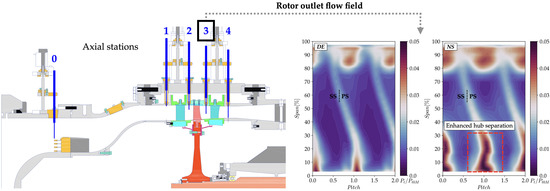
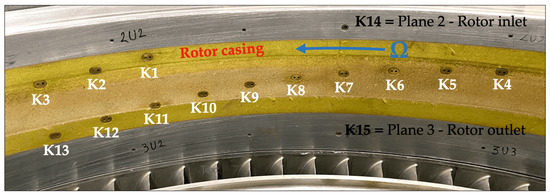
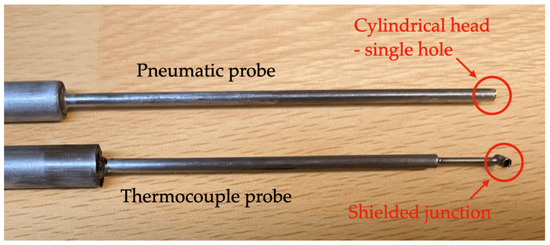
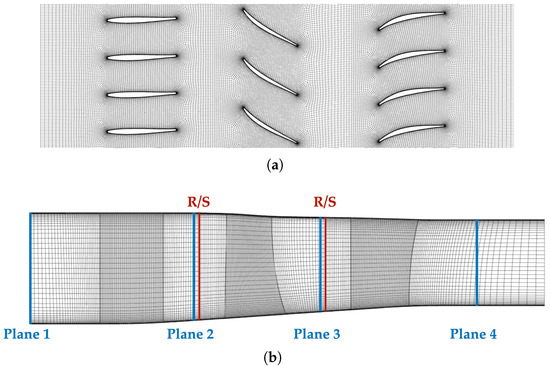
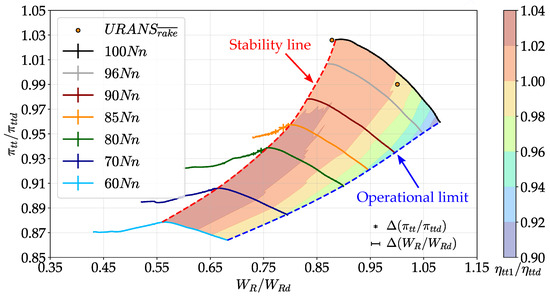
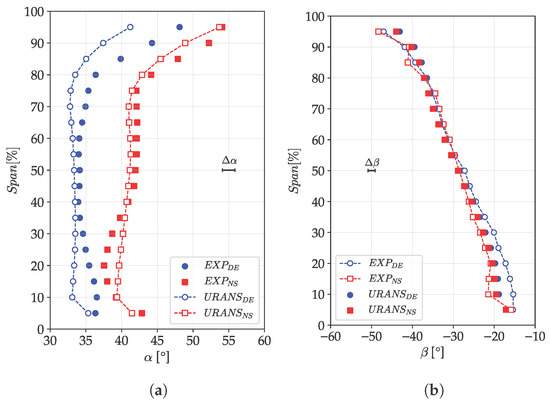
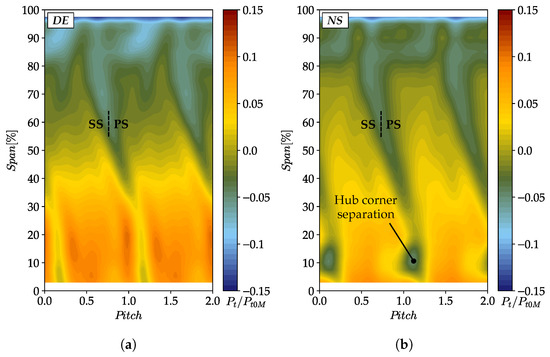
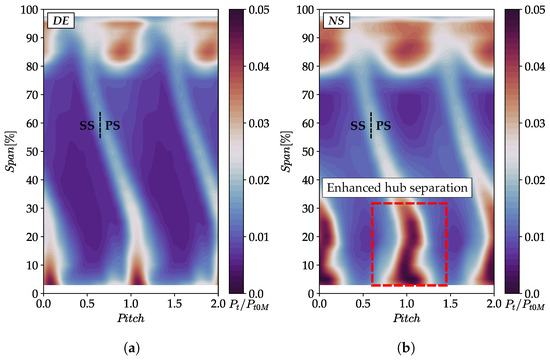
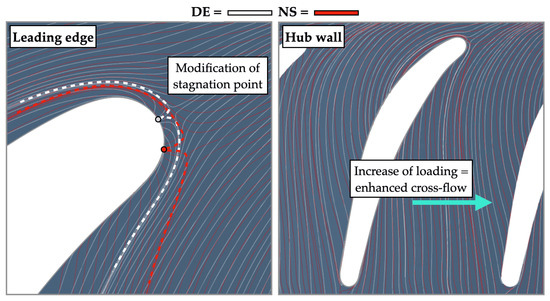
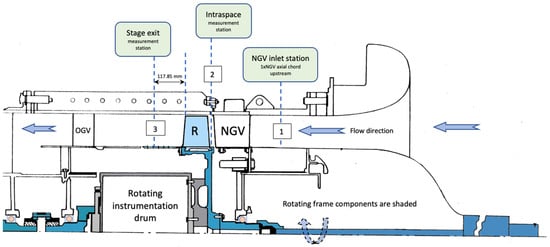
High-bypass ratio engines are currently among the most investigated solutions to achieve efficiency benefits and noise reduction in gas turbine engines. When equipped with a gearbox, these engines enable an optimized operation of the fan and of the low-pressure core, resulting in reduced weight and fuel consumption. The higher spool speed allows higher pressure ratios per stage, and consequently a reduced stage count. However, all this contributes to an enhanced sensitivity of the engine components to the development of secondary flow structures and separations, with a consequent impact on the aerodynamic performance and stability. In this context, an experimental campaign was conducted at the von Karman Institute for Fluid Dynamics on a highly loaded axial compressor representative of the first stage of a modern booster. The aim was to identify the flow features responsible of the performance loss at the operating points and speeds considered more critical in terms of rotor inlet incidence. To this end, time-averaged instrumentation was employed to characterize the performance and to retrieve the distribution of flow quantities at different axial positions within the stage, while fast-response probes allowed for the detailed characterization of the rotor outlet flow field. Unsteady 3D simulations complemented the experimental results and supported this interpretation, especially in regions with limited instrumentation access. The experimental and numerical results emphasized the role of the secondary flow structures developing near the hub wall as the main drivers for aerodynamic stall, due to the enhanced loading in this blade region.
Full article

Graphical abstract
Open AccessFeature PaperArticle
An Experimental and Numerical Investigation into Compressor Casing Heat Shield Effectiveness
by
Andrew Pilkington, Vinod Gopalkrishna, Christopher Barnes, Leo Lewis and Marko Bacic
Int. J. Turbomach. Propuls. Power 2026, 11(1), 9; https://doi.org/10.3390/ijtpp11010009 - 2 Feb 2026
Abstract
►▼
Show Figures
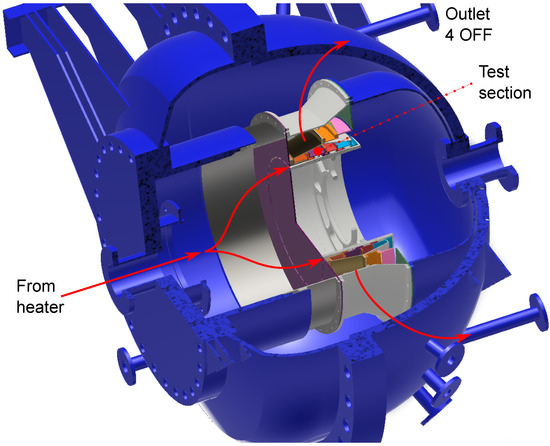
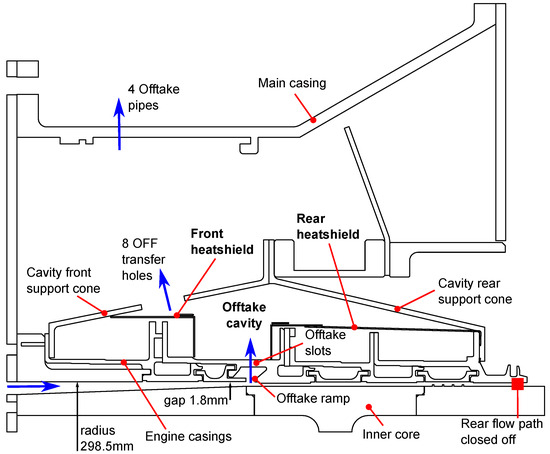
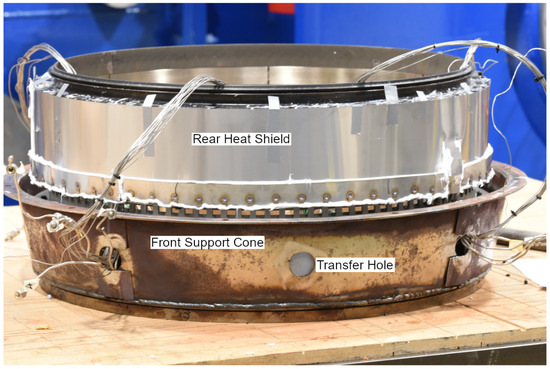
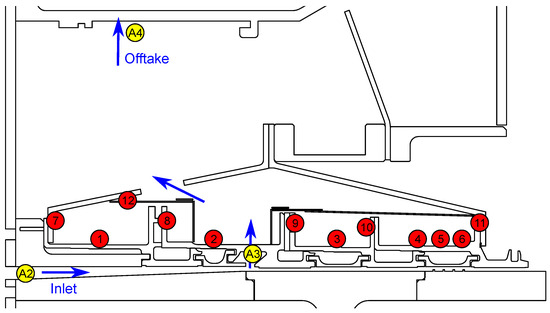
An investigation was conducted into the effectiveness of heat shields in an aero-engine compressor casing to slow down thermal time constants. The investigation used a combination of experimental measurements from a full-size compressor casing rig, combined with numerical analysis using CFD and thermal
[...] Read more.
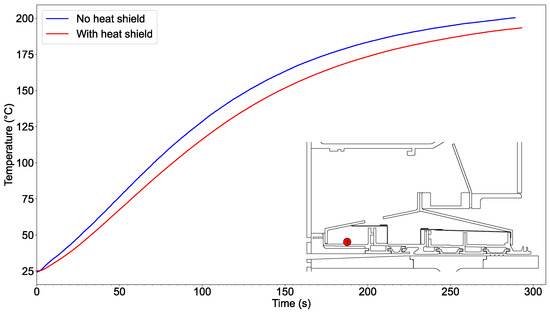
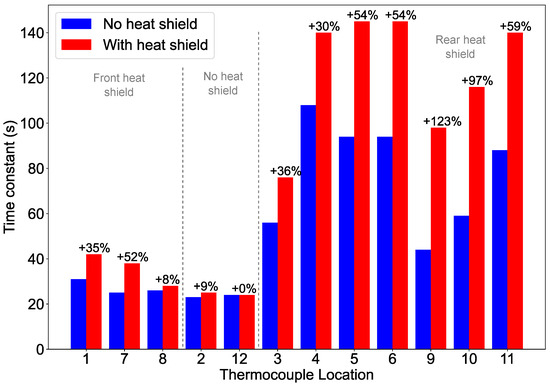
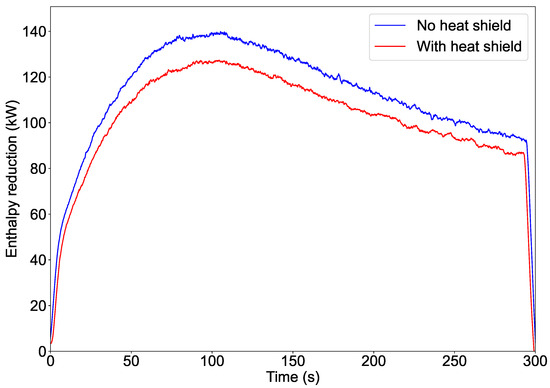
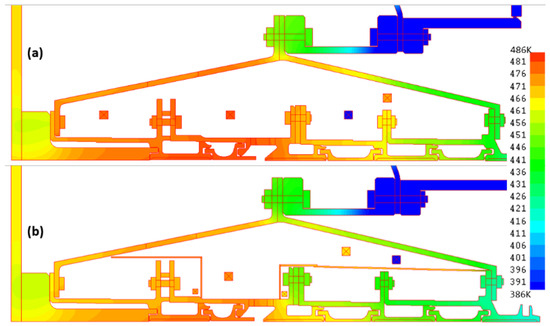
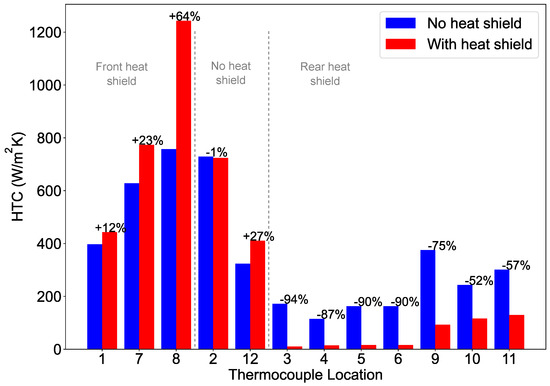
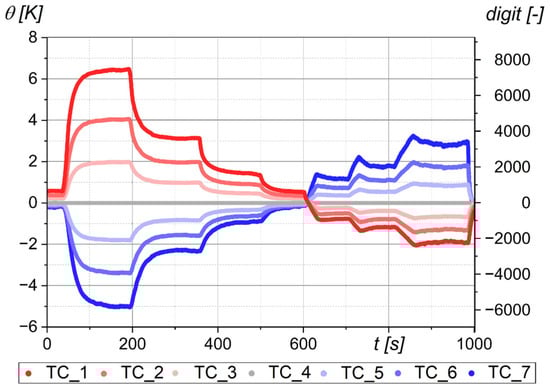
An investigation was conducted into the effectiveness of heat shields in an aero-engine compressor casing to slow down thermal time constants. The investigation used a combination of experimental measurements from a full-size compressor casing rig, combined with numerical analysis using CFD and thermal modelling. Experiments were performed on a compressor casing both with and without heat shielding in order to determine the heat shield effectiveness. Temperature measurements were taken throughout the casing in order to determine the thermal time constants. The experimental data was then used to validate a thermal model and CFD simulations of the compressor casing. The modelling allowed the heat transfer coefficients in the compressor casing to be determined from the experimentally measured time constants. It was found that the heat shields gave an increase in thermal time constant at each measured location. With a doubling in the time constant at some locations compared to the unshielded case. It was also found that the heat shields need to be fully sealed, as leakage flows significantly reduce their effectiveness.
Full article

Figure 1

Open AccessArticle
On the Impact of the Off-Design Operating Condition on the Thermal Performance of Rotor Platform Cooling
by
Giovanna Barigozzi, Giovanni Brumana, Nicoletta Franchina and Elisa Ghirardi
Int. J. Turbomach. Propuls. Power 2026, 11(1), 7; https://doi.org/10.3390/ijtpp11010007 - 8 Jan 2026
Abstract
►▼
Show Figures
In the present work, off-design operating condition is considered to be the ability of the turbine to operate down to 50% to 20% of its nominal intake air flow rate. An important consequence of these off-design points is the change in the inlet
[...] Read more.
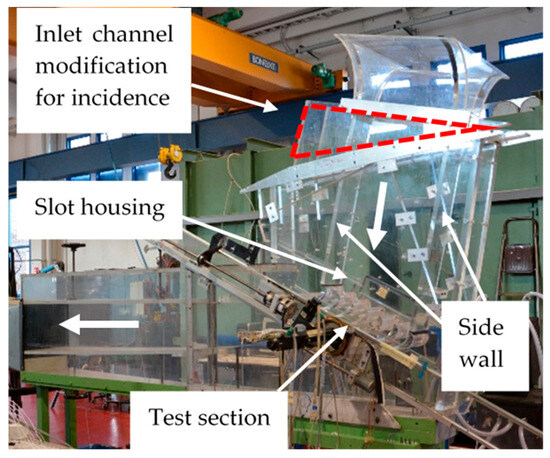
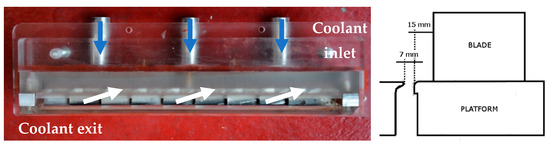
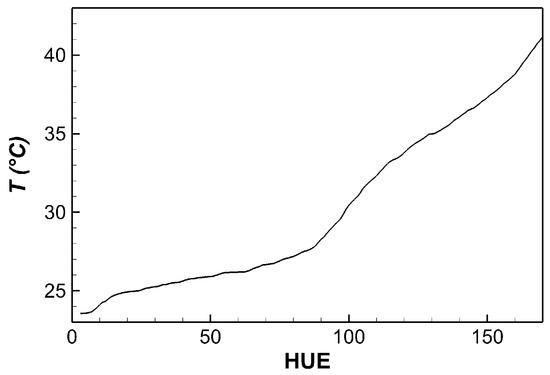
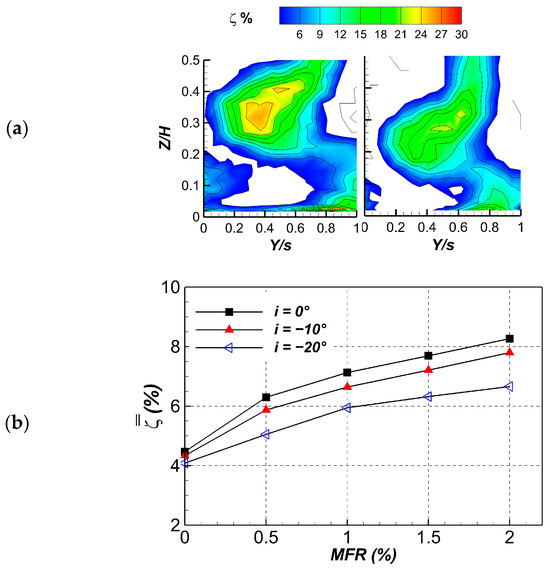
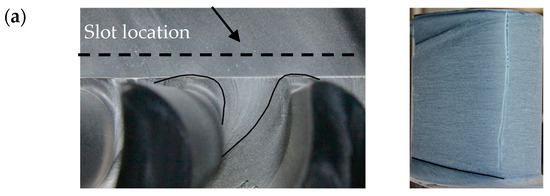
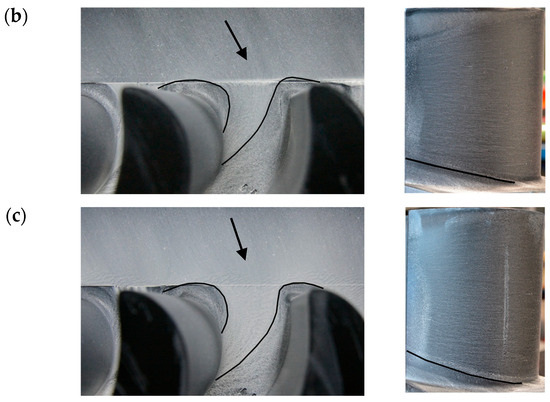
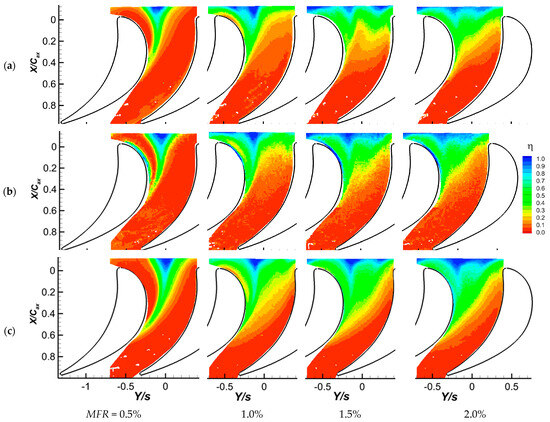
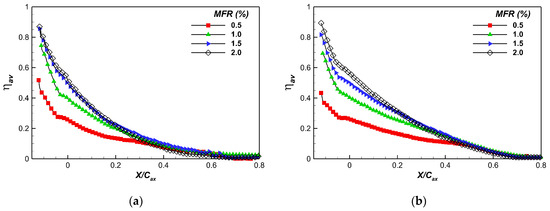
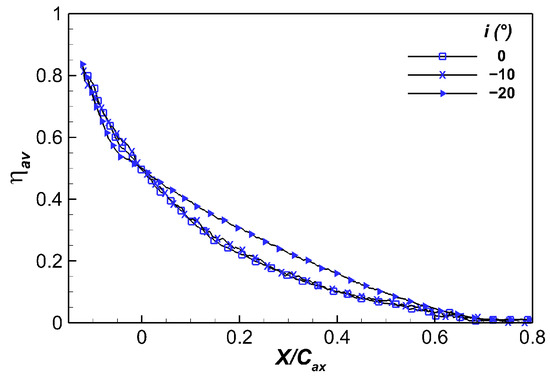
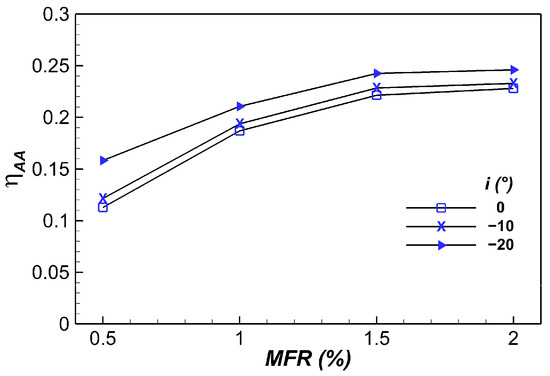
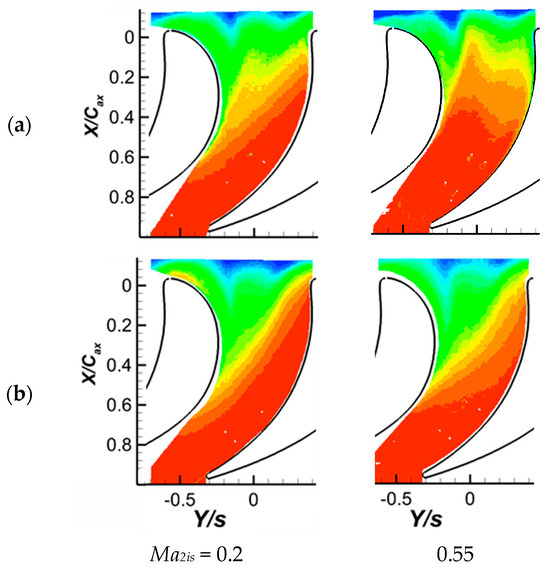
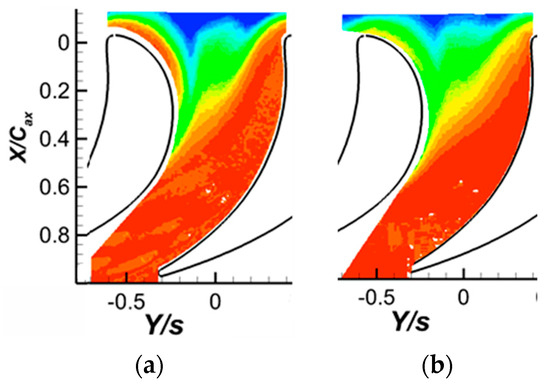
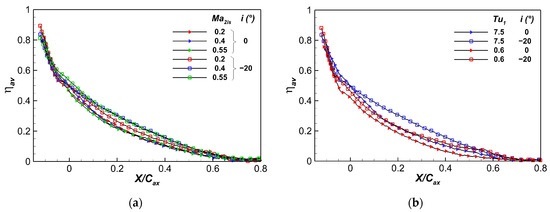
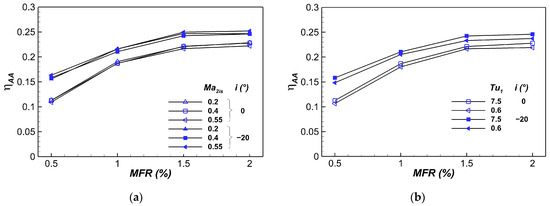
In the present work, off-design operating condition is considered to be the ability of the turbine to operate down to 50% to 20% of its nominal intake air flow rate. An important consequence of these off-design points is the change in the inlet incidence angle, which varied from nominal to −20°. Tests were performed on a seven-blade rotor cascade with platform cooling through an upstream slot simulating the stator-to-rotor interface gap. To model the impact of rotation on purge flow injection, a set of fins were installed inside the slot to give the coolant flow a tangential direction. Different cascades’ off-design operating conditions were tested, covering downstream velocity values up to Ma2is = 0.55, with two inlet turbulence intensity levels of 0.6% a and 7%. A thermal measurement campaign was conducted with the Thermochromic Liquid Crystal technique to measure the adiabatic film cooling effectiveness at various coolant-to-main-flow mass flow ratios, different incidence angles, mainstream Mach numbers, and turbulence levels. The results describe the complexity of the turbine operating under off-design operating conditions, relating the improvement in the platform thermal protection to the reduced secondary-flows activity induced by negative incidence.
Full article

Figure 1
Open AccessArticle
Aerodynamics of Short Intake at High Incidence
by
Fernando Tejero, David MacManus, Josep Hueso-Rebassa, Yuri Frey Marioni and Ian Bousfield
Int. J. Turbomach. Propuls. Power 2026, 11(1), 6; https://doi.org/10.3390/ijtpp11010006 - 5 Jan 2026
Abstract
►▼
Show Figures
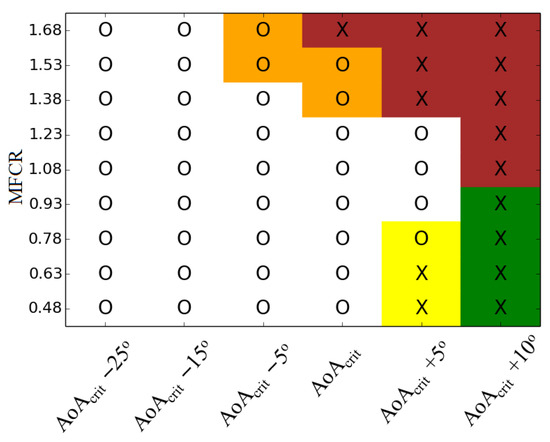
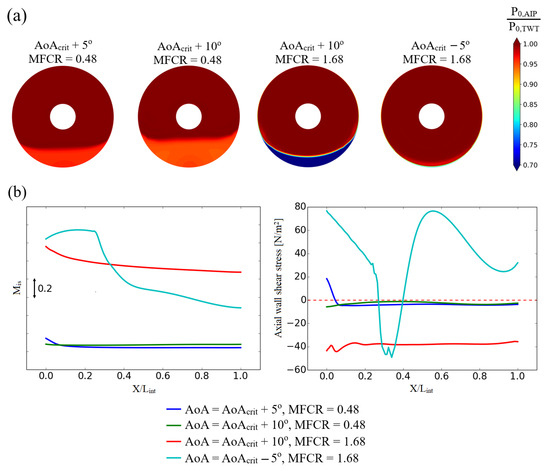
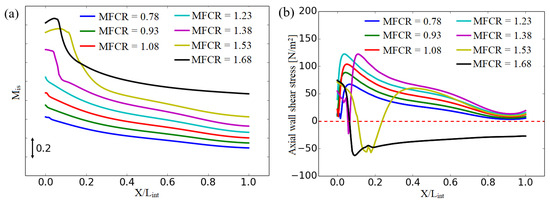
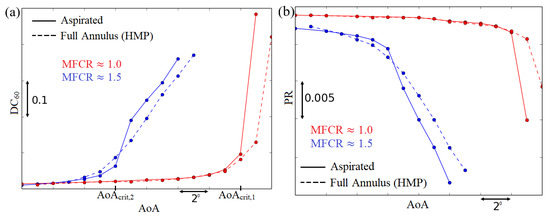
This work assesses the aerodynamics of a short aero-engine intake for a new rig that is planned to be tested at the Large Low-Speed Facility of the German Dutch Wind Tunnels (LLF-DNW) in 2025. A range of computations were performed to assess whether
[...] Read more.
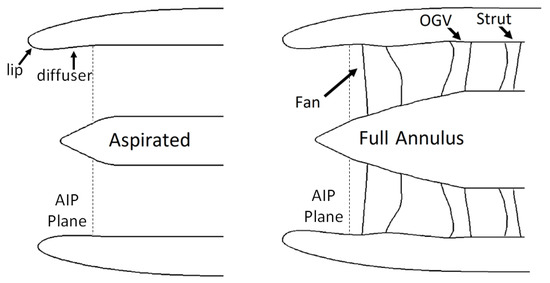
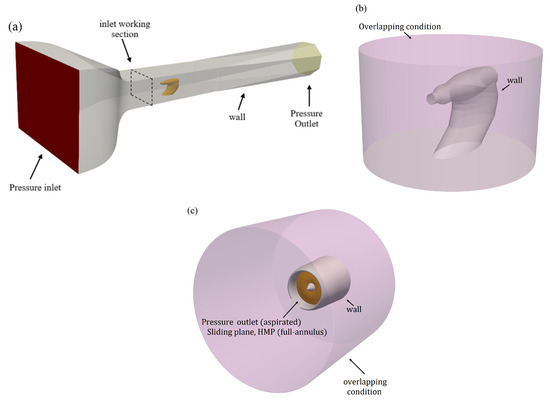
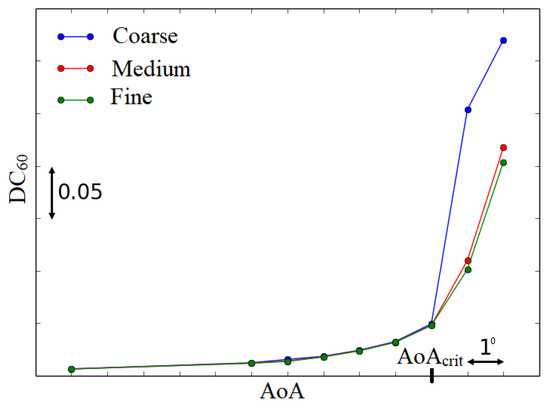
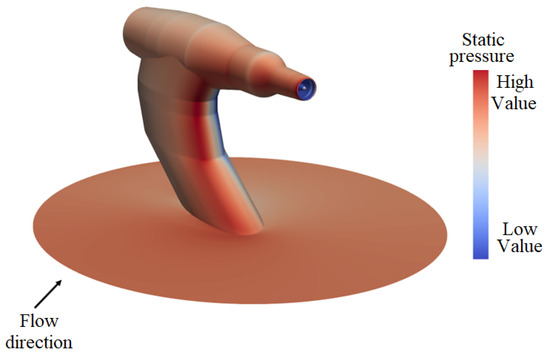
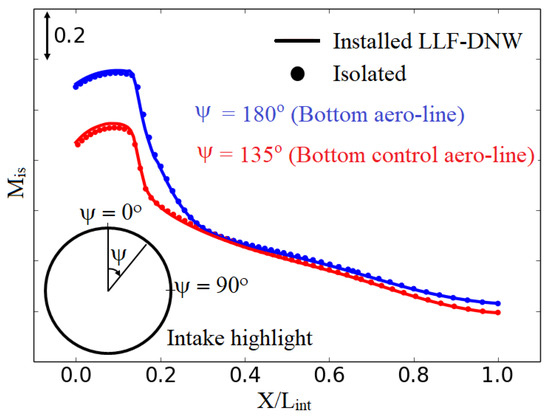
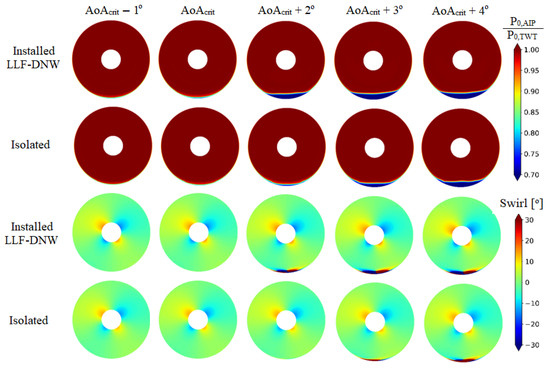
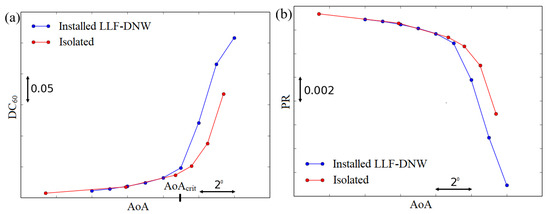
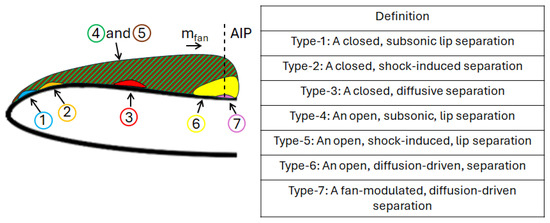
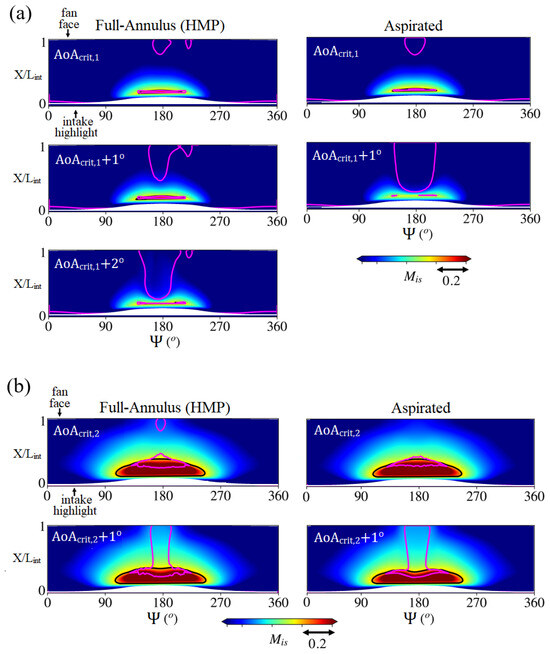
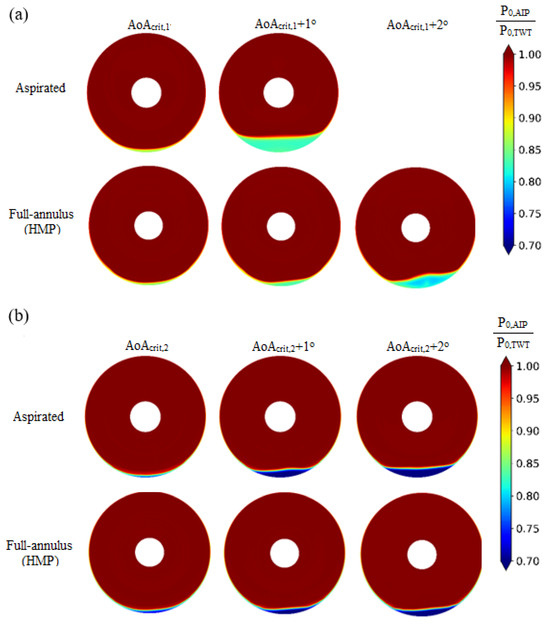
This work assesses the aerodynamics of a short aero-engine intake for a new rig that is planned to be tested at the Large Low-Speed Facility of the German Dutch Wind Tunnels (LLF-DNW) in 2025. A range of computations were performed to assess whether the expected aerodynamics in this arrangement encompass the envisaged range of flow field characteristics of the equivalent isolated configuration. The effect of massflow capture ratio and angle of attack are investigated. In addition, an intake flow separation taxonomy is proposed to characterise the associated flows. The wind tunnel analysis is based on two different modelling approaches: an aspirated isolated intake and a coupled fan–intake configuration. The coupled configuration uses a full-annulus model with a harmonic mixing plane method. Across the range of operating conditions with changes in the massflow capture ratio and angle of attack, there are attached and separated flows. The main separation mechanisms are diffusion-driven and shock-induced, which shows the different aerodynamics that may be encountered in a short intake. Overall, this work provides an initial evaluation of the aerodynamics of the new fan/intake test rig configuration, provides guidance for wind tunnel testing, and lays a foundation for subsequent unsteady coupled fan–intake studies.
Full article

Figure 1

Open AccessFeature PaperArticle
On the Effect of Tip Flow on the Noise of a Ducted Rotor
by
Jose Rendón-Arredondo and Stéphane Moreau
Int. J. Turbomach. Propuls. Power 2026, 11(1), 5; https://doi.org/10.3390/ijtpp11010005 - 5 Jan 2026
Abstract
This study focuses on the aeroacoustic aspects of ducted rotors that could possibly be used in future electrically driven helicopter tail rotor systems. It provides a comprehensive understanding of the tip flow evolution, and of the interaction with the stator stage. High-fidelity compressible
[...] Read more.
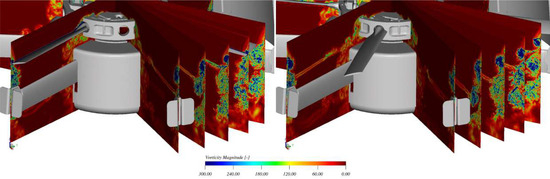
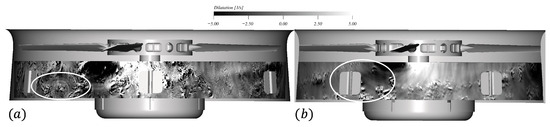
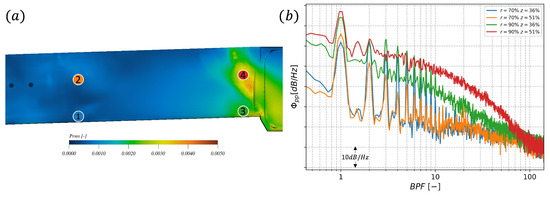
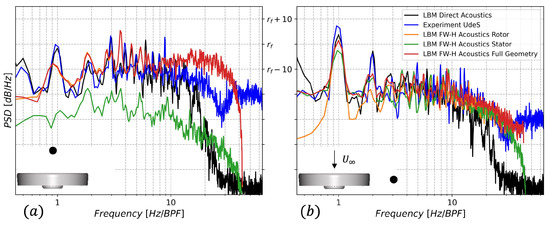
This study focuses on the aeroacoustic aspects of ducted rotors that could possibly be used in future electrically driven helicopter tail rotor systems. It provides a comprehensive understanding of the tip flow evolution, and of the interaction with the stator stage. High-fidelity compressible numerical simulations are performed and compared with experimental results. A periodic variation is seen in the aerodynamic performance of the rotor blades, which is associated to a potential-interaction phenomenon. Additionally, the convection of the tip vortices and further impingement in the stator vanes generate torque fluctuations on these elements. Dilatation fields and contours confirm a noise source generated by the tip-vortex–stator interaction. Finally, excellent far-field noise comparisons between the numerical and experimental results are obtained for both tonal and broadband noise.
Full article
(This article belongs to the Special Issue Advances in Industrial Fan Technologies)
►▼
Show Figures

Figure 1
Open AccessArticle
The Influence of Leading Edge Tubercle on the Transient Pressure Fluctuations of a Hubless Propeller
by
Max Hieke, Matthias Witte and Frank-Hendrik Wurm
Int. J. Turbomach. Propuls. Power 2026, 11(1), 4; https://doi.org/10.3390/ijtpp11010004 - 31 Dec 2025
Abstract
►▼
Show Figures
In recent years, the design priorities of modern marine propellers have shifted from maximizing efficiency to minimizing vibration-induced noise emissions and improving structural durability. However, an optimized design does not necessarily ensure optimal performance across the full operational range of a vessel. Due
[...] Read more.
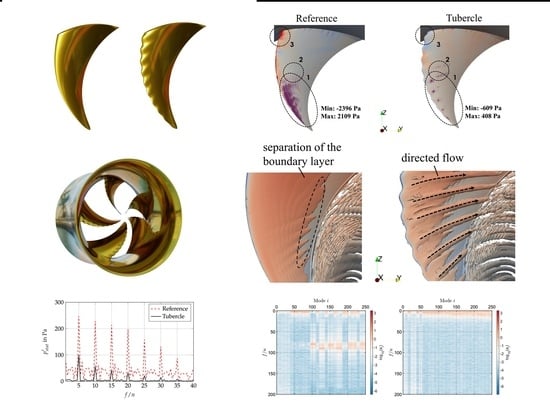
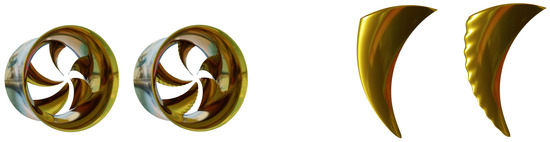
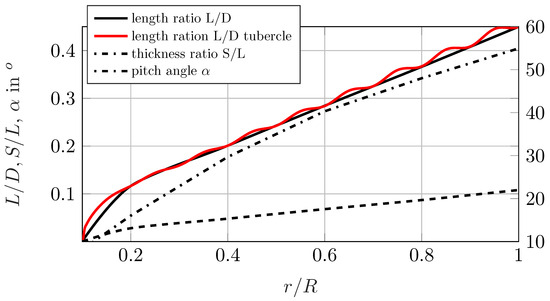
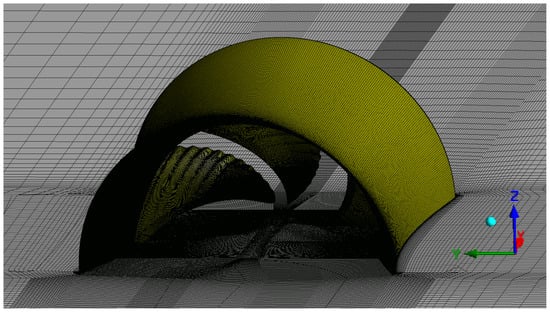
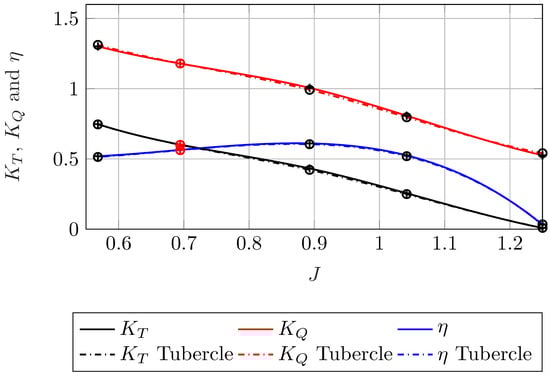
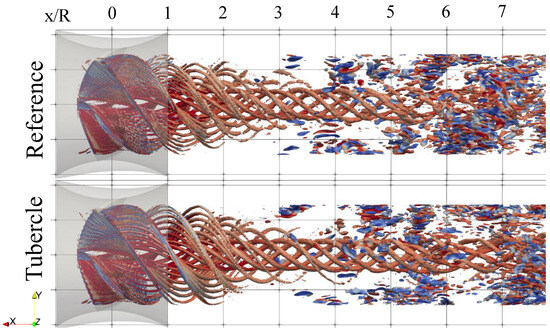
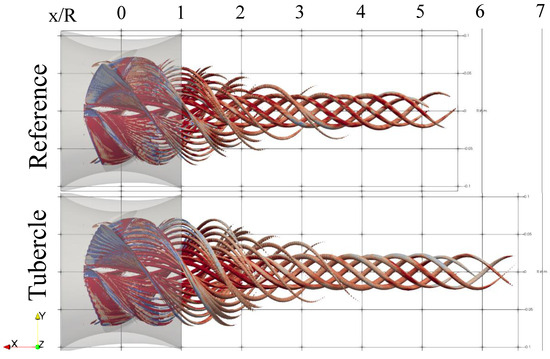
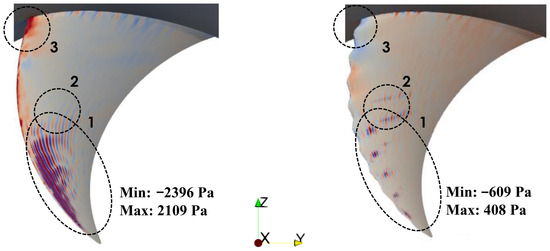
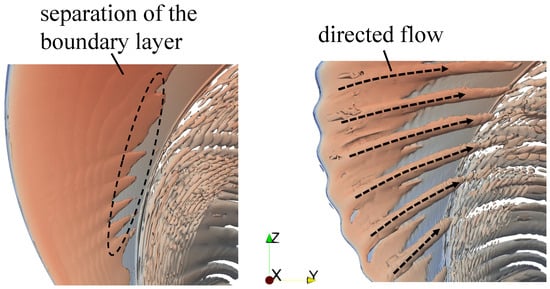
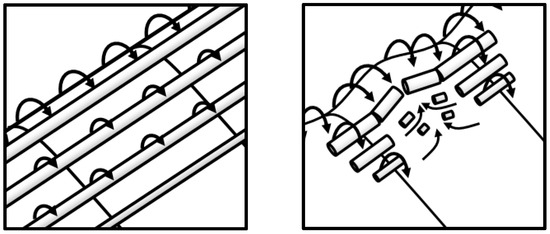
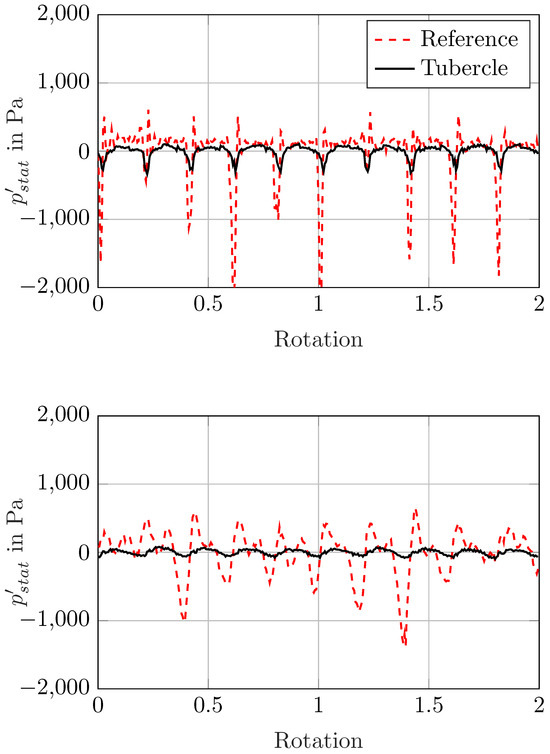
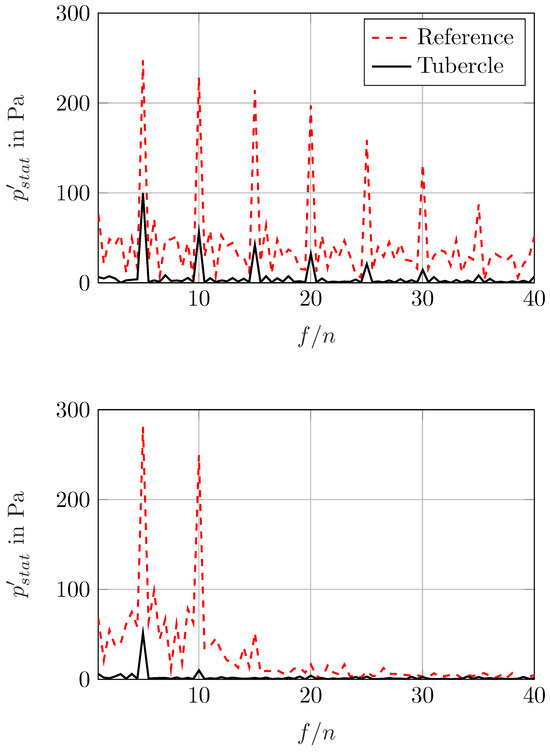
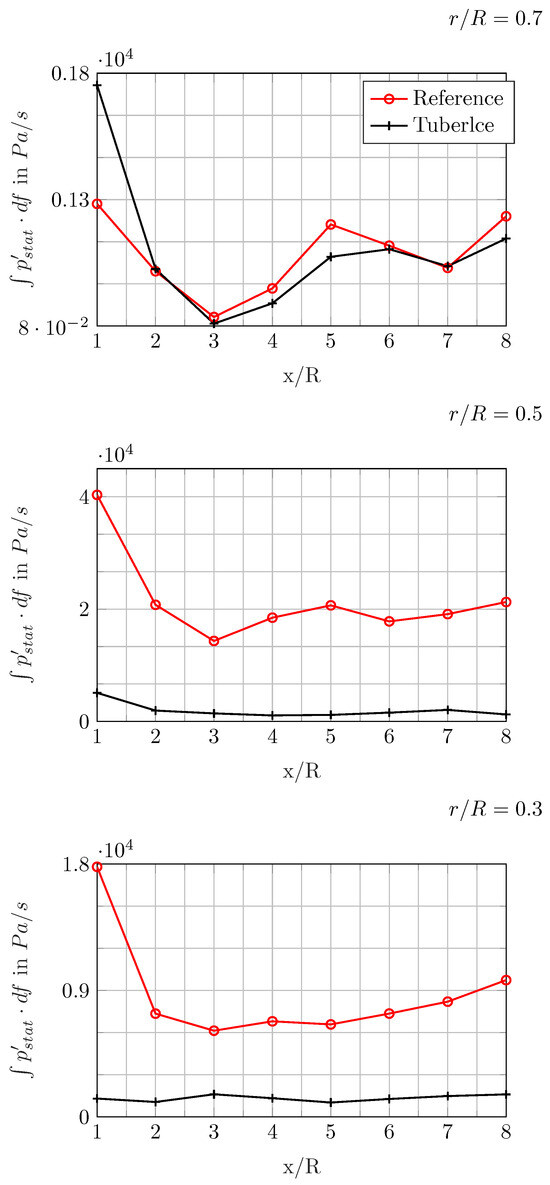
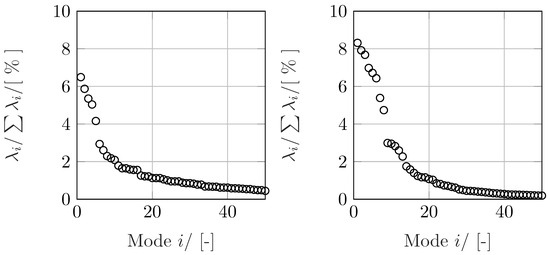
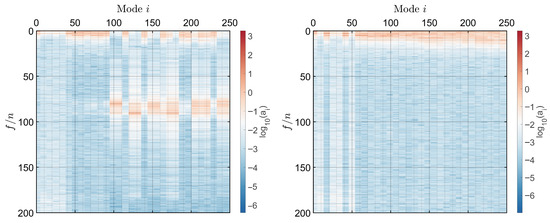
In recent years, the design priorities of modern marine propellers have shifted from maximizing efficiency to minimizing vibration-induced noise emissions and improving structural durability. However, an optimized design does not necessarily ensure optimal performance across the full operational range of a vessel. Due to operational constraints such as reduced docking times and regional speed regulations, propellers frequently operate off-design. This deviation from the design point leads to periodic turbulent boundary layer separation on the propeller blades, resulting in increased unsteady pressure fluctuations and, consequently, elevated hydroacoustic noise emissions. To mitigate these effects, bio-inspired modifications have been investigated as a means of improving flow characteristics and reducing pressure fluctuations. Tubercles, characteristic protrusions along the leading edge of humpback whale fins, have been shown to enhance lift characteristics beyond the stall angle by modifying the flow separation pattern. However, their influence on transient pressure fluctuations and the associated hydroacoustic behavior of marine propellers remains insufficiently explored. In this study, we apply the concept of tubercles to the blades of a hubless propeller, also referred to as a rim-drive propeller. We analyze the pressure fluctuations on the blades and in the wake by comparing conventional propeller blades with those featuring tubercles. The flow fields of both reference and tubercle-modified blades were simulated using the Stress Blended Eddy Simulation (SBES) turbulence model to highlight differences in the flow field. In both configurations, multiple helix-shaped vortex systems form in the propeller wake, but their decay characteristics vary, with the vortex structures collapsing at different distances from the propeller center. Additionally, Proper Orthogonal Decomposition (POD) analysis was employed to isolate and analyze the periodic, coherent flow structures in each case. Previous studies on the flow field of hubless propellers have demonstrated a direct correlation between transient pressure fluctuations in the flow field and the resulting noise emissions. It was demonstrated that the tubercle modification significantly reduces pressure fluctuations both on the propeller blades and in the wake flow. In the analyzed case, a reduction in pressure fluctuations by a factor of three to ten for the different BPF orders was observed within the wake flow.
Full article

Graphical abstract
Open AccessArticle
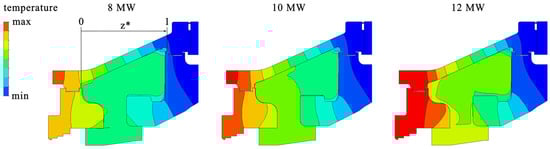
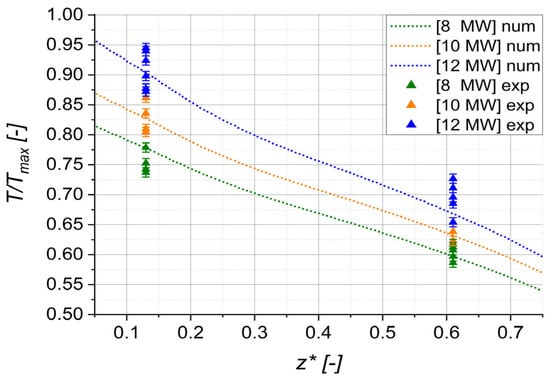
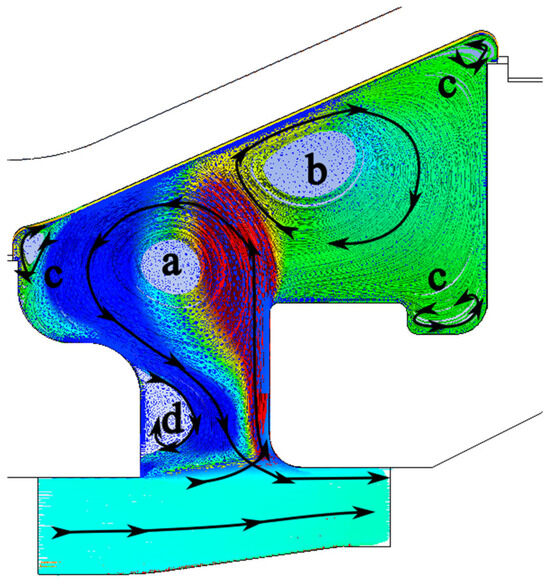
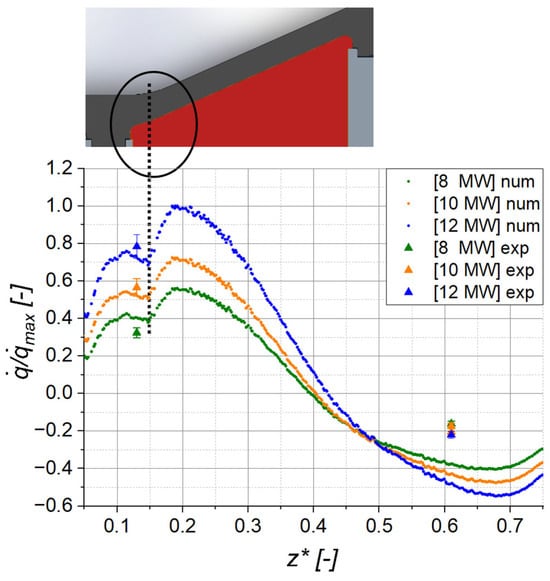
Experimental and Numerical Investigation of Heat Transfer of a Side Space of a Steam Turbine Casing at Full and Partial Load
by
Bernhard V. Weigel, Oliver Brunn, Thomas Polklas, Stefan Odenbach and Wieland Uffrecht
Int. J. Turbomach. Propuls. Power 2026, 11(1), 3; https://doi.org/10.3390/ijtpp11010003 - 29 Dec 2025
Abstract
►▼
Show Figures
There is a significant demand for flexibility in steam turbines, including rapid cold starts and load changes, as well as operation at low partial loads. Both industrial plants and systems for electricity and heat generation are impacted. These new operating modes result in
[...] Read more.
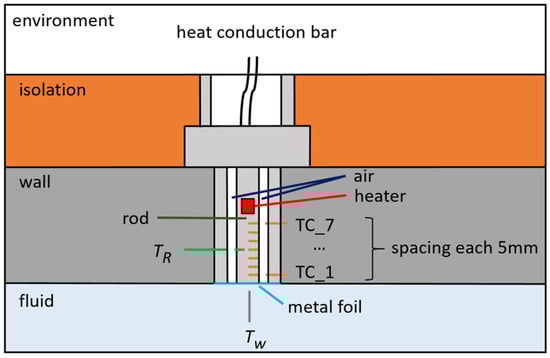
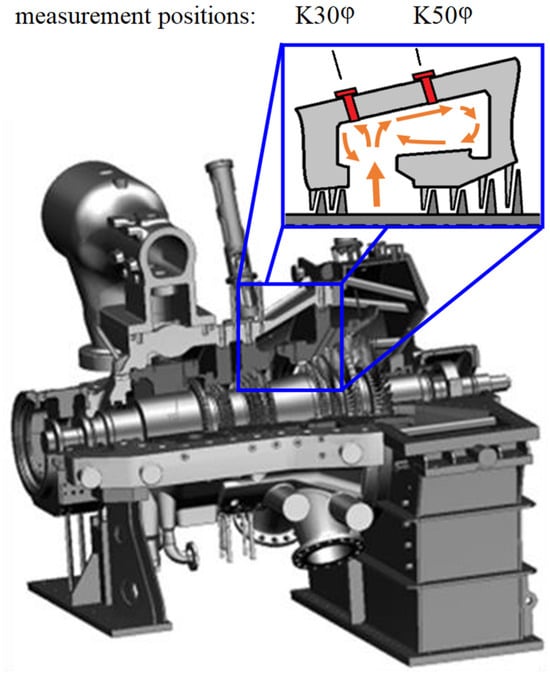
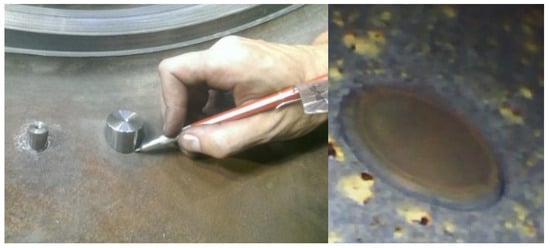
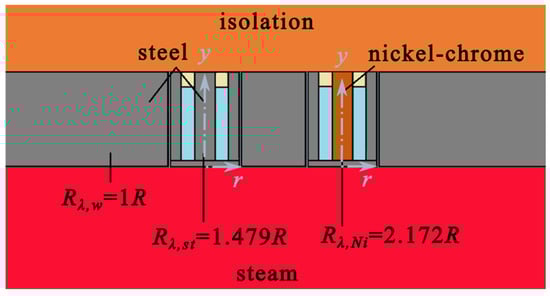
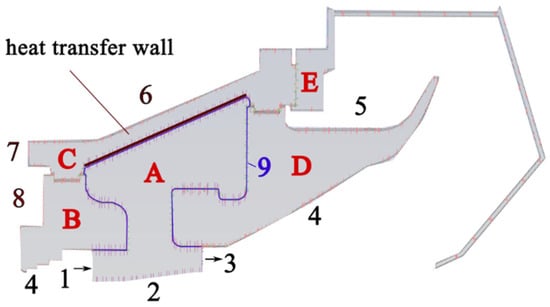
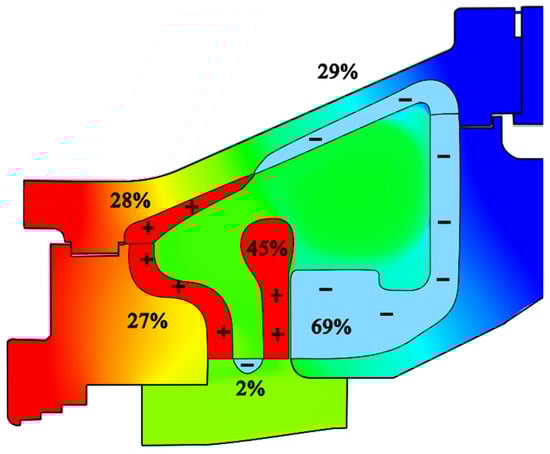
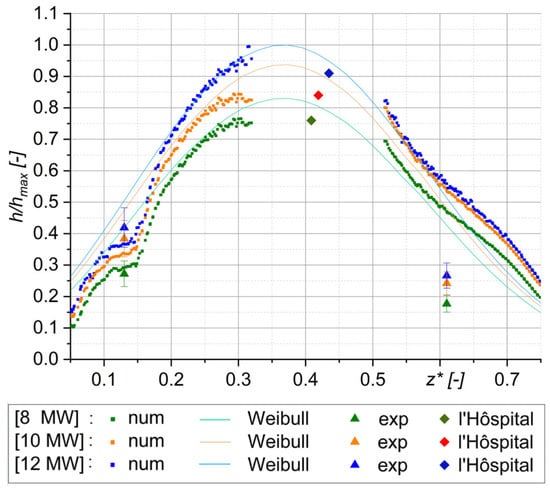
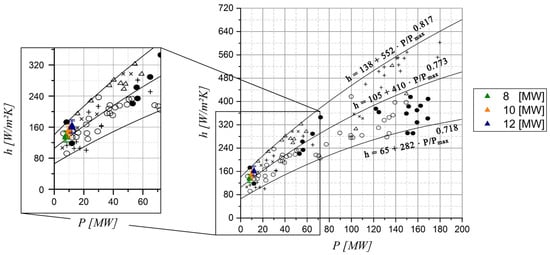
There is a significant demand for flexibility in steam turbines, including rapid cold starts and load changes, as well as operation at low partial loads. Both industrial plants and systems for electricity and heat generation are impacted. These new operating modes result in complex, asymmetric temperature fields and additional thermally induced stresses. These lead to casing deformations, which affect blade tip gap and casing flange sealing integrity. The exact progression of heat flux and heat transfer coefficients within the cavities of steam turbines remains unclear. The current methods used in the calculation departments rely on simplified, averaged estimates, despite the presence of complex flow phenomena. These include swirling inflows, temperature gradients, impinging jets, unsteady turbulence, and vortex formation. This paper presents a novel sensor and its thermal measurements taken on a full-scale steam turbine test rig. Numerical calculations were performed concurrently. The results were validated by measurements. Additionally, the distribution of the heat transfer coefficient along the cavity was analysed. The rule of L’Hôpital was applied at specific locations. A method for handling axial variation in the heat transfer coefficient is also proposed. Measurements were taken under real-life conditions with a full-scale test rig at MAN Energy Solutions SE, Oberhausen, with steam parameters of 400 °C and 30 bar. The results at various operating points are presented.
Full article

Figure 1

Open AccessFeature PaperArticle
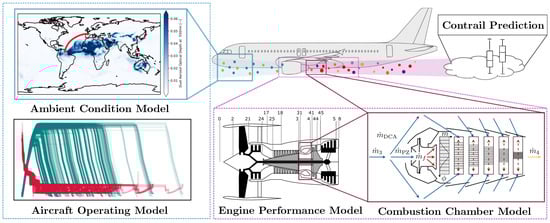
Performance and Emission Analysis of Aircraft Engines Under Realistic Conditions
by
Daniel Lieder, Maximilian Bień, Erik Seume, Sebastian Lück, Federica Ferraro, Jens Friedrichs and Jan Goeing
Int. J. Turbomach. Propuls. Power 2026, 11(1), 2; https://doi.org/10.3390/ijtpp11010002 - 26 Dec 2025
Abstract
►▼
Show Figures
The impact of the aviation sector on the Earth’s atmosphere and climate is not limited to the effects of CO2 emissions generated by the combustion of hydrocarbon-based fuel in an aircraft engine. It is complemented by other combustion products and non-CO2
[...] Read more.
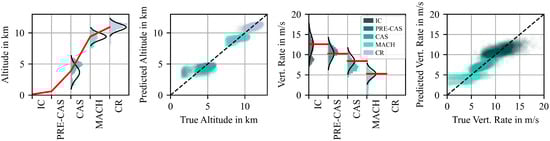
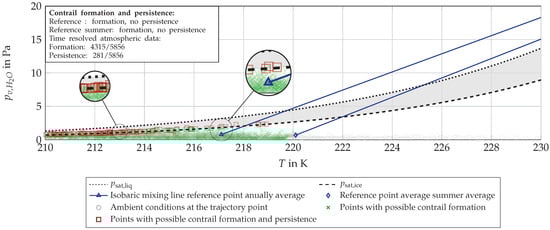
The impact of the aviation sector on the Earth’s atmosphere and climate is not limited to the effects of CO2 emissions generated by the combustion of hydrocarbon-based fuel in an aircraft engine. It is complemented by other combustion products and non-CO2 emissions, such as CO, NOx, unburnt hydrocarbons (UHCs), and soot, as well as the formation of condensation trails (contrails) as a result of emitted H2O and condensation nuclei. To evaluate the overall atmospheric impact of an aircraft mission, it is necessary to model the aero engine and the combustion chamber in context with the atmospheric conditions over the course of the flight trajectory. Following that rationale, this paper presents the novel multidisciplinary ‘Modeling and System analysis of Aero Engines’ (MSAE) platform, aiming to evaluate the emission products over the flight trajectory with realistic atmospheric and operative boundary conditions. MSAE comprises an ambient condition model, an aircraft operating model, an aero engine performance model, and a combustion chamber model. The functionality of the individual models as well as their interconnections are demonstrated using the example of an Airbus A320 powered by an International Aero Engines V2500-A1 turbofan engine. Non-CO2 emissions, including CO, NOx, UHC, and soot emission indices, can be predicted at a selected operating point. Furthermore, an evaluation of contrail formation for both annually averaged and intraday ambient conditions is conducted, showing the benefit of considering ambient conditions in a finer temporal resolution. The results show the functionality of the presented MSAE platform and the necessity of performance and emission analysis under realistic conditions.
Full article

Figure 1

Open AccessArticle
The Characterization of the Installation Effects on the Flow and Sound Field of Automotive Cooling Modules
by
Tayyab Akhtar, Safouane Tebib, Stéphane Moreau and Manuel Henner
Int. J. Turbomach. Propuls. Power 2026, 11(1), 1; https://doi.org/10.3390/ijtpp11010001 - 19 Dec 2025
Abstract
This study investigates the aerodynamic and aeroacoustics behavior of automotive cooling modules in both conventional internal combustion engine (ICE) vehicles and electric vehicles (EVs), with a particular focus on installation effects. Numerical simulations based on the Lattice Boltzmann Method (LBM) are conducted to
[...] Read more.
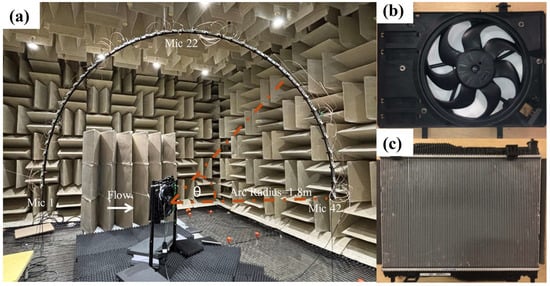
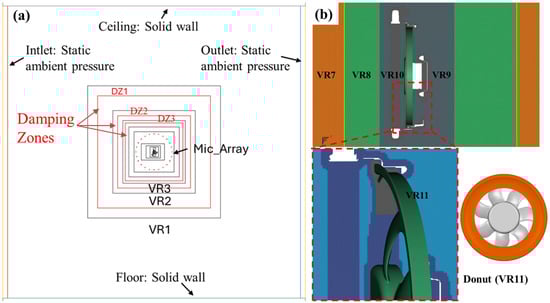
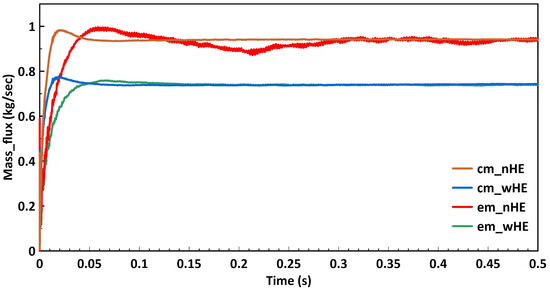
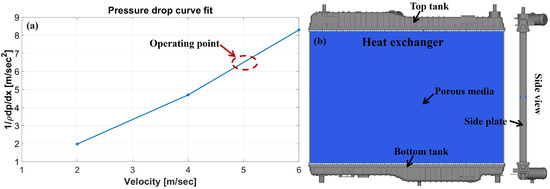
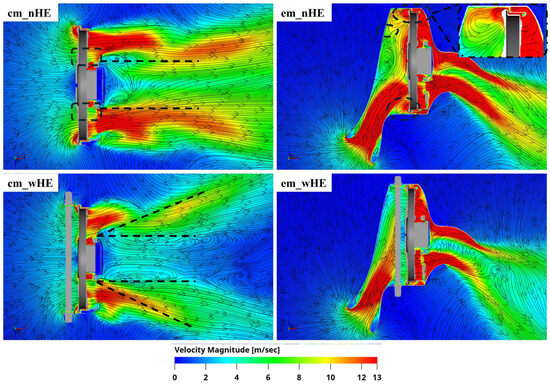
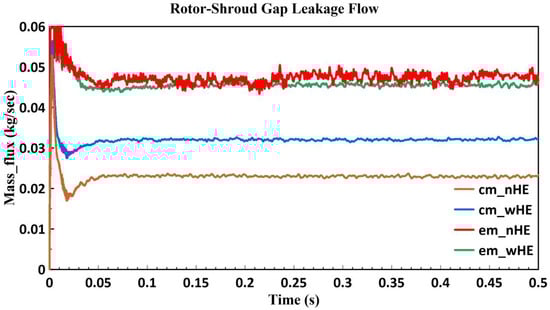
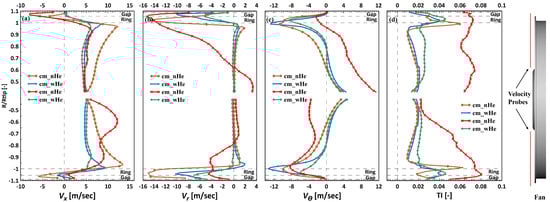
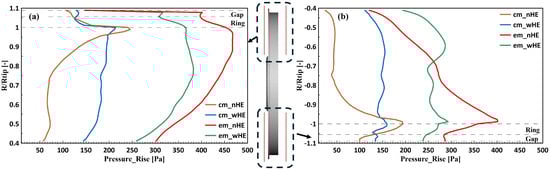
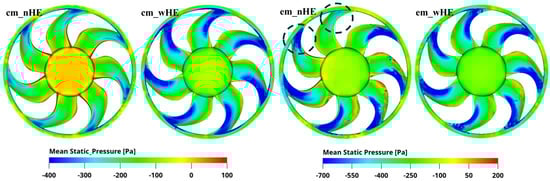
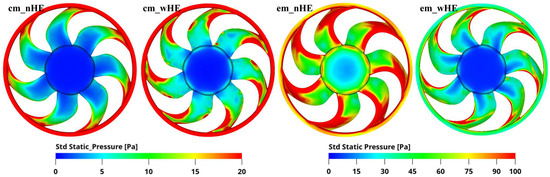
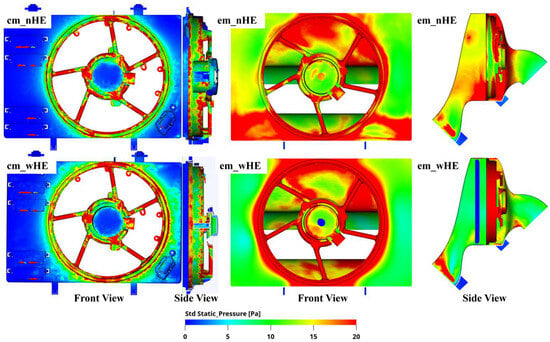
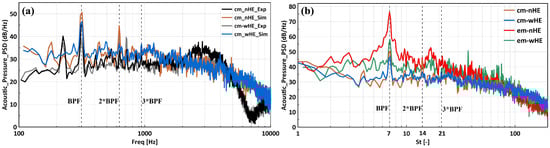
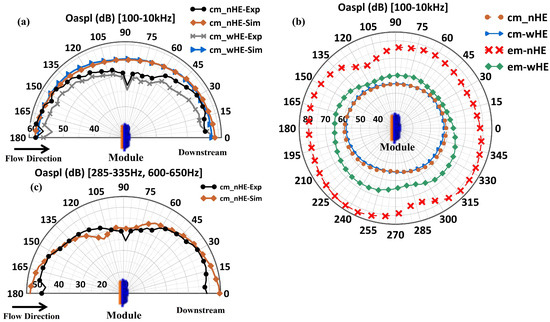
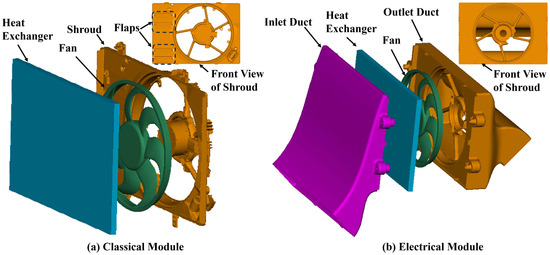
This study investigates the aerodynamic and aeroacoustics behavior of automotive cooling modules in both conventional internal combustion engine (ICE) vehicles and electric vehicles (EVs), with a particular focus on installation effects. Numerical simulations based on the Lattice Boltzmann Method (LBM) are conducted to analyze noise generation mechanisms and flow characteristics across four configurations. The study highlights the challenges of adapting classical cooling module components to EV setups, emphasizing the influence of heat exchanger (HE) placement and duct geometry on noise levels and flow dynamics. The results show that the presence of the HE smooths the upstream flow, improves rotor loading distribution and disrupts long, coherent vortical structures, thereby reducing tonal noise. However, the additional resistance introduced by the HE leads to increased rotor loading and enhanced leakage flow through the shroud-rotor gap. Despite these effects, the overall sound pressure level (OASPL) remains largely unchanged, maintaining a similar magnitude and dipolar directivity pattern as the configuration without the HE. In EV modules, the inclusion of ducts introduces significant flow disturbances and localized pressure fluctuations, leading to regions of high flow rate and rotor loading. These non-uniform flow conditions excite duct modes, resulting in troughs and humps in the acoustic spectrum and potentially causing resonance at the blade-passing frequency, which increases the amplitude in the lower frequency range. Analysis of the loading force components reveals that rotor loading is primarily driven by thrust forces, while duct loading is dominated by lateral forces. Across all configurations, fluctuations at the leading and trailing edges of the rotor are observed, originating from the blade tip and extending to approximately mid-span. These fluctuations are more pronounced in the EV module, identifying it as the dominant source of pressure disturbances. The numerical results are validated against experimental data obtained in the anechoic chamber at the University of Sherbrooke and show good agreement. The relative trends are accurately predicted at lower frequencies, with slight over-prediction, and closely match the experimental data at mid-frequencies.
Full article
(This article belongs to the Special Issue Advances in Industrial Fan Technologies)
►▼
Show Figures

Figure 1
Open AccessFeature PaperArticle
Design of a Small-Scale, High-Rotational-Speed Centrifugal Compressor Operating with R-290
by
Renan Emre Karaefe, Sönke Teichel and Ahmet Çokşen
Int. J. Turbomach. Propuls. Power 2025, 10(4), 52; https://doi.org/10.3390/ijtpp10040052 - 17 Dec 2025
Abstract
►▼
Show Figures
The current work highlights key challenges in the design of small-scale, high-rotational-speed centrifugal compressors for R-290 at domestic application scale on the basis of a single-stage demonstrator unit that is currently developed by ebm-papst. The demonstrator is operated in a vapor-compression cycle at
[...] Read more.
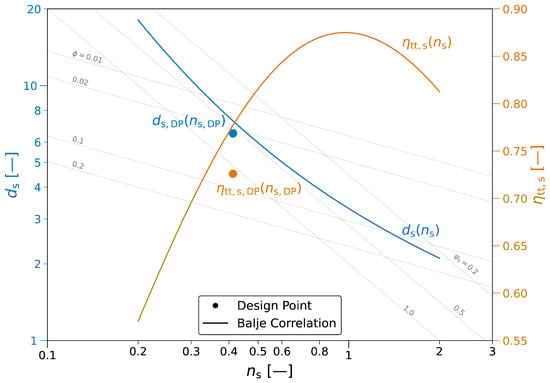
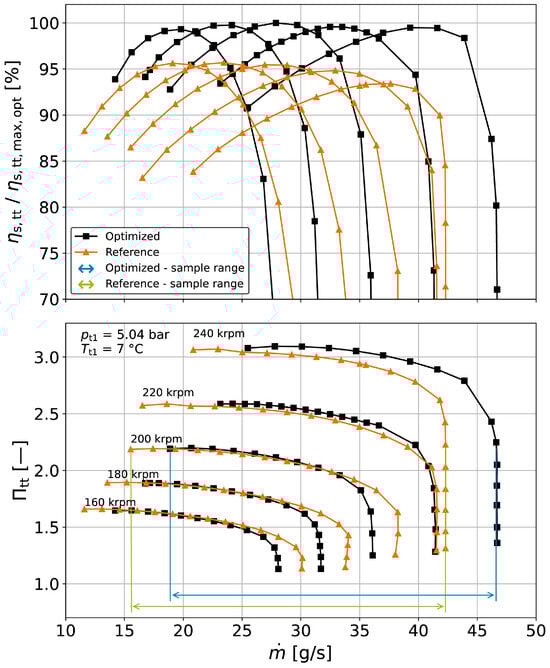
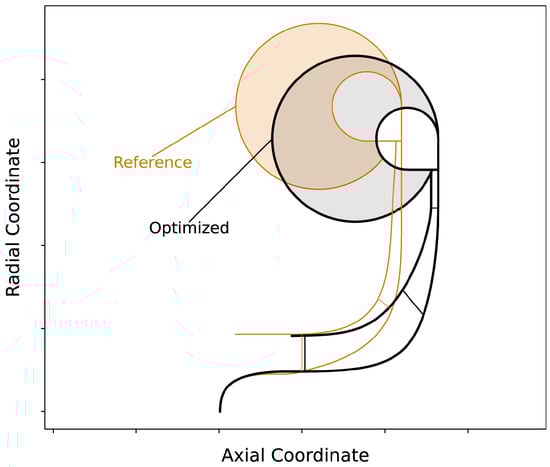
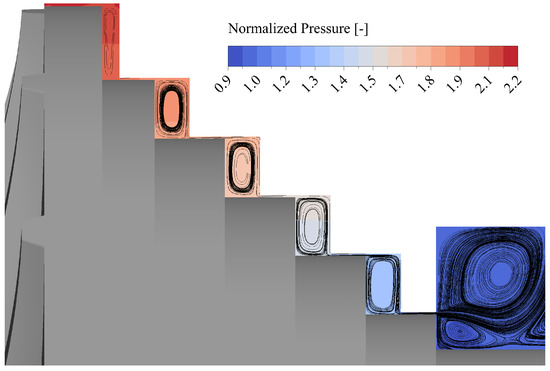
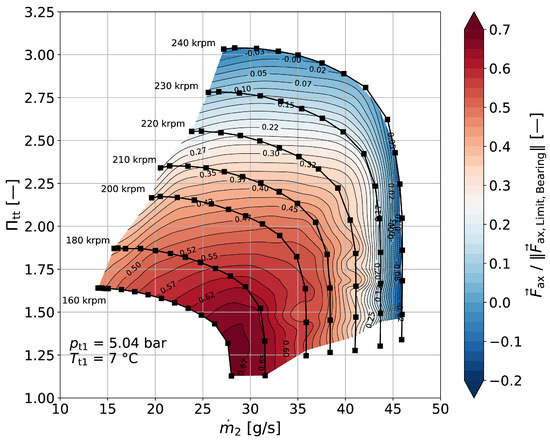
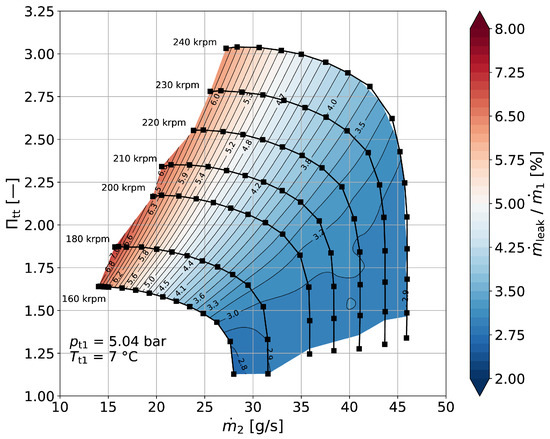
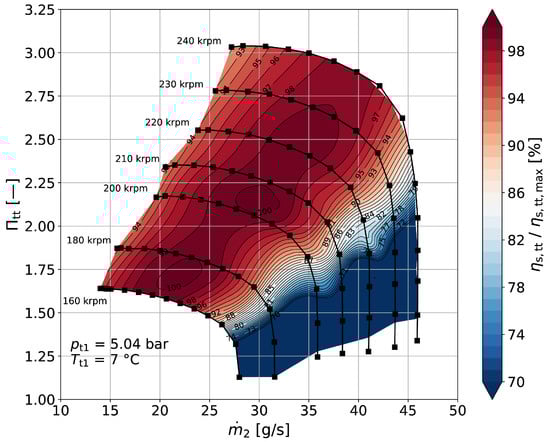
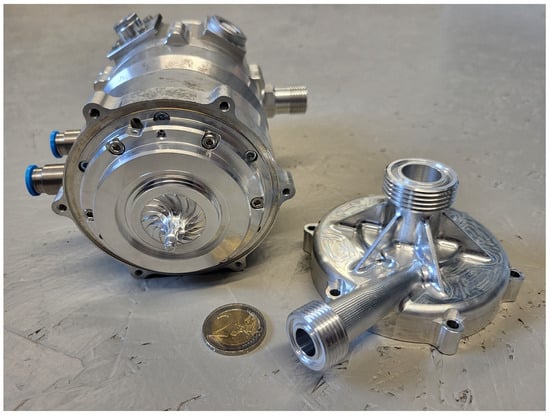
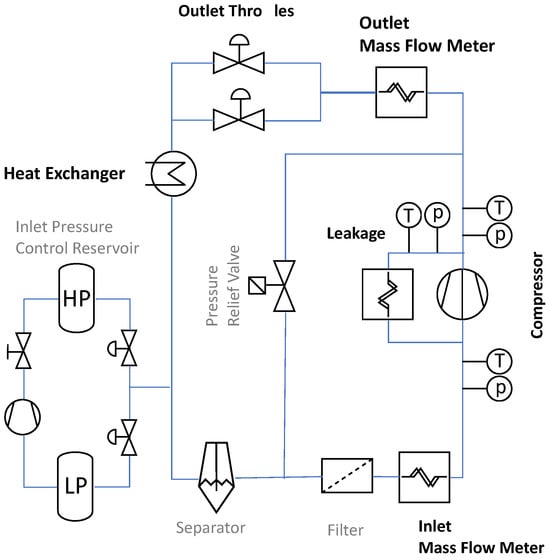
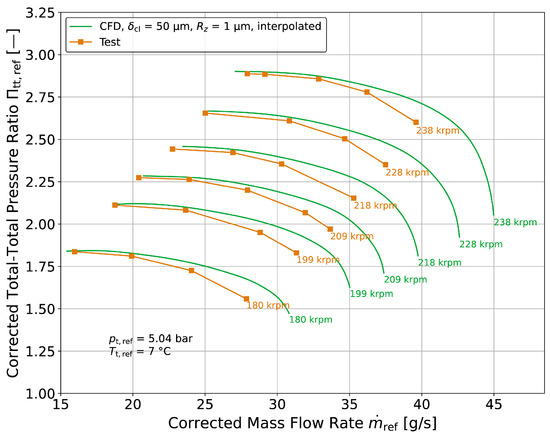
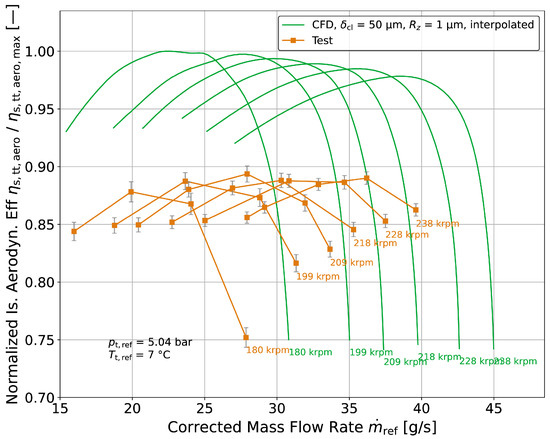
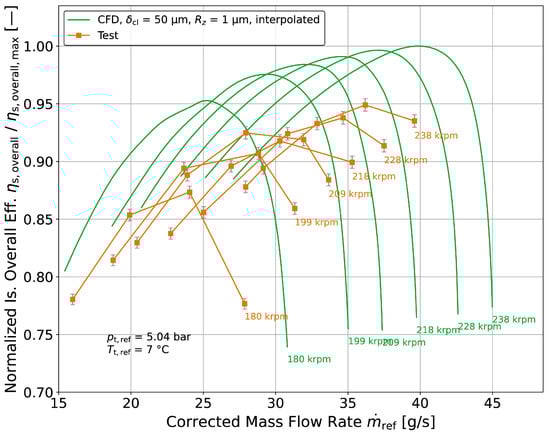
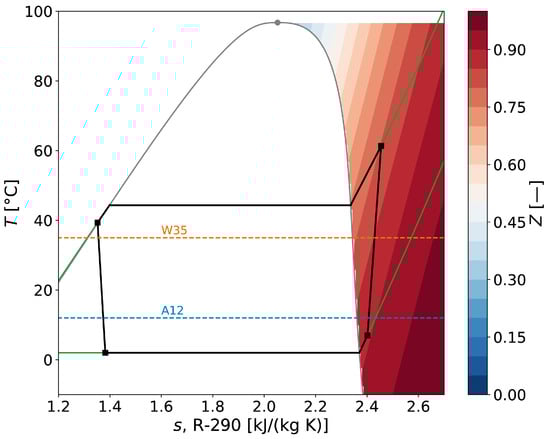
The current work highlights key challenges in the design of small-scale, high-rotational-speed centrifugal compressors for R-290 at domestic application scale on the basis of a single-stage demonstrator unit that is currently developed by ebm-papst. The demonstrator is operated in a vapor-compression cycle at a total pressure ratio up to 3, a maximum rotational speed of 240 krpm, and with maximum power supply of 3.2 kWe. Emphasis is placed on challenges related to aerodynamic stage design, impeller back wall sealing, and impeller thrust force balancing. Appropriate measures are proposed to overcome these challenges and compressor performance is quantified to evaluate the prospects of small-scale, centrifugal compressors for R-290 application in a wider context. Considerations related to mechanical design and manufacturing are briefly illustrated. Main design and performance assessments are conducted through 3D CFD RANS calculations.
Full article

Figure 1
Open AccessArticle
A Coandă-Surface-Assisted Ejector as a Turbine Tip Leakage Mitigator
by
Gohar T. Khokhar and Cengiz Camci
Int. J. Turbomach. Propuls. Power 2025, 10(4), 51; https://doi.org/10.3390/ijtpp10040051 - 5 Dec 2025
Abstract
►▼
Show Figures
This paper presents an experimental and computational investigation of novel, ejector-based, Coandă-surface-assisted tip leakage mitigation schemes. The predicted changes in the key performance metrics are presented after explaining the aerodynamic concept development for the novel tip geometries. The performance metrics are the stage
[...] Read more.
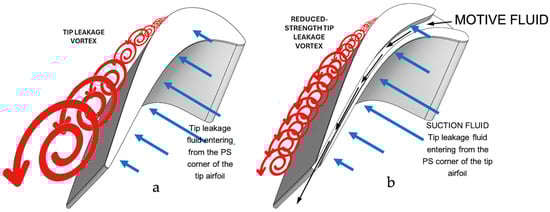
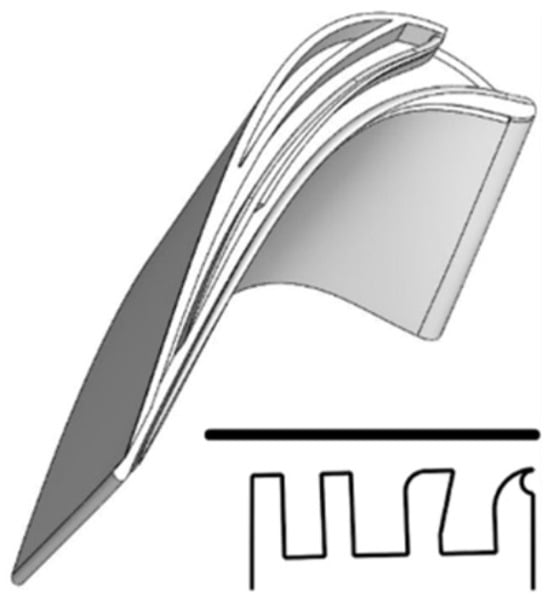
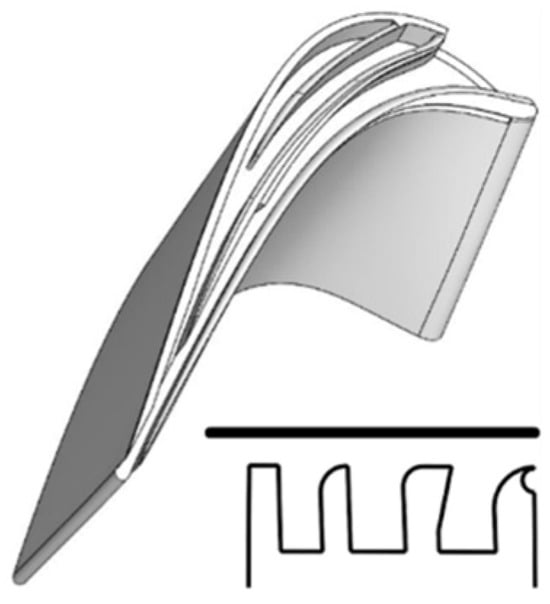
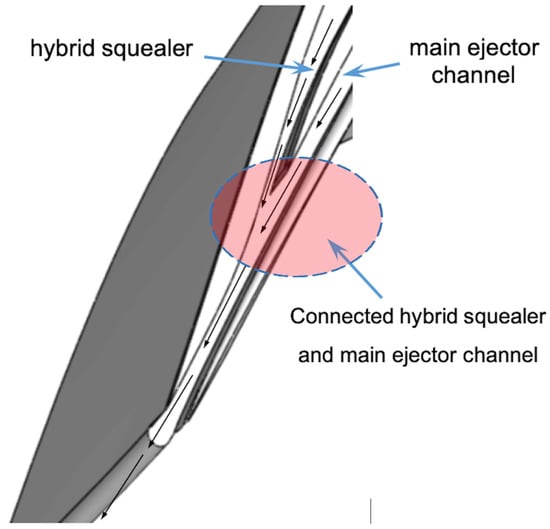
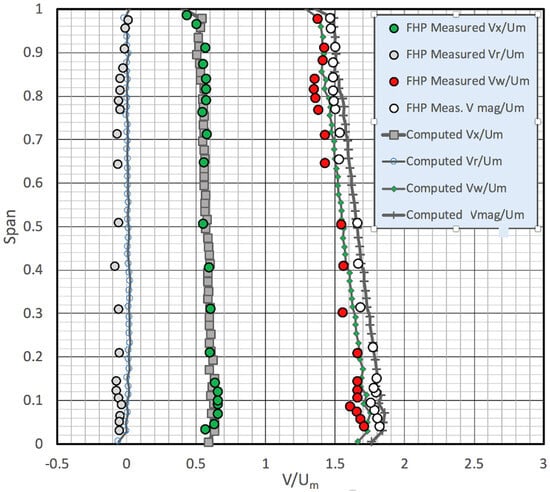
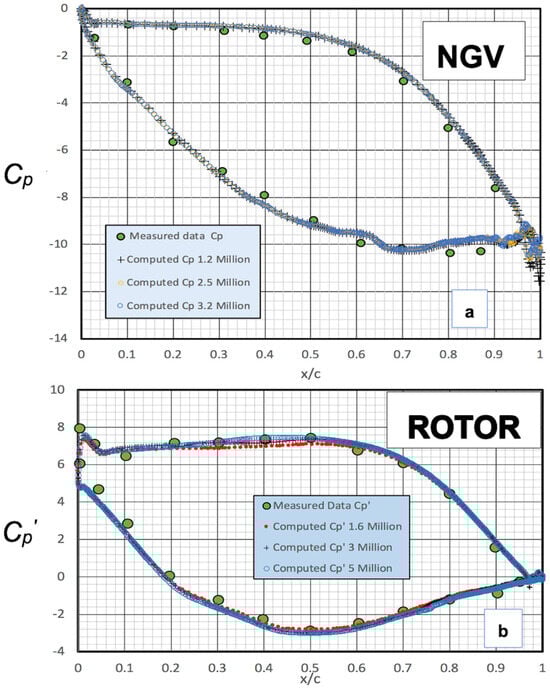
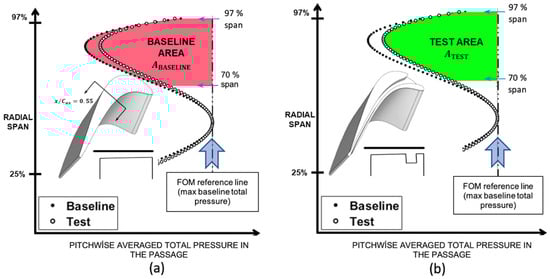
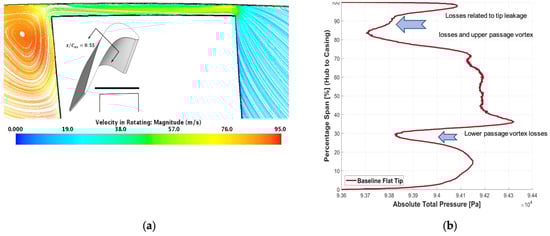
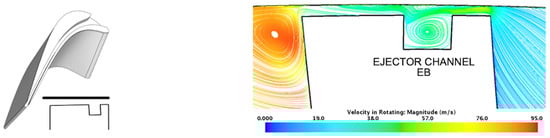
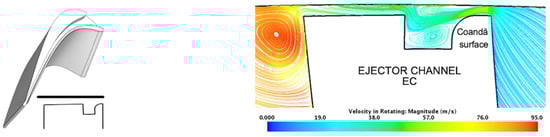
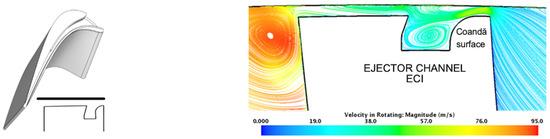
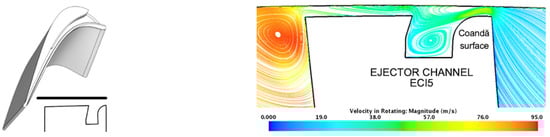
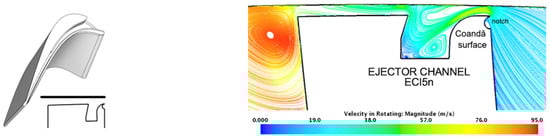
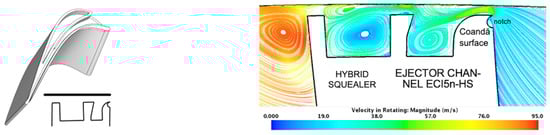
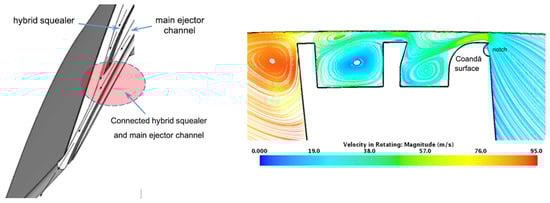
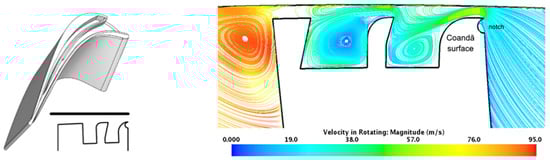
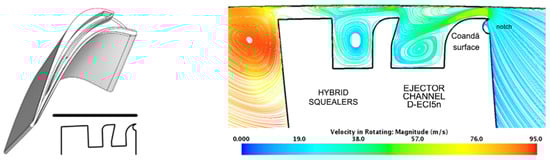
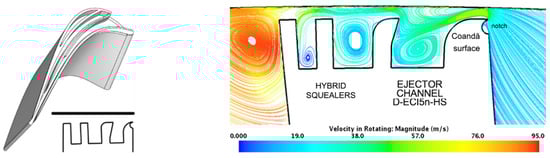
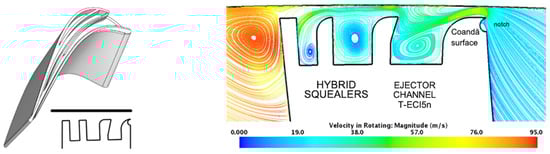
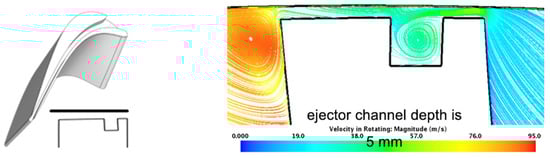
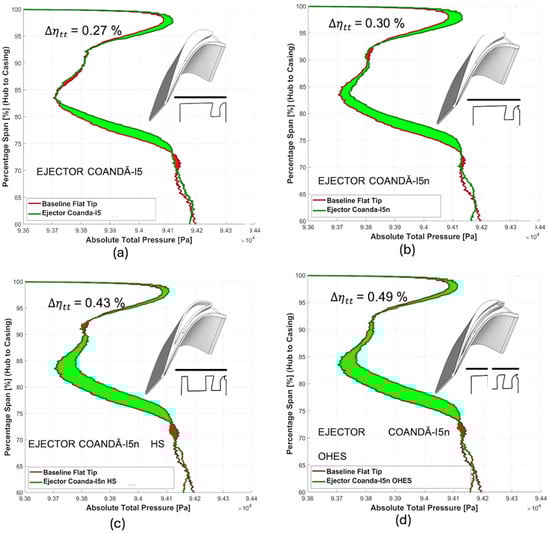
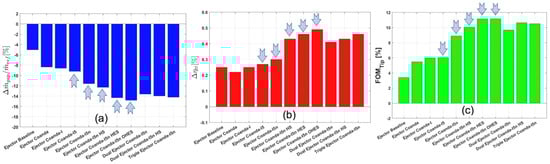
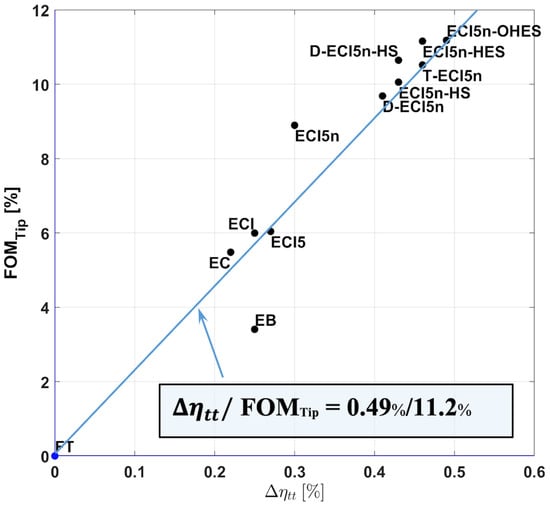
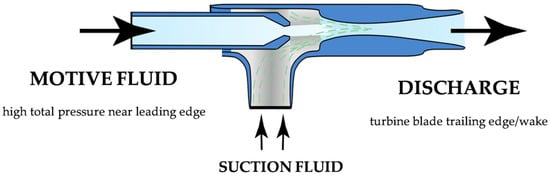
This paper presents an experimental and computational investigation of novel, ejector-based, Coandă-surface-assisted tip leakage mitigation schemes. The predicted changes in the key performance metrics are presented after explaining the aerodynamic concept development for the novel tip geometries. The performance metrics are the stage total-to-total isentropic efficiency, tip-gap mass flow rate, and a figure of merit based on rotor exit total pressure. The schemes are based on direct geometric modifications to the turbine blade tip, effectively promoting an effective redirection of tip leakage fluid via specific channels. The proposed ejector channels operate in conjunction with strategically located Coandă surfaces to alter the path of the leakage fluid, promoting an effective leakage fluid delivery into the blade’s wake. Multiple schemes are assessed, including single-ejector, single-ejector with “hybrid” squealer, double-channeled, and triple-channeled designs. The designs are evaluated computationally for the HP stage of the Axial Flow Turbine Research Facility AFTRF at Penn State University. Extensive experimental validation of the baseline flow computations for the HP stage is also presented. Upper-bound efficiency gains of 0.49% and mass flow reductions of 14.80% compared to an untreated flat tip for the large-scale turbine test rig AFTRF are reported. Evaluation of the current tip designs in a high-speed turbine cascade environment with a transonic exit flow has also been completed. The detailed results from the high-speed investigation and heat transfer impact are in the process of being published. Implementation in the high-speed environment of the same design concepts also returned non-negligible performance gains.
Full article

Figure 1

Highly Accessed Articles
Latest Books
E-Mail Alert
News
Topics
Special Issues
Special Issue in
IJTPP
Selected Papers from the Conference on Modelling Fluid Flow (CMFF’25)
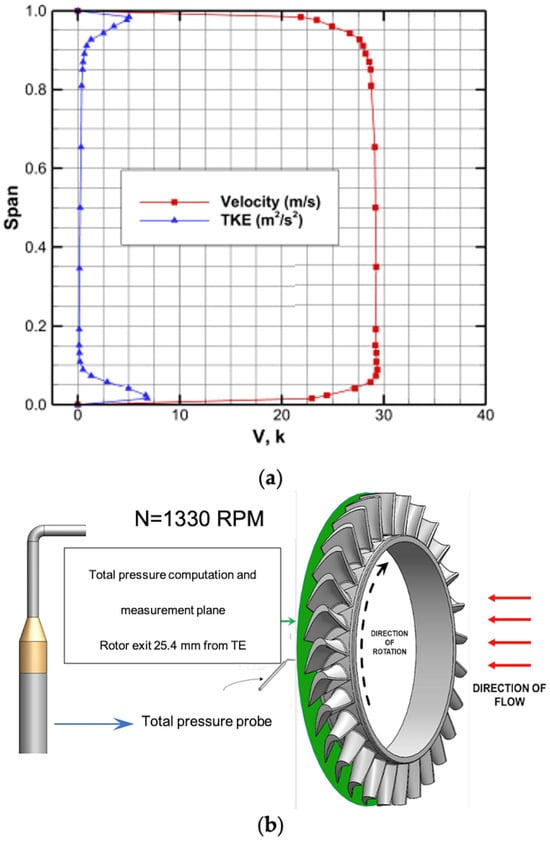
Guest Editors: János Gábor Vad, Csaba Horváth, Esztella Éva BallaDeadline: 2 May 2026