
Article

The Influence of Hub Purge Flow Rate on Forced Response in a Low-Pressure Turbine †

1
Vibration University Technology Center, Imperial College London, London SW7 2AZ, UK
2
Turbomachinery and Propulsion Department, Von Karman Institute for Fluid Dynamics, Waterloosesteenweg 72, B-1640 Sint-Genesius-Rode, Belgium
*
Author to whom correspondence should be addressed.
This manuscript is an extended version of the ETC16-167 paper published in the Proceedings of the 16th European Turbomachinery Conference, Hannover, Germany, 24–28 March 2025.
Int. J. Turbomach. Propuls. Power 2026, 11(1), 12; https://doi.org/10.3390/ijtpp11010012
Submission received: 8 August 2025 / Revised: 3 September 2025 / Accepted: 6 January 2026 / Published: 2 March 2026

Abstract

We present the results of a computational investigation into the influence of hub purge flow mass flow rate on the forcing amplitudes generated on a low-pressure turbine (LPT) rotor cascade by the upstream stator vane passing (SVP). Forcing of this kind is a major driver of high cycle fatigue (HCF) in turbines; however, the influence of hub purge flow, which is mandatory to seal cavities between stationary and rotating rows in turbines and to protect working components from excessively high temperatures, is minimally understood. This study was carried out via time-accurate unsteady aeroelastic simulations of the SPLEEN turbine cascade and is validated against the extensive database of test results obtained for this geometry at the Von Karman Institute for Fluid Dynamics. The effect of purge mass flow rates of 0.5 % and 0.9 % of the main passage flow are evaluated through measurement of the blade’s unsteady pressure and modal force at the SVP and compared to the nominal ‘no purge’ case. The introduction of purge flow was shown to reduce the amplitude of the unsteady pressure signal on the blade surface at the hub. However, a change in the phase of the unsteady pressure on certain portions of the blade could still bring about an increase in modal force for certain modes.

1. Introduction

Forced response remains a key driver of HCF failure in turbines, yet there is still some distance between computational predictions of vibration amplitudes and strain gauge test results. As the demand for ever more efficient engines increases, so will turbine temperatures, leading to the very real possibility that the already expensive strain gauge testing required to certify an engine will be unfeasible for future generations of turbine designs. This creates the urgent need for the development of accurate computational tools for forced response prediction. A key barrier to turbine forced response prediction is the high degree of complex geometry and flow detail present in a turbine. As such, simulations for this purpose, colloquially referred to as ‘muddy-water’ simulations, tend to demand a high mesh density for full feature capture, driving up the computational cost. This issue is exacerbated by a sparsity of aerodynamic data in operating aerospace turbines due to their high temperature operating points (OPs), making it hard to trace the forcing effect of each complex flow feature to gauge its relevance or to validate that its capture is accurate. This leads to the question of which (if any) of these complex flow features influence the prediction of forced response.
One such complex flow feature is the hub purge flow. This is cold fluid injected into the passage through the gap between the rotating and stationary elements at the hub to prevent the ingestion of working fluids —which can exceed temperatures of 2000 K—into the inner machinery where it could melt or damage the mechanical components. The cold purge air therefore seals the high-temperature flow within the annulus and is alternatively referred to as rim seal flow.
The injection of cold, low-momentum fluid into the main gas path has several knock-on effects on the turbine stage’s aerodynamics. Low-momentum fluid reduces the incidence onto the blade at the hub region [1] and acts as a blockage [2] driving a rise in losses [3]. Unsurprisingly, there is also a significant effect on the hub wall secondary flows. Two effects commonly noted are an enlargening and a radial migration of the passage vortex [1,2,4,5].
Purge flow also has an effect on the unsteady aerodynamics of turbine rows. The injection itself has been found to be highly unsteady, with the oscillation in the rate at which purge flow is ejected from the cavity shown to be strongly influenced by the rotor [6]. Similar findings suggest that purge/main flow mixing was also driven by the rotor blade passing frequency [1]. Jenny et al. [3] carried out an investigation of the unsteady behavior of the rotor passage vortex, identifying a strong influence of the downstream stator on the radial and circumferential movement and the intensity of the vortex. Further findings suggest that the purge mass flow rate influences the speed at which the passage vortex migrates radially. Experimental assessments of an HPT stator–rotor interaction under the influence of purge flows were performed by [7]. Modal decomposition was carried out at the rotor outlet of a 1.5 stage (stator-rotor-stator) turbine under the influence of varying levels of cavity flow both before and after the rotor at the hub and tip. The study identified a weakening of the passage vortex, in line with other studies in the literature. The unsteadiness of the passage vortex is shown to be strongly modulated by the downstream stator hub vortex [8], an effect that is removed by the introduction of purge flows.
With a clear effect on the unsteady flow field across the turbine, it would be expected that purge flow would also influence the unsteady pressure on the blade surface and therefore the turbine forced response. To the best of the authors’ knowledge, only one publication has conducted an assessment of the effect of purge flows with respect to blade forcing, and that was for a compressor. Hedge et al. [9] assessed the effect of a stator hub purge flow rate of 1 % m ˙ on the rotor forced response in a 3.5 -stage compressor using a three- and four-row simulation set-up. Results showed that the inclusion of cavity modeling on forced response could vary between −10% and + 30 % for the 3-row set-up depending on the compressor operating point and mode/EO crossing but made only a 1–2% difference when using a 4-row simulation. This large variation in the possible significance of modeling the cavity flows makes it difficult to derive a performance marker for a turbine.
This study is an extended version of a conference paper presented at the 16th European Turbomachinery Conference (ETC16) [10], presenting the results of a computational study of the influence of the hub purge mass flow rate on the Stator Vane Passing Frequency (SVPF) forced response in a low-pressure turbine (LPT) rotor cascade. The cascade studied is the SPLEEN C1 high-speed LPT, tested extensively at the Von Karman Institute for Fluid Dynamics [11]. This highly instrumented rig provides the ideal validation case for turbine purge flow injection whilst also allowing the isolation of the purge flow forced response effect from other ‘muddy water’ flow features such as trailing edge cooling or real gas effects. With this as a basis, this paper makes an assessment of whether hub purge flow modeling is required when carrying out coupled aeroelastic simulations for forced response evaluation.

2. Methodology

2.1. Test Case

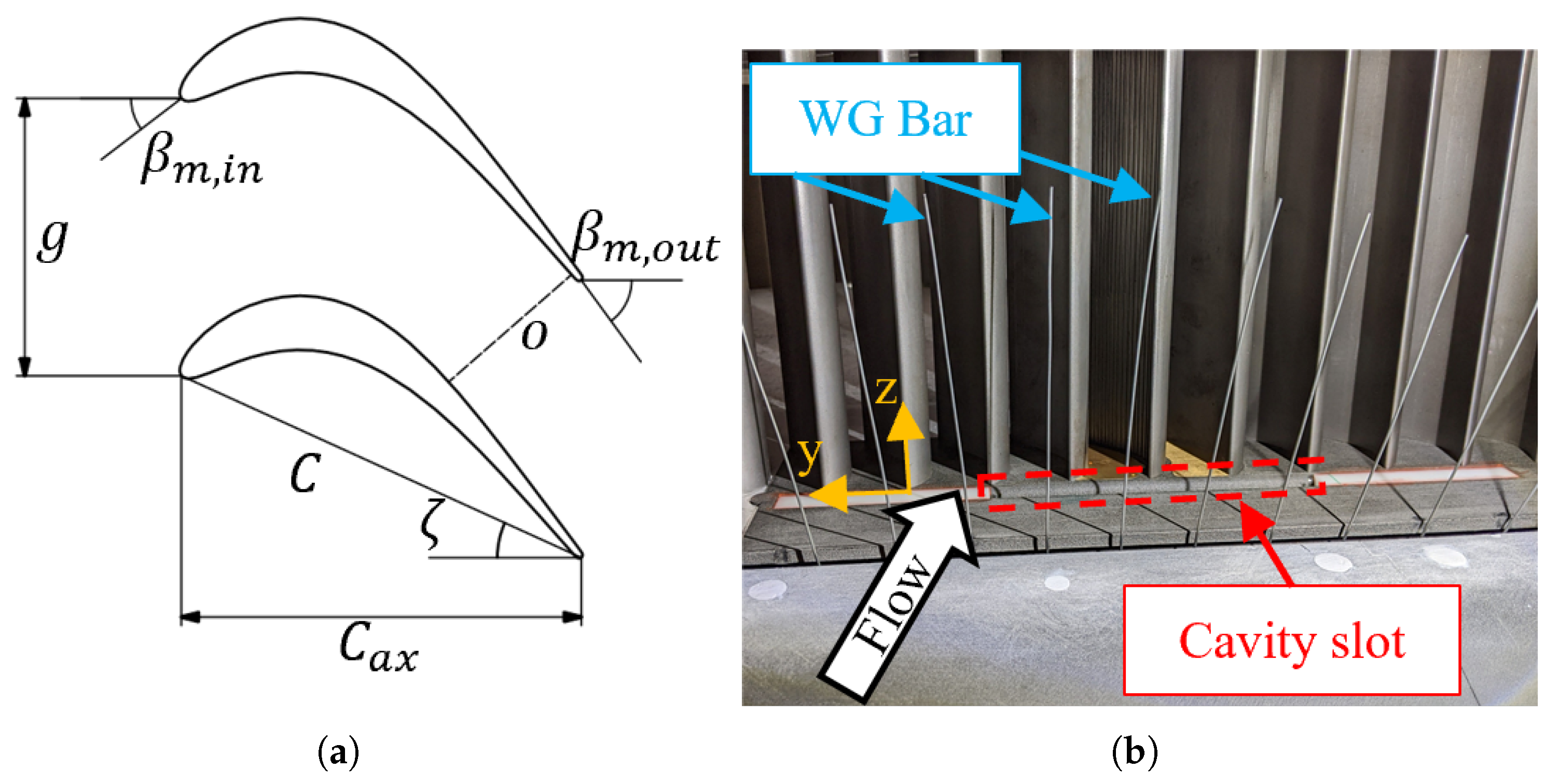
The SPLEEN test case was introduced in [11]. The C1 cascade is representative of the rotor hub geometry of a high-speed low-pressure turbine. Figure 1a displays the blade geometry, and key characteristics are listed in Table 1.
The linear cascade consists of 23 blades with a span of 165 mm. The blades operate at a nominal point of M o u t = 0.90 and Re o u t = 70 k. A passive turbulence grid (TG) maintained a freestream turbulence intensity (TI) of about 2.40 % . Unsteady wakes were generated by a spoked-wheel wake generator (WG) with 96 cylindrical bars, each 1.00 mm in diameter. The bar diameter was chosen to match the blade trailing edge (TE) thickness, ensuring a similar far wake to that shed by an airfoil [13]. The bars extended to around 72 % H when aligned with the central blade’s leading edge. At midspan, the Strouhal Number (Str) at the nominal operating point is approximately 0.95 , giving a flow coefficient ( Φ ) of ∼0.80. A slot between the wake generator and cascade allowed purge flow injection into the test section, with purge mass flow ratios (PMFR) ranging from 0 to 1 % . Details of the purge flow system are provided in [14]. Figure 1b shows the cascade installed in the test rig. A thorough description of the test case and aerodynamic characterization can be found in [15].

2.2. Experimental Set-Up

This work compares numerical results against time and phase-averaged data measured experimentally. The measurements were carried out in the high-speed, low-Reynolds linear cascade S-1/C at the von Karman Institute, details of the wind tunnel arrangement for which can be found in [15].
Fixed instrumentation is used to monitor the flow conditions inside the rig. The isentropic inlet/outlet Mach number and Reynolds number were estimated using the inlet total pressure downstream of the grid, inlet total temperature, and inlet/outlet static pressure. Since the cascade inlet total pressure is not measured, a correlation to estimate the pressure losses associated with the turbulence grid plus the wake generator as a function of the flow condition was developed to estimate the cascade inlet total pressure based on the measured reference total pressure (upstream of the turbulence grid). Details can be found in [11].
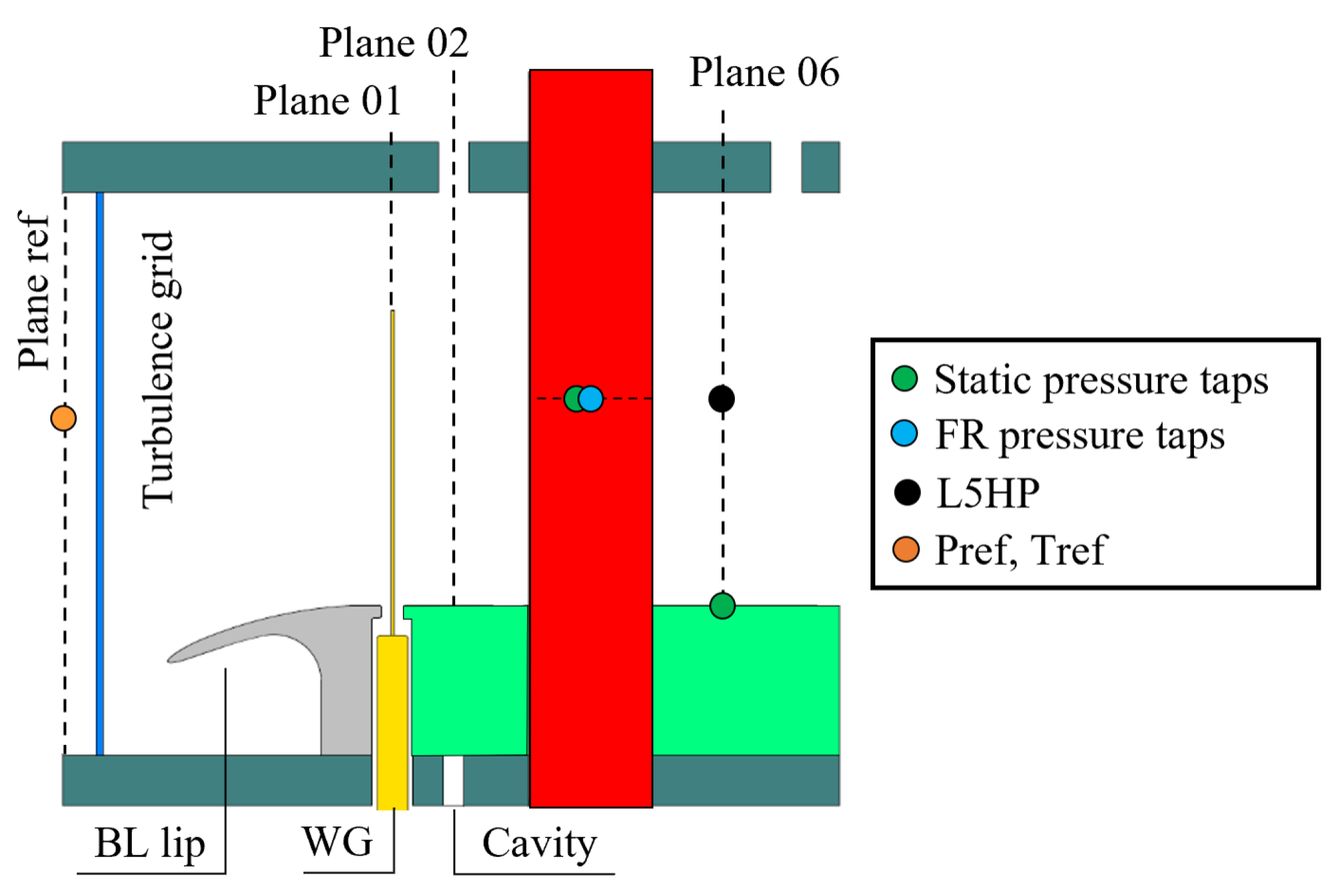
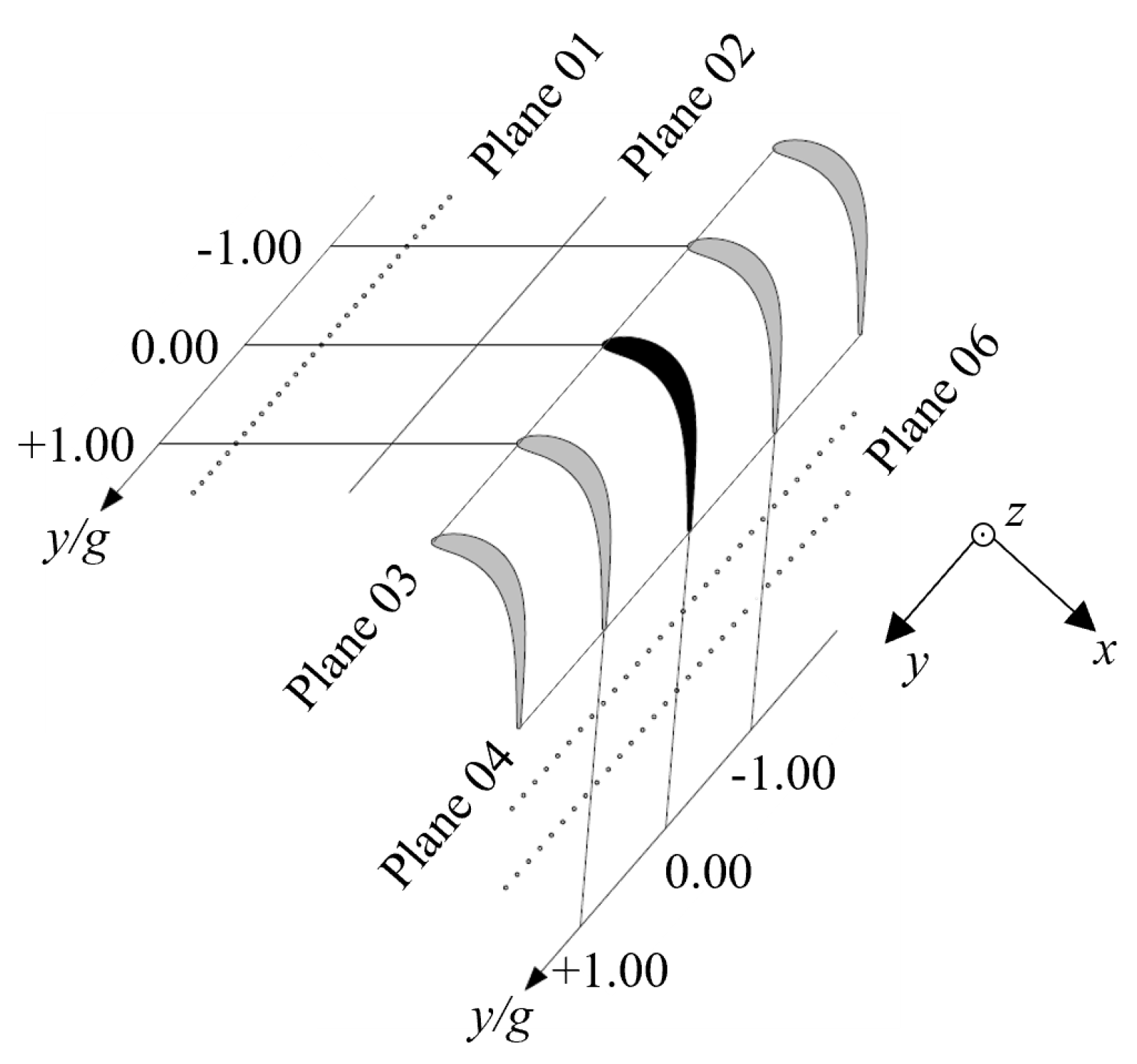
Figure 2 depicts a meridional view of the test section and the measurement planes in the cascade reference system. The reference total pressure and temperature were measured using a WIKA P-30 absolute pressure sensor and a bare K-type thermocouple. The outlet flow field at Plane 06, located 0.5 C a x downstream of the blade trailing edge, was surveyed with an L-shaped five-hole probe (L5HP) with its ports connected to a Scanivalve MPS4264 (1 psi). Aerodynamic calibration coefficients were applied to determine the local total pressure [15]. Static pressure values for kinetic energy loss calculations, reported in Figure 3, were interpolated from pressure taps at hub call on Plane 06, after the L5HP had been removed. Figure 4 displays a blade-to-blade view of the test section set-up. The pitchwise coordinate (y) increases towards passages below the central blade. It is zero at the intersection of the plane originating from the blade leading edge and the measurement plane following the inlet metal angle. A similar principle applies downstream with the trailing edge and outlet metal angle.
The cascade blades were fitted with two types of pressure measurement equipment. Blade loading was determined from pressure tap measurements on the blade suction/pressure side (PS/SS) surface: 24 and 17 taps, respectively. A Scanivalve MPS4264s (2.5 psi range) was used to record the pressure readings, and results from this are presented for comparison in Figure 5. Fast-response data was collected through a NI6253-USB data acquisition system, sampling at 1.2 MHz for 3 s, capturing approximately 15,840 bar passing events. Blade surface pressure fluctuations were measured using seven recessed Kulite LQ-062-5A sensors with a 35 kPa absolute range. Although the sensors were not dynamically calibrated, the recessing configuration ensured a minimum modeled bandwidth of over 36 kHz based on the models by Helmholtz [16], Hougen [17], and Bergh and Tijdeman [18].
Figure 2. Test section layout and instrumentation [12].
Ijtpp 11 00012 g002
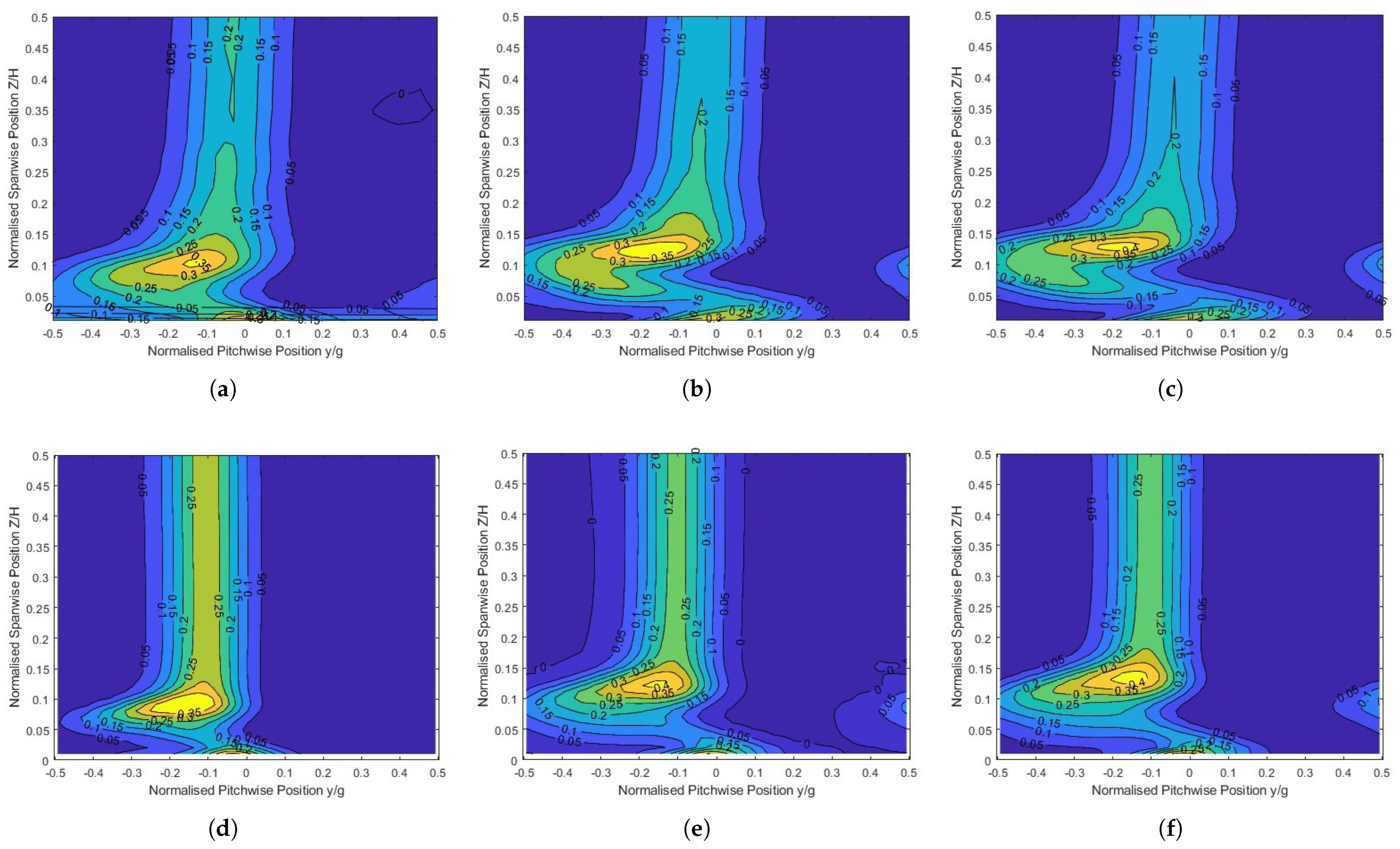
Figure 3. Comparison of energy loss coefficient contours for all cases with experimental five-hole probe readings from [14,19,20]. Taken at an axial plane downstream of blade. (a) Experimental energy loss coefficient contours, WGON−NC; (b) experimental energy loss coefficient contours, WGON−P05; (c) experimental energy loss coefficient contours, WGON−P09; (d) simulated energy loss coefficient contours, WGON−NC; (e) simulated energy loss coefficient contours, WGON−P05; (f) simulated energy loss coefficient contours, WGON−P09.
Ijtpp 11 00012 g003
Figure 4. Blade–to–blade view [12].
Ijtpp 11 00012 g004
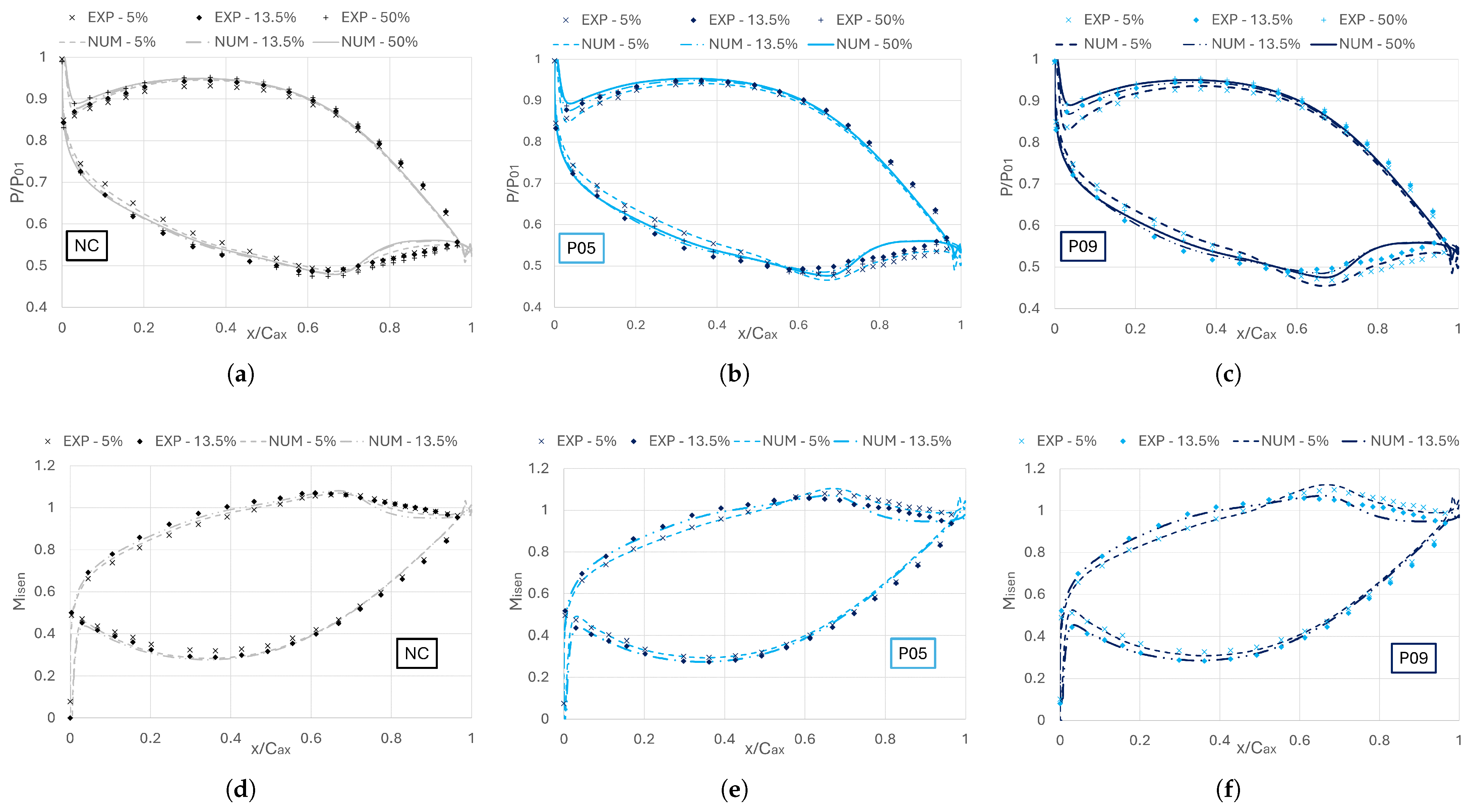
Figure 5. Comparison of time -averaged normalized pressure (ac) and isentropic mach number (df) for all cases (NUM) against experimental pneumatic pressure tap readings (EXP) from [14,19,20] at radial span locations at 5 % , 13.5 % , and 50 % H.
Ijtpp 11 00012 g005
The uncertainty of the quantities computed with the instrumentation above is presented in Table 2. Random and systematic uncertainties are expressed with a 95% confidence interval. A detailed breakdown of the uncertainty sources and their effect on the measured quantities can be found in [15].

2.3. Numerical Solver

The research was carried out computationally, using the Imperial in-house aeroelasticity code AU3D [21]. AU3D is a non-linear partially coupled aeroelastic tool that uses a Favre-Averaged Navier–Stokes CFD solver. The discretization is 2nd-order accurate in space [22] with fully implicit 2nd-order accurate dual time-stepping. A variant of the Spallart–Almaras turbulence model is used, where the turbulence production term is corrected using pressure gradient and helicity [23].
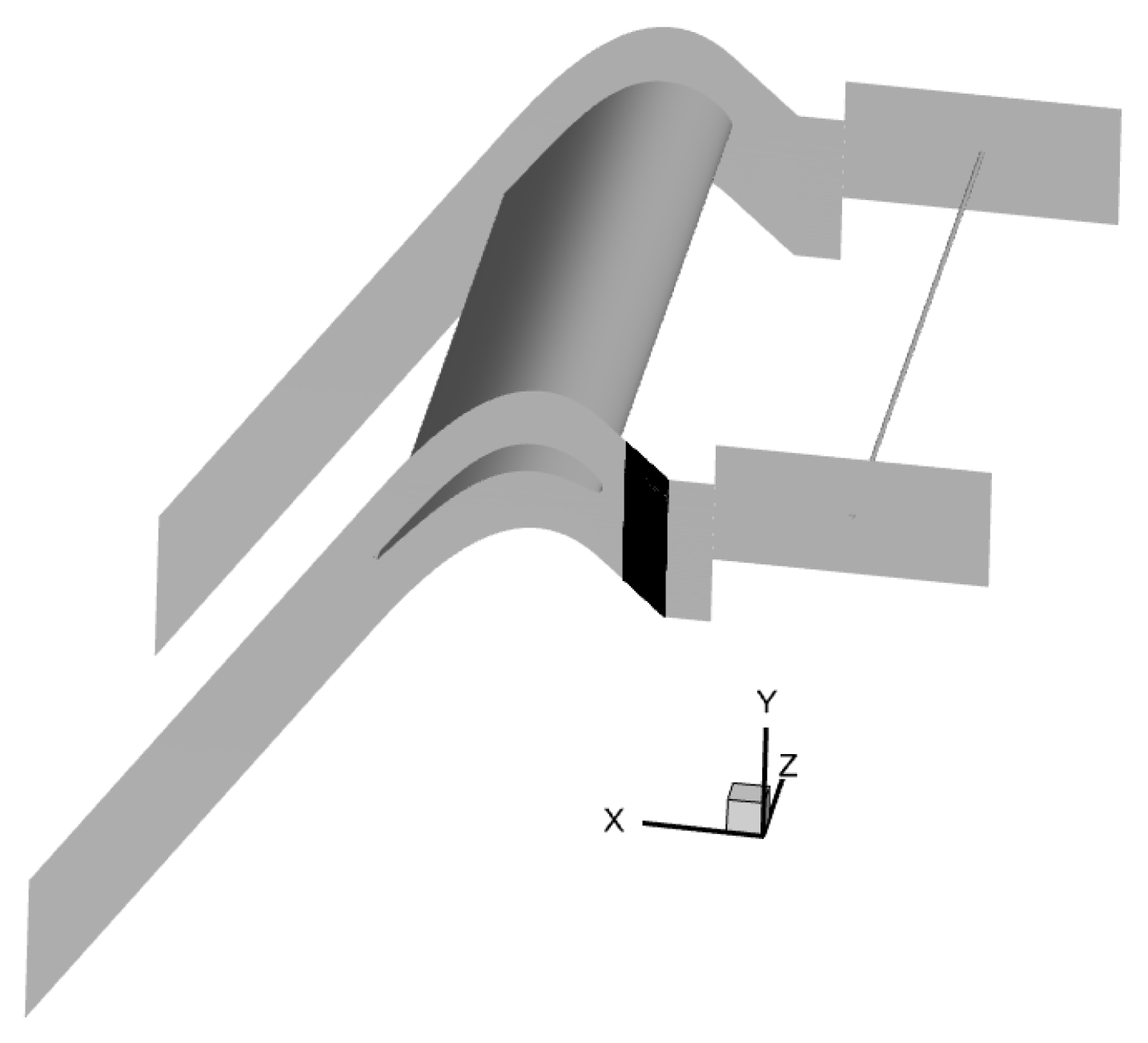
The hub purge flow is modeled through an injection patch on the hub wall. This is a mass flow inlet boundary condition on which the pressure is varied in order to deliver the correct mass flux across the surface. Fluid is injected from the hub at passage temperature. This methodology has been implemented successfully in AU3D calculations in previous work [24]. The high density of boundary nodes (42,040 across a 15 cm2 region) greatly aids in creating a well-balanced mass flux across the patch. The patch location has been shaded on the cascade CFD model representation of Figure 6.

2.4. Computational Set-Up

2.4.1. Cascade Representation in CFD

One particular challenge with representing the SPLEEN cascade in CFD is managing the interface between annular (bars) and linear (blades) domains. AU3D models linear cascades as annular with a large radius, which is incompatible with the small radii of the annular bar domain with which it must be coaxial. Two simplifications to the domain are made in order overcome this. Firstly, the pitch of the bars, which varies in the rig from from hub ( 26.02 mm) to tip ( 34.53 mm), is fixed at all radii, allowing for the bar domain to be moved coaxial to the cascade. The pitch is set in accordance with hub radius to achieve a desired periodicity, subject to integer bar and blade counts. Ideally, this periodicity would reduce the domain size for efficient computation. However, the point at which the pitch of the bars matches the blade pitch—which would reduce the domain size to the minimum 1-to-1 periodicity—is at roughly 60 % H. In order to keep the relevant pitches accurate in the region of interest (near hub wall), a bar pitch of 27.46 mm is chosen (accurate at 13.35 % H) at a hub radius close to 10 m. The resulting domain has 6 bars, 5 blades, and periodic boundaries. The point of pitch accuracy ( 13.35 % H) is used for the validations in Section 3. From here, subject to the requirements of the operating points M i s e n and R e i s e n , it is possible to vary the rotational speed to match the Strouhal Number, Str. In Table 3, the final simulated operating point is compared to that of the experimental work.
The second simplification made to the domain is to extend the bars to cover the entire span. The span of the bar in the experimental rig covers only 72 % H, creating a trailing edge wake effect prominent at radial heights beyond the midspan. Seeing as this location is remote from the area of interest and does not affect the validation data (which is recorded for the first 50 % of the blade span), this added feature complexity was considered irrelevant for the computational model.

2.4.2. Mesh and Solver Settings

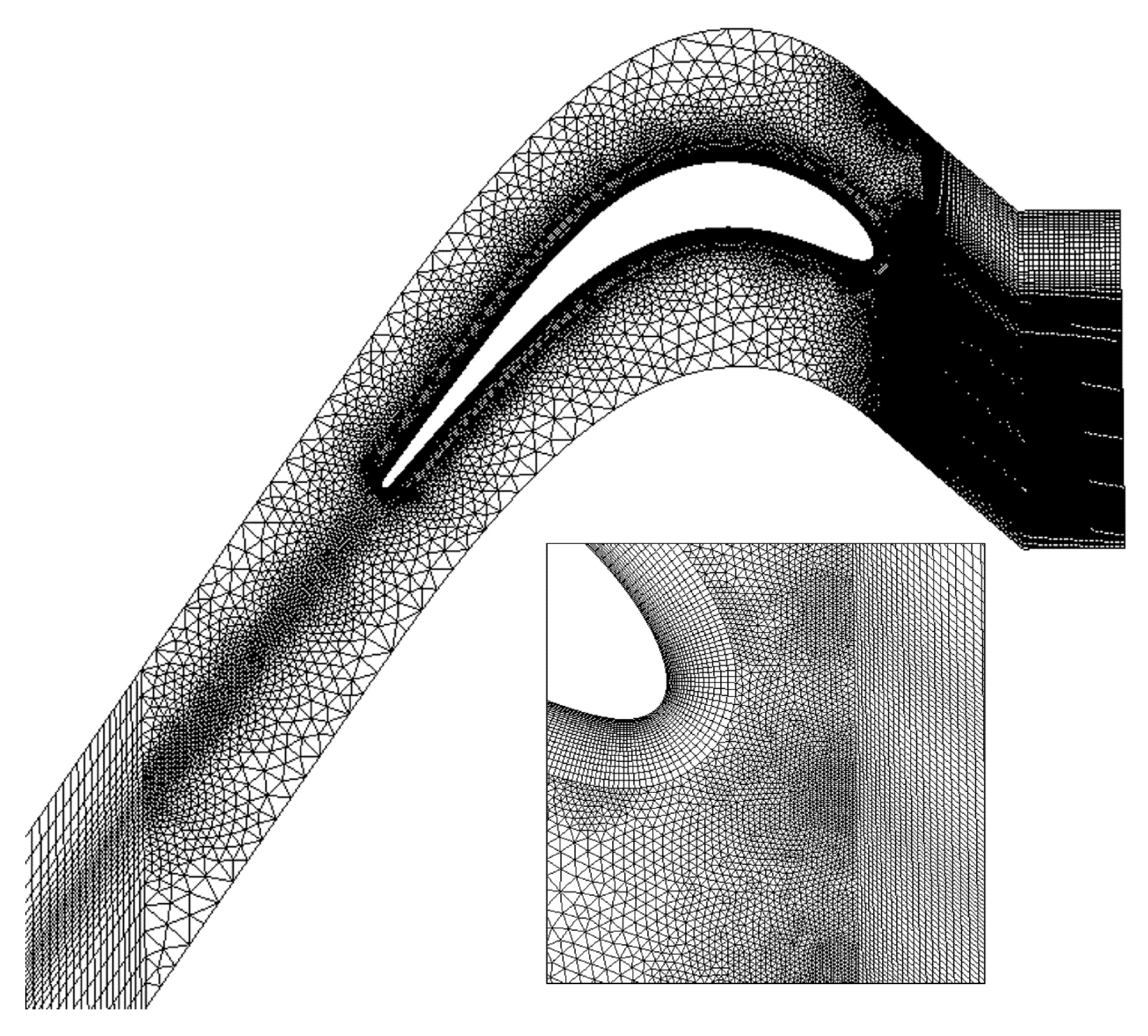
The mesh for this study varies between a fully structured and hybrid, semi-structured mesh. The rotating domain of the bars is a fully structured Hexablock mesh developed using the commercial software ANSYS ICEM. The cascade domain is structured in the radial direction and uses an unstructured mesh in the blade-to-blade plain, except for an O-mesh at the blade surface, where a structure upstream block is used for fluid injection and a structured downstream block is used to ensure a structured axial plane at 1.5 c a x , in line with the measurement plane 06 (see Figure 2). The interface between the two domains is a sliding plane. The mesh can be visualized in Figure 7. The parameters of the mesh were tuned with respect to the resulting match with the experimental data of [19]. The final mesh contains 33.5 million nodes for the unsteady domain, with 90 radial layers (aligned across domains) and a Y+ of 1 at the blade and bars surface. A summary of this information is given in Table 4. The unsteady simulations are run with 200 time steps per SVP.

2.5. Simulation Procedure

This paper compares three cases, defined in [19] by the prefix WGON (wake generator on) followed by the case identifiers ‘NC’ (no cavity), P05, and P09 (with cavity flows of 0.5 % and 0.9 % of the passage mass flow rate, respectively). Throughout this paper, the cases will be referred to simply by this identifier.

3. Validation

Results of time-averaged pressure across the blade, normalized by free stream total pressure, and isentropic Mach number are presented in Figure 5. Data from the simulated cases are compared to pneumatic pressure tap data from [14,19,20]. The pressure results are given for radial span locations of 5 % (near-wall), 50 % H (quasi-2D), and 13.5 % (close to the point of periodic accuracy at 13.35 % H). The isentropic Mach number is reported for just the hubward locations. At all radii, the CFD prediction matches the experimentally recorded values very well, in particular around the leading edge, providing reassurance that the flow injection model accurately captures the local effect on the incidence angle.
As a means to assess the flow field representation, Figure 3 presents comparisons of energy loss coefficient [25] contours for all cases at Plane 06 [11], against data calculated from five-hole probe measurements from [14,19,20]. It can be seen in this figure that the CFD accurately predicts the location of the passage vortex in all three cases and correctly predicts its migration in the radial direction from 10–20% H. Also accurately captured is the presence of the hub corner vortex and its migration with hub purge injection in the span-wise direction. The simulation over-predicts the energy loss in both the passage vortex core and the blade wake, implying an under-prediction of the wake and mainstream flow mixing compared with the experiment. Considering the relatively simple turbulence model, this match is considered reasonable.
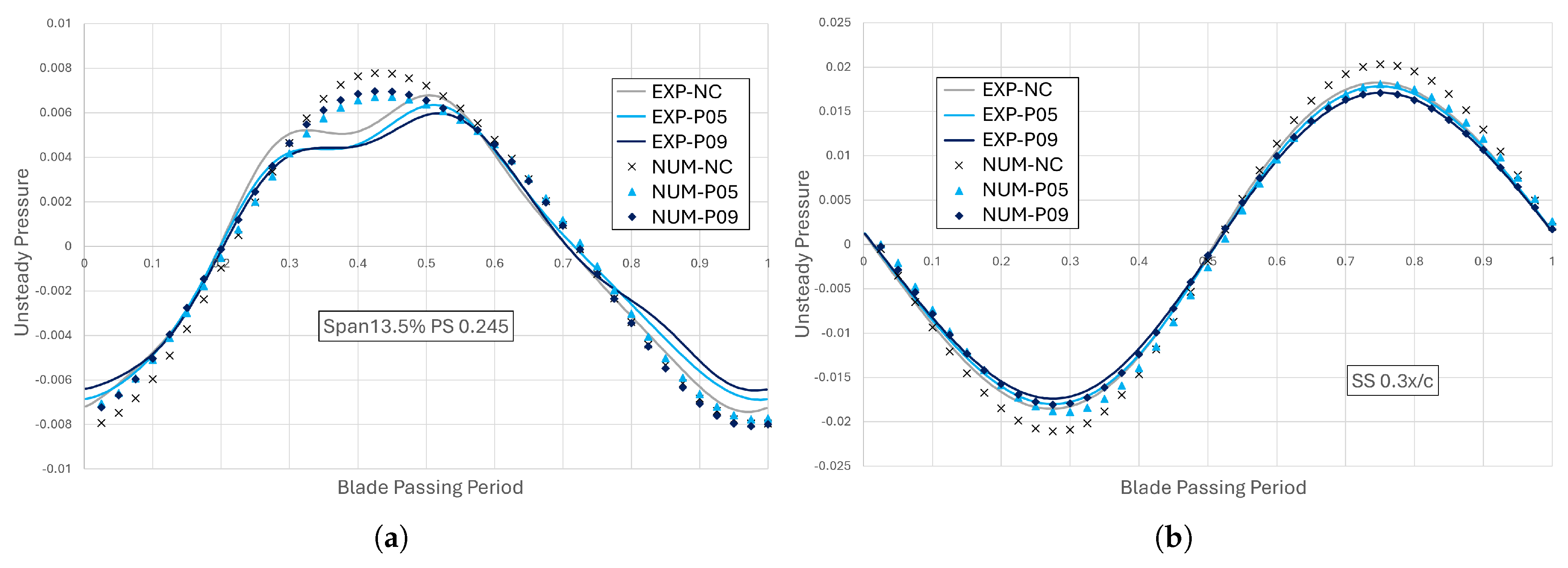
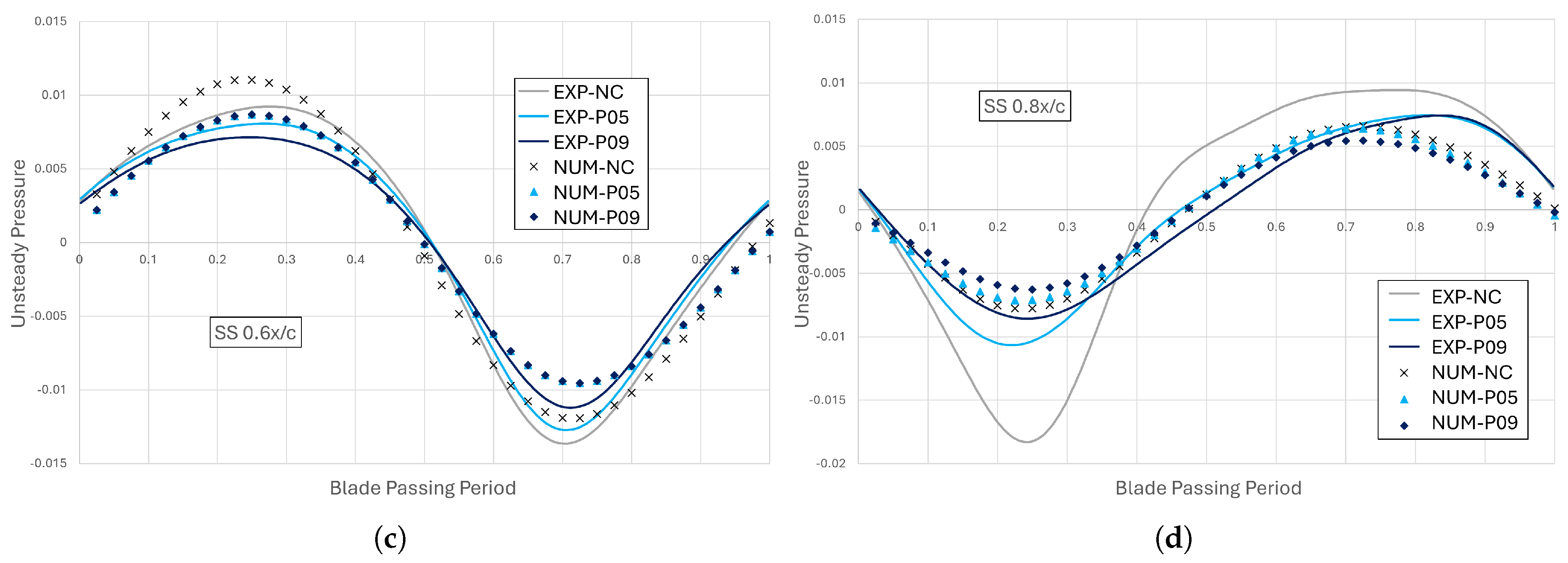
Finally, time-resolved pressure data from [19] is also available for 8 pressure tap locations (6 on the suction side, 1 at the leading edge, and 1 on the pressure side) at a traverse of radial positions across the blade. As validation for the unsteady prediction capability of this computational set-up, the results for unsteady pressure ( P ˜ ( t ) = ( P ( t ) P ¯ ) / P 01 ) for 4 of these taps are shown in Figure 8 for the radial position 13.5 % H. The tap locations include the pressure side x / c = 0.245 and suction side points across the blade chord at x / c = 0.3 , x / c = 0.6 and x / c = 0.8 . Figure 8a–c shows reasonable agreement between the simulation and the experimental results. Toward the aft section of the suction side (Figure 8d), the simulation slightly under-predicts the unsteadiness. As seen in Figure 5, the simulation does not capture some steady-pressure features occurring at this chord-wise location, which could be sensitive to unsteady behavior. However, the simulation does predict the general pattern between cases of a decrease in unsteady pressure amplitude with injection mass flow rate, so it is at least qualitatively accurate. Figure 8a,d also shows evidence of higher harmonic unsteadiness, not captured by the experiment, but this does not affect the ability of AU3D to accurately capture the BPF unsteady pressure.

4. Results

4.1. Unsteady Pressure

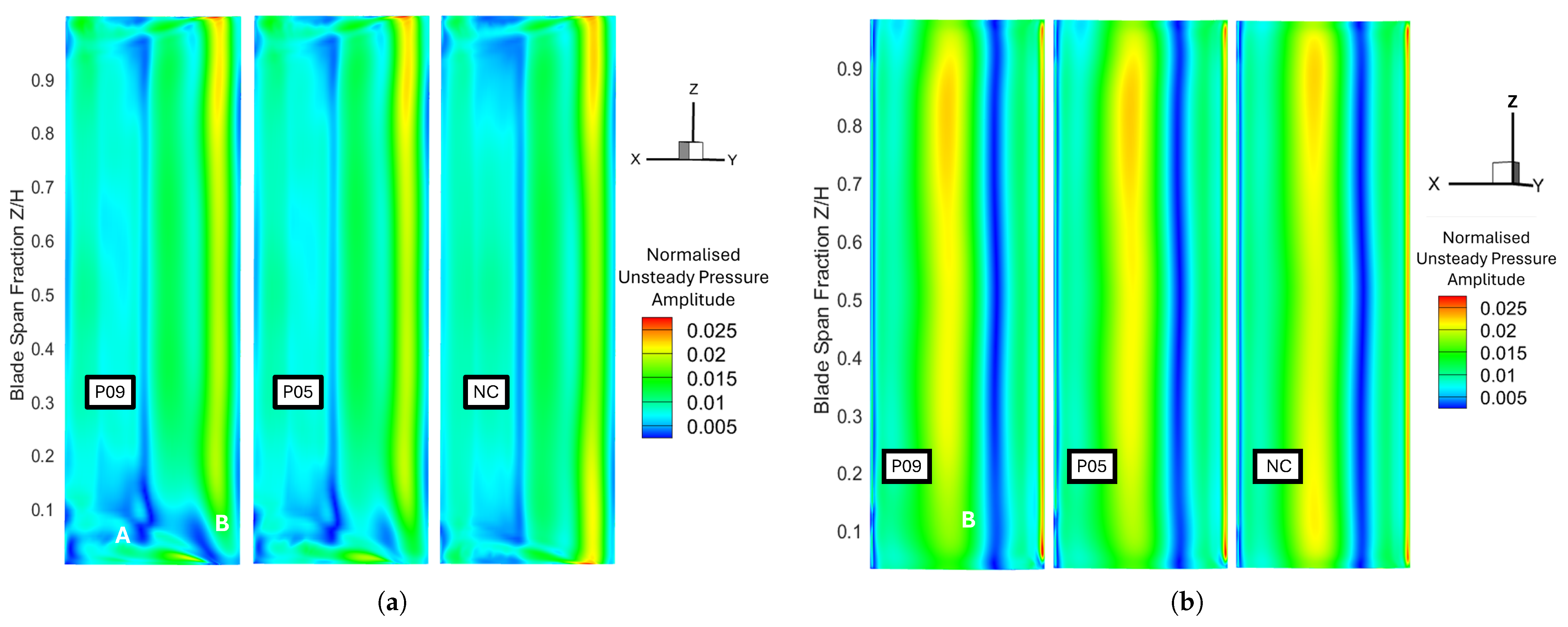
To understand the effect of the change in the aerodynamics brought about by hub purge flow on blade forcing, Figure 9 shows the unsteady pressure amplitude contours across the blade at the SVPF. These figures are produced by extracting the amplitude of the unsteady pressure signal at the given frequency at every point on the blade surface mesh using an FFT and normalizing using the free-stream total pressure.
The effect of the purge flow injection can be seen across the first 20 % of the blade span on the suction side (Figure 9a). Except for a small increase in the region very close to the wall, the unsteady pressure contours are reduced with an increasing hub purge flow rate, most notably across the forward section of the blade chord, suggesting the hub purge flow mitigates SVPF forcing. There is a lesser effect on the blade pressure side contours, shown in Figure 9b, but the same basic trend can be observed across the first 10–15% H.
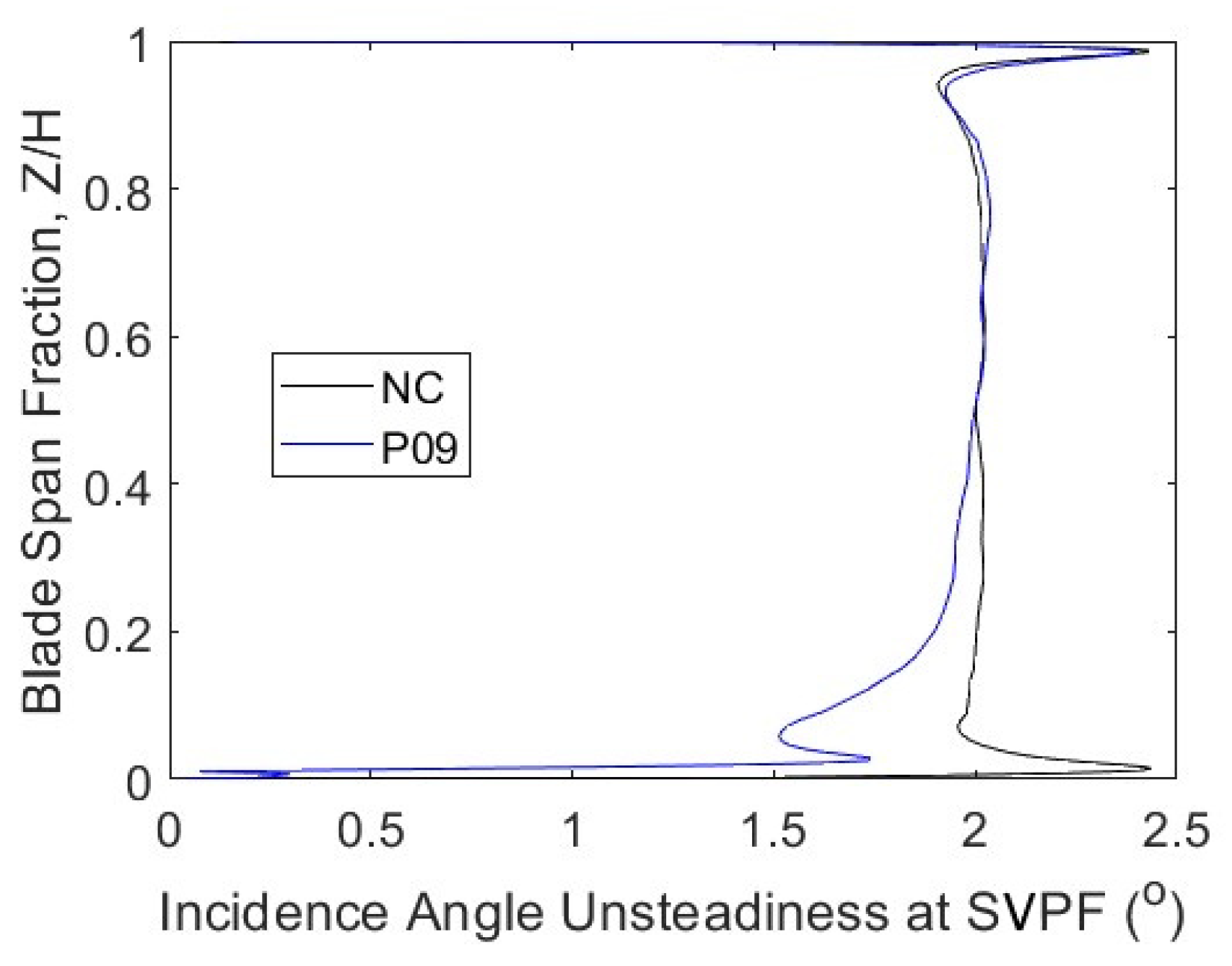
There are two effects present, causing this suction side change in unsteady pressure. The first is the well-documented effect of the purge flow on the passage vortex [3], which is the cause of the area of increased unsteady pressure on the aft section of the blade suction side close to the hub wall (point A). This increase in unsteady pressure is countered by the second major flow effect: a reduction in incidence angle unsteadiness. Figure 10 displays the radial distribution of the unsteadiness in incidence angle at the SVPF, a quantity produced by performing an FFT in space on the flow angle at every radial layer in the mesh and then plotting the amplitude at a given frequency against the radius [26]. A comparison of cases NC and P09 reveal a drop in incidence angle SVPF unsteadiness of as much as half a degree, primarily across the first 25–30% of the span. The reduction in incidence angle unsteadiness brings about a reduction in the unsteady pressure contours at the blade root, as seen in Figure 9a,b (point B). Incidence angle unsteadiness at the SVPF is caused by the wake ‘negative jet’ effect [27]. Mixing of the purge flow with the passage flow simultaneously reinvigorates the low-momentum wake fluid and slows down the higher-momentum free-passage flow, thus providing a ‘shielding’ effect for the blade against unsteadiness in the incidence angle.

4.2. Modal Force

The simulations run to obtain the unsteady pressure signals are purely aerodynamic calculations without moving the blade. Modal force is calculated from these unsteady pressures during post-processing in an uncoupled, aeroelastic manner. The choice to focus on modal force, rather than calculate blade vibration amplitudes, is made to avoid the confounding factor of aerodamping—which is highly geometry dependent—so as to keep the results as general as possible. The modal analysis was completed using the commercial software ANSYS Mechanical. The blade was modeled as fixed at the hub and free to move at the tip—unlike in the cascade, where both ends are rigidly fixed—as this is more representative of an aerospace LPT blade.
Table 5 presents modal forces at the SVPF for 7 of the first 11 blade vibration modes: all from either the flap (F) or the twist (T) family of modes. Also included is the 1CB (‘chordwise bending’) mode noted for its proximity to the SVPF. Two methods of normalization are presented. In the left column all the modal forces are normalized by the steady force exhibited in the 4F mode (the mode closest to resonance with the SVPF) for the NC case, allowing for comparison of how the unsteady force varies across modeshape. In the right column, the modal forces are normalized by the modal force seen in the NC case for that mode, so the table values represent the change in SVPF forcing brought about by the introduction of purge flow.
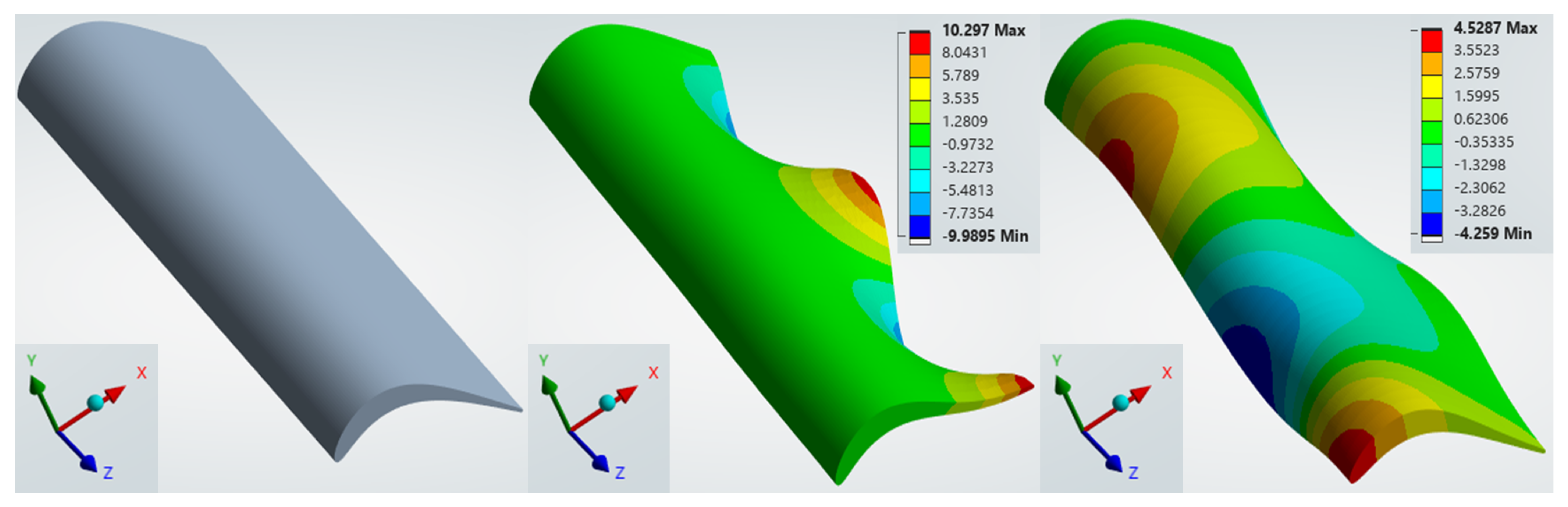
Starting with the left column, the results show that the modal force is greater for twist modes, with the flap modes exhibiting only around 20 % of the equivalent frequency range twist modal force. This is likely due to the large unsteady pressures (visible on Figure 9a) across the forward section of the blade, which have no effect on higher-order flap modes where the modal displacements are almost solely at the tail. For reference, the displacements of the 4F and 3T modeshapes can be seen in Figure 11. Another result from this part of the study is that the fundamental modes (1T/1F/1CB) exhibit the greatest modal force by far. However, with the exception of 1T, the fundamental modes are not influenced by the injection of hub purge fluid. This can be attested through the right-side column for the 1F and 1CB cases, which shows negligible change in normalized force between the three purge flow rate cases for both modes. The frequency of 1T and 1F is suitably far from the OP Strouhal number that it could be argued that these modal force levels are unreliable. In answer to this, it should be noted that these modal force trends also extend to 1CB—the second most OP relevant mode, and that the effect of an incidence angle change (Figure 10) will be the same at a wide range of Strouhal numbers.
With regard to the effect of hub cavity flow, a key pattern emerges based on the information in the right column of Table 5. For twist modes, the lower unsteady pressures caused by injecting purge flow reduce the modal force—as would be expected. However, for the flap modes, the introduction of purge flow significantly increases the modal force (by as much as 50%)—although the overall modal forcing is still lower than that exhibited in the twist modes.
Considering the twist mode family, the relationship between modal force and unsteady pressure can be made more explicit through analysis of the unsteady normal force. This is calculated by integrating the unsteady pressure amplitude at the SVP across both blade surfaces ( F n = p ^ S V P A d A ), producing a force metric which is essentially just an integrated measure of unsteady pressure amplitude—independent of modeshape and normal blade surface. This quantity is recorded for the three cases in the final row of Table 5. It can be seen that the drop in normal force as purge flow is increased is a reasonable estimate for the drop in modal force for the first two twist modes, indicating that twist mode forcing is an unsteady pressure-dominated phenomena.
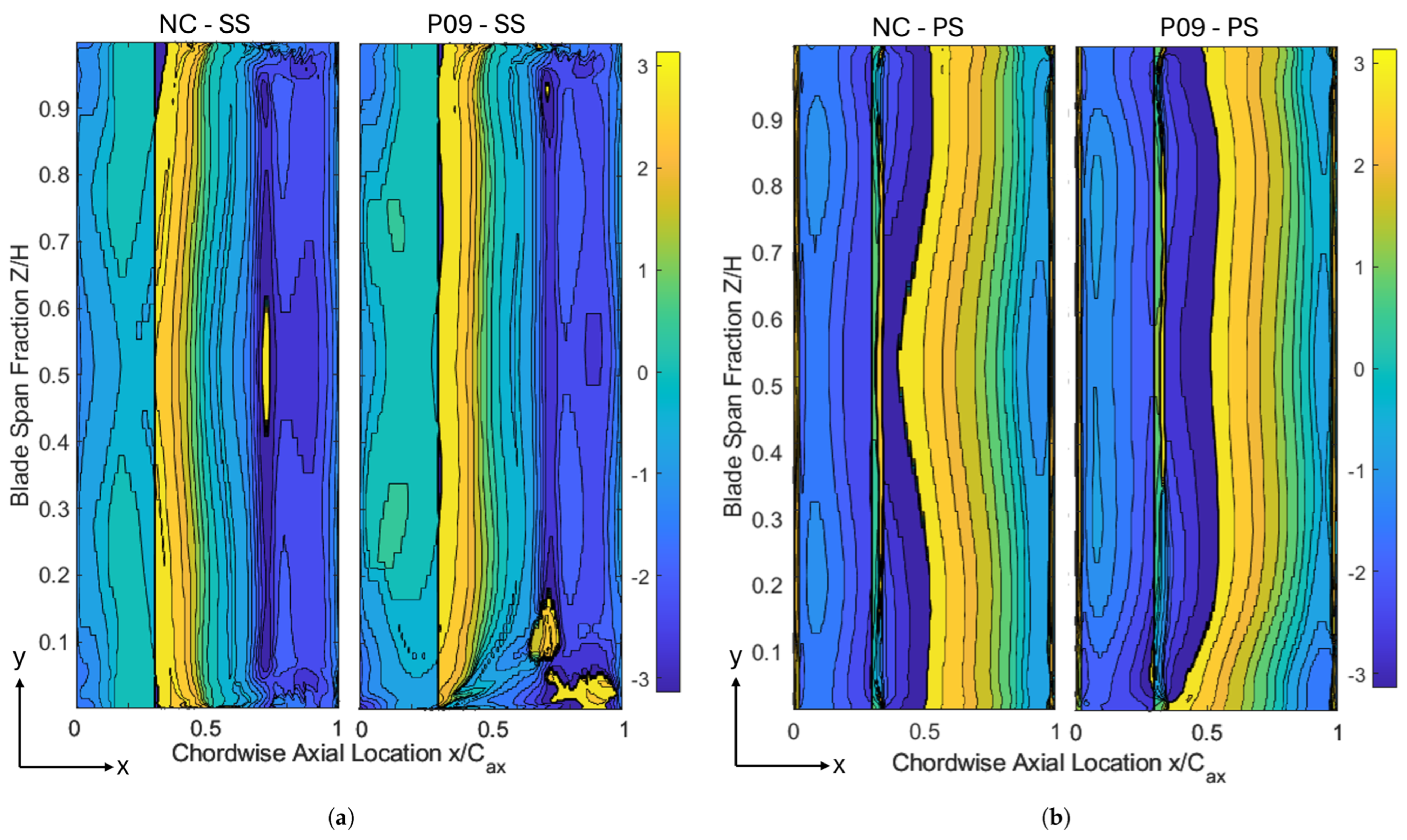
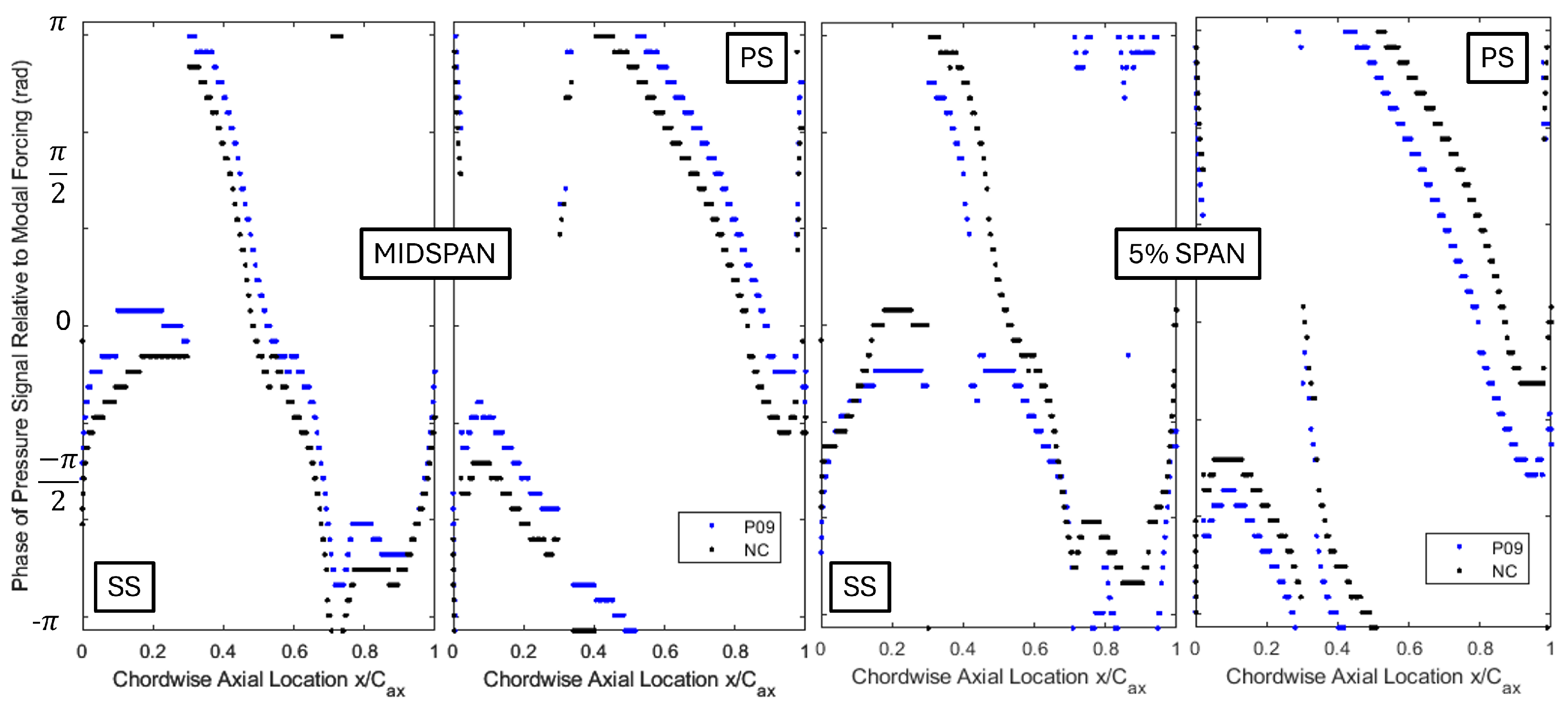
For the flap family of modes, an increase in modal force is at odds with a reduction in unsteady pressure. The scale of these increases (50–100%), coupled with the fact that the majority of that increase is secured by the intermediate mass flow injection case (P05), suggests that this forcing increase is being driven by a change in phase of the unsteady pressure signal due to different near-wall aerodynamics. Figure 12 shows the variation in phase of the pressure signal across the blade surfaces for the NC and P09 cases. The phase is displayed relative to the phase of the resultant force signal, although any reference could be chosen as the absolute phase is less significant than the variation in phase between different points on the blade. On the pressure side (Figure 12b), differences in phase can be seen across the first 50% of the span—noticeable in the change in shape of the central yellow contour from convex to concave. The purge flow injection case P09 leads the NC case at the hub and trails it at the midspan. This variation in phase, of almost π 3 , is also attestable through comparisons of the second and fourth plots from Figure 13, which shows cuts of the phase contour plots of Figure 12 at the midpsan and at 5% span. Across the suction side, case P09 also moves from leading the NC case to lagging the NC case when moving from the hub to the midspan. This is best seen through comparisons of the first and third plots of Figure 13. There is also a region of unsteady pressure toward the aft section of the blade hub for case P09 associated with the passage vortex, visible in Figure 12a, which again lies out of phase with the equivalent region for the NC case. These phase differences are large enough to significantly influence the modal force. The P05 case is not given here, but the phase contours bear a great similarity to those of the P09 case, indicating that the phase change is introduced through the introduction of rim seal fluid at the hub.
The phase is influential for the flap mode because the flap modes experience modal deflections only at the tail. The radial variation in phase between the hub and midspan on both sides is also significant as the modal velocities of those two sections of the blade in the flap modes are out of phase with one another. This leaves open the possibility that the pressure signal is moved into phase with the modal velocity at both portions of the blade, driving an unbounded response. The phase change has a much smaller effect on the twist modal force as the twist modes exhibit deflections at the leading edge, which are in the opposite direction to those at the tail. To achieve the same complimentary phase alignment as in the case of flap modes, the phase of the pressure signal at the leading edge would need to move in the opposite direction to the phase at the tail—the plots in Figure 13 show that this is not the case. All of this means that if any section of the pressure signal at the tail of the blade is moved into phase with the modal velocity, an equivalent and equally important section is being driven out of phase toward the leading edge, leaving the net effect of a negligible phase.

5. Discussion

As a high-speed, low-Reynolds LPT rig, the SPLEEN cascade is representative of future designs of aerospace LPTs, giving good assurance that the results of this paper can be transferred to real LPT blades. The introduction of a tip gap on a real turbine blade is unlikely to make a difference to the qualitative observations made regarding the effect of hub purge flow, as the tip vortex is independent from the hub. With the general analysis approach of assessing modal force in the absence of damping, it is possible to apply the understanding developed in this paper to a wide range of LPT blades.
In regard to the goal of assessing the need for modeling the hub purge flow when making an assessment of SVPF forced response, the following can be said. Given the great increases in predicted modal forces brought about by as little as 1 % m ˙ i n j , it is clear that for the low added modeling complexity used here, it is well worth modeling the hub purge flow. The key complicating factor is the difficulty with accurately setting up the injection model. This work was highly dependent on the wealth of available information on the SPLEEN rig, which was vital for generating accurate inlet flow profiles on which the parameters of the fluid injection system are validated. This is an advantage of turbine rigs, but a dearth of aerodynamic data is an age-old problem for real turbine forced response prediction—particularly toward the hotter end. In cases where such a model is difficult to build or validate, the results of this paper indicate that it may be unnecessary to model hub purge flow should the main resonances of interest be with twist modes or with low fundamental modes of blade vibration. For these modes, the hub purge flow effect is negligible or even likely to reduce the predicted forced response.
To what degree the understanding developed from this paper can be transferred to the analysis of high-pressure turbine (HPT) forced response remains to be seen. Certainly, the mass flow rate of hub purge injection is higher, making it a more significant flow effect. Given the seeming importance of even small mass flows of rim seal fluid, the conclusion that hub purge flow is worth modeling will likely also be true for HPTs. But the shorter aspect ratio is also likely to increase the interaction of hub purge and blade tip flow effects, meaning the specific results of this paper are unlikely to be transferable, and further work in this area would need to be carried out to develop an understanding of modal force variations with hub purge flow for HPTs.

6. Conclusions

This paper presents a computational study of the effect of hub purge flow modeling on the stator blade passing forced response of the SPLEEN C1, high-speed LPT. Validation was presented against both time-averaged and unsteady data collected on this test rig at the Von Karman Institute for fluid dynamics, indicating the capability of the aeroelastic code AU3D to adequately capture the flow field and blade pressure for force response purposes in turbines of this kind. The presence of hub purge flow, introduced into the passage with a numerical injection patch, is shown to reduce the unsteady pressures across 30 % of the blade closest to the hub—particularly on the suction side. For low mode number vibration modes, with low displacements at the hub, this has no noticeable effect on modal force. For higher order modes, an interesting result showed that for twist modeshapes, the reduced unsteady pressures led to reduced modal forces, whereas for flap modeshapes, modal forces increased. With respect to the stated goal of determining the need for hub purge flow modeling in forced response simulations; it would seem that for the low-added modeling complexity here, it is worthwhile. Exceptions could be made if resonances of interest coincide with low fundamental blade vibration modes or torsional modes, where the lack of purge flow modeling would provide a more conservative, upper-bound prediction for modal force.

Author Contributions

Conceptualization, A.T. and S.L.; methodology, A.T.; software, A.T.; validation, A.T., G.L., and S.L.; formal analysis, A.T.; investigation, A.T.; writing—original draft preparation, A.T. and G.L.; writing—review and editing, S.S.; visualization, A.T.; supervision, S.L.; project administration, A.T.; funding acquisition, S.S. All authors have read and agreed to the published version of the manuscript.

Funding

This research was funded by the Aerospace Technology Institute, SIRUS Program (Grant No. MEDY_P76072).

Data Availability Statement

The raw data presented in this article is not readily available due to commercial sensitivities surrounding the data format. Requests to access the datasets should be directed to the corresponding author. The original SPLEEN experimental database can be found at https://zenodo.org/records/11956004 (accessed on 5 January 2026).

Acknowledgments

The authors would like to thank the Von Karman Institute and Rolls-Royce plc for the opportunity to carry out this study, along with the Imperial College VUTC’s Senior Research Support Officer Peter Higgs.

Conflicts of Interest

The authors declare no conflicts of interest. The funders had no role in the design of the study; in the collection, analyses, or interpretation of data; in the writing of the manuscript; or in the decision to publish the results.

Abbreviations

The following abbreviations are used in this manuscript:
Abbreviations
SVPFStator Blade Passing Frequency
CFDComputational Fluid Dynamics
FSPFront Stagnation Point
FFTFast Fourier Transform
LPTLow-Pressure Turbine
HPTHigh-Pressure Turbine
HCFHigh Cycle Fatigue
Nomenclature
TermDescription
PPressure [Pa]
TTemperature [K]
cVelocity [ms−1]
ρ Density [kgm−3]
mMass [kg]
Ω Rotational Speed [rpm]
Φ Flow Coefficient
MMach Number
StrStrouhal Number
ReReynolds Number
( ) 0 Total Quantity
i s e n Isentropic Quantity
Vector Quantity
( ) ¯ Time-Averaged Quantity
( ) ˙ Flow Rate
ˆ Unsteady Amplitude
( ) M S at Midspan
tTime
ZRadial Height Above Hub
yCircumferential Location

References

  1. Regina, K. Experimental investigation of purge flow effects on a high pressure turbine stage. J. Turbomach. 2015, 137, 041006. [Google Scholar] [CrossRef]
  2. Schrewe, S. Experimental analysis of the interaction between rim seal and main annulus flow in a low pressure two stage axial turbine. J. Turbomach. 2013, 135, 051003. [Google Scholar] [CrossRef]
  3. Jenny, P. Unsteady rotor hub passage vortex behavior in the presence of purge flow in an axial low pressure turbine. J. Turbomach. 2013, 135, 051022. [Google Scholar] [CrossRef]
  4. Schuepbach, P. Effects of suction and injection purge-flow on the secondary flow structures of a high-work turbine. J. Turbomach. 2010, 132, 021021. [Google Scholar] [CrossRef]
  5. Paniagua, G. Effect of the hub endwall cavity flow on the flow-field of a transonic high-pressure turbine. J. Turbomach. 2004, 126, 578–586. [Google Scholar] [CrossRef]
  6. Schadler, R. Novel high-pressure turbine purge control features for increased stage efficiency. J. Glob. Power Propuls. Soc. 2017, 1, 113–128. [Google Scholar] [CrossRef]
  7. Zerobin, S. Aerodynamic performance of turbine center frames with purge flows—part i: The influence of turbine purge flow rates. J. Turbomach. 2018, 140, 061009. [Google Scholar] [CrossRef]
  8. Zerobin, S.; Bauinger, S.; Marn, A.; Peters, A.; Heitmeir, F.; Göttlich, E. The unsteady flow field of a purged high pressure turbine based on mode detection. In Proceedings of the ASME Turbo Expo 2017: Turbomachinery Technical Conference and Exposition, Charlotte, NC, USA, 26–30 June 2017. [Google Scholar]
  9. Hedge, S.; Kielb, R.; Zori, L.; Campregher, R. Influence of Stator Hub Cavities on the Forced Response Behaviour of an Embedded Compressor Rotor. In Proceedings of the ASME TurboExpo 2021, Online, 7–11 June 2021; p. 58779. [Google Scholar]
  10. Trafford, A.; Stapelfeldt, S.; Lopes, G.; Lavagnoli, S. Influence of Hub purge flow-rate on forced response in a low pressure turbine. In Proceedings of the 16th European Turbomachinery Conference, Hannover, Germany, 24–28 March 2025; Available online: https://www.euroturbo.eu/29092025/publications/proceedings-papers/etc2025-167/ (accessed on 5 January 2026).
  11. Simonassi, L.; Lopes, G.; Gendebien, S.; Torre, A.F.M.; Patinios, M.; Lavagnoli, S. An Experimental Test Case for Transonic Low-Pressure Turbines—Part I: Rig Design, Instrumentation and Experimental Methodology. In Proceedings of the ASME TurboExpo 2022, Rotterdam, The Netherlands, 13–17 June 2022. [Google Scholar] [CrossRef]
  12. Lopes, G. Unsteadiness in the Secondary Flows of a High-Speed Low-Pressure Turbine Cascade with Unsteady Wakes and Purge Flow. J. Turbomach. 2025, 147, 091017. [Google Scholar] [CrossRef]
  13. Pfeil, H. Investigation of the Laminar-Turbulent Transition of Boundary Layers Disturbed by Wakes. J. Eng. Power 1983, 105, 130–137. [Google Scholar] [CrossRef]
  14. Lopes, G. Time-Averaged Aerodynamics of a High-Speed Low-Pressure Turbine Cascade With Cavity Purge and Unsteady Wakes. J. Turbomach. 2023, 146, 021008. [Google Scholar] [CrossRef]
  15. Lopes, G. Aerodynamics of a High-Speed Low-Pressure Turbine Cascade with Unsteady Wakes and Purge Flow. Ph.D. Thesis, Université de Liège, Liège, Belgium, 2024. [Google Scholar] [CrossRef]
  16. Brouckaert, J.F. Development of Fast Response Aerodynamic Pressure Probes for Time-resolved Measurements in Turbomachines. Ph.D. Thesis, Université Libre de Bruxelles, Brussels, Belgium, 2004. [Google Scholar]
  17. Hougen, J.O. Dynamics of pneumatic transmission lines. Control Eng. 1963, 10, 114–117. [Google Scholar]
  18. Bergh, H. Theoretical and Experimental Results for the Dynamic Response of Pressure Measuring Systems; Nationaal Lucht-en Ruimtevaartlaboratorium: Amsterdam, The Netherlands, 1965. [Google Scholar]
  19. SPLEEN—High Speed Turbine Cascade—Test Case Database. Available online: https://zenodo.org/records/11956004 (accessed on 6 August 2025).
  20. Lopes, G. Impact of Unsteady Wakes on the Secondary Flows of a High-Speed Low-Pressure Turbine Cascade. Int. J. Turbomach. Propuls. Power 2023, 8, 36. [Google Scholar] [CrossRef]
  21. Sayma, A.I. An integrated nonlinear approach for turbomachinery forced response prediction. Part I: Formulation. J. Fluids Struct. 2000, 14, 87–101. [Google Scholar] [CrossRef]
  22. Jorgenson, P. Central difference TVD schemes for time dependent and steady state problems. J. Comput. Phys. 1993, 107, 297–308. [Google Scholar] [CrossRef]
  23. Lee, K.B. Validation of a numerical model for predicting stalled flows in a low-speed fan—Part I: Modification of Spalart–Allmaras turbulence model. J. Turbomach. 2018, 140, 051008. [Google Scholar] [CrossRef]
  24. Möller, D. Influence of rotor tip blockage on near stall blade vibrations in an axial compressor rig. J. Turbomach. 2018, 140, 021007. [Google Scholar] [CrossRef]
  25. Denton, J. Loss Mechanisms in Turbomachines; ASME: New York, NY, USA, 1993. [Google Scholar]
  26. Trafford, A.; Stapelfeldt, S.; Puente-Rico, R. A computational study of burner failure related low engine order forced response mechanisms in a high pressure turbine. In Proceedings of the 16th International Symposium on Unsteady Aerodynamics, Aeroacoustics and Aeroelastics of Turbomachines, ISUAAAT16, Toledo, Spain, 21 September 2022. [Google Scholar]
  27. Salvadori, S. Aerothermal study of the unsteady flow field in a transonic gas turbine with inlet temperature distortions. J. Turbomach. 2011, 133, 031030. [Google Scholar] [CrossRef]
Figure 1. SPLEEN C1 (a) geometry and (b) test section equipped with cascade, WG bars, and purge flow slot (b) [12].
Ijtpp 11 00012 g001
Figure 6. CFD model domain visualization with patch location shaded.
Ijtpp 11 00012 g006
Figure 7. Partial visualization of cascade passage mesh in the blade-to-blade plane, with details of LE and patch mesh.
Ijtpp 11 00012 g007
Figure 8. Comparison of unsteady pressure values (NUM) across 1BP for all cases against experimental fast response probe readings (EXP) from [19] at radial span locations at 13.5 % H. (a) Pressure side x / C a x = 0.245 ; (b) experimental suction side x / C a x = 0.3 ; (c) suction side x / C a x = 0.6 ; and (d) suction side x / C a x = 0.8 .
Ijtpp 11 00012 g008aIjtpp 11 00012 g008b
Figure 9. Unsteady pressure amplitude contours for cases NC, P05, and P09, normalize by free stream total pressure P 01 . Flow in + x direction. (a) Blade suction side; (b) blade pressure side.
Ijtpp 11 00012 g009
Figure 10. Radial variation in blade incidence angle unsteadiness at the SVPF for cases NC and P09.
Ijtpp 11 00012 g010
Figure 11. Example twist and flap modeshapes; deformation (mm) in y-direction for 4F (center) and 3T (right) with the un-deformed blade profile given on the left.
Ijtpp 11 00012 g011
Figure 12. Pressure signal phase contours relative to resultant blade-integrated force signal (radians). (a) Blade suction side; (b) blade pressure side—case NC left; P09 right.
Ijtpp 11 00012 g012
Figure 13. Radial comparison of phases of cases P09 and NC. From left to right: midspan—SS, PS; 5% span—SS, PS.
Ijtpp 11 00012 g013
Table 1. C1 cascade key geometrical features.
Nom.Dim.Units
Chord, C52.280mm
Axial chord, C a x 47.614mm
Pitch, G32.950mm
Cascade span, H165.000mm
Inlet metal angle, β m , i n 37.300°
Outlet metal angle, β m , o u t 53.800°
Stagger angle, ζ 24.400°
Table 2. Breakdown of experimental uncertainty with 95% confidence interval.
InstrumentQt.Unit U rand U sys
Fixed T 01 K0.010.52
P 01 , f s Pa7.0129.82
Purge m ˙ r i g , t e s t kg/s1.82 × 10−40.0021
PMFR%0.00170.0021
Blade pneu. P / P 01 , f s 0.0010.005
Blade FR Δ P / P 01 0.004
L5HP β - β M S °0.150.33
ξ 0.0020.010
Table 3. Geometry and operating point comparison of CFD and experiment.
ParameterExperimentSimulation
Str 0.95 0.95
Φ variable 1.212
Pitch Blades (mm) 32.95 32.95
Pitch Bars (mm) 26 . 02 ( h u b ) 27.46
34 . 53 ( t i p )
M 3 , i s e n 0.90 0.90
R e 3 , i s e n 70,00070,000
Table 4. Mesh details for full domain.
Mesh ParameterValue
Points (millions) 33.5
Radial layers90
Y+ bar1
Y+ blade1
Y+ endwalls10
Max expansion ratio 1.3
Max hexahedral skewness 0.776
Table 5. Normalized modal forcing levels.
ModeNC-4F NormNC Norm
Freq (Hz) NC P05 P09 NC P05 P09
1T0.3110.2960.239 1.000 0.953 0.945
956.6
2T0.1610.1530.149 1.000 0.951 0.933
3291.7
3T0.1120.0970.095 1.000 0.867 0.848
6996.8
1F0.2120.2160.213 1.000 1.016 1.005
590.7
3F0.0200.0390.041 1.000 1.941 2.020
3785.9
4F0.0300.0440.046 1.000 1.440 1.500
4959.0
5F0.0240.0400.042 1.000 1.720 1.782
6298.6
1CB0.2140.2150.2131.0001.0030.995
5980.2
F n 1.0000.9610.948
Disclaimer/Publisher’s Note: The statements, opinions and data contained in all publications are solely those of the individual author(s) and contributor(s) and not of MDPI and/or the editor(s). MDPI and/or the editor(s) disclaim responsibility for any injury to people or property resulting from any ideas, methods, instructions or products referred to in the content.