


Abstract
Terrestrial environments function as major sinks and dynamic sources of microplastics. Land use strongly influences inputs, accumulation, and transport pathways of these contaminants in the environment. Despite the extensive literature, few reviews have compared contamination levels and the potential impacting factors across land uses. To fill this gap, this review synthesizes current knowledge on the origins, occurrence, pathways, and ecological effects of microplastics across diverse land uses. The review revealed multiple interconnected pathways that drive microplastic contamination in terrestrial systems. Abundances are consistently higher in intensively managed croplands, urban areas and industrial vicinities. However, their detection in remote environments underscores the critical role of diffuse inputs and long-range atmospheric transport. Vertically, microplastics are enriched in topsoils, and their concentrations declines with depth. Horizontally, concentration declines with increasing distance from major hotspots like agricultural fields, industrial facilities, and road networks. Ecologically, microplastics alter soil physical properties, modify chemical conditions, and shift microbial community composition and enzyme activities. Furthermore, they stress soil fauna and plants through ingestion, toxicity, and physical blockage, with impacts contingent on polymer type, particle morphology, and concentration. Collectively, this review reveals consistent spatial patterns and widespread adverse ecological impacts, highlighting the clear need for integrated management strategies to mitigate terrestrial microplastic pollution.
1. Introduction
1.1. The Plastic Age and the Rising Issue of Microplastics
Plastic production and application have expanded dramatically since the 1950s. Plastics have become a necessity in daily life and an essential material for industries, leading to the “Plastic Age” [1,2,3]. This growth is attributed to their advantages, such as low production costs, high molding flexibility, and extended durability [1,4]. Global plastic production exceeded 414 million metric tons in 2023 [5], and is projected to reach 1231 Mt by 2060 [6]. Despite these advantages, a major challenge arises at the end of the plastic lifecycle; the same durability that underpins the utility of plastics complicates their disposal, since resistance to degradation leads to long-term accumulation in ecosystems. Some plastics can persist for hundreds of years and become prevalent pollutants under normal environmental conditions [7,8].
Effective plastic recycling and reuse are critical to reducing environmental consequences. However, only 15% of plastic waste worldwide is collected for recycling. In comparison, 46% is landfilled, 17% is incinerated, and 22% is mismanaged and vulnerable to environmental leakage, making soils the primary sink for this degrading debris [6]. Once plastics enter the environment, they undergo physical, chemical, and biological degradation, becoming brittle and fragmenting into smaller particles [9,10]. In addition to environmental weathering, everyday human activities, such as laundry, agricultural practices, and tire wear on roads, further contribute to the generation of microplastics [11,12,13,14,15].
The occurrence of microplastics was first reported in the surface waters of the Sargasso Sea in 1974 by Carpenter and Smith [16], who studied polystyrene (PS) spherules with diameters < 5 mm. However, the term microplastics was introduced only in 2004 by Thompson, et al. [17]. Since then, attention to microplastics has accelerated, and they are now recognized as emerging contaminants detected in diverse ecosystems worldwide [18,19].
1.2. Microplastics in the Terrestrial Environment and Knowledge Gaps
Despite being recognized as a critical component of the global plastic cycle, terrestrial environments have received less attention than aquatic ecosystems and the ocean [4,20]. Estimates indicate that terrestrial environments receive up to 23 times more plastic than that directly released into the oceans [19,21]. In addition, most plastics entering the oceans originate from terrestrial environments [22,23,24,25]. This land–sea connection is particularly pronounced in densely populated coastal regions, where high plastic waste loads and proximity to the ocean facilitate efficient transport to the oceans, primarily via rivers and surface runoff [26]. Consequently, terrestrial systems represent an essential hub in the global plastic cycle. Understanding the occurrence, fate, and impacts of microplastics in the terrestrial environment is essential for closing major knowledge gaps in global plastic budgets and environmental risk assessments.
Beyond their ubiquity, microplastics in the terrestrial environment pose multiple ecological and health concerns. They can act as vectors for chemical contaminants [27], provide substrates for microbial colonization and biofilm formation [28], and alter soil physical structure, nutrient cycling, and biological functioning [29,30]. Furthermore, microplastics can enter food webs, raising concerns about long-term risks to human health [31]. Despite growing awareness, the fundamental processes governing microplastic inputs, transport, retention, and accumulation in terrestrial ecosystems remain poorly understood [19,32].
1.3. Land Use Impacts Microplastic Inputs, Transport, and Retention
Microplastics enter terrestrial environments through various sources, many of which are closely linked to land use practices. The main inputs originate from agricultural activities, as well as domestic and industrial waste generated in urban and residential areas. Agricultural systems receive substantial microplastic inputs through plastic mulching, greenhouse films, irrigation with treated wastewater, and the land application of biosolids, compost, and manure [33,34,35,36]. In urban and industrial environments, dominant sources include atmospheric deposition, wastewater and stormwater discharge, construction activities, textile fibers from laundering, and tire and road-wear particles [36,37,38,39,40].
Once introduced into the terrestrial environment, microplastics can be transported vertically and laterally within soils by infiltration, bioturbation, agricultural tillage, erosion, and surface runoff. Their small size and light weight also facilitate transport through wind and water, and they can reach natural landscapes such as forests, wetlands, and reserved areas, as well as the most remote areas, such as the Himalayan mountains [41] and polar marine environments [42]. Soil properties, such as texture, organic matter content, and aggregation, and landscape features, such as slope, vegetation cover, and hydrology, interact with land use to regulate microplastic retention, redistribution, and accumulation patterns. Land use, therefore, impacts microplastic dynamics by regulating potential sources, transport pathways, and environmental retention.
1.4. The Need for a Comparative Synthesis of the Land Use Impacts
Despite rapid expansion in research on microplastics, wide gaps remain in their definition, analytical methodologies, source attribution, transport processes, land use impacts of, and long-term ecological and health impacts; for example, the size range used to define microplastics has been debated and comprehensively reviewed. The proposed size ranges have varied considerably, from 1 to 20 μm at the lower end to 1 to 5 mm at the upper end [43]. The current broad consensus defines microplastics as plastic particles with a longest dimension of <5 mm [44,45,46,47]. While this upper limit is widely accepted, the lower limit of size remains under discussion, with the term “nanoplastics” increasingly applied to particles below the micrometer scale [48]. Classification of microplastics also varies based on physical morphology into fibers, beads (pellets), fragments, films, and foams [49,50]; sources into primary and secondary types [50,51,52]; and polymer types into polyethylene (PE), polystyrene (PS), polyethylene terephthalate (PET), polyurethane (PUR), polypropylene (PP), and polyvinyl chloride (PVC) [4].
With the increasing documentation of microplastic occurrence in different terrestrial settings [53,54], recent reviews have also summarized the occurrence, sources, fate, and analytical techniques of microplastics in soil and the broader terrestrial environment [55,56]. However, limited reviews have compared contamination levels between land uses or systematically examined how landscape factors, such as mulching, biosolid application, irrigation, or proximity to roads, influence the distribution of microplastics. Therefore, a comprehensive assessment of terrestrial microplastics is critically needed that examines their sources, transport pathways, and potential risks to these ecosystems in the context of land use practices. This review aims to narrow the broad knowledge gap by focusing on microplastics in terrestrial environments, which are now recognized as a critical yet understudied component of the global plastic cycle.
1.5. Objectives, Scope, and Methodology of This Review
In this review, we analyze studies reporting microplastic abundance, polymer composition, morphology, and associated factors across major terrestrial land uses, including agricultural, urban, industrial, roadside, landfill, and natural systems. By providing an updated comparative synthesis, we aim to elucidate spatial patterns of contamination, identify key drivers of land use and management, and highlight research gaps relevant to mitigating microplastic pollution in terrestrial ecosystems. To construct this synthesis, we employed a systematic literature search and structured screening process. Specifically, a search of the Web of Science database was conducted using Boolean combinations that paired the term “microplastics” with a range of terrestrial keywords (soil, agricultural, urban, industrial, roadside, landfill, biosolids/sludge, compost, irrigation, wastewater/stormwater, and atmosphere). Peer-reviewed studies were included if they (i) examined at least one land use category in the terrestrial environments, (ii) provided quantitative microplastic abundances, and (iii) reported at least one of the characteristics, including polymer composition, morphology, and size distribution. Studies focusing on marine environments and reviews were excluded. After removing duplicates, titles and abstracts were screened, followed by full-text assessment of potentially eligible articles. For each included study, information was extracted on land use, microplastic abundance, polymer composition, morphology, and relevant covariates; e.g., mulching, soil amendments, irrigation source, roadside distance, and season. The main literature search was completed in October 2025. The complete search string, specific restrictions applied, and a detailed breakdown of title and abstract exclusions are provided in Supplementary Information A. The overall study selection process, including identification, de-duplication, screening, and eligibility assessment, is summarized in the PRISMA flow diagram (Figure 1). This structured screening and data-extraction process enabled a systematic compilation of existing evidence, comparative mapping of microplastic contamination across terrestrial land uses, and identification of key knowledge gaps concerning the behavior and impacts of microplastics in terrestrial environments.
Figure 1.
PRISMA 2020 flow diagram for the systematic literature search, screening, and selection process. The diagram details the number of records identified via the Web of Science database, the records excluded at each screening and eligibility phase, and the final number of studies included (n = 99) in the quantitative comparative synthesis.
The final screening resulted in 99 studies being ultimately included in the quantitative review. While 103 articles reported quantitative abundance data suitable for inclusion in comparative analysis, 4 of these articles reported concentrations exclusively in mass units (mg kg−1) rather than particle counts (Table S2). They were therefore excluded from the quantitative synthesis and comparative figures (Section 3) to ensure consistency, though their significant findings remain incorporated qualitatively within the narrative review (Section 2). While necessary for comparability, excluding mass-based studies introduces a slight bias; our quantitative synthesis is likely to underestimate contamination in urban and industrial zones, where mass reporting is standard for high-emission sources.
Within the narrative text of this review, abundance values are reported using the original units provided by the respective authors to maintain fidelity to the source literature. However, for all quantitative syntheses and comparative visualizations, all abundance values were harmonized to a common scale of particles kg−1 of dry soil (particles kg−1 hereafter), converting from different reported units (e.g., particles/g, particles/5 g, or particles/100 g) or descriptors (e.g., items, MPs, n) prior to analysis. Each sampling site was categorized into five primary land use groups (Agricultural, Industrial, Landfill, Natural, and Urban). Where original authors provided explicit land use labels, these were directly adopted; otherwise, sites were mapped based on the specific settings identified (e.g., residential areas, petrochemical vicinities, or mulch-treated fields). Priority was given to the land use descriptor most directly linked to contaminant sources emphasized in the source publication, with all original author-defined settings preserved to ensure transparency.
Data extraction was performed using a standardized framework to ensure the consistency of the compiled dataset. Information was extracted on land use, microplastic abundance, polymer types, and particle sizes. Additionally, relevant covariates, such as mulching practices, soil amendments, irrigation sources, roadside distance, and sampling season, were recorded where available in the source literature. For studies reporting data at multiple locations or depths, we utilized the primary representative values provided by the original authors to maintain fidelity to the source data. A summary of the compiled data is presented in Table 1, and the complete dataset is available in Table S1.
Table 1.
Summary of soil microplastic contamination parameters across five major land use types. Abundance values are reported as medians and ranges in particles kg−1 dry soil. The table identifies dominant polymer types, predominant particle morphologies, and primary anthropogenic input sources for each category. PE: Polyethylene; PP: Polypropylene; PA: Polyamide; PET: Polyethylene terephthalate; PES: Polyester; PS: Polystyrene; PVC: Polyvinyl chloride; ABS: Acrylonitrile butadiene styrene; n: number of study sites.
2. Occurrence, Abundance, and Distribution in Terrestrial Environments
Microplastics are increasingly recognized as persistent and ubiquitous in terrestrial environments, contributing to long-term soil pollution and ecosystem disruption [57,58]. However, their concentrations and impacts vary significantly depending on localized land use activities and environmental factors [59]. As illustrated in the conceptual model in Figure 2, terrestrial systems act as both sinks and sources of microplastics, driven by distinct input routes, such as agricultural amendments and atmospheric deposition, and redistribution pathways, such as surface runoff and wind dispersal. While particles are trapped and accumulate in soil, they also migrate into aquatic systems via leaching, erosion, and surface runoff [60,61]. Recent estimates suggest that approximately 79 million metric tons of land-generated plastic waste are either mismanaged or released into aquatic systems [62].
Figure 2.
Conceptual framework of the major sources and pathways of microplastics entering terrestrial environments across land uses. The diagram illustrates primary input routes (e.g., mulch films, biosolids, tire wear, atmospheric deposition) and major transfer processes (e.g., surface runoff, vertical leaching, wind dispersal) within and between agricultural, urban, industrial, roadside, waste management, and remote/natural systems.
To better conceptualize the flux of microplastics in terrestrial environments and guide the interpretation of major drivers across land uses, transport pathways can be categorized into primary inputs and redistribution/output processes. However, the evidence base for these pathways is notably uneven. Generally, primary input pathways are frequently supported by directly quantified field measurements of soil abundance. In contrast, redistribution and output processes are often semi-quantitative or indirectly inferred, relying on mathematical modeling, laboratory simulations, or mass-balance estimates rather than directly quantified field fluxes. In this review, most of the current literature relies on static abundance sampling (particles/weight) rather than dynamic mass-flux monitoring; therefore, evaluating all these pathways on a strictly quantitative basis remains highly challenging. Accordingly, a key priority for future research is the development of a more explicit mass-balance framework to better quantify terrestrial microplastic inputs, internal transfers, and losses.
2.1. Primary Agricultural Inputs
Global use of agricultural plastics exceeded 6 million metric tons in 2019 and is projected to increase by 50%, reaching 9 million metric tons by 2030 [63]. Under continuous solar radiation and mechanical stress, these plastics break down into micro-sized particles, making agriculture a major source of microplastics pollution in terrestrial environments [64,65]. The distribution and prevalence of these microplastics in agricultural lands vary with seasonal conditions, agricultural practices, and cropping systems [13,14,66].
Plastic mulching is widely used for moisture conservation, temperature regulation, and weed control [67]. It is also considered a major source of microplastic pollution in agricultural soils [35,68]. Mulch films are often left in fields due to the difficulty and cost of removal and are later burned or incorporated into the soil through tillage [69,70,71]. Consequently, microplastics accumulate in agricultural soils at elevated concentrations, often reaching thousands of particles per kilogram [36,68,72,73]; for example, higher microplastics concentrations in mulched farmland (5386 particles kg−1) and greenhouses (5124 particles kg−1) compared to other farming systems (3386 to 3910 particles kg−1) within the same region were observed in China [74].
Cropping systems also influence microplastics abundance through crop type, intensity, and associated management practices [75]; for example, a study in Chile found that 57% of samples collected from croplands contained microplastics, compared with 3% from unmanaged rangelands, highlighting the role of agricultural cropping in microplastics accumulation [32]. Studies showed crop-dependent differences in microplastics accumulation; for example, in arid northwestern China, soils cultivated with tall crops such as sunflower and maize contained higher microplastic abundances (72,173 and 57,351 particles kg−1, respectively) than soils under short crops such as potato (26,721 particles kg−1) [75]. Similar crop-related variability has been observed in Bangladesh, where diversified systems including paddy, potato, and vegetables exhibited variations in microplastic concentrations ranging from 3.33 to 46.67 particles kg−1 soil [76]. Moreover, these practices influence not only quantity but also polymer diversity. For instance, conventionally managed vineyard soils exhibited a greater variety of polymers than organically managed ones, even when overall abundance was similar [77].
Soil amendments, such as biosolids and compost, represent another major pathway for microplastics accumulation. Long-term studies consistently show higher levels of microplastics in amended soils than in untreated fields [34,78,79,80,81,82]. Different amendments sources, such as compost from municipal waste or poultry litter, introduce diverse polymer types and morphologies, often contributing thousands of particles per kilogram [72,80,83,84,85].
Irrigation introduces additional microplastics via contaminated water and degradation of irrigation systems [86,87]. While concentrations in irrigation water may be low, cumulative irrigation can result in substantial accumulation of microplastics over time [88,89,90]. Soils irrigated with different water sources, including canals, recycled wastewater, and mixed irrigation systems, typically show higher microplastic concentrations than rain-fed farms or uncultivated soils [88,89,91]. A study in Mediterranean orchards reported that irrigation accounted for around 56% of annual microplastic inputs [86].
Beyond these traditional sources, polymer-coated seeds and slow-release fertilizers, are increasingly recognized as direct sources of microplastics in agricultural soil [92,93,94,95]. Plastics intentionally incorporated into seed coatings represent a frequently overlooked source of microplastics in soil [96]. Furthermore, many slow-release fertilizers rely on mineral granules encapsulated in polymer shells made of PE, ACR, and PU [97]. These polymers are recalcitrant; therefore, their widespread application drives a continuous and long-term input of persistent synthetic particles into agricultural soils [97].
Polymer composition in agricultural soils typically reflects farming practices. For instance, PE and PP dominate most studies due to mulching and greenhouse farming, often accounting for more than 80% of particles, with fragments and films as the main shapes [13,33,36,76,79,98,99,100,101]. Other polymers regularly detected in agricultural soils include PS, PET, PVA, PVC, PU, and PA, originating from irrigation systems, seed coating, plastic trays, and other plastic equipment and materials [33,74,102,103,104].
Microplastic morphology also varies with agricultural practices. Fragments dominate most systems, followed by films and fibers [98]. Film particles are common where mulch is widely used [76]. Continuous mulching correlates with higher abundance and smaller particle sizes, confirming in situ fragmentation [105,106]. Fiber abundance increases in irrigated systems; for example, on Tanzanian farms, fibers accounted for 40–70% of particles [91].
While the use of agricultural plastics and organic amendments has been shown to increase microplastic loads in soils, existing studies rarely allow quantification of accumulation rates or differentiation between legacy contamination and ongoing inputs. In addition, soil redistribution processes associated with tillage, erosion, and field management can redistribute microplastics within and beyond agricultural fields, complicating source attribution and mass-balance assessments.
Although agricultural soils have been investigated across a wide range of spatial scales, most studies rely on single-time-point measurements, and very few were conducted long enough to capture seasonal variations, which may be a significant factor considering that plastic or plastic-rich amendments are applied during specific seasons. The lack of long-term studies limits understanding of how microplastic abundance responds to seasonal management practices, crop rotations, and repeated inputs. Given the temporal variability in agricultural activities, it is essential to integrate it into assessments of accumulation patterns and the environmental impacts of microplastics in agricultural soils.
2.2. Domestic Sources and Urban Environments
Domestic sources and urban environments are major contributors to terrestrial microplastic pollution, functioning as diffusive hubs for microplastics derived from packaging, textiles, personal care products, and household goods [107,108]. Consequently, soil in these areas is often dominated by fibers and fragments that reflect these sources [109].
Personal care and cosmetic products (PCCPs) remain significant domestic sources of primary microplastics [110,111]. Recent investigations of products in Ho Chi Minh City found that 66% of examined samples contained microplastics, primarily in granular form [112]. Despite the partial bans in some countries, microbeads in exfoliating and cleansing products and “leave-on” cosmetics continue to enter wastewater collection systems [113,114]. These products can contain high levels of microplastic particles; for instance, certain toothpastes have been found to contain up to 25.77% microplastics by weight, corresponding to an estimated 337,579 particles per gram [112]. Furthermore, specific exfoliating products can contain microplastics at levels of 3.36 ± 0.20 g per product [115]. The European Union estimated that 42,000 metric tons of intentionally added microplastics, largely originating from personal care products, are released into the environment annually [116].
Synthetic textiles are another major source of microplastics. Microfibers, primarily polyester (PET/PES) and polyamide (PA), are released during daily use and laundering [11,12,117,118]. While wastewater treatment plants capture a significant portion of these fibers, where removal is incomplete, treatment plants may collectively discharge millions of particles per day [119,120]. On the other hand, retained particles accumulate in sewage sludge and are subsequently transferred to agricultural soils through sludge application [11,12,117,119,121]. However, precise quantification of domestic textile emissions remains challenging due to methodological inconsistencies and incomplete emission accounting [12,122].
Atmospheric deposition and indoor dust provide additional pathways from domestic sources. Indoor environments generate microplastic fallout containing diverse polymer types influenced by flooring materials, building components, and household activities such as dryers [11,108,117,123]; for example, it was found that indoor settleable microplastics in residential environments can reach thousands per square meter per day, with PET fibers dominating [107]. Outdoor sources, such as TWPs, contribute to airborne deposition near residential areas, with elevated emissions promoted by high-temperature urban surfaces [124].
These overlapping inputs create spatially heterogeneous contamination in urban sinks, including densely populated areas, urban wetlands, parks, and economic centers [38,125,126]. In cities with major petrochemical industries, the combined influence of domestic and industrial emissions significantly elevates soil microplastic concentrations and increases potential exposure [127]. Localized hotspots include playgrounds, artificial turf fields, and areas irrigated with reclaimed water [32,33,38,79]. Urban parks in Coimbra, for example, recorded some of the highest soil loads within the city domain [38].
Polymer compositions in these areas reflect the diversity of contributing sources [36,38,128,129]. Common polymers found in urban areas include PP, PE, PET, and PVC, with fragments and fibers representing the predominant morphologies [38,130,131]. Roadside soils and high-traffic zones typically contain higher levels of rubber-based polymers, such as styrene–butadiene rubber (SBR), and polyacrylates [15,40]. Meanwhile, urban green spaces, parks, and roadside verges tend to accumulate a mix of PE, PP, and PET fragments [132,133]; for example, green space soils in Nanjing, China contained notable levels of PETG and PP (>50%), with fibers and fragments accounting for approximately 80% of detected particles [130]. Similarly, roadside soils in the Beijing region were dominated by PP (about 64%), with fragments comprising around 63% and granules nearly 20% of the total microplastics [134].
Despite the well-known role of domestic and urban environments as major microplastic hubs, source distribution remains a critical knowledge gap. While qualitative links between household activities and soil contamination are well documented, quantifying the contributions of specific sources and pathways remain challenging due to overlapping inputs and methodological inconsistencies; for example, high organic matter content in samples can hinder microplastic detection and yield inconsistent results in the absence of standardized pretreatment protocols [135]. This lack of integrated source and pathway assessment constrains accurate evaluation of environmental exposure and the long-term risks of microplastics in urban environments.
2.3. Industrial Point Sources and Inputs
Industrial activities contribute substantially to microplastic pollution in terrestrial environments through multiple pathways, including industrial effluents and sludge, atmospheric fallout, and material losses during handling, processing, and production [127,136]. Microplastic abundance in industrial soil ranges widely (0–34,100 particles kg−1), with peak concentrations significantly exceeding those in residential and recreational land uses. The composition, size, and morphology of these particles in industrial zones reflect the diverse material uses and waste streams of the surrounding sectors, such as plastic manufacturing, textiles, and construction [137].
Petrochemical industries release microplastics during drilling, cleaning, and maintenance operations. Microbeads made of melamine, PS, acrylic, and PE are widely used as abrasives [138,139,140]. Soils, sludges, and effluents associated with petroleum-related sites often exhibit elevated levels of complex microplastics, including ABS, PETG, PVC, and others, reflecting the use of these materials and effluent discharges [127,136]; for example, soils from the Daqing petrochemical region in China contained over 11,000 particles kg−1, dominated by PP and PE fibers [127]. Similarly, petrochemical sites in Iran exhibited high polymer concentrations ranging from 1483 to 4620 particles kg−1, with fibers accounting for 68.3% of the detected microplastics [136]. Inadequate containment allows these materials to leak, undergo weathering, and persist in the surrounding environment [136,141].
Textile manufacturing represents another major emitter of microplastic fibers (MPFs). During fiber production operations such as cutting, wet-processing, and fabric finishing, large quantities of fibers, typically smaller than 1 mm, are released [142,143,144,145]. These fibers readily become airborne and contribute to indoor fallout; for example, textile factories in Bangladesh have reported elevated indoor microplastic deposition, dominated by fibers of polymers such as polyester and nylon [40]. In addition, textile mill effluents may contain fibers ranging from hundreds to tens of thousands per liter, highlighting the variability in industrial wastewater control across facilities [142,145]. Consequently, both airborne and wastewater pathways must be considered when assessing the environmental impacts of the textile industry.
Construction activities represent an additional industrial source of terrestrial microplastics. Plastics such as EPS, PVC, and HDPE are widely used in insulation, piping, and flooring, accounting for 19.8% of total plastic consumption in Europe and 26% in Canada [146,147]. Improper handling and disposal of construction plastics can lead to their entry into surrounding soil, contributing to further localized pollution. In Scotland, PVC fragments have been detected in river sediments related to construction waste [148]. Although the reuse of plastic materials in construction, such as pavements and playground surfacing, supports circularity, these materials may still release microplastics through abrasion and weathering over time [149].
Plastic production and recycling facilities directly release microplastics into the surrounding environments via manufacturing processes, material losses, and atmospheric emissions; for example, soils around an insulation board manufacturing plant in Belarus exhibited high concentrations of PS particles [150]. Atmospheric deposition near a plastic production complex in Colombia showed increased concentrations of PS, PP, PE, and PVC particles in the surrounding area [151]. Dustfall within recycling facilities can contain airborne microplastics up to 100 times higher than those in nearby soils, underscoring occupational and environmental exposure risks [152].
Industrial wastewater and sludge reuse constitute additional pathways for the transfer of microplastics to the terrestrial environment; for example, in a WWTP in China, industrial effluents contained approximately twice the microplastic concentrations and higher discharge fluxes than domestic wastewater [153]. Industrial wastewaters include diverse polymer types, such as PE, PET, and PP [153,154,155]. Sludge produced by industrial WWTPs may contain very high microplastic loads, exceeding 4700 particles g−1, posing substantial risks when land-applied [156]. Similarly, industrial composting processes may also fragment plastic residues, with mature compost containing notable concentrations of PE, PET, and other polyolefins [85].
Industrial zones consistently exhibit the highest microplastic abundances and polymer diversity due to concentrated manufacturing, recycling, and waste-handling activities. Some sites reported concentrations up to 5600 particles kg−1 [36], while areas associated with chlorinated-plastics production facilities contained 7765 ± 15,918 mg kg−1 [157]. In China, soil samples from the Guiyu e-waste industrial area contained 60 distinct microplastic types, many of which were engineered or modified for specialized industrial applications [158].
Beyond chronic emissions from industrial sites, accidental releases also cause acute contamination events. The MV X-Press Pearl incident in 2021, for example, discharged large quantities of nurdles into the marine and coastal environment, with LDPE fragments reaching 13.37 g kg−1 on Sarakkuwa Beach in Sri Lanka [159].
Overall, industrial areas represent some of the most heavily contaminated terrestrial land uses for microplastics, due to emissions from production processes, waste handling, wastewater discharge, and atmospheric deposition. These environments exhibit high diversity in polymer types and a wide range of particle morphologies, reflecting differences among industrial sectors and production activities. While localized hotspots often show extremely high contamination levels, data on microplastic transport beyond industrial zones and long-term accumulation remain scarce. This knowledge gap constrains the ability to distinguish long-term industrial pollution and limits comprehensive assessments of environmental exposure and risks associated with industrial activities.
2.4. Road-Traffic Sources and Runoff Inputs
Roads and urban runoff are major pathways for microplastics entry into terrestrial environments, with inputs dominated by tire wear particles (TWPs) [15,160,161]. TWPs are chemically and physically complex mixtures composed of synthetic rubbers, carbon black, and additives such as oleamide and 6PPD [162,163,164,165]. They are continuously generated through tire abrasion, weathering of road-marking paints, and the degradation of polymer-modified bitumen in road surfaces [166,167,168,169,170].
Mass-flow assessments indicate that thousands of tons of TWPs are generated and redistributed among environmental compartments annually. In the UK, modeled mass-flow assessments estimated that approximately 79.5 kt of TWPs are released annually, with an estimated 29–43% transported to surface waters, 23–38% retained in soils, 2–8% emitted to the atmosphere, and 8–37% captured by management systems [171]. Comparable patterns have been reported in China, with emission hotspots releasing 4241 t year−1 to air, 3140 t year−1 to water, and 20,602 t year−1 to soils [172]. At the global scale, estimated per capita annual TWP emissions strongly correlate with the number of vehicles in use, ranging from an estimated <1.5 kg year−1 person−1 in most Asian, African, and South American countries to 3.5 kg year−1 person−1 in Luxembourg and 3.1 kg year−1 person−1 in the United States [161]. Air monitoring studies further confirm elevated synthetic rubber levels near busy roads, with levels ranging from 1.6 to 42.5 ng m−3, and concentrations 2.8–4.6 times higher near stop-and-go traffic zones than in urban parks [173].
The generation rate and composition of TWPs are influenced by tire formulation, driving behavior, and road surface characteristics [15,174,175]. Rougher road surfaces produce more particles than smoother pavements, while low-speed, stop-and-go driving increases particle release by ~24% due to repeated braking and enhanced friction [15]. Pavement materials can also affect the short-term retention and release of particles; for example, bituminous mixtures can temporarily trap microplastics when temperatures increase and subsequently re-release them [176].
Once generated, TWPs accumulate on road surfaces, verges, and drainage ditches, and are dispersed by vehicle turbulence, wind, and runoff into nearby soils [165,166,167,168]. Tire-derived additives, such as benzothiazoles (BTHs) and 6PPD, serve as effective chemical tracers of traffic-related microplastics and are frequently detected in urban air, dust, and roadside soils [129,163,177]. While TWPs are readily detected in road drainage at milligram-per-liter levels, episodic events such as snowmelt can deliver much higher pulses to verge soils and stormwater detention systems, underscoring strong seasonal controls on lateral transport and accumulation [178,179].
2.5. Waste Management Reservoirs and Secondary Point Sources
Landfills and wastewater treatment plants (WWTPs) are major repositories of waste produced from domestic, industrial, and agricultural sources. They serve as long-term microplastic reservoirs and secondary sources that gradually release particles into surrounding soils and adjacent environments [180,181,182,183]. Plastic waste is projected to reach ~12,000 Mt globally by 2050, with the majority disposed of in landfills [4,184].
Plastic materials in landfills undergo physical, chemical, and mechanical degradation driven by heat, UV radiation, and mechanical stress, leading to the formation, leakage, and release of microplastics into the surrounding environments [7,9]. These particles may migrate with leachate, be transported downward through soil profiles, or become airborne through wind erosion. Leachate from landfills contains variable amounts of microplastics but may reach thousands of particles per liter. Reported levels range from 34 to 53 particles L−1 in Indian landfills [185], 712 particles L−1 in the North China Plain [186], and >33,000 particles L−1 in Guangzhou, China [183]. These particles are typically <300 μm, dominated by PE, PP, PET, PU, and PS, and often appear as fibers or fragments [180,182,183]. Airborne microplastics, mostly PE and PET fibers, have also been detected around landfill operations [187]. Containment materials were typically used to prevent leachate and gas from landfills, but they may also contribute to microplastics pollution. Commonly used HDPE geomembrane liners have been shown in laboratory aging simulations to release 475–1689 particles m−2 under long-term chemical and mechanical stress [188]. Once released, microplastics may migrate downward through soil profiles, increasing the risk of contamination of deeper soil layers and potentially groundwater systems [181,189].
WWTPs are another major point source of microplastics to terrestrial environments. They receive diverse microplastic inputs from household laundry, personal care products, textile processing, and industrial waste streams [190,191]. While overall removal efficiencies often exceed 70%, fine particles (<0.75 mm) frequently bypass treatment processes and contribute to downstream contamination [192,193]. Microplastics retained during treatment do not disappear but instead accumulate in sewage sludge, which may contain more than 6 × 10⁶ particles kg−1, depending on the treatment configuration [156,194]. Anaerobic digestion cannot eliminate microplastics; digestates may still contain 7200 ± 1100 particles g−1 dry weight (>20 µm), with the majority of these particles partitioned into the solid fraction intended for land application [195]. When applied to agricultural soils, these materials may deliver thousands of microplastic particles [195,196].
Advances in landfill management and sludge treatment create opportunities to reduce microplastic emissions. Gamma irradiation, for example, has been shown to achieve degradation efficiency of almost 70% for microplastics in sewage sludge [121], while improved mechanical recycling and sorting can reduce plastic load entering landfills [197]. Emerging bioremediation approaches are also promising, as newly identified bacterial isolates have demonstrated the ability to degrade PP microplastics, resulting in up to 25% mass loss within 30 days [198]. Despite these advances, informal or poorly regulated landfills continue to exhibit the co-occurrence of microplastics, pathogens, and antibiotic resistance genes, indicating complex contamination profiles that require further assessment [199].
In summary, waste management sites, including landfills and WWTPs, serve as both sinks and secondary sources of microplastics. Although treatment plants remove large quantities of microplastics, the remaining fraction still accumulates in sludge or escapes via effluents, creating indirect routes for microplastics to transfer to soils and downstream water bodies. The observed variability in concentrations reflects differences in treatment technologies, waste composition, and management processes. However, the long-term release and transfer rates of microplastics from these sites into soils and groundwater remain understudied. Addressing these knowledge gaps is essential for accurately assessing environmental risks and for evaluating the sustainability of sludge reuse and other circular waste-management practices.
2.6. Remote Sinks and Long-Range Transport Pathways
Remote and protected landscapes consistently exhibit measurable microplastic contamination despite minimal direct plastic inputs, highlighting the global reach of atmospheric microplastic transport and deposition [200,201]. Wind-driven dispersal enables lightweight particles to travel long distances and deposit in remote and isolated environments [202]; for example, snow in the Apennine Mountains, Italy, contained up to 74.69 ± 71.43 particles L−1 of melted snow, comprising polymers such as PA, PET, PES, PP, PE, PTFE, and ABS, suggesting that these particles may be deposited by the air from regional sources in addition to local recreational activity [203]. Floodplain soils in Swiss nature reserves contained nearly 600 particles kg−1, primarily PE, while beach sediments in the Po River Delta, Italy, contained up to 23 particles kg−1, primarily PE and PS [204,205]. Grassland soils in China contained ~1200 particles kg−1, with PET, PS, and PE prevalent [206]. Desert and woodland soils in the Ebinur Lake Basin also showed detectable loads, with concentrations of 29.15 ± 1.89 mg kg−1 and 34.17 ± 3.21 mg kg−1, respectively [207]. Similarly, sediments from mangroves in South Africa contained up to 100 particles kg−1, and preliminary reports from forests and savannas in Mexico have indicated microplastic concentrations as high as 1500 particles kg−1. [208,209]. These variations in microplastic concentrations are attributed to both atmospheric transport and regional land use interactions.
Forested ecosystems, typically serving as protected areas, act as effective interceptors of airborne microplastics. Soil horizons and throughfall samples indicate that deposition-driven inputs lead to enrichment in litter layers, which are subsequently transferred to soil through litter turnover processes [201]. Forest age also influences accumulation dynamics; for instance, Pinus massoniana forests contained 600–3858 particles kg−1, with older stands showing higher microplastic loads [210]. Bamboo forests near urban and agricultural areas also accumulate microplastics, particularly PMMA and PET, which are strongly shaped by proximity to urban and agricultural activities [211].
High-elevation and highland regions such as the northeastern Qinghai–Tibetan Plateau also display notable contamination despite minimal direct inputs, with 200 to 3640 particles kg−1 in grazing soils and 280 to 973 particles kg−1 in farmlands, dominated by PP and PE fragments and films [212]. These findings further support the role of atmospheric deposition, supplemented by diffuse human activities such as grazing and tourism, as primary contributors to microplastic accumulation in remote environments.
Collectively, these findings demonstrate the presence of microplastics in remote and natural habitats, driven by both long-range transport and localized human activity. Although microplastic concentrations are generally lower in remote areas, natural habitats located near human activities or adjacent land uses often exhibit elevated levels due to indirect and diffusive inputs. Protected areas bordering agricultural, industrial, or urban areas show higher contamination associated with diffuse transport processes. As attention to microplastics in remote and minimally disturbed environments grows, understanding their long-term accumulation and ecological sensitivity remains an emerging priority.
3. Comparative Assessment of Microplastics Contamination Levels
A comparative analysis of microplastic abundance and distribution across land use types was conducted. As detailed in Table 1, the compiled data reveal significant variability in concentrations, polymer composition, and particle morphology, reflecting differences in input intensity, management practices, and environmental exposure. Specifically, while all environments share PE and PP as dominant polymers, their secondary polymers, particle shapes, and median abundances strongly reflect the differences in input intensity and specific management practices. The highest median abundances were observed in landfill, industrial, and urban soils, while agricultural soils also showed substantial contamination. Notably, natural systems also contain considerable microplastic loads, confirming the pervasiveness of these contaminants across terrestrial environments.
3.1. Abundance and Distribution Patterns
Microplastics abundance varies significantly across land use types. As illustrated by the abundance distributions in Figure 3, while the median microplastic concentrations (indicated by black circles) are relatively comparable, falling within the order of 103 particles kg−1 across agricultural, urban, industrial, and landfill soils, the interquartile ranges and extreme values highlight highly distinct, localized contaminant profiles. While urban soils exhibited the most extreme maximum values, likely due to hotspots, agricultural soils displayed substantial variability and elevated accumulation levels, which may be attributed to the extensive use of plastic mulch and continuous biosolid application. Landfill soils also exhibited a wide range, reflecting the heterogeneity of disposed waste. Although natural areas are not typically expected to contain high levels of microplastics, they nevertheless harbor substantial loads, suggesting local contamination from surrounding areas and direct human activities.
Figure 3.
Distribution of soil microplastic abundances (particles kg−1 dry soil) across five land use categories. Data are plotted on a log10 scale to illustrate the high degree of heterogeneity across literature sources. Individual colored points represent observed values from independent studies (sample size n for each category is indicated at the top). Black circles indicate the median value for each group, and the vertical black bars represent the interquartile range (IQR).
The interconnected and overlapping abundances among land uses suggest that microplastic accumulation is determined by a spectrum of complex factors rather than by distinct barriers between land use types. This pattern underscores the need to adopt strategies that address both point and nonpoint sources, as well as the dynamics of anthropogenic practices and hydrological events.
3.2. Analysis of Polymer Composition and Morphology
Across all land use categories, PE and PP consistently represent the dominant polymers. As illustrated in the relative composition plots in Figure 4, the group medians (indicated by black circles) for PE and PP are the highest across the board. However, the widespread observations of individual studies (colored points) highlight significant site-specific variability. Secondary polymers, such as PET, PS, PVC, and PA, vary with land use activities and specific emission sources. Consequently, polymer-type analysis provides a valuable complementary indicator for inferring microplastic sources and transport pathways.
Figure 4.
Relative polymer composition (%) of microplastics detected in soil across five land use categories. Colored points represent relative percentages from individual study observations, while black circles and vertical bars denote group medians with interquartile ranges (IQR). Polymer types are grouped into PE (Polyethylene), PP (Polypropylene), PET/PES (Polyesters), PS (Polystyrene), PVC (Polyvinyl chloride), and PA (Polyamide), with all other reported types consolidated into “Other”.
Specifically, agricultural soils exhibit a pronounced dominance of PE and PP, reflecting the extensive use of agricultural plastics and mulching materials. Although PE and PP are also prevalent in industrial and urban soils, these environments are more strongly characterized by PVC dominance, indicative of its widespread use in construction, healthcare, electronics, flooring, and related sectors. Furthermore, industrial, urban, and landfill soils exhibit more compositionally complex structures and generally high polymer diversity, including PU, PMMA, and engineered microplastics (classified as “other” in Figure 4). This complexity reflects the multiple input pathways connected to industrial processes and urban infrastructure. In contrast, soils in natural areas show relatively less variation in polymer types.
Microplastic morphology provides further insights into sources and transformation processes in soils (Table 1). Fragments and fibers dominate all land use categories, followed by films, although their relative rankings differ across land use categories. Agricultural soils, for example, reflect the influence of mulching films and organic amendments, whereas urban soils include higher proportions of fragments and fibers associated with TWPs and synthetic textiles.
The widespread distribution of microplastics in soils and the diversity of their sources highlight the role of terrestrial systems as integral components of the “plastic cycle” in the environment. Microplastics in soils result from interconnected systems of inputs and outputs across soil, water, and air reservoirs. Microplastics from households and textiles enter wastewater streams and are redistributed into soil via treated effluent discharge and sludge application. In contrast, particles accumulated in soils may be remobilized by erosion and surface runoff, facilitating their transport to aquatic systems. Although recycling reduces plastic disposal volumes, the weathering and abrasion of reused materials may still generate secondary microplastics, emphasizing the need to address the full life cycle of plastics rather than focusing on isolated pathways.
Overall, the wide interquartile ranges and extreme values observed across land use types reflect environmental variability and significant methodological heterogeneity across the compiled literature. Analytical variables, such as extraction protocols, polymer identification methods, and especially lower size detection limits, are not standardized across studies. Variations in these size limits, largely determined by the analytical instruments used, introduce inherent variability into reported abundances. While advanced spectroscopic techniques allow some recent studies to detect particles down to the 1 μm threshold, which is the conventional boundary between micro- and nanoplastics, other studies, or those relying on visual identification, often have much higher functional cutoffs. Furthermore, because most synthesized field studies rely on single-time-point grab sampling, the current data largely fail to capture seasonal dynamics, episodic redistribution events, or long-term accumulation rates. Consequently, all quantitative summaries presented here should be interpreted with an understanding of these underlying methodological and temporal uncertainties, as cross-study comparability remains inherently constrained.
4. Fate and Transport in Terrestrial Environments
Microplastic fate and transport in soils determine how particles persist, accumulate, and move into other environmental compartments. Their behavior in soil is complex and depends on polymer type, morphology, soil characteristics, and other environmental conditions, all of which affect degradation and mobility. Once in the environment, microplastics may persist for decades to centuries through slow biodegradation and weathering, including photodegradation, fragmentation, and abrasion. Soil salinity, organic matter, and microbial interactions can modify particle aggregation and transport efficiency, thereby influencing the long-term fate of particles [213,214].
4.1. Transport Pathways and Landscape Redistribution
Microplastic redistribution in terrestrial environments occurs through interacting pathways, including vertical migration via infiltration, lateral movement via runoff and erosion, atmospheric transport, and mobility via human and biological activities.
Microplastics are typically enriched in the top layer due to direct deposition, amendments, and surface disturbance, but may migrate to deeper layers over time [105,215]. However, this vertical distribution is not uniform and is heavily influenced by sampling depth intervals (e.g., 0–5, 0–20, or >20 cm) and localized disturbance regimes (Table 2). In undisturbed natural systems, such as forests and grasslands, microplastics are enriched in the uppermost layer (e.g., 0–5 cm) but still exhibit substantial downward migration into the subsoil (e.g., 5–10 cm) [216]; for example, while forest topsoils may hold roughly double the concentration of the immediate subsurface, grassland profiles can exhibit a much more gradual decline with depth. Similar concentration gradients are observed in other unmanaged or semi-managed environments, ranging from coastal mangroves [217] to municipal landfills [218]. In agricultural systems, mechanical management such as tillage mixes microplastics downward, resulting in a more homogenized distribution throughout the active plow layer (typically 0–30 cm) before concentrations drop off significantly in deeper subsoils [219]. Biological and physical factors also shape these profiles; bioturbation by soil fauna acts as a biological plow, continuously transporting particles into deeper burrows [217], while infiltration transfers microplastics downward based on soil texture, pore networks, and preferential flow paths [220,221,222].
Table 2.
Overview of vertical microplastic distribution across different land uses and specific depth intervals.
Vertical migration via infiltration transfers microplastics downward through the soil profile, providing a pathway for contaminating deeper soil layers and underlying groundwater systems; for example, field measurements around municipal solid waste dumpsites in South India detected 2–80 particles L−1 in the underlying groundwater [223]. Modeling further indicates that irrigation flux and dispersion mechanisms accelerate the transport of particles into deep saturated aquifers, with migration efficiency heavily influenced by particle size and polymer density [224]. Studies show that the vertical migration of microplastics in soil is influenced by pore structure, water flux, and microplastic particle properties such as size and density [220,221,222]; for example, a study reported that microplastics were concentrated in the top 30 cm of soil (~1160 particles kg−1), and declined by one to two orders of magnitude in depths below that (~110 particles kg−1), primarily influenced by particle size, as smaller particles facilitate easier migration to deeper layers [219]. Biological factors also shape these profiles; bioturbation by soil fauna acts as a biological plow, continuously transporting particles into deeper burrows and blurring distinct depth gradients [225]. The upper layers of soil under landfills are often hotspots of microplastic accumulation. Subsurface conditions, such as elevated temperatures and high salinity in landfill soils, constrain the mobility of microplastics. These factors reduce soil porosity and promote particle aggregation, leading to increased physical straining and attachment, which enhance microplastic retention in the topsoil [213,226]. However, the high variability in sampling depths across studies, often determined by local conditions rather than standardized protocols, makes direct cross-study comparisons of vertical profiles highly challenging. Thus, evaluating vertical gradients requires explicit contextualization of depth bins, land management, and soil biota rather than assuming universal surface accumulation.
Horizontal transport is primarily driven by surface runoff and erosion, which are major routes for moving microplastics from terrestrial to aquatic environments [227]. Stormwater runoff mobilizes accumulated particles and transports them through drainage networks, facilitating long-range terrestrial dispersal [170,171,174]. Laboratory and field studies show that both low- and high-density microplastics are exported during storm events, often in association with sediment fractions, though vegetation can enhance retention [228,229]. Extreme events, such as catchment-scale flooding, rapidly redistribute microplastic particles from riparian soils into reservoirs, leading to a sharp decrease in soil concentrations following peak flood discharge [230]. These transport mechanisms create distinct spatial patterns; for example, roadside soils display a clear gradient, with microplastic concentrations decreasing with increasing distance from the road, suggesting that runoff and wind dispersal from vehicular traffic contribute to the spread of microplastics into adjacent soils [125]. However, most transport estimates are derived from short-term experiments or event-based observations, and field-scale flux quantification across seasons and land uses remains limited.
Atmospheric transport is a main pathway for microplastic transfer and redistribution in terrestrial ecosystems. Wind erosion mobilizes microplastics, transports them over long distances, and disperses them across large landscapes [231,232]. Atmospheric deposition from industrial and urban sources contributes fibers and fragments to soils across land use types, with accumulated concentrations in urban soils reaching up to 5600 particles kg−1 [36]. In semi-arid croplands in China with loose and erodible soils, fibers accounted for 70.6% of atmospheric dustfall [233]. Furthermore, wind-tunnel physical modeling shows that sub-micron PP fragments can aerosolize during UV-induced degradation and circulate within simulated urban canyon airflow systems during accident scenarios [234].
Airborne microplastics originate from household activities, urban processes, and industrial operations, including synthetic textile fibers, tires and brake pads fragments, and resuspended urban dust; for example, specific indoor micro-environments show varied microplastic abundances, with median concentrations of 528 particles m−3 in residential apartments and 2238 particles m−3 in car cabins. These airborne particles were predominantly fragments and fibers smaller than 10 µm (PM1–10), dominated by PE, PA, and PP [235]. Textile industry areas exhibit extremely high atmospheric fallout, reaching up to 2.45 × 10⁵ particles m−2 day−1 indoors and 7.27 × 10⁴ particles m−2 day−1 outdoors [40]. High concentrations of airborne TWPs were also captured near busy roads and airports [129]. These results from various environmental systems indicate that atmospheric inputs can be as important as direct local sources in shaping soil microplastic contamination.
Atmospheric events, such as dust storms, further accelerate long-range microplastic redistribution and transport microplastics across regional scales [133,236]; for example, rainfall events enhanced scavenging and deposition efficiency, particularly near urban emission sources [237]. Field measurements further show correlations between precipitation, PM2.5, and soil microplastic accumulation [126]. Another study showed that micro- and nanoplastics contribute an average of 12.33% of PM2.5 mass, with PE and PVC nanoplastics widely dispersed in urban air in China [132]. These results demonstrate interactions between air quality, weather events, and terrestrial microplastic loading, highlighting atmospheric deposition as a critical component in the terrestrial microplastic cycle and emphasizing the need for a multi-pathway framework that integrates outdoor deposition, indoor emissions, long-range atmospheric transport, and climate-airflow interactions [132,234,235].
Human and biological activities also influence both vertical and horizontal distribution of microplastics. Earthworms ingest, egest, and displace microplastics, moving them vertically and horizontally via casts and burrows [225]. Vertebrates, such as amphibians, may serve as potential vectors, transferring microplastics from aquatic habitats into soils during migration and metamorphosis [238]. Human tillage practices, such as intense and deep plowing, result in a more mixed vertical profile, whereas no-till systems tend to retain microplastics closer to the surface [34,239,240]. Additionally, sewage sludge often leads to deeper microplastic deposition by incorporating it into the soil matrix [79,241]. Hydrology and land management largely determine which pathway is dominant, and the interactions among soil processes help explain variations in transport outcomes reported across studies [242].
4.2. Persistence and Residence Time
Microplastics in terrestrial environments change over time through degradation, weathering, transport, and long-term retention. The rate and direction of these processes depend on polymer type, additives, soil conditions, land management, and climate.
Photodegradation by UV radiation is a major abiotic driver of breakdown, weakening polymer chains and leading to fragmentation, surface oxidation, and cracking [105,243]. This process is critical, especially when plastics are exposed at the soil surface, as residual plastics exposed to photothermal degradation tend to generate significantly more and smaller microplastics under mechanical stress [243]. In soil, this mechanical stress is sustained by abrasion from soil particles and by agricultural activities such as tillage [240,244].
Weathering processes vary with environmental exposure; for example, mulch-derived microplastics aged in soil exhibit greater surface erosion and form microbial interactions, increasing bacterial network complexity and shifting communities toward more stochastic assembly processes [214]. Processing of sewage sludge can modify microplastic surfaces and influence microplastic aging. Hydrothermal treatment during sludge treatment reduces the release of additives such as BPA and phenols and alters adsorption behavior [245]. Additives, such as plasticizers and stabilizers, may slow down polymer breakdown, but their loss during weathering can accelerate cracking and increase surface reactivity. However, other additives also enhance the biodegradation of plastics, thereby improving the biodegradability of microplastics [246].
Despite these fragmentation processes, conventional microplastics are generally resistant to biodegradation and can persist in the environment for extended periods [247]. Persistence is supported by long-term field investigations showing substantial accumulation of microplastics after more than 30 years of mulching, with residues concentrated in the plow layer and detectable deeper in the profile [248]. Even after long-term sewage sludge application, microplastics remained spatially stable, suggesting slow turnover [249].
Overall, common plastic residues and their derived microplastic particles have long residence times, reaching decades. Depending on environmental conditions, biodegradable films can persist long enough to generate transient microplastic loads before further decomposition. Persistence is shaped by interactions among polymer properties, soil chemistry, hydrology, and biological activity, with many factors producing nonlinear and sometimes contradictory outcomes [242]. Across pathways including wastewater reuse, sludge and compost application, and landfill leachates, microplastics can accumulate in soils, with emerging evidence suggesting they may be taken up by plants and translocated through terrestrial food chains via trophic transfer, emphasizing the need for harmonized analytical approaches and improved management strategies [250].
5. Effects of Microplastics on Terrestrial Ecosystems
Microplastics affect terrestrial systems directly and indirectly by altering soil properties, plant performance, and ecosystem processes. These effects vary with soil type, land use, polymer type, particle size, and co-occurring contaminants.
5.1. Impact on Soil Properties and Function
Microplastic accumulation fundamentally alters soil physical structure, chemical properties, and biological activity, which in turn impact soil functions, productivity, and ultimately plant growth.
5.1.1. Soil Physical Properties
Soil structure and aggregation, bulk density, porosity, and water retention are impacted by microplastics. Bulk density generally decreases with microplastic contamination; for example, at a 2% (w/w) concentration of PE films, bulk density decreased from 1.03 to 0.77 g cm−3, while microaggregates decreased from 22% to 17% [251]. Microplastic shape modifies these effects, as coarser microplastics tend to disrupt soil aggregate stability more than finer particles [252,253].
Microplastics also alter pore-size distribution and hydraulic properties, reducing saturated hydraulic conductivity, infiltration, total porosity, and soil water-holding capacity [254,255,256]; for example, LDPE hydrophobicity decreases water availability in soil [257]. However, these changes are both size- and concentration-dependent [258,259].
Changes in pore structure can modify pore networks and accelerate pollutant movement [256]. Microplastics can also act as carriers for co-occurring contaminants, thus further enhancing their transport and environmental dispersion [260,261,262]; for example, laboratory microcosm results show that PE microparticles can release PAEs into the surrounding soil at concentrations up to ~0.2 mg kg−1 [263]. Another study further illustrates soil-type dependence in 59 grassland soils, where TWP effects on aggregation, respiration, and decomposition varied with soil texture, grazing frequency, and land use intensity [264].
5.1.2. Soil Chemical Properties and Biogeochemical Cycling
Microplastics alter fundamental soil chemical properties, including pH, electrical conductivity (EC), and cation exchange capacity (CEC); for example, the accumulation of microplastics increases soil pH, as observed with PES in laboratory-spiked soils [265,266] and PE in mountainous forest soils [259]. Furthermore, under heavy contamination, these particles may affect soil fertility; for example, at a 10% (w/w) concentration, mixtures of PP, PES, and PA reduce EC by almost 67% [265], and fine PE particles (<125 μm) decrease CEC by almost 13% [263].
Microplastics also affect nutrient cycles, particularly nitrogen cycling. Microplastics stimulate N-acquisition enzyme activity [267], modify gross N-transformation rates [268], and alter N-cycling gene expression [269]. However, these shifts do not always improve plant-available N; for example, PE reduces nitrate (NO3−) availability without impact on ammonium (NH4+) availability [270]. Carbon cycling is also altered through priming effects and changes in microbial turnover; for example, PLA enhances carbon loss in acidic soils but promotes sequestration in alkaline soils [271,272]. The priming direction depends on mineral N and soil C:N ratios [273]. Microplastics also disrupt stable carbon pools, with PE and mulch-derived biodegradable particles reducing microbial necromass by up to 56% during early decomposition before aged particles later increase SOC through nutrient release and altered enzyme activity [274]. Wetland mangrove soils with high microplastic loads show the potential for enhanced methane production linked to increasingly complex methanogenic networks [217]. Additionally, remote mountain soils containing PE microplastics exhibit increased ecosystem multifunctionality linked to shifts in DOM chemistry [259].
As with physical properties, polymer type also affects soil chemical properties. Biodegradable microplastics such as PLA and PBAT often increase DOC and DON and release degradation products that further reshape soil biogeochemistry [267,272,275,276].
Co-contamination often amplifies these effects; for example, mixed microplastic–metal systems can reduce metal availability but still strongly alter soil biochemistry [258]. Microplastics also sorb heavy metals, such as cadmium (Cd) and lead (Pb), potentially increasing their mobility [277].
5.1.3. Soil Microbial Communities
Soil microbial communities are sensitive to microplastic contamination. Altering physical properties will change habitat and resource availability; for example, fibrous microplastics create favorable microenvironments [278,279,280]. Changes in porosity and moisture also alter oxygen diffusion, shifting the balance between aerobic and anaerobic microbes [20,281]. Microplastics also provide surfaces for microorganisms to colonize and partially utilize some polymers as carbon sources [280,282,283]. However, additives and sorbed pollutants can have toxic effects, inhibiting enzyme activity and microbial growth [284,285].
Both short- and long-term studies show that microplastics induce shifts in microbial community composition, functional pathways, and exoenzyme activity, often depending on polymer type [259,275,276,286,287]. Conventional microplastics, such as PVC, PET, PS, PE, and PP, suppress microbial and enzyme activities, including β-glucosidase [288,289,290,291]; for example, low-density polyethylene mulch (LDPEM) residues have disrupted fungal community networks, suggesting that fungi can be more sensitive to microplastic contamination [292]. The long-term biological impact is profound, as field evidence from greenhouse soil cultivated 10 to 30 years shows a reduction of around 47% in total microbial biomass [291]. Microplastics also inhibit symbiotic mycorrhizal fungi or immobilize nutrients as microbes attempt to degrade biodegradable fragments, reducing plant access to nutrients [293].
5.2. Effects on Soil Biota and Food Webs
Soil fauna ingest and transport microplastics, with consequences for health and food-web structure. Earthworms and other terrestrial insects take up microplastics and excrete them in casts, confirming their ingestion and contributing to vertical and horizontal redistribution [225,294,295]. However, microplastics can cause gut blockages, reduced growth, lower reproduction rates, and inflammation [296,297,298]. Microplastics exert toxicological effects across terrestrial fauna, altering physiology, immunity, metabolism, and survival [238,299,300,301]. However, responses are species- and polymer-specific. Smaller TWPs (0–75 μm) reduce springtail (Sinella curviseta) reproduction more than larger particles [302]. LDPE reduces nematode reproduction, and ingestion of PE, PA, and PS microplastics reduces reproduction in snails by up to 61% [303]. Microplastic mixtures affect species differently. Earthworms show minimal reproductive impacts, while springtails exhibit reduced reproductive output [304]. Co-contamination with metals or tire-derived chemicals increases toxicity, causing mortality, reproductive failure, DNA damage, and disruption of the gut microbiome [305,306]. Interestingly, experimental microcosm studies suggest that earthworms can partially buffer the negative impacts of microplastics on soil processes by enhancing soil structure, improving nutrient utilization efficiency, and promoting the recovery of microbial decomposition and metabolic functions [290,307,308]. These effects are particularly evident in the observed ability of earthworms to mitigate microplastic-induced inhibition of pollutant degradation and to alleviate cumulative stress from environmental factors, such as drought, under controlled conditions [290,307,308]. Wildlife exposure and trophic transfer are also documented; for instance, TWPs have been detected in 57% of endangered Okinawa rail (Hypotaenidia okinawae), indicating exposure via ground-feeding in road-adjacent environments, where roadside soils and sediments act as reservoirs for traffic-derived contaminants [309].
5.3. Impacts on Plant Development
Microplastics influence plants both indirectly, through altering soil structure and chemistry, and directly, by affecting plant development from germination to yield. Plant responses are mixed and context-dependent. Changes in aggregation and porosity affect root penetration, water availability, and nutrient transport, sometimes improving aeration but often restricting access to water and nutrients [278,310]. Laboratory studies report neutral, negative, or occasionally positive effects on growth depending on polymer type, particle size, and soil conditions [311,312]. Plants in their early stages are particularly vulnerable to microplastics. High levels of microplastics could physically block seedling emergence, shorten roots, and reduce germination velocity and synchrony, with native species more affected than some invasive plants [313,314,315,316,317]. Furthermore, microplastics can be toxic due to chemicals leached from them, as shown in wheat germination [316], or due to oxidative stress, as shown in rice seedling growth [317]. In contrast, some studies show minor effects of microplastics; for example, LDPE microplastics have minimal impact on white mustard germination but slightly stimulated shoot length at 5% w/w, demonstrating species- and context-dependent outcomes [318].
Accumulation in edible tissues raises food safety concerns. Studies using compost-amended substrates have reported microplastic levels in various crops, such as lettuce and radish, at up to 140 particles g−1 [319,320]. Furthermore, field and experimental evidence demonstrate that atmospheric microplastics, such as PET and PS, can accumulate directly in leaves at levels up to 104 ng g−1, entering via stomata and translocating to vascular tissues [321]. Similarly, microplastics in soil can be taken up by roots and translocated to stems and leaves with the smallest particles, associated with significant yield losses [320]. Many studies report oxidative stress, disrupted nutrient uptake, decreased chlorophyll levels, and reduced biomass in various crops, particularly with prolonged exposure to photoaged particles [322,323,324].
Nutrient status and co-contaminants further shape outcomes, with microplastics interacting with N and P availability and with pesticides and plasticizers such as imidacloprid and di-2-ethylhexyl phthalate (DEHP) [325,326,327].
5.4. Microplastics and Co-Contaminants Interactions
Microplastics frequently co-occur with metals, pesticides, plasticizers, and other contaminants, and modify their mobility, persistence, and biological effects on plants, microbes, and soil fauna [328,329,330]. Acting as carriers and reactive surfaces, microplastics sorb and release dissolved organic carbon (DOC), heavy metals, and organic pollutants, subsequently releasing them into the rhizosphere, creating new exposure pathways for soil biota and crops [275,327,331,332]. Chemical co-contaminants can further alter microplastic behavior by modifying surface charge and interfacial interactions; for instance, benzethonium chloride dosage and ionic strength alter zeta potential and control polystyrene transport in sandy porous media [333]. DOC can further enhance the mobilization of pollutants, such as Sb and Zn, and alter chemical speciation [331].
Microplastics also modify the behavior and degradation of pesticides and plasticizers in soil–plant systems. Hydroponic and microcosm studies indicate that microplastics can increase pesticide toxicity by acting as “pesticide carriers”, thereby enhancing their accumulation in roots and potentially suppressing auxin signaling pathways [329,330]. Furthermore, the presence of microplastics has been shown to hinder the degradation of plasticizers like DEHP by interfering with microbial and faunal decomposition processes [308]. These interactions extend to multi-stressor scenarios involving invasive plants and pathogens, where microplastics can intensify oxidative stress while simultaneously triggering compensatory antioxidant responses [334].
These pollutant interactions collectively affect biotic networks. Microplastics restructure rhizosphere microbial communities, suppress nutrient-cycling enzymes, and destabilize fungal networks critical for nutrient uptake [275,292]. Co-contaminant stress intensifies oxidative damage in fauna and plants, while nutrient management (e.g., phosphorus availability) can partially regulate plasticizer uptake through root transport pathways [327].
Overall, microplastics act as a cross-cutting stressor in terrestrial systems. They modify soil structure and chemistry, reshape microbial and faunal communities, alter nutrient and contaminant dynamics, and ultimately affect plant performance and food quality. Evidence from multi-stressor studies shows that these components rarely act in isolation. Root traits, rhizosphere communities, and nutrient status interact with microplastics contamination to produce complex, context-dependent outcomes [293,327]. Future work should place greater emphasis on these integrated pathways in long-term, field-based settings rather than focusing solely on single pollutants or short-term laboratory exposures.
Furthermore, a critical distinction must be made between laboratory-observed toxicity thresholds and actual environmental concentrations when interpreting these ecological effects. Many studies demonstrate disruptions to soil properties and plant growth inhibition at high microplastic doses, typically 1% to 10% by soil weight. However, current real-world concentrations in most agricultural and urban soils are typically orders of magnitude lower. Consequently, acute toxicity or immediate collapse of ecosystem services may not be widespread under current background conditions. Nevertheless, the persistence of plastics means that continuous accumulation in hotspots could eventually exceed these effect thresholds. Furthermore, the confirmed translocation of microplastics into edible plant tissues, even at lower exposure levels, provides an immediate, real-world pathway into terrestrial food webs, underscoring the urgent need to establish environmentally relevant toxicity thresholds to assess safety risks accurately.
5.5. Biodegradable Plastics: Trade-Offs and Uncertainties
Biodegradable plastics are increasingly discussed as an alternative to conventional polymers in terrestrial systems, but their environmental performance involves clear trade-offs and substantial uncertainties. In agricultural contexts, bio-based coatings offer a sustainable alternative for reducing microplastic inputs from both fertilizers and seed treatments [92,95,96]. However, the environmental performance of biodegradable plastics remains conditional, and their net benefits in terrestrial systems are not assured across settings.
Evidence further indicates that biodegradable and bio-based polymers can modify soil physical and hydrological properties; for example, hydrophilic starch-based microplastics and PBAT enhance the microstructure, thereby improving water retention; in sandy-loam soils at a 1% concentration, these polymers were found to increase water availability by approximately 5% [257]. These outcomes emphasize that soil responses depend on polymer chemistry and particle properties. That improved degradability may coincide with meaningful, and sometimes prolonged, functional changes in soil structure and water dynamics.
Biodegradable plastics can also influence soil chemistry and biogeochemical cycling through both their presence as physical particles and the release of their active degradation products; for example, biodegradable materials such as PLA and biodegradable mulch-film (BDMs) residuals have been shown to elevate soil pH [276,292]. Furthermore, biodegradable microplastics, such as PLA and PBAT, often increase dissolved organic carbon (DOC) and dissolved organic nitrogen (DON) pools [267,272,275,276]. While these changes may temporarily enhance microbial substrate availability, they also imply altered nutrient and carbon processing, with consequences that may vary across soils, climates, and management regimes.
Biological responses to biodegradable microplastics remain inconsistent and can vary between microbial groups and trophic levels. These particles induce more positive community changes than conventional polymers, likely due to the release of low-molecular-weight oligomers [275]. However, much like conventional mulch, residues from biodegradable mulch films (BDMs) negatively impacted fungal populations by destabilizing fungal networks, indicating that fungi are highly susceptible to agricultural plastic contamination regardless of their degradability [292]. Thus, even when biodegradable plastics ultimately mineralize, intermediate stage fragmentation, aging, and additive release may have biological effects.
Given these trade-offs, evaluating biodegradable plastics as a mitigation strategy requires field-realistic, life-cycle-informed assessment rather than assuming inherently lower environmental risk.
6. Conclusions
Terrestrial ecosystems function as both a fundamental sink and a dynamic secondary source in the global microplastic cycle, receiving microplastic loads that far exceed those entering the oceans directly. Through the comparative synthesis, a clear paradigm emerges: terrestrial microplastic contamination is not a uniform background issue but, rather, a highly heterogeneous form of pollution governed by land use intensity and anthropogenic activities. Agricultural practices (e.g., plastic mulching, biosolid amendments) and industrial/urban emissions (e.g., PVC, TWPs) create distinct localized hotspots of polymer diversity and abundance. Once deposited, these persistent, slowly weathering polymers are redistributed vertically through infiltration and bioturbation and laterally via runoff and erosion, essentially transforming soils to reservoirs that slowly release particles into groundwater and aquatic ecosystems.
The implications for soil health are multifaceted and concerning. Physically, microplastics alter bulk density, porosity, and water-holding capacity, disrupting the soil structure essential for plant growth. Chemically, they influence nutrient cycling, specifically carbon and nitrogen dynamics, and modify pH. Biologically, microplastics induce dysbiosis in microbial communities, impair the growth and reproduction of soil fauna such as earthworms, and act as vectors for heavy metals and organic pollutants. These combined stressors threaten ecosystem multifunctionality and raise concerns regarding food safety through trophic transfer and crop accumulation.
Despite the growing body of knowledge, critical gaps persist. The lack of standardized detection methods, compounded by varying size cut-offs, differing extraction protocols, inconsistent soil sampling depths, and varied reporting units, hampers the ability to conduct meta-analyses and to quantify global stocks accurately. Future research priorities must include: (1) methodological harmonization to capture both mass and particle number, particularly for the nano- and small micro-fraction; (2) long-term field monitoring that moves beyond short-term laboratory exposures to assess realistic polymer mixtures and their interactions with soil biota; (3) flux quantification to refine global mass-flow models between the atmosphere, soil, and water; (4) sustainability assessments of circular economy practices, e.g., sludge reuse and biodegradable plastic application, to prevent the unintended accumulation of this contaminant of emerging concern in agricultural soils; and (5) the development of quantitative ecological risk assessment frameworks to translate observed microplastic pollution data into risk metrics for terrestrial ecosystems.
In summary, terrestrial microplastic pollution is a pervasive and persistent global change driver. Addressing this challenge requires an integrated approach that connects point and non-point source control, waste management policy, agricultural innovation, and rigorous environmental monitoring to safeguard soil resources and ecosystem health.
Supplementary Materials
The following supporting information can be downloaded at: https://www.mdpi.com/article/10.3390/microplastics5020067/s1, Supplementary Information A: Search and Exclusion Criteria; Supplementary Information B: Included Dataset (Table S1: Microplastics abundance across various land use types globally (reported in particles kg−1)); Supplementary Information C: Excluded Dataset (Table S2: Microplastics abundance across various land use types globally (reported in mg kg−1)) [335,336,337,338,339,340,341,342,343,344,345,346,347,348,349,350,351,352,353,354,355,356,357,358,359,360,361,362,363,364,365,366,367,368,369,370,371,372,373,374,375,376,377,378,379,380,381].
Author Contributions
M.Y.: conceptualization, methodology and analysis, investigation and data curation, writing—original draft, visualization. B.H.: writing—review and editing, resources, funding acquisition. All authors have read and agreed to the published version of the manuscript.
Funding
This research received no external funding.
Institutional Review Board Statement
Not applicable.
Informed Consent Statement
Not applicable.
Data Availability Statement
The original contributions presented in this study are included in the article/Supplementary Materials. Further inquiries can be directed to the corresponding author.
Acknowledgments
The authors would like to thank Munni Begum, Ball State University, for their support for the data analysis. During the preparation of this manuscript, the authors used Grammarly for grammar and language clarity editing, and Google Gemini to generate conceptual visualization in Figure 2. The authors have reviewed and edited the output and take full responsibility for the content of this publication.
Conflicts of Interest
The authors declare no conflicts of interest.
Abbreviations
The following polymer acronyms are used in this manuscript:
| ABS | Acrylonitrile butadiene styrene |
| ACR | Acrylics |
| COPE | Copolyester |
| CPE | Chlorinated polyethylene |
| DAIP | Polydiallyl iso-phthalate |
| EPS | Expanded polystyrene |
| EVA | Ethylene vinyl acetate |
| NBR | Nitrile rubber |
| PA | Polyamide |
| PAC | Pro-oxidant additive containing plastics |
| PAM | Polyacrylamide |
| PC | Polycarbonate |
| PE | Polyethylene |
| PEPA | Polyethylene amide |
| PES | Polyester |
| PET | Polyethylene terephthalate |
| PETG | Polyethylene glycol terephthalate |
| PMMA | Poly(methyl methacrylate) |
| PP | Polypropylene |
| PS | Polystyrene |
| PTA | Polyester terephthalic acid |
| PTFE | Polytetrafluoroethylene |
| PU | Polyurethane |
| PVA | Polyvinyl alcohol |
| PVC | Polyvinyl chloride |
| RN | Rayon |
| SBR | Styrene-butadiene rubber |
| SIS | Styrene-isoprene-styrene |
References
- Thompson, R.C.; Swan, S.H.; Moore, C.J.; vom Saal, F.S. Our plastic age. Philos. Trans. R. Soc. B Biol. Sci. 2009, 364, 1973–1976. [Google Scholar] [CrossRef] [Scilit] [PubMed]
- Porta, R. Anthropocene, the plastic age and future perspectives. FEBS Open Bio 2021, 11, 948–953. [Google Scholar] [CrossRef] [Scilit] [PubMed]
- Simon-Sanchez, L.; Grelaud, M.; Lorenz, C.; Garcia-Orellana, J.; Vianello, A.; Liu, F.; Vollertsen, J.; Ziveri, P. Can a Sediment Core Reveal the Plastic Age? Microplastic Preservation in a Coastal Sedimentary Record. Environ. Sci. Technol. 2022, 56, 16780–16788. [Google Scholar] [CrossRef] [Scilit] [PubMed]
- Geyer, R.; Jambeck, J.R.; Law, K.L. Production, use, and fate of all plastics ever made. Sci. Adv. 2017, 3, e1700782. [Google Scholar] [CrossRef] [Scilit]
- Plastics Europe. Plastics—The Fast Facts 2024. Available online: https://plasticseurope.org/knowledge-hub/plastics-the-fast-facts-2024/ (accessed on 13 October 2025).
- OECD. Global Plastics Outlook: Economic Drivers, Environmental Impacts and Policy Options; OECD Publishing: Paris, France, 2022. [Google Scholar]
- Barnes, D.K.A.; Galgani, F.; Thompson, R.C.; Barlaz, M. Accumulation and fragmentation of plastic debris in global environments. Philos. Trans. R. Soc. B Biol. Sci. 2009, 364, 1985–1998. [Google Scholar] [CrossRef] [Scilit]
- Chamas, A.; Moon, H.; Zheng, J.J.; Qiu, Y.; Tabassum, T.; Jang, J.H.; Abu-Omar, M.; Scott, S.L.; Suh, S. Degradation Rates of Plastics in the Environment. ACS Sustain. Chem. Eng. 2020, 8, 3494–3511. [Google Scholar] [CrossRef] [Scilit]
- Wojnowska-Baryla, I.; Bernat, K.; Zaborowska, M. Plastic Waste Degradation in Landfill Conditions: The Problem with Microplastics, and Their Direct and Indirect Environmental Effects. Int. J. Environ. Res. Public Health 2022, 19, 13223. [Google Scholar] [CrossRef] [Scilit]
- Jansen, M.A.K.; Andrady, A.L.; Bornman, J.F.; Aucamp, P.J.; Bais, A.F.; Banaszak, A.T.; Barnes, P.W.; Bernhard, G.H.; Bruckman, L.S.; Busquets, R.; et al. Plastics in the environment in the context of UV radiation, climate change and the Montreal Protocol: UNEP Environmental Effects Assessment Panel, Update 2023. Photochem. Photobiol. Sci. 2024, 23, 629–650. [Google Scholar] [CrossRef] [Scilit]
- O’Brien, S.; Okoffo, E.D.; O’Brien, J.W.; Ribeiro, F.; Wang, X.; Wright, S.L.; Samanipour, S.; Rauert, C.; Toapanta, T.Y.A.; Albarracin, R.; et al. Airborne emissions of microplastic fibres from domestic laundry dryers. Sci. Total Environ. 2020, 747, 141175. [Google Scholar] [CrossRef] [Scilit]
- Chouchene, K.; Silva, A.L.P.; Costa, A.; Marinho, A.; Duarte, A.C.; Rocha-Santos, T.; da Costa, J.P. Textile microfibers: Emissions, quantification and analytical characterization. A household laundry perspective. Green Anal. Chem. 2025, 14, 100293. [Google Scholar] [CrossRef] [Scilit]
- Arevalo-Hernandez, J.J.; de Brito, A.B.; Avanzi, J.C.; Cirillo, M.A.; Silva, M.L.N. Plastic Debris in Agroecosystems: Distribution and Abundance Patterns, and Relationship with Terrain Characteristics in Southeastern Brazil. ACS Omega 2025, 10, 18457–18469. [Google Scholar] [CrossRef] [Scilit]
- El-masry, S.M.; Khedre, A.M.; Mustafa, A.N. Seasonal variations and risk assessment of microplastic contamination in agricultural soil and associated macroinvertebrates in Egypt. Sci. Rep. 2025, 15, 6590. [Google Scholar] [CrossRef] [Scilit]
- Lee, M.G.; Ryu, H.; Chung, W.; Hyun, M.; Lee, S.H.; Pak, M.; Kim, M.; Hur, J.; Kwon, J.-T.; Lee, J.; et al. Influence of road roughness and slope on the accumulation and distribution of tire-wear particles and heavy metals in road dust. Environ. Res. 2025, 282, 122079. [Google Scholar] [CrossRef] [Scilit]
- Carpenter, E.J.; Smith, K.L., Jr. Plastics on the Sargasso sea surface. Science 1972, 175, 1240–1241. [Google Scholar] [CrossRef] [Scilit] [PubMed]
- Thompson, R.C.; Olsen, Y.; Mitchell, R.P.; Davis, A.; Rowland, S.J.; John, A.W.G.; McGonigle, D.; Russell, A.E. Lost at sea: Where is all the plastic? Science 2004, 304, 838. [Google Scholar] [CrossRef] [Scilit] [PubMed]
- Stapleton, M.J.; Hai, F.I. Microplastics as an emerging contaminant of concern to our environment: A brief overview of the sources and implications. Bioengineered 2023, 14, 2244754. [Google Scholar] [CrossRef] [Scilit] [PubMed]
- Horton, A.A.; Walton, A.; Spurgeon, D.J.; Lahive, E.; Svendsen, C. Microplastics in freshwater and terrestrial environments: Evaluating the current understanding to identify the knowledge gaps and future research priorities. Sci. Total Environ. 2017, 586, 127–141. [Google Scholar] [CrossRef] [Scilit]
- de Souza Machado, A.A.; Lau, C.W.; Till, J.; Kloas, W.; Lehmann, A.; Becker, R.; Rillig, M.C. Impacts of Microplastics on the Soil Biophysical Environment. Environ. Sci. Technol. 2018, 52, 9656–9665. [Google Scholar] [CrossRef] [Scilit]
- Möhrke, A.C.F.; Haegerbaeumer, A.; Traunspurger, W.; Höss, S. Underestimated and ignored? The impacts of microplastic on soil invertebrates—Current scientific knowledge and research needs. Front. Environ. Sci. 2022, 10, 39. [Google Scholar] [CrossRef] [Scilit]
- Lebreton, L.C.M.; van der Zwet, J.; Damsteeg, J.W.; Slat, B.; Andrady, A.; Reisser, J. River plastic emissions to the world’s oceans. Nat. Commun. 2017, 8, 15611. [Google Scholar] [CrossRef] [Scilit]
- Schmidt, C.; Krauth, T.; Wagner, S. Export of Plastic Debris by Rivers into the Sea. Environ. Sci. Technol. 2017, 51, 12246–12253. [Google Scholar] [CrossRef] [Scilit]
- Meijer, L.J.J.; van Emmerik, T.; van der Ent, R.; Schmidt, C.; Lebreton, L. More than 1000 rivers account for 80% of global riverine plastic emissions into the ocean. Sci. Adv. 2021, 7, eaaz5803. [Google Scholar] [CrossRef] [Scilit] [PubMed]
- Andrady, A.L. Microplastics in the marine environment. Mar. Pollut. Bull. 2011, 62, 1596–1605. [Google Scholar] [CrossRef] [Scilit] [PubMed]
- Bhuyan, M.S.; Venkatramanan, S.; Selvam, S.; Szabo, S.; Hossain, M.M.; Rashed-Un-Nabi, M.; Paramasivam, C.R.; Jonathan, M.P.; Islam, M.S. Plastics in marine ecosystem: A review of their sources and pollution conduits. Reg. Stud. Mar. Sci. 2021, 41, 101539. [Google Scholar] [CrossRef] [Scilit]
- Carnati, S.; Pozzi, A.; Spanu, D.; Monticelli, D.; Bettinetti, R.; Boldrocchi, G.; Nizzetto, L.; Binda, G. Assessing sources and fractions of metals associated with environmental plastics: A case study in Lake Como (Italy). Environ. Sci. Adv. 2023, 2, 1746–1756. [Google Scholar] [CrossRef] [Scilit]
- Mughini-Gras, L.; van der Plaats, R.Q.J.; van der Wielen, P.W.J.J.; Bauerlein, P.S.; de Roda Husman, A.M. Riverine microplastic and microbial community compositions: A field study in the Netherlands. Water Res. 2021, 192, 116852. [Google Scholar] [CrossRef] [Scilit]
- Chia, R.W.; Lee, J.-Y.; Jang, J.; Kim, H.; Kwon, K.D. Soil health and microplastics: A review of the impacts of microplastic contamination on soil properties. J. Soils Sediments 2022, 22, 2690–2705. [Google Scholar] [CrossRef] [Scilit]
- Zhou, J.; Wen, Y.; Marshall, M.R.; Zhao, J.; Gui, H.; Yang, Y.; Zeng, Z.; Jones, D.; Zang, H. Microplastics as an emerging threat to plant and soil health in agroecosystems. Sci. Total Environ. 2021, 787, 12. [Google Scholar] [CrossRef] [Scilit]
- Prata, J.C.; da Costa, J.P.; Lopes, I.; Duarte, A.C.; Rocha-Santos, T. Environmental exposure to microplastics: An overview on possible human health effects. Sci. Total Environ. 2020, 702, 134455. [Google Scholar] [CrossRef] [Scilit]
- Corradini, F.; Casado, F.; Leiva, V.; Huerta-Lwanga, E.; Geissen, V. Microplastics occurrence and frequency in soils under different land uses on a regional scale. Sci. Total Environ. 2021, 752, 141917. [Google Scholar] [CrossRef] [Scilit]
- Chia, R.W.; Lee, J.Y.; Lee, M.; Lee, S. Comparison of Microplastic Characteristics in Mulched and Greenhouse Soils of a Major Agriculture Area, Korea. J. Polym. Environ. 2023, 31, 2216–2229. [Google Scholar] [CrossRef] [Scilit]
- Walker, H.; Aherne, J. Microplastic fate in a chronosequence of biosolid-amended agricultural soil in Southern Ontario, Canada. Eur. J. Soil Sci. 2024, 75, e13592. [Google Scholar] [CrossRef] [Scilit]
- Piehl, S.; Leibner, A.; Loder, M.G.J.; Dris, R.; Bogner, C.; Laforsch, C. Identification and quantification of macro- and microplastics on an agricultural farmland. Sci. Rep. 2018, 8, 17950. [Google Scholar] [CrossRef] [Scilit] [PubMed]
- Yang, X.; Zheng, G.; Zhang, Q.; Meng, J.; Zhang, A.; Sun, J. Pollution Characteristics and Risk of Microplastics in Soils Related with Land-Use Type. Water Air Soil Pollut. 2025, 236, 388. [Google Scholar] [CrossRef] [Scilit]
- Canchari, F.; Iannacone, J. Microplastics in sediments deposited by rainwater runoff in a populated center in the Peruvian Andes. RBRH-Rev. Bras. Recur. Hidr. 2023, 28, e7. [Google Scholar] [CrossRef] [Scilit]
- Leitao, I.A.; van Schaik, L.; Ferreira, A.J.D.; Alexandre, N.; Geissen, V. The spatial distribution of microplastics in topsoils of an urban environment—Coimbra city case-study. Environ. Res. 2023, 218, 114961. [Google Scholar] [CrossRef] [Scilit]
- Polukarova, M.; Gaggini, E.L.; Rodland, E.; Sokolova, E.; Bondelind, M.; Gustafsson, M.; Stromvall, A.-M.; Andersson-Skold, Y. Tyre wear particles and metals in highway roadside ditches: Occurrence and potential transport pathways. Environ. Pollut. 2025, 372, 125971. [Google Scholar] [CrossRef] [Scilit]
- Tanjil, R.H.; Islam, M.S.; Islam, Z.; Roy, S.; Nahian, S.; Salam, A. Atmospheric Microplastic Pollution in Textile Industrial Areas: Source, Composition, and Health Risk Assessment. Bull. Environ. Contam. Toxicol. 2025, 114, 51. [Google Scholar] [CrossRef] [Scilit]
- Han, B.S.; Yacoub, M.; Li, A.H.; Nicholson, K.; Gruver, J.; Neumann, K.; Sharma, S. Human Activities Increased Microplastics Contamination in the Himalaya Mountains. Hydrology 2023, 11, 4. [Google Scholar] [CrossRef] [Scilit]
- Lusher, A.L.; Tirelli, V.; O′Connor, I.; Officer, R. Microplastics in Arctic polar waters: The first reported values of particles in surface and sub-surface samples. Sci. Rep. 2015, 5, 14947. [Google Scholar] [CrossRef] [Scilit]
- Frias, J.; Nash, R. Microplastics: Finding a consensus on the definition. Mar. Pollut. Bull. 2019, 138, 145–147. [Google Scholar] [CrossRef] [Scilit]
- Cowger, W.; Roscher, L.; Jebens, H.; Chamas, A.; Maurer, B.D.; Gehrke, L.; Gerdts, G.; Primpke, S. Generation of macro- and microplastic databases by high-throughput FTIR analysis with microplate readers. Anal. Bioanal. Chem. 2024, 416, 1311–1320. [Google Scholar] [CrossRef] [Scilit]
- Thacharodi, A.; Meenatchi, R.; Hassan, S.; Hussain, N.; Bhat, M.A.; Arockiaraj, J.; Ngo, H.H.; Le, Q.H.; Pugazhendhi, A. Microplastics in the environment: A critical overview on its fate, toxicity, implications, management, and bioremediation strategies. J. Environ. Manag. 2023, 349, 119433. [Google Scholar] [CrossRef] [Scilit]
- Zhou, Y.; Li, Y.; Yan, Z.; Wang, H.; Chen, H.; Zhao, S.; Zhong, N.; Cheng, Y.; Acharya, K. Microplastics discharged from urban drainage system: Prominent contribution of sewer overflow pollution. Water Res. 2023, 236, 119976. [Google Scholar] [CrossRef] [Scilit] [PubMed]
- Zhang, Y.; Zhang, M.; Fan, Y. Assessment of microplastics using microfluidic approach. Environ. Geochem. Health 2023, 45, 1045–1052. [Google Scholar] [CrossRef] [Scilit] [PubMed]
- Gigault, J.; Halle, A.T.; Baudrimont, M.; Pascal, P.Y.; Gauffre, F.; Phi, T.L.; El Hadri, H.; Grassl, B.; Reynaud, S. Current opinion: What is a nanoplastic? Environ. Pollut. 2018, 235, 1030–1034. [Google Scholar] [CrossRef] [Scilit] [PubMed]
- Shi, B.; Patel, M.; Yu, D.; Yan, J.; Li, Z.; Petriw, D.; Pruyn, T.; Smyth, K.; Passeport, E.; Miller, R.J.D.; et al. Automatic quantification and classification of microplastics in scanning electron micrographs via deep learning. Sci. Total Environ. 2022, 825, 153903. [Google Scholar] [CrossRef] [Scilit]
- Jain, S.; Mishra, D.; Khare, P. Microplastics as an Emerging Contaminant in Environment: Occurrence, Distribution, and Management Strategy. In Management of Contaminants of Emerging Concern (CEC) in Environment; Singh, P., Hussain, C.M., Rajkhowa, S., Eds.; Elsevier: Amsterdam, The Netherlands, 2021; pp. 281–299. [Google Scholar]
- Koutnik, V.S.; Leonard, J.; Alkidim, S.; DePrima, F.J.; Ravi, S.; Hoek, E.M.V.; Mohanty, S.K. Distribution of microplastics in soil and freshwater environments: Global analysis and framework for transport modeling. Environ. Pollut. 2021, 274, 116552. [Google Scholar] [CrossRef] [Scilit]
- Andrady, A.L.; Pandey, K.K.; Heikkila, A.M. Interactive effects of solar UV radiation and climate change on material damage. Photochem. Photobiol. Sci. 2019, 18, 804–825. [Google Scholar] [CrossRef] [Scilit]
- Hasan, M.M.; Tarannum, M.N.; Rafiqul Bari, G.A.K.M.; Swapon, A.R.; Kabir, M.S.; Ahmmed, S.; Prodhan, M.D.U. Impact of microplastics on terrestrial ecosystems: A plant-centric perspective. Environ. Pollut. Manag. 2024, 1, 223–234. [Google Scholar] [CrossRef] [Scilit]
- Rai, M.; Pant, G.; Pant, K.; Aloo, B.N.; Kumar, G.; Singh, H.B.; Tripathi, V. Microplastic Pollution in Terrestrial Ecosystems and Its Interaction with Other Soil Pollutants: A Potential Threat to Soil Ecosystem Sustainability. Resources 2023, 12, 67. [Google Scholar] [CrossRef] [Scilit]
- En-Nejmy, K.; El Hayany, B.; Al-Alawi, M.; Jemo, M.; Hafidi, M.; El Fels, L. Microplastics in soil: A comprehensive review of occurrence, sources, fate, analytical techniques and potential impacts. Ecotoxicol. Environ. Saf. 2024, 288, 117332. [Google Scholar] [CrossRef] [Scilit] [PubMed]
- Li, M.; Wang, Z.; Zhu, L.; Zhu, Y.; Yi, J.; Fu, X. Research advances on microplastics contamination in terrestrial geoenvironment: A review. Sci. Total Environ. 2024, 935, 173259. [Google Scholar] [CrossRef] [Scilit] [PubMed]
- Bodor, A.; Feigl, G.; Kolossa, B.; Meszaros, E.; Laczi, K.; Kovacs, E.; Perei, K.; Rakhely, G. Soils in distress: The impacts and ecological risks of (micro)plastic pollution in the terrestrial environment. Ecotoxicol. Environ. Saf. 2024, 269, 115807. [Google Scholar] [CrossRef] [Scilit]
- de Souza Machado, A.A.; Kloas, W.; Zarfl, C.; Hempel, S.; Rillig, M.C. Microplastics as an emerging threat to terrestrial ecosystems. Glob. Change Biol. 2018, 24, 1405–1416. [Google Scholar] [CrossRef] [Scilit]
- Choi, Y.R.; Kim, Y.-N.; Yoon, J.-H.; Dickinson, N.; Kim, K.-H. Plastic contamination of forest, urban, and agricultural soils: A case study of Yeoju City in the Republic of Korea. J. Soils Sediments 2020, 21, 1962–1973. [Google Scholar] [CrossRef] [Scilit]
- He, D.H.; Bristow, K.; Filipovic, V.; Lv, J.L.; He, H.L. Microplastics in Terrestrial Ecosystems: A Scientometric Analysis. Sustainability 2020, 12, 8739. [Google Scholar] [CrossRef] [Scilit]
- Cai, Y.; Li, C.; Zhao, Y. A Review of the Migration and Transformation of Microplastics in Inland Water Systems. Int. J. Environ. Res. Public Health 2021, 19, 148. [Google Scholar] [CrossRef] [Scilit]
- Das, T.; Das, N.; Zuthi, M.F.R.; Pal, S.K.; Kraft, E.; Haupt, T.; Kuehlewindt, S. Plastic Waste in Marine Ecosystems: Identification Techniques and Policy Interventions. Water Air Soil Pollut. 2025, 236, 478. [Google Scholar] [CrossRef] [Scilit]
- Hayes, D.G. Impact of Plastics in Agriculture. Agriculture 2025, 15, 322. [Google Scholar] [CrossRef] [Scilit]
- Anunciado, M.B.; Hayes, D.G.; Wadsworth, L.C.; English, M.E.; Schaeffer, S.M.; Sintim, H.Y.; Flury, M. Impact of Agricultural Weathering on Physicochemical Properties of Biodegradable Plastic Mulch Films: Comparison of Two Diverse Climates Over Four Successive Years. J. Polym. Environ. 2020, 29, 1–16. [Google Scholar] [CrossRef] [Scilit]
- Miao, H.; Zhang, S.; Gao, W.; Zhou, J.; Cai, H.; Wu, L.; Liu, J.; Wang, Z.; Liu, T. Microplastics occurrence and distribution characteristics in mulched agricultural soils of Guizhou province. Sci. Rep. 2024, 14, 21505. [Google Scholar] [CrossRef] [Scilit] [PubMed]
- Wang, X.; Feng, Q.; Yang, L.; Li, M.; Zhao, F.; Tang, J.; Bu, Q.; Zhang, Y.; Chen, L. Effect of land use on occurrence and spatial variability of soil microplastics in agricultural watershed. Ecol. Front. 2025, 45, 497–506. [Google Scholar] [CrossRef] [Scilit]
- Dragumilo, A.; Marković, T.; Vrbničanin, S.; Gordanić, S.; Lukić, M.; Rajković, M.; Prijić, Ž.; Božić, D. Mulching for Weed Management in Medicinal and Aromatic Cropping Systems. Horticulturae 2025, 11, 998. [Google Scholar] [CrossRef] [Scilit]
- Li, L.; Zhang, Y.; Kang, S.; Wang, S.; Gao, T.; Wang, Z.; Luo, X.; Kang, Q.; Sajjad, W. Characteristics of microplastics and their abundance impacts on microbial structure and function in agricultural soils of remote areas in west China. Environ. Pollut. 2024, 360, 124630. [Google Scholar] [CrossRef] [Scilit] [PubMed]
- Weiss, B.; Maupin, B.; Bajwa, D.S.; Durado, A.; Weyers, S.; Ahmad, W.; Gramig, G.; Devetter, L.W. Hydromulch Suppresses Dicot but Not Monocot Weeds and Maintains Yield and Fruit Quality in Established Blueberry. Hortscience 2025, 60, 1674–1683. [Google Scholar] [CrossRef] [Scilit]
- Yin, M.; Li, Y.; Fang, H.; Chen, P. Biodegradable mulching film with an optimum degradation rate improves soil environment and enhances maize growth. Agric. Water Manag. 2019, 216, 127–137. [Google Scholar] [CrossRef] [Scilit]
- Briassoulis, D.; Babou, E.; Hiskakis, M.; Kyrikou, I. Analysis of long-term degradation behaviour of polyethylene mulching films with pro-oxidants under real cultivation and soil burial conditions. Environ. Sci. Pollut. Res. 2015, 22, 2584–2598. [Google Scholar] [CrossRef] [Scilit]
- Weber, C.J.; Kundel, D.; Fliessbach, A.; Bünemann, E.K.; Bigalke, M. Baseline levels of microplastics in agricultural soils obscure the effects of additional microplastics from recycled fertilizers. Microplastics Nanoplastics 2025, 5, 30. [Google Scholar] [CrossRef] [Scilit]
- Xu, Y.; Jia, W.; Hu, A.; Wang, J.; Huang, Y.; Xu, J.; He, Y.; Lu, Z. Co-occurrence of light microplastics and phthalate esters in soils of China. Sci. Total Environ. 2022, 852, 158384. [Google Scholar] [CrossRef] [Scilit]
- Wang, J.; Li, J.; Liu, S.; Li, H.; Chen, X.; Peng, C.; Zhang, P.; Liu, X. Distinct microplastic distributions in soils of different land-use types: A case study of Chinese farmlands. Environ. Pollut. 2021, 269, 116199. [Google Scholar] [CrossRef] [Scilit]
- Liu, H.; Wang, X.; Shi, Q.; Liu, Y.; Lei, H.; Chen, Y. Microplastics in arid soils: Impact of different cropping systems (Altay, Xinjiang). Environ. Pollut. 2022, 303, 119162. [Google Scholar] [CrossRef] [Scilit] [PubMed]
- Islam, M.S.; Islam, Z.; Islam, D. Abundance, Source Apportionment, and Surface Characteristics of Microplastics in Agricultural Soil in a Flood-Prone Area of Central Bangladesh. Water Air Soil Pollut. 2024, 235, 164. [Google Scholar] [CrossRef] [Scilit]
- Klaus, J.; Seeger, M.; Bigalke, M.; Weber, C.J. Microplastics in vineyard soils: First insights from plastic-intensive viticulture systems. Sci. Total Environ. 2024, 947, 174699. [Google Scholar] [CrossRef] [Scilit] [PubMed]
- Zhang, L.; Xie, Y.; Liu, J.; Zhong, S.; Qian, Y.; Gao, P. An Overlooked Entry Pathway of Microplastics into Agricultural Soils from Application of Sludge-Based Fertilizers. Environ. Sci. Technol. 2020, 54, 4248–4255. [Google Scholar] [CrossRef] [Scilit]
- Ziajahromi, S.; Lu, H.C.; Dwyer, J.; Fernandes, M.; Griffith, M.; Leusch, F.D. Transport and Accumulation of Microplastics from Biosolids to Australian Agricultural Soils: Detection of Microplastics Down to 1 μm. Environ. Sci. Technol. 2024, 58, 17048–17057. [Google Scholar] [CrossRef] [Scilit]
- Okori, F.; Schwarzbock, T.; Neuburg, S.; Komakech, A.J.; Lederer, J.; Fellner, J. Macro- and microplastics in composts from municipal solid waste industrial composting Plants in Uganda. Waste Manag. 2025, 204, 114942. [Google Scholar] [CrossRef] [Scilit]
- Scopetani, C.; Chelazzi, D.; Cincinelli, A.; Martellini, T.; Leinio, V.; Pellinen, J. Hazardous contaminants in plastics contained in compost and agricultural soil. Chemosphere 2022, 293, 133645. [Google Scholar] [CrossRef] [Scilit]
- van den Berg, P.; Huerta-Lwanga, E.; Corradini, F.; Geissen, V. Sewage sludge application as a vehicle for microplastics in eastern Spanish agricultural soils. Environ. Pollut. 2020, 261, 114198. [Google Scholar] [CrossRef] [Scilit]
- Khan, A.; Tang, Y.; Alghamdi, A.G. Impact of Organic Amendments on Microplastics and Heavy Metal Accumulation in Agricultural Soils under Wheat–Maize Rotation. Water Air Soil Pollut. 2025, 236, 730. [Google Scholar] [CrossRef] [Scilit]
- Nair, H.T.; Sivaraman, R.; Prakash, G.; Siddhuraju, P. Microplastic contamination in farmyard manures: Implications for sustainable agriculture. Environ. Monit. Assess. 2025, 197, 973. [Google Scholar] [CrossRef] [Scilit]
- Fowzi, M.; Ebrahimpour, K.; Dehnavi, A.; Jamshidi, S.; Andaluri, G. Microplastics as emerging contaminants in municipal solid waste compost: Distribution, characterization, and ecological risk. Environ. Res. 2025, 284, 122248. [Google Scholar] [CrossRef] [Scilit] [PubMed]
- Veloso, A.; Silva, V.; Huerta Lwanga, E.; Beriot, N.; Horta, M.d.C.; Simoes, M.P.; Geissen, V. Tracking the source of microplastics in soil—An exploratory case study in peach orchards from east-central Portugal. Environ. Monit. Assess. 2025, 197, 645. [Google Scholar] [CrossRef] [Scilit] [PubMed]
- Zhang, G.S.; Liu, Y.F. The distribution of microplastics in soil aggregate fractions in southwestern China. Sci. Total Environ. 2018, 642, 12–20. [Google Scholar] [CrossRef] [Scilit]
- Perez-Reveron, R.; Gonzalez-Salamo, J.; Hernandez-Sanchez, C.; Gonzalez-Pleiter, M.; Hernandez-Borges, J.; Diaz-Pena, F.J. Recycled wastewater as a potential source of microplastics in irrigated soils from an arid-insular territory (Fuerteventura, Spain). Sci. Total Environ. 2022, 817, 152830. [Google Scholar] [CrossRef] [Scilit]
- Salehi, Z.; Hashemi, S.H.; Flury, M. Micro- and Mesoplastics in Farmlands with Different Irrigation Water Sources. Water Air Soil Pollut. 2023, 234, 267. [Google Scholar] [CrossRef] [Scilit]
- Li, L.; Luo, Y.; Li, R.; Zhou, Q.; Peijnenburg, W.J.G.M.; Yin, N.; Yang, J.; Tu, C.; Zhang, Y. Effective uptake of submicrometre plastics by crop plants via a crack-entry mode. Nat. Sustain. 2020, 3, 929–937. [Google Scholar] [CrossRef] [Scilit]
- Kundu, M.N.; Komakech, H.C.; Lugomela, G. Analysis of Macro- and Microplastics in Riverine, Riverbanks, and Irrigated Farms in Arusha, Tanzania. Arch. Environ. Contam. Toxicol. 2022, 82, 142–157. [Google Scholar] [CrossRef] [Scilit]
- Sprey, L.M.; Fernandes, T.A.; Kirillov, A.M.; Sousa, A.C. Biopolymers in Seed Coating for Sustainable Agriculture. ACS Agric. Sci. Technol. 2025, 5, 1779–1791. [Google Scholar] [CrossRef] [Scilit]
- Dong, S.; Cao, B.; Wang, X.; Liang, L.; Zou, G.; Yuan, L.; Chen, Y. Fully bio-based polyurethane coating for environmentally friendly controlled release fertilizer: Construction, degradation mechanism and effect on plant growth. Ind. Crops Prod. 2025, 225, 120437. [Google Scholar] [CrossRef] [Scilit]
- Accinelli, C.; Abbas, H.K.; Shier, W.T.; Vicari, A.; Little, N.S.; Aloise, M.R.; Giacomini, S. Degradation of microplastic seed film-coating fragments in soil. Chemosphere 2019, 226, 645–650. [Google Scholar] [CrossRef] [Scilit] [PubMed]
- Ravindran, A.; Manivannan, A.C.; Kandaiah, R.; Kulanthaisamy, M.; Indirathankam, S.C.; Nachimuthu, G.; Panneerselvan, L.; Palanisami, T. Advancements and challenges in controlled-release fertilisers: An approach to integrate biopolymer-based strategies. Ind. Crops Prod. 2025, 233, 121349. [Google Scholar] [CrossRef] [Scilit]
- Langlet, R.; Valentin, R.; Morard, M.; Raynaud, C.D. Transitioning to Microplastic-Free Seed Coatings: Challenges and Solutions. Polymers 2024, 16, 1969. [Google Scholar] [CrossRef] [Scilit] [PubMed]
- Isakov, V.; Vlasova, E.; Forer, V.; Kenny, J.; Lyulin, S. Analysis of Slow-Released Fertilisers as a Source of Microplastics. Land 2024, 14, 38. [Google Scholar] [CrossRef] [Scilit]
- Xu, L.; Xu, D.; Wang, K.; Xiao, J.; Men, J.; Jin, D. The increasing age of facility agriculture significantly enriched microplastics and affected soil bacterial communities. J. Hazard. Mater. 2025, 495, 138865. [Google Scholar] [CrossRef] [Scilit]
- Jia, Z.; Wei, W.; Wang, Y.; Chang, Y.; Lei, R.; Che, Y. Occurrence characteristics and risk assessment of microplastics in agricultural soils in the loess hilly gully area of Yan’an, China. Sci. Total Environ. 2024, 912, 169627. [Google Scholar] [CrossRef] [Scilit]
- Rong, S.; Wang, S.; Zhao, H.; Liu, H.; Wang, L.; Wang, X.; Su, S.; Han, B.; Wang, M.; Zhong, Y.; et al. Characteristics of microplastics and their effects on phthalates and microbial activity in greenhouse soil after long-term planting. Emerg. Contam. 2024, 10, 100368. [Google Scholar] [CrossRef] [Scilit]
- Liu, M.; Lu, S.; Song, Y.; Lei, L.; Hu, J.; Lv, W.; Zhou, W.; Cao, C.; Shi, H.; Yang, X.; et al. Microplastic and mesoplastic pollution in farmland soils in suburbs of Shanghai, China. Environ. Pollut. 2018, 242, 855–862. [Google Scholar] [CrossRef] [Scilit]
- Zhang, J.; Zou, G.; Wang, X.; Ding, W.; Xu, L.; Liu, B.; Mu, Y.; Zhu, X.; Song, L.; Chen, Y. Exploring the Occurrence Characteristics of Microplastics in Typical Maize Farmland Soils With Long-Term Plastic Film Mulching in Northern China. Front. Mar. Sci. 2021, 8, 800087. [Google Scholar] [CrossRef] [Scilit]
- Mozaffarghadirli, M.; Rafiee, M.; Eslami, A.; Abbasi, S. Microplastic abundance and heavy metal contamination in agricultural soil with the wastewater treatment plants effluent; Tehran, Iran. Environ. Earth Sci. 2024, 83, 483. [Google Scholar] [CrossRef] [Scilit]
- Berset, F.C.D.; Stoll, S. Microplastic Contamination in Field-Side Composting in Geneva, Switzerland (CH). Microplastics 2024, 3, 477–491. [Google Scholar] [CrossRef] [Scilit]
- Zhang, S.; Bao, A.; Lin, X.; Jia, G.; Zhang, Q. Microplastic Accumulation in Agricultural Soils with Different Mulching Histories in Xinjiang, China. Sustainability 2023, 15, 5438. [Google Scholar] [CrossRef] [Scilit]
- Huang, Y.; Liu, Q.; Jia, W.; Yan, C.; Wang, J. Agricultural plastic mulching as a source of microplastics in the terrestrial environment. Environ. Pollut. 2020, 260, 114096. [Google Scholar] [CrossRef] [Scilit] [PubMed]
- Khodarahmi, Z.; Heidari, M.; Shekoohiyan, S.; Moussavi, G. Settleable microplastics in residential buildings in a Middle Eastern area during warm and cool seasons; quantification, characterization, and human exposure assessment. Environ. Res. 2025, 273, 121251. [Google Scholar] [CrossRef] [Scilit] [PubMed]
- Bai, Y.; Lim, E.; Ni, Y.; Wei, J.; Kurosu, S.; Takeuchi, J.; Kim, H.; Ogasawara, T.; Takemura, A. Investigation of indoor microplastics in settled indoor house dust in single-person residential buildings in Japan. Jpn. Archit. Rev. 2025, 8, e70013. [Google Scholar] [CrossRef] [Scilit]
- Bhuvaneswari, M.; Gopal, V.; Vinoth, R.; Aakash, R.; Swetha, N.M.; Kumar, S.V.; Krishnamurthy, R.R.; Gandhi, M.S.; Sharma, R.; Ayyamperumal, R. Emerging contaminants in urban Soils: Characterization, sources, and environmental impacts of microplastics in southern India. Phys. Chem. Earth Parts A/B/C 2025, 140, 104022. [Google Scholar] [CrossRef] [Scilit]
- Napper, I.E.; Bakir, A.; Rowland, S.J.; Thompson, R.C. Characterisation, quantity and sorptive properties of microplastics extracted from cosmetics. Mar. Pollut. Bull. 2015, 99, 178–185. [Google Scholar] [CrossRef] [Scilit]
- Cheung, P.K.; Fok, L. Characterisation of plastic microbeads in facial scrubs and their estimated emissions in Mainland China. Water Res. 2017, 122, 53–61. [Google Scholar] [CrossRef] [Scilit]
- Nguyen, N.T.; Oanh, L.T.K.; Chi, N.D.T. The presence of microplastics in personal care and cosmetic products (PCCPs) commonly used in Ho Chi Minh City. IOP Conf. Ser. Earth Environ. Sci. 2024, 1349, 012012. [Google Scholar] [CrossRef] [Scilit]
- Han, J.H.; Kim, H.S. Microplastics in Cosmetics: Emerging Risks for Skin Health and the Environment. Cosmetics 2025, 12, 171. [Google Scholar] [CrossRef] [Scilit]
- Kukkola, A.; Chetwynd, A.J.; Krause, S.; Lynch, I. Beyond microbeads: Examining the role of cosmetics in microplastic pollution and spotlighting unanswered questions. J. Hazard. Mater. 2024, 476, 135053. [Google Scholar] [CrossRef] [Scilit]
- Gamage, S.; Mahagamage, Y. Microplastics in personal care products and cosmetics in Sri Lanka. Heliyon 2024, 10, e29393. [Google Scholar] [CrossRef] [Scilit] [PubMed]
- European Commission. Commission Regulation (EU) 2023/2055 of 25 September 2023 amending Annex XVII to Regulation (EC) No 1907/2006 (REACH) as regards synthetic polymer microparticles. Off. J. Eur. Union 2023, L238, 67–88. Available online: http://data.europa.eu/eli/reg/2023/2055/oj/ (accessed on 30 November 2025).
- Karkkainen, N.; Sillanpaa, M. Quantification of different microplastic fibres discharged from textiles in machine wash and tumble drying. Environ. Sci. Pollut. Res. 2021, 28, 16253–16263. [Google Scholar] [CrossRef] [Scilit] [PubMed]
- Sait, S.T.L.; Sorensen, L.; Kubowicz, S.; Vike-Jonas, K.; Gonzalez, S.V.; Asimakopoulos, A.G.; Booth, A.M. Microplastic fibres from synthetic textiles: Environmental degradation and additive chemical content. Environ. Pollut. 2021, 268, 115745. [Google Scholar] [CrossRef] [Scilit]
- Praveena, S.M.; Syahira Asmawi, M.; Chyi, J.L.Y. Microplastic emissions from household washing machines: Preliminary findings from Greater Kuala Lumpur (Malaysia). Environ. Sci. Pollut. Res. 2021, 28, 18518–18522. [Google Scholar] [CrossRef] [Scilit]
- Mason, S.A.; Garneau, D.; Sutton, R.; Chu, Y.; Ehmann, K.; Barnes, J.; Fink, P.; Papazissimos, D.; Rogers, D.L. Microplastic pollution is widely detected in US municipal wastewater treatment plant effluent. Environ. Pollut. 2016, 218, 1045–1054. [Google Scholar] [CrossRef] [Scilit]
- Vadivel, D.; Casella, C.; Laca, A.; Diaz, M.; Dondi, D. A Ray of Hope: Gamma Radiation for Microplastic Remediation. Glob. Chall. 2025, 9, 2500117. [Google Scholar] [CrossRef] [Scilit]
- Pellengahr, F.; Ghannadzadeh, A.; van der Meer, Y. Advancing sustainability of textiles: A life cycle and microfiber emission assessment of locally manufactured circular sportswear. Environ. Sci. Eur. 2025, 37, 175. [Google Scholar] [CrossRef] [Scilit]
- Gollo, M.S.; Villagra, E.L.B.; Gomez, J.J. Atmospheric microplastic accumulation in Ramalina celastri (Sprengel) Krog & Swinscow Thalli: A transplant study across different levels of urbanization. Folia Oecologica 2025, 52, 62–69. [Google Scholar] [CrossRef] [Scilit]
- Wu, W.; Geng, X.; Han, R.; Zhao, H.; Wang, J. Characterization of airborne microplastics and health risks in high-temperature urban streets: A case study of Nanjing city. J. Hazard. Mater. 2025, 496, 139431. [Google Scholar] [CrossRef] [Scilit] [PubMed]
- Lei, J.; Zhang, X.; Yan, W.; Chen, X.; Li, Z.; Dan, P.; Dan, Q.; Jiang, W.; Liu, Q.; Li, Y. Urban Microplastic Pollution Revealed by a Large-Scale Wetland Soil Survey. Environ. Sci. Technol. 2023, 57, 8035–8043. [Google Scholar] [CrossRef] [Scilit] [PubMed]
- Amato-Lourenco, L.F.; Bertoldi, C.; van Praagh, M.; Rillig, M. Environmental factors influence airborne microplastic deposition in the soil of urban allotment gardens. Environ. Pollut. 2025, 375, 126372. [Google Scholar] [CrossRef] [Scilit] [PubMed]
- Guo, Y.; Wu, R.; Zhang, H.; Guo, C.; Wu, L.; Xu, J. Distribution of microplastics in the soils of a petrochemical industrial region in China: Ecological and Human Health Risks. Environ. Geochem. Health 2025, 47, 13. [Google Scholar] [CrossRef] [Scilit]
- Wang, J.; Chen, Z.; Wang, X.; Wang, Y.; Shi, H.; Huang, Y. Pollution level and distribution characteristics of heavy metals and microplastics in the soils from the Qionghai Lake Wetland, Southwest China. Gondwana Res. 2024, 136, 73–83. [Google Scholar] [CrossRef] [Scilit]
- Mazzi, G.; Barbaro, E.; Feltracco, M.; Favaro, E.; Diemoz, H.; Milizia, L.; Colombi, C.; Bove, M.C.; Troiano, S.; Malloci, E.; et al. Investigation of airborne benzothiazoles in the North of Italy. Atmos. Environ. 2025, 356, 121311. [Google Scholar] [CrossRef] [Scilit]
- Zhou, Y.; Wang, J.; Zou, M.; Yin, Q.; Qiu, Y.; Li, C.; Ye, B.; Guo, T.; Jia, Z.; Li, Y.; et al. Microplastics in urban soils of Nanjing in eastern China: Occurrence, relationships, and sources. Chemosphere 2022, 303, 134999. [Google Scholar] [CrossRef] [Scilit]
- Park, J.; Bui, H.-T.; Lee, E.; Park, B.-J. Evaluating particulate matter and heavy metal accumulation, and air pollution tolerance in roadside woody plants, Cheongju City, South Korea. Environ. Monit. Assess. 2025, 197, 1133. [Google Scholar] [CrossRef] [Scilit]
- Yuan, C.; Li, X.; Lu, C.; Sun, L.; Fan, C.; Fu, M.; Wang, H.; Duan, M.; Xia, S. Micro/nanoplastics in the Shenyang city atmosphere: Distribution and sources. Environ. Pollut. 2025, 372, 126027. [Google Scholar] [CrossRef] [Scilit]
- Adhikari, K.; Pearce, C.I.; Sanguinet, K.A.; Bary, A.I.; Chowdhury, I.; Eggleston, I.; Xing, B.; Flury, M. Accumulation of microplastics in soil after long-term application of biosolids and atmospheric deposition. Sci. Total Environ. 2024, 912, 168883. [Google Scholar] [CrossRef] [Scilit]
- Zhang, M.; Liu, L.; Xu, D.; Zhang, B.; Li, J.; Gao, B. Small-sized microplastics (<500 μm) in roadside soils of Beijing, China: Accumulation, stability, and human exposure risk. Environ. Pollut. 2022, 304, 119121. [Google Scholar] [CrossRef] [Scilit] [PubMed]
- Yacoub, M.; Han, B. Enhancing wastewater pretreatment for microplastic detection: Optimization of Fenton’s reagent for organic matter removal. Microplastics Nanoplastics 2026, 6, 15. [Google Scholar] [CrossRef] [Scilit]
- Rahmani, A.; Shokoohi, R.; Asgari, G.; Seid-mohammadi, A.; Boroojerdi, M.N.; Zafari, D.; Shabanloo, A. Petrochemical industry as a source for microplastics; abundance and characteristics of pollution in soil, sewage, and bay. Results Eng. 2024, 24, 103061. [Google Scholar] [CrossRef] [Scilit]
- Tunali, M.M.; Myronyuk, O.; Tunali, M.; Yenigun, O. Microplastic Abundance in Human-Influenced Soils in Recreational, Residential, and Industrial Areas. Water Air Soil Pollut. 2022, 233, 433. [Google Scholar] [CrossRef] [Scilit]
- Bodzek, M.; Pohl, A.; Rosik-Dulewska, C. Microplastics in Wastewater Treatment Plants: Characteristics, Occurrence and Removal Technologies. Water 2024, 16, 3574. [Google Scholar] [CrossRef] [Scilit]
- Skalle, P.; Backe, K.R.; Lyomov, S.K.; Kilaas, L.; Dyrli, A.D.; Sveen, J. Microbeads as Lubricant in Drilling Muds Using a Modified Lubricity Tester. In Proceedings of the SPE Annual Technical Conference and Exhibition, Houston, TX, USA, 3–6 October 1999; SPE: Richardson, TX, USA, 1999. [Google Scholar] [CrossRef]
- Hansel, D. Abrasive blasting systems. Met. Finish. 2000, 98, 26–42. [Google Scholar] [CrossRef] [Scilit]
- Duis, K.; Coors, A. Microplastics in the aquatic and terrestrial environment: Sources (with a specific focus on personal care products), fate and effects. Environ. Sci. Eur. 2016, 28, 2. [Google Scholar] [CrossRef] [Scilit]
- Odora, A.T.; Aysha, S.; Sultan, M.B.; Bhuiyan, M.A.R. Evaluating the sources of microplastic contamination and quantifying its abundance in the Balu River, Dhaka, Bangladesh. Environ. Monit. Assess. 2024, 196, 867. [Google Scholar] [CrossRef] [Scilit]
- Chan, C.K.M.; Park, C.; Chan, K.M.; Mak, D.C.W.; Fang, J.K.H.; Mitrano, D.M. Microplastic fibre releases from industrial wastewater effluent: A textile wet-processing mill in China. Environ. Chem. 2021, 18, 93–100. [Google Scholar] [CrossRef] [Scilit]
- Hu, L.; Fu, J.; Zheng, P.; Dai, M.; Zeng, G.; Pan, X. Accumulation of microplastics in tadpoles from different functional zones in Hangzhou Great Bay Area, China: Relation to growth stage and feeding habits. J. Hazard. Mater. 2022, 424, 127665. [Google Scholar] [CrossRef] [Scilit]
- Zhou, H.; Zhou, L.; Ma, K. Microfiber from textile dyeing and printing wastewater of a typical industrial park in China: Occurrence, removal and release. Sci. Total Environ. 2020, 739, 140329. [Google Scholar] [CrossRef] [Scilit] [PubMed]
- Santos, G.; Esmizadeh, E.; Riahinezhad, M. Recycling Construction, Renovation, and Demolition Plastic Waste: Review of the Status Quo, Challenges and Opportunities. J. Polym. Environ. 2023, 32, 479–509. [Google Scholar] [CrossRef] [Scilit]
- Gerrard, N. Construction Rises to Plastics Challenge. In Buildingsight; Royal National Institute for the Blind (RNIB): London, UK, 2020; pp. 7–8. [Google Scholar]
- Blair, R.M.; Waldron, S.; Phoenix, V.R.; Gauchotte-Lindsay, C. Microscopy and elemental analysis characterisation of microplastics in sediment of a freshwater urban river in Scotland, UK. Environ. Sci. Pollut. Res. 2019, 26, 12491–12504. [Google Scholar] [CrossRef] [Scilit]
- Awoyera, P.O.; Adesina, A. Plastic wastes to construction products: Status, limitations and future perspective. Case Stud. Constr. Mater. 2020, 12, e00330. [Google Scholar] [CrossRef] [Scilit]
- Kukharchyk, T.I.; Chernyk, V.D. Soil Pollution with Microplastic in the Impact Area of a Plant Producing Expanded Polystyrene. Eurasian Soil Sci. 2022, 55, 377–386. [Google Scholar] [CrossRef] [Scilit]
- Hernández-Fernández, J.; Puello-Polo, E.; Trilleras, J. Characterization of Microplastics in Total Atmospheric Deposition Sampling from Areas Surrounding Industrial Complexes in Northwestern Colombia. Sustainability 2022, 14, 13613. [Google Scholar] [CrossRef] [Scilit]
- Guan, J.; Dai, Z.; Wang, R.; Zhang, C.; Chen, S.; Guo, Y.; Zhang, X.; Wu, Y. Pollution characteristics and control strategies of typical waste plastic recycling plants. J. Environ. Chem. Eng. 2025, 13, 116398. [Google Scholar] [CrossRef] [Scilit]
- Long, Z.; Wang, W.; Yu, X.; Lin, Z.; Chen, J. Heterogeneity and Contribution of Microplastics From Industrial and Domestic Sources in a Wastewater Treatment Plant in Xiamen, China. Front. Environ. Sci. 2021, 9, 770634. [Google Scholar] [CrossRef] [Scilit]
- Bitter, H.; Lackner, S. First quantification of semi-crystalline microplastics in industrial wastewaters. Chemosphere 2020, 258, 127388. [Google Scholar] [CrossRef] [Scilit]
- Wang, F.; Wang, B.; Duan, L.; Zhang, Y.; Zhou, Y.; Sui, Q.; Xu, D.; Qu, H.; Yu, G. Occurrence and distribution of microplastics in domestic, industrial, agricultural and aquacultural wastewater sources: A case study in Changzhou, China. Water Res. 2020, 182, 115956. [Google Scholar] [CrossRef] [Scilit]
- Yurtsever, M.; Civan, M.; Mert, B.K.; Dogan, E.C. Levels and sources of microplastics and phthalic acid esters in sewage sludge from wastewater treatment plants in the Marmara region of Turkey. Waste Manag. 2025, 205, 114971. [Google Scholar] [CrossRef] [Scilit] [PubMed]
- Fuller, S.; Gautam, A. A Procedure for Measuring Microplastics using Pressurized Fluid Extraction. Environ. Sci. Technol. 2016, 50, 5774–5780. [Google Scholar] [CrossRef] [Scilit]
- Chai, B.; Wei, Q.; She, Y.; Lu, G.; Dang, Z.; Yin, H. Soil microplastic pollution in an e-waste dismantling zone of China. Waste Manag. 2020, 118, 291–301. [Google Scholar] [CrossRef] [Scilit] [PubMed]
- Sewwandi, M.; Amarathunga, A.A.D.; Wijesekara, H.; Mahatantila, K.; Vithanage, M. Contamination and distribution of buried microplastics in Sarakkuwa beach ensuing the MV X-Press Pearl maritime disaster in Sri Lankan sea. Mar. Pollut. Bull. 2022, 184, 114074. [Google Scholar] [CrossRef] [Scilit] [PubMed]
- Yamamoto, K.; Lee, S.; Tobino, T.; Nakajima, F. Efficient pretreatment method for analyzing microplastics in urban road dust containing composite materials. Water Environ. Res. 2025, 97, e70028. [Google Scholar] [CrossRef] [Scilit]
- Sun, Y.; van Wijnen, J.; Ragas, A.M.J. Quantification and mapping of tyre wear emissions: From EU regional analysis to global projections. Environ. Int. 2025, 203, 109720. [Google Scholar] [CrossRef] [Scilit]
- Paterson, K.; Beckingham, B.; Momplaisir, G.-M.; Varner, K. Adapting Methods for Isolation and Enumeration of Microplastics to Quantify Tire Road Wear Particles with Confirmation by Pyrolysis GC–MS. Environ. Sci. Technol. 2025, 59, 1769–1779. [Google Scholar] [CrossRef] [Scilit]
- Du, Z.; Refaei, A.; Liu, Z.; Schlenk, D.; Gan, J. Tire Additives and Transformation Products (TATPs) in Roadside Soils along Southern California Highways. Environ. Sci. Technol. 2025, 59, 21691–21699. [Google Scholar] [CrossRef] [Scilit]
- Wang, W.; Zhang, J.; Huang, G.; Pryjomska-Ray, I.; Volmer, D.A.; Cai, Z. Tire-additive chemicals and their derivatives in urban road dust: Spatial distributions, exposures, and associations with tire and road wear particles. J. Hazard. Mater. 2025, 490, 137749. [Google Scholar] [CrossRef] [Scilit]
- Chae, E.; Jung, U.; Choi, S.-S. Quantification of tire tread wear particles in microparticles produced on the road using oleamide as a novel marker. Environ. Pollut. 2021, 288, 117811. [Google Scholar] [CrossRef] [Scilit]
- Kole, P.J.; Lohr, A.J.; Van Belleghem, F.G.A.J.; Ragas, A.M.J. Wear and Tear of Tyres: A Stealthy Source of Microplastics in the Environment. Int. J. Environ. Res. Public Health 2017, 14, 1265. [Google Scholar] [CrossRef] [Scilit] [PubMed]
- Sommer, F.; Dietze, V.; Baum, A.; Sauer, J.; Gilge, S.; Maschowski, C.; Giere, R. Tire Abrasion as a Major Source of Microplastics in the Environment. Aerosol. Air Qual. Res. 2018, 18, 2014–2028. [Google Scholar] [CrossRef] [Scilit]
- Tamis, J.E.; Koelmans, A.A.; Dröge, R.; Kaag, N.H.B.M.; Keur, M.C.; Tromp, P.C.; Jongbloed, R.H. Environmental risks of car tire microplastic particles and other road runoff pollutants. Microplastics Nanoplastics 2021, 1, 10. [Google Scholar] [CrossRef] [Scilit]
- Henry, B.; Laitala, K.; Klepp, I.G. Microfibres from apparel and home textiles: Prospects for including microplastics in environmental sustainability assessment. Sci. Total Environ. 2019, 652, 483–494. [Google Scholar] [CrossRef] [Scilit]
- Polukarova, M.; Markiewicz, A.; Bjorklund, K.; Stromvall, A.M.; Galfi, H.; Andersson Skold, Y.; Gustafsson, M.; Jarlskog, I.; Aronsson, M. Organic pollutants, nano- and microparticles in street sweeping road dust and washwater. Environ. Int. 2020, 135, 105337. [Google Scholar] [CrossRef] [Scilit]
- Zheng, C.; Mehlig, D.; Oxley, T. Quantifying pathways of tyre wear into the environment. Environ. Res. 2025, 285, 122288. [Google Scholar] [CrossRef] [Scilit]
- Lee, M.G.; Ryu, H.; Hyun, M.; Chung, W.; Hong, J.; Kim, H.; Kwon, J.-T.; Lee, J.; Kim, Y. Mass flow analysis of tire-wear particles, including carbon black, and implications for road dust management. Atmos. Environ. 2025, 351, 121184. [Google Scholar] [CrossRef] [Scilit]
- Lenssen, E.S.; Scibetta, L.; Brits, M.; Lamoree, M.; Caiazzo, L.; Montereali, M.R.; Manzo, S.; Chiavarini, S.; Vermeulen, R.; Pieters, R.H.H.; et al. Comparison of traffic-related micro- and nanoplastic concentrations at three urban locations. Atmos. Environ. 2025, 355, 121257. [Google Scholar] [CrossRef] [Scilit]
- Ma, Y.; Rodland, E.S.; Li, J.; Chen, W.; Lin, Y. Revealing region-specific drivers of tire and road wear particle composition and sources in road dust from two western Chinese cities. J. Hazard. Mater. 2025, 496, 139410. [Google Scholar] [CrossRef] [Scilit]
- Wilkinson, T.; Järlskog, I.; de Lima, J.A.; Gustafsson, M.; Mattsson, K.; Sköld, Y.A.; Hassellöv, M. Shades of grey—tire characteristics and road surface influence tire and road wear particle (TRWP) abundance and physicochemical properties. Front. Environ. Sci. 2023, 11, 1258922. [Google Scholar] [CrossRef] [Scilit]
- Barbosa, A.E.; Fontul, S.; Freire, A.C.; Simoes, A.R. Road Pavement, Road Pollution, and Sustainability under Climate Change Increased Temperature. Appl. Sci. 2023, 13, 6949. [Google Scholar] [CrossRef] [Scilit]
- Bryshun, L.T.; Hunnie, B.; McPhedran, K.N.; Brinkmann, M. Occurrence of the Tire-Derived Toxicant 6PPD-Quinone in Road Dust from Unpaved Roads in a Cold-Region Urban Area. Environ. Sci. Technol. Lett. 2025, 12, 1247–1251. [Google Scholar] [CrossRef] [Scilit]
- Parker-Jurd, F.N.F.; Abbott, G.D.; Guthery, B.; Parker-Jurd, G.M.C.; Thompson, R.C. Features of the highway road network that generate or retain tyre wear particles. Environ. Sci. Pollut. Res. 2024, 31, 26675–26685. [Google Scholar] [CrossRef] [Scilit] [PubMed]
- Rodland, E.S.; Lind, O.C.; Reid, M.J.; Heier, L.S.; Okoffo, E.D.; Rauert, C.; Thomas, K.V.; Meland, S. Occurrence of tire and road wear particles in urban and peri-urban snowbanks, and their potential environmental implications. Sci. Total Environ. 2022, 824, 153785. [Google Scholar] [CrossRef] [Scilit]
- Singh, J.; Yadav, B.K.; Krause, S. Spatiotemporal distribution and ecological hazards of microplastic pollution in soil water resources around a wastewater treatment plant and municipal solid waste site. J. Contam. Hydrol. 2025, 269, 104515. [Google Scholar] [CrossRef] [Scilit]
- Haritwal, D.K.; Singh, P.; Ramana, G.V.; Datta, M. Application of high-resolution site characterisation tools and sampling methods for assessing microplastic migration beneath MSW dumpsites. J. Hazard. Mater. 2025, 488, 137384. [Google Scholar] [CrossRef] [Scilit]
- Hartini, E.; Hadiyanto, H.; Warsito, B. Distribution and ecological risk of microplastics in soil at the Jatibarang landfill in Semarang, Indonesia. J. Ecol. Eng. 2025, 26, 272–285. [Google Scholar] [CrossRef] [Scilit]
- Ma, J.; Ma, M.; Li, J.; Yang, Q.; Wan, Y.; Zhao, K.; Zhang, Y.; Liu, L.; Fei, X. Distribution and characteristics of Microplastics in leachate and underneath soil of two informal landfills. Waste Manag. 2025, 195, 155–166. [Google Scholar] [CrossRef] [Scilit]
- Alshawaf, M.; Alwaeli, M.; Pikon, K.; Alolayan, M. The characterization of municipal solid waste in Kuwait: A pathway to reform the waste management sector. Discov. Sustain. 2025, 6, 208. [Google Scholar] [CrossRef] [Scilit]
- Lodh, A.; Shafi, M.; Goel, S. Microplastics in municipal solid waste landfill leachate and their removal in treatment units: A perspective of controlled and uncontrolled landfills. Environ. Pollut. 2025, 369, 125853. [Google Scholar] [CrossRef] [Scilit]
- Chen, J.; Zhang, F.; Li, Y.; Tan, W.; Yuan, Y.; Jiang, Y. Influence of landfill leachate microenvironment on the occurrence of microplastics: TOC changes are the main driving factor. J. Hazard. Mater. 2025, 492, 138080. [Google Scholar] [CrossRef] [Scilit]
- Mokammel, A.; Naddafi, K.; Hassanvand, M.S.; Nabizadeh, R.; Faridi, S.; Noruzzade, E.; Yaghmaeian, K. Airborne microplastics pollution in municipal solid waste processing and disposal complex: Concentration, characterization, and composition. Emerg. Contam. 2025, 11, 100459. [Google Scholar] [CrossRef] [Scilit]
- Krishnendu, S.A.; Varghese, G.K. Landfill liners as a source of microplastics: Do the guards guard themselves? J. Environ. Manag. 2025, 391, 126522. [Google Scholar] [CrossRef] [Scilit] [PubMed]
- Hui, K.; Zhang, P.; Yuan, Y.; Xi, B.; Tan, W. Variations in organic matter and microbial community responses to microplastic stress at different soil depths in landfills. J. Clean. Prod. 2025, 521, 146246. [Google Scholar] [CrossRef] [Scilit]
- Cai, Y.; Mitrano, D.M.; Heuberger, M.; Hufenus, R.; Nowack, B. The origin of microplastic fiber in polyester textiles: The textile production process matters. J. Clean. Prod. 2020, 267, 121970. [Google Scholar] [CrossRef] [Scilit]
- Tang, N.; Liu, X.; Xing, W. Microplastics in wastewater treatment plants of Wuhan, Central China: Abundance, removal, and potential source in household wastewater. Sci. Total Environ. 2020, 745, 141026. [Google Scholar] [CrossRef] [Scilit]
- Yaseen, A.; Assad, I.; Sofi, M.S.; Hashmi, M.Z.; Bhat, S.U. A global review of microplastics in wastewater treatment plants: Understanding their occurrence, fate and impact. Environ. Res. 2022, 212, 113258. [Google Scholar] [CrossRef] [Scilit]
- Saur, T.; Paillet, F.; Robert, S.; Alibar, J.-C.; Loret, J.-F.; Barillon, B. Fate of Microplastic Pollution Along the Water and Sludge Lines in Municipal Wastewater Treatment Plants. Microplastics 2025, 4, 19. [Google Scholar] [CrossRef] [Scilit]
- Ormaniec, P.; Baczynski, T.P. Hidden contaminants: Unveiling the content of microplastics in municipal sewage sludge that may affect soil ecosystems. Desalin. Water Treat. 2025, 322, 101132. [Google Scholar] [CrossRef] [Scilit]
- Belone, M.C.L.; Yli-Rantala, E.; Sarlin, E.; Kokko, M. Microplastics in an anaerobic digester treating sewage sludge: Occurrence and factors affecting their identification with Raman spectroscopy. J. Hazard. Mater. 2025, 491, 138015. [Google Scholar] [CrossRef] [Scilit]
- Worek, J.; Kawon, K.; Chwiej, J.; Berent, K.; Rego, R.; Styszko, K. Assessment of the Presence of Microplastics in Stabilized Sewage Sludge: Analysis Methods and Environmental Impact. Appl. Sci. 2024, 15, 1. [Google Scholar] [CrossRef] [Scilit]
- Tillinghast, G.; Winter, H.H.; Rothstein, J.P. Recovery of postconsumer mechanically recycled polymers. J. Rheol. 2025, 69, 789–806. [Google Scholar] [CrossRef] [Scilit]
- Dubey, A.P.; Thalla, A.K. Bioprospecting indigenous bacteria from landfill leachate for enhanced polypropylene microplastics degradation. J. Hazard. Mater. 2025, 487, 137139. [Google Scholar] [CrossRef] [Scilit] [PubMed]
- Liang, L.; Zhang, H.; Zhang, C.; Wang, L.; Wang, D.; Xu, Y. Co-occurrence and integrated risk assessment of microplastics and antibiotic resistance genes in informal landfills: Evidence from Zhejiang Province, China. Process Saf. Environ. Prot. 2025, 199, 107283. [Google Scholar] [CrossRef] [Scilit]
- Li, H.; Liu, H.; Lin, Q.; Chen, T.; Peng, R. The Hidden Threat of Microplastics in Desert Environments: Environmental Impact, Challenges, and Response Measures. Sustainability 2025, 17, 1897. [Google Scholar] [CrossRef] [Scilit]
- Weber, C.J.; Bigalke, M. Forest soils accumulate microplastics through atmospheric deposition. Commun. Earth Environ. 2025, 6, 702. [Google Scholar] [CrossRef] [Scilit]
- Padha, S.; Kumar, R.; Dhar, A.; Sharma, P. Microplastic pollution in mountain terrains and foothills: A review on source, extraction, and distribution of microplastics in remote areas. Environ. Res. 2022, 207, 112232. [Google Scholar] [CrossRef] [Scilit]
- Pietrelli, L.; Menegoni, P.; Millesimi, I.; Sighicelli, M.; Baldi, M.; Schirone, B. Microplastics in the Mount Terminillo (Rieti, Italy) Snow’s. Water Air Soil Pollut. 2025, 236, 402. [Google Scholar] [CrossRef] [Scilit]
- Piehl, S.; Mitterwallner, V.; Atwood, E.C.; Bochow, M.; Laforsch, C. Abundance and distribution of large microplastics (1–5 mm) within beach sediments at the Po River Delta, northeast Italy. Mar. Pollut. Bull. 2019, 149, 110515. [Google Scholar] [CrossRef] [Scilit]
- Scheurer, M.; Bigalke, M. Microplastics in Swiss Floodplain Soils. Environ. Sci. Technol. 2018, 52, 3591–3598. [Google Scholar] [CrossRef] [Scilit]
- Li, S.; Li, Z.; Xue, J.; Chen, S.; Li, H.; Ji, J.; Liang, Y.; Fei, J.; Jiang, W. Pollution and Distribution of Microplastics in Grassland Soils of Qinghai–Tibet Plateau, China. Toxics 2023, 11, 86. [Google Scholar] [CrossRef] [Scilit] [PubMed]
- Zhang, Z.; Guo, J.; Wang, P. Occurrence, sources, and relationships of soil microplastics with adsorbed heavy metals in the Ebinur Lake Basin, Northwest China. J. Arid. Land 2022, 14, 910–924. [Google Scholar] [CrossRef] [Scilit]
- Johnson, J.; Peer, N.; Sershen; Rajkaran, A. Microplastic abundance in urban vs. peri-urban mangroves: The feasibility of using invertebrates as biomonitors of microplastic pollution in two mangrove dominated estuaries of southern Africa. Mar. Pollut. Bull. 2023, 196, 115657. [Google Scholar] [CrossRef] [Scilit] [PubMed]
- Álvarez-Lopeztello, J.; Robles, C.; del Castillo, R.F. Microplastic pollution in neotropical rainforest, savanna, pine plantations, and pasture soils in lowland areas of Oaxaca, Mexico: Preliminary results. Ecol. Indic. 2021, 121, 107084. [Google Scholar] [CrossRef] [Scilit]
- Hu, W.; Zhang, Z.; Mu, G. Microplastics indirectly affect soil respiration of different-aged forest by altering microbial communities and carbon metabolism. J. Hazard. Mater. 2025, 494, 138532. [Google Scholar] [CrossRef] [Scilit]
- Li, S.; Guo, Z.; Chen, S.; Fan, L.; Yu, W.; Wang, W. Spatio-Temporal Variation of Soil Microplastics as Emerging Contamination After Application of Organic Mulching in Phyllostachys violascens Forests. Land Degrad. Dev. 2025, 37, 1634–1648. [Google Scholar] [CrossRef] [Scilit]
- Kakade, A.; Zhang, Q.; Wu, T.; Yang, X.; Mi, J.; Jing, X.; Long, R. An integrated evaluation of potentially toxic elements and microplastics in the highland soils of the northeastern Qinghai-Tibetan Plateau. J. Hazard. Mater. 2025, 489, 137453. [Google Scholar] [CrossRef] [Scilit]
- Xing, X.; Feng, H.; Jiao, S.; Xia, T.; Li, D.; Zhao, F.; Wang, W. Soil water, salt, and microplastics interact during migration: Performance and mechanism. Geoderma 2025, 455, 117229. [Google Scholar] [CrossRef] [Scilit]
- Fu, F.; Wang, S.; Zhang, X.; Xia, Y.; Deng, H.; Zhao, Y.; Zhang, Y.; Ge, C. Soil-aged microplastics exhibit stronger effects than air- and rainwater-aged ones on the network complexity and assembly process of soil microbial community. J. Environ. Chem. Eng. 2025, 13, 115551. [Google Scholar] [CrossRef] [Scilit]
- Fu, Y.-z.; Yang, J.-y. Effects of Microplastics Migration on Farmland Soil Physical and Chemical Properties Under Leaching Conditions. Water Air Soil Pollut. 2025, 236, 40. [Google Scholar] [CrossRef] [Scilit]
- Weaver, F.M.; Rose, N.L.; Turner, S.D.; Atkinson, B. The Scale and Distribution of Microplastic Pollution in the Soils of a UK Urban Woodland. Water Air Soil Pollut. 2025, 236, 734. [Google Scholar] [CrossRef] [Scilit]
- He, X.; Xu, S.; Ren, H.; Yang, X.; Su, F.; Gao, S.; Xie, C.; Zhao, J.; Jin, Z.; Shen, X.; et al. Microplastic pollution threatens mangrove carbon sequestration capacity. Environ. Sci. Ecotechnology 2025, 26, 100593. [Google Scholar] [CrossRef] [Scilit] [PubMed]
- Shirazi, M.M.G.F.; Shekoohiyan, S.; Moussavi, G.; Heidari, M. Microplastics and mesoplastics as emerging contaminants in Tehran landfill soils: The distribution and induced-ecological risk. Environ. Pollut. 2023, 324, 121368. [Google Scholar] [CrossRef] [Scilit] [PubMed]
- Hu, C.; Lu, B.; Guo, W.; Tang, X.; Wang, X.; Xue, Y.; Wang, L.; He, X. Distribution of microplastics in mulched soil in Xinjiang, China. Int. J. Agric. Biol. Eng. 2021, 14, 196–204. [Google Scholar] [CrossRef] [Scilit]
- Park, S.; Kim, I.; Jeon, W.-H.; Moon, H.S. Exploring the vertical transport of microplastics in subsurface environments: Lab-scale experiments and field evidence. J. Contam. Hydrol. 2023, 257, 104215. [Google Scholar] [CrossRef] [Scilit]
- O′Connor, D.; Pan, S.; Shen, Z.; Song, Y.; Jin, Y.; Wu, W.M.; Hou, D. Microplastics undergo accelerated vertical migration in sand soil due to small size and wet-dry cycles. Environ. Pollut. 2019, 249, 527–534. [Google Scholar] [CrossRef] [Scilit]
- Apte, S.; Dike, S.; Dabir, V. Vertical transport of HDPE microplastics through sandy and silty soil. Environ. Chall. 2024, 17, 101050. [Google Scholar] [CrossRef] [Scilit]
- Natesan, U.; Vaikunth, R.; Kumar, P.; Ruthra, R.; Srinivasalu, S. Spatial distribution of microplastic concentration around landfill sites and its potential risk on groundwater. Chemosphere 2021, 277, 130263. [Google Scholar] [CrossRef] [Scilit]
- Wei, Y.; Chen, Y.; Cao, X.; Yeh, T.-C.J.; Zhang, J.; Zhan, Z.; Cui, Y.; Li, H. Modeling of Microplastics Migration in Soil and Groundwater: Insights into Dispersion and Particle Property Effects. Environ. Sci. Technol. 2024, 58, 15224–15235. [Google Scholar] [CrossRef] [Scilit]
- Rillig, M.C.; Ziersch, L.; Hempel, S. Microplastic transport in soil by earthworms. Sci. Rep. 2017, 7, 1362. [Google Scholar] [CrossRef] [Scilit]
- Yuan, P.; Cao, X.; Zhao, L.; Xu, X.; Romero-Freire, A.; Qiu, H. Overlooked yet critical pathways for microplastics input to soil and groundwater system: Transport mechanisms and simulation predictions in landfill environments. Water Res. 2025, 284, 124041. [Google Scholar] [CrossRef] [Scilit]
- Liu, X.; Lin, H.; Xu, S.; Yan, Y.; Yu, R.; Hu, G. Occurrence, distribution, and characteristics of microplastics in agricultural soil around a solid waste treatment center in southeast China. J. Soils Sediments 2023, 23, 936–946. [Google Scholar] [CrossRef] [Scilit] [PubMed]
- Severe, E.; Sinha Ray, S.; Li, W.; Zumr, D.; Dostal, T.; Surridge, B.W.J.; Krasa, J.; Wilken, F.; Fiener, P.; Stumpp, C.; et al. Rainfall-induced lateral and vertical microplastic transport of varying sizes in agricultural fields. Environ. Sci. Process Impacts 2025, 27, 2968–2981. [Google Scholar] [CrossRef] [Scilit] [PubMed]
- Han, N.; Zhao, Q.; Ao, H.; Hu, H.; Wu, C. Horizontal transport of macro- and microplastics on soil surface by rainfall induced surface runoff as affected by vegetations. Sci. Total Environ. 2022, 831, 154989. [Google Scholar] [CrossRef] [Scilit] [PubMed]
- Chen, Y.; Gao, B.; Xu, D.; Sun, K.; Li, Y. Catchment-wide flooding significantly altered microplastics organization in the hydro-fluctuation belt of the reservoir. iScience 2022, 25, 104401. [Google Scholar] [CrossRef] [Scilit]
- Rezaei, M.; Abbasi, S.; Pourmahmood, H.; Oleszczuk, P.; Ritsema, C.; Turner, A. Microplastics in agricultural soils from a semi-arid region and their transport by wind erosion. Environ. Res. 2022, 212, 113213. [Google Scholar] [CrossRef] [Scilit]
- Yang, M.; Tian, X.; Guo, Z.; Chang, C.; Li, J.; Guo, Z.; Li, H.; Liu, R.; Wang, R.; Li, Q.; et al. Wind erosion induced low-density microplastics migration at landscape scale in a semi-arid region of northern China. Sci. Total Environ. 2023, 871, 162068. [Google Scholar] [CrossRef] [Scilit]
- Long, X.; Zhang, S.; Huang, D.; Chang, C.; Peng, C.; Liu, K.; Wang, K.; Liu, X.; Fu, T.-M.; Han, Y.; et al. Atmospheric Microplastics Emission Source Potentials and Deposition Patterns in Semi-Arid Croplands of Northern China. J. Geophys. Res. Atmos. 2024, 129, e2024JD041546. [Google Scholar] [CrossRef] [Scilit]
- Chaloupecka, H.; Suchanek, J.; Wild, J.; Mamula, M.; Kellnerova, R.; Nevrly, V.; Dostal, M.; Zelinger, Z. Investigating the formation of microplastic aerosols and their dispersion in urban environments: A comparative physical modelling study of aerosol and gas dispersion. Atmos. Pollut. Res. 2025, 16, 102481. [Google Scholar] [CrossRef] [Scilit]
- Yakovenko, N.; Perez-Serrano, L.; Segur, T.; Hagelskjaer, O.; Margenat, H.; Le Roux, G.; Sonke, J.E. Human exposure to PM10 microplastics in indoor air. PLoS ONE 2025, 20, e0328011. [Google Scholar] [CrossRef] [Scilit]
- Abbasi, S.; Hashemi, N.; Khodabakhshloo, N.; Mina, M.; Yousefi, M.R.; Turner, A. Transport and deposition of microplastics and microrubbers during a dust storm (Sarakhs, northeast Iran). Aeolian Res. 2024, 70, 100942. [Google Scholar] [CrossRef] [Scilit]
- Nafea, T.H.; Chan, F.K.S.; Xu, Y.; Wang, C.; Wang, X.; Zhao, W.; Ji, D.; Xiao, H.; He, J. Microplastics Aloft: A comprehensive exploration of sources, transport, variations, interactions and their implications on human health in the atmospheric realm. Earth-Sci. Rev. 2024, 255, 17. [Google Scholar] [CrossRef] [Scilit]
- Park, J.-K.; Lee, J.-E.; Do, Y. Impacts and transport of microplastics: Population dynamics in frogs and the transfer between aquatic and terrestrial ecosystems. J. Hazard. Mater. 2025, 492, 138212. [Google Scholar] [CrossRef] [Scilit] [PubMed]
- Ćaleta, B.; Hackenberger Kutuzović, B.; Jug, D.; Jug, I.; Hackenberger Kutuzović, D. Impact of Different Soil Tillage Practices on Microplastic Particle Abundance and Distribution. Soil Syst. 2025, 9, 63. [Google Scholar] [CrossRef] [Scilit]
- Maqbool, A.; Guzman, G.; Fiener, P.; Wilken, F.; Soriano, M.A.; Gomez, J.A. Tracing macroplastics redistribution and fragmentation by tillage translocation. J. Hazard. Mater. 2024, 477, 135318. [Google Scholar] [CrossRef] [Scilit]
- Heinze, W.M.; Steinmetz, Z.; Klemmensen, N.D.R.; Vollertsen, J.; Cornelis, G. Vertical distribution of microplastics in an agricultural soil after long-term treatment with sewage sludge and mineral fertiliser. Environ. Pollut. 2024, 356, 124343. [Google Scholar] [CrossRef] [Scilit]
- Li, Q.; Bogush, A.; van de Wiel, M.; Wu, P.; Holtzman, R. Microplastics transport in soils: A critical review. Earth-Sci. Rev. 2025, 264, 105108. [Google Scholar] [CrossRef] [Scilit]
- Liang, J.; Chen, X.; Duan, X.; Gu, X.; Zhao, X.; Zha, S.; Chen, X. Natural aging and adsorption/desorption behaviors of polyethylene mulch films: Roles of film types and exposure patterns. J. Hazard. Mater. 2024, 466, 133588. [Google Scholar] [CrossRef] [Scilit]
- Ouyang, D.; Peng, Y.; Li, B.; Shao, F.; Li, K.; Cai, Y.; Guo, T.; Zhang, H. Microplastic formation and simultaneous release of phthalic acid esters from residual mulch film in soil through mechanical abrasion. Sci. Total Environ. 2023, 893, 164821. [Google Scholar] [CrossRef] [Scilit]
- Wu, H.; Liu, T.; Cheng, Q.; Zhou, H.; Pan, Z.; Cao, B.; Wang, D. Interaction mechanisms between microplastics and environmental endocrine disruptors during hydrothermal treatment of sludge. Environ. Dev. Sustain. 2025. [Google Scholar] [CrossRef] [Scilit]
- Zhang, H.; Hou, Y.; Zhao, W.; Na, H. Control Strategies of Plastic Biodegradation through Adjusting Additives Ratios Using In Silico Approaches Associated with Proportional Factorial Experimental Design. Int. J. Environ. Res. Public Health 2022, 19, 5670. [Google Scholar] [CrossRef] [Scilit] [PubMed]
- Ziani, K.; Ionita-Mindrican, C.-B.; Mititelu, M.; Neacsu, S.M.; Negrei, C.; Morosan, E.; Draganescu, D.; Preda, O.-T. Microplastics: A Real Global Threat for Environment and Food Safety: A State of the Art Review. Nutrients 2023, 15, 617. [Google Scholar] [CrossRef] [Scilit] [PubMed]
- Li, S.; Ding, F.; Flury, M.; Wang, Z.; Xu, L.; Li, S.; Jones, D.L.; Wang, J. Macro- and microplastic accumulation in soil after 32 years of plastic film mulching. Environ. Pollut. 2022, 300, 118945. [Google Scholar] [CrossRef] [Scilit] [PubMed]
- Weber, C.J.; Santowski, A.; Chifflard, P. Investigating the dispersal of macro- and microplastics on agricultural fields 30 years after sewage sludge application. Sci. Rep. 2022, 12, 6401. [Google Scholar] [CrossRef] [Scilit]
- Mallek, M.; Barcelo, D. Sustainable analytical approaches for microplastics in wastewater, sludge, and landfills: Challenges, fate, and green chemistry perspectives. Adv. Sample Prep. 2025, 14, 100178. [Google Scholar] [CrossRef] [Scilit]
- Cho, Y.; Hwang, G.; Sang, M.K.; Oleszczuk, P.; Lee, J.T.E.; Hwang, S.Y.; Ok, Y.S. In Situ Impact of Waste Polyethylene (PE) Films on Soil Quality and Plant Growth in Agricultural Soil. Land Degrad. Dev. 2025, 36, 5054–5065. [Google Scholar] [CrossRef] [Scilit]
- Lehmann, A.; Leifheit, E.F.; Gerdawischke, M.; Rillig, M.C. Microplastics have shape- and polymer-dependent effects on soil aggregation and organic matter loss—An experimental and meta-analytical approach. Microplastics Nanoplastics 2021, 1, 7. [Google Scholar] [CrossRef] [Scilit]
- Fang, Z.; Sallach, J.B.; Hodson, M.E. Size- and concentration-dependent effects of microplastics on soil aggregate formation and properties. J. Hazard. Mater. 2024, 465, 133395. [Google Scholar] [CrossRef] [Scilit]
- Lozano, Y.M.; Lehnert, T.; Linck, L.T.; Lehmann, A.; Rillig, M.C. Microplastic Shape, Polymer Type, and Concentration Affect Soil Properties and Plant Biomass. Front. Plant Sci. 2021, 12, 616645. [Google Scholar] [CrossRef] [Scilit]
- Zhao, T.T.; Lozano, Y.M.; Rillig, M.C. Microplastics Increase Soil pH and Decrease Microbial Activities as a Function of Microplastic Shape, Polymer Type, and Exposure Time. Front. Environ. Sci. 2021, 9, 675803. [Google Scholar] [CrossRef] [Scilit]
- Xing, X.; Su, L.; Li, D.; Zhao, F.; Wang, W. Changes in water characteristics and pore distributions in loam soil under the coexistence of microplastics and salts. Geoderma 2025, 460, 117415. [Google Scholar] [CrossRef] [Scilit]
- Zeleznikar, S.; Noc, M.; Zupanc, V.; Lwanga, E.H.; Drobne, D.; Pintar, M. Impact of conventional and biobased microplastics from mulch films on soil bulk density, hydraulic conductivity and water retention in two different soil types under wetting−drying cycles. Results Eng. 2025, 25, 104455. [Google Scholar] [CrossRef] [Scilit]
- Chakraborty, T.K.; Nice, M.S.; Rahman, M.S.; Netema, B.N.; Islam, K.R.; Zaman, S.; Ghosh, G.C.; Hossain, M.R.; Munna, A.; Akter, M.S.; et al. Evaluating the impacts of microplastics on agricultural soil physical, chemical properties, and toxic metal availability: An emerging concern for sustainable agriculture. PLoS ONE 2025, 20, e0304811. [Google Scholar] [CrossRef] [Scilit] [PubMed]
- Zhang, Z.; Gao, J.; Guan, E.; Yao, X.; Wang, W.; Zhang, Z.; Wu, H. Effects of polyethylene microplastics on soil microbial assembly and ecosystem multifunctionality in the remote mountain: Altitude matters. J. Hazard. Mater. 2025, 493, 138327. [Google Scholar] [CrossRef] [Scilit]
- Abdollahi, S.; Raissi, H.; Farzad, F. The role of microplastics as vectors of antibiotic contaminants via a molecular simulation approach. Sci. Rep. 2025, 15, 27007. [Google Scholar] [CrossRef] [Scilit]
- Chaudhary, H.D.; Shah, G.; Bhatt, U.; Singh, H.; Soni, V. Microplastics and plant health: A comprehensive review of sources, distribution, toxicity, and remediation. npj Emerg. Contam. 2025, 1, 8. [Google Scholar] [CrossRef] [Scilit]
- Lalrinfela, P.; Vanlalsangi, R.; Lalrinzuali, K.; Babu, P.J. Microplastics: Their effects on the environment, human health, and plant ecosystems. Environ. Pollut. Manag. 2024, 1, 248–259. [Google Scholar] [CrossRef] [Scilit]
- Seo, Y.; Lai, Y.; Chen, G.; Dearnaley, J.; Li, L.; Song, P. Size and concentration-dependent effects of polyethylene microplastics on soil chemistry in a microcosm study. J. Hazard. Mater. 2025, 497, 139668. [Google Scholar] [CrossRef] [Scilit]
- Zhao, T.; Xu, Y.; Bi, M.; Li, H.; Li, G.; Rillig, M.C. Soil properties explain the variability in tire wear particle effects in soil based on a laboratory test with 59 soils. Environ. Pollut. 2025, 375, 126271. [Google Scholar] [CrossRef] [Scilit]
- Das, E.J.; Alam, A.K.M.R. Effects of microplastics polluted soil on the growth of Solanum lycopersicum L. Environ. Syst. Res. 2024, 13, 36. [Google Scholar] [CrossRef] [Scilit]
- Medynska-Juraszek, A.; Jadhav, B. Influence of Different Microplastic Forms on pH and Mobility of Cu2+ and Pb2+ in Soil. Molecules 2022, 27, 1744. [Google Scholar] [CrossRef] [Scilit] [PubMed]
- Han, L.; Dou, J.; Zhu, K.; Li, L.-J.; He, P.; Wei, X.; Hu, X.; Sui, Y.; Hao, X.; Yang, X. Microplastics enhance soil nitrogen availability by stimulating nitrogen-acquiring enzyme activity over three decades-long fertilization regimes. Soil Tillage Res. 2026, 256, 106892. [Google Scholar] [CrossRef] [Scilit]
- Zhang, J.; Wang, K.; Hao, T.; Zhang, J.; Müller, C.; Florent, P.; Yan, H.; Ren, S.; Qu, K.; Ren, K.; et al. Long-term plastic film mulching promotes microplastic accumulation and alters gross nitrogen transformation in soil. Appl. Soil Ecol. 2025, 208, 106007. [Google Scholar] [CrossRef] [Scilit]
- Li, Y.; Liu, L.; Meng, X.; Qiu, J.; Liu, Y.; Zhao, F.; Tan, H. Microplastics affect the nitrogen nutrition status of soybean by altering the nitrogen cycle in the rhizosphere soil. J. Hazard. Mater. 2025, 490, 137803. [Google Scholar] [CrossRef] [Scilit]
- Xiang, Y.; Penuelas, J.; Sardans, J.; Liu, Y.; Yao, B.; Li, Y. Effects of microplastics exposure on soil inorganic nitrogen: A comprehensive synthesis. J. Hazard. Mater. 2023, 460, 132514. [Google Scholar] [CrossRef] [Scilit]
- Lu, C.; Zhang, Y.; Sun, A.-Q.; Han, R.; Chen, Q.-L. Warming alters microplastic-induced soil carbon priming across diverse terrestrial ecosystems. Geoderma 2025, 460, 117414. [Google Scholar] [CrossRef] [Scilit]
- Wu, Y.; Wang, Z.; Yu, Y.; Liu, X.; Wang, D.; Wang, J.; Li, Y.; Zhu, B.; Whalen, J.K.; Yao, H. Degrading poly(lactic acid) microplastic induces priming in agricultural soils. Appl. Soil Ecol. 2025, 206, 105911. [Google Scholar] [CrossRef] [Scilit]
- Dong, H.; He, P.; Liu, M.; Kuzyakov, Y.; Li, L.-J. Nitrogen Availability Governs Priming Effect Induced by Biodegradable Microplastics Through Microbial Life-Strategies. Eur. J. Soil Sci. 2025, 76, e70170. [Google Scholar] [CrossRef] [Scilit]
- Zhang, H.; Zhao, J.; Huang, Y.; Wang, B.; Liu, R.; Zhu, Z.; An, S. Microplastics from conventional and biodegradable mulch films alter microbial necromass accumulation and organic carbon sequestration in farmland soils. Environ. Pollut. 2025, 385, 127086. [Google Scholar] [CrossRef] [Scilit]
- Deng, W.; Zhang, X.; Liu, W.; Wang, X.; Wang, Z.; Liu, J.; Zhai, W.; Wang, J.; Zhao, Z. Deciphering the effects of long-term exposure to conventional and biodegradable microplastics on the soil microbiome. J. Hazard. Mater. 2025, 491, 137890. [Google Scholar] [CrossRef] [Scilit]
- Liu, S.; Chen, B.; Wang, K.; Wang, J.; Wang, K.; Suo, Y.; Yang, X.; Zhu, Y.; Zhang, J.; Lu, M.; et al. Unveiling the impact of biodegradable polylactic acid microplastics on meadow soil health. Environ. Geochem. Health 2025, 47, 45. [Google Scholar] [CrossRef] [Scilit] [PubMed]
- Abbasi, S.; Moore, F.; Keshavarzi, B.; Hopke, P.K.; Naidu, R.; Rahman, M.M.; Oleszczuk, P.; Karimi, J. PET-microplastics as a vector for heavy metals in a simulated plant rhizosphere zone. Sci. Total Environ. 2020, 744, 140984. [Google Scholar] [CrossRef] [Scilit] [PubMed]
- Lozano, Y.M.; Aguilar-Trigueros, C.A.; Onandia, G.; Maaß, S.; Zhao, T.T.; Rillig, M.C. Effects of microplastics and drought on soil ecosystem functions and multifunctionality. J. Appl. Ecol. 2021, 58, 988–996. [Google Scholar] [CrossRef] [Scilit]
- Liang, Y.; Lehmann, A.; Yang, G.W.; Leifheit, E.F.; Rillig, M.C. Effects of Microplastic Fibers on Soil Aggregation and Enzyme Activities Are Organic Matter Dependent. Front. Environ. Sci. 2021, 9, 650155. [Google Scholar] [CrossRef] [Scilit]
- Sun, Y.; Wu, M.; Xie, S.; Zang, J.; Wang, X.; Yang, Y.; Li, C.; Wang, J. Homogenization of bacterial plastisphere community in soil: A continental-scale microcosm study. ISME Commun. 2024, 4, ycad012. [Google Scholar] [CrossRef] [Scilit]
- Wang, K.; Wang, F.; Yu, Y.; Yang, S.; Han, Y.; Yao, H. Microplastics and soil microbiomes. BMC Biol. 2025, 23, 273. [Google Scholar] [CrossRef] [Scilit]
- Cai, Z.; Li, M.; Zhu, Z.; Wang, X.; Huang, Y.; Li, T.; Gong, H.; Yan, M. Biological Degradation of Plastics and Microplastics: A Recent Perspective on Associated Mechanisms and Influencing Factors. Microorganisms 2023, 11, 1661. [Google Scholar] [CrossRef] [Scilit]
- Zhai, X.; Zhang, X.-H.; Yu, M. Microbial colonization and degradation of marine microplastics in the plastisphere: A review. Front. Microbiol. 2023, 14, 1127308. [Google Scholar] [CrossRef] [Scilit]
- Lai, S.; Fan, C.; Yang, P.; Fang, Y.; Zhang, L.; Jian, M.; Dai, G.; Liu, J.; Yang, H.; Shen, L. Effects of different microplastics on the physicochemical properties and microbial diversity of rice rhizosphere soil. Front. Microbiol. 2025, 15, 1513890. [Google Scholar] [CrossRef] [Scilit]
- Maddela, N.R.; Kakarla, D.; Venkateswarlu, K.; Megharaj, M. Additives of plastics: Entry into the environment and potential risks to human and ecological health. J. Environ. Manag. 2023, 348, 119364. [Google Scholar] [CrossRef] [Scilit]
- Yu, Y.; Wang, Y.; Tang, D.W.S.; Xue, S.; Liu, M.; Geissen, V.; Yang, X. Soil C-N and microbial community were altered by polybutylene adipate terephthalate microplastics. J. Hazard. Mater. 2025, 493, 138328. [Google Scholar] [CrossRef] [Scilit] [PubMed]
- Wang, Y.; Zhang, Z.; Zhang, S.; Zhuang, W.; Shi, Z.; Liu, Z.; Wei, H.; Zhang, J. Land Use Rather than Microplastic Type Determines the Diversity and Structure of Plastisphere Bacterial Communities. Agriculture 2025, 15, 778. [Google Scholar] [CrossRef] [Scilit]
- Samal, S.; Acharya, P.; Samal, R.R.; Moharana, T.; Mishra, C.S.K.; Dash, P.; Brahma, S.; Behera, B.P.; Pallavini, P. Polyvinyl Chloride and Polypropylene Microplastics Impact Soil Total Antioxidant Capacity and Exoenzyme Secretions. Bull. Environ. Contam. Toxicol. 2025, 114, 82. [Google Scholar] [CrossRef] [Scilit] [PubMed]
- Li, X.; Du, X.; Jones, D.L.; He, Z.; Liu, J.; Guo, X.; Tang, Z. Nanoplastic and phthalate induced stress responses in rhizosphere soil: Microbial communities and metabolic networks. J. Hazard. Mater. 2025, 489, 137591. [Google Scholar] [CrossRef] [Scilit]
- Lu, S.; Chen, M.; Yan, J.; Brown, R.W.; Yu, W.; Wu, D.; Jones, D.L. Earthworms-mediated the effects of polyethylene and polylactic acid microplastics on bacterial community in different soil aggregates. J. Environ. Chem. Eng. 2025, 13, 115952. [Google Scholar] [CrossRef] [Scilit]
- Sakin, E.; Dilekoglu, M.F.; Yanardag, I.H. Unseen threat: The devastating impact of microplastics on soil health in agricultural lands. Catena 2025, 253, 108904. [Google Scholar] [CrossRef] [Scilit]
- Liu, L.; Li, L.; Zou, G.; Gu, J.; Zuo, Q.; Zheng, X.; Du, L.; Liu, D. Soil fungi respond more violently to both polyethylene and PBAT biodegradable mulch film residues than bacteria do. Front. Environ. Sci. 2025, 13, 1533441. [Google Scholar] [CrossRef] [Scilit]
- Leifheit, E.F.; Lehmann, A.; Rillig, M.C. Potential Effects of Microplastic on Arbuscular Mycorrhizal Fungi. Front. Plant Sci. 2021, 12, 626709. [Google Scholar] [CrossRef] [Scilit]
- Lwanga, E.H.; Vega, J.M.; Quej, V.K.; Chi, J.d.L.A.; del Cid, L.S.; Chi, C.; Segura, G.E.; Gertsen, H.; Salánki, T.; van der Ploeg, M.; et al. Field evidence for transfer of plastic debris along a terrestrial food chain. Sci. Rep. 2017, 7, 14071. [Google Scholar] [CrossRef] [Scilit]
- McColville, E.R.; Ritchie, M.W.; Vermaire, J.; Lapen, D.; MacMillan, H.A.; Provencher, J.F.; Allison, J.E. Microplastics in the digestive tract of Gryllus pennsylvanicus crickets in a biosolid—Treated agricultural field. Sci. Rep. 2025, 15, 21021. [Google Scholar] [CrossRef] [Scilit]
- Jiang, X.; Chang, Y.; Zhang, T.; Qiao, Y.; Klobucar, G.; Li, M. Toxicological effects of polystyrene microplastics on earthworm (Eisenia fetida). Environ. Pollut. 2020, 259, 113896. [Google Scholar] [CrossRef] [Scilit]
- Klimasz, M.; Grobelak, A. Effects of Microplastics on Selected Earthworm Species. Toxics 2025, 13, 201. [Google Scholar] [CrossRef] [Scilit]
- Guo, S.; Wang, Q.; Li, Z.; Chen, Y.; Li, H.; Zhang, J.; Wang, X.; Liu, J.; Cao, B.; Zou, G.; et al. Ecological risk of microplastic toxicity to earthworms in soil: A bibliometric analysis. Front. Environ. Sci. 2023, 11, 1126847. [Google Scholar] [CrossRef] [Scilit]
- Babczynska, A.; Banska, M.; Mizera, K.; Tarnawska, M.; Augustyniak, M.; Rozpedek, K.; Lozowski, B.; Brozek, J.; Potocka, I.; Kowalewska-Groszkowska, M.; et al. The effects of tread rubber and road dust particles on stress, immunity and digestive biomarkers in the larvae of the mealworm Tenebrio molitor. Ecotoxicol. Environ. Saf. 2025, 298, 118289. [Google Scholar] [CrossRef] [Scilit] [PubMed]
- Guimaraes, A.; de Oliveira, R.F.; Guimaraes, A.T.B.; de Brito, R.R.; Rodrigues, A.S.d.L.; de Matos, L.P.; da Luz, T.M.; Malafaia, G. Death-driven exposure: Necrotrophic transfer of polylactic acid and polystyrene microplastics alters biochemical architecture in the saprophagous insect Chrysomya megacephala. NanoImpact 2025, 38, 100570. [Google Scholar] [CrossRef] [Scilit] [PubMed]
- Li, S.; Chen, J.; Wang, R.; Zhang, A.; Tan, M.; Yan, S.; Jiang, D. Ecotoxicology of microplastic contamination: Insights into the pest defense of Ulmus pumila and pest control efficiency of Bacillus thuringiensis. Pest Manag. Sci. 2025, 81, 6965–6978. [Google Scholar] [CrossRef] [Scilit] [PubMed]
- Hulscher, L.M.; van Loon, S.; van Gestel, C.A.M. Toxicity of two different size classes of tire particles from mixed end-of-life car tires to the springtail Sinella curviseta. Chemosphere 2025, 386, 144613. [Google Scholar] [CrossRef] [Scilit]
- Colpaert, R.; de Vaufleury, A.; Fritsch, C.; Rieffel, D.; Gimbert, F. Ecotoxicological impacts of polyethylene, polystyrene and polyamide on the land snail Cantareus aspersus in a life cycle experiment. J. Hazard. Mater. 2025, 491, 137968. [Google Scholar] [CrossRef] [Scilit]
- Martinez-Perez, S.; Schell, T.; Franco, D.; van Loon, S.; Redondo-Hasselerharm, P.E.; Martinez-Hernandez, V.; van Gestel, C.A.M.; Rico, A. Effects of environmentally relevant mixtures of microplastics on soil organisms. Environ. Toxicol. Chem. 2025, 44, 2936–2947. [Google Scholar] [CrossRef] [Scilit]
- Ahmad, A.; Pan, H.; Zhao, X.; Ahmad, S.; Khatoon, Z.; Li, W. The combined ecotoxicological effects of low concentrations of titanium dioxide and polystyrene on Eisenia fetida vitality, compost quality, and genomic integrity. Appl. Soil Ecol. 2025, 214, 106334. [Google Scholar] [CrossRef] [Scilit]
- Zhou, H.; Wu, Z.; Wang, X.; Jiang, L.; Sun, H.; Li, H.; Yan, Z.; Wang, Y.; Yao, X.; Zhang, C.; et al. 6PPD-quinone exposure induces oxidative damage and physiological disruption in Eisenia fetida: An integrated analysis of phenotypes, multi-omics, and intestinal microbiota. J. Hazard. Mater. 2025, 493, 138334. [Google Scholar] [CrossRef] [Scilit]
- Huang, C.; Zhao, W.; Ren, H.; Wu, R.; Liu, Y.; Xu, H.; Sun, B.; Shi, J.; Tian, X.; Yin, R. Earthworms mitigate drought effects on microbial decomposition of straw under varying microplastic conditions. J. Hazard. Mater. 2025, 495, 139108. [Google Scholar] [CrossRef] [Scilit] [PubMed]
- Yang, C.; Zhen, Z.; Wu, W.; Yang, G.; Li, J.; Liang, Y.; Song, M.; Zhang, D.; Lin, Z.; Bai, J. Impacts of polyethylene microplastics on the performance and mechanism of di-2-ethylhexyl phthalate (DEHP) degradation by two ecotype earthworms. Ecotoxicol. Environ. Saf. 2025, 302, 118655. [Google Scholar] [CrossRef] [Scilit] [PubMed]
- Yamahara, S.; Kobayashi, S.; Shiino, F.; Ishikawa, I.; Miyagi, T.; Nakata, H. Tire-Road-Wear Particles and Glass Beads in the Gizzard of the Endangered Terrestrial Bird, Okinawa Rail (Hypotaenidia okinawae). Environ. Sci. Technol. 2025, 59, 4113–4121. [Google Scholar] [CrossRef] [Scilit] [PubMed]
- Rillig, M.C.; Lehmann, A.; de Souza Machado, A.A.; Yang, G. Microplastic effects on plants. New Phytol. 2019, 223, 1066–1070. [Google Scholar] [CrossRef] [Scilit]
- de Souza Machado, A.A.; Lau, C.W.; Kloas, W.; Bergmann, J.; Bachelier, J.B.; Faltin, E.; Becker, R.; Gorlich, A.S.; Rillig, M.C. Microplastics Can Change Soil Properties and Affect Plant Performance. Environ. Sci. Technol. 2019, 53, 6044–6052. [Google Scholar] [CrossRef] [Scilit]
- Jia, L.; Liu, L.; Zhang, Y.; Fu, W.; Liu, X.; Wang, Q.; Tanveer, M.; Huang, L. Microplastic stress in plants: Effects on plant growth and their remediations. Front. Plant Sci. 2023, 14, 1226484. [Google Scholar] [CrossRef] [Scilit]
- Sahasa, R.G.K.; Dhevagi, P.; Poornima, R.; Ramya, A.; Moorthy, P.S.; Alagirisamy, B.; Karthikeyan, S. Effect of polyethylene microplastics on seed germination of Blackgram (Vigna mungo L.) and Tomato (Solanum lycopersicum L.). Environ. Adv. 2023, 11, 100349. [Google Scholar] [CrossRef] [Scilit]
- Lozano, Y.M.; Caesaria, P.U.; Rillig, M.C. Microplastics of different shapes increase seed germination synchrony while only films and fibers affect seed germination velocity. Front. Environ. Sci. 2022, 10, 10. [Google Scholar] [CrossRef] [Scilit]
- Lozano, Y.M.; Landt, L.; Rillig, M.C. Plastic particles and their additives promote plant invasion through physicochemical mechanisms on seed germination. J. Ecol. 2025, 113, 275–288. [Google Scholar] [CrossRef] [Scilit]
- Du, L.; Wu, D.; Yang, X.; Xu, L.; Tian, X.; Li, Y.; Huang, L.; Liu, Y. Joint toxicity of cadmium (II) and microplastic leachates on wheat seed germination and seedling growth. Environ. Geochem. Health 2024, 46, 166. [Google Scholar] [CrossRef] [Scilit]
- Gui, M.; Wu, D.; Han, L.; Pan, H.; Zhuang, M.; Wang, S.; Cao, M.; Hua, J. Effects of Microplastic on Rice Seed Germination Mitigated by Brassinolide. Bull. Environ. Contam. Toxicol. 2025, 115, 17. [Google Scholar] [CrossRef] [Scilit]
- Zeleznikar, S.; Marsic, N.K.; Pintar, M. Sowing in Plastic Contaminated Soils: How (Micro)plastics Impact Seed Germination and Growth of White Mustard (Sinapis alba L.). Appl. Sci. 2025, 15, 6801. [Google Scholar] [CrossRef] [Scilit]
- Imasha, H.U.E.; Babel, S.; Tisarum, R.; Cha-um, S. Integrated Impacts of Microplastics Contaminated Compost on Soil–Plant Systems and Bioaccumulation in Lettuce, Tomato, and Radish. Water Air Soil Pollut. 2025, 237, 7. [Google Scholar] [CrossRef] [Scilit]
- Iqbal, S.; Li, Y.; Xu, J.; Worthy, F.R.; Gui, H.; Faraj, T.K.; Jones, D.L.; Bu, D. Smallest microplastics intensify maize yield decline, soil processes and consequent global warming potential. J. Hazard. Mater. 2025, 486, 136993. [Google Scholar] [CrossRef] [Scilit] [PubMed]
- Li, Y.; Zhang, J.; Xu, L.; Li, R.; Zhang, R.; Li, M.; Ran, C.; Rao, Z.; Wei, X.; Chen, M.; et al. Leaf absorption contributes to accumulation of microplastics in plants. Nature 2025, 641, 666–673. [Google Scholar] [CrossRef] [Scilit]
- Shorobi, F.M.; Park, J.H. Effect of polyethylene terephthalate (PET) microplastics on radish and carrot growth, nutrient uptake, and physiological stress responses. Appl. Biol. Chem. 2025, 68, 66. [Google Scholar] [CrossRef] [Scilit]
- Garfansa, M.P.; Zalizar, L.; Husen, S.; Triwanto, J.; Iswahyudi, I.; Jamaludin, M.; Lasaksi, P. Assessing toxicity of photoaged polystyrene microplastics to growth performance of rice (Oryza sativa). Bioresour. Technol. Rep. 2025, 29, 102079. [Google Scholar] [CrossRef] [Scilit]
- Ahmad, T.; Hussain, H.; Sabir, A.; Irfan, M.; Ghafar, A.; Jafir, M.; Sabir, M.A.; Zulfiqar, U.; Binobead, M.A.; Almunqedhi, B.M. Impact of Microplastic on Roadside Vegetable Cultivation: A Case Study of Agricultural Farmland. Pol. J. Environ. Stud. 2025, 34, 2525–2538. [Google Scholar] [CrossRef] [Scilit]
- Chen, P.; Fu, F.; Zhao, L.; Li, X.; Sun, Y.; Fu, Z.; Weng, L. Effects of conventional and biodegradable microplastics at comparable environmental levels on pesticide degradation in soil. Appl. Soil Ecol. 2025, 212, 106189. [Google Scholar] [CrossRef] [Scilit]
- Hao, J.; Prasher, S.O.; Mawof, A.; Tovar, I.; George, S. Presence of High-Density Polyethylene Nanoplastics (HDPE-NPs) in Soil Can Influence the Growth Parameters of Tomato Plants (Solanum lycopersicum L.) at Various Stages of Development. Sustainability 2025, 17, 2071. [Google Scholar] [CrossRef] [Scilit]
- Zhang, F.; Lin, C.; Fan, R.; Ma, Y.; Wu, G.; Song, Y.; Pang, X.; Zhu, X.; Lv, B. Phosphorus nutrition modulates DEHP uptake, translocation, and metabolism in tomato seedlings. Environ. Pollut. 2025, 382, 126794. [Google Scholar] [CrossRef] [Scilit] [PubMed]
- Wang, C.; Shi, J.; Liu, K.; Bai, L.; Qu, C. Mechanistic Insights into the Effects of Aged Polystyrene Nanoplastics on the Toxicity of Cadmium to Triticum Aestivum. Bull. Environ. Contam. Toxicol. 2025, 114, 25. [Google Scholar] [CrossRef] [Scilit] [PubMed]
- Liang, Y.; Liu, X.; Jiang, J.; Zhai, W.; Guo, Q.; Guo, H.; Xiao, S.; Ling, F.; Zhou, Z.; Liu, D.; et al. Nanoplastics enhance tebuconazole toxicity in lettuce by promoting its accumulation and disrupting phenylalanine metabolism: Importance of Trojan horse effect. J. Hazard. Mater. 2025, 489, 137538. [Google Scholar] [CrossRef] [Scilit] [PubMed]
- Hasan, M.M.; Yang, J.W.; Lee, Y.-J.; Jho, E.H. Single and Joint Effects of Imidacloprid and Microplastics on Lettuce Growth. Water Air Soil Pollut. 2025, 236, 969. [Google Scholar] [CrossRef] [Scilit]
- Xu, Y.; Mao, Y.; Li, X.; Li, M.; Guo, T.; Zhang, H.; Cai, Y. Microplastic leachates in farmland: Impact of acid rain on DOM characteristics and metal release. Environ. Sci.-Process. Impacts 2025, 27, 2432–2441. [Google Scholar] [CrossRef] [Scilit]
- Chen, L.; Chang, N.; Liu, H.; Li, T.; Huang, F.; Zeng, Y.; He, H.; Qiu, T.; Xu, Y.; Peng, L.; et al. Multiomics Provides Insights into the Impacts of Microplastics on Heavy Metal(Loid) Accumulation in Lettuce under Simulated Acid Precipitation. ACS Sustain. Chem. Eng. 2025, 13, 7667–7681. [Google Scholar] [CrossRef] [Scilit]
- Ren, Z.; Li, Z.; Tang, H.; Yang, L.; Zhu, J.; Jing, Q. Study on the effects of benzethonium chloride and other factors on the adsorption and migration of polystyrene microplastics in saturated porous media. J. Contam. Hydrol. 2025, 273, 104622. [Google Scholar] [CrossRef] [Scilit]
- Anas, M.; Khan, I.U.; Zhang, R.-K.; Qi, S.-S.; Dai, Z.-C.; Du, D.-L. Interactive Effect of Microplastics and Fungal Pathogen Rhizoctonia solani on Antioxidative Mechanism and Fluorescence Activity of Invasive Species Solidago canadensis. Plants 2025, 14, 1972. [Google Scholar] [CrossRef] [Scilit]
- Medynska-Juraszek, A.; Szczepanska, A. Microplastic Pollution in EU Farmland Soils: Preliminary Findings from Agricultural Soils (Southwestern Poland). Agriculture 2023, 13, 1733. [Google Scholar] [CrossRef] [Scilit]
- Klemmensen, N.D.R.; Chand, R.; Blanco, M.S.; Vollertsen, J. Microplastic abundance in sludge-treated fields: Variance and estimated half-life. Sci. Total Environ. 2024, 922, 171394. [Google Scholar] [CrossRef] [Scilit]
- Borah, A.; Lekshmy, J.; Sajna, P.; Devipriya, S.P. Assessment of microplastic and heavy metal pollution in agricultural soils of Ernakulam District, Kerala, India. Environ. Monit. Assess. 2024, 196, 1090. [Google Scholar] [CrossRef] [Scilit]
- Gonzales, C.; Shiu, R.-F.; Bacosa, H.P. Mesoplastic and Microplastic Pollution in the Soil of Small-Scale Agricultural Areas in Iligan, Mindanao, Philippines. Soil Sediment Contam. Int. J. 2025, 34, 905–921. [Google Scholar] [CrossRef] [Scilit]
- Beriot, N.; Peek, J.; Zornoza, R.; Geissen, V.; Huerta Lwanga, E. Low density-microplastics detected in sheep faeces and soil: A case study from the intensive vegetable farming in Southeast Spain. Sci Total Environ 2021, 755, 142653. [Google Scholar] [CrossRef] [Scilit] [PubMed]
- Chouchene, K.; Nacci, T.; Modugno, F.; Castelvetro, V.; Ksibi, M. Soil contamination by microplastics in relation to local agricultural development as revealed by FTIR, ICP-MS and pyrolysis-GC/MS. Environ. Pollut. 2022, 303, 119016. [Google Scholar] [CrossRef] [Scilit] [PubMed]
- Jiang, X.; Yang, Y.; Wang, Q.; Liu, N.; Li, M. Seasonal variations and feedback from microplastics and cadmium on soil organisms in agricultural fields. Environ. Int. 2022, 161, 107096. [Google Scholar] [CrossRef] [Scilit]
- Isari, E.A.; Papaioannou, D.; Kalavrouziotis, I.K.; Karapanagioti, H.K. Microplastics in Agricultural Soils: A Case Study in Cultivation of Watermelons and Canning Tomatoes. Water 2021, 13, 2168. [Google Scholar] [CrossRef] [Scilit]
- Ding, L.; Zhang, S.; Wang, X.; Yang, X.; Zhang, C.; Qi, Y.; Guo, X. The occurrence and distribution characteristics of microplastics in the agricultural soils of Shaanxi Province, in north-western China. Sci. Total Environ. 2020, 720, 137525. [Google Scholar] [CrossRef] [Scilit]
- Akca, M.O.; Gundogdu, S.; Akca, H.; Delialioglu, R.A.; Aksit, C.; Turgay, O.C.; Harada, N. An evaluation on microplastic accumulations in Turkish soils under different land uses. Sci. Total Environ. 2024, 911, 168609. [Google Scholar] [CrossRef] [Scilit]
- Ai, L.; Wei, M.; Ma, J.; Dai, Y.; Zhang, J.; Chen, F.; Qin, Y.; Yang, H. Occurrence patterns and ecological implications of microplastic contamination in citrus orchard soils on Karst Sloping Terrains, South China. J. Hazard. Mater. 2025, 496, 139391. [Google Scholar] [CrossRef] [Scilit]
- Wang, K.; Flury, M.; Sun, S.; Cai, J.; Zhang, A.; Li, Q.; Jiang, R. In-field degradation of polybutylene adipate-co-terephthalate (PBAT) films, microplastic formation, and impacts on soil health. Environ. Res. 2025, 272, 121086. [Google Scholar] [CrossRef] [Scilit]
- Phyllei, S.W.E.; Umlong, E.M.; Chatterjee, S. Study on the Prevalence and Characteristics of Microplastics in the Agricultural Soil of Rice Bowl of Puducherry—Bahour, India. Natl. Acad. Sci. Lett. 2025. [Google Scholar] [CrossRef] [Scilit]
- Li, F.; Zeng, Z.; Wu, Y.; Wang, Y.; Shen, L.; Huang, X.; Wang, X.; Sun, Y. Characteristics of microplastics in typical poultry farms and the association of environment microplastics colonized-microbiota, waterfowl gut microbiota, and antibiotic resistance genes. J. Hazard. Mater. 2025, 490, 137808. [Google Scholar] [CrossRef] [Scilit] [PubMed]
- Li, W.; Wang, S.; Wufuer, R.; Duo, J.; Pan, X. Microplastic Contamination in Urban, Farmland and Desert Environments along a Highway in Southern Xinjiang, China. Int. J. Environ. Res. Public Health 2022, 19, 8890. [Google Scholar] [CrossRef] [Scilit] [PubMed]
- Rafique, A.; Irfan, M.; Mumtaz, M.; Qadir, A. Spatial distribution of microplastics in soil with context to human activities: A case study from the urban center. Environ. Monit. Assess. 2020, 192, 671. [Google Scholar] [CrossRef] [Scilit]
- Arevalo-Hernandez, J.J.; Severo, E.M.; de Brito, A.D.B.; Tassinari, D.; Silva, M.L.N. Assessment of Soil Microplastics and Their Relation to Soil and Terrain Attributes Under Different Land Uses. Agriengineering 2025, 7, 281. [Google Scholar] [CrossRef] [Scilit]
- Khalid, N.; Aqeel, M.; Lee, S.Y.; Ejaz, U.; Noman, A.; Maqsood, M.F.; Irshad, M.K.; El-Sheikh, M.A. Association of microplastics with lead and cadmium in soil: Land-use and temporal trends. J. Environ. Chem. Eng. 2025, 13, 117067. [Google Scholar] [CrossRef] [Scilit]
- Niu, S.; Liu, C.; Yang, C.; Liu, H. Microplastic pollution in urban stormwater inlet sediments influenced by land use type of runoff drainage area. Sci. Total Environ. 2024, 914, 170003. [Google Scholar] [CrossRef] [Scilit]
- Almola, M.A.; Al-Ahmady, K.; Mhemid, R.K. An Investigation of Microplastic Occurrence and Heavy Metals Concentrations in Street Dust on the Left Side of Mosul City, Iraq. J. Ecol. Eng. 2024, 25, 116–132. [Google Scholar] [CrossRef] [Scilit]
- Yin, W.; Zhang, B.; Zhang, H.; Zhang, D.; Leiviska, T. Vertically co-distributed vanadium and microplastics drive distinct microbial community composition and assembly in soil. J. Hazard. Mater. 2022, 440, 129700. [Google Scholar] [CrossRef] [Scilit]
- Hou, D.; Hong, M.; Wang, K.; Yan, H.; Wang, Y.; Dong, P.; Li, D.; Liu, K.; Zhou, Z.; Zhang, D. Prokaryotic community succession and assembly on different types of microplastics in a mariculture cage. Environ. Pollut. 2021, 268, 115756. [Google Scholar] [CrossRef] [Scilit] [PubMed]
- Liu, X.; He, S.; Tong, Y.; Liu, Z.; Li, W.; Xiayihazi, N.; Lu, J. Microplastic pollution in urban green-belt soil in Shihezi City, China. Environ. Sci. Pollut. Res. 2022, 29, 59403–59413. [Google Scholar] [CrossRef] [Scilit] [PubMed]
- Shen, M.; Hu, T.; Huang, W.; Song, B.; Qin, M.; Yi, H.; Zeng, G.; Zhang, Y. Can incineration completely eliminate plastic wastes? An investigation of microplastics and heavy metals in the bottom ash and fly ash from an incineration plant. Sci. Total Environ. 2021, 779, 146528. [Google Scholar] [CrossRef] [Scilit] [PubMed]
- Jambhulkar, R.; Sharma, N.; Kundu, D.; Kumar, S. Unveiling the composition of bio-earth from landfill mining and microplastic pollution. Environ. Monit. Assess. 2024, 196, 1121. [Google Scholar] [CrossRef] [Scilit]
- Hess, K.Z.; Forsythe, K.R.; Wang, X.; Arredondo-Navarro, A.; Tipling, G.; Jones, J.; Mata, M.; Hughes, V.; Martin, C.; Doyle, J.; et al. Emerging investigator series: Open dumping and burning: An overlooked source of terrestrial microplastics in underserved communities. Environ. Sci. Process. Impacts 2025, 27, 52–62. [Google Scholar] [CrossRef] [Scilit]
- Sholokhova, A.; Denafas, G.; Ceponkus, J.; Omelianenko, T. Microplastics in Landfill Bodies: Abundance, Spatial Distribution and Effect of Landfill Age. Sustainability 2023, 15, 5017. [Google Scholar] [CrossRef] [Scilit]
- Mahesh, S.; Gowda, N.K.; Mahesh, S. Identification of microplastics from urban informal solid waste landfill soil; MP associations with COD and chloride. Water Sci. Technol. 2023, 87, 115–129. [Google Scholar] [CrossRef] [Scilit]
- Kim, W.K.; Park, H.; Ishii, K.; Ham, G.Y. Investigation on Microplastics in Soil near Landfills in the Republic of Korea. Sustainability 2023, 15, 12057. [Google Scholar] [CrossRef] [Scilit]
- Wan, Y.; Chen, X.; Liu, Q.; Hu, H.; Wu, C.; Xue, Q. Informal landfill contributes to the pollution of microplastics in the surrounding environment. Environ. Pollut. 2022, 293, 118586. [Google Scholar] [CrossRef] [Scilit]
- Tun, T.Z.; Kunisue, T.; Tanabe, S.; Prudente, M.; Subramanian, A.; Sudaryanto, A.; Viet, P.H.; Nakata, H. Microplastics in dumping site soils from six Asian countries as a source of plastic additives. Sci. Total Environ. 2022, 806, 150912. [Google Scholar] [CrossRef] [Scilit]
- Hossain, A.; Adham, M.I.; Hasan, M.; Ali, M.M.; Siddique, M.A.B.; Senapathi, V.; Islam, A.R.M.T. Analysis and risk evaluation of soil microplastics in the Rohingya refugee camp area, Bangladesh: A comprehensive study. Reg. Stud. Mar. Sci. 2024, 76, 103578. [Google Scholar] [CrossRef] [Scilit]
- Dubey, A.P.; Thalla, A.K. A comprehensive study on quantification and characterization of microplastics in compost, landfill-soil and leachate. Waste Manag. Res. J. Sustain. Circ. Econ. 2025, 43, 1811–1826. [Google Scholar] [CrossRef] [Scilit]
- Fernandes, E.M.S.; de Souza, A.G.; Barbosa, R.F.d.S.; Rosa, D.d.S. Municipal Park Grounds and Microplastics Contamination. J. Polym. Environ. 2022, 30, 5202–5210. [Google Scholar] [CrossRef] [Scilit]
- Chen, Y.; Wu, Y.; Ma, J.; An, Y.; Liu, Q.; Yang, S.; Qu, Y.; Chen, H.; Zhao, W.; Tian, Y. Microplastics pollution in the soil mulched by dust-proof nets: A case study in Beijing, China. Environ. Pollut. 2021, 275, 116600. [Google Scholar] [CrossRef] [Scilit] [PubMed]
- Wang, Y.; Xiao, N.; Zhao, J.; Su, Y.; Guo, Z.; Wang, B.; Luo, Z.; Jia, H.; Xing, B. Combined contamination of tire and road wear microplastics with heavy metals in expressway tunnels: Occurrence characteristics and risk assessment. J. Hazard. Mater. 2024, 480, 136278. [Google Scholar] [CrossRef] [Scilit]
- Xiao, N.; Wang, Y.; Guo, Z.; Shao, T.; Dong, Z.; Xing, B. Tire plastic and road-wear particles on Yujing Expressway in the restoration area of Mu Us Sandy Land: Occurrence characteristics and ecological risk screening. J. Hazard. Mater. 2024, 468, 133860. [Google Scholar] [CrossRef] [Scilit]
- Toha, M.; Rahman, R.R.; Sikder, S.; Akbor, M.A.; Rahman, M.M. Tracking of microplastics distribution patterns and their characterisation in deposited road dust from Dhaka city, Bangladesh. Emerg. Contam. 2024, 10, 100381. [Google Scholar] [CrossRef] [Scilit]
- Nguyen, M.T.; Phuong, N.N.; Saad, M.; Tassin, B.; Gillet, T.; Guerin-Rechdaoui, S.; Azimi, S.; Rocher, V.; Gasperi, J.; Dris, R. Microplastic accumulation in sewer sediments and its potential entering the environment via combined sewer overflows: A study case in Paris. Environ. Sci. Pollut. Res. 2024, 31, 10501–10507. [Google Scholar] [CrossRef] [Scilit]
- Praveena, S.M.; Zaidi, N.M.N.M.; Nafisyah, A.L.; Lingaraju, H.G. Microplastics in Urban Soils From Different Land Use Activities of Cyberjaya (Malaysia): Exploring Occurrence, Relationships, Sources and Pollution Level. Land Degrad. Dev. 2024, 35, 5254–5266. [Google Scholar] [CrossRef] [Scilit]
- Reethu, M.; Biswajit, R.; Aravind, G.H.; Rafaz, A.K.; Sandeep, K.; Sijinkumar, A.V.; Warrier, A.K. A first report on the spatial and temporal variability of microplastics in coastal soils of an urban town in south-western India: Pre- and post-COVID scenario. Mar. Pollut. Bull. 2023, 190, 114888. [Google Scholar] [CrossRef] [Scilit]
- Laramie, A.R.; Shuster, W.D.; Wager, Y.Z.; Darabi, M. Field assessment of engineered bioretention as microplastics sink through site characterization and hydrologic modeling. J. Hazard. Mater. 2024, 480, 136058. [Google Scholar] [CrossRef] [Scilit]
- Cohen, Q.M.; Glaese, M.; Meng, K.; Geissen, V.; Huerta-Lwanga, E. Parks and Recreational Areas as Sinks of Plastic Debris in Urban Sites: The Case of Light-Density Microplastics in the City of Amsterdam, The Netherlands. Environments 2021, 9, 5. [Google Scholar] [CrossRef] [Scilit]
- Zhou, Y.; Wang, T.; Zou, M.; Yin, Q.; Jia, Z.; Su, B.; Zhang, Q.; Chen, L.; Zhou, S. Trends in the occurrence and accumulation of microplastics in urban soil of Nanjing and their policy implications. Sci. Total Environ. 2023, 903, 166144. [Google Scholar] [CrossRef] [Scilit]
- Xu, Y.; Rillig, M.C.; Waldman, W.R. New separation protocol reveals spray painting as a neglected source of microplastics in soils. Environ. Chem. Lett. 2022, 20, 3363–3369. [Google Scholar] [CrossRef] [Scilit]
- Gu, Y.; Zhang, X.; Liu, J.; Deng, J.; Zhang, Z.; Tan, C.; Li, H.; Hu, Y. Microplastics in road sediment of typical urban districts of Beijing: Characteristics and risk assessment. Process Saf. Environ. Prot. 2025, 198, 107198. [Google Scholar] [CrossRef] [Scilit]
- Muller, A.; Kocher, B.; Altmann, K.; Braun, U. Determination of tire wear markers in soil samples and their distribution in a roadside soil. Chemosphere 2022, 294, 133653. [Google Scholar] [CrossRef] [Scilit] [PubMed]
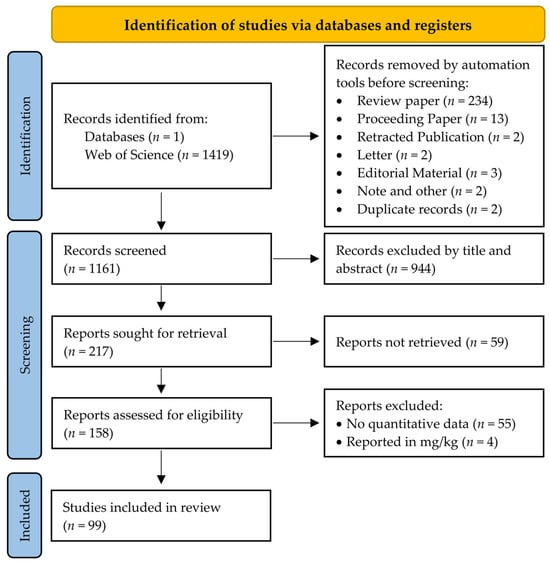
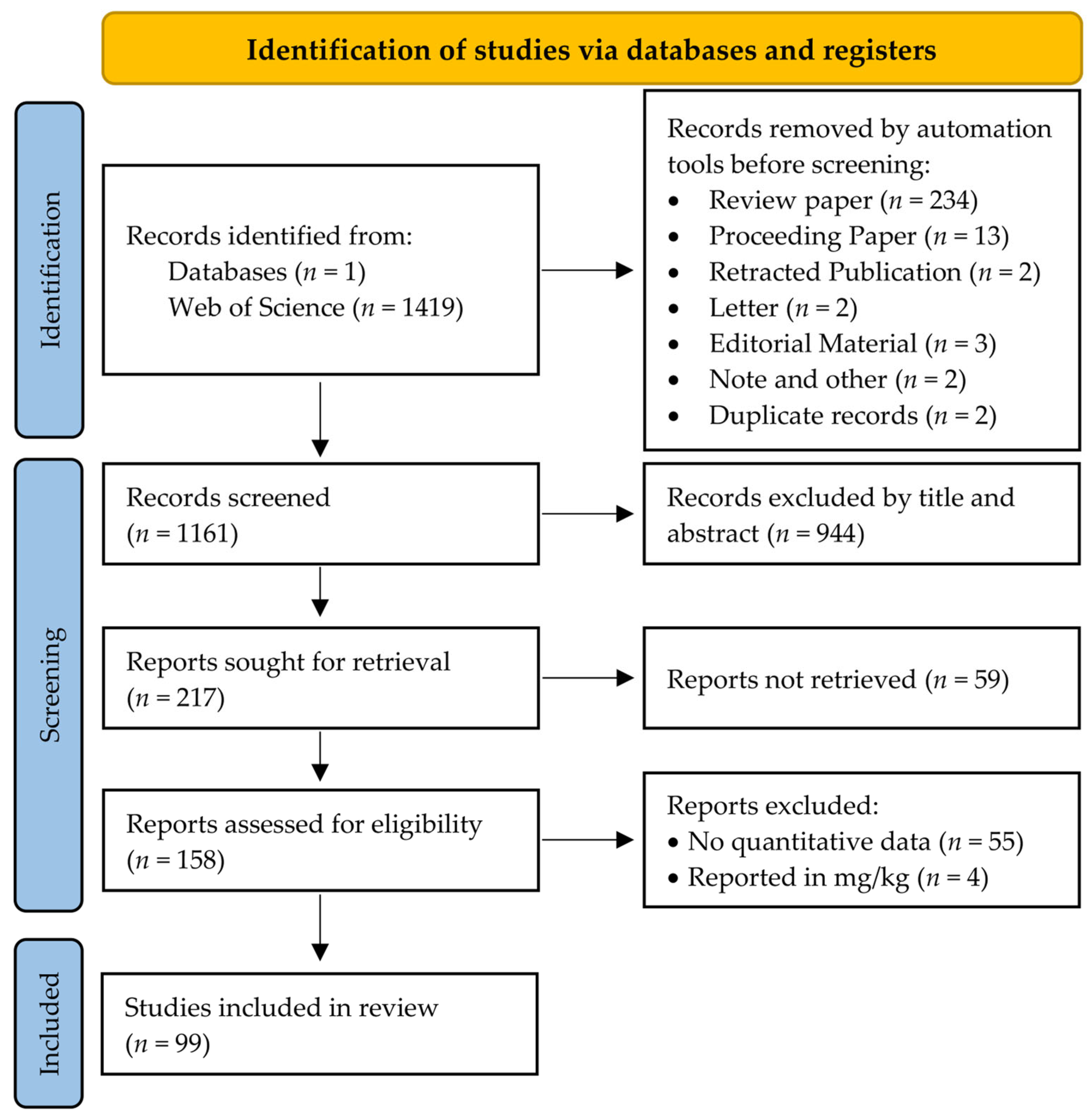
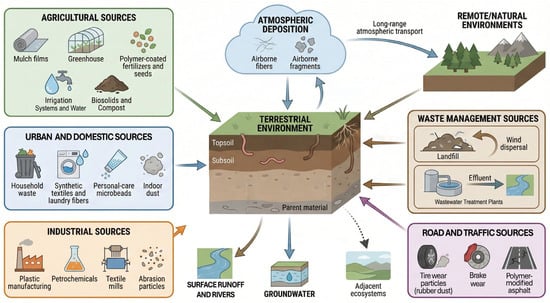
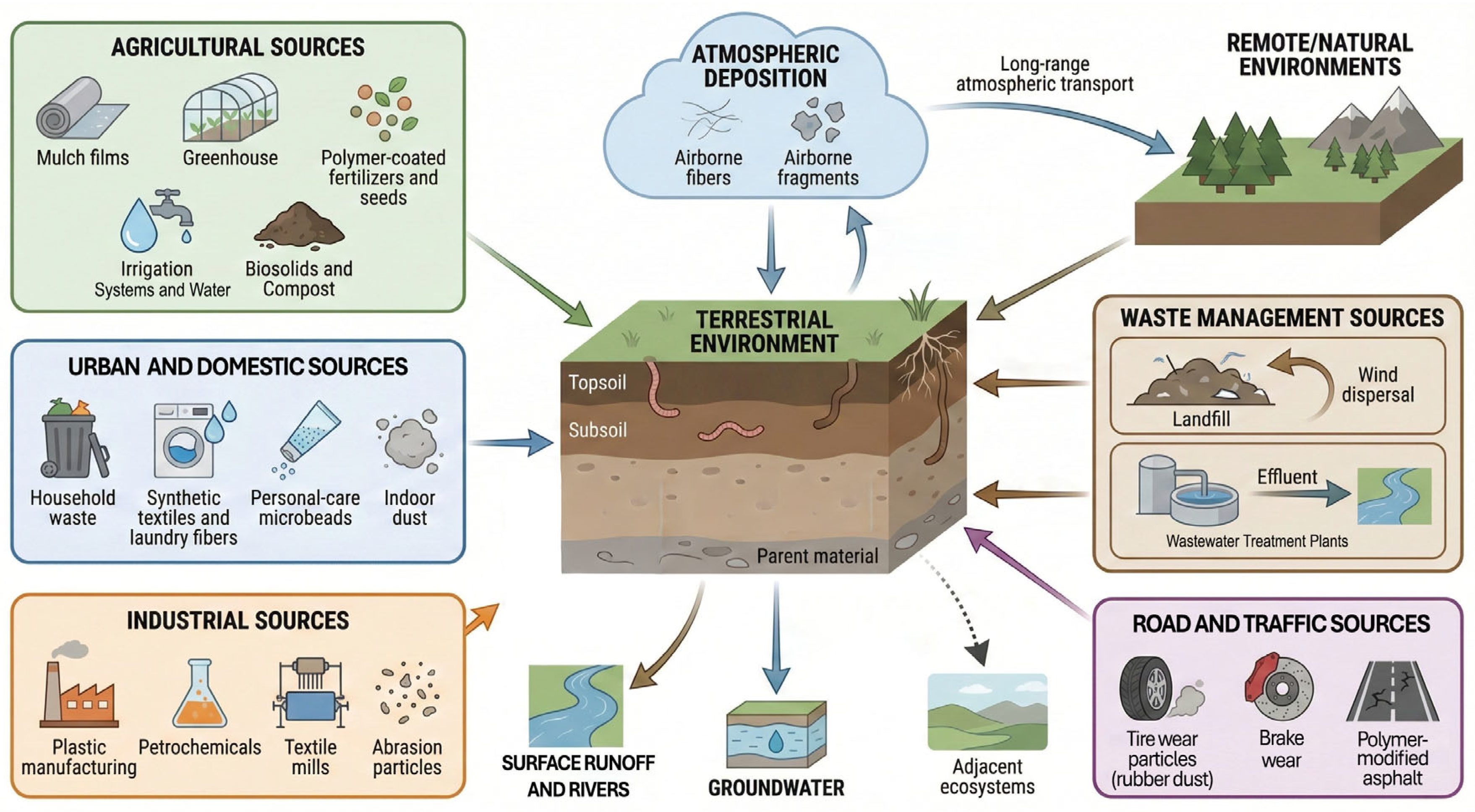
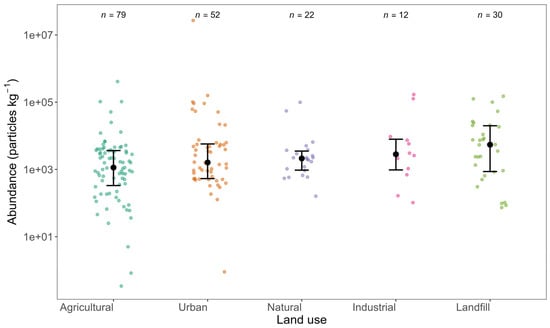
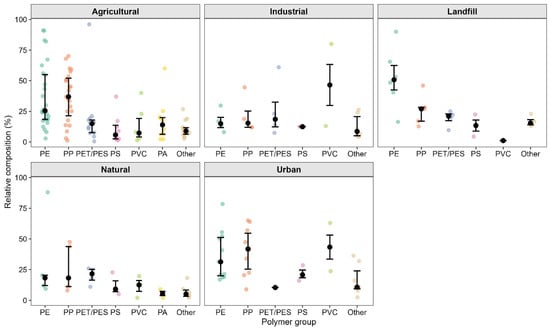

Disclaimer/Publisher’s Note: The statements, opinions and data contained in all publications are solely those of the individual author(s) and contributor(s) and not of MDPI and/or the editor(s). MDPI and/or the editor(s) disclaim responsibility for any injury to people or property resulting from any ideas, methods, instructions or products referred to in the content. |
© 2026 by the authors. Licensee MDPI, Basel, Switzerland. This article is an open access article distributed under the terms and conditions of the Creative Commons Attribution (CC BY) license.