


Abstract
Drug delivery systems based on nanoparticles have emerged as promising approaches for overcoming the blood–brain barrier (BBB), a major obstacle to treating disorders of the central nervous system (CNS). There are several reasons why conventional therapies fail, including poor brain penetration, rapid drug clearance, and nonspecific distribution. This review critically evaluates recent advances in nanoparticle-mediated BBB targeting, focusing particularly on in vivo findings. As part of this review, lipid-based, polymeric, metallic, dendrimeric, exosome-inspired, and magnetic nanoparticles are discussed in conjunction with their transport mechanisms. The review compares their therapeutic efficacy, biodistribution, targeting ability, and safety across a variety of neurological conditions. Additionally, emerging technologies are discussed, including biomimetic nanoparticles, stimuli-responsive systems, artificial intelligence, and personalized nanomedicine. Additionally, this review critically discusses the major barriers to clinical translation, including biosafety, manufacturing, and regulatory challenges. As a result, this review provides an updated perspective on current progress and future prospects for developing effective brain-targeted nanomedicine.
1. Introduction
1.1. The Blood–Brain Barrier: Structure and Function
The blood–brain barrier (BBB) presents one of the greatest challenges in treating neurological disorders, as it restricts the passage of most therapeutic agents into the CNS [1], and it is composed primarily of endothelial cells, astrocytes, and pericytes. Neurons, basement membranes, and microglia are also involved. These components, collectively referred to as the neurovascular unit, support the normal functioning of the central nervous system (CNS) by working together [2]. The BBB controls the movement of nutrients and metabolites into and out of the brain parenchyma, regulates the brain microenvironment by transporting selective substances, regulates molecules and cells, and protects the brain’s structure and function [3].
1.2. Challenges in Central Nervous System Drug Delivery
It is important to note that the peripheral nervous system (PNS) and the central nervous system (CNS) are the most complex communication systems of the human body. As neurons and axons are incapable of regenerating themselves, trauma, inflammation, tumors, metabolic disorders such as diabetes, and neurodegenerative diseases like Alzheimer’s disease can often result in irreversible damage to peripheral nerves, the spinal cord, and the brain [4]. Because of the BBB and blood–tumor barrier (BTB), drug delivery to the CNS is difficult. By preventing harmful substances from easily entering brain structures, these barriers act as a major mechanism for regulating homeostasis. This protective property, however, also limits the penetration of therapeutic agents and the treatment of neurological conditions, such as brain tumors, due to these protective properties [5]. However, effective CNS treatment remains elusive despite advances in drug delivery technologies. It is evident that controlled, responsive, and tailored drug release systems have the potential to improve a variety of neurological disorders, including neurodegenerative diseases, psychiatric conditions, cancers, and traumatic injuries; however, a successful translation of promising preclinical results into human clinical trials remains a challenge [6]. Only lipophilic small molecules with molecular weights of 400–600 Da can passively penetrate the brain parenchyma through the BBB, while most large molecules cannot pass through. A major factor affecting the clinical translation of macromolecular drugs is the BBB, which limits the delivery of macromolecular drugs to the CNS [7].
1.3. Nanotechnology as a Solution for BBB Penetration
Nanotechnology represents a promising strategy for bypassing the blood–brain barrier BBB through the use of nanoscale carriers that can encapsulate therapeutic agents or attach targeting ligands onto their surfaces. These nanocarriers can enhance drug stability, long-term circulation, and facilitate targeted transport to cross the BBB into the brain parenchyma, aiding in overcoming the strict limitations of many drugs to reach sufficient therapeutic concentrations in brain tissue [8]. Modifying nanomaterials with targeting ligands, peptides, or antibodies to attach to BBB receptors and transporters enables even more successful brain delivery [9]. Nanoparticle drug delivery systems can improve brain bioavailability, targeted accumulation, and reduce adverse side effects in comparison with traditional therapeutic approaches [10]. Combining nanoparticles with advanced technologies such as focused ultrasound, magnetic targeting, intranasal delivery, or cell-mediated transport can further enhance BBB crossing or bypassing and improve CNS drug delivery [11].
1.4. Scope and Objectives of the Review
As a comprehensive review, this paper evaluates nanoparticle-based drug delivery systems designed to overcome the blood–brain barrier in order to treat neurological disorders. The article discusses the major nanoparticle platforms and their transport mechanisms, as well as the biological challenges associated with BBB penetration. A systematic analysis of recent in vivo studies is conducted to compare therapeutic efficacy, biodistribution, targeting efficiency, pharmacokinetics, and safety.
Furthermore, the review evaluates a variety of brain-targeting strategies as well as their translational potential. Current limitations, including toxicity, large-scale manufacturing, and regulatory challenges, are critically examined. Moreover, emerging approaches are discussed, including biomimetic nanocarriers, smart nanoparticles, artificial intelligence, and personalized nanomedicine. The overall objective of this study is to identify the most promising strategies for improving CNS drug delivery and accelerating the clinical translation of nanomedicines of the next generation. In contrast to previous reviews that focused primarily on nanoparticle engineering or BBB transport mechanisms, this review incorporates in vivo evidence related to multiple neurological disorders. In this review, nanoparticle platforms are critically compared based on therapeutic efficacy, biodistribution, pharmacokinetics, targeting specificity, biosafety, and translational feasibility. Furthermore, this review provides a translational perspective toward future clinical implementation by bridging fundamental nanocarrier design with emerging technologies, such as biomimetic nanoparticles, artificial intelligence-assisted nanomedicine, and personalized therapeutic strategies.
Scope and Objectives
- -
- Provide an explanation of the biological barriers that restrict the delivery of drugs to the CNS.
- -
- Analyze the major nanoparticle platforms used for targeting the BBB.
- -
- Explain how nanocarriers cross the BBB.
- -
- Briefly summarize recent evidence from in vivo experiments.
- -
- Identify and compare the therapeutic efficacy and biodistribution of different nanoparticles.
- -
- Evaluate pharmacokinetics, targeting specificity, and biosafety.
- -
- Discuss the challenges involved in clinical translation.
- -
- Highlight’s advances in biomimetic and smart nanocarriers.
- -
- Explore the role of artificial intelligence and personalized nanomedicine.
- -
- Research priorities for clinically effective delivery of brain-targeted drugs should be identified.
2. Biological Barriers Limiting Brain Drug Delivery
2.1. Anatomy and Physiology of the BBB
In the BBB, the most important physical barrier is the endothelial cells of the capillaries, which are bound by more tight junctions than those of peripheral vessels. Cellular components of the BBB are responsible for maintaining physical integrity and ensuring intracellular and extracellular communication [12]. It consists of a cerebrovascular network that forms a structural and chemical barrier. Histologically, it is composed of endothelial cells (ECs) that are not fenestrated, pericytes, astrocyte endfeet, perivascular macrophages, and endothelial and parenchymal basal membranes. Anatomically, the BBB components are characterized as part of the neurovascular unit and are primarily composed of specialized ECs that are intimately interconnected with astrocytes and pericytes via a basal lamina and are specialized. This network of cross-linked extracellular matrix proteins is composed mainly of laminin, collagen IV, nidogen/entactin, and heparin sulfate proteoglycans, which are synthesized by ECs, astrocytes, and pericytes. It is a scaffold that binds those cellular components to facilitate the integrity of the BBB [13]. By regulating specific ion channels and transporters, the BBB maintains brain homeostasis. Asymmetrically distributed ions are emitted from both luminal and abluminal membranes, with efflux and influx determined primarily by the ion transporters present on the BBB [14]. Endothelial cells also play a crucial role in regulating neuroinflammatory responses. Endothelial cells are capable of modifying intercellular connectivity and increasing barrier permeability when stimulated by inflammatory signals. This allows the entry of immune cells or drugs [15]. Many neurological diseases, including stroke, Alzheimer’s disease, multiple sclerosis, and infections of the brain, are associated with dysfunction of the BBB [16].
2.2. Transport Mechanisms Across the BBB
2.2.1. Receptor-Mediated Transcytosis (RMT)
Receptor-mediated transcytosis is a physiological, receptor-dependent transport pathway that enables selected therapeutic cargos to cross the blood–brain barrier (BBB). This process involves binding specific receptors on endothelial cells’ luminal membranes with ligands or receptor-targeted delivery systems, causing receptor–ligand complexes to internalize within intracellular vesicles, travel through endothelial compartments, and eventually be released into the brain abluminal side. Therefore, RMT receptors are widely investigated as targets for brain drug delivery because they can enhance the brain permeability of biological therapeutics and support CNS-targeted delivery [17].
2.2.2. Transporter-Mediated Transport (TMT)
Transporter-mediated transport is an uptake-based BBB transport pathway in which specific membrane transporters facilitate the entry of endogenous molecules and selected drug substrates into the brain. These transporters, particularly members of the solute carrier (SLC) superfamily such as OATPs, OCTs, MCTs, and LAT1, can be exploited to improve CNS drug delivery through substrate- or prodrug-based design. However, for better TMT-based delivery, requirements include careful evaluation of transporter expression, localization, substrate specificity, and species-dependent differences that may influence clinical translation [18].
2.2.3. Adsorptive-Mediated Transcytosis (AMT)
Adsorptive-mediated transcytosis is a transport process that is driven by electrostatic interactions between positively charged nanoparticles and the negatively charged endothelial plasma membrane. AMT can improve brain drug delivery through the promotion of membrane invagination, vesicle formation, and transcellular trafficking across endothelial cells. However, cationic nanoparticles may increase BBB toxicity or disruption, and the nonspecific nature of AMT can lead to unwanted binding to other anionic cell membranes [19].
2.2.4. Cell-Mediated Transport
Cell-mediated transport in which living cells, especially neutrophils, act as cellular carriers to deliver drugs or nanoparticles toward inflammatory or disease-affected brain regions. These cells can naturally migrate across biological barriers and accumulate at inflammatory sites, improving brain targeting; however, clinical translation still requires further evaluation of safety, cell compatibility, and delivery reproducibility [20].
2.2.5. Transcellular Passive Diffusion
Transcellular passive diffusion is a non-specific BBB transport route in which small, lipid-soluble molecules can cross brain endothelial cells mainly by partitioning through cellular membranes. This pathway is largely limited to sufficiently lipophilic compounds with low molecular weight, typically below 400–600 Da, whereas most large, hydrophilic, or macromolecular therapeutics are strongly restricted by the BBB structure [14].
2.2.6. Paracellular Transport
Paracellular transport is the movement of molecules between adjacent brain endothelial cells, but at the BBB, this pathway is strongly restricted by tight junction proteins such as claudins, occludin, and ZO proteins. Therefore, it allows only limited passage of ions and small solutes, while most therapeutic agents are blocked unless tight junction integrity is temporarily modulated or disrupted [21]. Figure 1 shows a schematic illustration of the principal transport mechanisms across the BBB. The figure summarizes the major physiological pathways involved in molecular and nanoparticle transport across the BBB, which include receptor-mediated transcytosis (RMT), transporter-mediated transport (TMT), adsorptive-mediated transcytosis (AMT), cell-mediated transport, passive diffusion across the cell membrane, and paracellular restricted transport. The following sections discuss the design of brain-targeted nanoparticle delivery systems based on these transport mechanisms.
Figure 1.
Principal transport pathways across the blood–brain barrier (BBB).
2.3. Factors Affecting Drug Permeability
The discovery of new drugs is a complex process that relies heavily on rationally designing compounds utilizing modern scientific knowledge and technology. Early evaluation of ADMET properties (absorption, distribution, metabolism, excretion, and toxicity) plays a crucial role in enhancing drug development success. It is widely used to assess factors that influence the biological performance of drug candidates through physicochemical screening. To design compounds with enhanced ADME characteristics, key properties such as partition coefficient, solubility, ionization, molecular weight, and hydrogen-bonding capacity must be considered [22]. A number of nanotechnology-based systems have been developed in recent decades to assist in the administration of medicines in a wide range of medical settings. Several drugs have been administered with nanoparticle drug delivery methods to enhance their pharmacokinetics and pharmacodynamic profiles for therapeutic purposes by altering their physicochemical properties [23]. The size, surface charge, and shape of nanoparticles affect their transport across the BBB. Nanoparticles smaller than 200 nm typically penetrate the BBB more efficiently, although excessively small particles may be rapidly eliminated by the kidneys. Nanoparticles with neutral or slightly negative charges reduce nonspecific interactions with endothelial cells and improve BBB passage. Additionally, spherical nanoparticles are internalized more efficiently than rod-shaped particles, which influences their overall transport efficiency [24]. Based on the findings presented in the aforementioned studies, drug permeability and therapeutic efficacy are strongly influenced by physicochemical properties such as particle size, solubility, lipophilicity, molecular weight, and surface properties. In addition, nanotechnology-based drug delivery systems are emerging as promising strategies for enhancing pharmacokinetic and pharmacodynamic performance with early assessment of ADMET parameters. As a result, appropriately engineered nanoparticles can enhance drug transport across biological barriers, including the blood–brain barrier, increasing therapeutic efficacy and targeting.
Additionally, to nanoparticle size, surface charge, and morphology, various physicochemical and biological factors affect the permeability of the BBB. Circulation time and receptor accessibility are determined by factors such as surface hydrophilicity, ligand density, nanoparticle elasticity, protein corona formation, and colloidal stability. As with BBB permeability, endothelial tight-junction integrity, transporter expression, neuroinflammatory status, remodeling of the extracellular matrix, enzymatic degradation, and immune cell interactions influence BBB permeability. Depending on the underlying pathology, disease-associated BBB dysfunction can either enhance or reduce nanoparticle accumulation. It is therefore critical to optimize both the physicochemical properties of nanoparticles and the biological microenvironment simultaneously in order to achieve successful brain-targeted nanomedicine.
2.4. Limitations of Conventional Drug Delivery Approaches
In comparison to conventional drug delivery systems, new drug delivery systems provide greater advantages due to their enhanced performance, automation, precision, and effectiveness compared to conventional drug delivery systems. Nanomaterials and miniaturized devices with multifunctional components are biocompatible, biodegradable, highly viscoelastic, and have an extended circulating half-life, as well as being biocompatible and biodegradable [25]. As a result of poor bioavailability, fluctuations in plasma drug levels, and inability to achieve sustained release, conventional drug delivery systems (tablets, capsules, syrups, ointments, etc.) cannot be used. As a consequence, the whole therapeutic process may be rendered ineffective without an efficient delivery mechanism. The drug must also be delivered to the target site as precisely as possible and at a controlled rate to ensure maximum safety and effectiveness [26]. Nanocarrier characterization presents several challenges related to dynamic changes in nanoparticle properties in biological environments. The behavior, stability, and therapeutic effectiveness of nanocarriers can be significantly affected by changes in pH, temperature, ionic strength, and protein adsorption. As a result of the lack of standard toxicity evaluation methods and inadequate long-term studies, safety assessment remains limited. Additionally, regulatory approval is complicated by the absence of harmonized characterization protocols, as well as reproducibility and scalability issues in large-scale manufacturing. For nanocarrier-based drug delivery systems to be successfully translated into clinical practice, these limitations must be addressed [27]. A major challenge is the delivery of therapeutic agents to the CNS. The BBB serves as the principal barrier preventing therapeutic agents from accessing brain tissue. Despite the fact that most treatments for CNS disorders rely on systemic administration, drug penetration into the brain is restricted by the BBB. Despite the fact that crossing the BBB remains the greatest challenge in CNS drug delivery, several alternative delivery approaches and novel formulations have been investigated [28]. The findings synthesized from the reviewed studies clearly demonstrate that advanced drug delivery systems, particularly nanocarrier-based platforms, demonstrate significant advantages over conventional drug delivery approaches by improving drug bioavailability, targeting efficiency, therapeutic efficacy, and controlled release profiles. These systems offer enhanced biocompatibility, prolonged circulation time, and reduced systemic side effects. However, several challenges remain, including nanoparticle instability in biological environments, limited toxicity data, manufacturing scalability issues, and regulatory barriers. Furthermore, effective delivery across the blood–brain barrier continues to be a major obstacle in the treatment of CNS disorders. Therefore, continued research and technological advancements are essential to optimize nanocarrier performance and facilitate their successful translation into clinical applications.
3. Nanoparticle-Based Drug Delivery Systems (Platforms for BBB Bypass)
3.1. Lipid-Based Nanoparticles (LBNs)
LBNs are nanoparticle delivery systems composed of lipids that can carry genetic material or medications into the body [29]. As nanoparticles are generally considered safe and non-neurotoxic during drug delivery, lipid-based nanoparticles have a great advantage in delivering drugs for central nervous system diseases due to their low toxicity and stability [30]. As well as providing significant benefits in terms of penetration through the BBB, liposome-based nanoparticles have also been developed. These nanoparticles are composed of lipid components that readily fuse with the lipid components of endothelial cells, facilitating endocytosis. Lipid-based nanoparticles include liposomes, nano emulsions, and solid lipid nanoparticles (SLNs) [31]. Due to their unique properties and advantages, lipid nanoparticles have drawn considerable attention. Drug carriers, including solid lipid nanoparticles and nanostructured lipid carriers (NLCs), offer enhanced stability, controlled release, and increased drug penetration [32]. The SLN and NLC nanoplatforms are both attractive for brain drug delivery, especially for transporting hydrophobic drugs, since they contain a solid hydrophobic core. These carriers contain a monolayer phospholipid coating with the hydrophilic ends embedded within an aqueous matrix, facilitating the transfer of hydrophobic drugs [33]. Different types of SLNs are composed of lipids with the same properties (surfactants/co-surfactants, with solidity at different temperatures and low melting points). NLCs are used to improve low encapsulation efficiency in solid lipid core structures by increasing internal free space [34]. For the treatment of neurological disorders, SLNs and NLCs both improve drug aqueous solubility and target drugs for targeted release in the brain. NLCs are prepared similarly to SLNs, but they differ primarily in the type (nature) of lipid used in the matrix core of these systems [35].
Overall, lipid-based nanoparticles are versatile and extensively investigated platforms for brain-targeted drug delivery due to their excellent biocompatibility, low toxicity, and ability to penetrate the BBB. Liposomes can encapsulate both hydrophilic and hydrophobic therapeutics and enable cellular uptake through membrane fusion, whereas SLNs provide improved physicochemical stability and controlled drug release. Through their mixed solid–liquid lipid matrix, NLCs further overcome several limitations of SLNs by increasing drug-loading capacity and reducing drug expulsion during storage. Combined, these lipid-based nanocarriers provide complementary advantages that can be tailored based on the physicochemical properties of therapeutic agents and the specific requirements of neurological disease treatment, making them among the most promising nanoplatforms for delivering drugs to the CNS.
3.2. Polymeric Nanoparticles (PNPs)
PNPs are versatile drug delivery systems that display distinct shapes and physicochemical CNS properties, making them suitable for a wide range of drug delivery applications. It is easy to prepare and scale up PNPs, as they exhibit a high level of stability both in vivo and during storage, as well as allowing sustained drug release; this makes them the most promising carriers for improving drug delivery across the BBB [36]. To increase circulation half-life and specific delivery, polymeric nanoparticles are composed of a core polymer with therapeutic agents encapsulated or surface-bound. Recent years have seen polymeric nanoparticles modified to interact with the BBB and tumor cells, increasing circulation half-life and specific delivery [37]. It has been discovered that a wide variety of polymers have been used to manufacture nanoparticles, including poly(lactic acid), poly(caprolactone), poly(butyl-cyanoacrylate) (PBCA), poly(glycolic acid) (PGA), poly(PLGA) and poly(amino acids). As a result of their biocompatibility and low toxicity compared to other polymers, PLGA, PGA, and PLA are the most extensively used polymers for brain drug delivery [38]. Biodegradable polymers such as poly(lactic-co-glycolic acid) (PLGA) and polylactic acid (PLA) have been approved by the Food and Drug Administration for drug delivery applications [39].
3.3. Metallic Nanoparticles (MNPs)
MNPs are tiny particles composed of metals such as gold (Au), silver (Ag), platinum (Pt), and others. Their typical size ranges from 1 to 100 nm, and they possess unique physical and chemical properties that distinguish them from other types of nanoparticles [40]. Nanoparticles made from metallic materials are one type of nanocarrier system that is used in cancer treatment [41]. Metal-based NPs derived from noble metals such as gold, silver, and platinum exhibit a number of distinctive properties, including size, surface reactivity, magnetic properties, and thermal stability. As a result of their unique properties, they are capable of crossing the BBB and provide the opportunity for targeted drug delivery, imaging, and therapeutic interventions in neurological disorders [42]. Recent studies in metal-based nanoparticles have focused on gold nanoparticles, silver nanoparticles, iron oxide nanoparticles, superparamagnetic iron oxide nanoparticles, and non-iron-based magnetic nanoparticles, as well as quantum dots [43].
3.4. Dendrimers
Dendrimer-based nanocarriers are emerging as transformative platforms for treatment and diagnosis of CNS disorders that are challenging to cross the BBB [44]. Known for their hyperbranched globular structure, dendrimers are nanosized macromolecules that are widely used for drug delivery. Dendrimers are monodisperse and have well-defined chemical structures, which makes them more flexible than traditional polymer nanovehicles for loading therapeutic drugs by either covalent conjugation or electrostatic adsorption [45]. Among the most commonly used dendrimers for the treatment are PPIs (polypropylene imines), PAMAMs (polyamidoamines), poly L-lysine dendrimers, polyesters (PGLSA-OH), poly(2,2-bis (hydroxymethyl) propionic acid scaffold dendrimers (bis-MPA), and aminobis(methylenephosphonic acid) scaffold dendrimers. The PPI, PAMAM, and PLL dendrimers are among the most significant categories and are primarily used for treating brain tumors and gliomas effectively [46].
3.5. Mesoporous Silica Nanoparticles
MSNs are an emerging class of nanoparticles that have been gaining significant attention for their applications in biomedicine and as drug delivery vehicles due to their high surface area, structural tunability, and ease of functionalization [47]. In addition to the unique properties of mesoporous silica nanoparticles (MSNs), nanoparticles have high chemical stability, as well as controlled particle size, porosity, and morphology. Therefore, these nanoparticles are highly attractive for use as drug carriers, diagnostic catalysts, separations, and sensors. One of the distinctive properties of surface-functionalized mesoporous silica nanoparticles is their rapid internalization by animal and plant cells without causing any cytotoxicity within the body [48]. The MSNs are capable of crossing the BBB luminal side, thus overcoming the first crucial obstacle in brain delivery [49]. It has been found that these nanoparticles function as passive delivery systems, which is why their therapeutic efficacy is primarily attributed to their high drug-loading capacity, controlled release characteristics, and prolonged systemic availability, rather than their intrinsic ability to target the BBB.
3.6. Exosome-Inspired Nanocarriers
The natural biocompatibility of exosomes, as well as their low immunogenicity and ability to penetrate the BBB through receptor-mediated, adsorptive-mediated, and carrier-mediated mechanisms, makes them a promising solution to overcome this barrier [50]. An exosome is an intricate structure that contains a variety of lipids, various nucleic acids (such as DNA and multiple types of RNA) and proteins [51]. Unlike synthetic nanoparticles, exosomes are intrinsically non-immunogenic, allowing prolonged circulation without triggering adverse immune responses. Due to their endogenous nature, exosomes are uniquely able to cross the BBB while maintaining their structural integrity, so as to minimize potential toxicity and inflammation [52]. Based on the comprehensive analysis of the published literature, Figure 2 summarizes the fundamental concept of nanoparticle-based drug delivery systems as platforms for BBB bypass, highlighting the key nanoparticle platforms, transport mechanisms, and therapeutic outcomes.
Figure 2.
Integrated Overview of Nanoparticle-Based Strategies for Blood–Brain Barrier Bypass.
4. Strategies for Bypassing the Blood–Brain Barrier (Current Strategies for Enhancing BBB Traversal)
4.1. Receptor-Mediated Transcytosis
Considering the simplicity of passive transcellular diffusion, active nanoparticle-mediated strategies are the simplest physiological mechanisms for BBB transport. However, the majority of nanoparticle delivery is mediated by small lipophilic molecules with a low molecular weight in this pathway. Therefore, current nanomedicine primarily relies on active targeting strategies for efficient brain delivery. Receptor-mediated transcytosis is an active BBB-crossing strategy in which nanoparticles are surface-modified or decorated with ligands that bind to receptors expressed on brain endothelial cells, such as transferrin receptor (TfR), low-density lipoprotein receptor-related protein 1 (LRP-1), and insulin receptors, thereby facilitating transcellular nanoparticle transport across the BBB [53]. A TfR1-targeted oligonucleotide transport vehicle (OTV) has recently enabled systemic intravenous delivery of antisense oligonucleotides across the BBB, producing broad CNS distribution and target RNA knockdown in human TfR knock-in mice and cynomolgus macaques [54]. Brainshuttle-based antibody fusion technology, exemplified by trontinemab, enhanced endothelial and parenchymal brain uptake after intravenous administration in non-human primates [55]. However, the effectiveness of TfR-mediated RMT highly depends on the design optimization of the antibody, including binding valency, linker length, and receptor engagement properties, to minimize receptor crosslinking and endothelial retention while enhancing BBB transcytosis [56].
4.2. Adsorptive-Mediated Transcytosis
The adsorptive-mediated transcytosis strategy includes coating nanoparticles with cationic polymers or cell-penetrating peptides that enhance endothelial uptake through electrostatic interactions and heparan sulfate proteoglycan (HSPG)-associated endocytic pathways, including lipid raft and caveolae-mediated mechanisms [57]. This AMT/CPP-based approach is useful for peptide- and nucleic-acid-based cargo delivery, as CPPs can be conjugated to therapeutic or diagnostic molecules to enhance trans-BBB transport and CNS targeting [58]. PepH3-modified nanocarriers recently showed enhanced brain endothelial uptake and improved trans-BBB delivery of an encapsulated anti-Aβ single-domain antibody across rat and human BBB culture models [59]. However, since AMT is less receptor-dependent than RMT, the charge of the nanoparticle surface should be carefully optimized to improve BBB permeation while limiting nonspecific interactions and potential toxicity [60].
4.3. Carrier-Mediated Transport
Carrier-mediated transport can be exploited by designing nanocarriers or prodrugs that simulate endogenous nutrient substrates of influx transporters, thereby allowing transporter-assisted brain delivery rather than relying solely on passive permeability [61]. Glucose-coated polymeric nanocarriers have shown systemic antisense oligonucleotide (ASO) delivery to multiple brain regions under glycemic control by utilizing GLUT1 binding and GLUT1-mediated transcytosis in brain capillary endothelial cells [62]. LAT1-targeting phenylalanine-decorated polymeric nanoparticles enhanced the delivery of systemic ASO across the BBB, demonstrating brain accumulation and broad CNS distribution in preclinical mouse and non-human primate models [63]. However, this method relies on careful substrate selection since the competition with natural nutrients and transporter saturation may limit brain accumulation and therapeutic translation [64].
4.4. Cell-Penetrating Peptide Functionalization
Functionalization of nanocarriers with cell-penetrating peptides includes conjugating short cationic (positive charge) or amphipathic (hydrophilic and hydrophobic) peptide sequences, such as trans-activator of transcription (TAT) or poly-arginine derivatives, to improve the interaction with the BBB membrane, endothelial uptake, and trans-BBB cargo delivery [65]. Combining nanomaterials with CPPs optimizes cargo stability, prolonging circulation, increasing drug-loading capacity, and promoting BBB transport, especially for macromolecular therapeutic agents such as proteins, antibodies, and nucleic acids. This leads to improved CNS drug-delivery performance [66]. Recent peptide-functionalized nanoparticle designs increasingly emphasize rational sequence engineering and peptide modification, including fusion peptides, cyclic or retro-inverso peptides, linker optimization, and pH-activatable CPPs, to enhance brain targeting while limiting nonspecific uptake and CPP-associated cytotoxicity [67].
4.5. Magnetic Guidance Strategies
Magnetic targeting strategies employ iron oxide–loaded nanocarriers that respond to externally applied magnetic fields, enabling their guidance and retention at the BBB endothelium and providing a physical targeting approach complementary to ligand-based BBB transport [68]. Magnified nanoparticles can function as theranostic (therapy and diagnostic) systems, allowing for drugs, siRNAs, or genes to be delivered via magnetic field-guided delivery, while also supporting MRI-based localization, biodistribution monitoring, and therapeutic assessment in neurological disorders and glioblastoma [68]. However, successful translation requires optimization of magnetic field strength, exposure time, carrier magnetization, particle size, tissue depth or magnet-to-target distance, and long-term safety to minimize off-target retention, aggregation, and toxicity [68,69,70].
4.6. Ultrasound-Assisted BBB Opening
Focused ultrasound-mediated BBB opening is a non-invasive strategy that combines focused ultrasound with intravascular microbubbles to transiently and locally increase BBB permeability, allowing systemically administered therapeutics to access targeted brain regions [71]. In clinical trials of brain tumors, FUS-mediated BBB opening has been reported as a non-invasive, reversible, and spatially targeted strategy, with selected studies addressing enhanced uptake of systemically administered therapeutics after sonication [72]. For nanoparticle-based delivery, FUS-induced BBB opening can enhance brain entry, but nanoparticle size must be carefully optimized, as in vivo studies with gold nanoparticles showed that medium-sized particles achieved higher brain delivery than smaller or larger particles under the tested conditions [73].
4.7. Intranasal Nanoparticle Delivery
Intranasal nanoparticle-based delivery is a non-invasive nose-to-brain strategy that can cross the BBB by delivering nanocarriers from the nasal cavity all the way up to the brain primarily through olfactory and trigeminal nerve-associated pathways [74]. Nanocarriers can enhance the efficiency of nose-to-brain delivery by improving drug stability, mucosal permeation, and brain bioavailability, while nasal residence can be further prolonged through mucoadhesive surface modification or incorporation into gel-based formulations. Types include polymeric nanoparticles, liposomes, nanoemulsions, SLNs, and NLCs [75]. Despite its non-invasive advantage, successful nose-to-brain delivery still requires optimization of particle size, surface modification, mucoadhesion, formulation properties, and nasal deposition to overcome mucociliary clearance, limited olfactory-region residence, and insufficient nasal mucosal absorption [76]. Overall, substantial progress has been made in developing nanoparticle-based strategies to overcome the BBB, including receptor-mediated transcytosis, adsorptive transport, carrier-mediated systems, peptides that penetrate the brain, magnetic guidance, focused ultrasound, and intranasal delivery, all of which have distinct mechanisms for enhancing brain targeting. A number of these approaches have demonstrated significant improvements in BBB penetration, therapeutic bioavailability, and CNS drug delivery in preclinical studies, while several have also been evaluated clinically. However, all strategies are subject to inherent limitations in terms of targeting specificity, transport efficiency, safety, and clinical scalability. Consequently, future research should focus on optimizing nanocarrier physicochemical properties, integrating multifunctional targeting strategies, and establishing standardized translational frameworks in order to maximize therapeutic efficacy while ensuring long-term safety and successful clinical implementation.
5. Nanoparticle-Assisted Drug Delivery, Therapeutic Applications (Nanoparticle-Mediated Therapy)
5.1. Epilepsy
Epilepsy is one of the most prevalent neurological disorders and presents challenges in the form of limited penetration of anti-seizure medications (ASMs) into the brain. Furthermore, nearly one-third of epileptic patients develop drug-resistant epilepsy [77]. Nanoparticles offer potential improvements in the treatment of epileptic patients through improved penetration of the BBB, increased bioavailability of the ASMs, and the ability to deliver the drugs to the affected areas of the brain. Various types of nanoparticles have been utilized to deliver ASMs to the brains of epileptic patients, including lipid nanoparticles, polymeric nanoparticles, and nanoparticles that are functionalized on the surfaces to enhance their targeting to the brain. These various types of nanoparticles have demonstrated improved delivery of the ASMs compared to the traditional methods of delivering these drugs [77,78]. In addition to the use of nanoparticles that contain the ASMs, the use of exosomes has also been investigated because of their natural ability to cross the BBB and to modulate the inflammatory response in the brain. Experimental studies have found that nano-formulated anti-seizure drugs have enhanced properties that allow for better control of the seizures of epileptic patients. Nanoparticle-based anti-seizure drugs have the potential to overcome the limitations of current treatments for epilepsy and may lead to the development of improved treatment strategies for those with drug-resistant epilepsy [78,79,80].
5.2. Alzheimer’s Disease
Alzheimer’s disease (AD) is a neurodegenerative disorder that manifests itself through a decline in cognitive function, memory, and other neuropsychological behaviors. The disease is characterized by the development of amyloid plaques, tau proteins, oxidative stress, and inflammation in the brain, all of which contribute to the degeneration of the neurons and the decline in cognitive abilities of those with AD [81]. Furthermore, the BBB, which regulates the composition of the brain’s fluids, limits the ability of therapeutic agents to reach the brains of those with AD, limiting the efficacy of those treatments [81,82]. Nanoparticle-based drug delivery systems can overcome these issues associated with the BBB. Various types of nanoparticles have been created that can increase the amount of drug that reaches the brain and becomes available for the neurons [82]. Furthermore, these nanoparticles can be engineered to target the specific causes of AD, such as amyloid-beta, oxidative stress, and inflammation in the brain [82,83]. Experimental studies have reported improvements in cognitive function, enhanced neuronal protection, and reduced disease progression following nanoparticle-based therapeutic interventions [83]. Additionally, the development of nanoparticles that can more efficiently target the brain has further increased the delivery of these therapeutics to affected tissues. Thus, nanoparticle-mediated drug delivery systems are a promising class of therapy for those with AD, as they can potentially overcome the limitations of existing treatments [10,81,82,83].
5.3. Parkinson’s Disease
Parkinson’s disease (PD) is a neurodegenerative disorder characterized by the degeneration of the dopaminergic neurons in the substantia nigra in the brain, leading to a reduction in dopamine levels in the brain. PD manifests itself in various motor and non-motor symptoms. Various pharmacological treatments for PD have been described in the literature. However, the effectiveness of these drugs is limited by their inability to effectively reach the brain and difficulties in crossing the BBB [84,85]. Nanoparticle-based drug delivery systems have emerged as promising approaches to improve the treatment of patients with PD. Various types of nanoparticles have been developed that can deliver drugs like dopamine, levodopa, dopamine agonists, and neuroprotective agents to the areas of the brain affected by PD [85,86]. Nanoparticles have several benefits in the treatment of PD. For example, nanoparticles can enhance the delivery of drugs to the brain by increasing their ability to cross the BBB, increasing the therapeutic efficacy of the drug [86]. Additionally, nanoparticles can help to reduce the oxidative stress and neuroinflammation that exacerbate the degeneration of the dopaminergic neurons in the brain [84,85]. More recent developments in nanoparticle therapy for PD include the use of extracellular vesicles (EVs) and exosomes. Due to the natural ability of EVs to cross the BBB, they can be used as targeted delivery systems to deliver therapeutic agents to the brain [87]. Experimental studies have shown that nanoparticle-based therapies enhance neuronal protection and improve drug delivery to the brain [85,87]. Overall, then, nanoparticle-mediated drug delivery systems show promise as a therapy for PD, as they can overcome the limitations of current treatments for the disorder [84,85,86,87].
5.4. Brain Tumors
Brain tumor development presents great challenges to treatment due to the location of the tumors and the BBB. Glioblastoma multiforme (GBM) is the most aggressive form of brain cancer. Treatments for GBM include surgery, radiotherapy, and chemotherapy. However, the effectiveness of these treatments is limited due to the lack of penetration of the drugs into the brain and damage to healthy tissues [88,89]. Nanoparticle-based drug delivery systems are among the new treatment options for brain tumors. Various types of nanoparticles have been utilized to deliver drugs across the BBB to the tumor tissues [88]. Nanoparticles improve the delivery of drugs in that they increase drug stability, bioavailability, and the drug concentration at the tumor [88,90]. Additionally, nanoparticles can be engineered to increase the targeting of drugs to the tumor cells while decreasing their effects on healthy brain tissues [89,90]. Multifunctional nanoparticles are currently being developed that can deliver drugs to the brain tumors and allow for the imaging and monitoring of the treatments provided. Magnetic nanoparticles have considerable potential for inclusion in targeted therapy, including against hyperthermia, and imaging of brain tumors [91]. Experimental studies using nanoparticles for drug delivery to brain tumors have shown enhanced drug delivery to the tumors, increased targeting of the tumors, and improved therapeutic outcomes. Thus, nanoparticle-based drug delivery systems show promise as a treatment modality for overcoming the challenges of treating brain tumors [88,89,90,91].
5.5. Stroke and Ischemic Brain Injury
Stroke and ischemic brain injury are neurological conditions that occur due to the interruption of blood supply to the brain, leading to neuronal damage due to lack of oxygen. Ischemic stroke, the most common type of stroke, is associated with oxidative stress, inflammation, and neuronal death. Despite the availability of treatment options for stroke, such as thrombolytic therapy and mechanical thrombectomy, the effectiveness of these treatments is limited by the narrow time window during which they are effective and the difficulties associated with delivering the therapy to the affected areas of the brain [92,93]. Nanoparticle-based drug delivery systems have emerged as a promising approach to treating ischemic stroke and brain injury. Different types of nanoparticles have been developed to improve the delivery of drugs to the brain to cross the BBB [92]. These nanoparticles can improve the stability of the drug, the bioavailability of the drug, and the release of the drug, all of which can lead to an increase in the efficacy of the drug [92,93]. Furthermore, the use of nanoparticles has led to a reduction in oxidative stress and inflammation in the brain [94]. Experimental studies have shown that nanoparticle-based therapies can improve neuronal survival and reduce infarct size following ischemic injury [92,94]. Exosomes have recently emerged as another type of nanoparticle that might be used as a drug delivery system for ischemic stroke. Exosomes naturally have the ability to cross the BBB and deliver their contents to the affected areas of the brain. Studies have shown that exosome-based therapies have the ability to exhibit anti-inflammatory, neuroprotective, and regenerative effects for the brain [95]. Therefore, nanoparticle-based drug delivery systems offer a promising approach to overcoming the current limitations in treating stroke and ischemic brain injury [92,93,94,95].
5.6. Neuroinflammatory Disorders
Neuroinflammatory disorders are a group of neurological disorders that are characterized by inflammation within the CNS. The inflammation within the nervous system contributes to the damage of the neurons that are present within those systems, and is a cause of the progression of numerous neurological disorders. Therapies that target the inflammation within the nervous system have often been limited in their effectiveness with many neurological disorders [96,97]. Recent advances in the understanding of neurological disorders have led to the development of nanoparticle-based therapies for the treatment of such disorders. Nanoparticle-based therapies have been developed that aim to deliver anti-inflammatory and neuroprotective agents to the nervous system [97]. The nanoparticles enhance the efficacy of the treatments by increasing the delivery of those agents to the nervous system [97,98]. Furthermore, nanoparticle-based treatments reduce the inflammation and oxidative stress within the nervous system [96,97]. Experimental studies indicate that nanoparticle-based therapies are effective in delivering drugs to the nervous system and reducing the signs of neuroinflammatory disorders [97,98]. Another form of nanoparticle that has been studied as a potential therapy for neuroinflammatory disorders is exosomes. Exosomes are naturally able to cross the BBB and target the inflammatory neural tissues. Studies indicate that exosomes exhibit anti-inflammatory, neuroprotective, and immunomodulatory effects [99]. Thus, nanoparticle-based drug delivery systems represent a novel and promising therapeutic strategy for addressing the challenges of treating the neurological disorders that exist today [96,97,98,99]. Based on the evidence presented above, it is concluded that nanoparticle-assisted drug delivery represents a promising therapeutic strategy for neurological disorders as it overcomes blood–brain barrier limitations, enhances drug bioavailability, and improves targeted delivery of drugs to the brain. Several neurological diseases have been addressed using nanoparticle-based systems, which have demonstrated superior therapeutic efficacy, neuroprotection, and reduced disease progression in preclinical studies. Furthermore, advanced nanocarriers, including functionalized nanoparticles and exosomes, have demonstrated additional anti-inflammatory and regenerative properties. These findings highlight the significant potential of nanotechnology to transform the treatment of disorders of the CNS, although additional clinical studies are required to determine the long-term safety and efficacy of nanotechnology. As shown in Figure 3, nanoparticle-assisted drug delivery for neurological disorders involves a complete therapeutic workflow. This article illustrates the major neurological diseases, the therapeutic agents that are incorporated into nanoparticle platforms, the primary mechanisms enabling BBB penetration, and the therapeutic results resulting, including enhanced brain targeting, enhanced bioavailability, neuroprotection, and a reduction in disease progression. An overview of disease-specific changes to the BBB, major therapeutic challenges, and nanoparticle-based approaches for improving brain-targeted drug delivery across different neurological diseases is provided in Table 1. A nanoparticle platform should be selected in accordance with the underlying pathology of the BBB and the biological characteristics of the disease.
Figure 3.
A schematic overview of nanoparticle-assisted drug delivery strategies for neurological disorders, illustrating disease targets, therapeutic agents, nanoparticle platforms, and mechanisms of BBB crossing.
Table 1.
Disease-Specific BBB Characteristics and Nanoparticle Design Strategies for CNS Drug Delivery.
6. In Vivo Efficiency of Nanoparticle-Based Drug Delivery Systems
6.1. Experimental Animal Models for BBB Studies
In humans as well as experimental glioma models, the loss of BBB integrity is one of the characteristics that can be assessed and followed up to determine whether glioblastoma has responded to treatment. Additionally, some experimental treatments require disruption of the BBB in order for them to be effective, for example, systemic delivery of cells or administration of large or hydrophilic compounds. The vascular integrity of tumor models must therefore be thoroughly characterized before novel treatment approaches can be evaluated [100]. In vitro evaluation of targetability is always relevant in prescription optimization, which is more economical, faster, and easier than in vivo studies [101]. The performance of nanoparticle-based drug delivery systems under physiological conditions must be evaluated through in vivo studies. A number of key aspects of nanoparticle biodistribution, drug delivery efficiency, accumulation in target tissues, and clearance pathways are provided by these studies. Additionally, in vivo studies can be used to assess the biological effects of nanoparticles and their potential toxicity, thereby ensuring their safety and effectiveness in biomedical applications [102]. In the past few years, several methods have been developed to study brain uptake of drugs. To increase brain uptake, nanoparticles have been employed to target drugs to the brain. Nanoparticles differ from CNS compounds in size, composition, and uptake mechanisms. Thus, different methods and approaches have been developed for studying brain uptake in vivo [103]. As a result of numerous studies on biomaterials and tissue engineering applications, in vivo studies have been increasingly important. In contrast to in vitro models, in vivo approaches allow the body to serve as a natural bioreactor for tissue regeneration and repair, providing a more realistic biological environment. In addition to evaluating tissue compatibility, biocompatibility, and toxicological behavior after implantation, these studies are widely used in biomaterial evaluations. Moreover, histopathological analysis of surrounding tissues enables researchers to assess material performance and biological responses over time. Thus, in vivo research is becoming increasingly important to clinical translation and practical biomedical applications [104,105]. As a result of the available evidence, it is evident that both in vitro and in vivo studies are necessary for understanding BBB behavior, evaluating nanoparticle-based drug delivery systems, and assessing their therapeutic efficacy, biodistribution, biocompatibility, and safety. In addition to providing crucial insights into drug transport mechanisms, these approaches facilitate the development of effective brain-targeted treatments. In addition, advances in biomaterials and nanotechnology have improved the potential for treating neurological conditions and brain tumors by overcoming BBB-associated challenges. Therefore, the following section summarizes the most significant outcomes achieved to date with respect to BBB-targeted drug delivery systems.
6.2. In Vivo Models and Evaluation Strategies
Several experiments have demonstrated that the investigated nanoparticle system effectively deters glioma growth in vitro as well as in vivo by successfully penetrating the brain parenchyma and releasing the drug uniformly. As a result of the flow of interstitial fluid in intraparenchymal tissues, locally administered chemotherapeutic drugs are absorbed more rapidly and tumor infiltration is delayed, resulting in improved therapeutic effects in comparison with systemic chemotherapy [7]. The in vivo studies discussed in this section can be categorized broadly into two mechanistic groups according to their BBB transport strategy. In some cases, nanoparticle systems actively interact with BBB transport pathways by using ligand-mediated or biomimetic targeting mechanisms, while in others, brain drug delivery is indirectly enhanced by protecting the therapeutic cargo, prolonging systemic circulation, and improving drug stability. This section highlights the transport mechanism underlying each representative study in order to facilitate comparisons.
6.2.1. Receptor-Mediated BBB Targeting
An insulin-coated gold nanoparticle system (INS-GNP) was developed by Oshra B et al. [106] to transport therapeutic agents across the blood–brain barrier using the system. As a result of intravenous administration of nanoparticles of different sizes (20, 50, and 70 nm), Balb/C mice demonstrated the greatest accumulation and widespread biodistribution of 20 nm INS-GNPs, which reached about 5% of the injected dose. Nanoparticles crossed the BBB by targeting insulin receptors and accumulated in regions of the brain with insulin receptors, including the cortex, cerebellum, and hippocampus. These findings support the use of insulin-coated nanoparticles as effective nanovehicles for delivering brain drugs. In a study by Kaicheng T. et. al. [107], a transmembrane domain-binding peptide of the insulin receptor (ITP) was used to target the brain allosterically. ITP does not compete with endogenous insulin or receptor ectodomain shedding, unlike conventional ligands that bind extracellular receptor domains. Through a plug-and-play method, the peptide was incorporated into liposomes, lipid nanoparticles, and exosomes. The platform demonstrated therapeutic efficacy in Alzheimer’s disease mouse models thanks to enhanced BBB penetration and improved delivery of therapeutic cargo into the brain.
For ApoE2 plasmid delivery to the brain, Chenenye et al. [108] developed transferrin- and cell-penetrating peptide-functionalized liposomal nanoparticles. This system was designed to overcome BBB limitations. The dual-functionalized liposomes (CgnTf and PenTf) demonstrated superior cellular uptake, biodistribution, and transfection efficiency when compared with single-functionalized and plain liposomes. In mice, brain accumulation reached approximately 12% ID/g tissue and ApoE2 expression increased about twofold. The platform demonstrated promise for brain-targeted gene therapy. Also, Sanjay A. et al. [109] investigated PEGylated liposomal nanoparticles encapsulating the brain-derived neurotrophic factor (BDNF) gene for targeted brain delivery. Liposomes were surface-functionalized with mannose to facilitate receptor-mediated transport, and then further modified with penetratin or rabies virus glycoprotein (RVG) peptides to enhance BBB penetration. It has been demonstrated that in vitro neuronal cell studies and in vivo mouse experiments result in significantly improved BBB transport and a marked increase in BDNF gene expression, highlighting the potential for gene therapy in the central nervous system using multifunctional PEGylated liposomal systems.
The system demonstrated efficient delivery without detectable toxicity, as indicated by enhanced synaptophysin expression. According to [110], highly specific single-domain antibodies (sdAbs) that penetrate the BBB were identified by in vivo phage display screening. Five BBB-targeting sdAbs were identified, with RG3 exhibiting the highest levels of brain accumulation. The RG3-liposomes efficiently crossed an in vitro BBB model and delivered PAN to glioblastoma cells through liposomes loaded with panobinostat (PAN), a drug that normally cannot pass through the BBB. The targeted formulation exhibited strong antitumor activity without compromising BBB integrity.
As a result of the incorporation of BBB-targeting ligands, active transport across the BBB is achieved through receptor-mediated transcytosis. In contrast to non-targeted liposomal formulations, ligand-directed formulations enhance nanoparticle uptake by brain endothelial cells and improve drug accumulation within the brain.
Moreover, Yves M. et al. [111] examined LDL receptor (LDLR)-targeting peptide vectors as carriers for transporting therapeutic cargo across the BBB. LDLR-dependent transcytosis was demonstrated using in vitro BBB models with wild-type and LDLR knockout. The authors demonstrated that peptide vectors conjugated or fused to an Fc protein cargo successfully bound LDLR and crossed endothelial barriers. Studies in vivo confirmed enhanced brain uptake through LDLR-mediated transport. The results suggest that LDLR is a promising target for the delivery of drugs to the CNS. In addition, for targeted treatment of Parkinson’s disease, Mengke Q et al. [112] successfully loaded dopamine into blood-derived exosomes and delivered it across the BBB through interactions between transferrin receptors and transferrin. It has been demonstrated that intravenous administration of dopamine significantly increases dopamine accumulation in the brain, particularly in the striatum and substantia nigra. Compared to free dopamine, the exosome formulation improved therapeutic efficacy and reduced systemic toxicity. Correspondingly, by comparing the integrity of the BBB in two mouse models (GL261 and Hs683) using contrast-enhanced MRI and Evans blue staining, Cindy L. et al. [100] found that GL261 demonstrated clear disruption of the BBB using both techniques, while Hs683 only showed limited disruption detected primarily by MRI. According to these results, the permeability of the BBB differs significantly between glioma models. This nanoparticle represents an active BBB-targeting strategy, since insulin molecules immobilized on the nanoparticle surface facilitate receptor-mediated transcytosis (RMT) via insulin receptors expressed on brain microvascular endothelial cells. As opposed to passive nanocarriers, the BBB penetration of this platform is dependent on a specific ligand–receptor interaction, resulting in enhanced brain accumulation and improved therapeutic cargo delivery efficiency.
6.2.2. Lipid-Based Nanocarriers
In order to deliver systemic mRNA to the brain, Dinglingge C. and colleagues [113] developed OS4T lipid nanoparticles. An SR-57227-derived ionizable lipid was combined with a Tat cell-penetrating peptide to enhance BBB penetration. OS4T LNP exhibited substantially higher brain mRNA expression than approved LNP formulations. In mice, the delivery of engineered IL-12 mRNA effectively suppressed glioblastoma growth and prolonged survival. The platform can potentially be used to treat disorders of the CNS via intravenous administration. Also, Xufei B. et al. [114] proposed the use of vinpocetine-derived ionizable lipidoid nanoparticles (VIPs) for brain-targeted drug delivery. A high gene loading capacity, efficient endosomal escape, and low toxicity were observed with VIP nanoparticles, which improved cerebral blood flow, penetrated the blood–brain barrier, and facilitated intracellular delivery of nucleic acids. In APP/PS1 mice, VIP-mediated delivery significantly improved therapeutic outcomes in Alzheimer’s disease while maintaining favorable safety and biocompatibility. Moreover, a potential treatment for Alzheimer’s disease was developed by Tanisha T. et al. [115] using insulin-loaded PNPHO polymer nanoparticles for intranasal brain delivery. As a result of their small particle size, high encapsulation efficiency (approximately 99%) and excellent stability, PNPHO protected insulin from degradation and improved nasal retention. In vitro studies demonstrated improved transport across nasal epithelial and BBB cell models. In vivo studies in mice showed increased brain delivery and higher brain-to-serum insulin ratios compared with free insulin. In addition, considering that nicotinamide is limited in absorption and requires frequent doses to slow Alzheimer’s disease progression, Molood A. et al. [116] investigated it in this study. As a means of improving compliance, nicotinamide-loaded solid lipid nanoparticles (SLNs) have been developed and functionalized with polysorbate 80, phosphatidylserine (PS), or phosphatidic acid. PS-functionalized nanoparticles demonstrated enhanced brain delivery and significantly improved memory, while reducing tau hyperphosphorylation in rats. These nanocarriers were evaluated for their characterization, cytotoxicity, biodistribution, and in vivo efficacy. Another approach was proposed by Haifei He et al. [117], who engineered β-elemene-loaded solid lipid nanoparticles (SLN-b) to overcome the limitations of BBB permeability in glioblastoma treatment. The SLN-based formulation maintained antitumor activity comparable to the conventional β-elemene formulation while markedly improving brain accumulation and pharmacokinetic performance in vivo. It was observed that plasma exposure and BBB penetration were enhanced, resulting in more efficient drug delivery to brain tissue. SLN-b has demonstrated excellent biocompatibility and a favorable safety profile during acute toxicity assessments, suggesting that it may be an effective nanocarrier for targeted brain cancer treatment. Along the same lines, a biodegradable solid lipid nanoparticle (SLN)-encapsulated galantamine was developed by Shubham. M. [118] to improve brain delivery of the drug. In vivo studies demonstrated significant improvement in cognitive function in Alzheimer’s-like rats, as well as high drug entrapment efficiency, sustained drug release, and nearly two-fold greater bioavailability than the free drug. Another study by Haifei He. et al. [117] engineered β-elemene-loaded solid lipid nanoparticles (SLN-b) to overcome the limitations of blood–brain barrier permeability in glioblastoma treatment. The SLN-based formulation maintained antitumor activity comparable to the conventional β-element formulation while markedly improving brain accumulation and pharmacokinetic performance in vivo. It was observed that plasma exposure and BBB penetration were enhanced, resulting in more efficient drug delivery to brain tissue. SLN-b has demonstrated excellent biocompatibility and a favorable safety profile during acute toxicity assessments, suggesting that it may be an effective nanocarrier for targeted brain cancer treatment.
6.2.3. Polymeric Nanocarriers
A novel gene delivery vehicle based on chitosan-derived polymeric nanoparticles (CNPs) was developed by Ishaq N. Khan et al. [119]. GFP-tagged plasmid DNA was loaded into the nanoparticles and evaluated in vitro using HEK293 and U87 glioblastoma cells as well as in vivo using BALB/c mice. In vivo experiments confirmed that the nanoparticles penetrated the BBB successfully, suggesting their potential for brain-targeted gene therapy. Consistent with this approach, A dual-functionalized PEG-PCL polymeric nanocarrier carrying zimlovisertib (CGN-MG-NC) has been developed for the treatment of hypothalamic inflammation by Yoon Tae G. et al. [120]. The CGN peptide was able to penetrate the blood–brain barrier, while the MG peptide selectively targeted activated microglia. In mouse models of neuroinflammation and cancer cachexia, the nanocarriers accumulated efficiently in the hypothalamus and reduced inflammatory cytokines. Additionally, A polymeric micelle containing P123, P407, and TPGS was developed by [121] for intranasal administration. These micelles exhibit nanoscale size, high drug entrapment, sustained release, and excellent stability. In schizophrenic rats, improved brain accumulation and antipsychotic activity were demonstrated in vivo studies. Building upon this concept, A potential treatment for Alzheimer’s disease was developed by Tanisha T. et al. [115] using insulin-loaded PNPHO polymer nanoparticles for intranasal brain delivery. As a result of their small particle size, high encapsulation efficiency (approximately 99%) and excellent stability, PNPHO protected insulin from degradation and improved nasal retention. In vitro studies demonstrated improved transport across nasal epithelial and BBB cell models. In vivo studies in mice showed increased brain delivery and higher brain-to-serum insulin ratios compared with free insulin.
Accordingly, chitosan nanoparticles are primarily able to enhance the efficacy of therapeutics via passive delivery mechanisms rather than receptor-targeted systems. They significantly contribute to the protection of encapsulated drugs from premature degradation, the prolongation of circulation, the improvement of stability, and the sustained release of drugs. However, chitosan does not intrinsically mediate selective BBB transport via a receptor-dependent mechanism, despite its mucoadhesive properties and potential to enhance permeability. In addition, PEG-PCL nanoparticles primarily act as passive nanocarriers, with improved brain delivery as a result of prolonged circulation and drug protection rather than due to their intrinsic ability to target the BBB.
6.2.4. Dendrimer-Based Delivery Systems
It has been examined whether surface-modified G4 PAMAM dendrimers can cross the blood–brain barrier after repeated systemic administration by Bhairavi S et al. [122]. Multiple tail-vein injections of Cy5.5-labeled dendrimers were administered to healthy C57BL/6J mice. In the study, dendrimers were successfully injected into the brain and were taken up by neurons and glial cells, while they accumulated primarily in the kidneys, suggesting renal clearance. Equally important, Haiyan Z. et al. [123] developed a dual-modal GCN5-targeted nanoprobe (ICG-Gd-Den@DC-G16-11) for precise glioblastoma imaging. Through adsorptive-mediated transcytosis, the PEG-modified dendrimer probe crossed the BBB and accumulated specifically in GCN5-overexpressing GBM cells. In orthotopic GBM mouse models, the probe presented excellent biocompatibility with minimal toxicity and enabled both preoperative MRI and intraoperative near-infrared fluorescence imaging. Consistent with this approach, an evaluation of novel mixed-surface PAMAM dendrimers (90% hydroxyl/10% amine) for brain drug delivery was conducted by Babiavi S. et al. [124]. In vitro experiments demonstrated effective uptake of dendrimers by neurons and glial cells, but in vivo administration via the carotid artery allowed the dendrimers to cross the blood–brain barrier and distribute throughout the brain. Based on these findings, modified dendrimers may serve as minimally invasive carriers for therapeutic biomolecules targeting neurological disorders.
6.2.5. Exosome-Based Delivery
Neuroprotective compounds are delivered across the BBB by exosomes. In Bin T. et al. [125], in cellular and animal models, exosomes were loaded with natural compounds. Encapsulation of exosomes increased BBB penetration, cell uptake, and reduction of neurodegenerative proteins. According to the results of the tests, neferine-loaded exosomes had the strongest therapeutic effects in APP/PS1 Alzheimer’s mice, Exo-Nef reduced the deposition of amyloid-1 and improved motor function in the mice. Additionally, using gold nanoparticles coated with neural-targeted exosomes, Mataka K. and colleagues [126] demonstrated improved delivery across the blood–brain barrier. In vitro, hybrid nanoparticles demonstrated enhanced BBB transport and specific binding to brain cells under flow conditions. Following intravenous administration of the targeted nanoparticles to mice, they accumulated efficiently in the brain. Correspondingly, For treating CNS lymphoma, Meifang Z. et al. [127] developed an anti-CD19-engineered exosome drug delivery system loaded with methotrexate (anti-CD19-Exo-MTX). Through receptor-mediated endocytosis, engineered exosomes successfully crossed the BBB and specifically targeted CD19-positive lymphoma cells. As compared to free methotrexate, the nanocarrier enhanced drug accumulation in the brain, enhanced antitumor efficacy, prolonged survival, and reduced systemic toxicity. The exosome platform also demonstrated neuroprotective and organ-protective effects.
Exosome membranes are biomimetic surfaces that provide a biomimetic surface that facilitates active BBB targeting through cellular recognition pathways that are endogenous to the tissue. Through a combination of gold nanoparticles and the hybrid platform, this hybrid platform enhances BBB penetration while preserving the intrinsic biological compatibility of exosomes, resulting in an enhanced delivery of targeted neuropeptides to the brain.
6.2.6. Magnetic Nanoparticles
Under the influence of an external magnetic field, Seong D. et al. [128] investigated whether engineered magnetic nanoparticles (MNPs) could cross the intact BBB. Fluorescent magnetic nanoparticles were injected intravenously into normal mice, allowing direct tracking of their biodistribution. The presence of external magnetic guidance significantly increased nanoparticle accumulation within the brain without disrupting the integrity of the blood–brain barrier. Furthermore, Ruirui Q. et al. [129] investigated PEG-coated Fe3O4 magnetic nanoparticles conjugated with lactoferrin (Fe3O4-Lf) to transport nanoparticles across the blood–brain barrier using lactoferrin receptor-mediated transcytosis. A porcine BBB model and SD rats were used to evaluate transport efficiency. MRI and transport studies demonstrated significant improvements in BBB penetration over PEG-coated Fe3O4 alone. These results confirmed receptor-mediated delivery as an effective method of delivering brain-targeted nanoparticles. A magnetic nanoparticle is an externally assisted active targeting strategy that involves applying a magnetic field to a target site in order to direct nanoparticle accumulation near the BBB. As opposed to receptor-mediated targeting, which is accomplished by biological interactions between ligands and receptors, this approach utilizes physical guidance rather than biological interactions between ligands and receptors. The chronological summary of the in vivo investigations that have been included in this review can be found in Appendix A Table A1. The following table illustrates how in vivo research has developed and progressed over the past few decades, including the publication timeline and experimental models, treatment regimens, and key findings.
6.2.7. Comparative Analysis of Current In Vivo Studies
The in vivo evaluation of nanoparticle-based drug delivery systems is critical to determining their effectiveness for overcoming the BBB and improving brain-targeted therapy. In physiological conditions, animal models provide useful information regarding biodistribution, pharmacokinetics, therapeutic efficacy, biocompatibility, and long-term safety. Compared with in vitro studies, in vivo investigations provide a more accurate assessment of nanoparticle behavior within complex biological systems. Recent studies have demonstrated remarkable progress in developing a variety of nanocarriers, such as lipid nanoparticles, liposomes, polymeric nanoparticles, dendrimers, exosomes, magnetic nanoparticles, and gold nanoparticles, for drug delivery to the central nervous system. For efficient crossing of the BBB, these nanoplatforms utilize various transport mechanisms, including receptor-mediated transcytosis, adsorptive-mediated transcytosis, magnetic targeting, and nose-to-brain transport. By functionalizing nanoparticles with targeted ligands, nanoparticle specificity, brain accumulation, and cellular uptake are enhanced, while off-target distribution is minimized.
Based on in vivo studies, improved drug bioavailability, extended circulation times, controlled drug release, and improved therapeutic outcomes were consistently reported. In experimental models of glioblastoma, Alzheimer’s disease, Parkinson’s disease, schizophrenia, neuroinflammation, and CNS lymphoma, significant therapeutic benefits have been demonstrated.
Furthermore, several nanoparticle formulations have successfully delivered genes, mRNA, proteins, and small-molecule drugs into the brain with minimal systemic toxicity. Histopathological and toxicological evaluations have confirmed favorable biocompatibility and preservation of BBB integrity in most studies. Additionally, nanotechnology has enabled multimodal imaging and theragnostic applications, which facilitate disease diagnosis and treatment monitoring.
Collectively, these findings demonstrate that nanoparticle-based delivery systems offer an effective strategy for overcoming BBB-associated limitations and improving therapeutic efficiency. Nevertheless, further research is necessary on long-term safety, large-scale manufacturing, pharmacokinetics, and clinical translation. In general, the accumulated in vivo evidence strongly supports the potential of nanomedicine as a promising platform for treating neurological disorders and brain tumors in a targeted manner.
7. Emerging Trends and Next-Generation Nanocarriers
7.1. Stimuli-Responsive Nanoparticles
Stimuli-responsive nanocarriers are nano-sized smart drug delivery platforms that enable controlled drug release in response to changes in the microenvironment, such as pH variations and elevated ROS [130]. Enzyme-responsive nanocarriers enable precise site-specific drug release by using upregulated disease-related enzymes as pathological microenvironmental triggers [131]. External strategies such as FUS with microbubbles and magnetic guidance can enhance BBB opening, improve drug accumulation in brain or tumor sites, and enable controlled and localized therapy while reducing damage to normal tissues [132,133].
7.2. Biomimetic and Cell Membrane-Coated Nanoparticles
This trend represents a membrane-derived drug delivery system that can evade immune clearance, reproduce key cellular and functional properties, and promote BBB crossing with improved drug accumulation in the brain [134]. Through nanotechnology-based membrane engineering, these nanoparticles can further support BBB penetration and CNS targeting by maintaining membrane integrity, functional surface proteins, and cell-specific mechanisms involved in BBB interaction [135]. In acute ischemic stroke, cell membrane-functionalized biomimetic nanoparticles offer potential pathways for drug delivery as well as precision-targeted therapy, as they could potentially improve ischemic brain tissue condition and help minimize neurologic injury and dysfunction [136]. In a comparable manner, cell membrane camouflaged nanomedicine preserves its innate targeting and/or BBB penetration feature, enabling more effective thrombus targeting and BBB penetration for ischemic stroke treatment [137].
7.3. Artificial Intelligence in Nanocarrier Design
Artificial intelligence supports nanoparticle-based drug delivery by transforming NP formulation, enhancing drug encapsulation, optimizing release kinetics, improving targeted delivery, and overcoming physiological barriers [138]. An AI-driven nanoarchitectonic structure supports targeted drug delivery through the use of bioinformatic profiling for molecular target detection, ML-guided surface engineering to improve targeting specificity, and in silico modeling of a variety of drug delivery dynamics and systemic distribution [139]. In the practice of intranasal drug delivery for circumventing the BBB, machine learning algorithms can anticipate nanoparticle delivery to the brain by investigating how drug and nanocarrier physical and chemical characteristics impact brain targeting, as well as systemic circulation and accumulation in off-target organs [140]. A lab-in-the-loop machine learning framework for data-driven design of brain-targeting drug delivery systems reveals the importance of particle size and zeta potential in brain delivery efficiency [141].
7.4. Personalized Nanomedicine
Personalized nanomedicine and nanocarrier-based drug delivery systems support future brain therapeutics by overcoming the BBB, enabling precise drug delivery to brain target sites, and reducing side effects and systemic toxicity [142]. Nanocarriers allow individualized drug delivery to the brain in accurate brain nanotherapy. Reaching molecules that include antibodies, peptides and aptamers contributes to penetrating the brain’s BBB and transporting therapeutic substances to specific regions in the brain [143]. Cell-mediated nanoparticle delivery systems facilitate personalized targeting utilizing cell carriers with significant advantages in homing, chemotaxis and circulation to pass through biological obstructions such as the BBB and rapidly enter diseased areas [144]. Physiological BBB heterogeneity among different diseases and patient populations should inform disease-sensitive nanoparticle design frameworks, rather than one-size-fits-all brain nanomedicine strategies [145]. In the field of nanocarrier technology, there is a growing interest in developing more precise, effective, and patient-specific delivery systems for brain diseases that are smarter, more precise, and more patient-specific. By responding to external or internal triggers, such as pH, ROS, enzymes, ultrasound, or magnetic fields, stimulus-responsive nanoparticles enable controlled drug release. Nanoparticles containing cell membranes and mimicry can increase drug accumulation at diseased brain sites, enhance blood–brain barrier penetration, and enhance immune evasion.
In the treatment of conditions such as ischemic stroke, these systems show particular promise as they improve targeted therapy while minimizing neurological damage. Artificial intelligence is transforming nanocarrier design by optimizing formulation, predicting targeting efficiency, and improving drug release and biodistribution through machine learning models. By identifying the most influential physicochemical properties of brain-targeting nanoparticles, AI-driven approaches can also expedite the development of brain-targeting nanoparticles. In addition to further improving brain therapy, personalized nanomedicine offers safer, more effective, and highly targeted strategies for delivering CNS drugs by tailoring nanocarriers to individual patient characteristics and disease-specific BBB variations.
8. Future Directions
Based on the comprehensive analysis and critical evaluation of the studies reviewed in this article, it can be concluded that the development of nanoparticle-based delivery systems for overcoming the BBB has been remarkable; however, several scientific and translational challenges remain before widespread clinical application of these technologies can be achieved. In addition to improving nanoparticle engineering, research should also focus on developing standardized evaluation methods, enhancing patient-specific therapeutic strategies, and establishing long-term safety profiles. The integration of advanced nanotechnology with artificial intelligence, precision medicine, and molecular diagnostics is expected to transform the next generation of brain-targeted therapeutics. Furthermore, collaborations among materials scientists, neuroscientists, clinicians, pharmacologists, and regulatory agencies will be essential to speed clinical translation and improve treatment outcomes for neurological disorders.
8.1. Improving Brain Targeting Specificity
In preclinical studies, numerous nanoparticle formulations have successfully crossed the BBB; however, achieving highly selective accumulation within diseased brain tissues while minimizing off-target distribution remains a major challenge. A multi-ligand surface functionalization approach to nanoparticle design should be employed in order to simultaneously target BBB endothelial receptors and disease-specific biomarkers. The release of drugs within pathological brain regions may be further enhanced by stimulation-responsive nanoparticles activated by pH, reactive oxygen species (ROS), enzymes, ultrasound, or magnetic fields. Exosome-inspired nanoparticles and cell membrane-coated nanoparticles, for example, represent promising strategies for enhancing immune evasion, prolonged circulation, and precise targeting of cells.
8.2. Long-Term Safety Considerations
Although most current in vivo studies report favorable short-term biocompatibility, a comprehensive long-term safety evaluation remains lacking. In future studies, chronic toxicity, nanoparticle biodegradation, long-term biodistribution, immune responses, neuroinflammation, reproductive toxicity, and potential accumulation within major organs such as the liver, spleen, kidneys, and brain should be evaluated. In order to improve reproducibility and facilitate regulatory approval, standardized protocols for toxicological assessment should be established. Before large-scale clinical translation becomes feasible, scalable manufacturing processes, batch-to-batch consistency, sterilization procedures, storage stability, and quality control must be optimized. By addressing these issues, nanoparticle-based therapeutics will be significantly improved in terms of their safety profile and clinical acceptance.
8.3. Integration with Precision Medicine
By incorporating genomic, proteomic, metabolomic, and imaging biomarkers into nanoparticle design, future brain-targeted nanomedicine will become increasingly personalized. To maximize therapeutic efficacy and minimize adverse effects, customized nanocarriers can be tailored according to disease subtype, BBB heterogeneity, molecular expression profile, and individual patient characteristics. In addition, artificial intelligence and machine learning algorithms will support formulation optimization by predicting nanoparticle biodistribution, BBB permeability, pharmacokinetics, therapeutic response, and toxicity.
8.4. Research Gaps and Opportunities
In spite of substantial advancements, there remain several important knowledge gaps preventing clinical translation. The majority of published studies use small animal models, whereas relatively few studies evaluate therapeutic efficacy in large animal models or in human clinical trials. There is still a lack of standardized experimental protocols to evaluate BBB penetration, nanoparticle biodistribution, pharmacokinetics, therapeutic efficacy, and long-term toxicity, which makes it difficult to compare studies.
To identify the most effective delivery systems, future research should prioritize direct comparative studies of different nanoparticle platforms under identical experimental conditions. Additionally, it is important to pay greater attention to the use of nanocarriers in combination with gene editing technologies, RNA therapeutics, immunotherapy, stem cell therapy, focused ultrasound, and advanced imaging technology.
Developing multifunctional theranostic nanoparticles that can simultaneously diagnose, deliver targeted drugs, and monitor treatment in real-time is another promising direction. It is imperative that academia, industry, clinicians, and regulatory authorities collaborate more effectively in order to overcome translational barriers and accelerate clinical implementation of nanoparticle-based therapies for CNS disorders.
It is important to note that although many nanoparticle systems have been shown to demonstrate in vivo efficacy, not all of them have been evaluated in a clinical setting. In addition to manufacturing scalability issues and regulatory complexity, there is a lack of long-term safety data [2,146] attributed to this gap. The studies reviewed in this article indicate that these challenges apply to all nanoparticle platforms regardless of their composition, highlighting the inadequacy of BBB penetration alone to facilitate clinical translation. There have been several biotechnology and pharmaceutical companies that have developed BBB-targeted nanomedicine platforms; however, most are in the preclinical or early clinical stages [11]. According to the evidence summarized in Section 6, the majority of promising nanoparticle systems remain limited to animal studies, despite demonstrating significant therapeutic efficacy.
This review revealed that direct comparisons among nanoparticle platforms are difficult because the included studies used different animal models, dosing regimens, nanoparticle sizes, administration methods, outcome measures, and methods of biodistribution. In order to facilitate objective comparisons and accelerate clinical translation, standard experimental protocols should be established.
It is also important to note that current preclinical models have limited predictive value. The physiology of the BBB in rodents differs substantially from that of humans, including transporter expression, immune responses, and disease progression, resulting in limited clinical translation of many successful studies conducted in animals. In addition, long-term nanoparticle accumulation, chronic toxicity, immunogenicity, complement activation, and off-target organ deposition remain poorly understood. For translational predictability to be improved, advanced human BBB models, organoids, microfluidic BBB-on-chip systems, and clinically relevant animal models should be combined in future investigations.
9. Conclusions
As a result of nanoparticle-based drug delivery systems, neurological disorders can be treated more efficiently by overcoming the BBB. Nanocarrier engineering has improved drug stability, targeted brain accumulation, controlled release, and therapeutic efficacy while minimizing systemic toxicity.
In vivo studies have consistently demonstrated enhanced biodistribution, pharmacokinetic performance, and therapeutic outcomes in diseases such as Alzheimer’s disease, Parkinson’s disease, glioblastoma, stroke, and epilepsy. Using receptor-mediated transport, biomimetic strategies, and intranasal delivery, functionalized nanocarriers have enhanced BBB penetration and targeting specificity. However, challenges such as long-term safety, immunogenicity, large-scale manufacturing, and regulatory approval remain major obstacles to clinical translation. To validate the safety and efficacy of these platforms, standard preclinical evaluations and comprehensive toxicological assessments are essential.
Developing next-generation brain-targeted therapeutics will be accelerated by the integration of artificial intelligence, precision medicine, and stimuli-responsive nanocarriers. Additionally, personalized nanomedicine provides promising opportunities to optimize treatment based on the characteristics of individual diseases, as well as heterogeneity of the BBB. It will be crucial to continue interdisciplinary collaboration in order to bridge the gap between experimental research and clinical application. For the development of safe, targeted, and effective therapies for disorders of the CNS, nanoparticle-based drug delivery represents a transformative and highly promising strategy.
Author Contributions
All authors contributed to the conceptualization and design of the review. A.A.A.-A. and H.A.H. conducted the literature search and drafted the initial manuscript. H.M.H., A.A.A. and Z.A.-A.Q.A. critically revised the content and contributed to the organization and structure of the manuscript. All authors have read and agreed to the published version of the manuscript.
Funding
This research received no external funding.
Data Availability Statement
The original contributions presented in this study are included in the article. Further inquiries can be directed to the corresponding author.
Acknowledgments
Jenan Sattar Kashan (at University of Technology/Biomedical Engineering College) provided valuable suggestions for this article.
Conflicts of Interest
The authors declare no conflicts of interest.
Appendix A
Table A1.
A summary of the in vivo experiments.
References
- Liu, S.; Jin, X.; Ge, Y.; Dong, J.; Liu, X.; Pei, X.; Wang, P.; Wang, B.; Chang, Y.; Yu, X.A. Advances in brain-targeted delivery strategies and natural product-mediated enhancement of blood brain barrier permeability. J. Nanobiotechnol. 2025, 23, 382. [Google Scholar] [CrossRef] [Scilit] [PubMed]
- Liu, J.; Wang, T.; Dong, J.; Lu, Y. The blood–brain barriers: Novel nanocarriers for central nervous system diseases. J. Nanobiotechnol. 2025, 23, 146. [Google Scholar] [CrossRef] [Scilit] [PubMed]
- Gong, Y.; Wu, M.; Huang, Y.; He, X.; Yuan, J.; Dang, B. Research developments in the neurovascular unit and the blood-brain barrier. Biomed. Rep. 2025, 22, 88. [Google Scholar] [CrossRef] [Scilit] [PubMed]
- Xu, L.; Zhou, C.; Wang, X.; Fan, C. Drug-delivery strategies using biomaterials in the field of nerve regeneration. Neural Regen. Res. 2026, 21, 1738–1763. [Google Scholar] [PubMed]
- Al Fidawi, N.; Attieh, C.Z.; Baghdadi, L.; El Bekai, C.; Sayadi, S.; Nabbout, G.; Sahyoun, F.; Ghadieh, H.E.; Azar, S.; Harb, F. Breaking Barriers: Advancements in CNS Drug Delivery for Glioblastoma. Med. Sci. 2026, 14, 73. [Google Scholar] [CrossRef] [Scilit] [PubMed]
- Almutary, A.G.; Chauhan, P.; Baldaniya, L.; Menon, S.V.; Kumar, M.R.; Chaturvedi, B.; Sharma, N.; Chauhan, A.S.; Abomughaid, M.M.; M, D.; et al. Overcoming challenges in the design of drug delivery systems targeting the central nervous system. Nanomedicine 2025, 20, 5–8. [Google Scholar] [PubMed]
- Wang, X.; Yin, Y.; Zhou, H.; Chi, B.; Guan, L.; Li, P.; Li, J.; Wang, Y. Drug delivery pathways to the central nervous system via the brain glymphatic system circumventing the blood-brain barrier. Exploration 2025, 5, 20240036. [Google Scholar] [PubMed]
- Jiménez, A.; Estudillo, E.; Guzmán-Ruiz, M.A.; Herrera-Mundo, N.; Victoria-Acosta, G.; Cortés-Malagón, E.M.; López-Ornelas, A. Nanotechnology to overcome blood–brain barrier permeability and damage in neurodegenerative diseases. Pharmaceutics 2025, 17, 281. [Google Scholar] [CrossRef] [Scilit] [PubMed]
- Ding, L.; Kshirsagar, P.; Agrawal, P.; Murry, D.J. Crossing the blood–brain barrier: Innovations in receptor-and transporter-mediated transcytosis strategies. Pharmaceutics 2025, 17, 706. [Google Scholar] [CrossRef] [Scilit] [PubMed]
- Le, H.; Vu, G.T.; Abioye, A.; Adejare, A. Recent Advances in Nanoparticle-Based Drug Delivery Strategies to Cross the Blood–Brain Barrier in Targeted Treatment of Alzheimer’s Disease. Pharmaceutics 2026, 18, 192. [Google Scholar] [CrossRef] [Scilit] [PubMed]
- Senanayake, D.; Yapa, P.; Dabare, S.; Munaweera, I. Precision targeting of the CNS: Recent progress in brain-directed nanodrug delivery. RSC Adv. 2025, 15, 25910–25928. [Google Scholar] [CrossRef] [Scilit] [PubMed]
- Ghouri, M.D.; Saleem, J.; Ren, J.; Liu, J.; Umer, A.; Cai, R.; Chen, C. Nanomaterials-mediated structural and physiological modulation of blood brain barrier for therapeutic purposes. Adv. Mater. Interfaces 2022, 9, 2101391. [Google Scholar]
- Che, J.; Sun, Y.; Deng, Y.; Zhang, J. Blood-brain barrier disruption: A culprit of cognitive decline? Fluids Barriers CNS 2024, 21, 63. [Google Scholar] [CrossRef] [Scilit] [PubMed]
- Wu, D.; Chen, Q.; Chen, X.; Han, F.; Chen, Z.; Wang, Y. The blood–brain barrier: Structure, regulation and drug delivery. Signal Transduct. Target. Ther. 2023, 8, 217. [Google Scholar] [CrossRef] [Scilit] [PubMed]
- Jiao, Y.; Yang, L.; Wang, R.; Song, G.; Fu, J.; Wang, J.; Gao, N.; Wang, H. Drug delivery across the blood–brain barrier: A new strategy for the treatment of neurological diseases. Pharmaceutics 2024, 16, 1611. [Google Scholar] [CrossRef] [Scilit] [PubMed]
- Patabendige, A.; Janigro, D. The role of the blood–brain barrier during neurological disease and infection. Biochem. Soc. Trans. 2023, 51, 613–626. [Google Scholar] [CrossRef] [Scilit] [PubMed]
- Haqqani, A.S.; Bélanger, K.; Stanimirovic, D.B. Receptor-mediated transcytosis for brain delivery of therapeutics: Receptor classes and criteria. Front. Drug Deliv. 2024, 4, 1360302. [Google Scholar] [CrossRef] [Scilit] [PubMed]
- Parvez, M.M.; Sadighi, A.; Ahn, Y.; Keller, S.F.; Enoru, J.O. Uptake transporters at the blood–brain barrier and their role in brain drug disposition. Pharmaceutics 2023, 15, 2473. [Google Scholar] [CrossRef] [Scilit] [PubMed]
- Hersh, A.M.; Alomari, S.; Tyler, B.M. Crossing the blood-brain barrier: Advances in nanoparticle technology for drug delivery in neuro-oncology. Int. J. Mol. Sci. 2022, 23, 4153. [Google Scholar] [CrossRef] [Scilit] [PubMed]
- Zhao, Y.; Zhang, H.; Zhang, Q.; Tao, H. Research progress of neutrophil-mediated drug delivery strategies for inflammation-related disease. Pharmaceutics 2023, 15, 1881. [Google Scholar] [CrossRef] [Scilit] [PubMed]
- Korszun-Karbowniczak, J.; Krysiak, Z.J.; Saluk, J.; Niemcewicz, M.; Zdanowski, R. The progress in molecular transport and therapeutic development in human blood–brain barrier models in neurological disorders. Cell. Mol. Neurobiol. 2024, 44, 34. [Google Scholar] [CrossRef] [Scilit] [PubMed]
- Çevik, U.A.; Işik, A.; Karakaya, A. ADMET and physicochemical assessments in drug design. In Computational Methods for Rational Drug Design; John Wiley & Sons: Hoboken, NJ, USA, 2025; pp. 123–151. [Google Scholar]
- Tenchov, R.; Hughes, K.J.; Ganesan, M.; Iyer, K.A.; Ralhan, K.; Lotti Diaz, L.M.; Bird, R.E.; Ivanov, J.M.; Zhou, Q.A. Transforming medicine: Cutting-edge applications of nanoscale materials in drug delivery. ACS Nano 2025, 19, 4011–4038. [Google Scholar] [CrossRef] [Scilit] [PubMed]
- Liu, Q.; Chen, Z.; Guiseppi-Elie, A.; Meng, F.; Luo, L. Recent progress on nanotechnologies for enhancing blood-brain barrier permeability. Smart Mol. 2025, 3, e20240052. [Google Scholar] [CrossRef] [Scilit] [PubMed]
- Ezike, T.C.; Okpala, U.S.; Onoja, U.L.; Nwike, C.P.; Ezeako, E.C.; Okpara, O.J.; Okoroafor, C.C.; Eze, S.C.; Kalu, O.L.; Odoh, E.C.; et al. Advances in drug delivery systems, challenges and future directions. Heliyon 2023, 9, e17488. [Google Scholar] [CrossRef] [Scilit] [PubMed]
- Adepu, S.; Ramakrishna, S. Controlled drug delivery systems: Current status and future directions. Molecules 2021, 26, 5905. [Google Scholar] [CrossRef] [Scilit] [PubMed]
- Alshawwa, S.Z.; Kassem, A.A.; Farid, R.M.; Mostafa, S.K.; Labib, G.S. Nanocarrier drug delivery systems: Characterization, limitations, future perspectives and implementation of artificial intelligence. Pharmaceutics 2022, 14, 883. [Google Scholar] [CrossRef] [Scilit] [PubMed]
- Jain, K.K. An overview of drug delivery systems. In Drug Delivery Systems; Humana: New York, NY, USA, 2019; pp. 1–54. [Google Scholar]
- Jang, Y.J.; Kang, S.J.; Park, H.S.; Lee, D.H.; Kim, J.H.; Kim, J.E.; Kim, D.I.; Chung, C.H.; Yoon, J.K.; Bhang, S.H. Drug delivery strategies with lipid-based nanoparticles for Alzheimer’s disease treatment. J. Nanobiotechnol. 2025, 23, 99. [Google Scholar] [CrossRef] [Scilit] [PubMed]
- Xinchen, Y.; Jing, T.; Jiaoqiong, G. Lipid-based nanoparticles via nose-to-brain delivery: A mini review. Front. Cell Dev. Biol. 2023, 11, 1214450. [Google Scholar] [CrossRef] [Scilit] [PubMed]
- Wilar, G.; Suhandi, C.; Wathoni, N.; Fukunaga, K.; Kawahata, I. Nanoparticle-based drug delivery systems enhance treatment of cognitive defects. Int. J. Nanomed. 2024, 19, 11357–11378. [Google Scholar] [CrossRef] [Scilit] [PubMed]
- Agosti, E.; Zeppieri, M.; Antonietti, S.; Battaglia, L.; Ius, T.; Gagliano, C.; Fontanella, M.M.; Panciani, P.P. Navigating the nose-to-brain route: A systematic review on lipid-based nanocarriers for central nervous system disorders. Pharmaceutics 2024, 16, 329. [Google Scholar] [CrossRef] [Scilit] [PubMed]
- Amiri, M.; Jafari, S.; Kurd, M.; Mohamadpour, H.; Khayati, M.; Ghobadinezhad, F.; Tavallaei, O.; Derakhshankhah, H.; Sadegh Malvajerd, S.; Izadi, Z. Engineered solid lipid nanoparticles and nanostructured lipid carriers as new generations of blood–brain barrier transmitters. ACS Chem. Neurosci. 2021, 12, 4475–4490. [Google Scholar] [CrossRef] [Scilit] [PubMed]
- Mehrdadi, S. Drug delivery of solid lipid nanoparticles (SLNs) and nanostructured lipid carriers (NLCs) to target brain tumors. Adv. Pharm. Bull. 2022, 13, 512. [Google Scholar] [CrossRef] [Scilit] [PubMed]
- Pottoo, F.H.; Sharma, S.; Javed, M.N.; Barkat, M.A.; Harshita; Alam, M.S.; Naim, M.J.; Alam, O.; Ansari, M.A.; Barreto, G.E.; et al. Lipid-based nanoformulations in the treatment of neurological disorders. Drug Metab. Rev. 2020, 52, 185–204. [Google Scholar] [CrossRef] [Scilit] [PubMed]
- Annu; Sartaj, A.; Qamar, Z.; Md, S.; Alhakamy, N.A.; Baboota, S.; Ali, J. An insight to brain targeting utilizing polymeric nanoparticles: Effective treatment modalities for neurological disorders and brain tumor. Front. Bioeng. Biotechnol. 2022, 10, 788128. [Google Scholar] [CrossRef] [Scilit] [PubMed]
- Caraway, C.A.; Gaitsch, H.; Wicks, E.E.; Kalluri, A.; Kunadi, N.; Tyler, B.M. Polymeric nanoparticles in brain cancer therapy: A review of current approaches. Polymers 2022, 14, 2963. [Google Scholar] [CrossRef] [Scilit] [PubMed]
- Mahmoud, B.S.; AlAmri, A.H.; McConville, C. Polymeric nanoparticles for the treatment of malignant gliomas. Cancers 2020, 12, 175. [Google Scholar] [CrossRef] [Scilit] [PubMed]
- Saucier-Sawyer, J.K.; Deng, Y.; Seo, Y.E.; Cheng, C.J.; Zhang, J.; Quijano, E.; Saltzman, W.M. Systemic delivery of blood–brain barrier-targeted polymeric nanoparticles enhances delivery to brain tissue. J. Drug Target. 2015, 23, 736–749. [Google Scholar] [CrossRef] [Scilit] [PubMed]
- Khorrami, S.; Alifarsangi, A.; Mohammed, L.J.; Amshawee, A.M.; Zarrabi, A. Metal-based nanoparticles’ potential in alzheimer’s disease diagnosis, therapy and theranostics. Nanoscale 2026. [Google Scholar] [CrossRef] [Scilit] [PubMed]
- Desai, N.; Momin, M.; Khan, T.; Gharat, S.; Ningthoujam, R.S.; Omri, A. Metallic nanoparticles as drug delivery system for the treatment of cancer. Expert Opin. Drug Deliv. 2021, 18, 1261–1290. [Google Scholar] [CrossRef] [Scilit] [PubMed]
- Razavi, Z.S.; Razavi, F.S.; Alizadeh, S.S. Inorganic nanoparticles and blood-brain barrier modulation: Advancing targeted neurological therapies. Eur. J. Med. Chem. 2025, 287, 117357. [Google Scholar] [CrossRef] [Scilit] [PubMed]
- Gawel, A.M.; Singh, R.; Debinski, W. Metal-based nanostructured therapeutic strategies for glioblastoma treatment—An update. Biomedicines 2022, 10, 1598. [Google Scholar] [CrossRef] [Scilit] [PubMed]
- Bharadwaj, P.; Roullin, V.G.; Chain, J.L. Crossing the blood–brain barrier: Advances in dendrimer-based nanocarriers for central nervous system delivery. Nanoscale 2025, 17, 23202–23227. [Google Scholar] [CrossRef] [Scilit] [PubMed]
- Zhu, Y.; Liu, C.; Pang, Z. Dendrimer-based drug delivery systems for brain targeting. Biomolecules 2019, 9, 790. [Google Scholar] [CrossRef] [Scilit] [PubMed]
- Dwivedi, N.; Shah, J.; Mishra, V.; Mohd Amin, M.C.I.; Iyer, A.K.; Tekade, R.K.; Kesharwani, P. Dendrimer-mediated approaches for the treatment of brain tumor. J. Biomater. Sci. Polym. Ed. 2016, 27, 557–580. [Google Scholar] [CrossRef] [Scilit] [PubMed]
- Mendiratta, S.; Hussein, M.; Nasser, H.A.; Ali, A.A.A. Multidisciplinary role of mesoporous silica nanoparticles in brain regeneration and cancers: From crossing the blood–brain barrier to treatment. Part. Part. Syst. Charact. 2019, 36, 1900195. [Google Scholar] [CrossRef] [Scilit]
- Mehmood, A.; Ghafar, H.; Yaqoob, S.; Gohar, U.F.; Ahmad, B. Mesoporous silica nanoparticles: A review. J. Dev. Drugs 2017, 6, 100174. [Google Scholar] [CrossRef]
- Baghirov, H.; Karaman, D.; Viitala, T.; Duchanoy, A.; Lou, Y.R.; Mamaeva, V.; Pryazhnikov, E.; Khiroug, L.; de Lange Davies, C.; Sahlgren, C.; et al. Feasibility study of the permeability and uptake of mesoporous silica nanoparticles across the blood-brain barrier. PLoS ONE 2016, 11, e0160705. [Google Scholar] [CrossRef] [Scilit] [PubMed]
- Bukke, S.P.N.; Yadav, S.; Prajapati, S.; Shobha Rani, S.; Reddy, M.S.; Thalluri, C.; Chettupalli, A.K.; Goruntla, N.; Pradeepkumar, B.; Eftekhari, Z.; et al. Potential of exosomes for targeted therapy in neuroinfectious disease management: Crossing the blood–brain barrier. Tissue Barriers 2025, 2607157. [Google Scholar] [CrossRef] [Scilit] [PubMed]
- Rahmani, P.; Fakhri, M.; Aghajani, A.; Nikeghbal, S.; Rostamian Motlagh, F.; Rafiei, S.S.; Hassanzadeh, B.; Salajegheh, P.; Shadi, M.; Akhavan-Sigari, R. Engineered exosomes for targeted glioma therapy: Overcoming the blood-brain barrier with nature-inspired nanocarriers. Discov. Nano 2026, 21, 87. [Google Scholar] [CrossRef] [Scilit] [PubMed]
- Mehdizadeh, S.; Mamaghani, M.; Hassanikia, S.; Pilehvar, Y.; Ertas, Y.N. Exosome-powered neuropharmaceutics: Unlocking the blood-brain barrier for next-gen therapies. J. Nanobiotechnol. 2025, 23, 329. [Google Scholar] [CrossRef] [Scilit] [PubMed]
- Asimakidou, E.; Tan, J.K.S.; Zeng, J.; Lo, C.H. Blood–brain barrier-targeting nanoparticles: Biomaterial properties and biomedical applications in translational neuroscience. Pharmaceuticals 2024, 17, 612. [Google Scholar] [CrossRef] [Scilit] [PubMed]
- Barker, S.J.; Thayer, M.B.; Kim, C.; Tatarakis, D.; Simon, M.J.; Dial, R.; Nilewski, L.; Wells, R.C.; Zhou, Y.; Afetian, M.; et al. Targeting the transferrin receptor to transport antisense oligonucleotides across the mammalian blood-brain barrier. Sci. Transl. Med. 2024, 16, eadi2245. [Google Scholar] [CrossRef] [Scilit] [PubMed]
- Grimm, H.P.; Schumacher, V.; Schäfer, M.; Imhof-Jung, S.; Freskgård, P.O.; Brady, K.; Hofmann, C.; Rüger, P.; Schlothauer, T.; Göpfert, U.; et al. Delivery of the Brainshuttle™ amyloid-beta antibody fusion trontinemab to non-human primate brain and projected efficacious dose regimens in humans. In MAbs; Taylor & Francis: Abingdon, UK, 2023; Volume 15, p. 2261509. [Google Scholar]
- Petersen, I.; Morrison, J.I.; Petrovic, A.; Babic, N.; Metzendorf, N.G.; Godec, A.; de la Rosa, A.; Rofo, F.; Bondza, S.; Buijs, J.; et al. A shorter linker in the bispecific antibody RmAb158-scFv8D3 improves TfR-mediated blood-brain barrier transcytosis in vitro. Sci. Rep. 2024, 14, 30613. [Google Scholar] [CrossRef] [Scilit] [PubMed]
- Lee, S.; Lee, J.; Lee, K. Translational Roadmap of BBB-Targeted Nanoparticle Strategies for Neuroregenerative Therapy in Neurodegenerative Diseases. Biomater. Sci. 2026, 14, 1206–1218. [Google Scholar] [CrossRef] [Scilit] [PubMed]
- Blades, R.; Ittner, L.M.; Tietz, O. Peptides for trans-blood–brain barrier delivery. J. Label. Compd. Radiopharm. 2023, 66, 237–248. [Google Scholar] [CrossRef] [Scilit] [PubMed]
- Szecskó, A.; Mészáros, M.; Simões, B.; Cavaco, M.; Chaparro, C.; Porkoláb, G.; Castanho, M.A.; Deli, M.A.; Neves, V.; Veszelka, S. PepH3-modified nanocarriers for delivery of therapeutics across the blood-brain barrier. Fluids Barriers CNS 2025, 22, 31. [Google Scholar] [CrossRef] [Scilit] [PubMed]
- Zha, S.; Liu, H.; Li, H.; Li, H.; Wong, K.L.; All, A.H. Functionalized nanomaterials capable of crossing the blood–brain barrier. ACS Nano 2024, 18, 1820–1845. [Google Scholar] [CrossRef] [Scilit] [PubMed]
- Puris, E.; Fricker, G.; Gynther, M. Targeting transporters for drug delivery to the brain: Can we do better? Pharm. Res. 2022, 39, 1415–1455. [Google Scholar] [CrossRef] [Scilit] [PubMed]
- Min, H.S.; Kim, H.J.; Naito, M.; Ogura, S.; Toh, K.; Hayashi, K.; Kim, B.S.; Fukushima, S.; Anraku, Y.; Miyata, K.; et al. Systemic brain delivery of antisense oligonucleotides across the blood–brain barrier with a glucose-coated polymeric nanocarrier. Angew. Chem. Int. Ed. 2020, 59, 8173–8180. [Google Scholar] [CrossRef] [Scilit] [PubMed]
- Lim, Y.N.; Ryu, I.S.; Jung, Y.J.; Helmlinger, G.; Kim, I.; Park, H.W.; Kang, H.; Lee, J.; Lee, H.J.; Lee, K.S.; et al. L-Type amino acid transporter 1-targeting nanoparticles for antisense oligonucleotide delivery to the CNS. Mol. Ther. Nucleic Acids 2024, 35, 102340. [Google Scholar] [CrossRef] [Scilit] [PubMed]
- Zhang, Y.; Cheng, Q.; Xue, Y.; Yao, K.; Syeda, M.Z.; Xu, J.; Wu, J.; Wang, Z.; Tang, L.; Mu, Q. LAT1 targeted brain delivery of temozolomide and sorafenib for effective glioma therapy. Nano Res. 2023, 16, 9743–9751. [Google Scholar] [CrossRef] [Scilit]
- Ghorai, S.M.; Deep, A.; Magoo, D.; Gupta, C.; Gupta, N. Cell-penetrating and targeted peptides delivery systems as potential pharmaceutical carriers for enhanced delivery across the blood–brain barrier (BBB). Pharmaceutics 2023, 15, 1999. [Google Scholar] [CrossRef] [Scilit] [PubMed]
- Zhang, Y.; Guo, P.; Ma, Z.; Lu, P.; Kebebe, D.; Liu, Z. Combination of cell-penetrating peptides with nanomaterials for the potential therapeutics of central nervous system disorders: A review. J. Nanobiotechnol. 2021, 19, 255. [Google Scholar] [CrossRef] [Scilit] [PubMed]
- Tang, S.; Han, E.L.; Mitchell, M.J. Peptide-functionalized nanoparticles for brain-targeted therapeutics. Drug Deliv. Transl. Res. 2026, 16, 741–760. [Google Scholar] [CrossRef] [Scilit]
- Aparicio-Blanco, J.; Pucci, C.; De Pasquale, D.; Marino, A.; Debellis, D.; Ciofani, G. Development and characterization of lipid nanocapsules loaded with iron oxide nanoparticles for magnetic targeting to the blood–brain barrier. Drug Deliv. Transl. Res. 2024, 14, 3494–3511. [Google Scholar] [CrossRef] [Scilit] [PubMed]
- Chiang, M.C.; Yang, Y.P.; Nicol, C.J. Magnetic Field-Guided Magnetic Nanoparticles as Neurotherapeutics for Neurological Disorders and Glioblastoma. Life 2026, 16, 293. [Google Scholar] [CrossRef] [Scilit] [PubMed]
- Vasić, K.; Knez, Ž.; Leitgeb, M. Multifunctional iron oxide nanoparticles as promising magnetic biomaterials in drug delivery: A review. J. Funct. Biomater. 2024, 15, 227. [Google Scholar] [CrossRef] [Scilit] [PubMed]
- Durham, P.G.; Butnariu, A.; Alghorazi, R.; Pinton, G.; Krishna, V.; Dayton, P.A. Current clinical investigations of focused ultrasound blood-brain barrier disruption: A review. Neurotherapeutics 2024, 21, e00352. [Google Scholar] [CrossRef] [Scilit] [PubMed]
- Zhu, H.; Allwin, C.; Bassous, M.G.; Pouliopoulos, A.N. Focused ultrasound-mediated enhancement of blood–brain barrier permeability for brain tumor treatment: A systematic review of clinical trials. J. Neuro-Oncol. 2024, 170, 235–252. [Google Scholar] [CrossRef] [Scilit] [PubMed]
- Ohta, S.; Kikuchi, E.; Ishijima, A.; Azuma, T.; Sakuma, I.; Ito, T. Investigating the optimum size of nanoparticles for their delivery into the brain assisted by focused ultrasound-induced blood–brain barrier opening. Sci. Rep. 2020, 10, 18220. [Google Scholar] [CrossRef] [Scilit] [PubMed]
- Koo, J.; Lim, C.; Oh, K.T. Recent advances in intranasal administration for brain-targeting delivery: A comprehensive review of lipid-based nanoparticles and stimuli-responsive gel formulations. Int. J. Nanomed. 2024, 19, 1767–1807. [Google Scholar]
- Nguyen, T.-T.-L.; Duong, V.-A. Advancements in nanocarrier systems for nose-to-brain drug delivery. Pharmaceuticals 2025, 18, 615. [Google Scholar] [CrossRef] [Scilit] [PubMed]
- Yang, R.; Huang, Z.; Zhang, X. Updates on intranasal nanomedicine design for central nervous system disease treatment. Explor. Drug Sci. 2026, 4, 1008154. [Google Scholar] [CrossRef] [Scilit]
- Ping, H.; Ding, D.; Zhu, G.; Wang, J.; Zhang, J. Advancements in the application of nanotechnology for the management of epileptic seizures. Acta Epileptol. 2024, 6, 23. [Google Scholar] [CrossRef] [Scilit] [PubMed]
- Ahmad, N.; Shaikh, M.F.; Ansari, M.T.; Arulsamy, A. Nanoformulations in epilepsy therapy—A systematic review of emerging strategies in status epilepticus. DARU J. Pharm. Sci. 2025, 33, 31. [Google Scholar] [CrossRef] [Scilit] [PubMed]
- Li, B.; Zhu, Y.; Chen, L.; Cui, J.; Zhang, Z. Exosomes in epilepsy: Bridging neuroinflammation, diagnosis, and therapeutic delivery. Front. Immunol. 2025, 16, 1667122. [Google Scholar] [CrossRef] [Scilit] [PubMed]
- Meng, Q.; Zhang, X.; Chen, Y.; Yang, H.; Liu, J.; Yang, Z.; Lei, J.; Lu, F.; Hao, D.; Feng, L.; et al. Nanoparticles modified with glucose analogs to enhance blood-brain barrier permeability and accumulation in the epileptic brain. J. Mater. Chem. B 2025, 13, 2810–2819. [Google Scholar] [CrossRef] [Scilit] [PubMed]
- Kochman, U.; Sitka, H.; Kuźniar, J.; Czaja, M.; Kozubek, P.; Beszłej, J.A.; Leszek, J. Targeted Nanoparticles for Drug Delivery Across the Blood–Brain Barrier in Early and Late Stages of Alzheimer’s Disease: A Review. Mol. Neurobiol. 2026, 63, 75. [Google Scholar] [CrossRef] [Scilit] [PubMed]
- Wang, K.; Yang, R.; Li, J.; Wang, H.; Wan, L.; He, J. Nanocarrier-based targeted drug delivery for Alzheimer’s disease: Addressing neuroinflammation and enhancing clinical translation. Front. Pharmacol. 2025, 16, 1591438. [Google Scholar] [CrossRef] [Scilit] [PubMed]
- Jia, J.; Zhao, S.; Zhao, J.; Gao, Y. Engineered nanoparticles for the treatment of Alzheimer’s disease. Front. Pharmacol. 2025, 16, 1510798. [Google Scholar] [CrossRef] [Scilit] [PubMed]
- Yadav, R.; Kumar, A.; Sharma, P.; Singh, S. Recent advances in nanotechnology for Parkinson’s disease: Diagnosis, treatment, and future perspectives. Front. Med. 2025, 12, 1535682. [Google Scholar] [CrossRef] [Scilit] [PubMed]
- Gadhave, K.; Sharma, S.; Mishra, A.; Kumar, R. Nanotechnology-based advancements in Parkinson’s therapy: Exploring animal models and clinical insights in neurodegenerative disorders. Ageing Res. Rev. 2026, 108, 102788. [Google Scholar] [CrossRef] [Scilit] [PubMed]
- Lababidi, J.M.; Azzazy, H.M.E. Revamping Parkinson’s disease therapy using PLGA-based drug delivery systems. npj Park. Dis. 2025, 11, 248. [Google Scholar] [CrossRef] [Scilit] [PubMed]
- Leggio, L.; Paternò, G.; Vivarelli, S.; L’Episcopo, F.; Tirolo, C.; Raciti, G.; Pappalardo, F.; Giachino, C.; Caniglia, S.; Serapide, M.F.; et al. Extracellular Vesicles as Nanotherapeutics for Parkinson’s Disease. Biomolecules 2020, 10, 1327. [Google Scholar] [CrossRef] [Scilit] [PubMed]
- Rahman, M.A.; Jalouli, M.; Yadab, M.K.; Al-Zharani, M. Progress in Drug Delivery Systems Based on Nanoparticles for Improved Glioblastoma Therapy: Addressing Challenges and Investigating Opportunities. Cancers 2025, 17, 701. [Google Scholar] [CrossRef] [Scilit] [PubMed]
- Wang, K.; Sun, J.; Zhao, H.; Wang, F.; Zhang, X.; Zhao, X.; Li, Z.; Zhang, L.; Ren, H.; Guo, B. Advances and Challenges in Nano-Delivery Systems for Glioblastoma Treatment: A Comprehensive Review. Int. J. Nanomed. 2025, 20, 9597–9620. [Google Scholar] [CrossRef] [Scilit] [PubMed]
- Loushambam, B.; Shimray, M.M.K.; Khangembam, R.; Krishnaswami, V.; Vijayaraghavalu, S. Nanomedicine-Based Advances in Brain Cancer Treatment—A Review. Neuroglia 2025, 6, 28. [Google Scholar] [CrossRef] [Scilit]
- Preetam, S.; Rabbee, M.F.; Mishra, R.; Thapliyal, S.; Deshwal, R.; Rustagi, S.; Dashmana, A.; Govindarajan, R.K.; Malik, S. Targeting Brain Tumours with Precision: Advances in Magnetic Nanoparticle Therapy. Nanoscale Adv. 2026, 8, 458–478. [Google Scholar] [CrossRef] [Scilit] [PubMed]
- Ji, P.; Xu, Q.; Li, J.; Wang, Z.; Mao, W.; Yan, P. Advances in nanoparticle-based therapeutics for ischemic stroke: Enhancing drug delivery and efficacy. Biomed. Pharmacother. 2024, 180, 117564. [Google Scholar] [CrossRef] [Scilit] [PubMed]
- Ren, J.-X.; Ma, H.-Y.; Yin, W.-J.; Li, Y.-K.; Lei, S.-Y.; Liu, J.-C.; Yang, Y.; Guo, Z.-N. Emerging Targeted Delivery Strategies of Nanosystems for Ischemic Stroke Treatment. Int. J. Nanomed. 2025, 20, 8143–8171. [Google Scholar] [CrossRef] [Scilit] [PubMed]
- Sundus, J.; Amin, N.; Abbasi, I.N.; Wu, F.; Hussien, A.B.; Botchway, B.O.A.; Ye, S.; Yang, Q.; Fang, M. Emerging nanoparticle-based strategies to provide therapeutic benefits for stroke. Neural Regen. Res. 2026, 21, 1764–1782. [Google Scholar] [CrossRef] [Scilit] [PubMed]
- Yin, W.; Ma, H.; Qu, Y.; Ren, J.; Sun, Y.; Guo, Z.N.; Yang, Y. Exosomes: The next-generation therapeutic platform for ischemic stroke. Neural Regen. Res. 2025, 20, 1221–1235. [Google Scholar] [CrossRef] [Scilit] [PubMed]
- Mallick, R.; Basak, S.; Chowdhury, P.; Bhowmik, P.; Das, R.K.; Banerjee, A.; Paul, S.; Pathak, S.; Duttaroy, A.K. Targeting Cytokine-Mediated Inflammation in Brain Disorders: Developing New Treatment Strategies. Pharmaceuticals 2025, 18, 104. [Google Scholar] [CrossRef] [Scilit] [PubMed]
- Dhar, I.; Bhatt, S.; Gupta, S.; Singh, S.K.; Dadhich, A. Nanomedicine for Neuroinflammation Modulation: Next-Generation Nano-Immunotherapies for Neurodegenerative Disorders. Next Nanotechnol. 2026, 10, 100557. [Google Scholar] [CrossRef] [Scilit]
- Kumar, V.; Sharma, S.; Singh, A. Nanoparticles: A New Frontier in Neurodegenerative Disease Therapy. Front. Med. Technol. 2025, 7, 1654003. [Google Scholar] [CrossRef] [Scilit] [PubMed]
- Li, X.; Chen, H.; Xu, P.; Guo, X.; Gao, J.; Yao, D.; Wang, Y.; Wang, T.; Liu, B.; Yuan, J. Exosomes: A New Frontier in the Treatment of Neurological Diseases. iScience 2026, 29, 116331. [Google Scholar] [CrossRef] [Scilit] [PubMed]
- Leten, C.; Struys, T.; Dresselaers, T.; Himmelreich, U. In vivo and ex vivo assessment of the blood brain barrier integrity in different glioblastoma animal models. J. Neuro-Oncol. 2014, 119, 297–306. [Google Scholar] [CrossRef] [Scilit] [PubMed]
- Qin, Q.; Wang, M.; Zou, Y.; Yang, D.; Deng, Y.; Lin, S.; Song, Y.; Li, R.; Zheng, Y. Development of nanoparticle-based drug delivery system for inflammation treatment and diagnosis. MedComm–Biomater. Appl. 2023, 2, e65. [Google Scholar] [CrossRef] [Scilit]
- Ju, S.; Cho, H.Y. Biohybrid nanoparticle-based in situ monitoring of in vivo drug delivery. Biosensors 2023, 13, 1017. [Google Scholar] [CrossRef] [Scilit] [PubMed]
- Van Rooy, I.; Cakir-Tascioglu, S.; Hennink, W.E.; Storm, G.; Schiffelers, R.M.; Mastrobattista, E. In vivo methods to study uptake of nanoparticles into the brain. Pharm. Res. 2011, 28, 456–471. [Google Scholar] [CrossRef] [Scilit] [PubMed]
- Al-Allaq, A.A.; Abdulhakeem, A.A.; Hammood, J.K.; Fouad, H. Advances Toward In Vivo Cartilage Repair: A Comprehensive Review of Current Strategies and Future Directions. Recent Prog. Mater. 2026, 8, 1–22. [Google Scholar] [CrossRef] [Scilit]
- Al-allaq, A.A.; Kashan, J.S.; Abdul-Kareem, F.M. In vivo investigations of polymers in bone tissue engineering: A review study. Int. J. Polym. Mater. Polym. Biomater. 2024, 73, 1664–1684. [Google Scholar] [CrossRef] [Scilit]
- Betzer, O.; Shilo, M.; Opochinsky, R.; Barnoy, E.; Motiei, M.; Okun, E.; Yadid, G.; Popovtzer, R. The effect of nanoparticle size on the ability to cross the blood–brain barrier: An in vivo study. Nanomedicine 2017, 12, 1533–1546. [Google Scholar] [CrossRef] [Scilit] [PubMed]
- Tang, K.; Tang, Z.; Niu, M.; Kuang, Z.; Xue, W.; Wang, X.; Liu, X.; Yu, Y.; Jeong, S.; Ma, Y.; et al. Allosteric targeted drug delivery for enhanced blood-brain barrier penetration via mimicking transmembrane domain interactions. Nat. Commun. 2025, 16, 3410. [Google Scholar] [CrossRef] [Scilit] [PubMed]
- Muolokwu, C.E.; Gothwal, A.; Kanekiyo, T.; Singh, J. Synthesis and characterization of transferrin and cell-penetrating peptide-functionalized liposomal nanoparticles to deliver plasmid ApoE2 in vitro and in vivo in mice. Mol. Pharm. 2024, 22, 229–241. [Google Scholar] [CrossRef] [Scilit] [PubMed]
- Arora, S.; Sharma, D.; Singh, J. GLUT-1: An effective target to deliver brain-derived neurotrophic factor gene across the blood brain barrier. ACS Chem. Neurosci. 2020, 11, 1620–1633. [Google Scholar] [CrossRef] [Scilit] [PubMed]
- Aguiar, S.I.; Dias, J.N.; André, A.S.; Silva, M.L.; Martins, D.; Carrapiço, B.; Castanho, M.; Carriço, J.; Cavaco, M.; Gaspar, M.M.; et al. Highly specific blood-brain barrier transmigrating single-domain antibodies selected by an in vivo phage display screening. Pharmaceutics 2021, 13, 1598. [Google Scholar] [CrossRef] [Scilit] [PubMed]
- Molino, Y.; David, M.; Varini, K.; Jabès, F.; Gaudin, N.; Fortoul, A.; Bakloul, K.; Masse, M.; Bernard, A.; Drobecq, L.; et al. Use of LDL receptor—Targeting peptide vectors for in vitro and in vivo cargo transport across the blood-brain barrier. FASEB J. 2017, 31, 1807–1827. [Google Scholar] [CrossRef] [Scilit] [PubMed]
- Qu, M.; Lin, Q.; Huang, L.; Fu, Y.; Wang, L.; He, S.; Fu, Y.; Yang, S.; Zhang, Z.; Zhang, L.; et al. Dopamine-loaded blood exosomes targeted to brain for better treatment of Parkinson’s disease. J. Control. Release 2018, 287, 156–166. [Google Scholar] [CrossRef] [Scilit] [PubMed]
- Cao, D.; Hou, X.; Wang, C.; Wang, S.; Liu, Z.; Tian, M.; Guo, K.; Li, H.; Kang, D.D.; Zhong, Y.; et al. Lipid nanoparticles for mRNA delivery in brain via systemic administration. Sci. Adv. 2025, 11, eadw0730. [Google Scholar] [CrossRef] [Scilit] [PubMed]
- Bian, X.; Yang, L.; Jiang, D.; Grippin, A.J.; Ma, Y.; Wu, S.; Wu, L.; Wang, X.; Tang, Z.; Tang, K.; et al. Regulation of cerebral blood flow boosts precise brain targeting of vinpocetine-derived ionizable-lipidoid nanoparticles. Nat. Commun. 2024, 15, 3987. [Google Scholar] [CrossRef] [Scilit] [PubMed]
- Khan, T.T.S.; Wong, C.Y.J.; Sheikh, Z.; Fathi, A.; Maleknia, S.; Oveissi, F.; Abrams, T.; Knox, W.; van der Hoven, J.; Antonito, A.; et al. Repurposing insulin for Alzheimer’s disease treatment: Intranasal delivery of a thermoresponsive nanocarrier-based insulin formulation to the brain. Drug Deliv. Transl. Res. 2026, 1–24. [Google Scholar] [CrossRef] [Scilit] [PubMed]
- Vakilinezhad, M.A.; Amini, A.; Akbari Javar, H.; Baha’addini Beigi Zarandi, B.F.; Montaseri, H.; Dinarvand, R. Nicotinamide loaded functionalized solid lipid nanoparticles improves cognition in Alzheimer’s disease animal model by reducing Tau hyperphosphorylation. DARU J. Pharm. Sci. 2018, 26, 165–177. [Google Scholar] [CrossRef] [Scilit] [PubMed]
- He, H.; Yao, J.; Zhang, Y.; Chen, Y.; Wang, K.; Lee, R.J.; Yu, B.; Zhang, X. Solid lipid nanoparticles as a drug delivery system to across the blood-brain barrier. Biochem. Biophys. Res. Commun. 2019, 519, 385–390. [Google Scholar] [CrossRef] [Scilit] [PubMed]
- Misra, S.; Chopra, K.; Sinha, V.R.; Medhi, B. Galantamine-loaded solid–lipid nanoparticles for enhanced brain delivery: Preparation, characterization, in vitro and in vivo evaluations. Drug Deliv. 2016, 23, 1434–1443. [Google Scholar] [CrossRef] [Scilit] [PubMed]
- Khan, I.N.; Navaid, S.; Waqar, W.; Hussein, D.; Ullah, N.; Khan, M.U.A.; Hussain, Z.; Javed, A. Chitosan-based polymeric nanoparticles as an efficient gene delivery system to cross blood brain barrier: In vitro and in vivo evaluations. Pharmaceuticals 2024, 17, 169. [Google Scholar] [CrossRef] [Scilit] [PubMed]
- Goo, Y.T.; Grigoriev, V.; Korzun, T.; Sharma, K.S.; Singh, P.; Taratula, O.R.; Marks, D.L.; Taratula, O. Blood-Brain Barrier-Penetrating Nanocarriers Enable Microglial-Specific Drug Delivery in Hypothalamic Neuroinflammation. Adv. Healthc. Mater. 2025, 14, 2500521. [Google Scholar] [CrossRef] [Scilit] [PubMed]
- Abo El-Enin, H.A.; Ahmed, M.F.; Naguib, I.A.; El-Far, S.W.; Ghoneim, M.M.; Alsalahat, I.; Abdel-Bar, H.M. Utilization of polymeric micelles as a lucrative platform for efficient brain deposition of olanzapine as an antischizophrenic drug via intranasal delivery. Pharmaceuticals 2022, 15, 249. [Google Scholar] [CrossRef] [Scilit] [PubMed]
- Srinageshwar, B.; Dils, A.; Sturgis, J.; Wedster, A.; Kathirvelu, B.; Baiyasi, S.; Swanson, D.; Sharma, A.; Dunbar, G.L.; Rossignol, J. Surface-modified G4 PAMAM dendrimers cross the blood–Brain barrier following multiple tail-vein injections in C57BL/6J mice. ACS Chem. Neurosci. 2019, 10, 4145–4150. [Google Scholar] [CrossRef] [Scilit] [PubMed]
- Zheng, H.; Zhang, L.; Bai, X.; Zhu, J.; Liu, S.; Ke, Y.; Lin, Q.; Yuan, Y.; Ji, T. GCN5-targeted dual-modal probe across the blood-brain barrier for borders display in invasive glioblastoma. Nat. Commun. 2025, 16, 2345. [Google Scholar] [CrossRef] [Scilit] [PubMed]
- Srinageshwar, B.; Peruzzaro, S.; Andrews, M.; Johnson, K.; Hietpas, A.; Clark, B.; McGuire, C.; Petersen, E.; Kippe, J.; Stewart, A.; et al. PAMAM dendrimers cross the blood–brain barrier when administered through the carotid artery in C57BL/6J mice. Int. J. Mol. Sci. 2017, 18, 628. [Google Scholar] [CrossRef] [Scilit] [PubMed]
- Tang, B.; Zeng, W.; Song, L.L.; Wang, H.M.; Qu, L.Q.; Lo, H.H.; Yu, L.; Wu, A.G.; Wong, V.K.W.; Law, B.Y.K. Extracellular vesicle delivery of neferine for the attenuation of neurodegenerative disease proteins and motor deficit in an Alzheimer’s disease mouse model. Pharmaceuticals 2022, 15, 83. [Google Scholar] [CrossRef] [Scilit] [PubMed]
- Khongkow, M.; Yata, T.; Boonrungsiman, S.; Ruktanonchai, U.R.; Graham, D.; Namdee, K. Surface modification of gold nanoparticles with neuron-targeted exosome for enhanced blood–brain barrier penetration. Sci. Rep. 2019, 9, 8278. [Google Scholar] [CrossRef] [Scilit] [PubMed]
- Zhao, M.; Li, Q.; Chai, Y.; Rong, R.; He, L.; Zhang, Y.; Cui, H.; Xu, H.; Zhang, X.; Wang, Z.; et al. An anti-CD19-exosome delivery system navigates the blood–brain barrier for targeting of central nervous system lymphoma. J. Nanobiotechnol. 2025, 23, 173. [Google Scholar] [CrossRef] [Scilit] [PubMed]
- Kong, S.D.; Lee, J.; Ramachandran, S.; Eliceiri, B.P.; Shubayev, V.I.; Lal, R.; Jin, S. Magnetic targeting of nanoparticles across the intact blood–brain barrier. J. Control. Release 2012, 164, 49–57. [Google Scholar] [CrossRef] [Scilit] [PubMed]
- Qiao, R.; Jia, Q.; Huwel, S.; Xia, R.; Liu, T.; Gao, F.; Galla, H.J.; Gao, M. Receptor-mediated delivery of magnetic nanoparticles across the blood–brain barrier. ACS Nano 2012, 6, 3304–3310. [Google Scholar] [CrossRef] [Scilit] [PubMed]
- Boyuklieva, R.; Zahariev, N.; Simeonov, P.; Penkov, D.; Katsarov, P. Next-generation drug delivery for neurotherapeutics: The promise of stimuli-triggered nanocarriers. Biomedicines 2025, 13, 1464. [Google Scholar] [CrossRef] [Scilit] [PubMed]
- Gao, L.; Wang, J.; Bi, Y. Nanotechnology for neurodegenerative diseases: Recent progress in brain-targeted delivery, stimuli-responsive platforms, and organelle-specific therapeutics. Int. J. Nanomed. 2025, 20, 11015–11044. [Google Scholar] [CrossRef] [Scilit] [PubMed]
- Chen, Z.; Sang, L.; Qixi, Z.; Li, X.; Liu, Y.; Bai, Z. Ultrasound-responsive nanoparticles for imaging and therapy of brain tumors. Mater. Today Bio 2025, 32, 101661. [Google Scholar] [CrossRef] [Scilit] [PubMed]
- Zhang, S.; Zhang, S.; Luo, S.; Tang, P.; Wan, M.; Wu, D.; Gao, W. Ultrasound-assisted brain delivery of nanomedicines for brain tumor therapy: Advance and prospect. J. Nanobiotechnol. 2022, 20, 287. [Google Scholar] [CrossRef] [Scilit] [PubMed]
- Li, J.; Wei, Y.; Zhang, C.; Bi, R.; Qiu, Y.; Li, Y.; Hu, B. Cell-membrane-coated nanoparticles for targeted drug delivery to the brain for the treatment of neurological diseases. Pharmaceutics 2023, 15, 621. [Google Scholar] [CrossRef] [Scilit] [PubMed]
- Yuan, S.; Hu, D.; Gao, D.; Butch, C.J.; Wang, Y.; Zheng, H.; Sheng, Z. Recent advances of engineering cell membranes for nanomedicine delivery across the blood–brain barrier. J. Nanobiotechnol. 2025, 23, 493. [Google Scholar] [CrossRef] [Scilit] [PubMed]
- Li, Y.; Wu, C.; Yang, R.; Tang, J.; Li, Z.; Yi, X.; Fan, Z. Application and development of cell membrane functionalized biomimetic nanoparticles in the treatment of acute ischemic stroke. Int. J. Mol. Sci. 2024, 25, 8539. [Google Scholar] [CrossRef] [Scilit] [PubMed]
- Chen, X.; Liu, Y.; Zou, J.; Chen, H.; Zhang, H.; Guo, Y.; Zan, X. Cell membrane-camouflaged nanomedicines for enhanced thrombolysis and blood-brain barrier penetration in ischemic stroke therapy. Int. J. Pharm. X 2025, 10, 100404. [Google Scholar] [CrossRef] [Scilit] [PubMed]
- Azimi, S. Intelligent nanoparticle design: Unlocking the potential of AI for transformative drug delivery. Curr. Opin. Biomed. Eng. 2025, 36, 100625. [Google Scholar] [CrossRef] [Scilit]
- Bae, H.; Ji, H.; Konstantinov, K.; Sluyter, R.; Ariga, K.; Kim, Y.H.; Kim, J.H. Artificial intelligence-driven nanoarchitectonics for smart targeted drug delivery. Adv. Mater. 2025, 37, e10239. [Google Scholar] [CrossRef] [Scilit] [PubMed]
- Yousfan, A.; Al Rahwanji, M.J.; Hanano, A.; Al-Obaidi, H. A comprehensive study on nanoparticle drug delivery to the brain: Application of machine learning techniques. Mol. Pharm. 2023, 21, 333–345. [Google Scholar] [CrossRef] [Scilit] [PubMed]
- Qiu, Q.; Li, S.; Zhang, J.; Chen, J.; Ding, X.; Liu, S.; Sheng, J.; Pang, Z.; Zhang, R.; Wang, A.; et al. Lab-in-the-loop machine learning for brain-targeting delivery system design. Cell Biomater. 2025, 1, 100130. [Google Scholar] [CrossRef] [Scilit]
- Mohapatra, P.; Gopikrishnan, M.; Doss C, G.P.; Chandrasekaran, N. How precise are nanomedicines in overcoming the blood–brain barrier? A comprehensive review of the literature. Int. J. Nanomed. 2024, 19, 2441–2467. [Google Scholar] [CrossRef] [Scilit] [PubMed]
- Sierri, G.; Patrucco, M.; Ferrario, D.; Renda, A.; Comi, S.; Ciprandi, M.; Fontanini, V.; Sica, F.S.; Sesana, S.; Costa Verdugo, M.; et al. Targeting specific brain districts for advanced nanotherapies: A review from the perspective of precision nanomedicine. Wiley Interdiscip. Rev. Nanomed. Nanobiotechnology 2024, 16, e1991. [Google Scholar] [CrossRef] [Scilit] [PubMed]
- Cheng, R.; Wang, S. Cell-mediated nanoparticle delivery systems: Towards precision nanomedicine. Drug Deliv. Transl. Res. 2024, 14, 3032–3054. [Google Scholar] [CrossRef] [Scilit] [PubMed]
- Nirmal, A.K.; Dayalan, H.; Rohith, S.; Ayyar, G. Nanoparticles for brain disease: Translational failures, blood-brain barrier heterogeneity, and precision design constraints. Precis. Nanomed. 2026, 9, 1748–1770. [Google Scholar] [CrossRef] [Scilit]
- Wang, G.; Wang, N.; Xia, X.; Ismail, M.; Shi, B. Clinical translation of nanomedicines for brain diseases: Current challenges and future directions. J. Control. Release 2025, 389, 114426. [Google Scholar] [CrossRef] [Scilit] [PubMed]
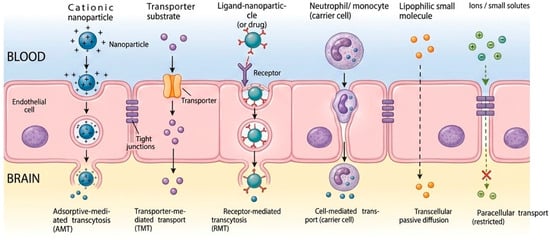
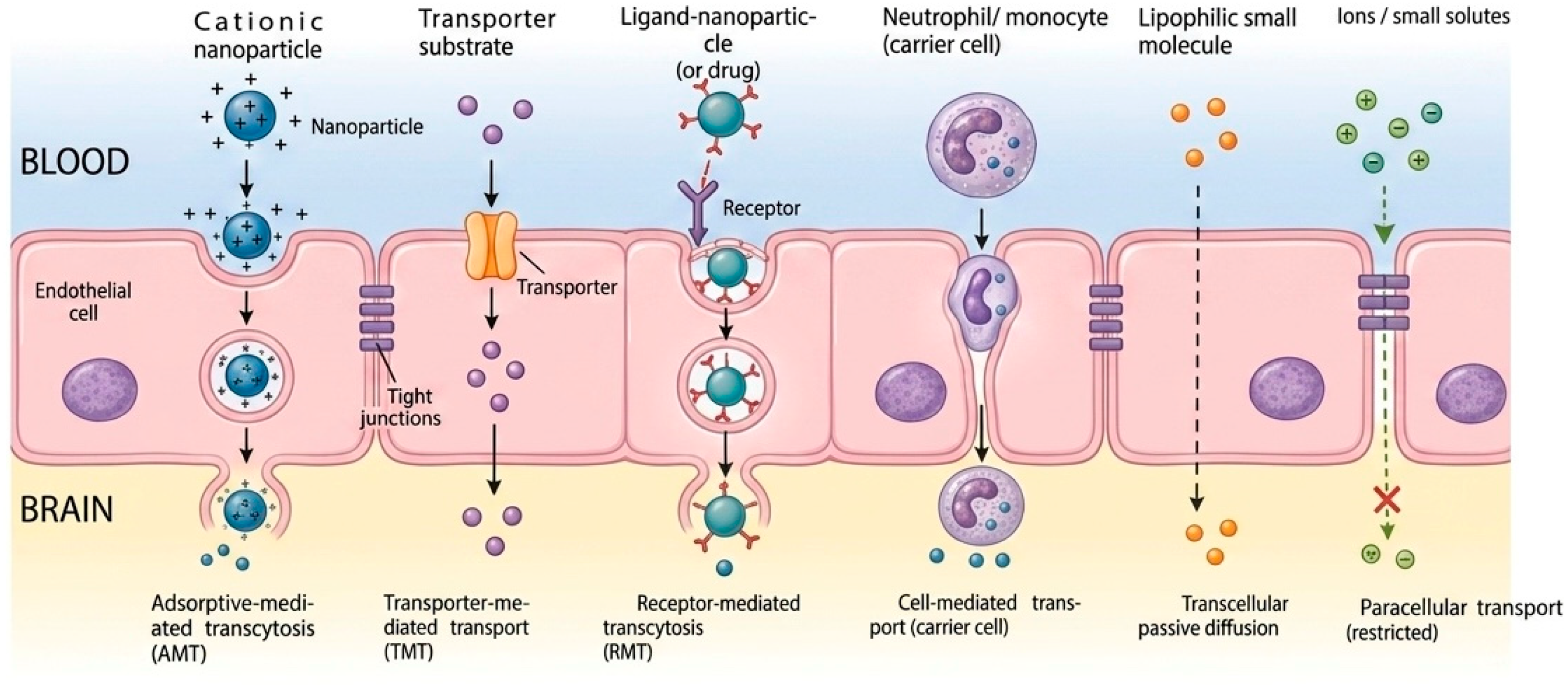
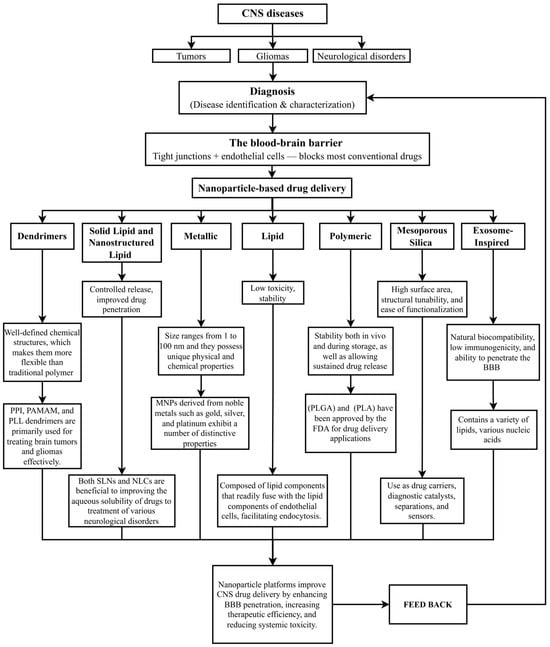
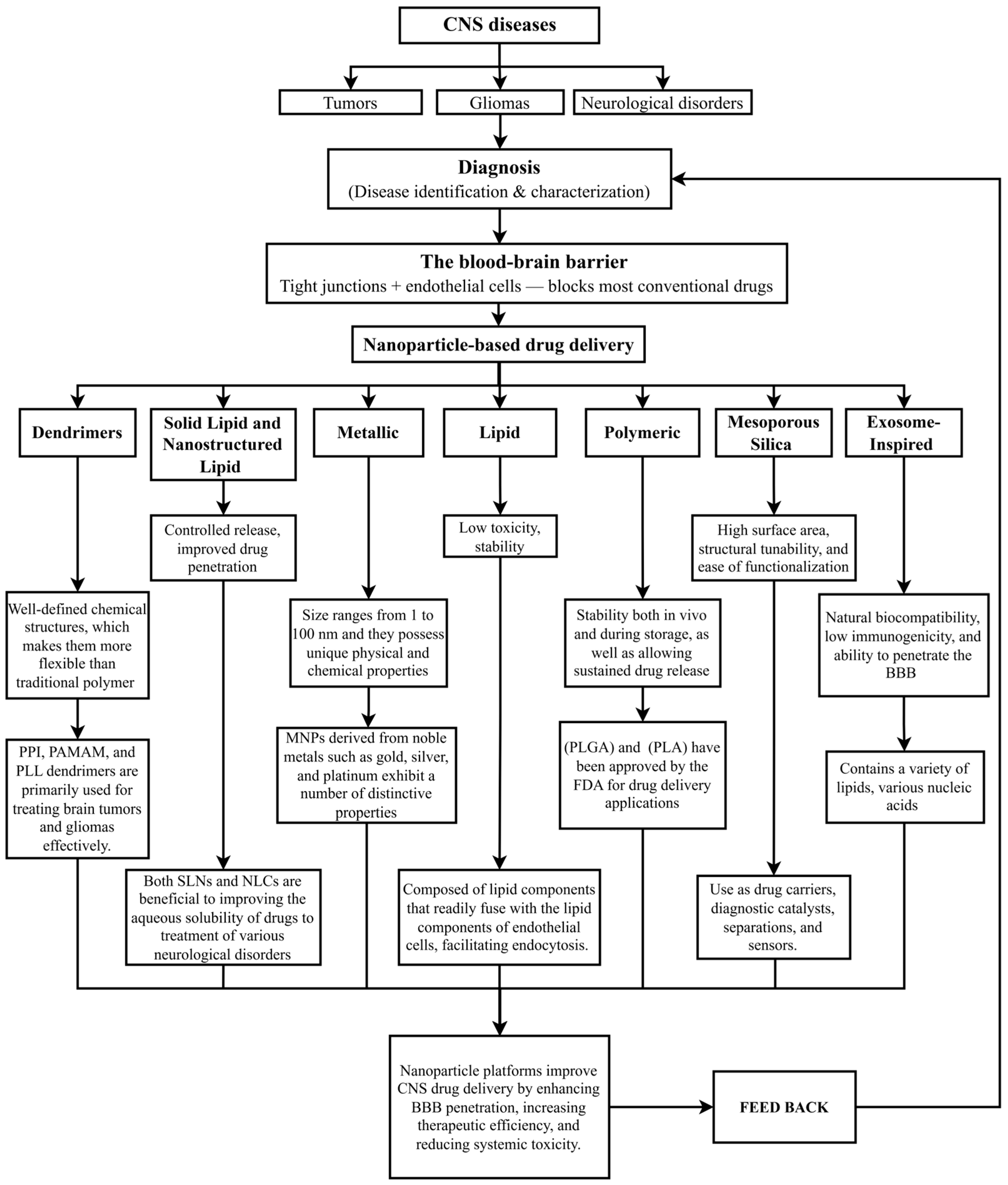
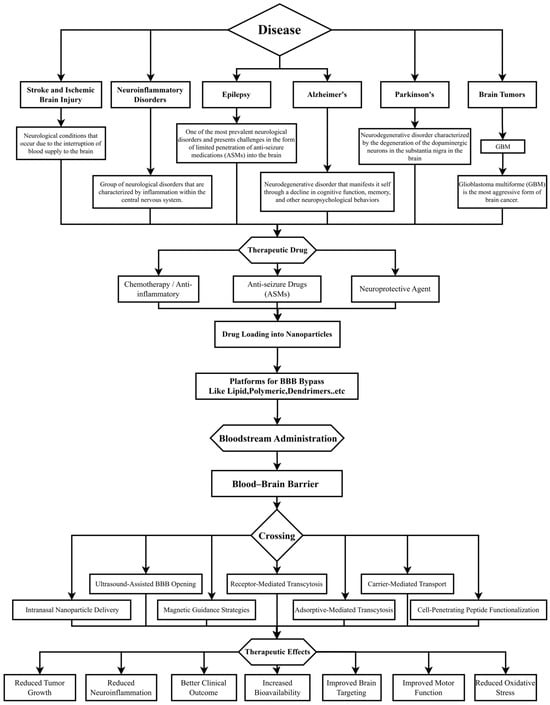
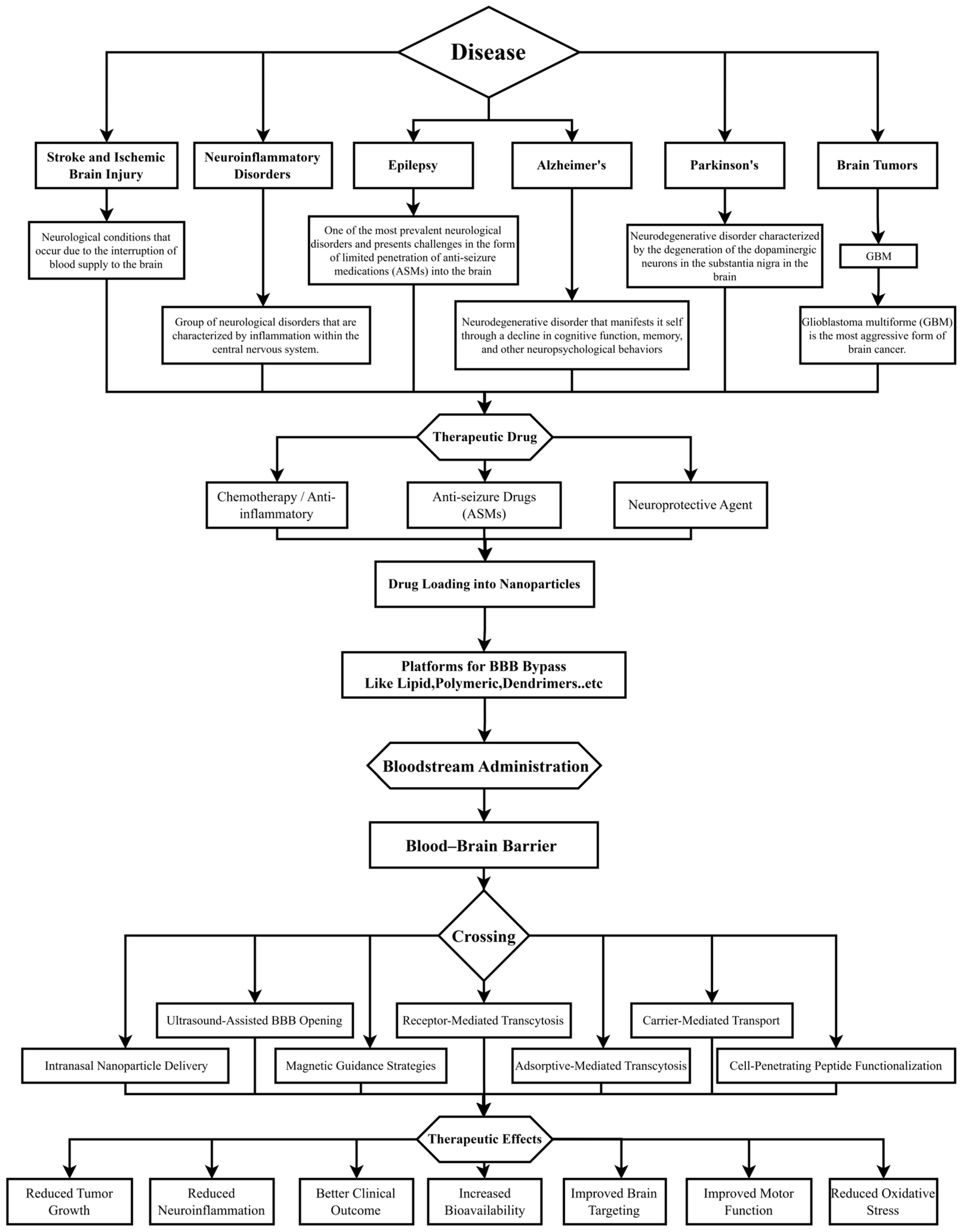

Disclaimer/Publisher’s Note: The statements, opinions and data contained in all publications are solely those of the individual author(s) and contributor(s) and not of MDPI and/or the editor(s). MDPI and/or the editor(s) disclaim responsibility for any injury to people or property resulting from any ideas, methods, instructions or products referred to in the content. |
© 2026 by the authors. Licensee MDPI, Basel, Switzerland. This article is an open access article distributed under the terms and conditions of the Creative Commons Attribution (CC BY) license.