


Abstract
Thermal protective clothing (TPC) plays an important role in safeguarding firefighters exposed to high-temperature hazards. However, existing TPC systems lack the ability to address the comprehensive safety needs of working in a hazardous thermal environment. Limitations such as poor breathability, unstable insulation under different exposure conditions, and limited capability to mitigate carcinogenic particle exposure often contribute to heat stress, burn-related injuries, and cancer-related health effects among firefighters. In recent years, nanotechnology has attracted growing attention as a possible route toward more advanced TPC systems. Nanoscale materials offer significant pathways to engineer the thermal, moisture-management, and particle-filtration attributes of textile systems, making them highly relevant for improving TPC performance. This review analyzes current nanotechnology in terms of composition, processing, structure, properties, and performance. A total of 88 selected studies were reviewed and classified according to the nanosystem used to achieve relevant TPC functions. The performance domains investigated include flame retardancy, thermal management, moisture transport, filtration, and additional functions, to evaluate their potential for TPC applications. Nanotechnology can expand the TPC design space through multidomain protection and performance optimization; however, research remains largely fragmented. This review integrates findings and identifies design challenges and limitations, providing a coherent basis for comparing and guiding future TPC material design.
1. Introduction
Thermal protective clothing (TPC) is an essential item of personal protective equipment (PPE) that acts as a primary barrier for firefighters against hazardous thermal environments. These hazards can arise from fire, explosion, thermal radiation, steam, hot liquid, hot surface contact, extreme cold, and other sources [1,2]. During such hazards, TPC minimizes heat transfer (i.e., maximizes thermal insulation) from/to the hazard source, thereby reducing the rate of temperature increase/decrease in human skin, while remaining durable and non-flammable throughout the hazard exposure. This allows firefighters sufficient time to respond effectively and protect themselves from injury [3,4]. However, statistics highlight a critical concern—despite the use of TPC, a substantial number of injuries occur every year. Approximately 8% and 50% of the annual 60,000 injuries among firefighters can be attributed to burn- and overexertion-related issues [5,6]. This suggests that the TPC system struggles to provide effective protection to firefighters.
For firefighters, thermal hazardous incidents such as open flames, flash fires, radiant heat, molten metal splashes, explosions, hot surfaces, and high-pressure steam are of the most immediate concern. However, chemical threats from fuel vapors, combustion by-products, hydraulic fluids, and toxic gases from the hazard source are also gaining substantial concern due to frequent cancer cases among firefighters [2,7,8]. Moreover, in the field, firefighters have to face rapidly changing thermal loads, work for long durations, and operate heavy equipment with restricted mobility. All of these considerations define the functional needs of TPC engineering. However, these conditions are opposing in nature. While maximizing protection through higher insulation with bulky, less breathable materials could worsen metabolic strain for the firefighter, lighter and more breathable materials could worsen the burn risks [9,10,11]. Hence, the central challenge is to maximize protection while minimizing metabolic strain. Within this context, nanotechnology is emerging as a key enabler.
Nanotechnology is being increasingly investigated in textile engineering because it can impart or improve a wide range of properties in a textile system, such as flame retardancy, electrical properties, thermal and moisture regulation, etc. [12,13]. With its very high surface-area-to-volume ratio, it enables nanoscale designability with negligible increase in weight, allowing incorporation of special properties that cannot be modified at larger scales [14,15]. As a result, textiles with nanomaterials are being used increasingly in a variety of fields, such as automotive, aerospace, military, sports, geotextiles, filtration, and protective gear. Nanotechnology, such as nanoaerogel systems, phase change materials, metal nanoparticles, and carbon- and graphene-based nanostructures, can improve heat management, thermal resistance, flame resistance, and comfort, which shows significant potential to improve the performance of TPC [16,17,18,19].
Research on nanotechnology is growing, and its use in functional textiles is increasing. There have been studies on how nanotechnology can improve the properties of textile systems [13,20]. However, there is a significant gap in the understanding of how it is applicable to TPC improvement. Few reviews have examined how nanoscale materials can improve the protection and comfort of TPC. Hence, this review aims to provide a comprehensive and critical assessment of the potential uses of nanotechnology in TPC, focusing on how nanomaterials can address issues with current materials and performance. Within this scope, this review looked into different nanotechnologies, what they are, and how they work to provide a clear picture of how nanoscale innovations can enhance TPC performance. The significance of this work lies in informing future TPC product development by bridging the gap between nanotechnology innovation and novel TPC designs that are efficient in addressing firefighters’ needs.
2. Methodology
This review was carried out in line with the Preferred Reporting Items for Systematic Reviews and Meta-Analyses (PRISMA) guidelines. Scopus was selected as the primary database because it captures a wide range of peer-reviewed work across the necessary interdisciplinary fields, i.e., materials science, textile engineering, and applied thermal engineering research. The search strategy was shaped based on the hazard landscape and the primary design functionalities of the firefighters’ TPC.
The search strategy was structured into four conceptual clusters to systematically capture relevant literature. Cluster A focused on nanotechnology using the term “Nano*” to include nanomaterials, nanostructures, nanofibers, and related nano-processing approaches. Cluster B addressed thermal protection and performance mechanisms, incorporating terms such as “thermal protection,” “thermal insulation,” “heat resistance,” and related descriptors. Cluster C anchored the search to textile materials using terms including “clothing,” “textile,” “fabric,” “garment,” and “nonwoven”. Cluster D further constrained the search to protective applications using terms such as “protective textile,” “thermal protective clothing,” “protective garment,” and “personal protective equipment (PPE),” ensuring the exclusion of unrelated fields such as electronics, infrastructure, automotive, and fashion. Boolean operators were used to connect these clusters, with AND linking conceptual groups and OR capturing variations within each cluster. The search was applied to titles, abstracts, and author keywords, and limited to English-language research articles.
The final search string was: (TITLE-ABS-KEY(“Nano*”) AND TITLE-ABS-KEY(“Thermal Protection” OR “Heat protection” OR “Thermal insulation” OR “Heat resistance” OR “Thermal barrier” OR “Heat shield” OR “Thermal management” OR “Heat dissipation” OR “Thermal comfort” OR “Temperature regulation” OR “radiative heat” OR “Conductive heat” OR “Convective heat” OR “Fire resistance” OR “fire resistant” OR “flame resistant” OR “Flame retardant” OR “fire retardant” OR “flame resistance”) AND TITLE-ABS-KEY(“Clothing” OR “Textile” OR “Fabric” OR “Garment” OR “nonwoven”) AND TITLE-ABS-KEY(“protective textile” OR “Thermal protective clothing” OR “protective Clothing” OR “protective equipment” OR “protective garment” OR “PPE” OR “personal protective clothing” OR “personal protective equipment”)) AND (LIMIT-TO (SRCTYPE,”j”) OR LIMIT-TO (SRCTYPE,”d”)) AND (LIMIT-TO (DOCTYPE,”ar”)) AND (LIMIT-TO (LANGUAGE,” English”)).
The search was conducted in November 2025, when the initial search produced 130 records. After screening the titles and abstracts, studies were retained if they involved nanotechnology or nanomaterials, addressed thermal protection or comfort-related heat transfer, and focused on textile-based or clothing systems. Full texts were then reviewed to confirm eligibility. Articles were excluded if they lacked a clear textile component, did not incorporate nanotechnology, or fell outside the journal-article category. Additionally, articles that developed clothing as a heating textile were omitted from the final selection. This was done to keep the focus on insulation-based protection rather than on temperature-raising technologies such as cold protective clothing. The final number of studies included in this review is 88 [16,17,18,19,21,22,23,24,25,26,27,28,29,30,31,32,33,34,35,36,37,38,39,40,41,42,43,44,45,46,47,48,49,50,51,52,53,54,55,56,57,58,59,60,61,62,63,64,65,66,67,68,69,70,71,72,73,74,75,76,77,78,79,80,81,82,83,84,85,86,87,88,89,90,91,92,93,94,95,96,97,98,99,100,101,102,103,104]. A PRISMA flow diagram is shown in Figure 1 to summarize how studies moved through identification, screening, eligibility assessment, and final inclusion.
Figure 1.
PRISMA flowchart for nanotechnology innovations in thermal protective clothing [105].
3. Results
The summaries of the selected 88 studies have been added to the Supplementary Materials (Table S1).
4. Discussion
4.1. Nanotechnology Classes in TPC
Through the analysis of the 88 selected studies, nanotechnology applications in thermal protective clothing (TPC) can be broadly classified into five categories. These categories are distinguished by the nanomaterial composition, their corresponding processing routes, the resultant structure, and their primary protective property profiles. This classification represents the dominant trends across the dataset rather than an exhaustive classification of every individual article, given the complexity and wide diversity of nanomaterial compositions and processing routes. Figure 2 charts the classification below:
Figure 2.
Nanotechnology classes for TPC applications.
The most prominent class of nanotechnology used in TPC is polymer-based nanofiber and aerogel fiber systems (Class 1). Such polymers include aramid, polyimide (PI), cellulose, polyurethane (PU), polyacrylonitrile (PAN), polyvinylidene fluoride (PVDF), polyvinyl alcohol (PVA), polyethylene oxide (PEO), polyamide-imide (PAI), polylactic acid (PLA), and polyoxymethylene (POM). These polymers are primarily fabricated through electrospinning and wet spinning [16,40,51,52,58,62,63,65,72]. Based on the property requirements, subsequent downstream processing can be adopted. Electrospun/wet-spun fibers form a nanofibrous membrane, which then can go through thermal imidization, UV crosslinking, or chemical vapor deposition (CVD) coating to impart additional surface properties or increase crosslinking density [38,40,51,52,70,72]. These nanofibrous membranes can also be converted into aerogel and hydrogel fiber networks through gelation, solvent exchange, and drying processes like ambient drying, freeze drying, and supercritical drying [31,36,37,39,46,64]. The unifying structural outcome of these processes generally yields three-dimensional nanoporous networks, with inter-fiber pore networks ranging from 50 nm to 5 µm for fiber diameters of 46–900 nm. Based on the polymer composition and the pore-fiber structure, this class of nanotechnology can be the basis to provide flame retardancy through polymer char chemistry; thermal insulation, particle/liquid filtration, and controlled moisture vapor transport through nanoporous architectural suppression of convection-conduction heat and mass transfer.
An addition to the previous class incorporates inorganic ceramic oxides into the nanofiber and aerogel fiber networks. Prominent oxides are silica (SiO2), zirconia (ZrO2), alumina (Al2O3), lanthanum oxide (La2O3), and their multi-component combinations such as mullite [31,36,50,56,66]. Generally, these oxides are integrated into the nanofiber and aerogel network via sol–gel electrospinning using a spinnable polymer, where the polymer can be left behind or later removed via calcination at 800–1500 °C [31,50,66]. Here, ceramic oxides can complement the flame retardancy and insulation performance of nanoporous architectures whose thermal stability is now governed by metal-oxygen bond energies and crystallographic phase boundaries rather than by polymer chain decomposition temperatures alone. Moreover, through multiphase ceramic boundary engineering, deliberate combinations of crystalline and amorphous oxide phases can control grain growth, suppress destructive phase transitions, and preserve mechanical flexibility at high temperatures that would cause single-phase ceramics to embrittle [31,50,66].
The second most prominent class comprises inorganic nanoparticle surface coatings (Class 2). Discrete inorganic nanoparticles/aerogel particles formed with silica, ZnO, TiO2, ZrO2 metal-oxide combinations are deposited onto existing textile surfaces through chemical finishing processes to modify surface chemistry and create functional nanoscale interfaces [21,47,54,61,81,85,91,92,96]. Such chemical processes include sol–gel synthesis, spray coating, dip-coating, or in situ ultrasonic synthesis [27,45,47,54,61,71,81,84,96]. Surface functionalization with fluorination, silane modification, polydimethylsiloxane (PDMS) crosslinking, phosphate esterification, or surface architectural modifications such as hierarchical deposition, aerogel formation, and Janus particle formation are the primary process variables that determine the resultant properties of the coating [21,27,45,61,71]. Such coatings can show superhydrophobicity or amphiphobicity based on nanoscale roughness [81,84,96]; UV absorption based on photocatalytic protection through semiconductor bandgap transitions; and flame retardancy based on condensed phase char barrier formation during combustion, where nanoscale packing density creates a continuous inorganic surface layer that macroscale particles cannot replicate due to the packing gaps they leave in the char structure [27,45,47].
Two-dimensional (2D) nanomaterials, including MXene (Ti3C2Tx), graphene oxide (GO), reduced graphene oxide (rGO), and montmorillonite clay nanosheets, can be categorized into Class 3 of nanotechnology used in the TPC [19,26,32,59,82,87,90]. Compared to Class 1, this class of nanosystems uses two-dimensional nanosheets assembled onto or within an existing substrate or other class groups. These nanosheets are generally a few nanometers thick, with lateral dimensions ranging from hundreds of nanometers to micrometers, giving them a characteristic 2D structure. These 2D structures are generally obtained through exfoliation or chemical etching of the materials’ respective layered precursors [19,26,32,59,82,87,90]. Later, they are assembled into functional TPC structures through layer-by-layer deposition, directional freeze-casting, or magnetic field-aligned casting [19,26,32,59,82]. After the deposition/casting, the 2D sheet-like structures form interconnected networks or aligned structures that significantly affect and alter electron mobility, heat transfer, and gas diffusion pathways. Based on that, these nanotechnologies can be efficient in (i) thermoelectric conversion and tribovoltaic energy harvesting, as delocalized electrons move efficiently across the basal plane under thermal or friction-induced potential gradients [19,32,59], (ii) disproportionate thermal conductivity enhancement [82,90], and (iii) slowing gas diffusion due to overlapping sheets forming continuous and tortuous conduction/convection pathways [8,66].
Class 4 includes metallic nanowires and nanofilm coatings. These are commonly formed from silver (Ag) and aluminum (Al) [23,76,94,98,101]. These metals can be processed to nanoscale dimensions via wet chemical reduction method (polyol) or physical vapor deposition (PVD) and assembled to a textile substrate via dip coating, spray coating, or sputtering [23,76,94,98,101]. The metallic nanowires and nanofilm coatings create a conductive network whose pore size is smaller than the thermal radiation wavelength, enabling effective infrared reflection. Based on their placement on the textile substrate, they can function in protecting the body from radiant heat exposure or retaining body heat [23,76,94,98,101].
Class 5 is defined as phase change material (PCM)-based nanosystems. PCMs such as Glauber’s salt and octadecane are integrated at the nanoscale via nanoparticle or nanofiber shell encapsulation or matrix confinement to support their solid–liquid transition [44,55,57,58,72,92]. The nanoparticle shell is generally fabricated at the PCM droplet surface via interfacial polymerization (e.g., a poly (methyl methacrylate) (PMMA) shell formed from methyl methacrylate (MMA)) or sol–gel condensation (e.g., a SiO2 shell) [44,55]. Nanofiber encapsulation is generally done via coaxial electrospinning [58,72]. Additionally, PCM confinement can be achieved by absorbing PCM into the expanded graphite network, thereby confining the PCM within its tortuous matrix. The main functional attribute of this class of nanotechnology is the PCM’s latent heat thermal buffering, most preferably within the physiologically relevant temperature range of 20–50 °C. As the encapsulation and confinement prevent PCM leakage, this system can provide a large latent heat reservoir (40–163 J/g) [44,55,57,58,72]. However, this attribute is time-dependent, providing transient resistance to heat transfer depending on the total latent heat reservoir available per unit mass. A generalized image (Figure 3) of these classes is provided below.
Figure 3.
Adapted schematics of different nanotechnology classes. (a) Class 1 electrospun nanofiber [106], (b) Class 2 sol–gel nanoparticle coating [107], (c) Class 3 2d nanosheets MXene [108], (d) Class 4 metal nanofilm coating [109], and (e) Class 5 PCM encapsulation [110].
Analyzing the nanotechnology class pattern across the selected studies, it can be said that current trends in TPC nanotechnology research are more inclined toward multifunctional hybrid nanosystems, a deliberate integration of two or more nanotechnology classes within a single architecture. This integration is designed to achieve a functional convergence of different nanomaterial classes [18,19,26,32,39,59,60,67,77,80]. These systems can utilize two or more of the previously defined class attributes, such as Class 1 polymer nanofiber matrices providing structural continuity, Class 3 two-dimensional nanosheets enabling electronic and thermoelectric functions, Class 2 analogous nanoparticle coatings modifying surface chemistry, Class 4 metallic nanostructures imparting electromagnetic properties, and Class 5 phase change components offering latent heat buffering, such that their combined architecture delivers protective capabilities that surpass those of any individual class alone. For example, the nanosheets described in Class 3 (2D nanosheets such as MXene) can be integrated with the nanofiber mat described in Class 1 (polymer nanofibers) to achieve the key attributes of thermal insulation, flame resistance, and EMI shielding together. It should be noted that hybrid systems integrating two or more classes are not treated as a sixth class but rather as emergent outputs resulting from the combination of constituent archetypes. A detailed classification chart highlighting existing mono and hybrid systems is provided in the Supplementary Materials (Table S2).
A second observation is that the impact of processing routes on the applications of the corresponding nanomaterials is often to a similar extent as the nanomaterial composition itself. For example, electrospinning consistently produces filtration and breathable barrier membranes with different sets of polymers [38,49,51,52,65,74,104], aerogel networks with different nanofiber compositions provide thermal insulation [19,26,31,37,39,46,50,64,66,68], and PVD-formed coatings with different metal components provide radiative management functions [23,94,98,101]. Additionally, a third observation is that Classes 3–5 are the emerging trend of nanotechnology applications in TPC; however, Classes 1 and 2 are more prevalent and remain this research field’s foundational platforms due to their versatility, easy accessibility, and compatibility with textile substrates [16,17,18,19,21,22,23,24,25,26,27,28,29,30,31,32,33,34,35,36,37,38,39,40,41,42,43,44,45,46,47,48,49,50,51,52,53,54,55,56,57,58,59,60,61,62,63,64,65,66,67,68,69,70,71,72,73,74,75,76,77,78,79,80,81,82,83,84,85,86,87,88,89,90,91,92,93,94,95,96,97,98,99,100,101,102,103,104].
4.2. Property-Performance Analysis
In the previous section, a general classification of nanotechnologies was provided based on composition, processing, structure, and broad property profiles. It did not detail the underlying functional mechanisms governing in-service performance. The functional perspectives of these nanotechnologies need to be studied to better understand how nanosystems can be used to address the thermal protective clothing (TPC) challenges. This is required to bridge the gap between a nanosystem’s composition-processing-structure-property profiles and how these profiles translate into quantifiable protective performance against specific hazard threats. To address this gap, the following sections examine the functional domains such as flame retardancy, heat management, electrical-surface properties, particle-chemical filtration, breathability-moisture management, and mechanical-wash durability in turn. Each section details functional needs, key mechanisms of the corresponding nanosystems, quantitative performance boundaries, class-wise depictions of performance, and design challenges.
4.2.1. Flame Retardancy
Flame retardancy is the most fundamental requirement for TPC, especially for non-flame-resistant garments such as cellulose-based fabrics, as garment ignition poses a serious risk of injury in fire exposure scenarios. The usage of conventional flame retardant (FR) chemicals, like halogenated ones, is increasingly being restricted due to toxicity concerns. Moreover, conventional flame retardants often require high loadings, which can restrict the breathability of the TPC system and increase smoke generation upon ignition [12,111]. Hence, nanotechnology-enabled flame-retardant alternatives are increasingly being investigated to achieve comparable or superior protection through physical barriers, heat dissipation, and condensed-phase char mechanisms at substantially lower add-on levels. The following Figure 4 shows a schematic representation of nanosystem-based flame retardancy.
Figure 4.
Schematic advantages of nanosystems in flame retardancy [111].
After analyzing the selected studies, several nanosystem-based flame-retardant mechanisms have been observed quite consistently. One such example involves Class 2 inorganic nanoparticle surface coatings, dominated by the application of SiO2. These nanosystems mainly function by forming a thermally insulating char layer, which limits oxygen access and traps the volatile pyrolysis products of combustion within the fiber system. For example, an improvement in the limiting oxygen index (LOI) from 21% to 30.5% for a cotton substrate has been achieved via a hierarchical SiO2/ammonium polyphosphate (APP) four-tier coating [45]. A mesoporous system incorporating a similar SiO2/ammonium phytate (AP) reduced the peak heat release rate (PHRR) to 106.7 W/g, compared to 260 W/g for untreated cotton [27]. This mechanism can be complemented by metal oxide incorporation, such as a sol–gel SiO2/ZnO finish, which has been reported to increase the ignition time from 2 s to 6 s and the flame spread time from 11 s to 20 s [47]. This suggests that synergy between the nano-agents can lead to improvement in flame retardancy performance.
Phosphorus (P)–nitrogen (N)-based intumescent nanoarchitectures, i.e., nanoscale P- and N-delivery systems, can catalyze dehydration and carbonization at relatively lower onset temperatures. Such reactions in the early phase of combustion significantly limit the availability of flammable volatiles for the full combustion process. A UL-94 V-0 (i.e., burning stops within 10 s, no flaming drips in vertical burn test) rating has been achieved by 9,10-dihydro-9-oxa-10-phosphaphenanthrene-10-oxide (DOPO)-based phosphorus polyimide nanofiber membranes, with char yield reaching up to 64% [40,70]. This suggests a fairly effective flame-retardant condensed-phase mechanism. Complementing this with a TiO2-based residue-barrier from the MXene/PPy/phytic acid assembly system can disrupt flame propagation, reducing the peak heat release rate (PHRR) by 87% and total heat release by 98% [32]. This represents the largest combined reduction in the mentioned parameters observed in the selected studies. A P/N-crosslinked cellulose aerogel system has also achieved UL-94 V-0 rating with an LOI of 33.1%, which can be attributed to the covalent P-O-C bonding of the nanofiber network, stabilizing the char structure and delaying thermal degradation [41].
Class 1 nanotechnologies, i.e., nanofiber and aerogel fiber systems composed of flame-resistant polymers (aramid, polyimide), can further support the flame retardancy mechanisms through their dual role of slowing heat transfer via nanoscale porosity and promoting char formation integrity via burn chemistry. A polyimide/pre-oxidized polyacrylonitrile (PI/PANOF) sheath-core nanofibrous system has reported the highest value of LOI of 55.6% [16]. Here, the nanoporous structure was supported by the interaction between the PI shell and the pre-oxidized PAN core, contributing to a more stable carbonized structure. Other examples include an aramid nanofiber (ANF)/MXene/eicosane aerogel system, which achieves an LOI of 31% with a reduction in PHRR by ~80%, and CNF/CNT/MMT aerogels, which achieve an LOI of 30.2 [19,26]. This type of system can even provide structural stability, depending on the nanosystem’s structural consistency.
Catalytic graphitization via transition metal oxide nanoparticles, like Fe2O3 and MnO2, can also support the flame retardancy mechanisms of char barriers by altering the polymers’ thermal decomposition pathways. An LOI of 40.1%, while reducing PHRR to 22.3 kW/m2 (78% reduction), has been achieved for a graphene (G)/Fe2O3-incorporated Polyphenylene Sulfide (PPS) fibrous woven system, where G contributes to the 2D char barrier, and Fe2O3 catalyzes it to fused-ring structures [17]. Similar flame-retardant mechanisms have been observed with MnO2/FeTiO3; however, not to the degree of the previous one due to the missing G in the system, suggesting such catalytic effects are not exclusive to a single oxide system [84].
A different approach to char-based flame retardancy has been observed via endothermic cooling through nanocomposite hydrogel laminates [18,80]. Controlled water release from the hydrogel system has been shown to significantly absorb heat during exposure. In this context, a poly(N-isopropylacrylamide) (PNIPAAm)/sodium alginate (SA)/silver nanoparticle (AgNP)- based hydrogel network is reported to provide protection for around 30–35 min at 1200 °C. No char-based system in the selected studies has reported a similar level of performance. This performance can be linked to the system’s unusually high water uptake of approximately 2186% and the Lower Critical Solution Temperature (LCST) of ~31 °C. As this refers to the thermosensitive behavior of the system, it is self-regulating rather than a passive barrier system. However, the long-term stability and reusability of such a system depend on the hydrogel structure’s integrity after repeated thermal or washing cycles.
Additional FR mechanisms include mineral fillers like ochre, stabilizing the carbonaceous char from a polyacrylonitrile (PAN)/carbon nanotube (CNT) nanofiber system [95]; synthetic rubber coatings like polychloroprene via radical-scavenging systems [97]; and sol–gel amino-silane/phenyl phosphonic acid systems, providing covalently bonded barriers to the textile substrate (cotton/polyester) for FR protection via Si-O-P crosslinking [91].
Aggregating the LOI% values across the nanotechnology classes, it can be seen that the value of LOI% falls between 21.0 and 35.3% as shown in Table 1 (correspoding articles have been cited in the table). Among them, Class 2 coating systems show the widest range, which could be due to the SiO2 and other co-agent loadings across the studies. Class 1 nanofiber and aerogel systems show a narrower LOI range of 26.0–33.1% mainly coming from the polymer char chemistry. Hybrid systems with different class system reported some of the highest flame retardancy values. For example, combining Class 1 with Class 2 resulted in an increased LOI (%) value of 47.7–53.5 supporting the combined effects of the char-stabilizing structure of Class 1 with the condensed phase barrier formed by Class 2. This highlights their synergistic effect rather than an additive effect when compared with the lower range values (30.2–35.0) of the Class 1 + Class 3 systems reported. A single reported system combining Class 2 with Class 3 achieved an LOI% of 40.1% which can be linked to catalytic graphitization. The highest value in the dataset has been reported for a PI/PANOF sheath-core fiber system, which combined Classes 1,3, and 4. All the reported groups perform above the untreated cotton LOI (%) baseline of approximately 18%. Overall, the hybrid system pattern suggests that system hybridization can improve flame resistance more effectively when the combined classes support different but complementary mechanisms.
Table 1.
Flame-resistant performance across different classes.
A noteworthy design challenge of such nanosystems is their wash durability. In most cases, these FR treatments begin to degrade after several wash cycles, unless some covalent anchoring is introduced. Sol–gel Si-O-C bonding, polydimethylsiloxane (PDMS) crosslinking, and polyurethane–silane bonding (SPPU) may improve the durability [47,84,89,91]. However, these approaches still do not fully address other design problems, as no single system has been reported to achieve high LOI, wash durability beyond 50 cycles, and manufacturing scalability simultaneously.
4.2.2. Thermal and Heat Management
Another critical performance metric of TPC is thermal insulation and heat management, which determines how much heat reaches the wearer’s skin during sustained exposure, protecting the wearer from burn injuries, and how much heat is dissipated from the wearer’s body for physiological comfort [112,113,114]. Conventional thermal insulating systems rely heavily on bulky systems, restricting breathability and mobility, and can overheat the wearer, causing heat stress-related complications. Nanotechnology can address these trade-offs due to its high surface area-to-volume ratio [12,114]. Recent nanoscale engineering has seen efficient insulation against three modes of heat transfer: convection, conduction, and radiation. Moreover, nanotechnology has been used to incorporate heat management systems into potential TPC applications by incorporating phase change materials and other heat dissipation mechanisms. These findings suggest that nanotechnology can achieve heat management performance similar to, or more efficient than, conventional approaches without increasing the bulkiness of the TPC system.
Nanoporous fibrous and aerogel architectures have been found to be a dominant strategy for thermal management, as the ultralow solid fraction and nanoscale pore sizes can suppress gas-phase conduction via the Knudsen effect (pore size falling below the mean free path of air molecules, effectively increasing molecules’ collision, resulting in gas phase heat conduction suppression), while the tortuous nanofiber networks scatter infrared radiation. Depending on the pore size and fiber arrangement, the balance between these functions may be controlled. An Al2O3/ZrO2/La2O3 ceramic nanofibrous membrane system has reported the lowest thermal conductivity of 22.67 mW/mK, while maintaining elastic compressibility from 196 °C to 1500 °C [66]. This can be attributed to La2O3 grain-boundary pinning, which suppresses the embrittling ZrO2 phase transitions. Similarly, ceramic-based aerogel, i.e., ZrO2/SiO2-based coaxial ceramic aerogels, achieved a similar level of thermal conductivity with a thermal protective performance (TPP) of 36.42 cal/cm2 [31]. This system, while exposed to 1000 °C, maintained the skin-side temperature at ~37 °C for 3 min, demonstrating a high level of thermal shielding. Mullite-based nanofiber systems with Al2O3 of 10–37 nm grains and amorphous SiO2 regions achieved a thermal conductivity of 35 mW/mK with a density of 0.02195 g/cm3 [50]. The amorphous regions of SiO2 suppress grain growth and limit crack formation, resulting in flexible, foldable systems that withstand 1300 °C exposure while providing effective thermal insulation.
Among organic aerogel systems, a shell-crosslinked aramid nanofibrous aerogel fiber reported thermal conductivity of 32 mW/mK with a high tensile strength of 83.2 MPa, a significantly noteworthy balance between thermal insulation and mechanical strength via nanotechnology [46]. Shell crosslinking via hexyl crosslinks addresses the brittleness issue of the aerogel system, even enabling automated loom weaving. A geometric modification using flattened wet-spinning needles to form para-aramid aerogel tapes with spindle-shaped cross sections achieved a considerable temperature drop of 120 °C/mm−1 when exposed to a 300 °C hot plate with an improved tensile strength of 2.07 MPa [68]. The spindle geometry enables tighter braiding, reducing the inter-tape radiative heat transmission. SiO2/aramid dual network aerogel fibers showed similar performance, maintaining structural integrity under direct exposure to 1100 °C for 5 min, proving the strong thermal stability of such systems under short-term thermal loading [39]. In the context of an aramid-based aerogel fibrous system, key processing insights have been reported during the development of a thermal liner system [56]. Parameters such as catalyst type, aging time, and silylation duration can each independently influence heat-blocking performance. For example, using an NH4F catalyst with extended aging can reduce the backside temperature rise from 71 °C to 38 °C under ISO 9151 at 80 kW/m2 [115]. Another insight concerns nanoscale fiber and aerogel compatibility: aramid-based nanofibers at approximately 200 nm can form uniform, continuous networks, whereas coarser fibers tend to produce cracked, inconsistent structures, significantly reducing performance [56].
Biomimetic porous nanofiber membranes with internal hollow channels (like penguin feather shafts or alpaca hair medulla structures) can also help with thermal insulation due to the amount of trapped static air [35,63]. Coaxial and phase-separation electrospinning can form such hollow and porous structures, thereby reducing heat transfer by limiting air movement. For instance, PI/polysulfone-amide (PSA) porous membranes achieved a thermal conductivity of 43.6 mW/mK, higher than previous ones, yet with reasonable insulating performance [35]. A microemulsion-electrospun hollow channel fibrous system, through controlled paraffin removal during calcination, achieved a thermal insulation value of 44.7 mW/mK [63]. Aerogel fibers with holocellulose nanofibrils show similar thermal insulating performance [64]. This system can maintain foldability for more than 1000 cycles, demonstrating greater flexibility than more brittle inorganic aerogel systems. This suggests that, although the thermal conductivity is high for such systems compared to inorganic aerogels, their processability might be better suited to garment manufacturing workflows.
A much more practical, scalable approach to inducing thermal insulation through nanotechnology is nanoparticle-induced air-pocket formation. This method creates micro-scale air pockets around fibers through nanoparticle deposition, which can be easily applied to textile substrates via in situ or pad-dry-curing-compatible processing. Hence, this process does not require aerogel chemistry or electrospinning infrastructure. A 38% reduction in thermal conductivity (from 251 to 155 mW/mK) for a cotton–PET system has been achieved via in situ TiO2 nanoparticle deposition [54]. Though the level of insulation is much lower than the previous systems, interestingly, it can increase the air permeability of the existing system while increasing the insulation. This may be due to the increased pore diameter introduced by nanoparticle roughness around fibers, which also traps more air due to the increased pore size. However, the usability of this system highly depends on the durability and consistency of the structures after repeated use and washing.
Besides the gas phase conduction/convection suppression via pore-trapped air, reflective optical coating/nanonetworks can suppress radiative heat transfer. PVD-deposited nano-Al films on aramid outer fabrics have reported a 2- to 3-fold increase in reflectance with a 24–88% extension in second- degree burn time, with breathability loss of only 2–6% [23]. Compared to conventional Al foil laminations, this is significantly lower. The morphology analysis showed island growth films, i.e., discontinuous metallic regions preserving the airflow. A 200 nm TiSi(N) ceramic nanocomposite coating shows a similar effect, reducing the temperature rise on the inner side by 45% when exposed to a 330 °C heated plate, compared with the uncoated system [85]. The use of sub-wavelength metallic networks with pore/particle/fiber sizes smaller than the peak thermal radiation wavelength (~9 µm) can facilitate this radiation reflection as reported in other studies [76,94,98,101].
As previously discussed, besides thermal insulation, there is also an additional need for facilitated outward heat dissipation. For this, a more sophisticated nanotechnology system of spectrally engineered nanofiber surfaces with dielectric nanoparticle resonance allows both solar radiation reflection and mid-infrared emission within the 8–13 µm atmospheric window [30,62,67]. The significance of this system lies in its metabolic heat dissipation attributes, along with the solar reflectance without any external energy input, which is one of the significant prospects to improve TPC’s physiological performance. PVDF/SiO2 nanofiber fabrics have been reported to achieve a 97.8% solar reflectance and a 98.7% MIR emissivity by combining the fluoropolymer’s MIR emission groups with the SiO2 Fröhlich resonance [30]. Such values are the highest combined optical performance reported in the dataset. A daytime sub-ambient cooling of ~14.9 °C has been achieved by this system. For the POM-nanofiber textile system, the intrinsic C-O-C molecular vibrations enable selective emission of MIR while maintaining a solar reflectance of 94.6% [62]. This system has been reported to function across varying environmental conditions, i.e., as an all-weather system, reducing the skin temperature by ~7.8–15.7 °C. A zeolitic imidazolate framework-8 (ZIF)-8/thermoplastic PU system worked similarly (97% solar reflectance and 93% emissivity) due to its imidazole ring vibrations with a 7.2 °C sub-ambient cooling [67]. Another feature is the presence of reactive oxygen species (ROS), which provide additional antibacterial benefits. In a somewhat similar approach, using a two-level polyethylene (PE)/PA-6 micro/nanofiber nonwoven system, in which the PA-6 microfibers are spectrally transparent to human body radiation, a reduction in heat storage power from 13 W/m2 to 3.97 W/m2 suggests an effective reduction in heat buildup through MIR transmission [75].
An alternative to the radiative-based metabolic cooling can be a 2D conductive nanosheet membrane. Graphene oxide nanosheets dispersed within hydrogel selective permeation membranes increased thermal conductivity by 81% at loadings as low as 0.5 wt% [90]. Thermal modeling suggests a reduction in skin-side temperature by ~17 °C, indicating an effective mechanism of metabolic heat dissipation. Magnetic field alignment can even complement this function with additional water vapor transmission [82]. By controlling the orientation of the conductive nanosheets, both heat dissipation and sweat transmission can be achieved without many chemical modifications. This is the opposite of isotropic nanoparticle systems, where the 2D geometry enables the formation of continuous percolating pathways at concentrations much lower than the percolation threshold typically required for spherical nanoparticles.
A complementary thermal management approach to steady-state insulation or radiation reflection could be the incorporation of nanophase change materials (PCM)—thermodynamic buffer layers. These systems delay the temperature rise rather than permanently reducing heat transfer [58,72]. This transient protection can become significant, especially when the injury risk varies in the hazard environment [7]. The ANF/Fe3O4/PANI/PEG composite aerogel reported latent heat storage of 162.5 J/g at a thermal conductivity of 42.96 mW/mK, while also providing additional functionality like sensing [60]. A Janus system with sodium alginate aerogel/SiO2, having paraffin-based PCM (latent heat storage of 127.5 J/g), extends second-degree burn time to 76.6 s at 18.4 kW/m2, outperforming conventional TPC under similar conditions [44]. This is attributed to the coupling effect of SiO2 radiative cooling and PCM latent heat buffering. However, such systems can suffer from long-term thermal stability issues, especially with the PCM. In this case, the best durability data comes from the expanded graphite (EG)/silver nanowires (Ag NWs)/n-octadecane (OD) system, showing no change in Differential Scanning Calorimetry (DSC) after 200 melting-solidification cycles [57]. Here, the EG tortuous network stabilizes the PCM OD by preventing liquid-phase migration during repeated use.
An active thermal management approach has been found in the selected literature. Instead of relying on material properties, this endeavor approached garment-level engineering by incorporating a CNT-based inner fabric layer, along with dry ice coolant pouches and battery-powered internal fans [29]. During human subject testing under live-burn conditions of firefighting hose advancement, this study reported significant reductions in core body temperature, heart rate, and time above the 38 °C hyperthermia threshold, suggesting a physiological benefit. This can be attributed to the forced convection through CNT-enabled thermal pathways. However, the system complexity may limit its adoption.
Besides the above-mentioned thermal management strategies, a few others can be mentioned here. The previously discussed hydrogel-based endothermic flame retardant system can contribute to transient heat absorption via the same mechanism [18,80]. Aerogel-analogous rotary jet-spun aramid nanosheets with a density of 0.1 g/cm3 achieved a thermal conductivity of 1600 mW/mK, with additional ballistic performance, using nanopore insulation but differing from aerogel processing in complexity [79].
Summarizing the thermal and heat management parameters across different classes (Table 2) shows strong coverage of Class 1 and Class 1-incorporated Class 5 nanotechnology systems, highlighting a strong design preference for TPC system improvement. Corresponding articles have been cited in the Table 2. Within Class 1, thermal conductivity ranges from 22.67 to 45.0 mW/mK, where the lowest values were reported for ceramic-based nanofiber aerogels. Biomimetic hollow-channel polymer membranes occupied the higher values of the corresponding ranges. Mechanism-wise, ceramic aerogels benefit from Knudsen-effect suppression, grain-boundary pinning, and very low solid fraction. Organic hollow channels, while still useful for insulation, are likely limited due to the comparatively higher solid fraction. Thermal protection performance (TPP) values have been reported for Class 1 systems within 31.8–36.42 cal/cm2 showing this as the main structural platform for thermal shielding across the reviewed studies. Only Class 2 systems reported higher thermal conductivity (155 mW/mK) through TiO2 deposition, which seemingly relies on air-pocket formation at a coarser scale, rather than on a true nanoporous insulation architecture unlike Class 1 systems. For this reason, Class 1 + 2 systems introduced a minimal thermal conductivity range. This performance even facilitated by a MIR emissivity of 93.0–98.7% and solar reflectance of 97.0–98.0%. The Class 5 PCM-containing group, for its structural stability incorporated with Class 1 systems and with the latent heat storage, performs the transient thermal management with higher latent heat PCM providing greater efficiency in terms of temperature control with less quantity. A hybrid system of Class 1 + 2 + 5 hence, can function as the most complete thermal management system.
Table 2.
Thermal and heat management performance across different classes.
From the above discussion, the design challenge for nano-based thermal management systems is the tension between performance and scalability. The best-performing systems, such as ceramic aerogels and spectrally engineered nanofiber surfaces, tend to rely heavily on fabrication routes and operational setups that do not align well with mainstream textile manufacturing, i.e., large-scale adoption. On the contrary, more scalable approaches, such as nanoparticle coatings, fit easily into existing production lines but offer comparatively lower thermal performance. Additionally, balancing incoming and outgoing heat management simultaneously adds another layer of difficulty. Approaches such as convective insulation, bidirectional radiation control, latent heat buffering, and, in some cases, active cooling address different heat pathways and do not always integrate easily into a single system. In summary, the challenges lie in simultaneously achieving high thermal insulation and physiological protection while maintaining easy processability.
4.2.3. Moisture Management
In addition to the flame retardancy and efficient thermal management, TPC must also facilitate the outward transport of metabolic perspiration, as this is the primary mechanism of thermoregulation. However, like heat dissipation, these attributes also get restricted in conventional TPC due to the bulky and close-packed structure for maximizing thermal insulation. As a result, the wearer’s microclimate temperature and humidity can become elevated, causing physiological heat stress [112,116,117]. Nanotechnology can address this issue by engineering pore structures and/or surface chemistries, which can allow the moisture transport properties to be modified independently of the bulk barrier performance. Here, moisture management refers to mass transport, i.e., the movement of liquid water and water vapor through the garment, including hydrophobicity.
Like previous nanoporous membrane architectures, engineering the pore structure of electrospun membranes can also provide simultaneous waterproofing and vapor transport. Through pore control, the capillary pressure of the system can be controlled, which can make the system selective: blocking liquid ingress while remaining permeable to moisture vapor. Polyether ether ketone (PEEK)/PI nanofibrous membranes achieved a water vapor transmission rate (WVTR) of 1889–2311 g/m2day with liquid resistance of 20–70 kPa, while also exceeding the fire retardant requirement of TPC [40]. The nanofiber range of 135–300 nm with porosity 54.7–87.2% suggests that molecular PI architecture governs the breathability–protection balance more directly than post-processing treatments. Another polytetrafluoroethylene (PTFE)/polyamide-imide (PAI) nanofiber membrane has improved thermal stability up to 300 °C, with similar moisture-transfer performance (water contact angle ~140°, hydrostatic pressure of 63.4 kPa, and WVTR of 2920 g/m2day), demonstrating reusable high-temperature waterproof-breathable performance [38]. For a nanofibrous membrane, pore size can be stabilized and controlled by crosslinking mechanisms. UV-crosslinked PAN/PU/SiO2 membranes stabilized the pore size distribution through PAN crystallization, achieving a consistent WVTR of 9.2–10.8 kg/m2day, a hydrostatic pressure of 85.7 kPa, and a WCA of 151° [52]. Polybutylene adipate terephthalate (PBAT)/polylactic acid (PLA)/SiO2 breathable nanosystem provided a sustainable alternative to nanofibrous membrane-based moisture management scenarios, with a water contact angle of 154° and a hydrostatic pressure of 24 cm Hg, without the use of fluorinated chemistry [42]. Sorption-driven moisture transport can complement the nanofibers’ moisture transmission, as seen in the PVA/sodium polyacrylate (SAP) system, due to its carboxylate groups actively drawing moisture into the fiber bulk [65]. Increasing SAP concentration can increase absorption and spreading, resulting in faster evaporation. It was found that fiber diameter and assembly method can both influence moisture management and comfort in a PAN nanofiber-based three-layer composite system, indicating that garment-level construction also influences moisture transport within the nanofibrous membrane [83].
Gradient wetting of the nanofiber system can also be used as a moisture transport facilitating mechanism. Asymmetric wettability across the membrane thickness creates capillary pressure differentials, driving the liquid moisture from the inner surface to the outer surface. With the PVDF/PVDF-sodium dodecyl sulfate (SDS)/chitosan (CS)-PVA system, a three-layer gradient system has been designed, where the hydrophobic outer layer, dual-function intermediate layer, and hydrophilic inner layer are used [49]. Along with a moisture permeability of 11.1 kg/mday, this system further reported reductions in heart rate, blood pressure, and body temperature under 38 °C and 85% relative humidity (RH) conditions. Dual-nozzle PU/P(AMPS-GO) PU/poly (2-acrylamido-2-methylpropane sulfonic acid- GO based bimodal membranes achieved water vapor permeability (WVP) of 848 g/m2day and an air permeability of 15.66 L/m2s, with a reported tensile strength of 18.45 MPa [87], suggesting mechanical strength can be incorporated in the nanofibrous system with moisture transferring functionality. A biomimetic extracellular matrix (ECM)-like barrier layer with a thermoplastic PU/fluorinated PU membrane exhibits directional moisture transport (WVTR of 550.96 g/m2day) even under mechanical deformation (1000 stretching cycles at 80% strain), indicating that mechanical elasticity has been incorporated into the system [74].
Other methods of moisture management include Si-based hydrophobicity [58,72]; sheet alignment to improve moisture management, as reported for magnetically aligned rGO membranes, which increase the WVTR by 44% through nanosheet orientation [82]; and hydrogel systems for evaporative cooling via thermosensitive LCST behavior [18,80]. In addition, a modeling study showed that Ag-based nanoparticle finishes can be applied to the TPC system without a measurable change in the moisture management and thermo-physiological properties [88].
While addressing WVTR across different classes, the available data mostly concentrated on Class 1 and Class 1-based hybrid systems, as seen in Table 3 (corresponding systems are referred in the Table). Class 1 shows a significantly large range of WVTR (551–11,100 g/m2day). Such large variation is seemingly due to the polymer selection and its corresponding architectural variations. Architectural variants including gradient-wettability systems and bimodal pore structures show high WVTR. Mechanically deformable ECM-like crosslinked membranes reported lower WVTR values. Hybrid Class 1 + 2 systems, particularly UV-crosslinked PAN/PU/SiO2 membranes, report WVTR values of 9200 to 10,800 g/m2day, which is consistent with the nanoparticle-assisted crosslinking mechanism discussed earlier, where SiO2 may help stabilize the pore structure without fully blocking vapor pathways. This system also facilitates Si-based surface hydrophobicity. Class 1 + 3 and Class 1 + 4 reported the lower end of WVTRs, representing their priority toward mechanical or heat management. However, all of these endeavors closely match or outperform the ePTFE benchmark of approximately 800–1200 g/m2day. Together, this shows that a nanoscale pore structure, along with suitable surface chemistry, can deliver significant improvements in WVTR-related comfort attributes. Across the nanotechnology classes reporting the WVTR, WCA values fall within 128– 154°. As said earlier, Si-/Class 2-based surface hydrophobicity in Class 1 + 2 can raise the hydrophobicity even to 154°. With PTFE, hydrophobicity has been achieved to a WCA of 140° in Class 1 systems. The potential for an increase in hydrophobicity in Class 1 + 2 without sacrificing the WVTR is important. Class 2 deposition involving nanoscale roughness can facilitate hydrophobicity. This is important for TPC as the material should resist liquid wetting without trapping too much moisture inside the clothing system.
Table 3.
Moisture management performance across different classes.
The design challenge involving the mechanisms discussed above is the thermal-breathability conflict and durability. Highly breathable systems typically use open, hygroscopic structures, but they are not well-suited to sustained high-temperature TPC exposure. Gradient wetting membranes [49,87] and SAP-integrated nanofibers [65], which achieve the highest moisture permeability, use hydrophilic architectures that cannot withstand the thermal conditions targeted by PI and PAI membrane systems. This contrast suggests that moisture transport efficiency and thermal stability remain difficult to reconcile within a single material system. The asymmetric aerogel/PCM-coated Nomex liner makes this conflict more explicit, where the configuration that best balances thermal protection and metabolic heat absorption effectively eliminates breathability [92]. Additionally, moisture management features such as wettability gradients, SAP hygroscopic capacity, and hydrogel water retention tend to degrade faster than flame retardant and insulation performance, creating a durability imbalance where comfort-related functions decline earlier in service. This is reflected in thermosensitive hydrogel laminates that depend on structural integrity under repeated thermal and washing cycles [18,80], SAP capacity loss in PVA/SAP membranes with repeated wetting and drying [65], and the gradual equilibration of wettability gradients in three-layer composites [49] over laundering cycles. In summary, achieving waterproofness, breathability, thermal stability, and durability within a manufacturable TPC system remains an open challenge.
4.2.4. Particle and Chemical Filtration
In a fireground operation, heat and flames are not the only hazards firefighters face. Combustion-generated particulates, toxic gases, chemical agents, and contaminants from the environment can pose significant injury threats. Chronic exposure to particulate-associated Polycyclic Aromatic Hydrocarbons (PAHs) significantly increases cancer risks, even when wearing TPC [118]. Contamination can degrade the thermal protective performance of the TPC system [8,119]. A TPC system’s filtration efficiency and breathability can counteract each other. Nanotechnology can address these issues by improving filtration performance.
Nanotechnology can be used to capture particles by controlling the pore geometry of membranes. In contrast to conventional melt-blown electret filters, which use electrostatic energy to capture particles, these systems use pore structure at the length scale of the target particle diameter. As such systems do not depend on electrostatic energy, they do not suffer in humid conditions and can be reused. PI electrospun nanofibrous membranes with a PDMS coating, with a fiber diameter of 200–500 nm, have reported a filtration efficiency of 96.13% and a bacterial filtration efficiency of 99.48% [51]. For 20–600 nm particles, the reported efficiency was 92–99%. This system’s performance was unchanged even after ethanol sterilization, chlorine disinfection, and Ultraviolet Germicidal Irradiation (UVGI). The previously discussed PVA/SAP nanofibrous system also achieved a filtration efficiency > 95%, showing that hygroscopic fiber incorporation does not affect the filtration efficiency [65]. This suggests an optimal pathway for balancing moisture transfer and filtration. A connection between particle filtration and radiative heat management has also been reported for such systems. PE/PA-6 two-level nonwoven masks integrate mechanical particle filtration with a high MIR transmittance of approximately 82% [75]. PLA micro/nanofiber interlayered masks achieve 99.69% PM0.3 filtration at a pressure drop of 49 Pa [48]. At the same time, they exhibit switchable MIR emissivity, allowing control over radiative heat transfer.
The particle filtration efficiency can even be complemented with hierarchical nanofiber architectures. For aerosol and PM filtration, these systems use multimodal fiber-diameter distributions, in which fine fibers promote Brownian diffusion capture while coarser fibers rely on inertial impaction. An endeavor with a sandwich-structured bimodal nanofiber membrane has shown a refined implementation of this logic [43]. True nanofibers at 46 nm and 155 nm form the outer capture layers, while bead-on-string fibers with 120 nm connecting segments create a central macro-porous airflow layer. This structure showed the best performance with 99.8% PM0.3 removal at 65 Pa, with a quality factor of 0.097 Pa−1. This system has maintained its performance (>99.7%) even after 30 filtration cycles at 90% RH. Previously discussed gradient composite of PVDF/PVDF-SDS/CS-PVA also exhibits particle-filtration, along with its moisture-management attributes, suggesting simultaneous support for moisture transport and high efficiency particle filtration [49]. It achieved 99.9% NaCl aerosol filtration at 85 L/min while maintaining air permeability of 364 mm/s.
Depending on the presence of chemicals in the fireground operation, protection against toxic liquids, substances, and contaminants becomes relevant. For example, fires in the oil and gas field can cause firefighters to face such harmful chemical agents [120,121]. These agents can significantly put firefighters in life-threatening situations by diffusing into the TPC and compromising its performance. Hence, a chemical barrier adds a relevant functionality to the TPC system. The sub-micrometer pore size of the electrospun membrane can resist capillary-driven penetration of low-surface-tension chemicals, in contrast to conventional hydrophobic nonwovens. PU nanofiber web with ~300 nm fibers adds liquid-barrier performance to a polypropylene spunbonded nonwoven [102,103]. Penetration decreases from >85% in the bare substrate to <10% at a loading of 2.0 g/m2, while maintaining an air permeability of 100 cm3/s/cm2. A more scalable approach with melt electrospun polypropylene (PP) laminated onto polyester nonwoven further reduced the penetration to a 3–8% level [104]. As the system adopted a solvent-free approach, it increases this system’s adaptability in a nonwoven setting.
The main concern with chemical barriers and overall filtration systems is that they should prevent microstructure collapse during mechanical deformation; otherwise, permeation pathways can open and put wearers in danger. The ECM-like crosslinked thermoplastic polyurethane (TPU)/fluorinated polyurethane (FPU) system discussed in the moisture management section reported a permeation rate of 0.00214 µg/cm/min for 2-Chloroethyl Ethyl Sulfide (CEES) while blocking acetone/methanol/Dimethylformamide (DMF) [74]. The deformation cycle with 100 tensile deformations at 80% strain shows minimal change in CEES permeation, showing crosslinked nanoarchitectures’ potential to address both moisture transport and chemical barrier performance.
From a multifunctional aspect, selective permeation membranes can also incorporate efficient thermal management. A PAN/silica aerogel sandwich on a viscose nonwoven reported both chemical and thermal barrier performance [78]. It extends the second-degree burn time by almost 60% while serving as a complete barrier to ISO 22608 test chemicals, while maintaining a sufficient vapor permeability [122]. This article shows that aerogel-based structures can be explored for chemical barrier applications, complemented by their nanopore-facilitated thermal and moisture management.
Across the reviewed studies, particle filtration has been reported predominantly for Class 1 systems, achieving an efficiency of 95.0–99.9% for PM0.3 [22,43,48,49,51,65,75]. This suggests that nanoscale pore structures, i.e., electrospun membranes, are major contributors to submicron particle capture, which is due to their inter-fiber pore diameters in the range of 50 nm–5 µm. This particle filtration capability can be achieved with different polymeric systems, which can incorporate additional attributes. For example, the PI/PDMS system reported bacterial filtration capability, and the PVA/SAP system reported the filtration capability with hygroscopic fibers [51,65]. Additional design modifications, such as PA6 bimodal sandwich membrane with a bead-on-string macroporous central layer, can achieve a quality factor of 0.097 Pa−1, achieving high filtration efficiency while reducing the pressure-drop penalty [43]. This is in contrast to unimodal structures. Similar attributes have also been observed for gradient systems [74]. Class 1-based systems’ tortuous pore structure also increases capillary pressure to make the liquid penetration difficult and hence, can act as barriers [102,103,104]. Along with Class 2 hybridization, these systems can even achieve effective chemical barrier attributes [78].
The design challenge for nano-based particle and filtration systems is to balance the pore size and ensure durability. Sub-micrometer pores are needed for liquid chemical resistance, while pore sizes below ~200 nm are required for fine particle capture. Adjusting both simultaneously can affect the breathability. Moreover, as an electrospun system, the mechanical force from wear and wash can easily change pore dimensions, i.e., alter filtration performance.
4.2.5. Additional Functionalities
Nanotechnologies can also add distinct classes of functionalities to TPC. The modern TPC research trend is pursuing active functionalities that can respond to diverse hazardous environments rather than only managing heat, moisture, and particles. This is a justified approach as the variability in hazard scenarios is diverse, and systems like sensors can proactively protect the wearer. Such systems are capable of detecting hazards in real time or providing shielding against electromagnetic or UV radiation.
In self-powered fire-sensing mechanisms, nanotechnology can be used to generate a measurable voltage without an external power source via fire-induced temperature gradients. This can allow real-time hazard detection without any additional power system. An ANF/MXene/Ag nanowire/eicosane anisotropic aerogel, while being an excellent thermal insulator, achieved a Seebeck coefficient of 46.78 µV/K [19]. Directional freeze-cast lamellar channels enhance MXene carrier mobility while preserving the thermal gradient, allowing a fire alarm trigger within 1.43 s across the sensing range of 100–400 °C [19]. With the flame-retardant sheath-core fiber structure of PI/PANOF incorporating CNT/Ag2Se, the thermoelectric output was found to be ~4.5 mV upon flame exposure for 1.8 s [16]. In an alternative mechanism, the reversible resistance transitions of the Fe3O4 nanowires have been utilized to achieve alarm triggering within 1.3 s. This ANF/Fe3O4/PANI/PEG system allowed repeated sensing cycles without noticeable performance change via the Verwey transition in the crystal lattice of Fe3O4 [60]. These nanosystems may actually promote the integration of the sensing mechanism as a byproduct of effective thermal management of TPC.
In terms of energy harvesting, triboelectric and tribovoltaic mechanisms can be explored in the TPC research domain. As firefighting entails demanding tasks, the wearer’s movement can be converted into electrical energy, thereby opening the pathway for sensing and/or response systems. A flame-retardant system of MXene/PPy/phytic acid assembly can generate 0.56 V and 51 µA under sliding motion due to the tribovoltaic charge separation at the MXene/PPy heterostructure interface [32]. The CNT/Neodymium Iron Boron (NdFeB)/PDMS composite textile is an example of a hybrid system that combines CNT conductive networks with magnetized NdFeB microparticles, generating a triboelectric output of 139 V and an electromagnetic induction output of 3.82 V [77]. This system also maintained its electrical, magnetic, and shielding performance after six days of water immersion and direct flame exposure, demonstrating environmental durability enabled by elastomeric matrix encapsulation.
Electromagnetic interference shielding can become relevant when the hazard source includes electromagnetic radiation, especially in fields such as power plant or factory hazards, which can cause such hazards from industrial machinery, military systems, or electronic equipment. In this context, a metal–organic framework (MOF) derived pomegranate-like core–shell nanoarchitecture within an aramid composite achieved 99.6% EMI shielding efficiency with a thickness of only 1.8 mm [34]. Due to combined dielectric loss, magnetic loss associated with Mn-Nx bonding states, and multiple internal scattering within the hierarchical structure, the electromagnetic energy was absorbed and attenuated. The previously discussed holocellulose aerogel fiber with CNTs achieved a 64 dB shielding effectiveness across three fabric layers [64]. The CNT percolating pathways have enabled the EMI shielding along with the electrical conductivity of 75.7 s/cm. This is, in particular, one of the broadest multidomain performative systems in the dataset.
Outdoor hazards such as wildfires and wildfire–urban interface fires dictate long hours of firefighting operations [118,121,123,124,125]. Here, UV exposure coexists with thermal and chemical hazards. Also, conventional TPC systems are significantly degraded by UV exposure, as it degrades the fibers and the moisture-barrier material. In this context, nanotechnology-based UV protection can mitigate this issue. Semiconductor nanoparticles provide UV protection through bandgap absorption. This is a size-dependent mechanism shifting absorption into the UV range while maintaining visible transparency. ZnO nanoparticles (~30 nm) absorbed UVA and UVB with a 3.37 eV bandgap across different textile substrates [96,100]. TiO2 nanocrystallites (~5 nm) with hollow glass microspheres increased the ultraviolet protection factor (UPF) above 220 while also increasing near-infrared (NIR) reflectance by 78% [81]. A TPU matrix with deposited MnO2/FeTiO3 nanoparticles reported a 99.98% UV shielding through FeTiO3’s 2.9 eV bandgap, which remains stable after repeated laundering [84]. These findings suggest that, by controlling nanoparticle size, the TPC system can incorporate UV protection, often without sacrificing the system’s thermal management and breathability. A similar observation has also been reported by nano-silver modeling [88].
While summarizing the additional functionalities (Table 4), some trends can be observed. Corresponding systems have been referred to in the Table 4. Self-powered fire sensing and thermoelectric Seebeck output are predominantly achieved by Class 3 systems’ energy harvesting attributes. Class 3’s 2D nanosheets and in some cases Class 1 base conductive polymer such as PANI can translate heat exposure into an electrical response through their electron transport and thermal-gradient conversion. EMI shielding can be achieved through Class 2’s MOF-driven architectures or Class 3’s CNT-based percolating networks. Class 2 systems have reported UV protection capability, which can even be achieved without continuous conductive network through semiconductor bandgap absorption.
Table 4.
Additional functionalities across different classes.
The design challenge observed here is integration durability. The performances reported here have been demonstrated across limited wash cycles, mechanical-deformation cycles, and fire-exposure cycles, as reported in the reviewed studies. This suggests a multidomain durability gap for long-term TPC deployment.
4.2.6. Mechanical and Wash Durability
The functionalities mentioned in the above sections lose practical relevance if their performance degrades under real-use conditions. For a clothing system like TPC, mechanical wear and repeated laundering are unavoidable; hence, they are defining constraints for the successful use of nanotechnology in TPC. Durability should therefore be a final validation criterion for all functional properties. It determines whether laboratory-level performance can be sustained in actual deployment.
From the selected articles, several research groups attempted to confirm some form of durability in the resulting system. In one such strategy, the covalent bonding approach was used to achieve wash-durable nanocoatings. It involves a chemical bonding between the nanoparticle coating (Class 2) and the fiber surface to resist the removal of the nanosystem during washing. Hence, these coatings can provide better wash durability compared to physically attached coatings. Simple pad-dry-cure sol–gel systems achieved wash stability over approximately three cycles through covalent bonding between Ti-O-cellulose and Si-O-cellulose, providing limited durability but with higher scalability [47,54]. Phosphorus-mediated esterification in nano-ZnO/Butane Tetracarboxylic Acid (BTCA)/Sodium Hypophosphite (SHP) systems anchored nanoparticles within a crosslinked polymer matrix, suggesting an improvement in stability and stronger resistance to washing compared to simple surface deposition [96]. In another system of silane-terminated phosphate Polyurethane (SPPU)/SiO2 nanoparticle/cotton, three-dimensional Si-O-Si and Si-O-C networks formed under a catalyst, reporting minimal changes to its surface functionalities, i.e., hydrophobicity, even after 1000 abrasion cycles, 60 min of ultrasonic washing, and 50 machine wash cycles [71]. This indicates that such three-dimensional networks can extend the durability of nanocoatings across multiple stress modes. A monolithic coating of F-SiO2/aluminum diethylphosphinate (ADP)/polydimethylsiloxane (PDMS) demonstrated the highest durability range in the dataset [21]. Its functional attributes, i.e., hydrophobicity, were retained even after 10,000 abrasion cycles, 300 wash cycles, 300 tape-peel cycles, and 500 h of UV exposure, due to the elastic PDMS matrix distributing the mechanical stress throughout the coating rather than concentrating it at nanoparticle attachment points. So, along with chemical bonding, how the mechanical stress is distributed significantly affects nanosystem durability.
In another direction, hierarchical embedded nanostructures were explored to improve abrasion resistance. This actually refers to the durability of the incorporated function rather than the whole system. As the functional particles are distributed throughout the material depth, when the outermost layer is abraded, the next layers are exposed and continue to perform the same functions. By this logic, a hierarchical membrane from one-step co-electrospinning-electrospraying (Co-ESS) maintained its moisture management, thermal insulation, and flame resistance performance after 30 abrasion cycles, as well as 1 h wash in both 0 °C and 90 °C water, suggesting stability across different environmental conditions (Class 1 + 2) [53]. In a similar approach, a Phytic acid (PA)-Fe3+ polyethyleneimine (PEI)/quaternary ammonium silane (QAS) system (Class 2) formed in situ protuberances throughout the coating via metal coordination chemistry [69]. This system maintained its flame retardancy, surface functionality, and antibacterial efficiency after 100 abrasion cycles and 20 wash cycles. Hence, structural redundancy through depth-wise distribution of functional nanoelements can be a path to improve durability.
Crosslinking in the nanofiber network can also improve the mechanical fatigue durability for the nanofibrous base system under repeated stretch-release cycles. The crosslinking junction points appear to stabilize the network structure under cyclic deformation. In applications such as firefighting, this aspect of durability becomes much more relevant due to the continuous movement and deformation during field operations. In previously discussed moisture and filtration systems, the TPU/FPU membrane (Class 1) maintained its performance stability over the mechanical deformation cycle via this mechanism, suggesting that it preserved both mechanical integrity and barrier performance [74]. Shell-crosslinking for aerogel fibers (Class 1) showed a significant improvement in the nanofiber-based aerogel system. Such an ANF aerogel system has shown a tensile strength of 83.2 MPa and toughness of 15.05 MJ/m3. This represents the highest reported mechanical performance among aerogel fibers in the dataset, even achieving a loom-operable system [46].
Grain-boundary engineering can enhance the durability of ceramic-based nanofiber membranes in a multi-oxide system. Previously reported Al2O3/ZrO2/La2O3 ceramic nanofiber membranes (Class 1) retained about 70% of their stress after 500 bending cycles at 350 °C, while also being compressible up to 70% strain at 1500 °C [66]. Here, the grain boundary engineering suppresses the phase transition leading to embrittlement.
Across the selected studies, a common durability concern has been addressed differently for different classes. For Class 2 systems, to address wash and abrasion durability reported boding routes include sol–gel Si-O-C and Si-O-P anchoring [47,54,71], phosphate esterification [96], metal-phenolic layer-by-layer coordination [69], and PDMS crosslinking [21,27]. Elastic stress distribution with PDMS crosslinking can further improve durability. A 90% tensile strength retention even after 10,000 abrasion + 300 wash cycles has been reported for such systems [21]. Hierarchical nanoparticle deposition with its depth-wise functional redundancy can also improve abrasion resistance of Class 2-based systems [45,53,61]. Polymer-based Class 1 system depend on covalent bonding/crosslinking, while ceramic-based ones can utilize grain boundary pinning to improve mechanical durability [41,46,66,74]. Aside from these, multiphase interpenetrating networks and coaxial fiber architectures can facilitate durability for hybrid systems by distributing the deformation stress across multiple phases [26,59,77]. Encapsulation via coaxial fibers, capsule shells, or a tortuous matrix is required for Class 5-based hybrids’ usability [55,57,58,72].
The design challenge that persists within this domain is the durability vs. scalability concern. Systems such as shell-crosslinked ANF aerogel fibers suggest that durability and textile processability can coexist; however, they have not been validated for industrial production in terms of batch-to-batch quality, multidomain functional durability, and production volumes [46]. Systems with the strongest wash and abrasion durability are primarily validated for surface-level functionalities such as hydrophobicity, but not for full TPC requirements [21,71]. In summary, this suggests a gap between single-domain durability and integrated multidomain performance within scalable systems.
4.2.7. Summary
From the six functional domains discussed above, nanotechnology shows potential to address the current performance gaps of conventional TPC, as nanoscale engineering can impart additional benefits that cannot be achieved through bulk system modifications. In flame retardancy, nanoscale-promoted higher char barrier density and P/N intumescent architectures can achieve comparable or even superior protection at substantially lower add-on levels than conventional halogenated systems, with LOI values ranging from 28% to 55.6% [16,32,45]. For efficient thermal management, aerogel architectures can significantly suppress heat transfer, achieving a thermal conductivity as low as 22.67 mW/mK, while metabolic heat dissipation can be facilitated via spectrally engineered surfaces with dielectric nanoparticle resonance, a potential pathway to address the comfort–protection trade-offs in bulky conventional TPC systems [30,62,66,67]. This can even be complemented by efficient moisture mass management, facilitating thermoregulation via sweat vapor evaporation while also protecting the wearer from a wet sensation. Nanofibrous pore geometry engineering shows potential to achieve a waterproof system (20–85.7 kPa hydrostatic pressure) while achieving a WVTR value of >2920 g/m2day, supporting nanosystem applications in efficient moisture management [38,40,52]. In terms of harmful particle filtration, nanofiber systems have been reported to achieve 99.8% removal of PM0.3 particles at a low pressure drop without electrostatic trapping [43,51]. Crosslinked nanofiber systems have also been reported as harmful chemical barriers [74,78], both of which address recent concerns regarding particle and contamination exposure for firefighters in field operations. Moreover, TPC functionality can be even more inclusive, incorporating nano-based wearable sensors and EMI shielding through 2D nanosheets or aerogel-based systems, especially for undocumented hazard spaces such as nonresponding facilities [19,59,64]. The effective use of such nanosystems, however, depends on their durability, which is currently being addressed through covalent crosslinking, grain boundary engineering, and hierarchical distributions of nanosystems [46,47,53,67]. Effective adoption of nanotechnology depends on manufacturing scalability, which remains a consistent limiting factor for those promising laboratory findings to form a deployable TPC system.
5. Design Directions for Nano-Enabled TPC
The previous sections discussed above highlight the protection gap in conventional TPC, how nanotechnology can help address these limitations, and the current constraints to adopting this technology. From the discussion, a general observation emerges: each functional domain uses distinct nanotechnology mechanisms to address protection gaps. The issue is that these functional domains are interdependent and can constrain one another. Hence, how these mechanisms can interplay and complement each other becomes relevant. Examples of such interactions are the advanced designs seen in the selected studies. An ANF/MXene/AgNW/eicosane aerogel contributes to flame retardancy, thermal insulation, and self-powered fire sensing within a single structure [19]. The PEEK/DOPO-PI nanofiber membrane achieved UL-94 V-0 flame-retardancy while maintaining firefighter-level breathability [40]. The TPU/FPU membrane addressed moisture management and served as a chemical barrier through an interconnected nanofiber network [74]. This functional convergence is necessary, as firefighters face thermal, chemical, physiological, and mechanical hazards simultaneously in field operations. Hence, a system designed for a single function can underperform in real-world conditions. On the contrary, a nanoscale architecture that delivers multiple functions as intrinsic properties may offer a more practical direction. However, if these multiple functions originate from different layers, they can reduce breathability, increase weight, and introduce weak interfaces that may lead to delamination. Integrated architectures do not completely remove these issues, but they seem to reduce dependence on layer-by-layer solutions; however, the durability and large-scale manufacturing consistency of such systems remain the critical unresolved conditions for practical adoption.
Despite the challenges, when considering the classification and functional performance data, several design directions emerge as prominent for future TPC development. First, for flame retardancy at high scalability, Class 2 inorganic nanoparticle coatings (SiO2/APP, PDMS-crosslinked) can be considered the most manufacturable option, with an LOI of 30–35% and wash durability nearing ~50 cycles [21,27,45,71]. The effectiveness of this technology depends on the limits of surface deposition, which can be complemented via covalent anchoring. In this context, it can also be mentioned that when Class 1 and Class 2 are combined, the LOI can rise up to 47.7–53.5%, approximately 15–20 percentage points above either class in isolation [33,39], suggesting that the nanofiber char mechanism and the inorganic condensed-phase barrier act synergistically rather than additively. This makes Class 1 + 2 hybridization the most effective FR route in the dataset where both performance and processability are considered.
Second, for extreme-temperature insulation, Class 1 ceramic aerogel/nanofiber systems are often considered the most significant, achieving ~22–31 mW/mK and exhibiting stability up to 1200–1500 °C [31,66]. However, the limiting factor is their fabrication. A loom-compatible aerogel-based fibrous system can, hence, address this issue [46].
Third, for simultaneous waterproofing and breathability at elevated temperatures, Class 1 PI and PAI nanofiber membranes can be considered for their WVTR values of 1889–2920 g/m2/day, with thermal stability up to ~300–460 °C [38,40]. Notably, quantitative WVTR data in the dataset is confined entirely to Class 1 and Class 1 + 2 systems. No Class 3-, 4-, or 5-containing combination reports breathability values, suggesting that the moisture transport performance of multi-class hybrid architectures remains largely uncharacterized and represents a gap for future investigation.
Fourth, to impart self-powered hazard detection, Class 3 two-dimensional nanosheet systems, especially MXene, can be utilized for the required thermoelectric response. This can be integrated into an aerogel system without sacrificing the insulation performance of the system [19,59]. Across the dataset, thermoelectric fire sensing never appears as a standalone Class 3 function. It is exclusively reported within Class 1 + 3, Class 1 + 2 + 5, Class 1 + 3 + 4, and Class 1 + 3 + 4 + 5 hybrid architectures, confirming that a structural Class 1 host is a necessary condition for deploying this sensing capability within a thermally protective system.
Fifth, for transient thermal buffering, Class 5 PCM nanosystems can extend burn thresholds and delay heat stress based on their placement in the TPC system. However, the time dependency of PCM is a fundamental thermodynamic constraint and can be supported for TPC use if PCM cyclic stability is established within the operating temperature range [44,57,60]. It should be noted here that Class 1 + 2 + 5 is the only group in the dataset combining PCM thermal buffering with lower thermal conductivity, flame retardancy, and radiative cooling simultaneously, achieving a latent heat storage of 127.5–177 J/g [44,92]. This three-class combination may represent the most functionally complete thermal management direction currently demonstrated, though its durability under repeated thermal cycling remains to be established at scale.
Across the above design directions, most of the highest-functioning ones face three common challenges: scalability, cost, and environmental compliance, details of which are discussed below.
6. Limitations
One of the most significant limitations to using the above-mentioned laboratory findings in thermal protective clothing (TPC) development is scalability. Nanostructures perform well in small, controlled setups; however, once the system leaves these controlled setups, its reproducibility can suffer. When considering wide-width fabric production at industrial speed, even the most adaptable systems among the above-discussed nanosystems can significantly suffer. For example, in nanoparticle dispersion, the sol–gel bath concentration can drift over time. Unless parameters such as pH, dispersant levels, and particle distribution are actively controlled, this drift can cause aggregation, streaking, and spatial variation in resultant properties [126,127]. Layer-by-layer assembly, although structurally precise, can suffer from low throughput due to repeated immersion and rinsing steps; spray coating can struggle with edge uniformity. Plasma-activated processing dictates the need for plasma activation across the full width of the fabric. Processes like electrospinning can suffer from scaling sensitivities as the process gets increasingly affected by humidity, temperature, and electrostatic fields when many nozzles are operating [128,129,130]. These risks of fluctuations can lead to inconsistent protective performance, which is problematic for protective applications. Addressing this requires a modular roll-to-roll process design with real-time quality monitoring [126,127,131,132]. Similar to traditional industrial textile processing starting from the feedstock roll to the output roll where thickness, weight, or tension gauges perform in-line monitoring, for nanotechnology-involved systems, such monitoring can be done via scan imaging (for checking surface defects, uniformity, pattern consistency), reflectometry (for checking coating thickness, optical uniformity), ellipsometry (for checking thickness, refractive index, composition), hyperspectral imaging (for checking chemical distribution, coating uniformity, contaminations or defects), and/or Raman spectroscopy (for checking chemical composition, presence of functional additives) [133]. However, incorporating such systems in research considerations appears to be largely missing from the current nanotechnology research domain.
The cost-performance balance further complicates the nanotechnology prospects in TPC, CNTs, graphene, Ag nanowires, and ceramic aerogel fibers tend to provide the best performance, but being high-value materials, they can make large-scale use of such materials difficult for mainstream protective clothing. This shapes the issue as a loading level or material combination optimization research gap. The goal of this research direction is to reach the required performance threshold with cost-optimized nanomaterial addition, rather than only maximizing performance. For example, CNTs can still provide mechanical reinforcement at relatively modest loading while supported with low-cost nanoclays, or MXenes can show thermoelectric function with low surface coverage if combined with conductive polymer layers [132,134]. So, it is not about removing the high-performance materials entirely, but rather using them more selectively. Durability is also in this equation. For instance, a nanocoating that retains its performance beyond 50 wash cycles can offset its higher initial material cost [130]. The nanotechnology research domain is still lacking in this area, i.e., cost-lifecycle performance analysis [126,127,131].
Environmental compliance adds another layer of difficulty, often overlooked in early-stage research. Recently, regulatory pressure has narrowed the range of acceptable material systems. Halogenated FRs and PFAS-based finishes are increasingly being restricted due to concerns about environmental persistence and carcinogenicity [135,136]. Solvent regulations are tightening alongside. Common processing solvents such as dimethylacetamide, dimethylformamide, N-methyl-2-pyrrolidone, and hexafluoro-2-propanol are under scrutiny due to reproductive toxicity and environmental persistence [126,137]. Due to this, the development of a sustainable nanomaterial and aqueous, bio-based, or low-volatile organic compound (VOC) solvent-based processing system is becoming a requirement for progress in TPC material research. Notably, from the above section, it is clear that the present research is gradually shifting towards sustainable alternatives. Materials such as phytic acid, chitosan, lignin, and cellulose nanofiber systems can provide flame retardancy and mechanical reinforcement [24,28,32,49,69,84,99]. Coating with hierarchical silica nanoparticle roughness and plant-derived hydrophobic agents can achieve superhydrophobicity without fluorine. Importantly, these systems are not lower-performance substitutes but rather can meet performance and durability requirements. However, a systematic understanding of how these technologies perform under standardized testing and exposure conditions remains limited [126,127,128,131,137].
Nanomaterials, such as CNTs, graphene, Ag, ZnO, and TiO2, incorporated in TPC can also raise health concerns across the product life cycle. Production, everyday wear, repeated washing, abrasion, or disposal could release such nanomaterials and create exposure routes, including inhalation, skin contact, and environmental contamination [138,139]. Graphene-based TPC production can expose manufacturing workers to occupational inhalation while handling the raw materials [140]. CNTs and other nanomaterials can leach out and penetrate the TPC fabric depending on the fabric’s structural attributes, such as porosity and density [141,142]. However, toxicity-related findings for such exposure routes are fragmented. Nanomaterial sizes, chemistry, nanotechnology-substrate bonding, and exposure dose can vary the toxicity risks [138,142]. Enhancing the durability of nano-enhanced TPCs limits such risks. Systematic life-cycle testing of such developed systems can further guide this issue and, eventually, lead to standardized regulations tailored specifically to nanotechnology-enabled TPC.
7. Conclusions
The evidence presented in this review work suggests that nanotechnology can expand the design space for thermal protective clothing (TPC) in ways that conventional textile engineering cannot easily replicate. These expansions can take the form of simultaneous multidomain protection, more controlled trade-offs in management between insulation and breathability, and even the integration of active fire sensing. This depicts a potential picture of effective TPC for firefighters, more efficiently protecting them from diverse hazards in field operations. The capabilities of different nanotechnologies stem from nanomaterial compositions, their corresponding processing routes, the resultant structures, and their primary protective property profiles. Their internal relationships, as well as the external textile system, dictate how these property profiles translate into effective protective performance gains. For example, nanofiber-based protective layers offer a unique advantage over conventional moisture barriers by combining high breathability with superior filtration of ultrafine smoke particles and carcinogenic contaminants. Unlike traditional membranes, which often require a trade-off between air permeability and particle protection, electrospun nanofiber structures with engineered nanoscale roughness can physically capture hazardous particles while maintaining moisture vapor transport, thereby reducing both heat stress and dermal exposure. Nanotechnology is therefore particularly valuable in applications requiring the simultaneous optimization of thermal comfort, lightweight design, and protection against ultrafine toxic aerosols, a combination that is difficult to achieve using conventional textile technologies alone. Existing works show effective performance gains suitable for firefighters’ TPC; however, they have bee investigated in a segregated manner. Hence, this work integrates these findings to provide a coherent basis for comparing and guiding future TPC material design.
Supplementary Materials
The following supporting information can be downloaded at: https://www.mdpi.com/article/10.3390/textiles6030101/s1, Table S1: Summarization table of selected studies; Table S2: Summarization table of nanotechnology classes.
Author Contributions
Conceptualization, I.Z.C. and S.M.; methodology, I.Z.C.; formal analysis, I.Z.C.; investigation, I.Z.C.; data curation, I.Z.C.; writing—original draft preparation, I.Z.C.; writing—review and editing, I.Z.C., S.N., M.M.I., S.R., A.P., L.M.B. and S.M.; supervision, funding acquisition, project administration, resources, S.M. All authors have read and agreed to the published version of the manuscript.
Funding
This research was funded by the Oklahoma Agricultural Experiment Station (Grant number: 2-153902). Sumit Mandal would like to thank the Oklahoma State University Summer Enhancement Grant for providing the funding to purchase the equipment and continue this research.
Institutional Review Board Statement
Not applicable.
Data Availability Statement
The original contributions presented in this study are included in the article/Supplementary Material. Further inquiries can be directed to the authors.
Acknowledgments
During the preparation of this manuscript, the author(s) used Generative AI for the purposes of rewriting. The authors have reviewed and edited the output and take full responsibility for the content of this publication.
Conflicts of Interest
The authors declare no conflicts of interest.
Abbreviations
| ADP | Aluminum diethylphosphinate |
| AgNP | Silver nanoparticle |
| AgNW | Silver nanowire |
| AMPS | 2-acrylamido-2-methylpropane sulfonic acid |
| ANF | Aramid nanofiber |
| APP | Ammonium polyphosphate |
| BFE | Bacterial filtration efficiency |
| BTCA | Butanetetracarboxylic acid |
| CEES | 2-chloroethyl ethyl sulfide (chemical warfare agent simulant) |
| CNT | Carbon nanotube |
| CNF | Cellulose nanofiber |
| CVD | Chemical vapor deposition |
| DOPO | 9,10-dihydro-9-oxa-10-phosphaphenanthrene-10-oxide |
| DSC | Differential scanning calorimetry |
| ECM | Extracellular matrix |
| EG | Expanded graphite |
| EMG | Electromagnetic generator |
| EMI | Electromagnetic interference |
| FEM | Finite element modeling |
| GO | Graphene oxide |
| HAP | Hydroxyapatite |
| HEC | Hydroxyethyl cellulose |
| HGM | Hollow glass microsphere |
| HRC | Heat release capacity |
| HTI | Heat transfer index |
| HPDMS | Hydroxyl-terminated PDMS |
| iRJS | Immersion rotary jet spinning |
| Imt | Moisture permeability index |
| IR | Infrared |
| LBL | Layer-by-layer assembly |
| LCST | Lower critical solution temperature |
| LOI | Limiting oxygen index |
| MDPA | Methylol dimethylphosphonopropionamide |
| MIR | Mid-infrared |
| MMT | Montmorillonite clay |
| MTES | Methyl triethoxysilane |
| MWCNT | Multi-walled carbon nanotube |
| NdFeB | Neodymium iron boron |
| NIR | Near infrared |
| PAI | Polyamide imide |
| PAN | Polyacrylonitrile |
| PBAT | Polybutylene adipate terephthalate |
| PBI | Polybenzimidazole |
| PCM | Phase change material |
| PDMS | Polydimethylsiloxane |
| PE | Polyethylene |
| PEEK | Polyether ether ketone |
| PEI | Polyethyleneimine |
| PEO | Polyethylene oxide |
| PHRR | Peak heat release rate |
| PI | Polyimide |
| PLA | Polylactic acid |
| PM0.3 | Particulate matter (0.3 µm diameter) |
| POM | Polyoxymethylene |
| PP | Polypropylene |
| PPS | Polyphenylene sulfide |
| PTFE | Polytetrafluoroethylene |
| PU | Polyurethane |
| PVA | Polyvinyl alcohol |
| PVDF | Polyvinylidene fluoride |
| PVD | Physical vapor deposition |
| QAS | Quaternary ammonium silane |
| QF | Quality factor |
| Rct | Thermal resistance |
| Ret | Evaporative resistance |
| RH | Relative humidity |
| rGO | Reduced graphene oxide |
| RSM | Response surface methodology |
| SA | Sodium alginate |
| SAP | Sodium polyacrylate (superabsorbent polymer) |
| SHP | Sodium hypophosphite |
| SPHM | Selective permeation hydrogel membrane |
| SPPU | Ethoxysilane-terminated phosphate polyurethane |
| SWCNT | Single-walled carbon nanotube |
| Td | Onset degradation temperature |
| T10% | Temperature at 10% mass loss (thermal stability measure) |
| T44 | Time to pain threshold |
| T55 | Time to second degree burn injury |
| TENG | Triboelectric nanogenerator |
| TGA | Thermogravimetric analysis |
| THR | Total heat release |
| TPP | Thermal protective performance |
| TSP | Total smoke production |
| UL-94 V-0 | Self-extinguishing within 10 s with no flaming drips (UL-94 vertical burn standard) |
| UPF | Ultraviolet protection factor |
| VHRR | Volumetric heat release rate |
| WCA | Water contact angle |
| WVP | Water vapor permeability |
| WVT | Water vapor transmission |
| WVTR | Water vapor transmission rate |
| ZIF-8 | Zeolitic imidazolate framework-8 |
References
- Udayraj; Talukdar, P.; Das, A.; Alagirusamy, R. Heat and Mass Transfer through Thermal Protective Clothing—A Review. Int. J. Therm. Sci. 2016, 106, 32–56. [Google Scholar] [CrossRef] [Scilit]
- Song, G.; Mandal, S.; Rossi, R. Thermal Protective Clothing for Firefighters; Woodhead Publishing: Cambridge, UK, 2016. [Google Scholar]
- Song, G.; Chitrphiromsri, P.; Ding, D. Numerical Simulations of Heat and Moisture Transport in Thermal Protective Clothing under Flash Fire Conditions. Int. J. Occup. Saf. Ergon. 2008, 14, 89–106. [Google Scholar] [CrossRef] [Scilit]
- Naeem, J.; Mazari, A.; Volesky, L.; Mazari, F. Effect of Nano Silver Coating on Thermal Protective Performance of Firefighter Protective Clothing. J. Text. Inst. 2019, 110, 847–858. [Google Scholar] [CrossRef] [Scilit]
- Fahy, R.F.; Molis, J.L. Firefighter Fatalities in the United States-2017; National Fire Protection Association (NFPA): Quincy, MA, USA, 2018. [Google Scholar]
- Fahy, R.F.; Petrillo, J.T. Firefighter Fatalities in the US in 2020; NFPA: Quincy, MA, USA, 2021. [Google Scholar]
- Chowdhury, I.Z.; Mandal, S.; Agnew, R.J.; Tushar, S.I.; Petrova, A.; DenHartog, E.; Boorady, L.M. Characterizing the Thermal Protective Performance of Textiles under Flame Exposure. J. Ind. Text. 2025, 55, 15280837251321138. [Google Scholar] [CrossRef] [Scilit]
- Tushar, S.I.; Mandal, S.; Chowdhury, I.Z.; Petrova, A.; Boorady, L.M.; Agnew, R.J. Thermal Protective Performance of Oil and Gas Field Workers’ Clothing: A Review. Fire Technol. 2025, 61, 3025–3067. [Google Scholar] [CrossRef] [Scilit]
- Bhattacharjee, S.; Joshi, R.; Chughtai, A.A.; Macintyre, C.R. Graphene Modified Multifunctional Personal Protective Clothing. Adv. Mater. Interfaces 2019, 6, 1900622. [Google Scholar] [CrossRef] [Scilit]
- Holmer, I. Protective Clothing in Hot Environments. Ind. Health 2006, 44, 404–413. [Google Scholar] [CrossRef] [Scilit]
- Watson, C.; Troynikov, O.; Kuklane, K.; Nawaz, N. Industrial Workwear for Hot Workplace Environments: Thermal Management Attributes. Int. J. Biometeorol. 2021, 65, 1751–1765. [Google Scholar] [CrossRef] [Scilit]
- Mandal, S.; Song, G.; Zeng, H.; Agnew, R.J.; Chowdhury, I.Z.; Boorady, L.M. Polymer Nanofibers. In Encyclopedia of Polymer Science and Technology; John Wiley & Sons, Inc.: Hoboken, NJ, USA, 2023; pp. 1–39. ISBN 978-0-471-44026-0. [Google Scholar]
- Syduzzaman, M.; Hassan, A.; Anik, H.R.; Akter, M.; Islam, M.R. Nanotechnology for High-performance Textiles: A Promising Frontier for Innovation. ChemNanoMat 2023, 9, e202300205. [Google Scholar] [CrossRef] [Scilit]
- Brown, P.; Stevens, K. Nanofibers and Nanotechnology in Textiles; Elsevier: Amsterdam, The Netherlands, 2007; ISBN 1-84569-373-6. [Google Scholar]
- Hood, E. Nanotechnology: Looking As We Leap. Environ. Health Perspect. 2004, 112, A740. [Google Scholar] [CrossRef] [Scilit]
- Ji, X.; Xiang, Y.; Guo, J.; Guan, F.; Bao, D.; Yang, Q.; Li, Z.; Zhang, Y.; Zhang, X.; He, J. Polyimide Porous Thermoelectric Fibers Based on Sheath Core Structure: A New Self-Powered Material for Early Fire Warning and Flame Retardant Protection. Chem. Eng. J. 2025, 524, 169714. [Google Scholar] [CrossRef] [Scilit]
- Yu, Y.; Zhu, L.; Dai, L.; Hu, Z.; Li, L.; Xiang, H.; Zhou, Z.; Zhu, M. Enhancing Flame Retardancy of Polyphenylene Sulfide Nanocomposite Fibers by the Synergistic Effect of Catalytic Crosslinking and Physical Barrier. J. Polym. Sci. 2023, 61, 1807–1817. [Google Scholar] [CrossRef] [Scilit]
- Yu, Z.; Liu, J.; Suryawanshi, A.; He, H.; Wang, Y.; Zhao, Y. Thermal Insulating and Fire-Retarding Behavior of Treated Cotton Fabrics with a Novel High Water-Retaining Hydrogel Used in Thermal Protective Clothing. Cellulose 2021, 28, 2581–2597. [Google Scholar] [CrossRef] [Scilit]
- Yu, Z.; Wan, Y.; Zhou, M.; Mia, M.H.; Huo, S.; Huang, L.; Xu, J.; Jiang, Q.; Zheng, Z.; Hu, X.; et al. Muscle-Inspired Anisotropic Aramid Nanofibers Aerogel Exhibiting High-Efficiency Thermoelectric Conversion and Precise Temperature Monitoring for Firefighting Clothing. Nano-Micro Lett. 2025, 17, 214. [Google Scholar] [CrossRef] [Scilit]
- Prasad, S.R.; Kumbhar, V.B.; Prasad, N.R. Applications of Nanotechnology in Textile: A Review. ES Food Agrofor. 2023, 15, 1019. [Google Scholar] [CrossRef] [Scilit]
- Li, C.-B.; Wang, F.; Wang, Y.-Y.; Guo, M.-L.; Li, J.-L.; Deng, C.; Song, F.; Yang, W.; Wang, Y.-Z. Deformation Resistant Monolithic Hierarchical Textures Inducing Stretchable Superamphiphobicity with Environmental Adaptability and Flame Retardancy. Nat. Commun. 2025, 16, 2729. [Google Scholar] [CrossRef] [Scilit]
- Li, Y.; Chen, M.; Su, Y.; Meng, L.; Li, Z.; Sun, X.; Wang, X. In-Situ Grown Nanofiber-Decorated Microfibrous Nonwovens Boosting Air Filtration and Heat Dissipation. Appl. Surf. Sci. 2025, 709, 163637. [Google Scholar] [CrossRef] [Scilit]
- Mengzhen, X.; Su, S.; Chengyi, H.; Miao, T.; Jinfeng, Z.; Yiwei, W.; Suyan, L. Metal Aluminum Coated Reflective Fabric with High Thermal Protective Performance and Comfortability. Int. Commun. Heat Mass Transf. 2025, 168, 109474. [Google Scholar] [CrossRef] [Scilit]
- Bakhtiari, N.; Seifi, A.; Bahramian, A.R. Fabrication of Eco-Friendly Nanocomposite Films Based on Hydroxyethyl Cellulose Reinforced with Rice Husk Ash-Derived Nanosilica for Enhanced Thermal and Flame-Retardant Properties. Cellulose 2025, 32, 8879–8893. [Google Scholar] [CrossRef] [Scilit]
- Zhai, Y.; Li, J.; Su, X.; Zhao, J.; Wei, S.; Tian, G.; Liu, J.; Jia, C.; Zhu, M. Subambient Daytime Radiation Cooling Protective Materials Based on Micro-Nano Polyethylene Fibers. ACS Appl. Mater. Interfaces 2025, 17, 46208–46217. [Google Scholar] [CrossRef] [Scilit]
- Zhu, T.; Wang, D.; Wang, Y.; Xu, F.; Huang, J.; Lian, M.; Wang, Y.; Fan, W.; Miao, Y.-E.; Zhu, J.; et al. Gelation-Constrained Freeze-Casting Fabrication of Ultra-Homogeneous Nanocomposite Aerogels with Superelasticity and Harsh Environment Tolerance. Adv. Funct. Mater. 2025, 35, 2503693. [Google Scholar] [CrossRef] [Scilit]
- Zhou, C.; Lu, M.; Rong, H.; Deng, L.; Zhang, J.; Li, S.; Dong, A. Facile Fabrication of Eco-Friendly Flame Retardant and Superhydrophobic Coatings on Cotton Fabrics. Surf. Interfaces 2025, 69, 106758. [Google Scholar] [CrossRef] [Scilit]
- Xu, G.; Wu, Y.; Liang, X.; Zong, Y.; Pang, L.; Gan, L.; Tan, L. Multifunctional Macrofibers via Wet Spinning: Integrating Antibacterial, Flame-Retardant, and UV Shielding Properties Using Multinetwork Cellulose-Based Aqueous Colloids. Biomacromolecules 2025, 26, 4573–4583. [Google Scholar] [CrossRef] [Scilit]
- Villaveces, S.; Yu, Z.; Priya, M.; Altman, L.; Fang, Q.; Bellacov, R.; Davis, R.; Davis, K.; Kubley, A.; Kim, M.O.; et al. Effectiveness of a State-of-the-Art Coat with Fans and Coolants over Standard Coats. Int. J. Thermofluids 2025, 28, 101288. [Google Scholar] [CrossRef] [Scilit]
- Liang, S.; Lu, Y.; Zhang, Q.; Miao, J.; Liao, H.; Wu, Y.; Shi, X.; Zhou, Y. A Sandwich Fabric with Beaded Nanofibers Encapsulating Large-Sized SiO2 Photons for Green Radiative Cooling. ACS Appl. Mater. Interfaces 2025, 17, 35902–35911. [Google Scholar] [CrossRef] [Scilit]
- Zhou, G.; Qu, X.; Tong, L.; Wei, B.; Sun, Y.; Mou, Z.; Zhang, Q.; Ramakrishna, S.; Meng, Q. Preparation and Performance of Zr-Si Based Ultra Thermal-Insulating Ceramic Aerogels Inspired by Alpaca Wool under Extreme Temperatures. Chem. Eng. J. 2025, 511, 162033. [Google Scholar] [CrossRef] [Scilit]
- Yu, Z.; He, H.; Zhou, M.; Xu, J.; Huang, L.; Wang, Y.; Mia, M.H.; Wan, Y.; Jiang, Q.; Qu, X.; et al. Flame-Retardant Cotton-Based Wearable Tribovoltaic Nanogenerator for Electromechanical Switchover with Integrated Active-Passive Fire Protection in Firefighting Clothing. Int. J. Biol. Macromol. 2025, 310, 143597. [Google Scholar] [CrossRef] [Scilit]
- Mokhova, E.; Gordienko, M.; Menshutina Natalia, N.; Serkina, K.; Avetissov, I. Obtaining Polyacrylonitrile Carbon Nanofibers by Electrospinning for Their Application as Flame-Retardant Materials. Polymers 2025, 17, 1255. [Google Scholar] [CrossRef] [Scilit]
- Fan, X.-X.; Zhang, M.; Zhang, X.-C.; Li, L.; Cao, M.-S. A Pomegranate-Like Nanolayer Featuring A Core-Shell Architectural Design for Thermal-Mechanical-Electromagnetic Responses and Sensor. Adv. Funct. Mater. 2025, 35, 2421144. [Google Scholar] [CrossRef] [Scilit]
- Zhuge, Y.; Ge, H.; Liu, F. Innovative Preparation of Polyimide/Polysulfone Amide (PI/PSA) Membrane-Pore-like Nanofibers with Biomimetic Penguin Feather Shaft Structure and Thermal Insulation Performances. Colloids Surf. Physicochem. Eng. Asp. 2025, 705, 135632. [Google Scholar] [CrossRef] [Scilit]
- Li, S.; Liu, S.; Li, H.; Zhang, M.; Wu, G.; Jia, K.; Dong, W.; Zhao, J.; Zhang, H. Preparation of Flexible SiO2 Nanofiber Aerogel/Basalt Composite Fabrics and Research on Fireproof and Heat Insulation Performance. J. Text. Inst. 2025, 16, 3220–3231. [Google Scholar] [CrossRef] [Scilit]
- Hu, Y.; Yan, Z.; Yang, G.; Jiang, M.; Liu, C.; Li, H.; Yue, C.; Zhang, G.; Tang, C.; Lipik, V.; et al. Engineering Aramid Aerogel Fibers with Core-Shell Structure for High-Performance Thermal Protective Textiles. Adv. Funct. Mater. 2025, 35, 2506968. [Google Scholar] [CrossRef] [Scilit]
- Wang, Y.; Ding, M.; Wang, F.; Surmenev, R.A.; Liu, X.; Yu, J.; Ding, B. Thermostable, Reusable, Waterproof, and Breathable PTFE Coated PAI Nanofiber Membrane for Protective Application. J. Text. Inst. 2025, 117, 473–482. [Google Scholar] [CrossRef] [Scilit]
- Li, J.; Hu, X.; Pan, Y.; Qian, J.; Qiang, Z.; Meng, Z.; Ye, C.; Zhu, M. Mechanically Robust and Thermal Insulating Silica/Aramid Nanofiber Composite Aerogel Fibers with Dual Networks for Fire-Resistant and Flexible Triboelectric Nanogenerators. Adv. Funct. Mater. 2024, 34, 2410940. [Google Scholar] [CrossRef] [Scilit]
- Filimon, A.; Serbezeanu, D.; Rusu, D.; Bargan, A.; Lupa, L. Design of High-Performance Electrospun Membranes for Protective Clothing Applications. Membranes 2024, 14, 244. [Google Scholar] [CrossRef] [Scilit]
- Tu, J.; Mao, T.; Xie, S.; Xiao, H.; Wang, P. Lightweight, Ultrahigh-Strength and Flame-Retardant Cellulose Aerogel Crosslinked with a Reactive P/N-Rich Curdlan Derivative. Int. J. Biol. Macromol. 2024, 281, 135991. [Google Scholar] [CrossRef] [Scilit]
- Aijaz, M.O.; Samad, U.; Alnaser, I.A.; Siddiqui, M.I.H.; Assaifan, A.K.; Karim, M.R. PBAT/PLA-Based Electrospun Nanofibrous Protective Clothes with Superhydrophobicity, Permeability, and Thermal Insulation Characteristics for Individuals with Disabilities. Polymers 2024, 16, 2469. [Google Scholar] [CrossRef] [Scilit]
- Yang, Y.; Wang, W.; Zhong, M.; Gou, Y.; Lu, N.; Cheng, Y.; Zhu, T.; Huang, J.; Cai, W.; Lai, Y. Sandwich-Structured Bimodal Fiber/Bead-on-String Fiber Composite Membrane for Comfortable PM0.3 Filter. Chem. Eng. J. 2024, 495, 153245. [Google Scholar] [CrossRef] [Scilit]
- Ouyang, S.; Jiang, Q.; Wan, Y.; Qu, X.; Yu, Z.; He, H.; Wang, J. High Thermal Buffer and Radiative Cooling Sodium Alginate-Based Janus Aerogel Enables Multi-Scenario Thermal Management for Firefighting Clothing. Int. J. Biol. Macromol. 2024, 275, 133533. [Google Scholar] [CrossRef] [Scilit]
- Wang, F.; Li, C.-B.; Sun, R.-Y.; Song, F.; Yang, W.; Wang, Y.-Z. A Four-Tier Hierarchical Architecture for Superamphiphobic and Flame-Retardant Fabrics with Enhanced Self-Buoyancy and Anti-Icing Properties. Chem. Eng. J. 2024, 488, 151084. [Google Scholar] [CrossRef] [Scilit]
- Yue, C.; Hu, Y.; Di, Y.; Wu, J.; Wang, X.; Xia, L.; Zhuang, X. Strong, Tough, Shell-Cross-Linked Aramid Nanofibrous Aerogel Fibers for Thermally-Protective Textiles. ACS Appl. Nano Mater. 2024, 7, 10886–10894. [Google Scholar] [CrossRef] [Scilit]
- Saleemi, S.; Mannan, H.; Riaz, T.; Hai, A.M.; Zeb, H.; Khan, A.K. Optimizing Synergistic Silica–Zinc Oxide Coating for Enhanced Flammability Resistance in Cotton Protective Clothing. Fibers 2024, 12, 44. [Google Scholar] [CrossRef] [Scilit]
- Xu, Y.; Zhang, X.; Zhao, T.; Li, Y.; Zhang, Y.; Huang, H.; Zeng, Y. Radiative Thermal Management in Face Masks with a Micro/Nanofibrous Filter. Nano Lett. 2024, 24, 4462–4470. [Google Scholar] [CrossRef] [Scilit]
- Zhou, G.; Niu, C.; Jiang, L.; Chen, G.; Wang, Y.; Xu, Z.; Liu, R.; Seeram, R. Study on Preparation and Application Comfort of Composite Personal Protective Nanofiber Filter Material for Mining. J. Clean. Prod. 2024, 443, 141008. [Google Scholar] [CrossRef] [Scilit]
- Guo, H.; Sun, J.; Ge, J.; Han, D.; Lv, Y.; Hu, P.; Wang, C.; Liu, Y. Flexible Mullite Nanofiber Membranes with High-Temperature Resistance and Excellent Thermal Insulation. Ceram. Int. 2024, 50, 4936–4944. [Google Scholar] [CrossRef] [Scilit]
- Li, Y.; Zhong, L.-B.; Zhang, Q.-J.; Guo, C.-Y.; He, B.-Q.; Younas, M.; Zheng, Y.-M. Highly Breathable and Durable Waterproof Polyimide Electrospun Nanofibrous Membrane for Potential Reusable Protective Clothing Application: Preparation, Characterization and Performance. J. Membr. Sci. 2024, 693, 122354. [Google Scholar] [CrossRef] [Scilit]
- Wang, J.; Wei, C.; Yuan, Y.; Shi, Q.; Zhong, D.; Wang, X. UV-Assisted Stabilization of Superhydrophobic Nanofibrous Membranes for Waterproof, Breathable and Thermal Insulation Applications. Colloids Surf. Physicochem. Eng. Asp. 2024, 680, 132634. [Google Scholar] [CrossRef] [Scilit]
- Si, Y.; Yang, J.; Wang, D.; Shi, S.; Zhi, C.; Huang, K.; Hu, J. Bioinspired Hierarchical Multi-Protective Membrane for Extreme Environments via Co-Electrospinning-Electrospray Strategy. Small 2024, 20, 2304705. [Google Scholar] [CrossRef] [Scilit]
- Akhlaghi Pirposhteh, E.; Mortazavi, S.B.; Farhang Dehghan, S.; Khaloo, S.S.; Montazer, M. Optimization and Development of Workwear Fabric Coated with TiO2 Nanoparticles in Order to Improve Thermal Insulation Properties and Air Permeability. J. Ind. Text. 2024, 54, 15280837241258169. [Google Scholar] [CrossRef] [Scilit]
- Sun, D.; Iqbal, K. Enhancing Thermal Management in Protective Textiles Using Hydrated Salt as Phase Change Materials. J. Fiber Bioeng. Inform. 2024, 17, 121–128. [Google Scholar] [CrossRef] [Scilit]
- Kumar, S.; Rathour, R.; Das, A.; Alagirusamy, R. Development of Thermal Liner for Extreme Heat Protective Clothing Using Aerogel Technology. J. Text. Inst. 2024, 115, 803–812. [Google Scholar] [CrossRef] [Scilit]
- Song, L.; Yang, Y.; Hu, H.; Wang, Y.; Jia, X.; Sun, L.; Xu, F.; Li, B.; Yu, T.; Zhang, H.; et al. Thermodynamic Study on Expanded Graphite-Based Multifunctional Composite Phase Change Materials for Personal Thermal Management and Medical Protection. J. Therm. Anal. Calorim. 2024, 149, 595–607. [Google Scholar] [CrossRef] [Scilit]
- Qin, Z.; Wang, H.; Wang, L.; Yao, J.; Zhu, G.; Guo, B.; Militký, J.; Krěmenáková, D.; Zhang, M. Nanofibrous Membranes with Hydrophobic and Thermoregulatory Functions Fabricated by Coaxial Electrospinning. J. Appl. Polym. Sci. 2023, 140, e54677. [Google Scholar] [CrossRef] [Scilit]
- He, H.; Qin, Y.; Zhu, Z.; Jiang, Q.; Ouyang, S.; Wan, Y.; Qu, X.; Xu, J.; Yu, Z. Temperature-Arousing Self-Powered Fire Warning E-Textile Based on p–n Segment Coaxial Aerogel Fibers for Active Fire Protection in Firefighting Clothing. Nano-Micro Lett. 2023, 15, 226. [Google Scholar] [CrossRef] [Scilit]
- Yu, Z.; Wan, Y.; Qin, Y.; Jiang, Q.; Guan, J.-P.; Cheng, X.-W.; Wang, X.; Ouyang, S.; Qu, X.; Zhu, Z.; et al. High Fire Safety Thermal Protective Composite Aerogel with Efficient Thermal Insulation and Reversible Fire Warning Performance for Firefighting Clothing. Chem. Eng. J. 2023, 477, 147187. [Google Scholar] [CrossRef] [Scilit]
- Yang, T.; Jiang, C.; Zhang, L.; Du, Y.; Fan, J.; Zhang, L.; Liang, F. Waterproof and Flame-Retardant Fabric Coating with Nail-Tie Structure Was Constructed by Janus Particles with Strong Mechanical, Physical, and Chemical Durability. ACS Appl. Mater. Interfaces 2023, 15, 54166–54175. [Google Scholar] [CrossRef] [Scilit]
- Wu, X.; Li, J.; Jiang, Q.; Zhang, W.; Wang, B.; Li, R.; Zhao, S.; Wang, F.; Huang, Y.; Lyu, P.; et al. An All-Weather Radiative Human Body Cooling Textile. Nat. Sustain. 2023, 6, 1446–1454. [Google Scholar] [CrossRef] [Scilit]
- Zhuge, Y.; Liu, F. Controlled Preparation of Polyimide/Polysulfone Amide (PI/PSA) Porous Micro-Nano Fiber Membranes by Microemulsion Electrospinning for Excellent Thermal Insulation. Eur. Polym. J. 2023, 194, 112170. [Google Scholar] [CrossRef] [Scilit]
- Chen, Y.; Zhang, C.; Tao, S.; Chai, H.; Xu, D.; Li, X.; Qi, H. High-Performance Smart Cellulose Nanohybrid Aerogel Fibers as a Platform toward Multifunctional Textiles. Chem. Eng. J. 2023, 466, 143153. [Google Scholar] [CrossRef] [Scilit]
- Mohammad, R.M.; Ali, A.; Hossain, M.F.; Bhuiyan, M.A.R.; El-Lateef, H.M.; El-Moaty, A.R.A. Improved Protection and Comfort of Barrier Clothing via Moisture-Permeable Poly (Vinyl Alcohol)–Superabsorbent Polymer Nanofibrous Membrane. J. Mater. Res. Technol. 2023, 24, 3600–3607. [Google Scholar] [CrossRef] [Scilit]
- Li, S.; Cheng, X.; Han, G.; Si, Y.; Liu, Y.; Yu, J.; Ding, B. Elastic and Compressible Al2O3/ZrO2/La2O3 Nanofibrous Membranes for Firefighting Protective Clothing. J. Colloid Interface Sci. 2023, 636, 83–89. [Google Scholar] [CrossRef] [Scilit]
- Cai, X.; Gao, L.; Wang, J.; Li, D. MOF-Integrated Hierarchical Composite Fiber for Efficient Daytime Radiative Cooling and Antibacterial Protective Textiles. ACS Appl. Mater. Interfaces 2023, 15, 8537–8545. [Google Scholar] [CrossRef] [Scilit]
- Jin, Y.; Tang, Y.; Cao, W.; Yan, Y.; Sun, Y.; Chen, W. Muscular Kevlar Aerogel Tapes Attractive to Thermal Insulation Fabrics. Front. Mater. 2023, 9, 1091830. [Google Scholar] [CrossRef] [Scilit]
- Li, C.-B.; Wang, F.; Sun, R.-Y.; Nie, W.-C.; Song, F.; Wang, Y.-Z. A Multifunctional Coating towards Superhydrophobicity, Flame Retardancy and Antibacterial Performances. Chem. Eng. J. 2022, 450, 138031. [Google Scholar] [CrossRef] [Scilit]
- Serbezeanu, D.; Hamciuc, C.; Vlad-Bubulac, T.; Onofrei, M.; Bargan, A.; Rusu, D.; Suflet, D.; Lisa, G. Electrospun Nanofibers Based on Polymer Blends with Tunable High-Performance Properties for Innovative Fire-Resistant Materials. Polymers 2022, 14, 5501. [Google Scholar] [CrossRef] [Scilit]
- Liu, X.; Chen, J.; Gu, L.; Nguyen, L.T.; Cao, J.; Liu, H.; Du, Z.; Yu, W. A Superhydrophobic and Flame-Retardant Cotton Fabric Fabricated by an Eco-Friendly Assembling Method. Text. Res. J. 2022, 92, 2873–2885. [Google Scholar] [CrossRef] [Scilit]
- Zhang, P.; Ren, G.; Tian, L.; Li, B.; Li, Z.; Yu, H.; Wang, R.; He, J. Environmentally Friendly Waterproof and Breathable Nanofiber Membranes with Thermal Regulation Performance by One-Step Electrospinning. Fibers Polym. 2022, 23, 2139–2148. [Google Scholar] [CrossRef] [Scilit]
- Arat, R.; Baskan-Bayrak, H.; Özcan, G.; Altay, P. Hydrophobic Silica-Aerogel Integrated Polyacrylonitrile Nanofibers. J. Ind. Text. 2022, 51, 4740–4756. [Google Scholar] [CrossRef] [Scilit]
- Si, Y.; Ding, B.; Song, N.; Zhang, X.; Yu, J. Superelastic, Breathable, and High-Barrier Nanofibrous Membranes with Biomimetic ECM Structure for Toxic Chemical Protection. ACS Appl. Mater. Interfaces 2022, 14, 8499–8507. [Google Scholar] [CrossRef] [Scilit]
- Xu, Y.; Zhang, X.; Hao, X.; Teng, D.; Zhao, T.; Zeng, Y. Micro/Nanofibrous Nonwovens with High Filtration Performance and Radiative Heat Dissipation Property for Personal Protective Face Mask. Chem. Eng. J. 2021, 423, 130175. [Google Scholar] [CrossRef] [Scilit]
- Gorji, M.; Mazinani, S.; Faramarzi, A.-R.; Ghadimi, S.; Kalaee, M.; Sadeghianmaryan, A.; Wilson, L.D. Coating Cellulosic Material with Ag Nanowires to Fabricate Wearable Ir-Reflective Device for Personal Thermal Management: The Role of Coating Method and Loading Level. Molecules 2021, 26, 3570. [Google Scholar] [CrossRef] [Scilit]
- Wan, J.; Guo, H.; Wang, H.; Miao, L.; Song, Y.; Xu, C.; Xiang, Z.; Han, M.; Zhang, H. Magnetic, Conductive Textile for Multipurpose Protective Clothing and Hybrid Energy Harvesting. Appl. Phys. Lett. 2021, 118, 143901. [Google Scholar] [CrossRef] [Scilit]
- Bhuiyan, M.A.R.; Wang, L.; Shanks, R.A.; Ara, Z.A.; Saha, T. Electrospun Polyacrylonitrile–Silica Aerogel Coating on Viscose Nonwoven Fabric for Versatile Protection and Thermal Comfort. Cellulose 2020, 27, 10501–10517. [Google Scholar] [CrossRef] [Scilit]
- Gonzalez, G.M.; Ward, J.; Song, J.; Swana, K.; Fossey, S.A.; Palmer, J.L.; Zhang, F.W.; Lucian, V.M.; Cera, L.; Zimmerman, J.F. Para-Aramid Fiber Sheets for Simultaneous Mechanical and Thermal Protection in Extreme Environments. Matter 2020, 3, 742–758. [Google Scholar] [CrossRef] [Scilit]
- Yu, Z.; Suryawanshi, A.; He, H.; Liu, J.; Li, Y.; Lin, X.; Sun, Z. Preparation and Characterisation of Fire-Resistant PNIPAAm/SA/AgNP Thermosensitive Network Hydrogels and Laminated Cotton Fabric Used in Firefighter Protective Clothing. Cellulose 2020, 27, 5391–5406. [Google Scholar] [CrossRef] [Scilit]
- Pakdel, E.; Naebe, M.; Kashi, S.; Cai, Z.; Xie, W.; Yuen, A.C.Y.; Montazer, M.; Sun, L.; Wang, X. Functional Cotton Fabric Using Hollow Glass Microspheres: Focus on Thermal Insulation, Flame Retardancy, UV-Protection and Acoustic Performance. Prog. Org. Coat. 2020, 141, 105553. [Google Scholar] [CrossRef] [Scilit]
- Shemshadi, R.; Khodayari, S.; Ghafarian, S.R.; Gorji, M. Heat and Moisture Management in Membranes Containing Magnetic Field-Induced Oriented Nanosurfaces. Polym.-Plast. Technol. Mater. 2020, 59, 204–214. [Google Scholar] [CrossRef] [Scilit]
- Ghaffari, S.; Yousefzadeh, M.; Mousazadegan, F. Investigation of Thermal Comfort in Nanofibrous Three-Layer Fabric for Cold Weather Protective Clothing. Polym. Eng. Sci. 2019, 59, 2032–2040. [Google Scholar] [CrossRef] [Scilit]
- Dhineshbabu, N.; Bose, S. UV Resistant and Fire Retardant Properties in Fabrics Coated with Polymer Based Nanocomposites Derived from Sustainable and Natural Resources for Protective Clothing Application. Compos. Part B Eng. 2019, 172, 555–563. [Google Scholar] [CrossRef] [Scilit]
- Miedzińska, D.; Stankiewicz, M.; Gieleta, R.; Marszałek, K. Research on Influence of TiSi(N) Reflective Coating Thermal Resistance on Energy Absorption of Fireproof Textile Coupled with Auxetic Fabric. Eng. Trans. 2019, 67, 253–270. [Google Scholar] [CrossRef]
- Venkataraman, M.; Rajesh, R.; Militký, J.; Xiong, X.; Marek, J.; Yao, J.; Zhu, G. Electrospun Nanofibrous Membranes Embedded with Aerogel for Advanced Thermal and Transport Properties. Polym. Adv. Technol. 2018, 29, 2583–2592. [Google Scholar] [CrossRef] [Scilit]
- Gorji, M.; Sadeghianmaryan, A. Breathable-Windproof Membrane via Simultaneous Electrospinning of PU and P(AMPS-GO) Hybrid Nanofiber: Modeling and Optimization with Response Surface Methodology. J. Ind. Text. 2018, 47, 1645–1663. [Google Scholar] [CrossRef] [Scilit]
- Li, R.; Yang, J.; Xiang, C.; Song, G. Assessment of Thermal Comfort of Nanosilver-Treated Functional Sportswear Fabrics Using a Dynamic Thermal Model with Human/Clothing/Environmental Factors. Text. Res. J. 2018, 88, 413–425. [Google Scholar] [CrossRef] [Scilit]
- Guo, L.; Chen, Z.; Lyu, S.; Fu, F.; Wang, S. Highly Flexible Cross-Linked Cellulose Nanofibril Sponge-like Aerogels with Improved Mechanical Property and Enhanced Flame Retardancy. Carbohydr. Polym. 2018, 179, 333–340. [Google Scholar] [CrossRef] [Scilit]
- Gorji, M.; Karimi, M.; Rahimi Larki, M.; Safavi, A. Theoretical Modeling of Thermal Stress Imposed by Selective Permeation Membranes Reinforced with Graphene Oxide. J. Appl. Polym. Sci. 2017, 134, 44752. [Google Scholar] [CrossRef] [Scilit]
- Kappes, R.S.; Urbainczyk, T.; Artz, U.; Textor, T.; Gutmann, J.S. Flame Retardants Based on Amino Silanes and Phenylphosphonic Acid. Polym. Degrad. Stab. 2016, 129, 168–179. [Google Scholar] [CrossRef] [Scilit]
- Shaid, A.; Wang, L.; Padhye, R. The Thermal Protection and Comfort Properties of Aerogel and PCM-Coated Fabric for Firefighter Garment. J. Ind. Text. 2016, 45, 611–625. [Google Scholar] [CrossRef] [Scilit]
- Serbezeanu, D.; Popa, A.M.; Stelzig, T.; Sava, I.; Rossi, R.M.; Fortunato, G. Preparation and Characterization of Thermally Stable Polyimide Membranes by Electrospinning for Protective Clothing Applications. Text. Res. J. 2015, 85, 1763–1775. [Google Scholar] [CrossRef] [Scilit]
- Wang, X.; Fan, J. Use of Aluminum-Coated Interlayers to Develop a Cold-Protective Fibrous Assembly. J. Appl. Polym. Sci. 2014, 131, 40205. [Google Scholar] [CrossRef] [Scilit]
- Moon, S.; Emrick, T. High Flame Resistant and Strong Electrospun Polyacrylonitrile-Carbon Nanotubes-Ochre Nanofibers. Polymer 2013, 54, 1813–1819. [Google Scholar] [CrossRef] [Scilit]
- El-Hady, M.; Farouk, A.; Sharaf, S. Flame Retardancy and UV Protection of Cotton Based Fabrics Using Nano ZnO and Polycarboxylic Acids. Carbohydr. Polym. 2013, 92, 400–406. [Google Scholar] [CrossRef] [Scilit]
- Alexandrescu, L.; Popa, M.; Georgescu, M.; Leca, M. Development of New Processes Intended to Obtain Fireproof Non-Asbestos Textiles Covered with Nanodispersions Based on Modified Polychloroprene Elastomers. Ind. Textila 2013, 64, 277–284. [Google Scholar]
- Sun, C.; Fan, J.; Wu, H.; Wu, Y.; Wan, X. Cold Protective Clothing with Reflective Nano-Fibrous Interlayers for Improved Comfort. Int. J. Cloth. Sci. Technol. 2013, 25, 380–388. [Google Scholar] [CrossRef] [Scilit]
- Park, J.-S. Electrospinning and Its Applications. Adv. Nat. Sci. Nanosci. Nanotechnol. 2010, 1, 043002. [Google Scholar] [CrossRef] [Scilit]
- Lee, S. Developing UV-Protective Textiles Based on Electrospun Zinc Oxide Nanocomposite Fibers. Fibers Polym. 2009, 10, 295–301. [Google Scholar] [CrossRef] [Scilit]
- Wu, H.; Fan, J.; Qin, X.; Mo, S.; Hinestroza, J.P. Fabrication and Characterization of a Novel Polypropylene/Poly(Vinyl Alcohol)/Aluminum Hybrid Layered Assembly for High-Performance Fibrous Insulation. J. Appl. Polym. Sci. 2008, 110, 2525–2530. [Google Scholar] [CrossRef] [Scilit]
- Lee, S.; Obendorf, S.K. Transport Properties of Layered Fabric Systems Based on Electrospun Nanofibers. Fibers Polym. 2007, 8, 501–506. [Google Scholar] [CrossRef] [Scilit]
- Lee, S.; Obendorf, S.K. Use of Electrospun Nanofiber Web for Protective Textile Materials as Barriers to Liquid Penetration. Text. Res. J. 2007, 77, 696–702. [Google Scholar] [CrossRef] [Scilit]
- Lee, S.; Obendorf, S.K. Developing Protective Textile Materials as Barriers to Liquid Penetration Using Melt-Electrospinning. J. Appl. Polym. Sci. 2006, 102, 3430–3437. [Google Scholar] [CrossRef] [Scilit]
- Haddaway, N.R.; Page, M.J.; Pritchard, C.C.; McGuinness, L.A. PRISMA2020: An R Package and Shiny App for Producing PRISMA 2020-Compliant Flow Diagrams, with Interactivity for Optimised Digital Transparency and Open Synthesis. Campbell Syst. Rev. 2022, 18, e1230. [Google Scholar] [CrossRef] [Scilit] [PubMed]
- Zhang, J.; Zhang, X.; Wang, L.; Zhang, J.; Liu, R.; Sun, Q.; Ye, X.; Ma, X. Fabrication and Applications of Ceramic-Based Nanofiber Materials Service in High-Temperature Harsh Conditions—A Review. Gels 2023, 9, 208. [Google Scholar] [CrossRef] [Scilit]
- Saleemi, S.; Naveed, T.; Riaz, T.; Memon, H.; Awan, J.A.; Siyal, M.I.; Xu, F.; Bae, J. Surface Functionalization of Cotton and PC Fabrics Using SiO2 and ZnO Nanoparticles for Durable Flame Retardant Properties. Coatings 2020, 10, 124. [Google Scholar] [CrossRef] [Scilit]
- Mao, Y.; Wang, D.; Fu, S. Layer-by-Layer Self-Assembled Nanocoatings of Mxene and P, N-Co-Doped Cellulose Nanocrystals onto Cotton Fabrics for Significantly Reducing Fire Hazards and Shielding Electromagnetic Interference. Compos. Part A Appl. Sci. Manuf. 2022, 153, 106751. [Google Scholar] [CrossRef] [Scilit]
- Islam, M.M.; Ahmed, D.M.; Shahariar, H. An Approach to Develop Electrically Conductive Cotton Yarn by Facile Multilayered Deposition of Silver Particles. Emergent Mater. 2023, 6, 1027–1036. [Google Scholar] [CrossRef] [Scilit]
- Wang, S.; Yi, L.; Wang, L.; Yao, J.; Militky, J.; Venkataramam, M.; Wiener, J.; Zhang, M. Preparation of Core-Sheath Nanofibers with High Latent Heat by Thermal Cross-Linking and Coaxial Electrospinning. Polymer 2021, 228, 123958. [Google Scholar] [CrossRef] [Scilit]
- Nandi, S.; Chowdhury, I.Z.; Mandal, S. Nanotechnology in Flame Retardancy of Textile. In Nanotechnology in Textile Finishing: Advancements and Applications; Bairagi, S., Ahmed, S., Ali, S.W., Eds.; Springer Nature: Singapore, 2024; pp. 271–311. ISBN 978-981-97-2696-7. [Google Scholar]
- Mandal, S.; Chowdhury, I.Z.; Mazumder, N.-U.-S.; Agnew, R.J.; Boorady, L.M. Characterization of Sweat Drying Performance of Single Layered Thermal Protective Fabrics Used in High-Risk Sector Workers’ Clothing. Polymers 2022, 14, 5393. [Google Scholar] [CrossRef] [Scilit]
- Mandal, S.; Song, G.; Ackerman, M.; Paskaluk, S.; Gholamreza, F. Characterization of Textile Fabrics under Various Thermal Exposures. Text. Res. J. 2013, 83, 1005–10193. [Google Scholar] [CrossRef] [Scilit]
- Nandi, S.; Talukder, A.; Chowdhury, I.Z.; Islam, M.M.; Tushar, S.I.; Sharma, S.; Mandal, S. Next-Generation Thermal Management and Insulation with Functional Nanotextiles. In Functional Nanotextiles; Elsevier: Amsterdam, The Netherlands, 2026; pp. 195–230. [Google Scholar]
- ISO 9151:2016; Protective Clothing Against Heat and Flame—Determination of Heat Transmission on Exposure to Flame. International Organization for Standardization: Geneva, Switzerland, 2016.
- Nasrin, S.; Mandal, S.; Islam, M.M.; Petrova, A.; Agnew, R.J.; Boorady, L.M. Factors Affecting the Sweat-Drying Performance of Active Sportswear—A Review. Textiles 2023, 3, 319–338. [Google Scholar] [CrossRef] [Scilit]
- Nasrin, S.; Mandal, S.; Petrova, A.; Agnew, R.J.; Boorady, L.M. Enhancing Drying Performance: Analyzing Fabric Parameters in Active Sportswear. AATCC J. Res. 2025, 12, 24723444241306468. [Google Scholar] [CrossRef] [Scilit]
- Islam, M.D.M.; Mandal, S.; Al-Mashala, H.H.; Schnitzler, E.G.; Petrova, A.; Agnew, R.J.; Boorady, L.M. Wildfire Smoke and Firefighter Safety: A Review of Toxic Particle Exposure, Clothing Performance and Health Implications. Fire Mater. 2026, 50, 64–78. [Google Scholar] [CrossRef] [Scilit]
- Tushar, S.I.; Mandal, S.; Chowdhury, I.Z.; Petrova, A.; Boorady, L.M.; Agnew, R.J.; Kubicki, M.; Park, H.; Larson, P. Characterizing the Heat Transfer Performance of Contaminated Flame-Resistant Fabrics. Fire Mater. 2025, 49, 388–399. [Google Scholar] [CrossRef] [Scilit]
- Chowdhury, I.Z.; Islam, M.M.; Nandi, S.; Boorady, L.M.; Mandal, S. 3 Oil and Gas Industry Workers’ Protective Textiles and Clothing. Handb. Occup. Pers. Prot. Equip. Text.-Based PPE 2026, 500, 37. [Google Scholar] [CrossRef] [Scilit]
- Mandal, S.; Liu, H.; Sun, G. (Eds.) Handbook of Occupational Personal Protective Equipment: Textile-Based PPE, 1st ed.; De gruyter reference; DE GRUYTER: Boston, MA, USA, 2026; ISBN 978-3-11-124335-1. [Google Scholar]
- ISO 22608:2021; Protective Clothing—Protection Against Liquid Chemicals—Measurement of Repellency, Retention, and Penetration of Liquid Pesticide Formulations Through Protective Clothing Materials. International Organization for Standardization: Geneva, Switzerland, 2021.
- Ruby, B.C.; Coker, R.H.; Sol, J.; Quindry, J.; Montain, S.J. Physiology of the Wildland Firefighter: Managing Extreme Energy Demands in Hostile, Smoky, Mountainous Environments. Compr. Physiol. 2023, 13, 4587–4615. [Google Scholar] [CrossRef] [Scilit]
- Sol, J.A.; West, M.R.; Domitrovich, J.W.; Ruby, B.C. Evaluation of Environmental Conditions on Self-Selected Work and Heat Stress in Wildland Firefighting. Wilderness Environ. Med. 2021, 32, 149–159. [Google Scholar] [CrossRef] [Scilit]
- Nandi, S.; Islam, M.; Chowdhury, I.Z.; Boorady, L.M.; Mandal, S. 6 Wildland Firefighters’ Protective Textile and Clothing. In Handbook of Occupational Personal Protective Equipment: Textile-Based PPE; Walter de Gruyter GmbH & Co KG: Berlin, Germany, 2026; p. 159. [Google Scholar]
- Ghosh, J.; Rupanty, N.S.; Noor, T.; Asif, T.R.; Islam, T.; Reukov, V. Functional Coatings for Textiles: Advancements in Flame Resistance, Antimicrobial Defense, and Self-Cleaning Performance. RSC Adv. 2025, 15, 10984–11022. [Google Scholar] [CrossRef] [Scilit]
- Ezeani, O.E.; Idumah, C.I.; Okoye, I.E.; Ikebudu, C.J. Emerging Progress in Nanotechnological Influence on Polymeric Textile Finishing. Recent Prog. Mater. 2025, 7, 1–68. [Google Scholar] [CrossRef] [Scilit]
- Anik, H.R.; Tushar, S.I.; Mahmud, S.; Khadem, A.H.; Sen, P.; Akter, M. Into the Revolution of Nanofusion: Merging High Performance and Aesthetics by Nanomaterials in Textile Finishes. Adv. Mater. Interfaces 2025, 12, 2400368. [Google Scholar] [CrossRef] [Scilit]
- Chowdhury, N. Application of Nanotechnology in Textiles: A Review. Sci. Res. J. 2015, 3, 44–49. Available online: https://www.academia.edu/25890367/Application_of_Nanotechnology_in_Textiles_A_Review (accessed on 8 August 2026).
- Malucelli, G. Surface-Engineered Fire Protective Coatings for Fabrics through Sol-Gel and Layer-by-Layer Methods: An Overview. Coatings 2016, 6, 33. [Google Scholar] [CrossRef] [Scilit]
- Madhu, A.; Tyagi, G.K.; Jindal, M. Nanotechnology Revolutionizing of Cellulosic Textiles: Opportunities and Challenges. Cellul. Chem. Technol. 2025, 59, 635–656. [Google Scholar]
- Olawoyin, R. Nanotechnology: The Future of Fire Safety. Saf. Sci. 2018, 110, 214–221. [Google Scholar] [CrossRef] [Scilit]
- Maize, K.; Mi, Y.; Cakmak, M.; Shakouri, A. Real-Time Metrology for Roll-To-Roll and Advanced Inline Manufacturing: A Review. Adv. Mater. Technol. 2023, 8, 2200173. [Google Scholar] [CrossRef] [Scilit]
- Mbamalu, E.E.; Chioma, U.E.; Epere, A. Applications of Fire Retardant Polymer Composites for Improved Safety in the Industry: A Review. Proc. Indian Natl. Sci. Acad. 2025, 91, 415–433. [Google Scholar] [CrossRef] [Scilit]
- How PFAS Firefighter Gear Regulations Impact Turnout Gear|Milliken. Available online: https://www.milliken.com/en-us/textiles/blogs/how-pfas-firefighter-gear-regulations-impact-turnout-gear (accessed on 2 June 2026).
- Herkert, N.J.; Zhang, S.; Mazumder, N.-U.-S.; Ormond, R.B.; Urwin, D.; Stapleton, H.M. Per- and Polyfluoroalkyl Substances (PFAS) and Brominated Flame Retardants (BFRs) in Firefighter Turnout Gear: Two Chemical Classes of Concern to Consider. Environ. Sci. Technol. Lett. 2026, 13, 28–33. [Google Scholar] [CrossRef] [Scilit]
- Dejene, B.K.; Abtew, M.A.; Pawlos, M. Eco-Friendly Flame Retardant and Antibacterial Finishing Solutions for Cotton Textiles: A Comprehensive Review. J. Ind. Text. 2025, 55, 15280837251325779. [Google Scholar] [CrossRef] [Scilit]
- Saleem, H.; Zaidi, S. Sustainable Use of Nanomaterials in Textiles and Their Environmental Impact. Materials 2020, 13, 5134. [Google Scholar] [CrossRef] [Scilit]
- Yetisen, A.K.; Qu, H.; Manbachi, A.; Butt, H.; Dokmeci, M.R.; Hinestroza, J.P.; Skorobogatiy, M.; Khademhosseini, A.; Yun, S.H. Nanotechnology in Textiles. ACS Nano 2016, 10, 3042–3068. [Google Scholar] [CrossRef] [Scilit]
- Ede, J.D.; Diges, A.S.; Zhang, Y.; Shatkin, J.A. Life-Cycle Risk Assessment of Graphene-Enabled Textiles in Fire Protection Gear. NanoImpact 2024, 33, 100488. [Google Scholar] [CrossRef] [Scilit]
- Ireland, N.; Chen, Y.-H.; Tsai, C.S.-J. Potential Penetration of Engineered Nanoparticles under Practical Use of Protective Clothing Fabrics. ACS Chem. Health Saf. 2024, 31, 393–403. [Google Scholar] [CrossRef] [Scilit]
- Awasthi, S.; Srivastava, A.; Kumar, D.; Pandey, S.K.; Mubarak, N.M.; Dehghani, M.H.; Ansari, K. An Insight into the Toxicological Impacts of Carbon Nanotubes (CNTs) on Human Health: A Review. Environ. Adv. 2024, 18, 100601. [Google Scholar] [CrossRef] [Scilit]
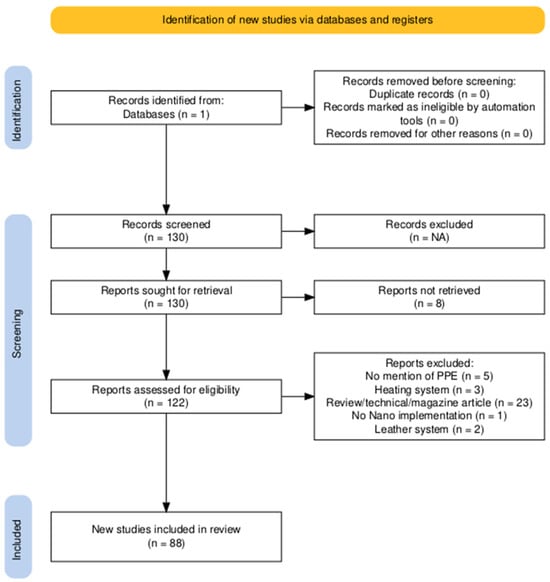
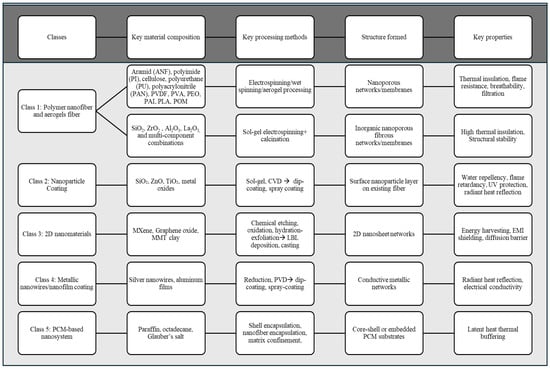
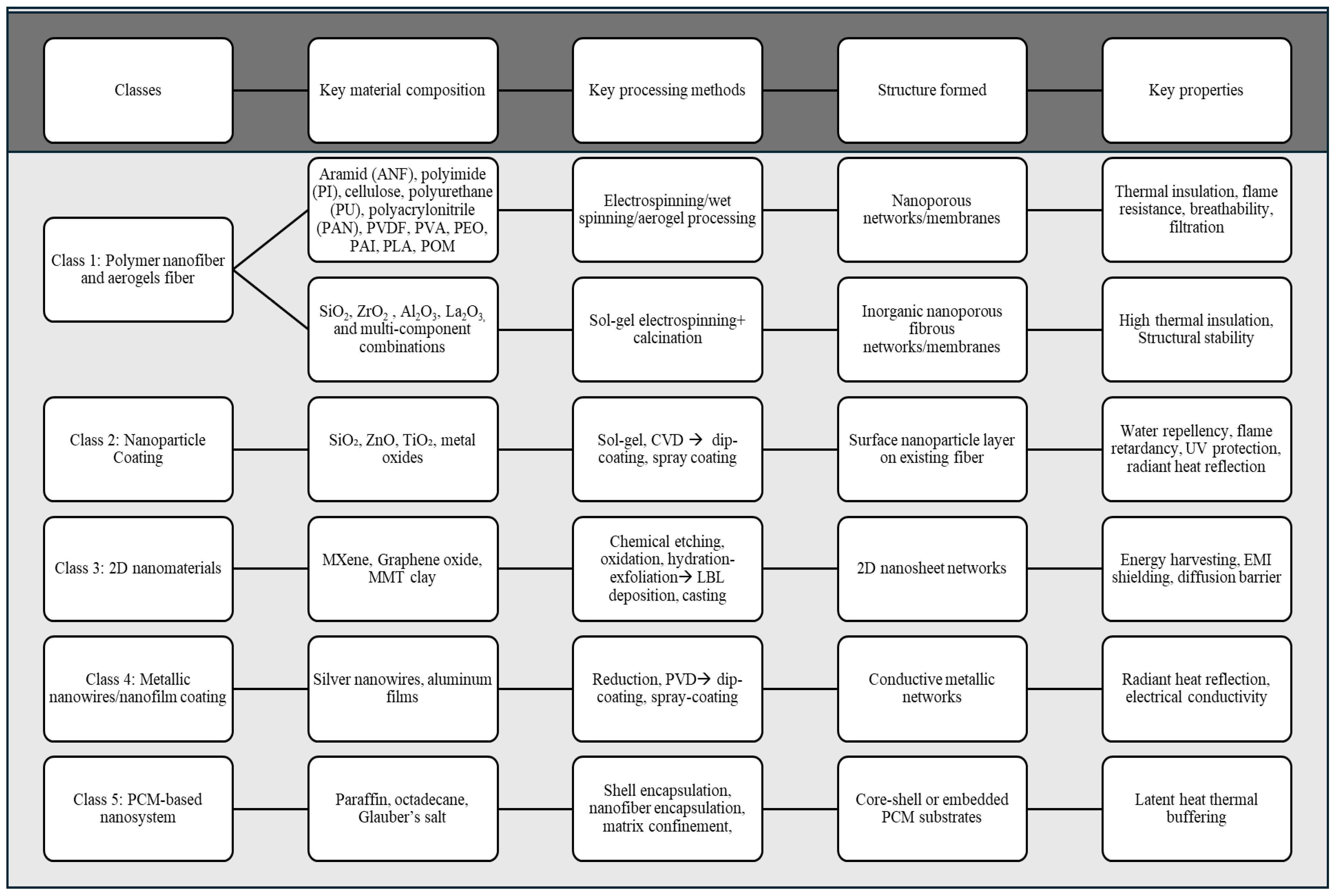
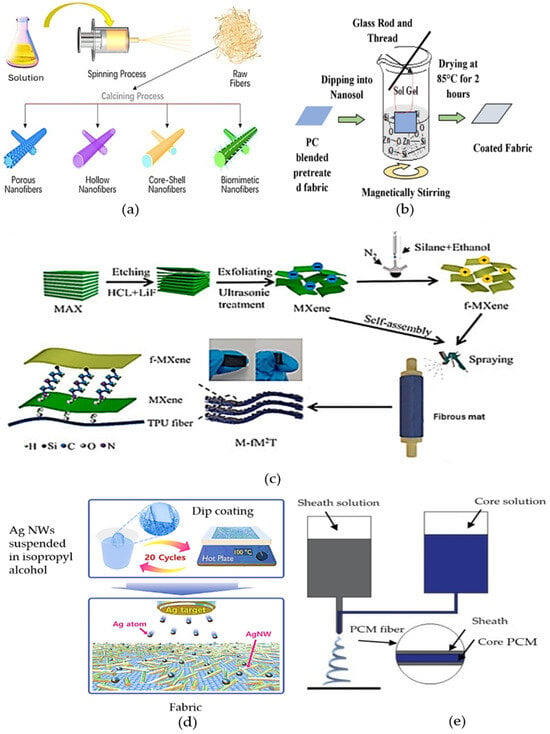
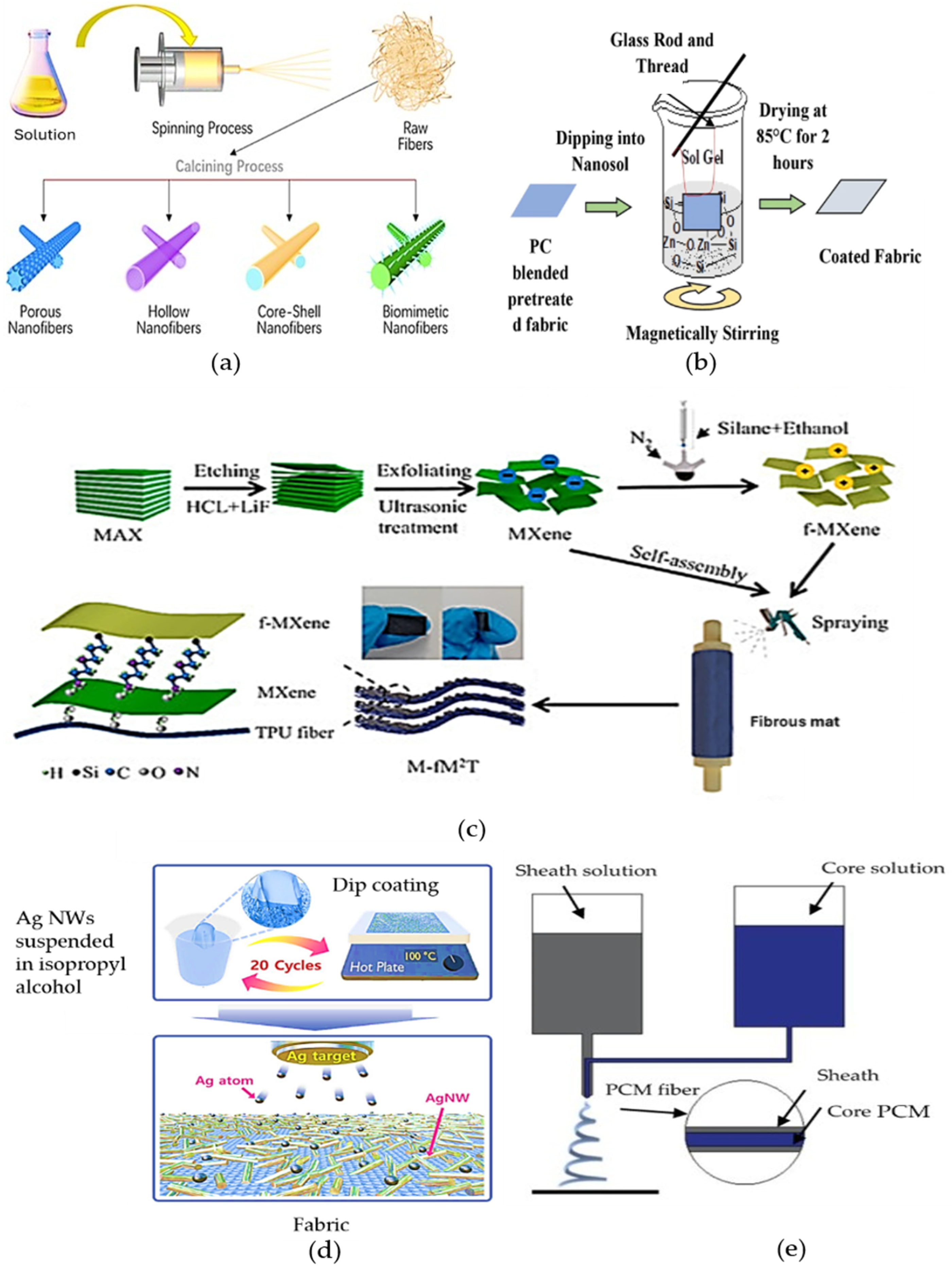
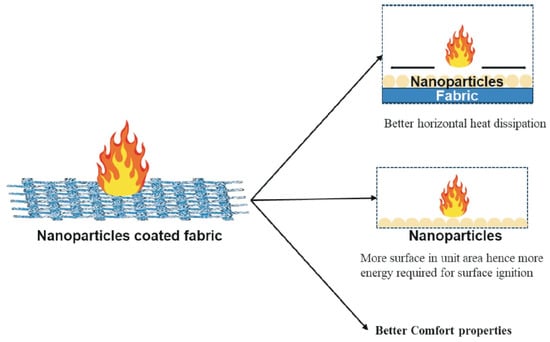
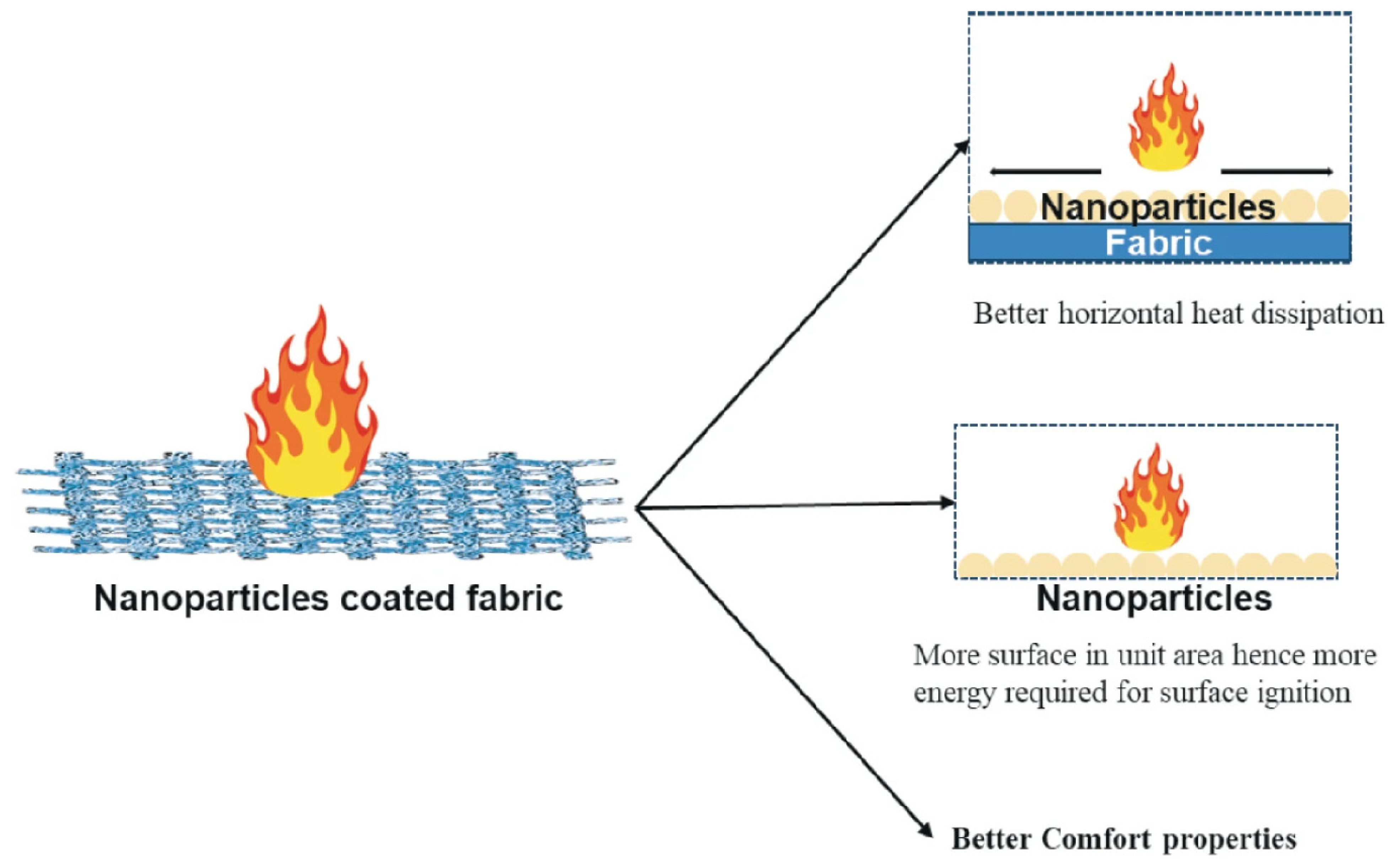

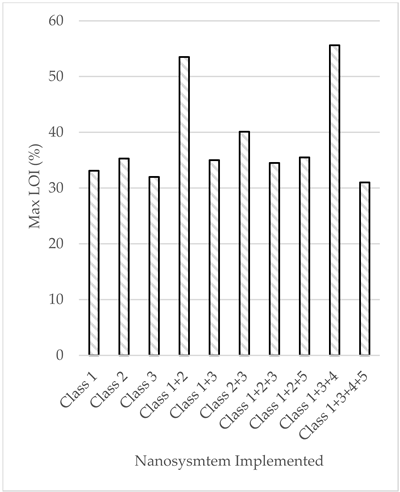
Disclaimer/Publisher’s Note: The statements, opinions and data contained in all publications are solely those of the individual author(s) and contributor(s) and not of MDPI and/or the editor(s). MDPI and/or the editor(s) disclaim responsibility for any injury to people or property resulting from any ideas, methods, instructions or products referred to in the content. |
© 2026 by the authors. Licensee MDPI, Basel, Switzerland. This article is an open access article distributed under the terms and conditions of the Creative Commons Attribution (CC BY) license.