


Abstract
The necessity of citizen involvement in biodiversity conservation activities is widely recognized in practical conservation operations. Clarifying the roles of annual-fee membership schemes is important, as they enable diverse styles of citizen participation. Kyororo is a museum whose main theme is the Satoyama in snowy regions, and the Kyororo Friends Association is an affiliated annual-fee membership program. This study examines the results of a questionnaire survey distributed among the association’s members to examine their perceptions of Kyororo’s activities, in addition to their characteristics—such as age group, place of residence, and type of involvement—and their motivations for joining the association. This study contributes by revising four potential roles of annual-fee membership in terms of promoting citizen participation. The first is as a platform for citizen involvement that is independent of geographic distance or direct participation. The second is as a platform for sustaining the involvement of individuals who have contributed to the accumulated history of the activities. The third is as platforms for citizens who understand and trust community-level nature, conservation activities, and their values to affiliate with and provide their support. The fourth is as a platform for sustained citizen support through regular fixed-amount payments to trusted entities.
1. Introduction
The importance of citizen involvement in biodiversity conservation activities is widely recognized in both academic and practical contexts. Few advocates of nature protection to date would dispute the importance of citizen engagement with nature [1]. However, the nature of such engagement, the extent of citizens’ influence in co-producing conservation, and the actions required to achieve it have been fiercely debated from the very beginning [1]. For example, the modern framing of conservation in the developed world can be broadly understood in terms of four characteristic perspectives: “nature for itself,” which prioritizes wilderness and intact habitats without people; “nature despite people,” which focuses on reversing human-caused threats; “nature for people,” which emphasizes ecosystem services and sustainable benefits for humans; and “people and nature,” which highlights dynamic relationships and resilient interactions between society and the environment [2]. Current conservation science and practice include all four framings—sometimes in mutually supportive implementations—but the differences in underlying ideologies can result in friction and tension [2]. In addition, current debates on why citizens should be allowed to influence conservation policy can be organized into two categories: instrumental motives, which deem citizen engagement with nature conservation useful for furthering conservation efforts—for example, by increasing political support or financial resources for biodiversity conservation—and fundamental motives, which regard citizen engagement with nature as having important values in and of itself and therefore worth realizing regardless of reasons related to ecological conservation [1]. Evaluations of the role and impact of citizen involvement in biodiversity conservation are shaped by how the relationship between people and nature is framed within conservation discourse and by how the value of such engagement is understood.
While the impacts and effectiveness of citizen involvement in biodiversity conservation vary depending on the characteristics of each case and the evaluative perspective, it can nonetheless be assumed that many conservation activities would not be viable without citizen involvement and engagement. For instance, Maschinski, J. et al. [3] noted that, as plant conservationists, the task of protecting species and habitats is far too large for a limited number of experts to accomplish alone and that effective, long-term species recovery is impossible without broad public support. Wilson, J. S. et al. [4] note that many conservation efforts related to pollinators rely heavily on public support and participation and that citizen engagement is essential to the success of these activities. As a foundation, nature’s values are diverse, encompassing instrumental and intrinsic dimensions and, importantly, also relational values [5,6]. They are further organized within a layered typology that captures different ways in which people conceive, justify, and measure the importance of nature [6]. Many citizens resist arguments grounded solely in instrumental or intrinsic values, and they are instead motivated by nature–human relationships as ends in themselves; the substance of these relational values and the subjects who hold them are varied [5]. The possibility of creating and revisiting diverse values of nature also highlights why citizen involvement is essential. It is indeed necessary to move away from the understanding that nature conservation is solely about biology and, instead, to recognize that, to a significant degree, it is about interactions with people [7].
To embrace the diversity of citizens’ relationships with nature and their values, modes of governance, practices, and decision-making need to be diversified and redesigned, engaging relational values [5,6,8]. Methods for practically designing spaces for diverse forms of citizen involvement with respect to nature are critical and cannot be ignored. Building on the above, it is useful to clarify how actual platforms and mechanisms for biodiversity conservation can play roles from the perspective of citizen involvement. This is because revising the roles of actual platforms and mechanisms, exploring ways to maximize their potential, and identifying shortcomings from the perspective of citizen involvement are expected to be useful for the practice of biodiversity conservation.
In both theory and practice, the forms and themes of citizen involvement with biodiversity and nature are diverse and exist along a continuum. Although not limited to citizen involvement in biodiversity and nature, Arnstein’s “A Ladder of Citizen Participation” organized degrees of citizen participation into eight rungs: Manipulation, Therapy, Informing, Consultation, Placation, Partnership, Delegated Power, and Citizen Control [9]. However, it should be noted that the “ladder” was primarily intended to highlight the contrast in degrees of citizen power between the lower and upper rungs [10]. Within the framework to implement stakeholder participation in environmental projects, structured around Arnstein’s ladder and its five degrees of participation (Information, Consultation, Collaboration, Co-decision, and Empowerment), participatory techniques are exemplified by newsletters, internet webpages, workshops, field visits, and interactions [11]. In practice, actual cases exemplify citizen involvement across the full range of categories—from Information to Empowerment—while covering multiple domains such as water security, waterfronts, and green space plans [12]. These findings indicate that citizen involvement is diverse and that, in practice, multiple platforms and mechanisms serve as spaces and opportunities for involvement. From the perspective of citizen involvement, numerous previous studies have examined the roles of actual platforms and mechanisms for biodiversity conservation, focusing, for example, on citizen science projects (e.g., [13,14]), volunteer activities (e.g., [15,16]), networks or systems that bring together multiple initiatives (e.g., [17,18]), and councils or partnerships composed of multiple stakeholders related to specific ecosystems or landscapes—such as watersheds, forests, or grasslands (e.g., [19,20,21]).
Among the various forms of citizen involvement, this study focuses on membership schemes in which citizens contribute to biodiversity conservation by paying annual fees (hereafter “annual-fee membership”). Prior research has identified several roles that citizens can play within such schemes. For example, citizens may provide financial support through membership fees or donations [22] and belong to a community of informed citizens who understand the characteristics and appeal of these activities [23]. In addition to the roles clarified in earlier studies, annual-fee membership schemes may serve as frameworks through which citizens can choose from a range of involvement styles: from direct participation in conservation activities to more indirect forms of support. Therefore, focusing on annual-fee membership schemes may be valuable, since they constitute existing mechanisms that could support diverse forms of citizen involvement. The aim of this study is to clarify the roles that annual-fee membership plays both for citizens and for biodiversity conservation activities from the perspective of citizen involvement.
2. Materials and Methods
2.1. Research Subjects
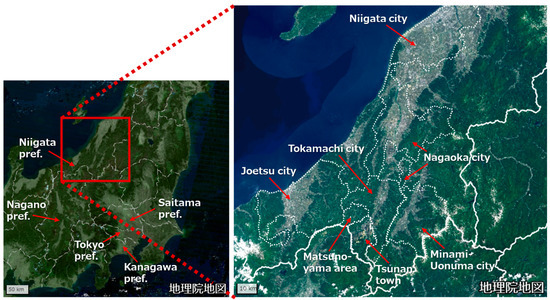
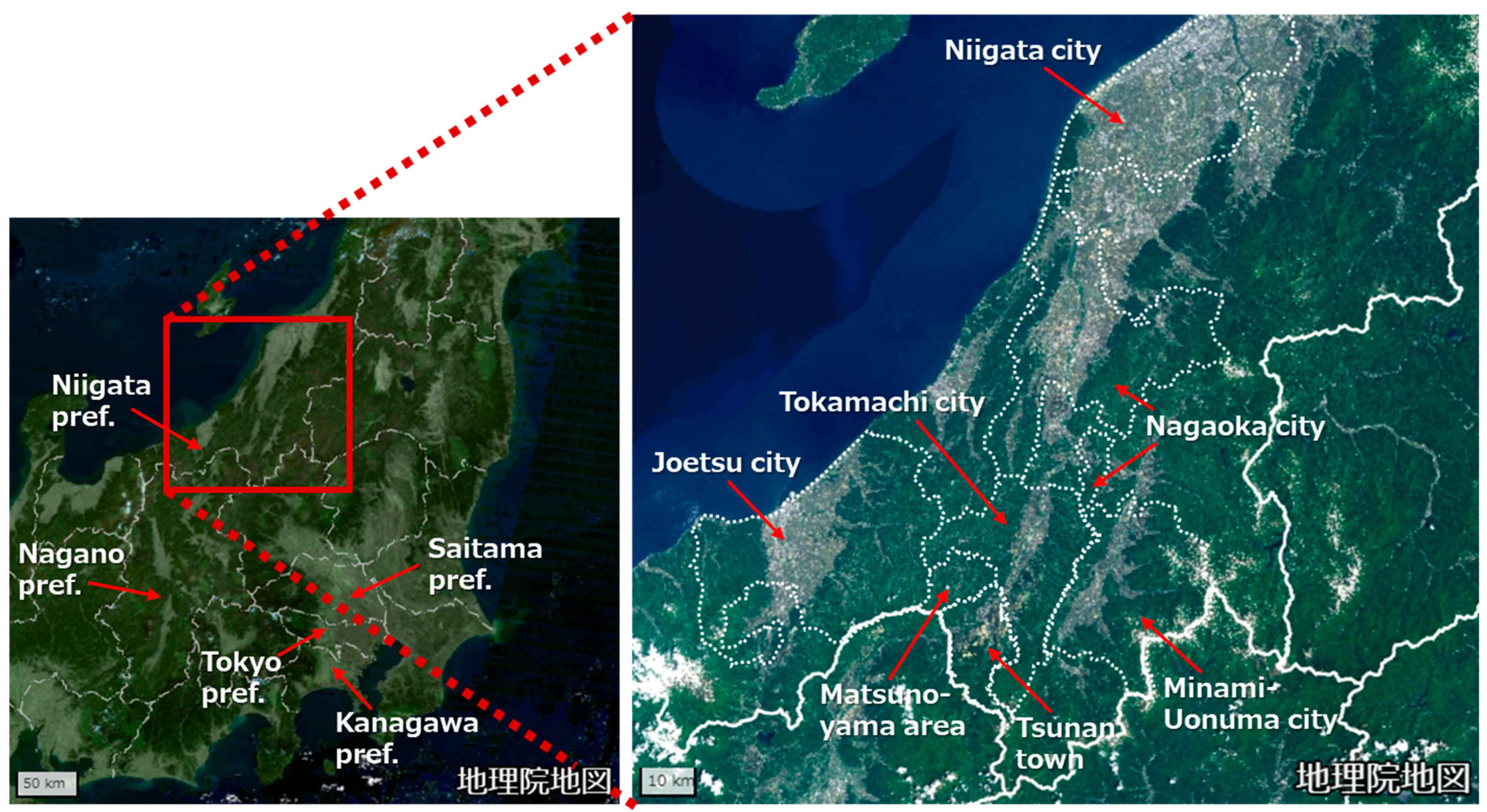
In the Matsunoyama area (formerly Matsunoyama Town) of Tokamachi City, Niigata Prefecture, Japan, there is a museum called Kyororo, operated by the city of Tokamachi, with Satoyama as its main theme. The geographic base maps of the Matsunoyama area and the main residential areas of members of the Kyororo Friends Association (described later) are shown in Figure 1. Kyororo opened in 2003 as a base for community building, allowing people to research, connect, communicate, and take action on the Satoyama in snowy regions—referred to as “Yukisato” within Kyororo [24]. Kyororo conducts conservation activities, including research and public awareness initiatives focused on the biodiversity unique to Matsunoyama. While Matsunoyama features tourist attractions such as the Matsunoyama Hot Springs and the beech forest known as “Bijinbayashi,” it also faces structural issues typical of rural mountainous areas, including a declining birthrate, an aging population, and depopulation. Kyororo has an attached facility called “Kyororo’s Forest,” which is an 80-hectare field consisting of beech forests and a reservoir. Based on the philosophy of being a “museum for the entire region,” Kyororo regards all of Matsunoyama’s local resources—including Kyororo’s Forest—as part of its exhibition space, to be rediscovered by people both within and beyond the region [24].
Figure 1.
Geographic base maps of the Matsunoyama area and the main residential areas of members of the Kyororo Friends Association (Source: Modified from GSI Maps Vector provided by the Geospatial Information Authority of Japan, with the official trademark displayed in the lower right corner of the map, available online at https://maps.gsi.go.jp/vector/ (accessed on 5 December 2025)).
The Kyororo Friends Association has existed since Kyororo opened. To join the association, citizens have to pay an annual membership fee. The annual fees are JPY 2000 (approximately USD 13) for general members (high school students and above), JPY 500 (approximately USD 3) for junior members (elementary and junior high school students), and JPY 5000 (approximately USD 33) for supporting members [25]. Although the association was originally established to support and participate in Kyororo’s activities, its function was to provide members with benefits, such as discounts on event participation fees and the delivery of newsletters and event information. Members could become involved in Kyororo’s activities by using facilities and participating in events, conservation activities, and research projects. However, most of these activities were also accessible to non-members. Therefore, citizens were free to choose whether to join the association, and it is likely that members varied in their degree of involvement—from direct to indirect. Based on this context, the Kyororo Friends Association was deemed an appropriate subject for this study.
Participating in the Kyororo Friends Association is one way to become involved in Kyororo’s activities. To clarify the role played by the association, it is first necessary to clarify Kyororo’s activities and the core components that constitute them. Based on the content of Kyororo’s website [26] and interviews with Kyororo’s staff (December 2023), we organized the categories that constitute the core components of Kyororo’s activities, as shown in Table 1. Kyororo’s main activities include the implementation of exhibitions, promotion of public awareness, design of nature experience programs, and research and conservation activities related to the natural environment of Matsunoyama. The core components of Kyororo’s activities refer to both tangible and intangible elements that make up Kyororo and its operations.
Table 1.
Categories of core components of Kyororo’s activities.
2.2. Research Procedure
To clarify the role of Kyororo Friends Association in relation to citizens and Kyororo’s activities, we conducted research using the following procedure.
The first research stage examined how members perceive Kyororo’s activities and its core components, serving as the background for their decision to join the association. The primary objective of this initial step was to understand the motivations behind members’ participation in Kyororo Friends Association, which required insight into their underlying perceptions of Kyororo’s activities and its core components.
The second research stage identified the characteristics of the members, such as their age group, place of residence, and type of involvement. The potential for annual-fee membership schemes to serve as frameworks through which citizens can choose from a range of involvement styles—from direct to indirect—remains unclear. Accordingly, in the second step of the analysis, we specified the three survey items described above as the “characteristics of the members,” which are both necessary and particularly important. The third research process explored the key motivations for joining the association and their relationships with member characteristics. These second and third processes were designed to clarify the role played by the association and to understand the characteristics and motivations of the individuals who comprise it, serving as a platform for their involvement.
In this study, we conducted a questionnaire survey of Kyororo Friends Association members and used their responses as the main data. The details of the data collection and analysis methods are described below.
2.3. Questionnaire Survey for Members
In October 2024, we mailed a survey request and questionnaire to 198 families, enclosing it in the newsletter that is regularly sent to Kyororo Friends Association members. The survey included the following questions: (Q-1) year of birth; (Q-2) annual frequency of direct visits to Kyororo’s Forest each year (multiple choice from seven options) and specific activities engaged in during those visits (free-form description); (Q-3) year-by-year changes in place of residence, corresponding to (Q-2); (Q-4) reasons for participating in the association (multiple choice from seven options); (Q-5) free-form description of what Kyororo and Kyororo’s Forest mean to them and what they imagine. In addition, because citizens are required to check in at Kyororo when visiting Kyororo’s Forest, we treated the frequency of direct visits asked in (Q-2) as equivalent to the frequency of visits to Kyororo.
(Q-2) The seven answer options regarding annual frequency of direct visits to Kyororo were as follows: (1) at least two or three times a week; (2) at least once a week, but less often than (1); (3) at least two or three times a month, but less often than (2); (4) at least once a month, but less often than (3); (5) at least once every few months, but less often than (4); (6) at least once a year, but less often than (5); (7) less than once a year.
(Q-4) The seven answer options regarding reasons for participation in the association were as follows: (1) because I can get a discount on event participation fees; (2) because I can receive the members’ newsletter; (3) because I can join members-only events; (4) because I want to support Kyororo and Kyororo’s Forest; (5) because I want to participate in activities to improve Kyororo and Kyororo’s Forest; (6) because I’m interested in activities I’d like to experience; (7) because I have friends who are involved with Kyororo.
Responses were received from 75 members by July 2025. The membership list of the Kyororo Friends Association contained 225 members as of July 2024. Respondents to the questionnaire survey may have been more willing to cooperate with research on Kyororo and the association than non-respondents. Our interpretation of the survey results was based on this assumption. Because some responses to questions (Q-1) through (Q-5) were incomplete, the number of valid responses varied by question. Therefore, we report the number of respondents for each question in Section 2.4, Section 2.5 and Section 2.6 as part of our methodology.
The survey responses included data that could potentially identify individuals either on its own or when combined with other responses. To prevent the possibility of individuals being identified through the publication of this study, we followed the procedure described below. First, we removed any information that could directly identify individuals—such as names, addresses, or details in free-form responses that could reasonably be used to infer personal identity. When such personally identifiable information appeared in free-form responses, it was generalized or rephrased to retain only the minimum content necessary for readers to understand the context. Because this study required analyses of the relationships between respondent characteristics and other responses, it was necessary to distinguish individual respondents in a manner that did not compromise anonymity. Therefore, we assigned a respondent ID that cannot be linked to personal information and used it only for internal analyses. In addition, to ensure anonymity in the publication, we did not present responses in linked sets and did not include respondent IDs in this study.
2.4. Survey of Members’ Perceptions of Activities and Their Components
The core components of Kyororo’s activities mentioned in (Q-5)—what Kyororo and Kyororo’s Forest mean to the members and what they imagine—can be interpreted as their perceptions of Kyororo’s activities. These perceptions serve as the premise and background for their motivation to participate in the association. We therefore categorized the free-form responses to (Q-5) using the categories of the core components of Kyororo’s activities, as shown in Table 1. The criteria for determining whether a free-form response falls into one of the core component categories are presented in Table 2.
Table 2.
Criteria for categorizing free-form responses into core components.
A total of 58 members provided free-form responses to (Q-5), although the length of these responses varied, and a single response could exhibit multiple characteristics. Accordingly, we present the number of responses that correspond to each category of the core components of Kyororo’s activities.
2.5. Survey of Member Characteristics
2.5.1. Age Group
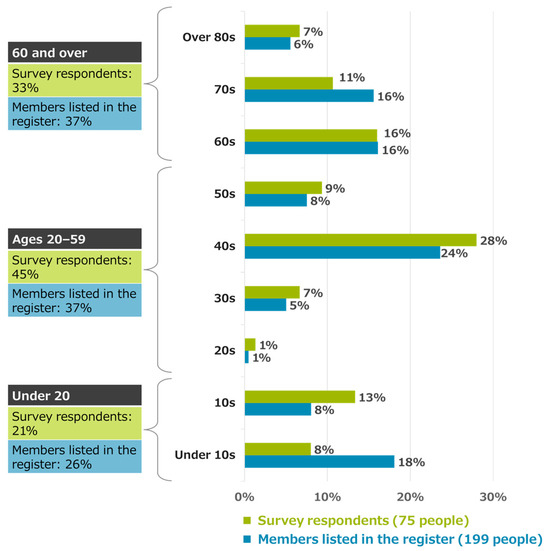
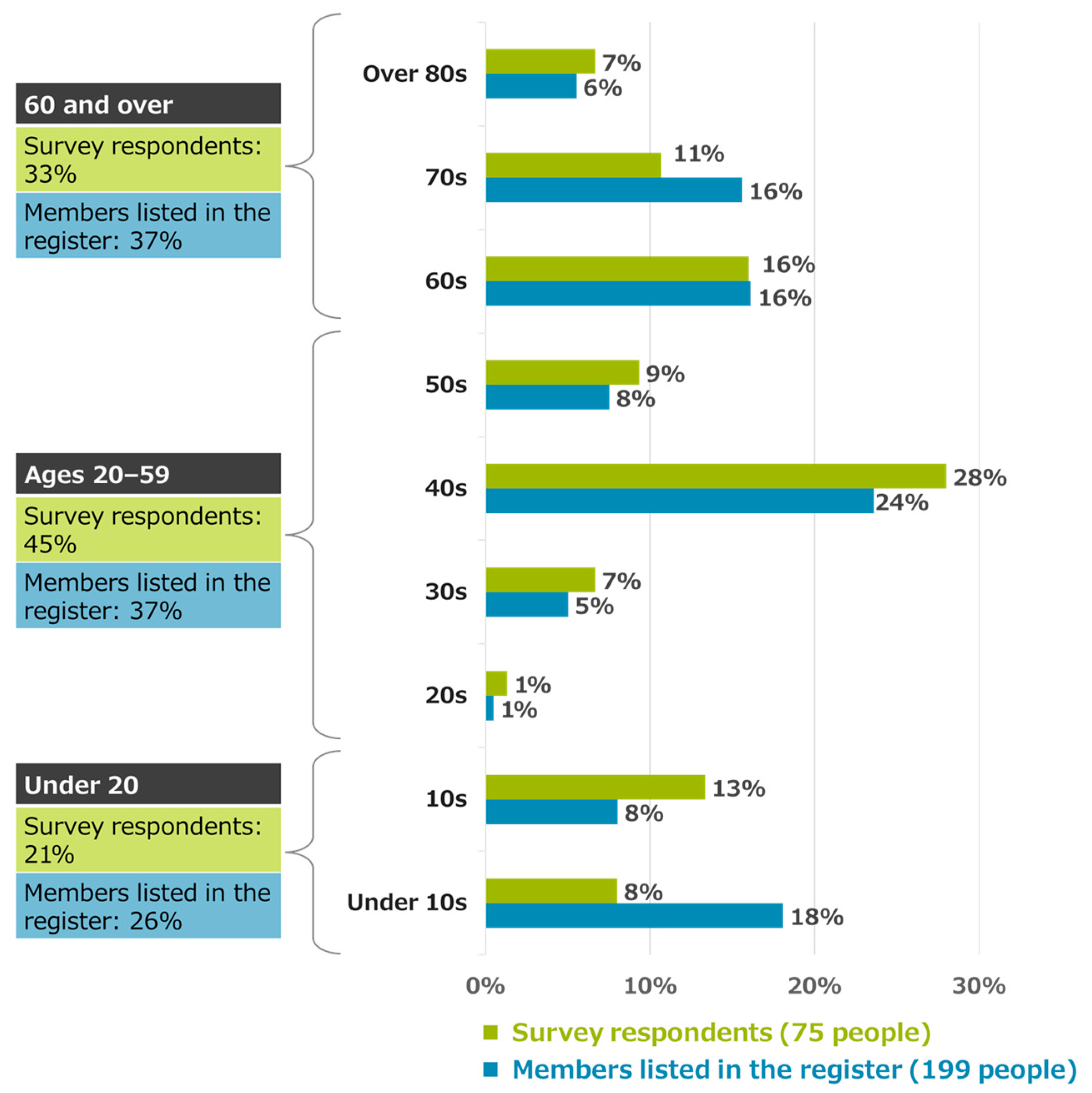
“Age group” was calculated by subtracting the year of birth reported in response to (Q-1) from 2024, the year in which the survey was conducted. In total, 2 of the 75 respondents did not provide their birth year. However, both individuals provided their residential history since birth in response to (Q-2), and we used this information to estimate their age group.
To confirm that the characteristics of the survey respondents were similar to those of the Kyororo Friends Association members, we performed the following procedure. We compared the age group calculated as described above with the age groups of all members listed as of July 2024, excluding personal information provided by the association. Because 26 of the 225 members on the list did not have birth year data, age group data were available for 199 individuals.
In the statistical testing of the correlation between each motivation for participation in the Kyororo Friends Association and age group (see Section 2.6), the detailed age classifications resulted in low frequencies. Therefore, we also grouped age into three broader categories: “Under 20,” “Ages 20–59,” and “60 and over.” These categories were chosen because, in Japan, many people under 20 attend elementary or junior high school and receive compulsory education; those under 18 are legally considered minors; many people aged 20–59 are still working; many workplaces have a retirement age of 60 or 65.
2.5.2. Place of Residence
“Place of residence” was determined based on the location of the respondents as of 2024, as reported in response to (Q-3). In total, 3 of the 75 respondents did not provide their place of residence, resulting in place of residence data for 72 individuals. Kyororo is a facility established through an initiative by the former town of Matsunoyama (now part of the Matsunoyama area within Tokamachi city). Following the 2005 municipal merger of cities and towns in the Echigo-Tsumari region—including the former town of Matsunoyama—Kyororo became a facility of Tokamachi city (note: the town of Tsunan, also located within the Echigo-Tsumari region, did not participate in the merger). Accordingly, if a respondent reported residing in Matsunoyama within Tokamachi city, their place of residence was categorized as “Matsunoyama.” If a respondent reported any other location within Tokamachi city or simply stated “Tokamachi city,” their place of residence was categorized as “Tokamachi city.”
As with age groups, to confirm that the characteristics of the survey respondents were similar to those of the Kyororo Friends Association members, we performed the following procedure. We compared the places of residence reported by the survey respondents to those listed in the association register as of July 2024, excluding personal information provided by the association. Place of residence data were available for all 225 registered members.
In Section 2.6, when statistically analyzing the correlation between motivations for joining the Kyororo Friends Association and place of residence, the detailed classifications of residence—based on specific municipal locations—resulted in low frequencies. It is difficult to categorize a place of residence as nearby or distant solely based on physical distance or travel time at the municipal level. Therefore, we classified respondents into two groups: “Within Echigo-Tsumari” (currently Tokamachi city and Tsunan town, including the former Matsunoyama town), which is relatively close geographically and corresponds to the area where the municipal merger took place; and “Outside Echigo-Tsumari.”
2.5.3. Type of Involvement
Based on changes in the frequency of direct involvement in activities, “Type of Involvement” was categorized using responses to (Q-2). The frequency of direct involvement varied significantly among respondents, with some responses dating back to 2003, the year Kyororo opened. Therefore, to prepare data suitable for statistical testing of correlations with each motivation for participation in the Kyororo Friends Association (see Section 2.6), we grouped the responses into three categories of involvement, as described below.
Based on each respondent’s changes in the frequency of direct involvement in Kyororo-related activities, we categorized involvement into three types: “Current High Direct Involvement”, “Past High Direct Involvement”, and “Low Direct Involvement”. “Current High Direct Involvement” was defined as respondents who reported participating at least once a month between 2023 and 2024 (i.e., those who selected one of options (1) to (4)). “Past High Direct Involvement” refers to respondents who did not meet the criteria for “Current High Direct Involvement” but reported participating at least once a month in any year prior to 2022. Respondents who did not fall into either of these two categories were classified under “Low Direct Involvement”. Defining the threshold between high and low levels of direct involvement is difficult. Kyororo is located in a rural, mountainous area with limited access to public transportation. We considered that visiting at least once a month within a given year indicates a relatively high level of direct involvement and used this criterion to create the classification. Data were available for 72 individuals whose type of involvement could be determined.
To better understand the characteristics of each of the three types of involvement, we organized the attributes of each respondent—specifically age group and place of residence—and the details of their direct involvement. These attributes were grouped into six categories, combining three age group categories and two categories of place of residence. Data from 63 individuals were used to determine their type of involvement, age group, and place of residence. Details of direct involvement were organized based on the nouns that appeared in the free-form responses to (Q-2), along with the number of respondents who used each noun to describe specific activities. Since most of the information we aimed to clarify—such as the names of activities and events they participated in, and the roles they played—was expressed in nouns, we conducted the analysis using this noun-based approach. The nouns that appeared in the free-form responses were used to qualitatively understand the characteristics of members belonging to each type of involvement.
Since the free-form responses were written in Japanese, we first conducted the analysis in Japanese and then translated the results into English. We excluded responses that were irrelevant or unintelligible in relation to the content of direct involvement—for example, responses that simply stated “Kyororo” or those that described reasons for changes in the frequency of involvement rather than the activities themselves. When measuring the frequency of word occurrences, we treated the original expressions in the free-form responses. First, proper nouns, such as the names of specific events, were standardized and processed to prevent double-counting. Second, the numerous descriptions containing “Kyororo” were grouped into three expressions—“Kyororo’s event,” “as Kyororo staff,” and “visiting Kyororo”—and these expressions were counted. The expressions referring to events hosted by Kyororo, such as “Kyororo event” and “event of Kyororo”, which appeared in multiple free-form responses, were unified and counted using the phrase “Kyororo’s event”. There were multiple variations in expressions referring to visiting Kyororo, such as “Kyororo observation”, “Kyororo inspection”, “visiting Kyororo”, “visiting the Kyororo facility”, “going into Kyororo”, and “visiting the facility”. Therefore, expressions referring to visiting Kyororo were unified and counted using the phrase “visiting Kyororo”. The expressions implying involvement as Kyororo staff appeared in multiple free-form responses. These included position titles and detailed job descriptions. To avoid identifying individuals, we unified and abstracted these expressions into the phrase “as Kyororo staff”. Other words that formed a single phrase—such as “nature experience event” and “living creature observation”—were counted as they appeared in order to preserve contextual integrity.
2.6. Survey of Motivations for Participation in the Membership Program
Based on the responses to (Q-4), we determined the number of individuals who selected each of the seven options listed as reasons for joining the Kyororo Friends Association. Furthermore, we tested the correlation between the selection of each option and the three characteristics described in Section 2.5 using Pearson’s chi-square test (at a 1% significance level). We created graphs showing the selection status of each option in relation to respondents’ age group, place of residence, and type of involvement. Using these graphs, we visually examined whether each option tended to be selected more or less frequently across different groups.
3. Results
3.1. Members’ Perceptions of Activities and Their Components
With respect to the perceptions of the Kyororo Friends Association, of the 58 individuals who provided responses, 44 mentioned one or more of the seven core component categories. Specifically, 26 responses described “Matsunoyama’s Nature,” 21 described the “Kyororo Activity Hub,” 6 described the “Core Facilitators of Kyororo’s Activities,” 8 described “People visiting Kyororo,” 22 described “Exploration and Learning through Kyororo and Matsunoyama’s Nature,” 5 described “Matsunoyama’s Nature Stewardship,” and 2 described “Matsunoyama’s Nature Research.”
3.2. Member Characteristics: “Age Group”
Figure 2 shows the age group distribution of Kyororo Friends Association members as of 2024. The characteristics shared by both the list members (blue) and survey respondents (green) include the following: those under 20—accounting for approximately 20% of the total; those in their 20s—the smallest age group at less than 2%; those in their 40s—the largest age group at approximately 25%; those in their 60s—approximately 15%; and those in their 70s and older—approximately 20%. A notable characteristic of the age group distribution is that the number of members in their 20s and 50s was lower than in other groups.
Figure 2.
Age group as of 2024.
When grouped into three broader categories, “Under 20” accounted for approximately 20%, “Ages 20 to 59” accounted for approximately 40%, and “Aged 60 and over” accounted for approximately 35%. While there were some differences between the list members and survey respondents—such as the proportion of children under 10, teenagers, and those in their 70s—the overall trends were broadly consistent.
3.3. Member Characteristics: “Place of Residence”
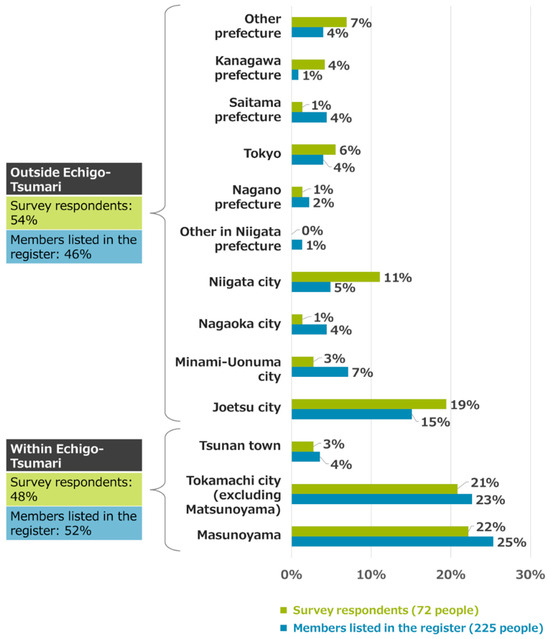
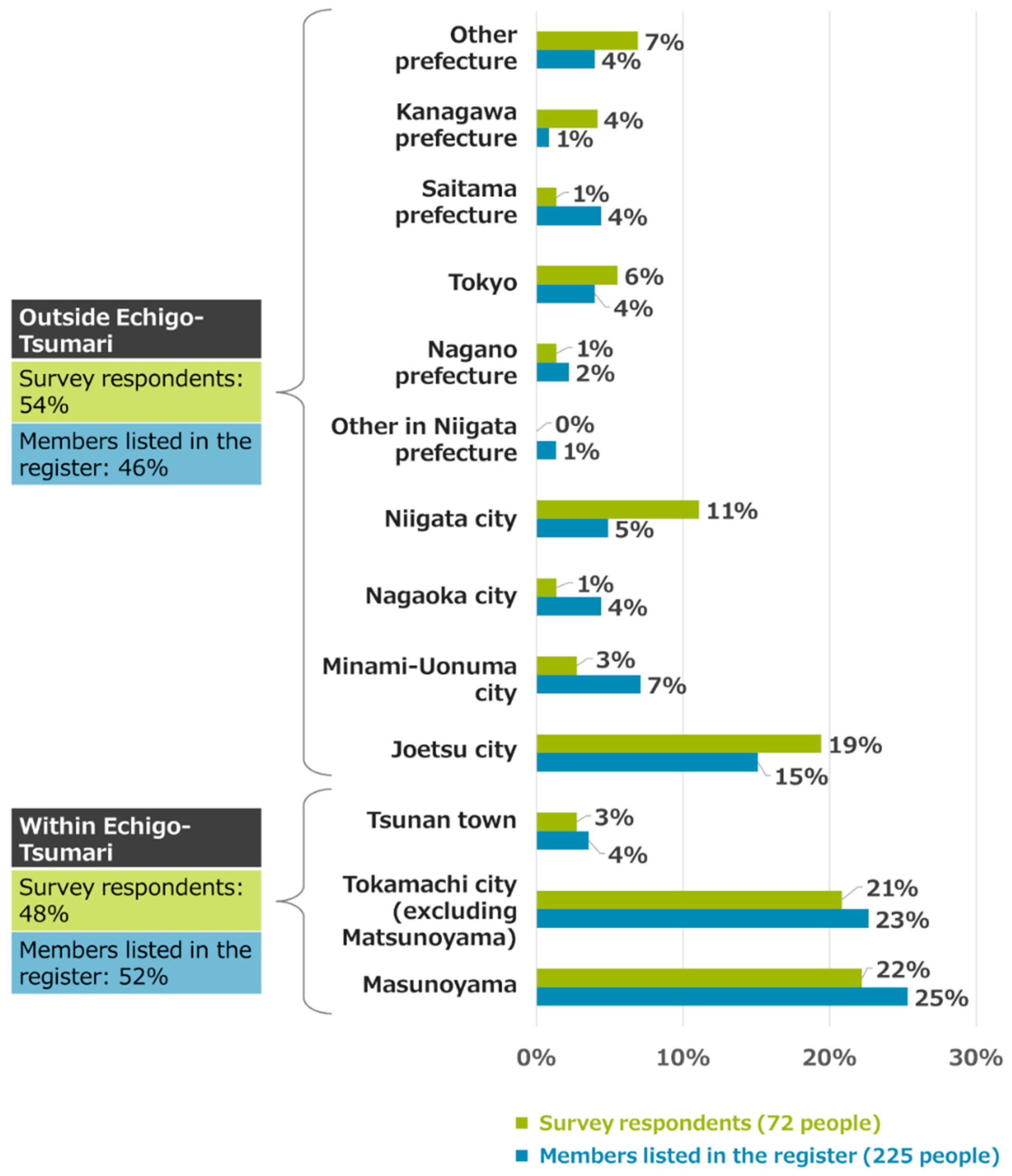
Figure 3 shows the place of residence of Kyororo Friends Association members as of 2024. Among those listed in the register (blue) and those who responded to the survey (green), Matsunoyama accounted for approximately 20% of the total. Residents of Tokamachi City outside the Matsunoyama area accounted for approximately another 20%. Examples of other areas include Tsunan, which accounted for approximately 3%, and Joetsu, which accounted for approximately 15%.
Figure 3.
Place of residence of 2024.
When grouped into two categories—those residing “within Echigo-Tsumari,” including Matsunoyama, Tokamachi City, and Tsunan Town, and those residing “outside Echigo-Tsumari”—each group accounted for approximately half of the total. Although there were differences in the proportions of respondents from Minami-Uonuma City, Nagaoka City, and Niigata City, the overall residential distribution trends were broadly consistent between the register and the survey respondents.
3.4. Member Characteristics: “Type of Involvement”
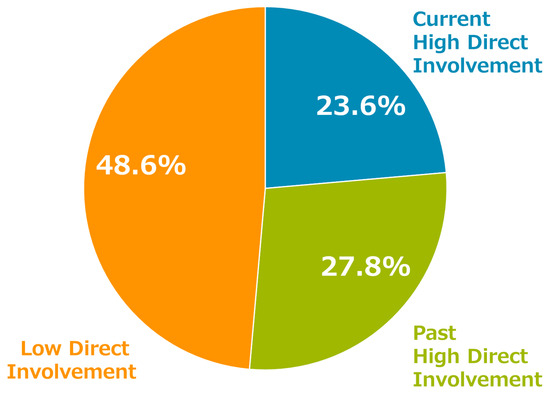
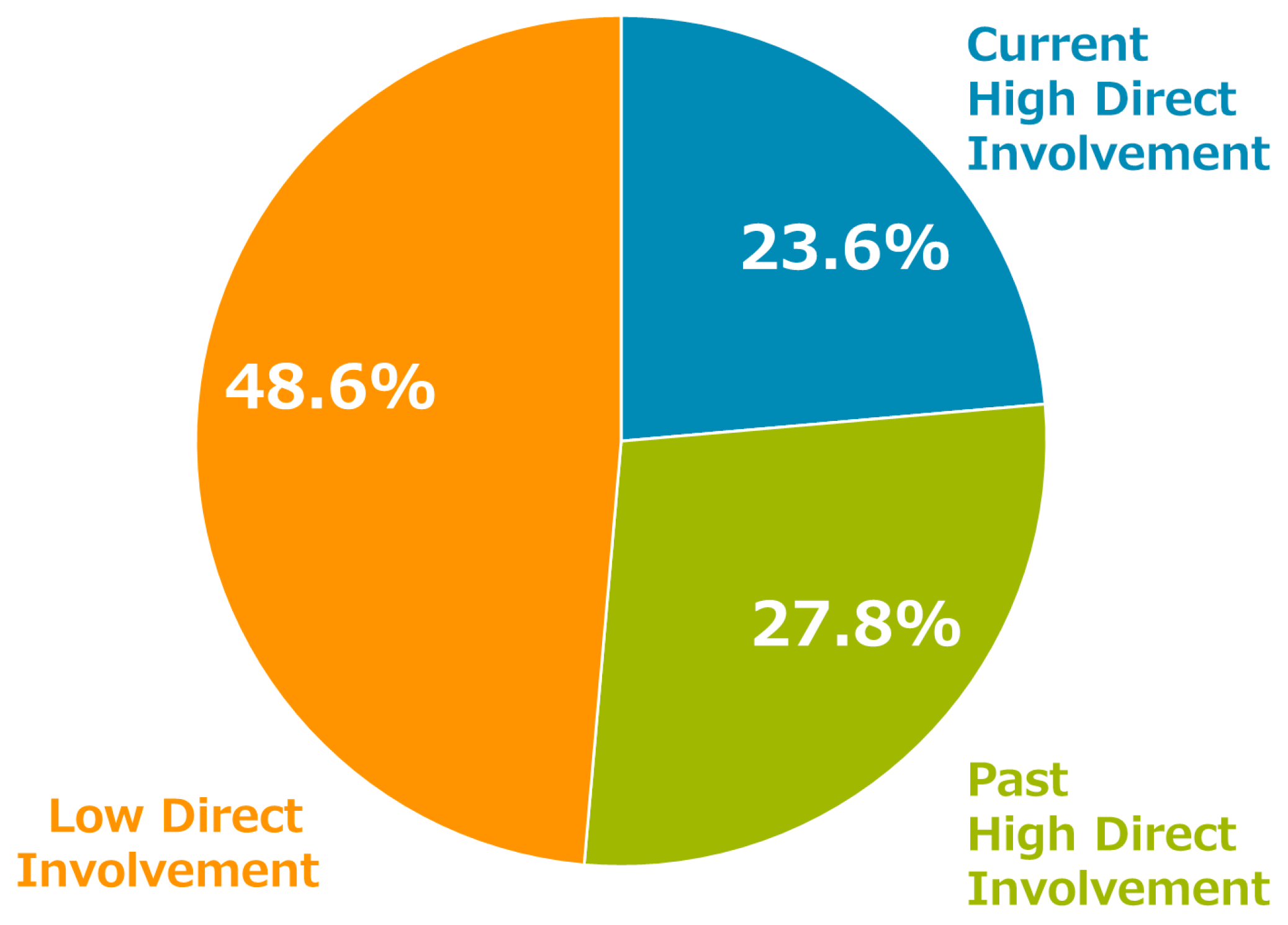
Figure 4 shows the types of involvement based on changes in the frequency of direct involvement in Kyororo-related activities reported by respondents. “Current High Direct Involvement” accounted for 23.6% of the total, “Past High Direct Involvement” accounted for 27.8%, and “Low Direct Involvement” accounted for 48.6%.
Figure 4.
Type of involvement.
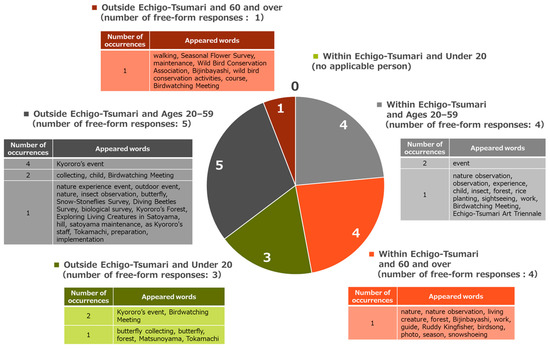
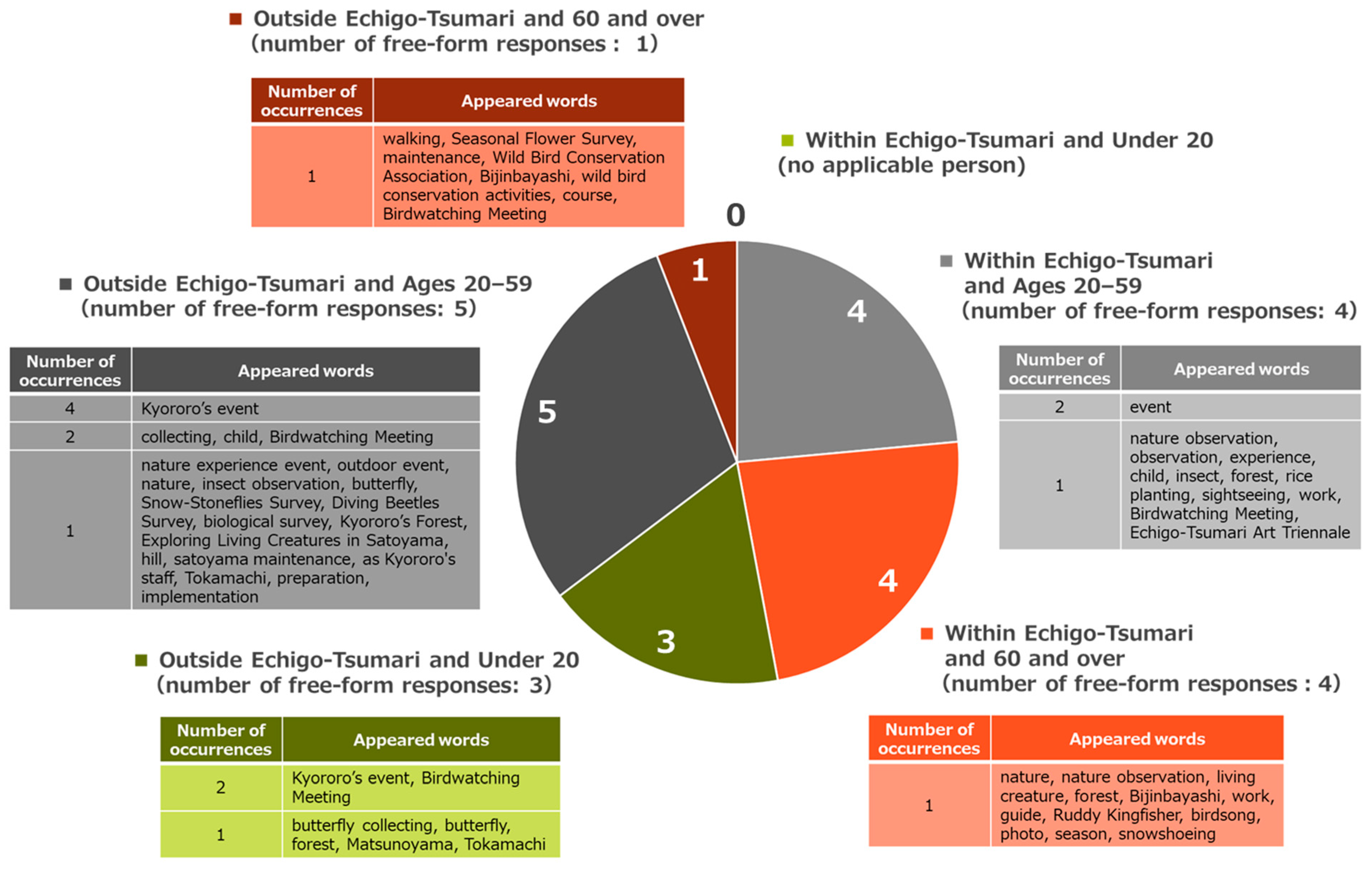
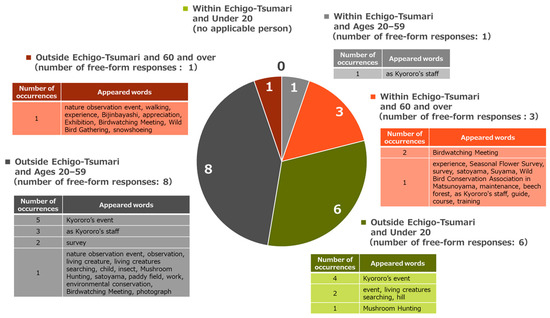
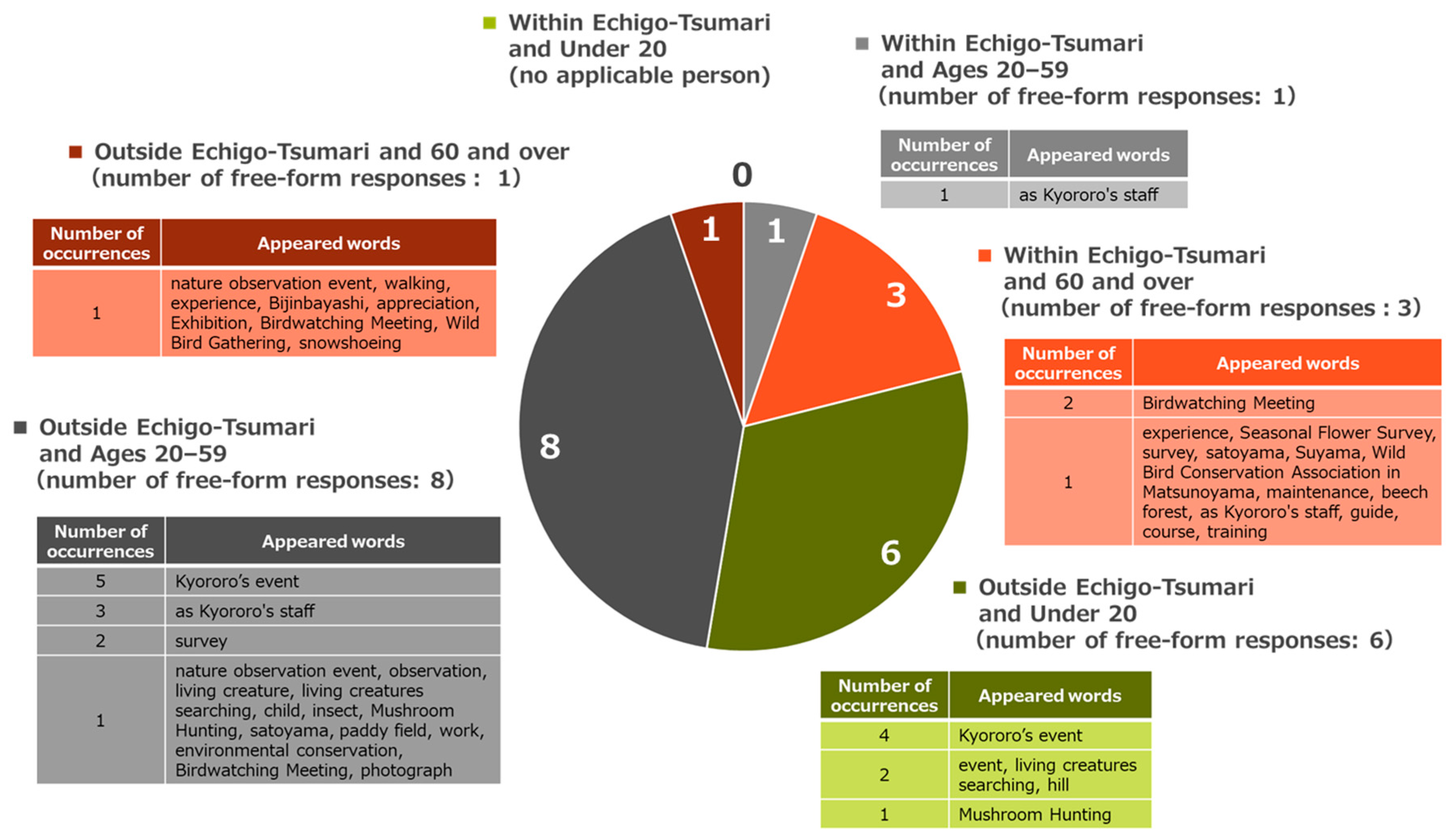
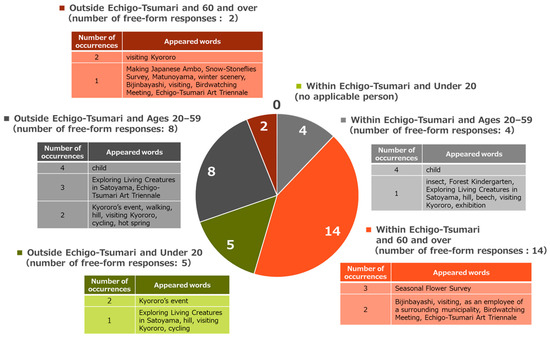
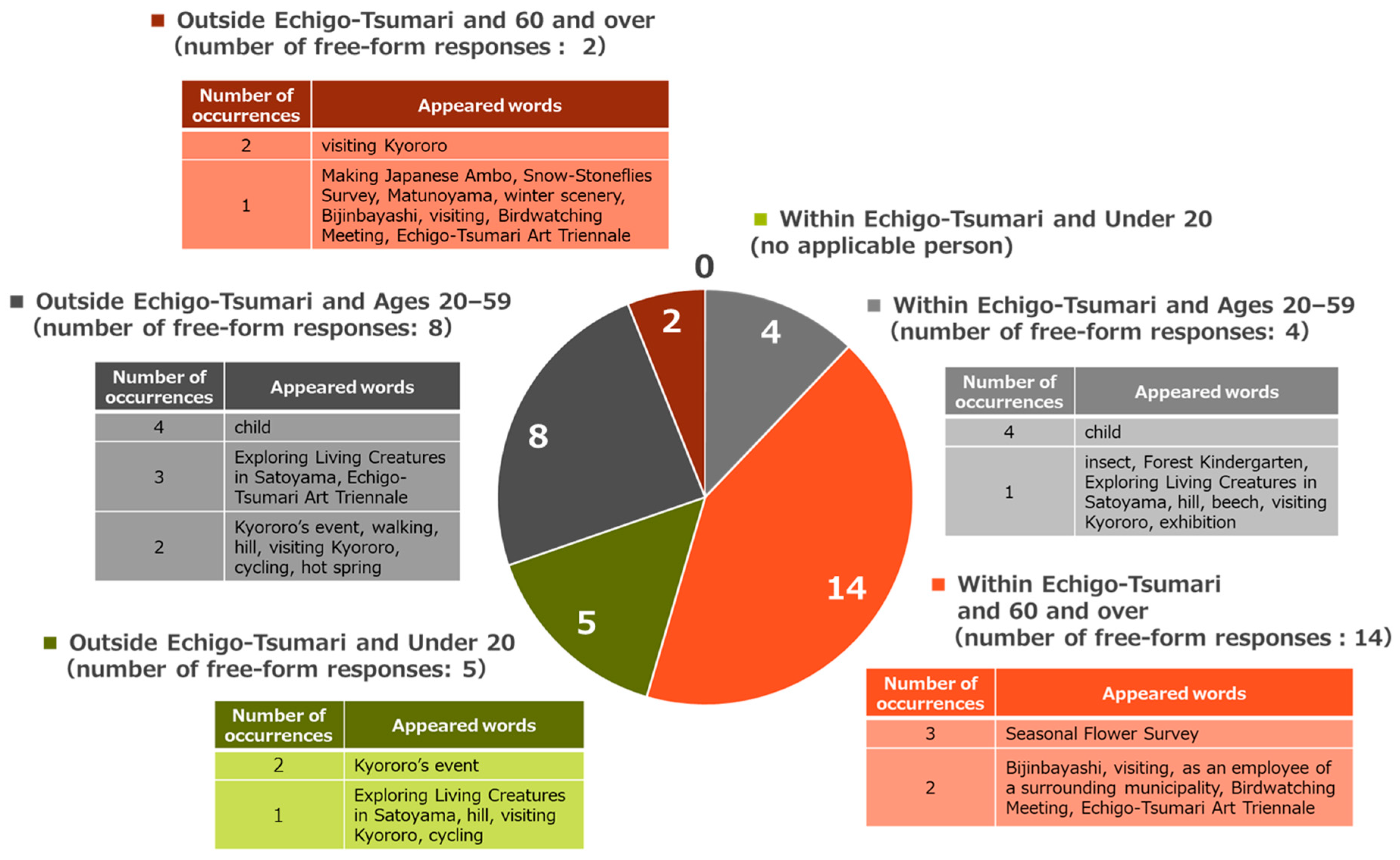
Figure 5, Figure 6 and Figure 7 present graphs summarizing the combined attributes of age group and place of residence for the 63 individuals whose type of involvement and residence could be determined. These figures show the top five words most frequently appearing in the free-form descriptions of direct involvement.
Figure 5.
Characteristics of “Current High Direct Involvement” (17 members).
Figure 6.
Characteristics of “Past High Direct Involvement” (19 members).
Figure 7.
Characteristics of “Low Direct Involvement” (33 members).
For the “Current High Direct Involvement” type, approximately half of the individuals were “Under 20” and “Ages 20–59” residing outside Echigo-Tsumari, while the other half were “Ages 20–59” and “60 and over” residing within Echigo-Tsumari. Among residents outside Echigo-Tsumari aged under 20 and 20–59 and residents within Echigo-Tsumari aged 20–59, some mentioned words such as “event,” “Kyororo’s event,” and “Birdwatching Meeting.” Among members aged 20–59, regardless of residence, some mentioned “child.” Additionally, some members aged 20–59, regardless of residence, described their involvement as “Core Facilitators of Kyororo’s Activities”, using words such as “work” and “as Kyororo’s staff.” Among residents within Echigo-Tsumari aged 60 and over, some described their involvement as “Core Facilitators of Kyororo’s Activities”, using words such as “work” and “guide.”
For the “Past High Direct Involvement” type, individuals aged 20–59 residing “Outside Echigo-Tsumari” accounted for more than two-fifths of the total. The next largest group was individuals “Under 20” residing “Outside Echigo-Tsumari”, who accounted for more than three-tenths. Those “60 and over” residing “Within Echigo-Tsumari” accounted for approximately three-twentieths. Among residents outside Echigo-Tsumari aged under 20 and 20–59, some members mentioned words such as “Kyororo’s event,” “event,” and “Exploring Living Creatures in Satoyama.” Among those aged 20–59 residing outside Echigo-Tsumari, some described their involvement as “Core Facilitators of Kyororo’s Activities”, using words such as “as Kyororo’s staff,” “work,” and “environmental conservation.” Among residents within Echigo-Tsumari aged 60 and over, some described their involvement as “Core Facilitators of Kyororo’s Activities”, using words such as “as Kyororo’s staff,” “maintenance,” and “guide.” Other members also mentioned “Birdwatching Meeting” and “Seasonal Flower Survey” as examples of activities associated with this type of involvement.
For the “Low Direct Involvement” type, individuals “60 and over” residing “Within Echigo-Tsumari” accounted for more than two-fifths of the total. The next largest group consisted of individuals “Ages 20–59” and “Under 20” residing “Outside Echigo-Tsumari”, who together accounted for approximately two-fifths. Among residents within Echigo-Tsumari aged 60 and over, some mentioned words such as “Seasonal Flower Survey,” “visiting,” “Birdwatching Meeting,” and “Echigo-Tsumari Art Triennale.” Among residents outside Echigo-Tsumari aged under 20 and 20–59, some mentioned “Kyororo’s event,” “Exploring Living Creatures in Satoyama,” “Echigo-Tsumari Art Triennale,” and “visiting.”
3.5. Motivations for Participation in the Membership Program
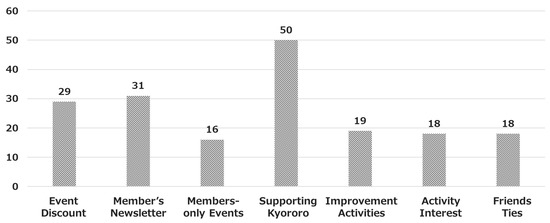
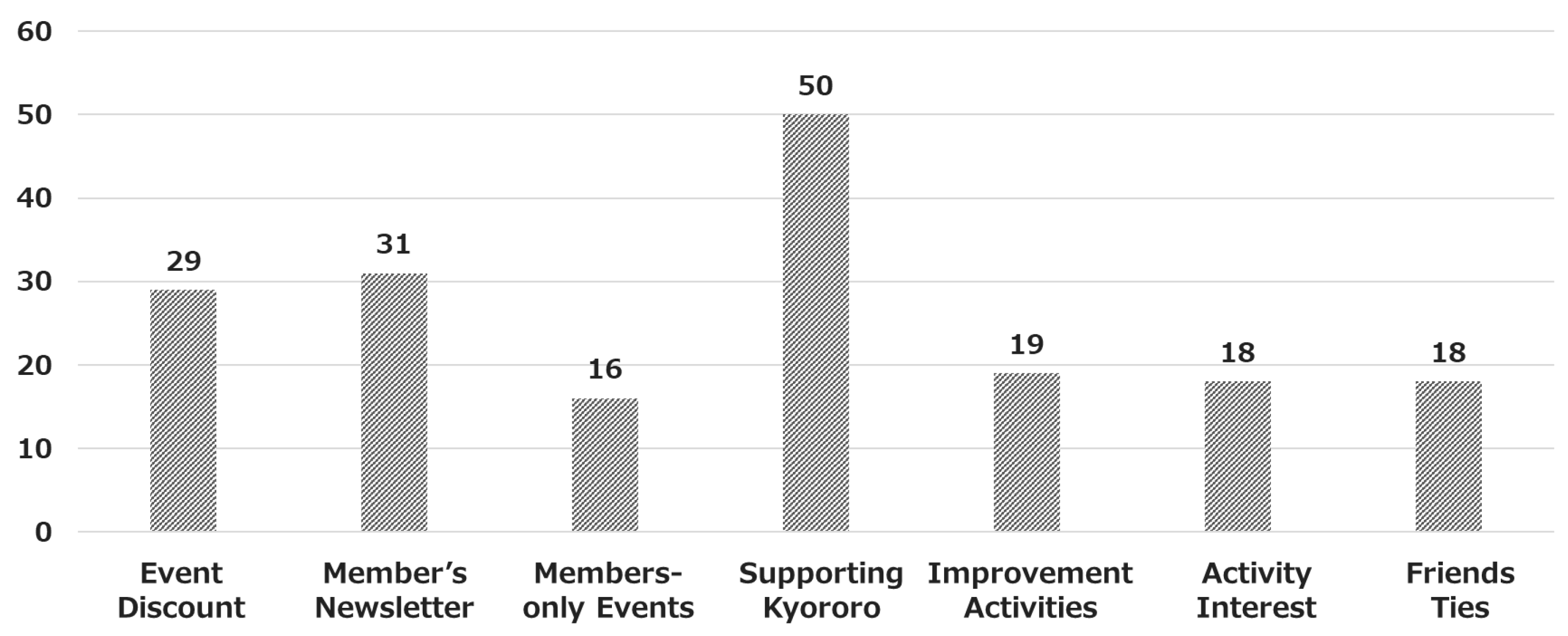
Figure 8 shows the results of a multiple-choice question regarding the reasons for participation in the Kyororo Friends Association. Of the 69 respondents, 50 selected “Because I want to support Kyororo and Kyororo’s Forest” (in short: “Supporting Kyororo”). In total, 31 respondents selected “Because I can receive the members’ newsletter” (in short: “Members’ Newsletter”), and 29 respondents selected “Because of discounts on event participation fees” (in short: “Event Discount”). 19 respondents selected “Because I want to participate in activities to improve Kyororo and Kyororo’s Forest” (in short: “Improvement Activities”). 18 respondents selected “Because I’m interested in activities I’d like to experience” (in short: “Activity Interest”). 18 respondents selected “Because I have friends who are involved with Kyororo” (in short: “Friends Ties”). Finally, 16 respondents selected “Because I can join members-only events” (in short: “Members-only Events”).
Figure 8.
Motivations for joining the membership (total respondents: 69 people).
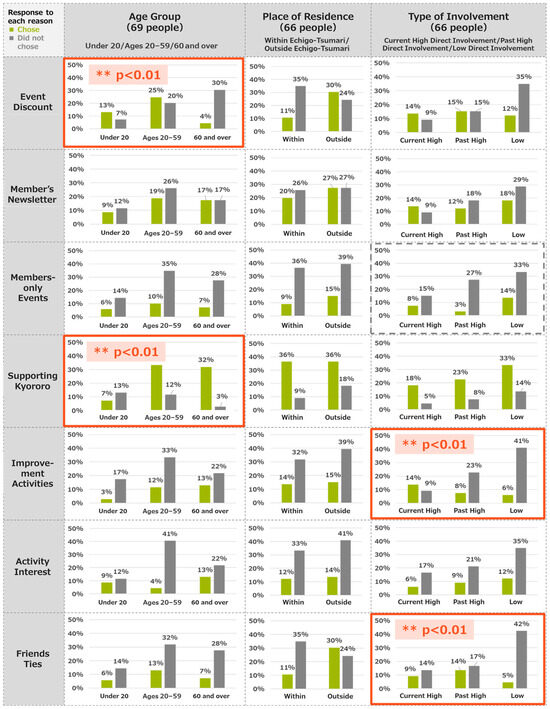
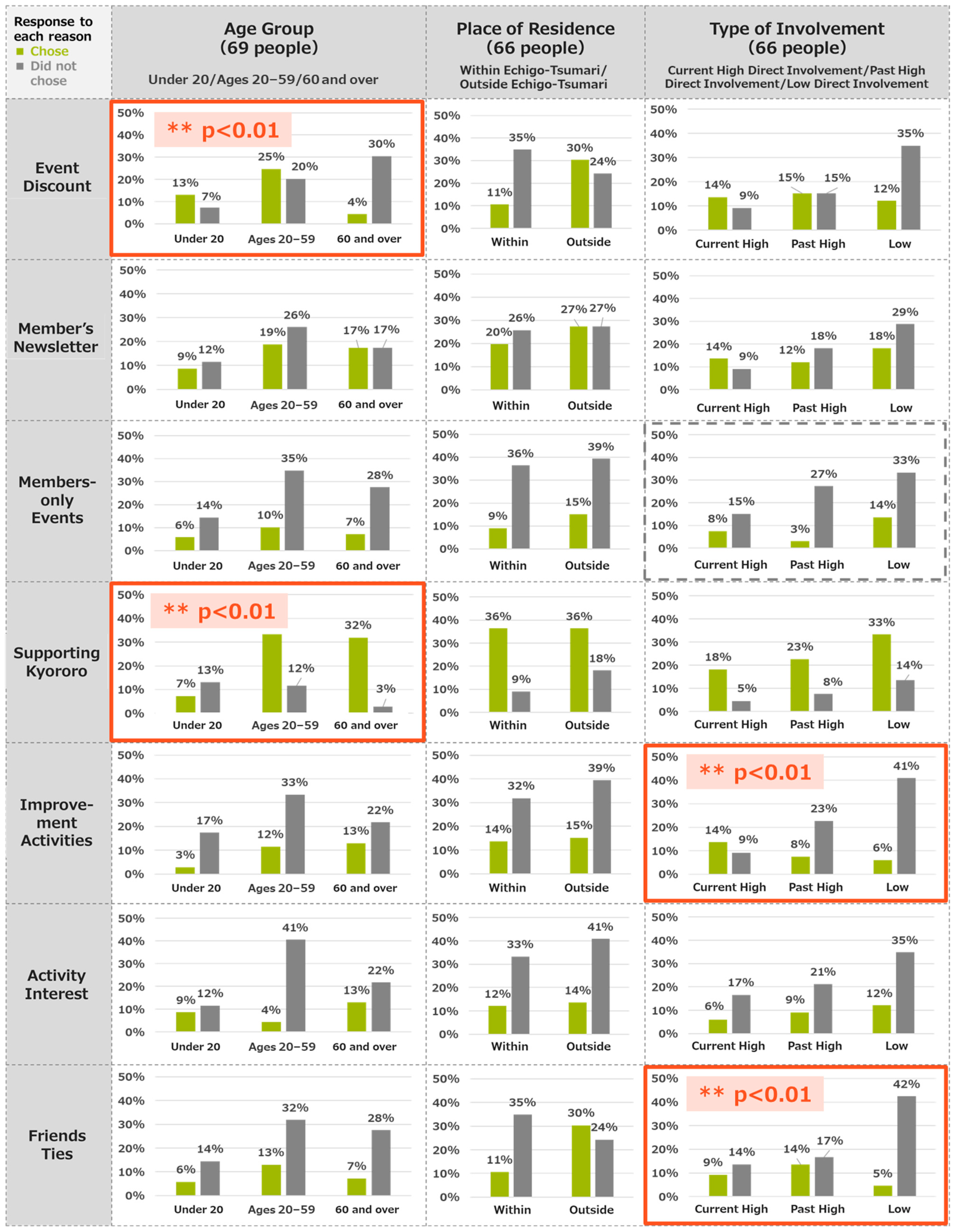
Figure 9 shows the correlation between the selection of each reason for participating in the Kyororo Friends Association and the three member characteristics: age group, place of residence, and type of involvement. In accordance with the figure legend, green indicates “Chose”, and grey indicates “Did not choose.” Red frames indicate statistically significant correlations at the 1% significance level. Grey frames indicate unreliable test results, where the number of data points below five exceeds 20%.
Figure 9.
Correlation between motivations for participating in the membership and member characteristics (red frames: correlation at the 1% significance level; gray frames: unreliable test results, as over 20% of data points were below the expected frequency of 5).
“Supporting Kyororo,” the option selected by the most respondents, exhibited a statistically significant correlation with age group at the 1% significance level. Selection was lower among respondents under age 20 and higher among those aged 20–59 and 60 and over. On the other hand, no clear correlation was observed between “Supporting Kyororo” and either place of residence or type of involvement.
“Event Discount” also showed a significant correlation with age group at the 1% level. Selection was higher among respondents under age 20 and those aged 20–59, and it was lower among those aged 60 and over.
“Improvement Activities” and “Friends Ties” were both significantly correlated with the type of involvement at the 1% level. The selection of “Improvement Activities” was higher among those in the “Current High Direct Involvement” and “Past High Direct Involvement” categories, and it was lower among those in the “Low Direct Involvement” category. A similar pattern was observed for “Friends Ties.”
For the options “Members’ Newsletter,” “Members-only Events,” and “Activity Interest,” no clear correlation was observed with any of the three member characteristics.
4. Discussion
4.1. Citizen Involvement Independent of Geographic Distance or Direct Participation
Kyororo Friends Association members were diverse in terms of age group, place of residence, and type of involvement. In terms of place of residence, approximately half of the respondents were residents within Echigo-Tsumari, while the rest lived in Niigata City, Joetsu City, or other prefectures. Based on the results regarding type of involvement, it can be inferred that some members currently have close, direct involvement—such as visiting Kyororo, which is located in a rural mountainous area, at least once a month—while others had such involvement in the past but not currently. At the same time, it can be inferred that approximately half of the respondents never had such close, direct involvement.
Furthermore, the details of direct involvement among Kyororo Friends Association members revealed that some individuals who once served as core facilitators of Kyororo’s activities or frequently visited Kyororo—those who were deeply involved in the history of its accumulated activities—still remain members of the association, even though they are no longer closely involved. Examining the details of the “Current High Direct Involvement” type, we can infer that this group includes family members of residents outside Echigo-Tsumari who attend Kyororo events relatively frequently, as well as individuals residing within Echigo-Tsumari who work or are involved as core facilitators of Kyororo’s activities. Examining the details of the “Past High Direct Involvement” type, we can infer that this group includes individuals who previously served as core facilitators of Kyororo’s activities and those who frequently attended Kyororo events. These results suggest that individuals who once belonged to the “Current High Direct Involvement” type and were closely and directly involved in Kyororo’s activities may continue to remain in the “Past High Direct Involvement” type, even if they are no longer able to participate due to changes in life stage or personal circumstances.
Based on interviews regarding barriers to public participation in environmental assessment, it was observed that people are constrained from engaging in the civic life of their communities due to the complexities and time pressures of modern living—an obstacle referred to as “involuntary complexity” [27]. Previous studies (e.g., [28,29]) have identified a lack of time as a major barrier to participation in nature conservation and management-related volunteer activities. This includes livelihood-related commitments, household chores, childcare responsibilities, schedule conflicts, and limited free time. In addition, for individuals living in such areas who require several hours to commute, the distance to the activity site has also been recognized as a barrier to participation [29]. Previous studies focusing primarily on older citizens have identified health-related reasons, the time required to access activity sites, and other time constraints as major barriers to direct participation in civic volunteer activities [30]. Abernethy et al. [31] reviewed previous studies on public participation in citizen science projects and developed a 70-item checklist based on identified barriers to participation. For example, item 43 highlights “Flexibility in planning” (e.g., scheduling needs because of family or other social obligations), and item 50 emphasizes “Sustained investment and commitment” focused on overcoming social barriers such as childcare, low income, transportation, and physical challenges [31].
These findings suggest that direct involvement in activities is shaped by various barriers that are difficult for individuals to overcome on their own. Such barriers include the distance between one’s residence and the activity site, the amount of time available after balancing work and family responsibilities, and age-related factors—all of which may shift depending on life stage or personal circumstances. Given these considerations, annual-fee membership related to biodiversity conservation may have the potential to serve (1) as a platform for citizen involvement independent of geographic distance or direct participation. Furthermore, such membership may also serve (2) as a platform for sustaining the involvement of individuals who have contributed to the accumulated history of the activities.
However, it should be noted that a notable characteristic of the Kyororo Friends Association membership is that the number of members in their 20s and 50s was lower than in other age groups. The results also showed that families participating in activities—including children under 20 and parents in their 30s and 40s—accounted for a considerable proportion of members. This may be explained by the fact that Kyororo provides many nature-based activities designed for families. Nevertheless, the lower representation of members in their 20s and 50s may suggest that, as children grow older and family outings become less frequent, family participants may withdraw from the association. This suggests that even in situations where physical barriers to citizen involvement are minimal, citizens may not necessarily continue their involvement. Beyond the physical constraints mentioned above, reasons for discontinuing citizen involvement in nature-related activities are, for example, disappointment with organizational aspects, such as poor communication [32,33], or lack of appreciation [32]. Moreover, it is known that drop-outs occur when citizens doubt whether their contributions are meaningful or when they do not feel the need to continue after participating in a one-time event [34]. In contrast, reasons for continuing participation include “Enjoyment of nature and being outdoors e.g., [32,35,36]”, “Social contacts and friendships e.g., [32,35,37,38]”, “Learning opportunities and personal development e.g., [32,35,37]”, and “A sense of contributing to conservation and making a difference e.g., [32,35,36,37,39]”. These dropout reasons and participation motives are well known in the context of nature volunteering and citizen science, but they can also be assumed to apply to annual-fee membership. To fully realize the potential of annual-fee membership with a fixed annual fee in sustaining citizen involvement in community-level biodiversity conservation, it may be necessary for citizens to maintain a subtle sense of mutual need and recognition between themselves, nature, conservation activities, or the community.
4.2. Citizens Who Hold Understanding and Trust Toward Nature and Its Conservation Values
Regarding the core components of Kyororo’s activities, about half of the respondents who provided free-form responses about what Kyororo and Kyororo’s Forest mean to them mentioned “Matsunoyama’s Nature”, and about one-third mentioned the “Kyororo Activity Hub” and “Exploration and learning through Kyororo and Matsunoyama’s nature”. Specifically, many respondents wrote about Matsunoyama’s natural environment, their experiences and discoveries there, and Kyororo as a hub that connects people with nature, bringing people together. In addition, over 70% of respondents mentioned at least one of the seven core component categories of Kyororo’s Activities. It is difficult to quantitatively assess members’ overall perceptions of the core components of Kyororo’s activities based on these results. However, the fact that respondents referred to at least one of these components in their own freely written comments about Kyororo and Kyororo’s Forest indicates that respondents may have their own understanding of Kyororo’s activities.
Next, the most frequently selected motivation among respondents was “Supporting Kyororo,” chosen by 50 out of 69 respondents. A statistically significant correlation was found between the selection of “Supporting Kyororo” and Age Group at the 1% significance level, suggesting that respondents aged 20–59 and 60 and over were more likely to select this option than those under age 20. On the other hand, no significant correlation was found between the selection of “Supporting Kyororo” and either place of residence or type of involvement. Furthermore, no clear trends were observed even when examining the graphs.
These results were obtained from respondents to the questionnaire survey. It should be noted that respondents may have been more willing to cooperate with research on Kyororo and the association than non-respondents. When considering the membership program as a whole, there may be variations in the degree of willingness to participate or provide support, as well as in members’ personal understanding of Kyororo and the association. These results suggest that among the members of the Kyororo Friends Association are citizens who join to support Kyororo and Kyororo’s Forest, regardless of their place of residence or the extent of their direct involvement. They also suggest that the association includes some members who have a personal understanding of Kyororo’s activities and are motivated to support them. Members of the Omachi Alpine Museum Friends Association, an annual-fee membership organization with characteristics similar to the Kyororo Friends Association, cited “I want to support the Omachi Alpine Museum” and “I love the Omachi Alpine Museum” as their primary motivations for participation in the association [23]. The same study also reported that association members, including those living far away, understood the appeal of the Omachi Alpine Museum better than residents of the surrounding area [23]. Members of the annual-fee membership organization Zealandia were motivated to actively contribute to nature conservation and sought to achieve this through their membership fees [22]. Annual-fee membership schemes may serve as a platform for citizens who have their own understanding of local nature and conservation activities, wish for their continued existence, and are motivated to support them in any way they can.
Psychological ownership of a natural area has been shown to increase citizens’ willingness to protect the area [40]. For citizens to be motivated to advance toward collaboration with local conservation activities, trust and a sense of assurance that the activities constitute a “good cause” appear necessary. In the case of ethical investment trusts, it is recognized that the basis for people’s financial support often lies in the assurance that their funds are being used for what they regard as a “good cause” or for purposes they personally support [41]. Additionally, in the context of citizen engagement in forest restoration projects, the perception of project success—such as high satisfaction levels—has been reported to influence the willingness to continue positive involvement even without monetary incentives [42]. It has also been reported that successful land trusts attract stakeholders, including donors, who trust the organizations and central figures advancing the work—individuals whose passion and honesty motivate participation [43]. Citizens’ attachment to place plays a significant role in conservation, but it can foster either supportive or opposing attitudes [44]. The success of conservation requires citizens’ trust in the initiatives and their actors, as well as engagement channels that allow place attachment to be transformed into supportive action [44]. Annual-fee membership organizations may serve as an entry point for citizens to engage meaningfully with biodiversity conservation activities they trust.
Taken together, these findings suggest that annual-fee membership programs have the potential to act (3) as platforms for citizens who understand and trust community-level nature, conservation activities, and their values to affiliate with and provide their support.
4.3. Supporting Trusted Entities Through Regular Payments
This section discusses the possibility that the civic participation model of joining an annual-fee membership may be particularly compatible with Japanese cultural values. The average number of donations per household in Japan was JPY 3200 (approximately USD 26.7) in 1999, compared with USD 754 per household in the United States in 1998 and GBP 132 (approximately USD 213) in the United Kingdom in 1994, indicating a weak donor culture in Japan [45]. Recent research also suggests that, despite efforts by the Japanese government to improve policies that promote donations, utilization rates remain low, and the level of individual donations is low compared to international standards [46]. In other words, because Japanese people are willing to provide support to those with whom they have clear relationships, such as family, relatives, and friends, but they are reluctant to donate indiscriminately to an unspecified number of people beyond the scope of their obligations, these cultural values need to be incorporated into fundraising strategies [45].
Given these cultural tendencies, making irregular payments of unspecified amounts to unfamiliar recipients is likely to pose a significant barrier for many Japanese citizens. It is assumed that the payment method for participating in an annual-fee membership related to local biodiversity conservation activities—activities that inspire understanding, and trust—is particularly compatible with citizens who hold cultural values such as those of the Japanese. In addition, by making payments, individuals participate in both the activities and the membership itself, which may clarify the relationship and strengthen their willingness to continue paying. Although not a Japanese case, the Little Traverse Conservancy (LTC) of Harbor Springs, Michigan, based on the recognition that fostering relationships is the best way to secure funding, has succeeded in breaking down the normally rigid construction of the donor–solicitor relationship [47,48]. Through such involvement, members can deepen their understanding and trust toward the activities and the membership itself, enabling continued involvement regardless of geographic proximity or the degree of direct engagement.
Taken together, annual-fee membership programs that involve contributing a fixed annual fee to support biodiversity conservation activities may have the potential to serve (4) as platforms for continued citizen support by enabling citizens to regularly pay a set amount to trusted entities.
4.4. Relationship Among the Roles of Annual-Fee Membership and Case-Specific Characteristics
Based on the above discussion, this study contributes by suggesting four potential roles of annual-fee membership schemes through which citizens may become involved in biodiversity conservation. Finally, by examining the distinctive characteristics of Kyororo and the Kyororo Friends Association in comparison with prior research and other cases, this study discusses the relationship between the four identified potentials of annual-fee membership and the specific features of this case. Such an analytical framework is essential for appropriately evaluating and further developing the broader roles that annual-fee membership may play, as well as for understanding how the characteristics of each case relate to the roles that membership can fulfill.
First, Kyororo’s activities are focused on biodiversity conservation within a specific region—Matsunoyama. In cases where conservation activities span multiple areas and where citizens can participate directly or provide support through donations, the roles played by annual-fee membership schemes may differ. For example, when citizens are able to choose locations that are close to their residence or places they wish to visit and are involved in direct activities, the significance of the first potential role may be diminished.
Second, Kyororo’s main activities involve protecting the natural environment and its value in the Matsunoyama region through practices such as maintenance, highlighting its significance through research, and connecting people to nature by designing opportunities for experience and learning. The relationship between the content of biodiversity conservation activities and the roles played by annual-fee membership schemes is also an important area for future research. In Setagaya, Tokyo, members of the Setagaya Trust Machizukuri Association, which supports the activities of the Setagaya Trust & Community Design—a general incorporated foundation aiming for harmony between the environment and the local community—can not only provide financial support through membership fees but also participate directly in related volunteer activities [49]. The foundation uses accumulated membership fees and donations to, for example, enter into lease agreements with landowners to secure green spaces in the city and recruit volunteers for maintenance and management [49]. According to the staff of the Setagaya Trust & Community Design, some members reside outside the Setagaya area and join primarily to support the group’s activities. Although the content of the activities differs, there may be commonalities in the roles that annual-fee membership schemes play in citizen involvement.
Third, Kyororo is located in a rural mountainous area. Public transportation access is limited, and the region faces structural challenges such as population decline and aging demographics. In the results of the attribute types categorized by three characteristics of survey respondents, there were no respondents under the age of 20 residing within the Echigo-Tsumari region. Among the members of the Kyororo Friends Association, approximately half reside within Echigo-Tsumari and half reside outside of it, suggesting that members living relatively far away may still exert considerable influence on Kyororo’s activities.
A previous study on a citizen group engaged in nature conservation in the Yamato Plain region of Nara Prefecture, Japan, found that areas with a higher proportion of forests and farmland tended to attract more participants from outside the region [50]. Similarly, in the case of the Omachi Alpine Museum Friends Association—located in a mountainous area—about half of the survey respondents were residents of Nagano Prefecture outside Omachi City or from other prefectures [23]. In contrast, the membership composition of Zealandea, which is associated with conservation activities in a region relatively close to an urban center, was found to include a higher proportion of residents from the surrounding areas [22].
These findings suggest that the first and second potential roles of annual-fee membership—namely, enabling continued involvement regardless of geographic distance or direct participation and sustaining the engagement of long-term contributors—may be particularly significant in conservation activities conducted in rural areas where citizens from more distant locations play an influential role.
5. Conclusions
This study has revisited the potential of annual-fee membership schemes as mechanisms that may support diverse forms of citizen involvement with local nature. Moving forward, it will be important to examine, from a long-term perspective, how citizen involvement grounded in understanding and trust can be sustained and passed on across generations. Identifying the practical strategies that enable citizens to maintain a subtle sense of mutual need and recognition—between themselves, nature, conservation activities, or the community—will be an important future research direction. The platforms formed through annual-fee memberships may also serve as platforms for building reciprocal relationships between those who support conservation activities and those who carry them out—creating collaborative structures grounded in mutual recognition and trust. Clarifying the significance of such relationships—and the mechanisms by which they can be sustained and developed—will be an important task for future research. Further studies are needed to explore how the potential of annual-fee membership as a form of citizen involvement can be fully realized.
Globally, annual-fee membership schemes take diverse forms, shaped by the content of conservation activities, the regions in which they operate, and whether they focus on a single locality or span multiple areas. It is also possible that the relationship between the activities and the membership scheme, as well as factors such as the amount of the annual fee and the nature of the benefits offered, may affect the role that annual-fee membership plays in citizen involvement. Because differences in the characteristics of activities and schemes may influence the roles that annual-fee membership programs can fulfill, future research should accumulate studies on diverse forms of citizen participation platforms, including such membership programs, with careful attention focused on these contextual features.
Author Contributions
Conceptualization, R.M. and N.K.; methodology, R.M.; validation, R.M., M.K. and N.K.; formal analysis, R.M.; investigation, R.M. and M.K.; resources, M.K.; data curation, R.M.; writing—original draft preparation, R.M. and N.K.; writing—review and editing, R.M. and N.K.; visualization, R.M.; supervision, N.K. and R.M.; project administration, R.M. and N.K. All authors have read and agreed to the published version of the manuscript.
Funding
This project did not receive any funding.
Institutional Review Board Statement
The study was conducted in accordance with the Declaration of Helsinki, and approved by the Ethics Committee for Research Experiments in Food Science and Related Sciences Involving Human Subjects for School of Agriculture at Meiji University (protocol code 2025-7).
Informed Consent Statement
Informed consent was obtained from all subjects involved in this study.
Data Availability Statement
Data are available from the authors upon reasonable request.
Acknowledgments
We would like to express our deepest gratitude to the Kyororo Friends Association, as well as the Kyororo staff for their cooperation in supporting this research.
Conflicts of Interest
The authors declare no conflict of interest.
References
- Buijs, A.E.; van Koppen, C.S.A. Change and stability in conservation discourses: A historical account of 30 years of citizen engagement in nature conservation policies in the Netherlands. J. Nat. Conserv. 2025, 84, 126855. [Google Scholar] [CrossRef] [Scilit]
- Mace, G.M. Whose conservation? Science 2014, 345, 1558–1560. [Google Scholar] [CrossRef] [Scilit]
- Maschinski, J.; Wright, S.J.; Lewis, C. The Critical Role of the Public: Plant Conservation through Volunteer and Community Outreach Projects. In Plant Reintroduction in a Changing Climate. The Science and Practice of Ecological Restoration; Maschinski, J., Haskins, K.E., Raven, P.H., Eds.; Island Press: Washington, DC, USA, 2012; pp. 59–87. [Google Scholar] [CrossRef] [Scilit]
- Wilson, J.S.; Forister, M.L.; Carril, O.M. Interest exceeds understanding in public support of bee conservation. Front. Ecol. Environ. 2017, 15, 430–435. [Google Scholar] [CrossRef] [Scilit]
- Chan, K.M.A.; Balvanera, P.; Benessaiah, K.; Chapman, M.; Díaz, S.; Gómez-Baggethun, E.; Gould, R.; Hannahs, N.; Jax, K.; Klain, S.; et al. Why protect nature? Rethinking values and the environment. Proc. Natl. Acad. Sci. USA 2016, 113, 1462–1465. [Google Scholar] [CrossRef] [Scilit]
- Pascual, U.; Balvanera, P.; Anderson, C.B.; Chaplin-Kramer, R.; Christie, M.; González-Jiménez, D.; Martin, A.; Raymond, C.M.; Termansen, M.; Vatn, A.; et al. Diverse values of nature for sustainability. Nature 2023, 620, 813–823. [Google Scholar] [CrossRef] [Scilit]
- Stenseke, M. Local participation in cultural landscape maintenance: Lessons from Sweden. Land Use Policy 2009, 26, 214–223. [Google Scholar] [CrossRef] [Scilit]
- Buijs, A.; Kamphorst, D.; Mattijssen, T.; van Dam, R.; Kuindersma, W.; Bouwma, I. Policy discourses for reconnecting nature with society: The search for societal engagement in Dutch nature conservation policies. Land Use Policy 2022, 114, 105965. [Google Scholar] [CrossRef] [Scilit]
- Arnstein, S.R. A Ladder of Citizen Participation. J. Am. Inst. Plann. 1969, 35, 216–224. [Google Scholar] [CrossRef] [Scilit]
- Gaber, J. Building “A Ladder of Citizen Participation”: Sherry Arnstein, Citizen Participation, and Model Cities. In Learning from Arnstein’s Ladder: From Citizen Participation to Public Engagement, 1st ed.; Lauria, M., Schively Slotterback, C., Eds.; Routledge: London, UK, 2020; p. 22. [Google Scholar] [CrossRef] [Scilit]
- Luyet, V.; Schlaepfer, R.; Parlange, M.B.; Buttler, A. A framework to implement stakeholder participation in environmental projects. J. Environ. Manag. 2012, 111, 213–219. [Google Scholar] [CrossRef] [Scilit] [PubMed]
- Kiss, B.; Sekulova, F.; Hörschelmann, K.; Salk, C.F.; Takahashi, W.; Wamsler, C. Citizen participation in the governance of nature-based solutions. Environ. Policy Gov. 2022, 32, 247–272. [Google Scholar] [CrossRef] [Scilit]
- Branchini, S.; Pensa, F.; Neri, P.; Tonucci, B.M.; Mattielli, L.; Collavo, A.; Sillingardi, M.E.; Piccinetti, C.; Zaccanti, F.; Goffredo, S. Using a citizen science program to monitor coral reef biodiversity through space and time. Biodivers. Conserv. 2015, 24, 319–336. [Google Scholar] [CrossRef] [Scilit]
- Goffredo, S.; Pensa, F.; Neri, P.; Orlandi, A.; Gagliardi, M.S.; Velardi, A.; Piccinetti, C.; Zaccanti, F. Unite research with what citizens do for fun: “recreational monitoring” of marine biodiversity. Ecol. Appl. 2010, 20, 2170–2187. [Google Scholar] [CrossRef] [Scilit] [PubMed]
- Shum, E.; Benham, C.; Jones, K.; Ariel, E. Understanding people who volunteer with marine turtles: Motives and values for engagement in conservation. Hum. Dimens. Wildl. 2021, 28, 199–217. [Google Scholar] [CrossRef] [Scilit]
- Poteete, A.R.; Ostrom, E. Heterogeneity, group size and collective action: The role of institutions in forest management. Dev. Change 2004, 35, 435–461. [Google Scholar] [CrossRef] [Scilit]
- Sobels, J.; Curtis, A.; Lockie, S. The role of Landcare group networks in rural Australia: Exploring the contribution of social capital. J. Rural Stud. 2001, 17, 265–276. [Google Scholar] [CrossRef] [Scilit]
- Monda, S.; Yanai, S.; Akita, N. The Study of Training and Establishing of Citizen’s Forest Conservation Activity by Public–Private Partnership. J. Jpn. Inst. Landsc. Archit. 2011, 74, 693–698. [Google Scholar] [CrossRef] [Scilit]
- Muñoz-Erickson, T.A.; Miller, C.; Miller, T.R. Spanning boundaries in an Arizona watershed partnership: Information networks as tools for entrenchment or ties for collaboration? Ecol. Soc. 2010, 15, 22. Available online: http://www.jstor.org/stable/26268166 (accessed on 4 December 2025). [CrossRef] [Scilit]
- Koontz, T.M. Social learning in collaborative watershed planning: The importance of process control and efficacy. J. Environ. Plan. Manag. 2013, 57, 1572–1593. [Google Scholar] [CrossRef] [Scilit]
- Runhaar, H.; Polman, N. Partnering for nature conservation: NGO–farmer collaboration for meadow bird protection in the Netherlands. Land Use Policy 2018, 73, 11–19. [Google Scholar] [CrossRef] [Scilit]
- Reichenberger, I. Membership motivations for natural conservation tourist attractions. Tour. Recreat. Res. 2023, 48, 205–219. [Google Scholar] [CrossRef] [Scilit]
- Asada, R. The Process of Revealing Local Resources: The Appeal of the Mountain Museum and Lessons from the “Distant but Close” Friends Association. Bull. Omachi Alp. Mus. 2017, 2, 1–7. [Google Scholar] [CrossRef]
- Tokamachi City Satoyama Science Museum Kyōroro. 10th Anniversary Commemorative Publication. Available online: https://www.matsunoyama.com/kyororo/wp-content/themes/custom/assets/pdf/pub-02-kyororo10th.pdf (accessed on 14 September 2025).
- Kyōroro Museum. Friends Association. Available online: https://www.matsunoyama.com/kyororo/friendship (accessed on 15 October 2025).
- Kyōroro Museum. Toward Community Development. Available online: https://www.matsunoyama.com/kyororo/community-development (accessed on 25 October 2025).
- Diduck, A.; Sinclair, A. Public involvement in environmental assessment: The case of the nonparticipant. Environ. Manag. 2002, 29, 578–588. [Google Scholar] [CrossRef] [Scilit]
- Shinbrot, X.A.; Jones, K.W.; Newman, G.; Ramos-Escobedo, M. Why citizen scientists volunteer: The influence of motivations, barriers, and perceived project relevancy on volunteer participation and retention from a novel experiment. J. Environ. Plan. Manag. 2023, 66, 122–142. [Google Scholar] [CrossRef] [Scilit]
- Khadka, D.; Nepal, S.K. Local responses to participatory conservation in Annapurna Conservation Area, Nepal. Environ. Manag. 2010, 45, 351–362. [Google Scholar] [CrossRef] [Scilit]
- Sextus, C.P. Community-Based Conservation Volunteering: Motivations, Barriers, and Strategies for Volunteer Recruitment and Retention to Optimise Conservation Outcomes. Ph.D. Thesis, Massey University, Palmerston North, New Zealand, 2025. Available online: https://mro.massey.ac.nz/bitstreams/3b993cf9-9296-4e1c-baaf-e18263105679/download (accessed on 26 October 2025).
- Abernethy, P.; Soini, K.; Ommer, J.; Artell, J.; Tapiola, T.; Parodi, A. Reframing citizen participation: Turning barriers into guiding enablers. Sustainability 2025, 17, 8720. [Google Scholar] [CrossRef] [Scilit]
- Ganzevoort, W.; van den Born, R.J.G. The everyday reality of nature volunteering: An empirical exploration of reasons to stay and reasons to quit. J. Environ. Plann. Manag. 2025, 68, 207–226. [Google Scholar] [CrossRef] [Scilit]
- Pelacho, M.; Orejudo, S.; Clemente-Gallardo, J. Science as a commons: Motivations for continued participation in citizen science projects. PLoS ONE 2025, 20, e0325593. [Google Scholar] [CrossRef] [Scilit]
- Fischer, H.; Cho, H.; Storksdieck, M. Going beyond hooked participants: The nibble-and-drop framework for classifying citizen science participation. Citiz. Sci. Theory Pract. 2021, 6, 10. [Google Scholar] [CrossRef] [Scilit]
- Schroeder, H.W. The restoration experience: Volunteers’ motives, values, and concepts of nature. In Restoring Nature: Perspectives from the Social Sciences and Humanities; Gobster, P.H., Hull, R.B., Eds.; Island Press: Washington, DC, USA, 2000; pp. 247–264. [Google Scholar]
- Sextus, C.P.; Hytten, K.F.; Perry, P. A systematic review of environmental volunteer motivations. Soc. Nat. Resour. 2024, 37, 1591–1608. [Google Scholar] [CrossRef] [Scilit]
- Bruyere, B.; Rappe, S. Identifying the motivations of environmental volunteers. J. Environ. Plann. Manag. 2007, 50, 503–516. [Google Scholar] [CrossRef] [Scilit]
- Kuramoto, N.; Nagai, K. Opinions about the activities and organization of volunteers working for the conservation of the coppice in Sakuragaoka Park in Tokyo. J. Jpn. Inst. Landsc. Archit. 2002, 65, 455–460. [Google Scholar] [CrossRef] [Scilit]
- Tatsui, M.; Fujii, E. Effect of satoyama preservation activity by civic group on vegetation and participants’ awareness. J. Jpn. Inst. Landsc. Archit. 2007, 69, 777–780. [Google Scholar] [CrossRef] [Scilit]
- Preston, S.D.; Gelman, S.A. This land is my land: Psychological ownership increases willingness to protect the natural world more than legal ownership. J. Environ. Psychol. 2020, 70, 101443. [Google Scholar] [CrossRef] [Scilit]
- Bennett, J.W. Private sector initiatives in nature conservation. AgEcon Search 1995, 63, 426–434. [Google Scholar] [CrossRef]
- Mazón, M.; Rebolledo, V.; Ojeda-Luna, T.; Romero, O. Engagement increases people’s willingness to sustain restored areas beyond financial incentives. Restor. Ecol. 2021, 29, e13352. [Google Scholar] [CrossRef] [Scilit]
- Braddock, K.N.; Heinen, J.T. Perceptions of, and motivations for, land trust conservation in Northern Michigan: An analysis of key informant interviews. Sustainability 2021, 13, 1609. [Google Scholar] [CrossRef] [Scilit]
- Lewicka, M. Place attachment: How far have we come in the last 40 years? J. Environ. Psychol. 2011, 31, 207–230. [Google Scholar] [CrossRef] [Scilit]
- Ouchi, M. Charitable giving in Japan: A comparative study of Japan and the United States. Nonprofit Rev. 2004, 4, 39–52. [Google Scholar] [CrossRef]
- Sasaki, S.; Kurokawa, H.; Ohtake, F. An experimental comparison of rebate and matching in charitable giving: The case of Japan. Jpn. Econ. Rev. 2022, 73, 147–177. [Google Scholar] [CrossRef] [Scilit]
- Squires, R.H.; Gustanski, J.A. (Eds.) Protecting the Land: Conservation Easements Past, Present and Future; Island Press: Washington, DC, USA, 2000. [Google Scholar]
- Braddock, K.N.; Heinen, J.T. Conserving nature through land trust initiatives: A case study of the Little Traverse Conservancy, Northern Michigan, USA. Nat. Areas J. 2017, 37, 549–555. Available online: https://www.jstor.org/stable/90015619 (accessed on 2 December 2025). [CrossRef] [Scilit]
- Setagaya Trust Machizukuri Foundation. Official Website. Available online: https://www.setagayatm.or.jp (accessed on 15 October 2025).
- Ikenaka, K. Actual Conditions and Regional Characteristics of Activities by Citizen Groups in Satoyama Environments: A Case Study of the Yamato Plain Area in Nara Prefecture. J. Hum. Geogr. 2008, 60, 129–143. [Google Scholar] [CrossRef] [Scilit]

Disclaimer/Publisher’s Note: The statements, opinions and data contained in all publications are solely those of the individual author(s) and contributor(s) and not of MDPI and/or the editor(s). MDPI and/or the editor(s) disclaim responsibility for any injury to people or property resulting from any ideas, methods, instructions or products referred to in the content. |
© 2026 by the authors. Licensee MDPI, Basel, Switzerland. This article is an open access article distributed under the terms and conditions of the Creative Commons Attribution (CC BY) license.