


Abstract
Leontopodium alpinum is a globally protected species and a valuable resource for the cosmetic and pharmaceutical industries. This study aimed to evaluate the propagation of edelweiss through ex situ culture, analyzing its morphological and physiological performance under controlled conditions. The morphological and physiological evaluation was carried out by conducting a single-factor experimental design in a controlled environment. A statistical analysis using one-way ANOVA followed by Tukey’s HSD post hoc test (α = 0.05) and Pearson Correlation was performed. There were significant differences between three repetitions of the same cultivar for total leaf number, leaf size category distribution and inflorescence diameter. The correlations between morphological indicators revealed a strong positive correlation between plant width, plant volume, number of inflorescences per stem, and collar diameter on the one hand and between length of the floral stem and number/length of roots on the other. The physiological indicators (estimated transpiration rate, net photosynthetic rate, photosynthetic pigments) suggested a conservative functional and photosynthetic pigment profile. The species’ ability to maintain structural and physiological integrity under controlled conditions reinforces the value of ex situ cultivation as a complementary conservation tool for endangered species and provides a solid basis for valorization programs in commercial crops.
1. Introduction
Leontopodium alpinum (edelweiss) is one of over 60 species of the Leontopodium genus [1], whose center of genetic diversity is the Himalayan/Tibetan region, having an Asian–European distribution due to its migration in Pleistocene [2].
It is a protected species worldwide, being listed as Least concern according to UICN Red List of threatened plants [3] and considered a natural monument in Romania [4]. It is listed in various sozological categories in national European lists as follows: endangered in Bulgaria [5], Ukraine [6], Albania [7]; vulnerable in Romania [8]; least concern in Switzerland [9], Austria [10]; or not threatened in Slovakia [11].
In Asia, edelweiss grows in different natural grasslands with Artemisia capillaris, Thymus quinquecostatus, Stipa grandis and Stipa bungeana [12], and Kobresia sp., Festuca ovina, Agrostis sp., Saussurea sp. from 1500 to 1650 m up to 3500 m [13].
In Europe, edelweiss can be found on calcareous substrate, especially in alpine and subalpine levels from 2200 m to over 3000 m, in Alps, Carpathians, Tatra, Pyrennees and mountains from Balkans [14].
In Switzerland, the edelweiss vegetates in open grasslands characteristic to the Seslerion and Elynion alliances, at altitudes between 1000 and 3000 m a.s.l., on calcareous substrates [15]. According to this study, in the Swiss Alps, the temperature requirements for this species range from −5 °C and −1 °C (in winter) to 5–15 °C (in summer), conditions that favor germination and growth of young plants, with low temperatures being a limiting factor in interspecific competition. Moreover, in terms of water and soil requirements, it prefers areas with moderate rainfall and well-drained soils, avoiding excess moisture that can negatively affect the roots.
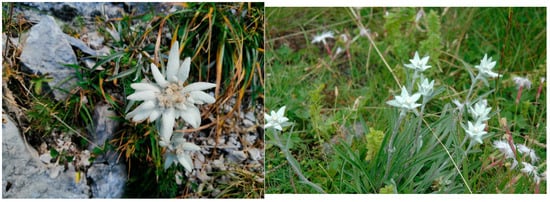
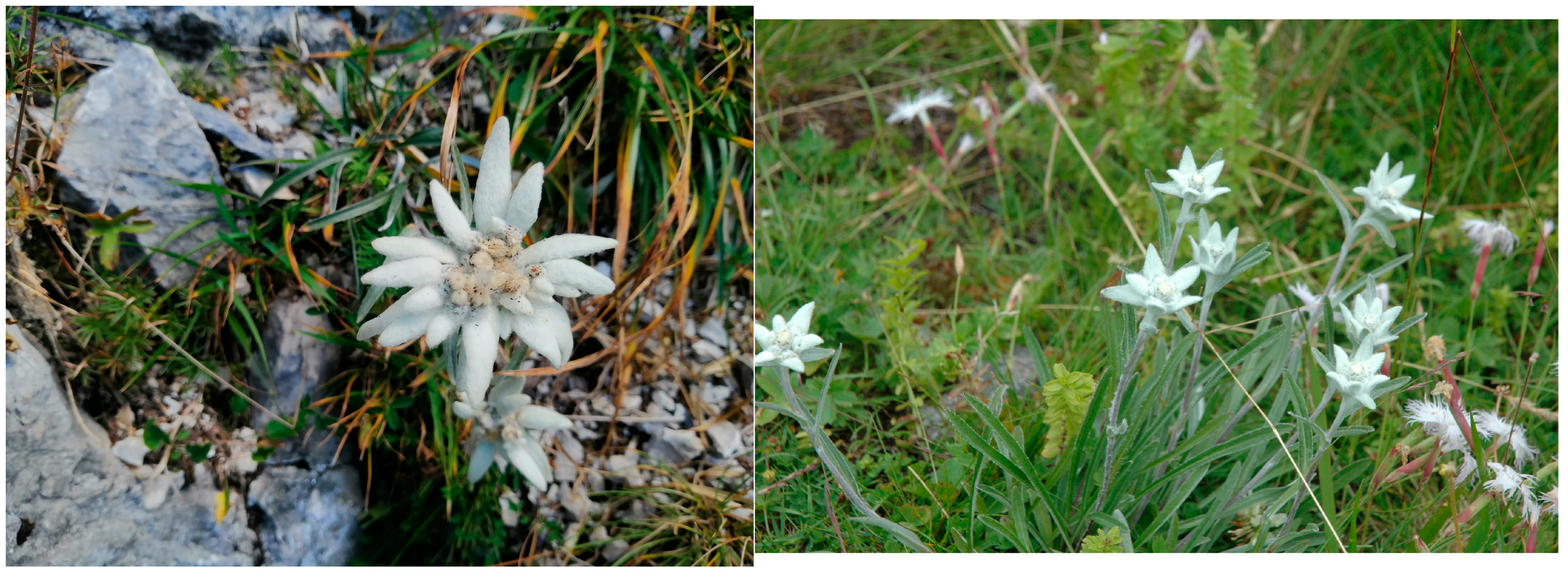
Populations of two edelweiss subspecies (L. nivale subsp. nivale; L. nivale subsp. alpinum) in Bulgaria grow in alpine and subalpine meadows, on limestone screes or marble karst, at altitudes between 1700 m and 2800 m, on slopes with a gradient of 20–35, with eastern, southeastern, or northwestern exposure, and an average yearly temperature of 5 °C [16,17]. L. alpinum is a characteristic species for Leontopodio nivalis–Elynion myosuroidis alliance, Leontopodio–Potentilletum stojanovii plant association in Pirin Mountains [18,19], and Festuco saxatilis–Seslerion bielzii, Potentillion caulescentis alliances, Elyno–Seslerietea class in Romanian Carpathians [4] (Figure 1).
Figure 1.
L. alpinum in Piatra Craiului Mountains (Romania).
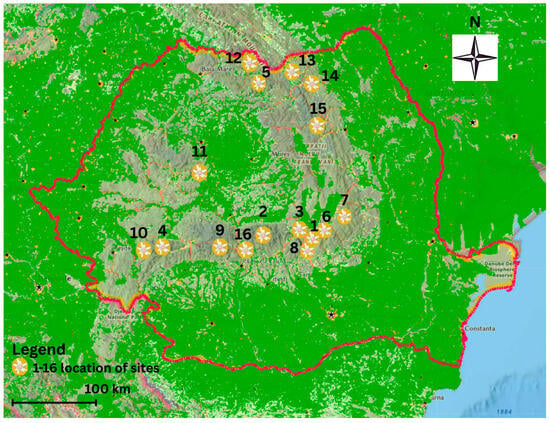
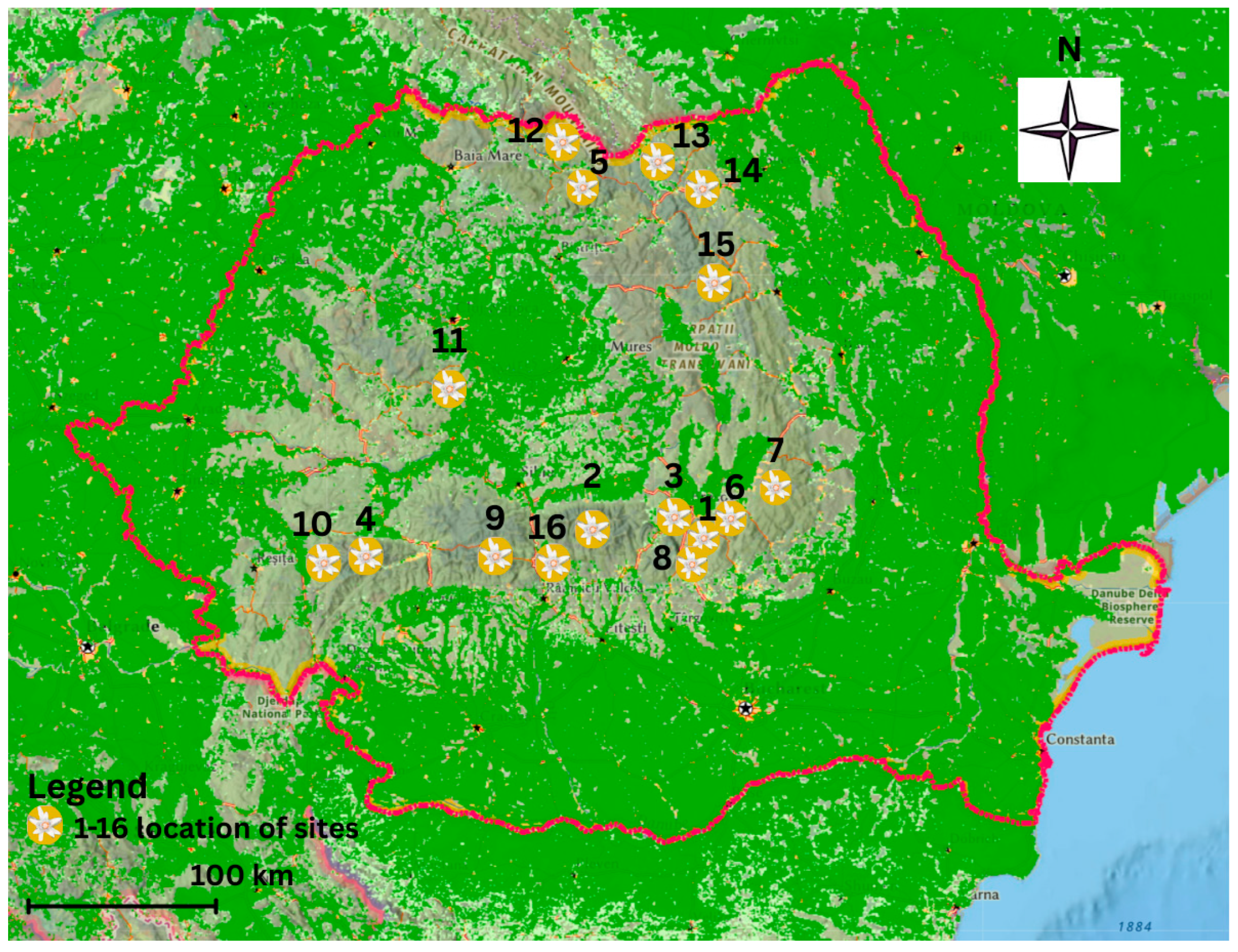
In Romania, L. alpinum grows mainly in natural habitats in the subalpine and alpine zones but can also be found at lower altitudes (440 m) in Lotrului Mountains (Doabrele) and Trascău Mountains (Întregalde Gorges and Râmețului Gorges) [20]. It is present in 16 mountain massifs of the Romanian Carpathians (Figure 2), including 1—Bucegi, 2—Făgăraș, 3—Piatra Craiului, 4—Retezat, 5—Rodnei, 6—Ciucaș, 7—Vrancei, 8—Leaota, 9—Buila–Vânturarița, 10—Țarcu, 11—Trascău, 12—Maramureș, 13—Obcinele Bucovinei, 14—Rarău, 15—Ceahlău and 16—Cozia [21,22].
Figure 2.
. Distribution of L. alpinum in Romania [1,2,3,4,5,6,7,8,9,10,11,12,13,14,15,16] (modified according to [23]).
Although the species was quite difficult to cultivate ex situ in Bulgaria, the morphological characteristics of the hairs and leaves proved to be genetically determined and conserved [16]. These authors conclude that ex situ cultivation is only possible if specific natural conditions are replicated, including substrate composition and moderate humidity. While the edelweiss specimens collected from natural habitats and cultivated in the Anastasie Fătu Botanical Garden, Iași, Romania, did not survive in ex situ conditions, the plants of L. alpinum Cass. and L. alpinum Cass. ‘Materhorn’, originating from sowing, performed well in the vegetation process during the years of study [24].
The main factors threatening the future of edelweiss are its fragmented distribution, reduced abundance and frequency, low regeneration, climate change and harvesting by tourists [22,25]. It is estimated that global warming will favor shrubs and subshrubs in alpine grassland areas, which will disadvantage many herbaceous species; by 2050, populations of edelweiss will migrate to higher altitudes, reducing their range by up to 35% and reducing their genetic diversity, but the vigor of the plants will be greater [22]. The same authors draw attention to the accentuation of genetic erosion due to the fragmented distribution of the soil types preferred by this species and also due to the reduced exchange of pollen and seeds between populations, making conservation efforts increasingly necessary.
Ex situ cultivation offers the possibility of protecting vulnerable populations outside their natural habitats, reducing the risk of extinction caused by factors such as climate change, human activities, or habitat degradation. It allows the identification of critical ecological factors for growth and reproduction, thus facilitating the expansion of cultivation into new areas and the diversification of utilization strategies.
Through well-founded ex situ studies, valuable information can be obtained for possible introduction or commercial cultivation programs outside the natural range. This reduces pressure on the exploitation of the species in natural habitats, whether for decorative or industrial purposes (cosmetics, medicine).
The aim of this study was to evaluate the conservation and propagation potential of L. alpinum in ex situ culture under controlled conditions, and the morphological and physiological indicators analyzed were compared with the values reported in the literature for natural populations in order to identify the optimal cultivation requirements and adaptability environments outside its natural range.
2. Materials and Methods
2.1. Plant Material, Experimental Site and Design
Seeds of L. alpinum were obtained from a certified horticultural supplier (Mizil Nursery, Romania), ensuring legal provenance and taxonomic authenticity.
The study was conducted between 2022 and 2025 in the controlled-environment Didactic Greenhouse of the Botany and Biotechnology Laboratory, National University of Science and Technology Politehnica Bucharest–University Center Pitești. L. alpinum seeds were sown in 2022, and the observations within the experiment were carried out in 2025 throughout the entire vegetation period. A monofactorial experimental design was applied, consisting of 36 individual plants, distributed into three repetitions (R1, R2, R3), each comprising 12 independent biological replicates, cultivated individually to eliminate competitive influence. All observations were made in the third year of cultivation (2025).
2.2. Cultivation and Environmental Conditions
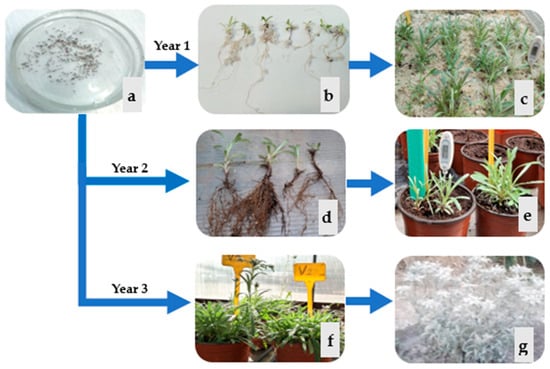
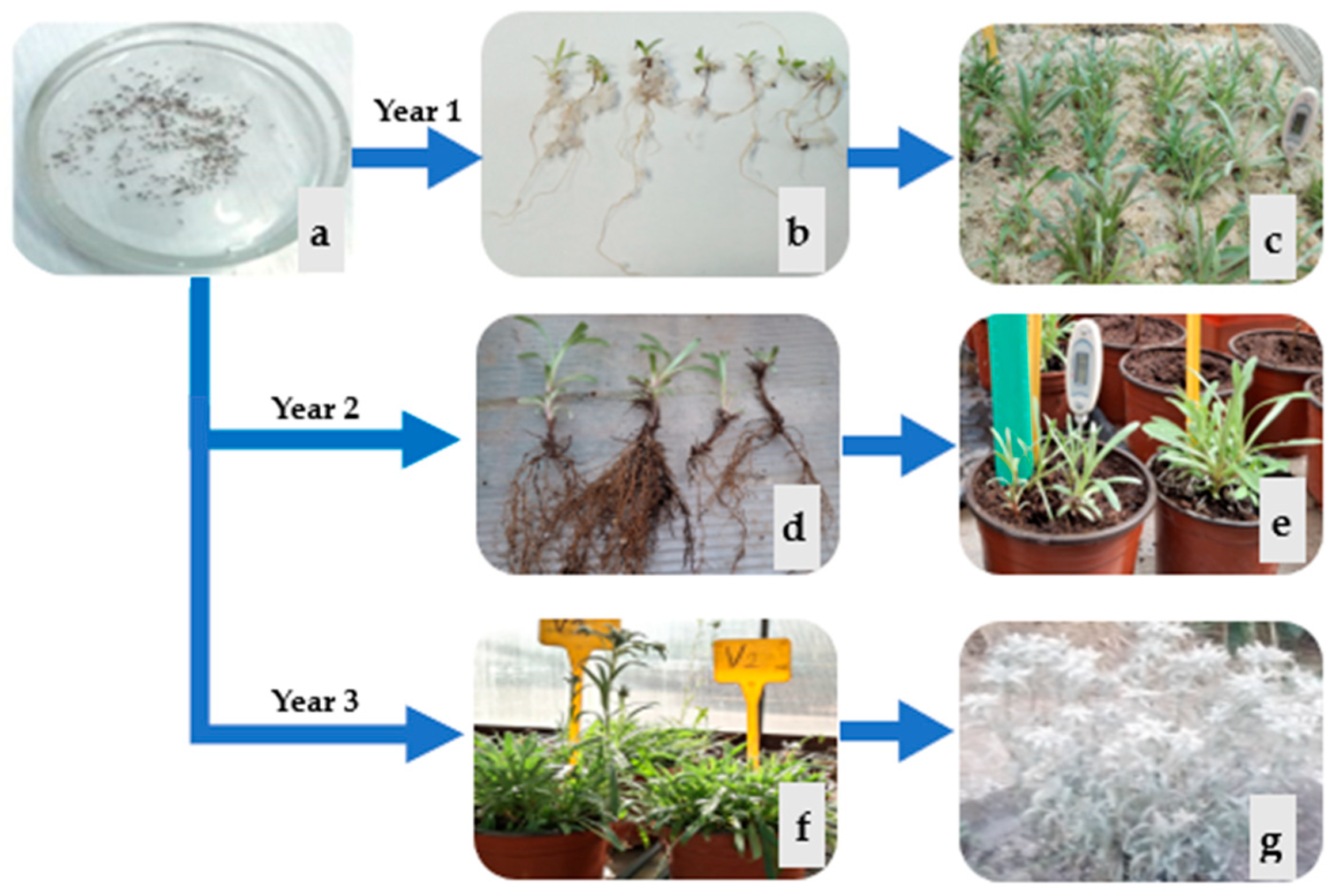
The seeds (Figure 3a) were stored until sowing (mid-March) in a refrigerator at 4 °C. The sowing substrate consisted of perlite (0–5 mm grain size) and horticultural peat (1:1). The perlite was purchased from the S.C.Procema Perlit S.R.L., and the horticultural peat from the Klasmann Delimann. The two components of the substrate were not mixed but placed in layers, with the seeds sown in perlite. The seed trays were placed in the automated growth chamber. Germination was carried out at a temperature of 21 °C, a photoperiod of 14 h and a relative humidity of 85%.
Figure 3.
The experimental design: (a)—seeds of L. alpinum; (b)—seedlings of edelweiss 40 days after sowing; (c)—plants in the first year; (d)—individualized seedlings; (e)—plants in the second year; (f)—plants in the third year; (g)—plant with inflorescences.
When the seedlings reached a height of 2–3 cm (Figure 3b), they were transplanted into the greenhouse in the same substrate, separated into layers. This type of culture was maintained until the end of year I (year 2023) (Figure 3c), when they were transferred to PVC containers with a diameter of 130 mm, using the following substrate as culture medium: a layer of approximately 3 cm of coarse gravel was placed at the bottom of the container for drainage and a mixture of coarse sand and horticultural peat (1:3). In years II and III (2024–2025), the plants were no longer transferred (Figure 3d,e).
During the vegetation period, environmental conditions were adjusted to emulate alpine seasonality. The temperature was maintained between 25 and 30 °C, with a maximum of 35 °C during the flower development period (June–August), when physiological processes take place intensively, and a minimum of −5 °C during the vegetative rest period (December–end of January). Irrigation was applied 2–3 times per week, ensuring soil moisture of approximately 60% field capacity during the vegetative phase and 45% at flowering. Plants were exposed to a natural photoperiod.
2.3. Morphological Evaluation
Direct measurements were made by counting or using a ruler on the vegetative and reproductive organs of each specimen as follows: number of rosettes per plant, leaves per plant, plant height (cm), number of roots, number of inflorescences per stem, flowering stem length (cm), diameter of inflorescence (cm), maximum length of main root (cm), collar diameter (cm). Derived parameters were also taken into account: total number of leaves, foliar surface area—large, medium and small leaves (cm2), estimated plant volume (cm3), dimension L1—bush height and dimension L2—bush width.
Leaf surface area was quantified using the Easy Leaf Area digital image-analysis software, calibrated with a 4 cm2 reference marker [26]. This non-invasive, high-throughput method is widely adopted in plant phenotyping research due to its measurement accuracy, standardization potential and applicability across contrasting leaf morphologies, including narrow/acicular, entire and compound leaf types [26,27].
2.4. Physiological Evaluation
Physiological parameters included chlorophyll a, chlorophyll b, carotenoids, stomatal conductance, transpiration, net photosynthesis and respiration, measured using the LCpro+ portable photosynthesis system manufactured by ADC BioScientific Ltd. (Hoddesdon, UK). Pigments were extracted using an organic-solvent protocol, with spectrophotometric readings at 663 nm (Chl a), 645 nm (Chl b) and 470 nm (carotenoids). Final pigment concentrations were calculated using the equations below [28]:
Chl a (mg/L) = 11.75 × A662 − 2.35 × A645
Chl b (mg/L) = 18.61 × A645 − 3.96 × A663
Total Chl = Chl a + Chl b
Carotenes (mg/L) = [1000 × A470 − 2.27 × Chl a − 81.4 × Chl b]/227
2.5. Data Interpretation and Statistical Processing
Morphological and physiological results were interpreted comparatively in relation to literature-based values characteristic of alpine ecosystems. Statistical analyses were performed using one-way ANOVA followed by Tukey’s HSD post hoc test (α = 0.05) and Pearson Correlation in SPSS v14+. The Pearson correlation matrix was created in Excel using the XLSTAT extension 2023.5. Data are presented as mean ± standard deviation (SD), and statistically significant differences among experimental repetitions are indicated by distinct alphabetical superscripts. For the physiological parameters, additional descriptive statistics (mean, median, standard deviation, skewness, and kurtosis) were provided. Skewness values were low and close to zero, and kurtosis values indicated no extreme departures from distributional symmetry. Together with boxplot inspection, these descriptors support the suitability of parametric statistical analyses. In addition, because L. alpinum was cultivated ex situ, a separate one-way ANOVA was conducted with replication (R1–R3) as the grouping factor to assess the uniformity of selected morphological traits across replications. For this purpose, post hoc multiple comparisons were applied to detect possible differences among replications.
3. Results
Since all three repetitions were grown under identical controlled environmental conditions, the variability observed among replicates cannot be attributed to external factors but is instead likely related to initial phenotypic differences or subtle individual physiological potential. This supports the hypothesis that L. alpinum maintains intra-population morpho-functional plasticity even under stable conditions, representing a relevant adaptive advantage in its natural, highly unpredictable alpine habitat.
3.1. Analysis of Morphological Traits
The total number of leaves was significantly lower in R1 (125.33) compared to R2 (243.33) and R3 (282.33) (Table 1), evidencing foliar-level variability without measurable effects on major structural dimensions (L1, L2, volume, or height), which did not differ significantly among repetitions.
Table 1.
Morphological indicators (letters indicate statistical differences among repetitions, Tukey HSD, α = 0.05).
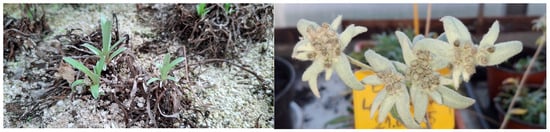
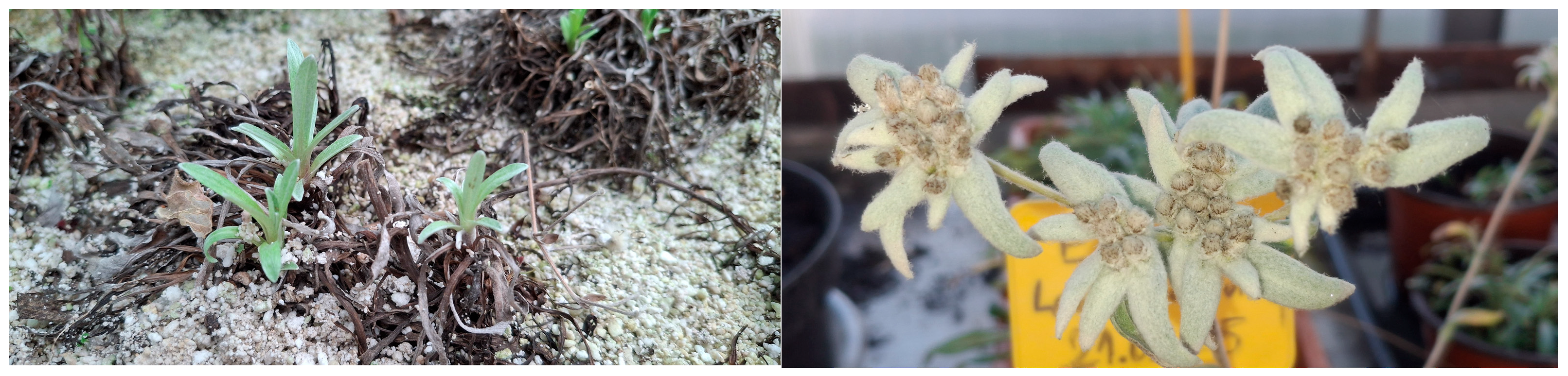
Observations made over three years highlighted that controlled ex situ cultivation conditions induce an advance in phenophases compared to in situ growing conditions. Thus, vegetative growth phase began in the second week of February, and the anthesis phase began in May and ended in the last week of October (Figure 4).
Figure 4.
Specimens of L. alpinum in ex situ culture: starting in vegetation (left); anthesis phase (right).
Structural indicators related to vegetative growth, including plant height, L1 and L2 dimensions, plant volume, root number, maximum root length, and collar diameter, showed no significant differences, indicating high morphological stability of essential architectural traits as well as uniformity in structural development and anchorage capacity among individuals (Table 1).
The comparative assessment of morphological traits across the three replicates revealed no statistically significant differences for most parameters (p > 0.05; Tukey HSD), indicating overall developmental uniformity and consistent vegetative and reproductive performance under controlled growth conditions. These results suggest that the detected variability does not affect structural plant traits (axial or volumetric morphology) but is instead primarily expressed at foliar level, reflecting potential plasticity involving photosynthetic surface dynamics and rosette organization rather than architectural differences.
Root-related indicators also showed no statistical variation, aligning with findings that alpine plants exhibit functionally conservative root architectures, optimized for mechanical stability rather than extensive soil exploration due to substrate constraints typical of alpine environments [29]. Furthermore, the significant variation in inflorescence diameter suggests that reproductive traits may be more sensitive to internal resource availability than vegetative architecture, supporting the well-established vegetative–reproductive trade-off in slow-growing, K-selected alpine perennials [30].
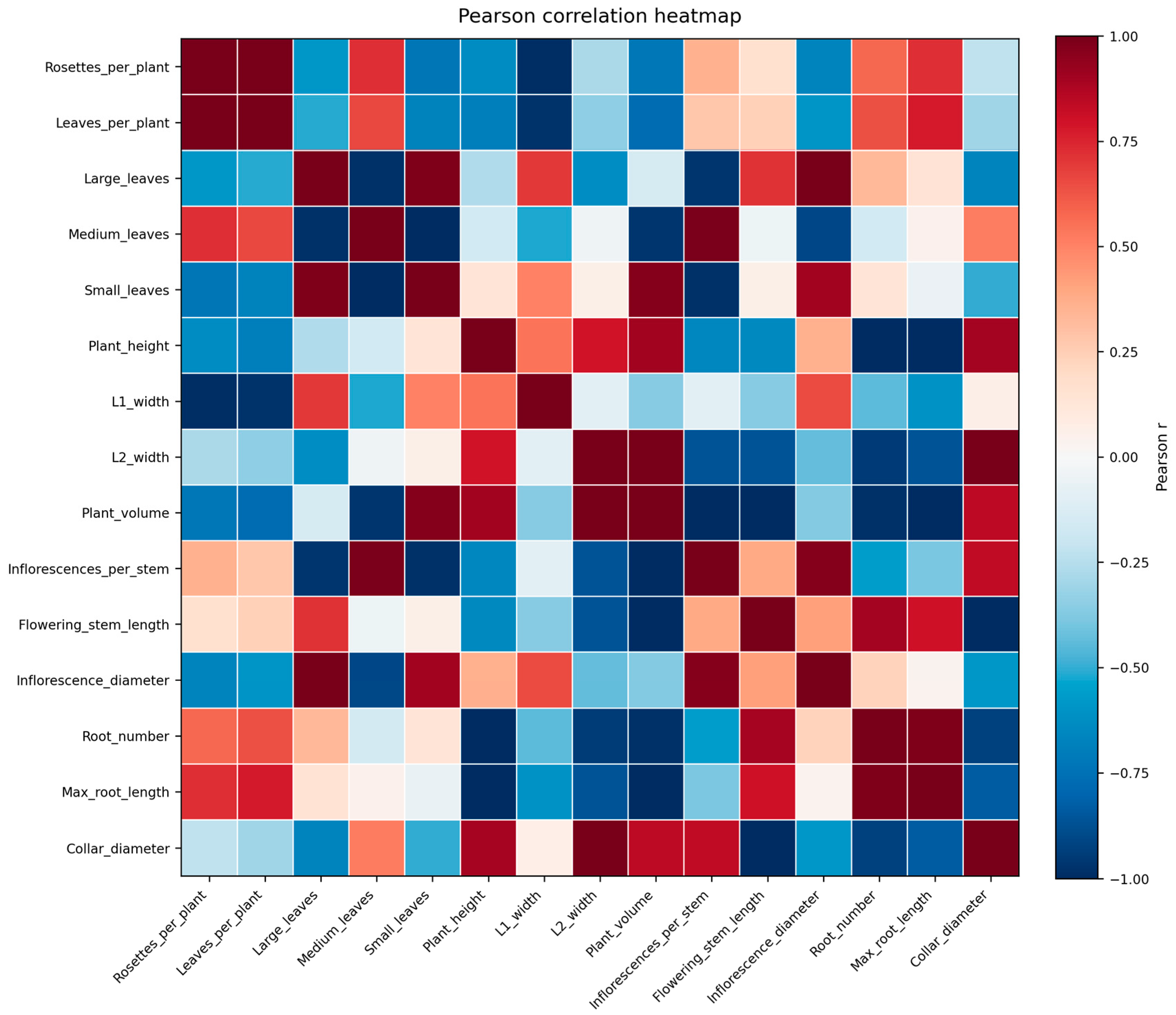
Regarding the correlations established between morphological indicators (Table 2, Figure 5), the results confirmed that, although plant width L2 shows a strong positive correlation with collar diameter (r = +0.9986), the relationship with maximum root length (r = −0.8633) is strongly negative. Similarly, the collar diameter correlates positively with plant volume (r = +0.8369) and negatively with maximum root length (r = −0.835) and number of roots (−0.9249).
Table 2.
Pearson correlation matrix of morphological traits in L. alpinum.
Figure 5.
Pearson correlation of the morphological indicators in L. alpinum under uniform environmental conditions.
However, negative correlations involving inflorescence production and several vegetative parameters are accompanied by equally strong positive correlations with others. Inflorescences per stem show strong negative associations with plant volume (r = −0.9999) and L2 width (r = −0.8633), and a strong positive correlation with collar diameter (r = +0.8322). Also, the length of the floral stem correlates negatively with the collar diameter (r = −0.9978) and with the plant volume (r = −0.9999) and positively with the number of roots (r = +0.8979) and the maximum length of roots (+0.797) (Table 2, Figure 5).
The constant and strong negative correlations between maximum root length and epigeic component, such as plant height (r = −0.9924), suggest that root elongation and proliferation are closely related to aerial growth. Such stable negative associations imply an intrinsic allocation pattern in which hypogeal extension directly competes with volumetric expansion above ground (Table 2, Figure 5).
3.2. Physiological Characteristics
The physiological values assigned to L. alpinum, although indirectly obtained through comparison with the scientific literature on alpine xeromorphic plants, fall within the functional limits typical for high-altitude vegetation, which is characterized by conservative metabolism, high water-use efficiency, and optimized gas-exchange processes under environmentally restrictive conditions (Table 3).
The estimated transpiration rate (E = 1.5–2.2 mmol H2O m−2 s−1) lies in the lower range of values reported for xeromorphic species (1.2–3.5 mmol H2O m−2 s−1), and the values of stomatal conductance are moderate (0.08–0.14 mol m−2 s−1).
The estimated net photosynthetic rate (A = 8–11 µmol CO2 m−2 s−1) falls within the mid-range of alpine photo-physiological tolerance (6–18 µmol CO2 m−2 s−1), suggesting a stable, non-extreme yet efficient photosynthetic capacity, compatible with short growth seasons, low temperatures, and high irradiance [31]. At the same time, the respiration rate (Rd = 0.3–0.7 µmol CO2 m−2 s−1) remains near the lower limit of the general interval (0.2–1.2 µmol CO2 m−2 s−1), which may indicate reduced metabolic costs, an important adaptive mechanism in energy-limited environments [32].
The A/E ratio, employed as a physiological indicator of water-use efficiency (WUE), lies within the upper range of alpine values (3.5–4.8), confirming a conservative functional profile characterized by optimized carbon gain per unit of water, a trait typical of species growing in habitats where evaporative demand frequently exceeds water supply [33].
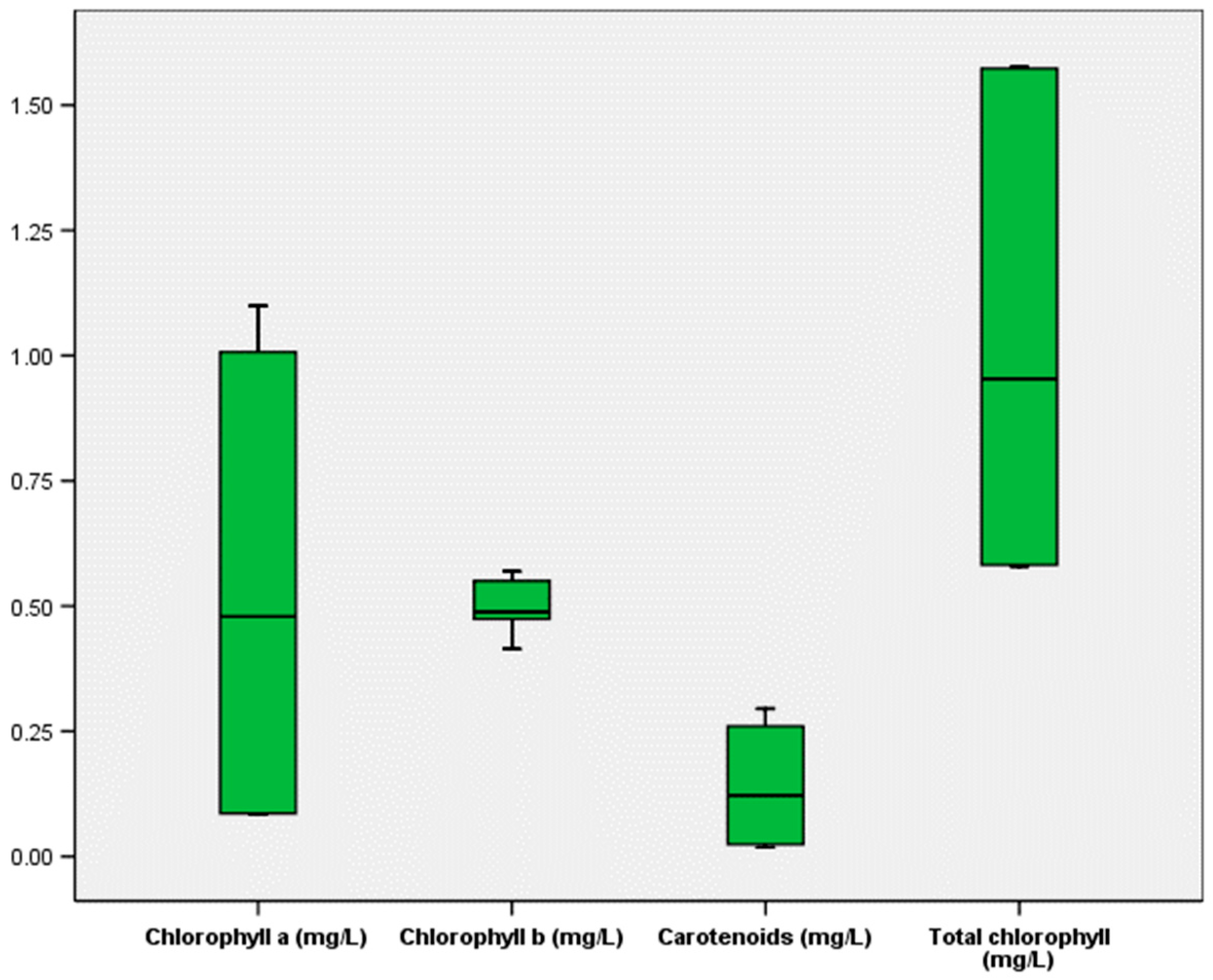
The absence of statistically significant differences (p > 0.05) in chlorophyll a, chlorophyll b, carotenoids content and the chlorophyll/carotenoids ratio among the three ex situ cultivated repetitions of L. alpinum indicates a stable and uniform photosynthetic pigment profile, suggesting that pigment biosynthesis is not measurably influenced by the cultivated repetition under controlled conditions (Table 4, Figure 6, Table S1). The slightly higher numerical values recorded for R2 and R3 may reflect a minor, non-significant tendency towards enhanced photochemical performance and antioxidant buffering capacity compared to R1 but without evidence of physiological divergence during ex situ acclimation.
Figure 6.
Photosynthetic pigment profile. The bars represent the standard error of the mean according to Tukey’s HSD post hoc test (α = 0.05).
Table 3.
Physiological parameters, reference ranges for alpine xeromorphic plants and experimentally measured value range for L. alpinum.
Table 4.
Photosynthetic pigment profile in L. alpinum grown under ex situ controlled conditions.
4. Discussion
The results obtained under controlled environmental conditions indicate that L. alpinum expresses a predominantly conservative morpho-functional strategy, with phenotypic variability concentrated mainly at foliar and reproductive level rather than in core architectural traits.
4.1. Morphological Stability and Modular Plasticity
The absence of statistically significant differences for plant height, lateral dimensions (L1, L2), estimated volume, collar diameter, and root traits indicates a high degree of morphological stability in the three-dimensional architecture and anchorage system of L. alpinum. This pattern is consistent, showing that edelweiss typically forms compact rosettes with limited variation in overall stature, while population persistence is ensured primarily by clonal growth and long rosette lifespan rather than by major architectural reconfiguration.
The significant differences recorded for total leaf number may indicate slightly different leaf production rates among individuals, without altering their three-dimensional growth potential. Furthermore, the differences detected among the three leaf size categories (large, medium, small) suggest possible variations in phenological stage or resource allocation strategy yet without measurable consequences for plant height, lateral expansion, or estimated volume. All of this indicates a modular type of plasticity expressed predominantly at the level of photosynthetically active organs, a phenomenon well-documented in alpine species [37].
Such a pattern agrees with the general alpine plant framework [30], where aboveground architecture is often conservative, while leaf traits (surface, pubescence, phenology) provide the fine-tuning required to cope with short growing seasons, fluctuating microclimate and high irradiance. The concentration of variability in foliar traits, therefore, suggests that L. alpinum moderates its functional response mainly through adjustment of photosynthetic surface and rosette organization rather than by altering its overall growth form.
The high uniformity of root number, maximum root length and collar diameter among repetitions further supports the idea of a mechanically robust and functionally conservative below-ground system, and all of these being genetically determined and less influenced by technological factors. Mechanical stability and resource acquisition capacity are intrinsic priorities in this species, consistent with its natural alpine growth strategy. This observation is in line with broader studies on alpine plants, which show that root systems tend to prioritize mechanical stability and erosion control over exploratory proliferation under shallow, rocky soils [29,34,38].
Therefore, even in a stress-buffered environment, L. alpinum appears to favor biomass consolidation over reproductive expansion, indicating that the species may be inherently conservative in its life history strategy, which aligns with its classification as a slow-growing, stress-resistant alpine taxon [39].
In its natural alpine habitat, L. alpinum typically colonizes rocky substrates, shallow skeletal soils, and calcareous screes characterized by low organic matter, high drainage capacity, and limited nutrient availability. These edaphic conditions impose strong constraints on growth and favor conservative morphological architectures and xeromorphic physiological strategies.
Under ex situ cultivation, although the substrate differs structurally from natural alpine soils, L. alpinum demonstrated the capacity to adjust to the cultivation medium through ecological plasticity. This adjustment is expressed primarily at the physiological level, while the overall growth form and structural stability remain consistent with those observed in natural environments. Such responses indicate that the species can tolerate modified substrate conditions without losing its characteristic alpine adaptive strategy.
These findings suggest that the morphological trade-offs observed in L. alpinum may represent a stable, species-specific allocation model, rather than a purely environmentally induced plastic response, which is highly relevant for ex situ conservation, cultivation protocols, and physiological modeling.
4.2. Correlative Structure of Morphological Traits
Considering that the experiment was conducted under controlled growth conditions, the correlations observed among the morphological and reproductive traits of L. alpinum are likely to reflect intrinsic functional relationships rather than external ecological constraints.
These findings are in line with observations of other alpine plants (Campanula alpina, Doronicum stiriacum) that have the ability to maintain stable biomass and reproductive output in environments with a wide range of temperatures, indicating physiological tolerance and the potential to withstand climate change [40].
Moreover, studies in Australia have demonstrated the potential of other alpine species such as Poa hothamensis to withstand combined stress factors such as water availability and heat, which ensures their survival in both drought conditions and occasional summer frosts as well as rapid growth after the stressors have been removed [41]. Furthermore, taking into account the variability of physiological indicators at different temperatures, alpine herbs like Kobresia pygmaea have a high adaptative potential to climate change, and their growth will not be significantly affected [42].
In standardized environments, factors such as substrate composition, irrigation regime, photoperiod, and air humidity are homogenized, meaning that the phenotypic variability recorded between repetitions is primarily attributable to genotypic expression and internal allocation strategies rather than habitat-driven plasticity.
L. nivale subsp. nivale is a stenobiont species that is difficult to grow ex situ and, therefore, emphasizes the need for carefully standardized cultivation conditions when investigating its ontogenesis and microhabitat requirements [16]. Once such conditions were optimized, the authors interpreted differences in ex situ performance primarily in relation to species-specific physiological demands and genetic background rather than to uncontrolled environmental heterogeneity. The plant biotechnology was applied to L. alpinum and standardized culture protocols were used to produce vigorous, homogeneous plant material for both economic valorization and conservation, underlining that ex situ systems with controlled substrate, temperature and humidity allow a clearer expression of genotypic potential and internal allocation strategies [43]. In a complementary way, the natural populations of L. alpinum showed high morphological variability and that legal restrictions limit wild collection, which motivated the development and cultivation of the hybrid cultivar ‘Helvetia’ under agronomic, well-controlled conditions to obtain uniform traits and stable phytochemical profiles [44]. Taken together, these studies support the view that, when Leontopodium taxa are grown in standardized ex situ environments, the observed phenotypic variation and trait covariation predominantly mirror genotypic differences and intrinsic functional integration, whereas the contribution of habitat-induced plasticity is substantially reduced.
4.3. Physiological Profile in the Context of Alpine Xeromorphy
The estimated physiological parameters for L. alpinum fall within the typical range of alpine xeromorphic plants (Table 3), supporting the interpretation of this species as a conservative, water-efficient, cold-tolerant taxon. Of the numerous physiological indicators, chlorophyll content is the most important parameter in assessing the physiological state of plants. Analyzing the dispersion indicators regarding the physiological and genetic peculiarities (L. alpinum), it is noted that, in the case of chlorophyll a, the maximum amplitude was 1.01, the standard deviation was 0.49, and the asymmetry coefficient was also below zero, which suggests that values lower than the mean predominate. In the case of chlorophyll b, the vaulting coefficient had the value of −0.422, which means that normality is accepted. Carotenoids had an average of 0.125, with a minimum of 0.05 and a maximum of 0.30. The value of the asymmetry coefficient in the case of the chlorophyll/carotenoid ratio was positive and lower than the average predominate, and the asymmetry also signals the appearance of values higher than the average of the analyzed variable. The transpiration rate (E) in the lower segment of the reference range points to efficient control of water loss, possibly associated with trichome density, thick cuticle, and pubescent leaf surface architecture, which are adaptations well-documented in alpine species exposed to strong wind, high UV radiation, and episodic water deficit [34]. The moderate values of stomatal conductance are consistent with a conservative stomatal-opening strategy optimized to balance carbon acquisition and water conservation [35]. Net photosynthesis (A) in the mid-range of reported alpine values, together with relatively low respiration (Rd), suggests an energetically conservative metabolic regime, enabling sustained carbon gain under low temperatures and short growing seasons while keeping maintenance costs reduced. This pattern fits well within the general ecophysiological framework described for alpine species, where moderate photosynthetic capacity is combined with high resistance of the photosynthetic apparatus to cold and high irradiance [31,32,35].
Importantly, the high A/E ratio (WUE) estimated for L. alpinum places the species towards the upper end of water-use efficiency among alpine herbs, indicating an optimized carbon gain per unit of water transpired and reinforcing its classification as a xeromorphic taxon [34].
The chlorophyll and carotenoids content values in L. alpinum are similar to those of other alpine species that grow at high altitudes (Allium stracheyi), which demonstrate its conservative photosynthetic profile [45].
5. Conclusions
The controlled growth experiment demonstrated that L. alpinum exhibits high morphological and architectural stability under uniform environmental conditions, indicating strong developmental canalization, and supports a conservative growth model typical of alpine xeromorphic perennials. Physiological estimates remained within expected alpine xeromorphic ranges, confirming conservative architectural stability combined with adaptive leaf-level flexibility under controlled conditions. Phenotypic plasticity in terms of modular response reflects fine-scale adaptive adjustments related to resource allocation and photosynthetic surface optimization, while the overall structural framework and anchorage capacity remain stable. The consistency between measured physiological parameters and the known xeromorphic profile of alpine herbs indicates that L. alpinum preserves its fundamental ecophysiological strategy even in the absence of typical high-altitude stressors. From an applied perspective, the study establishes a reliable baseline for ex situ propagation and conservation programs. Demonstrating stable growth and developmental performance under controlled conditions supports the feasibility of multiplication and cultivation protocols that maintain genetic integrity and adaptive potential, and the value of ex situ cultivation as a complementary conservation tool. This framework contributes to long-term efforts aimed at reintroducing the species into cultural, horticultural, or restored alpine habitats where natural populations have become fragmented or threatened.
Supplementary Materials
The following supporting information can be downloaded at https://www.mdpi.com/article/10.3390/conservation6010033/s1, Table S1: Statistical indices of the photosynthetic pigment profile.
Author Contributions
Conceptualization, M.N.; writing—original draft preparation, M.N., A.C.F., M.A.N.; writing—review and editing, M.N., A.C.F., M.A.N.; visualization, M.N., A.C.F., M.A.N.; supervision, M.N. All authors have read and agreed to the published version of the manuscript.
Funding
This research received no external funding.
Institutional Review Board Statement
Not applicable.
Informed Consent Statement
Not applicable.
Data Availability Statement
The original contributions presented in this study are included in the article and Supplementary Materials. Further inquiries can be directed to the authors.
Acknowledgments
The authors have reviewed and edited the output and take full responsibility for the content of this publication. The authors would like to thank the National University of Science and Technology Politechnica Bucharest—Pitesti University Center and National Research & Development Institute for Biotechnology in Horticulture for all the materials and equipment provided. We would also like to thank the reviewers for their constructive comments, which have helped to improve the content of the article.
Conflicts of Interest
The authors declare no conflicts of interest.
References
- WFO Plant List|World Flora Online. Available online: https://www.worldfloraonline.org/ (accessed on 15 December 2025).
- Blöch, C.; Dickoré, W.B.; Samuel, R.; Stuessy, T.F. Molecular phylogeny of the edelweiss (Leontopodium, Asteraceae—Gnaphalieae). Edinb. J. Bot. 2010, 67, 235–264. [Google Scholar] [CrossRef] [Scilit]
- UICN. Available online: https://www.iucnredlist.org/ (accessed on 15 December 2025).
- Sîrbu, I.; Ştefan, N.; Oprea, A. Plante Vasculare din România. Determinator Ilustrat de Teren; Victor B Victor: Bucharest, Romania, 2013; pp. 1–1320. [Google Scholar]
- Petrova, A.; Vladimirov, V. Red list of Bulgarian vascular plants. Phytol. Balc. 2009, 15, 63–94. [Google Scholar]
- Onyshchenko, V.A.; Mosyakin, S.L.; Korotchenko, I.A.; Danylyk, I.M.; Burlaka, M.D.; Fedoronchuk, M.M.; Chorney, I.I.; Kish, R.Y.; Olshanskyi, I.H.; Shiyan, N.M.; et al. IUCN Red List Categories of Vascular Plant Species of the Ukrainian Flora; M.G. Kholodny Institute of Botany: Kyiv, Ukraine, 2022. [Google Scholar]
- Anonymous. Document of Strategic Policies for the Protection of Biodiversity in Albania; Ministry of Environment of the Republic of Albania: Tirana, Albania, 2015; Available online: https://www.cbd.int/doc/world/al/al-nbsap-v2-en.pdf (accessed on 6 December 2025).
- Oltean, M.; Negrean, G.; Popescu, A.; Roman, N.; Dihoru, G.; Sanda, V.; Mihăilescu, S. Lista Roşie a Plantelor Superioare din România; Institutul de Biologie al Academiei Române: Bucharet, Romania, 1994. [Google Scholar]
- Bornand, C.; Gygax, A.; Juillerat, P.; Jutzi, M.; Möhl, A.; Rometsch, S.; Sager, L.; Santiago, H.; Eggenberg, S. Rote Liste Gefässpflanzen. Gefährdete Arten der Schweiz. Bundesamt für Umwelt, Bern und Info Flora; Genf. Umwelt-Vollzug Nr. 1621: 178 S; BBL, Verkauf Bundespublikationen: Bern, Switzerland, 2016. [Google Scholar]
- Schratt-Ehrendorfer, L.; Niklfeld, H.; Schröck, C.; Stöhr, O.; Gilli, C.; Sonnleitner, M.; Adler, W.; Barta, T.; Beiser, A.; Berg, C.; et al. Rote Liste der Farn-und Blütenpflanzen Österreich; Stapfia 114, Land Oberösterreich: Linz, Austria, 2022. [Google Scholar]
- Eliáš, P.; Dítě, D.; Kliment, J.; Hrivnák, R.; Feráková, V. Red list of ferns and flowering plants of Slovakia, 5th edition. Biologia 2015, 70, 218–228. [Google Scholar] [CrossRef] [Scilit]
- Deng, L.; Shangguan, Z.-P. Species Composition, Richness and Aboveground Biomass of Natural Grassland in Hilly-Gully Regions of the Loess Plateau, China. J. Integr. Agric. 2014, 13, 2527–2536. [Google Scholar] [CrossRef] [Scilit]
- Gao-Lin, W.; Wei, L.; Xiao-Peng, L.; Zhi-Hua, S. Grazing as a mediator for maintenance of offspring diversity: Sexual and clonal recruitment in alpine grassland communities. Flora 2011, 206, 241–245. [Google Scholar] [CrossRef] [Scilit]
- Hornick, A.; Schwaiger, S.; Rollinger, J.M.; Phung Vo, N.; Prast, H.; Stuppner, H. Extracts and constituents of Leontopodium alpinum enhance cholinergic transmission: Brain Ach increasing and memory improving properties. Biochem. Pharmacol. 2008, 76, 236–248. [Google Scholar] [CrossRef] [Scilit]
- Ischer, M.; Dubuis, A.; Keller, R.; Vittoz, P. A Better Understanding of the Ecological Conditions for Leontopodium alpinum Cassini in the Swiss Alps. Folia Geobot. 2014, 49, 541–558. [Google Scholar] [CrossRef] [Scilit]
- Kozuharova, E.K.; Panayotov, M.; Spadaro, V. Autecology and ex situ growth of Leontopodium nivale subsp. nivale (Asteraceae) from North Pirin marbles (SW Bulgaria). Fl. Medit. 2018, 28, 187–206. Available online: https://herbmedit.org/papers/6d61c444-696c-40b2-82c6-ba11b8dc10dc (accessed on 6 December 2025).
- Pozumentshtikov, A.A.; Boycheva, I.A.; Bonchev, G.N.; Kitanova, M.L.; Zhiponova, M.K. The secrets of the edelweiss (Leontopodium R. Br. ex Cass.): A review on this symbol, scientific object, and natural treasure. Annu. Sofia Univ. “St. Kliment Ohridski” 2024, 108, 133–158, Faculty of Biology, Book 2—Botanics. [Google Scholar] [CrossRef] [Scilit]
- Chytrý, M.; Daniëls, F.J.; Di Pietro, R.; Koroleva, N.; Mucina, L. Nomenclature adjustments and new syntaxa of the Arctic, alpine and oro-Mediterranean vegetation. Hacquetia 2015, 14, 277–288. [Google Scholar] [CrossRef] [Scilit]
- Mucina, L.; Bültmann, H.; Dierßen, K.; Theurillat, J.-P.; Raus, T.; Čarni, A.; ŠUmberová, K.; Willner, W.; Dengler, J.; Gavilán García, R.; et al. Vegetation of Europe: Hierarchical Floristic Classification System of Vascular Plant, Bryophyte, Lichen, and Algal Communities. Appl. Veg. Sci. 2016, 19, 3–264. [Google Scholar] [CrossRef] [Scilit]
- Maghiar, L.M.; Stoica, I.A. Climatic and habitat suitability of Leontopodium alpinum Cass. populations in the Romanian Carpathians. Stud. Univ. Babeş-Bolyai Biol. 2016, LXI, 95–106. [Google Scholar]
- Oprea, A.; Iordache, I. Parcul Naţional Ceahlău—Flora şi fauna de interes ştiinţific şi turistic. In Proceedings of the Simpozionul, Turism în Ceahlău: Prezent şi Perspective, Second Edition, Durău, Romania, 2–5 August 2014; pp. 11–28. [Google Scholar]
- Maghiar, L.M.; Stoica, I.A.; Tanentzap, A.J. Integrating demography and distribution modeling for the iconic Leontopodium alpinum Colm. in the Romanian Carpathians. Ecol. Evol. 2021, 11, 12322–12334. [Google Scholar] [CrossRef] [Scilit] [PubMed]
- Available online: https://www.fas.usda.gov/data/production (accessed on 23 September 2025).
- Adumitresei, L. Rockery area from biological section of “Anastasie Fătu” Botanical Garden. J. Pl. Develop. 2012, 19, 165–170. Available online: http://www.plant-journal.uaic.ro/docs/2012/15.pdf (accessed on 21 November 2025).
- Bancheva, S. Leontopodium alpinum . In Red Book of the Republic of Bulgaria; Peev, D., Ed.; Plants and Fungi; BAS & MEW: Sofia, Bulgaria, 2015; Volume 1. [Google Scholar]
- Easlon, H.M.; Bloom, A.J. Easy Leaf Area: Automated digital image analysis for rapid and accurate measurement of leaf area. Appl. Plant Sci. 2014, 2, 1400033. [Google Scholar] [CrossRef] [Scilit] [PubMed]
- Dinu, D.G.; Bianchi, D.; Mamasakhlisashvili, L.; Quarta, C.; Brancadoro, L.; Maghradze, D.; Cardinale, M.; Rustioni, L. Effects of genotype and environmental conditions on grapevine (Vitis vinifera L.) shoot morphology. Vitis 2021, 60, 85–91. [Google Scholar] [CrossRef] [Scilit]
- Lichtenthaler, H.K.; Wellburn, A.R. Determinations of total carotenoids and chlorophylls a and b of leaf extracts in different solvents. Biochem. Soc. Trans. 1983, 11, 591–592. [Google Scholar] [CrossRef] [Scilit]
- Pohl, M.; Alig, D.; Körner, C.; Rixen, C. Higher plant diversity enhances soil stability in disturbed alpine ecosystems. Plant Soil 2009, 324, 91–102. [Google Scholar] [CrossRef] [Scilit]
- Körner, C. Concepts in Alpine Plant Ecology. Plants 2023, 12, 2666. [Google Scholar] [CrossRef] [Scilit]
- Streb, P.; Josse, E.-M.; Gallouet, E.; Baptist, F.; Kuntz, M.; Cornic, G. Evidence for alternative electron sinks to photosynthetic carbon assimilation in the high mountain plant species Ranunculus glacialis. Plant Cell Environ. 2005, 28, 1123–1135. [Google Scholar] [CrossRef] [Scilit]
- Atkin, O.K.; Tjoelker, M.G. Thermal acclimation and the dynamic response of plant respiration to temperature. Trends Plant Sci. 2003, 8, 343–351. [Google Scholar] [CrossRef] [Scilit]
- Flexas, J.; Bota, J.; Cifre, J.; Escalona, J.M.; Galmés, J.; Gulias, J.; Lefi, E.; Martinez-Cańellas, S.F.; Moreno, M.T.; Ribas-Carbó, M.; et al. Understanding down-regulation of photosynthesis under water stress: Future prospects and searching for physiological tools for irrigation management. Ann. Appl. Biol. 2004, 144, 273–283. [Google Scholar] [CrossRef] [Scilit]
- Körner, C. Alpine Plant Life: Functional Plant Ecology of High Mountain Ecosystems, 3rd ed.; Springer: Berlin/Heidelberg, Germany, 2021. [Google Scholar]
- Larcher, W. Physiological Plant Ecology: Ecophysiology and Stress Physiology of Functional Groups, 4th ed.; Springer: Berlin/Heidelberg, Germany, 2003. [Google Scholar]
- Billings, W.D.; Mooney, H.A. The ecology of arctic and alpine plants. Biol. Rev. 1968, 43, 481–529. [Google Scholar] [CrossRef] [Scilit]
- Visakorpi, K.; Block, S.; Pellissier, L.; Levine, J.M.; Alexander, J. Eco-physiological and morphological traits explain alpine plant species’ response to warming. Funct. Ecol. 2023, 37, 287–301. [Google Scholar] [CrossRef] [Scilit]
- Geng, Y.; Wang, L.; Jin, D.; Liu, H.; He, J.S. Alpine climate alters the relationships between leaf and root morphological traits but not chemical traits. Oecologia 2014, 175, 445–455. [Google Scholar] [CrossRef] [Scilit] [PubMed]
- Keller, R.; Vittoz, P. Clonal growth and demography of a hemicryptophyte alpine plant: Leontopodium alpinum Cassini. Alp. Bot. 2015, 125, 31–40. [Google Scholar] [CrossRef] [Scilit]
- Kiełtyk, P.; Obidziński, A.; Scheepens, J.F. High-elevation plant species exhibit limited morphological variability across elevations, contrary to species with a wider elevational distribution. Alp. Bot. 2025, 135, 187–202. [Google Scholar] [CrossRef] [Scilit]
- Sumner, E.E.; Williamson, V.G.; Gleadow, R.M.; Wevill, T.; Venn, S.E. Acclimation to water stress improves tolerance to heat and freezing in a common alpine grass. Oecologia 2022, 199, 831–843. [Google Scholar] [CrossRef] [Scilit]
- Xu, H.; Li, L.; Mao, N.; Gan, Z.; Xue, S.; Li, X.; Zhang, B.; Liu, G.; Wu, X. Physiological response of Kobresia pygmaea to temperature changes on the Qinghai-Tibet Plateau. BMC Plant. Biol. 2022, 22, 51. [Google Scholar] [CrossRef] [Scilit]
- Holobiuc, M.I.; Ciocan, A.G.; Catană, R. Leontopodium nivale ssp. alpinum (Cass.) biotechnology applied for economic and conservative purpose. Sci. Papers. Ser. B Hortic. 2025, LXIX, 779–787. Available online: https://horticulturejournal.usamv.ro/pdf/2025/issue_1/Art95.pdf (accessed on 21 November 2025).
- Vouillamoz, J.; Carron, C.-A.; Baroffio, C.A.; Carlen, C. Leontopodium alpinum Cass. ‘Helvetia’, a new hybrid edelweiss. Afr. J. Tradit. Complement. Altern. Med. 2009, 6, 363–364. Available online: https://journals.athmsi.org/index.php/ajtcam/article/view/725 (accessed on 21 November 2025).
- Bisht, A.; Thakur, S.; Trivedi, V.L.; Semwal, P.; Nautiyal, M.C. Morphological, biochemical, and anatomical variations in Allium stracheyi (Baker) along an elevational gradient. J. Mt. Sci. 2025, 22, 1600–1616. [Google Scholar] [CrossRef] [Scilit]

Disclaimer/Publisher’s Note: The statements, opinions and data contained in all publications are solely those of the individual author(s) and contributor(s) and not of MDPI and/or the editor(s). MDPI and/or the editor(s) disclaim responsibility for any injury to people or property resulting from any ideas, methods, instructions or products referred to in the content. |
© 2026 by the authors. Licensee MDPI, Basel, Switzerland. This article is an open access article distributed under the terms and conditions of the Creative Commons Attribution (CC BY) license.