


Simple Summary
Leopards are considered solitary animals, living and hunting alone. However, recent research shows a more complicated social relationship than previously envisioned. By carefully tracking leopards with cameras and satellite telemetry, scientists have found that these cats actually live in ways that connect them to each other. Female offspring often stay close to their mothers or daughters, creating “kin cluster territories.” They use special trees and rocks as scent-marking hubs, where several leopards leave visual or olfactory messages for one another without inter-specific encounters. Mothers spend up to 15 months raising their cubs, moving dens, and even staying near villages to keep them safe from threats like hyenas or male leopards. Cubs face their highest risk of dying in their first year, but survival improves greatly as they grow older. Leopards in Jhalana Forest Reserve also display intelligence and flexibility. They have been seen using culverts to cross highways, hunting feral dogs near Jaipur safely, and even displaying signs of grief when a cub dies. These discoveries reveal that leopards are not loners but mix independence with hidden social connections. Understanding this hidden side of leopard life can help people and wildlife managers protect them more effectively, especially in areas where leopards share space with humans.
Abstract
Leopards (Panthera pardus) are considered solitary carnivores, but recent research reveals a more complex lifestyle that incorporates kin selection, hidden social structures, and behavioral innovation and plasticity. This paper combines theoretical advancements in kin selection with empirical findings from the peri-urban Jhalana Forest Reserve in Jaipur, India. Our research demonstrates that kin-tolerant spatial organization, maternal investment, temporal avoidance strategies, and adaptive responses to human-induced pressures form the foundation of leopard ecology in Jhalana. Female philopatry leads to the formation of matrilineal clusters, and maternal strategies play a crucial role in cub survival, with a cumulative two-year survival rate estimated at 61.8%. Emotional behaviors, such as grief-like responses to the loss of cubs, further challenge the notion that leopards are purely solitary animals. These findings have significant implications for evolutionary theory, conservation management, and human–wildlife coexistence. Jhalana serves as a model system where solitude and social behavior intersect, redefining our understanding of leopard ecology and guiding conservation efforts in human-dominated landscapes.
1. Introduction
Environmental change is increasingly recognized as a powerful force reshaping animal behavior, including social systems long assumed to be evolutionarily stable. Human-induced environmental perturbations can alter mate choice strategies, reproductive outcomes, and population structure [1,2], while broader conceptual and empirical work has demonstrated that changes in abiotic and anthropogenic conditions can drive shifts in social organization and behavioral plasticity across taxa [3,4]. These insights challenge the notion that social systems are fixed and provide a framework for reassessing species traditionally characterized as solitary. Urbanization, in particular, represents a pervasive and globally expanding driver of environmental change that consistently modifies animal social behavior. A synthesis of 227 studies revealed that the vast majority report significant urban-driven effects on social behavior, social systems, or interspecific interactions, spanning individual behavior, population-level organization, and species interactions linked to fitness and survival [5,6]. Although this literature is taxonomically biased to avian species, the consistency of responses across diverse taxa suggests that urban environments fundamentally reshape social dynamics. Together, this body of work motivates a re-examination of solitary living in leopards (Panthera pardus), raising the possibility that environmental change—particularly urbanization—may promote adaptive shifts in spacing, conspecific tolerance, and encounter rates, and that solitary lifestyles may be more flexible than traditionally assumed.
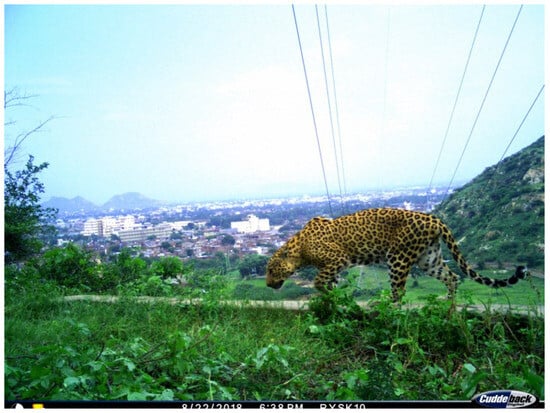
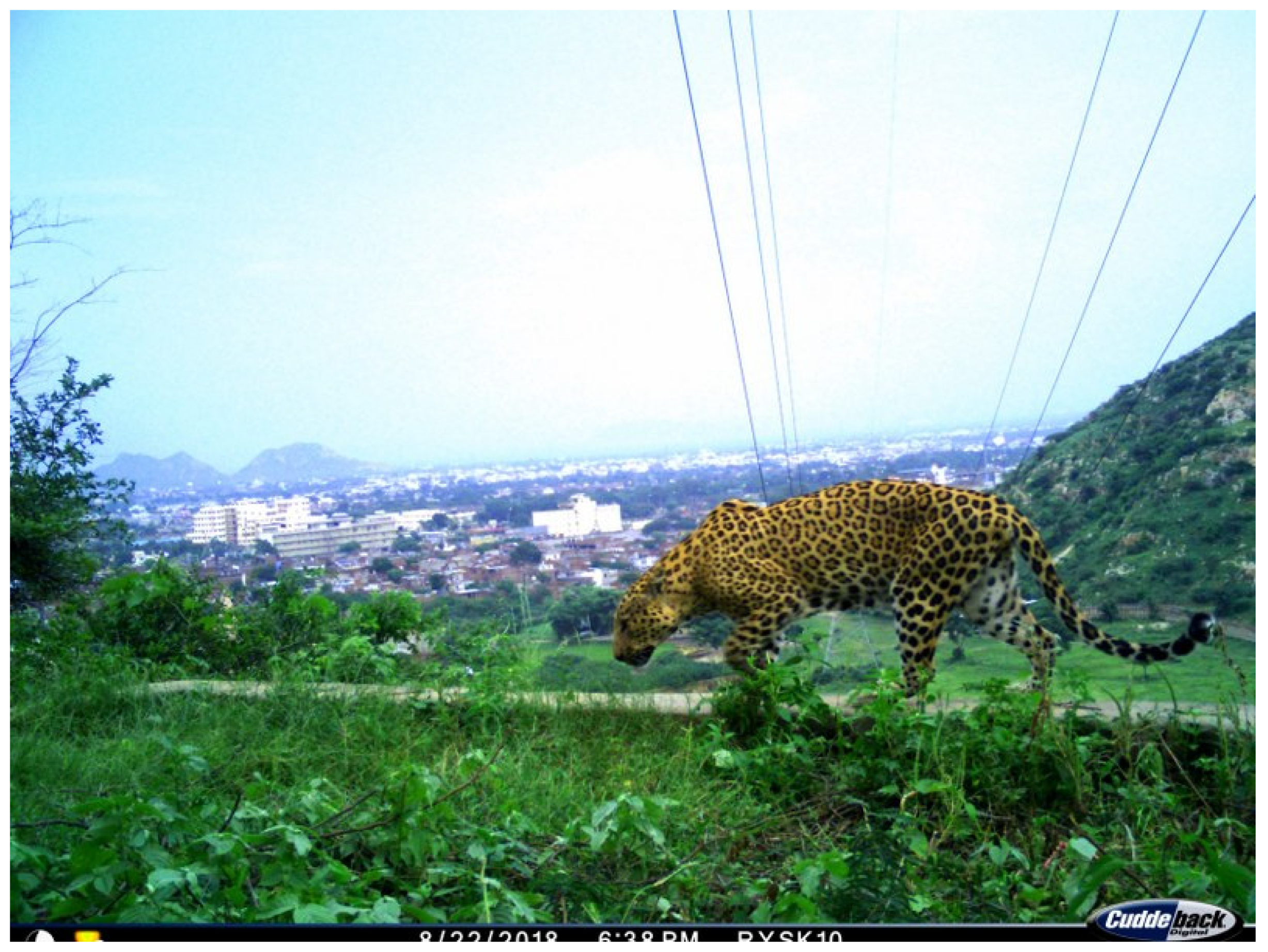
Leopards are among the most widely distributed felids, occupying a broad range of habitats across Africa and Asia [7], and are classically characterized as solitary carnivores that contrast sharply with the overt sociality of lions (P. leo) and many canids [8,9,10]. In the traditional view, leopard solitary behavior is explained by the ecological constraints hypothesis, which posits that solitary living reduces intra-specific competition and infanticide risk while optimizing use of dispersed prey resources [6,11,12]. Recent conceptual advances, notably the “kin selection without cohesion” framework, propose that even nominally solitary carnivores may maintain kin-structured spatial organization and passive tolerance through overlapping ranges and asynchronous interactions rather than cohesive group living, with comparative studies increasingly revealing hidden social complexity among solitary mammals [13,14,15,16,17]. Within this theoretical context, the Jhalana Reserve Forest (JRF) in Jaipur, Rajasthan, India, represents a particularly revealing case study. As a small, enclosed, semi-arid “urban island” leopard sanctuary entirely surrounded by dense human settlement and infrastructure, JRF provides a uniquely tractable setting in which individuals’ spatial overlap, tolerance, and kin-related associations can be examined in the absence of dispersal corridors typical of open populations. Leopards here adjust movements to human activity patterns (Figure 1; [18,19,20]). Thus, JRF exemplifies how kin selection mechanisms might operate and become detectable under spatial compression and anthropogenic constraints, offering rare insight into how large carnivores sustain kin-structured tolerance within high-density human landscapes.
Figure 1.
A leopard in Jhalana Forest Reserve, with the city of Jaipur visible in the background. Photo Swapnil Kumbhojkar.
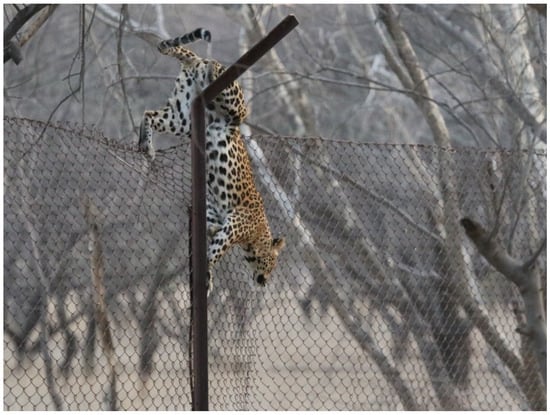
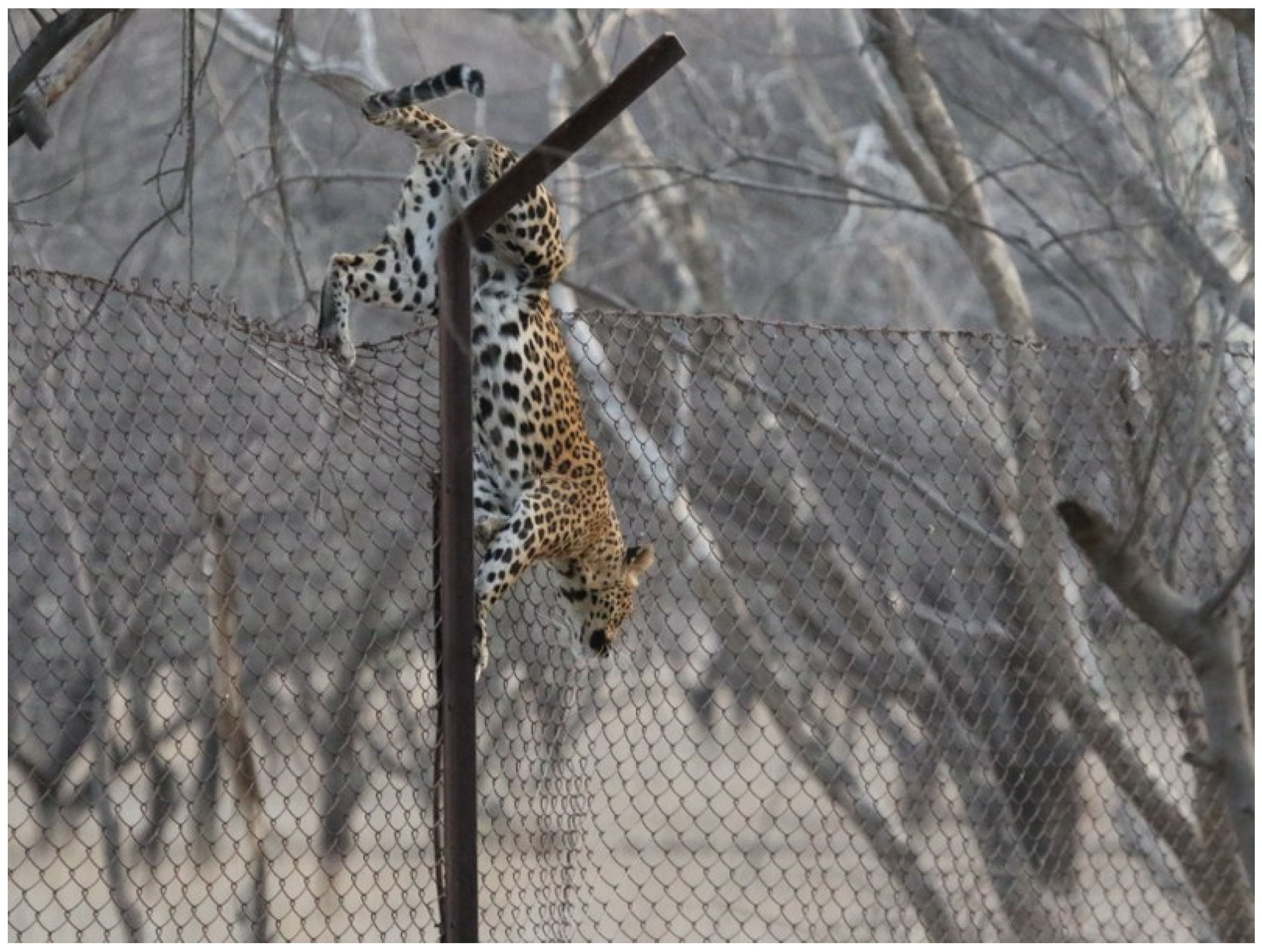
Building on these theoretical advances and on comparative work in other solitary carnivores, this manuscript argues that leopards in JRF are neither strictly solitary nor conventionally social, but occupy an intermediate position on a solitary–social continuum in which kin selection operates without overt cohesion, with important implications for evolutionary theory, conservation design, and human–wildlife coexistence in rapidly urbanizing India (Figure 2; [21,22]). The theoretical framework integrates kin selection and inclusive fitness models with their application to solitary mammals and with recent formulations of kin selection without cohesion, focusing on philopatry, kin-tolerant territoriality, and passive cooperation as drivers of hidden social structure rather than visible group living. Comparative insights from other solitary species—such as pumas (Puma concolor), Iberian Lynx (Lynx pardinus), wolverines (Gulo gulo), brown bears (Ursus arctos), and even solitary bees (Osmia spp.)—situate Jhalana’s leopards within a broader spectrum of taxa in which matrilineal spatial clustering, relaxed aggression among kin, and indirect sociality emerge under particular ecological and demographic conditions, especially high density, stable resources, or strong constraints on dispersal [23,24,25,26,27,28,29,30]. Recognizing this has important implications for evolutionary theory, conservation strategies, and human–wildlife coexistence across India [31,32,33,34].
Figure 2.
A leopard climbs the reserve fence to forage in the city. Photo Swapnil Kumbhojkar.
2. Methods
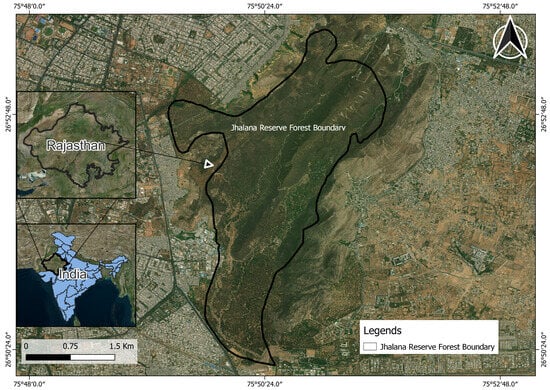
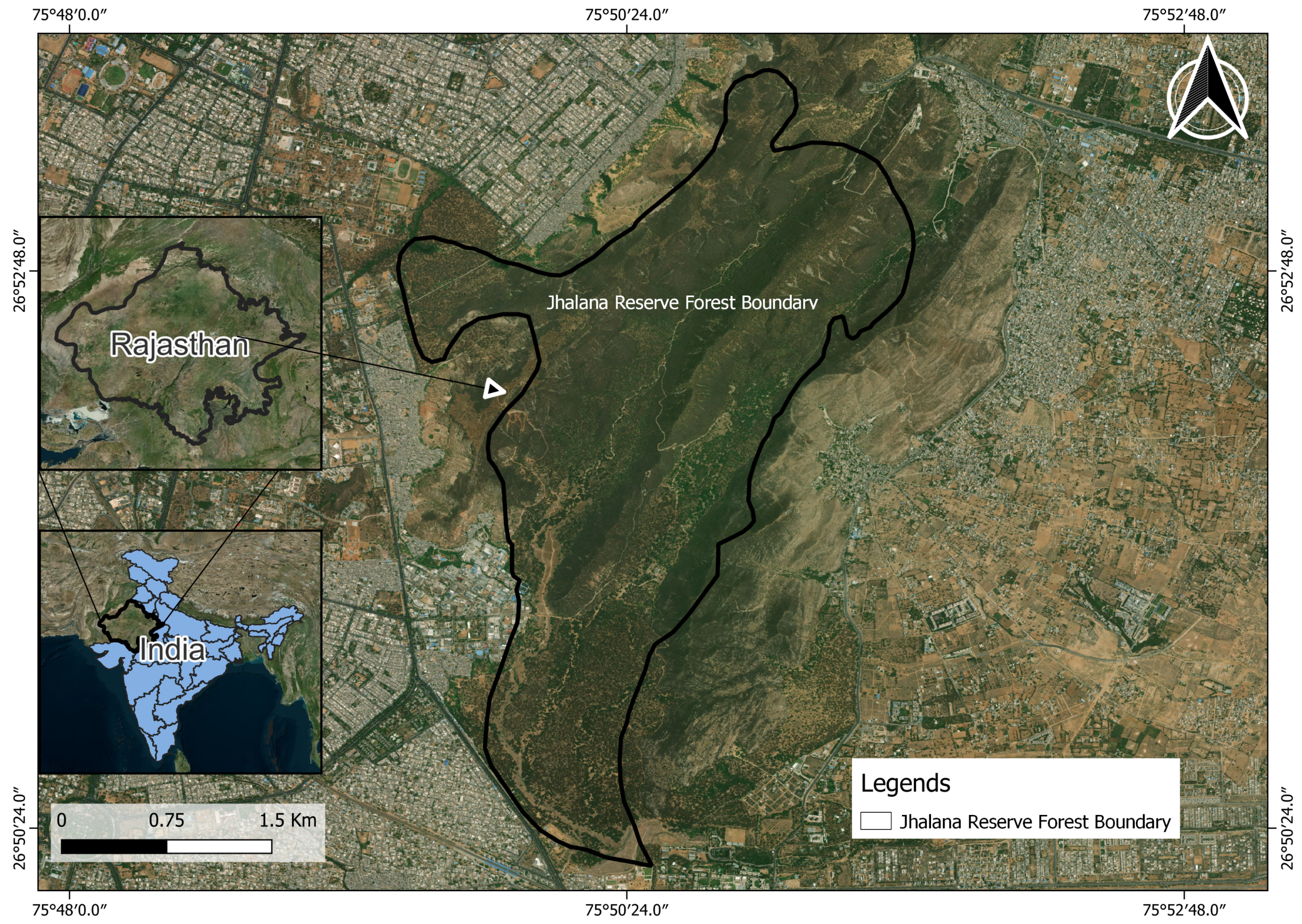
Jhalana Reserve Forest (JRF) is a small, semi-arid leopard conservation area located on the eastern fringe of Jaipur, Rajasthan, India, and is almost entirely encircled by dense urban development (Figure 3). The reserve comprises a mosaic of scrub forest, rocky hills, and anthropogenic edges, intersected by roads, utility corridors, and built infrastructure that shape animal movement and habitat use.
Figure 3.
Map of Jhalana Reserve Forest in Jaipur, Rajasthan, India. Amagarh Nature Reserve is located to the northeast of where some of the cubs have dispersed.
Empirical work in JRF since 2017, built on camera trapping and individual identification via coat patterns, provides the core data for this argument, revealing a demographically stable population with 18–23 adult females, 11 male territories, and a total of approximately 40 individuals, including cubs, persisted within a compact, human-encircled forest patch [18]. Twenty-one fixed-point camera traps (Cuddeback X Change Color Model 1279), deployed using an optimally stratified design at key movement features and operated for 399 two-week sessions per year, yielded 23,208 trap hours and 16,327 photographs, of which 661 (4.1%) depicted leopards, providing a robust basis for quantifying space use, survival, and social interactions [35,36]. Survival analyses using Kaplan–Meier methods estimated first-year cub survival at about 73.9% and second-year survival at about 83.1%, resulting in a cumulative two-year survival near 61.8% [30], values that compare favorably to estimates from non-protected or less-structured landscapes, where cub and juvenile survival is typically lower, underscoring the demographic benefits of JRF’s ecological and behavioral context [37,38,39]. These data are supplemented by targeted behavioral observations, including maternal strategies, kleptoparasitism by striped hyenas [20], and adaptations to human proximity, which are synthesized alongside a concise summary of key metrics and behaviors (e.g., female philopatry, communal marking, human adaptation) to provide a holistic characterization of leopard life histories in JRF.
3. Results and Discussion
Since 2017, intensive camera trapping and individual identification in Jhalana Reserve Forest (JRF) have documented a demographically stable leopard population of roughly 40 individuals, including 18–23 adult females and 11 male territories within a small, human-encircled forest patch. The population-level estimates are complemented by targeted behavioral observations of maternal strategies, kleptoparasitism by striped hyenas, and adaptations to human proximity, to summarize key behaviors (Table 1).
Table 1.
Summary of empirical findings from Jhalana leopards.
3.1. Kin-Structured Spatial Ecology
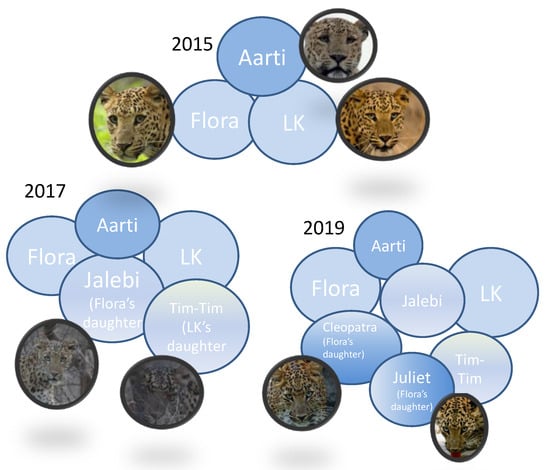
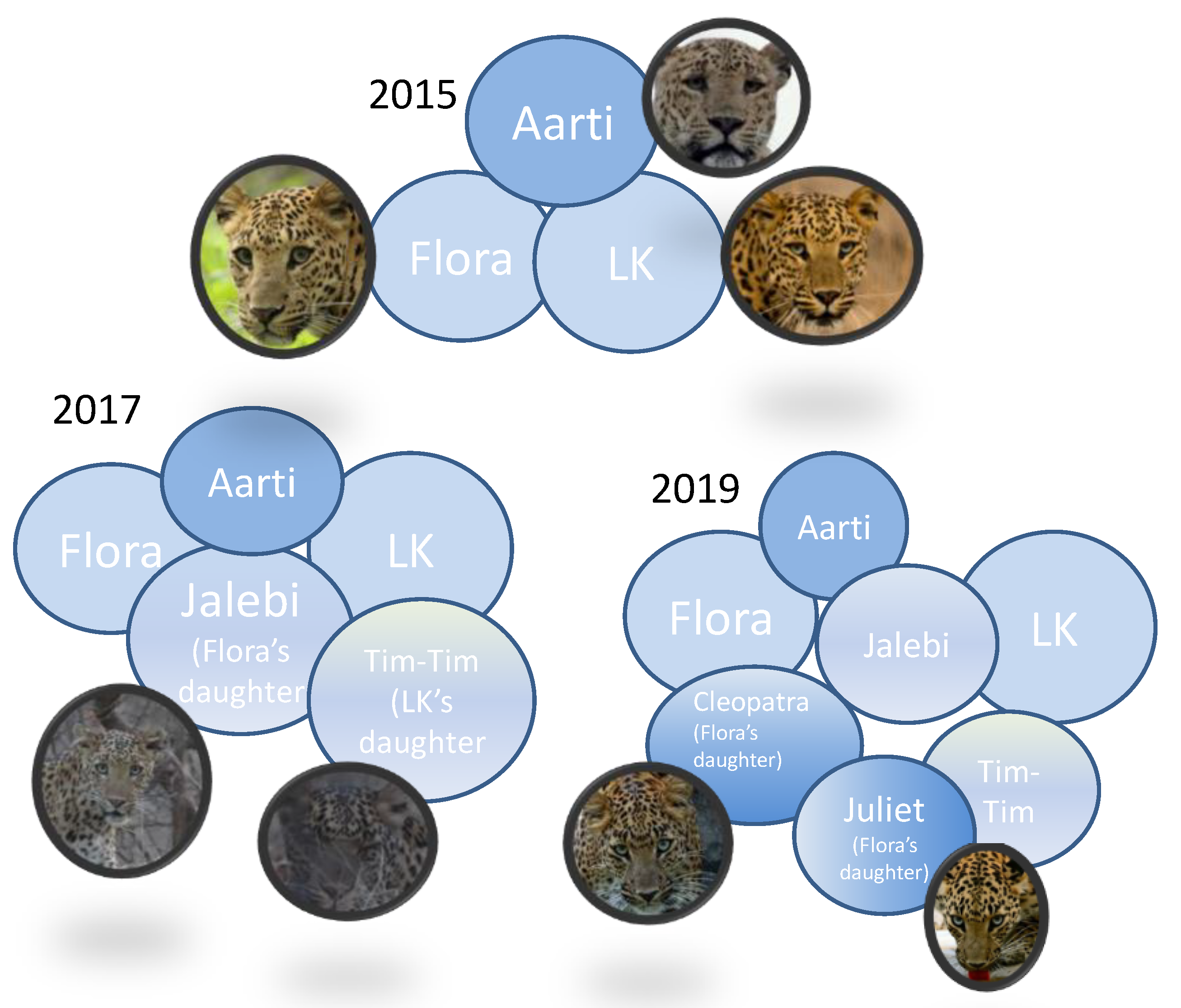
Kin-structured spatial ecology is a defining feature of leopard social organization in Jhalana. Camera trap records and spatial analyses indicate that daughters commonly establish home ranges adjacent to or overlapping with their mothers [43], forming matrilineal clusters in which related females tolerate extensive territorial overlap, whereas unrelated females largely maintain exclusive ranges (Figure 4; [18]). This pattern is most clearly illustrated by Aarti’s lineage, which came to occupy much of the reserve, while lineages of other females, such as Nathwali and Mrs. Khan, failed to secure enduring territories and likely dispersed out of JFR. Reproductive histories reinforce this asymmetry: between 2013 and 2021, Aarti produced four litters (2012, 2013, 2016, 2018), including three daughters that were themselves highly fecund—Flora (born 2012) had four litters with ten cubs (four male, six female; two males died early), LK, her litter-sister, had five litters totaling 12 cubs (five male, seven female), and Aarti’s granddaughter from LK’s first 2015 litter produced her first litter in 2019. By contrast, other dominant females such as Nathwali (four litters with eight cubs) and Mrs. Khan (five litters with nine cubs, including two early male deaths) did not establish enduring female lineages within the reserve. Only Aarti’s daughters and granddaughters ultimately held territories inside Jhalana (Figure 4; [22]), whereas 13 other cubs with known fates either died in early life (n = 6) or left their natal ranges as subadults, being translocated (one male to Sariska Tiger Reserve; one male and one female to Jhunjhunu, 145 km north) or establishing territories in the neighboring Amagarh Nature Reserve via the north-eastern corridor (two males, two females; Figure 3). Taken together, these lines of evidence indicate that dominance and philopatry within particular matrilines structure space use, channel dispersal decisions, and ultimately shape the long-term demographic and social composition of the Jhalana population [see genealogical trees in [18].
Figure 4.
A conceptual schematic illustrates kin selection without overt social cohesion in leopards. Initially, two litter-sisters, Flora and LK born in 2013 to Aarti (2011–2021), establish territories adjacent to their mother; as their offspring mature and become mothers themselves, their territories increasingly overlap with their philopatric daughters and Aarti’s grand-daughters, leading to the development of a matrilineal cluster and gradually separating the sisters over time (based on [18]). Cleopatra and Juliet are also litter-sisters born to Flora in January 2017. Extended kin, such as aunts, also show tolerance for partial territory overlap. This kin-structured spatial arrangement minimizes conflict and increases inclusive fitness, demonstrating how solitary leopards in Jhalana can maintain hidden social structures without forming cohesive groups.
The patterns documented here—high local survival, stable or increasing numbers, and extensive tolerance among related females—are consistent with the idea that kin-structured sociality can facilitate persistence in a small, human-dominated fragment. At the same time, these data do not allow us to demonstrate that kin tolerance causes high survival, nor to rule out the possibility that both arise from extrinsic constraints, such as high density, abundant anthropogenic prey, and severely limited dispersal opportunities in an enclosed reserve. In this sense, kin clustering and tolerance may represent an adaptive strategy, a by-product of demographic and spatial constraint, or, most plausibly, some interaction between the two. Our aim is therefore not to claim a unidirectional causal link, but to show that under strong spatial and anthropogenic constraints, leopards can organize into kin-structured neighborhoods that appear demographically successful, and that such “kin selection without cohesion” dynamics should be considered explicitly when interpreting population stability and planning management interventions.
In most leopard populations, males predominantly disperse away from their natal ranges [44,45], leading to limited opportunities for male–male kin associations and a primary focus on female philopatry and matrilineal structure (Figure 3). In Jhalana, this general pattern appears to hold at the population scale—adult males are more wide-ranging, turn over more frequently, and are less tightly clustered around specific kin lineages than females—yet several notable exceptions suggest that male sociality also contributes to “hidden” kin structure. Specifically, we document cases in which sons remained in or near their natal range for prolonged periods and were observed tolerating, and in some instances alloparenting, subsequent litters born to their mother (e.g., through affiliative interactions and lack of infanticide behavior toward younger half-siblings; [35]). These observations indicate that, under conditions of high density, limited dispersal opportunities, and strong spatial compression, even typically dispersive males may express kin-directed tolerance and care within natal matrilines. However, because sample sizes for such cases are small and genetic relationships among males are not yet fully resolved, we treat male kin tolerance as a provisional extension of the broader “kin selection without cohesion” framework in Jhalana, and highlight it as a key target for future work (e.g., paternity analyses, longitudinal tracking of male kin clusters).
3.2. Communal Marking and Indirect Networks
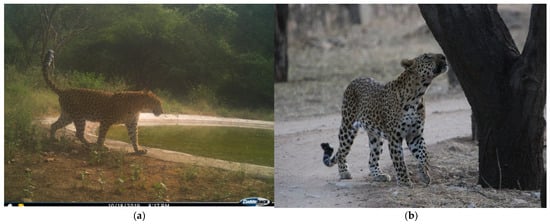
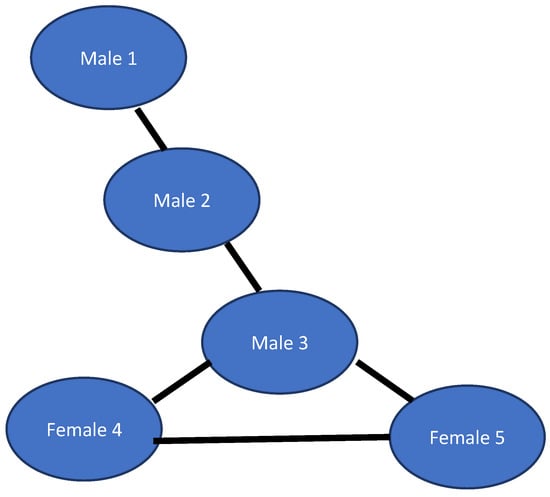
Cronin et al. [46] provided empirical evidence that urbanization modulates sexual signaling and alters the dynamics of sexual selection, while Heinen-Kay et al. [47] reviewed pervasive changes in sexual communication systems across taxa exposed to anthropogenic habitats. In leopards, communal scent-marking hubs (Figure 5a,b) function as key nodes in this spatial and social system: repeated use of the same marking sites by up to five individuals—often within hours or days (P. p. saxicolor, [48]; P. p. pardus, [49,50])—creates asynchronous, indirect interaction networks in which some leopards act as central communication hubs (Figure 6), a pattern matching similar findings in other leopard subspecies (Southern Africa P. p. pardus, [24,45,46]; Namibia [51]; Israel P. p. nimr, [52,53]) and reinforcing the idea that solitary carnivores can maintain structured social networks via information-rich sites rather than direct group living.
Figure 5.
Scent marking sites serve as communal information centers for leopards at Jhalana. (a) Scent marking by splashing urine; (b) Smelling a marking site. Photos Swapnil Kumbhojkar.
Figure 6.
An illustrative social network depicts leopard interactions at communal marking sites, where each node represents a distinct individual (based on [52,53]). Edges link leopards that visited the same scent-marking hub within a short time period. Central individuals, such as male 2, function as communication hubs, showing how solitary leopards can establish indirect, asynchronous social connections through communal marking behavior.
Space sharing, whether geographical and/or temporal, and social organization in this urban context depart strikingly from the textbook solitary leopard model [49]. In Jhalana, females are repeatedly recorded in loose assemblages that include both dependent cubs and sub-adults from previous litters [12,20], producing “pride-like” groupings that resemble, in structure if not size, the family clusters more typical of cooperative or plural breeders, and that echo findings from high-density African leopard populations where territoriality relaxes and kin-based overlap increases in resource-rich patches [38]. These configurations exemplify “kin selection without cohesion”: philopatric females maintain independent hunting and denning but tolerate spatiotemporal overlap with close kin, reducing conflict and dispersal mortality and thereby increasing inclusive fitness without forming stable, tightly coordinated groups [20]. Comparative work shows that similar processes arise in other solitary carnivores—pumas and brown bears [54,55], for example, can form matrilineal spatial clusters with reduced aggression among related females, while wolverines in saturated populations maintain strong territorial fidelity but still show kin-influenced patterns of space use and dispersal [26]—supporting the argument that Jhalana’s leopards are part of a broader continuum in which solitary lifestyles retain substantial scope for kin-structured sociality.
3.3. Interspecific and Anthropogenic Interactions
Interspecific and anthropogenic interactions further reshape leopard behavior at Jhalana, revealing fine-scale adaptive strategies in a human-dominated landscape [22,56,57,58,59,60]. Striped hyenas frequently displace leopards from kills near reserve edges [20], where fencing and human proximity intensify competition, prompting leopards to drag carcasses into steeper or more inaccessible terrain to reduce kleptoparasitism risk and to adjust feeding schedules, with implications for energy budgets and risk management. At the urban interface, leopards traverse highways and other barriers via culverts, exhibit pronounced nocturnality relative to surrounding rural populations, and prey heavily on feral dogs and other synanthropic species, all of which reflect behavioral plasticity in response to human activity patterns and altered prey communities [19,58,59,60,61,62,63]. Diet studies and field observations indicate that Jhalana leopards rely predominantly on small and medium-sized prey, such as dogs and livestock, rather than on large wild ungulates that are relatively scarce in this semi-arid fragment [39,59,60,61], supporting the ‘credit-card hypothesis’ that urban habitats can sustain weaker competitors through consistent food availability [1]. For example, research on the African lesser bushbaby (Galago moholi) demonstrated that individuals inhabiting urban environments exhibited significantly higher body mass indices and elevated fecal glucocorticoid metabolite concentrations compared to their rural counterparts, reflecting both dietary shifts toward provisioned food sources and increased physiological stress. Such findings underline the pervasive influence of urban environments on animal behavior, health, and social dynamics [64]. These shifts in foraging ecology, in turn, drive more fluid territorial boundaries and may reinforce kin-based tolerance where shared, predictable resources are clustered [65]. Ferreiro-Arias et al. [66] revealed substantial individual variability in wolf responses to human disturbance, with 26 individuals showing markedly different activity adjustments to varying levels of anthropogenic pressure and times of day, and underscoring the importance of vegetation patches as refuge cover that buffers disturbance and facilitates persistence in human-dominated landscapes. In a similar vein, direct competition with hyenas and the need to navigate dense human infrastructure thus create a complex risk–reward landscape in which cooperation or tolerance among kin, flexible space use, and innovative behaviors contribute to persistence [67,68].
3.4. Kin Selection Without Cohesion in a Solitary Carnivore
From a synthetic perspective, Jhalana’s leopards exemplify kin selection without cohesion in a solitary carnivore and highlight a broader pattern of hidden sociality across “solitary” mammals. Female philopatry, matrilineal clustering, communal marking hubs, and high maternal investment combine to create a system in which indirect social networks and kin-structured space use deliver inclusive fitness benefits without the costs of full-time group living, paralleling mechanisms documented in pumas, brown bears, and even solitary insects such as Osmia bees, where reduced aggression and spatial aggregation among kin have also been observed (Table 2) [69,70,71]. These patterns support the view that solitary and social lifestyles are not binary states but points along a continuum; Jhalana leopards occupy an intermediate position, combining solitary hunting with kin-based tolerance, asynchronous communication, and occasional loose family groups, thereby revealing a richer and more nuanced social repertoire than traditionally assumed. Recognizing this continuum has practical implications: conservation strategies must protect not only individual animals and sufficient habitat, but also key social and behavioral processes—such as philopatric lineages, communal marking sites, and critical denning areas—that underpin long-term population stability, especially in small, isolated, urban reserves.
Table 2.
A comparative perspective, showing how Jhalana leopards fit into global patterns of solitary species with hidden kin structuring.
However, one must take into account that our inferences about kin-structured sociality are based on a single, highly isolated urban fragment, and the strong spatial confinement, high local density, and limited dispersal opportunities in JRF may themselves contribute to the observed clustering of related females, so these patterns should be interpreted as site-specific outcomes that inform, but do not on their own generalize, the broader theoretical framework.
4. Conservation Implications
Finally, these findings carry clear management and policy implications for human–wildlife coexistence in peri-urban India and beyond [72,73]. Because Jhalana’s leopards rely on specific features of the urban matrix—culverts as movement corridors, peri-urban scrub as hunting grounds, village edges as denning refuges—effective conservation will require safeguarding functional connectivity, mitigating edge effects and vehicular collisions, and working closely with local communities to manage conflict linked to dog and livestock depredation [74]. At the same time, kin-structured sociality has direct implications for conservation planning in such human-dominated, spatially constrained landscapes: in enclosed or semi-enclosed reserves where dispersal is limited, information on relatedness and kin-structured space use can help managers avoid unintentionally fragmenting matrilines or kin clusters through targeted removals, conflict responses, or infrastructure placement, thereby reducing the risk of social disruption and local demographic collapse. Outreach that emphasizes leopards’ cognitive and emotional capacities, their role as apex predators, and their demonstrated ability to coexist peaceably with dense human populations can foster public support for proactive interventions, such as protecting key habitat patches, maintaining safe crossing structures, and preserving communal marking and denning sites. As urbanization accelerates, Jhalana’s experience underscores the urgency of integrating behavioral ecology, kin-structured sociality, and community-based governance into conservation planning [75,76,77], offering a replicable model for managing other large carnivores in shrinking and increasingly human-dominated landscapes.
Author Contributions
Conceptualization, R.Y.; methodology, S.K.; validation, R.Y. and S.K.; investigation, S.K.; data curation, R.Y. and S.K.; writing—original draft preparation, R.Y.; writing—review and editing, R.Y. and S.K. All authors have read and agreed to the published version of the manuscript.
Funding
This research received no external funding.
Institutional Review Board Statement
The study was conducted under the supervision of the Deputy Conservator of Forests (Wildlife), and research permit 3(05)/2017/171, issued 3 May 2017, renewed 14 December 2022, and again 22 November 2023, from the office of the Chief Wildlife Warden, Rajasthan Forest Department, Jaipur.
Data Availability Statement
The original contributions presented in this study are included in the article. Further inquiries can be directed to the corresponding author.
Acknowledgments
We thank the Rajasthan Forest Department for the research permits and continued support from the staff. We thank Bablu Gurjar, Abhishek Gurjar, Shubham Saini, Dayal Gurjar, and Akhlez Ansari for their assistance in camera trapping. During the preparation of this manuscript/study, the authors used Grammarly for the purposes of proofreading the text. The authors have reviewed and edited the output and take full responsibility for the content of this publication.
Conflicts of Interest
The authors declare no conflicts of interest.
References
- Shochat, E. Credit or debit? Resource input changes population dynamics of city-slicker birds. Oikos 2004, 106, 622–626. [Google Scholar] [CrossRef] [Scilit]
- Candolin, U. Mate choice in a changing world. Biol. Rev. 2019, 94, 1246–1260. [Google Scholar] [CrossRef] [Scilit]
- Blumstein, D.T.; Hayes, L.D.; Pinter-Wollman, N. Social consequences of rapid environmental change. Trends Ecol. Evol. 2023, 38, 337–345. [Google Scholar] [CrossRef] [Scilit] [PubMed]
- Fisher, D.N.; Kilgour, R.J.; Siracusa, E.R.; Foote, J.R.; Hobson, E.A.; Montiglio, P.O.; Saltz, J.B.; Wey, T.W.; Wice, E.W. Anticipated effects of abiotic environmental change on intraspecific social interactions. Biol. Rev. 2021, 96, 2661–2693. [Google Scholar] [CrossRef] [Scilit]
- Maune, A.L.; Caspers, B.A.; Damas-Moreira, I. The impact of urbanisation on social behaviour: A comprehensive review. Biol. Rev. 2025. [Google Scholar] [CrossRef] [Scilit] [PubMed]
- Stasiukynas, D.C.; Boron, V.; Hoogesteijn, R.; Barragán, J.; Martin, A.; Tortato, F.; Rincón, S.; Payán, E. Hide and flirt: Observed behavior of female jaguars (Panthera onca) to protect their young cubs from adult males. Acta Ethologica 2022, 25, 179–183. [Google Scholar] [CrossRef] [Scilit]
- Stein, A.B.; Athreya, V.; Gerngross, P.; Balme, G.; Henschel, P.; Karanth, U.; Marker, L.; Miquelle, D.; Farhadinia, M.S.; Kamler, J.F.; et al. Panthera pardus (Amended Version of 2019 Assessment). The IUCN Red List of Threatened Species 2020, e.T15954A163991139. Available online: https://www.iucnredlist.org/species/15954/163991139 (accessed on 11 October 2025).
- Bailey, T.N. The African Leopard: Ecology and Behavior of a Solitary Felid; Columbia University Press: New York, NY, USA, 1993. [Google Scholar]
- Sunquist, M.; Sunquist, F. Wild Cats of the World; University of Chicago Press: Chicago, IL, USA, 2002. [Google Scholar]
- Sunquist, M.; Sunquist, F. Leopard Panthera pardus. In Handbook of the Mammals of the World; Carnivores; Wilson, D.E., Mittermeier, R.A., Eds.; Lynx Edicions: Barcelona, Spain, 2009; Volume 1, pp. 132–134. [Google Scholar]
- Emlen, S.T. The evolution of helping. 1. An Ecological Constraints Model. Am. Nat. 1982, 119, 29–39. [Google Scholar] [CrossRef] [Scilit]
- Twining, J.P.; Sutherland, C.; Zalewski, A.; Cove, M.V.; Birks, J.; Wearn, O.R.; Haysom, J.; Wereszczuk, A.; Manzo, E.; Bartolommei, P.; et al. Using global remote camera data of a solitary species complex to evaluate the drivers of group formation. Proc. Nat. Acad. Sci. USA 2024, 121, e2312252121. [Google Scholar] [CrossRef] [Scilit]
- Hamilton, W.D. The genetical evolution of social behaviour I & II. J. Theor. Biol. 1964, 7, 1–52. [Google Scholar] [CrossRef] [Scilit]
- le Roex, N.; Mann, G.K.; Hunter, L.T.; Balme, G.A. Relaxed territoriality amid female trickery in a solitary carnivore. Anim. Behav. 2022, 194, 225–231. [Google Scholar] [CrossRef] [Scilit]
- Graw, B.; Kranstauber, B.; Manser, M.B. Social organizationof a solitary carnivore: Spatial behaviour, interactions and relatedness in the slender mongoose. R. Soc. Open Sci. 2019, 6, 182160. [Google Scholar] [CrossRef] [Scilit] [PubMed]
- Tichon, J.; Gilchrist, J.S.; Rotem, G.; Ward, P.; Spiegel, O. Social interactions in striped hyena inferred from camera trap data: Is it more social than previously thought? Curr. Zool. 2020, 66, 345–353. [Google Scholar] [CrossRef] [Scilit] [PubMed]
- Makuya, L.; Schradin, C. The secret social life of solitary mammals. Proc. Nat. Acad. Sci. USA 2024, 121, e2402871121. [Google Scholar] [CrossRef] [Scilit] [PubMed]
- Kumbhojkar, S.; Yosef, R.; Mehta, A.; Rakholia, S. A camera-trap home-range analysis of the Indian Leopard (Panthera pardus fusca) in Jaipur, India. Animals 2020, 10, 1600. [Google Scholar] [CrossRef] [Scilit]
- Athreya, V.; Odden, M.; Linnell, J.D.C.; Krishnaswamy, J.; Karanth, U. Big cats in our backyards: Persistence of large carnivores in a human dominated landscape in India. PLoS ONE 2013, 8, e57872. [Google Scholar] [CrossRef] [Scilit]
- Yosef, R.; Kumbhojkar, S. Kleptoparasitism and Coexistence: Resource competition between Indian Leopards and Striped Hyenas. Animals 2025, 15, 784. [Google Scholar] [CrossRef] [Scilit]
- Bathla, N. Inhabiting more-than-human ecologies of extended urbanization: Unruly leopards amidst urban-wild enmeshment in the Northern Aravalli region. Geoforum 2024, 156, 104123. [Google Scholar] [CrossRef] [Scilit]
- Kumbhojkar, S.; Yosef, R.; Benedetti, Y.; Morelli, F. Human-leopard (Panthera pardus fusca) co-existence in Jhalana Forest Reserve, India. Sustainability 2019, 11, 3912. [Google Scholar] [CrossRef] [Scilit]
- Stander, P.E.; Haden, P.J.; Kaqece, I.I.; Ghau, I.I. The ecology of asociality in Namibian leopards. J. Zool. 1997, 242, 343–364. [Google Scholar] [CrossRef] [Scilit]
- Verschueren, S.; Fabiano, E.C.; Nghipunya, E.N.; Cristescu, B.; Marker, L. Social organization of a solitary carnivore, the leopard, inferred from behavioural interactions at marking sites. Anim. Behav. 2023, 200, 115–124. [Google Scholar] [CrossRef] [Scilit]
- Palomares, F.; Lucena-Pérez, M.; López-Bao, J.V.; Godoy, J.A. Territoriality ensures paternity in a solitary carnivore mammal. Sci. Rep. 2017, 7, 4494. [Google Scholar] [CrossRef] [Scilit] [PubMed]
- Aronsson, M.; Persson, J. Female breeding dispersal in wolverines, a solitary carnivore with high territorial fidelity. Eur. J. Wildl. Res. 2018, 67, 7. [Google Scholar] [CrossRef] [Scilit]
- Heeres, R.W.; Boot, W.; Delen, E.; Tovar Heid, M.; Leclerc, M.; Frank, S.; Kopatz, A.; Pelletier, F.; Kuipers, H.; Weterings, M.J.; et al. Family Breakup Dynamics in a Promiscuous Solitary Mammal. Ecol. Evol. 2025, 15, e72070. [Google Scholar] [CrossRef] [Scilit] [PubMed]
- Balme, G.A.; Batchelor, A.; de Woronin Britz, N.; Seymour, G.; Grover, M.; Hes, L.; Macdonald, D.W.; Hunter, L.T. Reproductive success of female leopards Panthera pardus: The importance of top-down processes. Mammal Rev. 2013, 43, 221–237. [Google Scholar] [CrossRef] [Scilit]
- Hayward, M.W.; Slotow, R. Temporal partitioning of activity in large African carnivores: Tests of multiple hypotheses. South Afr. J. Wildl. Res. 2009, 39, 109–125. [Google Scholar] [CrossRef] [Scilit]
- Bosch, J.; Kemp, W.P. How to Manage the Blue Orchard Bee (Osmia lignaria) as an Orchard Pollinator; Handbook Series, Book 5; Sustainable Agricultural Systems Laboratory Bulletin; U.S. Department of Agriculture, Agricultural Research Service: Washington, DC, USA, 2001. [Google Scholar]
- Makuya, L.; Schradin, C. Costs and benefits of solitary living in mammals. J. Zool. 2024, 323, 9–18. [Google Scholar] [CrossRef] [Scilit]
- Makuya, L.; Olivier, C.A.; Schradin, C. Field studies need to report essential information on social organisation–independent of the study focus. Ethology 2022, 128, 268–274. [Google Scholar] [CrossRef] [Scilit]
- Makuya, L.; Pillay, N.; Schradin, C. Shared foraging grounds in a solitary rodent: Indication for cooperation by kin selection and mutualism? bioRxiv 2024. bioRxiv:2024.07.07.602396. [Google Scholar] [CrossRef] [Scilit]
- Makuya, L.; Pillay, N.; Sangweni, S.P.; Schradin, C. Tolerant mothers: Aggression does not explain solitary living in the bush Karoo rat. Proc. Royal Soc. B 2024, 291, 20241534. [Google Scholar] [CrossRef] [Scilit]
- Kumbhojkar, S.; Gujrar, B.; Yosef, R. Alloparenting and family behaviours in leopards (Panthera pardus fusca). Acta Ethol. 2024, 27, 215–223. [Google Scholar] [CrossRef] [Scilit]
- Yosef, R.; Kumbhojkar, S.; Kosicki, J.Z. Cub survival in a wild Leopard (Panthera pardus fusca) population. Animals 2024, 14, 2742. [Google Scholar] [CrossRef] [Scilit] [PubMed]
- Athreya, V.; Odden, M.; Linnell, J.D.; Krishnaswamy, J.; Karanth, K.U. A cat among the dogs: Leopard Panthera pardus diet in a human-dominated landscape in western Maharashtra, India. Oryx 2016, 50, 156–162. [Google Scholar] [CrossRef] [Scilit]
- Balme, G.A.; Robinson, H.S.; Pitman, R.T.; Hunter, L.T. Flexibility in the duration of parental care: Female leopards prioritise cub survival over reproductive output. J. Anim. Ecol. 2017, 86, 1224–1234. [Google Scholar] [CrossRef] [Scilit] [PubMed]
- Swanepoel, L.H.; Somers, M.J.; Van Hoven, W.; Schiess-Meier, M.; Owen, C.; Snyman, A.; Martins, Q.; Senekal, C.; Camacho, G.; Boshoff, W.; et al. Survival rates and causes of mortality of leopards Panthera pardus in southern Africa. Oryx 2015, 49, 595–603. [Google Scholar] [CrossRef] [Scilit]
- Yosef, R.; Dabi, H.; Kumbhojkar, S. Thanatological behavior of a female Leopard (Panthera pardus fusca). Acta Ethologica 2021, 24, 137–140, Correction in Acta Ethologica 2021, 24, 141. https://doi.org/10.1007/s10211-021-00367-w. [Google Scholar] [CrossRef] [Scilit]
- Kumbhojkar, S.; Yosef, R.; Kosicki, J.Z.; Kwiatkowska, P.K.; Tryjanowski, P. Dependence of the Leopard Panthera pardus fusca in Jaipur, India, on domestic animals. Oryx 2020, 55, 692–698. [Google Scholar] [CrossRef] [Scilit]
- Kumbhojkar, S.; Yosef, R.; Mehta, A.; Rakholia, S. Ecosystem services of Leopards (Panthera pardus fusca) to the conurbation of Jaipur, India. In Ecology of Tropical Cities: Nature & Social Sciences Applied to the Conservation of Urban Biodiversity; Angeoletto, F., Tryjanowski, P., Fellowes, K., Eds.; Springer Nature: Berlin/Heidelberg, Germany, 2025; pp. 631–648. [Google Scholar] [CrossRef] [Scilit]
- Braczkowski, A.R.; O’Bryan, C.J.; Stringer, M.J.; Watson, J.E.; Possingham, H.P.; Beyer, H.L. Leopards provide public health benefits in Mumbai, India. Front. Ecol. Environ. 2018, 16, 176–182. [Google Scholar] [CrossRef] [Scilit]
- Fattebert, J.; Balme, G.; Dickerson, T.; Slotow, R.; Hunter, L. Density-dependent natal dispersal patterns in a leopard population recovering from over-harvest. PLoS ONE 2015, 10, e0122355. [Google Scholar] [CrossRef] [Scilit]
- Fattebert, J.; Dickerson, T.; Balme, G.; Hunter, L.; Slotow, R. Long-distance natal dispersal in leopard reveals potential for a three-country metapopulation. S. Afr. J. Wildl. Res. 2013, 43, 61–67. [Google Scholar] [CrossRef] [Scilit]
- Cronin, A.D.; Smit, J.A.; Halfwerk, W. Anthropogenic noise and light alter temporal but not spatial breeding behavior in a wild frog. Behav. Ecol. 2022, 33, 1115–1122. [Google Scholar] [CrossRef] [Scilit]
- Heinen-Kay, J.L.; Kay, A.D.; Zuk, M. How urbanization affects sexual communication. Ecol. Evol. 2021, 11, 17625–17650. [Google Scholar] [CrossRef] [Scilit] [PubMed]
- Farhadinia, M.S.; Johnson, P.J.; Hunter, L.T.B.; Macdonald, D.W. Persian leopard predation patterns and kill rates in the Iran–Turkmenistan borderland. J. Mammal. 2018, 99, 713–723. [Google Scholar] [CrossRef] [Scilit]
- Passmore, S.; Barth, W.; Quinn, K.; Greenhill, S.J.; Evans, N.; Jordan, F.M. Kin against kin: Internal co-selection and the coherence of kinship typologies. Biol. Theory 2021, 16, 176–193. [Google Scholar] [CrossRef] [Scilit]
- Rafiq, K.; Jordan, N.R.; Meloro, C.; Wilson, A.M.; Hayward, M.W.; Wich, S.A.; McNutt, J.W. Scent-marking strategies of a solitary carnivore: Boundary and road scent marking in the leopard. Anim. Behav. 2020, 161, 115–126. [Google Scholar] [CrossRef] [Scilit]
- Verschueren, S.; Briers-Louw, W.D.; Cristescu, B.; Fabiano, E.; Nghikembua, M.; Torres-Uribe, C.; Walker, E.H.; Marker, L. Spatiotemporal sharing and partitioning of scent-marking sites by cheetahs and leopards in north-central Namibia. Afr. J. Ecol. 2021, 59, 605–613. [Google Scholar] [CrossRef] [Scilit]
- Timna, Y.; Yosef, R. An historic perspective 1: The diet of the Arabian Leopard (Panthera pardus nimr) in Israel. Isr. J. Ecol. Evol. 2025, 71, 171–183. [Google Scholar] [CrossRef] [Scilit]
- Timna, Y.; Yosef, R. A historical perspective 2: Scent, Sound, and Space in the extinct Arabian Leopard (Panthera pardus nimr) in Israel. Isr. J. Ecol. Evol. 2025, 71, 184–196. [Google Scholar] [CrossRef] [Scilit]
- Kittle, A.M.; Watson, A.C. Same place, different time: Leopards employ temporal partitioning as a co-existence mechanism in a human-dominated, unprotected agricultural landscape in Sri Lanka. bioRxiv 2025. bioRxiv:2025.10.10.681667. [Google Scholar]
- Hertel, A.G.; Bischof, R.; Langval, O.; Mysterud, A.; Kindberg, J.; Swenson, J.E. Fluctuating human pressures and their influence on space use by brown bears (Ursus arctos). Biol. Conserv. 2019, 237, 418–427. [Google Scholar] [CrossRef] [Scilit]
- Suraci, J.P.; Lacey, L.M.; Freeman, P.T.; Stratton, A.; Kupar, C.; Sager-Fradkin, K.; Bergman, D.; Ackerman, B.; Phillips, K.A.; Murphie, S.; et al. Puma habitat preferences when moving and feeding predict the potential for human–carnivore conflict in shared landscapes. Ecol. Appl. 2025, 35, e70101. [Google Scholar] [CrossRef] [Scilit]
- Chaudhary, P.; Kumar, A.; Madan, S.; Mittal, M.; Dookia, S. Urban leopards of national capital: Estimating density and occupancy of leopard (Panthera pardus) in asola bhatti wildlife sanctuary, New Delhi, India. Ecol. Environ. Conserv. 2023, 29, 383–391. [Google Scholar] [CrossRef] [Scilit]
- Edelblutte, É.; Short Gianotti, A.G.; Gunnell, Y. The agency of urban carnivores in human politics: Leopards in Mumbai, India. Front. Ecol. Environ. 2024, 22, e2702. [Google Scholar] [CrossRef] [Scilit]
- Surve, N.S.; Sathyakumar, S.; Sankar, K.; Jathanna, D.; Gupta, V.; Athreya, V. Leopards in the city: The tale of Sanjay Gandhi National Park and Tungareshwar Wildlife Sanctuary, two protected areas in and adjacent to Mumbai, India. Front. Conserv. Sci. 2022, 3, 787031. [Google Scholar] [CrossRef] [Scilit]
- Majumder, A.; Suryan, T.; Rizvi, T.; Thakur, J.; Tripathi, R.M.; Rokde, A. Dietary Resource Selection Pattern of Leopard (Panthera pardus) and its Conservation Implications in Urban Landscapes of Central India. Mammal Study 2025, 50, 241–251. [Google Scholar] [CrossRef] [Scilit]
- Odden, M.; Athreya, V.; Rattan, S.; Linnell, J.D. Adaptable neighbours: Movement patterns of GPS-collared leopards in human dominated landscapes in India. PLoS ONE 2014, 9, e112044. [Google Scholar] [CrossRef] [Scilit]
- Bista, A.; Chanchani, P.; Subedi, N.; Bajracharya, S.B. The peri-urban leopards of Kathmandu: Assessing determinants of presence and predation on domestic animals. Oryx 2022, 56, 91–100. [Google Scholar] [CrossRef] [Scilit]
- Kuiper, T.; Macdonald, D.; Sibanda, L.; Mathe, L.J.; Mahdlamoto, D.; Loveridge, A. The behaviours of different carnivore and livestock species shape spatial patterns of human–carnivore conflict. People Nat. 2024, 6, 1248–1261. [Google Scholar] [CrossRef] [Scilit]
- Gaynor, K.M.; Wooster, E.I.; Martinig, A.R.; Green, J.R.; Chhen, A.; Cuadros, S.; Gill, R.; Khanal, G.; Love, N.; Marcus, R.; et al. The Human Shield Hypothesis: Does Predator Avoidance of Humans Create Refuges for Prey? Ecol. Lett. 2025, 28, e70138. [Google Scholar] [CrossRef] [Scilit]
- Scheun, J.; Bennett, N.C.; Ganswindt, A.; Nowack, J. The hustle and bustle of city life: Monitoring the effects of urbanisation in the African lesser bushbaby. Sci. Nat. 2015, 102, 57. [Google Scholar] [CrossRef] [Scilit]
- Tanner, C.J.; Jackson, A.L. Social structure emerges via the interaction between local ecology and individual behaviour. J. Anim. Ecol. 2012, 81, 260–267. [Google Scholar] [CrossRef] [Scilit]
- Ferreiro-Arias, I.; García, E.J.; Palacios, V.; Sazatornil, V.; Rodríguez, A.; López-Bao, J.V.; Llaneza, L. Drivers of Wolf Activity in a Human-Dominated Landscape and Its Individual Variability Toward Anthropogenic Disturbance. Ecol. Evol. 2024, 14, e70397. [Google Scholar] [CrossRef] [Scilit] [PubMed]
- Berger, J. Fear, human shields and the redistribution of prey and predators in protected areas. Biol. Lett. 2007, 3, 620–623. [Google Scholar] [CrossRef] [Scilit] [PubMed]
- Thaker, M.; Vanak, A.T. When humans shield predators from danger. Trends Ecol. Evol. 2025, 40, 834–836. [Google Scholar] [CrossRef] [Scilit] [PubMed]
- Elbroch, L.M.; Quigley, H. Social interactions in a solitary carnivore: Ethological and methodological considerations. Behav. Ecol. Sociobiol. 2017, 71, 151. [Google Scholar] [CrossRef] [Scilit]
- Elbroch, L.M.; Lendrum, P.E.; Quigley, H.; Caragiulo, A. Spatial overlap in a solitary carnivore: Support for the land tenure, kinship or resource dispersion hypotheses? J. Anim. Ecol. 2016, 85, 487–496. [Google Scholar] [CrossRef] [Scilit]
- Elbroch, L.M.; Levy, M.; Lubell, M.; Quigley, H.; Caragiulo, A. Adaptive social strategies in a solitary carnivore. Sci. Adv. 2017, 3, e1701218. [Google Scholar] [CrossRef] [Scilit]
- Odden, M.; Wegge, P. Spacing and activity patterns of leopards (Panthera pardus) in the Royal Bardia National Park, Nepal. Wildl. Biol. 2005, 11, 145–152. [Google Scholar] [CrossRef] [Scilit]
- Hansen, J.E.; Hertel, A.G.; Frank, S.C.; Kindberg, J.; Zedrosser, A. Social environment shapes female settlement decisions in a solitary carnivore. Behav. Ecol. 2022, 33, 137–146. [Google Scholar] [CrossRef] [Scilit]
- Ma, D.; Abrahms, B.; Allgeier, J.; Newbold, T.; Weeks, B.C.; Carter, N.H. Global expansion of human-wildlife overlap in the 21st century. Sci. Adv. 2024, 10, eadp7706. [Google Scholar] [CrossRef] [Scilit]
- Deka, J.R.; Lal, U.; Sarma, P.K. Indian leopards (Panthera pardus fusca) facing space struggles in a Metropolitan district of Northeast India. Environ. Monitor. Assess. 2025, 197, 880. [Google Scholar] [CrossRef] [Scilit]
- Wang, Y.; Liu, M.; Xia, F.; Wang, Y.; Song, D.; Liu, Y.; Li, S. Big cats persisting in human-dominated landscape: Habitat suitability and connectivity of leopards in central North China. Landsc. Ecol. 2024, 39, 94. [Google Scholar] [CrossRef] [Scilit]

Disclaimer/Publisher’s Note: The statements, opinions and data contained in all publications are solely those of the individual author(s) and contributor(s) and not of MDPI and/or the editor(s). MDPI and/or the editor(s) disclaim responsibility for any injury to people or property resulting from any ideas, methods, instructions or products referred to in the content. |
© 2026 by the authors. Licensee MDPI, Basel, Switzerland. This article is an open access article distributed under the terms and conditions of the Creative Commons Attribution (CC BY) license.