
Review

Application of Tailings from Aluminium, Copper, and Iron Extraction as Asphalt Mixture Materials: A Review

by
Daniel Oguntayo
1,*,
Temitope Awolusi
2,
Samuel Gboyega Arowolo
3 and
Paul Terkumbur Adeke
4,5
1
School of Engineering, Edith Cowan University, Joondalup Drive, Perth 6027, Australia
2
Department of Civil Engineering, Bamidele Olumilua University of Science and Technology, Ikere-Ekiti 361212, Nigeria
3
Department of Civil Engineering, Landmark University, Omu-Aran 251001, Nigeria
4
Department of Civil Engineering, Sustainable Transportation Research Group (STRg), School of Engineering, University of KwaZulu-Natal, Durban 4041, South Africa
5
Department of Civil Engineering, College of Engineering, Joseph Sarwuan Tarka University, Makurdi 970101, Nigeria
*
Author to whom correspondence should be addressed.
Mining 2026, 6(3), 54; https://doi.org/10.3390/mining6030054
Submission received: 19 May 2026 / Revised: 13 July 2026 / Accepted: 15 July 2026 / Published: 17 July 2026

Abstract

The increasing global demand for pavement infrastructure has intensified the consumption of non-renewable construction materials, particularly natural aggregates and soils, raising significant environmental and resource sustainability concerns. In response, there is a growing need to explore alternative materials that can reduce reliance on these finite resources. Mine tailings, generated in large volumes from mining operations, have emerged as a promising substitute due to their potential to enhance asphalt concrete performance while mitigating environmental impacts associated with their disposal. This study presents a comprehensive review of the application of selected mine tailings in asphalt mixtures. It critically examines their physicochemical properties and evaluates their influence on key performance characteristics of asphalt pavements. The review further highlights the various applications, benefits, and limitations associated with their use. Despite increasing research interest, the field remains relatively underdeveloped, with limited experimental validation for practical pavement applications. The findings of this study provide valuable insights into the sustainable utilisation of mine tailings and identify key research gaps, offering direction for future experimental and field-based investigations in pavement engineering. The study observed that the performance of asphalt mixtures incorporating mine tailings from aluminium, copper and iron by-products is largely dependent on the physicochemical and mineralogical characteristics of these materials. The particle size, specific area and presence of reactive oxides are essential ingredients for improved interaction with the bitumen content of the mixture.

1. Introduction

Solid waste generation rises in proportion to the increase in global population. A trend that significantly contributes to the crises in solid waste generation, principally in developing nations with struggling economies and deficient standardised waste management practices [1]. The production of waste is increasing, with an estimated 3.4 billion tons of waste anticipated by 2050 worldwide, and its disposal is far less than its accumulation [2]. The general disposal of waste is through landfilling and by utilising dumpsites, which are unfavourable for the environment. The methane production through the decomposition of organic matter from landfills and dumpsites is a key cause for apprehension, compared to carbon dioxide, which has a 28-times the global warming effect [3,4]. The greenhouse gas emissions linked to waste disposal can be lessened and their effects on the climate mitigated through sustainable waste management techniques [1]. Specifically, the primary way to manage waste is through effective recycling, which is vital for scientific research and industrial engineering [5,6]. It reduces the scarcity of materials for road construction while simultaneously lowering pollutant emissions and addressing waste disposal issues when used as a pavement material. Waste by-products can represent a step forward in their use as pavement materials [7,8,9,10].
The increasing generation of mine tailings from aluminium, copper, and iron extraction processes represents a critical environmental and engineering challenge in sustainable infrastructure development [11,12]. Aluminium tailings, commonly referred to as red mud, are produced in large quantities during bauxite refining and are characterised by high alkalinity, fine particle size, and significant concentrations of iron oxides, alumina, and silica [13]. Their global accumulation, which runs into billions of tonnes, poses serious risks such as soil degradation and groundwater contamination if not properly managed [11,14,15,16,17]. Similarly, copper tailings, which constitute approximately 97–99% by weight of the processed ore, are generated as finely ground residues after mineral extraction and are typically stored in slurry form, creating long-term environmental liabilities [18,19,20]. Iron ore tailings, accounting for about 60–80% of mined ore, further contribute to the growing volume of industrial solid waste, often containing silica, iron oxides, and trace hazardous elements that may impact ecological systems [21,22,23]. Despite these challenges, the physicochemical properties of these tailings, such as their mineral composition, fineness, and pozzolanic potential, make them promising alternative materials in asphalt mixtures [11].
The choice of aluminium (bauxite residue/red mud), copper, and iron ore tailings for this study is due to them being among the largest-volume mining wastes generated globally, creating substantial environmental, economic, and land-use challenges [11,24,25]. Global mining activities generate approximately 7 billion tonnes of mine tailings annually, with iron ore, bauxite, and copper mines accounting for a significant proportion due to their extensive production worldwide [26,27,28]. Also, unlike other mine tailings (e.g., gold, lead-zinc, or tungsten tailings), aluminium, copper, and iron tailings have received increasing attention due to their favourable mineralogical composition, containing substantial amounts of SiO2, Al2O3, Fe2O3, and CaO, which provide adequate stiffness, angularity, mechanical interlocking, and filler activity when incorporated into asphalt mixtures [19,22]. These physicochemical characteristics enable them to serve as mineral fillers, fine aggregates, or asphalt modifiers that enhance rutting resistance, stiffness, moisture resistance, and pavement durability [25]. Also, they represent the three dominant categories of metallic mining wastes currently investigated for asphalt applications. Furthermore, iron ore tailings have demonstrated excellent aggregate replacement potential and improved high-temperature pavement performance [22,24,28]; copper tailings have shown promising mechanical performance as mineral fillers and fine aggregates [29]; while aluminium tailings have recently emerged as modifiers capable of improving rheological properties and thermal stability of asphalt binders [25,30]. Their relatively advanced state of laboratory investigation provides sufficient evidence for a meaningful comparative review, unlike several other mining wastes whose applications remain limited or exploratory.
Their utilisation not only reduces dependence on natural aggregates but also supports waste valorisation and circular economy principles [15,17,31]. Consequently, integrating aluminium, copper, and iron tailings into pavement materials offers a dual benefit of mitigating environmental hazards associated with tailings disposal while enhancing the sustainability and performance of road infrastructure systems [12,32,33].
Asphalt plays a vital role in national road infrastructure development. The backbone of road surface transportation infrastructure is asphalt pavements; more than 90% of roads globally are surfaced with asphalt [34]. By 2050, about 25 million kilometres of road network are projected to be constructed, in addition to the existing 16.3 million kilometres of pavement infrastructure already in operation globally [35]. Although it is the backbone of national development, its construction is potentially detrimental to the environment [1,9,36]. The construction of asphalt concrete infrastructure contributes to ecological challenges such as pollution, resource depletion, biodiversity loss, and global warming [1,37]. Nevertheless, the environmental impacts of asphalt pavement can be mitigated by using mining by-product materials. When the by-products are utilised in pavement construction, natural aggregates are conserved, reducing the impact on landfills, consuming less energy, and resulting in cost savings, consequently benefiting the environment and the economy.
As populations grow, the significance of pavement construction cannot be overstated. The construction of pavement frequently requires enormous volumes of non-renewable materials, such as aggregates and soils. Therefore, it is imperative to diversify the materials used in pavement construction to preserve the non-renewable natural resource deposit [38]. Furthermore, the skyrocketing cost of materials used in asphalt pavement construction has prompted searches for less expensive alternatives. Using recycled materials has become common as it reduces economic burden and saves natural resources and energy. Research has shown that the utilisation of mine tailings from aluminium, copper, and iron by-products into asphalt mixtures offers unique advantages such as improved mechanical performance of asphalt pavement, economic benefits by reducing the depletion of natural resources, and reduced environmental footprints. However, despite the available information, this area of research is still evolving. This study therefore reviews existing research on mine tailings from aluminium, copper, and iron by-products in the construction of asphalt mixtures, analysing the literature with emphasis on their various applications and associated limitations.

2. Methodology

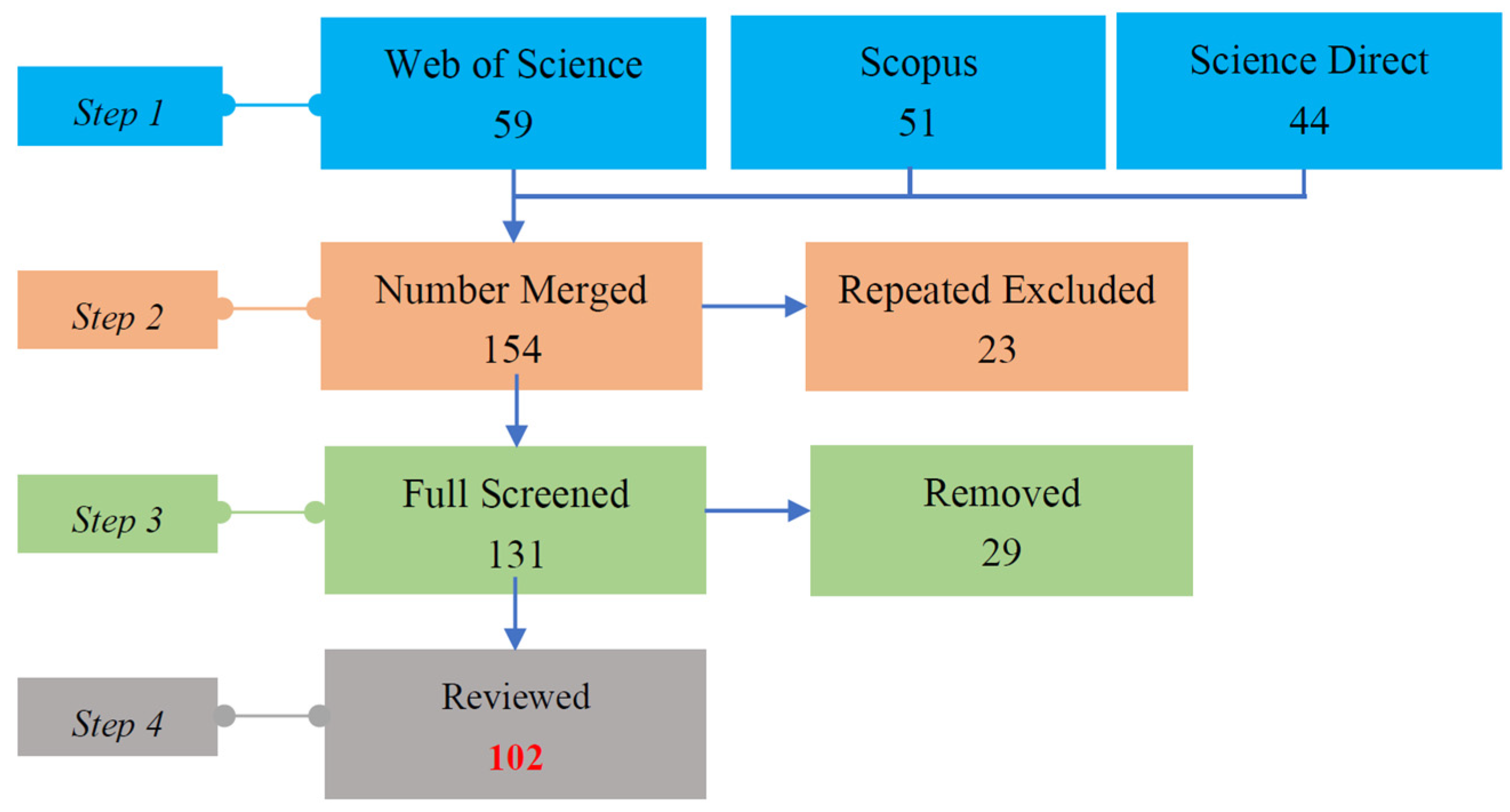
This study reviewed the literature to obtain relevant information on the use of mine tailings in asphalt mixes. The search was conducted in major academic databases, namely Scopus, Web of Science, and ScienceDirect, to ensure the inclusion of high-quality, peer-reviewed studies published up to 2026. The search string included terms related to mine tailings (aluminium, copper, and iron), asphalt mixtures (asphalt binder mastic, asphalt mortar, and asphalt concrete), and bitumen modification, using Boolean operators (AND, OR) applied on keywords to refine the results and focus on relevant studies. Inclusion criteria were defined to identify studies that examined the impact of tailings on the performance of asphalt mixtures. The review approach involved synthesising available data and information on the sources and characteristics of selected tailings, as well as their performance in asphalt mixtures. The research protocol is presented in Figure 1.
As depicted in Figure 1, the literature from databases such as Web of Science, Scopus, and ScienceDirect was reviewed to keep only studies that matched the parameters of the research. Downloaded articles from these databases were merged, and duplicate items were removed. Subsequently, the articles were screened to exclude unsuitable entries, such as those with language barriers or unclear or localised methodologies (lacking universal standards). The remaining articles were reviewed and presented.

3. Generation and Properties of Selected Mine Tailings

3.1. Aluminium Tailings (Bauxite Residue/Red Mud)

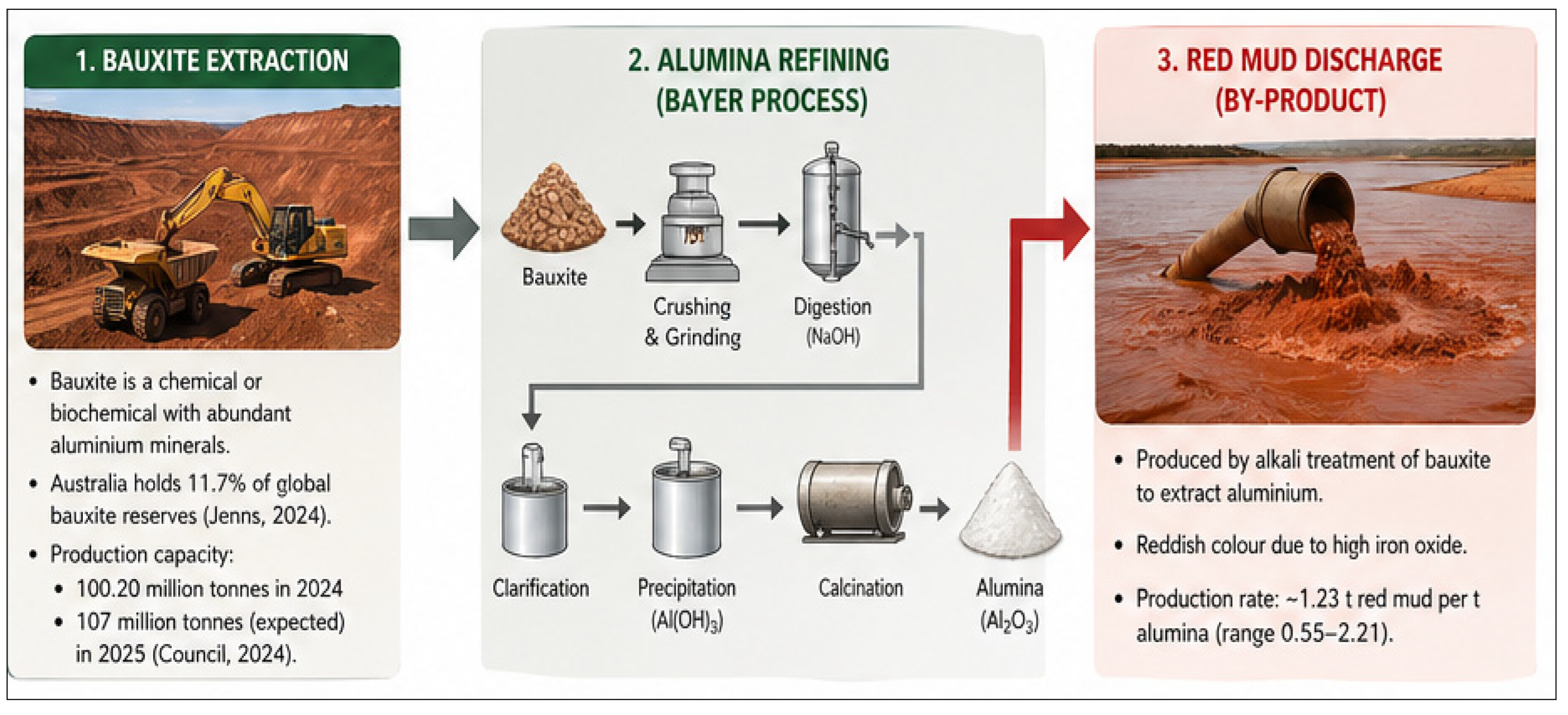
Due to global industrialisation and urbanisation, the high requirement for aluminium has driven the production of by-products at the bauxite extraction and refining stages. Bauxite is a chemical or biochemical substance with abundant aluminium minerals and is often used to produce aluminium [15,39]. Australia is abundant with bauxite resources, holding 11.7% of the global total bauxite reserves [40], with production capacity of 100.20 million tonnes in 2024 and an expected production capacity of 107 million tonnes in 2025 [41]. Red mud is a type of industrial waste discharged by alkali treatment of bauxite in order to extract aluminium, and is always reddish in colour due to the high amount of iron oxide. The production rate of red mud is approximated as 1.23 tonnes per tonne of alumina, with a range of 0.55 to 2.21, based on the manufacturing procedures and bauxite source, resulting in about 175 million tonnes of red mud globally, and an anticipated global accumulation of 4 billion tonnes [42]. Specifically, Australia contributes approximately 27 million tonnes of red mud to the annual global generation of red mud [43]. Consequently, this leads to an increase in the quantity of red mud discharged. Typically, the enormous quantity of red mud is stockpiled on site or near the refining operations. Red mud slurry is highly alkaline with a pH value of approximately 13, which is due to a large amount of alkaline solution in the alumina extraction process [44]. This alkalinity is desirable for improving the adhesion in asphalt mixtures since bitumen is acidic. As well, red mud has radioactivity potential and contains certain heavy metal elements. Hence, its disposal could lead to serious environmental problems such as air pollution, groundwater contamination, and soil degradation [15,44]. To reduce the potential adverse environmental impacts and long-term storage risk, it is highly desirable to adopt effective and efficient methods to utilise on a large scale as alternative resources [45]. Furthermore, using red mud as an admixture in asphalt mix is a sustainable decision. The typical process of sourcing for Bauxite is presented in Figure 2.
The knowledge of the properties of red mud and understanding its unique physico-chemical behaviour is crucial [45]. These properties are dependent on the ore source and the technological process parameters used for the production of bauxite [46]. The particle size of red mud is normally in the range of 0.1 µm–100 µm [45]. Also, red mud is reddish brown in colour, owing to the presence of iron oxide. The bulk density of red mud ranges from 2.7 to 3.5 g/cc, which signifies significant weight on landfills [47]. The major chemical composition of red mud includes alumina, silica, iron oxides, and calcium compounds [48]. A typical distribution of the chemical composition of red mud is shown in Table 1. Table 1 revealed that the mineral constituents of red mud range from compounds such as SiO2 (3–24%), Al2O3 (6–24%), TiO2 (2.5–18%), Fe2O3 (7–50%), Na2O (1.6–13%), minor elements (4.6–33%) and CaO (1.8–46%) [42,49]. The pozzolanic potential and reactivity are governed by these oxides when used in construction applications. Furthermore, due to the remaining NaAlO2 and NaOH in the refining process, red mud is naturally alkaline, with pH values reaching 13 [47]. This alkalinity is desirable for improving the adhesion in asphalt mixtures since bitumen is acidic.
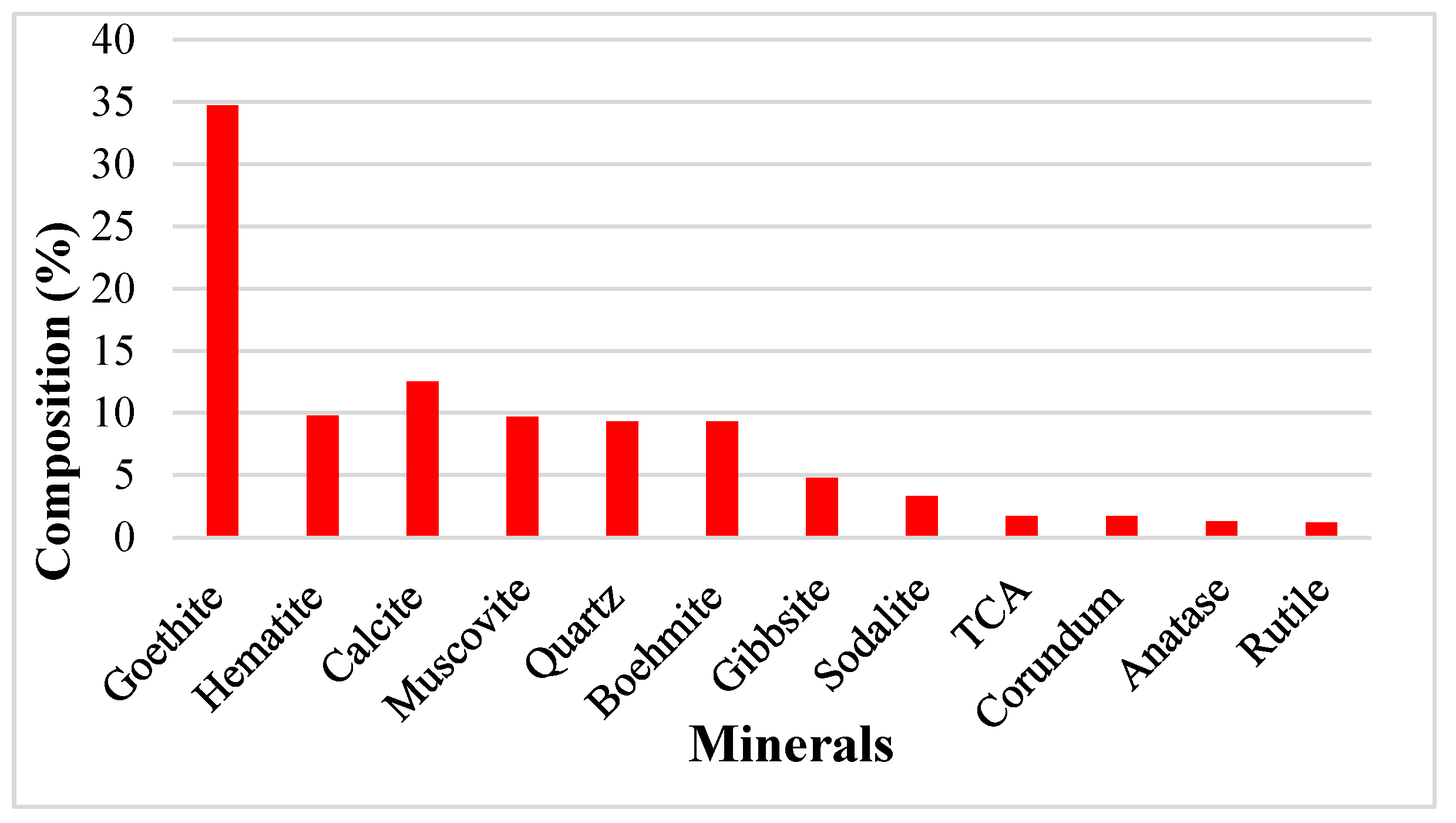
The mineral composition of red mud includes a relatively low amorphous content and crystalline phases such as boehmite, haematite, goethite, cancrinite, gibbsite, and sodalite [50,51,52]. Red mud inherently has low pozzolanic activity as a result of its low amorphous fraction in its untreated form. The mineral composition of the red mud sample from Kwinana, Australia, is shown in Figure 3. The mineral composition of red mud extends beyond what is depicted in Figure 3; a plethora of other elements could also be present in red mud, depending on the source of the ore. The red mud can be an essential resource in the construction industry, thus contributing to the circular economy while guaranteeing supply.
Table 1. Chemical composition of red mud from various studies.
Compound[53][54][55][56][57][58][59][60]
CaO1.1721.1745.0476.0314.980.362.2117.70
SiO218.2317.6822.58710.0112.6610.2627.6415.40
Al2O323.9720.018.71125.2315.7917.2132.6119.10
Fe2O338.9623.4114.31133.4936.4153.7320.6528.50
SO30.720.47--0.860.730.69
MgO0.171.16-0.23-0.12-
TiO24.715.894.728-7.348.77-6.25
Na2O10.958.701.55211.469.618.01-10.00
K2O-0.62---0.060.018
MnO-0.26----
P2O5-0.14----0.019
Others--3.06413.552.35- 3.05
CountryChinaIranChinaChinaChinaChinaIndiaChina

3.2. Copper Tailings

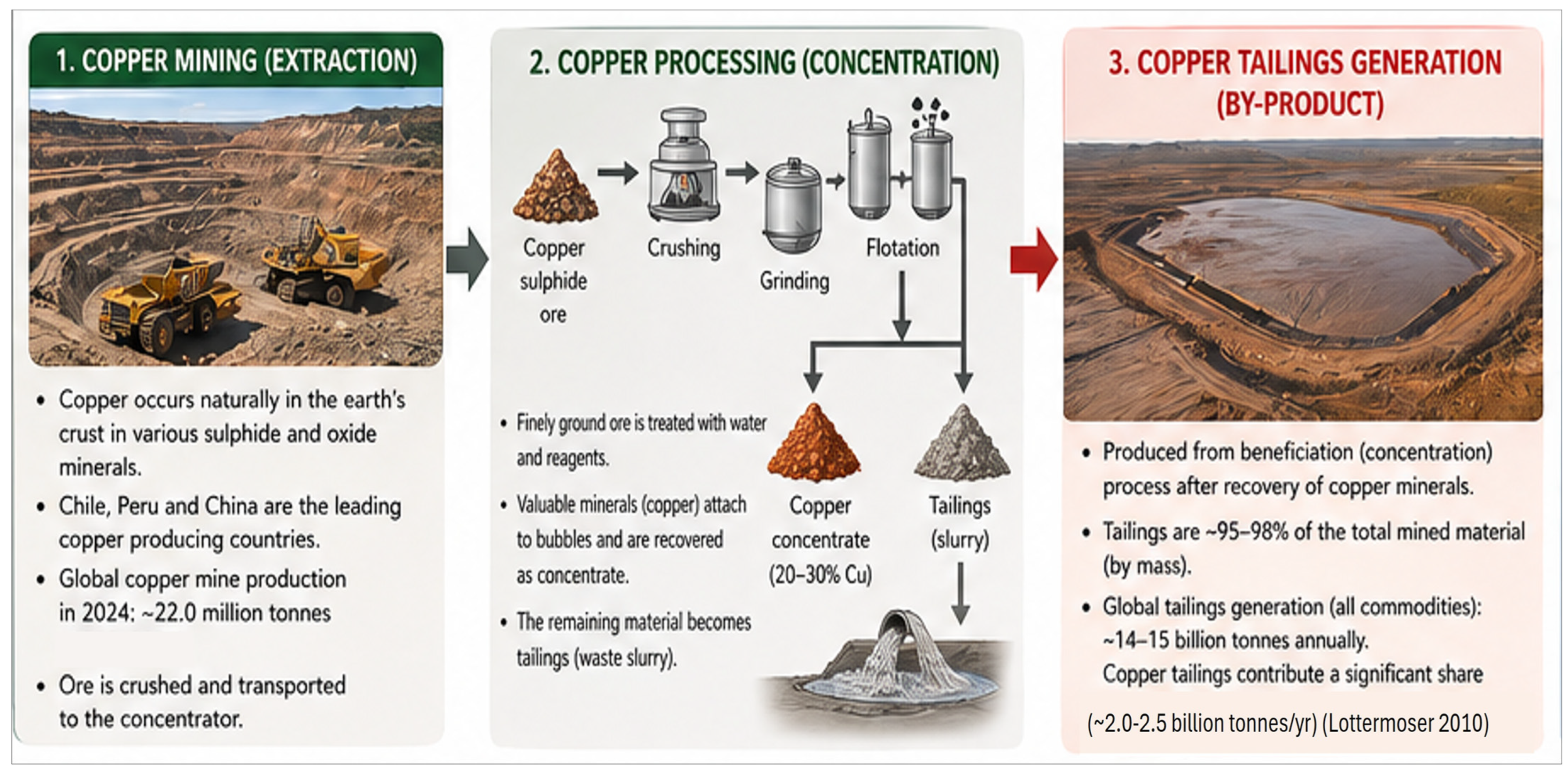
Copper is a versatile metal with a long history of making the world work better. Due to its thermal and electrical conductivity, it is an important material needed to achieve the global energy transition goals. However, its extraction generates a lot of waste, such as tailings. Copper tailings are finely ground waste after copper minerals have been extracted from the ores. About 97–99% of the total ore mass forms tailings during the ore extraction [61], and with consideration of copper ore mining, it can be reported that multi-million tonnes of copper tailings are generated annually. The utilisation of copper and copper alloy products has led to the unavoidable generation of billions of tons of copper tailings across the globe [62]. The mining industry is fundamental to the development of human society; however, this metallurgical process produces several by-products. Copper tailings are one of the solid wastes produced in the beneficiation process of mining plants. This tailing occurs in slurry form and is pumped through a pipeline to nearby storage facilities. According to [63], the early separation of these wastes can easily be recycled into aggregates, which requires less crushing and particle size distribution modification when compared to those derived from refined processing and enrichment phases that may contain organic and inorganic additives. The typical process of sourcing for copper is presented in Figure 4. In recent times, it has been prohibited to discharge copper tailings into natural water bodies; for this reason, they are stored in valleys, flat areas and tailing dams. The continuous mining operation has led to the accumulation of copper tailings, which not only encroaches on valuable land resources but also soil and water. Copper tailing can be regarded as an environmental liability since its continuous storage constitutes a big environmental footprint [64]. The concepts of managing, recycling, and upcycling waste generated in the mining sector are of importance.
The ability to recycle these copper tailings for other purposes provides an avenue to effectively manage this waste for environmental sustainability [19]. According to [65], the construction industry depends on an expansive exploration of natural resources; hence, there is a need to protect the environment by reducing the industry’s over-reliance on virgin materials. The exploration of copper tailings as mineral fillers in asphalt mastic provides an alternative for full or partial substitution of the conventional mineral filler in pavement construction [7]. The usefulness of any material in construction is dictated by its properties [66]. Fillers are often considered the finest portion of aggregate that passes through a particular sieve. They occupy approximately 12% by weight of the asphalt mix. Fillers are regarded as an integral part of asphalt mixes [7], and it influences on pavement performance against various distress is of great importance. Ref. [67] also found finer particle sizes of copper tailings useful as supplementary cementitious materials for construction purposes. Previous research by [19] established the feasibility of recycled copper tailing being used as an alternative filler in asphalt mastic. Although the bonding properties of the aggregates and tailings are also an important aspect to validate the performance of modified asphalt mastic under creep, fatigue, and any other form of deterioration when the pavement is subjected to intermediate or long-term loading. The chemical composition of copper tailings, as provided in Table 2, shows that copper tailings predominantly comprise SiO2, CaO, Al2O3, Fe2O3, and MgO at 28–67%, 1–30%, 6–22%, 2–28%, and 0.1–14%, respectively, indicating that copper tailings can be a suitable construction material in various forms. The main mineralogy components of copper tailings are gangue minerals such as quartz, feldspar, pyrite and mica, alongside other elements from residual copper sulphides, iron oxides and metal oxides [67]. Copper tailings generally have a fineness modulus of about 1.60 and a sizeable silt fraction of 0.06–0.002 mm, indicating that they are finely graded and pose a potential filler material in asphalt mixtures to replace conventional materials. Also, it has relatively high specific gravity. However, the adoption of these wastes in road construction can present unique characteristics, which include improved compressive and tensile strength, shear, compaction, permeability, compressibility, and low erodibility potentials.
Figure 4. Source and extraction process of copper [68].
Mining 06 00054 g004
Table 2. Chemical composition of copper tailings from various studies.
Compound[67][19][69][70][71]
CaO29.636.750.3622.431.33
SiO228.6349.2466.7145.3765.50
Al2O36.2121.1920.479.8319.20
Fe2O312.216.631.8427.492.67
SO3-3.430.535.843.13
MgO0.171.471.3913.051.90
TiO20.17-0.52-0.32
Na2O-0.471.540.850.97
K2O0.919.026.15-4.70
MnO--0.02--
P2O5--0.16-0.19
Others22.07 0.25-0.09
CountryChinaChina-Saudi ArabiaBulgaria

3.3. Iron Ore Tailings

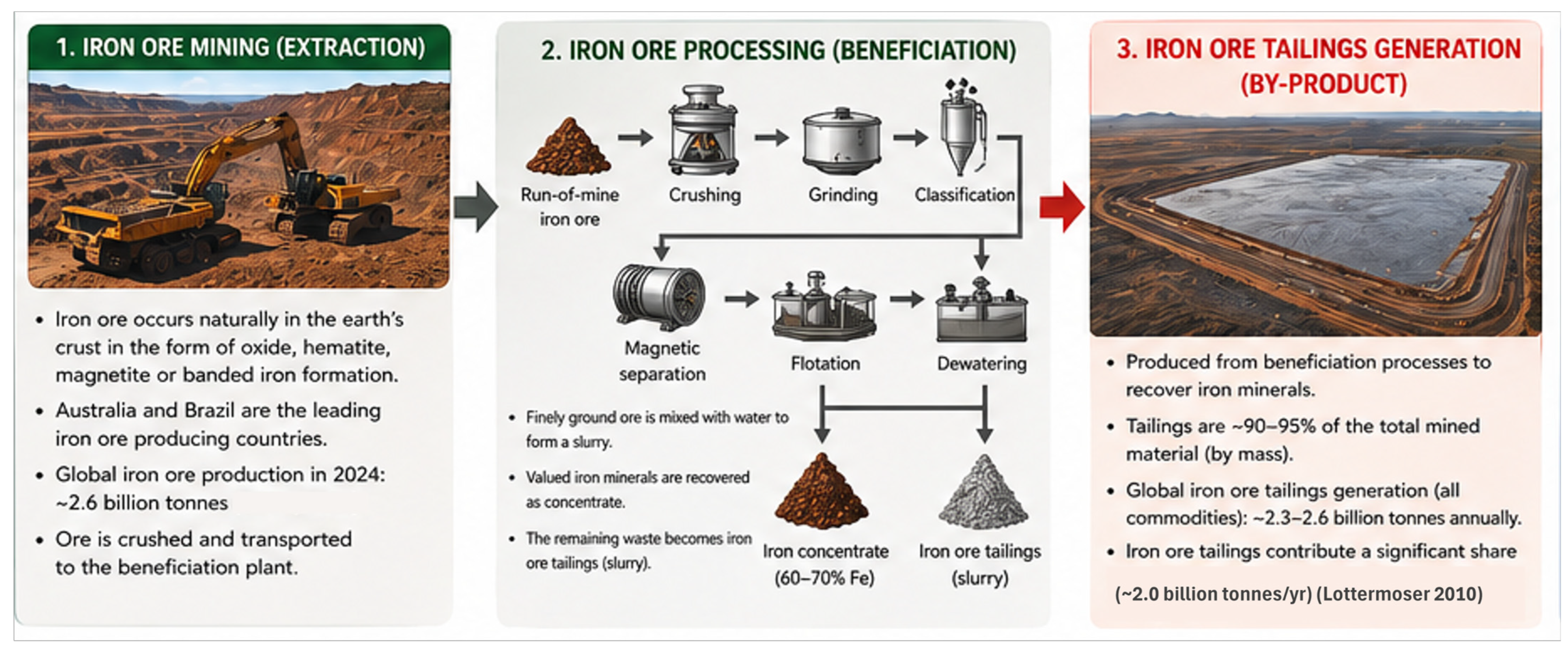
Tailing remains a major component of industrial solid waste since it accounts for over 80% of the total industrial solid waste generated. They are usually considered low-value products obtained during the beneficiation process [11,72]. Iron deposits account for about 5% of the Earth’s crust since it appears in many mineral and rock deposits, which makes it the fourth most abundant element [73]. This iron deposit, commonly occurring as ore, is an integral part of modern technological advancement due to the significant role it plays in the manufacturing of steel [74]. The applicability of steel in numerous sectors, such as construction, transportation, manufacturing, etc., has made iron ore and iron mining activities crucial for social and economic development [75,76,77]. Iron ore deposits are found in different parts of the world, with Australia taking the lead in abundance. Other countries where large iron ore deposits can be found include Brazil, China, India, Canada, and the United States. According to [76], iron ore accounts for approximately 94% of metals mined in 2023, with an estimated extracted quantity of 2500 million tonnes. Iron is a vital component of any national economy. With the increase in the sector’s productivity, there is also growth in the generation of tailings, which demands larger areas for deposition. Iron tailings are the main solid by-product of iron ore mining and refining, which generally accounts for 60–80% of the total ore [78]. The production of a ton of iron ore concentrates results in approximately 2.5–3.0 tons of iron ore tailings. This makes the continuous accumulation of iron mine tailings a source of environmental concern [75]. The typical process of sourcing iron ore is presented in Figure 5.
The toxic and non-degradable hazardous elements from iron ore tailings vary with pH, temperature, and other chemicals that endanger ecological safety by introducing toxins into various environmental compartments [74]. Iron ore tailing is composed mainly of silica, ferric oxides, and alumina as major components, while calcium oxide and magnesium oxides are minor, influencing its potential strength as an admixture in asphalt mix [8,77]. The varying composition of these oxides according to previous studies is presented in Table 3.
Iron ore tailing in asphalt mixtures provides an opportunity to improve strength, wear resistance, and surface texture. Iron ore tailings can be processed into small particle sizes with good adhesion properties. It enhances the pavement smoothness and provides an excellent anti-skid property [22]. According to [80], incorporating mineral admixtures in a composite material, such as asphalt concrete, presents a filling effect that improves compactness, fluidity, and reduces porosity of the hardened slurry. The use of iron ore tailing as a mineral admixture provides a good filling effect because it presents a particle size distribution that provides a closely packed structure, which ensures a dense composite is produced.

4. Influence of the Selected Mine Tailings on the Performance of Asphalt Mixtures

4.1. Red Mud

Red mud has the potential to be utilised in asphalt mixtures due to the presence of different minerals and hydroxides, and its special fine-grained porous structure. Its mineral composition, which includes calcium compounds, alumina, iron oxides, and silica, makes it a viable material in an asphalt mixture. In [81], red mud was utilised as filler in asphalt concrete mixes. It was observed that the asphalt concrete with red mud displayed an improved Marshall stability, cracking, resistances against rutting, and a satisfactory moisture-resistant mix while adversely affecting the long-term ageing resistance of the mix. They attributed this improvement to red mud mineralogy and fineness. Red mud is alkaline and hydrophobic in nature due to the presence of residual sodium hydroxide and sodium–aluminium silicates [82]. The feasibility of red mud as a substitute filler in asphalt mastic was examined. The mastics were prepared with a filler/binder ratio of 1.0, and the results were compared to mastic containing limestone powder. It was observed that the asphalt binder mastic has improved the fatigue performance under strain loading, with better performance under long-term loading and enhanced fatigue life. Ref. [45] studied the influence of red mud as a limestone filler replacement in the AC-13 asphalt mixture. The asphalt mixture showed an increase in the high-temperature performance. Ref. [83] conducted an investigation on the impact of red mud on the asphalt mastic conventional properties. They discovered that whilst red mud had a negative influence on the mastic’s ductility, it reduced temperature sensitivity and improved the deformation resistance. The influence of red mud on the micro-surfacing of asphalt mixtures was carried out by [54]; it was used as a substitute for limestone fillers at 0–100% with 25% increment, and the resulting mixture was tested using the loaded wheel-displacement, wet cohesion, loaded wheel-sand adhesion, and wet-track abrasion tests. It was observed that the modified asphalt specimens containing 75% red mud had improved cohesion, ravelling, and bleeding by 17%, 23%, and 10%, respectively. They attributed this superior performance to the increased alkalinity due to the presence of sodium, higher specific surface area, and elevated concentrations of iron and silica in the red mud.
Selected studies on red mud modified asphalt mixtures are shown in Table 4. It can be seen that red mud influenced the performance of asphalt mixtures positively. These could be due to the small particle size and high calcium content of red mud, and the small particle size particles can be uniformly dispersed in the asphalt mixture to form a complete structure [84].
Studies have also reported that red mud had an adverse effect on the cracking resistance at low temperatures and the moisture susceptibility of asphalt mixtures [45,59,84]. Hence, red mud needs to be activated or pre-treated to improve its efficiency. Generally, the treatment helps improve adhesion, moisture susceptibility, and ageing resistance along with the low temperature of the asphalt binder with inorganic fillers. In [84], the pre-treatment and surface modification of red mud using oxalic acid, aluminium ester, and phthalate ester coupling agent was used in asphalt mixtures. It was observed that the distribution of red mud in the asphalt mixture becomes more uniform and the adhesion between the asphalt mastics and aggregate was strengthened, indicating enhanced performance of the asphalt mixture. To improve the compatibility of red mud with asphalt and enhance the performance of red mud-modified asphalt, ref. [55] treated the red mud with a coupling agent and oxalic acid. It was observed that the red mud–asphalt interaction was improved, allowing asphalt to have better resistance to low temperature cracking, high temperature deformation, and UV and thermal oxidation ageing. In [60], dopamine self-polymerisation and esterification reactions were utilised to treat red mud and enhance its interaction with asphalt. The result obtained showed that storage modulus (G′), loss modulus (G″), and the deformation recovery rate of the treated red mud modified asphalt increased by 96.99%, 93.88%, and 50.88%, respectively. This indicates that treatment of red mud can result in enhancement of asphalt binder properties relevant to road performance. Table 5 depicts the influence of chemical treatment on the performance of red mud-modified asphalt mixture. The literature above has demonstrated the effectiveness of red mud treatment on the performance of asphalt mixtures. However, the studies only concentrated on the use of chemical treatment, neglecting other treatment methods like mechanical and thermal treatment. However, to date, no such literature is available on the utilisation of thermally activated red mud as asphalt mixture materials. Even though thermal treatment has proven to be an effective way to activate mine tailings and improve their reactivity with bitumen [88].

4.2. Copper Tailings

Copper tailing as a form of mining waste has been recycled for several applications in the construction industry, particularly as an alternative material in concrete, bricks, geopolymers, mortar, and asphalt mix [90]. A study by [67] observed that the fresh performance of mortar incorporating copper tailings was similar to that of the conventional mixture. It was also observed that the autogenous shrinkage, chloride attack, and pore structure were enhanced. Ref. [91] studied the setting and hardening performance of mortars containing 5 and 10% copper tailing without compromising the mechanical strength of the mortar. The durability of the mortar subjected to acid and chloride resistance also improved compared to the conventional mortar. The application of copper tailing as a partial replacement for cement at 5%, 10%, and 15% indicated better resistance to sulphate attack [92]. Ref. [19] studied the environmental and economic perspectives of copper tailings as fillers in asphalt mastic. It was observed that copper tailings possessed a rougher surface, a larger specific surface area, and a uniform pore size distribution when compared to the conventional filler. Another study of asphalt mixes incorporating copper tailings observed higher specific gravity, lower void, and satisfactory performance against moisture penetration when compared with the conventional filler [62]. Previous studies on copper tailing-modified asphalt mixtures are presented in Table 6. From this Table, it can be observed that copper tailing had a positive influence on asphalt mixtures; however, it requires more structural asphalt due to its small particle size and large specific area, which reduces the filling effect of the copper tailing filler when compared to the conventional limestone filler. Furthermore, copper tailing fillers in most low-temperature and moisture-stability applications are only marginally within acceptable performance [19].

4.3. Iron Ore Tailings

The increasing demand for minerals and metals due to technological advancement increases the quantity of tailings and other waste generated in the mining process of iron ore [93]. This is accompanied by the continuous increase in industrialisation, which requires infrastructural development that places immense pressure on the available natural resources present in the environment [94]. The continuous expansion of pavement construction and maintenance is reliant on a high volume of non-renewable materials, which include aggregates, binders, and other additives. This makes the extraction process of virgin materials for pavement construction unsustainable and capital-intensive [22]. The stockpiling and the under-utilisation of iron ore tailings require an effective approach for their reuse. The incorporation of the aforementioned wastes in a circular economy is necessitated by the considerable concentration of different components that can be of value [95]. Iron ore tailings, which are often regarded as a by-product of mined ore, possess pozolanic characteristics that are in relative abundance. Its utilisation as a constituent in asphalt mixtures ranges from an aggregate to a filler material [96]. Iron ore tailings have been found to contain a high content of transition metal oxides. These oxides are responsible for improving the performance of the pavement [97]. Hence, the use of iron ore tailings as sustainable materials in asphalt mixtures could potentially result in improved performance of the pavement [98]. Previous studies on iron ore tailing modified asphalt mixtures are presented in Table 7. From this table, it can be observed that iron ore tailings had a positive influence on asphalt mixtures.
According to [72], the use of iron ore tailings as a road engineering material not only reduces the over-reliance on natural aggregates for pavement construction but also reduces the road outlay. The performance of the asphalt mixture containing iron tailings, subjected to fatigue and ageing resistance, water stability, low temperature crack resistance, and high temperature stability, exceeded the performance of the ordinary asphalt mixture. The aforementioned durability properties enable safe, comfortable, and other service functions for vehicular movement. Furthermore, it has been observed that a large quantity of mineral fillers is required to produce asphalt mastic for pavement construction. The asphalt mastic performance influences the pavement service life, and the presence of iron tailings in the asphalt binder improved the performance at high temperatures and enhanced the rutting resistance [78]. Based on the above literature, it can be inferred that the use of iron ore tailings as mineral fillers and aggregate in asphalt pavement is beneficial to enhancing the service life of pavements and also provides an environmentally friendly approach in managing solid waste generated in the process of mining.

5. Prospects of Utilising Selected Mine Tailings as Asphalt Mixture Materials

With increasing global emphasis on circular economy principles, the reuse of these abundant mining by-products is gaining momentum as a viable alternative to conventional construction materials. The mining industry generates billions of tonnes of tailings annually, creating long-term environmental hazards such as land degradation, water contamination, and air pollution [99,100]. Integrating these tailings into asphalt mixtures offers a practical solution for diverting waste from tailing dams and landfills. Studies indicate that recycling iron tailings and other mine wastes into asphalt pavements can significantly reduce environmental burdens while contributing to resource conservation [15,17]. Similarly, the reuse of aluminium tailings (red mud) and copper tailings helps mitigate the ecological risks associated with their storage, thereby supporting sustainable waste management practices. Furthermore, the incorporation of these materials reduces greenhouse gas emissions associated with the extraction and processing of virgin aggregates, reinforcing their role in climate change mitigation strategies [18,99,100].
Asphalt pavement construction relies heavily on non-renewable materials such as natural aggregates and mineral fillers. The substitution of these materials with mine tailings reduces the pressure on natural resource extraction [101]. Research shows that mine tailings possess suitable physical and chemical properties to function effectively as fillers or aggregates, making them a sustainable replacement for traditional materials. This substitution not only conserves natural deposits but also promotes the efficient utilisation of industrial by-products, aligning with global sustainability goals [102,103].
Furthermore, mine tailings demonstrate promising improvements in asphalt mixture properties. Copper tailings have been shown to enhance rutting resistance and reduce permanent deformation due to their fine particle size and high silica content [18]. Similarly, red mud contributes to increased stiffness, higher softening points, and improved resistance to high-temperature deformation in asphalt binders [104]. Iron tailings, when used as aggregates, have been reported to meet standard engineering requirements and exhibit satisfactory high-temperature performance in asphalt mixtures [22]. These enhancements suggest that tailings-modified asphalt mixtures can deliver improved durability, structural integrity, and longer service life compared to conventional mixtures [13,18,22]. The summary of essential properties and engineering performance indices of aluminium, copper, and iron tailings is presented in Table 8.
Table 8 reveals that aluminium, copper, and iron ore tailings exhibit distinct engineering characteristics that influence their suitability for asphalt mixtures. Iron ore tailings consistently showed the greatest potential as aggregate replacements due to their high iron oxide content, angular particle morphology, and superior mechanical strength, which enhance Marshall stability, rutting resistance, stiffness, moisture resistance, and long-term pavement durability [22]. However, excessive incorporation may reduce low-temperature cracking resistance owing to increased mixture stiffness [24]. Copper tailings possess a well-graded particle-size distribution and silica-rich composition that improve aggregate interlocking and asphalt mastic performance, resulting in enhanced strength, stability, and moisture resistance [19]. Aluminium tailings are characterised by their ultrafine particle size and high alkalinity, making them more suitable as mineral fillers or asphalt modifiers than aggregate replacements. Their ability to improve binder rheology, ageing resistance, and rutting performance is well documented, although excessive dosages adversely affect workability and increase brittleness at low temperatures [27,30]. The comparative assessment indicates that the engineering performance of asphalt mixtures depends not only on the intrinsic properties of the tailings but also on their replacement ratio, particle characteristics, and compatibility with the asphalt binder. Consequently, material-specific optimisation is essential to maximise pavement performance while ensuring environmental sustainability and resource efficiency.
The use of mine tailings offers cost reduction and value creation. Since tailings are already finely processed during mineral extraction, they require minimal additional crushing or processing, thereby reducing production costs [106]. Their availability in large quantities also ensures a steady and low-cost supply of construction materials [107]. Moreover, the reduced need for landfill management and environmental remediation translates into additional economic benefits [108]. According to existing studies, the reuse of mine tailings in asphalt mixtures can lower overall construction costs while generating economic value from what would otherwise be considered waste [68,109]. In addition, by converting waste into valuable construction materials, the lifecycle of resources is extended, and waste generation is minimised. This approach promotes industrial symbiosis, where waste from one sector becomes a resource for another [108]. The integration of such materials into asphalt technology represents a critical step toward achieving sustainable infrastructure systems [18,19].
Arguably, despite the advantages associated with the use of these tailings in asphalt mixtures to promote waste valorisation and reduce reliance on natural aggregates, several environmental risks require careful assessment. Copper and iron ore tailings may contain potentially toxic elements, including As, Cd, Cr, Cu, Pb, Ni, and Zn, which could be released if asphalt pavements deteriorate because of ageing, cracking, or moisture damage [110,111]. Aluminium tailings (red mud) present additional concerns owing to their high alkalinity (pH 10–13), which may adversely affect surrounding soils and water if not adequately encapsulated. Furthermore, some red mud and iron ore tailings contain naturally occurring radionuclides, making radiological assessment essential before large-scale application [112,113]. Consequently, long-term environmental safety should be evaluated through leaching tests, field monitoring, life-cycle assessment, and radiological risk analyses to ensure contaminant release remains below regulatory limits throughout pavement service life and end-of-life recycling.
Recent studies have explored various treatment methods, including chemical activation, thermal processing, and surface modification, to improve the compatibility of tailings with asphalt binders [114]. The addition of modifiers such as hydrated lime or coupling agents has been shown to enhance adhesion and moisture resistance in tailings-based asphalt mixtures [114]. These innovations open new pathways for tailoring material properties to meet specific engineering requirements, thereby expanding the applicability of mine tailings in pavement construction [53,100,114].

6. Conclusions

This review set out to examine the properties and performance implications of utilising mine tailings from aluminium (red mud), copper, and iron extraction processes as alternative materials in asphalt mixtures.
The findings of this study clearly demonstrate that the selected mine tailings possess significant potential as sustainable substitutes for conventional asphalt mixture components, particularly mineral fillers and, in some cases, fine and coarse aggregates. Across the reviewed literature, the physicochemical characteristics of these materials, such as fine particle size distribution, high specific surface area, and the presence of reactive oxides, were consistently identified as key factors contributing to their suitability in asphalt systems. These inherent properties enable improved interaction with bitumen, enhanced packing density, and modification of the rheological behaviour of the bitumen. For aluminium tailings (red mud), the review highlights notable improvements in high-temperature performance, rutting resistance, and fatigue life of asphalt mixtures. The alkaline nature of red mud promotes better adhesion between aggregates and bitumen, contributing to enhanced mechanical stability. However, its drawbacks, particularly reduced low-temperature cracking resistance and moisture susceptibility, underscore the need for appropriate pre-treatment or modification techniques. Studies reviewed indicate that chemical activation and surface modification significantly enhance the compatibility and performance of red mud in asphalt mixtures, although alternative treatment methods such as thermal activation remain underexplored.
Copper tailings were found to perform effectively as mineral fillers, largely due to their fine gradation and favourable mineral composition. The incorporation of copper tailings generally resulted in improved rutting resistance, cracking resistance, and satisfactory moisture performance, while maintaining comparable or superior mechanical properties relative to conventional mixtures. Additionally, their rough surface texture and high specific gravity contribute to improved interfacial bonding and structural integrity. Importantly, copper tailings offer a practical and scalable solution for waste valorisation, given their abundance and minimal processing requirements. Similarly, iron ore tailings exhibited strong potential as both filler and aggregate materials in asphalt mixtures. Their use was associated with enhanced viscosity, rutting resistance, water stability, and fatigue performance. The dense particle packing and presence of transition metal oxides contribute to the improved stiffness and durability of asphalt mixtures. Furthermore, the review confirms that iron tailings can meet standard engineering requirements for pavement applications, making them a viable and reliable alternative to natural aggregates. Their utilisation also aligns with circular economy principles by reducing the environmental burden associated with large-scale tailings storage.
Accordingly, a comparative analysis of the tailings indicates that the engineering performance of asphalt mixtures is dependent on the tailings’ inherent qualities as well as their replacement ratio, particle characteristics, and compatibility with the asphalt binder.
Beyond performance considerations, one of the most significant contributions of this review lies in highlighting the environmental and economic benefits of integrating mine tailings into asphalt mixtures. The reuse of these materials reduces dependence on non-renewable natural resources, minimises landfill disposal, and mitigates the environmental risks associated with tailings storage, such as soil degradation and water contamination. Moreover, since tailings are already finely processed during mineral extraction, their use can reduce production costs and energy consumption in pavement construction. This dual benefit of waste management and resource conservation strongly supports the adoption of mine tailings within sustainable infrastructure development frameworks. Nonetheless, future studies should quantify their life cycle analysis (LCA) and conduct field-scale validation, long-term ageing performance, freeze–thaw durability, heavy-metal leaching behaviour, tailings pretreatment technologies, and the synergistic modification mechanisms of different types of tailings.

Author Contributions

Conceptualisation, D.O., T.A. and S.G.A.; methodology, D.O., P.T.A., T.A. and S.G.A.; investigation, D.O. and P.T.A.; resources, D.O.; data curation, T.A., S.G.A. and P.T.A.; writing—original draft preparation, D.O., T.A., S.G.A. and P.T.A.; writing—review and editing, D.O. and P.T.A.; visualisation, T.A. and S.G.A.; supervision, D.O.; project administration, D.O. and T.A.; funding acquisition, D.O. All authors have read and agreed to the published version of the manuscript.

Funding

This research received no external funding.

Data Availability Statement

No new data were created or analyzed in this study. Data sharing is not applicable to this article.

Acknowledgments

During the preparation of this manuscript, the authors used ChatGPT 5.0 and Grammarly 2025 for the purposes of graphics generation and sentence editing. The authors have reviewed and edited the output and take full responsibility for the content of this publication.

Conflicts of Interest

The authors declare no conflicts of interest.

References

  1. Khan, S.; Li, H.; Ncube, M.H.; Butt, A.A.; Han, Y.; Harvey, J. Environmental implications of recycled materials in pavement construction: A comprehensive review and future research directions. Transp. Res. Part D Transp. Environ. 2025, 140, 104642. [Google Scholar] [CrossRef]
  2. Sun, Z.; Zhang, Z.; Lu, G.; Luo, S. Recent advances in research on steel slag for asphalt pavements: A review. Case Stud. Constr. Mater. 2025, 22, e04698. [Google Scholar] [CrossRef]
  3. Wang, D.; Cheng, K.; Wu, Z.; Yang, L.; Zhang, Q. Evaluation and comparison for higher temperature performance index of emulsified asphalt mastic using coal gangue powder. Case Stud. Constr. Mater. 2024, 21, e03897. [Google Scholar] [CrossRef]
  4. Manheim, D.C.; Yes¸iller, N.; Hanson, J.L.; Blake, D.R. Climate impacts of landfill gas emissions: Analysis for 20-year and 100-year time horizons. Waste Manag. 2024, 186, 318–330. [Google Scholar] [CrossRef] [PubMed]
  5. Mashaan, N.; Chegenizadeh, A.; Nikraz, H. Performance of PET and nano-silica modified stone mastic asphalt mixtures. Case Stud. Constr. Mater. 2022, 16, e01044. [Google Scholar] [CrossRef]
  6. Awolusi, T.F.; Oguntayo, D.O.; Aladegboye, O.J.; Azab, M.; Deifalla, A.F. Optimization of Concrete Containing Polyethylene Terephthalate Powder and Rice Husk Ash Using Response Surface Methodology. J. Eng. 2023, 2023, 6237122. [Google Scholar] [CrossRef]
  7. Oluwasola, E.A.; Hainin, M.R.; Aziz, M.A. Comparative evaluation of dense-graded and gap-graded asphalt mix incorporating electric arc furnace steel slag and copper mine tailings. J. Clean. Prod. 2016, 122, 11. [Google Scholar] [CrossRef]
  8. de-Moraes, T.M.R.P.; Neto, O.M.M.; Lucena, A.E.F.L.; Lucena, L.F.L.; Nascimento, M.S. Viability of Asphalt Mixtures with Iron Ore Tailings as a Partial Substitute for Fine Aggregate. Transp. Res. Rec. 2024, 2678, 770–794. [Google Scholar] [CrossRef]
  9. Oguntayo, D.; Ogundipe, O.; Aladegboye, O.; Ogunkunbi, G.; Babatunde, Y.; Aransiola, O. Performance Evaluation of Hospital Waste Ash-Modified Asphalt Mixtures. Adv. Civ. Eng. 2023, 2023, 6880766. [Google Scholar] [CrossRef]
  10. Oguntayo, D.; Ogundipe, O.; Aluko, O.; Aransiola, O. Mechanical performance of steelslag and lime-modified asphalt mixture: A response surface approach. Balt. J. Road Bridge Eng. 2024, 19, 43–65. [Google Scholar] [CrossRef]
  11. Oguntayo, D.O.; Mashaan, N.S.; Shukla, S.K. Mine Tailings as a Sustainable Filler for Asphalt Binder–Mastics: A Review. Materials 2025, 18, 4892. [Google Scholar] [CrossRef] [PubMed]
  12. Mashaan, N.S.; Oguntayo, D.O.; Dassanayake, C. Waste By-Products in Asphalt Concrete Pavement Construction: A Review. Materials 2025, 18, 4092. [Google Scholar] [CrossRef] [PubMed]
  13. Zhou, Y.; Chen, X.; Peng, Y.; Chen, Z.; Chen, X. Experimental study on construction application of red mud-based concrete pavement. Case Stud. Constr. Mater. 2025, 22, e04500. [Google Scholar] [CrossRef]
  14. Sá, T.S.W.; Oda, S.; Balthar, V.K.C.B.L.M.; Filho, R.D.T. Use of iron ore tailings and sediments on pavement structure. Constr. Build. Mater. 2022, 342, 128072. [Google Scholar] [CrossRef]
  15. Li, G.; Liu, J.; Yi, L.; Luo, J.; Jiang, T. Bauxite residue (red mud) treatment: Current situation and promising solution. Sci. Total Environ. 2024, 948, 174757. [Google Scholar] [CrossRef] [PubMed]
  16. Luan, X.; Hui, J.; Gao, J.; Liang, M.; Zhao, X.; Wang, X.; Su, L. Utilization of sintering red mud as a solid waste-based foaming agent for warm mix asphalt: Modification mechanism and performance evaluation. J. Clean. Prod. 2026, 552, 147963. [Google Scholar] [CrossRef]
  17. Melikoglu, M. A global review of red mud valorization for sustainable construction, environmental remediation, and catalysis. Sustain. Chem. One World 2025, 8, 100154. [Google Scholar] [CrossRef]
  18. Najafi, E.K.; Miranda, T.; Unluer, C.; Pourakbar, S.; Manaviparast, H.R.; Tavares, P.; Cristelo, N. Sustainable alkaline cements with different Ca contents for stabilisation of copper mine tailings. J. Clean. Prod. 2025, 538, 147411. [Google Scholar] [CrossRef]
  19. Lei, B.; Li, X.; Guo, Y.; Qu, F.; Zhao, C.; Tam, V.W.Y.; Wu, V.; Li, W. Recycling of copper tailing as filler material in asphalt paving mastic: A sustainable solution for mining waste recovery. Case Stud. Constr. Mater. 2024, 20, e03237. [Google Scholar] [CrossRef]
  20. Guo, Y.; Qu, F.; Tiwari, R.; Yoo, D.Y.; Wang, K.; Wang, Y.; Li, W. Development of self-sensing asphalt cementitious composites using conductive carbon fibre and recycled copper tailing. Constr. Build. Mater. 2025, 474, 140965. [Google Scholar] [CrossRef]
  21. Santos, A.; Andrejkovičová, S.; Řimnáčová, D.; Almeida, F.; Rocha, F. Potential of iron and copper sulfide mine tailings in geopolymerization: A sustainable approach to construction materials. Constr. Build. Mater. 2026, 508, 145127. [Google Scholar] [CrossRef]
  22. Si, C.; Guo, B.; Feng, L.; Zhang, J.; Gao, X.; Wu, Z.; Yin, S.; Gao, Y.; Jia, Y.; Niu, B. Sustainable Utilization of iron ore tailings as an alternative material in asphalt pavements: A systematic review. Case Stud. Constr. Mater. 2025, 23, e05009. [Google Scholar] [CrossRef]
  23. Veiga, F.P.d.; Levandoski, W.M.K.; Bruschi, G.J.; Krogel, M.; Piovesan, M.A.; Pelissaro, D.T.; Prietto, P.D.M.; Korf, E.P. Utilizing Iron Ore Tailings for the Development of a Sustainable Alkali-Activated Binder. Mining 2025, 5, 26. [Google Scholar] [CrossRef]
  24. Iqbal, A.; Mashaan, N.S.; Paraskeva, T. Mining Waste in Asphalt Pavements: A Critical Review of Waste Rock and Tailings Applications. J. Compos. Sci. 2025, 9, 402. [Google Scholar] [CrossRef]
  25. Babalghaith, A.M.; Rafiq, W.; Abdulrahman, S.; Wahhab, H.A.-A.; Baig, M.G.; Khaliluddin, M. Enhancing Asphalt Performance with Industrial Waste: A Study on Red Mud as a Filler Replacement. Iran. J. Sci. Technol. Trans. Civ. Eng. 2026, 1–14. [Google Scholar] [CrossRef]
  26. Marín, O.A.; Kraslawski, A.; Cisternas, L.A. Estimating processing cost for the recovery of valuable elements from mine tailings using dimensional analysis. Miner. Eng. 2022, 184, 107629. [Google Scholar] [CrossRef]
  27. Araujo, F.S.M.; Taborda-Llano, I.; Nunes, E.B.; Santos, R.M. Recycling and Reuse of Mine Tailings: A Review of Advancements and Their Implications. Geosciences 2022, 12, 319. [Google Scholar] [CrossRef]
  28. Aderinto, G.E.; Ikotun, J.O.; Kolade, A.S.; Katte, V.Y.; Ikotun, B.D.; Oyejobi, D.O. Geopolymerization of Mine Tailings for Pavement Applications: Properties, Limitations and Future Directions. Int. J. Pavement Res. Technol. 2026. [Google Scholar] [CrossRef]
  29. Oluwasola, E.A.; Hainin, M.R.; Aziz, M.M.A. Evaluation of asphalt mixtures incorporating electric arc furnace steel slag and copper mine tailings for road construction. Transp. Geotech. 2015, 2, 9. [Google Scholar] [CrossRef]
  30. Yao, L.; Gao, W.; Ma, X.; Fu, H. Properties Analysis of Asphalt Binders Containing Bayer Red Mud. Materials 2020, 13, 1122. [Google Scholar] [CrossRef] [PubMed]
  31. Dassanayake, C.; Mashaan, N.S.; Oguntayo, D. Mining Waste as a Resource in Construction: Applications, Benefits, and Challenges. Sustainability 2026, 18, 1361. [Google Scholar] [CrossRef]
  32. Guo, Y.; Qu, F.; Li, W. Advancing circular economy and construction sustainability: Transforming mine tailings into high-value cementitious and alkali-activated concrete. Mater. Sustain. 2025, 3, 8. [Google Scholar] [CrossRef]
  33. Mashaan, N.S.; Kibutu, S.; Dassanayake, C.; Ghodrati, A. Sustainable Utilisation of Mining Waste in Road Construction: A Review. J. Exp. Theor. Anal. 2025, 3, 19. [Google Scholar] [CrossRef]
  34. Ogundipe, O.M.; Aribisala, J.O.; Oguntayo, D.O. Evaluation of Marshall Properties of Asphalt Concrete and Stone Mastic Asphalt for Nigerian Roads. In Transport Research Arena Conference; Lecture Notes in Mobility; Springer Nature: Cham, Switzerland, 2026; pp. 167–173. [Google Scholar] [CrossRef]
  35. Barbieri, D.M.; Lou, B.; Wang, F.; Hoff, I.; Wu, S.; Li, J.; Vignisdottir, H.R.; Bohne, R.A.e.; Anastasio, S.; Kristen, T. Assessment of carbon dioxide emissions during production, construction and use stages of asphalt pavements. Transp. Res. Interdiscip. Perspect. 2021, 11, 100436. [Google Scholar] [CrossRef]
  36. Hatmoko, J.U.D.; Hidayat1, A.; Setiawati, A.; Prasetyo, S.C.A. Measuring Carbon Footprint of Flexible Pavement Construction Project in Indonesia. E3S Web Conf. 2018, 31, 07001. [Google Scholar] [CrossRef]
  37. Liu, T.; Yang, S.; Liao, B.; Yang, E.; Jiang, X. Contribution of climate change and traffic load on asphalt pavement carbon emissions. J. Clean. Prod. 2024, 434, 140553. [Google Scholar] [CrossRef]
  38. Olukanni, D.O.; Adegoke, D.A.; Akinmejiwa, A.A.; Bassey, D.E.; Adediran, J.A. Evaluation of Asphalt Produced from Waste Tyre and Polyethylene Terephthalate-Based Bitumen with Paraffin Wax as Rejuvenator. J. Solid Waste Technol. Manag. 2023, 49, 10. [Google Scholar] [CrossRef]
  39. Li, S.; Liu, Z. Using bauxite as alternative for coarse aggregate in asphalt mixture: Improving skid resistance. Constr. Build. Mater. 2023, 394, 131915. [Google Scholar] [CrossRef]
  40. Jenns, C. The Role of Bauxite in Australia’s Geostrategic Competitiveness. Mining Technology. 2024. Available online: https://www.mining-technology.com/features/the-role-of-bauxite-in-australias-geostrategic-competitiveness/?cf-view (accessed on 5 June 2025).
  41. Council, A.A. Resources and Energy Quartely; The Aluminium Council: London, UK, 2024. [Google Scholar]
  42. Svobodova-Sedlackova, A.; Calderón, A.; Fernandez, A.I.; Chimenos, J.M.; Berlanga, C.; Yücel, O.; Barreneche, C.; Rod, R. Mapping the research landscape of bauxite by-products (red mud): An evolutionary perspective from 1995 to 2022. Heliyon 2024, 10, e24943. [Google Scholar] [CrossRef] [PubMed]
  43. Pickin, J.; Wardle, C.; O’Farrell, K.; Stovell, L.; Nyunt, P.; Guazzo, S.; Lin, Y.; Caggiati-Shortell, G.; Chakma, P.; Edwards, C.; et al. National Waste Report 2023; Blue Environment Pty Ltd.: Victoria, Australia, 2023. [Google Scholar]
  44. Patangia, J.; Saravanan, T.J.; Kabeer, K.I.S.G.A.; Bisht, K. Study on the utilization of red mud (bauxite waste) as a supplementary cementitious material: Pathway to attaining sustainable development goals. Constr. Build. Mater. 2023, 375, 131005. [Google Scholar] [CrossRef]
  45. Zhang, J.; Li, P.; Wang, K.; Ma, C.; Liang, M.; Jiang, H.; Yao, K.; Su, C.; Yao, Z. Adhesive behavior and pavement performance of asphalt mixtures incorporating red mud as a filler substitute. Constr. Build. Mater. 2021, 298, 123855. [Google Scholar] [CrossRef]
  46. Mendes, L.P.T.; Neto, O.M.M.; Guedes, L.R.; da-Silva, M.E.B.; Lucena, L.C.F.L.; Lucena, L.F.L. Mechanical and Circularity Analysis of Asphalt Mixtures Produced with Bauxite Residue and RAP. Int. J. Pavement Res. Technol. 2026. [Google Scholar] [CrossRef]
  47. Raj, R.; Yadav, B.; Yadav, J.S.; Kumar, S. Red mud utilisation for sustainable construction and soil improvement: A comprehensive review. Discov. Sustain. 2024, 5, 398. [Google Scholar] [CrossRef]
  48. Hu, T.; Fang, M.; Fang, K.; Mo, L.; Xiao, Y. Feasibility Study of a Compatible Design Method for Asphalt Concrete-Based Track Substructure Considering Viscoelastic Properties. Transp. Res. Rec. 2023, 2677, 211–228. [Google Scholar] [CrossRef]
  49. Yang, X.; Zhang, J.; Su, X.; Huang, Z.; Li, H. Feasibility evaluation of mechanical and environmental properties for red mud based rapid setting filling support material. Sci. Rep. 2025, 15, 7255. [Google Scholar] [CrossRef] [PubMed]
  50. Wenzel, M.; Georget, F.; Matschei, T. From bauxite residue mineralogy to reactivity and properties of blended cements. Cem. Concr. Res. 2025, 192, 107854. [Google Scholar] [CrossRef]
  51. Duraisamy, S.; Chaunsali, P. Stabilization of red mud using mineral carbonation. Clean. Eng. Technol. 2025, 25, 100926. [Google Scholar] [CrossRef]
  52. Scullett-Dean, G. Geochemical Evolution of Bauxite Resideu During in situ Remediation. Ph.D. Thesis, The University of Western Australia, Crawley, Australia, 2023. [Google Scholar]
  53. Qin, Y.; Xie, K.; Meng, Y.; Fu, T.; Fang, G.; Luo, X.; Wang, Q. Feasibility and environmental assessment of reusing aluminum tailing slurry in Asphalt. Constr. Build. Mater. 2024, 411, 134737. [Google Scholar] [CrossRef]
  54. Rashidian, S.; Hosseini, S.G.A.; Korandeh, M.E. Investigation of red mud effects on microsurfacing asphalt performance: Quality enhancement and industrial waste reduction. Constr. Build. Mater. 2025, 483, 141798. [Google Scholar] [CrossRef]
  55. Xiao, J.; Zhang, J.; Zhang, H.; Bi, Y.; Yue, H.; Xu, R. Preparation and characterization of organic red mud and its application in asphalt modification. Constr. Build. Mater. 2023, 367, 130269. [Google Scholar] [CrossRef]
  56. Dai, Z.; Li, J.; Yi, W.; Li, W.; Chen, L. Preparation and performance assessment of multi-solid waste synergistic red mud-based cementitious materials. Constr. Build. Mater. 2025, 475, 141222. [Google Scholar] [CrossRef]
  57. Yan, L.; Yang, J.; Wu, Y.; Li, F. Deterioration Effects and Microscopic Mechanisms of Solidified/Stabilized Red Mud by CGFPA Binders Under Freeze–Thaw Cycles. Materials 2025, 18, 592. [Google Scholar] [CrossRef] [PubMed]
  58. Kan, L.; Wang, F.; Zhang, Y.; Wei, Y.; Wu, M. An exploratory study on using red mud waste as a replacement for fly ash to prepare Engineered Cementitious Composites. Constr. Build. Mater. 2022, 342, 127900. [Google Scholar] [CrossRef]
  59. Choudhary, J.; Kumar, B.; Gupta, A. Performance evaluation of bauxite residue modified asphalt concrete mixes. Eur. J. Environ. Civ. Eng. 2022, 26, 978–994. [Google Scholar] [CrossRef]
  60. Han, F.; Li, C.; Luo, Y.; Lv, Y.; Tan, D.; Zhao, Z.; Li, J. Study on Properties of Siberian Cocklebur Bionic Harmless Red Mud Modified Asphalt. J. Appl. Polym. Sci. 2025, 142, e57179. [Google Scholar] [CrossRef]
  61. Cacciuttolo, C.; Atencio, E. Past, Present, and Future of Copper Mine Tailings Governance in Chile (1905–2022): A Review in One of the Leading Mining Countries in the World. Int. J. Environ. Res. Public Health 2022, 19, 13060. [Google Scholar] [CrossRef] [PubMed]
  62. Choudhary, J.; Kumar, B.; Gupta, A. Performance evaluation of asphalt concrete mixes having copper industry waste as filler. Transp. Res. Procedia 2020, 48, 12. [Google Scholar] [CrossRef]
  63. Segui, P.; Safhi, A.e.M.; Amrani, M.; Benzaazoua, M. Mining Wastes as Road Construction Material: A Review. Minerals 2023, 13, 90. [Google Scholar] [CrossRef]
  64. Lam, E.J.; Zetola, V.; Ramírez, Y.; Montofre, I.L.; Pereira, F. Making Paving Stones from Copper Mine Tailings as Aggregates. Int. J. Environ. Res. Public Health 2020, 17, 2448. [Google Scholar] [CrossRef] [PubMed]
  65. Ramos-Hernandez, M.I.; Perez-Rea, M. Characterization of mine tailings in their natural state and stabilized with cement, focused on construction. Ing. Investig. Tecnol. 2021, 22, 1–9. [Google Scholar] [CrossRef]
  66. Ikotun, J.; Adeyeye, R.; Otieno, M. Application of mine tailings sand as construction material—A review. MATEC Web Conf. 2022, 364, 05008. [Google Scholar] [CrossRef]
  67. Wu, C.; Wang, Y.; Tong, C. Study on the properties of copper tailings with diversified treatment in the preparation of low shrinkage and high strength mortar in hydraulic engineering. Results Eng. 2025, 26, 105551. [Google Scholar] [CrossRef]
  68. Lottermoser, B.G. Mine Wastes: Characterization, Treatment and Environmental Impacts; Springer: Berlin/Heidelberg, Germany, 2010. [Google Scholar] [CrossRef]
  69. Daza, L.; Gómez, R.; Díaz-Noriega, R.; Gómez-Espina, R.; Skrzypkowski, K.; Jerez, O. Thermal Conductivity in Mortar Samples with Copper Mine Tailings. Materials 2025, 18, 3157. [Google Scholar] [CrossRef] [PubMed]
  70. Al-Bakri, A.Y.; Ahmed, H.M.; Hefni, M.A. Eco-Sustainable Recycling of Cement Kiln Dust (CKD) and Copper Tailings (CT) in the Cemented Paste Backfill. Sustainability 2023, 15, 3229. [Google Scholar] [CrossRef]
  71. Ilieva, D.; Angelova, L.; Radoykova, T.; Surleva, A.; Chernev, G.; Vizureanu, P.; Burduhos-Nergis, D.D.; Sandu, A.V. Characterization of Bulgarian Copper Mine Tailing as a Precursor for Obtaining Geopolymers. Materials 2024, 17, 542. [Google Scholar] [CrossRef] [PubMed]
  72. Zhu, Y.F.; Zhang, J.W.; Yang, J.; Wang, G.; Zhao, X.Z. Pavement Performance Research Progress and Evaluation of Asphalt Mixture In-corporating Iron Ore Tailings. World J. Eng. Technol. 2022, 10, 15. [Google Scholar] [CrossRef]
  73. Carmignano, O.R.; Vieira, S.S.; Teixeira, A.P.C.; Lameiras, F.S.; Brandao, P.R.G.; Lago, R.M. Iron ore tailing: Characterization and Applications. J. Braz. Chem. Soc. 2021, 32, 17. [Google Scholar] [CrossRef]
  74. Long, H.; Zhu, D.; Pan, J.; Li, S.; Yong, C.; Guo, X.; Xu, X. A critical review on metallurgical recovery of iron ore tailings. J. Environ. Chem. Eng. 2024, 12, 112140. [Google Scholar] [CrossRef]
  75. Guimarães, A.C.R.; Arêdes, M.L.A.D.; Castro, C.D.; Coelho, L.M.; Monteiro, S.N. Evaluation of the Mechanical Behavior of Asphaltic Mixtures Utilizing Waste of the Processing of Iron Ore. Mining 2024, 4, 889–903. [Google Scholar] [CrossRef]
  76. Diaz-Piloneta, M.; Terrados-Cristos, M.; Ortega-Fernandez, F.; Martinez-Huerta, G.; Alvarez-Cabal, V. Experimental characterization of iron mining tailings as sustainable material for thermal energy storage. Sci. Rep. 2025, 15, 40218. [Google Scholar] [CrossRef] [PubMed]
  77. Xin, Y.; Xiangzhi, L.; Zidong, Z.; Xinyu, N. Effects of different dosages of iron ore tailings on the fatigue performance of high-strength modified AC asphalt mixtures. Constr. Build. Mater. 2025, 494, 143367. [Google Scholar] [CrossRef]
  78. Cui, Y.; Si, C.; Li, S.; Jia, Y.; Guo, B. Iron Tailings as Mineral Fillers and Their Effect on the Fatigue Performance of Asphalt Mastic. Materials 2024, 17, 2927. [Google Scholar] [CrossRef] [PubMed]
  79. Ji, X.; Sun, E.; Sun, Y.; Zhang, X.; Wu, T. Study on crack resistance of cement-stabilized iron tailing. Int. J. Pavement Eng. 2023, 24, 2124251. [Google Scholar] [CrossRef]
  80. Wang, C.; Jing, J.; Qi, Y.; Zhou, Y.; Zhang, K.; Zheng, Y.; Zhai, Y.; Liu, F. Basic characteristics and environmental impact of iron ore tailings. Front. Earth Sci. 2023, 11, 1181984. [Google Scholar] [CrossRef]
  81. Choudhary, J.; Kumar, B.; Gupta, A. Bauxite Residue: A viable filler for asphalt mix. Gradjevinar 2022, 74, 481–489. [Google Scholar]
  82. Nayak, K.C.; Pathania, A.; Pathania, A.R. Red mud: Characteristics, utilization, and environmental remediation strategies in the aluminium industry. Mater. Today Proc. 2024. [Google Scholar] [CrossRef]
  83. Fu, T.; Bao, H.-m.; Duan, X.-x. Molecular Simulation Study on Modification Mechanism of Red Mud Modified Asphalt. In Proceedings of the IOP Conference Series: Earth and Environmental Science, 1st International Global on Renewable Energy and Development (IGRED 2017), Singapore, 22–25 December 2017. [Google Scholar]
  84. Yue, H.; Zeng, Z.; Chen, M.; Xiao, J.; Bi, Y.; Zhang, H.; Ding, T.; Zhang, J. The Impacts of Red Mud on Road Performance and Aging Resistance of Asphalt Mixture. J. Test. Eval. 2024, 52, 2451–2467. [Google Scholar] [CrossRef]
  85. Ou, L.; Zhu, H.; Chen, R.; Su, C.; Yang, X. Effect of Industrial Solid Waste as Fillers on the Rheology and Surface Free Energy of Asphalt Mastic. Materials 2024, 17, 1125. [Google Scholar] [CrossRef] [PubMed]
  86. Lima, M.S.S.; Thives, L.P. Mechanical feasibility of using red mud as filler in asphalt mixtures to improve permanent deformation. Transportes 2020, 28, 1–13. [Google Scholar] [CrossRef]
  87. Hu, C.; Luo, Y.; Yang, S. Grey correlation analysis and molecular simulation study on modification mechanism of red mud mixed manganese slag. Case Stud. Constr. Mater. 2024, 20, e02757. [Google Scholar] [CrossRef]
  88. Wang, Y.; Wang, X.; Zhou, X.; Yang, G.; Zhang, L. Evaluation of the Physical and Adhesive Properties of Natural Weathering Asphalt. Adv. Mater. Sci. Eng. 2021, 2021, 5783256. [Google Scholar] [CrossRef]
  89. Zhang, J.; Li, P.; Liang, M.; Jiang, H.; Yao, Z.; Zhang, X.; Yu, S. Utilization of red mud as an alternative mineral filler in asphalt mastics to replace natural limestone powder. Constr. Build. Mater. 2020, 237, 117821. [Google Scholar] [CrossRef]
  90. El-Machi, A.; El-Berdai, Y.; Mabroum, S.; Safhi, A.E.M.; Taha, Y.; Benzaazoua, M.; Hakkou, R. Recycling of Mine Wastes in the Concrete Industry: A Review. Buildings 2024, 14, 1508. [Google Scholar] [CrossRef]
  91. Onuaguluchi, O.; Eren, O. Recycling of copper tailings as an additive in cement mortars. Constr. Build. Mater. 2021, 37, 5. [Google Scholar] [CrossRef]
  92. Najimi, M.; Sobhani, J.; Pourkhorshidi, A.R. Durability of copper slag contained concrete exposed to sulfate attack. Constr. Build. Mater. 2011, 25, 11. [Google Scholar] [CrossRef]
  93. Saedi, A.; Jamshidi-Zanjani, A.; Darban, A.K. A review on different methods of activating tailings to improve their cementitious property as cemented paste and reusability. J. Environ. Manag. 2020, 270, 110881. [Google Scholar] [CrossRef] [PubMed]
  94. Mohan, R.; Vijayapraha, C.; Nagaraju, V.T.; Siva, A.; Awolusi, T.F.; Roco-Videla, A.; Azab, M.; Kozlov, P. Performance of recycled bakelite plastic waste as eco-friendly aggregate in the concrete beams. Case Stud. Constr. Mater. 2023, 18, e02200. [Google Scholar] [CrossRef]
  95. Kinnunen, P.; Karhu, M.; Yli-Rantala, E.; Kivikyto-Reponen, P.; Makinen, J. A review of circular economy strategies for mine tailings. Clean. Eng. Technol. 2022, 8, 100499. [Google Scholar] [CrossRef]
  96. Wei, Z.; Jia, Y.; Wang, S.; Li, Z.; Li, Y.; Wang, X.; Gao, Y. Utilization of iron ore tailing as an alternative mineral filler in asphalt mastic: High-temperature performance and environmental aspects. J. Clean. Prod. 2022, 335, 130318. [Google Scholar] [CrossRef]
  97. Calandra, P.; Quaranta, S.; Figueira, B.A.M.; Caputo, P.; Porto, M.; Rossi, C.O. Mining wastes to improve bitumen performances: An example of circular economy. J. Colloid Interface Sci. 2022, 614, 277–287. [Google Scholar] [CrossRef] [PubMed]
  98. Jwaida, Z.; Quraishy, Q.A.A.; Almuhanna, R.R.A.; Dulaimi, A.; Bernardo, L.F.A.; Andrade, J.M.d.A. The Use of Waste Fillers in Asphalt Mixtures: A Comprehensive Review. CivilEng 2024, 5, 801–826. [Google Scholar] [CrossRef]
  99. Cao, L.; Zhou, J.; Zhou, T.; Dong, Z.; Tain, Z. Utilization of iron tailings as aggregates in paving asphalts mixture: A sustainable and eco-friendly solution for mining waste. J. Clean. Prod. 2022, 375, 134126. [Google Scholar] [CrossRef]
  100. Choudhary, J.; Kumar, B.; Gupta, A. Application of waste materials as fillers in bituminous mixes. Waste Manag. 2018, 78, 9. [Google Scholar] [CrossRef] [PubMed]
  101. Riekstins, A.; Haritonovs, V.; Straupe, V.; Izaks, R.; Merijs-Meri, R.; Zicans, J. Comparative environmental and economic assessment of a road pavement containing multiple sustainable materials and technologies. Constr. Build. Mater. 2024, 432, 136522. [Google Scholar] [CrossRef]
  102. Zhao, Z.; Ji, C.; Wang, J.; Zhu, L.; Wang, D.; Tosic, N. Investigation of gold mine tailings as supplementary cementitious material: Performance and carbon footprint. J. Clean. Prod. 2025, 518, 145933. [Google Scholar] [CrossRef]
  103. Wei, L.; Xu, H.; Wu, J.; Shen, C.; Sun, X. A review of research progress on the resource utilization of copper tailing. J. Environ. Chem. Eng. 2025, 13, 116238. [Google Scholar] [CrossRef]
  104. Zhou, X.; Dai, W.; Zhu, X.; Zhou, X. Study on the Impact of Lithium Slag as an Alternative to Washed Sand on Mortar Properties. Materials 2025, 18, 3490. [Google Scholar] [CrossRef] [PubMed]
  105. Carneiro, A.; Fourie, A. Assessing the impacts of uncertain future closure costs when evaluating strategies for tailings management. J. Clean. Prod. 2019, 247, 119173. [Google Scholar] [CrossRef]
  106. Edraki, M.; Baumgartl, T.; Manlapig, E.; Bradshaw, D.; Franks, D.M.; Moran, C.J. Designing mine tailings for better environmental, social and economic outcomes: A review of alternative approaches. J. Clean. Prod. 2014, 84, 11. [Google Scholar] [CrossRef]
  107. Araya, N.; Kraslawski, A.; Cisternas, L.A. Towards mine tailings valorization: Recovery of critical materials from Chilean mine tailings. J. Clean. Prod. 2020, 263, 121555. [Google Scholar] [CrossRef]
  108. Carneiro, A.; Fourie, A.B. Life cycle assessment of tailings management options: A conceptual case study in Western Australia. In Mine Closure 2019: Proceedings of the 13th International Conference on Mine Closure; Australian Centre for Geomechanics: Perth, Australia, 2019. [Google Scholar] [CrossRef]
  109. Adiansyah, J.S.; Rosano, M.; Biswas, W.; Haque, N. Life cycle cost estimation and environmental valuation of coal mine tailings management. J. Sustain. Min. 2017, 16, 11. [Google Scholar] [CrossRef]
  110. Kossoff, D.; Dubbin, W.E.; Alfredsson, M.; Edwards, S.J.; Macklin, M.G.; Hudson-Edwards, K.A. Mine tailings dams: Characteristics, failure, environmental impacts, and remediation. Appl. Geochem. 2014, 51, 17. [Google Scholar] [CrossRef]
  111. Landsberger, S.; Sharp, A.; Wang, S.; Pontikes, Y.; Tkaczyk, A.H. Characterization of bauxite residue (red mud) for 235U, 238U, 232Th and 40K using neutron activation analysis and the radiation dose levels as modeled by MCNP. J. Environ. Radioact. 2017, 173, 5. [Google Scholar] [CrossRef] [PubMed]
  112. Goronovski, A.; Rivera, R.M.; Gerven, T.V.; Tkaczyk, A.H. Radiological assessment of bauxite residue processing to enable zero waste valorisation and regulatory compliance. J. Clean. Prod. 2021, 294, 125165. [Google Scholar] [CrossRef]
  113. Achom, S.F.; Tigalana, D.; Kwikiriza, M.; Kidega, R.; Nibikora, I.; Kavuma, C.; Lwanyaga, J.D. Phytoremediation of cyanide-laden mine tailings by lima beans (Phaseolus lunatus). Environ. Chall. 2026, 23, 101454. [Google Scholar] [CrossRef]
  114. Mukherjee, S.; Jha, R.; Singh, R.; Singh, K.K.; Patra, S. Challenges and opportunities in the treatment of chrome mine tailings: A review. Miner. Eng. 2025, 236, 109914. [Google Scholar] [CrossRef]
Figure 1. Research protocol.
Mining 06 00054 g001
Figure 2. Source and extraction process of red mud [40,41].
Mining 06 00054 g002
Figure 3. Mineral composition of red mud sample from a refinery in Kwinana, Australia [52].
Mining 06 00054 g003
Figure 5. Source and extraction process of iron ore [68].
Mining 06 00054 g005
Table 3. Chemical composition of iron ore tailings from various studies.
Compound[79][54][55][56][57][58][53][60]
Fe2O34.2844.5247.8051.3769.2173.35.166.78
SiO273.5824.4030.015.1111.428.7675.4953.2
Al2O31.2810.9521.23.392.381.491.6514.69
CaO3.156.200.10.230.493.881.705.84
MgO4.830.990.10.160.110.941.753.95
Others12.8812.940.829.7416.3911.630.827.8
CountryChinaIranChinaChinaChinaChinaChinaChina
Table 4. Summary of key findings of red mud modified asphalt mixture.
PropertiesTypes of MixBitumen TypeProportion of Red MudFindingsRef.
Marshall StabilityACVG-30Red mud to replace granite dust at 100%Red mud improves the stability of the mix by 21.03% than conventional mixes.[81]
Fatigue ResistanceMastic60/80Red mud to replace limestone powder at 100%The fatigue performance of the mixtures was improved with red mud, and a better performance under long-term loading was maintained.[85]
Permanent DeformationDense asphalt mixtures50/70Red mud was used to replace stone powder at 3, 5, and 7%Red mud modified asphalt mixtures had improved performance, with a reduction in the permanent deformation by 12.63 to 42.62% compared to the limestone mixture.[86]
RheologyMastic60/80Red mud was used to replace limestone filler by 100%There was a significant reduction in the deformation of red mud modified asphalt mastic.[45]
Moisture SusceptibilityACVG-30Red mud was used to replace limestone filler by 100%Red mud had an adverse effect on the asphalt mixture, with a satisfactory moisture resistance criterion of the minimum 75%.[59]
Conventional PropertiesMastic 60–80NAThe addition of red mud improved the penetration, ductility, and softening point.[87]
Economic and EnvironmentalMasticA-70#3–15% at 3% increment Red mud is environmentally friendly and provides considerable economic benefits as an asphalt mixture material.[53]
Stiffness and ResistanceMastic 50/70Constant 5% red mud and 20% RAPEnhanced stiffness and rutting resistance with reduced moisture
susceptibility and increased surface wear vulnerability.
[46]
Note: VG-30 = viscosity grade 30, 60/80 = penetration grade bitumen, and A-70# = asphalt hard grade 70 (penetration grade 60/80 (approximately)).
Table 5. Influence of chemical treatment on red mud modified asphalt mixtures.
BitumenActivatorDosageTreatment EffectRef.
60/80oxalic acid and coupling agent (TT-131 and Al-411)15 g of oxalic acid and 3 g of coupling agentThe compatibility of red mud with asphalt was enhanced, and the phase angle of the mixture decreased by 0.13°, the complex modulus increased by 294.4 Pa.[55]
60/80oxalic acid, aluminium ester, and phthalate ester coupling agent15 g of oxalic acid and 3 g of coupling agentImprovement in residual strength from 1.65 MPa to 2.75 MPa.[84]
SBS modified asphaltDopamine acid and esterification reactions0.4 g of dopamine hydrochlorideThe deformation recovery rate, loss modulus (G″), and storage modulus (G′) of the treated red mud modified asphalt increased by 50.88%, 93.88%, and 96.99%, respectively[60]
60/80hydrated lime and white mud5:5, 7:3 and 9:1About 67% and 58% increase in bond strength at 7-day curing for lime and white mud-treated, respectively[89]
Note: 60/80 = penetration grade bitumen, and SBS = styrene-butadiene-styrene.
Table 6. Summary of key findings of copper tailing modified asphalt mixture.
S/NPropertiesTypes of MixBitumen TypeProportion of Copper TailingFindingsRef.
1Ravelling
Resistance
Asphalt mixtures60/70Copper tailing was used to replace stone dust at 4.5, 5.0, 5.5, 6.0, and 6.5%Copper tailing and stone dust mixes displayed similar Cantabro loss of 4.7% and 4.3%, respectively.[81]
2Rutting
Resistance
Asphalt mixtures60/70Copper tailing was used to replace stone dust at 4.5, 5.0, 5.5, 6.0, and 6.5%Copper tailing mix had a higher cutting resistance than the conventional mix.[81]
3Cracking
Resistance
Asphalt mixtures60/70Copper tailing was used to replace stone dust at 4.5, 5.0, 5.5, 6.0, and 6.5%Copper tailing mixes had superior ITS conventional mixes.[62]
4Softening PointAsphalt masticAH-70Copper tailing was used to replace limestone filler using four fillers to aspect ratio 0.3, 0.6, 0.9 and 1.2Copper tailing asphalt mastic outperformed the limestone powder in terms of softening point at the same filler concentration.[45]
5Pavement PerformanceAsphalt masticAH-70Copper tailing was used to replace limestone filler using four fillers to aspect ratio 0.3, 0.6, 0.9 and 1.2Copper tailing asphalt mastic performed better than limestone asphalt mastic at high temperatures.[45]
6Economic and EnvironmentalAsphalt MasticMW20% copper tailing combined with 80% furnace steel was compared with 100% granite aggregateThe copper tailing waste for road construction has a considerable environmental impact by reducing the volume of waste while preserving raw materials. [53]
7Rutting and Permanent
Deformation
Mastic80/10020% copper mine tailingsImproved rutting and susceptible to permanent deformation.[7]
Note: 60/70 = penetration grade bitumen, MW = modified wax (MW) bitumen, and AH-70 = asphalt hard grade 70 (penetration grade 60/80 (approximately).
Table 7. Summary of key findings of the iron ore tailing modified asphalt mixture.
S/NPropertiesTypes of MixBitumen TypeProportion of Ore TailingFindingsRef.
1Modified Cohesion TestAsphalt MixtureBitumen
Emulsion
Iron ore residue to replace fine aggregate at 10%, 15%, and 20%15% Iron ore improves the stability of the mix by 36.36% when compared to the conventional mixes.[81]
2Fatigue ResistanceAsphalt Mixture AC-13Iron ore tailing to replace fine aggregate at 0%, 20%, and 40%The asphalt mixture with 20% iron ore tailing enhanced fatigue under medium to low stress ratios.[85]
3Water StabilityAsphalt mixturesNo. 70Four dosage levels of iron tailing at 1%, 2%, 4% and 8% were used to replace fine aggregateIron tailing significantly enhanced the water stability and low-temperature stability.[86]
4Viscosity and RuttingMastic60/80Iron ore tailing passing through 0.075 mmIron ore tailing enhanced the viscosity, rutting factor, and the elastic recovery of the modified asphalt mastic.[45]
5Economic and EnvironmentalDense Asphalt mixturePen 70Iron ore was used to replace coarse aggregateRecycling of iron ore tailings creates huge economic and environmental benefits.[59]
6Environmental Mastic70#Iron ore tailing passing through 0.075 mmIron ore tailings possessed potential as an eco-friendly filler in asphalt mastic.[87]
7Economic and EnvironmentalMastic70#Iron ore tailing passing through 0.075 mmThe use of Iron tailings as a partial replacement for mineral fillers in asphalt pavement has great environmental and social benefits.[53]
8Physical
and Mechanical Properties
Mastic50/7017% and 20% Iron ore tailingIron ore blended asphalt mix suitable for local road projects.[75]
9Economy and Mechanical PerformanceMastic50/707.5%, 10.0%, and 12.5%12.5% content of Iron ore tailing was economically viable with maximised
mechanical performance and reduces surface temperatures.
[8]
10Compressive Strength and High Temperature Performance MasticPG10020% and 40%Enhanced compressive strength and performance at high temperature[77]
Note: 60/80 = penetration grade bitumen, Pen 70 = penetration grade 70, 70# = grade 70 bitumen, and PG100 = performance grade 100.
Table 8. Summary of engineering properties and performance indices of aluminium, copper, and iron ore tailings in asphalt mix.
PropertiesPerformance Indices of TailingsReferences
AluminiumCopperIron Ore
Chemical CompositionFe2O3 (30–60%),
Al2O3 (10–25%),
SiO2 (3–20%),
TiO2 (2–10%),
Na2O (2–10%)
SiO2 (45–75%), Fe2O3 (5–20%), Al2O3 (5–15%), CaO (1–10%)Fe2O3 (35–70%), SiO2 (20–50%), Al2O3 (1–8%)[22,24]
Particle-Size CharacteristicsVery fine (<75 μm); high specific surface areaFine sand–silt size (0.075–2.36 mm)Fine sand; angular particles (0.075–4.75 mm)[22,29]
Alkalinity/AcidityStrongly alkaline (pH 10–13)Slightly alkaline to neutral (pH 7–9)Neutral to slightly alkaline (pH 7–9)[27]
Effects on High-TemperatureImproves rutting resistance due to increased binder stiffnessImproves mixture’s rutting resistanceSignificantly improves rutting resistance due to high angularity and hardness[11,22,29]
Low-Temperature Cracking ResistanceSlight reduction when used excessively due to increased stiffnessGenerally maintained at moderate replacement levelsSlight reduction at high replacement ratios[22,24]
Moisture StabilityDetrimental to asphalt mixture’s moistureImproved TSR and moisture resistanceImproved moisture susceptibility due to rough particle texture[22,29,30]
Optimum Replacement Content5–15% (binder modifier/filler)20–40% fine aggregate;
5–10% filler
20–50% fine aggregate;
5–15% filler
[22,29]
Pavement DurabilityImproved ageing resistance and durabilityImproved durability at optimum replacement levelsImproved long-term durability and skid resistance[22,29]
ApplicationsFillerFillerFiller and Aggregates[19,99,105]
Disclaimer/Publisher’s Note: The statements, opinions and data contained in all publications are solely those of the individual author(s) and contributor(s) and not of MDPI and/or the editor(s). MDPI and/or the editor(s) disclaim responsibility for any injury to people or property resulting from any ideas, methods, instructions or products referred to in the content.