


Abstract
Manufacturing sectors and ecosystems can improve their innovation performance through digital platforms, connected intelligence, and organisational settings that enable collaboration among experts and ecosystem members. The convergence of skills and capabilities distributed across humans, organisations, communities, and AI agents creates intelligent environments that can support ecosystemic and transformative innovation. To examine this hypothesis, we follow a three-stage methodology. First, we develop a modelling framework based on a vector autoregressive model, in which a weighted matrix representing directed binary couplings among human, collective, and machine intelligence drives the transition of a manufacturing ecosystem from a baseline innovation state to a more advanced one. Second, we present the SmartGreenEcos experiment, which develops an intelligent environment adapted to a specific manufacturing ecosystem. The experiment demonstrates the feasibility of the model’s abstract architecture by implementing digital platforms, e-services, and AI agents that facilitate inter-company collaboration, experimentation, and innovation. Third, we use simulations and analyse the eigenvalues and eigenvectors of the weighted matrix to examine the internal dynamics of intelligent environments and identify key thresholds and drivers of change. The results of this three-stage methodology provide insights into the design of intelligent environments and the interaction parameters through which connected intelligence can improve innovation performance.
1. Introduction and Prior Work
The world is undergoing profound change. The established global order is being rapidly reconfigured as transformations unfold across industries, infrastructure, and government. Transitions are driven by digitalisation, collaborative platforms, and AI; the global reorganisation of supply chains; renewed protectionism; and climate change and green agendas [1,2]. Yet the trajectory toward an emerging order remains prolonged, conflictual, and uncertain [3].
Manufacturing sectors are particularly exposed to these transformations. At the enterprise level, changes occur in operations, skills, work organisation, transactions and exchanges, management practices, and the dynamics of innovation. At the sector level, changes are reflected in industrial trajectories and pathways, the expansion of novel industries such as electric vehicles, renewable energy, advanced materials, and robotics, alongside the decline or reconfiguration of fossil-fuel-based, labour-intensive, and technologically mature sectors [4,5].
Three groups of technologies occupy a central position in these transformations. First, digital platforms reshape organisational forms, work arrangements, business models, and industry leadership. Second, artificial intelligence, including machine learning, generative and agentic AI, extends the scope of automation, prediction, coordination, and data-driven decision-making. Third, green technologies in materials, energy systems, and carbon emissions reduction reorient industrial production toward sustainability and climate-neutrality objectives [6,7].
The challenge is to understand this emerging manufacturing landscape and develop responses to the complex transitions of manufacturing, including digitalisation, AI adoption, green systems, innovation capacity, and market volatility. While manufacturing innovation has focused on Industry 4.0, smart factories, automation, and data-driven operations, comparatively equal attention has been devoted to ecosystem-level collaboration and experimentation, and the environments that enable collaborative innovation across firms, institutions, and industry sectors [8,9]. Research on clusters, innovation systems, industrial ecosystems, digital innovation ecosystems, collaborative manufacturing networks, and industrial platforms has analysed collaboration among firms, research organisations, funding bodies, public institutions, and other intermediaries.
Existing research has extensively examined digitalisation, collaboration, and ecosystem approaches in manufacturing, but has provided limited formalisation of how interactions among human, collective, and machine capabilities influence innovation performance at the ecosystem level.
However, the gap addressed in this paper therefore does not concern the absence of ecosystem-level research. Rather, the present study focuses on innovation outcomes at both the company and industry-ecosystem levels, as well as on the capabilities and interaction mechanisms through which these outcomes emerge. This dual perspective is particularly relevant to territorial development, where the aggregate performance and transformation of industrial sectors and ecosystems can have a greater impact on the prosperity and resilience of entire regions than the performance of individual organisations.
1.1. Problem Statement
Within this broader context, the problem addressed in this paper concerns the innovation performance of manufacturing ecosystems established at the sectoral level. The key question is how innovation can be organised beyond the boundaries of individual firms, at a level where knowledge, experimentation, and problem-solving are distributed across multiple organisations within a sector. It is well established that innovation in manufacturing is increasingly generated and diffused through interdependencies among firms, research organisations, technology consultants, support institutions, and technology providers. Innovation systems theory and X-helix models have shown that innovation depends on structured interactions among heterogeneous actors, including industry, universities, government, civil society, and, more recently, environmental and societal stakeholders [10,11,12].
The dynamics between internal and external capabilities and resources in innovation vary substantially by firm size, capabilities, and organisational reach. Smaller firms, in particular, depend more heavily on external resources across their innovation supply chains, since they often lack the financial, technological, and organisational capacity to manage transformation on their own. Their adaptation to digitalisation, AI, and the green transition relies more on access to external digital, institutional, and physical environments, as well as on knowledge, services, infrastructure, and expert support provided by other organisations [13,14].
The paper therefore focuses on the wider environment that shapes innovation and transforms manufacturing ecosystems. Successive waves of digitalisation, platform development, collaborative business models, and data- and AI-driven decision-making have substantially changed how innovation is produced and how different forms of intelligence and capabilities contribute. Human, collective, and machine intelligence complement one another within digital–institutional–physical (DIP) spaces, where digital platforms, e-services, and AI agents facilitate and enhance expert advice, inter-organisational collaboration that enable data exchange, collective learning, experimentation, and transformative innovation.
Rather than explaining innovation performance primarily through interactions among functional domains such as funding, research, production, and market formation, the present approach attributes it to capabilities contributed by human actors, organisations, communities, and AI agents, as well as to the interactions among them. The perspective remains within the broader tradition of innovation-systems theory but conceptualises and formalises the system differently, in terms of actors, capabilities, interactions, and outcomes.
1.2. Research Hypothesis
The concern about the environment of innovation informs the research hypothesis of this work, which is stated as follows:
“Within manufacturing ecosystems, digital platforms, e-services, and AI agents enable the recombination of human, collective, and machine capabilities distributed across experts, companies, and digital and technological infrastructures. These interactions generate intelligent environments that can improve the innovation performance of both ecosystem members and the ecosystem as a whole.”
This hypothesis is empirically testable and falsifiable. It can be assessed by estimating how interactions among human, collective, and machine capabilities affect ecosystem innovation performance, and by comparing innovation performance between the ecosystem’s baseline and advanced states. The hypothesis may be rejected if the expected improvements are not observed.
The hypothesis does not assume that inter-firm innovation necessarily requires intelligent environments. Its claim is more specific: intelligent environments constituted through directed binary couplings among human, collective, and machine intelligence can improve the innovation performance of manufacturing ecosystems. Innovation performance is operationalised through KPIs drawn from established innovation scoreboards and applied consistently across the baseline and advanced states of the ecosystem.
1.3. Prior Work and Conceptual Foundations
Recent literature aligns with this hypothesis by framing intelligent environments as socio-technical ecosystems in which technological, organisational, and human capabilities are jointly configured, rather than as purely technological infrastructures [15,16]. Annapareddy [17] frames intelligent digital ecosystems as adaptive platform-based environments in which infrastructure, services, and digital intelligence are integrated into wider service ecosystems. Rzevski et al. [18] define smart ecosystems as systems of autonomous decision-making agents capable of allocating resources, planning, coordinating, monitoring, and controlling operations in real time, with emergent intelligence arising through conflict detection, negotiation, and consensus formation. Friston et al. [19] move further in this direction by framing ecosystems of intelligence as cyber-physical settings of natural and synthetic sense-making, in which humans remain integral participants of shared intelligence. Taken together, these contributions suggest that intelligent environments should be understood as organised settings in which human, collective, and machine capabilities are linked through platforms, institutions, and interaction mechanisms that support coordination, adaptation, and innovation across distributed actors.
To assess the stated hypothesis, several concepts are especially important, such as smart ecosystems, connected intelligence, and ecosystemic and transformative innovation, which provide the foundations for intelligent environments. These concepts are briefly outlined below, while a more detailed account can be found in Komninos [20].
Smart ecosystems are communities of organisations that collaborate within and across territories, supported by smart technologies, digital platforms, and artificial intelligence. Collaboration among ecosystem members drives innovation in operations, transactions, products, and services, thereby improving efficiency and sustainability [21,22,23,24]. Platform ecosystems provide the technological infrastructures and business models through which diverse actors are connected and coordinated to co-create value and innovation [25,26,27,28,29,30].
Connected intelligence denotes the coupling among human, collective, and machine intelligence and the integration of their capabilities. Human intelligence refers to the capabilities of human actors, including creativity, intuition, judgment, and reasoning under conditions of limited information [31,32,33,34,35]. Collective intelligence refers to capabilities that emerge through collaboration and the sharing of resources, enabling collective problem-solving and the development of innovation systems [36,37,38,39]. Machine intelligence provides capabilities for data analysis, real-time and algorithmic reasoning, decision support, and prediction through generative and agentic AI [40,41,42,43,44]. Under certain conditions, connected intelligence emerges within smart ecosystems, generating transformative innovations and enabling state transitions. It is, therefore, a cornerstone in the transition and evolution of smart ecosystems toward intelligent environments and a driving force of collaborative problem-solving through data and AI.
Innovation involves substantial changes in the operating routines of an organisation, community, or territory. These changes may be incremental or radical, and they are typically associated with measurable improvements in performance. Transformative innovations entail deeper, often disruptive changes in routines and operational performance that go beyond optimisation, producing non-linear shifts in outcomes relative to prior or expected trajectories [45,46,47,48,49].
Intelligent environments emerge when smart ecosystems, connected intelligence, and transformative innovations interact and operate together. They are smart ecosystems in which connected intelligence is activated through binary couplings among human, collective, and machine intelligence, generating transformative innovations that improve the performance of both ecosystem members and the ecosystem as a whole. However, their emergence depends on three interrelated conditions. A contextual condition: the presence of platforms and ecosystems that enable collaboration among different types of agents, including experts, organisations, and AI agents, which allow their capabilities and resources to be combined. A procedural condition: the presence of catalysts that facilitate binary couplings among human, collective, and machine intelligence, materialised as services, tools, applications, and communication interfaces that enable interaction, coordination, and learning across agents. An evidential condition: the presence of innovation and transformation in the ecosystem, providing observable and measurable outcomes of intelligence [20,50].
This conception of intelligent environments builds on, but also differs from, established approaches in innovation systems by incorporating digital–institutional–physical spaces, artificial intelligence, and collaborative platforms as core components in the system. Innovation systems research has progressively improved our understanding and provides the basis for all contemporary approaches to innovation. The present perspective may be positioned in relation to existing approaches as follows. Industrial districts and clusters emphasise geographic proximity and specialisation, flexible supply chains, and intermediary organisations. National and regional innovation systems focus on institutional relationships among firms, universities, research organisations, government, and funding bodies. Innovation-network approaches emphasise collaboration among firms, research, finance, and markets. Platform-ecosystems add complementors, industry leadership, and data-driven coordination of value creation, service provision, and use.
The present work instead focuses on capabilities and directed binary couplings among human, collective, and machine intelligence as core mechanisms that determine innovation performance. The proposed connected intelligence perspective complements systemic relationships by focusing on the elementary interaction mechanisms through which routines are modified, and innovation performance improves. Ecosystems provide the enabling context for connected intelligence, rather than constituting the transformation mechanism in themselves. Binary couplings of connected intelligence work as drivers of routines’ modification and increases in innovation performance.
The implications of this perspective, which focuses on capabilities and interactions with synthetic agents, constitute a much broader topic for innovation theory, with significant consequences for innovation systems and ecosystems. AI agents increasingly undertake functions traditionally performed by human and organisational actors. We have begun developing this theoretical discussion in a recent publication [51].
The literature reviewed connects four interrelated strands concerning innovation and intelligent environments. First, intelligent environments are understood as socio-technical ecosystems in which technological, organisational, and human capabilities are jointly configured. Second, smart and platform ecosystems provide the context for intelligent environments by enabling collaboration among organisations, digital infrastructures, complementors, and coordinated value creation. Third, human, collective, and machine intelligence act as drivers of innovation through connected intelligence. Fourth, innovation is understood as changes in organisational routines, whereas transformative innovation entails deeper structural change, accompanied by measurable performance improvements. The present study integrates these strands into a unified framework of intelligent environments, in which the ecosystem provides the context, connected intelligence serves as the mechanism of transformation, and changes in routines and innovation performance provide evidence of intelligence at work.
2. Methodology and Data
The research methodology we follow to assess the described hypothesis includes three interconnected stages to understand the operation and dynamics of intelligent environments in manufacturing ecosystems. The first stage develops the conceptual foundations, mathematical formalisation, and modelling framework needed to define the effect of intelligent environments on manufacturing ecosystems. The second stage is a case study that applies this formalisation to the experimental design of an intelligent environment. The third stage uses simulations to assess how interactions among human, collective, and machine capabilities affect the transition from the baseline state of an ecosystem to a more advanced state of innovation performance.
This methodology treats intelligent environments not as purely technological settings but as multidimensional socio-technical spaces. These spaces bring together digital platforms, e-services, AI agents, organisations and actors, institutional agreements, ecosystemic collaboration, living-lab experimentation, and co-design. The methodology is therefore both analytical and constructive: it aims not only to explain how innovation may emerge within manufacturing ecosystems but also to guide the design of environments that actively support such emergence.
2.1. Stage 1: Formalisation and Modelling
The model formalises an intelligent environment in which interactions among human, collective, and machine capabilities establish a transformation engine that drives the transition of an ecosystem from a baseline innovation state to an advanced state. The selected model is a one-step vector autoregressive model, VAR(1). It includes the baseline and advanced innovation states of the ecosystem, as well as a transformation matrix that captures binary couplings among human intelligence (HI), collective intelligence (CI), and machine intelligence (MI). Each coupling reflects both a combination of capabilities and a direction of interaction. For instance, the HI–MI (HM) coupling reflects the combination of HI and MI capabilities, as well as the actualisation from HI to MI. These couplings drive the transformation of the initial state of a manufacturing ecosystem into an advanced state with higher innovation performance (Figure 1).
Figure 1.
Intelligent environment components: Ecosystem, connected intelligence, innovation.
2.2. Stage 2: Experiment in the Design of an Intelligent Environment
The experiment begins with a multi-criteria analysis (MCA) to select the manufacturing sector that forms the foundation of the ecosystem in focus. Candidate sectors are compared against criteria related to innovation potential, digital readiness, green-transition needs, collaboration capacity, and implementation feasibility. MCA provides a transparent and systematic basis for selecting the sector in which the intelligent environment will be designed and tested. Additional criteria are then used to select a subset of companies within the sector, thereby defining the ecosystem population.
A DIP socio-technical space creates the foundation for the intelligent environment within the selected ecosystem. This encompasses the ecosystem context and participating organisations; digital platforms, e-services, and AI agents; expert advice; and collaborative settings for experimentation and innovation. At the core of this environment is a transformation engine that combines binary couplings among human, collective, and machine intelligence to generate innovations in operations, capabilities, transactions, and products (Figure 2).
Figure 2.
Implementation of intelligent environment.
2.3. Simulation and Analysis of Transition Dynamics
The third stage uses simulations with synthetic data to examine how the connected intelligence transformation engine affects the transition from the baseline to the advanced state of the ecosystem. Attention is given to changes in the eigenvalues and eigenvectors of the weighted transformation matrix, since these offer insight into the evolving structure, strength, and stability of interactions among the forms of intelligence. Simulations link the internal dynamics of the transformation engine and the transition from the baseline to the advanced state of the ecosystem. Starting from an initial weighted matrix, one coupling parameter is varied at a time. For each perturbation, the corresponding eigenvalues and eigenvectors are computed to assess changes in the structure and stability of interactions among human, collective, and machine intelligence. The same perturbed matrix is then used to compute the simulated ecosystem’s advanced state. The analysis links changes in the structure of connected intelligence directly to changes in the performance variables that define the ecosystem transition from the baseline to the advanced state (Figure 3).
Figure 3.
Simulation and transition dynamics.
Existing representations of innovation ecosystems, such as the Triple and Quadruple Helix models, identify the principal institutional spheres involved in innovation and emphasise the importance of their interactions. However, these models remain primarily conceptual, describing who participates in the innovation process rather than how ecosystems evolve. Our methodology takes a different approach by representing manufacturing ecosystems in terms of actors, interactions, and transitions. Human actors (experts, entrepreneurs, researchers, managers), collective actors (organisations, communities, and ecosystems), and machine actors (AI agents, platforms, and digital services) enter into collaborative relationships through knowledge exchange, expert advice, AI assistance, and coordination. Their interactions constitute transformation engines that drive the transition of manufacturing ecosystems from a baseline to a more advanced state of innovation. This formalisation supports both aggregate modelling approaches, such as vector autoregression, and agent-based modelling, in which individual actors, their interaction rules, and the resulting behaviours are represented explicitly.
Drawing on the problem statement, research hypothesis, and methodology, the paper is organised as follows. Section 3 outlines the mathematical formalisation used to capture the interactions among smart ecosystems, connected intelligence, and transformative innovation, conceptualising intelligent environments as outcomes of these interactions. Section 4 presents a case study: the design of an intelligent environment for a manufacturing ecosystem, its building blocks, DIP spaces, platforms and e-services, and operational logic. Section 5 develops a simulation to examine the internal dynamics of intelligent environments. Section 6 returns to the research hypothesis and discusses learning from the formal model, the case study, and the simulation. Finally, Section 7 draws conclusions on the fundamental components of intelligent environments.
3. Formalisation of the Transition
The proposed formalisation describes how intelligent environments—which, in real-world settings, encompass digital platforms, e-services, and agentic AI with expert advice and inter-company collaboration—can improve innovation performance, driving the transition of a manufacturing ecosystem from a baseline state of innovation to a more advanced state. The mathematical challenge is to represent this transition through interactions among human, collective, and machine intelligence to document it through changes in organisational routines and performance indicators.
The model we use includes (1) the baseline state of a manufacturing ecosystem, (2) a transformation engine based on connected intelligence, (3) the advanced state of the ecosystem, (4) key performance indicators describing and capturing changes in the ecosystem, and (5) the parameters that define and explain the transition from the baseline to the advanced innovation state. Linear algebra and dynamic systems provide a suitable formalism for expressing this transition, showing how, in the context of smart ecosystems, human intelligence (HI), collective intelligence (CI), and machine intelligence (MI) interact to generate transformative innovation (I). In this way, the model captures the operation of an intelligent environment as a system composed of an ecosystem, connected intelligence, and innovation. The parameters of the transformation engine describe interactions among autonomous forms of intelligence, while innovation remains an emergent phenomenon that may involve nonlinear, socially constructed, and path-dependent processes.
The proposed VAR(1) model does not seek to reproduce the full complexity of a manufacturing ecosystem. Instead, it provides a simplified representation of the transformation mechanism through six directed binary couplings among human, collective, and machine intelligence. This simplicity is maintained by focusing on measurable outcomes. The matrix captures the effects of these interactions on changes in organisational routines and innovation performance, rather than considering the full range of underlying linear and nonlinear processes, institutional arrangements, governance structures, and feedback loops. Pairwise couplings are used because they constitute the simplest analytically tractable configuration of connected intelligence. They provide a first-order representation of how capabilities are activated among human, collective, and machine intelligence. Higher-order interactions are not assumed to be absent; they are not included in the present model to preserve interpretability and readability. They may be used in more advanced specifications through sequences of binary couplings.
3.1. Baseline State
The baseline state of the ecosystem is represented by a vector of performance variables that capture innovation inputs, outcomes, and impacts, measured at the level of ecosystem members, and aggregated as ecosystem-level averages.
where
Yt − 1 = [Xt − 1, Ot − 1, Pt − 1]T
- Yt − 1 is the baseline-state vector of performance variables;
- Xt − 1 is the average innovation input variable;
- Ot − 1 is the average innovation outcome variable;
- Pt − 1 is the average innovation impact variable.
These variables may be selected from established innovation scoreboards. Input variables may refer to R&D expenditure, digitalisation, and personnel education or skills. Outcome variables may include patent applications, sales from new or improved products, or productivity gains. Impact variables may include growth, emissions reduction, or safety improvements, depending on the sector in focus. The baseline-state vector should include all three types of variables. In a simplified specification, it may include one variable for each dimension: one input indicator, one outcome indicator, and one impact indicator.
3.2. Advanced State
In the advanced state of the ecosystem, the initial state descriptors have evolved. Innovation is therefore represented not as a static condition but as the rate of change in the relevant performance variables that capture inputs, outcomes, and impacts.
The innovation rate, in discrete time, will be
while in continuous time, it will be
and
Yt = [Xt, Ot, Pt]T
This second derivative captures acceleration and distinguishes a transformation accelerating, slowing, or at a constant rate:
where
- is the performance vector at the baseline state
- is the performance vector at the advanced state
- is the vector of relative changes in innovation performance between the two states, and
- is the innovation acceleration in continuous time.
In the present specification, innovation is measured in discrete time as a change in one time lag between the baseline and the advanced state. Innovation acceleration, however, would require additional observation periods and is therefore not included in the simplified one-lag model.
This formulation allows innovation to be interpreted as the observed transformation of an ecosystem’s performance profile rather than as a single scalar outcome. Each component of captures the relative change in one performance dimension, such as input capacity, innovation outcome, or sectoral impact.
3.3. Transformation Engine Representing Connected Intelligence Couplings
The transformation engine is the core mechanism of the intelligent environment. It consists of weighted binary couplings among human, collective, and machine intelligence that drive the ecosystem’s transition from its baseline state to an advanced state of innovation performance. It involves the actualisation of the intelligent environment within the DIP space of the ecosystem, enabling interactions among human, collective, and machine intelligence. These forms of intelligence do not merge into a single entity; rather, they remain autonomous and interact through socio-technical interfaces such as digital platforms, e-services, expert advisory systems, living labs, collaborative platforms, data spaces, and agentic AI tools. The advanced state is therefore not simply the outcome of technological adoption, but the product of connected intelligence operating across human, collective, and machine capabilities.
The transformation engine represents dynamic interactions among human, collective, and machine intelligence, together with their respective capabilities. These capabilities are captured by KPIs and organised into vectors, while their interactions are represented through a coupling matrix that governs the rates of change in innovation inputs, outcomes, and impacts. In this way, the transformation engine models how different forms of intelligence interact over time to shape sectoral innovation dynamics.
The model does not represent human (HI), collective (CI), and machine (MI) intelligence as separate capability vectors. Instead, it focuses on binary couplings among them, treating innovation as an outcome of interactions rather than of each form of intelligence in isolation. These couplings are operationalised through KPIs that measure the effects of interactions between human, collective, and machine intelligence on routines.
The transformation engine is represented by a weighted matrix of binary couplings of connected intelligence that link HI, CI, and MI and capture interactions among these autonomous forms of intelligence. The weights in the matrix express the intensity and effects of interactions at the level of each observation unit, here the company. They may be estimated through OLS derived from survey responses and observable metrics, such as participation in collaborative platforms, use of AI applications, expert advisory support, data-sharing practices, living-lab engagement, and related indicators (see the metrics proposed in Section 3).
Each matrix coefficient combines an estimated weight and a KPI-based interaction effect metric. For instance, in the coupling between human and collective intelligence, the coefficient xHC measures the KPI-based effect of the interaction, and wHC quantifies its contribution to innovation performance. The KPI metric is defined empirically through a survey, while the estimated weight is obtained through regression.
where
- W is the weighted matrix of binary couplings of connected intelligence
- wHC, wHM, wCH, wCM, wMH, wMC are estimated weights
- xHC, xHM, xCH, xCM, xMH, xMC are measured KPI interaction effects metrics.
3.4. The Transition Model
To represent the transition from the baseline to the advanced state of the ecosystem, through the operation of the transformation engine, we use a vector-based socio-technical modelling framework. The transformation from the initial state to an advanced state can be represented as a first-order vector transition. The baseline state is represented by a performance vector Yt−1, while the post-transformation state is represented by the vector Yt. If the main performance change is expected to occur over one lag between these two states, a VAR(1)-type transition model can be used to estimate how baseline conditions and interactions among variables influence the transformed state.
A first-order Vector Autoregressive model, VAR(1), for three variables per vector is as follows:
In matrix form
or
The matrix equation expands into the following three equations
where
Yt = b0 + W1Yt−1 + et
Yt = b0 + WYt − 1 + et
Y1t = b01 + w11 · Y1,t−1 + w12 · Y2,t−1 + w13 · Y3,t−1 + e1t
Y2t = b02 + w21 · Y1,t−1 + w22 · Y2,t−1 + w23 · Y3,t−1 + e2t
Y3t = b03 + w31 · Y1,t−1 + w32 · Y2,t−1 + w33 · Y3,t−1 + e3t
- Y1t, Y2t, Y3t, the three endogenous variables observed at time t;
- Y1,t−1, Y2,t−1, Y3,t−1, their one-period lagged values;
- W, the coefficient matrix, each lagged variable affects each current variable;
- b01, b02, b03 the intercept terms for each equation;
- wij (i,j = 1, 2, 3) the autoregressive coefficients corresponding to HC, HM, CH, CM, MH, MC binary couplings
- e1t, e2t, e3t, the noise error terms at time t.
In the proposed restricted VAR(1) model with a three-variable vector, the specification includes three intercepts and six autoregressive coefficients, corresponding to six directed binary couplings among human, collective, and machine intelligence. If the three error variances are also included, the model involves 12 parameters in total. The number of available observations should be sufficient to estimate the proposed model with its intercepts, autoregressive coefficients, and error variances.
The values of the baseline-state and advanced-state descriptors, together with the interaction indicators (xHC, xHM, xCH, xCM, xMH, xMC) are measured across the firms participating in the manufacturing ecosystem. These observations are used to estimate the corresponding weighted interaction coefficients (wHC, wHM, wCH, wCM, wMH, wMC) of the transformation engine. The estimated coefficients quantify the strength of the directed interactions among the dimensions of connected intelligence and reveal how these interactions influence the advanced-state innovation inputs, outcomes, and impacts.
3.5. System Design and Selection of Variables
The model described here requires substantial design effort, as it does not formalise an existing environment. Instead, it represents a dynamic configuration comprising the manufacturing sector, the services that actualise the ecosystem, the binary couplings, the creation of the transformation engine, and the resulting outcomes and impacts of transition.
Treating the intelligent environment as a socio-technical system composed of a manufacturing ecosystem, its baseline state, the transformation engine, and the advanced state requires specifying the structure and properties of each component. It is necessary to define how the ecosystem is created, its key transformation processes, the forms of interaction among actors, technologies, and institutions, including the digital platforms, data-driven activities, collaboration services, knowledge-sharing spaces, and inter-firm exchanges.
All these parameters affect the selection of variables used to represent the ecosystem’s baseline state. The selection must account for the trade-off between the dimensionality of the baseline-state vector and the number of observations required for robust parameter estimation. The available observations constitute the panel data used to estimate the model parameters, with each observation providing values for all selected variables. The central trade-off, therefore, is between the richness of the baseline-state description and the number of observation points required for reliable estimation.
With a sufficient number of observation units (for example, 100 organisations), a VAR(1) model containing approximately 15 to 20 parameters is feasible to estimate. This is because the number of observations remains substantially larger than the number of parameters, providing an acceptable basis for estimation and leaving sufficient degrees of freedom for statistical analysis. In regression-based estimation, each additional parameter reduces the residual degrees of freedom; therefore, maintaining a favourable ratio between observations and estimated parameters is important for obtaining reliable and interpretable coefficient estimates [52,53,54].
The design of the transformation engine specifies how human, collective, and machine capabilities are connected and activated. Their corresponding vectors represent activation of capabilities already present within the ecosystem, as well as those created through targeted interventions, such as expert advisory systems, living labs, collaborative platforms, AI assistants, and agents for advice, benchmarking, learning, and collaboration.
The advanced state is defined by the rates and, where relevant, the acceleration of change in the main variables used to characterise the baseline state. It therefore expresses the transformation of the initial state through changes in routines and innovation performance.
All variables and processes to be defined are sector-specific and depend on the maturity of the industry under consideration, as well as on the propensity for collaboration, digitalisation, innovation, and transition. The manufacturing ecosystem thus provides the initial conditions for innovation through the interaction of social and technological entities, including knowledge actors, organisations, and digital agents. Creating an intelligent environment requires the development of additional infrastructures, platforms and e-services, new institutional arrangements, spaces for experimentation, and AI-enabled mechanisms. It establishes, through design, a coherent socio-technical system capable of accelerating the transition of an ecosystem from the baseline to the advanced state of innovation performance.
4. SmartGreenEcos: An Intelligent Environment for Manufacturing Ecosystems
The empirical basis for testing the formal model described is provided by the SmartGreenEcos experiment, which focuses on the smart and green transition of the dairy industry across four Mediterranean countries. SmartGreenEcos is a NEXT MED Interreg project that develops digital platforms, e-services, targeted agentic AI, mobilises specialised consultants, and uses living-lab approaches to support collaboration and innovation within an industry ecosystem of 100 companies from Greece, Cyprus, Tunisia, and Jordan. It provides an experiment in which the proposed methodology for designing, modelling, and optimising intelligent environments for innovation is illustrated and assessed. SmartGreenEcos is, therefore, an implementation case and feasibility study that provides a proof of concept, rather than as an empirical validation of the proposed framework, which is planned as follow-up work.
4.1. The SmartGreenEcos Innovation Model
SmartGreenEcos is building a mission-oriented manufacturing ecosystem that supports the digital and green transition of the dairy sector through digital platforms, e-services, artificial intelligence, expert advice, and inter-company collaboration. The operations, skills, transactions, and products of participating companies are treated as potential fields of innovation and change. SmartGreenEcos aligns with three major pillars of current EU policy. It contributes directly to the new European industrial policy, which emphasises resilient and innovative industrial ecosystems as drivers of competitiveness, collaboration, and cross-border value creation. It supports the digital transition by accelerating the uptake of advanced digital services, data platforms, and AI solutions that help companies modernise processes, share knowledge, and integrate into the European data economy. It advances the green transition and carbon-neutrality agenda by promoting energy efficiency, circular-economy practices, and sectoral roadmaps to reduce greenhouse gas emissions.
SmartGreenEcos creates a cross-border ecosystem composed of dairy companies, research organisations, technology providers, and experts. The ecosystem brings together 100 manufacturing companies, and additional consulting firms and research laboratories from the four Mediterranean countries. It deploys an innovation pathway comprising four main stages: (1) creation of the ecosystem; (2) development of sector-specific digital platforms, e-services, and AI agents; (3) engagement of experts in advice and innovation support; and (4) engagement of companies in collaboration and use of the platforms and services, initially with expert support and subsequently on their own.
This pathway operationalises the model outlined in Section 3, in which the ecosystem’s baseline state evolves into an advanced state through the operation of a transformation engine organised as a DIP innovation space. The transformation engine comprises targeted digital platforms, e-services, AI agents, and binary couplings among human, collective, and machine capabilities, as shown in Figure 4. On the left is the ecosystem that defines the context and the baseline state; in the middle is the connected intelligence engine with its platforms, e-services, expert advice, and inter-firm collaboration; on the right side are transformations of routines due to the operation of the engine and transition to the advanced state of innovation performance. This figure illustrates only Stage 2 of the overall methodology, as depicted in Figure 2. The two-way arrow between the platform-development phase and the expert-support layer represents the iterative engagement of experts throughout the experiment: initially in the co-design of platforms and services, and subsequently in implementing them and modifying company routines through digital services, AI agents, and inter-company collaboration.
Figure 4.
SmartGreenEcos innovation pathway. Adapted from [20].
As a model of ecosystemic innovation, SmartGreenEcos takes a different path from startup-driven innovation, which typically centres on small, high-risk ventures developing niche solutions. Instead, it seeks to mobilise the sectoral base of established dairy companies to innovate collectively. The focus is on both innovation at the individual company level and the wider transformation of the dairy sector. Rather than promoting isolated innovation experiments, SmartGreenEcos creates shared infrastructures and collective capabilities through digital platforms, e-services, AI agents, expert support, and inter-company collaboration. In this way, innovation becomes a sector-wide transformation process rather than a startup-driven phenomenon. By diffusing smart and green technologies across the ecosystem, the model also addresses size inequalities in the industry, ensuring that smaller companies with limited resources can access advanced technological capabilities, knowledge, and innovation resources.
SmartGreenEcos uses collaborative mechanisms, digital platforms, e-services, and AI to support innovation across company operations, skills, transactions, and products. Participating companies gain access to tools to assess ESG performance and digital maturity, optimise production processes, reduce energy and raw material costs, strengthen AI capabilities, and improve procurement through better supplier selection and input-cost management. The ecosystem also supports B2B and B2C sales channels, supply-chain innovation, collaborative new product development, and knowledge exchange. By joining SmartGreenEcos, companies can benefit from shared technological capabilities, AI-enabled learning solutions, expert support, and networking opportunities with companies, research organisations, and technology providers across the Mediterranean.
4.2. Selecting a Manufacturing Sector as Foundation of the Ecosystem
SmartGreenEcos develops an innovation model that is applicable across all manufacturing sectors. However, as a real-life experiment, it must be implemented within a specific sectoral focus to ensure the relevance of applied practices across companies. The first methodological challenge concerns the appropriate level of sectoral granularity: whether the design of the ecosystem will be conducted at the level of an industry division, such as NACE Divisions 10–32; an industry group, such as NACE 10.1–32.9; or an industry class, such as NACE 10.11–32.99. Each option presents advantages and limitations, including the availability of a sufficient number of firms, common sectoral challenges and production processes, and the likelihood of attracting sufficient company interest, given that participation in setting the ecosystem is voluntary. In practice, the choice is narrowed to the industry-division and industry-group levels, since sector size and data availability at the industry-class level are often restricted to avoid the identification of individual firms.
Based on statistical data from Greece, Cyprus, Tunisia, and Jordan, the food industry was selected as the broader field for the experiment. Within this division, the next step was to identify one industry group among the nine groups that make up food manufacturing. The first criterion considered was the size of each industry group (NACE 10.1, 10.2, 10.4, 10.6, 10.8, and 10.9) across the four countries. Groups with relatively small number of firms in any participating country were excluded because this would constrain the formation of the 100-member ecosystem.
Multicriteria analysis (MCA) was then applied to the three candidate industry groups: processing and preserving of fruit and vegetables (NACE 10.3), manufacture of dairy products (NACE 10.5), and manufacture of bakery and farinaceous products (NACE 10.7). The MCA criteria are (1) sector size, (2) dynamism, measured as change over the last five years, (3) turnover, (4) exports, (5) supply-chain breadth, (6) green transition potential, (7) digital transition potential, and (8) ecosystem-setting propensity. MCA, normalised on a 0–1 scale at the criterion level, produced a clear and robust ranking of the three candidate industry groups across Cyprus, Greece, and Jordan, with scores of 16.66 for fruit and vegetables, 18.00 for dairy products, and 7.60 for bakery and farinaceous products.
The dairy industry was therefore selected as the focus for the SmartGreenEcos experiment. It scored consistently highly across economic-relevance criteria, including turnover and exports, supply-chain depth and integration, green and digital transition potential, and ecosystem maturity, as reflected in the presence of clusters, cooperatives, and shared platforms. The next step, implemented in each participating country, was to conduct a dissemination campaign targeting companies in the selected industry group. The campaign presented the SmartGreenEcos model, invited firms to join the ecosystem, explained the benefits of participation, and collected declarations of interest. This process led to the selection of 100 dairy companies to participate in an ecosystemic innovation experiment.
4.3. The Transformation Engine: Platforms and E-Services Actualising Binary Couplings
The transformation engine is the core component of the experiment, alongside the ecosystem itself, and the variables used to describe the ecosystem’s baseline and advanced states. Formally, the transformation engine is represented by a six-element interaction matrix that encodes weighted binary couplings among different forms of intelligence: HC, HM, CH, CM, MH, and MC. These binary couplings are directed. For example, HM differs from MH because each coupling indicates a different initiating actor.
In reality, the engine driving the transition from the baseline to the advanced state is far more complex. Each binary coupling can be materialised through multiple services, mechanisms, or interventions, operating at different levels of effectiveness. If the six binary couplings are considered across ten normalised effectiveness levels, from 0.1 to 1.0, this produces 60 potential coupling-effectiveness elements, with the number of possible configurations exceeding 50 million. This illustrates the very large configuration space underlying even a simplified transformation engine. Moreover, the engine’s configuration also depends on the variables used to describe the baseline state, since the impact of each binary coupling is conditioned by the corresponding baseline-state descriptors. The transformation engine is therefore defined not only by its internal coupling structure, but also by its relationship to the specific characteristics of the ecosystem being transformed.
The SmartGreenEcos transformation engine comprises four digital platforms, eight e-services, and multiple AI agents, focused on operations, skills, transactions, and product development (Figure 5). These platforms and e-services are activated by experts and companies within the ecosystem. Experts contribute human capabilities; companies contribute collective capabilities and resources; while digital platforms, e-services, and AI agents introduce machine capabilities into the ecosystem. Within each platform, the full set of binary couplings among human, collective, and machine intelligence occurs: HC, HM, CH, CM, MH, and MC. Human, collective, and machine actors work both as initiators of interactions and recipients of their effects. The digital platform, e-services, and AI agents serve as operational mechanisms that link, coordinate, and mobilise distributed capabilities for ecosystem transformation. Given the ecosystem’s distributed nature across four countries, all services are implemented digitally as e-services.
Figure 5.
SmartGreenEcos digital platforms and e-services.
The “Benchmarking and AI-based Optimisation” platform focuses on operations and includes two e-services that address Environmental, Social, and Governance (ESG) performance and Digital Maturity (DM) performance. Both e-services are structured around a three-tier architecture. The first tier, the data entry section, collects structured ESG and DM information from participating companies, including relevant environmental, social, governance, digital, and operational indicators. The second tier, data analysis and maturity-level identification, transforms these inputs into ESG and DM scores, thematic sub-scores, benchmarking results, and maturity-level classifications. This analysis enables each company to understand its position in relation to ecosystem averages, sectoral benchmarks, and relevant sustainability or digitalisation standards. The third tier, the improvement action plan, converts the ESG or DM diagnosis into a customised roadmap for improvement. Agentic AI applications support this process by identifying ESG and DM gaps, prioritising improvement actions, suggesting certification or compliance pathways, and estimating expected environmental, social, and business impacts on different operations. As a final outcome, each e-service provides the company with a customised ESG or DM operations improvement action plan.
The “Capacity Building” platform focuses on strengthening capabilities, human capabilities, company capabilities, and, above all, AI capabilities within the firm. It includes a series of learning modules that facilitate the use of AI agents for the company’s digital and green transitions. The agents are based on the nexos.ai platform, which supports user-friendly agent design and data analysis. Their design relies on context engineering, using prompts informed by a selected library of publications on dairy industry operations. This ensures that the agents are grounded in sector-specific knowledge and aligned with the operational, digital, and green transition needs of dairy companies. Agents are specialised on demand forecasting, estimating upcoming demand at category and Stock Keeping Unit level; production planning, translating forecasted and confirmed demand into feasible production schedules; inventory and shelf-life management, monitoring stock exposure across finished goods, raw materials, packaging, and semi-finished products, with particular attention to ageing, remaining shelf life, and operational usability; procurement, supporting purchasing decisions for raw milk, ingredients, cultures, packaging materials, and other production inputs; predictive maintenance, identifying equipment at risk of failure before breakdowns occur; energy and resource monitoring, analysing energy use, water consumption, emissions indicators, and resource efficiency by product line, utility area, or facility; costing and margin analysis, calculating profitability at product and customer or channel level; and customer complaint and service management, organising and analysing complaints related to product quality, packaging, delivery conditions, temperature abuse, and expiry issues.
The “Transactions and Supply Chain” platform comprises two e-services: Digital Procurement and B2B Transactions. The Digital Procurement e-service provides a unified environment for companies to organise purchasing agreements, either individually or through pooled/common procurement, within consortium workspaces. It addresses fragmented purchasing, weak negotiating power, inconsistent approval procedures, limited supplier visibility, and inefficient Request for Quotation/Request for Proposal (RFQ/RFP) cycles. Its main functions cover the procurement workflow from requisition, approval, RFQ/RFP preparation, evaluation, and award to optional invoice matching or export, without including payment execution. The e-service supports buyers and, at the ecosystem level, enables procurement optimisation, collective purchasing, supplier assessment, and more transparent sourcing decisions. The B2B Transactions e-service operates as a complementary service that enables companies to sell products cross-border to commercial buyers, such as agents, importers, distributors, and resellers, through a controlled B2B marketplace. It addresses fragmented export sales, weak buyer qualification, limited control over catalogue access, poor order-to-cash visibility, and manual dispute handling. Its main functions include product catalogue publishing, buyer onboarding and verification, cart and checkout processes, seller order management, issue and return handling, and payment or settlement tracking. The e-service supports sellers, commercial buyers, and payment service integrations.
The “New Product Development” platform comprises two e-services focused on collaborative product development. The Co-Lab Space e-service is a Living Lab that provides a secure innovation environment where dairy companies can publish innovation challenges and collaborate with researchers, technology providers, and experts to solve them. It is a product innovation space for shelf-life extension, bio-based packaging, salt reduction, water-use reduction, whey valorisation, and functional dairy product development. Its main functions include challenge publication, digital NDA signing, secure Virtual Collab Rooms, document sharing, discussion channels, proposal evaluation, and decision board validation. The e-service also supports structured prototype development by enabling innovation teams to document formulations, technical specifications, process parameters, materials, trial results, and successive prototype iterations. The Eco-Simulator e-service provides a simplified Life Cycle Assessment that enables companies to evaluate the environmental impact of new products, materials, processes, or logistics scenarios before making physical investments. The service uses input data such as energy consumption, water use, packaging materials, transport distances, product bills of materials, and technical sheets to calculate carbon and water footprints and comparative environmental impacts. It is a simulation space for “what-if” scenario assessment, environmental dashboards, and sustainability reports that can support financing, certification, or export requirements. Typical production-oriented applications include comparing alternative production recipes, assessing changes in process parameters, evaluating equipment upgrades, testing energy- and water-saving measures in processing lines, analysing waste and by-product valorisation options, and estimating the environmental benefits of scaling up a new product variant.
4.4. Indicators to Capture and Assess the Transition
Indicators define an analytical set of variables that capture changes in firms’ routines and innovation performance, as well as in the ecosystem as a whole. They combine input, outcome, and impact dimensions, allowing assessment of how the capabilities mobilised by the transformation engine through experts, digital platforms, e-services, and AI agents affect company routines, innovation performance, and the ecosystem’s digital and green transition.
The metrics used to describe the baseline and advanced states are drawn from established innovation scoreboards, which provide a wide range of indicators for assessing the performance of a given setting, whether a sector, region, or country. These indicators typically distinguish between inputs, outcomes or results, and broader economic or environmental impacts. Input indicators, such as personnel with digital skills (% of total employment), personnel with tertiary education (% of total employment), researchers and engineers (% of total employment), R&D expenditure (% of turnover), capture firms’ internal capacity to develop and adopt innovations. Outcome indicators, such as patent applications (per 100 employees), e-commerce sales (% of total sales) and sales from new or improved products (% of total sales), reflect digital market growth and direct innovation results, respectively. Impact indicators, such as labour productivity (value added per employee), recycled material input rate (% of total material inputs), or GHG emissions reduction (tCO2 equiv. avoided), reflect progress towards economic performance and greener production practices.
Twenty-four metrics describe effects from the transformation engine, defined by binary couplings among human, collective, and machine intelligence (Table 1). They capture the extent to which these couplings modify company routines in the four domains: operations, capabilities, transactions, and product development. A predefined set of routines and capabilities is established for each platform domain. The same set is used to assess all participating companies, thereby ensuring consistency and comparability across observations.
Table 1.
Metrics of interaction effects at the company routines level.
For each company, domain, and directed coupling, the interaction-effect KPI is calculated as the number of predefined routines modified, or capabilities improved through that coupling, divided by the total number of routines or capabilities predefined for the corresponding domain. The resulting ratio ranges from 0 to 1 and represents the transformation associated with that interaction. The mean of the four domain-specific ratios provides the firm-level value of each coupling indicator. Because each metric is expressed relative to a predefined set, the resulting values are comparable across firms and platform domains.
A routine or capability may be affected through multiple interactions among human, collective, and machine intelligence. In such cases, the modification or improvement is recorded under each relevant directed coupling. The six coupling indicators are therefore non-exclusive and are not expected to sum to one. This reflects the operation of connected intelligence, in which innovation may emerge from several complementary interactions rather than from a single isolated source.
These interaction-effect metrics, together with the baseline and advanced-state measurements of the dairy ecosystem, provide the dataset needed to estimate the weighted matrix of the transformation engine. The KPIs are based on measurements collected from firms participating in ecosystems where platforms, e-services, and AI agents enable connected intelligence and support improvements in routines, thereby improving innovation performance across operations, capabilities, transactions, and products.
The weights are estimated empirically using OLS or similar methods. The estimated weights, together with the performance KPIs, define the parameters of the transformation engine. These parameters can then be used to improve the transformation engine by identifying which directed binary couplings have the strongest impact on innovation performance. This makes it possible to prioritise and strengthen the platforms, e-services, expert support mechanisms, and AI-enabled tools associated with the most influential couplings.
Table 1 defines the six directed coupling indicators and the metrics used to calculate them. Combined with the estimated weights, these indicators form the elements of the connected-intelligence transformation matrix. The table records: (1) modifications to routines and improvements in capabilities across the four platform domains—digital and environmental optimisation, capacity building, transactions, and product development; and (2) the interactions among human, collective, and machine capabilities that contribute to these changes. This is consistent with the Nelson–Winter definition of innovation as variation and mutation in organisational routines. Routines are established patterns of behaviour, and their modification enables firms to depart from standard practices and introduce new products, processes, or technologies [47].
The SmartGreenEcos experiment provides firm-level observations of the baseline and advanced performance vectors, Yt − 1 and Yt, together with the six directed coupling indicators defined in Table 1. OLS is then used to estimate the six coupling weights wHC, wHM, wCH, wCM, wMH, and wMC. The estimated weights constitute the parameters of the transformation engine. Their products with the corresponding six observed coupling indicators define the elements of the transformation matrix and quantify the contribution of connected-intelligence interactions to changes in innovation performance.
The resulting intelligent environment comprises the ecosystem’s baseline and advanced states, as well as a transformation engine that integrates digital platforms, e-services, expert support, inter-company collaboration, and AI-enabled tools. The baseline state describes the initial innovation performance of the dairy ecosystem, while the advanced state captures subsequent changes in operational routines, capabilities, transaction routines, and product-development routines. The weighted matrix quantifies the effects of the directed binary couplings among human, collective, and machine intelligence that drive the transition between these states.
5. The Dynamics of Intelligent Environments
Simulation can be used to examine the general operation and internal dynamics of the transformation engine, independently of the specific form it takes in a particular real-world experiment, and to assess how these dynamics shape the transition from the ecosystem’s baseline state to its advanced state.
Starting from an initial weighted matrix, simulations can perturb the connected intelligence coupling coefficients and assess how the modified matrix affects the transition equation (Yt = b0 + W Yt − 1 + et), which estimates the ecosystem’s advanced-state performance. In this way, simulations link changes in the coefficients and structure of connected intelligence to changes in the performance variables that define the advanced state. They provide insight into the operation of the intelligent environment as a whole, from the baseline state, the directed binary couplings effects, the transformation engine weights, and the resulting innovation performance.
5.1. Simulations with Synthetic Data: Creation of the Dataset
The simulation begins with an initial matrix configuration and gradually varies each matrix entry while holding the remaining entries constant. The six entries of the weighted coupling matrix (HC, HM, CH, CM, MH, MC) are treated as bounded parameters of the transformation engine. At each step of the simulation, the eigenvalues and eigenvectors of the matrix are computed, together with the resulting advanced-state vector (Yt). The set of simulated perturbations thus generated provides the basis for a sensitivity analysis of how different coupling configurations affect both the internal dynamics of the transformation engine and the transition from baseline to advanced state.
The analytical dataset is generated from a (3 × 3) transformation matrix with six free coupling values (see (6) or (9)). Values of each of these six coefficients are varied in increments of 0.1, yielding 60 perturbation cases in total. For each perturbation case, the simulation produces the resulting state vector Yt = (Y1t, Y2t, Y3t), the three eigenvalues (λ1, λ2, λ3), and the three eigenvectors (v1, v2, v3). The eigenvectors describe the structural modes of organisation of each perturbed matrix, while the eigenvalues are used both in deriving these vectors and in understanding dominance properties.
Since the six matrix parameters are varied systematically in fixed increments, the analytical focus is placed on the system’s behaviour across the resulting set of perturbation cases rather than on any single initial configuration. The simulation, therefore, constitutes an organised sensitivity analysis of the transformation engine and its impact on the advanced-state vector. In methodological terms, the analysis is conducted in both structure-space and parameter-space, since it focuses on the eigenvalues, eigenvectors, and resulting advanced-state vectors arising from matrix perturbations. It may provide three types of insight: first, matrix dynamics, through changes in eigenvalues and eigenvectors; second, transition effects, through the simulated change from Yt − 1 to Yt; and third, sensitivity patterns, through repeated variation in each coupling value across the simulation runs.
To create the perturbed dataset, the nexos.ai platform was used to design an agent with relevant skills to generate a synthetic dataset from the VAR(1)-type model described in Section 3. The instructions provided to the agent are presented in Box 1.
Box 1. Agent-based synthetic dataset generation.
Create a synthetic dataset from the VAR(1)-type model
Yt = b0 + W Yt − 1 + e
where:
Yt − 1 = [10, 10, 10]^T
The baseline matrix is:
W =
[ [0, 0.1, 0.1],
[0.1, 0, 0.1],
[0.1, 0.1, 0] ]
Both b0 and e are 3-dimensional column vectors
b0 and e are randomly generated once and kept constant across all cases.
The six non-zero matrix entries are w12, w13, w21, w23, w31, and w32. Create perturbations by changing one coefficient at a time while keeping all other coefficients fixed at 0.1. For each coefficient, use the values 0.1, 0.2, 0.3, …, 1.0, and produce 60 cases.
For each case, compute:
1. The resulting vector Yt(i) = b0 + Wi Yt − 1 + e;
2. The three eigenvalues of Wi;
3. The three eigenvectors of Wi.
Store the dataset in Excel format. Each row should correspond to one case. The Excel file should include only the following columns: case_id; the three components of Yt (Yt1, Yt2, Yt3); the three eigenvalues (lambda_1, lambda_2, lambda_3); and all components of the three eigenvectors (v1.1, v1.2, v1.3; v2.1, v2.2, v2.3; v3.1, v3.2, v3.3).
Use the same b0 and e in all 60 cases so that changes in Yt, eigenvalues, and eigenvectors are due only to the perturbation of W.
5.2. Simulation Analysis: Matrix Coefficients, Eigenvalues, and Eigenvectors
The synthetic dataset was generated using an AI-assisted workflow. The Excel file produced contains 60 observations and 17 columns: case ID, parameter perturbed, Yt1, Yt2, Yt3, lambda_1, lambda_2, lambda_3, and the nine eigenvector components. A random manual check of the eigenvalues and eigenvectors against the corresponding perturbed matrices confirmed the accuracy of the generated dataset.
The simulation primarily assesses the internal consistency and dynamic behaviour of the proposed model rather than its empirical validity. Its purpose is to identify how changes in the transformation matrix affect the transition from the baseline to the advanced state of innovation performance, including the threshold conditions under which improvement emerges.
The advanced-state descriptors are not defined as increments over the baseline state. Rather, they are estimated as the combined effect of the transformation engine, the intercept term, and random disturbances. Values of Yt below Yt − 1 do not indicate errors; they highlight conditions in which the combined effect of the transformation engine remains insufficient to exceed the baseline state. Conversely, values of Yt above Yt − 1 indicate that the transformation engine has crossed the threshold required to generate growth.
The simulated dataset (Table A1 in Appendix A) reveals that changes in the advanced-state descriptors (Y1t, Y2t, Y3t) follow the row structure of the weighted matrix. The components of Yt do not all change simultaneously under each perturbation. Instead, perturbing a coefficient in a given row of the matrix affects only the corresponding component of Yt. For example, perturbations of w12 and w13 affect Y1t, while Y2t and Y3t remain unchanged. This occurs because Y1,t − 1 = Y2,t − 1 = Y3,t − 1. The effect of each row of W on Yt depends on the row sum of the perturbed matrix.
The six binary coupling coefficients affect the advanced-state descriptors in structurally equivalent ways. Because Y1,t − 1 = Y2,t − 1 = Y3,t − 1, perturbing either of the two non-zero coefficients in the same row of produces the same effect on the corresponding component of Yt. Consequently, w12 and w13 have equivalent effects on Y1t, w21 and w23 have equivalent effects on Y2t, and w31 and w32 have equivalent effects on Y3t. In this dataset, the transformation of the advanced-state vector (Yt) is therefore determined primarily by the magnitude of the perturbed coefficient and its row position in the weighted matrix.
The eigenvalues are repeated across the six perturbation blocks. For each perturbation magnitude, the same eigenvalue triplet appears regardless of whether the perturbed coefficient is w12, w13, w21, w23, w31, or w32. This indicates that, under this simulation design, the perturbed matrices have equivalent spectral properties. The eigenvalues mainly reflect the magnitude of the perturbation rather than the specific structural location of the perturbed coefficient.
The symmetrical initialisation and one-at-a-time perturbation of the coupling coefficients are simplifications. They cover only 60 perturbation cases, representing a small subset of all possible configurations generated by six couplings across ten effectiveness levels. Their contribution is therefore exploratory, aimed at revealing the model’s internal dynamics, thresholds, and regularities under controlled assumptions, while empirical validation requires observed data from a specific manufacturing ecosystem. However, they provide a controlled basis for examining the effects of individual changes within the matrix. The repeated eigenvalue patterns and equivalent behaviour across coupling blocks should therefore be interpreted as properties of this specific design rather than as universal properties of connected intelligence.
A main conclusion of the simulation is that changes in the advanced-state descriptors and in the eigenvalues (λ1, λ2, λ3) depend primarily on the magnitude of the transformation-matrix coefficients rather than on the specific structural configuration of the matrix. The six binary couplings behave equivalently with respect to Y1t and the eigenvalues.
Analysis of the eigenvectors captures changes in the transformation engine’s internal structure, providing additional information about its configuration. Unlike the eigenvalues, the eigenvector components vary according to the position of the perturbed coefficient. While the eigenvalues capture repeated dynamic magnitudes across the perturbation blocks, the eigenvectors capture how the relative contribution of the three components changes under different coupling configurations.
A correlation analysis between the perturbed matrix coefficients and the resulting eigenvector components shows how each binary coupling reconfigures the relative contributions of the three dimensions of the transformation engine (Table 2). The strongest and most systematic correlations appear in the first eigenvector. For each perturbation block, the component corresponding to the perturbed row tends to increase strongly, while the other two components tend to decrease. This confirms that the first eigenvector captures the dominant directional effect of the perturbation on the system structure.
Table 2.
Correlation (R) between matrix coefficients and eigenvector components.
The second and third eigenvectors show more differentiated patterns. Their correlations are less uniform across perturbation blocks, indicating that they capture secondary structural adjustments rather than the main direction of change. These patterns are useful because they reveal how perturbations redistribute the relative importance of the three dimensions within the transformation engine, even when the eigenvalues remain unchanged across blocks. In addition, lambda-1 (λ1) is consistently the largest eigenvalue across all perturbation cases. Together, these observations indicate that the first eigenvector (v1) can be considered as the dominant eigenvector of the transformation matrix.
This pattern adds an important structural layer to the analysis. It shows that the location of the perturbed coefficient affects the internal configuration of the transformation engine, even when the eigenvalues remain unchanged. The strong correlations between the perturbed matrix coefficients and the components of v1 suggest that changes in the six binary couplings primarily affect the dominant mode of transformation of the system. In practical terms, the dominant eigenvector captures the principal configuration through which human intelligence (HI), collective intelligence (CI), and machine intelligence (MI) combine to produce the advanced state (Yt). By contrast, the second and third eigenvectors, associated with smaller eigenvalues, capture secondary modes of transformation and account for more limited structural adjustments within the system. Their weaker correlations with the perturbed coefficients indicate that the binary couplings have a much smaller influence on these secondary modes.
This finding is consistent with the model, suggesting that innovation performance is governed primarily by a single dominant configuration of H–C–M binary interactions. The remaining eigenvectors represent secondary organisational effects and structural refinements rather than alternative dominant conditions of transformation.
6. Discussion: Intelligent Environments and Ecosystemic Innovation
The three stages of the methodology presented in Section 3, Section 4 and Section 5 provide an integrated framework for assessing the hypothesis advanced in this paper: within manufacturing ecosystems, digital platforms, e-services, and AI agents enable the recombination of human, collective, and machine capabilities in ways that can improve the innovation performance of both ecosystem members and the ecosystem as a whole.
The model used to assess this hypothesis is a vector-based, one-lag autoregressive model. Its main advantages are the clear structuring of: (a) the baseline state; (b) the transformation engine; and (c) the transition to the advanced state. It also enables the combined use of established innovation-performance metrics and represents the transformation engine as a weighted matrix of binary-coupling effects on routines and capabilities. The matrix elements are composite, combining a coupling indicator derived from survey data with an estimated weight expressing the strength of the corresponding directed interaction.
The case study demonstrates the feasibility of implementing the transformation engine, deploying the required platforms and e-services, and collecting the metrics needed to capture the transition. The experiment was designed collaboratively, with the participation of experts and companies, and services were adapted to the real-world challenges of the manufacturing sector under study. The participating companies were selected in the four countries through an open call and had no prior collaboration within the project. Through their progressive engagement with digital platforms and e-services, the sector begins to operate as an ecosystem. The data collected from participating firms can then be used to estimate the transformation matrix specific to this industry.
The case study also shows how the VAR(1) model can be operationalised and how the transformation engine can be represented through a weighted matrix of binary couplings among expert support, collaborative arrangements, digital platforms, e-services, and AI agents. The capabilities mobilised in this process are provided by human actors, collective arrangements, and machine systems operating in combination. At the same time, the four subsystems developed in the SmartGreenEcos experiment—data optimisation with AI, learning to use AI, transaction intensification, and product improvement—are not specific to the dairy sector. They are sufficiently generic to be adapted to other manufacturing sectors, although their concrete implementation must be tailored to the operations, value chains, technological maturity, and transition needs of each sector.
Simulations provide a deeper understanding of how the model operates. The metrics used to measure the effects of the binary couplings, presented in Table 1, capture the dynamics of the ecosystem under study by showing how specific interactions among human, collective, and machine intelligence contribute to changes in company routines and capabilities. The simulations, by contrast, examine the internal operation of the transformation engine in greater detail. They show how changes in matrix elements and vector structure influence the transition from the baseline to the advanced state. The estimated weights adapt the model to specific ecosystem contexts by expressing the relative strength of each directed coupling.
Taken together, the formal model, the SmartGreenEcos case study, and the simulations establish the conceptual coherence, operational feasibility, and internal consistency of the proposed methodological framework. Empirical verification of the hypothesis, however, is specific to the ecosystem under study and depends on the KPIs collected in that context. As the simulations show, some configurations of the transformation engine may improve innovation performance, whereas others may not. The outcome depends on the values of the weighted matrix, the strength and direction of the binary couplings, the characteristics of the baseline state, and the thresholds specific to the ecosystem under study. Verification of the hypothesis is therefore ecosystem-specific and probabilistic rather than universal or automatic.
The model, the SmartGreenEcos experiment, and the simulations together outline the structure of an intelligent environment for a manufacturing ecosystem based on interactions among human, collective, and machine intelligence. The combination of expert knowledge, digital platforms, e-services, AI agents, and collaborative arrangements—including living labs, co-labs, and data-sharing mechanisms—creates the conditions for improved innovation performance. The intelligent environment formed through connected-intelligence interactions enables companies to access shared capabilities, coordinate innovation activities, modify operational, transaction, and product-development routines, and improve capabilities across the ecosystem.
This environment is materialised as a digital–institutional–physical space [55]. The digital dimension encompasses collaborative platforms, e-services, and AI agents. The institutional dimension comprises agreements and arrangements for collaboration, data sharing, optimisation, living labs, co-labs, joint procurement, and product development. The physical dimension comprises the participating companies, their personnel, production infrastructures, experts, and consultants.
The implementation of the intelligent environment described here is specific to the sector under study, which limits its direct transferability to other domains, such as energy, mobility, services, or housing. Although intelligent environments may support the transformation of different types of ecosystems, their specific configuration must be adapted to the characteristics, actors, routines, infrastructures, and transition objectives of the ecosystem concerned [20].
7. Conclusions
This paper presents a model and methodology to improve innovation performance through intelligent environments that encompass digital platforms, distributed capabilities, and connected intelligence. It develops and demonstrates how intelligent environments, including their conceptual framework, technical feasibility, and a simulation-based analysis, can influence innovation performance.
We have framed intelligent environments as socio-technical constructs comprising: an ecosystem, its members and collaborations among them; connected-intelligence couplings between companies and experts, enabled by digital platforms, e-services, and AI agents; and improvements in innovation performance.
Interactions among actors define the intelligent environment not merely as a technological infrastructure, but as an organised setting in which human, collective, and machine intelligence and capabilities support transformation. The ecosystem and its platforms provide the context and organisational structure of this environment; the transformation engine constitutes its operational core, generating advanced capabilities and knowledge functions through connected intelligence; innovation emerges both as outcome and observable evidence of modifications in operations, learning, transactions, and product development routines.
Empirical validation of the effectiveness of intelligent environments remains an important direction for future research. However, validation is ecosystem-specific. In real-world experiments, changes in innovation performance depend on the ecosystem, interventions, and conditions under study. By contrast, simulations with synthetic data offer broader insights into the internal dynamics of intelligence-based transformation.
Innovation within this environment is documented from changes in baseline-state descriptors and company routines. The platforms and e-services of the intelligent environment align with those descriptors, while the KPIs associated with the transformation engine can change both baseline descriptors and routines. In this way, the baseline condition of the ecosystem, the operation of the transformation engine, and the indicators that capture the transition are integrated into a common framework of ecosystemic evolution.
Therefore, the central scientific challenge is to understand the internal dynamics and operation of the transformation engine through which human, collective, and machine intelligence impact innovation. Real-world experiments can reveal which couplings are strongest, whether human-to-machine and machine-to-human effects are asymmetric, whether collective intelligence acts primarily as a mediator, which interactions contribute most to innovation outcomes, and which configuration of binary couplings is associated with the transition to an advanced state of innovation performance.
Positioning this work within the broader field of innovation-systems theory would require a discussion extending beyond the scope of the present paper. Nevertheless, the proposed framework departs significantly from established innovation theories while remaining within the systemic tradition. Its main points of divergence include (1) the vector-based measurement of innovation performance through input, outcome, and impact variables; (2) the identification of capabilities and combinations of capabilities as principal drivers of routines’ modification and mechanisms of transformative innovations; and (3) the use of a modelling framework applicable at both company and ecosystem levels.
The academic novelty of this work lies in integrating these conceptual and methodological elements into a unified framework that formalises intelligent environments as transformation systems linking directed intelligence couplings, modifications to routines and capabilities, and measurable changes in innovation performance at both company and ecosystem levels.
This perspective does not focus primarily on conventional macro-level drivers, such as national institutions, Triple- or Quadruple-Helix structures, or functional networks linking research, finance, production, and markets. Instead, it argues that, in the current period, human, collective, and machine intelligence—and their associated capabilities—are the principal drivers of innovation. Wider enabling factors, including institutions, finance, research infrastructures, and market connections, become effective when the relevant capabilities are present, and institutions and decision-makers are able to act effectively. This approach therefore combines a focus on micro-level company routines with ecosystem-level digital services and collaboration, enabling firms to build advanced capabilities through interactions with experts, other companies, digital services, and AI agents.
This understanding also fundamentally departs from views of intelligent environments as primarily technological constructs. Rather than treating intelligence as embedded solely within digital infrastructures, the proposed perspective conceptualises intelligent environments as socio-technical DIP spaces in which innovation emerges from capabilities, interactions, and couplings among human, collective, and machine intelligences. Platforms, data, and AI agents are therefore not ends in themselves, but components of broader conditions designed to improve capabilities, facilitate systemic change within ecosystems, and propel innovation.
Funding
This research received funding from the European Union under the Interreg NEXT MED Programme through the SmartGreenEcos project, contract no. A_T_1.2_0526.
Institutional Review Board Statement
Not applicable.
Informed Consent Statement
Not applicable.
Data Availability Statement
Data availability is restricted due to GDPR requirements and confidentiality agreements. Further inquiries can be directed to the corresponding author.
Acknowledgments
I wish to thank my colleagues in the SmartGreenEcos project—Alexandros Michaelides and Demetris Eliades from TALOS, Ines Jabri from the University of Carthage, and Rana Qubain from IWDT—for their contribution to the design of the platforms, e-services, and AI agents. Generative AI was used to support language editing, paragraph-level refinement, and brainstorming during manuscript preparation. Agentic AI was used to support the creation of a synthetic dataset for the simulation analysis.
Conflicts of Interest
The author declares no conflict of interest.
Appendix A
Table A1.
Synthetic dataset.
References
- Acharya, A.; Buzan, B. Multipolar or multiplex? Interaction capacity, global cooperation and world order. Int. Aff. 2023, 99, 2339–2365. [Google Scholar] [CrossRef] [Scilit]
- Gerbaudo, P.; Haeusl, W. Transition without transformation? The strategic limits of NextGenerationEU green-digital transition plans. Globalizations 2025, 23, 808–818. [Google Scholar] [CrossRef] [Scilit]
- Grinin, L.E.; Grinin, A.L.; Korotaev, A.V. Shaping a New World Order and BRICS+. Outl. Glob. Transform. Politics Econ. Law 2025, 17, 61–81. [Google Scholar] [CrossRef] [Scilit]
- Chirumalla, K.; Oghazi, P.; Nnewuku, R.E.; Tuncay, H.; Yahyapour, N. Critical factors affecting digital transformation in manufacturing companies. Int. Entrep. Manag. J. 2025, 21, 54. [Google Scholar] [CrossRef] [Scilit]
- Zhou, C.; Zhang, H.; Ying, J.; He, S.; Zhang, C.; Yan, J. Artificial intelligence and green transformation of manufacturing enterprises. Int. Rev. Financ. Anal. 2025, 104, 104330. [Google Scholar] [CrossRef] [Scilit]
- Weber, M.; Hein, A.; Weking, J.; Krcmar, H. Orchestration logics for artificial intelligence platforms: From raw data to industry-specific applications. Inf. Syst. J. 2025, 35, 1015–1043. [Google Scholar] [CrossRef] [Scilit]
- Wessel, M.; Adam, M.; Benlian, A.; Majchrzak, A.; Thies, F. Generative AI and its transformative value for digital platforms. J. Manag. Inf. Syst. 2025, 42, 346–369. [Google Scholar] [CrossRef] [Scilit]
- Benitez, G.B.; Ayala, N.F.; Frank, A.G. Industry 4.0 innovation ecosystems: An evolutionary perspective on value cocreation. Int. J. Prod. Econ. 2020, 228, 107735. [Google Scholar] [CrossRef] [Scilit]
- Lassen, A.H.; Larsen, M.S.S. Manufacturing innovation for Industry 4.0: An innovation capability perspective. J. Manuf. Technol. Manag. 2025, 36, 19–44. [Google Scholar] [CrossRef] [Scilit]
- Etzkowitz, H.; Leydesdorff, L. The dynamics of innovation: From national systems and “Mode 2” to a Triple Helix of university–industry–government relations. Res. Policy 2000, 29, 109–123. [Google Scholar] [CrossRef] [Scilit]
- Carayannis, E.G.; Campbell, D.F.J. “Mode 3” and “Quadruple Helix”: Toward a 21st century fractal innovation ecosystem. Int. J. Technol. Manag. 2009, 46, 201–234. [Google Scholar] [CrossRef] [Scilit]
- Leminen, S.; Westerlund, M.; Nyström, A.-G. Living Labs as Open-Innovation Networks. Technol. Innov. Manag. Rev. 2012, 2, 6–11. [Google Scholar] [CrossRef] [Scilit][Green Version]
- Fernández-Olmos, M.; Ramírez-Alesón, M. How internal and external factors influence the dynamics of SME technology collaboration networks over time. Technovation 2017, 64, 16–27. [Google Scholar] [CrossRef] [Scilit]
- Jamwal, A.; Agrawal, R.; Sharma, M. Challenges and opportunities for manufacturing SMEs in adopting industry 4.0 technologies for achieving sustainability: Empirical evidence from an emerging economy. Oper. Manag. Res. 2025, 18, 718–743. [Google Scholar] [CrossRef] [Scilit]
- Stephanidis, C.; Leonidis, A.; Korozi, M.; Kouroumalis, V.; Adami, I.; Ntoa, S. Design for intelligent environments. In Human-Computer Interaction; CRC Press: Boca Raton, FL, USA, 2024; Volume 5, pp. 1–43. [Google Scholar]
- Ali, I.; Nguyen, K.; Ali, A.M.; Cui, T. Human–AI collaboration in knowledge ecosystems: A multidisciplinary review, integrative framework and future directions. J. Knowl. Manag. 2025, 1–22. [Google Scholar] [CrossRef] [Scilit]
- Annapareddy, V.N. From Renewable Infrastructure to Intelligent Digital Ecosystems: Engineering Adaptive Platforms; Deep Science Publishing: Fresno, CA, USA, 2026. [Google Scholar]
- Rzevski, G.; Skobelev, P.; Zhilyaev, A. Emergent intelligence in smart ecosystems: Conflicts resolution by reaching consensus in resource management. Mathematics 2022, 10, 1923. [Google Scholar] [CrossRef] [Scilit]
- Friston, K.J.; Ramstead, M.J.; Kiefer, A.B.; Tschantz, A.; Buckley, C.L.; Albarracin, M.; Pitliya, R.J.; Heins, C.; Klein, B.; Millidge, B.; et al. Designing ecosystems of intelligence from first principles. Collect. Intell. 2024, 3, 263391372312224. [Google Scholar] [CrossRef] [Scilit]
- Komninos, N. Evolving Intelligent Environments: Smart Ecosystems and Transformative Innovations in the 21st Century; Advances in Regional Science, Economics, and Policy; Routledge: Abingdon, UK, 2026. [Google Scholar]
- Blew, R.D. On the definition of ecosystem. Bull. Ecol. Soc. Am. 1996, 77, 171–173. [Google Scholar] [CrossRef] [Scilit]
- Dirks, S.; Keeling, M. A Vision of Smarter Cities: How Cities Can Lead the Way; IBM Institute for Business Value: Armonk, NY, USA, 2010. [Google Scholar]
- Frost & Sullivan Institute. 8 Smart City Initiatives Around the World Contributing to Better Quality of Life. Available online: https://frostandsullivaninstitute.org/8-smart-city-initiatives-around-the-world-contributing-to-better-quality-of-life/ (accessed on 30 April 2026).
- Giffinger, R.; Fertner, C.; Kramar, H.; Meijers, E. City-ranking of European medium-sized cities. Cent. Reg. Sci. Vienna UT 2007, 9, 1–12. [Google Scholar]
- Gawer, A. Digital platforms’ boundaries: The interplay of firm scope, platform sides, and digital interfaces. Long Range Plan. 2021, 54, 102045. [Google Scholar] [CrossRef] [Scilit]
- Jia, X.; Cusumano, M.A.; Chen, J. Multisided platform research over the past three decades: A bibliometric analysis. Int. J. Technol. Manag. 2021, 87, 113–144. [Google Scholar] [CrossRef] [Scilit]
- Hein, A.; Schreieck, M.; Riasanow, T.; Setzke, D.S.; Wiesche, M.; Böhm, M.; Krcmar, H. Digital platform ecosystems. Electron. Mark. 2020, 30, 87–98. [Google Scholar] [CrossRef] [Scilit]
- Jacobides, M.G.; Cennamo, C.; Gawer, A. Towards a theory of ecosystems. Strateg. Manag. J. 2018, 39, 2255–2276. [Google Scholar] [CrossRef] [Scilit]
- Zhang, X.; Xue, X.; Xie, X.; Ma, Q.; Yu, X.; Zhou, D.; Wang, Y.; Zhang, M. A Survey on Agentic Service Ecosystems: Measurement, Analysis, and Optimization. arXiv 2025, arXiv:2508.07343. [Google Scholar]
- Panori, A.; Kakderi, C.; Komninos, N.; Fellnhofer, K.; Reid, A.; Mora, L. Smart systems of innovation for smart places: Challenges in deploying digital platforms for co-creation and data-intelligence. Land Use Policy 2021, 111, 104631. [Google Scholar] [CrossRef] [Scilit]
- Kahneman, D. Two systems in the mind. Bull. Am. Acad. Arts Sci. 2012, 65, 55–59. [Google Scholar]
- Dellermann, D.; Ebel, P.; Söllner, M.; Leimeister, J.M. Hybrid intelligence. Bus. Inf. Syst. Eng. 2019, 61, 637–643. [Google Scholar] [CrossRef] [Scilit]
- Streitz, N. Reconciling Humans and Technology: The Role of Ambient Intelligence. In Ambient Intelligence: 13th European Conference, AmI 2017 Proceedings; Braun, A., Wichert, R., Mana, A., Eds.; Springer: Cham, Switzerland, 2017; pp. 1–16. [Google Scholar]
- Martinidis, G.; Komninos, N.; Carayannis, E. Taking into account the human factor in regional innovation systems and policies. J. Knowl. Econ. 2022, 13, 849–879. [Google Scholar] [CrossRef] [Scilit]
- Komninos, N.; Panori, A. The Creation of City Smartness: Architectures of Intelligence in Smart Cities and Smart Ecosystems. In Smart Cities in the Post-Algorithmic Era; Edward Elgar Publishing: Cheltenham, UK, 2019; pp. 101–127. [Google Scholar]
- Centola, D. The network science of collective intelligence. Trends Cogn. Sci. 2022, 26, 923–941. [Google Scholar] [CrossRef] [Scilit] [PubMed]
- Flack, J. Collective Intelligence: Future Directions. In Frontiers in Collective Intelligence: A Workshop Report; Millhouse, T., Moses, M., Mitchell, M., Eds.; Santa Fe Institute: Santa Fe, NM, USA, 2021. [Google Scholar]
- Malone, T.W.; Bernstein, M.S. (Eds.) Handbook of Collective Intelligence; MIT Press: Cambridge, MA, USA, 2022. [Google Scholar]
- Mitchell, M. Collective Intelligence in a Computer Model of Analogy-Making; Santa Fe Institute: Santa Fe, NM, USA, 2021. [Google Scholar]
- Everitt, T.; Hutter, M. Universal Artificial Intelligence: Practical Agents and Fundamental Challenges. Found. Trust. Auton. 2018, 117, 15–46. [Google Scholar]
- Mayer, A.S.; Kostis, A.; Strich, F.; Holmström, J. Shifting dynamics: How generative AI as a boundary resource reshapes digital platform governance. J. Manag. Inf. Syst. 2025, 42, 400–430. [Google Scholar] [CrossRef] [Scilit]
- Hosseini, S.; Seilani, H. The role of agentic AI in shaping a smart future: A systematic review. Array 2025, 26, 100399. [Google Scholar] [CrossRef] [Scilit]
- Zerilli, J.; Knott, A.; Maclaurin, J.; Gavaghan, C. Algorithmic decision-making and the control problem. Minds Mach. 2019, 29, 555–578. [Google Scholar] [CrossRef] [Scilit]
- Neiroukh, S.; Okechukwu, L.E.; Aljuhmani, H.A. Artificial intelligence capability and organizational performance: Unraveling the mediating mechanisms of decision-making processes. Manag. Decis. 2025, 63, 3501–3532. [Google Scholar] [CrossRef] [Scilit]
- Geels, F.W. Technological Transitions and System Innovations: A Co-Evolutionary and Socio-Technical Analysis. In Technological Transitions and System Innovations; Edward Elgar Publishing: Cheltenham, UK, 2005. [Google Scholar]
- Malerba, F. Sectoral systems of innovation and production. Res. Policy 2002, 31, 247–264. [Google Scholar] [CrossRef] [Scilit]
- Nelson, R.R.; Winter, S. An Evolutionary Theory of Economic Change; Harvard University Press: Cambridge, MA, USA, 1982. [Google Scholar]
- Belezas, F.; Daniel, A.D. Innovation in the sharing economy: A systematic literature review and research framework. Technovation 2023, 122, 102509. [Google Scholar] [CrossRef] [Scilit]
- Bassis, N.F.; Armellini, F. Systems of innovation and innovation ecosystems: A literature review in search of complementarities. J. Evol. Econ. 2018, 28, 1053–1080. [Google Scholar] [CrossRef] [Scilit]
- Komninos, N. Smart Cities and Connected Intelligence: Platforms, Ecosystems, and Network Effects; Routledge: Abingdon, UK, 2020. [Google Scholar]
- Oikonomaki, E.; Komninos, N. Predicting Local Innovation through AI and geospatial models: Revisiting the Innovation District Theory. Technovation 2026, 156, 103544. [Google Scholar] [CrossRef] [Scilit]
- Lütkepohl, H. Introduction to Multiple Time Series Analysis; Springer Science & Business Media: Dordrecht, The Netherlands, 2013. [Google Scholar]
- Mukherjee, A.; Chen, K.; Wang, N.; Zhu, J. On the degrees of freedom of reduced-rank estimators in multivariate regression. Biometrika 2015, 102, 457–477. [Google Scholar] [CrossRef] [Scilit] [PubMed]
- Yu, C.H. Degrees of freedom. In International Encyclopedia of Statistical Science; Springer: Berlin/Heidelberg, Germany, 2025; pp. 680–683. [Google Scholar]
- Panori, A. Space Disrupted; Smart Cities; Elsevier: Amsterdam, The Netherlands, 2023. [Google Scholar]
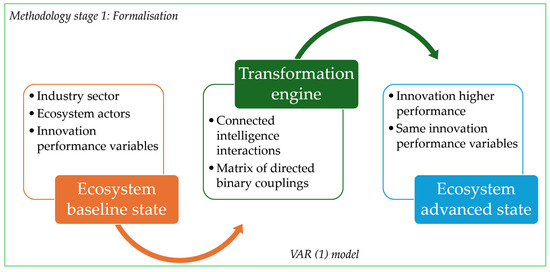
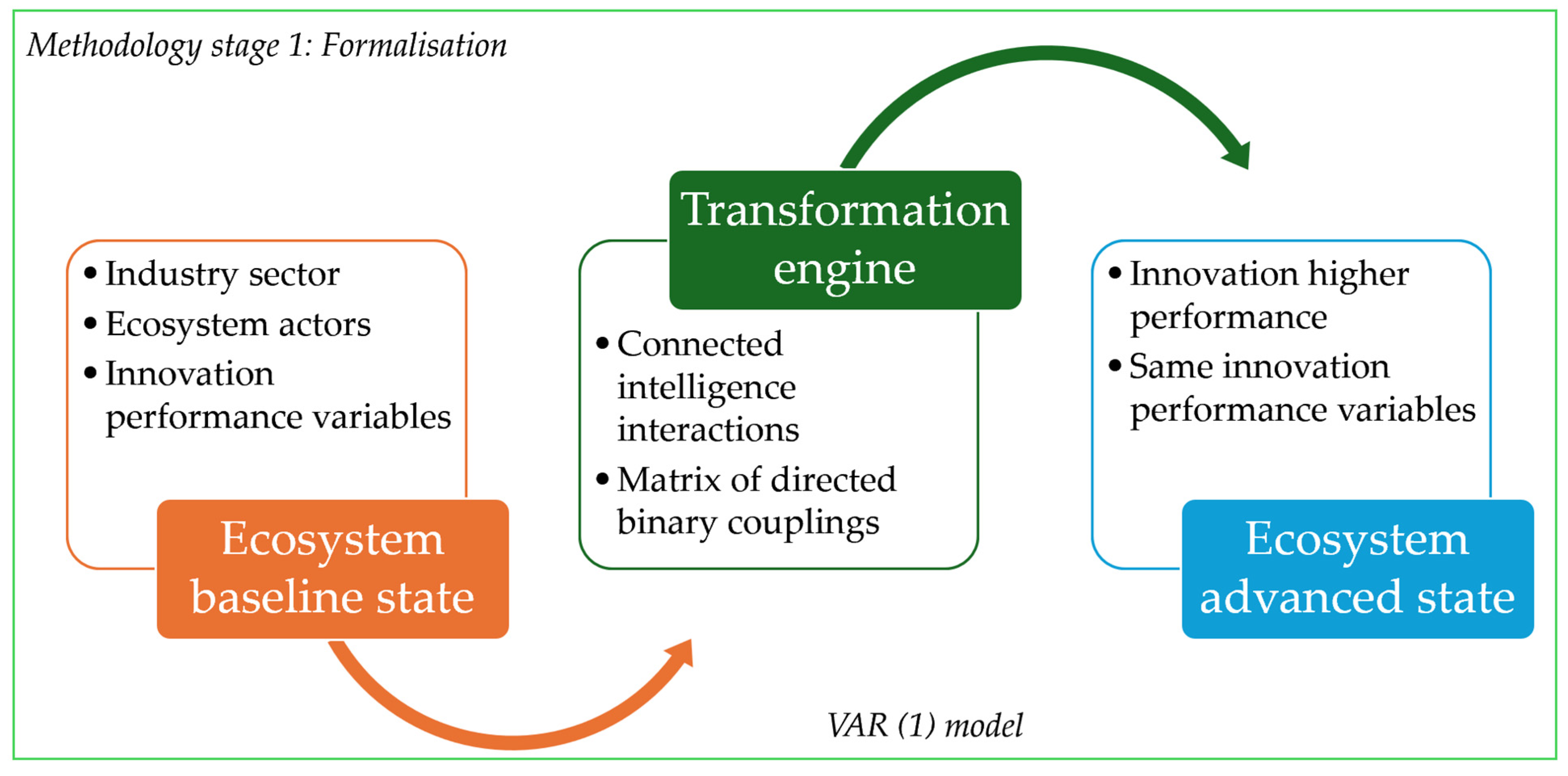
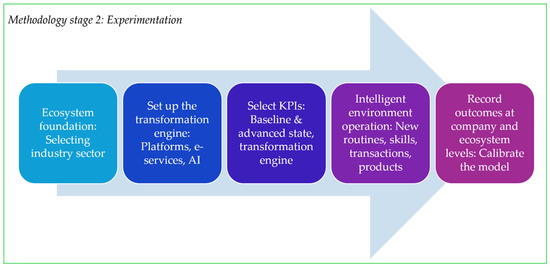
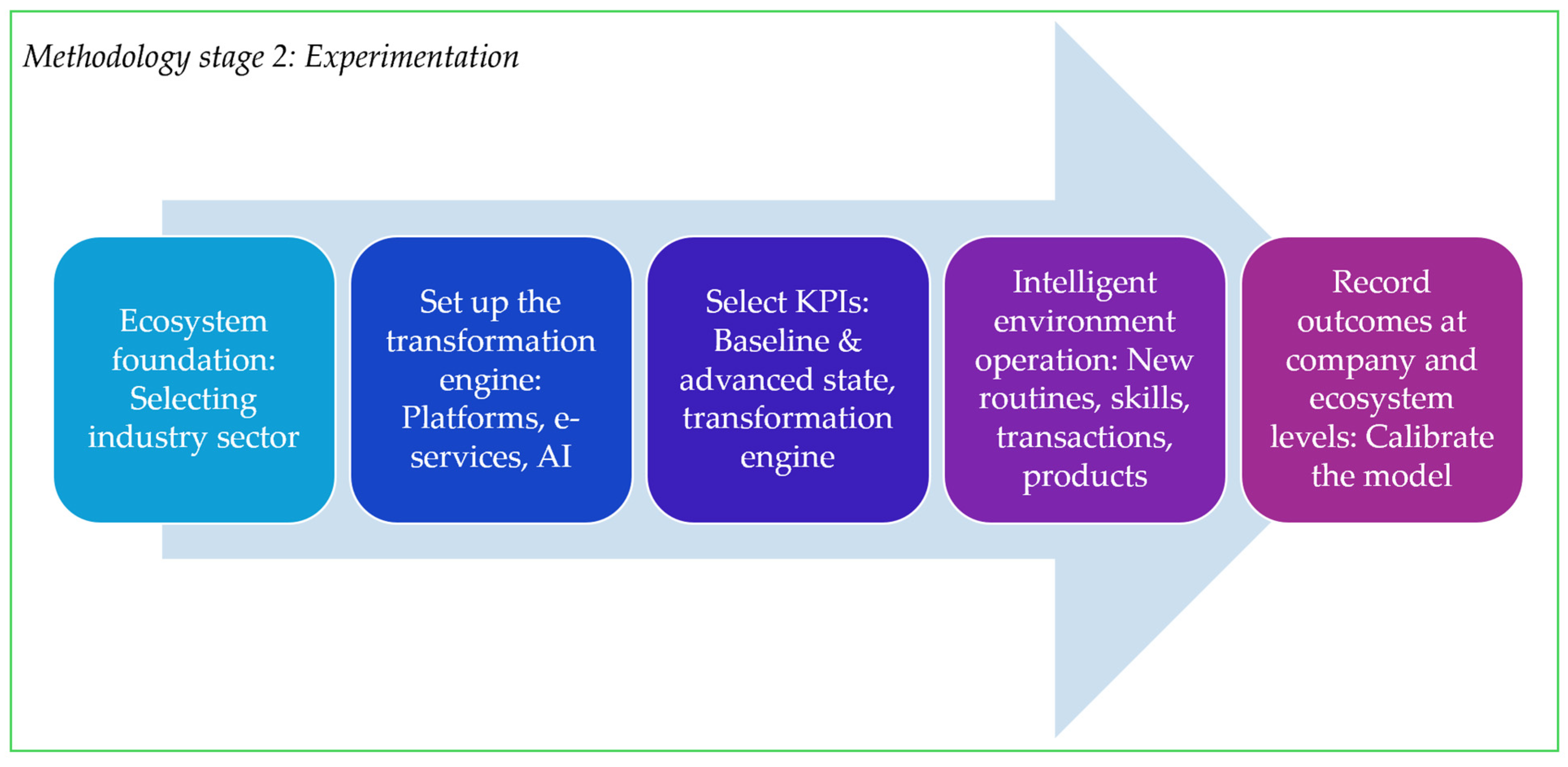
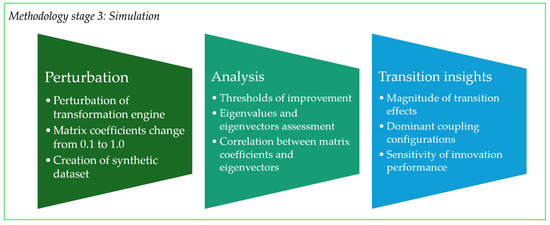
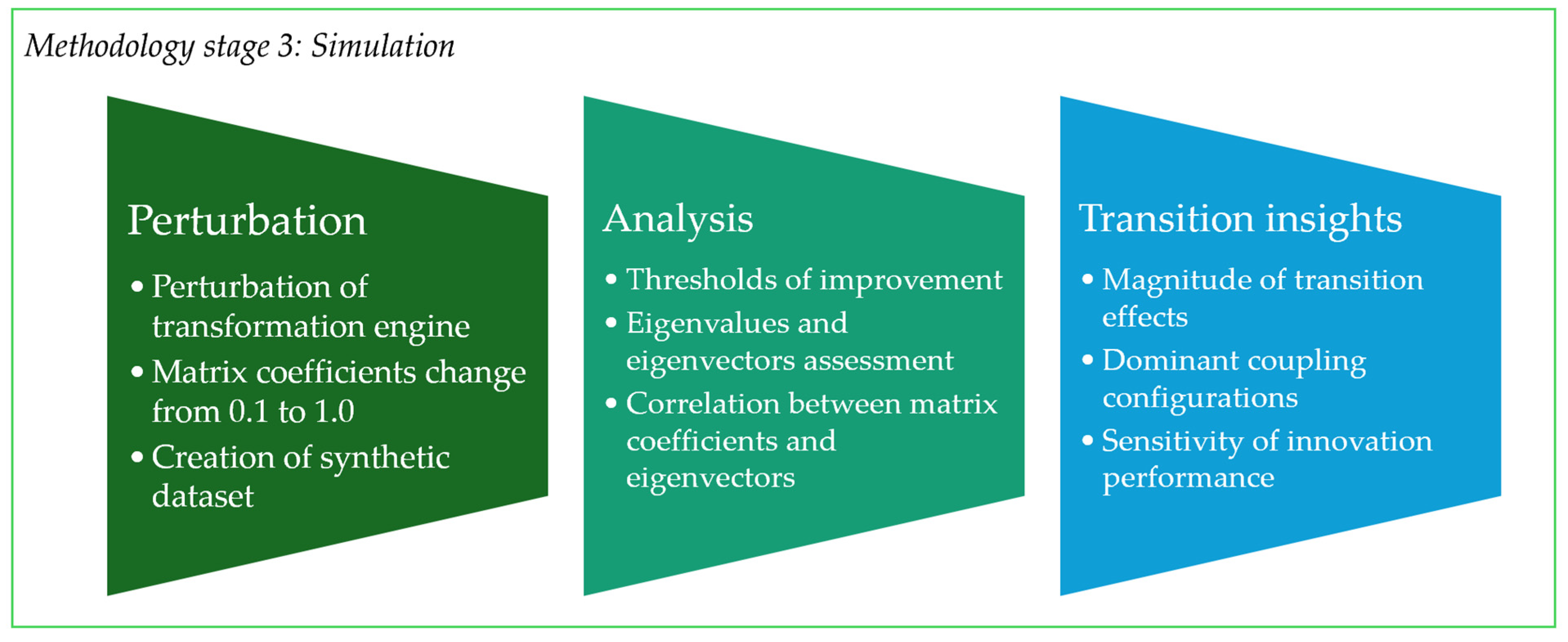
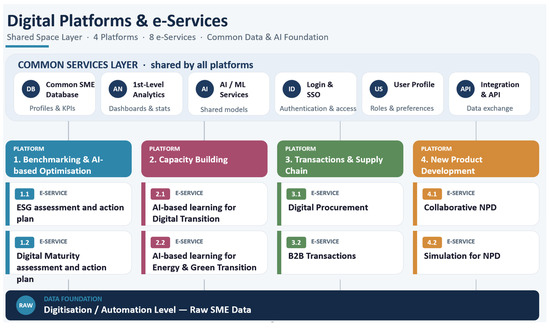
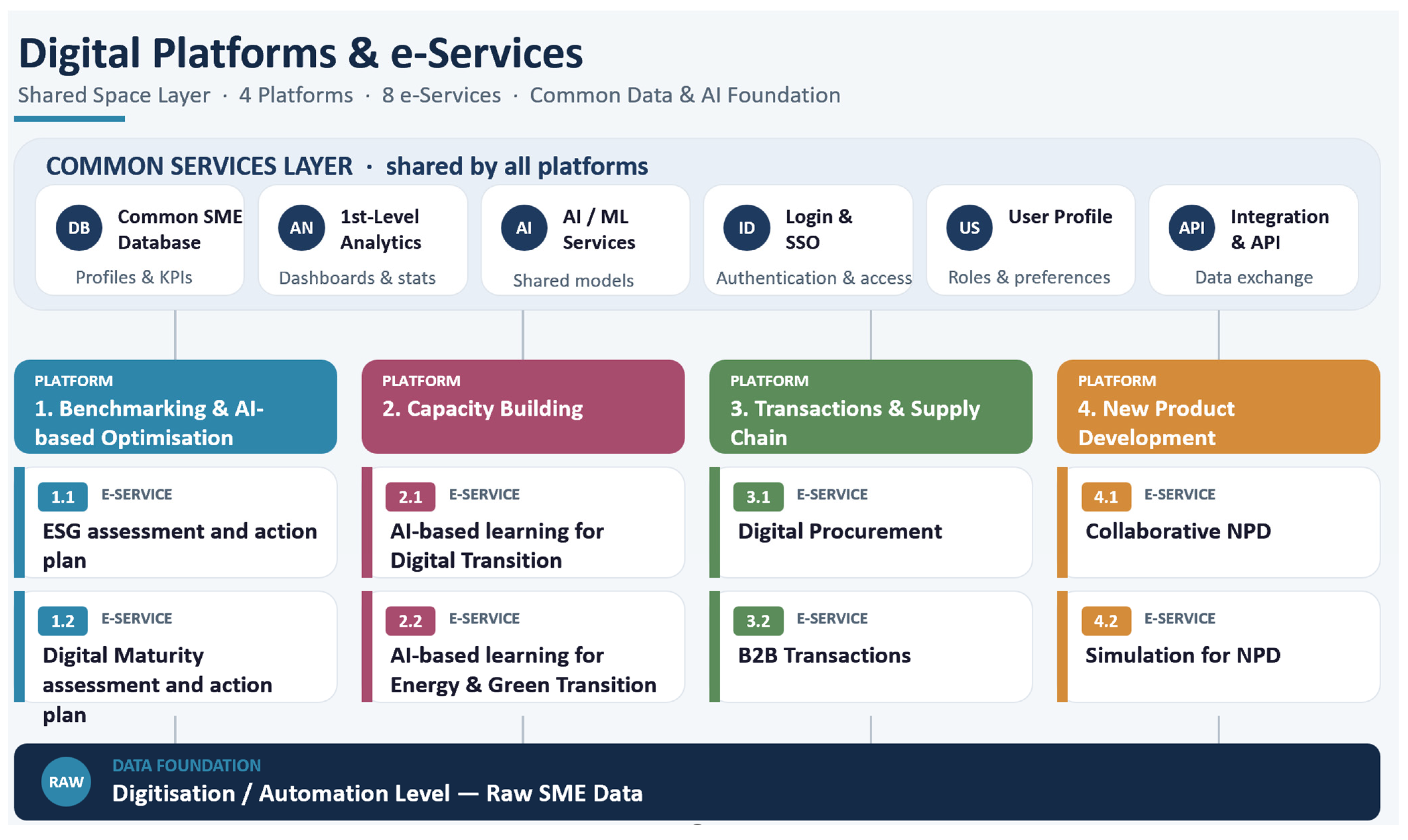

Disclaimer/Publisher’s Note: The statements, opinions and data contained in all publications are solely those of the individual author(s) and contributor(s) and not of MDPI and/or the editor(s). MDPI and/or the editor(s) disclaim responsibility for any injury to people or property resulting from any ideas, methods, instructions or products referred to in the content. |
© 2026 by the author. Licensee MDPI, Basel, Switzerland. This article is an open access article distributed under the terms and conditions of the Creative Commons Attribution (CC BY) license.