


Simple Summary
Plumage abnormalities such as leucism (very pale birds) and melanism (very dark birds) are rare in owls and often treated as curiosities, yet they can reveal important information about genetics, habitat, and survival. In this study, we review current knowledge on color anomalies in owls and present four new and unreported but well-documented cases from Israel: a brood of Eurasian Eagle Owls (Bubo bubo) with two leucistic and one normally colored fledgling, and two cases of dark-plumaged Little Owls (Athene noctua) in Northern and Central Israel. By comparing these familial cases with published examples from other species, we show that extreme depigmentation and putative melanistic phenotype can arise through different mechanisms, may carry costs or benefits depending on habitat, and are often detected thanks to careful observers and citizen science platforms. Our work highlights that recording and analyzing such unusual individuals contributes to a better understanding of owl ecology and color evolution and can improve monitoring and conservation of raptors and other birds.
Abstract
Plumage anomalies in owls range from common color polymorphisms to rare, extreme aberrations such as leucism, albinism, and melanism, yet systematic syntheses across taxa are scarce. In this review, we collate recent genomic, ecological, and environmental research (2017–2025) on owl plumage anomalies and combine it with new field observations from Israel to examine how depigmentation and hyperpigmentation arise and what their ecological consequences may be. We highlight the exceptional rarity of familial leucism by presenting a brood of Eurasian Eagle Owls (Bubo bubo) from Mount Gilboa containing two Ino and one normally colored fledgling—the first family-level record in this species and only the second wild case of extreme depigmentation in Eurasian Eagle Owls following a leucistic fledgling reported in Spain. We complement this with another sporadic color anomaly in a Little Owl (Athene noctua) from the Galilee and one from Shoham, Central Israel, both exhibiting unusually dark plumage with reduced pale spotting. Together, these records illustrate that owls may show pronounced reductions or alterations in melanin-based plumage coloration. However, the underlying mechanisms—including possible melanin-synthesis defects, altered melanin deposition, and external staining—cannot always be determined from photographs or opportunistic observations alone. By integrating these examples with broader evidence on climate, habitat, diet, and urbanization as drivers of plumage variation, we argue that rare pigment anomalies, although individually exceptional, provide disproportionate insight into camouflage, signaling, fitness, and potential bioindicator roles in owl populations facing rapid environmental change.
1. Introduction
Owls (Strigiformes) display a wide range of plumage colors and patterns that reflect their adaptation to nocturnal activity, cryptic roosting, and diverse environments. Beyond this “normal” variation, they also exhibit anomalies such as leucism, albinism, melanism, erythrism, and pattern defects, as well as well-studied color polymorphisms, where distinct morphs co-occur within populations [1]. Although historical studies of aberrant plumages were mostly phenotypic descriptions [2,3,4,5], most recent studies have focused on common polymorphisms in species such as the European Barn Owl (Tyto alba; [6,7]) and Tawny Owl (Strix aluco; [8,9]), where large sample sizes and clear morph categories allow rigorous analysis of genomic architecture, melanin pathways, and morph-fitness [10]. In contrast, extreme pigment anomalies that produce very pale or entirely white individuals remain rare, scattered, and often poorly diagnosed, especially in large, cryptically colored apex raptors, such as the Eurasian Eagle Owl (Bubo bubo; [11]).
Within this rare class of extreme anomalies, familial leucism—the occurrence of more than one depigmented nestling within the same brood—is exceptionally unusual [12]. Most published records of leucism or albinism in owls describe single birds, often juveniles, with no evidence of multiple affected siblings or repeated expressions within a family line. Even broader surveys of albinism, leucism, and melanism in Barn Owls and other species show that such mutations are sporadic and typically appear as isolated individuals in large monitoring datasets [13]. Against this background, the recent report of a leucistic Eurasian Eagle Owl nestling from Spain and our observation of a brood in Israel containing two Ino and one normally colored fledgling stand out as globally rare examples of observations of extreme depigmentation arising within families. These records suggest that although the underlying alleles may be present at very low frequencies, familial expression of leucism can occur when specific genetic and environmental conditions coincide [14].
However, from a genetic perspective, color mutations may be more common than is generally assumed, even if aberrant individuals are seldom recorded. Although aberrantly colored individuals are rarely observed in many wild populations, the underlying mutations are not necessarily rare. Most known color mutations are recessive, so when both parents carry the mutant allele, approximately 25% of their offspring will express the aberrant phenotype. In species with larger broods, the probability that more than one nestling in the same brood inherits the recessive allele from both parents is therefore non-trivial. Moreover, several of the commonest melanin-related mutations in birds, such as brown and Ino, are recessive and sex-linked: only males can carry these alleles without expressing them, but such carrier males mated with normal females will transmit the mutation to roughly half of their daughters (about 25% of all offspring), which then show the aberrant plumage [12,15,16]. This genetic architecture implies that recessive and sex-linked color mutations may be more widespread in wild populations than field observations alone suggest, and that apparent “rarity” often reflects detection and reporting biases rather than low allele frequency.
Plumage abnormalities in birds encompass hypopigmentation (albinism, leucism, dilution, progressive graying) and hyperpigmentation (melanism), arising from defects in melanin cell development, pigment synthesis, or deposition, with documented effects on camouflage, thermoregulation, predation risk, and social signaling across diverse taxa, including kingfishers and raptors [12]. Many of these conditions arise from changes in the amount, type, or spatial distribution of melanin, the principal pigment responsible for dark plumage, but color abnormalities can also reflect altered expression or deposition of other pigment classes, including carotenoid- and pteridine-based pigments that produce yellow, orange, or red tones [15]. Albinism, typically caused by genetic mutations that disrupt melanin synthesis, leads to a complete or near-complete absence of melanin in plumage and often in soft tissues. Leucism usually reflects an inherited absence or malfunction of pigment cells or pigment deposition, producing bilaterally symmetrical white patches or overall white plumage, while eye color remains normal (Table 1). Other abnormalities, such as dilution and progressive graying, result from reduced melanin production and age-related loss of pigment cells, respectively, whereas diet, environmental contaminants, injury, and disease can further modify feather color by altering pigment availability or damaging developing feathers [17]. Studies of Barn Swallows (Hirundo rustica) from Chernobyl have linked elevated frequencies of partial albinism and other depigmented phenotypes to increased germline mutation rates and reduced fitness [18,19], but these works pre-date the modern nomenclature that separates dilution and progressive graying from albinism and leucism (sensu van Grouw, [12,20]). Recent work on Malachite Kingfishers (Corythornis cristatus) has illustrated both the mechanistic classification of hypopigmentation and its ecological consequences, providing a useful comparative framework for color aberrations in owls [21]. Although leucistic individuals are often presumed to suffer reduced fitness because of increased detectability or pleiotropic costs, there are notable exceptions: in a coastal population of Southern Caracaras (Caracara plancus), pale-plumaged individuals represent a form of dilution rather than leucism. These diluted individuals appear to be locally favored by natural selection and can attain relatively high frequencies in coastal seabird colonies, where they may exploit ecological conditions differently from normal-colored conspecifics [22]. Although the original study referred to these individuals as leucistic, their phenotype is more appropriately interpreted as dilution under the mechanism-based nomenclature of van Grouw [12]. Consequently, plumage abnormalities represent the combined outcome of a mutation, single-gene genetic variation, developmental processes, and environmental stressors, and their occurrence and expression can provide insights into both individual biology and broader ecological conditions.
Table 1.
Definitions and diagnostic criteria for plumage anomaly terminology used in this review, following the mechanism-based nomenclature proposed by van Grouw [12].
Across most bird species, color-aberrant individuals constitute a very small fraction of wild populations, typically well under 1% of observed birds, which suggests that the underlying mutations and developmental disruptions are rare and often selected against and that strong purifying selection, together with low mutation rates, generally prevents these pigment defects from becoming common in natural populations [23,24]. Elevated frequencies of leucism have been linked to several non-mutually exclusive causes that either increase the rate at which pigment defects arise or alter how strongly selection acts against them. Leucism, from the Greek leukos (“white”), refers to a congenital absence or malfunction of melanin-producing cells. In birds, this causes complete loss of melanin from some or all feathers so that affected plumage is white (or shows only carotenoid colors if present), typically in bilaterally symmetrical patterns, while the eyes remain normally colored [16,20,25]. However, most evidence still comes from opportunistic records or small cross-sectional samples that offer limited power to test mechanistic hypotheses. Recent longitudinal work on Red-necked Nightjars (Caprimulgus ruficollis) has begun to disentangle these mechanisms by showing that the probability of partial leucism increases from juveniles to adults in both sexes, that age-related hypopigmentation is driven mainly by progressive graying within individuals rather than selective disappearance of pale birds, and that leucistic nightjars are on average lighter and slightly smaller than normally pigmented conspecifics [17]. These findings indicate that some forms of leucism can arise through intrinsic, age-related loss of melanin in feathers, with potential links to life-history traits such as body condition and lifespan.
In some recently founded or genetically depauperate populations, such as an inbred Great Reed Warbler (Acrocephalus arundinaceus) population in Sweden, where 4.5% of individuals showed progressive graying, reduced effective population size and increased homozygosity likely expose recessive alleles affecting melanocyte function or melanin synthesis that are normally masked in large outbred populations [23]. In other systems, environmental mutagens appear to play a prominent role: after the Chernobyl nuclear accident, 13–15% of Barn Swallows in some local populations exhibited leucistic or albinistic traits, consistent with radiation-induced damage to genes or developmental pathways involved in pigment production [18,19]. Urban environments and industrialized landscapes may also promote leucism/progressive graying through chronic exposure to pollutants, altered diets, or other stressors that increase mutation rates or interfere with melanocyte development, which would explain reports of higher frequencies of hypopigmented birds in cities than in the surrounding countryside [19,26]. Together, these examples indicate that leucism can arise from a combination of genetic factors (such as recessive alleles and inbreeding) and environmental influences (including radiation, contaminants, and nutritional stress), with local demographic and selective regimes determining whether such pigment anomalies remain exceedingly rare or become conspicuously frequent in particular populations.
In contrast to heritable color aberrations, pigment anomalies caused by non-genetic factors such as dietary imbalance can be much more frequent in local populations. In corvids, and particularly in Carrion Crows (Corvus corone) in Western Europe, wide white bars and patches in otherwise black plumage are often associated with protein or nutrient deficiencies that disrupt normal melanin production and may affect a substantial proportion of individuals in some urban or human-modified environments [15,27]. For example, van Grouw [27] notes that white feathers in black birds, including Carrion Crows, are “mostly caused by a food problem and usually do not have a genetic cause,” and that such birds feeding on “junk food” in cities can show extensive loss of pigment. These diet-linked pigment aberrations illustrate that, depending on species and context, the percentage of visibly aberrant individuals may be far higher than suggested by records of rare, heritable mutations alone and underscore the importance of distinguishing environmental from genetic causes when interpreting plumage anomalies.
Although our review focuses on owls, studies on color aberrations in other birds, such as hypopigmented Malachite Kingfishers [21] and Southern Caracaras [22], offer complementary insights into the definitions, ecological impacts, and detection biases associated with plumage anomalies and thus provide a valuable comparative context for interpreting our three owl case studies. The objectives of this review are twofold. First, we synthesize recent advances (2017–2025) in owl plumage anomalies, covering genetic mechanisms, environmental drivers, and ecological consequences across a range of species and ecosystems. Second, we use three new field observations from Israel as focal case studies to illustrate how different forms of pigment disruption manifest in natural populations and to emphasize the distinction between familial and sporadic events. These comprise: (i) a brood of Eurasian Eagle Owls from Mount Gilboa containing two Ino and one normally colored fledgling—the first family-level record of leucism in the species; (ii) a Little Owl from the Galilee with uniformly dark plumage and reduced pale spotting; and (iii) a similar Little Owl near Shoham, Central Israel, since 2014. By integrating these cases with the broader literature on color aberrations, including the leucistic Eurasian Eagle Owl nestling reported in Spain [28] and familial leucism in Burrowing Owls (Athene cunnicularia; [29]), we show how rare depigmented and hyperpigmented individuals can illuminate the genetic architecture, ecological costs [30,31,32,33,34], and potential bioindicator value of plumage anomalies in Strigiformes. Specifically, we ask: what types of plumage-color aberrations have been reported in owls, which diagnoses are supported by the available evidence, and what information is needed to distinguish heritable melanin aberrations from environmentally induced or external plumage changes?
We follow the mechanism-based nomenclature proposed by van Grouw [12]. Accordingly, color aberrations are identified, where possible, by the underlying process affecting melanocytes, melanin synthesis, melanin deposition, or melanin type and distribution, rather than solely by the apparent plumage color. Where photographs or observations do not permit a reliable diagnosis, we use descriptive terms (e.g., “pale-plumaged individual” or “unusually dark individual”) rather than assigning a specific aberration category.
2. Scope, Sources and Terminology
This article presents a narrative review of plumage-color aberrations in owls, supplemented by documented observations of Eurasian Eagle Owls and Little Owls from Israel. The evidence considered comprises peer-reviewed publications, published case reports, available photographic documentation, and repeated field observations. Our aim is not to derive prevalence estimates from opportunistic records but to assess how reported phenotypes have been described and interpreted, using the mechanism-based nomenclature of van Grouw [12]. We focus on distinguishing leucism, progressive graying, Albino, brown, Ino, dilution, melanism, and non-genetic external staining, while retaining descriptive terminology where available evidence does not permit a confident diagnosis.
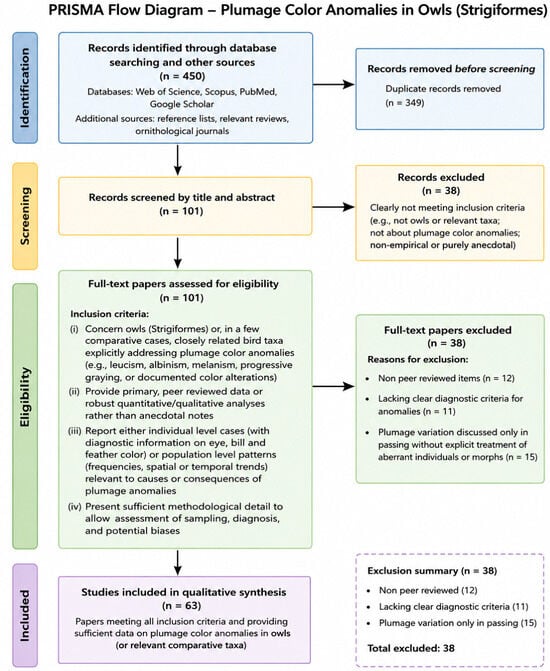
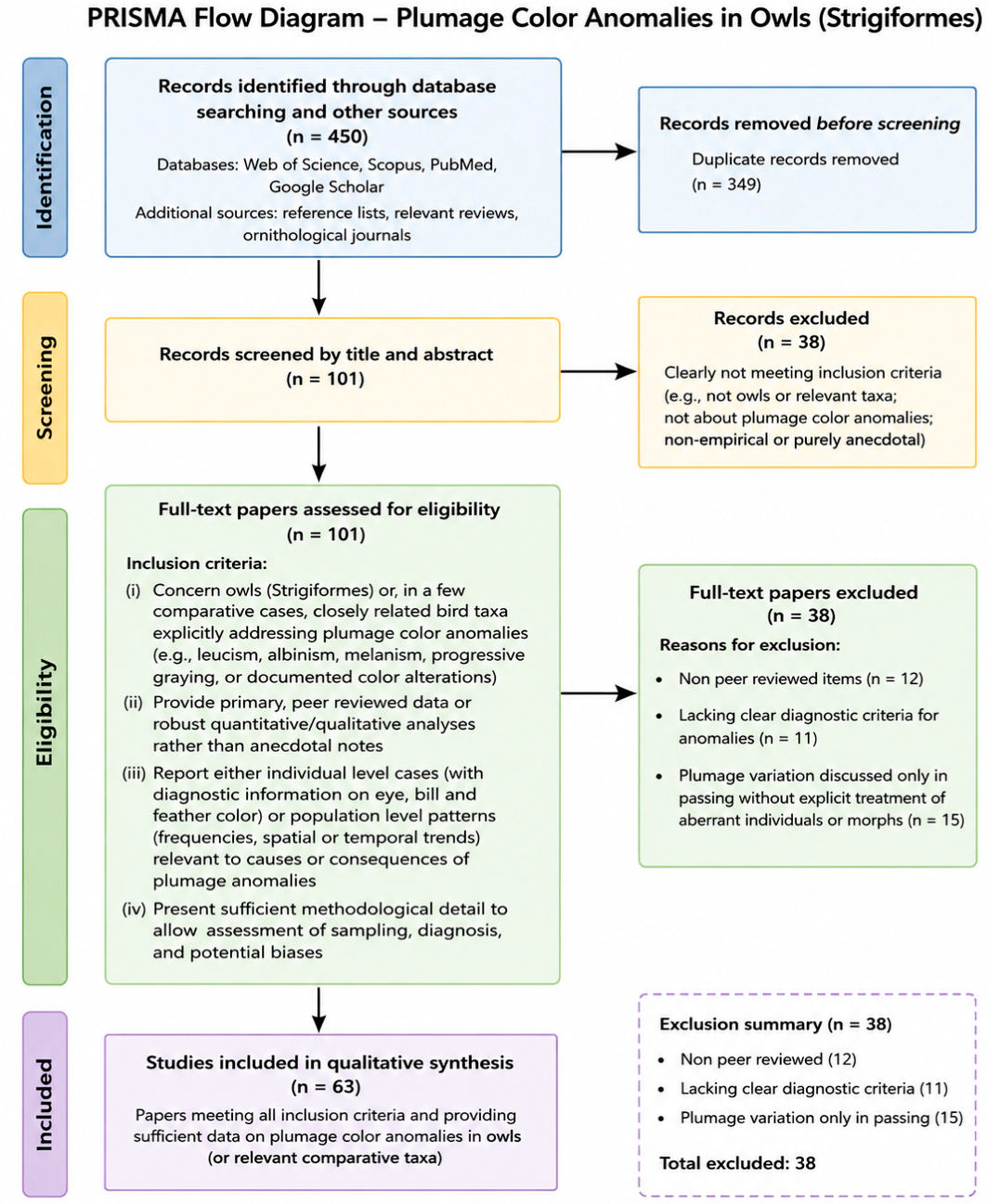
This review is based on a protocol-guided search of the peer-reviewed literature focusing on owl plumage anomalies and related topics (genomic architecture, melanin pathways, environmental drivers, morph-specific fitness). An initial corpus of 450 papers was screened; after removing duplicates, non-abstracted items, and predatory publications, 63 papers were retained and met full inclusion criteria for detailed synthesis. To be included, studies had to (i) concern owls (Strigiformes) or, in a few comparative cases, closely related bird taxa explicitly addressing plumage-color anomalies (e.g., leucism, albinism, melanism, progressive graying, or documented color alterations); (ii) provide primary, peer-reviewed data or robust quantitative/qualitative analyses rather than anecdotal notes; (iii) report either individual-level cases (with diagnostic information on eye, bill and feather color) or population-level patterns (frequencies, spatial or temporal trends) relevant to causes or consequences of plumage anomalies; and (iv) present sufficient methodological detail to allow assessment of sampling, diagnosis, and potential biases. We excluded non-peer-reviewed items, studies lacking clear diagnostic criteria for anomalies, and papers where plumage variation was discussed only in passing without explicit treatment of aberrant individuals or morphs. For clarity, we summarize this screening process in a systematic flowchart (Figure 1), showing the initial corpus, sequential exclusion steps, and final set of studies used in the synthesis.
Figure 1.
A PRISMA flow diagram of the literature selection process. A total of 450 publications were screened, of which 63 met the predefined inclusion criteria and were retained for qualitative synthesis. Eligible studies focused on owls (Strigiformes) or, in a limited number of comparative cases, closely related avian taxa and explicitly addressed plumage-color anomalies such as leucism, albinism, melanism, progressive graying, or other documented aberrant colorations. Included studies provided primary, peer-reviewed data or robust quantitative or qualitative analyses, reported either individual-level cases or population-level patterns, and contained sufficient methodological detail to assess diagnostic criteria, sampling procedures, and potential sources of bias. Publications were excluded if they were not peer-reviewed, lacked clear diagnostic criteria for plumage anomalies, or mentioned plumage variation only incidentally without explicit treatment of aberrant individuals or color morphs. The final dataset comprised 63 studies included in the qualitative review.
These studies, published between 2017 and 2025, cover a taxonomically and geographically diverse set of owls, including the Eastern Screech-Owl (Megascops asio; [10]), Barn Owl [6,13], Tawny Owl [9], Burrowing Owl [29], Short-eared Owl (Asio flammeus; [35,36]), Long-eared Owl (Asio otus; [37]), and several Far Eastern and Neotropical taxa (Aegolius acadicus, [38]; Athene brama, [39]).
We organized the evidence around three main themes: (i) genetic and physiological bases of plumage anomalies, (ii) environmental stressors and habitat-related drivers, and (iii) adaptive significance and ecological implications of plumage anomalies. In addition, we incorporated a new observational case study of leucistic Eurasian Eagle Owls to exemplify how rare anomalies manifest in wild populations and to illustrate practical documentation issues.
3. Genetic and Physiological Bases of Owl Plumage Anomalies
3.1. Genomic Architecture and Polymorphism
Genetic studies on owls have revealed that even “continuous” color variation often has a complex genomic basis [14,40]. Research on Eastern Screech-Owls (Megascops asio) has begun to identify genomic regions associated with plumage polymorphism, suggesting that multiple loci and regulatory elements contribute to variations in color and pattern [10,41]. In European Barn Owls, continuous variation in rufous-to-white coloration is underpinned by specific genomic architectures, with melanin-related genes playing central roles [13].
Melanin-based plumage coloration is strongly linked to melanin content in the internal organs of Barn Owls, indicating shared developmental pathways between external and internal traits [42,43]. The differential co-expression of melanin and neurotransmitter signaling genes in the growing feathers of white and rufous Barn Owls further shows that plumage color arises from tightly integrated physiological networks rather than single-gene effects [44].
Comparative genomics across owls and Accipitrids have highlighted broader evolutionary patterns associated with predatory lifestyles, some of which may indirectly inform plumage traits such as sensory adaptations and metabolic pathways that interact with pigment production [45,46].
3.2. Rare Genetic Anomalies: Leucism, Albinism, Melanism
While polymorphism is relatively well studied, the genetic underpinnings of rare, non-polymorphic anomalies, such as partial leucism and true albinism, are far less explored. Albinism is defined as the complete absence of melanin from the plumage, skin and eyes due to failure of melanin synthesis, resulting in white plumage and red or pink eyes and bare parts. In contrast, leucism is a congenital absence of melanin-producing cells from some or all skin areas, causing fully unpigmented (white) feathers in the affected regions while the eyes remain melanised. In partial leucism, the bill and feet may be normally colored or lack melanin depending on the distribution of affected skin areas; in 100% leucism, melanin is absent from the plumage and skin, resulting in pale or pink bill and feet [12,15,16,25]. Conversely, melanism reflects excess melanin and darker plumage.
Quantitative analyses of rare plumage mutations in Barn Owls have documented the incidence of albinism, leucism, and melanism across large datasets, demonstrating that such mutations are rare but detectable in systematic monitoring programs [13]. Recent genomic work on owls and other raptors shows that pigmentation-related genes often harbor substantial polymorphism and, in some lineages, pseudogenized copies, indicating that the genetic substrate for variation in melanin pathways is both complex and dynamic [47].
However, the direct identification of specific causal mutations for partial leucism or true albinism in most owl species remains a major gap. This limits our ability to disentangle purely genetic causes from gene–environment interactions in individual cases.
4. Environmental Drivers and Stressors
4.1. Climate, Climatic Gradients, and Global Change
Environmental conditions strongly influence owl plumage. Climate change has been associated with spatiotemporal shifts in body size and plumage coloration in Barn Owls, suggesting that large-scale environmental gradients can drive adaptive changes or phenotypic plastic responses in coloration [48]. Tawny Owls show feather structural adaptations across climatic gradients, reflecting their responses to temperature and precipitation regimes [49].
Melanin-based plumage coloration in Tawny Owls is associated with exposure to novel climatic and habitat conditions, implying that certain morphs may gain or lose fitness advantages depending on the environmental context. Across a European climatic gradient, feather structure and color polymorphism are linked to temperature and snow cover, with pale gray morphs and more insulating feathers favored in cold, snowy, and relatively dry environments, whereas darker brown morphs are more frequent in warmer, humid forests [9,49]. These studies indicate that ongoing climate warming, reduced snow cover, and shifts in forest composition represent “novel conditions” under which locally adapted gray morphs may lose their advantage and darker morphs may become increasingly favored.
These results support the view that the environment, via climate and habitat, can modulate both the expression and selective value of plumage traits.
4.2. Diet, Urbanization, and Other Stressors
Diet indirectly influences plumage by affecting growth and condition [50]. Color-specific diet specialization has been linked to differences in owlet weight in polymorphic owls, suggesting that morphs are associated with distinct trophic niches [51,52,53]. Urbanization, by altering habitat structure and prey communities, can modify the purifying selection in Burrowing Owls, potentially affecting the prevalence of certain morphs or anomalies [54].
Documented color alterations in Short-eared Owls in Ecuador provide concrete examples of plumage anomalies emerging in wild populations, possibly in response to local environmental factors [35]. Individual and environmental influences on the morphology and physiology of preen glands in Barn Owls may also affect feather quality, and thus the appearance and durability of plumage [55].
Together, these studies show that environmental stressors, from climate and diet to urban landscapes, can shape both typical plumage variation and the occurrence of anomalies, even if direct causal pathways remain challenging to demonstrate [26].
4.3. Climate and Environmental Drivers of Owl Coloration
Recent comparative work has shown that melanin-based plumage redness in owls is consistently associated with warmer climates and proximity to the equator. In Italian Scops Owls, the frequency of dark-reddish morphs increased over the last century and was positively related to temperature and rainfall, suggesting climate-driven shifts in morph fitness [56]. A broader analysis across four owl genera found that darker, more reddish species are more prevalent near the equator than polewards, indicating that pale pheomelanic owls are better adapted to cooler climates, whereas dark pheomelanic owls are favored in warmer regions [57]. At a global scale, owls are more frequently darker and redder in warmer, wetter, and more vegetated areas, with temperature and tree cover predicting plumage lightness and redness and supporting Gloger’s rule of thermal melanism expectations [58]. Taken together, these studies imply that environmental factors such as temperature, humidity, and vegetation interact to influence both the distribution of color morphs within species and the evolution of plumage coloration across owl lineages and that ongoing climate change is likely to alter the selective balance among morphs and species differing in melanin-based pigmentation.
5. Ecological and Fitness Consequences
5.1. Polymorphisms, Camouflage, and Thermoregulation
Color polymorphisms in owls often have distinct ecological roles. Melanin-based polymorphism in Barn Owls is associated with habitat use and exposure to moonlight, with evidence that different morphs show differential fitness depending on ambient light, likely via effects on hunting efficiency and predation risk [59]. In Tawny Owls, morph-specific selection drives phenotypic divergence, with intermediate-colored females in some populations exhibiting higher reproductive success than darker or paler morphs [60].
In owls, camouflage involves more than color polymorphism alone and operates across both seasonal and diel contexts. Experimental and field studies on Tawny Owls show that pale gray morphs are more cryptic than brown morphs in snowy landscapes, reducing detection and mobbing by passerines in winter and thus yielding seasonally contingent camouflage benefits [61,62]. In Snowy Owls (Bubo scandiacus), the evolution of predominantly white plumage has been interpreted as an adaptation for concealment in snow-covered Arctic environments, with sex-specific patterning further enhancing background matching against tundra substrates [63]. Beyond terrestrial backgrounds, recent modeling work demonstrates that the white underparts of Barn Owls can function as nocturnal camouflage through background matching against anisotropic moonlit skies, rendering hunting birds effectively invisible to rodent prey under many lunar conditions [64]. Together, these studies indicate that owl camouflage tactics integrate plumage color and pattern with seasonal snow cover, habitat structure, and the spectral properties of daylight versus moonlit night skies and thus that environmental change—particularly warming winters and altered snow regimes—is likely to modify the selective value of different camouflage strategies.
Plumage color also interacts with thermoregulation; feather adaptations across climatic gradients in Tawny Owls suggest that structural and pigment traits can modulate heat gain and loss, contributing to survival in diverse environments [49,65].
Taken together, these findings show that melanin-based plumage traits in owls are shaped not only by genetic and developmental processes but also by climate, habitat and camouflage demands and that ongoing environmental change is likely to alter the selective landscape for both rare color anomalies and common morphs.
5.2. Social Signaling, Mating, and Survival
In polymorphic owls, plumage color is part of a broader phenotype that affects assortative mating, fledging survival, weight, and immunity [66]. Some studies have shown that size, rather than color, can drive assortative mating and survival, indicating that multiple traits combine to determine fitness and that color anomalies must be evaluated in a multi-trait context [67,68].
The eco-evolutionary dynamics of plumage anomalies involve complex interactions between morphology, behavior, and the environment. This complexity makes it difficult to generalize from a single species or system.
5.3. Extreme Depigmentation: From Curiosity to Conservation Concern
Extreme depigmentation, such as partial leucism or incomplete albinism, is often treated as a curiosity, but emerging case reports suggest that these anomalies may have significant fitness implications in the wild. Pale individuals can suffer reduced camouflage in daytime roosts, increased detectability by predators or mobbing birds, and potential changes in mate choice or social interactions [60,69,70].
The recently reported leucistic Eurasian Eagle Owl from southeastern Spain, for instance, was the only aberrantly colored nestling in a brood of four and suffered premature mortality within ten months of fledging, likely reflecting the increased vulnerability associated with conspicuous plumage [28]. Such cases suggest that rare anomalies may incur substantial costs and could serve as indicators of underlying genetic or environmental stress.
Although the preceding sections have focused on patterns and mechanisms of plumage anomalies across owls and other birds, these insights remain largely theoretical without concrete systems in which they can be evaluated in detail. The published literature provides a general framework: leucism and melanism can arise through rare genetic variants, inbreeding, progressive graying, and environmental stressors, and their fitness effects are strongly context-dependent. The three anomalous cases documented in Israel—a brood of leucistic Eurasian Eagle Owls and two separate cases of melanistic Little Owls—offer a unique opportunity to examine how this framework applies in real populations, to explore whether familial versus sporadic expression aligns with different inheritance patterns, and to generate testable hypotheses for future genetic and ecological work. In Section 6, we therefore shift from global synthesis to these local case studies, using them as focal examples to illustrate and potentially challenge the broader theories outlined above.
6. Case Studies in Israel
6.1. A Brood with Two Leucistic Eurasian Eagle Owls
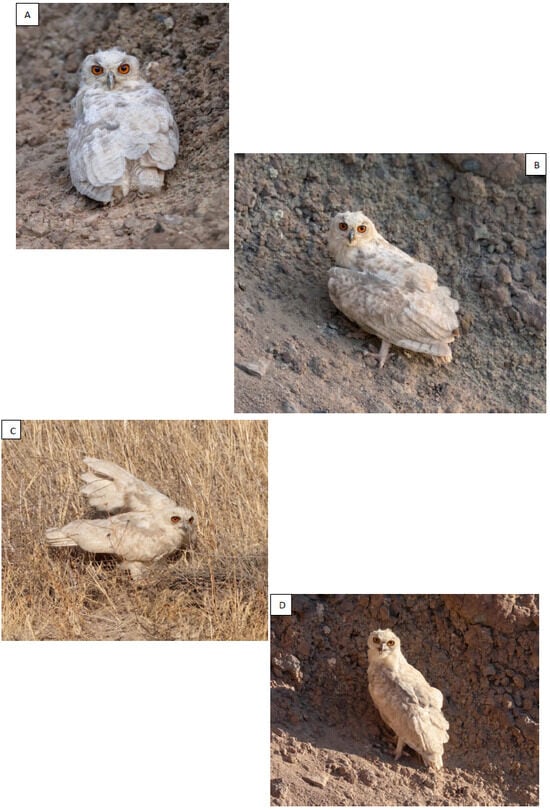
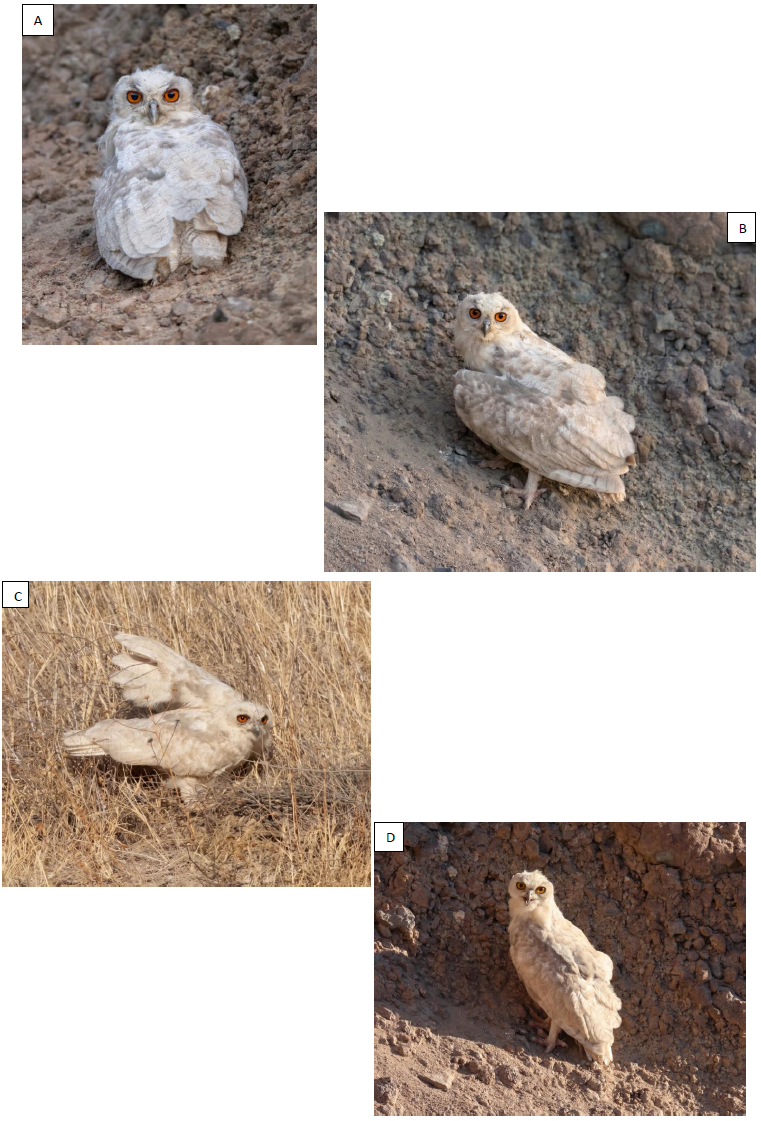
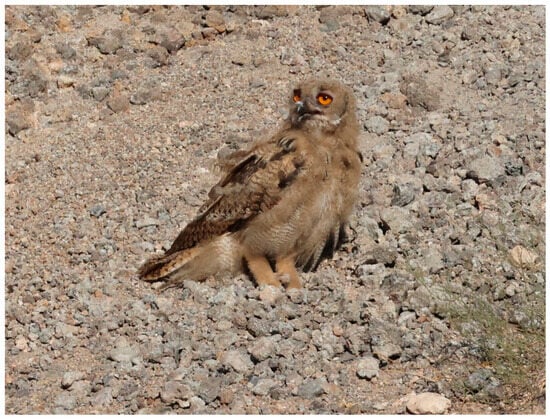
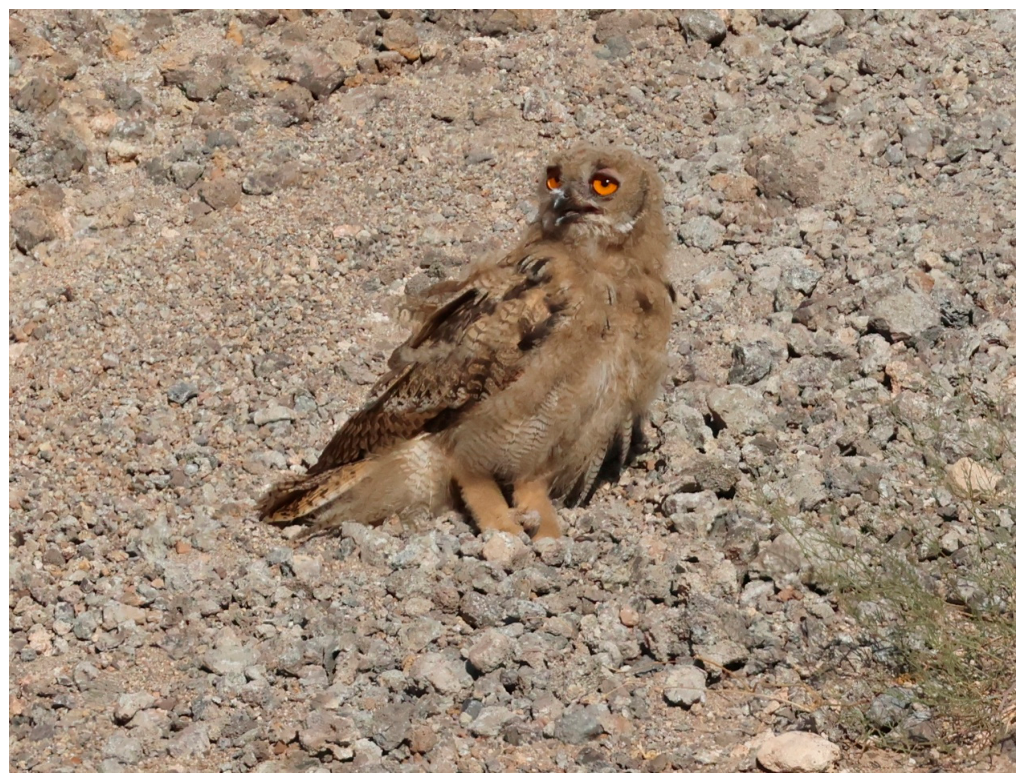
On June 7, 2026, a local birder (Irad Salonik) discovered three fledgling Eurasian Eagle Owls in an abandoned quarry below Mount Gilboa in the Jezreel Valley, northern Israel. Two fledglings exhibited very pale plumage, whereas the third showed the typical mottled brown coloration of Eurasian Eagle Owls. Upon receiving this information, we visited the site on June 18, 2026, confirmed the presence of all three fledglings (estimated at approximately 70 days of age and already capable of sustained flight; [71,72]), and observed one normally colored adult, presumably the female parent. One Ino fledgling allowed close approach, enabling detailed photographic documentation of its plumage pattern, structure, and eye coloration, which supported the classification of Ino rather than albinism sensu stricto (Figure 2A–D). The coexistence of two Ino and one normally pigmented fledgling within a single brood from apparently normally colored parents suggests a heritable basis for the pigment anomaly, potentially involving recessive or polygenic mechanisms affecting melanin deposition in feathers. The birds exhibited predominantly white or very light feathers with faint residual patterning but retained normal dark irides. The combination of extensive pale, brownish plumage and normally colored eyes in these two young Eurasian Eagle Owls is not consistent with leucism sensu van Grouw, in which affected feathers are completely devoid of melanin and therefore pure white, with normal eyes and often normal bare parts, because melanocytes are absent or non-functional in the affected areas [15,16,20,25]. Instead, the altered color—where originally black plumage appears brown and overall melanin intensity is strongly reduced—suggests a mutation that affects the synthesis of eumelanin and pheomelanin rather than their distribution and thus represents a form of hypomelanism rather than leucism. The phenotype resembles Ino-type mutations described in other birds, in which both melanins are incompletely synthesized and remain paler than normal; if an Ino-like, recessive sex-linked mutation is involved here, the affected nestlings would be expected to be female and to have inherited the mutant allele from a carrier father, whereas an autosomal recessive mutation with similar effects would imply that both parents carried the allele [15,20]. Because we lack genetic and detailed feather structural data, we conservatively refer to these individuals as hypomelanistic rather than leucistic, and we emphasize that incomplete melanin synthesis and true leucism are mechanistically distinct conditions that should not be conflated or directly compared.
Figure 2.
(A–D) Leucistic Eurasian Eagle Owl (Bubo bubo) fledglings in an abandoned quarry below Mount Gilboa, Jezreel Valley, Israel, June 2026 (Photos: Ezra Hadad).
The coexistence of two leucistic and one normally pigmented fledgling (Figure 3) within the same brood from apparently typical-colored parents strongly suggests a heritable basis for the anomaly, potentially involving recessive alleles or polygenic effects in pigment deposition pathways. This brood thus represents the first documented family-level occurrence of leucism in Eurasian Eagle Owls and only the second wild record of extreme depigmentation in this species, after the Spanish leucistic case [28].
Figure 3.
The above photographs of the leucistic individuals can be compared to that of a similar-aged Eurasian Eagle Owl fledgling (Photo: Ezra Hadad).
To move beyond the current, necessarily speculative interpretation of the Israeli cases, future work should aim to validate the genetic basis of these pigment anomalies using non-invasive sampling. In particular, feathers molted or shed at roost sites, nests, or perches used by the leucistic Eurasian Eagle Owl brood and the melanistic Little Owl could be collected systematically and used for DNA extraction and targeted or genome-wide sequencing. Such samples would allow testing whether depigmentation and hyperpigmentation are associated with specific recessive alleles, polygenic architectures, or shared pathways known from other birds (e.g., MC1R and related melanin regulation genes [12,20]), without the need to capture or handle the birds. Coupling genetic data from feathers with repeated field observations of family structure and phenotypes would make it possible to distinguish between simple Mendelian inheritance and more complex gene–environment interactions, thereby providing a robust framework for interpreting both familial and sporadic anomalies in Eurasian Eagle Owls and Little Owls in Israel.
6.2. Dark-Plumaged Little Owl from the Galilee
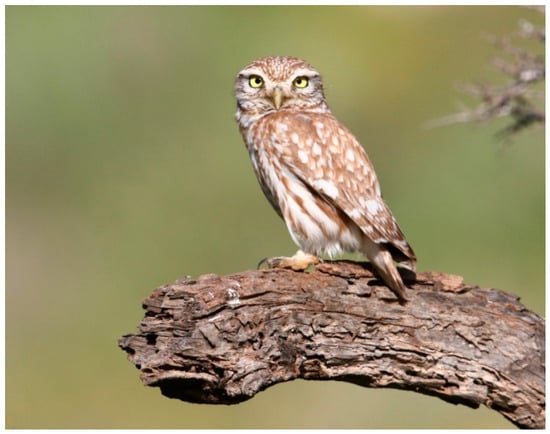
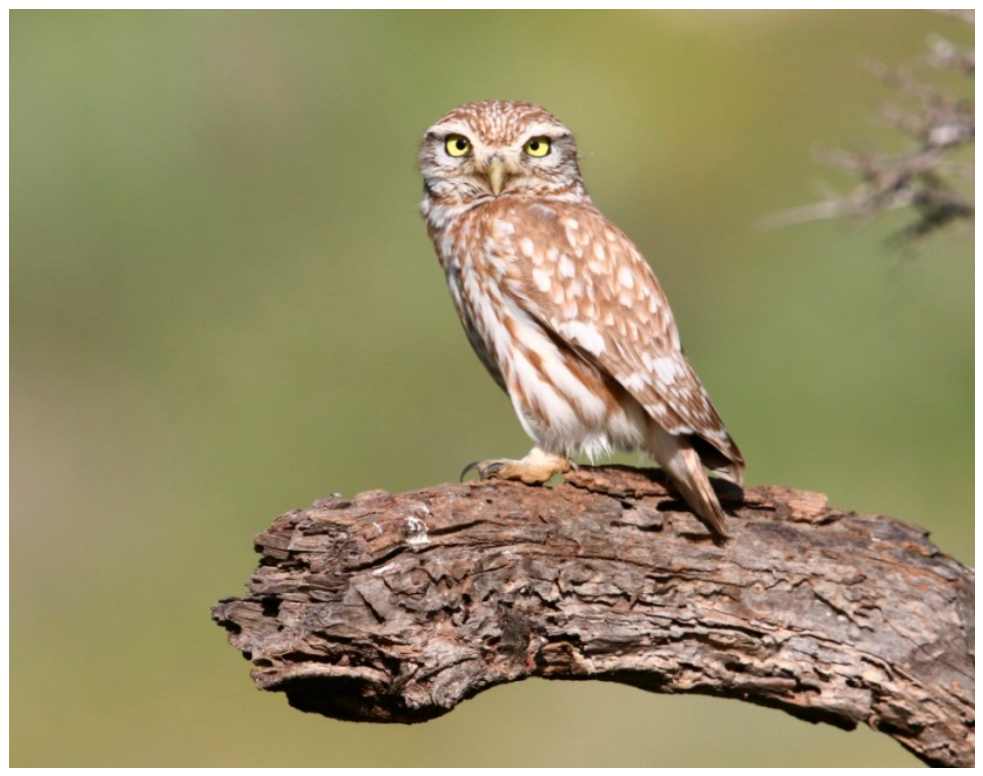
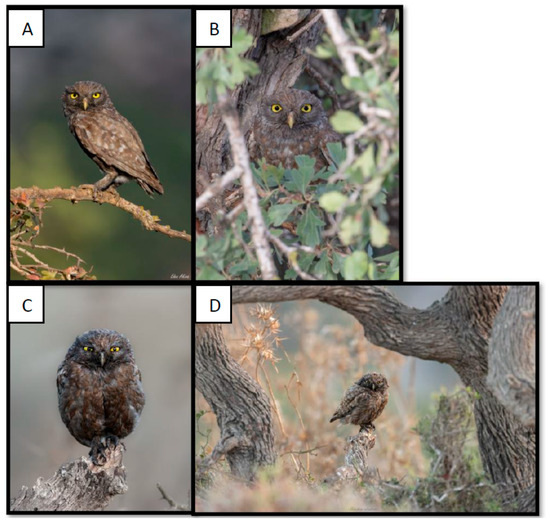
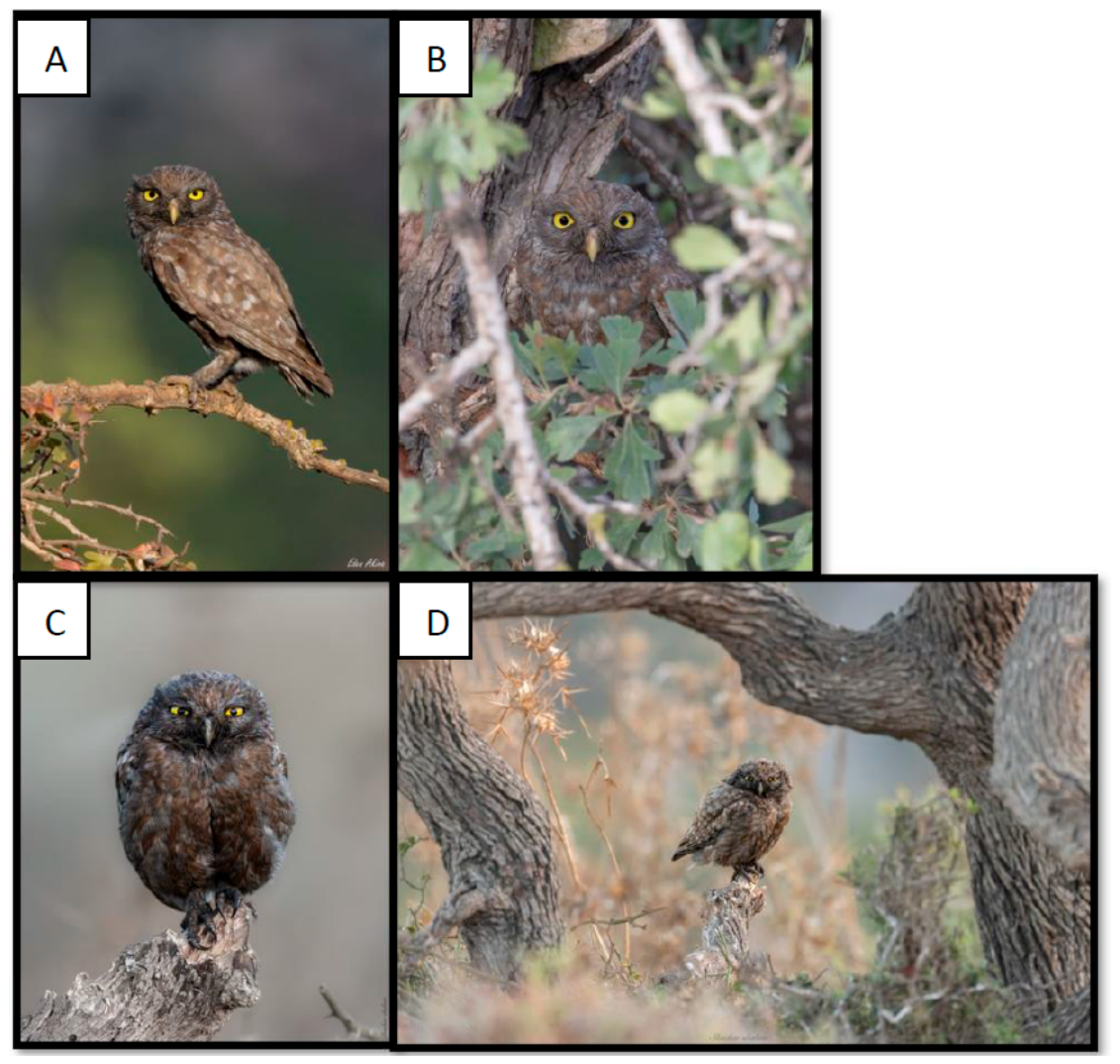
On 20 June 2026, a markedly dark Little Owl was photographed in the Galilee, Israel, providing an additional example of hyperpigmentation in a small, partly diurnal owl species. The individual showed an overall much darker brown-to-blackish plumage than typical local Little Owls (Figure 4), with only faint, contrasting pale spots on the body and wings, while retaining normally colored yellow irides and bill (Figure 5A–D). The bird was repeatedly photographed perched and foraging in a structurally complex, shrubby habitat, where its unusually dark plumage reduced the contrast between body and background compared with typical conspecifics observed nearby. However, based on the available photographs, the pattern of darkening appears irregular and locally intense, and could plausibly result from external staining, rather than melanin-based melanism. In the absence of capture, closer examination of feather structure, and information on eye and soft-part color, we therefore regard this individual as a putative stained morph, and we treat a diagnosis of true melanism as uncertain, recognizing that exogenous discoloration is a more parsimonious explanation for the observed plumage in this case. However, we cannot rule out a melanin-based explanation entirely, but given the visible pattern and context, staining is more likely than heritable melanism, and we accordingly interpret this record with caution. We therefore exclude it from our discussion of heritable melanin-based polymorphism, while recognizing that true melanistic Little Owls may occur and should be distinguished from such externally stained individuals when adequate diagnostic evidence is available. This record appears to represent a sporadic anomaly rather than a known dark morph and extends the spectrum of pigment abnormalities documented in owl populations to include small, cavity-nesting species.
Figure 4.
A typical Little Owl (Athene noctua) in the wild. (Photo: Ezra Hadad).
Figure 5.
(A–D) Dark-plumaged Little Owl (Athene noctua) photographed on 20 June 2026 in the Galilee, Israel, showing unusually dark brown-to-blackish plumage with reduced pale spotting but normal yellow irides and bill (Photos: Eden Akiva (A,B) and Shachar Shalom (C,D)).
6.3. Dark-Plumaged Little Owl: Probable External Staining
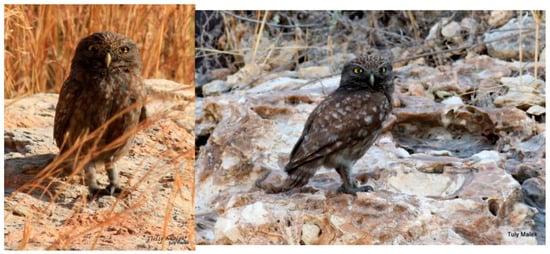
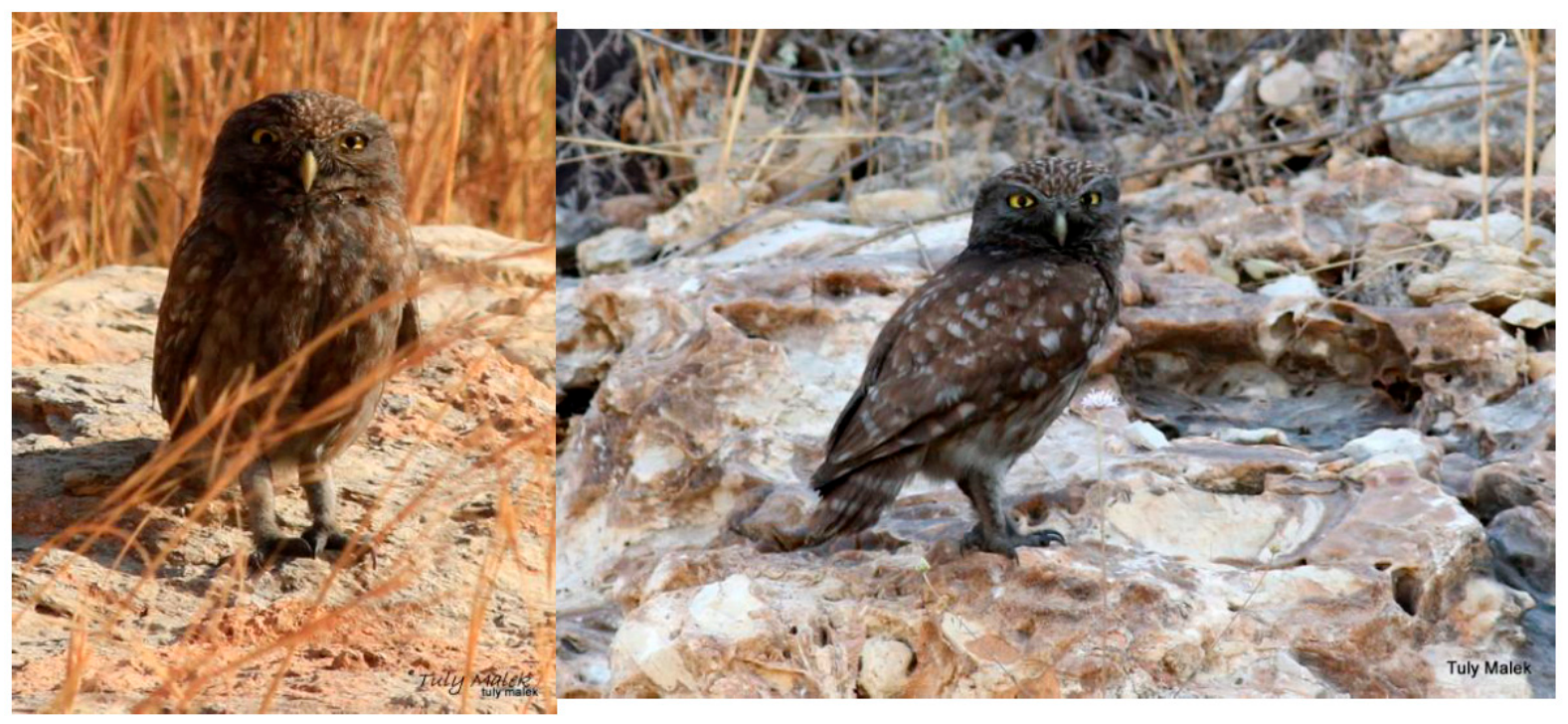
A dark-plumaged Little Owl was photographed at Shoham, Central Israel, during the breeding season (Figure 6). Although the plumage appeared substantially darker than that of typical nearby conspecifics, the available photographs do not provide sufficient evidence to identify the phenotype as melanism. The irregular darkening may instead reflect external staining, potentially acquired through repeated use of nest cavities or other soiled substrates.
Figure 6.
Dark-plumaged Little Owl (Athene noctua) from Shoham, Central Israel. Left panel: individual photographed on 19 June 2015 showing uniformly dark brown–black plumage with reduced contrast between spotting and ground color. Right panel: the same territory-holding owl photographed on 22 May 2020, exhibiting an essentially identical dark plumage pattern.
The photographs were obtained before the main molt period and therefore depict old plumage, in which external discoloration may have accumulated. In addition, the owl was not ringed or otherwise individually marked; thus, photographs obtained at the same locality in different years cannot confirm that they show the same bird. Little Owls may return to established breeding sites, but this site fidelity does not exclude replacement by another individual using the same cavity or substrate. We consequently interpret this record conservatively as probable external staining, not confirmed melanism.
Determining whether a naturally melanistic Little Owl occurs at this site would require observations of newly molted plumage, ideally combined with individual marking, close examination of feathers to exclude external staining, and, where feasible, genetic analysis.
7. Methodological Challenges and Biases
The literature on owl plumage anomalies reveals several recurring challenges: inconsistent terminology (e.g., polymorphism vs. aberration; partial albinism vs. leucism), uneven geographic and taxonomic coverage, and reliance on observational rather than experimental data collection [1,10,73]. Most detailed studies have focused on a few model species in Europe and North America, leaving gaps in tropical, arid, and understudied regions.
However, the available records of plumage-color aberrations are strongly shaped by human-centric biases in detection and reporting. A large-scale survey of Internet-mined photographs and birdwatcher reports showed that the number of aberrant individuals documented per species increases with body size, population size and occurrence in human settlements, indicating that conspicuous, common and “charismatic” birds are disproportionately represented in anomaly datasets [74]. Analyses of hypopigmented Malachite Kingfishers in Uganda showed that a single leucistic individual accounted for a high proportion of records on iNaturalist and eBird, highlighting how charismatic color aberrations attract disproportionate reporting effort and create observation biases [21].
This collection bias means that apparent differences in the prevalence of leucism or melanism among species and habitats may partly reflect variation in human attention rather than true biological frequencies and highlights the need for cautious interpretation of opportunistic records and for more systematic, effort-corrected monitoring of color anomalies.
Establishing causality is difficult because plumage anomalies often co-occur with multiple environmental and genetic factors. Studies linking climate change, diet, and moonlight to plumage traits have largely relied on correlations and genomic associations rather than manipulative experiments [37,49,59]. Moreover, research tends to emphasize color, while other features, such as feather structure and ear tufts, remain less explored despite their potential functional roles [69,75].
The Eurasian Eagle Owl case illustrates both the strengths and limitations of opportunistic observations: high-quality photographs and repeated field visits can yield robust diagnoses of leucism and useful ecological context, yet sample sizes are small and survival outcomes cannot easily be quantified without long-term tracking.
8. Future Directions
The synthesis presented here indicates several priorities for future research and monitoring.
Genetics of rare anomalies: Identification of specific loci and pathways underlying partial leucism, true albinism, and other non-polymorphic anomalies across multiple owl species using whole-genome sequencing and targeted gene analyses.
Longitudinal environmental studies: Implement multigenerational monitoring to track how climate, pollution, habitat fragmentation, and other stressors influence the incidence and selection of plumage anomalies over time.
Broader ecosystem coverage: Expand research beyond well-studied temperate systems to include tropical, boreal, and arid ecosystems, where different selective regimes may shape plumage anomalies and their adaptive value within species.
Gene–environment interactions: Move from separate genetic or environmental explanations to integrative models that consider how both interact, potentially via epigenetic mechanisms, to produce anomalous phenotypes.
Standardized classification and reporting: Develop and adopt globally consistent terminology and diagnostic criteria (e.g., leucism, albinism, melanism, erythrism, and pattern defects) for owls and other avian studies and integrate citizen science platforms for reporting anomalous individuals.
Comparative work across taxa: Determining where leucism appears selectively favored (e.g., coastal Southern Caracaras) versus disfavored (e.g., most owls) could help identify the ecological conditions under which extreme depigmentation transitions from a liability to an adaptive solution.
Conservation applications: Evaluate whether the increased incidence of specific anomalies can serve as bioindicators of environmental or genetic stress in owl populations, informing conservation assessments and management decisions.
The Gilboa brood of pale Eurasian Eagle Owls and the Spanish leucistic Eurasian Eagle Owl are individually exceptional records, but they nonetheless highlight several broader issues. First, they illustrate that heritable pigment anomalies can occur in owls and may segregate within family groups, pointing to underlying genetic variation in melanin pathways and the potential for rare morphs to arise and persist in natural populations. Second, such conspicuous plumage can affect camouflage, mobbing, and human perception, suggesting that color anomalies may influence individual fitness and detection in ways that are relevant for eco-evolutionary dynamics and for interpreting monitoring data [76]. Finally, documenting these anomalies contributes to a clearer baseline for the frequency and types of pigment defects in Strigiformes, which is important if future changes in their incidence are to be used as indicators of environmental or genetic stress [77,78]. Systematically integrating such case studies into quantitative and genomic frameworks will enhance our ability to understand and manage the populations of owls under accelerating environmental changes.
9. Limitations of Case Records and Inference of Inheritance
The combined evidence from our review and case studies highlights a clear contrast between familial and sporadic plumage anomalies in owls, with implications for their genetic basis, detection, and ecological consequences. Familial cases, in which multiple related individuals within a brood or family group express extreme depigmentation, are exemplified by the Burrowing Owl family with five leucistic birds and two normally colored birds reported from the Conata Basin, South Dakota [29], and by our Gilboa brood of Eurasian Eagle Owls containing two Ino and one typical fledgling (this study). Similar clustering of pale chicks has been described in Southern Caracaras, where leucism reaches high local frequencies in coastal seabird colonies [22]. In contrast, sporadic cases involve single aberrant individuals in otherwise typical families or populations, such as the dark-plumaged Little Owls from the Upper Galilee and Central Israel (this study), as well as isolated color-altered Short-eared Owls in Ecuador [35].
Most published records of aberrantly colored owls are opportunistic observations and rarely include individual marking, pedigree information, genetic data, or systematic surveys [13]. Consequently, an apparently isolated record cannot be assumed to be non-heritable, because additional affected relatives may not have been detected or reported. Conversely, the occurrence of more than one aberrantly colored nestling in a brood may suggest a shared genetic basis but does not by itself identify the mutation involved or establish its frequency in the wider population. We therefore distinguish only between records with direct evidence of familial occurrence and records for which inheritance remains unknown.
Finally, potential adaptive costs appear to differ between contexts. Familial leucism in large, cryptically colored owls such as Eurasian Eagle Owls likely increases the visibility of nests and roosts, with possible brood-level consequences [28], and the generally low incidence of leucism and albinism in wild raptors [13,23]. In contrast, localized melanism or whole-body melanism may have subtler or context-dependent effects, potentially altering crypsis, thermoregulation, or signaling without necessarily incurring strong selection against the phenotype [22,31]. Together with comparative examples from Southern Caracaras and Malachite Kingfishers [22,34], our Israeli case studies reinforce the idea that pigment anomalies in owls should be interpreted not merely as curiosities but as natural experiments that reveal how genetic variation, observation processes, and habitat-specific selection interact to shape rare phenotypes in bird populations.
10. Conclusions and Recommendations
This review shows that reports of aberrant plumage in owls should not be treated as a single biological category. Pale, reddish, or unusually dark individuals can result from fundamentally different processes, including the congenital absence of melanocytes in leucism, incomplete melanin synthesis in Ino-like or other hypomelanistic mutations, altered melanin distribution or deposition, progressive graying, diet-related pigment loss, external staining, and normal color polymorphism. These mechanisms differ in inheritance, appearance, developmental timing, and potential ecological consequences; consequently, they cannot be pooled uncritically under broad labels such as “leucism” or “color aberration.”
A central conclusion is that many owl records based solely on photographs remain necessarily provisional. Reliable diagnosis requires documentation of the color and distribution of the altered feathers, eye and bare-part pigmentation, symmetry and stability of the pattern across molts, evidence of staining or feather wear, and, where feasible, close examination, ringing, feather sampling, or genetic analysis. Repeated observations may be especially informative: stable plumage over several years can help distinguish a persistent melanistic phenotype from transient external staining, whereas an increasing number of white feathers over time may be consistent with progressive graying rather than congenital leucism.
The review further indicates that infrequent observation of aberrantly colored owls does not necessarily imply that the underlying alleles are extremely rare. Recessive mutations may remain hidden in heterozygous carriers and become expressed when two carriers mate; recessive sex-linked mutations can also produce affected female offspring when a carrier male breeds with a normal female. Conversely, conspicuous phenotypes can be disproportionately reported by observers, and opportunistic photographic datasets may reflect human detection and reporting biases as much as biological prevalence.
The review finds that visually similar owl plumages may arise through distinct mechanisms and should not be grouped automatically as “leucism.” In particular, fully white feathers with normally melanised eyes are required for leucism; pale brown or cream plumage is more consistent with a melanin-synthesis aberration such as Ino or brown; gray or silvery plumage may indicate dilution; and irregular darkening may result from external staining rather than melanism. Because most published records lack data on eye and bare-part color, feather condition, age, changes across molts, and genetic inheritance, many diagnoses should remain provisional.
We therefore recommend that future owl records use conservative, mechanism-based terminology and explicitly state diagnostic uncertainty. At minimum, reports should provide high-quality images from several angles, information on age and sex when known, eye and soft-part color, locality and habitat, evidence bearing on staining or feather damage, and repeated observations of the same individual whenever possible. Integrating these field data with genetic analyses and systematic population monitoring will be necessary to determine the frequency, inheritance, fitness effects, and conservation relevance of pigment anomalies in Strigiformes.
Author Contributions
E.H. and R.Y.—conceptualization, implementation, hypothesis, quality control, writing paper. All authors have read and agreed to the published version of the manuscript.
Funding
This research received no external funding.
Institutional Review Board Statement
Not applicable.
Informed Consent Statement
Not applicable.
Data Availability Statement
Owing to the conservation sensitivity of the locations, data is available directly from the authors.
Acknowledgments
We thank Shachar Shalom, Eden Akiva and Tuly Malek for providing their observations and photographs of the melanistic Little Owl in the Galilee and at Shoham, respectively. Furthermore, we used PaperPal 2.0 to edit the text. We have read the text carefully and are responsible for the contents.
Conflicts of Interest
None of the authors have any conflicts of interest.
References
- Hertzel, A.X. The 2004–2005 influx of northern owls, part IV: Unusual coloration in Great Gray Owls. Loon 2006, 78, 3–11. [Google Scholar]
- Deane, R. Albinism and melanism among North American birds. Bull. Nuttall Ornithol. Club 1876, 1, 20–24. [Google Scholar]
- Deane, R. Additional cases of albinism and melanism in North American birds. Bull. Nuttall Ornithol. Club 1879, 4, 27–30. [Google Scholar]
- McGregor, R.C. Albinos. Nidiologist 1896, 3, 94. [Google Scholar]
- McGregor, R.C. A list of unrecorded albinos. Condor 1900, 2, 86–88. [Google Scholar] [CrossRef] [Scilit] [PubMed]
- Cumer, T.; Machado, A.P.; San-Jose, L.M.; Ducrest, A.L.; Simon, C.; Roulin, A.; Goudet, J. The genomic architecture of continuous plumage colour variation in the European barn owl (Tyto alba). Proc. R. Soc. B Biol. Sci. 2024, 291, 20231995. [Google Scholar] [CrossRef] [Scilit] [PubMed]
- Ducrest, A.-L.; San-Jose, L.M.; Neuenschwander, S.; Schmid-Siegert, E.; Simon, C.; Pagni, M.; Iseli, C.; Richter, H.; Guex, N.; Cumer, T.; et al. Melanin and Neurotransmitter Signalling Genes Are Differentially Co-Expressed in Growing Feathers of White and Rufous Barn Owls. Pigment. Cell Melanoma Res. 2025, 38, e70001. [Google Scholar] [CrossRef] [Scilit] [PubMed]
- Emaresi, G.; Bize, P.; Gasparini, J.; Piault, R.; Roulin, A. Plumage polymorphism in melanin-based coloration: A case study in the tawny owl Strix aluco. In Ecology and Conservation of European Forest-Dwelling Raptors; Zubergoita, I., Martinez, J.E., Eds.; Departamento de Agricultura de la Diputación Foral de Bizkaia, Berekintza, S.L.: Bilbao, Spain, 2011; pp. 242–252. [Google Scholar]
- Baltazar-Soares, M.; Karell, P.; Wright, D.; Nilsson, J.Å.; Brommer, J.E. Genomic basis of melanin-associated phenotypes suggests colour-specific environmental adaptations in tawny owls. Mol. Ecol. 2024, 33, e17247. [Google Scholar] [CrossRef] [Scilit] [PubMed]
- Robinson, B.W.; Lovette, I.J.; Walsh, J. Plumage polymorphism in raptors. Ornithology 2024, 141, ukae026. [Google Scholar] [CrossRef] [Scilit]
- Mikkola, H. Owls of the World: A Photographic Guide, 2nd ed.; Bloomsbury: London, UK, 2013. [Google Scholar]
- Van Grouw, H. What’s in a name? Nomenclature for colour aberrations in birds reviewed. Bull. Br. Ornithol. Club 2021, 141, 276–299. [Google Scholar] [CrossRef] [Scilit]
- Poprach, K.; Roulin, A.; Baudvin, H.; Bloch, I.; Charter, M. Albinism, Leucism, and Melanism in the Common Barn-Owl (Tyto alba). J. Raptor Res. 2025, 60, 1–7. [Google Scholar] [CrossRef] [Scilit]
- Spiridonova, L.N.; Surmach, S.G. Intragenomic Polymorphism and Pseudogenization of the OCA2 Gene in Far Eastern Owls (Strigidae, Aves). Genetika 2025, 61, 48–61. [Google Scholar] [CrossRef] [Scilit]
- van Grouw, H. Not every white bird is an albino: Sense and nonsense about colour aberrations in birds. Dutch Bird. 2006, 28, 79–89. [Google Scholar]
- Van Grouw, H. Plumage aberrations in Australian birds: A comment on Guay et al., (2012) and Frith and Murphy (2012). Aust. Field Ornithol. 2012, 29, 210–214. [Google Scholar]
- Camacho, C.; Sáez-Gómez, P.; Hidalgo-Rodríguez, P.; Rabadán-González, J.; Molina, C.; Negro, J.J. Leucistic plumage as a result of progressive greying in a cryptic nocturnal bird. Sci. Rep. 2022, 12, 3411. [Google Scholar] [CrossRef] [Scilit] [PubMed]
- Ellegren, H.; Lindgren, G.; Primmer, C.R.; Møller, A.P. Fitness loss and germline mutations in Barn Swallows breeding in Chernobyl. Nature 1997, 389, 593–596. [Google Scholar] [CrossRef] [Scilit] [PubMed]
- Møller, A.P.; Mousseau, T.A. Albinism and phenotype of Barn Swallows (Hirundo rustica) from Chernobyl. Evolution 2001, 55, 2097–2104. [Google Scholar] [CrossRef] [Scilit]
- Van Grouw, H. The dark side of birds: Melanism—Facts and fiction. Bull. Br. Ornithol. Club. 2017, 137, 12–36. [Google Scholar] [CrossRef] [Scilit]
- Warner, B.H.; Weiss, K.C.; Allen, M.L. Color aberration in malachite kingfishers: Insights from community science observations in Queen Elizabeth National Park, Uganda. Ecol. Evol. 2024, 14, e11717. [Google Scholar] [CrossRef] [Scilit] [PubMed]
- Edelaar, P.; Donazar, J.; Soriano, M.; Santillán, M.Á.; Gonzalez Zevallos, D.R.; Garcia Borboroglu, J.P.; Lisnizer, N.; Gatto, A.J.; Agüero, M.L.; Passera, C.A.; et al. Apparent selective advantage of leucism in a coastal population of Southern caracaras (Falconidae). Evol. Ecol. Res. 2011, 13, 187–196. [Google Scholar]
- Bensch, S.; Bengt, H.; Hasselquist, D.; Nielsen, B. Partial albinism in a semi-isolated population of Great Warblers. Hereditas 2000, 133, 167–170. [Google Scholar] [PubMed]
- Junior, C.C.G.; da Silva, E.A.; De Luca, A.C.; Pongiluppi, T.; Molina, F.D.B. Record of a leucistic rufous-bellied thrush Turdus rufiventris (Passeriformes, Turdidae) in São Paulo city, Southeastern Brazil. Rev. Bras. Ornitol. 2008, 16, 72–75. [Google Scholar]
- Harrison, C.J.O. Plumage, abnormal. In A Dictionary of Birds; Campbell, B., Lack, E., Eds.; T.&A.D. Poyser: Calton, UK, 1985; pp. 472–474. [Google Scholar]
- Kreling, S.E. So overt it’s covert: Wildlife coloration in the city. BioScience 2023, 73, 333–346. [Google Scholar] [CrossRef] [Scilit]
- Van Grouw, H. White feathers in black birds. Br. Birds 2018, 111, 250–263. [Google Scholar]
- León-Ortega, M.; Lacalle, J.A.; Zamora-López, A.; Zamora-Marín, J.M. Incomplete albinism in the Eurasian eagle owl. Front. Ecol. Environ. 2024, 22, 1. [Google Scholar] [CrossRef] [Scilit]
- Locatelli, A.J.; Livieri, T.M.; Forrest, S.C.; Matchett, M.R.; Conway, C.J.; Mangelsen, T.D. Leucism in a family group and a review of color aberrations in Burrowing Owls (Athene cunicularia). Wilson J. Ornithol. 2026, 138, 326–335. [Google Scholar] [CrossRef] [Scilit]
- Guay, P.-J.; Potvin, D.A.; Robinson, R.W. Aberrations in plumage coloration in birds. Aust. Field Ornithol. 2012, 29, 23–30. [Google Scholar]
- Roulin, A. The evolution, maintenance and adaptive function of genetic colour polymorphism in birds. Biol. Rev. 2004, 79, 815–848. [Google Scholar] [CrossRef] [Scilit] [PubMed]
- Mundy, N.I. A window on the genetics of evolution:MC1R and plumage colouration in birds. Proc. R. Soc. B Biol. Sci. 2005, 272, 1633–1640. [Google Scholar] [CrossRef] [Scilit] [PubMed]
- Galeotti, P.; Sacchi, R. Differential parasitaemia in the Tawny Owl (Strix aluco): Effects of colour morph and habitat. J. Zool. 2003, 261, 91–99. [Google Scholar] [CrossRef] [Scilit]
- Davis, J. Color abnormalities in birds. Birding 2007, 39, 36–46. [Google Scholar]
- Cadena-Ortiz, H.; Cristina-Ríos, M.; Salas, V.G.; Contreras, F.J. Color alterations in plumage of Strigidae: A new record for the Short-eared Owl (Asio flammeus) in Ecuador. Huitzil 2024, 25, e668. [Google Scholar]
- Barringer, J.N. Unusual plumaged Short-eared Owl. Loon 1980, 52, 92. [Google Scholar]
- Griffith, E.V.; Mackentley, N.; Neri, C.M.; Lindsay, A.R. Correlation between size and plumage color of migrating male and female Long-eared Owls (Asio otus). J. Raptor Res. 2024, 58, 28–36. [Google Scholar] [CrossRef] [Scilit]
- Weidensaul, S.; Stoffel, M.; Monroe, M.S.; Okines, D.; Lane, B.; Gregoire, J.; Gregoire, S.; Kita, T. Plumage Aberrations in Northern Saw-whet Owls (Aegolius acadicus). J. Raptor Res. 2015, 49, 84–88. [Google Scholar] [CrossRef] [Scilit]
- Pande, S.A.; Patil, A.; Sardesai, G.; Patil, K.; Naik, K.; Lonkar, R. Incomplete albinism in Spotted Owlets (Athene brama): Observations and rehabilitation in western India. Ela J. Forest. Wildl. 2019, 8, 621–625. [Google Scholar]
- Fuertes-Recuero, M.; Cantarero, A. First record of an ‘ino’ colour aberration in the European Pied Flycatcher Ficedula hypoleuca. Ardea 2025, 113, 125–128. [Google Scholar] [CrossRef] [Scilit]
- Rao, M.T.; Butcher, B.G.; Robinson, B.W.; Lovette, I.J.; Walsh, J. Genomic data reveal mixed support for the current subspecies designations in the Megascops asio (Eastern Screech-Owl). Ornithology 2026, 143, 1–10. [Google Scholar] [CrossRef] [Scilit]
- Hill, G.E.; McGraw, K.J. Mechanics of melanin-based coloration. In Bird Coloration; Harvard University Press: Cambridge, MA, USA, 2006; Volume 1, pp. 243–294. [Google Scholar]
- Roulin, A.; Dubey, S.; Ito, S.; Wakamatsu, K. Melanin-based plumage coloration and melanin content in organs in the barn owl. J. Ornithol. 2024, 165, 429–438. [Google Scholar] [CrossRef] [Scilit] [PubMed]
- Price-Waldman, R.M. Genetic, Microstructural, and Macrostructural Mechanisms of Color Production in Birds. Doctoral Dissertation, Princeton University, Princeton, NJ, USA, 2025; 206p. [Google Scholar]
- Cho, Y.S.; Jun, J.H.; Kim, J.A.; Kim, H.M.; Chung, O.; Kang, S.G.; Park, J.Y.; Kim, H.J.; Kim, S.; Kim, H.J.; et al. Raptor genomes reveal evolutionary signatures of predatory and nocturnal lifestyles. Genome Biol. 2019, 20, 181. [Google Scholar] [CrossRef] [Scilit] [PubMed]
- Espíndola-Hernández, P.; Mueller, J.C.; Carrete, M.; Boerno, S.; Kempenaers, B. Genomic evidence for sensorial adaptations to a nocturnal predatory lifestyle in owls. Genome Biol. Evol. 2020, 12, 1895–1908. [Google Scholar] [CrossRef] [Scilit] [PubMed]
- Zhou, C.; Jin, J.; Peng, C.; Wen, Q.; Wang, G.; Wei, W.; Jiang, X.; Price, M.; Cui, K.; Meng, Y.; et al. Comparative genomics sheds light on the predatory lifestyle of accipitrids and owls. Sci. Rep. 2019, 9, 2249. [Google Scholar] [CrossRef] [Scilit] [PubMed]
- Romano, A.; Florent, G.; Novelli, A.; Séchaud, R.; Roulin, A. Spatio-temporal shift in body size and plumage coloration is associated with the magnitude of climate change in a cosmopolitan owl. J. Biogeogr. 2024, 51, 1921–1932. [Google Scholar] [CrossRef] [Scilit]
- Perrault, C.; Baltazar-Soares, M.; Morosinotto, C.; Karell, P.; Poprach, K.; Nilsson, L.O.; Eriksson, D.; Ericsson, P.; Grašytė, G.; Rumbutis, S.; et al. Dressed for the weather: Tawny owl feather adaptations across a climatic gradient. Ecol. Evol. 2025, 15, e71441. [Google Scholar] [CrossRef] [Scilit] [PubMed]
- Eeva, T.; Sillanpää, S.; Salminen, J.P. The effects of diet quality and quantity on plumage colour and growth of great tit Parus major nestlings: A food manipulation experiment along a pollution gradient. J. Avian Biol. 2009, 40, 491–499. [Google Scholar] [CrossRef] [Scilit]
- Van den Brink, V. Personality and Melanin-Based Colouration Traits in Barn Owls, Tawny Owl and Kestrels. Doctoral Thesis, University of Lausanne, Lausanne, Switzerland, 2012; 165p. [Google Scholar]
- Parejo, D.; Cruz-Miralles, Á.; Rodríguez-Ruiz, J.; Expósito-Granados, M.; Avilés, J.M. Determinants of color polymorphism in the Eurasian scops owl Otus scops. J. Avian Biol. 2018, 49, 12. [Google Scholar] [CrossRef] [Scilit]
- Parejo, D.; Rodríguez-Ruiz, J.; Cruz-Miralles, Á.; Avilés, J.M. Brown and grey morphs differ in their nocturnality in the polymorphic Scops Owl (Otus scops). Behav. Ecol. Sociobiol. 2023, 77, 51. [Google Scholar] [CrossRef] [Scilit]
- Caizergues, A.E. Does urbanization alter purifying selection? A case study in the burrowing owl. Integ. Comp. Biol. 2025, 65, 299–308. [Google Scholar] [CrossRef] [Scilit] [PubMed]
- Ançay, L.; Nicole, S.; San-Jose, L.M.; Roulin, A. Individual and environmental factors influencing preen gland’s morphology and physiology in the barn owl Tyto alba. J. Avian Biol. 2024, 2024, e03247. [Google Scholar] [CrossRef] [Scilit]
- Galeotti, P.; Rubolini, D.; Sacchi, R.; Fasola, M. Global changes and animal phenotypic responses: Melanin-based plumage redness of scops owls increased with temperature and rainfall during the last century. Biol. Lett. 2009, 5, 532–534. [Google Scholar] [CrossRef] [Scilit] [PubMed]
- Roulin, A.; Burri, R.; Antoniazza, S. Owl melanin-based plumage redness is more frequent near than away from the equator: Implications on the effect of climate change on biodiversity. Biol. J. Linn. Soc. 2011, 102, 573–582. [Google Scholar] [CrossRef] [Scilit]
- Passarotto, A.; Rodríguez-Caballero, E.; Cruz-Miralles, Á.; Avilés, J.M. Ecogeographical patterns in owl plumage colouration: Climate and vegetation cover predict global colour variation. Glob. Ecol. Biogeogr. 2022, 31, 515–530. [Google Scholar] [CrossRef] [Scilit]
- San-Jose, L.M.; Séchaud, R.; Schalcher, K.; Judes, C.; Questiaux, A.; Oliveira-Xavier, A.; Gémard, C.; Almasi, B.; Béziers, P.; Kelber, A.; et al. Differential fitness effects of moonlight on plumage colour morphs in barn owls. Nat. Ecol. Evol. 2019, 3, 1331–1340. [Google Scholar] [CrossRef] [Scilit] [PubMed]
- Grašytė, G.; Rumbutis, S.; Dagys, M.; Vaitkuvienė, D.; Treinys, R. Tawny owl females of intermediate colour morph reproduce better and increase in a local polymorphic population. Ornis Fenn. 2017, 94, 33–44. [Google Scholar] [CrossRef] [Scilit]
- Koskenpato, K.; Lehikoinen, A.; Lindstedt, C.; Karell, P. Gray plumage color is more cryptic than brown in snowy landscapes in a resident color polymorphic bird. Ecol. Evol. 2020, 10, 1751–1761. [Google Scholar] [CrossRef] [Scilit] [PubMed]
- Perrault, C.; Morosinotto, C.; Brommer, J.; Karell, P. Melanin-based plumage coloration is associated with exposure in tawny owls under novel conditions. Behav. Ecol. Sociobiol. 2023, 77, 74. [Google Scholar] [CrossRef] [Scilit]
- Holt, D.W. Why are Snowy Owls white and why have they evolved distinct sexual color dimorphism? A review of questions and hypotheses. J. Raptor Res. 2022, 56, 440–454. [Google Scholar] [CrossRef] [Scilit]
- Negro, J.J.; Bará, S.; Galadí-Enríquez, D.; Nieves, J.L.; Martínez-Domingo, M.A.; Ferrero, A.; Campos, J.; Bao-Varela, C.; Masana, E.; Camacho, C. Nocturnal camouflage through background matching against moonlight. Proc. Nat. Acad. Sci. USA 2025, 122, e2406808121. [Google Scholar] [CrossRef] [Scilit] [PubMed]
- Koskenpato, K.; Ahola, K.; Karstinen, T.; Karell, P. Is the denser contour feather structure in pale grey than in pheomelanic brown tawny owls Strix aluco an adaptation to cold environments? J. Avian Biol. 2016, 47, 1–6. [Google Scholar] [CrossRef] [Scilit]
- Munson, A.A.; Jones, C.; Schraft, H.; Sih, A. You’re just my type: Mate choice and behavioral types. Trends Ecol. Evol. 2020, 35, 823–833. [Google Scholar] [CrossRef] [Scilit] [PubMed]
- Baldauf, S.A.; Kullmann, H.; Schroth, S.H.; Thünken, T.; Bakker, T.C. You can’t always get what you want: Size assortative mating by mutual mate choice as a resolution of sexual conflict. BMC Evol. Biol. 2009, 9, 129. [Google Scholar] [CrossRef] [Scilit] [PubMed]
- Parejo, D.; González-Medina, E.; Cruz-Miralles, Á.; Avilés, J.M. Size, not color, drives assortative mating and influences fledging survival, weight and immunity in a polymorphic owl. Sci. Rep. 2025, 15, 19312. [Google Scholar] [CrossRef] [Scilit] [PubMed]
- Avilés, J.; Cruz-Miralles, Á.; Parejo, D. Colour-specific diet specialization is associated with differences in owlet weight in a polymorphic owl: Influence of the trophic quality variation. Oecologia 2023, 203, 181–191. [Google Scholar] [CrossRef] [Scilit] [PubMed]
- Passarotto, A.; Lürig, M.; Aaltonen, E.; Karell, P. Morph-specific selection drives phenotypic divergence in color polymorphic tawny owls (Strix aluco) in northern Europe. Commun. Biol. 2025, 9, 97. [Google Scholar] [CrossRef] [Scilit] [PubMed]
- Hadad, E.; Malkinson, D.; Yosef, R.; Weil, G.; Charter, M. Importance of mesohabitat for nest-site selection in breeding Eagle Owls (Bubo bubo): A multi-scale model. Diversity 2022, 14, 438. [Google Scholar] [CrossRef] [Scilit]
- Hadad, E.; Kosicki, J.Z.; Yosef, R. Breeding phenology and sibling competition drives nestling growth rate in Eurasian Eagle Owls (Bubo bubo). Ardeola 2024, 71, 263–276. [Google Scholar] [CrossRef] [Scilit]
- Galeotti, P.; Rubolini, D. The niche variation hypothesis and the evolution of colour polymorphism in birds: A comparative study of owls, nightjars and raptors. Biol. J. Linn. Soc. 2004, 82, 237–248. [Google Scholar] [CrossRef] [Scilit]
- Zbyryt, A.; Mikula, P.; Ciach, M.; Morelli, F.; Tryjanowski, P. A large-scale survey of bird plumage colour aberrations reveals a collection bias in Internet-mined photographs. Ibis 2021, 163, 566–578. [Google Scholar] [CrossRef] [Scilit]
- Surmacki, A.; Minias, P. Evolutionary history reveals information on the functionality of ear tufts in owls (family: Strigidae). Front. Zool. 2025, 22, 35. [Google Scholar] [CrossRef] [Scilit] [PubMed]
- Bertolero, A.; Oro, D.; Besnard, A.; Lorente, L. Assessing the effects of color aberrations on survival in a long-lived bird. J. Zool. 2011, 283, 155–163. [Google Scholar] [CrossRef] [Scilit]
- Boakes, E.H.; Gliozzo, G.; Seymour, V.; Harvey, M.; Smith, C.; Roy, D.B.; Haklay, M. Patterns of contribution to citizen science biodiversity projects increasing understanding of volunteers; recording behaviour. Sci. Rep. 2016, 6, 33051. [Google Scholar] [CrossRef] [Scilit] [PubMed]
- Aguillon, S.M.; Shultz, A.J. Community-sourced sightings of atypical birds can be used to understand the evolution of plumage color and pattern. Ornithology 2023, 140, ukad029. [Google Scholar] [CrossRef] [Scilit]

Disclaimer/Publisher’s Note: The statements, opinions and data contained in all publications are solely those of the individual author(s) and contributor(s) and not of MDPI and/or the editor(s). MDPI and/or the editor(s) disclaim responsibility for any injury to people or property resulting from any ideas, methods, instructions or products referred to in the content. |
© 2026 by the authors. Licensee MDPI, Basel, Switzerland. This article is an open access article distributed under the terms and conditions of the Creative Commons Attribution (CC BY) license.