Article

Optimal Crop Type Composition for a Farmland Bird Species Declining in Europe: The Lesser Grey Shrike in Northern Italy


by
Alessandro Ferrarini
1,*,
Riccardo Granieri
2,
Andrea Zanichelli
1 and
Marco Gustin
1
1
Lipu-BirdLife Italy, Via Udine 3/a, I-43122 Parma, Italy
2
Piazza dello Statuto 6, I-06055 Marsciano, Italy
*
Author to whom correspondence should be addressed.
Birds 2026, 7(3), 52; https://doi.org/10.3390/birds7030052
Submission received: 19 July 2026 / Revised: 13 August 2026 / Accepted: 19 August 2026 / Published: 22 August 2026

Simple Summary

The Lesser Grey Shrike Lanius minor has undergone one of the most severe range contractions of any European farmland bird species since the 1960s. It is now extinct as a breeder in several countries, including Germany, Belgium, and Switzerland, and persists in fragmented populations in Spain, France, Italy, and eastern Europe. In Italy, the national population is estimated at only 300–600 breeding pairs, and shows a strong negative trend. We censused the Lesser Grey Shrike population breeding in the province of Parma (northern Italy) between 2010 and 2024, explained the breeding success in light of fourteen crop and land cover types, and sought optimal crop type compositions capable of boosting the breeding success of this population. Our study demonstrates that the Lesser Grey Shrike’s breeding success is highly sensitive to the crop types surrounding the nests; therefore, it is possible to increase its breeding performance by promoting specific crop type compositions, at least around the isolated trees and tree rows commonly used by breeding individuals in the study area. Our study can help preserve this species in Italy through open dialogue and cooperation with local farmers and stakeholders.

Abstract

The Lesser Grey Shrike Lanius minor is a migratory passerine whose steep decline has been linked to agricultural intensification and the loss of crop heterogeneity. Using 15 years of data (2010–2024), we sought the optimal crop type composition capable of boosting the breeding success (number of young fledged per pair) of the Lesser Grey Shrike population dwelling in province of Parma (northern Italy). We found two optimal crop type compositions: (a) heterogeneous pattern (35% of the buffer surface at alfalfa, 7% at fallow land, 12% at soybean, 46% at wheat; expected breeding success = 5.38); and (b) homogeneous pattern (70% of the buffer surface at alfalfa, 6% at fallow land, 12% at soybean, 12% at wheat; expected breeding success = 5.21). Since effective conservation of the Lesser Grey Shrike relies on targeted agri-environment payments that maintain the low-intensity farmland mosaics essential for breeding and foraging, our study delivers sharp knowledge of the requirements of this species with regard to the optimal crop type compositions that lead to an elevated breeding success.

1. Introduction

Farmland birds play a key ecological role in agroecosystems by regulating insect populations, dispersing seeds, and acting as bioindicators of environmental quality [1]. Their foraging activities contribute to natural pest control and nutrient cycling, thereby supporting ecosystems functions that underpin agricultural productivity [2].
The Lesser Grey Shrike Lanius minor is a medium-sized farmland bird that breeds from eastern Europe to Central Asia, and overwinters in southern Africa. This species has undergone one of the most severe range contractions of any European farmland bird since the 1960s [3], and is now extinct as a breeder in Germany, Belgium, and Switzerland, and persists in fragmented populations in Spain, France, Italy, and eastern Europe [4]. The main threats are agricultural intensification, loss of crop mosaics, conversion of alfalfa and fallow to intensive cereals or row crops, removal of scattered trees and hedgerows, the spread of modern houses in breeding areas, and widespread pesticide use that reduces large insect prey [5]. The ongoing climate change could determine further large-scale reductions of suitable habitats for this species [6].
In Europe, the Lesser Grey Shrike is listed as Vulnerable under the IUCN European Red List due to a decline exceeding 30% over three generations. The EU27 breeding population is estimated at 8400–19,000 pairs, with the largest numbers in Romania and Hungary. The SPEC category is SPEC 2, i.e., concentrated in Europe and with an unfavourable conservation status [7]. The Lesser Grey Shrike is also listed in Appendix II of the Bern Convention on the Conservation of European Wildlife and Natural Habitats, which compels contracting parties to take appropriate measures to ensure its conservation and that of its habitat. It is also included in Appendix II of the Convention on Migratory Species, which recognizes the need for international cooperation for migratory species with unfavourable status. Within the European Union, the Lesser Grey Shrike is listed in Annex I of the Birds Directive 2009/147/EC which requires Member States to classify the most suitable territories as Special Protection Areas under the Natura 2000 network, and to implement special conservation measures for its habitat.
In Italy, the Lesser Grey Shrike is a scarce and declining breeding migrant, now classified as Vulnerable in the Italian Red List of breeding birds [8]. It is protected under Law 157/1992, which prohibits capture, killing, disturbance, and destruction of nests. The national population is estimated at only 300–600 breeding pairs, and shows a strong negative trend [9]. The main Italian breeding areas are in Apulia, Basilicata, and parts of Latium, with scattered pairs in Sicily, Sardinia, and northern Italy [8]. In Italy, L. minor breeds in open, low-intensity farmland with scattered trees to build its nests, bare ground for hunting insects, and no human settlements, typically between 100 and 450 m a.s.l. [10]. Nests are built 3–7 m high in isolated oaks, elms, almond, olive or wild pear trees. Mean brood size is 5.98 eggs, and average fledged broods are 2.3 juveniles per pair [9].
Fragmented populations are at increased risk of genetic erosion in this species, and should be treated as separate conservation units to prevent local extinctions [11]. Because this species depends on extensive farmland, agri-environment strategies under the EU Common Agricultural Policy are a key tool for implementing conservation measures, particularly those promoting crop diversity and the maintenance of fallows and alfalfa [12,13,14,15,16,17,18,19]. Accordingly, in this work, we (a) censused the Lesser Grey Shrike population breeding in the province of Parma (northern Italy) between 2010 and 2024, (b) investigated the breeding success (number of young fledged per pair) through a Generalized Additive Model in light of fourteen crop and land cover types, and (c) used such a model to seek optimal crop type compositions capable of boosting the breeding success of this population.

2. Materials and Methods

2.1. Study Area and Data Collection

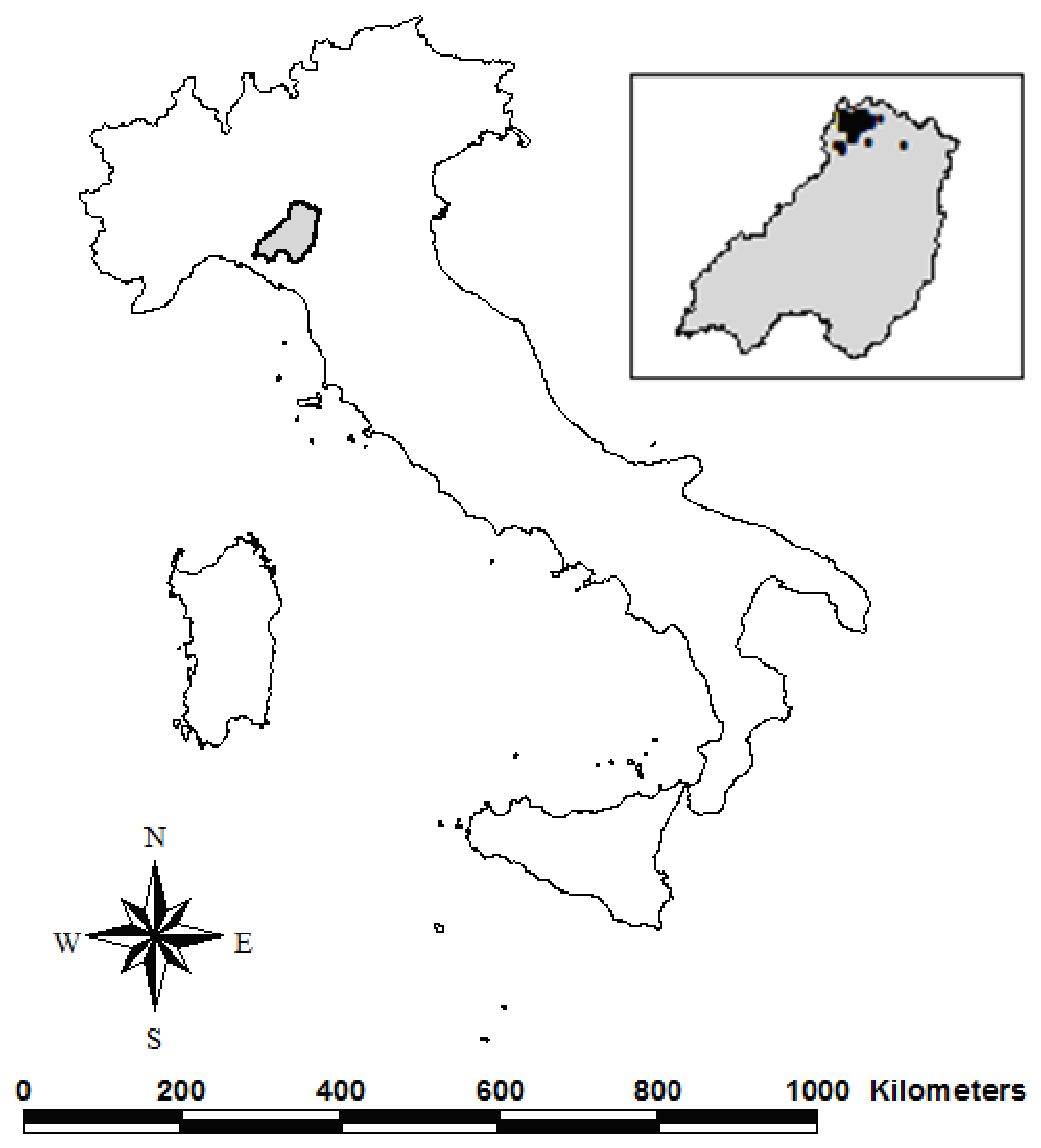
The study area corresponded to the lowland of the province of Parma (northern Italy, Figure 1). It is a rural environment with isolated rows of black poplar and oak trees used by the Lesser Grey Shrikes for nesting and roosting. We collected 15 years of data (2010–2024) about: (a) locations of the Lesser Grey Shrike nests; (b) proportions of the land cover/crop types (predictor variables) present in 100 m buffers around nests (i.e., circular plots of 100 m radius centred in the nests); and (c) breeding success (number of young fledged per pair). Observers undertook weekly checks of all known nests using binoculars from a safe distance to minimize disturbance to breeding birds. The proportions of the land cover/crop types were calculated on a yearly basis through field surveys and visual inspection of digital orthophotos. Our study required neither ethical approval nor permission for fieldwork because it was purely observational.

2.2. Variable Filtering

Both predictor (land cover/crop types in buffer areas) and dependent (breeding success) variables were averaged on a yearly basis. The available dataset was most likely oversized (one or more predictor variables may have little predictive power), overfitted (the number of predictors may be too high) and redundant (some predictors may be correlated in a significant manner). Redundancy causes multicollinearity [20], overfitting is most likely to lower model performance (i.e., the required number of samples to achieve the same accuracy grows exponentially with the number of variables [21]), and oversize decreases the ecological interpretation of results. In order to filter the predictors to a reduced and meaningful subset of variables able to boost the Lesser Grey Shrike breeding success, we removed: (a) the land cover/crop types that were absent in at least 80% (i.e., 12 out of 15) of the sampling years; (b) the land cover/crop types negatively correlated (i.e., Kendall’s tau ≤ 0) to the breeding success of the species. In fact, we sought the land cover/crop types sufficiently representative of the foraging conditions of study area, and also positively correlated with (i.e., capable of boosting) the breeding success of the Lesser Grey Shrike. In addition, variable filtering solved a potential issue linked to compositional data (i.e., when the total sum is 100%, the data are subject to a constant-sum constraint) because, after filtering the unnecessary predictors, the total sum of land cover/crop type proportions was <100 for each year considered. In the absence of variable filtering, we should have applied Compositional Data Analysis (i.e., log-ratio transformations to convert the percentages into variables without the effect of the constant sum), which would have caused serious issues in the interpretation of results. The resulting dataset is available via the ResearchGate Digital Repository https://doi.org/10.13140/RG.2.2.14134.66885.

2.3. Generalized Additive Models

We used Generalized Additive Models (GAMs; [22]) to explain the Lesser Grey Shrike’s breeding success (Y; yearly average of young fledged per pair) in light of the reduced subset of predictors (X1Xn; yearly average proportion of the land cover/crop types in buffer areas).
GAMs are an extension of general linear models that allow X1Xn to be modelled as smoothing functions, i.e., the form of the relationship between X1Xn and Y can take any shape as defined by the data, ranging from a straight line to curves of increasing complexity. The amount of smoothing can be controlled by specifying the degrees of freedom for the smoothing function. Because we were modelling a positive response variable, we constructed GAMs with a Gamma-type error distribution for Y and identity link function. First, a basic model with degree of freedom value equal to 1 was developed (i.e., only linear effects of X1Xn upon Y), then we incremented the degrees of freedom for X1Xn independently, until we reached a satisfactory approximation of Y. We validated our model by comparing the observed and predicted values for Y, the R2 statistic being a measure of the proportion of the variation in Y explained by the model.

2.4. What-If Simulations

After the GAM was calibrated and validated successfully, we used the model to perform what-if simulations on the breeding success by varying the proportions of the land cover/crop types. To this aim, we simulated an independent dataset of 10,000 cases (available via the ResearchGate Digital Repository https://doi.org/10.13140/RG.2.2.12456.94726), where the proportion of each land cover/crop type ranged from the minimum to the maximum value detected in the field during 2010–2024, and the sum of proportions was 1 (i.e., 100%) in each simulation. We simulated only the land cover/crop types retained after the previous variable filtering step. We then input this simulated dataset into the GAM to detect the optimal land cover/crop type compositions for Lesser Grey Shrike breeding success in the study area. The rationale was to try all the possible land cover/crop type compositions that could reasonably occur in the study area, and predict their effects on the breeding success of the study species.

3. Results

The number of Lesser Grey Shrike breeding pairs ranged from 1 in 2019 to 12 in 2011, 2014, and 2015 (Figure S1). The annual average number of breeding pairs was 7.46 (±2.99 std. dev.). The breeding success peaked in 2021 and 2024 (on average, 3.18 young fledged per pair) and troughed in 2015 (1.10) (Figure S2). The annual average breeding success was 2.21 (±0.64 std. dev.). There was no significant correlation between the number of breeding pairs and breeding success (Kendall’s tau = −0.29; p = 0.128, permutation p = 0.156, 10,000 permutations). The earliest and latest fledglings were recorded on 18 June and 29 July, respectively.
We recorded 14 land cover/crop types within the buffer areas around nests. Alfalfa Medicago sativa was the most common crop type, and occupied from 31% (in 2016) to 70% (in 2024) of buffer areas (Table 1). Wheat was the second-most common crop type, and ranged from 4% (in 2014) to 46% (in 2017) of buffer areas. Six land cover/crop types (forest, pasture, pumpkin, ryegrass, sugar beet, and tree rows) were present only three or less times out of 15 years. Three crop types (hay meadows, maize, and tomato) and one land cover type (farmhouse) were negatively correlated (Kendall’s tau ≤ 0) with breeding success (Figure S3).
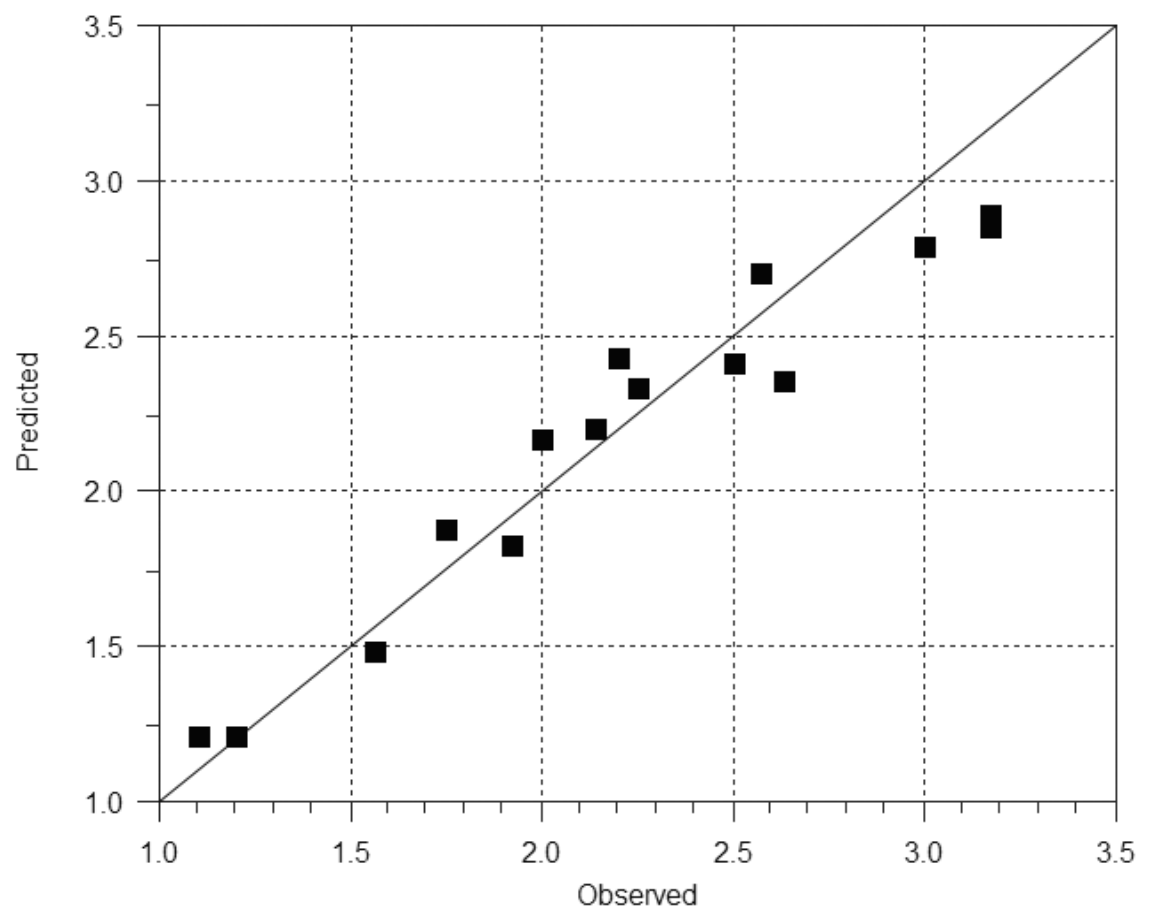
After filtering the set of independent variables, we retained four predictors of breeding success: alfalfa, fallow land, soybean, and wheat. The GAM achieved R2 = 94.2% accuracy (Figure 2).
After applying the GAM to the independent dataset of 10,000 simulations, we found two optimal crop type compositions: (a) heterogeneous pattern (35% of the buffer surface at alfalfa, 7% at fallow land, 12% at soybean, 46% at wheat; expected breeding success = 5.38 fledglings per pair); and (b) homogeneous pattern (70% of the buffer surface at alfalfa, 6% at fallow land, 12% at soybean, 12% at wheat; expected breeding success = 5.21 fledglings per pair).

4. Discussion

Shrikes are an important group of farmland bird species which inhabit open habitats where they prey on invertebrates and small vertebrates. Like other farmland birds, shrikes are in decline across their breeding range [23]. The farmland types, along with the vegetation cover, can explain the spatial distribution and breeding success of shrikes [24].
This study presents evidence revealing how different land cover/crop type compositions influence the breeding success of Lesser Grey Shrikes in northern Italy. We found that: (a) the breeding success is not influenced by the population density (i.e., number of breeding pairs in the study area); (b) four land cover/crop types (alfalfa, fallow land, soybean, wheat) favour the number of young fledged; (c) Lesser Grey Shrike’s breeding success can be maximized through two optimal crop type compositions; (d) under these optimal conditions, the average breeding success can exceed five fledglings per pair, which is more than twice the reproductive success recorded in the study area during 2010–2024.

Implications for Conservation

Alfalfa and fallow land are two low-input components of arable landscapes which consistently support higher bird use than intensive crops [25]. This is particularly relevant for insectivorous species such as the Lesser Grey Shrike that hunts large arthropods from perches in open habitats [26].
Alfalfa is a perennial legume harvested 3–6 times per year. Its value as a foraging habitat derives from three reasons [3]. Alfalfa fields host high densities of orthopterans, coleopterans, and lepidopteran larvae, which are key prey for shrikes (in particular, large grasshoppers). Freshly cut alfalfa offers bare patches and short vegetation that increase foraging efficiency for invertebrate-feeding birds in dry grasslands. In addition, because alfalfa is cut multiple times, it provides prey throughout the breeding season, including the chick-rearing period of late-breeding species like Lesser Grey Shrikes (which lay eggs mainly after 10 June and fledge chicks in late July [4]).
Fallow fields are high-quality habitats for steppe birds [27]. Fallows develop heterogeneous sward height, where vegetation is short or patchy, with bare ground that facilitate hunting. In particular, long-term fallows (>2 years) increase the occurrence and abundance of insectivorous birds because insects complete their reproductive cycle in undisturbed habitats; in addition, plant diversity increases, thus supporting more phytophagous insects that are prey for shrikes [28]. A mosaic of short-grazed fallow for foraging and isolated trees for nesting is optimal.
In the study area, wheat harvesting takes place from mid-June to early July. This explains why wheat proved advantageous to the Lesser Grey Shrike’s breeding success. As a general rule, intensive cereal crops such as wheat offer limited foraging value [5]. Although field margins can be used as hunting perches, the dense, homogeneous canopy of wheat reduces ground access to prey during most of the breeding season. However, in the study area, the timing of wheat harvesting is optimal for Lesser Grey Shrikes, which fledge chicks between 18 June and 29 July, as it provides open areas with post-harvest conditions where wheat stubble attracts insects and provides foraging opportunities.
Soybean, like maize, represents a structurally and trophically poor habitat for the Lesser Grey Shrike [3]. This crop is sown late, develops a closed canopy, and is frequently treated with broad-spectrum insecticides that depress prey populations. Ground foraging is impeded by vegetation density, and the lack of perches within fields forces birds to hunt only along edges [12]. However, soybean can be advantageous to the Lesser Grey Shrike if its extent is limited and interspersed with optimal foraging habitats. In fact, soybean can attract insects inside the buffer area around nests, for example, ground beetles.
Overall, the conservation of the Lesser Grey Shrike population in the study area requires farmers to: (a) minimize the cultivation of hay meadows, maize, and tomatoes; (b) favour long-term, rather than short-term, fallows (i.e., >2 years); (c) anticipate the wheat harvesting as soon as possible; (d) limit the use of pesticides; (e) preserve isolated trees and tree rows useful for nesting; (f) adopt crop type compositions as similar as possible to the optimal compositions identified in this study, at least around the isolated trees and tree rows commonly used by breeding Lesser Grey Shrikes.
It should be noted that, in the study area, some habitat types had narrow ranges (e.g., fallow land) during 2010–2024. While the optimal crop type compositions detected in this study are strongly supported by data, we cannot exclude that further optimal crop type compositions are possible. For example, what would happen to the Lesser Grey Shrike’s breeding success if the proportion of alfalfa around nests were >70%, or the percentage of fallow land was >11%? Because alfalfa and fallow land never exceeded these proportions in the study area during 2010–2024, a reply to these questions would require out-of-sample extrapolation, which is technically easy to achieve but semantically weak because it would assume that patterns learned from GAM will hold true in contexts and conditions on which the model has never been trained. In addition, forcing crop type compositions that have never been adopted by local farmers and stakeholders in the study area seems rather unfeasible from a conservation viewpoint; therefore, we chose to explore only the effects on the breeding success of crop type compositions that are realistically accomplishable in the study area.
During the breeding phase in northern Italy, the Lesser Grey Shrike could be exposed to predation by raptors and corvids [29]. The Eurasian Sparrowhawk (Accipiter nisus) and Northern Goshawk (Accipiter gentilis) are known predators of adult shrikes, while nest predation is mainly attributed to corvids such as the Eurasian Magpie (Pica pica) and Carrion Crow (Corvus corone), and to arboreal mammals like the stone marten (Martes foina) and terrestrial mammals like the domestic cat (Felis catus). Because crop type compositions explained the Lesser Grey Shrike’s breeding success very well, our results also suggest that the impact of predators on the reproductive success of this population was of secondary importance.
We also hypothesize that the pronounced inter-annual variability in the number of breeding pairs during 2010–2024 (Figure S1) resulted, for the most part, from exogenous factors acting at a broad scale during migration and wintering. In particular, fluctuations in survival during trans-Saharan migration and in sub-Saharan wintering areas, driven by drought and/or habitat degradation, may generate population bottlenecks that are reflected in the number of returning breeders [30]. In fact, to the best of our knowledge, local endogenous factors (e.g., loss of hedgerows and semi-natural habitats, agricultural intensification, density of predators, weather conditions, etc.) have not exhibited such high year-to-year variability during 2010–2024.

5. Conclusions

In Italy, the Lesser Grey Shrike is a scarce and declining breeding migrant. The species was already rare in northern Italy by the 1990s, and now risks following the same trajectory as in other parts of Western Europe where it is already extinct in many countries. Since effective conservation relies on targeted agri-environment payments that maintain the heterogeneous, low-intensity farmland mosaics essential for breeding and foraging, sharp knowledge of the requirements of this species with regard to the optimal crop type compositions that lead to an elevated breeding success is necessary.
Our study demonstrates that the breeding success of this population is highly sensitive to the crop types surrounding the nests. Therefore, it is possible to increase the Lesser Grey Shrike’s breeding success by promoting specific crop type compositions. The adoption of these agricultural practices through an open dialogue and cooperation with local farmers and stakeholders should be possible if supported by incentives from the national and regional Rural Development Programmes under the EU Common Agricultural Policy, which aims at promoting sustainable development in rural areas.

Supplementary Materials

The following supporting information can be downloaded at https://www.mdpi.com/article/10.3390/birds7030052/s1, Figure S1: Number of Lesser Grey Shrike breeding pairs recorded in the study area during 2010–2024; Figure S2: Lesser Grey Shrike breeding success (number of young fledged per pair) recorded in the study area during 2010–2024; Figure S3: Linear correlations (Kendall’s tau) between the land cover/crop types and the Lesser Grey Shrike’s breeding success.

Author Contributions

Conceptualization, A.F. and M.G.; methodology, A.F.; software, A.F.; validation, M.G., R.G. and A.Z.; formal analysis, A.F.; investigation, A.F. and M.G.; resources, M.G.; data curation, R.G. and A.Z.; writing—original draft preparation, A.F.; writing—review and editing, A.F. and M.G.; visualization, A.F.; supervision, M.G.; project administration, M.G.; funding acquisition, M.G. All authors have read and agreed to the published version of the manuscript.

Funding

Field surveys, analyses and modelling were supported by LIPU-UK (grant number: Lesser Grey Shrike 2024-2025).

Institutional Review Board Statement

Our study required neither ethical approval nor permission for fieldwork because it was purely observational.

Informed Consent Statement

Not applicable.

Data Availability Statement

Data available via the ResearchGate Digital Repository https://doi.org/10.13140/RG.2.2.14134.66885. Simulations available via the ResearchGate Digital Repository https://doi.org/10.13140/RG.2.2.12456.94726.

Acknowledgments

We would like to thank all the members of the Parma GLC for their valuable contribution to the field data collection. We thank Claudio Celada (Lipu Italy) for useful remarks prior to submission. We acknowledge the helpful comments and suggestions provided by three anonymous reviewers.

Conflicts of Interest

The authors declare no conflicts of interest.

References

  1. Donald, P.F.; Green, R.E.; Heath, M. Agricultural intensification and the collapse of Europe’s farmland bird populations. Proc. R. Soc. B 2001, 268, 25–29. [Google Scholar] [CrossRef] [Scilit] [PubMed]
  2. Evans, D.M.; Turley, P.; Altwegg, R. The importance of habitat heterogeneity scale and trait dispersion for seed dispersal by birds. Funct. Ecol. 2017, 31, 309–319. [Google Scholar]
  3. Lefranc, N.; Worfolk, T. Shrikes: A Guide to the Shrikes of the World; Pica Press: East Sussex, UK, 1997. [Google Scholar]
  4. BirdLife International. Lanius minor. The IUCN Red List of Threatened Species 2021: E.T22705030A166317972; BirdLife International: Cambridge, UK, 2021. [Google Scholar]
  5. Brambilla, M.; Casale, F.; Bergero, V.; Crovetto, G.M.; Falco, R.; Negri, I.; Siccardi, P. Glorious past, uncertain present, bad future? Assessing effects of land-use changes on habitat suitability for a threatened farmland bird species. Biol. Conserv. 2010, 143, 2140–2148. [Google Scholar] [CrossRef] [Scilit]
  6. Sándor, A.D.; Domşa, C. Climate change, predictive modelling and grassland specialists: Assessing impacts of changing climate on the long-term conservation of Lesser Grey Shrikes (Lanius minor) in Romania. J. Ornithol. 2018, 159, 413–424. [Google Scholar] [CrossRef] [Scilit]
  7. BirdLife International. European Red List of Birds; BirdLife International: Cambridge, UK, 2021. [Google Scholar]
  8. Gustin, M.; Nardelli, R.; Brichetti, P.; Battistoni, A.; Rondinini, C.; Teofili, C. Lista Rossa IUCN Degli Uccelli Nidificanti in Italia 2021; Comitato Italiano IUCN e Ministero dell’Ambiente e della Tutela del Territorio e del Mare: Rome, Italy, 2021. [Google Scholar]
  9. Brichetti, P.; Fracasso, G. The Birds of Italy; Cisticolidae—Icteridae; Edizioni Belvedere: Latina, Italy, 2020; Volume 3. [Google Scholar]
  10. Lardelli, R.; Bogliani, G.; Brichetti, P.; Caprio, E.; Celada, C.; Conca, G.; Fraticelli, F.; Gustin, M.; Janni, O.; Pedrini, P.; et al. Atlante Degli Uccelli Nidificanti in Italia; Edizioni Belvedere: Rome, Italy, 2022. [Google Scholar]
  11. Kvist, L.; Giralt, D.; Valera, F.; Hoi, H.; Kristin, A.; Darchiashvili, G.; Lovaszi, P. Population decline is accompanied by loss of genetic diversity in the Lesser Grey Shrike Lanius minor. Ibis 2011, 153, 98–109. [Google Scholar] [CrossRef] [Scilit]
  12. Giralt, D.; Brotons, L.; Valera, F.; Krištín, A. The role of natural habitats in agricultural systems for bird conservation: The case of the threatened Lesser Grey Shrike. Biodivers. Conserv. 2008, 17, 1997–2012. [Google Scholar] [CrossRef] [Scilit]
  13. Morgado, R.P.; Moreira, F. Agricultural change and Lesser Grey Shrike Lanius minor breeding in Portugal. Bird Conserv. Int. 2000, 10, 289–299. [Google Scholar]
  14. Sanderson, F.J.; Kucharz, M.; Jobda, M.; Donald, P.F. Impacts of agricultural intensification and abandonment on farmland birds. Bird Study 2013, 60, 120–124. [Google Scholar]
  15. Batáry, P.; Dicks, L.; Kleijn, D.; Sutherland, W.J. The role of agri-environment schemes in conservation and environmental management. Conserv. Biol. 2015, 29, 1006–1016. [Google Scholar] [CrossRef] [Scilit] [PubMed]
  16. Morelli, F.; Tryjanowski, P.; Jerzak, L.; Skórka, P.; Ẑmihorski, M. The importance of field margins as a habitat for the Red-backed Shrike Lanius collurio in Western Poland. Acta Ornithol. 2014, 49, 77–84. [Google Scholar]
  17. Szentirmai, I.; Komlós, K.; Eötvös, C.B.; Váczi, M.; Waliczky, Z. Reproductive success and nesting habits of the Lesser Grey Shrike Lanius minor in the Kiskunság, Hungary. Ornis Hung. 2008, 16, 1–8. [Google Scholar]
  18. Tryjanowski, P.; Sparks, T.H.; Jerzak, L. Can agricultural landscape composition explain the breeding success of Red-backed Shrike Lanius collurio in Western Poland? Acta Ornithol. 2003, 38, 35–39. [Google Scholar]
  19. Kleijn, D.; Berendse, F.; Smit, R.; Gilissen, N. Agri-environment schemes do not effectively protect biodiversity in Dutch agricultural landscapes. Nature 2001, 413, 723–725. [Google Scholar] [CrossRef] [Scilit] [PubMed]
  20. Tabachnick, B.; Fidell, L. Using Multivariate Statistics; HarperCollins College Publishers: New York, NY, USA, 1996. [Google Scholar]
  21. Guyon, I.; Elisseeff, A. An introduction to variable and feature selection. J. Mach. Learn. Res. 2003, 3, 1157–1182. [Google Scholar] [CrossRef] [Scilit]
  22. Hastie, T.J.; Tibshirani, R.J. Generalised Additive Models; Chapman and Hall: New York, NY, USA, 1990. [Google Scholar]
  23. Sutcliffe, L.M.E.; Batáry, P.; Kormann, U.; Báldi, A.; Dicks, L.V.; Herzon, I.; Kleijn, D.; Tryjanowski, P.; Apostolova, I.; Arlettaz, R. Harnessing the biodiversity value of Central and Eastern European farmland. Divers. Distrib. 2015, 21, 722–730. [Google Scholar] [CrossRef] [Scilit]
  24. Sfougaris, A.I.; Plexida, S.G.; Solomou, A.D. Assessing the effects of environmental factors on the presence and density of three shrike species in a continental and a coastal area of central Greece. North-West J. Zool. 2014, 10, 101–109. [Google Scholar]
  25. Tryjanowski, P.; Hartel, T.; Báldi, A.; Szymański, P.; Tobółka, M.; Herzon, I.; Goławski, A.; Konvicka, M.; Hromada, M.; Jerzak, L.; et al. Conservation of farmland birds faces different challenges in Western and Central-Eastern Europe. Acta Ornithol. 2011, 46, 1–12. [Google Scholar] [CrossRef] [Scilit]
  26. Lepley, M.; Ranc, S.; Isenmann, P.; Besson, J.; Geniez, P. Diet and feeding behaviour of the Lesser Grey Shrike Lanius minor in Mediterranean France. Rev. Ecol. 2004, 59, 105–117. [Google Scholar] [CrossRef] [Scilit]
  27. Robleño, I.; Bota, G.; Giralt, D.; Recasens, J. Fallow management for steppe bird conservation: The impact of cultural practices on vegetation structure and food resources. Biodiv. Conserv. 2017, 26, 133–150. [Google Scholar] [CrossRef] [Scilit]
  28. Staggenborg, J.; Anthes, N. Long-term fallows rate best among agri-enviroment scheme effects on farmland birds—A meta-analysis. Conserv. Lett. 2022, 15, e12904. [Google Scholar] [CrossRef] [Scilit]
  29. Tryjanowski, P.; Sparks, T.H.; Kuczyński, L.; Kuzniak, S. Local and regional factors affecting the breeding success of the Lesser Grey Shrike (Lanius minor) in Western Poland. Ardea 2013, 101, 35–42. [Google Scholar]
  30. Finch, T.; Butler, S.J.; Franco, A.M.A.; Cresswell, W. Low migratory connectivity is common and widespread in Afro-Palearctic migrants. Divers. Distrib. 2017, 23, 261–271. [Google Scholar]
Figure 1. Study area in grey (province of Parma, northern Italy). Inset map: Lesser Grey Shrike nests (black points) recorded in the study area during 2010–2024. Geographic coordinate system: UTM WGS 84 32 North.
Birds 07 00052 g001
Figure 2. Model accuracy (R2; observed versus predicted values) for the Lesser Grey Shrike breeding success (number of young fledged per pair). The diagonal depicts the ideal situation where observed and predicted values perfectly correspond.
Birds 07 00052 g002
Table 1. Summary statistics about the land cover/crop types present in the buffer areas during 2010–2024. Data are expressed as proportions (i.e., 0.31 = 31% of the extent of buffer areas around nests).
Land Cover/Crop TypeMinMaxMeanStd. Dev.Median25th Percentile75th Percentile
Alfalfa0.310.700.470.130.450.360.60
Fallow land00.110.030.04000.04
Farmhouse00.080.020.03000.04
Forest00.030.010.01000
Hay meadow00.310.070.080.040.030.11
Maize00.290.090.090.1000.13
Pasture00.030.000.01000
Pumpkin00.070.010.02000
Ryegrass00.100.010.03000
Soybean00.120.030.05000.07
Sugar beet00.100.020.03000.04
Tomato00.110.040.050.0100.10
Tree rows00.140.010.04000
Wheat0.040.460.200.120.160.120.28
Disclaimer/Publisher’s Note: The statements, opinions and data contained in all publications are solely those of the individual author(s) and contributor(s) and not of MDPI and/or the editor(s). MDPI and/or the editor(s) disclaim responsibility for any injury to people or property resulting from any ideas, methods, instructions or products referred to in the content.