


Highlights
What are the main findings?
- In this four-country sample, the accommodation segment is more strongly associated with advertised accessibility than the country grouping: private accommodation advertises 0.38 features against 1.58 for hotels, significantly so in every country examined.
- Out of twenty-seven destination websites with an assessable provider listing interface, audited across four countries, one displays accessibility on provider listing cards, while brand, category and environmental marks do reach such cards.
What are the implications of the main findings?
- A national accessibility mark that is absent from classification scoring, public registers and destination marketing may function more as an administrative instrument than as a market incentive.
- Because accommodation obligations are addressed to hotels, the segment that holds between 18 and 62 per cent of registered bed places in these countries is also the least legible to travellers who need accessibility information.
Abstract
The European Accessibility Act (Directive (EU) 2019/882) has applied, since June 2025, extending binding accessibility requirements to the e-commerce infrastructure through which tourism is sold. Whether that obligation is visible in tourism markets remains largely untested, and existing evidence covers hotels alone. Accessibility is examined across three layers in four member states differing in the operational maturity of their accessible tourism policies: Croatia, France, Greece and Portugal. The study documents national programmes and transposition, audits thirty-two tourist board websites and records the features advertised by 400 providers, half hotels and half private accommodation, across twenty cities matched by destination type. Providers in countries with operationally mature programmes advertise more (mean index 1.25 against 0.70 on a 0–10 scale), though with four countries, this compares cases rather than testing a policy effect. The gap between accommodation segments is larger and is measured within cities: private accommodation advertises 0.38 against 1.58 for hotels, in every country and in eighteen of the twenty cities (p < 0.001). Sensory features are advertised by 3.0% of properties against 37.0% for mobility, and one of the twenty-seven audited websites with an assessable listing interface displays accessibility on provider listing cards. The pattern is consistent with obligation setting a floor and visibility governing what rises above it, which one cross-section cannot establish.
1. Introduction
Tourism is among the most widely shared forms of contemporary consumption, yet participation in it remains conspicuously unequal. The scholarship that has formed around this observation has moved, over the past decade, from documenting barriers towards questioning the terms on which inclusion is offered. Scheyvens and Biddulph (2018) framed inclusive tourism development as the opening of tourism to marginalised populations not merely as consumers but as producers and decision makers and identified the structural constraints that keep such an opening partial. Gillovic and McIntosh (2020) applied that framework to accessible tourism specifically and concluded that the field remains preoccupied with the removal of physical barriers while the deeper elements of inclusion remain largely untouched. Those elements are self-representation, participation in decision making and the transformation of power relations. Accessibility, on this reading, is a necessary but insufficient component of inclusion and one whose progress can be measured.
That measurement has acquired a new reference point. Directive (EU) 2019/882, the European Accessibility Act (European Union, 2019), was adopted in April 2019 with a transposition deadline of 28 June 2022, and its substantive requirements have applied since 28 June 2025. The Act is significant for tourism for a reason that is easy to overlook: it does not regulate tourism as such. It regulates e-commerce, passenger transport services by air, bus, rail and water, banking services and the terminals and equipment through which those services are accessed. In doing so, it reaches most of the infrastructure through which tourism is now sold and consumed, and it does so with binding force rather than exhortation. Member states may permit service providers to continue using pre-existing products until 28 June 2030, but the obligation itself is no longer prospective.
Three legal levels need to be kept distinct because the analysis relies on the distinction. The Act itself governs the accessibility of covered e-commerce services. For sellers, it requires the provision of accessibility information about the products and services sold only where the responsible economic operator supplies that information (Annex I, Section IV, of the Act). Microenterprises providing services are exempt from the service requirements (European Union, 2019). Whether an individual property must declare anything is therefore a question of national accommodation law, not of the Act. The ten features recorded in Section 3.4 are the platform’s own advertising vocabulary, and nothing in the Act prescribes them. The Act matters here as the event that raised the salience of accessibility in the e-commerce channel through which accommodation is sold, not as a source of listing obligations.
Whether that obligation has produced observable change is an open empirical question, one that the existing literature is not yet positioned to answer. A substantial body of work has examined the accessibility of tourism websites. Teixeira et al. (2021b) audited hotel websites in central Portugal using diagnostic tools. Fernández-Díaz et al. (2021) examined the accessibility apps and websites of Portuguese and Spanish destination management organisations, and Rubáček et al. (2020) evaluated the websites of European national tourism boards. Singh et al. (2020, 2023) assessed official tourism sites and leading hotel websites against the Web Content Accessibility Guidelines. This work is methodologically mature and consistent in its findings, but all of it predates the application of the Act. It also examines one layer at a time. Studies of provider websites do not ask what destination organisations do to make accessible providers findable, studies of destination organisations do not ask what providers consequently advertise, and neither connects to the policy instruments that are supposed to drive both.
A second gap is structural rather than temporal. Regulatory obligations in accommodation are addressed principally to classified hotels. Minimum quotas of adapted rooms, licensing conditions and classification criteria all attach to that sector. How far they reach apartments and holiday homes let to visitors varies by country and by unit type and is not established at the unit level here. What is established is that these properties fall outside the hotel classification mechanisms examined in Section 4.3. Yet this segment accounts for a substantial share of registered bed capacity in the countries examined here. In 2024, holiday and other short-stay accommodation held 62.2 per cent of bed places in Croatia, 22.9 per cent in Greece, 20.8 per cent in Portugal and 18.2 per cent in France, against a European Union average of 27.9 per cent. In Croatia and Portugal, that share has risen markedly since 2013 (Eurostat, 2026a). Short-stay bookings mediated by online platforms across the Union grew by 11.4 per cent in 2025 alone, reaching 952 million guest nights (Eurostat, 2026b). Studies of advertised or audited accessibility have nonetheless concentrated on hotels. If accessibility signalling behaves differently outside the hotel classification mechanisms, a hotel-only design cannot detect it and cannot separate what regulation produces from what markets produce.
This study addresses both gaps. It examines accessibility across three layers—national policy, destination intermediary and market signalling—in four European Union member states with coastal tourism economies: Croatia, France, Greece and Portugal (listed alphabetically throughout to avoid implying a ranking). At the policy level, it documents national accessible tourism programmes and the national transposition of the Act. At an intermediary level, it audits the websites of national and city tourist boards, asking both whether these public bodies meet their own accessibility obligations and whether they operate any mechanism that grants accessible providers commercial visibility. At the market level, it records what accommodation providers advertise, sampling hotels and private accommodation in equal numbers so that the segment addressed by hotel classification and licensing mechanisms can be compared directly with the segment those mechanisms do not classify.
The contribution is fourfold and deliberately bounded. In a targeted literature search, documented in Section 2.5, we identified no earlier peer-reviewed assessment, so to the best of our knowledge, this is the earliest assessment that measures tourism accessibility signalling after the Act became applicable. It compares four countries using a matched sampling design rather than examining a single national case. It contrasts the hotel segment with private accommodation and finds the segment difference to be larger than the difference between countries. Above all, it links the three layers and in doing so proposes and examines a relationship that single-layer studies cannot observe: legal obligation and market signalling are mediated by visibility, and where visibility is absent, obligation is associated with compliance without communication. The remainder of the paper proceeds as follows: Section 2 reviews the relevant literature. Section 3 sets out the design, data, measures, hypotheses and statistical methods. Section 4 reports results by layer. Section 5 discusses their implications, and Section 6 concludes.
2. Literature Review
2.1. Inclusive and Accessible Tourism
The conceptual vocabulary of this field has shifted. Early work treated disability in tourism primarily as a problem of provision, to be solved by adapting facilities. The reframing initiated by Scheyvens and Biddulph (2018) treats inclusion as a question of who participates in tourism and on what terms and specifies seven elements against which inclusive development can be assessed. Gillovic and McIntosh (2020) mapped accessible tourism onto that framework and found the correspondence uneven: the field performs adequately on physical access and poorly on the elements concerning agency and representation. Their earlier stakeholder study reached a complementary conclusion from the industry side, finding that operators systematically underestimated the size and value of the access market and treated accessibility as a compliance cost rather than a commercial proposition (Gillovic & McIntosh, 2015).
This distinction, between accessibility as a cost and accessibility as a proposition, is central to what follows. If accessibility is understood as a regulatory burden, providers have reason to meet the minimum that inspection requires and little reason to communicate what they have done. If it is understood as a proposition, providers have reason to invest beyond the minimum and to communicate the investment because communication is how the return is realised. Which understanding prevails is not a matter of provider attitude alone. It depends on whether the market offers any mechanism through which accessibility can be converted into visibility and, thus, into custom.
The present study therefore treats accessibility not as a property of a building but as a signal that may or may not be transmitted. This is a narrower object than inclusion in the sense of Scheyvens and Biddulph, and we do not claim otherwise. It is, however, an object that can be observed at scale and across countries and one whose behaviour helps to explain why regulatory intervention has produced such uneven results.
2.2. Web and Information Accessibility in Tourism
Research on the accessibility of tourism information systems has converged on a consistent finding: web accessibility is poor, and it is poor everywhere it has been measured. Teixeira et al. (2021a) reviewed the field and characterised web accessibility in tourism as persistently low despite two decades of guidelines. Their empirical study of hotel websites in central Portugal, conducted with automated diagnostic tools, confirmed widespread non-conformity (Teixeira et al., 2021b). Singh et al. (2020) reached the same conclusion for official state tourism websites in the United States, as did Singh et al. (2023) for the world’s leading hotel chains. Rubáček et al. (2020) found comparable deficiencies across the websites of European national tourism boards, and Fernández-Díaz et al. (2022) reported that even cities awarded for smart and accessible tourism performed unevenly on digital accessibility.
Three features of this literature bear on the present design. The first is that it is overwhelmingly technical in its object. It measures conformity with the Web Content Accessibility Guidelines and reports error counts. This is appropriate and necessary, but it treats the website as an artefact rather than as a communication channel and therefore cannot detect whether accessibility information reaches the user who needs it. A site may conform technically while offering no accessibility content and may offer rich accessibility content while conforming poorly, a pattern we observe directly below.
The second is that a parallel study examines the legal instrument rather than the artefact. Jonsson et al. (2025) evaluated the accessibility statements published by 37 Swedish public healthcare providers under Directive (EU) 2016/2102. They found that none met the requirements in full, that successive versions showed no or minimal progress and that the option to declare partial compliance without an enforcement procedure risks producing what they call symbolic action, meaning publication without an intention to abide by the law. Their assessment protocol is the closest methodological precedent for the compliance component of the present study, and their conclusion is one we test in a different sector and across four countries rather than one.
The third feature is that the destination management organisation has been studied as a website owner rather than as a market intermediary. Fernández-Díaz et al. (2021) is the closest precedent to the intermediary layer examined here, and it evaluates the accessibility of the organisations’ own digital properties. What the organisation does to make accessible providers findable, whether it filters, badges, lists, certifies or rewards them, appears not to have been examined comparatively, although we cannot exclude relevant work in languages we did not search. Yet this is precisely the function that determines whether provider investment is rewarded, and it is a function that destination organisations perform routinely for other attributes.
2.3. Labels, Certification and Market Signalling
That last point connects the accessibility literature to a much larger body of work on labels and certification in tourism. The economic logic of a quality label is the reduction of information asymmetry: an attribute that the provider knows and the consumer cannot observe before purchase is certified by a third party, becomes visible and can therefore be priced. Where the mechanism works, consumers pay a premium for the certified attribute, and the premium justifies the provider’s investment.
For environmental attributes, this mechanism is well documented. K. M. Nelson et al. (2021) found measurable willingness to pay a premium for local green hotel certification in a small-island destination. Fuentes Moraleda et al. (2019) reported similar willingness among guests of boutique hotels operating environmental management systems in Spain, and Boronat-Navarro and Pérez-Aranda (2020) identified the consumer characteristics associated with paying more to stay in a sustainable hotel. The literature is not uniformly optimistic about label effectiveness, and premiums are typically modest and segment-specific, but the mechanism itself is established: certification makes an unobservable attribute observable, and observability has commercial value.
Comparable evidence for accessibility is sparse, and the sparseness is itself informative. Accessibility has precisely the structure that certification is designed to address. It is costly to provide, invisible in a standard listing, difficult for the consumer to verify in advance and consequential enough that a traveller who needs it will select for it. If any attribute should be labelled, this one should. The question this study poses to the intermediary layer is therefore not whether accessibility is regulated but whether it has been brought into the labelling and visibility machinery that destinations already operate for gastronomy, sustainability and cycling.
2.4. The Comparative and Croatian Context
The four countries examined here differ in ways that the literature has documented only partially. Portugal has attracted the most scholarly attention, largely through the work of the Aveiro group, and its national accessible tourism programme has an international profile. France operates the oldest state accessibility label in European tourism. Greece and Croatia are substantially less studied.
For Croatia, the empirical record is thin. Popović et al. (2022) assessed accessible tourism and formal planning in Istria County, combining a desk audit of accessible amenities with interviews with municipal representatives, and found provision fragmentary and planning largely absent. Gregorić et al. (2019) surveyed persons with disabilities in Croatia and identified architectural barriers as the dominant constraint, followed by cost and transport. Krajinović and Čavlek (2025) examined public attitudes to accessible tourism development and argued for a combination of universal design and reasonable accommodation. The scale of the gap is indicated by the composition of the field’s own venues: when Croatia’s leading tourism journal devoted a special issue to accessible tourism in 2025, only one of its four research articles concerned Croatia (Acta Turistica, 2025).
Two of the present authors previously examined innovation and inclusivity in Portuguese tourism (Grubišić et al., 2022), surveying the Portuguese programme through documentary analysis in a conference paper. That work was descriptive and single-country, and the present article is not an extended version of it. The design reported here is comparative, systematic in its sampling and empirical in its measurement, and its findings do not depend on the earlier analysis.
2.5. Analytical Framework and Propositions
The audit throughout this study rests on a compact analytical frame drawn from the economics of information, and it is stated here so that the design choices in Section 3 can be read against it. Akerlof (1970) showed that where sellers hold information about quality that buyers cannot observe before purchase, unobservable quality is driven towards the minimum the market will bear. Spence (1973) identified the conditions under which a costly signal can nevertheless transmit such information credibly: the signal must be observable to the buyer, and it must be less costly for those who possess the attribute than for those who do not. P. Nelson (1970) distinguished search attributes, verifiable before purchase, from experience attributes, verifiable only in consumption. Darby and Karni (1973) added credence attributes, which the consumer cannot verify at a reasonable cost even after consumption, and Dulleck and Kerschbamer (2006) formalised the market consequences of that category.
Accessibility occupies a precise position in that classification, and locating it carefully matters for what the study measures. For the traveller who depends on it, accessibility is an attribute with substantial pre-purchase information asymmetry. Whether a bathroom accommodates a wheelchair cannot be verified from a listing at a reasonable cost before arrival, and the cost of discovering an error falls on the guest least able to remedy it on the spot. The attribute is credence-like at the point of booking rather than a pure credence good, since provision can be verified in use after arrival. What the market transmits before purchase is therefore not the provision itself but a declaration about it, and the declaration is the object this study measures.
In platform-mediated accommodation markets, the transmission of such declarations is not in the provider’s hands alone. Ert et al. (2016) showed that trust-relevant attributes reach the consumer through the elements a platform chooses to display on the listing card. The same holds for the institutional intermediaries examined here. A destination organisation that operates filters, badges, labels or registers decides whether an accessibility declaration is searchable and visible at the moment of choice or discoverable only by a consumer who already knows where to look.
Three propositions follow, and they organise the design. P1, the information problem: Advertised accessibility functions as a market signal addressed to pre-purchase information asymmetry, so its absence is informative about the market and not only about provision. P2, the visibility condition: A signal carries commercial value only where a channel transmits it to the consumers searching on it, so intermediary machinery determines whether signalling can earn a return. P3, the layer proposition: Legal obligation translates into market signalling only where the intermediary layer converts obligation into visibility, so obligation without visibility is expected to produce compliance without communication. Figure 1 sets out the framework. These are conceptual propositions that structure the comparison of the three layers. They are examined descriptively, and they are not estimated as causal paths. The hypotheses in Section 3.6 operationalise the parts of P1 to P3 that the market layer can test, and research questions RQ1 to RQ3 address the layers on which the remainder turns.
Figure 1.
The three-layer framework and the conceptual propositions P1 to P3. Dashed arrows denote conceptual propositions examined descriptively across the layers, not estimated causal paths.
The framework also fixes this study’s position against the nearest existing work. In September 2026, we conducted a targeted search of the peer-reviewed literature, combining two citation indexes with structured web queries on the Act, tourism and accessibility disclosure. The search identified no peer-reviewed study that measures advertised accessibility in tourism accommodation after the Act became applicable on 28 June 2025. The search queries, dates and counts are documented in the record described in the Data Availability Statement. The closest work examines accessibility information on the websites of leading world destinations and its association with web traffic, without reference to the Act and without observing accommodation providers (Rubio-Escuderos et al., 2026). The priority claimed in Section 1 is therefore a claim to the best of our knowledge, bounded by that search, and no more.
3. Materials and Methods
3.1. Research Design
The study applies a three-layer comparative design to four European Union member states. The policy layer documents the existence and operational maturity of national accessible tourism programmes and the national transposition of Directive (EU) 2019/882. Operational maturity is used throughout as a case classification based on documented programme outputs, and not as a measured policy variable. Its operationalisation is given in Section 3.3 and the evidence behind it in Section 3.8. The intermediary layer audits the websites of national and city destination management organisations. The market layer records the accessibility features advertised by accommodation providers in two segments: hotels and private accommodation. The layers are analysed separately and then read together, since the argument concerns the relationship between them rather than any one in isolation.
Hypotheses are stated only for the market layer, which is quantitative. The policy and intermediary layers are documentary audits and are addressed through research questions, since applying hypothesis tests to an exhaustive documentary census of a fixed population would misrepresent what those data can support. Three research questions are posed. RQ1 asks whether each country operates a national accessible tourism programme with documented output. RQ2 asks whether tourist boards meet their own web accessibility obligations. RQ3 asks whether recognition schemes create a market incentive to invest in accessibility.
Countries are presented in alphabetical order throughout—Croatia, France, Greece and Portugal—to avoid implying a ranking. Where the analysis groups countries, the grouping is stated explicitly, and its basis given in Section 3.8.
3.2. Country Selection and City Matching
The four countries are European Union member states with coastal tourism economies of comparable structural importance, all subject to the same accessibility directive on the same timetable and differing in the maturity of their national accessible tourism policies. Four criteria, fixed before any data were collected, governed the selection: European Union membership with the Act applying on the same timetable, a coastal tourism economy of comparable structural importance and documented variation in the operational maturity of the national accessible tourism programme; the fourth criterion was the feasibility of matching five cities by destination type across all four countries. The four countries are the set that satisfied all four criteria. The common European framework improves the comparability of the four cases, but it does not equalise national transposition, sectoral accommodation rules, enforcement, market structure or platform behaviour. Country contrasts are accordingly interpreted descriptively throughout.
Within each country, five cities were selected and matched across countries by destination type so that each country contributes exactly one city of each type (Table 1). Matching addresses a confound that would otherwise be intractable. Destination character shapes accessibility independently of national policy, since a protected historic core faces constraints that a purpose-built resort does not, and unmatched selection would render country and destination effects inseparable. The matched design improves comparability between countries and allows the two to be examined separately, as Section 4.5 reports. It does not make the four countries alike in transposition, sectoral regulation, market structure or platform behaviour and does not isolate a national effect.
Table 1.
Sample composition: cities matched by destination type. Twenty properties were recorded in each city (ten hotels and ten units of private accommodation).
3.3. Market-Layer Data Collection
Accommodation data were collected on 10 August 2026 through the Booking.com interface (Booking.com, 2026). Identical query parameters were applied to every city: a two-night stay from 15 to 17 September 2026, two adults, one room, identical language settings and no accessibility filter applied. All searches were run from a single location and network connection with identical browser settings so that any location-dependent variation in platform ranking is held constant across the twenty cities rather than confounded with country. Withholding the accessibility filter is essential to the measure. Filtering would return only properties that already advertise accessibility and would make prevalence unobservable. The quantity of interest is precisely the share of the ordinary market that signals accessibility at all.
Twenty properties were recorded per city—ten hotels and ten units of private accommodation—yielding 400 properties in total and 200 in each segment. The segments are platform classifications and not legal categories. Hotel, apartment and holiday home are the accommodation types the platform itself applies, and they do not map one to one onto the categories used in national tourism law. The two segments were collected through separate searches with the platform’s accommodation-type restriction set to hotels in the first case and to apartments and holiday homes in the second. Within each search, properties were recorded in the order in which the platform returned them under its default ranking, taking the first ten qualifying properties, so that selection required no judgement from the recorder. Twenty-one properties were returned by both searches because the platform classifies them under both types, typically aparthotels. These were retained in the hotel segment, where the platform’s own hotel-restricted search had placed them, deleted from the private segment, and replaced with the next properties from the apartment-only and holiday-home-only searches so that the two segments do not overlap. The number of such replacements was zero in Croatia, six in France, six in Greece and nine in Portugal and is recorded in the dataset described in the Data Availability Statement.
For each property, the following were recorded: name, official star rating where the platform publishes one, guest review score, number of reviews, price for the specified stay and every facility string relating to accessibility or disability. The platform publishes these strings from a fixed vocabulary, which was recorded in full and is reproduced in Table 2, so that the taxonomy is documented rather than assumed. The per-property strings were then mapped onto the twelve coded items. The retrieval output retained for the whole sample is the coded record rather than the string list for each property. Twenty-two properties, predominantly holiday homes, carry no official category and no review count, and the treatment of these missing values is stated in Table 2.
Table 2.
Variables, operationalisation and sources.
After collection, a second author conducted a data integrity check of the existing coded record, covering completeness, internal consistency and conformity with the pre-specified mapping rules. Retrieval and coding of the market layer were completed on 10 August 2026. The accessibility facets are structured labels published by the platform in a fixed list, and they were captured by automated retrieval and mapped to the twelve coded items rather than read and judged page by page, which is why the whole of the market layer is a single-day cross-section. Between 24 and 28 August 2026 a second author, who had taken no part in the collection, reviewed the complete set of 400 records against the coding definitions set out above, checking each record for completeness, for internal consistency and for conformity with those definitions. No discrepancy was found.
This is a verification of the record rather than an independent recoding of the sources, and it is reported as such. Because the items are platform-supplied labels rather than assessments formed by a coder, no inter-coder reliability coefficient is computed here, and none would be interpretable. The check establishes that the analysed dataset is internally complete and conforms to the stated coding rules. Because the sources were not reopened, it cannot independently confirm fidelity to the platform content as it was displayed on the day of retrieval, and it does not bear on the validity of the declarations themselves, which Section 3.8 addresses separately. Price and availability were not re-verified and are recorded as of 10 August 2026 only. In the recorded dataset, each property is identified by a stable code of the form country–city–segment–number rather than by property name, and the list linking codes to names is held by the authors and is available from them on request.
The sample size, its allocation across countries, cities and segments, the query parameters, the exclusion of camping accommodation and the stopping rule were fixed in writing before collection began and are reproduced in the dataset described in the Data Availability Statement. No properties were added after results were inspected.
3.4. Measures
Two indices were constructed. The mobility index (0–7) counts the presence of seven items: facilities for disabled guests, wheelchair accessible, accessible parking, toilet with grab rails, raised toilet, lower bathroom sink and emergency cord in bathroom. The sensory index (0–3) counts three: visual aids in Braille, visual aids as tactile signs and auditory guidance. A total index (0–10) is their sum. The two are reported separately as well as combined because the analysis in Section 4.7 turns on the difference between them. Table 2 sets out every variable, its level of measurement, its operationalisation and its source.
Two facilities commonly associated with accessibility were deliberately excluded from both indices. A lift and an allergy-free room are general amenities present in the majority of properties irrespective of any disability-specific provision, and their inclusion would inflate index values without measuring the construct. Both were recorded separately as contextual variables. This is a conservative choice: including them would have raised all country means and, because lifts are near-universal in the hotel segment, would have compressed rather than widened the differences reported below.
The ten items are formative indicators, counts of distinct advertised facilities rather than reflections of a single latent trait, so internal consistency is not a condition of the index’s validity. For transparency, KR-20 for the ten items is 0.84. The items are also reported individually in the Results and in the feature-level analysis of Section 4.7. Two derived measures are used in sensitivity analysis. The first is a binary indicator of whether a property advertises any feature at all. The second is a core index restricted to the four items that imply substantive physical adaptation, namely facilities for disabled guests, wheelchair accessible, toilet with grab rails and emergency cord.
3.5. Intermediary-Layer Audit
The websites of the national tourist board and of the city tourist board for each sampled city were examined between 9 and 10 August 2026. Four attributes were recorded: the accessibility statement, visitor information, the search filter and the listing badge. For the statement, the audit recorded whether one of the kind the Directive prescribes is published and, if so, its declared conformity level, its date, and whether it names the applicable technical standard and the enforcement route. For visitor information, it recorded whether the site offers accessibility information to visitors with disabilities, recorded on three levels. Substantive denotes practical, visitor-facing content that can assist trip planning, such as named accessible facilities, routes, transport, accommodation, beaches, maps or impairment-specific guidance. Minimal denotes a brief or generic accessibility reference without practical planning content. None denotes no visitor-facing accessibility information at all. For the filter, whether accessibility can be selected in accommodation or activity searches was determined. For the badge, whether accessibility is displayed as a mark or icon on provider listings was recorded.
Two of these attributes require definition, since the terms are used loosely in practice. A filter is counted only where a user can restrict a result set to accessible providers from within the search interface itself, by selecting an accessibility criterion alongside criteria such as price or location, and where the restriction changes the result set. A separately maintained page listing accessible providers is not a filter because it does not operate on the result set the ordinary user sees. A badge is counted only where an accessibility mark, icon or textual flag appears on the provider’s card within a result list, that is, where it is visible to a user who has not yet opened the individual listing. A statement of accessibility inside the individual listing page is not a badge because it cannot influence which listings a user opens.
The presence of accessibility adjustment widgets (meaning overlays that offer text resizing, contrast inversion and similar controls) was recorded as a separate attribute rather than as evidence of compliance. Such widgets do not perform the functions that the statutory statement performs. They do not declare a conformity level, they do not itemise non-accessible content, and they do not provide the feedback and enforcement route that the legislation requires. Treating them as compliance would misclassify a presentational feature as a legal act.
National and regional tourism recognition schemes were also examined to establish whether their published criteria contain any accessibility requirement. Schemes specific to disability were excluded from this count, since the question is whether general quality schemes have incorporated accessibility, not whether dedicated schemes exist. Where a scheme publishes no criteria document, that absence was recorded as a finding rather than treated as missing data.
The intermediary layer was coded by a single researcher against the written criteria above. Three features of the protocol limit the scope for judgement. The criteria were fixed in writing before the audit began and were not revised during it. Each attribute is then recorded as a binary observation about a rendered page rather than as an assessment of quality: whether a document exists at a given address, whether a named element appears on a listing card and whether selecting a criterion changes a result set. The two attributes most open to interpretation, the filter and the badge, are defined by the operational tests set out above, which turn each into a question with a determinate answer. Where an answer could not be obtained, the case is recorded as undetermined rather than resolved by inference. No second coder was available, so no inter-coder reliability statistic is reported. Section 3.8 states this as a limitation rather than leaving it implicit.
Two further records preserve the audit as it was conducted and allow for later re-examination. The complete intermediary-layer record was frozen at the start of the revision of this article, and its cryptographic checksum is recorded so that any later change to the file would be detectable. In addition, captures of the audited pages in a public web archive give the record a timestamp held by a third party. Twenty-five out of the thirty-two sites were captured afresh in September 2026, and two of those also carry captures from the original collection days of 9 and 10 August 2026. Three further sites carry captures from the collection days only. For the remaining four sites, no capture from those dates could be obtained, and one page examined in August had been removed altogether by late September. The audit is accordingly reported as a dated cross-section of a moving target. The manifest linking each site to its capture, together with the frozen record and its checksum, is part of the record described in the Data Availability Statement.
3.6. Hypotheses
Seven hypotheses are tested, all of them on the market layer and all of them fixed before the data were collected. Table 3 states each hypothesis, its form and the test applied to it.
Table 3.
Hypotheses, forms and tests. All hypotheses concern the market layer and were fixed before data collection.
H1 holds that properties in countries whose national accessible tourism programmes demonstrably operate advertise more accessibility features than properties in countries whose programmes do not. H2 and H3 are design and robustness checks rather than substantive claims, and both are stated in null form. H2 examines whether the difference in H1 varies by destination type, the confound the matched sampling was constructed to limit. H3 examines whether that difference is stable when the property category and price are held constant. For both, a non-rejection speaks to the adequacy of the matching and the robustness of H1, and it is not treated as evidence for a null. H4 holds that sensory accessibility is advertised less often than mobility accessibility. H5 is a pre-specified exploratory analysis at the feature level. It asks which of the ten individual features carry the between-group difference, since equality of association across ten features is not formally testable with these data. H6 holds that private accommodation advertises fewer features than hotels in all four countries. H7 holds that the country difference asserted in H1 persists within private accommodation, the segment lying outside the hotel classification mechanisms examined here.
H7 carries a weight disproportionate to its position in the list, and it is worth stating why before any result is reported. Minimum quotas of adapted units, licensing conditions and classification criteria are addressed to classified hotels. If national differences appear only in the hotel segment, that would be consistent with those mechanisms rather than with wider market behaviour. If they persist in private accommodation, which lies outside the hotel classification mechanisms examined here, then those mechanisms alone cannot account for them. H7 was given that role in the design before any data were collected. With two countries in each group, however, no single test can separate the two readings on its own, and Section 4.6 and Section 5.6 report how far these data reach.
3.7. Statistical Methods
The distribution of both indices is non-normal, strongly right-skewed and zero-inflated. Sixty-three per cent of properties advertise no feature at all, and normality is rejected (Shapiro–Wilk W = 0.60, p < 0.001). Non-parametric methods are therefore used for the bivariate tests. Group differences are tested with the Mann–Whitney U test, one-sided where the hypothesis is directional, with the rank-biserial correlation reported as effect size. Differences across more than two groups are tested with the Kruskal–Wallis test and associations with category, price and review count with Spearman’s rank correlation. Because the two binary outcomes in H4 are measured on the same property and are therefore paired, H4 is tested with an exact McNemar test rather than with a chi-square test of independence, which would treat them as independent. H5 is examined with Fisher’s exact test on each of the ten features, with Holm’s correction applied across the ten comparisons.
Multivariate estimation uses a negative binomial model in the NB2 parameterisation, whose dispersion parameter is estimated by maximum likelihood rather than fixed (α = 1.66). It is selected over Poisson regression because the outcome is overdispersed (variance-to-mean ratio 3.40) and confirmed by information criterion (AIC 980.1 against 1163.6 for Poisson and against 987.0 for the same model with dispersion constrained to unity). The model estimates the total index on country, destination type, accommodation segment, category and log price simultaneously. Multicollinearity is not present (maximum variance inflation factor 1.85). Properties are nested within cities and countries, so the p-values of the property-level models are model-based descriptive quantities rather than tests of country-level effects. As a robustness check, the main model was re-estimated with standard errors clustered on the twenty cities, and no conclusion changes: the Portugal, France, segment and category coefficients remain significant, and price remains non-significant. A model containing an interaction between policy maturity and accommodation segment examines whether the observed country grouping differs between the two accommodation segments, which the comparison of two separately estimated models cannot show. With four national cases, it is an exploratory property-level model and not a test of a general policy effect. Alongside the coefficients, the incidence rate ratio exp(β) is reported for each predictor, and model-based predicted values averaged over the sample are reported for the principal contrasts. Table 4 sets out each method, the assumption it rests on, the empirical check of that assumption and the alternative rejected.
Table 4.
Statistical methods, assumptions tested and alternatives rejected.
The stability of the reported patterns under alternative property-level descriptions was assessed in ten ways, reported in Section 4.7. They substitute a four-item core index for the ten-item index, a binary outcome for the count, multivariate estimation for the bivariate test and the Poisson for the negative binomial distribution. They restrict the sample to three- and four-star properties, enter category and price as covariates, split the sample by segment in both directions, compare destination types and apply Holm’s correction to the feature-level tests. Post hoc power was computed for the principal test and for H7, since a boundary result on the latter would otherwise be open to misinterpretation. Because H7 is the discriminating test, it was subjected to a further eight checks reported in Table A2. These are a permutation test with twenty thousand relabellings, a Jeffreys–Zellner–Siow Bayes factor on rank-transformed data, a leave-one-city-out analysis repeated for all twenty cities, three alternative outcome specifications, the entry of the review count and price as covariates and a two-one-sided-tests procedure for equivalence. Analyses were conducted in Python 3.11 using NumPy 2.4, pandas 3.0, SciPy 1.17 and statsmodels 0.14. The analysis scripts described in the Data Availability Statement reproduce every statistic reported below from the coded analytical dataset. All analyses were run in Python 3.11 with numpy 2.4.4, pandas 3.0.2, scipy 1.17.1 and statsmodels 0.14.6, as pinned in the requirements file of the analysis package described in the Data Availability Statement.
3.8. Limitations
The following limitations bound the interpretation of these results. Several are constitutive of the design rather than incidental to it.
The most important is that the market layer measures advertised accessibility, not verified accessibility. Facility declarations are made by the property and are not independently audited by the platform. This is deliberate. The study asks what the market communicates, and a discrepancy between provision and communication is the phenomenon under examination rather than an error in measuring it. It follows that no claim is made here about the physical accessibility of any property or country.
The platform search returns a subset of available properties rather than a census. Results describe the sample, not the national population of accommodation. Results also depend on availability for the specified dates, which is why identical dates were used for all twenty cities.
All market-layer data derive from a single distribution platform. The platform’s taxonomy, its classification of properties into types and its ranking algorithm condition what can be observed, and the twelve coded items exist only as that platform defines them. The findings therefore describe signalling through one major booking channel, not the whole of each market’s communication. The choice is deliberate, since a single platform holds query parameters, taxonomy and presentation constant across the four countries in a way that no multi-platform design could, but the results may not generalise to other platforms.
The platform taxonomy offers seven mobility items and only three sensory items. The low sensory values reported in Section 4.7 therefore reflect the taxonomy in part and not solely the underlying provision. This qualification is essential to the interpretation of that finding.
Twenty-two properties carry no official category. Their values were replaced with the sample median, a choice that attenuates rather than inflates the estimated category effect.
The intermediary layer comprises thirty-two websites operated by twenty-seven organisations, at least six per country, recorded at organisation level throughout. It is a structured comparative audit, not a statistical sample, and no inferential test is applied to it. It was coded by a single researcher, and no inter-coder reliability statistic is available. At five websites, the presence of a filter or a badge could not be established. Two render the interface client-side, two close their result pages to automated retrieval, and one could not be retrieved at all. These are reported as undetermined rather than as absent. Section 3.5 describes the safeguards that bound this limitation: criteria fixed in writing in advance, binary operational tests, entries recorded as undetermined rather than resolved by inference, a frozen record with a recorded checksum and third-party archive captures of the audited pages. These safeguards make the record auditable after the fact. They do not substitute for an independent second coder.
The presence of accessibility widgets was established from the rendered interface rather than from the page source, so vendor attribution is not claimed. Several destination websites render content through client-side scripting, and for these, the presence or absence of search filters could not be established. Such cases are reported as undetermined rather than negative, and the distinction is preserved in the reported results.
The classification of national programmes by operational maturity rests on documented evidence set out in Table 5. Where evidence of operation could not be located, as for the Greek marks, the finding is stated as an absence of documentation rather than as proof of non-award. The classification is therefore a description of the four selected cases based on documented programme outputs, not a graded measure of policy quality.
Table 5.
National accessible tourism policy, by country. Classification of operational maturity rests on documented output; where no documentation of awards could be located, this is stated as such.
Camping accommodation is excluded because the platform taxonomy provides no corresponding type, and rural accommodation is under-represented by a design that samples cities. Both are segments in which accessibility questions arise differently, and neither is addressed here.
4. Results
4.1. Policy Layer
The four countries differ less in whether a national accessible tourism programme exists than in whether it demonstrably operates. Table 5 summarises the position.
Greece has the most complete legal architecture of the four. Two state marks were established in law in 2021, one for tourism enterprises and one for destinations (Hellenic Republic, 2021, Articles 52 and 53), and implementing decisions issued on 12 March 2025 specify the award criteria, the form of each mark, its period of validity and the fee payable (Hellenic Republic, 2025a, 2025b). Despite targeted searching in Greek, no award under either mark could be documented, no public register of holders exists, and none of the six Greek tourist boards examined in the intermediary layer refers to either mark. Croatia has adopted the relevant international standard nationally and supports it with a handbook and an annual conference series. It has established no conformity assessment or labelling mechanism against it (Ministry of Tourism and Sport of the Republic of Croatia, n.d.). The only labelling instrument identified is a regional pilot operated by a non-governmental organisation, which grades holders at three levels and publishes them in a register covering a single county. That register is paginated, is described by its operator as continuously expanding and listed a small number of holders at the date of examination.
France and Portugal, by contrast, operate programmes with verifiable output. The French state label has certified 3676 establishments and publishes the register as open data (Atout France, n.d.). The Portuguese national programme has funded 121 projects (Turismo de Portugal, n.d.-a), and its beach accreditation scheme awarded 239 bathing areas for the 2026 season with a published list and a physical flag (Turismo de Portugal, 2026). Portugal launched an ISO-based certification scheme for accessible tourism in February 2025 (Turismo de Portugal, n.d.-b). Eighteen months later, no register of certified establishments has been published, and this instrument is therefore classified with the Greek marks rather than with the operating French and Portuguese programmes.
Transposition of the Act shows a different and partly opposed pattern (Table 6). All four countries transposed late against the June 2022 deadline, but the distribution is bimodal. Greece transposed first, in November 2022, and Portugal a month later. France completed transposition across a statute of March 2023 (French Republic, 2023) and implementing texts of October 2023. Croatia transposed in June 2025 (Republic of Croatia, 2025), thirty-five months late and fifteen days before the Act became applicable, and remains subject to infringement proceedings, having received an additional reasoned opinion in March 2026 on the ground that transposition gaps persist (European Commission, 2026). Legal timeliness therefore does not order the countries as observed market signalling does, and Section 5 returns to this.
Table 6.
Transposition of Directive (EU) 2019/882. EU deadline 28 June 2022; application from 28 June 2025.
4.2. Intermediary Layer: Compliance
Directive (EU) 2016/2102 has required the websites of public sector bodies to publish an accessibility statement since 2019 or 2020, six years before the Act examined here (European Union, 2016). Whether a given destination management organisation falls within that definition is a question of national law and of the organisation’s legal form. The organisations audited here range from ministerial agencies and municipal departments, which plainly do, to promotional associations and companies, whose position depends on how each member state has transposed the Directive. No claim is made here that every organisation in Table A1 is a public sector body within the meaning of Article 3. What is recorded is whether each publishes a statement of the kind the Directive prescribes. This is informative about institutional practice whether or not it is legally owed, and several of these organisations publish one while asserting no obligation to do so. Table 7 summarises the audit by country, and Table A1 gives the full record by organisation.
Table 7.
Intermediary-layer audit, summarised by country. Thirty-two websites operated by twenty-seven organisations; the full record by organisation is given in Table A1.
In the Croatian sample, one out of six organisations publishes an accessibility statement. Neither of the two websites operated by the national tourist board publishes one. The single statement that exists declares partial conformity, was drawn up on 21 October 2020 and has never been revised and does not name the applicable technical standard, although it correctly identifies the enforcement authority (Hvar Tourist Board, n.d.). Two organisations deploy accessibility adjustment widgets, one of them in the absence of any statement.
The Portuguese sample is more varied. The national visitor portal publishes no accessibility declaration despite the operating body falling within the scope of the national transposing decree. Two organisations publish full declarations claiming complete conformity. In one of these the declaration’s own reported testing results indicate that none of the 77 pages tested satisfied any conformity level (Câmara Municipal de Faro, n.d.), a self-contradiction that illustrates the limits of self-declaration as an accountability mechanism. It is precisely the pattern Jonsson et al. (2025) describe as symbolic action. The statement is published, the form is satisfied, and the substance the statement is supposed to certify is absent from the document’s own evidence.
The French sample inverts the Croatian pattern on compliance and confirms it on quality. Five of the six organisations publish something that presents itself as an accessibility statement, three as a dedicated page reachable from the footer and two only as a single sentence embedded in a visitor page. Just one, the national body, contains all four required elements. Three declare non-conformity outright, two of those stating that no audit has been carried out. One gives no conformity level under the applicable national standard at all, substituting a score from a browser auditing tool. The sixth publishes nothing while carrying an inert menu item labelled Accessibilité and an eco-design declaration that self-reports the site’s accessibility as the weakest of its measured dimensions. No French organisation deploys an adjustment widget.
The Greek sample is the sparsest of the four. Two out of the eight sites examined publish a statement. One is the national visitor portal, whose statement is the most complete in the entire study, declaring partial conformity, naming both EN 301 549 v3.2.1 and WCAG 2.1 AA (ETSI, 2021; W3C, 2025), and giving a complaint route to the Ombudsman. The other is a municipal site, which names the national law and WCAG but not the European standard. Neither has been reviewed since 2023. In one city, no tourism website exists that is distinct from the municipal one. In another, the municipality publishes a statement on its own site, while the separate destination portal it also operates carries neither statement, nor widget, nor any visitor accessibility content.
In the Croatian sample, the one organisation with a statement provides no accessibility information to visitors. The two organisations providing substantive visitor information publish no statement, and their provision is considerable. One offers graded attraction accessibility, adapted beaches, named accessible accommodation and an adapted walking route (Zadar Tourist Board, n.d.). The other offers beach access lifts and a tactile city map (Dubrovnik Tourist Board, n.d.). Where substantive information exists, it is traceable to external drivers rather than to national coordination, a European project in one case and a mapping exercise in the other. The Greek sample supplies the clearest instance of the same disconnection. The organisation with by far the richest visitor provision in that country publishes no accessibility statement at all, and its provision is a purpose-built subsite offering four themed accessible routes, each in separate versions for motor and for visual impairment, with step-by-step guides, photographs and transport detail.
4.3. Intermediary Layer: Visibility Mechanisms
The intermediary layer’s second function is to make accessible providers findable and, in doing so, to give provider investment a route to commercial return. Measured against the definitions set out in Section 3.5, the finding is uniform.
Of the thirty-two websites examined, twenty-seven offer a provider listing interface at which the question could be assessed, and exactly one out of the twenty-seven displays accessibility on provider listing cards. A French city board flags qualifying hotels with the words Accueil PMR, visible before a user opens the individual listing. At the twenty-six remaining assessable listing interfaces, a property that has invested in accessibility receives no visual differentiation while a user browses results, and no Croatian, Portuguese or Greek organisation displays such a flag. Two corporate websites carry no listing interface, so the question does not arise there. At one further website, the listing interface is rendered client-side, at another the result pages are closed to automated retrieval, and one website could not be retrieved at all, so for those three, the question is recorded as undetermined rather than answered. The filter question could be settled at twenty-six of the thirty-two websites, and an accessibility filter, in the sense defined above, exists at five of them. Only one of the five sits in the main accommodation search, a French city board offering four criteria that distinguish reduced mobility, hearing impairment, visual impairment and intellectual disability. The most developed instance is a neighbouring French board offering nineteen criteria, from independent wheelchair access to an adapted room and trained reception staff. It is not reachable from the main hotel search at all and can be entered only through a separate accessible-stay section. The data have been constructed and then separated from the main search through which a prospective guest would encounter them.
The contrast with other attributes is instructive, and it is most visible where marks appear on cards at all. One French board renders brand, chain and category marks on every hotel card and no accessibility mark. Another renders an eco-partner tag alongside its accessibility flag, so the two coexist where an organisation chooses to display both. At two further boards, no marks of any kind reach the listing card, even though environmental, quality and cycling labels exist as filter values behind it. Accessibility is not singled out there, nor is it surfaced. The national level supplies the clearest case. The Greek national tourism organisation maintains a public repository of the state tourism marks it administers, presenting seven of them by name and year: quality of Greek cuisine, wine tourism, agritourism, glamping, visitable cheese dairy, brewery and visitable olive mill. Neither of the two state accessibility marks appears in it.
General tourism recognition schemes are, with limited exceptions, silent on accessibility (Table 8). Of ten Croatian schemes examined, eight contain no accessibility criterion. One national award refers to disabled access within a single beach category, and one scheme contains a full scored accessibility category. That scheme is operated by a non-governmental association rather than by any destination or ministerial body (Sunčokret, 2025). The national household-accommodation label launched in 2025, in the same year the Act became applicable, comprises fourteen criteria in five groups, two of which concern environmental awareness and none of which concerns accessibility (Croatian National Tourist Board, 2026). Its holders are included in national promotional campaigns, so the visibility mechanism exists and is funded. That this label addresses precisely the private-accommodation segment examined in Section 4.6 gives the omission particular force.
Table 8.
Accessibility criteria in general tourism recognition schemes. Schemes specific to disability are excluded.
Out of sixteen Portuguese schemes, two contain formal accessibility criteria. The hotel star classification grid contains none. This is not an oversight: accessibility was proposed as a scored optional criterion by the national hotel association during the 2015 revision of the classification system and was not adopted (Associação da Hotelaria de Portugal, 2015). Portugal’s substantial provision derives instead from a licensing requirement outside the classification system: every tourist establishment other than heritage and rural accommodation must provide facilities, equipment and at least one accommodation unit usable by guests with reduced mobility (Republic of Portugal, 2008, Article 6). The provision has stood unamended through the successive revisions of that regime.
In Greece, hotel classification imposes a mandatory floor of five per cent of rooms for guests of reduced mobility, its application obligatory up to a total of five rooms. It awards no points for accessibility within the scoring system that determines category (Hellenic Republic, 2015, Article 5 and Annex). The same scoring system awards 200 points for the national breakfast label, 150 for a certified mark of Greek or local cuisine and 100 for a corporate social responsibility certification. The state created an accessibility mark and did not admit it to the system that determines a hotel’s category.
4.4. Market Layer: Advertised Provision
Advertised accessibility differs markedly across the four countries and, more sharply still, between the two accommodation segments (Table 9 and Table 10, Figure 2). Across the whole sample the mean total index is 0.98 out of a possible 10, and 63 per cent of properties advertise no accessibility feature at all.
Table 9.
Advertised accessibility by country and accommodation segment. N = 400, 50 properties per country and segment. Private denotes private accommodation.
Table 10.
Prevalence of individual advertised accessibility features, by country and segment (% of properties).
Figure 2.
Advertised accessibility by country. (a) Mean total index by accommodation segment, with 95% confidence intervals. (b) Share of properties advertising at least one mobility and at least one sensory feature. Bars in panel (a) are means over the fifty properties in each country and segment cell, with 95% confidence intervals of the mean. Shares in panel (b) are computed over the one hundred properties per country. Source: authors’ analysis of the coded dataset.
Within the hotel segment, properties in France advertise the most (mean 2.04), followed closely by Portugal (1.96), then Croatia (1.38) and Greece (0.94). Sixty-eight per cent of Greek hotels advertise no feature whatsoever, against thirty-six per cent in Portugal. Within private accommodation, every value falls by roughly three-quarters, to 0.56 in Portugal, 0.46 in France, 0.32 in Croatia and 0.18 in Greece, with the share advertising nothing rising to between 68 and 94 per cent. Greece is last and Croatia third in both segments, but France and Portugal exchange places, since France leads among hotels and Portugal among private units. The broad grouping is preserved across the two segments. Neither the exact ordering nor the magnitude is.
The composition of advertised provision is as informative as its level (Table 10). Croatian properties record the highest prevalence of accessible parking of the four countries at 37 per cent while recording 11 per cent for wheelchair accessibility and 6 per cent for grab rails in bathrooms. Designating a parking space and adapting a bathroom differ in the kind of physical change they require, and these data record neither the cost nor feasibility. The Croatian profile is consistent, with signalling concentrated on the one item that involves no structural adaptation, an interpretation on which the feature-level tests in Section 4.7 bear directly.
Property category and price are associated with the index (Spearman’s rho = 0.23 and 0.32, respectively, both p < 0.001), as is the number of reviews (rho = 0.36, p < 0.001), the last of which is used as an imperfect indicator of commercial scale. These associations are addressed multivariately in Section 4.5 rather than treated as competing explanations here.
4.5. Hypothesis Tests: Country, Destination Type and Category
Table 11.
Hypothesis tests and descriptive comparisons. The effect size is the rank-biserial correlation. All values are reproducible from the coded analytical dataset using the analysis scripts described in the Data Availability Statement.
Table 12.
Negative binomial regression on the total advertised accessibility index. N = 400. Reference categories: Greece; secondary urban centre; hotel.
Properties in countries classified as having operationally mature national programmes advertise more accessibility than those in countries without. The mean total index is 1.25 against 0.70 across the whole sample (U = 23,076; p = 0.001; rank-biserial r = 0.15) and 2.00 against 1.16 within the hotel segment (U = 6156; p = 0.001; r = 0.23). Two qualifications belong with this result rather than after it. The first is that the effect is small in standardised terms. The difference is orderly, not large. The second is more consequential. Maturity is a property of the country and not of the accommodation. It takes one value for France and Portugal and another for Croatia and Greece, so however many properties are observed, the contrast rests on four national cases, with two in each group. Properties within a country share its law, its language, its market structure and the platform behaviour that follows from them and are not independent observations of national programme maturity. The statistic therefore describes the difference between the four selected countries. It is not evidence of a general effect of programme maturity, and nothing that follows treats it as one.
The pattern persists when the property category is held constant by restricting the comparison to three- and four-star properties (1.18 against 0.64; p = 0.003). In the multivariate model, France and Portugal remain significantly above Greece (β = 0.85, with p = 0.004, and β = 0.84, with p = 0.002) with the category, price, destination type and segment entered simultaneously. Croatia does not differ significantly from Greece in that model (p = 0.71), which is consistent with the binary grouping. The grouping itself rests on the documented-output criteria set out in Table 5, not on this comparison. The pattern is stable across these specifications, subject to the same qualification about the unit of comparison.
On the model’s own scale, these contrasts are easier to read as predicted values. Averaged over the sample, the model of Table 12 predicts 0.61 advertised features for a property in Greece (95% CI 0.34 to 0.88), 0.69 in Croatia (0.42 to 0.95), 1.41 in Portugal (0.92 to 1.90) and 1.43 in France (0.90 to 1.96). The incidence rate ratios reported in Table 12 express each contrast against Greece on the same scale. Predicted values are averages of model-predicted counts over the observed sample with the focal variable set to each level in turn, with intervals by the delta method.
The total index differs across the four countries (Kruskal–Wallis H = 19.79, p < 0.001). This property-level statistic describes heterogeneity among the four selected cases and is not a national-level test. Destination type shows no such variation (H = 0.92, p = 0.92), and the same holds when each segment is tested separately. This is the test that the matched sampling design was constructed to permit. One qualification must be entered. In the multivariate model, island destinations advertise significantly less than secondary urban centres (β = −0.67, p = 0.024). Four of the five destination types are non-significant, and the matching is therefore effective for them. The island result is reported here rather than absorbed into a general claim, and it is consistent with the physical constraints of island infrastructure. No clear heterogeneity by destination type is detected, subject to that qualification. In an exploratory check, a likelihood-ratio test of the maturity by a destination type interaction block detects no heterogeneity either (LR = 7.33, df = 4, and p = 0.119).
Property category differs significantly across the four countries (H = 32.71, p < 0.001) and therefore requires treatment as a potential confound. Its direction, however, runs against the observed result. Croatian properties record the highest mean category in the sample at 3.60 stars and the highest mean price at 386 euros while recording an index below that of France and Portugal. French properties record the lowest mean category at 3.08 stars and the highest index in the hotel segment. This composition difference therefore does not by itself explain the direction of the four-case pattern, although residual confounding remains possible.
Two further interactions were examined exploratively. The maturity by price interaction is not significant (LR = 1.85, df = 1, and p = 0.174). The maturity by category interaction is (LR = 11.05, df = 1, and p = 0.001), with a negative coefficient (−0.93, SE = 0.29), meaning the gap between the two country groups narrows as the category rises. Descriptively, properties rated up to 2.5 stars advertise 2.00 features in the mature group against 0.15 in the immature group, while properties rated 4 to 5 stars advertise 1.70 against 1.21. The difference between the country groups is therefore concentrated in the lower categories. These are property-level exploratory findings within the four selected cases and carry the qualification stated above.
4.6. Accommodation Segment and the H7 Boundary Result
The comparison between the two accommodation segments is the largest quantitative difference in the study. Hotels advertise a mean total index of 1.58 against 0.38 for private accommodation (U = 27,356; p < 0.001; rank-biserial r = 0.37), and the difference is significant in each of the four countries taken separately (Table 9). Unlike the country comparison, this contrast is measured within cities. Each of the twenty cities contributes ten hotels and ten private units, so it can be evaluated without treating properties in different cities as exchangeable. Taking the city as the unit of analysis, hotels advertise more in eighteen of the twenty cities, the two segments are equal in one, and private accommodation is ahead in one by 0.10 of a feature (Poreč). The mean city-level difference is 1.20 features and the median 1.00 on a Wilcoxon signed-rank test of the twenty city differences, with p < 0.001.
A negative binomial model containing city indicators and accommodation segment only, with standard errors clustered on the twenty cities, returns β = −1.49 for private accommodation (SE = 0.25, p < 0.001). Adding the property category and log price to that specification leaves it at −1.40 (SE = 0.28, p < 0.001). The multivariate model of Table 12 is a different specification again, which additionally carries the country and destination type. The segment difference therefore does not rest on treating individual properties as independent observations, which is what distinguishes it from the country comparison. Its effect size exceeds that for the category country by a factor of about two and a half. Within this sample, the segment contrast is larger than the country-group contrast, and the two contrasts rest on different inferential footings.
In the multivariate model, the segment contrast corresponds to an incidence rate ratio of 0.25 (95% CI 0.17 to 0.37), so private accommodation is predicted to advertise about a quarter of what hotels advertise with the other predictors held constant. Averaged over the sample, the model predicts 1.57 features for a hotel (95% CI 1.21 to 1.94) and 0.40 for a private unit (0.28 to 0.52). Raw coefficients are not compared across predictors measured on different scales, and the comparison with the country contrast rests on the rank-biserial effect sizes reported above. On the binary outcome, the pattern is identical (β = −1.63, p < 0.001). No individual feature escapes the pattern. The emergency cord in the bathroom, present in 12 per cent of hotels, appears in none of the 200 private units, and the three sensory items very nearly disappear. Auditory guidance is absent altogether, and Braille and tactile signs are each advertised by a single private unit in the whole sample.
H7 holds that the national difference persists within private accommodation, and it is not supported in the form in which it was pre-specified. Within the private segment, the mature group advertises 0.51 against 0.25 for the immature group, a difference in the predicted direction that does not reach the conventional threshold on a one-sided test (U = 5457; p = 0.055). We report the boundary result as specified rather than adjusting the test after the fact. The qualification entered for H1 applies here with more force. Maturity is assigned at the country level, so with two countries in each group, a permutation procedure that relabels individual properties does not construct a valid reference distribution for a national contrast, and no procedure applied to these data can. The further checks reported below therefore describe how the sample behaves under alternative specifications. They are not tests of a national policy effect and are not offered as such.
Three further results qualify that conclusion and are reported alongside it (Table 13). The four countries do differ significantly from one another within private accommodation (Kruskal–Wallis H = 11.72, p = 0.008). In the private-only multivariate model, Portugal stands above Greece on the margin of the conventional threshold (β = 1.33, p = 0.0497), and France points in the same direction but falls short of it (β = 1.29, p = 0.082). Variation aligned with country labels therefore appears within this sample’s private segment as well. What fails is the binary grouping, which loses its alignment there because Croatian private accommodation sits closer to the mature group than Croatian hotels do. Next, the interaction between policy maturity and segment is not significant (β = −0.09, p = 0.82), so there is no evidence that the grouping behaves differently in private accommodation, only that it is estimated less precisely. Finally, post hoc power for the H7 test is 0.56, well below conventional adequacy, and a null result at that power cannot be read as evidence of no difference.
Table 13.
The country effect estimated separately within each accommodation segment, as well as the interaction between policy maturity and segment.
Eight further checks characterise the boundary result from different angles, and Appendix B reports them in full (Table A2). They are illustrative individual-property respecifications rather than tests of a national contrast. Across them, the result moves between significance and its absence, depending on specification. The most consequential is the entry of the review count and price as covariates, which absorbs most of the difference, while the review count is itself strongly significant. The sample is, in the strict sense, undecided.
The interpretive consequence is stated here and carried into Section 5, and it is narrower than the hotel data alone would license. Within private accommodation, the apparent national difference is, to a substantial degree, a difference in the scale and price of the units on offer, as indexed by the review count. Private accommodation in France and Portugal carries more reviews and higher prices, the observable indicators of scale and professional operation used here, and the review count predicts advertised accessibility on its own. What survives that control is confined to the deeper end of the index. On the four items more plausibly associated with physical adaptation than with a designation-only listing, a difference between the country groups remains observable in this sample’s private segment, although the listing data verify neither adaptation nor declaration. The defensible reading is therefore that the pattern is consistent with the hotel classification floor amplifying the national difference, that a residue of that difference appears outside the floor but only on substantive adaptations and that the present design cannot apportion the two.
4.7. Sensory Accessibility and Feature-Level Differences
Sensory accessibility is advertised by 3.0 per cent of the 400 properties, against 37.0 per cent for mobility accessibility. Because both are measured on the same property, the comparison is paired: of the 400 properties, 136 advertise a mobility feature but no sensory feature, while none advertises a sensory feature without also advertising a mobility feature (exact McNemar test, p < 0.001). H4 is confirmed on a comparison made within each property, and the discordance is as one-sided as it is possible for such a table to be. Braille signage, tactile signs and auditory guidance each remain at or below 4 per cent in every country, and in the private segment, auditory guidance is absent altogether, while the other two are each advertised by one property in 200.
This asymmetry requires a qualification before it is interpreted. The platform taxonomy offers seven mobility items and three sensory items, so the disparity partly reflects what providers are able to declare rather than solely what they provide. The qualification does not dissolve the finding. Three declarable items exist, and fewer than one property in thirty declares any of them. Nor is the asymmetry incidental to the regulatory context. Sensory accessibility bears on information-related accessibility in the digital consumer journey, an area relevant to the Act’s requirements for e-commerce services, and it is there that market signalling is weakest. The Act does not prescribe this platform taxonomy, and no claim is made that it requires these declarations.
The feature-level tests behind H5 sharpen the picture (Table 14). Of the ten features, only two differ significantly between the mature and immature country groups after Holm’s correction. These are facilities for disabled guests (32 against 12 per cent; odds ratio 3.37) and wheelchair accessible (22 against 8 per cent; odds ratio 3.04). Accessible parking, the one designation-only item in the list, does not differ at all (27 against 24 per cent; p = 0.65). These are exploratory comparisons at the feature level. They identify which individual associations withstand correction, and they do not constitute a formal test of equality of association across the ten features, which these data cannot provide. Read descriptively, the pattern is consistent with the study’s argument. The between-country difference is carried by the two items more plausibly associated with physical adaptation and not by the designation-only item, although the listing data verify neither.
Table 14.
Feature-level comparison between country groups, with Holm correction across the ten tests.
Alternative descriptions of the pattern are reported in Table 15. Nine of the ten leave it in place. The finding holds when the index is reduced to four core items, when the outcome is made binary, when the distribution is changed, when category and price are controlled, when the sample is restricted by category and when the sample is split by segment in the hotel direction. The tenth is H7, discussed above.
Table 15.
Alternative individual-property descriptions of the four-country pattern.
4.8. Summary of Hypothesis Decisions
Table 16 collects the seven hypotheses and what the data show for each. A distinction runs through the table and is stated here rather than left implicit. H4 and H6 concern contrasts measured within a property or within a city and are tested on units that vary independently. H1, H2, H3, H5 and H7 concern a classification assigned at the country level, where the effective number of units is four rather than four hundred; for these, the entries below describe the pattern observed across the four selected countries and are not decisions about a general effect. Two results ran against the study’s expectation and are reported as specified rather than reformulated after the fact.
Table 16.
The seven hypotheses and what the data show.
5. Discussion
5.1. Obligation, Visibility and the Limits of What These Data Settle
The results assemble into a single account, and it is not quite the one the study set out to test. The initial expectation was that countries with national accessible tourism programmes would show greater advertised provision than countries without. That expectation is supported, but the category that supports it is not the category first proposed. Greece has the most developed legal architecture of the four countries and the lowest observed signalling. Croatia transposed the Act last, remains in infringement and does not record the lowest. Neither the existence of a programme nor the timeliness of legal transposition orders the countries as their markets are ordered.
What follows first records the observed configurations, which are documentary findings, and then states the mechanism they suggest, which is an interpretation these data cannot establish.
Across the four selected cases, the observed ordering is more consistent with the visibility configuration than with transposition timing alone. France combines a binding physical accessibility regime with a state label of long standing, a published register of 3676 certified establishments, a national award and accessibility filters in some destination search systems. Since 2024, it also operates a state destination label whose award is conditional on satisfying every mandatory accessibility criterion in the applicable evaluation grid (French Republic, 2024). Portugal combines a licensing requirement that reaches every establishment outside two exempt categories with a funded national programme, a beach accreditation scheme with a published register and a physical flag and accessibility facets in the national visitor portal’s search. In both countries, a provider that invests in accessibility can be found by a traveller who is looking for it.
Greece presents the opposite configuration. The obligation exists, in that five per cent of rooms must be accessible, up to five (Hellenic Republic, 2015). The instruments exist too, two state marks established in law in 2021 and operationalised by implementing decision in March 2025 (Hellenic Republic, 2021, 2025a, 2025b). What could not be documented is any route from provision to visibility. No award under either mark could be found, and no register is published. None of the eight Greek sites examined refers to either mark, and neither appears in the national tourism organisation’s own repository of the state marks it administers, which lists seven others by name. No Greek destination search offers an accessibility filter. The hotel classification system that determines a property’s category awards two hundred points for the national breakfast label and none for the state’s own accessibility mark (Hellenic Republic, 2015). In the institutional channels audited here, no documented route was found by which the mark would become visible to a prospective guest. A Greek hotelier who adapts five rooms satisfies the regulatory requirement. The configuration and the observed outcome are consistent with one another, and the case is instructive for that reason, though a single cross-section cannot establish that the one produced the other.
The case comparison suggests a plausible mechanism, one that would require testing across a larger set of countries and over time. The four-case configuration is compatible with the proposition that regulation sets a floor and that visibility conditions what is built above it. Where the two are combined, signalling is both greater and observable. Where obligation exists without visibility, signalling converges on the minimum, and what provision exists is invisible to the traveller who needs it and to the researcher who measures the market. It is worth being explicit that this argument does not require providers to be indifferent to accessibility. It requires only that they respond to incentives and that a public body that certifies an attribute and then omits it from every mechanism through which attributes are rewarded has not created an incentive that operates through those mechanisms.
The segment comparison qualifies this account in a way that a hotel-only design could not have detected, and Section 4.6 reports the full result. The national difference does not disappear in private accommodation, but the pre-specified binary test returns a boundary result at inadequate power. Once the size and price of private units are controlled, the difference in that segment is largely absorbed, and what survives that control is confined to the four items implying verifiable adaptation. The pattern is therefore consistent with the classification floor amplifying the national difference, a residue of it appears outside the floor on substantive adaptations, and the present design cannot apportion the two.
5.2. The Segment the Machinery Was Not Built for
A second qualification concerns which segment of the market the whole apparatus of visibility is built for. Private accommodation advertises roughly a quarter of what hotels advertise, and the difference exceeds every other difference measured in this study. The contrast may reflect differences in the built environment, unit scale, listing practices and incentives, none of which this design measures independently. The emergency cord in the bathroom is, for instance, a hotel technology. Part of it is a matter of what the segment is asked to declare and what it gains by declaring it. Private accommodation sits outside classification systems, outside minimum-quota rules, and, most consequentially, outside the recognition schemes examined in Section 4.3, with one instructive exception.
That exception is the Croatian national household-accommodation label launched in 2025. It is directed precisely at the private segment, it comprises fourteen criteria across five groups, two of them concerning environmental awareness, and its holders are included in national promotional campaigns. The visibility mechanism therefore exists, is funded and reaches the segment where signalling is weakest. It contains no accessibility criterion. If the account offered above is correct, the indicated step is adapting an existing label rather than creating a new instrument, although the cost of doing so is not measured here.
The point generalises beyond Croatia. Holiday and other short-stay accommodation holds between 18 and 62 per cent of registered bed places in the four countries examined and 62.2 per cent in Croatia, where it is concentrated on the Adriatic coast (Eurostat, 2026a). Yet the segment remains largely outside the instruments through which accessibility is required, certified and displayed. On the present evidence, a traveller with mobility needs who books outside the hotel sector is choosing from a market in which four properties in five advertise nothing at all. The policy question this raises is not addressed by tightening hotel obligations.
5.3. A Recurring Asymmetry
One observation recurred across two countries and merits separate treatment because it is not an anecdote but a replicated pattern. The French national cycling reception label specifies, for bicycles, covered storage at the floor level, a repair kit, a washing area and a maximum distance to a cycle route. The Croatian county-level accommodation label operates a cycling sub-brand specifying secure bicycle storage, tools and a washing area. Neither label contains a single criterion relating to persons with disabilities.
The significance of this is not that cycling is undeserving of criteria. It is that both schemes demonstrate the capacity to write detailed physical infrastructure requirements, to verify them and to reward compliance with a mark that appears on listings. The capability is present. It has simply not been directed at accessibility. Level access is specified for a bicycle and not for a person. The same asymmetry appears in a Croatian city tourist board that maintains a dedicated section for travellers with pets and no page at all for travellers with disabilities.
In 2015, the Portuguese national hotel association proposed accessibility as a scored classification criterion, and the proposal was not adopted. Read alongside that decision, these observations suggest that the omission of accessibility from visibility mechanisms is better characterised as a series of decisions than as an oversight.
5.4. Relation to Existing Work
These findings extend the existing web accessibility literature in three respects while confirming its central result. The confirmation first: Advertised accessibility is low in each of the four sampled cases, in line with the poor web accessibility reported by Teixeira et al. (2021b), Singh et al. (2020, 2023) and Rubáček et al. (2020) for every country they measured.
The first extension is temporal. Most of the cited empirical studies predate the application of the Act. Rubio-Escuderos et al.’s work (2026) is a post-application exception with a different empirical object, since it examines destination websites and web traffic rather than accommodation providers. The present results show no cross-sectional ordering consistent with transposition timing in the first fourteen months of application: the country with the earliest transposition records the lowest signalling, and the country still in infringement does not record the lowest. Whether this reflects the transitional period running to 2030, weak enforcement or the relationship proposed here cannot be settled with a single cross-section, and Section 6 identifies the replication that would settle it.
The second extension concerns the destination organisation. Fernández-Díaz et al. (2021) established that these organisations perform poorly as website owners. The present results add that they also perform poorly as market intermediaries and that the two failures appear to be independent: the organisations with the best visitor accessibility information are not those with accessibility statements, and vice versa. Compliance and inclusion are being pursued, where pursued at all, through separate channels that show no sign of drawing on one another.
The third extension is the segment contrast. The literature on advertised and audited accessibility in accommodation has concentrated on hotels, which is where the obligations are. The present results indicate that, in this sample, such a concentration overstates what the market as a whole communicates. Hotels advertise 1.58 against 0.98 for the pooled market and 0.38 for private accommodation, so a hotel-only design reports roughly four times the private-segment value and about sixty per cent more than the market average. The gap is of the same order in all four countries examined.
Four studies in this special issue bear on the present results. Marčeková et al. (2025) audited 45 tourism facilities in one Slovak region and found that 22 per cent met barrier-free requirements, with mixed provider attitudes in accompanying interviews. Dragotis and Karayanni (2025) surveyed 187 tourism businesses on one Greek island and modelled their intention to adopt infographics as a marketing tool, with perceived usefulness and ease of learning the direct predictors. Kalaitan et al. (2026) surveyed 452 tourists in the Ukrainian Carpathians and found stated willingness to pay a higher tourist tax highest when the levy was earmarked for accessible tourism development. Ghotbi and Dyliaeva (2025) connected inclusive-education principles to accessible tourism through a case study of tourism students at a Japanese university. Each addresses one layer, and each is bounded to a region or an institution rather than a national market. Read together with the present results, they suggest a coherent account. Provision is limited, the intention to communicate it is only beginning to form, demand-side willingness to fund it exists, and the workforce is being trained in settings that are themselves not fully inclusive. What none of them examines is the intermediary that would connect the willingness to pay to the provision, and that is what this study measures and finds absent.
5.5. Implications
For policymakers, the implication is specific. A national accessibility mark that is not entered into the classification system, not published as a register and not referenced by destination marketing organisations does not, on the evidence assembled here, function as a mark. The Greek case shows that a legally complete instrument can be operationally inert, and the Portuguese ISO-based scheme, eighteen months after launch and without a published register, is at present in the same condition. Where a state wishes accessibility to move beyond the regulatory floor, the intervention indicated by these results is not a further instrument but the admission of the existing one into the mechanisms that already allocate visibility: classification points, quality labels, search filters and promotional campaigns. Where a state wishes to reach private accommodation at all, the labels already directed at that segment are the only instrument in place.
For destination management organisations, the implication is narrower and more directly actionable within the interfaces audited here. An accessibility filter that cannot be reached from the main search does little of a filter’s work because a traveller who has not already found the separate section never encounters it. Where a listing-card system displays gastronomic and environmental badges, the display machinery a further badge requires is already in place, although the cost of adding one is not measured here. The organisations examined here already operate the machinery and apply it to authenticity, sustainability and cycling. That machinery comprises criteria, verification, marks and promotional inclusion. The outcome such a change produces is directly observable with the instruments used here, as the share of listing cards carrying an accessibility mark and the share of search interfaces offering an accessibility criterion. Whether it would also raise provider investment is a further step this study does not establish.
For providers, the implication is the one that follows from the others. In two of the four countries examined, the audited institutional channels offered no route by which an accessibility declaration would gain visibility, so investment in accessibility earns regulatory clearance there, and the audit documents no further visibility mechanism within those channels. On the account proposed here, it would therefore function, in commercial terms, as a cost without a return, although provider costs and returns were not measured. This is not a claim about what providers ought to value. It is a description of the incentive structure the intermediary layer creates.
5.6. Limitations of the Interpretation
Five limitations bear particularly on the interpretation offered here, beyond those set out in Section 3.8. The design is cross-sectional, while the relationship proposed is causal in form. The association between operational maturity and advertised signalling is consistent with that relationship but does not establish it, and reverse causation cannot be excluded, since markets that already signal accessibility may make mature programmes politically easier to sustain. The pre-specified test bearing on that relationship, H7, returned a boundary result at power 0.56, so the study separates the regulatory and the visibility account only partially. At the observed effect size, roughly 190 private units per group would be required for 80 per cent power and 260 for 90 per cent. That calculation describes precision within the four selected cases and nothing beyond them. Enlarging the sample of properties drawn from the same two countries in each group would sharpen the description of those four cases, but it would not increase the number of independent realisations of national policy and therefore would not settle a question posed at the country level.
The classification of Greece and of the Portuguese certification scheme rests on an absence of documented awards, and the absence of evidence in a public register is weaker than evidence of absence. Both classifications would be revised by the production of a register. The intermediary layer was coded by a single researcher, and for five websites, the filter or badge finding could not be settled. For two, the search interface is rendered client-side; for two others, the result pages are closed to automated retrieval; and for one, the site could not be retrieved at all. Those findings are undetermined rather than negative, and the comparative claims made from the layer are correspondingly bounded. Lastly, the study measures official visibility mechanisms and does not observe the channel travellers may use instead. Peer review text, photographs and question-and-answer threads on booking and review platforms carry accessibility information that no tourist board supplies, and a traveller who cannot find a badge may find an answer there. Whether that channel substitutes effectively for official signalling is an empirical question this design cannot address. Its absence from the analysis means the visibility failure documented here should be read as a failure of institutional signalling rather than of all signalling.
6. Conclusions
This study examined accessibility in tourism across three layers—national policy, destination intermediary and market signalling—in four European Union member states after the European Accessibility Act became applicable in June 2025. It documented national programmes and transposition and audited thirty-two websites operated by national and city tourist boards together with their recognition schemes. It then recorded the accessibility features advertised by 400 accommodation providers, 200 hotels and 200 units of private accommodation across twenty cities matched by destination type.
Five findings stand out. The two countries whose national accessible tourism programmes have documented output recorded higher mean advertised accessibility than the two whose programmes exist only in law, and the ordering remained after adjustment for property category, price and destination type. This is a pattern across four selected national cases and does not estimate a general effect of policy. The difference between accommodation segments is considerably larger than the difference between countries. Private accommodation advertises roughly a quarter of what hotels advertise, in every country in this sample, and the segment contrast carries the largest effect size in the study (rank-biserial 0.37 against 0.15 for the country grouping).
Neither the legal existence of a programme nor the timeliness of transposition tracks signalling across these four countries. The country that transposed the Act first records the lowest, and the country still subject to infringement proceedings does not record the lowest. Sensory accessibility is advertised by three per cent of properties against thirty-seven per cent for mobility accessibility, with no property in the sample advertising the former without the latter. This concerns information-related accessibility in the digital consumer journey, an area relevant to the Act’s requirements for e-commerce services, although the Act does not prescribe this particular platform taxonomy. Finally, as at the date of data collection, exactly one of the twenty-seven destination websites with an assessable provider listing interface displayed accessibility on provider listing cards, although brand, category and environmental marks do reach such cards where an organisation displays marks at all. The Greek national tourism organisation’s own repository of state marks lists seven and omits both accessibility marks. This is a finding about a moving target and invites re-examination.
These findings are compatible with an account in which legal obligation establishes a floor and visibility conditions what is built above it. The account is not established by them. The pre-specified test that would have separated regulation from visibility returned a boundary result at inadequate power, and the alternative specifications reported in Section 4.6 and Appendix B leave the sample undecided on that point. Accessibility has the economic structure that certification exists to address. It is costly to supply, invisible before purchase and decisive for those who need it, and it has been left outside the certification and visibility machinery that destinations already operate for other attributes. Where a state has created an accessibility mark and then omitted it from classification scoring, from public registers and from destination marketing, that mark may function more as an administrative instrument than as a market incentive.
Four lines of further work follow. The first concerns what would actually settle the question H7 was designed to answer. A study of policy effect would require replication across a substantially larger number of countries in each programme category, preferably with repeated observations over time. A larger sample of properties within the same four countries would improve the precision of the four-case description, roughly 190 private units per group for 80 per cent power at the effect size observed here, but it would not by itself resolve the country-level inference problem. The second is replication after the transitional period closes in 2030, which would distinguish a slow response from no response. The third is the pairing of advertised signalling with verified provision through field audit, which would establish how far the gap identified here is one of communication and how far is one of substance. The fourth concerns rural and camping accessible tourism, which this study excluded on sampling grounds. In the Croatian case, that segment is served by the only recognition scheme in the country containing a scored accessibility category, a scheme operated by a non-governmental association rather than by any destination or ministerial body.
Author Contributions
Conceptualization, A.G.; methodology, A.G.; software, A.G.; validation, I.M.; formal analysis, A.G.; investigation, D.G. and A.G.; resources, D.G.; data curation, D.G. and A.G.; writing—original draft preparation, A.G.; writing—review and editing, A.G., I.M. and D.G.; visualization, A.G.; supervision, A.G.; project administration, A.G. All authors have read and agreed to the published version of the manuscript.
Funding
This research received no external funding.
Institutional Review Board Statement
Not applicable. The study did not involve human participants or animals.
Informed Consent Statement
Not applicable.
Data Availability Statement
The coded analytical dataset, the codebook and the analysis scripts with versioned software requirements are available from the corresponding author on reasonable request. The same applies to the frozen intermediary-layer audit record with its SHA-256 checksum, the archive manifest and the literature search log. Each property is identified by a stable code. The property names and the key linking names to codes are retained by the authors and can be made available to the editor under controlled access where needed to verify the study. The dataset records platform-displayed declarations on the stated collection dates and is not a verified record of physical accessibility.
Conflicts of Interest
The authors declare no conflicts of interest.
Appendix A
Table A1 lists every organisation examined in the intermediary layer, with the address at which it was examined. All thirty-two sites were examined on 9 and 10 August 2026. It is reproduced here rather than in the reference list because a substantial part of the intermediary-layer finding is an absence—the non-publication of an accessibility statement and the non-display of a badge—and an absence requires a verifiable locus and date no less than a presence does. Where a finding was recorded at summary rather than organisation level, the table says so.
Table A1.
Every website examined in the intermediary layer, with the address at which the finding was recorded. Statement: published/partial/none/undetermined.
Appendix B
Appendix B reports the eight respecifications of the H7 boundary result discussed in Section 4.6. They describe how the sample behaves under alternative property-level descriptions, and none of them is a valid test of a national contrast.
Table A2.
Eight illustrative individual-property respecifications of the boundary result for H7, all computed on the existing sample.
References
- Acta Turistica. (2025). Acta turistica, Vol. 37, No. special issue. Available online: https://hrcak.srce.hr/broj/25608 (accessed on 10 August 2026).
- Akerlof, G. A. (1970). The market for “lemons”: Quality uncertainty and the market mechanism. The Quarterly Journal of Economics, 84(3), 488–500. [Google Scholar] [CrossRef] [Scilit]
- Associação da Hotelaria de Portugal. (2015). Circular 36/2015. Available online: https://www.hoteis-portugal.pt/docs/content/MAh57aHuLpB_Dda6eNMTT0zrDrf9s26m.pdf (accessed on 10 August 2026).
- Atout France. (n.d.). Tourisme et handicap. Available online: https://www.atout-france.fr/fr/tourisme-et-handicap (accessed on 10 August 2026).
- Booking.com. (2026). Accommodation search results for twenty European cities, 15–17 September 2026 [Dataset compiled by the authors]. Available online: https://www.booking.com (accessed on 10 August 2026).
- Boronat-Navarro, M., & Pérez-Aranda, J. A. (2020). Analyzing willingness to pay more to stay in a sustainable hotel. Sustainability, 12(9), 3730. [Google Scholar] [CrossRef] [Scilit]
- Câmara Municipal de Faro. (n.d.). Declaração de acessibilidade e usabilidade [Accessibility and usability declaration]. Available online: https://www.cm-faro.pt/acessibilidade (accessed on 10 August 2026).
- Croatian National Tourist Board. (2026). Popis kriterija samoprocjene [Self-assessment criteria list, Vaš domaćin label]. Available online: https://www.htz.hr/sites/default/files/2026-01/Popis%20kriterija%20samoprocjene.pdf (accessed on 10 August 2026).
- Darby, M. R., & Karni, E. (1973). Free competition and the optimal amount of fraud. The Journal of Law and Economics, 16(1), 67–88. [Google Scholar] [CrossRef] [Scilit]
- Dragotis, E., & Karayanni, D. A. (2025). Visualizing the accessibility: Exploring Greek tourism enterprises’ adoption of infographics as marketing tool. Tourism and Hospitality, 6(5), 269. [Google Scholar] [CrossRef] [Scilit]
- Dubrovnik Tourist Board. (n.d.). Dubrovnik bez prepreka [Dubrovnik without barriers]. Available online: https://experiencedubrovnik.com/istrazi-dubrovnik/dubrovnik-bez-prepreka (accessed on 10 August 2026).
- Dulleck, U., & Kerschbamer, R. (2006). On doctors, mechanics, and computer specialists: The economics of credence goods. Journal of Economic Literature, 44(1), 5–42. [Google Scholar] [CrossRef] [Scilit]
- Ert, E., Fleischer, A., & Magen, N. (2016). Trust and reputation in the sharing economy: The role of personal photos in Airbnb. Tourism Management, 55, 62–73. [Google Scholar] [CrossRef] [Scilit]
- ETSI. (2021). EN 301 549 V3.2.1 (2021-03): Accessibility requirements for ICT products and services. Harmonised European Standard. ETSI, CEN and CENELEC. Available online: https://www.etsi.org/deliver/etsi_en/301500_301599/301549/03.02.01_60/en_301549v030201p.pdf (accessed on 5 September 2026).
- European Commission. (2026). Infringement decisions, March 2026 (INFR(2022)0306). Available online: https://ec.europa.eu/commission/presscorner/detail/en/inf_26_431 (accessed on 10 August 2026).
- European Union. (2016). Directive (EU) 2016/2102 of the European Parliament and of the Council of 26 October 2016 on the accessibility of the websites and mobile applications of public sector bodies. Official Journal of the European Union, L 327, 1–15. Available online: https://eur-lex.europa.eu/eli/dir/2016/2102/oj (accessed on 10 August 2026).
- European Union. (2019). Directive (EU) 2019/882 of the European Parliament and of the Council of 17 April 2019 on the accessibility requirements for products and services. Official Journal of the European Union, L 151, 70–115. Available online: https://eur-lex.europa.eu/eli/dir/2019/882/oj (accessed on 10 August 2026).
- Eurostat. (2026a). Establishments, bedrooms and bed-places in tourist accommodation [Dataset Tour_Cap_Nat]. Available online: https://ec.europa.eu/eurostat/databrowser/view/TOUR_CAP_NAT__custom_2154017/bookmark/table?lang=en&bookmarkId=44be80f3-e8e4-40f0-b71b-eab5156a99ab&c=1645627869859 (accessed on 10 August 2026).
- Eurostat. (2026b). Short-stay accommodation offered via online collaborative economy platforms. Statistics Explained. Available online: https://ec.europa.eu/eurostat/statistics-explained/index.php?title=Short-stay_accommodation_offered_via_online_collaborative_economy_platforms (accessed on 10 August 2026).
- Fernández-Díaz, E., Correia, M. B., & Matos, N. (2021). Portuguese and Spanish DMOs’ accessibility apps and websites. Journal of Theoretical and Applied Electronic Commerce Research, 16(4), 841–860. [Google Scholar] [CrossRef] [Scilit]
- Fernández-Díaz, E., Jambrino-Maldonado, C., Iglesias-Sánchez, P. P., & de las Heras-Pedrosa, C. (2022). Digital accessibility of smart cities—Tourism for all and reducing inequalities: Tourism Agenda 2030. Tourism Review, 78(2), 361–380. [Google Scholar] [CrossRef] [Scilit]
- French Republic. (2023, March 10). LOI n.o 2023-171 du 9 mars 2023 portant diverses dispositions d’adaptation au droit de l’Union européenne dans les domaines de l’économie, de la santé, du travail, des transports et de l’agriculture [Statute of 9 March 2023 adapting French law to European Union law, transposing Directive (EU) 2019/882]. Journal Officiel de la République Française, 0059, text 1. Available online: https://www.legifrance.gouv.fr/jorf/id/JORFTEXT000047281777 (accessed on 10 August 2026).
- French Republic. (2024, April 20). Arrêté du 18 avril 2024 relatif aux conditions d’attribution et de retrait du label « Destination d’excellence » [Order of 18 April 2024 on the conditions for award and withdrawal of the Destination d’excellence label]. Journal Officiel de la République Française, No. 0093, Text No. 6. Available online: https://www.legifrance.gouv.fr/jorf/id/JORFTEXT000049446137 (accessed on 5 September 2026).
- Fuentes Moraleda, L., Lafuente-Ibáñez, C., Muñoz Mazón, A. I., & Villacé-Molinero, T. (2019). Willingness to pay more to stay at a boutique hotel with an environmental management system: A preliminary study in Spain. Sustainability, 11(18), 5134. [Google Scholar] [CrossRef] [Scilit]
- Ghotbi, N., & Dyliaeva, K. (2025). Inclusive tourism: Bridging the gap between education and accessible services in Japan. Tourism and Hospitality, 6(5), 235. [Google Scholar] [CrossRef] [Scilit]
- Gillovic, B., & McIntosh, A. (2015). Stakeholder perspectives of the future of accessible tourism in New Zealand. Journal of Tourism Futures, 1(3), 223–239. [Google Scholar] [CrossRef] [Scilit]
- Gillovic, B., & McIntosh, A. (2020). Accessibility and inclusive tourism development: Current state and future agenda. Sustainability, 12(22), 9722. [Google Scholar] [CrossRef] [Scilit]
- Gregorić, M., Skryl, T. V., & Drk, K. (2019). Accessibility of tourist offer in Republic of Croatia to people with disabilities. Journal of Environmental Management and Tourism, 10(4), 903–915. [Google Scholar] [CrossRef] [Scilit]
- Grubišić, A., Šantić, N., & Grubišić, D. (2022). Innovations and inclusivity in tourism—Portugal case study. In V. Ružić, B. Šutić, & D. Učkar (Eds.), Economic and social development: Book of proceedings, 84th international scientific conference on economic and social development, Plitvice Lakes, Croatia, 17–18 June 2022 (pp. 104–113). Varazdin Development and Entrepreneurship Agency. [Google Scholar]
- Hellenic Republic. (2015, January 9). Ypourgiki Apofasi 216/2015: Kathorismos technikon kai leitourgikon prodiagrafon kai vathmologoumenon kritirion gia ta xenodocheia kai katataxi afton se katigories asteron [Ministerial decision 216/2015: Technical and operational specifications and scored criteria for hotels and their classification into star categories]. Efimerida tis Kyverniseos, B’ 10. Available online: https://www.e-nomothesia.gr/kat-tourismos/ksenodokheia/ya-216-2015.html (accessed on 5 September 2026).
- Hellenic Republic. (2021, December 23). Nomos 4875/2021: Protypoi Touristikoi Proorismoi Oloklirwmenis Diacheirisis, Organismoi Diacheirisis kai Prowthisis Proorismou, Iamatikes Piges Elladas kai alles rythmiseis gia tin enischysi tis touristikis anaptyxis [Law 4875/2021: Model integrated-management tourism destinations, destination management and promotion organisations, thermal springs of Greece and other provisions strengthening tourism development], Articles 52 and 53. Efimerida tis Kyverniseos, A’ 250. Available online: https://www.e-nomothesia.gr/kat-tourismos/nomos-4875-2021-phek-250a-23-12-2021.html (accessed on 5 September 2026).
- Hellenic Republic. (2022, November 18). Nomos 4994/2022: Transposition of Directive (EU) 2019/882 on the accessibility requirements for products and services and other urgent provisions. Efimerida tis Kyverniseos, A’ 215. Available online: https://eur-lex.europa.eu/legal-content/EL/TXT/PDF/?uri=CELEX:72019L0882GRC_202207302 (accessed on 10 August 2026).
- Hellenic Republic. (2025a, March 12). Koini Ypourgiki Apofasi 3003/2025: Kathorismos ton kritirion kai ton proypotheseon aponomis tou Simatos Prosvasimis Touristikis Epicheirisis tou arthrou 53 tou n. 4875/2021 [Joint Ministerial Decision 3003/2025: Criteria and conditions for the award of the Accessible Tourism Enterprise Mark under Article 53 of Law 4875/2021, form and type of the mark, and period of validity]. Efimerida tis Kyverniseos, B’ 1159. Available online: https://www.e-nomothesia.gr/kat-tourismos/kya-3003-2025.html (accessed on 5 September 2026).
- Hellenic Republic. (2025b, March 12). Koini Ypourgiki Apofasi 3299/2025: Kathorismos ton kritirion kai ton proypotheseon aponomis tou Simatos Prosvasimou Touristikou Proorismou tou arthrou 52 tou n. 4875/2021 [Joint Ministerial Decision 3299/2025: Criteria and conditions for the award of the Accessible Tourism Destination Mark under Article 52 of Law 4875/2021, form and type of the mark, period of validity and payment of a fee]. Efimerida tis Kyverniseos, B’ 1187. Available online: https://www.e-nomothesia.gr/kat-tourismos/kya-3299-2025.html (accessed on 5 September 2026).
- Hvar Tourist Board. (n.d.). Izjava o pristupačnosti [Accessibility statement]. Available online: https://visithvar.hr/hr/izjava-o-pristupacnosti/ (accessed on 10 August 2026).
- Jonsson, M., Gustavsson, C., Gulliksen, J., & Johansson, S. (2025). How have public healthcare providers in Sweden conformed to the European Union’s Web Accessibility Directive regarding accessibility statements on their websites? Universal Access in the Information Society, 24(1), 449–462. [Google Scholar] [CrossRef] [Scilit]
- Kalaitan, T., Danchevska, I., Yaroshevych, N., & Kondrat, I. (2026). Willingness to pay a tourist tax to support accessible tourism development. Tourism and Hospitality, 7(6), 181. [Google Scholar] [CrossRef] [Scilit]
- Krajinović, V., & Čavlek, N. (2025). Justice as prerequisite of accessible tourism development—Do we comprehend the core of inclusion? Acta Turistica, 37, 99–116. [Google Scholar]
- Marčeková, R., Šebová, Ľ., Lazurová, I., & Liberdová, R. (2025). Bridging the gap: Toward inclusive tourism in the Banská Bystrica region of Slovakia. Tourism and Hospitality, 6(4), 193. [Google Scholar] [CrossRef] [Scilit]
- Ministry of Tourism and Sport of the Republic of Croatia. (n.d.). Pristupačni turizam [Accessible tourism]. Available online: https://mint.gov.hr/turizam-za-sve/pristupacni-turizam/23043 (accessed on 10 August 2026).
- Nelson, K. M., Partelow, S., Stäbler, M., Graci, S., & Fujitani, M. (2021). Tourist willingness to pay for local green hotel certification. PLoS ONE, 16(2), e0245953. [Google Scholar] [CrossRef] [Scilit]
- Nelson, P. (1970). Information and consumer behavior. Journal of Political Economy, 78(2), 311–329. [Google Scholar] [CrossRef] [Scilit]
- Popović, D., Slivar, I., & Gonan Božac, M. (2022). Accessible tourism and formal planning: Current state of Istria County in Croatia. Administrative Sciences, 12(4), 181. [Google Scholar] [CrossRef] [Scilit]
- Republic of Croatia. (2025, June 13). Zakon o zahtjevima za pristupačnost proizvoda i usluga [Act on accessibility requirements for products and services]. Narodne Novine, 89/2025. Available online: https://narodne-novine.nn.hr/clanci/sluzbeni/2025_06_89_1231.html (accessed on 10 August 2026).
- Republic of Portugal. (2008, March 7). Decreto-Lei n.º 39/2008, de 7 de março: Regime jurídico da instalação, exploração e funcionamento dos empreendimentos turísticos [Decree-Law 39/2008 on the legal regime for the installation, operation and functioning of tourist establishments], Article 6. Diário da República, 1.ª série, No. 48, 1441–1456. Available online: https://files.dre.pt/1s/2008/03/04800/0144001456.pdf (accessed on 5 September 2026).
- Republic of Portugal. (2022). Decreto-Lei n.° 82/2022, de 6 de dezembro: Transpõe a Diretiva (UE) 2019/882 [Decree-Law 82/2022, transposing Directive (EU) 2019/882]. Diário da República, 1.ª série, 234, 109–132. Available online: https://data.dre.pt/eli/dec-lei/82/2022/12/06/p/dre (accessed on 10 August 2026).
- Rubáček, F., Jindřichovská, I., Horváthová, Z., & Abrhám, J. (2020). Accessibility of websites of the European national tourism boards. International Journal of Economics and Business Administration, 8(2), 341–353. [Google Scholar] [CrossRef] [Scilit]
- Rubio-Escuderos, L., Domínguez Vila, T., & Alén González, E. (2026). Technical and informational content accessibility as a tool to improve web traffic on destination management organization websites: Evidence from an empirical analysis. Information Technology & Tourism, 28, 32. [Google Scholar] [CrossRef] [Scilit]
- Scheyvens, R., & Biddulph, R. (2018). Inclusive tourism development. Tourism Geographies, 20(4), 589–609. [Google Scholar] [CrossRef] [Scilit]
- Singh, R., Ismail, A., Sibi, P. S., & Singh, D. (2020). Compliance of accessibility in tourism websites: A pledge towards disability. Journal of Hospitality and Tourism Insights, 4(3), 253–270. [Google Scholar] [CrossRef] [Scilit]
- Singh, R., Sibi, P. S., & Bashir, A. (2023). Inclusion or exclusion: Evaluation of hotel websites from an accessibility perspective. Tourism and Hospitality Research, 25(2), 304–310. [Google Scholar] [CrossRef] [Scilit]
- Spence, M. (1973). Job market signaling. The Quarterly Journal of Economics, 87(3), 355–374. [Google Scholar] [CrossRef] [Scilit]
- Sunčokret. (2025). Pravilnik za ocjenjivanje i izbor natjecatelja za nagradu Suncokret ruralnoga turizma—The Sunflower Award u 2025. godini [Rules for the assessment and selection of entrants for the Sunflower Award of rural tourism in 2025]. Available online: https://suncokret.hr/prijava/pravilnik (accessed on 10 August 2026).
- Teixeira, P., Eusébio, C., & Teixeira, L. (2021a). Diversity of web accessibility in tourism: Evidence based on a literature review. Technology and Disability, 33(4), 269–283. [Google Scholar] [CrossRef] [Scilit]
- Teixeira, P., Eusébio, C., & Teixeira, L. (2021b). How diverse is hotel website accessibility? A study in the central region of Portugal using web diagnostic tools. Tourism and Hospitality Research, 22(2), 208–223. [Google Scholar] [CrossRef] [Scilit]
- Turismo de Portugal. (n.d.-a). All for all: Portuguese tourism. Available online: https://business.turismodeportugal.pt/pt/Conhecer/programas-iniciativas/all-for-all/Paginas/default.aspx (accessed on 10 August 2026).
- Turismo de Portugal. (n.d.-b). Norma Portuguesa ISO 21902:2022—Turismo acessível para todos [Portuguese Standard ISO 21902:2022, accessible tourism for all]. Available online: https://business.turismodeportugal.pt/pt/Gerir/reconhecimento-externo/normas-qualidade/Paginas/np-iso-21902-2022-turismo-acessivel-para-todos.aspx (accessed on 10 August 2026).
- Turismo de Portugal. (2026). Lista praia acessível 2026 [Accessible beach list 2026]. Available online: https://business.turismodeportugal.pt/SiteCollectionDocuments/all-for-all/lista-praia-acessivel-2026.pdf (accessed on 10 August 2026).
- W3C. (2025). Web content accessibility guidelines (WCAG) 2.1: W3C recommendation. World Wide Web Consortium. Available online: https://www.w3.org/TR/WCAG21/ (accessed on 5 September 2026).
- Zadar Tourist Board. (n.d.). Pristupačnost u Zadru [Accessibility in Zadar]. Available online: https://zadar.travel/hr/istrazi/pristupacnost-u-zadru (accessed on 10 August 2026).
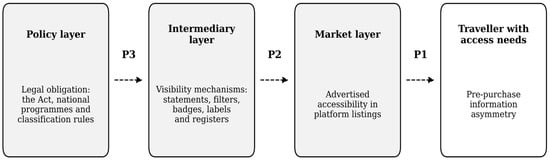
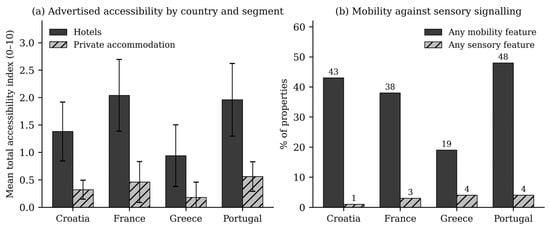

Disclaimer/Publisher’s Note: The statements, opinions and data contained in all publications are solely those of the individual author(s) and contributor(s) and not of MDPI and/or the editor(s). MDPI and/or the editor(s) disclaim responsibility for any injury to people or property resulting from any ideas, methods, instructions or products referred to in the content. |
© 2026 by the authors. Licensee MDPI, Basel, Switzerland. This article is an open access article distributed under the terms and conditions of the Creative Commons Attribution (CC BY) license.