Next Issue
Volume 7, September
Previous Issue
Volume 7, March


Electricity, Volume 7, Issue 2 (June 2026) – 36 articles

Cover Story (view full-size image):  
  • Issues are regarded as officially published after their release is announced to the table of contents alert mailing list.
  • You may sign up for e-mail alerts to receive table of contents of newly released issues.
  • PDF is the official format for papers published in both, html and pdf forms. To view the papers in pdf format, click on the "PDF Full-text" link, and use the free Adobe Reader to open them.
Order results
Result details
Select all
Export citation of selected articles as:
37 pages, 1597 KB  
Article
Topology-Aware Graph Reinforcement Learning for Voltage-Reactive Power Control in Grid-Connected Microgrids
by Yunfei Zhang, Kefan Bao, Gaige Liang, Wennan Zhuang, Longlong Qiang, Difei Tang, Xiangyu Lu and Mingxiao Zhang
Electricity 2026, 7(2), 60; https://doi.org/10.3390/electricity7020060 (registering DOI) - 22 Jun 2026
Viewed by 194
Abstract
As the global energy transition accelerates, distribution systems are integrating increasing shares of inverter-interfaced renewables, making reliable voltage support a key operational requirement. In grid-connected microgrids, especially weak radial feeders in rural and remote areas, voltage-reactive power (Volt/Var) control must coordinate multiple inverters [...] Read more.
As the global energy transition accelerates, distribution systems are integrating increasing shares of inverter-interfaced renewables, making reliable voltage support a key operational requirement. In grid-connected microgrids, especially weak radial feeders in rural and remote areas, voltage-reactive power (Volt/Var) control must coordinate multiple inverters under uncertainty from photovoltaic (PV) intermittency, load volatility, and point-of-common-coupling (PCC) disturbances. Existing droop, model-based optimization, and non-graph reinforcement learning (RL) approaches often rely on fixed rules or do not explicitly exploit electrical topology, which limits adaptive coordination. To address this gap, we propose a topology-aware graph reinforcement learning framework for voltage-reactive power control in grid-connected microgrids under uncertainty. The method encodes node states with a graph convolutional network (GCN) and learns coordinated PV/storage reactive-power actions via proximal policy optimization (PPO) with a multi-objective reward balancing voltage quality, control effort, and action smoothness. In a controlled comparison against a multilayer perceptron (MLP)-PPO baseline with identical action space, reward, and PPO objective, our method reduces voltage violation rate (VVR) from 0.0316 ± 0.0086 to 0.0048 ± 0.0019. Additional validation on a modified IEEE 33-bus feeder further reduces VVR from 0.00726 for MLP-PPO and 0.02999 for Droop control to 0.00095, supporting the effectiveness of topology-aware state representation on a larger radial benchmark feeder. Full article
Show Figures

Figure 1

22 pages, 841 KB  
Article
Hybrid Ant Lion Optimization Methodology for Network Reconfiguration and Optimal Placement of Distributed Generation Considering Short-Circuit Constraints
by Andrés Fernando Torres-Valenzuela, Edgar E. Tibaduiza-Rincón and Jesús M. López-Lezama
Electricity 2026, 7(2), 59; https://doi.org/10.3390/electricity7020059 (registering DOI) - 20 Jun 2026
Viewed by 88
Abstract
The increasing penetration of distributed generation (DG) in distribution systems poses significant operational challenges, including increased power losses, voltage profile deviations, and variations in short-circuit currents. These issues may compromise network safety, reliability, and the selectivity of protection schemes under different operating scenarios. [...] Read more.
The increasing penetration of distributed generation (DG) in distribution systems poses significant operational challenges, including increased power losses, voltage profile deviations, and variations in short-circuit currents. These issues may compromise network safety, reliability, and the selectivity of protection schemes under different operating scenarios. This paper proposes a hybrid optimization methodology for the optimal placement and sizing of DG, aiming to minimize active power losses while ensuring voltage regulation and keeping short-circuit currents within permissible limits. An integrated approach is proposed that combines a mesh-to-radial network reconfiguration strategy with a modified Ant Lion Optimization algorithm, known as ALO-DG, enabling the simultaneous optimization of network topology and the allocation of distributed generators at candidate buses. The problem is formulated taking into account power balance constraints, voltage limits, distribution network capacity limits, and short-circuit current limits. The proposed methodology achieved substantial reductions in active power losses in the IEEE 33-bus and 69-bus test systems, reaching 84.42% and 91.56%, respectively. These improvements were accompanied by enhanced voltage profiles while preserving the radial operating structure of the distribution networks. Furthermore, the proposed hybrid methodology serves as a tool for the planning and operation of distribution systems with high DG penetration, particularly in scenarios where grid security and protection coordination are critical considerations. Full article
Show Figures

Figure 1

27 pages, 9307 KB  
Article
RWKV-CVM: Cross-Variate Mixing for RWKV-Based Short-Term
by Adil Rizki, Abdelwahed Echchatbi and Hamid Yantour
Electricity 2026, 7(2), 58; https://doi.org/10.3390/electricity7020058 (registering DOI) - 18 Jun 2026
Viewed by 99
Abstract
Accurate power load forecasting is essential for efficient electricity grid management, yet capturing cross-variate dependencies in multivariate time series remains a persistent challenge. Recent channel-independent methods based on Transformer and recurrent architectures have achieved strong forecasting performance, but they discard potentially useful information [...] Read more.
Accurate power load forecasting is essential for efficient electricity grid management, yet capturing cross-variate dependencies in multivariate time series remains a persistent challenge. Recent channel-independent methods based on Transformer and recurrent architectures have achieved strong forecasting performance, but they discard potentially useful information from correlated variates such as weather conditions and neighboring consumption zones. In this paper, we propose RWKV-CVM, a lightweight extension of the RWKV-TS architecture that introduces a trainable Cross-Variate Mixing (CVM) module to selectively incorporate inter-variate information while preserving the linear time complexity of the backbone. The CVM module is a gated, row-stochastic mixing matrix—initialized from the training set absolute Pearson correlations and modulated by a single learned scalar gate that is applied to the normalized input series before patching, adding only 65 trainable parameters to the backbone. We evaluate the method under a single unified harness (three random seeds, consistent normalization, and re-executed DLinear, iTransformer and RWKV-TS baselines) on three settings: the Tetouan city power consumption dataset forecast jointly for all three zones at horizons up to 72 h (including the operationally relevant 24 h day-ahead and 48 h two-day-ahead horizons) and the ETTh1 and Weather benchmarks under a  10 %  few-shot protocol. Averaged over horizons, RWKV-CVM attains the lowest mean MSE on all three datasets (Tetouan all-zone  0 . 0427 , ETTh1  0 . 640 , Weather  0 . 250 ), narrowly ahead of the strongly-tuned baselines and its own RWKV-TS backbone. The advantage is modest, is concentrated at longer horizons, and is selective across target zones; on several individual horizons and in the full-data regime, a baseline is preferable, and we report these cases explicitly. These results indicate that a controlled, lightweight injection of cross-variate information can improve multivariate load forecasting on average without sacrificing computational efficiency. Full article
21 pages, 1375 KB  
Article
Multi-Objective BESS Siting and Sizing via NSGA-II and PTDF-Constrained DC Optimal Power Flow: Application to the Mali Transmission Network
by Adrián Alarcón Becerra, Gregorio Fernández, Aritz Rubio Egaña, Francesco Roncallo, Mario Mihetec, Alberto Júlio Tsamba, Nikola Matak and Gilberto Mahumane
Electricity 2026, 7(2), 57; https://doi.org/10.3390/electricity7020057 (registering DOI) - 18 Jun 2026
Viewed by 113
Abstract
Weak grid infrastructure and the absence of flexible storage are among the principal barriers to reliable, low-carbon energy access in sub-Saharan transmission systems. This paper proposes a hierarchical multi-objective framework for the optimal siting and sizing of battery energy storage systems (BESSs), applied [...] Read more.
Weak grid infrastructure and the absence of flexible storage are among the principal barriers to reliable, low-carbon energy access in sub-Saharan transmission systems. This paper proposes a hierarchical multi-objective framework for the optimal siting and sizing of battery energy storage systems (BESSs), applied to the 130-bus Mali transmission network within the EMERGE project. The upper level employs NSGA-II to simultaneously maximize daily price arbitrage revenue and minimize active power losses; the lower level solves a network-constrained DC optimal power flow with thermal branch limits enforced as hard linear inequalities via the Power Transfer Distribution Factor (PTDF) matrix. Over 500 generations, the framework identifies Bus 91 (SIRAKORO II, 150 kV) as the dominant storage location, achieving a maximum daily revenue of approximately €10,033 at a marginal loss increment of 6.7×10³ MWh. The resulting Pareto front gives Mali system planners a quantitative tool for trading off private investment returns against grid-level environmental impact, demonstrating that rigorous network-constrained BESS planning is technically tractable and economically viable in the resource-constrained context of sub-Saharan energy transitions. Full article
Show Figures

Figure 1

39 pages, 2255 KB  
Article
Adaptive Corridor-Based Control of a Lithium-Ion Battery Energy Storage System for Wind-Turbine Power Stabilisation and Reliability Improvement in Industrial Microgrids
by Rollan Nussipali, Nikita V. Martyushev, Boris V. Malozyomov, Vadim S. Tynchenko, Viktor A. Kukartsev, Yadviga A. Tynchenko and Tatyana A. Panfilova
Electricity 2026, 7(2), 56; https://doi.org/10.3390/electricity7020056 - 17 Jun 2026
Viewed by 211
Abstract
The increasing penetration of wind generation into autonomous and weakly coupled industrial microgrids requires control strategies that can maintain power-supply reliability under stochastic generation and sharply variable loads. This paper proposes an adaptive corridor-based supervisory control algorithm for a lithium-ion battery energy storage [...] Read more.
The increasing penetration of wind generation into autonomous and weakly coupled industrial microgrids requires control strategies that can maintain power-supply reliability under stochastic generation and sharply variable loads. This paper proposes an adaptive corridor-based supervisory control algorithm for a lithium-ion battery energy storage system (BESS) integrated with a wind-turbine generator. The novelty of the method is not the general use of battery storage for power smoothing but a control law that maintains the generator within a predefined active-power corridor while transferring fast and medium-duration imbalances to the battery under state-of-charge, power-limit, and response-delay constraints. Unlike PI-based smoothing, model predictive control, or fixed rule-based switching, the proposed approach uses corridor retention as the primary operating criterion and relies only on directly measurable variables. The model was implemented in MATLAB/Simulink for a 2 MW wind-turbine generator coupled with a 444 kWh/1776 kW lithium-ion battery energy storage system. Field-measurement-based simulation validation was performed in MATLAB/Simulink using industrial load data measured at an autonomous oilfield power plant; the validation scenarios included extracted step disturbances, a real multi-peak load profile, prolonged deficit operation, and a scaled configuration scenario. The algorithm compensated for 86.3–87.4% of short-term load peaks, reduced the standard deviation of generator power from 467 to 98 kW, and decreased recovery time from 6.8 to 1.6 s. Full article
Show Figures

Figure 1

39 pages, 7289 KB  
Article
Design and Optimization of a Hybrid Energy System Integrating Solar PV and Geothermal Heat Pump: A Case Study in L’Anse-au-Loup, Labrador
by Sujith Eswaran, Ashraf Ali Khan, Hafiz Furqan Ahmed, Usman Ali Khan and Ali Momenzadeh
Electricity 2026, 7(2), 55; https://doi.org/10.3390/electricity7020055 - 15 Jun 2026
Viewed by 270
Abstract
The building sector accounts for nearly 30% of global energy use and 28% of CO2 emissions, with residential buildings in Canada contributing about 17% of national energy demand. In cold regions such as Labrador, approximately 82% of this consumption is associated with [...] Read more.
The building sector accounts for nearly 30% of global energy use and 28% of CO2 emissions, with residential buildings in Canada contributing about 17% of national energy demand. In cold regions such as Labrador, approximately 82% of this consumption is associated with space heating and domestic hot water, making heating the dominant residential load, while fossil-fuel furnaces and electric baseboard heaters remain common. These conditions highlight the need for efficient and sustainable heating alternatives for cold-climate residential buildings. This study examines the design and performance of a hybrid solar photovoltaic (PV) and geothermal heat pump (GTHP) system for a typical detached home in L’Anse-au-Loup, Labrador, Newfoundland and Labrador, Canada (51.52° N, 56.84° W), with the goal of improving energy efficiency and reducing dependence on the electrical grid. Heating and cooling loads were developed using the Hourly Analysis Program (HAP 6.1), while system operation and economic performance were assessed through the Hybrid Optimization Model for Electric Renewables (HOMER Pro 3.18.3). The proposed design combines a rooftop PV array, a ground-source heat pump, and second-life lithium-ion batteries repurposed from retired electric vehicles to lower costs and support short-term energy storage. The system is modelled under grid-connected conditions to reflect realistic operation for northern households. Results show that the hybrid system can meet annual electrical and thermal needs while reducing grid consumption by more than half. Annual carbon emissions decrease by roughly 4–5 tonnes, and repurposed batteries offer a cost-effective alternative to new storage. Overall, the study demonstrates that PV–GTHP systems can provide reliable, efficient, and practical energy solutions for cold-climate homes. Full article
Show Figures

Figure 1

53 pages, 806 KB  
Review
Security Risks and Mitigation Strategies for Large Language Models in Power Systems: A Review
by Xi Chen, Junmin Shi and Haibing Lu
Electricity 2026, 7(2), 54; https://doi.org/10.3390/electricity7020054 - 6 Jun 2026
Viewed by 295
Abstract
Large Language Models (LLMs) are rapidly transitioning from research concepts to transformative artificial intelligence components within the power and energy domain. Their ability to fuse diverse data, spanning SCADA logs, real-time sensor readings, and regulatory documentation enables unprecedented capabilities in forecasting, operator decision [...] Read more.
Large Language Models (LLMs) are rapidly transitioning from research concepts to transformative artificial intelligence components within the power and energy domain. Their ability to fuse diverse data, spanning SCADA logs, real-time sensor readings, and regulatory documentation enables unprecedented capabilities in forecasting, operator decision support, anomaly detection, and wide-area situational awareness for future intelligent grids. However, the integration of LLMs into safety-critical and highly regulated power systems introduces a convergence of novel and severe security risks. Beyond exhibiting model-intrinsic vulnerabilities like hallucination, prompt injection, and data poisoning, these models are susceptible to system-level threats that could compromise grid stability, distort energy market operations, or facilitate the leakage of sensitive operational data. Moreover, integrating LLM workloads into cloud or hybrid architectures necessitates strict compliance with critical standards and emerging governance frameworks like the EU AI Act. While existing surveys address AI security in power systems, general LLM security, and AI in smart grids separately, this paper bridges these threads by providing a unified treatment of LLM-specific risks, power-system deployment constraints, and emerging governance frameworks—a combination not covered in prior surveys. We provide a systematic taxonomy of risks across five dimensions: cybersecurity, privacy, robustness, explainability, and governance. We synthesize technological advances, clarify the complex interplay between LLM failure modes and grid security, and propose a forward-looking research agenda to guide future investigation. This work aims to be an indispensable resource for researchers, utility operators, and policymakers in designing resilient, trustworthy, and compliant AI-enabled energy infrastructures. Full article
(This article belongs to the Special Issue Feature Papers to Celebrate the First Impact Factor of Electricity)
Show Figures

Figure 1

28 pages, 3375 KB  
Article
Exploring Socioeconomic Implications of Time-of-Use Electricity Pricing on Residential and Electric Mobility Sectors in Developing Countries
by Anas Abuzayed and Rafat Aljarrah
Electricity 2026, 7(2), 53; https://doi.org/10.3390/electricity7020053 - 5 Jun 2026
Viewed by 331
Abstract
Jordan is rapidly adopting renewable energy and electric vehicles (EVs), positioning itself as a leader in the Middle East’s energy transition. However, challenges in maintaining grid stability are rising. Time-of-Use (ToU) electricity tariffs hold promise in promoting demand-side flexibility; however, their impact in [...] Read more.
Jordan is rapidly adopting renewable energy and electric vehicles (EVs), positioning itself as a leader in the Middle East’s energy transition. However, challenges in maintaining grid stability are rising. Time-of-Use (ToU) electricity tariffs hold promise in promoting demand-side flexibility; however, their impact in developing countries remains underexplored. This study investigates the effects of ToU tariffs on Jordan’s residential and transport sectors using historical data under a static demand assumption to isolate the direct tariff-design effect. Our results reveal that ToU tariffs may disproportionately burden low-income households, with electricity bills rising by 67% to 158%. In the transport sector, even grid-friendly EV charging results in a significant rise in bills, up to 130%. These findings raise equity concerns and highlight the need for tailored ToU structures. We conclude our study by discussing the policy implications of our findings and offer actionable insights for policymakers to ensure equitable access to affordable energy in Jordan and other developing countries facing similar challenges. Full article
Show Figures

Figure 1

25 pages, 6622 KB  
Article
Coordinated Optimization of Configuration and Control for Reversible Substations Equipped with Bidirectional Converter Devices Considering Life-Cycle Cost
by Jiayi Wu, Wei Liu, Jian Zhang, Xiaodong Zhang and Dingxin Xia
Electricity 2026, 7(2), 52; https://doi.org/10.3390/electricity7020052 - 4 Jun 2026
Viewed by 153
Abstract
The growing demand for energy-efficient urban rail transit has led to the increasing deployment of reversible substations (RS) in traction power supply systems. These substations, equipped with bidirectional converter devices (BCDs), involve high initial costs and complex parameter optimization challenges. This paper presents [...] Read more.
The growing demand for energy-efficient urban rail transit has led to the increasing deployment of reversible substations (RS) in traction power supply systems. These substations, equipped with bidirectional converter devices (BCDs), involve high initial costs and complex parameter optimization challenges. This paper presents a coordinated optimization method for BCD-equipped RS using a two-layer model. In the upper layer, the model determines the siting of RS and the capacity of BCD to minimize life-cycle cost (LCC). In the lower layer, it adjusts the control parameters of BCDs to reduce annual operating cost. An improved salp swarm algorithm (ISSA), incorporating Tent chaotic mapping and Levy flight, is developed to solve the model. A case study based on an 18.2 km subway line shows that the optimized configuration reduces overall cost by 5.12% and electricity cost by 10.53% compared with a conventional rectifier system. Moreover, it achieves a 1.19% reduction in electricity cost over a system with fixed control parameters, while maintaining rail potential and catenary voltage within safe limits. These findings demonstrate that the proposed method strikes an effective balance between initial investment and long-term operational benefits, contributing to improved energy efficiency and economic performance. Full article
(This article belongs to the Special Issue Stability, Operation, and Control in Power Systems)
Show Figures

Figure 1

26 pages, 3202 KB  
Article
What Shapes Regulated Electricity Contract Prices in a Hydro-Thermal Power System? Evidence from Colombia Using Quantile Regression and Autoencoders
by Andrés Oviedo-Gómez, Jose Daniel Minotta Saenz and Orlando Joaqui-Barandica
Electricity 2026, 7(2), 51; https://doi.org/10.3390/electricity7020051 - 4 Jun 2026
Viewed by 265
Abstract
This study examines the determinants of regulated electricity contract prices in Colombia during the period 2009–2021, with a particular focus on the role of electricity-market fundamentals and macroeconomic conditions. Although regulated contracts are designed to reduce exposure to short-term volatility, limited evidence exists [...] Read more.
This study examines the determinants of regulated electricity contract prices in Colombia during the period 2009–2021, with a particular focus on the role of electricity-market fundamentals and macroeconomic conditions. Although regulated contracts are designed to reduce exposure to short-term volatility, limited evidence exists on how their price formation behaves across different segments of the distribution. To address this issue, the analysis combines quantile regression with autoencoder-based dimensionality reduction, allowing the incorporation of a large set of macroeconomic variables without overparameterizing the model. The results show that regulated contract prices are more consistently associated with electricity-system factors than with broad macroeconomic conditions. In particular, the spot price becomes significant only in the upper quantiles, where it appears to operate as an indicator of operational stress, while hydropower and thermal generation exhibit localized effects across the distribution. By contrast, most macroeconomic factors display weak, uneven, or non-significant effects, with only the exchange-rate-related component becoming clearly relevant at relatively high price levels. A robustness analysis based on principal component analysis broadly supports these patterns. Overall, the evidence suggests that the Colombian regulated market behaves as a relatively stable contractual system, in which price formation is shaped mainly by electricity-sector conditions, indexation rules, and long-term risk-management mechanisms, while macroeconomic influences appear more limited and non-uniform across quantiles. Full article
Show Figures

Figure 1

24 pages, 17090 KB  
Article
Mitigating Grid Congestion: Battery Storage as a Flexible Non-Wire Solution for System Operators Facing Investment Restrictions
by Domagoj Badanjak and Hrvoje Pandžić
Electricity 2026, 7(2), 50; https://doi.org/10.3390/electricity7020050 - 2 Jun 2026
Viewed by 276
Abstract
An increasing penetration of distributed energy resources and electrification-driven peak demand pose significant challenges to distribution networks, often resulting in voltage violations and congestion. This paper presents a multi-stage optimization framework that enables battery storage unit (BSU) to act as a flexible non-wire [...] Read more.
An increasing penetration of distributed energy resources and electrification-driven peak demand pose significant challenges to distribution networks, often resulting in voltage violations and congestion. This paper presents a multi-stage optimization framework that enables battery storage unit (BSU) to act as a flexible non-wire alternative to traditional grid expansions conducted by Distribution System Operators (DSO), but also helpful for Transmission System Operators (TSO). The proposed method integrates a mixed-integer planning model with a quadratically constrained, second-order-cone–relaxed, AC optimal power flow to determine the optimal siting and sizing of battery storage. Representative operating days are obtained through clustering, while the operational optimization model evaluates battery participation in energy and reserve markets under network constraints. The value of flexibility the DSO procures from an independently-owned battery storage unit is determined as the opportunity cost of providing this flexibility as opposed to taking part in the fast reserves and day-ahead energy markets. The results obtained offer valuable information when weighing the decision between network expansion and alternative strategies and determine the price of flexibility that the DSO can offer to an independently owned storage unit. The results confirm that battery storage can defer network investments while providing transparent and economically justified flexibility remuneration. The proposed framework is implemented sequentially, with strong coupling between planning and operational stages through physical constraints and economic signals. Full article
Show Figures

Figure 1

16 pages, 4104 KB  
Article
Optimization-Based Residential PV Inverter Control for Reactive Power Support and Efficient Operation in Low-Voltage Networks
by Angamuthu Ananth, Sundaram Maruthachalam, Anand Mouttouvelou and Sivakumar Palaniswamy
Electricity 2026, 7(2), 49; https://doi.org/10.3390/electricity7020049 - 31 May 2026
Viewed by 232
Abstract
The adoption of solar photovoltaic (PV) inverters in residential networks has increased significantly because of the growing demand for clean energy and carbon footprint reduction. While these systems enable utilities to reduce dependence on conventional energy sources, several operational challenges remain unaddressed at [...] Read more.
The adoption of solar photovoltaic (PV) inverters in residential networks has increased significantly because of the growing demand for clean energy and carbon footprint reduction. While these systems enable utilities to reduce dependence on conventional energy sources, several operational challenges remain unaddressed at the prosumer level, including power factor (PF) penalties, voltage fluctuations, and underutilization of inverter capacity. Most commercially available residential inverters primarily focus on real power export and do not actively manage reactive power, leading to power quality issues in low-voltage distribution networks. In addition, emerging time-of-day (ToD) tariff structures are not effectively utilized by existing control strategies. In this work, an optimization-based supervisory control strategy is proposed for residential PV inverters. The problem is formulated as a convex quadratic programming (CQP) problem, where real and reactive power are optimally coordinated under inverter kilovolt-ampere constraints. The objective is to integrate ToD-based economic optimization with power factor regulation. Unlike conventional approaches that enforce strict PF constraints, the proposed method incorporates PF through a quadratic penalty on the deviation from the desired active–reactive power relationship, enabling a controlled trade-off between economic benefit and grid-support requirements. Depending on operating conditions, the controller dynamically prioritizes real power export or reactive power support while maintaining PF close to the desired threshold. Experimental validation is carried out on a 6 kVA hardware prototype. The results demonstrate improved inverter utilization, enhanced power factor performance, and significant cost reduction under the considered operating scenario. These findings highlight the potential of coordinated real and reactive power management for improving both economic and grid performance in residential PV systems. Full article
Show Figures

Figure 1

36 pages, 4643 KB  
Article
An Optimization Method for Data Aggregators and Smart Meters in Smart Grids
by Luiz Virgilio Bozzi Aranda, Raianny Souza Fernandes and Mário Mestria
Electricity 2026, 7(2), 48; https://doi.org/10.3390/electricity7020048 - 29 May 2026
Viewed by 236
Abstract
In this paper a new mathematical optimization model is proposed to optimize the number of data aggregators in smart grids and assign each smart meter to at least one data aggregator. The model is based on a Set-Covering Problem, which aims to find [...] Read more.
In this paper a new mathematical optimization model is proposed to optimize the number of data aggregators in smart grids and assign each smart meter to at least one data aggregator. The model is based on a Set-Covering Problem, which aims to find the minimum number of sets that cover all elements. In the case of smart grids, these elements will be the smart meters. We used a branch–bound algorithm for the new optimization model to solve several instances considering different smart grid scenarios. In the scenarios, real-world parameters were used for a lot of smart meters (which ranged from 15 to 900, with output powers of 23 and 30 dBm used in the theoretical analysis), data aggregator costs, dispersions, maximum budget, and signal propagation losses. The tests reached the best values for the objective function with small, medium and large-scale instances in low computational times. Theoretical analysis was used to evaluate the signal received from data aggregators, indicating that they can receive information with a high-quality signal.The proposed model provides insights for stakeholders involved and can aid in smart grid implementation. In addition, it can offer a blueprint for engineers to optimize data flow within hierarchical grid structures with smart meters and data aggregators. Full article
Show Figures

Figure 1

23 pages, 1233 KB  
Article
A Framework for Integrating Virtualized PAC into Availability Model of a Digital Substation: An Exploratory Adaptation of Software Aging and Rejuvenation Model
by Rizwan Rafique Syed and Hans Kristian Høidalen
Electricity 2026, 7(2), 47; https://doi.org/10.3390/electricity7020047 - 25 May 2026
Viewed by 283
Abstract
Software aging and the corresponding need for system rejuvenation are well-established concepts in computer science. As virtualization technologies are increasingly adopted within electric power utility infrastructures, early investigation into Software Aging and Rejuvenation (SAR) models, aging indicators, and empirical data collection becomes essential. [...] Read more.
Software aging and the corresponding need for system rejuvenation are well-established concepts in computer science. As virtualization technologies are increasingly adopted within electric power utility infrastructures, early investigation into Software Aging and Rejuvenation (SAR) models, aging indicators, and empirical data collection becomes essential. Given the critical role of the electric power grid and the high dependability requirements of the protection and control systems that support its operation, proactive research in this area is timely and necessary. Motivated by this need, this work proposes a hierarchical framework that integrates an SAR model into the Reliability Block Diagram (RBD) representation of a Digital Substation Automation System (DSAS). The analysis shows that, for the selected parameter set, incorporating SAR into the VPAC reliability model results in higher estimated failure rates and increased annual downtime relative to hardware-only models. When combined with substation primary system indices, however, the overall reliability indices remain largely unchanged, aside from reduced outage duration attributed to improved switching performance enabled by the DSAS architecture. Further examination reveals that the limited influence of SAR is primarily due to the lack of historical failure-mode data for the secondary system. Availability of such empirical data is expected to significantly affect combined reliability indices and improve the accuracy of reliability evaluations. This highlights the importance of systematic data collection and aging-indicator analysis as utility infrastructures transition toward virtualized and software-dependent architectures. Full article
Show Figures

Figure 1

25 pages, 45989 KB  
Article
Transient Stability Assessment of a 9-Bus Power System with High Solar PV Penetration: An IEEE Benchmark Case Study
by Marvens Jean Pierre, Emmanuel Hernández-Mayoral, Oscar Alfredo Jaramillo Salgado, Manuel Madrigal-Martínez, Reynaldo Iracheta-Cortez, Jorge Sanchez-Jaime and Gregorio Martínez-Reyes
Electricity 2026, 7(2), 46; https://doi.org/10.3390/electricity7020046 - 20 May 2026
Viewed by 517
Abstract
This study examines the impact of increasing photovoltaic (PV) penetration on the transient stability of the IEEE 9-bus power system. Synchronous machines are modeled with standard subtransient dynamics, while PV units are represented as current-limited grid-following inverters. Transient stability is assessed through the [...] Read more.
This study examines the impact of increasing photovoltaic (PV) penetration on the transient stability of the IEEE 9-bus power system. Synchronous machines are modeled with standard subtransient dynamics, while PV units are represented as current-limited grid-following inverters. Transient stability is assessed through the Critical Clearing Time (CCT) and the post-fault dynamic behavior, obtained from time-domain simulations carried out in MATLAB/Simulink® R2023b. Two permanent three-phase faults are considered: a primary contingency on line 7–5 and a secondary contingency on line 9–6, introduced to assess the robustness of the observed trends across different fault locations. The results show an increase in CCT as PV generation progressively replaces the active power supplied by synchronous machines, whose inertia is therefore maintained: from 210 ms (0% PV) to 440 ms (25%)/1080 ms (40%) at bus 5, 410 ms (25%)/1130 ms (40%) and 290 ms (25%)/650 ms (40%) at buses 6 and 8, respectively, demonstrating that the penetration site is a key factor for system stability. For distributed penetration among the three buses, CCT values of 340 ms (25%) and 1020 ms (40%) highlight the significant influence of PV placement at bus 8. The fault on line 9–6 consistently yields higher CCT values across all scenarios, confirming the robustness of these trends independently of fault location. Although an overall increase in CCT was observed, higher PV penetration also led to more pronounced oscillations and operability issues after the fault. In particular, 75% of the penetration scenarios under the fault on line 9–6 do not meet the active power recovery requirements of IEEE 1547-2018 and IEEE 2800-2022, a result more severe than that observed for the fault on line 7–5. These results underscore that a higher CCT does not guarantee operational compliance, and that stability-oriented control strategies—such as grid-forming operation, fast active power support, and dynamic voltage control—remain essential. They also suggest that planning practices should favor interconnections electrically closer to the slack generator. Overall, a high PV penetration level—modifying only the operating point of synchronous machines—allows longer fault durations to be tolerated; however, appropriate siting of PV units and the adoption of advanced inverter controls could mitigate the observed oscillations and post-fault operability challenges. Full article
(This article belongs to the Topic Power System Dynamics and Stability, 2nd Edition)
Show Figures

Figure 1

36 pages, 1658 KB  
Systematic Review
A Systematic Review of Solar Tracking Systems for Photovoltaic Installations: Electrical Performance, Control Strategies, and System Integration
by Anca-Adriana Petcut-Lasc, Flavius-Maxim Petcut and Valentina Emilia Balas
Electricity 2026, 7(2), 45; https://doi.org/10.3390/electricity7020045 - 14 May 2026
Viewed by 651
Abstract
Solar tracking systems (STSs) are widely adopted in photovoltaic (PV) installations to increase energy yield by maintaining favorable module orientation relative to the sun’s trajectory. This paper presents a systematic review of STSs from an electrical engineering perspective, focusing on electrical performance, control [...] Read more.
Solar tracking systems (STSs) are widely adopted in photovoltaic (PV) installations to increase energy yield by maintaining favorable module orientation relative to the sun’s trajectory. This paper presents a systematic review of STSs from an electrical engineering perspective, focusing on electrical performance, control strategies, and system integration aspects relevant to grid-connected PV applications. Fixed-tilt, single-axis, and dual-axis configurations are comparatively assessed in terms of output power, annual energy yield, influence on I–V and P–V characteristics, and auxiliary power consumption. The analysis emphasizes net energy gain rather than gross energy improvement. Control strategies are classified as open-loop, closed-loop, hybrid, and intelligent approaches. Their impact on tracking accuracy, actuator duty cycles, electrical stability, and coordination with maximum power point tracking (MPPT) algorithms is critically examined. A bibliographic and scientometric analysis is conducted to identify research trends, dominant themes, and existing gaps. The results indicate that single-axis tracking often provides the most favorable balance between energy gain and auxiliary consumption in utility-scale systems, while dual-axis configurations achieve higher absolute yield at increased complexity. The review highlights the need for standardized net-energy evaluation and grid-aware tracking strategies. Full article
Show Figures

Figure 1

22 pages, 3503 KB  
Article
Deep Q-Network Based Optimal Charging Coordination of Electric Vehicles Considering Vehicle-to-Grid Technology
by Yicheng Li, Yue Xiang, Tianwen Zheng, Cao Wen, Wei Wei, Jun Tong, Haifeng Hu, Zhou Sun, Tianjin Chen and Qian Zhang
Electricity 2026, 7(2), 44; https://doi.org/10.3390/electricity7020044 - 7 May 2026
Viewed by 358
Abstract
To further enhance the active participation of electric vehicles in grid interaction and reduce the decision-making costs for electric vehicle aggregators, this paper addresses the challenges in current EV charging and V2G (Vehicle-to-Grid) management. Considering the owners’ willingness to participate, an optimal charging [...] Read more.
To further enhance the active participation of electric vehicles in grid interaction and reduce the decision-making costs for electric vehicle aggregators, this paper addresses the challenges in current EV charging and V2G (Vehicle-to-Grid) management. Considering the owners’ willingness to participate, an optimal charging and V2G model for EV charging stations based on a Deep Q-Network is established. The paper analyzes in detail the mutual influence between the level of EV owner participation and the strategies of EV aggregators. Based on the owners’ willingness and the physical constraints of the EVs, an evaluation metric for EV participation in charging scheduling is developed. The Deep Q-Network is employed to make decisions regarding EV participation, thereby enhancing the decision-making capability of the EV aggregator, reducing the instability of its scheduling plans, and improving the reliability of these plans. Simulation results demonstrate that this method can dynamically consider EV owners’ willingness to participate, adaptively optimize the scheduling margin ratio, make global decisions across multiple time periods, and formulate charging and V2G scheduling plans for the EV aggregator. Full article
Show Figures

Figure 1

25 pages, 2839 KB  
Article
Megawatts to Zettaflops: A Techno-Economic Framework for Grid-Tied Behind-the-Meter Architectures in AI Data Centers
by Erick C. Jones, Jr. and Erick C. Jones, Sr.
Electricity 2026, 7(2), 43; https://doi.org/10.3390/electricity7020043 - 7 May 2026
Viewed by 611
Abstract
The rapid proliferation of artificial intelligence (AI) has pushed hyperscale data center rack densities beyond 100 kW, driving facility power requirements to the gigawatt scale. As developers attempt to deploy these massive Zettascale compute loads across US wholesale electricity markets, they encounter severe [...] Read more.
The rapid proliferation of artificial intelligence (AI) has pushed hyperscale data center rack densities beyond 100 kW, driving facility power requirements to the gigawatt scale. As developers attempt to deploy these massive Zettascale compute loads across US wholesale electricity markets, they encounter severe transmission planning bottlenecks, multi-year interconnection delays, and escalating grid transient stability risks. This paper presents a generalizable techno-economic framework for evaluating grid-tied, behind-the-meter (BTM) energy architectures as a means of bypassing these constraints. The framework is demonstrated through a detailed case study in the Electric Reliability Council of Texas (ERCOT), selected for its rapid data center growth and evolving large-load regulatory environment. Using a scenario-based comparative approach, this study models the feasibility of transitioning from pure-grid reliance to hybrid, on-site generation across a three-phase deployment pathway scaling from 25 MW to 250 MW. Six distinct microgrid configurations are evaluated, integrating baseload technologies—including Enhanced Geothermal Systems (EGSs), Small Modular Reactors (SMRs), and Reciprocating Internal Combustion Engines (RICEs)—with a tiered-performance Battery Energy Storage System (BESS) combining high C-rate lithium-ion units and repurposed electric vehicle batteries. System viability is assessed through two primary metrics: the Levelized Cost of Energy (LCOE) and the Avoided Loss of Load Probability (ALOLP). The results indicate that the blended LCOE scenario ranges from $64.50/MWh (Geothermal + Solar PPA) to $94.20/MWh (SMR-anchored), compared to a $75.00/MWh pure-grid baseline. The 100% Geothermal configuration achieves a scenario-dependent ALOLP exceeding 99.9%, while gas-dependent configurations range from 58.0% to 91.2%. These findings suggest that geographic siting co-optimized with localized generation offers a viable pathway for balancing regulatory compliance, capital cost, and Uptime Tier IV operational resilience in early-stage data center development across constrained grid environments. Full article
(This article belongs to the Special Issue Feature Papers to Celebrate the First Impact Factor of Electricity)
Show Figures

Figure 1

29 pages, 6207 KB  
Article
Evaluation of Power Quality in Railway Systems: Challenge of Intermittency and Proposal of a Synchronized Aggregation Methodology for Reliable Compliance
by Azeddine Bouzbiba, Yassine Taleb, Roa Lamrani and Ahmed Abbou
Electricity 2026, 7(2), 42; https://doi.org/10.3390/electricity7020042 - 6 May 2026
Viewed by 637
Abstract
This article highlights the intrinsic limitations of existing standards, such as EN 50160 and its associated measurement techniques, when applied to the assessment of power quality in high-speed railway traction power supply networks. These networks, characterized by intermittent and non-linear loads, generate disturbances [...] Read more.
This article highlights the intrinsic limitations of existing standards, such as EN 50160 and its associated measurement techniques, when applied to the assessment of power quality in high-speed railway traction power supply networks. These networks, characterized by intermittent and non-linear loads, generate disturbances (harmonics, voltage unbalance) that are not always detected or correctly quantified by standardized aggregation methods, leading to an underestimation of the actual impacts and calling into question the credibility of compliance assessments. The study proposes a new evaluation methodology based on synchronizing measurements with train traffic and grouping data by events rather than by fixed aggregation periods. This approach enables a more accurate characterization of negative-sequence voltage unbalance, providing a reliable estimation of both the magnitude and duration of disturbances. Experimental observations from multiple journeys and aggregation scenarios provide quantitative evidence supporting the relevance of the proposed improvements, which will contribute to updating and implementing standards better adapted to the specific characteristics of intermittent networks such as railway traffic, thereby ensuring a reliable, credible, and reproducible power quality assessment. Full article
Show Figures

Figure 1

24 pages, 2439 KB  
Article
Plug-and-Play Planning and Operation of N Grid-Connected Microgrids Under Uncertainty: A Data-Driven Optimization Framework Using Open French Load Profiles
by Stefanos Keskinis and Costas Elmasides
Electricity 2026, 7(2), 41; https://doi.org/10.3390/electricity7020041 - 5 May 2026
Viewed by 719
Abstract
This paper presents a unified, data-driven optimization framework for the planning and operation of an arbitrary number N of grid-connected microgrids connected to a distribution feeder. Each microgrid is represented as a controllable energy entity comprising local loads, battery energy storage systems (BESS) [...] Read more.
This paper presents a unified, data-driven optimization framework for the planning and operation of an arbitrary number N of grid-connected microgrids connected to a distribution feeder. Each microgrid is represented as a controllable energy entity comprising local loads, battery energy storage systems (BESS) modeled through their State of Energy (SOE), and optional local generation. The microgrids are embedded explicitly in a radial distribution network subject to hosting-capacity and ramp-rate constraints at the point of common coupling (PCC). Unlike many existing studies that rely on synthetic or stylized demand profiles, this work employs real, open-access hourly load data from the Electricity Load Measurements and Analysis (ELMAS) dataset (France) to construct heterogeneous residential, commercial, and industrial microgrid instances. A plug-and-play integration rule is formulated at the planning level: the connection of an additional microgrid is admissible if and only if the enlarged optimization problem remains feasible and all reliability, network, and safety-oriented constraints are satisfied. The deterministic formulation is extended to handle uncertainty via scenario-based stochastic modeling of load variability. A comprehensive case study based on real French load profiles illustrates how feeder hosting capacity can be quantified in terms of the maximum number of microgrids that can be safely integrated. The results demonstrate that coordinated planning significantly improves PCC behavior, reduces operational stress, and provides a clear quantitative criterion for plug-and-play microgrid integration in distribution networks. Full article
Show Figures

Figure 1

22 pages, 2010 KB  
Review
Safety in the Operation of Electrical Networks: Inertia Compensation as a Measure of Frequency and Voltage Stability
by José Carvalho
Electricity 2026, 7(2), 40; https://doi.org/10.3390/electricity7020040 - 2 May 2026
Viewed by 452
Abstract
The main purpose of electrical transmission and distribution networks is to carry electrical energy from the places where it is produced to the places of consumption, where the energy is used. Electrical energy is produced in power plants by generating units, which convert [...] Read more.
The main purpose of electrical transmission and distribution networks is to carry electrical energy from the places where it is produced to the places of consumption, where the energy is used. Electrical energy is produced in power plants by generating units, which convert a form of primary energy into electrical energy. Primary energy comes from a number of sources, such as fossil fuels, nuclear energy, hydropower, wind, and solar. The carbon neutrality targets set by the European Union and several countries around the world have driven a transformation characterized by the gradual replacement of synchronous thermal generation based on fossil fuels with Renewable Energy Sources (RES), such as wind and solar. The energy transition, while necessary to achieve the established targets, introduces significant challenges to the stability of Electrical Power Systems (EPS) and electrical grids, since RES do not yet contribute to stability at levels comparable to the generating units of large thermal power plants, whether in terms of inertia, which has seen a notable reduction in recent years, or in voltage control or short-circuit power. This article presents and discusses solutions to mitigate the effect of this reduction in inertia in power plants using synchronous compensators and synthetic inertia emulation using battery storage. Full article
(This article belongs to the Special Issue Stability, Operation, and Control in Power Systems)
Show Figures

Figure 1

18 pages, 711 KB  
Article
Determination of Ground Clearance for EHV 400 kV Overhead Power Lines Based on Electromagnetic Field Limits
by Jozef Bendík, Matej Cenký and Žaneta Eleschová
Electricity 2026, 7(2), 39; https://doi.org/10.3390/electricity7020039 - 1 May 2026
Viewed by 662
Abstract
The planning and design of Extra-High Voltage (EHV) overhead power lines require strict adherence to electromagnetic field exposure limits to ensure public safety. This paper presents a comprehensive analysis of the minimum ground clearance required for standard 400 kV transmission towers to comply [...] Read more.
The planning and design of Extra-High Voltage (EHV) overhead power lines require strict adherence to electromagnetic field exposure limits to ensure public safety. This paper presents a comprehensive analysis of the minimum ground clearance required for standard 400 kV transmission towers to comply with international safety guidelines. A review of legislative frameworks across 37 countries indicates a widespread consensus on limiting values of 5 kV/m for the electric field and 100 μT for magnetic flux density. Using analytical methods, the electric and magnetic fields were calculated for four common tower geometries (Cat, Portal, Danube, and Barrel) under varying ground clearances and phase configurations. The results demonstrate that the magnetic flux density is not a limiting factor, as it remains well below safety thresholds even at standard technical clearances. Conversely, the electric field intensity proves to be the critical design constraint, often requiring clearances significantly higher than those dictated by insulation coordination. The study identifies that optimizing the phase sequence in double-circuit towers can reduce the required ground clearance by up to 28%, offering a cost-effective mitigation strategy. These findings provide power line designers with essential decision-making data for the preliminary design phase, enabling the optimization of tower geometry and phase arrangement without the need for computationally intensive simulations. Full article
Show Figures

Figure 1

25 pages, 9045 KB  
Systematic Review
Systematic Review of Advanced Optimization Techniques and Multi-Asset Integration in Home Energy Management Systems
by Rabia Mricha, Mohamed Khafallah and Abdelouahed Mesbahi
Electricity 2026, 7(2), 38; https://doi.org/10.3390/electricity7020038 - 23 Apr 2026
Cited by 1 | Viewed by 1133
Abstract
Home Energy Management Systems (HEMS) are increasingly positioned at the center of residential flexibility, particularly as homes integrate photovoltaics, battery storage, electric vehicles, and responsive loads. This systematic review examines recent advances in optimization and multi-asset coordination for HEMS. Searches were conducted in [...] Read more.
Home Energy Management Systems (HEMS) are increasingly positioned at the center of residential flexibility, particularly as homes integrate photovoltaics, battery storage, electric vehicles, and responsive loads. This systematic review examines recent advances in optimization and multi-asset coordination for HEMS. Searches were conducted in Scopus, Web of Science, IEEE Xplore, and ScienceDirect for studies published between 2020 and 2025; after screening and eligibility assessment, 90 studies were included. The findings indicates that deterministic optimization remains well suited to structured scheduling problems, whereas metaheuristic, hybrid, and learning-based methods are better able to address nonlinearity, uncertainty, and real-time adaptation. Across the reviewed literature, multi-asset integration generally improves cost, peak demand, self-consumption, and, in some cases, user comfort and emissions. Yet the field remains dominated by simulation-based validation. Future progress of HEMS will depend on real-world validation, interoperable system design, explainable control, and stronger alignment with user behavior, communication constraints, and regulatory frameworks. Full article
Show Figures

Figure 1

36 pages, 13528 KB  
Review
Distance Protection for Power Grids with Inverter-Based Resources: Challenges, Probable Solutions and Future Research Opportunities
by Gajanan Sarode, Mangalkumar Bhatkar and Subhadeep Paladhi
Electricity 2026, 7(2), 37; https://doi.org/10.3390/electricity7020037 - 23 Apr 2026
Viewed by 809
Abstract
The proliferation of renewable energy resources has brought numerous challenges to conventional power systems, as grid integration is predominantly achieved through inverter-interfaced technologies such as photovoltaic (PV) plants and Type-IV wind turbines. Unlike synchronous generators (SGs), inverter-based resources (IBRs) exhibit fundamentally different fault [...] Read more.
The proliferation of renewable energy resources has brought numerous challenges to conventional power systems, as grid integration is predominantly achieved through inverter-interfaced technologies such as photovoltaic (PV) plants and Type-IV wind turbines. Unlike synchronous generators (SGs), inverter-based resources (IBRs) exhibit fundamentally different fault behavior by limiting fault current magnitudes, typically within 1.0–1.2 per unit. Furthermore, the phase angle and sequence composition of the injected fault current are largely dictated by the inverter control strategy rather than by the network impedance. Consequently, distance protection schemes developed under assumptions of system homogeneity, a fixed source-to-impedance ratio (SIR), high fault current contribution, and large inertia may exhibit unreliable performance in inverter-dominated power networks. In this work, the influence of IBRs on key distance protection elements, such as starting elements, fault classification techniques, and impedance calculation with or without inter-feed, is reviewed and evaluated using simulations in PSCAD 5.0 software. Further, reduced grid inertia introduces operational limitations in power swing blocking (PSB) schemes, which are discussed in this paper. This work presents an overview of IBR fault responses and critically summarizes prior work on distance protection in IBR-dominated grids, highlighting key challenges, probable solutions, and the current research status to enhance understanding for further research. Full article
Show Figures

Figure 1

34 pages, 26358 KB  
Article
Multi-Objective Sizing of a Run-of-River Hydro–PV–Battery–Diesel Microgrid Under Seasonal River-Flow Variability Using MOPSO
by Yining Chen, Rovick P. Tarife, Jared Jan A. Abayan, Sophia Mae M. Gascon and Yosuke Nakanishi
Electricity 2026, 7(2), 36; https://doi.org/10.3390/electricity7020036 - 9 Apr 2026
Viewed by 1019
Abstract
Hybrid hydro–solar microgrids offer a practical electrification option for remote and weak-grid communities by combining run-of-river hydropower with photovoltaic generation. However, their performance depends strongly on coordinated decisions across three layers: (i) system sizing and architecture, (ii) turbine selection and rating under variable [...] Read more.
Hybrid hydro–solar microgrids offer a practical electrification option for remote and weak-grid communities by combining run-of-river hydropower with photovoltaic generation. However, their performance depends strongly on coordinated decisions across three layers: (i) system sizing and architecture, (ii) turbine selection and rating under variable river flow, and (iii) operational energy dispatch under time-varying solar resource and demand. This paper develops an optimization-driven planning framework for a run-of-river hydro–PV microgrid that co-optimizes component capacities and turbine-related design choices while enforcing time-series operational feasibility. Physics-based component models translate river discharge into hydroelectric output via turbine efficiency characteristics and operating limits, and compute PV generation and storage trajectories under dispatch and state-of-charge constraints. The planning problem is formulated as a multi-objective optimization that quantifies trade-offs among life-cycle cost, supply reliability (e.g., unmet-load metrics), and sustainability indicators (e.g., diesel-free operation or emissions when backup generation is present). A Pareto-optimal set of designs is obtained using a population-based multi-objective algorithm, and representative knee-point (balanced) solutions are selected to illustrate how turbine choice and dispatch strategy interact with seasonal hydrology and solar variability. The proposed approach supports transparent and robust design decisions for hybrid hydro–solar microgrids. Full article
Show Figures

Figure 1

22 pages, 3947 KB  
Article
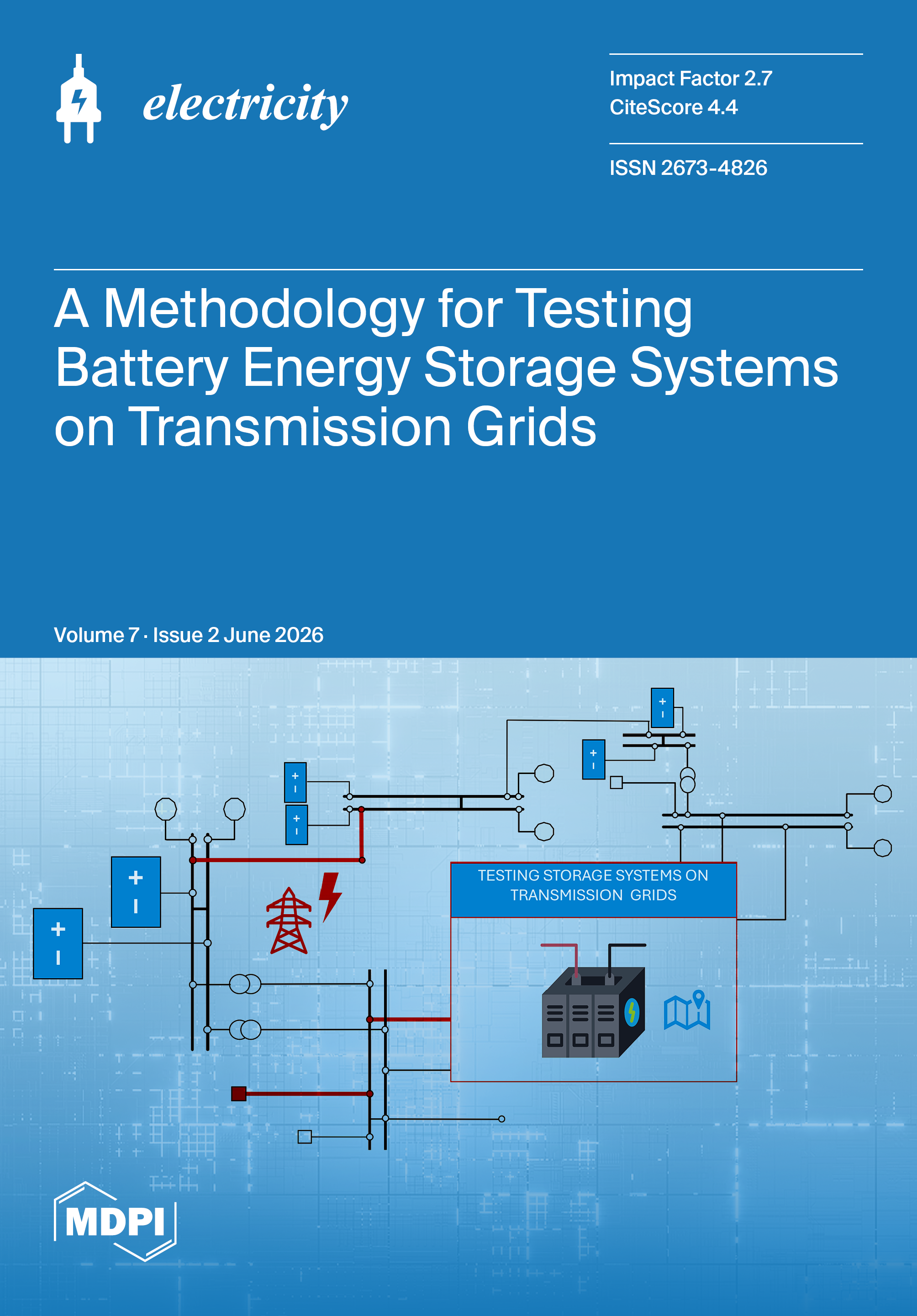
A Methodology for Testing the Size and the Location of Battery Energy Storage Systems on Transmission Grids
by Nicola Collura, Fabio Massaro, Enrica Di Mambro, Salvatore Paradiso and Francesco Montana
Electricity 2026, 7(2), 35; https://doi.org/10.3390/electricity7020035 - 4 Apr 2026
Viewed by 745
Abstract
A replicable methodology for testing the size and placement of Battery Energy Storage Systems connected to high-voltage transmission networks is presented in this study. The proposed approach involves the power flow analysis inside a Renewable Energy Zone, namely a high-renewable area prone to [...] Read more.
A replicable methodology for testing the size and placement of Battery Energy Storage Systems connected to high-voltage transmission networks is presented in this study. The proposed approach involves the power flow analysis inside a Renewable Energy Zone, namely a high-renewable area prone to grid congestion during peak generation periods, based on time-series hourly analysis over a critical month. The model includes detailed operational descriptions such as lines ampacity, battery state of charge limits, round-trip efficiency, self-discharge behavior, and ramp rate restrictions. The methodology distinguishes itself by its simplicity, flexibility, and use of open-source tools, making it a valuable asset for supporting future transmission planning in high-renewable-energy scenarios. The model was developed in Python (version 3.12) using the open-source Pandapower library, introducing an innovative constraint management criterion, and validated against real data provided by the national Transmission System Operator. The approach was then applied to a portion of the Sicilian grid with massive wind and solar penetration. Results show that strategic allocation of batteries leads to a significant reduction in line overloads (up to 13 GWh mitigated in one month), improves the dispatch of renewable energy generated within the Renewable Energy Zone and allows a more sustainable exercise of the power system. Full article
(This article belongs to the Special Issue Feature Papers to Celebrate the First Impact Factor of Electricity)
Show Figures

Figure 1

32 pages, 8873 KB  
Article
Experimental Verification of IEEE, CIGRÉ and IEC Thermal Models for Dynamic Line Rating of ACSR Overhead Lines
by Miloš Milovanović, Andrijana Jovanović, Mladen Banjanin, Ilija Vukašinović, Branko Gvozdić, Aleksandar Žorić, Bojan Perović and Jovan Vukašinović
Electricity 2026, 7(2), 34; https://doi.org/10.3390/electricity7020034 - 2 Apr 2026
Viewed by 885
Abstract
This paper presents an experimental investigation of dynamic line rating (DLR) applied to aluminium conductor steel-reinforced (ACSR) overhead line conductors, with a specific focus on wind speed conditions up to 5 m/s. An experimental system was designed and implemented to provide controlled and [...] Read more.
This paper presents an experimental investigation of dynamic line rating (DLR) applied to aluminium conductor steel-reinforced (ACSR) overhead line conductors, with a specific focus on wind speed conditions up to 5 m/s. An experimental system was designed and implemented to provide controlled and repeatable cross-flow air conditions along a tested ACSR conductor, enabling direct measurement of wind speed in the immediate vicinity of the conductor surface. Conductor temperature, electrical current, voltage drop per unit length, the phase angle between them, and relevant meteorological parameters were continuously measured under controlled experimental conditions. Based on the measured data, the conductor heat balance was evaluated and the allowable current-carrying capacity was determined. The experimentally obtained conductor temperatures and ampacity values were compared with results calculated using thermal models and correlations recommended by IEEE, CIGRÉ, and IEC standards. The comparison demonstrates that, under low and moderate wind speed conditions, differences between standard-based predictions and experimental results can be significant, leading to deviations in the estimation of allowable current-carrying capacity. The results confirm the high sensitivity of DLR calculations to wind-related assumptions and provide an experimentally validated basis for assessing the applicability and limitations of existing standard thermal models for ACSR conductors under realistic operating conditions. Full article
Show Figures

Figure 1

23 pages, 7348 KB  
Article
Improved Sequential Starting of Medium Voltage Induction Motors with Power Quality Optimization Using White Shark Optimizer Algorithm (WSO)
by Amr Refky, Eman M. Abdallah, Hamdy Shatla and Mohammed E. Elfaraskoury
Electricity 2026, 7(2), 33; https://doi.org/10.3390/electricity7020033 - 2 Apr 2026
Viewed by 700
Abstract
Medium voltage induction motors (MVIM) are a key component of numerous industries, such as water treatment plants, sewage discharge stations, and chilled water systems. The starting process for these MV motors is critical as it is associated with a major impact on both [...] Read more.
Medium voltage induction motors (MVIM) are a key component of numerous industries, such as water treatment plants, sewage discharge stations, and chilled water systems. The starting process for these MV motors is critical as it is associated with a major impact on both motor lifetime and power grid quality. In this article, a proposed modified and comprehensive starting scheme of MV three-phase induction motors driving pumps for water stations is introduced. Firstly, the starting performance and its impact on power grid quality will be discussed when all motors are normally started with direct on line connection (DOL), which is already the normal established status. A modified starting scheme based on an optimized coordination of motor starting methods in addition to variable voltage variable frequency drive (VVVFD) drive and control implementation will be discussed. A transition between the starting of variant MV induction motors as well as the starting event coordination principle will be discussed to improve the power quality relative to the obligatory time shift required for the operation. The coordination is based on an algorithm implementation which is achieved using different optimization concepts based on artificial intelligence techniques, properly conducting the transition time in addition to the power delivered by the inverter unit rather than determining the number of DOL and VVVF-implemented motors. A comparison between using the optimized VVVFD soft-starting and the proposed modified scheme is performed, focusing on the power quality improvement rather than optimizing the cost function. The modified scheme is simulated using ETAP power station for brief analysis and study of load flow rather than the complete inspection and power quality assessment. Full article
Show Figures

Figure 1

22 pages, 3205 KB  
Article
Low-Voltage Planning for Rural Electrification in Developing Countries: A Comparison of LVAC and LVDC Microgrids—A Case Study in Cambodia
by Chhith Chhlonh, Marie-Cécile Alvarez-Herault, Vannak Vai and Bertrand Raison
Electricity 2026, 7(2), 32; https://doi.org/10.3390/electricity7020032 - 2 Apr 2026
Viewed by 836
Abstract
This paper aims to define the optimal microgrid topology for rural electrification based on the lowest total cost by comparing LVAC and LVDC microgrids across three different scenarios. An LVAC radial topology is first designed using mixed-integer linear programming for phase balancing and [...] Read more.
This paper aims to define the optimal microgrid topology for rural electrification based on the lowest total cost by comparing LVAC and LVDC microgrids across three different scenarios. An LVAC radial topology is first designed using mixed-integer linear programming for phase balancing and the shortest path for connections, then implemented with a genetic algorithm to allocate and size solar home systems, forming an LVAC microgrid. Next, an LVDC topology is then derived from the LVAC structure and integrated with solar home systems under three scenarios: (1) using the same solar home system sizes, locations, and quantities as the LVAC microgrid; (2) using a genetic algorithm to re-determine solar home system sizes and locations, forming an LVDC microgrid; and (3) clustering the LVDC topology into nano-grids, each defined by genetic algorithm for solar home system sizing and placement and connected to the main feeder via bi-directional converters. Finally, all LVAC and LVDC scenarios are simulated over a 30-year planning horizon for analysis. A non-electrified village located in Cambodia has been selected for a case study to validate the proposed methods. The results have been obtained and provide a comparison of performance indicators (i.e., costs, energy production, losses, CO2 emissions, and autonomous energy) among the microgrids (LVAC and LVDC). The LVAC microgrid produced lower total energy losses than the LVDC microgrid in all scenarios. However, when considering environmental impact, LVDC Scenario 2 is preferable. Based on the total cost results, the LVAC microgrid is considered more economical than the LVDC microgrid in each scenario in this study. Full article
Show Figures

Figure 1

33 pages, 11379 KB  
Article
Different Switching Strategy for a Quadratic Boost Converter Based on Non-Series Energy Transfer (QBC-NSET)
by Luis Humberto Diaz-Saldierna, Julio C. Rosas-Caro, Jesus Leyva-Ramos, José G. González-Hernández, Francisco Beltran-Carbajal and Johnny Posada
Electricity 2026, 7(2), 31; https://doi.org/10.3390/electricity7020031 - 2 Apr 2026
Viewed by 787
Abstract
This paper explores a new switching strategy for a recently proposed quadratic boost converter. The topology under study is a high-step-up DC–DC converter with a configuration that allows a portion of the processed energy to be used in what we call a non-series [...] Read more.
This paper explores a new switching strategy for a recently proposed quadratic boost converter. The topology under study is a high-step-up DC–DC converter with a configuration that allows a portion of the processed energy to be used in what we call a non-series transfer. This characteristic reduces the amount of power processed redundantly. This converter, called a Quadratic Boost Converter based on Non-Series Energy Transfer (QBC-NSET), also has a non-pulsating input current, which is especially desirable for applications like photovoltaic and fuel-cell sources. This paper proposes a different switching strategy that reduces the output voltage ripple without increasing the switching frequency and without increasing the stored energy (inductance in inductors or capacitance in capacitors). The converter has two transistors, originally operated with synchronized signals; the proposed strategy provides independent switching signals with a phase shift between them. This enables the output capacitor to charge in a different switching state, producing a smaller voltage ripple while preserving the advantages of the topology originally presented. Steady-state analysis and voltage gain derivations confirm that the fundamental conversion characteristics remain unchanged. Experimental results obtained from a laboratory prototype validate the effectiveness of the proposed approach, demonstrating the reduction in the output voltage ripple. Full article
Show Figures

Figure 1

Previous Issue
Next Issue
Back to TopTop