


Abstract
Home Energy Management Systems (HEMS) are increasingly positioned at the center of residential flexibility, particularly as homes integrate photovoltaics, battery storage, electric vehicles, and responsive loads. This systematic review examines recent advances in optimization and multi-asset coordination for HEMS. Searches were conducted in Scopus, Web of Science, IEEE Xplore, and ScienceDirect for studies published between 2020 and 2025; after screening and eligibility assessment, 90 studies were included. The findings indicates that deterministic optimization remains well suited to structured scheduling problems, whereas metaheuristic, hybrid, and learning-based methods are better able to address nonlinearity, uncertainty, and real-time adaptation. Across the reviewed literature, multi-asset integration generally improves cost, peak demand, self-consumption, and, in some cases, user comfort and emissions. Yet the field remains dominated by simulation-based validation. Future progress of HEMS will depend on real-world validation, interoperable system design, explainable control, and stronger alignment with user behavior, communication constraints, and regulatory frameworks.
1. Introduction
The increasing global energy demand and the urgent challenge of climate change have compelled all sectors to prioritize energy efficiency improvements in both industrial and residential contexts. The building sector is a key area, accounting for approximately 30% of global final energy consumption and a similar share of energy-related greenhouse gas emissions [1]. As urbanization continues, buildings are expected to consume more energy, which increases the need for efficient energy management systems. [2].
In response to this challenge, the concept of “smart buildings” has emerged, driven by recent breakthroughs in Internet of Things technologies, advanced sensors for data acquisition, and sophisticated analytics platforms. These innovations enable the development of intelligent environments that not only enhance occupant comfort and well-being but also achieve significant energy savings [3]. At the core of this framework are Building Energy Management Systems (BEMS) and Home Energy Management Systems (HEMS), the main difference between HEMS and BEMS is the scale of the environment they manage. While both systems are designed to monitor and optimize energy usage, HEMS is built for individual households, while BEMS is designed for commercial or industrial buildings [4].
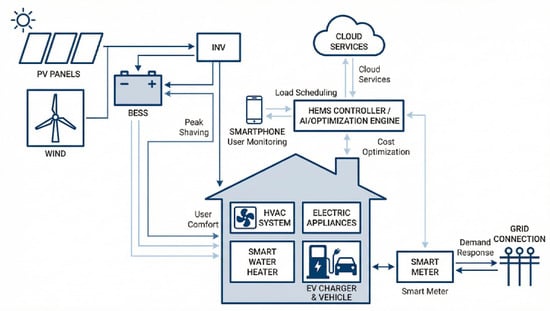
Figure 1 illustrates the fundamental design of a HEMS architecture, featuring an optimization controller that regulates energy flow between local renewable sources (PV/wind), battery storage, and the grid. By leveraging cloud data and smart metering, the system automates load scheduling and peak shaving to minimize operational costs. It effectively balances user comfort with economic objectives by optimizing demand response efficiency and integrating smart appliances and electric vehicles as active nodes within the power grid.
Figure 1.
HEMS architecture.
The integration of distributed energy resources, including rooftop photovoltaic systems and battery energy storage systems, has transformed buildings from passive consumers into active prosumers capable of generating, storing, and intelligently managing their own energy flows. This transition brings both major opportunities for energy savings and substantial operational complexity [5].
Traditional rule-based control systems are inadequate for managing such complex energy ecosystems. Consequently, artificial intelligence, combined with advanced optimization algorithms, is increasingly recognized as essential. Modern AI-enabled systems transcend simple sensing and actuation; they incorporate forecasting capabilities, self-adaptation, and continuous learning from operational data. These intelligent systems can predict occupant behavior, anticipate energy demand patterns, optimize appliance scheduling, and dynamically respond to grid signals and electricity price fluctuations [6].
This paper presents a systematic review of optimization Algorithms applied to HEMS. Our objectives are:
- To analyze and compare the major Optimization approaches in HEMS (supervised learning, deep learning, reinforcement learning) currently employed in HEMS applications.
- Evaluate Optimization Algorithms: Conduct a detailed inquiry into diverse optimization algorithms for resolving multi-objective trade-offs within HEMS and BEMS.
- Examine how individual optimization strategies are scaled to Integrated Home and Building Energy Management Systems.
Related Work
The existing literature on HEMS and integrated building energy management has evolved from foundational architectural taxonomies toward highly specialized, algorithm-centric evaluations. Reviews, such as [7], primarily emphasize the conceptual breadth of demand response frameworks and the communication infrastructures necessary for smart technology integration, offering foundational taxonomies for HEMS architectures. In contrast, more recent surveys by [8,9] adopt a more technical focus on optimization methodologies, with the latter utilizing a rigorous systematic review process to categorize heuristic, meta-heuristic, and mathematical programming approaches. While [10] provide a comprehensive survey of research challenges encompassing load forecasting and scheduling, reviews like [11] offer a narrow but high-depth examination of DRL as a pivotal tool for real-time adaptive control. Furthermore, literature extends from isolated home units toward larger management ecosystems; for instance, ref. [12] emphasize AI-driven sustainable management within property and building-scale frameworks, whereas [13,14] analyzed emerging lens of digital twins and real-time power system reliability. Similarly, while earlier works focus on static scheduling, recent studies increasingly show the need to addressing uncertainty and multi-objective trade-offs between cost and comfort [8,10]. Previous studies have examined these aspects separately, which shows the need for a more unified review.
In contrast, this review offers a detailed study, carefully evaluating diverse optimization algorithms that help address the multi-objective trade-offs inherent to HEMS, such as the balance between cost-efficiency and user comfort. These individual optimization strategies are then scaled to Integrated Home and Building Energy Management Systems, shifting the focus from isolated units to collective, grid-interactive architectures. Finally, the review links these models to real applications and their limits, identifying the empirical barriers that influence the transition from simulated models to practical deployment. This review helps fill that gap by bringing these points together.
2. Methodology
This article presents a systematic review of Advanced Optimization and Multi-Asset Integration in Home Energy Management Systems. The methodology was designed to identify relevant studies, apply clear selection criteria, and compare the findings in a consistent way. The review process included four main steps: literature search, screening, eligibility assessment, and final synthesis.
2.1. Search Strategy
A comprehensive search was executed across four major academic databases to ensure broad coverage of the relevant literature: Scopus, Web of Science, IEEE Xplore, and ScienceDirect. The search period was strictly defined as 1 January 2020, to 26 December 2025, to focus on the most recent advancements in the field.
The search employed multiple query combinations using Boolean operators to capture the intersection of key research areas:
- Core HEMS and Optimization/AI: (“home energy management” OR “HEMS” OR “residential energy” OR “smart home energy”) AND (optimization OR “machine learning” OR “deep learning” OR “reinforcement learning” OR “artificial intelligence”)
- Specific Applications: Queries focused on key BEMS functions, including load forecasting, demand response, metaheuristic algorithms (e.g., Genetic Algorithm, Particle Swarm), advanced AI techniques (e.g., Reinforcement Learning, Deep Q-learning), integration of renewable energy (e.g., Photovoltaic, Battery Storage), and electric vehicle integration (e.g., V2H, V2G).
2.2. Inclusion and Exclusion Criteria
Studies were included when they met the following conditions:
- (1)
- they focused on HEMS or closely related residential energy management systems;
- (2)
- they examined optimization methods, artificial intelligence techniques, machine learning models, deep learning models, reinforcement learning approaches, metaheuristic algorithms, or hybrid control methods;
- (3)
- they addressed one or more important HEMS functions, such as appliance scheduling, demand response, renewable energy integration, storage management, electric vehicle coordination, or multi-objective energy optimization; and
- (4)
- they provided sufficient technical detail on the proposed method, model, or evaluation results.
Studies were excluded when they were not peer-reviewed, were duplicated across databases, lacked enough technical detail, or fell outside the scope of residential energy management. Papers were also excluded when their focus did not apply to HEMS operation, optimization, or intelligent control.
2.3. Study Selection Process
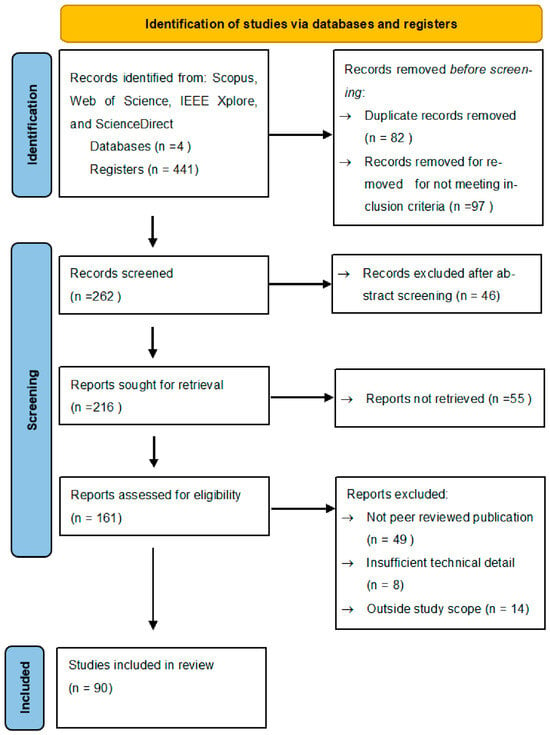
Figure 2 outlines the multi-stage study selection process.
Figure 2.
PRISMA Flow Diagram of the Study Selection and Quality Assessment Process.
2.4. Data Extraction
For each included study, the main information was extracted and recorded in a structured manner. The extracted data included the publication year, the main research objective, the optimization or AI method used, the HEMS components considered, the type of energy resources integrated, the decision variables or control targets, and the main performance indicators reported by the authors.
Special attention was given to studies that addressed multi-objective optimization and multi-asset coordination. These studies were examined in terms of how they managed trade-offs between electricity cost, peak-to-average ratio, user comfort, renewable energy use, storage operation, and electric vehicle charging.
2.5. Quality Assessment
A quality assessment was performed to improve the reliability of the final synthesis. Each study was examined using four main criteria: clarity of the research objective, appropriateness of the methodology, quality of the data or simulation setup, and rigor of the analysis.
2.6. Data Synthesis
The synthesis focused on identifying the strengths and limitations of each approach, the types of uncertainty addressed, the main optimization objectives, and the practical challenges reported in the literature.
2.7. Scope and Limitations of the Review Method
This review focused on recent peer-reviewed studies with sufficient technical content. As a result, some relevant works may not have been included if they were outside the selected databases, outside the defined period, lacked sufficient methodological detail, or were not retrieved in full text.
2.8. Protocol and Registration
This systematic review was not registered.
3. Optimization Approaches in HEMS
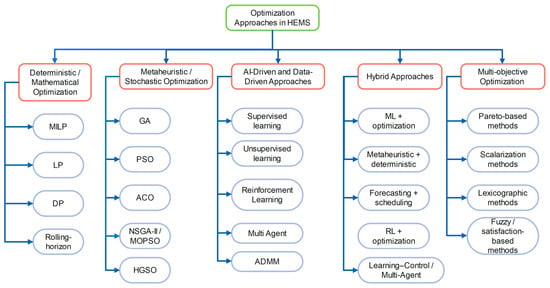
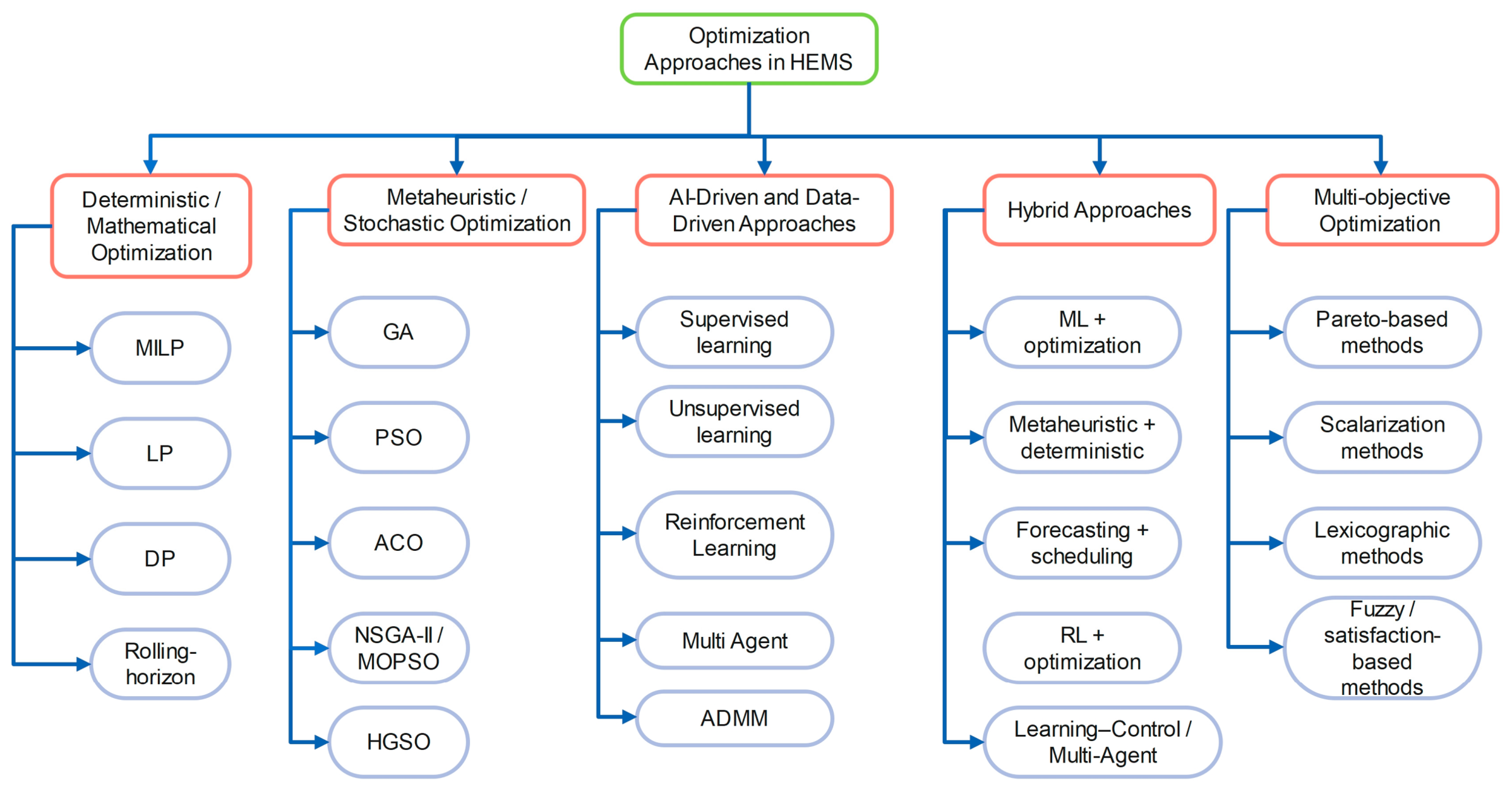
The management of electrical energy in residential settings has undergone a notable transformation, driven by the dual needs to enhance energy efficiency and integrate distributed energy resources [15]. The evolution of HEMS is fundamentally linked to advances in sophisticated optimization and AI techniques [16]. Studies often relied on classical, deterministic optimization methods, which have progressively given way to more dynamic, intelligent, and adaptive strategies capable of handling the complexities and uncertainties of modern smart home environments [3]. This section provides a structured overview of optimization approaches in HEMS as shown in Figure 3, categorizing the key techniques and discussing their application to optimizing energy consumption, cost, and user comfort.
Figure 3.
Classification of optimization approaches in HEMS.
3.1. Metaheuristics
Metaheuristic algorithms have been widely adopted in HEMS for their effectiveness in solving complex, non-linear optimization problems without requiring a precise mathematical formulation of the entire system. Approaches such as GAs and PSO are commonly employed to derive near-optimal solutions for the scheduling of household appliances, the management of energy storage, and the coordination with DR initiatives [17]. For instance, previous studies have shown the efficacy of employing GAs to reduce electricity costs while preserving user comfort by optimizing the operational schedules of smart appliances, HVAC systems, and EV charging [18]. In a related context, PSO has been successfully applied to regulate renewable energy resources, refining the energy transfer among PV systems, battery storage, and the grid to reduce costs and peak demands [19]. Other significant metaheuristic methodologies include the HGSO for multi-objective cost-peak optimization, as well as algorithms such as the VOA for demand management [20]. These techniques work well in large search spaces to reconcile competing objectives, including minimizing energy costs, reducing the PAR, and maximizing occupant comfort [21].
3.2. Deterministic and Mathematical Optimization
Deterministic optimization methods, including MILP and Convex Optimization, underpin many scheduling challenges in HEMS [22]. These techniques exhibit substantial efficacy in scenarios that can be formulated as a definite objective function subject to linear constraints [23]. MILP has been widely employed to determine optimal day-ahead scheduling for domestic appliances, energy storage systems, and Distributed Energy Resources to minimize electricity expenditures under time-of-use pricing structures [24]. The strength of these mathematical programming techniques lies in their ability to guarantee the optimality of the solution within the bounds of a defined model [25]. In contrast, convex optimization provides a coherent framework for managing energy in real time, yielding effective and resilient solutions to challenges such as economic dispatch and load scheduling [3]. Despite their strengths, these methodologies can be computationally demanding. They may struggle to address the nonlinearities and uncertainties pervasive in practical home energy systems, often necessitating their integration into hybrid frameworks [26].
3.3. AI-Driven and Data-Driven Approaches
The development of smart devices, coupled with the availability of detailed energy analytics, has significantly driven the integration of AI and ML within HEMS [27]. ML frameworks, particularly those for deep learning and reinforcement learning, have made HEMS more adaptive and flexible in energy governance [28]. ANNs are frequently employed to predict energy consumption and generation from renewable energy sources, thereby providing essential data for optimization algorithms [29]. More refined frameworks employ DRL to enable autonomous decision-making in real-time settings [30]. DRL agents can learn optimal energy management strategies by interacting with the domestic environment, adapting to fluctuating energy tariffs, climatic variations, and user preferences without requiring direct programming [25].
Multi-agent systems (MAS) are now seen as an effective approach for distributed HEMS coordination because they distribute decision-making across households, devices, and grid layers rather than concentrating control in a centralized optimizer [31]. Hierarchical and supervisor-based MAS architectures enable coordinated real-time management of PV units, storage systems, EVs, and flexible appliances while preserving local autonomy and operational scalability [31,32]. Recent studies further show that learning-based MAS, particularly DDQN- and MAPPO-driven schemes, improve scheduling quality, convergence speed, and operating cost relative to conventional rule-based control [32,33]. In parallel, decentralized negotiation methods based on game theory and ADMM strengthen congestion management and peer-level coordination without requiring full central information exchange [34]. When combined with stochastic–robust optimization, MAS also enhance resilience and self-healing capability under uncertainty in renewable-rich smart distribution environments [35].
3.4. Hybrid Algorithms
Recent research has shown that no single method is best in all cases, prompting a shift toward the development of integrated strategies that combine the strengths of different optimization and artificial intelligence systems [36]. A prevalent tactic entails the conjunction of machine learning-based forecasting frameworks with optimization algorithms; for instance, employing an artificial neural network to project solar energy generation, subsequently utilizing this prognostication within a mixed-integer linear programming or genetic algorithm model to optimize energy resource scheduling [37]. An additional trend is the integration of metaheuristic algorithms with deterministic strategies, exemplified by using a genetic algorithm to explore a large solution space, followed by a linear programming solver to refine the optimal solution in a local context [20].
Table 1 provides a comparison of algorithm classes and HEMS performance, distinguishing between deterministic, heuristic, and data-driven approaches. Deep Learning and ANN algorithms, specifically kCNN-LSTM and MLP-ANN, dominate the forecasting domain, delivering superior accuracy in load and energy prediction compared to traditional regression models. Conversely, the control and scheduling layer is split between deterministic and stochastic optimization. While MILP achieves global optimality for appliance scheduling under strict technical constraints, it faces significant computational bottlenecks as system dimensionality increases. In contrast, metaheuristic approaches like LMARO and HGSO offer enhanced scalability for multi-dwelling environments, achieving cost reductions of up to 39% and peak-load shavings of approximately 55%. Furthermore, DRL variants, such as DDPG+MASAC, provide a robust model-free alternative for real-time control, though they necessitate intensive data training and stability mechanisms to reach near-optimal performance.
Table 1.
Comparison of Optimization and AI Techniques for HEMS.
Overall, the reviewed studies show that no single optimization approach is universally optimal for HEMS. Mathematical programming methods such as MILP remain highly effective for small- to medium-scale problems requiring strict constraint satisfaction and exact scheduling. Metaheuristic techniques provide greater flexibility and scalability in complex multi-objective problems, although they generally yield near-optimal rather than guaranteed optimal solutions. AI-based methods, particularly deep reinforcement learning, are increasingly valuable for real-time and adaptive control, but their effectiveness depends on data availability, training effort, and tuning stability. Consequently, recent HEMS research increasingly favors hybrid frameworks that combine forecasting, optimization, and adaptive control to balance accuracy, computational tractability, and operational flexibility.
4. Multi-Objective Optimization and Trade-Offs in Smart Homes/Buildings
Energy management problems in smart homes and buildings are inherently multi-objective. Typical BEMS and smart-building models balance more than two competing goals.
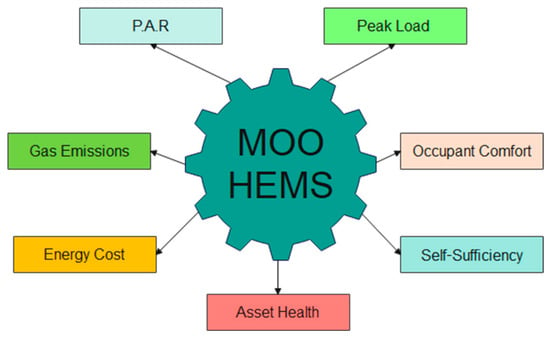
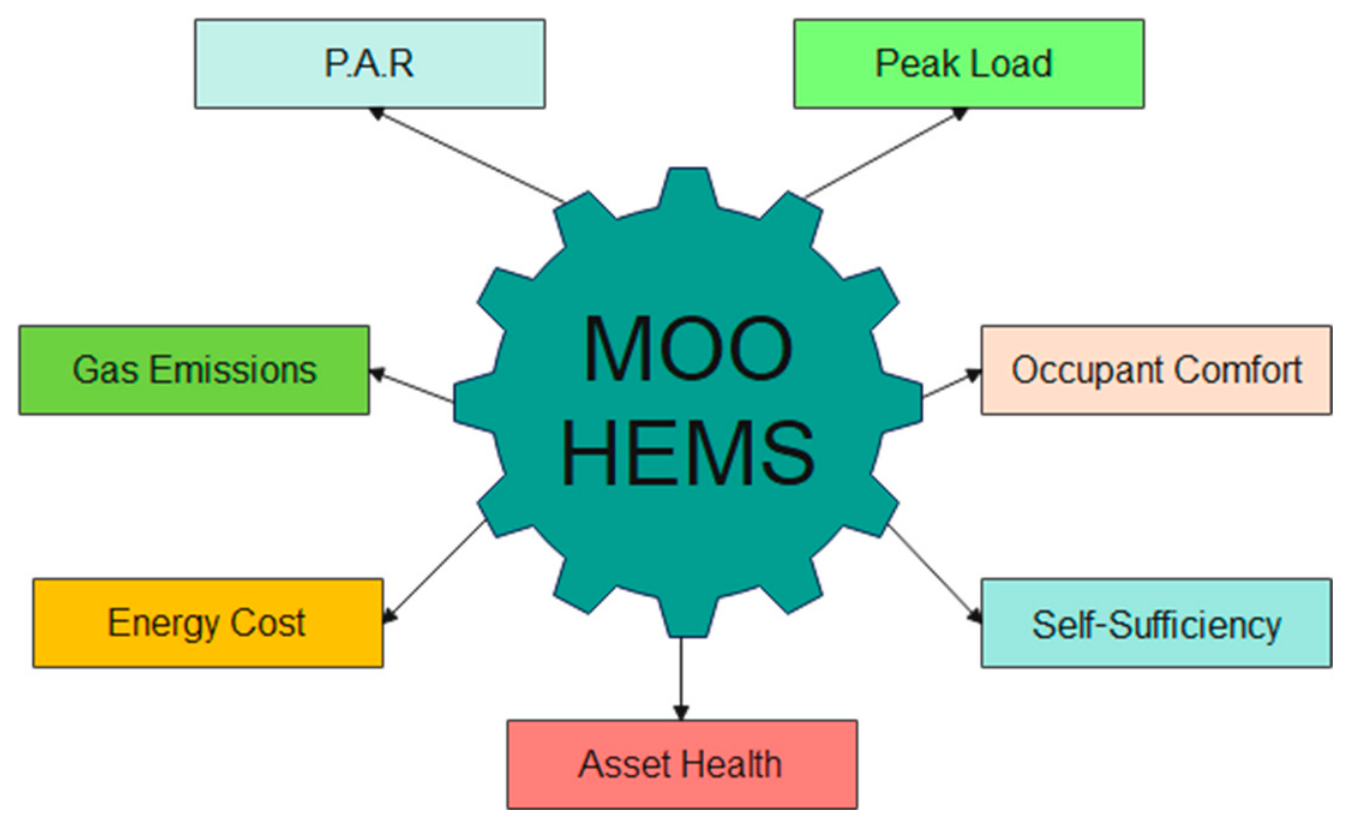
Figure 4 illustrates most common goals in HEMS such energy cost, peak load and PAR, greenhouse gas emissions, occupant comfort/discomfort, self-sufficiency, and asset health.
Figure 4.
Multi Objective Optimization Goals In Hems.
4.1. Comparative Analysis of Multi-Objective Trade-Offs
The studies consistently demonstrates that the nature and magnitude of trade-offs are highly dependent on the objectives included in the optimization model and the context of the study (e.g., residential vs. industrial, operational vs. design). A direct comparison of key studies highlights these differences, as summarized in Table 2.
Table 2.
Examples Of Quantitative Trade-Offs Across Multi-Objective Energy Management Studies.
Table 2 summarizes the quantitative outcomes of multi-objective optimization across diverse smart home and building contexts. It serves to illustrate two primary findings: first, the magnitude of performance gains achievable when optimizing core objectives (cost, PAR, comfort); and second, the quantifiable nature of the trade-offs that emerge when expanding the objective set to include environmental impact, self-sufficiency, and asset health. The data confirms that multi-objective modeling is essential for achieving balanced solutions, as improvements in one dimension are frequently negotiated against another. These trade-offs presented in the table will be further analyzed in the subsequent section.
4.1.1. Cost, Comfort, and PAR Trade-Offs
Studies focusing on the core objectives of cost, comfort, and PAR show that significant economic and grid-stability improvements are achievable, provided comfort is explicitly constrained. For instance, Ref. [43] using a hybrid PSO–branch-and-bound formulation, reported substantial reductions in electricity bills (28–48.9%) and PAR (47.9–49.3%) under TOU and CPP tariffs, while ensuring user waiting-time constraints were met. In contrast, a study by [47] on collective residential buildings, which utilized scalarization and multi-objective mixed-binary linear programming, achieved a 35.56% cost reduction and a 45.52% peak-load reduction. The difference in cost savings (up to 13.34%) suggests that the choice of optimization technique and the specific tariff structure (CPP in the former case) can significantly influence the economic outcome. Furthermore, the inclusion of storage (PV–BESS) in the HEMS model, as demonstrated by [42], not only cut bills by 39.81% but also improved comfort by a factor of 1.6, illustrating that the introduction of flexible assets can mitigate the traditional cost-comfort trade-off.
4.1.2. Expanding the Scope: Emissions and Discomfort
When environmental impact is introduced as a third objective, the trade-off space shifts, often requiring a deliberate sacrifice of some cost savings to achieve greater reductions in emissions and discomfort [44], in a multi-environment DSM framework using NSGA-II, quantified this shift, reporting meaningful cost savings (up to ~20% in industrial settings) while simultaneously reducing CO2 and discomfort. This contrasts with cost-only optimization, where the multi-objective approach, while retaining 46–90% of the cost savings, yielded 30–195% better emissions and up to 447% better PAR reduction. Similarly, Ref. [50] showed that microgrid-level tri-objective optimization, coupling smart homes with demand response, successfully reduced operating costs, emissions, and PAR while maintaining customer comfort. This finding is critical, as it challenges the assumption that environmental goals might increase user discomfort, provided flexibility is modeled explicitly, and user preferences are respected.
4.1.3. Design vs. Operation: Long-Term Trade-Offs
Design-oriented multi-objective optimization extends the trade-off analysis to the building envelope and HVAC systems, where the potential for energy and emission gains is significantly larger than in operational scheduling alone. [51], through simulation-based NSGA-II retrofits, achieved massive reductions in primary energy (up to 60%) and GHG emissions (60%), alongside significant improvements in visual discomfort (83%) and thermal dissatisfaction (65%). However, they caution that these efficient solutions can entail design compromises (e.g., window/insulation selections that affect daylighting), highlighting a long-term trade-off between energy efficiency and specific comfort/IAQ constraints. This is supported by [52], who found that HVAC choices, responsible for approximately 67% of building energy use, dominate the trade-offs in design parameters, underscoring the need for careful negotiation of these competing objectives early in the design phase.
4.1.4. Beyond Core Objectives: Self-Sufficiency and Asset Health
Emerging multi-objective formulations are incorporating objectives that reflect broader system goals. Ref. [48] explicitly modeled the trade-off between autonomy and cost by optimizing energy payment, user satisfaction, and self-sufficiency. Their results showed that re-ordering priorities in a lexicographic approach could change payment, satisfaction, and self-sufficiency by 27.4%, 100%, and 56.6%, respectively, making the cost of autonomy quantifiable. Furthermore, at the distribution level, Ref. [49] demonstrated that embedding transformer LoL into the objective function led to co-optimization, resulting in a 31% cost reduction, 18% peak reduction, and 28% LoL improvement. This illustrates that customer-centric objectives (cost, peak) and operator-centric objectives (asset health) can be successfully integrated and optimized together.
4.2. Algorithmic Trends and Methodological Comparison
Recent literature indicates a strong predominance of evolutionary and metaheuristic algorithms in multi-objective energy management for smart homes and buildings.
As illustrated in Table 3 Algorithms such as NSGA-II, MOABC, MOPSO, MOEA, MOALO, MOAOA, IBBO, and more specialized frameworks like MGWASA are extensively adopted because of their natural ability to approximate Pareto fronts in complex trade-off environments involving cost, comfort, PAR, and emissions. Their robustness and capacity to generate diverse non-dominated solutions make them well-suited for the heterogeneous and constraint-rich scenarios typical of HEMS and building performance optimization.
Table 3.
Approaches to Trade-Off Management and Negotiation.
Overall, the reviewed studies show that multi-objective optimization is essential in HEMS because it captures the unavoidable trade-offs among cost, PAR, comfort, environmental performance, self-sufficiency, and asset health. The evidence indicates that substantial gains can be achieved in core operational objectives, but these gains become increasingly dependent on user and system priorities as additional objectives are introduced. Therefore, the value of multi-objective optimization lies not in eliminating trade-offs, but in making them explicit and manageable within a balanced decision framework.
5. Integrated Hems: Multi-Asset Coordination and Energy Market Participation
5.1. Multi-Asset Integration and Prosumer Operation
Recent studies show that the coordinated integration of renewable generation (mainly PV), multi-type storage systems, EVs, and DR can simultaneously reduce operational costs, peak demand, and emissions while improving reliability and, in many cases, user comfort. Recent studies highlight the benefits of coupling these components under optimized control, enabling households and energy communities to act as active participants in energy markets.
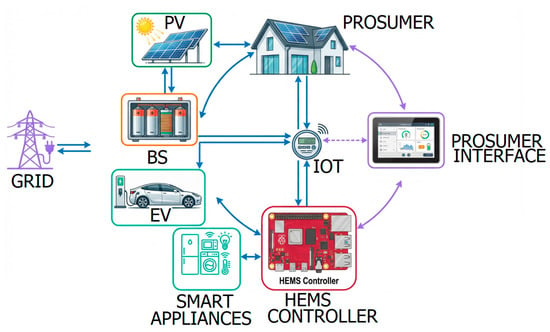
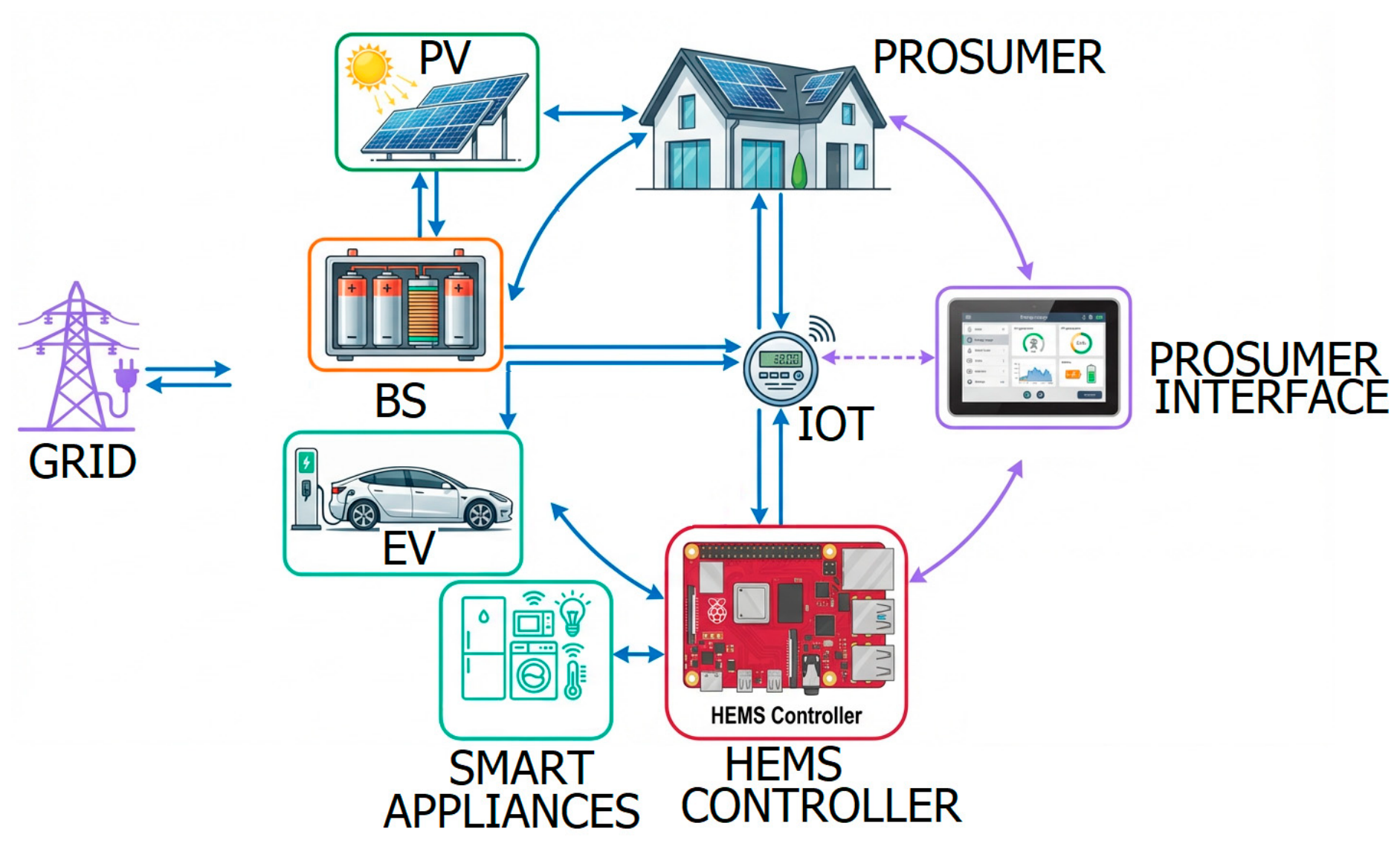
Figure 5 illustrates the topology of a modern smart residential environment, often referred to as a prosumer node. This architecture relies on a central HEMS controller to interface via IoT with distributed energy resources, specifically PV, Battery Storage (BS), and EV, and controllable Smart Appliances.
Figure 5.
Typical Architecture BEMS and Component.
As illustrated in Table 4 A large body of recent work incorporates rooftop PV, stationary batteries, and EVs acting not only as loads but as flexible storage assets through V2H, V2G operation.
Table 4.
Integration Strategies and Impacts.
These integrated systems enhance peak shaving, reduce grid reliance, and improve energy autonomy. Also, several models extend beyond single-battery configurations by integrating multiple storage technologies combined with grid trading, enabling households to operate as prosumers with optimized day-ahead energy decisions. These systems achieve meaningful operational cost reductions and greenhouse-gas mitigation, though not all storage technologies or renewable sources (e.g., wind) are economically viable in all settings.
5.2. Energy Market Participation in HEMS/BEMS: Markets, Mechanisms, and Enabling Technologies
The coordinated integration of PV generation, battery storage, EVs, and demand response does not only improve internal household scheduling; it also enables HEMS-equipped homes to operate as active prosumers capable of participating in local and grid-interactive energy markets. Accordingly, beyond technical coordination, recent literature increasingly examines how HEMS support peer-to-peer trading, aggregator-mediated services, and flexibility exchange through advanced market-clearing and digital transaction mechanisms.
5.2.1. Types of Energy Markets and HEMS Roles
According to the reviewed studies, HEMS do not operate within a single market structure; instead, their function changes with the institutional design of the local market. Ref. [73] distinguish three dominant models, peer-to-peer (P2P), community self-consumption, and transactive energy, and this classification is reinforced by [74], who show that each model implies different rules for coordination, pricing, and grid interaction. In comparative terms, P2P markets give HEMS the highest decision autonomy because households can act as active trading agents, which explains why [73,75,76] emphasize data exchange, local optimization, and bid preparation. By contrast, Ref. [77] present community trading as more coordinated and operationally stable, whereas transactive designs are more grid-responsive, prioritizing dynamic balancing over purely bilateral exchange.
5.2.2. Trading and Market-Clearing Mechanisms
Trading performance depends more on choosing a mechanism that fits the market context. Ref. [78] frame blockchain-enabled P2P trading around secure decentralized settlement, while [77] show that pool trading is better suited to coordinated local communities with flexible loads, photovoltaics, and storage. Ref. [79] demonstrate that auction-based mechanisms become particularly valuable when heterogeneous assets, such as second-life EV batteries, must be allocated competitively. Ref. [80] adds that game-theoretic pricing improves responsiveness by tying price formation to the supply-demand ratio, whereas [81] indicate that learning-based control can improve exchange decisions under dynamic conditions. Comparatively, auctions strengthen price discovery, pools reduce coordination complexity, and intelligent control improves adaptability under uncertainty.
5.2.3. Role of AI, Blockchain, and IoT
Recent studies present AI and blockchain as tools that work together. Ref. [76] identifies forecasting and scheduling as the central AI contributions to P2P smart homes, while [82] shows that AI-enhanced IoT infrastructures improve building-level monitoring and control. Ref. [81] further demonstrate that deep reinforcement learning can reduce costs by about 19% while preserving prosumer comfort, indicating that AI is most valuable when market participation requires adaptive decision-making. Refs. [83,84] move a step further by integrating prediction, blockchain, and HEMS coordination into unified platforms. In contrast, Refs. [75,78,85,86] show that blockchain mainly contributes trust, automation, and tamper-resistant settlement, although scalability and implementation overhead remain unresolved.
5.2.4. Multi-Agent Coordination in Local Energy Markets
Local energy markets (LEMs) increasingly rely on distributed agents, including households, microgrids, and network operators, to enable energy trading while preserving grid security [31,34,35]. Recent studies show that this coordination is progressively supported by multi-agent and optimization-based frameworks that jointly address market negotiation, congestion management, and system resilience [34,35]. In smart distribution networks with multiple microgrids, for example, zone agents, microgrid operators, and the distribution system operator (DSO) are coordinated through a two-stage multi-agent system (MAS) to manage both energy dispatch and self-healing functions [35]. Similarly, decentralized hierarchical MAS architectures distinguish monitoring agents from control agents, thereby allowing prosumers to participate in decision-making while maintaining grid-level operational objectives [31]. At the household level, fully decentralized LEM models often assign a market or negotiation agent for game-theoretic trading and a congestion agent based on ADMM to handle network constraints [34]. This dual-agent structure is particularly relevant because it preserves the regulatory separation between trading and grid operation, avoids reliance on a central coordinator, and has demonstrated effective congestion management in IEEE test systems [34]. Under uncertainty, hybrid stochastic-robust MAS frameworks further strengthen local energy markets by coordinating energy management and self-healing against variability in load, electricity prices, renewable energy sources, electric vehicles, and agent availability, while reducing operating costs, network losses, and voltage deviations [35].
Overall, the reviewed studies show that integrated HEMS create the greatest value when renewable generation, storage, EVs, and flexible demand are coordinated rather than optimized in isolation. This integration consistently improves cost efficiency, peak and PAR mitigation, self-consumption, emissions performance, and, in some cases, user comfort and battery longevity. As asset portfolios expand, however, the control problem becomes more complex and increasingly requires multi-objective, robust, or hybrid optimization frameworks. Beyond operational benefits, this coordinated flexibility also enables households and communities to participate more effectively in local energy markets, shifting HEMS from passive load schedulers to active prosumer platforms.
6. Real-World Applications and Limitations of Integrated HEMS
HEMS are moving from theory to pilots and small-scale deployments. Research shows clear economic and technical benefits, but also substantial gaps around scalability, user behavior, ICT infrastructure, and regulatory fit.
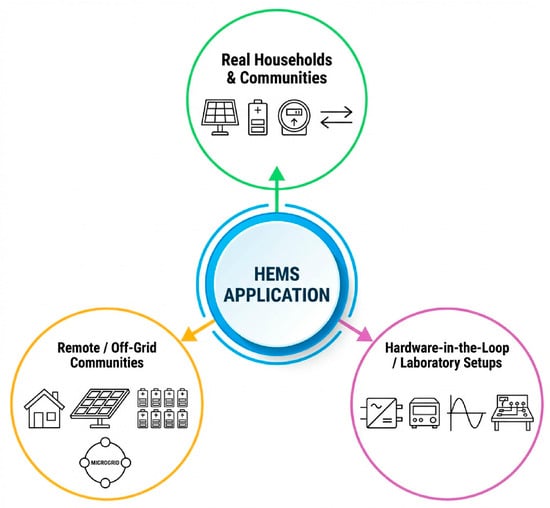
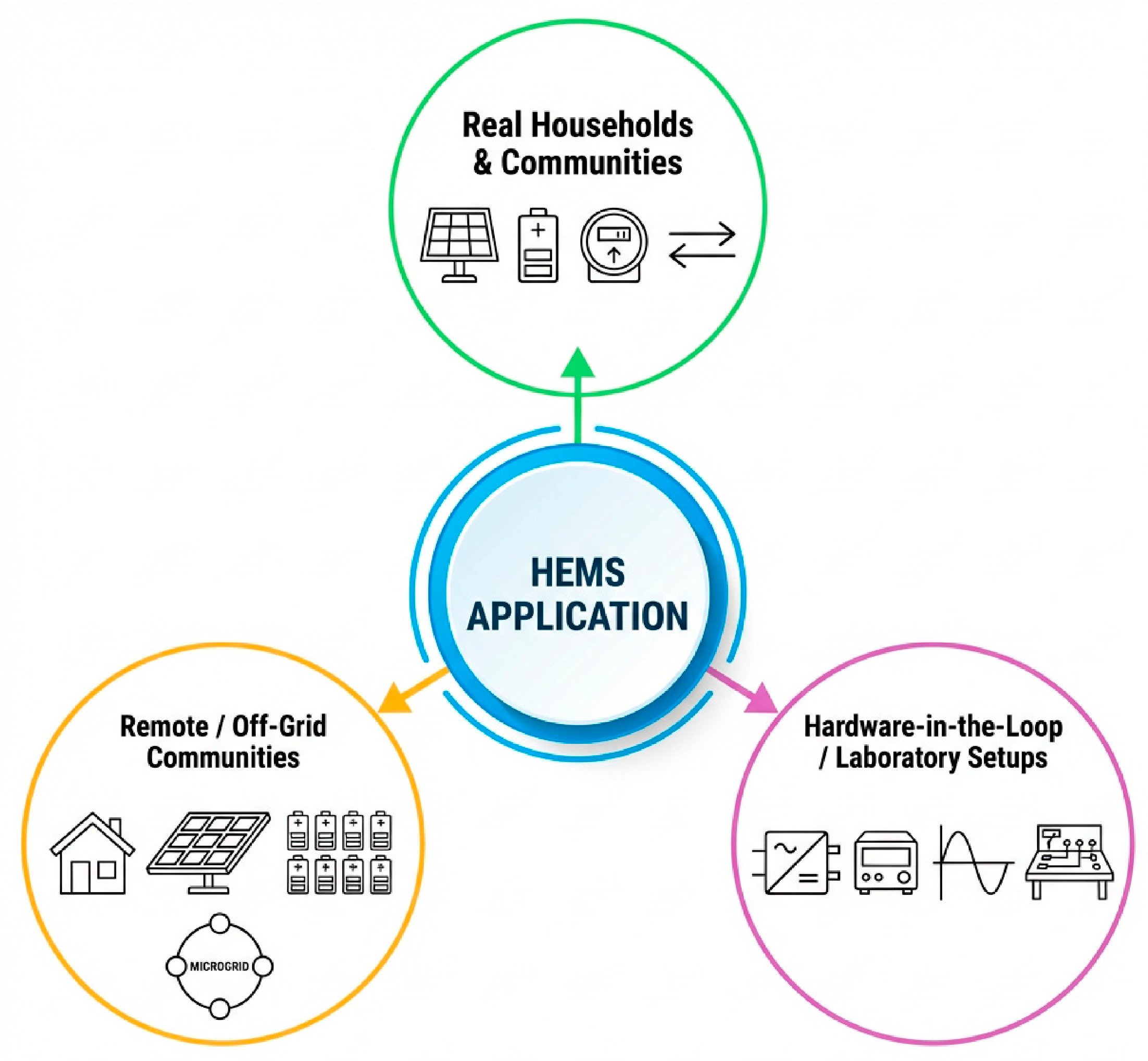
Figure 6 illustrates where HEMS are being applied in practice, categorizing the implementation into three main domains: Real Households & Communities, which involve standard grid-connected residential setups; Remote/Off-Grid Communities, where systems manage isolated microgrids and battery storage; and Hardware-in-the-Loop/Laboratory Setups, utilized for testing and algorithm validation.
Figure 6.
Classification of HEMS application domains.
Table 5 synthesizes findings from recent simulated and real-world HEMS studies. Most HEMS research remains simulation-based, which enables extensive testing across diverse scenarios and supports the evaluation of advanced optimization methods, but often overlooks hardware constraints, communication delays, and behavioral uncertainties. Emerging field and real-time prototypes confirm that energy savings are achievable in practice, although usually at lower levels than those reported in simulation, while also underscoring the importance of user convenience, reliability, and interoperability as major research priorities. Advanced and robust optimization methods, such as two-stage robust optimization and reptile search algorithms, report the highest theoretical performance, with cost reductions of up to 60% [59], particularly under uncertainty in PV generation and EV charging. Heuristic and metaheuristic approaches, including PSO, GA, and MMGO, provide a strong compromise between flexibility and performance; although their cost savings are typically more moderate, ranging from 12% to 42%, they are especially effective in multi-objective settings and can reduce PAR by up to 75% [67]. MILP-based formulations remain a strong benchmark because of their transparency, interpretability, and suitability for reliable day-ahead scheduling, even if they are generally less flexible than adaptive or learning-based approaches.
Table 5.
Real World Application Overview.
The reviewed studies further indicate that system performance depends not only on the optimization method, but also on the degree of asset integration within the HEMS architecture. Systems combining PV, battery energy storage, EVs, and demand response generally achieve higher resilience and operational efficiency than single-asset configurations. In particular, hybrid storage systems integrating BESS and V2H exhibit strong reliability performance; for example, Ref. [87] reported a very low loss of power supply probability, highlighting the evolution of HEMS from cost-saving tools toward resilience-oriented infrastructures. Beyond economic gains, integrated HEMS also deliver meaningful environmental benefits, including CO2 emission reductions of up to 28% [67] and substantial greenhouse gas mitigation when lithium-ion storage is used [90]. A key finding is the persistent gap between simulation and field deployment: hardware-validated studies, such as the IoT-based residential cluster in [89], report more modest savings of 11–12%, yet provide important evidence that HEMS can be deployed successfully in existing dwellings through smart plugs and mobile applications.
Overall, the analysis suggests that the most effective HEMS systems combine the integration of multiple types of storage, such as photovoltaics, energy storage systems (ESS), and electric vehicles (EVs), with hybrid or uncertainty-aware optimization frameworks. However, from a practical deployment perspective, user-friendly and interoperable IoT platforms currently appear to offer the most realistic path to adoption in the short term.
7. Discussion and Future Directions
The studies included in this systematic review suggest a clear shift in HEMS research, from relatively static and single-objective scheduling models toward more dynamic frameworks that coordinate multiple assets under competing operational goals. This evolution is not merely algorithmic. It reflects the fact that residential energy systems have become more complex, particularly with the growing presence of rooftop PV, stationary batteries, EV, and DR. Under these conditions, cost minimization can no longer be treated as the unique decision criterion. Instead, it must be evaluated alongside peak reduction, user comfort, emissions, self-consumption, and, increasingly, asset health. Within this broader decision space, deterministic mathematical programming still performs well when the problem structure is explicit and the constraints are clearly defined. By contrast, metaheuristic and learning-based approaches appear more attractive when uncertainty, nonlinearity, and adaptive control requirements become more pronounced.
A central finding of this review is that the effectiveness of a given optimization method is largely context-dependent. In other words, the literature does not support the idea of a universally superior algorithmic family. MILP-based formulations remain especially valuable where transparency, strict constraint handling, and reproducible day-ahead scheduling are required. Their main strength lies in analytical clarity and predictable behavior, which is still important in residential settings where safety, comfort bounds, and device limits must be enforced explicitly. Metaheuristic methods, on the other hand, offer greater flexibility in non-convex and multi-objective search spaces, although this flexibility often comes at the expense of guaranteed optimality. Learning-based methods, particularly DRL and hybrid AI frameworks, seem promising for adaptive decision-making under variable tariffs, renewable intermittency, and changing user behavior. Even so, their reported performance depends heavily on training quality, data availability, reward formulation, and tuning stability. Taken together, the evidence points less toward methodological replacement than toward methodological complementarity, with different approaches serving different operational needs.
Another important observation concerns the role of coordinated multi-asset control. Across the reviewed studies, the benefits of HEMS become more substantial when photovoltaics, stationary storage, electric vehicles, and flexible loads are managed jointly rather than in isolation. This coordinated operation tends to improve not only energy cost and peak-to-average ratio, but also self-consumption, resilience, and, in some cases, battery longevity and user satisfaction. At the same time, these gains should be interpreted with caution. Most of the studies remain simulation-based, often under favorable assumptions regarding forecasts, user compliance, communication reliability, and equipment response. Real deployments must contend with a different set of constraints, including latency, interoperability limitations, behavioral variability, hardware degradation, and regulatory boundaries. This explains why field-reported savings are often more modest than those obtained in optimization studies.
The review also highlights several implications for future work. First, more attention should be given to validation under realistic operating conditions, including pilot deployments, hardware-in-the-loop platforms, and interoperable IoT test environments. Second, future HEMS models would benefit from a more explicit treatment of behavioral uncertainty, heterogeneous comfort preferences, and component degradation, as these factors directly affect practical performance. Third, the field still lacks shared evaluation protocols, reference datasets, and standardized metrics, which makes cross-study comparison difficult and sometimes misleading. Greater methodological consistency would improve the interpretability of published results. Finally, as HEMS move toward more active prosumer participation, future research will need to address community-level coordination, multi-agent control, cybersecurity, and local energy market participation within realistic technical and regulatory limits. These issues are no longer peripheral. They are becoming central to whether advanced HEMS methods can move from promising designs to credible large-scale deployment.
8. Conclusions
This systematic review shows that HEMS have evolved beyond appliance-level scheduling and now operate as integrated control frameworks capable of coordinating flexible demand, distributed renewable generation, stationary storage, and electric vehicles. The evidence reviewed suggests that deterministic optimization remains well suited to structured planning problems with clearly defined technical constraints. By contrast, metaheuristic, hybrid, and learning-based methods appear more adaptable when uncertainty, nonlinear system behavior, and competing objectives must be handled simultaneously. In practice, however, no single approach emerges as uniformly superior. Algorithmic suitability depends on the scale of the decision problem, the quality of available information, and the operational requirements of the HEMS itself.
The reviewed studies also indicate that combining photovoltaics, battery energy storage, electric vehicles, and demand response can improve both economic and operational performance. Yet these gains should not be treated as universal, since they remain strongly shaped by modeling assumptions, tariff structures, control design, and local implementation conditions. A further point deserves emphasis: despite the breadth of recent methodological progress, the literature is still dominated by simulation-based validation, while long-term field evidence remains comparatively scarce.
Taken together, the studies synthesized here provide a structured view of recent HEMS research by linking optimization methods, multi-objective trade-offs, and multi-asset coordination within a single analytical perspective. This review therefore helps clarify the transition from conventional HEMS toward smarter, more adaptive, and grid-interactive residential energy systems, while also pointing to a clear research priority: stronger real-world validation and closer alignment between algorithm design and deployment constraints.
Author Contributions
Conceptualization, R.M.; validation, M.K. and A.M.; data curation, M.K.; writing—original draft preparation, R.M.; writing—review and editing, R.M., M.K. and A.M.; visualization, R.M. All authors have read and agreed to the published version of the manuscript.
Funding
This research received no external funding.
Data Availability Statement
No new data were created or analyzed in this study. Data sharing is not applicable to this article.
Acknowledgments
During the preparation of this manuscript/study, the authors used the premium (Pro) versions Grammarly and QuillBot for the purposes of language assistance. The authors have reviewed and edited the output and take full responsibility for the content of this publication.
Conflicts of Interest
The authors declare no conflicts of interest.
Abbreviations
The following abbreviations are used in this manuscript:
| A3C | Asynchronous Advantage Actor-Critic |
| ADMM | Alternating Direction Method of Multipliers |
| AI | Artificial Intelligence |
| ANNs | Artificial Neural Networks |
| ARO | Artificial Rabbit Optimization |
| BEMS | Building Energy Management Systems |
| BESS | Battery Energy Storage Systems |
| BPSO | Binary Particle Swarm Optimization |
| CEC | Congress on Evolutionary Computation |
| CNN | Convolutional Neural Network |
| DDPG | Deep Deterministic Policy Gradient |
| DE | Differential Evolution |
| DERs | Distributed Energy Resources |
| DQN | Deep Q-Network |
| DDQN | Double Deep Q-Network |
| DR | Demand Response |
| DRL | Deep Reinforcement Learning |
| DPSO | Discrete Particle Swarm Optimization |
| DSM | Demand-Side Management |
| DT | Decision Tree |
| EMS | Energy Management System |
| EV | Electric Vehicle |
| ESS | Energy Storage System |
| GA | Genetic Algorithms |
| GP | Genetic Programming |
| GWO | Grey Wolf Optimizer |
| HEMS | Home Energy Management Systems |
| HGSO | Henry Gas Solubility Optimization |
| HPEMC | Heuristic-based Programmable Energy Management Controller |
| HVAC | Heating, Ventilation, and Air Conditioning |
| IBBO | Improved Biogeography-Based Optimization |
| IoT | Internet of Things |
| LoL | loss-of-life |
| LMARO | Long-Term Memory ARO |
| LSTM | Long Short-Term Memory |
| LP | Linear Programming |
| MAE | Mean Absolute Error |
| MAPE | Mean Absolute Percentage Error |
| MAPPO | Multi-Agent Proximal Policy Optimization |
| MAS | Multi-Agent Systems |
| MASAC | multi-agent soft actor-critic |
| MGWASA | Multi-objective Grey Wolf and Whale-based Search Algorithm |
| ML | Machine Learning |
| MILP | Mixed-Integer Linear Programming |
| MMGO | Multi-objective Meta-Heuristic Global Optimizer |
| MOAOA | Multi-Objective Arithmetic Optimization Algorithm |
| MOABC | Multi-Objective Artificial Bee Colony |
| MOEA | Multi-Objective Evolutionary Algorithm |
| MOBPSO | Multi-Objective Binary Particle Swarm Optimization |
| MOO | Multi-Objective Optimization |
| MOPSO | Multi-Objective Particle Swarm Optimization |
| MSE | Mean Squared Error |
| NGO | Nature-Inspired Optimizer |
| NSGA-II/NSGA-III | Non-dominated Sorting Genetic Algorithm II/III |
| QoS | Quality of Service |
| PAR | Peak-to-Average Ratio |
| PPO | Proximal Policy Optimization |
| PSO | Particle Swarm Optimization |
| PV | Photovoltaic |
| RES | Renewable Energy Sources |
| RL | Reinforcement Learning |
| RMSE | Root Mean Square Error |
| RTP | Real-Time Pricing |
| SVM | Support Vector Machine |
| T2-FLC | Type-2 Fuzzy Logic Controller |
| TOU | Time-of-Use |
| V2G | Vehicle-to-Grid |
| V2H | Vehicle-to-Home |
| VOA | Virulence Optimization Algorithm |
| VVCs | Volt/VAR Control schemes |
| WDO | Wind-Driven Optimization |
| WOA | Whale Optimization Algorithm |
References
- Hu, Y.; Man, Y. Energy consumption and carbon emissions forecasting for industrial processes: Status, challenges and perspectives. Renew. Sustain. Energy Rev. 2023, 182, 113405. [Google Scholar] [CrossRef] [Scilit]
- Ghanavati, F.; Matias, J.C.O.; Osório, G.J. Towards sustainable smart cities: Integration of home energy management system for efficient energy utilization. Sustain. Cities Soc. 2024, 111, 105579. [Google Scholar] [CrossRef] [Scilit]
- Moghimi, S.M.; Gulliver, T.A.; Thirumai Chelvan, I. Energy Management in Modern Buildings Based on Demand Prediction and Machine Learning—A Review. Energies 2024, 17, 555. [Google Scholar] [CrossRef] [Scilit]
- Jasim, A.M.; Jasim, B.H.; Flah, A.; Bolshev, V.; Mihet-Popa, L. A new optimized demand management system for smart grid-based residential buildings adopting renewable and storage energies. Energy Rep. 2023, 9, 4018–4035. [Google Scholar] [CrossRef] [Scilit]
- Forootan, M.M.; Larki, I.; Zahedi, R.; Ahmadi, A. Machine Learning and Deep Learning in Energy Systems: A Review. Sustainability 2022, 14, 4832. [Google Scholar] [CrossRef] [Scilit]
- Bourhnane, S.; Abid, M.R.; Lghoul, R.; Zine-Dine, K.; Elkamoun, N.; Benhaddou, D. Machine learning for energy consumption prediction and scheduling in smart buildings. SN Appl. Sci. 2020, 2, 297. [Google Scholar] [CrossRef] [Scilit]
- Leitao, J.; Gil, P.; Ribeiro, B.; Cardoso, A. A Survey on Home Energy Management. IEEE Access 2020, 8, 5699–5722. [Google Scholar] [CrossRef] [Scilit]
- Gomes, I.; Bot, K.; Ruano, M.G.; Ruano, A. Recent Techniques Used in Home Energy Management Systems: A Review. Energies 2022, 15, 2866. [Google Scholar] [CrossRef] [Scilit]
- Adebiyi, A.A.; Habyarimana, M. Systematic Review of Optimization Methodologies for Smart Home Energy Management Systems. Energies 2025, 18, 5262. [Google Scholar] [CrossRef] [Scilit]
- Raza, A.; Jingzhao, L.; Ghadi, Y.; Adnan, M.; Ali, M. Smart home energy management systems: Research challenges and survey. Alex. Eng. J. 2024, 92, 117–170. [Google Scholar] [CrossRef] [Scilit]
- Latoń, D.; Grela, J.; Ożadowicz, A. Applications of Deep Reinforcement Learning for Home Energy Management Systems: A Review. Energies 2024, 17, 6420. [Google Scholar] [CrossRef] [Scilit]
- Hanafi, A.; Moawed, M.; Abdellatif, O. Advancing Sustainable Energy Management: A Comprehensive Review of Artificial Intelligence Techniques in Building. Eng. Res. J. 2024, 53, 26–46. [Google Scholar] [CrossRef] [Scilit]
- Asadi, S.; Naeini, H.K.; Hassanlou, D.; Pishahang, A.; Najafabadi, S.A.; Sharifi, A.; Ahmadi, M. AI-Powered Digital Twin Frameworks for Smart Grid Optimization and Real-Time Energy Management in Smart Buildings: A Survey. Comput. Model. Eng. Sci. 2025, 145, 1259–1301. [Google Scholar] [CrossRef] [Scilit]
- Krishnamurthy, S.; Adewuyi, O.B.; Salimon, S.A. Recent advances in artificial intelligence-based optimization for power system applications: A review of techniques, challenges, and future directions. Renew. Sustain. Energy Rev. 2026, 226, 116340. [Google Scholar] [CrossRef] [Scilit]
- Duman, A.C.; Gönül, Ö.; Erden, H.S.; Güler, Ö. Survey- and simulation-based analysis of residential demand response: Appliance use behavior, electricity tariffs, home energy management systems. Sustain. Cities Soc. 2023, 96, 104628. [Google Scholar] [CrossRef] [Scilit]
- Nagy, Z.; Henze, G.; Dey, S.; Arroyo, J.; Helsen, L.; Zhang, X.; Chen, B.; Amasyali, K.; Kurte, K.; Zamzam, A.; et al. Ten questions concerning reinforcement learning for building energy management. Build. Environ. 2023, 241, 110435. [Google Scholar] [CrossRef] [Scilit]
- Varghese, B.K.; Das, N.; Ray, B.; Mazid, A.M.; Jahan, I.; Nur-E-Alam, M. Optimisation algorithms used in home energy management systems: A review. Energy Build. 2025, 347, 116338. [Google Scholar] [CrossRef] [Scilit]
- Wang, G.; Mukhtar, A.; Moayedi, H.; Khalilpoor, N.; Tt, Q. Application and evaluation of the evolutionary algorithms combined with conventional neural network to determine the building energy consumption of the residential sector. Energy 2024, 298, 131312. [Google Scholar] [CrossRef] [Scilit]
- Mathebula, N.O.; Thango, B.A.; Okojie, D.E. Particle Swarm Optimisation Algorithm-Based Renewable Energy Source Management for Industrial Applications: An Oil Refinery Case Study. Energies 2024, 17, 3929. [Google Scholar] [CrossRef] [Scilit]
- Haider, H.T.; Muhsen, D.H.; Al-Nidawi, Y.M.; Khatib, T.; See, O.H. A novel approach for multi-objective cost-peak optimization for demand response of a residential area in smart grids. Energy 2022, 254, 124360. [Google Scholar] [CrossRef] [Scilit]
- Youssef, H.; Kamel, S.; Hassan, M.H. Smart home energy management with long-term memory artificial rabbit algorithm for cost and load optimization. Clust. Comput. 2025, 28, 332. [Google Scholar] [CrossRef] [Scilit]
- Wirtz, M.; Hahn, M.; Schreiber, T.; Müller, D. Design optimization of multi-energy systems using mixed-integer linear programming: Which model complexity and level of detail is sufficient? Energy Convers. Manag. 2021, 240, 114249. [Google Scholar] [CrossRef] [Scilit]
- Cerna, F.V.; Contreras, J. A MILP model to relieve the occurrence of new demand peaks by improving the load factor in smart homes. Sustain. Cities Soc. 2021, 71, 102969. [Google Scholar] [CrossRef] [Scilit]
- Erdinç, F.G. Rolling horizon optimization based real-time energy management of a residential neighborhood considering PV and ESS usage fairness. Appl. Energy 2023, 344, 121275. [Google Scholar] [CrossRef] [Scilit]
- Tai, C.S.; Hong, J.H.; Hong, D.Y.; Fu, L.C. A real-time demand-side management system considering user preference with adaptive deep Q learning in home area network. Sustain. Energy Grids Netw. 2022, 29, 100572. [Google Scholar] [CrossRef] [Scilit]
- Binyamin, S.S.; Slama, S.A.B.; Zafar, B. Artificial intelligence-powered energy community management for developing renewable energy systems in smart homes. Energy Strategy Rev. 2024, 51, 101288. [Google Scholar] [CrossRef] [Scilit]
- Alayed, W.; Akhtar, A.; Ul Hassan, W.; Zeeshan, A. Maximizing energy savings in smart homes through artificial neural network-based artificial intelligence solutions. Clean Energy 2025, 9, 140–149. [Google Scholar] [CrossRef] [Scilit]
- Sadri, H. AI-driven integration of digital twins and blockchain for smart building management systems: A multi-stage empirical study. J. Build. Eng. 2025, 105, 112439. [Google Scholar] [CrossRef] [Scilit]
- Nakabi, T.A.; Toivanen, P. Deep reinforcement learning for energy management in a microgrid with flexible demand. Sustain. Energy Grids Netw. 2021, 25, 100413. [Google Scholar] [CrossRef] [Scilit]
- Kabir, F.; Yu, N.; Gao, Y.; Wang, W. Deep reinforcement learning-based two-timescale Volt-VAR control with degradation-aware smart inverters in power distribution systems. Appl. Energy 2023, 335, 120629. [Google Scholar] [CrossRef] [Scilit]
- Dragomir, O.E.; Dragomir, F. A Decentralized Hierarchical Multi-Agent Framework for Smart Grid Sustainable Energy Management. Sustainability 2025, 17, 5423. [Google Scholar] [CrossRef] [Scilit]
- Alsolami, M.; Alferidi, A.; Lami, B. Real-Time Energy Management of a Microgrid Using MPC-DDQN-Controlled V2H and H2V Operations with Renewable Energy Integration. Energies 2025, 18, 4622. [Google Scholar] [CrossRef] [Scilit]
- Li, J.; Xu, Y.; Lu, Y.; Gao, W. Coordinated Scheduling of BESS–ASHP Systems in Zero-Energy Houses Using Multi-Agent Reinforcement Learning. Buildings 2026, 16, 274. [Google Scholar] [CrossRef] [Scilit]
- Kilthau, M.; Henkel, V.; Wagner, L.P.; Gehlhoff, F.; Fay, A. A decentralized optimization approach for scalable agent-based energy dispatch and congestion management. Appl. Energy 2025, 377, 124606. [Google Scholar] [CrossRef] [Scilit]
- Mohammad Zaheri, D.; Nazerian Salmani, S.; Shahnia, F.; Wang, H.; Su, X. A Two-Stage Hybrid Stochastic–Robust Coordination of Combined Energy Management and Self-Healing in Smart Distribution Networks Incorporating Multiple Microgrids. Energies 2024, 17, 4281. [Google Scholar] [CrossRef] [Scilit]
- Wazirali, R.; Yaghoubi, E.; Abujazar, M.S.S.; Ahmad, R.; Vakili, A.H. State-of-the-art review on energy and load forecasting in microgrids using artificial neural networks, machine learning, and deep learning techniques. Electr. Power Syst. Res. 2023, 225, 109792. [Google Scholar] [CrossRef] [Scilit]
- Haghighat, M.; MohammadiSavadkoohi, E.; Shafiabady, N. Applications of Explainable Artificial Intelligence (XAI) and interpretable Artificial Intelligence (AI) in smart buildings and energy savings in buildings: A systematic review. J. Build. Eng. 2025, 107, 112542. [Google Scholar] [CrossRef] [Scilit]
- Olu-Ajayi, R.; Alaka, H.; Sulaimon, I.; Sunmola, F.; Ajayi, S. Building energy consumption prediction for residential buildings using deep learning and other machine learning techniques. J. Build. Eng. 2022, 45, 103406. [Google Scholar] [CrossRef] [Scilit]
- Slowik, A.; Kwasnicka, H. Evolutionary algorithms and their applications to engineering problems. Neural Comput. Appl. 2020, 32, 12363–12379. [Google Scholar] [CrossRef] [Scilit]
- Somu, N.; Raman, G.R.M.; Ramamritham, K. A deep learning framework for building energy consumption forecast. Renew. Sustain. Energy Rev. 2021, 137, 110591. [Google Scholar] [CrossRef] [Scilit]
- Somu, N.; Raman, G.R.M.; Ramamritham, K. A hybrid model for building energy consumption forecasting using long short term memory networks. Appl. Energy 2020, 261, 114131. [Google Scholar] [CrossRef] [Scilit]
- Song, Z.; Guan, X.; Cheng, M. Multi-objective optimization strategy for home energy management system including PV and battery energy storage. Energy Rep. 2022, 8, 5396–5411. [Google Scholar] [CrossRef] [Scilit]
- Gheouany, S.; Ouadi, H.; El Bakali, S. Hybrid-integer algorithm for a multi-objective optimal home energy management system. Clean Energy 2023, 7, 375–388. [Google Scholar] [CrossRef] [Scilit]
- Souza e Silva, N.; Ferrão, P. Flexible Demand Side Management in Smart Cities: Integrating Diverse User Profiles and Multiple Objectives. Energies 2025, 18, 4107. [Google Scholar] [CrossRef] [Scilit]
- Dehghani, M.; Bornapour, S.M. Smart homes energy management: Optimal multi-objective appliance scheduling model considering electrical energy storage and renewable energy resources. Heliyon 2025, 11, e42417. [Google Scholar] [CrossRef] [Scilit] [PubMed]
- Ayub, S.; Ayob, S.M.; Tan, C.W.; Arif, S.M.; Taimoor, M.; Aziz, L.; Bukar, A.L.; Al-Tashi, Q.; Ayop, R. Multi-Criteria Energy Management with Preference Induced Load Scheduling Using Grey Wolf Optimizer. Sustainability 2023, 15, 957. [Google Scholar] [CrossRef] [Scilit]
- Foroozandeh, Z.; Ramos, S.; Soares, J.; Vale, Z. Energy Management in Smart Building by a Multi-Objective Optimization Model and Pascoletti-Serafini Scalarization Approach. Processes 2021, 9, 257. [Google Scholar] [CrossRef] [Scilit]
- Dorahaki, S.; MollahassaniPour, M.; Rashidinejad, M. Optimizing energy payment, user satisfaction, and self-sufficiency in flexibility-constrained smart home energy management: A multi-objective optimization approach. e-Prime—Adv. Electr. Eng. Electron. Energy 2023, 6, 100385. [Google Scholar] [CrossRef] [Scilit]
- Amer, A.; Shaban, K.; Gaouda, A.; Massoud, A. Home Energy Management System Embedded with a Multi-Objective Demand Response Optimization Model to Benefit Customers and Operators. Energies 2021, 14, 257. [Google Scholar] [CrossRef] [Scilit]
- Mansouri, S.A.; Ahmarinejad, A.; Nematbakhsh, E.; Javadi, M.S.; Jordehi, A.R.; Catalão, J.P.S. Energy management in microgrids including smart homes: A multi-objective approach. Sustain. Cities Soc. 2021, 69, 102852. [Google Scholar] [CrossRef] [Scilit]
- Dehghan, F.; Porras Amores, C. Simulation-Based Multi-Objective Optimization for Building Retrofits in Iran: Addressing Energy Consumption, Emissions, Comfort, and Indoor Air Quality Considering Climate Change. Sustainability 2025, 17, 2056. [Google Scholar] [CrossRef] [Scilit]
- Al-Kabaha, Y.; Bataineh, K.; Aburabi’e, M. Multi-objective optimization of energy consumption, cost and emission for a residential building. Heliyon 2025, 11, e42139. [Google Scholar] [CrossRef] [Scilit] [PubMed]
- Bahmanyar, D.; Razmjooy, N.; Mirjalili, S. Multi-objective scheduling of IoT-enabled smart homes for energy management based on Arithmetic Optimization Algorithm: A Node-RED and NodeMCU module-based technique. Knowl.-Based Syst. 2022, 247, 108762. [Google Scholar] [CrossRef] [Scilit]
- Ramezani, M.; Bahmanyar, D.; Razmjooy, N. A new optimal energy management strategy based on improved multi-objective antlion optimization algorithm: Applications in smart home. SN Appl. Sci. 2020, 2, 2075. [Google Scholar] [CrossRef] [Scilit]
- Wang, Q.; Chen, G.; Khishe, M.; Ibrahim, B.F.; Rashidi, S. Multi-objective optimization of IoT-based green building energy system using binary metaheuristic algorithms. J. Build. Eng. 2023, 68, 106031. [Google Scholar] [CrossRef] [Scilit]
- Chegari, B.; Tabaa, M.; Simeu, E.; Moutaouakkil, F.; Medromi, H. Multi-objective optimization of building energy performance and indoor thermal comfort by combining artificial neural networks and metaheuristic algorithms. Energy Build. 2021, 239, 110839. [Google Scholar] [CrossRef] [Scilit]
- Lu, Q.; Zhang, Z.; Lü, S. Home energy management in smart households: Optimal appliance scheduling model with photovoltaic energy storage system. Energy Rep. 2020, 6, 2450–2462. [Google Scholar] [CrossRef] [Scilit]
- Hossain, J.; Saeed, N.; Manojkumar, R.; Marzband, M.; Sedraoui, K.; Al-Turki, Y. Optimal peak-shaving for dynamic demand response in smart Malaysian commercial buildings utilizing an efficient PV-BES system. Sustain. Cities Soc. 2024, 101, 105107. [Google Scholar] [CrossRef] [Scilit]
- Karimianfard, H. A robust optimization framework for smart home energy management: Integrating photovoltaic storage, electric vehicle charging, and demand response. J. Energy Storage 2025, 110, 115259. [Google Scholar] [CrossRef] [Scilit]
- Sarker, E.; Seyedmahmoudian, M.; Jamei, E.; Horan, B.; Stojcevski, A. Optimal management of home loads with renewable energy integration and demand response strategy. Energy 2020, 210, 118602. [Google Scholar] [CrossRef] [Scilit]
- Al Muala, Z.A.; Bany Issa, M.A.; Bello Bugallo, P.M. Integrating Life Cycle Principles in Home Energy Management Systems: Optimal Load PV–Battery–Electric Vehicle Scheduling. Batteries 2024, 10, 138. [Google Scholar] [CrossRef] [Scilit]
- Abbasi, A.; Sultan, K.; Afsar, S.; Aziz, M.A.; Khalid, H.A. Optimal Demand Response Using Battery Storage Systems and Electric Vehicles in Community Home Energy Management System-Based Microgrids. Energies 2023, 16, 5024. [Google Scholar] [CrossRef] [Scilit]
- Ali, S.; Khan, I.; Jan, S.; Hafeez, G. An Optimization Based Power Usage Scheduling Strategy Using Photovoltaic-Battery System for Demand-Side Management in Smart Grid. Energies 2021, 14, 2201. [Google Scholar] [CrossRef] [Scilit]
- Prum, P.; Charoen, P.; Khan, M.A.; Bayati, N.; Charoenlarpnopparut, C. Energy Management Scheme for Optimizing Multiple Smart Homes Equipped with Electric Vehicles. Energies 2024, 17, 254. [Google Scholar] [CrossRef] [Scilit]
- Das, N.; Haque, A.; Zaman, H.; Morsalin, S.; Islam, S. Domestic Load Management with Coordinated Photovoltaics, Battery Storage and Electric Vehicle Operation. IEEE Access 2023, 11, 12075–12087. [Google Scholar] [CrossRef] [Scilit]
- Mnassri, A.; Mansouri, N.; Nasri, S.; Lashab, A.; Vasquez, J.C.; Cherif, A. An Intelligent Framework for Energy Forecasting and Management in Photovoltaic-Integrated Smart Homes in Tunisia with V2H Support Using LSTM Optimized by the Harris Hawks Algorithm. Energies 2025, 18, 5635. [Google Scholar] [CrossRef] [Scilit]
- Ali, S.; Rehman, A.U.; Wadud, Z.; Khan, I.; Murawwat, S.; Hafeez, G.; Albogamy, F.R.; Khan, S.; Samuel, O. Demand Response Program for Efficient Demand-Side Management in Smart Grid Considering Renewable Energy Sources. IEEE Access 2022, 10, 53832–53853. [Google Scholar] [CrossRef] [Scilit]
- Chen, L.; Li, J.; Zheng, F.; Xin, Z.; Shi, X. Multiobjective Energy Optimization Strategy for Source–Load–Storage Coordination in Intelligent Buildings Considering User Satisfaction. Int. Trans. Electr. Energy Syst. 2025, 2025, 5545754. [Google Scholar] [CrossRef] [Scilit]
- Panda, S.; Rout, P.K.; Sahu, B.K.; Mbasso, W.F.; Jangir, P.; Elrashidi, A. Optimization-Based Energy Management for Grid-Connected Photovoltaic–Battery Systems in Smart Grids Using Demand Response and Particle Swarm Optimization. Eng. Rep. 2025, 7, e70305. [Google Scholar] [CrossRef] [Scilit]
- Hussain, H.M.; Ahmad, A.; Nardelli, P.H.J. A Hybrid Heuristic Solution for Packetized Energy Transactions in Smart Homes. Int. J. Energy Res. 2025, 2025, 3241856. [Google Scholar] [CrossRef] [Scilit]
- Kaluthanthrige, R.; Rajapakse, A.D. Demand response integrated day-ahead energy management strategy for remote off-grid hybrid renewable energy systems. Int. J. Electr. Power Energy Syst. 2021, 129, 106731. [Google Scholar] [CrossRef] [Scilit]
- Imran, A.; Hafeez, G.; Khan, I.; Usman, M.; Shafiq, Z.; Qazi, A.B.; Khalid, A.; Thoben, K.-D. Heuristic-Based Programable Controller for Efficient Energy Management Under Renewable Energy Sources and Energy Storage System in Smart Grid. IEEE Access 2020, 8, 139587–139608. [Google Scholar] [CrossRef] [Scilit]
- Capper, T.; Gorbatcheva, A.; Mustafa, M.A.; Bahloul, M.; Schwidtal, J.M.; Chitchyan, R.; Andoni, M.; Robu, V.; Montakhabi, M.; Scott, I.J.; et al. Peer-to-peer, community self-consumption, and transactive energy: A systematic literature review of local energy market models. Renew. Sustain. Energy Rev. 2022, 162, 112403. [Google Scholar] [CrossRef] [Scilit]
- Zahraoui, Y.; Korõtko, T.; Rosin, A.; Agabus, H. Market Mechanisms and Trading in Microgrid Local Electricity Markets: A Comprehensive Review. Energies 2023, 16, 2145. [Google Scholar] [CrossRef] [Scilit]
- Matsuda, Y.; Yamazaki, Y.; Oki, H.; Takeda, Y.; Sagawa, D.; Tanaka, K. Demonstration of Blockchain Based Peer to Peer Energy Trading System with Real-Life Used PHEV and HEMS Charge Control. Energies 2021, 14, 7484. [Google Scholar] [CrossRef] [Scilit]
- Raza, A.; Jingzhao, L.; Adnan, M.; Ahmad, I. Optimal load forecasting and scheduling strategies for smart homes peer-to-peer energy networks: A comprehensive survey with critical simulation analysis. Results Eng. 2024, 22, 102188. [Google Scholar] [CrossRef] [Scilit]
- Javadi, M.S.; Gough, M.; Nezhad, A.E.; Santos, S.F.; Shafie-khah, M.; Catalão, J.P.S. Pool trading model within a local energy community considering flexible loads, photovoltaic generation and energy storage systems. Sustain. Cities Soc. 2022, 79, 103747. [Google Scholar] [CrossRef] [Scilit]
- Esmat, A.; De Vos, M.; Ghiassi-Farrokhfal, Y.; Palensky, P.; Epema, D. A novel decentralized platform for peer-to-peer energy trading market with blockchain technology. Appl. Energy 2021, 282, 116123. [Google Scholar] [CrossRef] [Scilit]
- Zhang, C.; Yang, Y.; Wang, Y.; Qiu, J.; Zhao, J. Auction-based peer-to-peer energy trading considering echelon utilization of retired electric vehicle second-life batteries. Appl. Energy 2024, 358, 122592. [Google Scholar] [CrossRef] [Scilit]
- Dong, J.; Ning, P.; Zhao, H.; Song, C. Decentralized peer-to-peer energy trading: A blockchain-enabled pricing paradigm. J. King Saud Univ. Comput. Inf. Sci. 2025, 37, 10. [Google Scholar] [CrossRef] [Scilit]
- Yavuz, M.; Kivanç, Ö.C. Optimization of a Cluster-Based Energy Management System Using Deep Reinforcement Learning Without Affecting Prosumer Comfort: V2X Technologies and Peer-to-Peer Energy Trading. IEEE Access 2024, 12, 31551–31575. [Google Scholar] [CrossRef] [Scilit]
- Rojek, I.; Mikołajewski, D.; Mroziński, A.; Macko, M.; Bednarek, T.; Tyburek, K. Internet of Things Applications for Energy Management in Buildings Using Artificial Intelligence—A Case Study. Energies 2025, 18, 1706. [Google Scholar] [CrossRef] [Scilit]
- Jamil, F.; Iqbal, N.; Imran; Ahmad, S.; Kim, D. Peer-to-Peer Energy Trading Mechanism Based on Blockchain and Machine Learning for Sustainable Electrical Power Supply in Smart Grid. IEEE Access 2021, 9, 39193–39217. [Google Scholar] [CrossRef] [Scilit]
- Binyamin, S.; Slama, S.B. IntelliGrid AI: A Blockchain and Deep-Learning Framework for Optimized Home Energy Management with V2H and H2V Integration. AI 2025, 6, 34. [Google Scholar] [CrossRef] [Scilit]
- Condon, F.; Franco, P.; Martínez, J.M.; Eltamaly, A.M.; Kim, Y.-C.; Ahmed, M.A. EnergyAuction: IoT-Blockchain Architecture for Local Peer-to-Peer Energy Trading in a Microgrid. Sustainability 2023, 15, 13203. [Google Scholar] [CrossRef] [Scilit]
- Kumari, A.; Chintukumar Sukharamwala, U.; Tanwar, S.; Raboaca, M.S.; Alqahtani, F.; Tolba, A.; Sharma, R.; Aschilean, I.; Mihaltan, T.C. Blockchain-Based Peer-to-Peer Transactive Energy Management Scheme for Smart Grid System. Sensors 2022, 22, 4826. [Google Scholar] [CrossRef] [Scilit] [PubMed]
- Pai, L.; Senjyu, T.; Elkholy, M.H. Integrated Home Energy Management with Hybrid Backup Storage and Vehicle-to-Home Systems for Enhanced Resilience, Efficiency, and Energy Independence in Green Buildings. Appl. Sci. 2024, 14, 7747. [Google Scholar] [CrossRef] [Scilit]
- Dinh, H.T.; Yun, J.; Kim, D.M.; Lee, K.-H.; Kim, D. A Home Energy Management System with Renewable Energy and Energy Storage Utilizing Main Grid and Electricity Selling. IEEE Access 2020, 8, 49436–49450. [Google Scholar] [CrossRef] [Scilit]
- Ramachandra, N.; Natarajan, R. State-of-the-art and real-time implementation of an IoT-based home energy management system for a cluster of dwellings. Heliyon 2024, 10, e35887. [Google Scholar] [CrossRef] [Scilit]
- Ali, A.; Aftab, A.; Akram, M.N.; Awan, S.; Muqeet, H.A.; Arfeen, Z.A. Residential Prosumer Energy Management System with Renewable Integration Considering Multi-Energy Storage and Demand Response. Sustainability 2024, 16, 2156. [Google Scholar] [CrossRef] [Scilit]

Disclaimer/Publisher’s Note: The statements, opinions and data contained in all publications are solely those of the individual author(s) and contributor(s) and not of MDPI and/or the editor(s). MDPI and/or the editor(s) disclaim responsibility for any injury to people or property resulting from any ideas, methods, instructions or products referred to in the content. |
© 2026 by the authors. Licensee MDPI, Basel, Switzerland. This article is an open access article distributed under the terms and conditions of the Creative Commons Attribution (CC BY) license.