


Abstract
Background/Objectives: Diabetes mellitus is associated with cognitive impairment, but evidence from southern Morocco remains limited. This study examined the associations of diabetes status, HbA1c, and diabetes duration with Mini-Mental State Examination (MMSE) performance among adults aged 45 years or older in Dakhla. Methods: This hospital-based comparative cross-sectional study included 100 participants (50 with diabetes and 50 without diabetes). Data were collected through a structured bilingual questionnaire and medical records. MMSE scores below 27 defined MMSE-based cognitive impairment. Crude and age-, sex-, and education-adjusted linear regression models with HC3 robust standard errors were complemented by correlation, subgroup, chi-square, and odds-ratio analyses. Results: Mean MMSE scores were lower in participants with diabetes than in those without diabetes (24.4 ± 5.39 vs. 28.8 ± 2.08). After adjustment, diabetes remained associated with a 4.13-point lower score (β = −4.13; 95% CI: −5.57 to −2.69; p < 0.001). MMSE-defined impairment occurred in 54% and 14% of the diabetic and non-diabetic groups, respectively (OR = 7.21; 95% CI: 2.72–19.05; p < 0.001). Within the diabetic group, MMSE scores correlated inversely with diabetes duration (r = −0.523; p < 0.001) and HbA1c (r = −0.393; p = 0.005), but neither remained independently associated after adjustment. Participants with type 1 diabetes had lower median MMSE scores and longer disease duration than those with type 2 diabetes, although this subgroup comparison was exploratory. Conclusions: Diabetes was strongly associated with lower MMSE performance and a higher prevalence of MMSE-defined impairment in this hospital-based sample. The cross-sectional design precludes causal interpretation, and the findings require confirmation in larger prospective studies.
1. Introduction
Demographic aging and the rising incidence of metabolic dysregulation are driving a global shift in disability patterns. Cognitive decline represents a major determinant of lost autonomy among older adults, highlighting the identification of modifiable risk factors as a priority for public health interventions. Cognitive function broadly reflects an individual’s capacity to process, integrate, and adapt to environmental demands and serves as an accessible clinical indicator of neurofunctional integrity [1,2]. Interdependent cognitive domains, including episodic memory, executive function, sustained attention, language, and perceptual-motor processing, collectively dictate overall intellectual performance, such that impairment in a single domain can cascade across the cognitive network [3,4]. Although age-related cognitive trajectory often shows gradual attenuation, functional independence can be preserved in the absence of major pathological drivers.
A growing body of epidemiological and preclinical evidence underscores a shared pathophysiological nexus between age-associated metabolic disorders and neurodegenerative conditions. Notably, individuals with diabetes exhibit a markedly elevated risk of developing Alzheimer’s disease (AD) relative to normoglycemic controls [5,6]. Conversely, a substantial proportion of patients clinically diagnosed with AD present with co-morbid impaired glucose tolerance or overt diabetes [7,8]. Glycemic management remains complex due to the systemic nature of metabolic dysfunction. Chronic hyperglycemia triggers extensive microvascular and macrovascular pathology, predisposing patients to nephropathy, retinopathy, peripheral neuropathy, and cardiovascular events [9,10,11].
Recent neurobiological research has centered on the central nervous system (CNS) manifestations of insulin resistance and hyperinsulinemia. Type 2 diabetes mellitus (T2DM), the predominant diabetic phenotype, is classically defined by obesity, peripheral insulin resistance, compensatory hyperinsulinemia, dyslipidemia, and arterial hypertension [12,13]. Insidious cognitive impairment, particularly affecting learning efficacy and memory consolidation, frequently emerges during the early stages of T2DM. Pathologically, these cognitive deficits mirror classic neurodegenerative hallmarks, most notably the accumulation of extracellular amyloid-beta (Aβ) plaques and intracellular neurofibrillary tangles composed of hyperphosphorylated tau protein [14,15].
While the macro- and microvascular end-organ complications of diabetes are well documented with risk mediated by disease duration, specific phenotype, and chronic glycemic control [16,17,18], the subtle mechanisms through which metabolic stress compromises central neural networks remain less clearly defined.
In Morocco, diabetes represents a pressing public health burden. Estimates from the International Diabetes Federation (IDF) indicate that over 2.9 million adults aged 20 to 79 were affected by 2024, representing more than 10% of the adult population [19]. Crucially, nearly half of these cases remain undiagnosed, while an estimated 2.2 million individuals live with prediabetes [20]. Despite this growing burden, empirical data regarding the intersection of metabolic disease and neurocognitive decline remains scarce across southwestern Morocco, including regions like Dakhla. In these areas, epidemiological transitions driven by dietary changes, physical inactivity, delayed diagnosis, and sub-optimal glycemic monitoring exacerbate the risk of secondary diabetic complications, including early cognitive impairment among older demographics.
Although large-scale cohort studies demonstrate overall associations between diabetes and cognitive decline, the magnitude varies across regional populations due to localized disparities due to healthcare access and longitudinal glycemic control. Epidemiological data from southern Morocco, particularly the Dakhla region, is largely absent. To address this gap, the present study evaluates global cognitive status via the Mini-Mental State Examination (MMSE) in diabetic and non-diabetic adults residing in Dakhla, investigating its specific association with diabetes duration and long-term glycemic control (HbA1c). These findings aim to provide valuable clinical and regional insights into an increasingly vital domain of metabolic neurobiology.
2. Methods
2.1. Setting and Participants
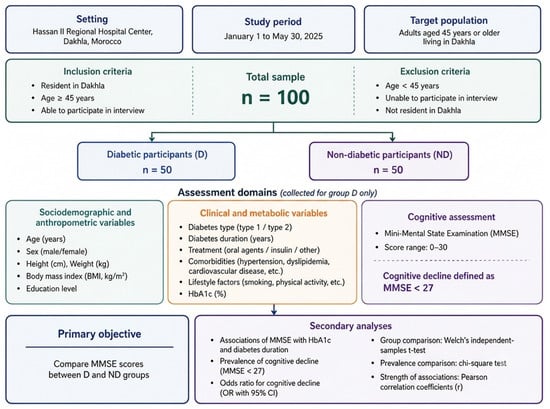
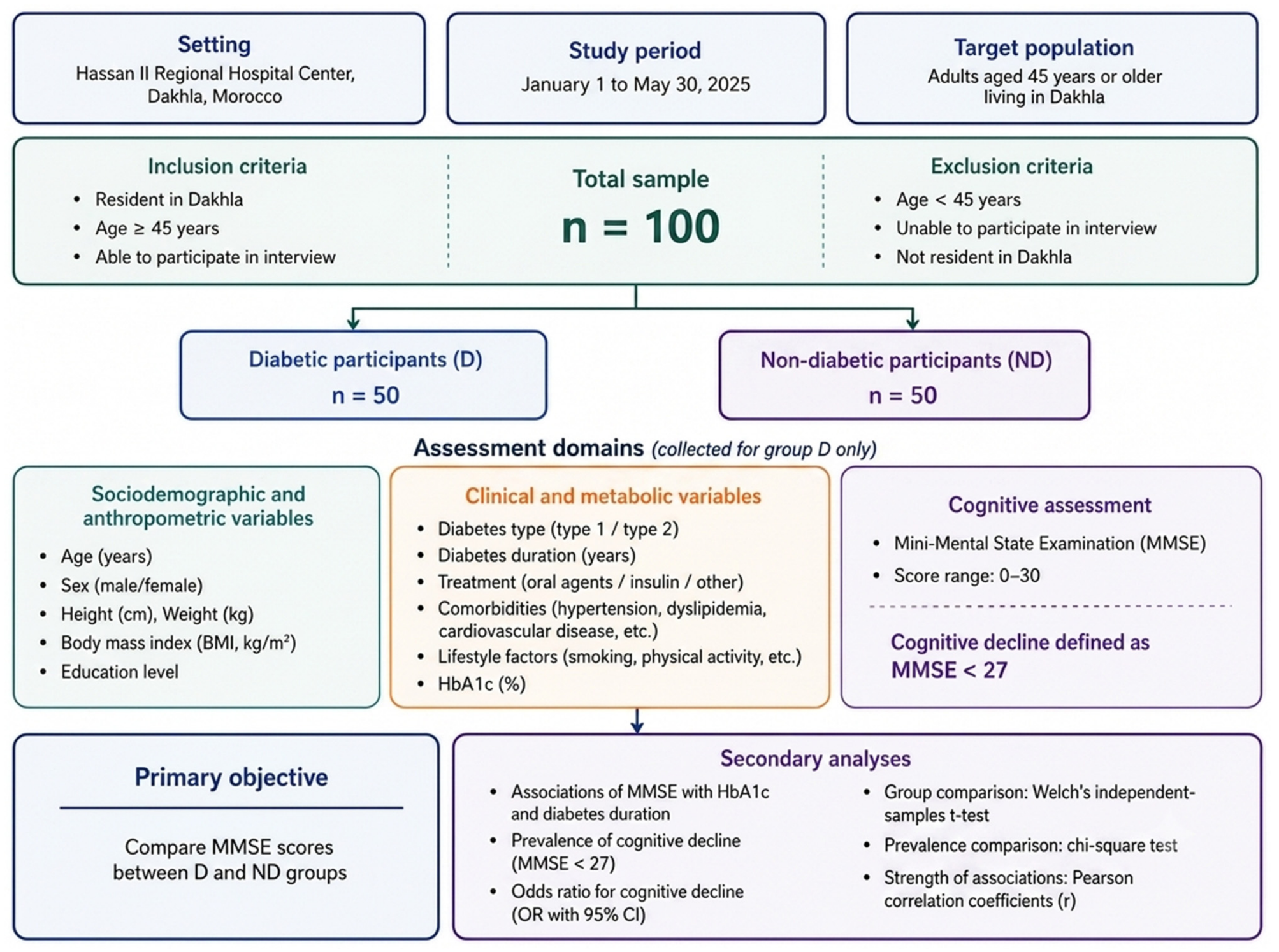
This hospital-based comparative cross-sectional study was conducted at Hassan II Regional Hospital Center (CHR) in Dakhla, Morocco, from 1 January to 30 May 2025. The analytic sample comprised 100 adults, including 50 participants with diabetes and 50 without diabetes (Figure 1). Participants were recruited from eligible hospital attendees during the study period. Diabetes status and subtype were determined from medical records; participants without diabetes attended the hospital for conditions unrelated to diabetes. Ethical approval was granted by the Regional Health Directorate of Dakhla-Oued Ed-Dahab and the Higher Institute of Nursing Professions and Health Techniques on 25 November 2024, under approval code AN°52.
Figure 1.
Research structure and methodology.
Eligible participants were aged 45 years or older, resided in Dakhla, were able to complete the interview and cognitive assessment, and provided written informed consent. Individuals younger than 45 years, non-residents, those with history of neurological issues, and those unable to complete the interview were excluded. The two groups were not individually matched by age, sex, educational attainment, or comorbidity profile.
2.2. Data Collection Procedure
Data were collected through a structured questionnaire administered in Arabic or French by the study team and supplemented with information from participants’ medical records. The questionnaire documented sociodemographic characteristics, anthropometric data, lifestyle factors, and relevant clinical history. Medical records were reviewed to verify diabetes status and subtype and to obtain diabetes duration, current treatment, comorbidities, and the most recent HbA1c value available at the time of enrollment. The questionnaire and cognitive assessment were completed during the study visit.
2.3. Study Variables and Outcome Definitions
Recorded variables included age, sex, educational attainment, weight, height, body mass index (BMI), diabetes status, diabetes subtype, diabetes duration, treatment, comorbidities, lifestyle factors, and HbA1c. Diabetes status was the principal exposure in the full sample. Among participants with diabetes, HbA1c, disease duration, and diabetes subtype were evaluated as disease-related factors. BMI was expressed in kilograms per square meter (kg/m2).
Global cognitive performance was assessed using the Mini-Mental State Examination (MMSE), a 30-point screening instrument covering orientation, registration, attention and calculation, recall, language, and visuospatial construction. The continuous MMSE score was the primary outcome. For prevalence and odds-ratio analyses, MMSE-defined cognitive impairment was operationally defined as a score below 27. This screening classification was not considered equivalent to a clinical diagnosis of mild cognitive impairment or dementia.
2.4. Statistical Analysis
Continuous variables were summarized as mean ± SD or median, as appropriate, and categorical variables as counts and percentages. Mean MMSE scores were compared between groups using Welch’s independent-samples t-test because equal variances were not assumed. The mean difference, 95% CI, and Hedges’ g were reported. Crude and adjusted linear regression models examined associations of diabetes status, HbA1c, and diabetes duration with MMSE scores. Adjusted models included age, sex, and education and used HC3 robust standard errors. Subgroup comparisons used Kruskal–Wallis and Holm-adjusted Mann–Whitney U tests. Pearson correlations, chi-square tests, crude odds ratios, and 95% CIs were also calculated. All tests were two-sided, with p < 0.05 considered significant. Analyses were performed using R version 4.4.2.
3. Results
3.1. Description of the Study Population
The study included 100 participants, comprising 50 participants with diabetes and 50 participants without diabetes, classified according to diabetes status documented in their medical records. Participants’ average ages were 56 years for the diabetic group and 54.4 years for the non-diabetic group. The average body mass index (BMI) was a bit higher among diabetics at 26.9, compared to 25.8 in non-diabetics. Moreover, HbA1c concentrations were markedly elevated in those with diabetes, averaging 8.62%, whereas non-diabetics had an average of 5.66%.
Table 1 presents the mean values for demographic, anthropometric, metabolic, lifestyle, and cognitive measures, classified by sex (male or female), diabetic condition (diabetic or non-diabetic), and cognitive status (decline or normal). In males, those with both diabetes and cognitive decline exhibited a higher average age (63.67 years) compared to diabetic males without cognitive decline (54.67 years). In females, participants experiencing cognitive decline were generally older (53.42 years) than those without decline (50.00 years). Overall, men showed greater body weights than women, irrespective of diabetic status.
Table 1.
Summary of variables segmented by diabetes status, sex, and cognitive conditions.
Consequently, participants with diabetes showed markedly elevated average HbA1c levels compared to those without diabetes, regardless of gender. Among diabetic men, the HbA1c levels were nearly identical whether they experienced cognitive decline (9.13%) or maintained normal cognition (9.25%). In contrast, diabetic women with cognitive impairment had a marginally lower mean HbA1c (7.67%) compared to their counterparts with normal cognitive functions (8.27%). Non-diabetic men and women both maintained standard HbA1c levels, approximately between 5.4% and 5.8%, and these levels did not appear to affect their cognitive abilities.
The Mini-Mental State Examination (MMSE) results varied significantly based on diabetic status, gender, and cognitive health. For males, those with diabetes and cognitive impairment scored an average of 18.00, which is considerably lower than diabetic men with normal mental function, who averaged 29.08. Non-diabetic men experiencing cognitive decline scored 25.00, surpassing their diabetic counterparts. Men without cognitive issues achieved the highest mean score of 29.40. Among females, diabetic women with cognitive deficits had an average score of 23.42, below diabetic women with intact cognition, who scored 29.00. Non-diabetic women with cognitive decline scored 24.00, whereas those without cognitive problems scored the most, with an average of 29.72.
3.2. Associations of Diabetes-Related Factors with MMSE Performance
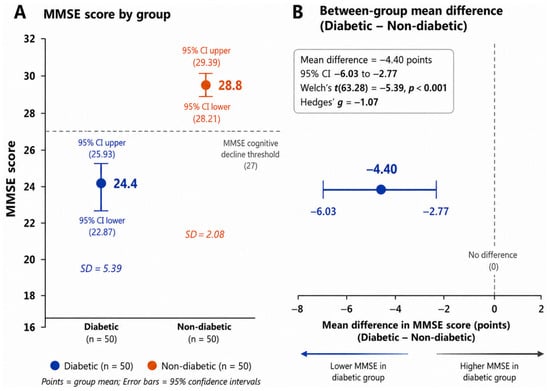
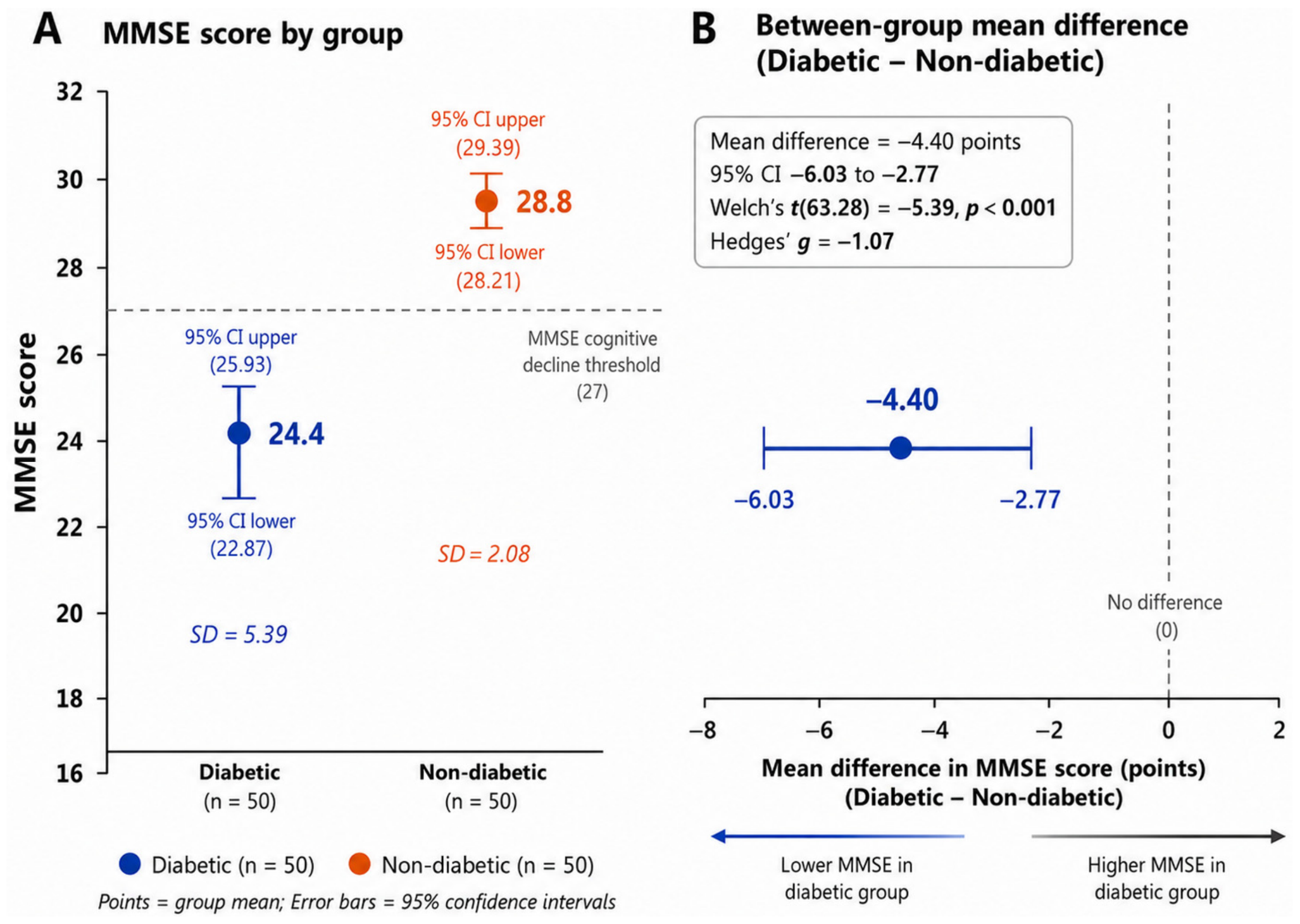
Participants with diabetes had significantly lower mean MMSE scores than participants without diabetes (24.4 ± 5.39 versus 28.8 ± 2.08; mean difference = −4.40 points; 95% CI: −6.03 to −2.77; Welch’s t(63.28) = −5.39; p < 0.001). The standardized difference was large (Hedges’ g = −1.07). This unadjusted comparison is illustrated in Figure 2.
Figure 2.
Unadjusted comparison of MMSE scores between diabetic and non-diabetic participants, including the between-group mean difference and 95% confidence interval. D = diabetic; ND = non-diabetic.
Linear regression analysis showed that diabetes was significantly associated with lower MMSE scores in both crude and adjusted models. After adjustment for age, sex, and education, participants with diabetes scored an average of 4.13 points lower than non-diabetic participants (β = −4.13; 95% CI: −5.57 to −2.69; p < 0.001). Among participants with diabetes, diabetes duration showed a weak crude association with lower MMSE scores, but this association was no longer significant after adjustment. HbA1c was not significantly associated with MMSE scores in either model (Table 2).
Table 2.
Crude and adjusted associations of diabetes-related factors with MMSE performance.
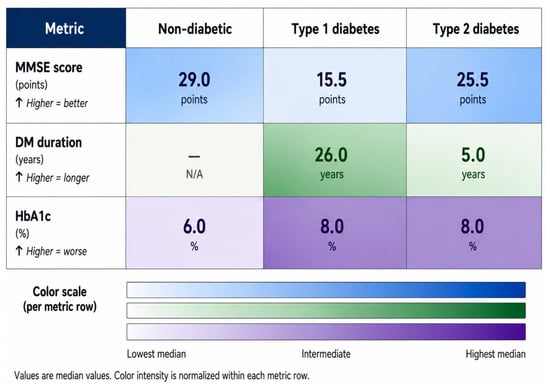
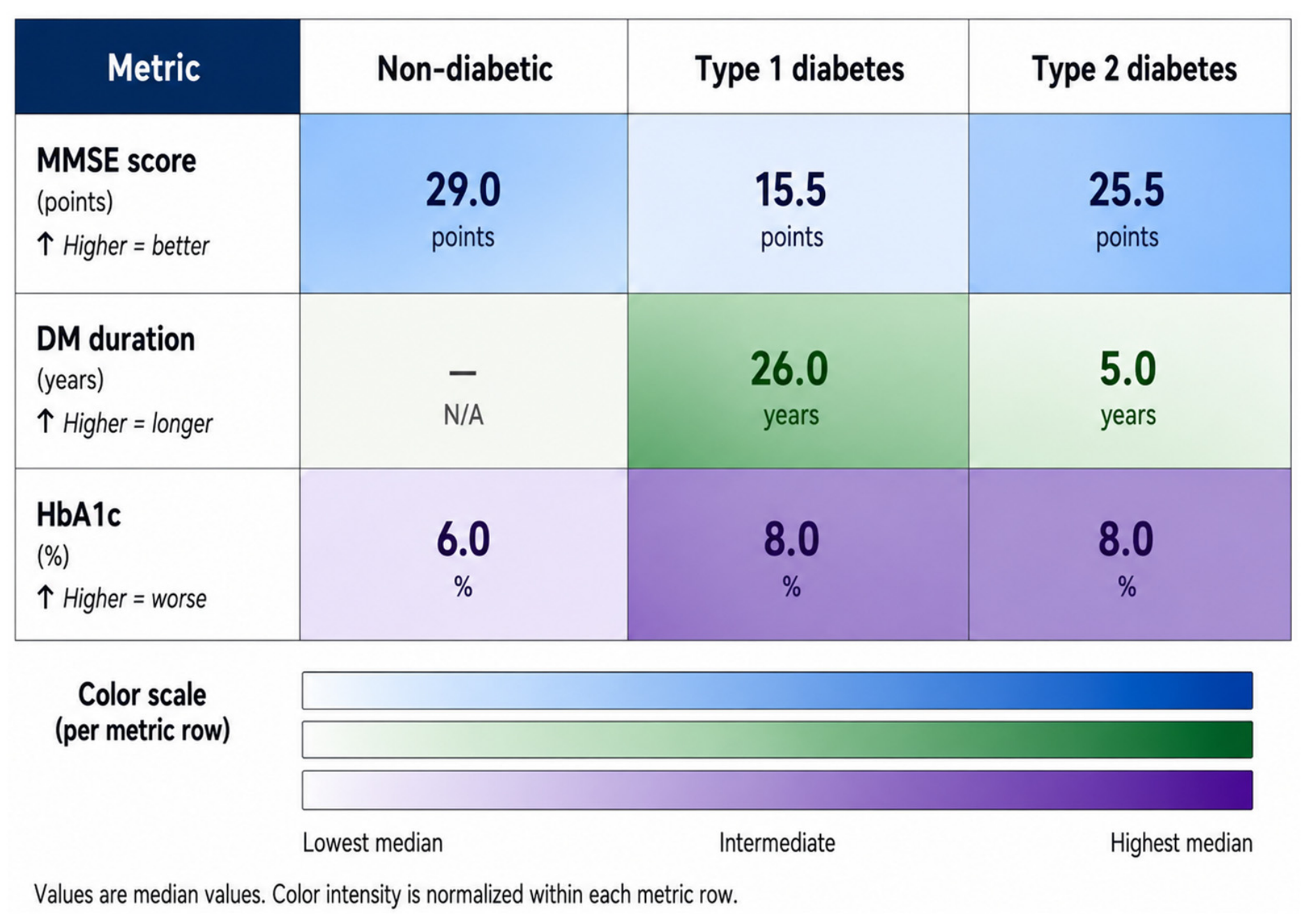
To further characterize these findings by diabetes subtype, MMSE scores, HbA1c levels, and diabetes duration were compared among non-diabetic, T1DM, and T2DM participants. Significant between-group differences are presented in Table 3, while Figure 3 provides a visual summary of the cognitive and metabolic profiles across the three groups.
Table 3.
Nonparametric comparison of cognitive and metabolic indicators.
Figure 3.
Summary of MMSE scores, HbA1c levels, and diabetes duration across non-diabetic, T1DM, and T2DM participants.
Following the overall association observed in Table 2, subgroup analysis revealed substantial differences in cognitive and metabolic profiles across diabetes categories. MMSE scores differed significantly among non-diabetic, T1DM, and T2DM participants (Kruskal–Wallis H = 36.09, p < 0.001). Non-diabetic participants had the highest median MMSE score, whereas those with T1DM had the lowest. Holm-adjusted pairwise comparisons confirmed significantly lower MMSE scores in both T1DM and T2DM participants compared with non-diabetic participants. MMSE performance was also significantly lower in T1DM than in T2DM participants (p = 0.010).
HbA1c levels also differed significantly across the three groups (H = 82.64, p < 0.001). Both diabetic subgroups had significantly higher HbA1c levels than the non-diabetic group, although no significant difference was observed between T1DM and T2DM participants (p = 0.966). Among diabetic participants, diabetes duration was significantly longer in the T1DM group than in the T2DM group (Mann–Whitney U = 138.0, p = 0.018). Overall, the pattern presented in Table 3 and Figure 3 indicates a greater cognitive burden in T1DM participants, accompanied by a longer duration of diabetes. In contrast, current HbA1c levels were comparable between the two diabetes subtypes. These findings should be interpreted with caution given the small T1DM subgroup and the cross-sectional study design.
3.3. Correlations Among Diabetes Duration, HbA1c, and MMSE Performance
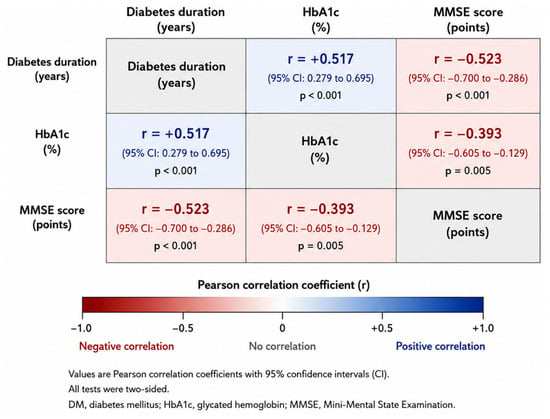
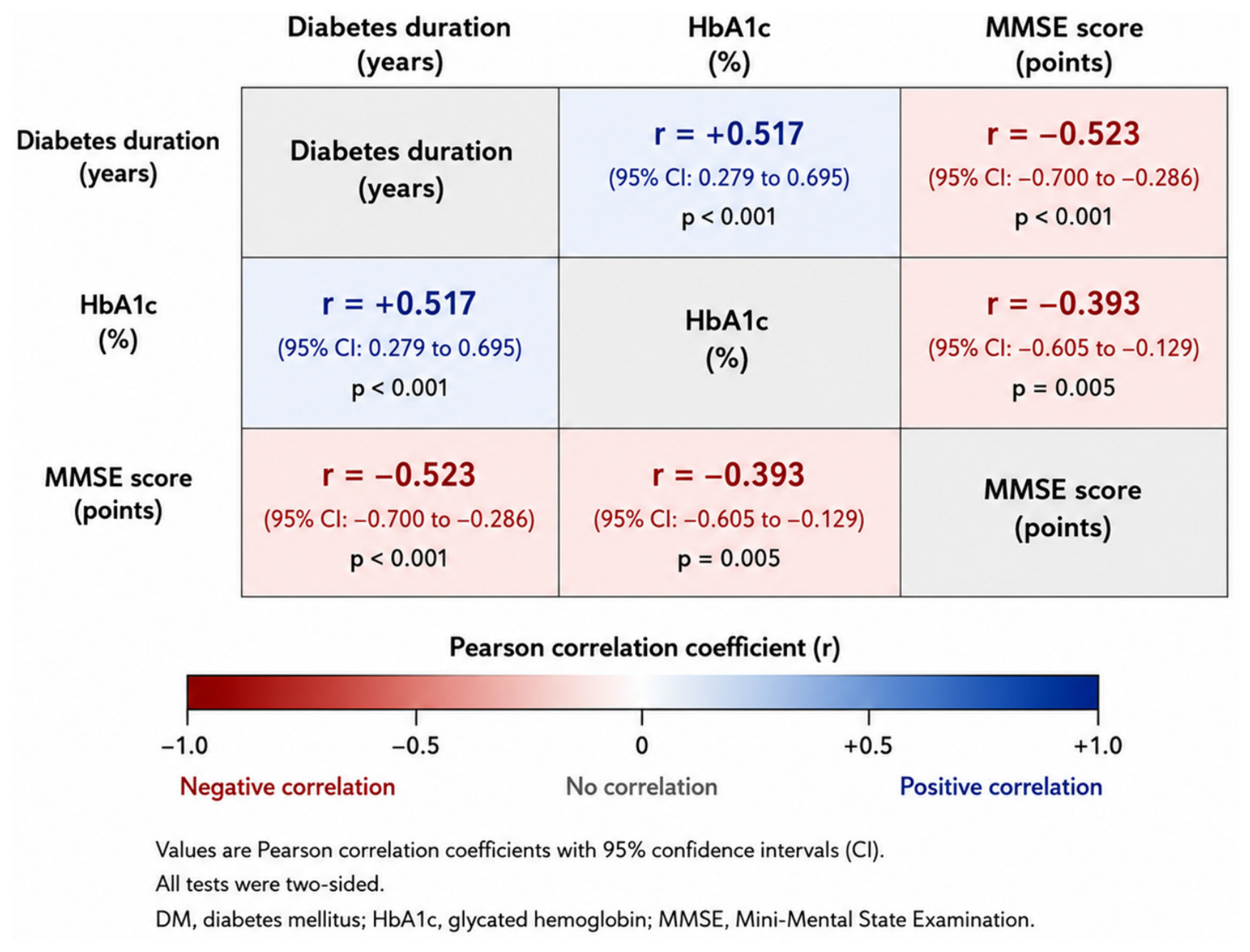
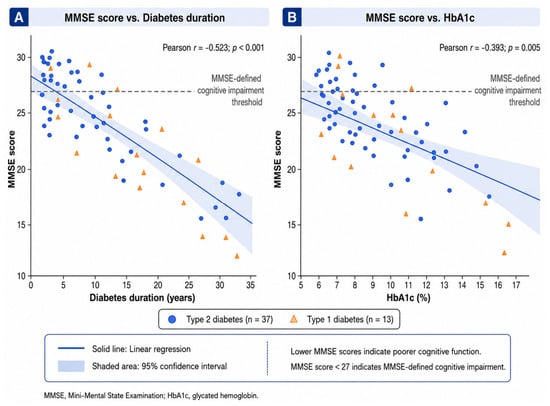
Among participants with diabetes, diabetes duration was moderately positively correlated with HbA1c (r = 0.517; 95% CI: 0.279 to 0.695; p < 0.001), indicating that participants with longer diabetes duration generally had higher HbA1c levels. Diabetes duration was also moderately inversely correlated with MMSE score (r = −0.523; 95% CI: −0.700 to −0.286; p < 0.001), while HbA1c showed a weaker inverse correlation with MMSE performance (r = −0.393; 95% CI: −0.605 to −0.129; p = 0.005).
Table 4 reports the magnitude, precision, and statistical significance of the three pairwise correlations. Figure 4 provides a visual summary of their direction and relative magnitude, showing positive correlations in blue and inverse correlations in red. Among the two cognitive associations, diabetes duration had a larger correlation coefficient with MMSE score than HbA1c.
Table 4.
Correlations in participants with diabetes.
Figure 4.
Correlations among diabetes duration, HbA1c, and MMSE score in participants with diabetes.
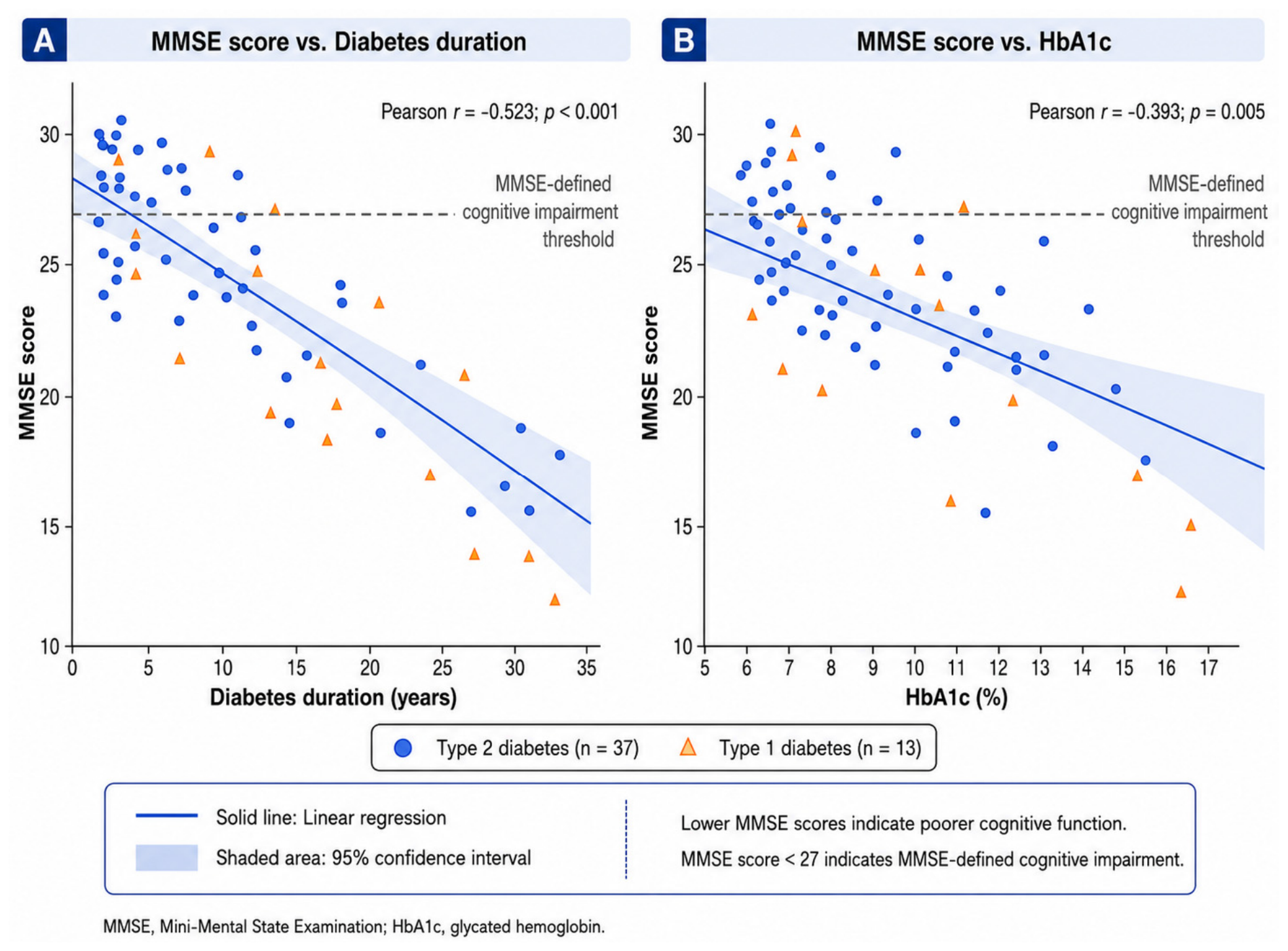
Figure 5 further illustrates the participant-level relationships of MMSE score with diabetes duration and HbA1c. Figure 5A shows a clearer downward trend in MMSE score with increasing diabetes duration, whereas Figure 5B shows a weaker, more dispersed inverse trend between HbA1c and MMSE score. The fitted regression lines and 95% confidence intervals represent the overall unadjusted trends, while the dashed horizontal line marks the predefined threshold for MMSE-defined cognitive decline.
Figure 5.
Correlations of MMSE score with diabetes duration (A) and HbA1c (B) among participants with diabetes. The dashed horizontal line marks the predefined threshold for MMSE-defined cognitive decline.
3.4. Distribution and Magnitude of MMSE-Defined Cognitive Decline by Diabetes Status
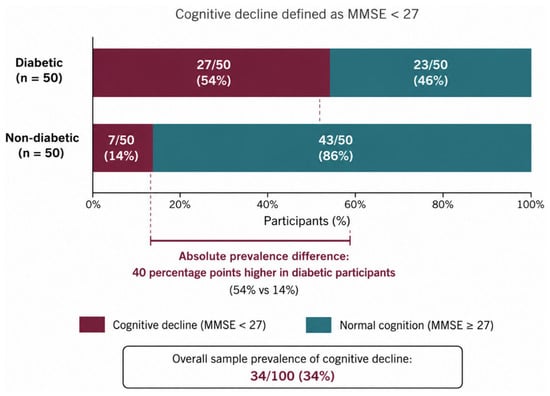
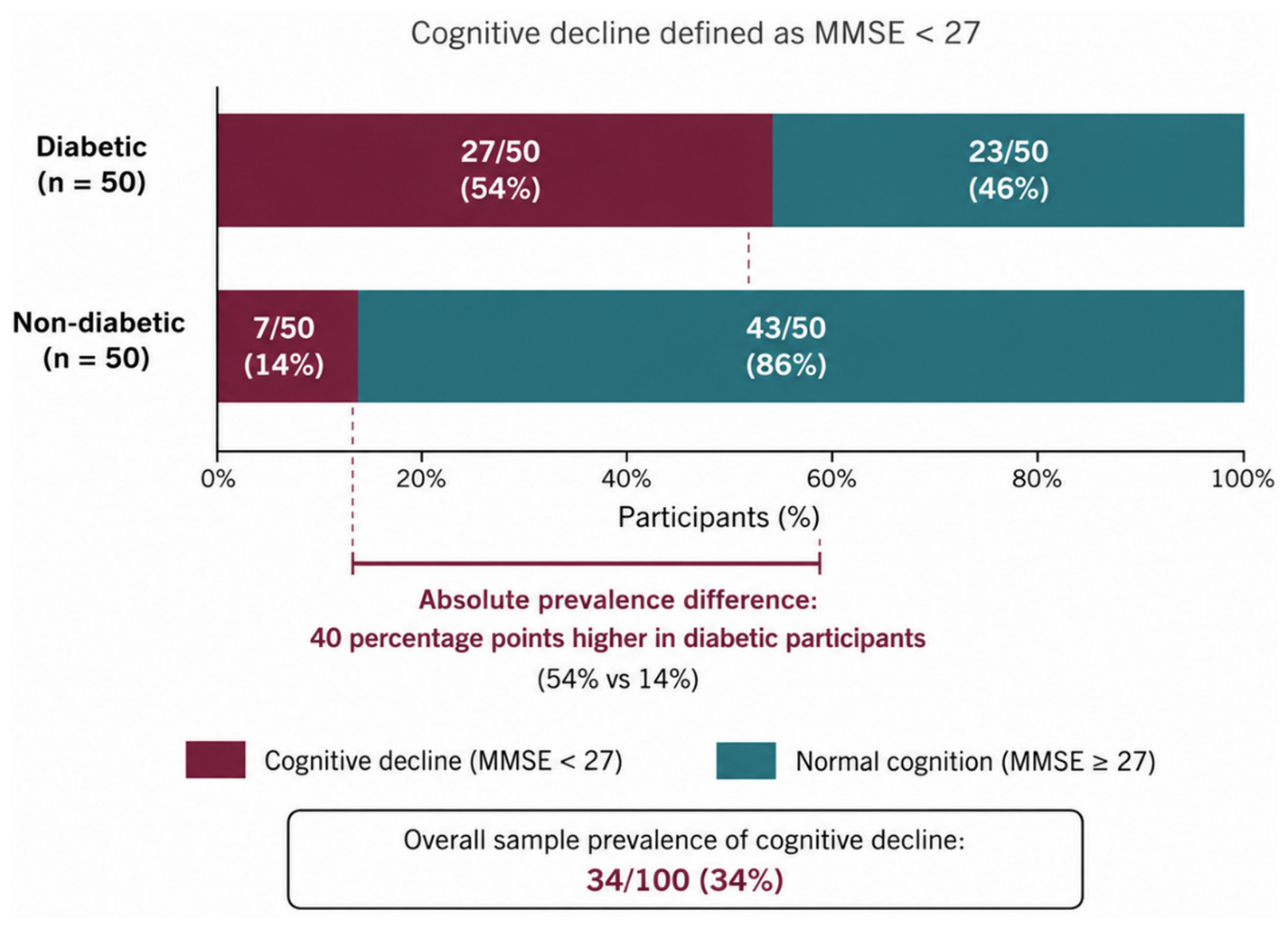
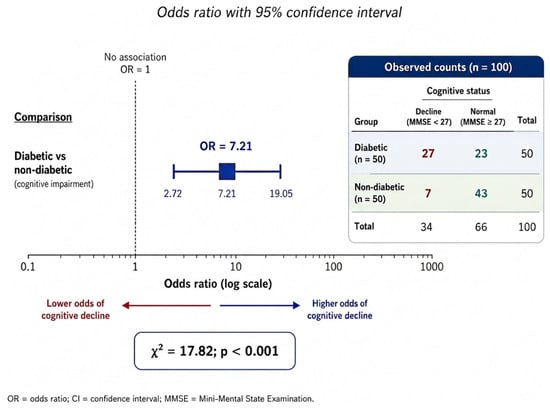
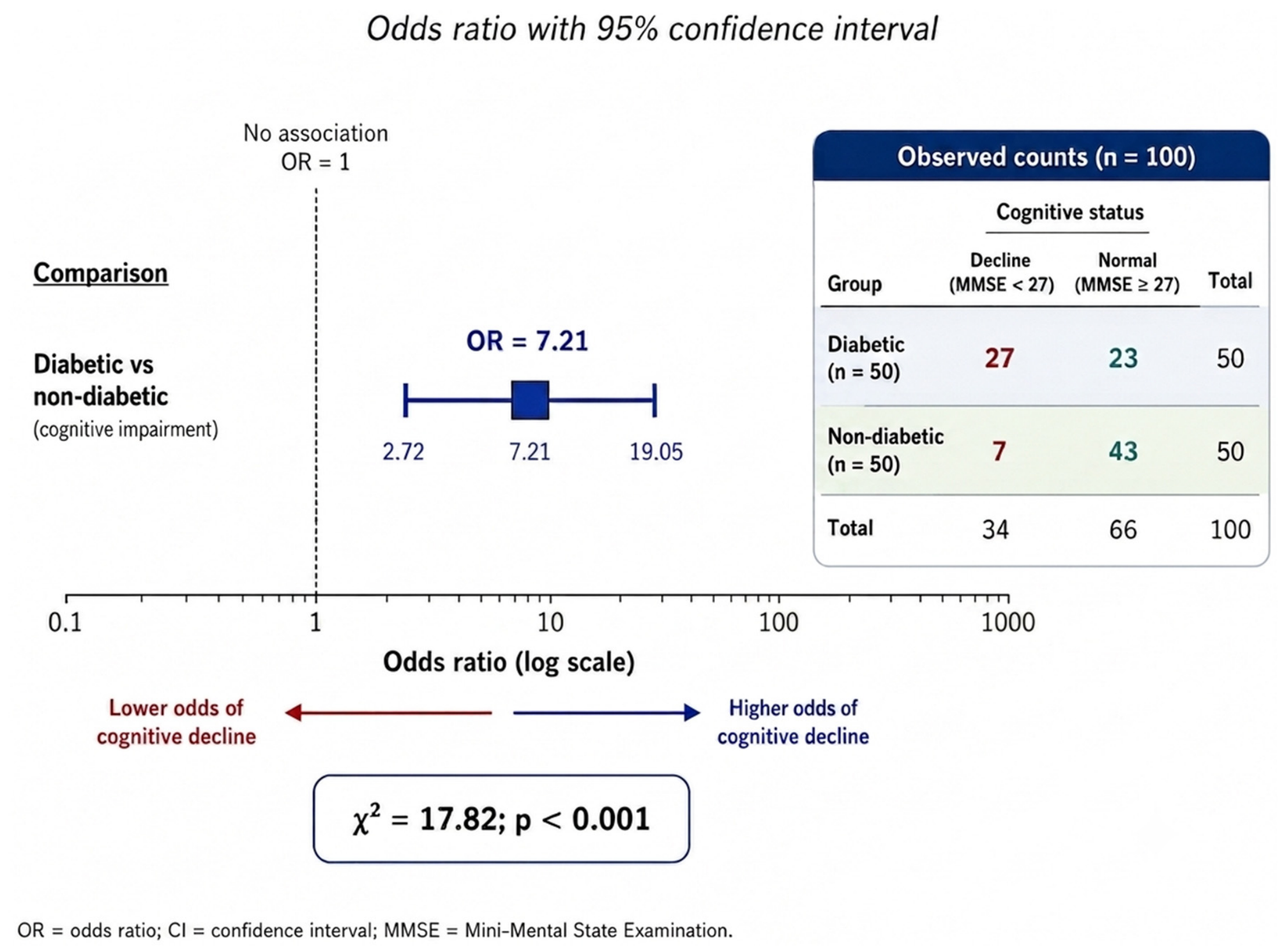
MMSE-defined cognitive impairment was observed in 27 of 50 participants with diabetes (54%) and 7 of 50 participants without diabetes (14%), corresponding to an absolute prevalence difference of 40 percentage points. Diabetes status was associated with higher crude odds of MMSE-defined cognitive impairment (OR = 7.21; 95% CI: 2.72–19.05; χ2 = 17.82; p < 0.001). Because this was a hospital-based cross-sectional study, the odds ratio represents an association within the study sample and should not be interpreted as an incidence ratio or causal effect (Table 5; Figure 6 and Figure 7).
Table 5.
Prevalence and odds ratios of cognitive decline in diabetic and non-diabetic individuals.
Figure 6.
Distribution of MMSE-defined cognitive decline among participants.
Figure 7.
Odds ratio for MMSE-defined cognitive decline in participants with diabetes compared with non-diabetic participants. The square represents the odds ratio, and the horizontal line represents its 95% confidence interval.
4. Discussion
The present study identified a clear cross-sectional association between diabetes and poorer global cognitive performance among adults aged 45 years and older attending Hassan II Regional Hospital Center in Dakhla. Participants with diabetes had a mean MMSE score 4.40 points lower than participants without diabetes, and this difference remained substantial after adjustment for age, sex, and education (adjusted β = −4.13; 95% CI: −5.57 to −2.69; p < 0.001). MMSE-defined cognitive impairment was also more frequent in the diabetic group than in the non-diabetic group (54% vs. 14%), corresponding to an odds ratio of 7.21 (95% CI: 2.72–19.05). Within the diabetic group, longer diabetes duration and higher HbA1c were each correlated with lower MMSE scores; however, neither variable retained an independent association after covariate adjustment. The subgroup analysis further showed lower median MMSE performance in participants with T1DM than in those with T2DM, alongside a markedly longer median disease duration in the T1DM subgroup. Taken together, these findings indicate that diabetes status was the most consistent correlate of MMSE performance in this sample, whereas the respective contributions of current glycemic control, accumulated disease exposure, diabetes subtype, and related clinical factors remain difficult to separate in a small cross-sectional dataset. The results therefore support an association with cognitive impairment, not evidence of cognitive decline over time or proof that diabetes directly caused the observed difference.
A biologically plausible interpretation is that cognitive vulnerability in diabetes reflects the combined effect of several processes that accumulate over time rather than a single isolated abnormality. Chronic hyperglycemia, insulin resistance, advanced glycation, oxidative imbalance, low-grade inflammation, and vascular dysfunction may interact and gradually compromise neuronal and cerebrovascular function [21,22,23]. This framework is more consistent with the present results than explanations based on an immediate shortage of brain energy. Glucose availability to the brain is tightly regulated, and diabetes-related cognitive impairment cannot be reduced to a simple failure of glucose delivery. Instead, altered insulin signaling, endothelial dysfunction, microvascular injury, recurrent metabolic stress, and diabetes-related comorbidities may jointly reduce cognitive reserve and increase susceptibility to impairment. The relative importance of these pathways probably differs between individuals and across the course of diabetes. None of these mechanisms was directly measured in the present study and they should therefore be considered explanatory hypotheses rather than demonstrated causal pathways.
The contrast between the correlation analyses and the adjusted regression models deserves particular attention. Diabetes duration showed a moderate inverse correlation with MMSE score, whereas HbA1c showed a weaker inverse correlation; after adjustment, both associations were attenuated and no longer statistically significant. This pattern does not demonstrate that duration or glycemic exposure is unimportant. A single HbA1c value primarily summarizes recent glycemia and may not adequately represent long-term exposure, glycemic variability, previous periods of poor control, or treatment-related hypoglycemia. Conversely, diabetes duration is closely related to age at diagnosis, diabetes subtype, treatment intensity, and the cumulative probability of vascular or microvascular complications. Longitudinal studies using repeated glycemic measurements have reported associations between diabetes, sustained hyperglycemia, and subsequent cognitive decline, while cross-sectional studies have produced more variable findings [24,25,26,27]. The present results should therefore be interpreted as evidence that neither current HbA1c nor duration independently explained MMSE performance within this limited sample, rather than as evidence against cumulative glycemic effects.
The observed sevenfold difference in the odds of MMSE-defined impairment is larger than the associations generally reported for incident cognitive decline or dementia in broad population-based studies [28,29]. Direct numerical comparison is nevertheless inappropriate because the present study evaluated prevalent impairment in a hospital-based sample, used an MMSE threshold of <27, and included equal numbers of participants with and without diabetes by design. Odds ratios from such a cross-sectional comparison are not equivalent to relative risks from prospective cohorts, and the estimate is sensitive to the relatively small number of impaired participants in the non-diabetic group. Studies conducted in clinical or hospital settings have also reported substantial frequencies of cognitive impairment among adults with diabetes, although estimates vary according to age, education, comorbidity burden, recruitment setting, and the cognitive instrument applied [27,30,31]. Accordingly, the magnitude observed in Dakhla may reflect a genuine local clinical burden, but it may also have been amplified by selection factors, the chosen cutoff, residual confounding, and sampling variability. The result is therefore best interpreted as a strong association within the studied sample rather than a population-level estimate for Dakhla or Morocco.
The apparent difference between the T1DM and T2DM subgroups should also be interpreted cautiously. Participants with T1DM had a lower median MMSE score, but this subgroup included only 13 individuals and had a median diabetes duration of 26 years, compared with 5 years in the T2DM subgroup. Median HbA1c was similar in the two groups. The observed cognitive difference may therefore reflect longer cumulative exposure, earlier disease onset, treatment burden, severe hypoglycemia, chronic complications, or other unmeasured characteristics rather than an intrinsic effect of diabetes type. Long-term T1DM studies indicate that cognitive outcomes are heterogeneous and are associated with cumulative glycemic exposure, vascular risk factors, depression, nephropathy, and severe hypoglycemic events [26,32,33]. Because the sub-group comparison was based on small and unequal groups, its effect estimate may be unstable and should not be generalized to all adults with T1DM or T2DM. The finding is clinically noteworthy, but it should be considered exploratory because diabetes type and duration were strongly intertwined and could not be reliably disentangled in the available sample.
The association between diabetes and MMSE performance is also likely to be shaped by factors beyond glycemia. Age, educational attainment, depression, physical inactivity, sleep disturbance, hypertension, previous cerebrovascular disease, renal disease, visual impairment, medication burden, and socioeconomic conditions may influence both cognitive test performance and diabetes outcomes [34,35,36]. The adjusted analysis accounted for age, sex, and education, which strengthened the comparison, but it did not include all of these potential confounders or mediators. Education is especially important because MMSE performance varies across educational and cultural contexts [37,38]. Although the questionnaire was administered bilingually, the use of a single fixed threshold may still classify some participants differently from education-adjusted or locally validated norms. Sensory limitations, fatigue, anxiety during hospital attendance, and familiarity with formal testing may also affect performance. These considerations do not negate the between-group difference, but they indicate that part of the observed association may reflect the broader clinical and social context in which diabetes occurs.
The clinical relevance of cognitive impairment in diabetes is potentially bidirectional. Reduced memory, attention, or executive functioning may interfere with medication use, glucose monitoring, dietary decisions, recognition of hypoglycemia, and attendance at follow-up visits, thereby making diabetes management more difficult [39,40,41]. Conversely, recurrent metabolic instability and diabetes-related complications may further increase cognitive vulnerability. The present findings therefore support heightened clinical awareness, particularly when patients have longstanding diabetes, repeated self-management difficulties, severe hypoglycemia, vascular complications, or subjective cognitive complaints. They do not, by themselves, establish that universal routine screening is beneficial. A more proportionate implication is to use brief cognitive assessment selectively when clinically indicated and to refer individuals with abnormal results for comprehensive evaluation, while simultaneously reviewing reversible contributors such as depression, medication effects, sleep problems, sensory impairment, and glycemic instability. An abnormal MMSE result should not be equated with a diagnosis of dementia. Physical activity and multidimensional diabetes care may support healthy aging and cognitive health, but their cognitive benefits should be presented cautiously because intervention evidence remains heterogeneous [42,43].
This study provides initial data from an understudied Moroccan region, includes a contemporaneous non-diabetic comparison group recruited from the same hospital setting, incorporates clinical-record HbA1c data, and reports both crude and adjusted associations. The use of heteroscedasticity-robust regression and the separate examination of diabetes status, HbA1c, and disease duration also improve analytical examination. However, cross-sectional design prevents assessment of temporal sequence or within-person cognitive change. The hospital-based sample was small, the T1DM subgroup was particularly limited, and the groups were not individually matched. A single HbA1c measurement was used, and information on lifetime glycemic exposure, glycemic variability, severe hypoglycemia, depression, cerebrovascular history, microvascular complications, medication classes, sleep, functional status, and socioeconomic conditions was insufficient for comprehensive adjustment. The MMSE is a screening instrument with ceiling effects and limited sensitivity to subtle executive dysfunction, and the <27 cutoff was not adjusted for education or validated specifically in the Dakhla population. Multiple analyses in a modest sample may also increase the probability of unstable subgroup findings. Selection bias, residual confounding, and imprecision must therefore be considered when interpreting the results.
Future research should evaluate these associations in larger community-based samples and follow participants longitudinally. Repeated HbA1c measurements, data on hypoglycemia and glucose variability, detailed vascular and microvascular assessments, and culturally appropriate neuropsychological testing would help distinguish recent glycemic status from cumulative metabolic burden. Analyses should prespecify confounders and avoid relying on a single screening threshold. Studies should also determine whether cognitive difficulties predict subsequent problems with diabetes self-management and whether targeted multidisciplinary interventions improve both metabolic and cognitive outcomes. In conclusion, the present study demonstrates a robust association between diabetes status and lower MMSE performance in this hospital-based sample, while suggesting that longer disease exposure may be clinically relevant. The findings do not establish causality or a specific neurological mechanism, but they provide a rationale for larger prospective studies and careful, context-sensitive cognitive evaluation in adults with diabetes.
5. Conclusions
In this hospital-based sample of adults aged 45 years or older in Dakhla, diabetes was associated with substantially lower MMSE performance and a higher prevalence of MMSE-defined cognitive impairment. The association with MMSE score remained after adjustment for age, sex, and educational attainment. Among participants with diabetes, longer disease duration and higher HbA1c were inversely correlated with MMSE scores, but neither retained an independent association after adjustment; these findings therefore should not be interpreted as evidence of direct causal effects. The lower MMSE scores observed in the small T1DM subgroup were accompanied by markedly longer disease duration and required cautious interpretation. The results support awareness of possible cognitive difficulties and context-sensitive cognitive assessment when clinically indicated, rather than universal screening based on this study alone. Larger community-based prospective studies incorporating repeated glycemic measurements, hypoglycemia and vascular assessments, and comprehensive neuro-psychological testing are needed to confirm these associations and clarify their temporal and clinical significance.
Author Contributions
Conceptualization, R.A.; methodology, R.A.; software, R.A.; validation, R.A. and M.B.-E.-C.; formal analysis, R.A. and M.B.-E.-C.; investigation, R.A.; resources, R.A.; data curation, R.A.; writing—original draft preparation, R.A.; writing—review and editing, M.B.-E.-C.; visualization, R.A. and M.B.-E.-C.; supervision, not applicable; project administration, not applicable; funding acquisition, not applicable. All authors have read and agreed to the published version of the manuscript.
Funding
This research received no external funding.
Institutional Review Board Statement
The study was approved by the Regional Health Directorate of Dakhla-Oued Ed-Dahab and the Higher Institute of Nursing Professions and Health Techniques (ISPITS-Dakhla) on 25 November 2024, under authorization number AN°52.
Informed Consent Statement
Written informed consent has been obtained from the patient(s) to publish this paper.
Data Availability Statement
Because of confidentiality and ethical considerations concerning participants’ health records and survey responses, the original detailed data cannot be shared publicly. However, anonymized datasets can be obtained from the corresponding author upon a justified request and approval from the relevant institution.
Acknowledgments
We extend our gratitude to the Dakhla-Oued Ed-Dahab Regional Health Office, the staff and management of Hassan II Regional Hospital in Dakhla, and the Higher Institute of Nursing and Health Techniques, ISPITS-Dakhla, for their invaluable administrative and technical assistance during the data gathering process. Our appreciation also goes to all the participants who consented to be part of this research.
Conflicts of Interest
The authors declare no conflicts of interest. Because this research received no external funding, no funders had any role in the design of the study; in the collection, analyses, or interpretation of data; in the writing of the manuscript; or in the decision to publish the results.
Abbreviations
The following abbreviations are used in this manuscript:
| BMI | Body mass index |
| CI | Confidence interval |
| CHR | Regional Hospital Center |
| D | Diabetic participants |
| HbA1c | Glycated hemoglobin A1c |
| ISPITS | High Institute of Nursing Professions and Health Techniques |
| MMSE | Mini-Mental State Examination |
| ND | Non-diabetic participants |
| OR | Odds ratio |
| SD | Standard deviation |
| χ2 | Chi-square statistic |
References
- Bartrés-Faz, D.; Demnitz-King, H.; Cabello-Toscano, M.; Vaqué-Alcázar, L.; Saunders, R.; Touron, E.; Cattaneo, G.; Gonneaud, J.; Klimecki, O.; Bargalló, N.; et al. Psychological Profiles Associated with Mental, Cognitive and Brain Health in Middle-Aged and Older Adults. Nat. Ment. Health 2025, 3, 92–103. [Google Scholar] [CrossRef] [Scilit]
- Manuello, J.; Min, J.; McCarthy, P.; Alfaro-Almagro, F.; Lee, S.; Smith, S.; Elliott, L.T.; Winkler, A.M.; Douaud, G. The Effects of Genetic and Modifiable Risk Factors on Brain Regions Vulnerable to Ageing and Disease. Nat. Commun. 2024, 15, 2576. [Google Scholar] [CrossRef] [Scilit] [PubMed]
- Garcia-Cabello, E.; Habich, A.; Molina, Y.; Perestelo-Pérez, L.; Barroso, J.; Ferreira, D. A Systematic Review of Multivariate Studies in Cognitive Aging: Introducing the Concept of Cognitive Organization. Ageing Res. Rev. 2026, 114, 102997. [Google Scholar] [CrossRef] [Scilit] [PubMed]
- Prince, J.B.; Davis, H.L.; Tan, J.; Muller-Townsend, K.; Markovic, S.; Lewis, D.M.G.; Hastie, B.; Thompson, M.B.; Drummond, P.D.; Fujiyama, H.; et al. Cognitive and Neuroscientific Perspectives of Healthy Ageing. Neurosci. Biobehav. Rev. 2024, 161, 105649. [Google Scholar] [CrossRef] [Scilit] [PubMed]
- Biessels, G.J.; Despa, F. Cognitive Decline and Dementia in Diabetes Mellitus: Mechanisms and Clinical Implications. Nat. Rev. Endocrinol. 2018, 14, 591–604. [Google Scholar] [CrossRef] [Scilit] [PubMed]
- Tomic, D.; Shaw, J.E.; Magliano, D.J. The Burden and Risks of Emerging Complications of Diabetes Mellitus. Nat. Rev. Endocrinol. 2022, 18, 525–539. [Google Scholar] [CrossRef] [Scilit] [PubMed]
- Ruisch, I.H.; Widomska, J.; De Witte, W.; Mota, N.R.; Fanelli, G.; Van Gils, V.; Jansen, W.J.; Vos, S.J.B.; Fóthi, A.; Barta, C.; et al. Molecular Landscape of the Overlap between Alzheimer’s Disease and Somatic Insulin-Related Diseases. Alzheimer’s Res. Ther. 2024, 16, 239. [Google Scholar] [CrossRef] [Scilit] [PubMed]
- van Gils, V.; Rizzo, M.; Côté, J.; Viechtbauer, W.; Fanelli, G.; Salas-Salvadó, J.; Wimberley, T.; Bulló, M.; Fernandez-Aranda, F.; Dalsgaard, S.; et al. The Association of Glucose Metabolism Measures and Diabetes Status with Alzheimer’s Disease Biomarkers of Amyloid and Tau: A Systematic Review and Meta-Analysis. Neurosci. Biobehav. Rev. 2024, 159, 105604. [Google Scholar] [CrossRef] [Scilit] [PubMed]
- Lanctôt, K.L.; Hahn-Pedersen, J.H.; Eichinger, C.S.; Freeman, C.; Clark, A.; Tarazona, L.R.S.; Cummings, J. Burden of Illness in People with Alzheimer’s Disease: A Systematic Review of Epidemiology, Comorbidities and Mortality. J. Prev. Alzheimer’s Dis. 2024, 11, 97–107. [Google Scholar] [CrossRef] [Scilit] [PubMed]
- Abel, E.D.; Gloyn, A.L.; Evans-Molina, C.; Joseph, J.J.; Misra, S.; Pajvani, U.B.; Simcox, J.; Susztak, K.; Drucker, D.J. Diabetes Mellitus—Progress and Opportunities in the Evolving Epidemic. Cell 2024, 187, 3789–3820. [Google Scholar] [CrossRef] [Scilit] [PubMed]
- Yapislar, H.; Gurler, E.B. Management of Microcomplications of Diabetes Mellitus: Challenges, Current Trends, and Future Perspectives in Treatment. Biomedicines 2024, 12, 1958. [Google Scholar] [CrossRef] [Scilit] [PubMed]
- Deery, H.A.; Liang, E.; Di Paolo, R.; Voigt, K.; Murray, G.; Siddiqui, M.N.; Egan, G.F.; Moran, C.; Jamadar, S.D. Peripheral Insulin Resistance Attenuates Cerebral Glucose Metabolism and Impairs Working Memory in Healthy Adults. npj Metab. Health Dis. 2024, 2, 17. [Google Scholar] [CrossRef] [Scilit] [PubMed]
- Młynarska, E.; Czarnik, W.; Dzieża, N.; Jędraszak, W.; Majchrowicz, G.; Prusinowski, F.; Stabrawa, M.; Rysz, J.; Franczyk, B. Type 2 Diabetes Mellitus: New Pathogenetic Mechanisms, Treatment and the Most Important Complications. Int. J. Mol. Sci. 2025, 26, 1094. [Google Scholar] [CrossRef] [Scilit] [PubMed]
- Hu, B.; Yu, Y.; Yu, X.-W.; Ni, M.-H.; Cui, Y.-Y.; Cao, X.-Y.; Yang, A.-L.; Jin, Y.-X.; Liang, S.-R.; Li, S.-N.; et al. Sequence of Episodic Memory-Related Behavioral and Brain-Imaging Abnormalities in Type 2 Diabetes. Nutr. Diabetes 2025, 15, 1. [Google Scholar] [CrossRef] [Scilit] [PubMed]
- Lesman-Segev, O.H.; Golan Shekhtman, S.; Springer, R.R.; Livny, A.; Lin, H.-M.; Yuxia, O.; Zadok, M.; Ganmore, I.; Heymann, A.; Hoffmann, C.; et al. Amyloid Deposition and Small Vessel Disease Are Associated with Cognitive Function in Older Adults with Type 2 Diabetes. Sci. Rep. 2024, 14, 2741. [Google Scholar] [CrossRef] [Scilit] [PubMed]
- Gao, X.; Yang, H.-H.; Xie, F.; Wang, H.-P.; Chen, L.-H.; Zhu, Z.-B.; Qin, L.-Q.; Chen, G.-C.; Li, F.-R.; Wang, X. Diabetes Duration, Glycemic Control, and Risk of Stroke and Stroke Subtypes: A Nationwide Prospective Cohort Study. Sci. Rep. 2025, 15, 43633. [Google Scholar] [CrossRef] [Scilit] [PubMed]
- Suzuki, K.; Hatzikotoulas, K.; Southam, L.; Taylor, H.J.; Yin, X.; Lorenz, K.M.; Mandla, R.; Huerta-Chagoya, A.; Melloni, G.E.M.; Kanoni, S.; et al. Genetic Drivers of Heterogeneity in Type 2 Diabetes Pathophysiology. Nature 2024, 627, 347–357. [Google Scholar] [CrossRef] [Scilit] [PubMed]
- Yang, T.; Qi, F.; Guo, F.; Shao, M.; Song, Y.; Ren, G.; Linlin, Z.; Qin, G.; Zhao, Y. An Update on Chronic Complications of Diabetes Mellitus: From Molecular Mechanisms to Therapeutic Strategies with a Focus on Metabolic Memory. Mol. Med. 2024, 30, 71. [Google Scholar] [CrossRef] [Scilit] [PubMed]
- Genitsaridi, I.; Salpea, P.; Salim, A.; Sajjadi, S.F.; Tomic, D.; James, S.; Thirunavukkarasu, S.; Issaka, A.; Chen, L.; Basit, A.; et al. 11th Edition of the IDF Diabetes Atlas: Global, Regional, and National Diabetes Prevalence Estimates for 2024 and Projections for 2050. Lancet Diabetes Endocrinol. 2026, 14, 149–156. [Google Scholar] [CrossRef] [Scilit] [PubMed]
- Mouzouni, F.-Z.; Mehdad, S.; Mounach, S.; Iraqi, H.; Benkirane, H.; Benaich, S.; EL Youbi, M.; Aguenaou, H. Diabetes Prevalence Is Associated with Obesity, Hypertension, Dyslipidemia, and Sociodemographic Factors in Adults Living in Casablanca-Settat and Rabat-Sale-Kenitra Regions, Morocco. Int. J. Diabetes Dev. Ctries. 2022, 42, 565–572. [Google Scholar] [CrossRef] [Scilit]
- Satapathy, P.; Pratima, P.; Gaidhane, A.M.; Vadia, N.; Menon, S.V.; Chennakesavulu, K.; Panigrahi, R.; Shabil, M.; Jena, D.; Kumar, H.; et al. Prevalence and Impact of Microvascular Complications in Type 2 Diabetes Mellitus on Cognitive Impairment and Depression: A Systematic Review and Meta-Analysis. Diabetol. Metab. Syndr. 2025, 17, 187. [Google Scholar] [CrossRef] [Scilit] [PubMed]
- Zhao, L.; Yuan, J.; Yang, Q.; Ma, J.; Yang, F.; Zou, Y.; Liu, K.; Liu, F. Diabetes and Its Complications: Molecular Mechanisms, Prevention and Treatment. Signal Transduct. Target. Ther. 2026, 11, 22. [Google Scholar] [CrossRef] [Scilit] [PubMed]
- Xenos, D.; Mancinetti, F.; Mecocci, P.; Boccardi, V. The Muscle-Brain Axis in Type 2 Diabetes: Molecular Pathways Linking Sarcopenia and Cognitive Decline. Ageing Res. Rev. 2026, 113, 102955. [Google Scholar] [CrossRef] [Scilit] [PubMed]
- Xiao, Y.; Hong, X.; Neelagar, R.; Mo, H. Association between Glycated Hemoglobin A1c Levels, Control Status, and Cognitive Function in Type 2 Diabetes: A Prospective Cohort Study. Sci. Rep. 2025, 15, 5011. [Google Scholar] [CrossRef] [Scilit] [PubMed]
- Cho, S.; Ok Kim, C.; Cha, B.; Kim, E.; Mo Nam, C.; Kim, M.-G.; Park, M.S. The Effects of Long-Term Cumulative HbA1c Exposure on the Development and Onset Time of Dementia in the Patients with Type 2 Diabetes Mellitus: Hospital Based Retrospective Study (2005–2021). Diabetes Res. Clin. Pract. 2023, 201, 110721. [Google Scholar] [CrossRef] [Scilit] [PubMed]
- Jacobson, A.M.; Ryan, C.M.; Braffett, B.H.; Gubitosi-Klug, R.A.; Lorenzi, G.M.; Luchsinger, J.A.; Trapani, V.R.; Bebu, I.; Chaytor, N.; Hitt, S.M.; et al. Cognitive Performance Declines in Older Adults with Type 1 Diabetes: Results from 32 Years of Follow-up in the DCCT and EDIC Study. Lancet Diabetes Endocrinol. 2021, 9, 436–445. [Google Scholar] [CrossRef] [Scilit] [PubMed]
- Liu, Y.; Liu, Y.; Qiu, H.; Haghbin, N.; Li, J.; Li, Y.; Jiang, W.; Xia, L.; Wu, F.; Lin, C.; et al. Association of Time in Range with Cognitive Impairment in Middle-Aged Type 2 Diabetic Patients. BMC Endocr. Disord. 2024, 24, 241. [Google Scholar] [CrossRef] [Scilit] [PubMed]
- Cao, F.; Yang, F.; Li, J.; Guo, W.; Zhang, C.; Gao, F.; Sun, X.; Zhou, Y.; Zhang, W. The Relationship between Diabetes and the Dementia Risk: A Meta-Analysis. Diabetol. Metab. Syndr. 2024, 16, 101. [Google Scholar] [CrossRef] [Scilit] [PubMed]
- Zheng, Y.; Ma, Q.; Qi, X.; Zhu, Z.; Wu, B. Prevalence and Incidence of Mild Cognitive Impairment in Adults with Diabetes in the United States. Diabetes Res. Clin. Pract. 2023, 205, 110976. [Google Scholar] [CrossRef] [Scilit] [PubMed]
- Liu, Y.; Maimaitituerxun, R.; Chen, W.; Chen, L.; Xiao, F.; Wu, X.Y.; Yang, J.; Tang, Y.; Dai, W. Differences in the Profile of Mild Cognitive Impairment among Inpatients with T2DM: A Comparison of the MMSE and MoCA. Eur. J. Med. Res. 2026, 31, 476. [Google Scholar] [CrossRef] [Scilit] [PubMed]
- Tayob, M.H.; Goncalves, C.N.; Musundwa, M.N.; Thokan, A.; Choonara, H.; Modan, Z.; Mabuza, W.P.; Mapatlare, M.P.; Mohamed, F.; Mathew, A. The Performance of a Novel, Diabetes-Specific Cognitive Screening Tool against the MoCA in Older Adults with Type 2 Diabetes. BMC Geriatr. 2026, 26, 739. [Google Scholar] [CrossRef] [Scilit] [PubMed]
- Maltese, G.; Karalliedde, J.; Dhesi, J.; Bellary, S. Type 1 Diabetes, Ageing and Frailty: An Underexplored Intersection. Diabetologia 2026, 69, 1133–1149. [Google Scholar] [CrossRef] [Scilit] [PubMed]
- Jacobson, A.M.; Ryan, C.M.; Cleary, P.A.; Waberski, B.H.; Weinger, K.; Musen, G.; Dahms, W. Biomedical Risk Factors for Decreased Cognitive Functioning in Type 1 Diabetes: An 18 Year Follow-up of the Diabetes Control and Complications Trial (DCCT) Cohort. Diabetologia 2011, 54, 245–255. [Google Scholar] [CrossRef] [Scilit] [PubMed]
- Yingxu, L.; Tan, X.; Fangyi, L. Risk Factors for Mild Cognitive Impairment in Type 2 Diabetes Mellitus Older Adult: A Systematic Review and Meta-Analysis. J. Psychiatr. Res. 2025, 186, 445–457. [Google Scholar] [CrossRef] [Scilit] [PubMed]
- Livingston, G.; Huntley, J.; Liu, K.Y.; Costafreda, S.G.; Selbæk, G.; Alladi, S.; Ames, D.; Banerjee, S.; Burns, A.; Brayne, C.; et al. Dementia Prevention, Intervention, and Care: 2024 Report of the Lancet Standing Commission. Lancet 2024, 404, 572–628. [Google Scholar] [CrossRef] [Scilit] [PubMed]
- Fanelli, G.; Raschi, E.; Hafez, G.; Matura, S.; Schiweck, C.; Poluzzi, E.; Lunghi, C. The Interface of Depression and Diabetes: Treatment Considerations. Transl. Psychiatry 2025, 15, 22. [Google Scholar] [CrossRef] [Scilit] [PubMed]
- Kamalzadeh, L.; Tayyebi, G.; Shariati, B.; Shati, M.; Saeedi, V.; Malakouti, S.K. Diagnostic Accuracy of Cognitive Screening Tools Validated for Older Adults in Iran: A Systematic Review and Meta-Analysis. BMC Geriatr. 2024, 24, 428. [Google Scholar] [CrossRef] [Scilit] [PubMed]
- Zhang, J.; Bandyopadhyay, S.; Kimmet, F.; Wittmayer, J.; Khezeli, K.; Libon, D.J.; Price, C.C.; Rashidi, P. Developing a Fair and Interpretable Representation of the Clock Drawing Test for Mitigating Low Education and Racial Bias. Sci. Rep. 2024, 14, 17444. [Google Scholar] [CrossRef] [Scilit] [PubMed]
- Cabral, D.F.; Bigliassi, M.; Morris, T.P.; Gomes-Osman, J.R.; Fried, P.J. Integrating Neural Substrates, Diabetes Self-Management, and Behavior Change for Tailored Lifestyle Interventions in Type-2 Diabetes: A Neurobehavioral Perspective. Neurosci. Biobehav. Rev. 2025, 172, 106103. [Google Scholar] [CrossRef] [Scilit] [PubMed]
- Urbina, K.L.; Slyne, C.; Munshi, M.N. Diabetes Technology and the Older Adult: Clinical Outcomes and Implementation Strategies. Endocr. Pract. 2025, 31, 1626–1631. [Google Scholar] [CrossRef] [Scilit] [PubMed]
- Murali, N.V.; Joseph, N.; Gangadhara, V.K. Determinants of Selective Domains of Cognitive Impairment among Diabetes Mellitus Patients: A Primary Health Care Setting-Based Study in India. Sci. Rep. 2025, 15, 44891. [Google Scholar] [CrossRef] [Scilit] [PubMed]
- Vandersmissen, J.; Dewachter, I.; Cuypers, K.; Hansen, D. The Impact of Exercise Training on the Brain and Cognition in Type 2 Diabetes, and Its Physiological Mediators: A Systematic Review. Sports Med. Open 2025, 11, 42. [Google Scholar] [CrossRef] [Scilit] [PubMed]
- Sugimoto, T.; Araki, A.; Fujita, H.; Fujita, K.; Honda, K.; Inagaki, N.; Ishida, T.; Kato, J.; Kishi, M.; Kishino, Y.; et al. Multidomain Intervention Trial for Preventing Cognitive Decline among Older Adults with Type 2 Diabetes: J-MIND-Diabetes. J. Prev. Alzheimer’s Dis. 2024, 11, 1604–1614. [Google Scholar] [CrossRef] [Scilit] [PubMed]

Disclaimer/Publisher’s Note: The statements, opinions and data contained in all publications are solely those of the individual author(s) and contributor(s) and not of MDPI and/or the editor(s). MDPI and/or the editor(s) disclaim responsibility for any injury to people or property resulting from any ideas, methods, instructions or products referred to in the content. |
© 2026 by the authors. Licensee MDPI, Basel, Switzerland. This article is an open access article distributed under the terms and conditions of the Creative Commons Attribution (CC BY) license.