


Abstract
Natural plant-based resources are rich in bioactive compounds that offer promising alternatives for developing sustainable, functional textiles. This study focuses on the extraction and application of natural dyes from Gardenia jasminoides as an eco-friendly substitute for conventional synthetic dyes. The dye was extracted using methanol–water (50:50) and ethanol–water (50:50) solvent systems, alongside conventional aqueous extraction, followed by characterization through column chromatography. The characterization of the extracted powders confirmed the presence of gardenia yellow pigments with strong coloration potential. Among the tested extraction methods, ultrasonic-assisted methanol–water extraction (M.W.U.) exhibited the highest dye yield of 29.5%, followed by ethanol–water ultra-sound extraction (E.W.U.) at 24.9%, water ultrasound extraction (W.U.) at 18.35%, and the lowest yield obtained from the water-heater method (W.H.) at 18.25%. The dyed cotton fabrics were tested for color strength (K/S), CIELAB, colorfastness (washing, light, rubbing), and functional properties (antibacterial and vector protection) according to standard operating procedures. The results revealed that an optimal mordant concentration produced the maximum color strength (K/S = 1.7730), with good rubbing (4–5), washing (4–5), and light fastness (5). The dyed fabrics also exhibited excellent antibacterial activity against both Staphylococcus aureus and Escherichia coli, as evaluated by the AATCC 100 test method. For instance, the vector protection property of the cotton dyed fabrics was also excellent, as confirmed by the cage test. Overall, the use of Gardenia jasminoides seed-based natural dye demonstrates not only desirable coloration and functional performance but also significant ecological advantages, reducing chemical pollution and supporting the transition toward environmentally sustainable textile processing.
1. Introduction
Researchers around the globe are exploring the natural and sustainable counterparts for synthetic dyes to safeguard the environment and ensure a safer world for future generations [1]. In general, there is an urgent need to prioritize environmentally sustainable products across all aspects of life [2]. This requires reducing the reliance on synthetic chemicals and maximizing the use of eco-friendly alternatives [3]. In the context of coloration for textiles, food, and other materials, synthetic dyes and pigments are extensively employed worldwide [4]. However, these chemically manufactured colorants are often toxic, allergenic, and carcinogenic, posing significant risks to agricultural land, aquatic organisms, and entire ecosystems [5,6]. During the production and application of synthetic dyes, large quantities of harmful chemicals are discharged into the environment, further exacerbating ecological concerns [7]. Consequently, in recent decades, the use of natural dyes has gained renewed attention as a sustainable alternative [8]. Natural dyes are mostly biodegradable, non-toxic, less allergic, non-carcinogenic, antimicrobial, renewable, and are not harmful to human health and the environment [9]. Historically, the earliest developments in coloration technology were entirely reliant on natural dyes, which highlights their long-standing significance and potential for re-adoption in modern applications [10]. The application of natural dyes in textiles has been extensively reviewed, with particular focus on their characterization and chemical/biochemical analysis, extraction methodologies, the role and application of mordants, dyeing techniques, and color fastness properties [11]. Extensive research has been devoted to the extraction of natural dyes from diverse botanical and biological resources, with particular focus on their application in the dyeing of textile substrates [12].
Several studies have investigated the potential of Cuminum cyminum L. (cumin seeds) as a natural dye source for cotton fabrics, with particular emphasis on its performance in comparison to conventional synthetic dyes. Cotton fabrics treated with the aqueous extract demonstrated promising coloration outcomes, highlighting cumin seeds as a viable alternative to synthetic dyes [13]. Several studies exploring the coloration of cotton with natural dye sources using pre-mordanting methods yielded dyed fabrics with excellent color strength (K/S values) and colorfastness ratings [14]. Alamoudi and Salem investigated the use of myrrh extract (Commiphora molmol) as an eco-friendly dye for wool and silk fabrics in combination with natural mordants such as sumac (Rhus coriaria) and manjakani (Quercus infectoria) [15]. The dyeing conditions were optimized, and the dyed fabrics were evaluated for color strength (K/S), tensile strength, and stiffness. The best results were achieved using 100% myrrh extract at pH 4.5, a temperature of 100 °C, and a dyeing duration of 60 min. An eco-friendly dye derived from the red prickly pear (Opuntia lasiacantha Pfeiffer) plant was investigated for textile application [16]. The results indicated that higher mordant concentrations reduced color strength, while overall dye uptake and colorfastness properties were satisfactory. The potential of eucalyptus leaves as a source of natural dye was demonstrated through application on silk and wool textiles [17]. The color fastness properties revealed that the dyed fabrics achieved good to excellent results (color strength and colorfastness), although the light fastness performance was relatively moderate, falling within the fair-to-good range [18]. The use of natural dyes extracted from biological and mineral sources, in their unprocessed form, provides an environmentally sustainable option, as they are inherently non-toxic and possess renewable availability [19]. To address the narrow chromatic spectrum of natural dyes, Khan et al. utilized a blend of Ficus carica and Eucalyptus extracts. The resulting coloration on cotton fabrics displayed an expanded range of shades, highlighting the technique’s potential in environmentally responsible textile processing [20].
Gardenia jasminoides Ellis (Rubiaceae) is a traditional medicine in China, which is an evergreen shrub commonly cultivated in temperate regions. It also has a Chinese name, “Zhi zi,” and has antioxidant, anti-inflammatory, antifungal, and antimicrobial properties [21]. The major bioactive components present in Gardenia jasminoides extracts are iridoid glucosides, crocetin derivatives, and some phenylpropanoids [22]. The extraction of this herb can produce various colors such as yellow, red, and blue, depending on the species type and climatic conditions. The yellow pigment is widely used in the food processing industry, such as juice, jelly, candy, and noodle coloration, due to its water solubility and attractive, esthetic color [23,24,25]. Several studies established the characterization of Gardenia jasminoides extracts using advanced analytical techniques [26,27]. Some comparative studies explored silk dyeing with Rheum emodi, gardenia yellow, and turmeric extracts. Curcumin (a potential coloring compound in turmeric) provided the strongest color, followed by gardenia yellow [28]. In general, the application of gardenia yellow has been largely established on protein-based fibers, but its application to cellulosic fibers is unexplored. Thus, we devoted our research to extracting natural dyes from Gardenia jasminoides and applying them to cotton fabrics. In addition, previous studies were mainly devoted to extraction, characterization, and color strength assessment, while this study focuses on dyeing and functionalization of cotton fabrics for their potential use in medical textiles.
In this study, gardenia yellow dye was extracted from Gardenia jasminoides using different solvent systems, including water, ethanol–water (50:50), and methanol–water (50:50) mixtures. The obtained liquid extract was converted into powdered form for characterization and subsequent application to cotton fabric using the exhaust dyeing method with aluminum potassium sulfate as a mordant, which is considered a relatively sustainable metallic salt mordant. The dyed samples were evaluated for color strength, color fastness properties, vector protection (mosquito repellency), and antibacterial activity following standard testing protocols.
2. Materials and Methods
2.1. Materials
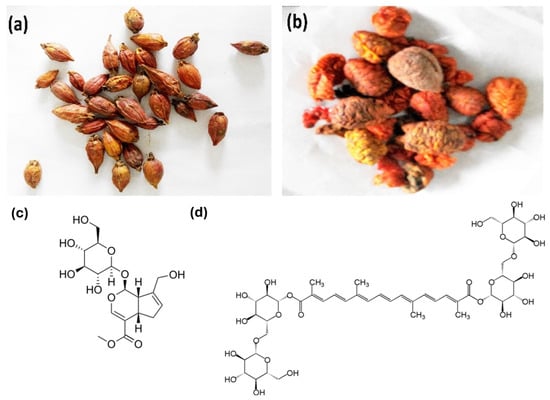
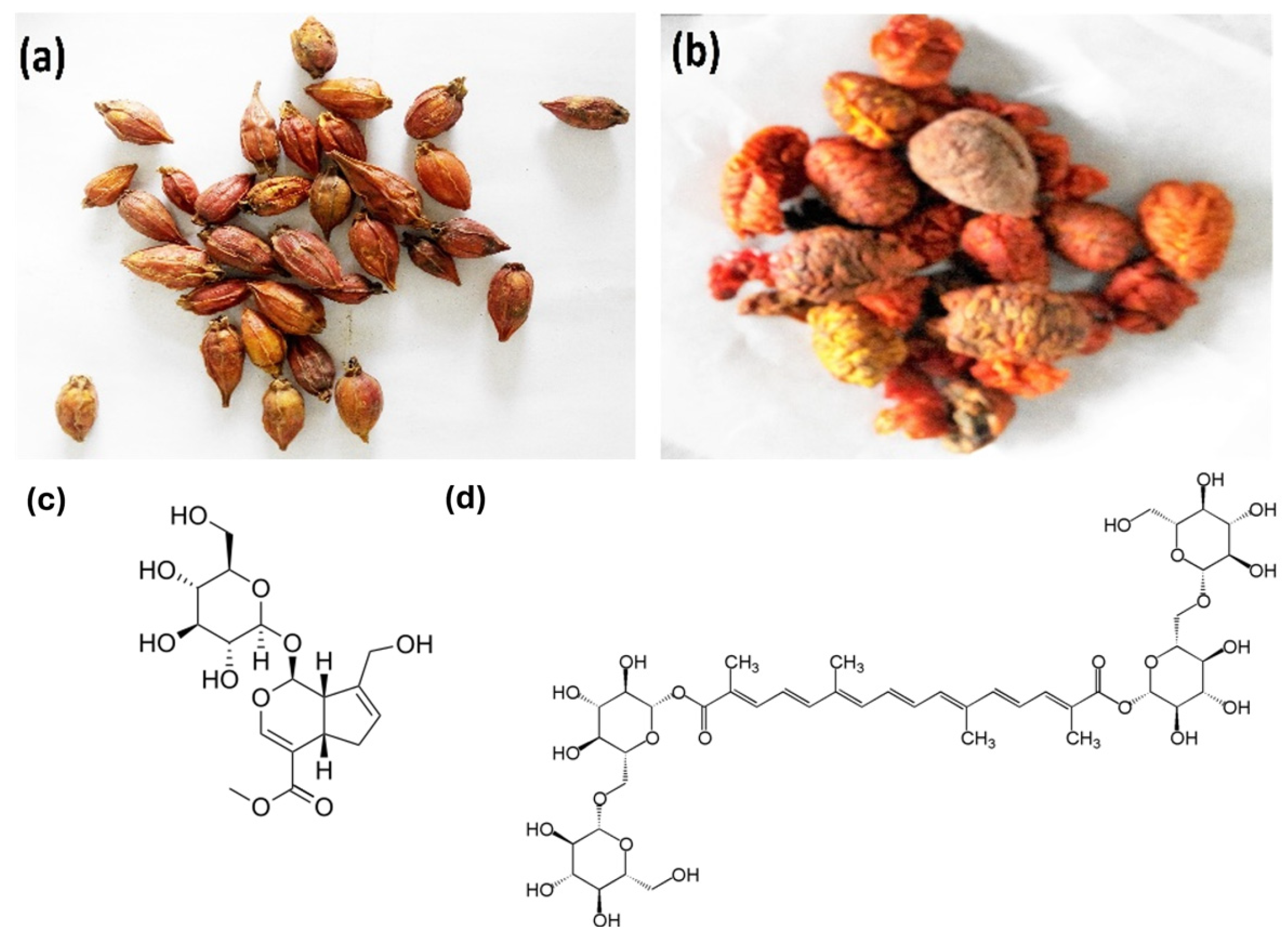
A 100% cotton knitted fabric (Single jersey, 120 g/m2 and 40S yarn count) was purchased from the local market of Wuhan, Hubei, China. Gardenia jasminodies (see Figure 1) plants were purchased from Wuhan, Hubei, China, for the extraction of yellow dyes. Gardenia jasminoides seeds were kept under room temperature conditions, packaged in polyethylene bags to prevent moisture absorption. The solvents, ethanol (≥99%) and methanol (≥99%), were bought from Sinopharm Chemical Reagent Co., Ltd. (Shanghai, China); Micro porous D101 resin was collected from Donghong Chemical Co., Ltd. (Dongguan, Guangdong, China); Potassium aluminum sulfate dodecahydrate [KAl(SO4)2·12H2O] mordant (≥99%, hydrous) was arranged from Sinopharm Chemical Reagent Co., Ltd. (Shanghai, China). A domestic detergent Pioguan (≥99%) was purchased from Dongguan PiaoQiang Detergent Company, China. All chemicals except the plant seeds were of laboratory grade and used without further purification.
Figure 1.
Gardenia seeds with (a) shell and (b) without shell purchased from a local market in Wuhan, Hubei, China. Chemical structures of major bioactive components in Gardenia seeds: (c) geniposide, (d) crocins.
2.2. Extraction Process
The dyes were extracted from Gardenia jasminoides seeds using a range of solvent-based and equipment-assisted techniques to evaluate their efficiency and suitability for sustainable textile coloration. Gardenia seeds are rich in diverse phytochemicals, primarily iridoid glucosides such as geniposide and crocins (as shown in Figure 1), the latter being responsible for their characteristic yellow pigmentation. All the employed extraction methods are discussed in separate subsections.
2.2.1. Aqueous Extraction
The aqueous extraction process was performed using water as the solvent. Initially, 40 g of Gardenia jasminoides seeds were added to 1000 mL of water in a beaker, maintaining a material-to-solvent ratio of 1:25. The mixture was subjected to extraction by heating on an electric hotplate (Infitek Laboratory Digital Hotplate, Shanghai, China) at 70 °C for 1 h. The mixture was cooled down and subjected to filtration. A Whatman filter (Z240079, Sigma-Aldrich, Shanghai, China) with a pore diameter of 90 mm was applied in the vacuum-assisted filtration process. The filtrate was characterized and subjected to a powdered form for further application.
Likewise, aqueous extraction was carried out using the ultrasonic-assisted method, following the same extraction parameters as discussed above, and the obtained extract was subjected to filtration and subsequently converted to powdered form.
2.2.2. Ethanol–Water and Methanol–Water Extraction
The ethanol–water (50:50 v/v) mixture was employed as the solvent for the ultrasonic-assisted extraction method. A Benchtop ultrasonic extractor (AntiTeck Life Sciences Limited, Guangzhou, China) was applied for the extraction process. The ultrasonic extractor needs 220 V power, an operating frequency of 30 kHz, and an ultrasonic power range of 100–650 W. Initially, 20 g of gardenia seeds were added to a beaker containing 250 mL of ethanol and 250 mL of water. The mixture was stirred with a glass rod to ensure homogeneity prior to extraction. Subsequently, the solution was subjected to ultrasonic treatment at 70 °C for 1 h using an ultrasonic chamber operating at a frequency of 30 kHz. Finally, the mixture was cooled down and subjected to filtration.
A similar extraction procedure was followed for the methanol–water (50:50 v/v) mixture.
2.3. Extraction Efficiency
The extraction efficiency was calculated following the procedure reported by Richardo et al. (2021) [29]. Liquid extract was added to a pre-weighed beaker and kept overnight at 90 °C to get a concentrated, dried extract. The next day, the beaker containing the dried extract was cooled down and weighed again to calculate the extraction yield (%) by substituting the corresponding weight values in Equation (1):
2.4. Powder Formulation by Spray Dryer Machine
Following extraction and purification, the Gardenia yellow dye solution was processed into powdered form using a spray-drying technique employing a spray dryer (SUS304, Xi’an Toption Instrument Co., Ltd., Xi’an, China). A 1000 mL sample of the liquid extract was introduced into the spray dryer, operating at approximately 200 °C with an efficiency of 1.2 L/h. The resulting powdered dye was collected separately and subsequently subjected to quality evaluation.
2.5. Dyeing Process
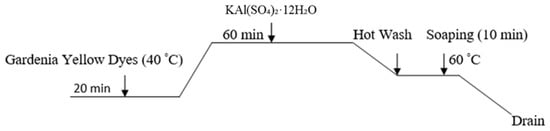
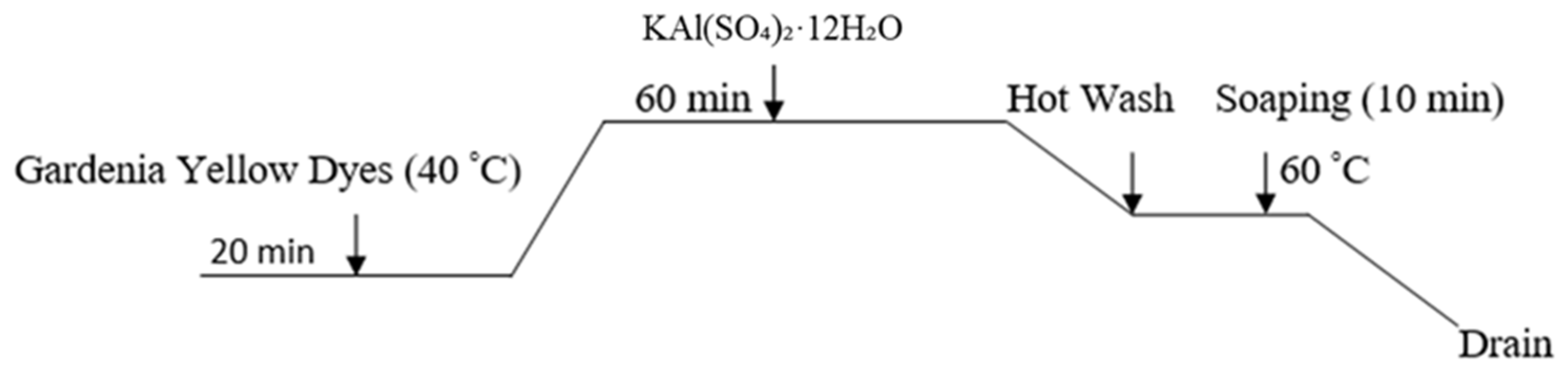
The exhaust dyeing of cotton was performed on an oscillating lab dyeing machine (TESTEX, Model TD 230, Dhaka, Bangladesh) to evaluate the affinity of the extract for the substrate. For the dyeing process, 4 g of cotton fabric was treated with 60 mL of Gardenia yellow dye solution, maintaining a liquor ratio of 1:15. Aluminum potassium sulfate (40 g/L) was used as the mordant and applied in varying volumes (0, 0.5, 1.0, 1.5, and 2.0 mL) to assess its effect on the colorfastness properties and shade depth of the dyed fabrics. Dyeing was performed at 70 °C for 1 h, as illustrated by the dyeing curve in Figure 2. During the first 20 min of the dyeing process, the bath temperature was gradually increased from room temperature to 70 °C at a controlled rate of approximately 2–3 °C per minute. This initial phase allowed the fabric to become fully impregnated with the dye liquor, facilitating a gradual exhaustion of dye onto the fiber surface. Once the temperature reached 70 °C, it was maintained for the remaining 40 min to complete dye diffusion and fixation within the fiber matrix, as illustrated by the dyeing curve in Figure 3. To remove the unfixed dye molecules from the fabric surface, the dyed samples were subjected to hot washing for 2–3 min. This was followed by soaping with a domestic Pioguan detergent solution (5 g/L) prepared at a liquor ratio of 1:30, using 120 mL of solution maintained at 60 °C for 10 min. After soaping, the samples were thoroughly rinsed with cold water and dried in a woven dryer.
Figure 2.
Dyeing curve of a cotton knitted fabric dyed with gardenia yellow dyes using the exhaust method on an oscillating lab dyeing machine.
2.6. Material Characterization
Gardenia yellow powdered samples were analyzed using Fourier transform infrared spectroscopy utilizing an FTIR spectrophotometer and a KBr (>99%, Sinopharm Chemical Reagent Co., Ltd., Shanghai, China) plate holding the dye particles. The FTIR spectra were recorded at a resolution of 4 cm−1 within a range of 4000–400 cm−1 using a Bruker Vertex 100 spectrometer, Hanover, Germany. The HPLC analysis was performed using a BIKAI Model 1511 HPLC system (BIKAI Technology Co., Ltd., Tokyo, Japan) equipped with an Eclipse XDB-C18 column (4.6 mm × 150 mm, 5 μm) at 25 °C. The applied mobile phase was acetonitrile and water (15:80, v/v), having a flow rate of 1.0 mL/min. An ultraviolet spectrophotometer with dual light beams was used to test the dye absorbency of a fabric sample (N6000, Beijing Purkinje General Instrument Co., Ltd., Beijing, China). The UV–visible spectra of the extracts were recorded using a UV–visible (UV-vis) spectrophotometer ranging from 300 to 700 cm−1.
2.7. Color Strength Testing
Color strength (K/S) and CIELAB values of the dyed fabrics were determined using a Datacolor 110 spectrophotometric system (Datacolor (Suzhou) Co., Ltd., Suzhou, China), enabling accurate quantification of color strength. By substituting this reflectance value into the Kubelka–Munk equation, color strength (K/S) can be determined by Equation (2) [30].
where R = reflectance of an incident light from the dyed material, K = absorption, and S = scattering coefficient of the dyed fabric. A lower K/S value signifies lower color strength, while a higher K/S value signifies higher color strength.
2.8. Color Fastness Testing
The ISO 105-D02 standard rubbing fastness test method was applied in the case of the cotton knitted fabric dyed with gardenia yellow extract [31]. Rubbing fastness was determined on a crock meter (Wenzhou Darong Textile instrument Co., Ltd., Wenzhou, China). Dyed cotton knit fabrics (14 × 5 cm) were tested against white cotton standards (5 × 5 cm) under both dry and wet conditions. Each test involved 10 rubbing cycles, and staining on the standard fabric was graded using the gray scale (1–5). Wet rubbing fastness tests were conducted by soaking the specimen in water and removing excess moisture prior to rubbing.
The ISO-105-C06 standard washing fastness test method was applied in the case of the dyed cotton knit fabric [32]. The washing fastness was tested using a Gyrowash (XHF-13, Jinan Xinghua Instruments Co., Ltd., Jinan, China) at 70 °C for 30 min. The washing liquor was composed of 4 g of detergent, 1 g of sodium perborate, and 1000 mL of water. Dyed cotton specimens (10 × 4 cm) were attached to multifiber fabrics of the same size, placed in conical flasks with 50 mL solution and 25 steel balls, and subjected to washing. After rinsing and drying, fastness was assessed with a gray scale (1–5).
The light fastness test was measured to check the resistance to fading of cotton knit dyed samples when exposed to daylight. A Q-SUN Xenon test chamber Model Xe-1 was used for the light fastness test, which was brought from Qinsun Instruments Co., Ltd., Shanghai China. The ISO 105-B02 standard light fastness test method was applied in the case of dyed cotton knit fabric [32]. A 10 cm × 5 cm cotton knit dyed sample was cut for the light fastness test and set in the specimen holder. Then the holder was set into the light fastness testing machine. Then the experiment continued for 12 h. After 12 h, the specimen was taken from the light fastness tester. Then the test specimen was compared with the blue wool scale (1–8).
2.9. Antibacterial and Vector Protection Testing
The antibacterial test of the dyed fabrics was carried out using AATCC test method 100 (liquid assay-based quantitative standard protocol). This method reveals the fabric’s ability to kill (bactericidal efficacy) or inhibit (bacteriostatic efficacy) bacteria (Gram-positive or Gram-negative) following a 24 h incubation time. Staphylococcus aureus (S. Aureus, >99% Sigma-Aldrich, Merck KGaA, St. Louis, MO, USA) and Escherichia coli (E. coli, >99.5%, Sigma-Aldrich, Merck KGaA, St. Louis, MO, USA) bacterial strains were employed, and the bacterial reduction % were calculated from colony-forming units (CFUs) as follows.
The dyed cotton samples were sent to a specialized laboratory at the University of Veterinary and Animal Sciences (UVAS), Lahore, Pakistan, for vector protection assessment. Aedes aegypti-type mosquitoes were grown at UVAS and used for the vector protection test following the detailed procedure established by Tariq et al. (2022) [33]. The vector protection was assessed by calculating the number of mosquitoes landing on undyed and dyed samples; finally, a percent value was established.
3. Results and Discussions
3.1. Extraction Efficiency
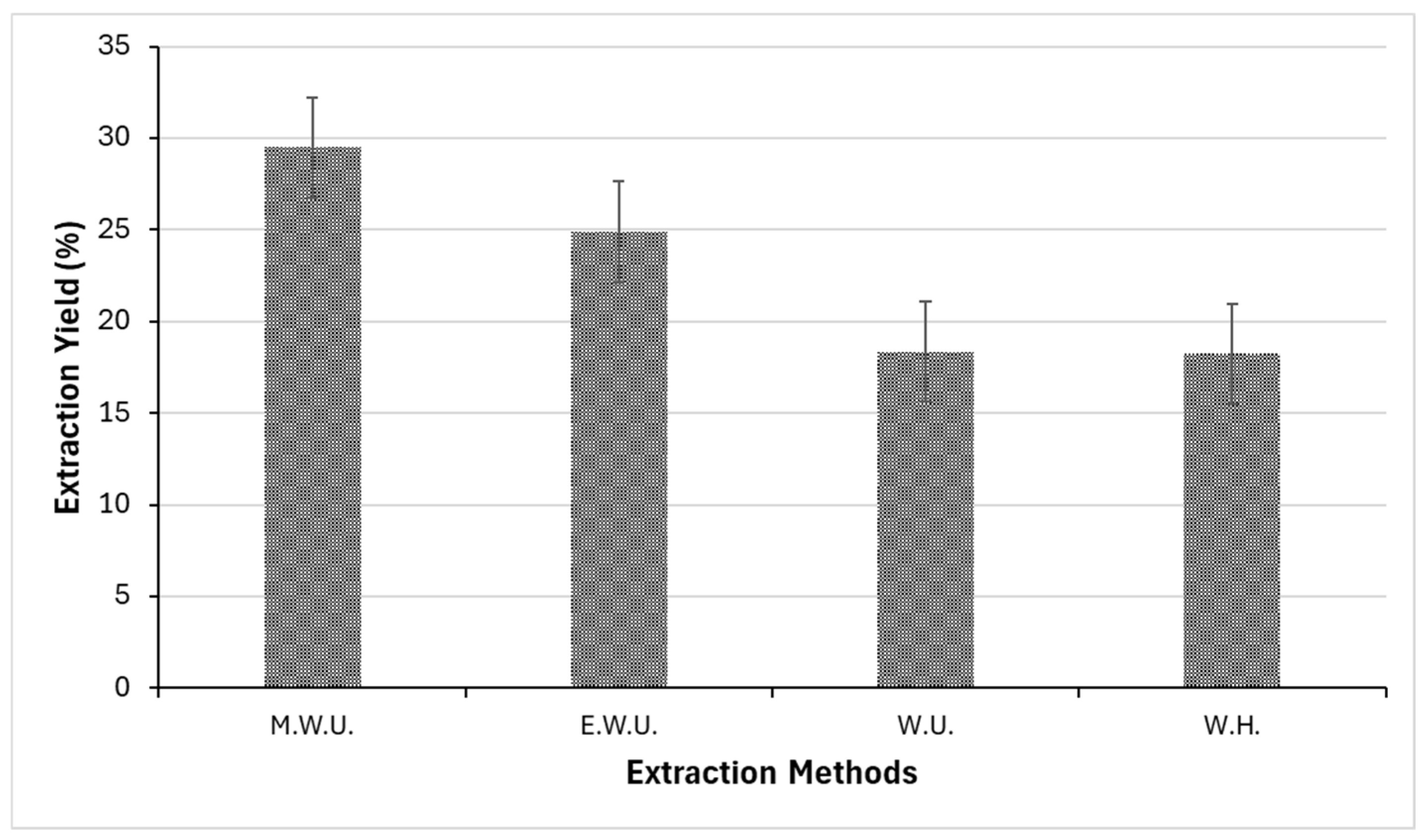
The extraction results revealed significant variation in yield across the different methods, as shown in Figure 3. Methanol–water extraction assisted by ultrasound (M.W.U.) achieved the highest extraction ratio at 29.5%, as appears in the graph below, followed by ethanol–water ultrasonic extraction (E.W.U.) at 24.9%, water ultrasound extraction (W.U.) at 18.35%, and the lowest yield from the water-heater method (W.H.) at 18.25%. The ultrasonic vibrations accelerate molecular motion, significantly increasing the diffusion rate and, consequently, the mass transfer during extraction [34], and conducting the process under mild heating further improved extraction efficiency by facilitating the release of dye compounds. Moreover, methanol’s complete miscibility with water and its strong penetration capability into Gardenia jasminoides seeds contributed to the higher yield observed. These combined effects explain why methanol–water ultrasonic extraction achieved a higher extraction ratio compared to other solvent-based methods. However, in statistical analysis via one-way ANOVA indicated no significant difference between the mean groups Table S1.
Figure 3.
Extraction yield (%) from raw Gardenia jasminoides seeds obtained with different extraction methods following the methodology adapted from Ricardo et al. [29].
3.2. FTIR Analysis
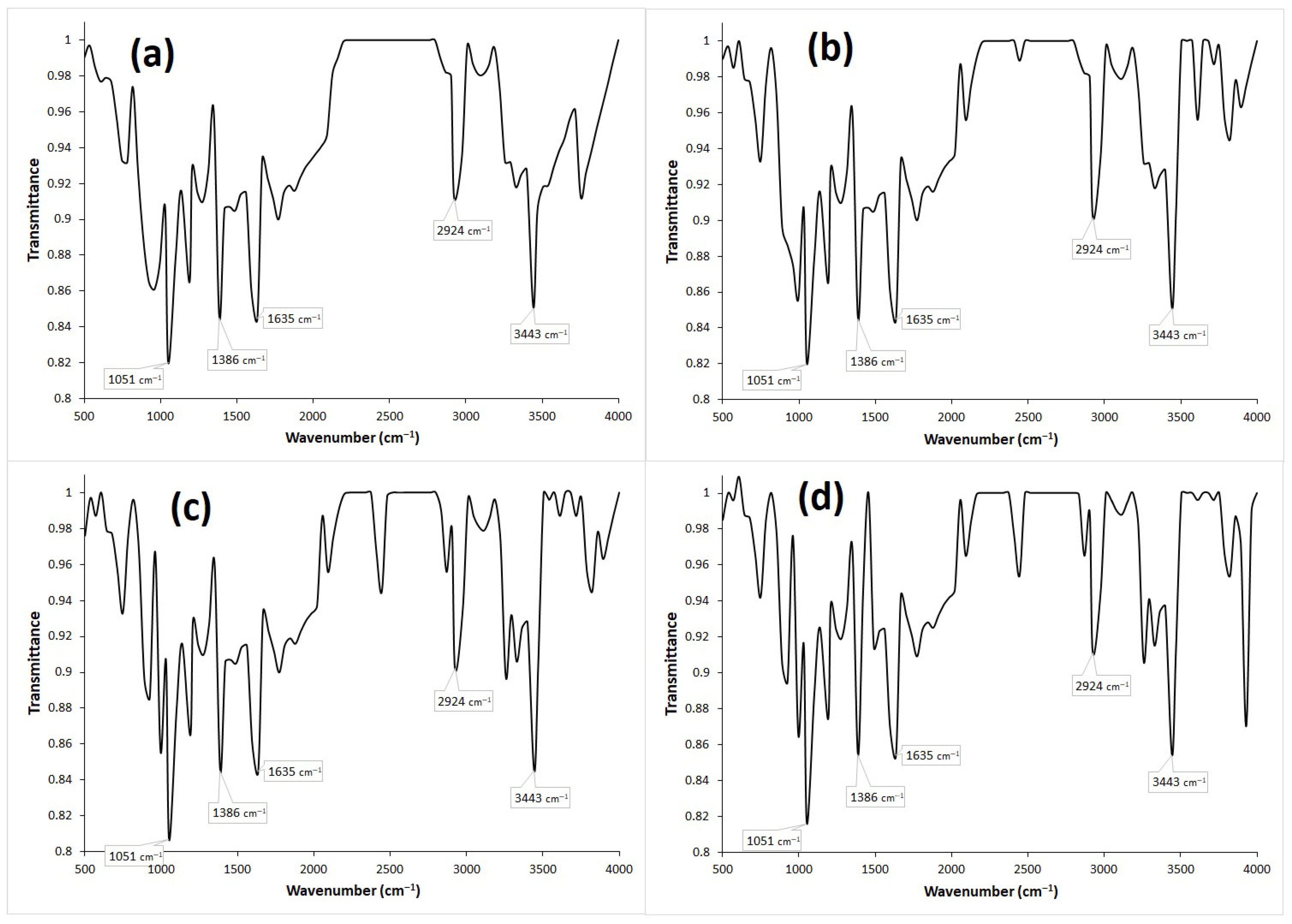
As shown in Figure 4, the FTIR peak at 1051 cm−1 suggests the presence of the C-O functional group, while the peak at 1190 cm−1 denotes the bending of C-N [35]. The absorption peak at 1386 cm−1 is the identification of the strong S=O stretching vibration of sulfonyl chlorides. The strong absorption peak at around 1635 cm−1 is likely to C=O stretching vibration of keto units, which may be part of the chromophore of the color component. The peak centered at 2924 cm−1 is ascribed to the C-H group. The peak positioned at 3443 cm−1 is ascribed to the O-H groups [36]. Hence, it was found that the presence of a hydroxyl group and alkene groups is dominant among the various functional groups that are necessary for a coloring dyestuff [37]. The above-mentioned peaks correspond to the functional groups found in the major bioactive constituents of Gardenia yellow, such as crocin, crocetin, carotenoids, iridoids, flavonoids, and terpenes [38].
Figure 4.
FTIR spectra of Gardenia jasminoides seed extracts obtained under different extraction methods: (a) W.H., (b) W.U., (c) M.W.U., and (d) E.W.U.
Besides these major peaks, there are some minor peaks that may originate from the changes in the extraction medium. However, it is evident that no other major peaks are observed, confirming the presence of Gardenia jasminoides-based dominant compounds.
3.3. UV–Visible Spectral Analysis
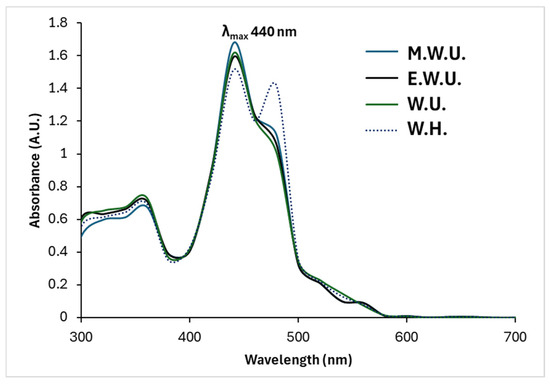
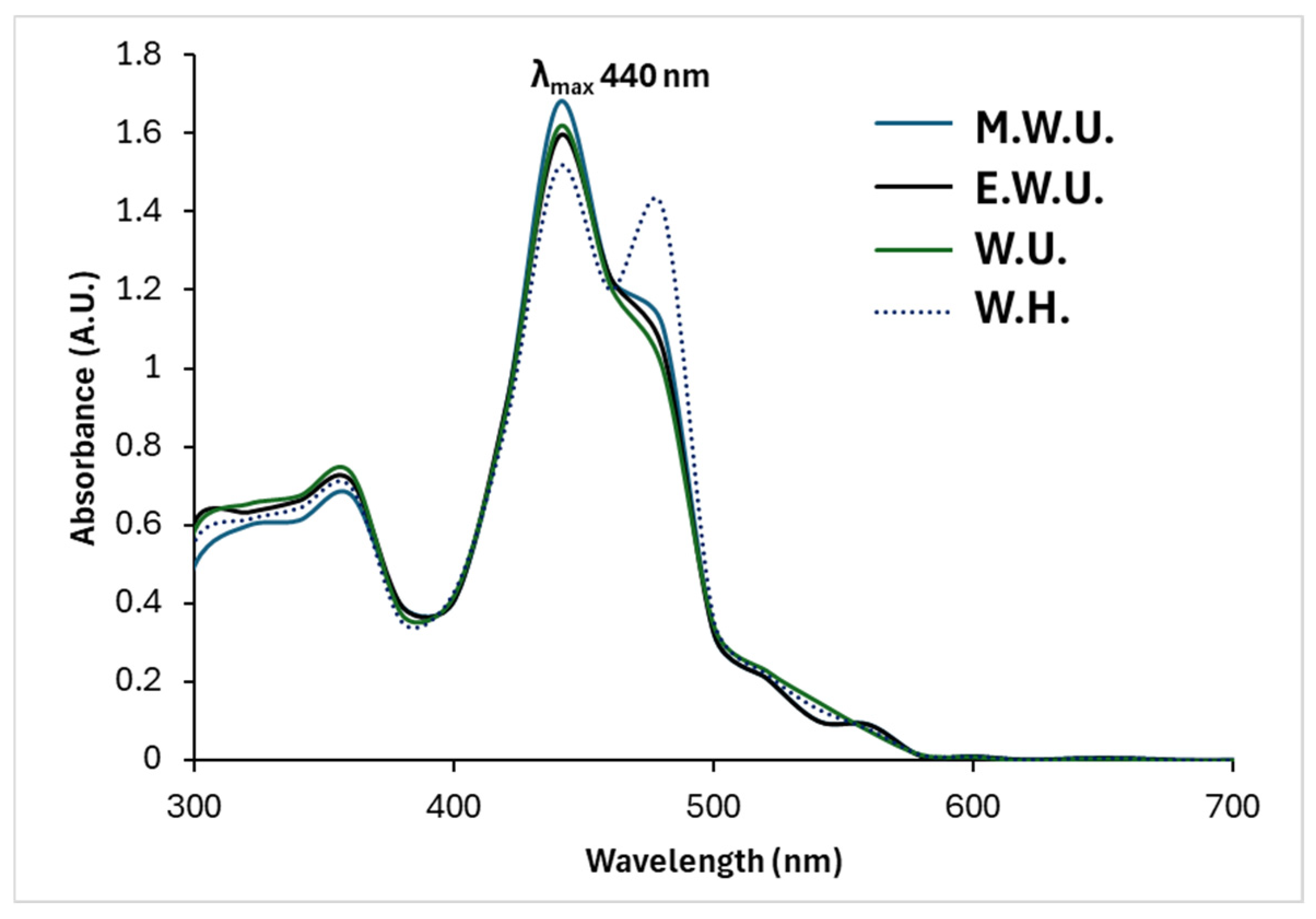
The UV–visible spectral analysis of the four extracts was performed to see the dominant peaks. The major peak was observed at 440 nm, corresponding to the yellow region of the UV–visible spectrum (Figure 5). All four extracts revealed very similar spectra with slight variations that could have come from changes in the extraction media. Our UV–visible results are in considerable agreement with earlier published works devoted to the exploration of Gardenia yellow species [39,40]. In the case of the W.H. extraction method, a second peak at 480 nm was observed, which also corresponds to the yellow region and thus confirms the presence of yellow-colored components in extracts.
Figure 5.
UV–visible spectra of Gardenia jasminoides seed extracts obtained under different extraction methods.
3.4. High-Performance Liquid Chromatography (HPLC)
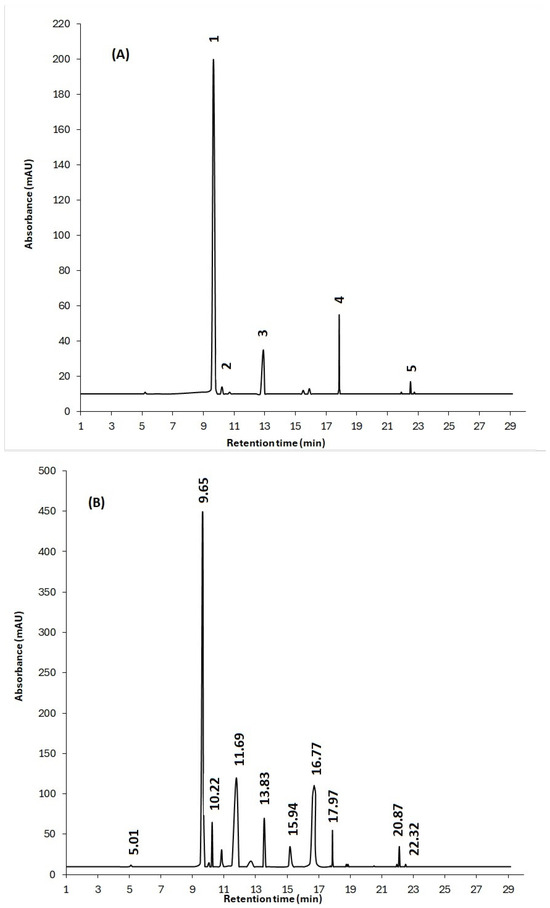
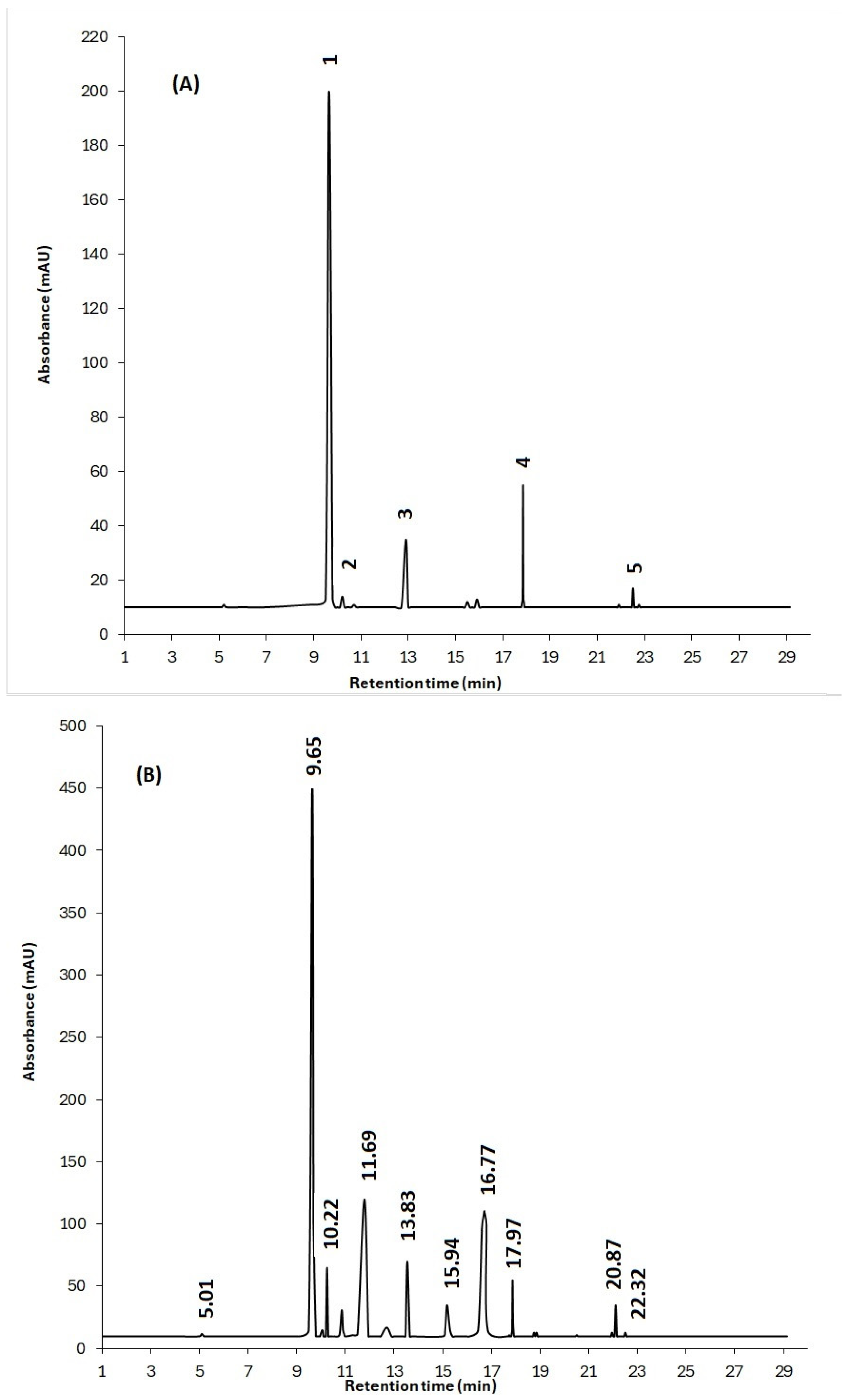
High-Performance Liquid Chromatography (HPLC) was employed to further investigate the components of gardenia yellow extract. For this purpose, we selected the M.W.U. extract, which revealed the highest extraction yield% (see Figure 3). In the chromatogram, the horizontal axis represents retention time (minutes), and the vertical axis denotes absorbance (mAU). Figure 6A shows the standard peaks (1, 2, 4), (3), and (5), which correspond to crocin, geniposide, and crocetin, respectively. The test specimen revealed several peaks that align with those observed in the standard, confirming the presence of potential functional compounds in the obtained extract. The peaks observed at 9.65 min and 10.22 min retention times correspond to the dominant peaks of crocin [41]. The peak observed at 13.83 min corresponds to geniposide, while the peak at 22.32 min corresponds to crocetin (Figure 6B). Several other smaller peaks were also observed with relatively lower intensities; they may confirm the presence of other functional compounds. The Gardenia jasminoides typical HPLC peak around 9.65 retention time validates successful extraction of yellow pigments.
Figure 6.
(A) The HPLC profile of crocin (1, 2, 4), geniposide (3), and crocetin (5) standards. (B) The HPLC profile of the extract of the Gardenia jasminoides obtained under the methanol–water ultrasonic-assisted extraction method (M.W.U) was quantified by BIKAI Model 1511 HPLC, Tokyo.
3.5. Color Strength
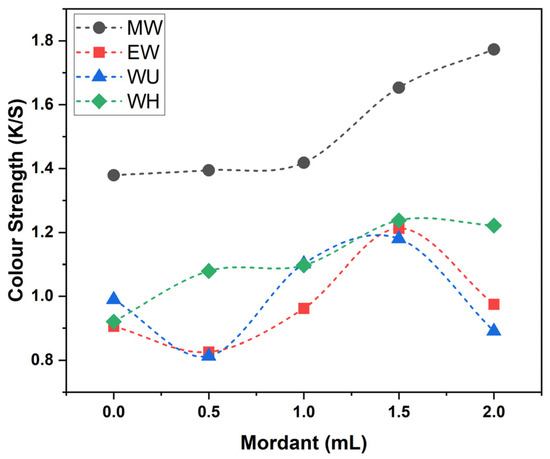
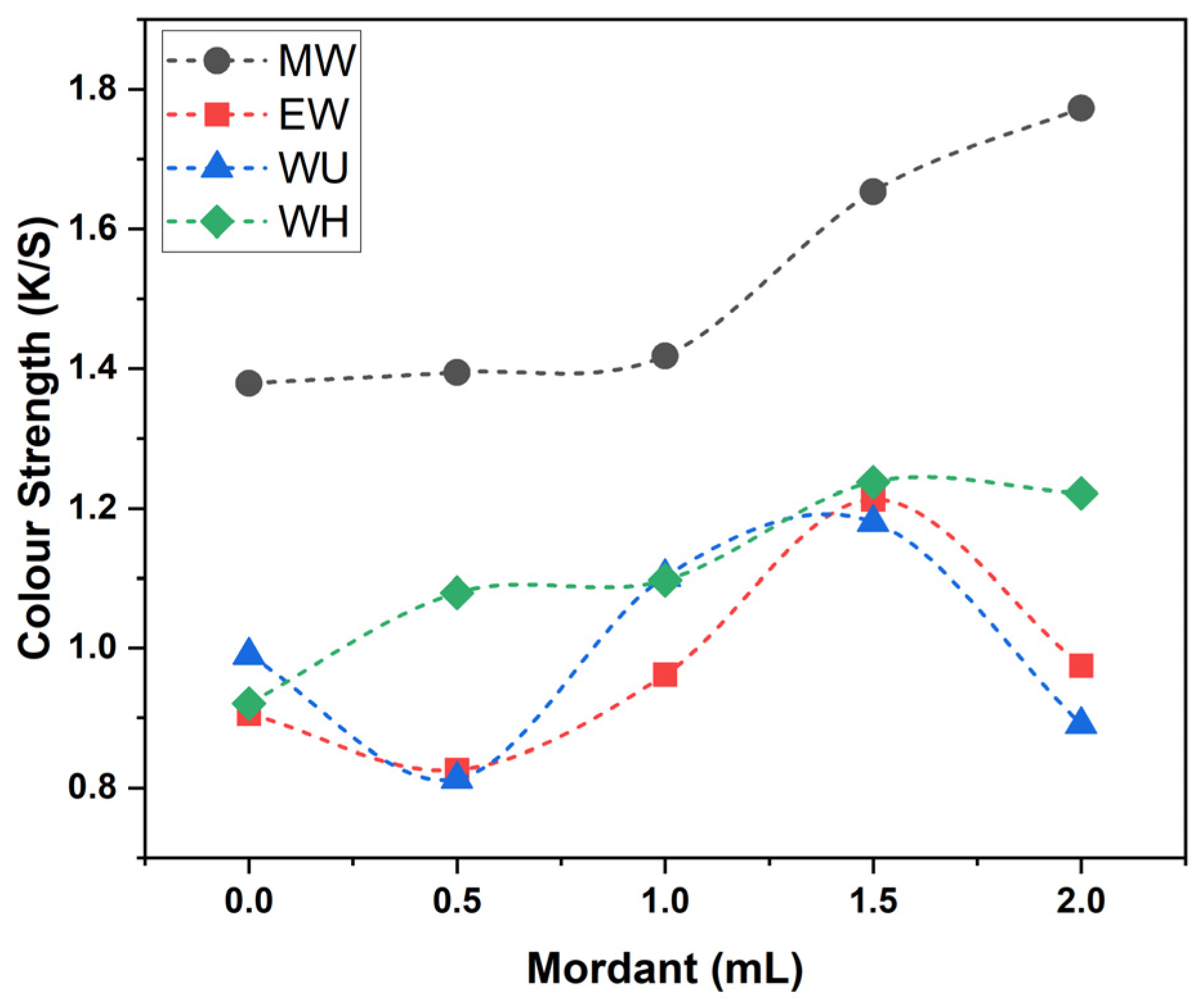
Colorimetric properties of the cotton knit fabrics dyed with gardenia yellow powdered extract under different solvent systems and parameters were evaluated using a Datacolor spectrophotometer, as shown in Table 1. As shown in Figure 7, the color strength (K/S) of the dyed samples varied notably with different mordant proportions. For all sample types (using extracts such as M.W.U., E.W.U., W.U., and W.H), the changes in mordant concentration significantly influenced dye uptake. The M.W.U.-extract-dyed samples exhibited the highest K/S values across all mordant levels, indicating superior color strength values. The W.H.-extract-dyed samples also showed a moderate increase in K/S with higher mordant dosage, while E.W.U.- and W.U.-extract-dyed samples displayed a rise up to about 1.5 mL, followed by a slight decline at 2.0 mL. This trend suggests that an optimal mordant concentration enhances dye–fiber bonding. The measured attributes included CIE L* (lightness), a* (red–green axis), b* (blue–yellow axis), and color strength (K/S value), shown in Table 1. The results indicated that dyeing with mordants consistently produced higher K/S values than processes without mordants. Among all tested conditions, the highest K/S value of 1.7730 was achieved using a methanol–water-extracted dye solution in an ultrasonic machine. This was followed by ethanol–water extraction with 1.5 mL mordant in ultrasound (K/S = 1.2126), water extraction with 1.5 mL mordant in ultrasound (K/S = 1.1802), and water extraction with 1.5 mL mordant in an electric heater (K/S = 1.2375). The superior performance of the methanol–water ultrasonic method is attributed to high extraction efficiency of the methanol–water ultrasonic method. This interaction improved dye uptake, resulting in greater color strength and uniformity compared to other solvent extraction methods.
Table 1.
Results of color strength (K/S), other CIELAB values, and images of the dyed samples obtained using a spectrophotometer.
Figure 7.
The color strength (K/S) of the dyed samples varies with different mordant concentrations.
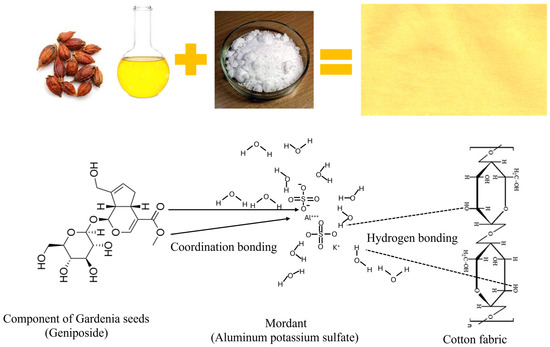
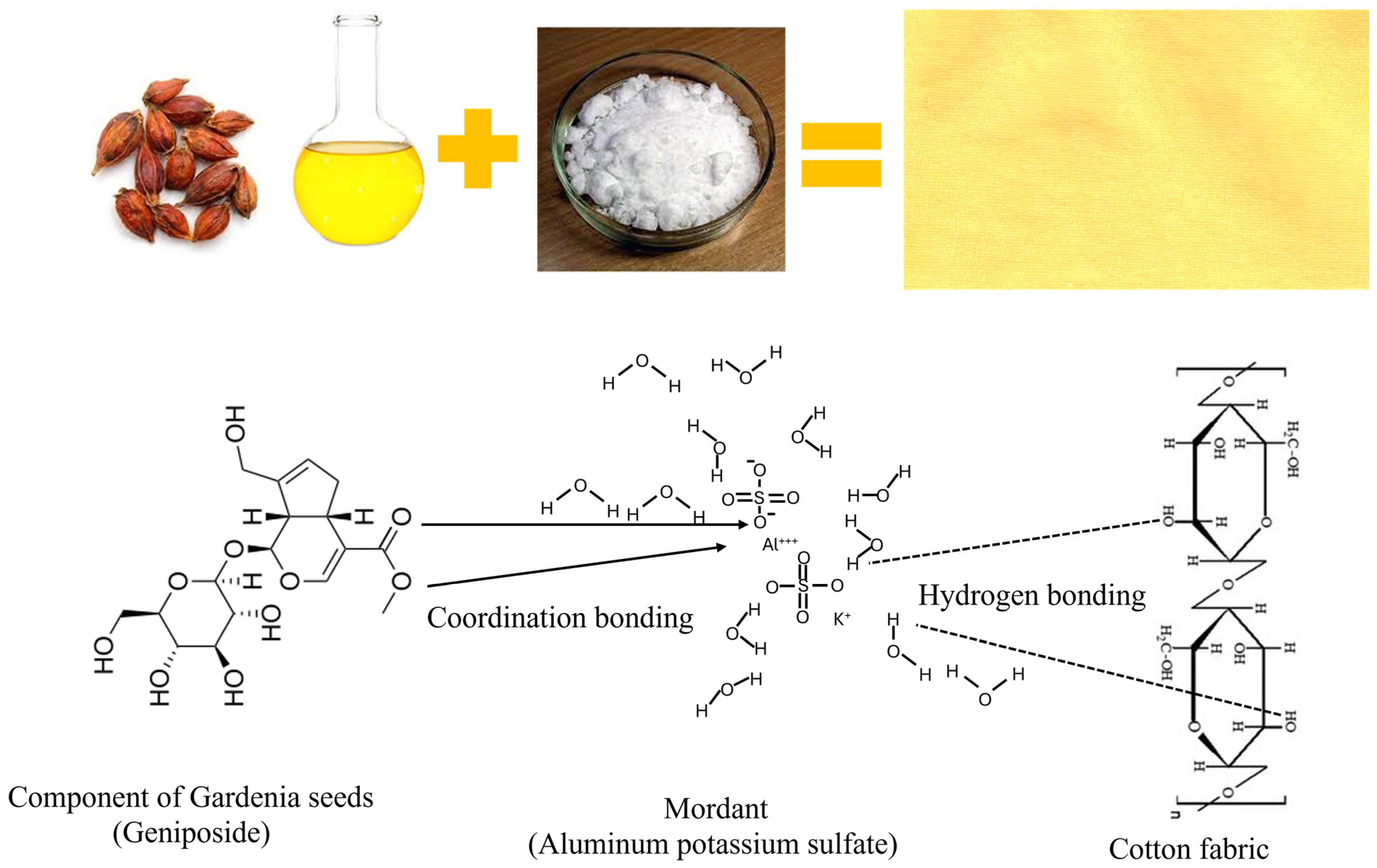
The seeds of Gardenia jasminoides are known to contain iridoid-derived pigments (such as geniposide) that can form reactive complexes in the presence of metallic ions. During mordanting, Al3+ ions establish coordination linkages with functional groups present in the dye molecules (Figure 8).
Figure 8.
Proposed mechanism of Gardenia jasminoides seeds extract–mordant–cotton fabric interaction.
This represents a possible mechanism governing dyeing and subsequent retention of color in cotton using Gardenia jasminoides seed dyes in the presence of aluminum potassium sulfate mordant.
3.6. Color Fastness to Rubbing
The dry rubbing fastness tests were performed (10 cycles) on cotton knit fabrics dyed with Gardenia yellow powdered extracts using different solvent systems. During the dyeing process, aluminum potassium sulfate mordant was applied in varying concentrations to assess its influence on rub resistance. The rubbing fastness was evaluated using a crock meter, and the results showed noticeable variation depending on the extraction method and mordant concentration, as shown in Table 2. Among all samples, the highest dry rubbing fastness rating, five on the gray scale, was obtained for the fabric dyed with an ethanol–water-extracted dye solution in an ultrasonic machine using 1.5 mL of mordant. This result indicates excellent resistance to color transfer during dry rubbing, suggesting strong dye–fiber bonding and uniform fixation under these conditions.
Table 2.
Assessment of colorfastness to rubbing (dry condition) of the dyed cotton samples recorded on a gray scale (1–5).
The wet rubbing fastness was assessed using a crock meter (10 cycles), and the results showed variation depending on both the extraction method and mordant concentration (Table 3). The highest rating, five on the gray scale, was achieved for the fabric dyed with a methanol–water-extracted dye solution in an ultrasonic machine using 2.0 mL mordant. Although the rubbing fastness values of all samples are very similar, this suggests better fixation with cotton samples. It is pertinent to mention that mordanting with metallic salts helps enhance the rubbing fastness rating of natural dyed samples [42].
Table 3.
Assessment of colorfastness to rubbing (wet condition) of the samples dyed with Gardenia jasminoides extract recorded on a gray scale (1–5).
3.7. Color Fastness to Washing
The color fastness to washing of the dyed samples was evaluated using a standard testing protocol, and the values were recorded according to the gray scale (1–5). Only the wool and cotton portions of the multifiber strip showed some staining, while others were totally clear. The wool portion exhibited the best performance, achieving a gray scale rating of 4–5. For the cotton section, the highest ratings (3–4 on the gray scale) were observed for fabrics dyed with M.W.U.-extracted dye solution without mordant, aqueous-extracted solution with 2.0 mL mordant, and E.W.U.-extracted solution with 1.5 mL mordant in an ultrasonic machine. W.U. without mordant in an electric heater also produced comparable results (3–4 gray scale) relative to other processes (Table 4).
Table 4.
Assessment of colorfastness to washing of the samples dyed with Gardenia jasminoides extracts recorded on a gray scale (1–5).
3.8. Color Fastness to Light
Light fastness testing was conducted on cotton knit fabrics dyed with gardenia yellow dyes using a xenon arc light source for 12 h, and the values were recorded on the blue wool scale (1–8). The samples, prepared from different solvent extraction methods, were evaluated under a D65 light source to assess the degree of fading, and ratings were assigned using the gray-scale method. The highest light fastness rating (five on the blue-wool scale) was obtained for fabrics dyed with an E.W.U. dye solution in an ultrasonic machine using 2.0 mL mordant. Comparable ratings (five on the blue wool scale) were also recorded for the M.W.U. dye with 1.5 mL mordant and the W.U. dye with 1.0 mL mordant in the ultrasonic machine (Table 5). These results suggest that both solvent type and mordant concentration play a pivotal role in improving light fastness performance [43].
Table 5.
Light fastness assessment of the samples dyed with Gardenia jasminoides extract according to the blue wool scale (1–8).
3.9. Antimicrobial and Vector Protection Assessment
The antimicrobial assessment of the few samples was performed according to AATCC test method 100, and the results are given in Table 6. Three samples were taken to check the efficacy of dyed materials without adding any mordants (metallic salt mordants themselves have some antimicrobial properties) by counting bacterial colony-forming units (CFUs) at zero time and after 24 h incubation. The decrease in the CFUs revealed the antibacterial activity of the dyed samples against the applied bacterial strains. It was observed that the cotton dyed samples using ethanol–water (50:50 v/v) rendered excellent reduction in both Gram-negative and Gram-positive bacterial strains, followed by methanol–water (50:50 v/v), and finally the aqueous extract. However, in the case of no mordants and pure water extracts, the antibacterial activity against S. aureus was 70%, while the same against E. coli was 58%, confirming the satisfactory antibacterial activity of the Gardenia yellow extract. The bioactive compounds present in the Gardenia yellow extract are the key to the antibacterial activity of the dyed samples and a step toward the development of functional textiles [44].
Table 6.
Quantitative antibacterial test (AATCC test method 100) results of the undyed and dyed cotton samples against Gram-positive and Gram-negative strains.
The vector protection of the dyed samples using all the obtained extracts was established in a cage test, and the % protection was calculated as reported by Blythe et al. [45]. Almost all the dyed samples revealed excellent vector protection properties against the applied mosquito species, with percentage values of more than 80% (Table 7). In comparison to the undyed samples, all the dyed ones rendered significant vector protection to the textile substrate. Thus, it is clear that these naturally dyed fabrics, Gardenia jasminoides extracts, possess strong potential for their use in prevalent mosquito areas to combat mosquito-related diseases.
Table 7.
Vector protection assessment of cotton samples dyed with Gardenia jasminoides extracts.
4. Conclusions
Gardenia yellow dyes were successfully extracted from Gardenia jasminoides using different solvent systems—water, ethanol–water (50:50), and methanol–water (50:50). The obtained extracts were characterized via UV–visible, FTIR, and HPLC techniques and applied on cotton knitted fabrics using metallic salt mordant with the exhaust dyeing method. The dyed fabrics demonstrated good color strength, rubbing fastness, washing fastness, and light fastness. The functional properties (antibacterial and vector protection) were assessed according to standard protocols, and it was observed that all the dyed samples were active against the applied pathogens. Overall, the study highlights the potential of Gardenia jasminoides extracts as sustainable and functional natural dyes, while acknowledging that additional research involving advanced natural mordants, process optimization, and scale-up trials is required to establish broader reliability and industrial feasibility.
Supplementary Materials
The following supporting information can be downloaded at: https://www.mdpi.com/article/10.3390/chemistry8020019/s1, Table S1. One-way ANOVA analysis of the efficiencies of the efficiencies of the extraction methods.
Author Contributions
Conceptualization, A.S.; data curation, F.H.; formal analysis, M.E.H.N.; funding acquisition, A.K. and K.J.; methodology, A.S.; project administration, H.J.; resources, M.M. and F.H.; software, A.S. and K.J.; supervision, H.J.; validation, A.S., M.E.H.N., M.M., M.K.D. and H.J.; visualization, M.E.H.N., I.A.K. and A.K.; writing—original draft preparation, A.S., M.M. and F.H.; writing—review and editing, M.K.D., I.A.K., A.K. and K.J. All authors have read and agreed to the published version of the manuscript.
Funding
This research received no external funding.
Data Availability Statement
Data will be made available by the corresponding authors upon request.
Conflicts of Interest
The authors declare no conflicts of interest.
Abbreviations
The following abbreviations are used in this manuscript:
| W.U. | Water ultrasonic |
| W.H. | Water heater |
| M.W.U. | Methanol–water ultrasonic |
| E.W.U. | Ethanol–water ultrasonic |
| S.C. | Staining on cotton |
| S.W. | Staining on wool |
References
- Khan, A.; Hussain, M.T.; Jiang, H. Dyeing of silk fabric with natural dye from camphor (Cinnamomum camphora) plant leaf extract. Color. Technol. 2018, 134, 266–270. [Google Scholar] [CrossRef] [Scilit]
- Repon, R.M.; Dev, B.; Rahman, A.; Jurkonienė, S.; Haji, A.; Alim, A.; Kumpikaitė, E. Textile dyeing using natural mordants and dyes: A review. Environ. Chem. Lett. 2024, 22, 1473–1520. [Google Scholar] [CrossRef] [Scilit]
- Maqbool, M.; Ali, S.; Hussain, M.T.; Khan, A.; Majeed, S. Comparison of Dyeing and Functionalization Potential of Some Selected Plant Extracts Applied on Cotton Fabric. J. Nat. Fibers 2021, 18, 42–50. [Google Scholar] [CrossRef] [Scilit]
- Khan, A.; Hussain, M.T.; Jiang, H.; Gul, S. Development of functional wool fabric by treatment with aqueous and alkaline extracts of Cinnamomum camphora plant leaves. J. Nat. Fibers 2020, 17, 472–481. [Google Scholar] [CrossRef] [Scilit]
- Lellis, B.; Fávaro-Polonio, C.Z.; Pamphile, J.A.; Polonio, J.C. Effects of textile dyes on health and the environment and bioremediation potential of living organisms. Biotechnol. Res. Innov. 2019, 3, 275–290. [Google Scholar] [CrossRef] [Scilit]
- Khan, I.A.; Deen, K.M.; Asselin, E.; Yasir, M.; Sadiq, R.; Ahmad, N.M. Boosting water flux and dye removal: Advanced composite membranes incorporating functionalized AC-PAA for wastewater treatment. J. Ind. Eng. Chem. 2025, 145, 705–720. [Google Scholar] [CrossRef] [Scilit]
- Khan, I.A.; Khan, A.U.; Butt, M.S.; Janjua, H.A.; Uddin, E.; Deen, K.M.; Sadiq, R.; Ahmad, N.M. Dye Removal from Contaminated Water Through PES Membranes Enhanced with the Incorporation of Switchable Polyacrylic Acid Grafted on Graphene Oxide. ACS Omega 2025, 10, 28178–28190. [Google Scholar] [CrossRef] [Scilit] [PubMed]
- Al-Tohamy, R.; Ali, S.S.; Li, F.; Okasha, K.M.; Mahmoud, Y.A.-G.; Elsamahy, T.; Jiao, H.; Fu, Y.; Sun, J. A critical review on the treatment of dye-containing wastewater: Ecotoxicological and health concerns of textile dyes and possible remediation approaches for environmental safety. Ecotoxicol. Environ. Saf. 2022, 231, 113160. [Google Scholar] [CrossRef] [Scilit]
- Hussain, T.; Arain, M.F.; Khan, I.A.; Javed, K.; Khan, H.; Ahmed, A.; Khan, A. Recycling orange waste for the sustainable dyeing of polyester fabric. J. Indian Chem. Soc. 2024, 101, 101293. [Google Scholar] [CrossRef] [Scilit]
- Negi, A. Natural Dyes and Pigments: Sustainable Applications and Future Scope. Sustain. Chem. 2025, 6, 23. [Google Scholar] [CrossRef] [Scilit]
- Yadav, S.; Tiwari, K.S.; Gupta, C.; Tiwari, M.K.; Khan, A.; Sonkar, S.P. A brief review on natural dyes, pigments: Recent advances and future perspectives. Results Chem. 2023, 5, 100733. [Google Scholar] [CrossRef] [Scilit]
- Karabulut, K.; Atav, R. Dyeing of Cotton Fabric with Natural Dyes without Mordant Usage Part I: Determining the Most Suitable Dye Plants for Dyeing and UV Protective Functionalization. Fibers Polym. 2020, 21, 1773–1782. [Google Scholar] [CrossRef] [Scilit]
- Tayade, P.B.; Adivarekar, R.V. Dyeing of cotton fabric with Cuminum cyminum L. as a natural dye and its comparison with synthetic dye. J. Text. Inst. 2013, 104, 1080–1088. [Google Scholar] [CrossRef] [Scilit]
- Tutak, M.; Korkmaz, N.E. Environmentally friendly natural dyeing of organic cotton. J. Nat. Fibers 2012, 9, 51–59. [Google Scholar] [CrossRef] [Scilit]
- Al Alamoudi, H.A.; Salem, A.A. Application of myrrh extract as an eco-friendly dye and antimicrobial agent on wool and silk fabrics part 1: Dyeing with myrrh extract. J. Nat. Fibers 2019, 16, 1006–1014. [Google Scholar] [CrossRef] [Scilit]
- Ali, N.F.; El-Mohamedy, R.S.R. Eco-friendly and protective natural dye from red prickly pear (Opuntia lasiacantha Pfeiffer) plant. J. Saudi Chem. Soc. 2011, 15, 257–261. [Google Scholar] [CrossRef] [Scilit]
- Yılmaz, F. Investigating the usage of eucalyptus leaves in antibacterial finishing of textiles against Gram-positive and Gram-negative bacteria. J. Text. Inst. 2021, 112, 341–345. [Google Scholar] [CrossRef] [Scilit]
- Mongkholrattanasit, R.; Kryštůfek, J.; Wiener, J. Dyeing and fastness properties of natural dyes extracted from eucalyptus leaves using padding techniques. Fibers Polym. 2010, 11, 346–350. [Google Scholar] [CrossRef] [Scilit]
- Dulo, B.; Phan, K.; Githaiga, J.; Raes, K.; De Meester, S. Natural Quinone Dyes: A Review on Structure, Extraction Techniques, Analysis and Application Potential. Waste Biomass Valorization 2021, 12, 6339–6374. [Google Scholar] [CrossRef] [Scilit]
- Khan, I.A.; Khalid, H.; Javed, K.; Fraz, A.; Pasha, K.; Khan, A. Dyeing and Functional Finishing of Cotton Fabric Using Ficus carica and Eucalyptus Leaf Extracts with Aloe barbadensis Miller as a Bio-Mordant. Resources 2025, 14, 127. [Google Scholar] [CrossRef] [Scilit]
- Xiao, W.; Li, S.; Wang, S.; Ho, C.-T. Chemistry and bioactivity of Gardenia jasminoides. J. Food Drug Anal. 2016, 25, 43. [Google Scholar] [CrossRef] [Scilit]
- Song, J.-L.; Wang, R.; Shi, Y.-P.; Qi, H.-Y. Iridoids from the flowers of Gardenia jasminoides Ellis and their chemotaxonomic significance. Biochem. Syst. Ecol. 2014, 56, 267–270. [Google Scholar] [CrossRef] [Scilit]
- Yin, S.; Niu, L.; Zhang, J.; Liu, Y. Gardenia yellow pigment: Extraction methods, biological activities, current trends, and future prospects. Food Res. Int. 2024, 179, 113981. [Google Scholar] [CrossRef] [Scilit]
- Wu, J.; Zhang, J.; Yu, X.; Shu, Y.; Zhang, S.; Zhang, Y. Extraction optimization by using response surface methodology and purification of yellow pigment from Gardenia jasminoides var. radicans Makikno. Food Sci. Nutr. 2021, 9, 822–832. [Google Scholar] [CrossRef] [Scilit] [PubMed]
- Zhang, L.; Ai, Y.; Chen, Y.; Li, C.; Li, P.; Chen, J.; Jiang, L.; Pan, Y.; Sun, A.; Yang, Y.; et al. Elucidation of Geniposide and Crocin Accumulation and Their Biosysnthsis-Related Key Enzymes during Gardenia jasminoides Fruit Growth. Plants 2023, 12, 2209. [Google Scholar] [CrossRef] [Scilit]
- Chen, J.-F.; Fu, G.-M.; Wan, Y.; Liu, C.-M.; Chai, J.-X.; Li, H.-G.; Wang, J.-T.; Hu, M.; Zhang, L.-N. Enrichment and purification of gardenia yellow from Gardenia jasminoides var. radicans Makino by column chromatography technique. J. Chromatogr. B 2012, 893–894, 43–48. [Google Scholar] [CrossRef] [Scilit]
- Xu, W.; Yu, J.; Feng, W.; Su, W. Selective Extraction of Gardenia Yellow and Geniposide from Gardenia jasminoides by Mechanochemistry. Molecules 2016, 21, 540. [Google Scholar] [CrossRef] [Scilit] [PubMed]
- Zhou, Y.; Zhang, J.; Tang, R.C.; Zhang, J. Simultaneous dyeing and functionalization of silk with three natural yellow dyes. Ind. Crops Prod. 2015, 64, 224–232. [Google Scholar] [CrossRef] [Scilit]
- Aguilar-Villalva, R.; Molina, G.A.; España-Sánchez, B.L.; Díaz-Peña, L.F.; Elizalde-Mata, A.; Valerio, E.; Azanza-Ricardo, C.; Estevez, M. Antioxidant capacity and antibacterial activity from Annona cherimola phytochemicals by ultrasound-assisted extraction and its comparison to conventional methods. Arab. J. Chem. 2021, 14, 103239. [Google Scholar] [CrossRef] [Scilit]
- Wang, J.; Gao, Y.; Zhu, L.; Gu, X.; Dou, H.; Pei, L. Dyeing Property and Adsorption Kinetics of Reactive Dyes for Cotton Textiles in Salt-Free Non-Aqueous Dyeing Systems. Polymers 2018, 10, 1030. [Google Scholar] [CrossRef] [Scilit]
- ISO 105-D02:2016; Textiles—Tests for Colour Fastness—Part D02: Colour Fastness to Rubbing: Organic Solvents. ISO: Geneva, Switzerland, 2016. Available online: https://www.iso.org/standard/65211.html (accessed on 12 August 2025).
- ISO 105-C06:2010; Textiles—Tests for Colour Fastness—Part C06: Colour Fastness to Domestic and Commercial Laundering. ISO: Geneva, Switzerland, 2010. Available online: https://www.iso.org/standard/51276.html (accessed on 12 August 2025).
- Tariq, Z.; Izhar, F.; Gmd, Z.; Zulfiqar, A.; Malik, M.H.; Oneeb, M.; Khan, A. Fabrication of highly durable functional textile through microencapsulation of organic citronella oil. Ind. Crops Prod. 2022, 190, 115878. [Google Scholar] [CrossRef] [Scilit]
- Khan, I.A.; Khan, A.U.; Deen, K.M.; Asselin, E.; Sadiq, R.; Yasir, M.; Ahmad, N.M. Ultrasonic assisted removal of methyl orange and bovine serum albumin from wastewater using modified activated carbons: RSM optimization and reusability. Mater. Res. Express 2024, 11, 095505. [Google Scholar] [CrossRef] [Scilit]
- Ji, Y.; Yang, X.; Ji, Z.; Zhu, L.; Ma, N.; Chen, D.; Jia, X.; Tang, J.; Cao, Y. DFT-Calculated IR Spectrum Amide I, II, and III Band Contributions of N-Methylacetamide Fine Components. ACS Omega 2020, 5, 8572–8578. [Google Scholar] [CrossRef] [Scilit] [PubMed]
- Datta, M.K.; Talukder, E.; Faisal, A.M.; Sarker, A.; Jiang, H. The Sustainable Coloration of Wool Fabric Using Naturally Extracted Dyes from Sappan Heartwood. J. Nat. Fibers 2022, 19, 9348–9362. [Google Scholar] [CrossRef] [Scilit]
- Naseem, T.; Farrukh, M.A. Antibacterial Activity of Green Synthesis of Iron Nanoparticles Using Lawsonia inermis and Gardenia jasminoides Leaves Extract. J. Chem. 2015, 2015, 912342. [Google Scholar] [CrossRef] [Scilit]
- Wu, J.; Wang, X.; He, Y.; Li, J.; Ma, K.; Zhang, Y.; Li, H.; Yin, C.; Zhang, Y. Stability evaluation of gardenia yellow pigment in presence of different phenolic compounds. Food Chem. 2022, 373, 131441. [Google Scholar] [CrossRef] [Scilit]
- Tang, L.; Liu, H.; Wen, J.; Xu, Y.; Tian, W.; Li, L.; Yu, Y.; Lin, X.; Fu, M. Study on ultrahigh-pressure extraction technology on properties of yellow extract from gardenia fruit. J. Food Compos. Anal. 2021, 104, 104186. [Google Scholar] [CrossRef] [Scilit]
- Tang, L.; Liu, H.; Huang, G.; Yuan, Z.; Fu, M.; Wen, J.; Yu, Y.; Hu, T.; Xu, Y. The physicochemical properties and immunomodulatory activities of gardenia yellow pigment from gardenia fruit. J. Funct. Foods 2022, 93, 105096. [Google Scholar] [CrossRef] [Scilit]
- Zhu, X.; Mang, Y.; Shen, F.; Xie, J.; Su, W. Homogenate extraction of gardenia yellow pigment from Gardenia jasminoides Ellis fruit using response surface methodology. J. Food Sci. Technol. 2014, 51, 1575–1581. [Google Scholar] [CrossRef] [Scilit]
- Kundal, J.; Singh, S.V. Extraction of Natural Dye from Ficus cunia and Dyeing of Polyester Cotton and Wool Fabric Using Different Mordants, with Evaluation of Colour Fastness Properties. Nat. Prod. Chem. Res. 2016, 4, 3. [Google Scholar] [CrossRef]
- Guru, R.; Rani, J. Optimization Rubbing Fastness in Lyocell and Silk Fabric Dyeing with Tinospora cordifolia using Box-Behnken Design and Citrus limon Extract with Potassium Aluminium Sulfate Mordants. Text. Leather Rev. 2023, 6, 475–497. [Google Scholar] [CrossRef] [Scilit]
- Jiang, H.; Guo, R.; Zhang, H.; Lü, S.; Mia, R.; Yang, F.; Mahmud, S.; Liu, H. Fabrication and stabilization of green nanosilver using gardenia yellow natural dyes for efficient degradation of bacteria. Environ. Prog. Sustain. Energy 2022, 42, e14048. [Google Scholar] [CrossRef] [Scilit]
- Blythe, E.K.; Tabanca, N.; Demirci, B.; Tsikolia, M.; Bloomquist, J.R.; Bernier, U.R. Lantana montevidensis essential oil: Chemical composition and mosquito repellent activity against Aedes aegypti. Nat. Prod. Commun. 2016, 11, 1713–1716. [Google Scholar] [CrossRef] [Scilit] [PubMed]









Disclaimer/Publisher’s Note: The statements, opinions and data contained in all publications are solely those of the individual author(s) and contributor(s) and not of MDPI and/or the editor(s). MDPI and/or the editor(s) disclaim responsibility for any injury to people or property resulting from any ideas, methods, instructions or products referred to in the content. |
© 2026 by the authors. Licensee MDPI, Basel, Switzerland. This article is an open access article distributed under the terms and conditions of the Creative Commons Attribution (CC BY) license.